1. Introduction
Recent studies indicate that the worldwide need for solar power in electricity generation systems has experienced rapid growth in recent years. Furthermore, advancements in the components of photovoltaic energy systems and factors related to their utilization, such as the improved efficiency of PV cells, reduced costs related to manufacturing and installation, and enhanced integration into building structures, have further stimulated the demand for these systems [
1]. However, the ongoing challenge of suboptimal efficiency in MPPT controllers within PV power production systems remains a notable barrier, hindering these systems from achieving their full potential at the maximum power point. This challenge underscores the importance of research in this area. Enhancing the efficiency of MPPT controllers directly correlates with enhancing the overall system yield, making it a crucial area of study [
2]. In this context, it is important to recognize the adverse effects of weather fluctuations, such as changes in solar irradiation and ambient temperature, as well as load variations, on the effectiveness of the MPPT controller [
3]. Given the persistent nature of weather fluctuations and load variation year-round, MPPT of PV-systems presents a challenging task, prompting the exploration of various techniques to address this issue.
Despite the advancements in the application of artificial intelligence algorithms for MPPT [
4,
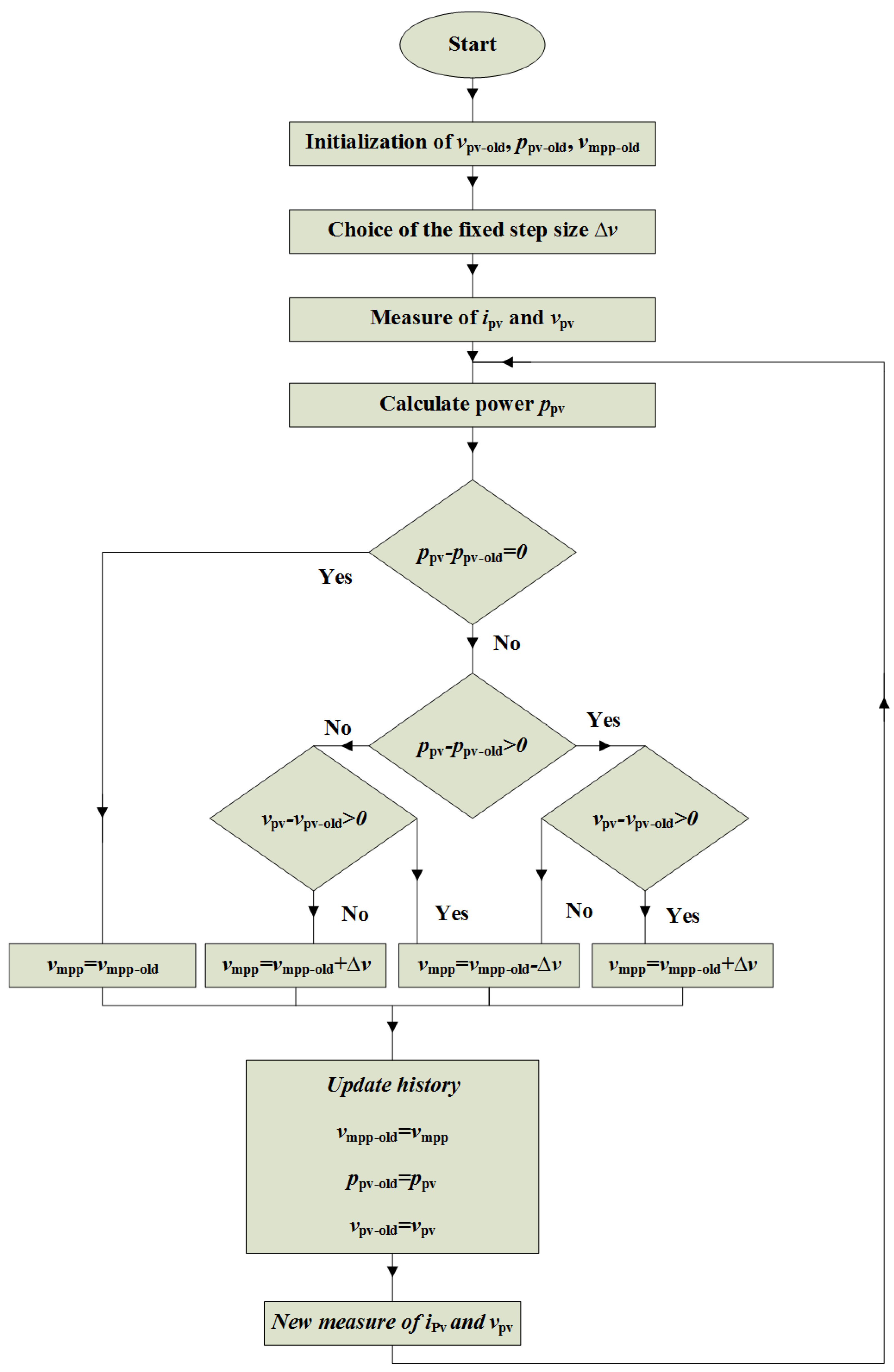
5]; classical MPPT algorithms continue to be widely utilized. One of the frequently used algorithms is the P&O with one stage of control [
6], favored for its straightforward execution and economical implementation. This algorithm stands out for its single degree of freedom direct control. The degree of freedom is represented by the step-size of the duty cycle, which directly affects the generated power of the PV-panel. Choosing a step-size that is too large can lead to power loss due to significant fluctuations around the MPP, causing large ripples in the output current of the DC-DC converter, which often results in an imbalance in the resistive load [
7], while selecting a small step-size results in finer adjustments to the duty cycle, which can lead to slower convergence to the MPP. While this can reduce the risk of overshooting the MPP, it can also make the tracking process less responsive and slower [
8]. In addition to the drawbacks of the classical direct MPPT methods like P&O, a significant challenge is the potential for oscillations in the connection between the DC-DC converter and the inverter. These oscillations are not effectively mitigated by these one stage direct control methods [
9]. Subsequent discussion will address research papers aimed at mitigating these shortcomings.
A proposed approach, known as the variable step-size P&O algorithm [
10], aims to improve the output power of PV-modules. This method takes into account the PV-system’s behavior to calculate the step-size dynamically, adjusting it based on the distance between the region spanning the MPP zone and the operational point of the PV-system. The application of this proposition has yielded results that demonstrate its superiority over the conventional P&O algorithm in terms of power smoothness and response time. Unfortunately, a limitation of this approach is its inability to manage oscillations in the output voltage caused by the output capacitor when connected to an AC load.
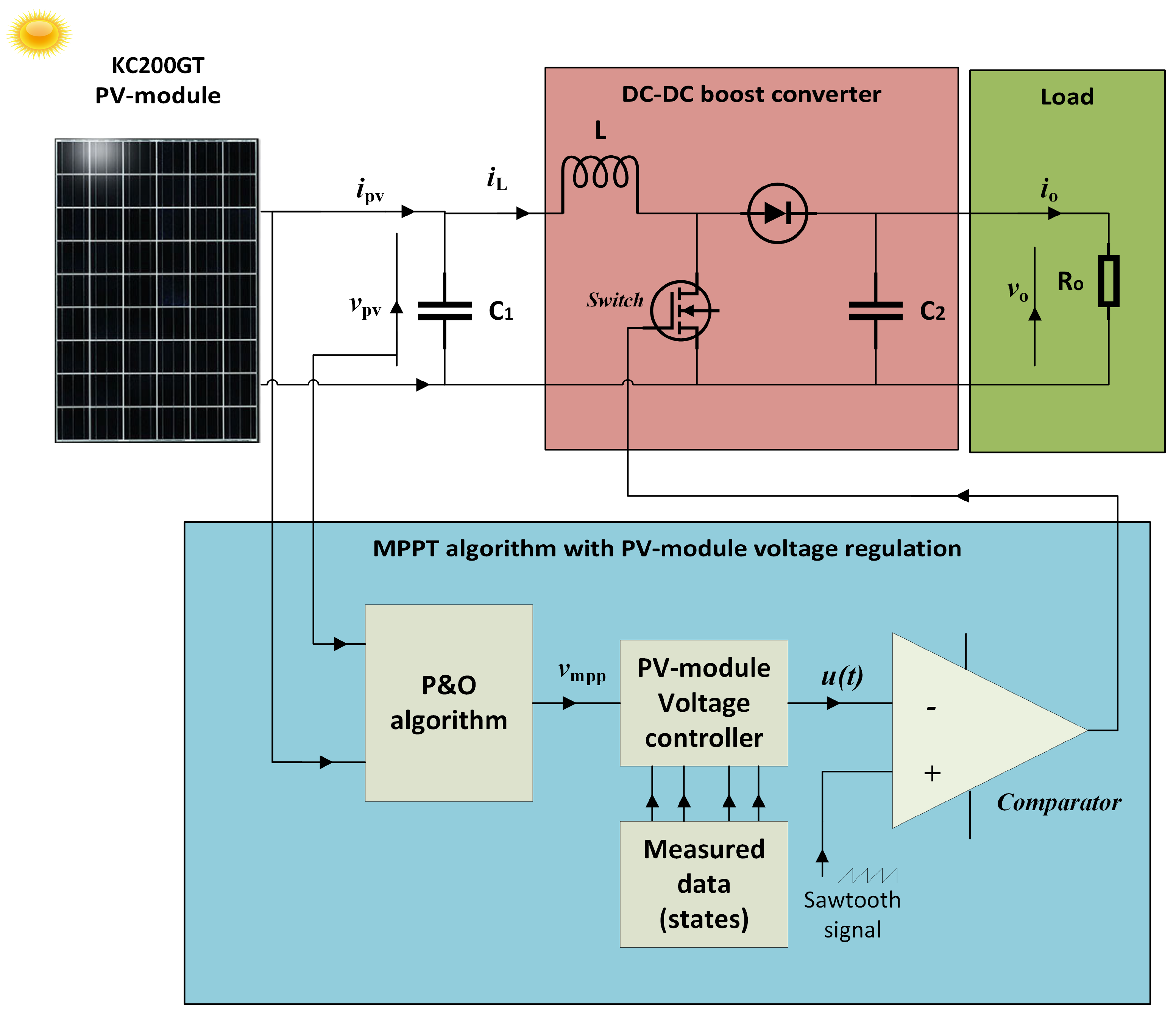
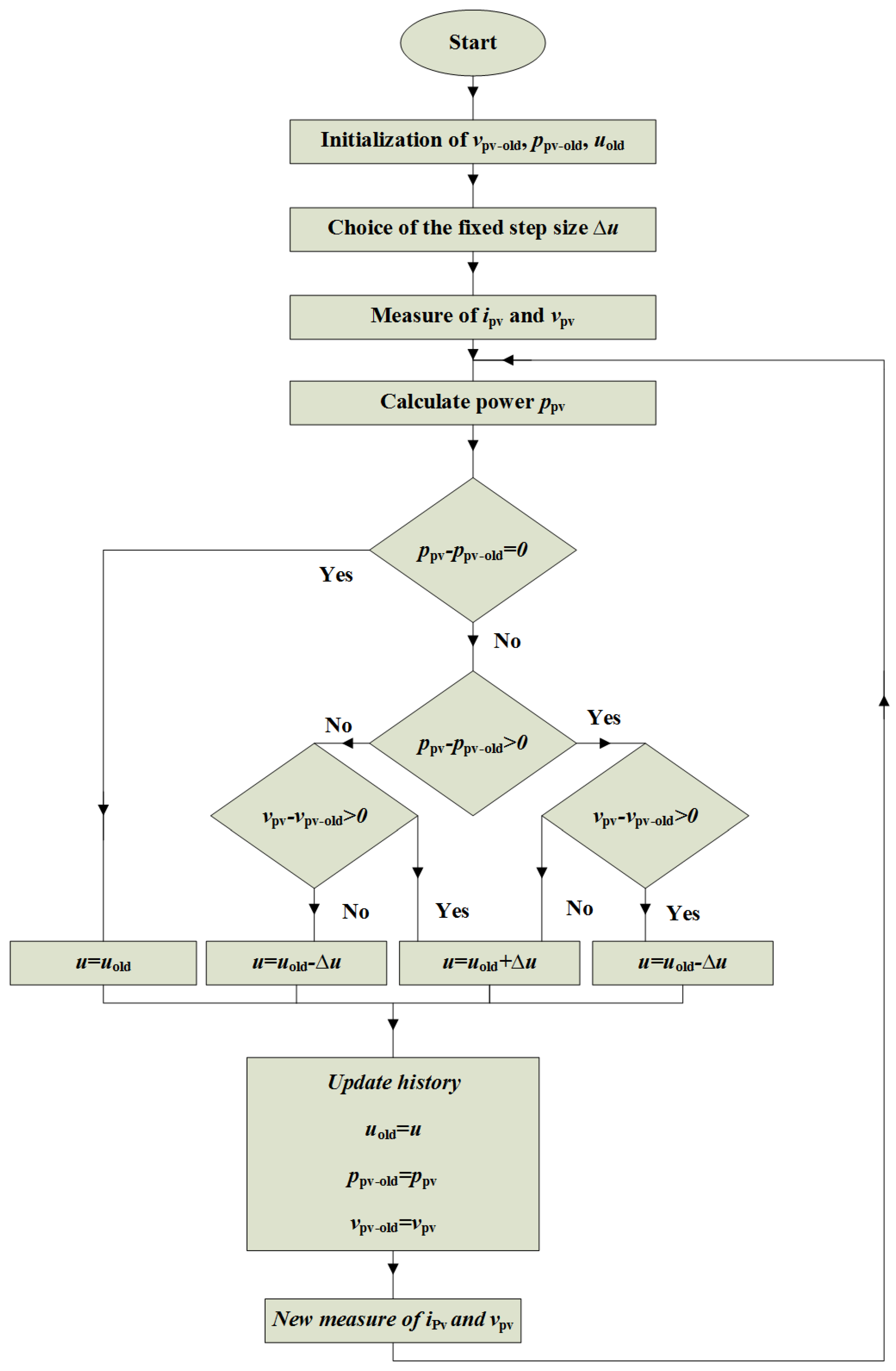
A different approach to address the constraints of conventional single-stage control methods involves adopting a two-stage control strategy, illustrated in
Figure 1. Here, the initial stage utilizes the traditional method to establish the optimal/reference voltage, while the subsequent stage is responsible for maintaining the PV-module voltage at this optimal level. By adopting this method, the strategy gains increased flexibility due to the presence of multiple degrees of freedom. Therefore, PV-module voltage regulation should be achieved with an optimal duty cycle that effectively reduces tracking error. This error primarily arises from the discrepancy between the reference voltage set by the P&O algorithm and the voltage produced by the PV-panel.
To achieve this goal, many scientists have proposed linear controllers to enhance the P&O algorithm, ensuring satisfactory tracking of the optimal voltage provided by the PV-panel. Generally, the initial approach is to develop a linear controller, such as the integral action [
11], proportional-integral (PI), or proportional-integral-derivative (PID) controller [
12,
13]. These controllers necessitate designing an appropriate linear model, typically using the small-signal method. This approach involves perturbing the nonlinear system around a stable operating point, specifically near the MPP. The focus is on analyzing steady-state behavior while neglecting high-frequency components, nonlinear effects, and DC terms. Linear controllers are then designed based on this simplified model, with specific guidelines for setting their parameters. These controllers generally perform well, but may struggle with systems that experience significant dynamic changes or perturbations.
Alternative variable structure controllers have been proposed in the literature to enhance PV-system performance by adapting to changes in the operating point, as well as addressing fluctuations, uncertainties, and perturbations. In [
14], the authors have introduced a terminal sliding mode approach. Both simulation and experimental analyses demonstrate the advantage of employing the incremental conductance (IC) sliding mode approach and its superiority over the IC-PI controller in varying irradiance scenarios. Similarly, ref. [
15] has presented a hybrid method that combines the P&O algorithm with sliding mode techniques, incorporating sliding surface in the form of a PID and an adaptive law to adjust controller parameters according to changing weather conditions. Comparative evaluations conducted via simulations and real-world implementation highlight the superior effectiveness of this approach compared to classical P&O method with direct control and P&O-PI algorithm. To tackle inherent challenges such as chattering and steady-state error in the classical sliding mode control for MPPT, researchers in [
16] have introduced a hybrid approach. This method integrates integral backstepping with sliding mode control. Empirical findings from practical experiments highlight the superior dynamic performance of this hybrid method over classical sliding mode control.
Despite the advantages of variable structure techniques, they have some drawbacks. These methods are more prone to chattering and often generate control signals with variable-frequency PWM [
17], which can negatively influence DC-DC converters by introducing undesirable current and voltage ripples.
Relying on the traditional trial-and-error method for determining controller parameters often leads to unsatisfactory results. To achieve optimal performance, designers should incorporate a cost function that can be systematically optimized. By defining a cost function, designers can quantitatively evaluate and fine-tune controller parameters, leading to more effective and precise control system performance. One widely used method to achieve effective control is the state feedback approach. This technique involves incorporating the system’s state variables directly into the controller, enabling more precise control. Additionally, the state-feedback method often includes a criterion that balances performance with energy consumption, ensuring that the control system not only performs well but also operates efficiently. By integrating these elements, the state feedback method helps optimize both the effectiveness and efficiency of the control system. In [
18], an LQI controller has been introduced to reach this objective. The analysis of the results presented confirms that the newly developed hybrid IC-LQI technique outperforms the conventional IC algorithm.
Many scientific articles have explored ways to boost the performance of photovoltaic systems. They suggested various algorithms to extract more power from solar panels. However, improving the system’s performance involves more than just algorithms. Optimal use of the DC-DC converter is another crucial factor [
19].
Over the past few years, fractional calculus has gained widespread adoption owing to its numerous benefits across various domains such as signal processing [
20], quantitative finance [
21], medicine and biology [
22], telecommunications [
23], modeling pandemic dynamics [
24], and engineering and control systems [
25,
26].
This article explores the application of fractional calculus in an alternative context: modeling the DC-DC boost converter to introduce an extra level of flexibility into the system through the incorporation of extra parameters. Through the utilization of the fractional order boost controller (hereafter denoted FOBC), we aim to examine how the fractional order derivatives/integrals influences system performance in terms of maximizing power compared to the conventional boost converter with integer-order derivatives/integrals. The findings of the research can supplement the conclusions drawn in [
19].
The use of this transformer often requires control methods tailored to its fractional nature. Over the past few decades, many scientists have opted for fractional-order control in various applications due to its numerous potential benefits, including the following:
Enhanced flexibility: Fractional-order control provides greater flexibility in modeling and controlling systems with complex dynamics that cannot be accurately represented by integer-order models.
Improved performance: In certain cases, fractional-order control can offer better performance compared to traditional integer-order control techniques. It may lead to smoother responses, faster settling times, and improved disturbance rejection.
Robustness to parameter variations: Fractional-order control systems can exhibit greater robustness to uncertainties and parameter variations in the controlled system compared to integer-order controllers.
To leverage these advantages, the authors of this paper propose a fractional-order linear-quadratic-integral controller (hereafter denoted FOLQI controller) for regulating the PV-module voltage while retaining the classical P&O algorithm to determine the optimal PV-module voltage (). The implementation of this proposal on a FOBC proceeds through the following steps:
Linearization of the entire PV-system incorporating FOBC (which has not been previously applied in PV-systems) is achieved through a small-signal approach, resulting in a fractional-order small-signal state-space representation. This model is used to design the controller that generates the duty cycle of the FOBC based on the system’s dynamics. In contrast, in the classical P&O method, the duty cycle update is achieved through incrementation or decrementation ignoring the dynamics of the system.
An extended fractional-order small-signal state-space representation is proposed by incorporating a fractional-order integral of the error between the optimal voltage provided by P&O algorithm and the actual PV-module voltage. This proposition aims to improve PV-module voltage tracking with zero steady-state error and rapid response.
To shift the eigenvalues of the augmented system away from zero, ensuring global stability and preventing an oscillatory response in the state variables, a proposed FOLQI controller with the P&O algorithm is designed and implemented in an HIL setup. The results obtained from this approach are then compared with those of the conventional P&O algorithm designed for an integer-order system and the P&O algorithm with an LQI controller using a conventional boost converter with integer-order derivatives/integrals.
In conclusion, this paper is structured as follows: In
Section 2, the type of photovoltaic module, its mathematical model, and electrical characteristics are provided. Mathematical tools, including fractional order calculations required for controller synthesis, are provided in
Section 3. In
Section 4, a detailed synthesis and analysis of the fractional-order small-signal model of the studied system is provided. The discussion of the proposed two-stage MPPT control, employing the P&O algorithm and the FOLQI controller, is presented in
Section 5.
Section 6 presents the HIL implementation of the synthesized MPPT controllers along with comparative analysis. Finally, the conclusion is presented in
Section 7.
2. PV-Module Modeling
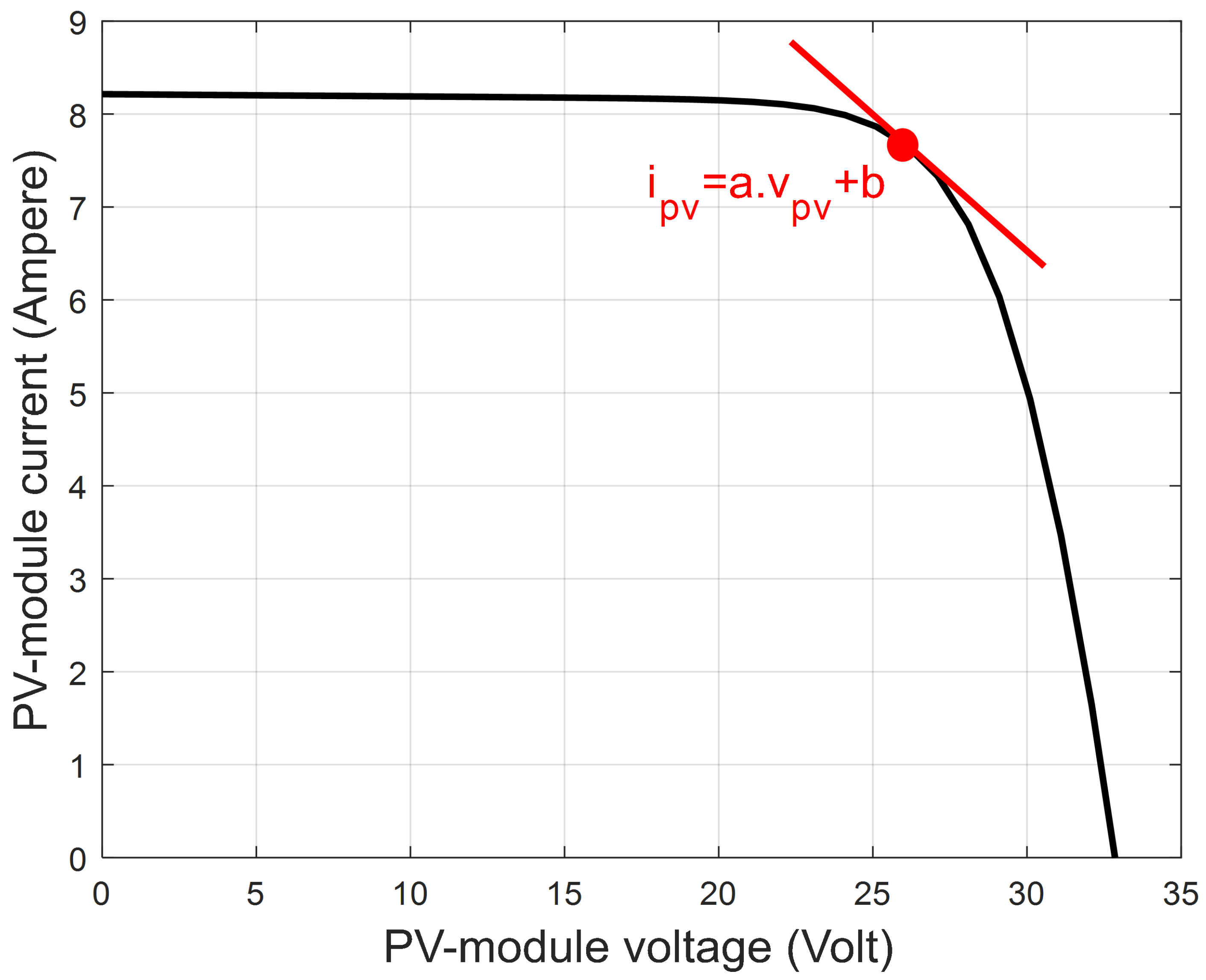
Photovoltaic devices exhibit a distinctive non-linear current–voltage (
–
) characteristic, as vividly depicted in
Figure 2. The specific illustration delineates the characteristic curve of the KC200GT PV-module, as documented in [
27].
The mathematical expression defining the current–voltage (
–
) characteristic is [
27]
where
represents the current produced by the incident light, it exhibits a direct proportionality to the solar irradiation received from the Sun, and its formula is as given in [
27]. The diode saturation current,
, is subject to temperature variations and can be described as illustrated in reference [
27]. The thermal voltage, denoted as
and calculated as
, incorporates
cells connected in series, where k represents the Boltzmann constant, q is the electron charge, and T is the temperature of the photovoltaic (PV) cells. Additional parameters include
, representing the equivalent series resistance,
for the equivalent shunt resistance, and ‘
,’ which denotes the ideality constant of the diode. The values for these parameters in Equation (
1) can be derived from practical measurements of the PV-array characteristics. Further details on the modeling of the KC200GT PV-module and the determination of parameters for the current–voltage equation can be found in reference [
27].
The synthesis phase of the controller appears to require linearization, especially when the PV-module is operating under nominal conditions, optimizing power extraction. This essential criterion is often specified in standard test conditions (STC). Hence, the parabolic shape of the nonlinear (
–
) curve can be transformed into a linear form represented by the equation
at MPP (refer to
Figure 2) [
28].
The slope ‘
a’ of the aforementioned straight line, which mirrors the linear behavior of the PV-module at its MPP, is articulated as follows [
28].
where the second parameter ‘
b’ is expressed as follows [
28]:
where
and
are the current and voltage of the PV-module at the MPP, respectively.
Finally, the linear model characterized by the tangent line to the
–
curve at the point of linearization (
,
) is [
28]
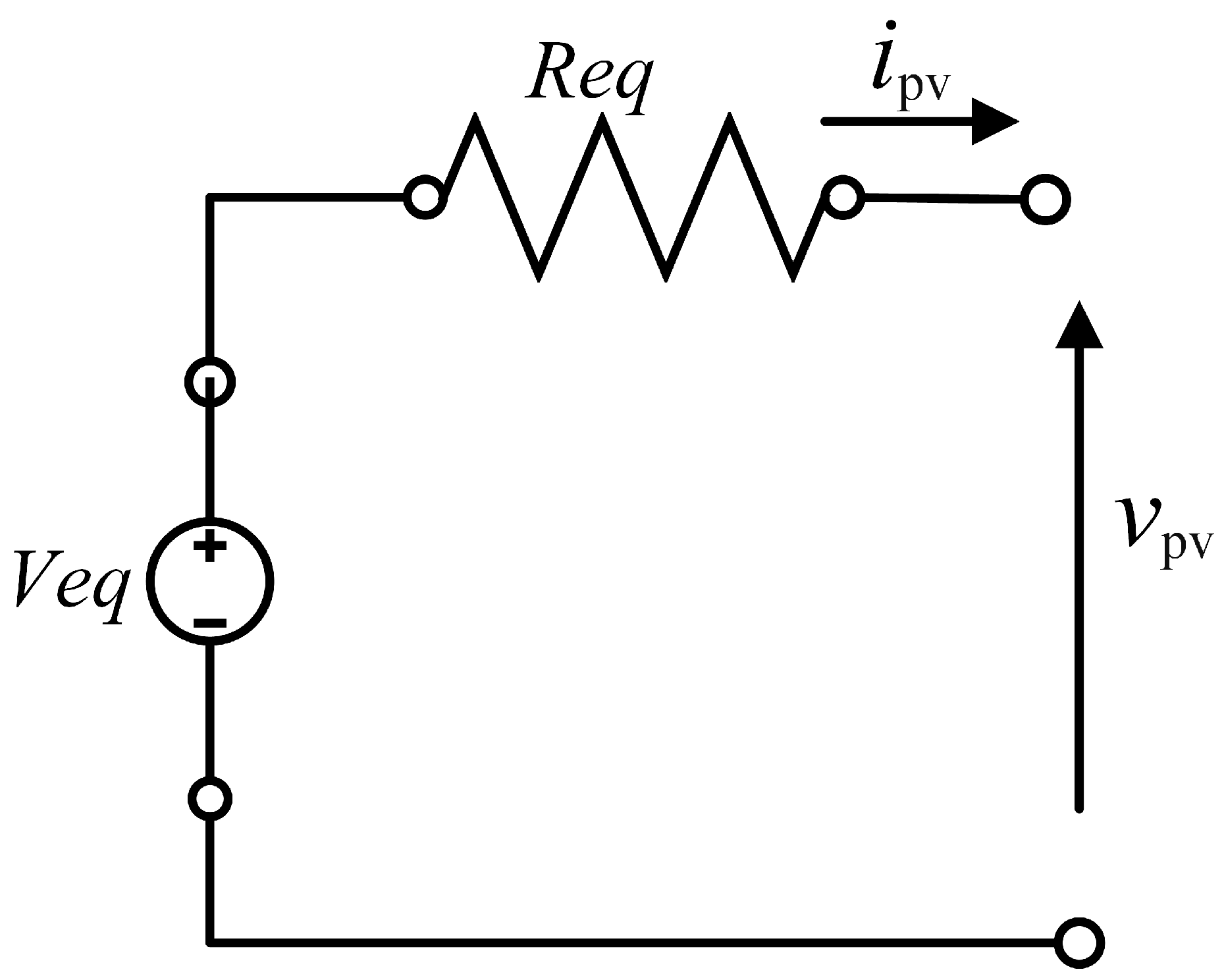
It can be depicted through the corresponding circuit illustrated in
Figure 3, where
is defined as −1/a, and
is expressed as
.
The circuit illustrated in
Figure 3 holds validity specifically at the linearization point (
,
). It serves as a reliable approximation for the PV-module when conducting a small-signal analysis in the proximity of this designated point. The dynamic performance of the system, comprising both the PV-module and the boost converter, is significantly influenced by the operating point of the PV-module. The system is meticulously designed and optimized to function efficiently at the MPP. Subsequently, the design undergoes thorough validation for its performance at other operating points.
Table 1 provides a comprehensive listing of the KC200GT PV-array parameters derived from the modeling process, offering a detailed insight into the array’s characteristics.
3. Fundamentals of Fractional-Order Calculus
Fractional differential-integral operators, denoted as
, are characterized by their operational bounds set by “
i” and “
t”, while “
” expands the scope of integration and differentiation to encompass non-integer order operators. This generalization facilitates the treatment of complex systems with fractional dynamics. The continuous differential-integral operator is mathematically described as [
29]
Within the existing literature, multiple definitions of fractional-order operators exist. Among these, the two most frequently employed definitions are as follows:
The Riemann–Liouville definition, predominantly utilized in mathematical contexts, although it is somewhat intricate in nature.
The Caputo definition, favored within the engineering field for its ease of manipulation, serves as the foundation for this work. The utilization of the Caputo definition allows for the integration of the following formulas, which are essential components of the study’s methodology.
Definition 1. The fractional-order derivative in the Caputo sense of a continuous function f(t) is expressed as follows [29]: Here, the function represents the Gamma function, while denotes the smallest integer that is greater than α, .
Definition 2. The fractional-order integral with Caputo definition of a continuous function f(t) is given by [29] Definition 3. The fractional-order derivative of a fractional-order integral of the same order of a function f(t) using the Caputo definition yields [29] In this paper, a simplifying assumption of zero initial conditions will be made.
Definition 4. Considering two continuous functions f(t) and g(t), fractional order differentiation and integration represent linear operators [30]. Definition 5. Due to the complexity inherent in numerically simulating fractional differential equations compared to ordinary ones, the Laplace transform method is frequently employed as a valuable tool for addressing engineering challenges stemming from such equations.
The Laplace transform of Caputo’s definition is given by [29] In the context where represents the Laplace operator, the Laplace transforms of the Caputo fractional derivative are simplified to Equation (11) when considering zero initial conditions. The authors in this paper approximated the fractional operator using a fifth-order Oustaloup filter within the frequency range rad/s to obtain a rational transfer function [31]. Definition 6. A commensurate-order system is a fractional-order dynamic system in which all the orders of the derivatives (or integrals) involved are integer multiples of a common base order q, where . Mathematically, if the system involves derivatives of orders , it is commensurate if there exists a q such that: , for all , with .
The commensurate fractional-order linear system (where
), expressed in the state-space form below [
32], will serve as the foundation for this study.
where
,
,
,
,
is the state vector, and
is the output.
Applying the Laplace transform to (12), while considering Caputo’s definition for fractional-order derivatives, results in
With zero initial conditions,
, Equation (
13) simplifies to
Combining this with Equation (
14) results in
Let I denote the identity matrix and represent a transfer function with numerator and denominator polynomials expressed as integer powers of .
Lemma 1. Consider the transfer function with a common polynomial denominator defined by the following formula: Let
represent the poles of the transfer function
of (16), defined as the solutions to the equation
. From Equation (
17), it follows directly that the system poles are given by
where
are the eigenvalues of matrix
A of system (12).
The BIBO stability condition is met when the system’s poles are located in the left half of the s-complex plane (where
). Considering Equation (
18), the stability condition for commensurate-order systems is derived as follows [
33]:
In this case, the state elements gradually diminish towards zero, resembling the behavior of
[
34].
Theorem 1. The system (12) exhibits observability within the time interval if and only ifhas rank n [32]. Theorem 2. The system (12) is controllable during the time interval if and only ifhas rank n [32]. Theorem 3. The process of generating the state-space averaging model for the DC-DC boost converter functioning in continuous conduction mode (CCM) commences with the initial step of averaging all waveforms throughout a single switching period. This averaging procedure serves to mitigate switching-related harmonics, facilitating a clearer representation of the converter’s behavior [35]. The average value of the variable over one complete switching period is defined as [35] In accordance with fractional calculus, it is possible to obtain the fractional-order form of Equation (22) [35].where . 5. Improving P&O Algorithm with FOLQI via Controlling PV-Module Voltage
To improve the efficacy of the fractional-order linear quadratic regulator (FOLQR) in handling persistent disturbances and achieving zero steady-state error in response to step commands, incorporating a fractional-order integral effect becomes imperative. This augmentation, known as the fractional-order LQI controller (FOLQI), integrates fractional-order principles into the LQI control framework. Its mathematical formulation will be thoroughly explored in the forthcoming discussions.
5.1. Fractional-Order State-Space Error Dynamics Representation
The design of the FOLQI controller requires the addition of an extra state to the previously defined state space. The system state vector includes, respectively, the measurable PV-module output voltage, the inductor current, the output voltage, and the fractional-order integrator given by . This last additional state is included to eliminate steady-state errors in the system. It achieves this by integrating the error signal over time, which allows the controller to respond to accumulated discrepancies between the desired and actual outputs. This ensures that any persistent, small errors, even if they are not immediately significant, are eventually corrected. By penalizing these errors in the cost function, the integral action improves system performance, particularly in systems where disturbances or model inaccuracies might lead to bias that needs to be removed over time.
is considered the small signal of
. To obtain the fractional-order derivative of
, Definition 3 is employed, yielding
. The augmented fractional-order state-space system, integrating this formula with Equation (
35), is formulated as follows:
where
and
At steady state, Equation (
37) can be reformulated as
By assuming that
is a constant input, subtracting (37) from (38) according to Definition 4 yields the new error dynamics:
where
, which indicates that
The detailed prescription for achieving optimal control for system (39) is elucidated in [
32], delineated by the ensuing formulation.
By merging Equations (39) and (43), we obtain the error dynamics in the closed-loop system.
This indicates that the gain matrix must be designed appropriately to ensure the following requirements:
5.2. FOLQI Controller Design for PV-Module Voltage Regulation
Research on linear quadratic controller for fractional-order systems has been conducted in many papers such as [
39]. However, the solutions proposed in this study are complex and rely on time-dependent methods. This section adopts an approach to design FOLQI controllers for fractional-order system (34) that is similar to the methodology used for integer-order systems, as explained in detail in [
32,
40].
Now, let us consider the plant delineated by the linear fractional-order system (39), wherein our focus centers on minimizing the designated performance index.
In this context, R and Q represent weight matrices, both characterized by positive definiteness. The selection of elements within these matrices is meticulous, aimed at achieving a delicate equilibrium between the energy of the control signal applied at the system input and the energy of the state variables . This balance is crucial, as it intricately hinges on the response speed of the system. The optimal selection of Q and R factors allows the controller to smooth the control actions, reduce oscillations, and ensure that the system converges to the MPP gradually and stably, avoiding overshooting, all while optimizing the criterion J.
The optimal gain matrix
, which minimizes the criterion
J, is determined by the following formula [
40]:
Here,
P is a matrix with positive-definite properties, serving as the solution to the Ricatti equation given by the following formula [
40]:
The combination of Equations (43) and (47) results in
In conclusion, the optimal control strategy for the duty cycle of system (37) can be determined as follows, by treating
as a disturbance:
The optimal gain matrix ensures that the duty cycle achieves a zero voltage error, i.e.,
, and guides the system states
towards their target values during steady states.
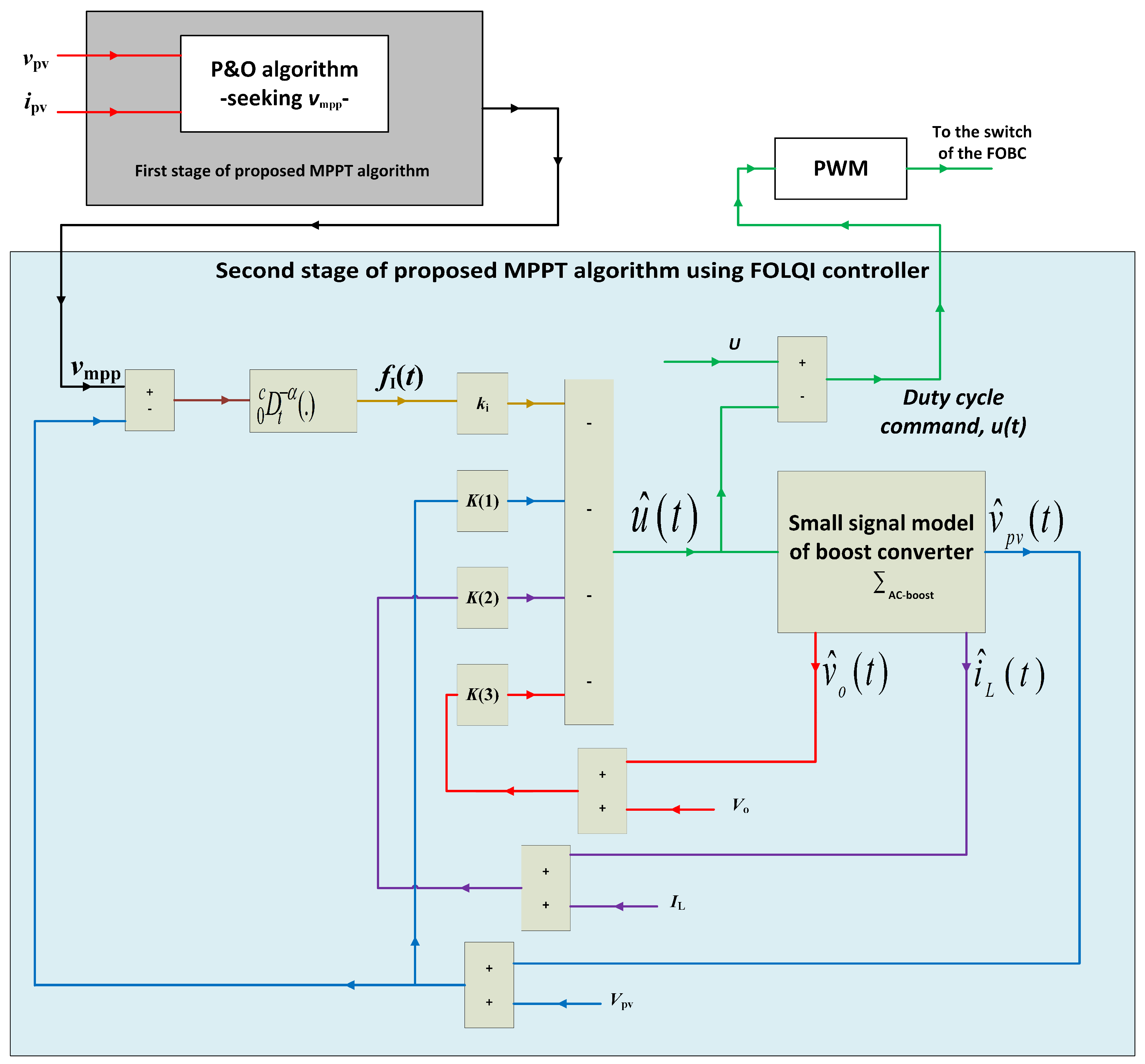
Figure 6 illustrates the proposed FOLQI controller scheme for regulating the voltage of the PV-module.
Designing a FOLQI/IOLQI controller presents a significant challenge, particularly in selecting suitable values for Q and R matrices. Bryson’s rule was used as an initial guideline by normalizing each state with respect to its maximum allowable deviation [
41]. In this formulation, the fourth state represents the integral of the tracking error between the reference and the system output and, therefore, directly governs steady-state accuracy. Since the primary control objective is zero steady-state error, this integral state was assigned a nonzero weight, while the remaining states—being internal and not directly constrained by performance requirements—were left unweighted. This led to the selection
. The control weighting
was chosen to provide a reasonable compromise between tracking performance and control effort and was validated through simulation to ensure stable behavior without excessive actuator usage. Considering the obtained parameter vector
, the eigenvalues of the controlled system presented by
and the uncontrolled system presented by matrix
have been calculated. The results indicate that the condition
, as specified in
Section 5.1 and in accordance with Lemma 1, is achieved when using the FOLQI controller, with values ranging from 1.7957 to 3.1416. Notably, the stability of the integer-order system under LQI control (
) has been confirmed.
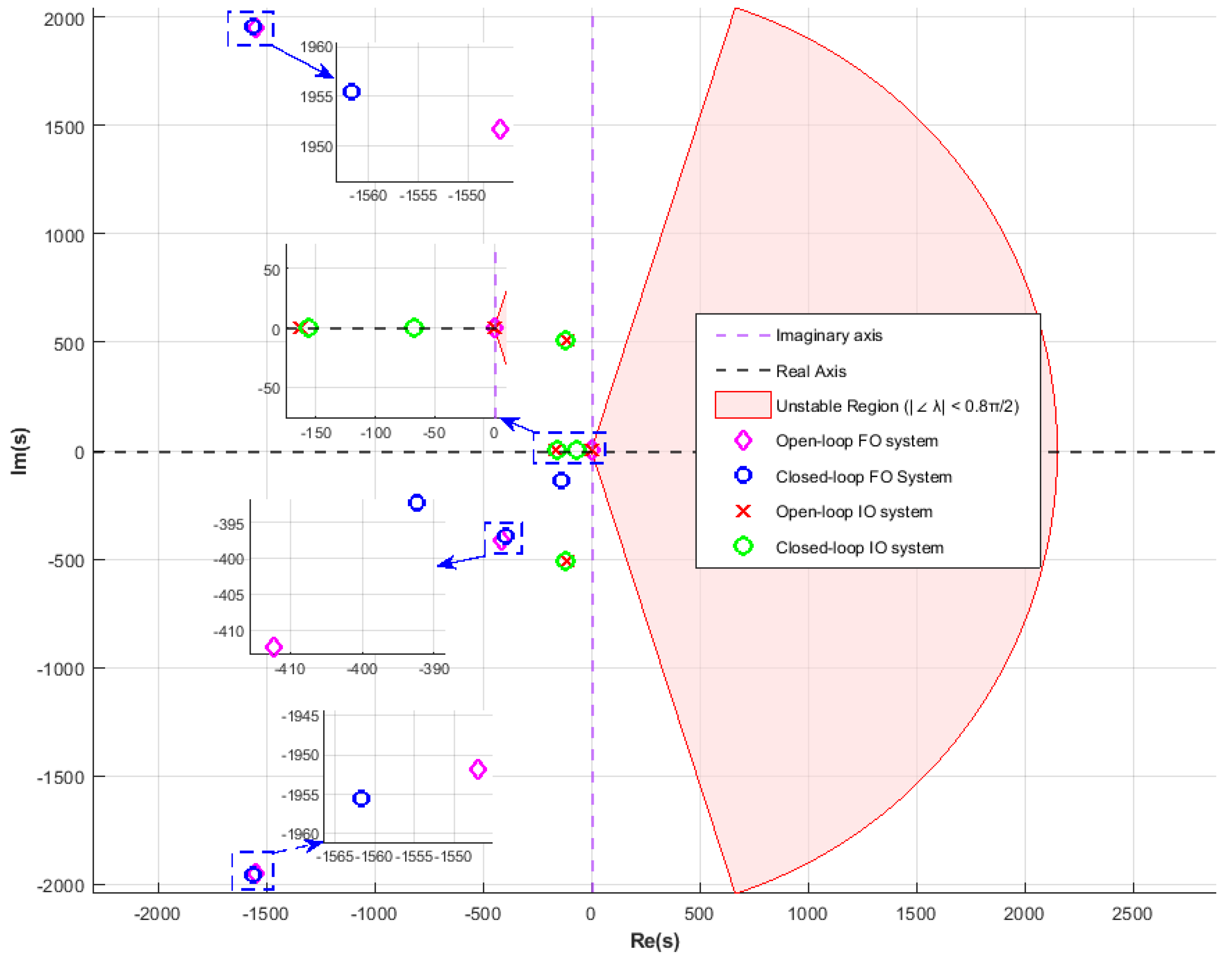
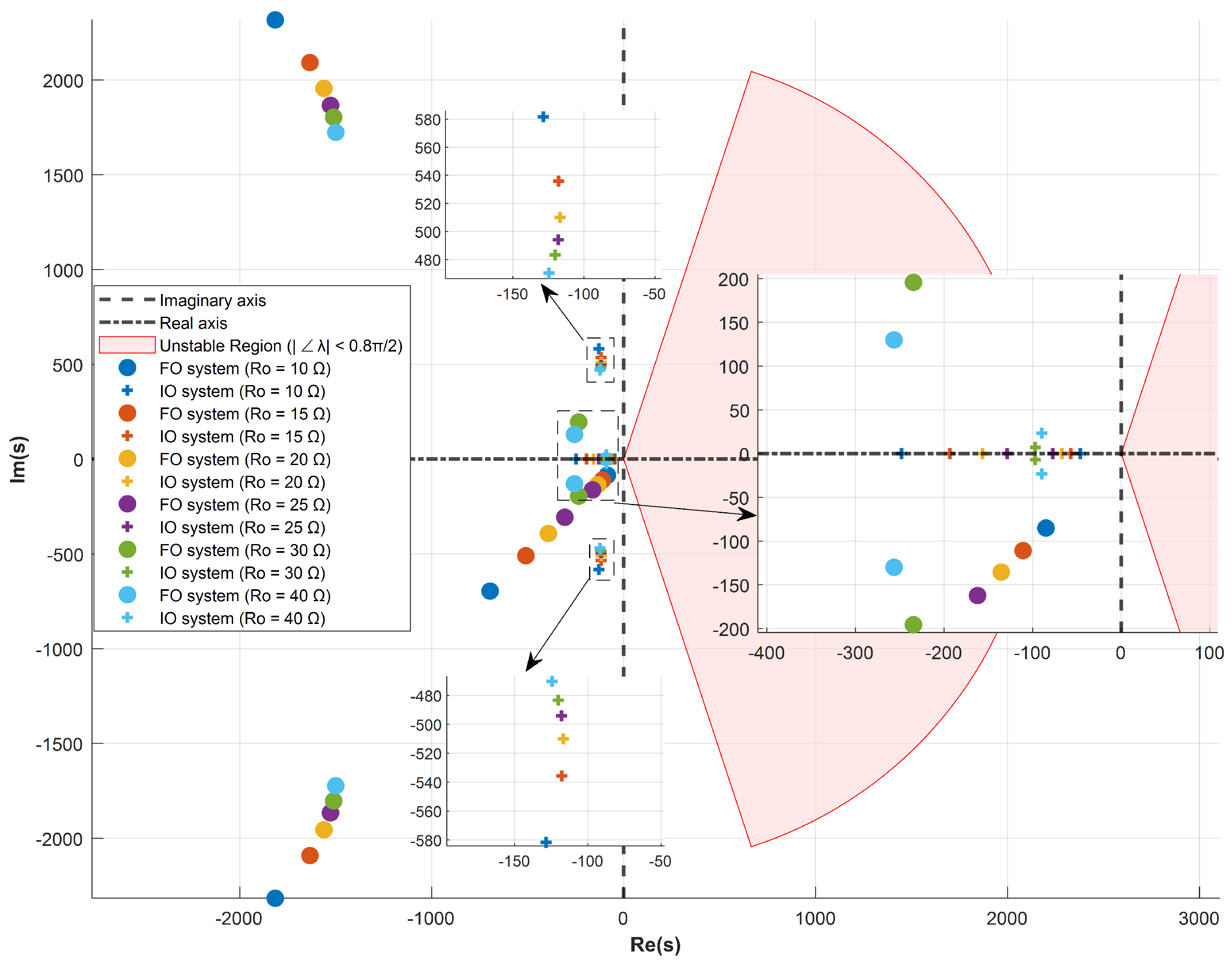
Figure 7 and
Figure 8 illustrate the root loci of the characteristic equations for the two control systems, corresponding to fixed and variable resistive load conditions, respectively. In
Figure 7, the load resistance is fixed at 20 Ω, while in
Figure 8, it varies from 10 Ω to 40 Ω. The figures reveal that the poles of the IOLQI controller exhibit lower damping compared to those of the FOLQI, indicating that the IOLQI system has a more oscillatory response. Conversely, the root loci also show that damping variations with respect to changes in the load are significantly smaller in the IOLQI controller than in the FO-LQI.
In contrast, the uncontrolled system generates a single zero eigenvalue among all eigenvalues, negatively affecting the system response by causing oscillations. This issue cannot be resolved using the traditional P&O method, which depends on incrementing or decrementing the duty cycle, as it fails to eliminate the zero eigenvalues due to its neglect of the system’s key dynamics, unlike our proposed approach.
6. Results of HIL Validation
In this section, an HIL emulator is used to test and verify our new way of controlling solar panels, combining P&O algorithm and FOLQI controller, in comparison to the traditional method using the integer-order LQI method.
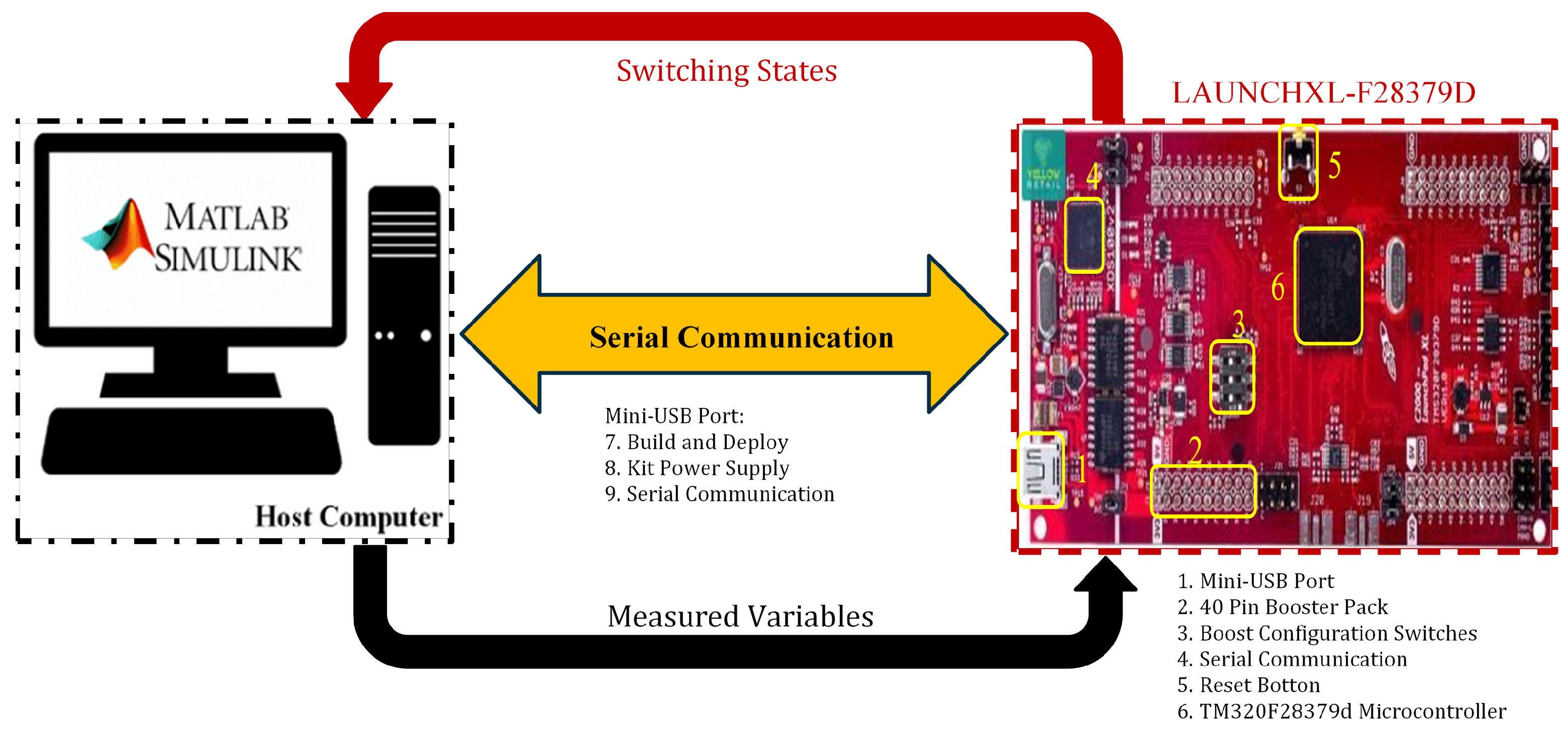
Figure 9 illustrates the basic parts and signal paths of the HIL simulator used for these different approaches.
In a standard HIL emulator configuration, the complete PV system, comprising the KC200GT PV module and a boost converter linked to a resistive load, is simulated on a computer using MATLAB 2018a software. However, the actual control strategies are implemented on an external microcontroller kit, specifically the TMS320 microcontroller-LaunchPadXL TMS320F28377S Texas Instruments (Dallas, TX, USA) kit in our research. The HIL emulator operates through collaboration between the Host-PC and the target LAUNCHXL-F28377S, connected via a virtual serial COM port [
42,
43]. In this configuration, the Host-PC transmits measured signals (such as
,
,
) to the LAUNCHXL-F28377S Texas Instruments (USA) kit. Upon receiving these signals, the control strategy on the target kit calculates the required duty cycle. Subsequently, the control signal is sent back to the Host-PC to regulate the PV-module output voltage by actuating on the boost converter, and this cycle repeats at each specified sampling time
.
Once the devices and the host PC have been configured according to the guidelines outlined in [
42,
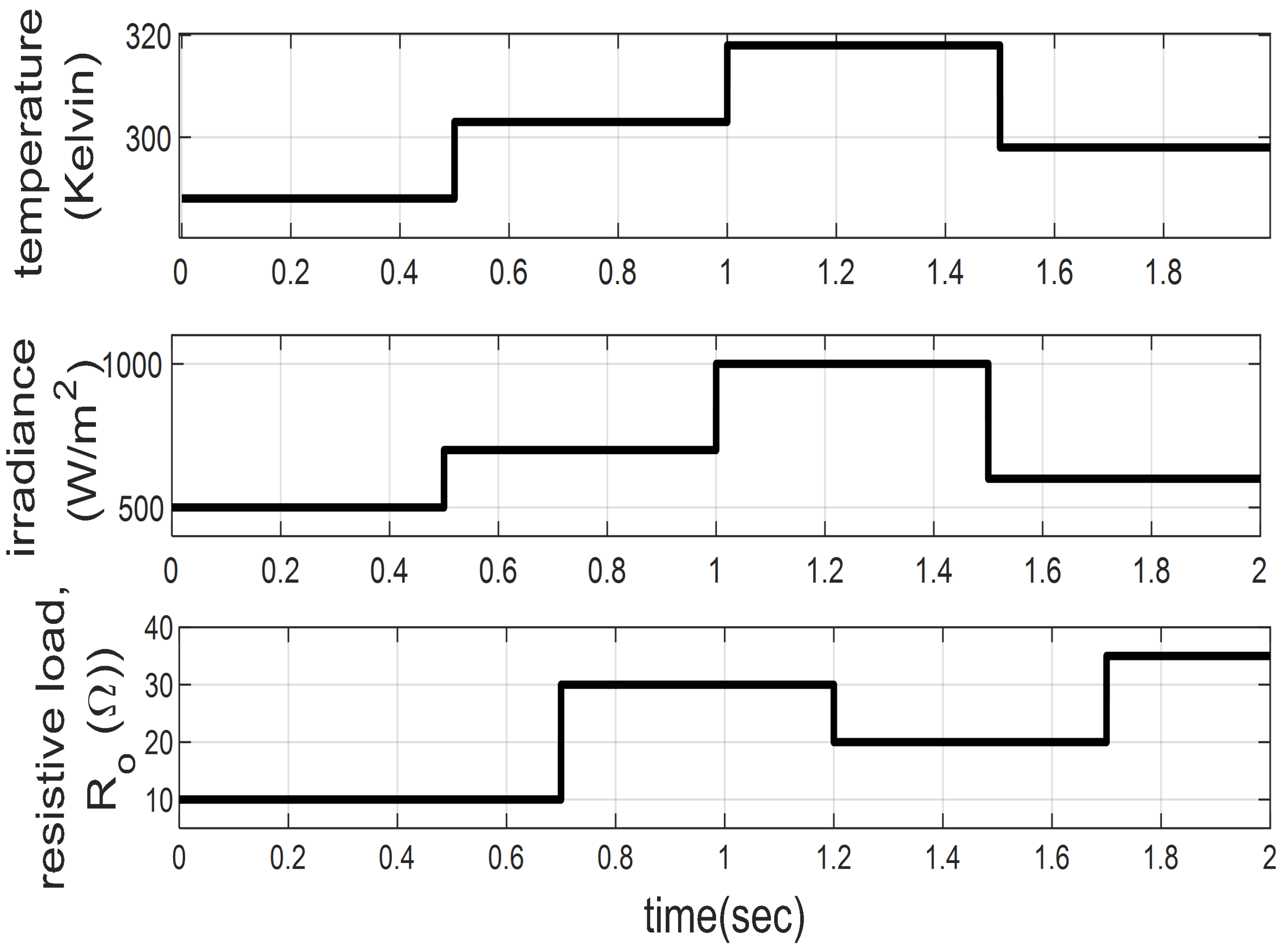
43], the HIL simulation plays a crucial role in evaluating the effectiveness of the MPPT strategies. The performance of the PV-system using different MPPT approaches is examined under sudden changes in meteorological conditions and resistive load, with a sampling time of
s, as illustrated in
Figure 10.
The proposed MPPT approach employing FOLQI for PV-module voltage regulation with a voltage step size
of 0.01 volts is compared to one utilizing integer-order derivatives, as well as the conventional P&O method with 0.001 duty-cycle step-size. In
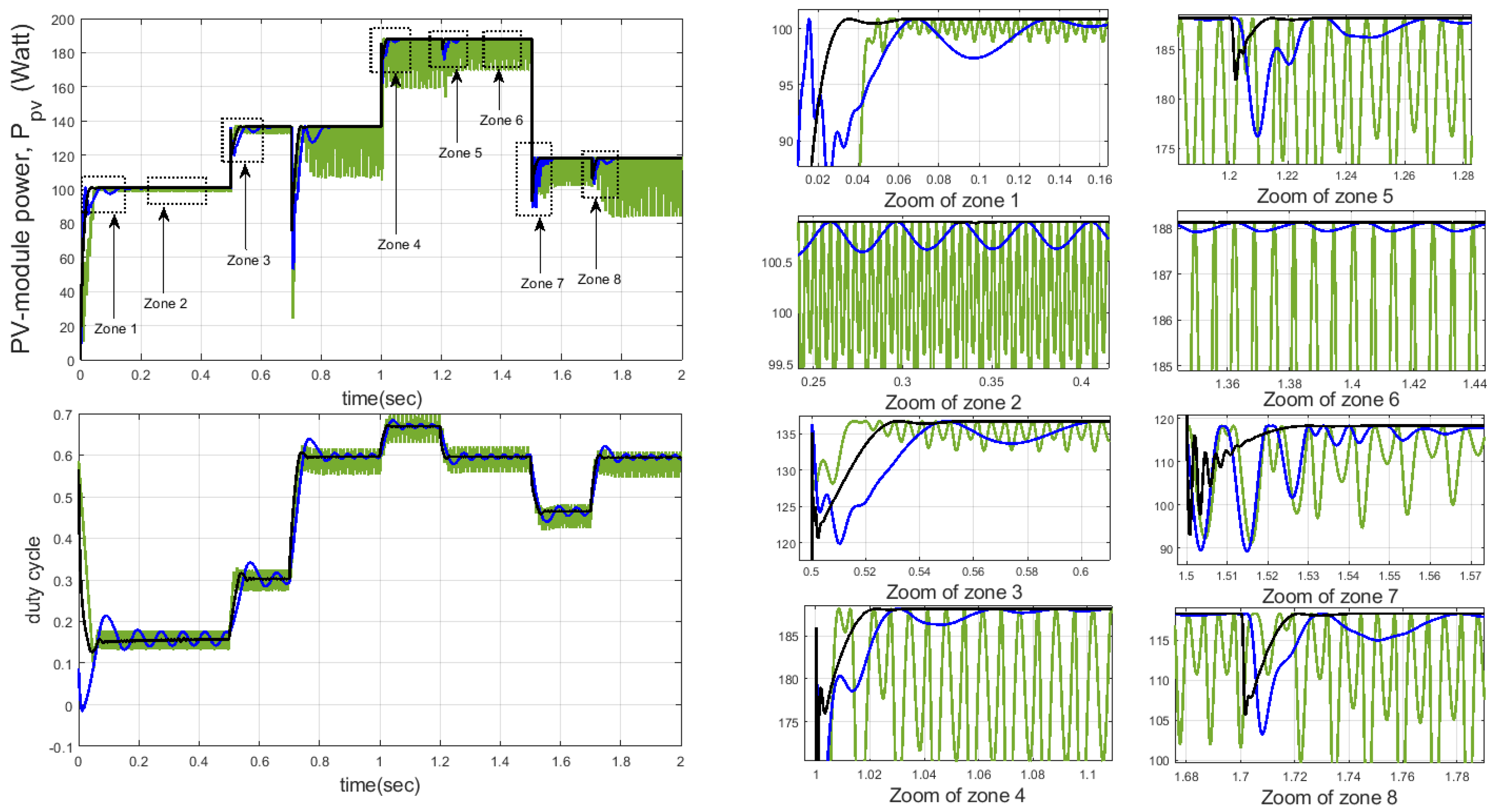
Figure 11, the output power responses and duty cycles of the MPPT algorithms are compared using the scenario presented in
Figure 10. The analysis demonstrates that the proposed MPPT with the FOLQI controller efficiently tracks the desired MPP with exceptional speed and stability, exhibiting no oscillations, as validated by the root locus plots in
Figure 7 and
Figure 8 and the discussion in the preceding section. This precise tracking is clearly illustrated in the magnified views of zones 1 to 8 shown on the right side of the same figure. Additionally, the P&O algorithm with the LQI controller delivers highly satisfactory tracking accuracy, with significantly reduced oscillations compared to the standard P&O algorithm.
From
Figure 11, it is evident that the decrease in PV-module power at the moments when the load value changes at 0.7, 1.2, and 1.7 s is minimal when our proposal is applied, compared to the other algorithms. The P&O algorithm with LQI controller ranks second, while the conventional P&O algorithm ranks last.
Furthermore, the introduced MPPT algorithm featuring the FOLQI controller establishes a favorable balance, resulting in the absence of duty cycle oscillations, as showcased in the lower-left plot of
Figure 11. In stark contrast, the rest of the MPPT algorithms display a divergent pattern with degradation between them, as illustrated in the same figure.
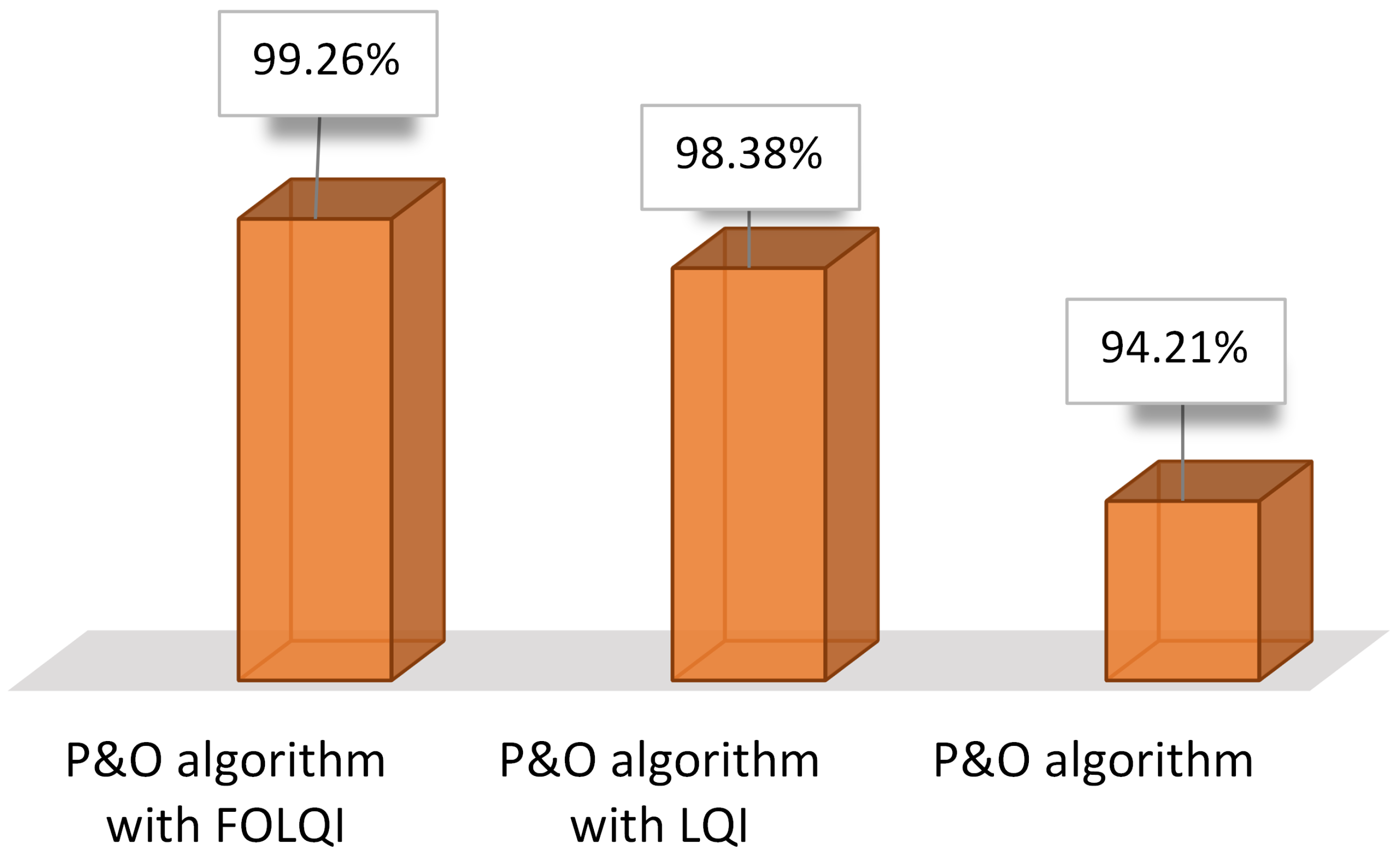
To ensure a fair comparison, we relied on the most commonly used factor, which is the MPPT efficiency (defined as the ratio of the actual power extracted from the PV module to the theoretical maximum available power under varying irradiance and temperature conditions) [
11]. Using this criterion, we derived the percentages depicted in the histogram in
Figure 12. From these results, it is evident that the proposed algorithm outperforms all others, achieving a percentage of 99.26%, followed by the MPPT algorithm featuring the integer-order LQI controller of 98.38%, and finally, the conventional P&O algorithm of 94.21%.
To further elaborate on the previous results, several performance criteria are employed to evaluate the system in terms of tracking accuracy, energy consumption, and maintenance requirements. The analysis is based on the following criteria:
- Integral absolute error signal (IAE) is a method for evaluating the error between a measured process variable and a desired set point.
- Integral absolute control signal (IAC) is a method for evaluating the energy consumption of a control signal.
- Total variation (TV) represents the overall variability of the control signal by measuring the accumulated absolute differences between consecutive signal values over a specified time interval.
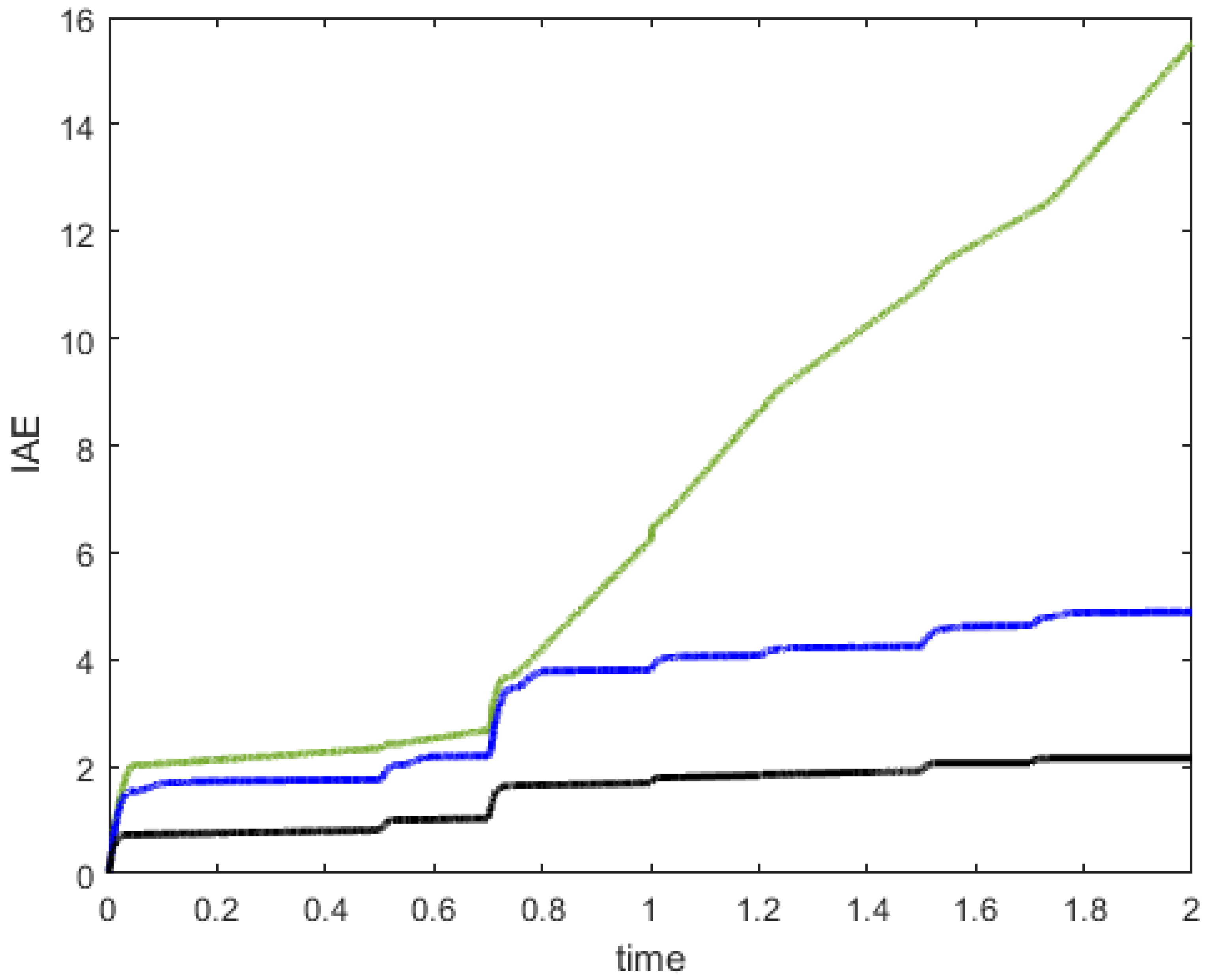
A comparative analysis of the three MPPT control strategies using the IAE(t) as a performance index is illustrated in
Figure 13. The results clearly indicate that the two MPPT approaches based on indirect control, namely, LQI and FOLQI, achieve lower IAE(t) values over the entire operating period compared to the classical MPPT method. Moreover, the FOLQI-based approach exhibits the lowest IAE(t) among all strategies. This improvement reflects faster error convergence and a reduced cumulative tracking error, demonstrating the effectiveness and robustness of the proposed controller. Consequently, the proposed method provides enhanced performance in terms of tracking accuracy.
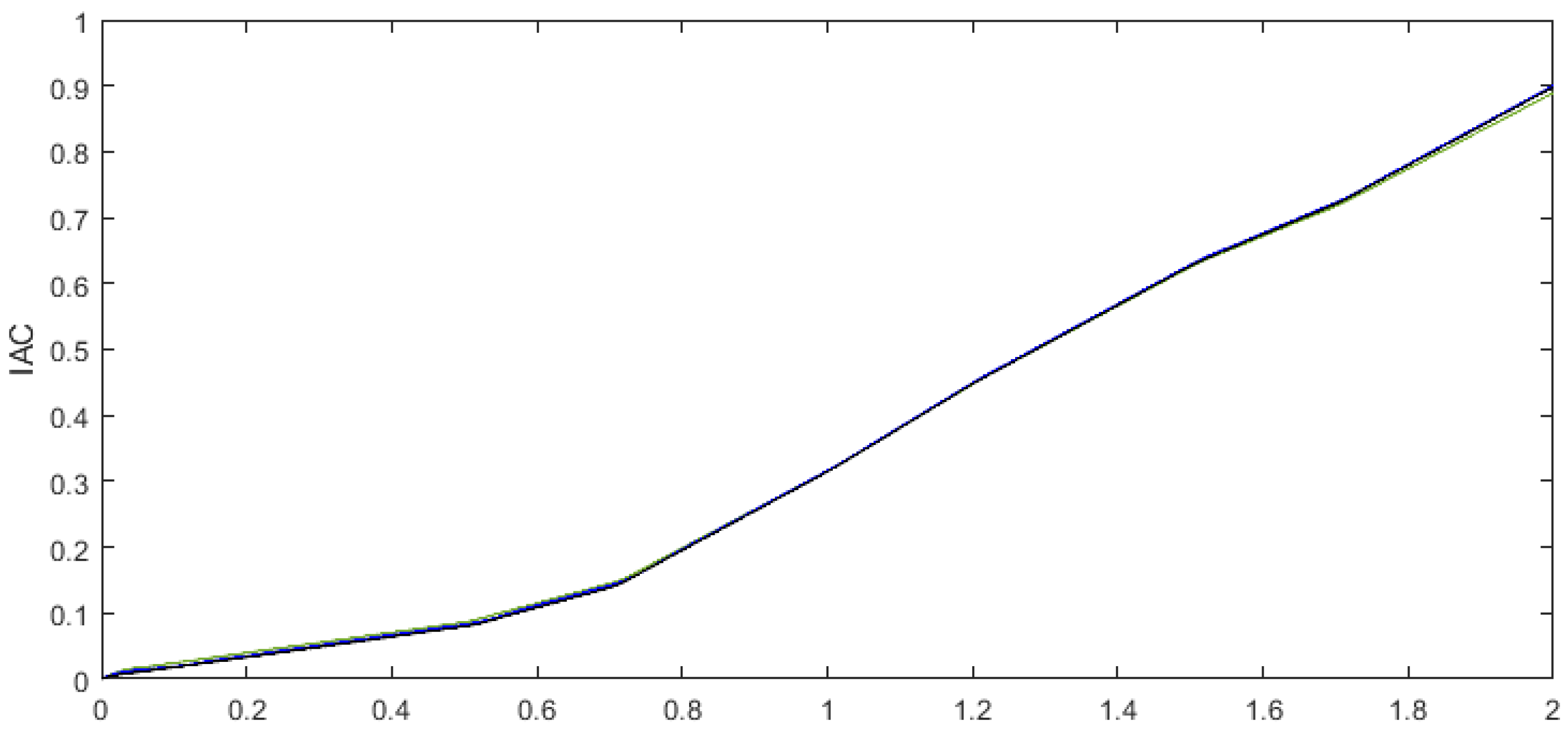
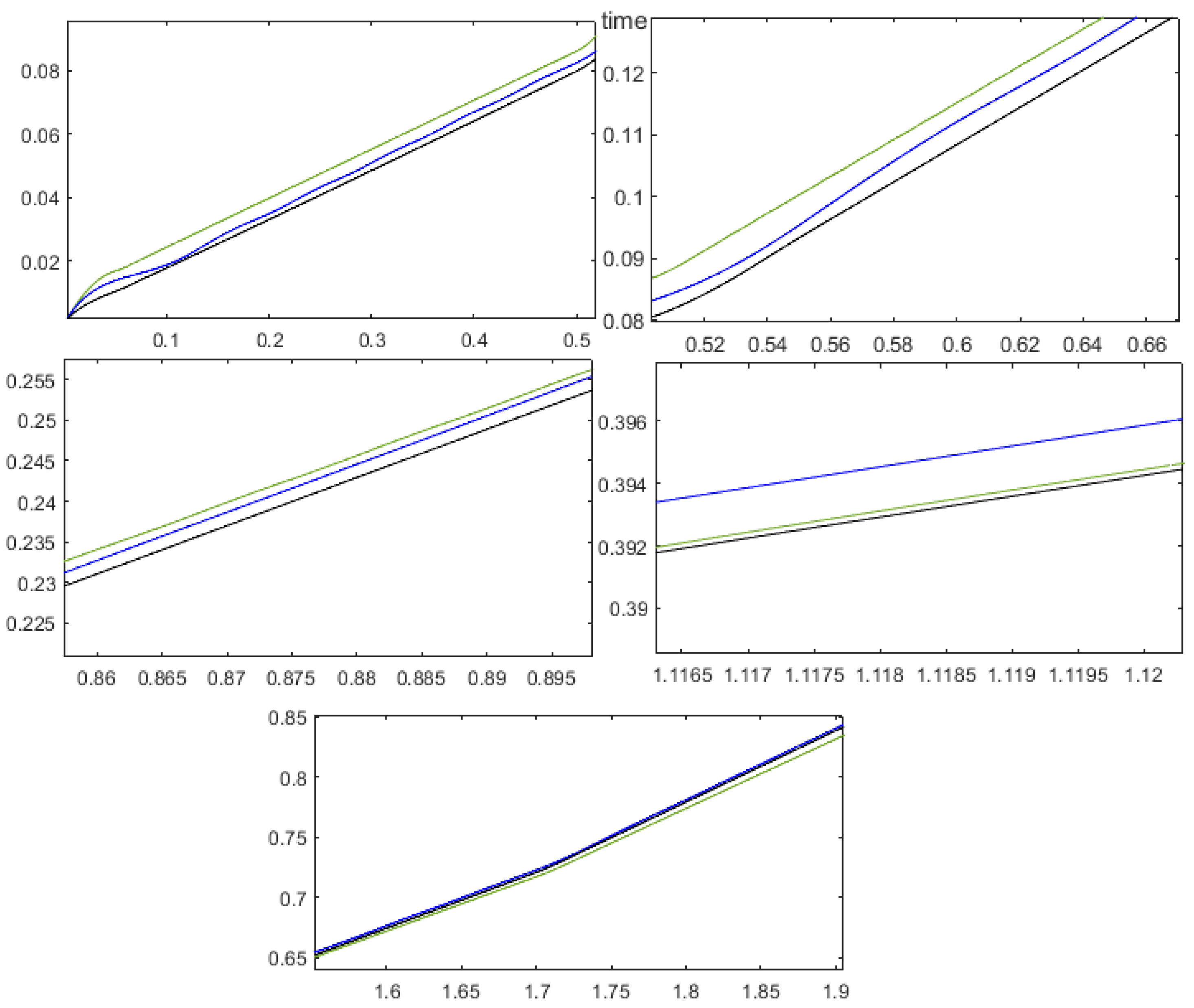
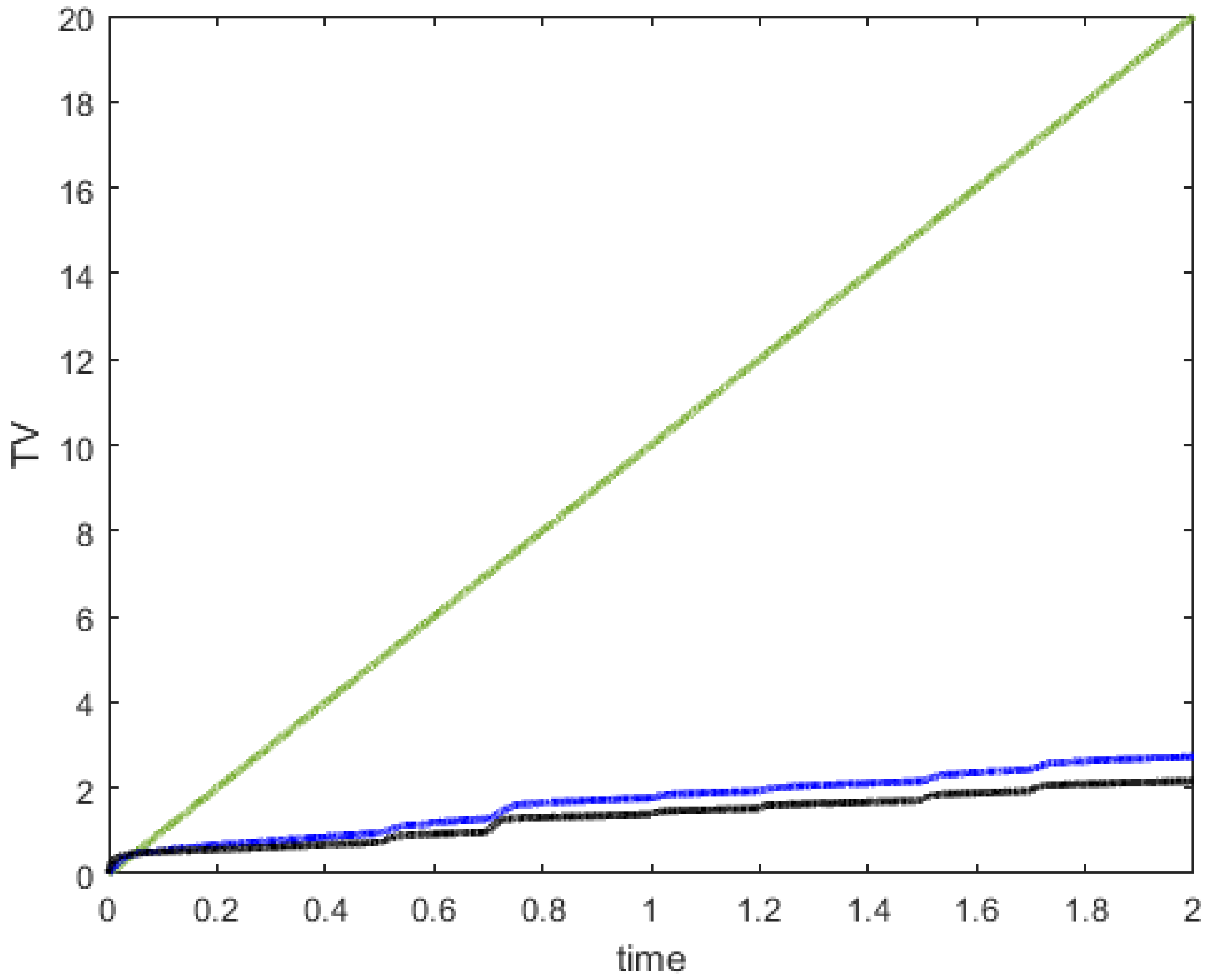
Figure 14 and
Figure 15 present the evolution of the performance indices IAC(t) and TV(t), respectively. A lower value of the TV (given by our proposal) indicates reduced overall fluctuations of the control signal, resulting in a smoother control action that is easier to implement and less demanding on the actuator. Such behavior contributes to reduced electrical stress and decreased maintenance requirements. Likewise, a lower integral of absolute control (IAC) reflects reduced control effort, implying lower energy consumption. This is particularly advantageous in large-scale industrial applications, where minimizing energy usage leads to significant operational cost savings.
7. Conclusions
This article investigates the limitations of the classical P&O method when directly applied to PV systems, where the adjustment of the operating point relies on a non-optimal duty cycle determined solely through incremental and decremental steps. These limitations generally result in slow dynamic response and significant steady-state oscillations, mainly due to the sensitivity of the duty-cycle step size to variations in climatic conditions and load. To overcome these drawbacks, an indirect P&O-based solution is proposed, in which the P&O algorithm is combined with a FOLQI controller and a DC-DC FOBC.
Hardware-in-the-loop test results demonstrate that the proposed approach achieves a maximum efficiency of 99.26%, outperforming both the direct P&O method (94.21%) and the indirect P&O approach based on an integer-order boost converter with an LQI controller (98.38%). These results confirm the superior efficiency, robustness, and MPPT performance of the fractional-order-based indirect control strategy.
Nevertheless, the proposed approach presents several limitations that must be acknowledged. In particular, the indirect control methods employing FOLQI or LQI controllers introduce higher implementation complexity and cost compared to the classical P&O method. This is mainly due to the analog realization of the FOBC, which requires additional components. Moreover, the current design relies on simplified small-signal models that neglect certain system dynamics, potentially affecting accuracy. In addition, while HIL validation provides valuable insights, experimental validation on a physical PV system prototype using FOBC has not yet been conducted.
Future work will therefore focus on experimental implementation and validation of the proposed control strategy using a real FOBC prototype. Further research will also include robustness analysis under parameter uncertainties, improved small-signal modeling that accounts for secondary effects and disturbances, and the exploration of alternative fractional orders and controller tuning strategies. These efforts aim to enhance model accuracy, improve controller design, and further strengthen the practical applicability of fractional-order control techniques in PV MPPT systems.




 ,
,