
Influence Mechanism of Rock Compressive Mechanical Properties Under Freeze-Thaw Cycles: Insights from Machine Learning


Abstract
1. Introduction
2. Methodology and Indicator
2.1. Data Description
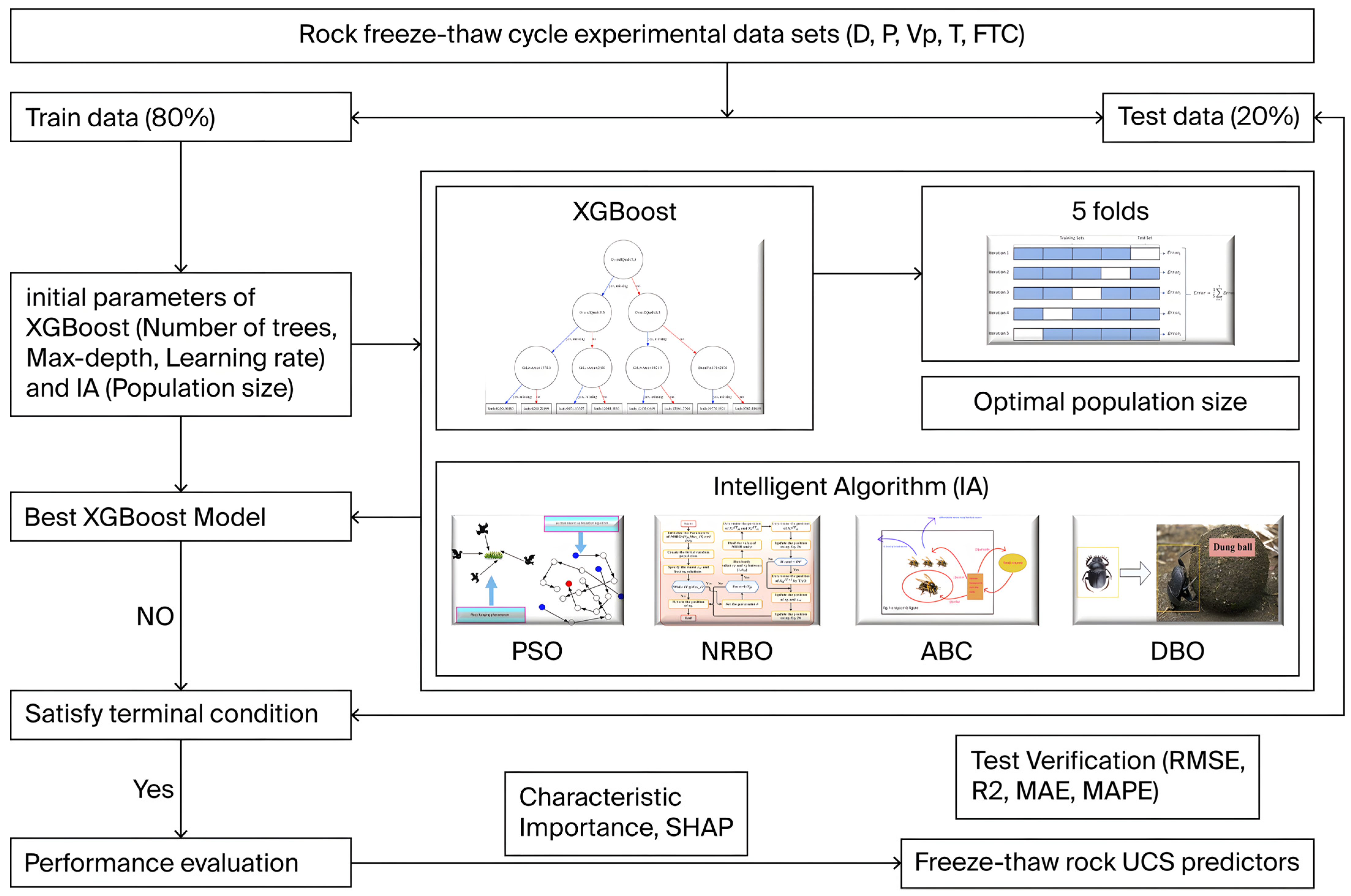
2.2. Workflow
2.3. Evaluation Metrics
2.4. Extreme Gradient Boosting Model
2.5. Optimistic Algorithm
2.5.1. Newton–Raphson Optimization Algorithm
2.5.2. Particle Swarm Optimization
2.5.3. Artificial Bee Colony Algorithm
2.5.4. Dung Beetle Optimization Algorithm
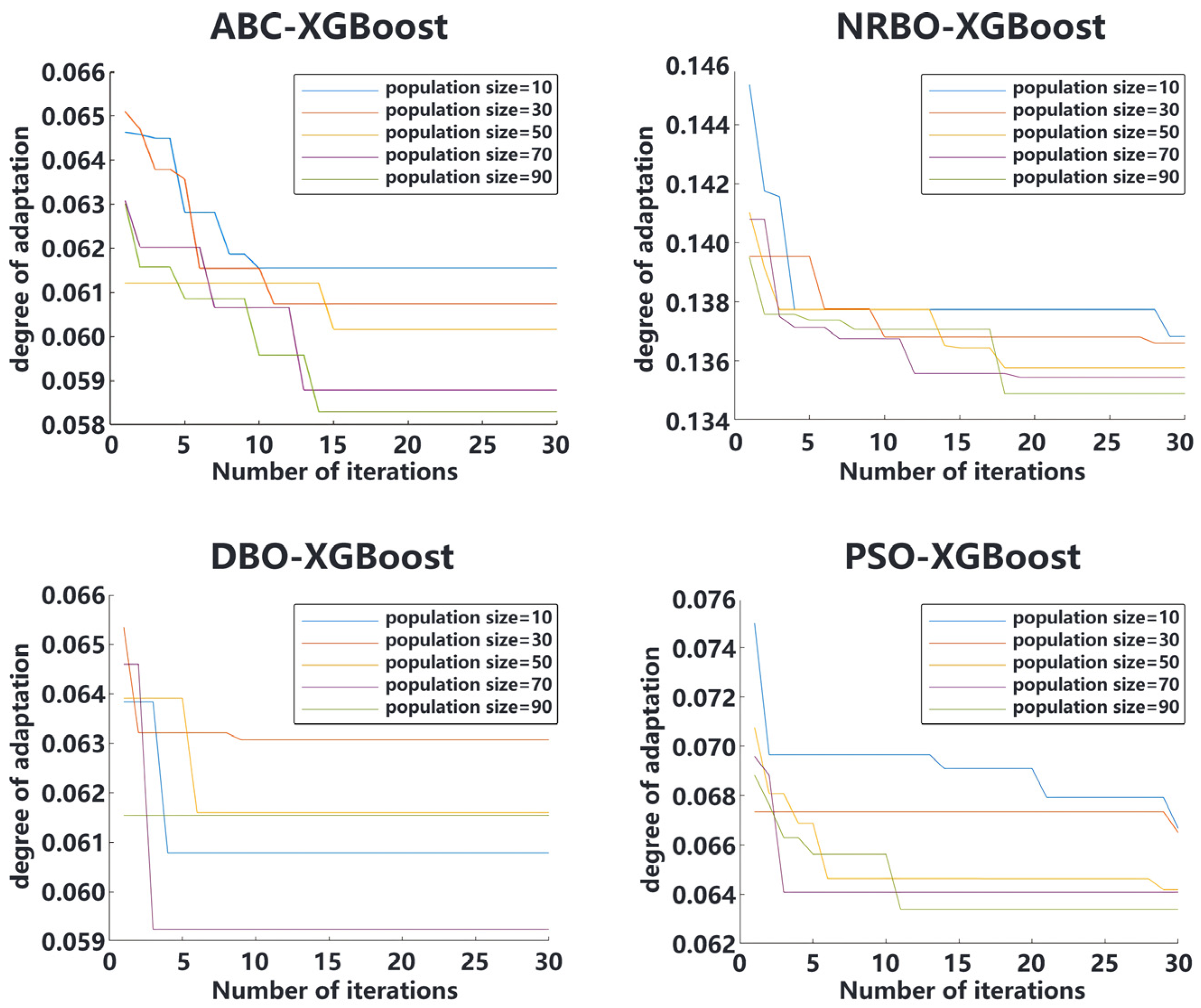
2.6. Hyperparameter Tuning of the Model
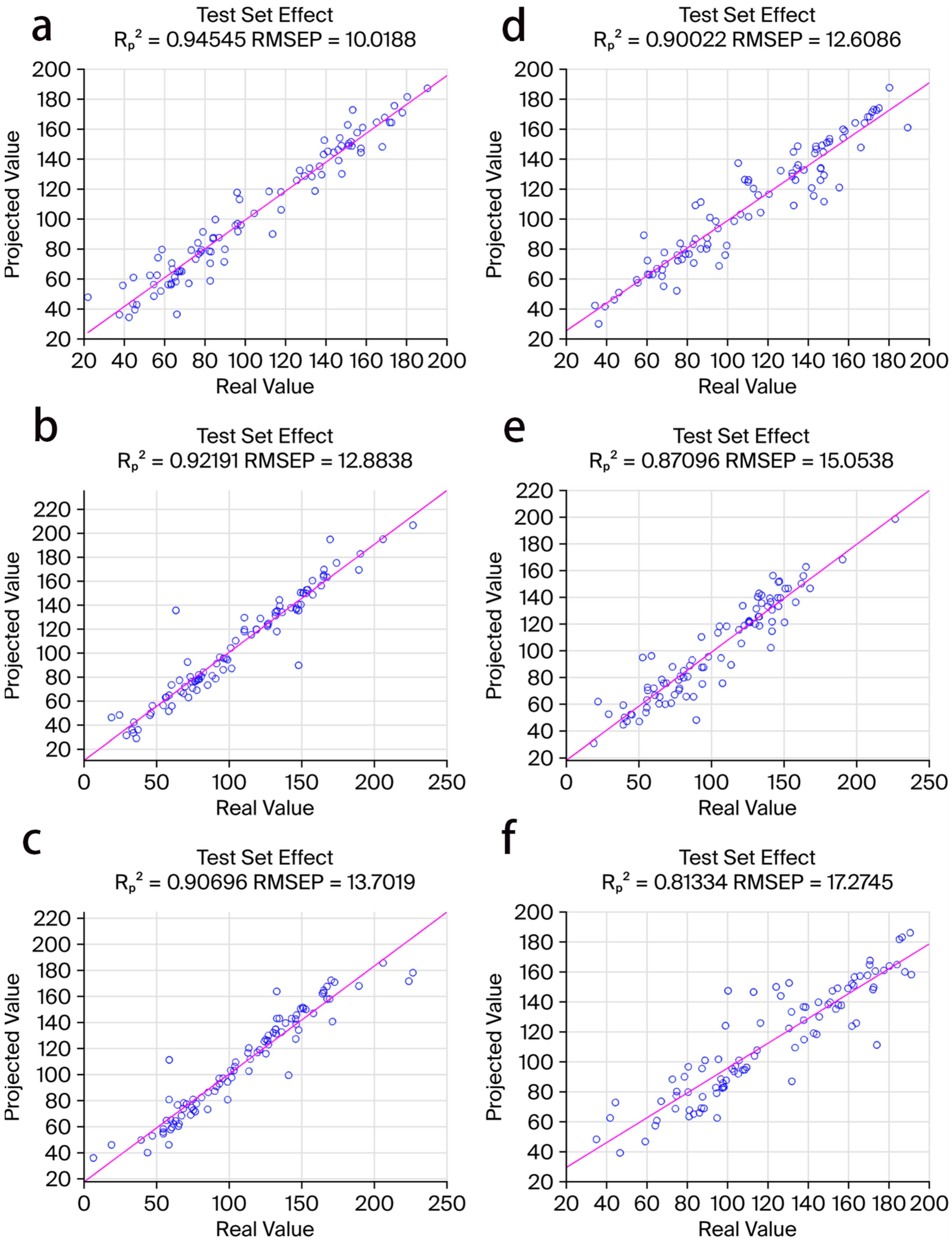
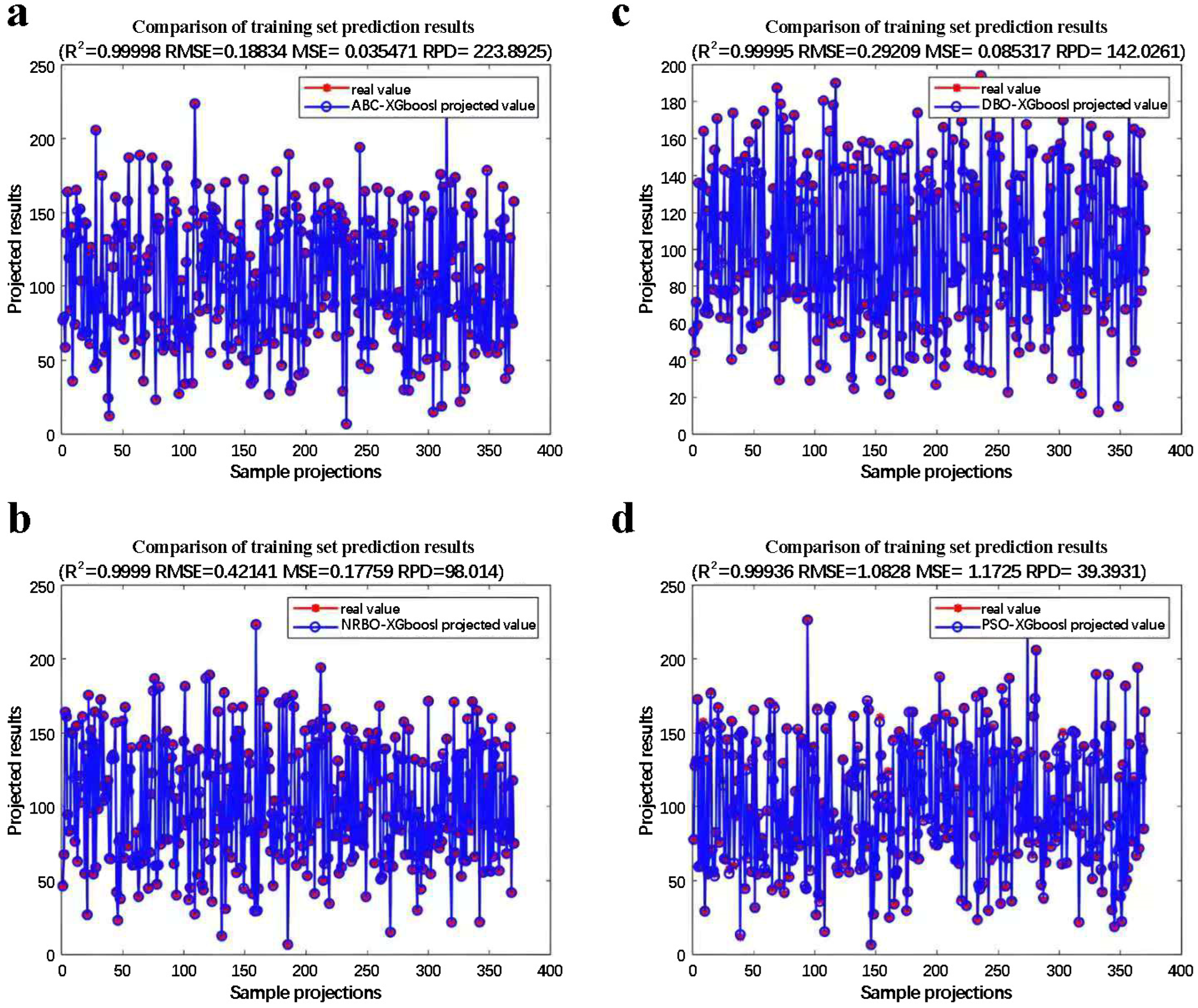
3. Results and Discussion
4. Sensitivity Analysis
5. Conclusions
Author Contributions
Funding
Institutional Review Board Statement
Informed Consent Statement
Data Availability Statement
Conflicts of Interest
References
- Hou, C.; Jin, X.; He, J.; Li, H. Experimental studies on the pore structure and mechanical properties of anhydrite rock under freeze-thaw cycles. J. Rock Mech. Geotech. Eng. 2022, 14, 781–797. [Google Scholar] [CrossRef]
- Momeni, A.; Abdilor, Y.; Khanlari, G.R.; Heidari, M.; Sepahi, A.A. The effect of freeze-thaw cycles on physical and mechanical properties of granitoid hard rocks. Bull. Eng. Geol. Environ. 2016, 75, 1649–1656. [Google Scholar] [CrossRef]
- Zhu, T.T.; Jing, H.W.; Su, H.J.; Yin, Q.; Du, M.R.; Han, G.S. Physical and mechanical properties of sandstone containing a single fissure after exposure to high temperatures. Int. J. Min. Sci. Technol. 2016, 26, 319–325. [Google Scholar] [CrossRef]
- Mendes, P.R., Jr.; Boult, T.E.; Wainer, J.; Rocha, A. Open-Set Support Vector Machines. IEEE Trans. Syst. Man Cybern.-Syst. 2022, 52, 3785–3798. [Google Scholar] [CrossRef]
- Si, K.; Cui, Z.D.; Peng, R.D.; Zhao, L.L.; Zhao, Y. Crack Propagation Process and Seismogenic Mechanisms of Rock Due to the Influence of Freezing and Thawing. Appl. Sci. 2021, 11, 9601. [Google Scholar] [CrossRef]
- Wang, X.P.; Wang, L.H.; Xu, X.L.; Zhang, H.B.; Fu, Y.T.; Qin, S.F. Mechanical properties and damage modeling of unloaded marble under freezing and thawing with different temperature ranges. Cold Reg. Sci. Technol. 2024, 218, 104100. [Google Scholar] [CrossRef]
- Feng, Q.; Jin, J.C.; Zhang, S.; Liu, W.W.; Yang, X.X.; Li, W.T. Study on a Damage Model and Uniaxial Compression Simulation Method of Frozen-Thawed Rock. Rock Mech. Rock Eng. 2022, 55, 187–211. [Google Scholar] [CrossRef]
- Chen, J.H.; Wang, X.L.; Lei, F. Data-driven multinomial random forest: A new random forest variant with strong consistency. J. Big Data 2024, 11, 34. [Google Scholar] [CrossRef]
- Zhou, S.T.; Zhang, Z.X.; Luo, X.D.; Huang, Y.F.; Yu, Z.; Yang, X.W. Predicting dynamic compressive strength of frozen-thawed rocks by characteristic impedance and data-driven methods. J. Rock Mech. Geotech. Eng. 2024, 16, 2591–2606. [Google Scholar] [CrossRef]
- Kleine Deters, J.; Zalakeviciute, R.; Gonzalez, M.; Rybarczyk, Y. Modeling PM2.5 Urban Pollution Using Machine Learning and Selected Meteorological Parameters. J. Electr. Comput. Eng. 2017, 2017, 5106045. [Google Scholar] [CrossRef]
- Abdelhedi, M.; Jabbar, R.; Ben Said, A.; Fetais, N.; Abbes, C. Machine learning for prediction of the uniaxial compressive strength within carbonate rocks. Earth Sci. Inform. 2023, 16, 1473–1487. [Google Scholar] [CrossRef]
- Jalal, F.E.; Xu, Y.; Iqbal, M.; Javed, M.F.; Jamhiri, B. Predictive modeling of swell-strength of expansive soils using artificial intelligence approaches: ANN, ANFIS and GEP. J. Environ. Manag. 2021, 289, 112420. [Google Scholar] [CrossRef] [PubMed]
- Simsekler, M.C.E.; Qazi, A.; Alalami, M.A.; Ellahham, S.; Al, O. Evaluation of patient safety culture using a random forest algorithm. Reliab. Eng. Syst. Saf. 2020, 204, 107186. [Google Scholar] [CrossRef]
- Shahani, N.M.; Zheng, X.G.; Guo, X.W.; Wei, X. Machine Learning-Based Intelligent Prediction of Elastic Modulus of Rocks at Thar Coalfield. Sustainability 2022, 14, 3689. [Google Scholar] [CrossRef]
- Šíma, J. Subrecursive neural networks. Neural Netw. 2019, 116, 208–223. [Google Scholar] [CrossRef] [PubMed]
- Yang, J.; Liu, Y.J.; Yagiz, S.; Laouafa, F. An intelligent procedure for updating deformation prediction of braced excavation in clay using gated recurrent unit neural networks. J. Rock Mech. Geotech. Eng. 2021, 13, 1485–1499. [Google Scholar] [CrossRef]
- Jaiswal, A.; Sabri, M.S.; Verma, A.K.; Sardana, S.; Singh, T.N. Prediction of UCS and BTS under freeze-thaw conditions in the NW himalayan rock mass using petrographic analysis and laboratory testing. Quat. Sci. Adv. 2024, 15, 100225. [Google Scholar] [CrossRef]
- Michael, N.E.; Bansal, R.C.; Ismail, A.A.A.; Elnady, A.; Hasan, S. A cohesive structure of Bi-directional long-short-term memory (BiLSTM)—GRU for predicting hourly solar radiation. Renew. Energy 2024, 222, 119943. [Google Scholar] [CrossRef]
- Zhou, J.; Zhang, Y.; Qiu, Y. State-of-the-art review of machine learning and optimization algorithms applications in environmental effects of blasting. Artif. Intell. Rev. 2024, 57, 5. [Google Scholar] [CrossRef]
- Ceryan, N.; Samui, P. Application of soft computing methods in predicting uniaxial compressive strength of the volcanic rocks with different weathering degree. Arab. J. Geosci. 2020, 13, 288. [Google Scholar] [CrossRef]
- Nguyen-Sy, T. Optimized gradient boosting models and reliability analysis for rock stiffness C13. J. Appl. Geophys. 2024, 230, 105519. [Google Scholar] [CrossRef]
- Gowida, A.; Elkatatny, S.; Gamal, H. Unconfined compressive strength (UCS) prediction in real-time while drilling using artificial intelligence tools. Neural Comput. Appl. 2021, 33, 8043–8054. [Google Scholar] [CrossRef]
- Saedi, B.; Mohammadi, S.D. Prediction of Uniaxial Compressive Strength and Elastic Modulus of Migmatites by Microstructural Characteristics Using Artificial Neural Networks. Rock Mech. Rock Eng. 2021, 54, 5617–5637. [Google Scholar] [CrossRef]
- Liang, M.; Mohamad, E.T.; Faradonbeh, R.S.; Jahed Armaghani, D.; Ghoraba, S. Rock strength assessment based on regression tree technique. Eng. Comput. 2016, 32, 343–354. [Google Scholar] [CrossRef]
- Abdelhedi, M. Prediction of uniaxial compressive strength of carbonate rocks and cement mortar using artificial neural network and multiple linear regressions. Acta Geodyn. Et Geomater. 2020, 367–377. [Google Scholar] [CrossRef]
- Teymen, A.; Mengüç, E.C. Comparative evaluation of different statistical tools for the prediction of uniaxial compressive strength of rocks. Int. J. Min. Sci. Technol. 2020, 30, 785–797. [Google Scholar] [CrossRef]
- Gong, Y.; Wu, S.; Song, J. Pore characteristics and constitutive model of constrained granite under freeze-thaw cycles. Constr. Build. Mater. 2025, 491, 142706. [Google Scholar] [CrossRef]
- Liu, Y.; Xu, X.; Wang, J.; Wang, Y.; Fan, C. Research on the predictability of rock strength under freeze-thaw cycles—A hybrid model of SHAP-IPOA-XGBoost. Cold Reg. Sci. Technol. 2025, 231, 104416. [Google Scholar] [CrossRef]
- Verma, A.K.; Sardana, S.; Jaiswal, A. Study of Freeze-thaw Induced Damage Characteristic for Himalayan Schist. J. Geol. Soc. India 2023, 99, 390–396. [Google Scholar] [CrossRef]
- Joung, J.F.; Fong, M.H.; Roh, J.; Tu, Z.K.; Bradshaw, J.; Coley, C.W. Reproducing Reaction Mechanisms with Machine-Learning Models Trained on a Large-Scale Mechanistic Dataset. Angew. Chem.-Int. Ed. 2024, 63, e202411296. [Google Scholar] [CrossRef]
- Mohr, F.; van Rijn, J.N. Fast and Informative Model Selection Using Learning Curve Cross-Validation. IEEE Trans. Pattern Anal. Mach. Intell. 2023, 45, 9669–9680. [Google Scholar] [CrossRef]
- Zhang, B.; Xu, C.; Dai, X.G.; Xiong, X. Research on mining land subsidence by intelligent hybrid model based on gradient boosting with categorical features support algorithm. J. Environ. Manag. 2024, 354, 120309. [Google Scholar] [CrossRef]
- Li, Y.; Zhai, Y.; Meng, F.; Zhang, Y. Study on the Influence of Freeze–Thaw Weathering on the Mechanical Properties of Huashan Granite Strength. Rock Mech. Rock Eng. 2021, 54, 4741–4753. [Google Scholar] [CrossRef]
- Wang, J.J.; Zheng, N.N. A Novel Fractal Image Compression Scheme with Block Classification and Sorting Based on Pearson’s Correlation Coefficient. IEEE Trans. Image Process. 2013, 22, 3690–3702. [Google Scholar] [CrossRef] [PubMed]
- Nsangou, J.C.; Kenfack, J.; Nzotcha, U.; Ekam, P.S.N.; Voufo, J.; Tamo, T.T. Explaining household electricity consumption using quantile regression, decision tree and artificial neural network. Energy 2022, 250, 123856. [Google Scholar] [CrossRef]
- Mugume, I.; Basalirwa, C.; Waiswa, D.; Reuder, J.; Mesquita, M.D.S.; Tao, S.L.; Ngailo, T.J. Comparison of Parametric and Nonparametric Methods for Analyzing the Bias of a Numerical Model. Model. Simul. Eng. 2016, 2016, 7530759. [Google Scholar] [CrossRef]
- Hatta, N.M.; Zain, A.M.; Sallehuddin, R.; Shayfull, Z.; Yusoff, Y. Recent studies on optimisation method of Grey Wolf Optimiser (GWO): A review (2014–2017). Artif. Intell. Rev. 2019, 52, 2651–2683. [Google Scholar] [CrossRef]
- Chen, T.Q.; Guestrin, C. XGBoost: A Scalable Tree Boosting System. In Proceedings of the 22nd ACM SIGKDD International Conference on Knowledge Discovery and Data Mining (KDD), San Francisco, CA, USA, 13–17 August 2016; pp. 785–794. [Google Scholar]
- Fathipour-Azar, H. Data-driven estimation of joint roughness coefficient. J. Rock Mech. Geotech. Eng. 2021, 13, 1428–1437. [Google Scholar] [CrossRef]
- Yazdani, M.; Jolai, F. Lion Optimization Algorithm (LOA): A nature-inspired metaheuristic algorithm. J. Comput. Des. Eng. 2016, 3, 24–36. [Google Scholar] [CrossRef]
- Sowmya, R.; Premkumar, M.; Jangir, P. Newton-Raphson-based optimizer: A new population-based metaheuristic algorithm for continuous optimization problems. Eng. Appl. Artif. Intell. 2024, 128, 107532. [Google Scholar] [CrossRef]
- Brajevic, I.; Tuba, M. An upgraded artificial bee colony (ABC) algorithm for constrained optimization problems. J. Intell. Manuf. 2013, 24, 729–740. [Google Scholar] [CrossRef]
- Gao, H.K.; Wang, Q.; Jiang, B.; Zhang, P.; Jiang, Z.H.; Wang, Y. Relationship between rock uniaxial compressive strength and digital core drilling parameters and its forecast method. Int. J. Coal Sci. Technol. 2021, 8, 605–613. [Google Scholar] [CrossRef]
- Pezoulas, V.; Nowakowska, K.; Kazmierski, J.; Fotiadis, D.; Sakellarios, A. Prediction of depression among patients with cardiovascular disease scheduled cardiac surgery using an Al-empowered pipeline. Eur. Heart J. 2022, 43, 2428. [Google Scholar] [CrossRef]
- Wu, Y.; Cai, D.; Gu, S.; Jiang, N.; Li, S. Compressive strength prediction of sleeve grouting materials in prefabricated structures using hybrid optimized XGBoost models. Constr. Build. Mater. 2025, 476, 141319. [Google Scholar] [CrossRef]
- Agushaka, J.O.; Ezugwu, A.E.; Abualigah, L.; Alharbi, S.K.; Khalifa, H.A. Efficient Initialization Methods for Population-Based Metaheuristic Algorithms: A Comparative Study. Arch. Comput. Methods Eng. 2023, 30, 1727–1787. [Google Scholar] [CrossRef]
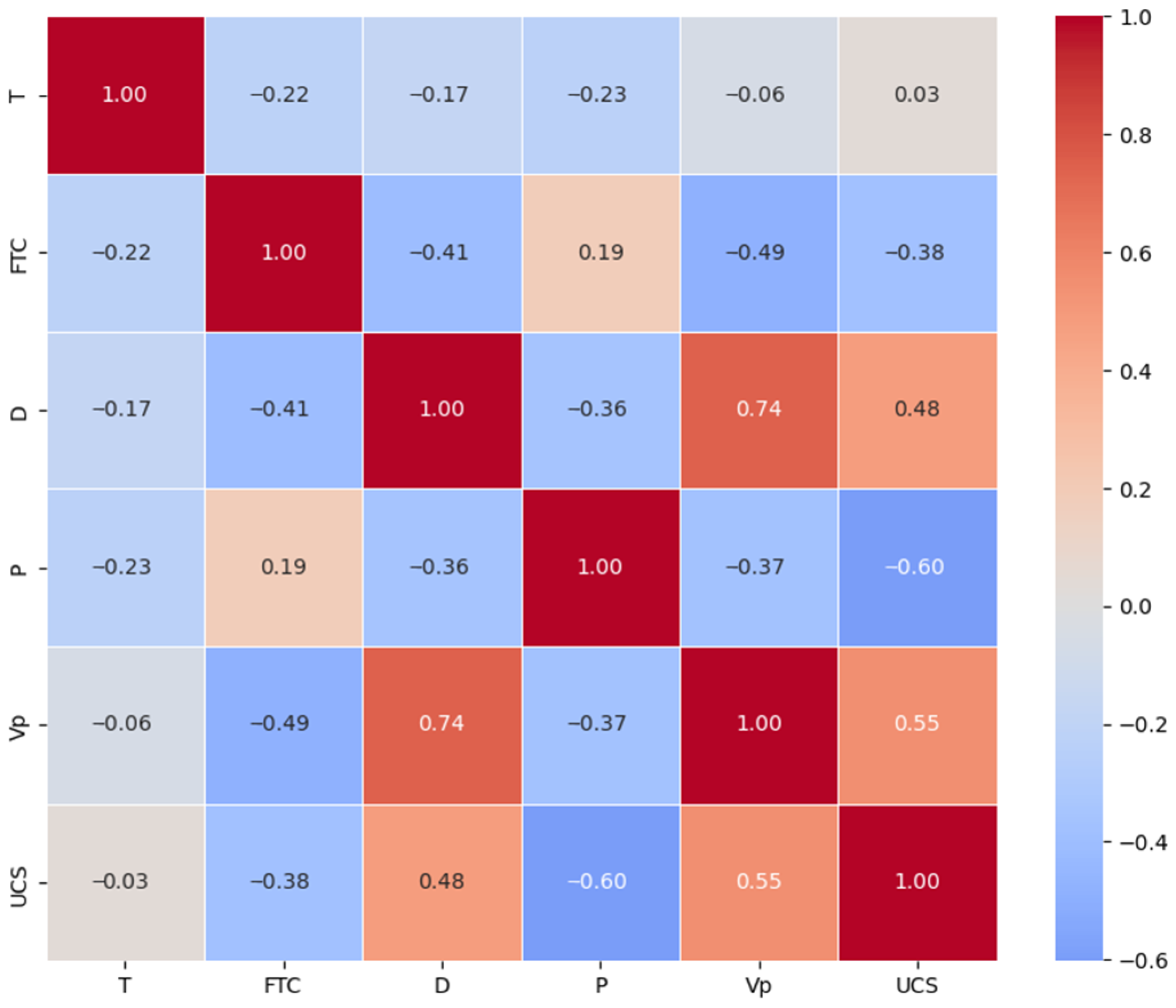

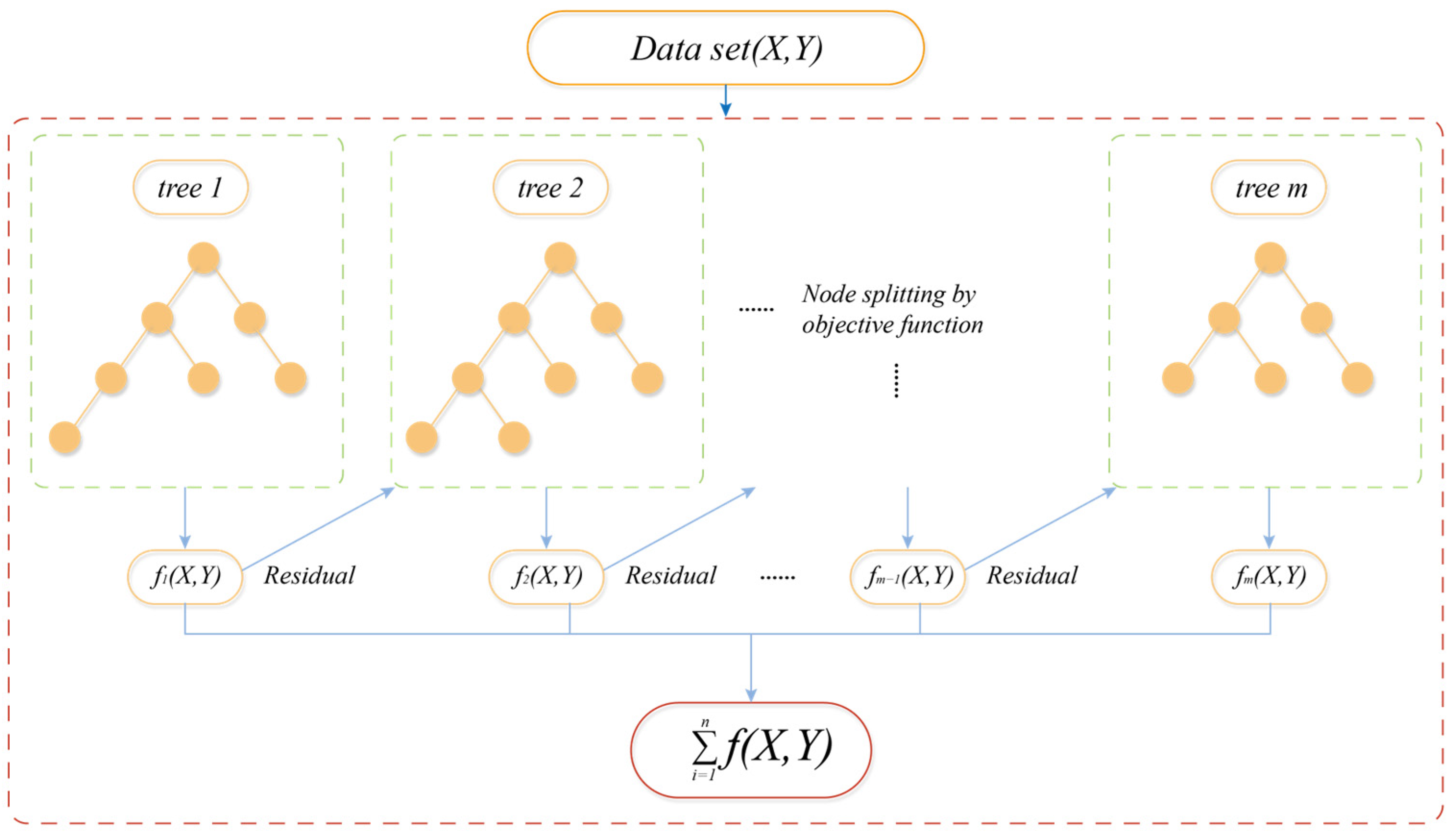

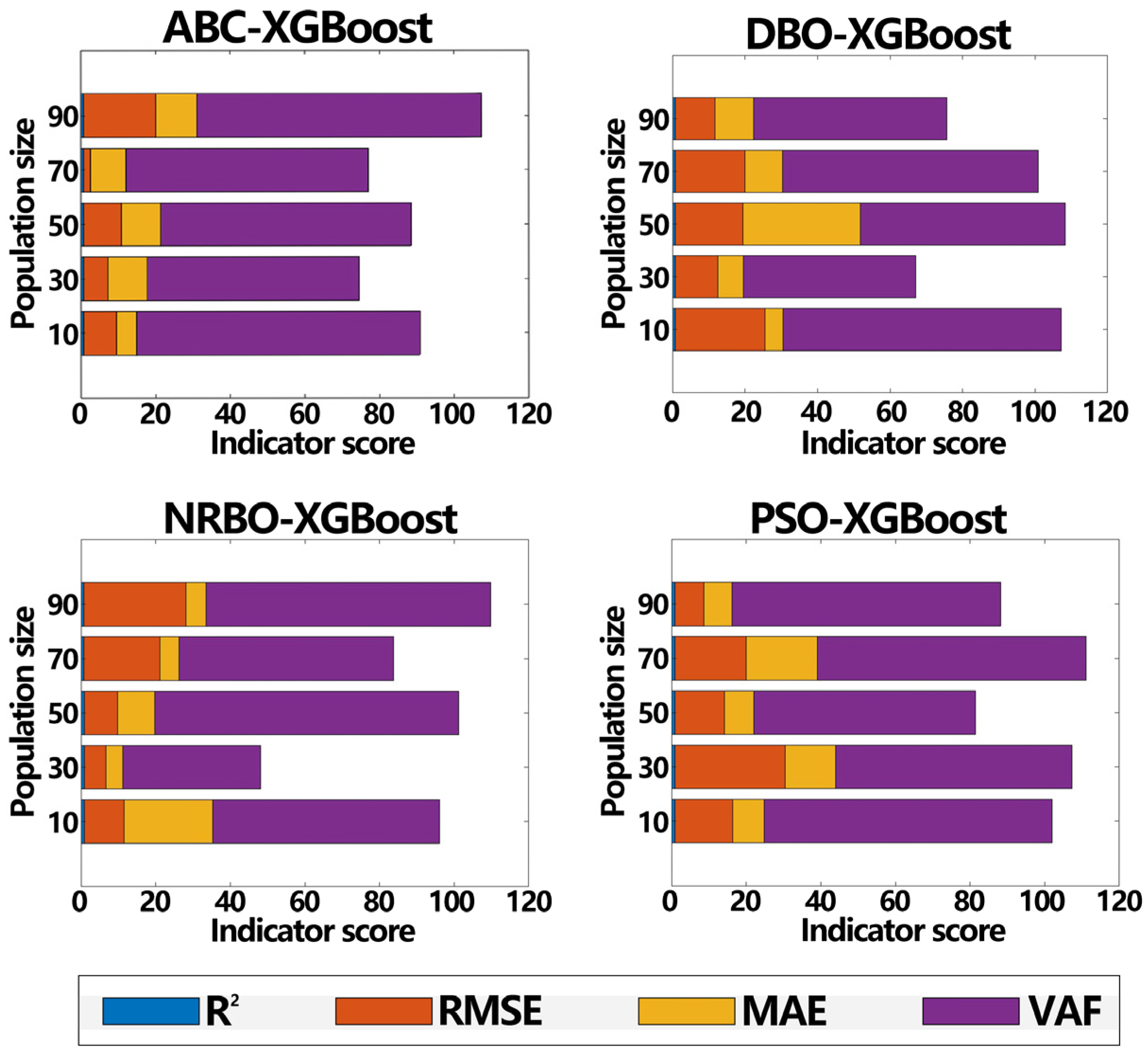


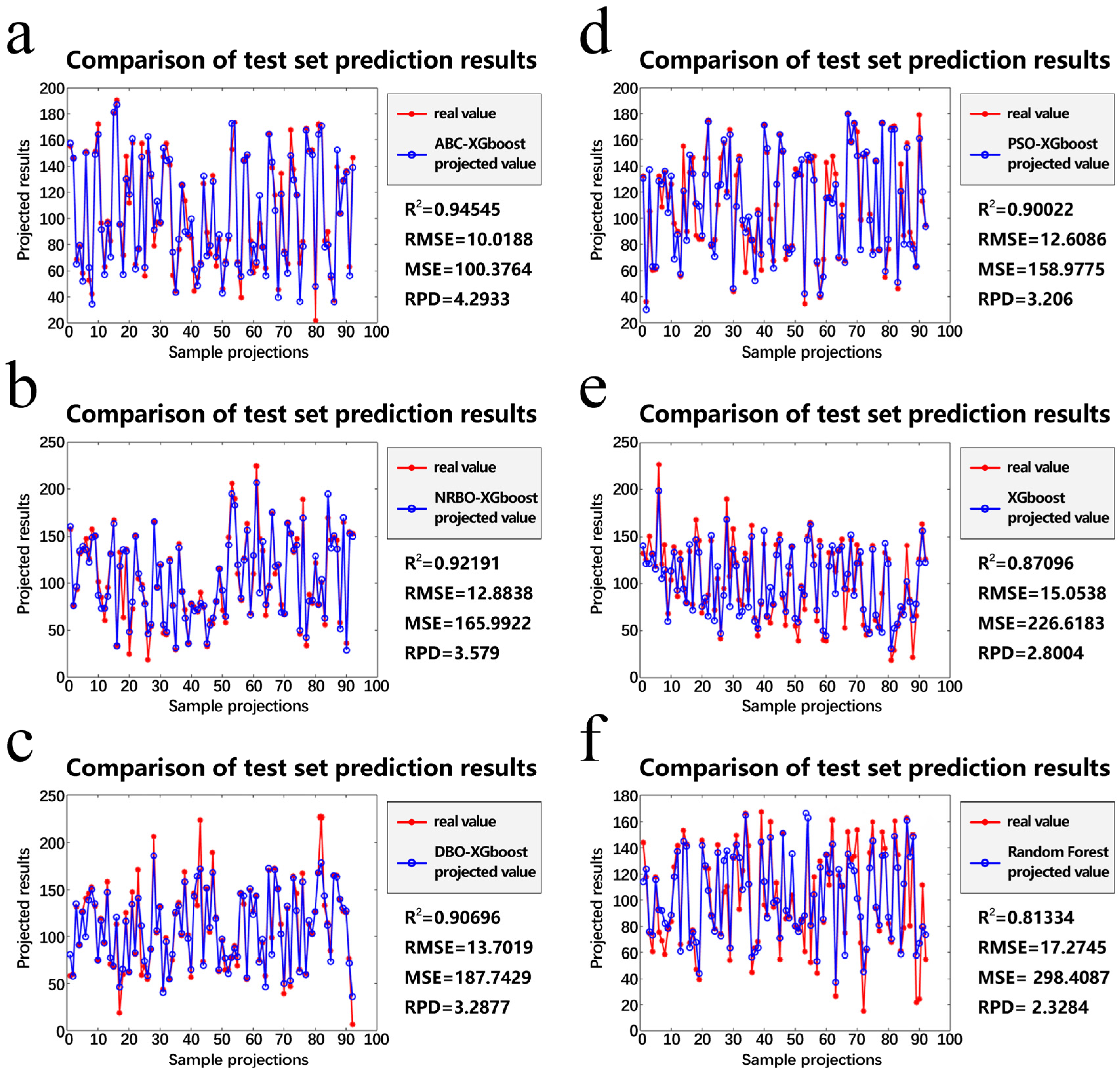
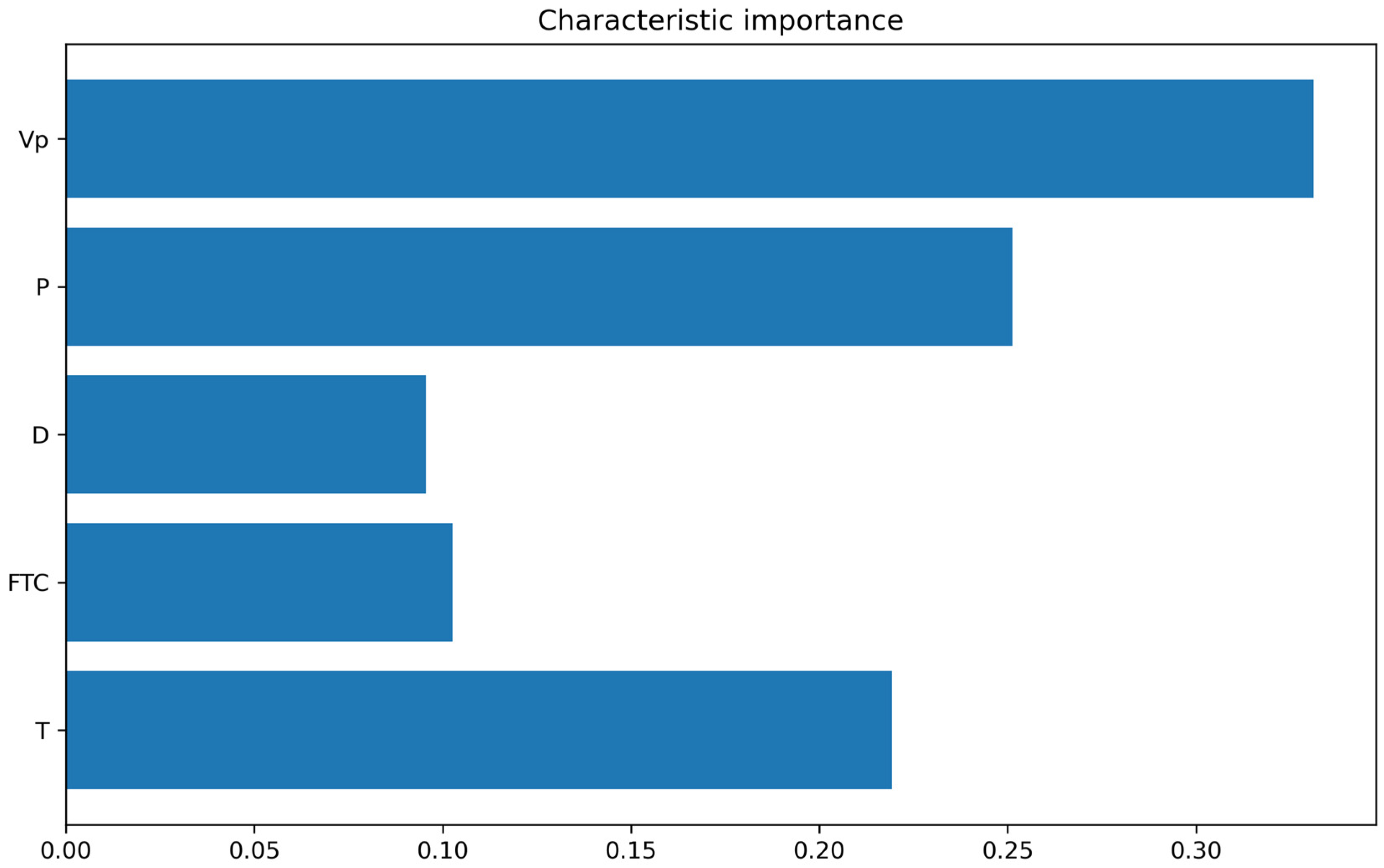
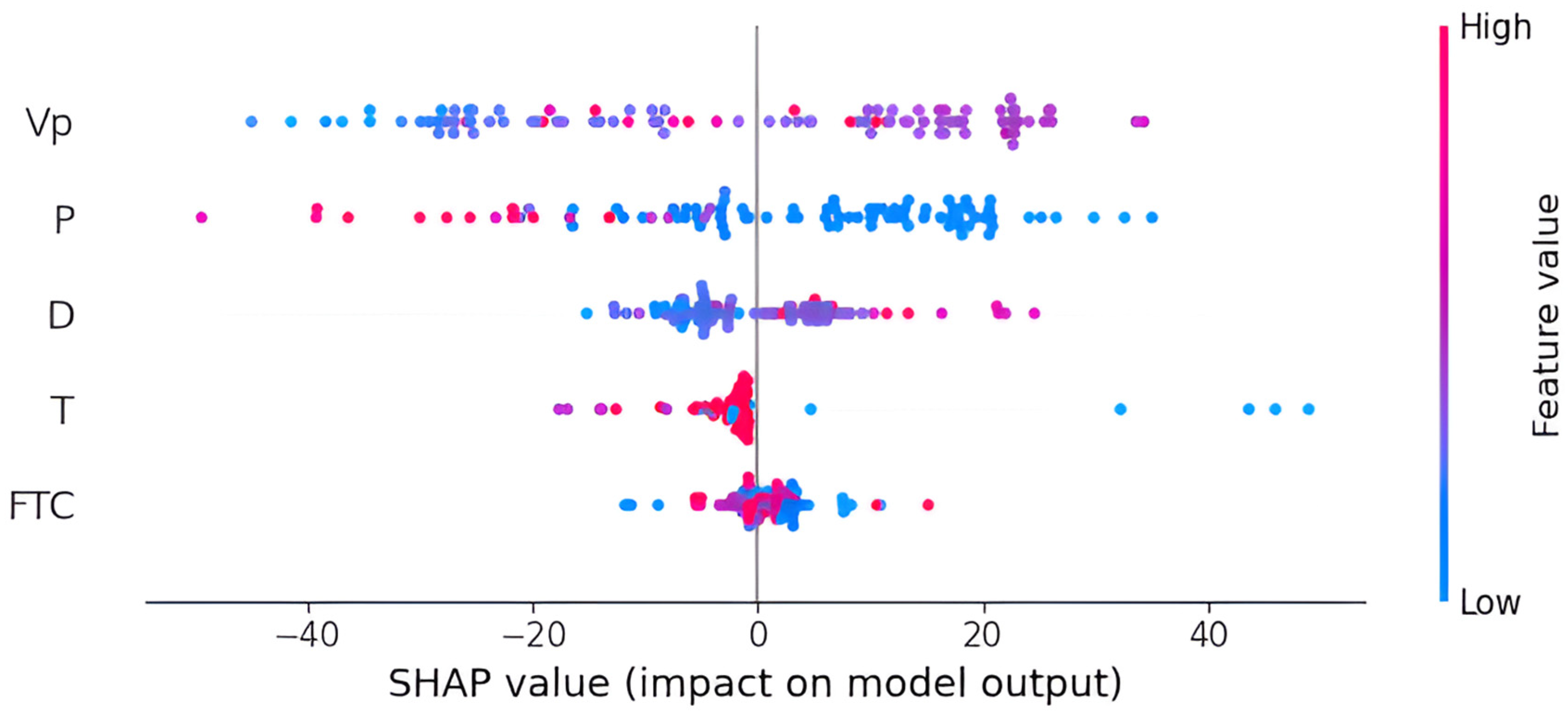

| Reference | Model | Samples | Inputs | Output | Accuracy |
|---|---|---|---|---|---|
| Cerya and Samui [20] (2020) | ELM, MPMR and SVM | 47 | Wc, n, Id | UCS | R2 = 0.9 RMSE from 0.09 to 0.15 |
| Nguyen-Sy [21] (2024) | XGB, ANN, SVM | 1030 | Cement density, BFS, FA, W, Sp, CA, FA, Age | R2 from 0.91 to 0.93 RMSE from 4 to 6 | |
| Gowida et al. [22] (2021) | AI-ANN, ANFIS and SVM | 1771 | ROP, GPM, SPP, RPM, T, and WOB | R = 0.99 AAPE = 3% | |
| Saedi, B., & Mohammadi, S. D. [23] (2021) | ANN | 51 | OR, COC, g, FI% and IS | R = 0.77 to 0.95 MSE 0.003 to 0.023 | |
| Mohamad et al. [24] (2016) | Simple regression | 15 | Vp | R2 = 0.93 | |
| Abdelhedi et al. [25] (2020) | MULTIPLE REGRESSIONS and ANN | 66 | Ep, Vp, and density | R2 = 0.83 R2 = 0.9 | |
| Teymen & Mengüç [26] (2020) | ANFIS, ANN and GEP | 93 | Is (50), Vp, BTS, SHH, SSH, UW | R2 = 0.94 R2 = 0.92 R2 = 0.95 |
| Number of Dataset | Country of Origin | References | |
|---|---|---|---|
| 1 | 98 | China | Hou, C [1] (2021) |
| 2 | 69 | Iran | A. Momeni et al. [2] (2016) |
| 3 | 8 | China | Wang, X.P [6] (2024) |
| 4 | 4 | China | Qiang Feng et al. [7] (2022) |
| 5 | 29 | China | Zhou, S.T et al. [9] (2024) |
| 6 | 5 | China | Yubai Li et al. [33] (2021) |
| 7 | 7 | China | Shahani, N.M et al. [14] (2022) |
| 8 | 14 | China | Gong, Y [27] (2025) |
| 9 | 15 | India | A.K. Verma et al. [29] (2023) |
| 10 | 215 | China | Liu, Y et al. [28] (2025) |
| Features | Max | Min | Average | Standard Deviation | Variance |
|---|---|---|---|---|---|
| T | −10 | −40 | −22.97 | 5.47 | 300 |
| FTC | 300 | 0 | 55 | 54 | 2981 |
| D | 5.13 | 2.1 | 2.64 | 0.35 | 0.12 |
| P | 19.06 | 0.3 | 3.59 | 3.96 | 15.71 |
| Vp | 6.46 | 1.22 | 3.75 | 0.83 | 0.69 |
| UCS | 226.5 | 6.41 | 103.55 | 42.36 | 1794.4 |
| Optimistic Algorithm | R2 | RMSE | MAE |
|---|---|---|---|
| ABC | 0.94545 | 10.0188 | 7.2243 |
| BSLO | 0.89399 | 13.0796 | 8.7511 |
| BDO | 0.90696 | 13.7013 | 7.8518 |
| GOOSE | 0.88512 | 14.6004 | 9.1712 |
| GWO | 0.88326 | 13.7163 | 8.1128 |
| NRBO | 0.92191 | 12.8828 | 7.3744 |
| PSO | 0.90022 | 12.6086 | 8.6759 |
| SSA | 0.90544 | 12.0928 | 8.7117 |
| CFOA | 0.77820 | 19.9670 | 11.5869 |
| PO | 0.5545 | 41.5354 | 35.3945 |
| Model | Parameter | Search Range | Optimal Value | Cost Time |
|---|---|---|---|---|
| ABC-XGBoost | Number of trees | [1, 300] | 228 | 665.132 s |
| Max_depth | [1, 20] | 8 | ||
| Learning rate | [0.01, 1] | 0.2534 | ||
| PSO-XGBoost | Number of trees | [1, 300] | 144 | 732.768 s |
| Max_depth | [1, 20] | 4 | ||
| Learning rate | [0.01, 1] | 0.1684 | ||
| DBO-XGBoost | Number of trees | [1, 300] | 171 | 653.332 s |
| Max_depth | [1, 20] | 4 | ||
| Learning rate | [0.01, 1] | 0.1773 | ||
| NRBO-XGBoost | Number of trees | [1, 300] | 217 | 623.175 s |
| Max_depth | [1, 20] | 3 | ||
| Learning rate | [0.01, 1] | 0.1867 |
| Model | RMSE | MAPE | MAE | Score | Rank | |
|---|---|---|---|---|---|---|
| ABC-XGBoost | 0.944 | 10.10 | 0.095 | 7.22 | 0.96 | 1 |
| NRBO-XGBoost | 0.92 | 12.88 | 0.100 | 7.37 | 0.89 | 2 |
| PSO-XGBoost | 0.90 | 12.60 | 0.086 | 8.67 | 0.88 | 3 |
| DBO-XGBoost | 0.90 | 13.70 | 0.130 | 7.85 | 0.80 | 4 |
| XGBoost | 0.88 | 13.85 | 0.170 | 7.74 | 0.76 | 5 |
| RF | 0.81 | 17.27 | 0.170 | 12.35 | 0.60 | 6 |
Disclaimer/Publisher’s Note: The statements, opinions and data contained in all publications are solely those of the individual author(s) and contributor(s) and not of MDPI and/or the editor(s). MDPI and/or the editor(s) disclaim responsibility for any injury to people or property resulting from any ideas, methods, instructions or products referred to in the content. |
© 2025 by the authors. Licensee MDPI, Basel, Switzerland. This article is an open access article distributed under the terms and conditions of the Creative Commons Attribution (CC BY) license (https://creativecommons.org/licenses/by/4.0/).
Share and Cite
Gao, S.; Gu, Z.; Xiong, X.; Wang, C. Influence Mechanism of Rock Compressive Mechanical Properties Under Freeze-Thaw Cycles: Insights from Machine Learning. Big Data Cogn. Comput. 2025, 9, 323. https://doi.org/10.3390/bdcc9120323
Gao S, Gu Z, Xiong X, Wang C. Influence Mechanism of Rock Compressive Mechanical Properties Under Freeze-Thaw Cycles: Insights from Machine Learning. Big Data and Cognitive Computing. 2025; 9(12):323. https://doi.org/10.3390/bdcc9120323
Chicago/Turabian StyleGao, Shuai, Zhongyuan Gu, Xin Xiong, and Chengnian Wang. 2025. "Influence Mechanism of Rock Compressive Mechanical Properties Under Freeze-Thaw Cycles: Insights from Machine Learning" Big Data and Cognitive Computing 9, no. 12: 323. https://doi.org/10.3390/bdcc9120323
APA StyleGao, S., Gu, Z., Xiong, X., & Wang, C. (2025). Influence Mechanism of Rock Compressive Mechanical Properties Under Freeze-Thaw Cycles: Insights from Machine Learning. Big Data and Cognitive Computing, 9(12), 323. https://doi.org/10.3390/bdcc9120323