
Article

Isolating Graph Topology from Model Architecture in GNN-Based Fraud Detection: An Empirical Framework
by
Roya Amiri
* and
Sardar Jaf
School of Computer Science and Engineering, University of Sunderland, Sunderland SR6 0DD, UK
*
Author to whom correspondence should be addressed.
Big Data Cogn. Comput. 2026, 10(9), 294; https://doi.org/10.3390/bdcc10090294
Submission received: 30 June 2026 / Revised: 24 August 2026 / Accepted: 26 August 2026 / Published: 1 September 2026
(This article belongs to the Special Issue Artificial Intelligence (AI) and Natural Language Processing (NLP))

Abstract

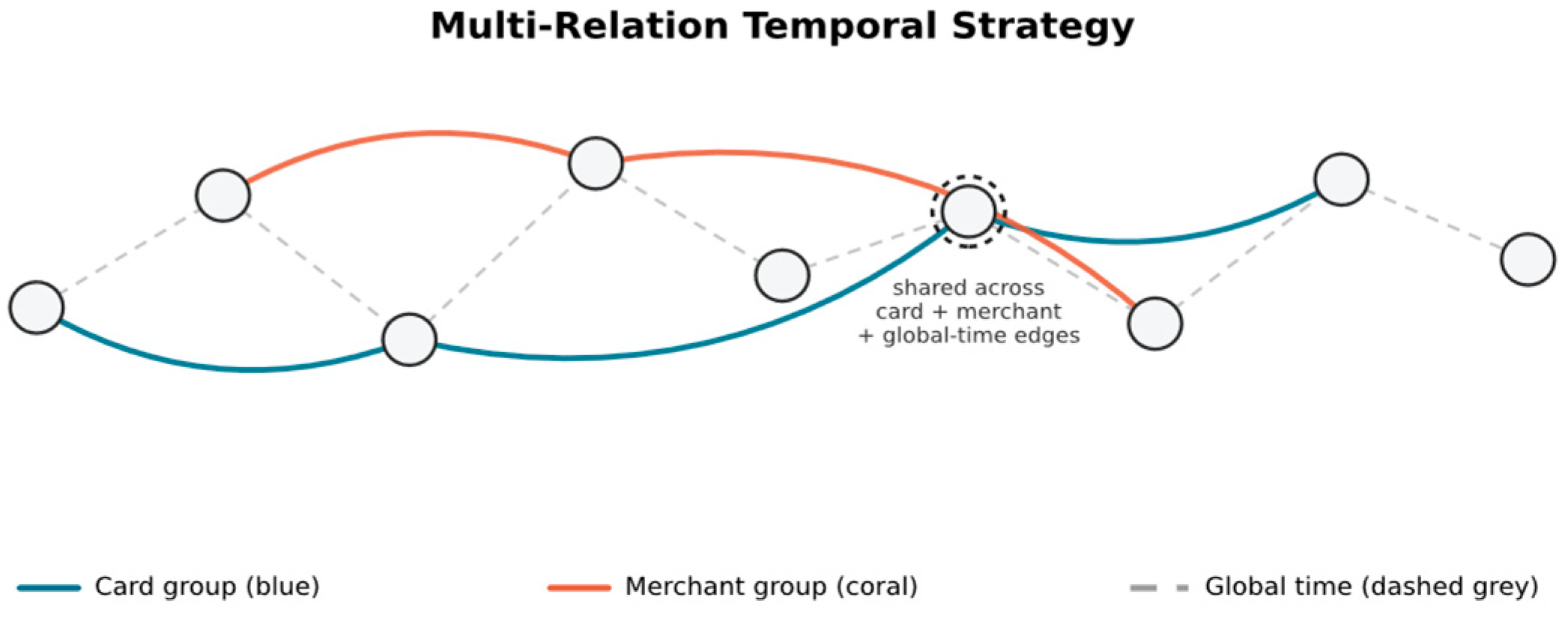
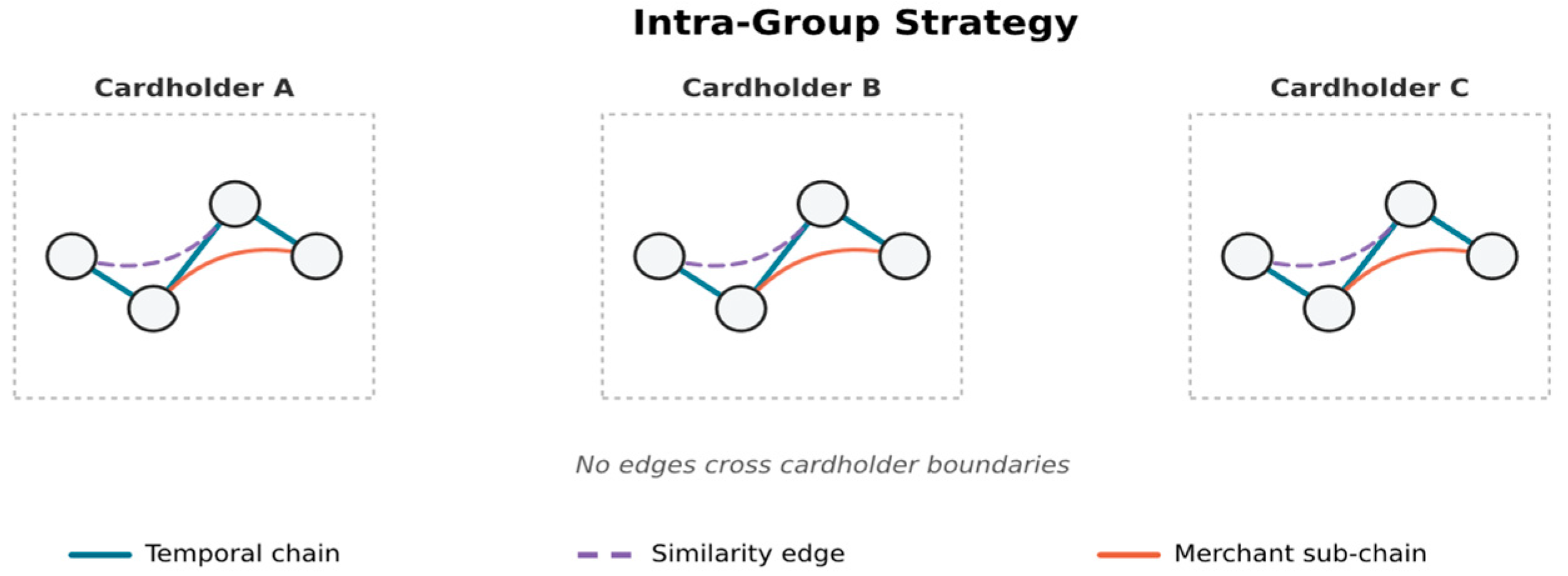
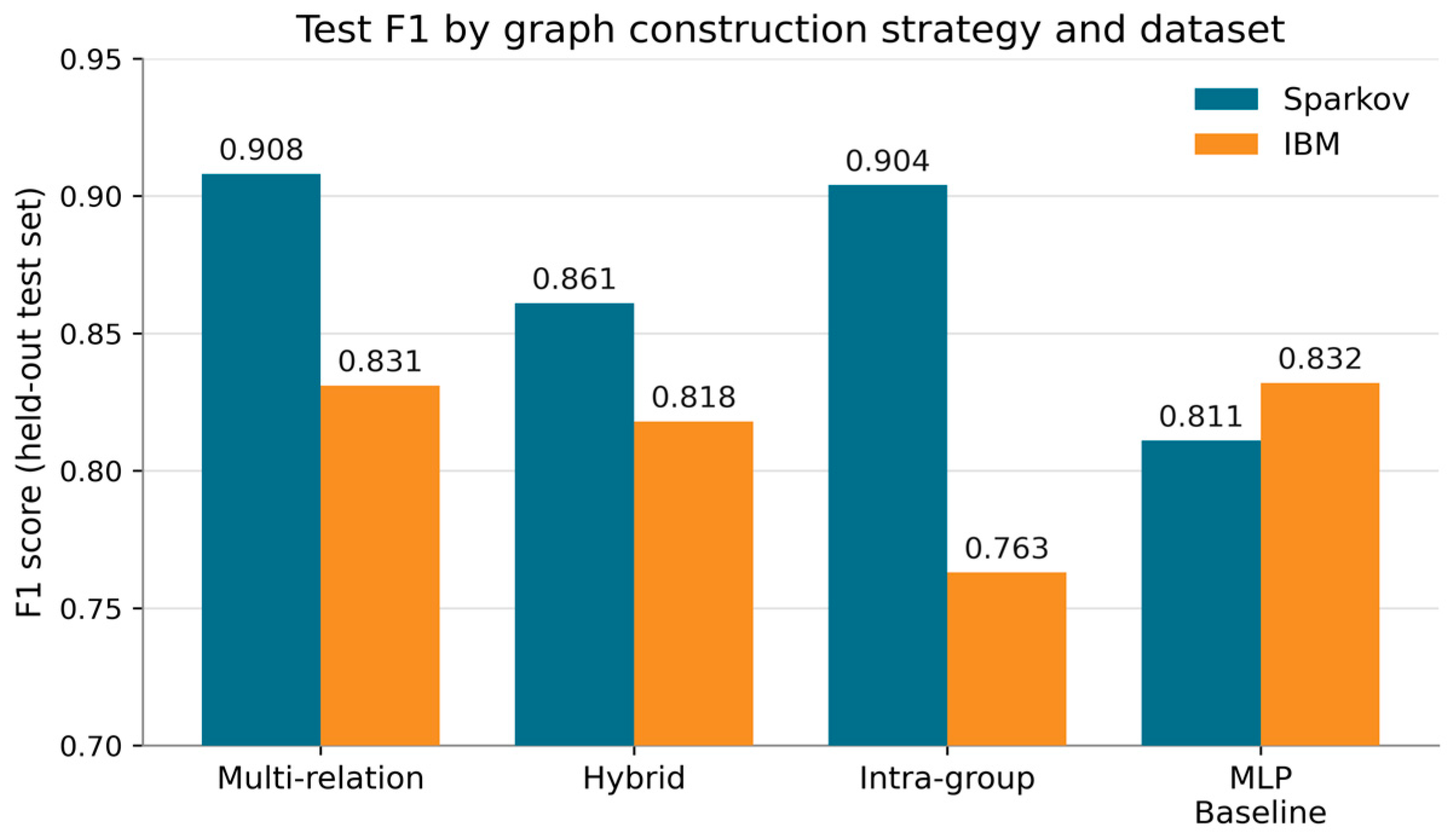
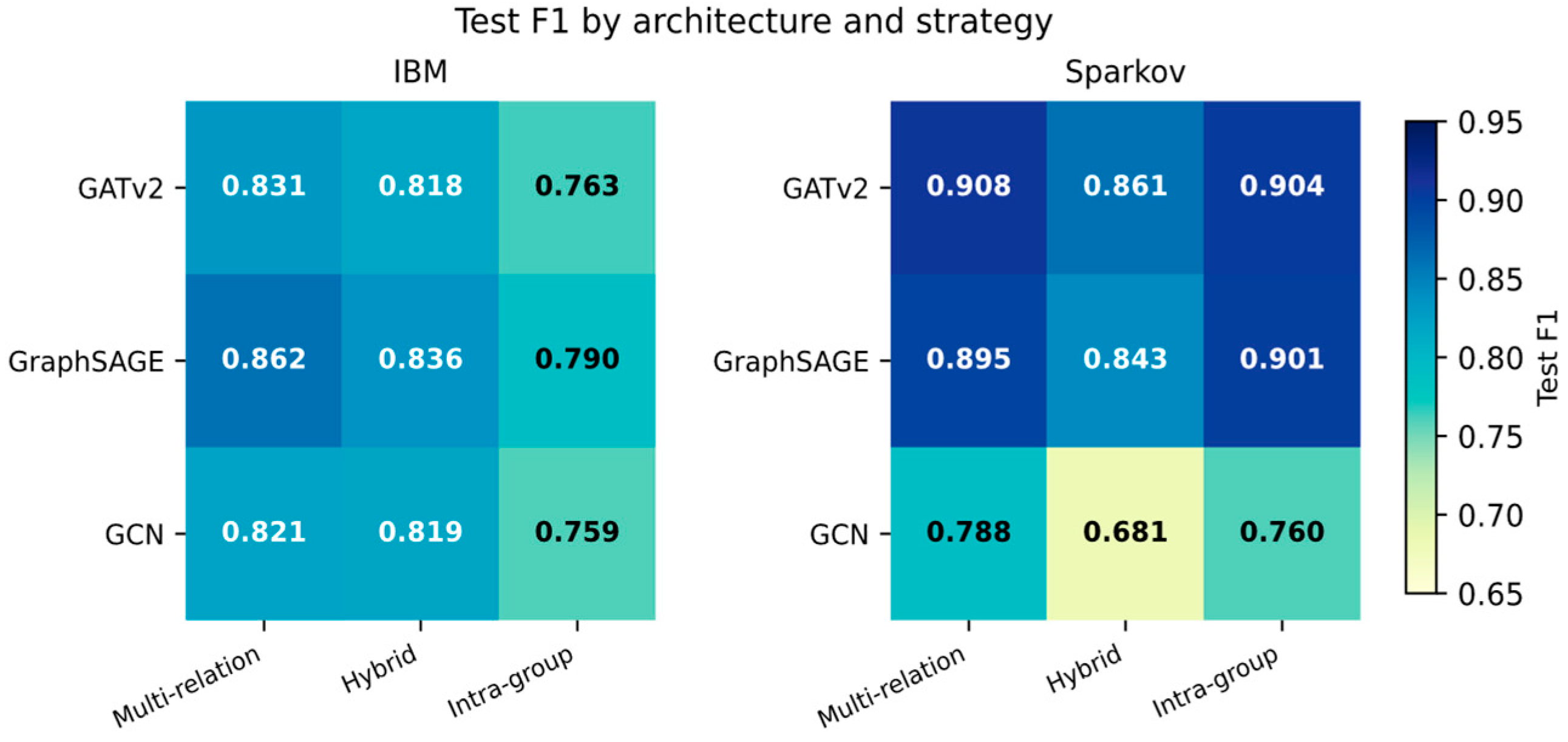
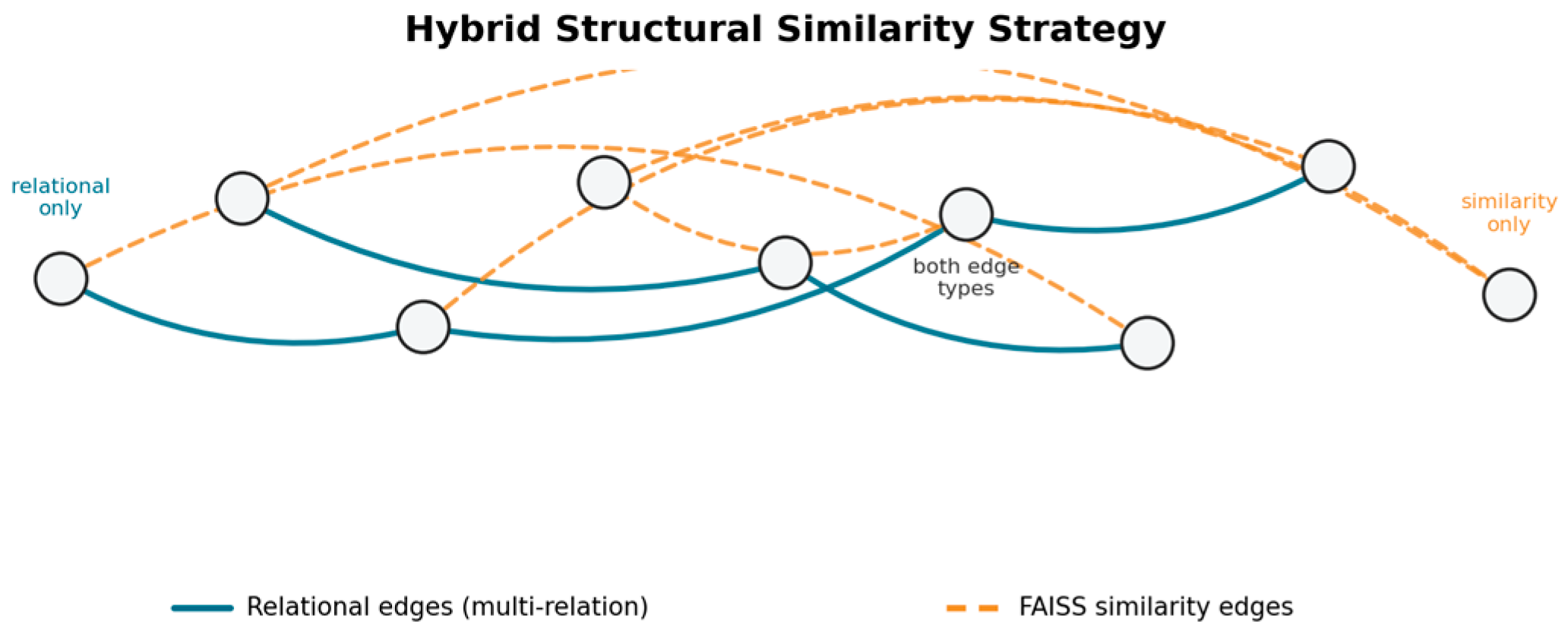
Graph topology and model architecture are routinely co-designed in GNN-based fraud detection, making it impossible to attribute performance gains to either component. We address this by fixing the training loop, features, and evaluation protocol while independently varying the graph construction strategy and GNN architecture. Three strategies are evaluated: multi-relation temporal, hybrid structural similarity, and intra-group, each evaluated across three GNN architectures (GATv2, GCN, and GraphSAGE). A feature-identical MLP with no graph structure serves as an empirical anchor. On the Sparkov dataset, all three GNN strategies exceed the MLP by 5.0–9.7 F1 points, confirming that topology contributes genuine discriminative value when per-cardholder histories are dense. On the IBM dataset, the intra-group strategy collapses 6.9 F1 points below the MLP, a consequence of near-empty neighbourhoods (mean degree 1.1) following down-sampling, while multi-relation retains ranking advantages in AUC (Area Under the Curve; 0.985) and Average Precision (0.908) despite marginal F1 parity. Across both datasets, multi-relation temporal construction is the highest-performing strategy, achieving F1 0.908 and AUC 0.994 on Sparkov and F1 0.831 on IBM, though this ranking is not entirely architecture-independent: GraphSAGE narrowly inverts the multi-relation/intra-group order on Sparkov. These results suggest that graph construction quality, rather than mere graph presence, matters more for GNN performance than connectivity alone under the conditions evaluated here.
Keywords: graph neural networks; credit card fraud detection; GATv2; GCN; GraphSAGE; architecture sensitivity graph neural networks; credit card fraud detection; GATv2; GCN; GraphSAGE; architecture sensitivity