
Stability Bifurcation in Compressor RANS Simulations Using Body Force Modeling
 , , , , , and
Abstract
1. Introduction
2. Body Force Modeling
3. Numerical Settings
4. Stability Bifurcation at Low Mass Flow Rate
4.1. Centrifugal Impellers
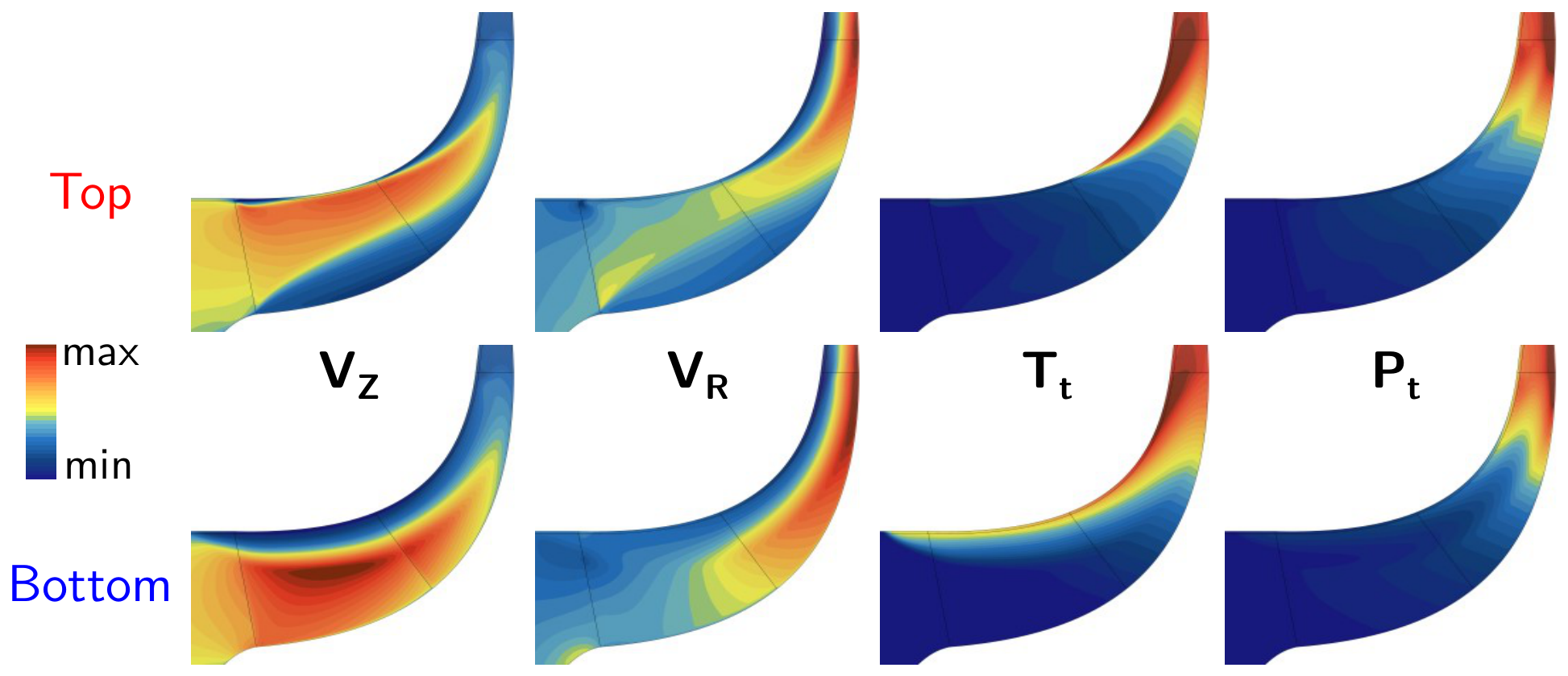
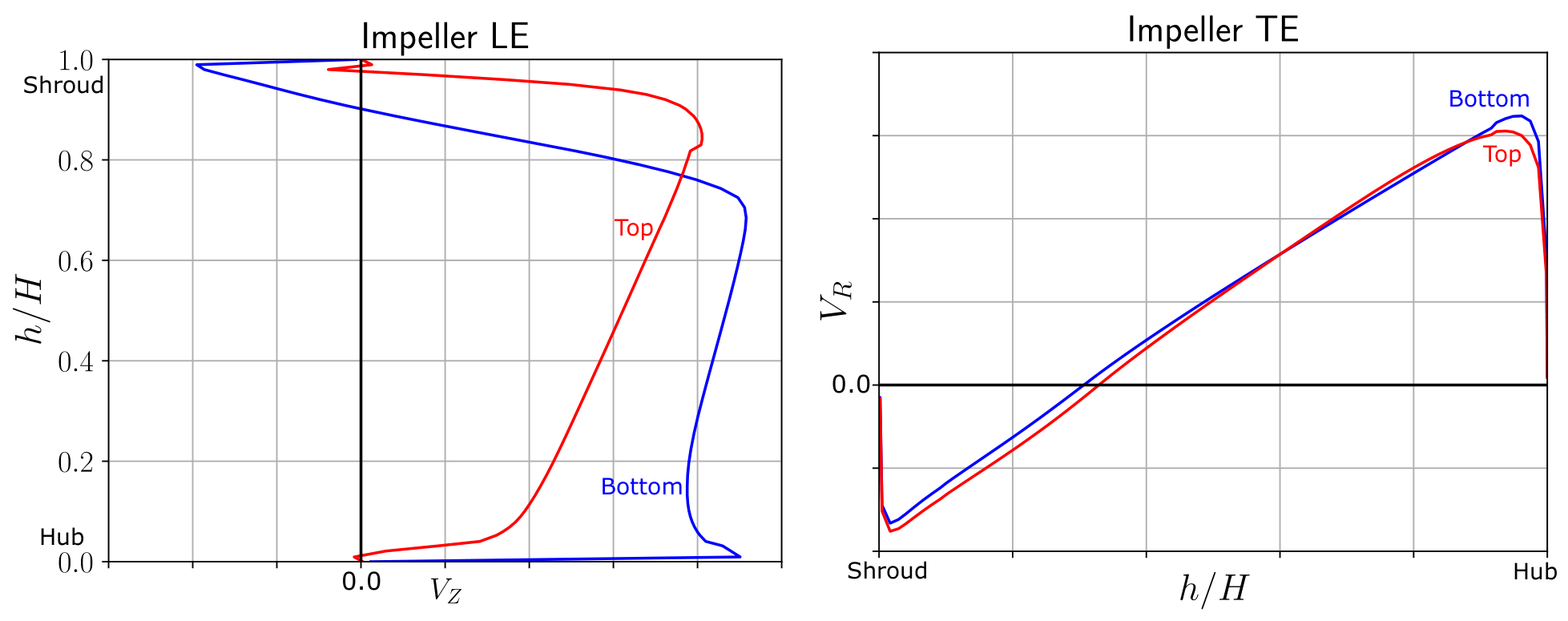
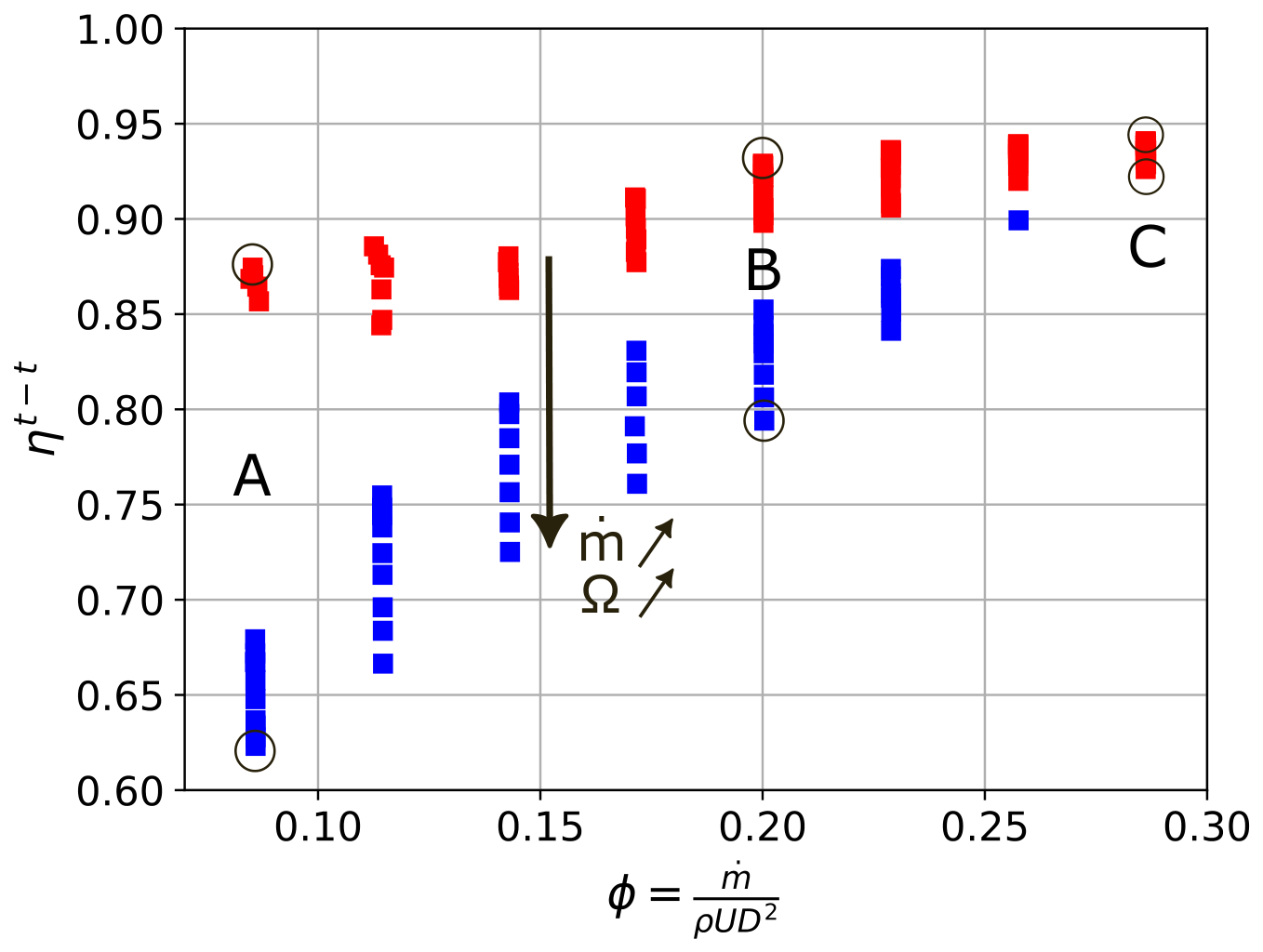
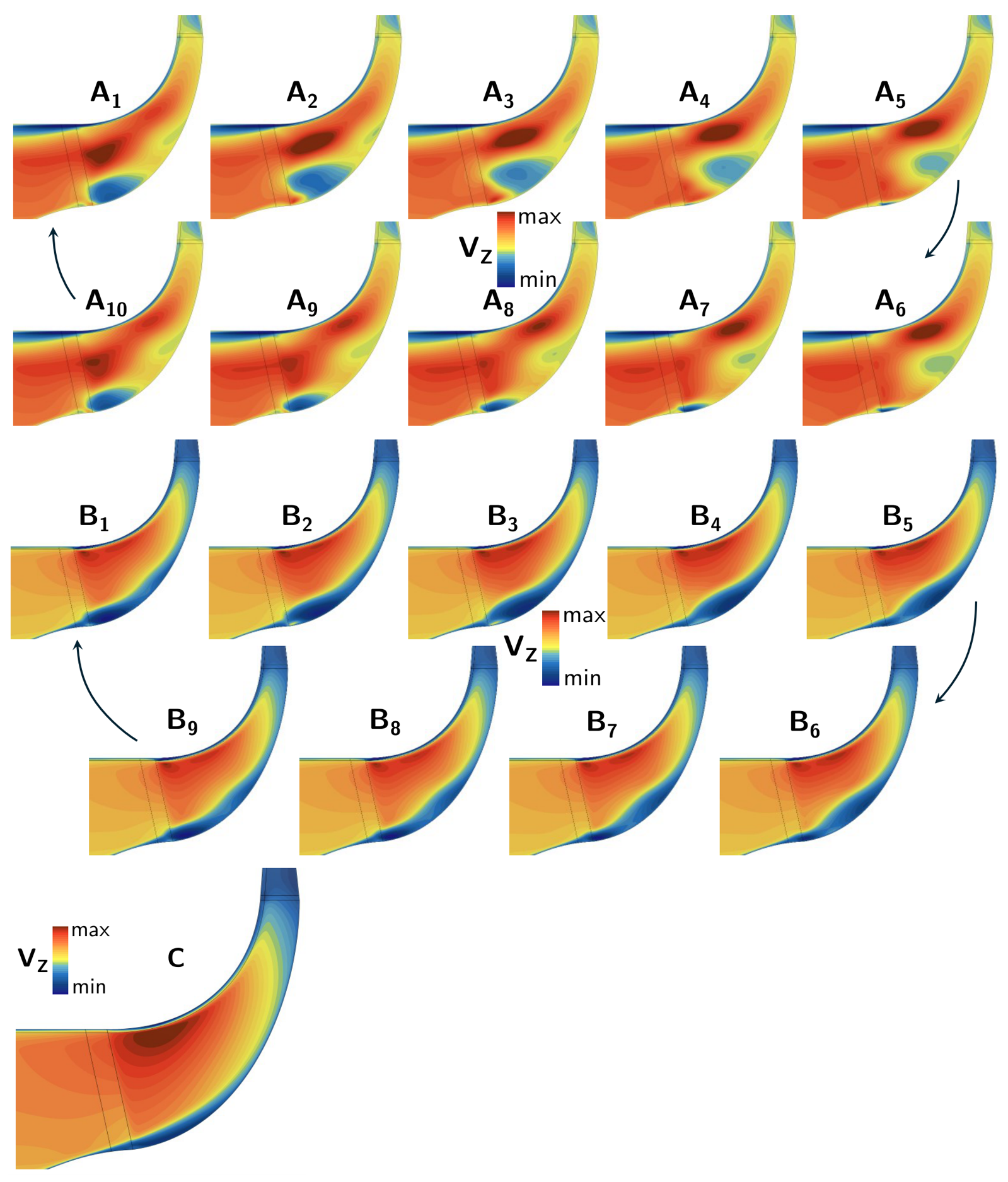
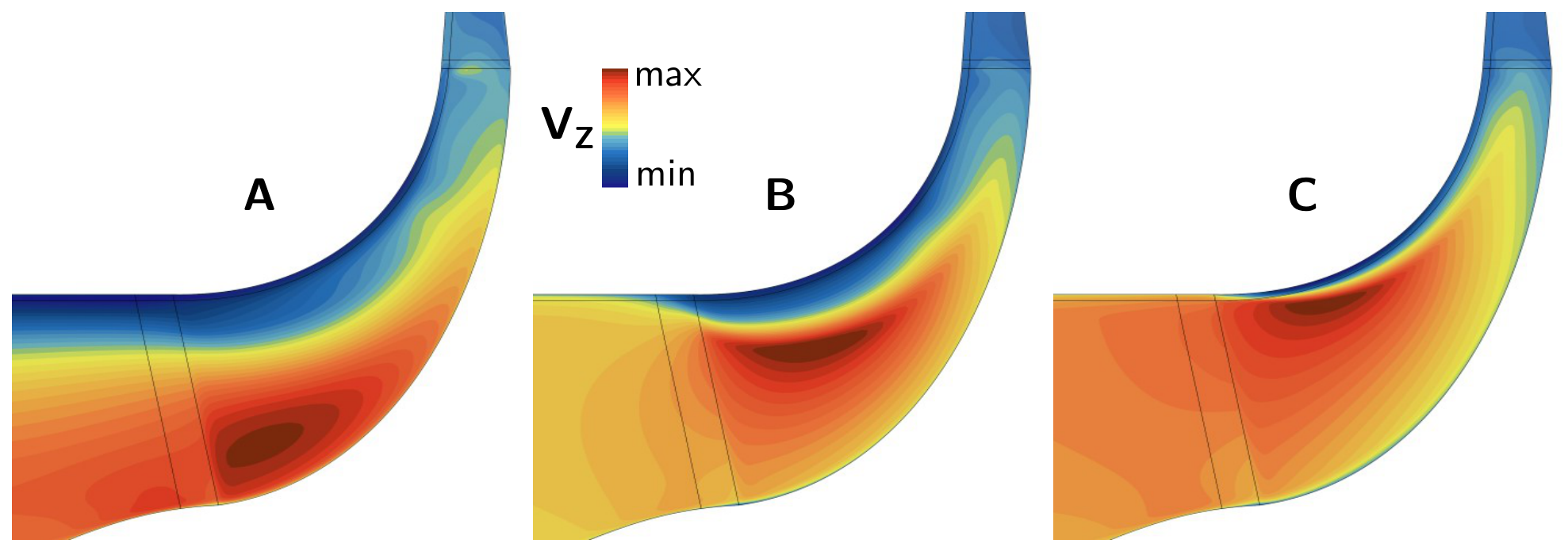
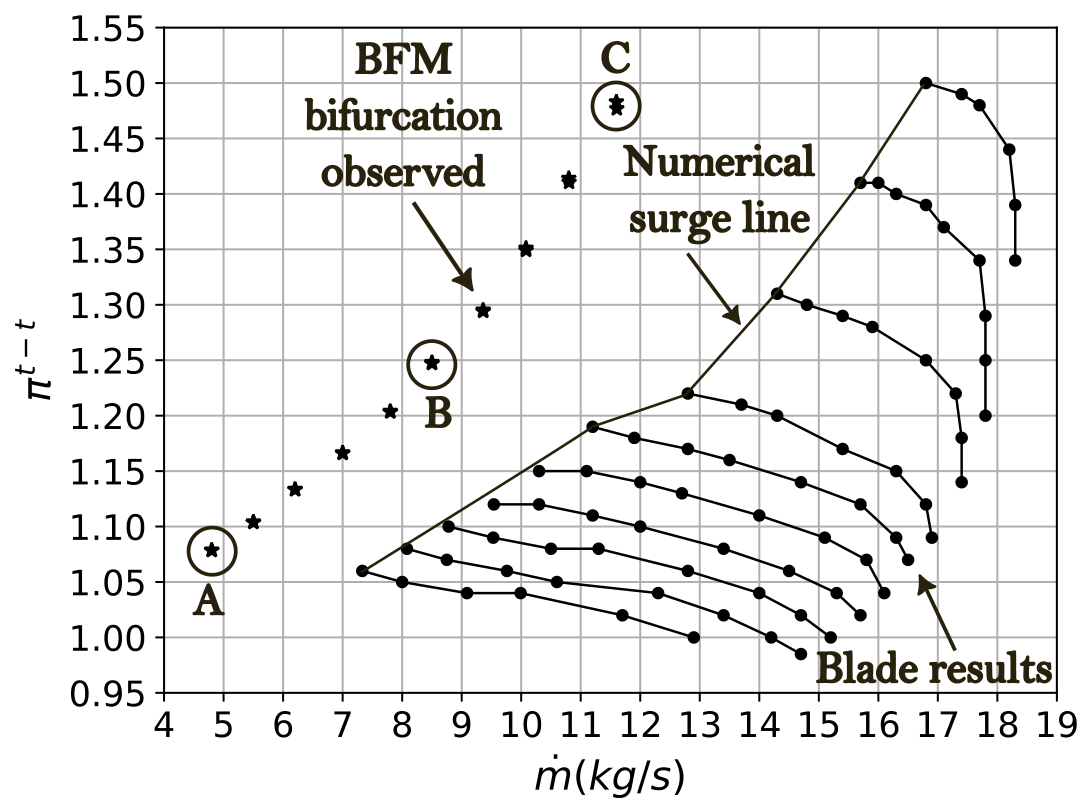
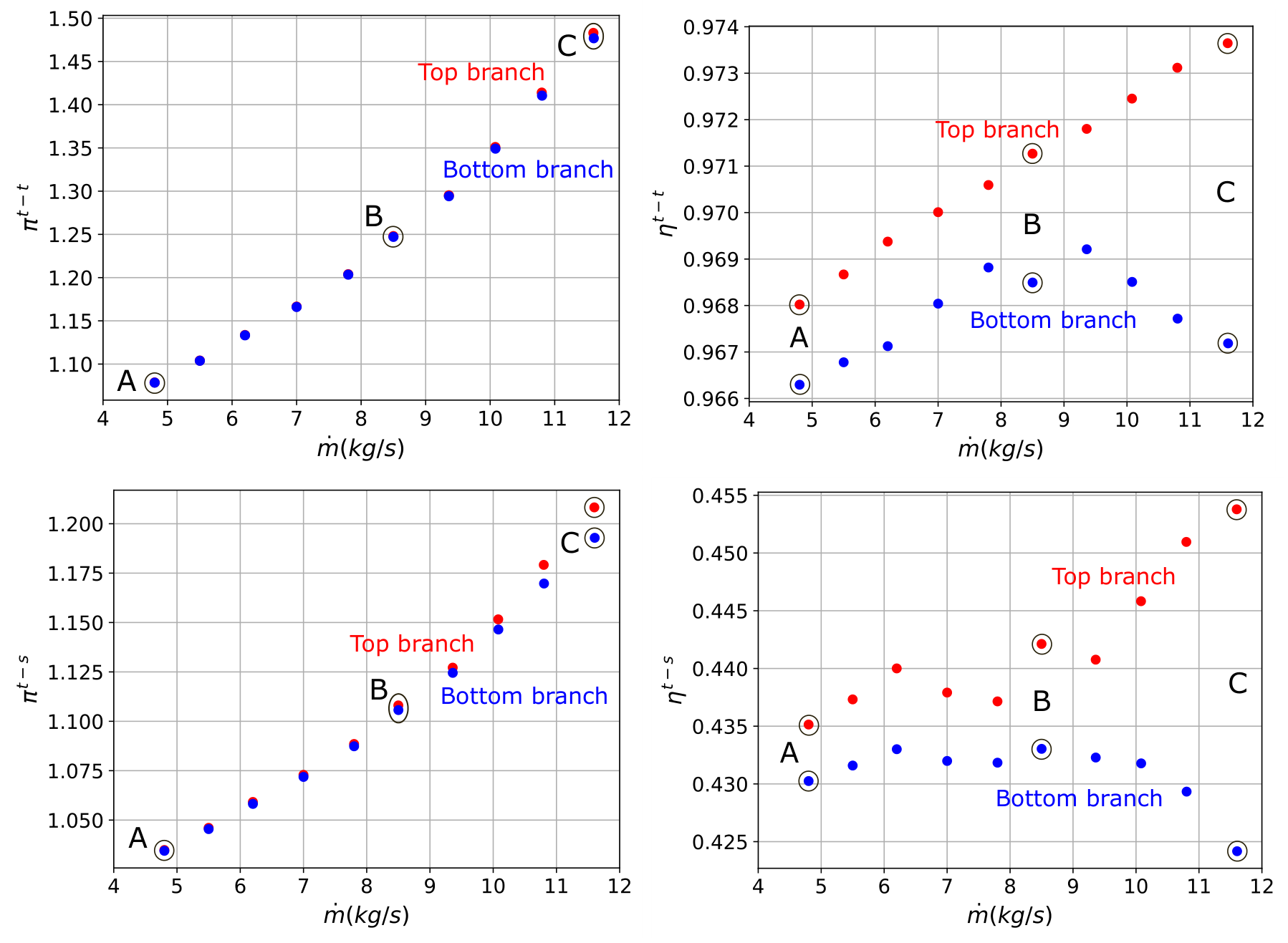
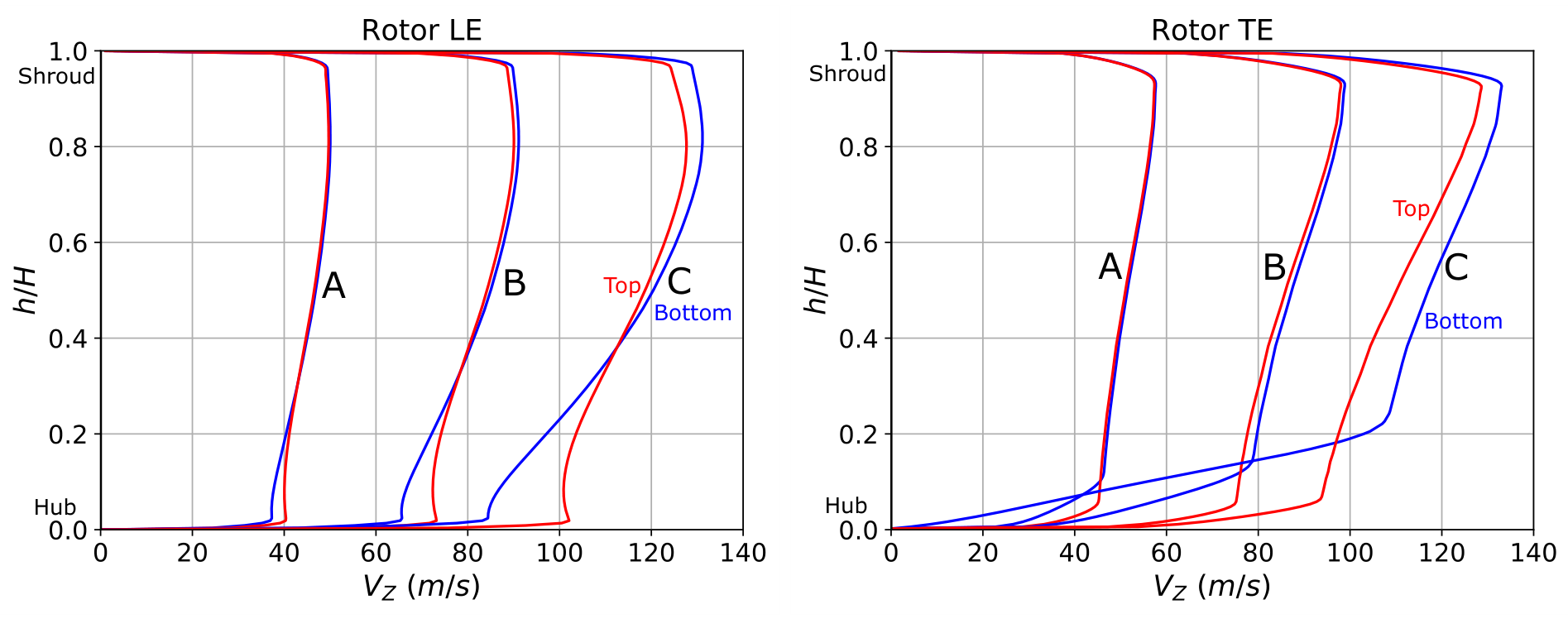
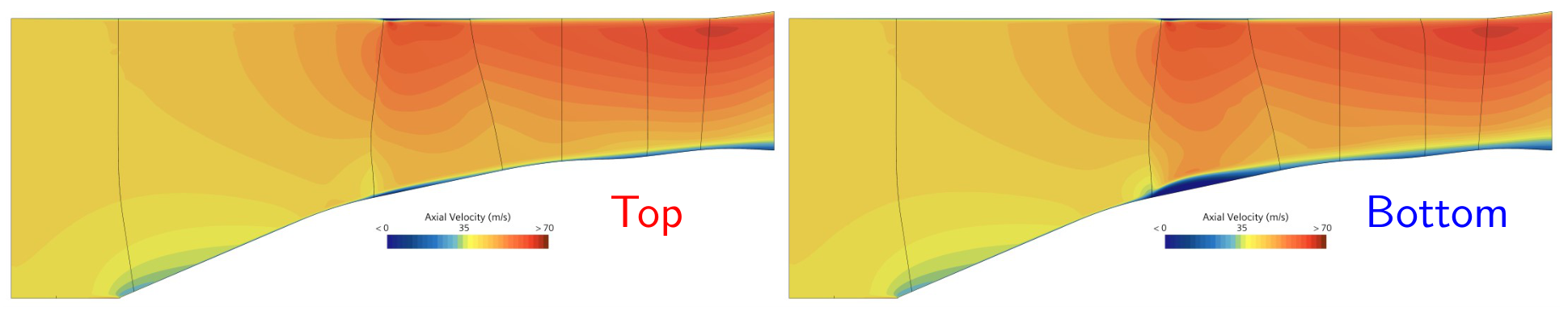
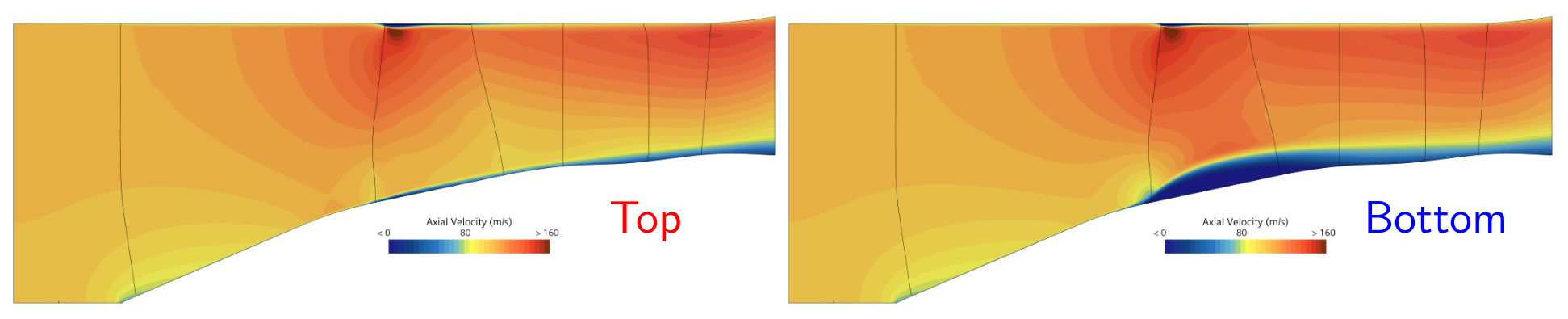
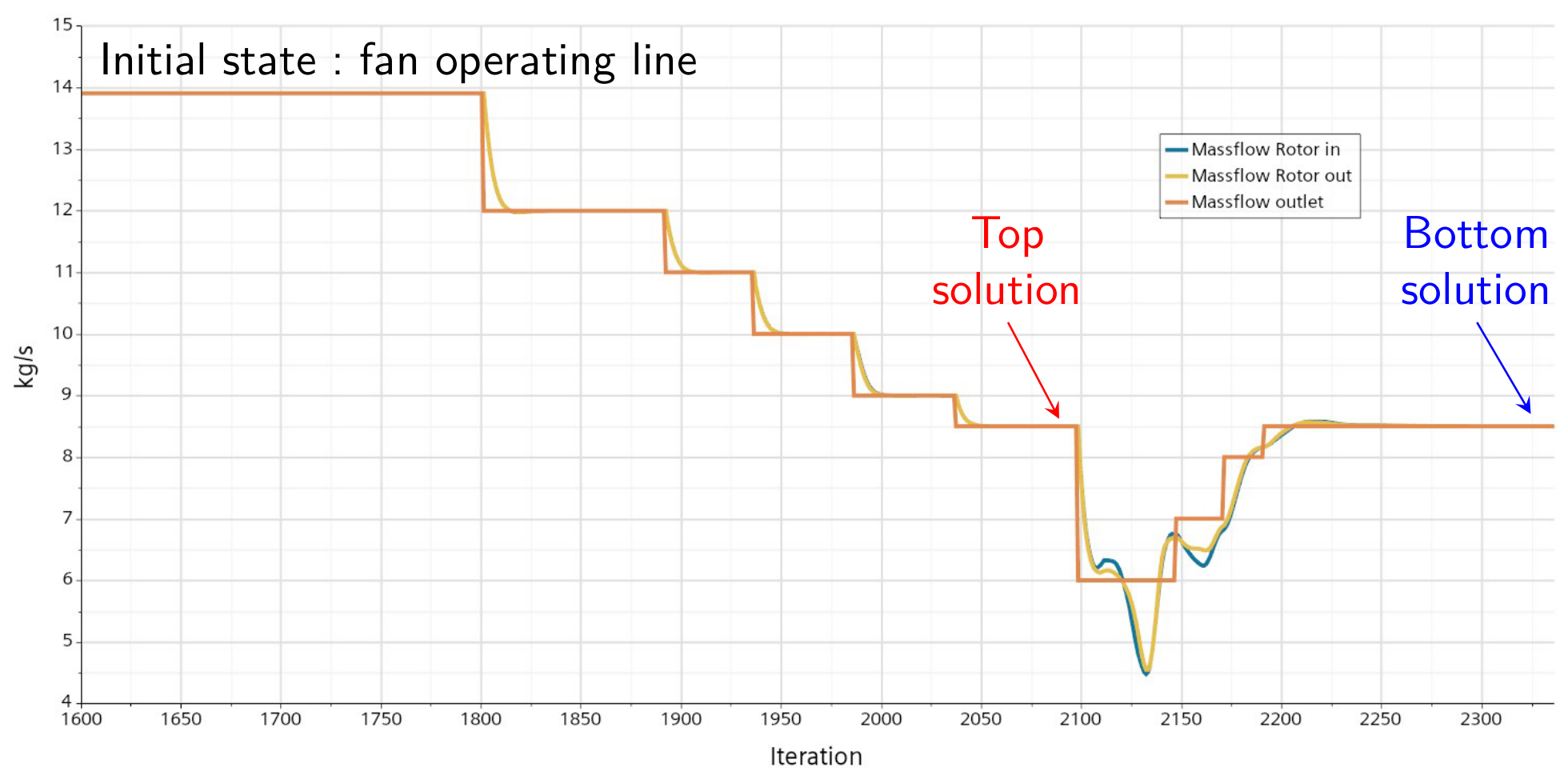
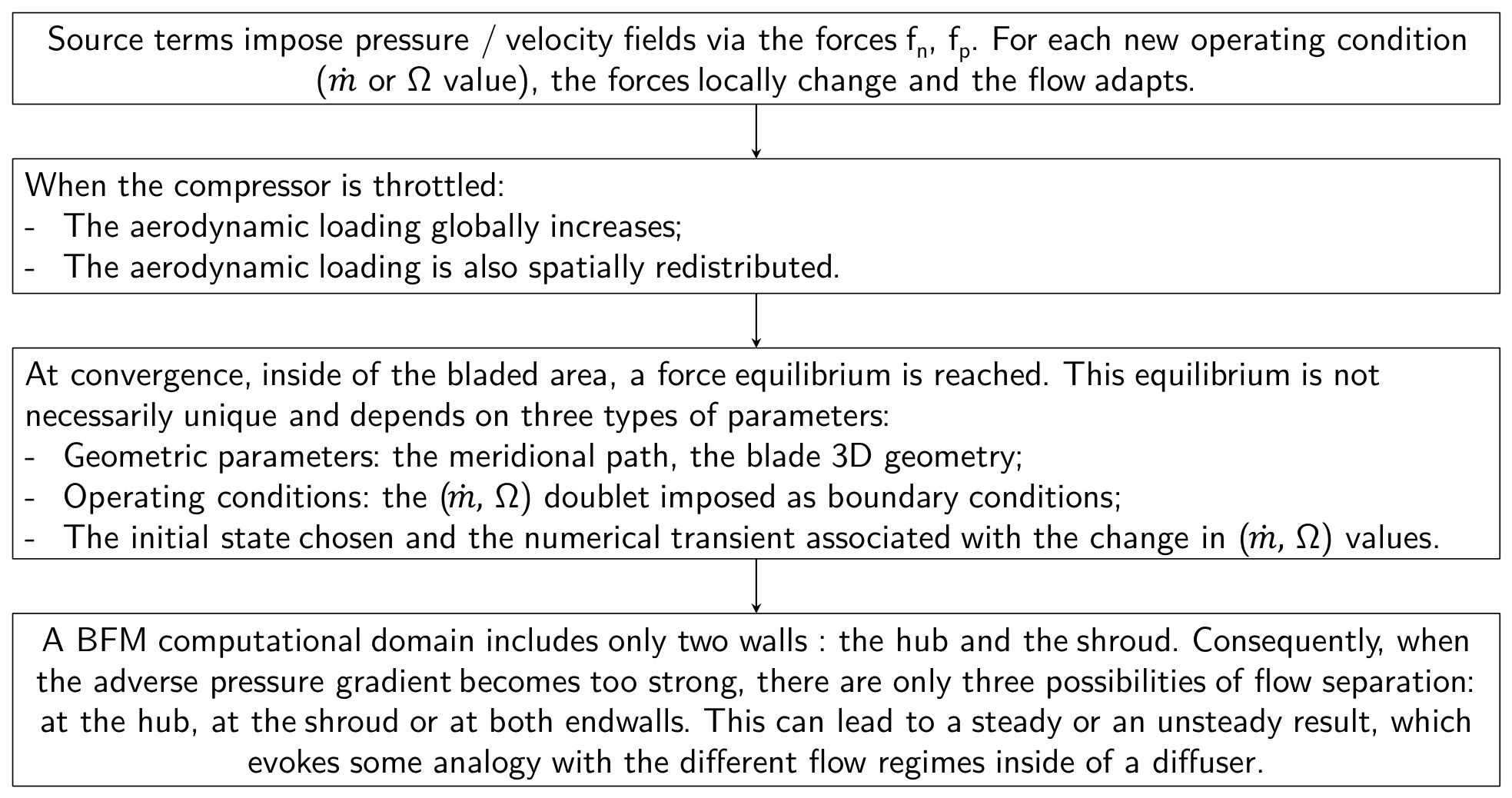
- The top group, in red, is associated with a hub separation (Figure 4). At high mass flow rates, this separation is small and steady. When the mass flow decreases, the separation bubble remains closed, but its size increases, and it starts oscillating. Finally, at low mass flow rates, this separation turns into a massive periodic vortex shedding which occupies a large part of the span and starts from the main blade LE. For a given value, these points are associated with low (, ) doublets;
- The bottom group, in blue, is associated with a shroud separation (Figure 5). It is steady and homogeneous on the whole mass flow range, progressively degenerating towards the expected inlet recirculation at the shroud. Once it is fully established at the main blade LE, its radial extension remains constant, and the separation point moves upstream in the axial direction when the mass flow decreases. For a given value, these points are associated with high (, ) doublets.
- The area ratio across the impellers is always inferior to 1 because of their meridional shape.
- Due to the source terms of Equation (3), the flow inside the bladed area receives an amount of work which changes for each operating point.
- The geometry is axisymmetric by definition, with a rotating wall at the hub, which introduces additional effects.
4.2. Axial Propulsive Fan
4.3. Current Limitations
5. Conclusions and Perspectives
- Does the bifurcation exist with other models, such as Gong’s one [16]? Is it generic due to BFM or only due to the Hall–Thollet formulation?
- The instability observed at low mass flow rates looks similar to the one with axial inducers reported by Sorensen [17], who added a bi-normal force in the equations. How should the modeling be enriched?
- The global behavior seems unchanged when the forces are calibrated at the nominal operating conditions. Is there another way to proceed in order to eliminate the stability bifurcation and ensure the right flow recirculation for centrifugal impellers at low mass flow rates?
Author Contributions
Funding
Data Availability Statement
Acknowledgments
Conflicts of Interest
Abbreviations
| BFM | Body Force Modeling |
| LE | Leading Edge |
| TE | Trailing Edge |
| RANS | Reynolds-Averaged Navier–Stokes |
Symbols
| b | Metal blockage coefficient |
| Flat plate turbulent friction coefficient | |
| d | Curvilinear distance to the blade LE |
| f | Body force per unit mass |
| Compressibility correction | |
| Calibration coefficients | |
| M | Relative Mach number |
| Mass flow | |
| N | Rotor blade number |
| Blade camberline normal vector | |
| P | Pressure |
| R | Radius |
| Cylindrical coordinates | |
| Local Reynolds number | |
| s | Rotor blade pitch |
| T | Temperature |
| W | Relative velocity |
| Local deviation angle | |
| Isentropic efficiency | |
| Dynamic viscosity | |
| Pressure ratio | |
| Density | |
| Mass flow coefficient | |
| Angular rotationnal speed |
Subscripts and Exponents
| n | Normal to the flow |
| p | Parallel to the flow |
| t | Stagnation quantity |
| Total-to-total | |
| Total-to-static |
Appendix A
Appendix A.1. Hall–Thollet Baseline Formulation
Appendix A.2. Calibration Used with the Axial Case
- Considering only the pressure ratio, the value of is varied until the BFM curve is tangent to the blade curve.
- The flow deviation 2D field is extracted from the BFM result at the tangency point.
- Considering only the isentropic efficiency, the values of , and are adjusted in order to make the BFM results match the blade results for three operating points: the tangency point, the minimum mass flow rate, and the maximum mass flow rate.
- , and are finally defined as two-part linear functions from the three triplets previously found.
References
- Thollet, W.; Dufour, G.; Carbonneau, X.; Blanc, F. Body-force modeling for aerodynamic analysis of air intake–fan interactions. Int. J. Numer. Methods Heat Fluid Flow 2016, 26, 2048–2065. [Google Scholar] [CrossRef] [Scilit]
- Benichou, E.; Dufour, G.; Bousquet, Y.; Binder, N.; Ortolan, A.; Carbonneau, X. Body force modeling of the aerodynamics of a low-speed fan under distorted inflow. Int. J. Turbomach. Propuls. Power 2019, 4, 29. [Google Scholar] [CrossRef] [Scilit]
- Crea, C.; Marty, J.; Barrier, R.; Cochon, S.; Dufour, G. Body Force Modelling of a Multi-Stage High-Pressure Compressor Under Inlet Distortion. Int. J. Turbomach. Propuls. Power 2025, 10, 12. [Google Scholar] [CrossRef] [Scilit]
- Kiffer, T.; Dufour, G.; Gojon, R.; Thollet, W.; López de Vega, L. Extension and validation of the Body Force Method to a propeller blade. In Proceedings of the AIAA AVIATION 2023 Forum, San Diego, CA, USA, 12–16 June 2023; p. 3378. [Google Scholar]
- Defoe, J.; Narkaj, A.; Spakovszky, Z. A body-force based methodology for predicting multiple-pure-tone noise: Validation. In Proceedings of the 16th AIAA/CEAS Aeroacoustics Conference, Stockholm, Sweden, 7–9 June 2010; p. 3747. [Google Scholar]
- Benichou, E.; Binder, N.; Dufour, G.; Bousquet, Y.; Poujol, N.; Ciais, V.; Flete, X. Prediction of Inlet Recirculation for Centrifugal Impellers with Body Force Modeling. Aerosp. Sci. Technol. 2026, 175, 111862. [Google Scholar] [CrossRef] [Scilit]
- Hall, D.K. Analysis of Civil Aircraft Propulsors with Boundary Layer Ingestion. Ph.D. Thesis, Massachusetts Institute of Technology, Cambridge, MA, USA, 2015. [Google Scholar]
- Thollet, W. Body Force Modeling of Fan-Airframe Interactions. Ph.D. Thesis, ISAE-SUPAERO Toulouse, Toulouse, France, 2017. [Google Scholar]
- Kim, H.; Liou, M.S. Flow simulation and optimal shape design of N3-X hybrid wing body configuration using a body force method. Aerosp. Sci. Technol. 2017, 71, 661–674. [Google Scholar] [CrossRef] [Scilit]
- Hill, D.J.; Defoe, J.J. Innovations in body force modeling of transonic compressor blade rows. Int. J. Rotating Mach. 2018, 2018, 6398501. [Google Scholar] [CrossRef] [Scilit]
- Dufour, G.; Cazalbou, J.B.; Carbonneau, X.; Chassaing, P. Assessing Rotation/Curvature Corrections to Eddy-Viscosity Models in the Calculations of Centrifugal-Compressor Flows. J. Fluids Eng. 2008, 130, 091401. [Google Scholar] [CrossRef] [Scilit]
- Ullah, T.; Sobczak, K.; Liskiewicz, G.; Mucha, M. Numerical Investigations of Inlet Recirculation in a Turbocharger Centrifugal Compressor. Energies 2025, 18, 903. [Google Scholar] [CrossRef] [Scilit]
- Fox, R.W.; Kline, S. Flow regimes in curved subsonic diffusers. J. Fluids Eng. 1962, 84, 303–312. [Google Scholar] [CrossRef] [Scilit]
- Dufour, G.; Thollet, W. Body Force Modeling of the Aerodynamics of the Fan of a Turbofan at Windmill. In Proceedings of the ASME Turbo Expo 2016: Turbomachinery Technical Conference and Exposition, Seoul, Republic of Korea, 13–17 June 2016; American Society of Mechanical Engineers: New York, NY, USA, 2016; Volume 49712, p. V02CT39A045. [Google Scholar]
- Awes, A.; Dufour, G.; Daon, R.; Marty, J.; Barrier, R.; Carbonneau, X. Unsteady body force methodology for fan operability assessment under clean and distorted inflow conditions. In Proceedings of the AIAA Scitech 2021 Forum, Virtual Event, 11–15 January 2021; p. 0388. [Google Scholar]
- Gong, Y.; Tan, C.; Gordon, K.; Greitzer, E. A computational model for short-wavelength stall inception and development in multistage compressors. J. Turbomach. 1999, 121, 726–734. [Google Scholar] [CrossRef] [Scilit]
- Sorensen, W.A. A Body Force Model for Cavitating Inducers in Rocket Engine Turbopumps. Ph.D. Thesis, Massachusetts Institute of Technology, Cambridge, MA, USA, 2014. [Google Scholar]


Disclaimer/Publisher’s Note: The statements, opinions and data contained in all publications are solely those of the individual author(s) and contributor(s) and not of MDPI and/or the editor(s). MDPI and/or the editor(s) disclaim responsibility for any injury to people or property resulting from any ideas, methods, instructions or products referred to in the content. |
© 2026 by the authors. Published by MDPI on behalf of the EUROTURBO. Licensee MDPI, Basel, Switzerland. This article is an open access article distributed under the terms and conditions of the Creative Commons Attribution (CC BY-NC-ND) license.
Share and Cite
Benichou, E.; Binder, N.; Dufour, G.; Bousquet, Y.; Poujol, N.; Ciais, V.; Flete, X. Stability Bifurcation in Compressor RANS Simulations Using Body Force Modeling. Int. J. Turbomach. Propuls. Power 2026, 11, 32. https://doi.org/10.3390/ijtpp11030032
Benichou E, Binder N, Dufour G, Bousquet Y, Poujol N, Ciais V, Flete X. Stability Bifurcation in Compressor RANS Simulations Using Body Force Modeling. International Journal of Turbomachinery, Propulsion and Power. 2026; 11(3):32. https://doi.org/10.3390/ijtpp11030032
Chicago/Turabian StyleBenichou, Emmanuel, Nicolas Binder, Guillaume Dufour, Yannick Bousquet, Nicolas Poujol, Viviane Ciais, and Xavier Flete. 2026. "Stability Bifurcation in Compressor RANS Simulations Using Body Force Modeling" International Journal of Turbomachinery, Propulsion and Power 11, no. 3: 32. https://doi.org/10.3390/ijtpp11030032
APA StyleBenichou, E., Binder, N., Dufour, G., Bousquet, Y., Poujol, N., Ciais, V., & Flete, X. (2026). Stability Bifurcation in Compressor RANS Simulations Using Body Force Modeling. International Journal of Turbomachinery, Propulsion and Power, 11(3), 32. https://doi.org/10.3390/ijtpp11030032