1. Introduction
Information devices such as personal computers and projectors have become indispensable in modern life, and their use has further increased since the COVID-19 pandemic. As demand grows for quieter environments in homes and offices, the acoustic quality of such devices has become an important factor influencing user comfort and satisfaction. Many of these products are equipped with small cooling fans operating at high rotational speeds. Although technological advances have reduced overall A-weighted sound pressure levels, users frequently report residual annoyance, particularly in quiet environments where tonal characteristics become perceptually salient.
From a physical perspective, fan noise typically consists of broadband turbulence-induced components combined with distinct tonal components related to the blade passing frequency (BPF) and its harmonics [
1,
2,
3]. Under certain operating conditions, additional narrowband components may occur due to flow instabilities, rotor–stator interactions, or rotating stall phenomena [
1]. Consequently, practical fan noise often contains multiple coexisting tonal components distributed across different frequency regions [
2,
3]. Such multi-tone spectral structures are not exceptional but rather characteristic of small axial fans operating under realistic loading conditions. These spectral characteristics suggest that evaluation approaches focusing solely on overall level may be insufficient to describe the perceptual impact of fan noise.
In product sound quality research, annoyance is widely adopted as a descriptor for the perceptual impact of tonal noise. To quantify tonal audibility and prominence, objective metrics such as the Tone-to-Noise Ratio (TNR) and the Prominence Ratio (PR) have been standardized in ECMA-418-1 [
4]. These indices evaluate individual tonal components relative to surrounding noise and have been widely applied in the assessment of mechanical and electronic products. In addition, ECMA-418-2 introduces psychoacoustic models based on human auditory perception for evaluating technical sounds, incorporating auditory filtering and loudness-related mechanisms [
5]. Together, these standards provide a structured framework for the objective evaluation of tonal components in information technology equipment.
Beyond standardized procedures, substantial progress has been made in the theoretical modeling of tonality. Hearing models based on psychoacoustic principles have been proposed to improve the robustness and perceptual validity of tonality calculations for technical sounds [
6,
7]. These approaches integrate auditory filtering, partial loudness concepts, and perceptually motivated detection strategies to better reflect human responses to tonal components embedded in complex spectra. While such developments have advanced the characterization of individual tonal components, their primary focus has generally been on accurately identifying and quantifying single tones rather than on representing the cumulative perceptual effect of multiple simultaneous tones.
The perception of sounds containing more than one tonal component has long attracted attention in psychoacoustic research. Early experimental work demonstrated that the perceived magnitude of loudness, annoyance, and noisiness for two-tone complexes cannot be predicted by simple linear addition of individual tonal contributions [
8]. Interactions between tonal components were shown to depend strongly on frequency spacing and masking effects, indicating that multiple tones may interact in ways that either enhance or reduce overall perceptual impact. Subsequent investigations, including detailed experimental studies on multi-tone perception, explored perceptual space representations, pleasantness judgments, and periodicity attributes of multi-tone stimuli, providing evidence that the perceptual organization of several tones involves complex interactions within the auditory system [
9,
10]. More recently, modeling approaches have attempted to describe the perceived tonal loudness of multiple tonal components by incorporating auditory filtering and partial loudness mechanisms, further highlighting the non-linear nature of multi-tone perception [
11]. Collectively, these findings suggest that the perceptual impact of several coexisting tones cannot be fully described by evaluating each tone independently. In addition to experimental investigations on perceptual interactions among multiple tones, psychoacoustic evaluations of practical fan noise have demonstrated that tonal characteristics significantly influence perceived sound quality beyond overall level metrics [
12]. Moreover, applications of ECMA-418-2-based psychoacoustic analyses to technical sounds have highlighted the importance of perceptually motivated modeling approaches for product sound evaluation [
13]. These findings further underline the necessity of systematically positioning cumulative tonal descriptors in relation to established discrete-tone metrics, such as TNR and PR, and to hearing-model-based approaches, such as those described in ECMA-418-2.
Despite these theoretical advances, systematic investigations addressing threshold-based evaluation of cumulative tonal effects in practical product noise remain limited. Existing annoyance threshold studies have primarily focused on single tonal components embedded in broadband noise [
14,
15]. These investigations demonstrated that prominence-related metrics can predict the transition from non-annoying to annoying conditions and that background level influences the corresponding threshold values. However, such studies generally consider isolated tones and do not explicitly address situations in which multiple tonal components coexist, as is typical in products containing several small cooling fans.
In practical devices such as projectors, the number, rotational speed, and acoustic characteristics of internal fans are often not disclosed. Multiple tonal components may appear within overlapping or adjacent frequency bands, and their relative prominence may vary with operating condition. Because TNR and PR evaluate tonal components individually, direct application of these metrics may not provide a comprehensive representation of the combined perceptual influence of several tones. The absence of a cumulative tonal descriptor within the standardized framework limits the ability to evaluate realistic multi-tone product noise in a threshold-based manner.
To address this issue, the Total Tone-to-Noise Ratio (TTNR) and the Total Prominence Ratio (TPR) have been proposed as cumulative extensions of the ECMA-418-1 framework [
16,
17,
18]. Rather than redefining tonality, these indices retain the standardized detection of individual tonal components while integrating their combined influence into a single descriptor. In this way, TTNR and TPR aim to bridge the gap between established single-tone evaluation procedures and the perceptual complexity of multi-tone technical sounds. A preliminary version of this work was presented at the FAN 2025 conference [
19].
In the present study, methodologies for extracting tonal components and calculating TTNR and TPR are systematically examined for projector operating noise containing multiple tonal components. The detection lower-limit threshold (LL) and detection level-difference threshold (LD) are adjusted within the ECMA framework to reflect realistic product conditions. Furthermore, subjective annoyance thresholds are determined using controlled jury ranking tests with 20 participants under standardized listening conditions. By deriving practical threshold values for TTNR and TPR from real product noise, the study seeks to establish cumulative tonal evaluation criteria consistent with international psychoacoustic research and applicable to multi-tone noise emitted by technical products equipped with small cooling fans.
2. Materials and Methods
The prominence of a tonal component is defined by the relationship between its level and the surrounding band noise that it masks, as specified in ECMA-418-1 [
4]. This surrounding frequency band, centered on the tonal component’s frequency, is referred to as the critical band according to the same standard. Standards such as ECMA-418-1 prescribe evaluation methods for identifying prominent discrete tones in information technology equipment. These methods include the Tone-to-Noise Ratio (TNR,
) and the Prominence Ratio (PR,
), which are conceptually similar. In the present study, the ECMA-418-1 methods were employed to calculate TNR and PR of each tonal component of interest.
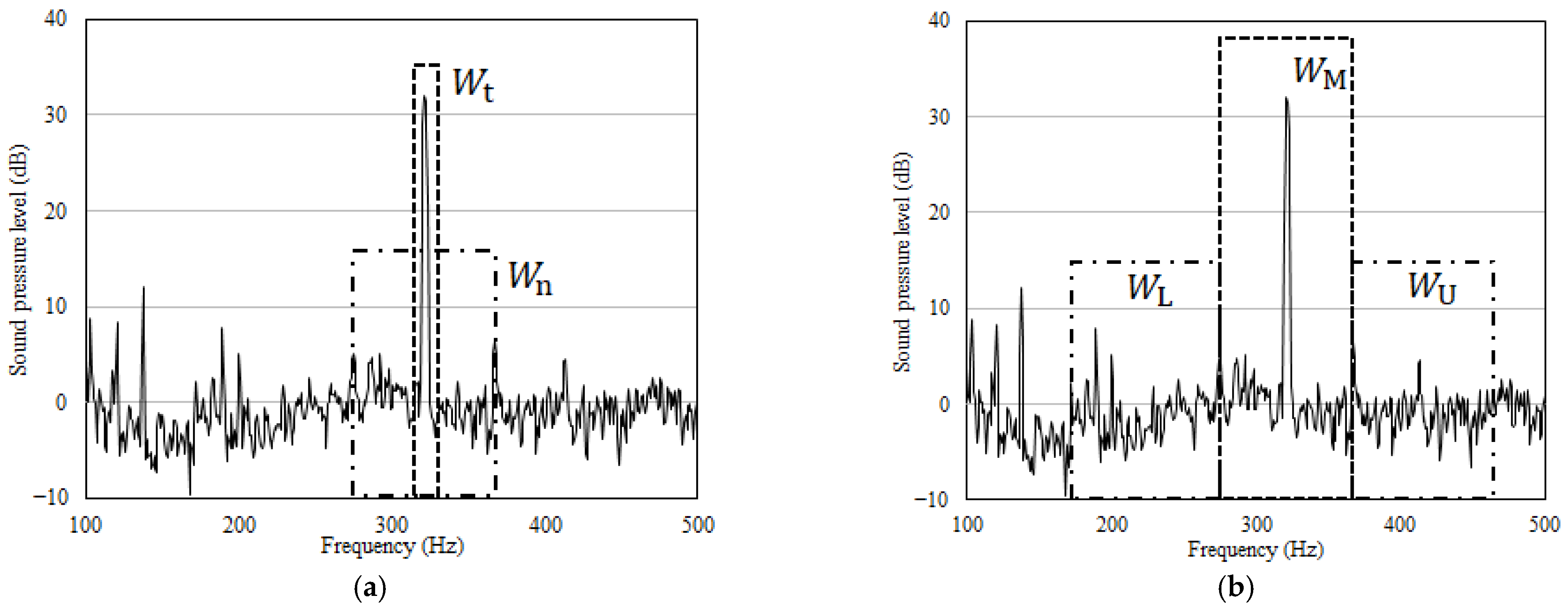
TNR is defined as the decibel ratio of the power of a tonal component to the power of other noise components within the critical band. According to ECMA-418-1 [
4], the reference value used in the calculation of TNR decreases at a rate of −2.5 dB per octave below 1 kHz and remains constant at frequencies at and above 1 kHz. Similarly, the reference value for PR decreases at −3.0 dB per octave below 1 kHz and remains constant above 1 kHz. Therefore, the 1 kHz condition specified in the standard represents a transition point in the frequency weighting characteristics and does not define the lower limit of the frequency range for calculating TNR or PR. If the TNR exceeds 8 dB at 1 kHz or higher, the tonal component is classified as a prominent discrete tone according to ECMA-418-1.
Figure 1 presents schematic representations of TNR (a) and PR (b) calculations.
In this expression,
(dB) denotes the TNR as defined in ECMA-418-1 [
4],
(Pa
2) denotes the power of the tonal component, and
(Pa
2) denotes the power of the remaining components within the critical bands defined in ECMA-418-1.
In this expression,
(dB) denotes the PR as defined in ECMA-418-1 [
4],
(Pa
2) denotes the power of the middle critical band, and
(Pa
2) and
(Pa
2) denote the powers of the lower and upper critical bands, respectively, as defined in ECMA-418-1.
To evaluate fan noise, it is first necessary to identify and quantify its tonal components. This step is essential for product quality control, noise source identification, and noise reduction. A well-known index for evaluating tonality is Tonality as defined in ECMA-418-2 [
5]. Applications of ECMA-418-2 to fan and technical product noise have demonstrated that hearing-model-based tonality metrics provide enhanced perceptual interpretability compared with purely spectral indicators [
13]. However, such models are primarily designed to evaluate overall tonality rather than to derive cumulative threshold criteria for multiple discrete tones. This index measures the degree to which tonal components are present in noise. However, its calculation is highly complex because it requires the weighting of multiple factors, such as frequency masking and the proportion of tonal components. Rather than replacing the Tonality metric defined in ECMA-418-2, the present study focuses on physically based indices for evaluating discrete tonal components, and accordingly examines the Total Tone-to-Noise Ratio (TTNR,
) and the Total Prominence Ratio (TPR,
) as integrated evaluation indices for multiple tonal components. The levels of individual tonal components in the noise spectrum of interest are determined using the TNR or PR calculation methods, and their sums in decibels are defined as the evaluation parameters TTNR and TPR, respectively. These calculation methods are described in ECMA TR/108 [
16].
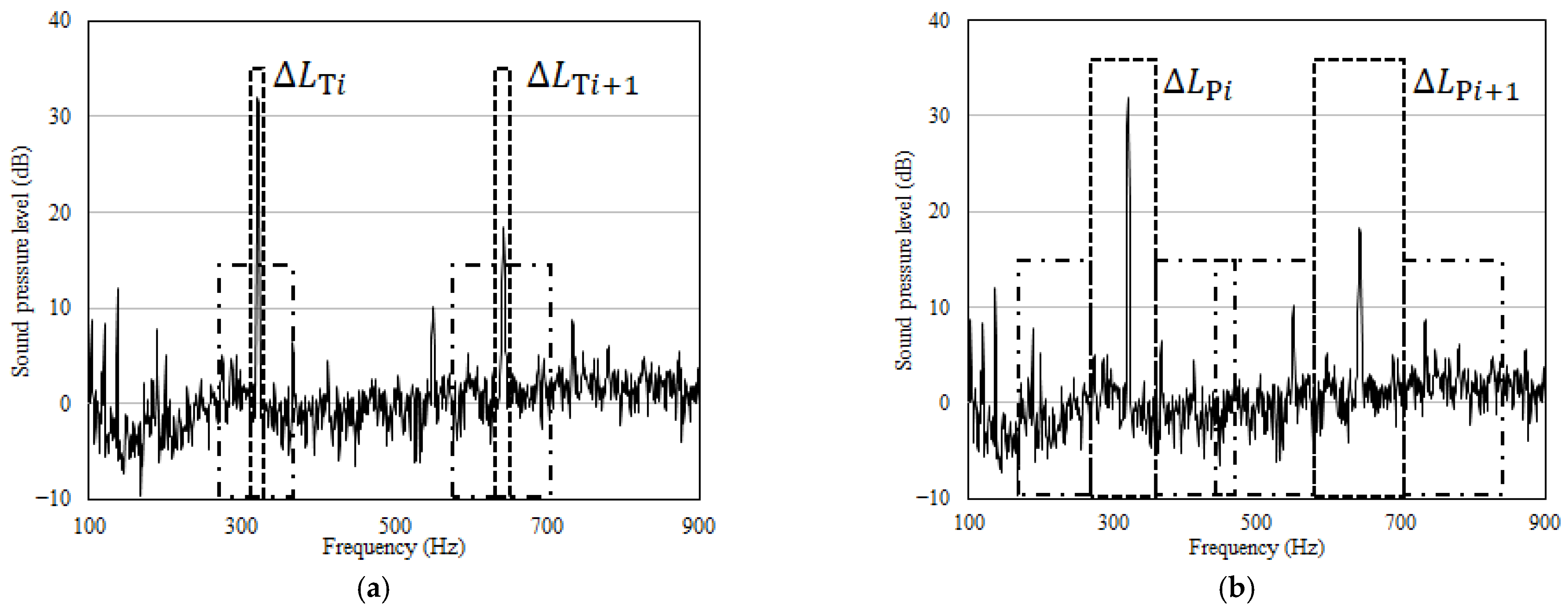
Figure 2 presents schematic representations of TTNR (a) and TPR (b) calculations for multiple tonal components.
In this expression,
(dB) and
(dB) denote the TTNR and TPR, respectively;
(dB) and
(dB) denote the TNR and PR of the
i-th tonal component; and
N denotes the number of tonal components in the noise spectrum.
To evaluate whether the auditory impression of fan noise is perceived as annoying, it is essential to determine the threshold levels of TTNR and TPR that correspond to this subjective perception. In this study, TTNR and TPR thresholds were determined using the operating noise of commercially available projectors as test stimuli. The thresholds of subjective annoyance for TTNR and TPR are denoted as and , respectively.
Previous studies have demonstrated that both TTNR and TPR are valid evaluation indices for subjective annoyance when noise comprises multiple tonal components [
17]. The experimental setup employed in the present study is described as follows. In this study, five commercially available projectors with different specifications from various manufacturers were prepared as sound sources. These projectors were designed for tabletop use. Each projector was powered on and configured to receive a video signal from a personal computer, and its operating noise was recorded using a Class 1 sound level meter (NL-31, Rion Co., Ltd., Tokyo, Japan) positioned 300 mm above the unit. The measurements were conducted in a semi-anechoic chamber with an A-weighted background noise level below 15 dB, with no personnel present in the room to eliminate external disturbances. A single microphone was used to represent a practical near-field measurement condition for tabletop devices, and the microphone distance of 300 mm was selected as a representative measurement distance for such applications. The recorded signals were sampled at 51.2 kHz, enabling stable spectral analysis up to 20 kHz and ensuring sufficient frequency coverage for the upper frequency limit of 11,200 Hz specified in the standard.
The five projectors were designated as Type-1 through Type-5. The corresponding sound recordings were used as test stimuli and labeled Sound1-1 through Sound1-5, collectively referred to as “Test Sound Set 1” (Set 1).
Table 1 summarizes the primary acoustic characteristics of these projectors. The acoustic characteristics of the test sound sets listed in
Table 1,
Table 2,
Table 3 and
Table 4 were calculated based on the critical band definition specified in ECMA-418-1 [
4]. The values of
and
were calculated by summing the contributions of tonal components identified within the frequency range 89.1–11,200 Hz, as specified in ECMA-418-1. Loudness and Sharpness were calculated using the sound quality analysis software package (SA-02 BASE, Version 4.3J-4.244, RION Co., Ltd., Tokyo, Japan), with Loudness calculated in accordance with DIN 45631 [
20] and ISO 532-1 [
21], and Sharpness calculated using the Zwicker psychoacoustic model based on the specific Loudness pattern [
22]. The overall sound pressure level values reported in the following tables are A-weighted and are expressed as the A-weighted overall sound pressure level (OASPL
A). The calculated Sharpness values were used to examine the relationship between high-frequency spectral characteristics and subjective annoyance obtained from the jury test.
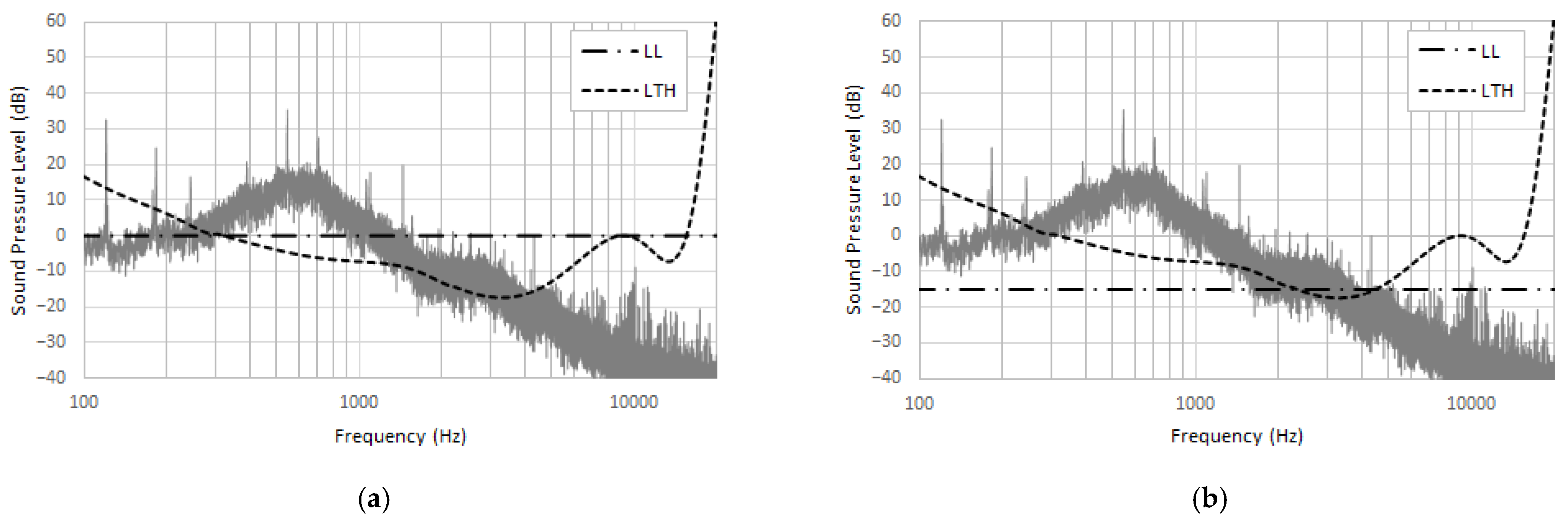
Because threshold conditions for extracting tonal components for TTNR and TPR calculation have not yet been established, candidate components were identified using a lower-limit threshold of 0 dB on the FFT-based sound pressure level spectrum and a level-difference criterion of at least 12 dB. Based on Set 1, three additional sets of sound sources were prepared. A representative FFT spectrum illustrating the identification of tonal components under different detection conditions is presented in
Section 3.
Set 2 (Sound2-1 through Sound2-5) was created by adjusting the Loudness values of the sounds in Set 1 to approximate that of Type-5 (Sound1-5) in
Table 1, while preserving the original spectral shapes.
In Test Sound Sets 3 and 4, the tonal components of selected sounds in Set 1 were deliberately modified to examine the perceptual effects of TTNR and TPR independently. These modifications focused on adjusting the relative levels of discrete tonal peaks with respect to the surrounding noise floor, while preserving the overall broadband spectral shape and Loudness. The adjustments were carried out in the frequency domain by selectively increasing or decreasing the amplitudes of identified tonal peaks in the FFT spectrum, without introducing additional tonal components or applying broadband filtering. The modifications were implemented through systematic manipulations of relative tonal levels, rather than being based on specific spectral examples. This approach enabled the effects of cumulative tonal energy and tonal prominence on subjective annoyance to be examined without introducing substantial changes in broadband noise characteristics. Set 3 (Sound3-1 through Sound3-5) was generated by modifying the tonal components of Sound1-4 and Sound1-5: Sound3-4 was adjusted to reduce both TTNR and TPR relative to Sound1-4, whereas Sound3-5 was adjusted to reduce TTNR but increase TPR relative to Sound1-5. Set 4 (Sound4-1 through Sound4-5) was generated by modifying the tonal components of Sound1-3 and Sound1-4: Sound4-3 was adjusted to increase both TTNR and TPR relative to Sound1-3, while Sound4-4 was adjusted to reduce both TTNR and TPR relative to Sound1-4. In addition, the Loudness values in Sets 3 and 4 were adjusted to match that of Sound1-5, following the same procedure as in Set 2. The acoustic characteristics of all test sound sets are summarized in
Table 1,
Table 2,
Table 3 and
Table 4.
The jury test was conducted in a semi-anechoic chamber. The A-weighted background noise level inside the chamber was maintained below 15 dB, ensuring that ambient noise did not influence the auditory evaluations. During each listening session, only one participant was present in the test room. All listening sessions were carried out under identical environmental conditions to ensure consistency across participants.
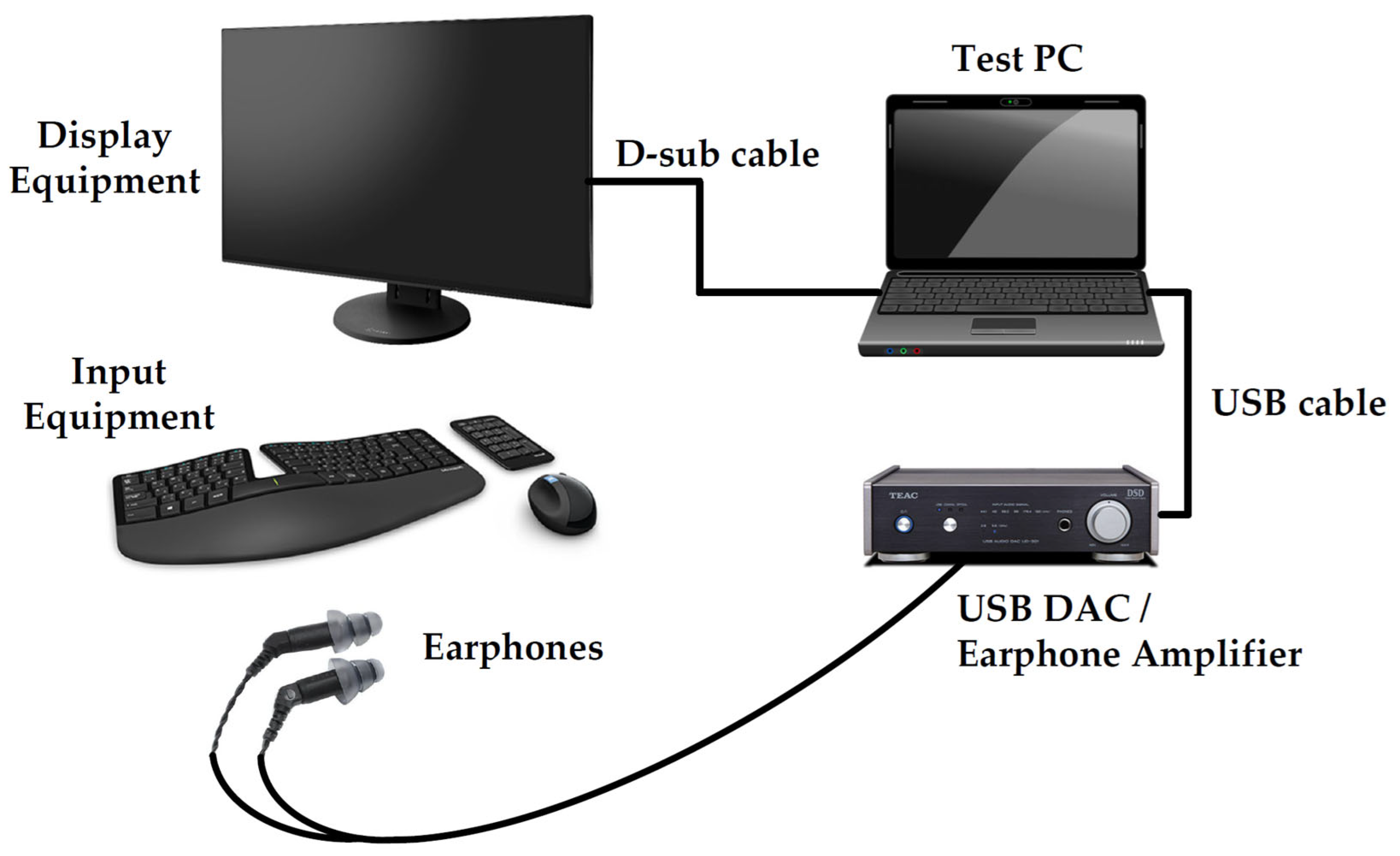
The subjective evaluation was performed using a graphical user interface (GUI) displayed on a personal computer, through which the participants conducted the ranking task. The test sounds were presented binaurally using the canal-type earphones (ER4B, Etymotic Research, Inc., Elk Grove Village, IL, USA). The audio signals were reproduced via a USB digital-to-analog converter and headphone amplifier (UD-301, TEAC Corporation, Tokyo, Japan) connected to the test PC. All test sounds were reproduced under identical playback conditions, and the same listening setup was used for all participants throughout the experiment. The overall configuration of the playback system used in the jury test is shown in
Figure 3.
The jury test was conducted using the ranking method, which assigns an order to the perceived intensity of preferences or sensations within a set of samples. Although less accurate than the paired comparison method, it is considered advantageous because it imposes a lower burden on the jurors [
23,
24]. In the present study, the test sounds in each set were presented in random order, and the full ranking method was employed to rank all stimuli without repetition. The sound source perceived as least annoying was assigned first rank. In addition to the ranking task, the jurors were also asked to identify the sound source they could tolerate without perceiving it as annoying.
The jury test consisted of 20 male university students (aged 21–24 years) with normal hearing, who were randomly selected. Each juror was presented with a set of five test sounds and asked to rank them from first to fifth according to increasing perceived annoyance. This procedure was repeated for all four sound sets. The presentation order of the four sound sets was randomized, as was the assignment of test sounds to the playback buttons within each set. The order and number of times each test sound was listened to were left to the discretion of the jurors. In addition, Set 1 and Set 2 were included twice for each juror, resulting in a total of six sound sets being evaluated per jury test.
3. Results
3.1. Evaluation Jury Test
The significance of the test was examined by calculating Kendall’s coefficient of concordance based on the jury test results. The validity of the evaluation indices was also examined using rank-based correlation measures.
Table 5 presents the residual sum of squares (
), which is the test statistic for Kendall’s coefficient of concordance, and Kendall’s coefficient of concordance (
) derived from the jury test results. For five samples (
n = 5) and 20 jurors (
K = 20), the significance of
was evaluated using the critical values of S tabulated in the reference literature [
24], because this specific combination of
n and
K is listed in the published table. Under these conditions, the critical values of
are 641.2 at the 1% significance level and 468.5 at the 5% significance level for rejecting the null hypothesis of no agreement. Since all calculated
values exceeded these thresholds, it can be concluded that there was a high degree of agreement among the jurors’ evaluations.
Kendall’s coefficient of concordance (
) ranges from 0 (no agreement) to 1 (complete agreement). The values obtained in
Table 5 (0.51–0.78) therefore indicate a moderate to high degree of agreement among the jurors.
The correlation coefficients between the evaluation indices (TTNR, TPR, Loudness, Sharpness, and OASPL
A) and the average rankings were then calculated for each of the four test sound sets, as summarized in
Table 6.
In this study, higher absolute correlation coefficients indicate a stronger relationship between a given evaluation index and the subjective ranking results.
In Set 1, where Loudness was not normalized, higher correlation coefficients were observed for Loudness and Sharpness than for TTNR and TPR, indicating that subjective evaluations were mainly influenced by overall level-related attributes.
In contrast, in Set 2, where Loudness was normalized, the correlation coefficients for Loudness and OASPL
A decreased, whereas those for TTNR and TPR increased, indicating that tonal-related indices became more relevant under conditions with minimal Loudness differences. These results show that Loudness normalization altered the correlation patterns between the evaluation indices and the ranking averages, as reflected in the results for Set 2 in
Table 6.
A comparison between Set 1 and Set 2 shows that the correlation coefficients for Loudness were higher in Set 1, whereas those for TTNR and TPR were higher in Set 2, reflecting differences in the evaluation patterns between the two conditions. The values of Kendall’s coefficient of concordance () showed comparable tendencies in both trials of Set 1 and Set 2, suggesting that order effects in the jury test were negligible.
Set 3 and Set 4 consisted of sounds with deliberately modified tonal components. In Set 3, high correlations were observed between the ranking averages and TTNR as well as Sharpness, similar to the results obtained in the second trial of Set 2. In contrast, Set 4 showed high correlations between the ranking averages and TPR and Sharpness.
Across all sound sets, Sharpness consistently exhibited high correlations with the ranking averages. This suggests that jurors’ evaluations of subjective annoyance were clearly influenced by Sharpness and the high-pitched character of the sounds.
3.2. Consideration of Calculating Method for TTNR and TPR
Projectors are generally equipped with multiple small fans. To accurately identify the target tonal components, it is necessary to know the number and specifications of the installed fans (e.g., size, blade count, rotational speed). However, disassembly of the experimental projector was not permitted, and the manufacturers would not disclose such information due to confidentiality restrictions. Consequently, tonal components were extracted from the recorded spectra under the following conditions, and TTNR and TPR were subsequently calculated.
The detection frequency range was set in accordance with the standard (89.1–11,200 Hz).
The detection lower-limit threshold (LL) was set to define the minimum magnitude for candidate tonal components.
The detection level-difference threshold (LD) between a tonal component’s peak and valley was specified.
The lower threshold of hearing (LTH), as defined in ECMA-418-1, was applied, and candidates below this level were excluded.
The TTNR and the TPR values in
Table 1,
Table 2,
Table 3 and
Table 4 were calculated using LL = 0 dB and LD = 12 dB.
Figure 4 illustrates an example noise spectrum of Sound2-1 in Set 2 for two different LL settings (LL = 0 dB and LL = −15 dB), showing how decreasing LL increases the number of detected tonal components above the lower threshold of hearing. Decreasing LL increases the number of detected tonal components, thereby raising the computational load, as illustrated by the example spectrum in
Figure 4. Conversely, increasing LL reduces the number of target tonal components, thereby lowering the computational load. The same principle applies to LD. In addition, the critical bandwidth condition specified in the standard for tonal components must be satisfied: the frequency band selected for computing the sound pressure level of a discrete tone (
) must lie within 15% of the critical band centered at the tone’s frequency. Although this results in a wider absolute bandwidth at higher frequencies, this condition reflects the frequency-dependent nature of the critical band and does not constitute a frequency weighting. In the subsequent analyses (
Section 3.2.1,
Section 3.2.2 and
Section 3.2.3), LL and LD were systematically varied to improve the correlations between TTNR and the ranking averages, and between TPR and the ranking averages, in Set 2 where Loudness was normalized.
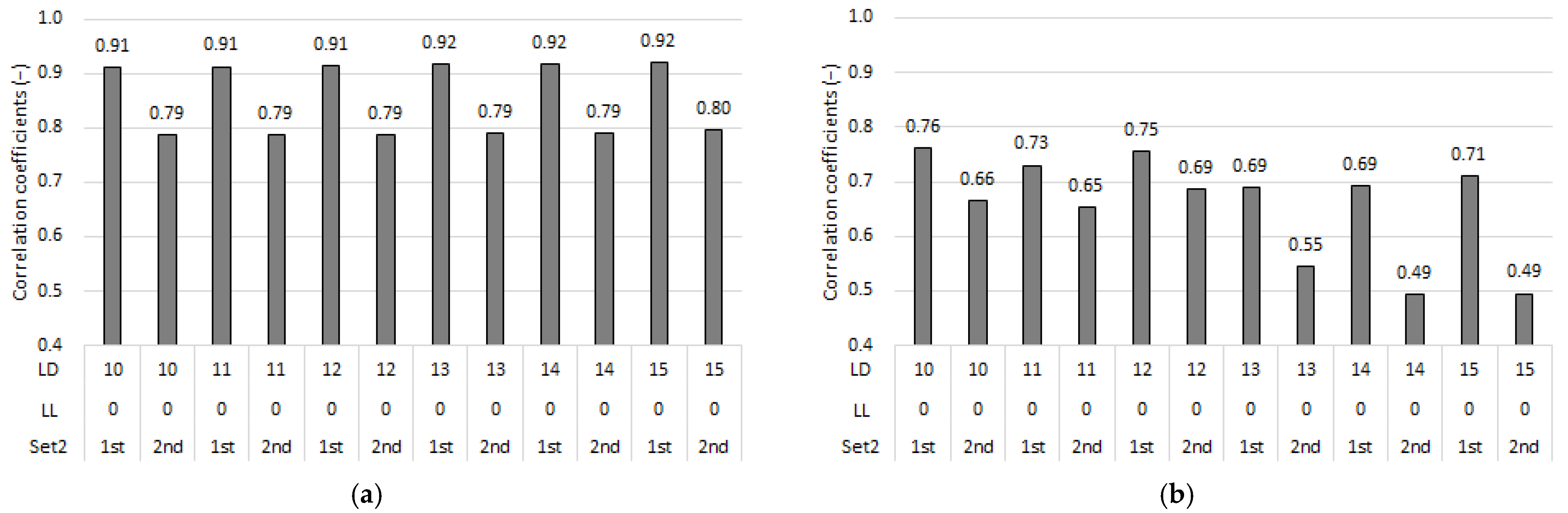
3.2.1. Adjusting Only the Detection Level Difference Threshold (LL = 0 dB Fixed)
Figure 5 shows the correlation between TTNR/TPR and ranking averages under the condition of LL fixed at 0 dB. LL was fixed at 0 dB, and LD was systematically varied in 1 dB increments from 10 to 15 dB for the calculation of TTNR and TPR. Correlation coefficients with the ranking averages were then evaluated for each condition. The correlation between TTNR and the ranking averages showed only negligible variation across this range of LD values, indicating that TTNR is relatively robust against variations in LD. In contrast, the correlation between TPR and the ranking averages decreased noticeably when LD exceeded 12 dB, suggesting that TPR is more sensitive to changes in LD. Based on these results, LD = 12 dB was selected as the parameter setting used in the subsequent analyses. Although the absolute optimal LD value may vary depending on the underlying noise spectrum, the observed trade-off between detection sensitivity and computational efficiency was consistently observed across the tested conditions.
3.2.2. Adjusting Only the Detection Lower Limit Threshold (LD = 12 dB Fixed)
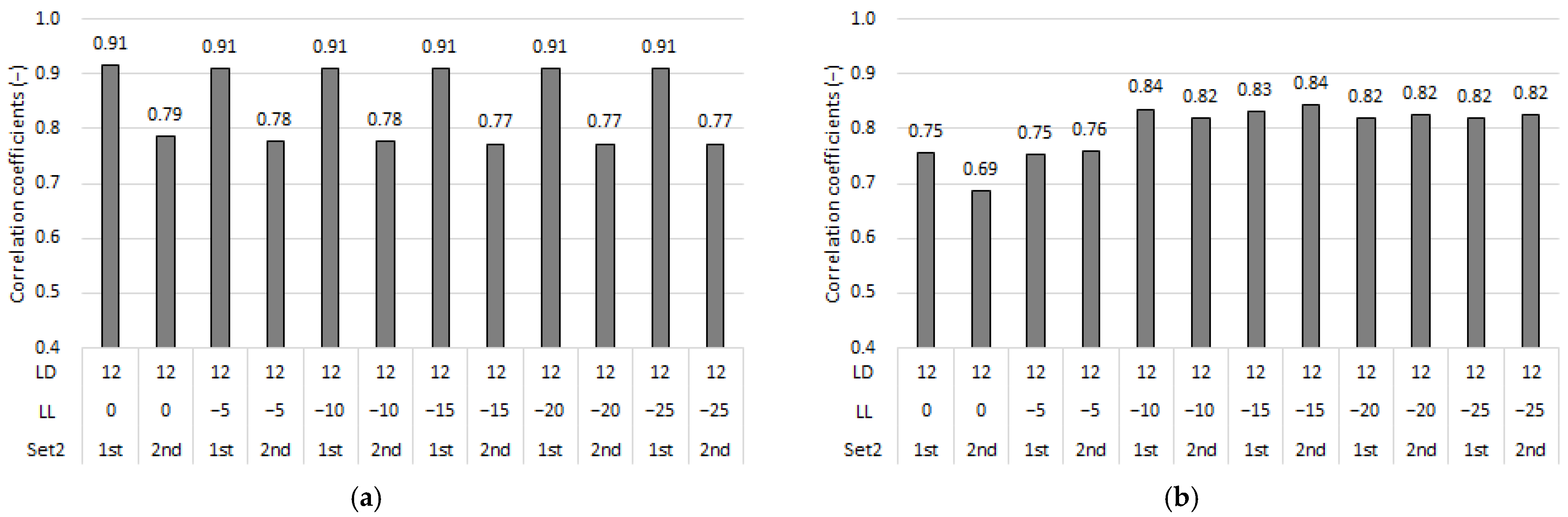
Figure 6 shows the correlation between TTNR/TPR and ranking averages under the condition of LD fixed at 12 dB. LD was fixed at 12 dB, and LL was varied in 5 dB increments from 0 to −25 dB for the calculation of TTNR and TPR. Correlation coefficients with the ranking averages were then evaluated for each condition. The correlation between TTNR and the ranking averages showed negligible variation across this range of LL values, suggesting that TTNR is largely insensitive to variations in LL. In contrast, the correlation between TPR and the ranking averages increased when LL was set to −10 dB or lower, indicating that a lower LL enhances the sensitivity of TPR for detecting tonal components. The Sound1-3 was the only sample that did not exceed either the TTNR or TPR thresholds, and it was also the sound most frequently selected as acceptable by the jurors.
3.2.3. Adjusting Only the Detection Level Difference Threshold (LL = −15 dB Fixed)
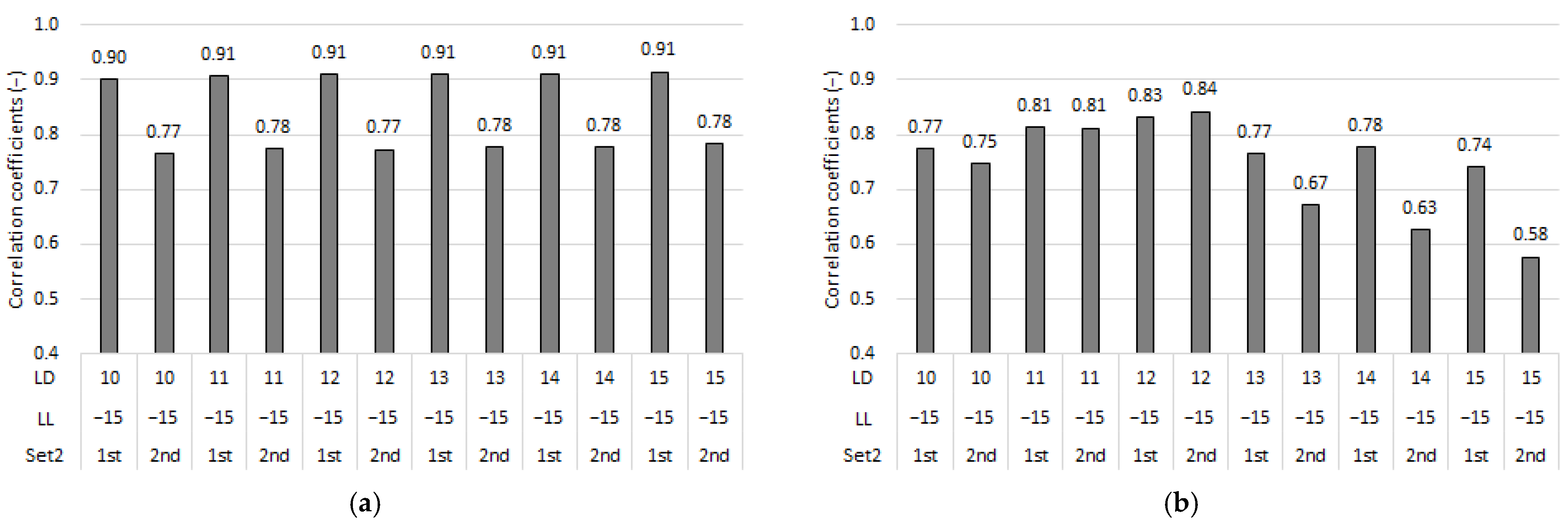
Figure 7 shows the correlation between TTNR/TPR and ranking averages under the condition of LL fixed at −15 dB. In accordance with the results of the preceding
Section 3.2.2, LL was fixed at −15 dB, and LD was varied in 1 dB increments from 10 to 15 dB for the calculation of TTNR and TPR. Correlation coefficients with the ranking averages were then evaluated for each condition. The correlation between TTNR and the ranking averages showed negligible variation across this LD range, indicating that TTNR is relatively stable with respect to variations in LD. By contrast, the correlation between TPR and the ranking averages decreased markedly when LD exceeded 12 dB, suggesting that TPR is more sensitive to variations in LD. These findings therefore support selecting LD = 12 dB as the most appropriate parameter setting under the tested conditions, striking a balance between stability and sensitivity.
With respect to LL, it is advisable to set its value near or below LTH. This consideration reflects the need to capture tonal components that are perceptually relevant, even at low sound pressure levels. Consequently, LL should not be arbitrarily raised merely to reduce computational load, as doing so risks excluding perceptually significant tonal components and thereby undermining the validity of the evaluation indices.
3.3. Determination and Evaluation of Thresholds
The TTNR and the TPR thresholds for subjective annoyance were examined from the jury test results. The calculation conditions for TTNR and TPR were fixed at LL = −15 dB and LD = 12 dB. Because the results for each set were non-normally distributed, the median TTNR and TPR values were first determined for each test sound set under these conditions and were denoted
and
. In addition, the test sounds judged acceptable by the jurors were identified. Among the median-based threshold candidates obtained for each set, the maximum values were adopted as the final thresholds across all test sounds in order to ensure conservative evaluation. As shown in
Table 7, the thresholds were determined as
= 11.6 dB and
= 14.3 dB. These values were then compared with the single-fan thresholds reported in a previous study [
18]. The thresholds determined in the present study were lower than those previously reported for standalone axial fans.
This discrepancy is likely attributable not to differences in the definitions of TTNR and TPR, which are consistent with those used in the previous study, but to differences in the calculation conditions, specifically the parameter settings for LL and LD. In the previous study, LL and LD were fixed based on empirical considerations, whereas the present study systematically investigates the influence of these parameter settings under controlled projector noise conditions. However, when the standard deviations of the thresholds from the previous study are taken into account, the thresholds obtained in the present study fall within their respective ranges, thereby supporting the validity of the results.
The evaluation was conducted using the threshold levels presented in
Table 7.
Table 8 shows the recalculated TTNR and TPR values for Set 1, obtained with LL = −15 dB and LD = 12 dB for the tonal components, along with the ranking averages from the jury test. Values underlined in
Table 8 indicate levels that exceed the thresholds listed in
Table 7. The results reveal that Sound1-3 is the only sample that does not exceed either the TTNR or TPR thresholds. Moreover, during the jury test, jurors were asked to identify acceptable sound sources, and the Sound1-3 in Set 1 was the most frequently selected. Taken together, these findings suggest that the thresholds estimated in the present study provide a valid basis for evaluating subjective annoyance.
4. Discussion
The present study investigated threshold levels for evaluating subjective annoyance by analyzing calculation methods for the TTNR and TPR indices and by examining the results of jury tests conducted using projector operating noise. Taken together, the results indicate that TTNR and TPR can serve as effective evaluation measures of subjective annoyance for projectors equipped with small built-in fans, particularly under conditions where Loudness differences are minimal or absent. The findings demonstrate that practical threshold levels can be derived even when detailed information regarding the number and specifications of installed fans is unavailable, provided that appropriate lower-limit (LL) and level-difference (LD) detection parameters are applied.
4.1. Relation to Existing Annoyance Threshold Studies
Previous studies determining annoyance thresholds for tonal noise have primarily focused on isolated single tones embedded in broadband noise. These investigations reported threshold values associated with prominence-related metrics and demonstrated that background level influences the transition between non-annoying and annoying conditions. In contrast, the present study addressed projector noise containing multiple coexisting tonal components. The thresholds determined here tended to be lower than those reported for standalone axial fans; however, when experimental conditions and statistical variability are considered, the obtained values fall within the dispersion range of previously reported results. This consistency suggests that the proposed cumulative indices remain compatible with established single-tone findings while extending their applicability to more complex tonal structures.
4.2. Implications for Multi-Tone Perception Research
Research on multi-tone perception has demonstrated that interactions between tonal components influence perceptual attributes such as loudness, annoyance, and noisiness, and that the perceptual magnitude of two-tone complexes cannot be predicted by simple linear superposition. Early experimental evidence showed that frequency spacing and masking between tonal components significantly affect perceived annoyance, indicating that multiple tones may interact in ways that either enhance or reduce overall perceptual impact. The present findings are consistent with these theoretical considerations. Differences in correlation between TTNR and TPR across sound sets can be interpreted as reflecting variations in underlying tonal structures and interactions among components.
TTNR represents the cumulative energy contribution of tonal components relative to the surrounding noise floor, whereas TPR emphasizes the perceptual prominence of individual components. Their complementary behavior suggests that multi-tone annoyance involves both aggregate tonal energy and local perceptual salience. This interpretation aligns with psychoacoustic evidence indicating that tonal perception is shaped by auditory filtering and partial loudness interactions rather than by independent evaluation of isolated spectral lines. This is consistent with earlier findings demonstrating that multiple tonal components may alter perceived annoyance through masking and interaction effects rather than through simple additive mechanisms.
4.3. Relation to Psychoacoustic Tonality Models
Recent developments in psychoacoustic modeling have improved the calculation of tonality for technical sounds through hearing-model-based approaches. These models enhance the perceptual validity of individual tonal component detection. The present study does not replace such models; rather, it builds upon the standardized ECMA-418-1 framework, which itself incorporates perceptually motivated detection procedures. TTNR and TPR retain the fundamental concept of evaluating individual tonal components but introduce a cumulative representation that reflects the combined influence of multiple tones.
From this perspective, TTNR and TPR should be interpreted as extensions of existing tonality metrics rather than alternative definitions of tonality. It should be emphasized that TTNR and TPR are formulated as physically based cumulative descriptors derived from standardized tonal detection procedures, rather than as comprehensive psychoacoustic hearing models intended to reproduce all nonlinear aspects of multi-tone perception. They provide a practical means of summarizing tonal influence under realistic product conditions where multiple components coexist. Accordingly, earlier psychoacoustic studies on multi-tone perception [
8,
9,
10] and ECMA-418-2-based modeling approaches [
13] provide important theoretical foundations, while TTNR and TPR are specifically intended as practically applicable cumulative descriptors derived from standardized discrete-tone detection procedures.
4.4. Role of Sharpness and Spectral Characteristics
Subjective evaluation in this study focused on annoyance, a well-established descriptor in psychoacoustic research. The consistently high correlations observed between annoyance and Sharpness across sound sets confirm the importance of high-frequency spectral content. Sharpness captures perceptual sensitivity to spectral distribution and therefore complements TTNR and TPR. While tonal indices quantify structured narrowband components, Sharpness reflects broader spectral weighting effects. The results suggest that annoyance in projector noise arises from a combination of cumulative tonal energy and high-frequency emphasis.
4.5. Applicability and Generalization
Threshold levels for annoyance may vary among products owing to differences in tonal distribution, housing structure, and product image. The present investigation focused on small axial fans within projectors because the evaluation framework is based on ECMA-418-1, which is widely applied to information technology equipment. Nevertheless, the cumulative concept underlying TTNR and TPR is not restricted to projectors. Because the indices derive from standardized detection procedures applied to individual tonal components, they may be applicable to other products containing multiple small cooling fans, including consumer electronics and portable devices.
Future research should therefore examine diverse product categories, listener groups, and operating conditions in order to validate and refine cumulative tonal thresholds and to confirm their broader applicability and robustness.