1. Preliminary Effects of a Seated Dance and Reminisce Intervention on Veterans with Dementia
Apathy is a prevalent symptom of dementia that is among the most challenging for caregivers to address. In a systematic review across 5897 participants with dementia, it was determined that apathy was present in 54% of the participants at all functional levels, with 38% displaying depression [
1]. Distinct from depression, apathy is characterized primarily by loss of motivation and diminished goal-directed behavior associated with decline in function, reduced quality of life, and increased caregiver burden [
2]. Pharmacological treatments for apathy remain complex, with limited research and variability across trials [
3], underscoring the need for non-pharmacological interventions to mitigate the negative consequences of apathy.
While dance movement interventions have shown positive effects on mood, cognition, balance, and memory in adults with dementia across multiple domains of function [
4], apathy has rarely been examined as a primary outcome within dance-based interventions. Dance movement may be beneficial for addressing apathy and improving mood, as music has been shown to cue autobiographical memory in adults with Alzheimer’s [
5], providing an accessible avenue for engagement. Since diminished goal-directed activity is a primary feature of apathy [
6], music-led interventions may offer a low-initiation pathway for adults with dementia to connect, thereby reducing barriers to engagement.
Reminiscence has also been associated with reductions in apathy in studies involving adults with dementia [
7], and, when combined with structured physical exercise, with improved functional performance [
8]. A Cochrane review identified that reminiscence is associated with small improvements in mood for adults with dementia, with variation in format and setting [
9]. Notably, music is often used as a prompt to evoke memories, reinforcing the natural combination of the two interventions [
9]. Since music can cue autobiographical memories that reminiscence deliberately seeks to engage, these two interventions can provide complementary pathways to address apathy non-pharmacologically. Specifically, the use of both of these evidence-based interventions may promote autobiographical memories, improve mood and engagement, which could reduce the behavioral symptom of apathy. Although dance-based movement and reminiscence have both demonstrated outcomes independently, little is known about the combination of these two evidence-based interventions, particularly among older male veterans with dementia.
This pilot study aimed to examine the preliminary effects of a non-pharmacological, dance-based-movement-with-reminiscence intervention on apathy (primary outcome), mood, and engagement among older male veterans in a care community. Physiological indicators were also examined on an exploratory basis. Given the physical nature of a seated dance-based intervention and evidence linking physical activity and grip strength to cognitive changes in older adults [
10], physiological indicators were also explored, including grip strength, body fat percentage, and body mass index. Handgrip strength was selected because the intervention involved repeated active upper-extremity components (stretching, ball toss, and choreographed arm movements), making upper-limb strength an appropriate physiological exploratory outcome.
2. Materials and Methods
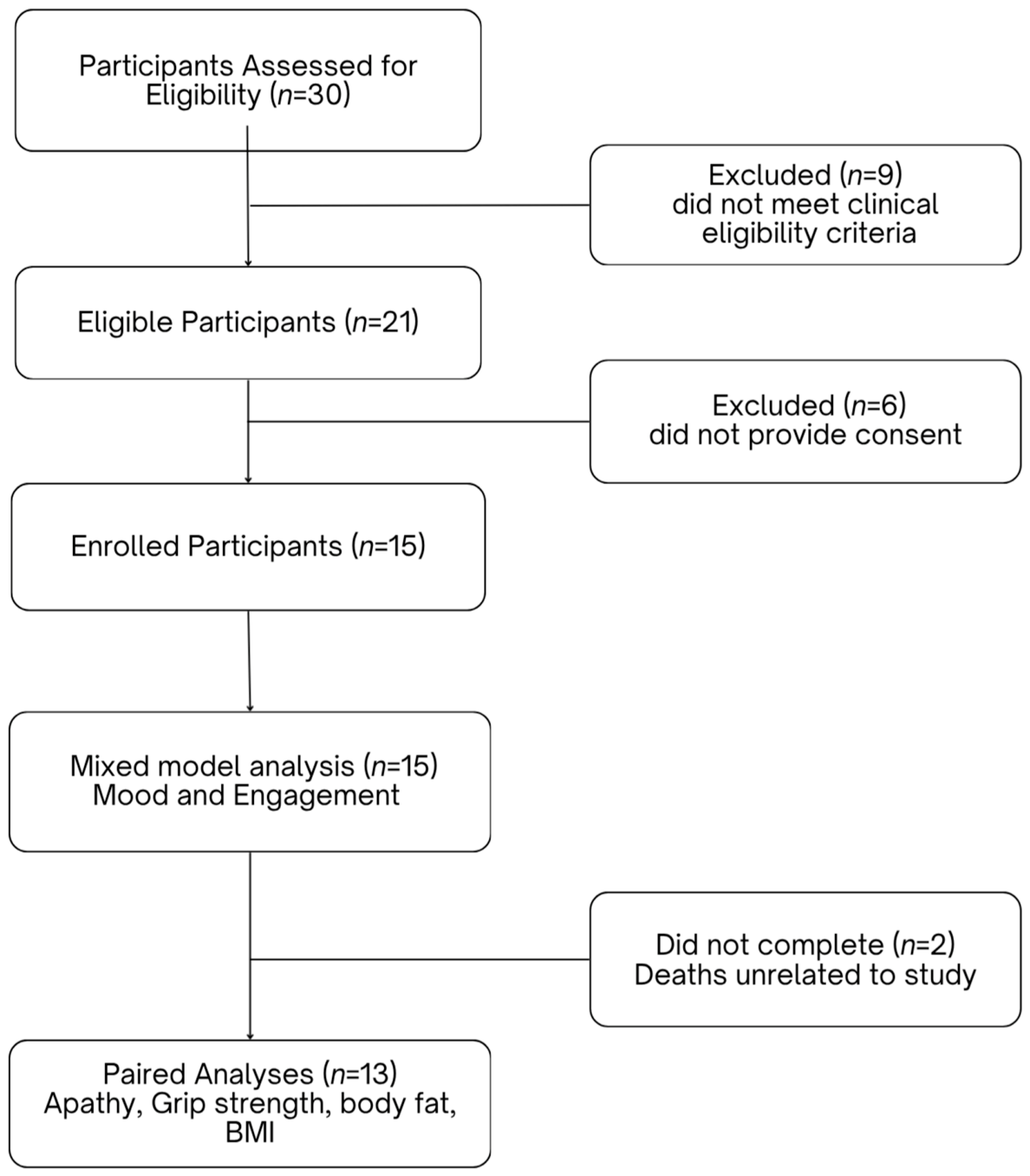
Participants of this study were recruited from a dementia unit within a long-term care Veterans community. Of the 30 potential participants, nine did not meet clinical eligibility, and six did not provide consent. Inclusion criteria included a diagnosis of dementia, the ability to follow simple instructions, tolerance for light physical activity, and willingness to accept adaptations for sound sensitivity if this was an issue. Fifteen males with dementia (82 ± 5 years) participated in this 12-week intervention consisting of 17 seated dance sessions (1–2 sessions/week). Each session lasted 45 min and followed a consistent structure which involved music, choreographed movement, and guided reminiscence prompts to stimulate autobiographical memory. Sessions began with approximately 10 min of stretching and ball toss designed to engage the upper body extremities and promote group interaction, followed by 35 min of structured seated movements that coincided with the music. Each song was paired with a standardized set of choreographed movements that illustrated the song’s lyrics; see
Table 1 for the playlist and movement examples. The movements aligned with the music tempo, lyrical content, and genre.
The song list, movements, and session structure remained the same across all 17 sessions. The consistency was intentional, intended to provide familiarity and support engagement among participants with dementia. The music playlist was created based on input from the staff who worked on the unit in which this intervention occurred. At least one song from each participant’s preferred musical genre was represented on the playlist.
The choreographed routines were standardized with accompanying visual descriptions for the facilitator created by ComMotion, Inc., Raleigh, NC, USA. The Certified Therapeutic Recreation Specialist (CTRS) completed training on the routines prior to the intervention. All sessions were delivered entirely in a seated position. The sessions were designed to be low-impact and accessible to varying ability levels and dementia severities, rather than an exertion-targeted exercise protocol. Adaptations were made in real time by the CTRS to accommodate each participant’s ability level, range of motion, or fatigue. For example, verbal or physical cueing and rest breaks were provided as needed. Formal measures of exercise intensity were not collected as the intervention prioritized engagement and autobiographical memory recall over physical training.
CTRS and a trained research assistant led sessions. Baseline characteristics of the participants, obtained via social history and assessed using the Dementia Severity Rating Scale [
11], are presented in
Table 2.
Data from all 15 participants were included in the mixed models of engagement and mood levels; the remaining per-completer analyses included
n = 13 (two deaths unrelated to the study). The primary outcome of apathy was assessed pre- and post-intervention using the clinician version of the Apathy Evaluation Scale (AES) [
6].
Pre- and post-session assessments included the secondary mood measure, the self-reported Face scale [
12]. This scale was selected as the mood measure because its visual and nonverbal format was made to be accessible to individuals across all levels of cognitive impairment. The scale was presented to each participant before and after each session. Participants responded by pointing to the face or identifying the corresponding number. Verbal prompting was provided by the CTRS or research assistant as needed for comprehension but assistance was limited, ensuring participants were not directed to select a particular response. All participants were able to provide a response using this format across sessions.
The engagement level after each session was determined using the Engagement in Preferred Activities Scale (EPASS) [
13]. Preliminary testing with older adults demonstrated interrater agreement across its subscales (
κ = 0.67–0.78, all
p < 0.001) and significant correlations with the Observational Measure of Engagement (
r = 0.70–0.87, all
p < 0.001), supporting its reliability and validity [
14]. EPASS has also been used to assess engagement among older adults with dementia in prior research [
15]. The research assistant was trained on how to complete the EPASS prior to the study. The CTRS and research assistant, using a shared rubric, discussed each participant and agreed on a single consensus rating. Because ratings were determined by consensus rather than independent scoring, a formal interrater reliability coefficient was not computed. Attendance was operationalized as the presence of a recorded session mood score; missed sessions were reflected as absent scores.
Other secondary measures pre- and post-included physiological indicators: handgrip strength (kg), body fat percentage, and body mass index (BMI). The Omron HBF-306C Handheld Body Fat Monitor was used to measure the participant’s muscle and fat levels. A handheld dynamometer (Camry EH 101), with a finger-and-palm handle, was used to measure muscle strength by having the participant make a fist with maximal effort. Two values were obtained from each hand and averaged. Participants were seated with an elbow angle of approximately 90 degrees for all testing, and they received standardized verbal encouragement from the research team.
Mood and engagement data were analyzed using linear mixed models with random intercepts to control for repeated measures within individuals. Before analysis, each dependent variable was assessed for normality via Q-Q plots. Analyses of apathy level, grip strength, body fat percentage, and BMI were performed using paired samples t-tests. Significance was accepted at p ≤ 0.05. All statistical analyses were conducted using IBM SPSS Statistics Version 29 (Armonk, NY, USA) and all figures were prepared in GraphPad Prism Software Version 10.4.1 (San Diego, CA, USA).
The study protocol was approved by the institutional review boards of the University of South Alabama (#2345557-3) and Infirmary Health (#25.033). Written informed consent was obtained from participants and their legally authorized representatives before participation. ComMotion, Inc. provided in-kind access to the choreographed movement routines used in this intervention. ComMotion had no role in study design, data collection, analysis, interpretation, or the decision to submit for publication.
3. Results
Of the 15 enrolled participants, 13 (86.9%) completed the pre- and post-intervention assessments; two participants did not complete the post intervention assessment (See
Figure 1). Across all participants, attendance averaged 13.87 of 17 sessions (
SD = 3.40; range: 6–17), with an overall attendance rate of 81.6%. Among the 13 participants who completed the protocol, attendance averaged 14.77 sessions (
SD = 2.49; range: 8–17; 86.9% adherence). Throughout the intervention, the CTRS observed sessions and monitored for adverse events with no falls, injuries or adverse events occurring. Reasons for missed sessions were monitored and included participant refusal, illness, competing care obligations (e.g., outside appointments or treatment), and pre-session agitation unrelated to the intervention.
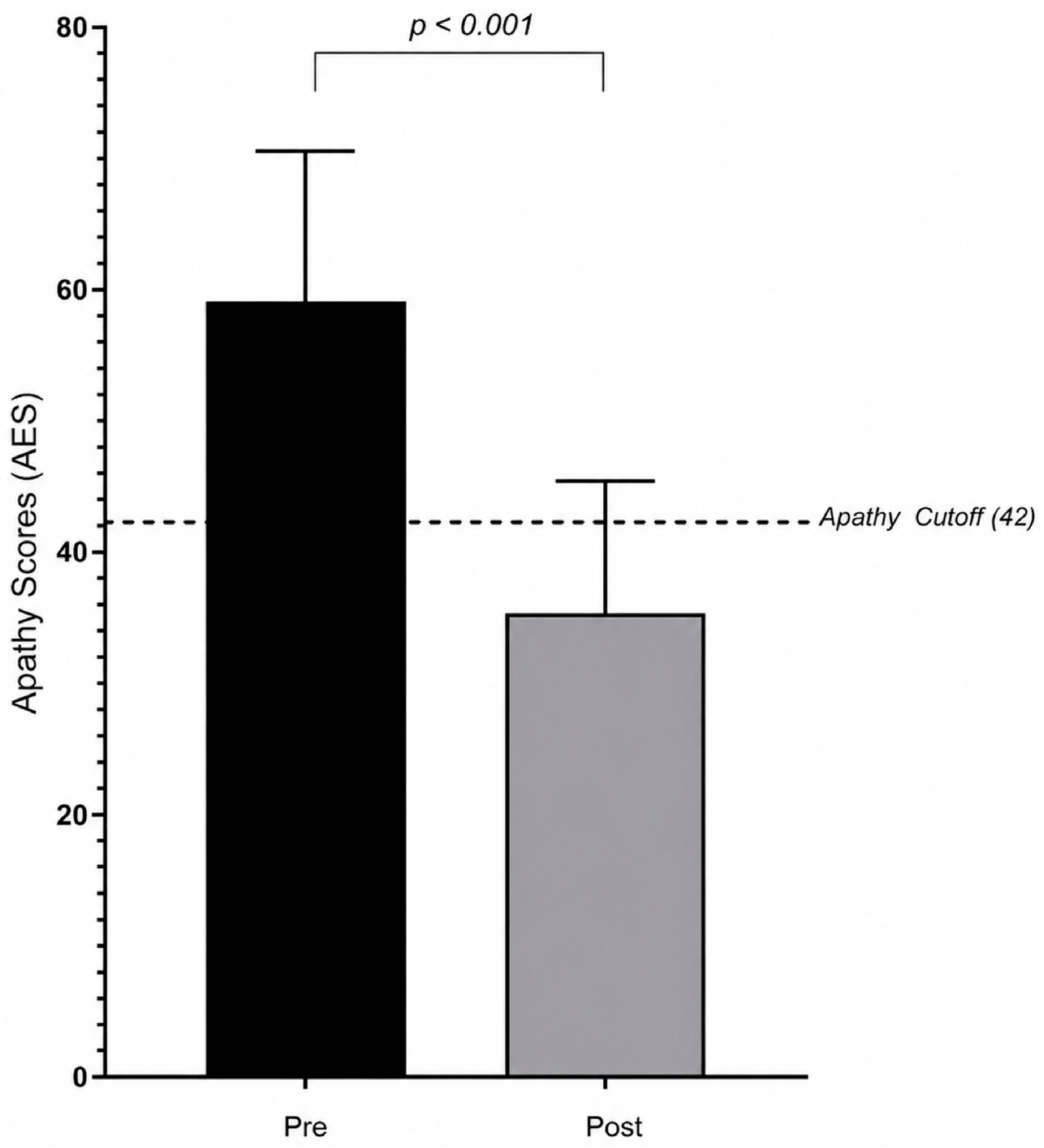
Results indicated a significant reduction in apathy from pre-intervention (M = 59.08, SD = 11.50) to post-intervention (M = 35.81, SD = 10.10); t (12) = 9.463,
p < 0.001, 95% CI [18.30, 29.24],
d = 2.20. Given the small sample, a Wilcoxon signed-rank test was conducted to confirm this finding was robust to distributional assumptions; the reduction remained significant (Z = −3.18,
p = 0.001), see
Figure 2.
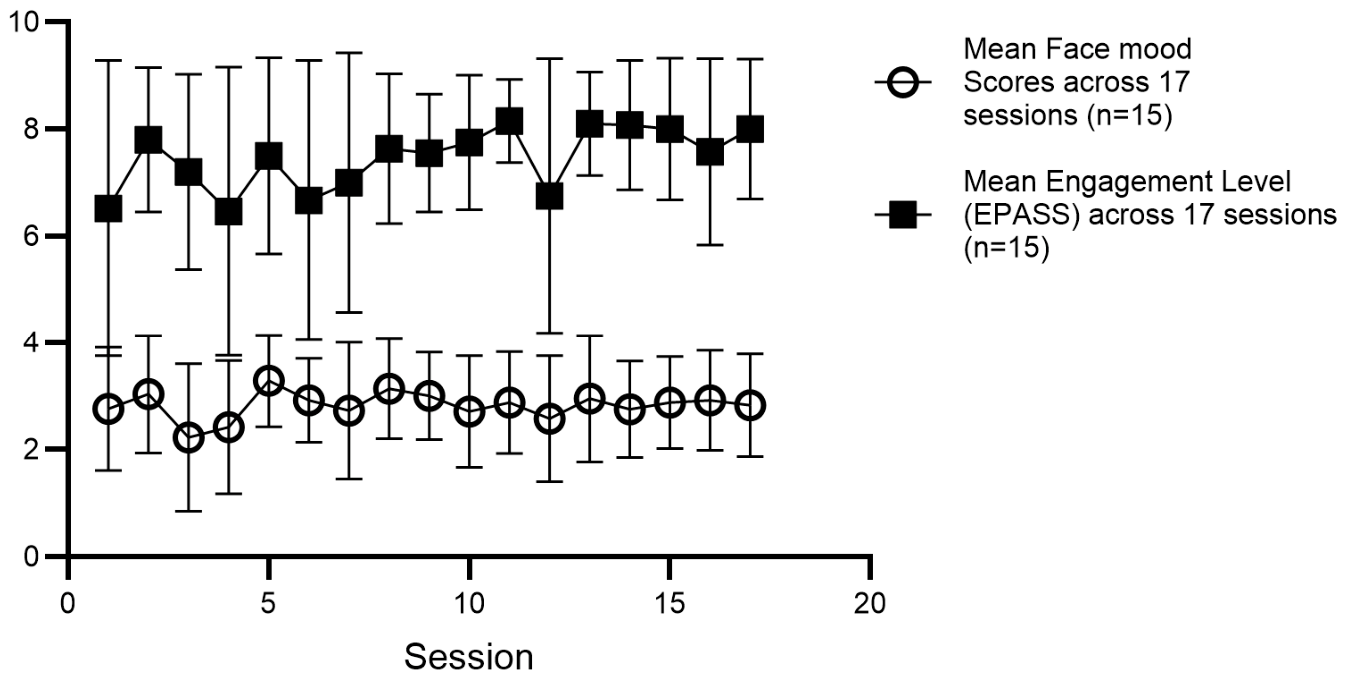
Second, results indicated a significant main effect of time (
b = 1.065,
SE = 0.166,
t (397.14) = 6.42,
p < 0.001, 95% CI [0.739, 1.391]), indicating that mood scores significantly improved from pre- to post-session. Neither the main effect of week (
p = 0.776) nor the time × week interaction (
p = 0.699) reached significance. Results indicated a significant time × engagement interaction (
b = 0.162,
SE = 0.072,
t (385.28) = 2.252,
p = 0.025, 95% CI [0.021, 0.304]), indicating that when participants displayed high engagement in a session, their mood was higher from pre to post session (see
Figure 3).
Participants who completed the intervention sessions demonstrated an improvement in grip strength from pre-intervention (28.48 ± 22.83 kg) to post-intervention (30.82 ± 23.70 kg); t (12) = 2.64, p = 0.018, 95% CI [0.45, 4.22], d = 0.73. As with apathy, a Wilcoxon signed-rank test confirmed this result was robust to distributional assumptions (Z = −0.256, p = 0.011). All other effects (i.e., body fat, BMI) were nonsignificant (all ps > 0.05).
4. Discussion
Participants demonstrated a significant decrease in apathy scores (
d = 2.20) following the seated dance-with-reminiscence intervention. With apathy present in a large proportion of adults with dementia [
1], the large effect size, and pre-intervention scores above and post-intervention scores below the clinical cut-off of 42 (where higher scores indicate a higher level of apathy), these results are clinically meaningful. Given the positive effects of dance movement on dementia [
4], combined with evidence-based reminiscence interventions for apathy [
7], these findings support combining these two non-pharmacological approaches in dementia care. In addition, this study provides preliminary evidence on the utility of these interventions among older male veterans, a population underrepresented in the research literature.
Traditional interventions may be unable to maintain consistent engagement with the defining features of apathy, passivity, or lack of motivation among participants [
2,
6]. The reduction in clinical apathy levels is reflected in the granular, session-by-session data, which identified that the music with lyrical choreography and reminiscence provides a low-initiation pathway for engagement for participants with dementia, who successfully maintained engagement across 17 sessions with no habituation effect. This consistent session engagement may have functioned as an underlying behavioral mechanism behind the long-term change in apathy. Further, the interaction between engagement and mood improvement suggests that participants who were more actively involved in the intervention experienced a greater psychosocial benefit. This finding is consistent with previous literature that engagement in meaningful activities can enhance affective outcomes in individuals with dementia [
16]. This pattern aligns with the possibility that acute emotionally engaging interactions or interventions may cumulatively reduce apathy levels over time. This sustained pattern of engagement is evidenced by our high overall attendance rate of 81.6%, which complements earlier work by Gebhard and Mess [
8], who reported an 80.46% adherence rate for a biography-based physical activity program within a residential facility for older adults with dementia. Consistent with their findings, adding familiar music-genre playlists paired with reminiscence cues appears highly feasible.
Although social interaction was not systematically measured, the facilitation of the intervention in a group format may have contributed to the measured engagement and mood effects. All participants shared a common military service history, lived within the same unit, and engaged in sessions together, which may have fostered familiarity and shared experience that supported participation. This warrants future investigation in research.
Physical movement interventions demonstrate a trend towards improved neuromuscular function and strength in adults with dementia [
17]. Consistent with this evidence, this study identified that grip strength improved from pre to post intervention (
p = 0.018,
d = 0.73). Although grip strength improved significantly, its mechanism remains unclear; given the predominantly submaximal intensity of the intervention, the change may reflect familiarization with the dynamometry task or variability in voluntary effort at post-testing rather than true neuromuscular adaptation. Caution is warranted given the large between-participant variability in grip strength, which likely reflects heterogeneity in this long-term care sample across dementia severity, baseline function, and ability to consistently engage the dynamometer. Changes in body mass index and fat percentage were not significant, which is consistent with evidence that exercise interventions of even longer duration do not produce significant body composition changes in older adults with dementia [
18].
Limitations of this preliminary pilot study include a single site and a small, male-only sample, which limit generalizability. This study was not prospectively registered, and no protocol was published before data collection. Given the small sample size, these analyses were exploratory and statistically underpowered, with findings interpreted as preliminary and warranting confirmation in larger samples. However, limited research has investigated primarily male populations with dementia, particularly with a veteran background, which highlights these novel exploratory findings. These preliminary findings indicate a need for further investigation of interventions that combine physical movement with memory and for offering guidance in future programming design for primarily male populations with dementia. Dementia severity, comorbidities, and behavioral symptoms outside of apathy were assessed at baseline but were not re-evaluated over the intervention period; as a result, changes in these areas cannot be determined. Given the short intervention timeframe, substantial changes are not expected, but this remains a limitation. Additionally, the lack of long-term follow-up assessment prevents determination of whether improvements in apathy, mood, or grip strength were sustained after the 12-week intervention concluded.
In this exploratory pilot study, a seated dance intervention combined with reminiscence was associated with preliminary improvements in apathy, mood, and engagement, as well as a preliminary increase in grip strength, among older male veterans with dementia. Because this was a single-group study without a control condition, these findings should be interpreted as preliminary, and larger controlled studies are needed to evaluate therapeutic efficacy. Future replication is warranted given that the intervention materials were provided by a commercial entity and that facilitators received brief instructional orientation from the provider, which may have influenced fidelity and scalability. However, the high adherence rate and consistent engagement recorded suggest that this non-pharmacological approach is feasible and warrants further research in this underserved population.




 ,
,