
Beyond Cure: A Scoping Review of Post-Tuberculosis Long-Term Health Outcomes

 , , , , ,
Abstract
1. Introduction
2. Materials and Methods
2.1. Search Strategy and PECOS Questions
- Population: Adults, adolescents, and children with a history of TB (pulmonary or extra-pulmonary).
- Exposure: Survival following TB disease and completion of treatment.
- Comparator: Individuals without a prior history of TB.
- Outcome: Any outcome/risk factor associated with post-TB sequelae.
- Study Design: Systematic reviews published within the specified timeframe (2000–March 2025).
2.2. Inclusion and Exclusion Criteria
2.3. Data Extraction, Synthesis, and Reporting
2.4. Use of Non-Stigmatizing Language
3. Results
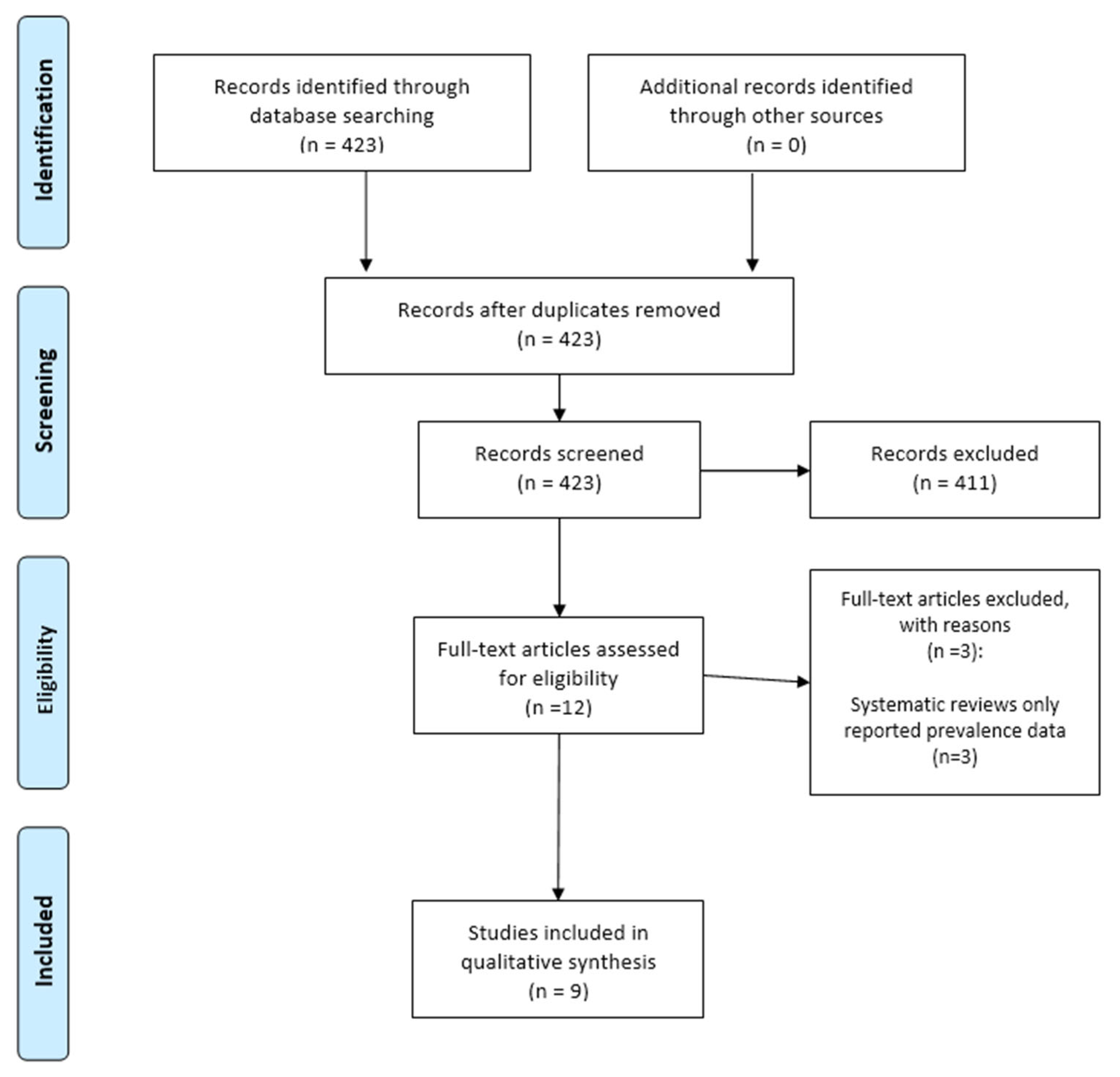
3.1. PRISMA Flow Diagram and Systematic Review Characteristics
3.2. Lung Health Outcomes and Risk Factors
3.2.1. COPD
3.2.2. Lung Function Impairment
3.2.3. Lung Cancer
3.3. Non-Respiratory Post-TB Health Outcomes and Its Risk Factors
4. Discussion
4.1. Summary of Results
4.2. Public Health Impact
4.3. Research Gaps
4.3.1. Methodological Limitations
4.3.2. Mechanistic Understanding
4.3.3. TB and Cancer
4.3.4. Non-Respiratory Health Outcomes
4.3.5. Pediatric Cohorts
4.4. Strengths and Limitations
5. Conclusions
Supplementary Materials
Author Contributions
Funding
Institutional Review Board Statement
Informed Consent Statement
Data Availability Statement
Conflicts of Interest
References
- World Health Organization. Global Tuberculosis Report 2025; World Health Organization: Geneva, Switzerland, 2025; Available online: https://www.who.int/teams/global-tuberculosis-programme/tb-reports (accessed on 26 February 2026).
- World Health Organization. Factsheet: Tuberculosis; World Health Organization: Geneva, Switzerland, 2025; Available online: https://www.who.int/news-room/fact-sheets/detail/tuberculosis (accessed on 24 November 2025).
- Alene, K.A.; Wangdi, K.; Colquhoun, S.; Chani, K.; Islam, T.; Rahevar, K.; Morishita, F.; Byrne, A.; Clark, J.; Viney, K. Tuberculosis related disability: A systematic review and meta-analysis. BMC Med. 2021, 19, 203. [Google Scholar] [CrossRef] [Scilit] [PubMed]
- Allwood, B.W.; van der Zalm, M.M.; Amaral, A.F.S.; Byrne, A.; Datta, S.; Egere, U.; Evans, C.A.; Evans, D.; Gray, D.M.; Hoddinott, G.; et al. Post-tuberculosis lung health: Perspectives from the First International Symposium. Int. J. Tuberc. Lung Dis. 2020, 24, 820–828. [Google Scholar] [CrossRef] [Scilit] [PubMed]
- Meghji, J.; Auld, S.C.; Bisson, G.P.; Khosa, C.; Masekela, R.; Navuluri, N.; Rachow, A. Post-tuberculosis lung disease: Towards prevention, diagnosis, and care. Lancet Respir. Med. 2025, 13, 460–472. [Google Scholar] [CrossRef] [Scilit] [PubMed]
- Zhou, W.; Lu, H.; Lin, J.; Zhu, J.; Liang, J.; Xie, Y.; Hu, J.; Su, N. Coexisting Lung Cancer and Pulmonary Tuberculosis: A Comprehensive Review From Incidence to Management. Cancer Rep. 2025, 8, e70213. [Google Scholar] [CrossRef] [Scilit]
- Igbokwe, V.; Ruby, L.C.; Sultanli, A.; Bélard, S. Post-tuberculosis sequelae in children and adolescents: A systematic review. Lancet Infect. Dis. 2023, 23, e138–e150. [Google Scholar] [CrossRef] [Scilit] [PubMed]
- Bhargava, A.; Bhargava, M.; Meher, A.; Teja, G.S.; Velayutham, B.; Watson, B.; Benedetti, A.; Barik, G.; Singh, V.P.; Singh, D.; et al. Nutritional support for adult patients with microbiologically confirmed pulmonary tuberculosis: Outcomes in a programmatic cohort nested within the RATIONS trial in Jharkhand, India. Lancet Glob. Health 2023, 11, e1402–e1411. [Google Scholar] [CrossRef] [Scilit] [PubMed]
- Ko, Y.; Kim, C.; Park, Y.B.; Mo, E.-K.; Moon, J.-W. Changes in Nutritional Status in Pulmonary Tuberculosis: Longitudinal Changes in BMI According to Acid-Fast Bacilli Smear Positivity. J. Clin. Med. 2020, 9, 4082. [Google Scholar] [CrossRef] [Scilit] [PubMed]
- Taylor, J.; Bastos, M.L.; Lachapelle-Chisholm, S.; Mayo, N.E.; Johnston, J.; Menzies, D. Residual respiratory disability after successful treatment of pulmonary tuberculosis: A systematic review and meta-analysis. eClinicalMedicine 2023, 59, 101979. [Google Scholar] [CrossRef] [Scilit] [PubMed]
- Ivanova, O.; Hoffmann, V.S.; Lange, C.; Hoelscher, M.; Rachow, A. Post-tuberculosis lung impairment: Systematic review and meta-analysis of spirometry data from 14 621 people. Eur. Respir. Rev. 2023, 32, 220221. [Google Scholar] [CrossRef] [Scilit] [PubMed]
- Menzies, N.A.; Quaife, M.; Allwood, B.W.; Byrne, A.L.; Coussens, A.K.; Harries, A.D.; Marx, F.M.; Meghji, J.; Pedrazzoli, D.; Salomon, J.A.; et al. Lifetime burden of disease due to incident tuberculosis: A global reappraisal including post-tuberculosis sequelae. Lancet Glob. Health 2021, 9, e1679–e1687. [Google Scholar] [CrossRef] [Scilit] [PubMed]
- Migliori, G.B.; Marx, F.M.; Ambrosino, N.; Zampogna, E.; Schaaf, H.S.; van der Zalm, M.M.; Allwood, B.; Byrne, A.L.; Mortimer, K.; Wallis, R.S.; et al. Clinical standards for the assessment, management and rehabilitation of post-TB lung disease. Int. J. Tuberc. Lung Dis. 2021, 25, 797–813. [Google Scholar] [CrossRef] [Scilit] [PubMed]
- Pollock, D.; Evans, C.; Menghao Jia, R.; Alexander, L.; Pieper, D.; Brandão de Moraes, É.; Peters, M.D.J.; Tricco, A.C.; Khalil, H.; Godfrey, C.M.; et al. “How-to”: Scoping review? J. Clin. Epidemiol. 2024, 176, 111572. [Google Scholar] [CrossRef] [Scilit] [PubMed]
- Tricco, A.C.; Lillie, E.; Zarin, W.; O’Brien, K.K.; Colquhoun, H.; Levac, D.; Moher, D.; Peters, M.D.; Horsley, T.; Weeks, L. PRISMA extension for scoping reviews (PRISMA-ScR): Checklist and explanation. Ann. Intern. Med. 2018, 169, 467–473. [Google Scholar] [CrossRef] [Scilit] [PubMed]
- Stop TB Partnership. Words Matter: Suggested Language And Usage for Tuberculosis Communications. 2022. Available online: https://www.stoptb.org/words-matter-language-guide (accessed on 13 June 2025).
- Byrne, A.L.; Marais, B.J.; Mitnick, C.D.; Lecca, L.; Marks, G.B. Tuberculosis and chronic respiratory disease: A systematic review. Int. J. Infect. Dis. 2015, 32, 138–146. [Google Scholar] [CrossRef] [Scilit] [PubMed]
- Akalu, T.Y.; Clements, A.C.A.; Liyew, A.M.; Gilmour, B.; Murray, M.B.; Alene, K.A. Risk factors associated with post-tuberculosis sequelae: A systematic review and meta-analysis. eClinicalMedicine 2024, 77, 102898. [Google Scholar] [CrossRef] [Scilit] [PubMed]
- Ratnakumar, S.; Hayward, S.E.; Denneny, E.K.; Goldsmith, L.P.; Evans, R.; Checkley, W.; Goletti, D.; Ong, C.W.M.; Gotowiec, M.; Zhu, J.; et al. Post-pulmonary tuberculosis lung function: A systematic review and meta-analysis. Lancet Glob. Health 2025, 13, e1020–e1029. [Google Scholar] [CrossRef] [Scilit] [PubMed]
- Liang, H.Y.; Li, X.L.; Yu, X.S.; Guan, P.; Yin, Z.H.; He, Q.C.; Zhou, B.S. Facts and fiction of the relationship between preexisting tuberculosis and lung cancer risk: A systematic review. Int. J. Cancer 2009, 125, 2936–2944. [Google Scholar] [CrossRef] [Scilit] [PubMed]
- Abdeahad, H.; Salehi, M.; Yaghoubi, A.; Aalami, A.H.; Aalami, F.; Soleimanpour, S. Previous pulmonary tuberculosis enhances the risk of lung cancer: Systematic reviews and meta-analysis. Infect. Dis. 2022, 54, 255–268. [Google Scholar]
- Hwang, S.Y.; Kim, J.Y.; Lee, H.S.; Lee, S.; Kim, D.; Kim, S.; Hyun, J.H.; Shin, J.I.; Lee, K.H.; Han, S.H.; et al. Pulmonary Tuberculosis and Risk of Lung Cancer: A Systematic Review and Meta-Analysis. J. Clin. Med. 2022, 11, 765. [Google Scholar] [CrossRef] [Scilit] [PubMed]
- Luczynski, P.; Poulin, P.; Romanowski, K.; Johnston, J.C. Tuberculosis and risk of cancer: A systematic review and meta-analysis. PLoS ONE 2022, 17, e0278661. [Google Scholar] [CrossRef] [Scilit] [PubMed]
- Cabrera-Sanchez, J.; Cuba, V.; Vega, V.; Van der Stuyft, P.; Otero, L. Lung cancer occurrence after an episode of tuberculosis: A systematic review and meta-analysis. Eur. Respir. Rev. 2022, 31, 220025. [Google Scholar] [CrossRef] [Scilit] [PubMed]
- Sodeifian, F.; Kian, N.; Atefi, A.; Naserghandi, A.; Zangiabadian, M.; Sadeghzade, S.; Namakin, K.; Seghatoleslami, Z.S.; D’Ambrosio, L.; Nasiri, M.J.; et al. Pulmonary Tuberculosis and Risk of Lung Cancer: A Systematic Review and Meta-Analysis. Respiration 2025, 104, 360–376. [Google Scholar] [PubMed]
- Tse, L.A.; Yu, I.-S.; Qiu, H.; Au, J.-K.; Wang, X.R.; Tam, W.; Yu, K.S. Lung Cancer Decreased Sharply in First 5 Years After Smoking Cessation in Chinese Men. J. Thorac. Oncol. 2011, 6, 1670–1676. [Google Scholar] [CrossRef] [Scilit] [PubMed]
- Leung, C.L.; Jerene, D.; Meghji, J.; Drage, M.; Mbawala, W.; Mpagama, S.G.; Pell, C.; Mulder, C. Post-TB sequelae and care: A systematic review and synthesis of qualitative research. IJTLD Open 2025, 2, 339–345. [Google Scholar] [CrossRef] [Scilit] [PubMed]
- World Health Organization. WHO Factsheet on Chronic Obstructive Pulmonary Disease (COPD). 6 November 2024. Available online: https://www.who.int/news-room/fact-sheets/detail/chronic-obstructive-pulmonary-disease-(copd) (accessed on 17 September 2025).
- Sun, W.; Liu, Y.; Zhao, L.; Wang, H.; Ye, L.; Liu, X.; Xu, K.; Chen, Y.; Fan, L. New progress of tuberculosis scar carcinoma. Cancer Metastasis Rev. 2023, 42, 653–659. [Google Scholar] [CrossRef] [Scilit] [PubMed]
- Development Asia: Smart Spirometry at Primary Care Settings: A Potential Game-Changer for Lung Heath Care 2024. Available online: https://development.asia/explainer/smart-spirometry-primary-care-settings-potential-game-changer-lung-health-care (accessed on 17 September 2025).
- Sakhare, G.C.Y.; Munje, R.; Joshi, S.; Bhakare, M. Using spirometry for screening and diagnosis of chronic respiratory diseases in primary health care: Findings from a community health project in rural India. J. Glob. Health Rep. 2024, 8, e2024004. [Google Scholar] [CrossRef] [Scilit]
- Sooriyakanthan, M.; Orme, M.W.; Sivapalan, K.; Selvaratnam, G.; Singh, S.J.; Wimalasekera, S. A feasibility trial of pulmonary rehabilitation for patients with COPD in a low resource setting: Jaffna, Sri Lanka. BMC Pulm. Med. 2022, 22, 302. [Google Scholar] [CrossRef] [Scilit] [PubMed]
- Tiddens, H.; Silverman, M.; Bush, A. The role of inflammation in airway disease: Remodeling. Am. J. Respir. Crit. Care Med. 2000, 162, S7–S10. [Google Scholar] [CrossRef] [Scilit] [PubMed]
- Dogar, O.F.; Pillai, N.; Safdar, N.; Shah, S.K.; Zahid, R.; Siddiqi, K. Second-hand smoke and the risk of tuberculosis: A systematic review and a meta-analysis. Epidemiol. Infect. 2015, 143, 3158–3172. [Google Scholar] [CrossRef] [Scilit] [PubMed]
- Grigsby, M.; Siddharthan, T.; Chowdhury, M.A.; Siddiquee, A.; Rubinstein, A.; Sobrino, E.; Miranda, J.J.; Bernabe-Ortiz, A.; Alam, D.; Checkley, W. Socioeconomic status and COPD among low- and middle-income countries. Int. J. Chronic Obstr. Pulm. Dis. 2016, 11, 2497–2507. [Google Scholar] [CrossRef] [Scilit]
- Hovanec, J.; Siemiatycki, J.; Conway, D.I.; Olsson, A.; Stücker, I.; Guida, F.; Jöckel, K.H.; Pohlabeln, H.; Ahrens, W.; Brüske, I.; et al. Lung cancer and socioeconomic status in a pooled analysis of case-control studies. PLoS ONE 2018, 13, e0192999. [Google Scholar] [CrossRef] [Scilit] [PubMed]
- Tan, C.H.; Kontoyiannis, D.P.; Viswanathan, C.; Iyer, R.B. Tuberculosis: A benign impostor. AJR Am. J. Roentgenol. 2010, 194, 555–561. [Google Scholar] [CrossRef] [Scilit] [PubMed]
- Meghji, J.; Lesosky, M.; Joekes, E.; Banda, P.; Rylance, J.; Gordon, S.; Jacob, J.; Zonderland, H.; MacPherson, P.; Corbett, E.L.; et al. Patient outcomes associated with post-tuberculosis lung damage in Malawi: A prospective cohort study. Thorax 2020, 75, 269–278. [Google Scholar] [CrossRef] [Scilit] [PubMed]
- Migliori, G.B.; Ong, C.W.M.; Petrone, L.; D’Ambrosio, L.; Centis, R.; Goletti, D. The definition of tuberculosis infection based on the spectrum of tuberculosis disease. Breathe 2021, 17, 210079. [Google Scholar] [CrossRef] [Scilit] [PubMed]


| Author of Systematic Review | Date Range of Eligible Studies | Number of Studies | Objective | Methodology Assessment | Conclusion |
|---|---|---|---|---|---|
| Byrne et al. (2015) [17] | 2005–2013 | 9 studies (global) | Assess the association between a history of tuberculosis and the presence of COPD or chronic suppurative lung disease (bronchiectasis). | National Heart Lung and Blood Institute (NHLBI) quality assessment tool for observational cohort and cross-sectional studies (poor to good) | A history of TB was strongly associated with COPD in adults over 40 (pooled OR 3.05, 95% CI 2.42–3.85), with the strongest associations in high-incidence settings, never-smokers, and younger adults; overall, in TB-endemic areas, prior tuberculosis is closely linked to chronic respiratory disease, underscoring the need to integrate long-term lung health into TB care. |
| Akalu et al. (2024) [18] | From inception to 2023 | 73 studies (31,553 participants) 28 countries, most studies came from India, South Korea and China | Identify risk factors associated with long-term physical sequelae among TB survivors | Newcastle–Ottawa Scale (73.6% had 5–7 points, considered moderate quality study) | Older age (OR 1.62, 95% CI 1.07–2.47), previous TB treatment (OR 3.43, 95% CI 2.37–4.97), smoking (OR 1.41, 95% CI 1.09–1.83), alcohol use (OR 1.84, 95% CI 1.04–3.25), smear-positive disease (OR 3.11, 95% CI 1.77–6.44), and radiographic lung lesions (OR 2.04, 95% CI 1.07–3.87) increased the risk of post-TB lung impairment. Liver injury was associated with pre-existing hepatitis (OR 2.41, 95% CI 1.16–6.08), previous TB treatment (OR 2.64, 95% CI 1.22–6.67), hypoalbuminaemia (OR 2.10, 95% CI 1.53–2.88), HIV co-infection (OR 2.72, 95% CI 1.66–4.46), and CD4 counts < 200 mm3 (OR 2.03, 95% CI 1.26–3.27). Hearing loss was associated with baseline auditory impairment (OR 1.72, 95% CI 1.30–2.26) and HIV co-infection (OR 3.02, 95% CI 1.96–4.64). Post-TB respiratory, hepatic, and auditory sequelae share overlapping biological and social determinants, underscoring the need for risk-stratified, integrated survivorship care to mitigate long-term morbidity. |
| Ratnakumar et al. (2025) [19] | 2000–2024 | 19 studies (75,960 individuals, 7447 with prior pulmonary TB) Altogether 47% of participants were women and many were from upper-middle-income to low-income countries | Estimate respiratory impairment after pulmonary tuberculosis disease and examine differences in ventilatory defects. | Joanna Briggs critical appraisal tool for cohort, case–control or cross-sectional studies. Score varied between 50 and 100% with 75% or more representing high quality | TB was consistently associated with reduced lung function across all spirometric values (FEV1 −0.41 L, FVC −0.25 L, FEV1/FVC −0.37), with pooled analyses confirming significantly lower FEV1% and FVC% compared with controls; overall, people who recover from TB demonstrate mixed obstructive and restrictive impairment, predominantly airflow obstruction. |
| Liang et al. (2009) [20] | 1966–2009 | 41 studies (China, Taiwan, Korea, EU, North America) | Assess the relationship between preexisting TB and lung cancer risk | No quality assessment. No substantial evidence of publication bias was found overall, including in analyses restricted to never-smokers and for adenocarcinoma lung cancer (all Egger’s and Begg’s test p > 0.05) | Prior TB was associated with a significantly increased risk of lung cancer, including among never-smokers (RR 1.8, 95% CI 1.4–2.2) and after controlling for passive smoking (RR 2.9, 95% CI 1.6–5.3), with the elevated risk persisting for over 20 years and being particularly significant for adenocarcinoma (RR 1.6, 95% CI 1.2–2.1), supporting a direct link between TB and lung cancer independent of tobacco exposure |
| Abdeahad et al. (2022) [21] | 1987–2021 | 32 studies (EU, China, Singapore, Taiwan, Korea | Assess the association between previous pulmonary TB infection and lung cancer risk | Newcastle–Ottawa scale, 5 studies had a score under 5, considered of poor quality | Prior active pulmonary TB significantly increases lung cancer risk overall (RR 2.17, 95% CI 1.83–2.57) and across histological types, adenocarcinoma (RR 2.61, 95% CI 1.71–3.98), small-cell (RR 2.12, 95% CI 1.54–2.91), squamous-cell (RR 3.57, 95% CI 2.66–4.79), and other types (RR 2.75, 95% CI 2.30–3.28), highlighting the need for post-TB lung cancer screening and extended follow-up. |
| Hwang et al. (2022) [22] | 1190–2020 | 32 studies (East Asia and Pacific, Europe, Central Asia, and North America regions | Appraise observational studies reporting an association between pulmonary TB and lung cancer. | Newcastle–Ottawa scale, score 7–9 (good quality) | A history of pulmonary TB is significantly associated with lung cancer (OR 2.09, 95% CI 1.62–2.69), with stronger associations in studies using robust TB diagnostics (OR 2.26, 95% CI 1.29–3.94), in countries with medium/high TB burden, East Asia–Pacific, and upper-middle-income regions, and particularly in younger patients, highlighting TB as an independent risk factor for lung cancer. |
| Luczynski et al. (2022) [23] | 1980–2021 | 17 studies (all studies were from high or upper-middle-income countries | Primary objectives were to estimate the pooled risk of all and site-specific malignancies in people with TB compared to the general population or suitable controls. The secondary objective was to describe the pooled risk of cancer at different time points following TB diagnosis. | Risk of bias in non-randomized studies of interventions. 12 studies had a serious risk of bias | Compared with controls, individuals with prior tuberculosis had a higher pooled standardized incidence ratio for all cancers (1.62, 95% CI 1.35–1.93) and for lung cancer (3.20, 95% CI 2.21–4.63), with the highest excess risk observed within the first year after diagnosis and persisting beyond five years. TB is associated with an increased risk of both pulmonary and extrapulmonary cancers. There is a need for targeted research to inform screening and early detection strategies and for clinicians to maintain a high index of suspicion for malignancy following TB diagnosis. |
| Cabrera-Sanchez et al. (2022) [24] | 1980–2021 | 73 studies (sample size numbers unknown) | Explore whether TB is a risk factor for subsequent lung cancer | Newcastle–Ottawa Scale. Most studies had moderate to high risk of bias. The Grading of Recommendations, Assessment, Development and Evaluation assessment of the evidence reveals overall low certainty for cohort studies and very low certainty for case–control studies | Pooled analyses demonstrated an increased risk of lung cancer among individuals with prior tuberculosis, independent of age and smoking. Quantitative estimates showed a hazard ratio (HR) of 1.51 (95% CI 1.30–1.76; I2 = 81%) and an odds ratio (OR) of 1.74 (95% CI 1.42–2.13; I2 = 59%). The risk was highest within the first two years following TB diagnosis (HR 5.01, 95% CI 3.64–6.89) and declined thereafter. There was limited adjustment for confounders such as passive smoking, environmental exposures, and socioeconomic status. The temporal association between TB and subsequent lung cancer underscores the need for prospective studies to clarify causality and identify high-risk groups for targeted surveillance and prevention. |
| Sodeifian et al. (2025) [25] | From inception to 2024 | 37 studies (130,774 TB participants; non- exposed group 948,656 participants) | Provide a comprehensive understanding of the relationship between lung cancer and a history of TB | JBI critical appraisal checklist, the majority of studies were rated as high quality | A consistent association between prior pulmonary TB and subsequent lung cancer was observed across study designs (OR: 2.3; 95% CI 1.4–3.8) in cohort studies and (OR: 1.9: 95% CI 1.4–2.5) in case–control studies, and the strongest associations seen in East Asia (OR 2.4, 95% CI 1.3–4.1). These findings provide robust evidence that pulmonary TB increases the long-term risk of lung cancer, highlighting the need for integrated public health strategies incorporating targeted screening, early detection, and smoking cessation, particularly in high-burden settings. |
Disclaimer/Publisher’s Note: The statements, opinions and data contained in all publications are solely those of the individual author(s) and contributor(s) and not of MDPI and/or the editor(s). MDPI and/or the editor(s) disclaim responsibility for any injury to people or property resulting from any ideas, methods, instructions or products referred to in the content. |
© 2026 by the authors. Licensee MDPI, Basel, Switzerland. This article is an open access article distributed under the terms and conditions of the Creative Commons Attribution (CC BY) license.
Share and Cite
Menon, S.; Harries, A.D.; Dlodlo, R.A.; Badoum, G.; Dogo, M.F.; Mbitikon, O.B.; Sinha, P.; Lin, Y.; Jaju, J.; Soe, A.N.; et al. Beyond Cure: A Scoping Review of Post-Tuberculosis Long-Term Health Outcomes. Trop. Med. Infect. Dis. 2026, 11, 203. https://doi.org/10.3390/tropicalmed11070203
Menon S, Harries AD, Dlodlo RA, Badoum G, Dogo MF, Mbitikon OB, Sinha P, Lin Y, Jaju J, Soe AN, et al. Beyond Cure: A Scoping Review of Post-Tuberculosis Long-Term Health Outcomes. Tropical Medicine and Infectious Disease. 2026; 11(7):203. https://doi.org/10.3390/tropicalmed11070203
Chicago/Turabian StyleMenon, Sonia, Anthony D. Harries, Riitta A. Dlodlo, Gisèle Badoum, Mohammed F. Dogo, Olivia B. Mbitikon, Pranay Sinha, Yan Lin, Jyoti Jaju, Aung Naing Soe, and et al. 2026. "Beyond Cure: A Scoping Review of Post-Tuberculosis Long-Term Health Outcomes" Tropical Medicine and Infectious Disease 11, no. 7: 203. https://doi.org/10.3390/tropicalmed11070203
APA StyleMenon, S., Harries, A. D., Dlodlo, R. A., Badoum, G., Dogo, M. F., Mbitikon, O. B., Sinha, P., Lin, Y., Jaju, J., Soe, A. N., Singh, A., Kalottee, B., & Koura, K. G. (2026). Beyond Cure: A Scoping Review of Post-Tuberculosis Long-Term Health Outcomes. Tropical Medicine and Infectious Disease, 11(7), 203. https://doi.org/10.3390/tropicalmed11070203