Article

Malaria Epidemiology and Plasmodium Species–Specific Antimalarial Treatment Patterns Among RDT–Confirmed Cases in Northwestern Pakistan


1
Department of Zoology, Faculty of Biological Sciences, Quaid-i-Azam University, Islamabad 45320, Pakistan
2
Department of Statistics, Rawalpindi Women University, 6th Road, Satellite Town, Rawalpindi 46300, Punjab, Pakistan
3
Department of Biology, College of Science, Qassim University, Buraydah 51452, Saudi Arabia
*
Authors to whom correspondence should be addressed.
Trop. Med. Infect. Dis. 2026, 11(7), 194; https://doi.org/10.3390/tropicalmed11070194
Submission received: 6 June 2026 / Revised: 7 July 2026 / Accepted: 9 July 2026 / Published: 10 July 2026

Abstract

Background: Malaria remains a major public health challenge in Pakistan, where persistent transmission, heterogeneous risk patterns, and evolving treatment practices continue to impede control and elimination efforts. Methods: A community-based cross-sectional study was conducted among 9211 symptomatic individuals in District Dera Ismail Khan, northwestern Pakistan, from January 2024 to December 2025. Malaria was diagnosed using rapid immunochromatographic assays for Plasmodium vivax (P. vivax) and Plasmodium falciparum (P. falciparum), and associated risk factors were assessed using multivariable logistic regression. Results: Overall malaria prevalence was 36.27% (3341/9211). P. vivax predominated, accounting for 93.8% (3133/3341) of infections, while P. falciparum represented 5.8% (195/3341) and mixed infections 0.4% (13/3341). Infection risk was significantly associated based on multivariate analysis with male sex, younger age, pregnancy (AOR = 4.69), and absence of mosquito net use (AOR = 6.17), whereas indoor residual spraying (AOR = 0.08) showed a strong protective effect. Malaria transmission showed two peaks: October–December (AOR = 3.78–4.97) and February–March (AOR = 2.25–2.31) and declined significantly based on unadjusted analysis from 39.5% in 2024 to 32.8% in 2025 (OR = 0.74; p < 0.001). Blood groups B+ (AOR = 0.77), B− (AOR = 0.78), and AB− (AOR = 0.86) were significantly associated with reduced odds of malaria infection. A notable shift toward artemisinin-based combination therapy was observed, with artemether–lumefantrine largely replacing chloroquine for malaria treatment. Conclusions: The persistence of P. vivax-dominated transmission alongside ongoing P. falciparum circulation highlights the need for targeted vector control, enhanced surveillance, and evidence-based treatment strategies to accelerate malaria elimination in Pakistan.

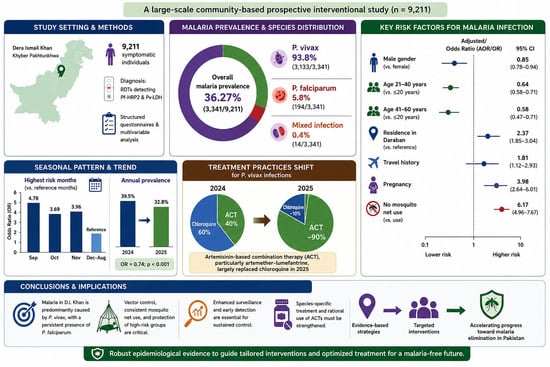
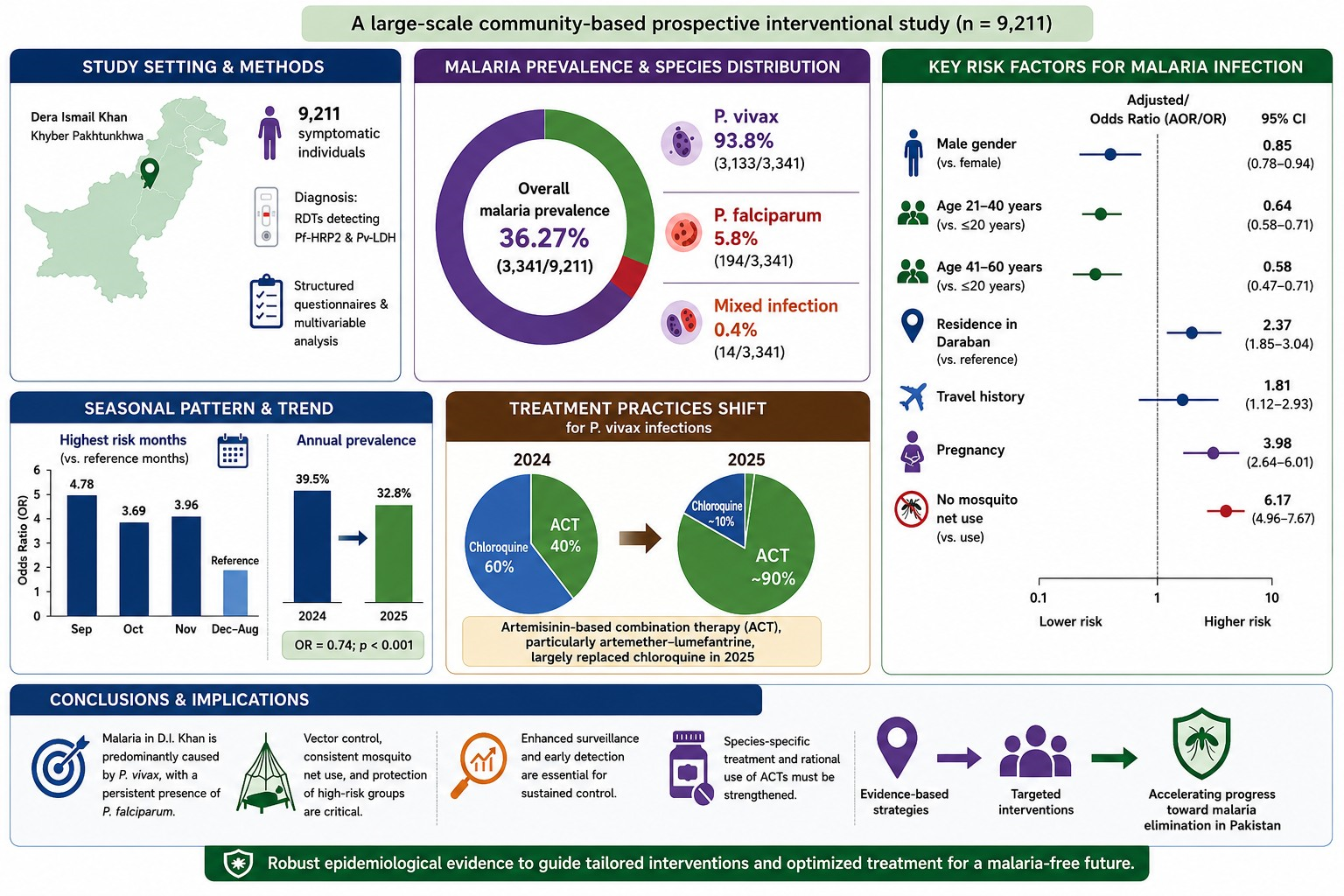
Graphical Abstract

1. Introduction

Plasmodium is a eukaryotic protozoan parasite responsible for malaria, a vector-borne disease transmitted through the bite of an infected female Anopheles mosquito [1,2]. Although approximately 250 Plasmodium species have been identified, 5 species commonly infect humans: P. falciparum, P. vivax, Plasmodium ovale, Plasmodium malariae and Plasmodium knowlesi (a zoonotic species). Among these, P. falciparum and P. vivax are the most prevalent [3]. Malaria occurs year-round, although its incidence varies seasonally [4]. It remains a major global health burden and is ranked among the leading causes of death worldwide. According to the WHO World Malaria Report 2025, an estimated 282 million malaria cases and approximately 610,000 deaths were reported globally in 2024 across 80 malaria-endemic countries and territories, representing a 3% increase in cases compared with 2023 [5]. The majority of cases (around 88%) occur in the African region, while approximately 12% are reported from the Eastern Mediterranean region. In the Eastern Mediterranean Region, six high-burden countries account for most of the malaria transmission, with Sudan contributing 44.6% of the estimated burden, followed by Pakistan, Yemen, Somalia, Afghanistan, and Djibouti. The estimated increase in malaria burden is multifactorial, where complex emergencies, population displacement, and climate-related crises continue to disrupt health systems and malaria control interventions [6].
Malaria remains a major public health challenge in Pakistan, with an estimated 1.8 million cases reported in 2025, a substantial population residing in endemic areas [7]. Although P. vivax accounts for most infections, P. falciparum, responsible for more severe disease manifestations, remains an important public health concern [8,9]. Transmission dynamics in Pakistan vary markedly across regions, largely influenced by local climatic and ecological conditions [10]. Environmental disruptions, particularly the catastrophic floods of 2022, have further intensified malaria transmission. Heavy monsoon rains from June to August severely impacted Khyber Pakhtunkhwa study province, creating ideal breeding conditions for vectors and overwhelming public health infrastructure [11,12,13].
Accurate and timely diagnosis is fundamental to effective malaria management, enabling prompt treatment, limiting disease progression, and preventing unnecessary antimalarial use in parasite-negative individuals [14]. Rapid diagnostic tests (RDTs) have significantly advanced malaria detection in resource-limited settings where microscopy is often unavailable or impractical [15]. These immunochromatographic assays detect species-specific Plasmodium antigens directly from whole blood, providing reliable results within 15–30 min without requiring specialized equipment or highly trained personnel [16]. At the point of care, RDTs such as the P.f./P.v. Antigen Rapid Test Cassette allow accurate species differentiation by targeting P. falciparum histidine-rich protein-2 (HRP-2) and P. vivax lactate dehydrogenase (Pv-LDH) [17].
Despite diagnostic advances, effective treatment remains indispensable for preventing progression to severe and life-threatening malaria [18]. The World Health Organization (WHO)recommends artemisinin-based combination therapies (ACTs) as first-line treatment for uncomplicated P. falciparum malaria, while chloroquine continues to be used for P. vivax in many endemic regions. ACTs combine a fast-acting artemisinin derivative with a longer-acting partner drug to ensure complete parasite clearance and minimize recrudescence, with commonly used regimens including artemether–lumefantrine, artesunate–amodiaquine, and dihydroartemisinin–piperaquine [19]. Primaquine is an essential component of P. vivax malaria management because it provides radical cures by eliminating dormant hepatic hypnozoites and reducing the risk of relapse when used alongside blood-stage antimalarial therapy [2]. However, the emergence and spread of resistance to chloroquine, sulfadoxine–pyrimethamine, and more recently artemisinin threatens global malaria control efforts [20]. Continuous therapeutic efficacy monitoring is therefore critical to detect early resistance and guide policy updates; WHO recommends revising first-line therapies when treatment failure rates exceed 10%, ensuring sustained treatment effectiveness and improved patient outcomes [5].
Understanding local epidemiological patterns and treatment practices is essential for improving malaria control strategies and reducing disease burden. However, limited information is available regarding the epidemiology of malaria and species-specific antimalarial treatment patterns in this region. Therefore, the present study aimed to investigate malaria epidemiology and assess species-specific antimalarial treatment patterns among rapid diagnostic test (RDT)-confirmed malaria cases in northwestern Pakistan.

2. Materials and Methods

2.1. Study Area

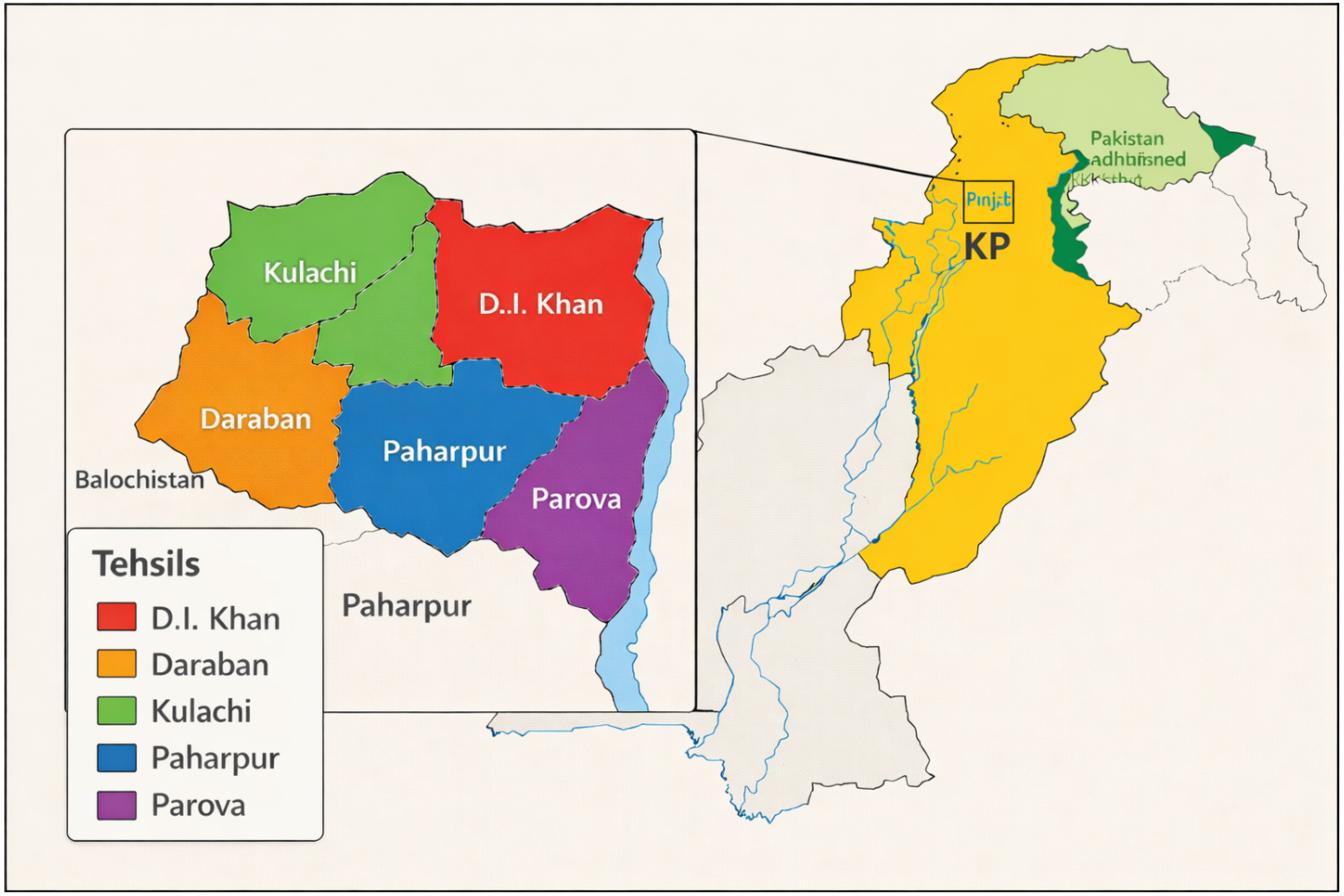
Dera Ismail Khan is a district located in the southern region of Khyber Pakhtunkhwa province, Pakistan (Figure 1). The region is characterized by a semi-arid climate and is considered vulnerable to vector-borne diseases due to poor drainage. A community-based cross-sectional study was carried out at the (DHQ) District Headquarter Hospital Dera Ismail Khan. All five administrative subdivisions and surrounding boundaries of district D.I.K.: Kulachi, D.I.K., Daraban, Paharpur, and Parova were chosen for the current study to record the prevalence of malaria. The study sites included the 114 Medical centers, Laboratories, Clinics and Hospitals under DHQ Dera Ismail Khan.

2.2. Study Design, Participants Recruitment and Sample Size

A community-based cross-sectional study was conducted from January 2024 to December 2025 in District Dera Ismail Khan, Khyber Pakhtunkhwa, Pakistan.
Participants were recruited from selected healthcare facilities and community screening sites representing different geographical areas of the district. Individuals presenting with clinical features suggestive of malaria were screened, and eligible participants were enrolled after obtaining informed consent. Epidemiological and clinical information was collected using a structured questionnaire (Supplementary File S1) followed by malaria diagnosis using rapid diagnostic testing (RDT). The required sample size was calculated using the formula described by Daniel [21] n = Z2P(1 − P)/d2, where n represents the required sample size, Z represents the confidence level, P represents the expected prevalence, and d represents the desired precision. A 95% confidence level (Z = 1.96), an expected prevalence of 50% (P = 0.50), and a precision level of 1% (d = 0.01) were used for sample size estimation. The prevalence value of 50% was selected to obtain the maximum sample size because a precise local prevalence estimate was not available before the study.
The study included 9211 participants from District Dera Ismail Khan, subdivision Kulachi (n = 5382), D.I.K. (n = 2630), Daraban (n = 619), Paharpur (n = 380), Parova (n = 21), and Adjacent boundaries (n = 179). The number of participants recruited from each site was determined according to population coverage, malaria transmission intensity, accessibility, healthcare utilization patterns, and availability of suspected malaria cases during the study period.

2.3. Ethical Approval and Informed Consent

The study protocol was reviewed and approved by the Institutional Ethical Review Committee of Quaid-i-Azam University, Islamabad) and the district headquarter officer (DHO) of DHQ Hospital Dera Ismail Khan (Approval No.1909). The study was conducted in accordance with ethical principles for research involving human participants. Written informed consent was obtained from all adult participants before enrollment. For participants below the age of consent, informed consent was obtained from parents or legal guardians.

2.4. Questionnaire and Participants Inclusion Criteria

A total of 9211 patients of all ages and both sexes presenting with malaria-like symptoms (fever, headache, chills, nausea, fatigue, vomiting, abdominal pain, myalgia, joint pain, and diarrhea) were enrolled in the study. Participants were included if they were presented with malaria-compatible symptoms, agreed to participate, and provided informed consent. Participants with incomplete clinical information, unavailable diagnostic results, or those refusing participation were excluded from the study. Patient-level data were collected using a structured questionnaire administered alongside rapid diagnostic testing (RDT). The questionnaire comprised five sections covering sociodemographic characteristics (age, sex, education, and occupation), clinical symptoms, preventive practices, environmental risk factors, and antimalarial drug prescribed/used.
Collected epidemiological and clinical data were reviewed for completeness and consistency before analysis. Data was entered into a standardized database and checked for errors. Records with missing key clinical information, diagnostic results, or incomplete questionnaire responses were excluded from the respective analyses. Only complete records were included in all analyses.

2.5. Blood Collection and Rapid Immunochromatographic Assay

Whole blood samples were obtained by finger-prick or venipuncture (EDTA tubes). Samples were analyzed immediately after collection or stored at 2–8 °C for up to 72 h prior to testing. Malaria infection was diagnosed using a commercially available immunochromatographic rapid diagnostic test (RDT) (HEALGEN, Catalog No. GCMAL (pf/pv)-402a; Healgen Scientific LLC, Houston, TX, USA), Malaria P. falciparum/P. vivax Antigen Rapid Test Cassette (Whole Blood), which qualitatively detects histidine-rich protein 2 (HRP-2) specific to P. falciparum and parasite lactate dehydrogenase (Pv-LDH) specific to P. vivax. The assay utilizes monoclonal antibodies immobilized on a nitrocellulose membrane to capture parasite antigens, with a built-in control line to confirm proper test performance. For each test, 5 µL of whole blood was added to the sample well followed by three drops (~120 µL) of assay buffer, and results were interpreted after 20–30 min according to the manufacturer’s instructions.
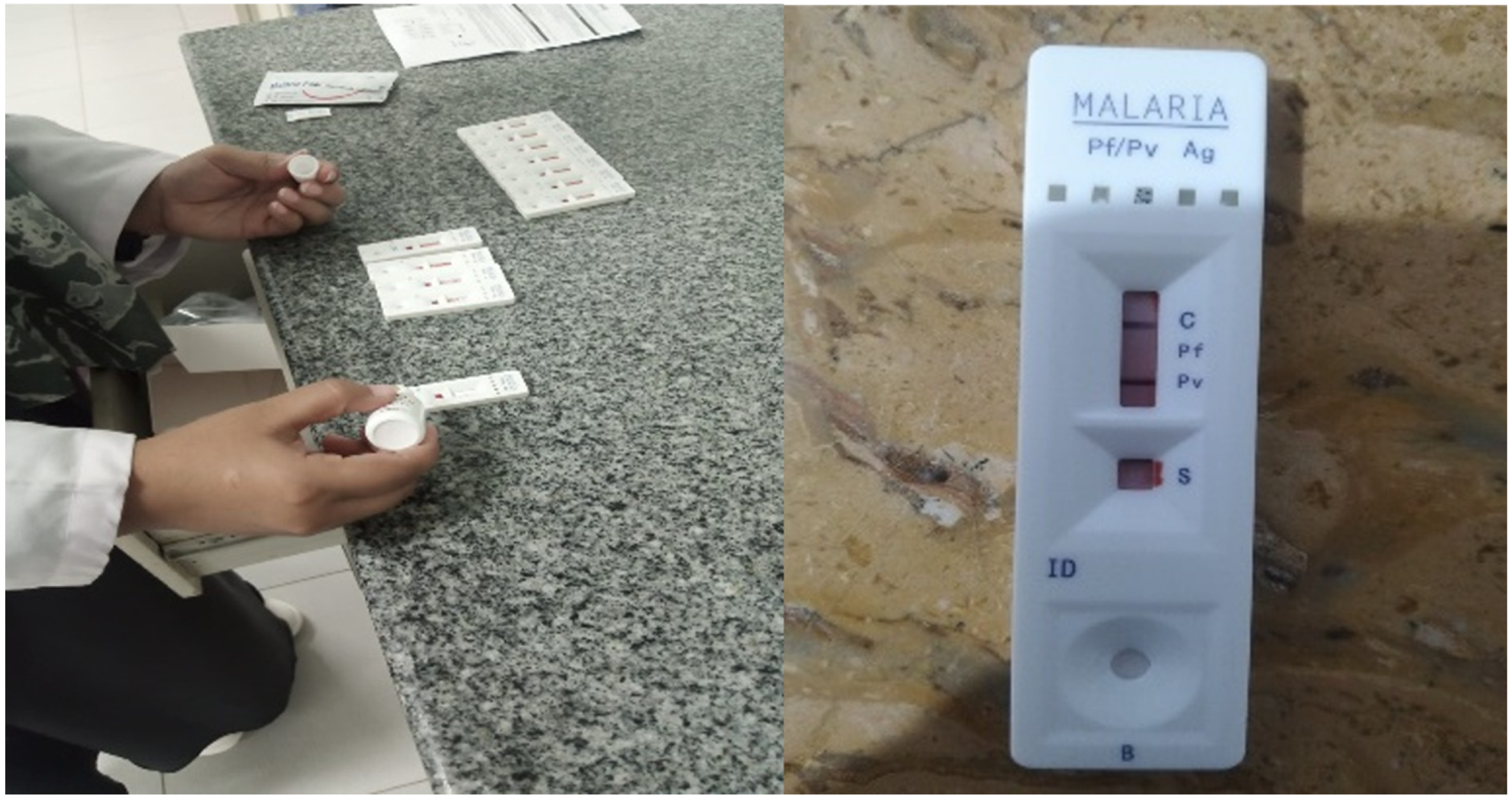
Although microscopy of Giemsa-stained blood smears is considered the reference method for malaria diagnosis, RDTs were used in this study due to their rapid turnaround time, minimal infrastructure requirements, and suitability for resource-limited healthcare settings. The selected Pf/Pv RDT was appropriate because P. falciparum and P. vivax are the dominant malaria species circulating in Pakistan and represent the primary species requiring differentiated treatment approaches. The selected assay enables rapid differentiation between P. falciparum and P. vivax under field conditions, making it suitable for large-scale epidemiological studies in resource-limited settings. However, detection of less common species including P. malariae, P. ovale, and P. knowlesi was not assessed in this study, as their identification requires molecular or advanced diagnostic approaches. All tests were performed following standard laboratory procedures, and assay validity was verified by the internal control line (Figure 2). As the test provides qualitative detection only, parasite density could not be determined, and results were interpreted in conjunction with clinical findings.

2.6. Statistical Analysis

Data was entered and managed in Microsoft Excel, and statistical analyses were conducted using R (version 4.5.2) and SPSS (version 20). Descriptive statistics were used to summarize the demographic and clinical characteristics of the study population. Categorical variables were entered into logistic regression models with epidemiologically meaningful reference categories. Odds ratios (ORs) with 95% confidence intervals (CIs) were calculated for comparisons relative to the reference category (baseline). Reference categories were not assigned ORs because they represent the baseline level (OR = 1). Variables demonstrating significant associations (p ≤ 0.05) in the univariate analysis and biologically relevant from existing literature were subsequently included in a multivariable logistic regression model to identify independent predictors while controlling potential confounding effects. Adjusted odds ratios (AORs) with 95% CIs were calculated to estimate the strength of associations. Multicollinearity was checked using Variance Inflation Factor (<5), and statistical significance was defined at p-value ≤ 0.05.

3. Results

In the current study, malaria afflicted 36.27% of the patients with malaria-like symptoms in 5 subdivisions of D.I.K. and surrounding areas (3341/9211), with P. vivax accounting for 34% (3133/9211). A total of 2.1% (195/9211) patients had P. falciparum, and 13 had mixed infections.

3.1. Malaria and Sociodemographic Features

Table 1 represents the participants’ sociodemographic and environmental risk factors associated with malaria infection. Female sex was significantly associated with reduced odds of malaria infection compared with males (OR = 0.84; 95% CI 0.77–0.91; p = 0.0001). Compared with individuals aged 1–20 years, older age groups had progressively lower odds of malaria infection, with significant reductions observed in those aged 21–40 years (OR = 0.66; 95% CI 0.61–0.73; p < 0.001) and 41–60 years (OR = 0.60; 95% CI 0.50–0.73; p < 0.001), while the association for those aged >60 years was not statistically significant (OR = 0.63; 95% CI 0.37–1.07; p = 0.089). Linked with adjacent areas, residents of Dera Ismail Khan (OR = 1.61; 95% CI 1.13–2.30; p = 0.0079), Daraban (OR = 2.37; 95% CI 1.62–3.48; p < 0.001), Kulachi (OR = 1.94; 95% CI 1.36–2.75; p = 0.0002), and Paharpur (OR = 2.15; 95% CI 1.43–3.21; p = 0.0002) had significantly higher odds of malaria, while the association for Parova was not statistically significant (OR = 1.63; 95% CI 0.61–4.30; p = 0.3234). Using children as the reference group, the odds of malaria infection were significantly lower among farmers (OR = 0.65; 95% CI 0.54–0.78; p < 0.001), housewives (OR = 0.62; 95% CI 0.50–0.70; p < 0.001), labour (OR = 0.79; 95% CI 0.68–0.91; p = 0.0015), and those in other occupations (OR = 0.77; 95% CI 0.60–0.99; p = 0.0441). Individuals with a history of travel had significantly higher odds of malaria infection (OR = 1.81; 95% CI 1.12–2.94; p = 0.0148), indicating that recent travel was associated with an increased risk of malaria.
The proportion of cases was slightly higher during the rainy season (37.9%) compared with the dry season (36.0%); however, this difference was not statistically significant (OR = 1.08, 95% CI: 0.93–1.24; p = 0.2846). Similarly, bed net use showed no significant association, with comparable proportions observed among users (36.8%) and non-users (36.0%) (OR = 1.03, 95% CI: 0.92–1.14; p = 0.5656). In contrast, the presence of a water reservoir was strongly associated with increased risk, as households with water reservoirs exhibited a higher proportion of cases (37.0%) than those without (33.5%), corresponding to more than threefold increased odds (OR = 3.33, 95% CI: 3.00–3.70; p < 0.001). Annual spraying showed a significant protective effect, with a substantially lower proportion of cases among sprayed households (21.0%) compared with those without spraying (39.5%), representing a 58% reduction in odds (OR = 0.42, 95% CI: 0.37–0.47; p < 0.001).

3.2. Temporal Factors Linked to Malaria

Malaria prevalence fluctuated significantly between the months (Table 2), using January as the reference month, malaria infection risk showed a clear seasonal pattern. The highest odds of infection were observed during the post-monsoon period, with September showing the strongest association (OR = 4.04, 95% CI: 3.05–5.34, p < 0.001), followed by November (OR = 3.36, 95% CI: 2.28–4.94, p < 0.001) and October (OR = 3.13, 95% CI: 2.29–4.27, p < 0.001). Elevated infection risk was also observed in August (OR = 1.96, 95% CI: 1.49–2.58, p < 0.001), December (OR = 1.73, 95% CI: 1.16–2.58, p = 0.007), July (OR = 1.61, 95% CI: 1.23–2.09, p < 0.001), and June (OR = 1.55, 95% CI: 1.17–2.05, p = 0.002). In contrast, malaria infection odds were significantly lower in March (OR = 0.34, 95% CI: 0.22–0.54, p < 0.001) and February (OR = 0.61, 95% CI: 0.42–0.88, p = 0.008). No significant association was observed for April and May, suggesting that malaria transmission increased markedly during the warmer and post-monsoon months.
Year-by-year analysis showed that the prevalence of malaria was on the decline, with 39.5% in 2024 and 32.8% in 2025. The probabilities of infection were significantly lower in 2025 than in the baseline year (OR = 0.74, 95% CI: 0.68–0.81, p < 0.001), indicating possible advancements in malaria prevention measures over time.

3.3. Clinical Aspects Linked to Malaria

The univariate logistic regression evaluation found that clinical factors play a significant role in reducing malaria infection (Table 3). The recorded antimalarial treatment patterns showed that chloroquine (78.03%), artemether–lumefantrine (78.06%), and primaquine (77.69%) were among the most frequently administered drugs. These percentages are not mutually exclusive because some patients received combination therapy, particularly P. vivax cases treated with blood-stage antimalarial drugs along with primaquine. Treatment outcomes were recorded across all treatment categories; however, these findings represent documented treatment patterns and clinical management practices based on documented patient records rather than measures of therapeutic efficacy, as parasite clearance time, fever clearance time, follow-up outcomes and other efficacy indicators were not assessed. Compared with blood group A+, blood groups A, AB−, AB+, B−, B+, and O− were not significantly associated with the malaria infection (all p > 0.05). However, blood group O+ was associated with significantly higher odds of malaria infection (OR = 4.30, 95% CI: 1.10–16.86, p = 0.036).
None of the evaluated symptoms were significantly associated with malaria infection. Pregnancy was strongly associated with increased odds of the outcome, with pregnant individuals exhibiting nearly fourfold-higher odds compared with non-pregnant participants (OR = 3.98, 95% CI: 2.48–6.39, p < 0.001).

3.4. Multivariate Logistic Regression Analysis

Multivariate logistic regression analysis is presented in Table 4. In the adjusted analysis, gender and age remained significant predictors of malaria infection. Females exhibited significantly lower odds of malaria compared with males (AOR = 0.85; 95% CI: 0.78–0.94), indicating a modest but independent protective effect. Individuals aged 21–40 years (AOR = 0.64; 95% CI: 0.58–0.71), 41–60 years (AOR = 0.58; 95% CI: 0.47–0.71), and >61 years (AOR = 0.53; 95% CI: 0.27–0.90) had significantly lower odds compared with the 1–20-year reference group, indicating higher infection risk among younger individuals.
Pregnancy status was associated with malaria infection. Pregnant women had substantially higher odds of malaria compared with non-pregnant women (AOR = 4.96; 95% CI: 2.95–8.34; p = 0.001).
With blood group A+ as the reference, a clear differential association between ABO blood groups and malaria infection was observed. Blood group B demonstrated significantly reduced odds of malaria among both B+ (AOR = 0.77; 95% CI: 0.64–0.93) and B− individuals (AOR = 0.78; 95% CI: 0.67–0.92). A modest but statistically significant reduction in risk was also noted for the AB− blood group (AOR = 0.86; 95% CI: 0.75–0.99). Although lower odds were observed for A− and AB+, these associations were not statistically significant. In contrast, O+ and O− blood groups showed higher but non-significant odds of malaria infection, with wide confidence intervals indicating limited precision. Overall, these findings suggest blood group-specific susceptibility to malaria, with blood group B conferring a relative protective advantage.
In the adjusted model, calendar month remained a robust independent determinant of malaria infection, confirming pronounced seasonality in transmission. Using January as the reference, the odds of malaria were significantly elevated in February (AOR = 2.25; 95% CI: 1.69–3.01) and March (AOR = 2.31; 95% CI: 1.52–3.51), indicating an early seasonal increase. No statistically significant associations were observed during April (AOR = 0.76; 95% CI: 0.52–1.11) or May (AOR = 1.20; 95% CI: 0.83–1.74). A renewed rise in malaria risk was evident in June (AOR = 1.81; 95% CI: 1.37–2.38) and July (AOR = 1.83; 95% CI: 1.37–2.45), followed by a significant reduction in August (AOR = 0.39; 95% CI: 0.25–0.62). The strongest associations were observed in the post-monsoon period, with markedly increased odds in October (AOR = 3.78; 95% CI: 2.53–5.66), November (AOR = 3.78; 95% CI: 2.73–5.24), and December (AOR = 4.97; 95% CI: 3.71–6.66). Collectively, these findings demonstrate a heightened risk during late winter and post-monsoon months, likely reflecting the combined effects of rainfall, temperature, and vector dynamics.
In the multivariable model, preventive and environmental factors showed differential associations with malaria infection. The presence of a household water reservoir was not independently associated with malaria risk (AOR = 1.04; 95% CI: 0.93–1.15), suggesting limited contribution after adjustment for confounding variables. However, after adjustment for potential confounding factors, absence of mosquito net use was strongly associated with increased odds of malaria (AOR = 6.17; 95% CI: 4.96–7.67), underscoring the substantial protective effect of bed nets in this setting. Annual insecticidal spraying remained significantly associated with lower malaria odds (AOR = 0.08; 95% CI: 0.06–0.10).

3.5. Species-Specific Antimalarial Treatment Pattern

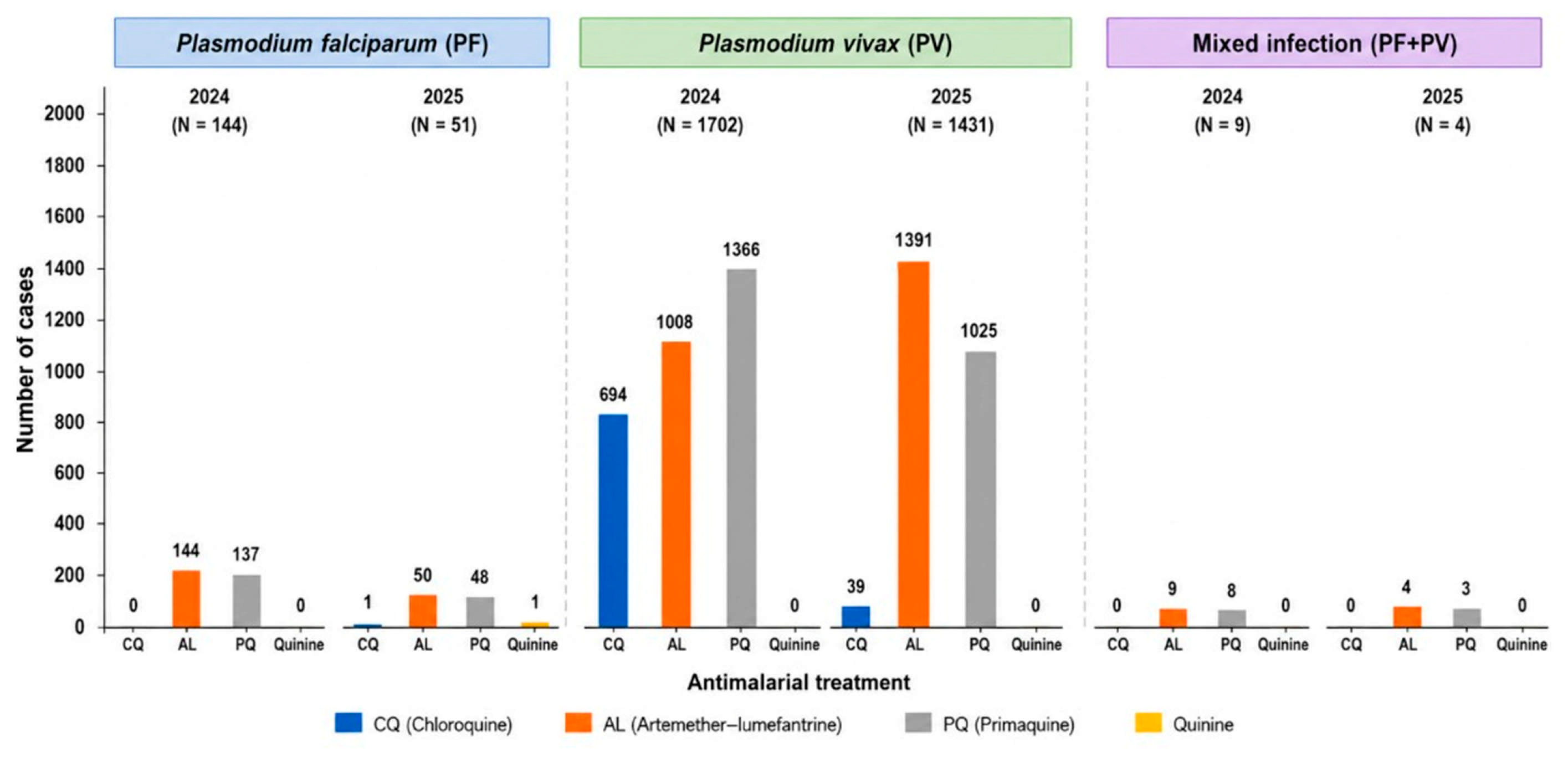
Epidemiological analysis of rapid diagnostic test-confirmed malaria cases in northwestern Pakistan demonstrated clear species-specific infection patterns and associated treatment practices during 2024–2025 (Figure 3). P. vivax was the dominant species, with 1702 cases in 2024 and 1431 cases in 2025, whereas P. falciparum occurred less frequently (144 and 51 cases, respectively), and mixed infections were rare (9 and 4 cases). Treatment practices showed strong adherence to artemisinin-based combination therapy, with Artemether–lumefantrine used in nearly all P. falciparum and mixed infections and increasingly adopted for P. vivax. Notably, P. vivax treatment shifted substantially from a mixed regimen of artemether–lumefantrine (1008 cases) and Chloroquine (694 cases) in 2024 to a clear predominance of artemether–lumefantrine (1391 cases) with minimal chloroquine use (39 cases) in 2025. Primaquine was widely administered as adjunct therapy, particularly for P. vivax infections, reflecting its role in radical cure by targeting liver-stage hypnozoites and reducing the risk of relapse. These findings represent antimalarial treatment patterns and recorded clinical management practices among RDT-confirmed cases. Treatment efficacy was not assessed in this study because parameters such as parasite clearance time, fever clearance time and recurrence monitoring were not evaluated.

4. Discussion

In impoverished nations like Pakistan, malaria is still seen as a serious health concern [1,2], and high malaria infection rate was recorded in the present study. Compared to other Pakistani provinces, the Punjab region reports fewer than 10% of cases with roughly 52% of the population [22]. However, more than 30% of malaria cases occur in Baluchistan province, which has a population of 5%, while Sindh province, which has a population of 25%, accounts for almost 30% of all malaria cases [23,24]. Pakistan’s National Malaria Control Program focuses on reducing malaria burden through early diagnosis, prompt effective treatment, strengthened surveillance, integrated vector management, and targeted interventions in high-risk endemic areas. The predominance of P. vivax and observed changes in antimalarial treatment practices in the present study emphasize the importance of continued species-specific diagnosis, appropriate case management, and robust surveillance systems to support national malaria control and elimination objectives.
The results found P. vivax was to be higher (34%) in the current study than P. falciparum (2.1%), which is consistent with prior studies that found P. vivax to be the dominant species [25]. Our findings on P. vivax, which is more common in this study, are similar to those of other investigations carried out in other parts of Pakistan [13,26,27] but contrasting with another study where P. falciparum was more prevalent than P. vivax [3,12]. These differences may be due to different collection times such as P. falciparum frequency peaks between August and December while P. vivax peaks between April and September [28,29]. The increase or persistence of Plasmodium incidences in certain regions may have been influenced by cross-border migration [12].
Males (38%) had higher rates of Plasmodium infection in our study, which is consistent with prior research done in Khyber Pakhtunkhwa [13,30]. Males may be more exposed than females [31,32]. Patients under the age of 20 had 40% positive malaria cases, according to the current study, compared to those above the age of 20. However, healthcare facility-based recruitment may also influence age distribution, as caregivers may be more likely to seek testing for symptomatic children. According to our results, the frequency of malaria differs significantly among age groups. This is similar to other hyperendemic areas in sub-Saharan Africa where children below the age of five years are the disproportionate burden of the disease [33,34]. However, previous reports in South Asia and Latin America reported low to moderate transmission, where malaria is more uniformly affecting all age groups because of limited cumulative exposure to acquire strong clinical immunity [35].
Pregnancy was significantly associated with malaria infection in the present study, with pregnant participants showing higher odds of malaria positivity among individuals seeking healthcare. This finding is biologically plausible, as pregnancy is associated with immunological changes, reduced cell-mediated immunity, and altered susceptibility to malaria infection, particularly due to the sequestration of infected erythrocytes in the placenta. Similar increased vulnerability of pregnant women to malaria has been documented in malaria-endemic regions [5,36,37]. However, as our study was based on healthcare-seeking participants, this association may also be influenced by differences in testing practices, healthcare utilization, and preventive intervention coverage.
The current investigation indicated that there is a considerable association between malaria severity and ABO blood group in terms of distribution. In our study, blood group B showed a protective association against malaria infection, while O+ and O− groups showed higher but non-significant odds of infection. However, previous studies have demonstrated that blood group O may protect against severe malaria manifestations by reducing rosetting and cytoadherence of parasitized erythrocytes, which are important mechanisms in malaria pathogenesis [38,39,40]. Therefore, the higher non-significant odds of malaria infection observed among O+ and O− individuals in our study should be interpreted as an association with infection occurrence rather than severity. In A and B blood group antigens enhance rosette formation through PfEMP1 binding, whereas blood group O forms fewer and weaker rosettes due to the absence of these antigens [38]. AB blood group individuals express both A and B antigens, but its role in malaria susceptibility and severity remain unclear [40]. Further investigations incorporating clinical severity indicators are required to better understand the protective role of ABO blood groups against severe malaria outcomes.
Subdivisions were significantly associated with malaria infection based on unadjusted analysis, with the highest malarial cases in Kulachi and D.I. Khan and relatively fewer cases in Parova. However, Daraban and Paharpur showed higher proportions of positive cases relative to the number tested. The spatial distribution of malaria has been well documented and reflects local variations in the environment, mosquito breeding habitats, density of populations and coverage of the vector control programs [41]. Similarly, Afsheen [13] found tehsil-level malaria hotspots in Khyber Pakhtunkhwa linked with ecological and programmatic factors. A reduced level of burden in Parova may reflect lower risk of transmission or diagnostic underreporting associated with limited access to health facilities [18,42].
The malarial infection was significantly associated with location based on unadjusted analysis; rural areas carry a disproportionate amount of positive malaria cases compared to urban and peri-urban settings. This pattern is well documented in studies, as rural populations are constantly more exposed to vectors of mosquitoes due to poor housing, lack of preventive resources and proximity to breeding grounds [4,43]. Rural agricultural communities in Pakistan are also deemed areas with elevated risk for malaria [9,44]. The urban-rural divide might also be a sign of disparities in the distribution of preventive interventions such as insecticide-treated nets and residual spraying in the home [3,5].
The present result showed post-monsoon seasonality, consistent with seasonal malaria patterns in South Asia [45]. The same peaks of post-monsoon transmission have been observed in Pakistan, India and Nepal where monsoonal rainfall pushes predictable yearly epidemics as the conditions producing ideal breeding environments of Anopheles [45,46,47]. Pakistan’s monsoon-influenced landscape, during September–December and April–May, temperatures of 20–30 °C, combined with rainfall-generated breeding sites and high humidity, create favorable conditions for Anopheles development and malaria transmission [12]. Entomological studies have documented Pakistan’s malaria vector ecology, while climate variability and recurrent floods have further increased mosquito breeding habitats and transmission risks [48,49]. These seasonal dynamics have direct programming implications. Seasonally targeted measures, like indoor residual spraying, larviciding prior to peak transmission, and early monsoon delivery of ITNs, are recommended by WHO [1,3,5] and malaria control organizations in the area.
A significantly higher malarial positivity in 2024 than in 2025 was recorded; this may be partly related to increased transmission following the 2022–2023 floods in Pakistan, which created favorable conditions for malaria vectors. The decline observed in 2025 may reflect a reduction in post-flood transmission and ongoing malaria control efforts. However, this temporal decline may be due to improved treatment coverage, strengthened case management or enhanced vector control activities carried out during the research time frame. This could also be explained by changes in healthcare seeking behavior. Another possible contributor to the difference observed might have been inter-annual climatic variability impacting mosquito population dynamics [10,44]. Recognizing the influence of climate change on malaria resurgence is critical for developing adaptive control strategies and strengthening policy frameworks to achieve the ambitious target of a “Malaria-Free Pakistan by 2035” [50].
Our findings showed that primaquine and artemether + lumefantrine were the primary treatments for malaria infections in the health centers across the area. In total, 114 health centers 77.6% of malaria cases were treated with primaquine and 21.9% with chloroquine. Quinine was used to treat only one case, and artemether + lumefantrine was used to treat 78% cases. These percentages are not cumulative because some patients received combination therapy, particularly primaquine alongside blood-stage antimalarial treatment for P. vivax infections. In our study, artemether–lumefantrine was also used for the treatment of P. vivax cases. This reflects the use of artemether–lumefantrine in settings with suspected chloroquine resistance or according to local treatment practices. Although previous studies from Pakistan have reported treatment success rates and therapeutic responses for different antimalarial regimens, the present study evaluated treatment patterns rather than therapeutic efficacy. Therefore, these findings should not be interpreted as measures of drug effectiveness, as parameters such as parasite clearance time, fever clearance time, treatment failure, and molecular markers of resistance were not assessed in the current study. Previous malaria records from Punjab, Federally Administered Tribal Areas, Balochistan, and Sindh have reported variations in malaria distribution and species patterns. These regions are geographically distinct areas of Pakistan and are located outside the present study area of Khyber Pakhtunkhwa. According to reports from 2014, Punjab had a 58% recovery rate with chloroquine treatment, while Sindh and Balochistan had only a 17% cure rate [51]. In Balochistan, amodiaquine and sulfadoxine-pyrimethamine led to respective treatment success rates of 44% and 47%. In the Federally Administered Tribal Areas, 97% of patients received therapy with artesunate with sulfadoxine and pyrimethamine in 2014. Similarly, a 100% treatment success rate was achieved in 2016 in Sindh, Balochistan, and the Federally Administered Tribal Areas due to the tested effectiveness of artesunate + sulfadoxine-pyrimethamine [51]. Similarly, in the Federally Administered Tribal Areas, Sindh, Balochistan, and Khyber Pakhtunkhwa, the treatment rate with lumefantrine and artemether was 100% in 2017 [51]. In developing nations like Pakistan, where misdiagnosis of mixed species malaria infections can lead to inappropriate or insufficient treatment, choloroquine is used to treat P. vivax infections but is known to be inefficient against P. falciparum infections, better diagnosis and appropriate treatment are crucial for controlling malaria [52,53]. Artemisia species contain artemisinin and other bioactive compounds with promising antimalarial potential; however, their therapeutic application requires proper phytochemical characterization and standardization [54]. This is particularly important as the spread of antimalarial drug resistance and the absence of a highly effective vaccine continue to pose major challenges to malaria control, maintaining malaria as a critical global public health burden [55].
Occupational exposure based on unadjusted odds ratios plays a significant role in malaria risk in the study population. The literature is consistent that the most affected occupational groups are agricultural workers, livestock herders and construction labourers, because of their prolonged outdoor exposure during the peak mosquito biting hours of dawn and dusk [56]. This risk is biologically plausible because malaria vectors have demonstrated behavioral adaptations in response to control interventions, including shifts toward outdoor and early morning/evening biting, which increase human–vector contact and contribute to residual malaria transmission [57]. Therefore, occupation-specific preventive measures, including repellents, protective clothing, and targeted health education, are needed for high-risk groups.
There was a significant association between water reservoirs and malaria infection based on unadjusted analysis, emphasizing the role of water bodies as important mosquito breeding sites in the study area. This is in line with research from South Asia, where canals for irrigation, ponds and periodic flooded areas have been consistently linked to increased risk of malaria transmission [24,48]. Similarly, recent climatic and environmental events, particularly the 2022 floods in Pakistan, may have influenced malaria transmission dynamics. In northwestern Pakistan, flood-related stagnant water accumulation created favorable breeding conditions for Anopheles mosquitoes, while population displacement and disruption of healthcare services increased exposure risk and limited access to timely diagnosis and treatment. These factors may have contributed to increased malaria transmission in affected endemic communities [5,10,58]. Populations near water channels in D.I. Khan are said to be at higher risk of malaria due to the humidity conditions which are conducive for the development of mosquito larvae [13,42]. These findings endorse the implementation of conventional approaches to environmental management like improving drainage and removing stagnant water towards malaria vector control programmes [5].
Travel history has been recognized as an important contributor to malaria transmission based on unadjusted odds ratios in the present study. Movement of people between high-transmission areas and other regions, particularly in border and endemic areas, may increase exposure to malaria vectors and facilitate parasite introduction into new locations [3,5].
Annual insecticidal spraying showed a protective association with malaria infection, which is consistent with the role of indoor residual spraying in reducing Anopheles vector populations and transmission. This association likely reflects targeted implementation of spraying in high-transmission areas rather than a true protective effect of non-exposure. Overall, these findings highlight the dominant role of personal protective measures and programmatic targeting in shaping malaria risk. In the five endemic subdivisions of Dera Ismail khan, annual insecticidal spray was extremely low. Among the provinces, FATA showed the highest reported proportion (56%), followed by Balochistan (37.7%), Sindh (22.1%), and Khyber Pakhtunkhwa (15%) [59]. Another study found that only 30% of respondents in Pakistan reported using insecticide-treated nets (ITNs), with higher usage in Khyber Pakhtunkhwa (55%), highlighting gaps in the adoption of WHO-recommended vector control measures [26].
Mosquito net use showed a strong protective association in the multivariable model, but a non-significant association between mosquito net use and malaria risk in the crude analysis. This difference suggests the presence of confounding factors influencing the unadjusted relationship. Comprehensive interventions, including antimalarial medications, bed nets, and malaria health education, should be offered in the five endemic subdivisions.
The malarial sign and symptoms were not significantly associated with infection, consistent with the known clinical heterogeneity of malaria, from asymptomatic infection to severe febrile illness, thus symptom-based case detection is not reliable at the population level [15,31]. Common symptoms reported such as fever, chills, fatigue and headache overlap significantly with other endemic diseases such as typhoid and dengue [25]. Kouna [15] concluded that no single combination of symptoms is adequate for diagnosis without laboratory confirmation. Therefore, in malaria-endemic areas, suspected malaria cases should be confirmed using parasitological methods such as microscopy or rapid diagnostic tests before treatment decisions are made [3].
This study has some limitations, including the use of RDTs without microscopic or molecular confirmation, which limited parasite density assessment and detection of uncommon species. Healthcare facility-based recruitment may have introduced selection bias, and the two-year study period may limit evaluation of long-term epidemiological trends.

5. Conclusions

This study highlights substantial geographic and seasonal variation in malaria transmission in District Dera Ismail Khan, with P. vivax remaining the dominant species. Younger age, male sex, pregnancy, blood groups and inadequate preventive practices significantly influenced infection risk, emphasizing the need for targeted surveillance and strengthened vector control interventions before peak transmission periods. The observed transition from chloroquine to artemisinin-based combination therapy, particularly artemether–lumefantrine, reflects evolving species-specific treatment practices in the region. Malaria control efforts in South Asia are aligned with the WHO Global Technical Strategy for Malaria 2016–2030. Pakistan faces challenges including heterogeneous transmission, climate-related impacts, and population movement; therefore, strengthening surveillance, species-specific diagnosis, effective treatment, and vector control remains essential for progress toward elimination goals.

Supplementary Materials

The following supporting information can be downloaded at: https://www.mdpi.com/article/10.3390/tropicalmed11070194/s1, Supplementary File S1. Questionnaire.

Author Contributions

Conceptualization, K.A.; Methodology, K.A., A.M. and G.N.; Investigation, A.M., G.N. and K.A.; Formal analysis, K.A., A.M., G.N., S.F., I.B.A. and I.N.; Data curation, A.M., K.A., G.N. and S.F.; Visualization, K.A., I.B.A. and I.N.; Validation, K.A., I.B.A. and I.N.; Resources, K.A., I.B.A. and I.N.; Supervision, K.A.; Writing—original draft preparation, A.M., K.A. and G.N.; Writing—review and editing, A.M., K.A., G.N., S.F., I.B.A. and I.N. All authors have read and agreed to the published version of the manuscript.

Funding

Deanship of Graduate Studies and Scientific Research at Qassim University for financial support (QU-APC-2026). The funders had no role in study design, data collection, analysis, interpretation, or manuscript preparation.

Institutional Review Board Statement

The bioethics review committee (ERC), the district headquarter officer (DHO) of DHQ Hospital Dera Ismail Khan, and the institutional bodies (Quaid-i-Azam University Islamabad, Pakistan and the Department of Zoology, Faculty of Biological Sciences) reviewed and approved the study’s methodology.

Informed Consent Statement

Informed consent was obtained, the study did not collect any personally identifiable information, and all data were analyzed anonymously.

Data Availability Statement

All data generated in this study are included in the published article.

Acknowledgments

The Researchers would like to thank the Deanship of Graduate Studies and Scientific Research at Qassim University (www.qu.edu.sa) for financial support (QU-APC-2026). The authors are grateful to the staff of DHQ Hospital for their valuable support and assistance throughout the conduct of this study. During the preparation of this manuscript, the authors used generative AI to assist with grammar and spelling and English editing and for graphical abstract and to generate study area map. We thank Namatama Angela Mulikelela, English Language Teacher, Al Khaleej Direct English Institute, Khamis Mushait, Saudi Arabia, and Kim C. Worley of Baylor College of Medicine, USA, both native English speakers, for reviewing and editing the English language of this manuscript.

Conflicts of Interest

The authors declare no conflicts of interest.

References

  1. Venkatesan, P. WHO world malaria report 2024. Lancet Microbe 2025, 6, 101073. [Google Scholar] [CrossRef] [Scilit]
  2. World Health Organization. Malaria Surveillance, Monitoring and Evaluation: A Reference Manual; World Health Organization: Geneva, Switzerland, 2025. [Google Scholar]
  3. World Health Organization. World Malaria Report 2023; World Health Organization: Geneva, Switzerland, 2023. [Google Scholar]
  4. Jahan, F.; Khan, N.H.; Wahid, S.; Ullah, Z.; Kausar, A.; Ali, N. Malaria epidemiology and comparative reliability of diagnostic tools in Bannu: An endemic malaria focus in southern Khyber Pakhtunkhwa, Pakistan. J. Public Health 2019, 113, 75–85. [Google Scholar] [CrossRef] [Scilit] [PubMed]
  5. World Health Organization. World Malaria Report 2025; World Health Organization: Geneva, Switzerland, 2025; Available online: https://www.who.int/teams/global-malaria-programme/reports/world-malaria-report-2025 (accessed on 25 April 2026).
  6. World Health Organization. Driven to End Malaria: Now We Can. Now We Must; WHO Regional Office for the Eastern Mediterranean; Available online: https://www.emro.who.int/world-malaria-day/2026/ (accessed on 25 April 2026).
  7. World Health Organization. WHO Urges Partners to Prevent Malaria Resurgence in Pakistan and End Malaria in Our Lifetime; WHO Regional Office for the Eastern Mediterranean: Cairo, Egypt, 2026; Available online: https://www.emro.who.int/pak/pakistan-news/who-urges-partners-to-prevent-malaria-resurgence-in-pakistan-and-end-malaria-in-our-lifetime.html (accessed on 25 April 2026).
  8. Arshad, T.; Wajahat, A.; Jabeen, A.; Ali, S.H. Malaria and dengue outbreaks during a national disaster in Pakistan: A rising concern for public health. J. Glob. Health 2022, 12, 03076. [Google Scholar] [CrossRef] [Scilit] [PubMed]
  9. Khan, M.I.; Qureshi, H.; Bae, S.J.; Khattak, A.A.; Anwar, M.S.; Ahmad, S.; Hassan, F.; Ahmad, S. Malaria prevalence in Pakistan: A systematic review and meta-analysis (2006–2021). Heliyon 2023, 9, e15373. [Google Scholar] [CrossRef] [Scilit] [PubMed]
  10. Qureshi, H.; Khan, M.I.; Ambachew, H.; Pan, H.-F.; Ye; D-Qjemhj. Baseline survey for malaria prevalence in Khyber Pakhtunkhwa Province, Pakistan. East. Mediterr. Heal. J. 2020, 26, 453–460. [Google Scholar] [CrossRef] [Scilit] [PubMed]
  11. Vohra, L.I.; Aqib, M.; Jamal, H.; Mehmood, Q.; Yasin, F. Rising cases of dengue and malaria in flood-affected areas of Pakistan: A major threat to the country’s healthcare system. Disaster Med. Public Health Prep. 2023, 17, e323. [Google Scholar] [CrossRef] [Scilit] [PubMed]
  12. Fatima, S.H.; Zaidi, F.; Rafiq, J.; Bhandari, D.; Ali, A.; Bi, P. Impact of temperatures on malaria incidence in vulnerable regions of Pakistan: Empirical evidence and future projections. Epidemiol. Infect. 2025, 153, e33. [Google Scholar] [CrossRef] [Scilit] [PubMed]
  13. Afsheen Bashir, A.B.; Arif, S.; Raheela Bano, R.B.; Tabbassum Imran, T.I.; Saima Bashir, S.B.; Ahmad Jan, A.J.; Nayab Khan, N.K.; Junaid Qayum, J.Q. Frequency and risk factors of malaria infection in Dera Ismail Khan, Khyber Pakhtunkhwa, Pakistan. Int. J. Mosq. Res. 2019, 5, 37–40. [Google Scholar] [CrossRef] [Scilit]
  14. Bannister-Tyrrell, M.; Verdonck, K.; Hausmann-Muela, S.; Gryseels, C.; Muela Ribera, J.; Peeters Grietens, K. Defining micro-epidemiology for malaria elimination: Systematic review and meta-analysis. Malar. J. 2017, 16, 164. [Google Scholar] [CrossRef] [Scilit] [PubMed]
  15. Kouna, L.C.; Oyegue-Liabagui, S.L.; Voumbo-Matoumona, D.F.; Lekana-Douki, J.B. Malaria prevalence in asymptomatic and symptomatic children living in rural, semi-urban and urban areas in eastern Gabon. Acta Parasitol. 2024, 69, 471–482. [Google Scholar] [CrossRef] [Scilit] [PubMed]
  16. Hussain, I.; Qureshi, N.A.; Afzal, M.; Shaheen, N.; Ali, A.; Ashraf, A. Prevalence and distribution of human Plasmodium infection in Federally Administered Tribal Areas of Pakistan. Acta Parasitol. 2016, 61, 537–543. [Google Scholar] [CrossRef] [Scilit] [PubMed]
  17. Abba, K.; Deeks, J.J.; Olliaro, P.; Naing, C.-M.; Jackson, S.M.; Takwoingi, Y.; Donegan, S.; Garner, P. Rapid diagnostic tests for diagnosing uncomplicated P. falciparum malaria in endemic countries. Cochrane Database Syst. Rev. 2011, 6, CD008122. [Google Scholar] [CrossRef] [Scilit] [PubMed]
  18. Akhtar, N.; Sami, A.; Saeed, F.; Saleem, H.F.; Sher, S.; Khan, M.A.A.; Muhammad, S.; Omer, M. Epidemiology of Plasmodium falciparum in Dera Ismail Khan District, Khyber Pakhtunkhwa, Pakistan. Fortune J. Health Sci. 2024, 7, 665–669. [Google Scholar] [CrossRef] [Scilit]
  19. Antony, H.A.; Parija, S.C. Antimalarial drug resistance: An overview. Trop. Parasitol. 2016, 6, 30–41. [Google Scholar] [CrossRef] [Scilit] [PubMed]
  20. Basu, L.; Bhowmik, B.; Pal, A.; Roy, P.; Dey, B.; Mondal, R.; Roy, C.; Halder, L. Drug resistance and new strategies of prevention against malaria: An ongoing battle. J. Vector Borne Dis. 2025, 62, 9–15. [Google Scholar] [CrossRef] [Scilit] [PubMed]
  21. Daniel, W.W. Biostatistics: A Foundation for Analysis in the Health Sciences, 7th ed.; John Wiley & Sons: New York, NY, USA, 1999. [Google Scholar]
  22. Tahir, Z.; Shah, A.A.; Irum, S. Prevalence of malarial disease and its clinical manifestations in rural and urban areas of Multan. Isra Med. J. 2021, 13, 127–129. [Google Scholar]
  23. Umer, N.J.; Yasinzai, M.I. Prevalence of malaria in human population of district Killa Saifullah, Balochistan. Pure Appl. Biol. 2017, 6, 1335–1339. [Google Scholar] [CrossRef] [Scilit]
  24. Jeyaprakasam, N.K.; Phang, W.K.; Shahari, S.; Vythilingam, I. Plasmodium cynomolgi: Potential emergence of a new zoonotic malaria in Southeast Asia. Parasites Vectors 2025, 18, 151. [Google Scholar] [CrossRef] [Scilit] [PubMed]
  25. Azam, T.; Ullah, I.; Iqbal, M.; Atta, F.; Khan, B.A.; Khan, M.A. Malaria parasite prevalence and diagnostic strategies in Khyber Pakhtunkhwa, Pakistan. J. Anim. Plant Res. 2024, 1, 37–41. [Google Scholar] [CrossRef] [Scilit]
  26. Irshad, H.A.; Jehanzeb, H.; Yaseen, A.; Saleem, U.; Javaid, M.D.; Tareen, H.K.; Mukhtar, M.; Silviera, H.; Beg, M.A. Malaria vector control strategies in Pakistan: A scoping review. BMC Infect. Dis. 2025, 25, 953. [Google Scholar] [CrossRef] [Scilit] [PubMed]
  27. Baig, N.; Ali, Z.; Ahmed, M.; Jamal, W.Z.; Rehman, S.U.; Ahmed, Z.; Rahoojo, R.H.; Jagirani, J.A.; Usmani, B.A.; Fatmi, Z. Subnational malaria burden in Sindh, Pakistan: Over a decade of evidence for tailored strategies. Malar. J. 2025, 24, 265. [Google Scholar] [CrossRef] [Scilit] [PubMed]
  28. Khatoon, L.; Baliraine, F.N.; Bonizzoni, M.; Malik, S.A.; Yan, G. Genetic structure of Plasmodium vivax and Plasmodium falciparum in the Bannu district of Pakistan. Malar. J. 2010, 9, 112. [Google Scholar] [CrossRef] [Scilit] [PubMed]
  29. Mukhtar, M. Guidelines for Antivector Interventions for Monsoon Season; Directorate of Malaria Control, Ministry of Health: Islamabad, Pakistan, 2009; pp. 1–14. [Google Scholar]
  30. Suleman, M. Malaria among the students of religious schools of Bannu District, Khyber Pakhtunkhwa, Pakistan. Pak. J. Zool. 2012, 44, 959–962. [Google Scholar]
  31. Sadeghi, F.; Nodez, S.M.M.; Khosravani, M. Malaria dynamics in Iran: Insights from autochthonous and asymptomatic. J. Parasit. Dis. 2026, 50, 291–298. [Google Scholar] [CrossRef] [Scilit] [PubMed]
  32. Minwuyelet, A.; Yewhalaw, D.; Atenafu, G. Retrospective analysis of malaria prevalence over ten years (2015–2024) at Bichena Primary Hospital, Amhara Region, Ethiopia. PLoS ONE 2025, 20, e0322570. [Google Scholar] [CrossRef] [Scilit] [PubMed]
  33. Bardoe, D.; Hayford, D.; Bio, R.B.; Osei, E. Malaria in pregnancy: Environmental, sociocultural, and socioeconomic determinants in Pru East Municipality, Ghana. Malar. J. 2025, 24, 314. [Google Scholar] [CrossRef] [Scilit] [PubMed]
  34. Sarfo, J.O.; Amoadu, M.; Kordorwu, P.Y.; Adams, A.K.; Gyan, T.B.; Osman, A.G.; Asiedu, I.; Ansah, E.W. Malaria amongst children under five in sub-Saharan Africa: A scoping review of prevalence, risk factors and preventive interventions. Eur. J. Med. Res. 2023, 28, 80. [Google Scholar] [CrossRef] [Scilit] [PubMed]
  35. World Health Organization. WHO Guidelines for Malaria; World Health Organization: Geneva, Switzerland, 2022; Available online: https://www.who.int/publications/i/item/guidelines-for-malaria (accessed on 25 April 2026).
  36. Gilder, M.E.; Saito, M.; Haohankhunnatham, W.; Ling, C.L.; Gornsawun, G.; Bancone, G.; Chu, C.S.; Christensen, P.R.; Imwong, M.; Charunwatthana, P.; et al. Submicroscopic malaria in pregnancy and associated adverse pregnancy outcomes: A case-cohort study on the Thailand–Myanmar border. PLoS Med. 2025, 22, e1004529. [Google Scholar] [CrossRef] [Scilit] [PubMed]
  37. Mahmood, F.M. Global warming and adverse pregnancy outcomes–the need for research and intervention. Int. J. Health Sci. 2024, 18, 1. [Google Scholar] [PubMed]
  38. Rowe, J.A.; Handel, I.G.; Thera, M.A.; Deans, A.M.; Lyke, K.E.; Koné, A.; Diallo, D.A.; Raza, A.; Kai, O.; Marsh, K.; et al. Blood group O protects against severe Plasmodium falciparum malaria through the mechanism of reduced rosetting. Proc. Natl. Acad. Sci. USA 2007, 104, 17471–17476. [Google Scholar] [CrossRef] [Scilit] [PubMed]
  39. Opi, D.H.; Ndila, C.M.; Uyoga, S.; Macharia, A.W.; Fennell, C.; Ochola, L.B.; Nyutu, G.; Siddondo, B.R.; Ojal, J.; Shebe, M.; et al. Non-O ABO blood group genotypes differ in their associations with Plasmodium falciparum rosetting and severe malaria. PLoS Genet. 2023, 19, e1010910. [Google Scholar] [CrossRef] [Scilit] [PubMed]
  40. Dwivedi, K.; Sejpal, J.; Sharma, B.M.; Suryavamshi, T.; Sawant, S.; Narayanareddygari, S.; Murali, K. Impact of ABO blood groups on malaria susceptibility and severity: A systematic review. Int. J. Contemp. Pathol. 2025, 11, 14–22. [Google Scholar] [CrossRef] [Scilit]
  41. Perugini, E.; Poggi, C.; Micocci, M.; Pichler, V.; Nelli, L.; Torre, A.D.; Guelbeogo, W.M.; Pombi, M. The spatial heterogeneity of malaria transmission: An entomological investigation in a highly endemic setting of Burkina Faso. Curr. Res. Parasitol. Vector Borne Dis. 2025, 8, 100300. [Google Scholar] [CrossRef] [Scilit] [PubMed]
  42. Fateen, F.; Sami, A.; Fatimah, S.; Douma, H.; Elham, M. Prevalence, demographic patterns, and seasonal distribution of malaria in District Dera Ismail Khan, Pakistan. medRxiv 2025. preprint. [Google Scholar] [CrossRef] [Scilit]
  43. Qadir, H.; Wani, K.A.; Islam, N.U.; Kafkas, E.; Akgöl, C. Impact assessment of climate change and adaptation strategies in South Asia. Env. Claims J. 2025, 1–30. [Google Scholar] [CrossRef] [Scilit]
  44. Khan, M.I.; Qureshi, H.; Bae, S.J.; Shah, A.; Ahmad, N.; Ahmad, S.; Asim, M. Dynamics of malaria incidence in Khyber Pakhtunkhwa, Pakistan: Unveiling rapid growth patterns and forecasting future trends. J. Epidemiol. Glob. Heal. 2024, 14, 234–242. [Google Scholar] [CrossRef] [Scilit] [PubMed]
  45. Hawadak, J.; Goel, A.; Matlani, M.; Haider, M.; Foko, L.P.; Singh, V. Malaria epidemiology, clinical characteristics, and concurrent infections in Delhi, India: A hospital-based study. J. Infect. Public Health 2026, 19, 103010. [Google Scholar] [CrossRef] [Scilit] [PubMed]
  46. Fatima, T.; Habib, A.; Khan, A.; Riaz, R.; Ul Haq, M.Z.; Raufi, N. Mosquito-borne diseases in Pakistan: Challenges, strategies, and future prospects. IJS Glob. Health 2023, 6, e0385. [Google Scholar] [CrossRef] [Scilit]
  47. Dhimal, M.; Ahrens, B.; Kuch, U. Climate Change and Spatiotemporal Distributions of Vector-Borne Diseases in Nepal—A Systematic Synthesis of Literature. PLoS ONE 2015, 10, e0129869. [Google Scholar] [CrossRef] [Scilit] [PubMed]
  48. Herrel, N.; Amerasinghe, F.P.; Ensink, J.; Mukhtar, M.; Van Der Hoek, W.; Konradsen, F. Adult anopheline ecology and malaria transmission in irrigated areas of South Punjab, Pakistan. Med. Vet. Entomol. 2024, 18, 141–152. [Google Scholar] [CrossRef] [Scilit] [PubMed]
  49. Khan, M.A. Seasonal variation in species composition and relative abundance of mosquitoes in the district Bannu, Khyber Pakhtunkhwa, Pakistan: Prospects of dengue fever in the study area. Int. J. Trop. Insect Sci. 2022, 42, 2221–2231. [Google Scholar] [CrossRef] [Scilit]
  50. Ejov, M. National Strategic Plan for Malaria Elimination in Pakistan 2021–2035. 2020. Available online: https://www.apmen.org/sites/default/files/all_resources/Pakistan%20National%20Strategic%20plan%20%28NSP%20MCE%202021-2035%29.pdf (accessed on 25 April 2026).
  51. Kakar, Q.; Khan, M.A.; Bile, K.M. Malaria control in Pakistan: New tools at hand but challenging epidemiological realities. East. Mediterr. Health J. 2010, 16, 54–60. [Google Scholar] [CrossRef] [Scilit]
  52. Khattak, A.A.; Venkatesan, M.; Jacob, C.G.; Artimovich, E.M.; Nadeem, M.F.; Nighat, F.; Hombhanje, F.; Mita, T.; A Malik, S.; Plowe, C.V. A comprehensive survey of polymorphisms conferring anti-malarial resistance in Plasmodium falciparum across Pakistan. Malar. J. 2013, 12, 300. [Google Scholar] [CrossRef] [Scilit] [PubMed]
  53. Khattak, A.A.; Awan, U.A.; Nadeem, M.F.; Yaqoob, A.; Afzal, M.S. Chloroquine-resistant Plasmodium falciparum in Pakistan. Lancet Infect. Dis. 2021, 21, 1632. [Google Scholar] [CrossRef] [Scilit] [PubMed]
  54. Ahmed, W.; Alshebrami, R.M. A Review on Biochemical Constituents, Pharmacological and Medical Uses, and Nutritional Value of Six Different Artemisia Species in Saudi Arabia. J. Qassim Univ. Sci. 2026, 5, 158. [Google Scholar] [CrossRef] [Scilit] [PubMed]
  55. Guleria, V.; Pal, T.; Sharma, B.; Chauhan, S.; Jaiswal, V. Pharmacokinetic and molecular docking studies to design antimalarial compounds targeting Actin I. Int. J. Health Sci. 2021, 15, 4–15. [Google Scholar] [PubMed]
  56. Homan, T.; Maire, N.; Hiscox, A.; Di Pasquale, A.; Kiche, I.; Onoka, K.; Mweresa, C.; Mukabana, W.R.; Ross, A.; Smith, T.A.; et al. Spatially variable risk factors for malaria in a geographically heterogeneous landscape, western Kenya: An explorative study. Malar. J. 2016, 15, 1. [Google Scholar] [CrossRef] [Scilit] [PubMed]
  57. Sangbakembi-Ngounou, C.; Costantini, C.; Longo-Pendy, N.M.; Ngoagouni, C.; Akone-Ella, O.; Rahola, N.; Cornelie, S.; Kengne, P.; Nakouné, E.R.; Komas, N.P.; et al. Diurnal biting of malaria mosquitoes in the Central African Republic indicates residual transmission may be “out of control”. Proc. Natl. Acad. Sci. USA 2022, 119, e2104282119. [Google Scholar] [CrossRef] [Scilit] [PubMed]
  58. Tabassum, S.; Kalsoom, T.; Zaheer, Z.; Naeem, A.; Afifi, A.; Ohadi, L. Reflections on the surge in malaria cases after unprecedented flooding in Pakistan—A commentary. Health Sci. Rep. 2023, 6, e1620. [Google Scholar] [CrossRef] [Scilit] [PubMed]
  59. Pryce, J.; Medley, N.; Choi, L. Indoor residual spraying for preventing malaria in communities using insecticide-treated Nets. Cochrane Database Syst. Rev. 2022, 1, CD012688. [Google Scholar] [CrossRef] [Scilit] [PubMed]
Figure 1. Map of Pakistan showing the sampling district of Dera Ismail Khan and its administrative subdivision (Kulachi, D.I.K., Daraban, Paharpur, and Parova).
Tropicalmed 11 00194 g001
Figure 2. Immunochromatographic malaria rapid diagnostic test (RDT) cassette used for qualitative detection of P. falciparum (HRP-2) and P. vivax (Pv-LDH) antigens in whole blood samples.
Tropicalmed 11 00194 g002
Figure 3. Species-specific antimalarial treatment patterns in RDT-confirmed malaria cases in northwestern Pakistan, 2024–2025.
Tropicalmed 11 00194 g003
Table 1. Sociodemographic and environmental factors of participants and their association with malaria infection.
VariableCategoryTotal
n (%)
Positive
n (%)
CoefficientOR (95% CI)p-Value
Gender Male (Ref)4499 (48.8)1723 (38) 1
Female4712 (51.2)1618 (34)−0.17130.84 (0.77–0.91)0.0001 ***
Age Group1–20 (Ref)5419 (58.8)2177 (40) 1
21–403170 (34.4)983 (31)−0.40140.66 (0.61–0.73)<0.001 ***
41–60555 (6)161 (29)−0.49670.60 (0.50–0.73)<0.001 ***
>6067 (0.7)20 (29.8)−0.45620.63 (0.37–1.07)0.0892 NS
LocalityOutside (Ref)179 (1.9)42 (23) 1
Rural7294 (79.2)2789 (38)0.70282.01 (1.42–2.86)0.0001 ***
Urban1738 (18.9)510 (29)0.30361.35 (0.94–1.94)0.0991 NS
TehsilsAdjacent areas (Ref)179 (1.9)42 (23) 1
D.I.K2630 (28.6)872 (33)0.48121.61 (1.13–2.30)0.0079 **
Daraban619 (6.7)261 (42)0.86632.37 (1.62–3.48)<0.001 ***
Kulachi5382 (58.4)2008 (37)0.66341.94 (1.36–2.75)0.0002 ***
Paharpur380 (4.1)151 (39.7)0.76592.15 (1.43–3.21)0.0002 ***
Parova21 (0.2)7 (33)0.48921.63 (0.61–4.30)0.3234 NS
OccupationChild (Ref)2873 (31.2)1177 (40.9) 1
Farmer611 (6.6)191 (31)−0.42270.65 (0.54–0.78)<0.001 ***
Housewife2332 (25.3)708 (30)−0.46490.62 (0.5–0.70)<0.001 ***
Job52 (0.6)21 (40)−0.02420.97 (0.55–1.70)0.9325 NS
Labour (Manual work)1078 (11.7)382 (35)−0.23460.79 (0.68–0.91)0.001 ***
Other295 (3)103 (34.9)−0.25750.77 (0.60–0.99)0.0441 *
Student1970 (21.4)759 (38)−0.10190.90 (0.80–1.01)0.0887 NS
Travel HistoryNo (Ref)9144 (99.3)3307 (36) 1
Yes67 (0.7)34 (50.7)0.5981.81 (1.12–2.94)0.0148 **
SeasonDry (Ref)8314 (90.3)3001 (36) 1
Rainy897 (9.7)340 (37.9)0.07761.08 (0.93–1.24)0.2846 NS
Bed NetsNo (Ref)7297 (79.2)2636 (36) 1
Yes1914 (20.8)705 (36.8)0.03061.03 (0.92–1.14)0.5656 NS
Water
reservoir
No (Ref)2544 (27.6)853 (33.5) 1
Yes6667 (72.4)2488 (37)1.20443.33 (3.00–3.70)<0.001 ***
Annual SprayNo (Ref)7529 (81.7)2978 (39.5) 1
Yes1682 (18.3)363 (21)−0.86610.42 (0.37–0.47)<0.001 ***
Ref: Reference category; NS not Significant; * p ≤ 0.05; ** p ≤ 0.01; *** p ≤ 0.001.
Table 2. Univariate logistic regression analysis of temporal factors associated with malaria infection among study participants.
VariableCategoryTotal
n (%)
Positive
n (%)
CoefficientOR (95% CI)p-Value
Month Jan (Ref)319 (3.5)81 (25) 1
Feb395 (4.3)68 (17)−0.4950.61 (0.42–0.88)0.008 **
Mar305 (3.3)32 (10)−1.0790.34 (0.22–0.54)<0.001 ***
Apr340 (3.7)76 (22)−0.1630.85 (0.59–1.21)0.360 NS
May965 (10.5)250 (25.9)0.031.03 (0.77–1.37)0.855 NS
Jun1131 (12.3)391 (34.5)0.4381.55 (1.17–2.05)0.002 **
Jul2599 (28.2)919 (35)0.4761.61 (1.23–2.09)<0.001 ***
Aug1294 (14)518 (40)0.6731.96 (1.49–2.58)<0.001 ***
Sep1061 (11.5)614 (57.8)1.3964.04 (3.05–5.34)<0.001 ***
Oct452 (4.9)233 (51.5)1.1413.13 (2.29–4.27)<0.001 ***
Nov180 (2)96 (53)1.2123.36 (2.28–4.94)<0.001 ***
Dec170 (1.8)63 (37)0.5481.73 (1.16–2.58)0.007 **
Year2024 (Ref)4688 (50.9)1855 (39.5) 1
20254523 (49.1)1486 (32.8)−0.29130.74 (0.68–0.81)<0.001 ***
Ref: Reference category; NS not Significant; ** p ≤ 0.01; *** p ≤ 0.001.
Table 3. Univariate logistic regression analysis of clinical characteristics linked to malaria infection among study participants.
VariableCategoryTotal
n (%)
Positive
n (%)
CoefficientOR (95% CI)p-Value
Drugs
CQNo 2607 (78.03)2607 (100)
Yes734 (21.97)734 (100)
ALNo 733 (21.94)733 (100)
Yes2608 (78.06)2608 (100)
PQNo 746 (22.32)746 (100)
Yes2595 (77.69)2595 (100)
Blood GroupA+ (Ref)495 (5.4)174 (35) 1
A−1203 (13.1)483 (40)0.2131.24 (1.00–1.54)0.055 NS
AB−1019 (11.1)347 (34)−0.0490.95 (0.76–1.19)0.673 NS
AB+1862 (20.2)642 (34)−0.0300.97 (0.79–1.20)0.78 NS
B−246 (2.7)86 (34.9)−0.0080.99 (0.72–1.37)0.959 NS
B+4329 (47)1580 (36)0.0591.06 (0.87–1.29)0.555 NS
O−47 (0.5)22 (46.8)0.4851.62 (0.89–2.96)0.115 NS
O+10 (0.1)7 (70)1.464.30 (1.10–16.86)0.036 *
SymptomsAbdominal pain with Fever (Ref)1369 (14.9)499 (36) 1
Fever4796 (52.1)1740 (36)−0.00730.99 (0.87–1.12)0.9083 NS
Fever with Chills1515 (16.4)539 (35.5)−0.03790.96 (0.82–1.12)0.626 NS
Joint pain with Fever1531 (16.6)563 (36.7)0.01391.01 (0.87–1.17)0.8568 NS
PregnancyNo (Ref)9130 (99.1)3285 (35.9) 1
Yes81 (0.9)56 (69)1.38273.98 (2.48–6.39)<0.001 ***
Ref: Reference category; NS not significant; * p ≤ 0.05; *** p ≤ 0.001.
Table 4. Multivariate logistic regression analysis showing adjusted odds ratios (AORs) and 95% confidence intervals for factors associated with malaria infection.
Predictor VariableAdjusted Odds Ratio
(95% CI)
p-Value
Gender
F vs. M0.85 (0.78, 0.94)0.001 **
Age groups
21–40 vs. 1–200.64 (0.58, 0.71)<0.001 ***
41–60 vs. 1–200.58 (0.47, 0.71)<0.001 ***
>60 vs. 1–200.53 (0.27, 0.90)0.02 *
Pregnancy
Yes vs. No4.96 (2.95, 8.34)0.001 ***
Blood Groups
A− vs. A+0.81 (0.64, 1.02)0.08 NS
B+ vs. A+0.77 (0.64, 0.93)0.006 **
B− vs. A+0.78 (0.67, 0.92)0.003 **
AB+ vs. A+0.79 (0.58, 1.08)0.14 NS
AB− vs. A+0.86 (0.75, 0.99)0.04 *
O+ vs. A+1.39 (0.75, 2.58)0.29 NS
O− vs. A+2.88 (0.69, 11.9)0.14 NS
Months
February vs. January2.25 (1.69, 3.01)<0.001 ***
March vs. January2.31 (1.52, 3.51)<0.001 ***
April vs. January0.76 (0.52, 1.11)0.16 NS
May vs. January1.20 (0.83, 1.74)0.31 NS
June vs. January1.81 (1.37, 2.38)<0.001 ***
July vs. January1.83 (1.37, 2.45)<0.001 ***
August vs. January0.39 (0.25, 0.62)<0.001 ***
September vs. January1.19 (0.87, 1.61)0.25 NS
October vs. January3.78 (2.53, 5.66)<0.001 ***
November vs. January3.78 (2.73, 5.24)<0.001 ***
December vs. January4.97 (3.71, 6.66)<0.001 ***
Water reservoir
No vs. Yes1.04 (0.93, 1.15)0.45 NS
Mosquito Nets
No vs. Yes6.17 (4.96, 7.67)<0.001 ***
Annual Insecticidal Spray
No vs. Yes0.08 (0.06, 0.10)<0.001 ***
NS not Significant; * p ≤ 0.05; ** p ≤ 0.01; *** p ≤ 0.001.
Disclaimer/Publisher’s Note: The statements, opinions and data contained in all publications are solely those of the individual author(s) and contributor(s) and not of MDPI and/or the editor(s). MDPI and/or the editor(s) disclaim responsibility for any injury to people or property resulting from any ideas, methods, instructions or products referred to in the content.