
Article

Autoethnography of Living with a Sleep Robot

1
Department of Electronic and Electrical Engineering, Computer Science and Mathematics, University of Bristol, Bristol BS8 1TH, UK
2
Bristol Neuroscience, Dementia Research Groups, ReMemBr Group, Bristol Medical School (THS), Bristol BS10 5NB, UK
3
Southmead Hospital, North Bristol NHS Trust, Bristol BS10 5NB, UK
4
Department of Computer Science, University of Bristol, Bristol BS8 1TH, UK
*
Author to whom correspondence should be addressed.
Multimodal Technol. Interact. 2024, 8(6), 53; https://doi.org/10.3390/mti8060053
Submission received: 1 March 2024 / Revised: 5 June 2024 / Accepted: 7 June 2024 / Published: 18 June 2024
(This article belongs to the Special Issue Challenges in Human-Centered Robotics)

Abstract

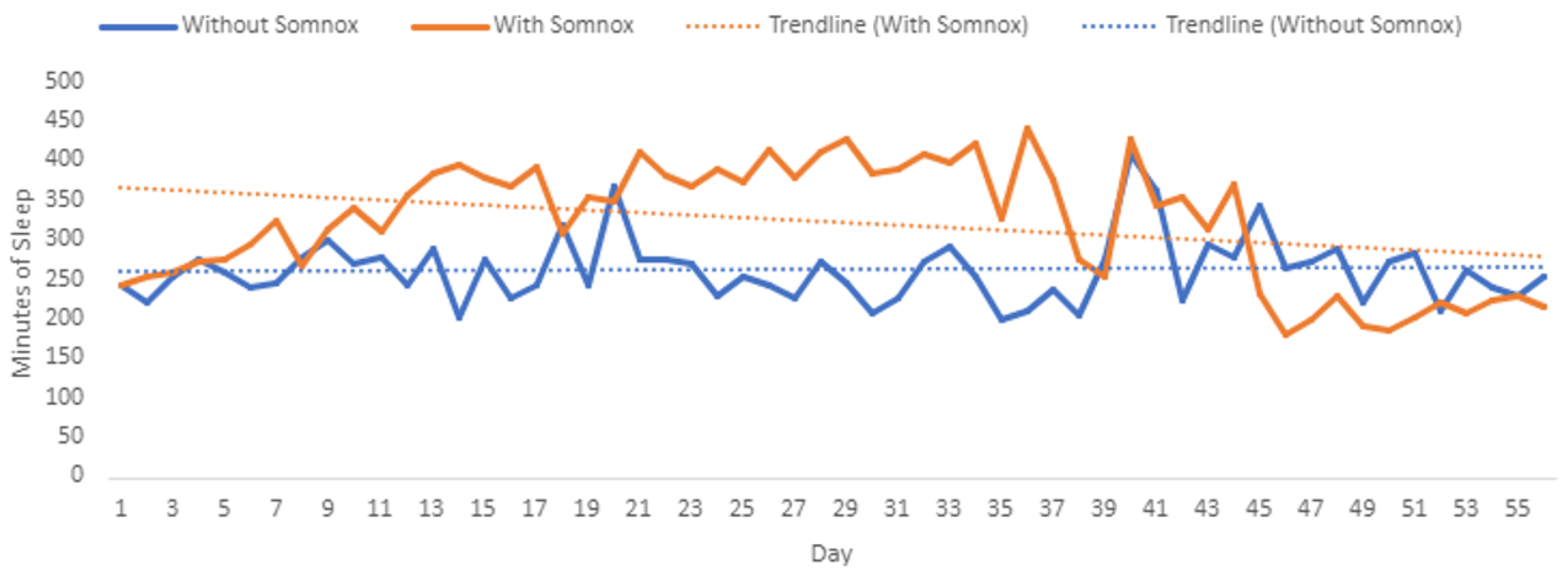
Soft robotics is used in real-world clinical situations, including surgery, rehabilitation, and diagnosis. However, several challenges remain to make soft robots more viable, especially for clinical interventions such as improving sleep quality, which impacts physiological and mental health. This paper presents an autoethnographic account of the experience of sleeping with a companion robot (Somnox), which mimics breathing to promote better sleep. The study is motivated by the key author’s experience with insomnia and a desire to better understand how Somnox is used in different social contexts. Data were collected through diary entries for 16 weeks (8 weeks without, 8 weeks with) and analysed thematically. The findings indicate improved sleep and observations about the relationship developed with the companion robot, including emotional connection and empathy for the technology. Furthermore, Somnox is a multidimensional family companion robot that can ease stomach discomfort and stress, reduce anxiety, and provide holistic care.
Keywords: sensing technology; medical robotics; sleep robot; autoethnography; insomnia; sleep; arousal; hyperarousal; sleep intervention sensing technology; medical robotics; sleep robot; autoethnography; insomnia; sleep; arousal; hyperarousal; sleep intervention