
IRVINE: An Interactive Visualization for Spontaneous Reporting Systems Databases Missing Values

 ,
, 
 ,
,  and
and 
Abstract
1. Introduction
2. Materials and Methods
2.1. Defining Missingness in IRVINE
2.2. Data Source
2.3. Data Preparation
2.4. System Architecture
2.5. Design Goals
- •
- Goal 1 (Multi-level exploration): Enable users to explore missingness at multiple levels, from overall summaries down to detailed attribute- and subset-level breakdowns, supporting both broad and fine-grained analysis.
- •
- Goal 2 (Cross-database comparability): Allow users to compare missingness patterns across databases, countries, and reporter types, highlighting both similarities and discrepancies.
- •
- Goal 3 (Interpretability and usability): Provide interpretable visual encodings, symbolic markers, and responsive interactions to make missing data patterns accessible, transparent, and meaningful to diverse users.
3. The Design of IRVINE
3.1. Visualization Components
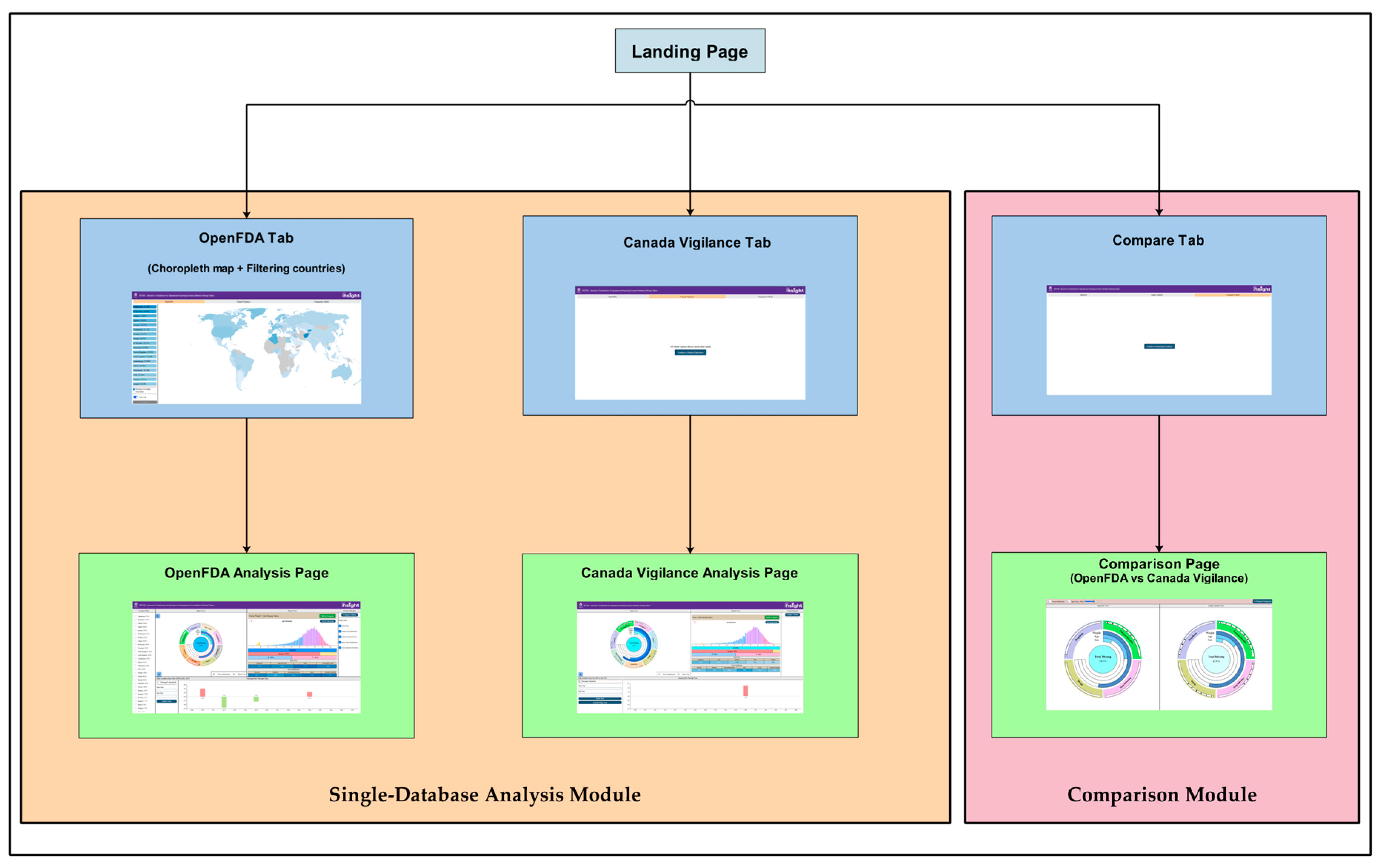
3.1.1. Single-Database Analysis Module
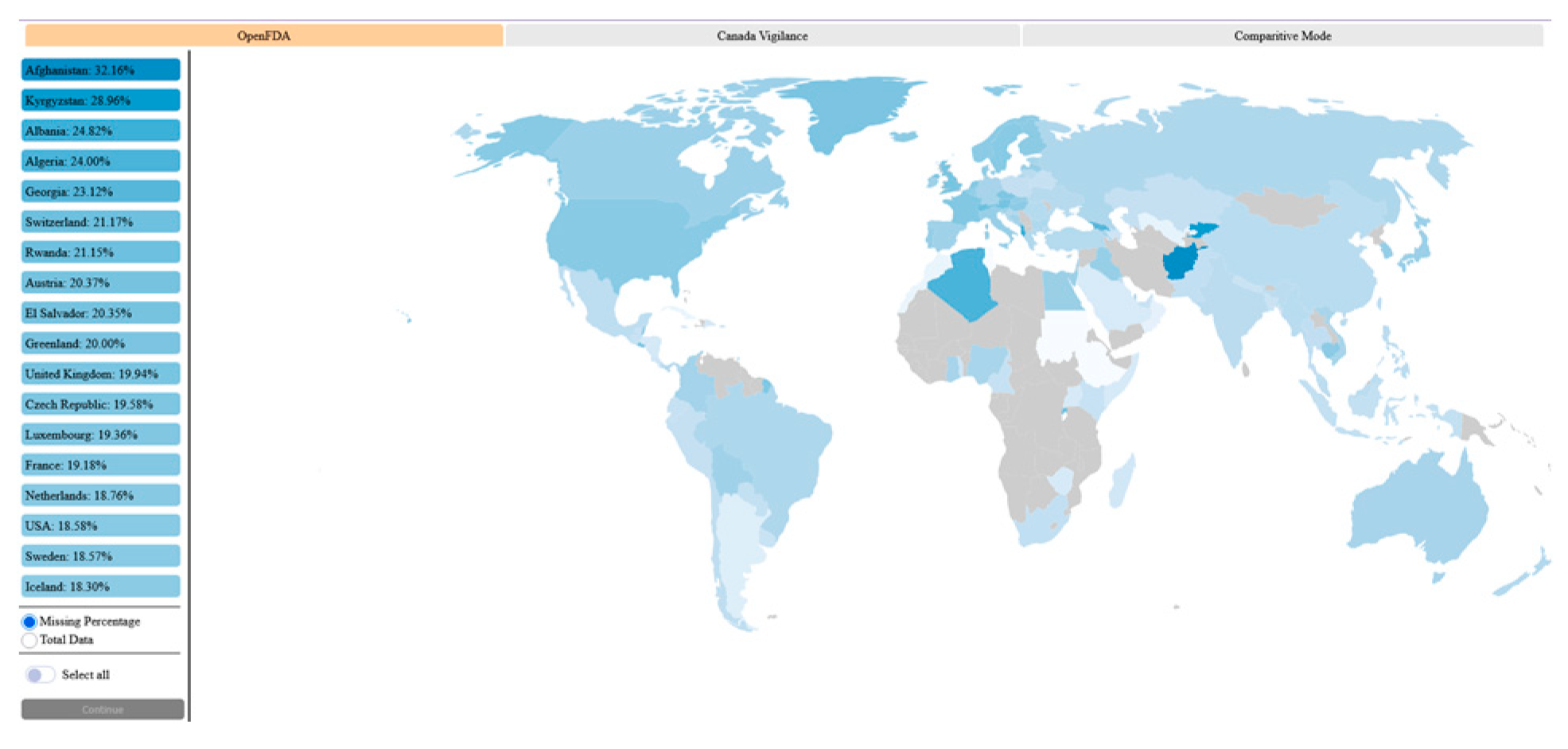
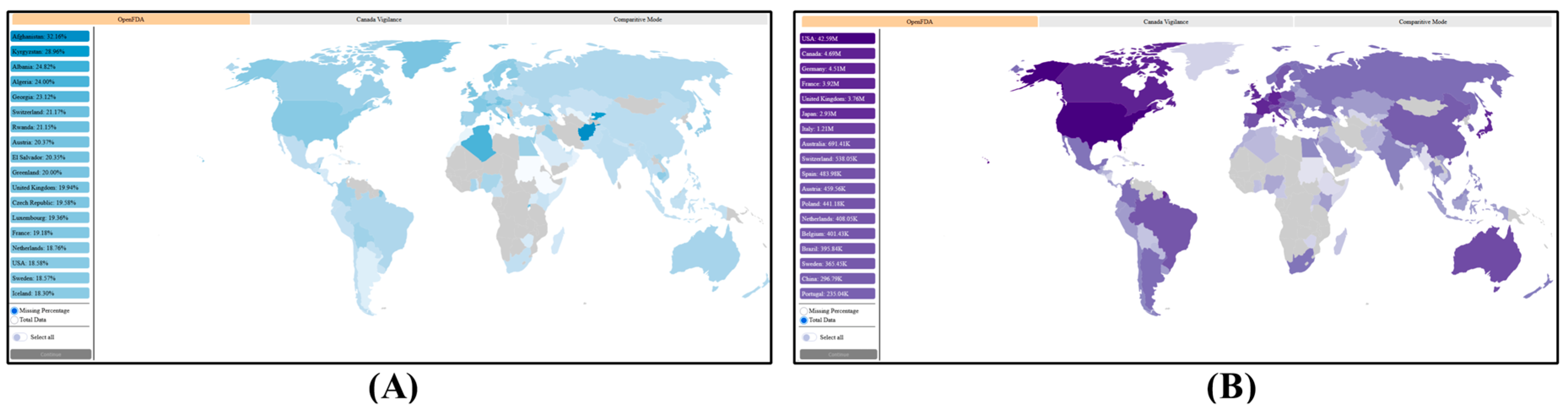
Geographic Entry Layer
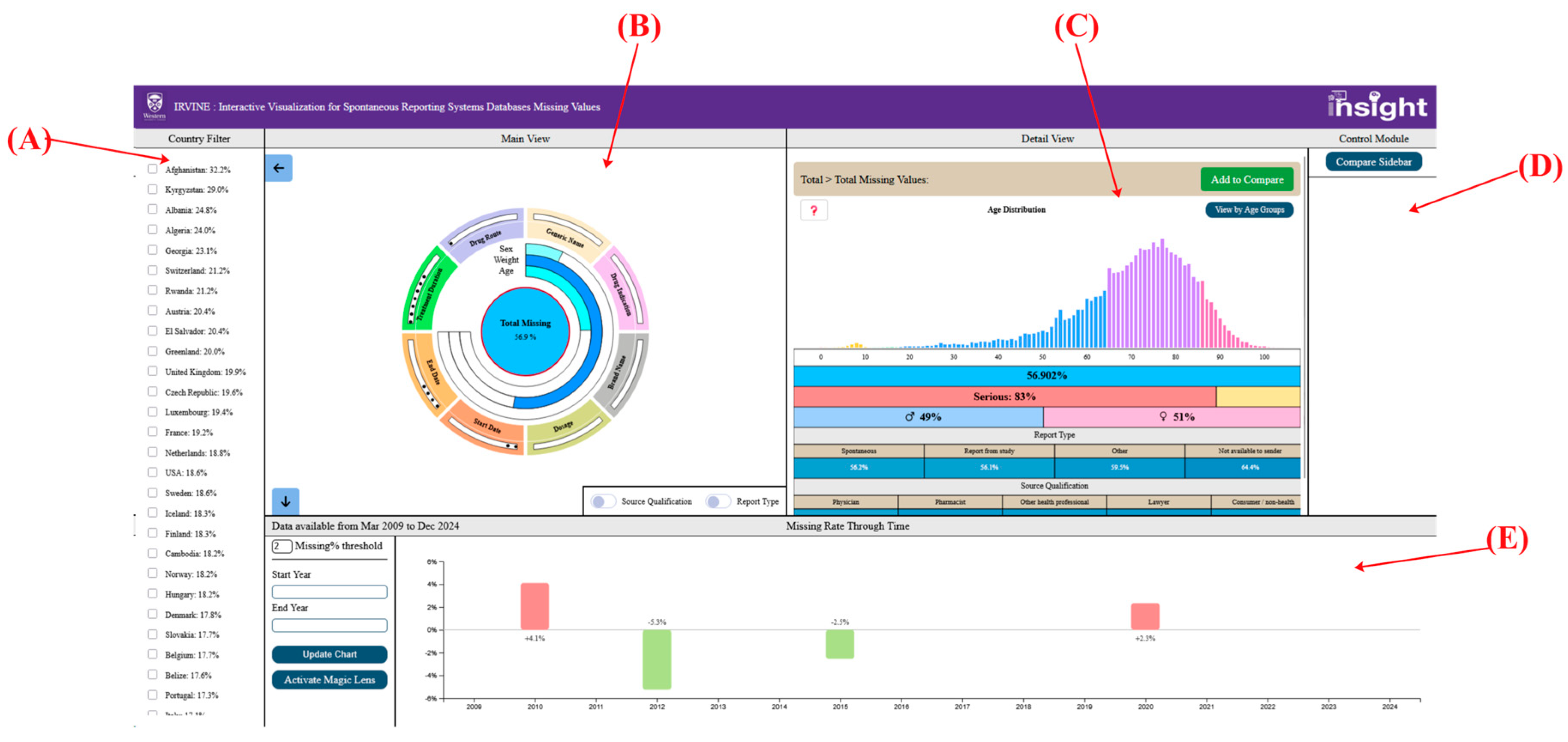
Analysis Layer
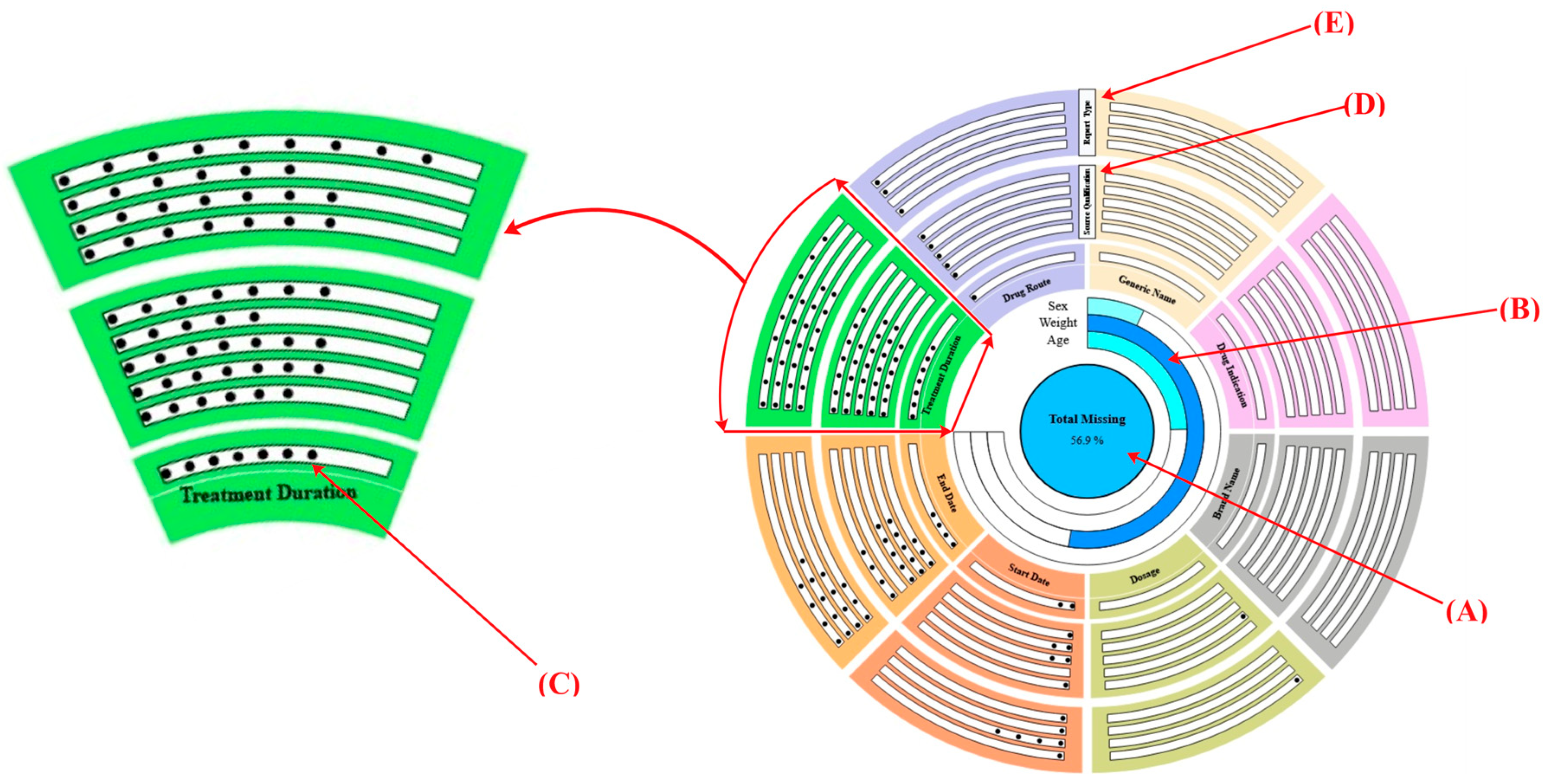
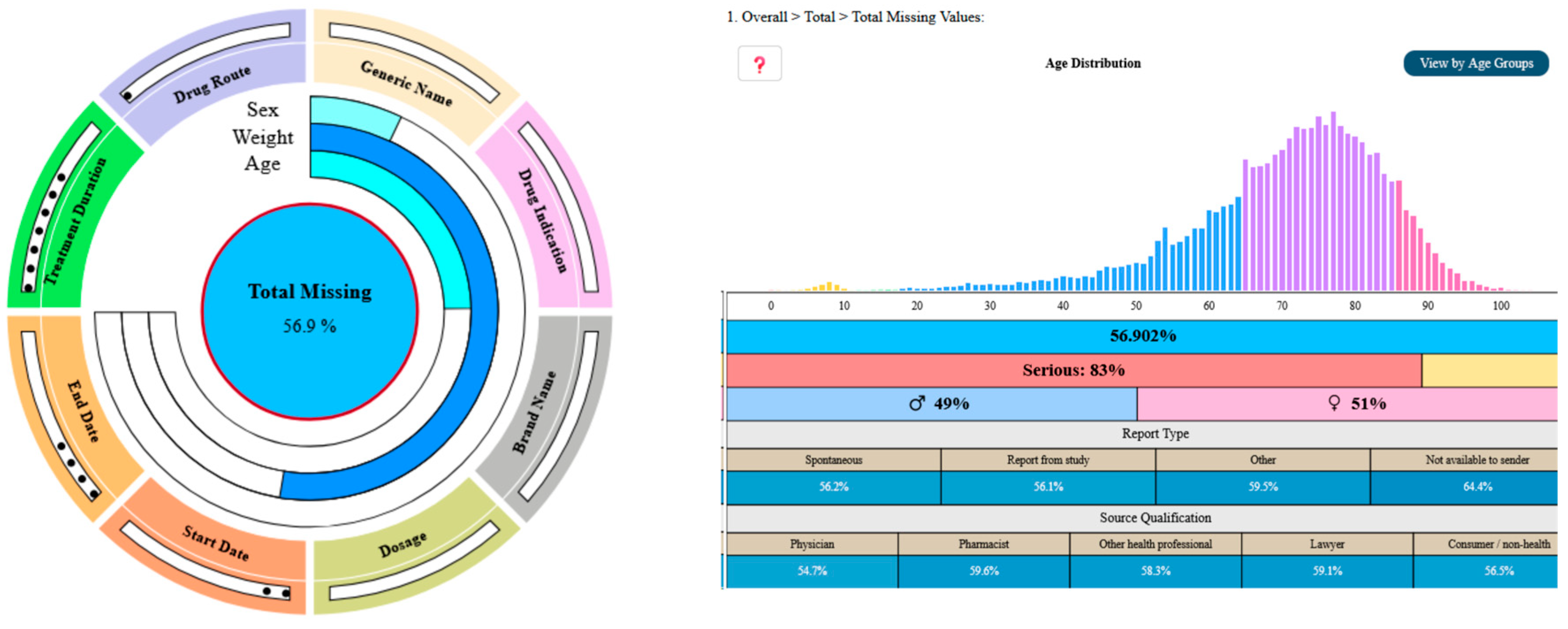
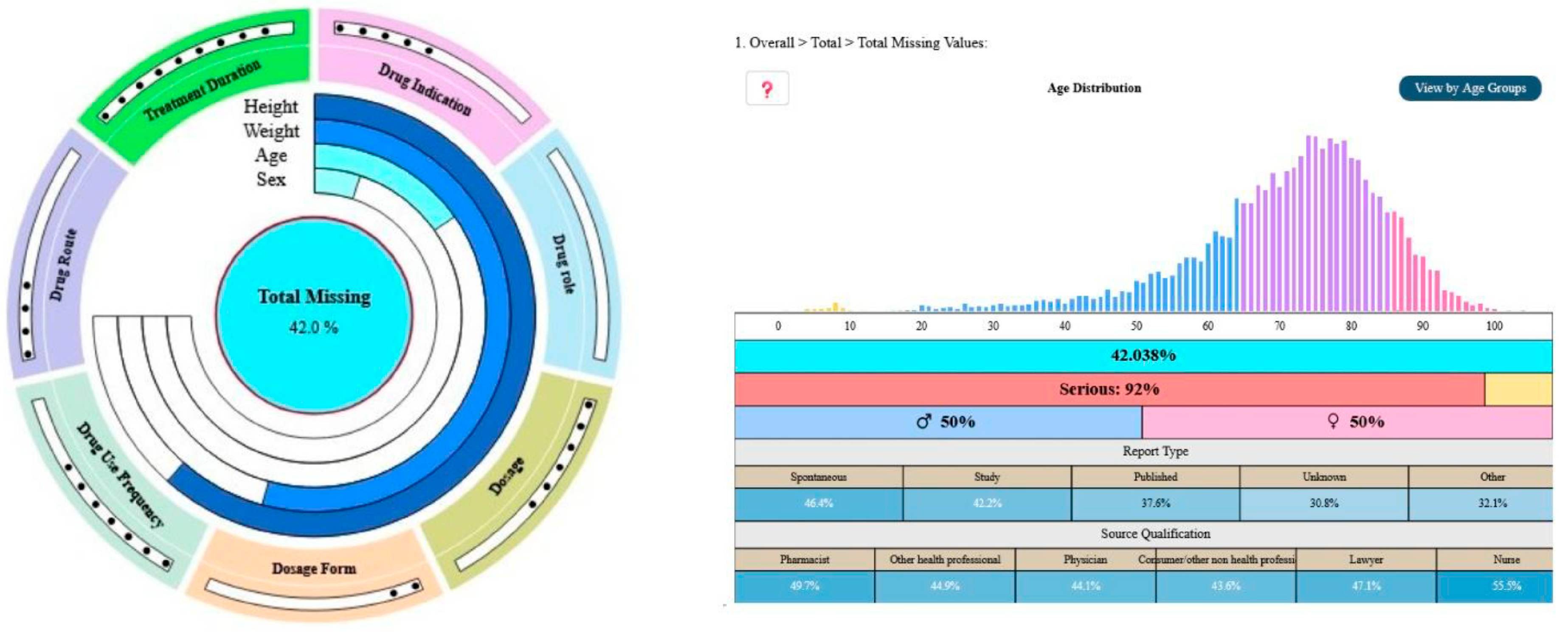
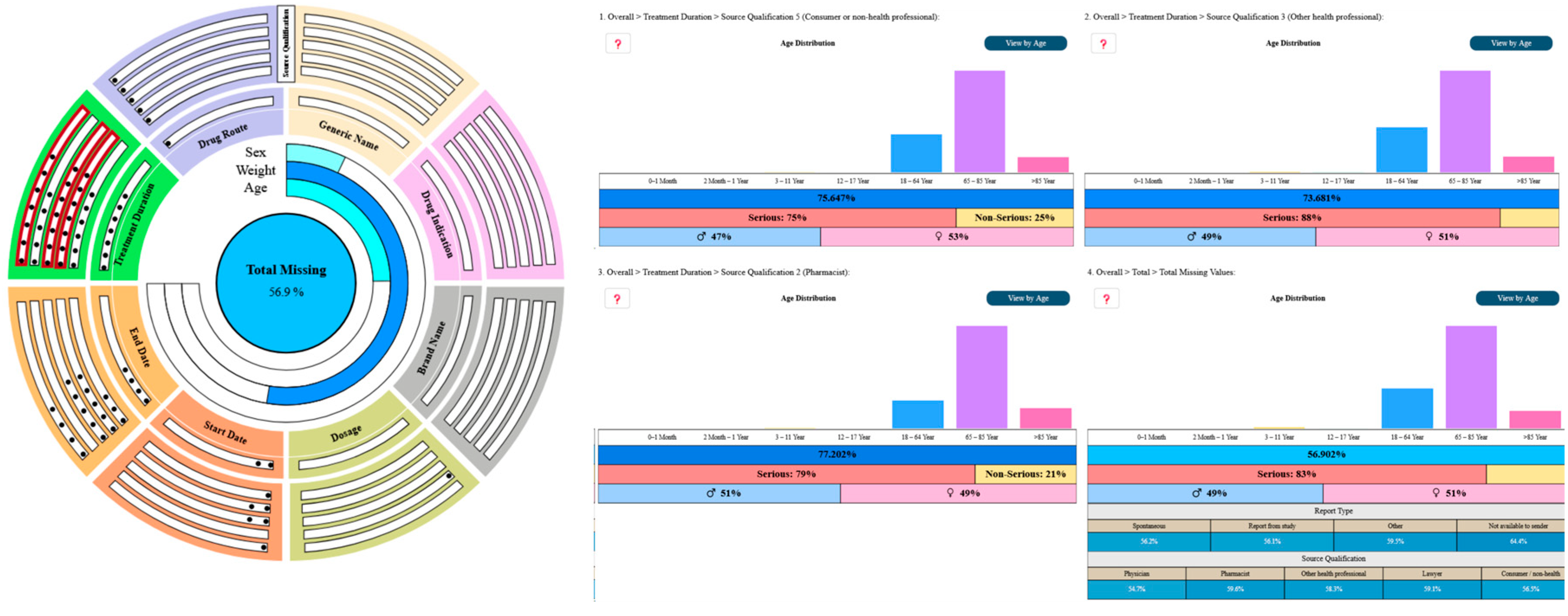
Main View (Radial Overview of Missingness)
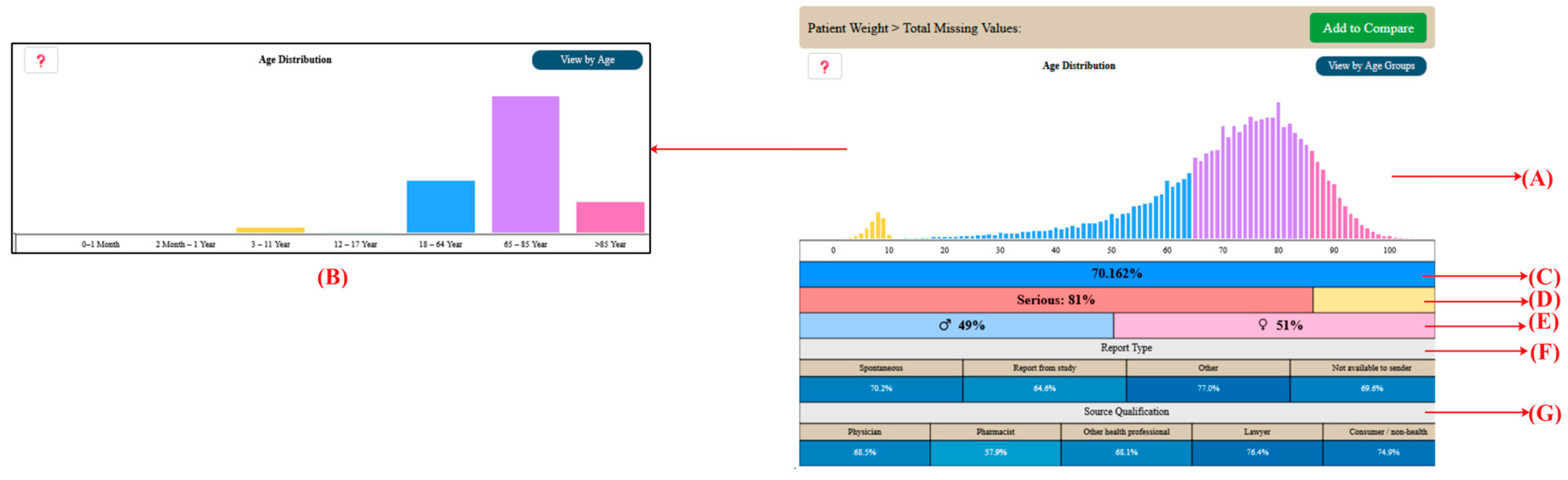
Detail View
Country Filter Panel
Control Module
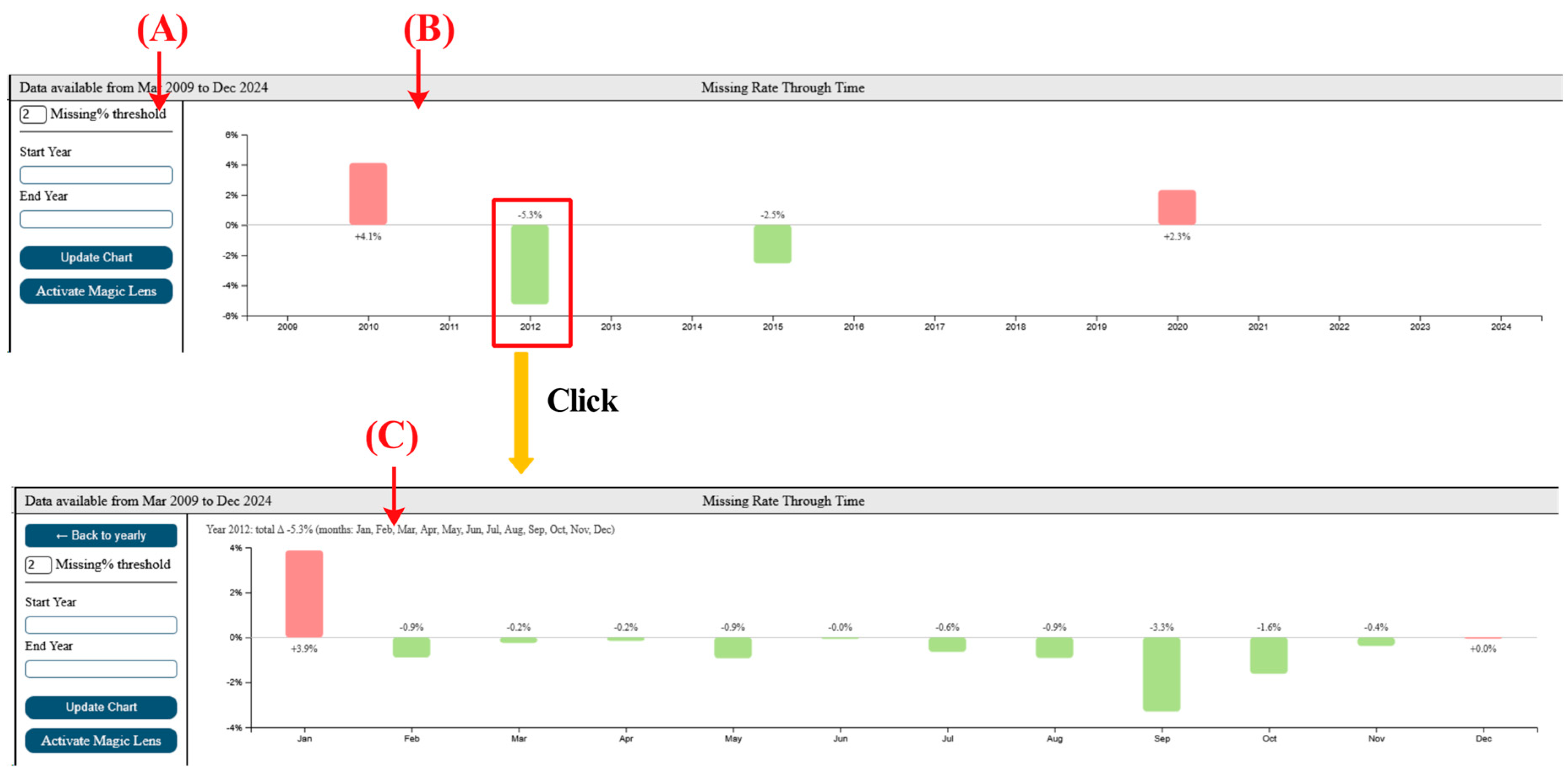
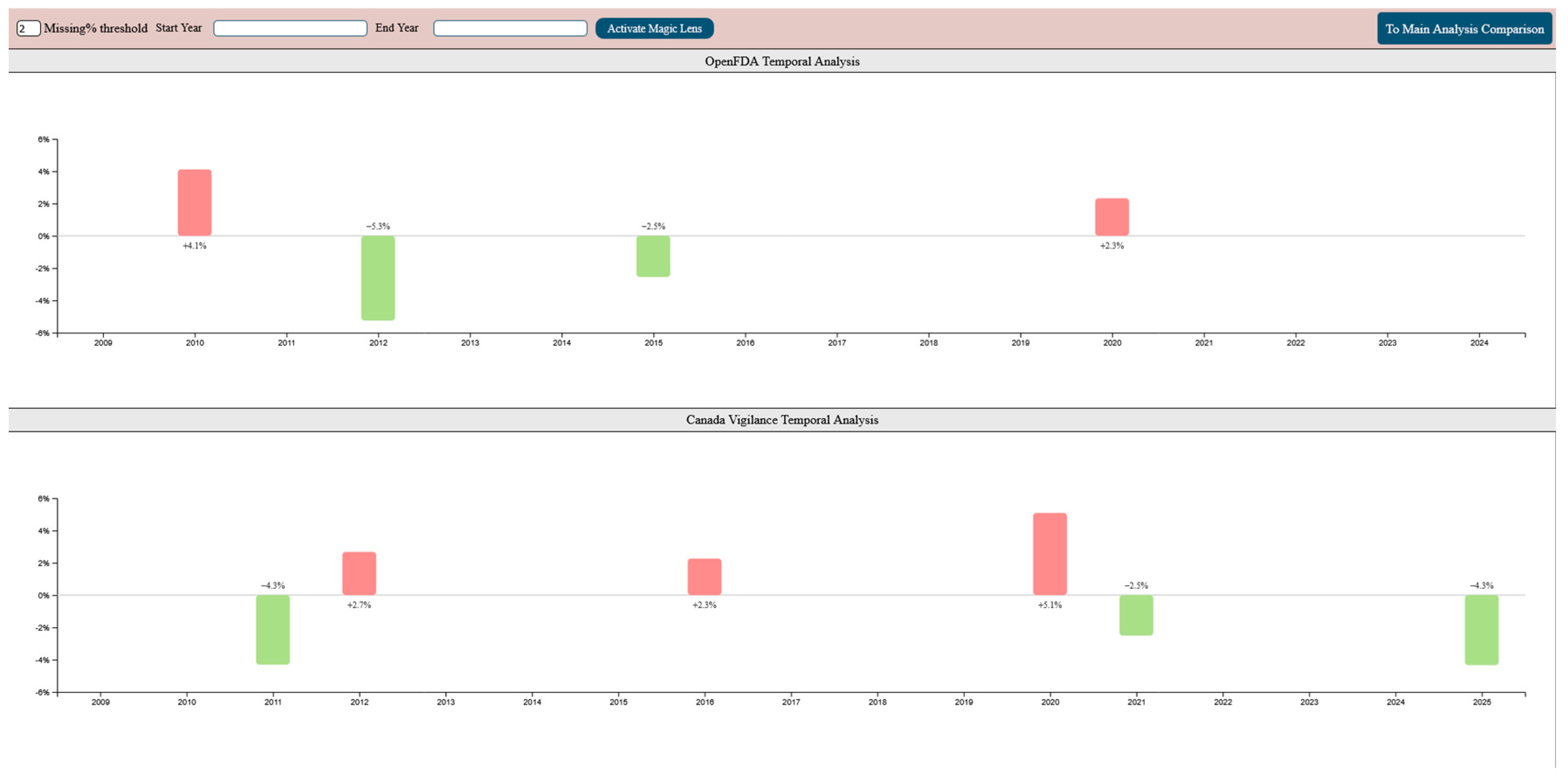
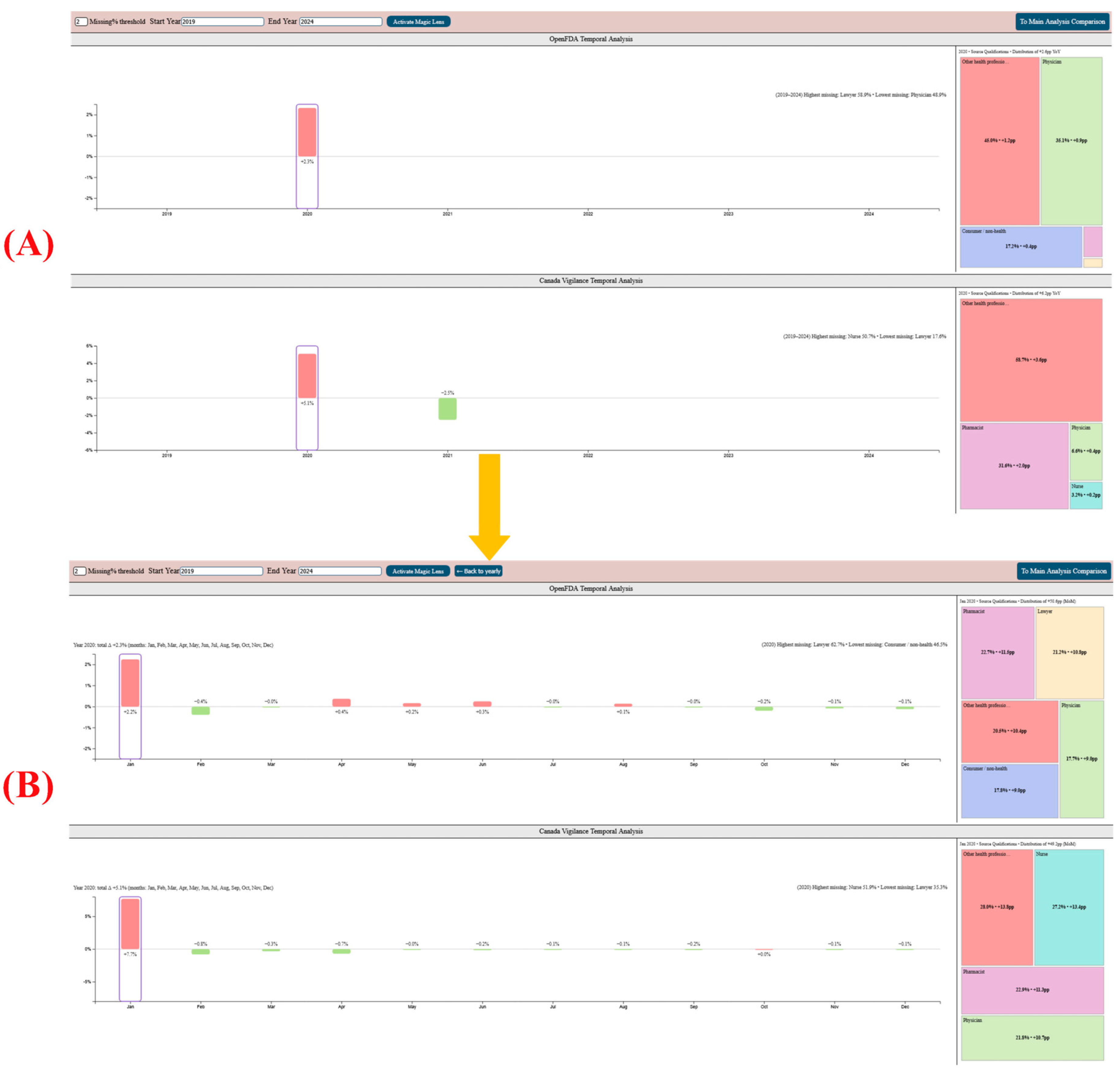
Temporal View
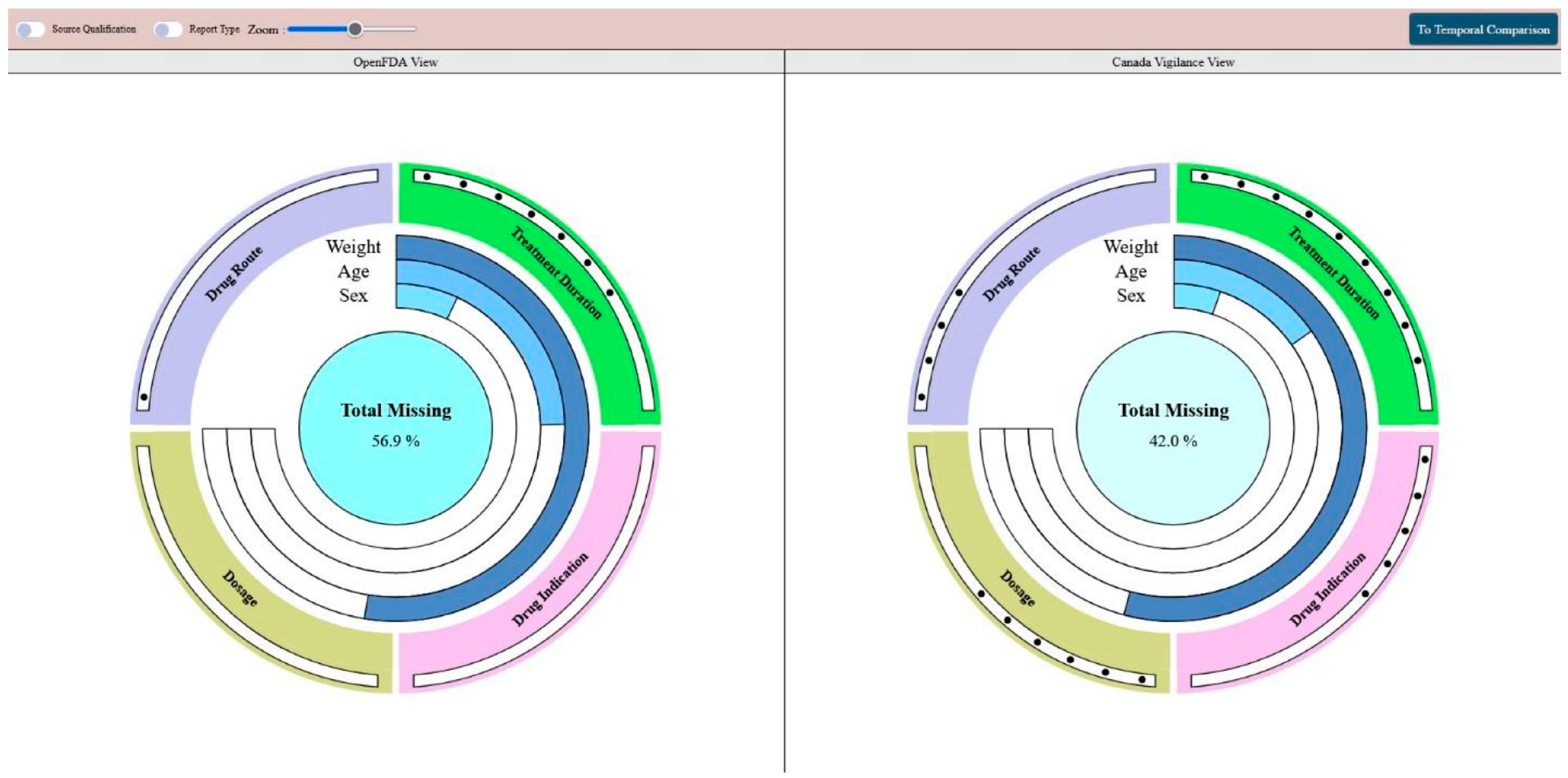
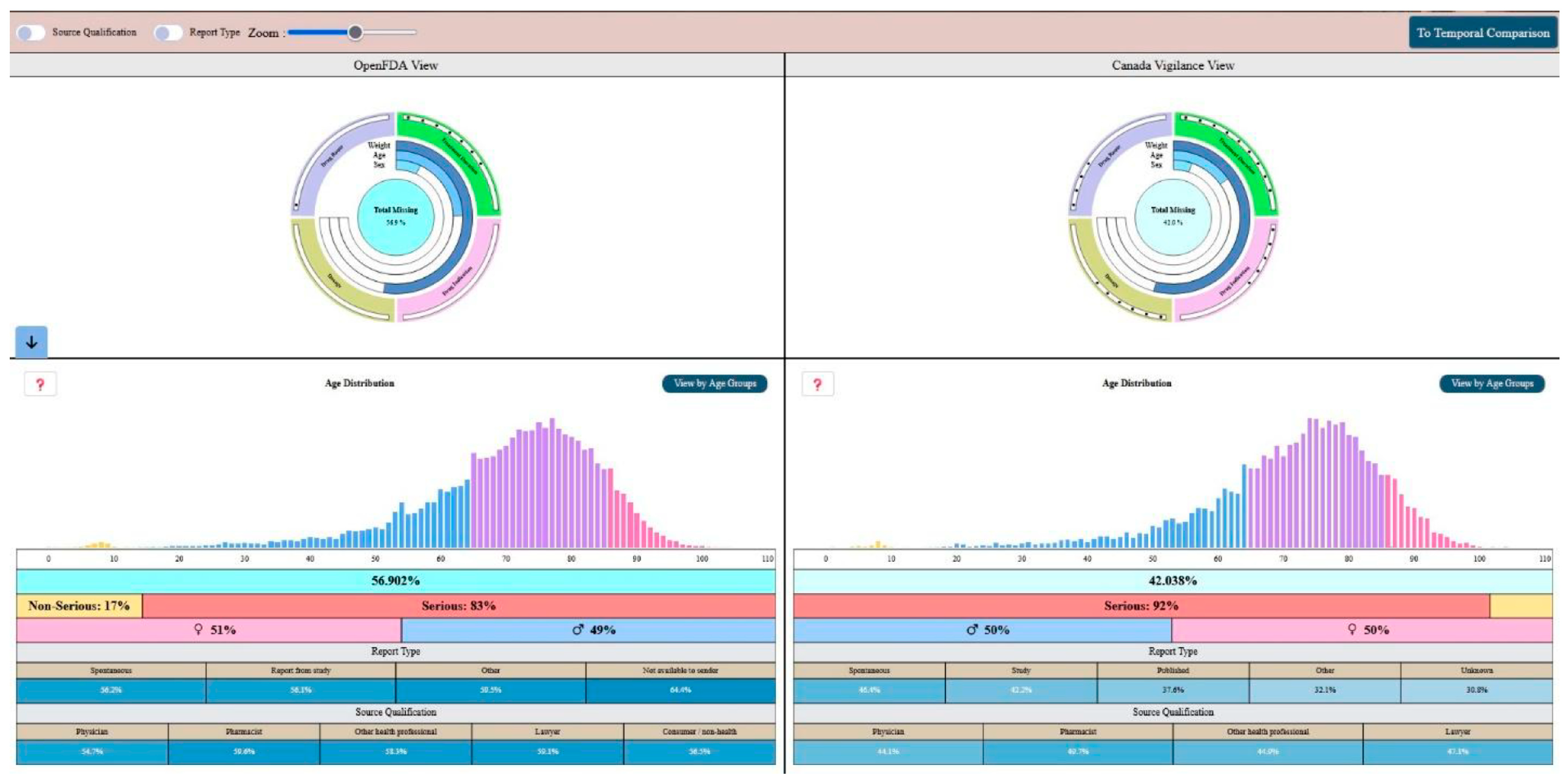
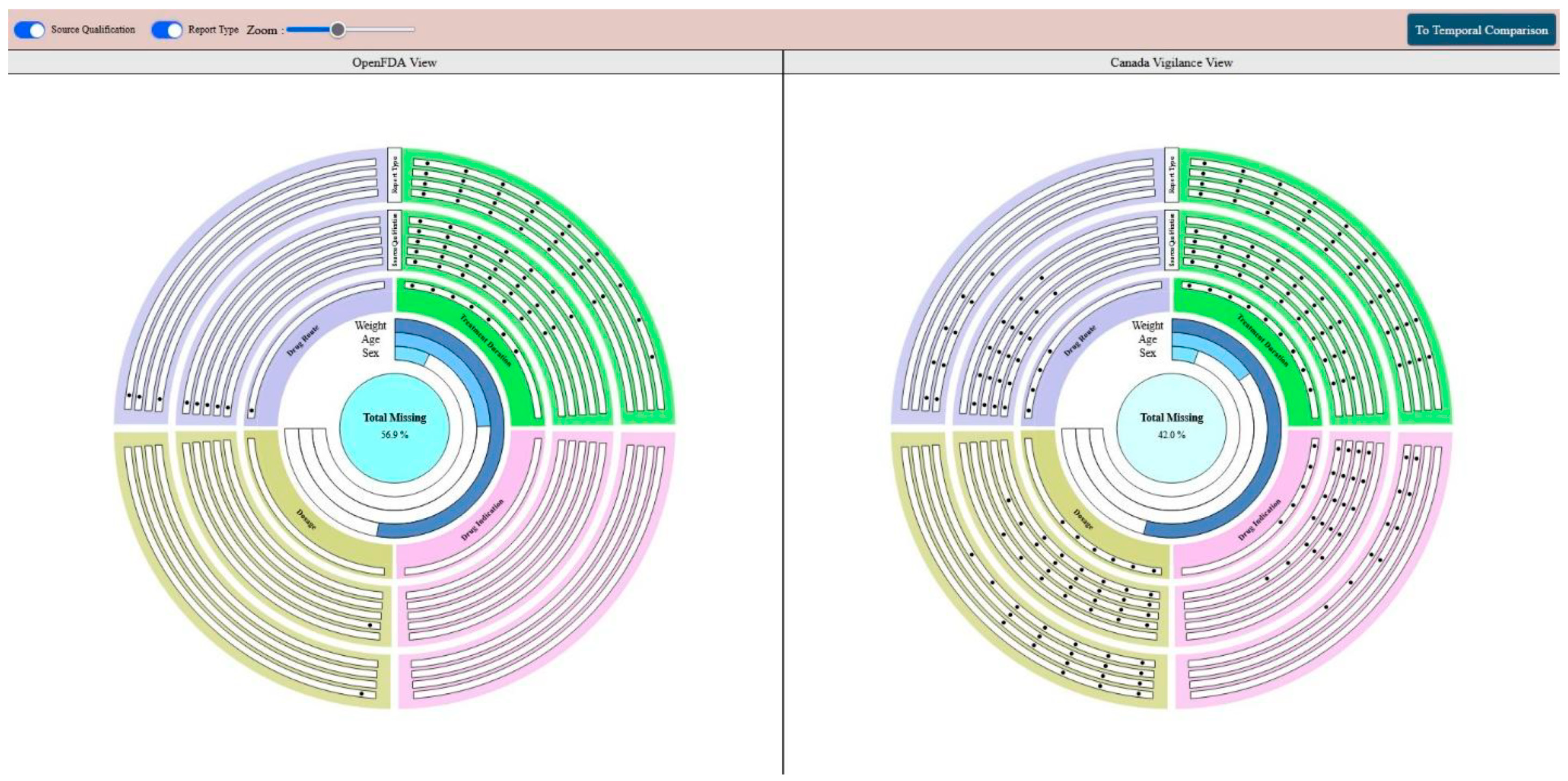
3.1.2. Comparison Module
3.2. Interaction Mechanisms
3.2.1. Selection and Drill-Down
3.2.2. Tooltips and Contextual Information
3.2.3. Filtering and Reconfiguration
4. Usage Scenarios
4.1. Research Feasibility Assessment
4.2. Identifying Incomplete Reporting Patterns
4.3. Cross-National Reporting Behavior Comparison
5. User Evaluation
5.1. Study Design
5.2. Quantitative Analysis
5.3. Qualitative Analysis
5.3.1. Post-Task Questionnaire Unstructured Questions
5.3.2. Interview Session
5.4. User Evaluation Discussion
6. Conclusions
Supplementary Materials
Author Contributions
Funding
Institutional Review Board Statement
Informed Consent Statement
Data Availability Statement
Conflicts of Interest
Abbreviations
| IRVINE | Interactive Visualization for Spontaneous Reporting Systems Databases Missing Values |
| ADE | Adverse Drug Event |
| SRS | Spontaneous Reporting System |
| FAERS | FDA Adverse Event Reporting System |
| FDA | U.S. Food and Drug Administration |
| PADE | Postmarketing Adverse Drug Experience (Reporting Compliance Program) |
| DOACS | Direct Oral Anticoagulants |
| API | Application Programming Interface |
References
- Zazzara, M.B.; Palmer, K.; Vetrano, D.L.; Carfì, A.; Onder, G. Adverse drug reactions in older adults: A narrative review of the literature. Eur. Geriatr. Med. 2021, 12, 463–473. [Google Scholar] [CrossRef] [PubMed]
- Koyama, T.; Iinuma, S.; Yamamoto, M.; Niimura, T.; Osaki, Y.; Nishimura, S.; Harada, K.; Zamami, Y.; Hagiya, H. International Trends in Adverse Drug Event-Related Mortality from 2001 to 2019: An Analysis of the World Health Organization Mortality Database from 54 Countries. Drug Saf. 2024, 47, 237–249. [Google Scholar] [CrossRef] [PubMed]
- Shetty, A.; Dubey, A.; Matcheswala, A.; Bangera, S. Pharmacovigilance Systems and Strategies: Importance of Post-Marketing Surveillance for Ensuring Drug Safety and Patient Health in Europe, United States, and India. Authorea Prepr. 2023. [Google Scholar] [CrossRef]
- Petracek, J.; Fialova, M. Spontaneous Reporting Systems. In Principles and Practice of Pharmacovigilance and Drug Safety; Jose, J., Cox, A.R., Paudyal, V., Eds.; Springer International Publishing: Cham, Switzerland, 2024; pp. 231–250. [Google Scholar]
- Toki, T.; Ono, S. Spontaneous Reporting on Adverse Events by Consumers in the United States: An Analysis of the Food and Drug Administration Adverse Event Reporting System Database. Drugs-Real World Outcomes 2018, 5, 117–128. [Google Scholar] [CrossRef]
- Lavertu, A.; Vora, B.; Giacomini, K.M.; Altman, R.; Rensi, S. A New Era in Pharmacovigilance: Toward Real-World Data and Digital Monitoring. Clin. Pharmacol. Ther. 2021, 109, 1197–1202. [Google Scholar] [CrossRef] [PubMed]
- Chedid, V.; Vijayvargiya, P.; Camilleri, M. Advantages and Limitations of the Federal Adverse Events Reporting System in Assessing Adverse Event Reporting for Eluxadoline. Clin. Gastroenterol. Hepatol. 2018, 16, 336–338. [Google Scholar] [CrossRef]
- Ye, W.; Ding, Y.; Li, M.; Tian, Z.; Wang, S.; Liu, Z. Drug-induced autoimmune-like hepatitis: A disproportionality analysis based on the FAERS database. PLoS ONE 2025, 20, e0317680. [Google Scholar] [CrossRef]
- Ou, Y.; Cui, Z.; Lou, S.; Zhu, C.; Chen, J.; Zhou, L.; Zhao, R.; Wang, L.; Zou, F. Analysis of tirzepatide in the US FDA adverse event reporting system (FAERS): A focus on overall patient population and sex-specific subgroups. Front. Pharmacol. 2024, 15, 1463657. [Google Scholar] [CrossRef]
- Castillon, G.; Salvo, F.; Moride, Y. The Social Impact of Suspected Adverse Drug Reactions: An analysis of the Canada Vigilance Spontaneous Reporting Database. Drug Saf. 2019, 42, 27–34. [Google Scholar] [CrossRef]
- Maity, T.; Longo, C. Pragmatic pharmacoeconomic analyses by using post-market adverse drug reaction reports: An illustration using infliximab, adalimumab, and the Canada vigilance adverse reaction database. BMC Health Serv. Res. 2021, 21, 1231. [Google Scholar] [CrossRef]
- Dai, X.; Yu, K.; Chang, Y.; Hou, Y. Drug-induced urinary retention: A real-world pharmacovigilance study using FDA and Canada vigilance databases. Front. Pharmacol. 2025, 15, 1466875. [Google Scholar] [CrossRef]
- Ali, T.B.; Schleret, T.R.; Reilly, B.M.; Chen, W.Y.; Abagyan, R. Adverse Effects of Cholinesterase Inhibitors in Dementia, According to the Pharmacovigilance Databases of the United-States and Canada. PLoS ONE 2015, 10, e0144337. [Google Scholar] [CrossRef] [PubMed]
- Dedefo, M.G.; Kassie, G.M.; Gebreyohannes, E.A.; Lim, R.; Roughead, E.; Ellett, L.K. Completeness of spontaneously reported adverse drug reactions in 4 databases. Br. J. Clin. Pharmacol. 2025, 91, 3389–3400. [Google Scholar] [CrossRef] [PubMed]
- Cui, W. Visual Analytics: A Comprehensive Overview. IEEE Access 2019, 7, 81555–81573. [Google Scholar] [CrossRef]
- Rostamzadeh, N.; Abdullah, S.S.; Sedig, K. Visual Analytics for Electronic Health Records: A Review. Informatics 2021, 8, 12. [Google Scholar] [CrossRef]
- Preim, B.; Lawonn, K. A Survey of Visual Analytics for Public Health. Comput. Graph. Forum 2020, 39, 543–580. [Google Scholar] [CrossRef]
- Sedlmair, M.; Meyer, M.; Munzner, T. Design Study Methodology: Reflections from the Trenches and the Stacks. IEEE Trans. Vis. Comput. Graph. 2012, 18, 2431–2440. [Google Scholar] [CrossRef]
- Amar, R.; Eagan, J.; Stasko, J. (Eds.) Low-level components of analytic activity in information visualization. In Proceedings of the IEEE Symposium on Information Visualization, 2005 INFOVIS 2005, Minneapolis, MN, USA, 23–25 October 2005. [Google Scholar]
- Bäuerle, A.; van Onzenoodt, C.; der Kinderen, S.; Westberg, J.J.; Jönsson, D.; Ropinski, T. Where did my Lines go? Visualizing Missing Data in Parallel Coordinates. Comput. Graph. Forum 2022, 41, 235–246. [Google Scholar] [CrossRef]
- Song, H.; Fu, Y.; Saket, B.; Stasko, J. (Eds.) Understanding the Effects of Visualizing Missing Values on Visual Data Exploration. In Proceedings of the 2021 IEEE Visualization Conference (VIS), New Orleans, LA, USA, 24–29 October 2021. [Google Scholar]
- Song, H.; Szafir, D.A. Where’s My Data? Evaluating Visualizations with Missing Data. IEEE Trans. Vis. Comput. Graph. 2019, 25, 914–924. [Google Scholar] [CrossRef]
- Fernstad, S.J. To identify what is not there: A definition of missingness patterns and evaluation of missing value visualization. Inf. Vis. 2019, 18, 230–250. [Google Scholar] [CrossRef]
- Warner, J.; Jardim, A.P.; Albera, C. Artificial Intelligence: Applications in Pharmacovigilance Signal Management. Pharm. Med. 2025, 39, 183–198. [Google Scholar] [CrossRef]
- Cutroneo, P.M.; Sartori, D.; Tuccori, M.; Crisafulli, S.; Battini, V.; Carnovale, C.; Rafaniello, C.; Capuano, A.; Poluzzi, E.; Moretti, U.; et al. Conducting and interpreting disproportionality analyses derived from spontaneous reporting systems. Front. Drug Saf. Regul. 2024, 3, 1323057. [Google Scholar] [CrossRef]
- Chhikara, P.; Hammad, T.A. Rethinking drug safety signal detection and causality assessment in the age of AI: The risks of incomplete data and biased insights. Front. Drug Saf. Regul. 2025, 5, 1678074. [Google Scholar] [CrossRef] [PubMed]
- Davis, S.E.; Zabotka, L.; Desai, R.J.; Wang, S.V.; Maro, J.C.; Coughlin, K.; Hernández-Muñoz, J.J.; Stojanovic, D.; Shah, N.H.; Smith, J.C. Use of Electronic Health Record Data for Drug Safety Signal Identification: A Scoping Review. Drug Saf. 2023, 46, 725–742. [Google Scholar] [CrossRef] [PubMed]
- Tierney, N.; Cook, D. Expanding Tidy Data Principles to Facilitate Missing Data Exploration, Visualization and Assessment of Imputations. J. Stat. Softw. 2023, 105, 1–31. [Google Scholar] [CrossRef]
- Lex, A.; Gehlenborg, N.; Strobelt, H.; Vuillemot, R.; Pfister, H. UpSet: Visualization of Intersecting Sets. IEEE Trans. Vis. Comput. Graph. 2014, 20, 1983–1992. [Google Scholar] [CrossRef]
- Bilogur, A. Missingno: A missing data visualization suite. J. Open Source Softw. 2018, 3, 547. [Google Scholar] [CrossRef]
- Fernstad, S.J.; Westberg, J.J. To Explore What Isn’t There—Glyph-Based Visualization for Analysis of Missing Values. IEEE Trans. Vis. Comput. Graph. 2022, 28, 3513–3529. [Google Scholar] [CrossRef]
- Kass-Hout, T.A.; Xu, Z.; Mohebbi, M.; Nelsen, H.; Baker, A.; Levine, J.; Johanson, E.; Bright, R.A. OpenFDA: An innovative platform providing access to a wealth of FDA’s publicly available data. J. Am. Med. Inform. Assoc. 2015, 23, 596–600. [Google Scholar] [CrossRef]
- Hong, S.-Y.; Zhou, C.-B.; Chen, X.-D.; Zhu, G.-P.; Gao, C.-H.; Wang, P.-H. Pharmacovigilance study of drug-induced eye movement disorder based on FDA adverse event reports from 2004 to 2024. Sci. Rep. 2025, 15, 21341. [Google Scholar] [CrossRef]
- Yang, Y.; Liu, J.; Wei, W. A real-world pharmacovigilance study of efgartigimod alfa in the FDA adverse event reporting system database. Front. Pharmacol. 2025, 16, 1510992. [Google Scholar] [CrossRef]
- Mihalache, A.; Huang, R.S.; Popovic, M.M.; Zaslavsky, K.; Sarraf, D.; Sadda, S.R.; Muni, R.H.; Margolin, E.A. A real-world pharmacovigilance analysis of the risk of retinal artery occlusion from medication use. AJO Int. 2025, 2, 100152. [Google Scholar] [CrossRef]
- Chalabianloo, N.; Abdullah, S.S.; Omrani, M.A.; Jafari, A.; Sedig, K.; Muanda, F.T. Enhancing adverse drug reaction data quality in Canada: A high-precision pipeline for medication name standardization and enrichment. PLoS ONE 2025, 20, e0331940. [Google Scholar] [CrossRef] [PubMed]
- Chen, X.; Zeng, W.; Lin, Y.; Ai-Maneea, H.M.; Roberts, J.; Chang, R. Composition and Configuration Patterns in Multiple-View Visualizations. IEEE Trans. Vis. Comput. Graph. 2021, 27, 1514–1524. [Google Scholar] [CrossRef] [PubMed]
- Deng, D.; Cui, W.; Meng, X.; Xu, M.; Liao, Y.; Zhang, H.; Wu, Y. Revisiting the Design Patterns of Composite Visualizations. IEEE Trans. Vis. Comput. Graph. 2022, 29, 5406–5421. [Google Scholar] [CrossRef]
- Sedig, K.; Parsons, P. Interaction design for complex cognitive activities with visual representations: A pattern-based approach. AIS Trans. Human-Computer Interact. 2013, 5, 84–133. [Google Scholar] [CrossRef]
- Yang, R.; Yin, N.; Zhang, Y.; Faiola, F. Visualization of FDA Adverse Drug Reaction Reports: Development and Usability Study of the VisDrugs Web Server. JMIR Form. Res. 2025, 9, e71519. [Google Scholar] [CrossRef]
- Sedig, K.; Parsons, P.; Liang, H.-N.; Morey, J. Supporting Sensemaking of Complex Objects with Visualizations: Visibility and Complementarity of Interactions. Informatics 2016, 3, 20. [Google Scholar] [CrossRef]
- Albarrak, A.M. Improving the Trustworthiness of Interactive Visualization Tools for Healthcare Data through a Medical Fuzzy Expert System. Diagnostics 2023, 13, 1733. [Google Scholar] [CrossRef]
- Smelcer, J.B.; Carmel, E. The Effectiveness of Different Representations for Managerial Problem Solving: Comparing Tables and Maps. Decis. Sci. 1997, 28, 391–420. [Google Scholar] [CrossRef]
- Słomska-Przech, K.; Gołębiowska, I.M. Do Different Map Types Support Map Reading Equally? Comparing Choropleth, Graduated Symbols, and Isoline Maps for Map Use Tasks. ISPRS Int. J. Geo-Inf. 2021, 10, 69. [Google Scholar] [CrossRef]
- MacEachren, A.M. The Role of Complexity and Symbolization Method in Thematic Map Effectiveness. Ann. Assoc. Am. Geogr. 1982, 72, 495–513. [Google Scholar] [CrossRef]
- Zhou, G. Radial Visualization of Multidimensional/Multivariate Data: A Survey; University of British Columbia: Vancouver, BC, USA, 2022. [Google Scholar]
- Shneiderman, B. The Eyes Have It: A Task by Data Type Taxonomy for Information Visualizations. In The Craft of Information Visualization; Bederson, B.B., Shneiderman, B.E.N., Eds.; Morgan Kaufmann: San Francisco, CA, USA, 2003; pp. 364–371. [Google Scholar]
- Hornbæk, K.; Hertzum, M. The notion of overview in information visualization. Int. J. Hum.-Comput. Stud. 2011, 69, 509–525. [Google Scholar] [CrossRef]
- Stasko, J.; Zhang, E. (Eds.) Focus+context display and navigation techniques for enhancing radial, space-filling hierarchy visualizations. In Proceedings of the IEEE Symposium on Information Visualization 2000 INFOVIS 2000 Proceedings, Salt Lake City, UT, USA, 9–10 October 2000. [Google Scholar]
- Mackinlay, J. Automating the design of graphical presentations of relational information. ACM Trans. Graph. 1986, 5, 110–141. [Google Scholar] [CrossRef]
- Cleveland, W.S.; McGill, R. Graphical Perception: Theory, Experimentation, and Application to the Development of Graphical Methods. J. Am. Stat. Assoc. 1984, 79, 531–554. [Google Scholar] [CrossRef]
- Burch, M.; Weiskopf, D. On the Benefits and Drawbacks of Radial Diagrams. In Handbook of Human Centric Visualization; Huang, W., Ed.; Springer: New York, NY, USA, 2014; pp. 429–451. [Google Scholar]
- Ankerst, M.; Keim, D.A.; Kriegel, H.-P. Circle segments: A technique for visually exploring large multidimensional data sets. In Proceedings of the Visualization '96, Hot Topic Session, San Francisco, CA, USA, 1 November 1996. [Google Scholar]
- Muramalla, S.; Al Tarawneh, R.; Humayoun, S.R.; Moses, R.; Panis, S.; Ebert, A. Radial vs. rectangular: Evaluating visualization layout impact on user task performance of hierarchical data. IADIS Int. J. Comput. Sci. Inf. Syst. 2017, 12, 17–31. [Google Scholar]
- Long, L.K.; Hui, L.C.; Fook, G.Y.; Zainon, W.M.N.W. A Study on the Effectiveness of Tree-Maps as Tree Visualization Techniques. Procedia Comput. Sci. 2017, 124, 108–115. [Google Scholar] [CrossRef]
- Lam, H. A Framework of Interaction Costs in Information Visualization. IEEE Trans. Vis. Comput. Graph. 2008, 14, 1149–1156. [Google Scholar] [CrossRef]
- Baldonado, M.Q.W.; Woodruff, A.; Kuchinsky, A. Guidelines for using multiple views in information visualization. In Proceedings of the Working Conference on Advanced Visual Interfaces, Palermo Italy, 1 May 2000; Association for Computing Machinery: New York, NY, USA, 2000; pp. 110–119. [Google Scholar] [CrossRef]
- Roberts, J.C. State of the Art: Coordinated & Multiple Views in Exploratory Visualization. In Proceedings of the Fifth International Conference on Coordinated and Multiple Views in Exploratory Visualization, Zurich, Switzerland, 2 July 2007; pp. 61–71. [Google Scholar] [CrossRef]
- Aigner, W.; Miksch, S.; Schumann, H.; Tominski, C. Visualization of Time-Oriented Data, 2nd ed.; Springer Nature: London, ON, Canada, 2023; ISBN 9781447175278. [Google Scholar]
- Zacks, J.; Tversky, B. Bars and lines: A study of graphic communication. Mem. Cogn. 1999, 27, 1073–1079. [Google Scholar] [CrossRef]
- Talbot, J.; Setlur, V.; Anand, A. Four Experiments on the Perception of Bar Charts. IEEE Trans. Vis. Comput. Graph. 2014, 20, 2152–2160. [Google Scholar] [CrossRef]
- Lin, S.; Fortuna, J.; Kulkarni, C.; Stone, M.; Heer, J. Selecting Semantically-Resonant Colors for Data Visualization. Comput. Graph. Forum 2013, 32, 401–410. [Google Scholar] [CrossRef]
- Moreland, K. (Ed.) Diverging Color Maps for Scientific Visualization. In Advances in Visual Computing; Springer: Berlin/Heidelberg, Germany, 2009. [Google Scholar]
- Ware, C. Information Visualization: Perception for Design; Morgan Kaufmann: San Francisco, CA, USA, 2019. [Google Scholar]
- Cockburn, A.; Karlson, A.; Bederson, B.B. A review of overview+detail, zooming, and focus+context interfaces. ACM Comput. Surv. 2009, 41, 2. [Google Scholar] [CrossRef]
- Tominski, C.; Gladisch, S.; Kister, U.; Dachselt, R.; Schumann, H. Interactive Lenses for Visualization: An Extended Survey. Comput. Graph. Forum 2016, 36, 173–200. [Google Scholar] [CrossRef]
- Plaisant, C.; Carr, D.; Shneiderman, B. Image-browser taxonomy and guidelines for designers. IEEE Softw. 1995, 12, 21–32. [Google Scholar] [CrossRef]
- Shneiderman, B. Tree visualization with tree-maps: 2-d space-filling approach. ACM Trans. Graph. 1992, 11, 92–99. [Google Scholar] [CrossRef]
- Johnson, B.; Shneiderman, B. (Eds.) Tree-maps: A space-filling approach to the visualization of hierarchical information structures. In Proceedings of the 1991 Proceeding Visualization, San Diego, CA, USA, 22–25 October 1991. [Google Scholar]
- Kong, N.; Heer, J.; Agrawala, M. Perceptual Guidelines for Creating Rectangular Treemaps. IEEE Trans. Vis. Comput. Graph. 2010, 16, 990–998. [Google Scholar] [CrossRef]
- Sedig, K.; Parsons, P.; Babanski, A. Towards a characterization of interactivity in visual analytics. J. Multimed. Process. Technol. 2012, 3, 12–28. [Google Scholar]
- Gleicher, M.; Albers, D.; Walker, R.; Jusufi, I.; Hansen, C.D.; Roberts, J.C. Visual comparison for information visualization. Inf. Vis. 2011, 10, 289–309. [Google Scholar] [CrossRef]
- Javed, W.; McDonnel, B.; Elmqvist, N. Graphical Perception of Multiple Time Series. IEEE Trans. Vis. Comput. Graph. 2010, 16, 927–934. [Google Scholar] [CrossRef]
- Ellis, G.; Dix, A. A Taxonomy of Clutter Reduction for Information Visualisation. IEEE Trans. Vis. Comput. Graph. 2007, 13, 1216–1223. [Google Scholar] [CrossRef]
- North, C.; Shneiderman, B. Snap-together visualization: A user interface for coordinating visualizations via relational schemata. In Proceedings of the Working Conference on Advanced Visual Interfaces, Palermo, Italy, 1 July 2000; Association for Computing Machinery: New York, NY, USA, 2000; pp. 128–135. [Google Scholar]



| Variable | Category | n (%) |
|---|---|---|
| Education | Undergraduate | 7 (35%) |
| Graduate (Master’s/PhD) | 12 (60%) | |
| NA | 1 (5%) | |
| Familiarity with Visual Interfaces | Very Familiar | 4 (20%) |
| Somewhat Familiar | 9 (45%) | |
| Slightly Familiar | 4 (20%) | |
| Not at All Familiar | 3 (15%) | |
| Familiarity with ADEs | Very Familiar | 4 (20%) |
| Somewhat Familiar | 3 (15%) | |
| Slightly Familiar | 4 (20%) | |
| Not at All Familiar | 9 (45%) | |
| Familiarity with SRS | Very Familiar | 4 (20%) |
| Somewhat Familiar | 4 (20%) | |
| Slightly Familiar | 2 (10%) | |
| Not at All Familiar | 10 (50%) |
| Task # | Description |
|---|---|
| T1 | Identify which pharmacovigilance database (FAERS or Canada Vigilance) has a higher overall percentage of missing data and estimate the missingness in each system. |
| T2 | Determine which reporter type categories in FAERS exhibit the highest and lowest levels of missing data. |
| T3 | Analyze the distribution of missingness in Canada Vigilance based on outcome seriousness and identify features with the highest and lowest missing rates. |
| T4 | Compare missing data levels between FAERS and Canada Vigilance for key attributes, including drug indication, dosage, treatment duration, and patient weight. |
| T5 | identify the country contributing the largest number of FAERS reports and the country with the highest overall missingness. |
| T6 | Examine the highest temporal spikes in missingness (2019–2024) in both databases and determine their magnitude and dominant contributing reporter types. |
| T7 | Assess age group and gender differences in missingness patterns within the FAERS dataset. |
| T8 | Identify report types with the highest missingness in FAERS and compare missingness patterns across report types with Canada Vigilance. |
| Task | Mean | SD | Median |
|---|---|---|---|
| T1 | 1.15 | 0.37 | 1 |
| T2 | 1.70 | 0.80 | 2 |
| T3 | 1.75 | 0.85 | 2 |
| T4 | 1.35 | 0.93 | 1 |
| T5 | 1.10 | 0.31 | 1 |
| T6 | 2.00 | 0.73 | 2 |
| T7 | 1.50 | 1.00 | 1 |
| T8 | 1.90 | 1.17 | 2 |
| Question | Description | Mean | SD | Median |
|---|---|---|---|---|
| Q2 | Confidence in answers provided | 1.55 | 0.69 | 1 |
| Q3 | Perceived task ease completion | 2.05 | 0.89 | 2 |
| Q4 | Main view effectiveness for assessing overall data completeness | 1.55 | 0.6 | 1.5 |
| Q5 | Detail view effectiveness for exploring missingness across categories | 1.35 | 0.67 | 1 |
| Q6 | Choropleth map effectiveness for geographic exploration | 1.2 | 0.52 | 1 |
| Q7 | Temporal view effectiveness for identifying missingness trends | 1.65 | 0.75 | 1.5 |
| Q8 | Effectiveness of cross-database comparison | 1.5 | 0.76 | 1 |
| Q9 | Integration and interpretation across visualizations | 1.9 | 1.02 | 2 |
| Q10 | Ease of visualization control | 1.9 | 0.91 | 2 |
| Q11 | Effectiveness of integrated multi-view design | 1.55 | 0.76 | 1 |
Disclaimer/Publisher’s Note: The statements, opinions and data contained in all publications are solely those of the individual author(s) and contributor(s) and not of MDPI and/or the editor(s). MDPI and/or the editor(s) disclaim responsibility for any injury to people or property resulting from any ideas, methods, instructions or products referred to in the content. |
© 2026 by the authors. Licensee MDPI, Basel, Switzerland. This article is an open access article distributed under the terms and conditions of the Creative Commons Attribution (CC BY) license.
Share and Cite
Sharifi Kia, A.; Sedig, K.; Chalabianloo, N.; Abdullah, S.S.; Muanda, F.T. IRVINE: An Interactive Visualization for Spontaneous Reporting Systems Databases Missing Values. Multimodal Technol. Interact. 2026, 10, 29. https://doi.org/10.3390/mti10030029
Sharifi Kia A, Sedig K, Chalabianloo N, Abdullah SS, Muanda FT. IRVINE: An Interactive Visualization for Spontaneous Reporting Systems Databases Missing Values. Multimodal Technologies and Interaction. 2026; 10(3):29. https://doi.org/10.3390/mti10030029
Chicago/Turabian StyleSharifi Kia, Ali, Kamran Sedig, Niaz Chalabianloo, Sheikh S. Abdullah, and Flory T. Muanda. 2026. "IRVINE: An Interactive Visualization for Spontaneous Reporting Systems Databases Missing Values" Multimodal Technologies and Interaction 10, no. 3: 29. https://doi.org/10.3390/mti10030029
APA StyleSharifi Kia, A., Sedig, K., Chalabianloo, N., Abdullah, S. S., & Muanda, F. T. (2026). IRVINE: An Interactive Visualization for Spontaneous Reporting Systems Databases Missing Values. Multimodal Technologies and Interaction, 10(3), 29. https://doi.org/10.3390/mti10030029