1. Introduction
Artificial intelligence (AI) is rapidly reshaping learning and teaching across higher education. The pace of AI development often exceeds the sector’s capacity to establish shared understanding, governance structures, or pedagogical alignment, leading to significant debate and uncertainty. Research has documented a wide range of benefits associated with AI: students report improved learning efficiency, personalised academic support, enhanced language assistance, and increased accessibility for marginalised learners, including those with additional learning needs [
1,
2,
3]. Many students view AI as a “learning companion” that supports brainstorming, writing, and problem-solving [
4,
5]. Educators, meanwhile, increasingly use AI for curriculum design, assessment and feedback, research workflows, and administrative tasks [
6,
7]. Institutions themselves see opportunities for AI to improve operational efficiency, curriculum analytics, and student support services [
8].
However, these opportunities coexist with substantial concerns. Researchers and practitioners highlight risks related to algorithmic bias, misinformation, privacy, academic integrity, security, sustainability, and widening digital divides [
9,
10,
11]. The rapid expansion of AI has also contributed to technology overreliance, technology fatigue, uneven adoption across disciplines, regions and cultures [
12,
13,
14,
15,
16]. In response, universities, governments, and professional bodies have convened working groups and steering committees, calling for urgent development of AI competency among both students and educators [
17,
18]. Developing AI competency has therefore become a global priority.
UNESCO defines AI competency as the knowledge, skills, values, and attitudes that individuals need to develop in order to integrate AI effectively and ethically into their practices [
19,
20]. Over the past three years, international organisations have proposed several frameworks to guide such development. The OECD’s AI literacy framework (2025) outlines 22 competencies across four domains: engaging with AI, creating with AI, managing AI, and designing AI [
21]. Jisc’s AI in Tertiary Education Framework emphasises three strands—Skills, Knowledge and Culture, Technology and Governance [
22]—and draws on Jisc’s established six digital competency areas, including digital proficiency, data literacies, digital creation, communication, learning, and wellbeing [
23]. The European Union’s AI Act introduces a regulatory framework centred on risk governance, classifying AI systems into unacceptable, high-risk, limited-risk, and minimal-risk categories [
24].
Among these initiatives, the UNESCO AI Competency Frameworks for Educators and Students are particularly relevant to this study. Unlike risk-focused governance models, which focus on specific competencies, UNESCO’s frameworks articulate the competency dimensions and progression levels needed by educators and students in daily academic contexts. The educator framework includes five dimensions—Human-centred Mindset, Ethics of AI, AI Foundations, AI Pedagogy, and AI for Professional Development—while the student framework includes Human-centred Mindset, Ethics of AI, AI Techniques and Applications, and Domain-specific AI System Design. Both frameworks also provide three progression levels, allowing flexible development ranging from foundational to advanced competencies. Because the two frameworks are parallel and comparable, they allow systematic analysis of educator and student needs, a key reason for adopting UNESCO’s model in this study.
Despite the proliferation of AI frameworks, empirical research capturing the lived experiences of educators and students remains limited. Most existing studies focus on institutional case studies, technological affordances, or theoretical debates rather than the perspectives of those who integrate AI into everyday academic practice [
25]. Emerging evidence shows that students often adopt AI more frequently and more experimentally than educators, particularly for self-directed learning, brainstorming, and overcoming linguistic barriers [
26,
27]. Educators, by contrast, tend to be more cautious, expressing concerns about academic integrity, quality assurance, and the pedagogical soundness of AI-generated outputs [
28]. This divergence risks misalignment and mistrust in learning and teaching, particularly in assessment practices and expectations around responsible AI use. Yet research examining how these dynamics vary across disciplines, regions, and cultural contexts remains sparse. Furthermore, while much early research on AI in education has been dominated by Global North perspectives, a growing body of work highlights the urgent need to examine how digital inequalities, linguistic diversity, and local educational cultures shape AI adoption in the Global South [
29].
To address these gaps, the present study draws on UNESCO’s AI competency frameworks to investigate global perspectives on AI usage, perceived competency needs, and challenges encountered by university educators and students. This research is one of the first to gather large-scale grassroots insights from both groups across regions, disciplines, and institutional contexts, comprising over 600 survey responses. The study offers a comparative analysis of AI adoption patterns, the perceived importance of different competency dimensions, and the structural, pedagogical, and socio-technical barriers that shape AI competency development.
Guided by these aims, the study addresses three research questions:
RQ1. How are AI tools being adopted by students and educators across different academic disciplines in higher education?
RQ2. What AI competencies do students and educators perceive as most important for teaching and learning?
RQ3. What challenges do students and educators face in developing AI competencies?
2. Materials and Methods
This exploratory study adopts an inductive approach to explore the attitudes of educators and students in higher education worldwide toward AI competency development, the challenges they encounter, and the support they require.
A cross-sectional online survey, distributed and collected by UNESCO, was used for data collection. The survey was hosted on Microsoft Forms and distributed through higher education networks and professional contacts. The research team received permission from UNESCO to use the survey as secondary data.
The survey consisted of four sections. The first section gathered demographic information, including gender, degree, age, country, and academic subject area. The second section examined participants’ AI-related training experiences, including training types and duration, perceived urgency for an AI competency framework, AI tools frequently used, and frequency of use. The third section focused on the perceived importance of each dimension, adapted from the UNESCO AI competency framework, in participants’ daily learning and teaching practices. The final section comprised open-ended questions exploring the challenges participants face in developing AI competency and the types of support they may require. We adopted the UNESCO AI Competency Frameworks for Educators and Students to structure items and comparisons; one co-author contributed to those frameworks. We cite them as foundational methodological sources. The full survey items are provided in the
Supplementary Materials.
The survey was later developed in English and subsequently translated into Chinese, Spanish, French, Indonesian, and Malay using a forward–backward translation procedure conducted by bilingual translators, followed by piloting to ensure conceptual accuracy and clarity. Any discrepancies were discussed and resolved prior to launching each language version. While multilingual data collection is ongoing, this study reports a preliminary analysis of the English-language survey, based on 302 valid responses from educators and 337 valid responses from students. More detailed analyses of the multilingual datasets and translation procedures will be reported in future studies.
Quantitative data were analysed descriptively using Python 3.9.13. Qualitative open-ended responses were analysed using thematic analysis, following Braun and Clarke’s (2006) six-phase approach: familiarisation with the data, initial code generation, searching for themes, reviewing themes, defining and naming themes, and report writing [
30]. To enhance analytical rigour, two researchers independently coded the dataset during the initial phase of analysis. Although an inter-coder agreement of 78% was observed, this metric was not treated as a validation threshold; rather, subsequent discussions were used to refine interpretations and deepen reflexive engagement with the data. Coding proceeded iteratively, with constant comparison across cases, until no substantively new patterns relevant to the research questions were identified.
Participation was voluntary, responses were collected anonymously, and participants were informed of their right to withdraw at any time. Informed consent was obtained from all participants prior to proceeding with the survey. Permission to use the dataset was granted to the research team by UNESCO, and ethical approval was sought from the University of [Anon] to analyse the secondary dataset.
3. Results
3.1. Demographic Information
This section summarises the demographic and disciplinary characteristics of the higher-education educators and student respondents.
Table 1 summarises the demographic characteristics of the educator and student samples. A total of 302 valid responses from educators in higher education were returned. Gender representation was moderately imbalanced, with females accounting for the majority of respondents (n = 181, 59.9%), followed by males (n = 119, 39.4%). A very small number of participants (n = 2, 0.7%) selected “Prefer not to say.” Participants represented a range of academic disciplines, with the top five being: Social Sciences (n = 71, 23.5%), Arts and Humanities (n = 53, 17.5%), Science (n = 48, 15.9%), Engineering (n = 29, 9.6%), and Health (n = 18, 6.0%). Regarding highest educational qualifications, PhD holders formed the largest group (n = 111, 36.8%), followed by those with a Master’s degree (n = 102, 33.8%) and a Bachelor’s degree (n = 81, 26.8%). A small proportion of respondents reported other qualifications (n = 8, 2.6%). Respondents were geographically diverse, with the top five countries represented being the United Kingdom (n = 63, 20.9%), South Africa (n = 60, 19.9%), the United States (n = 50, 16.6%), Canada (n = 22, 7.3%), and Mexico (n = 9, 3.0%).
A total of 337 valid responses from students were returned. Gender distribution was similar to the educators, with female (n = 179, 53.1%), male (n = 157, 46.6%), and one respondent (n = 1, 0.3%) selecting “Prefer not to say.” Most students were studying at or had completed the Bachelor’s level (n = 194, 57.6%), followed by the Master’s level (n = 90, 26.7%) and the doctoral level (n = 26, 7.7%). An additional 8.0% (n = 27) reported other types of qualifications. Students represented a broad range of subject areas, with the top five being: Engineering (n = 57, 16.9%), Social Sciences (n = 55, 16.3%), Arts and Humanities (n = 40, 11.9%), Science (n = 36, 10.7%), and Health (n = 33, 9.8%). Geographically, the largest student groups were from South Africa (n = 115, 34.1%), Indonesia (n = 47, 13.9%), China (n = 39, 11.6%), the United Kingdom (n = 35, 10.4%), and Kenya (n = 17, 5.0%).
3.2. Patterns of Perceived AI Tool Use Among Students and Educators
This section examines patterns of perceived AI tool use among students and educators in higher education. We first provide an overview of self-reported AI usage frequency alongside key training-related characteristics to situate subsequent analyses. Descriptive analyses then examine overall and discipline-specific patterns of perceived AI-use frequency, followed by inferential tests assessing whether observed differences between educators and students are statistically meaningful.
Table 2 provides a high-level overview of AI usage frequency and key training-related characteristics for educators and students, serving as contextual background for the detailed analyses that follow.
3.2.1. Descriptive Patterns of Perceived AI-Use Frequency
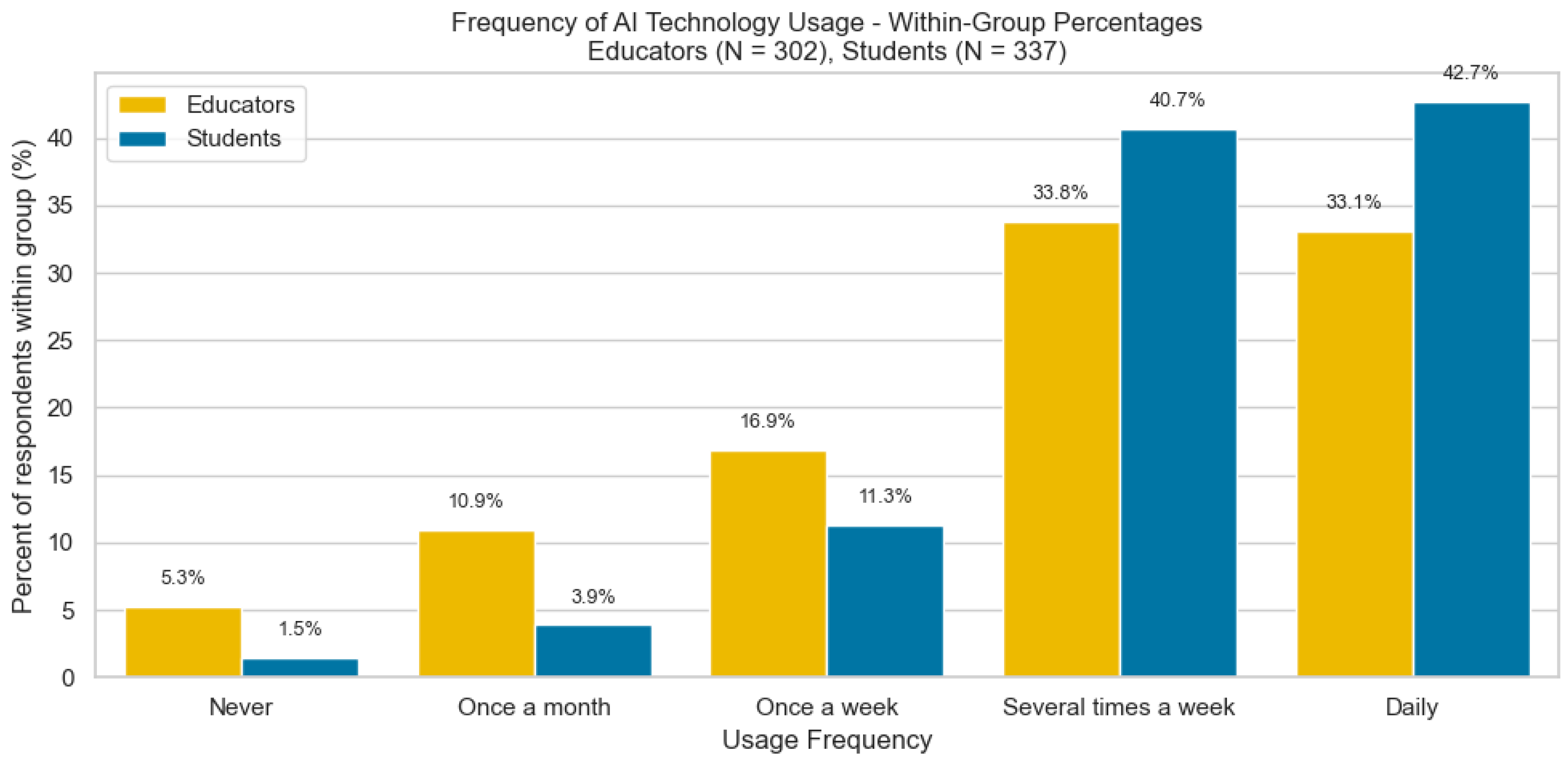
According to the data, the majority of educators report using AI tools either daily (n = 100, 33.1%) or several times a week (n = 102, 33.8%), with these two categories together accounting for over two-thirds of all respondents. Moderate usage is also evident, with 51 participants indicating weekly engagement (16.9%) and 33 reporting monthly use (10.9%). In contrast, only a minority (n = 16, 5.3%) indicated never using AI technology.
In comparison, AI tool usage was more prevalent among students. A large majority reported using AI either daily (n = 144, 42.7%) or several times a week (n = 137, 40.7%), with these two categories together accounting for over four-fifths of all respondents. More moderate levels of usage were observed among those who reported using AI once a week (n = 38, 11.3%) or once a month (n = 13, 3.9%). Only a very small minority (n = 5, 1.5%) indicated that they never use AI tools. These findings highlight the extent to which AI has already become embedded in students’ academic routines, with most students engaging with AI technologies on a regular basis. See
Figure 1 below.
When examining variations in participants’ frequency of AI use across different academic disciplines, substantial differences were observed both within and between participant groups. Overall, students consistently reported higher levels of daily AI use than educators across most disciplines, although the magnitude of these differences varied by subject area. Percentages were calculated by dividing the number of participants who reported daily use of AI by the total number of participants within each discipline.
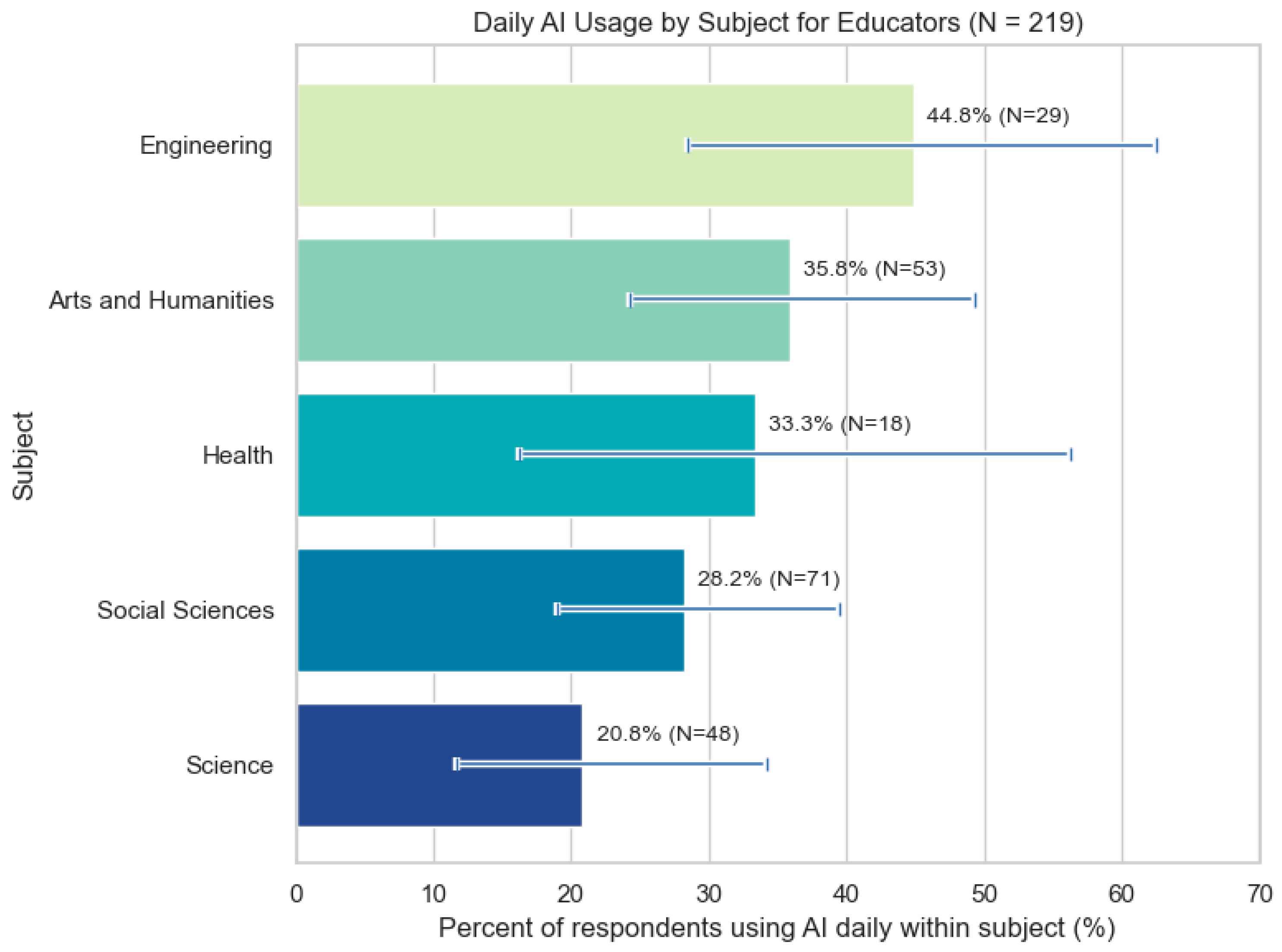
Among educators (
Figure 2), those in Engineering reported the highest frequency of daily AI use (44.8%), followed by Arts and Humanities (35.8%), Health (33.3%), and Social Sciences (28.2%). Educators in Science reported the lowest proportion of daily users (20.8%). The confidence intervals shown in
Figure 2 indicate greater uncertainty for disciplines with smaller subgroup sizes, but the overall pattern suggests a gradient in AI adoption aligned with disciplinary teaching and professional practices. Note that only the top five subject areas are reported here. Some participants indicated other subject areas, which are not included in this analysis, resulting in a total number of educators lower than 302.
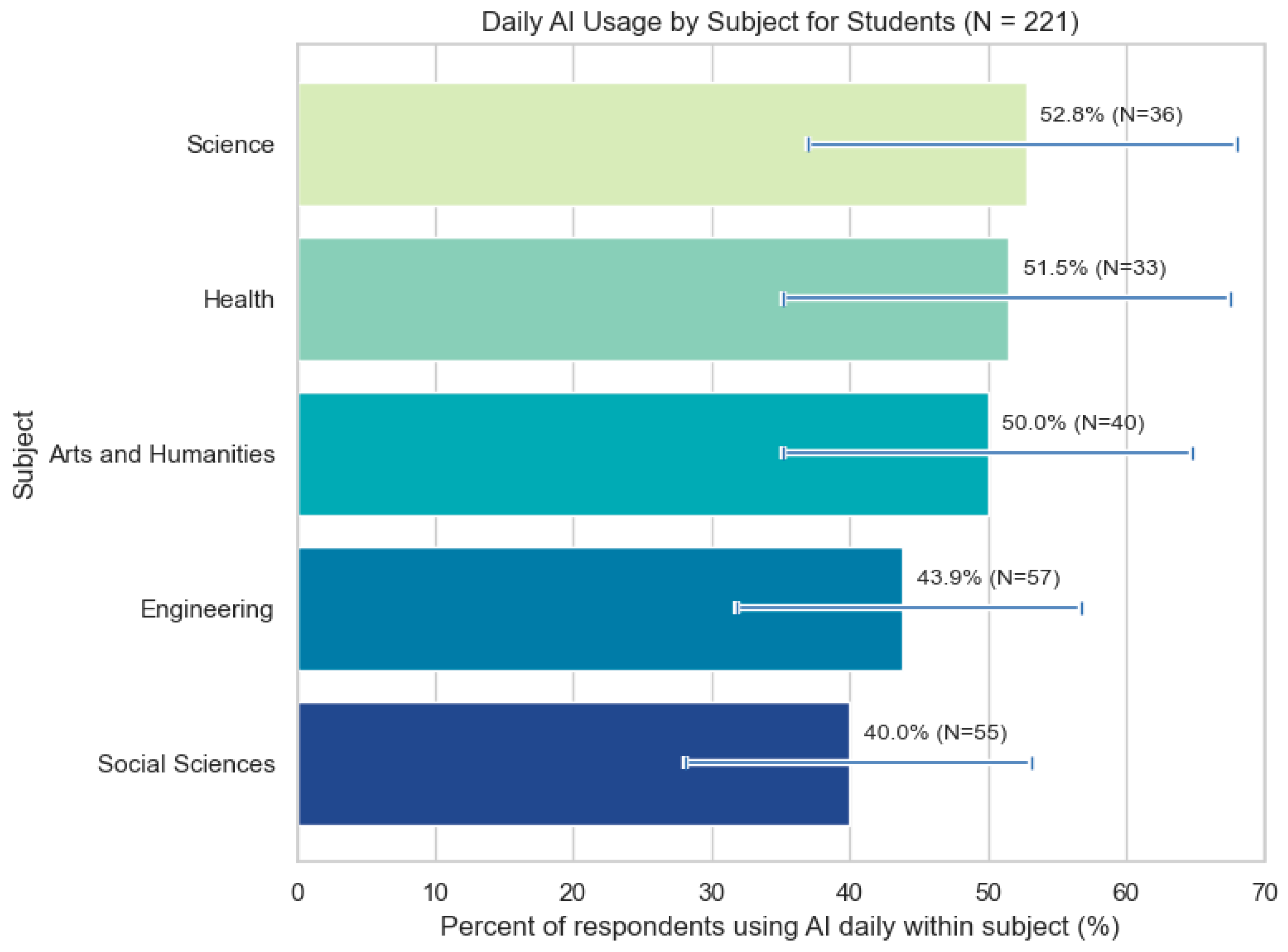
In contrast, students exhibited a different disciplinary profile (
Figure 3). Science students reported the highest daily usage (52.8%), followed by Health (51.5%), Arts and Humanities (50%), and Engineering (43.9%), while students in Social Sciences showed the lowest proportion of daily AI users (40.0%). Although confidence intervals overlap across several disciplines, the consistently higher point estimates among students suggest a more intensive and widespread integration of AI into learning activities. Note that only the top five subject areas are reported here. Some participants indicated other subject areas, which are not included in this analysis, resulting in a total number of students lower than 337.
Overall, these findings indicate that AI has become deeply embedded in teaching and learning practices across higher education, with students using AI more intensively than educators. The differing patterns of usage across disciplines, together with the contrasts between educators and students within the same fields, suggest that the nature of academic disciplines and the expectations of teaching and learning (e.g., the differences in teaching and learning tasks) shape AI adoption in distinct ways. These findings highlight the need for further investigation into how subject disciplines influence AI usage and the development of AI competencies for students and educators in higher education.
3.2.2. Inferential Comparison Between Educators and Students
To formally assess whether the observed differences in AI-use frequency between educators and students were statistically meaningful, inferential analyses were conducted using Pearson chi-square tests, supplemented by proportion estimates with 95% Wilson confidence intervals.
At the aggregate level, a Pearson chi-square test indicated a statistically significant association between participant group (educators vs. students) and AI-use frequency (χ
2 = 27.58, df = 4,
p < 0.001). The magnitude of this association was small-to-moderate (Cramér’s V = 0.21, 95% CI [0.15, 0.29]), indicating that although group differences were statistically detectable, the overall strength of association was modest. Examination of proportional distributions with 95% Wilson confidence intervals (
Table 3) clarified the nature of this association. While both groups demonstrated high levels of AI adoption, students were more concentrated in the highest-frequency usage categories, particularly several times a week and daily. Educators, by contrast, exhibited relatively higher proportions at lower and moderate usage frequencies, including never, once a month, and once a week. Overall, these findings suggest that group differences are primarily characterised by variation in usage intensity; however, the observed effect size indicates that the practical magnitude of differentiation is limited.
To explore whether group differences were consistent across academic contexts, chi-square tests were conducted separately within disciplines, subject to minimum sample-size and distributional assumptions. Disciplines in which AI-use responses were highly homogeneous or lacked sufficient variability were excluded from inferential testing and retained only for descriptive analysis.
As shown in
Table 4, discipline-level chi-square tests revealed a heterogeneous pattern of group differences in AI-use frequency. A statistically significant association was observed within the Science discipline (χ
2 = 15.10, df = 4,
p = 0.004), corresponding to a moderate effect size (Cramér’s V = 0.42, 95% CI [0.28, 0.61]). In contrast, no other discipline reached statistical significance. Because multiple discipline-level tests were conducted, we applied a Benjamini–Hochberg false-discovery-rate adjustment to control for multiplicity. The Science result remained statistically significant after adjustment (adjusted
p = 0.020), while no additional discipline met the adjusted threshold.
Where significant differences occurred, they were again driven mainly by educators’ higher concentration in frequent-use categories, rather than by differences in whether AI tools were used at all. Disciplines excluded from inferential testing typically exhibited highly uniform AI-use patterns, suggesting relatively standardised practices within those fields.
Taken together, these findings suggest that differences in AI engagement between educators and students are better understood in terms of regularity and depth of use rather than simple adoption; however, the overall magnitude of association is modest and varies across disciplinary contexts. This pattern aligns with the UNESCO AI Competency Framework’s emphasis on moving beyond basic familiarity with AI tools towards more sustained, contextually embedded forms of engagement. From this perspective, differences in AI-use frequency may reflect distinct modes of engagement across groups, with students exhibiting higher levels of routine, high-frequency use, while educators’ AI engagement appears more heterogeneous and distributed across lower and moderate usage frequencies, potentially corresponding to a broader but less regular integration of AI across teaching, assessment, research, and professional development activities.
3.3. Key Channels of AI-Related Training Received by Students and Educators
According to the data, the key channels through which teachers and students receive AI-related training differ noticeably.
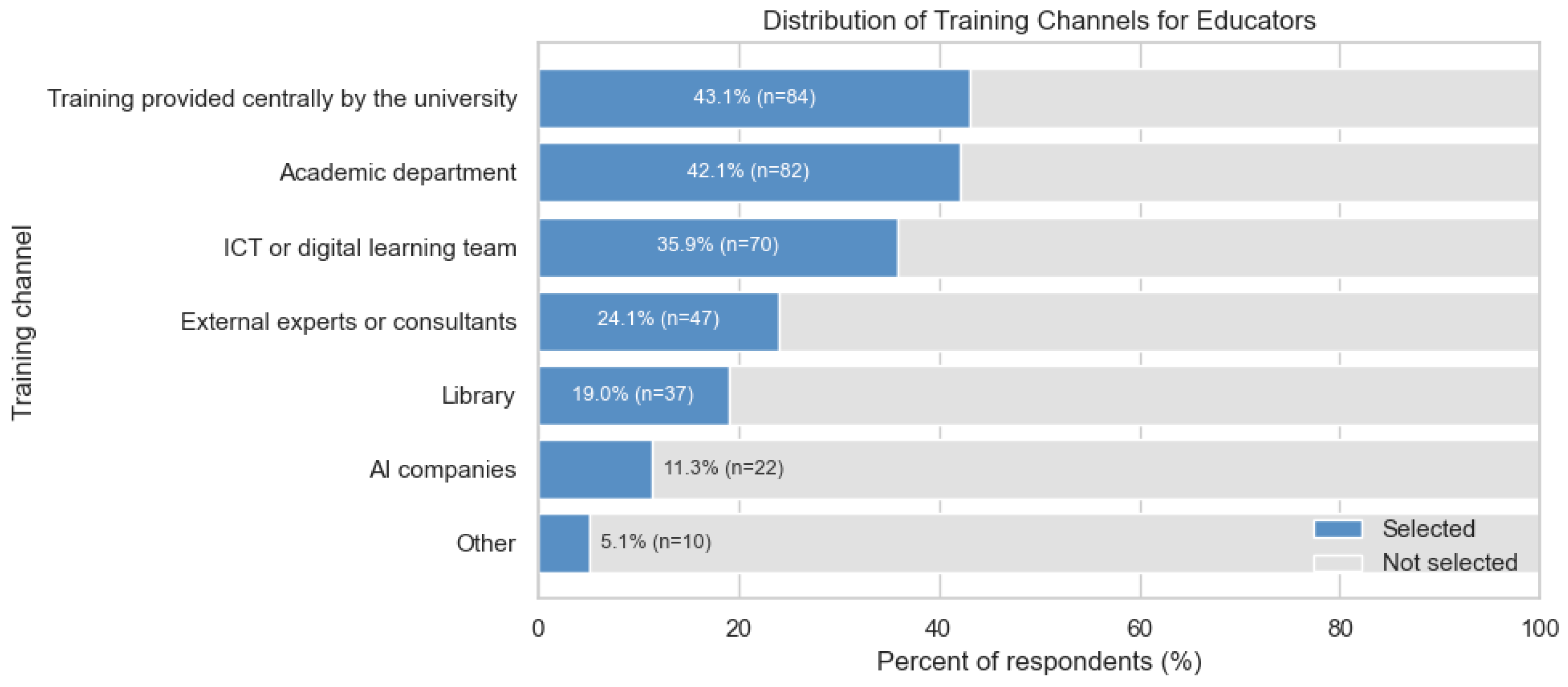
Figure 4 presents the key channels through which educators reported receiving AI-related training, visualised using a 100% stacked horizontal bar chart to avoid misinterpretation commonly associated with multiple-response items. As this was a multiple-response question, respondents could select more than one training channel; percentages are therefore calculated using the number of respondents as the denominator.
Among educators who answered this question (n = 195), the most commonly reported training channel was training provided centrally by the university, selected by 43.1% of respondents (n = 84). This was closely followed by academic departments (42.1%, n = 82) and ICT or digital learning teams (35.9%, n = 70). Additional training support was obtained through external experts or consultants (24.1%, n = 47) and library services (19.0%, n = 37), while AI companies were less frequently cited (11.3%, n = 22). A small proportion of respondents reported other, less common training channels, which were grouped under “Other” (5.1%, n = 10).
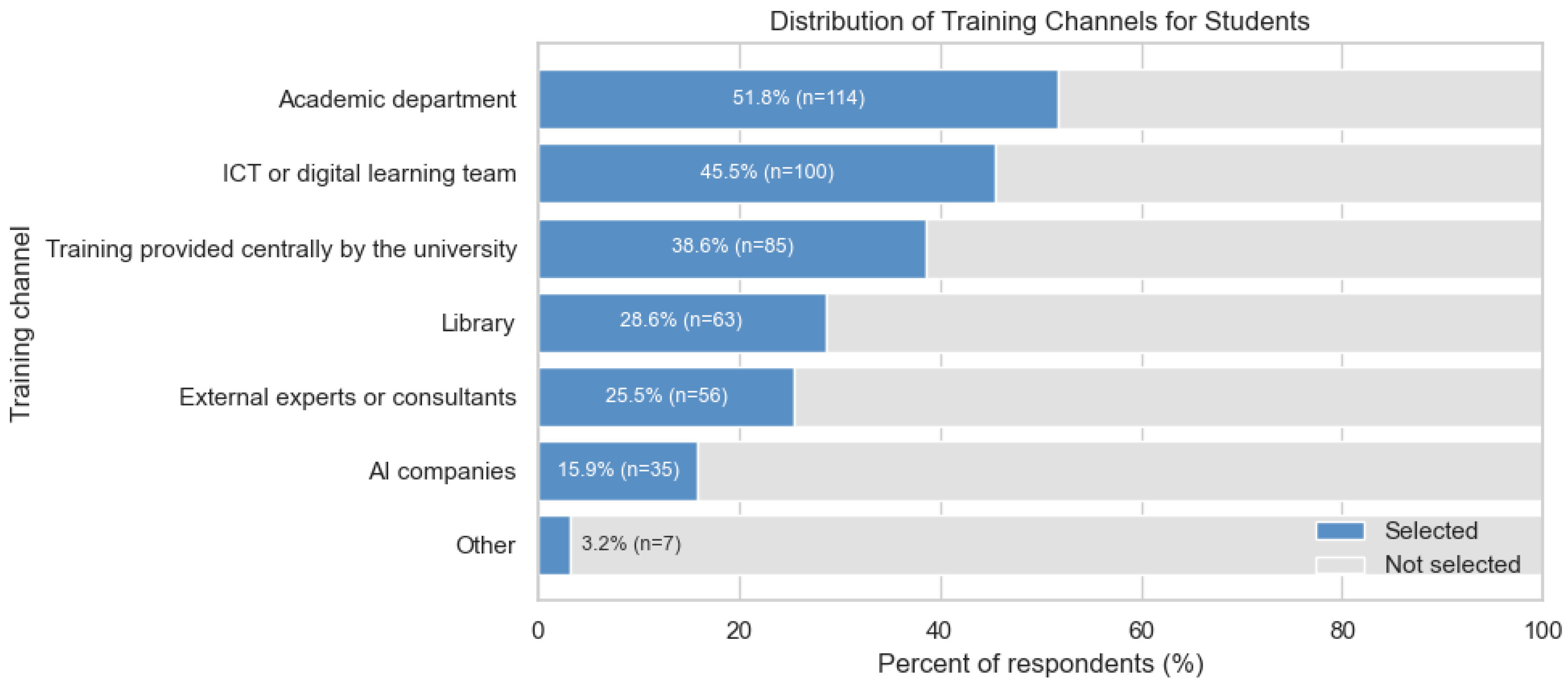
Figure 5 presents the corresponding distribution for students (n = 220). The most frequently reported training channel was the academic department, selected by 51.8% of students (n = 114). This was followed by the ICT or digital learning team (45.5%, n = 100) and training provided centrally by the university (38.6%, n = 85). Other channels were reported less frequently, including the library (28.6%, n = 63), external experts or consultants (25.5%, n = 56), and AI companies (15.9%, n = 35). A small proportion of respondents reported other, less common sources of training, which were grouped under “Other” (3.2%, n = 7).
To evaluate statistical significance, we analysed the multiple-response item at the respondent level and compared group-specific proportions using two-sided two-proportion z tests with Wilson 95% confidence intervals. Because several training channels were examined simultaneously, false discovery rate (Benjamini–Hochberg) correction was applied.
Focusing on the six primary training channels with the largest descriptive differences, students reported higher participation through academic departments (Δ = 9.8 percentage points), ICT or digital learning teams (Δ = 9.6 pp), and library services (Δ = 9.7 pp). Although these contrasts reached statistical significance in unadjusted two-proportion tests (p < 0.05), none remained significant after applying false discovery rate (Benjamini–Hochberg) correction for multiple comparisons. Differences in centrally provided university training (Δ = 4.4 pp) and AI company-led training (Δ = 4.6 pp) were smaller in magnitude and not statistically significant.
Taken together, these findings indicate that while discipline-embedded and ICT-supported pathways appear somewhat more prominent among students at a descriptive level, the overall structure of institutional AI training provision is broadly comparable across educators and students. Although these between-group differences did not remain statistically significant after correction for multiple comparisons, the observed pattern suggests that students’ AI-training experiences may be more closely embedded within subject-specific contexts. Educators, by contrast, appear to rely somewhat more on institution-level initiatives and centrally coordinated training. Notably, the library, despite being a cross-disciplinary hub routinely accessed by both students and educators, ranked relatively low as a training channel across both groups, suggesting a potentially underutilised opportunity for expanding AI-related learning support.
3.4. Average AI Training Hours Received by Students and Educators Across Regions
AI-related training hours were self-reported using predefined response categories (e.g., ranges of total training hours). The survey did not specify a fixed reference timeframe; therefore, responses reflect participants’ cumulative or perceived training exposure. To facilitate a quantitative summary, these ordinal categories were converted to numeric values using mid-point approximation. Because training hours were collected using ordinal categories and converted using midpoint approximation, confidence intervals for means were not estimated. Instead, medians and interquartile ranges are reported as distribution-aware summaries. All regional estimates are reported together with sample sizes (n) to allow cautious interpretation. To ensure interpretability and reduce the influence of small denominators, regional summaries are presented only for regions with at least 10 valid responses to the training-hours item; regions not meeting this threshold are excluded from tabular presentation and considered descriptively. For transparency, the raw categorical distributions of the training-hours item by region and group are reported in the
Supplementary Materials (Table S1), allowing readers to inspect the underlying ordinal response patterns prior to midpoint approximation.
As shown in
Table 5, median AI-related training hours among educators varied across regions. Africa reported the highest median level of training exposure (median = 8 h, IQR = 21.0; n = 59), followed by Asia (median = 6 h, IQR = 14.5; n = 16), although the wide interquartile range indicates substantial heterogeneity in reported training experiences. Educators in Europe and North America reported lower median training hours (both medians = 4 h), although the spread of responses differed, with a narrower interquartile range in Europe (IQR = 6.5; n = 59) compared with North America (IQR = 14.0; n = 53).
Among students, median AI-related training hours also varied across regions (
Table 6). Students in Africa reported the highest median level of training exposure (median = 8 h, IQR = 21.0; n = 116). Students in Asia and North America reported intermediate median levels (both medians = 4 h), although variability differed substantially between regions (Asia: IQR = 14.0, n = 44; North America: IQR = 12.1, n = 10). By contrast, students in Europe reported the lowest median training exposure (median = 1.5 h, IQR = 2.5; n = 48), with relatively limited dispersion compared with other regions.
These findings complicate common assumptions that the Global North consistently reports higher levels of AI-related training exposure. However, despite the availability of training opportunities, qualitative data from the open-ended questions indicate that many African regions still lack essential infrastructure, including reliable internet coverage and access to AI technology subscriptions. As a result, training programmes may be more theory-based than practical or experiential in nature. For instance, a student participant in Social Sciences mentioned that the main challenge for developing student AI competency is the “lack of access to hardware and software that is needed to develop my AI competency.” Similarly, a teaching associate staff member in Engineering in South Africa echoes this, stating that “Technical barriers, such as limited access to advanced tools, hardware, or stable internet connections,” are one of the main challenges they face in developing educators.
3.5. Perceived Importance of AI Competency Dimensions Among Students and Educators
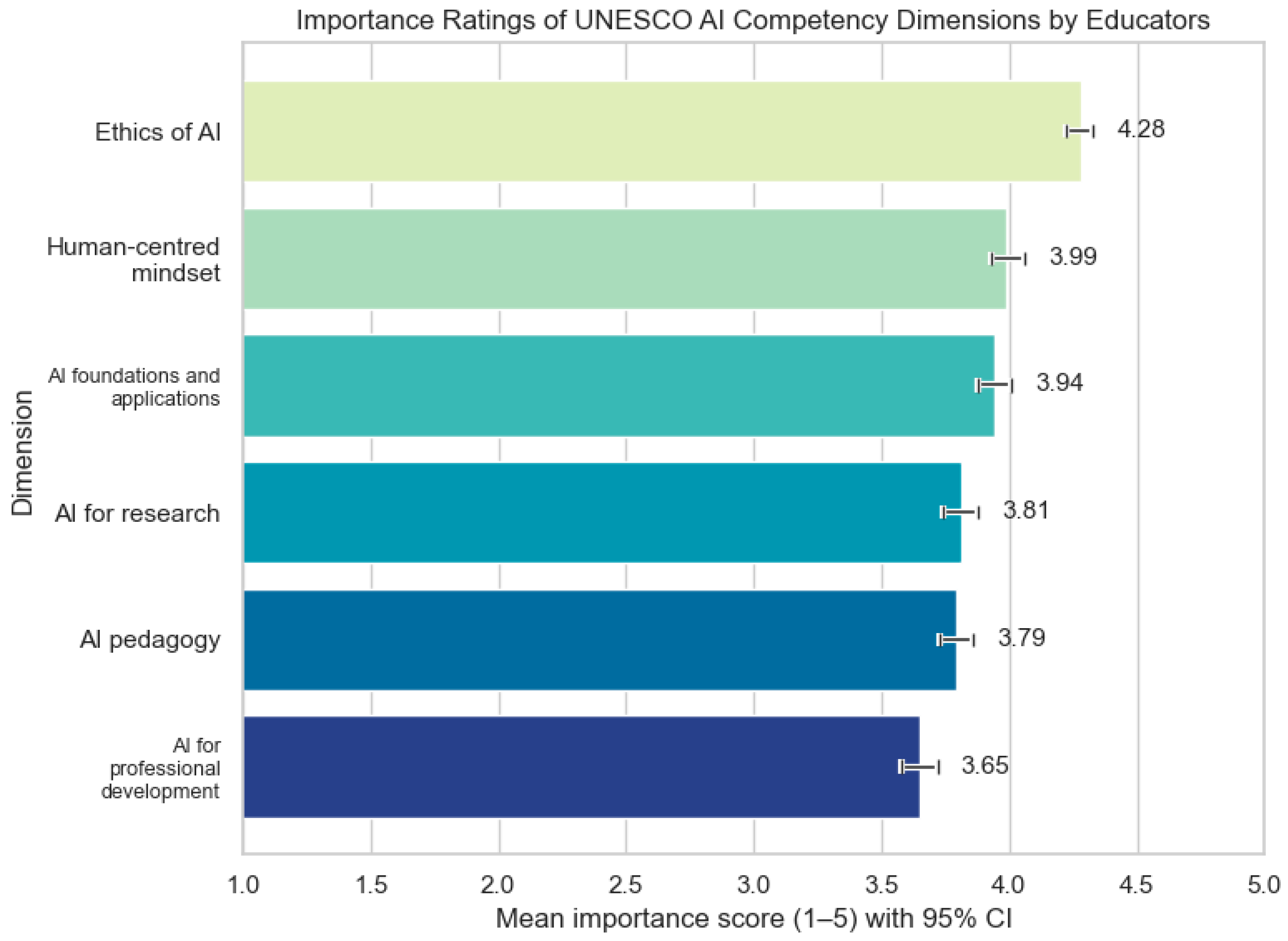
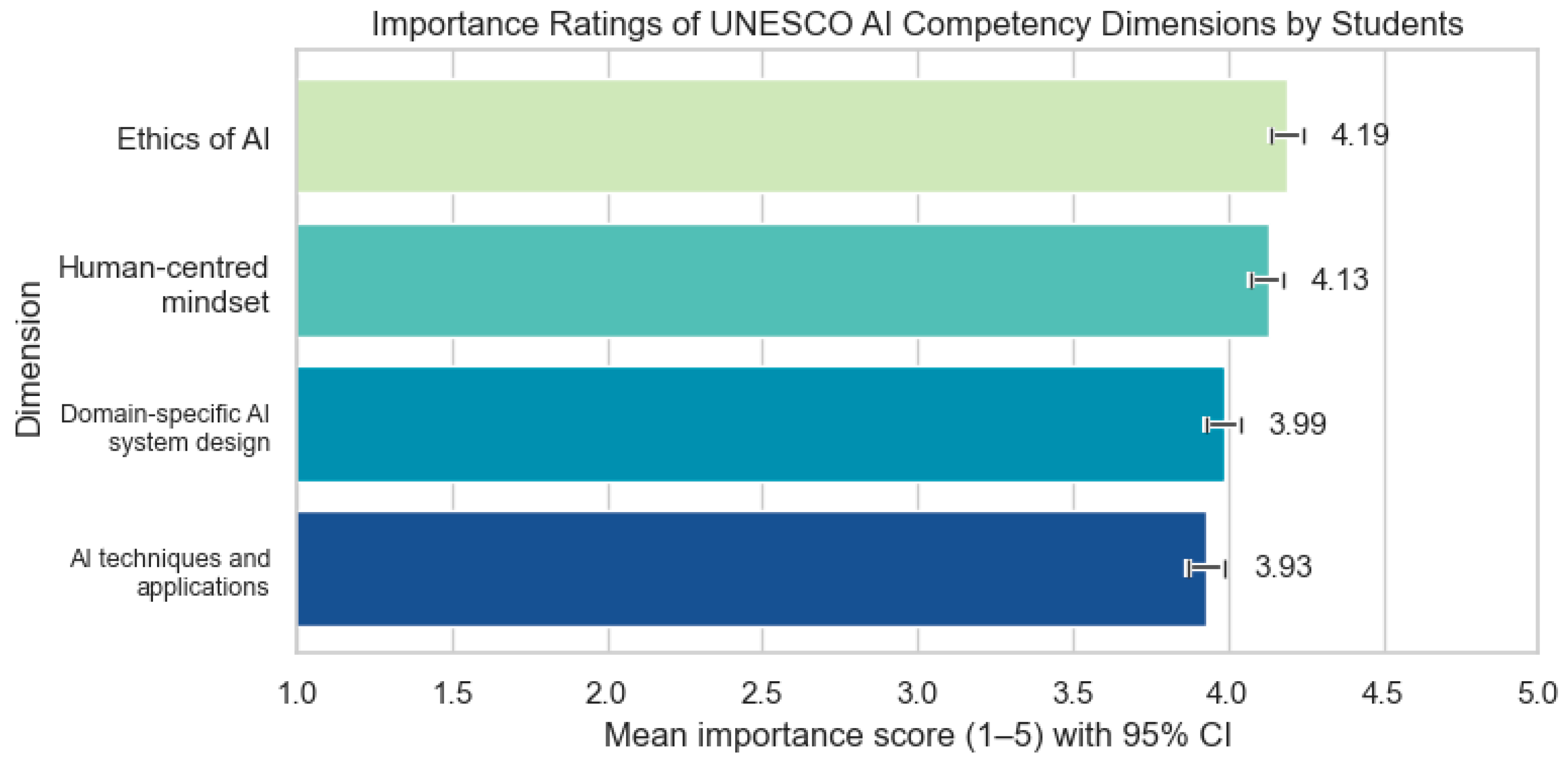
As this study is informed by the UNESCO AI competency frameworks, participants were asked to rate the perceived importance of each competency dimension in relation to their daily teaching and learning practices. Educators evaluated six dimensions: Human-centred Mindset, Ethics of AI, AI Foundations, AI Pedagogy, AI for Professional Development, and additionally AI for Research (see
Figure 6 below). Students, meanwhile, rated four dimensions: Human-centred Mindset, Ethics of AI, AI Techniques and Applications, and Domain-specific AI System Design (see
Figure 7 below).
The results reveal substantial descriptive alignment between educators and students in their evaluation of AI competency dimensions. To examine whether these similarities were statistically meaningful, Mann–Whitney U tests were conducted for the shared dimensions (Ethics of AI and Human-centred Mindset), and rank-biserial effect sizes with 95% confidence intervals were reported (
Table 7).
For Ethics of AI, educators assigned slightly higher importance (Mean = 4.28) than students (Mean = 4.19). Although this difference was statistically significant (U = 55,921, p = 0.028), the effect size was small (r = 0.10, 95% CI = [0.01, 0.18]), indicating only a modest difference in practical terms.
For Human-centred Mindset, students reported higher importance (Mean = 4.13) compared to educators (Mean = 3.99). This difference was also statistically significant (U = 45,149.5, p = 0.013), with a small effect size (r = −0.11, 95% CI = [−0.20, −0.02]).
Across both shared dimensions, effect sizes were small in magnitude, empirically supporting the substantive alignment observed in
Figure 6 and
Figure 7, while acknowledging minor differences in emphasis between groups. Both groups ranked Ethics of AI as the most important competency for their everyday learning and teaching activities, followed closely by Human-centred Mindset. This underscores a shared recognition that ethical considerations and human agency are central to meaningful and responsible engagement with AI in higher education.
Although students assigned a slightly higher score to Human-centred Mindset, the small effect size suggests that this difference reflects variation in emphasis rather than divergence in underlying priorities. Among educators, AI for Professional Development was ranked lowest relative to other dimensions, aligning with our qualitative findings that institutional reward structures for AI competency development remain limited.
Because educators and students evaluated different additional dimensions within their respective frameworks, inferential comparisons were limited to the shared competency dimensions.
3.6. Key Challenges Faced by Students and Educators in Developing AI Competencies
3.6.1. Shared Anxiety in a Fast-Evolving AI Context
Both educators (n = 40) and students (n = 21) reported feeling overwhelmed by the rapid pace of AI development, which can lead to anxiety, technology fatigue, and reduced confidence in their ability to stay up to date or develop AI-related competencies. These concerns also highlight the broader implications for digital wellbeing among both groups. As institutions increasingly encourage students and educators to actively engage in developing AI competency, it is important to recognise that such expectations may introduce additional emotional and cognitive pressures. Supporting digital well-being should therefore be considered an essential component of AI capacity-building initiatives, helping to prevent technology avoidance and fostering sustainable, confident engagement with AI.
The qualitative data further illustrate these pressures. Participants described difficulties navigating the proliferation of AI tools, uncertainty about how to apply them effectively, and a lack of clarity around security, reliability, and pedagogical alignment:
“Difficulty in developing Mastery due to the proliferation of a variety of AI tools and technologies”
(Master’s student in Science, UK)
“Sometimes I struggle to understand how to apply AI to specific problems or choose the right tool among so many options.”
(Bachelor’s student in Engineering, Spain)
“Fast-paced technological changes can be overwhelming for me; don’t know which one is secure”
(Teaching Associate, India)
“I struggle with knowing how to begin developing AI skills and often work in isolation without collaborative opportunities. The sheer number of tools can be overwhelming, making it hard to choose the most effective ones.’’
(Lecturer in Arts and Humanities, South Africa)
Together, these accounts demonstrate a shared sense of anxiety and cognitive overload across educators and students, highlighting the need for supportive and wellbeing-oriented approaches to AI skill development in higher education.
3.6.2. Lack of Consistent Institutional AI Guidance
Both educators (n = 20) and students (n = 26) reported a lack of clear and consistent institutional policies and guidelines on the use of AI. Educators particularly emphasised the absence of a unified approach across academic departments, noting that disciplinary differences often lead to fragmented practices. They also highlighted the need for a coherent strategic vision from institutional leadership to guide AI competency development.
“Fragmentation of approaches, different standards across disciplines, resistance within my own discipline”
(Lecturer in Social Science, UK)
“One of the key challenges in building AI competency within my organisation is the lack of clear policy direction and strategic leadership. Without a defined institutional framework or vision for AI integration, it becomes difficult to coordinate efforts, allocate resources effectively, and foster a culture of innovation around AI.”
(Senior Lecturer in Engineering, New Zealand)
Students also expressed the need for clearer institutional guidance, but their concerns focused more directly on Academic Integrity. In particular, they highlighted the risks associated with unclear rules regarding ethical use, noting that inconsistent or absent guidance can contribute to unintentional academic misconduct and negatively affect learning outcomes.
“The clarity of legal and ethical guidelines, and the implications thereof.”
(Master’s student in Science, South Africa)
“Not enough guidelines on what is ethical and what is not ethical.”
(Bachelor’s student in Science, South Africa)
Taken together, these findings underscore the importance of establishing clear, consistent institutional guidelines on AI use for both educators and students. Such guidance is essential not only for supporting AI competency development but also for ensuring ethical, responsible, and pedagogically sound engagement with AI across higher education.
3.6.3. Lack of Institutional Support
Educators (n = 49) and students (n = 87) reported a general lack of institutional support, particularly in relation to hands-on, practical training and access to appropriate learning resources, including premium AI tools. Participants expressed a clear need for training that is tailored to different levels of students and responsive to disciplinary contexts.
“Short courses or workshops that are practical, beginner-friendly, and tailored to my field.”
(Senior Lecturer in Information Technology, South Africa)
“I face challenges such as limited practical experience, lack of comprehensive resources, and understanding complex AI concepts.”
(Bachelor’s student in Arts and Humanities, UK)
For educators, these challenges are compounded by limited protected time and a lack of structured opportunities, such as communities of practice, to develop AI competency collaboratively. This situation is further exacerbated by the absence of formal recognition or reward structures for AI upskilling. Developing AI competency requires sustained time, effort, and ongoing professional learning; however, existing workload models rarely account for these demands, leaving many educators without the necessary institutional support to build their skills. The qualitative data highlight these pressures:
“Lack of resources and time. Lack of institutional support.”
(Lecturer in Health, Canada)
“Lack of time with many other responsibilities. AI competency requires dedicated pockets of time.”
(Lecturer in Social Science, Spain)
Students, on the other hand, emphasised a lack of mentorship and supportive role models within their institutions. Many reported difficulty identifying individuals who could help guide their learning, provide feedback, or support ethical decision-making when working with AI tools.
“Difficulty finding mentors or communities to ask questions, get feedback, or explore ethical dilemmas collaboratively.”
(Bachelor’s student in Social Sciences, USA)
“Limited exposure to mentors. AI is evolving fast, and mentorship is critical. However, I often struggle to find accessible experts or role models in the field who understand my context.”
(Master’s student in Arts and Humanities, Spain)
Collectively, these perspectives point to a significant gap in institutional infrastructure for supporting AI skill development. Without practical training opportunities, tailored resources, protected time, recognition, and accessible mentorship, both educators and students face barriers to developing meaningful and sustainable AI competency.
3.6.4. Infrastructure and Access Barriers to AI in Global South Contexts
Educators (n = 15) and students (n = 17) from Global South contexts consistently reported significant infrastructural and digital access barriers. These limitations reinforce existing inequities in AI competency development, participation, and the ability to meaningfully engage with emerging technologies. Although earlier statistical analyses in our paper showed that many African countries allocate substantial effort toward AI-related training, such initiatives risk remaining largely theoretical when students and educators lack access to the necessary tools, connectivity, and hardware required for hands-on experience.
“Internet connection and limited hardware.”
(Bachelor’s student in Health, Kenya)
“Lack of speedy data connection, most tools are paid, and fragile infrastructure development.”
(Lecturer in Arts and Humanities, Bangladesh)
“Many institutions lack reliable internet, modern devices, or even access to key platforms like ChatGPT, Google Colab, or cloud computing.”
(Senior Lecturer in Information Technology, South Africa)
These accounts highlight a persistent digital divide that directly impacts the development of AI competency. Without adequate technology, stable internet, and access to widely used AI platforms, students and educators are unable to practise, experiment, or apply AI knowledge in authentic contexts. This constrains opportunities for meaningful AI engagement and deepens global inequities in digital readiness.
3.6.5. Linguistic Gaps and Regional Disparities in AI Policy and Adoption
Responses from educators (n = 8) and students (n = 11) across regions also suggest that current AI tools and guidelines tend to be English-dominant, which pose substantial barriers for users in non-Anglophone contexts. These challenges limit equitable engagement with AI and reinforce existing cultural and linguistic disparities in higher education. Educators highlighted the need for curated and regularly updated lists of AI tools and learning resources that clarify which platforms are appropriate, approved, and compliant with regional data protection and regulatory frameworks.
“Updated lists of most essential and useful AI tools and resources (standardized) according to country-based regulatory compliance.”
(Professor in Business, France)
“Language limitations and the prevalence of English, the inequalities related to lack of access to computers and the internet … the lack of digital literacy … the unrealistic belief in AI’s long-lasting relevance …”
(Lecturer in Education, UK)
Students similarly emphasised the need for clearer institutional guidance and culturally contextualised learning materials relating to AI. They expressed that local examples, case studies, and multilingual support are essential for making learning relevant, inclusive, and accessible across diverse educational and social settings.
“Localized and culturally relevant resources: learning materials tailored to my national context, with case studies and datasets that reflect local issues (e.g., agriculture, public health, education systems).”
(Bachelor’s student in Science, South Africa)
“Workshops and seminars in local languages, as well as institutional support for interdisciplinary AI projects, would also be valuable.”
(Master’s student in Health, South Africa)
A summary of the final themes, brief definitions, and response frequencies by group is provided in
Table 8.
Overall, these findings highlight the urgent need for multilingual, culturally grounded, and contextually appropriate AI resources and policies. Addressing linguistic diversity and regional differences is essential for fostering equitable AI competency development across global higher education systems.
4. Discussion
This is one of the first global studies to explore students’ and educators’ AI use and AI competency needs. Guided by three primary research questions, the results offer new insights into how educators and students engage with AI tools, how they prioritise different AI competencies, and the challenges and barriers they face in developing AI competency within learning and teaching contexts.
4.1. Use of AI Among Students and Educators
Our findings demonstrate that AI tools are already deeply embedded in higher education, with both educators and students reporting frequent use. However, students use AI considerably more often than educators, and disciplinary contexts further shape how both groups engage with AI. Notably, contrasts between educators and students within the same discipline are particularly striking. This aligns with recent studies showing that students commonly adopt AI for self-directed learning, whereas educators use such tools comparatively less frequently and remain more concerned about students’ AI use [
5,
26,
27,
28]. These findings have important implications for learning and teaching practices in higher education. If students’ AI use continues to outpace that of educators, misalignment and mistrust may emerge between the two groups, particularly in relation to assessment and academic integrity. Such tensions are most likely to surface in assessed learning contexts, where expectations regarding permissible AI assistance and disclosure remain unclear. Higher education institutions must therefore work to narrow this gap and foster more transparent communication between student and educator communities. In this regard, guidelines should move beyond general policy principles to include assessment-specific design considerations [
31].
Training for educators and students, while potentially a useful means of fostering such communication, must consider differences in effective channels. Our findings suggest that students’ engagement with AI training appears to be shaped more directly by their academic departments and disciplinary culture, whereas educators tend to rely more on centrally provided institutional training. While this highlights current effective pathways, it also suggests that differences in training channels may further widen the communication gap between students and educators. University libraries, commonly used by both groups, are currently underutilised. These shared spaces could be better resourced to host open dialogues, workshops, or discussion panels to cultivate communication about AI and foster mutual understanding and trust.
4.2. Regional Trends and the Role of the Global South
The study also reveals marked regional differences in AI access, use, training, and governance, particularly between high-income regions and the Global South. Consistent with existing literature [
15,
29] suggesting that the Global South needs more investment to foster digital competency, our findings further indicate that such efforts must be tailored to local needs. In particular, although respondents from Global South contexts reported greater exposure to AI-related training opportunities, such training often remains theoretical and abstract. This is largely due to limited digital infrastructure, including unstable internet access, insufficient hardware, and restricted availability of relevant software, which prevents students and educators from gaining practical, hands-on experience with AI tools.
These accounts suggest that while AI training opportunities may exist, they frequently lack the experiential component essential (e.g., hands-on activities) for meaningful competency development. This aligns with broader research indicating that global inequalities in digital infrastructure significantly shape AI readiness and participation [
16]. Addressing these infrastructural disparities is therefore crucial to ensuring that students and educators in the Global South are not excluded from AI-enhanced educational futures. Providing free access to AI tools or recommending widely available free versions within training programmes may help narrow the existing gap and enable participants to connect training content with real-world practice.
Moreover, our findings suggest that existing AI resources, including training, guidelines, and materials, tend to be English-dominant, posing substantial barriers for students and educators in non-Anglophone contexts. These challenges limit equitable engagement with AI and reinforce existing cultural and linguistic disparities in higher education [
14]. Our findings highlight the need for multilingual, culturally grounded, and contextually appropriate AI resources and policies. In particular, there is a clear need for localised and culturally contextualised guidelines, training materials, and resources (e.g., relevant case study examples) to ensure that AI engagement is more relevant, inclusive, and accessible to diverse communities. Addressing both linguistic diversity and regional differences is essential for promoting equitable AI competency development across global higher education systems.
4.3. Perceived Importance of AI Competencies Between Students and Educators
While both groups recognised the value of the full UNESCO AI Competency Framework, Ethics of AI emerged as the most important competency for supporting everyday teaching and learning. This widespread prioritisation reflects growing awareness of the risks associated with algorithmic bias, misinformation, and emerging concerns around academic integrity in AI-mediated learning environments [
5,
9,
10,
11]. The Human-centred Mindset dimension ranked second, further underscoring shared concerns about preserving human judgement, agency, and originality. This aligns with wider discussions in the Human-Centred AI literature, which emphasise the importance of maintaining meaningful human oversight and supporting learner autonomy in educational settings. It is worth noting that educators placed relatively less emphasis on AI for Professional Development compared to the other dimensions. The qualitative findings shed light on this trend: many educators reported a lack of institutional recognition, incentives, and reward mechanisms for engaging in AI-related professional learning. Such concerns echo prior research that highlights structural constraints in higher education, including workload pressures and the absence of formalised mechanisms that acknowledge or reward digital upskilling [
32].
These findings point to an important institutional challenge. Whereas students clearly view AI engagement as a pathway for enhancing employability and future career opportunities, educators, already positioned within academic roles, perceive fewer tangible rewards for investing time in developing AI competencies, especially when such efforts are not recognised within promotion or workload models. This gap highlights the need for higher education institutions to establish supportive mechanisms, including protected time, recognition schemes, and professional learning pathways, to foster sustainable AI competency development among educators.
4.4. Challenges and Barriers to AI Competency Development
The findings reveal that both educators and students experience significant cognitive and emotional pressures when engaging with AI. Participants across regions reported feeling overwhelmed by the rapid proliferation of AI tools and uncertain about how to use them effectively. These experiences align with emerging evidence that generative AI can induce ‘technological overwhelm’ and digital fatigue, particularly when individuals feel under-prepared or unsupported [
33]. As institutions increasingly encourage active engagement with AI, these emotional and cognitive demands highlight the need for digital well-being initiatives to support both students and educators throughout the process.
Educators and students also reported a lack of clear and consistent institutional guidance and support structures. Educators noted fragmented departmental practices, the absence of a unified institutional AI strategy, and limited protected time to develop their competencies, issues widely documented as barriers to digital innovation in higher education. Students, meanwhile, expressed uncertainty about ethical use and academic integrity, suggesting that unclear policies may inadvertently contribute to unintentional misconduct. Emerging evidence suggests that such institutional ambiguity does not operate in isolation: peer influence and processes of social contagion can normalise AI use; perceptions of detection effectiveness influence whether ethical awareness translates into responsible behaviour; and risks may be unevenly distributed across student subgroups, including differences associated with prior academic performance [
34]. In this sense, fragmented governance structures may not only create confusion but may also amplify existing academic vulnerabilities.
Both groups also identified insufficient access to hands-on training, premium AI tools, and peer support (such as communities of practice for educators and mentoring opportunities for students). Without structured support and recognition mechanisms for AI upskilling, institutions risk placing responsibility for AI competency development on individuals rather than creating the conditions necessary for sustainable, meaningful engagement.
5. Conclusions
This study provides one of the first global investigations on how higher education educators and students perceive and report their engagement with AI, how they prioritise different AI competency dimensions, and the challenges they experience when attempting to develop AI competency within teaching and learning contexts. Drawing on self-reported survey responses from over 600 participants across diverse regions, the findings reveal complex patterns of perceived AI adoption, reported levels of institutional support, and self-identified barriers to access, training, and digital infrastructure.
This study suggests that although AI is perceived to be increasingly embedded in higher education, its adoption remains uneven across groups and contexts. Students reported more frequent AI use than educators, and disciplinary differences further shape reported patterns of engagement, raising concerns about potential misalignment in expectations, assessment practices, and academic integrity between students and educators. These differences should be interpreted as variations in self-reported experiences and perceptions rather than as evidence of objectively measured competency gaps or behavioural disparities.
Both groups recognised the importance of the UNESCO AI competency frameworks, though educators emphasised the need for AI competency development to be formally recognised and rewarded within institutional professional development structures. Despite growing institutional encouragement to build AI capability, both educators and students reported anxiety and digital fatigue associated with the rapid evolution of AI tools, exacerbated by what participants described as challenges and barriers, including inconsistent institutional guidance, fragmented departmental approaches, insufficient hands-on training, limited peer-support mechanisms, and inadequate access to advanced tools. Collectively, this paper offers a perception-based, exploratory snapshot of how AI competency development is currently experienced across higher education contexts. While the findings highlight reported tension, uneven engagement, and institutional challenge, they should be interpreted within the methodological constraints of cross-sectional self-reported data. The results, therefore, serve as a foundation for future research employing behavioural measures, institutional data, and longitudinal designs to more robustly examine AI competency development and systemic capacity.
This study has several limitations that should be considered when interpreting the findings. First, although the survey was translated into multiple languages, the preliminary analysis presented here draws solely on responses from the English-language version. As a result, the dataset reflects the perspectives of participants who possess sufficient English proficiency, which may introduce linguistic and cultural bias. Our findings already highlight that a lack of linguistic diversity can be a barrier to equitable AI engagement; therefore, relying predominantly on English-language responses may limit the depth and representativeness of insights, particularly from non-Anglophone regions. Our future analyses will incorporate data from the multilingual versions of the survey, enabling a more comprehensive examination of regional and linguistic variations in AI competency needs and challenges. Second, while the qualitative data in this survey provide valuable global perspectives from both students and educators, the open-ended responses collected were naturally brief and lacked the depth compared to those collected through qualitative interviews or focus groups. To address this limitation, the next phase of our project will involve conducting in-depth interviews with global AI experts, higher education leaders, and policymakers across multiple regions. These interviews will enable deeper exploration of the institutional, cultural, and infrastructural complexities surrounding AI competency development, and will help validate, refine, and extend the themes identified in this initial analysis. Third, the cross-sectional design captures AI use and perceptions at a single point in time within an exceptionally fast-evolving technological landscape. Future longitudinal work is needed to examine how AI adoption, competency needs, and institutional responses change over time as tools, policies, and pedagogical practices continue to develop. Fourth, as this is an exploratory study relying on self-reported survey data, which are commonly used to capture participants’ perceptions and experiences, the findings may be influenced by social desirability and self-perception biases. Consequently, the observed relationships should be interpreted with caution. Finally, the preliminary analysis of the English-language survey may have resulted in uneven regional representation. Our follow-up studies will build on these findings and employ multilingual and nationally adapted versions of the survey to enable more robust cross-regional comparisons.