
Article

Spatiotemporal Assessment of Urban Heat Vulnerability and Linkage Between Pollution and Heat Islands: A Case Study of Toulouse, France

Capgemini Engineering—Technology & Engineering Center, 4 Avenue Didier Daurat, 31700 Blagnac, France
*
Author to whom correspondence should be addressed.
Urban Sci. 2025, 9(12), 541; https://doi.org/10.3390/urbansci9120541
Submission received: 23 September 2025 / Revised: 8 December 2025 / Accepted: 10 December 2025 / Published: 16 December 2025

Abstract

Urban heat vulnerability is an increasing public health concern, particularly in rapidly urbanizing regions of southern France. This study aims to quantify and map the Heat Vulnerability Index (HVI) for Toulouse and to analyze its temporal trends to identify high-risk zones and influencing factors. The assessment integrates recent years’ remote sensing data of pollutant emissions, land use/land cover and land surface temperature, statistical data of climate-related mortalities, and socioeconomic and demographic factors. Following a detailed analysis of recent real-time air quality and weather data from multiple monitoring stations across the city of Toulouse, it was observed that Urban Pollution Island (UPI) and Urban Heat Island (UHI) are closely interlinked phenomena. Their combined effects can significantly elevate the annual mortality risk rate by an average of 2%, as calculated using AirQ+ particularly, in densely populated urban areas. Remote sensing data was processed using Google Earth Engine and all factors were grouped into three key categories: heat exposure, heat sensitivity, and adaptive capacity to derive HVI. Temporal HVI maps were generated and analyzed to identify recent trends, revealing a persistent increase in vulnerability across the city. Comparative results show that 2022 was the most critical summer period, especially evident in areas with limited vegetation and extensive use of heat-absorptive materials in buildings and pavements. The year 2024 indicates resiliency and adaptation although some areas remain highly vulnerable. These findings highlight the urgent need for targeted mitigation strategies to improve public health, enhance urban resilience, and promote overall human well-being. This research provides valuable insights for urban planners and municipal authorities in designing greener, more heat-resilient environments.

1. Introduction

In recent years, France has experienced increasingly frequent and intense heatwaves due to climate change. Large cities experienced record-breaking temperatures exceeding 40 °C in summers between 2020 and 2025 [1]. This trend is strongly linked to urbanization, which amplifies the Urban Heat Island (UHI) effect, where dense infrastructure, limited vegetation, and heat-retaining materials like terracotta rooftops and asphalt on roads trap heat. It intensifies population vulnerability, especially in densely built areas with low vegetation [2].
UHI exposure varies with income, with low-income households often more exposed and less able to adapt, highlighting climate inequality [3], and this significantly elevates health risks, including heat-related illnesses such as dehydration, cardiovascular strain, and heat stroke, particularly among sensitive populations such as elderly people, children and individuals with pre-existing medical conditions.
In large cities, traffic emissions, industrial activities, and restricted airflow cause air pollution to accumulate in densely populated urban areas. This phenomenon is known as the Urban Pollution Island (UPI). It often coexists with the UHI effect, where elevated temperatures accelerate photochemical reactions that convert nitrogen oxides (NOx) and volatile organic compounds (VOCs) into ground-level ozone. Additionally, heat promotes secondary particulate matter formation and reduces atmospheric dispersion, further degrading air quality [4]. These two phenomena’s effects are closely linked, creating a feedback loop that intensifies both heat and pollution. This interaction significantly increases energy consumption, degrades air quality, and raises mortality risk rate during extreme heat events in urban environments [5,6]. Due to the complexity of these interactions and their implications for urban sustainability, an integrated modeling framework is needed to combine environmental, social, and economic dimensions, which are increasingly applied to assess climate resilience and resource sustainability in urban systems [7].
Toulouse, a major city in southern France, has become increasingly vulnerable to extreme summer temperatures. During the August 2003 heatwave, it was one of 13 French cities that experienced a significant spike in mortality, highlighting the serious health risks posed by extreme heat [8]. The hottest months in Toulouse are July and August, with an average daily high of 21.4 °C and low of 11.2 °C [9], and the highest temperature has been recorded up to 42.4 °C [10]. This threat is expected to grow in the future due to the combined effects of the UHI and UPI effects, making heatwaves more frequent and dangerous.
Spatial Heat Vulnerability Index (HVI) assessment has been carried out in major cities such as New York [11], Sydney [12], Philadelphia [13], London [14], Camden [15], and Amiens [16]. However, most of these studies did not account for the influence of air quality except for the studies on Camden and Amiens, which considered air quality as a contributing risk factor. A recent systematic review also highlights the importance of incorporating multi-year data to assess temporal changes in heat vulnerability, enabling comparisons across different time periods and improving the reliability of HVI assessments [17]. Based on available research, no existing studies have been jointly addressed to combine impacts of environmental mortality risks and air quality with other key factors in the HVI framework for large cities.
The objective of this study was to identify the heat-vulnerable communities and areas in Toulouse where proactive measures are needed to combat urban heat. To develop the HVI model, we used five main types of data: (a) socioeconomic and demographic information, (b) land use and land cover data, (c) remote sensing data, including land surface temperature, ground-level ozone (O3), particulate matter (PM10 and PM2.5) concentrations, and mean elevation, (d) data on socially isolated elderly individuals, and (e) records and calculation of environmental mortality.
High-resolution spatial and temporal heat maps were generated using satellite data, and HVI maps were derived using an equal-weight approach. The tool aims to assist urban planners and public health professionals in identifying areas at high risk of extreme events. This case study highlights that large cities, such as Toulouse, face significant challenges in building resilience against urban heat and pollution. It also draws attention to the synergistic impact of UHI and UPI effects, especially during summers [18], which can significantly elevate the risk of environmental mortality. The proposed index offers a practical decision-making tool for managing such events and can guide city planners and municipalities in developing targeted cooling strategies.

2. Materials and Methods

2.1. Data Sources and Model Framework

There are several key factors that contribute to the calculation of the HVI for a city. These factors may vary depending on geographical location, climatic conditions, and local socio-economic activities. The study focuses on Toulouse, France, during the summer period (June–August) across multiple years to link heatwave and pollution events. Various data sources and analytical methods are used to assess indicators such as population density, the proportion of socially isolated individuals, poverty rate, illiteracy rate, and the distribution of vulnerable age groups. In addition, geospatial environmental parameters including land use/land cover (LULC), land surface temperature (LST), and air quality indicators (PM10, PM2.5, and O3) are summarized in Table 1, including details on resolution. Hourly air quality and meteorological data were aggregated to daily values for analysis of urban heat and pollution-related mortality risk across the city over the years.
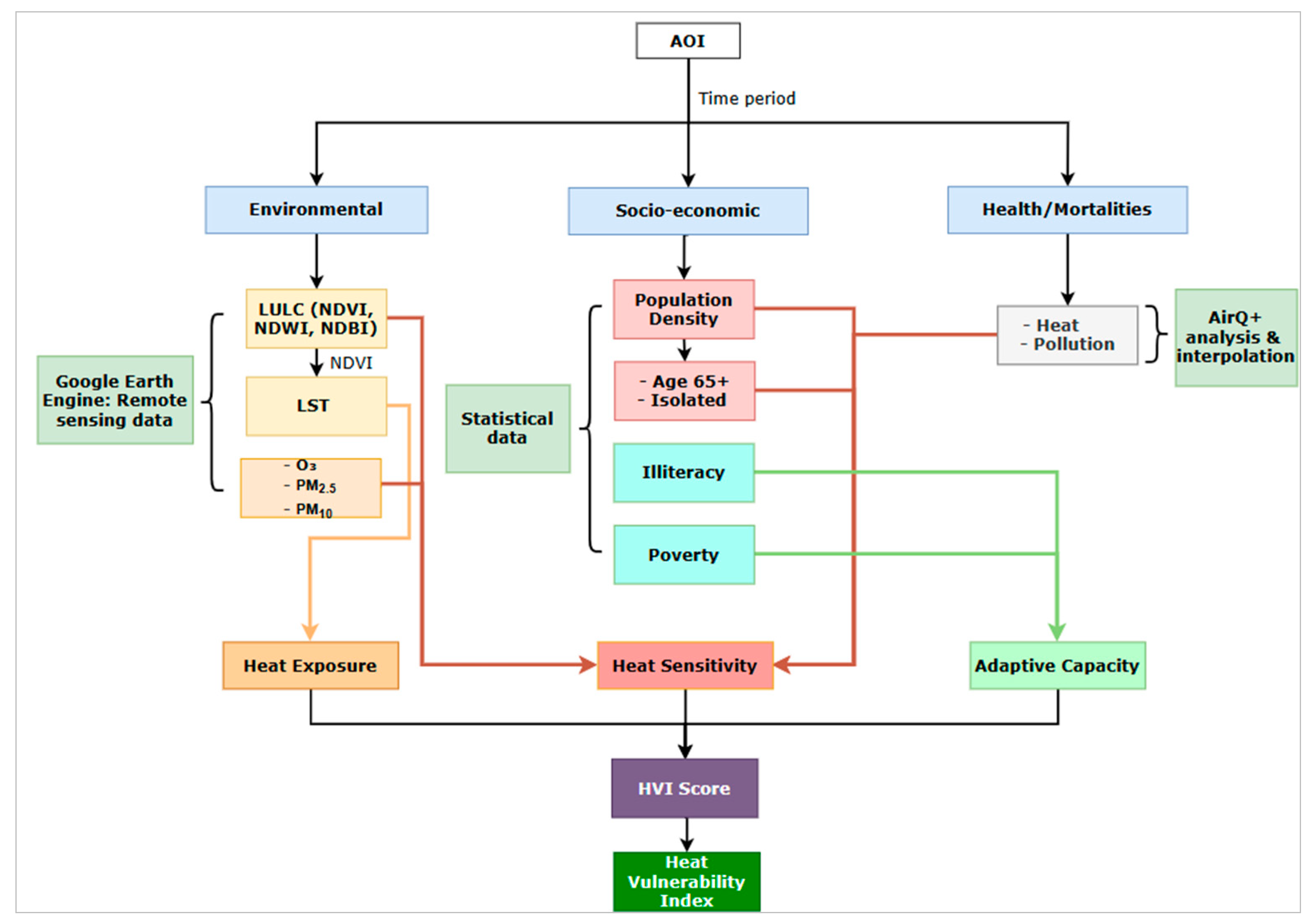
This combination of environmental, socioeconomic and health risk variables provide a comprehensive understanding of urban heat risk and is categorized into three groups: Heat Exposure, Heat Sensitivity, and Adaptive Capacity. The working model for deriving the HVI for Toulouse is illustrated in Figure 1.

2.2. Calculation of Indices and Parameters

To compute vegetation, water, and built-up indices, as well as land surface temperature (LST) and Heat Vulnerability Index (HVI), the mathematical expressions used in this study are summarized in Table 2.
These formulas were applied to Sentinel-2 and Landsat 8 imagery using Google Earth Engine. NDVI, NDWI, and NDBI were derived from band-specific reflectance values, while LST was computed using the single-channel algorithm. HVI was calculated by normalizing all indicators and integrating them using an equal-weight approach.

3. Results and Discussion

3.1. Environmental Mortalities

Between 2014 and 2023, France recorded approximately 37,825 heat-related deaths, with the most severe years being 2022 (6969) and 2023 (5167) [24]. During the summer of 2023, about 3 out of every 100 fatalities were attributable to heat, with the elderly being the most affected at 3700 deaths [27]. Climate projections suggest that heat-related mortality in France could rise by 1.7% per decade under scenarios by 2050 [28].

3.1.1. Data Analysis

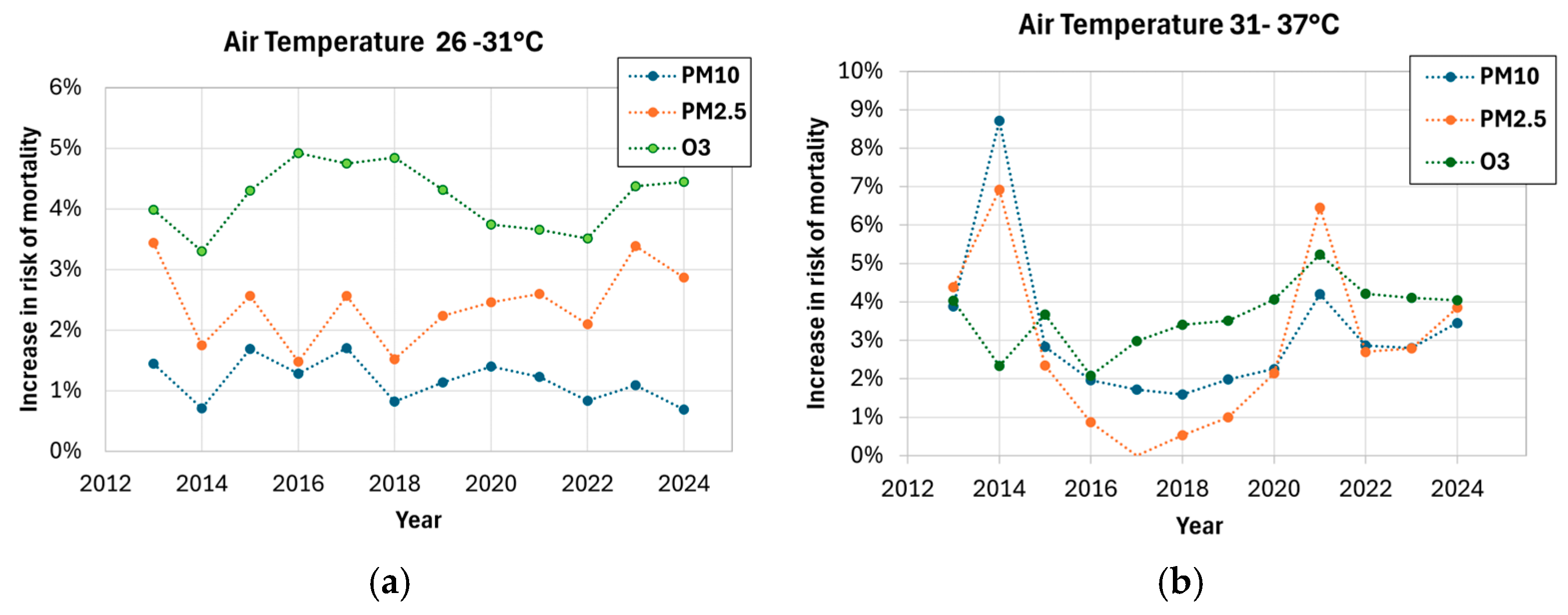
We analyzed weather and air quality data from Météo France [29] and Atmo Occitanie [30] for the city of Toulouse, covering the period from 2013 to 2024. The dataset was filtered to focus on periods when the air temperature ranged between 26–31 °C and 31–37 °C, which allowed us to assess the relationship between UHI and UPI effects on mortality. The attributable risk of mortality due to air pollution was calculated using AirQ+ version 2.2 [25], the official software developed by the World Health Organization (WHO). This approach allowed us to quantify the combined impact of heat and pollution on public health in terms of the rise in the risk rate of mortalities over the years. The calculated results are plotted in Figure 2.
It is observed that O3 consistently posed the highest health risk during warmer periods. Between 26 and 31 °C, O3 related mortality risk ranged from 3.2% to 5%, showing notable year-to-year variability. PM2.5 had a moderate impact, with risk increases between 2% and 3.5%, while PM10 showed the lowest impact, ranging from 1% to 1.9%. At higher temperatures (31–37 °C), the health risks intensified. O3 remained the dominant pollutant, with risk increases reaching up to 5.5%. PM2.5 spiked in 2014 and 2021, with mortality risks of 6% and 7%, respectively, but dropped to 0% in 2017, which is mainly due to irregular monitoring or missing data rather than actual air quality improvement. PM10 showed a significant peak in 2014, with a mortality risk of 8.9%, though its overall impact remained moderate.

3.1.2. Interpolated Mapping Visualization

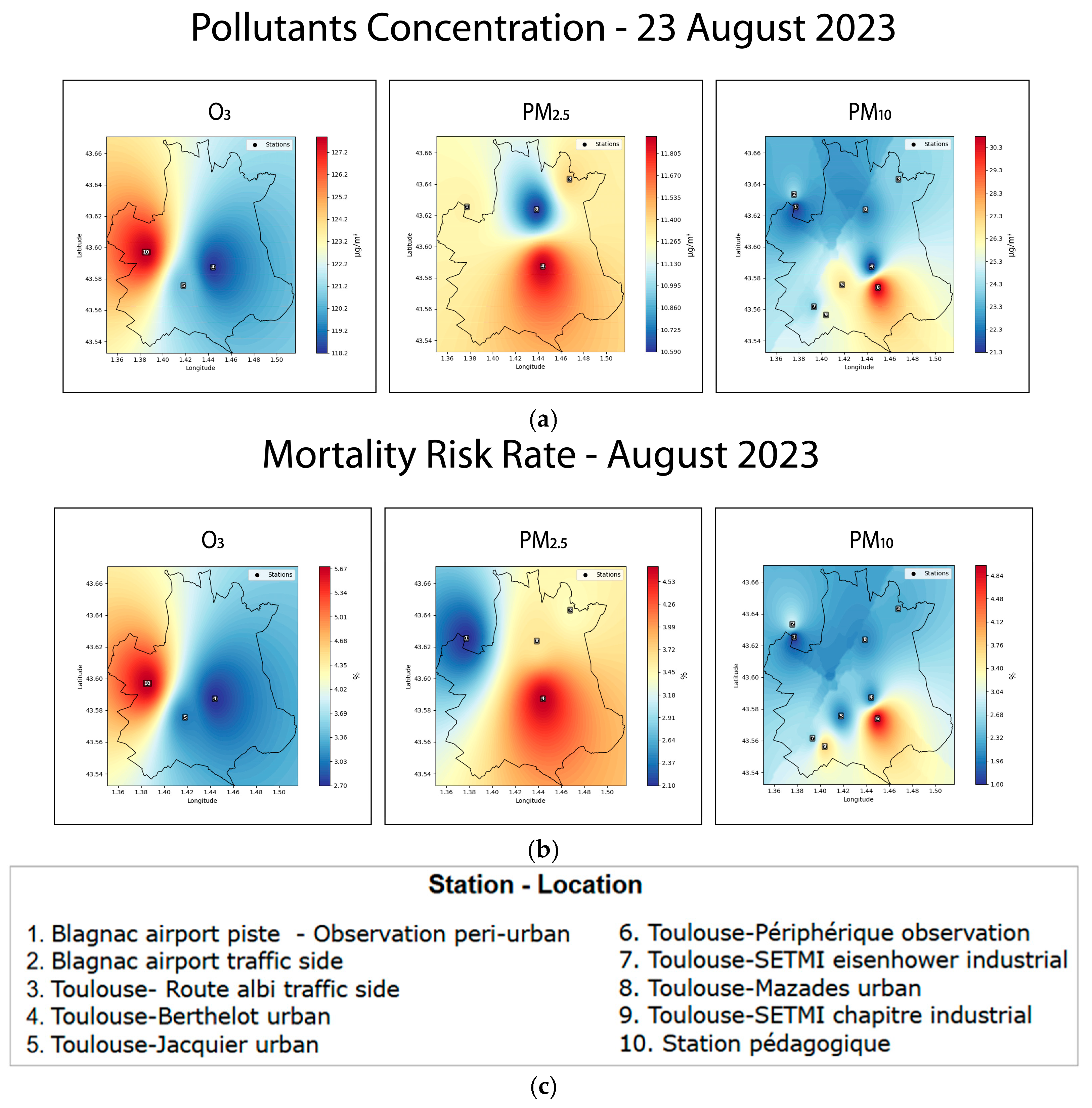
Previously, research studies have shown that during the hot season, combined exposure to extreme heat and a rise in concentrations of pollutants such as O3, PM10, and PM2.5 can lead to a synergistic increase in mortality risk up to 21%, with even higher risks for cardiovascular and respiratory deaths [31]. After analyzing the overall mortality risk in the city of Toulouse using data from ATMO Occitanie, the finding validates the relationship between the UHI effect and the UPI phenomenon and their dynamic interactions. For spatial visualization and distribution, data from 10 air quality monitoring stations located in different areas throughout the city were collected to calculate and interpolate the spatial distribution of mortality risk due to concentration of O3, PM10, and PM2.5. The interpolation was performed using the Inverse Distance Weighting (IDW) method, which was selected for its simplicity and effectiveness in representing spatial variability because of limited monitoring points.
The highest air temperature was recorded in Toulouse on 23 August 2023. Figure 3 presents the interpolation maps of air pollutant concentrations monitored on 23 August and illustrates the estimated mortality risk of the same month. These interpolated maps demonstrate the spatial variability in air quality and associated risk magnitude in different zones of Toulouse. This method and the results obtained may improve the accuracy of HVI assessment for each neighborhood within the city.

3.2. Spatial Indicators

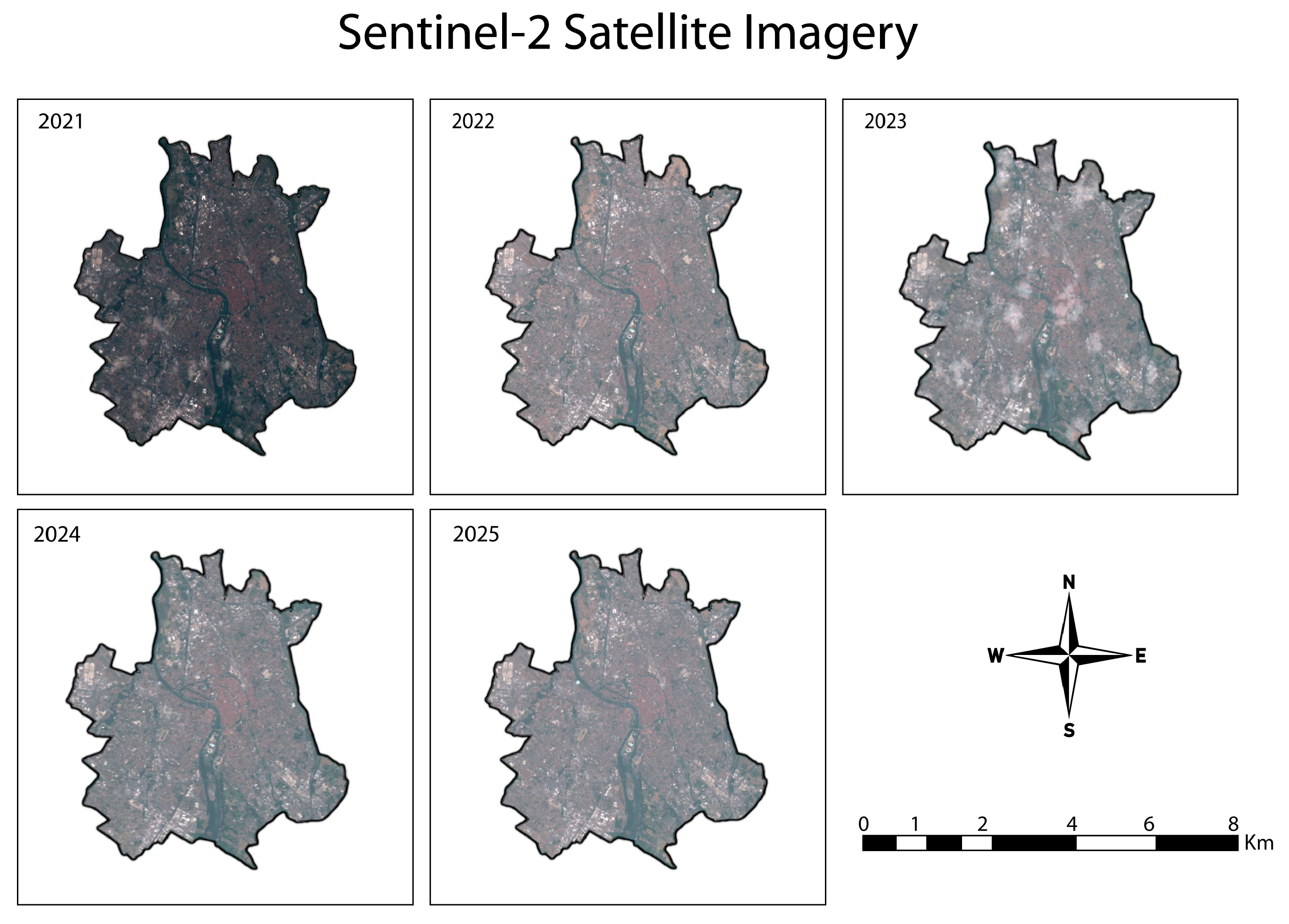
A shapefile representing the Toulouse boundary was used to define the area of interest (AOI). The map is centered on this AOI with a zoom level of 10. Sentinel-2 satellite imagery was selected and filtered by date, location, and cloud cover (less than 10%) shown in Figure 4. The analysis focuses on recent patterns from 2021 to 2025, specifically during the summer months, i.e., June, July, and August. The satellite image obtained for 2021 was the clearest among all the years. In contrast, 2023 was cloudier than the others, while in the remaining years, light haze and scattered clouds were observed.

3.2.1. Spectral Indices/Vegetation and Land Cover Indices

To monitor environmental changes over time, as well as land cover dynamics and surface features, spectral indices were calculated for vegetation, built-up areas, and water bodies. These indices are derived from mathematical combinations of reflectance values from different bands of satellite imagery.
a.
Normalized difference vegetation index (NDVI)
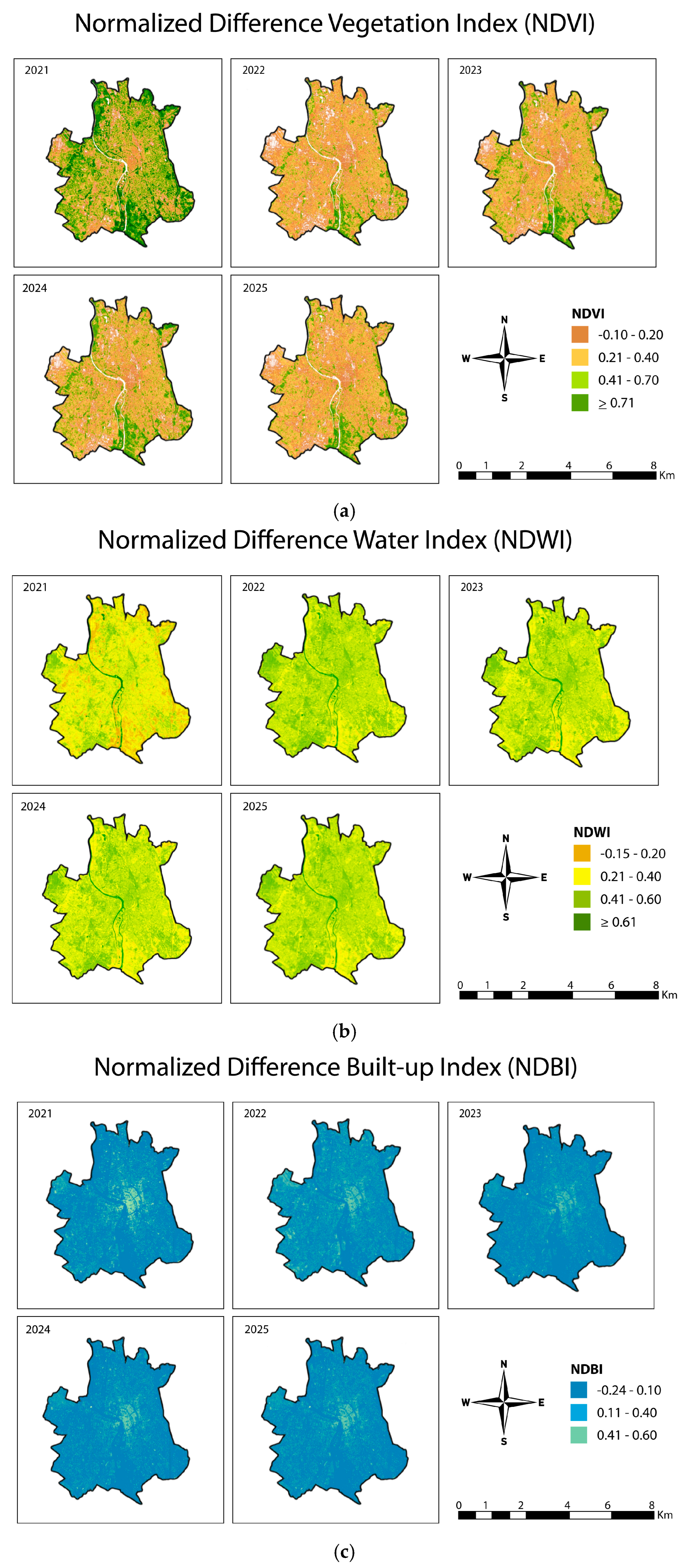
This index is used for assessing vegetation health and density. It is calculated using reflectance values from the red and NIR ranges. A higher NDVI value was observed in 2021, indicating healthier vegetation. In contrast, vegetation loss was noted in the other years, with the most significant decline occurring in 2022, shown in Figure 5a.
b.
Normalized difference water index (NDWI)
NDWI is used to identify and monitor water bodies by enhancing water-related spectral signals and calculated using green and SWIR reflectance values. The highest NDWI was observed in 2025, which can be noticed in Figure 5b, likely due to precipitation and consistently moist pavements during the summer compared to other years. In contrast, 2021 was the driest year.
c.
Normalized difference Built-up index (NDBI)
To identify built-up areas by the spectral response of man-made surfaces, it is calculated using SWIR and NIR reflectance values. The highest NDBI was observed in 2021–2022, shown in Figure 5c, possibly due to urban expansion or construction activities and dry conditions, while a lower built-up area coverage was noted in 2023.
d.
Land use/land cover (LULC)
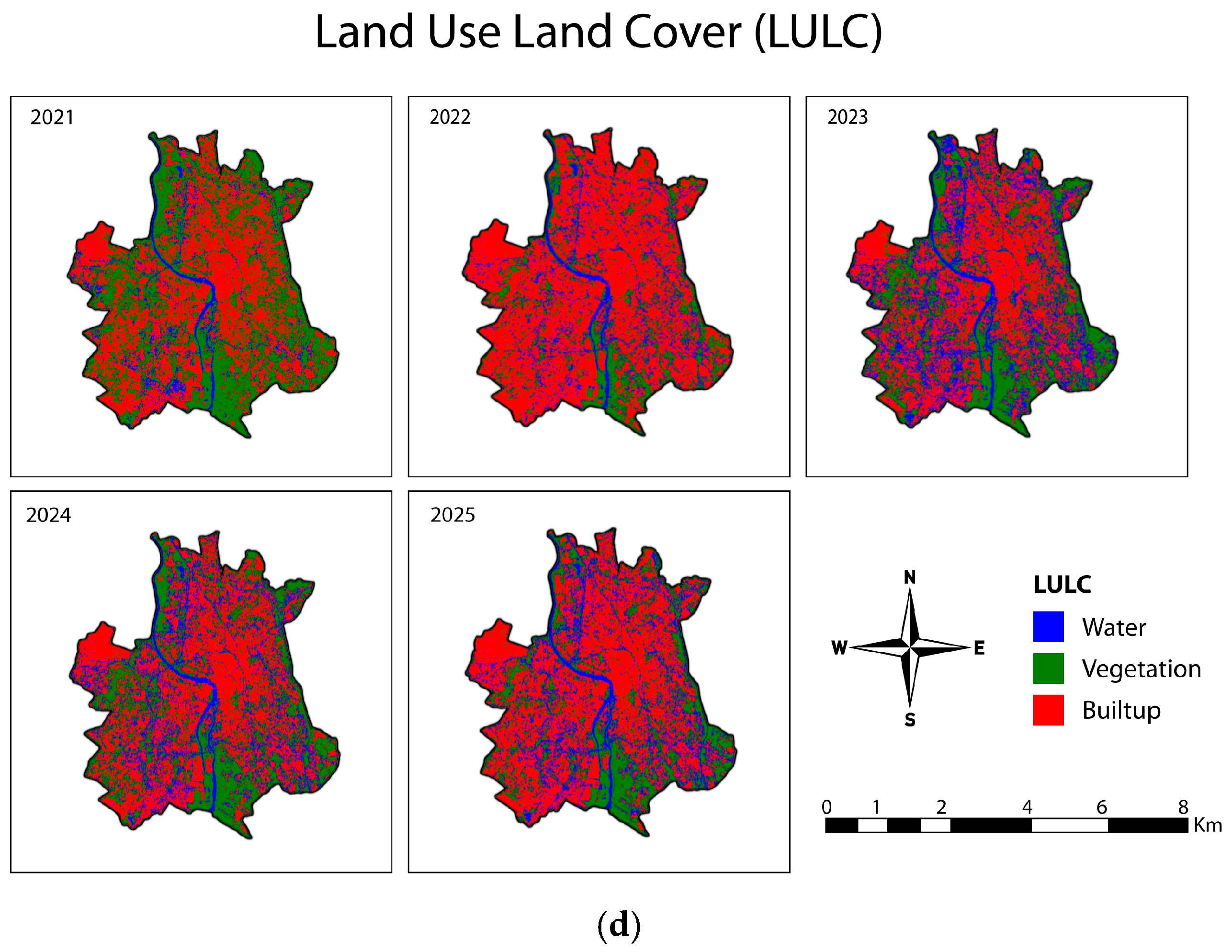
Extracted images of NDVI, NDBI and NDWI were used and a new image layer with land cover was initialized, with all pixel values set to zero. A classification algorithm was applied as shown in Table 2 earlier. The change in LULC in the hot season over the years is presented in Figure 5d.

3.2.2. Air Quality

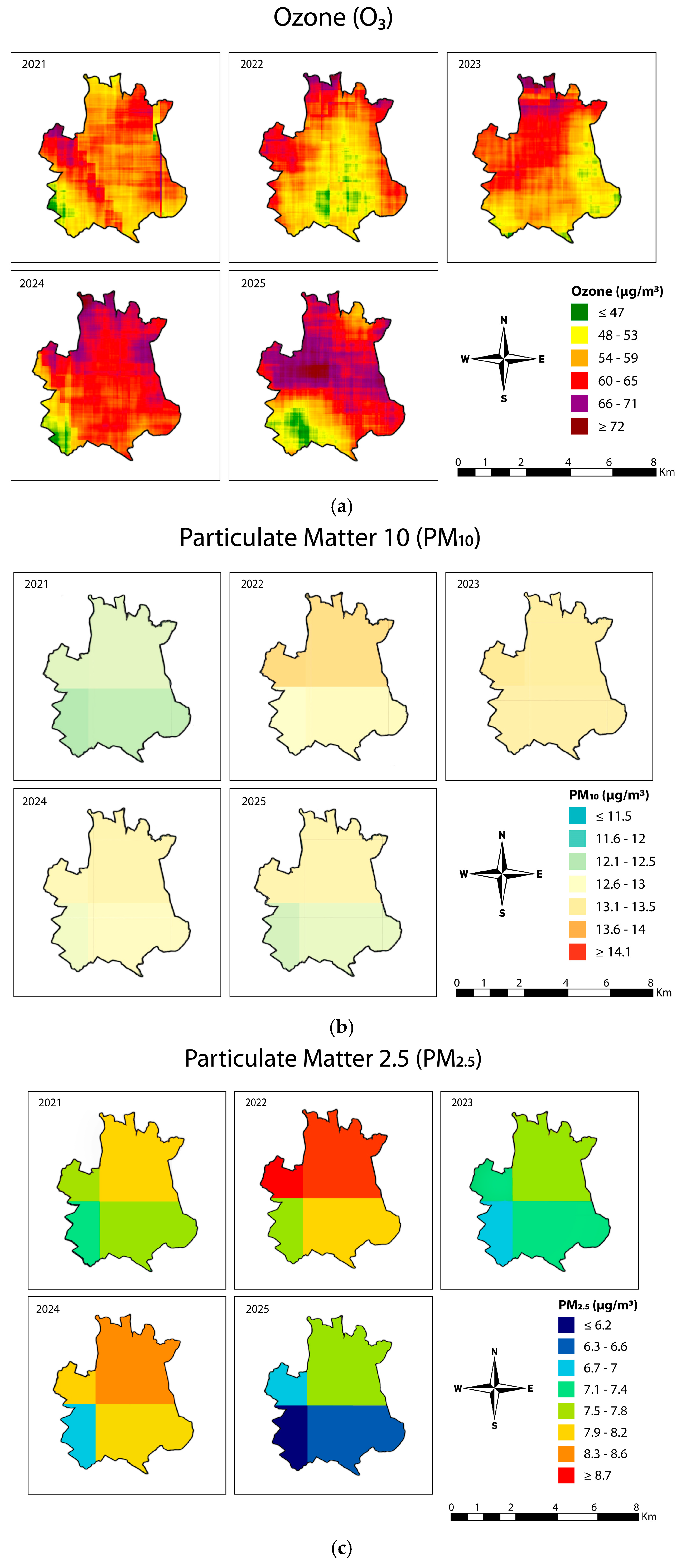
In the preprocessing stage, data analysis from 2013 to 2024 revealed that O3, PM10, and PM2.5 play important roles in increasing health risks during hot periods. O3 shows a significant relationship with high temperatures, while PM10 and PM2.5 exhibit variable behavior often forming secondarily due to rising temperatures combined with humidity. For spatial assessment and calculations, O3 data was obtained from Sentinel-5P, which provides satellite-based measurements. PM2.5 and PM10 data were sourced from the CAMS (Copernicus Atmosphere Monitoring Service), while general air quality parameters were supported by data from ECMWF (European Centre for Medium-Range Weather Forecasts). Spatial maps were generated using average satellite imagery collected during the summer periods over the last five years clipped to the AOI for localized analysis, and these maps are presented in Figure 6.
The results indicate that ground-level O3 rise between 2021 and 2025, with 2025 showing the most widespread increase across the study area, although the concentrations suggest moderate risk overall for sensitive groups. Furthermore, the average PM10 concentration over three months was close to the regulatory limit and indicates a high risk in 2022 and a moderate risk in 2023. As for PM2.5, all years remained within the safe zone; however, an elevated risk was observed in 2022.

3.2.3. Land Surface Temperature

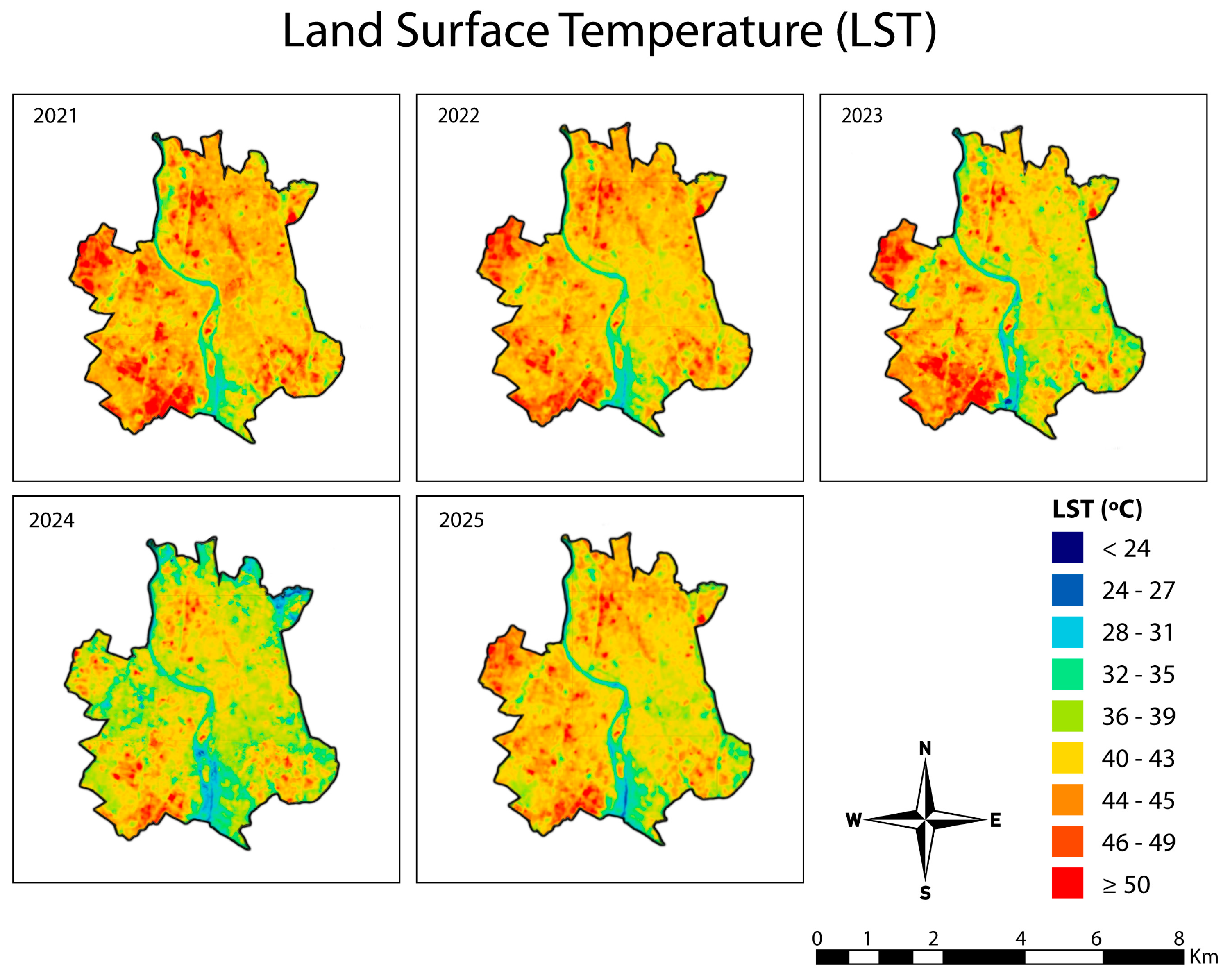
High-resolution LST data is obtained using the Landsat 8 model, where raw digital numbers are converted to reflectance and radiance using scale factors provided in USGS metadata, and cloud-affected pixels are removed using the QA PIXEL band. Computed NDVI was used for fractional vegetation cover (FV), which is used to estimate surface emissivity (ε). LST was calculated using the single-channel algorithm applied to band 10 (thermal), with brightness temperature derived from radiance using metadata constants (K1, K2). The final LST values are computed using equations shown in Section 2.2.
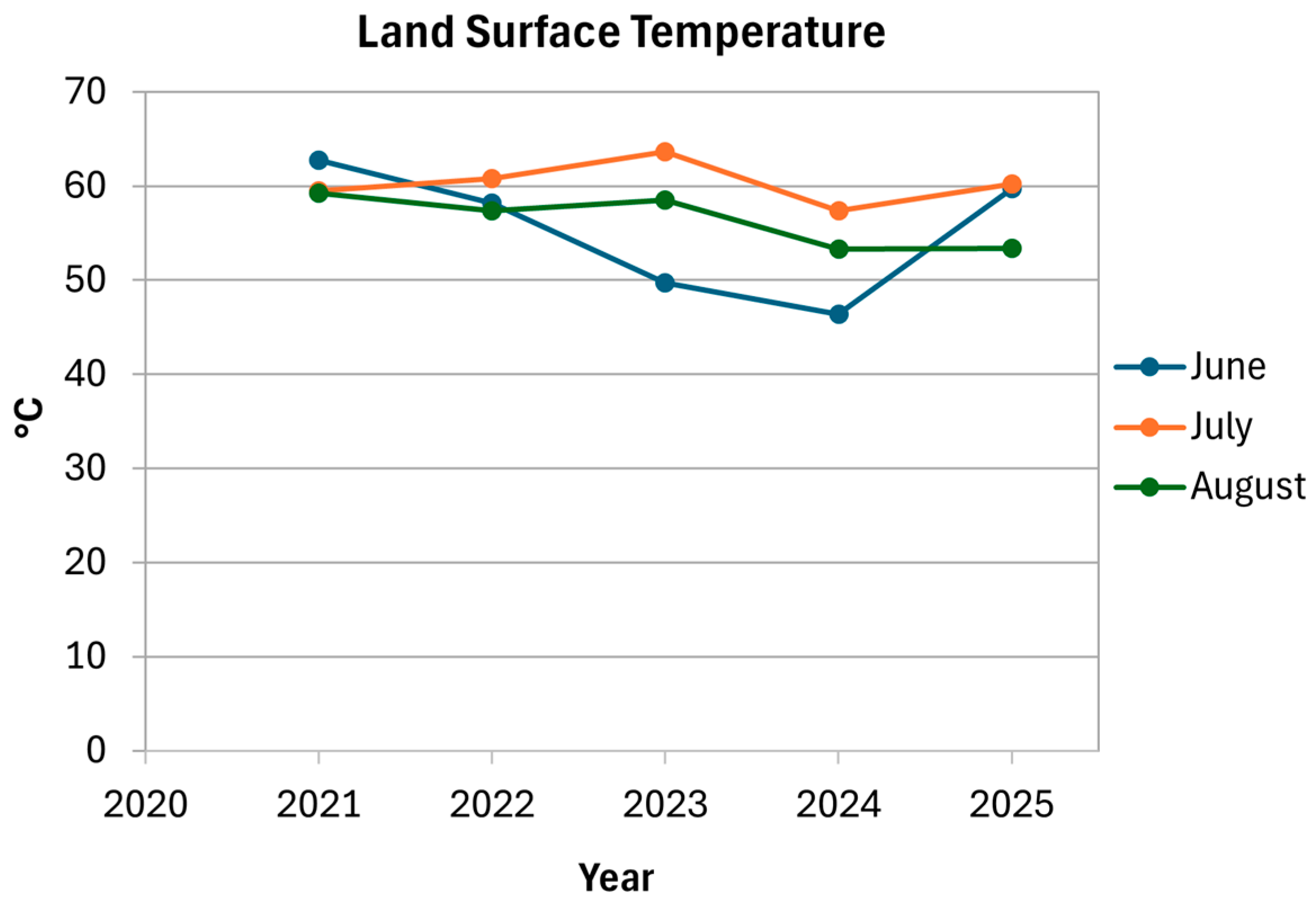
The captured maximum LST is plotted in Figure 7, and generated LST maps for summer periods are shown in Figure 8.
The analysis shows that July is generally the hottest month. The resulting LST maps indicate that the summer of 2024 was approximately 5 °C cooler compared to other years, especially in comparison with the hottest years 2021 and 2022.

3.2.4. Heat Vulnerability Index (HVI)

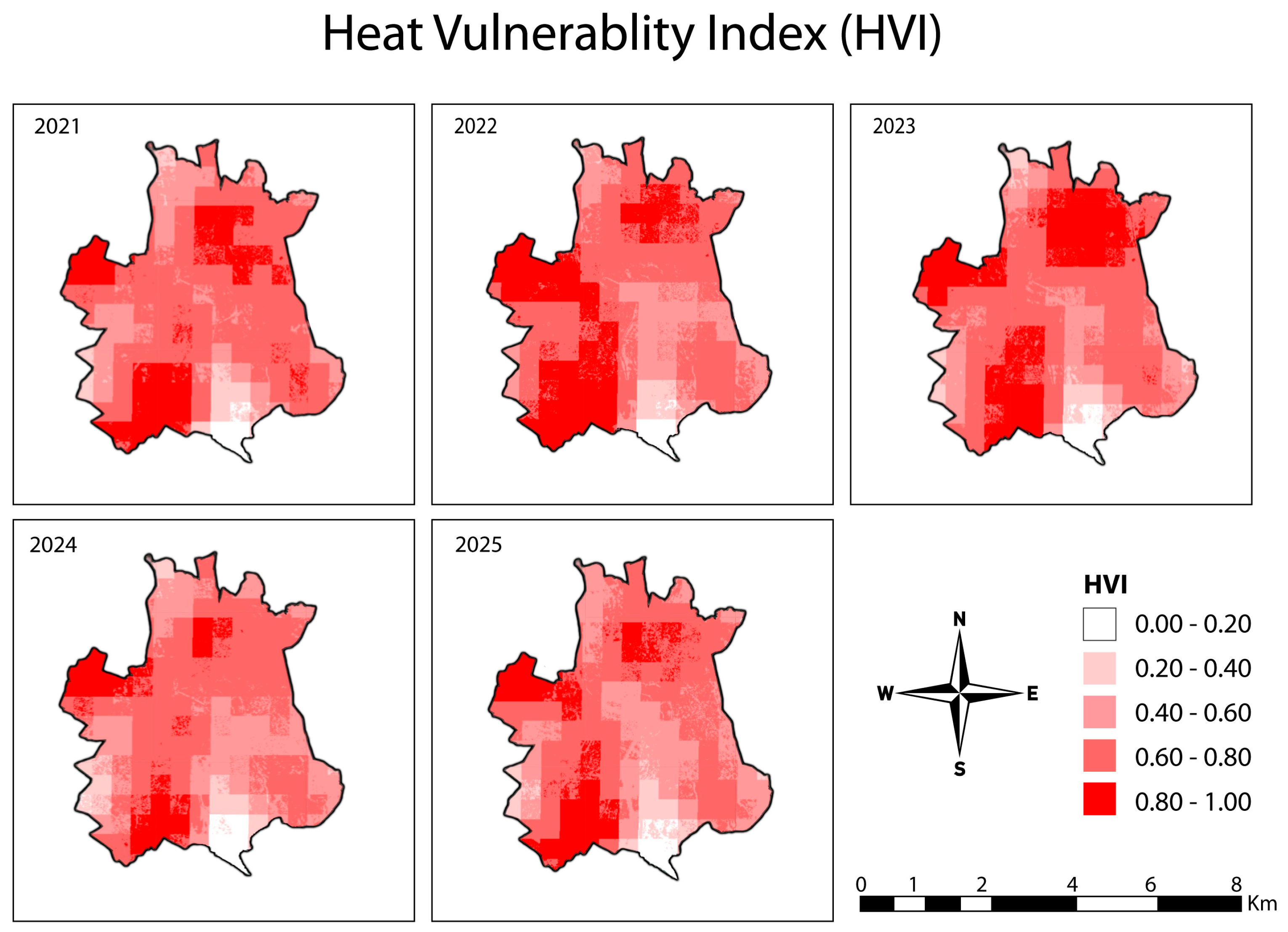
Finally, to assess heat vulnerability across the city, environmental and socio-economic datasets were normalized to a common scale between 0 and 1 and clipped to the same region. This involved calculating the minimum and maximum values for each environmental indicator within the AOI. All normalized risk factors were divided into three categories to derive the HVI. LST was used as the primary heat exposure indicator, while other environmental and social factors including vegetation, built-up areas, water presence, population density, elderly people, isolated people, risk of mortality rate due to heat and pollution, and air quality degradation were combined to represent sensitivity, with the sum divided by 10 for scaling. Poverty and illiteracy are categorized as adaptive capacity. A multi-layer data fusion approach was used to interpolate the HVI scores and visualize maps to identify areas that are at high risk in response to urban heat intensity and air quality degradation. Figure 9 illustrates the changes in HVI with the risk scores from low to very high over the years and highlights the areas of concern.

3.3. Spatio-Temporal Variability Analysis

The heat vulnerability assessment from 2021 to 2025 reveals significant spatiotemporal variability by influenced variables. The important observations after analyzing spatial results are presented in Table 3.
In 2021, the highest mean LST was recorded despite comparatively higher vegetation cover than in later years. The dominance of built-up areas and limited water bodies amplified urban heat exposure, with nearly 79% of the population falling into high and very high (H + VH) classes. This indicates that urban surface composition outweighed the moderating effect of vegetation during this year.
In 2022, rapid urban expansion was evident, and reduced vegetation intensified LST and degraded air quality. O3 and PM2.5 worsened, which increased the health risks. Consequently, vulnerability remained critical; this year marked the most severe convergence of urbanization, poor air quality, and elevated heat stress.
By 2023, vegetation and water bodies showed the best balance. However, due to high mean LST in most areas, ground-level O3 was elevated, reduced the cooling effect of improved land cover. Vulnerability distribution shifted only marginally, with VH + H still affecting 76.8% of the population, highlighting the persistent influence of air pollution as a dominant vulnerability driver.
The year 2024 demonstrated the most pronounced improvement. Vegetation and precipitation helped reduce LST and O3 levels slightly. As a result, very high vulnerability declined substantially to 18.9%, the lowest across the study period, while medium and low categories expanded to 32.6% combined. This suggests that ecological restoration effectively reduced thermal exposure and redistributed vulnerability toward less severe classes.
In 2025, due to back-to-back hot days, LST remained increased, and vegetation started drying. However, the water index was slightly increased, and particulate matter concentrations were the lowest across all years. However, O3 remained elevated in most of the areas. HVI distribution became more balanced, with VH + H having dropped to 54.7%. This indicates a partial adaptation, even under conditions of reduced vegetation.
The observed patterns in Toulouse are consistent with global evidence on UHI dynamics and mitigation strategies. Previous studies have emphasized that dense built-up areas combined with limited vegetation significantly amplify heat stress [32]. The improvement observed in 2024 aligns with findings that green and blue infrastructure can effectively reduce thermal exposure [33]. However, persistent ozone levels highlight the need for integrated approaches that combine heat mitigation with air quality management [34]. These results reinforce the importance of multi-factor frameworks for urban resilience planning.

4. Conclusions

This study presents a scalable approach to rapidly and temporally assess HVI for large cities. The scalability lies in its reliance on globally available datasets such as satellite-derived LST, spectral indices, and air quality data from Google Earth Engine combined with locally sourced demographic and socioeconomic statistics. These data requirements and methodological steps (data acquisition, normalization, equal-weight integration, and spatial mapping) can be replicated for other cities using similar sources. The risk factors influencing current heat vulnerability were selected by reviewing scientific literature and data analysis. The methodology integrates geospatial environmental factors, statistical socioeconomic and demographic data, and mortality risk derived from historical records. A significant increase in mortality risk was observed during periods of high temperatures and degraded air quality, reflecting the interconnected relationship between anthropogenic activities and the occurrence of extreme heat in cities. An equal-weight approach was used to derive spatial HVI for the city of Toulouse. The research leveraged Google Earth Engine to generate dynamic maps, and the last five years were simulated to compare HVI trends over time.
Overall, the findings demonstrate that LST and HVI are strongly influenced by vegetation and water dynamics, while O3 pollution remains a persistent constraint on reducing vulnerability. The year 2022 was worst and showed the most critical vulnerability due to extensive urbanization and poor air quality. The highest temperature was recorded in August 2023. A vulnerability shift was observed, initially dominated by VH + H in 2021–2023, later shifting toward medium class in 2024–2025, showing significant improvements, and highlighting the effectiveness of green and blue infrastructure in mitigating heat-related risks. However, some areas continue to exhibit high temperatures and HVI, particularly in densely built-up and industrial zones that release thermal energy and O3 at ground level. These zones require proactive measures. This spatial–temporal, data-driven approach enables targeted interventions and supports smart city planners to improve urban resilience for public well-being. By visualizing complex patterns, it helps residents and stakeholders identify high-HVI zones. The research tool can also guide decisions to allocate resources for vulnerable populations and develop adaptive responses that promote long-term resilience.
Limitation: The equal-weight approach applied in HVI calculation assumes all factors contribute equally to vulnerability, which may not fully reflect their actual influence. This choice was made to avoid subjective bias in the absence of standardized weighting criteria. Future studies could incorporate expert-driven or data-driven weighting methods to improve accuracy.

Author Contributions

Methodology: A.M.Q.; software: A.M.Q. and O.D.; validation: A.M.Q.; spatial analysis: A.M.Q.; data analysis: A.M.Q. and O.D.; writing—original draft preparation: A.M.Q.; review and editing: A.M.Q., K.S., A.Z., M.A.B.T., O.D. and H.B.; visualization: A.M.Q.; supervision: A.M.Q. and M.A.B.T.; project administration: K.S. All authors have read and agreed to the published version of the manuscript.

Funding

This research received no external funding.

Institutional Review Board Statement

Not applicable.

Informed Consent Statement

Not applicable.

Data Availability Statement

These data were derived from the following resources available in the public domain: Satellite data were obtained from Google Earth Engine (https://earthengine.google.com). Demographic and socioeconomic data were sourced from INSEE (https://www.insee.fr). Meteorological data were obtained from Meteo France (https://meteofrance.com), and air quality data were obtained from Atmo Occitanie (https://www.atmo-occitanie.org). All datasets are publicly available from these sources.

Conflicts of Interest

Authors A.M.Q., K.S., A.Z., O.D., H.B., and M.A.B.T. were employed by the company Capgemini Engineering. The authors declare that the research was conducted in the absence of any commercial or financial relationships that could be construed as a potential conflict of interest.

Abbreviations

UHIUrban heat island
UPIUrban pollution island
HVIHeat vulnerability index
O3Ozone
LSTLand surface temperature
PM2.5Particulate matter diameter size 2.5 µm
PM10Particulate matter diameter size 10 µm
ε Surface emissivity
ρ Radiative constant
λ Wavelength
LULCLand use/land cover
NDVINormalized difference vegetation index
NDBINormalized difference built-up index
NDWINormalized difference water index
AOIArea of interest
NIRNear-infrared
SWIRShortwave infrared

References

  1. Matsumoto, T.; Bohorquez, M.L. Building systemic climate resilience in cities. In OECD Regional Development Papers; Organisation for Economic Co-Operation and Development: Paris, France, 2023. [Google Scholar]
  2. Lemonsu, A.; Viguie, V.; Daniel, M.; Masson, V. Vulnerability to heat waves: Impact of urban expansion scenarios on urban heat island and heat stress in Paris (France). Urban Clim. 2015, 14, 586–605. [Google Scholar] [CrossRef]
  3. Evidence from French Cities. Available online: https://www.insee.fr/en/statistiques/8261528 (accessed on 11 June 2025).
  4. Song, X.; Shi, H.; Jin, L.; Pang, S.; Zeng, S. The Impact of the Urban Heat Island Effect on Ground-Level Ozone Pollution in the Sichuan Basin, China. Atmosphere 2024, 16, 14. [Google Scholar] [CrossRef]
  5. Piracha, A.; Chaudhary, M.T. Urban air pollution, urban heat island and human health: A review of the literature. Sustainability 2022, 14, 9234. [Google Scholar] [CrossRef]
  6. Huang, Z.; Lim, J.; Skidmore, M. The impacts of heat and air pollution on mortality in the United States. Weather Clim. Soc. 2024, 16, 275–301. [Google Scholar] [CrossRef]
  7. Javan, K.; Darestani, M. Assessing environmental sustainability of a vital crop in a critical region: Investigating climate change impacts on agriculture using the SWAT model and HWA method. Heliyon 2024, 10, e25326. [Google Scholar] [CrossRef] [PubMed]
  8. Vandentorren, S.; Suzan, F.; Medina, S.; Pascal, M.; Maulpoix, A.; Cohen, J.C.; Ledrans, M. Mortality in 13 French cities during the August 2003 heat wave. Am. J. Public Health 2004, 94, 1518–1520. [Google Scholar] [CrossRef]
  9. Extreme Weather Watch. Available online: https://www.extremeweatherwatch.com/cities/toulouse/average-temperature-by-year (accessed on 8 December 2025).
  10. Climate Adapt. Available online: https://climate-adapt.eea.europa.eu/en/mission/external-content/pdfs/mission-stories-toulouse_v8_final.pdf/ (accessed on 11 June 2025).
  11. Nayak, S.G.; Shrestha, S.; Kinney, P.L.; Ross, Z.; Sheridan, S.C.; Pantea, C.I.; Hsu, W.H.; Muscatiello, N.; Hwang, S.A. Development of a heat vulnerability index for New York State. Public Health 2018, 161, 127–137. [Google Scholar] [CrossRef] [PubMed]
  12. Bodilis, C.; Yenneti, K.; Hawken, S. Heat Vulnerability Index for Sydney. City Futures Research Centre, UNSW Sydney. Dataset. 2018. Available online: https://cityfutures.ada.unsw.edu.au/cityviz/heat-vulnerability-index-sydney/ (accessed on 10 June 2025).
  13. City of Philadelphia. Available online: https://www.phila.gov/2019-07-16-heat-vulnerability-index-highlights-city-hot-spots/ (accessed on 8 December 2025).
  14. Wolf, T.; McGregor, G. The development of a heat wave vulnerability index for London, United Kingdom. Weather Clim. Extrem. 2013, 1, 59–68. [Google Scholar] [CrossRef]
  15. Sabrin, S.; Karimi, M.; Nazari, R. Developing vulnerability index to quantify urban heat islands effects coupled with air pollution: A case study of Camden, NJ. ISPRS Int. J. Geo-Inf. 2020, 9, 349. [Google Scholar] [CrossRef]
  16. Qureshi, A.M.; Rachid, A. Heat vulnerability index mapping: A case study of a medium-sized city (Amiens). Climate 2022, 10, 113. [Google Scholar] [CrossRef]
  17. Niu, Y.; Li, Z.; Gao, Y.; Liu, X.; Xu, L.; Vardoulakis, S.; Yue, Y.; Wang, J.; Liu, Q. A systematic review of the development and validation of the heat vulnerability index: Major factors, methods, and spatial units. Curr. Clim. Chang. Rep. 2021, 7, 87–97. [Google Scholar] [CrossRef] [PubMed]
  18. Li, H.; Meier, F.; Lee, X.; Chakraborty, T.; Liu, J.; Schaap, M.; Sodoudi, S. Interaction between urban heat island and urban pollution island during summer in Berlin. Sci. Total Environ. 2018, 636, 818–828. [Google Scholar] [CrossRef] [PubMed]
  19. Google Earth Engine. Available online: https://developers.google.com/earth-engine/datasets/catalog/LANDSAT_LC08_C02_T1_L2 (accessed on 10 September 2025).
  20. Google Earth Engine. Available online: https://developers.google.com/earth-engine/datasets/catalog/ECMWF_CAMS_NRT?hl=fr (accessed on 15 September 2025).
  21. Google Earth Engine. Available online: https://developers.google.com/earth-engine/datasets/catalog/COPERNICUS_S5P_OFFL_L3_O3?hl=fr (accessed on 16 September 2025).
  22. Google Earth Engine. Available online: https://developers.google.com/earth-engine/datasets/catalog/MODIS_061_MCD12Q1?hl=fr (accessed on 16 September 2025).
  23. Muncipality of Toulouse. Available online: https://www.insee.fr/fr/statistiques/2011101?geo=FRANCE-1 (accessed on 8 December 2025).
  24. Pascal, M.; Wagner, V.; Lagarrigue, R.; Casamatta, D.; Pouey, J.; Vincent, N.; Boulanger, G. A yearly measure of heat-related deaths in France, 2014–2023. Discov. Public Health 2024, 21, 44. [Google Scholar] [CrossRef]
  25. World Health Organization (WHO). Available online: https://www.who.int/tools/airq (accessed on 4 August 2025).
  26. European Centre for the Development of Vocational Training. Available online: https://www.cedefop.europa.eu/en/news/france-new-study-highlights-adult-basic-skill-gaps-and-training-needs (accessed on 9 August 2025).
  27. Public Health France. Available online: https://www.santepubliquefrance.fr/ (accessed on 9 August 2025).
  28. Karwat, A.; Franzke, C.L. Future projection of heat mortality risk for major European cities. Weather Clim. Soc. 2021, 13, 913–931. [Google Scholar] [CrossRef]
  29. Weather Toulouse, Meteo France. Available online: https://meteofrance.com/ (accessed on 15 July 2025).
  30. Air Quality Toulouse, ATMO France. Available online: https://www.atmo-occitanie.org/ (accessed on 16 July 2025).
  31. US. National Science Foundation. Available online: https://www.nsf.gov/news/risk-death-surges-when-extreme-heat-air-pollution (accessed on 20 September 2025).
  32. Zhao, L.; Lee, X.; Smith, R.B.; Oleson, K. Strong contributions of local background climate to urban heat islands. Nature 2014, 511, 216–219. [Google Scholar] [CrossRef] [PubMed]
  33. Santamouris, M. Cooling the cities—A review of reflective and green roof mitigation technologies to fight heat island and improve comfort in urban environments. Sol. Energy 2014, 103, 682–703. [Google Scholar] [CrossRef]
  34. Stone, B.; Vargo, J.; Habeeb, D. Managing climate change in cities: Will climate action plans work? Landsc. Urban Plan. 2012, 107, 263–271. [Google Scholar] [CrossRef]
Figure 1. Conceptual framework for deriving the Heat Vulnerability Index (HVI) for Toulouse, integrating components of heat exposure, heat sensitivity, and adaptive capacity using multi-source geospatial and demographic data.
Urbansci 09 00541 g001
Figure 2. Increase in mortality risk due to air pollution in Toulouse from 2013–2024, analyzed across two temperature ranges: (a) 26–31 °C and (b) 31–37 °C.
Urbansci 09 00541 g002
Figure 3. Interpolated maps using real-time data: (a) air pollutant concentration; (b) risk rate of mortality; (c) monitoring stations located in Toulouse at different locations.
Urbansci 09 00541 g003
Figure 4. Sentinel-2 imagery during summer months over the past five years (2021–2025).
Urbansci 09 00541 g004
Figure 5. Spectral indices during summer months over the past five years (2021–2025): (a) NDVI, (b) NDWI, (c) NDBI and (d) LULC.
Urbansci 09 00541 g005aUrbansci 09 00541 g005b
Figure 6. Air quality maps during summer months over the past five years (2021–2025): (a) O3, (b) PM10 and (c) PM2.5.
Urbansci 09 00541 g006
Figure 7. Recorded maximum LST during June, July and August over past five years (2021–2025).
Urbansci 09 00541 g007
Figure 8. LST maps during summer months over the past five years (2021–2025).
Urbansci 09 00541 g008
Figure 9. HVI maps during summer months over the past five years (2021–2025).
Urbansci 09 00541 g009
Table 1. Risk factors with their references and models, grouped according to their respective categories.
GroupsRisk FactorsData Source/Software/Model
Heat Exposure: degree to which location experiences high surface temperature.Land surface temperature—30 mLandsat 8 [19]
Heat sensitivity: the extent to which people are likely to be negatively affected by heat exposure, depending upon environmental and demographic factorsAir quality (PM10, PM2.5, and O3)—1 km2ECMWF/CAMS/NRT and Sentinel-5P [20,21]
LULC (NDVI, NDWI, NDBI)—900 mMODIS and Landsat 8 [19,22]
Population density (4325/km2)INSEE [23]
Elderly population age 65+ (14.5%)-
Socially isolated (6%)-
Mortalities (heat and pollution)Literature and AirQ+ [24,25]
Adaptive capacity: the ability of communities to adapt with heat risks influenced by social and economic conditions.Illiteracy rate (4%)Europa [26]
Poverty rate (22%)INSEE [23]
Table 2. Formulas for calculating spectral indices and derived parameters.
ParameterFormulaNomenclature
NDVI B a n d   5 B a n d   4 B a n d   5 + B a n d   4 Band 3: GREEN
Band 4: RED
Band 5: NIR (near-infrared)
Band 6: SWIR (shortwave infrared)
f represents random forest logic to assign classes based on indices’ bands
F V : Vegetation fraction
TB: brightness temperature from thermal band
λ = 0.00115 m approximate wavelength for Landsat 8 (band 10)
ρ = 1.438 K · m : Radiative constant
ε : surface emissivity
NDWI B a n d   3 B a n d   6 B a n d   3 + B a n d   6
NDBI B a n d   6 B a n d   5 B a n d   6 + B a n d   5
LULC f B a n d v a l u e s , N D V I , N D B I , N D W I
LST ε = 0.004 F V + 0.986
L S T = T B 1 + λ T B ρ ln ε 273.15
HVI E x p o s u r e + S e n s i t i v i t y A d a p t i v e   C a p a c i t y
Table 3. Comparison analysis of geospatial risk factors.
YearLULC—Coverage (%)Air Quality µg/m3—MeanLST (°C)—MeanHVI—Coverage (%)
VegetationBuilt-UpWater BodiesO3PM10PM2.5
20213461563.5128.0343VH = 28
H = 50.6
M = 16.2
L = 5.2
202218.7756.3711412.142.1VH = 33.2
H = 40.5
M = 22.6
L = 3.7
20233157127212.97.739.75VH = 35.9
H = 40.9
M = 15.8
L = 7.4
202429.25911.869.712.88.336.9VH = 18.9
H = 48.5
M = 22.4
L = 10.2
202523.46313.671.211.857.139.35VH = 20.4
H = 34.3
M = 33.8
L = 11.5
Disclaimer/Publisher’s Note: The statements, opinions and data contained in all publications are solely those of the individual author(s) and contributor(s) and not of MDPI and/or the editor(s). MDPI and/or the editor(s) disclaim responsibility for any injury to people or property resulting from any ideas, methods, instructions or products referred to in the content.