Article

From Heritage Valuation to Evidence-Based Computational Heritage Town Planning: Methodological Development and Application of the Cultural Heritage Town Development Index


1
Department of Architecture and Planning, Birla Institute of Technology, Mesra 835215, Jharkhand, India
2
Department of Management, Birla Institute of Technology, Mesra 835215, Jharkhand, India
*
Author to whom correspondence should be addressed.
Urban Sci. 2025, 9(12), 514; https://doi.org/10.3390/urbansci9120514
Submission received: 31 October 2025 / Revised: 24 November 2025 / Accepted: 25 November 2025 / Published: 3 December 2025

Abstract

The notion of heritage assessment has evolved from valuing monuments in isolation to recognizing heritage as complex socio-economic cultural systems. While the early approaches emphasized tangibility, later shifting to tourism potential, and economic valuation methods, where the heritage context was seldom considered. Subsequent frameworks have incorporated economic impact and sectoral development while specifically focusing on economic returns or heritage conservation. In recent years, integrated frameworks and management toolkits have broadened scope to include social, governance, and cultural aspects. However, frameworks remained generic or significantly oriented to the cultural heritage, lacking context-sensitive approaches tailored to the heritage ecosystem. This study aims to develop Cultural Heritage Town Development Index (CHTDI), a comprehensive framework that unifies conservation, socio-economic, physical, environmental, economic, and developmental aspects. Formulated using a three-stage integrated Delphi–AHP (Analytic Hierarchy Process) technique and PCA (Principal Component Analysis), this framework integrates six-dimensional criteria comprising parameters ranging from heritage-specific aspects to community participation, tourism, infrastructure, economy, cultural entrepreneurship, development policy, revenue generation, etc. The application of CHTDI to heritage towns in India demonstrates its diagnostic capacity to reveal sectoral gaps and aids evidence-based urban planning, representing the future of heritage assessment, and advancing value-centric models to comprehensive heritage ecosystem evaluation.

1. Introduction

Heritage represents the collective memory and identity of societies, encompassing tangible assets such as monuments, historic sites, and landscapes, as well as intangible practices including traditions, knowledge systems, and cultural expressions. It is ideally a legacy from the past and a living resource that moulds existing social fabric and future development trajectories. In modern urban contexts, heritage assumes additional significance, where it fosters place identity, attracts tourism, supports local economies, and sustains cultural diversity amidst globalization and rapid urbanization [1]. As cities expand and transform, heritage assets are increasingly exposed to pressures of population growth, infrastructure demands, environmental stress, market-driven redevelopment, and various government-led initiatives initiated to cater to these demands, which, in many cases, lead to the degradation of heritage environments when undertaken without adequate heritage-sensitive safeguards.
Traditionally, heritage was perceived and assessed in terms of its intrinsic attributes such as authenticity, historic value, and aesthetic appeal using conservation-centric approaches that prioritized monuments and sites in isolation. While these methods safeguarded physical structures, they often overlooked the broader socio-economic and environmental ecosystem in which heritage existed. Further research and frameworks have reframed heritage as a driver of inclusive growth and sustainable urban development, acknowledging its role in social cohesion, economic resilience, and environmental sustainability. Assessment tools have been key contributors to this shift, evolving from economic valuation techniques such as travel cost, hedonic pricing, contingent valuation, etc. to more holistic, multi-criteria frameworks such as UNESCO’s Historic Urban Landscape (HUL) [2] and multidimensional indicator evaluation. These tools provide decision-makers with the ability to quantify, compare, and prioritize interventions.
This study addresses these gaps by proposing the Cultural Heritage Town Development Index (CHTDI), a multidimensional, ecosystem-based framework specifically tailored for heritage towns, that evaluates heritage towns as integrated socio-economic, cultural, and infrastructural systems. To achieve this aim, the study proceeds with the following objectives:
  • To review and synthesize existing heritage valuation and assessment approaches to identify conceptual and methodological evolution,
  • To develop a multidimensional framework that integrates conservation, social, infrastructural, economic, environmental, and revenue-related aspects of heritage towns contributing towards heritage-sensitive urban planning,
  • To test the application of the framework and check its diagnostic capacity in identifying sectoral strengths, challenges, and role in governance and development planning.
The novelty of this framework lies in integrating multidimensional factors such as conservation, socio-cultural, infrastructural, economic, environmental and revenue-generating components into a single operational tool that contributes towards planning and management of heritage towns at an administrative scale, rather than being site- or precinct-specific. The proposed framework is designed to bridge conservation and development, thereby positioning heritage as an active agent in sustainable urban planning.
The key contributions of this study are threefold.
  • It conceptualizes heritage towns as living socio-economic systems and develops a comprehensive six-dimensional assessment model that moves beyond conventional heritage valuation approaches.
  • It provides a systematically constructed and empirically validated composite index that enables evidence-based planning, resource allocation, and sectoral prioritization.
  • Through the application to two contrasting Indian heritage towns, the study demonstrates the diagnostic capacity of CHTDI to reveal sectoral strengths, developmental trade-offs, and policy-level directions.
This paper is segmented into multiple sections ranging from discussion of the evolution of heritage assessment approaches and existing models (Section 2) to the conceptualization and development of the CHTDI framework in Section 3. The application of this index is demonstrated in Section 4, followed by implication of the comprehensive assessment and role in policy design, while Section 6 highlights the contribution of the CHTDI framework towards academia, theoretical framework, and practical application.

2. Theoretical Background: Evolution of Heritage Assessment Approaches

The assessment of cultural heritage has evolved in response to shifting paradigms of conservation, economics, and urban development. What began as a narrowly framed exercise in valuing monuments and sites for their authenticity, aesthetics, and tourism potential has gradually expanded to encompass wider economic, social, and environmental considerations [3]. This trajectory reflects both the limitations of earlier valuation techniques and the growing recognition of value of heritage as complex systems rather than isolated cultural assets [4]. This section traces the evolution from early tangible and intangible valuation methods to economic and tourism-led models, which are presently shifting to multidimensional frameworks.

2.1. Early Stage—Tangible and Intangible Heritage Valuation

The earliest attempts to evaluate heritage primarily concentrated on tangible authenticity, historical importance, and aesthetic appeal. Techniques such as the Travel Cost Method (TCM), Market Pricing Approach, Hedonic Pricing, Cost Benefit Analysis and Contingent Valuation were widely employed to assign economic value to monuments and historic sites [5] by estimating visitor expenditures, property premiums, and willingness-to-pay for preservation. These approaches provided a quantifiable justification for conservation, primarily through tourism and real estate benefits as discussed in Table 1. However, they remained narrowly focused on heritage as a product, overlooking its embeddedness in broader socio-economic and environmental systems.

2.2. Intermediate Stage—Economic and Tourism-Led Models

The concept of heritage assessment expanded to incorporate macroeconomic and tourism impacts. Methods such as input–output models and cost–benefit analyses, Choice-based logit model, Economic Impact model [6], etc., as observed in the late twentieth century, were included using OLS cross-section methods, Multi-criteria decision aid, correlation analysis, indicator scoring, weight-based critic method etc., that captured employment generation, revenue from tourism, and multiplier effects on local businesses. Emerging cultural economic frameworks positioned heritage as a driver of urban regeneration and economic diversification [7]. However, this stage reinforced a predominantly tourism-centric perspective, often underestimating infrastructure requirements, community well-being, and environmental pressures.

2.3. Integrated Stage—Multidimensional Heritage Value Assessment

The early twenty-first century portrays a paradigm shift with integrated frameworks. The UNESCO Historic Urban Landscape (HUL) recommendation marked a milestone by embedding heritage conservation within urban planning. Models such as Social Platform for Holistic Heritage Impact Assessment (SoPHIA) and applications of Multi-Criteria Decision Analysis (MCDA) like Analytical Hierarchy Process (AHP) have broadened evaluation criteria to include social capital [8], environmental sustainability [9], and governance [10]. The Culture-Based Development Model [11], World Economic Forecasting Model, LED Model [12] etc., have been instrumental to integrate multidimensional aspects of heritage [13]. However, these models focus on the heritage and economic aspects primarily, while eliminating the social and physical development of the heritage ecosystem [14], also supported by the community and governance [15]. Various urban development and assessment models such as Rapid Assessment Toolkit, Urban sustainability index [16], Ease of Living Index, Municipal Performance Index etc., have been developed at global as well as national level in India [17]. These evaluate the urban systems of a city or town [18]; however, when it comes to heritage aspects, it is evident that the context and heritage ecosystems have their particular pattern and development form [19]. These approaches enabled more context-sensitive prioritization of interventions but often relied on generic urban indicators, limiting their ability to capture heritage-specific challenges. Table 1 discusses the varied assessment approaches, their conceptual objectives and dimensions considered, while highlighting observations in terms of heritage ecosystem.
Table 1. Heritage assessment methods and approaches. Source: Authors.
S. No.Assessment ApproachObjectiveDimensions AssessedRemarksReferences
1Travel Cost Method (TCM)
Although proposed in 1947, it came into heritage-specific application in early 2000s.
Estimate recreational/heritage site value via visitor travel expenditureTangible heritage; tourism demandIgnores social, environmental, governance aspects; assumes access value only[5]
2Market Pricing Approach
Applied in real estate valuation of heritage-listed properties from 1970s onwards
Capture monetary value of heritage assets through comparable market pricesEconomic/real estateLimited to market-active properties; excludes non-use and cultural values[19]
3Cost Benefit Analysis (CBA)
Widely used in infrastructure since 1950s; heritage projects by 1980s–1990s
Compare monetary benefits vs. costs of preservation projectsEconomic; financialNon-market values difficult to capture; heritage often undervalued[5]
4Contingent Valuation Method
Proposed in 1963 and widely used in heritage since 1980s–1990s
Estimate willingness-to-pay for preservation; non-use valuesIntangible; economic valuationSurvey-based, risk of bias; context-specific[5,20]
5Hedonic Pricing
Early use in property markets (1960s); applied to heritage property premiums since 1990s
Estimate property price differentials due to heritage status or proximityEconomic (property value)Narrowly economic; does not reflect cultural/social significance[5]
6Input–Output model
Proposed in 1936, applied to cultural/heritage impact since 1980s–1990s
Estimate direct, indirect, and induced economic impacts of heritage/tourism on regional economiesEconomic flows; employment; sectoral linkagesStatic; short-term; ignores social/environmental heritage values[21]
7Economic Impact model
Widely used in heritage/tourism studies since 1990s–2000s
Quantify multiplier effects of heritage-related spending on local/regional economyEconomics (jobs, output, income)Often tourism-centric; neglects governance, social equity, environmental impacts[6]
8World Economic Forecasting Model
Origin in 1960s, applied in macro-forecasting; used as context in heritage–economy studies in early 2000s
Forecast national/regional macroeconomic impactsEconomy-wideVery general; heritage link indirect[22]
9Choice-based logit model
Applied as McFadden’s random utility theory in 1970s, having application in heritage studies since 2000s–2010s
Elicit preferences for heritage conservation strategiesSocial preferences; economicComplex design; requires strong statistical modelling[23]
10UNESCO Historic Urban Landscape (HUL) Approach Adopted by UNESCO in 2011Integrate heritage into wider urban development planningSocial; environmental; governance; culturalNormative; lacks quantitative operationalization[2]
11SoPHIA (Social Platform for Holistic Heritage Impact Assessment) model
Developed 2020 (EU Horizon 2020 project)
Holistic heritage impact assessment across multiple domainsSocial; governance; economy; environment; cultureFramework-level; needs testing at local scales[10]
12CLIC (Circular models Leveraging Investments in Cultural heritage) Model (Circular/Adaptive Reuse)
EU Horizon 2020 project
Evaluate adaptive reuse and circular economy in heritage sitesEnvironmental; economic; culturalCase-specific; limited transferability[24]
13Culture-Based Development (CBD) model—2021Link cultural capital with entrepreneurship and local economic growthEconomic; cultural; socialStill conceptual; limited empirical validation[11]
14LED (Local Economic Development) Model—2021, where the pilot project was conducted in Cape TownAssess role of heritage/tourism in local employment and growthEconomic; local developmentNarrow scope; heritage treated as tourism sub-sector[25]
15Spatial Computable General Equilibrium (S-CGE) Models—2022Economy-wide modelling of heritage/tourism interventionsEconomic (macro-regional)Data-intensive; not heritage-specific[26]
16Global livability index
Launched by Economist Intelligence Unit (EIU) in 2007
Rank cities by “liveability” using stability, healthcare, culture, environment, education, infrastructureSocial; infrastructure; environmentBroad city-scale; lacks heritage/town-specific measures[27]
17Rapid Assessment Toolkit
Asian Development Bank, 2015
Quick diagnostics for heritage/tourism projectsEconomic; policySimplified; lacks depth for comprehensive heritage valuation[28]
18Ease of Living Index, India
Introduced by Ministry of Housing and Urban Affairs, Govt. of India, 2018, where the components were updated further in 2019
Benchmark quality of life in Indian cities across 13 categoriesQuality of life; governance; sustainability; economyCity-level; excludes heritage and cultural assets[29]
19Municipal Performance Index
Launched by MoHUA (Ministry of Housing and Urban Affairs, India), 2019
Evaluate performance of municipalities in service delivery, governance, finance, planningGovernance; service delivery; financeNot heritage-specific; urban management tool[30]
20Urban sustainability index
2013
Assess urban sustainability (environment, social, economic dimensions)Environment; economy; social sustainabilityGeneric urban index; not heritage-specific[31]

2.4. Gaps in Existing Models

While the existing tools and approaches represent significant contribution towards the valuation of heritage assets and revenue generation, there continues to be conceptual and methodological limitations. Early economic valuation techniques focus narrowly on either tangible attributes, willingness-to-pay metrics, or cost–benefit from the heritage assets, overlooking the socio-cultural, infrastructural, and environmental systems within which the heritage operates. Tourism and economy-driven models highlight macroeconomic contributions but underestimate governance quality, community participation, ecosystem resilience, and long-term sustainability of economic development-driven approaches. Integrated frameworks such as UNESCO’s Historic Urban Landscape (HUL), SoPHIA, LED model, and multi-criteria approaches broadened the evaluative scope, yet they rely heavily on generic urban indicators described as social, economic, governance, etc., but fail to capture the distinctive structure of heritage towns, that include informal economies, cultural entrepreneurship, pilgrimage-driven dynamics, investments, demography, and other context-specific governance mechanisms. Methodologically, existing approaches often lack quantifiable operationalization, and rely on non-standardized indicator sets, or do not validate dimensional structure using empirical techniques. The absence of a comprehensive, statistically robust and context-sensitive assessment tool for heritage towns directly informed the development of the CHTDI.

3. Development of the Cultural Heritage Town Development Index (CHTDI)

Heritage towns differ from individual sites, and the characteristics of the town play a significant role in their diverse governance, finance, and daily functions, such as municipal governments hold on planning and service authority, where funding depends heavily on local taxes, state grants, and community or visitor revenues while heritage is embedded in everyday livelihoods and civic life. A town/city-focused framework therefore better captures these municipal instruments like zoning, local levies, public services, and community stewardship, and produces actionable indicators and interventions that site-level or regional-scale models may typically underscore.
This section highlights the conceptual basis and development of the Cultural Heritage Town Development Index (CHTDI) while elaborating on the structure of the index, assessment methods, and relevance in the heritage ecosystem and its development. This index was developed based on the theoretical understanding of assessment techniques and research applications in the field of heritage, urban development, comprehensive assessment technique design, etc.

3.1. Conceptual Foundation

The conceptual basis of the Cultural Heritage Town Development Index (CHTDI) arises from the recognition that existing assessment tools, though diverse, remain fragmented in scope. Heritage towns, unlike generic urban settlements, demand an evaluative framework that simultaneously captures conservation of tangible and intangible resources, community participation, infrastructure adequacy, environmental resilience, economic vibrancy, and revenue-generating capacity. The CHTDI is conceptually grounded in this multidimensional understanding, positioning heritage towns as living socio-economic systems where conservation and development must be assessed in tandem. By integrating lessons from earlier methodologies with parameters uniquely relevant to heritage contexts, the CHTDI advances a comprehensive and context-sensitive approach to measuring heritage town development.

3.2. Methodology

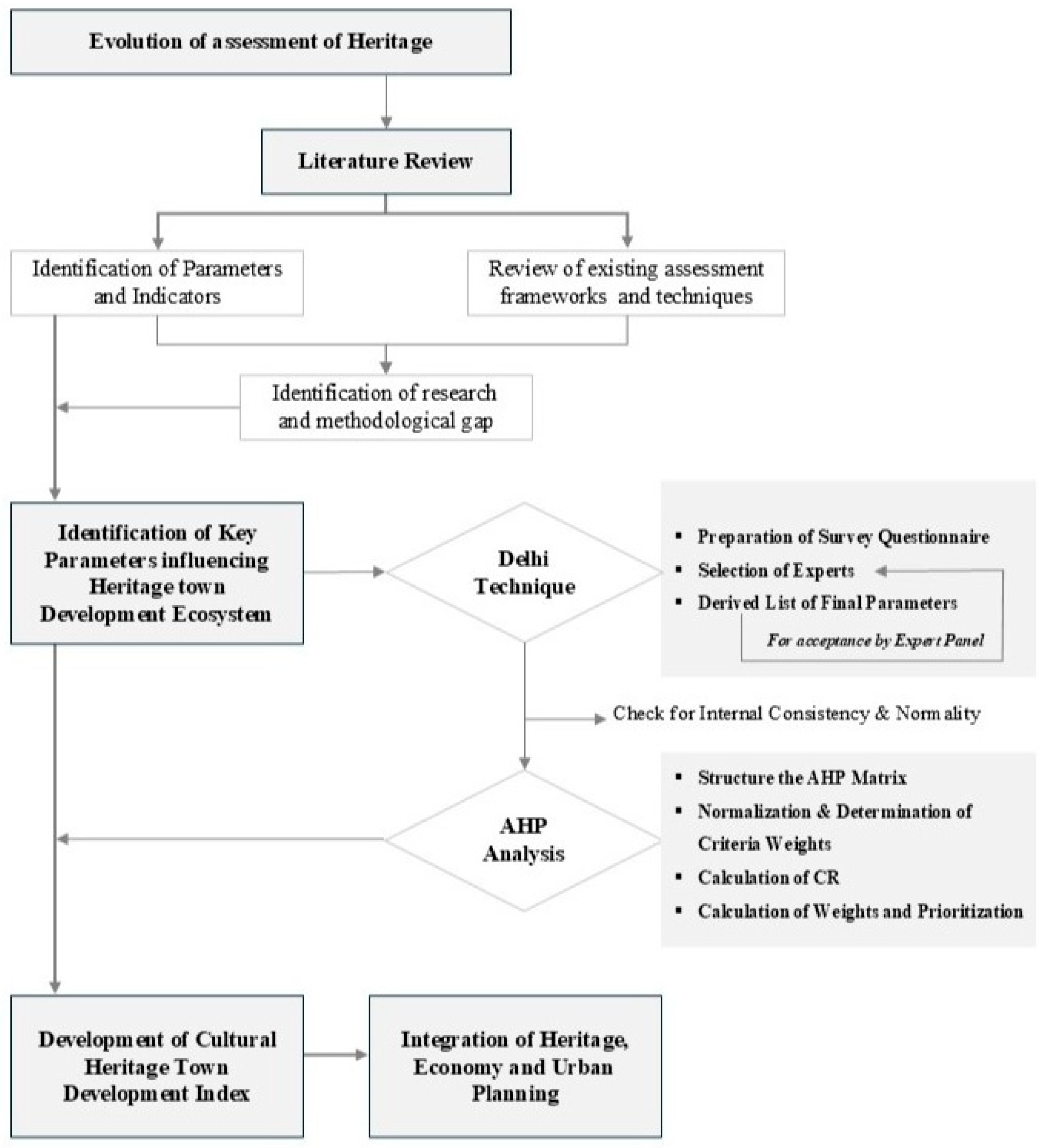
The study aims to provide an integrated approach towards the local economic development of heritage towns on identification of the methodical gap and relevant set of parameters used in assessment approaches so far. This section focuses on identification of relevant parameters based on literature review with the aid of experts’ surveys. Based on the outcome and ranking of the experts’ survey, the parameters and criteria are assigned weights that eventually formulate the conceptual heritage economic assessment framework, as shown in Figure 1.

3.2.1. Identification of Relevant Parameters That Contribute to the Cultural Heritage Economy

The concept of heritage economics is well established in the cultural economics literature, where scholars such as David Throsby, in the early 2000s [23], conceptualize heritage as an economic asset, which generates measurable use and non-use values through tourism, real estate premiums, and willingness-to-pay for conservation. While heritage economics provides an essential foundation for understanding value creation, its scope remains primarily oriented toward monetary valuation, market behavior, and revenue flows. Building on this foundation, this study adopts the concept of ‘Cultural Heritage Economy (CHE’ to depict an integrated system of processes that shape heritage towns and their economy.
Cultural heritage economy refers to the combined system of economic, cultural, social, and institutional processes associated with heritage resources. The identification of its indicators was undertaken through a rigorous process of literature synthesis and expert validation to ensure both breadth and contextual depth in capturing the heritage–development nexus. The final set of thirty-three indicators encapsulates the multidimensional character of heritage towns, extending from the intrinsic attributes of heritage resources such as number, significance, condition, conservation initiatives, and management practices to the socio-cultural domain represented by demography, awareness, satisfaction, and community participation, as shown in Table 2.
Parallel attention is directed to physical and infrastructural dimensions such as connectivity, utilities, tourism infrastructure, and ICT (Information and Communication Technology) penetration [32], which collectively condition both resident well-being and tourism dynamics. The economic dimension is reflected through parameters including employment, cultural entrepreneurship [33], commercial and recreational activities, local production, and revenue generation, thereby linking heritage to broader processes of local economic development [34]. The indicators addressing environmental and social impacts [35], cultural vibrancy, creativity, and informal economic activity, which highlight heritage as a living and evolving system, are considered equally significant. Finally, governance and policy support are included through parameters on ease of doing business, external funding assistance, institutional support, and productivity measures. Together, these indicators provide a comprehensive evaluative framework, moving beyond conservation-centric assessment to operationalize the complex socio-economic, environmental, and governance interdependence that defines heritage towns. Based on the selected parameters (P1 to P33), the expert opinion survey was designed for further conceptualization of the assessment index, as shown in Table 2.

3.2.2. Expert Opinion Survey and Analysis

The integrated Delphi–AHP (Analytic Hierarchy Process) method employs a multi-stage research framework that considers the systematic process to conclude for indicator-based studies. The Delphi method is a communication technique that uses anonymous questionnaires and controlled feedback to determine consensus from expert panels. It offers advantages like structured systems, anonymity, and flexibility in geographical locations. Despite limitations, it aids strategic decision-making, forecasting, market analysis, policy development, risk assessment, and innovation [36]. The Delphi–AHP method, developed in the 1970s, combines Delphi and AHP techniques to identify challenges, risks, and parameters across various fields.
The selection of Delphi–AHP and PCA was guided by the need for both expert-driven contextual sensitivity and empirical dimensional validation, especially in emerging or under-researched contexts, where expert knowledge plays a critical role in identifying, refining, and weighting parameters. The structured feedback process received in Delphi method ensures consensus and reduces individual bias, while AHP provides a transparent mechanism for deriving parameter and dimension weights. Alternative methods such as TOPSIS (Technique for Order Preference by Similarity to Ideal Solution), or PROMETHEE (Preference Ranking Organization METhod for Enrichment Evaluations) were also considered, but these approaches lack a consensus-building component or emphasize ranking alternatives rather than constructing an assessment framework. PCA was subsequently employed to validate the latent structure of the selected parameters, ensure non-redundancy, and empirically justify the six-dimensional architecture of CHTDI. The combination of expert-driven and data-driven techniques ensures methodological robustness, reliability, and contextual appropriateness for heritage towns.
The experts of the panel have been selected based on their education and experience, having at least an undergraduate degree, with minimum five years of experience in allied professions such as heritage studies, economics, urban planning, architecture, or academics (Figure S2). The questionnaire was distributed to 80 professionals, who were clearly informed about the research context, aim and the objective of the expert survey, with an option to opt out from the survey. The first stage of the expert survey focused on eliminating non-significant parameters, with a response rate of 76.25% from the experts (61 responses), while the second stage considered the rating of revised set of parameters using Saaty’s scale, and the response rate was 80.32% (49 responses). In the third stage, after removing the least significant parameters from the second stage, the final list of parameters was rated, achieving a response rate of 91.83%, i.e., 45 experts, as shown in Figure S4. The final set of experts who participated till stage 3 of this exercise were majorly from India, while there was also contribution by experts from United States of America, London, and Spain, who had prior experience or engagement with the Indian context. The detailed overview of the experts’ survey is represented in Figure S3. The professional representation is found to be diverse, contributing to multifaceted responses which comprised of (a) Heritage Experts—10.81%, (b) Economists—8.10%, (c) Urban Planners—24.32%, (d) Architects—29.18%, and (e) Academicians/Researchers—17.56%. Approximately 45% held postgraduate degrees, 30% were doctoral-level scholars or faculty members, and the remaining 25% had undergraduate degrees with over ten years of professional experience in heritage, planning, or infrastructure sectors. This diversity ensured that the Delphi–AHP process integrated academic, technical, and practice-oriented perspectives.
Table 2 depicts the conclusions from the stages, and acceptance or rejection of certain parameters, while also suggesting combining 2–3 parameters under a single parameter, as derived from the Delphi–AHP process. The central tendencies of the parameters have also been considered, to understand the descriptive statistics of the survey. The brief descriptions of each parameter with their conceptual understanding are provided in Table S1 and Figure S1, with the detailed process followed for AHP technique illustrated in Figure S5.
Several parameters under the preliminary ‘Generative Capacity’ group (P22–P26) were removed after Stage 1 because the expert panel found substantial conceptual overlap between these and other parameters already retained in the framework. For instance, ‘Cultural Vibrancy’ (P22) and ‘Creativity and Innovativeness’ (P23) were judged to be adequately captured through indicators of community participation (P9), recreational and cultural activities (P16), and cultural entrepreneurship (P18). Similarly, ‘Indirect and Induced Impacts’ (P24) and ‘Employment Generation due to Heritage’ (P25) were considered embedded within broader economic parameters such as economic impact (P21), employment (P17), and direct revenue generation (P27). ‘Heritage Significance and Attractiveness’ (P26) overlapped with existing measures under significance (P2), travel and tourism (P10), and public awareness (P8). Likewise, ‘Conservation Initiatives’ (P5) and Heritage Management and Maintenance (P6) were combined to form ‘Conservation and Management Initiatives’, while Funding Support (P32) was merged with Investments/Funding Assistance (P31) to avoid repetition or overlap amongst the parameters. As these parameters were viewed as repetitive, and did not offer additional explanatory value, the expert panel agreed to eliminate certain parameters (Table 2) to avoid redundancy and enhance conceptual clarity in the final indicator set.
The final set of parameters and indicators were then ranked for further analysis. In the third phase, matrix pairwise comparison is used to estimate the weights and relative importance of each determining category. The values W1, W2, … Wn are calculated, representing the impact and preferences of the evaluation criteria C1, C2, … Cn, based on the aij values obtained during the pairwise comparison [37]. The eigenvalue method calculates the weight using the formula AW′ = λmax‘W’, where M is the matrix from the pairwise comparison, W is the eigenvector, and eigenvalue is represented by ‘λmax’. Once the ranking is established, the judgements’ consistency ratios (CR = CI/RI) are assessed, where CI is the consistency index, and RI is the random index [38]. A CR of 0.1 or less is acceptable, but if it exceeds 0.1, the experts are asked to re-evaluate their judgements. As ‘λmax’ approaches n, matrix A exhibits greater consistency, and the value of ‘λmax’ is consistently greater than or equal to n. The substantial issues and their sub-challenges will next be ranked and given to the expert panel (following the previous steps) for final approval and recommendations. In this case, the consistency ratio (CR) is 0.048, less than 0.1, and the weight sum value and criteria weights calculated due to the Delphi–AHP method are thus considered consistent. The value of Cronbach’s alpha for the expert survey questionnaire is 0.857, being >0.7, indicating strong internal consistency. In the Delphi–AHP method, the relative weight of parameters was obtained using the geometric mean method. The normalized elements of each column were used to calculate the weight by consistency test [38]. The outcome of the three-staged Delphi method has been shown in Table 2, with the final criteria weights and weighted sum value from the AHP method.

3.2.3. Criteria Development Using Principal Component Analysis (PCA)

The Principal Component Analysis (PCA) was applied to the final set of twenty parameters to identify latent constructs shaping the heritage town development framework with the aid of IBM SPSS Statistics version 27.0.1.0. The Kaiser–Meyer–Olkin (KMO) value of 0.741 confirmed sampling adequacy, while Bartlett’s test of sphericity (χ2 = 440.647, df = 190, p < 0.001) established the suitability of the data for factor analysis.
Table 3 presents the rotated component matrix derived from PCA using the final set of twenty parameters retained in Table 2, from which each listed parameter gets mapped directly to the components extracted in Table 3. The rotated component matrix from PCA results reveal six conceptual dimensions of the comprehensive heritage ecosystem.
The six components extracted through PCA correspond directly to the six conceptual dimensions of the CHTDI—Heritage Resources (HR), Social Byproducts (SB), Physical Byproducts (PB), Economic Backdrop (EB), Environmental Impact (EV), and Revenue Generation (RG). The clustering of parameters in Table 3 empirically reinforces the conceptual structuring outlined earlier in Section 3.1.
Based on Table 3, parameters related to heritage assets such as number, significance, quality, and conservation initiatives, cluster strongly under one component, reinforcing their central role in assessing the heritage base forming the ‘Heritage Resources’ dimension. Demography, public awareness, tourism characteristics, and social impact emerge as a distinct factor, highlighting the socio-cultural embeddedness of heritage towns to compute ‘Social byproducts’ while the ‘Physical byproducts’ dimension is substantiated through high loadings for connectivity, utilities, and tourism infrastructure, reflecting the infrastructural foundations of heritage sustainability.
The ‘Economic backdrop’ of the heritage ecosystem is represented through employment, entrepreneurship, ease of doing business, and economic impact assessment illustrating the link between heritage and broader economic opportunities while ‘Revenue generation’ dimension is validated through direct earnings from tourism, commerce, financial assistance, institutional funding, etc., confirming its role as a measurable output of heritage assets. The ‘Environmental dimension’ captured as an independent component through environmental impact, underscores the ecological consequences of heritage-driven development. This structural mapping demonstrates that the six-dimensional CHTDI framework is empirically supported, with PCA confirming the coherence and distinctiveness of its constituent dimensions.

3.3. Structure of the Index

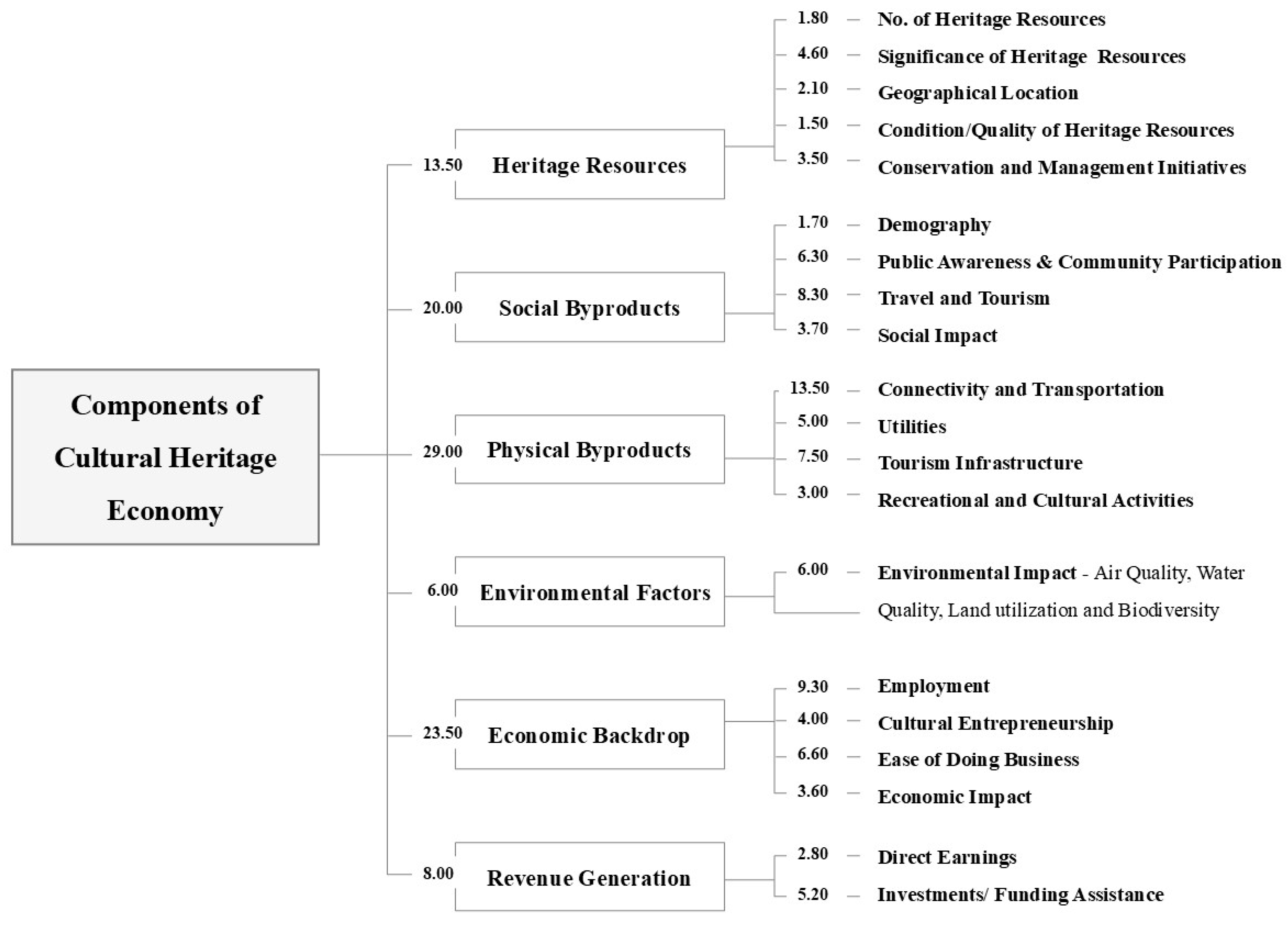
The Cultural Heritage Town Development Index (CHTDI) has been conceptualized as a composite, multidimensional assessment tool designed to capture the complexity of multifaceted heritage town development in a holistic and quantifiable manner. The index is hierarchically structured into six dimensions, twenty parameters, and sixty-two indicators, each reflecting the interrelated conservation, social, infrastructural, economic, environmental and revenue-generating aspects of heritage towns. The six dimensions include Heritage Resources (HR), Social Byproducts (SB), Physical Byproducts (PB), Economic Backdrop (EB), Environmental Factor (EV), and Revenue Generation (RG).
The parameters within these dimensions have been identified through an extensive literature review and expert validation and were further refined using factor analysis to ensure contextual sensitivity. Indicators were operationalized through measurable benchmarks and normalization techniques such as min–max scaling, categorical scoring, and threshold-based classification, enabling comparability across different heritage towns, as shown in Table 4.
The composite CHTDI score for each town is derived through a two-step process. First, parameter-level scores are calculated based on their respective indicators and then aggregated to form dimension-level scores, as calculated using the Delphi–AHP technique. Second, these weighted dimension scores are summed to produce the overall CHTDI score, as expressed below:
CHTDI_CITY−X = HRCITY−X + SBCITY−X + PBCITY−X + EBCITY−X + EVCITY−X + RGCITY−X
where each dimension is computed as a weighted sum of its parameters:
HR CITY-X = (1.80 × HR1) + (4.60 × HR2) + (2.10 × HR3) + (1.50 × HR4) + (3.50 × HR5)
SB CITY-X = (0.70 × SB1) + (7.30 × SB2) + (8.30 × SB3) + (3.70 × SB4)
PB CITY-X = (13.50 × PB1) + (5.00 × PB2) + (7.50 × PB3) + (3.00 × PB4)
EB CITY-X = (9.30 × EB1) + (4.00 × EB2) + (6.60 × EB3) + (3.60 × EB4)
EV CITY-X = (6.00 × EV1)
RG CITY-X = (2.80 × RG1) + (5.20 × RG2)
The relative weightage of the six dimensions underscores their strategic role in heritage town development and is derived as Physical Byproducts (29%), Economic Backdrop (23.5%), and Social Byproducts (20%), which carry the highest influence, followed by Heritage Resources (13.5%), Revenue Generation (8%), and Environmental Impact (6%), as illustrated in Figure 2. This distribution highlights the pivotal role of infrastructure, economic conditions, and community participation while simultaneously recognizing the significance of heritage assets, environmental stewardship, and revenue flows.
As previously discussed, CHE (Cultural Heritage Economy) refers to the combined system of economic, cultural, social, and institutional processes associated with heritage resources. The structure shown in Figure 2 allows the CHTDI to go beyond a conservation-centric approach, operationalizing the interdependencies of heritage resources, community engagement, infrastructure, economy, environment, and revenue generation into a single evaluative framework. It not only provides diagnostic insights into sectoral strengths and weaknesses but also facilitates comparative assessment across towns, making it a powerful decision-support tool for evidence-based planning and heritage-sensitive urban development.

4. Application of CHTDI

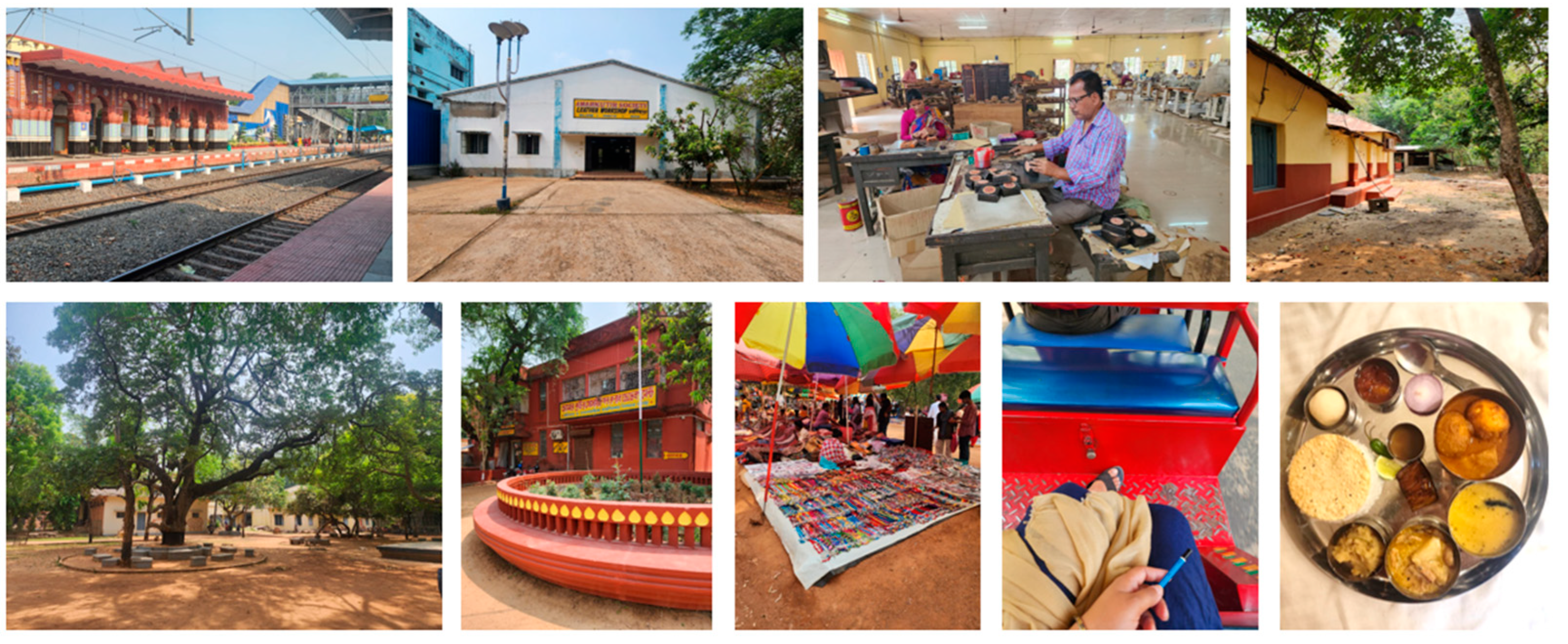
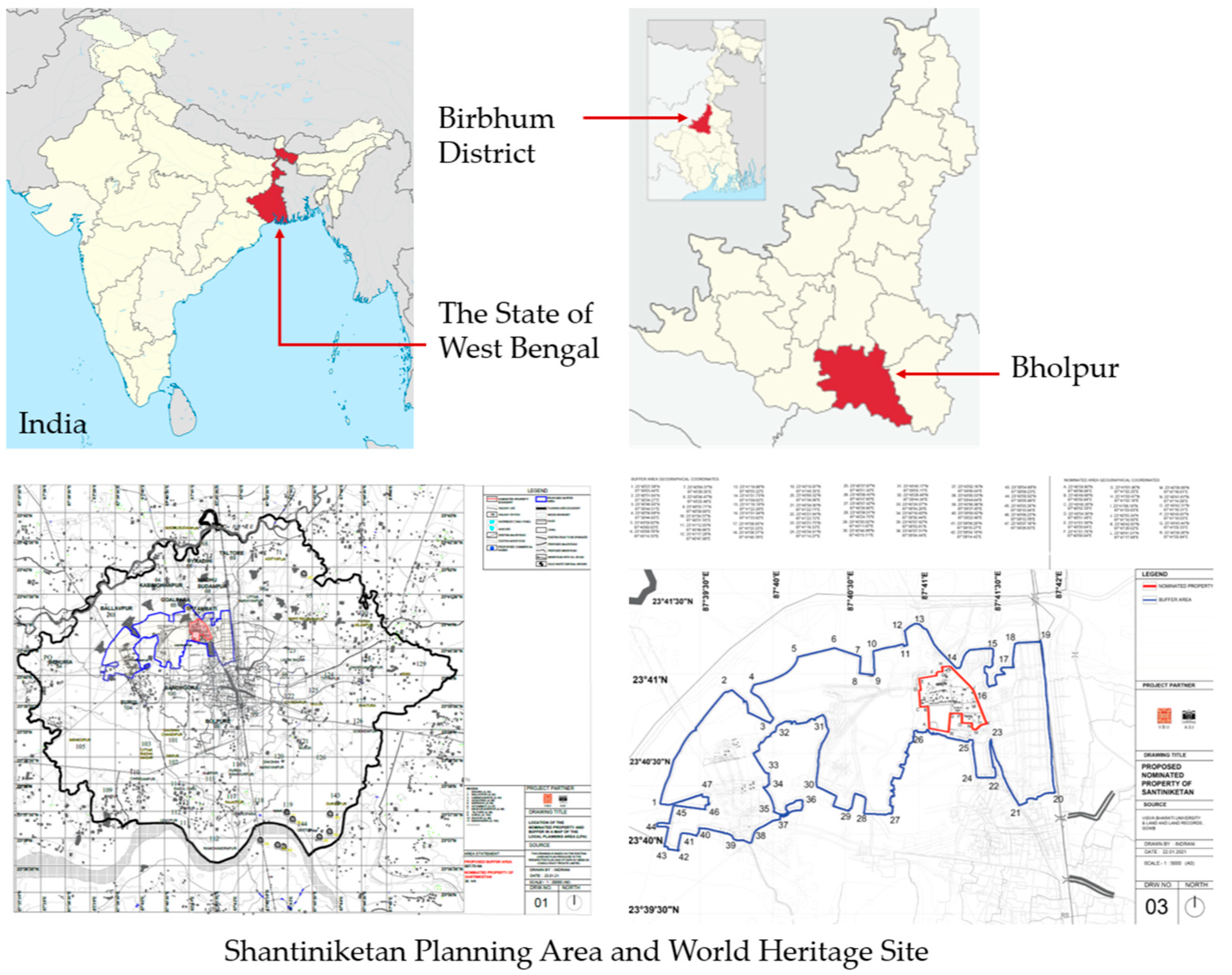
The Cultural Heritage Town Development Index (CHTDI) has been developed to provide a holistic, quantifiable assessment framework for heritage towns, capturing the interplay of conservation, community, infrastructure, economy, environment, and revenue systems. To validate its applicability, the CHTDI was applied to two representative Indian heritage towns, Shantiniketan located in West Bengal (Figure 3 and Figure 4), and Guruvayur in Kerala state (Figure 5 and Figure 6). Both towns possess significant cultural and spiritual value within the Indian heritage landscape, while having different trajectories of urban development, governance, and tourism economy. Shantiniketan has been recognized as a UNESCO World Heritage Site in 2023, representing a cultural–academic heritage town shaped by Shri Rabindranath Tagore’s vision, attracting both domestic and international cultural tourism.
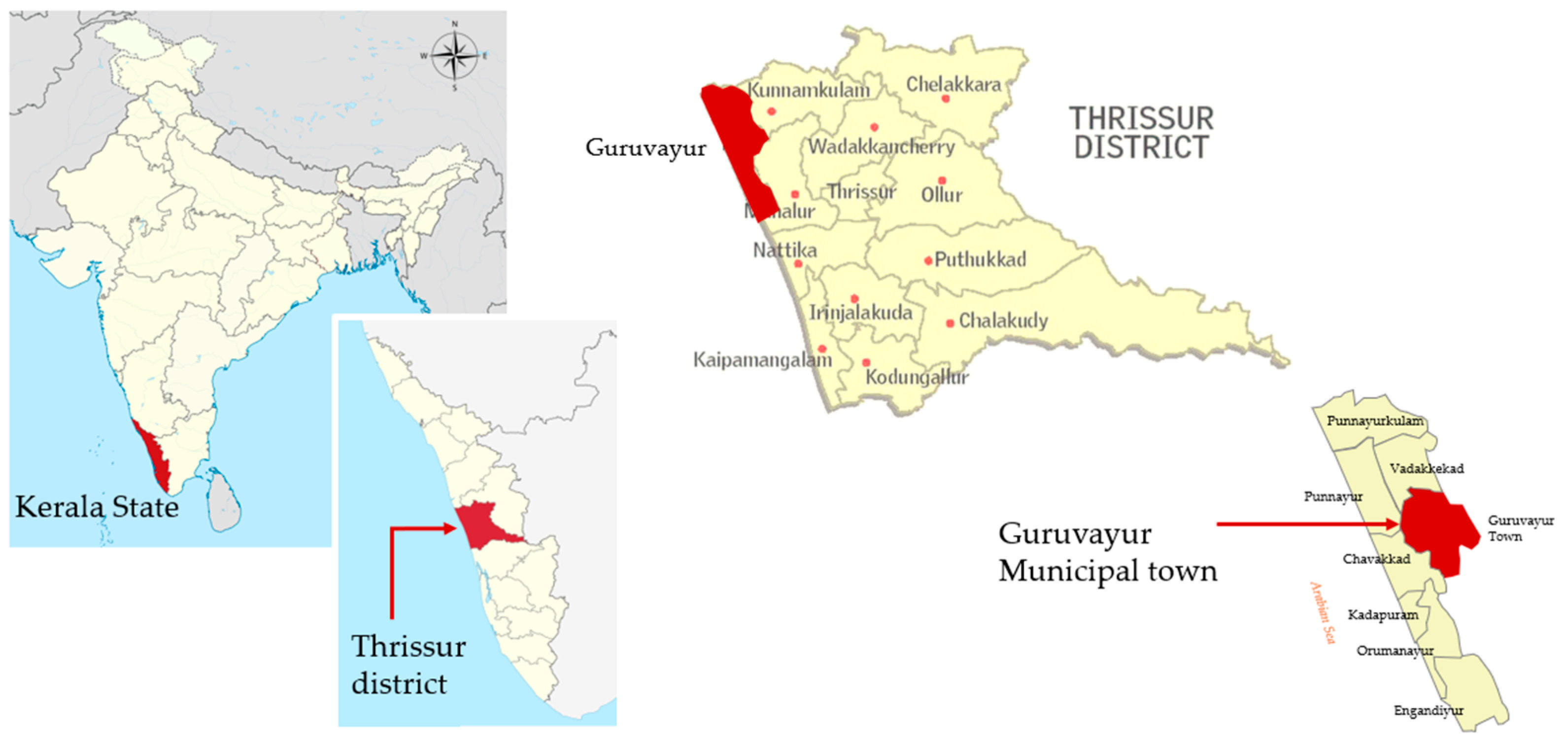
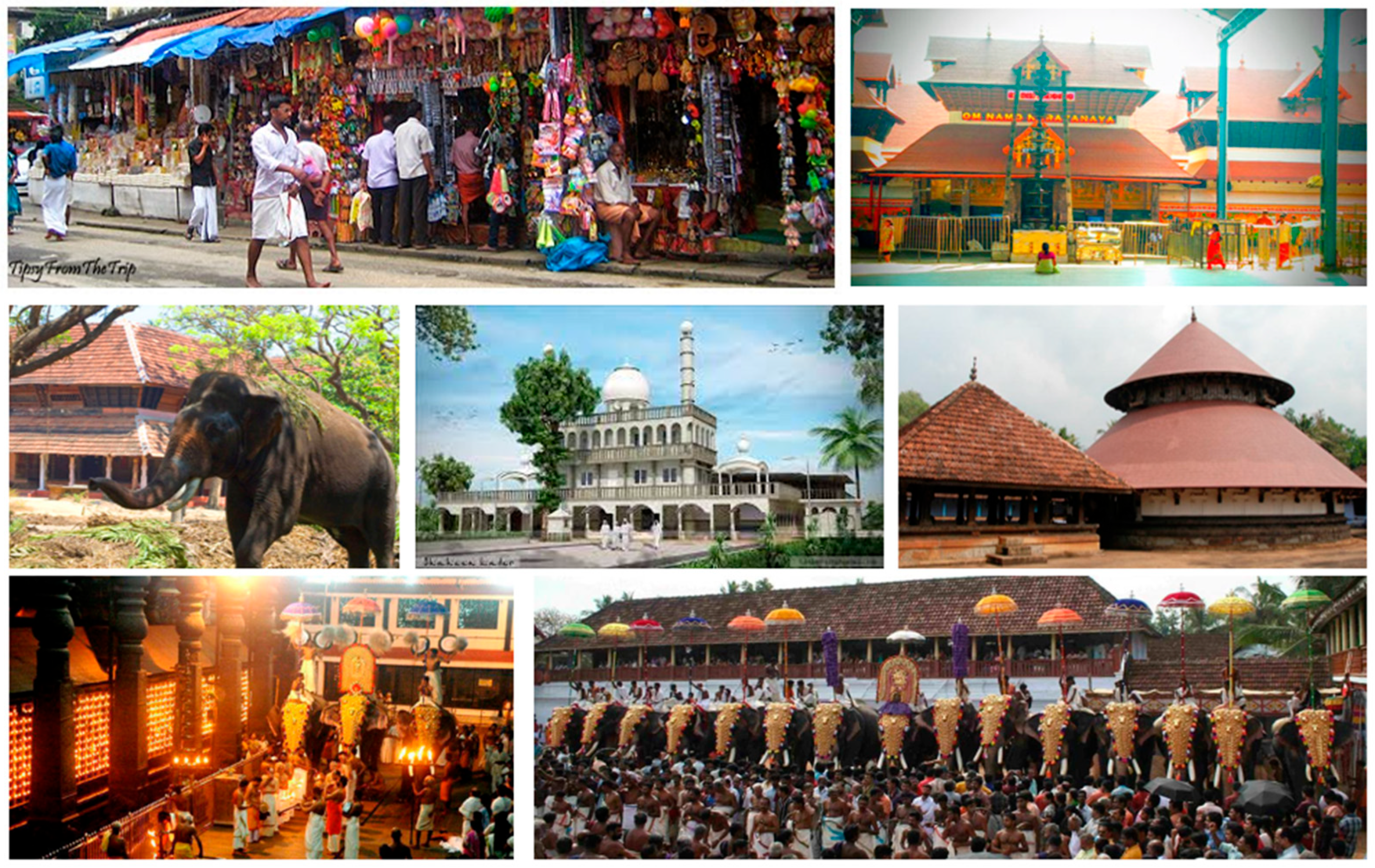
Guruvayur, on the other hand, is one of most significant temple towns in India with a predominantly pilgrimage-driven tourism economy. Guruvayur, located in the Thrissur district of Kerala, is one of India’s most prominent temple towns, renowned for the Guruvayur Sri Krishna Temple, a major center of Hindu pilgrimage that attracts millions of devotees annually. The town’s identity and economy are deeply intertwined with its religious and cultural functions, generating a steady inflow of visitors and supporting a vibrant local economy rooted in pilgrimage tourism, hospitality, and cultural activities.
The comparative application of CHTDI to these towns provides insights into how the framework diagnoses sectoral strengths and weaknesses under varying heritage contexts. The assessment involved calculating scores for each parameter under the six CHTDI dimensions using the weighting structure derived from AHP and the benchmarking methodology outlined earlier. Indicators were operationalized through a combination of secondary data from municipal records, census, database of UNESCO, ASI (Archaeological Survey of India) or INTACH (Indian National Trust for Art and Cultural Heritage) and primary data that includes residential, commercial, and tourist surveys, along with expert consultation, to highlight and include the role of participatory survey and assessment of the city-level index. Each town’s performance was normalized between 0.00 and 1.00, aggregated into dimension-level scores, and finally combined into the composite CHTDI score, as shown in Table 4. The detailed understanding and indicator interpretations of each parameter used in this table is provided in Annexure I (Table S1). The indicator thresholds and normalization methods used for each parameter are also described in the methodology section of Table 4.
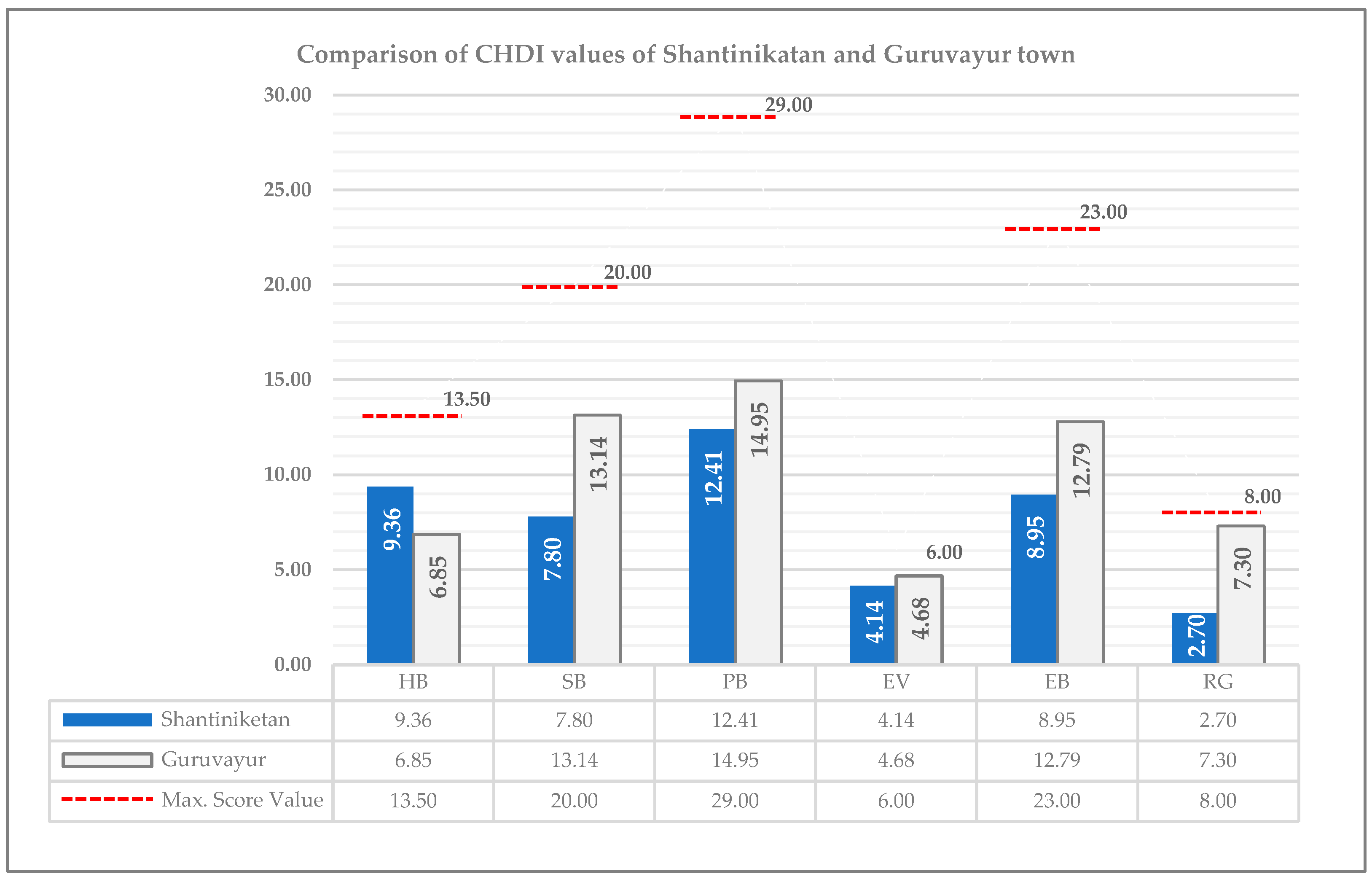
The results highlight clear contrasts in the developmental profiles of the two towns. Shantiniketan scored higher in heritage resources (HR = 9.36) owing to its UNESCO recognition, conservation initiatives, and quality of built heritage, but underperformed in social byproducts (SB = 7.80) and revenue generation (RG = 2.70), indicating limited community participation and heavy reliance on external funding. Guruvayur, in contrast, achieved a higher composite CHTDI score (60.06) with strong performance in physical infrastructure (PB = 14.95), social participation (SB = 13.14), and revenue generation (RG = 7.30), reflecting the strength of its pilgrimage-driven economy and community involvement. However, Guruvayur relatively low score in heritage resources (HR = 6.85) suggests an under-representation of formal conservation and heritage listing process compared to Shantiniketan.
These findings demonstrate the diagnostic strength of CHTDI; by decomposing the overall index into its six dimensions, it enables the identification of sectoral deficits and strengths. While Shantiniketan requires investments in community participation, tourism infrastructure, and diversified revenue streams, Guruvayur must strengthen its heritage management and formal conservation measures. The next section discusses this diagnosis in detail.

5. Discussion

To demonstrate the diagnostic strength of the CHTDI framework, a comparative evaluation was undertaken between Shantiniketan and Guruvayur, two heritage towns having distinct cultural trajectories and development contexts. By disaggregating the CHTDI into its six dimensions, the analysis enables a dimension-wise comparison that highlights sectoral strengths, weaknesses, and developmental trade-offs unique to each town.
In consideration of the Heritage Resources (HR) dimension, Shantiniketan (HR = 9.36) outperforms Guruvayur (HR = 6.85), largely due to its recognition as a UNESCO World Heritage Site, higher-graded significance of built assets, and stronger conservation and management initiatives. The relatively lower score of Guruvayur stems from limited formal listing of heritage resources despite its temple complex being of national importance. While both towns scored comparably in condition/quality of built heritage, global recognition and institutional conservation frameworks in Shantiniketan provide a decisive advantage. In terms of Social Byproducts, Guruvayur (SB = 13.14) significantly outperforms Shantiniketan (SB = 7.80). This is attributed to high public awareness, stronger community participation, and robust tourism footfall tied to its role as a pilgrimage hub. Shantiniketan lags in civic engagement and social impact indicators, revealing gaps in community-based governance and participatory heritage management. Demography scores are comparable, suggesting that the divergence lies in levels of awareness and community mobilization. This highlights the need to enhance awareness and public participation in the town administration, economic development, and policy formation.
Physical infrastructure also favors Guruvayur (PB = 14.95) over Shantiniketan (PB = 12.41). Currently, Guruvayur town is listed under the PRASHAD (Pilgrimage Rejuvenation and Spiritual Augmentation Drive) scheme and AMRUT (Atal Mission for Rejuvenation and Urban Transformation) [38]. Although the planning and implementation is still in process, the town is gradually benefitting from sustained investment under these schemes, improving utilities, mobility, and tourism infrastructure. On the contrary, Shantiniketan reflects gaps in connectivity and tourism-related amenities when the actual tourist footfall is considered into the town, despite comparable performance in utilities and recreational facilities. This suggests the need for Shantiniketan town to leverage its heritage significance to secure social and physical infrastructure upgrades to secure enhanced economic impact as well.
Based on the evaluation of the Economic Backdrop (EB), Guruvayur (EB = 12.79) performs better as compared to the town of Shantiniketan (EB = 8.95). Guruvayur performs strongly in cultural entrepreneurship, ease of doing business, and local economic impact, driven by its dense network of pilgrimage-related commerce. It was observed during the study that 30 percent of the revenue generated from the Guruvayur temple Devaswom was provided to the municipality that is used for town and tourism infrastructure development including multi-level car parking complex, upgradation of bus stands, town parks, connectivity as well as tourist rest stations, etc. Shantiniketan’s economic ecosystem is less diversified, with lower performance in employment and spillover economic impacts, reflecting its dependence on cultural tourism and limited entrepreneurial structures. The annual mela and tourist revenue is required to be harnessed for the development of the town, although the town is globally recognized and relevant. In terms of Environmental Factors (EV), both towns perform moderately in this dimension with Guruvayur having a score of 4.68 and Shantiniketan scoring 4.14. This marginal difference reflects local environmental quality and biodiversity preservation measures, with neither town exhibiting exemplary performance. The results underscore the limited emphasis placed on ecological sustainability in both cultural and pilgrimage contexts, a recurring gap in heritage town management globally. Figure 7 depicts the comparison of dimensional scores of Shantiniketan and Guruvayur towns, while also indicating the benchmark scores or the maximum value that can be achieved. It clearly indicates the sectors in which the towns need to provide more focus on, as discussed earlier.
While considering the Revenue Generation (RG) dimension, Guruvayur (RG = 7.30) scores were markedly higher than Shantiniketan (RG = 2.70). This reflects the impact of strong direct earnings from temple tourism and significant external funding support from government through development schemes, compared to Shantiniketan’s limited revenue base and dependence on external grants by UNESCO. The gap in this dimension highlights financial resilience of Guruvayur, and Shantiniketan’s vulnerability to funding fluctuations, raising concerns about long-term sustainability of the latter. These findings affirm CHTDI’s diagnostic ability to highlight sectoral trade-offs: heritage recognition without socio-economic integration (e.g., Shantiniketan) versus socio-economic strength without formal conservation frameworks (e.g., Guruvayur).
The future policy-level direction for Shantiniketan, UNESCO World Heritage Site, providing a strong symbolic and international recognition, while scoring low CHTDI scores in social participation and revenue resilience suggest that structural vulnerabilities could include
  • Community integration in governance: Establishing local heritage management committees (mandated under HUL and encouraged under the 74th CAA decentralization framework) to increase awareness and participation.
  • Revenue diversification: Developing cultural enterprises (craft hubs, and Tagore-inspired creative industries) supported by schemes like MSME support and Startup India.
  • Infrastructure enhancement: Integrating Shantiniketan into national and state-level development schemes for water, sanitation, and green mobility projects to strengthen physical byproducts.
  • Tourism management: Introduction of a Heritage and tourism Development Plan aligned with West Bengal Tourism Policy, with capacity management and visitor taxes earmarked for conservation.
Guruvayur, while not inscribed as a UNESCO site, is a nationally significant pilgrimage center drawing millions of visitors annually. Its high scores in social participation and revenue generation demonstrate community strength and a pilgrimage-driven economy, yet low scores in heritage conservation reflect the gap in identification and conservation of heritage structures other than the temple complexes. The possible future direction for this town could include
  • Formal recognition and listing of heritage structure, especially in the temple precincts and allied cultural landscape.
  • Transport and crowd management: Incorporation into national schemes as extended phase for intelligent mobility systems, pedestrianization, and green corridors to address congestion during peak pilgrimage periods.
  • Cultural entrepreneurship: Further encouraging cultural cooperatives around local festivals, handicrafts, and devotional music, supported by state-level cooperative development boards and aim for global recognition and involvement.
Together, these applications reveal that national heritage schemes must evolve from uniform templates to context-sensitive interventions. While HRIDAY (National Heritage City Development and Augmentation Yojana), PRASHAD (Pilgrimage Rejuvenation and Spiritual Augmentation Drive), AMRUT (Atal Mission for Rejuvenation and Urban Transformation) and similar missions have provided initial momentum, their frameworks remain programmatic and infrastructure-centric, occasionally neglecting social capital and revenue diversification. CHTDI can serve as the diagnostic foundation for reframing these schemes, ensuring that interventions are differentiated to specifically uplift certain sectors contextually. For example, a town similar to Shantiniketan requires community mobilization and diversified creative economies, while towns like Guruvayur need stronger institutional conservation and integrated mobility solutions.
The results reaffirm the need to shift from narrow conservation or tourism-driven models toward a systemic view of heritage towns as living socio-economic ecosystems. Earlier valuation techniques established heritage’s economic worth but ignored infrastructure and governance; tourism-led models highlighted employment and multiplier effects but overemphasized visitor flows; and integrated frameworks such as UNESCO’s HUL and SoPHIA broadened scope but required further context-specific indicators [41].
The CHTDI addresses these gaps by embedding heritage resources within a six-dimensional framework that integrates community, infrastructure, economy, revenue, and environment. The application to Shantiniketan and Guruvayur demonstrates how the index not only evaluates performance but also reveals developmental trade-offs—Shantiniketan excels in formal recognition and conservation but lags in social participation and diversified revenue, while Guruvayur demonstrates strong socio-economic vibrancy and revenue generation but weak formal conservation and heritage management systems.

6. Conclusions

The assessment of heritage towns has historically oscillated between conservationist approaches and tourism- or economy-led valuation models, with little attention to their socio-economic, infrastructural, and governance ecosystems. The Cultural Heritage Town Development Index (CHTDI) developed in this study responds to this lacuna by offering a composite, multidimensional, and context-sensitive framework that integrates six interrelated dimensions —heritage resources, social byproducts, physical infrastructure, economic backdrop, environmental impact, and revenue generation. By doing so, it provides a systematic tool to diagnose sectoral strengths and weaknesses, benchmark towns against one another, and guide heritage-sensitive planning and investment. The contribution of this study and assessment index is discussed below:
Academic Contribution: This research advances heritage assessment scholarship by operationalizing multidimensional evaluation at the town scale, a level often overlooked in global heritage discourses dominated by site-specific or city-wide indices. The methodological integration of Delphi–AHP techniques with PCA validation ensures both empirical robustness and contextual adaptability, thereby extending the empirical toolkit available to heritage researchers. The research contributes to the academic pool of knowledge as a comprehensive assessment framework designed explicitly for heritage towns in India and can also be applied globally.
Theoretical Contribution: Conceptually, the CHTDI reframes heritage towns from being static repositories of cultural value to dynamic socio-economic systems where conservation and development are co-constitutive. By embedding social capital, entrepreneurship, infrastructure, and environmental resilience into heritage evaluation, the study advances theoretical understanding of heritage as a developmental driver, not merely as an object of preservation.
Practical/Managerial Contribution: For policymakers and urban managers, CHTDI serves as a decision-support instrument that can direct resources, prioritize interventions, and monitor progress. Its application to Shantiniketan and Guruvayur demonstrates that different heritage towns require differentiated strategies: Shantiniketan demands stronger community engagement and revenue diversification, while Guruvayur requires institutional conservation and infrastructure management. Such actionable insights are rarely generated by conventional heritage valuation tools. Therefore, this framework shall also point out the areas where there is a dire need for conservation and management initiatives, tourism enhancement initiatives, etc. Revenue generation sources and expenditures can also be identified, based on which, fund allocation and resource mobilization may be conducted. Heritage towns require strategic planning and evaluation for their future development since they are traces of the past that impact the town’s sustainable future.
Although the CHTDI has been demonstrated using two Indian heritage towns in this article, the framework was intentionally designed to be adaptable to diverse heritage contexts. Its modular structure and indicator range allow for application in heritage towns globally, particularly in the Global South where cultural landscapes coexist with rapid urbanization pressures. With context-specific recalibration of indicators and benchmarks, the CHTDI can support comparative studies across national or international heritage networks. The strengths of the CHTDI lie in its comprehensiveness, diagnostic clarity, and scalability. It offers measurable indicators across six dimensions, enabling evidence-based comparison and policy alignment at both town and national levels. Its benchmarking approach ensures transparency and replicability, while its modular structure allows for adaptation to varying data environments and regional contexts.
This study acknowledges certain limitations of the developed framework, where its robustness relies heavily on the availability and quality of municipal and sectoral data. While the multidimensionality of this framework acts as a strength, it also risks the complexity in implementation if not supported by institutional capacity and technical expertise, for local governments with limited technical capacity. In addition, while Delphi–AHP ensures expert consensus and context sensitivity, it heavily relies on expert judgement, inherently sensitive to the diversity and representativeness of the expert panel. This may necessitate periodic recalibration to maintain relevance, as widely followed in other global and national indices that assess economic development, liveability, resource quality, etc.
Future applications of the CHTDI should focus on its longitudinal use to track heritage towns over time, thereby identifying trajectories of resilience or decline. Integrating the CHTDI into national programs in India, such as HRIDAY (National Heritage City Development and Augmentation Yojana) [42], PRASHAD (Pilgrimage Rejuvenation and Spiritual Augmentation Drive) [43], AMRUT (Atal Mission for Rejuvenation and Urban Transformation) [44] or Smart Cities Mission, would institutionalize heritage-sensitive monitoring within the countries’ urban planning frameworks. Internationally, the framework offers adaptability to heritage towns across the Global South, where urbanization pressures intersect with cultural significance, making CHTDI a prototype for cross-national comparative studies [45]. Emerging opportunities also lie in linking CHTDI with real-time data systems and GIS-based platforms, digital heritage platforms, enabling dynamic monitoring, spatial assessment, diagnosis, and automated dashboards of heritage towns.
To conclude, the CHTDI provides more than an evaluative instrument—it represents a conceptual and operational shift in heritage assessment. By bridging the longstanding divide between conservation and development, it positions heritage towns not as burdens to be preserved in isolation, but as active agents of inclusive, resilient, and sustainable urban futures. Internationally, this approach offers transferability to heritage towns in other developing contexts where heritage recognition, pilgrimage economies, and community-led practices intersect with urbanization pressures. By integrating into national planning toolkits, CHTDI has the potential to function not only as an evaluative instrument but also as a policy-shaping device that guides heritage-sensitive investment and governance reforms.

Supplementary Materials

The following supporting information can be downloaded at: https://www.mdpi.com/article/10.3390/urbansci9120514/s1, Figure S1: Identified Criteria and parameters from Background study; Figure S2: Steps for Delphi-AHP Method; Figure S3: Overview of Experts’ Survey; Figure S4: Stages of the Delphi Method; Figure S5: Steps used for the AHP Method; Table S1: List of Identified Criteria and Parameters that contribute to Cultural Heritage Economy.

Author Contributions

Conceptualization, V.V., S.S. and S.R.; methodology, V.V., S.S. and S.R.; software, V.V.; validation, V.V.; formal analysis, V.V.; investigation, V.V.; resources, V.V.; writing—original draft, V.V.; writing—review and editing, S.S. and S.R.; visualization, V.V.; supervision, S.S. and S.R. All authors have read and agreed to the published version of the manuscript.

Funding

This research received no external funding.

Institutional Review Board Statement

The study was conducted in accordance with the Declaration of Helsinki and ap-proved by the Institutional Review Board of Birla Institute of Technology, Mesra, India (11 November 2025).

Informed Consent Statement

The primary data used in this study was based on the experts’ survey, where informed consent was obtained from all the experts who participated in this study. Their participation was voluntary with scope to opt out; anonymity and confidentiality have been maintained throughout. The results established in the manuscript are on the basis of the analysis, and no personal data of the experts have been revealed.

Data Availability Statement

Data is contained within the article or Supplementary Materials.

Acknowledgments

The authors acknowledge the contribution of all experts who participated in the expert opinion survey, the Guruvayur and Shantiniketan Municipalities for their assistance in data procurement, and Birla Institute of Technology, Mesra for the institutional support provided for this research. The authors further extend their sincere appreciation to the anonymous reviewers for their insightful thoughts and constructive feedback, which significantly strengthened this research article.

Conflicts of Interest

The authors declare no conflicts of interest.

References

  1. Panasyuk, M.; Pudovik, E.; Malganova, I.; Butov, G. Historical heritage factor in evaluating development prospects of the regional multicultural community. Procedia Soc. Behav. Sci. 2015, 188, 193–196. [Google Scholar] [CrossRef]
  2. Antonia, G.; Girard, L.F. Multicriteria tools for the implementation of historic urban landscape. Qual. Innov. Prosper. 2017, 21, 186–201. [Google Scholar] [CrossRef]
  3. Ripp, M. A Metamodel for Heritage-Based Urban Development: Enabling Sustainable Growth Through Urban Cultural Heritage; Springer Nature: London, UK, 2022. [Google Scholar]
  4. Yang, Y.; Hakimi, H.A.; Azmi, N.F.; Li, K.; Duan, B. A Framework for Heritage-Led Regeneration in Chinese Traditional Villages: Systematic Literature Review and Experts’ Interview. Heritage 2025, 8, 219. [Google Scholar] [CrossRef]
  5. Merciu, C.F.; Petrisor, A.I.T.; Merciu, G.L. Economic Valuation of Cultural Heritage Using the Travel Cost Method: The Historical Centre of the Municipality of Bucharest as a Case Study. Heritage 2021, 4, 2356–2376. [Google Scholar] [CrossRef]
  6. Zhou, J.; Wang, W.; Zhou, J.; Zhang, Z.; Lu, Z.; Gong, Z. Management effectiveness evaluation of world cultural landscape heritage: A case from China. Herit. Sci. 2022, 10, 1–9. [Google Scholar] [CrossRef]
  7. Lu, J.; García-Badell, G.; Rodriguez, J.B. Digital Heritage from a Socio-Technical Systems Perspective: Integrated Case Analysis and Framework Development. Heritage 2025, 8, 348. [Google Scholar] [CrossRef]
  8. Martine, B.; Toro, P.D.; Girard, L.F.; Gravagnuolo, A.; Iodice, S. Indicators for ex-post evaluation of cultural heritage adaptive reuse impacts in the perspective of the circular economy. Sustainability 2021, 13, 4759. [Google Scholar] [CrossRef]
  9. Kara, C.; Aminreza, I. Protection Boundary Development in Historical–Cultural Built Environments Using Analytical Hierarchy Process (AHP) and Geographic Information System (GIS). Urban Sci. 2025, 9, 173. [Google Scholar] [CrossRef]
  10. Rida, A.; Weigl, A.; Wieser, A.; Baioni, M.; Demartini, P.; Marchirori, M. The SoPHIA model and its implementation. Econ. Della Cult. 2021, 32, 71–90. [Google Scholar]
  11. Dai, Y. A Behavioral Cultural-Based Development Analysis of Entrepreneurship in China. Adm. Sci. 2021, 11, 91. [Google Scholar] [CrossRef]
  12. Hampton, M.P. Heritage, Local Communities and Economic Development. Ann. Tour. Res. 2005, 32, 735–759. [Google Scholar] [CrossRef]
  13. Carvalho, R.M.F.; Costa, C.; Ferreira, A.M. Multidimensional benefits of creative tourism: A network approach. Urban Sci. 2024, 8, 196. [Google Scholar] [CrossRef]
  14. Vasile, V.; Razvan, M.; Alexandra, I. Heritage Entrepreneurship and Ecotourism—A new vision on ecosystem protection and in-situ specific activities for cultural heritage consumption. Rev. Romana Econ. 2016, 42, 140–154. [Google Scholar]
  15. Nebojša, Č. International media and tourism industry as the facilitators of socialist legacy heritagization in the CEE region. Urban Sci. 2018, 2, 110. [Google Scholar] [CrossRef]
  16. Balachandra, P.; Reddy, S.B. Benchmarking Bangalore City for Sustainability—An Indicator-Based Approach; Indian Institute of Science: Bangalore, India, 2013. [Google Scholar]
  17. Elika, T.; Pancholi, S.; Rashid, M.M.; Khoo, C.K. Cultural heritage sites as a facilitator for place making in the context of smart city: The case of Geelong. Urban Sci. 2025, 9, 337. [Google Scholar] [CrossRef]
  18. Ost, C.G. A Guide for Heritage Economics in Historic Cities: Values, Indicators, Maps, and Policies; Think City Institute: Penang, Malaysia, 2009. [Google Scholar]
  19. Kurowski, L.; Rodawski, B.; Sztanzo, A.; Ladysz, J. Selected Methods of Estimation of the Cultural Heritage Economic Value with Special Reference to Historical Town Districs Adaptation. In Urban Heritage: Research, Interpretation, Education; Vilnius Gediminas Technical University Publishing House: Vilnius, Lithuania, 2007; pp. 13–18. [Google Scholar]
  20. Choi, A.S.; Ritchie, B.W.; Papandrea, F.; Bennett, J. Economic valuation of cultural heritage sites: A choice modeling approach. Tour. Manag. 2010, 31, 213–220. [Google Scholar] [CrossRef]
  21. Surugiu, C. The Economic Impact of Tourism. An Input-Output Analysis. Rev. Romana De Econ. 2009, 29, 142–161. [Google Scholar]
  22. Beaussier, T.; Caurla, S.; Bellon-Maurel, V.; Loiseau, E. Coupling economic models and environmental assessment methods to 4 support regional policies: A critical review. J. Clean. Prod. 2019, 216, 408–421. [Google Scholar] [CrossRef]
  23. Throsby, D.; Zednik, A.; Araña, J.E. Public preferences for heritage conservation strategies: A choice modelling approach. J. Cult. Econ. 2021, 45, 333–358. [Google Scholar] [CrossRef]
  24. Gravagnuolo, A.; Bosone, M.; Girad, L.F. Deliverable D2. 5–Methodologies for impact assessment of cultural heritage adaptive reuse. Retrieved May 2023, 30, 2023. [Google Scholar]
  25. Garidzirai, R.; Nguza-Mduba, B. Does tourism contribute to local economic development (LED) in the City of Cape Town Municipality? A time series analysis. Afr. J. Hosp. Tour. Leis. 2020, 9, 1–13. [Google Scholar]
  26. High Speed Two (HS2) Limited. Wider Economic Impact Assessment with a S-CGE Model; High Speed Two (HS2) Limited: Birmingham, UK, 2022. [Google Scholar]
  27. RaviSree, P.; Brar, T.S. A Critical Review of Livability and Identifying the Models for its Measurement. J. Posit. Sch. Psychol. 2022, 6, 6832–6841. [Google Scholar]
  28. Roberts, B.H. Tool Kit for Rapid Economic Assessment, Planning, and Development of Cities in Asia; Asian Development Bank: Mandaluyong City, Philippines, 2015. [Google Scholar]
  29. MoHUA. Ease of Living—2018; Ministry of Housing and Urban Affairs: New Delhi, India, 2018.
  30. MoHUA. Ease of Living—2019; Ministry of Housing and Urban Affairs: New Delhi, India, 2019.
  31. Li, S.; Kyllo, J.M.; Guo, X. An integrated model based on a hierarchical indices system for monitoring and evaluating urban sustainability. Sustainability 2013, 5, 524–559. [Google Scholar] [CrossRef]
  32. Lequeux-Dincă, A.I.; Gheorghilaş, A.; Tudor, E.A. Empowering urban tourism resilience through online heritage visibility: Bucharest case study. Urban Sci. 2025, 9, 63. [Google Scholar] [CrossRef]
  33. Surugiu, M.-R.; Surugiu, C. Heritage tourism entrepreneurship and social media: Opportunities and challenges. Procedia Soc. Behav. Sci. 2015, 188, 74–81. [Google Scholar] [CrossRef]
  34. Zuhrt, D.P.; Weiss-Ibanez, D.F. Cognitive processing of information with visitor value in cultural heritage environments. Econ. Financ. 2014, 15, 303–311. [Google Scholar]
  35. da Costa, R.A.; Almeida, L.F.; Chim-Miki, A.F.; Brandao, F. Identifying social value in tourism: The role of sociocultural indicators. J. Hosp. Tour. Manag. 2025, 62, 148–162. [Google Scholar] [CrossRef]
  36. Gautam, A.; Khan, Z.A.; Gani, A.; Asjad, M. Identification, ranking and prioritization of Key Performance Indicators for evaluating greenness of manufactured products. Green Technol. Sustain. 2025, 3, 100114. [Google Scholar] [CrossRef]
  37. Khan, M.R.; Alam, M.J.; Tabassum, N.; Khan, N.A. A Systematic Review of the Delphi–AHP Method in Analyzing Challenges to Public-Sector Project Procurement and the Supply Chain: A Developing Country’s Perspective. Sustainability 2022, 14, 14215. [Google Scholar] [CrossRef]
  38. Chakraborty, S.; Chatterjee, P.; Das, P.P. Multi-Criteria Decision-Making Methods in Manufacturing Environments: Models and Applications; Apple Academic Press: New York, NY, USA, 2023; Volume 1, p. 450. [Google Scholar]
  39. SSDA. Land Use & Development Control Plan-2025 for Sriniketan–Santiniketan Planning Area; Sriniketan–Santiniketan Development Authority: Bolpur, India, 2016. [Google Scholar]
  40. Guruvayur, M.C. Master Plan for Guruvayur Town—2039; Local Self Government Department Kerala: Thiruvananthapuram, India, 2022.
  41. Vinod, V.; Sarkar, S.; Roy, S. An Overview of Key Indicators and Evaluation Tools for Assessing Economic Value of Heritage Towns: A Literature Review. J. Inst. Eng. (India) Ser. A 2024, 105, 783–791. [Google Scholar] [CrossRef]
  42. MoUD. Heritage City Development and Augmentation Yojana; Ministry of Urban Development, Government of India: New Delhi, India, 2014.
  43. MoT. Pilgrimage Rejuvenation and Spiritual Augmentation Drive; Ministry of Tourism, Government of India: New Delhi, India, 2014.
  44. MoUD. Atal Mission for Rejuvenation and Urban Transformation; Ministry of Urban Development, Government of India: New Delhi, India, 2015.
  45. Vinod, V.; Sarkar, S.; Roy, S. Proposed Methodological Framework for Assessing the Economic Value of Heritage Town and Local Economic Phenomena. In Exploring Culture and Heritage Through Experience Tourism; IGI Global: Hershey, PA, USA, 2023; Volume 1, pp. 1–12. [Google Scholar]
Figure 1. Research methodology to develop a comprehensive assessment framework for heritage ecosystem. Source: Authors.
Urbansci 09 00514 g001
Figure 2. Overall structure of Cultural Heritage Town Development Index (CHTDI). Source: Authors.
Urbansci 09 00514 g002
Figure 3. Location of Shantiniketan town in Bholpur Municipality of West Bengal state in India; map indicating the Shantiniketan Planning Area and location of the Shantiniketan World Heritage Site. Source: adapted from [39].
Urbansci 09 00514 g003
Figure 4. The entrepreneurial developments and scope in Shantiniketan, Amar Kutir manufacturing unit and Shonajhuri haat. Source: Authors.
Urbansci 09 00514 g004
Figure 5. Location of Guruvayur town in Guruvayur Municipality of Thrissur in Kerala state of India. Source: adapted from [40].
Urbansci 09 00514 g005
Figure 6. Representation of the heritage and cultural value of temple town of Guruvayur, also showcasing the character of commerce. Source: Authors.
Urbansci 09 00514 g006
Figure 7. Comparison of CHTDI values of Shantiniketan and Guruvayur towns. Source: Authors.
Urbansci 09 00514 g007
Table 2. Descriptive analytics and normalized assigned weights of parameters from Delphi–AHP analysis of identified parameters. Source: Authors.
Parameter Code IParameterDelphi Survey
(Rating)
Final CodeMeanMedianModeStd. DevVarianceNormalized Assigned Weights
1st Stage2nd Stage
P1Number of Heritage ResourcesAcceptedAcceptedHR14.2675.0005.0000.8890.7914.00
P2Significance of Heritage ResourcesAcceptedAcceptedHR24.4675.0005.0000.7860.6185.00
P3Geographical LocationAcceptedAcceptedHR34.3564.0005.0000.7730.5982.00
P4Condition/Quality of HR.AcceptedAcceptedHR44.2444.0004.0000.7430.5533.00
P5Conservation InitiativesCombined with P6 6.00
P6Heritage Management and MaintenanceAcceptedAcceptedHR54.4445.0005.0000.7250.525
P7DemographyAcceptedAcceptedSP13.7334.0004.0001.0091.0183.00
P8Awareness and SatisfactionCombined with P9_ 6.50
P9Community ParticipationAcceptedAcceptedSP24.6675.0005.0000.7070.500
P10Travel and TourismAcceptedAcceptedSP34.8895.0005.0000.3830.1463.50
P11Connectivity and TransportationAcceptedAcceptedPP14.7785.0005.0000.5170.2684.50
P12Telecommunication and ICTRejected_
P13UtilitiesAcceptedAcceptedPP24.4895.0005.0000.6950.4835.50
P14Tourism InfrastructureAcceptedAcceptedPP34.8005.0005.0000.5880.3454.00
P15Commercial ActivitiesRejected
P16Recreational ActivitiesAcceptedAcceptedPP44.6005.0005.0000.7510.5643.00
P17EmploymentAcceptedAcceptedEB14.7115.0005.0000.5060.2563.50
P18Cultural EntrepreneurshipAcceptedAcceptedEB23.9564.0004.0000.9030.8166.50
P19Social ImpactAcceptedAcceptedSP44.7565.0005.0000.7120.5076.50
P20Environmental ImpactAcceptedAcceptedEV14.8445.0005.0000.5200.2713.00
P21Economic ImpactAcceptedAcceptedEB34.7335.0005.0000.7200.5188.50
P22Cultural VibrancyRejected_
P23Creativity and InnovativenessRejected_
P24Indirect and Induced Impact in TownRejected_
P25Employment Generation due to heritageRejected_
P26Heritage Significance and AttractivenessRejected_
P27Direct Revenue GenerationAcceptedAcceptedEE14.7115.0005.0000.7270.5288.00
P28Local EconomyRejected_
P29Labor MarketRejected_
P30Ease of Doing BusinessAcceptedAcceptedEB44.6895.0005.0000.5960.3566.00
P31Investments/Funding AssistanceAcceptedAcceptedEE24.7565.0005.0000.6450.4168.00
P32Funding SupportCombined with P31_
P33GDP/GVARejected_
Table 3. Rotated Component Matrix. Source: Authors.
Eigen Value 1, Varimax
Parameter Code IParameterComponent
123456
P1No. of Heritage Resources0.1930.763−0.1090.2040.0760.248
P2Significance of Heritage Resources0.2330.4510.13150.4380.3780.027
P3Geographical Location0.0590.5220.448−0.3700.2040.117
P4Condition/Quality of Heritage Resources0.1700.862−0.1370.048−0.1120.195
P5Conservation and Management Initiatives−0.0900.8270.229−0.0440.1870.245
P7Demography0.1410.0990.0930.880−0.0200.137
P8Public Awareness and Community Participation0.4210.1550.1040.4880.415−0.433
P10Travel and Tourism0.0780.0340.0520.8220.0560.009
P11Connectivity and Transportation0.6980.0140.1740.4520.2210.083
P13Utilities0.7950.0130.1490.1820.1520.026
P14Tourism Infrastructure0.7310.0750.0680.1440.267−0.060
P16Recreational and Cultural Activities0.6070.1930.0940.1300.285−0.466
P17Employment−0.2120.054−0.0510.0540.7130.299
P18Cultural Entrepreneurship0.067−0.0130.237−0.1500.7170.013
P19Social Impact0.1480.1300.0340.8250.0770.115
P20Environmental Impact−0.0120.001−0.2560.1060.0260.783
P21Economic Impact0.3090.0620.384−0.0480.587−0.018
P27Direct Earnings0.294−0.0720.5790.1030.184−0.055
P30Ease of Doing Business0.4950.3610.0000.1900.498−0.266
P31Investments/Funding Assistance0.0130.0750.7790.2020.037−0.251
Extraction Method: Principal Component Analysis. Rotation Method: Varimax with Kaiser Normalization, converged in 7 iteration. The bold numbers indicate the dominant component loadings, identifying the principal component that best explains the variance of each parameter.
Table 4. Assessment of heritage towns using CHTDI framework. Source: Authors.
CriteriaCodeParameters
(Parameter Code I)
P.Cr. Wt.IndicatorsCalculation/Benchmarking Methodology/InterpretationShantiniketanGuruvayur
HERITAGE RESOURCESHR1No. of Heritage Resources (P1)1.80Number of World Heritage Sites (CWH), intangible (ICH) practices recognized by UNESCO/INTACH/ASI/LSGAZero: 0.00, 1–5: 0.50, 6 and above: 11.000.50
HR2Significance of Heritage Resources (P2)4.60Graded heritage resources by INTACH/ASI/LSGA [Grade I-5/Grade II-3/Grade III-1]Grade value × number
Zero: 0.00, 1–5: 0.1, 6–20: 0.2, 21–40: 0.4, 41–60: 0.6, 61–80: 0.8, 81+: 1.0
0.600.20
HR3Geographical Location (P3)2.10Favorable months for tourism, frequency of disaster in past 10 yrs (min 0, max 6 national disasters)Average of [1 − (x − 0)/(5 × 6) − 0] + [x/12]0.250.54
HR4Condition/Quality of Heritage Resources (P4)1.50Condition of built heritage based on assessment considering the conserved, abandoned, and dilapidated structures<0.30: Poor, 0.31–0.50: Fair, >0.50: Good,
>0.75: Excellent
0.750.82
HR5Conservation and Management Initiatives (P5)3.50Conservation initiatives, presence of management units, guidelines and regulations etc. 0.0–0.25: Weak, 0.26–0.50: Moderate, 0.51–0.75: Good, 0.76–1: Excellent 0.900.75
HRCITY(Equation (2))13.50 9.3606.854
SOCIAL BYPRODUCTSSB1Demography (P7)1.70Population size, growth rate (min 0, max 100) and density (min 1000, max-5000), literacy (min 0, max 100)Average value of normalized values using respective minimum and maximum values0.540.55
SB2Public Awareness and Community Participation (P8)6.30Willingness to participate, presence of heritage communities, collaborative opportunities, etc.<0.20: Very Poor, 0.21–0.40: Poor, 0.41–0.60: Moderate, 0.61–0.8: Good, >0.80: Excellent0.540.89
SB3Travel and Tourism (P10)8.30Travel characteristics, tourist footfall, etc. Normalization using min–max method and weighted average0.250.68
SB4Social Impact (P19) 3.70Contribution to aesthetics, harmony and safety; concept of heritage tax credits, H-TDR, etc. <0.20: Very Poor, 0.21–0.40: Poor, 0.41–0.60: Moderate, 0.61–0.8: Good, >0.80: Excellent0.380.26
SBCITY(Equation (3))20.00 7.80113.148
PB1Connectivity and Transportation (P11)13.50Mobility hubs for connectivity, frequency and accessibility, digital connectivity, healthcareNormalization using min–max method and weighted average
<0.20: Very Poor, 0.21–0.40: Poor, 0.41–0.60: Moderate, 0.61–0.8: Good, >0.80: Excellent
0.270.35
PHYSICAL BYPRODUCTSPB2Utilities (P13)5.00Water supply, electricity, sewage, sanitation0.780.80
PB3Tourism Infrastructure (P14) 7.50Tour operators, availability and accessibility of accommodation etc.0.460.65
PB4Recreational and Cultural Activities (P16)3.00Open spaces, frequency of recreational activities, vibrancy of the town etc. 0.470.45
PBCITY(Equation (4))29.00 12.40514.950
ECONOMIC BACKDROPEB1Employment (P17)9.30Participation rate, cultural sectors ratio etc. Normalization using min–max method and weighted average
<0.20: Very Poor, 0.21–0.40: Poor, 0.41–0.60: Moderate, 0.61–0.8: Good, >0.80: Excellent
0.220.24
EB2Cultural Entrepreneurship (P18)4.00Willingness to contribute, skill development, ratio of cultural entrepreneurship sector etc.0.480.64
EB3Ease of Doing Business (P30)6.60Support from business networks, programs for skill development, national and global level opportunities 0.690.95
EB4Economic Impact (P21) 3.60Benefit to local businesses, real estate value0.120.48
EBCITY(Equation (5))23.50 8.95212.790
ENVIRONMENTAL IMPACTEVEnvironmental Impact (P20)6.00Quality of air, water, land etc., contribution to biodiversity enhancement/reverse the lossNormalization using min–max method and weighted average
<0.20: Very Poor, 0.21–0.40: Poor, 0.41–0.60: Moderate, 0.61–0.8: Good, >0.80: Excellent
0.690.78
EVCITY(Equation (6))6.00 4.1404.680
REVENUE GENERATIONRG1Direct Earnings (P27)2.80From tourist sites, cultural and souvenir shops, restaurants, etc.0.1–2 Cr: Poor (0.25), 2–5 Cr: Moderate (0.5), 6–10Cr: Good (0.75), 11cr+: Excellent (1)
* for population of max. 50,000
0.500.75
RG2Investments/Funding Assistance (P31)5.20Financial assistance for city-level development, tourism hubs, entrepreneurial development, etc. 0.1–5Cr: Poor (0.25)
5–10 Cr: Moderate (0.50), 11–20 Cr: Good (0.75),
20cr+: Excellent (1)
* for well-known heritage towns < Tier II towns.
0.251
RGCITY(Equation (7))8.00 2.7007.300
Cultural Heritage Town Development Index (CHTDI)—(Equation (1))45.35859.722
All cumulative criteria values and CHTDI value are denoted in bold.
Disclaimer/Publisher’s Note: The statements, opinions and data contained in all publications are solely those of the individual author(s) and contributor(s) and not of MDPI and/or the editor(s). MDPI and/or the editor(s) disclaim responsibility for any injury to people or property resulting from any ideas, methods, instructions or products referred to in the content.