Toward a New Agro-Urban Paradigm: Networked Systems for Sustainable Futures


Abstract
1. Introduction
2. Global Policies and the Ecosystemic Shift: 1970–Present
3. Toward AgroCities: A New Horizon After the Green Revolution
4. From Digital Innovation to Smart Cities: Bridging Technology and Urban Living
5. From Smart Cities to Sustainable Futures: Reimagining Urbanism
6. Conclusions
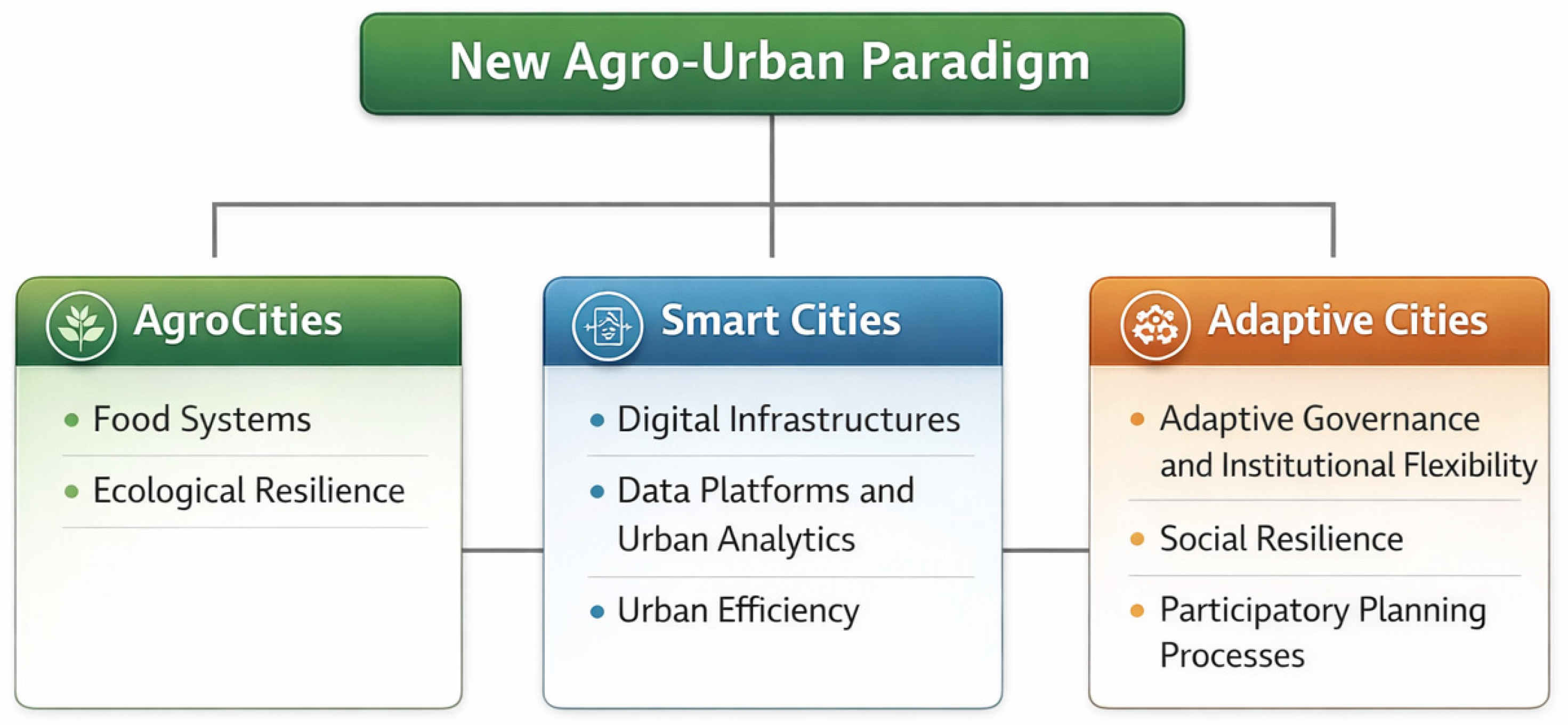
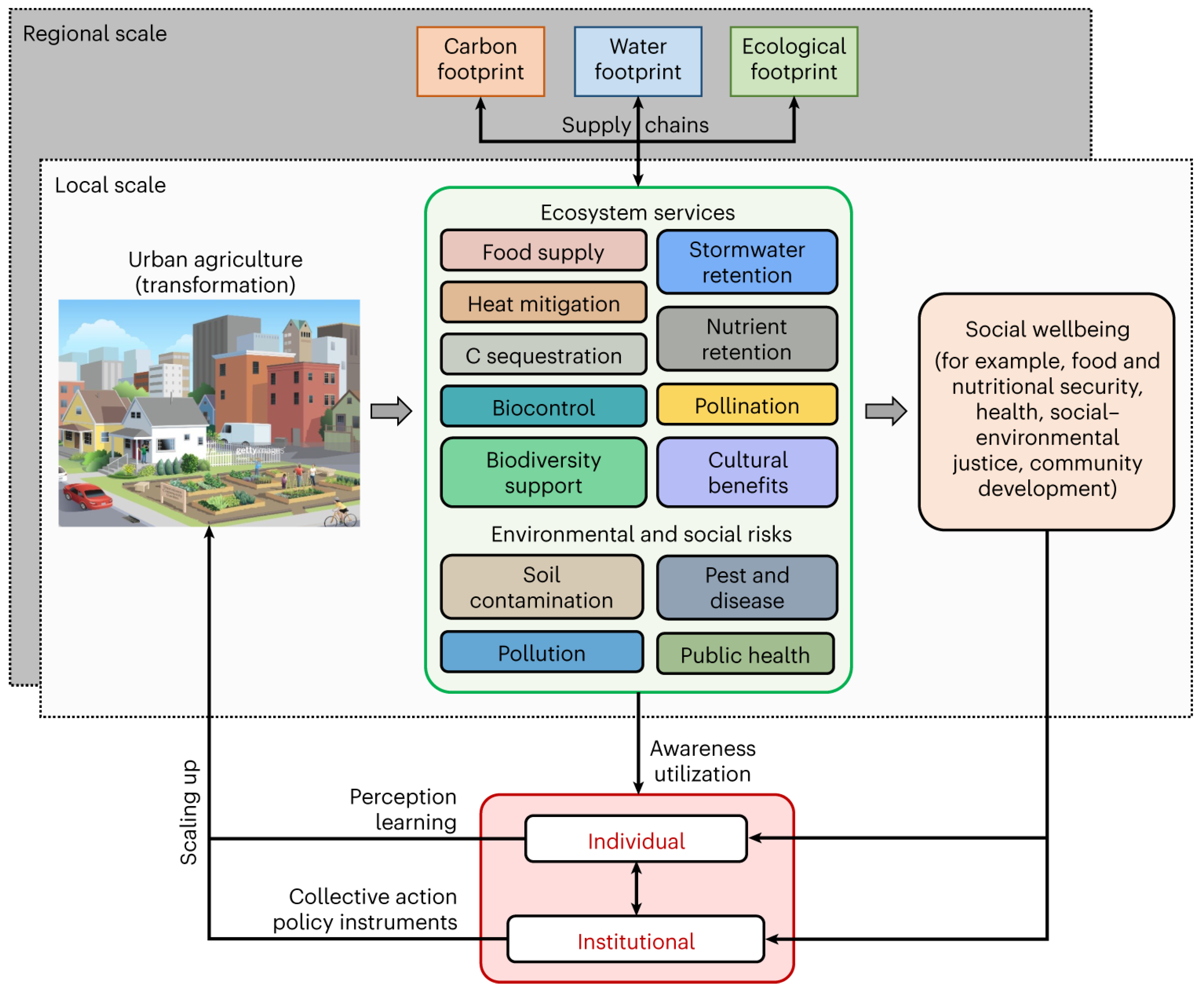
- Firstly, AgroCities local food systems, recognizing them as not only production mechanisms, but also as fundamental drivers of the ecological and social regeneration of territories. They are capable of strengthening the connection between cities and the countryside, promoting circular economies, and enhancing rural cultural and landscape capital.
- Smart Cities introduce and consolidate advanced digital infrastructures that can increase urban efficiency through monitoring, data analysis, and intelligent resource management. However, an overly technocentric vision can reduce the focus on social, cultural and environmental dimensions, creating imbalances that limit the effectiveness of interventions.
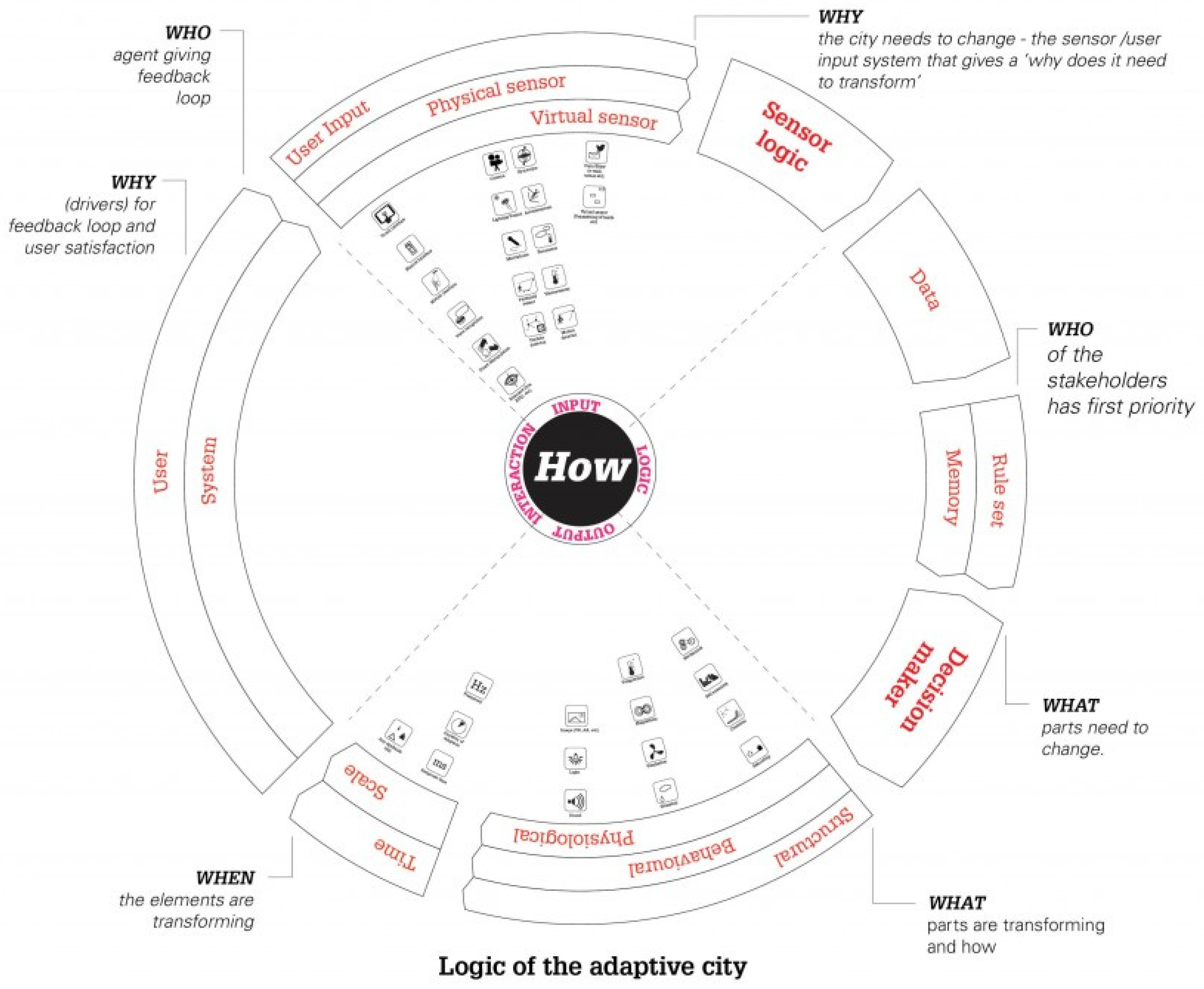
- Adaptive Cities offer a more balanced approach, focusing on inclusiveness, flexibility, and human-centered design. This approach integrates technological innovation and continuous adaptability while taking into account complex socio-spatial dynamics, climate change and demographic transformations. The Adaptive City is therefore a meeting point between innovation, sustainability and resilience, capable of responding holistically to contemporary challenges.
- Firstly, an in-depth analysis of the socio-spatial impacts of urban food strategies is needed, assessing not only production aspects but also the dynamics of social inclusion, equity, and civic participation.
- The development of specific metrics and indicators to measure the performance of Adaptive Cities in terms of environmental sustainability, social well-being, adaptability, and territorial innovation.
- The development of multi-scale, participatory and integrated planning tools that combine urban and rural perspectives and promote synergies under the concept of ‘Smart Land’ and agro-urban strategies.
- Finally, we hope that policymakers will adopt innovative, integrated approaches and promote governance policies that overcome sectoral and territorial fragmentation. These policies should enhance the complementarity between technology, nature and local communities in order to build truly sustainable and resilient cities.
Funding
Institutional Review Board Statement
Informed Consent Statement
Data Availability Statement
Conflicts of Interest
References
- AISU International. Adaptive cities through the post pandemic lens. Rethinking Times and Challenges of the Flexible City in Urban History/Times and Challenges in Urban History. In Proceedings of the 10th AISU Congress, Turin, Italy, 6–10 September 2022. [Google Scholar]
- Andreatta, S.L. Through the Generations: Victory Gardens for Tomorrow’s Tables. Cult. Agric. Food Environ. 2015, 37, 38–46. [Google Scholar] [CrossRef]
- Aurigi, A. Making the Digital City. The Early Shaping of Urban Internet Space; Routledge: London, UK, 2005; p. 236. [Google Scholar] [CrossRef]
- Pinto, R.; Cosenza, F.; Sirchia, P. Adaptive Cities: User-Centered Approach, Contextual Design, and Innovation Management for the Evolution of the City; Pnsix: Bergamo, Italy, 2020. [Google Scholar]
- Shaw, D. Posthuman Urbanism: Mapping Bodies in Contemporary City Space; Rowman & Littlefield: Lanham, MD, USA, 2017. [Google Scholar]
- United Nations. Report of the United Nations Conference on Human Environment; UN: New York, NY, USA, 1973; Available online: https://documents.un.org/doc/undoc/gen/nl7/300/05/pdf/nl730005.pdf (accessed on 10 September 2024).
- United Nations. World Charter for Nature; UN: New York, NY, USA, 1982; Available online: https://digitallibrary.un.org/record/39295 (accessed on 9 September 2024).
- Shao, J.; Min, B. Sustainable development strategies for Smart Cities: Review and development framework. Cities 2025, 158, 105663. [Google Scholar] [CrossRef]
- Angelopoulos, C.M.; Katos, V.; Kostoulas, T.; Miaoudakis, A.; Petroulakis, N.; Alexandris, G.; Demetriou, G.; Morandi, G.; Rak, U.; Waledzik, K.; et al. IDEALCITIES: A Trustworthy and Sustainable Framework for Circular Smart Cities. In Proceedings of the 15th International Conference on Distributed Computing in Sensor Systems (DCOSS), Santorini, Greece, 29–31 May 2019. [Google Scholar] [CrossRef]
- Dameri, R.P.; Giovannacci, L. Smart City e Digital City. Strategie Urbane a Confronto; FrancoAngeli: Milano, Italy, 2016. [Google Scholar]
- United Nations. Transforming Our World: The 2030 Agenda for Sustainable Development; UN: New York, NY, USA, 2015; Available online: https://sdgs.un.org/sites/default/files/publications/21252030%20Agenda%20for%20Sustainable%20Development%20web.pdf (accessed on 15 October 2024).
- United Nations. The Paris Agreement; UN: Paris, France, 2015; Available online: https://unfccc.int/process-and-meetings/the-paris-agreement (accessed on 15 October 2024).
- Dameri, R.P. Smart City Implementation. Creating Economic and Public Value in Innovative Urban Systems; Springer: Cham, Switzerland, 2017. [Google Scholar]
- Grigg, D.B. Population Growth and Agrarian Change: An Historical Perspective; Cambridge University Press: Cambridge, UK, 1980. [Google Scholar]
- De Zeeuw, H.; Van Veenhuizen, R.; Dubbeling, M. The role of urban agriculture in building resilient cities in developing countries. J. Agric. Sci. 2011, 149, 153–163. [Google Scholar] [CrossRef]
- OECD/FAO. OECD-FAO Agricultural Outlook 2019–2028; OECD Publishing: Paris, France, 2019. [Google Scholar] [CrossRef]
- Gausa, M.; Tucci, G. Knitting Food: Food and Eco-Textiles. New Perspectives for Sustainable Urban Production Systems; Springer: Singapore, 2024. [Google Scholar] [CrossRef]
- Gausa, M.; Pericu, S.; Canessa, N.; Tucci, G. Creative Food Cycles: A Cultural Approach to the Food Life-Cycles in Cities. Sustainability 2020, 12, 6487. [Google Scholar] [CrossRef]
- United States Department of Agriculture (USDA). U.S. Farmers Markets-2000: A Study of Emerging Trends; USDA: Washington, DC, USA, 2002. Available online: http://agmarketing.extension.psu.edu/ComFarmMkt/PDFs/emerg_trend_frm_mrkt.pdf (accessed on 12 October 2024).
- United States Department of Agriculture (USDA). USDA Celebrates National Farmers Market Week, August 4–10: Confirms Growth and Sustainability in Farmers Markets; USDA: Washington, DC, USA, 2013. Available online: http://www.usda.gov/wps/portal/usda/usdahome?contentid1%2F42013%2F08%2F0155.xml (accessed on 10 October 2024).
- Roseland, M. Dimensions of the ecocity. Cities 1997, 14, 197202. [Google Scholar] [CrossRef]
- Bayat, A.; Kawalek, P. Digitization and urban governance: The city as a reflection of its data infrastructure. Int. Rev. Adm. Sci. 2023, 89, 320. [Google Scholar] [CrossRef]
- Mupfumira, P.; Mutingi, M.; Sony, M. Smart city frameworks SWOT analysis: A systematic literature review. Front. Sustain. Cities 2024, 6, 1449983. [Google Scholar] [CrossRef]
- Ochoa, W.A.A.; Neto, A.I.; Junior, P.C.V.; Calabokis, O.P.; Ballesteros-Ballesteros, V. The Theory of Complexity and Sustainable Urban Development: A Systematic Literature Review. Sustainability 2025, 17, 3. [Google Scholar] [CrossRef]
- Weber, M. Economy and Society; University of California Press: Berkeley, CA, USA, 1922. [Google Scholar]
- McAdam, D. Political Process and the Development of Black Insurgency, 1930–1970; University of Chicago Press: Chicago, IL, USA, 1982. [Google Scholar]
- Juergensmeyer, M. Terror in the Mind of God: The Global Rise of Religious Violence; University of California Press: Berkeley, CA, USA, 2000. [Google Scholar]
- Balboni, M. The Planet Eaten; Dissensi Edizioni: Viareggio, Italy, 2017. [Google Scholar]
- Baker, L. Unfolding Story of Food; Toronto Food Policy Council: Toronto, ON, Canada, 2014. [Google Scholar]
- Baraud-Serfaty, I. La nouvelle privatisation des villes. Esprit 2011, 3–4, 149–167. [Google Scholar] [CrossRef]
- Batty, M. Big Data, Smart Cities and City Planning. Dialogues Hum. Geogr. 2013, 3, 274–279. [Google Scholar] [CrossRef] [PubMed]
- Bentley, A. Eating for Victory; University of Illinois Press: Urbana, IL, USA, 1998; p. 272. [Google Scholar]
- Bocci, R. The Trojan Horse of the Green Revolution. In Capitalism, Nature, Socialism; Routledge: London, UK, 2006; Volume 17, pp. 183–188. [Google Scholar]
- Borsboom-van Beurden, J.; Kallaos, J.; Gindroz, B.; Costa, S.; Riegler, J. Smart City Guidance Package. A Roadmap for Integrated Planning and Implementation of Smart City Projects; Norwegian University of Science and Technology: Trondheim, Norway, 2019. [Google Scholar]
- Burchardt, J. The Allotment Movement in England, 1793–1873, 1st ed.; Boydell & Brewer: Woodbridge, UK, 2002; Available online: https://www.perlego.com/book/2013477/the-allotment-movement-in-england-17931873-pdf (accessed on 5 September 2024).
- Carta, M. The Augmented City; ListLab: Trento, Italy; Barcelona, Spain, 2017. [Google Scholar]
- Crouch, D.; Ward, C. The Allotment; Faber & Faber: London, UK, 1988. [Google Scholar]
- Dowswell, C. Norman Ernest Borlaug (1914–2009). Science 2009, 326, 381. [Google Scholar] [CrossRef] [PubMed]
- Evans, N.; Odeh, I.; Sauter, G. The Adaptive City: 3 Steps to Achieving the Smart City of the Future; World Economic Forum: Geneva, Switzerland, 2022; Available online: https://cdn.gihub.org/umbraco/media/5234/the-adaptive-city-3-steps-to-achieving-the-smart-city-of-the-future.pdf (accessed on 5 September 2024).
- Eveno, E. Comment l’intelligence vint aux villes. Urbanisme 2014, 394, 26–27. [Google Scholar]
- Fleming, D.; Bailyn, B. The Intellectual Migration; Harvard University Press: Cambridge, MA, USA, 1969. [Google Scholar]
- Gausa, M. City Sense: Territorializing Information. In City Sense—4th Advanced Architecture Contest—Shaping Our Environment with Real-Time Data; Institute for Advanced Architecture of Catalonia, Ed.; Actar Publisher: Barcelona, Spain, 2015; pp. 6–13. [Google Scholar]
- Gausa, M. CFC—Multiscalar Challenges. In Creative Food Cycles Experience; Pericu, S., Gausa, M., Tucci, G., Ronco Milanaccio, A., Eds.; ADDDoc Logos: Genoa, Italy, 2021; pp. 13–52. [Google Scholar]
- Gausa, M.; Canessa, N.; Tucci, G. (Eds.) AC+ Agro-Cultures, Agro-Cities, Eco-Productive Landscapes; Actar Publishers: Barcelona, Spain; New York, NY, USA, 2018. [Google Scholar]
- Goldsmith, S.; Crawford, S. The Responsive City: Engaging Communities Through Data-Smart Governance; John Wiley & Sons: Hoboken, NJ, USA, 2014. [Google Scholar]
- Graham, S. Spaces of Surveillant Simulation: New Technologies, Digital Representations, and Material Geographies. Environ. Plan. D Soc. Space 1998, 16, 483–504. [Google Scholar] [CrossRef]
- Graueholz, L.; Owens, N. Alternative Food Movements; Elsevier: Orlando, FL, USA, 2015. [Google Scholar]
- Heinberg, R. Power Down: Options and Actions for a Post-Carbon World; New Society Publishers: Gabriola Island, BC, Canada, 2004. [Google Scholar]
- Moragues, A.; Morgan, K.; Moschitz, H.; Neimane, I.; Nilsson, H.; Pinto, M.; Rohracher, H.; Ruiz, R.; Thuswald, M.; Tisenkopfs, T.; et al. Urban Food Strategies: The Rough Guide to Sustainable Food Systems. Available online: https://www.researchgate.net/publication/261315754_Urban_Food_Strategies_the_rough_guide_to_sustainable_food_systems (accessed on 7 September 2024).
- Kondepudi, S.N. Smart Sustainable Cities: Analysis of Definitions; United Nations: Washington, DC, USA, 2014. [Google Scholar]
- Palassio, C.; Wilcox, A. The Edible City: Toronto’s Food from Farm to Fork; Coach House Books: Toronto, ON, Canada, 2009. [Google Scholar]
- Picon, A. Smart Cities: A Spatialised Intelligence; Wiley: Hoboken, NJ, USA, 2015; p. 168. [Google Scholar] [CrossRef]
- Rizko, S.; Elias, L. Organic or Conventional Green Revolution? A Field Study Conducted in Ribaue, Mozambique; Linnéuniversitetet, Institutionen för Samhällsstudier (SS): Växjö, Sweden, 2013; Available online: https://lnu.diva-portal.org/smash/record.jsf?pid=diva2%3A605872&dswid=3204 (accessed on 7 September 2024).
- Tucci, G. MedCoast AgroCities: New Operational Strategies for the Development of Mediterranean Agro-Urban Areas; ListLab: Trento, Italy; Barcelona, Spain, 2020. [Google Scholar]
- Halloran, P.; Bell, T.; Bolajoko Awodun, K.; Findlay, H.; Gorbounov, M.; Hooper, G.; Liu, Y.; McDonald, S.; Pewter, J.; Masoudi Soltani, S.; et al. SeaCURE Report Phase 2 Public Facing Final; Department for Energy Security and Net Zero (DESNZ): London, UK, 2026. [Google Scholar]
- Shiva, V. The Violence of the Green Revolution; University Press of Kentucky: Lexington, KY, USA, 1989. [Google Scholar]
- Stiglitz, J.E. An Economy for Man; Castelvecchi: Rome, Italy, 2016. [Google Scholar]
- Tucci, G.; Ratti, C. Technology as an Enabler of a New Ecosystem Responsive Urbanism: Interview with Carlo Ratti (CRA Studio). Agathón. Int. J. Archit. Art Des. 2023, 12, 190–201. [Google Scholar] [CrossRef]
- United Nations. Our Common Future. Report of the World Commission on Environment and Development; UN: Oslo, Norway, 1987; Available online: https://oneplanetschool.wwf.it/system/files/pubblicazioni/Report%20of%20the%20World%20Commission%20on%20Environment%20and%20Development%2C%20Our%20Common%20Future.pdf (accessed on 6 September 2024).
- United Nations. Report of the United Nations Conference on Environment and Development; UN: New York, NY, USA, 1993; Available online: https://documents.un.org/doc/undoc/gen/n92/836/55/pdf/n9283655.pdf (accessed on 15 October 2024).
- United Nations. Agenda 21; UN: New York, NY, USA, 1993; Available online: https://sustainabledevelopment.un.org/content/documents/Agenda21.pdf (accessed on 15 October 2024).
- United Nations. Kyoto Protocol to the United Nations Framework Convention on Climate Change; UN: Kyoto, Japan, 1998; Available online: https://unfccc.int/resource/docs/convkp/kpeng.pdf (accessed on 11 October 2024).
- United Nations. United Nations Millennium Declaration; UN: New York, NY, USA, 2000; Available online: https://www.ohchr.org/en/instruments-mechanisms/instruments/united-nations-millennium-declaration (accessed on 11 October 2024).
- United Nations. UNEA Resolution 5/14 Entitled End Plastic Pollution: Towards an International Legally Binding Instrument; UN: Dakar, Senegal, 2022; Available online: https://wedocs.unep.org/bitstream/handle/20.500.11822/39812/OEWG_PP_1_INF_1_UNEA%20resolution.pdf (accessed on 10 October 2024).
- Norton, B. Agroecology as a path to food sovereignty and social justice. Ukr. J. Ecol. 2024, 14, 57–59. [Google Scholar]
- Skidmore, Owings & Merrill (SOM). We Could Live This Green in 2050; SOM: Chicago, IL, USA, 2020; Available online: https://www.som.com/news/we-could-live-this-green-in-2050/ (accessed on 2 December 2025).
- Bosco, G.; Riccardi, V.; Sciarrone, A.; D’amore, R. AI-driven innovation in smart city governance: Achieving humancentric and sustainable outcomes. Transform. Gov. People Process Policy 2024, 20, 98–123. [Google Scholar] [CrossRef]
- Meerow, S.; Newell, J.P.; Stultus, M. Defining urban resilience: A review. Sci. Landsc. Urban Plan. 2016, 147, 38–49. [Google Scholar] [CrossRef]
- Castelnovo, W.; Misuraca, G.; Savoldelli, A. Smart Cities Governance: The Need for a Holistic Approach to Assessing Urban Participatory Policy Making. Soc. Sci. Comput. Rev. 2016, 34, 724739. [Google Scholar] [CrossRef]



| Paradigm | Worldview | Program | Faith | References |
|---|---|---|---|---|
| AgroCity | Food sovereignty, ecological equity | Urban food strategies, community gardening | Local self-reliance and agro-urban resilience | [4,5,6,7,8,9,10] |
| Smart City | Efficiency, digitalization | ICT integration in services and governance | Technological innovation for competitiveness | [11,12,13,14,15,16,17,18] |
| Adaptive City | Resilience, circularity | Co-designed services, AI, prototyping | Human-centered and responsive urbanism | [19,20,21,22,23,24,25,26,27] |
| Benefits | Case Studies | |
|---|---|---|
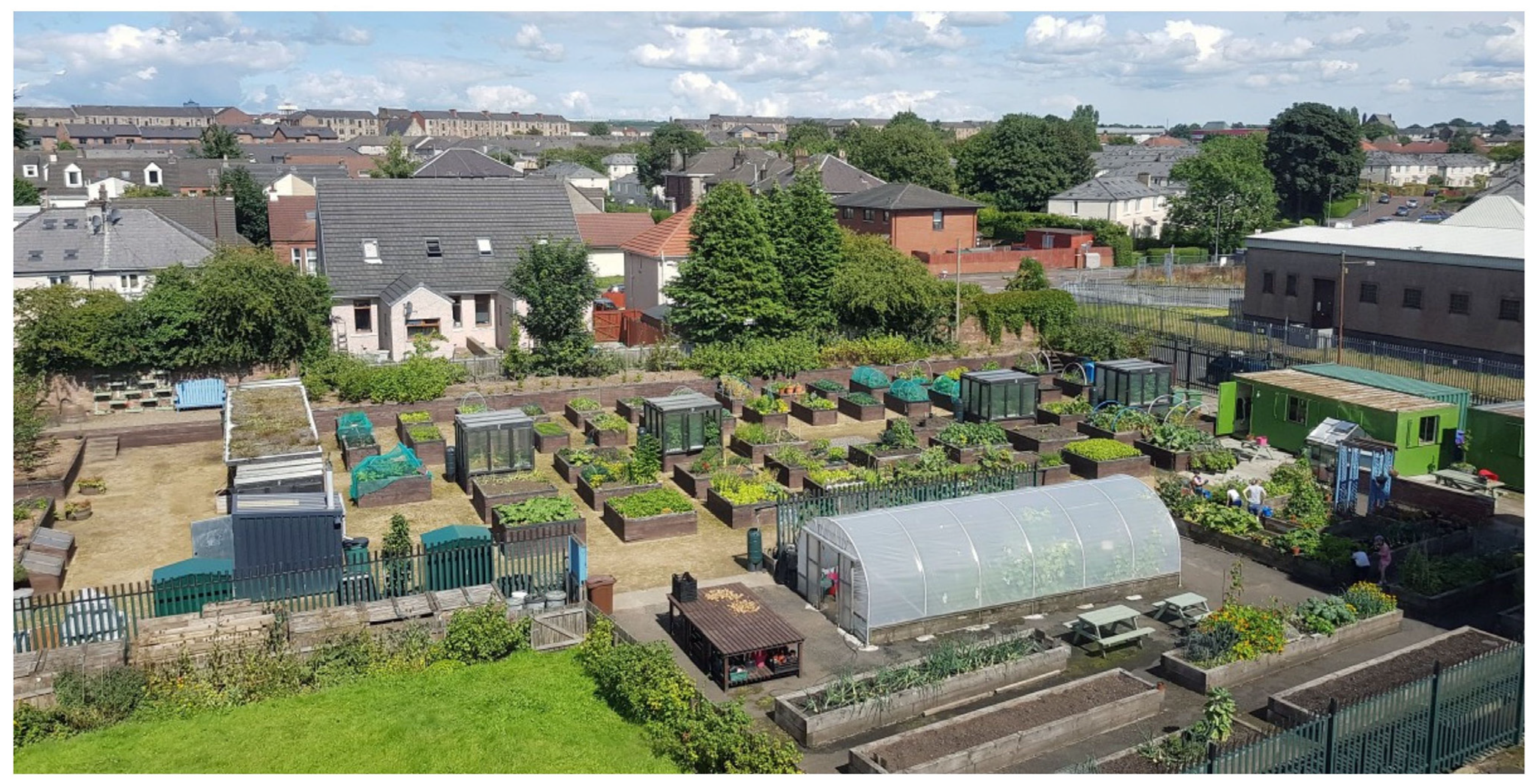
| Socio- cultural benefits | Redeveloping blighted neighborhoods improves social cohesion, inclusion, cooperation, and the participation of diverse stakeholders. | Shettleston Community Farming Project is located in Glasgow (Scotland); Red de Huertos Urbanos de Madrid (Rehdmad) is a network of 75 urban community gardens located in Madrid; The city of Bamberg is located in northern Bavaria (Germany). |
| Health benefits | Improving physical and mental health through landscaping, reducing the human toxicity of agricultural products and inputs, improving quality of life, encouraging healthier eating behavior, and strengthening social ties. | Ninewells Community Garden, located in the grounds of Ninewells Hospital, in the city of Dundee (Scotland), aims to encourage physical and healthy activities through therapeutic and rehabilitative gardening; Orchard Project is a U.K. national charity involving more than 540 orchards in England, Scotland, and Wales; Agricoopecetto is a cooperative, organic, and social farm started in 2010 in the peri-urban area of Turin (Italy). |
| Environmental benefits | Improving and expanding urban green spaces and green infrastructure, enhancing sustainable water management (rainwater retention and erosion control), mitigating the urban heat island effect, contributing to carbon sequestration and reducing air pollution, conserving biodiversity, supporting pollination, and regenerating brownfield and contaminated sites. | Park Belvedere is located in Cologne, Germany, as part of its green infrastructure system and green space network; Orti Generali is a community garden in southern Turin, Italy; Nabofarm is an urban farm located in Copenhagen, Denmark. |
| Economic benefits | Improving local economies and reducing economic losses by creating new business models, implementing agricultural diversification, creating new jobs, reducing public space management costs, developing alternative markets, and innovating marketing-consumer relations. | Onze, in the peri-urban area of the city of Almere (the Netherlands), is a commercial vegetable garden run by a farming family that rents 450 plots (of about 40 m2 each) for fruit and vegetable production; Parc des Lilas, a vast area of about 97 hectares containing orchards, cereal crops, gardens, meadows, and pasture areas, in Vitry-sur-Seine, Île-de-France (France); Blizkata Ferme, a local farm in the peri-urban area of Sofia (Bulgaria), produces varieties of vegetables and sells them through direct sales systems, such as the ‘box scheme’. |
| Agro- productive benefits | Improving cities’ food self-sufficiency and self-supply, reducing supply chains, promoting alternative distribution channels and networks, strengthening food security, expanding supply, and developing food diversity. | Oosterwold is a new peri-urban area located in the city of Almere (Netherlands) that aims to supply 10 percent of the region’s food production; MicroFlavours is an innovative Urban farm in Brussels (Belgium) specializing in the production of microgreens; DAM Consortium involves 30 farms located in the peri-urban areas of Milan (Italy), within the boundaries of the Parco Agricolo Sud di Milano (PASM) and in close connection with several urban parks. |
Disclaimer/Publisher’s Note: The statements, opinions and data contained in all publications are solely those of the individual author(s) and contributor(s) and not of MDPI and/or the editor(s). MDPI and/or the editor(s) disclaim responsibility for any injury to people or property resulting from any ideas, methods, instructions or products referred to in the content. |
© 2026 by the author. Licensee MDPI, Basel, Switzerland. This article is an open access article distributed under the terms and conditions of the Creative Commons Attribution (CC BY) license.
Share and Cite
Tucci, G. Toward a New Agro-Urban Paradigm: Networked Systems for Sustainable Futures. Urban Sci. 2026, 10, 382. https://doi.org/10.3390/urbansci10070382
Tucci G. Toward a New Agro-Urban Paradigm: Networked Systems for Sustainable Futures. Urban Science. 2026; 10(7):382. https://doi.org/10.3390/urbansci10070382
Chicago/Turabian StyleTucci, Giorgia. 2026. "Toward a New Agro-Urban Paradigm: Networked Systems for Sustainable Futures" Urban Science 10, no. 7: 382. https://doi.org/10.3390/urbansci10070382
APA StyleTucci, G. (2026). Toward a New Agro-Urban Paradigm: Networked Systems for Sustainable Futures. Urban Science, 10(7), 382. https://doi.org/10.3390/urbansci10070382