1. Introduction
The integrated research framework, as well as the methodology for the comparative analysis of key safety determinants at school entrance micro-locations, was developed based on experience gained through a pilot educational project on urban traffic safety conducted among primary school pupils in the City of Zagreb. Some components of the research framework were first tested in April 2023 at the typical older Sesvetski Kraljevec Primary School, a case-study school located in the centre of a densely built historic settlement. In this study, the term “typical” does not imply statistical representativeness of all Croatian primary schools. Instead, it refers to a case school typical of older Croatian primary schools located in densely built historic settlement cores. The analysed school meets this definition because it has approximately 700 pupils, operates in two teaching shifts, is located in a densely built pre-1990 settlement without a dedicated school-access road or drop-off zone, has combined vehicular and pedestrian access without physical separation, lacks dedicated bicycle infrastructure on the adjacent street and is surrounded by combined residential and business areas. Scientific findings from the literature indicate that educational campaigns aimed at pupils, teachers, and parents alone may be insufficient to produce significant improvements in urban traffic safety without the simultaneous implementation of targeted physical interventions within the immediate and wider school traffic environment [
1].
In larger Croatian cities, many primary schools are in densely populated historic urban areas, where traffic micro-locations at school entrances are burdened with complex circulation patterns. The road infrastructure in such areas had often been developed without systematic urban or traffic planning principles and was later only partially adapted through the implementation of vertical signage, pavement markings, speed-calming measures, pedestrian barriers, etc. As a result, the visibility for drivers of passenger vehicles, freight vehicles, and school buses is often insufficient [
2], while compliance with posted speed limits remains low despite posted horizontal and vertical traffic control devices [
3]. Certain pedestrian and service access points to school yards, such as the analysed entrance of the typical Sesvetski Kraljevec Primary School, were not designed in accordance with contemporary traffic engineering standards and ergonomics guidelines. Therefore, they cannot adequately ensure the required level of safety for pupils travelling as pedestrians [
4], cyclists, or micromobility users (primarily e-scooter users) [
5]. Attendance at the typical analysed Sesvetski Kraljevec Primary School operates in a double-shift system (morning and afternoon shifts). The highest peak of pupil movement typically occurs during the overlap between morning and afternoon school shifts, characterised by staggered entry and exit times [
6]. Due to insufficient education and limited practical skills, pupils may fail to correctly identify hazardous traffic factors in their environment and may also neglect the use of age-appropriate safety equipment [
7].
An integrated approach to analyse the narrow and wider traffic environment of school entrances requires more than educational programmes for pupils, teachers, and parents, because educational measures alone cannot fully address pedestrian risk exposure, school-zone characteristics, and built-environment conditions affecting pupils’ safety [
1,
5,
6,
7]. It integrates: (i) online surveys of parents and pupils to identify pupils’ school travel behaviour, with an emphasis on traffic-relevant variables such as school age group, mode of travel to school, and distance between pupils’ homes and the school; (ii) micro-location safety assessment using an iRAP-based methodology with proposals for improvement; and (iii) field measurements and detailed analysis of selected traffic parameters. According to the World Health Organization (WHO), approximately 1.2 million people are killed annually in road traffic crashes, while 30–50 million suffer injuries, with pedestrians, cyclists, and motorcyclists constituting the most vulnerable categories of road users [
8]. A speed limit of 40 km/h is commonly imposed in school zones [
9], as is the case on Školska Street. However, even at relatively low speeds of 20 to 30 km/h [
10], passenger cars with 1500 to 2000 kg of mass generate significantly higher physical momentum (m·v) compared to pupils travelling by bicycle at speeds up to 20 km/h or on foot at approximately 3–5 km/h. In the event of a collision, a considerable kinetic energy can result in severe or fatal injury for child pedestrians and cyclists. Previous research has indicated that a vehicle impact at only 30 km/h can be sufficient to cause pedestrian fatalities [
11].
Combining multiple traffic safety measures, such as reducing driver errors by treating road accident blackspots, installing improved traffic signalling and protective barriers, increasing the implementation of Advanced Driver Assistance Systems (ADASs), and promoting vehicles with higher automation levels, may reduce crash rates to some extent attributable to driver behaviour [
12]. Therefore, the core contribution of this study lies in proposing an integrated methodological framework that simultaneously addresses physical traffic safety interventions and behavioural safety education. Compared with existing partial school-zone safety studies that often focus on individual aspects such as travel behaviour, crash risk, traffic speed, or specific infrastructure interventions, this study combines behavioural, operational, and infrastructural safety evidence within an integrated assessment framework. In this way, the study moves beyond a case diagnosis and demonstrates how multiple complementary data sources can be used to support safety improvements at school entrance micro-locations in older urban settlements.
It is important to note that, although educational programmes may partially improve safe behaviour among pupils by enhancing their ability to identify hazardous conditions [
13], they cannot independently achieve a high level of traffic safety without targeted infrastructural improvements within the school entrance micro-location and its wider urban traffic context [
14].
Targeted infrastructural improvements must be based on an understanding of the determinants of pupils’ travel to school. Therefore, one of the research problems addressed in this study was the description of four traffic-relevant determinants (research variables): (1) the distance between the pupils’ homes and the school; (2) the mode of pupils’ travel to school; (3) the school age group; and (4) pupils’ sex, together with the analysis of their mutual relationships. The description of the four determinants was conducted using appropriate descriptive statistical procedures, while the relationships between these determinants were established by testing the following hypotheses:
H1. The mode of pupils’ travel to school differs according to the distance between the pupils’ homes and the school.
H2. The mode of travel to school differs between female and male pupils.
H3. The mode of travel to school differs between pupils of lower and higher school age groups, i.e., between pupils attending classroom-based and subject-based education.
H4. The potential relationship between the mode of pupils’ travel to school and the distance between the pupils’ homes and the school differs between classroom-based and subject-based education age groups.
2. Description of the Entrance Micro-Location in a Historic Urban Area and Teaching Organisation in Two Overlapping Shifts
Generally, micro-locations of school yard entrances and exits at certain primary schools, especially in the centres of older urban settlements, are characterised by the following traffic safety factors: the absence of separated vehicular and pedestrian entrances, the absence of bicycle lanes/tracks, pedestrian conflicts between pupils due to the overlap of two school shifts during peak flow periods, as presented in
Table 1, unpredictable and impulsive behaviour of younger pupils, failure to use protective safety equipment such as helmets and reflective vests, and insufficient education of children regarding the risk factors associated with electric personal mobility devices [
15]. All the above significantly affect traffic safety within the school zone [
6].
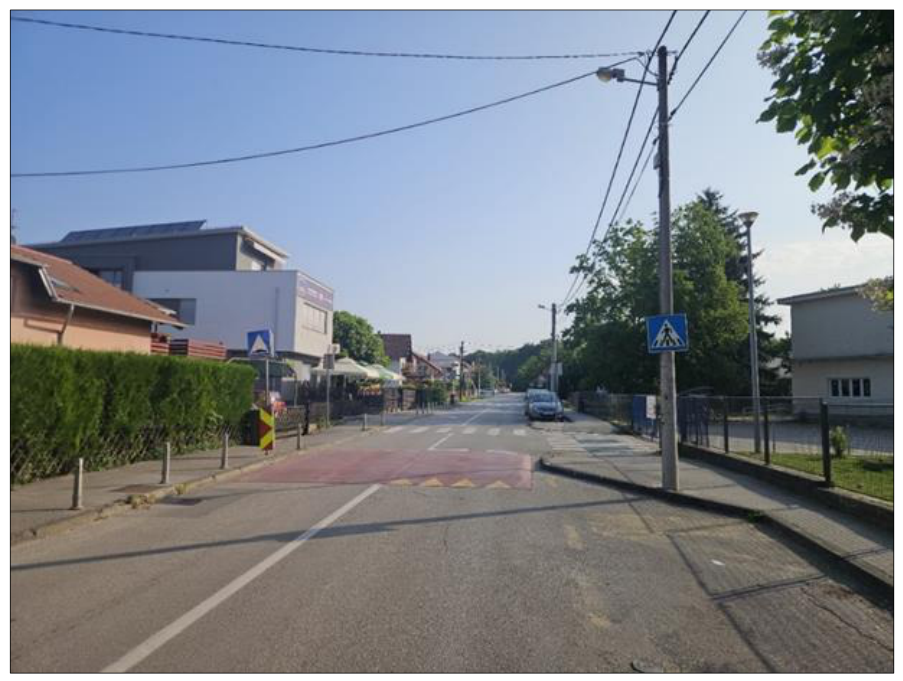
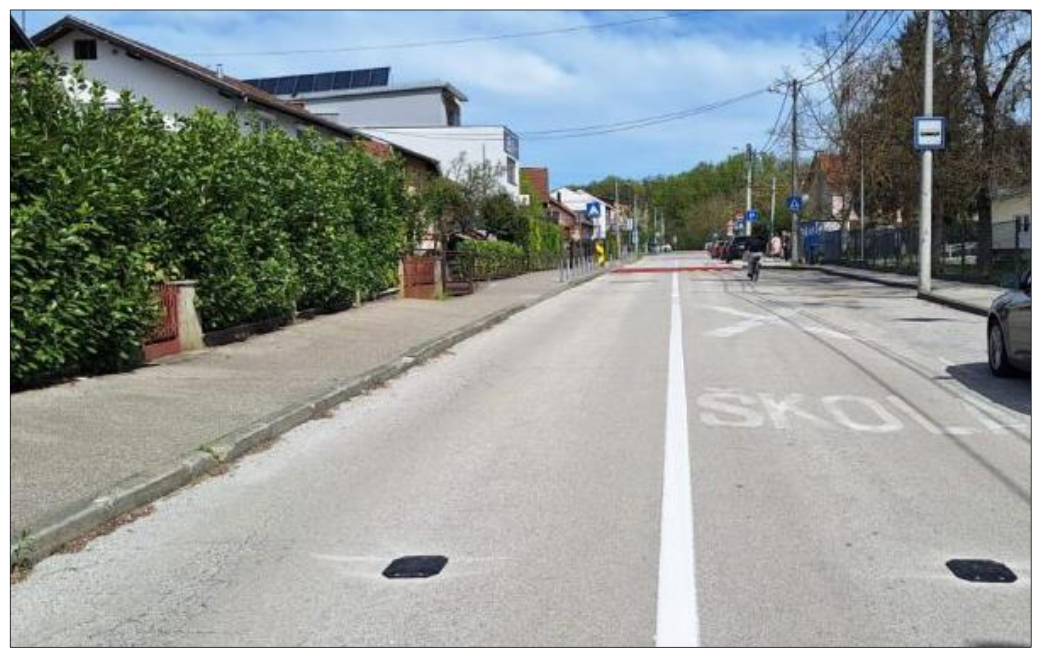
Based on the experience collected by the researchers from a pilot educational workshop held on 21 April 2023 at the typical Sesvetski Kraljevec Primary School, the public national NPSCP project (2023) was conducted at the level of the entire Republic of Croatia. The project entitled “Increasing the Safety of Children in School Zones through Education of Children Themselves, Teachers, Parents and Other Traffic Participants” was implemented from 23 October 2023 to 22 October 2024. The typical Sesvetski Kraljevec Primary School is characterised by a poorly designed combined vehicular–pedestrian entrance/exit solution (
Figure 1) onto Školska Street, together with a highly complex entrance/exit micro-location configuration. Školska Street is a two-way street without marked bicycle lanes, where all categories of vehicles, including heavy vehicles, travel in both directions. The maximum permitted traffic speed along the entire length of Školska Street is 40 km/h, in both directions.
The presence of a marked bicycle lane predominantly affects the lateral overtaking distance (LOD) when cyclists are overtaken by drivers of motor vehicles, with these distances being, on average, 31 cm greater when a bicycle lane is present. However, this effect is relevant only for traffic lanes of greater width. Almost no difference was observed in the case of a 2.5 m traffic lane with an additional marked bicycle lane compared to a 3.0 m traffic lane without a marked bicycle lane. Although physically separated infrastructure is preferable, it has been suggested that marked bicycle lanes are still a better option than their complete absence. Wider traffic lanes and lower speed limits have proven important in reducing uncertainty associated with smaller lateral distances and higher overtaking speeds of cyclists by drivers [
16]. Because increased traffic flow on the two-way Školska Street in front of the entrance occurs outside the period from 12:00 to 14:00, when two school shifts overlap (
Table 1), the temporal distribution of traffic suggests that part of the measured traffic may be unrelated to direct school-access activities. Therefore, traffic intensity is additionally influenced by the proximity of commercial and municipal facilities in the vicinity of the school, which is in the old centre of the urban settlement of Sesvetski Kraljevec, which has approximately 7000 inhabitants.
Pupils were divided into classroom-based education (first–fourth grades) and subject-based education (fifth–eighth grades) because these two age groups differ substantially in terms of independence, traffic experience, and parental supervision during travel to school. Younger pupils are generally more dependent on parents, whereas older pupils travel more independently and are therefore more directly exposed to traffic conditions within the immediate school environment. This classification enabled a better analysis of age-related mobility patterns and associated traffic safety conditions around the school micro-location. Parking spaces and a bus stop are located alongside the street, reducing visibility in situations where pupils exit the primary school through the integrated pedestrian and vehicular entrance, while the improperly positioned pedestrian crossing at roadway level and the absence of protective fencing [
17,
18] and bicycle tracks and lanes contribute to an increased risk of traffic accidents. Greater traffic lane width [
19,
20] as well as non-compliance with the posted speed limit of 40 km/h, additionally increase this risk.
3. Integrated Research Methodology
The research methodology implemented in selected primary schools included several structured steps aimed at obtaining a detailed insight into all relevant safety factors affecting pupils as participants in urban traffic. In cooperation with the primary schools, the starting and ending times of several staggered pupil shifts within each of the two overlapping school sessions (morning and afternoon) were determined to identify the theoretical time of peak traffic flow at the entrance/exit of the primary school.
Surveys of pupils (subject-based education from the fifth to the eighth grade of primary school) and their parents (classroom-based education from the first to the fourth grade of primary school) were conducted to obtain insight into the travel behaviour patterns of pupils as participants in urban traffic. Data on the distribution of pupils according to travel mode were collected, and their percentage participation in urban traffic at micro-locations around primary schools was determined according to female and male pupils and age criteria: pedestrians, bicycle users, e-scooter users, users of school buses for pupil transport, users of public passenger transport, and users of passenger car transport provided by parents. The aim was to establish the percentage distribution of average travel distances used by specific groups of pupils (according to pupils’ age and sex) as different traffic participants for travelling between pupils’ homes and the school and vice versa.
The traffic flow and structure of motor vehicles were measured over a period of 10 days, together with median travel speeds and 85th percentile travel speeds [
21] of motor vehicles travelling on the road where the entrance/exit of the investigated primary school is located (
Figure 2). The measured data related to the 85th percentile speed (v85) are particularly important because this parameter represents the operating speed adopted by the majority of drivers under prevailing traffic conditions and is widely recognised as one of the most reliable indicators for evaluating the effectiveness of speed management measures and the associated traffic safety risk within urban road environments [
21]. By applying the iRAP methodology, the safety of primary school entrances was assessed on the basis of the measured traffic parameters at the school location, together with recommendations for improvements to the traffic infrastructure at the entrance/exit micro-location of the primary school, while the scientific and professional findings in the form of a study will be submitted to the competent institutions. Finally, locally adapted educational workshops were organised in primary schools for pupils, parents, and teachers, consisting of educational sessions, questionnaire-based quizzes for the assessment of cognitive skills with appropriate rewards, and practical workshops on bicycle and electric scooter training polygons for the acquisition of motor skills [
22].
Descriptive statistical methods were used to analyse the distribution of pupils according to travel mode, travel distance, school age group, and pupils’ sex, while relationships between categorical variables were further examined within the questionnaire data analysis.
4. Motor Vehicle Speeds and Measurement Results of Other Relevant Traffic Parameters
Speed represents the most influential traffic safety factor and, consequently, a major contributing factor to traffic accidents [
10]. However, the research results and the proposed safety improvement measures presented in the following sections indicate that an additional reduction in the permitted speed to less than the currently maximum permitted speed (40 km/h), without the implementation of other measures, is insufficient.
Table 2 presents the conclusions of recent research concerning relevant road traffic safety factors in the immediate vicinity of primary school entrances.
Traffic measurements were conducted over a 10-day period in April 2024. Before calculating representative midweek average values, a descriptive comparison of total daily traffic flow by weekday was conducted (
Table 3). Days with partial measurements only were excluded from this comparison. The Tuesday–Thursday period showed a relatively stable midweek pattern, with total daily traffic flow ranging from 1220 to 1299 vehicles. Friday showed greater variability across the two full measurement days, with total daily traffic flow ranging from 936 to 1384 vehicles.
Monday was treated as a boundary weekday, while Friday was treated as a boundary weekday with higher observed variability. Therefore, Monday and Friday were not used in the calculation of representative midweek average values. The speed and traffic-flow analyses presented in
Table 4,
Table 5,
Table 6 and
Table 7 are based on Tuesday, Wednesday, and Thursday, which provided a more stable midweek reference period. The data presented in
Table 4,
Table 5,
Table 6 and
Table 7 for Direction A refer to the traffic direction from Dugoselska Street (the main east–west road through the settlement) along Školska Street toward the north, i.e., toward Domjanićeva Street. Direction B refers to the traffic direction from Domjanićeva Street along Školska Street toward the south, i.e., toward Dugoselska Street.
The data presented in
Table 4 indicate that all measured travel speeds throughout the entire day were higher in Direction B. Therefore, for the category of all motor vehicles, traffic travelling in Direction B represents a greater safety risk.
The data presented in
Table 5 also confirms that passenger vehicles, regardless of the time of day, achieved higher speed values in Direction B. For the category of passenger vehicles, traffic travelling in Direction B represents a greater safety risk.
The results presented in
Table 6 confirm that, regardless of the time during the day, higher vehicle travel speeds were consistently achieved for heavy vehicles travelling in Direction B compared to Direction A. The 85th percentile speeds of heavy vehicles exceeded the maximum permitted speed of 40 km/h in several time intervals in both directions. It should be noted that heavy vehicles generate substantially greater momentum than passenger vehicles at equivalent speeds due to their significantly greater mass, thereby increasing the potential severity of conflicts with vulnerable road users despite their lower traffic share. Therefore, heavy vehicle traffic represents an equally significant safety risk in both directions.
The analysis of hourly traffic flow presented in
Table 7 indicated pronounced daily traffic dynamics. The highest traffic flow on Školska Street was recorded between 05:30 and 07:00 and again between 13:30 and 17:30. However, the morning traffic peak did not correspond to the arrival period of pupils attending the morning school session (07:00–09:00), while the afternoon increase in traffic flow only partially overlapped with the transition period between the morning and afternoon school sessions. The temporal mismatch between the highest measured traffic flow and the main pupil arrival and departure periods suggests that part of the measured traffic may be unrelated to direct school-access activities. However, because no origin-destination analysis was conducted, the interpretation of hourly traffic flow patterns should be considered as inference rather than as directly measured transiting traffic [
27]. Traffic flow intensity decreased between peak periods but remained continuously present throughout the measurement period.
The analysis showed that passenger vehicles (length 2–7 m) were significantly more represented than heavy vehicles (length > 7 m). Passenger vehicles accounted for more than 85% of the total traffic flows during certain periods of the day. Although heavy vehicles were recorded at lower intensities, their greater mass and stopping distance may additionally affect traffic safety conditions within the narrow road corridor near the school entrance. Average vehicle travel speeds ranged between 35 and 45 km/h, while the 85th percentile speed frequently approached 50 km/h, indicating that a proportion of drivers exceeded the posted speed limit. Higher median and 85th percentile speeds were consistently recorded in Direction B compared to Direction A for all vehicle categories. The analysis was conducted during representative midweek days (Tuesday, Wednesday and Thursday) throughout the entire day [
28]. Such traffic conditions represent a significant safety risk in the immediate vicinity of pedestrian crossings, school entrances, and public transport stops. Based on the obtained traffic and speed data, three realistic scenarios for improving safety at the investigated location were identified.
Scenario A: The conversion of the existing two-way road into a one-way road operating only in Direction A [
19] would reduce the number of vehicles using the analysed road as the main connection between the northern part of the Sesvetski Kraljevec settlement and Dugoselska Street, the main road connecting the entire city district with the rest of the City of Zagreb. In addition, such a solution would enable the repurpose of a portion of the roadway (e.g., for bicycle lanes) and provide improved visibility for drivers who would potentially travel within two traffic lanes under the new one-way traffic regulations.
Scenario B refers to a traffic regulation model in which Školska Street would remain a two-way road, while heavy vehicles with a maximum authorised mass exceeding 3.5 t would be prohibited in both directions [
20]. Exceptions would apply only to delivery vehicles servicing the primary school and business entities operating in Školska Street, if they obtain a special permit issued by the City Administration of Zagreb. Such an approach would also reduce traffic flow, increase visibility for all traffic participants, and potentially enable the narrowing of the existing traffic lanes in favour of marked bicycle lanes [
15] as an additional element for improving safety.
The most restrictive option, Scenario C, involves the simultaneous implementation of Scenarios A and B (one-way traffic operating only in Direction A, without heavy vehicle traffic). The justification for such a solution is additionally supported by the survey results obtained related to pupils’ travel behaviour. The conducted research indicated an increase in the proportion of male pupils using bicycles, as well as an increased proportion of pupils of both sexes travelling to school on foot within the subject-based education group (fifth–eighth grades) compared to pupils attending classroom-based education (first–fourth grades). These results suggest a growing presence of active travel modes among older pupils, particularly walking and cycling, within the immediate school traffic environment. Consequently, the implementation of more restrictive traffic regulation measures aimed at reducing motor vehicle traffic in the immediate vicinity of the school entrance may provide additional safety benefits for the most vulnerable groups of road users, particularly pedestrians and cyclists.
5. Safety Assessment of Typical Primary School Entrance Micro-Locations Using the iRAP Methodology with Proposed Safety Improvement Measures
The International Road Assessment Programme (iRAP) represents a global methodology for assessing the safety of road infrastructure with the aim of reducing the number of traffic accidents involving severe consequences. The primary tool within this methodology is the Star Rating Score (SRS) system, which provides a quantitative assessment of risk for different categories of road users, including drivers, motorcyclists, cyclists, and pedestrians. The risk assessment is based on more than 50 road infrastructure attributes collected and analysed using georeferenced roadway video recordings. The ratings range from one to five stars, where one star represents a high level of risk, while five stars represent an exceptionally low level of risk for traffic accidents involving severe bodily injuries or fatalities.
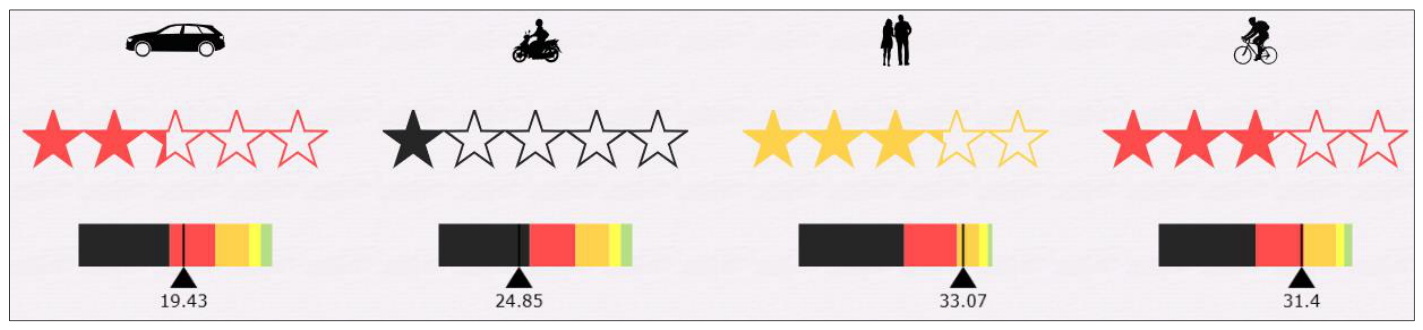
The cross-section of the analysed location is typical for an urban area, whereby residential, commercial, and other facilities generating additional traffic are in the immediate vicinity of the school. The roadway is divided by a horizontal centre line into two traffic lanes for opposite traffic directions, with an average lane width of three metres, high upgrade costs, and relatively low speed limits. The school entrance is illuminated by public lighting, while pedestrian crossings, parking spaces, and a bus bay for school buses have been constructed. North of the vehicle entrance to the school, a four-leg unsignalized intersection is located, where insufficient visibility was identified due to the proximity of private property and tall vegetation along the roadway edge, preventing drivers from timely detecting potential hazards and anticipating traffic situations. The speed limit on the street is 40 km/h with the implementation of traffic calming measures. However, despite this, the operating speed is 50 km/h. Based on the available data and the iRAP analysis, the star safety rating of the current situation is determined as two stars for passenger vehicles (SRS: 19.43), one star for motorcyclists (SRS: 24.85), three stars for pedestrians (SRS: 33.07), and three stars for cyclists (SRS: 31.4), as shown in
Figure 3.
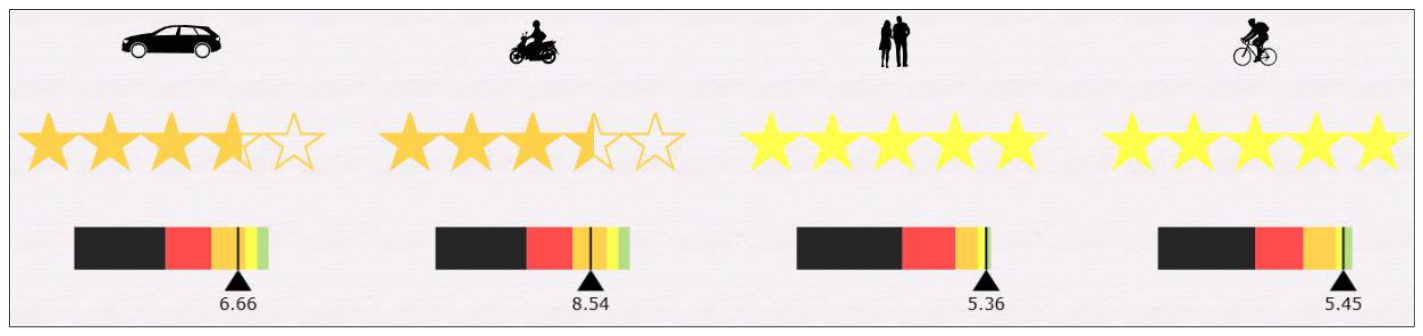
These ratings indicate a relatively unsatisfactory level of safety for all traffic participants. The greatest risk is associated with intersection collisions and longitudinal collisions. Several remediation measures were proposed to increase the level of safety. The first and most important recommendation refers to the conversion of the existing two-way road into a one-way road (scenario C, only traffic from direction A, but without heavy motor vehicles), which would reduce the number of vehicles travelling in front of the school entrance while simultaneously enabling the repurposing of the roadway into bidirectional bicycle lanes and improving the drivers’ field of vision. Further, the separation of the pedestrian and vehicular entrances is proposed, whereby conflict points between pedestrians and vehicles would be eliminated, while pedestrian flow during exit from the school yard would be additionally slowed, thereby increasing the level of safety within the entrance zone. Consequently, through the implementation of these measures, the level of safety would be increased according to the iRAP methodology in the following manner. The star safety rating would amount to three stars for passenger vehicles (SRS: 6.66), three stars for motorcyclists (SRS: 8.54), four stars for pedestrians (SRS: 5.36), and four stars for cyclists (SRS: 5.45). Through the implementation of these measures, longitudinal collisions would no longer be possible, while the probability of intersection collisions would be reduced due to lower vehicle travel speeds (
Figure 4).
An additional level of protection may be achieved through the installation of protective fencing (“staple barriers”) in front of a newly proposed separate pedestrian exit from the school yard (currently, the vehicular and pedestrian exits represent the same exit), whereby pupils would be physically prevented from directly running onto the roadway without stopping or slowing down, which frequently occurs when larger groups of pupils exit simultaneously. The visibility of the pedestrian crossing should additionally be improved through appropriate traffic signalling and enhanced lighting, particularly during winter months and under conditions of reduced visibility [
29]. All proposed measures were selected with the aim of minimal spatial invasiveness and low implementation costs, while simultaneously providing a high level of effectiveness regarding the improvement of safety for all traffic participants. Their implementation is expected to enable an increase in safety ratings for all observed user groups, together with the near-complete elimination of the risk of the most severe consequences of traffic accidents. As an additional option, a prohibition of heavy vehicle traffic is proposed, apart from delivery vehicles servicing the primary school, whereby traffic flow would be reduced, visibility increased, and the narrowing of the existing traffic lanes in favour of implementing bicycle lanes as an additional traffic safety measure would potentially be enabled.
6. Analysis of the Percentage Distribution of Pupils’ Travel Modes to School by Age Group and Female/Male Pupil Groups
6.1. Participants
The research sample consisted of pupils attending subject-based education and parents of pupils attending classroom-based education, both at the typical Sesvetski Kraljevec Primary School. The total school population consisted of 668 enrolled pupils. The survey invitation was distributed electronically through the school administration to the target population, which included pupils attending subject-based education and parents/legal guardians of pupils attending classroom-based education. A total of 376 valid responses were included in the statistical analysis, corresponding to 56.3% of the total enrolled pupil population. Pupils attending subject-based education completed the questionnaire independently, while parents/legal guardians completed the questionnaire on behalf of pupils attending classroom-based education. Responses completed by teachers for educational demonstration purposes were excluded from statistical analysis. The sample included pupils of both sexes and school age groups (classroom-based and subject-based education), enabling comparative statistical analyses of pupils’ travel behaviour and traffic participation patterns. Both male and female participants, as well as both school-age groups, were almost equally represented within the overall sample of surveyed pupils. Informed consent for participation was obtained through the questionnaire procedure administered by the primary school. Participation was voluntary and anonymous, and the collected data were analysed only in aggregated form.
6.2. Survey Instrument
The online questionnaire was designed using the Google Forms platform and consisted of closed-ended questions related to pupils’ travel behaviour and participation in urban traffic. The collected variables included:
The analysed travel modes included:
School transport bus;
Public transport bus;
Passenger car;
Bicycle;
Walking;
Electric scooter.
Electric scooter use was initially included in the questionnaire due to the increasing presence of micromobility users in urban traffic environments around schools. Five respondents (1.3% of the total sample) reported travelling to school by electric scooter, and all of them were 8th-grade pupils. This grade-specific distribution is also consistent with the existence of formal age-related restrictions on the use of electric scooters by younger pupils for school travel. Due to this very low observed frequency, this category was excluded from inferential statistical analyses because it did not allow reliable comparison across travel-mode categories within the χ2-test framework. Consequently, the inferential analyses were conducted on 376 responses across the five main travel-mode categories.
6.3. Survey Procedure
The online survey was conducted between 27 October and 27 November 2024 during the implementation of traffic safety educational activities within the framework of the national road safety project financed through the Croatian National Road Safety Plan (NPSCP). Questionnaires were distributed electronically through the administration of Sesvetski Kraljevec Primary School. The questionnaire was completed online using personal digital devices. Descriptive statistical methods were used to analyse the distribution of pupils according to travel mode, travel distance, school age group, and pupils’ sex. Relationships between categorical variables were analysed using the chi-square (χ
2) test of independence. The strength of statistically significant associations was additionally evaluated using Cramér’s V coefficient. Statistical significance was determined at the level of
p < 0.05. Results obtained from the online survey conducted among pupils (fifth to eighth grades of primary school) and parents of pupils (first to fourth grades of primary school) are presented below in
Table 8. A particularly important result of this online survey research for potential modifications within the immediate traffic environment is the range of average travel distances from which the most vulnerable groups of pupils (pedestrians, bicycle users, and e-scooter users) travel to school.
6.4. Results of Research Problem
Description of Traffic-Relevant Determinants of Pupils’ Travel to School (
Table 9).
The smallest number of pupils surveyed, of both sexes and across all age groups, travel to school by bicycle, while the largest number travel on foot (almost half of the respondents). A notable percentage of pupils are transported by passenger cars by their parents.
More than half of the respondents live less than 1 km from the school, approximately one quarter live 1–2 km from the school, while the remaining respondents live at distances between 2 and 5 km from the school (
Table 10).
Male and female pupils were almost equally represented within the overall sample of surveyed pupils (2% more female pupils), as well as both school age groups (6.4% more surveyed pupils attended the 5th–8th grades of primary school, i.e., subject-based education) as shown in
Table 11 and
Table 12.
Among all four traffic-relevant determinants of pupils’ travel to school, the mode of travel represents the determinant most susceptible to influence and adjustment through potential infrastructural improvements. Therefore, the formulated hypotheses (H1–H4) examined the extent to which the mode of travel to school depends on the remaining determinants (distance between pupils’ homes and the school, school age group, and female and male pupils). The analysis of the relationship between pupils’ mode of travel to school and the distance between pupils’ homes and the school (H1) was conducted using the χ
2-test based on the results presented in the following contingency
Table 13.
The mode of pupils’ travel to school statistically significantly depended on the distance from school [
30] (χ
2 = 153.52, df = 8,
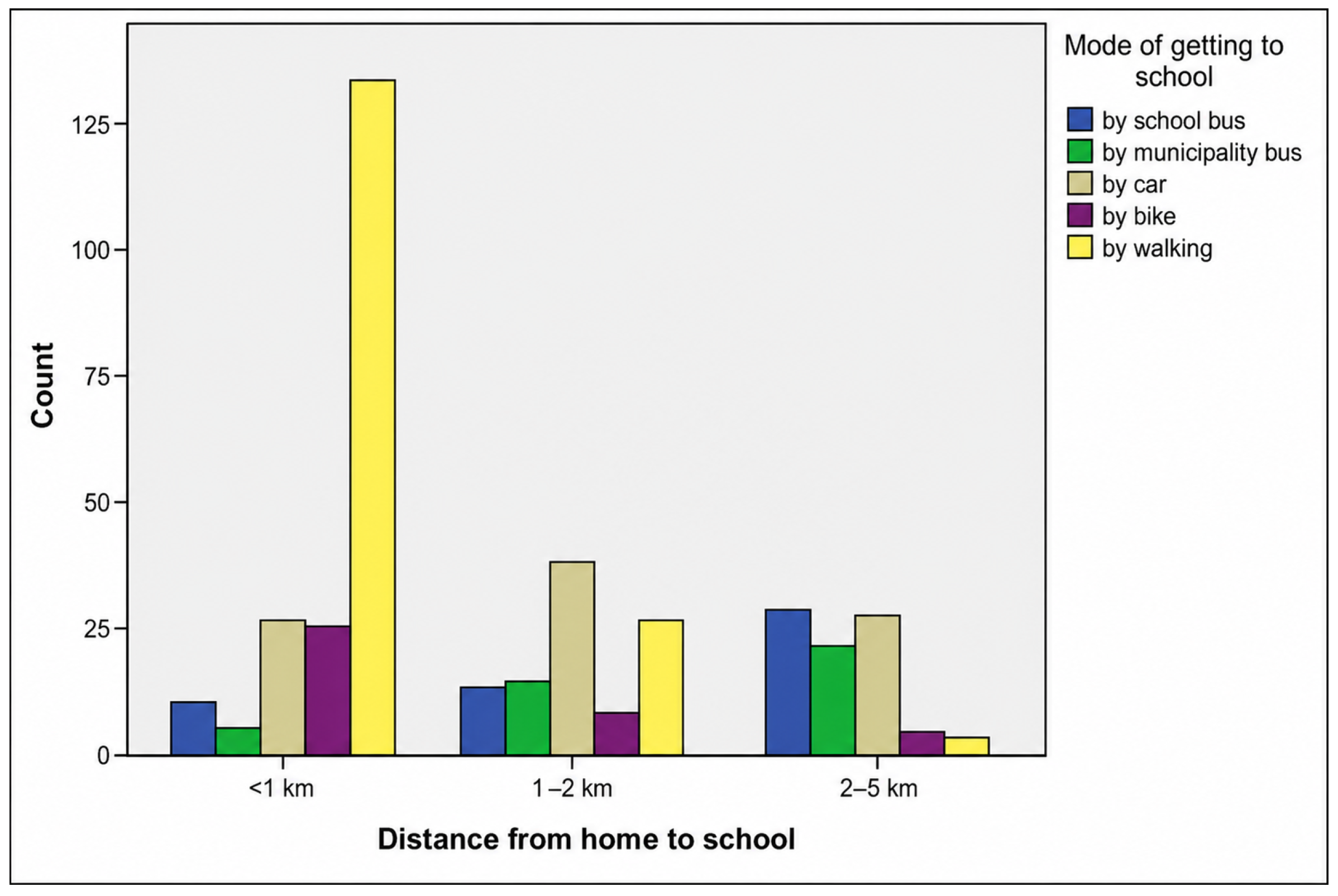
p < 0.001), while the strength of this association was moderate (Cramér’s V = 0.452). The form of this association is visible from the following comparative bar chart. With increasing distance between pupils’ homes and the school, travelling to school on foot and by bicycle systematically decreased [
31], while travelling by bus, and to a certain extent by passenger car, systematically increased (
Figure 5).
The relationship between pupils’ mode of travel to school and pupils’ sex (H2) was analysed using the χ
2-test based on the contingency
Table 14 presented below.
The mode of pupils’ travel to school statistically significantly depended on participant sex (χ
2 = 34.94, df = 4,
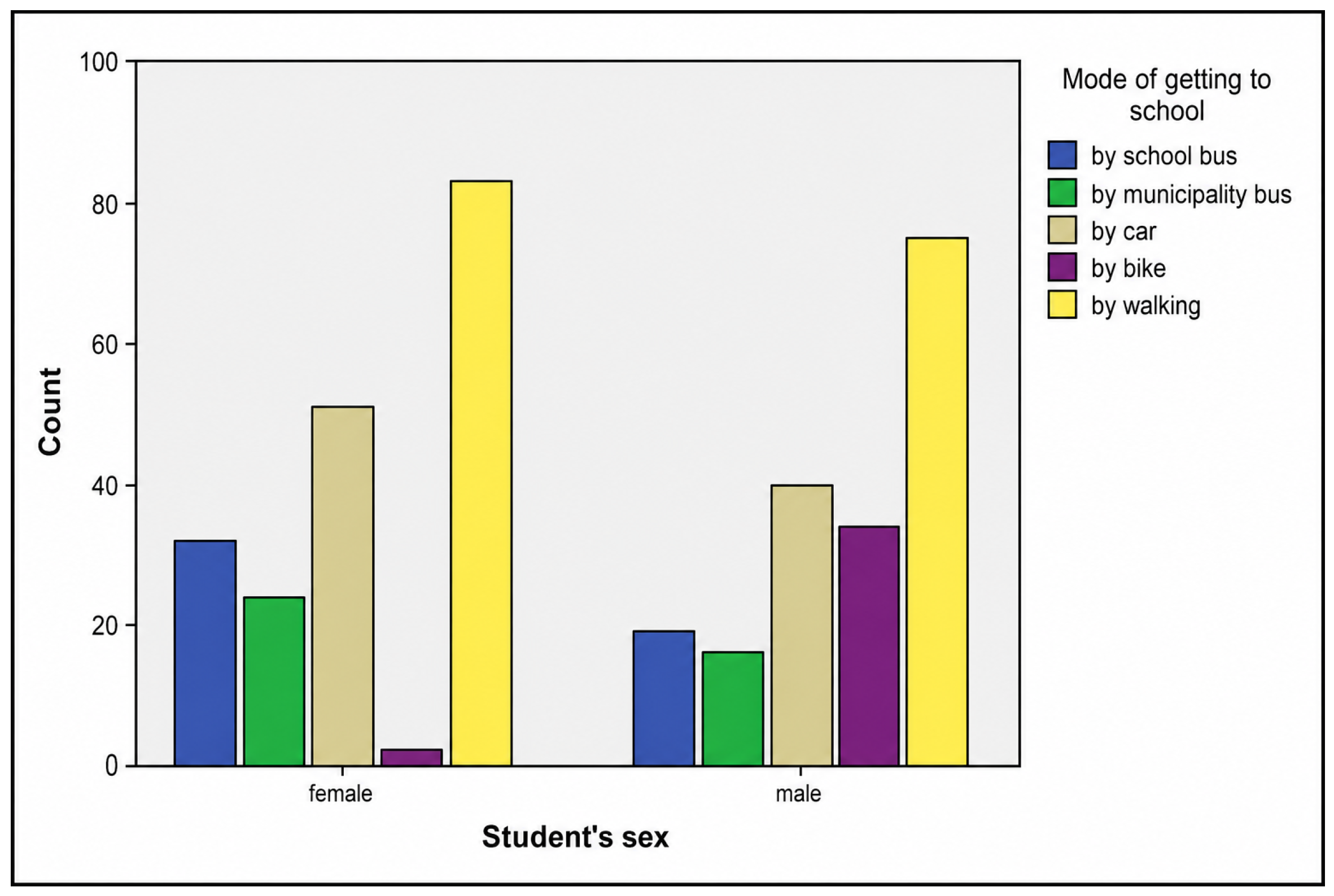
p < 0.001), while the strength of this association was low (Cramér’s V = 0.305). The form of this association is illustrated in the following comparative bar chart (
Figure 6). The distribution of pupils according to travel mode was generally similar for female and male pupils, except for bicycle use. Female pupils more frequently used all other analysed travel modes compared to male pupils (58% vs. 42%), whereas travelling to school by bicycle was substantially more common among male pupils [
32] (94% vs. 6%).
The relationship between pupils’ mode of travel to school and school age group (H3) was analysed using the χ
2-test based on the contingency
Table 15 presented below.
The mode of pupils’ travel to school statistically significantly depended on school age group (χ
2 = 48.72, df = 4,
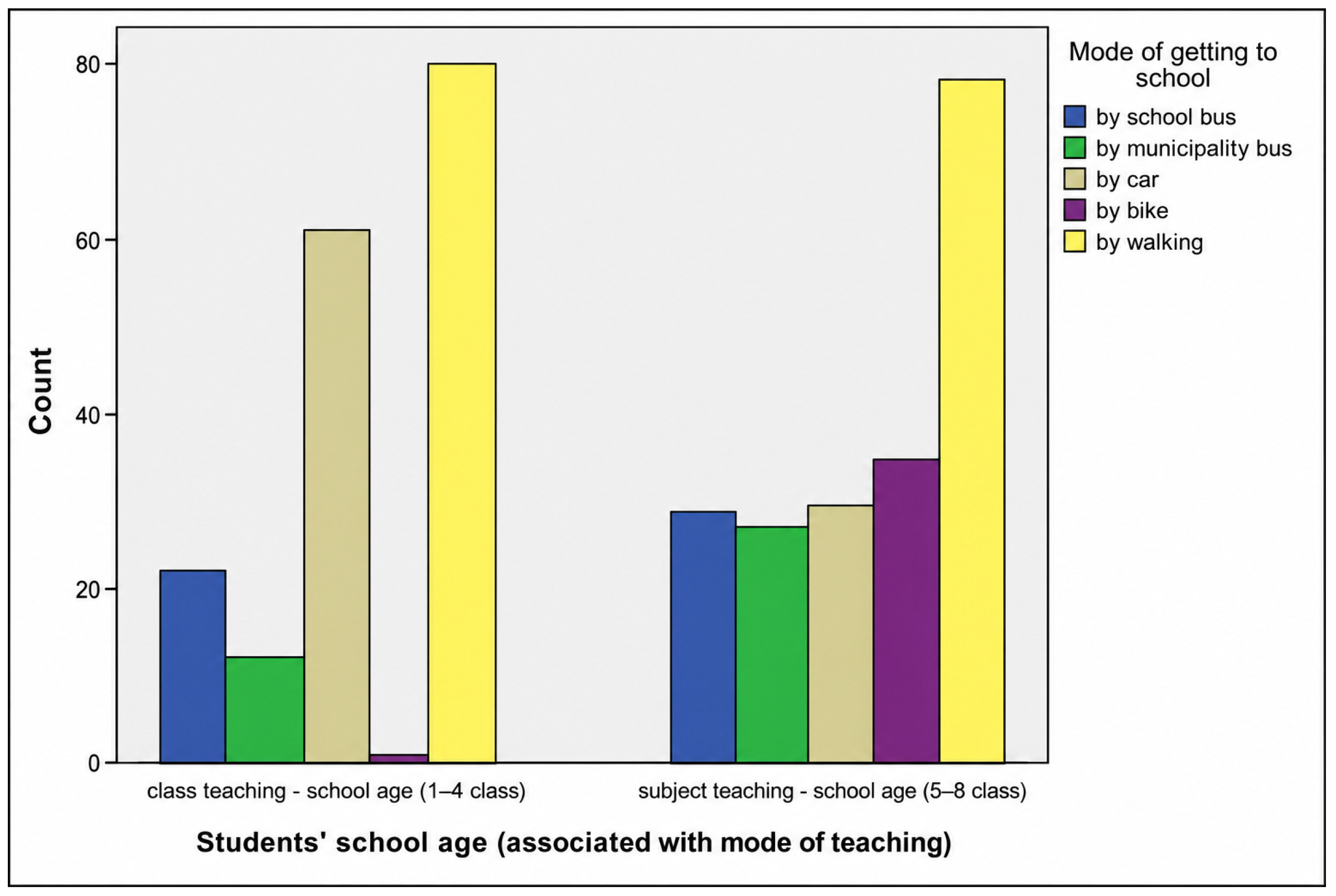
p < 0.001), while the strength of this association was low (Cramér’s V = 0.360). The form of this association is illustrated in the following comparative bar chart (
Figure 7). Compared to pupils attending subject-based education (fifth–eighth grades), pupils attending classroom-based education (1st–4th grades) travelled to school substantially less frequently by bicycle and public transport bus [
33], while they were considerably more frequently transported by passenger car by their parents.
Since pupils’ mode of travel to school was found to depend both on the distance between the pupils’ homes and the school and on school age group, an additional analysis was conducted to determine whether the established relationship between travel mode and travel distance differed between classroom-based and subject-based education age groups (H4). This research problem was analysed using a three-way χ
2-test based on the two contingency tables presented below (
Table 16).
Whether the relationship between (A) pupils’ mode of travel to school and (B) the distance between home and school differs according to (C) school age group can only be determined through comparison of the χ
2-test results obtained for the two analysed age groups. The mode of pupils’ travel to school statistically significantly depended on the distance between the pupils’ home and the school in both analysed school age groups [
33]. For pupils attending classroom-based education, the association amounted to χ
2 = 90.22 (df = 8,
p < 0.001), while for pupils attending subject-based education it amounted to χ
2 = 68.14 (df = 8,
p < 0.001). The higher χ
2 value obtained for the lower school age group indicates a stronger association between travel mode and travel distance in this group. This interpretation is additionally supported by Cramér’s V coefficient, which amounted to V = 0.506 for pupils attending classroom-based education and V = 0.413 for pupils attending subject-based education.
For the lower school age group, the obtained χ
2 and Cramér’s V values should be interpreted with caution because 33% of expected frequencies were below 5, representing a partial violation of the assumptions underlying the χ
2-test. A sensitivity check was additionally conducted using the Fisher–Freeman–Halton exact test, which is a generalisation of Fisher’s exact test for contingency tables larger than 2 × 2. This test was therefore more appropriate for the analysed 3 × 5 contingency table and confirmed the statistical significance of the association (
p < 0.001). However, considering the very high statistical significance of the association (
p < 0.001) and the relatively large sample size for the lower school age group (N = 176), the probability that this assumption violation substantially affected the obtained results is minimal. Therefore, in response to hypothesis H4, it can be concluded that the relationship between pupils’ mode of travel to school and the distance between home and school differs to a certain extent according to school age group [
31], with the association being more pronounced among pupils attending classroom-based education.
As a supplementary multivariable analysis, an aggregated binary logistic regression model was conducted to control for potential confounding effects between distance from school, school age group, and pupils’ sex, which could not be simultaneously addressed by the bivariate χ
2 tests. The purpose of this model was not to replace the detailed χ
2 comparisons of individual travel modes, but to test whether the main safety-relevant contrast remained present after adjustment for potential confounders. Therefore, pupils’ travel modes were recoded into active travel modes (walking and cycling) and non-active/motorised travel modes (passenger car, school bus, and public transport bus). This grouping was based on the distinction between non-motorised independent pupil mobility and motorised passenger travel. Electric scooter users were excluded because of their very low frequency and grade-specific distribution. The model was based on aggregated counts stratified by distance from school, school age group, and pupils’ sex, and adjusted odds ratios indicate the odds of active travel after controlling for the other variables included in the model (
Table 17).
The model showed that distance from school remained strongly associated with active travel after adjustment for school age group and pupils’ sex. Compared with pupils living less than 1 km from school, pupils living 1–2 km from school had significantly lower odds of active travel (adjusted OR = 0.141, 95% CI: 0.080–0.241, p < 0.001), while pupils living 2–5 km from school had even lower odds of active travel (adjusted OR = 0.022, 95% CI: 0.008–0.050, p < 0.001). School age group and pupils’ sex showed positive but non-significant trends, indicating that pupils in subject-based education and male pupils had higher odds of active travel, although these associations did not reach statistical significance at the 0.05 level. These results indicate that distance from school remained the strongest independent predictor of active travel in the supplementary multivariable model.
7. Discussion
The obtained results indicate that traffic safety within the immediate school environment in older urban settlement centres cannot be analysed exclusively through isolated infrastructure elements or vehicle speeds. Instead, traffic safety is determined by the interaction between traffic flow, pupils’ mobility patterns, overlapping school shifts, and the surrounding urban environment. The survey results confirmed that pupils’ travel modes significantly differed according to school age group and travel distance. Younger pupils (classroom-based education) were more dependent on passenger car transport provided by parents, whereas older pupils (subject-based education) more frequently travelled independently by walking, by bicycle, and by public transport. The largest percentage share of pupils in the entire sample travelled to school on foot (42%), and this did not change significantly with age or sex. Only 9.6% of pupils travelled to school by bicycle, predominantly males (94.4%), but with a substantial increase in the number of older pupils in subject-based education (35 out of a total of 36 pupils). In conclusion, approximately 50% of pupils from the entire sample travelled to school on foot or by bicycle. The results of the research conducted confirm that changes and/or improvements in the traffic environment around primary school entrances must focus primarily on pupils who are involved in traffic as cyclists and pedestrians. This supports the validity of the proposed traffic-environment improvements in two directions: improving pedestrian and cycling infrastructure and separating pedestrians from motor vehicle traffic within the immediate school environment, as presented in
Section 5 [
23].
Compared with school-zone safety studies that examine travel behaviour, traffic speed, crash risk, or infrastructure interventions separately, the present study shows the added value of combining these dimensions within one assessment framework. By integrating questionnaire-based evidence, field traffic measurements, and iRAP infrastructure assessment, the study demonstrates how behavioural, operational, and infrastructural data can be jointly used to identify safety problems and support targeted interventions at school entrance micro-locations in older urban settlements. Generally considered, improving traffic safety around primary schools therefore requires the simultaneous implementation of measures regarding infrastructure, regulation, and education, with adaptations to specific spatial, traffic, and behavioural characteristics of each individual school environment. Educational programmes may improve pupils’ awareness, hazard recognition, and safe behaviour. However, their effectiveness is limited when the surrounding traffic environment continues to expose pupils to high vehicle speeds, poor visibility, mixed pedestrian-vehicle access, and insufficient pedestrian or cycling infrastructure. Therefore, education should be treated as a complementary measure within an integrated intervention package, together with infrastructural and traffic-regulation measures adapted to the local school environment. The proposed measures for improving pupils’ safety are grouped into three categories: (i) educational workshops for pupils, parents, and teachers; (ii) reconstruction of school entrance micro-locations; and (iii) targeted interventions in the traffic environment within a 2 km radius. This radius is relevant because approximately three-quarters of pupils in the sample live less than 2 km from the analysed school.
The findings of the integrated research methodology suggest that traffic safety measures should primarily focus on improving safety conditions for independently mobile pupils through reduced vehicle speeds, improved pedestrian and cycling infrastructure, and the separation of pedestrian and vehicle flows near school entrances. Findings from the literature confirm that additional protective fencing and the separation of pedestrian and vehicular flows may further reduce the risk of uncontrolled pupil movement onto the roadway [
7]. At the analysed school, this is reflected in the proposal for a separate pedestrian entrance/exit and protective fencing on the sidewalk directly in front of the new pedestrian exit. The measured speed analysis showed that the 85th percentile speeds most frequently exceeded the maximum permitted speed of 40 km/h for traffic travelling in Direction B, thereby increasing the risk for pupils, particularly due to the absence of a physical barrier between the sidewalk and the roadway. The iRAP safety assessment confirmed that reducing the vehicle travel speed from 40 km/h to 30 km/h significantly improves safety conditions for pupils travelling as pedestrians or cyclists, in all proposed scenarios, in a positive way. The iRAP assessment additionally confirmed that relatively small-scale infrastructural interventions may substantially improve safety performance. The most important measures included reducing operating speeds, separating pedestrian and vehicle flows, and redistributing roadway space in favour of vulnerable road users, which collectively increased the projected safety ratings for pedestrians and cyclists [
34].
The obtained results additionally confirmed that the highest motor vehicle traffic flow on the street of the typical primary school does not temporally correspond to the peak periods of pupil arrivals and departures within the overlap of two shifts, indicating that part of the measured traffic may be unrelated to direct school-access activities (parents’ cars and school or public buses). Therefore, restrictions on motor vehicles (type and/or directions) are required within a realistic range, depending on the applied scenario (A, B, or the most restrictive Scenario C). The iRAP methodology cannot evaluate the isolated impact of all the individual elements of the proposed improvements (e.g., prohibiting heavy vehicles in one or both directions) on the safety of vulnerable road users such as pedestrians and cyclists. However, in the case of a motor vehicle collision involving a pupil as a pedestrian, a heavy vehicle at the same speed may result in more severe consequences than a passenger car due to the much greater momentum (m·v) associated with the higher mass of heavy vehicles. Although the causes of heavy vehicle traffic on Školska Street were not analysed in detail, the prohibition of heavy vehicles represents a measure that can positively affect pupils’ safety, either individually or in interaction with other proposed measures.
The results also confirmed that Školska Street primarily functions as a street for the transport of residents and goods within the wider centre of the Sesvetski Kraljevec settlement rather than as a school-access road. The proximity of bus stops, commercial and municipal facilities, and other activity generators additionally increases pedestrian and vehicle movements throughout the day, creating a high-risk zone in which standard traffic signalling measures are insufficient.
There are several possible limitations to the research. The study is limited to one older primary school in a typical urban context, but any generalisation of conclusions and/or results to a group of schools that are very similar in terms of operating conditions to the analysed typical Sesvetski Kraljevec Primary School should be supported by additional research conducted in typical older schools, as well as findings from recent and relevant scientific literature. A pilot test with approximately 10 classroom-based pupils indicated that younger pupils could answer objective questions, but had difficulty completing subjective items independently, particularly those requiring self-assessment or interpretation of traffic-safety conditions. For this reason, parents/legal guardians completed the questionnaire on their behalf. The integrated research methodology proposed in this paper is not final. The integrated research methodology and the research results will be further refined during the evaluation of similar older primary schools with complex urban and traffic conditions associated with school entrance micro-locations and two-shift teaching organisation. In the analysis of relationships between the four investigated traffic-related variables (pupils’ mode of travel to school, distance between the pupils’ home and the school, school age group, and pupils’ sex), hypotheses considered trivial or traffic-irrelevant were not tested (for example, the relationship between school age group and pupils’ sex, or between school age group and the distance between the pupils’ home and the school).
8. Conclusions
All four research hypotheses were proven by the statistical analysis conducted using the χ2-test for the purpose of investigating the relationships between pupils’ mode of travel and three traffic-relevant determinants: school age group, sex, and distance between pupils’ homes and the school. The Fisher–Freeman–Halton exact test and supplementary binary logistic regression supported the robustness of the main statistical findings. The statistical analysis confirmed significant relationships between pupils’ mode of travel and the three other analysed traffic-relevant determinants. The strongest association was identified between travel mode and distance between pupils’ homes and the school (χ2 = 153.52, p < 0.001; Cramér’s V = 0.452). This indicates that active travel modes, particularly walking and cycling, systematically decreased with increasing travel distance, while the use of passenger cars and buses increased.
Additionally, older pupils attending subject-based education travelled more independently and used bicycles and public transport more frequently, whereas younger pupils attending classroom-based education were substantially more often transported by passenger car. Since pupils’ mode of travel directly determines the exposure of pedestrians, cyclists, micromobility users, and motor vehicles within the immediate school environment, it represents the traffic-relevant determinant most susceptible to infrastructural and traffic-management interventions around primary school entrance micro-locations.
Table 18 summarises the proposed traffic-regulation scenarios and the minimum entrance-level safety measures that should be included in each option.
The presented recommendations, summarised in the form of planning and/or guidelines, can also be applied to other older primary schools located in dense urban settlement cores, where the narrow street profile, mixed local traffic, and combined pedestrian and vehicular access increase the number of potential conflicts near the school entrance. At the school entrance level, priority measures include the physical separation of pedestrian and vehicular access, a protected pupil waiting and exit area, and protective fencing in front of the pedestrian entrance. At the school-access street level, a 30 km/h speed limit, traffic-calming measures, improved signage, and enhanced pedestrian-crossing visibility should be applied. At the wider-area level, all three scenarios may be applicable in similar urban environments. The selection of proposed scenarios should depend on a wider area-based traffic assessment, including possible traffic diversion and access requirements for residents, delivery vehicles, emergency services, school buses, and nearby facilities.
According to the scientific literature, the education of pupils, parents, and teachers has been identified as one of the important factors influencing urban traffic safety around primary schools and pupils’ safety in traffic. The literature also indicates that education alone is not sufficient. Optimal effects on pupils’ safety can be achieved within an integrated approach that combines the education of all traffic-safety stakeholders with targeted but locally tailored traffic-safety improvements in the school environment. The presented integrated research approach demonstrates that combining questionnaire-based behavioural analysis, traffic measurements (travel speeds, as well as the structure and volume of traffic flow), and iRAP safety assessment provides a more comprehensive understanding of risk factors affecting pupils in urban traffic environments than the isolated application of individual methods.