
Article

Institutional Drivers of Socially Sustainable Habitat Systems and the Role of Organizational Awareness

by
Yolanda Gpe. Aranda-Jiménez
1,
Laura del C. Moreno-Chimely
1,
Paola Selene Vera-Martínez
2,* and
Miguel Reyna-Castillo
1,*
1
Faculty of Architecture, Design and Urbanism, Autonomous University of Tamaulipas, Tampico 89339, Mexico
2
Faculty of Accounting and Administration, National Autonomous University of Mexico, Mexico City 04510, Mexico
*
Authors to whom correspondence should be addressed.
Urban Sci. 2026, 10(6), 297; https://doi.org/10.3390/urbansci10060297
Submission received: 14 April 2026 / Revised: 12 May 2026 / Accepted: 21 May 2026 / Published: 26 May 2026

Abstract

This study examines how institutional pressures influence the adoption of social sustainability practices in habitat systems within the construction sector. Drawing on Institutional Theory, the research analyzes the differentiated effects of coercive, mimetic, and normative pressures, as well as the mediating role of organizational awareness. Data were collected through a digital survey administered between February and March 2026 to 102 professionals linked to construction and habitat development projects in Mexico, including architects, civil engineers, valuators, and related specialists. The proposed model was evaluated using Partial Least Squares Structural Equation Modeling (PLS-SEM). The results show that coercive pressures constitute the only statistically significant institutional mechanism affecting organizational awareness ( β = 0.310; p = 0.043), while mimetic and normative pressures do not exhibit significant effects. Furthermore, organizational awareness strongly explains the adoption of social sustainability practices ( β = 0.739; p < 0.001), which, in turn, is strongly associated with sustainable habitat outcomes ( β = 0.711; p < 0.001). The model achieved moderate predictive power, with R 2 values of 0.449 for awareness, 0.546 for adoption, and 0.505 for sustainable habitat systems. The findings contribute to institutional theory by demonstrating that institutional mechanisms operate asymmetrically in emerging contexts and that organizational awareness functions as a key explanatory mechanism linking external pressures with sustainability outcomes. The study also provides practical implications for urban governance, regulatory design, and socially sustainable habitat planning.

1. Introduction

Social sustainability has increasingly emerged as a central dimension of sustainable urban development, particularly in the context of housing systems, urban planning, and the built environment [1,2]. Unlike environmental and economic sustainability, social sustainability emphasizes dimensions such as social inclusion, equity, participation, accessibility, community resilience, quality of life, and collective wellbeing within urban and habitat systems [3,4]. Recent studies have shown that urban sustainability cannot be achieved solely through technological innovation or environmental efficiency, but requires governance mechanisms and organizational capacities that strengthen social cohesion and improve living conditions in urban environments [1,5,6]. In this sense, social sustainability has become increasingly relevant within global urban agendas, particularly Sustainable Development Goal 11 (SDG 11), which promotes inclusive, safe, resilient, and sustainable cities and communities [7,8].
Despite this growing relevance, the integration of social sustainability into construction and habitat systems remains limited, especially in emerging economies and Global South contexts [8,9]. Existing evidence suggests that sustainable construction practices continue to prioritize environmental and economic dimensions, while social aspects remain conceptually fragmented and operationally underdeveloped [7,10]. Similarly, studies on urban form, housing systems, and urban regeneration have demonstrated that factors such as accessibility, public space provision, neighbourhood design, mobility, housing quality, and social interaction significantly influence urban social sustainability outcomes [5,8,11]. However, although multiple frameworks and indicators have been developed to assess social sustainability in urban and construction contexts, important challenges persist regarding governance mechanisms, organizational implementation, stakeholder coordination, and the translation of sustainability objectives into concrete urban outcomes [2,6,12].
This problem is particularly critical in habitat systems associated with construction and housing development, where social sustainability directly affects urban quality of life, territorial inclusion, accessibility, community wellbeing, and residents’ sense of place and social belonging [8,13,14]. Research conducted in emerging contexts has shown that the absence of socially sustainable approaches in housing and infrastructure projects may reinforce urban inequality, exclusion, and weak social cohesion [9,15]. Likewise, recent literature has highlighted that the implementation of socially sustainable habitat systems increasingly depends on governance capacities, institutional coordination, organizational capabilities, and housing policy instruments that integrate social sustainability objectives into urban planning and construction processes [16,17,18]. Consequently, the challenge is not limited to the existence of sustainability frameworks or indicators, but also involves understanding how organizations internalize and operationalize social sustainability within their practices and decision-making processes.
In response to this problem, recent studies increasingly recognize that social sustainability in the built environment depends not only on technical or urban design solutions but also on institutional and organizational factors that shape the adoption of sustainable practices [19,20]. The literature highlights that regulations, public policies, governance structures, and sectoral dynamics are key determinants of the incorporation of sustainability practices into construction projects and urban development processes [21,22,23,24,25]. Similarly, recent studies have emphasized the importance of public regulation, urban governance, and green infrastructure approaches as mechanisms for improving socially sustainable habitat systems and urban quality of life [26]. Recent evidence has also demonstrated that urban regulatory frameworks may actively reproduce socio-spatial inequalities through fragmented and asymmetrical planning mechanisms. Using artificial intelligence-based semantic analysis of zoning ordinances in Greater Santiago, Vergara-Perucich [27] identified significant disparities between affluent and peripheral municipalities regarding social housing provisions, participatory mechanisms, and climate resilience regulations, highlighting how institutional fragmentation and regulatory opacity affect socially sustainable urban development. However, while the influence of institutional pressures is increasingly acknowledged, limited attention has been given to the organizational mechanisms through which these pressures are interpreted, internalized, and translated into socially sustainable habitat outcomes.
According to Institutional Theory, organizations respond to coercive, mimetic, and normative pressures in order to achieve legitimacy within their institutional environments [28]. Within the construction sector, institutional pressures have been identified as relevant drivers of sustainability adoption, although their influence varies according to context, governance conditions, and the type of institutional mechanism involved [29,30,31]. Nevertheless, most previous studies have assumed relatively direct relationships between institutional pressures and sustainability adoption, overlooking the internal organizational processes through which external demands are interpreted and transformed into operational practices.
Recent evidence suggests that intermediate organizational mechanisms, such as internal capabilities, organizational culture, innovation, learning processes, and institutional collaboration networks may mediate the relationship between institutional pressures and sustainability outcomes [32,33,34]. In this sense, organizational awareness may constitute a particularly relevant explanatory mechanism, since it enables organizations to recognize, interpret, and operationalize social sustainability objectives within habitat and construction systems. However, despite its theoretical relevance, the role of organizational awareness in the adoption of social sustainability practices remains scarcely explored, particularly in relation to habitat systems and socially sustainable urban development.
Additionally, although several studies have proposed indicators and assessment frameworks for evaluating social sustainability in construction and habitat projects [12,35,36], the literature has predominantly focused on measuring sustainability outcomes rather than understanding the institutional and organizational processes that produce them. Similarly, feasibility and implementation studies indicate that social sustainability frequently remains marginal within organizational decision-making, especially in contexts characterized by weak institutional enforcement, fragmented governance structures, or limited institutional capacity for housing policy implementation [7,18,37]. Overall, this evidence suggests that the central problem lies not only in the lack of sustainability metrics or planning frameworks, but also in the limited organizational capacity to internalize and operationalize social sustainability within habitat development processes [34].
Against this backdrop, the present study addresses the following research question: How do institutional pressures influence organizational awareness and the adoption of social sustainability practices in habitat systems within the construction sector? To answer this question, this study proposes a predictive and exploratory model that analyzes the differentiated effects of coercive, mimetic, and normative pressures on organizational awareness and the adoption of social sustainability practices, and their subsequent effects on socially sustainable habitat outcomes. Unlike previous studies, this research does not assume homogeneous or automatic institutional effects; instead, it examines the intermediate organizational mechanisms through which institutional pressures translate into sustainability outcomes in the built environment. To do so, Partial Least Squares Structural Equation Modeling (PLS-SEM) is employed, given its suitability for predictive and exploratory research contexts [38].
This study contributes to the literature in three main ways. First, it advances understanding of institutional pressures in socially sustainable habitat systems by differentiating their effects by the type of institutional mechanism involved. Second, it introduces organizational awareness as an intermediate explanatory mechanism linking institutional pressures with the adoption of social sustainability practices. Third, it connects organizational dynamics with socially sustainable habitat outcomes, providing empirical evidence relevant for urban governance, housing policy, sustainability-oriented planning, and inclusive habitat development strategies in emerging economies.

2. Conceptual and Theoretical Framework

2.1. Institutional Theory

Institutional Theory provides a robust explanatory framework for understanding how organizations respond to environmental pressures in adopting organizational practices. According to the classic approach of DiMaggio and Powell [28], organizations tend to homogenize within an organizational field as a result of three mechanisms of isomorphism: coercive, mimetic, and normative. These pressures arise from formal regulations, imitation processes in the face of uncertainty, and professional norms that guide organizational behavior [28].
In the context of sustainability, multiple studies have confirmed that institutional pressures play a central role in shaping organizational practices, particularly in highly regulated sectors such as construction. Recent evidence suggests that these pressures not only influence symbolic decisions but also the social and environmental performance of organizations [19,22,23]. However, the effects of these pressures are not homogeneous, as they vary by nature and institutional context, especially in emerging economies [30,39].
Despite its relevance, much of the literature has assumed a direct relationship between institutional pressures and the adoption of sustainable practices. However, recent research has begun to question this simplification, pointing out that organizations require internal processes of interpretation, internalization, and alignment to translate these pressures into concrete actions [32,33]. In this sense, institutional theory offers an adequate basis for exploring not only the influence of external pressures but also the organizational mechanisms that mediate their impact.

2.2. Social Sustainability in the Habitat

Social sustainability in the built environment has emerged as a fundamental component of sustainable urban development, particularly in habitat systems, where social outcomes directly affect quality of life. However, unlike the environmental and economic dimensions, social sustainability has historically been less developed and operationalized in the construction sector [35,40].
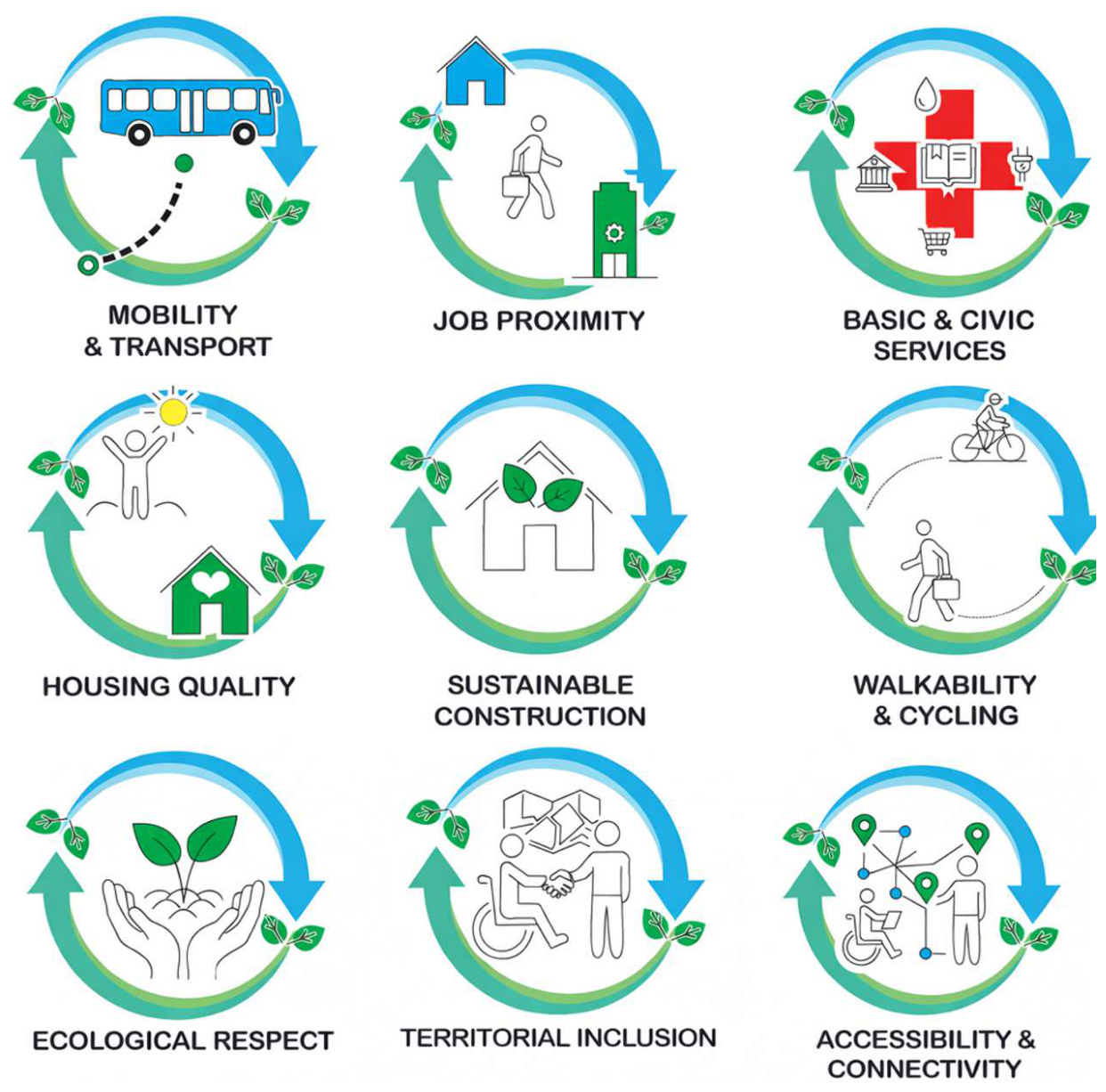
Various studies have proposed frameworks and indicators to assess social sustainability in habitat and construction projects. These include dimensions such as accessibility, territorial inclusion, habitat quality, basic services, mobility, and community well-being, which reflect the multidimensional nature of the socially sustainable habitat [22,36,41]. Likewise, recent research has emphasized the need to integrate these dimensions into the planning and development of habitat projects, particularly in contexts where urban inequality and social exclusion are persistent [41,42]. These dimensions are synthesized in Figure 1, which illustrates the fundamental components of social sustainability in habitat systems, as outlined by Karji et al. [36].

2.3. Organizational Awareness

Organizational awareness of social sustainability as an internalization process is a key construct for understanding how organizations internalize the demands of the institutional environment. This concept can be understood as the degree to which organizations recognize, value, and integrate social sustainability principles into their decision-making processes [43]. Unlike approaches focused exclusively on capabilities or resources, organizational awareness involves a cognitive process of interpreting and aligning with external expectations.
The literature has shown that internal factors, such as organizational culture, market orientation, and innovation, can mediate the relationship between institutional pressures and sustainable performance [32]. Likewise, it has been documented that institutional pressures generate organizational changes only when they are perceived as relevant and internalized by organizational actors [33].
In this sense, organizational awareness can be conceptualized as the mechanism through which institutional pressures are translated into intentions and strategic orientations. Without this process of internalization, external pressures can remain symbolic demands rather than generate substantive change within the organization.

2.4. Adoption of Social Sustainability Practices

The adoption of social sustainability practices in the construction sector entails implementing concrete actions to improve social conditions in housing projects. These practices can range from incorporating social criteria into planning to improving working conditions, fostering community participation, and providing accessible services.
Various studies have shown that the adoption of sustainable construction practices is influenced by a combination of institutional, organizational, and contextual factors [19]. In particular, external pressures, together with internal capabilities, determine organizations’ willingness to integrate sustainability into their operations [24,31].
However, evidence also suggests that adoption is not automatic but depends on organizations’ ability to translate external demands into operational actions [31,32,33]. This reinforces the need to consider intermediate mechanisms, such as organizational awareness, to facilitate this transition.

2.5. Relationship to Habitat Outcomes

The results in the socially sustainable habitat constitute the materialization of organizational practices in the built environment. These results are reflected in improvements in the quality of life, accessibility, inclusion, and well-being of the communities. Previous studies have shown that implementing sustainable practices in construction projects positively affects these outcomes, although effects vary by context and intervention type [21,36].
Likewise, recent research has indicated that sustainability in the built environment should be understood as a systemic process in which organizational decisions, public policies, and social dynamics interact in complex ways [44,45]. In this context, the adoption of social sustainability practices constitutes a fundamental link between organizational dynamics and results in the habitat.
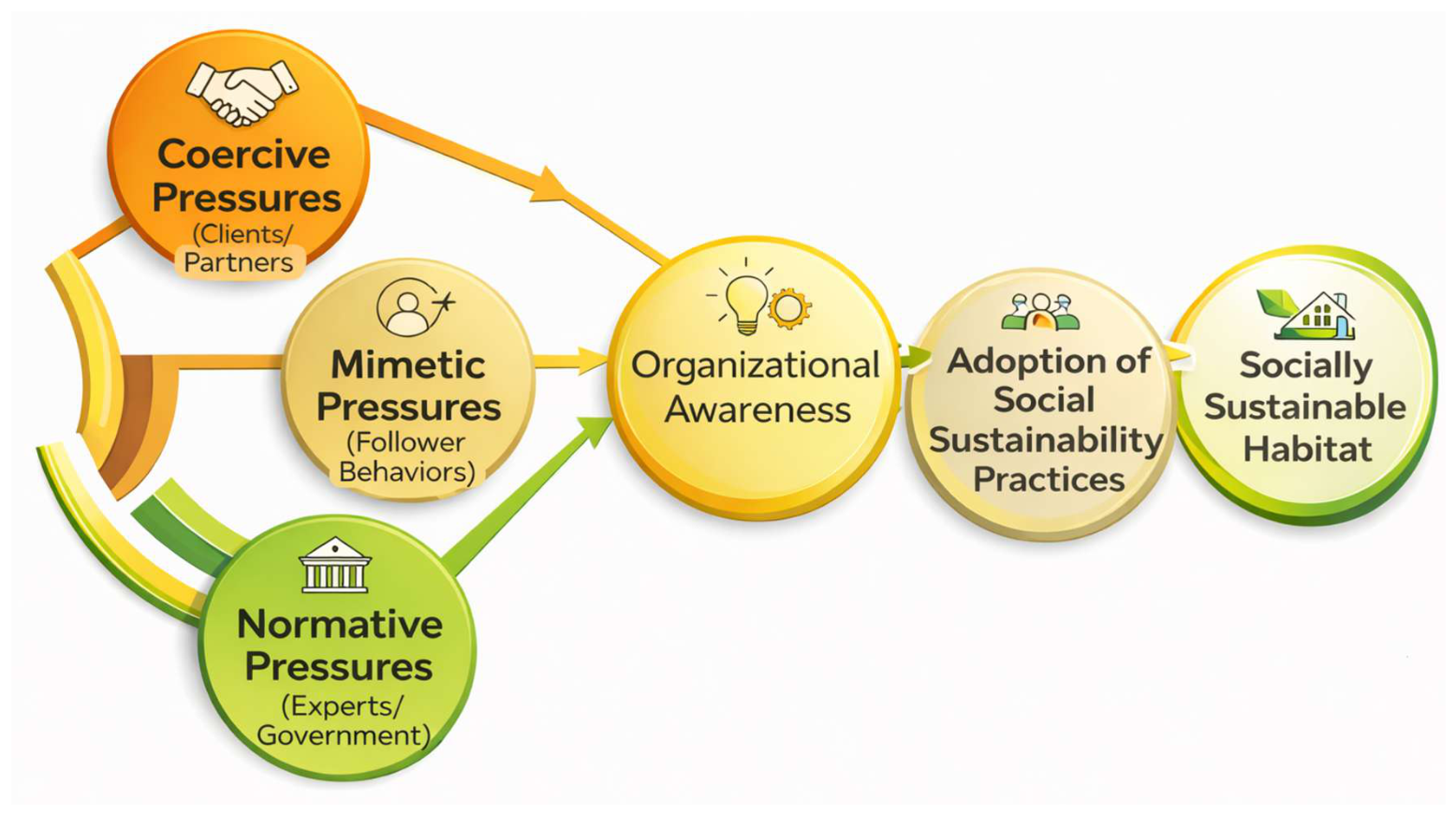
Overall, this conceptual framework states that institutional pressures influence organizational awareness, which, in turn, drives the adoption of social sustainability practices, ultimately generating results in the habitat. This approach enables moving beyond simplistic direct relationships and incorporating organizational mechanisms that explain the materialization of social sustainability in habitat systems. This conceptual structure is synthesized in Figure 2, where the proposed predictive model linking institutional pressures, organizational awareness, adoption of social sustainability practices, and habitat outcomes is presented.

3. Methodology

3.1. Exploratory and Predictive Research Design

The present study adopts an empirical, quantitative, and cross-sectional approach to analyze relationships among constructs in the context of socially sustainable habitat systems. From an epistemological perspective, it is recognized that statistical sampling methodologies enable the identification of generalizable patterns and relationships among variables, contributing to theoretical development in fields where empirical evidence remains incipient [46]. In this sense, the use of survey data facilitates the identification of structural relationships between latent variables in complex organizational contexts.
Likewise, the research is framed in an exploratory and predictive approach. According to Henseler [47], the modeling of structural equations using partial least squares is particularly appropriate when the objective is to identify potential relationships between constructs and contribute to theoretical construction, rather than to the confirmation of established models. Under this logic, the present study does not seek to test predefined hypotheses, but to explore plausible causal mechanisms that explain how institutional pressures translate into social sustainability results in the habitat.
In addition, the predictive approach of the model allows not only to estimate the magnitude of the relationships between variables, but also to understand the underlying processes that explain the generation of results in habitat systems. In this context, the use of PLS-SEM is justified by its ability to analyze complex models with multiple latent constructs, as well as by its suitability in research aimed at prediction and theoretical development in emerging contexts.

3.2. Data Collection and Participants

Data collection was carried out through a structured questionnaire in digital format, applied between February and March 2026 to professionals linked to the construction sector and the development of habitat projects in Mexico. Distribution was carried out through email, instant messaging, and professional contact networks, including schools and associations in the sector.
The target population was composed primarily of professionals linked to architecture and construction activities, including architects, civil engineers, professionals in construction and works administration, valuators, and respondents associated with architecture and valuation activities. Participants had direct professional experience in the design, planning, supervision, valuation, or execution of habitat-related projects. The professional composition of the sample reflects the interdisciplinary nature of habitat-related projects, with a predominance of architecture professionals and complementary participation from construction and valuation-related fields. As inclusion criteria, only participants with direct experience in activities in the construction sector were considered. The unit of analysis was mainly limited to actors and organizations located in the northeastern region of Mexico. Likewise, the confidentiality and anonymity of the information was guaranteed, and participation was voluntary.
Sampling was carried out using a non-probabilistic convenience technique, also called intentional sampling, which allows the selection of participants with relevant knowledge about the phenomenon studied. This approach is widely used in organizational and sustainability research, where access to specialized informants is critical for the validity of the study [48,49]. Although this type of sampling does not allow statistical generalization to the entire population, it does make it possible to obtain rich and pertinent information for the analysis of relationships between constructs in specific contexts.
The final sample was composed of 102 valid responses. As can be seen in Table 1, most of the participants belong to the service sector and to micro and small companies, with predominantly local or regional coverage. Likewise, a high concentration of professionals with training in architecture and undergraduate and graduate levels of study is identified, as well as significant work experience, which reinforces the expert nature of the sample.

3.3. Sample Adequacy and Common Method Bias

The Partial Least Squares Modeling (PLS-SEM) technique is robust in both small and moderate samples; however, it is essential to ensure adequate sampling conditions to ensure the validity of the results [50]. In this study, we started from the assumption of homogeneous conditions in the sample, considering only professionals with experience in the construction sector and linked to habitat projects, which favors consistency in the interpretation of the analyzed constructs.
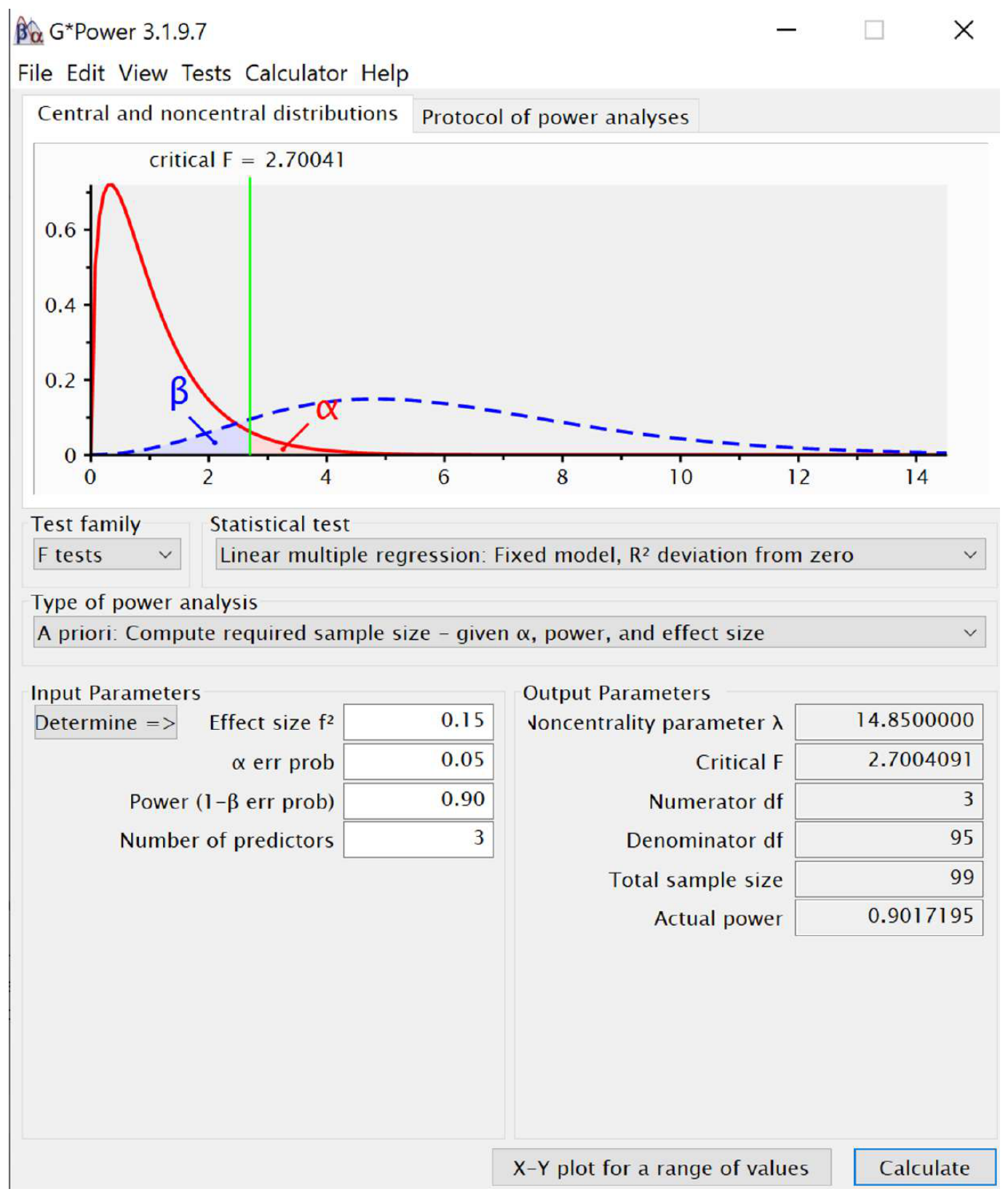
The adequacy of the sample size was assessed by a priori statistical power analysis using the G*Power 3.1.9.7 software, following the recommendations of Memon et al. [51] for structural equation models. Considering a mean effect size ( f 2 = 0.15), a significance level of α = 0.05, a statistical power of 0.90 and three predictors, a minimum required size of 99 observations was estimated. The sample used (n = 102) exceeds this threshold and reaches a statistical power of 0.901, which confirms its sufficiency to detect significant effects in the proposed model. This sample size is also consistent with the requirements of prediction-oriented PLS-SEM models, where emphasis is placed on maximizing explained variance rather than parameter consistency. Figure 3 presents the corresponding power analysis.
To assess the possible presence of common method bias, the full collinearity assessment approach proposed by Kock [52] was applied, which suggests that VIF values below 3.3 indicate the absence of significant bias. The results show that most constructs meet this criterion, including coercive pressures (VIF = 2.751) and normative pressures (VIF = 2.848). In contrast, mimetic pressures present a slightly higher value (VIF = 3.54), exceeding the recommended threshold and indicating a potential borderline collinearity condition. However, given the exploratory nature of the model and the theoretical distinction between constructs, this value is considered tolerable and does not compromise the overall stability of the estimates. However, given its proximity to the recommended threshold, results involving mimetic pressures should be interpreted with caution, particularly in relation to their non-significant effects within the structural model. Additionally, the constructs of organizational awareness and adoption exhibit VIF values equal to 1, indicating a complete absence of collinearity.
Taken together, these results suggest that there is no substantial evidence of common method bias compromising the validity of the estimates, and that the sample used is suitable in both size and quality for analysis using PLS-SEM.

3.4. Measuring Instrument

The measurement instrument was developed through an extensive review of the literature on institutional theory, social sustainability, and construction sustainability, adapting previously validated scales to the context of socially sustainable habitat systems in emerging economies. The instrument was designed to ensure theoretical consistency between the conceptual framework and the operationalization of the latent variables included in the model.
A structured questionnaire composed of 34 items grouped into six latent constructs was employed. All items were measured using a seven-point Likert scale ranging from strongly disagree to strongly agree. The constructs related to institutional pressures, namely coercive pressures (8 items), mimetic pressures (4 items), and normative pressures (7 items), were adapted from Saka et al. [43] and theoretically grounded in the institutional theory proposed by DiMaggio and Powell [28]. These dimensions were contextualized to socially sustainable habitat practices within the construction and urban development sector.
Similarly, the constructs of social sustainability awareness (3 items) and adoption of social sustainability practices (3 items) were adapted from Saka et al. [43], emphasizing organizational recognition, understanding, and willingness to implement socially sustainable habitat initiatives. The construct of socially sustainable habitat (9 items) was adapted from Karji et al. [36], incorporating dimensions associated with accessibility, mobility, urban services, habitat quality, inclusion, and environmental integration. The incorporation of this construct as an endogenous outcome variable within the proposed model represents a contextual contribution of the study to the literature on social sustainability and habitat systems.
To ensure contextual relevance and content validity, the instrument was reviewed by experts with experience in construction, sustainability, and urban development research. Minor adjustments were subsequently made to improve item clarity and contextual adequacy. The complete measurement instrument and the corresponding theoretical sources for each construct are presented in Table A1. This procedure ensured theoretical traceability between seminal institutional theory, empirical sustainability literature, and the operationalization of the latent constructs used in the PLS-SEM model.

3.5. Statistical Analysis

For the analysis of the proposed model, Structural Equation Modeling (SEM) based on partial least squares (PLS) was used, implementing the SmartPLS 4.1.1.7 software [53]. The choice of PLS-SEM is justified by its suitability in exploratory and prediction-oriented studies, particularly in contexts where theoretical development is still incipient and the objective is to identify potential relationships between latent constructs [38,47].
The PLS-SEM allows simultaneous estimation of multiple relationships between latent variables, maximizing the explained variance of endogenous constructs, which is especially suitable for complex models involving social and organizational phenomena. In this study, the technique is used to analyze how institutional pressures influence organizational awareness and the adoption of social sustainability practices, as well as their effect on socially sustainable habitat outcomes.
Following the methodological recommendations established in the literature [38,54], the analysis was carried out in three stages. First, the measurement model was evaluated by analyzing the reliability of the indicators, internal consistency (Cronbach’s alpha and composite reliability) and convergent validity (average extracted variance, AVE). Discriminant validity was assessed using the HTMT criterion.
Second, the structural model was evaluated, considering possible collinearity problems (variance inflation factor, VIF), path coefficients and their statistical significance by means of a bootstrapping procedure with 10,000 resamplings, as recommended by Chin [55]. The explanatory capacity of the model was analyzed through the coefficient of determination ( R 2 ) of the endogenous constructs.
Finally, in congruence with the predictive approach of the study, the predictive relevance of the model was evaluated, in order to determine its ability to estimate results in the context of social sustainability in habitat projects. This multi-stage evaluation procedure guarantees the robustness and reliability of the results, as well as the adequate interpretation of the proposed relationships.

4. Results

4.1. Measurement Model

4.1.1. Individual Indicator Reliability and Construct Validity

Table 2 presents the results of the evaluation of the measurement model. In general terms, the results show adequate levels of reliability and validity for the constructs analyzed, complying with the criteria established in the literature for PLS-SEM models [38,47].
The results show that most factor loadings exceed the recommended threshold of 0.70, confirming the reliability of the indicators. However, some items present loadings below this threshold, such as PC1 (0.577), PC8 (0.515), and HSS1 (0.596). In line with Hair et al. [38], these indicators are retained due to their theoretical relevance and because their values remain above the minimum acceptable threshold of 0.40 in exploratory research. Additionally, their removal did not lead to improvements in composite reliability or average variance extracted (AVE), supporting their inclusion in the model.
In terms of internal consistency, Cronbach’s alpha values range from 0.867 to 0.916, while composite reliability (CR) ranges from 0.907 to 0.933, both exceeding the recommended threshold of 0.70. These results confirm the adequate internal consistency of the constructs.
Regarding convergent validity, all constructs have mean extracted variance (AVE) values greater than 0.50, ranging from 0.536 to 0.820, indicating that each construct explains a significant proportion of the variance in its indicators. Together, these results confirm that the measurement model meets the required reliability and validity criteria, thereby allowing the structural model analysis to proceed.

4.1.2. Discriminant Validity (HTMT)

The discriminant validity of the constructs was evaluated using the heterotrait–monotrait ratio (HTMT) criterion, considered the most robust approach for reflective models in PLS-SEM [38,47]. This criterion allows us to verify that constructs are empirically distinct by comparing correlations between constructs with those within the same construct.
Following the recommendations of the literature, a conservative threshold of 0.90 was adopted. As shown in Table 3, all HTMT values are below this limit, confirming that the constructs have adequate discriminant validity. In particular, although some relationships show relatively high values, such as between coercive pressures and adoption of social sustainability (HTMT = 0.848) or between mimetic and normative pressures (HTMT = 0.858), these remain within acceptable levels, suggesting that while the constructs are conceptually related, they maintain sufficient empirical differentiation. This conceptual proximity is expected, as both mimetic and normative pressures stem from social and professional dynamics within the organizational field, where imitation of leading practices and adherence to shared norms, standards, and expert guidance tend to co-evolve.
Together, these results confirm that the measurement model meets the criteria of reliability, convergent validity, and discriminant validity, allowing solid progress towards evaluating the structural model.

4.2. Results of the Structural Model

The structural model was evaluated using PLS-SEM with SmartPLS 4.1.1.7 [53], following methodological recommendations in the specialized literature [38,55]. First, the absence of collinearity problems was verified through the variance inflation factor (VIF), with values below the critical threshold of 3.3, confirming the overall stability of the estimates [38,52].
The model’s explanatory power, assessed through the coefficients of determination ( R 2 ), indicates a moderate predictive capacity. Specifically, social sustainability awareness ( R 2 = 0.449), adoption ( R 2 = 0.546), and sustainable social habitat ( R 2 = 0.505) exhibit levels consistent with exploratory models in the social sciences [38,55]. These results suggest that the proposed model captures a substantial proportion of variance in the key endogenous constructs.
The analysis of effect sizes ( f 2 ) reveals a differentiated pattern of influence among institutional pressures. Coercive ( f 2 = 0.063), mimetic ( f 2 = 0.017), and normative ( f 2 = 0.036) pressures exert small effects on organizational awareness, indicating a limited direct contribution of institutional forces at this stage. In contrast, the relationships between awareness and adoption ( f 2 = 1.202) and between adoption and habitat ( f 2 = 1.021) exhibit very large effect sizes, underscoring the central role of these constructs as core drivers within the model. These unusually large effect sizes reflect the central structural positioning of these constructs within the model and are consistent with a sequential mediation structure, where intermediate variables concentrate a substantial portion of the explained variance.
The evaluation of path coefficients through bootstrapping reveals a clear asymmetry in the operation of institutional mechanisms. As shown in Table 4, coercive pressures emerge as the only statistically operative institutional mechanism influencing social sustainability awareness ( β = 0.310 *; p = 0.043). In contrast, mimetic (p = 0.305) and normative (p = 0.106) pressures do not exhibit statistically significant effects, indicating their limited capacity to directly activate organizational responses in the context analyzed.
Furthermore, social sustainability awareness strongly and significantly explains the adoption of sustainable practices ( β = 0.739 ***; p < 0.001), while adoption, in turn, is strongly associated with the configuration of sustainable social habitat systems ( β = 0.711 ***; p < 0.001). These findings confirm a sequential and internally mediated structure, in which organizational processes play a decisive role in translating institutional inputs into tangible outcomes.
The analysis of indirect effects further reinforces this interpretation. As shown in Table 5, coercive pressures exert a significant indirect effect on the adoption of social sustainability ( β = 0.229 *; p = 0.046), evidencing a partial mediation mechanism through organizational awareness. However, their indirect effect on sustainable social habitat remains marginal (p = 0.058), suggesting attenuation along the causal chain.
In contrast, mimetic and normative pressures do not exhibit significant indirect effects, confirming their limited capacity to propagate through the organizational system. Finally, social sustainability awareness exerts a strong and statistically significant indirect effect on sustainable social habitat ( β = 0.525 ***; p < 0.001), consolidating its role as a key mediating mechanism that enables the translation of institutional pressures into substantive sustainability outcomes.
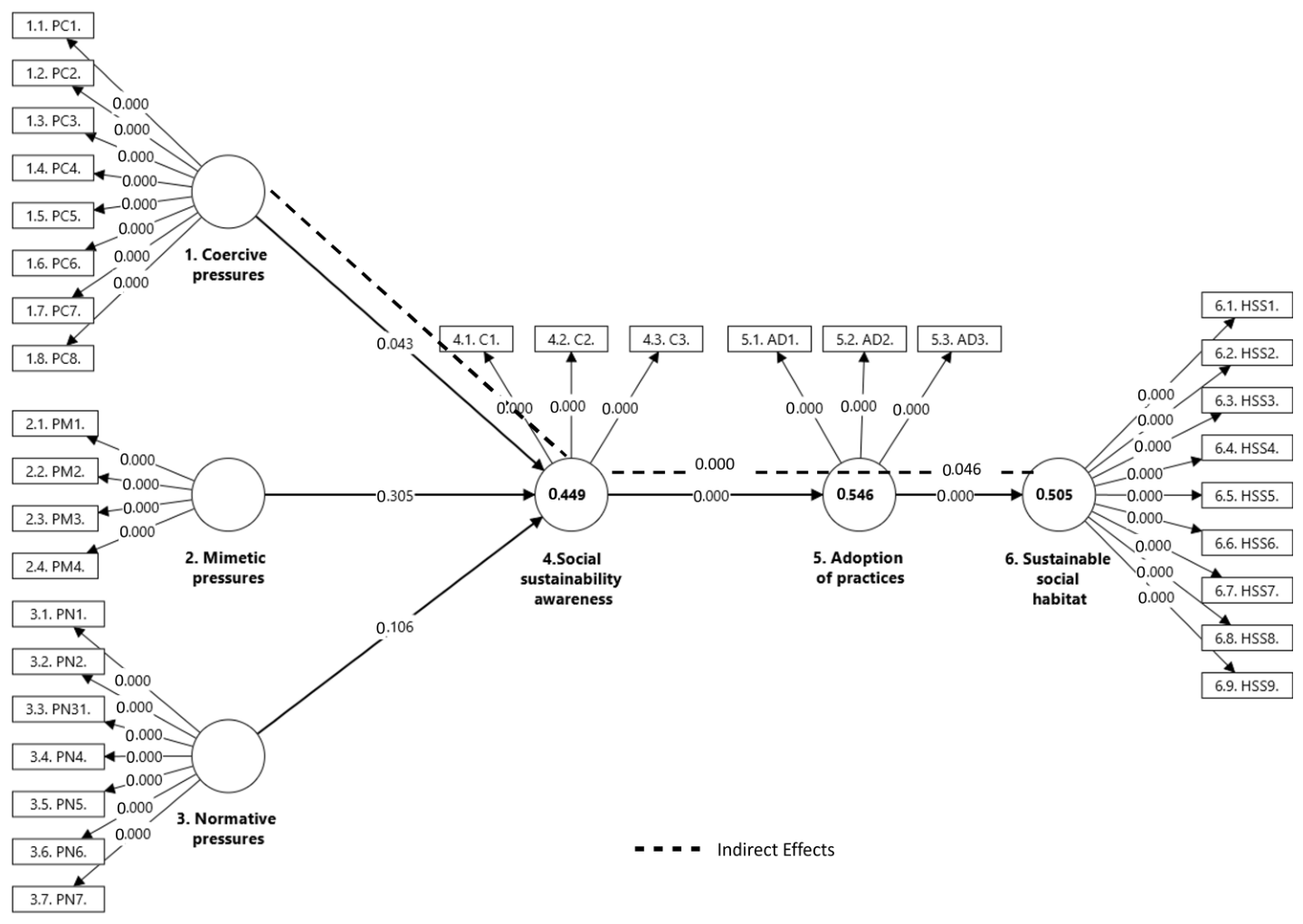
Figure 4 presents the graphical representation of the structural model estimated through PLS-SEM. The nomogram illustrates the relationships among institutional pressures, social sustainability awareness, adoption of social sustainability practices, and socially sustainable habitat outcomes, including the significance levels for each structural path and the explained variance (R2) of the endogenous constructs.
As illustrated in Figure 4, the model exhibits a sequential predictive structure in which coercive pressures operate as the principal institutional driver of social sustainability awareness, while awareness and adoption function as the central mechanisms translating institutional influences into socially sustainable habitat outcomes.

5. Discussion

5.1. Theoretical Discussion: Institutional Pressures and Differentiation of Mechanisms

The results allow for a critical refinement of Institutional Theory by demonstrating that coercive, mimetic, and normative pressures do not operate as functionally equivalent mechanisms in the adoption of social sustainability within habitat systems [19]. Rather than confirming a homogeneous isomorphic effect, the findings reveal a differentiated pattern in which coercive pressures emerge as the only statistically operative mechanism influencing social sustainability awareness. This underscores the decisive role of regulatory frameworks, public policies, and formal institutional demands as primary drivers of organizational change. Such evidence aligns with prior research emphasizing that the institutional environment conditions the adoption of sustainable practices in the construction sector [20,21,23], while also reinforcing the argument that weak enforcement contexts limit the effectiveness of non-coercive mechanisms [56].
In contrast, mimetic and normative pressures do not exhibit significant effects, challenging the implicit assumption within institutional theory that all isomorphic forces contribute uniformly to organizational convergence. Although the literature acknowledges their relevance, their influence appears to be contingent upon contextual and institutional maturity conditions [30,31,39]. In the present study, their limited impact suggests a field characterized by low institutionalization of social sustainability, where neither established referents nor strongly internalized professional norms are sufficiently developed to trigger behavioral alignment.
These findings are consistent with studies indicating that the translation of institutional pressures into organizational practices depends on internal processes of interpretation and internalization, rather than mere exposure to external demands [32,33]. From this perspective, the effectiveness of institutional mechanisms is conditional upon the cognitive and organizational readiness of actors within the field. Consequently, the results support a contingent and non-linear reading of institutional theory, in which isomorphic processes are mediated by contextual and organizational factors. In emerging economies and in domains with low institutional consolidation, such as social sustainability in construction, coercive pressures dominate as the primary catalyst of organizational transformation, while mimetic and normative mechanisms remain structurally constrained.

5.2. Organizational Awareness as an Intermediate Explanatory Mechanism

The results provide robust evidence that social sustainability awareness operates as a central intermediate mechanism linking institutional pressures to the adoption of sustainable practices [19]. Rather than a direct and automatic transmission, the findings reveal that institutional pressures require a process of cognitive translation within organizations. The strong relationship between awareness and adoption, together with its significant indirect effect on habitat outcomes, indicates that external institutional signals must be interpreted, internalized, and reframed before they can influence organizational behavior. This is consistent with prior studies suggesting that institutional stimuli only generate substantive change when they are cognitively assimilated by organizational actors [32,33].
From this perspective, organizational awareness can be conceptualized as a microfoundational mechanism that enables the recognition, valuation, and prioritization of social sustainability within the decision-making processes of firms. It functions as a cognitive filter through which external pressures are selectively interpreted and transformed into strategic responses. This interpretation aligns with recent literature highlighting that the effectiveness of institutional pressures depends on the organization’s ability to convert external demands into actionable capabilities and routines [24,31]. Accordingly, institutional pressures alone are insufficient in the absence of internal processes that enable their appropriation and operationalization [32].
Theoretically, these results extend institutional theory by introducing a mediating layer that connects institutional context with organizational outcomes. This contribution challenges the assumption of direct isomorphic adaptation by demonstrating that the effect of institutional pressures is contingent upon internal cognitive processes. In this sense, organizational awareness emerges as a necessary condition for the activation of institutional mechanisms, particularly in contexts characterized by low levels of institutionalization. Overall, the findings position awareness not merely as a descriptive construct, but as a critical explanatory mechanism that translates institutional pressures into tangible social sustainability outcomes within the construction sector. This perspective contributes to bridging macro-level institutional theory with micro-level organizational cognition, offering a more integrative explanation of how institutional environments shape organizational behavior in emerging and weakly institutionalized contexts.

5.3. Implications for Habitat, the City, and Public Policy

The results show that adopting social sustainability practices leads to tangible improvements in habitat systems, particularly in areas such as accessibility, basic services, housing quality, and territorial inclusion. The strong relationship between adoption and sustainable social habitat confirms that organizational decisions in the construction sector directly shape the configuration of more equitable and functional urban environments.
From an urban perspective, these findings reinforce the need to integrate social sustainability as a central axis of housing planning and development, thereby overcoming traditional approaches that focus exclusively on economic efficiency or environmental performance. Recent studies have highlighted that sustainability in the built environment requires comprehensive approaches that integrate social well-being, community cohesion, and equitable access to urban infrastructure [23,31,44].
In terms of public policy, the evidence underscores the strategic role of coercive pressures in promoting social sustainability. This implies that regulatory frameworks, government incentives, and public procurement criteria can play a decisive role in guiding the construction sector towards more sustainable practices. In contrast, the limited influence of mimetic and normative pressures suggests that, in emerging contexts, policies should prioritize formal, binding instruments to drive substantive change.
Overall, the results highlight that the improvement of socially sustainable habitats depends not only on technical innovations but also on the articulation among regulation, organizational capacities, and strategic decisions, positioning public policy as a key actor in the transformation of the urban environment.

6. Conclusions

The central question of this study was how institutional pressures influence the awareness and adoption of social sustainability practices in habitat projects within the construction sector. The results show that institutional pressures do not operate homogeneously. Among the institutional mechanisms analyzed, only coercive pressures exhibited a significant effect on organizational awareness ( β = 0.310; p = 0.043), while mimetic and normative pressures did not show statistically significant relationships. The findings also indicate that organizational awareness plays a central explanatory role in the adoption of social sustainability practices. Specifically, awareness strongly explains adoption ( β = 0.739; p < 0.001), while adoption shows a significant association with socially sustainable habitat outcomes ( β = 0.711; p < 0.001). These results suggest that institutional pressures require internal organizational processes of interpretation and appropriation before translating into concrete sustainability actions. From a theoretical perspective, the study contributes to institutional theory by showing that institutional mechanisms exhibit differentiated and context-dependent effects in emerging environments. From a practical standpoint, the findings highlight the relevance of regulatory frameworks and organizational capabilities in promoting socially sustainable habitat systems. Overall, the study provides empirical evidence regarding the institutional determinants of social sustainability in habitat development and offers insights for urban governance and sustainability-oriented policy design.

6.1. Practical Implications

The results suggest that organizations within the construction sector should prioritize the development of internal capabilities that enhance social sustainability awareness, given its central role in enabling the adoption of sustainable practices. Firms are encouraged to integrate social sustainability criteria into decision-making processes from the early stages of project design and planning. For policymakers, the findings underscore the need to strengthen coercive institutional mechanisms through clear regulatory frameworks, effective enforcement, and targeted incentives. Reliance on voluntary approaches or weakly institutionalized norms appears insufficient to drive meaningful change in contexts characterized by low levels of institutional maturity.

6.2. Limitations and Future Lines of Research

This study presents limitations associated with the use of non-probabilistic convenience sampling and a cross-sectional research design, which constrain the generalizability of the findings and limit causal inference over time. Although the sampling strategy was considered appropriate for the exploratory and predictive nature of the study, as well as for accessing specialized respondents associated with habitat and construction projects, potential selection bias cannot be fully ruled out. Additionally, while PLS-SEM is appropriate for exploratory and predictive research, it does not provide strict confirmation of causal relationships. Future research could address these limitations by employing longitudinal designs, probabilistic sampling strategies, and cross-regional comparisons to enhance external validity. Moreover, further investigation is recommended to deepen the analysis of mediating mechanisms and to explore potential moderating variables, such as institutional maturity, organizational size, or regional regulatory contexts, that may influence the relationship between institutional pressures and social sustainability outcomes.

Author Contributions

Conceptualization, Y.G.A.-J. and M.R.-C.; methodology, Y.G.A.-J., M.R.-C. and L.d.C.M.-C.; software, M.R.-C.; validation, L.d.C.M.-C. and P.S.V.-M.; formal analysis, M.R.-C., L.d.C.M.-C. and P.S.V.-M.; investigation, Y.G.A.-J.; resources, L.d.C.M.-C. and P.S.V.-M.; data curation, M.R.-C.; writing—original draft preparation, L.d.C.M.-C. and P.S.V.-M.; writing—review and editing, Y.G.A.-J., M.R.-C. and P.S.V.-M.; visualization, M.R.-C.; supervision, L.d.C.M.-C. and P.S.V.-M.; project administration, Y.G.A.-J. and M.R.-C.; funding acquisition, L.d.C.M.-C. and P.S.V.-M. All authors have read and agreed to the published version of the manuscript.

Funding

This research received no external funding.

Institutional Review Board Statement

This study is waived for ethical review as this study was on non-interventionist and non-experimental, and that only surveys were used at one point in time. In addition, it was verified that, in the survey, participants were informed of their anonymity, why the research was being carried out, how their data would be used, and that there was no risk to those involved in the study. Finally, it was verified that, within the instrument, free consent was obtained from each participant by Universidad Autonoma de Tamaulipas.

Informed Consent Statement

Informed consent was obtained from all subjects involved in the study.

Data Availability Statement

The data presented in this study are available on request from the corresponding author due to privacy and ethical restrictions.

Conflicts of Interest

The authors declare no conflicts of interest.

Appendix A

Table A1. Measurement instrument.
Construct and Items
1. Coercive pressures  [28,43]
PC1. Customers increasingly value socially sustainable habitat practices.
PC2. There is pressure from business partners to adopt socially sustainable habitat practices.
PC3. Government mandates require the implementation of socially sustainable habitat practices.
PC4. Government incentives and policies encourage the adoption of socially sustainable habitat practices.
PC5. Competitors exert pressure to adopt socially sustainable habitat practices.
PC6. Some competitors have already implemented socially sustainable habitat practices.
PC7. Companies that adopt social sustainability practices avoid working with those that do not.
PC8. Industry associations require the adoption of socially sustainable habitat practices.
2. Mimetic pressures [28,43]
PM1. Leading organizations in the sector are adopting social sustainability practices.
PM2. Business partners are prepared to adopt socially sustainable practices.
PM3. Industry advisors are knowledgeable about social sustainability.
PM4. Companies that have adopted social sustainability practices have benefited significantly.
3. Normative pressures [28,43]
PN1. There are professionals specialized in social sustainability within the construction sector.
PN2. Expert consultants strongly promote the adoption of social sustainability practices.
PN3. Industry associations actively promote social sustainability practices.
PN4. Suppliers encourage the adoption of social sustainability practices.
PN5. There are multiple forums (conferences, seminars, workshops) addressing social sustainability practices.
PN6. There is a high level of awareness of social sustainability practices within the industry.
PN7. There is a strong exchange of information regarding socially sustainable habitat practices.
4. Social sustainability awareness [43]
C1. The construction sector has knowledge of socially sustainable habitat practices.
C2. The sector recognizes the benefits of implementing social sustainability practices.
C3. The sector has sufficient information to develop socially sustainable habitat projects.
5. Adoption of social sustainability [28,43]
AD1. The sector encourages personnel to implement socially sustainable habitat practices.
AD2. The sector intends to adopt socially sustainable habitat practices.
AD3. There is interest in learning about socially sustainable habitat practices.
6. Socially sustainable habitat [36]
HSS1. Projects prioritize mobility and transportation.
HSS2. Projects prioritize proximity to employment opportunities.
HSS3. Projects include access to basic services and civic infrastructure.
HSS4. Housing meets quality standards (e.g., indoor air quality and lighting).
HSS5. Urban planning best practices are applied in project development.
HSS6. Developments include walkability and cycling infrastructure.
HSS7. Projects respect ecological systems.
HSS8. Urban development promotes inclusion in vulnerable areas.
HSS9. Streets and infrastructure provide accessibility and connectivity.

References

  1. Dempsey, N.; Bramley, G.; Power, S.; Brown, C. The Social Dimension of Sustainable Development: Defining Urban Social Sustainability. Sustain. Dev. 2011, 19, 289–300. [Google Scholar] [CrossRef]
  2. Shirazi, M.R.; Keivani, R.; Brownill, S.; Watson, G.B. Promoting Social Sustainability of Urban Neighbourhoods: The Case of Bethnal Green, London. Int. J. Urban Reg. Res. 2022, 46, 441–465. [Google Scholar] [CrossRef]
  3. Cuthill, M. Strengthening the ‘Social’ in Sustainable Development: Developing a Conceptual Framework for Social Sustainability in a Rapid Urban Growth Region in Australia. Sustain. Dev. 2010, 18, 362–373. [Google Scholar] [CrossRef]
  4. Bostrom, M.; Vifell, A.; Klintman, M.; Soneryd, L.; Hallström, K.; Thedvall, R. Social sustainability requires social sustainability procedural prerequisites for reaching substantive goals. Nat. Cult. 2015, 10, 131–156. [Google Scholar] [CrossRef]
  5. Bramley, G.; Power, S. Urban form and social sustainability: The role of density and housing type. Environ. Plan. Plan. Des. 2009, 36, 30–48. [Google Scholar] [CrossRef]
  6. Mouratidis, K.; Hofstad, H.; Zeiner, H.H.; Sagen, S.B.; Dahl, C.; Folling, K.E.; Olsen, B.O. Assessing urban social sustainability with the Place Standard Tool: Measurement, findings, and guidance. Cities 2024, 148, 104902. [Google Scholar] [CrossRef]
  7. Jayawardana, J.; Sandanayake, M.; Jayasinghe, J.A.S.C.; Kulatunga, A.K.; Zhang, G.K. Life cycle economic and social sustainability aspects of prefabricated construction—A systematic review towards the holistic sustainability. Constr. Innov. 2025, 25, 98–138. [Google Scholar] [CrossRef]
  8. Odum, C.O.; Onyebueke, V.U.; Ibem, E.O. Social sustainability in public housing: Insight from social network analysis of recent residential developments in Enugu, Nigeria. Hous. Stud. 2025, 40, 2307–2334. [Google Scholar] [CrossRef]
  9. Salama, A.M.; Patil, M.P.; Elsemellawy, A.N.; Abudib, H.H.; Almansor, N.A.; MacLean, L.; van Riel, K. People-Place Narratives as Knowledge Typologies for Social Sustainability: Cases from Urban Contexts in the Global South. Buildings 2024, 14, 1001. [Google Scholar] [CrossRef]
  10. Gurmu, A.; Shooshtarian, S.; Mahmood, M.N.; Hosseini, M.R.; Shreshta, A.; Martek, I. The state of play regarding the social sustainability of the construction industry: A systematic review. J. Hous. Built Environ. 2022, 37, 595–624. [Google Scholar] [CrossRef]
  11. Yıldız, S.; Kıvrak, S.; Gültekin, A.B.; Arslan, G. Built environment design—Social sustainability relation in urban renewal. Sustain. Cities Soc. 2020, 60, 102173. [Google Scholar] [CrossRef]
  12. Lee, K.y.E.; Chan, W.w.V. The Repositioning of Professional Housing Management: Community Wellbeing and Social Sustainability. In Inclusive Housing Management and Community Wellbeing: A Case Study of Hong Kong; IPP Studies in the Frontiers of Chinas Public Policy: Singapore, 2024; pp. 69–119. [Google Scholar] [CrossRef]
  13. Elsayed, W. Social sustainability in housing as an entry point to achieving quality of urban life in Egypt. Sustain. Futur. 2025, 10, 101045. [Google Scholar] [CrossRef]
  14. Ebbini, G.W.; Bleibleh, S. GROW-J: An empirical study of social sustainability, sense of place, and subjective well-being in Jordanian housing development. Front. Sustain. Cities 2024, 6, 1448061. [Google Scholar] [CrossRef]
  15. Trevino-Lozano, L. Framing Social Sustainability in Infrastructure Theory and Practice: A Review of Two Road Projects in Mexico from a Business and Human Rights Lens. Sustainability 2022, 14, 2369. [Google Scholar] [CrossRef]
  16. Hofstad, H.; Dahl, C.; Folling, K.; Mouratidis, K.; Olsen, B.O.; Sagen, S.B.; Zeiner, H.H. Community Social Sustainability: Unpacking the Concept for Urban Governance and Planning. Sustain. Dev. 2025, 33, 3970–3984. [Google Scholar] [CrossRef]
  17. Janssen, C.; Daamen, T.A.; Verheul, W.J. Governing capabilities, not places—How to understand social sustainability implementation in urban development. Urban Stud. 2024, 61, 331–349. [Google Scholar] [CrossRef]
  18. Azlan, M.H.; Zainudin, A.Z.; Rahmat, N.; Azmi, F.A.M.; Berahim, N.; Samsudin, S.; Ismail, A.; Jalil, R.A.; Harumain, Y.A.S. Inclusionary zoning as a tool for social sustainability: A systematic review of urban housing policy outcomes. Sustain. Futur. 2025, 9, 100648. [Google Scholar] [CrossRef]
  19. Liang, Y.; Zhao, C.; Lee, M.J. Institutional Pressures on Sustainability and Green Performance: The Mediating Role of Digital Business Model Innovation. Sustainability 2023, 15, 14258. [Google Scholar] [CrossRef]
  20. Xie, L.; Ju, T.; Xia, B. Institutional Pressures and Megaproject Social Responsibility Behavior: A Conditional Process Model. Buildings 2021, 11, 140. [Google Scholar] [CrossRef]
  21. Li, H.; Zhang, X.; Ng, S.; Skitmore, M.; Dong, Y. Social sustainability indicators of public construction megaprojects in China. J. Urban Plan. Dev. 2018, 144, 04018034. [Google Scholar] [CrossRef]
  22. Li, W.; Zhang, S.; Gao, Y.; Xie, Q. Toward a Mature Body of Knowledge: A Meta-Analysis of Antecedents to Infrastructure Project Environmental and Social Sustainability. IEEE Trans. Eng. Manag. 2025, 72, 3967–3984. [Google Scholar] [CrossRef]
  23. Peng, X.; Cui, X.; Bai, Y.; Xu, Y. Institutional isomorphism pressure and multinational corporations’ environmental and social performance. Appl. Econ. Lett. 2023, 30, 2424–2434. [Google Scholar] [CrossRef]
  24. Zhang, M.; Fan, L.; Liu, Y.; Zhang, S.; Zeng, D. The Relationship between BIM Application and Project Sustainability Performance: Mediation Role of Green Innovation and Moderating Role of Institutional Pressures. Buildings 2023, 13, 3126. [Google Scholar] [CrossRef]
  25. Zhang, H.; Xin, J. Governance Mixes, Retrofit Diffusion, and Social Sustainability in Urban Neighbourhoods: An Agent-Based Simulation. Buildings 2026, 16, 1052. [Google Scholar] [CrossRef]
  26. Píry, M.; Škorvagová, E.; Decký, M. Green Infrastructure: Legislative and Behavioral Approaches in the Context of Urban Engineering. Civ. Environ. Eng. 2023, 19, 748–757. [Google Scholar] [CrossRef]
  27. Vergara-Perucich, J.F. AI-Driven Deconstruction of Urban Regulatory Frameworks: Unveiling Social Sustainability Gaps in Santiago’s Communal Zoning. Urban Sci. 2025, 9, 186. [Google Scholar] [CrossRef]
  28. DiMaggio, P.J.; Powell, W.W. The Iron Cage Revisited: Institutional Isomorphism and Collective Rationality in Organizational Fields. Am. Sociol. Rev. 1983, 48, 147. [Google Scholar] [CrossRef]
  29. Tunji-Olayeni, P.; Kajimo-Shakantu, K.; Ayodele, T.O.; Babalola, O. Promoting construction for sustainability transformation: The perspective of institutional theory. Int. J. Build. Pathol. Adapt. 2023, 43, 933–950. [Google Scholar] [CrossRef]
  30. Ullah, M.; Khan, M.W.A.; Kuang, L.C.; Hussain, A.; Rana, F.; Khan, A.; Sajid, M.R. A Structural Model for the Antecedents of Sustainable Project Management in Pakistan. Sustainability 2020, 12, 8013. [Google Scholar] [CrossRef]
  31. Wu, S.W.; Yan, Y.; Pan, J.; Wu, K.S. Antecedents and Consequences of Sustainable Project Management: Evidence from the Construction Industry in China. Buildings 2023, 13, 2216. [Google Scholar] [CrossRef]
  32. Bamgbade, J.; Kamaruddeen, A.; Nawi, M. Malaysian construction firms’ social sustainability via organizational innovativeness and government support: The mediating role of market culture. J. Clean. Prod. 2017, 154, 114–124. [Google Scholar] [CrossRef]
  33. Jajja, M.S.S.; Asif, M.; Montabon, F.L.; Chatha, K.A. The influence of institutional pressures and organization culture on Supplier Social Compliance Management Systems. Int. J. Phys. Distrib. Logist. Manag. 2019, 49, 552–574. [Google Scholar] [CrossRef]
  34. Paidakaki, A.; Lang, R. Uncovering Social Sustainability in Housing Systems through the Lens of Institutional Capital: A Study of Two Housing Alliances in Vienna, Austria. Sustainability 2021, 13, 9726. [Google Scholar] [CrossRef]
  35. Hendiani, S.; Bagherpour, M. Developing an integrated index to assess social sustainability in construction industry using fuzzy logic. J. Clean. Prod. 2019, 230, 647–662. [Google Scholar] [CrossRef]
  36. Karji, A.; Woldesenbet, A.; Khanzadi, M.; Tafazzoli, M. Assessment of Social Sustainability Indicators in Mass Housing Construction: A Case Study of Mehr Housing Project. Sustain. Cities Soc. 2019, 50, 101697. [Google Scholar] [CrossRef]
  37. Goel, A.; Ganesh, L.; Kaur, A. Social sustainability considerations in construction project feasibility study: A stakeholder salience perspective. Eng. Constr. Archit. Manag. 2020, 27, 1429–1459. [Google Scholar] [CrossRef]
  38. Hair, J.F.; Risher, J.J.; Sarstedt, M.; Ringle, C.M. When to use and how to report the results of PLS-SEM. Eur. Bus. Rev. 2019, 31, 2–24. [Google Scholar] [CrossRef]
  39. Tunji-Olayeni, P.; Omuh, I.; Afolabi, A.; Ojelabi, R.; Eshofonie, E. Climate change mitigation and adaptation strategies for construction activities within planetary boundaries: Limitations of developing countries. J. Phys. Conf. Ser. 2019, 1299, 012006. [Google Scholar] [CrossRef]
  40. Rostamnezhad, M.; Thaheem, M.J. Social Sustainability in Construction Projects—A Systematic Review of Assessment Indicators and Taxonomy. Sustainability 2022, 14, 5279. [Google Scholar] [CrossRef]
  41. Giannetti, B.F.; Demétrio, J.C.; Agostinho, F.; Almeida, C.M.; Liu, G. Towards more sustainable social housing projects: Recognizing the importance of using local resources. Build. Environ. 2018, 127, 187–203. [Google Scholar] [CrossRef]
  42. Carmona, S.; Pareti, S.; Rudolph, L.; Flores, D. Bioclimatic Architecture as a Design Basis for the Use of Renewable Energies and Sustainable Development, the Case of Sustainable Social Housing in Patagonia, Aysén, Chile. In Proceedings of the 2022 12th International Conference on Environment Science and Engineering (ICESE 2022); Springer: Berlin/Heidelberg, Germany, 2023; pp. 158–163. [Google Scholar] [CrossRef]
  43. Saka, A.B.; Chan, D.W.; Ajayi, S.O. Institutional isomorphism and adoption of building information modelling (BIM) in small and medium-sized enterprises (SMEs) of the Nigerian Construction Industry. Eng. Constr. Archit. Manag. 2024, 31, 179–199. [Google Scholar] [CrossRef]
  44. Hadibarata, T.; Kristanti, R.A. Urban Sustainability in Construction: A Comparative Review of Waste Management Practices in Developed Nations. Urban Sci. 2025, 9, 217. [Google Scholar] [CrossRef]
  45. Wieser, A.A.; Scherz, M.; Maier, S.; Passer, A.; Kreiner, H. Implementation of Sustainable Development Goals in construction industry—A systemic consideration of synergies and trade-offs. IOP Conf. Ser. Earth Environ. Sci. 2019, 323, 012177. [Google Scholar] [CrossRef]
  46. Wacker, J.G. A definition of theory: Research guidelines for different theory-building research methods in operations management. J. Oper. Manag. 1998, 16, 361–385. [Google Scholar] [CrossRef]
  47. Henseler, J. Partial least squares path modeling: Quo vadis? Qual. Quant. 2018, 52, 1–8. [Google Scholar] [CrossRef]
  48. Andrade, C. The Inconvenient Truth About Convenience and Purposive Samples. Indian J. Psychol. Med. 2021, 43, 86–88. [Google Scholar] [CrossRef] [PubMed]
  49. Etikan, I. Comparison of Convenience Sampling and Purposive Sampling. Am. J. Theor. Appl. Stat. 2016, 5, 1–4. [Google Scholar] [CrossRef]
  50. Rigdon, E.E. Choosing PLS path modeling as analytical method in European management research: A realist perspective. Eur. Manag. J. 2016, 34, 598–605. [Google Scholar] [CrossRef]
  51. Memon, M.A.; Ting, H.; Cheah, J.H.; Thurasamy, R.; Chuah, F.; Cham, T.H. Sample Size for Survey Research: Review and Recommendations. J. Appl. Struct. Equ. Model. 2020, 4. [Google Scholar] [CrossRef]
  52. Kock, N. Common Method Bias in PLS-SEM. Int. J. e-Collab. 2015, 11, 1–10. [Google Scholar] [CrossRef]
  53. Ringle, C.M.; Wende, S.; Becker, J.M. SmartPLS 4; SmartPLS GmbH: Bönningstedt, Germany, 2024. [Google Scholar]
  54. Sarstedt, M.; Hair, J.F.; Cheah, J.H.; Becker, J.M.; Ringle, C.M. How to Specify, Estimate, and Validate Higher-Order Constructs in PLS-SEM. Australas. Mark. J. 2019, 27, 197–211. [Google Scholar] [CrossRef]
  55. Chin, W.W. The partial least squares approach to structural equation modeling. In Modern Methods for Business Research, 2nd ed.; Marcoulides, G.A., Ed.; Psychology Press: London, UK, 1998; Volume 295, pp. 295–336. [Google Scholar]
  56. Shaw, M.; Majumdar, A.; Govindan, K. Barriers of social sustainability: An improved interpretive structural model of Indian textile and clothing supply chain. Sustain. Dev. 2022, 30, 1616–1633. [Google Scholar] [CrossRef]
Figure 1. Dimensions of social sustainability in habitat systems.
Urbansci 10 00297 g001
Figure 2. Conceptual model of the institutional factors driving socially sustainable habitat.
Urbansci 10 00297 g002
Figure 3. Statistical Power Analysis (G*Power) for Sample Size Determination.
Urbansci 10 00297 g003
Figure 4. Nomogram of the PLS-SEM structural model for socially sustainable habitat systems.
Urbansci 10 00297 g004
Table 1. Sample characteristics (n = 102).
CharacteristicFrequencyPercentage (%)
Sector
Services7876.5
Trade1615.7
Industry87.8
Company size
Micro (0–10)7068.6
Small (11–50)2524.5
Median/Large76.9
Coverage
Local/regional8078.4
National1817.6
International (Global/LATAM)43.9
Academic degree
Bachelor’s degree4544.1
Master’s Degree4039.2
Doctorate1514.7
Other (medium/similar level)22.0
Sex
Men6058.8
Women4241.2
Table 2. Measurement Model Results.
ConstructItemLoading α CRAVE
Coercive pressuresPC10.5770.8810.9070.556
PC20.834
PC30.801
PC40.740
PC50.835
PC60.857
PC70.731
PC80.515
Mimetic pressuresPM10.9020.8940.9270.761
PM20.936
PM30.870
PM40.773
Normative pressuresPN10.7710.9160.9330.665
PN20.782
PN30.866
PN40.892
PN50.757
PN60.792
PN70.837
Social sustainability awarenessC10.8970.8670.9190.790
C20.908
C30.861
Adoption of practicesAD10.9090.8900.9320.820
AD20.928
AD30.878
Sustainable social habitatHSS10.5960.8920.9120.536
HSS20.693
HSS30.724
HSS40.722
HSS50.798
HSS60.763
HSS70.801
HSS80.729
HSS90.740
Table 3. HTMT Ratio of Correlations.
Construct123456
1. Coercive pressures
2. Mimetic pressures0.867
3. Normative pressures0.7850.858
4. Social sustainability awareness0.6910.6860.661
5. Adoption of social sustainability0.8480.8260.7970.838
6. Sustainable social habitat0.7430.6020.6280.7240.774
Table 4. Direct Structural Relationships of the Model.
Structural Relationship β (O)Mean (M)STDEVtpResult
Coercive pressures → Social sustainability awareness.0.310 *0.3300.1532.0240.043Supported
Mimetic pressures → Social sustainability awareness.0.1820.1650.1771.0270.305Not supported
Normative pressures → Social sustainability awareness.0.2390.2410.1481.6190.106Not supported
Social sustainability awareness → Adoption of social sustainability.0.739 ***0.7400.04915.1000.000Supported
Adoption of social sustainability → Sustainable social habitat.0.711 ***0.7180.05014.3190.000Supported
t value ≥ 3310 (p < 0) ***, ≥2586 (p ≥ 0.01) **, >1965 (p ≥ 0.05) *.
Table 5. Indirect Effects of the Structural Model.
Relationship β (O)Mean (M)STDEVtpResult
Coercive pressures → Adoption of social sustainability0.229 *0.2440.1151.9940.046Significant
Coercive pressures → Sustainable social habitat0.1630.1760.0861.8990.058Marginal
Mimetic pressures → Adoption of social sustainability0.1350.1240.1331.0120.312Not significant
Mimetic pressures → Sustainable social habitat0.0960.0890.0960.9960.319Not significant
Normative pressures → Adoption of social sustainability0.1760.1790.1101.6000.110Not significant
Normative pressures → Sustainable social habitat0.1250.1290.0811.5450.122Not significant
Social sustainability awareness → Sustainable social habitat0.525 ***0.5320.0598.8620.000Significant
t value ≥ 3310 (p < 0) ***, ≥2586 (p ≥ 0.01) **, >1965 (p ≥ 0.05) *.
Disclaimer/Publisher’s Note: The statements, opinions and data contained in all publications are solely those of the individual author(s) and contributor(s) and not of MDPI and/or the editor(s). MDPI and/or the editor(s) disclaim responsibility for any injury to people or property resulting from any ideas, methods, instructions or products referred to in the content.