1. Introduction
Rapid urbanization, a defining feature of contemporary societies, has reshaped territorial dynamics worldwide [
1,
2]. In developing countries, this urban growth is often accompanied by uncontrolled expansion into peripheral areas, giving rise to a complex phenomenon known as peri-urbanization [
3,
4,
5]. The identification of peri-urban areas remainS a major challenge for urban planners and researchers. The lack of a universal definition, the diversity of relevant indicators, contextual variability, and the scarcity of consistent and up-to-date data all hinder the rigorous analysis of these hybrid spaces [
5,
6,
7,
8,
9]. These transitional zones, located at the interface between consolidated urban cores and rural hinterlands, are characterized by accelerated land-use transformations, a heterogeneous mix of urban and rural functions, and intense land pressure [
10,
11,
12,
13].
Moreover, traditional approaches based on socio-demographic indicators or simple spatial observation quickly reach their limits in the face of increasingly complex territorial dynamics. In this context, the emergence of artificial intelligence techniques, and more specifically, deep learning [
14,
15,
16], offers new methodological perspectives [
14,
17,
18]. Thanks to their ability to process large volumes of multi-source data and to detect complex patterns, deep neural networks enable fine and automated classification of land use [
16,
19,
20,
21]. The integration of data from remote sensing [
22], Geographic Information Systems (GISs), and socio-economic databases thus provides a powerful tool for modeling peri-urban dynamics over long time periods [
23,
24].
Despite these advances, existing studies often focus either on urban cores or broad land-use classifications, and few provide a transparent and temporally detailed analysis of peri-urban areas in rapidly growing cities. The novelty of the present study lies in combining (i) a deep learning approach for fine-scale peri-urban detection, (ii) the use of globally available geospatial datasets such as the Global Human Settlement Layer (GHSL) and Global Land Analysis and Discovery Land Cover (GLAD) to support urban analysis, and (iii) the integration of Shapley Additive Explanations (SHAP) for feature interpretability, which allows understanding of the relative importance of spatial factors in the model’s predictions.
The main objective of this study was to develop a methodology that applies a deep learning model to detect, classify, and analyze the evolution of peri-urban areas in the Casablanca metropolitan region between 2005 and 2025, which represents an illustrative example of the challenges of urban sprawl, fragmented development, and the management of expanding urban edges using globally available geospatial datasets [
5,
10].
2. Related Works
2.1. Conceptualization of Peri-Urban Areas
Rural, peri-urban, and urban areas form an interconnected system that constitutes a multidimensional continuum [
25]. The growth of the urban population is mostly limited to the city’s borders, which leads to overcrowding in certain regions and the rise of informal settlements and slums [
26,
27,
28].
There is no universally accepted definition of the term ‘peri-urban,’ whereas the classifications of ‘urban’ and ‘rural’ are not consistently defined across different countries [
13].
Sahana et al. [
8] observes that no single standardized method exists and shows that conceptual diversity complicates comparative analyses and the operationalization of indicators. This supports the need for stronger conceptual frameworks regarding delineation and spatial measurement [
8].
Peri-urban areas are usually defined based on factors like population size, population density, the share of people working in non-agricultural jobs, and the availability of infrastructure. Despite this, how those areas are understood still strongly influences planning policies. There is increasing recognition that the peri-urban area is more than an intermediary space between urban and rural and should be regarded as a landscape on its own [
17,
29].
They are also influenced by nearby cities, as many services and public utilities are provided by the urban core, and because the inflow of urban populations represents significant socio-economic and cultural impacts [
28]. They represent a hybrid space where urban influences coexist with rural morphological characteristics, often displaying transitional features driven by continuous morphological dynamics, driven mainly by residential expansion and, to a lesser extent, commercial activities, as well as improvements in transport infrastructure that facilitate mobility between city centers and the periphery [
12,
30,
31]. These areas are heavily affected by land speculation and property development, which often lead to changes in land use and urban expansion beyond the boundaries of the area [
12,
28,
29,
32]. Physical factors such as building density are commonly used to identify peri-urban areas, as they reflect the proportion of urban land used by residents and the intensity of urban sprawl [
12,
27]. In addition to physical characteristics, socio-economic factors play an important role, particularly demographic trends or population density, employment opportunities, land and housing values, and the rate of transport use [
33,
34].
The growing complexity of urban–rural interactions in peri-urban areas often leaves policymakers insufficiently prepared to fully understand and effectively address the diverse processes involved and to determine the borders of those areas [
28].
2.2. Traditional and Remote Sensing-Based Approaches
Understanding urban development, land-use changes, and interactions between urban and rural environments requires an accurate definition of peri-urban areas. Defining these areas continues to pose a challenge when using remote sensing technologies, as peri-urban areas consist of a complex spatial structure, as well as a diverse mixture of land-cover types.
Remote sensing through traditional means of image processing focuses only on spectral, textural, and geometric characteristics, which do not capture the full complexity of peri-urban environments due to the significant differences and similarities among various land-cover classes [
14,
15,
16].
Using multi-temporal satellite imagery, as well as the NDVI and Geographic Information System (GIS) vector layers in conjunction with a hierarchical classification, Banzhaf et al.’s [
35] work demonstrates how these combined data sources help to interpret and understand where urban and peri-urban land-cover classes are developing [
35]. Recently, this research has been used as a reference for determining the precision and interpretations of the peri-urban categories of urban growth by combining data from multiple sources along with recent machine learning techniques [
36].
By integrating a national census dataset with remote sensing data via hierarchical cluster analysis, Saksena et al. [
36] built upon the satellite images approach to separate different communes in Vietnam into categories based on their socio-economic characteristics and physical characteristics (medians/means and variances).
2.3. Hybrid and Socio-Economic Integration Methods
Schlesinger [
37] conducted a land-use and socio-economic analysis through the urban–rural gradient of Moshi (Tanzania) and Bamenda (Cameroon) to highlight local conditions [
37] based on integrating field mapping and standardized household survey data to understand local dynamics. Similarly, multi-method classifications were applied by Karg et al. [
17] in developing a classification system for the peri-urban area of Tamale (Ghana) based on socio-economic, environmental, and geospatial indicators such as urbanity index, as well as the dynamics of land use during complex transitions from rural to urban cores [
17].
Saksena et al. [
36] also demonstrated combined use of the national census data and the Remote Sensing Data of Vietnam to classify the communes into the categories of rural, peri-urban, urban, and urban core. In this study, socio-economic data was integrated with biophysical indicators using hierarchical cluster analysis and validated through ground truthing and imagery. Thus, this study demonstrated the ability of using statistical and spatial data to map urbanicity and peri-urban locations in Vietnam [
36].
In this context, high-resolution global datasets such as the GHSL from the European Commission provide complementary information. While Blei et al. [
38] and Melchiorri [
39] discuss the strengths of the GHSL multi-temporal coverage and its integration of satellite imagery and socio-economic datasets for tracking urbanization and delineating urban, peri-urban, and rural areas globally [
38]; the GHSL also offers the capacity to generate multiple representations of urbanization and peri-urban expansion based upon limited local information [
39].
2.4. Deep Learning and Multi-Source Data Fusion
In the context of rapidly increasing remote sensing data, the automatic extraction of relevant information has become essential, especially for mapping peri-urban areas [
14,
17,
18].
It is in this context that deep learning represents an important technological development. CNNs and Multi-Layer Perceptrons (MLPs) have proven capable of processing large amounts of complex data as well as providing detailed information extraction from heterogeneous (urban) environments, e.g., detecting and characterizing peri-urban areas, which are considered to be both complex and highly dynamic [
40].
Deep learning-based methods and machine learning models have proven effective in extracting complex spatial and spectral information [
41]. However, identifying urban functional zones remains a challenge due to the diversity of human activities [
23]. A promising approach is to integrate multi-source data, such as remote sensing images and socio-economic data, in order to take advantage of their complementarity [
13].
Dorothy Furberg [
41] extended these approaches to larger international contexts, examining urban regions in the Greater Toronto Area (Canada), Stockholm region (Sweden), and Shanghai (China) using optical satellite imagery from 1985 to 2010. Three classification techniques were used in the study: support vector machines (SVMs), object-based image analysis (OBIA) with rule-based classification, and maximum likelihood classification (MLC) under urban/rural masks. The best techniques for peri-urban mapping in heterogeneous urban environments were SVMs and OBIA with texture features, which outperformed standard MLC and produced the highest classification accuracies, according to an accuracy assessment using random sample points [
41].
Following this trend, Sun et al. [
24] concentrated on Wuhan, China, and combined a variety of datasets, such as road networks, taxi trip data, land-use maps, nighttime light photographs, and sites of interest (POIs). Peri-urban boundaries are defined by both structural urban features and people’s mobility patterns, which the study was able to take into consideration by combining physical and socio-economic indicators [
24]. While traditional spectral and object-based methods provide reasonable accuracy, they often fail to capture non-linear interactions between socio-economic and spatial variables, which deep learning models are better suited to handle.
In this context, Sun et al. [
24] applied a neural network model to integrate the various indicators, capturing non-linear relationships among socio-economic and physical factors. They also employed the SHAP method to interpret the influence of each variable on peri-urban delineation. Shi et al. [
33], on the other hand, performed a comparative analysis of three quantitative methods: the threshold method, breakpoint clustering, and MLP. While the threshold method overestimated peri-urban areas with lower accuracy, breakpoint clustering and MLP produced more accurate and spatially homogeneous results [
24,
33].
Gradient studies have been used to examine changes in landscape metrics along the urban–rural continuum. In Africa, where urbanization is relatively recent, most studies have been small-scale and locally focused, covering only a limited number of cities [
17].
More recently, Karg et al. [
17] proposed a multi-method approach to classify and map peri-urban areas in the rapidly growing city of Tamale, Ghana. Their study focused on identifying and analyzing peri-urban areas along the urban–rural gradient using socio-economic, environmental, and geospatial indicators such as an urbanity index assessing infrastructure, services, and lifestyles; a diversity index measuring socio-economic heterogeneity; and an indicator of land-use dynamics quantifying landscape transformations, particularly the conversion of rural areas into built-up zones [
17].
Despite recent progress in multi-source data integration and machine learning methods, there is still a need for robust and interpretable deep learning frameworks to accurately delineate peri-urban areas, particularly in rapidly changing African cities. This study addresses this need by applying an MLP-based classification approach to model the complex and non-linear relationships between built-up intensity, land-cover dynamics, and population distribution using available global datasets, including GHSL for built-up areas and population data, and GLAD for land-cover dynamics in the Casablanca metropolitan, which represents a highly relevant case study due to the intensity and diversity of its peri-urban processes.
In addition, interpretability tools were used such as SHAP to assess the influence of each of the predictors on the predicted output of the model and therefore the transparency and accuracy of results.
This work contributes to a better understanding of peri-urbanization processes in rapidly growing cities of the Global South. In fact, the results provide valuable spatial information to support urban containment strategies, agricultural land protection, and the sustainable management of peri-urban growth by integrating multi-temporal remote sensing data and socio-economic indicators to capture both spatial and functional dimensions of peri-urban expansion.
3. Materials and Methods
The methodology implemented is based on using multi-source data and a data processing workflow, including reclassification, normalization, and spatial harmonization. The modeling phase relies on an MLP neural network, selected for its ability to capture complex relationships between explanatory variables. The framework also includes an evaluation and interpretation phase, using standard performance metrics, learning curves, and an explainability analysis based on SHAP. The ultimate goal of this approach is to detect spatio-temporal transformation dynamics between 2005 and 2025 in order to better understand peri-urbanization processes and support land-use planning decisions.
3.1. Study Area
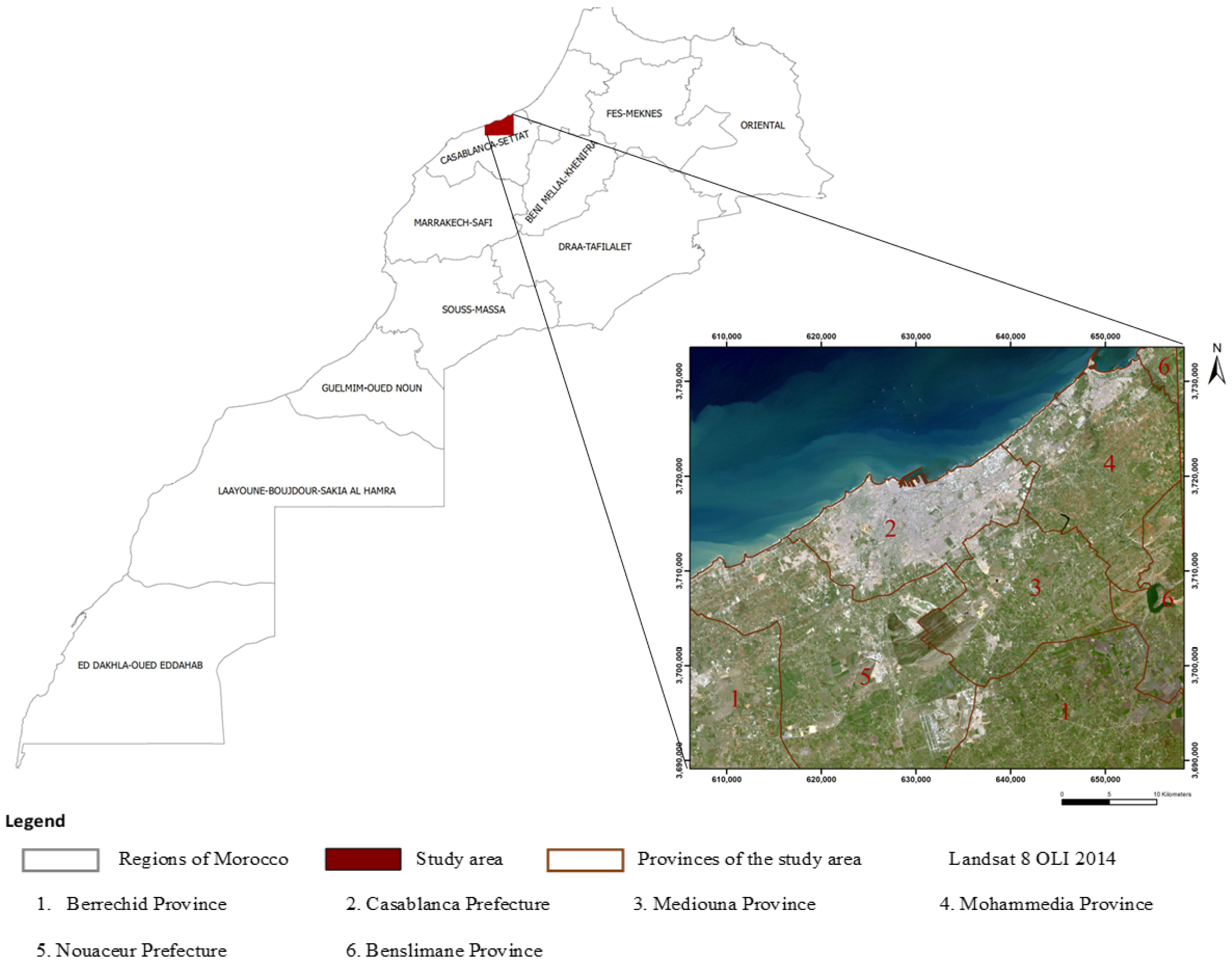
The greater Casablanca metropolitan area, located in the central-western part of Morocco along the Atlantic coast, is composed of the cities of Casablanca and Mohammedia, as well as the provinces of Nouaceur and Médiouna, as presented in
Figure 1. This metropolitan region is the largest urban agglomeration in the country [
42], stretching over approximately 50 km of coastline and covering an area of 1227 km
2, forming an Atlantic conurbation that extends from El Jadida in the south to Kenitra in the north. Casablanca, the economic capital of Morocco, lies at the heart of this metropolis and serves as a major hub for the national economy. The city hosts the country’s largest commercial port, several industrial and commercial zones, and spans an area of 386 km
2. According to the latest 2024 census, its population exceeds 4 million inhabitants [
43].
3.2. Methodology
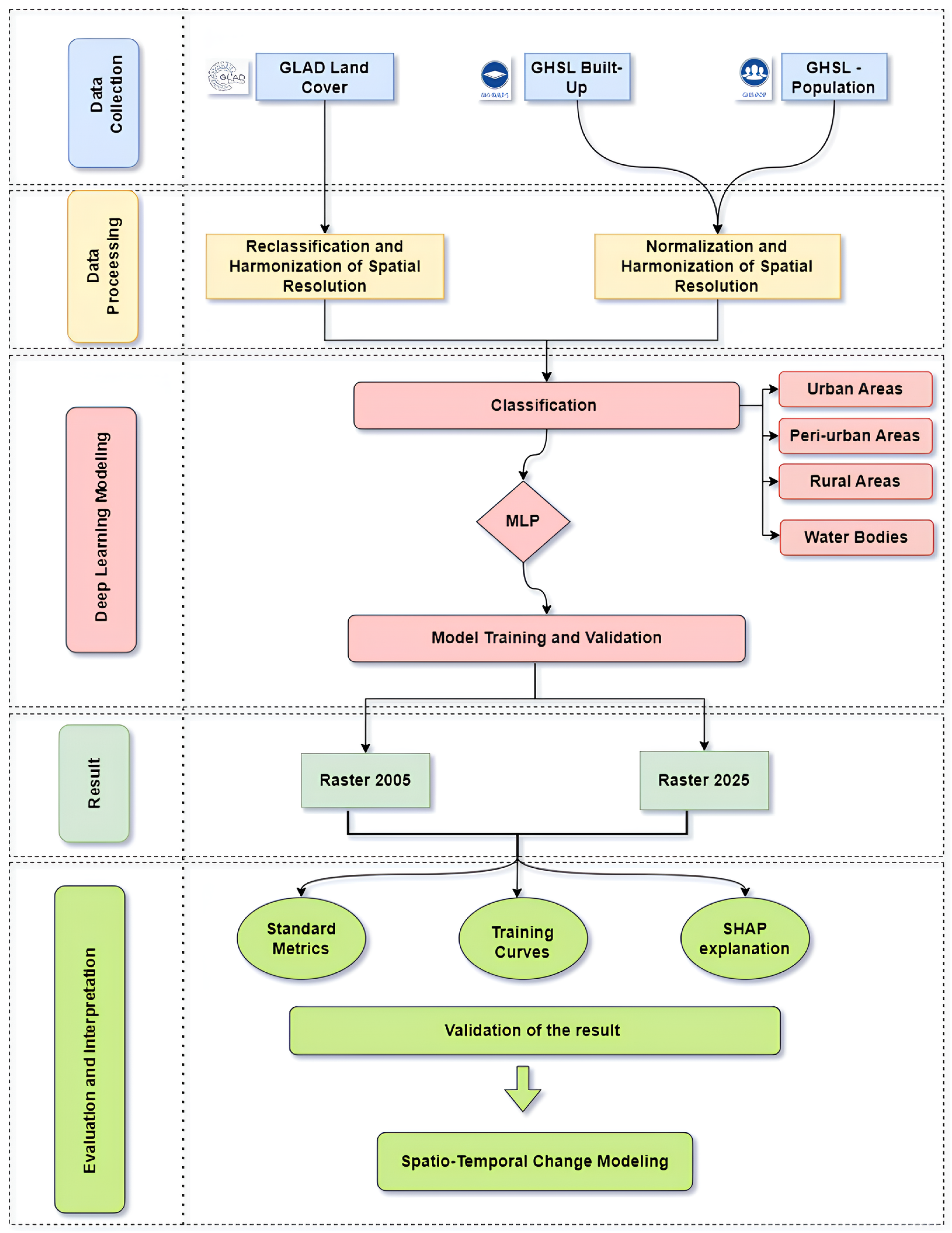
The methodology adopted is based on the integration of harmonized global datasets, from GHSL and the GLAD program, to classify land-use and land-cover patterns as presented in
Figure 2.
The process consists of three main steps:
The objective of this approach was to classify the study area into four land categories: urban, peri-urban, rural, and water. To enhance model interpretability, SHAP was employed to analyze the contribution of each global variable to the final classification outcomes [
24,
46].
3.2.1. Data Analysis
We used globally available spatial datasets from the GHSL platform [
47,
48] and the GLAD laboratory at the University of Maryland [
45,
49]. GHSL is an initiative of the Joint Research Centre (JRC) of the European Commission, which provides high-resolution geographic data regarding the spatial distribution of the human population for all countries since 1975 [
21,
24,
50]. For GLAD, it provides land-cover classification at an initial resolution of 30 m, based on satellite image analysis, as presented in
Table 1. Due to their global coverage, both datasets make them very appropriate for comparative analysis at a large scale.
Data preparation represents a fundamental step in the process. In this first approach, two main operations were performed: harmonization of spatial resolution and normalization with class reduction.
The primary consideration in preparing the data was to ensure that all layers had harmonized spatial resolution (i.e., the same scale and coordinate reference system) [
51]. Each of the GHS raster datasets (population density “GHS-POP” and built-up surfaces “GHS-BUILT-S”) originally had a resolution of three arc-seconds (approximately 92 m), while the GLAD land-cover layer had a resolution of 30 m.
Following the harmonization of spatial resolution, we applied normalization in the GHS-POP and GHS-BUILT-S rasters by dividing each pixel value by the maximum value of the respective raster, thereby scaling the values to a range between 0 and 1.
The land-cover layer originally included a large number of detailed classes. To simplify the analysis, these classes were grouped into eight representative categories based on visual and functional criteria relevant to peri-urbanization. This simplification helps reduce noise and model complexity while preserving sufficient discriminative information. Previous studies have shown that reducing highly detailed land-cover classes can improve classification performance. For example, Wessels et al. [
51] concluded that consolidating small detailed classes into larger more general categories improves overall accuracy since the resulting 12-class map outperformed a comparably more precise 22-class map when evaluated for accuracy [
51].
3.2.2. Model Selection
The use of an MLP for our pixel-by-pixel classification was motivated by several factors.
First, because of the completely connected architecture of an MLP, all three types of input, built-up area, land cover, and population, can all be evaluated simultaneously on one layer without requiring that we make assumptions about whether the relationships are linear or non-linear. In contrast with a simple linear classifier, an MLP is able to identify non-linear relationships as well as the potential threshold effects among the predictor variables. This capability makes MLPs especially well suited to classification in peri-urban zones, which are both gradual and highly variable in their development pattern [
24].
This simplicity also makes it easier to use SHAP, as each connection and weight can be clearly linked to the influence of a specific input variable. This helps make the model’s decisions easier to interpret and explain.
3.2.3. Dataset Construction
The training dataset was constructed through manual sampling of representative pixels across four clearly defined spatial environments. It includes 652 urban, 1737 peri-urban, 9337 rural, and 5892 water pixels, randomly selected within specific communes using official administrative boundaries.
For the peri-urban areas, we relied on a study focused on water supply in the outskirts of Casablanca, which identified Mediouna, Dar Bouazza, and Tit Mellil as transition zones between urbanized territories and agricultural areas [
38,
52].
The urban core, particularly neighborhoods such as Maarif and Anfa, provided a dense and regular grid of pixels characterized by very high built-up intensity. For the water class, pixels were sampled from the Atlantic coastline and the Oued Maléh dam, ensuring a strictly aquatic representation, and rural areas were defined using the communes of Sahel Oulad Harriz and the Ben Slimane district, where land use is mainly agricultural and population density remains very low.
The input vectors combined normalized values for population, built-up surfaces, and land cover. The target variable was assigned integer values from 0 to 3, representing the following classes:
0 = Urban;
1 = Peri-urban;
2 = Rural;
3 = Water.
No explicit class re-balancing was applied during model training, preserving the original distribution of land-use categories as reflected in global open datasets such as GHSL and GLAD. Population-related layers in these datasets rely on spatial interpolation and do not perfectly align with local ones.
The annotation method consisted of manual labeling guided by reference raster data, satellite images, and complemented by the official delineation of urban and rural communes.
3.2.4. Architecture of the Chosen Model
The chosen model is an MLP used for pixel-based land classification. Each pixel is described by three standardized input variable populations, built-up areas, and land-cover type to ensure consistency and stability during training. These normalized values are provided to the network in the same format, whether for the 2005 or 2025 dataset.
The network consists of two fully connected hidden layers. The model has two hidden layers. The first has 64 neurons and captures complex non-linear relationships between input variables. The second layer has 32 neurons and refines the first layer’s representation (from low-level spatial representation to high-level spatial representation). Both layers use ReLU as the activation function to retain only the relevant signals, as well as dropout regularization at (30%) to mitigate overfitting and to enhance the model’s generalization ability, as shown in
Figure 3.
The output layer of the model has four scores representing the different classes of urban, peri-urban, rural, and water. Once the output layer has completed processing all pixel data, it converts the scores into probabilities of the classes using the Softmax function. Each pixel in the image will be assigned to the class with the highest probability score from the Softmax output layer.
To train our models, we are using a categorical cross-entropy loss function along with the Adam optimizer, which uses an adaptive learning rate [
42]. Additionally, we are using both early stopping and learning rate reduction techniques to assist with improving training convergence and reducing the risk of overfitting during training.
The resulting probability maps are then post-processed by assigning the most probable class to each pixel and applying a 3 × 3 median filter. This filtering step removes isolated misclassified pixels and improves the spatial consistency of the final classification map.
3.2.5. Evaluation Metrics
The evaluation of model performance in this study was based upon precision, recall, and the F1-score, which are all used together to enable a balanced evaluation of the classification performance, the distribution of errors, and the ability of the model to distinguish between different classes.
Precision: For a given class
C, precision is defined as the ratio of [
39]
True Positives (TPs): Pixels that actually belong to class
C and were correctly predicted as
C by the model. False Positives (FPs): Pixels that were predicted as
C by the model but actually belong to another class.
Recall: For a given class
C, recall is defined as the ratio of [
53]:
False Negatives (FNs): Pixels that actually belong to class
C but were predicted as another class by the model.
F1-score: The harmonic mean of precision and recall for a given class
C [
54,
55]:
The harmonic mean formula implies that F1 remains high when both precision and recall are high; F1 decreases significantly if either precision or recall is low.
The F1-score represents a trade-off between precision and recall, making it particularly useful when we want to balance the cost of false positives and false negatives [
54,
55].
3.2.6. SHAP Analysis
SHAP employs game theory to determine Shapley values for every instance in the training set, assessing the influence of each feature on the model’s predictions. This research examined how indicators associated with urbanization affect the categorization of regions as urban, peri-urban, or rural. The approach compares the model’s predictions using all features, with predictions made when some features are removed, allowing an assessment of each feature’s contribution [
24]. A positive Shapley value signifies that the feature enhances the prediction likelihood, whereas a negative value implies the contrary. The total significance of each feature is determined by averaging the absolute Shapley values for all samples [
24,
46], as shown in
Figure 3.
4. Results
4.1. Mapping and Visualization of Results
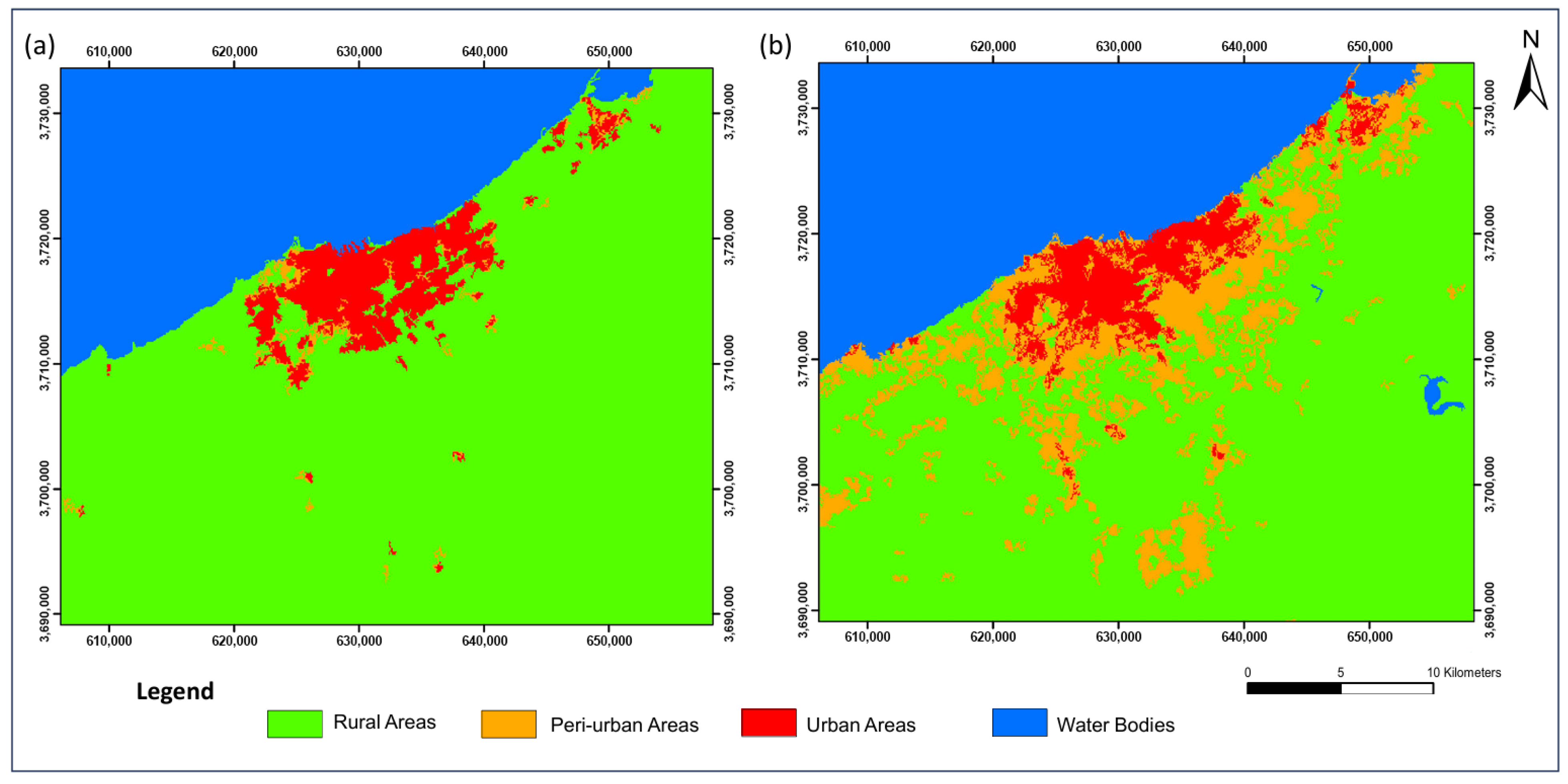
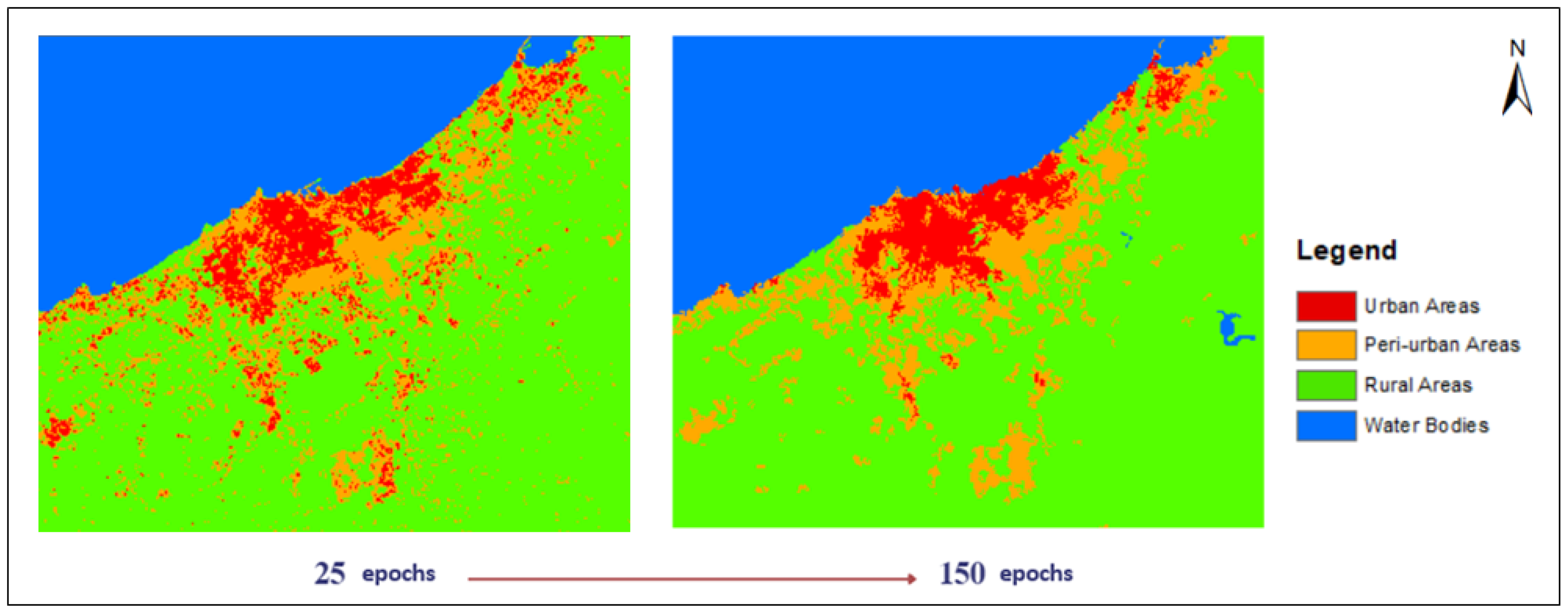
Figure 4 illustrates the classification of urban, peri-urban, rural, and water areas in the Casablanca region for the years 2005 and 2025. The map (a) highlights a strong concentration of urban areas along the coastline, representing the core of Casablanca and its most densely built-up neighborhoods. Surrounding these zones are peri-urban areas, which act as transition spaces between the dense urban core and the rural periphery, reflecting moderate development and urban expansion.
The rural areas dominate the southern parts of the map, indicating regions primarily dedicated to agriculture and low-density settlements. The water class mainly represents the Atlantic Ocean along the northern boundary, as well as other important water bodies like reservoirs.
This map clearly shows Casablanca’s urban structure in 2005, which represents the dense city center and the evolution expansion into surrounding peri-urban and rural areas.
The map (b) shows the distribution of urban, peri-urban, rural, and aquatic areas in the Casablanca region and its surroundings for the year 2025.
It illustrates a metropolis that is predominantly uniform, compact, and dense, as seen by the significant concentration of red zones (urban) in the northern section of the map, adjacent to the coast. The peri-urban fringes appear diffuse and poorly defined, without a clear structure or evident spatial organization. They do not display strong connections with road networks or green spaces. The rural areas dominate the southern part and extend broadly inland, while the blue area in the northwest represents the Atlantic Ocean.
4.2. Evaluation of Models and Quantitative Performance Analysis
The following
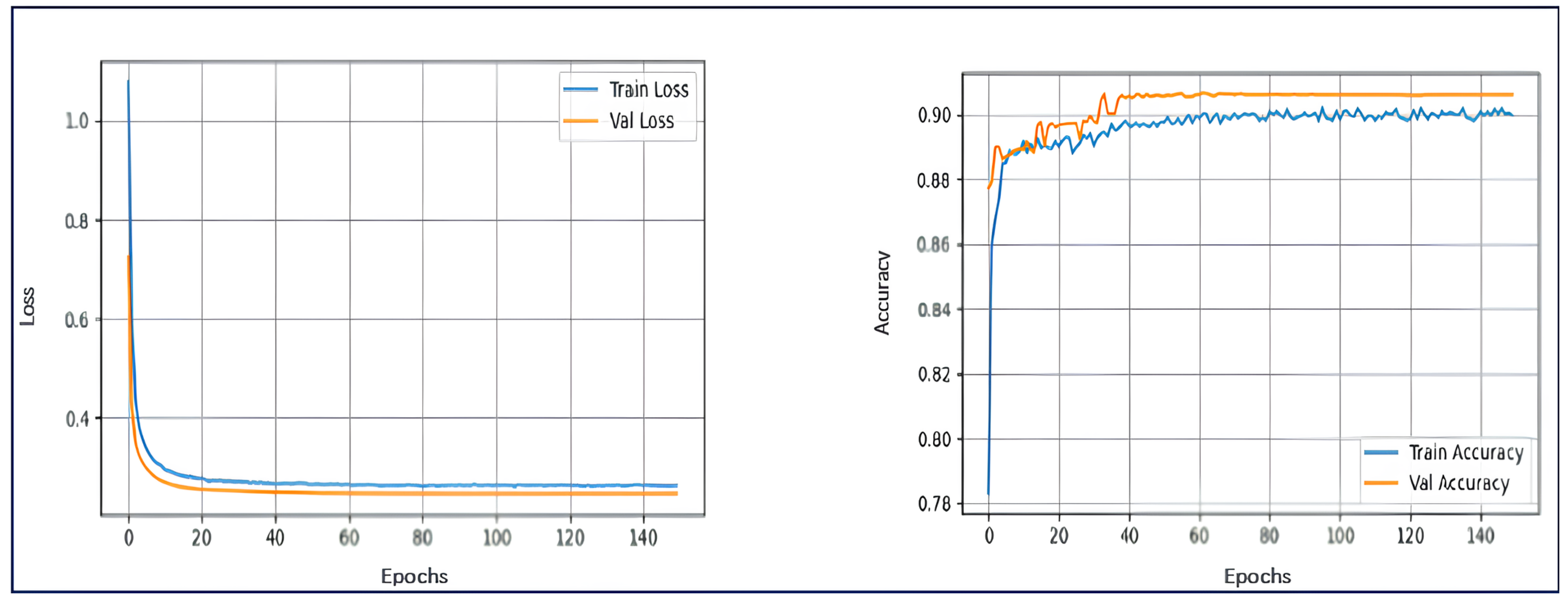
Figure 5 shows the evolution of the loss function and accuracy at each epoch during the model training process.
We first note that we extended the training to 150 epochs. This decision stems from the fact that, in the early iterations, the model struggled to distinguish water pixels, resulting in numerous errors for this class. By increasing the number of epochs, we were able to reduce the loss and improve the accuracy for these pixels, eventually achieving a satisfactory result, as presented
Figure 6.
The model demonstrates excellent performance in identifying the urban core, achieving perfect precision (1.00) and a recall of 0.99, resulting in an F1-score of 0.996 on nearly 1768 pixels. Rural areas are also well classified (F1 ≈ 0.94), highlighting the relevance of demographic and land-cover variables for detecting highly vegetated zones.
However, peri-urban areas remain challenging, leading to some misclassifications and a lower F1-score of about 0.63. Detecting water bodies is particularly limited, with an F1-score of only 0.37.
The main limitation of peri-urban area delineation arises from their complexity. These zones are transitional spaces between urban and rural regions and contain many different land uses, building types, and social activities. This diversity makes it difficult to clearly separate peri-urban areas from nearby rural or low-density urban zones.
Part of the misclassification also comes from using GHSL and GLAD datasets, especially the population layers, which are created through spatial interpolation. While these global datasets provide information at large scales, they often lack the fine spatial detail needed to accurately capture local variations. This difference between global datasets and local reference data can cause boundary errors and make it difficult to separate between suburban and urban places.
Similarly, the water body class is influenced by both spectral and spatial challenges due to shallow coastal waters, wet soils, and irrigated fields, which have spectral signatures similar to rural or peri-urban areas, especially in coastal or transitional zones, as presented in
Table 2.
Overall, the model achieves an accuracy of 90.6%, with a macro-average F1-score of 0.7326 and a weighted-average F1-score of 0.8904, as presented in
Table 3.
4.3. Spatial Coherence Through Quantitative Spatial Metrics
Beyond visually comparing maps, a more thorough evaluation of urban expansion needs quantitative indicators that measure spatial fragmentation, urban merging, and connectivity of the landscape. These metrics are important to determine whether the observed patterns reflect real-world conditions or are affected by model artifacts or data processing. The Patch Density indicates that these small patches are dispersed over a large area (0.17 patches/km
2), reflecting a pattern of diffuse growth. The extremely high Landscape Division Index value (0.9997) suggests a significant separation within the urban fabric, while the Largest Patch Index (LPI = 57.64) shows that more than half of the urban area is concentrated in the main urban core. Therefore, this pattern reflects a combination of a concentrated urban center and highly fragmented surrounding areas, as presented in
Table 4.
In this study, the urban landscape metrics show strong fragmentation, with many small patches (1070) and a low average patch size (0.1934 km2), indicating that the urban areas are mostly small and scattered.
4.4. Interpretability Analysis with SHAP
The SHAP interpretability technique was used to obtain an enhanced understanding of how the input variables (population, built-up presence, and land cover) impact the output produced by the MLP neural network by breaking down the output into contributions from each of the input variables, allowing for a transparent view of how each of the land-cover classes (urban, peri-urban, rural, and water) influenced the decision process of the MLP.
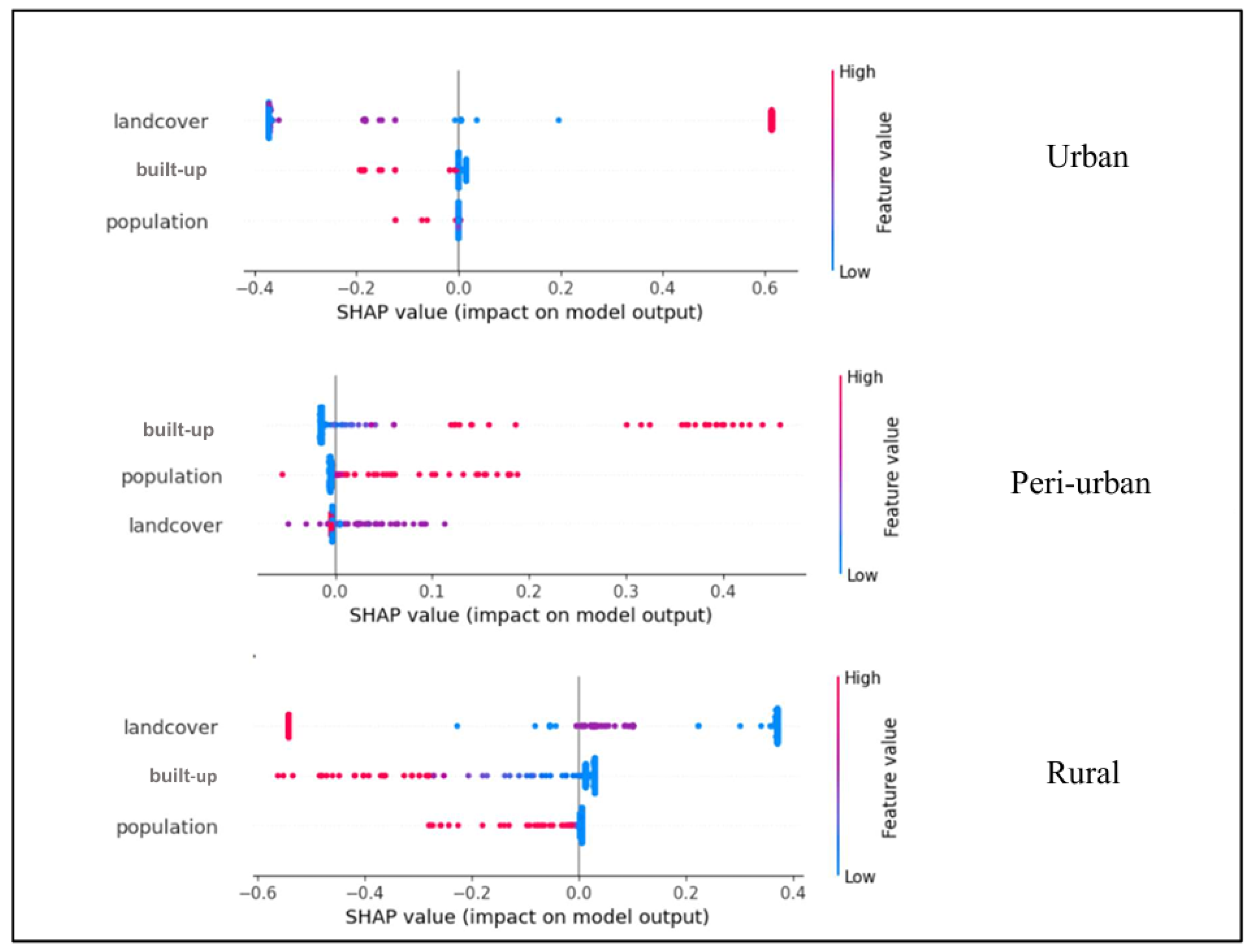
Analyzing SHAP values for a sample of 500 pixels shows how the three variables, population density, built-up density, and land cover, affect classification into urban, peri-urban, and rural categories.
For the urban class, the SHAP analysis shows that land cover is the main explanatory variable driving the model’s predictions. High land-cover values exhibit strongly positive contributions, with SHAP values reaching +0.6, indicating a significant increase in the probability of belonging to the urban class. In contrast, the built-up and population variables have a much more limited impact, with SHAP values mostly ranging between −0.1 and +0.05, suggesting a marginal contribution to the model’s decision, as presented
Figure 7.
In peri-urban areas, an opposite effect is observed, with a moderate built-up density, which represents SHAP values of up to 0.4. Population density also positively influences classification, with values reaching 0.2. Land cover remains largely neutral, suggesting that mixed peri-urban areas are not strongly characterized by vegetation alone, as presented
Figure 7.
The rural class is primarily determined by natural land cover, with SHAP values of up to 0.4 for areas of dense vegetation, built-up density, and population reducing the probability of rural classification, and with negative SHAP values down to −0.6 for built-up and −0.2 for population, as presented in
Figure 7.
The SHAP analysis reveals distinct influences of land cover, built-up areas, and population across urban, peri-urban, and rural classifications, providing valuable insights for targeted planning strategies. In urban areas, land cover is the most important variable, showing that managing changes in land cover is key for sustainable urban development. In peri-urban areas, high population and built-up density strongly influence development, so planners should manage urban growth to prevent sprawl and ensure proper infrastructure. In rural areas, land-cover and built-up factors are most important, emphasizing the need to protect natural land and limit construction. Measuring these impacts can help guide planning, improve land use, and support sustainable growth.
4.5. Land Area Distribution Between 2005 and 2025
The quantification of land-cover areas is a crucial step in understanding the spatial dynamics shaping the Casablanca metropolitan area and in assessing the accuracy of the performed classifications. The classification results allowed us to create a detailed map showing the spatial and temporal evolution of Casablanca and its surroundings over twenty years, as shown is in
Figure 4.
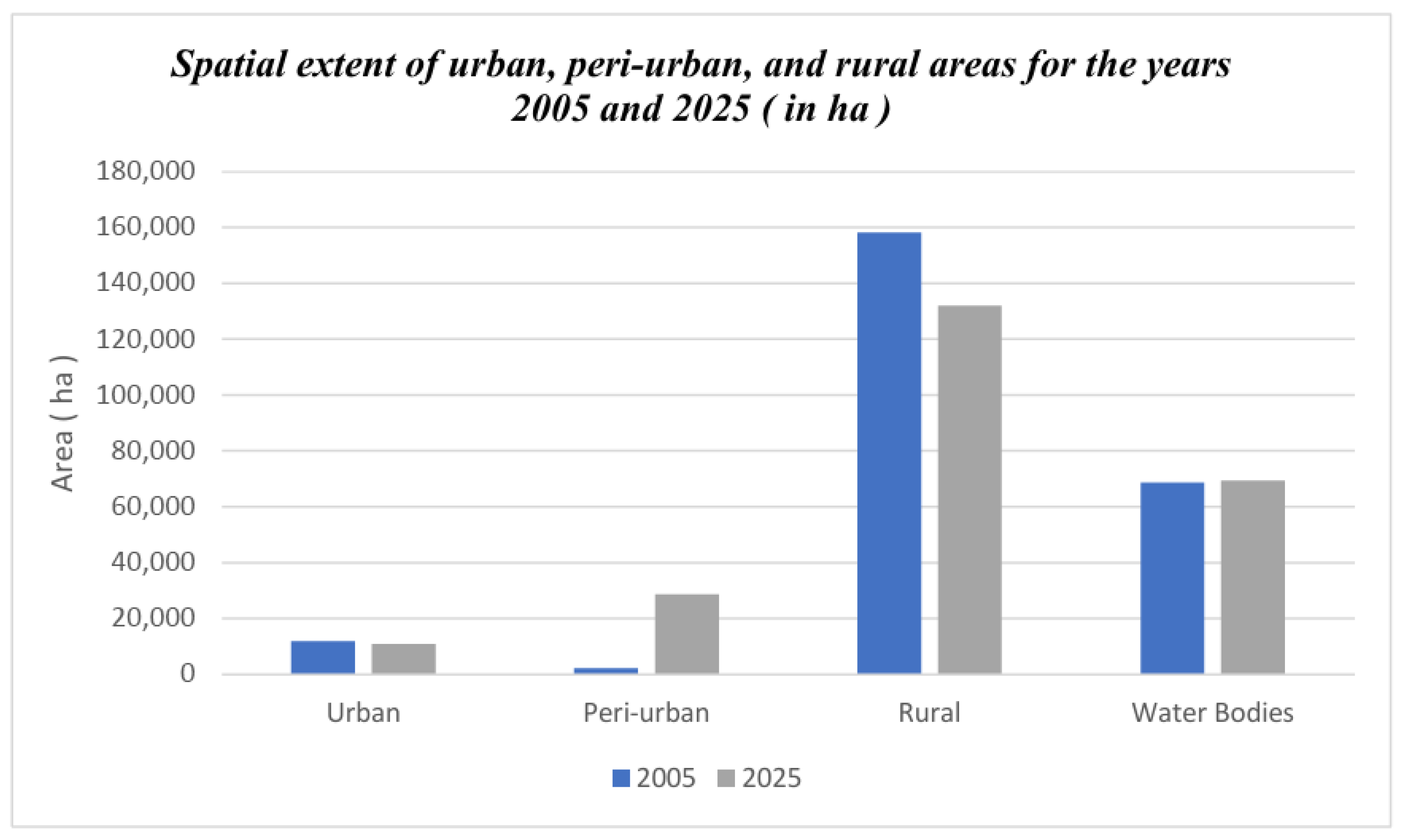
Figure 8 represent a graph that compares the areas of the four zoning classes over a 20-year period. It reveals clear trends in territorial transformation, with contrasting dynamics depending on the type of space.
The peri-urban class shows the most significant variation. It increases from 2144 ha in 2005 to 28,627 ha in 2025, representing more than 13-fold growth. This sharp increase reflects intense peri-urbanization driven by
- →
The gradual expansion of urbanization beyond the central core.
- →
Residential development in areas not yet fully urbanized.
- →
Growing land pressure on agricultural peripheries.
These transition zones are mainly located in peripheral municipalities such as Dar Bouazza, Lahraouiyine, Tit Mellil, Ain Harrouda, Chellalate, and the outskirts of Mohammédia, as well as emerging areas like Had Soualem, Médiouna, and Bouskoura. These zones were used to cultivate agriculture; however, they are changing quickly to residential developments located on the outer limits of the city. These transitional zones attract many housing projects but are generally fragmented and have grown unplanned in an uncoordinated manner. There are concerns about the land management of peri-urban areas because they typically have poor infrastructure, lack planning, and are ecologically sensitive.
Rural areas has decreased substantially, from 158,170 hectares in 2005 to an estimated 131,830 hectares in 2025, or a reduction of approximately 26,340 hectares of agricultural land. This illustrates the direct loss of agricultural land as a result of transforming land from agricultural states to urban or transitional locations. The loss of agricultural land is alarming, particularly when considering the importance of protecting fertile land and securing adequate food sources to support the population, as well as minimizing the artificialization of the land.
4.6. Spatial Change Map of Casablanca (2005–2025)
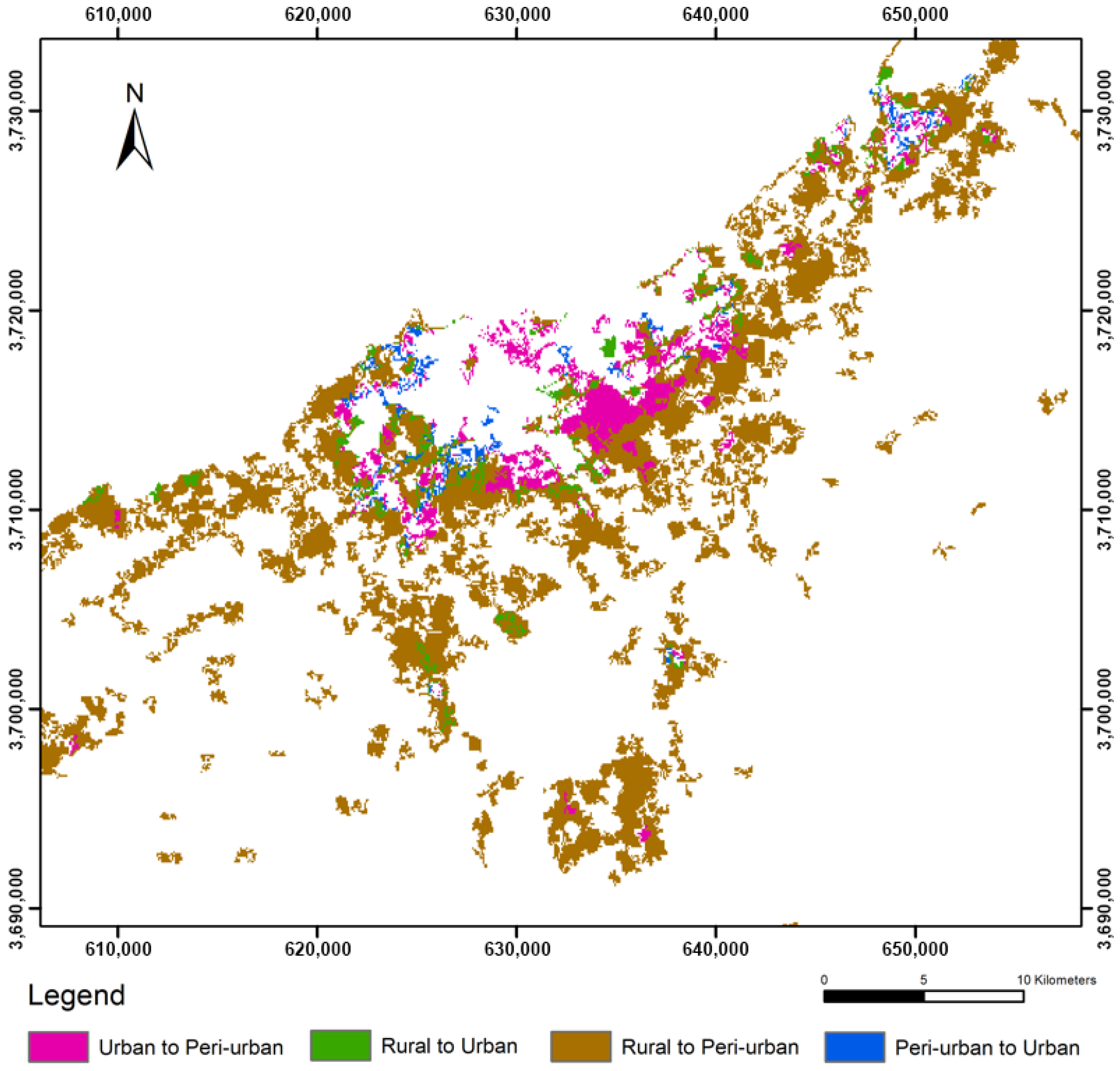
The spatial change map clearly shows that Casablanca is undergoing a phase of rapid and diffuse urbanization, with peripheral areas experiencing a significant transformation into the peri-urban and urban ones.
Figure 9 shows clear spatial changes in the Casablanca region between 2005 and 2025. The main transformation is the conversion of rural areas into peri-urban areas, followed by the direct change from rural to urban. The areas on the periphery of the city of Casablanca, which include the areas of Tit Mellil, Médiouna, and Ain Harrouda, have experienced some changes from rural to urban; however, the vast majority of these peripheral areas have transitioned from rural to peri-urban. Conversely, the municipalities of Dar Bouazza and Bouskoura, which only have small urban centers, mostly transitioned to peri-urban areas.
These changes align with previous studies, which showed that the conversion of unbuilt land into artificial areas mainly occurs on the outskirts of Casablanca, including the Nouaceur prefecture, Médiouna province, and Mohammedia, forming peri-urban zones [
45].
Overall, these results show increasing pressure on Casablanca’s outskirts, with urban expansion and the spread of peri-urban areas farther from the city center.
5. Discussion
This study developed a workflow to identify urban, peri-urban, and rural areas using satellite data. The workflow enabled (a) mapping these areas, (b) assessing their spatial patterns, (c) analyzing model interpretability using the SHAP method, and (d) describing land area changes between 2005 and 2025, including mapping their spatial evolution.
Comparing the 2005 and 2025 maps reveals a clear expansion of the urban perimeter toward the east and southwest. The peri-urban fringes have become more consolidated, forming continuous built-up areas, while rural zones have gradually contracted, particularly along major development corridors. There was also an unexpected decrease in the urban footprint from 11,741 hectares in 2005 to 10,787 hectares in 2025 (−954 hectares), attributed to the changing definition of “urban” as it pertains to these areas based on how urban is classified globally.
The pattern of growth in peri-urban areas of Casablanca is highly variable and follows a geographic structure formed by population pressures, land use and availability, and the construction of infrastructure. Some parts of the region are growing with a seemingly high density of growth, while other sections seem to be primarily growing with low density. This spatial distribution is particularly evident in the following locations:
Southeast: Notably around Tit Mellil, Médiouna, and Ain Harrouda, where the rural → peri-urban transformations are most significant.
Southwest: In areas such as Bouskoura and Had Soualem, where residential sprawl is developing in a more diffuse manner.
East and Northeast: Towards Mohammédia, where peri-urban expansions are present but more fragmented.
Peri-urban expansion in Casablanca is driven by several structural factors. In fact, people frequently move from urban center cities to fringe or suburban areas due to better cost and availability of housing since land prices are lower and more plentiful than inside the central city. The price of real estate and land speculation also strongly impact the types of buildings and the pace of development in terms of location. Thus, the manner in which transportation systems connect to and are available (accessibility) will also greatly affect the form of development of peri-urban areas. All these factors explain why peri-urban expansion occurs in a non-centralized manner, characterized by both dispersed growth and the near-continuous creation of new developed areas. This process results from the interaction of social and economic dynamics, transportation infrastructure, and political factors such as policies and regulations, which collectively shape urban development through diverse and context-dependent pathways.
From a morphological perspective, peri-urban areas exhibit a discontinuous and heterogeneous structure, characterized by
Fragmented and non-contiguous patches, typical of spontaneous urbanization or informal subdivision developments.
Progressive coalescence around structuring poles, creating “cluster-like” configurations, particularly evident in the southern part of Casablanca.
Absence of a clear urban grid, which complicates the provision of infrastructure, services, and public facilities.
These spatial and morphological patterns in Casablanca reflect broader trends observed in other metropolitan areas of the Global South. For example, Karg et al. [
17] in Tamale, Ghana, found that peri-urban areas often grow in a patchy way, influenced by roads, land-use changes, and social and economic differences [
17]. Similarly, Saksena et al. [
36] demonstrated how they were able to combine census, satellite data, and socio-economic information to develop better models of rural, peri-urban, and urban areas. Similar results have been identified in Casablanca where researchers used satellite images and socio-economic information together to illustrate both the physical layout and the functional dynamics of peri-urban expansion [
36].
Beyond these regional case studies, comparable dynamics have also been documented at much larger territorial scales. For instance, Moran Uriel et al. [
56] highlights how rapid urban growth between 2000 and 2020 led to diffuse expansion, increasing fragmentation, and strong pressure on agricultural land across more than five thousand urban entities in China. The study demonstrates that population density gradients, functional urban peripheries, and rural–urban transitions are strongly shaped by state policies and planning instruments. In this respect, the patterns observed in Casablanca concerning the development of disconnected fringe boundaries and the disparity between the planning model and the reality of urban land changes are similar to those found in China. This relationship validates that these two cases are related. Such peri-urban processes are not unique but they represent similar circumstances and models for ongoing urbanization within rapidly developing areas under different types of governance [
56].
Overall, although the patterns in Casablanca are specific to the local context, they share common features with other rapidly urbanizing cities, such as irregular and fragmented growth, strong influence of transport routes, and the combined effect of population pressure and land availability. This comparison shows that combining multiple types of data and using interpretable methods is useful for understanding how peri-urban areas develop.
6. Conclusions
In the last 20 years, Casablanca has become increasingly urbanized [
44]. In this study, the peri-urban area of Casablanca was analyzed by combining satellite imagery with socio-economic data through deep-learning methods.
The findings of this study indicate that increasing population density and speculative development are driving rapid transformations in Casablanca’s peri-urban fringe. About 26,000 ha of this fringe have already shifted from rural to urbanized areas, with numerous other peri-urban zones continuing to experience similar development pressures. The main areas of peri-urban growth include Mediouna, Draa Bouza, Tit Mellil, and Hat Soualem.
From a theoretical standpoint, this study has shown that global datasets and deep learning can be used together to accurately measure peri-urbanization. The methodology can be adopted in other metropolitan areas to produce maps and analyses of peri-urban growth.
Some of the methodological limitations exist regarding the spectrum confusion between peri-urban and rural area labels, the number of training images used, the resolution of satellite data, and the limited nature of available reference datasets for urbanization, peri-urbanization, and rural areas. Continued improvements on the understanding of these challenges may include utilizing higher-resolution data and locally created imagery, creating new socio-economic variables to characterize peri-urbanization, evaluating different model architectures, and employing advanced spatial validation techniques to enhance the classification accuracy.
This study also supports collaboration with stakeholders, urban planning agencies, and local authorities to develop well-defined peri-urban areas. Well-defined peri-urban areas will assist in standardizing research, interpreting results, and directing future developments in these unique urban–rural hybrids.
From a policy standpoint, the findings indicate the need for integrated territorial governance. Land-use changes are outpacing current planning tools, resulting in indiscriminate growth of urbanization. Establishing peri-urban management under the Strategic Directorate of Urban and Area Development (SDAU) will coordinate the implementation of ecological and agricultural land protection with urban densification. These results provide guidance for local governments in determining urban edges, providing infrastructure services, falling into the category of spatial fragmentation, and protecting critical areas that may be exposed to flood zones and/or fertile agricultural land (i.e., soil erosion and loss of biodiversity). Furthermore, this planned approach to risk-informed planning and enhanced resiliency to flooding, soil erosion, and loss of biodiversity will increase land-use planning efforts.