1. Introduction
Agriculture is currently facing one of the greatest challenges in its history: producing sufficient quantities of nutritious food while simultaneously reducing its environmental footprint and adapting to increasingly unpredictable climatic conditions. Rapid population growth, degradation of natural resources, biodiversity loss, and climate change are placing unprecedented pressure on agricultural systems, requiring substantial improvements in crop productivity together with a more efficient use of water, nutrients, and other agricultural inputs [
1,
2,
3,
4]. At the same time, enhancing the nutritional quality of agricultural products remains essential to combat micronutrient deficiencies that continue to affect billions of people worldwide [
5,
6].
For decades, improvements in crop productivity have relied primarily on increasing fertilizer inputs. Although this strategy has successfully enhanced agricultural production, it has also generated important environmental consequences, including nutrient losses, greenhouse gas emissions, eutrophication, soil degradation, and declining fertilizer use efficiency [
7,
8]. Consequently, improving nutrient use efficiency while increasing crop resilience has become a central objective of sustainable agriculture.
Within this context, plant biostimulants have emerged as one of the most promising tools for improving crop performance under both optimal and adverse environmental conditions. Unlike conventional fertilizers, whose primary function is nutrient supply, or plant protection products, which directly control pests and diseases, plant biostimulants stimulate endogenous physiological processes that improve nutrient use efficiency, tolerance to abiotic stress, crop quality, and nutrient availability in the rhizosphere [
9,
10,
11]. From a scientific perspective, plant biostimulants have been defined as substances or microorganisms applied to plants with the aim of enhancing nutrient efficiency, abiotic stress tolerance, and/or crop quality traits, regardless of their nutrient content [
9]. From a regulatory perspective, Regulation (EU) 2019/1009 provides a formal definition of plant biostimulants under Product Function Category (PFC) 6. According to this regulation, plant biostimulants are EU fertilising products whose function is to stimulate plant nutrition processes independently of their nutrient content, with the sole aim of improving nutrient use efficiency, tolerance to abiotic stress, quality traits, or the availability of confined nutrients in the soil or rhizosphere [
11].
Plant biostimulants comprise an exceptionally diverse group of products, including humic substances, seaweed extracts, protein hydrolysates, amino acids, chitosan, silicon-based formulations, and beneficial microorganisms [
9,
10]. Because these products differ considerably in their biological origin, chemical composition, molecular complexity, and mode of application, research has traditionally investigated each category independently, resulting in a fragmented understanding of their biological activity. However, recent advances in plant physiology, molecular biology, systems biology, and multi-omics have profoundly changed this perspective. Independent studies consistently demonstrate that chemically and biologically distinct biostimulants induce remarkably similar physiological responses, including enhanced root development, improved nutrient and water use efficiency, increased photosynthetic performance, strengthened antioxidant capacity, greater tolerance to abiotic stress, and higher crop productivity and quality [
10,
12]. At the molecular level, these responses have been associated with the recurring involvement of conserved signalling components, including calcium (Ca
2+), reactive oxygen species (ROS), nitric oxide (NO), phytohormonal crosstalk, protein kinase cascades, transcriptional regulation, and metabolic reprogramming [
13,
14]. These recurring molecular and physiological responses suggest that chemically diverse plant biostimulants may influence overlapping conserved regulatory networks. However, such similarities do not establish that different biostimulant classes are perceived through common primary receptors or identical upstream signalling mechanisms. Accordingly, the mechanistic convergence considered in this review is proposed as a conceptual and hypothesis-generating framework, particularly at the level of interconnected downstream regulatory processes, rather than as evidence of a universal receptor-level mechanism.
The rapid development of transcriptomics, proteomics, metabolomics, epigenomics, phosphoproteomics, and computational systems biology has accelerated this transition from descriptive studies to predictive models of plant biostimulant action. Integrated multi-omics approaches are progressively identifying conserved signalling hubs, regulatory modules, and molecular biomarkers that are associated with the recurring physiological responses observed across different biostimulant categories and environmental conditions [
13,
14].
In this review, we propose a conceptual convergence framework of plant biostimulant activity that integrates current knowledge from plant physiology, molecular signalling, systems biology, and multi-omics. Rather than assuming that different biostimulant classes share identical primary perception mechanisms, we examine how diverse extracellular stimuli may influence interconnected signalling, hormonal, transcriptional, and metabolic regulatory networks. The framework is therefore intended as a hypothesis-generating model that identifies potential points of mechanistic convergence and highlights experimentally testable links between early perception, intracellular signalling, and downstream physiological responses.
2. Plant Biostimulants: Functional Diversity and Mechanistic Convergence
2.1. Classes of Plant Biostimulants
Plant biostimulants comprise a highly diverse group of natural substances, inorganic compounds, and beneficial microorganisms capable of enhancing plant performance independently of their nutrient content. Unlike conventional fertilizers, whose primary role is nutrient supply, plant biostimulants stimulate endogenous physiological processes that improve nutrient use efficiency, tolerance to abiotic stress, crop quality, and nutrient availability in the rhizosphere [
9,
10,
11]. Their increasing scientific and agronomic relevance has led to their recognition as a distinct category of agricultural inputs under Regulation (EU) 2019/1009, which defines plant biostimulants according to their biological function rather than their chemical composition [
11].
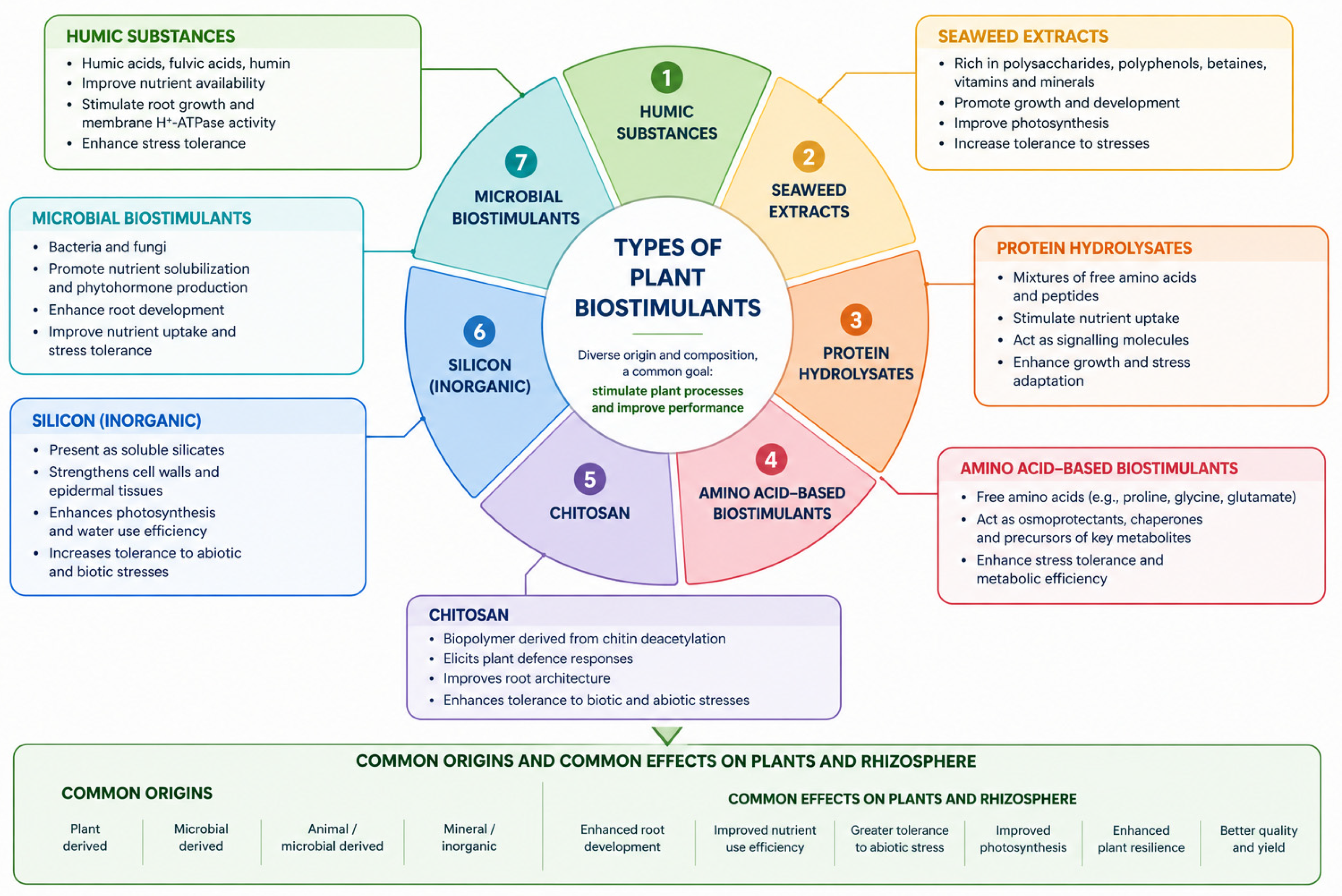
Although several classification systems have been proposed based on origin, chemical composition, biological activity, or mode of action, no universally standardised classification of plant biostimulants exists. In this review, seven broad and functionally relevant groups are considered: humic substances, seaweed extracts, protein hydrolysates, amino acid-based biostimulants, chitosan, silicon-based biostimulants, and microbial biostimulants. These groups should be regarded as conceptual categories rather than strictly defined or mutually exclusive classes, since the composition, molecular characteristics, formulation, dose, and biological activity of products within each group can vary substantially [
9,
10,
11,
12,
13,
14,
15]. In fact, these categories encompass products that differ substantially in chemical complexity, biological origin, formulation, application strategy, production cost, commercial maturity, market availability, and degree of product standardization, yet all promote improvements in plant growth, resource-use efficiency, and environmental adaptation (
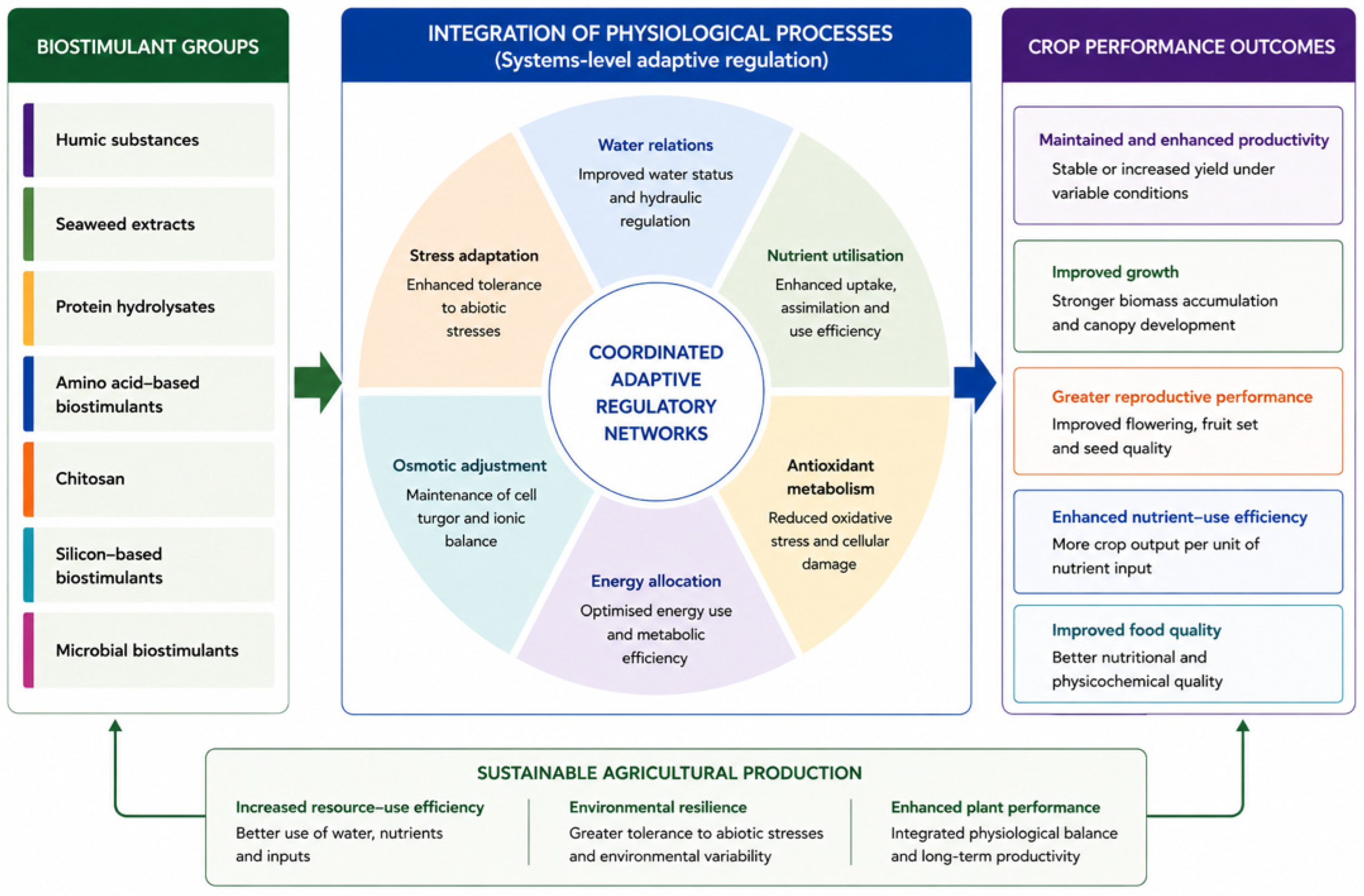
Figure 1). Importantly, classification within a given group does not imply that all products have equivalent biological activity or produce the same physiological effects. The effectiveness of a plant biostimulant depends on product-specific characteristics, including chemical composition, molecular size and structure, degree of polymerisation or deacetylation where applicable, concentration, formulation, application method, plant species and genotype, developmental stage, and environmental conditions. Consequently, the presence of a product within a particular biostimulant category should not, by itself, be interpreted as evidence that it will necessarily produce a specific agronomic response. Furthermore, the seven categories considered in this review should not be regarded as an exhaustive list of all substances with potential biostimulant activity. Other compounds and biological substances, including polyamines, betaines and other compatible solutes, vitamins and vitamin-like compounds, oligosaccharides, and other signalling molecules, have also been reported to modulate plant growth, metabolism, nutrient use efficiency and tolerance to environmental stresses. Some of these substances may occur naturally as components of complex biostimulant formulations, whereas others may be investigated as individual bioactive compounds. Their classification as plant biostimulants, however, depends on their biological function, intended use and regulatory context. Therefore, the seven groups discussed here should be considered major and representative categories rather than a comprehensive inventory of all substances capable of producing biostimulant-like effects.
2.1.1. Application Scope and Fields of Application
The seven broad groups considered in this review differ not only in their chemical or biological characteristics, but also in their predominant fields of application, application methods, and target physiological processes (
Table 1). However, these application scopes are not exclusive, and considerable overlap exists among categories. The choice of a particular biostimulant depends on the intended agronomic objective, product characteristics, crop species, developmental stage, application method, and environmental conditions. Therefore, the following overview describes the predominant application fields reported for each group rather than assigning exclusive uses to individual biostimulant categories.
Humic substances, consisting primarily of humic acids, fulvic acids, and humin, are among the oldest and most extensively investigated plant biostimulants. Besides improving the soil physicochemical properties, they stimulate root growth, activate plasma membrane H
+-ATPases, enhance nutrient uptake, and increase tolerance to environmental stresses, thereby improving crop productivity and nutrient use efficiency [
16,
17,
18,
19,
20]. Their main application scope is soil–plant management, particularly where improvement of root development, nutrient acquisition, and soil–plant interactions is targeted.
Seaweed extracts, obtained mainly from brown macroalgae but also from red and green algae, constitute one of the most widely commercialised categories of plant biostimulants. Their biological activity results from a complex mixture of polysaccharides, oligosaccharides, polyphenols, amino acids, peptides, minerals, vitamins, and compatible solutes that collectively promote root development, photosynthetic efficiency, antioxidant metabolism, and stress tolerance while frequently inducing physiological priming [
21,
22,
23,
24,
25,
26,
27,
28]. Their application is particularly relevant to crop growth, physiological priming and the management of environmental stresses, and they can be applied through foliar or root-associated treatments.
Protein hydrolysates are mixtures of free amino acids and bioactive peptides generated through the partial hydrolysis of proteins of plant, animal, or microbial origin. Increasing evidence indicates that their effectiveness depends largely on signalling peptides capable of regulating nutrient acquisition, nitrogen metabolism, root architecture, photosynthesis, and stress adaptation rather than simply supplying organic nitrogen [
29,
30,
31,
32,
33]. In fact, their biological activity is not determined solely by the presence of amino acids and peptides. Molecular weight distribution, peptide sequence and composition, degree of hydrolysis, source protein, and production process can substantially influence their biological effects. Therefore, protein hydrolysates with different molecular profiles should not be assumed to have equivalent biostimulant activity. Their main application scope includes crop nutritional management, stimulation of root development, and improvement of plant performance under nutritional or environmental constraints.
Although often included within protein hydrolysates, amino acid-based biostimulants constitute a distinct functional group because individual amino acids participate directly in nitrogen metabolism, phytohormone biosynthesis, osmotic adjustment, redox regulation, and intracellular signalling. Their application frequently improves nutrient assimilation, photosynthetic performance, antioxidant capacity, and tolerance to adverse environmental conditions [
34,
35]. Amino acid-based products are mainly applied to support plant metabolism and physiological performance, particularly in situations involving nutritional limitation or environmental stress.
Chitosan, a biodegradable polysaccharide produced by the partial deacetylation of chitin, has attracted considerable interest because it combines growth-promoting activity with the capacity to stimulate plant defence responses. Applied as seed coatings, foliar sprays, soil amendments, or carriers for bioactive compounds, chitosan improves nutrient use efficiency, antioxidant metabolism, stress tolerance, and crop productivity while contributing to circular bioeconomy strategies through the valorisation of seafood-processing residues [
36,
37]. Still, the biological activity of chitosan is strongly influenced by its molecular characteristics, particularly molecular weight and degree of deacetylation. Consequently, chitosan products with different structural characteristics may differ substantially in solubility, biological activity, and plant responses, and the effects described for one formulation cannot necessarily be extrapolated to all chitosan products. Accordingly, chitosan-based products have a particularly relevant application scope in growth promotion, physiological priming, and plant defence, although their effects depend strongly on molecular characteristics and formulation.
Silicon-based biostimulants comprise chemically diverse inorganic silicon sources, whose solubility, chemical speciation, bioavailability, and interaction with the soil–plant system can differ substantially. Consequently, silicon-containing products should not be considered functionally equivalent, and the beneficial effects reported for one silicon source or formulation cannot necessarily be extrapolated to all silicon compounds. Depending on the plant species, silicon availability and formulation, silicon application may contribute to improved cell-wall properties, water-use efficiency, nutrient homeostasis, photosynthetic stability, and tolerance to specific abiotic or biotic stresses [
38,
39]. The application scope of silicon-based products is therefore particularly associated with stress management and the maintenance of physiological performance, but the response depends strongly on silicon source, chemical form, bioavailability, formulation, crop species and environmental conditions.
Microbial biostimulants include beneficial bacteria and fungi that promote plant growth through biological nitrogen fixation, phosphorus solubilisation, phytohormone production, modulation of root architecture, and interactions with the rhizosphere microbiome. Current commercial formulations are based mainly on species of
Azotobacter,
Azospirillum,
Rhizobium,
Bacillus,
Pseudomonas, and arbuscular mycorrhizal fungi, although recent advances in microbiome engineering, microbial metabolites, postbiotics, and synthetic microbial communities are considerably expanding this category [
40,
41]. Their application is particularly relevant to rhizosphere management, nutrient acquisition, root development and plant–microbe interactions, with applications ranging from seed inoculation to soil and root-associated treatments.
Despite their remarkable diversity, products belonging to these broad categories have been associated with improvements in nutrient use efficiency, plant growth, crop quality, and tolerance to environmental stresses. However, these effects are not universal across all products within a given category, and their magnitude and occurrence depend on product characteristics, application conditions, plant genotype, developmental stage, and environmental context. In fact, the principal distinction among these groups therefore lies not in the existence of completely separate application fields, but in their predominant targets and modes of use. Humic substances are particularly associated with soil–root processes and nutrient acquisition; seaweed extracts and protein hydrolysates have broad applications in crop growth and stress management; amino acid-based products primarily target metabolic and physiological processes; chitosan combines biostimulant activity with strong potential for physiological priming and defence responses; silicon-based products are particularly relevant to stress management and structural and physiological resilience; and microbial biostimulants are distinguished by their capacity to act through plant–microbe and rhizosphere interactions. Nevertheless, substantial overlap exists among these application scopes, supporting the convergence concept developed in the subsequent sections.
2.1.2. Market Availability and Cost Considerations
The seven groups of plant biostimulants also differ in terms of production costs, commercial maturity, market availability, and degree of product standardisation. These differences are influenced by the availability and cost of raw materials, production or extraction processes, formulation requirements, storage stability, and in the case of microbial products, the requirements associated with maintaining microbial viability. Direct comparison of commercial costs among the different groups is therefore difficult, as products may differ substantially in composition, concentration, formulation, application rate, and target crop. Humic substances, seaweed extracts, protein hydrolysates, and amino acid-based biostimulants comprise well-established groups with broad agricultural applications. Seaweed extracts and protein- and amino-acid-based products are available in a wide range of formulations, while chitosan and silicon-based products are also commercially available but show greater variability in formulation and application characteristics. Microbial biostimulants are consistent with a category of agricultural inputs, although their production, formulation, storage, and application may involve additional technical requirements. From an economic perspective, the cost of a biostimulant should therefore be considered at the product level rather than as an intrinsic characteristic of its category. Products based on different raw materials and production processes may have substantially different costs even when they belong to the same broad biostimulant group. Similarly, commercial availability does not necessarily imply equivalent market maturity, production cost, or agronomic performance. These factors should consequently be considered when evaluating the practical applicability and scalability of different plant biostimulants.
2.2. Functional Concept
The concept of plant biostimulants has evolved considerably over the past two decades, shifting from a heterogeneous group of growth-promoting products towards a function-based category of agricultural inputs. The functional concept proposed by du Jardin [
9], and subsequently reflected in the European regulatory framework, emphasises that biostimulant activity is defined primarily by the physiological and agronomic responses induced in plants rather than by the chemical composition or origin of the product. Accordingly, in this review, plant biostimulants are considered according to their capacity to stimulate plant nutrition processes and improve nutrient use efficiency, tolerance to abiotic stress, crop quality, and nutrient availability in the soil or rhizosphere [
9,
11].
This regulatory framework also reflects an important scientific transition. Earlier studies largely attributed biostimulant activity to specific compounds or individual product categories. However, accumulating physiological and molecular evidence indicates that plant responses arise from the coordinated modulation of endogenous regulatory networks integrating nutrient acquisition, hormone homeostasis, metabolism, growth, and environmental adaptation [
17]. Accordingly, the biological activity of plant biostimulants should not be interpreted as the sum of isolated biochemical effects, but as the result of complex interactions between bioactive molecules and highly interconnected plant regulatory systems. The efficacy of plant biostimulants therefore depends not only on product composition, but also on the formulation, application method, plant genotype, developmental stage, nutritional status, soil characteristics, environmental conditions, and interactions with the rhizosphere microbiome [
10]. These multiple factors explain the variability frequently observed under field conditions while highlighting the complexity of the biological processes involved.
One of the most significant advances in recent years has been the recognition that chemically and biologically diverse biostimulants consistently induce remarkably similar physiological responses. Enhanced root development, improved nutrient and water use efficiency, increased photosynthetic performance, strengthened antioxidant metabolism, enhanced stress tolerance, and higher crop productivity are recurrent outcomes regardless of whether the applied product consists of humic substances, seaweed extracts, protein hydrolysates, amino acids, chitosan, silicon, or beneficial microorganisms [
10,
12]. These observations suggest that the diversity of plant biostimulants may primarily be chemical rather than entirely functional. Based on the available evidence, we propose that structurally unrelated biostimulants may converge, at least in part, on a relatively small number of conserved regulatory networks that coordinate plant growth, metabolism, nutrient acquisition, and environmental adaptation. This proposed mechanistic convergence provides the conceptual basis for the framework developed in the following sections.
3. Conserved Regulatory Networks Underlying Plant Biostimulant Activity
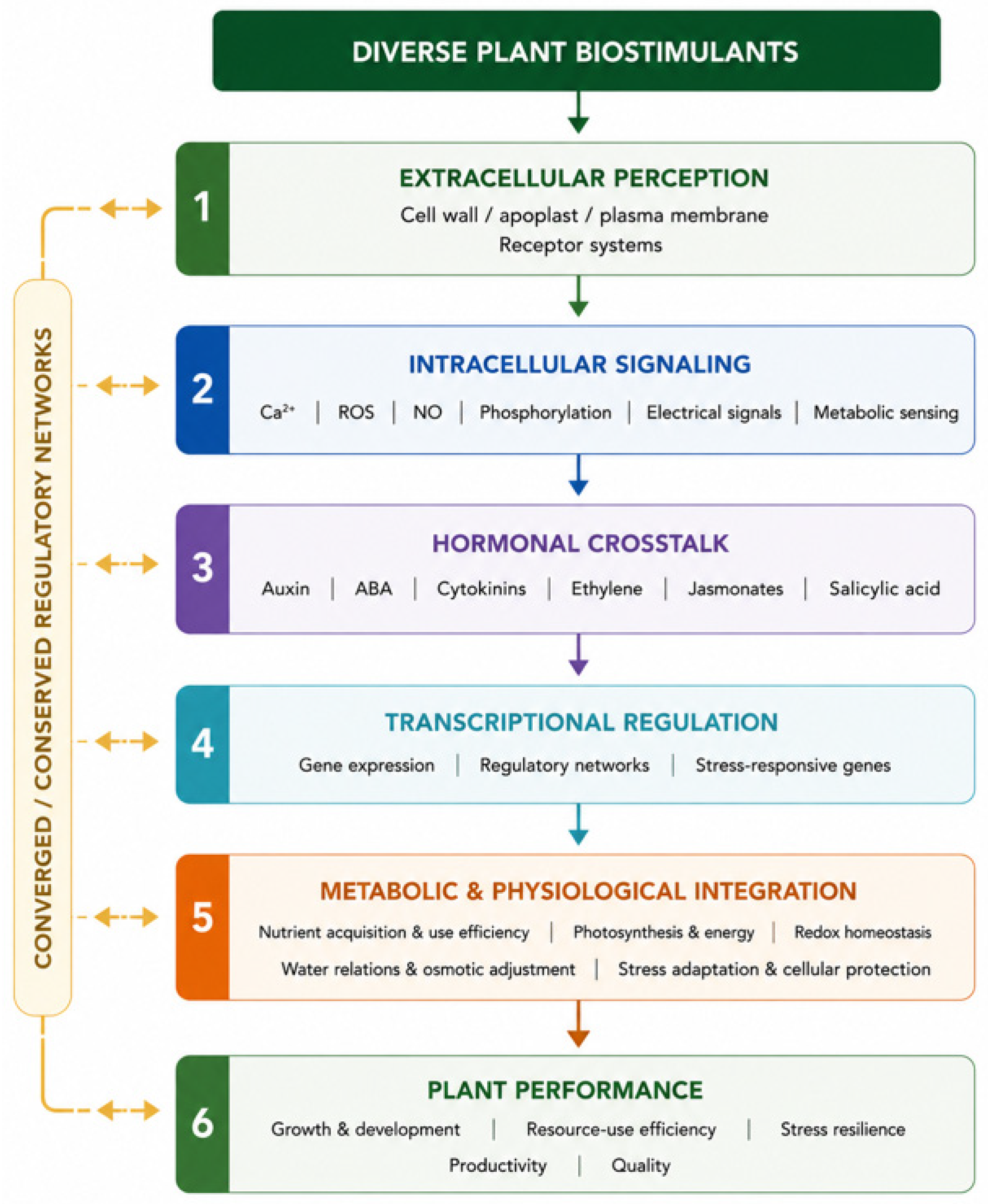
Plant biostimulants have considerable chemical and biological diversity but appear to converge on a limited number of conserved regulatory processes that coordinate plant growth, nutrient acquisition, metabolism and adaptation to environmental conditions. These processes involve interconnected levels of regulation, beginning with extracellular perception and continuing through intracellular signalling, hormonal crosstalk, and transcriptional regulation, ultimately leading to integrated metabolic and physiological responses (
Figure 2). Rather than operating as independent pathways, these regulatory components form a highly interconnected network in which signals are integrated, amplified, and modulated according to plant developmental and environmental conditions [
42,
43,
44,
45].
3.1. Extracellular Perception of Plant Biostimulants
Despite their remarkable chemical diversity, plant biostimulants may influence biological activity through partially overlapping processes of extracellular perception and signal integration. This represents a potential first level of mechanistic convergence, although the specific perception mechanisms and primary receptors remain incompletely characterised for many biostimulants. Accordingly, the cell wall, apoplast, and plasma membrane function as an integrated extracellular sensing interface that continuously monitors biochemical and physical cues before transmitting this information to intracellular signalling networks [
42,
43,
44,
45].
Rather than acting as a static structural barrier, the plant cell wall constitutes a highly dynamic extracellular matrix that actively regulates molecular recognition, mechanotransduction, and signal initiation. Its physicochemical properties—including porosity, elasticity, hydration, ionic composition, and pH—control the diffusion, accessibility, and interaction of signalling molecules within the apoplast, while continuous remodelling of cellulose, hemicelluloses, pectins, and structural glycoproteins enables rapid adaptation to developmental and environmental changes [
42,
43,
44]. These structural modifications are continuously monitored by the cell wall integrity surveillance system, which integrates extracellular information with intracellular regulatory pathways controlling cell expansion, wall remodelling, nutrient acquisition, defence responses, and environmental adaptation. Consequently, extracellular perception encompasses not only the recognition of external molecules, but also continuous monitoring of the structural and biochemical status of the extracellular matrix itself [
42,
43,
44].
The apoplast constitutes the first extracellular compartment in which plant-derived molecules, microbial metabolites, and exogenous biostimulant compounds interact before receptor activation. Rather than serving simply as an intercellular space, it represents a dynamic signalling environment containing ions, phytohormones, extracellular ATP, peptides, reactive oxygen species (ROS), metabolites, and microbial signalling molecules. Together, these components establish the biochemical context in which extracellular signals are integrated prior to their transmission across the plasma membrane.
Signal perception at the plasma membrane is mediated predominantly by pattern recognition receptors (PRRs), a large family of membrane-associated receptors that recognise both endogenous and exogenous signalling molecules. Although initially characterised for their role in innate immunity, PRRs are now recognised as multifunctional regulators coordinating plant development, nutrient acquisition, symbiotic interactions, and environmental adaptation. Most belong to the receptor-like kinase (RLK) and receptor-like protein (RLP) superfamilies, including wall-associated kinases (WAKs), leucine-rich repeat receptor kinases (LRR-RLKs), lysin motif receptors (LysM-RLKs), and members of the Catharanthus roseus receptor-like kinase 1-like (CrRLK1L) family, particularly Feronia (FER) and Theseus 1 (THE1). Collectively, these receptors integrate signals arising from cell wall remodelling, endogenous peptides, microbial metabolites, symbiotic interactions, and abiotic environmental cues, thereby providing a conserved perception platform through which chemically diverse extracellular signals activate common regulatory pathways [
42,
45,
46,
47,
48]. Nevertheless, it must be pointed out that the involvement of these receptor families in the perception of plant biostimulants is not established uniformly across biostimulant classes, and their relevance may depend on the chemical nature and biological origin of the applied product.
Although the primary receptors responsible for sensing many commercial plant biostimulants have not yet been unequivocally identified, increasing evidence indicates that numerous bioactive compounds mimic naturally occurring signalling molecules recognised by these receptor systems. Chitosan structurally resembles fungal chitin and activates chitin-responsive receptors, whereas seaweed-derived oligosaccharides resemble endogenous carbohydrate fragments and microbial glycans. Beneficial microorganisms release lipo-chitooligosaccharides, volatile organic compounds, siderophores, peptides, and other signalling molecules perceived through receptors involved in symbiosis and rhizosphere communication. Likewise, protein hydrolysates provide low-molecular-weight bioactive peptides capable of interacting with endogenous peptide receptors, whereas humic substances and silicon primarily influence the physicochemical properties of the cell wall, plasma membrane, and apoplast, thereby indirectly stimulating extracellular sensing mechanisms [
19,
49,
50,
51]. These examples should nevertheless be distinguished from cases in which receptor involvement is inferred from downstream physiological, transcriptional, or signalling responses. In the latter situations, receptor participation remains mechanistically plausible but has not been directly established.
Rather than necessarily activating entirely independent signalling pathways, diverse classes of plant biostimulants may influence partially overlapping processes involved in early signal perception and integration. However, the extent to which such responses reflect convergence at the level of primary receptors remains uncertain, particularly because the primary receptors for many commercial biostimulants have not yet been unequivocally identified. Such overlapping physiological responses are consistent with the possibility of partially shared downstream regulatory processes, but they do not by themselves establish convergence at the level of primary perception or causal signalling [
19].
Following ligand recognition, receptor activation rapidly promotes the assembly of dynamic signalling complexes. Ligand binding frequently induces receptor oligomerisation and recruitment of shared co-receptors belonging to the somatic embryogenesis receptor kinase (SERK) family, particularly BRI1-associated kinase 1 (BAK1), one of the principal signalling hubs coordinating extracellular signal perception. Reciprocal phosphorylation among receptor components amplifies signal transduction while allowing structurally distinct ligands to activate overlapping downstream signalling pathways. Accordingly, signalling specificity depends not only on receptor identity, but also on receptor complex composition, ligand affinity, phosphorylation dynamics, calcium signatures, and extensive crosstalk with hormonal and metabolic regulatory networks [
52,
53,
54].
The modular organisation of these receptor complexes provides a molecular basis for the broad biological activity of plant biostimulants. Rather than requiring a specific receptor for each bioactive compound, plants exploit a highly flexible perception system in which multiple extracellular molecules activate partially overlapping receptor combinations. This architecture enhances signalling robustness while allowing the simultaneous integration of developmental, nutritional, microbial, and environmental information according to stimulus intensity, duration, and physiological context.
An additional dimension of extracellular perception is its close integration with mechanical signalling. Cell expansion, turgor pressure, wall elasticity, osmotic fluctuations, and continuous modifications in cell wall composition generate biomechanical cues that are perceived through the cell wall integrity surveillance system and mechanosensitive receptor complexes. Consequently, plants respond not only to the chemical identity of extracellular molecules, but also to the physical changes associated with growth, nutrient availability, water deficit, salinity, and other environmental constraints. The integration of biochemical and mechanical information substantially enhances the sensitivity, robustness, and adaptive capacity of extracellular signalling networks [
42,
43,
44,
45].
Collectively, current evidence supports the consideration of extracellular perception as a potential first level within the convergence framework proposed in this review. However, the available evidence is insufficient to conclude that all major classes of plant biostimulants activate a common or limited repertoire of primary receptors. Evidence for receptor-mediated perception is stronger for some specific bioactive compounds than for others, while the molecular identity of the primary receptors for many commercial biostimulants remains unresolved. Thus, similarities observed at downstream signalling or physiological levels should not be interpreted as direct evidence of convergence at the receptor level [
19,
51,
55].
The information perceived at the cell surface is subsequently translated into coordinated intracellular biochemical, electrical, and metabolic responses through highly interconnected signalling networks involving calcium (Ca2+), reactive oxygen species (ROS), nitric oxide (NO), protein phosphorylation cascades, electrical signalling, and nutrient-sensing pathways. Together, these conserved signalling modules form the central regulatory platform linking extracellular perception to phytohormonal regulation, transcriptional reprogramming, metabolic adjustment, and the integrated physiological responses that ultimately underpin plant biostimulant activity. The organisation and functional integration of these intracellular signalling networks are discussed in the following section.
3.2. Intracellular Signal Transduction
Where receptor-mediated perception has been established or is proposed, information generated at the cell surface may be translated into intracellular biochemical signals through highly interconnected signalling networks. One of the earliest events following receptor activation is the rapid elevation of cytosolic Ca
2+ concentration. Calcium functions as a universal second messenger that encodes extracellular information into stimulus-specific temporal and spatial signatures, commonly referred to as calcium signatures. These signatures differ in amplitude, frequency, duration and subcellular localisation, allowing plants to discriminate among diverse environmental, nutritional and developmental stimuli despite sharing common signalling components. Calcium influx occurs through multiple plasma membrane and endomembrane channels and is subsequently decoded by specialised calcium sensors, including calmodulins (CaM), calmodulin-like proteins (CMLs), calcineurin B-like proteins (CBLs), and calcium-dependent protein kinases (CDPKs), which translate calcium fluctuations into specific downstream cellular responses [
54]. Calcium signalling is tightly coupled with the controlled production of ROS, particularly through plasma membrane NADPH oxidases belonging to the respiratory burst oxidase homologue (RBOH) family. Rather than acting exclusively as cytotoxic molecules, ROS function as highly regulated signalling mediators controlling cell expansion, cell wall remodelling, nutrient uptake, stomatal behaviour, defence activation and stress acclimation. Reciprocal interactions between Ca
2+ and ROS establish self-amplifying signalling loops that facilitate rapid signal propagation between neighbouring cells while preserving signalling specificity through precise temporal regulation [
42,
54].
Another important signalling mediator activated during the early stages of biostimulant perception is NO. NO interacts extensively with both calcium- and ROS-dependent pathways through reversible post-translational modifications, including S-nitrosylation, thereby modulating enzyme activity, transcription factor function, and protein stability. Crosstalk among Ca
2+, ROS, and NO enables plants to integrate multiple extracellular stimuli into coordinated signalling outputs, preventing excessive activation while ensuring sufficient response intensity to changing environmental conditions. Such integration contributes to the remarkable signalling flexibility following the application of chemically distinct plant biostimulants [
19,
55].
Signal amplification is further reinforced through extensive protein phosphorylation cascades, which constitute one of the principal mechanisms by which extracellular information is transmitted throughout the cell. Activated receptor complexes phosphorylate downstream signalling proteins, initiating sequential activation of multiple kinase families, including receptor-like cytoplasmic kinases (RLCKs), mitogen-activated protein kinase (MAPK) cascades, and calcium-dependent protein kinases (CDPKs). These phosphorylation networks regulate enzyme activity, cytoskeletal organisation, membrane transport, vesicle trafficking, and transcriptional regulators, thereby coordinating rapid cellular responses before transcriptional reprogramming may become fully established [
48,
53,
54].
Besides biochemical signalling, extracellular perception also triggers rapid electrical signals involving transient membrane depolarisation, ion fluxes, and changes in membrane potential. These electrical responses propagate considerably faster than transcriptional regulation and provide an efficient mechanism for long-distance communication between tissues. Electrical signalling is closely integrated with calcium influxes, ROS waves, and hydraulic signals, allowing local perception events to generate systemic responses that coordinate whole-plant acclimation to environmental changes [
54].
An additional level of regulation involves intracellular nutrient-sensing pathways, which continuously integrate signalling information with cellular metabolic status. Rather than responding solely to extracellular nutrient availability, plant cells actively monitor intracellular carbon, nitrogen, and phosphorus metabolism through conserved signalling systems that coordinate growth with resource availability. These metabolic checkpoints allow signalling pathways activated by plant biostimulants to optimise nutrient acquisition and utilisation while avoiding unnecessary metabolic expenditure under resource-limited conditions [
19,
54,
55].
Importantly, these signalling components do not operate as isolated pathways. Instead, calcium signalling, ROS, NO, protein phosphorylation, electrical signalling, and nutrient sensing form a densely interconnected regulatory network characterised by extensive feedback regulation and signal integration [
56,
57,
58,
59]. The convergence of these intracellular signalling modules may contribute to the broad spectrum of physiological responses observed following the application of chemically unrelated plant biostimulants [
51,
55,
60]. Rather than necessarily activating entirely independent molecular pathways, diverse bioactive compounds may influence partially overlapping intracellular signalling networks that have evolved to integrate multiple environmental and developmental cues into coordinated adaptive responses [
51,
56,
57,
60]. The coordinated activation of these signalling networks ultimately prepares the cell for large-scale transcriptional and metabolic reprogramming. Through extensive interactions with phytohormone signalling pathways and transcription factor networks, early intracellular signalling is translated into sustained physiological responses that regulate nutrient use efficiency, root system architecture, photosynthetic performance, stress tolerance, and crop productivity. These regulatory interactions are discussed in the following section about hormonal crosstalk and transcriptional reprogramming.
3.3. Hormonal Crosstalk
Following early intracellular signalling, phytohormones constitute the next level of signal integration, coordinating the diverse biochemical responses initiated by extracellular perception. Rather than functioning as independent regulators, plant hormones form a highly interconnected signalling system in which multiple biosynthetic, transport, and signalling pathways operate in concert. This extensive hormonal crosstalk enables plants to integrate developmental programmes with nutritional status and environmental cues, ensuring that growth, metabolism, and stress adaptation remain appropriately coordinated under changing conditions [
19,
51,
55].
Current evidence indicates that plant biostimulants rarely exert their biological activity through the direct supply of phytohormones. Instead, they influence endogenous hormonal homeostasis by modulating hormone biosynthesis, transport, perception, signal transduction, and catabolism. Consequently, chemically distinct classes of plant biostimulants may induce similar physiological responses through partially overlapping hormonal regulatory processes, although the upstream mechanisms responsible for these responses may differ among biostimulant classes [
19,
49,
51,
55].
Among the phytohormones, auxin plays a central role in regulating root architecture, cell elongation, and vascular differentiation [
49,
51]. Humic substances, seaweed extracts, microbial biostimulants, and protein hydrolysates have all been associated with enhanced auxin-responsive processes, promoting lateral root formation, root hair development, and greater soil exploration [
49,
55,
61,
62,
63,
64,
65,
66]. These responses are generally attributed to enhanced tissue sensitivity to endogenous auxin and the modulation of auxin transport rather than to direct increases in hormone concentration [
49,
51].
Auxin signalling is tightly integrated with cytokinin, whose complementary and antagonistic actions regulate meristem activity, shoot development, nutrient allocation, and root-to-shoot communication. The dynamic balance between these two hormones is a major determinant of plant architecture, and numerous studies indicate that plant biostimulants adjust this hormonal equilibrium to optimise biomass production and nutrient use efficiency according to environmental conditions [
19,
51].
Growth regulation is further influenced by gibberellins (GAs) and brassinosteroids (BRs), which control cell expansion, cell wall extensibility, and photosynthetic performance through interconnected signalling pathways. GA and BR signalling is closely integrated with auxin, enabling plants to synchronise cell proliferation and elongation with nutrient availability and environmental conditions. Several categories of plant biostimulants appear to reinforce these endogenous regulatory processes, thereby stimulating growth while preserving hormonal homeostasis [
51].
Under adverse environmental conditions, abscisic acid (ABA) becomes one of the principal integrators of stress signalling. ABA coordinates with the auxin, cytokinin, gibberellin, and brassinosteroid pathways to regulate stomatal conductance, osmotic adjustment, water use efficiency, and growth restraint during stress. Increasing evidence indicates that plant biostimulants enhance abiotic stress tolerance primarily by fine-tuning ABA-dependent signalling rather than triggering constitutive stress responses, allowing plants to maintain growth while responding more effectively to environmental constraints [
19,
51].
Additional regulatory complexity is provided by ethylene, jasmonic acid (JA), and salicylic acid (SA), which establish extensive crosstalk with growth-promoting hormones during plant adaptation. Ethylene regulates developmental responses associated with mechanical impedance and abiotic stress, whereas JA and SA integrate defence signalling with metabolic regulation. Together, these signalling pathways coordinate growth and defence according to prevailing environmental conditions. Beneficial microorganisms and several categories of plant biostimulants have been shown to modulate these hormonal interactions, contributing to enhanced stress resilience while minimising growth penalties [
51].
Collectively, hormonal crosstalk constitutes a central regulatory layer linking early intracellular signalling with long-term physiological regulation. Through the continuous integration of endogenous and environmental information, this conserved hormonal network provides the mechanistic framework by which chemically distinct plant biostimulants generate convergent developmental and physiological responses. This integrated regulatory system forms the mechanistic bridge between early signal transduction and the transcriptional regulatory networks discussed in the following section.
3.4. Transcriptional Regulation
The integration of extracellular perception, intracellular signalling, and hormonal crosstalk ultimately converges on one of the principal regulatory levels governing plant adaptation, which is transcriptional regulation. Through the coordinated modulation of gene expression, plants translate transient signalling events into sustained physiological responses, enabling developmental plasticity while maintaining metabolic homeostasis under continuously changing environmental conditions. Rather than necessarily representing independent signalling pathways, the molecular responses induced by chemically diverse plant biostimulants may converge on overlapping transcriptional regulatory networks involved in growth, nutrient acquisition, and stress adaptation [
19,
51].
Activation of receptor-mediated signalling pathways and the subsequent generation of calcium (Ca
2+), reactive oxygen species (ROS), nitric oxide (NO), and protein phosphorylation cascades ultimately regulate the activity of multiple transcription factors responsible for coordinating plant responses to endogenous and environmental stimuli. These regulatory proteins function as molecular integrators, decoding complex signalling information into coordinated transcriptional programmes that simultaneously regulate hundreds of target genes involved in metabolism, nutrient transport, cell division, photosynthesis, antioxidant defence, and stress acclimation [
53,
54].
Rather than controlling isolated physiological processes, transcription factors operate within highly interconnected regulatory pathways characterised by extensive feedback regulation and functional redundancy. Individual transcription factors frequently participate in multiple signalling pathways, while different signalling pathways converge on common transcriptional regulators. This network organisation provides both signalling robustness and developmental flexibility, allowing plants to integrate nutritional, developmental, and environmental information into coherent adaptive responses [
51].
Several transcription factor families have been implicated in plant responses associated with biostimulant application. Members of the MYB, bHLH, WRKY, NAC, AP2/ERF, and bZIP families regulate genes involved in nutrient acquisition, primary metabolism, antioxidant systems, cell wall remodelling, secondary metabolism, and stress adaptation [
19,
51,
63,
64,
65,
66,
67,
68,
69,
70,
71]. Similar transcriptional responses observed across distinct biostimulant classes may provide evidence consistent with partially shared downstream regulatory processes. However, transcriptional overlap alone cannot establish convergence at the level of primary perception or causal signalling, because similar gene-expression profiles may arise from different upstream mechanisms or reflect common downstream responses to different stimuli [
19,
51].
Particularly important is the coordinated regulation of genes involved in nutrient acquisition and utilisation. Plant biostimulants frequently enhance the expression of genes encoding membrane transporters responsible for nitrate, ammonium, phosphate, potassium, and micronutrient uptake while simultaneously regulating enzymes associated with nitrogen assimilation, carbon metabolism, and energy production. This coordinated transcriptional regulation provides a molecular explanation for the consistent improvements in nutrient use efficiency reported across multiple classes of plant biostimulants [
19,
49,
51].
In parallel, transcriptional regulation extends to genes controlling photosynthetic performance, antioxidant metabolism and cellular protection. Enhanced expression of antioxidant enzymes, molecular chaperones, osmoprotectant biosynthetic enzymes, and proteins involved in reactive oxygen species detoxification enables plants to maintain cellular homeostasis during environmental stress while minimising oxidative damage. Rather than representing independent stress-response pathways, these transcriptional programmes are activated through the integration of the signalling networks described in the preceding sections [
51].
Transcriptomic analyses further reveal that chemically diverse plant biostimulants regulate overlapping gene networks associated with primary metabolism, secondary metabolism, membrane transport, hormone signalling, redox homeostasis, and stress-responsive pathways. Although the magnitude of individual responses varies according to plant species, developmental stage, and environmental conditions, the remarkable similarity among transcriptional profiles generated by distinct categories of plant biostimulants provides strong evidence for the mechanistic convergence model proposed in this review. Rather than activating unique molecular pathways, plant biostimulants appear to exploit a relatively small number of conserved transcriptional regulatory networks that have evolved to coordinate plant adaptation to fluctuating environmental conditions [
19,
51]. An important consequence of this transcriptional convergence is the establishment of coordinated regulatory programmes that persist beyond the initial signalling event. Sustained changes in gene expression provide the molecular basis for subsequent metabolic adjustment, physiological acclimation and enhanced responsiveness to future environmental challenges. Thus, transcriptional regulation represents the critical interface between early molecular signalling and the integrated physiological responses that ultimately determine plant performance.
Following a general perspective, current evidence indicates that transcriptional regulation constitutes one of the principal mechanisms through which chemically distinct plant biostimulants generate similar biological outcomes. By integrating receptor-mediated signalling, intracellular second messengers, and hormonal crosstalk into coordinated gene expression programmes, transcriptional regulatory networks provide the molecular foundation for the conserved physiological responses observed across diverse classes of plant biostimulants. The functional consequences of these transcriptional programmes at the whole-plant level are discussed in the following section devoted to the convergence model of plant biostimulant activity.
3.5. Convergence Model of Plant Biostimulant Activity
Despite their remarkable diversity in chemical composition, biological origin, and mode of application, plant biostimulants consistently promote similar improvements in plant growth, nutrient use efficiency, stress tolerance, and crop productivity. This apparent paradox has traditionally been interpreted by assigning specific mechanisms of action to individual classes of biostimulants. However, accumulating evidence reviewed throughout this article suggests a fundamentally different perspective. Rather than activating independent molecular pathways, chemically distinct plant biostimulants appear to exploit a relatively small number of highly conserved regulatory networks that have evolved to integrate environmental, nutritional, and developmental information. This concept forms the basis of the convergence model of plant biostimulant activity proposed in this review (
Figure 3). However, the available evidence does not uniformly support a universal convergence mechanism. Although similar physiological outcomes are frequently reported across different biostimulant classes, responses can differ substantially according to plant species, genotype, developmental stage, nutritional status, application method, dose, and environmental conditions. In addition, individual biostimulants may activate distinct molecular pathways, and similar physiological phenotypes do not necessarily imply identical upstream mechanisms. Differences in product composition, formulation, and bioactive constituents may therefore lead to divergent molecular and physiological responses. These observations represent important limitations to the proposed convergence framework and indicate that convergence should be considered context-dependent rather than universal. A further limitation concerns the uneven mechanistic evidence available for different classes of plant biostimulants. While transcriptomic, proteomic, and metabolomic studies have identified overlapping responses among some biostimulant treatments, such overlap does not by itself establish a common causal regulatory mechanism. In many cases, the primary receptors, molecular targets, and causal links between early signalling events and final physiological responses remain incompletely characterised. Moreover, similarities identified at the transcript or metabolite level may reflect convergent downstream responses rather than convergence at the level of initial perception. Consequently, the framework proposed here should be interpreted as a hypothesis-generating model that integrates recurring patterns in the literature, rather than as evidence of a single universal signalling mechanism.
According to the framework proposed in this review, mechanistic convergence may begin at the extracellular level, where structurally diverse molecules—including humic substances, protein hydrolysates, seaweed-derived polysaccharides, microbial metabolites, silicon, and other bioactive compounds—may interact with or influence extracellular perception systems associated with the cell wall, plasma membrane, and apoplast. Some receptor interactions have been experimentally demonstrated for specific bioactive compounds, whereas for many biostimulants, the primary receptors remain unidentified. Accordingly, the involvement of overlapping receptor systems, shared co-receptors or conserved cell wall integrity surveillance mechanisms should be regarded as a proposed mechanism rather than a generalised established feature of plant biostimulant activity [
42,
45,
47,
49,
72].
The information generated by receptor activation subsequently converges into a limited repertoire of intracellular signalling components centred on Ca
2+, ROS, NO, protein phosphorylation cascades, electrical signalling, and metabolic sensing. Rather than functioning independently, these signalling modules form a highly interconnected regulatory network characterised by extensive feedback regulation, signal amplification, and functional redundancy. This conserved intracellular architecture enables plants to decode highly diverse extracellular stimuli while maintaining signalling robustness under changing environmental conditions [
53,
54].
A second level of convergence occurs through the extensive crosstalk among phytohormones. Auxins, cytokinins, gibberellins, brassinosteroids, abscisic acid, ethylene, jasmonates, and salicylic acid do not operate as isolated signalling pathways, but instead function as an integrated regulatory pathway coordinating growth, nutrient allocation, metabolism and stress adaptation. Plant biostimulants therefore influence plant performance primarily by modulating endogenous hormonal homeostasis rather than by supplying biologically active hormone concentrations directly [
19,
49,
51].
At the molecular level, hormonal integration converges on conserved transcriptional regulatory networks that coordinate the expression of genes involved in nutrient transport, primary metabolism, antioxidant defence, photosynthesis, cell wall remodelling, and stress adaptation. Transcriptomic studies suggest that chemically unrelated plant biostimulants regulate overlapping gene sets despite substantial differences in their chemical composition. These observations strongly support the existence of shared downstream regulatory mechanisms controlling plant adaptation [
19,
51].
Ultimately, these conserved molecular responses are translated into remarkably similar physiological outcomes. Enhanced nutrient acquisition, improved nutrient use efficiency, greater root system development, increased photosynthetic capacity, optimisation of carbon and nitrogen metabolism, enhanced antioxidant protection and improved tolerance to abiotic stress are repeatedly reported across virtually all major categories of plant biostimulants. Although the magnitude of these responses varies according to plant species, genotype, developmental stage, and environmental conditions, the underlying physiological processes remain strikingly conserved [
51].
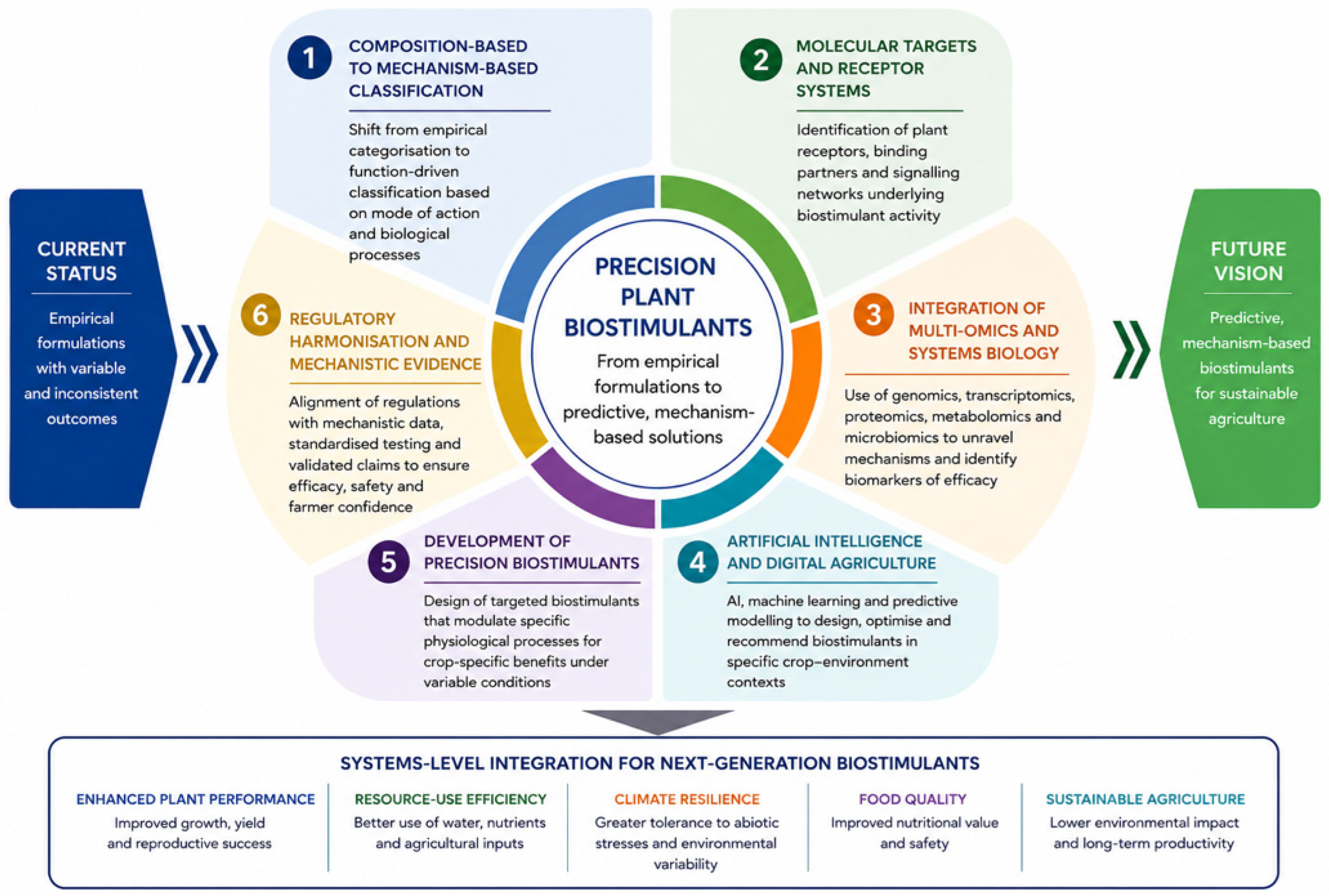
The convergence model suggests that in the longer term, plant biostimulants could potentially be complemented by classification approaches based on conserved biological processes and mechanisms of action, rather than relying exclusively on chemical composition or biological origin. However, such a transition would currently be premature because the primary molecular targets and receptor systems of many biostimulants remain insufficiently characterised. At present, classification according to biological processes should therefore be regarded as a future perspective and hypothesis-generating framework rather than as a replacement for existing composition- or origin-based classification systems. This conceptual framework also explains why mixtures of different biostimulants frequently exhibit additive or synergistic effects, as multiple bioactive compounds can influence different entry points within the same regulatory pathway.
From a practical perspective, this model has important implications for the future development of plant biostimulants. Understanding how different products interact with conserved signalling networks will facilitate the rational design of next-generation biostimulants based on molecular targets rather than empirical formulations. Furthermore, integrating transcriptomics, proteomics, metabolomics, ionomics and phenomics with physiological analyses will enable the identification of key regulatory nodes responsible for biostimulant responsiveness, providing a stronger mechanistic basis for product development and precision agriculture [
19,
51]. Finally, the convergence model provides a unified framework that integrates the successive regulatory levels described throughout this review. Extracellular perception, intracellular signalling, hormonal crosstalk, transcriptional regulation and physiological adaptation should no longer be viewed as independent processes, but as sequential and highly interconnected layers of a single regulatory continuum. This hierarchical organisation explains how chemically diverse plant biostimulants consistently generate similar biological outcomes and offers a comprehensive mechanistic framework for future research in plant biostimulant biology.
Nevertheless, it must be pointed out that the framework proposed here remains primarily conceptual and should therefore be considered a hypothesis-generating model rather than a quantitatively validated network. Stronger empirical evaluation will require a systematic comparison of evidence across biostimulant classes, crops, experimental conditions, and physiological outcomes. Comparative evidence matrices, systematic mapping of molecular and physiological responses, and the quantitative synthesis of sufficiently homogeneous datasets could provide an objective basis for determining the extent to which apparently conserved responses represent genuine mechanistic convergence. Where study designs and outcome measures permit, network meta-analysis could further enable a comparison of the relative effects of different biostimulant classes and identify common or class-specific response patterns. Such approaches would provide an important next step for testing, refining, or potentially challenging the convergence framework proposed in this review.
To facilitate a comparative assessment of the evidence underlying the proposed mechanistic convergence framework,
Table 2 summarises the principal molecular and physiological responses reported for the seven major biostimulant classes considered in this review. The table distinguishes recurrent responses that may support the proposed convergence concept from class-specific or context-dependent effects that indicate its limitations. This comparative mapping is intended to provide a structured overview of the current evidence and to highlight areas in which further comparative and quantitative studies are required.
4. Multi-Omics Insights into the Molecular Basis of Plant Biostimulant Activity
The mechanistic framework proposed in the previous section can be further examined through the complementary information provided by multi-omics approaches. Transcriptomics, proteomics, metabolomics, and epigenomics capture different regulatory levels and therefore provide complementary, rather than redundant, evidence. Transcriptomic changes indicate which regulatory programmes are altered, proteomic responses provide information on whether these changes are translated into functional protein machinery, and metabolomic profiles reveal whether molecular regulation ultimately produces coordinated biochemical and physiological adjustments. When these layers show concordant changes across different biostimulant classes, the combined evidence provides stronger support for the possibility of shared downstream regulatory mechanisms than any individual omics dataset considered separately. Conversely, discordance between omics layers can reveal post-transcriptional regulation, metabolic buffering, or context-dependent responses, thereby providing an important means of testing and refining the proposed convergence framework.
Among the available omics technologies, transcriptomics has provided the most comprehensive evidence of the molecular responses induced by plant biostimulants. Genome-wide analyses consistently demonstrate that humic substances, seaweed extracts, protein hydrolysates, and microbial biostimulants regulate remarkably similar groups of genes despite substantial differences in their chemical composition. Genes associated with nutrient transport, nitrogen assimilation, photosynthesis, antioxidant metabolism, hormone signalling, cell wall remodelling, and abiotic stress adaptation are among the most consistently regulated across different plant species and experimental conditions. Although the magnitude of transcriptional responses varies according to genotype, developmental stage, and environmental conditions, the functional categories affected remain highly conserved, supporting the hypothesis that plant biostimulants activate common transcriptional programmes rather than compound-specific molecular pathways [
19,
51].
Proteomic analyses have further strengthened this concept by demonstrating that transcriptional regulation is translated into coordinated changes in the functional protein machinery. Comparative proteomic studies consistently identify alterations in proteins involved in photosynthesis, carbon and nitrogen metabolism, antioxidant defence, ATP production, membrane transport, and protein folding following the application of chemically distinct plant biostimulants. Increased abundance of antioxidant enzymes, Calvin cycle proteins, molecular chaperones, and transport proteins has been reported in numerous experimental systems, indicating that plant biostimulants regulate not only gene expression, but also the metabolic machinery responsible for cellular homeostasis and physiological performance. Consequently, proteomics provides the functional link between transcriptional regulation and the physiological responses observed at the whole-plant level [
19,
51].
Metabolomics extends this mechanistic understanding by characterising the biochemical phenotype resulting from coordinated transcriptional and proteomic regulation. Because metabolites represent the final products of cellular metabolism, metabolomic analyses provide one of the closest molecular representations of plant physiological status. Independent studies consistently report coordinated changes in amino acids, soluble sugars, organic acids, phenolic compounds, flavonoids, compatible osmolytes, and antioxidant metabolites following the application of different categories of plant biostimulants. These metabolic adjustments contribute to improved nutrient use efficiency, maintenance of redox homeostasis, osmotic regulation, and enhanced tolerance to environmental stress. The remarkable similarity of metabolomic profiles generated by chemically unrelated biostimulants further supports the existence of conserved downstream regulatory pathways controlling plant adaptation [
19,
51].
Taken together, the three principal omics layers provide a sequential view of the proposed mechanistic convergence. Transcriptomic responses indicate changes in regulatory programmes, proteomic responses determine whether these changes are reflected in the abundance and activity of functional proteins, and metabolomic responses reveal the resulting biochemical state of the cell. Concordance across these levels therefore strengthens the interpretation that apparently diverse biostimulants may influence common regulatory processes. However, the absence of complete concordance is equally informative, because differences between the transcript, protein, and metabolite profiles may indicate temporal separation between regulatory events, post-transcriptional control, metabolic feedback, or biostimulant-specific mechanisms. Multi-omics integration should therefore be used not simply to identify similarities, but to determine which molecular responses are conserved, which are context-dependent, and how they are mechanistically connected to the physiological phenotypes observed at the whole-plant level. Importantly, concordance across omics layers should not be interpreted automatically as evidence of a common upstream mechanism. Shared transcriptomic, proteomic, or metabolomic signatures may represent convergence at downstream functional levels while the initiating receptors and causal signalling pathways remain distinct.
Although comparatively less explored, epigenomics is emerging as an additional regulatory layer that may contribute to the long-term effects of plant biostimulants. Epigenetic mechanisms, including DNA methylation, histone modifications, and chromatin remodelling, regulate gene expression without altering DNA sequence and therefore provide an important mechanism for controlling developmental plasticity and environmental adaptation [
73,
74,
75]. Current evidence suggests that plant biostimulants may influence these processes indirectly through interactions with hormone signalling, redox homeostasis, and stress-responsive pathways [
19,
51,
63,
65,
66]. Such epigenetic regulation may contribute to the establishment of sustained transcriptional programmes associated with stress adaptation and physiological priming, although direct experimental evidence remains relatively limited [
19,
75,
76]. Nevertheless, this field represents one of the most promising areas for future research because it may explain how transient signalling events induced by plant biostimulants generate long-lasting physiological responses [
19,
51].
While each omics platform provides valuable insights into specific aspects of plant biostimulant activity, none individually captures the complexity of plant regulatory pathways. Transcriptomics identifies changes in gene expression, proteomics characterises functional protein abundance, metabolomics reflects biochemical adjustments, and epigenomics reveals regulatory mechanisms controlling long-term gene activity. However, plant adaptation results from the coordinated interaction of all of these regulatory layers rather than from isolated molecular events. Therefore, the integration of multiple omics datasets through systems biology approaches has become essential for understanding the complex regulatory architecture underlying plant responses to biostimulants.
Systems biology provides the analytical framework required to integrate these complementary datasets into interconnected regulatory networks. Rather than treating transcriptomic, proteomic, and metabolomic similarities as independent observations, their integration allows for the identification of regulatory relationships linking upstream signalling to downstream molecular and physiological responses. For example, convergence at the transcriptomic level is strengthened when corresponding changes are detected in proteins involved in the same regulatory processes and are accompanied by metabolite changes consistent with the predicted physiological response. Conversely, differences between molecular layers can identify regulatory bottlenecks, feedback mechanisms, or biostimulant-specific responses that would remain undetected in single-omics analyses. Thus, integrated multi-omics evidence can support the proposed convergence framework while simultaneously defining its limits and identifying mechanisms that remain specific to particular biostimulants, crops, or environmental conditions [
19,
51].
Future integration of multi-omics technologies with ionomics, phenomics, advanced computational modelling, and artificial intelligence is expected to transform plant biostimulant research from descriptive molecular profiling into predictive systems biology. Such integrative approaches will facilitate the identification of key regulatory nodes controlling plant responsiveness, enabling the rational design of next-generation biostimulants based on molecular targets rather than empirical formulations. Ultimately, this systems-level perspective provides the experimental foundation supporting the mechanistic framework proposed throughout this review and may establish a roadmap for precision biostimulant development in sustainable agriculture [
19,
51]. It must also be pointed out that a comparative interpretation across omics datasets is particularly important for evaluating the convergence hypothesis. Similar functional categories identified independently by transcriptomics, proteomics, and metabolomics across different biostimulant classes provide convergent evidence at multiple molecular levels, whereas class-specific responses indicate that convergence is incomplete or context-dependent. Systematic mapping of these shared and divergent responses can therefore distinguish recurrent biological processes from responses restricted to particular products, crops, or experimental conditions. A structured comparison of evidence across studies would represent an important step towards future quantitative synthesis and formal testing of the proposed framework.
5. Integrated Physiological Responses and Crop Performance
5.1. Physiological Integration of Growth, Metabolism and Resource Use
One of the earliest physiological consequences of plant biostimulant application is the optimisation of root system architecture and rhizosphere functioning. Enhanced lateral root formation, root hair development, and root elongation increase the effective soil exploration area, thereby improving water and nutrient acquisition. Simultaneously, plant biostimulants influence rhizosphere microbial activity, root exudation, and nutrient mobilisation, promoting a more efficient interaction between plant roots and the surrounding soil environment. These coordinated modifications constitute the physiological foundation for improved resource acquisition observed across virtually all categories of plant biostimulants [
19,
49,
51].
The improvement of root function is closely associated with enhanced water and nutrient use efficiency. Increased uptake of nitrogen, phosphorus, potassium, and micronutrients results not only from greater root exploration, but also from the coordinated regulation of membrane transport systems, nutrient assimilation pathways, and internal nutrient redistribution. Likewise, improved water uptake contributes to better maintenance of plant water status, supporting cell expansion, stomatal regulation, and sustained metabolic activity under fluctuating environmental conditions [
51]. Nevertheless, the consistency of these physiological outcomes should not be interpreted as evidence of uniform responses. Reported effects may be absent, reduced, or even differ in magnitude or direction depending on crop species, genotype, developmental stage, nutritional status, and environmental conditions. Such variability indicates that common physiological outcomes may arise through partially distinct regulatory routes and emphasises the context-dependent nature of plant biostimulant activity.
Improved resource acquisition is rapidly translated into enhanced photosynthetic performance. Numerous studies demonstrate that plant biostimulants increase chlorophyll content, maintain photosystem stability, improve stomatal conductance and enhance carbon assimilation. Rather than representing isolated physiological effects, these responses reflect the coordinated optimisation of nutrient availability, water relations, and chloroplast metabolism established through the conserved signalling networks described in previous chapters. Enhanced photosynthetic efficiency provides the energetic foundation supporting subsequent metabolic adjustments and biomass accumulation [
19,
51].
The increase in photosynthetic carbon assimilation is accompanied by the coordinated regulation of carbon and nitrogen metabolism, enabling plants to allocate assimilated resources more efficiently. Improved nitrogen assimilation, amino acid biosynthesis, carbohydrate metabolism, and respiratory activity contribute to greater metabolic efficiency while maintaining cellular homeostasis. Carbon and nitrogen metabolism therefore function as tightly interconnected processes that integrate nutrient availability with plant growth and developmental demands, explaining the consistent improvements in nutrient use efficiency reported following biostimulant application [
19,
51].
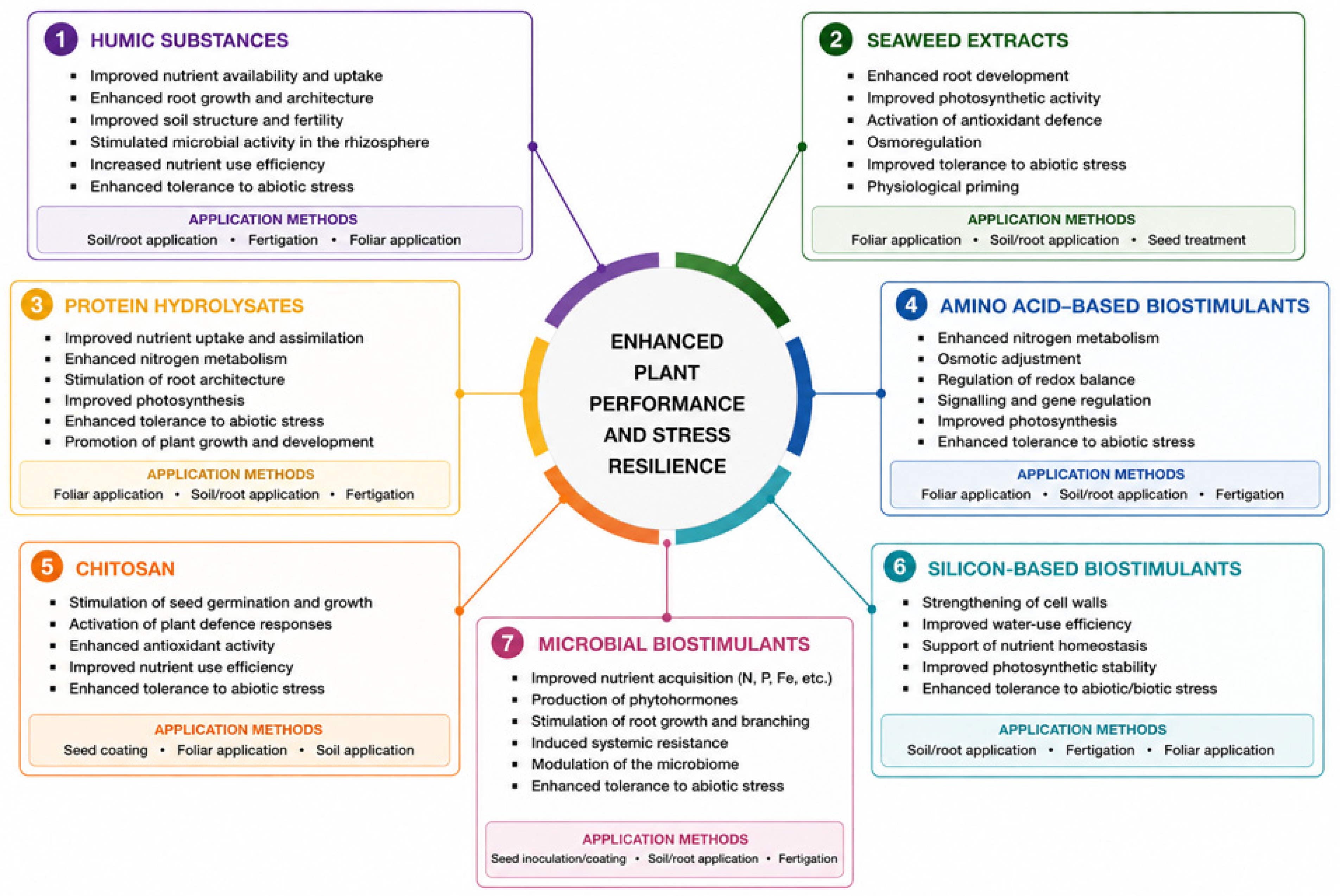
These metabolic adjustments are further supported by the maintenance of cellular redox homeostasis. Controlled regulation of reactive oxygen species, together with increased antioxidant capacity, allows plants to preserve cellular integrity while maintaining ROS as essential signalling molecules. Enhanced antioxidant enzyme activity, improved redox buffering capacity and more efficient detoxification mechanisms contribute to the maintenance of metabolic stability under both favourable and stressful environmental conditions. In parallel, plant biostimulants frequently stimulate secondary metabolism, increasing the accumulation of phenolic compounds, flavonoids, and other bioactive metabolites involved in antioxidant protection, signalling, and environmental adaptation. Collectively, these responses reinforce plant resilience (
Figure 4) while simultaneously contributing to improvements in the nutritional and functional quality of harvested products [
19,
51].
5.2. Integrated Stress Adaptation and Crop Performance
The physiological responses previously described collectively enhance the capacity of plants to withstand environmental constraints. Rather than activating independent defence mechanisms, plant biostimulants strengthen pre-existing adaptive networks that coordinate water relations, nutrient utilisation, antioxidant metabolism, osmotic adjustment, and energy allocation. Thus, treated plants generally exhibit greater tolerance to drought, salinity, temperature extremes, and other abiotic stresses while maintaining higher growth rates than untreated plants. These responses represent the integrated outcome of the signalling, hormonal, and transcriptional pathways, discussed throughout this review, rather than the activation of stress-specific pathways [
19,
51].
An important consequence of this integrated physiological regulation is the maintenance of productivity under both optimal and suboptimal environmental conditions. Improved biomass accumulation, greater nutrient use efficiency, enhanced reproductive performance, and increased yield stability have been consistently reported for diverse crop species treated with chemically unrelated plant biostimulants [
30,
51,
60,
61]. In addition to increasing crop productivity, numerous studies demonstrate improvements in food quality through the enhanced accumulation of minerals, antioxidants, vitamins, and health-promoting secondary metabolites [
19,
51,
77,
78]. These responses are particularly relevant within the context of sustainable agriculture, where increasing productivity must be accompanied by improvements in nutritional quality and a more efficient use of natural resources [
19,
51].
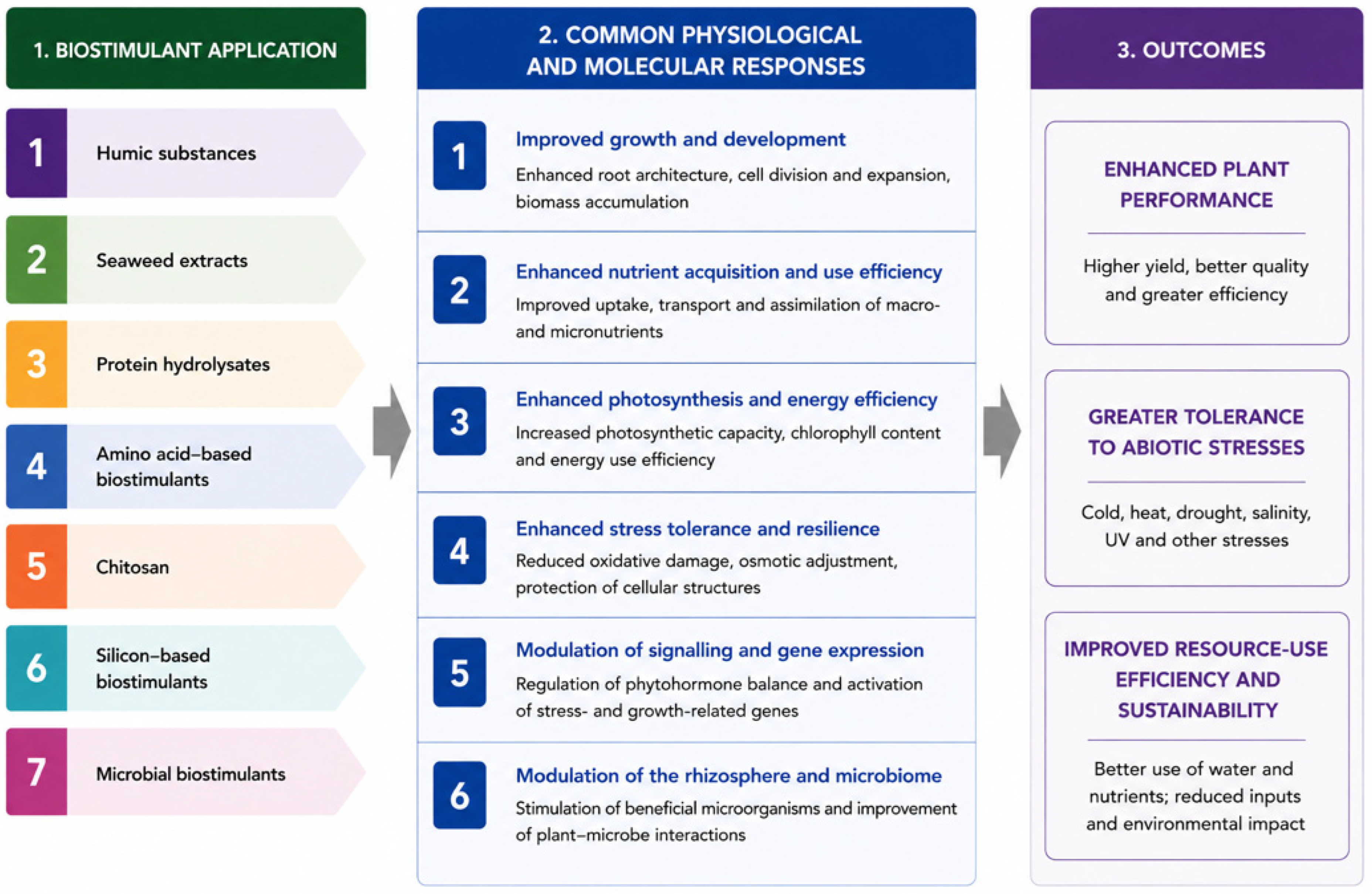
Following a general perspective, the evidence reviewed throughout this section suggests that the physiological effects of plant biostimulants cannot be interpreted as isolated responses affecting individual traits. Instead, they represent the coordinated expression of a highly integrated regulatory network linking root development, nutrient acquisition, photosynthesis, metabolism, redox regulation, and stress adaptation (
Figure 5).
6. Future Perspectives: Towards Precision Biostimulants
Plant biostimulant research has evolved rapidly over the past two decades, progressing from empirical observations of plant performance to increasingly sophisticated molecular and physiological investigations. Advances in receptor biology, intracellular signalling, hormone regulation, multi-omics technologies, and systems biology have substantially improved our understanding of the mechanisms underlying plant biostimulant activity. Nevertheless, significant knowledge gaps remain regarding the precise molecular targets of many commercially available products and the complex regulatory networks responsible for their biological effects. Future research should therefore move beyond descriptive studies towards predictive, mechanism-based approaches capable of linking product composition with specific regulatory pathways and physiological outcomes [
19,
51].
Several methodological and biological limitations also complicate the interpretation and reproducibility of plant biostimulant research. The high variability in the composition and formulation of commercial and experimental products can make comparisons among studies difficult, particularly when the concentration and relative abundance of individual bioactive components are not fully characterised. Moreover, biostimulant responses are frequently concentration-dependent and may vary according to plant species, genotype, developmental stage and physiological status. Environmental factors, including temperature, water availability, nutrient supply, and other abiotic stresses, can further modify the magnitude and direction of plant responses. Consequently, apparently contrasting results may reflect differences in experimental conditions rather than fundamentally different biological mechanisms. Poor standardisation of formulations, application rates, experimental protocols, and response measurements further limits reproducibility and makes it difficult to distinguish robust biostimulant effects from context-dependent responses. Addressing these limitations through better characterisation and standardisation of products and experimental conditions will be essential for improving reproducibility and for establishing more reliable mechanistic relationships between biostimulant composition, molecular responses, and plant performance.
One important direction for future research is the potential transition from predominantly composition- or origin-based classification towards a mechanism-informed classification of plant biostimulants. Current classifications largely reflect the origin or chemical composition of products, including humic substances, seaweed extracts, protein hydrolysates, microbial inoculants, and silicon-based formulations. However, the incomplete identification of primary molecular targets and receptor systems currently limits the feasibility of a robust classification based on conserved biological processes or mechanisms of action. As mechanistic knowledge accumulates, future classification systems may progressively incorporate molecular mechanisms, signalling pathways, and biological functions, potentially complementing existing classification approaches and providing a stronger scientific basis for product development, regulatory assessment, and practical application [
51].
Another important research priority is the identification of primary molecular targets responsible for biostimulant perception. Although considerable progress has been made in understanding extracellular signalling, the receptors responsible for recognising many bioactive compounds remain unknown. Identification of receptor–ligand interactions, co-receptor complexes, and downstream signalling modules will significantly improve our understanding of plant responsiveness and facilitate the rational design of products targeting specific physiological processes. Such knowledge will also contribute to explaining differences in efficacy among plant species, developmental stages, and environmental conditions [
42,
46,
48,
54].
Future advances will depend increasingly on the integration of multi-omics technologies with computational biology. Transcriptomics, proteomics, metabolomics, epigenomics, ionomics, and phenomics should no longer be considered independent analytical platforms but complementary sources of information describing different organisational levels of the same biological system. Integrating these datasets through systems biology approaches will enable the identification of regulatory hubs, signalling bottlenecks, and predictive biomarkers associated with plant responsiveness to biostimulants. Such integrative analyses are expected to substantially accelerate the development of mechanistic models capable of predicting biological responses across different crops and environmental conditions [
19,
51].
Future studies should also move towards a systematic and quantitative evaluation of the proposed convergence framework. This will require the harmonised reporting of biostimulant composition, concentration, application method, crop genotype, developmental stage, environmental conditions, and measured outcomes, allowing results from independent studies to be compared more reliably. Systematic evidence mapping and comparative databases could identify recurrent molecular and physiological responses across biostimulant classes, while meta-analysis or network meta-analysis could be considered when sufficient numbers of comparable studies and standardised outcome measures become available. Such quantitative approaches would allow the strength, consistency, and context-dependence of the proposed mechanistic convergence to be tested rather than inferred solely from qualitative similarities.
The rapid expansion of artificial intelligence, machine learning, and digital agriculture also offers unprecedented opportunities for plant biostimulant research. Predictive computational models integrating molecular, physiological, agronomic, and environmental data may enable the optimisation of product selection, application timing, and dosage according to crop genotype, soil characteristics, and climatic conditions. Coupled with high-throughput phenotyping, remote sensing, and precision agriculture technologies, these approaches may facilitate the development of highly targeted management strategies that maximise crop productivity while minimising unnecessary inputs and environmental impacts [
51].
Another important direction involves the development of precision biostimulants, designed to interact with specific signalling pathways or physiological processes rather than acting as broad-spectrum formulations. Improved understanding of receptor biology, intracellular signalling, and regulatory network organisation may enable the design of products specifically targeting nutrient acquisition, water use efficiency, photosynthetic performance, stress resilience, or nutritional quality according to crop requirements and environmental conditions. Such products could represent a major advance over current empirical formulations, moving the field towards evidence-based molecular agriculture [
19,
51].
Future progress will also require greater integration between fundamental research and regulatory science. The implementation of harmonised experimental protocols, standardised physiological measurements, and robust molecular characterisation will improve reproducibility among studies and facilitate a comparison of results across laboratories. Equally important is the development of regulatory frameworks that recognise mechanistic evidence alongside agronomic performance, thereby promoting scientifically validated product development and increasing confidence among researchers, regulatory agencies, and end users [
51].
Ultimately, the future of plant biostimulant research lies in adopting a systems-level perspective in which molecular biology, physiology, agronomy, computational science, and digital technologies are fully integrated (
Figure 6).
The mechanistic convergence framework proposed in this review provides a conceptual basis for this transition by suggesting that chemically diverse plant biostimulants may influence overlapping conserved biological networks. Building upon this framework will facilitate the development of next-generation precision biostimulants capable of delivering predictable, crop-specific, and environmentally sustainable improvements in plant performance. Such advances will contribute significantly to the transition towards resilient agricultural systems capable of meeting the future demands for food production under increasingly challenging environmental conditions [
19,
51].
7. Conclusions
Plant biostimulants have emerged as one of the most promising strategies for improving crop productivity, resource use efficiency, and resilience under increasingly challenging environmental conditions. Despite their remarkable diversity in chemical composition and biological origin, substantial progress achieved over the last decade has provided increasing evidence that their beneficial effects cannot be fully explained by individual compounds or isolated physiological responses. Instead, accumulating evidence suggests that chemically distinct biostimulants may influence overlapping regulatory networks involved in plant growth, metabolism, and environmental adaptation. Throughout this review, we integrated current knowledge spanning extracellular perception, intracellular signalling, hormonal crosstalk, transcriptional regulation, multi-omics analyses, and physiological responses into a proposed mechanistic framework. This synthesis suggests that plant responses to biostimulants may involve a hierarchical organisation in which extracellular recognition, intracellular signalling, hormonal regulation, transcriptional reprogramming, and physiological adaptation are interconnected. However, the available evidence does not establish that these regulatory levels constitute a single conserved signalling continuum for all classes of plant biostimulants. Still, a central conclusion emerging from this review is that the biological activity of plant biostimulants may be usefully interpreted through the mechanistic convergence framework proposed herein. According to this conceptual framework, chemically unrelated biostimulants may influence overlapping signalling architectures and conserved biological processes involved in nutrient acquisition, photosynthetic efficiency, carbon and nitrogen metabolism, redox homeostasis, secondary metabolism, and stress adaptation. However, similar physiological or transcriptomic responses do not necessarily demonstrate convergence at the level of primary perception, receptor activation, or causal signalling. The framework should therefore be regarded as a hypothesis-generating synthesis of recurring patterns in the available literature, rather than as evidence of a universal mechanism. The framework also suggests that, in the longer term, increasing mechanistic knowledge may allow a complementary shift in scientific classification towards conserved regulatory networks and biological processes that contribute to plant responsiveness. Nevertheless, the proposed framework does not imply that all plant biostimulants operate through identical molecular mechanisms or produce uniform responses. The primary molecular targets and receptor systems of many biostimulants remain incompletely characterised, and reported responses are strongly context-dependent. Moreover, recurring molecular responses provide evidence of association but do not by themselves establish causal mechanisms. The framework should therefore be viewed as a conceptual synthesis of recurring patterns and a basis for generating testable hypotheses rather than as a universally established mechanism.
The increasing application of transcriptomics, proteomics, metabolomics, epigenomics, and systems biology has provided strong experimental support for this mechanistic interpretation. Multi-omics approaches consistently demonstrate that distinct classes of plant biostimulants regulate overlapping gene networks, protein profiles, and metabolic pathways, reinforcing the existence of common downstream regulatory mechanisms. Thus, future research should increasingly integrate complementary omics platforms with computational modelling and systems biology to identify the key regulatory nodes governing plant responses and to develop predictive models of biostimulant activity.
The transition from empirical formulations towards precision biostimulants represents one of the most important future directions for both research and agricultural innovation. Improved understanding of receptor biology, signalling networks, and molecular regulation will facilitate the development of products designed to target specific physiological processes according to crop species, developmental stage, and environmental conditions. Such advances will strengthen the scientific basis of plant biostimulants while contributing to more efficient, predictable, and sustainable crop management strategies.
Ultimately, the integration of molecular biology, plant physiology, systems biology, and precision agriculture offer an unprecedented opportunity to redefine how plant biostimulants are developed and applied. Rather than considering these products as heterogeneous collections of bioactive compounds, they should increasingly be viewed as modulators of highly conserved biological networks controlling plant adaptation. This systems-level perspective provides a more comprehensive understanding of plant biostimulant activity while establishing a robust conceptual framework for future research and technological innovation.
As global agriculture faces the combined challenges of climate change, declining natural resources, and increasing food demand, the development of mechanistically informed and scientifically validated plant biostimulants will become progressively more important. The mechanistic convergence model presented in this review offers an integrative framework that connects molecular mechanisms with physiological performance and agronomic outcomes, providing a foundation for the next generation of precision biostimulants and supporting the transition towards more resilient, resource-efficient, and sustainable agricultural systems. However, its broader applicability requires systematic comparative and quantitative evaluation across biostimulant classes, crops, and environmental contexts. Future network-based and meta-analytical approaches will be particularly valuable for determining whether recurrent molecular and physiological responses represent genuine conserved mechanisms or context-dependent similarities.



 ,
,