Article

Dynamic Biochemical Phenotypes in Hospitalized Patients with Pulmonary Tuberculosis

by
Juan C. Polo
1,
Jesus M. Angulo-Mercado
1,
Sandra M. Coronado-Ríos
1,
Fernando de la Vega
2,
Edwin D. Correa
3 and
Nelson E. Arenas
1,*
1
Faculty of Medicine, Universidad de Cartagena, Cartagena 130014, Colombia
2
Department of Infectious Diseases, E.S.E. (Public Institution) Caribbean University Hospital, Cartagena 130014, Colombia
3
Faculty of Agricultural Sciences, Universidad de Cundinamarca, Fusagasugá 252211, Colombia
*
Author to whom correspondence should be addressed.
Submission received: 2 December 2025 / Revised: 13 January 2026 / Accepted: 3 February 2026 / Published: 6 February 2026

Abstract

Pulmonary tuberculosis (TB) produces systemic alterations that can be reflected in biochemical parameters beyond microbiological resolution. Early characterization of the biochemical response to treatment could provide additional criteria for following up with hospitalized patients. A retrospective observational study was conducted focusing on patients with pulmonary TB from a tertiary care hospital, based on biochemical parameters upon admission (“before”) and between 2 and 10 days after starting anti-tuberculosis treatment (“after”). The patients were grouped into three clusters according to the results of the clinical tests: mild (70.1%), inflammatory (26.7%), and severe (3.2%). After the start of treatment, 30% of the patients migrated toward the most biochemically compromised phenotype (Cluster 3). Sixty-one percent showed deterioration in at least one of the three key parameters; only 12.8% improved simultaneously. Significant associations were identified between unfavorable biochemical evolution and HIV (p = 0.004) or patients with public health coverage (p = 0.01). Overall, after antituberculous therapy, a reduction in CRP and leukocytes was observed (p < 0.001), and progressive anemia (ΔHb: −1.7 g/dL) and renal deterioration (ΔCr: +0.52 mg/dL) were identified. The identification of dynamic phenotypes in patients with pulmonary TB can be used to establish early risk markers and contribute to individualized clinical surveillance.

1. Introduction

Pulmonary tuberculosis (TB) is indeed the main form responsible for the spread of Mycobacterium tuberculosis in community settings. Consistently, TB remains a major global health problem despite the availability of effective antibiotic therapy, and its clinical management in hospitalized patients requires an integrated understanding of the host’s biochemical and immune environment. Within the framework of the Sustainable Development Goals, the World Health Organization (WHO) has set a goal to eliminate the TB epidemic by 2030, aiming for an 80% reduction in incidence and a 90% reduction in mortality compared to 2015 rates [1]. However, progress toward these goals has been hindered by factors such as the COVID-19 pandemic, migration, and health system crises, resulting in a decline in global indicators [2,3]. In Colombia, approximately 20,832 new cases of TB have been reported, representing an approximate incidence of 50 cases per 100,000 inhabitants in 2024 [4]. Although TB must be diagnosed at the first level of care, a significant proportion of patients are diagnosed late at a higher level of complexity, especially patients with extrapulmonary TB and nonspecific presentations or patients who do not receive health services promptly [5,6,7].
In hospitalized patients with pulmonary TB, infection not only compromises the general clinical state but also induces detectable systemic alterations in biochemical and hematological parameters. These include erythrocyte count, hemoglobin concentration, C-reactive protein (CRP) and serum creatinine, as well as electrolytes and total serum proteins [8,9]. Thus, early identification of favorable biochemical shifts could potentially help in tailoring therapy and predicting outcomes.
Anemia, in particular, constitutes one of the most frequent alterations: for example, the prevalence of microcytic anemia (mean corpuscular volume, MCV < 80 fL) in pulmonary TB ranges between 32% and 93% and is associated with a higher risk of mortality and slower clinical recovery [10]. This adverse hematological state usually reflects the combination of chronic inflammation, malnutrition, and the effects of tubercle bacillus on bone marrow and iron metabolism [11]. In addition, other biochemical alterations, such as hypoalbuminemia, hyponatremia, or elevated transaminases, can be indirect markers of the severity of the disease and predictors of unfavorable outcomes [12].
Prior to the initiation of antituberculosis therapy, hospitalized TB patients exhibit a biochemical signature characteristic of an active acute-phase response. Studies have consistently demonstrated that at the time of diagnosis, markers such as CRP and ESR are markedly elevated. Similarly, before treatment, biochemical analyses in TB patients frequently reveal disturbances in liver function tests. Increased levels of liver enzymes including aspartate aminotransferase (AST), alanine aminotransferase (ALT), alkaline phosphatase (ALP), and gamma-glutamyl transferase (GGT) indicate a degree of hepatic involvement, either from the infection itself or from the systemic inflammatory response [11]. Concurrently, lipid profiles are often disrupted; for example, patients may exhibit decreased high-density lipoprotein (HDL) levels and altered triglyceride concentrations, which are thought to be secondary to the inflammatory state and malnutrition [9].
Similarly, antituberculous therapy, although highly effective at controlling and eliminating infection in most cases, can also induce transient or persistent changes in the biochemical and hematological profile, both because of its potential toxicity, including hepatotoxicity, nephrotoxicity, and electrolyte alterations due to the modulation of the systemic inflammatory response that results in bacterial death, and the release of antigens [13,14,15]. Changes such as a decrease in hemoglobin levels, an increase in creatinine levels or the persistence of elevated CRP levels during the first days of treatment may indicate a vulnerable biological profile with a greater risk of complications [16,17].
Although the evaluation of the therapeutic response in pulmonary TB has historically focused on microbiological and clinical indicators measured at 2–8 weeks, recent evidence suggests that certain immunoinflammatory biomarkers, such as IP-10, IL-6 and CRP, may undergo changes detectable from the first days after starting therapy, while biochemical alterations such as hyponatremia or hypoalbuminemia have been associated with early mortality in hospitalized patients [12,18]. Despite extensive research on drug-induced hepatotoxicity and renal impairment associated with first-line antituberculosis therapy, few studies have systematically characterized the early biochemical response within the first 0–7 days of treatment in hospitalized patients. Most available data describe alterations in liver enzymes, bilirubin, and renal markers after prolonged exposure, typically beyond the second week, leaving a critical gap in understanding the initial metabolic and homeostatic adaptations triggered by the RIPE (Rifampicin, Isoniazid, Pyrazinamide, and Ethambutol) regimen [19,20]. This early phase is biologically relevant, as transient fluctuations in hepatic and renal function, electrolyte balance, or hematologic parameters may precede overt toxicity or predict treatment intolerance.
Based on previous clinical findings, this study aims to characterize the early dynamic biochemical and hematological profiles in hospitalized patients with pulmonary TB during the first seven days of treatment as a complementary tool to identify individuals at risk of biochemical worsening beyond clinical and microbiological or molecular tests.

2. Materials and Methods

2.1. Population and Variables

A retrospective observational and analytical study was conducted on hospitalized patients with pulmonary TB at Hospital Universitario del Caribe (HUC), a tertiary care facility, between 2023 and 2024. The study included patients who had complete clinical examinations upon admission (referred to as “Before”) and again between 2 and 10 days after starting treatment (referred to as “After”). Patients were excluded if they had extrapulmonary TB, incomplete data, untreated bacterial coinfections, or if they did not have follow-up clinical evaluations.
Sociodemographic characteristics, clinical (comorbidities such as HIV or cancer) and clinical variables were collected and classified as follows: hematological (hemoglobin, hematocrit, MCV, HCM, leukocytes, and platelets), kidney (creatinine and blood urea nitrogen-BUN), liver (ALT, AST, total bilirubin, direct and indirect) and inflammatory (C-reactive protein). All tests were conducted in a clinical laboratory level III, which supports diagnostic services at HUC.

2.2. Definition of Biochemical Deterioration

Clinically relevant deterioration was defined as a decrease in hemoglobin ≥ 1 g/dL, an increase in CRP ≥ 2 mg/L or an increase in creatinine ≥ 0.3 mg/dL. Sixty-one percent of the patients presented worsening trends in at least one of these three parameters, and 19.8% did so in two or more simultaneously. In contrast, only 12.8% of the patients showed joint improvement in the three markers.

2.3. Statistical Analysis

Statistical analyses were conducted using R software (version 4.2.2). Mixed clinical and laboratory data were analyzed using Factorial Analysis of Mixed Data (FAMD), implemented in the FactoMineR package version 2.12. Quantitative variables comprised hematological, biochemical, and inflammatory parameters, while qualitative variables included demographic and clinical characteristics (e.g., sex, HIV status, comorbidities, and health insurance regime). Consistent with FAMD requirements, quantitative variables were maintained on their original scale, whereas qualitative variables were treated as factors.
The FAMD model retained three principal dimensions (ncp = 3, graph = FALSE), accounting for 13.6% of the total variance (Dim 1: 6.38%; Dim 2: 4.10%; Dim 3: 3.17%). The individual coordinates derived from these dimensions served as input for subsequent clustering analyses.
Ascending Hierarchical Clustering (AHC) was performed on the Euclidean distance matrix of the FAMD coordinates using Ward’s minimum variance method (Ward.D2). The optimal number of clusters was determined through visual inspection of the dendrogram and assessment of cluster interpretability, yielding a three-cluster solution. Cluster membership was assigned using tree cutting (k = 3).
To visualize the data structure, Uniform Manifold Approximation and Projection (UMAP) was applied to standardized laboratory variables (z-scores) [21]. Prior to UMAP embedding, data preprocessing included robust numeric parsing, median imputation for missing values, and the exclusion of zero-variance variables. The UMAP embedding was generated using the umap package with a Euclidean distance metric (metric = “Euclidean”), a minimum distance of 0.20 (min_dist = 0.20), and a neighborhood size of n_neighbors = min (15, n − 1), where n denotes the number of patients. To ensure reproducibility, a fixed random seed (set.seed = 123) was employed. Identical preprocessing steps and parameters were applied to both baseline (“Before”) and post-treatment (“After”) datasets.
The paired Wilcoxon test was used to evaluate changes “Before” and “After” treatment, defining clinically relevant deterioration as a decrease in hemoglobin concentration ≥ 1 g/dL, an increase in CRP concentration ≥ 2 mg/L, or an increase in creatinine concentration ≥ 0.3 mg/dL. The redistribution between clusters was classified as stable, improved or worse. Comparisons between groups were made with ANOVA, the Kruskal–Wallis test or the chi-square test, with p < 0.05 indicating statistical significance.

2.4. Bioethical Aspects

The Bioethics Committee for clinical research at HUC approved this study. The HUC authorized access to the medical records of the included patients, guaranteeing the confidentiality of the information at all times. The patient data were anonymized (prior to data analysis) and used exclusively for research purposes. This study was conducted in compliance with the ethical principles outlined in the Declaration of Helsinki and current Colombian regulations governing research in human health.

3. Results

3.1. Study Population

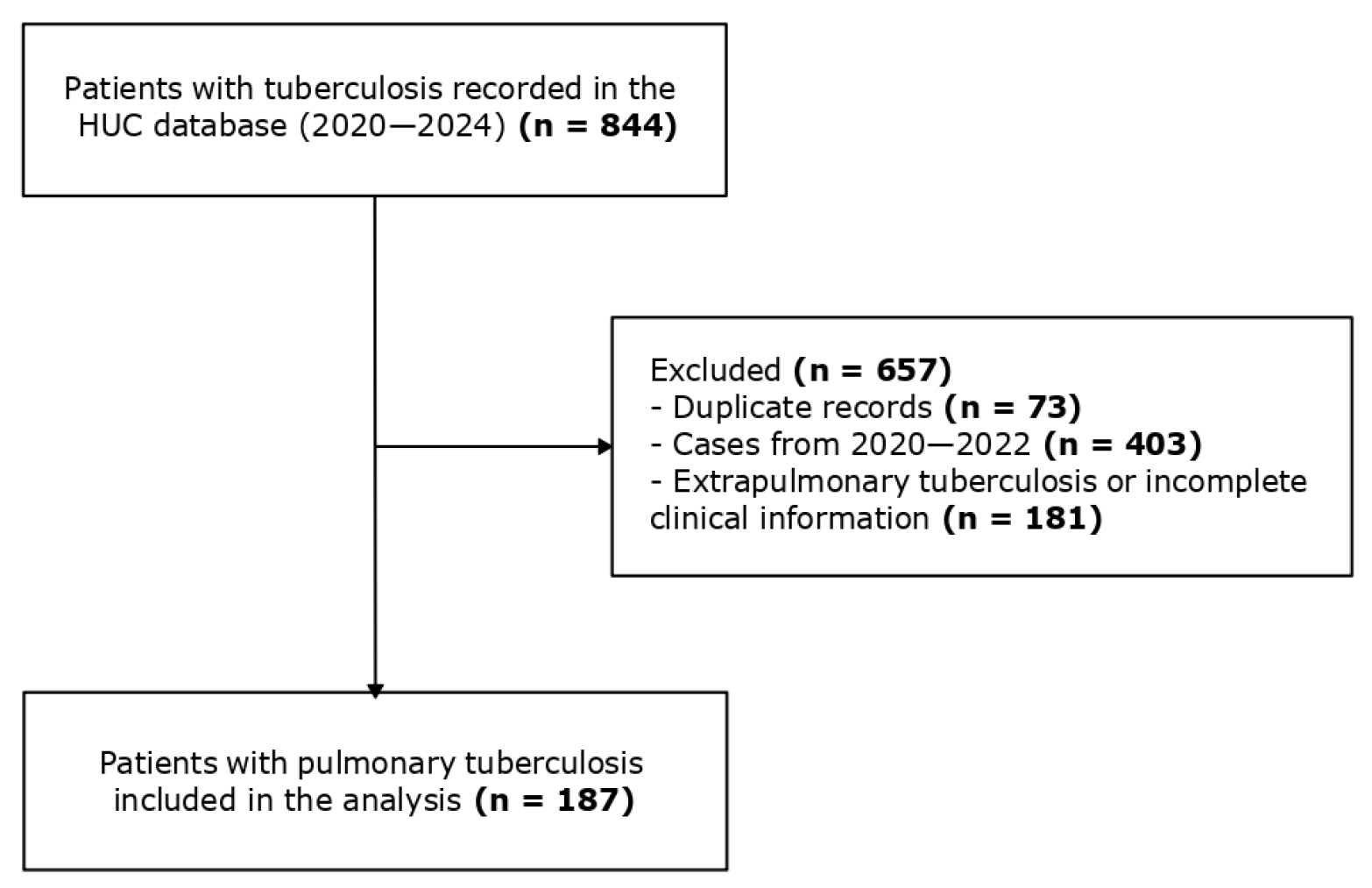
The clinical records of 382 patients were reviewed, and those whose clinical data were incomplete were discarded; 187 hospitalized patients with a confirmed diagnosis of pulmonary TB were included (average age 42 years old), each with full availability of clinical examinations in the pre-treatment stage (“Before”) and between 2 and 10 days after the start of antituberculous therapy (“After”) (Figure 1).
A total of 187 patients hospitalized for pulmonary TB were analyzed, and clinical examinations were performed at two time points: at hospital admission (“Before”) and after the start of antituberculous treatment (“After”). The variables included hematological, inflammatory, liver and kidney parameters (Table 1). Symptomatic variables were not evaluated.

3.2. Baseline Classification and Grouping (Before)

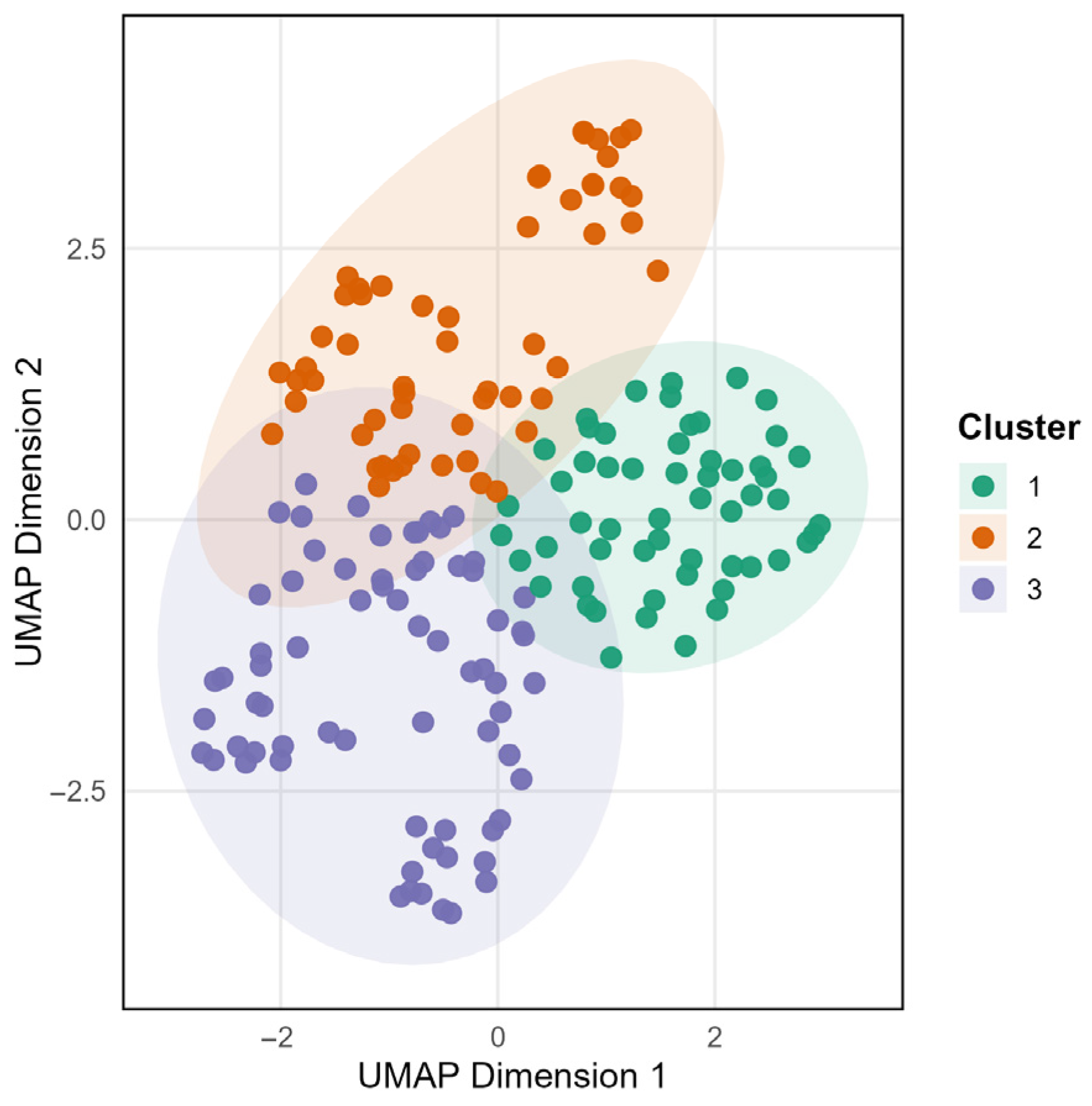
Three distinct clinical–biological phenotypes were identified at the time of hospital admission using FAMD analysis, UMAP algorithm, and ascending hierarchical grouping (Figure 2).
Cluster 1 (n = 131; 70.1%) showed a mild clinical profile with more conserved hemoglobin (mean: 11.7 g/dL), hematocrit (36.8%), and CRP (6.2 mg/L) values.
Cluster 2 (n = 50; 26.7%) showed a marked inflammatory response, with a mean CRP concentration of 14.1 mg/L, mild anemia (hemoglobin concentration of 10.5 g/dL), and a high percentage of patients subsidized under the health system (58%).
Cluster 3 (n = 6; 3.2%) showed a severe clinical profile, including renal impairment (creatinine concentration: 1.9 mg/dL), elevated CRP (22.8 mg/L), and significant anemia (hemoglobin concentration: 7.4 g/dL). Comorbidities, particularly HIV and active cancer, were prevalent in this group.
Statistical analysis revealed significant differences between clusters in hemoglobin, hematocrit, CRP, creatinine and bilirubin levels (p < 0.001 in all cases).
The chi-square test revealed a significant association between membership in clusters and affiliation with a government health regime (p = 0.0027) and HIV positivity (p = 0.027).

3.3. Post-Treatment Grouping (After)

After the initiation of antituberculosis treatment and biochemical reassessment, three clusters were again identified by the same statistical procedure (FAMD + hierarchical grouping), revealing relevant changes in the distribution of TB patients (χ2 = 89.4; p < 0.001).
Cluster 1 (n = 92; 49.2%) included TB patients with stable values or partial improvement in hematological, inflammatory and renal parameters, and cluster 2 (n = 39; 20.9%) included patients with persistent inflammation accompanied by mild anemia.
The clinical profile of Cluster 3 (n = 56; 29.9%) was impaired, showing signs of progressive renal impairment, including marked anemia (mean Hb concentration: 8.1 g/dL), elevated CRP (13.9 mg/L), and elevated creatinine (1.82 mg/dL). This distribution showed that a substantial number of patients moved toward more compromised profiles, even though a sizable portion of patients remained in favorable biochemical states.
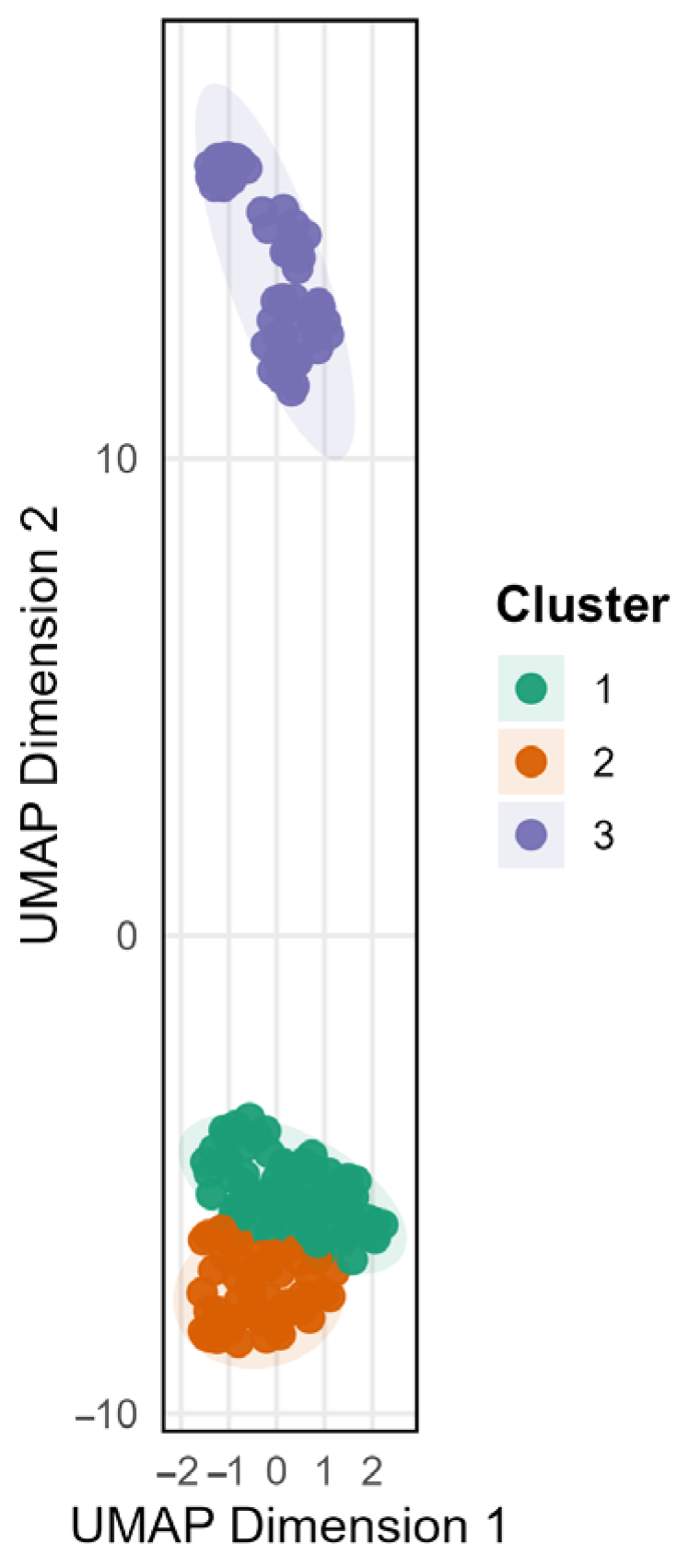
Overall, clusters 1 and 2 were slightly different compared with cluster 3 (Figure 3).

3.4. Individual Changes in Biochemical Parameters

Paired comparisons between the “Before” and “After” stages using the Wilcoxon test revealed significant changes in several markers. No statistically significant changes were observed in bilirubin or transaminases (p > 0.1), although a slight increase in these values was recorded in patients belonging to Cluster 3.
These results show a general trend toward a decrease in hemoglobin and, in a significant subgroup, toward a decrease in creatinine clearance, despite an overall improvement in inflammation markers (reductions in leukocytes and CRP).

3.5. Migration Between Groups

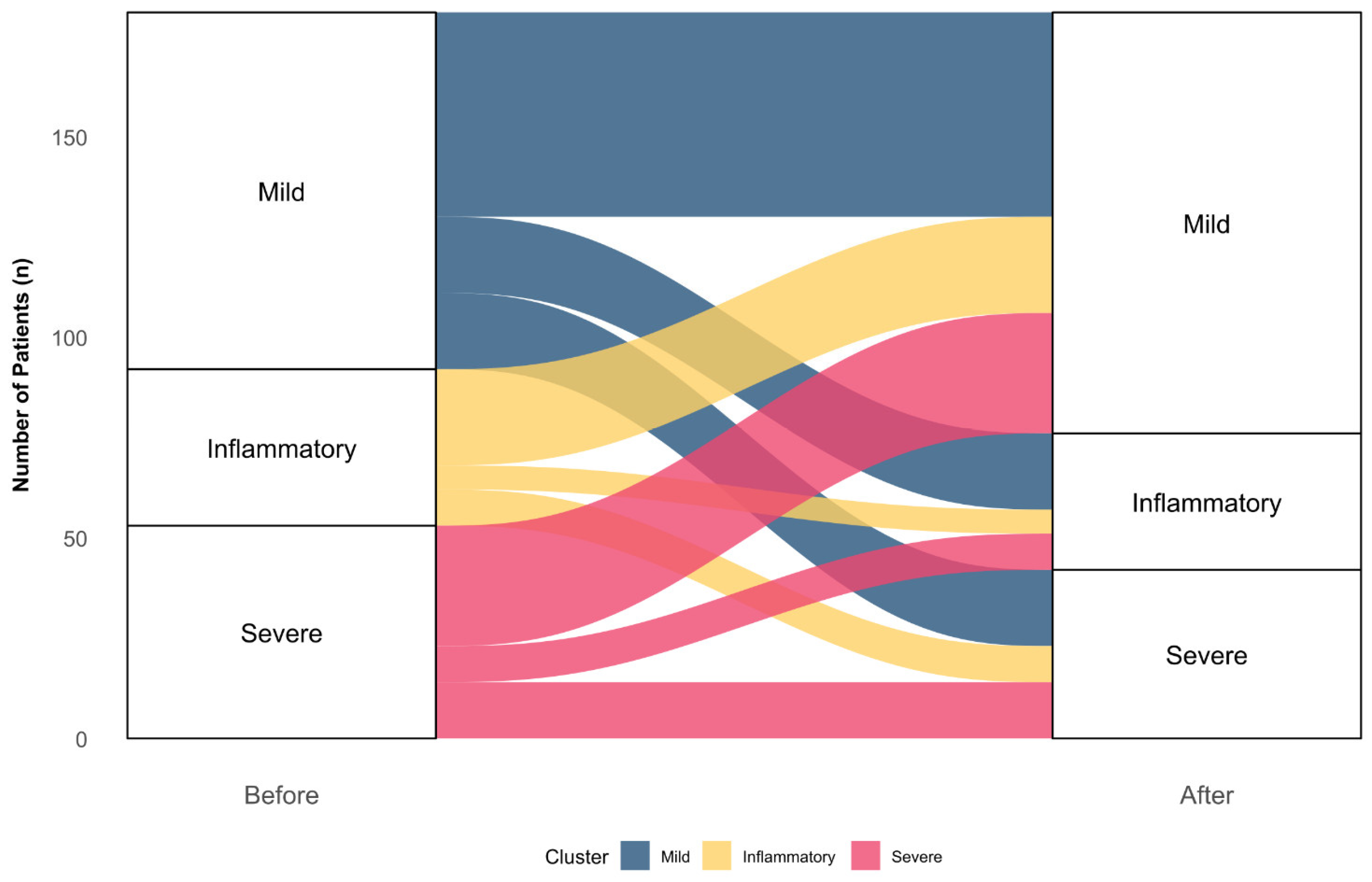
Analysis of the redistribution of patients between the two stages revealed that approximately half of the cohort experienced biochemical worsening. In total, 92 patients (49.2%) remained in the same classification group or migrated to clusters with a more favorable biochemical profile, while 95 patients (50.8%) experienced deterioration, either because of migration to a cluster of greater commitment or because of deterioration in at least one of the parameters considered critical (Figure 4).
For this analysis, clinically relevant biochemical worsening was defined as a decrease in hemoglobin concentration ≥ 1 g/dL, an increase in CRP concentration ≥ 2 mg/L, or an increase in creatinine concentration ≥ 0.3 mg/dL. Under these criteria, 114 patients (61%) met at least one of these conditions, 37 patients (19.8%) presented simultaneous deterioration in two or more parameters, and only 24 patients (12.8%) achieved a parallel improvement in hemoglobin, CRP, and creatinine levels.

4. Discussion

Pulmonary TB remains a major global health challenge despite the availability of effective treatment, and its clinical management in hospitalized patients demands an integrated understanding of the host’s biochemical and immunological milieu [22]. Thus, the evolution of the biochemical profile in hospitalized patients with pulmonary TB during the first days of antituberculous treatment reflects the intersection between host immunity, pathogen elimination and the pharmacological effects of treatment. Initially, biochemical alterations, such as alterations in CRP levels, erythrocyte sedimentation rate (ESR), and proinflammatory cytokines; alterations in iron metabolism that cause anemia; and metabolic alterations are characteristic of an acute phase response triggered by M. tuberculosis infection [23,24].
The rapid decrease in CRP after the start of the antituberculosis treatment probably reflects the reduction in bacillary load and the modulation of the systemic inflammatory response mediated by cytokines such as IL-6 and TNF-α [25,26,27]. Given its short half-life (~19 h) and its hepatic synthesis as an acute phase reactant [28], CRP responds quickly to the resolution of inflammatory stimuli, allowing the detection of significant changes even during the first 5–7 days of treatment [29]. In our hospital cohort, a significant decrease in CRP was observed during the first 10 days, accompanied by a mean reduction of 1.7 g/dL in hemoglobin and an increase of 0.52 mg/dL in creatinine. The magnitude and speed of the decrease in CRP are consistent with prospective studies that report reductions of 40–60% in the first or second week of treatment, associated with conversion of the smear test and early clinical improvement [30,31,32], supporting its usefulness as an early biomarker, especially when microbiological confirmation is delayed or difficult to obtain [33,34,35,36,37]. Regarding hemoglobin, the decrease observed in the initial phase reflects the anemia of inflammation typical of TB which is supported by concurrent findings of low albumin and transferrin levels, which are reflective of the broader metabolic disruptions [38,39]. This anemia is characterized by elevated serum hepcidin levels, functional hypoferremia, suppression of erythropoiesis, and even impaired T cell response limiting hematological recovery in the short term [40,41,42]. Additional factors such as malnutrition, some antitubercular antibiotics (e.g., rifampicin), chronic bleeding or coinfections can accentuate this delay [43,44]. Therefore, the early decrease in hemoglobin should not be interpreted as therapeutic failure but it might be part of the expected course of anemia of inflammation.
The initial increase in creatinine may be due to prerenal mechanisms such as dehydration, hypotension or fever, previously undiagnosed kidney disease and, to a lesser extent, early effects of drugs such as pyrazinamide and rifampin [45,46,47]. Other possible factors include drug interactions, protein overload due to immobilization, or rhabdomyolysis [48,49]. Although these agents usually cause nephrotoxicity between 4 and 8 weeks after exposure, cases of acute kidney injury have been reported earlier [50,51]. These results highlight the importance of closely monitoring renal function from the beginning of treatment, particularly in high-risk subgroups, and ideally incorporating early biomarkers of tubular damage [52,53].
The quick drop in CRP levels supports its potential as an early response biomarker in TB patients, with reductions of more than 50–55% at 7–14 days linked to faster bacterial conversion and a better overall prognosis [54,55,56]. The interpretation of CRP should always be complemented by clinical and microbiological evolution, since persistent values may reflect coinfections or inflammation not related to TB [36,37]. On the other hand, the early decrease in hemoglobin reflects the pathophysiology of anemia of inflammation and should not motivate premature interventions such as changes in the scheme or unnecessary transfusions [57,58,59]. Initial elevations in creatinine require careful interpretation: although drug-induced nephrotoxicity tends to appear later, an early increase may indicate dehydration, hypotension, or previous kidney disease [50]. Surveillance should prioritize patients with risk factors and avoid unnecessary interventions for those who are at low risk [60]. Similarly, other clinical parameters such as ALT, AST, ALP, and GGT tend to stabilize as the inflammatory drive diminishes, although caution is warranted since antituberculosis drugs themselves can impose hepatotoxic stress and complicate the biochemical picture [27]. Likewise, alterations in lipid profiles manifested as low HDL and dysregulated triglyceride levels may begin to normalize slowly in response to the reversal of systemic inflammation, although these changes generally occur over a more extended timeline [61].
The identification of combined patterns of biochemical response such as a rapid decrease in CRP with hematological and renal stability or inflammatory persistence with deterioration of other parameters is a tool to stratify follow-up and personalize monitoring. This approach requires external validation and additional statistical analysis before its routine implementation [24,62]. Ultimately, early improvement in the biochemical profile is not only a marker of therapeutic efficacy but also an essential component of the patient’s overall recovery process. As clinicians and researchers continue to refine the understanding of these early biochemical changes, there is hope that such insights will lead to the development of more precise and rapid diagnostic and prognostic tools that can be used at the bedside to guide treatment decisions for patients with pulmonary TB [23,32].
One asset of this study is the early evaluation of biochemical parameters between days 2 and 10 of treatment in a hospital cohort, providing information little explored in the literature [30,32,34]. In addition, routine laboratory tests were used, which are easily accessible in clinical practice, and a cluster analysis was performed to identify response phenotypes that are rare in TB and have the potential for patient stratification [63,64]. As this investigation was carried out in a single tertiary care hospital in Colombia, the external applicability of these findings to other settings or TB populations may be limited. Among other limitations, the wide time window (2–10 days) could mask important dynamic variations; the single-center design and moderate sample size limit generalizability, and the study was not adjusted for relevant clinical confounders such as HIV, diabetes, chronic kidney disease, or baseline bacillary burden [65]. Corrections were not applied for multiple comparisons nor was the stability of the clusters evaluated by internal methods such as bootstrapping.
In future research, shortening the sampling window (e.g., 0–3, 4–7, and 8–10 days) and applying multivariate models that adjust for comorbidities and relevant clinical factors are recommended [66]. Furthermore, statistically validating the identified phenotypes and complementing the analysis with additional biomarkers, such as ferritin, IL-6, uric acid, and lipopolysaccharide-binding protein, could enrich the characterization of response profiles. Finally, assessing whether early changes in CRP, hemoglobin, and creatinine can predict better clinical outcomes, including mortality, time to bacteriological negativity, and relapses, would provide evidence of their prognostic value and their potential to inform therapeutic decisions for TB patients.

Author Contributions

Conceptualization, N.E.A. and S.M.C.-R.; methodology, J.C.P. and J.M.A.-M.; software, J.M.A.-M. and E.D.C.; validation, E.D.C.; formal analysis, J.C.P., J.M.A.-M. and N.E.A.; investigation, S.M.C.-R.; resources, F.d.l.V.; data curation, J.C.P. and J.M.A.-M.; writing—original draft preparation, J.C.P., J.M.A.-M. and E.D.C.; writing—review and editing, S.M.C.-R., F.d.l.V. and N.E.A.; supervision, N.E.A. and F.d.l.V.; project administration, S.M.C.-R.; funding acquisition, S.M.C.-R. All authors have read and agreed to the published version of the manuscript.

Funding

This research was funded by Universidad de Cartagena, internal grant number/issue 057-2023, and the APC was funded by the Research Council of Universidad de Cartagena.

Institutional Review Board Statement

The study was conducted according to the guidelines of the Declaration of Helsinki and approved by the Institutional Review Board of the International Council of Medical Sciences (CIOMS) (protocol code: DB-FM-CERT 05; date of approval: 18 May 2025).

Informed Consent Statement

Since this study only included medical records, the Informed Consent Statement does not apply.

Data Availability Statement

The original contributions presented in this study are included in the article. Further inquiries can be directed to the corresponding authors.

Acknowledgments

The authors express gratitude to the medical students of the Mycobacteria Research Group who assisted in creating the dataset and reviewing clinical records at HUC and Fernando Avila for his help with Figure 1. This work is dedicated to the memory of Lilian Milena Barandica Cañón (R.I.P.), whose inspiration fueled this project.

Conflicts of Interest

The authors declare no conflicts of interest.

Abbreviations

The following abbreviations are used in this manuscript:
AHCAscending hierarchical clustering
BUNBlood Urea Nitrogen
CRPC-reactive protein
ESRErythrocyte sedimentation rate
FAMDFactorial Analysis of Mixed Data
HUCHospital Universitario del Caribe
MCVMean corpuscular volume
RIPE Rifampicin, Isoniazid, Pyrazinamide, and Ethambutol
TBTuberculosis
UMAPUniform Manifold Approximation and Projection
WHOWorld Health Organization

References

  1. WHO. The End TB Strategy; WHO: Geneva, Switzerland, 2025; p. 20. [Google Scholar]
  2. Do Bem Braga, R.C.; Meurer, I.R.; D’Carmo Sodré, M.M.; de Carvalho, L.D.; Marin, L.J.; Silvério, M.S.; Garcia, P.G. Epidemiology of tuberculosis in Minas Gerais, Brazil, between 2013 and 2023 and the impact of the COVID-19 pandemic. Front. Public Health 2025, 13, 1642015. [Google Scholar] [CrossRef] [PubMed]
  3. Arenas, N.E.; Cuervo, L.I.; Avila, E.F.; Duitama-Leal, A.; Pineda-Peña, A.C. The impact of immigration on tuberculosis and HIV burden between Colombia and Venezuela and across frontier regions. Cad. Saude Publica 2021, 37, e00078820. [Google Scholar] [CrossRef]
  4. Cruz-Martínez, O.A.; Trujillo-Trujillo, J. Epidemiological characteristics of tuberculosis in Colombia. Rev. Fac. Med. 2024, 72, e109537. [Google Scholar] [CrossRef]
  5. Llinás Delgado, A.; Navarro Lechuga, E.; Bilbao Ramírez, J.; Alcocer Olaciregui, A.; Vargas Moranth, R. Cambios en la mortalidad por tuberculosis debidos a la implementación de políticas públicas en Colombia. J. Am. Health 2024, 7, 1–14. Available online: https://www.jah-journal.com/index.php/jah/article/view/186 (accessed on 1 December 2025).
  6. Mape, C.V.; Vega Marin, A.; Valencia Claros, S.L.; Pérez Llanos, F.J.; Parra López, C.A.; Sánchez Pedraza, R.; Navarrete Jiménez, M.L.; Murcia, M. High prevalence of pulmonary tuberculosis in the indigenous population of Puerto Nariño, Colombian Amazonia. Rev. Salud Pública 2025, 27, 1–11. [Google Scholar] [CrossRef]
  7. Prieto Alvarado, F.E.; Bermúdez, L.A.; López Pérez, M.P. Tuberculosis en Colombia, 2014–2023: Evolución y cambios en la tendencia. Rep. Epidemiológico Nac. 2024, 6, 32–43. [Google Scholar] [CrossRef]
  8. Goel, V.; Goel, S.K. Severe pulmonary radiological manifestations are associated with a distinct biochemical profile in blood of tuberculosis patients with dysglycemia. Eur. J. Cardiovasc. Med. 2025, 15, 415–426. [Google Scholar]
  9. Komakech, K.; Semugenze, D.; Joloba, M.; Cobelens, F.; Ssengooba, W. Diagnostic accuracy of point-of-care triage tests for pulmonary tuberculosis using host blood protein biomarkers: A systematic review and meta-analysis. EClinicalMedicine 2025, 84, 103257. [Google Scholar] [CrossRef]
  10. Herman, D.; Machmud, R.; Lipoeto, N.I. Iron Deficiency and Anemia of Inflammation in Tuberculosis: A Systematic Review of the Evidence. BioSci. Med. J. Biomed. Transl. Res. 2025, 9, 6479–6491. [Google Scholar]
  11. Dasan, B.; Munisankar, S.; Pavan Kumar, N.; Moideen, K.; Pandiarajan, A.N.; Nott, S.; Viswanathan, V.; Shanmugam, S.; Hissar, S.; Thiruvengadam, K.; et al. Coexistent anemia modulates systemic inflammation and exacerbates disease severity and adverse treatment outcomes in tuberculosis. Front. Tuberc. 2025, 2, 1462654. [Google Scholar] [CrossRef]
  12. Chegou, N.N.; Sutherland, J.S.; Malherbe, S.; Crampin, A.C.; Corstjens, P.L.A.M.; Geluk, A.; Mayanja-Kizza, H.; Loxton, A.G.; van der Spuy, G.; Stanley, K.; et al. Diagnostic performance of a seven-marker serum protein biosignature for the diagnosis of active TB disease in African primary healthcare clinic attendees with signs and symptoms suggestive of TB. Thorax 2016, 71, 785. [Google Scholar] [CrossRef] [PubMed]
  13. Kumar, N.P.; Moideen, K.; Nancy, A.; Viswanathan, V.; Thiruvengadam, K.; Sivakumar, S.; Hissar, S.; Kornfeld, H.; Babu, S. Acute phase proteins are baseline predictors of tuberculosis treatment failure. Front. Immunol. 2021, 12, 731878. [Google Scholar] [CrossRef]
  14. Azam, K.; Khosa, C.; Viegas, S.; Massango, I.; Bhatt, N.; Jani, I.; Heinrich, N.; Hoelscher, M.; Gillespie, S.H.; Rachow, A.; et al. Reduction of blood C-reactive protein concentration complements the resolution of sputum bacillary load in patients on anti-tuberculosis therapy. Front. Immunol. 2022, 13, 1005692. [Google Scholar] [CrossRef]
  15. Miranda, P.; Gil-Santana, L.; Oliveira, M.G.; Mesquita, E.D.D.; Silva, E.; Rauwerdink, A.; Cobelens, F.; Oliveira, M.M.; Andrade, B.B.; Kritski, A. Sustained elevated levels of C-reactive protein and ferritin in pulmonary tuberculosis patients remaining culture positive upon treatment initiation. PLoS ONE 2017, 12, e0175278. [Google Scholar] [CrossRef]
  16. Ştefanescu, S.; Cocoş, R.; Turcu-Stiolica, A.; Mahler, B.; Meca, A.-D.; Giura, A.M.C.; Bogdan, M.; Shelby, E.-S.; Zamfirescu, G.; Pisoschi, C.-G. Evaluation of prognostic significance of hematological profiles after the intensive phase treatment in pulmonary tuberculosis patients from Romania. PLoS ONE 2021, 16, e0249301. [Google Scholar] [CrossRef] [PubMed]
  17. Singla, R.; Raghu, B.; Gupta, A.; Caminero, J.A.; Sethi, P.; Tayal, D.; Chakraborty, A.; Jain, Y.; Migliori, G.B. Risk factors for early mortality in patients with pulmonary tuberculosis admitted to the emergency room. Pulmonology 2021, 27, 35–42. [Google Scholar] [CrossRef]
  18. Jayakumar, A.; Vittinghoff, E.; Segal, M.R.; MacKenzie, W.R.; Johnson, J.L.; Gitta, P.; Saukkonen, J.; Anderson, J.; Weiner, M.; Engle, M.; et al. Serum biomarkers of treatment response within a randomized clinical trial for pulmonary tuberculosis. Tuberculosis 2015, 95, 415–420. [Google Scholar] [CrossRef]
  19. Zade, D. Hepatotoxicity Associated with Anti-Tuberculosis Medications: Analyzing Mechanisms Risk Factors Strategies for Prevention Management. J. Drug Deliv. 2024, 1, 1–12. [Google Scholar]
  20. Hosford, J.D.; von Fricken, M.E.; Lauzardo, M.; Chang, M.; Dai, Y.; Lyon, J.A.; Shuster, J.; Fennelly, K.P. Hepatotoxicity from antituberculous therapy in the elderly: A systematic review. Tuberculosis 2015, 95, 112–122. [Google Scholar] [CrossRef] [PubMed]
  21. Sampath, P.; Natarajan, A.P.; Moideen, K.; Kathamuthu, G.R.; Hissar, S.; Dhanapal, M.; Jayabal, L.; Ramesh, P.M.; Tripathy, S.P.; Ranganathan, U.D.; et al. Differential Frequencies of Intermediate Monocyte Subsets Among Individuals Infected with Drug-Sensitive or Drug-Resistant Mycobacterium tuberculosis. Front. Immunol. 2022, 13, 892701. [Google Scholar] [CrossRef]
  22. Opperman, M.; Loots, D.T.; van Reenen, M.; Ronacher, K.; Walzl, G.; du Preez, I. Chronological Metabolic Response to Intensive Phase TB Therapy in Patients with Cured and Failed Treatment Outcomes. ACS Infect. Dis. 2021, 7, 1859–1869. [Google Scholar] [CrossRef]
  23. Carreto-Binaghi, L.E.; Sartillo-Mendoza, L.G.; Muñoz-Torrico, M.; Guzmán-Beltrán, S.; Carranza, C.; Torres, M.; González, Y.; Juárez, E. Serum pro-inflammatory biomarkers associated with improvement in quality of life in pulmonary tuberculosis. Front. Immunol. 2023, 14, 1241121. [Google Scholar] [CrossRef]
  24. De Groote, M.A.; Nahid, P.; Jarlsberg, L.; Johnson, J.L.; Weiner, M.; Muzanyi, G.; Janjic, N.; Sterling, D.G.; Ochsner, U.A. Elucidating Novel Serum Biomarkers Associated with Pulmonary Tuberculosis Treatment. PLoS ONE 2013, 8, e61002. [Google Scholar] [CrossRef]
  25. Ji, Y.; Xie, Q.; Wei, W.; Huang, Z.; Liu, X.; Ye, Q.; Liu, Y.; Lu, X.; Lu, Y.; Hou, R.; et al. Association between blood inflammatory status and the survival of tuberculosis: A five-year cohort study. Front. Immunol. 2025, 16, 1556857. [Google Scholar] [CrossRef]
  26. Lawn, S.D.; Kerkhoff, A.D.; Vogt, M.; Wood, R. Diagnostic and prognostic value of serum C-reactive protein for screening for HIV-associated tuberculosis. Int. J. Tuberc. Lung Dis. 2013, 17, 636–643. [Google Scholar] [CrossRef]
  27. Mesquita, E.D.D.; Gil-Santana, L.; Ramalho, D.; Tonomura, E.; Silva, E.C.; Oliveira, M.M.; Andrade, B.B.; Kritski, A.; Rede-TB Study Group. Associations between systemic inflammation, mycobacterial loads in sputum and radiological improvement after treatment initiation in pulmonary TB patients from Brazil: A prospective cohort study. BMC Infect. Dis. 2016, 16, 368. [Google Scholar] [CrossRef] [PubMed]
  28. Leboueny, M.; Maloupazoa Siawaya, A.C.; Bouanga, L.D.J.; Mvoundza Ndjindji, O.; Mveang Nzoghe, A.; Djoba Siawaya, J.F. Changes of C-reactive protein and Procalcitonin after four weeks of treatment in patients with pulmonary TB. J. Clin. Tuberc. Other Mycobact. Dis. 2023, 31, 100348. [Google Scholar] [CrossRef]
  29. Jaganath, D.; Reza, T.F.; Wambi, P.; Nakafeero, J.; Kiconco, E.; Nanyonga, G.; Oumo, E.A.; Nsereko, M.C.; Sekadde, M.P.; Nabukenya-Mudiope, M.G.; et al. The Role of C-Reactive Protein as a Triage Tool for Pulmonary Tuberculosis in Children. J. Pediatr. Infect. Dis. Soc. 2022, 11, 316–321. [Google Scholar] [CrossRef] [PubMed]
  30. Leo, S.; Narasimhan, M.; Rathinam, S.; Banerjee, A. Biomarkers in diagnosing and therapeutic monitoring of tuberculosis: A review. Ann. Med. 2024, 56, 2386030. [Google Scholar] [CrossRef]
  31. MacLean, E.; Broger, T.; Yerlikaya, S.; Fernandez-Carballo, B.L.; Pai, M.; Denkinger, C.M. A systematic review of biomarkers to detect active tuberculosis. Nat. Microbiol. 2019, 4, 748–758. [Google Scholar] [CrossRef] [PubMed]
  32. Zimmer Alexandra, J.; Lainati, F.; Aguilera Vasquez, N.; Chedid, C.; McGrath, S.; Benedetti, A.; MacLean, E.; Ruhwald, M.; Denkinger Claudia, M.; Kohli, M. Biomarkers That Correlate with Active Pulmonary Tuberculosis Treatment Response: A Systematic Review and Meta-analysis. J. Clin. Microbiol. 2022, 60, e01859-21. [Google Scholar] [CrossRef]
  33. Cui, Y.; Li, H.; Liu, T.; Zhong, R.; Guo, J.; Du, J.; Pang, Y. The Evolving Landscape of Host Biomarkers for Diagnosis and Monitoring of Tuberculosis. Biomedicines 2025, 13, 2076. [Google Scholar] [CrossRef]
  34. Gaeddert, M.; Glaser, K.; Chendi Bih, H.; Sultanli, A.; Koeppel, L.; MacLean Emily, L.; Broger, T.; Denkinger Claudia, M. Host blood protein biomarkers to screen for tuberculosis disease: A systematic review and meta-analysis. J. Clin. Microbiol. 2024, 62, e00786-24. [Google Scholar] [CrossRef] [PubMed]
  35. Heyckendorf, J.; Georghiou, S.B.; Frahm, N.; Heinrich, N.; Kontsevaya, I.; Reimann, M.; Holtzman, D.; Imperial, M.; Cirillo, D.M.; Gillespie, S.H.; et al. Tuberculosis Treatment Monitoring and Outcome Measures: New Interest and New Strategies. Clin. Microbiol. Rev. 2022, 35, e00227-21. [Google Scholar] [CrossRef] [PubMed]
  36. Derendinger, B.; Mochizuki, T.K.; Marcelo, D.; Shankar, D.; Mangeni, W.; Nguyen, H.; Yerikaya, S.; Worodria, W.; Yu, C.; Nguyen, N.V.; et al. C-Reactive Protein–based Screening of People with Tuberculosis Symptoms: A Diagnostic Accuracy Study. Am. J. Respir. Crit. Care Med. 2025, 211, 499–506. [Google Scholar] [CrossRef] [PubMed]
  37. Yoon, C.; Semitala, F.C.; Atuhumuza, E.; Katende, J.; Mwebe, S.; Asege, L.; Armstrong, D.T.; Andama, A.O.; Dowdy, D.W.; Davis, J.L.; et al. Point-of-care C-reactive protein-based tuberculosis screening for people living with HIV: A diagnostic accuracy study. Lancet Infect. Dis. 2017, 17, 1285–1292. [Google Scholar] [CrossRef]
  38. Leon, J.; Sarkar, S.; Basu, D.; Nanda, N.; Joseph, N.M. Anaemia of chronic disease among pulmonary tuberculosis patients is associated with inflammatory marker at the start of intensive phase. J. Fam. Med. Prim. Care 2024, 13, 1316–1327. [Google Scholar] [CrossRef]
  39. Obeagu, E.I.; Obeagu, G.U.; Ukibe, N.R.; Oyebadejo, S.A. Anemia, iron, and HIV: Decoding the interconnected pathways: A review. Medicine 2024, 103, e36937. [Google Scholar] [CrossRef]
  40. Wang, Z.; Guo, Z.; Zhang, Q.; Yang, C.; Shi, X.; Wen, Q.; Xue, Y.; Zhang, Z.; Wang, J. Relationship between iron deficiency and severity of tuberculosis: Influence on T cell subsets. iScience 2025, 28, 111709. [Google Scholar] [CrossRef]
  41. Park, H.-S.; Choi, H.-G.; Jang, I.-T.; Pham, T.A.; Jiang, Z.; Son, Y.-J.; Kim, K.; Kim, H.-J. Endogenous hepcidin plays an essential role in Mycobacterium tuberculosis Rv1876 antigen-induced antimicrobial activity in macrophages. Emerg. Microbes Infect. 2025, 14, 2539192. [Google Scholar] [CrossRef]
  42. Araújo-Pereira, M.; Andrade, B.B. Oxidative battles in tuberculosis: Walking the ferroptotic tightrope. Trends Immunol. 2025, 46, 338–351. [Google Scholar] [CrossRef]
  43. Behera, M.R.; Kaul, A.; Agarwal, V.; Prasad, P.; Prasad, N.; Bhadauria, D.S.; Patel, M.R.; Sharma, H. The unusual adverse effects of antituberculosis therapy in kidney patients. Int. J. Mycobacteriol. 2024, 13, 183–190. [Google Scholar]
  44. Jawandhiya, P.; Dhote, G.; Gupta, A.; Admane, V.; Atram, J. Rifampicin-induced acute kidney injury due to pigment nephropathy: A lesson for the clinical nephrologist. J. Nephrol. 2025, 38, 771–775. [Google Scholar] [CrossRef]
  45. Badri, B. Acute Kidney Injury As A Rare Side Effect of Pyrazinamide. Ann. Clin. Med. Case Rep. 2024, 13, 1–2. Available online: https://acmcasereports.org/pdf/acmcr-v13-1984.pdf (accessed on 1 December 2025).
  46. Kumar, R.; Kumar, A.; Kumar, S. Acute liver failure from anti-tuberculosis drug-induced liver injury: An update. World J. Hepatol. 2025, 17, 106618. [Google Scholar] [CrossRef] [PubMed]
  47. Ostermann, M.; Legrand, M.; Meersch, M.; Srisawat, N.; Zarbock, A.; Kellum, J.A. Biomarkers in acute kidney injury. Ann. Intensive Care 2024, 14, 145. [Google Scholar] [CrossRef] [PubMed]
  48. Choi, H.J.; Madari, S.; Huang, F. Utilising Endogenous Biomarkers in Drug Development to Streamline the Assessment of Drug–Drug Interactions Mediated by Renal Transporters: A Pharmaceutical Industry Perspective. Clin. Pharmacokinet. 2024, 63, 735–749. [Google Scholar] [CrossRef]
  49. Rossiter, A.; La, A.; Koyner, J.L.; Forni, L.G. New biomarkers in acute kidney injury. Crit. Rev. Clin. Lab. Sci. 2024, 61, 23–44. [Google Scholar] [CrossRef]
  50. Yang, H.; Chen, Y.; He, J.; Li, Y.; Feng, Y. Advances in the diagnosis of early biomarkers for acute kidney injury: A literature review. BMC Nephrol. 2025, 26, 115. [Google Scholar] [CrossRef] [PubMed]
  51. Jadoul, M.; Aoun, M.; Masimango Imani, M. The major global burden of chronic kidney disease. Lancet Glob. Health 2024, 12, e342–e343. [Google Scholar] [CrossRef]
  52. Strauß, C.; Booke, H.; Forni, L.; Zarbock, A. Biomarkers of acute kidney injury: From discovery to the future of clinical practice. J. Clin. Anesth. 2024, 95, 111458. [Google Scholar] [CrossRef]
  53. Yousef Almulhim, M. The efficacy of novel biomarkers for the early detection and management of acute kidney injury: A systematic review. PLoS ONE 2025, 20, e0311755. [Google Scholar] [CrossRef]
  54. Ayalew, S.; Wegayehu, T.; Wondale, B.; Tarekegn, A.; Tessema, B.; Admasu, F.; Piantadosi, A.; Sahi, M.; Gebresilase, T.T.; Fredolini, C.; et al. Candidate serum protein biomarkers for active pulmonary tuberculosis diagnosis in tuberculosis endemic settings. BMC Infect. Dis. 2024, 24, 1329. [Google Scholar] [CrossRef] [PubMed]
  55. Kivrane, A.; Ulanova, V.; Grinberga, S.; Sevostjanovs, E.; Viksna, A.; Ozere, I.; Bogdanova, I.; Simanovica, I.; Norvaisa, I.; Pahirko, L.; et al. Identification of Factors Determining Patterns of Serum C-Reactive Protein Level Reduction in Response to Treatment Initiation in Patients with Drug-Susceptible Pulmonary Tuberculosis. Antibiotics 2024, 13, 1216. [Google Scholar] [CrossRef]
  56. Malefane, L.; Maarman, G. Post-tuberculosis lung disease and inflammatory role players: Can we characterise the myriad inflammatory pathways involved to gain a better understanding? Chem. Biol. Interact. 2024, 387, 110817. [Google Scholar] [CrossRef]
  57. Bashir, B.A.; Mohamed, H.M.; Hassan, M.M.; Ali, W.Y.; Moglad, E.; Hussain, M.A.; Osman, W.; Alsiyud, D.F.; Mohamed, G.A.; Ibrahim, S.R.M. Role of Iron Indices in Anemia in Patients with Pulmonary Tuberculosis. Interdiscip. Perspect. Infect. Dis. 2025, 2025, 2583917. [Google Scholar] [CrossRef]
  58. Farhadian, M.; Veisi, S.; Farhadian, N.; Zamanian, M.H. Hematological parameters in newly diagnosed TB patients: A systematic review and meta-analysis. Tuberculosis 2024, 144, 102430. [Google Scholar] [CrossRef] [PubMed]
  59. Liu, H.; Zou, L.; Yu, J.; Zhu, Q.; Yang, S.; Kang, W.; Ma, J.; Chen, Q.; Shi, Z.; Tang, X.; et al. Treatment outcomes and associated influencing factors among elderly patients with rifampicin-resistant tuberculosis: A multicenter, retrospective, cohort study in China. BMC Infect. Dis. 2025, 25, 1086. [Google Scholar] [CrossRef]
  60. Li, L.; Wang, T.; Chen, Z.; Liang, J.; Ding, H. Multi-cohort analysis reveals immune subtypes and predictive biomarkers in tuberculosis. Sci. Rep. 2024, 14, 13345. [Google Scholar] [CrossRef] [PubMed]
  61. Sales, A.C.S.; Lopes, L.A.; Vale, M.C.D.S.; Costa, M.F.; Lima, J.V.S.; Silva, J.G.M.D.; Ferreira, B.S.D.C.; Nascimento, V.A.D.; Flor, S.E.D.S.; Sousa, E.L.C.; et al. Clinical Features, Biochemical Parameters, and Treatment Adherence of Individuals Who Started the Treatment for Active Pulmonary Tuberculosis during the Pandemic Period. J. Clin. Med. 2023, 12, 4843. [Google Scholar] [CrossRef]
  62. Sambarey, A.; Smith, K.; Chung, C.; Arora, H.S.; Yang, Z.; Agarwal, P.P.; Chandrasekaran, S. Integrative analysis of multimodal patient data identifies personalized predictors of tuberculosis treatment prognosis. iScience 2024, 27, 109025. [Google Scholar] [CrossRef] [PubMed]
  63. Qiu, B.; Xu, Z.; Huang, Y.; Miao, R. A Blood and Biochemical Indicator-Based Prognostic Model Predicting Latent Tuberculosis Infection: A Retrospective Study. Trop. Med. Infect. Dis. 2025, 10, 154. [Google Scholar] [CrossRef] [PubMed]
  64. Wang, Z.; Guo, Z.; Wang, W.; Zhang, Q.; Song, S.; Xue, Y.; Zhang, Z.; Wang, J. Prediction of tuberculosis treatment outcomes using biochemical makers with machine learning. BMC Infect. Dis. 2025, 25, 229. [Google Scholar] [CrossRef]
  65. Beyene, E.; Demissie, Z.; Jote, W.T.; Getachew, S.; Ejigu, A.M.; Degu, W.A. Burden of Tuberculosis in End Stage Renal Disease Patients Undergoing Maintenance Hemodialysis: A Multicenter Study and Experience from Ethiopian Dialysis Setting. Int. J. Nephrol. Renov. Dis. 2024, 17, 59–69. [Google Scholar] [CrossRef]
  66. Al Meslamani, A.Z.; Sobrino, I.; de la Fuente, J. Machine learning in infectious diseases: Potential applications and limitations. Ann. Med. 2024, 56, 2362869. [Google Scholar] [CrossRef] [PubMed]
Figure 1. Flowchart of TB patient sampling.
Sci 08 00035 g001
Figure 2. UMAP analysis for TB patients clustering based on the similarity of biochemical parameters.
Sci 08 00035 g002
Figure 3. Comparison between clusters for TB patients based on the UMAP algorithm.
Sci 08 00035 g003
Figure 4. Migration of pulmonary TB patients among clusters of biochemical parameters from hospitalized individuals.
Sci 08 00035 g004
Table 1. Biochemical parameters evaluated in TB patients (n = 187).
ParametersMedia BeforeMedia AfterChangepInterpretation
Hemoglobin (g/dL)10.698.11−1.7<0.001Progressive anemia
Hematocrit (%)32.823.2−9.6<0.001Progressive anemia
Leukocytes (×109/L)11.68.5−3.1<0.001Inflammatory reduction
CRP (mg/L)9.96.6−2.4<0.001Inflammatory improvement
Creatinine (mg/dL)1.031.82+0.52<0.001Renal impairment
BUN (mg/dL)12.9711.38−1.140.003Mild kidney improvement
Disclaimer/Publisher’s Note: The statements, opinions and data contained in all publications are solely those of the individual author(s) and contributor(s) and not of MDPI and/or the editor(s). MDPI and/or the editor(s) disclaim responsibility for any injury to people or property resulting from any ideas, methods, instructions or products referred to in the content.