Article

Implementation of a Low-Cost Digital Transformation Model for Small- and Medium-Sized Industrial Enterprises in the Context of Industry 4.0

Department of Production and Systems, Algoritmi/LASI, University of Minho, 4804-533 Guimarães, Portugal
*
Author to whom correspondence should be addressed.
Sci 2025, 7(4), 187; https://doi.org/10.3390/sci7040187
Submission received: 9 November 2025 / Revised: 8 December 2025 / Accepted: 16 December 2025 / Published: 18 December 2025
(This article belongs to the Section Computer Sciences, Mathematics and AI)

Abstract

This study examines the adoption of a low-cost model to support digital transformation in small- and medium-sized industrial enterprises (SMEs) within the context of Industry 4.0. In light of the need to increase operational efficiency while simultaneously reducing expenditure, it becomes a priority to employ innovative and cost-effective solutions. To evaluate this impact, the research applies the PICO (Population, Intervention, Comparison, Outcome) methodology, systematically assessing how the proposed model influences digital transformation and operational efficiency. Drawing on a case study, the findings demonstrate that implementing the low-cost model leads to significant cost reductions, gains in operational efficiency, and an acceleration of digital transformation in industrial organizations. The results indicate that the approach not only optimizes internal processes but also contributes to lowering the organization’s overall costs. The conclusions confirm the hypotheses, showing that the model achieves a balance between technological advancement and economic efficiency. The study provides relevant insights into the potential of technologies to simultaneously drive operational efficiency and digital transformation within the framework of Industry 4.0, offering an innovative pathway for companies seeking to digitalize while controlling costs. This research strengthens the existing body of knowledge on the synergy between digital transformation, cost efficiency, and operational performance in industrial settings.

1. Introduction

Digital transformation has become a central priority for industrial organizations seeking to enhance operational efficiency, agility, and competitiveness in the context of Industry 4.0 [1,2]. This transformation involves the integration of digital technologies such as the Internet of Things (IoT), cloud computing, big data analytics, and cyber-physical systems into industrial processes to enable real-time decision-making, predictive maintenance, and overall process optimization [3,4]. While the benefits of these technologies are widely recognized, their adoption often requires significant financial investment, which can be prohibitive for small- and medium-sized enterprises (SMEs) or organizations operating under strict budgetary constraints [5,6].
In light of these challenges, low-cost digital transformation models have emerged as a promising solution [7]. These models aim to leverage affordable technological solutions, incremental adoption strategies, and process optimization methods to achieve the benefits of digitalization while minimizing financial risk [8,9]. Despite the growing interest in cost-efficient digital transformation, there is limited research detailing structured approaches or validated frameworks that can guide industrial organizations in achieving this balance between technological advancement and economic efficiency [10].
Recent studies emphasize that the successful digital transformation of industrial organizations depends not only on technology adoption, but also on organizational readiness, process alignment, and the systematic evaluation of outcomes [11,12]. Without a clear strategy, companies may encounter fragmented digital initiatives, underutilization of technology, and suboptimal operational improvements [13]. Moreover, while Industry 4.0 technologies promise substantial gains in efficiency, agility, and competitiveness, their complexity and cost often hinder large-scale implementation, particularly for organizations with limited resources [14,15]. This gap highlights the need for practical, scalable, and low-cost approaches that can enable companies to initiate digital transformation effectively [16].
This study seeks to address these gaps by proposing a low-cost model for digital transformation specifically tailored for industrial organizations within the Industry 4.0 framework [17]. By systematically integrating cost-efficient technologies and strategic implementation practices, the model aims to enhance operational performance, reduce overall expenditure, and accelerate the adoption of digital processes [18]. The research employs the PICO (Population, Intervention, Comparison, Outcome) methodology to assess the model’s impact on operational efficiency and cost-effectiveness [19,20]. Through a detailed case study, the study examines how this approach can facilitate incremental digital transformation while maintaining economic feasibility [21].
The motivation for this study stems from the pressing need for industrial organizations to embrace digital transformation without incurring unsustainable costs [22]. By providing a structured, low-cost approach, the study offers practical guidance for organizations seeking to implement Industry 4.0 technologies in a phased and financially responsible manner [23]. Furthermore, the model highlights opportunities to optimize internal processes, improve decision-making, and achieve measurable cost reductions, demonstrating the tangible benefits of digital transformation beyond theoretical projections [24].
Despite the existence of several Industry 4.0 maturity models, which provide frameworks to assess the digital readiness and technological adoption of organizations, these models often focus on diagnostic evaluation rather than actionable, low-cost implementation strategies [23,24]. Many maturity frameworks emphasize measuring the level of digitalization across dimensions such as technology, processes, and organizational culture, but they typically do not provide detailed guidance on how organizations—particularly SMEs—can achieve incremental digital transformation without significant financial investment. Consequently, while existing models serve as useful benchmarking tools, they offer limited practical support for companies seeking to balance technological advancement with economic feasibility.
The novelty of the proposed low-cost model lies precisely in its practical and implementable approach, bridging the gap between high-level maturity assessments and real-world digital transformation initiatives. Unlike traditional maturity frameworks, the model not only evaluates the organization’s current state but also prescribes specific, cost-efficient interventions, leveraging open-source technologies, process automation, and scalable integration strategies. This makes the model particularly relevant for SMEs and organizations constrained by budget, providing a structured roadmap that goes beyond theoretical assessment to actionable implementation steps.
Moreover, the model introduces a systematic methodology for incremental adoption, allowing organizations to gradually implement digital technologies while continuously monitoring operational efficiency and cost outcomes. By incorporating mechanisms for real-time feedback and iterative improvement, the model addresses a limitation of many existing maturity frameworks, which often assume linear progression and fail to account for dynamic organizational contexts or resource constraints. In this sense, the proposed model represents a novel contribution to the field, offering a tangible pathway to achieve Industry 4.0 transformation that is both economically and operationally sustainable.
The structure of this article is as follows: Section 2 presents a comprehensive review of the state of the art, discussing key concepts in digital transformation, Industry 4.0 technologies, and low-cost implementation strategies. Section 3 outlines the adopted methodology, including the PICO approach and the hypothesis formulation. Section 4 details the proposed low-cost model, explaining its components and anticipated benefits. Section 5 demonstrates the application of the model through a practical case study in an industrial setting. Section 6 analyzes the results obtained, evaluating improvements in operational efficiency and cost reductions. Finally, Section 7 concludes the article, summarizing the key contributions and providing recommendations for future research on cost-efficient digital transformation in industrial organizations.

2. Literature Review

The Digital transformation in industrial organizations involves the adoption of advanced technologies to optimize processes, enhance operational efficiency, and increase competitiveness within the framework of Industry 4.0 [1]. These technologies include the Internet of Things (IoT), cloud computing, big data analytics, cyber-physical systems, and intelligent manufacturing solutions [2,3]. Through real-time data collection, analysis, and process automation, industrial organizations can improve decision-making, reduce downtime, and optimize resource allocation [4]. While the potential benefits are widely recognized, the financial and technical challenges associated with full-scale implementation often limit the adoption of Industry 4.0 solutions, particularly for small- and medium-sized enterprises (SMEs) [5,6].
Low-cost digital transformation models have emerged as a practical solution to overcome these barriers [7]. These models focus on integrating affordable and scalable technologies, promoting incremental adoption, and leveraging existing infrastructure to achieve measurable improvements in operational performance [8,9]. They emphasize cost efficiency while maintaining the benefits of digitalization, such as process optimization, predictive maintenance, and enhanced operational visibility [10]. Despite their potential, there is limited research on validated frameworks or structured approaches that guide organizations in implementing low-cost digital transformation initiatives effectively [11].
Industrial organizations adopting low-cost digital transformation models must address multiple factors, including process standardization, technology selection, and organizational readiness [12]. Process standardization ensures that operations are well-defined and repeatable, creating a solid foundation for automation and digital monitoring. Technology selection involves identifying solutions that are cost-effective, compatible with existing systems, and capable of delivering incremental value without significant capital expenditure [13]. Organizational readiness includes workforce training, change management, and the alignment of strategic objectives with digital transformation goals [14].
Recent studies indicate that incremental implementation strategies are particularly effective in balancing cost and impact [15,16]. These strategies involve phased adoption, starting with high-impact, low-cost technologies, followed by gradual integration of more advanced solutions as capabilities and resources expand [17]. For example, deploying low-cost IoT sensors on critical equipment can provide real-time operational insights without requiring extensive infrastructure investment. Similarly, cloud-based analytics platforms can enable data-driven decision-making without the need for costly on-premises systems [18].
Moreover, the evaluation of digital transformation outcomes is essential for ensuring that investments yield tangible benefits [19]. Metrics such as operational efficiency, cost reduction, equipment utilization, and production throughput are commonly used to assess performance improvements [20]. By systematically measuring outcomes, organizations can refine their strategies, prioritize high-value initiatives, and justify further investment in digital transformation efforts [21].
The integration of low-cost digital solutions also presents technical and operational challenges. Compatibility with legacy systems is critical to prevent workflow disruption, while cybersecurity must be addressed to protect sensitive operational data [22]. Furthermore, documentation and process visibility are essential to ensure that all stakeholders understand the implemented solutions and can monitor their performance effectively [23]. Comprehensive process mapping, clear implementation guidelines, and continuous monitoring are key practices to maintain transparency and maximize the value of digital transformation initiatives [24].
From an organizational perspective, workforce engagement and training are critical factors for successful adoption [25]. Employees must be prepared to interact with new technologies, interpret digital insights, and adjust workflows accordingly. Resistance to change can hinder the adoption of digital solutions, highlighting the importance of proactive change management, clear communication, and training programs designed to build digital competencies [26].
Challenges in low-cost digital transformation models include selecting the appropriate technologies that balance cost and effectiveness, ensuring system interoperability, and maintaining operational continuity during implementation [27]. Additionally, organizations must develop robust evaluation frameworks to measure the success of their initiatives and adjust strategies as required [28]. By addressing these challenges, industrial organizations can leverage low-cost digital transformation models to achieve measurable improvements in efficiency, reduce operational costs, and gradually progress toward full Industry 4.0 integration [29].
In recent years, open-source industrial tools have gained prominence as cost-effective alternatives for digital transformation in industrial organizations. These tools provide flexibility, scalability, and community-driven innovation, enabling companies—particularly SMEs—to implement advanced monitoring, automation, and analytics solutions without incurring significant licensing costs [28]. Examples include open-source platforms for industrial IoT data collection, process monitoring, and predictive maintenance, which allow organizations to integrate digital solutions incrementally while maintaining budgetary constraints.
Furthermore, the integration of open-source tools with industrial communication protocols such as Modbus, OPC UA, and MQTT has expanded their applicability in real-world industrial environments [29]. These protocols ensure reliable and standardized data exchange between sensors, controllers, and supervisory systems, which is essential for achieving interoperability across heterogeneous industrial devices. The use of open-source SCADA systems also provides industrial organizations with customizable monitoring and control capabilities, allowing real-time visualization, alarm management, and process control without the high costs associated with proprietary SCADA solutions [28,29]. By leveraging these technologies, companies can maintain operational continuity while implementing low-cost digital transformation initiatives, increasing the industrial relevance and practical applicability of the proposed model.
Additionally, open-source platforms often support modular and extensible architectures, enabling organizations to adopt digital solutions gradually. This aligns with the principles of incremental implementation, allowing companies to start with essential functionalities—such as sensor data acquisition or basic process automation—and progressively incorporate more sophisticated capabilities like predictive analytics or advanced process optimization [29]. The combination of open-source tools, industrial protocols, and SCADA systems strengthens the feasibility of low-cost digital transformation models, ensuring that operational efficiency, interoperability, and compliance with industrial standards are maintained.

3. Methodology

3.1. Method

The PICO (Population, Intervention, Comparison, Outcome) approach has proven to be an essential tool in scientific research due to its ability to structure and organize complex questions in a clear and systematic manner, as illustrated in Table 1. When applied rigorously, the PICO methodology enables a detailed and objective analysis of the central elements of a study, minimizing subjective biases that are often present in other approaches, such as narrative reviews [30]. Although originally developed for healthcare and medical research, the PICO framework has demonstrated value in fields such as production engineering, industrial automation, and digital transformation, as evidenced by recent studies [31]. It facilitates the formulation of precise research questions and the selection of relevant studies, ensuring that the collected data are analyzed consistently and comparably [31].
In the present study, the PICO methodology is employed to organize the analysis of the implementation of a low-cost model for digital transformation in industrial organizations within the context of Industry 4.0. Adapting this methodology to the industrial context provides a systematic approach to understanding how the proposed model affects operational efficiency, cost reduction, and the acceleration of digitalization processes within organizations [32,33].
The application of the PICO framework in this study is defined as follows:
Population: Industrial organizations that have already implemented or are planning to adopt digital transformation initiatives, with a particular focus on cost-effective strategies. Precisely defining the population is critical to ensuring that the results are relevant and applicable to companies facing similar challenges in integrating digital technologies in an economically efficient manner.
Intervention: The implementation of the low-cost model for digital transformation, incorporating accessible technologies, process automation, and the integration of digital solutions aimed at optimizing internal operations and reducing expenses. This intervention is grounded in growing evidence that cost-efficient digitalization can simultaneously enhance operational performance and organizational competitiveness [34].
Comparison: A comparison is conducted between traditional processes, executed manually or using pre-existing digital systems, and the application of the low-cost model developed in this study. The analysis evaluates outcomes before and after implementation, emphasizing improvements in efficiency, cost savings, and the speed of digital transformation.
Outcome: The expected outcomes include significant enhancements in operational efficiency, reduction in organizational costs, and acceleration of digital transformation within industrial organizations. Utilizing the PICO methodology allows for the formulation of robust hypotheses and a grounded analysis based on concrete evidence, thereby demonstrating the effectiveness of the proposed model.
The methodology adopted in this study involved a comprehensive review of scientific sources and the application of the PICO framework for article selection, using strict inclusion and exclusion criteria. The selection process relied on detailed bibliographic searches and careful screening of titles and abstracts, prioritizing studies that addressed digital transformation, Industry 4.0, process automation, and cost-effective solutions. Publications that did not meet the relevance criteria were excluded, resulting in a final selection of studies that are directly pertinent to the research objectives. All sources were obtained from reputable scientific databases to ensure reliability and currency [34].
Although the PICO framework provides a structured and transparent method for organizing the research question and selecting relevant evidence, it also presents inherent limitations. One of the main constraints is its tendency to simplify complex organizational environments into discrete categories (Population, Intervention, Comparison, Outcome). While this enhances clarity, it may also restrict the analysis by overlooking contextual factors, such as organizational culture, management commitment, or market dynamics, which can significantly influence digital transformation processes. Furthermore, PICO was originally designed for clinical and experimental research settings, where variables can be more easily controlled. In industrial and organizational studies, where real environments involve high variability and less experimental control, the rigid structure of PICO may not fully capture the multidimensional nature of digital transformation initiatives.
Another limitation concerns the framework’s dependency on clearly defined comparison conditions. Although PICO encourages the establishment of a Comparison (C) group or baseline, the present study faced practical constraints that hindered the implementation of a formal control group. The case company lacked parallel processes that could serve as a simultaneous comparator, and operational limitations made it unfeasible to maintain two distinct versions of a process in real time. As a result, the comparison relied primarily on pre- and post-intervention performance indicators. While this approach provides valuable insights, it may introduce a degree of bias, as external factors occurring during the implementation period could influence the results. Future studies would benefit from the inclusion of multiple case studies or controlled experimental environments to enhance the robustness of comparative analyses.
Additionally, the PICO approach may not fully accommodate iterative and emergent aspects of digital transformation, which often involve continuous adaptation rather than discrete interventions. Industrial digitalization typically unfolds incrementally and is influenced by employee adoption, technological maturity, and evolving business needs—factors that extend beyond the linear logic of PICO. For this reason, the methodology should be complemented by qualitative assessments and longitudinal monitoring to ensure a comprehensive understanding of the model’s effectiveness and its broader organizational impact.
Despite these limitations, the adoption of PICO in this study remains justified due to its ability to provide methodological rigor, transparency, and replicability, particularly in structuring the research question and selecting supporting literature. However, recognizing its constraints is essential to guiding future research toward more holistic methodological combinations, such as mixed-methods approaches or multi-case comparative studies.
Data collection was carried out using renowned scientific databases, namely through the B-on platform (Online Knowledge Library), a search engine and aggregator of scientific content provided by the FCT (Foundation for Science and Technology) in Portugal. B-on allows integrated access to a wide range of international scientific information resources, bringing together publications from various repositories, publishers, and databases at a single research point. These include platforms such as Scopus, Web of Science, ScienceDirect (Elsevier), SpringerLink (Springer Nature), Wiley Online Library, Taylor & Francis Online, SAGE Journals, IEEE Xplore, ACM Digital Library, Emerald Insight, Oxford University Press, Cambridge University Press, Nature Publishing Group, and ProQuest, among others. Thus, the use of B-on guarantees access to reliable, up-to-date, and highly rigorous scientific sources, essential for the quality and validity of the research process.
The application of the PICO methodology provides a robust framework for organizing the analysis of the collected data, highlighting the clear connection between the formulated hypotheses and the evidence identified in the literature [34]. Consequently, this approach facilitates result interpretation and the development of an effective low-cost digital transformation model, emphasizing operational efficiency and cost optimization.
The inclusion criteria adopted in this study were as follows:
  • Articles that directly address the implementation or evaluation of low-cost models for digital transformation in industrial organizations and Industry 4.0 contexts.
  • Studies conducted between 2010 and 2025 to ensure the timeliness and relevance of the technologies and practices discussed.
  • Peer-reviewed publications with full-text availability.
The exclusion criteria were as follows:
  • Articles that do not focus on cost-effective digital solutions or that address contexts unrelated to Industry 4.0.
  • Studies lacking clear evidence regarding operational efficiency or cost reduction.
  • Publications inaccessible in full or with restricted access.
  • Works not based on empirical methodologies or presenting inconsistent data.
This rigorous selection process ensured that the analysis was based on high-quality, relevant sources and directly applicable to the study of implementing a low-cost digital transformation model in industrial organizations, with a focus on operational efficiency and cost reduction.
The central research question and hypotheses guiding this study were formulated as follows:
Central Research Question (CRQ)
CRQ. Can the adoption of a low-cost model accelerate digital transformation in industrial organizations while enhancing operational efficiency and reducing costs?
Hypotheses (H)
H1. 
The implementation of a low-cost model leads to significant gains in operational efficiency, optimizing internal processes and reducing organizational waste.
H2. 
The adoption of a low-cost model accelerates digital transformation, achieving a balance between technological advancement and economic efficiency without compromising organizational performance.
To address these research questions, a comprehensive literature search was conducted in recognized scientific databases using groups of keywords structured by thematic concepts and synonyms, as detailed in Table 2.
Boolean operators were employed to combine search terms across titles, abstract and keywords, ensuring that only articles addressing all fundamental concepts were retrieved. This strategy significantly improved the relevance and accuracy of the results (Table 3).
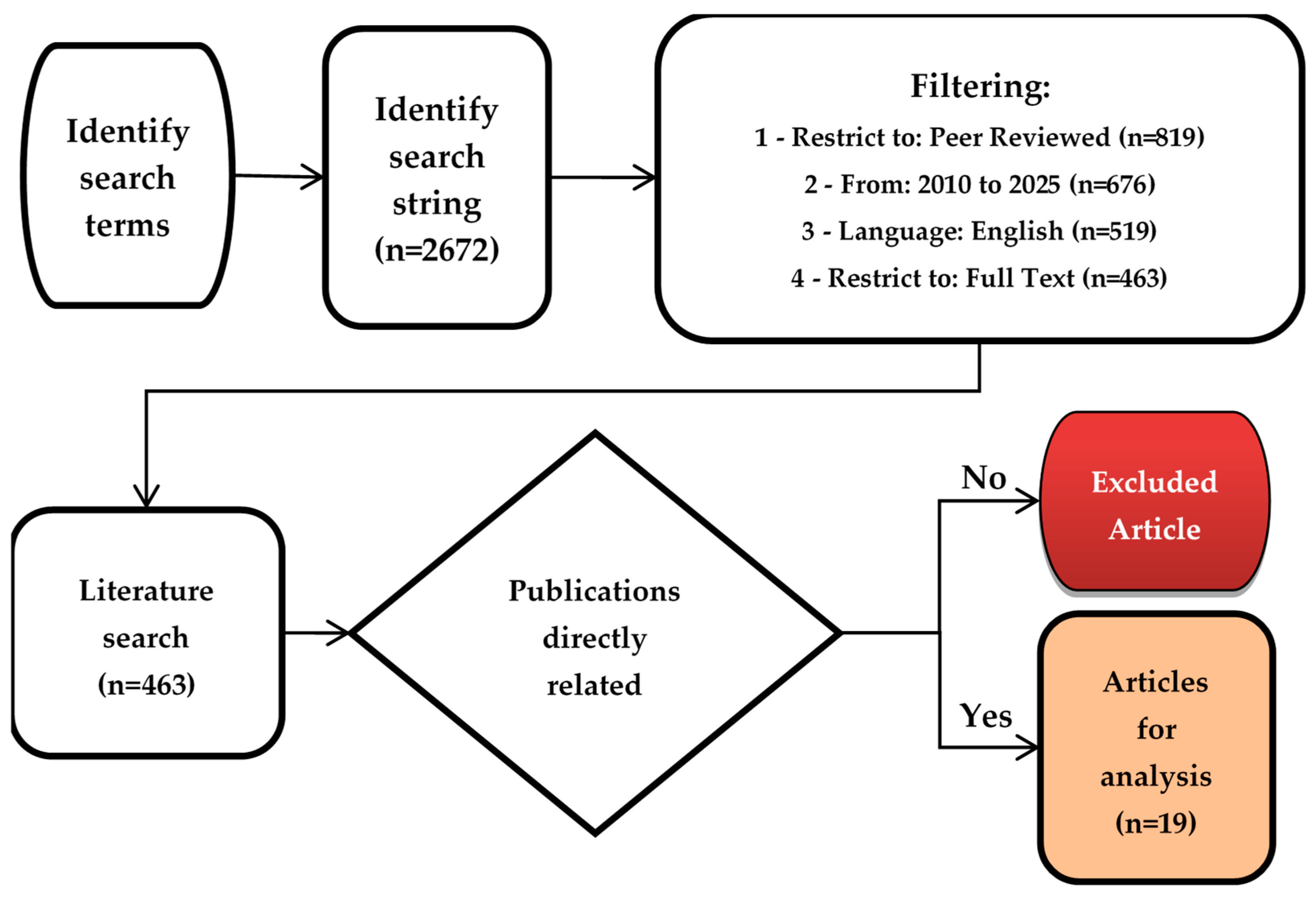
Following the application of additional filters, including publication period, language, full-text availability, and peer-review status, the dataset was refined from an initial 2672 articles to 463, of which, 19 were directly relevant to the study objectives.
Figure 1 presents a flowchart illustrating the systematic article selection and screening process, demonstrating the methodological rigor applied in the literature review and ensuring the selection of high-quality sources to support the research.

3.2. Articles Synthesis and Analysis

The following table provides a comprehensive overview of the key aspects covered in the literature (Table 4).
The systematic synthesis of the identified literature, summarized in Table 4, reveals a clear predominance of studies centered on automation and artificial intelligence (AI) as the driving forces behind industrial digital transformation. Indeed, all reviewed works (100%) emphasize the technological dimension, confirming its consolidated theoretical and practical relevance within the context of Industry 4.0. However, only 37% of the analyzed articles incorporate aspects related to low-cost adoption, signaling an underexplored research domain with significant practical implications, particularly for small- and medium-sized enterprises (SMEs) facing resource constraints.
In terms of the type of contribution, a marked prevalence of literature reviews (approximately 60%) is observed, followed by conceptual models and a smaller number of case studies. This distribution suggests that the academic debate remains largely conceptual, oriented toward theoretical consolidation rather than empirical application. The scarcity of validated case studies underscores a lack of practical testing of proposed frameworks or models, limiting the transferability of knowledge to real industrial environments.
Moreover, the intersection of “low-cost adoption” and “automation/AI integration” appears in only a minority of the works. This indicates that, although the technological core of Industry 4.0 is well established, its translation into accessible, incremental, and financially viable implementation paths remains insufficiently developed. The few articles that address both aspects tend to focus on general guidelines rather than detailed, cost-structured methodologies or replicable models.
Therefore, the literature portrays a mature theoretical ecosystem regarding automation and AI, but one that is fragmented in terms of accessibility, affordability, and operational scalability. These gaps highlight the necessity for research that bridges theory and practice through structured, validated, and economically feasible frameworks adaptable to different organizational contexts.

3.3. Discussion of Article Analysis Results

The analysis of the reviewed literature reveals strong theoretical maturity around automation and AI, confirming their central role in industrial digital transformation. Nevertheless, significant gaps persist regarding low-cost and incremental implementation approaches. While all studies emphasize the technological component, only about one-third address financially accessible strategies, and just a small portion incorporate sustainability as a structured objective. Most works are conceptual or review-based, with limited empirical validation and scarce practical guidance for SMEs.
These findings reveal a disconnect between the academic discourse and industrial reality, where organizations—especially SMEs—require concrete, validated, and cost-effective methodologies to adopt Industry 4.0 technologies. The lack of structured implementation frameworks limits the diffusion of digital transformation beyond large corporations with substantial investment capacities. Consequently, the literature demonstrates a pressing need for pragmatic, modular, and financially viable models capable of guiding stepwise technological adoption with measurable outcomes.
In particular, the limited number of case studies highlights the absence of empirical validation, an essential element for assessing feasibility, replicability, and scalability. Moreover, the weak connection between technical, organizational, and managerial dimensions restricts the holistic understanding necessary for sustainable and resilient transformation processes. Governance aspects, risk management, and workforce adaptation are often treated superficially or independently, rather than as integral components of implementation.
Hence, the results justify the development of a low-cost implementation framework designed to operationalize digital transformation in a structured, evidence-based, and accessible manner. This framework should integrate technical, economic, and governance dimensions, supported by modular maturity levels that allow incremental progress according to organizational capacity and digital readiness. Additionally, standardized validation mechanisms—including ROI estimation, payback analysis, and pilot testing protocols—are essential to ensure empirical robustness and industrial relevance.
Overall, the synthesis confirms that although automation and AI are extensively addressed, guidance for accessible, practical, and empirically verifiable adoption remains limited. This knowledge gap creates a solid foundation for advancing research toward the Implementation of a Low-Cost Model for Digital Transformation of Industrial Organizations in Industry 4.0, enabling the development of a replicable, scalable, and governance-oriented model that supports organizations—especially SMEs—in their journey toward efficient and responsible digital transformation.


4. The Proposed Model

4.1. Low-Cost Model for Digital Transformation

In this study, a low-cost model for digital transformation in industrial organizations is proposed, aiming to facilitate the adoption of Industry 4.0 technologies while minimizing financial and operational barriers. The model is designed to support organizations in achieving operational efficiency, process optimization, and accelerated digitalization without requiring extensive investment in high-end technologies or infrastructure.
Before implementing the low-cost digital transformation model, organizations should conduct a readiness assessment to evaluate their current technological, operational, and human capabilities. This assessment can include surveys, interviews, and audits to identify gaps in digital infrastructure, process maturity, and employee skills. Based on the assessment, companies can define clear objectives and scope for digital transformation, such as reducing process cycle times by a specific percentage, achieving real-time monitoring in key production areas, or decreasing operational costs within a defined budget. These objectives should be SMART (Specific, Measurable, Achievable, Relevant, Time-bound) to facilitate monitoring and evaluation. The defined scope ensures that interventions are targeted and that performance can be verified effectively through measurable indicators.
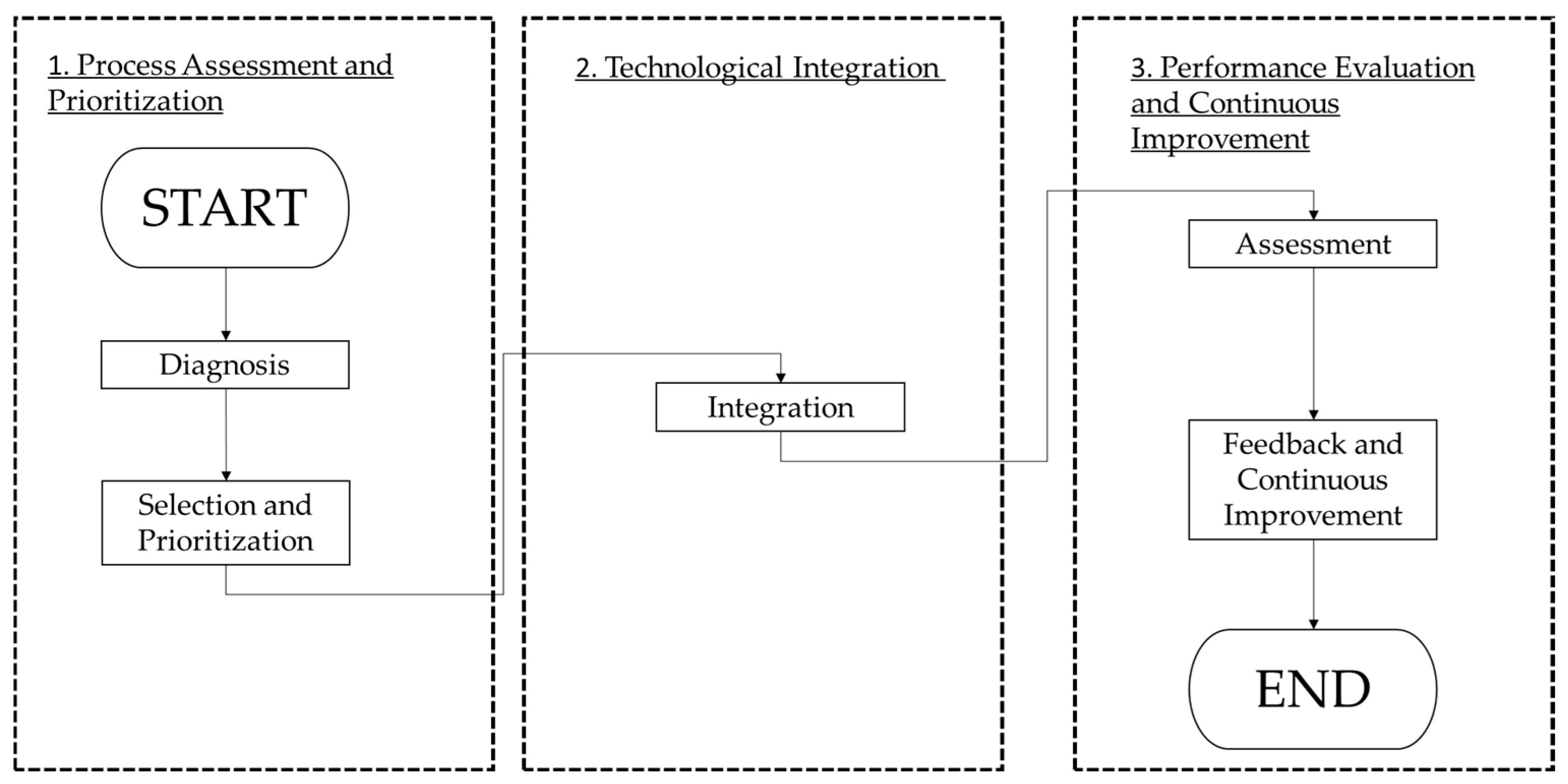
The proposed model is structured around three main components: process assessment and prioritization, technology integration, and performance evaluation. Each component is intended to guide organizations through a structured pathway, ensuring that digital transformation initiatives are both cost-effective and impactful.
1. Process Assessment and Prioritization: The first component of the model involves the systematic assessment of existing operational processes. Organizations identify critical areas where digitalization can generate significant improvements in efficiency and cost reduction. This stage employs tools such as process mapping, value stream analysis, and resource utilization assessment to determine high-priority processes. By focusing initially on areas with the greatest potential for impact, the model ensures that resources are allocated effectively and interventions are economically justified.
2. Technology Integration: The second component focuses on the adoption of accessible, scalable, and low-cost technologies that can enhance operational efficiency. These may include digital monitoring systems, process automation tools, data analytics platforms, and cloud-based solutions. The integration process emphasizes interoperability with existing systems and incremental deployment, reducing implementation risks and costs. By employing technologies that are readily available and cost-efficient, organizations can advance their digital transformation without substantial capital expenditure.
From an IT integration perspective, small- and medium-sized enterprises must decide whether to rely on in-house IT resources or outsourced services. Organizations with sufficient internal technical expertise may implement and maintain their own digital solutions, which can reduce costs associated with external providers but requires investment in staff training and time. Alternatively, outsourcing to cloud providers, IT consultants, or managed service providers allows SMEs to access specialized skills and scalable infrastructure, potentially reducing implementation risks and ensuring faster deployment, but may increase recurring costs. The model recommends a hybrid approach, where critical processes and sensitive data are handled internally, while less sensitive operations and cloud-based analytics are outsourced to cost-effective service providers. This approach balances cost, control, and scalability, ensuring that SMEs can implement digital technologies efficiently within their budget constraints.
3. Performance Evaluation and Continuous Improvement: The final component of the model involves ongoing monitoring and evaluation of performance metrics to ensure that digital transformation initiatives deliver measurable results. Key performance indicators (KPIs) include operational efficiency, process cycle times, resource utilization, and cost savings. The evaluation phase allows organizations to identify bottlenecks, refine processes, and adjust the deployment of digital solutions as needed. This iterative approach fosters a culture of continuous improvement and ensures the long-term sustainability of the transformation initiatives.
The proposed low-cost model emphasizes a stepwise and scalable approach to digital transformation. It allows organizations to implement solutions gradually, demonstrating tangible benefits at each stage while maintaining control over costs. Furthermore, the model facilitates knowledge transfer within the organization, enhancing employee engagement and capabilities in digital technologies.
Figure 2 illustrates the conceptual model of the proposed low-cost model, highlighting the interactions between the three components and their contribution to operational efficiency, cost optimization, and accelerated digital transformation.
By implementing this model, industrial organizations are able to balance technological advancement with economic efficiency, promoting a sustainable path toward Industry 4.0 while maintaining a focus on cost control and measurable performance improvements.

4.2. Characteristics and Benefits of the Model

The proposed low-cost digital transformation model is designed with clear characteristics and practical guidelines that enable organizations of varying sizes—small, medium, and large—to implement Industry 4.0 technologies efficiently and economically. This section outlines the principal characteristics of the model and details the corresponding benefits, providing organizations with a structured, step-by-step roadmap for successful adoption.
Characteristics of the Model:
  • Process-Oriented Approach:
    • Identification of critical processes: Organizations must start by mapping and evaluating operational processes to determine which are high-impact, repetitive, or time-consuming. Examples include inventory management, production scheduling, quality control, and order processing.
    • Prioritization criteria: Processes are prioritized based on potential for cost reduction, efficiency gains, and feasibility of digital automation. Tools such as value stream mapping, flowcharts, and SIPOC diagrams are recommended for visualization.
    • Scalability: The model supports gradual implementation, beginning with small, high-value processes and scaling to more complex operations.
  • Use of Open-Source and Low-Cost Tools:
    • Programming and automation: Open-source programming languages such as Python or R are recommended for data processing, scripting, and automation of repetitive tasks. Python libraries like Pandas, NumPy, and OpenCV facilitate data handling, analytics, and machine vision tasks without license costs.
    • Database management: Free relational database management systems such as MySQL, PostgreSQL, or SQLite can support production data storage, transactional processing, and reporting. For Big Data analysis, tools like Apache Hadoop, Apache Spark, or Google BigQuery’s free tier can be employed.
    • Integration with office tools: Integration with widely used office software such as LibreOffice or Microsoft Office (with free alternatives when applicable) allows for automation of reporting, dashboards, and document generation using macros or scripts.
    • Business process automation: Tools like Node-RED, Apache NiFi, or UiPath Community Edition can automate workflows and connect different systems without expensive enterprise licenses.
    • Visualization and analytics: Open-source platforms like Tableau Public, Power BI free version, or Plotly/Dash in Python enable cost-effective dashboards and visual reporting.
  • Data-Driven Decision Making:
    • Real-time monitoring: The model emphasizes collecting and analyzing operational data in real time to guide decisions. Sensors, IoT devices, and open-source SCADA alternatives (e.g., OpenSCADA) allow for process monitoring with minimal cost.
    • Predictive analytics: Python-based libraries or free machine learning frameworks like Scikit-learn or TensorFlow Lite can be used for predictive maintenance, demand forecasting, and quality control without expensive proprietary software.
Cybersecurity is a fundamental consideration for digital transformation initiatives. Even when using low-cost or open-source tools, organizations must implement measures such as network segmentation, encrypted communication, user access control, and regular software updates to protect operational data. Open-source SCADA and IoT platforms should be configured following best practices for security, including authentication, authorization, and audit logging. The model encourages SMEs to develop a cybersecurity plan proportionate to the scope of digital adoption, balancing security requirements with cost-effectiveness, and ensuring that sensitive production and operational data are protected throughout the transformation process.
4.
Stepwise Implementation and Modular Design:
  • Incremental deployment: Implementation should follow a modular approach: first address processes with the highest impact, then expand gradually. This reduces risk and allows organizations to learn and adapt with minimal disruption.
  • Department-specific modules: Each department (e.g., production, logistics, HR, finance) can adopt relevant tools independently before integrating them into a broader organizational ecosystem.
5.
Cost Efficiency and License-Free Solutions:
  • Avoiding high-cost licenses: By relying primarily on open-source and community editions, organizations avoid the expenses of enterprise licenses. For example, SMEs can leverage LibreOffice macros for document automation instead of purchasing multiple Office licenses.
  • Cloud-based free tiers: Small companies can use cloud services like AWS Free Tier, Google Cloud Free Tier, or Microsoft Azure free options to run databases, analytics, or development environments without upfront costs.
6.
Interoperability and Integration:
  • Seamless connectivity: The model encourages integration of low-cost tools with existing enterprise systems (ERP, MES, CRM). Open APIs, connectors, and workflow engines facilitate data exchange between legacy and modern systems.
  • Data centralization: Information from multiple departments is consolidated into a single data repository, allowing for analytics and reporting across the organization.
7.
Training and Knowledge Transfer:
  • User empowerment: Employees are trained to use open-source and automation tools, ensuring long-term sustainability. Step-by-step manuals, online courses, and community forums support skill development without additional costs.
  • Collaboration culture: Teams learn to collaborate with IT and operations, identifying further areas for process improvement and digital integration.
8.
Performance Measurement and Continuous Improvement:
  • KPI monitoring: Operational efficiency, cost savings, process cycle times, error reduction, and user adoption rates are tracked to assess the success of each implemented module.
  • Iterative refinement: The model supports continuous improvement cycles, adjusting workflows, scripts, or dashboards based on performance metrics.
To monitor and evaluate the financial effectiveness of the digital transformation, organizations should define specific KPIs related to costs and return on investment (ROI). These indicators may include: initial implementation costs, operational cost savings, reduction in process cycle times, error reduction, and employee time savings. ROI can be calculated as (Total Benefits − Total Costs)/Total Costs, allowing companies to quantify the economic impact of low-cost digitalization initiatives. Additionally, performance metrics should be tracked periodically to assess whether the transformation objectives defined during the readiness assessment are being met. This structured evaluation ensures that investments in digital technologies generate measurable value and support informed decision-making for subsequent implementation phases.
Benefits of the Model
  • Financial Sustainability:
    • Enables organizations to implement digital transformation without large capital expenditure.
    • Reduces dependency on expensive proprietary software and enterprise licenses.
  • Operational Efficiency:
    • Optimizes processes through automation and real-time data monitoring.
    • Reduces manual effort, errors, and redundant tasks.
  • Flexibility and Scalability:
    • Suitable for organizations of all sizes: small enterprises can start with one department, medium-sized firms can implement across multiple departments, and large corporations can scale modularly without high upfront costs.
  • Faster Adoption of Industry 4.0 Technologies:
    • Stepwise implementation ensures quick wins, building confidence and promoting further adoption.
    • Incremental deployment minimizes risk and disruption while demonstrating measurable results.
  • Enhanced Decision-Making:
    • Provides actionable insights from operational data, enabling proactive management and predictive planning.
    • Supports data-driven strategies for production scheduling, inventory management, and resource allocation.
  • Sustainability and Knowledge Retention:
    • Empowers employees with new digital skills, fostering a culture of innovation and continuous improvement.
    • Ensures that digital transformation initiatives remain operationally sustainable without reliance on external vendors or consultants.
This model provides a practical roadmap for low-cost digital transformation, ensuring organizations can adopt Industry 4.0 technologies without excessive investment. By following this structured approach, companies can achieve measurable operational improvements, cost reductions, and a sustainable digital transformation strategy.

5. Case Study

5.1. Case Study Presentation

The case study focuses on a small family-owned company specialized in carpentry and residential construction, which is located in a semi-urban area. The company employs a total of 12 people, of which, 9 work directly on construction and carpentry tasks, while the remaining 3 staff members handle administrative and operational tasks in a small office. The company had traditionally relied on manual processes for nearly all its operations, from project planning and inventory management to invoicing, payroll, and customer follow-ups.
Before any intervention, the company faced several challenges common in small enterprises:
  • Manual record-keeping: All project details, material usage, and employee hours were logged by hand in notebooks or basic spreadsheets.
  • Inventory management issues: Tracking available wood, nails, and other materials relied on memory or paper lists, often causing overstock or shortages.
  • Project scheduling difficulties: Coordination between construction tasks and deadlines was informal, resulting in delays and occasional miscommunication with clients.
  • Customer communication and billing: Quotes, invoices, and project updates were managed manually, requiring significant time from the office staff.
The company’s owner expressed concern about rising costs, inefficiencies, and the risk of mistakes, but was hesitant to invest in expensive digital systems due to the small size and limited budget of the business. At this point, a student studying computer engineering who was conducting an internship project was invited to analyze the company’s operations and propose improvements using the low-cost digital transformation model.

5.2. Application of the Model to the Case Study

The application of the low-cost model to this case study followed the three-step structure: Process Assessment and Prioritization, Technology Integration, and Performance Evaluation.
  • Step 1: Process Assessment and Prioritization
The student began by mapping all administrative and operational processes. Meetings were held with the office staff and workshop team to understand how tasks were executed and identify pain points. Processes were evaluated based on frequency, time consumption, and potential for error.
The key processes selected for improvement included:
  • Recording employee hours and project tasks.
  • Managing material inventory and procurement.
  • Scheduling construction projects and coordinating tasks.
  • Generating customer quotes and invoices.
These were considered the most critical areas where digital transformation could quickly increase efficiency and reduce errors without requiring high investments.
2.
Step 2: Technology Integration
Once priority processes were identified, low-cost and open-source tools were introduced. The choices were made to match the company’s size and technical familiarity of the staff.
Employee Hours and Task Logging:
  • A simple spreadsheet system using LibreOffice Calc was implemented, with pre-configured formulas to automatically sum hours worked and calculate payroll.
  • Python scripts were created to convert the spreadsheets into weekly reports, highlighting any anomalies or overtime.
Inventory Management:
  • A basic inventory database was built using SQLite, with a simple interface that allowed the office staff to register incoming and outgoing materials.
  • Daily stock levels could be checked in real time, and alerts were generated when quantities fell below predefined thresholds.
Project Scheduling:
  • Google Calendar and Trello (free version) were used to create project timelines, assign tasks to workshop staff, and track progress.
  • Notifications and reminders ensured that deadlines were met and team members were aware of priorities.
Customer Quotes and Billing:
  • Templates in LibreOffice Writer were configured for automatic generation of quotes and invoices.
  • Python scripts were used to pull data from the inventory database and project schedules to automatically calculate material costs and labor, reducing manual calculation errors.
  • The tools were selected to be user-friendly, free or very low cost, and easily integrated into existing workflows, allowing the staff to adapt quickly without specialized IT knowledge.
3.
Step 3: Performance Evaluation and Continuous Improvement
After the implementation of these tools, the student worked with the office staff to define simple key performance indicators (KPIs) to measure improvements:
  • Reduction in errors in payroll and invoicing.
  • Time saved in project scheduling and inventory tracking.
  • Accuracy of material usage and stock control.
  • Responsiveness to client requests and project updates.
The staff reported high satisfaction with the new systems, noting that they were simple to use and significantly reduced the administrative burden. Importantly, all solutions were implemented at minimal cost, with no need for expensive enterprise software licenses (Table 5).
This case study demonstrates that even small companies with very limited resources can successfully implement digital transformation using a low-cost, structured model, achieving operational efficiency, error reduction, and faster, more reliable processes without large financial investments.
To better understand employees’ perceptions of the changes, informal interviews and feedback meetings were conducted with all team members throughout the implementation process. The goal was to assess not only the acceptance of digital tools but also perceptions of efficiency, ease of use, and impact on daily work. These reports provided information for prioritizing processes, adjusting workflows, and identifying additional training needs. Although the study focused on a small company, the direct involvement of multiple employees allowed for the collection of data from different perspectives, enriching the analysis and offering elements that can be considered in future studies with medium-sized companies.
Although the formal evaluation period was three months, the operation of the digital tools continued under informal monitoring during the following months. During this additional period, it was observed that the automated processes, reports, and control systems maintained consistent performance, demonstrating that the initial gains in efficiency and error reduction stabilized. This informal monitoring reinforces the reliability of the results, offering evidence that the implementation of the model generates sustainable improvements over time, even in a small business context.

6. Analysis of Results and Discussion

6.1. Analysis of Results

Following the implementation of the proposed low-cost digital transformation model, the small carpentry and construction company experienced significant operational improvements across various key processes. The analysis of results was based on quantitative indicators (time reduction, error rate, and cost savings) and qualitative feedback (employee satisfaction, ease of use, and perceived efficiency).
Data were collected during a three-month evaluation period following the implementation of the digital tools and automation scripts. The comparative analysis between the pre-implementation and post-implementation stages is summarized below in Table 6.
These quantitative results demonstrate a clear increase in productivity and accuracy across all core administrative and operational activities. In addition to the measurable gains, qualitative analysis revealed positive changes in the organization’s workflow and employee attitudes (Table 7 and Table 8).
The implementation required minimal investment as all technologies adopted were open-source or free-to-use cloud-based platforms, such as LibreOffice, Python, SQLite, Trello, and Google Workspace free tools. The total setup and training time took approximately two weeks, and no external consultancy or licensing fees were necessary.
The combination of automation scripts, process standardization, and basic digital tools produced tangible efficiency gains and measurable cost savings, confirming the viability of the proposed low-cost model for small- and medium-sized enterprises (SMEs).
To statistically validate the improvements observed in the main processes after the model implementation, we applied a paired t-test using Excel. The indicators analysed included average weekly time for issuing invoices (Invoicing), inventory control (Inventory), project scheduling (Scheduling), and payroll processing (Payroll). The data were organized into two columns in Excel: the “Before” column with the pre-implementation values and the “After” column with the post-implementation values. We obtained the following values: Invoicing: 2.5 h → 0.5 h; Inventory: 11 h → 3.5 h; Scheduling: 4 h → 1 h; Payroll: 5.5 h → 1 h.
In Excel, we applied the T.TEST (array1; array2; 2; 1) function, where array1 corresponded to the “Before” values, array2 to the “After” values, 2 indicated a two-tailed test, and 1 specified that the samples were paired. This configuration allowed us to directly compare the same processes before and after the intervention, with each row representing the same process at different times.
The paired t-test resulted in a t-value of 3.545 and a p-value of 0.038, indicating that the observed improvements are statistically significant at the 5% level (p < 0.05). This means that the reduction in time in the analysed processes—from issuing invoices, inventory control, scheduling, and payroll processing—did not occur by chance, confirming that the implementation of the digital transformation model generated real efficiency gains.
This result reinforces the descriptive data presented in Table 6 and Table 7, showing that the 70–80% improvement observed in the performance indicators is statistically significant. The application of the paired t-test using Excel also demonstrates that simple and accessible methods can be employed in small- and medium-sized enterprises to analyze the impact of digitization initiatives, ensuring greater reliability of the results and support for decision-making.

6.2. Discussion

The results of this case study demonstrate that a structured and incremental approach to digital transformation can generate substantial benefits, even in small organizations with limited resources. By emphasizing open-source and freely available tools, the model reduces the financial barriers typically associated with Industry 4.0 adoption.
(a) Operational Efficiency and Cost Reduction
The company’s transition from manual to digital workflows significantly improved operational efficiency. Time spent on administrative tasks such as invoicing, payroll, and scheduling was drastically reduced. These improvements translated directly into cost savings, as fewer hours were devoted to repetitive tasks and error correction.
Unlike traditional digital transformation strategies that rely on expensive ERP or proprietary automation systems, the proposed model leverages lightweight, interoperable technologies such as SQLite databases, Python automation scripts, and LibreOffice macros, which can be easily maintained and customized internally. This confirms that technological sophistication does not necessarily require high financial investment, but rather a structured and well-prioritized implementation plan.
(b) Employee Engagement and Digital Adoption
Another significant finding was the improvement in employee engagement. Initially, the staff expressed concern about learning new tools. However, the gradual introduction of user-friendly systems and practical training sessions helped overcome resistance to change. Within weeks, employees reported higher job satisfaction, mainly due to the elimination of repetitive manual work and the visibility of real-time project data.
This aligns with recent literature on digital transformation in SMEs, which emphasizes the importance of human factors and incremental adaptation over radical technological disruption. The model thus promotes technological empowerment rather than dependence on external expertise.
(c) Scalability and Adaptability of the Model
Although developed for a small carpentry business, the model demonstrates scalability across different organizational sizes and sectors. For micro and small enterprises, the emphasis lies on lightweight solutions such as spreadsheets, Python scripts, and cloud-based tools. For medium-sized enterprises, additional layers of data analytics or collaborative tools (such as Power BI or Grafana) can be integrated. For larger companies, the same logic can be expanded with containerized applications and open-source ERP systems like Odoo.
The model’s modular nature allows it to evolve with the company’s growth, ensuring long-term sustainability and adaptability.
(d) Broader Implications for Industry 4.0 Adoption
This case study reinforces the notion that Industry 4.0 principles—such as automation, interconnectivity, and data-driven decision-making—are achievable for companies of all sizes. Through the adoption of low-cost and open-source technologies, SMEs can effectively bridge the digital divide that often separates them from large industrial corporations.
Furthermore, the proposed model supports the democratization of digital transformation, providing a practical, affordable, and replicable framework. The success of this approach depends less on financial resources and more on organizational willingness to assess processes, adopt scalable technologies, and commit to continuous improvement.
(e) Limitations and Future Work
While the results are highly positive, the study acknowledges certain limitations. The case study reflects a single organization within a specific industrial context, and broader validation across multiple sectors is needed. Future research should evaluate the model’s performance in different industrial environments—for example, manufacturing, logistics, or service-based SMEs—to further confirm its general applicability.
Additionally, integrating cybersecurity measures and exploring IoT-based monitoring in the low-cost framework could enhance resilience and real-time analytics in future implementations.
The analysis confirms that the proposed low-cost digital transformation model effectively enhances efficiency, accuracy, and employee engagement without requiring large financial investments. It demonstrates a viable pathway for small- and medium-sized industrial organizations to initiate and sustain their digital transformation journey within the principles of Industry 4.0, balancing technological progress with economic sustainability.

7. Conclusions

This study set out to answer the central research question of whether the adoption of a low-cost model can accelerate digital transformation in industrial organizations while enhancing operational efficiency and reducing costs. The findings confirm that it can. Through the implementation of a structured model based on open-source technologies, automation, and scalable integration, the pilot study demonstrated that even small- and medium-sized enterprises with limited resources can achieve measurable improvements in productivity, cost reduction, and process transparency.
The empirical results showed reductions of up to 80% in process execution times, alongside improvements in communication, coordination, and employee engagement. These outcomes validate both research hypotheses: (1) the low-cost model improves operational efficiency, and (2) it accelerates digital transformation while maintaining economic sustainability. The study also highlighted the importance of human factors—such as digital mindset and continuous learning—as essential enablers of Industry 4.0 transformation.
Although the model was validated through a single case study conducted in a small construction and carpentry enterprise, the underlying principles—modularity, accessibility, and reliance on open-source technologies—suggest that it may also be adaptable to other organizational contexts. However, broader validation is required to confirm its applicability to medium-sized and larger companies.
In addition to performance and cost benefits, the proposed model also presents potential implications for quality and safety management in accordance with ISO standards. By promoting process standardization, traceability, and data accuracy, the low-cost digital tools can strengthen compliance with ISO 9001 (Quality Management) [54] and ISO 45001 (Occupational Health and Safety) [55], supporting more reliable documentation, auditability, and decision-making.
Future research should extend the evaluation of the model to multiple industrial sectors—including manufacturing, logistics, and services—and over longer periods to assess sustainability and scalability. The integration of advanced technologies such as IoT, big data analytics, and AI within the low-cost framework would further enhance predictive capabilities and automation. Additionally, the development of digital literacy programs could reinforce the human-centered dimension of transformation.
In summary, this study demonstrates that digital transformation is not exclusive to large organizations. Through intelligent use of open-source tools and redesign of internal processes, SMEs can achieve meaningful advances in efficiency, productivity, and competitiveness. The proposed low-cost model offers an inclusive and sustainable pathway toward Industry 4.0, balancing technological progress with economic feasibility.

Author Contributions

The model in this paper was proposed and presented by L.P. and L.V. The main investigation, encompassing the development and implementation of the model, was conducted by L.P. The discussion, evaluation of the topic’s significance, literature review, and manuscript preparation were collaboratively undertaken by L.P. and L.V. The overall supervision of this work was provided by L.V., while project administration and funding acquisition were coordinated by L.V. All authors have read and agreed to the published version of the manuscript.

Funding

The project was merged by FCT—Foundation for Science and Technology through the scope of the R&D units project: UIDB/00319/2020.

Data Availability Statement

The original contributions presented in the study are included in the article. Further inquiries can be directed to the corresponding author.

Conflicts of Interest

The authors declare no conflicts of interest.

References

  1. Barton, M.; Budjac, R.; Tanuska, P.; Gaspar, G.; Schreiber, P. Identification Overview of Industry 4.0 Essential Attributes and Resource-Limited Embedded Artificial-Intelligence-of-Things Devices for Small and Medium-Sized Enterprises. Appl. Sci. 2022, 12, 5672. [Google Scholar] [CrossRef]
  2. Abdulaziz, Q.A.; Mad Kaidi, H.; Masrom, M.; Hamzah, H.S.; Sarip, S.; Dziyauddin, R.A.; Muhammad-Sukki, F. Developing an IoT Framework for Industry 4.0 in Malaysian SMEs: An Analysis of Current Status, Practices, and Challenges. Appl. Sci. 2023, 13, 3658. [Google Scholar] [CrossRef]
  3. Suciu, A.-D.; Tudor, A.I.M.; Chițu, I.B.; Dovleac, L.; Brătucu, G. IoT Technologies as Instruments for SMEs’ Innovation and Sustainable Growth. Sustainability 2021, 13, 6357. [Google Scholar] [CrossRef]
  4. Patrício, L.; Varela, L.; Silveira, Z. A Conceptual Framework of the Technological Integration of Industry 4.0 with Sustainability Concepts. Sustainability 2025, 17, 10160. [Google Scholar] [CrossRef]
  5. Megdadi, E.; Mohamed, A.; Shaalan, K. Machine Learning-Driven Best–Worst Method for Predictive Maintenance in Industry 4.0. Automation 2025, 6, 91. [Google Scholar] [CrossRef]
  6. El-Hajj, M.; Mirza, Z.A. ProtectingSmall and Medium Enterprises: A Specialized Cybersecurity Risk Assessment Framework and Tool. Electronics 2024, 13, 3910. [Google Scholar] [CrossRef]
  7. Yang, Q.; Jin, S. Exploring the Impact of Digital Transformation on Manufacturing Environment, Social Responsibility, and Corporate Governance Performance: The Moderating Role of Top Management Teams. Sustainability 2024, 16, 4342. [Google Scholar] [CrossRef]
  8. Saniuk, S.; Grabowska, S. The Concept of Cyber-Physical Networks of Small and Medium Enterprises under Personalized Manufacturing. Energies 2021, 14, 5273. [Google Scholar] [CrossRef]
  9. Patrício, L.; Varela, L.; Silveira, Z.; Felgueiras, C.; Pereira, F. A Framework for Integrating Robotic Process Automation with Artificial Intelligence Applied to Industry 5.0. Appl. Sci. 2025, 15, 7402. [Google Scholar] [CrossRef]
  10. Rudenko, R.; Pires, I.M.; Oliveira, P.; Barroso, J.; Reis, A. A Brief Review on Internet of Things, Industry 4.0 and Cybersecurity. Electronics 2022, 11, 1742. [Google Scholar] [CrossRef]
  11. Alazab, M.; Alhyari, S. Industry 4.0 Innovation: A Systematic Literature Review on the Role of Blockchain Technology in Creating Smart and Sustainable Manufacturing Facilities. Information 2024, 15, 78. [Google Scholar] [CrossRef]
  12. Abdel-Aty, T.A.; McFarlane, D.; Brooks, S.; Salter, L.; Abubakar, A.S.; Evans, S.; Hawkridge, G.; Price Thomas, K.; Negri, E.; Mukherjee, A.; et al. The Role of Low-Cost Digital Solutions in Supporting Industrial Sustainability. Sustainability 2024, 16, 1301. [Google Scholar] [CrossRef]
  13. Yaqub, M.Z.; Alsabban, A. Industry-4.0-Enabled Digital Transformation: Prospects, Instruments, Challenges, and Implications for Business Strategies. Sustainability 2023, 15, 8553. [Google Scholar] [CrossRef]
  14. Vuković, M.; Jorg, O.; Hosseinifard, M.; Fantoni, G. Low-Cost Digitalization Solution through Scalable IIoT Prototypes. Appl. Sci. 2022, 12, 8571. [Google Scholar] [CrossRef]
  15. Mick, M.M.A.P.; Kovaleski, J.L.; Mick, R.L.; Chiroli, D.M.d.G. Developing a Sustainable Digital Transformation Roadmap for SMEs: Integrating Digital Maturity and Strategic Alignment. Sustainability 2024, 16, 8745. [Google Scholar] [CrossRef]
  16. Ortega-Gras, J.-J.; Bueno-Delgado, M.-V.; Puche-Forte, J.-F.; Garrido-Lova, J.; Martínez-Fernández, R. Exploring Industry 4.0 Technologies Implementation to Enhance Circularity in Spanish Manufacturing Enterprises. Sustainability 2025, 17, 7648. [Google Scholar] [CrossRef]
  17. Zamora Iribarren, M.; Garay-Rondero, C.L.; Lemus-Aguilar, I.; Peimbert-García, R.E. A Review of Industry 4.0 Assessment Instruments for Digital Transformation. Appl. Sci. 2024, 14, 1693. [Google Scholar] [CrossRef]
  18. Barton, M.; Budjac, R.; Tanuska, P.; Sladek, I.; Nemeth, M. Advancing Small and Medium-Sized Enterprise Manufacturing: Framework for IoT-Based Data Collection in Industry 4.0 Concept. Electronics 2024, 13, 2485. [Google Scholar] [CrossRef]
  19. Li, Q.; Tian, W.; Zhang, H. Digital Transformation for Sustainability in Industry 4.0: Alleviating the Corporate Digital Divide and Enhancing Supply Chain Collaboration. Systems 2025, 13, 123. [Google Scholar] [CrossRef]
  20. Zheng, S.; Zhou, Y. Digital Transformation and Competitive Advantage in Manufacturing: The Role of Business Model Innovation. Economies 2025, 13, 209. [Google Scholar] [CrossRef]
  21. Liu, X.; Hong, S.; Su, Z.; Zhou, Y. The Impact of Digital Transformation on High-Quality Development of Manufacturing Enterprises: An Integrated Perspective on Efficiency and Social Responsibility. Mathematics 2025, 13, 815. [Google Scholar] [CrossRef]
  22. Acker, J.; Rogers, I.; Guerra-Zubiaga, D.; Tanveer, M.H.; Moghadam, A.A.A. Low-Cost Digital Twin Approach and Tools to Support Industry and Academia: A Case Study Connecting High-Schools with High Degree Education. Machines 2023, 11, 860. [Google Scholar] [CrossRef]
  23. Marolt, M.; Lenart, G.; Kljajić Borštnar, M.; Pucihar, A. Exploring Digital Transformation Journey Among Micro, Small-, and Medium-Sized Enterprises. Systems 2025, 13, 1. [Google Scholar] [CrossRef]
  24. Jin, Z.; Marian, R.M.; Chahl, J.S. A Critical Analysis and Roadmap for the Development of Industry 4-Oriented Facilities for Education, Training, and Research in Academia. Appl. Syst. Innov. 2025, 8, 106. [Google Scholar] [CrossRef]
  25. Martínez-Peláez, R.; Escobar, M.A.; Félix, V.G.; Ostos, R.; Parra-Michel, J.; García, V.; Ochoa-Brust, A.; Velarde-Alvarado, P.; Félix, R.A.; Olivares-Bautista, S.; et al. Sustainable Digital Transformation for SMEs: A Comprehensive Framework for Informed Decision-Making. Sustainability 2024, 16, 4447. [Google Scholar] [CrossRef]
  26. Müller, J.M. Antecedents to Digital Platform Usage in Industry 4.0 by Established Manufacturers. Sustainability 2019, 11, 1121. [Google Scholar] [CrossRef]
  27. Hrbić, R. Assessing the Early Impact of Industry 4.0 Technologies on the Activity, Efficiency, and Profitability of Croatian Micro-, Small-, and Medium-Sized Enterprises. J. Risk Financ. Manag. 2025, 18, 590. [Google Scholar] [CrossRef]
  28. Alkhodair, M.; Alkhudhayr, H. Harnessing Industry 4.0 for SMEs: Advancing Smart Manufacturing and Logistics for Sustainable Supply Chains. Sustainability 2025, 17, 813. [Google Scholar] [CrossRef]
  29. Islam, M.T.; Sepanloo, K.; Woo, S.; Woo, S.H.; Son, Y.-J. A Review of the Industry 4.0 to 5.0 Transition: Exploring the Intersection, Challenges, and Opportunities of Technology and Human–Machine Collaboration. Machines 2025, 13, 267. [Google Scholar] [CrossRef]
  30. Inayat, I.; Salim, S.S.; Marczak, S.; Daneva, M. A Systematic Literature Review on Agile Requirements Engineering Practices and Challenges. Comput. Hum. Behav. 2014, 51, 915–929. [Google Scholar] [CrossRef]
  31. Brhel, M.; Meth, H.; Maedche, A.; Werder, K. Exploring Principles of User-Centered Agile Software Development: A Literature Review. Inf. Softw. Technol. 2015, 61, 163–181. [Google Scholar] [CrossRef]
  32. Eriksen, M.B.; Frandsen, T.F. The Impact of Patient, Intervention, Comparison, Outcome (PICO) as a Search Strategy Tool on Literature Search Quality: A Systematic Review. J. Med. Libr. Assoc. 2018, 106, 420–431. [Google Scholar] [CrossRef]
  33. Scells, H.; Zuccon, G.; Koopman, B.; Deacon, A.; Azzopardi, L.; Geva, S. Integrating the Framing of Clinical Questions via PICO into the Retrieval of Medical Literature for Systematic Reviews. In Proceedings of the CIKM 2017: Conference on Information and Knowledge Management, Singapore, 6–10 November 2017; pp. 2291–2294. [Google Scholar] [CrossRef]
  34. Zhu, Y.; Wang, T.; Wang, C.; Quan, W.; Tang, M. Complexity-Driven Trust Dynamics in Human–Robot Interactions: Insights from AI-Enhanced Collaborative Engagements. Appl. Sci. 2023, 13, 12989. [Google Scholar] [CrossRef]
  35. Polner, A.; Schaefer, G.; Wright, D.; Thopalli, K.; Telford, T.; Urbaniak, T. Automation with Intelligence. Deloitte Insights. 2022. Available online: https://www.deloitte.com/us/en/insights/topics/talent/intelligent-automation-2022-survey-results.html (accessed on 15 December 2025).
  36. Dong, X.; McIntyre, S.H. The Second Machine Age: Work, Progress, and Prosperity in a Time of Brilliant Technologies. Quant. Financ. 2014, 14, 1895–1896. [Google Scholar] [CrossRef]
  37. Ziyadin, S.; Suieubayeva, S.; Utegenova, A. Digital Transformation in Business. In Digital Transformation of the Economy: Challenges, Trends, New Opportunities; Springer: Berlin/Heidelberg, Germany, 2019; pp. 408–415. [Google Scholar] [CrossRef]
  38. Patrício, L.; Varela, L.; Silveira, Z. Proposal for a Sustainable Model for Integrating Robotic Process Automation and Machine Learning in Failure Prediction and Operational Efficiency in Predictive Maintenance. Appl. Sci. 2025, 15, 854. [Google Scholar] [CrossRef]
  39. Patrício, L.; Varela, L.; Silveira, Z. Integration of Artificial Intelligence and Robotic Process Automation: Literature Review and Proposal for a Sustainable Model. Appl. Sci. 2024, 14, 9648. [Google Scholar] [CrossRef]
  40. Kiehne, J.; Olaru, M. Implementing Industrie 4.0 Strategies: Beyond Technical Innovations. In Proceedings of the BASIQ 2017: International Conference New Trends in Sustainable Business and Consumption, Graz, Austria, 31 May–3 June 2017. [Google Scholar]
  41. Horvat, D.; Pjanić, M.; Ivanišević, R.; Gluščević, L. The impact of robotic process automation in financial institutions. BizInfo Blace 2025. [Google Scholar] [CrossRef]
  42. Patrício, L.; Costa, C.R.S.; Fernandes, L.P.; Varela, L.R. Structure for the implementation and control of robotic process automation projects. In Advanced Network Technologies and Intelligent Computing; Springer International Publishing: Berlin/Heidelberg, Germany, 2023; pp. 261–274. [Google Scholar] [CrossRef]
  43. Balamurugan, A.; Vamsi, M.; Bhattacharya, R.; Mohammed, S.; Kaushik, P.; Haralayya, B. Robotic Process Automation (RPA) in Accounting and Auditing of Business and Financial Information. Manag. Br. J. Adm. Manag. 2022, 58, 127–142. [Google Scholar]
  44. Willcocks, L.; Lacity, M.; Craig, A. Robotic Process Automation: The Next Transformation Lever for Shared Services. J. Inf. Technol. Teach. Cases 2016, 6, 17–28. [Google Scholar] [CrossRef]
  45. Davenport, T.H.; Kirby, J. Just How Smart Are Smart Machines? MIT Sloan Manag. Rev. 2015, 56, 21–23. [Google Scholar]
  46. Susskind, R.; Susskind, D. The Future of the Professions: How Technology Will Transform the Work of Human Experts; Oxford University Press: Oxford, UK, 2015; ISBN 9780198713395. [Google Scholar] [CrossRef]
  47. Bessen, J. Learning by Doing: The Real Connection between Innovation, Wages, and Wealth; Yale University Press: New Haven, CT, USA, 2015; ISBN 9780300213645. Available online: https://www.degruyterbrill.com/document/doi/10.12987/9780300213645/html (accessed on 15 December 2025).
  48. Gregory, G.D.; Ngo, L.V.; Karavdic, M. Developing e-commerce marketing capabilities and efficiencies for enhanced performance in business-to-business export ventures. Ind. Mark. Manag. 2019, 78, 146–157. [Google Scholar] [CrossRef]
  49. Pereira, C.S.; Durão, N.; Moreira, F.; Veloso, B. The Importance of Digital Transformation in International Business. Sustainability 2022, 14, 834. [Google Scholar] [CrossRef]
  50. Porter, M.E.; Heppelmann, J.E. How Smart, Connected Products Are Transforming Competition. Harv. Bus. Rev. 2014, 92, 64–88. [Google Scholar]
  51. Monostori, L.; Kádár, B.; Bauernhansl, T.; Kondoh, S.; Kumara, S.; Reinhart, G.; Sauer, O.; Schuh, G.; Sihn, W.; Ueda, K. Cyber-Physical Systems in Manufacturing. CIRP Ann. 2016, 65, 621–641. [Google Scholar] [CrossRef]
  52. Kagermann, H.; Wahlster, W.; Helbig, J. Securing the Future of German Manufacturing Industry: Recommendations for Implementing the Strategic Initiative Industrie 4.0. Final Report of the Industrie 4.0 Working Group; Acatech—National Academy of Science and Engineering: Munich, Germany, 2013; 678p. [Google Scholar]
  53. Ahmet Unal, M.; Bolukbas, O. The Acquirements of Digitalization with RPA (Robotic Process Automation) Technology in the Vakif Participation Bank. In Proceedings of the 4th International Conference on Information Science and Systems, Edinburgh, UK, 17–19 March, 2021; pp. 68–73. [Google Scholar] [CrossRef]
  54. Simões, M.F.; Dias, N.; Santos, C.; Lima, N. Establishment of a Quality Management System Based on ISO 9001 Standard in a Public Service Fungal Culture Collection. Microorganisms 2016, 4, 21. [Google Scholar] [CrossRef] [PubMed]
  55. Šolc, M.; Blaško, P.; Girmanová, L.; Kliment, J. The Development Trend of the Occupational Health and Safety in the Context of ISO 45001:2018. Standards 2022, 2, 294–305. [Google Scholar] [CrossRef]
Figure 1. Flow diagram of literature search and respective screening (adapted from [4]).
Sci 07 00187 g001
Figure 2. Proposed model.
Sci 07 00187 g002
Table 1. PICO model structure.
P(Population) Group of interest in the study.
I(Intervention) Exposure or factor analyzed.
C(Comparison) Comparison with another intervention or control group.
O(Outcome) Expected or measured result of the study.
Table 2. Groups of keywords searched through “B-on”.
Group 1Group 2
“Automation” or “Artificial Intelligence” or “Process automation” or “Industrial automation” or “Robotics” or “Smart manufacturing” or “Workflow optimization” or “Robotic Process Automation (RPA)” or “Machine control systems” or “Cyber-physical systems” or “Autonomous systems” or “Efficiency or productivity” or “Machine learning” or “Deep learning” or “Neural networks” or “Natural language processing (NLP)” or “Predictive analytics” or “Computer vision” or “Intelligent systems” or “Data-driven decision making” or “AI ethics” or “Cognitive computing” or “Digitalization” or “Industry 4.0” or “Innovation management” or “Cloud computing” or “Internet of Things (IoT)” or “Big data analytics” or “Smart technologies” or “Digital strategy” or “Technological change” or “Business transformation”“Low-cost solutions” or “Cost-effective technologies” or “Open source” or “Open-source software” or “Affordable innovation” or “Economic efficiency” or “Resource optimization” or “Cost reduction strategies” or “Accessible technologies” or “Efficiency improvement”
Table 3. Publications obtained through B-on after the application of some filters.
Number of Publications
Initial result:2672
1—Restrict to Peer-Reviewed819
2—From 2010 to 2025676
3—Language: English519
4—Restrict to Full Text463
Table 4. Identified articles and the respective themes of the articles found.
Low-Cost AdoptionAutomation and AI
Integration
Type of Contribution
[35] xModel
[36] xLiterature review
[37] xModel
[38] xLiterature review
[39]xxLiterature review
[40]xxLiterature review
[41]xxModel
[42] xLiterature review
[43]xxLiterature review
[44] xLiterature review
[45] xLiterature review
[46] xCase Study
[47]xxLiterature review
[48] xLiterature review
[49] xCase study
[50] xLiterature review
[51]xxCase study
[52]xxModel
[53] xLiterature review
%37%100%
Table 5. Summary of the Model’s Impact on the Company.
AspectBefore ImplementationAfter Implementation
Employee time trackingManual, prone to errorsAutomated via spreadsheets + scripts
Inventory managementPaper lists, frequent errorsSQLite database with alerts
Project schedulingInformal, frequent delays Trello + Google Calendar, real-time updates
Quotes and invoicingManual, time-consumingTemplate automation via LibreOffice + Python scripts
Cost of implementationHigh risk of error-related costsMinimal, low-cost open-source tools
Table 6. Comparative performance indicators before and after the model’s implementation.
ProcessIndicatorBefore ImplementationAfter ImplementationImprovement
Invoicing and quotationsAverage time per week2–3 h0.5 h−75%
Inventory managementMaterial shortages per month10–12 occurrences3–4 occurrences−70%
Project schedulingAverage project delay3–5 days per project1 day or less−70–80%
Payroll managementManual calculation time per month5–6 h1 h−83%
Data entry errorsErrors detected per month~8–101–2−80%
Communication with clientsResponse time to inquiries24–48 h< 6 h−75%
Table 7. Qualitative assessment of perceived improvements.
AspectBefore ImplementationAfter Implementation
Employee workloadHigh workload, repetitive administrative tasksReduced workload, focused on value-added activities
Process transparencyLow transparency, information scattered in notebooks and spreadsheetsHigh transparency, data centralized and accessible
Decision-makingBased on memory and estimatesBased on data and real-time metrics
Client communicationDelays and inconsistenciesFaster responses and clear records
Employee satisfactionModerate satisfaction, frustration with manual tasksHigh satisfaction, appreciate simplicity and efficiency
Technological adaptabilityLow adaptability, limited digital knowledgeIncreased adaptability through simple training and intuitive tools
Table 8. Summary of overall operational improvement.
CategoryImprovement (%)
Time efficiency75%
Error reduction80%
Cost optimization60%
Customer satisfaction70%
Employee satisfaction85%
Disclaimer/Publisher’s Note: The statements, opinions and data contained in all publications are solely those of the individual author(s) and contributor(s) and not of MDPI and/or the editor(s). MDPI and/or the editor(s) disclaim responsibility for any injury to people or property resulting from any ideas, methods, instructions or products referred to in the content.