Review

The Historical Role of Wormwood and Absinthe in Infectious Diseases: A Narrative Review and Future Perspectives


1
Infectious Diseases Unit, Trieste University Hospital (ASUGI), 34125 Trieste, Italy
2
Department of Medicine and Surgery, University of Parma, 43121 Parma, Italy
3
Infectious Diseases Unit, Azienda Unità Sanitaria Locale (AUSL)—IRCCS di Reggio Emilia, 42123 Reggio Emilia, Italy
4
Clinical Department of Medical, Surgical and Health Sciences, Trieste University, 34129 Trieste, Italy
5
Center for Study and Research in General Practice (Ceformed), 34074 Monfalcone, Italy
6
Department of Biology (DiBio), University of Padua, 35121 Padua, Italy
7
Department of Microbiology, Iuliu Hatieganu University of Medicine and Pharmacy, 400012 Cluj-Napoca, Romania
*
Author to whom correspondence should be addressed.
Sci 2025, 7(4), 186; https://doi.org/10.3390/sci7040186
Submission received: 30 September 2025 / Revised: 29 November 2025 / Accepted: 10 December 2025 / Published: 15 December 2025
(This article belongs to the Section Biology Research and Life Sciences)

Abstract

Plants have been used in medicine for centuries to treat various diseases, with alcohol and ethanol being known as universal solvents for the extraction of medicinal plant substances. This article sheds light on Artemisia absinthium (wormwood) and absinthe usage in the history of medicine. The invention of absinthe in Switzerland in 1797 made it an integral part of everyday life and the harmful effects of the massive consumption of this product were labelled absinthism. The medicinal properties of wormwood and absinthe are explored from the earliest records of the use of wormwood from the Ebers Papyrus (copies of which date back to 1550 BC) to the military consumption of absinthe during the French invasion of Algiers in 1830. As widely accepted, A. absinthium has both anthelmintic and antiprotozoal properties. In addition, modern medicine has demonstrated antibacterial, antifungal and antibiofilm properties of the plant extracts. In order to fully utilise the therapeutic potential of A. absinthium, advances in pharmaceutical technology are essential. One promising solution could lie in nanotechnological delivery systems. In our opinion absinthe is another impressive example of how tonics containing various herbal substances were used in the history of medicine to manage infections before their efficacy was later proven in vitro and in vivo.

1. Introduction

Human societies have long relied on natural environments as sources of food and medicinal substances. Knowledge and use of plants for medical purposes have developed through centuries of trial and error. There is evidence that plants were cultivated for therapeutic reasons as early as 60,000 years ago. Written records of medicinal plants date back nearly 5000 years in India, China, and Egypt, and at least 2500 years in Greece and Central Asia [1]. In antiquity, the distinction between ritual, magical and medicinal uses of the same plant was often unclear [2].
Plants have been used for centuries in herbal folk medicine to treat various diseases. The history of the medicinal use of plants is full of serendipitous discoveries as well as habits and beliefs that later proved to be true. With the advent of alchemy, iatrochemistry and later chemistry, their natural products have inspired the design, discovery and development of new drugs [3,4,5]. Infectious diseases have been strongly influenced by botany, including the recent COVID-19 pandemic [6].
Alcohol and ethanol, molecules with a polar and a non-polar end, can dissolve hydrophilic and hydrophobic compounds and are therefore almost universal solvents for the extraction of medicinal plant substances [5]. Alcohol-based beverages were used as early as the early Neolithic period, while distillation technology was the human invention that made it possible to increase the alcohol content of naturally fermented beverages [7]. The improvements in distillation technology achieved in the Middle Ages and the Renaissance strengthened the hypothesis that the so-called “eau-de-vie” (water of life), the quintessence of alchemical theories, had been found in alcohol.
In the modern pharmacopoeia of the 18th and 19th centuries, many medicinal concoctions made by physicians, entrepreneurs and even fraudsters contained a mixture of herbal substances and alcohol [7,8]. Wormwood (Artemisia absinthium L.) containing drinks have historically been used to treat infections, mainly parasitoses of the gastrointestinal tract.
This article aims to shed light on the history of one of the most important plants ever used in medicine and its famous alcoholic derivative. A. absinthium and absinthe usage in medicine will be narratively reviewed with a focus on absinthe’s success and its prescription in colonial medicine between the 18th and 20th centuries.

2. Methods

Scientific databases (e.g., PubMed and Google Scholar) and historical records on A. absinthium, wormwood and absinthe were manually searched and reviewed by the authors without time or language restrictions. The retrieved references were screened in two stages: first the title and abstract were reviewed, and then, if the title and abstract indicated that the article might be relevant, the full text was reviewed. A careful historical investigation was conducted to examine archived texts from the 17th century onwards. The work was based on an integrated approach, using both archival and historical documents and peer-reviewed scientific sources indexed in major databases to produce the most detailed and documented reconstruction of wormwood and absinthe usage in the past.

3. Artemisia absinthium, the Plant

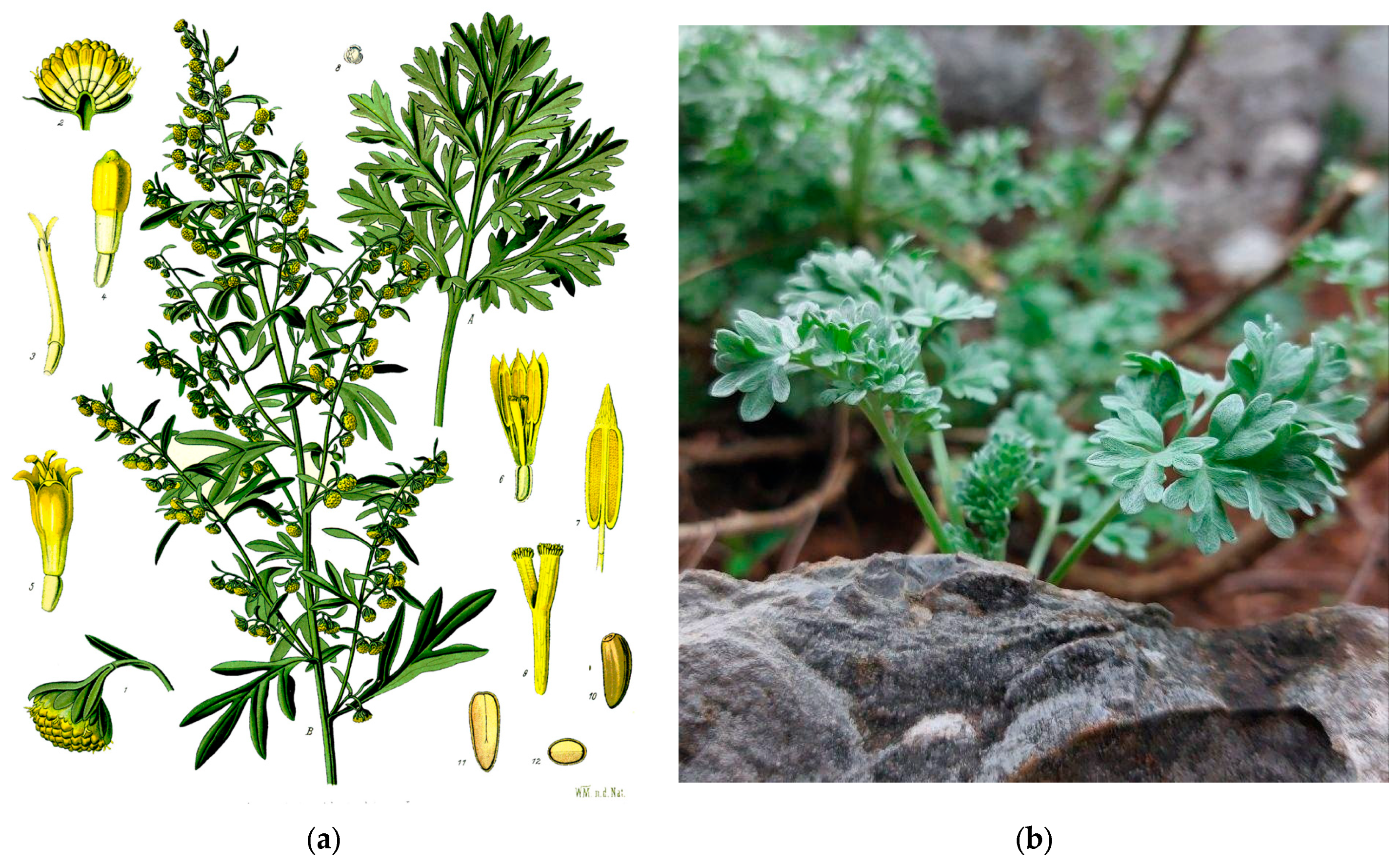
Artemisia, a widespread genus in the Asteraceae family, encompasses diverse species known for their medicinal and biological activities. These plants, commonly found in the temperate regions of the Northern Hemisphere, have been traditionally used for various ailments [9]. The most important bioactive compounds include terpenoids, flavonoids, coumarins, glycosides and sterols. A. absinthium, or wormwood (Figure 1), is a perennial chamaephyte plant that typically grows up to 80 cm tall but can reach up to 1.2 metres in favourable environments. The origin of the species is uncertain (probably from Asia), and it was introduced in the pre-Roman period in Europe and North Africa, where it is now considered an archaeophyte species. More recently, A. absinthium has been introduced and naturalised in North and South America and is also found in Australia. It grows at altitudes of up to 2100 m (as in Kashmir) and thrives in disturbed areas such as roadsides, clearings, wastelands and rocky soils rich in nitrogen compounds [10]. It is characterised by hairy, ribbed stems lignified at the base and silvery green foliage with finely divided leaves. The entire plant is covered with dense hairs and exudes a strong, pungent odour. Basal and lower leaves are 2(–3)-pinnatisect, with 4 or 5 pairs of pinnately lobed segments and 6–8 cm long petioles. Uppermost leaves are sessile, ovate or elliptic-ovate, 2-pinnatisect and are smaller than basal ones. The leaves are equipped with glandular trichomes that produce essential oils, as well as T-shaped guard hairs that protect the plant from extreme temperatures and prolonged drought. Flowers are small, tubular and yellow, and are arranged in nodding capitula (2–3 mm diameter) in terminal paniculate cymes. Flowering occurs from late July to September in temperate climates. The plant produces small, brown-striped achenes without pappus as fruit. The yield of essential oil varies, with the freshly extracted oil having a dark brown colour and specific properties such as a specific gravity of 0.9346 and a ketone (thujone) content of 4.07% [11]. A. absinthium is an extremely bitter plant (the name in the ancient Greek language in fact means undrinkable) which, as noted above, contains a high concentration of thujone (the regulated toxic compound present in many species belonging to the genus Artemisia) [5].
A. absinthium grows naturally on uncultivated arid soil, on rocky ground and wastelands; nevertheless it is cultivated in China, southern Europe, the USA, and Brazil. China is the leading producer, accounting for over 60% of global production. The harvesting period starts with the appearance of the first flowers. Shoots and basal leaves are cut; harvesting can be carried out several times per year. The global A. absinthium market size has been growing and is projected to reach USD 365 million by 2033 (Compound Average Growth Rate of 2.7%) [9,12,13].

4. Artemisia absinthium in the History of Medicine

The earliest records of the use of wormwood as medicine come from the Ebers Papyrus (copies of which date back to 1550 BC). For the Egyptians, wormwood and closely related species had both religious and medicinal significance. Pliny’s Historia Naturalis, dating from the first century AD, describes extracts of wormwood as useful against gastrointestinal worms (geohelminthiasis). Moreover, wormwood was described in detail in Dioscorides’ De Materia Medica, an influential book that was completed around 65 AD and was considered the ultimate authority on pharmacy for the next 1500 years. Both Pliny the Elder (AD 23/24–79) and Dioscorides (c. 40–90 AD) mentioned several uses for wormwood, apart from its anthelmintic properties [14]. Wormwood wines were also very popular in Roman times because of their beneficial properties. Moreover, Vermouth originated as wine flavoured with wormwood and was regarded by Paracelsus (1493–1541) as a general panacea. It was not fortified with Artemisia spp. plants for preservation in ships, but to assist digestion. Interestingly, alcoholic drinks based on wormwood are also mentioned in a 1639 manual for physicians, The Distiller of London. Both common wormwood leaves and seeds were used. In the 17th century, the plant was not only considered useful for killing worms, but also for stopping flatulence, preventing vomiting, stimulating the appetite and strengthening the stomach [5,15].

5. Absinthe Invention

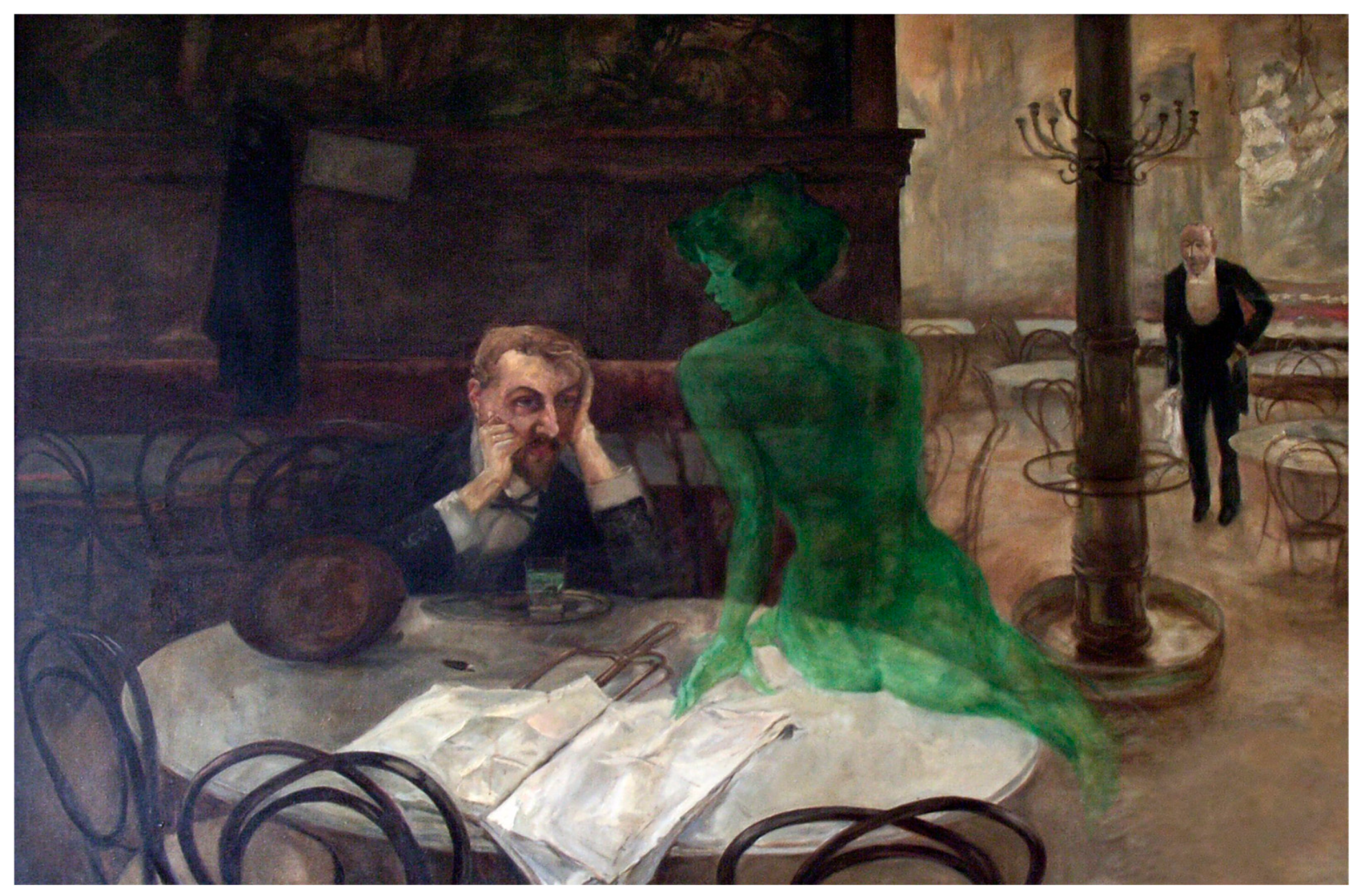
The liqueur absinthe is believed to have been invented in Couvet, Switzerland, by a Frenchman, Dr Ordinaire, who sold the formula for its preparation to M. Pernod in 1797. The transition from artisanal to industrial production of absinthe by the Pernod-fils distillery in 1798 made it accessible to a broader public. French soldiers returning from their colonial campaigns in Algeria in the middle of the 19th century brought with them a fondness for wine mixed with wormwood, a combination that was used in medicine to treat diarrhoea. In addition, the so-called “Purl,” a twig of wormwood infused in ale, was widely consumed on both sides of the Atlantic, while absinthe schnapps were distilled from anise and wormwood [14,16,17]. Another reason for the widespread use of absinthe in the nineteenth century could be the fact that heavy losses in vineyards led to rising wine prices, while absinthe prices fell. In the late nineteenth century, absinthe, called “green fairy” (“fee verte”), became the most popular spirit in Europe (Figure 2). The green-coloured drink was consumed by people from all social classes. In the bars and cafés of Paris in particular, the “green hour” (“l’heure verte”) was an integral part of the daily routine. Absinthe also found its way into the spheres of artists and intellectuals. Pontarlier, a city in France, became the capital of absinthe. In 1905, there were 25 distilleries with around 3000 workers and an annual production of 10 million litres of absinthe [18]. Subsequently, due to concerns about its psychoactive effects, it was forbidden in France after being outlawed in the USA in 1912 [11].
On the one hand, clinical studies have reported that ethanolic A. absinthium extracts can increase gastric, biliary, and intestinal secretion in humans after oral administration and a multi-centre, randomised, double-blind trial on humans have been conducted for Inflammatory Bowel Disease [12]. On the other hand, long-term administration of A. absinthium and its derivatives, such as essential oil, may cause neurotoxic effects in humans due to the presence of thujone and its analogues. As a consequence, vertigo, vomiting, nausea, insomnia, restlessness, urinary retention, seizures, and hallucinations may occur. Many toxicity studies on animals have shown that thujone leads to dose-dependent toxicity, with a no-effect level in the range of 5 to 12.5 mg/kg body weight per day [19]. The absinthe currently sold is not the same as that consumed before it was banned a century ago. Current restrictions on the amount of thujone set a limit of no more than 35 mg/kg that beverages may contain according to European laws, which is 25 times less than in the past [17]. Nevertheless, some studies analysed the content of pre-ban absinthe and found thujone concentrations ranging from 0.5 to 48.3 mg/L, with a median concentration of 33.3 mg/L [20]. Contrary to European current law, in the United States, the addition of thujone to foods is not permitted and absinthe for sale must be thujone-free [21].

6. Absinthe Usage in Medicine

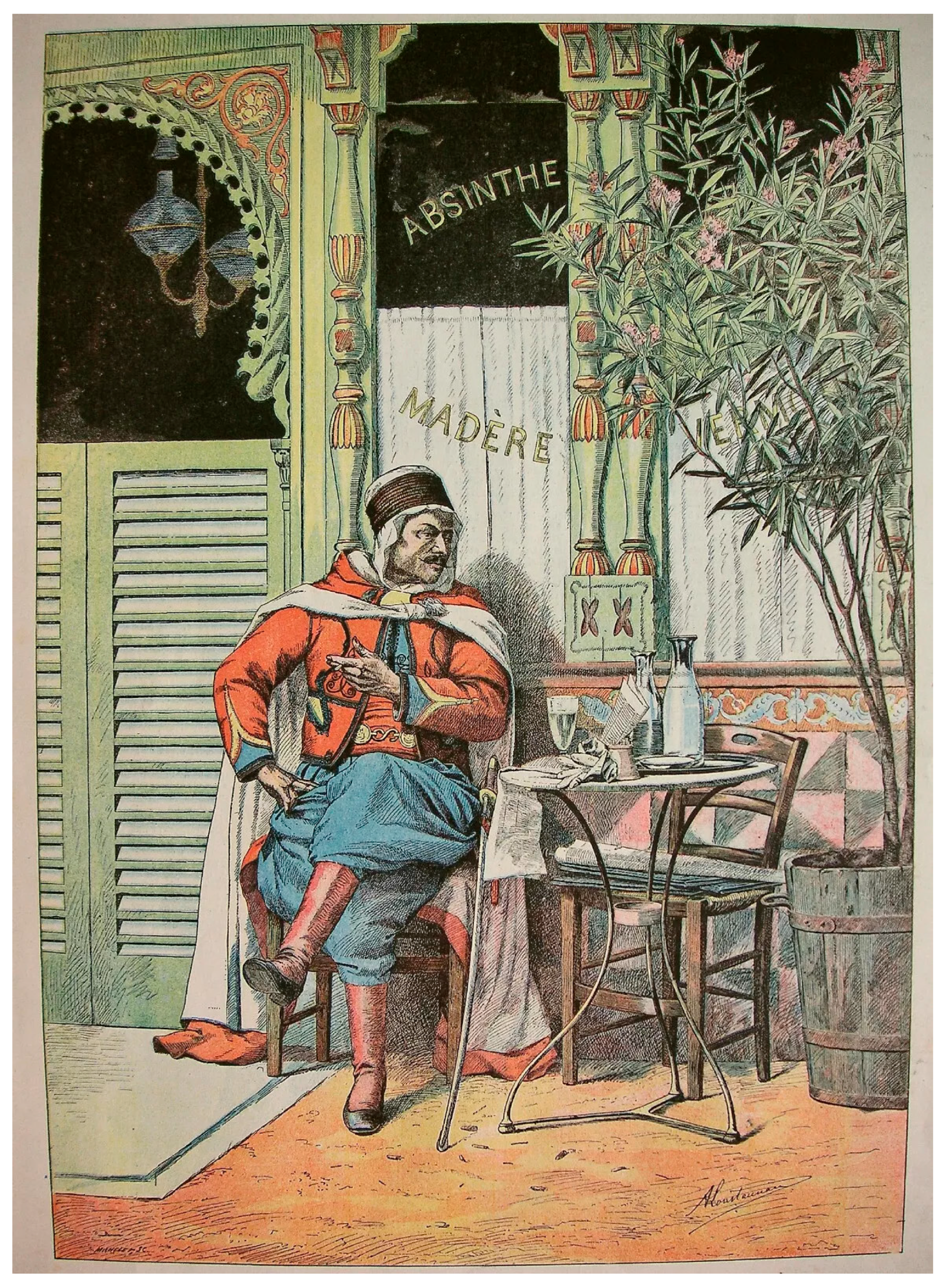
In the France collective memory, wine and absinthe are associated with the conquest of Algeria. Absinthe was subsequently prescribed as prophylaxis for fever and helminthiasis [22]. The invasion of Algiers in 1830 was a large-scale military operation by which the Kingdom of France invaded and conquered the regency of Algiers (a vassal of the Ottomans). A diplomatic incident provided the pretext to initiate a blockade of the port of Algiers and the invasion began on 5 July 1830. As local resistance grew, the French army sent reinforcements, totalling 100,000 soldiers by 1840. The heat and poor water took their toll, and fever raged through the ranks of the soldiers. French military officials in the 1830s and 1840s believed that absinthe could purify the undrinkable water and thus protect against disease in the newly occupied country. There are two opposing interpretations of absinthe during the colonial period in the Maghreb. One sees absinthe as an aid to the conquest of Algeria (a healthy and hygienic drink) and the other even demonises it as a poison. The French hygienist Apollinaire Bouchardat, for example, wrote in 1856 in his Manual of Medical Matters “Without coffee, our Algeria would be uninhabitable.” In medical publications, coffee was often credited with making Algeria habitable and the French soldiers stronger. However, some authors are of the opinion that the success was mainly due to certain alcoholic beverages such as absinthe (Figure 3). As proof, some writers claimed: “colonising through absinthe” and “absinthe colonised Algeria” [23,24,25].
From an epidemiological perspective, describing the extent of the social and health problems associated with absinthe is not easy. As Marius Maunier (1851–1915) explains in his Consideration sur l’Absenthism, even in 1880 the scientific community had not reached a consensus on the classification of medical and psychiatric disorders caused by absinthe. Some considered absinthe abuse a particular form of alcoholism, others considered it a disorder in its own right, being primarily due to the toxicity of the Artemisia plant itself and not the toxicity of alcohol, absinthism [26].
If the use of absinthe was widespread in the colonies of the transalpine neighbour France, to our knowledge it is not mentioned as being consumed in the Italian colonies of the late 19th and early 20th centuries. The alcoholic intoxications reported by Angelo Bravi in the first systematic study of colonial Italian psychiatry are neither related to “gin for English drug addicts” nor to absinthe or grappa “for our Venetian mountain people.” In the study, developed between Eritrea, Somalia, Libya and Ethiopia, absinthe is not mentioned, in contrast to many historical records of the French colonies [27].

7. Wormwood Antimicrobial Properties and Future Perspectives

As already summarized, A. absinthium has long been used in traditional medicine as a vermifuge, insecticide, antispasmodic and antiseptic. As a matter of fact, modern research investigates the capability of the plant’s extracts to inhibit the growth of various pathogens demonstrating anthelmintic, antiprotozoal, antibacterial and antifungal activities both in vitro and in vivo (Table 1) [28].
As implied by its name, A. absinthium has long been associated with the treatment of intestinal worm infections. Studies have shown efficacy against Trichinella spiralis, Ascaris suum, Trichostrongylus colubriformis [9] and Haemonchus contortus, a nematode whose hosts are ruminants [29]. Extracts of A. absinthium have also shown antiprotozoal activity against pathogens such as Naegleria fowleri, Trypanosoma brucei, T. cruzi, Leishmania aethiopica, L. donovani, L. infantum and Trichomonas vaginalis [9]. A clinical trial on 20 patients with acute intestinal amoebiasis found that oral A. absinthium powder (1500 mg/day for 15 days) led to substantial symptom relief eliminating Entamoeba histolytica from stool samples in 70% of cases [30]. Furthermore, a 2010 study showed that 80% ethanolic A. absinthium extracts have strong antiplasmodial activity against both multidrug-resistant (K1) and sensitive (3D7) strains of Plasmodium falciparum, with IC50 values of 1.9 μg/mL and 3.1 μg/mL respectively. In mice infected with Plasmodium berghei, a 4-day oral dose of 200 mg/kg/day reduced parasitemia by 94.28%. The extract contained no artemisinin, indicating other constituents are responsible for the effect [31].
Interestingly, modern research has shown that extracts and essential oils of A. absinthium are also effective against both Gram-positive and Gram-negative bacteria, although Gram-negative bacteria are more resistant due to their outer phospholipid membrane [9]. Animal models have emphasized the efficacy of A. absinthium against Staphylococcus aureus in surgical wound infections. Indeed, topical application of A. absinthium extract resulted in significant antibacterial activity in rat models. Its antimicrobial activity is attributed to compounds such as camphor, p-cymene and caryophyllene [32]. These compounds belong to the group of monoterpene hydrocarbons which may act by interfering with the structure and function of the cell membrane [33]. Essential oils from A. absinthium also inhibit the growth of bacteria such as Escherichia coli, Pseudomonas aeruginosa, and Klebsiella pneumoniae [34]. In addition, research suggests that A. absinthium may inhibit efflux pumps in bacteria, potentially targeting antibiotic resistance in an era of multi-drug-resistant organisms. Chlorogenic acid and 4,5-di-O-caffeoylquinic acid isolated from A. absinthium have been identified as efflux pump inhibitors for the multi-drug efflux pumps of the Major Facilitator Super Family of Gram-positive bacteria including S. aureus and Enterococus faecalis [35].
Interest in A. absinthium extracts is increasing. A Chinese study from 2022 aimed to investigate the plant’s potential as an alternative to conventional antibiotics by evaluating the antimicrobial activity of methanol extracts of A. absinthium (MEAA). The MIC and MBC values were determined using the broth microdilution method. The MIC values for MEAA ranged from 0.625 mg/mL to 2.5 mg/mL against bacteria such as Staphylococcus epidermidis, S. aureus, P. aeruginosa and Bacillus subtilis. The MBC values for MEAA ranged from 1.25 mg/mL to 5.0 mg/mL against the same bacteria. S. epidermidis was particularly sensitive, with a MIC of 0.625 mg/mL and an MBC of 1.25 mg/mL. Several active compounds were identified, including flavonoids, quinic acids and glucaric acids, most of which were detected for the first time. Among them, salicylic acid, caffeic acid, casticin and 3,4-dicaffeoylquinic acid showed promising antimicrobial activity [36].
A. absinthium also exhibits antifungal activity against several fungal species, including Penicillium chrysogenum, Aspergillus fumigatus, Candida albicans, Saccharomyces cerevisiae, and others. Essential oils and extracts from A. absinthium have demonstrated inhibitory effects in vitro, with reported MICs for fungi such as P. chrysogenum and A. fumigatus of 84 ± 15 µg/mL and 91 ± 13 µg/mL, respectively [37]. The essential oil has also shown strong inhibition of Aspergillus species growth (up to 70%), and broad-spectrum antifungal activity against 11 plant pathogenic fungi, with efficacy comparable to commercial antifungal agents in some cases [38,39].
Moreover, A. absinthium exhibits strong antioxidant properties, largely attributed to its rich phenolic and flavonoid content. Ethanolic leaf extracts, especially from the second year of growth, showed the highest radical scavenging activity, confirming its promising activity as a natural protective agent against oxidative stress [40].
To fully harness the therapeutic potential of A. absinthium, advances in pharmaceutical technology will be essential. Traditional preparations (e.g., crude extracts and essential oils) have several limitations, including poor solubility in water, inconsistent absorption, and the presence of potentially toxic components. One promising solution lies in nanotechnology-based delivery systems. For example, nanosuspensions and polymeric nanoparticles containing wormwood extracts have been developed to enhance bioavailability. Likewise, encapsulating A. absinthium essential oil in liposomes or nanoemulsions may enable safer and more controlled administration of its volatile constituents, making systemic use more feasible. A particularly innovative approach involves the green synthesis of silver nanoparticles using wormwood extracts [41]. These A. absinthium-based silver nanoparticles have demonstrated strong antimicrobial properties and could be valuable for topical applications, where high local concentrations of active substances are needed.
Table 1. Summary table of selected antimicrobial properties of A. absinthium including tested organisms, extract used, dose/concentration and key outcomes.
Organism TestedExtract TypeDose/ConcentrationKey Outcomes/EffectsReferences
Haemonchus contortus (ovine nematode, studied on sheeps)Crude aqueous and ethanolic extracts (aerial parts)In vitro: paralysis/death at 10–80 mg/mL; In vivo: 1.0–2.0 g/kg (oral)Anthelmintic; as effective as albendazole: Fecal Egg Count Reduction up to 90.46%[29]
Entamoeba histolytica (acute intestinal amoebiasis, human clinical study)Powdered whole plant (Afsanteen)1 g twice daily for 10 days (oral)Clinical improvement and clearance of E. histolytica in stool; comparable efficacy to metronidazole[30]
Plasmodium falciparum (in vitro)80% ethanolic extract (whole plant)IC50: 1.9 μg/mL (K1, MDR resistant strain); 3.1 μg/mL (3D7, sensitive strain)Potent antiplasmodial activity; no artemisinin detected in extract[31]
Plasmodium berghei (in vivo, mouse model)80% ethanolic extract (whole plant)200 mg/kg/day × 4 days (oral)94.28% reduction in parasitemia[31]
Staphylococcus aureus (rat surgical wound infection)Hydroalcoholic extract (topical)10% ointment, daily × 7 daysReduced bacterial load, improved wound healing[32]
Clinical/ATCC (American Type Culture Collection) bacterial isolates (E. coli, P. aeruginosa, K. pneumoniae, S. sonnei, S. aureus, C. perfringens, L. monocytogenes, E. aerogene, K. oxytoca, and P. mirabilis, in vitro)Essential oil (aerial parts, Serbia)MIC: <0.08–2.43 mg/mL; MBC: 0.08–38.80 mg/mLAntibacterial; most active against Staphylococcus spp.[34]
E. coli, S. flexneri, B. subtilis, S. aureus (in vitro)Essential oil (leaves, Pakistan)55–75% inhibition (E. coli, S. flexneri); moderate for B. subtilis, S. aureusBroad antibacterial activity, especially against Gram-negative[38]
S. epidermidis (in vitro)Methanol extract (MEAA)MIC 0.625 mg/mL; MBC 1.25 mg/mLAntibacterial activity; highly sensitive[36]
S. aureus, P. aeruginosa, B. subtilis (in vitro)Methanol extract (MEAA)MIC 1.25–2.5 mg/mL; MBC 2.5–5 mg/mLAntibacterial activity[36]
Aspergillus spp (in vitro)Essential oil (leaves, Pakistan)Up to 70% inhibitionStrong antifungal activity[38]
Penicillium chrysogenum, Aspergillus fumigatusEssential oil (leaves)MIC 84 ± 15 µg/mL and 91 ± 13 µg/mL respectivelyGrowth inhibition[37]

8. Discussion

The alcohol produced during fermentation was known for having antibacterial properties, as modern scientific studies show. Hops and herbs, including wormwood, have been used in alcoholic beverages to extend the shelf life of the product, to add flavour and also to take advantage of medicinal and antimicrobial properties [5].
From traditional medicine to pharmacy research, medicinal plants have proven to be a good source for the development of new drugs against pathogens [42]. In 2015, the Nobel Prize in Physiology or Medicine was awarded to Professor Youyou Tu for her decisive contributions to the discovery of artemisinin and the major steps in the history of malariology. Ethnobotanical knowledge and the combination of traditional and folk medicine with modern research are crucial for the discovery of new active compounds in an era of emerging and re-emerging infectious diseases, including multidrug-resistant organisms.
Wormwood has been used in drinks since Roman times because of its antimicrobial properties. Nevertheless, only the liquor absinthe achieved widespread prophylactic use, particularly for geohelminthiasis. In connection with the French conquest of Algeria, absinthe was used as a prophylactic and was considered both an instrument of colonisation and a poison. In the newly colonised territories in North Africa, absinthe therefore seems to have helped the French soldiers to win the horizontal war against pathogens [43]. In contrast to the French colonies, absinthe played no documented role in medical or colonial practice in other European countries such as Italy and the Italian territories.

9. Conclusions

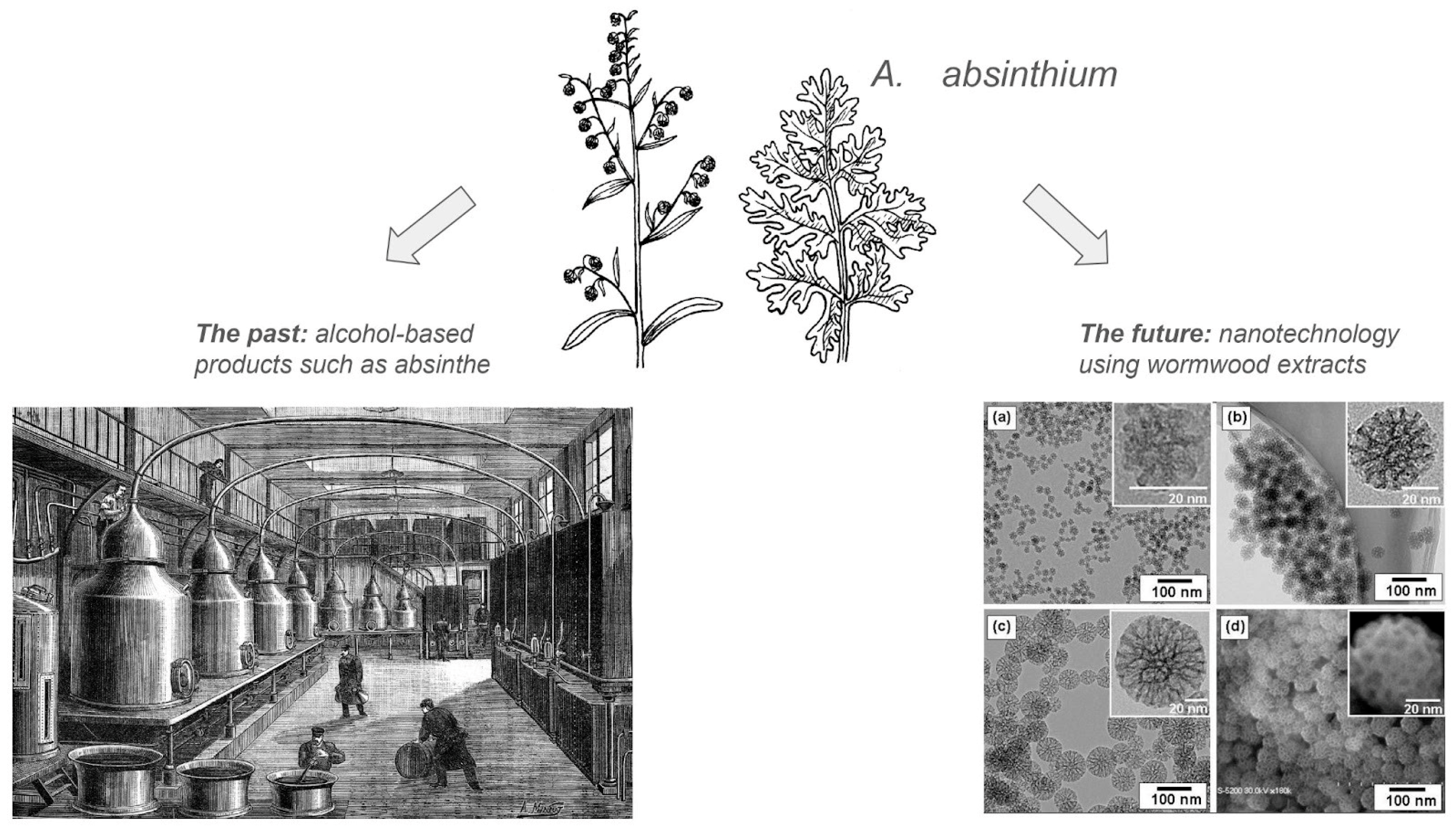
Absinthe is another impressive example of how tonics containing various herbal substances were used in the history of medicine to manage parasitic infections before their efficacy was later proven in vitro and in vivo (Figure 4).

Author Contributions

Conceptualization, A.R.D.F. and O.S.; methodology, A.R.D.F., V.Z. and S.D.B.; investigation, A.R.D.F., A.M., E.A., L.D., G.M. and F.P.; writing—original draft preparation, A.R.D.F., A.M., E.A., L.D., G.M., F.P. and D.A.T.; writing—review and editing V.Z., S.D.B., G.M. and F.P.; supervision, V.Z., S.D.B., D.A.T. and O.S. All authors have read and agreed to the published version of the manuscript.

Funding

This research received no external funding.

Conflicts of Interest

The authors declare no conflicts of interest.

References

  1. Jamshidi-Kia, F.; Lorigooini, Z.; Amini-Khoei, H. Medicinal plants: Past history and future perspective. J. Herbmed Pharmacol. 2018, 7, 1–7. [Google Scholar] [CrossRef]
  2. Dafni, A.; Böck, B. Medicinal plants of the Bible—Revisited. J. Ethnobiol. Ethnomed. 2019, 15, 57. [Google Scholar] [CrossRef]
  3. Simonetti, O.; Contini, C.; Martini, M. The History of Gin and Tonic; the Infectious Disease Specialist Long Drink. When Gin and Tonic Was Not Ordered but Prescribed. Le Infez. Med. 2022, 30, 619–626. [Google Scholar]
  4. Chaachouay, N.; Zidane, L. Plant-Derived Natural Products: A Source for Drug Discovery and Development. Drugs Drug Candidates 2024, 3, 184–207. [Google Scholar] [CrossRef]
  5. English, C. Doctors and Distillers: The Remarkable Medicinal History of Beer, Wine, Spirits, and Cocktails; Penguin Books: London, UK, 2022. [Google Scholar]
  6. Wu, Y.-Q.; Tong, T. Curcumae Rhizoma: A botanical drug against infectious diseases. Front. Pharmacol. 2022, 13, 1015098. [Google Scholar] [CrossRef]
  7. McGovern, P.E. Alcoholic Beverages as the Universal Medicine before Synthetics. In Chemistry’s Role in Food Production and Sustainability: Past and Present; American Chemical Society: Washington, DC, USA, 2019; Volume 1314, pp. 111–127. [Google Scholar]
  8. There’s a Cure for That: Historic Medicines and Cure-Alls in America. Available online: https://www.ohsu.edu/historical-collections-archives/theres-cure-historic-medicines-and-cure-alls-america (accessed on 12 March 2025).
  9. Szopa, A.; Pajor, J.; Klin, P.; Rzepiela, A.; Elansary, H.O.; Al-Mana, F.A.; Mattar, M.A.; Ekiert, H. Artemisia absinthium L.—Importance in the History of Medicine, the Latest Advances in Phytochemistry and Therapeutical, Cosmetological and Culinary Uses. Plants 2020, 9, 1063. [Google Scholar] [CrossRef]
  10. Pignatti, S. Flora d’Italia; Edagricolae: Bologna, Italy, 2018; Volume 1–4. [Google Scholar]
  11. Bordean, M.-E.; Martis, G.S.; Pop, A.; Ungur, R.; Borda, I.M.; Buican, B.-C.; Muste, S. Artemisia Species: Traditional Uses and Importance in Pharmacology. Hop Med. Plants 2022, 30, 158–169. [Google Scholar] [CrossRef]
  12. Assessment Report on Artemisia absinthium L., Herba. 30 May 2017 EMA/HMPC/751484/2016 Committee on Herbal Medicinal Products (HMPC). Available online: https://www.ema.europa.eu/en/documents/herbal-report/final-assessment-report-artemisia-absinthium-l-herba_en.pdf (accessed on 28 November 2025).
  13. Artemisia Absinthium Size, Share, and Growth Report: In-Depth Analysis and Forecast to 2033. Available online: https://www.datainsightsmarket.com/reports/artemisia-absinthium-254234# (accessed on 27 November 2025).
  14. Arnold, W.N. Absinthe. Sci. Am. 1989, 260, 112–117. [Google Scholar] [CrossRef] [PubMed]
  15. Company of Distillers of London. The Distiller of London, Compiled and Set Forth by the Special Licence and Command of the Kings Most Excellent Majesty: For the Sole Use of the Company of Distillers of London. And by Them to Be Duly Observed and Practized; Richard Bishop: London, UK, 1639. [Google Scholar]
  16. Vogt, D.D. Absinthium: A Nineteenth-Century Drug of Abuse. J. Ethnopharmacol. 1981, 4, 337–342. [Google Scholar] [CrossRef] [PubMed]
  17. Huisman, M.; Brug, J.; Mackenbach, J. Absinthe—Is Its History Relevant for Current Public Health? Int. J. Epidemiol. 2007, 36, 738–744. [Google Scholar] [CrossRef]
  18. Lachenmeier, D.W.; Walch, S.G.; Padosch, S.A.; Kröner, L.U. Absinthe—A review. Crit. Rev. Food Sci. Nutr. 2006, 46, 365–377. [Google Scholar] [CrossRef]
  19. Batiha, G.E.-S.; Olatunde, A.; El-Mleeh, A.; Hetta, H.F.; Al-Rejaie, S.; Alghamdi, S.; Zahoor, M.; Magdy Beshbishy, A.; Murata, T.; Zaragoza-Bastida, A.; et al. Bioactive Compounds, Pharmacological Actions, and Pharmacokinetics of Wormwood (Artemisia absinthium). Antibiotics 2020, 9, 353. [Google Scholar] [CrossRef]
  20. Lachenmeier, D.W.; Nathan-Maister, D.; Breaux, T.A.; Sohnius, E.-M.; Schoeberl, K.; Kuballa, T. Chemical composition of vintage preban absinthe with special reference to thujone, fenchone, pinocamphone, methanol, copper, and antimony concentrations. J. Agric. Food Chem. 2008, 56, 3073–3081. [Google Scholar] [CrossRef]
  21. Dolan, L.C.; Matulka, R.A.; Burdock, G.A. Naturally Occurring Food Toxins. Toxins 2010, 2, 2289–2332. [Google Scholar] [CrossRef]
  22. Jonathan, D. Il Giro del Mondo in 80 Alberi; L’ippocampo: Milan, Italy, 2018. [Google Scholar]
  23. Studer, N.S. Remembrance of Drinks Past: Wine and Absinthe in Nineteenth-Century French Algeria. In The Politics of Historical Memory and Commemoration in Africa; De Gruyter Oldenbourg: Berlin, Germany, 2021; pp. 169–192. [Google Scholar]
  24. Hicks, J. The Devil in a Little Green Bottle: A History of Absinthe; Science History Institute: Philadelphia, PA, USA, 2010. [Google Scholar]
  25. Studer, N.S. The Green Fairy in the Maghreb: Absinthe, Guilt and Cultural Assimilation in French Colonial Medicine. Maghreb Rev. 2015, 40, 493–508. [Google Scholar] [CrossRef]
  26. Marius, M. Consideration sur l’absenthisme. In Contributions a l’Etude de la Folie; Montpellier Imprimerie Firmin et Cabirou Frères: Montpellier, France, 1880. [Google Scholar]
  27. Scarfone, M. La Psichiatria Coloniale Italiana: Teorie, Pratiche, Protagonisti, Istituzioni (1906–1952). 2014. Available online: https://hdl.handle.net/10579/4645 (accessed on 3 August 2025).
  28. Ahamad, J.; Mir, S.R.; Amin, S. A Pharmacognostic Review on Artemisia Absinthium. Int. Res. J. Pharm. 2019, 10, 25–31. [Google Scholar] [CrossRef]
  29. Tariq, K.A.; Chishti, M.Z.; Ahmad, F.; Shawl, A.S. Anthelmintic activity of extracts of Artemisia absinthium against ovine nematodes. Vet. Parasitol. 2009, 160, 83–88. [Google Scholar] [CrossRef]
  30. Tahir, M.; Siddiqui, M.M.H.; Khan, A.B. Effect of Afsanteen (Artemisia absinthium) in acute intestinal amoebiasis. Hamdard Med. 1997, 40, 24–27. [Google Scholar]
  31. Ramazani, A.; Sardari, S.; Zakeri, S.; Vaziri, B. In vitro antiplasmodial and phytochemical study of five Artemisia species from Iran and in vivo activity of two species. Parasitol. Res. 2010, 107, 593–599. [Google Scholar] [CrossRef]
  32. Moslemi, H.R.; Hoseinzadeh, H.; Badouei, M.A.; Kafshdouzan, K.; Mazaheri Nezhad Fard, R. Antimicrobial Activity of Artemisia Absinthium Against Surgical Wounds Infected by Staphylococcus Aureus in a Rat Model. Indian J. Microbiol. 2012, 52, 601–604. [Google Scholar] [CrossRef] [PubMed]
  33. Sikkema, J.; de Bont, J.A.M.; Poolman, B. Interactions of Cyclic Hydrocarbons with Biological Membranes. J. Biol. Chem. 1994, 269, 8022–8028. [Google Scholar] [CrossRef] [PubMed]
  34. Mihajilov-Krstev, T.; Jovanović, B.; Jović, J.; Ilić, B.; Miladinović, D.; Matejić, J.; Rajković, J.; Dorđević, L.; Cvetković, V.; Zlatković, B. Antimicrobial, Antioxidative, and Insect Repellent Effects of Artemisia Absinthium Essential Oil. Planta Med. 2014, 80, 1698–1705. [Google Scholar] [CrossRef]
  35. Fiamegos, Y.C.; Kastritis, P.L.; Exarchou, V.; Han, H.; Bonvin, A.M.J.J.; Vervoort, J.; Lewis, K.; Hamblin, M.R.; Tegos, G.P. Antimicrobial and Efflux Pump Inhibitory Activity of Caffeoylquinic Acids from Artemisia Absinthium against Gram-Positive Pathogenic Bacteria. PLoS ONE 2011, 6, e18127. [Google Scholar] [CrossRef]
  36. Liu, Z.; Li, X.; Jin, Y.; Nan, T.; Zhao, Y.; Huang, L.; Yuan, Y. New Evidence for Artemisia absinthium as an Alternative to Classical Antibiotics: Chemical Analysis of Phenolic Compounds, Screening for Antimicrobial Activity. Int. J. Mol. Sci. 2023, 24, 12044. [Google Scholar] [CrossRef]
  37. Joshi, R.K. Volatile composition and antimicrobial activity of the essential oil of Artemisia absinthium growing in Western Ghats region of North West Karnataka, India. Pharm. Biol. 2013, 51, 888–892. [Google Scholar] [CrossRef] [PubMed]
  38. Khan, F.A. Phytochemical profiling, antioxidant, antimicrobial and cholinesterase inhibitory effects of essential oils isolated from the leaves of Artemisia scoparia and Artemisia absinthium. Pharmaceuticals 2022, 15, 1221. [Google Scholar] [CrossRef] [PubMed]
  39. Kordali, S.; Cakir, A.; Mavi, A.; Kilic, H.; Yildirim, A. Screening of chemical composition and antifungal and antioxidant activities of the essential oils from three Turkish Artemisia species. J. Agric. Food Chem. 2005, 53, 1408–1416. [Google Scholar] [CrossRef]
  40. Bordean, M.-E. Antibacterial and Phytochemical Screening of Artemisia Species. Antioxidants 2023, 12, 596. [Google Scholar] [CrossRef]
  41. Balciunaitiene, A.; Viskelis, P.; Viskelis, J.; Streimikyte, P.; Liaudanskas, M.; Bartkiene, E.; Zavistanaviciute, P.; Zokaityte, E.; Starkute, V.; Ruzauskas, M.; et al. Green Synthesis of Silver Nanoparticles Using Extract of Artemisia absinthium L., Humulus lupulus L. and Thymus vulgaris L., Physico-Chemical Characterization, Antimicrobial and Antioxidant Activity. Processes 2021, 9, 1304. [Google Scholar] [CrossRef]
  42. Bahmani, M.; Saki, K.; Shahsavari, S.; Rafieian-Kopaei, M.; Sepahvand, R.; Adineh, A. Identification of medicinal plants effective in infectious diseases in Urmia, northwest of Iran. Asian Pac. J. Trop. Biomed. 2015, 5, 858–864. [Google Scholar] [CrossRef]
  43. Simonetti, O.; Armocida, E. El Alamein: The battle in the battle. How infectious disease management changed the fate of one of the most important battle of the World War II. Infez. Med. 2020, 28, 441–449. [Google Scholar] [PubMed]
Figure 1. (a) An original drawing of A. absinthium from 1897 from Köhler’s Medizinal-Pflanzen. Image in the public domain taken from Wikimedia Commons; (b) A. absinthium plant at the Carsiana Botanical Garden in Sgonico, Trieste, Italy. Photograph taken by the authors.
Sci 07 00186 g001
Figure 2. The Absinthe Drinker (1901) by Viktor Oliva, which depicts the unhealthy effects of absinthe. Image in the public domain taken from Wikimedia Commons.
Sci 07 00186 g002
Figure 3. ‘Zouave’ or French North African soldier relaxing with a sip of absinthe at a table in a sidewalk cafe on the Esplanade des Invalides in Paris. An original chromolithograph by Michelet after Loustaunau, from the magazine (Revue) Paris-Noël, Paris, published by Georges Petit, 1889/1890. Author’s collection.
Sci 07 00186 g003
Figure 4. A schematic figure illustrating the use of wormwood compounds, from alcohol-based products in the past to nanoparticles in the near future. The image was created by the authors using public domain images edited from Wikimedia Commons.
Sci 07 00186 g004
Disclaimer/Publisher’s Note: The statements, opinions and data contained in all publications are solely those of the individual author(s) and contributor(s) and not of MDPI and/or the editor(s). MDPI and/or the editor(s) disclaim responsibility for any injury to people or property resulting from any ideas, methods, instructions or products referred to in the content.