
Field Performance of a Pile-Cap Ground Improvement System for High-Speed Railway Embankments in Karst Terrain



Abstract
1. Introduction
2. Materials and Methods
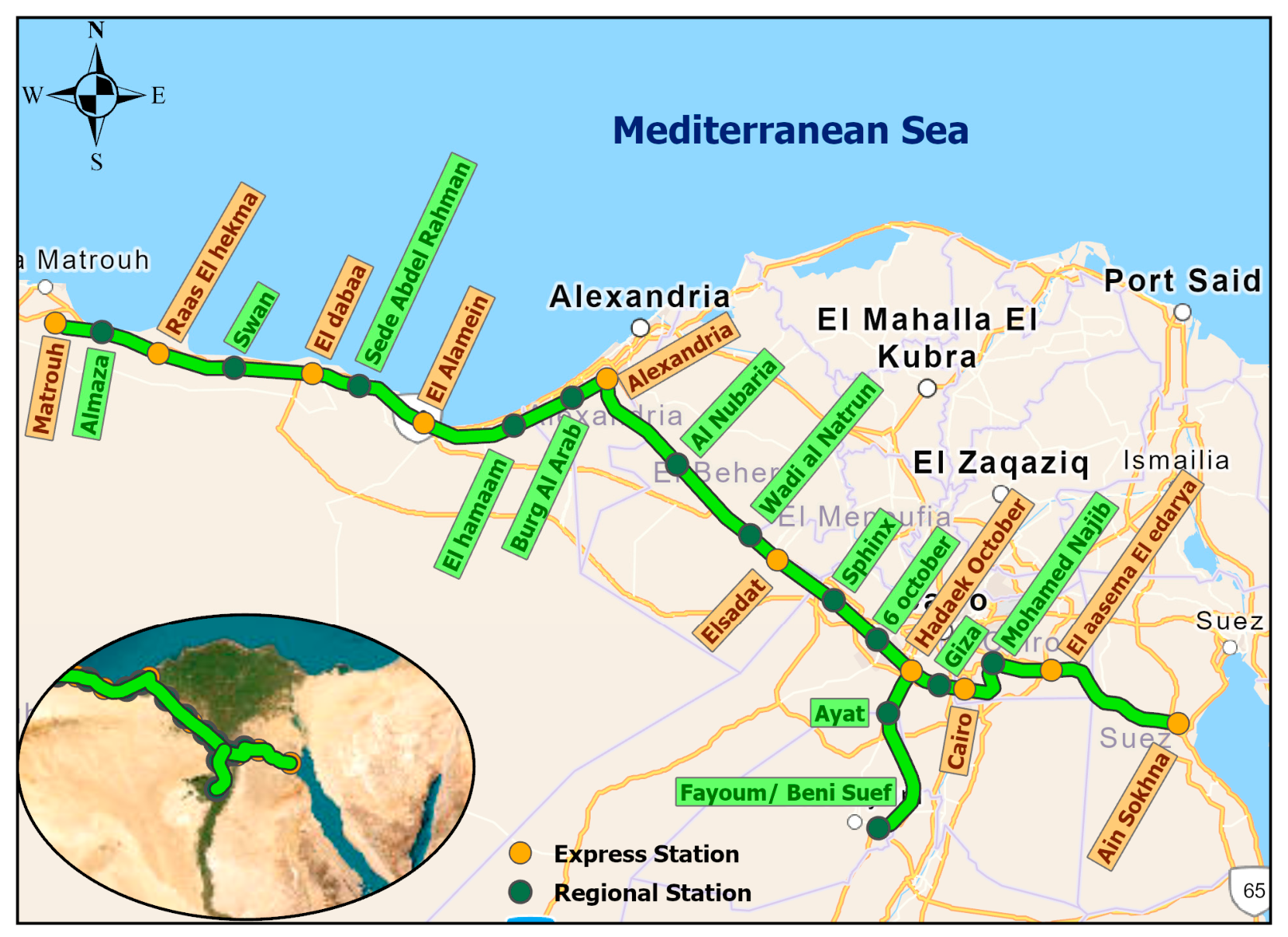
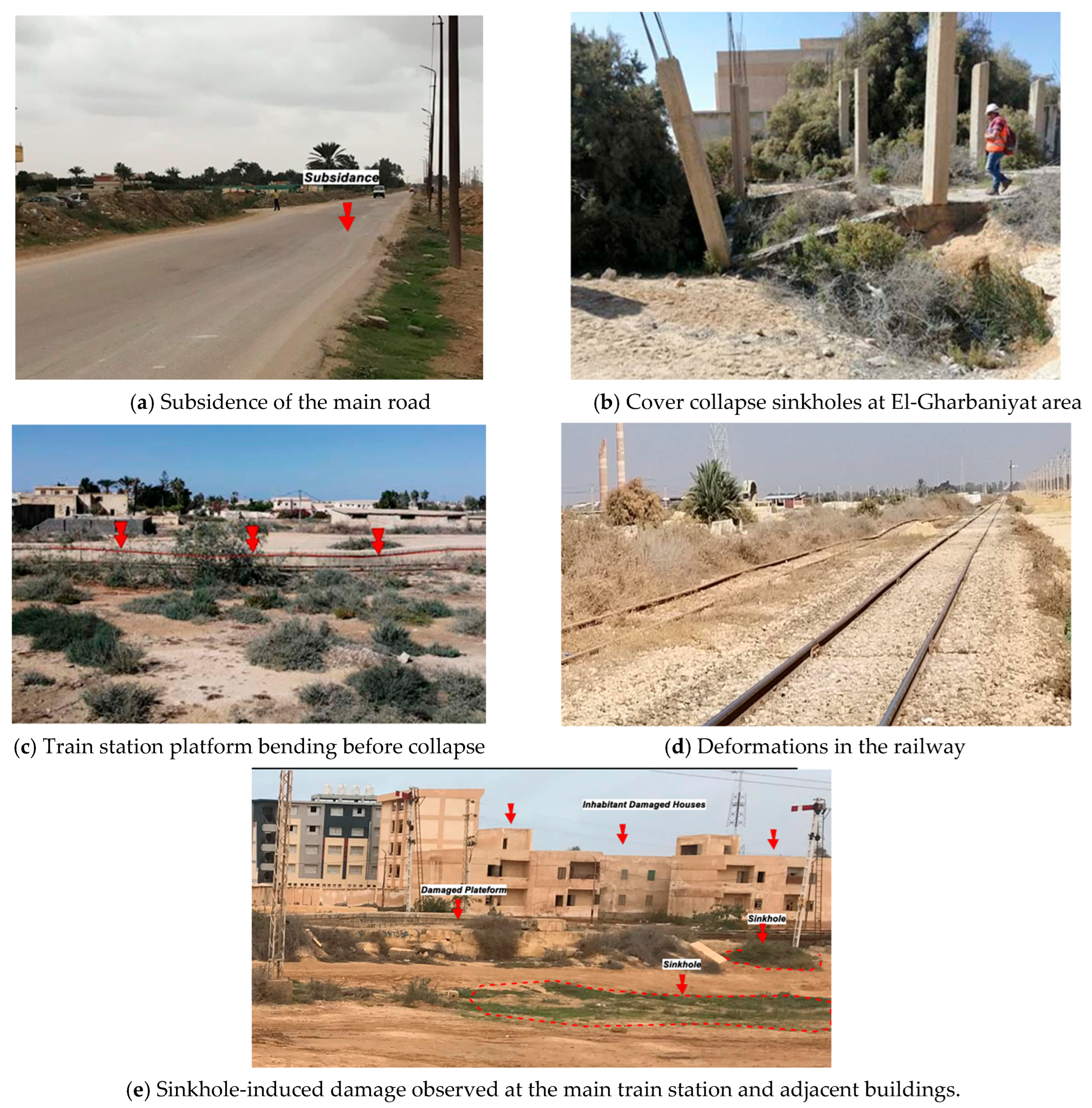
2.1. Site Description
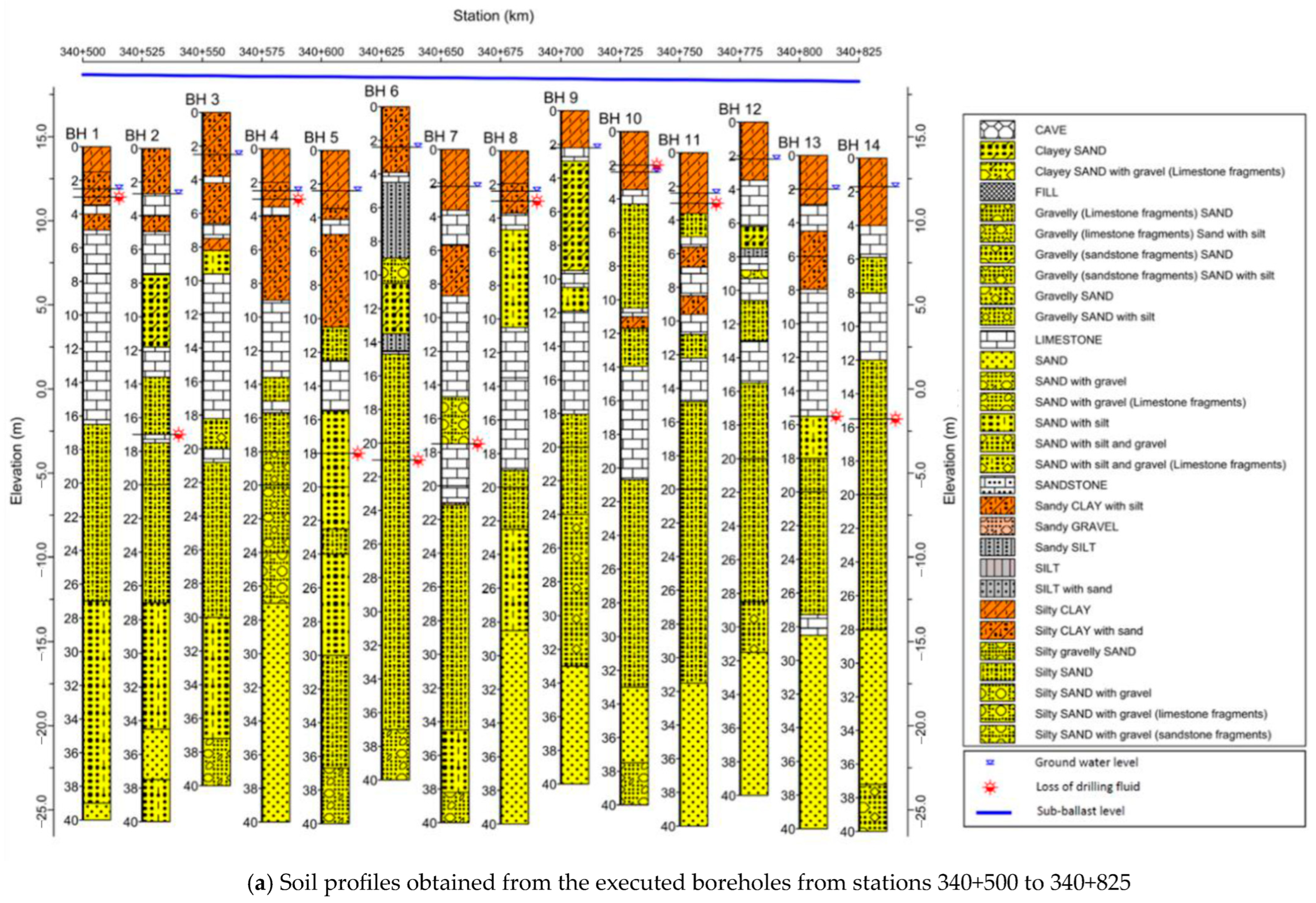
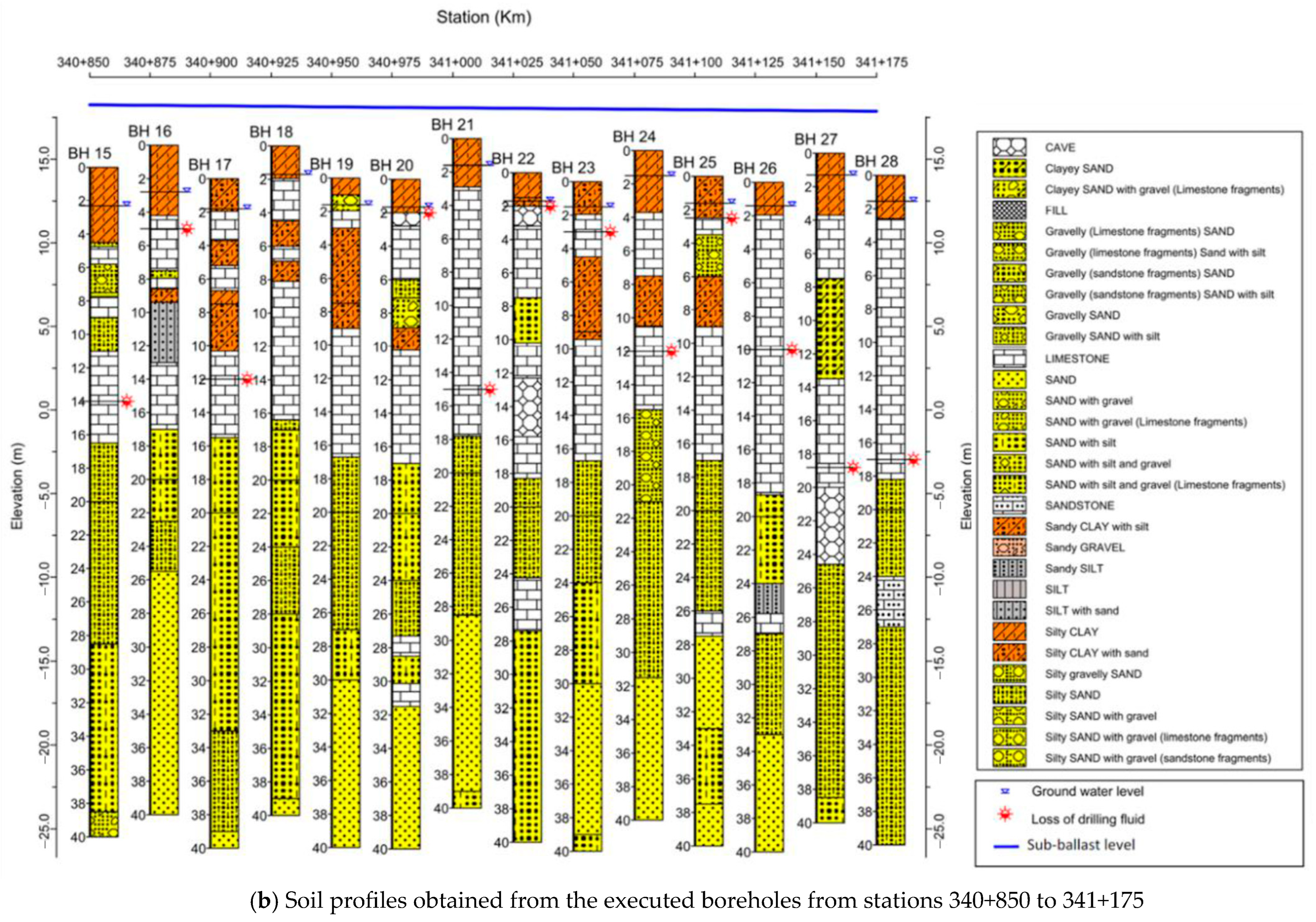
2.2. Boreholes
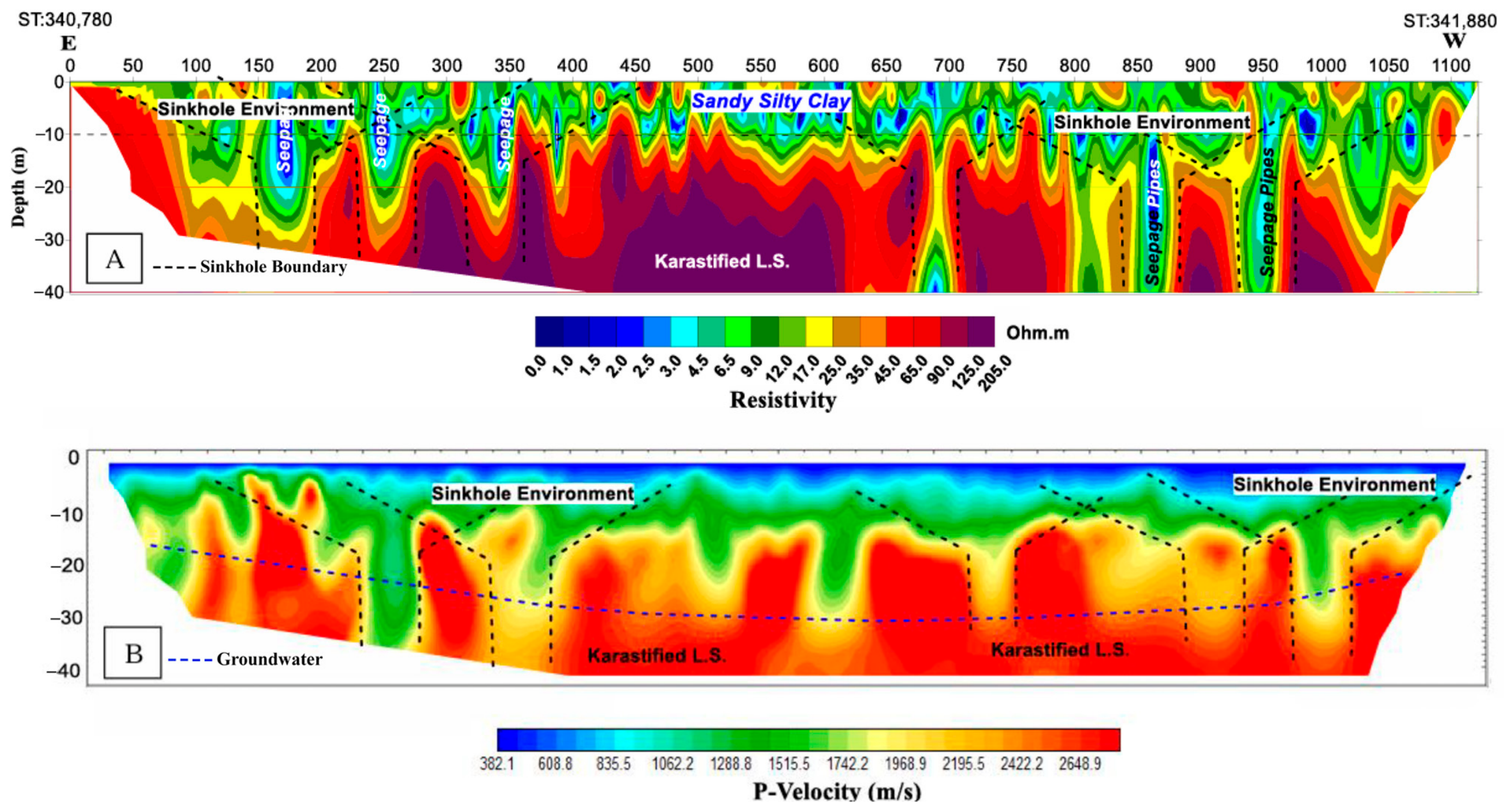
2.3. Electrical Resistivity Tomography (ERT) and Seismic Interpretation (SI)
2.4. Ground Improvement
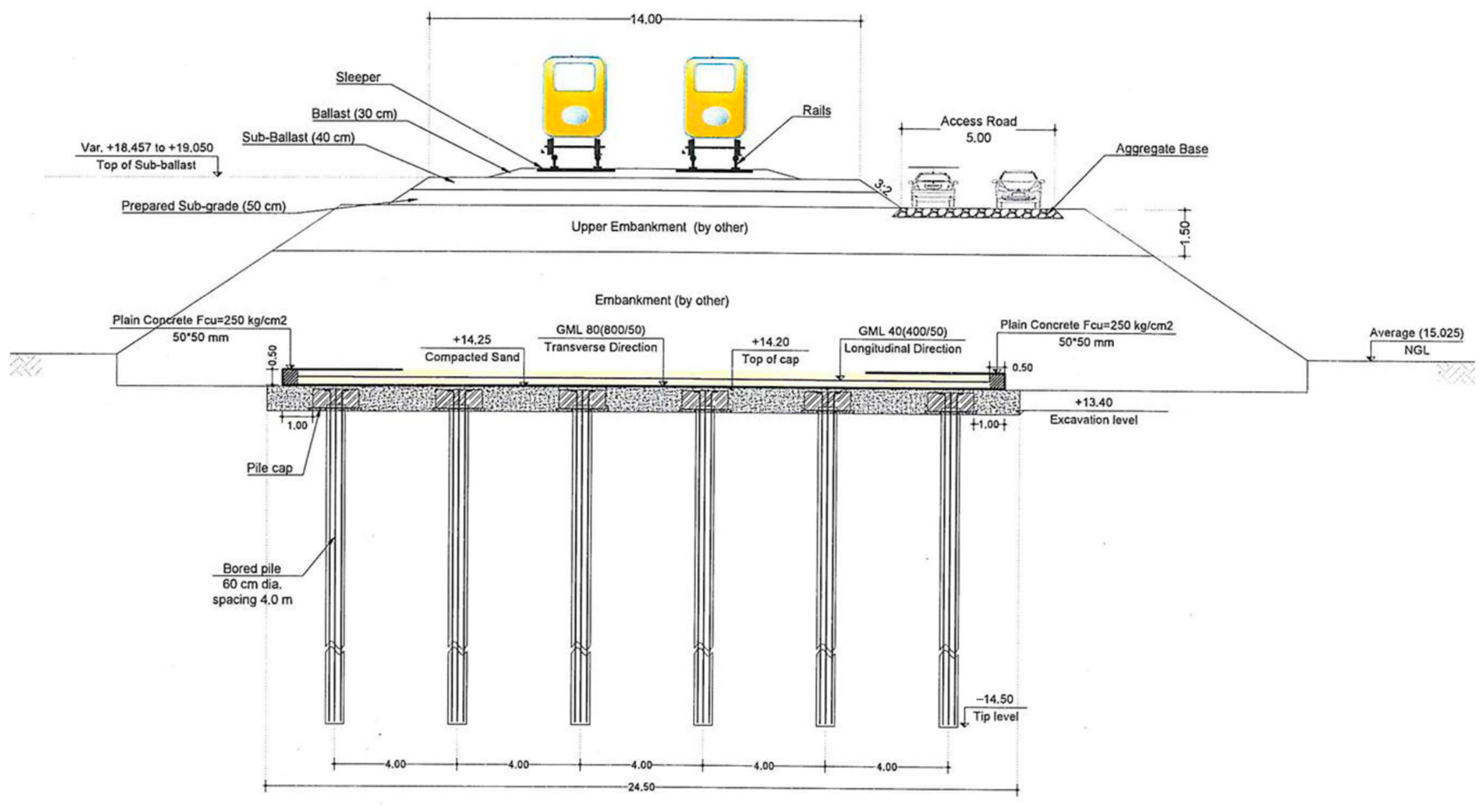
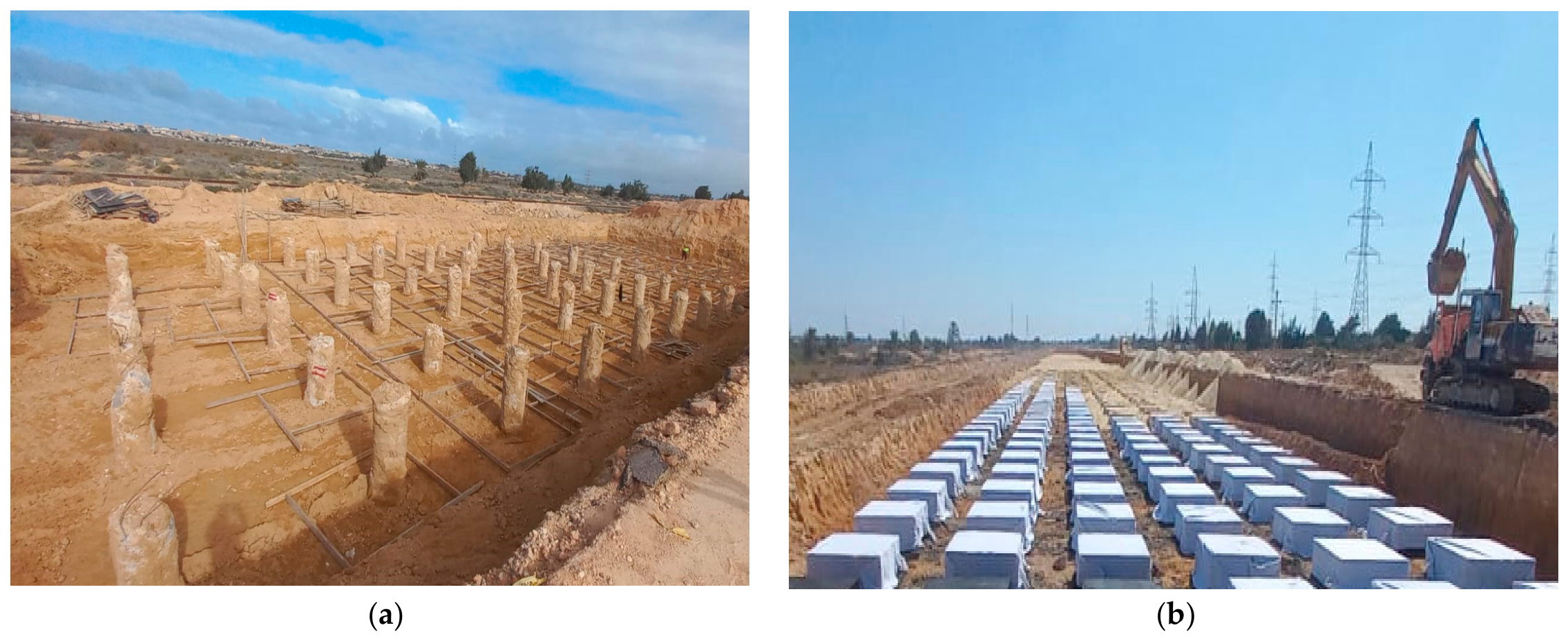
Piles and Pile Caps
2.5. Reliability and Limitations Investigation Methods
3. Design of a Single Pile
3.1. Pile Behavior Under Vertical Loads
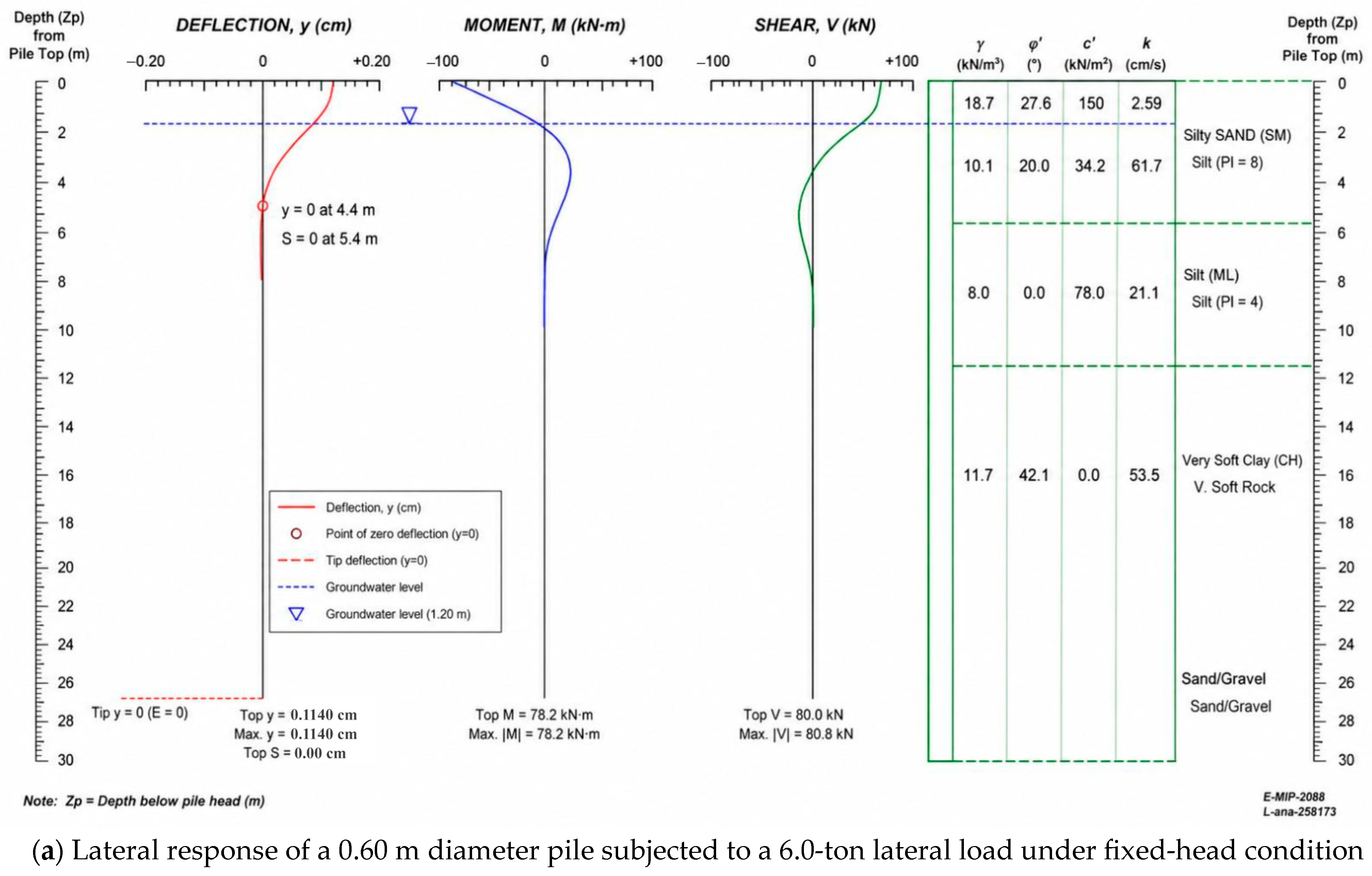
3.2. Pile Behavior Effect of Lateral Loads
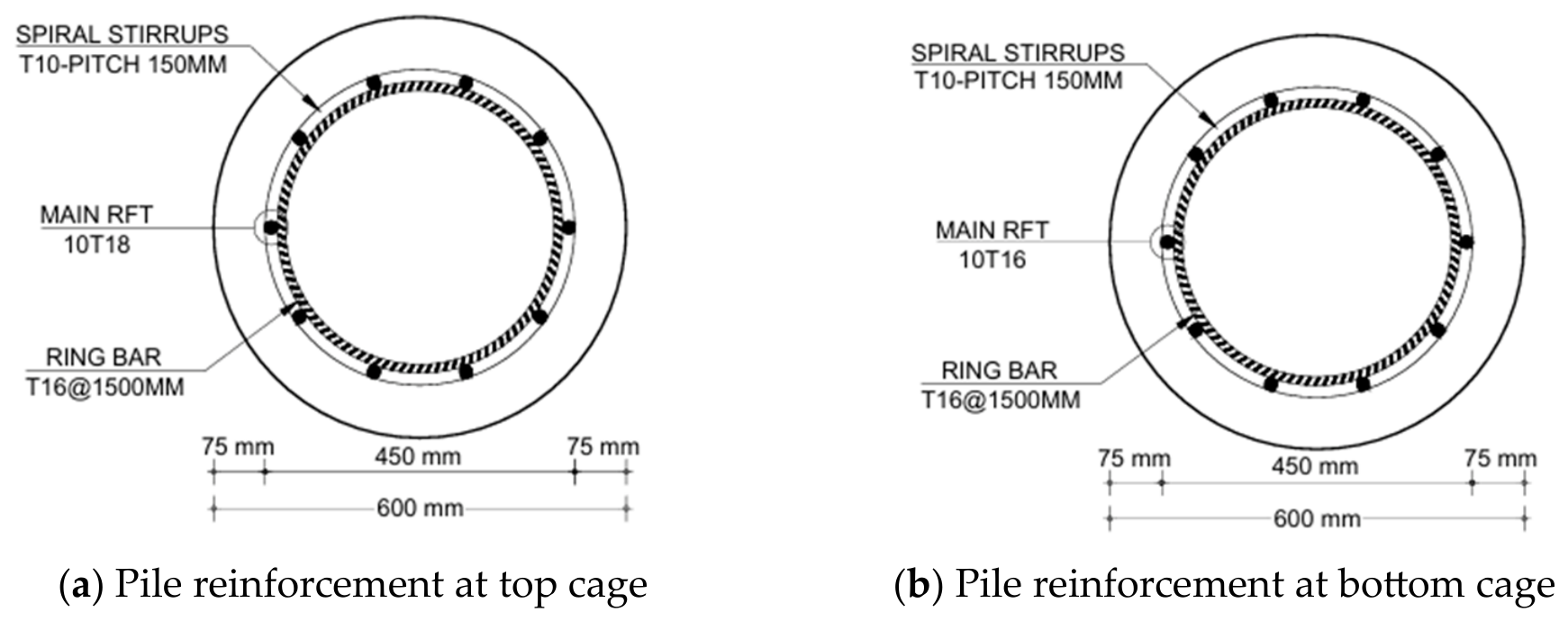
3.3. Structural Design of Working Piles and Reinforcement
3.4. Material Properties of Pile and Pile Cap Concrete
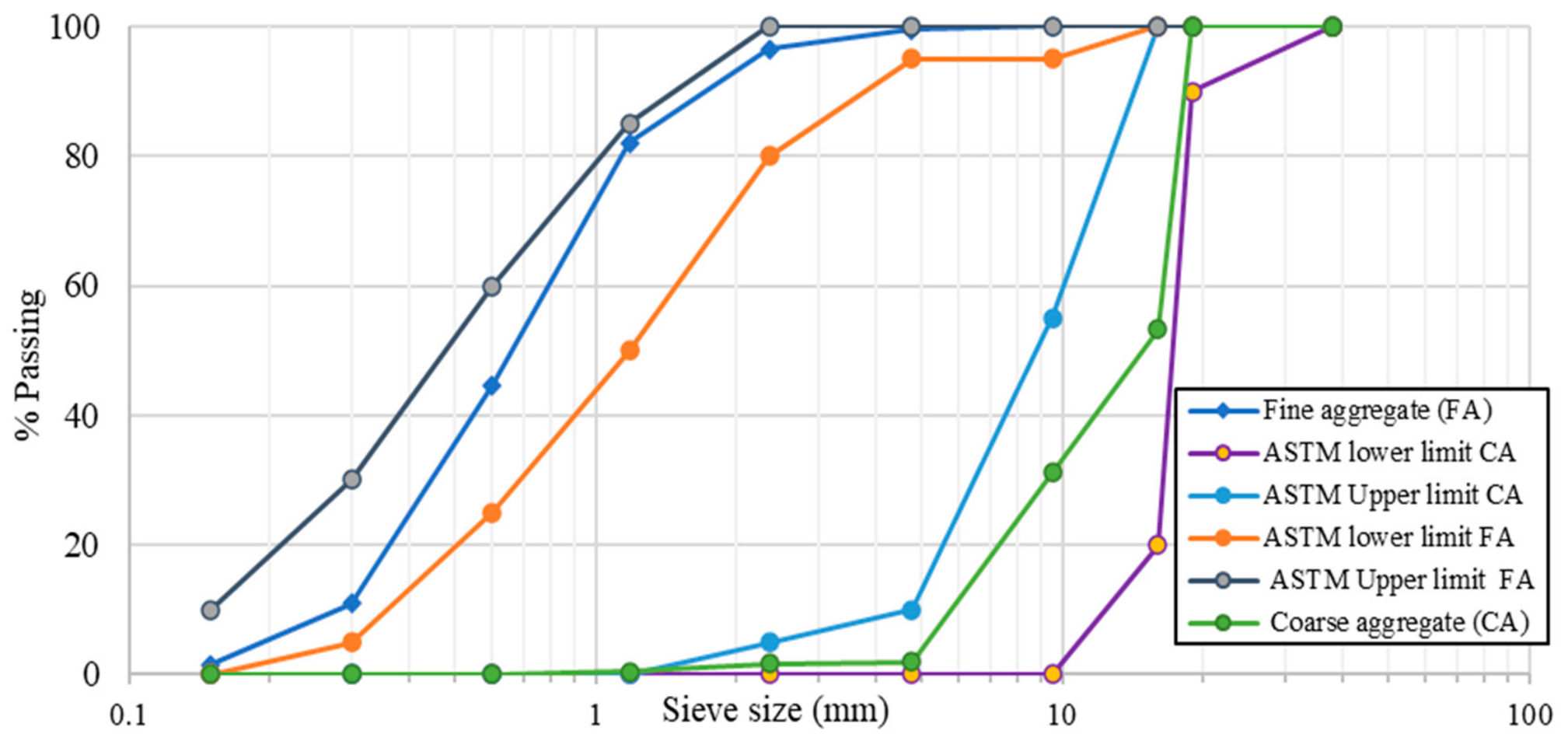
3.5. Mixture Proportions of Concrete
3.6. Construction Quality Assurance and Quality Control
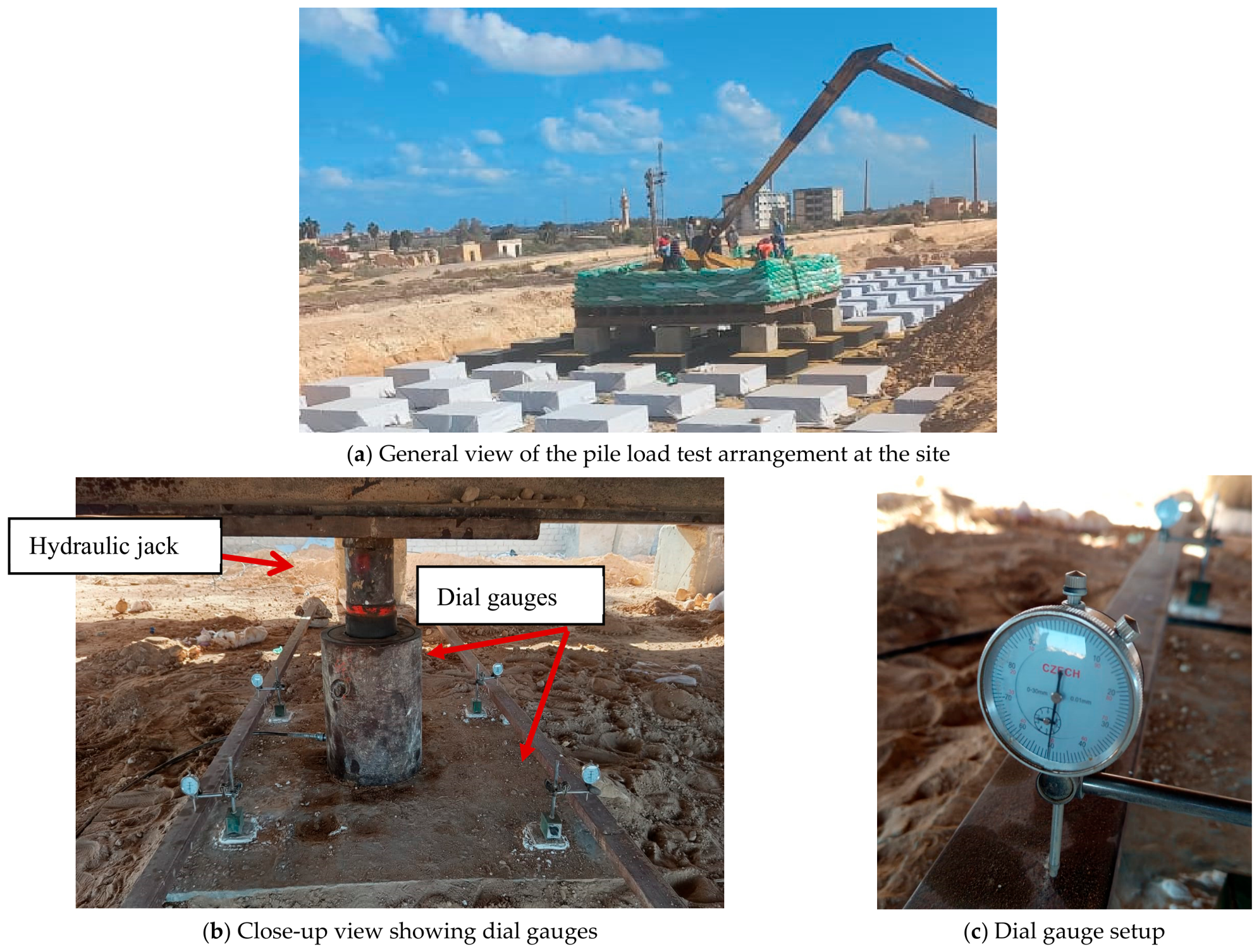
3.7. Field Static Pile Load Testing
4. Results and Discussion
4.1. Geotechnical Results for Boreholes
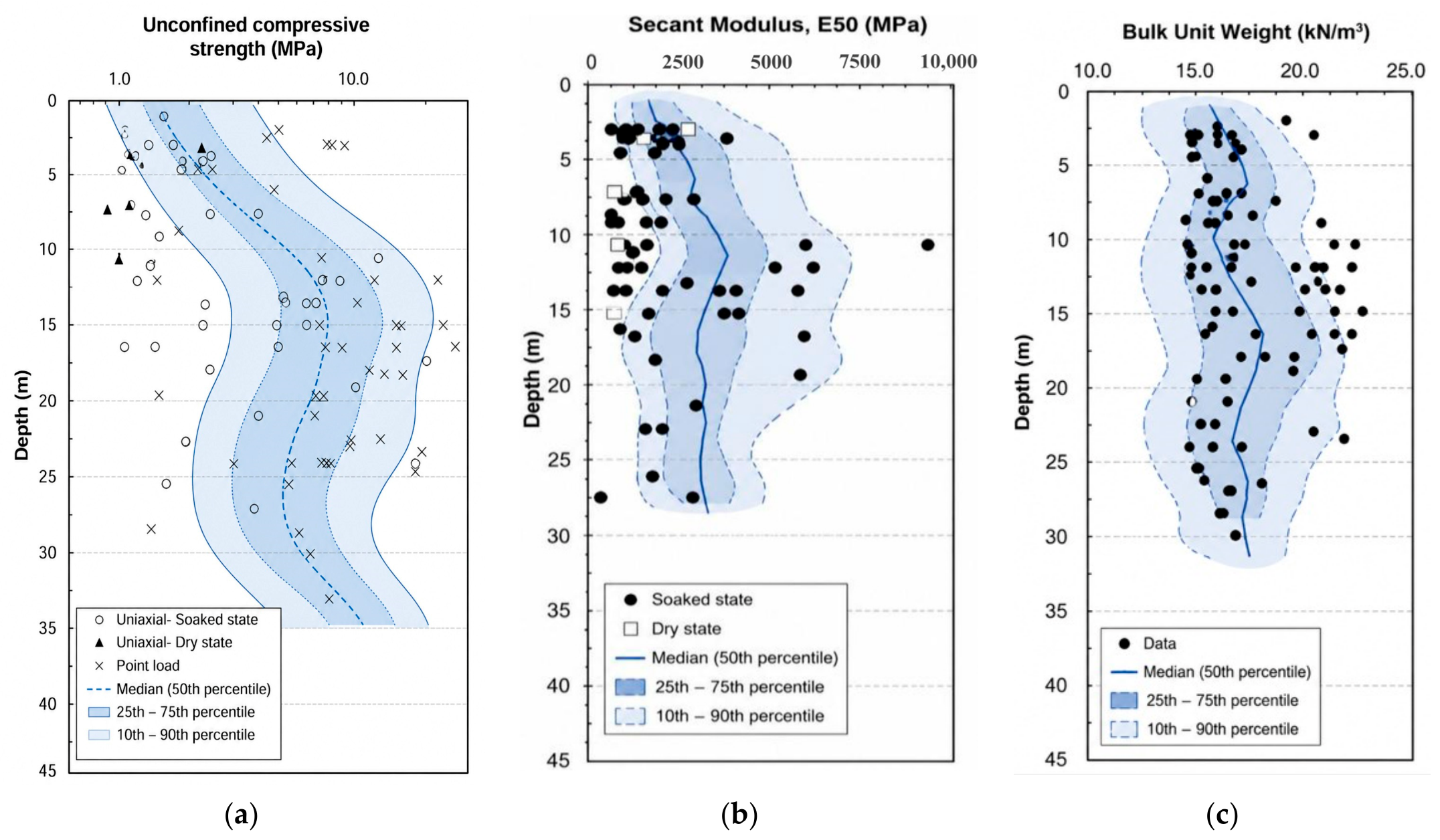
4.1.1. Unconfined Compressive Strength Test (UCS)
4.1.2. Secant Stiffness Modulus (E50)
4.1.3. Bulk Unit Weight and Water Absorption
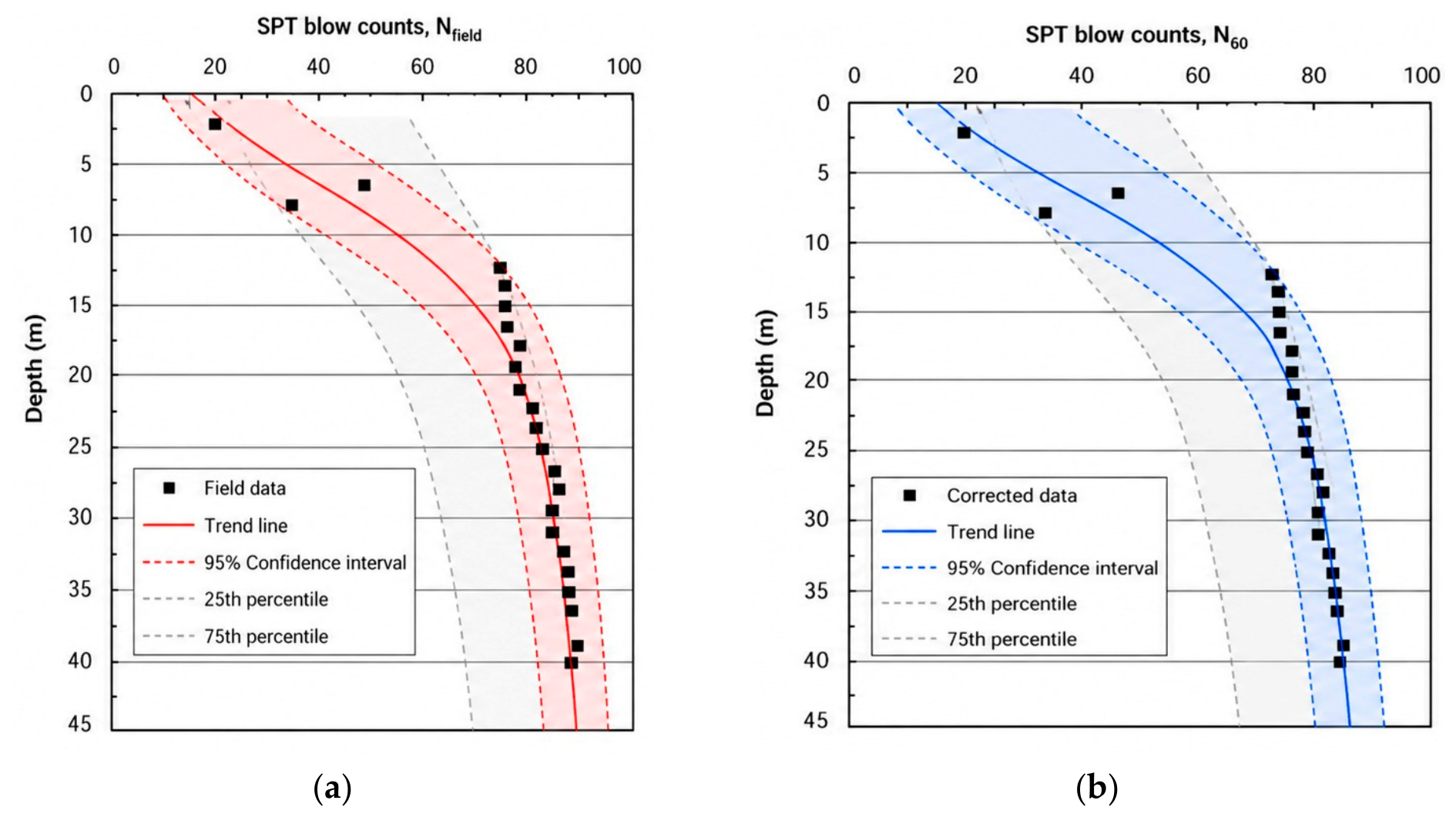
4.1.4. Shear Strength
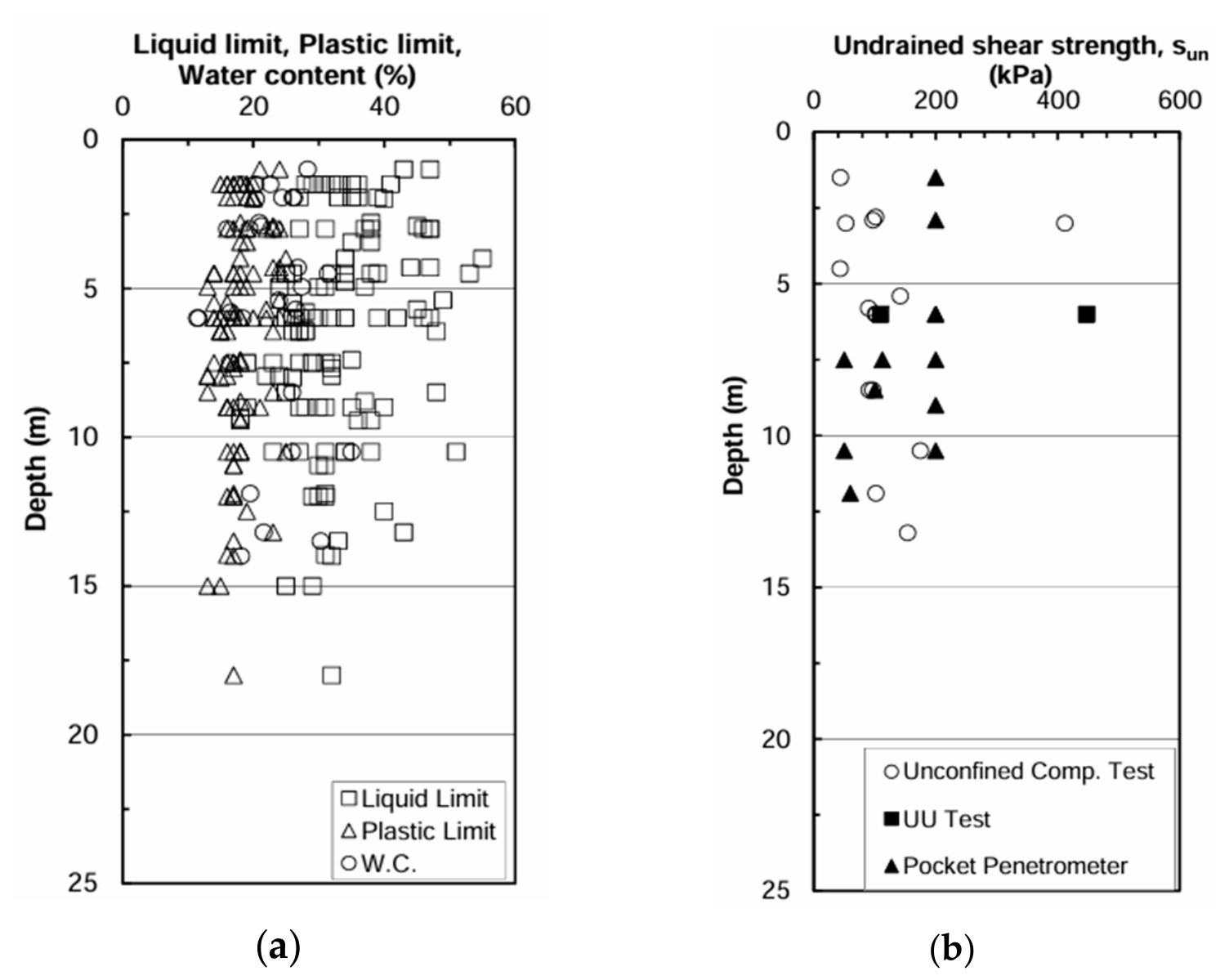
4.1.5. Atterberg Limits
4.1.6. Undrained Shear Strength
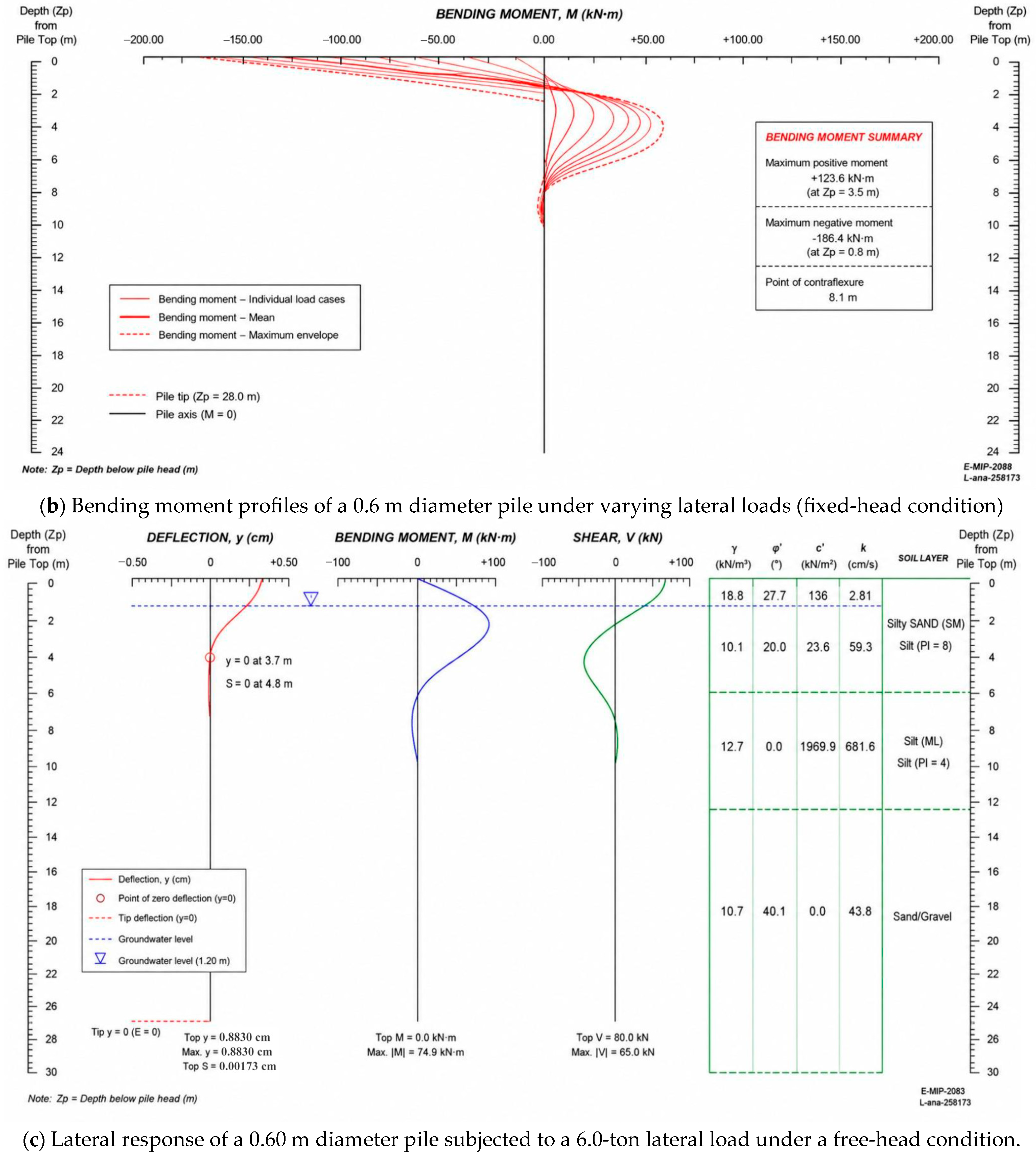
4.2. Numerical Analysis of Pile Response Under Lateral Loading
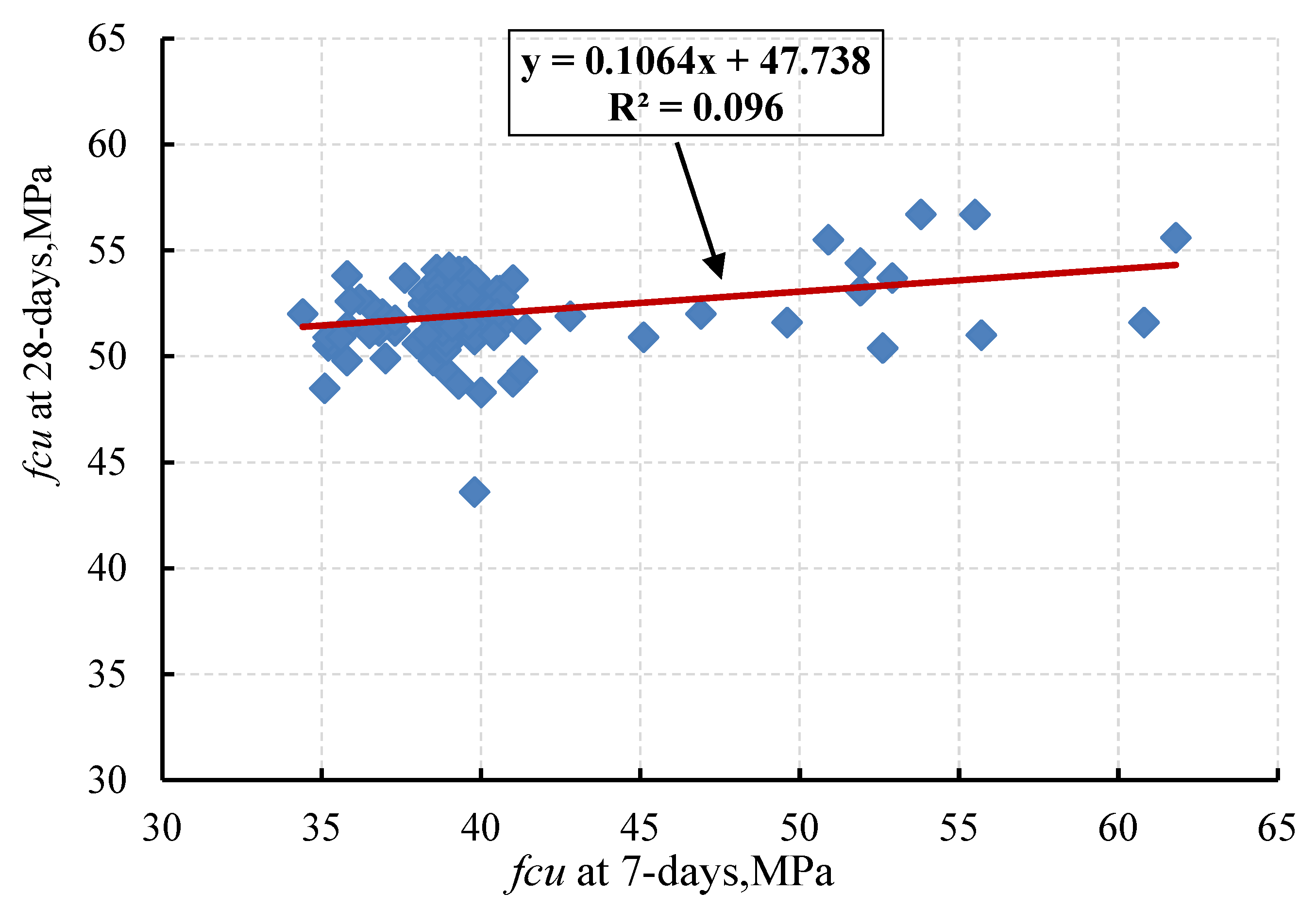
4.3. Compressive Strength of Concrete (fcu)
Correlation Between 7-Day and 28-Day Compressive Strengths
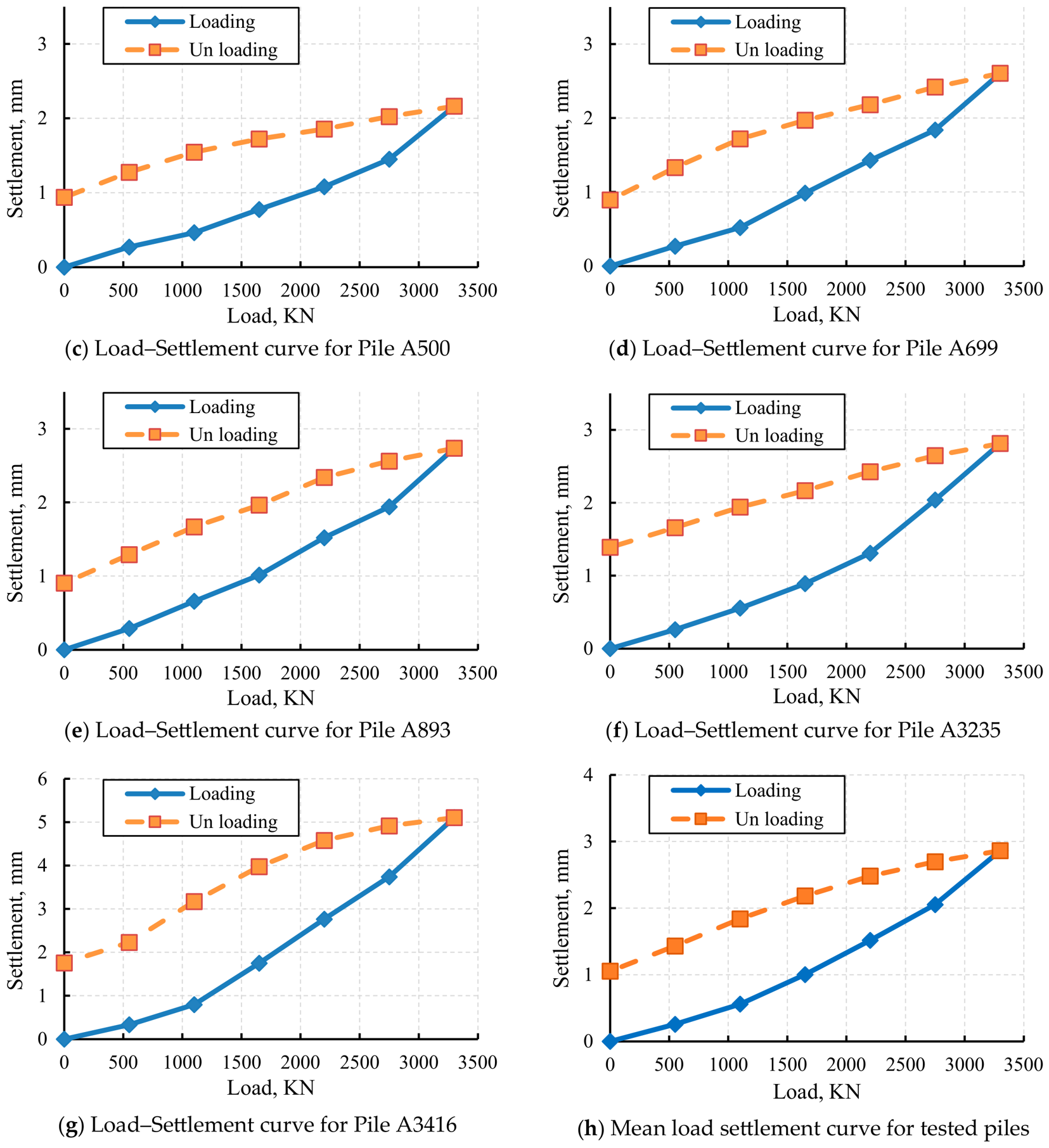
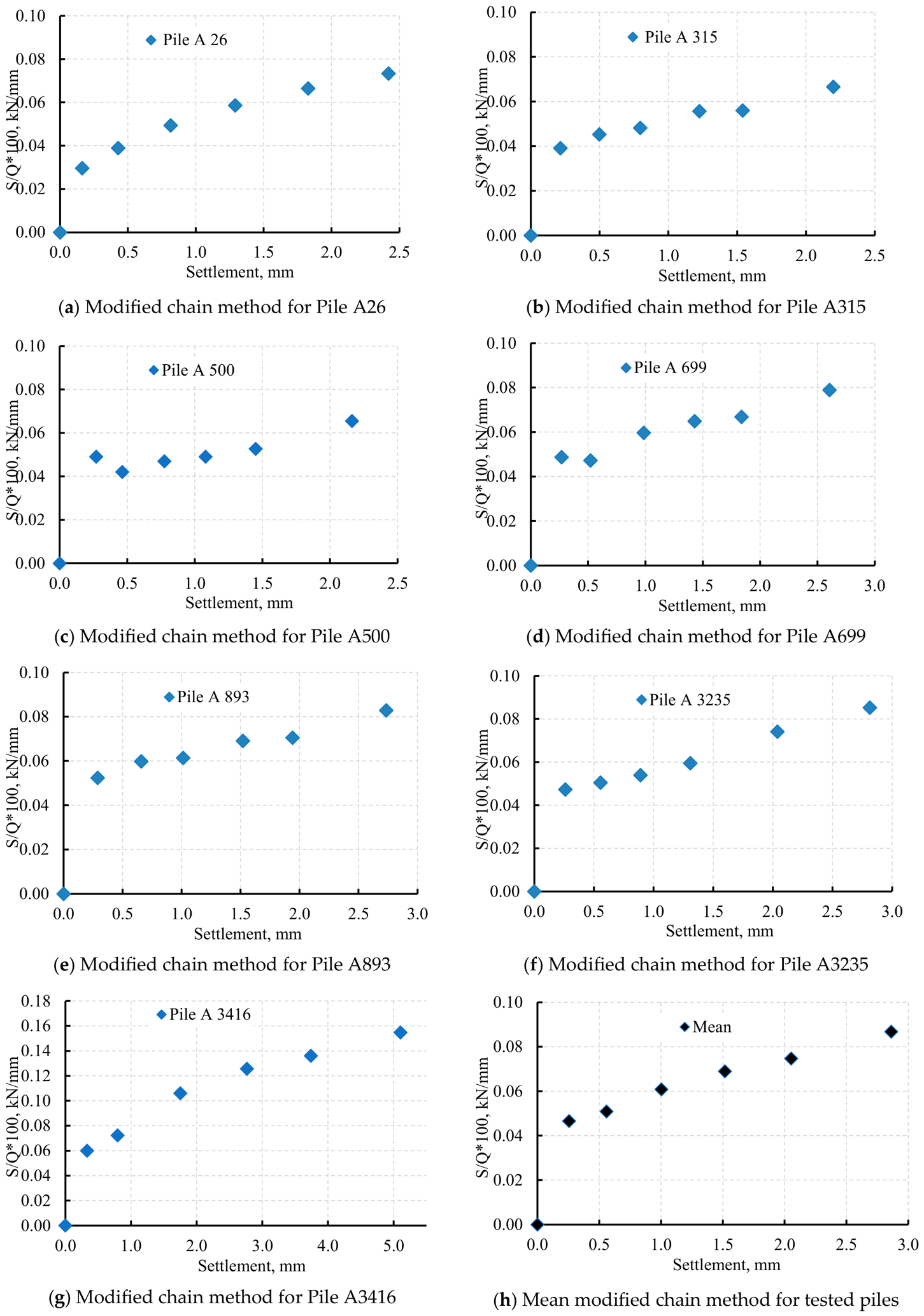
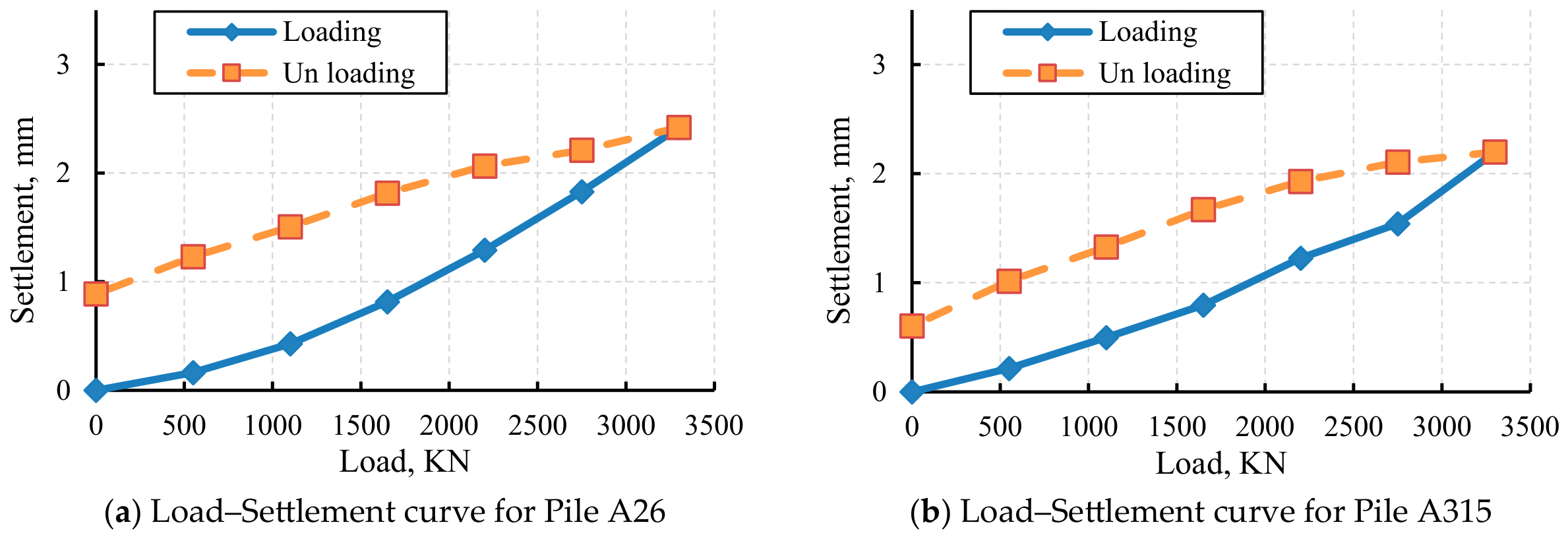
4.4. Field Static Pile Load Testing
4.5. Load Transfer Mechanism of the Pile–Cap System
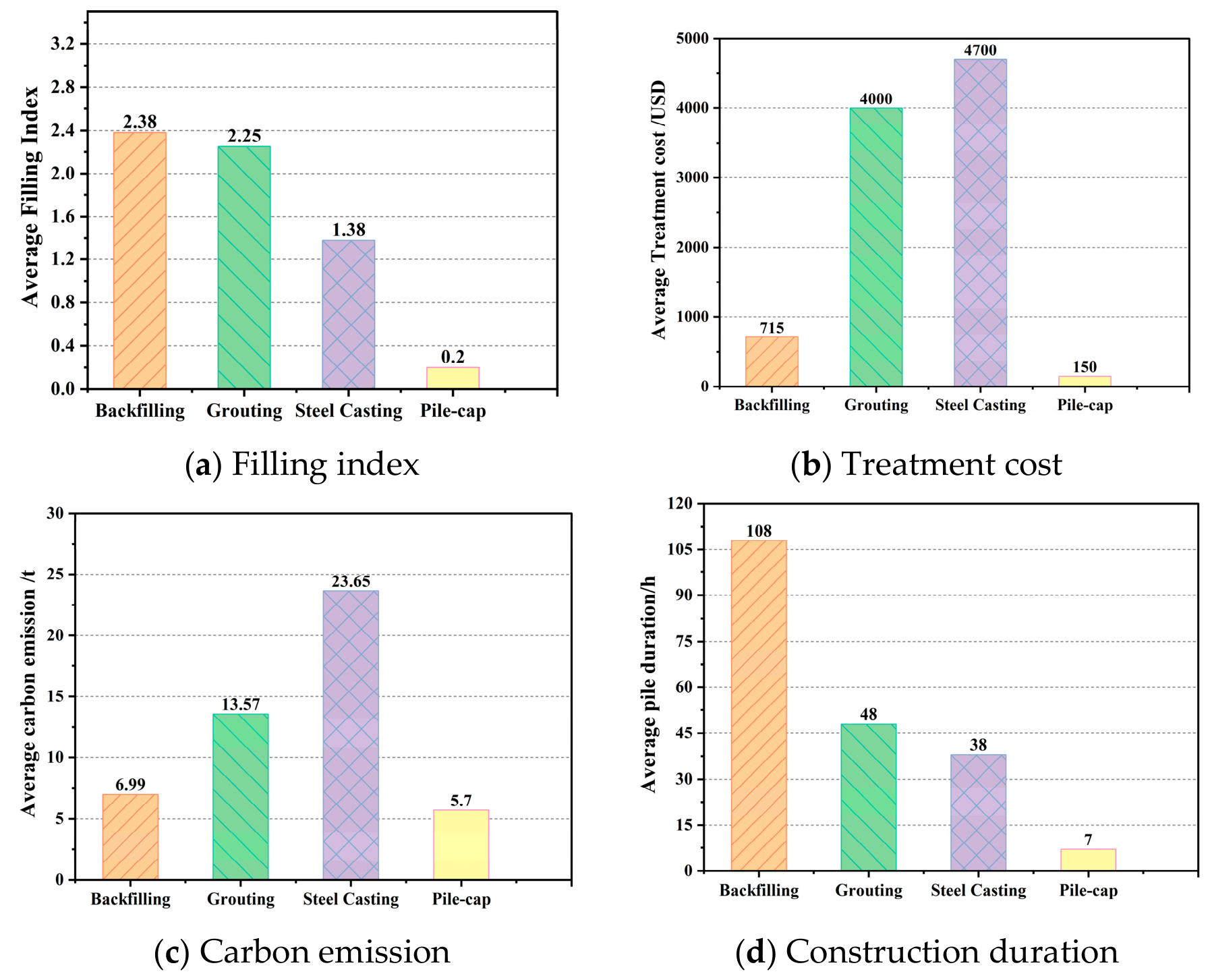
4.6. Comparative Evaluation of Ground Improvement Techniques
4.7. Limitations and Future Research
5. Conclusions
- Integrated geological investigations revealed highly heterogeneous karst conditions characterized by weak clay layers overlying fractured and cavity-prone limestone, with significant variability in rock and soil properties. The adopted pile–cap foundation system effectively transfers loads to competent strata, providing a reliable solution for settlement control and bearing capacity improvement.
- Numerical analysis indicated that lateral pile behavior is governed primarily by the upper 6–8 m of the ground profile, where maximum bending moments and lateral displacements occur, while shear forces and bending moments decrease rapidly with depth, confirming that lateral load transfer is concentrated within the shallow soil layers.
- Concrete quality control demonstrated excellent construction consistency, with the 28-day compressive strength of 122 tested piles averaging 50 MPa, approximately 30% higher than the design strength, and exhibiting low variability, reflecting effective quality assurance during construction.
- Full-scale static load tests confirmed the satisfactory performance of the pile–cap system, with measured settlements remaining well below the allowable limit under both working and maximum test loads. The observed partial elastic recovery during unloading further indicates that the piles behaved predominantly within the elastic range, ensuring adequate stiffness and serviceability.
- The adopted pile–cap foundation system demonstrated high engineering efficiency by providing reliable load transfer and effective settlement control under complex karst conditions while significantly reducing material consumption and treatment costs compared with conventional ground improvement approaches.
- The integrated investigation–design–verification framework presented in this study, combining geological and geophysical investigations, optimized foundation design, construction quality control, and full-scale field validation, provides a practical methodology for the design and implementation of high-speed railway embankments in heterogeneous karst environments.
Author Contributions
Funding
Data Availability Statement
Conflicts of Interest
References
- Huang, M.; Jiang, S.; Xu, C.; Xu, D. A New Theoretical Settlement Model for Large Step-Tapered Hollow Piles Based on Disturbed State Concept Theory. Comput. Geotech. 2020, 124, 103626. [Google Scholar] [CrossRef]
- Han, J.; Lu, G.; Yang, J. The Risk Assessment of Bridge Pile Foundation Construction in Karst Regions Based on the Fuzzy Analytic Hierarchy Process. Buildings 2025, 15, 1059. [Google Scholar] [CrossRef]
- Rauf, A.; Moon, S.-W.; Lim, C.-K.; Satyanaga, A.; Kim, J. Mechanical Characteristics of CSA-Treated Sand Reinforced with Fiber under Freeze-Thaw Cycles. Case Stud. Constr. Mater. 2024, 21, e03875. [Google Scholar] [CrossRef]
- Messioud, S.; Okyay, U.S.; Sbartai, B.; Dias, D. Dynamic Response of Pile Reinforced Soils and Piled Foundations. Geotech. Geol. Eng. 2016, 34, 789–805. [Google Scholar] [CrossRef]
- Shen, L.; Han, X.; Fei, L.; Ding, R. Case Study on Feasibility and Performance of Embankment over Soft Soils with Beam-Type Capped Piles. KSCE J. Civ. Eng. 2025, 29, 100208. [Google Scholar] [CrossRef]
- Basha, A.; Elmorsy, S.; Mansour, W.; Ramadan, B. Effect of the Pile Cap Length and the Soil Relative Density on the Pile Cap—Pile—Dense Soil Interaction: Experimental Investigation. Case Stud. Constr. Mater. 2024, 20, e03169. [Google Scholar] [CrossRef]
- Filz, G.; Sloan, J.; McGuire, M.P.; Collin, J.; Smith, M. Column-Supported Embankments: Settlement and Load Transfer. In Geotechnical Engineering State of the Art and Practice: Keynote Lectures from GeoCongress 2012; ASCE: Reston, VA, USA, 2012; pp. 54–77. [Google Scholar] [CrossRef]
- Fagundes, D.F.; Almeida, M.S.S.; Thorel, L.; Blanc, M. Load Transfer Mechanism and Deformation of Reinforced Piled Embankments. Geotext. Geomembr. 2017, 45, 1–10. [Google Scholar] [CrossRef]
- Huang, M.S.; Li, J.J.; Li, X.Z. Cumulative Deformation Behaviour of Soft Clay in Cyclic Undrained Tests. Yantu Gongcheng Xuebao/Chin. J. Geotech. Eng. 2006, 28, 891–895. [Google Scholar]
- El-ghaffar, A.A.; Gabr, A. Behavior of the C.F.A Piles in Gharbia Governorate of Egypt by Using Numerical Simulation. Al-Azhar Univ. Civ. Eng. Res. Mag. (CERM) 2019, 41, 193–207. [Google Scholar]
- Wan, Z.H.; Dai, G.L.; Gong, W.M. Field Study on Post-Grouting Effects of Cast-in-Place Bored Piles in Extra-Thick Fine Sand Layers. Acta Geotech. 2019, 14, 1357–1377. [Google Scholar] [CrossRef]
- Liu, W.; Novak, M. Soil-Pile-Cap Static Interaction Analysis by Finite and Infinite Elements. Can. Geotech. J. 1991, 28, 771–783. [Google Scholar] [CrossRef]
- Lee, S.H.; Chung, C.K. An Experimental Study of the Interaction of Vertically Loaded Pile Groups in Sand. Can. Geotech. J. 2005, 42, 1485–1493. [Google Scholar] [CrossRef]
- Ma, H.; Luo, Q.; Wang, T.; Jiang, H.; Lu, Q. Numerical Stability Analysis of Piled Embankments Reinforced with Ground Beams. Transp. Geotech. 2021, 26, 100427. [Google Scholar] [CrossRef]
- Tran, T.V.; Kimura, M.; Boonyatee, T. 3D FE Analysis of Effect of Ground Subsidence and Piled Spacing on Ultimate Bearing Capacity of Piled Raft and Axial Force of Piles in Piled Raft. Open J. Civ. Eng. 2012, 02, 206–213. [Google Scholar] [CrossRef]
- Magade, S.B.; Ingle, R.K. Influence of Clear Edge Distance and Spacing of Piles on Failure of Pile Cap. Iran. J. Sci. Technol. Trans. Civ. Eng. 2020, 44, 1265–1281. [Google Scholar] [CrossRef]
- Zhao, H.; Zhang, J.; Qiu, P.; Ji, S. Hierarchical Modeling Method for DEM Simulation and Its Application in Soil–Pile–Cap Interaction and Impact Case. Int. J. Geomech. 2019, 19, 05024004. [Google Scholar] [CrossRef]
- Gutiérrez, F.; Parise, M.; De Waele, J.; Jourde, H. A Review on Natural and Human-Induced Geohazards and Impacts in Karst. Earth Sci. Rev. 2014, 138, 61–88. [Google Scholar] [CrossRef]
- Iqbal, K.; Xu, C.; Han, Y.; Motalleb, Q.A.; Ijaz, N.; Dou, P. Numerical Study on Seismic Response of Offshore Wind Turbine Monopile in Multi-Layered Soil Profile of Arabian Sea. Int. J. Struct. Stab. Dyn. 2023, 23, 2350049. [Google Scholar] [CrossRef]
- Zhang, C.; Zhou, J.; Zheng, X.; Yang, J.; Zhan, S.; Yang, L. A Novel Water-Swelling Grouting Material Formulation and Its Performance for Water Rushing in Karst Strata. Constr. Build. Mater. 2024, 416, 135245. [Google Scholar] [CrossRef]
- Zeng, C.-F.; Powrie, W.; Chen, H.-B.; Wang, S.; Diao, Y.; Xue, X.-L. Ground Behavior Due to Dewatering Inside a Foundation Pit Considering the Barrier Effect of Preexisting Building Piles on Aquifer Flow. J. Geotech. Geoenviron. Eng. 2024, 150, 05024004. [Google Scholar] [CrossRef]
- Chalikakis, K.; Plagnes, V.; Guerin, R.; Valois, R.; Bosch, F.P. Contribution of Geophysical Methods to Karst-System Exploration: An Overview. Hydrogeol. J. 2011, 19, 1169–1180. [Google Scholar] [CrossRef]
- Song, K.I.; Cho, G.C.; Chang, S.B. Identification, Remediation, and Analysis of Karst Sinkholes in the Longest Railroad Tunnel in South Korea. Eng. Geol. 2012, 135–136, 92–105. [Google Scholar] [CrossRef]
- Yang, Y.; Li, J.; Liu, C.; Ma, J.; Zheng, S.; Chen, W. Influence of Deep Excavation on Adjacent Bridge Piles Considering Underlying Karst Cavern: A Case History and Numerical Investigation. Acta Geotech. 2022, 17, 545–562. [Google Scholar] [CrossRef]
- Cui, Q.L.; Wu, H.N.; Shen, S.L.; Xu, Y.S.; Ye, G.L. Chinese Karst Geology and Measures to Prevent Geohazards during Shield Tunnelling in Karst Region with Caves. Nat. Hazards 2015, 77, 129–152. [Google Scholar] [CrossRef]
- Cui, Q.L.; Shen, S.L.; Xu, Y.S.; Wu, H.N.; Yin, Z.Y. Mitigation of Geohazards during Deep Excavations in Karst Regions with Caverns: A Case Study. Eng. Geol. 2015, 195, 16–27. [Google Scholar] [CrossRef]
- Wang, Y.; Li, Z.; Jin, Q.; Zhang, M.; Zhou, Z. High-Efficiency Utilization of Limestone Tailings: Used as Cementitious Materials and Fine Aggregate to Prepare Karst Structure Filling Material. Constr. Build. Mater. 2022, 316, 125841. [Google Scholar] [CrossRef]
- Fan, H.; Zhang, Y.; He, S.; Wang, K.; Wang, X.; Wang, H. Hazards and Treatment of Karst Tunneling in Qinling-Daba Mountainous Area: Overview and Lessons Learnt from Yichang–Wanzhou Railway System. Environ. Earth Sci. 2018, 77, 679. [Google Scholar] [CrossRef]
- Diagne, M.; Ndiaye, M.C.; Sow, L. Reinforcement of the Ground by Injection of Cement Grout for the Installation of Piles in Karstified Limestone Zone. Case Stud. Constr. Mater. 2020, 12, e00310. [Google Scholar] [CrossRef]
- Xing, H.F.; Meng, M.H.; Long, W.X.; Ye, G.B.; He, W.Y. Research on the Construction Technique of Super-Large Diameter Rock-Socketed Piles in Karst Areas. Adv. Mater. Res. 2012, 446–449, 1486–1490. [Google Scholar] [CrossRef]
- Li, Q.; Qin, Y. Technologies to Deal with Karst Caves beneath Pile Foundation of the Big Bridge on the Laos-China Railway. Carsologica Sin. 2019, 38, 607–611. [Google Scholar] [CrossRef]
- Chen, G.; Zhu, J.; Qiang, M.; Gong, W. Three-Dimensional Site Characterization with Borehole Data—A Case Study of Suzhou Area. Eng. Geol. 2018, 234, 65–82. [Google Scholar] [CrossRef]
- Liu, L.; Shi, Z.; Peng, M.; Liu, C.; Tao, F.; Liu, C. Numerical Modeling for Karst Cavity Sonar Detection beneath Bored Cast in Situ Pile Using 3D Staggered Grid Finite Difference Method. Tunn. Undergr. Space Technol. 2018, 82, 50–65. [Google Scholar] [CrossRef]
- Fu, S.; Zhang, Y.; Wang, Y.; Wang, S.; Chen, R. A Comprehensive Approach to Karst Identification and Groutability Evaluation—A Case Study of the Dehou Reservoir, SW China. Eng. Geol. 2020, 269, 105529. [Google Scholar] [CrossRef]
- Lei, Y.; Li, P.J.; Liu, Z.Y.; Li, J.Z.; Hu, W. Method for Calculation of Buckling Critical Load of Pile Foundation Crossing Karst Cave in Karst Area. Yantu Lixue/Rock Soil Mech. 2022, 43, 3347–3356. [Google Scholar] [CrossRef]
- Ding, Y.; Li, S.; Zhu, B.; Lin, H.; Zhang, J.; Tan, J.; Chen, W. Research on the Feasibility of Storage and Estimation Model of Storage Capacity of CO2 in Fissures of Coal Mine Old Goaf. Int. J. Min. Sci. Technol. 2023, 33, 675–686. [Google Scholar] [CrossRef]
- Shiau, J.; Chudal, B.; Keawsawasvong, S. Three-Dimensional Sinkhole Stability of Spherical Cavity. Acta Geotech. 2022, 17, 3947–3958. [Google Scholar] [CrossRef]
- Arbi, S.J.; Rehman, Z.; Hassan, W.; Khalid, U.; Ijaz, N.; Maqsood, Z.; Haider, A. Optimized Machine Learning-Based Enhanced Modeling of Pile Bearing Capacity in Layered Soils Using Random and Grid Search Techniques. Earth Sci. Inform. 2025, 18, 332. [Google Scholar] [CrossRef]
- Xue, T.; Xiao, L.; Zeng, C.; Mei, G. Innovative Flexible Casing for Concrete Loss Mitigation in Cast-in-Situ Piles: Karst Geological Case Study in Guizhou, China. Tunn. Undergr. Space Technol. 2026, 167, 107098. [Google Scholar] [CrossRef]
- Zhang, C.; Fu, J.; Yang, J.; Ou, X.; Ye, X.; Zhang, Y. Formulation and Performance of Grouting Materials for Underwater Shield Tunnel Construction in Karst Ground. Constr. Build. Mater. 2018, 187, 327–338. [Google Scholar] [CrossRef]
- Xu, M.; Zhang, F.; Ni, P.; Mei, G. Load–Settlement Behaviour of Membrane-Confined Grouted Pile: Experimental and Analytical Study. Acta Geotech. 2023, 18, 2777–2793. [Google Scholar] [CrossRef]
- BS 8006-1:2010; Code of Practice for Strengthened/Reinforced Soils and Other Fills—Part 1: General. British Standards Institution: London, UK, 2010.
- CivilTech Software. AllPile, v6. Pile Analysis Software. CivilTech Software, Inc.: Houston, TX, USA, 2019.
- ECP 203–2018; Egyptian Code of Practice for Design and Construction of Concrete Structures, ‘‘Annex III”, Manual Labor-Atory Tests for Concrete Material. Ministry of Housing, Utilities & Urban Communities: Cairo, Egypt, 2018. Available online: https://www.scribd.com/document/356187110/Egyptian-Code-203-2006-English/ (accessed on 10 May 2026).
- Sika Egypt. Available online: https://Egy.Sika.Com/ (accessed on 10 May 2026).
- National Housing and Building Research Center (HBRC). Egyptian Code of Practice for Soil Mechanics and Foundations Design and Construction; National Housing and Building Research Center: Cairo, Egypt, 2018. [Google Scholar]
- ASTM-D1143; Piles Under Static Axial Compressive Load. ASTM International: West Conshohocken, PA, USA, 1994.
- ASTM D7012-13; Test Methods for Compressive Strength and Elastic Moduli of Intact Rock Core Specimens under Varying States of Stress and Temperatures 2013. ASTM International: West Conshohocken, PA, USA, 2013.
- Sabatini, P.J.; Bachus, R.C.; Mayne, P.W.; Schneider, J.A.; Zettler, T.E. Geotechnical Engineering Circular No.5—Evaluation of Soil and Rock Properties. Security 2002, 7, 385. [Google Scholar]
- Chen, D. Comparison Selection and Case Analysis on Construction Schemes of Thick Sand Layer Covered Pile Foundation in Karst District. Build. Struct. 2022, 52, 139–144. [Google Scholar]









| Parameter | Unit | Value |
|---|---|---|
| Selected pile working load | (kN) | 2200 |
| Pile diameter | (m) | 0.60 |
| Pile Tip level | (m) | −12.30 |
| Pile cap bottom level | (m) | +13.60 |
| Pile length from cutoff level | (m) | 25.90 |
| Ultimate end bearing load | (kN) | 3800 |
| Ultimate friction load (from level −5.0 to −12.30) | (kN) | 1000 |
| Total ultimate capacity | (kN) | 4700 |
| Factor of Safety at extreme case | --- | 2.18 |
| Pile Dia. (cm) | Working Bending Moment (ton·m) | Ultimate Bending Moment (ton·m) | Steel Reinforcement | Steel Reinf. Area (cm2) |
|---|---|---|---|---|
| 60.0 | 7.8 | 12 | 10T18 at top cage 10T16 at bottom cage | 22.9 |
| Compounds | OPC |
|---|---|
| SiO2 | 21.56 |
| Fe2O3 | 3.43 |
| Al2O3 | 5.06 |
| Cao | 59.52 |
| K2O | 0.70 |
| MgO | 1.99 |
| Na2O | 1.20 |
| SO3 | 2.75 |
| Loss on ignition | 3.86 |
| Fineness(cm2/gm) | 3360 |
| Soundness (mm) | 1.0 |
| Specific gravity (g/m3) | 3.15 |
| Item in Mix | OPC | CA | FA | Water | SP | Entrapped Air |
|---|---|---|---|---|---|---|
| Weight | 400 | 1080 | 730 | 155 | 15 | 20 |
| Specific gravity(g/cc) | 3.15 | 2.66 | 2.61 | 1 | 1.2 | - |
| Volume (m3) | 0.130 | 0.407 | 0.280 | 0.155 | 0.013 | 0.002 |
| Condition | Pile Length Below Cutoff (m) | Lateral Load (ton) | Maximum Defle. (mm) | Bending Mom. (ton·m) | Depth Where Mom. Vanishes | Horizontal Stiffness (ton/m) |
|---|---|---|---|---|---|---|
| Fixed head | 26 | 6.0 | 1.14 | 7.82 | 6.0 to 8.0 m | 5080 |
| Free head | 3.8 | 7.49 | - |
| Statistic | fcu at 7-day | fcu at 28-day |
|---|---|---|
| count | 117.0 | 117.0 |
| Mean (MPa) | 40.40 | 52.06 |
| Standard deviation (Sd) | 4.966 | 1.686 |
| Minimum (MPa) | 34.40 | 43.60 |
| 25th Percentile (MPa) | 38.50 | 51.10 |
| Median (50%) (MPa) | 39.30 | 52.00 |
| 75th Percentile (MPa) | 40.40 | 52.90 |
| Maximum (MPa) | 61.80 | 56.70 |
| Pile ID | L (m) | D (m) | Working Load (KN) | Test Load (KN) | Allowable Settlement (S0) (mm) |
|---|---|---|---|---|---|
| A 26 | 26.00 | 0.60 | 2200 | 3300 | 22.80 |
| A 315 | 26.80 | 0.60 | 2200 | 3300 | 23.00 |
| A 500 | 29.00 | 0.60 | 2200 | 3300 | 24.00 |
| A 699 | 32.70 | 0.60 | 2200 | 3300 | 26.00 |
| A 893 | 32.70 | 0.60 | 2200 | 3300 | 26.00 |
| A 3235 | 29.50 | 0.60 | 2200 | 3300 | 24.30 |
| A 3416 | 34.70 | 0.60 | 2200 | 3300 | 26.40 |
| Loading Case | Loading % | Load (KN) | Settlement of Piles (mm) | ||||||
|---|---|---|---|---|---|---|---|---|---|
| A 26 | A 315 | A 500 | A 699 | A 893 | A 3235 | A 3416 | |||
| Loading | 0% | 0 | 0 | 0 | 0 | 0 | 0 | 0 | 0 |
| 25% | 550 | 0.163 | 0.215 | 0.27 | 0.268 | 0.288 | 0.26 | 0.33 | |
| 50% | 1100 | 0.428 | 0.498 | 0.463 | 0.52 | 0.658 | 0.555 | 0.795 | |
| 75% | 1650 | 0.815 | 0.795 | 0.775 | 0.985 | 1.013 | 0.89 | 1.75 | |
| 100% | 2200 | 1.29 | 1.225 | 1.08 | 1.428 | 1.52 | 1.308 | 2.765 | |
| 125% | 2750 | 1.828 | 1.54 | 1.45 | 1.838 | 1.94 | 2.038 | 3.74 | |
| 150% | 3300 | 2.42 | 2.198 | 2.163 | 2.605 | 2.735 | 2.813 | 5.105 | |
| Un loading | 125% | 2750 | 2.21 | 2.105 | 2.023 | 2.418 | 2.56 | 2.645 | 4.913 |
| 100% | 2200 | 2.065 | 1.928 | 1.855 | 2.18 | 2.338 | 2.425 | 4.578 | |
| 75% | 1650 | 1.815 | 1.67 | 1.723 | 1.97 | 1.963 | 2.165 | 3.975 | |
| 50% | 1100 | 1.505 | 1.328 | 1.545 | 1.718 | 1.668 | 1.94 | 3.17 | |
| 25% | 550 | 1.23 | 1.015 | 1.275 | 1.33 | 1.29 | 1.658 | 2.228 | |
| 0% | 0 | 0.888 | 0.605 | 0.938 | 0.893 | 0.905 | 1.39 | 1.755 | |
| Load (Q) (KN) | Settlement (S) (mm) | Mean (mm) | S/Q × 100 | Mean S/Q × 100 | ||||||||||||
|---|---|---|---|---|---|---|---|---|---|---|---|---|---|---|---|---|
| A 26 | A 315 | A 500 | A 699 | A 893 | A 3235 | A 3416 | A 26 | A 315 | A 500 | A 699 | A 893 | A 3235 | A 3416 | |||
| 0 | 0 | 0 | 0 | 0 | 0 | 0 | 0 | 0.0 | 0.000 | 0.000 | 0.000 | 0.000 | 0.000 | 0.000 | 0.000 | 0.000 |
| 550 | 0.163 | 0.215 | 0.27 | 0.268 | 0.288 | 0.26 | 0.33 | 0.256 | 0.030 | 0.039 | 0.049 | 0.049 | 0.052 | 0.047 | 0.060 | 0.047 |
| 1100 | 0.428 | 0.498 | 0.463 | 0.52 | 0.658 | 0.555 | 0.795 | 0.560 | 0.039 | 0.045 | 0.042 | 0.047 | 0.060 | 0.050 | 0.072 | 0.051 |
| 1650 | 0.815 | 0.795 | 0.775 | 0.985 | 1.013 | 0.89 | 1.75 | 1.003 | 0.049 | 0.048 | 0.047 | 0.060 | 0.061 | 0.054 | 0.106 | 0.061 |
| 2200 | 1.29 | 1.225 | 1.08 | 1.428 | 1.52 | 1.308 | 2.765 | 1.517 | 0.059 | 0.056 | 0.049 | 0.065 | 0.069 | 0.059 | 0.126 | 0.069 |
| 2750 | 1.828 | 1.54 | 1.45 | 1.838 | 1.94 | 2.038 | 3.74 | 2.053 | 0.066 | 0.056 | 0.053 | 0.067 | 0.071 | 0.074 | 0.136 | 0.075 |
| 3300 | 2.42 | 2.198 | 2.163 | 2.605 | 2.735 | 2.813 | 5.105 | 2.863 | 0.073 | 0.067 | 0.066 | 0.079 | 0.083 | 0.085 | 0.155 | 0.087 |
Disclaimer/Publisher’s Note: The statements, opinions and data contained in all publications are solely those of the individual author(s) and contributor(s) and not of MDPI and/or the editor(s). MDPI and/or the editor(s) disclaim responsibility for any injury to people or property resulting from any ideas, methods, instructions or products referred to in the content. |
© 2026 by the authors. Licensee MDPI, Basel, Switzerland. This article is an open access article distributed under the terms and conditions of the Creative Commons Attribution (CC BY) license.
Share and Cite
Miky, Y.; El-Wafa, M.A.; Badran, M.A.; Hassan, H.; Eisa, A.S. Field Performance of a Pile-Cap Ground Improvement System for High-Speed Railway Embankments in Karst Terrain. Infrastructures 2026, 11, 217. https://doi.org/10.3390/infrastructures11070217
Miky Y, El-Wafa MA, Badran MA, Hassan H, Eisa AS. Field Performance of a Pile-Cap Ground Improvement System for High-Speed Railway Embankments in Karst Terrain. Infrastructures. 2026; 11(7):217. https://doi.org/10.3390/infrastructures11070217
Chicago/Turabian StyleMiky, Yehia, Mahmoud Abo El-Wafa, Mohamed A. Badran, Hilal Hassan, and Ahmed S. Eisa. 2026. "Field Performance of a Pile-Cap Ground Improvement System for High-Speed Railway Embankments in Karst Terrain" Infrastructures 11, no. 7: 217. https://doi.org/10.3390/infrastructures11070217
APA StyleMiky, Y., El-Wafa, M. A., Badran, M. A., Hassan, H., & Eisa, A. S. (2026). Field Performance of a Pile-Cap Ground Improvement System for High-Speed Railway Embankments in Karst Terrain. Infrastructures, 11(7), 217. https://doi.org/10.3390/infrastructures11070217