Article

Laboratory Evaluation of Asphalt Mixtures Reinforced with Corn Husk Fiber Powder

by
Abbas F. Jasim
*,
Rana A. Yousif
,
Sady A. Tayh
,
Safaa A. Mohamad
and
Teba T. Khaled
Department of Highway and Transportation Engineering, College of Engineering, Mustansiriyah University, Baghdad 10047, Iraq
*
Author to whom correspondence should be addressed.
Infrastructures 2026, 11(6), 186; https://doi.org/10.3390/infrastructures11060186
Submission received: 10 May 2026 / Revised: 23 May 2026 / Accepted: 27 May 2026 / Published: 28 May 2026
(This article belongs to the Section Sustainable Infrastructures)

Abstract

The pavement surface temperatures in Iraq are remarkably high, causing the asphalt to deteriorate quickly, shortening its service life. While a large amount of corn husk, an agricultural waste, is available for use as an asphalt modifier, researchers have not yet fully investigated this option. In this study, the use of corn husk fiber powder (CHFP) as a long-term modifier for asphalt binders and mixtures that are exposed to high-temperature conditions is evaluated. CHFP was mixed into a 40–50 penetration grade asphalt binder at concentrations ranging from 0.0% to 0.6% by weight. Performance was assessed using laboratory tests such as penetration, softening point, rotating viscosity, dynamic shear rheometer (DSR), aging (RTFOT and PAV), and wheel tracking. The findings revealed that CHFP greatly lowers penetration while increasing the softening point, indicating increased stiffness and high-temperature stability. Rheological research showed an increase in the rutting parameter (G*/sinδ) and viscosity, as well as reduced temperature susceptibility. At the mixed level, CHFP reduced rut depth while improving dynamic stability, indicating increased resistance to permanent deformation. The best performance was obtained at 0.3% CHFP, after which, improvements decreased due to probable dispersion constraints. The performance improvement is related to the creation of a reinforcing fiber network and the absorption of light asphalt components. Overall, CHFP is a promising, environmentally friendly and cost-effective addition for increasing asphalt pavement performance and promoting sustainable waste management.

1. Introduction

Bitumen is a fundamental component in road construction, with approximately 70% of its global production used as a binder in asphalt mixtures composed of aggregates and fillers. As a viscoelastic material, its mechanical behavior is highly dependent on temperature and loading conditions, making it a key determinant of pavement performance and service life. Numerous studies have shown that modifying bitumen with fibers can significantly improve its rheological and mechanical properties, particularly penetration resistance, viscosity, and stiffness [1,2,3]. Fiber–bitumen systems form a composite structure in which fibers interact with the binder through absorption, adhesion, and the development of a three-dimensional reinforcing network, resulting in improved stability and resistance to deformation [4].
Asphalt concrete is the most widely used pavement material worldwide, accounting for more than 90% of road surfaces in Europe [5]. However, pavement distresses such as rutting, fatigue cracking, thermal cracking, raveling, and moisture damage remain persistent challenges, especially under increasing traffic loads and extreme climatic conditions associated with global warming [6,7]. Since the asphalt binder governs the overall behavior of asphalt concrete, enhancing its properties is a key strategy to improve pavement durability and extend service life.
To address these challenges, various modifiers have been incorporated into asphalt systems, including polymers, crumb rubber, rejuvenators, anti-stripping agents, and fibers [8,9,10]. Among these, fibers have attracted significant attention due to their ability to enhance tensile strength, reduce cracking, and improve resistance to permanent deformation [11,12]. Fibers also function as stabilizing agents in high binder-content mixtures such as stone matrix asphalt (SMA) and porous asphalt by reducing binder drain-down and improving mixture cohesion [9].
The incorporation of fibers modifies the viscoelastic behavior of asphalt mixtures, increasing dynamic modulus and improving rutting, fatigue, and moisture resistance [9,13,14]. Fibers are generally classified into synthetic, mineral, and natural types. Although synthetic and mineral fibers provide strong mechanical performance, their production is energy-intensive and environmentally demanding [15]. In contrast, natural fibers derived from agricultural residues provide a sustainable and cost-effective alternative.
Natural fibers such as bagasse, bamboo, coconut, sisal, palm, and corn-based fibers have been widely studied for asphalt modification due to their availability, low cost, and environmental benefits [16,17,18,19]. These fibers improve asphalt performance by increasing viscosity, enhancing stiffness, and reducing deformation susceptibility [20]. However, issues such as moisture sensitivity, dispersion difficulty, and variability in natural composition still limit their full-scale application [21].
Recent studies confirm the effectiveness of corn-derived fibers in asphalt modification. For example, corn stalk fiber has been shown to reduce penetration, increase softening point, and enhance complex modulus while decreasing phase angle and temperature susceptibility of asphalt binders [17]. Similarly, fiber addition improves rutting resistance and overall rheological stability by forming a reinforcing network within the binder matrix [2,22]. However, most previous research has focused on processed corn stalk fibers rather than corn husk, particularly in powder form.
Corn husk is an abundant agricultural by-product generated from maize production. In many countries, including Iraq, corn cultivation is widespread and produces large quantities of husk waste annually. Iraq faces significant pavement deterioration due to high summer temperatures reaching up to 60 °C, combined with heavy traffic loads, which accelerate rutting and surface failure [23,24]. Therefore, improving the high-temperature performance of asphalt binders is essential for local road sustainability.
In this context, utilizing corn husk waste in asphalt modification presents both environmental and engineering benefits. Converting corn husk into fiber powder may improve its dispersion in the asphalt matrix, reduce clumping issues associated with long fibers, and enhance interaction with the binder. Studies have shown that finely ground peat powder improves rutting resistance, reduces binder drainage, and enhances stiffness due to the formation of a semi-network structure within the binder [25]. However, excessive fiber content may negatively affect compaction and workability, indicating the need for optimal dosage selection [11].
Despite extensive research on natural and waste fibers, no studies have investigated corn husk fiber powder (CHFP) as a direct asphalt modifier, particularly in binder and mixture performance evaluation. Most existing work focuses on corn stalk fibers, leaving a clear research gap regarding corn husk utilization in pavement applications.
Therefore, this study aims to evaluate the potential use of CHFP as an asphalt modifier. The objectives are to (i) investigate its effect on the physical and rheological properties of asphalt binder, (ii) assess its influence on asphalt mixture performance, and (iii) determine the optimum fiber content for balanced improvement in performance and workability. This research contributes to sustainable pavement engineering by valorizing agricultural waste and proposing an environmentally friendly alternative to conventional fiber additives.

2. Use of Natural Fibers in Asphalt Mixes

Natural and cellulose fibers are increasingly used in pavement materials to improve performance and sustainability. These fibers, derived mainly from plant sources, can enhance strength, reduce cracking, and increase durability when mixed into asphalt or concrete [11]. By incorporating such eco-friendly materials, pavement systems can become more resilient while also reducing environmental impact.
Natural fibers made from plants are complex polymers that can take on many shapes, and their plentiful availability, low cost, and ability to biodegrade make them much more advantageous than synthetic fibers. These fibers are taken from different plant parts and are divided into two types: woody (softwood and hardwood) and non-woody fibers, which include stem, bast, seed, and leaf fibers [26]. Their properties vary depending on growth conditions, extraction methods, and processing techniques [27,28].
Growing environmental concerns and the depletion of nonrenewable resources have pushed the transition to sustainable materials [26]. Natural fiber-based composites are gaining popularity across industries due to their lightweight nature, renewability, and high specific strength. Unfortunately, issues with natural fibers, such as high moisture absorption and poor compatibility with matrices, also limit the use of natural fibers as a substitute for synthetic materials [29]. To overcome these problems, manufacturers have implemented chemical treatments to increase the fiber–matrix adhesion and the durability of the composites [30,31]. Despite these limitations, the use of natural fibers as alternatives to synthetic materials continues to gain acceptance [32].
Natural fiber composites are popular in a number of industries, including automotive, construction, and aerospace [26]. Examples of applications of natural fiber composites include components of vehicles, such as those found in the interior of a vehicle, parts used in aviation, and building materials, such as panels and framing materials [17,29,33,34]. Fibers, particularly lignin fibers, are commonly found in asphalt pavements to help stabilize the asphalt mixtures and to help reduce the amount of asphalt binder that drains from the mixture in an asphalt mixture known as SMA [31,35,36]. Fibers enhance asphalt performance by improving durability, stiffness, and resistance to deformation under increasing traffic loads [37,38,39].
Fibers made from plants, or lignocellulosic fibers, are primarily made from cellulose, hemicellulose, and lignin. Natural fiber composites are widely used in automotive, construction, and aerospace industries, and are often used for interior vehicle components, parts for aircraft, and building materials such as panels and frames [32]. However, their effectiveness depends largely on fiber–matrix interaction and stress transfer efficiency, which govern the overall mechanical performance of the composite [40,41,42].
Several studies have demonstrated the benefits of incorporating natural fibers into asphalt mixtures. Chen et al. [1] showed that fibers enhance bitumen viscosity, tensile strength, and toughness through the formation of a three-dimensional reinforcing network, although excessive fiber content can reduce performance. Oda et al. [43] reported that coconut fibers increased resilient modulus by approximately 14%, while Hadiwardoyo [44] found that 0.75% coconut fiber improved Marshall stability by 10–15%. Similarly, Bindu et al. [45], and Gazia et al. [46] observed that fibers such as sisal, bamboo, and cellulose improve mixture stability and deformation resistance [47].
Further studies confirm that fiber characteristics, including type, length, and content, significantly influence asphalt performance. For instance, sisal fiber at 0.5% content and 10 mm length improved Marshall stability and reduced flow values [48]. Additionally, combinations of fibers with polymers, such as palm fibers with styrene–butadiene rubber, have been shown to meet mix design requirements [47,49].
Recent research has focused on agricultural waste fibers, particularly corn-based fibers. Chen et al. [17] demonstrated that corn stalk fibers improve asphalt binder properties by increasing softening point, viscosity, and complex modulus while reducing penetration. Further optimization studies confirmed that treated corn stalk fibers can serve as effective pavement additives [37]. Similarly, Li et al. [21] reported that plant fibers, especially corn straw fiber, enhance rutting resistance and toughness, although they may reduce moisture resistance.
Other natural fibers, such as peat [25] and date palm fibers [16], have also shown potential in improving rheological properties and reducing binder drainage. Moreover, Mahmood et al. [47] found that natural fibers like palm and corn fibers significantly improve Marshall stability and tensile strength when used in optimal proportions.
Despite extensive research on various plant fibers, limited studies have specifically examined corn husk fiber, particularly in powder form. Existing literature highlights the effectiveness of plant-based fibers in improving asphalt performance; however, their efficiency depends on proper dosage, dispersion, and interaction with the binder. Therefore, further laboratory evaluation of asphalt mixtures reinforced with CHFP is essential to determine its suitability as a sustainable and cost-effective alternative to conventional fiber additives.
Decoene [50] investigated the influence of cellulose fibers on porous asphalt, focusing on bleeding, void content, abrasion, and drainage characteristics. The results showed that incorporating cellulose fibers enabled higher asphalt content while significantly reducing binder bleeding, with negligible effects on void content and abrasion [11]. Similarly, Asphalt [51] evaluated loose and pelletized cellulose fibers alongside polymer modifiers. Their findings indicated that fiber-reinforced mixtures exhibited significantly lower binder drain-down compared to both polymer-modified and control mixtures, with only fiber-modified mixtures satisfying specification requirements. However, rutting resistance remained comparable across all mixtures, while low-temperature and moisture susceptibility results were inconclusive [11].
Partl et al. [52] studied the effect of cellulose fibers in SMA using thermal stress-restrained specimens and ITS tests. Although increasing mixing temperature and duration improved fiber dispersion, clumping remained an issue, resulting in no significant performance improvement. The study emphasized that poor fiber distribution may limit the effectiveness of reinforcement and recommended further investigation [11]. In another SMA study, Selim et al. [53] reported that cellulose fibers significantly improved binder drain-down resistance. Mixtures containing fibers with unmodified binders exhibited higher ITS, whereas mixtures with polymer-modified binders showed reduced moisture resistance. Furthermore, improved creep modulus and recovery efficiency were observed in mixtures with fibers and plain binders [11].
Mohammed et al. [2] extended the application of fibers by examining cellulose and glass fibers as modifiers of bitumen rheology. Experimental results demonstrated that fiber addition reduced penetration and increased softening point and viscosity, indicating enhanced stiffness and rutting resistance. Additionally, improved toughness suggested better fatigue performance of fiber-modified asphalt mixtures.
More recently, Yan et al. [54] evaluated cellulose acetate fiber (CAF) in asphalt binders and PA-13 mixtures. The study found that CAF significantly enhances high-temperature performance, while an optimal content of approximately 1% improves low-temperature properties. Higher fiber contents, however, resulted in performance deterioration. Fatigue performance followed a parabolic trend, with 1% CAF yielding the best results. The study also highlighted the potential use of waste cellulose acetate fibers from cigarette filters as a sustainable alternative to conventional fibers, provided that the dosage is carefully optimized [54].
In parallel, growing attention has been directed toward agricultural waste fibers, particularly corn-based fibers, as sustainable reinforcement materials. Chen et al. [17,55] demonstrated that corn stalk fibers enhance binder rheology and stability due to their cellulose-rich structure and strong absorption capacity. At the mixture level, Chen et al. [56] and Wang et al. [57] reported improvements in stability, resistance to binder drain-down, and overall durability in SMA and AC mixtures incorporating corn stalk fibers. These findings confirm that bio-based fibers can effectively improve asphalt performance while contributing to environmental sustainability.
Despite these advancements, existing studies have primarily focused on processed cellulose fibers or corn stalk fibers, with limited attention given to corn husk fiber, particularly in powder form. Fiber-reinforced asphalt concrete (FRAC) research generally highlights improvements in mechanical performance, durability, and sustainability; however, the effectiveness of reinforcement strongly depends on fiber type, size, distribution, and interaction with the binder matrix [11].
Therefore, a clear research gap exists in evaluating the performance of asphalt mixtures reinforced with CHFP, especially under controlled laboratory conditions. Investigating this material can provide insight into its potential as a low-cost, sustainable alternative to conventional fibers while addressing waste management challenges associated with agricultural by-products.

3. Materials

All materials used in this study are locally available and currently used in road construction, except the corn husk fibers. Since fibers have higher tensile strengths compared to bituminous mixtures [47].

3.1. Corn Husk Fiber

The role of natural plant fiber in asphalt pavement is to adsorb asphalt, which means to increase the amount of asphaltenes and reduce maltenes. Therefore, the plant fiber can increase the viscosity of asphalt mastic and improve the adhesion between an asphalt binder and aggregate. The effect of CHFP in asphalt should be similar to that of lignin fiber [17]. Therefore, corn husk fiber should change the performance of asphalt by absorbing asphalt. Before adding corn husk fibers into the asphalt, the physical properties of the fibers were investigated, as shown in Table 1.
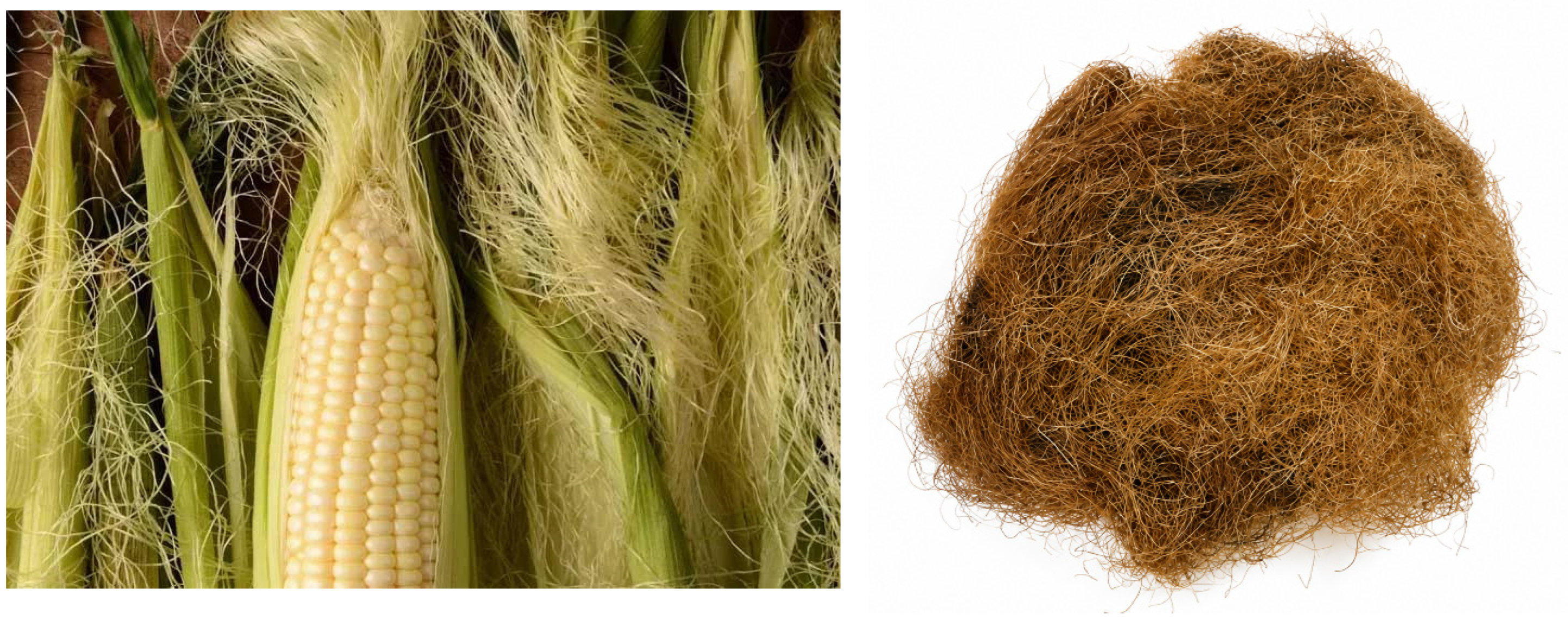
Hot mix asphalt (HMA) is strong in compression and weak in tension, so fiber reinforcement could be used to provide needed resistance to tensile stresses. For this purpose, CHFP was used, which was derived from waste corn husk. The corn husk fiber was used with various contents of 0.1, 0.2, 0.3, 0.4, 0.5, and 0.6% by total weight of the base asphalt binder (40/50). The selection of these small percentages can be attributed to the lightness of the natural fibers. Figure 1 shows the corn fiber, which is a natural fiber extracted from the husk of the corn plant. Corn fiber has very good flex, moisture retention, and good heat resistance, and it has full luster and elasticity [47].
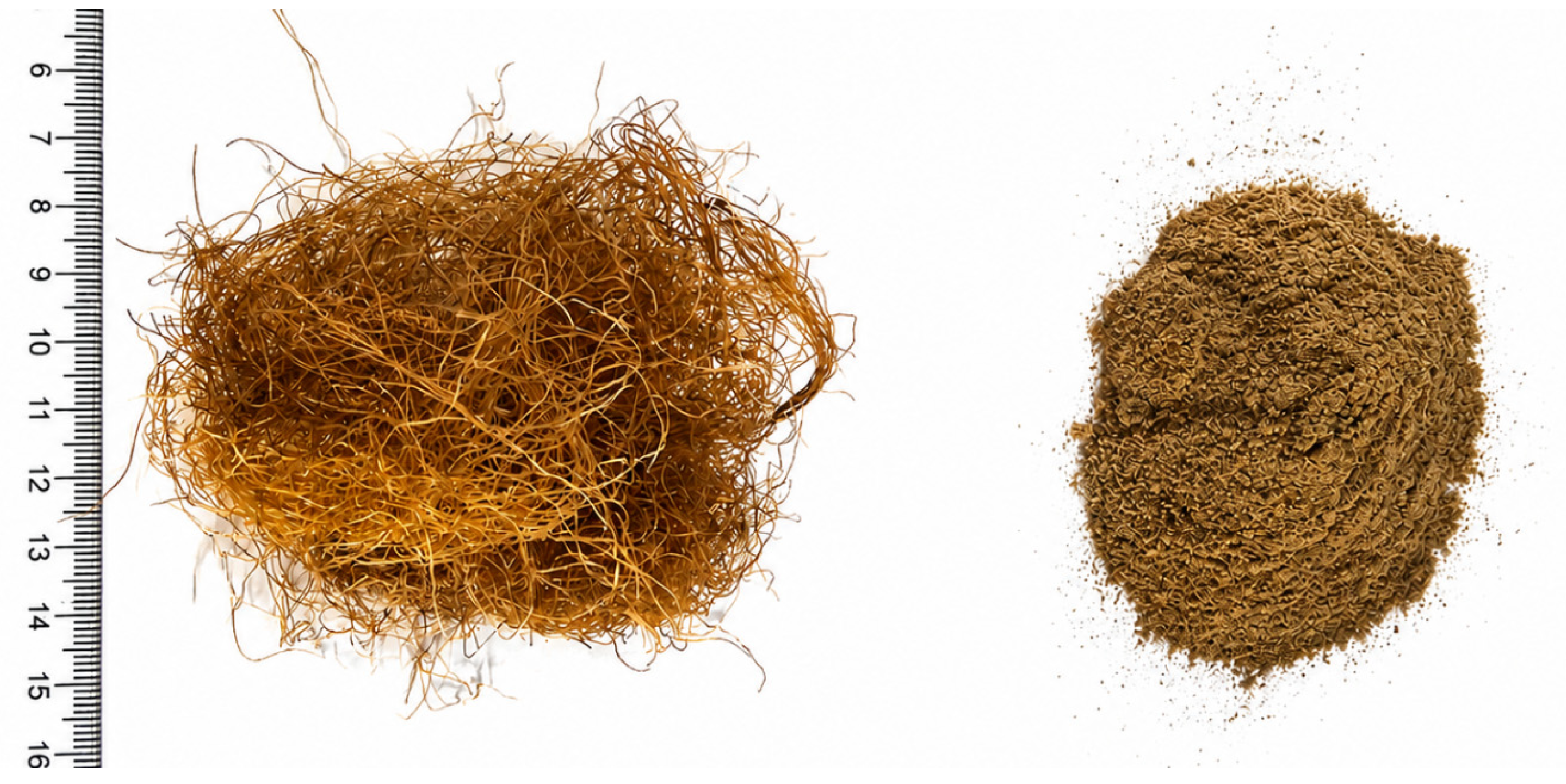
Corn husks were washed with tap water to remove dust and other impurities, then they were dried for at least 2 h in an oven at 110 °C before applying them in the experiments. Corn husk was ground in a grinder, which resulted in a fine powder. Corn husk was subsequently sieved to separate the fine fraction of the fiber so that its particles could pass through a No. 50 sieve. The CHFP after drying is shown in Figure 2.

3.2. Asphalt Binder

The currently used asphalt cement has a penetration grade of 40–50 from Al-Dorah refinery, Baghdad. This grade was chosen because it is the most commonly used in Iraqi pavements. The characteristics of asphalt meet the standards of the State Commission of Roads and Bridges (SCRB) [58]. The physical properties of the asphalt samples are given in Table 2.
For the preparation of bitumen-fiber blend, a mass of 700 g of bitumen, initially stored in a metallic can (100 mm in diameter, 150 mm in height) and preheated in an oven at 160 ± 5 °C for 45 min, was mixed at a speed of 1000 rpm and mixing time of 30 min. During mixing, the can was kept closed with a lid to prevent volatile components from evaporating at high temperatures. The different bitumen-fiber mixtures (0, 1, 2, 3, 4, 5, and 6 wt% of the total bitumen mass) were prepared by adding fiber to the base bitumen. The fibers were mixed with bitumen using the same mechanical stirrer. The temperature during the mixing (160 ± 5 °C) was ensured by a hot plate. Asphalt fiber can be stored and reheated when used for mixing with aggregate.

3.3. Aggregate

In this research, aggregates are used in an asphalt concrete mixture, in which a 19 mm maximum size dense gradation has been selected according to SCRB [58]. The coarse and fine aggregate used in this investigation was brought from Al-Taji quarry northern of Baghdad, Iraq, and crushed at the local asphalt concrete mix plant by a mechanical crusher. The aggregate gradation is shown in Table 3. An ordinary Portland cement was used as a mineral filler.

4. Experimental Methods

According to the American Society for Testing and Materials (ASTM), several physical-mechanical tests were used to investigate the performance of the asphalt binder and mixture modified with CHFP. First, the softening point and penetration tests were conducted to analyze the relative hardness and high-temperature stability of the CHFP-modified asphalt. Then, two performance tests, the dynamic shear rheometer (DSR) test and rotational viscosity (RV) test, were used to investigate the service performance of the CHFP-modified asphalt.
Asphalt viscosity is an indication of how well it resists flowing and shearing deformations. In accordance with the RV test method, asphalt binder viscosity was measured at three different temperatures using a Brookfield viscometer, followed by plotting out the viscosity-temperature curve. In this study, two test temperatures, including 135 and 165 °C, were used. According to the ASTM-D 4402 standard [59], the binder viscosity should be less than 3000 MPa at 135 °C. The viscosity at each temperature was measured and plotted to evaluate the temperature sensitivity of fiber-modified asphalt. The rotational viscosity was determined at various temperatures using a cylindrical spindle (No. 27) submerged in bitumen rotating at a constant speed of 20 rpm using a shear rate of 6.8 1/s [60].
The rutting factor, represented in the DSR test as G*/sinδ (where G* represents the modulus of elasticity and δ represents the phase angle), was determined to quantify the potential of the asphalt to resist rutting. The DSR test is performed by heating asphalt to a suitable temperature for casting onto the test plate and allowing the asphalt to harden before placing the test plate onto the rheometer. Once the test plate has been placed onto the rheometer, the gap between the oscillating plate and the asphalt test specimen is adjusted, as is the temperature, to the targeted test temperature [17]. The DSR test is then performed using either a stress-controlled or strain-controlled mode of operation. Strain level = 12%, angular frequency = 10 rad/s, temperatures = 40–82 °C (6 °C intervals).

4.1. Evaluation of the Mixtures’ Toughness Before and After Aging

The aging tests conducted for the bitumen-fiber composite in order to predict the thermo-mechanical properties of the polymer at an asphalt mixture level used an RTFOT to simulate how bitumen experiences short-term aging due to oxidation and the loss of volatiles during the processes of mixing and transporting asphalt mixtures. The conditions of the standard [61] were applied (163 °C, 75 min, 50 g for each sample). The pressure aging vessel (PAV) test was carried out to determine the properties of the mixtures after long-term aging. The aging process is being simulated at the various locations where asphalt will be applied for a period of six to ten years, depending on several factors, including the type of material used and where you live. Therefore, the aged RTFOT modified asphalts were then recovered from the RTFOT, and they were put into the PAV for testing under the following conditions: 100 °C; 2.1 MPa for 20 h, 50 g of each sample [62].

4.2. Complex Modulus of Bitumen-Fiber Mixtures

Using a DSR (Anton Paar Rheometer: SmartPave 92 modular compact rheometer, Graz, Australia), the rheology of the different binders (both neat bitumen and bitumen-fiber blends) was studied before and after aging over a range of intermediate temperatures similar to what would be experienced during the service life of any pavement. The samples were subjected to sinusoidal shear stress using the parallel plate mode (parallel plate). This method employed shear stresses and corresponding temperatures between 40 and 82 °C with the intent of affecting samples within the linear viscoelastic region (as designated by the ASTM-D6373–07 [61] specifications). For temperatures equaling or exceeding 40 °C, 25 mm diameter sample geometries were utilized, whereas for samples at temperatures less than or equal to 40 °C, a smaller stem with an 8 mm diameter was used. The spacing was 1.0 and 2.0 mm, respectively, for the different geometries. All tests were performed a minimum of two times.
Finally, a rutting prediction was conducted at high service life temperature, based on the rutting indicator (G*/sinδ) given by the Strategic Highway Research Program (SHRP) ASTM-D6373–07 [61]. The rutting factor (G*/sinδ) is an index to describe the high-temperature rheological properties of asphalt binders, which is also used by Superpave to grade asphalt binders in accordance with the resistance to rutting under high temperature conditions. A larger (G*/sinδ) of asphalt binder denoted a better ability to resist deformation. To reduce the potential for rut formation, the deformation of the bitumen must be limited. Therefore, this means that there must be a large elastic component of the complex shear modulus, which is represented by the value of G*/sinδ; according to SHRP guidelines, G*/sinδ must have a minimum value of at least 1.0 kPa for non-aged mixtures and at least 2.2 kPa for RTFOT aged mixtures [16].

4.3. Rutting Test Using the Wheel Tracking

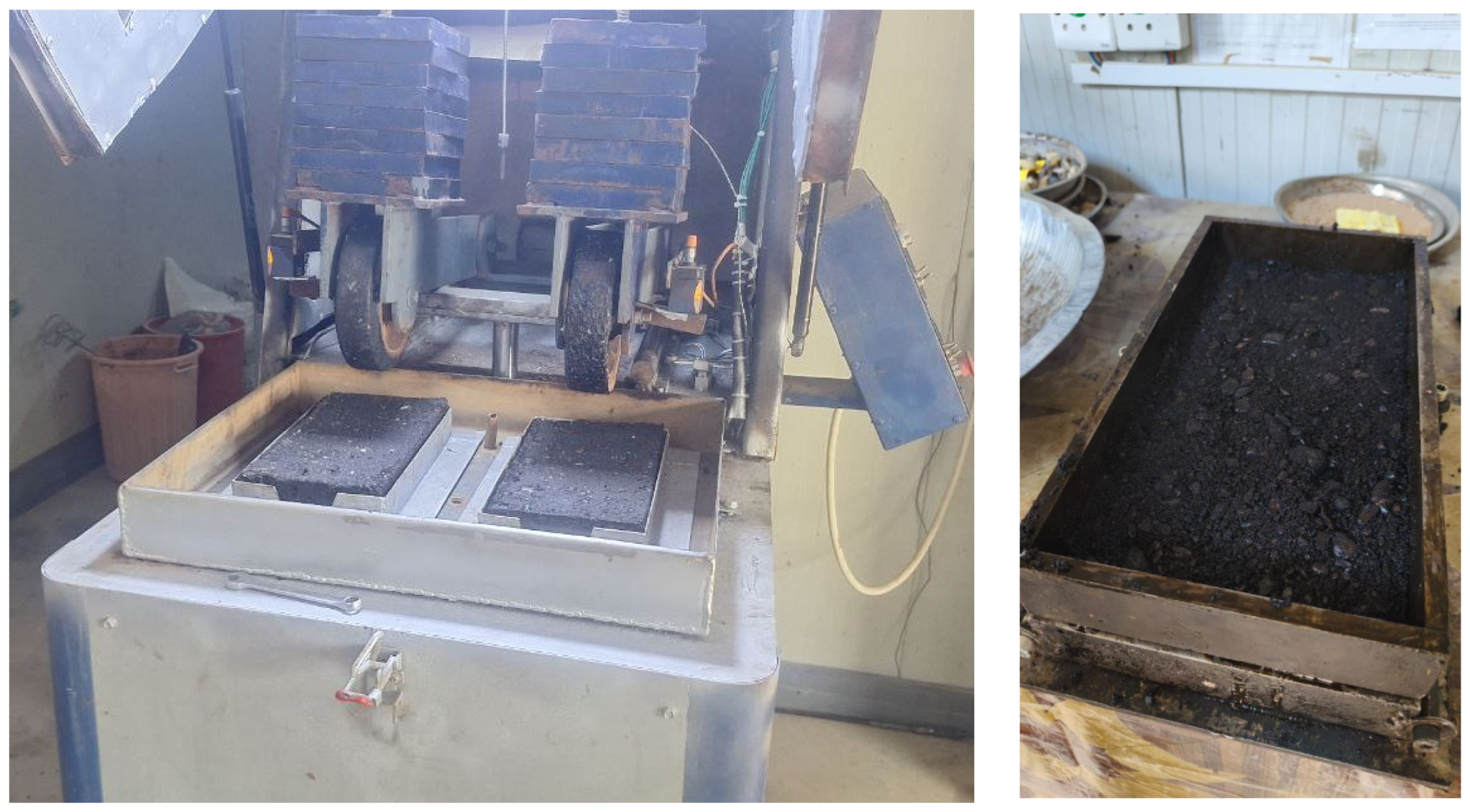
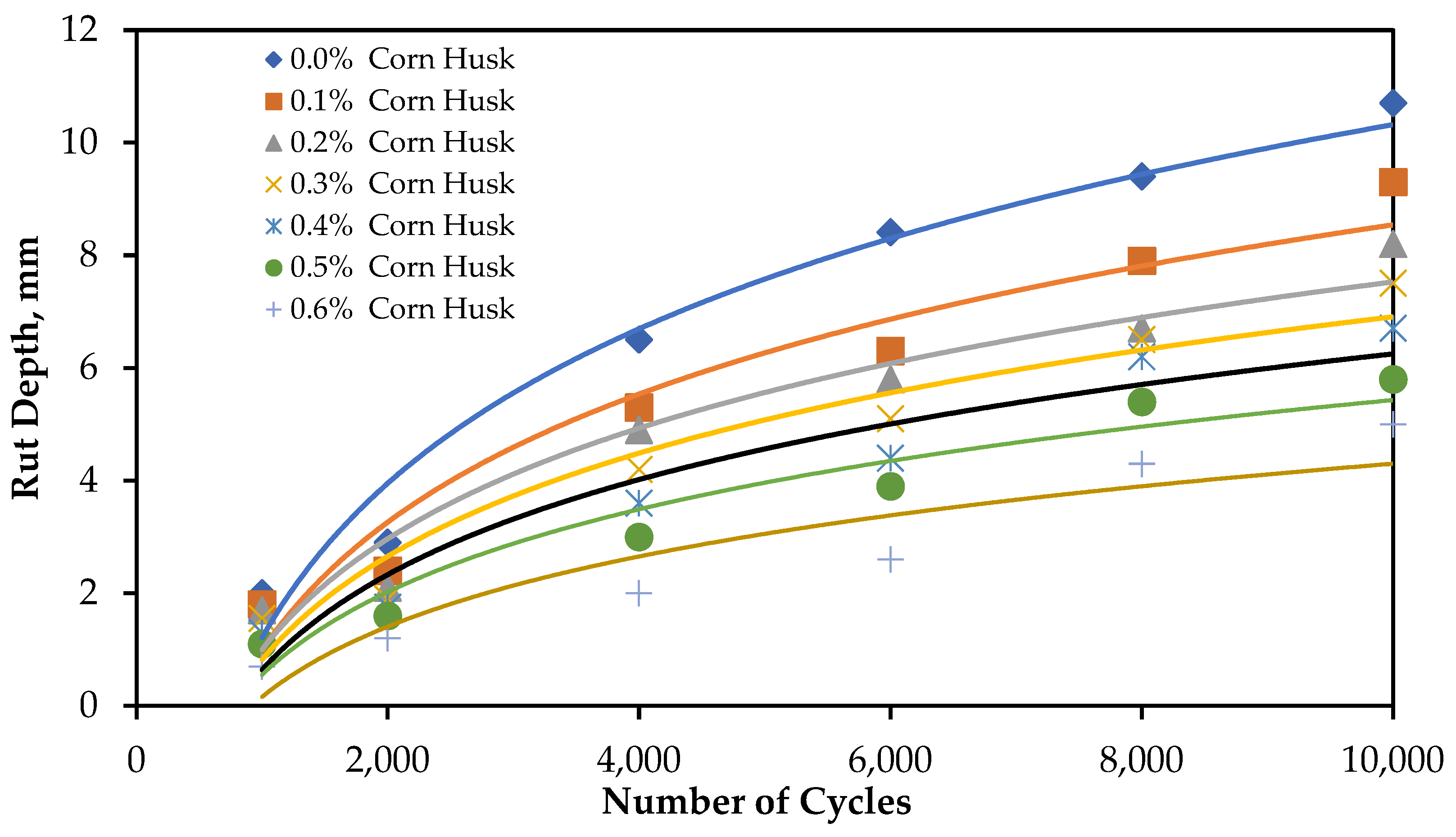
The wheel tracking test was used to evaluate the rutting resistance of asphalt mixes in accordance with standard NBN EN 12697 [63]. The device was made locally with a computer system at Al-Qadisiyah University, as shown in Figure 3. Six slabs with dimensions 34 × 18 × 5 cm were produced. The samples were compacted using a load compactor with several experimental samples to reach a load level that gives an air content ratio of 7 ± 0.5%. The slabs were conditioned at 50 °C for a period of 12 h before the testing. The Conditions of this test are summarized in Table 4. Then, a solid rubber tire moved back and forward on the slab surface with a travel distance of 230 ± 10 mm. The test load was 0.7 MPa, and the test wheel-rolling speed was 50 ± 1 cycles/min. The rut depth in the slabs was measured manually, using a specifically designed setup. Rut depths were measured after 1000, 2000, 4000, 6000, 8000, and 10,000 load cycles.
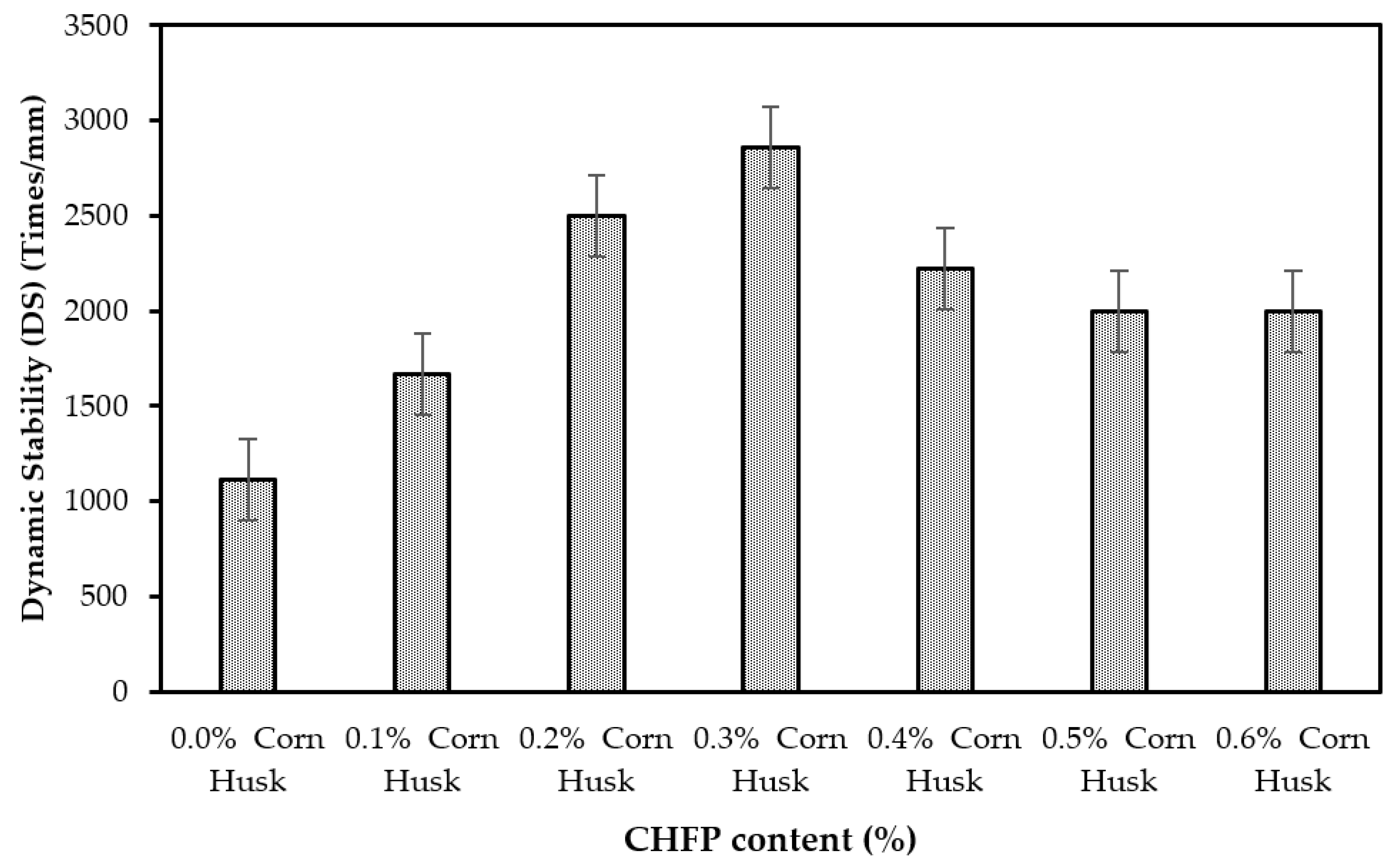
Asphalt concrete pavements usually lose their serviceability as they are rutted by the wheels of vehicles. The forces imparted by the wheels lead to the asphalt concrete losing adhesion between the binder and other substances, cracking, and accumulating water, which drastically accelerates the growth of defects between the crack surfaces. This finally results in a loss of serviceability [64,65], and thus, the dynamic stability (DS) is a critical mechanical parameter of asphalt concrete [66,67,68]. The DS (times/mm) was calculated by Equation (1) [67,69]. Each asphalt mixture with different CHFP contents was repeatedly tested twice to acquire a reliable measure of the DS of the test specimen.
D S = ( t 2 t 1 ) × N d 2 d 1
where t1 and t2 are time corresponding to 45 min and 60 min, respectively; N is the wheel-traveling speed, and N. 50 cycles/min in this paper; and d1 and d2 are the rutting depths recorded at t1 and t2, respectively [69].
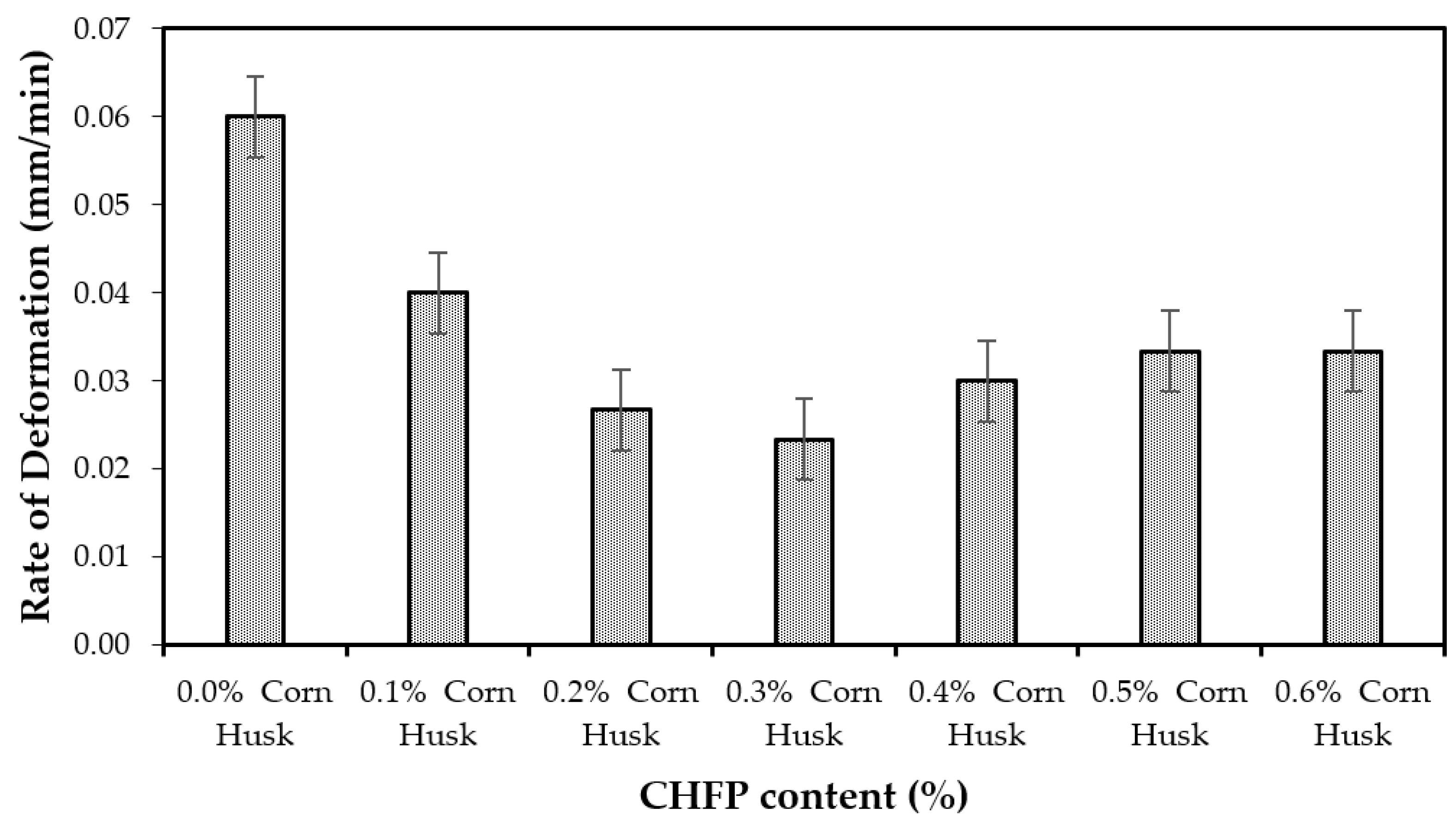
A rate of deformation (RD) of the specimen was additionally calculated using the following equation: RD = d60 − d45/15. Herein, RD indicates the rate of deformation (mm/min), and d45 and d60 represent the amounts of deformation measured at 45 and 60 min, respectively [67].

5. Results and Discussion

5.1. Asphalt Penetration Value

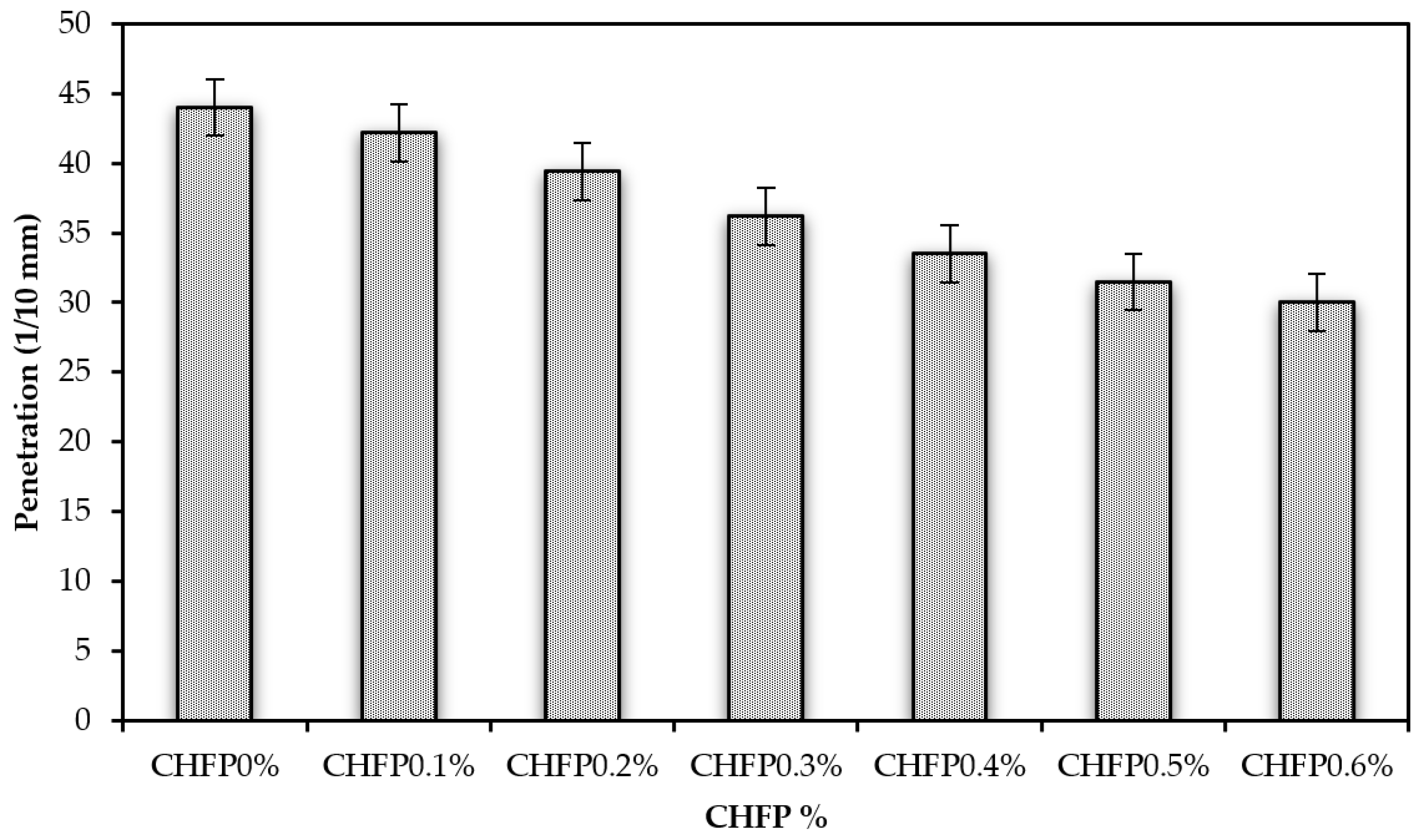
Figure 4 shows the penetration value of bitumen as a function of CHFP content. The penetration of the asphalt binder decreased with the addition of corn husk fibers. The CHFP affected the penetration value of the asphalt, especially at a content of 0.6%, which yielded the lowest penetration of bitumen with a rate of decrease of 32%. Due to its fine particles, CHFP was suitable for dispersion in the asphalt binder. Therefore, as the amount of incorporation increased, the modification effect on the asphalt was good [17].

5.2. Softening Point

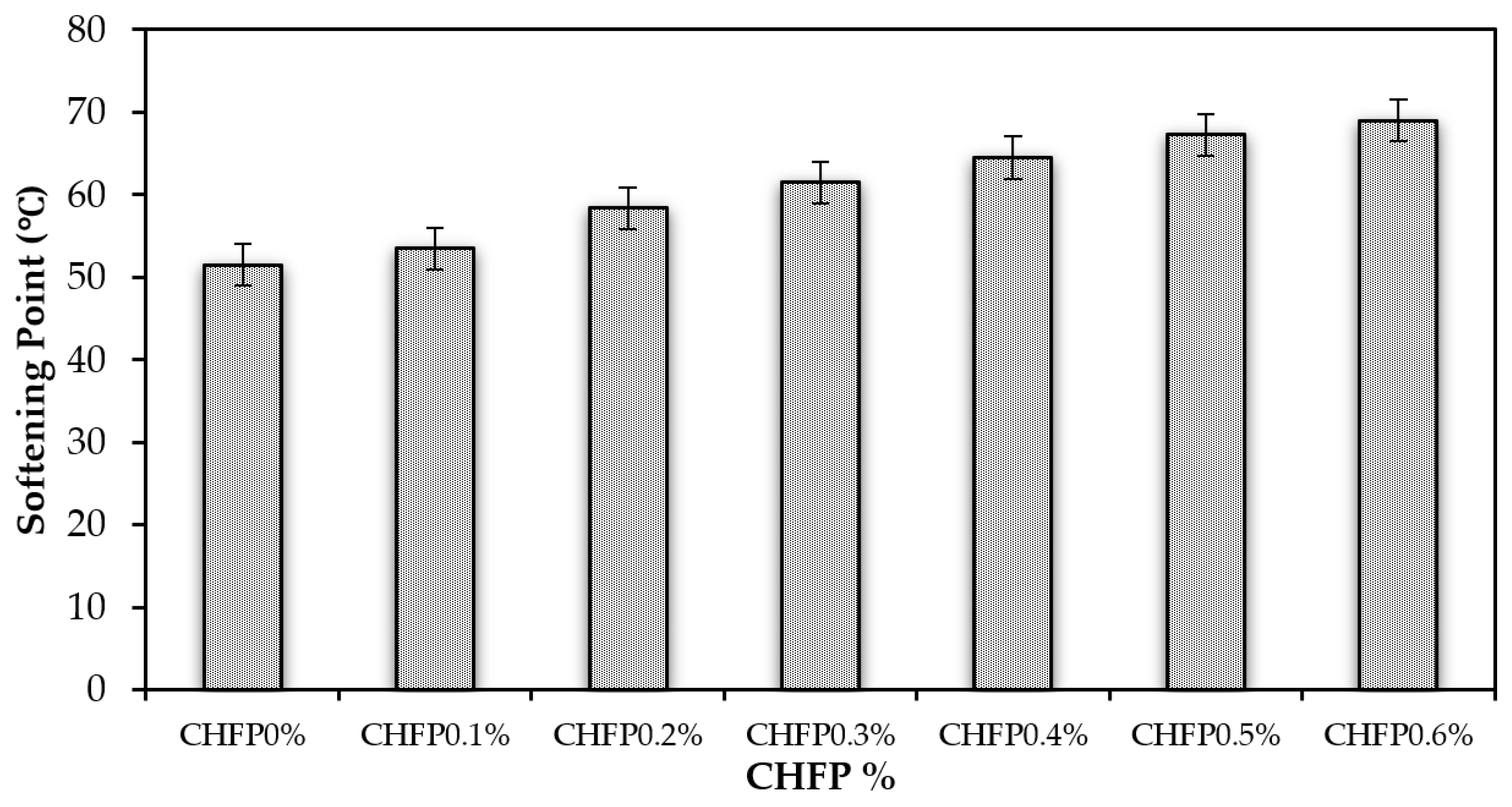
As shown in Figure 5, the softening point of virgin asphalt is 51.5. The addition of CHFP in virgin asphalt increased the softening point by 34% at 6% CHFP. It could also be noticed from Figure 5 that the softening point of the asphalt binder increased when the content of fibers increased.
Overall, asphalt binders modified by fibers had lower penetrations and higher softening points. In general, penetration and softening point indicate the relative viscosity of the asphalt binder. Asphalt binders with low penetration numbers and high softening points can resist deformation at high temperatures. Considering the oil absorption effect of CHFP, the corn husk fiber should be able to absorb asphalt in the mixture [17].

5.3. Impact of Aging Conditions on the Properties of Neat Bitumen

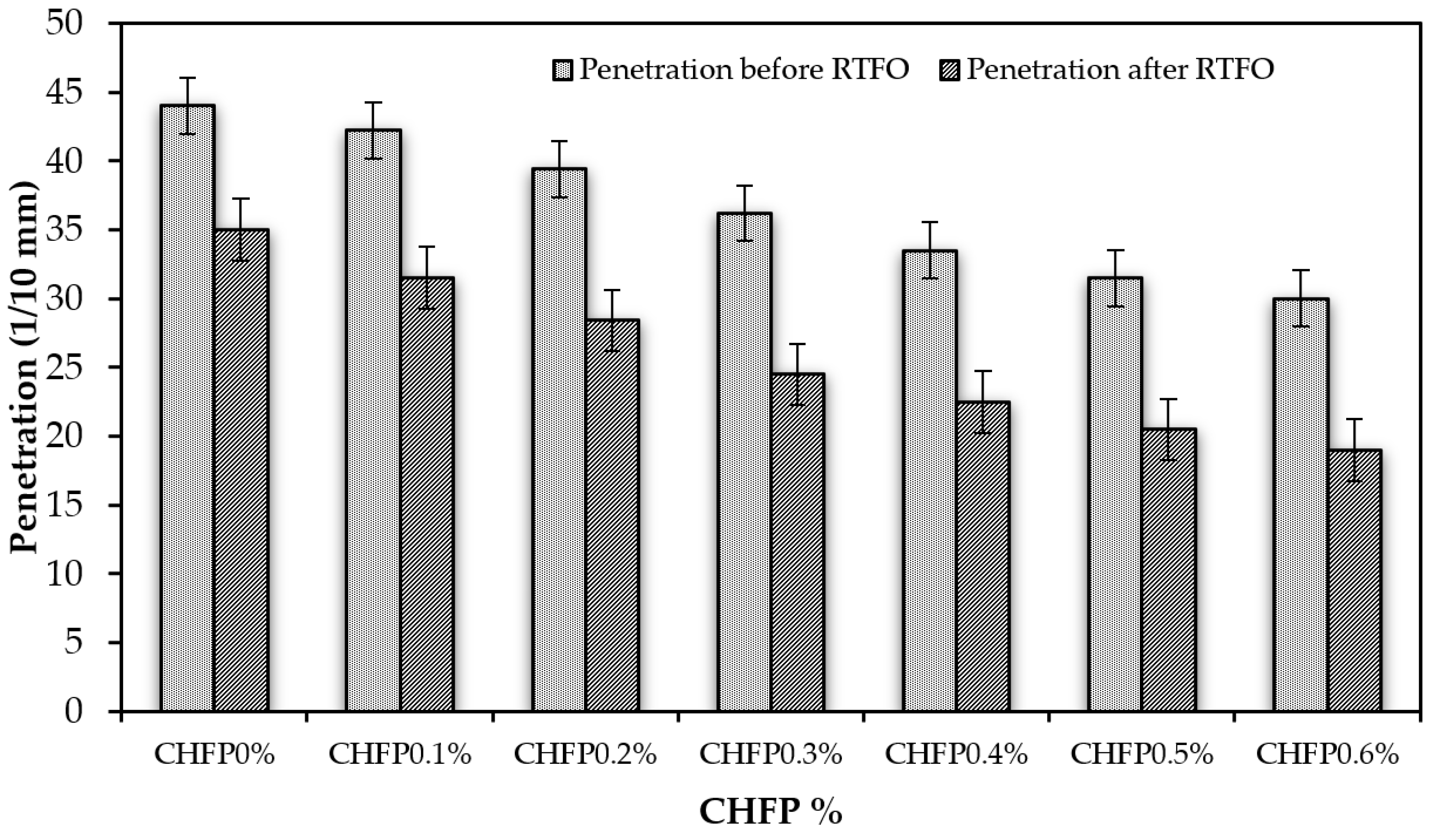
Figure 6 depicts the variation in bitumen penetration (before and after aging) as a function of fiber mass percentage. It is pointed out that fiber addition to bitumen slightly reduces the penetration to a value lower than that of neat bitumen. Before aging, the CHFP addition decreased the neat bitumen penetration from 44 to 30. The hardening brought by the presence of fibers is due to the contribution of fibers as a reinforcement in the bituminous matrix [2]. This can be due to the fiber’s nature or its mechanical properties. After RTFOT short-term aging, it is noted that penetration decreases with fiber addition; beyond 0.3 wt% fibers, it slightly stabilizes. This stabilization implies that the effect of the fibers is negligible in comparison with the hardening caused by aging [16].
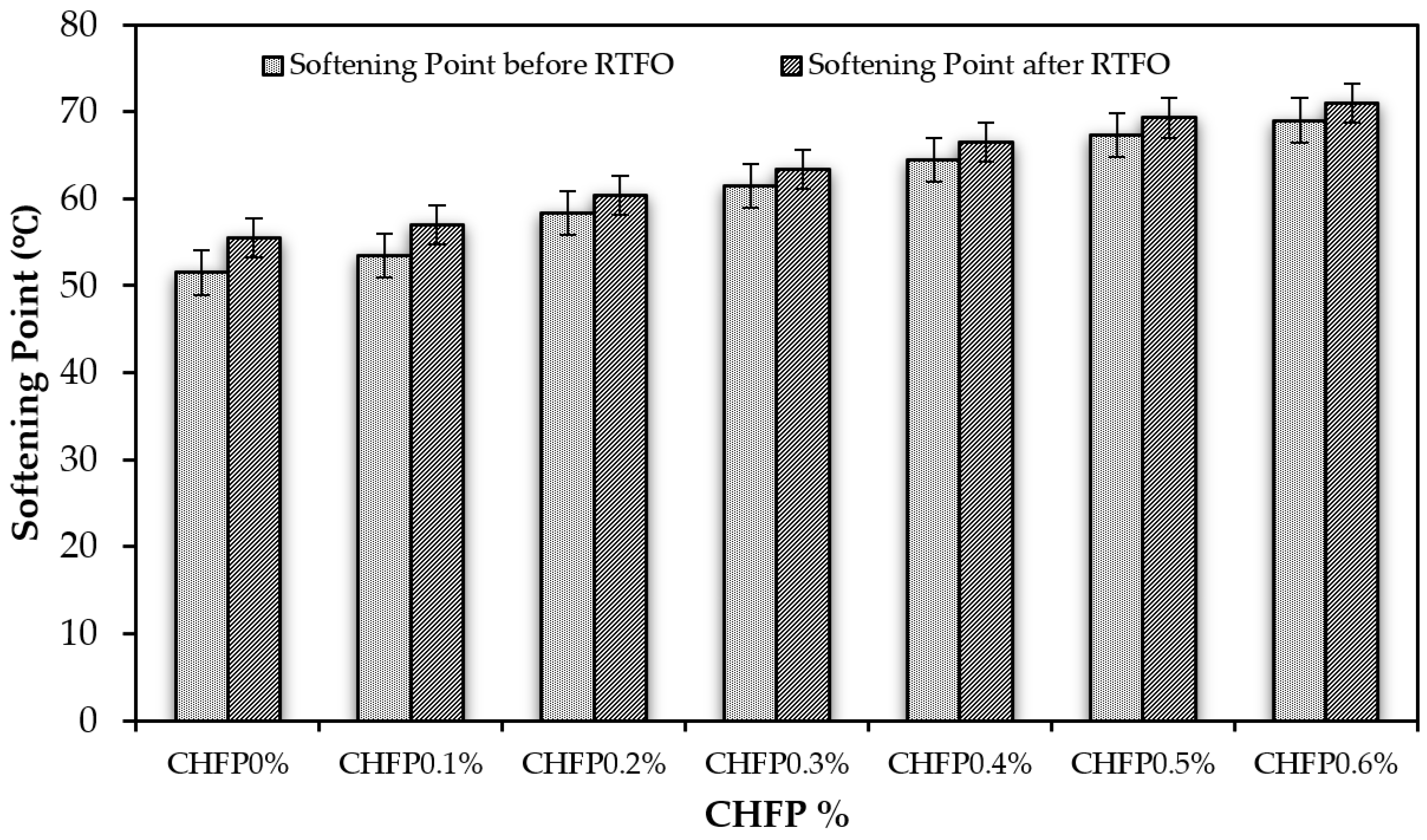
The variation in R&B softening point (before and after aging) as a function of fiber mass percentage is presented in Figure 7. For the different bitumen-fiber mixtures before and after aging (RTFOT), it is noted that after adding fibers, R&B softening point increases according to the fiber content and remains higher than that of neat bitumen. Before aging, adding 6 wt% fibers increases the R&B softening point of mixed neat bitumen from 51.5 to 69 °C. After RFTOT aging, R&B softening point increases with fiber content and reaches a value of 71 °C for 6 wt % fibers. This increase in temperature is because bitumen is harder with the fibers, which requires a higher temperature to soften it. Therefore, the addition of corn husk fibers to bitumen brings a slight toughness, in comparison with other studies [1,2], for the same reasons indicated for penetration tests [16].

5.4. Temperature Susceptibility

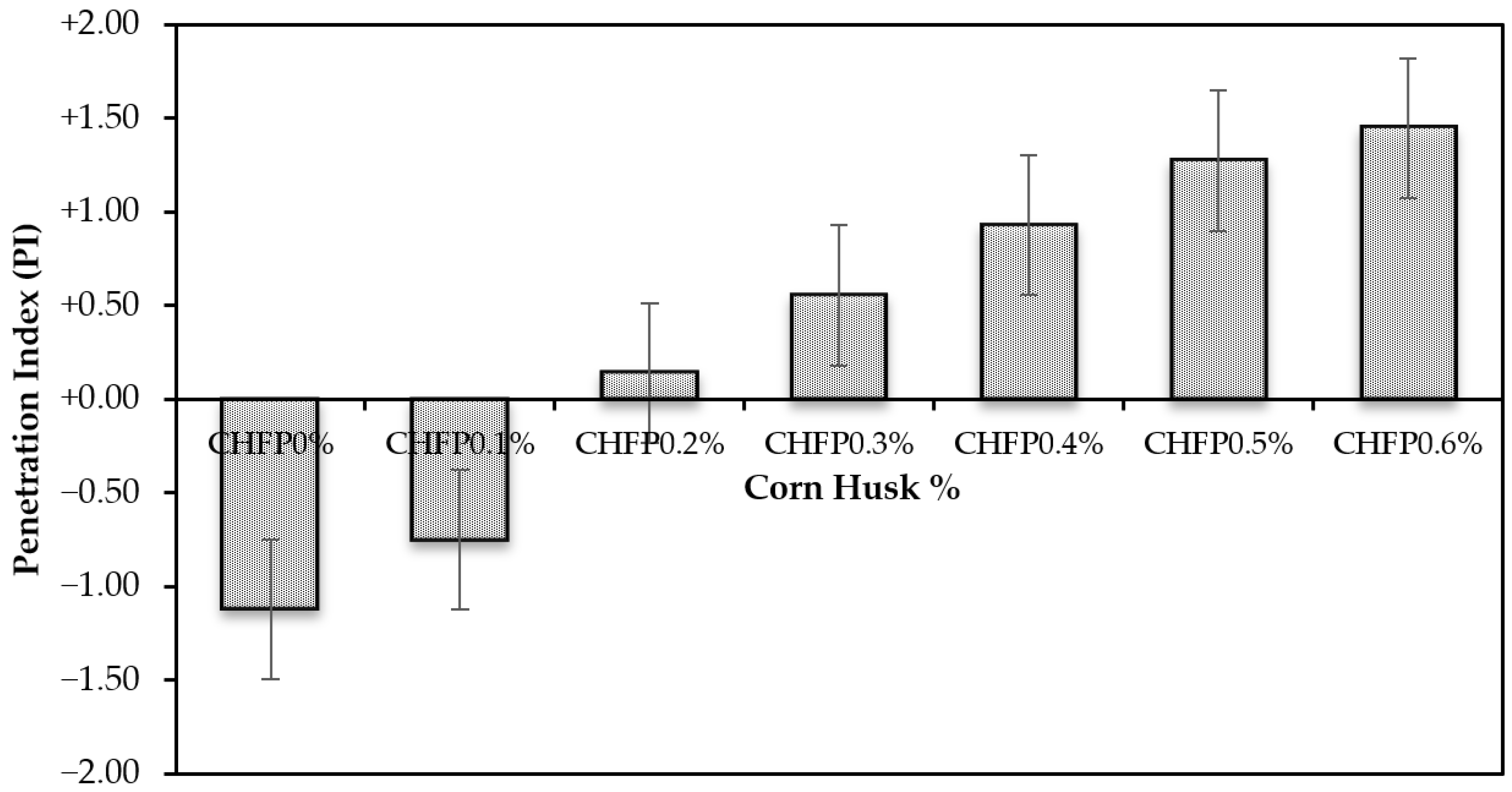
The penetration index (PI) was used to investigate the effect of CHFP on the temperature susceptibility of the asphalt mixtures. Figure 8 illustrates the relationship between PI and CHFP content, where all the manufactured samples have shown a penetration index within the permissible limits (+2 > PI > −2). All the modified binders were less susceptible to changes in temperature than virgin asphalt cement. As CHFP content increases, PI continues to rise until it peaks at 0.6% CHFP. This finding is associated with the higher softening point and lower penetration value of CHFP-modified asphalt compared to virgin asphalt. This important fact shows that CHFP makes the binder less susceptible to temperature change and climate [44].

5.5. Viscosity of Bitumen-Fiber Mixtures (Behavior at High Temperatures)

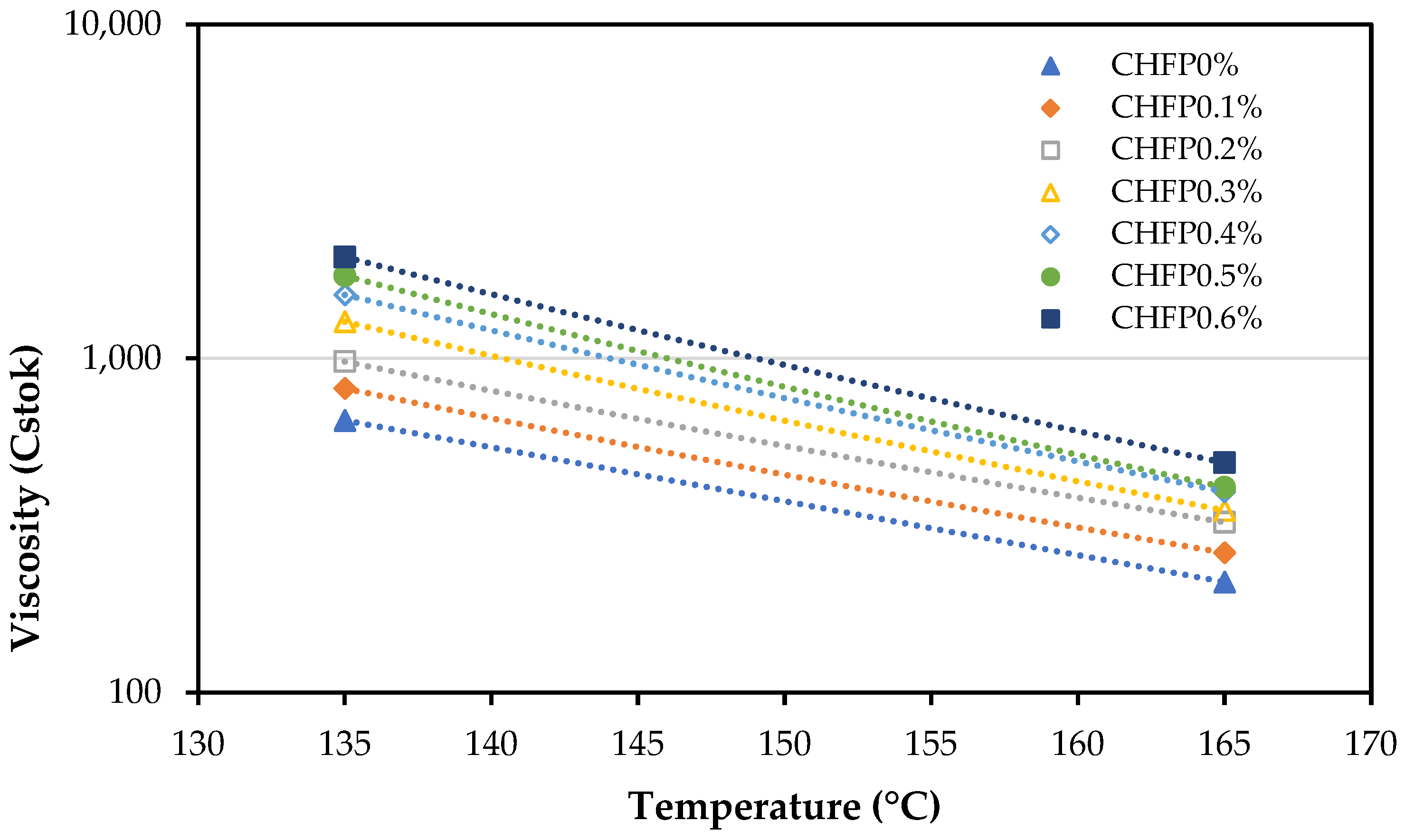
The variation in viscosity for bitumen-fiber mixtures as a function of temperature is displayed in Figure 9. The results show that when adding CHFP, it is noted that the bitumen-fiber mixtures have a higher viscosity than that of neat bitumen. At 135 °C, the mixture containing 0.6 wt% CHFP exhibits a viscosity 1.28 times higher than that of neat bitumen and more than twice as high at 165 °C. This is because at 165 °C, bitumen is a nearly pure Newtonian fluid, and the addition of 6 wt% fibers leads to a dense distribution of fibers in the bitumen matrix. They become closer, and their friction is favored during their mobility. The presence of CHFP in the bitumen matrix slows down its movement; hence, viscosity increases in this case. The trend observed is in accordance with recent studies [1,2,16], for which viscosity increased with cellulosic content, and the effect of fibers in viscosity became more evident at high temperatures.

5.6. Viscosity–Temperature Susceptibility (VTS)

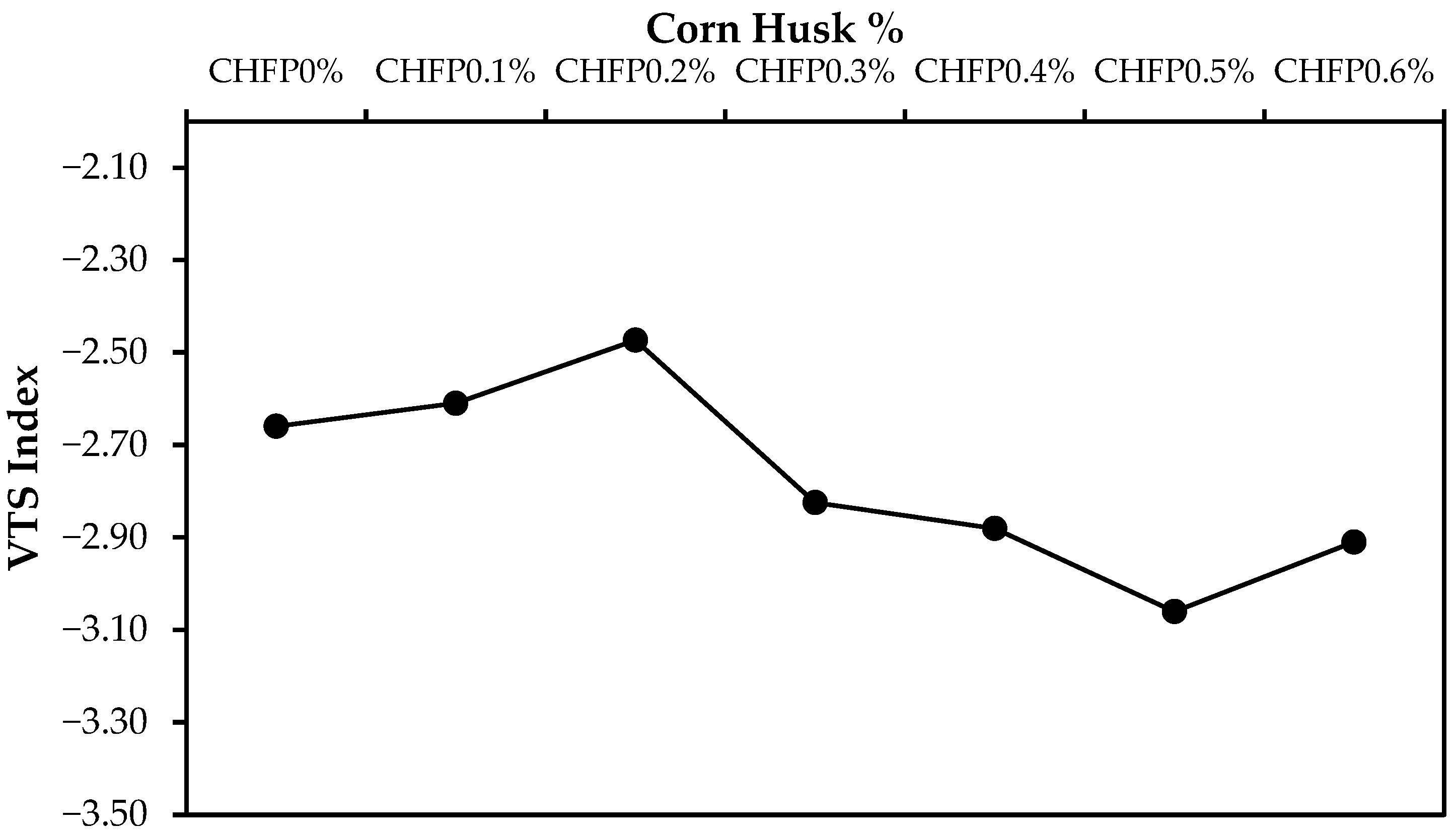
The VTS values have been computed in this investigation, and the results are shown in Figure 10. The VTS values have been assessed across different temperature ranges. The incorporation of CHFP has typically diminished VTS, hence decreasing the temperature susceptibility of the modified binders.

5.7. DSR Testing

5.7.1. Prediction of Rutting Resistance of Bitumen Containing Corn Husk Fibers

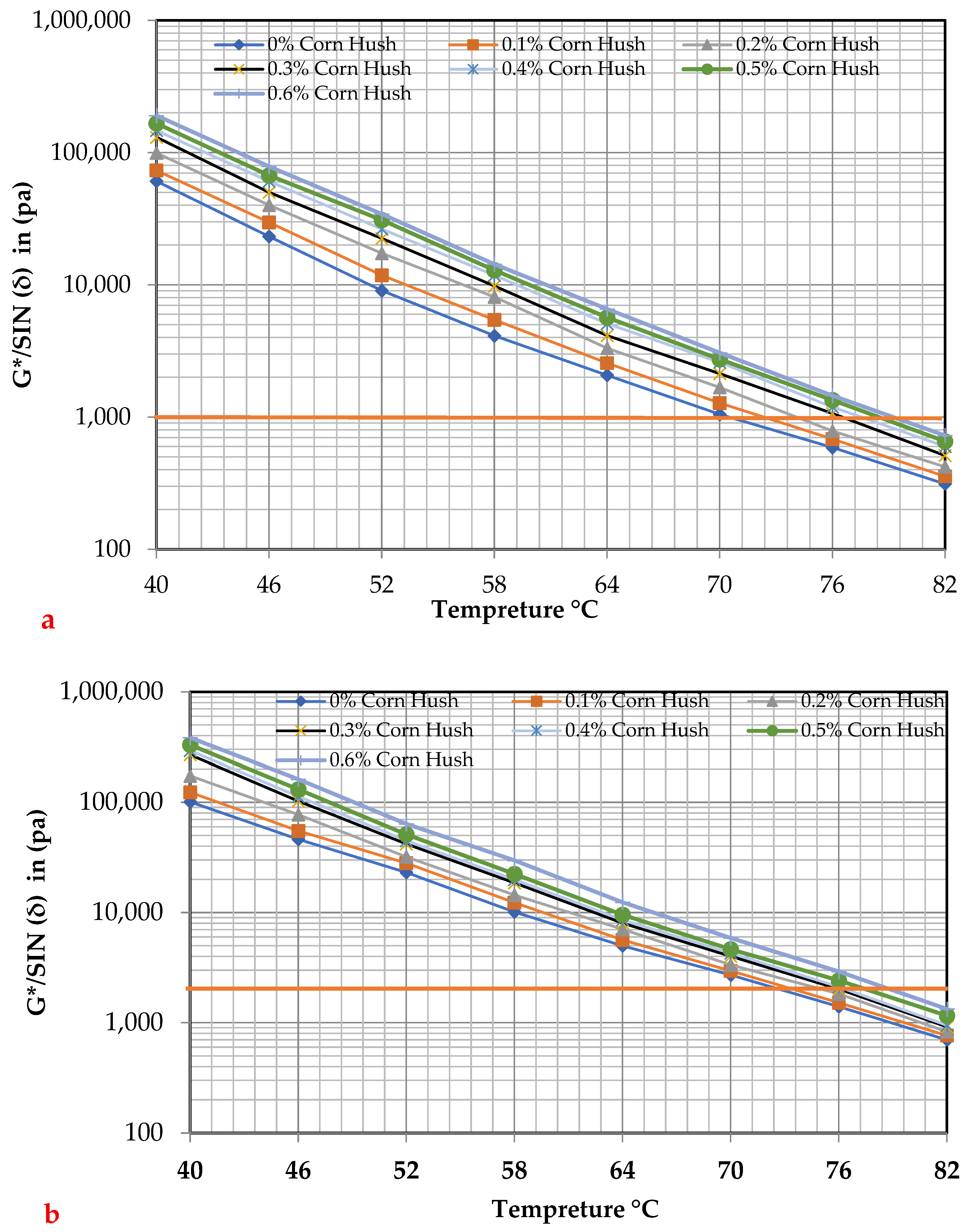
The variation in the rutting parameter G*/sinδ as a function of temperature is presented in Figure 11 for modified binders before and after short-term aging (RTFOT). Critical temperatures (Tc) were obtained by extrapolation of the curves to the temperature axis. In the DSR test, the rutting factor is used to evaluate the high-temperature performance of asphalt. When the rutting factor is greater than 1.0 kPa for the unaged binders and 2.1 kPa for the RTFO aged binders, the asphalt meets the standard [16,17].
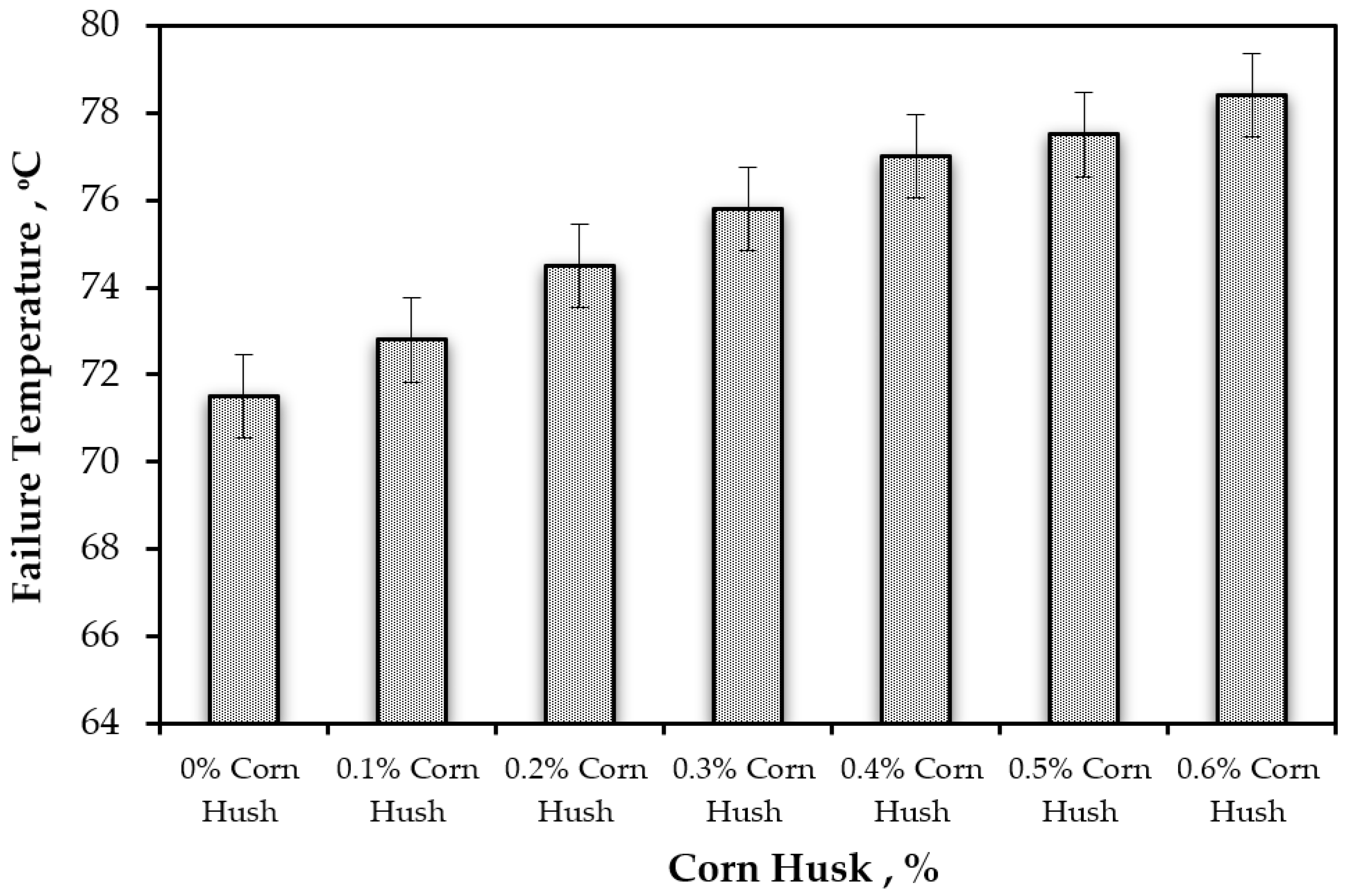
Before aging, the results found suggest that the rutting indicator decreases with increasing temperature. Once fibers are added, this indicator has higher values than that of neat bitumen (before and after mixing). The rutting factor of the fiber-modified asphalt gradually increased with an increase in the mass percentage of corn husk fibers incorporated. This trend is also displayed after aging. This is because |G*| is higher for bitumen-fiber mixtures. For example, the critical temperature of neat bitumen was 71.5 °C, and reached 78.4 °C after the addition of 0.6 wt% CHFP, indicating upgrading the performance grade (PG) of the asphalt binder from PG70 to PG76, a one-step performance grade, as shown in Figure 12. Consequently, the fiber input would confer better resistance to rutting at the bitumen mixture scale, which again suggested the utilization of plant fibers could improve the high-temperature anti-deforming capability. This trend can be related to the results from ring and ball softening point tests and is in accordance with the literature [2,16].
This finding could be explained by the fact that the three-dimensional network formed by plant fibers is dispersed in the asphalt binder. A cross-linking and entanglement effect from fiber materials would give the binders better deformation resistance. Meanwhile, the plant fibers absorbed the light components of the asphalt with their massive surface area and formed a structural asphalt layer, which was more stable at high temperatures. Thus, the bonding behavior of the base asphalt was intensified. This phenomenon could be explained by the fact that plant fibers in asphalt binders absorbed the light component of the asphalt binder and therefore increased the viscosity of the asphalt binder [21].

5.7.2. Intermediate Temperature Properties

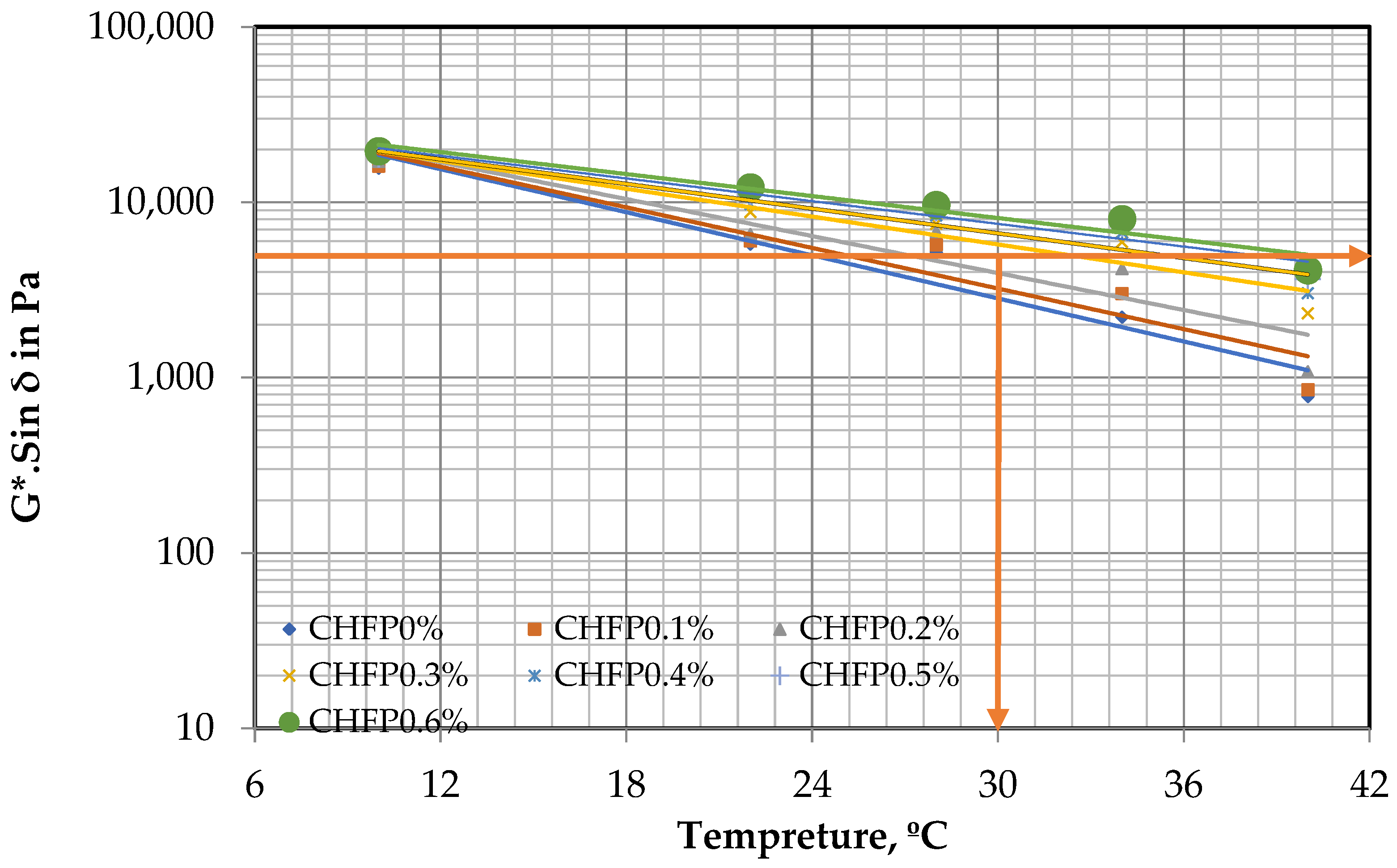
The fatigue factor (G*.sinδ) has been employed to evaluate the intermediate-temperature properties (i.e., fatigue cracking resistance) of the studied modified asphalt binders. In general, asphalt binder with a lower G*.sinδ value at a given intermediate temperature could have better fatigue cracking resistance than that with a higher G*.sinδ value. According to the Superpave asphalt binder specification, G*.sinδ of asphalt binder at a desired temperature should be lower than 5 MPa in order to ensure sufficient fatigue cracking resistance [70].
Figure 13 shows the results of temperature-sweep tests conducted at intermediate temperatures (10–40 °C) after both short- and long-term aging. It can be seen that CHFP has not considerably affected the fatigue parameters (G*.sin δ).
The use of CHFP had a negative effect at intermediate temperatures, as evidenced by relatively high fatigue parameter (G*.sin δ) values, indicating reduced flexibility of the asphalt binder and lower resistance to cracking at medium temperatures. This negative behavior at normal temperatures may be attributed to the decrease in the elastic response of the modified bitumen [35]. Similar results have also been reported in the previous research on plant fiber-modified asphalt binders [71].

5.8. Rutting Test by Hamburg Wheel Track Device

In this study, several slabs were produced with different fiber contents (0, 0.1, 0.2, 0.3, 0.4, 0.5, and 0.6%). For all asphalt mixes, the mix design was not changed since the fiber percentages were small. The rut depth results are shown in Figure 14. It can be seen that there is a significant difference among the results. The addition of corn fibers seems to reduce the rut depth, as was predicted from rheological tests [25].
It can be concluded that the CHFP-modified mixture has the potential to reduce permanent deformation. The increase in resistance to deformation of the CHFP-modified mixture is mainly due to the corn husk fiber used in the mixture [44].
Figure 15 displays the DS of the corn husk fiber-reinforced asphalt mixture with different contents. Ordinarily, a higher DS value means a preferable anti-rutting performance. In the case of the plain specimen without fibers, 1111 cycles of wheel movements were needed to cause 1 mm of deformation. A significant increase in the dynamic stability of the CHFP-enhanced samples was observed with increasing CHFP content, reaching a peak at an addition rate of 0.3% to be 2857 (cycles/mm), with a rate of increase of 157%, after which the effect rate begins to decrease, although the value of the dynamic stability of the enhanced samples remains greater than the control group in all cases. Figure 16 shows the rate of deformation calculated from the wheel track test. This figure showed that the CHFP0.3 specimen provided a lower deformation rate compared to that of the control group specimens [67].
Because the fiber absorbs the asphalt, the free asphalt content was reduced, and the bonding strength was increased [1]. In addition, the thoroughly distributed fibers formed a three-dimensional network. This is because the higher aspect ratio of fibers generally provides a bigger specific surface area per unit volume. This improves the fiber–matrix bonding properties and increases the number of fibers bridging a crack surface. This effect might also be intensified as the incorporated fibers have a higher specific surface area [69].

6. Conclusions

The unique feature of this research study is the use of CHFP as an alternative sustainable method to modify asphalt for application on roads under high-temperature conditions. While many other conventional lignocellulosic fibers are available, CHFP offers multiple advantages, including being available locally, inexpensive, environmentally friendly, and reducing agricultural waste. The engineered performance characteristics of CHFP were demonstrated as the material increases the stiffness of the asphalt binder and improves the rutting resistance, proving that it is a suitable option for improving pavement performance in hot climate areas like Iraq. The conclusions drawn from the results of the use of natural fibers in the amount of 0–0.6% by weight of asphalt can be summarized as follows:
  • The addition of corn husk fiber decreases penetration and increases the softening point. Asphalt binders with low penetration numbers and high softening points can resist deformation at high temperatures. The advantage of corn husk fiber was its greater ability to adsorb asphalt and its improved mixing uniformity.
  • The addition of corn husk fiber increases the complex modulus and decreases the phase angle for the asphalt binder at high temperatures, which means that adding corn husk fiber could increase the deformation resistance and elastic recovery performance of control asphalt. The incorporation of CHFP significantly improved the high-temperature rheological performance of asphalt binders, with CHFP-modified binders exhibiting reduced sensitivity to temperature variations compared to the unmodified binder.
  • The addition of corn husk fiber increases the viscosity of the asphalt binder. In addition, the viscosity-temperature susceptibility function has shown that the variation in viscosity is small with the increase in corn fiber content.
  • The test results showed that 0.3% of CHFP content provided the best performance of the contents studied.
  • It was noticed that the corn husk fiber material did not dissolve in bitumen. Therefore, the corn husk products cannot be regarded as a bitumen extender or modifier; they should be treated as solid additives.
  • Fiber reinforcement increases the complex modulus norm at the service life temperatures; this increase is traduced by a better rutting resistance (G*/sinδ). This allows us to predict the range of use and manufacture of these bitumen-fiber mixtures at the bitumen mixture scale. The changes in the physical and rheological characteristics of bitumen are attributed to the creation of a fiber-bitumen composite that presents improved thermomechanical behavior.
  • According to the analysis of road performance results, the rutting resistance of mixtures improved with increasing CHFP content, with the best results observed at 0.3% CHFP. Compared to the unmodified mixture, the addition of 0.3% CHFP enhanced rutting resistance by 157%.
  • While CHFP had some positive effect on the performance of asphalt binders, too much fiber content can lead to increased absorption of the asphalt by the fibers and affect the workability of the mix. Selecting the proper dosage of CHFP is critical in achieving a balanced performance from an asphalt mixture.
As a continuation, it could be worthwhile investigating how CHFP influences the asphalt performance when a thicker binder film is used, and when the mix design is re-optimized. In this way, modified asphalt mixes with sufficient workability and compactability could be compared. In addition, other factors such as cost and pavement performance need to be considered for the fiber selection. Also, possible beneficial effects of using corn husk fibers on the cracking resistance and investigation of the distribution of corn husk fibers in the asphalt mix with X-ray computed tomography (X-ray CT), which have not been investigated in this study, could be interesting to provide more information. Finally, it is recommended that the orientation of fibers through the FRAC specimen can be examined with the aid of optical and/or scanning electron microscopy, and it seems that this is an unoccupied research area.

Author Contributions

Conceptualization, A.F.J. and S.A.T.; methodology, R.A.Y. and T.T.K.; lab Work, S.A.M.; writing—original draft preparation, S.A.T.; writing—review and editing, A.F.J.; supervision, A.F.J. All authors have read and agreed to the published version of the manuscript.

Funding

This research received no external funding.

Data Availability Statement

No new data were created or analyzed in this study. Data sharing is not applicable to this article.

Acknowledgments

The authors sincerely acknowledge the assistance from Mustansiriyah University (https://www.uomustansiriyah.edu.iq) during this work.

Conflicts of Interest

The authors declare no conflicts of interest.

Abbreviations

The following abbreviations are used in this manuscript:
ACAsphalt concrete
ASTMAmerican Society for Testing and Materials
CAFCellulose acetate fiber
CHFPCorn husk fiber powder
DSDynamic stability
DSR Dynamic shear rheometer
FRACFiber-reinforced asphalt concrete
HMAHot mix asphalt
ITSIndirect tensile strength
PAVPressure aging vessel
PGPerformance grade
R&BRing and ball
RDRate of deformation
RTFOTRolling thin-film oven test
SAMStone matrix asphalt
SCRBState Commission of Roads and Bridges
SHRPStrategic Highway Research Program
VTSViscosity–temperature susceptibility

References

  1. Chen, J.-S.; Lin, K.-Y. Mechanism and behavior of bitumen strength reinforcement using fibers. J. Mater. Sci. 2005, 40, 87–95. [Google Scholar] [CrossRef]
  2. Mohammed, M.; Parry, T.; Grenfell, J.J. Influence of fibres on rheological properties and toughness of bituminous binder. Constr. Build. Mater. 2018, 163, 901–911. [Google Scholar] [CrossRef]
  3. Wu, M.; Li, R.; Zhang, Y.; Wei, J.; Lv, Y.; Ding, X. Reinforcement effect of fiber and deoiled asphalt on high viscosity rubber/SBS modified asphalt mortar. Pet. Sci. 2014, 11, 454–459. [Google Scholar] [CrossRef][Green Version]
  4. Chen, X.; Huang, B. Evaluation of moisture damage in hot mix asphalt using simple performance and superpave indirect tensile tests. Constr. Build. Mater. 2008, 22, 1950–1962. [Google Scholar] [CrossRef]
  5. Kowalski, K.J.; Król, J.; Radziszewski, P.; Casado, R.; Blanco, V.; Pérez, D.; Viñas, V.M.; Brijsse, Y.; Frosch, M.; Le, D.M.; et al. Eco-friendly Materials for a New Concept of Asphalt Pavement. Transp. Res. Procedia 2016, 14, 3582–3591. [Google Scholar] [CrossRef]
  6. Gogoi, R.; Biligiri, K.P.; Das, N.C. Performance prediction analyses of styrene-butadiene rubber and crumb rubber materials in asphalt road applications. Mater. Struct. 2016, 49, 3479–3493. [Google Scholar] [CrossRef]
  7. Behnood, A. Application of rejuvenators to improve the rheological and mechanical properties of asphalt binders and mixtures: A review. J. Clean. Prod. 2019, 231, 171–182. [Google Scholar] [CrossRef]
  8. Eskandarsefat, S.; Dondi, G.; Sangiorgi, C. Recycled and rubberized SMA modified mixtures: A comparison between polymer modified bitumen and modified fibres. Constr. Build. Mater. 2019, 202, 681–691. [Google Scholar] [CrossRef]
  9. Guo, Y.; Tataranni, P.; Sangiorgi, C. The use of fibres in asphalt mixtures: A state of the art review. Constr. Build. Mater. 2023, 390, 131754. [Google Scholar] [CrossRef]
  10. Wu, S.; Montalvo, L. Repurposing waste plastics into cleaner asphalt pavement materials: A critical literature review. J. Clean. Prod. 2021, 280, 124355. [Google Scholar] [CrossRef]
  11. Abtahi, S.M.; Sheikhzadeh, M.; Hejazi, S.M. Fiber-reinforced asphalt-concrete—A review. Constr. Build. Mater. 2010, 24, 871–877. [Google Scholar] [CrossRef]
  12. Mahrez, A.; Karim, M.R. Fatigue characteristics of stone mastic asphalt mix reinforced with fiber glass. Int. J. Phys. Sci. 2010, 5, 4396. [Google Scholar]
  13. Park, P.; El-Tawil, S.; Park, S.-Y.; Naaman, A.E. Cracking resistance of fiber reinforced asphalt concrete at −20 °C. Constr. Build. Mater. 2015, 81, 47–57. [Google Scholar] [CrossRef]
  14. Ye, Q.-s.; Wu, S.-p.; Chen, Z.; Liu, Z.-f. Rheological properties of asphalt mixtures containing various fibers. J. Cent. South Univ. Technol. 2008, 15, 333–336. [Google Scholar] [CrossRef]
  15. Alnadish, A.M.; Singh, N.S.S.; Alawag, A.M. Applications of Synthetic, Natural, and Waste Fibers in Asphalt Mixtures: A Citation-Based Review. Polymers 2023, 15, 1004. [Google Scholar] [CrossRef] [PubMed]
  16. Bellatrache, Y.; Ziyani, L.; Dony, A.; Taki, M.; Haddadi, S. Effects of the addition of date palm fibers on the physical, rheological and thermal properties of bitumen. Constr. Build. Mater. 2020, 239, 117808. [Google Scholar] [CrossRef]
  17. Chen, Z.; Yi, J.; Chen, Z.; Feng, D. Properties of asphalt binder modified by corn stalk fiber. Constr. Build. Mater. 2019, 212, 225–235. [Google Scholar] [CrossRef]
  18. Mansor, S.; Zainuddin, N.; Aziz, N.; Razali, M.; Joohari, M. Sugarcane bagasse fiber—An eco-friendly pavement of SMA. In Proceedings of the AIP Conference Proceedings, Maharashtra, India, 5–6 July 2018; p. 020032. [Google Scholar]
  19. Yousif, R.A.; Tayh, S.A.; Jasim, A.F. The effect of coconut powder on asphalt binder performance under laboratory conditions. J. Eng. Technol. Sci. 2023, 55, 577–586. [Google Scholar] [CrossRef]
  20. Wu, M.-M.; Li, R.; Zhang, Y.-Z.; Fan, L.; Lv, Y.-C.; Wei, J.-M. Stabilizing and reinforcing effects of different fibers on asphalt mortar performance. Pet. Sci. 2015, 12, 189–196. [Google Scholar] [CrossRef]
  21. Li, Z.; Li, K.; Chen, W.; Liu, W.; Yin, Y.; Cong, P. Investigation on the characteristics and effect of plant fibers on the properties of asphalt binders. Constr. Build. Mater. 2022, 338, 127652. [Google Scholar] [CrossRef]
  22. Chen, H.; Xu, Q. Experimental study of fibers in stabilizing and reinforcing asphalt binder. Fuel 2010, 89, 1616–1622. [Google Scholar] [CrossRef]
  23. Abbas, A.S. Temperature zoning of Iraq for asphalt mix design. J. Eng. Sustain. Dev. 2017, 21, 54–63. [Google Scholar]
  24. Alani, H.M.; Ahmed, N.G.; Jassim, A.F. Development of Statistical Model for the Prediction of Permanent Deformation in Paving Materials. J. Eng. 2006, 12, 305–316. [Google Scholar] [CrossRef]
  25. Kara De Maeijer, P.; Soenen, H.; Van den bergh, W.; Blom, J.; Jacobs, G.; Stoop, J. Peat fibers and finely ground peat powder for application in asphalt. Infrastructures 2019, 4, 3. [Google Scholar] [CrossRef]
  26. Faruk, O.; Bledzki, A.K.; Fink, H.-P.; Sain, M. Biocomposites reinforced with natural fibers: 2000–2010. Prog. Polym. Sci. 2012, 37, 1552–1596. [Google Scholar] [CrossRef]
  27. Li, J.; Yang, L.; He, L.; Guo, R.; Li, X.; Chen, Y.; Muhammad, Y.; Liu, Y. Research progresses of fibers in asphalt and cement materials: A review. J. Road Eng. 2023, 3, 35–70. [Google Scholar] [CrossRef]
  28. Joseph, P.; Joseph, K.; Thomas, S. Effect of processing variables on the mechanical properties of sisal-fiber-reinforced polypropylene composites. Compos. Sci. Technol. 1999, 59, 1625–1640. [Google Scholar] [CrossRef]
  29. Pickering, K.L.; Efendy, M.A.; Le, T.M. A review of recent developments in natural fibre composites and their mechanical performance. Compos. Part A Appl. Sci. Manuf. 2016, 83, 98–112. [Google Scholar] [CrossRef]
  30. Thyavihalli Girijappa, Y.G.; Mavinkere Rangappa, S.; Parameswaranpillai, J.; Siengchin, S. Natural Fibers as Sustainable and Renewable Resource for Development of Eco-Friendly Composites: A Comprehensive Review. Front. Mater. 2019, 6, 226. [Google Scholar] [CrossRef]
  31. AlSaadi, I.; Tayh, S.A.; Jasim, A.F.; Yousif, R. The use of natural fibers in stone mastic asphalt mixtures: A review of the literature. Arch. Civ. Eng. 2023, LXIX, 347–370. [Google Scholar]
  32. Mohammed, L.; Ansari, M.N.; Pua, G.; Jawaid, M.; Islam, M.S. A review on natural fiber reinforced polymer composite and its applications. Int. J. Polym. Sci. 2015, 2015, 243947. [Google Scholar] [CrossRef]
  33. Azeredo, H.M.C.d. Nanocomposites for food packaging applications. Food Res. Int. 2009, 42, 1240–1253. [Google Scholar] [CrossRef]
  34. Ho, M.-p.; Wang, H.; Lee, J.-H.; Ho, C.-k.; Lau, K.-t.; Leng, J.; Hui, D. Critical factors on manufacturing processes of natural fibre composites. Compos. Part B Eng. 2012, 43, 3549–3562. [Google Scholar] [CrossRef]
  35. Putman, B.J.; Amirkhanian, S.N. Utilization of waste fibers in stone matrix asphalt mixtures. Resour. Conserv. Recycl. 2004, 42, 265–274. [Google Scholar] [CrossRef]
  36. Ismael, M.; Fattah, M.Y.; Jasim, A.F. Permanent deformation characterization of stone matrix asphalt reinforced by different types of fibers. J. Eng. 2022, 28, 99–116. [Google Scholar] [CrossRef]
  37. Chen, Z.; Chen, Z.; Yi, J.; Feng, D. Preparation Method of Corn Stalk Fiber Material and Its Performance Investigation in Asphalt Concrete. Sustainability 2019, 11, 4050. [Google Scholar] [CrossRef]
  38. Feng, C.; Xu, H.; Li, B. An Alternating Direction Method Approach to Cloud Traffic Management. IEEE Trans. Parallel Distrib. Syst. 2017, 28, 2145–2158. [Google Scholar] [CrossRef]
  39. Morea, F.; Zerbino, R. Improvement of asphalt mixture performance with glass macro-fibers. Constr. Build. Mater. 2018, 164, 113–120. [Google Scholar] [CrossRef]
  40. Madsen, B. Properties of Plant Fiber Yarn Polymer Composites: An Experimental Study; Technical University of Denmark: Lyngby, Denmark, 2004. [Google Scholar]
  41. Doan, T.-T.-L.; Gao, S.-L.; Mäder, E. Jute/polypropylene composites I. Effect of matrix modification. Compos. Sci. Technol. 2006, 66, 952–963. [Google Scholar] [CrossRef]
  42. Abiola, O.; Kupolati, W.; Sadiku, E.; Ndambuki, J. Utilisation of natural fibre as modifier in bituminous mixes: A review. Constr. Build. Mater. 2014, 54, 305–312. [Google Scholar] [CrossRef]
  43. Oda, S.; Fernandes, J.L., Jr.; Ildefonso, J.S. Analysis of use of natural fibers and asphalt rubber binder in discontinuous asphalt mixtures. Constr. Build. Mater. 2012, 26, 13–20. [Google Scholar] [CrossRef]
  44. Hadiwardoyo, S.P. Evaluation of the addition of short coconut fibers on the characteristics of asphalt mixtures. Civ. Environ. Res. 2013, 3, 63–73. [Google Scholar]
  45. Bindu, C.; Beena, K. Influence of natural fibres on the compressive strength of stone matrix asphalt mixtures. Int. J. Sci. Eng. Appl. Sci. 2015, 1, 445–449. [Google Scholar]
  46. Gazia, K.; Sukhmanjit, A. Use of natural fibre and binder quality in stone matrix asphalt mixture. Int. J. Latest Res. Eng. Comput. 2017, 5, 73–78. [Google Scholar]
  47. Mahmood, O.T.; Ahmed, S.A. Influence of natural fibers on the performance of hot mix asphalt for the wearing course of pavement. ARO-Sci. J. Koya Univ. 2020, 8, 57–63. [Google Scholar] [CrossRef]
  48. Dash, S.B.; Panda, M. A Study on Use of Natural Fiber for Improvement in Engineering Properties of Dense Graded Bituminous Mixes with Coal Ash. Transp. Dev. Econ. 2016, 2, 4. [Google Scholar] [CrossRef]
  49. Hassan, H.F.; Al-Jabri, K.S. Effect of organic fibers on open-graded friction course mixture properties. Int. J. Pavement Eng. 2005, 6, 67–75. [Google Scholar] [CrossRef]
  50. Decoene, Y. Contribution of cellulose fibers to the performance of porous asphalts. Transp. Res. Rec. 1990, 1265, 82–86. [Google Scholar]
  51. Asphalt, S.M. Evaluation of Using Different Stabilizers in the US Route 15 (Maryland). Asph. Concr. Mix. Des. Perform. 1994, 1454, 48–56. [Google Scholar]
  52. Partl, M.; Vinson, T.; Hicks, R. Mechanical properties of stone mastic asphalt. In Proceedings of the Infrastructure: New Materials and Methods of Repair, San Diego, CA, USA, 13–16 November 1994; pp. 849–858. [Google Scholar]
  53. Selim, A.A.; Taha, R.; Bayomy, F. Laboratory performance of quartzite based stone matrix asphalt mixtures (SMAM). In Proceedings of the Infrastructure: New Materials and Methods of Repair, San Diego, CA, USA, 13–16 November 1994; pp. 635–642. [Google Scholar]
  54. Yan, J.; Du, X.; Lin, H. Performance Evaluation of Porous Asphalt Mixture Reinforced with Waste Cellulose Acetate Fibers. Sustainability 2025, 17, 3447. [Google Scholar] [CrossRef]
  55. Chen, Z.; Liu, B.; Feng, D.; Li, G. Adsorption Mechanism between Corn Stalk Fiber and Asphalt. Sustainability 2022, 14, 12863. [Google Scholar] [CrossRef]
  56. Chen, Z.; Chen, Z.; Yi, J.; Feng, D. Application of corn stalk fibers in SMA mixtures. J. Mater. Civ. Eng. 2021, 33, 04021147. [Google Scholar] [CrossRef]
  57. Wang, K.; Qu, L.; Tang, L.; Hu, P.; Wu, Q.; Zhang, X.; Xu, H. Investigation on the Performance of Modified Corn Stalk Fiber AC-13 Asphalt Mixture. Coatings 2024, 14, 436. [Google Scholar] [CrossRef]
  58. SCRB, R.E. Standard Specifications for Roads and Bridges, Section R/9: Hot-Mix Asphaltic Concrete Pavement; State Corporation for Roads and Bridges, Ministry of Housing and Construction: Baghdad, Iraq, 2003.
  59. ASTM D4402-87; Standard Test Method for Viscosity Determinations of Unfilled Asphalts Using the Brookfield Thermosel Apparatus. ASTM: West Conshohocken, PA, USA, 2000.
  60. Singh, M.; Kumar, P.; Maurya, M.R. Strength characteristics of SBS modified asphalt mixes with various aggregates. Constr. Build. Mater. 2013, 41, 815–823. [Google Scholar] [CrossRef]
  61. ASTM D2872-22; Standard Test Method for Effect of Heat and Air on a Moving Film of Asphalt (Rolling Thin-Film Oven Test). ASTM: West Conshohocken, PA, USA, 2007. [CrossRef]
  62. ASTM D6521-22; Standard Practice for Accelerated Aging of Asphalt Binder Using a Pressurized Aging Vessel (PAV). ASTM: West Conshohocken, PA, USA, 2003. [CrossRef]
  63. BS EN 12697-22:2020; Bituminous Mixtures–Test Methods–Part 22: Wheel-Tracking. British Standards Institution (BSI): London, UK, 2003.
  64. Tapkın, S.; Uşar, N.; Tuncan, A.; Tuncan, M. Repeated creep behavior of polypropylene fiber-reinforced bituminous mixtures. J. Transp. Eng. 2009, 135, 240–249. [Google Scholar] [CrossRef]
  65. Valdés, G.; Miró, R.; Martínez, A.; Calabi, A. Effect of the physical properties of aggregates on aggregate-asphalt bond measured using the UCL method. Constr. Build. Mater. 2014, 73, 399–406. [Google Scholar] [CrossRef]
  66. Wu, S.; Ye, Q.; Li, N. Investigation of rheological and fatigue properties of asphalt mixtures containing polyester fibers. Constr. Build. Mater. 2008, 22, 2111–2115. [Google Scholar] [CrossRef]
  67. Kim, M.-J.; Kim, S.; Yoo, D.-Y.; Shin, H.-O. Enhancing mechanical properties of asphalt concrete using synthetic fibers. Constr. Build. Mater. 2018, 178, 233–243. [Google Scholar] [CrossRef]
  68. Xu, Q.; Chen, H.; Prozzi, J.A. Performance of fiber reinforced asphalt concrete under environmental temperature and water effects. Constr. Build. Mater. 2010, 24, 2003–2010. [Google Scholar] [CrossRef]
  69. Guan, B.; Liu, J.; Wu, J.; Liu, J.; Tian, H.; Huang, T.; Liu, C.; Ren, T. Investigation of the Performance of the Ecofriendly Fiber-Reinforced Asphalt Mixture as a Sustainable Pavement Material. Adv. Mater. Sci. Eng. 2019, 2019, 6361032. [Google Scholar] [CrossRef]
  70. Liu, Y.; Zhang, Z.; Tan, L.; Xu, Y.; Wang, C.; Liu, P.; Yu, H.; Oeser, M. Laboratory evaluation of emulsified asphalt reinforced with glass fiber treated with different methods. J. Clean. Prod. 2020, 274, 123116. [Google Scholar] [CrossRef]
  71. Aljubory, A.; Teama, Z.T.; Salman, H.T.; Abd Alkareem, H.M. Effects of cellulose fibers on the properties of asphalt mixtures. Mater. Today Proc. 2021, 42, 2941–2947. [Google Scholar] [CrossRef]
Figure 1. Corn husk fiber used in this study.
Infrastructures 11 00186 g001
Figure 2. CHFP after washing, drying, cutting, grinding, and sieving.
Infrastructures 11 00186 g002
Figure 3. The device used for the wheel track test and the prepared specimens.
Infrastructures 11 00186 g003
Figure 4. Relationship between CHFP content and asphalt penetration value.
Infrastructures 11 00186 g004
Figure 5. Relationship between the content of CHFP and the softening point.
Infrastructures 11 00186 g005
Figure 6. Penetration of bitumen-fiber mixtures before and after aging as a function of fiber content.
Infrastructures 11 00186 g006
Figure 7. R&B softening point of bitumen-fiber mixtures before and after aging as a function of fiber content.
Infrastructures 11 00186 g007
Figure 8. Relationship between CHFP content and the penetration index.
Infrastructures 11 00186 g008
Figure 9. Viscosity of bitumen-fiber mixtures at 135 and 165 °C as a function of CHFP content.
Infrastructures 11 00186 g009
Figure 10. The viscosity–temperature susceptibility for various modified binders.
Infrastructures 11 00186 g010
Figure 11. Evaluation of rutting parameter G*/sin d: (a) before aging, (b) after RTFOT aging.
Infrastructures 11 00186 g011
Figure 12. The failure temperature after adding CHFP.
Infrastructures 11 00186 g012
Figure 13. The results of PG tests on PAV-aged binders.
Infrastructures 11 00186 g013
Figure 14. Cumulative rut depths with number of load applications.
Infrastructures 11 00186 g014
Figure 15. Change in dynamic stability for various CHFP content.
Infrastructures 11 00186 g015
Figure 16. Rate of deformation for asphalt concrete with corn husk fibers.
Infrastructures 11 00186 g016
Table 1. General performance index of corn husk fibers.
Tested PropertyUnitsValueTechnical Indicator
Fiber lengthmm<3-
Fiber diameterµm50–42550–425
Relative densityg/cm30.91.04
Color-Golden to brownGolden
Water content%0.35>240
Decomposition temperature°C>240
pH Value 5.5
Table 2. Physical properties of asphalt cement.
PropertyUnitASTM Designation-2015Test ResultsSCRB Specification-2003
Penetration @ 25 °C, 100 gm., 5 s0.1 mmD-54640–50
Specific gravityD-701.03
Softening point (ring and ball)°CD-3655.6
Ductility @ 25 °C, 5 cm/mincmD-113103>100
Flash point°CD-92285>232
Fire point°CD-92312
Table 3. Selected aggregate gradation and filler according to SCRB 2003 [58].
Sieve Size (mm)Sieve No.SCRB 2003 Specifications
Specification Limit (Passing %)Selected Gradation (Passing %)
19¾ inch100100
12.5½ inch90–10095
9.53/8 inch76–9073
4.75No. 444–7459
2.36No. 828–5843
0.3No. 505–2113
0.075No. 2004–107
Table 4. Wheel track test conditions BS EN 12697 [63].
ParametersSpecificationUsed Value for Testing
No. of required specimens21
Specimen thickness (mm)25–8050
Wheel typeSolid tread rubber tire
Dimensions of wheel (mm)
Diameter200–205200
Width50 ± 550
Applied load (N)700 ± 10700
Test frequency (cycles/minute)5050
Disclaimer/Publisher’s Note: The statements, opinions and data contained in all publications are solely those of the individual author(s) and contributor(s) and not of MDPI and/or the editor(s). MDPI and/or the editor(s) disclaim responsibility for any injury to people or property resulting from any ideas, methods, instructions or products referred to in the content.