

Impact of Dynamic Modulus Prediction Errors on Rutting Estimates in Sustainable Flexible Pavements




Abstract
1. Introduction
2. Experimental Study
2.1. Asphalt Mix Properties
2.2. Asphalt Mix Dynamic Modulus Testing and Estimation
2.3. Rutting Model Application
3. Data Analysis and Results
4. Discussion
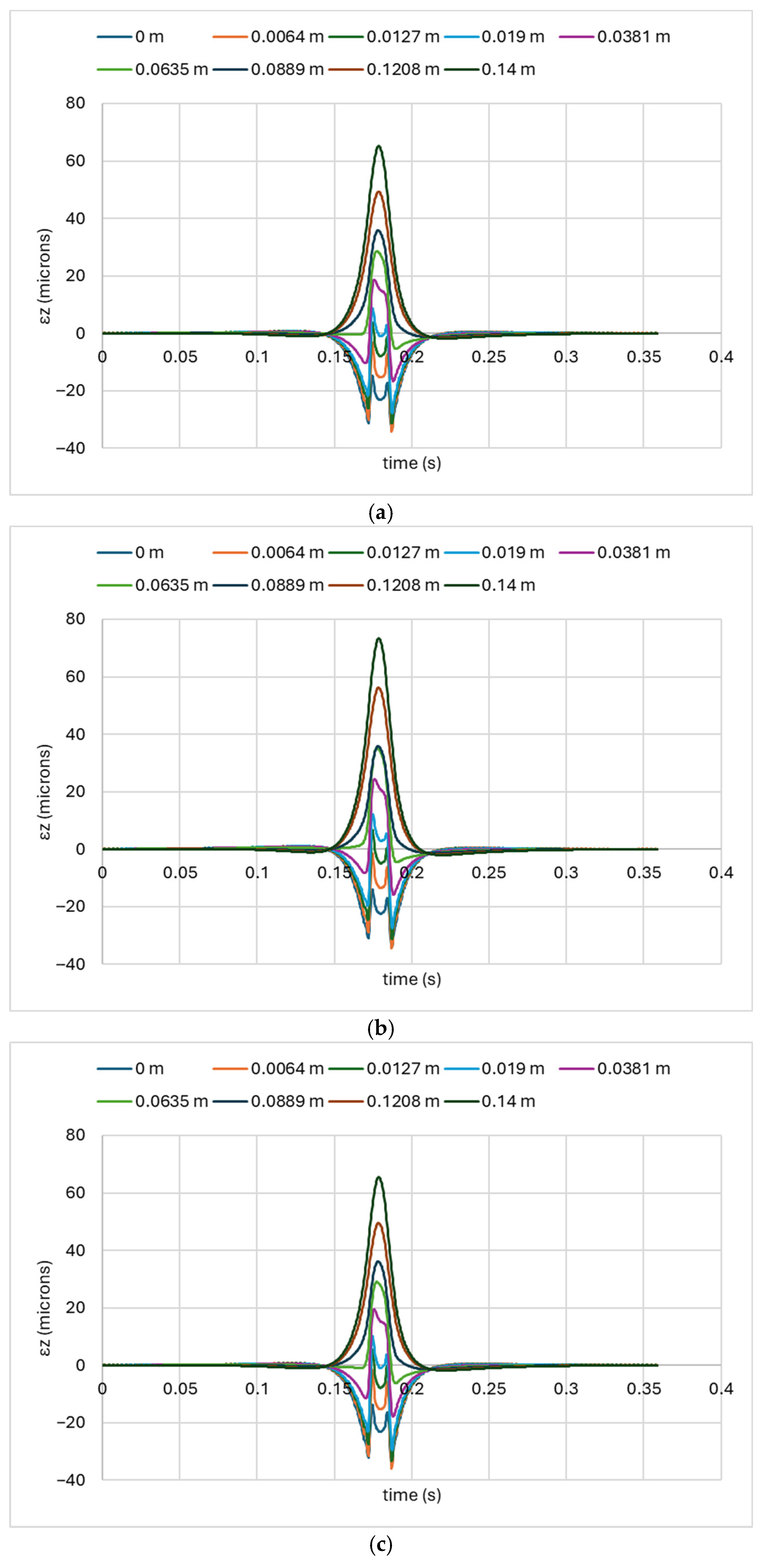
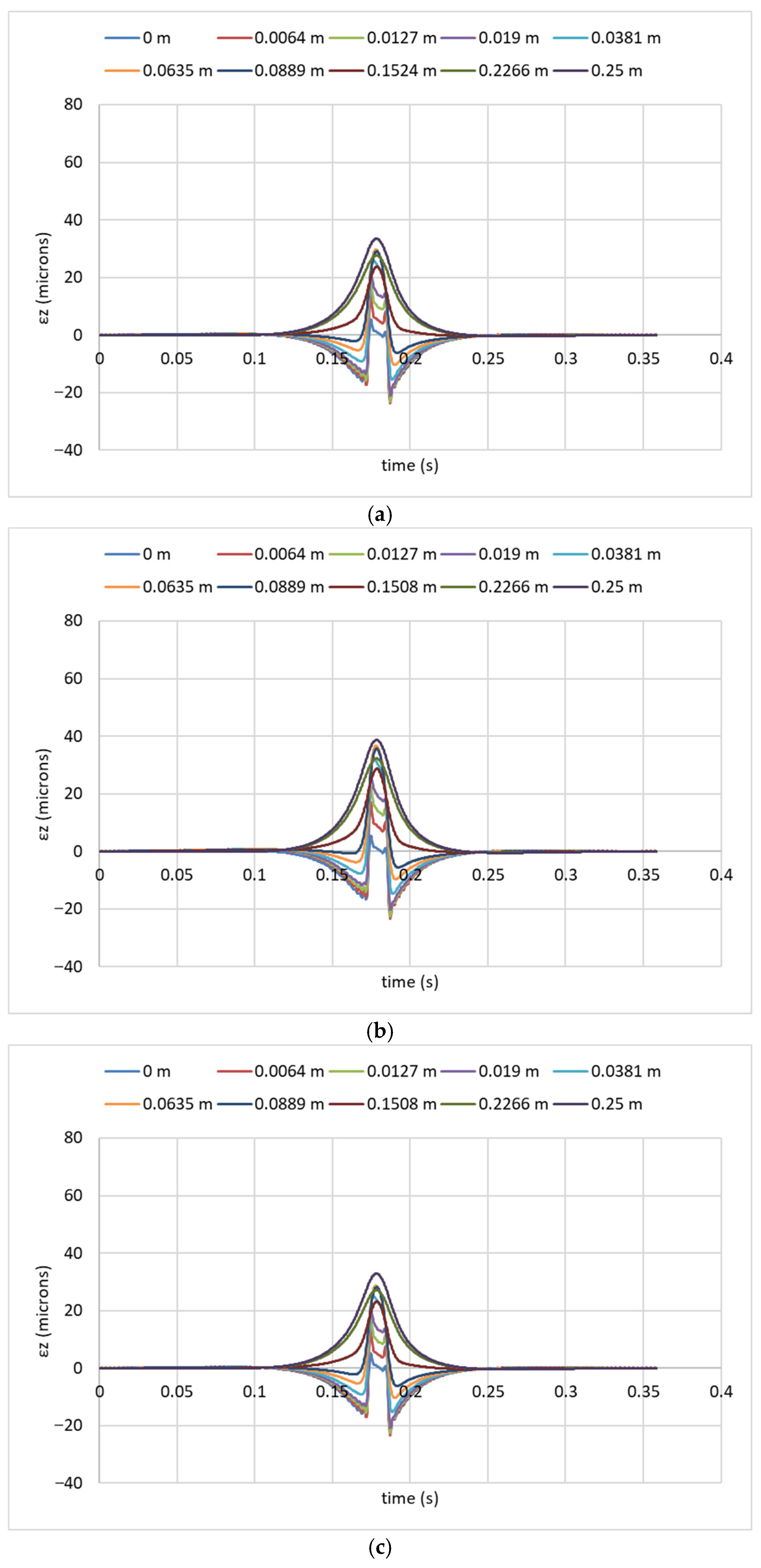
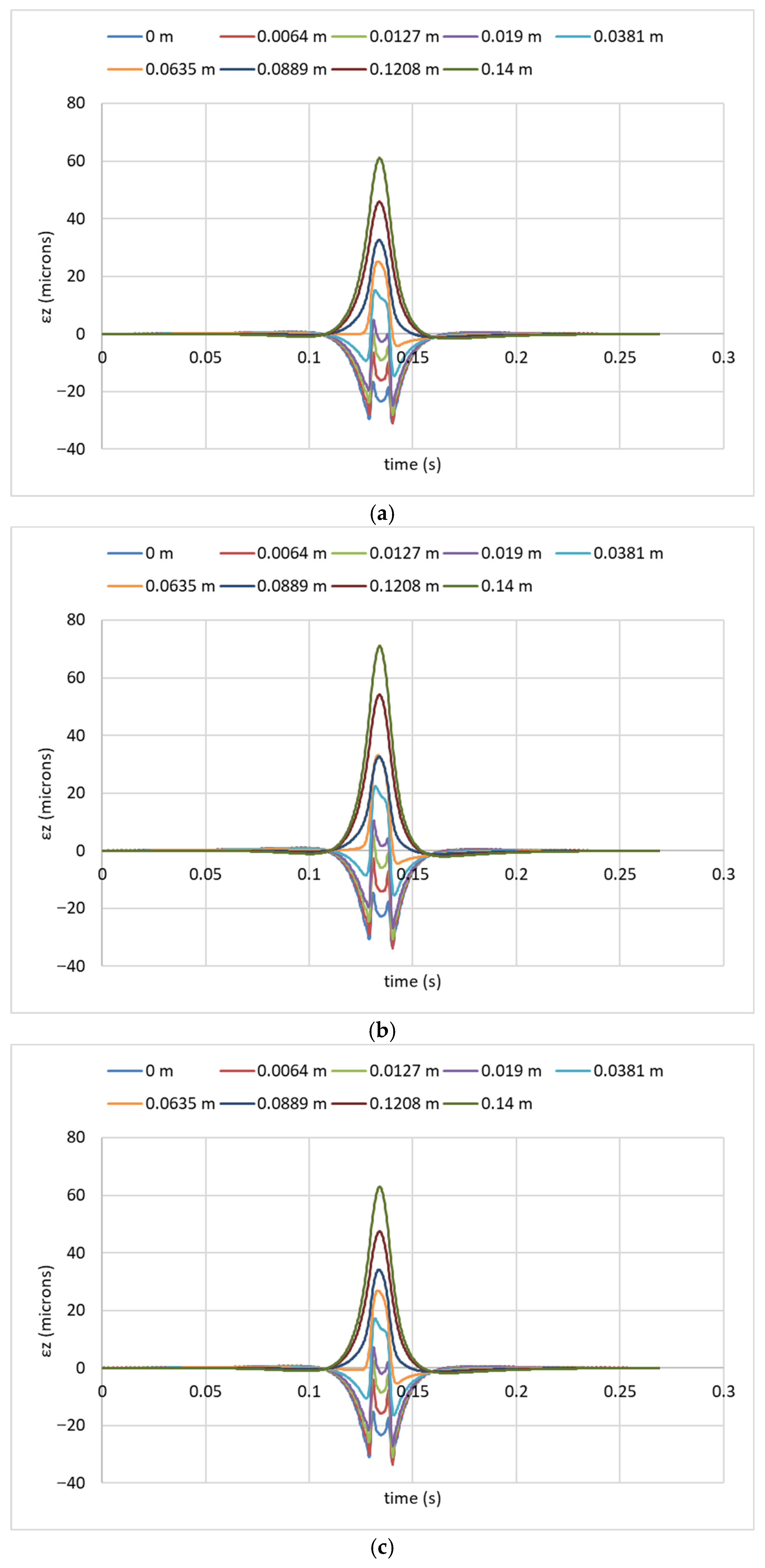
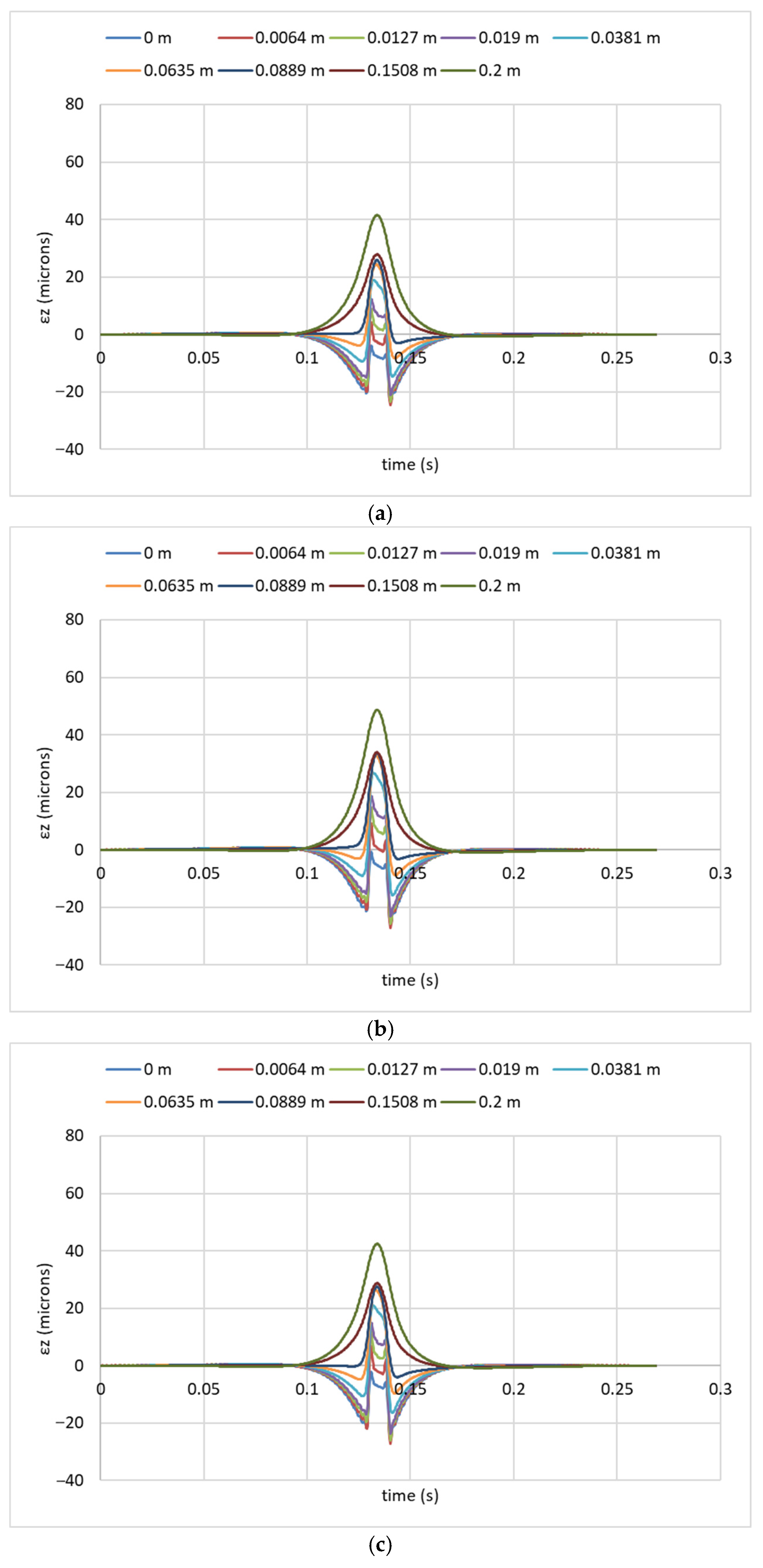
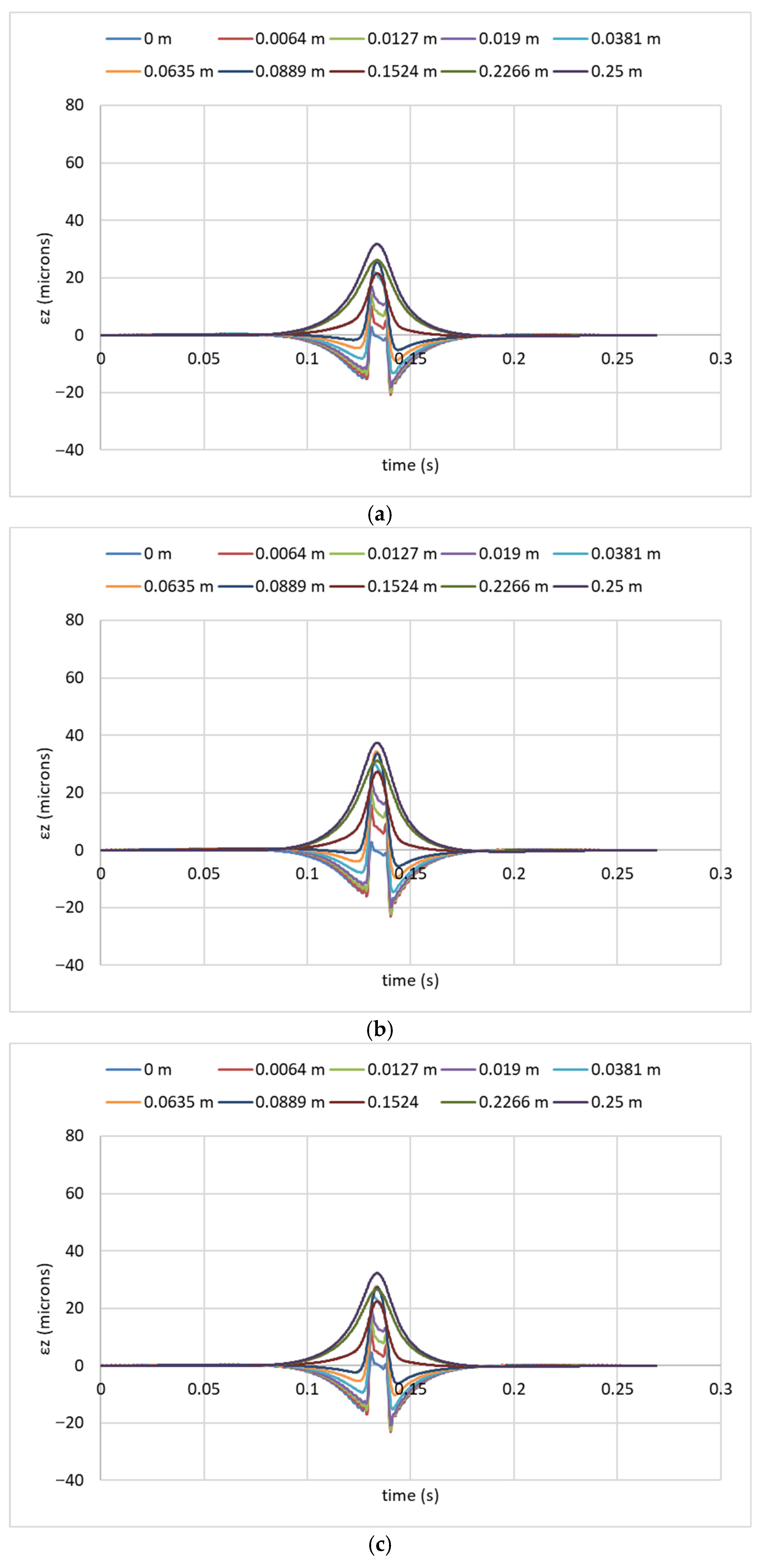
- An increase in HMA layer thickness reduces vertical strains in the asphalt layer and decreases permanent deformation. This is consistent with the expected structural benefits of thicker asphalt layers, such as improved resistance to rutting.
- An increase in the loading speed (or decrease in loading time) leads to a reduction in both the vertical strains within the asphalt layer and the resulting permanent deformation. This is consistent with the viscoelastic behavior of asphalt materials, where higher loading rates cause the material to respond in a stiffer manner, reducing time-dependent deformation under moving loads.
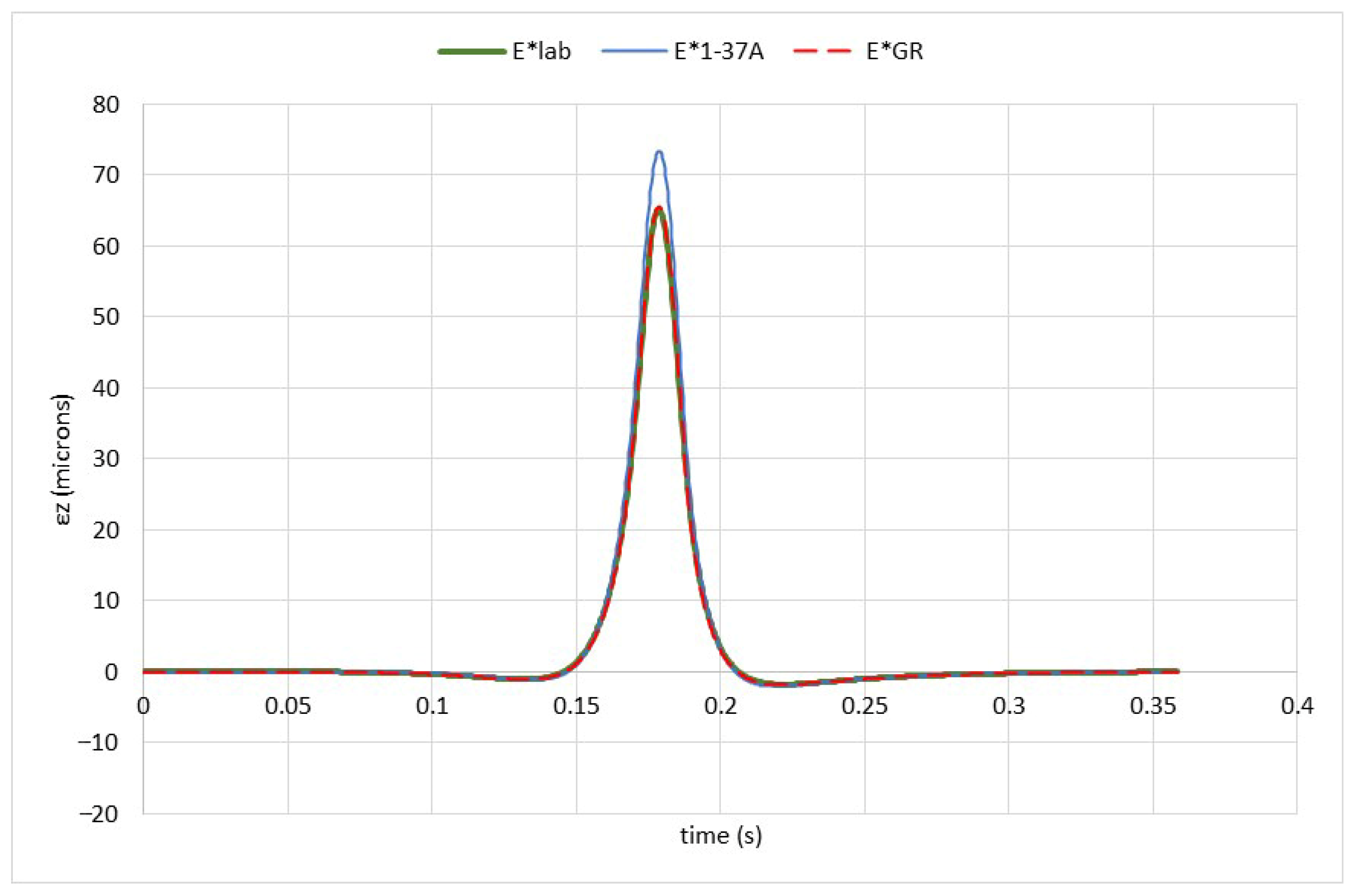
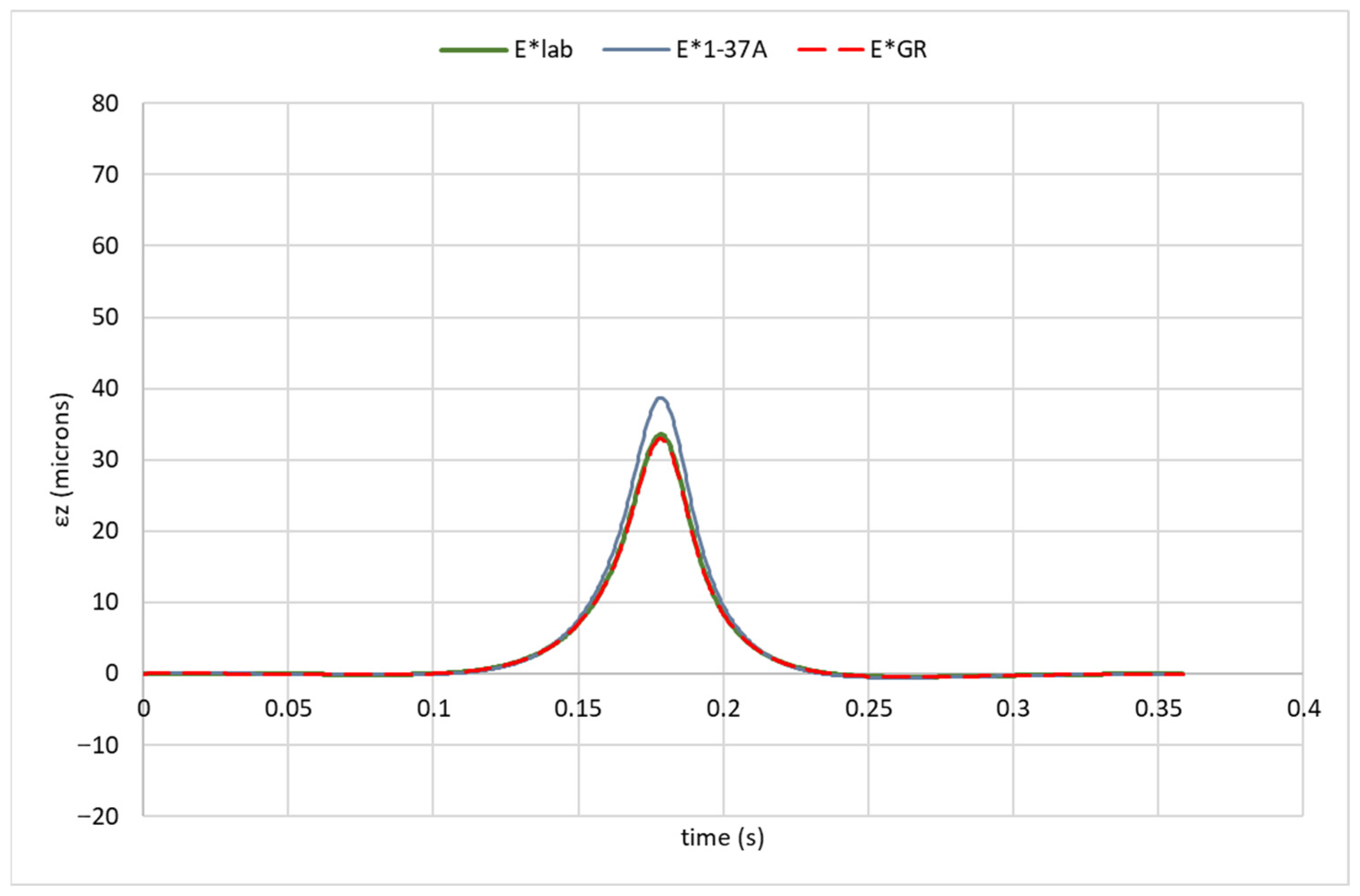
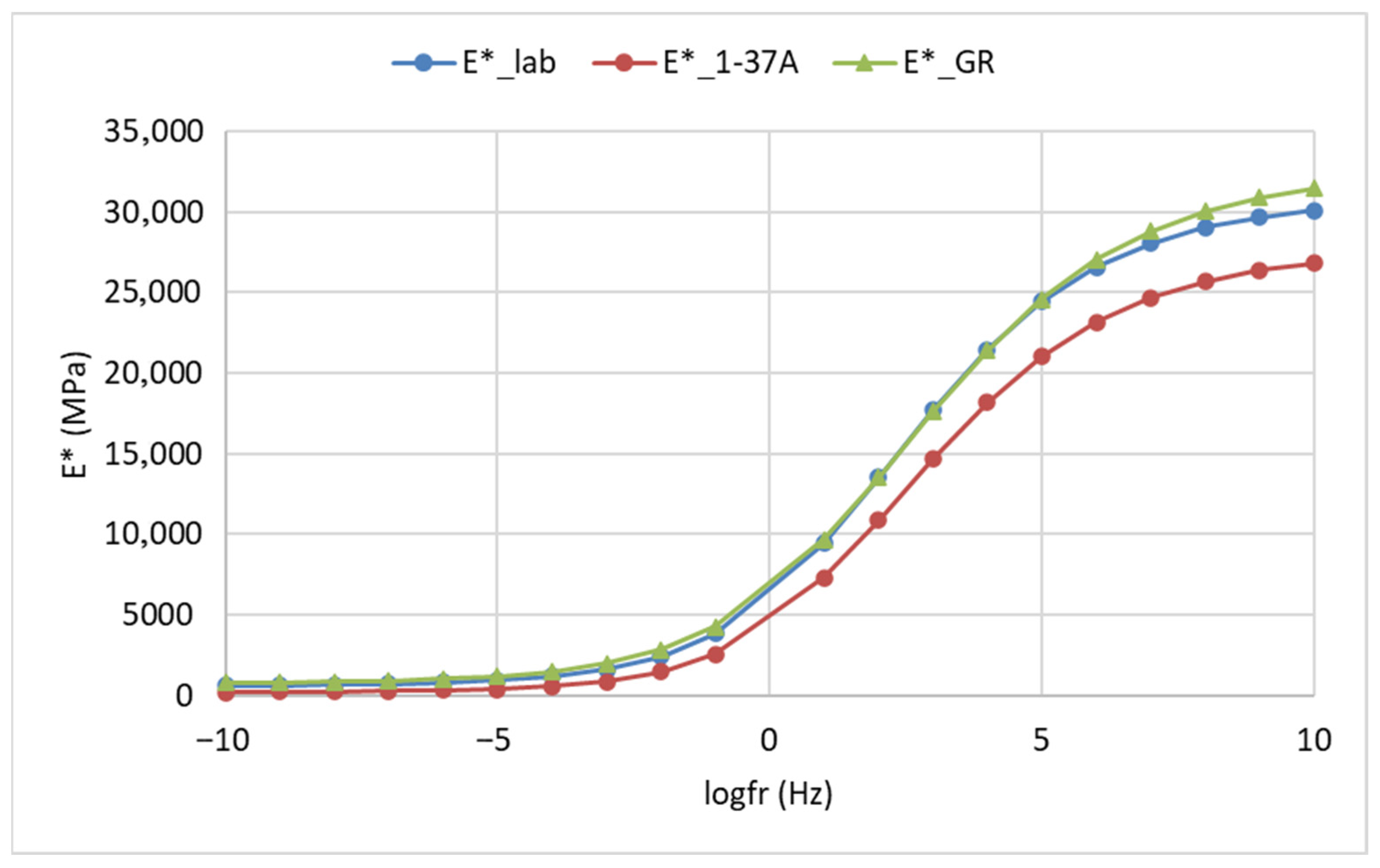
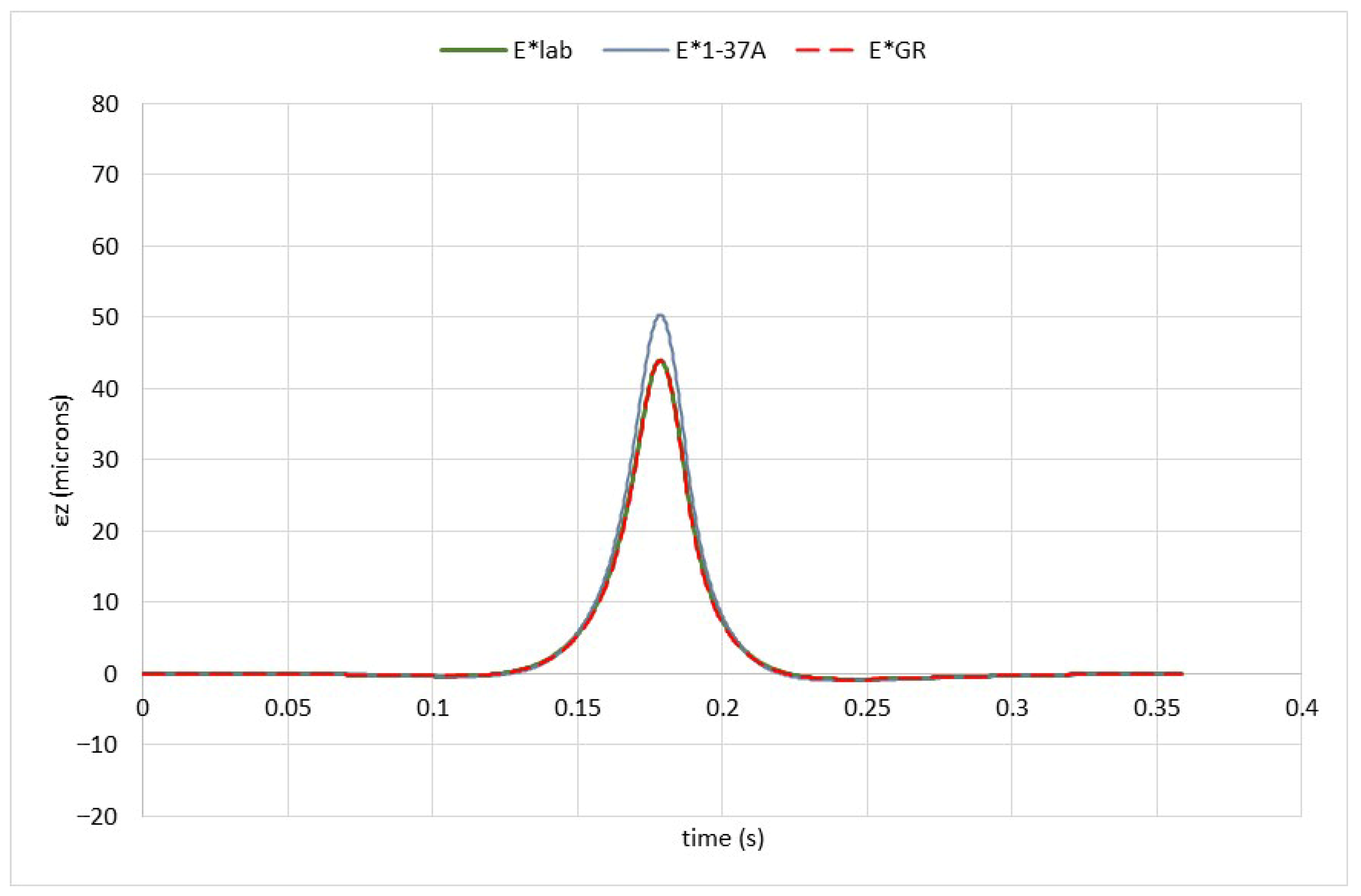
- A detailed comparative analysis revealed significant differences in the prediction accuracy of the E* models. The GR model consistently produced dynamic modulus values that closely matched laboratory measurements, whereas the 1-37A model systematically underestimated E*.
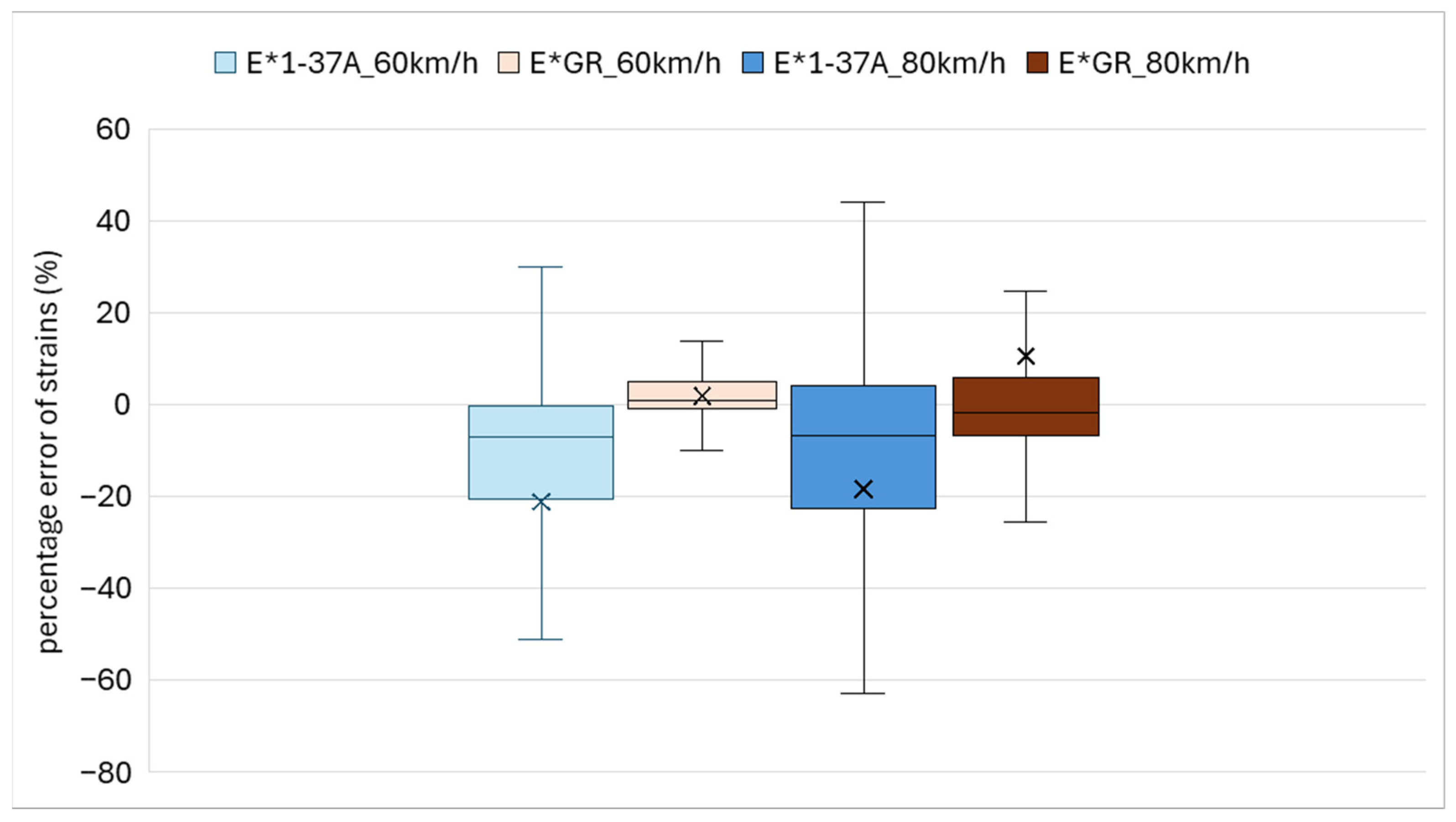
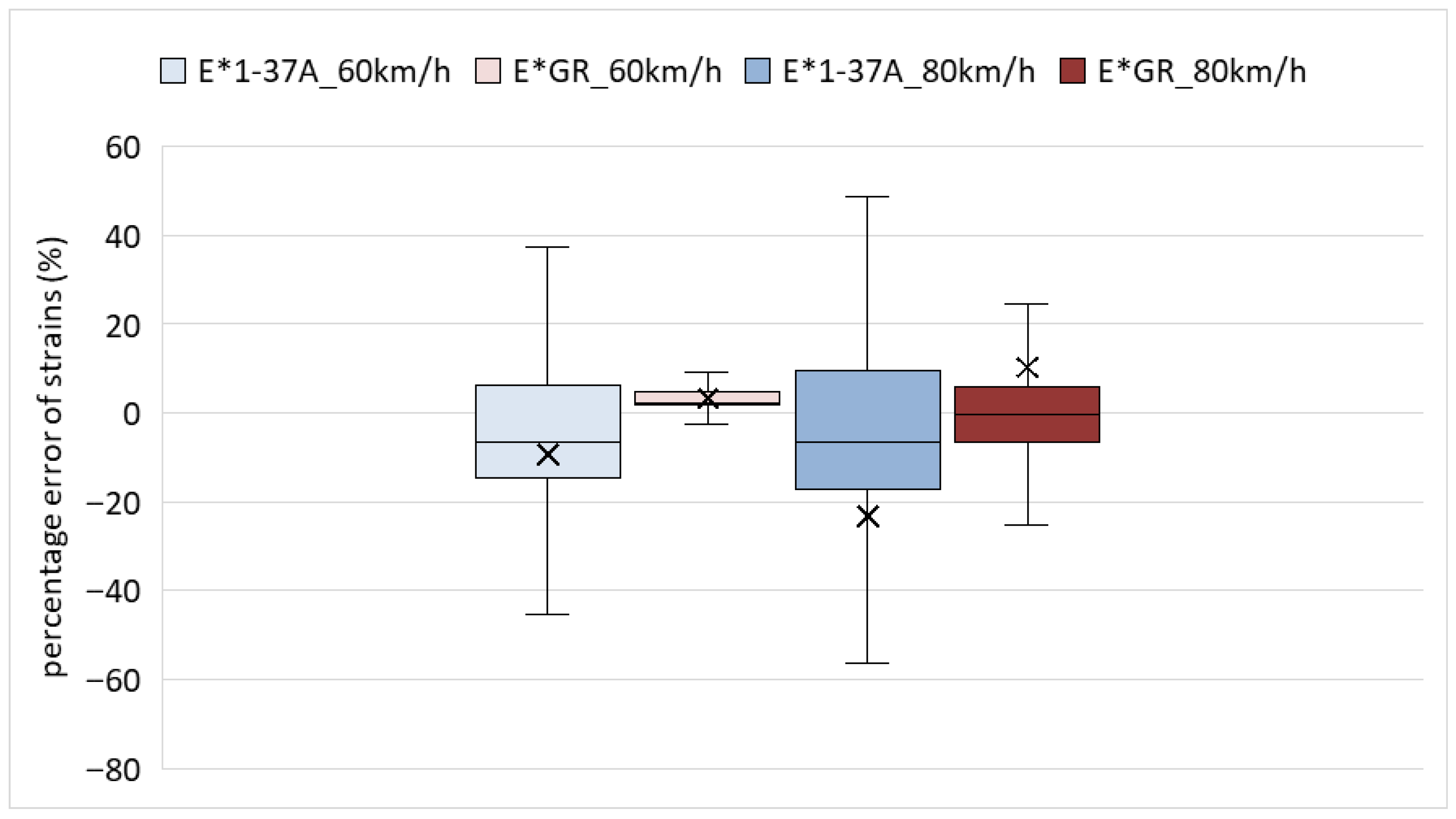
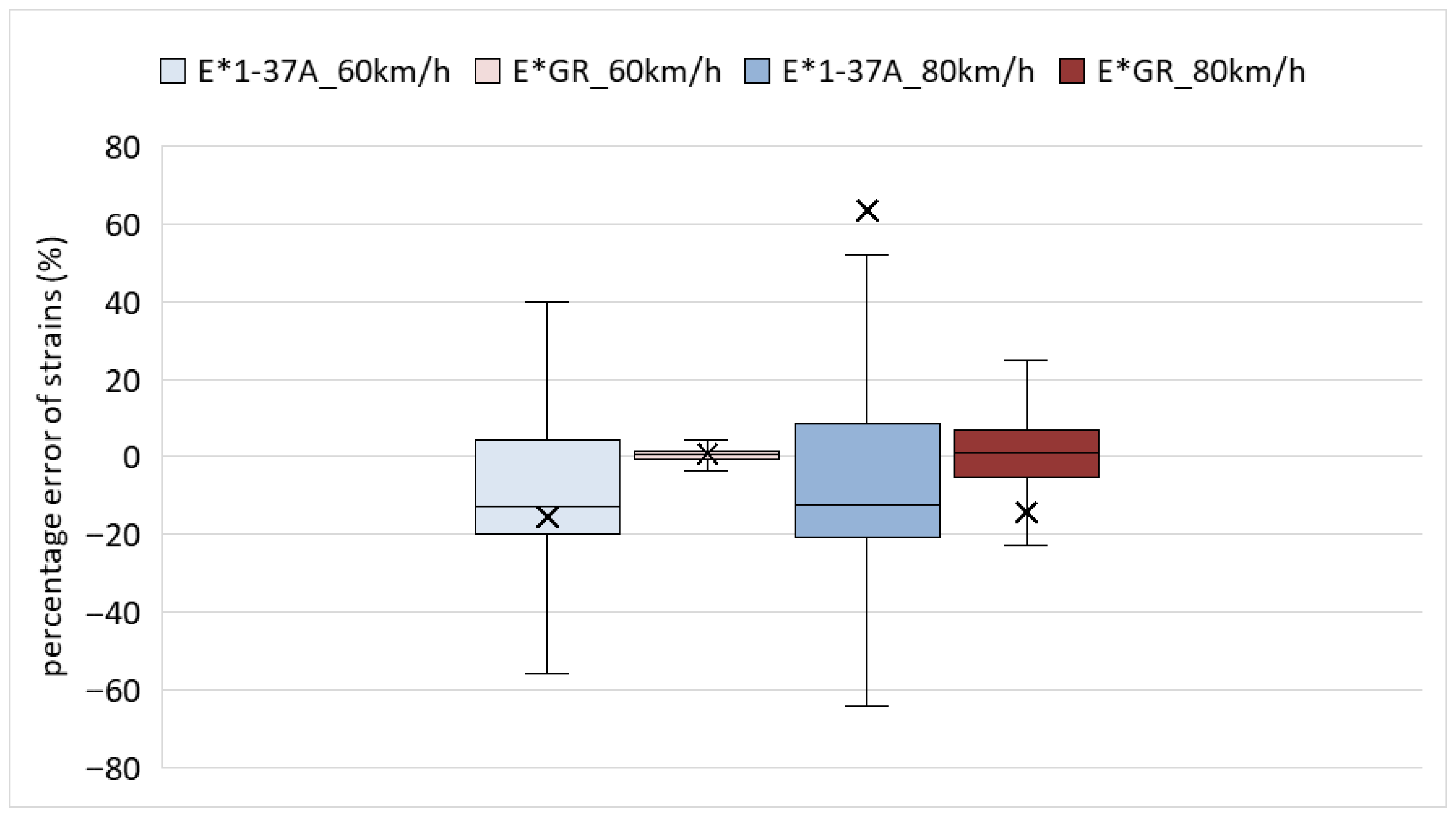
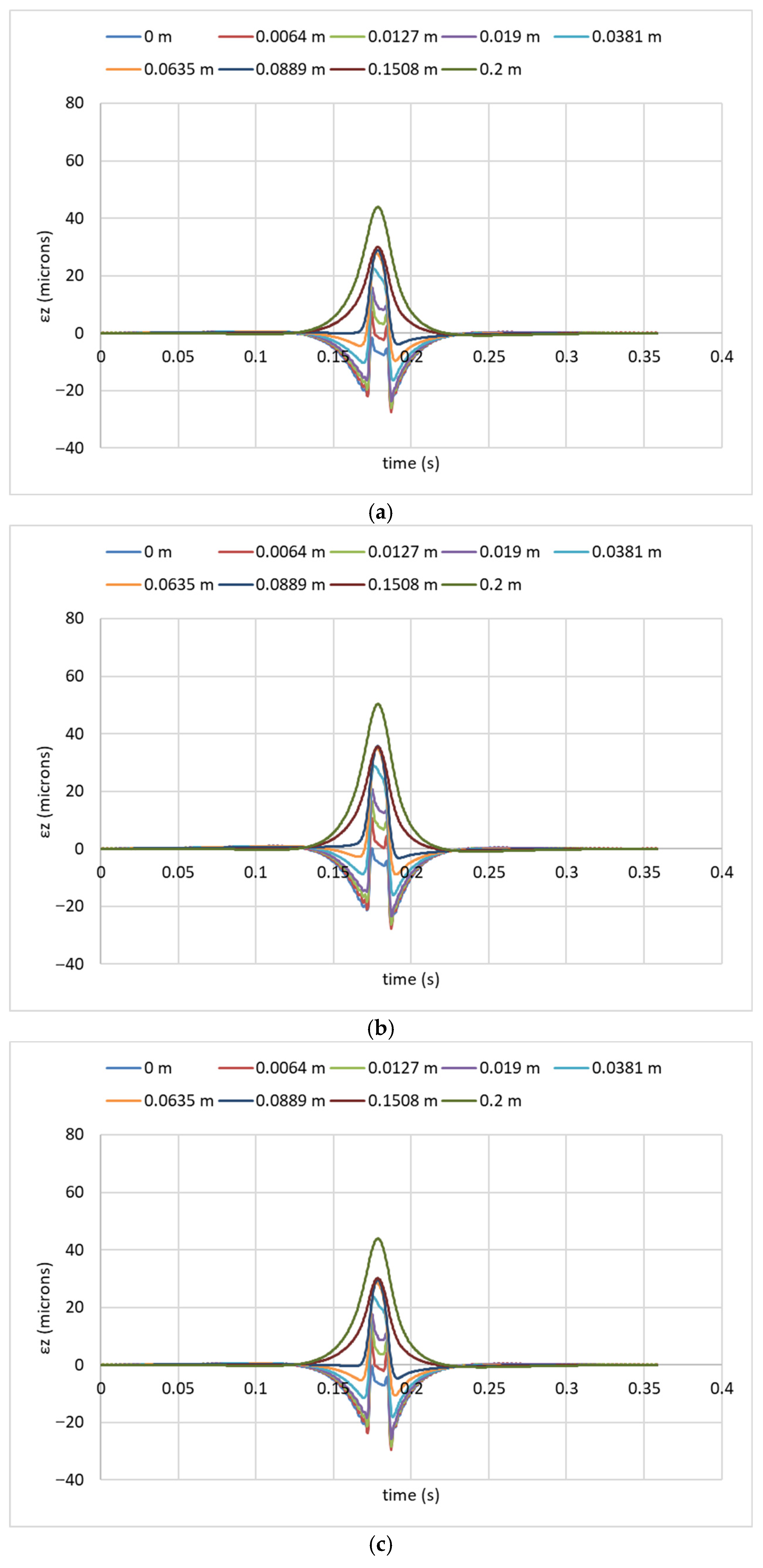
- The agreement of the GR E* model with laboratory-determined E* values resulted in lower strain errors. The percentage error in vertical strains using E*GR values remained below 5% in all cases, with a notably narrow distribution of values, even for thicker pavements. In contrast, the 1-37A model systematically underestimated E*, leading to overestimation of vertical strains. The mean strain errors of the 1-37A model reached −21% for the 14 cm thick HMA layer, while the range of variation was considerably larger for the 25 cm thick HMA layer.
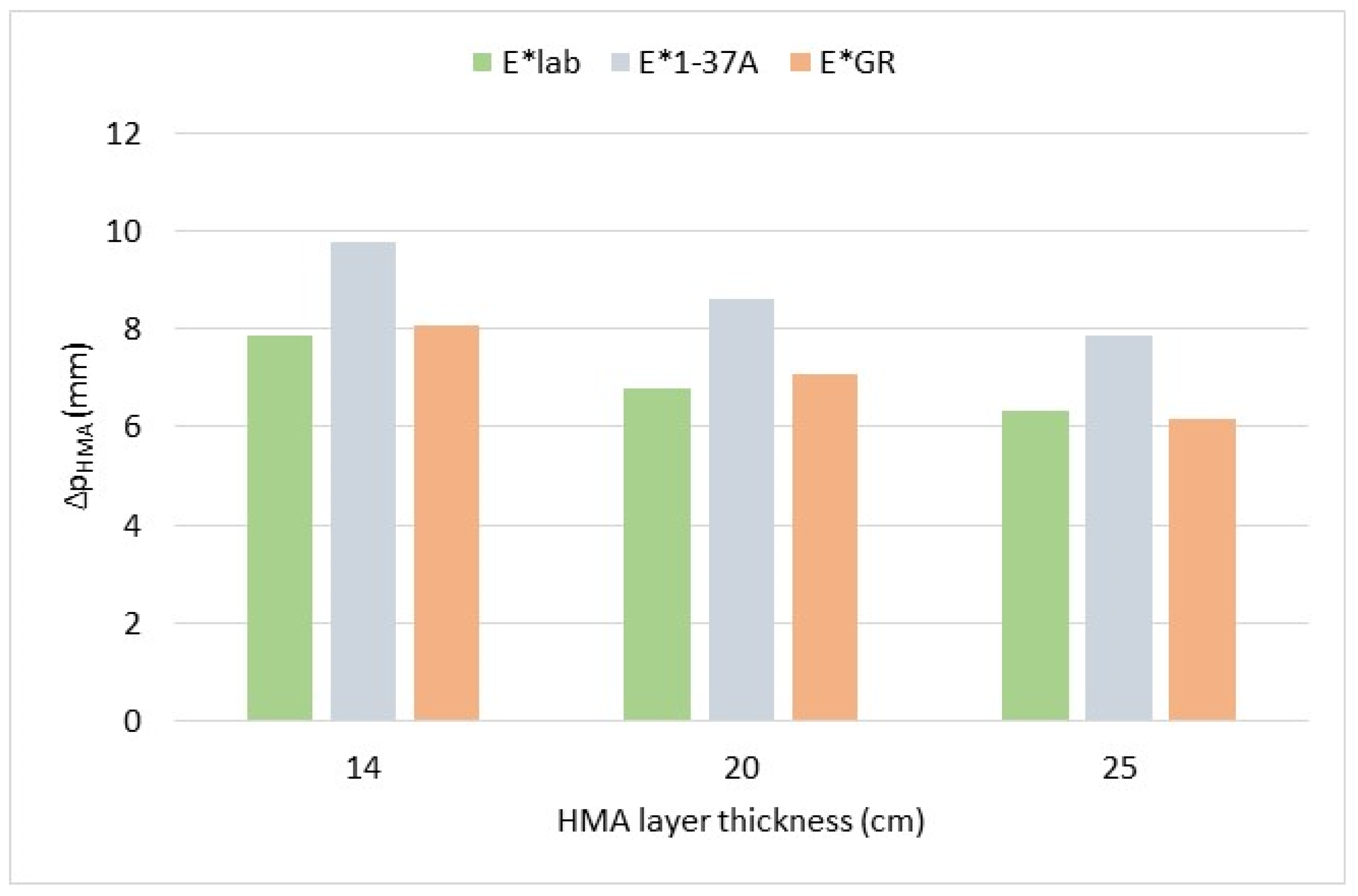
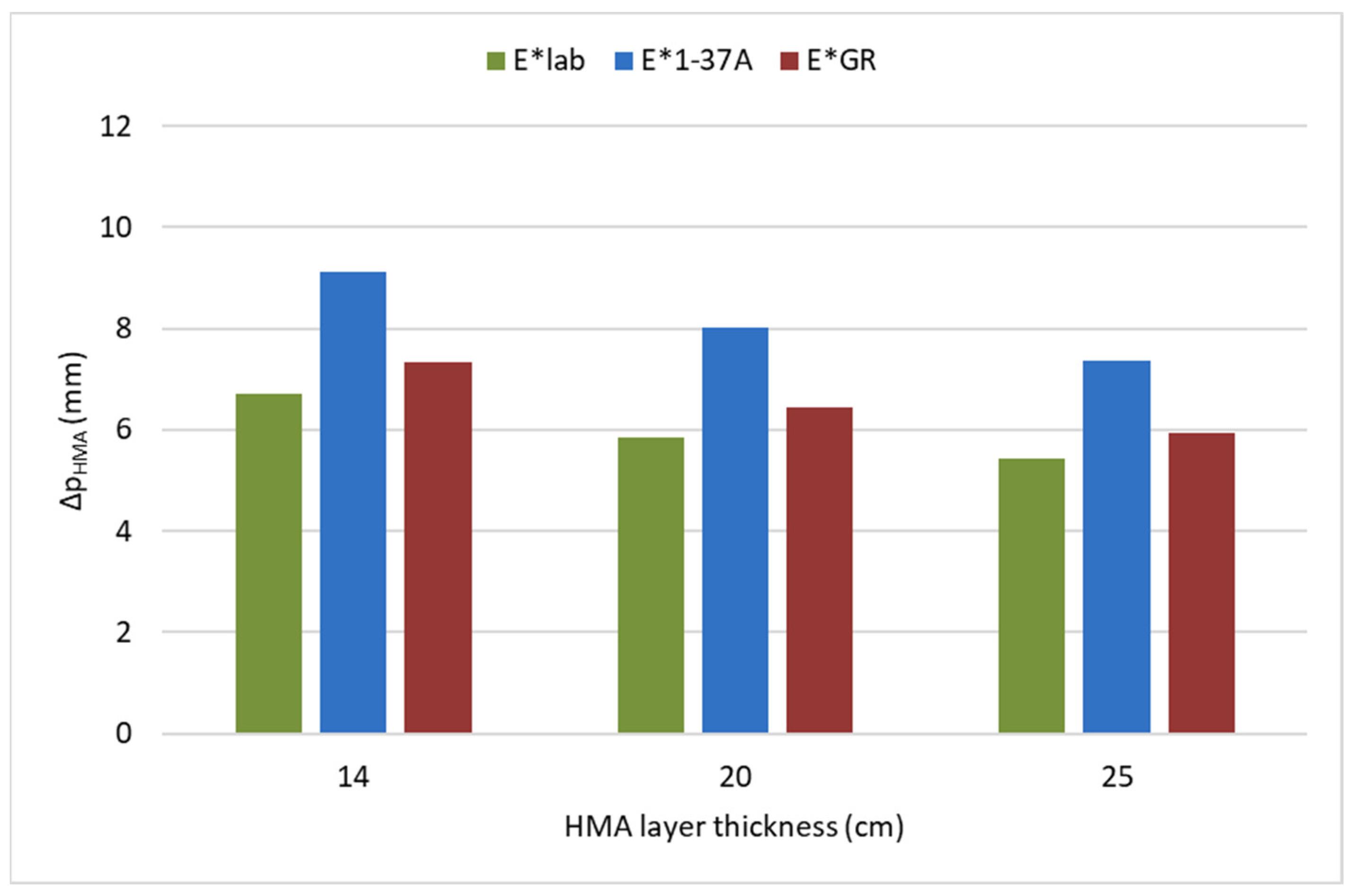
- The differences in E* and strain values are also evident in the analysis of permanent deformation. The 1-37A model overestimated ΔpHMA by more than 24% at a load speed of 60 km/h and approximately 35% at 80 km/h. In contrast, predictions using the GR model exhibited only minor deviations from the laboratory results, with errors below 5% for 60 km/h and below 10% for 80 km/h.
- The thickness of the asphalt layer appears to have a greater influence on strain errors and a lesser effect on permanent deformation. It is important to note that no consistent trend was observed in strain error or rutting percentage difference with increasing pavement thickness. For example, the 1-37A model produced the highest strain error at 14 cm thickness (−21%) but also showed substantial errors at 25 cm (−15%), with a lower error at 20 cm (−9%). Similarly, the corresponding rutting percentage differences remained consistently high across all thicknesses, without a clear correlation with strain error magnitudes.
- The GR model, although more accurate overall, also exhibited fluctuations in both strain and rutting predictions without a definitive trend related to thickness. Increasing the asphalt layer thickness from 14 to 20 cm led to an increase in both strain errors and calculated permanent deformation. A further increase in asphalt layer thickness from 20 to 25 cm resulted in a decrease in both strain errors and the extent of permanent deformation.
5. Conclusions
Author Contributions
Funding
Data Availability Statement
Conflicts of Interest
References
- Topal, A.; Oner, J.; Sengoz, B.; Dokandari, P.A. Evaluation of Rutting Performance of Warm Mix Asphalt. Int. J. Civ. Eng. 2017, 15, 705–714. [Google Scholar] [CrossRef]
- Joumblat, R.; Al Basiouni Al Masri, Z.; Al Khateeb, G.; Elkordi, A.; El Tallis, A.R.; Absi, J. State-of-the-Art Review on Permanent Deformation Characterization of Asphalt Concrete Pavements. Sustainability 2023, 15, 1166. [Google Scholar] [CrossRef]
- Jia, M.; Li, H.; Ma, G.; Zhang, X.; Yang, B.; Tian, Y.; Zhang, Y. Investigation on Permanent Deformation of Unbound Granular Material Base for Permeable Pavement: Laboratory and Field Study. Int. J. Transp. Sci. Technol. 2023, 12, 373–386. [Google Scholar] [CrossRef]
- Shyaa, A.S.; Rahma, R.A. Review: Asphalt Pavement Rutting Distress and Effects on Traffic Safety. J. Traffic Transp. Eng. 2022, 10, 35–39. [Google Scholar] [CrossRef]
- Albayati, A.H. A Review of Rutting in Asphalt Concrete Pavement. Open Eng. 2023, 13, 20220463. [Google Scholar] [CrossRef]
- Alamnie, M.M.; Taddesse, E.; Hoff, I. Advances in Permanent Deformation Modeling of Asphalt Concrete—A Review. Materials 2022, 15, 3480. [Google Scholar] [CrossRef]
- Zhang, J.; Zhu, C.; Li, X.; Pei, J.; Chen, J. Characterizing the Three-Stage Rutting Behavior of Asphalt Pavement with Semi-Rigid Base by Using UMAT in ABAQUS. Constr. Build. Mater. 2017, 140, 496–507. [Google Scholar] [CrossRef]
- Deng, Y.; Shi, X. Modeling the Rutting Performance of Asphalt Pavements: A Review. J. Infrastruct. Preserv. Resil. 2023, 4, 17. [Google Scholar] [CrossRef]
- Ali, Y.; Irfan, M.; Ahmed, S.; Ahmed, S. Empirical Correlation of Permanent Deformation Tests for Evaluating the Rutting Response of Conventional Asphaltic Concrete Mixtures. J. Mater. Civ. Eng. 2017, 29, 04017011. [Google Scholar] [CrossRef]
- Imaninasab, R.; Bakhshi, B.; Shirini, B. Rutting Performance of Rubberized Porous Asphalt Using Finite Element Method (FEM). Constr. Build. Mater. 2016, 106, 382–391. [Google Scholar] [CrossRef]
- Yalçın, E.; Çeloğlu, M.E.; Yılmaz, M.; Kök, B.V.; Alataş, T. Determination of Resistance to Creep Permanent Deformation of Hot Mix Asphalts Prepared with Various Additives. Civ. Eng. J. 2018, 4, 1553–1564. [Google Scholar] [CrossRef]
- Ghani, U.; Milazzo, S.; Giancontieri, G.; Buttitta, G.; Gu, F.; Presti, D.L. Investigating the Ability of Road Specifications to Discriminate the Rutting Behavior of Rubberized Asphalt Mixtures in Italy. Infrastructures 2024, 9, 113. [Google Scholar] [CrossRef]
- Alnaqbi, A.J.; Zeiada, W.; Al-Khateeb, G.G.; Hamad, K.; Barakat, S. Creating Rutting Prediction Models through Machine Learning Techniques Utilizing the Long-Term Pavement Performance Database. Sustainability 2023, 15, 13653. [Google Scholar] [CrossRef]
- Hu, A.; Bai, Q.; Chen, L.; Meng, S.; Li, Q.; Xu, Z. A Review on Empirical Methods of Pavement Performance Modeling. Constr. Build. Mater. 2022, 342, 127968. [Google Scholar] [CrossRef]
- Deori, S.; Choudhary, R.; Tiwari, D.; Gangopadhyay, S. Calibration of HDM-4 Models for Indian Conditions of Flexible Pavement Having Modified Bitumen in Wearing Course. Int. J. Pavement Eng. 2018, 19, 772–785. [Google Scholar] [CrossRef]
- Liu, G.; Chen, L.; Qian, Z.; Zhang, Y.; Ren, H. Rutting Prediction Models for Asphalt Pavements with Different Base Types Based on RIOHTrack Full-Scale Track. Constr. Build. Mater. 2021, 305, 124793. [Google Scholar] [CrossRef]
- Liu, J.; Liu, F.; Zheng, C.; Zhou, D.; Wang, L. Optimizing Asphalt Mix Design through Predicting the Rut Depth of Asphalt Pavement Using Machine Learning. Constr. Build. Mater. 2022, 356, 129211. [Google Scholar] [CrossRef]
- Haddad, A.J.; Chehab, G.R.; Saad, G.A. The Use of Deep Neural Networks for Developing Generic Pavement Rutting Predictive Models. Int. J. Pavement Eng. 2022, 23, 4260–4276. [Google Scholar] [CrossRef]
- Choi, S.; Do, M. Development of the Road Pavement Deterioration Model Based on the Deep Learning Method. Electronics 2020, 9, 3. [Google Scholar] [CrossRef]
- Alharbi, F.; Smadi, O. Predicting Pavement Performance Utilizing Artificial Neural Network (ANN). Int. J. Adv. Eng. Manag. Sci. 2019, 5, 504–508. [Google Scholar] [CrossRef]
- Okuda, T.; Suzuki, K.; Kohtake, N. Proposal and Evaluation of Prediction of Pavement Rutting Depth by Recurrent Neural Network. In Proceedings of the 2017 6th IIAI International Congress on Advanced Applied Informatics (IIAI-AAI), Hamamatsu, Japan, 9–13 July 2017; IEEE: Piscataway, NJ, USA, 2017; pp. 1053–1054. [Google Scholar] [CrossRef]
- National Cooperative Highway Research Program (NCHRP). Guide for Mechanistic-Empirical Design of New and Rehabilitated Pavement Structures; Appendix GG-1: Calibration of Permanent Deformation Models for Flexible Pavements; Transportation Research Board: Washington, DC, USA, 2004. [Google Scholar]
- de Barros, L.M.; do Nascimento, L.A.H.; Aragão, F.T.S. Effects of Binder and Aggregate Properties on the Permanent Deformation of Asphalt Mixtures by Means of Uniaxial and Triaxial Tests. Constr. Build. Mater. 2022, 332, 127346. [Google Scholar] [CrossRef]
- Guo, R.; Nian, T.; Zhou, F. Analysis of Factors That Influence Anti-Rutting Performance of Asphalt Pavement. Constr. Build. Mater. 2020, 254, 119237. [Google Scholar] [CrossRef]
- Lira, B.; Ekblad, J.; Lundström, R. Evaluation of Asphalt Rutting Based on Mixture Aggregate Gradation. Road Mater. Pavement Des. 2021, 22, 1160–1177. [Google Scholar] [CrossRef]
- Safiuddin, M.; Tighe, S.; Uzarowski, L. Evaluation of Stiffness to Predict Rutting Resistance of Hot Mix Asphalt: A Canadian Case Study. Balt. J. Road Bridge Eng. 2014, 9, 35. [Google Scholar] [CrossRef]
- Rondón Quintana, H.A.; Zafra Mejia, C.A.; Reyes Lizcano, F.A. Rutting in Asphalt Mixtures—A Review. Rev. Ing. Univ. Medellín 2023, 22, a3. [Google Scholar] [CrossRef]
- El-Badawy, S.; Bayomy, F.; Awed, A. Performance of MEPDG Dynamic Modulus Predictive Models for Asphalt Concrete Mixtures: Local Calibration for Idaho. J. Mater. Civ. Eng. 2012, 24, 1412–1421. [Google Scholar] [CrossRef]
- Khattab, A.M.; El-Badawy, S.M.; Al Hazmi, A.A.; Elmwafi, M. Evaluation of Witczak E* Predictive Models for the Implementation of AASHTOWare-Pavement ME Design in the Kingdom of Saudi Arabia. Constr. Build. Mater. 2014, 64, 360–369. [Google Scholar] [CrossRef]
- Solatifar, N. Performance Evaluation of Dynamic Modulus Predictive Models for Asphalt Mixtures. J. Rehabil. Civ. Eng. 2020, 8, 87–97. [Google Scholar] [CrossRef]
- Giuliana, G.; Nicolosi, V.; Festa, B. Predictive Formulas of Complex Modulus for High Air Void Content Mixes. In Proceedings of the 91st Annual Meeting of the Transportation Research Board (TRB), Washington, DC, USA, 22–26 January 2012. [Google Scholar]
- Sakhaeifar, M.S.; Kim, Y.R.; Kabir, P. New Predictive Models for the Dynamic Modulus of Hot Mix Asphalt. Constr. Build. Mater. 2015, 76, 221–231. [Google Scholar] [CrossRef]
- Georgouli, K.; Loizos, A.; Plati, C. Calibration of Dynamic Modulus Predictive Model. Constr. Build. Mater. 2016, 102, 65–75. [Google Scholar] [CrossRef]
- Zhang, D.; Birgisson, B.; Luo, X. A New Dynamic Modulus Predictive Model for Asphalt Mixtures Based on the Law of Mixtures. Constr. Build. Mater. 2020, 255, 119348. [Google Scholar] [CrossRef]
- Gong, H.; Sun, Y.; Dong, Y.; Han, B.; Polaczyk, P.; Hu, W.; Huang, B. Improved Estimation of Dynamic Modulus for Hot Mix Asphalt Using Deep Learning. Constr. Build. Mater. 2020, 263, 119912. [Google Scholar] [CrossRef]
- Mohammadi Golafshani, E.; Behnood, A.; Karimi, M.M. Predicting the Dynamic Modulus of Asphalt Mixture Using Hybridized Artificial Neural Network and Grey Wolf Optimizer. Int. J. Pavement Eng. 2023, 24, 2005056. [Google Scholar] [CrossRef]
- Hou, H.; Wang, T.; Wu, S.; Xue, Y.; Tan, R.; Chen, J.; Zhou, M. Investigation on the Pavement Performance of Asphalt Mixture Based on Predicted Dynamic Modulus. Constr. Build. Mater. 2016, 106, 11–17. [Google Scholar] [CrossRef]
- Georgouli, K.; Plati, C.; Loizos, A. Assessment of Dynamic Modulus Prediction Models in Fatigue Cracking Estimation. Mater. Struct. 2016, 49, 5007–5019. [Google Scholar] [CrossRef]
- Al-Tawalbeh, A.; Sirin, O.; Sadeq, M.; Sebaaly, H.; Masad, E. Evaluation and Calibration of Dynamic Modulus Prediction Models of Asphalt Mixtures for Hot Climates: Qatar as a Case Study. Case Stud. Constr. Mater. 2022, 17, e01532. [Google Scholar] [CrossRef]
- Batioja-Alvarez, D.; Lee, J.; Nantung, T. Evaluating Dynamic Modulus for Indiana Mechanistic-Empirical Pavement Design Guide Practice. Transp. Res. Rec. 2019, 2673, 346–357. [Google Scholar] [CrossRef]
- Saudy, M.; Breakah, T.; El-Badawy, S. Dynamic Modulus Prediction Validation for the AASHTOWare Pavement ME Design Implementation in Egypt. Sustainability 2023, 15, 14030. [Google Scholar] [CrossRef]
- Siddharthan, R.V.; Krishnamenon, N.; Sebaaly, P.E. Finite-Layer Approach to Pavement Response Evaluation. Transp. Res. Rec. 2000, 1709, 43–49. [Google Scholar] [CrossRef]
- Andrei, D.; Witczak, M.W.; Mirza, W. Appendix CC-4: Development of a Revised Predictive Model for the Dynamic (Complex) Modulus of Asphalt Mixtures. In Development of the 2002 Guide for the Design of New and Rehabilitated Pavement Structures; (NCHRP Project 1-37A); Transportation Research Board: Washington, DC, USA, 1999. [Google Scholar]
- Ulloa, A.; Hajj, E.Y.; Siddharthan, R.V.; Sebaaly, P.E. Equivalent Loading Frequencies for Dynamic Analysis of Asphalt Pavements. J. Mater. Civ. Eng. 2013, 25, 1162–1170. [Google Scholar] [CrossRef]








| Sieve Size | Passing (%) | Specific Gravity (kg/m3) |
|---|---|---|
| 25.0 mm | 100 | 2670 |
| 19.0 mm | 90.9 | |
| 12.5 mm | 71.3 | |
| 4.75 mm | 56.2 | 2590 |
| 2.00 mm | 38.5 | |
| 0.42 mm | 17.4 | |
| 0.18 μm | 12.9 | |
| 75 μm (No. 200) | 5.5 | 2700 |
| Pb | 4.2% | |
| Va | 5% | |
| Vbeff | 9.8% | |
| Coefficient | 1-37A | GR |
|---|---|---|
| b1 | 3.750063 | 3.900000 |
| b2 | 0.02932 | 0.374370 |
| b3 | 0.001767 | 0.029800 |
| b4 | 0.002841 | 0.012210 |
| b5 | 0.058097 | 0.086860 |
| b6 | 0.802208 | 0.942150 |
| b7 | 3.871977 | 3.044830 |
| b8 | 0.0021 | 0.011240 |
| b9 | 0.003958 | 0.002420 |
| b10 | 0.000017 | −0.000250 |
| b11 | 0.00547 | 0.001110 |
| b12 | 0.603313 | 1.076820 |
| b13 | 0.31335 | 0.47006 |
| b14 | 0.393532 | 0.62596 |
| Parameter | Meaning |
|---|---|
| Δp(HMA) | accumulated permanent vertical deformation (in) |
| εp(HMA) | accumulated permanent axial strain |
| εr(HMA) | elastic strain calculated by the structural response model in the mid-depth of each HMA sublayer (in/in) |
| hHMA | HMA layer thickness (in) |
| n | number of axle load repetitions |
| T | mix or pavement temperature (°F) |
| kz | depth confinement factor (C1 + C2 × D) × 0.328196D |
| k1r,2r,3r | global field calibration parameters k1r = −3.35412, k2r = 0.4791, k3r = 1.5606 |
| β1r, β2r, β3r | local or mixture field calibration constants (all set to 1.0) |
| C1 | −0.1039 × (HHMA)2 + 2.4868 × HHMA − 17.342 |
| C2 | 0.0172 × (HHMA)2 − 1.7331 × HHMA + 27.428 |
| D | depth below the surface (in) |
| Model | RMSE (%) |
|---|---|
| 1-37A | 41 |
| GR | 18 |
| Load Speed 60 km/h | Load Speed 80 km/h | |||||
|---|---|---|---|---|---|---|
| E* | HMA layer thickness (cm) | |||||
| 14 | 20 | 25 | 14 | 20 | 25 | |
| 1-37A | 24.3% | 26.5% | 23.8% | 36.3% | 37.0% | 35.8% |
| GR | 2.9% | 4.4% | 3.1% | 9.7% | 9.9% | 9.6% |
Disclaimer/Publisher’s Note: The statements, opinions and data contained in all publications are solely those of the individual author(s) and contributor(s) and not of MDPI and/or the editor(s). MDPI and/or the editor(s) disclaim responsibility for any injury to people or property resulting from any ideas, methods, instructions or products referred to in the content. |
© 2026 by the authors. Licensee MDPI, Basel, Switzerland. This article is an open access article distributed under the terms and conditions of the Creative Commons Attribution (CC BY) license.
Share and Cite
Georgouli, K.; Plati, C.; Loizos, A. Impact of Dynamic Modulus Prediction Errors on Rutting Estimates in Sustainable Flexible Pavements. Infrastructures 2026, 11, 127. https://doi.org/10.3390/infrastructures11040127
Georgouli K, Plati C, Loizos A. Impact of Dynamic Modulus Prediction Errors on Rutting Estimates in Sustainable Flexible Pavements. Infrastructures. 2026; 11(4):127. https://doi.org/10.3390/infrastructures11040127
Chicago/Turabian StyleGeorgouli, Konstantina, Christina Plati, and Andreas Loizos. 2026. "Impact of Dynamic Modulus Prediction Errors on Rutting Estimates in Sustainable Flexible Pavements" Infrastructures 11, no. 4: 127. https://doi.org/10.3390/infrastructures11040127
APA StyleGeorgouli, K., Plati, C., & Loizos, A. (2026). Impact of Dynamic Modulus Prediction Errors on Rutting Estimates in Sustainable Flexible Pavements. Infrastructures, 11(4), 127. https://doi.org/10.3390/infrastructures11040127