Article

NDT-Based Condition Assessment and Structural Safety Evaluation of a Reinforced Cement Concrete Water Tank in a Coastal Region: A Case Study

Department of Civil Engineering, National Institute of Technology Puducherry, Karaikal 609609, India
*
Authors to whom correspondence should be addressed.
Infrastructures 2026, 11(4), 121; https://doi.org/10.3390/infrastructures11040121
Submission received: 20 February 2026 / Revised: 15 March 2026 / Accepted: 24 March 2026 / Published: 1 April 2026
(This article belongs to the Section Infrastructures Inspection and Maintenance)

Abstract

Reinforced cement concrete (RCC) water tanks are essential for water storage and distribution facilities in every region. The durability and structural integrity of RCC water tanks are crucial to maintaining an uninterrupted water supply to the surrounding areas. This study evaluates the structural integrity and functionality of a water tank in Karaikal, a coastal region in the Union Territory of Puducherry, India, subject to severe exposure conditions characterized by high humidity and temperature variability. An RCC water tank with a capacity of 10 lakh L in Thirunallar, Karaikal, is considered in this study. The methodology for the condition assessment includes visual inspection, non-destructive testing (NDT), and structural analysis in STAAD PRO software. NDT, including the Schmidt rebound hammer test and ultrasonic pulse velocity (UPV) test, was employed to evaluate the indicative compressive strength and in situ quality of an RCC water tank. The structure was modelled using structural drawings obtained from the Public Works Department, Karaikal. The NDT testing findings were incorporated into the model, and the structure was analyzed. Finally, the induced stress from the STAAD Pro model was compared with the in situ concrete compressive strength to assess the tank’s structural safety. The rebound hammer test results indicate that the in situ compressive strength of the tank’s beams and columns ranges from 12 MPa to 43 MPa, and the STAAD Pro analysis shows induced stresses ranging from 2.42 to 10.59 MPa. The comparison shows that the structure has higher safety margins. Hence, the deterioration observed during the visual inspection was not due to a deficiency in structural strength but rather to durability issues caused by environmental distress. Finally, suitable repair and rehabilitation methods were recommended to mitigate the deterioration based upon NDT measurements and the outputs of the structural analysis.

1. Introduction

Facilities that are appropriately designed and maintained typically perform well for an extended period. Additionally, the ageing phenomenon, driven by time-dependent changes, may affect the system’s ability to withstand various demands from operations, the environment, and accidents. For mechanical or electrical equipment, the effects of ageing can typically be mitigated through repair or replacement, with minimal disruption to overall facility operations [1]. However, structural components and systems play no role in changes of state under normal operating conditions; they are challenged only during extreme or abnormal conditions. Structural elements and systems are difficult to inspect readily, and their repair and replacement are costly. Additionally, the structures are more likely to be involved in common-cause failures, which will adversely affect the performance of other essential appurtenant facility systems [2]. At the same time, the performance of crucial public structures depends critically on the behaviour of their structural components and systems. In particular, the ageing of essential public structures made of reinforced concrete or steel, which can compromise a significant portion of the public’s investment in civil infrastructure, is the focus of this paper.
Reinforced cement concrete (RCC) water tanks are critical structures in water distribution and storage systems. They serve as the primary source of potable water for surrounding villages, meeting human consumption, agricultural, and industrial needs. Durability and strength are significant factors that determine the functionality of water tanks. Water storage structures, such as reservoirs and other liquid storage structures, should be designed to meet design requirements, ensuring they remain free from any damage and maintain strength factors, such as water tightness and resistance, throughout their intended lifespan, which should be at least 50 years, serving both direct and indirect consumers [2]. There are many environmental factors to which elevated water tanks are susceptible, such as wind loads, hydrostatic pressure, and structural stresses. As time progresses, the structures start to deteriorate due to factors including ageing, material degradation, and ecological exposure, which will deteriorate and reduce the tank’s service life. In order to avoid such conditions, it is necessary to inspect the structure regularly and implement proper maintenance and repair strategies, thereby helping ensure efficient tank operation.
Structures usually experience damage, which may change the properties of the structure from the expected values. Hence, it is necessary to assess the structure as specified in its structural design, which, in turn, helps reduce operational risks, thereby preventing economic losses and casualties. This structural assessment helps in improving the performance of the structure through repair methods such as retrofitting, particularly for structures in disaster-prone regions that require regular structural assessment. Other than civil engineering, various other fields, including aerospace, automation, electronics, and mechanical engineering, also use structural health assessments [3].
The performance of structures, especially water tanks, is crucial, as they are considered essential lifelines; their failure can lead to collapse and compromise the distribution of drinkable water. Several studies have investigated the condition assessment, durability performance, and structural behaviour of RCC structures, including water tanks, particularly those exposed to aggressive environmental conditions [4]. These studies have employed a combination of field investigations, non-destructive testing (NDT), and numerical analysis to assess the extent of deterioration and the residual structural capacity. Ma et al. [5] conducted a study of common durability-related deterioration in RCC bridges. This study analyzed the fundamental mechanisms, contributing factors, and manifestations of durability problems in engineering practice. The current mitigation strategies and their limitations were also discussed in this study. Krentowski [6] assessed the destructive impact of various factors on the durability of concrete structures, emphasizing the consequences of incorrectly accounting for these factors during construction. Based on extensive studies of exploited concrete structures, this study highlights how such oversights can lead to faults, safety hazards, and degradation. The findings detail specific cases of structural damage, including those caused by biogas and wood-dust explosions, fire, and aggressive environments, and we propose methods for restoring damaged elements and describe their practical application in engineering. Czarnecki et al. [7] presented methods for estimating concrete repair durability based on current knowledge and engineering practices, and they demonstrated how proactive management of repair strategies can help ensure the designed service life. Bahreini and Hammad [8] developed an ontology for concrete surface defects (OCSDs) to systematically manage information related to concrete surface defects, aiming to enhance future asset management systems. The study findings confirmed that OCSD effectively covers the necessary concepts for inspection, diagnosis, and repair processes, providing a clear understanding for domain experts. Semko et al. [9] surveyed and assessed the technical condition of old public building basements and semi-basements (60–130 years old) to determine their suitability as shelters. The results indicated that variations in groundwater levels and inappropriate operation lead to characteristic damage. Also, existing vertical and horizontal waterproofing systems often fail over time, necessitating more durable waterproofing materials in new construction to achieve economic benefits and improved indoor quality. The study by Mohammed et al. [10] on the corrosion behaviour of steel reinforcement exposed to the marine environment noted that initial cracks on steel promote macrocell corrosion and microcell corrosion at the cracks. The extent of corrosion depends on the water–cement ratio. The study also found that, over the long term, narrow cracks heal while larger cracks continue to corrode. The study by Chmielewski et al. [11] highlighted the structural distress and reduced serviceability of an RCC sewage tank. The findings emphasized that inadequate reinforcement detailing affects the performance of structures. The study’s findings demonstrated the importance of condition assessment and appropriate strengthening strategies to ensure structural safety.
Sbartaï et al. [12] developed a comprehensive methodology for NDT of concrete structures, focusing on determining the sensitivity and uncertainty of various NDT techniques and their optimal combination to enhance the evaluation of concrete properties and improve diagnosis. Their major findings include quantifying the quality and sensitivity of NDT methods like UPV and ground-penetrating radar (GPR) for evaluating concrete porosity and saturation, demonstrating that combining relevant and complementary NDT techniques significantly improves diagnostic accuracy and reduces predictive error. Preethi and Mallika [13] performed a case study on the condition assessment of the Government General Hospital in Kurnool, Andhra Pradesh, which is a 50-year-old building. The study was focused on the evaluation of the strength and durability of concrete, using NDT techniques for identifying the extent of distress and damage in the building. The results from the rebound hammer tests conducted on RC slab panels were only satisfactory, and the results from UPV showed a medium-to-good grade of concrete. The half-cell potentiometer readings indicated that the rebars were found to be moderate, where the results from the carbonation test showed the beginning of corrosion. Chaudhari and Swamy [14] performed a case study that elaborated the structural audit of a reinforced concrete building situated in Mumbai. The study explained the deterioration caused by rebar corrosion and the safety and serviceability loss of RCC structures. The factors that were contributing to the corrosion of rebars were found to be chloride attack and carbonation, which lowered the pH of the concrete. The NDT and visual inspection results indicated that the structural elements were severely damaged. Similarly, several previous studies [15,16,17] have demonstrated the effectiveness of NDT techniques for condition assessment of RCC structures and for developing appropriate repair measures to ensure long-term durability.
Several researchers have investigated the condition assessment of water storage structures under various service conditions. Shahanawaz et al. [3] conducted a case study on the structural health assessment of an overhead water tank located at the RV College of Engineering, Bangalore, India. The dimensions of the structure and distress details were collected during a visual inspection and modelled in ETABS. In addition, NDT was performed to assess the structural condition, and on-site loading was applied to verify the structure’s safety. The results indicated that the structure is unsafe under seismic loading, and the columns were found to be safe when analyzed with a 25% increase in dimension. Sangiorgio et al. [18] used a multicriteria approach in the structural analysis of elevated storage tanks. The study conducted case studies of 32 reinforced concrete elevated storage tanks in Valencia, Spain, to assess the approach’s potential. A visual survey-based approach was adopted for large-scale analysis, and the Alert-D method of condition ratings was modified to obtain quantitative and qualitative data. The study found that recurrent damage was caused by inadequate concrete quality and improper cover thickness. Nayak and Thakare [19] investigated the corrosion status of 10 elevated water tanks in the Baramati region. The NDT techniques include visual inspection, half-cell potentiometer tests, resistivity meter tests, and chloride content tests. The investigation concluded that steel corrosion was primarily due to a reduction in the alkalinity of the concrete near the steel caused by chloride ions. Ranasinghe and Silva [4] conducted visual inspections and NDT on reinforced concrete water tanks at selected locations in Sri Lanka. An analytical model was developed to predict the service life of structures, incorporating corrosion models. The tank soundness score and service life were predicted. The service life of the water tanks was estimated by focusing on the effects of a single degradation process, and it was found that tank repair and remediation plans were cost-effective. Bhadauria and Gupta [20] examined the early deterioration of water tanks in India, with a primary focus on durability rather than structural strength, given the prevalence of cracking in modern concrete structures. According to the study, the main reasons for water tank failures were carbonation and corrosion triggered by chlorides. The recorded depths of carbonation frequently exceeded the limits of clear concrete cover, and chloride concentrations exceeded safe corrosion thresholds. Dilena et al. [1] investigated the challenges in the durability of the structure and its critical members when concrete’s in situ properties were integrated with analytical stress demands. The study’s findings highlighted the need for greater emphasis on proactive maintenance and seismic-aware evaluation to improve the safety and serviceability of structures in coastal regions. The pathological condition of a half-buried wastewater reservoir, marked by leaks, severe cracking, and deterioration of its protection system, was investigated by Sollero and Bolorino [2]. The degradation was observed shortly after the reservoir was constructed in 2004. The study found that key factors, including the use of poor raw materials, design and execution errors, and insufficient maintenance, led to alkali-aggregate reaction (AAR) and delayed ettringite formation (DEF). Dutta et al. [21] studied the dynamic and seismic behaviour of an elevated concrete water tank, with greater emphasis on the effect of soil–structure interaction (SSI) on the tank’s lateral and torsional responses. The study’s findings demonstrated the importance of SSI for tanks located in soft soils, as neglecting it underestimates natural periods and seismic forces, as confirmed by finite element analysis and experimental research. Moreover, the study found that frame-supported tanks are weaker in tensile and torsional forces than shaft-supported tanks.
The literature highlights the need for condition assessments of reinforced concrete water tanks in coastal regions. Structures in coastal areas are more susceptible to environmental degradation, which can impair their functionality. The structures fail to fulfill their intended purpose before the end of their design life. This leads to expensive rehabilitation strategies or the demolition of water tanks. Karaikal is a coastal town with severe exposure to harsh environments, including high humidity, salt-laden winds, tropical cyclones, and fluctuating temperatures. The structures exposed to such environments suffer severe deterioration, necessitating proper maintenance and repair. The water tanks are prone to chloride-induced corrosion, which reduces structural integrity. Moreover, water tanks in coastal environments are subjected to varying service loads and increased wind loads during cyclonic events, further exacerbating their structural demand. In this paper, STAAD Pro and NDT techniques have been used to assess the condition of RCC water tanks located in Karaikal. The structural condition of the water tank was evaluated through structural analysis using STAAD.Pro (https://www.bentley.com/software/staad/#overview). Visual inspection and NDT methods, including UPV tests, were also conducted to assess the condition of the water tanks. Based on this study, the critical components of the water tank that need repair were identified, and suitable repair and rehabilitation methods were recommended.

2. Methodology

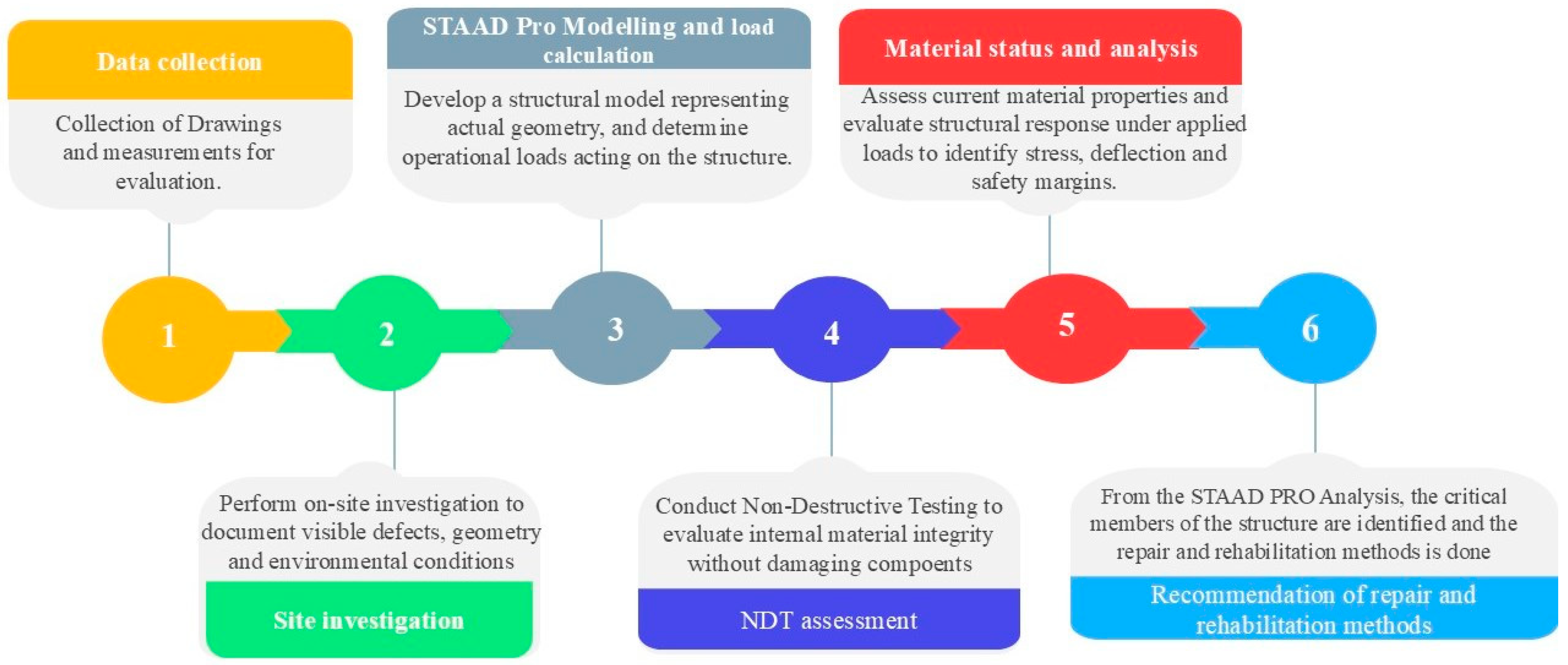
Figure 1 shows the methodology followed in this study. The first step involved the identification of an appropriate water tank based on collected data such as age, operating hours, accessibility, areas from which the water is distributed, and the amount of chlorine used for disinfection, as well as collecting basic CAD files of the tanks from the Public Works Department (PWD) in Karaikal. The 10-lakh-L-capacity tank located in the Thirunallar region was for the current research. After the appropriate RCC water tank for this study was identified, a visual inspection was conducted. The visual inspection involved identifying any visible cracks, leaks, spalling, reinforcement exposure, corrosion, delamination, and other signs of deterioration in the tank. The information collected from the visual inspection guided the further progress of our research. NDT includes assessing the current strength of materials without damaging the structure. This testing included the use of the UPV and rebound hammer. The RCC water tank was modelled in STAAD Pro using the drawings received from PWD. This modelling involved incorporating material properties into the structure, defining end conditions, specifying member dimensions, applying loads (dead, live, wind, and seismic), and performing analyses. From our study, the critical members of the structure were identified. This identification of critical members also helped determine the structure’s ability to support loads under current conditions. These members require immediate maintenance and repair to extend the structure’s service life. The suggested maintenance and repair measures include concrete patching, rebar placement, and protective coating applications to extend the structure’s service life.

2.1. Study Area and Case Study Description

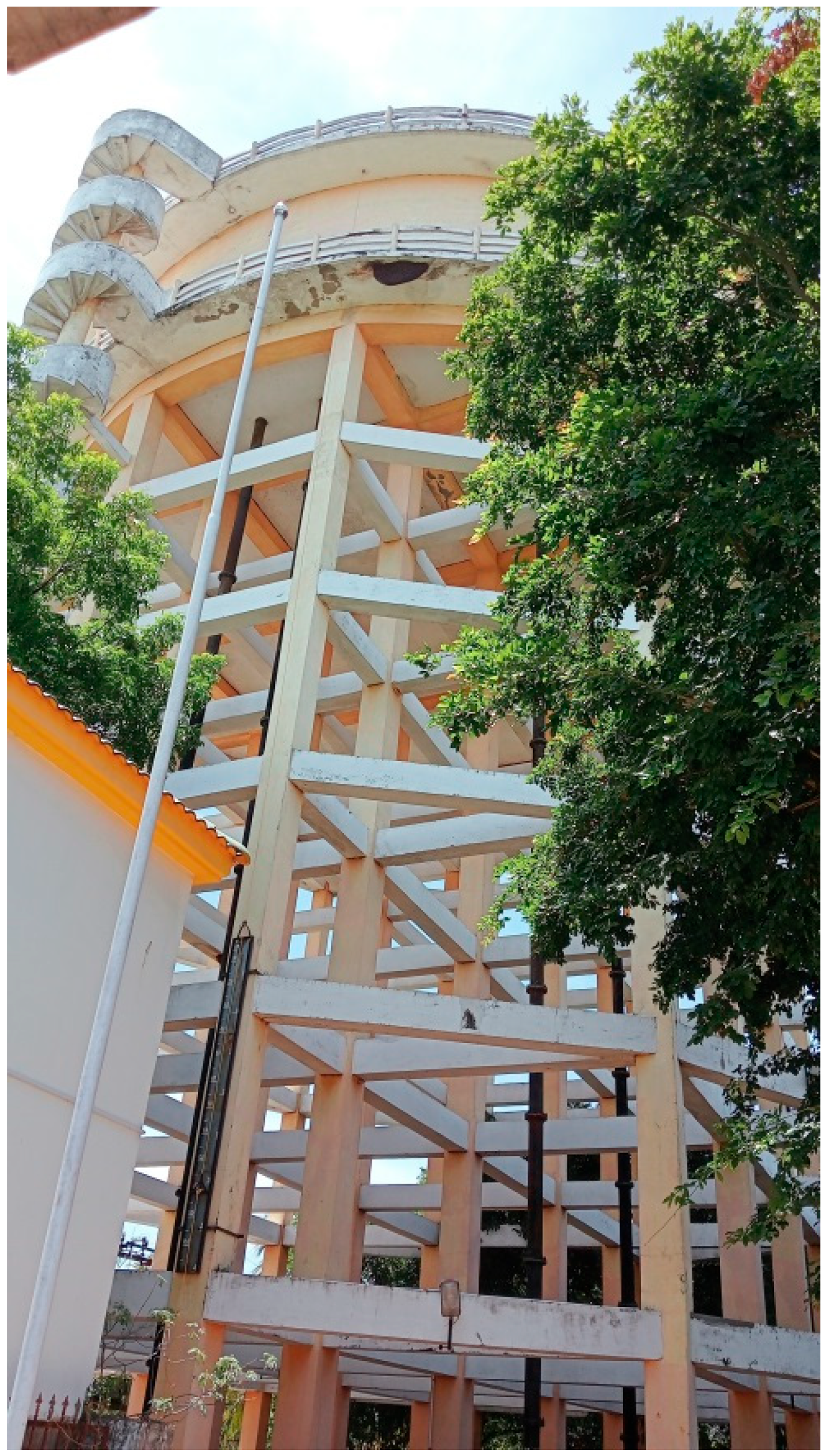
Karaikal is a coastal town in the Union Territory of Puducherry, India, situated on the shoreline of the Bay of Bengal. The elevation is approximately 4 to 5 m above sea level. The region has low-lying areas and is more susceptible to water ingress and an increase in the groundwater table. Karaikal experiences a range of varied climatic conditions, from hot summers to cyclonic monsoons, throughout the year. Temperatures vary from 25 °C to 35 °C. In the summer, the temperature rises above 35 °C. The northeast monsoon brings rainfall from October to December. Cyclonic storms originating from the Bay of Bengal hit Karaikal during the monsoons. The region experiences high-speed, salt-laden winds, which accelerate the deterioration of RCC structures. Water tanks in Karaikal are deteriorating due to age, and several factors are contributing to this issue. Improper maintenance and a lack of efficient condition assessment are evident in the reduction in their durability. For this study, a water tank located in Thirunallar (Figure 2), Karaikal, Puducherry, India, was selected. Several villages are dependent on the Thirunallar water tank, which necessitates regular inspection and repair strategies for its efficient use. The tank has been in operation for more than 10 years and is a vital structure in the locality. Table 1 summarizes the key technical specifications and operating parameters of the overhead water tank. Table 2 provides the geometric details and number of structural members in the selected water tank.
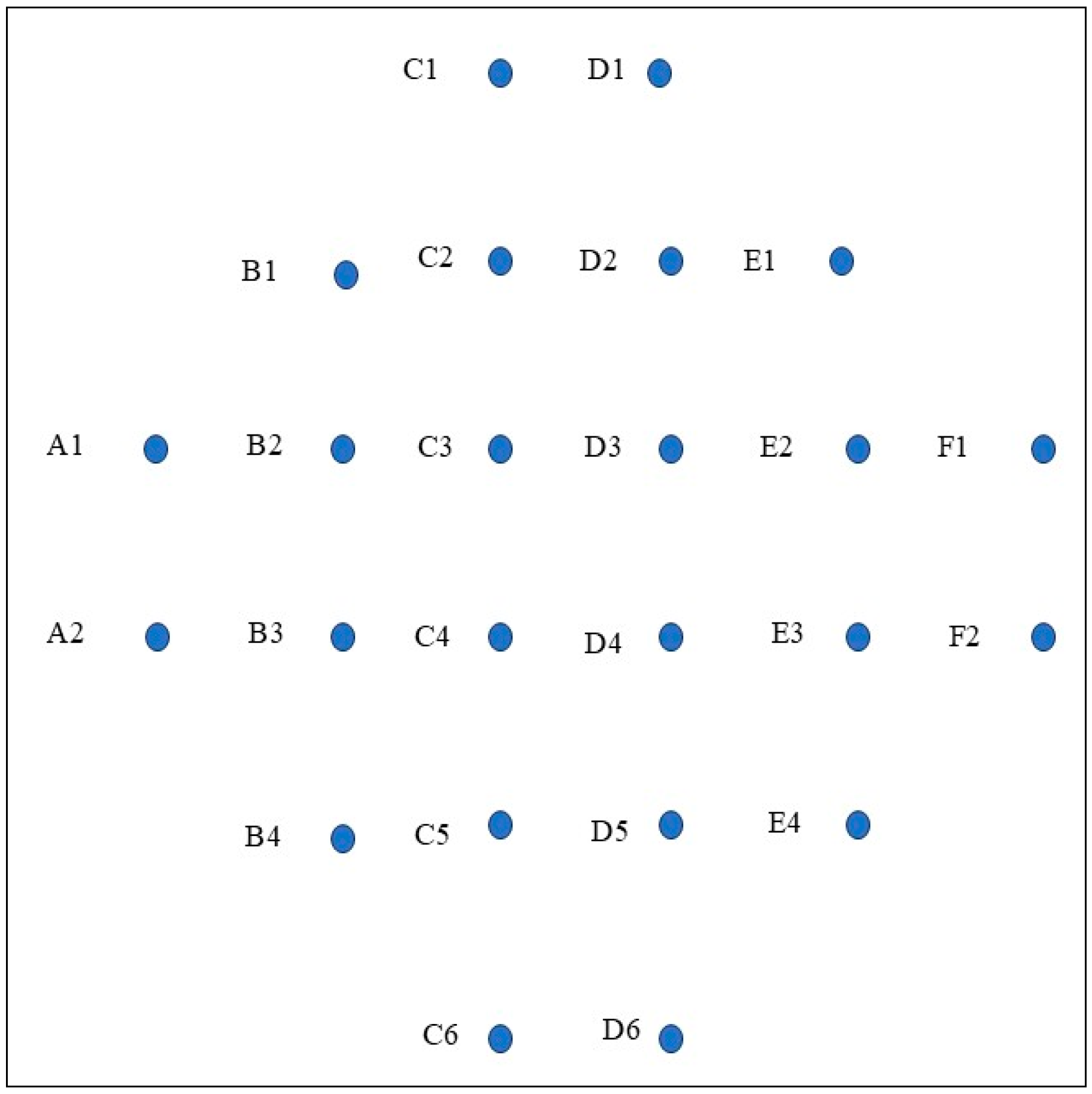
The alphanumeric nodal grid layout adopted for the structural analysis of the RCC water tank is illustrated in Figure 3. The nodal layout is organized using an alphanumeric grid system for clear identification. Columns are labeled alphabetically from left to right (A, B, C, D, …), while nodes within each column are numbered sequentially from top to bottom. Accordingly, the leftmost column represents the A-series, where the top node is designated A1, the next node below is A2, and so on. The adjacent column forms the B-series (B1, B2, …), followed by the C-series, D-series, and subsequent columns. This labelling system allows each node to be uniquely referenced by its column letter and vertical position number.
A1, A2, B1, B2, and so on represent the columns in the bottom-most level. The connection line represents the beams connecting the columns. For example, the beam connecting column A1 and B2 is defined by A1-B2.

2.2. Visual Inspection

The first step of this study is a visual inspection of water tanks in the Karaikal region, a coastal town exposed to severe environmental conditions, including saline winds, high humidity, and tropical cyclones. It provides a basic understanding of the tanks’ condition to facilitate further investigation. A total of three RCC water tanks, located in Mandapathur, Varichikudy, and Thirunallar, were inspected. Details of the water tanks were collected for this study, including tank capacity, operation, proximity to villages, usage, water supply, and tank age. This method involves identifying surface defects, such as cracks, spalling, delamination, reinforcement exposure, corrosion of rebars, and other signs of deterioration. The tanks were found to have cracks, reinforcement delamination, concrete spalling, and excessive corrosion of reinforcements exposed due to structural distress. The visual inspection found that the tanks deteriorated over time since construction, and proper maintenance practices are essential to ensure their longevity.

2.3. Non-Destructive Testing (NDT) Methods

NDT methods are used to evaluate the material properties without actually damaging the structure [13,22]. The methods assess the in situ internal properties of the structures [17]. These tests evaluate the condition of structures during their design life, without altering or compromising their functionality, and monitor their integrity over time. This study utilizes the Schmidt rebound hammer and UPV to assess the concrete strength and quality of RCC water tanks during testing. The tests were conducted on an RCC water tank in Thirunallar, Karaikal, to assess its condition and identify weak sections.
The first step of this study is a visual inspection of water tanks in the Karaikal region, a coastal town exposed to severe environmental conditions, including saline winds, high humidity, and tropical cyclones. It provides a basic understanding of the tanks’ condition to facilitate further investigation. A total of three RCC water tanks, located in Mandapathur, Varichikudy, and Thirunallar, were inspected. Details of the water tanks were collected for this study, including tank capacity, operation, proximity to villages, usage, water supply, and tank age.

2.3.1. Ultra-Sonic Pulse Velocity (UPV) Test

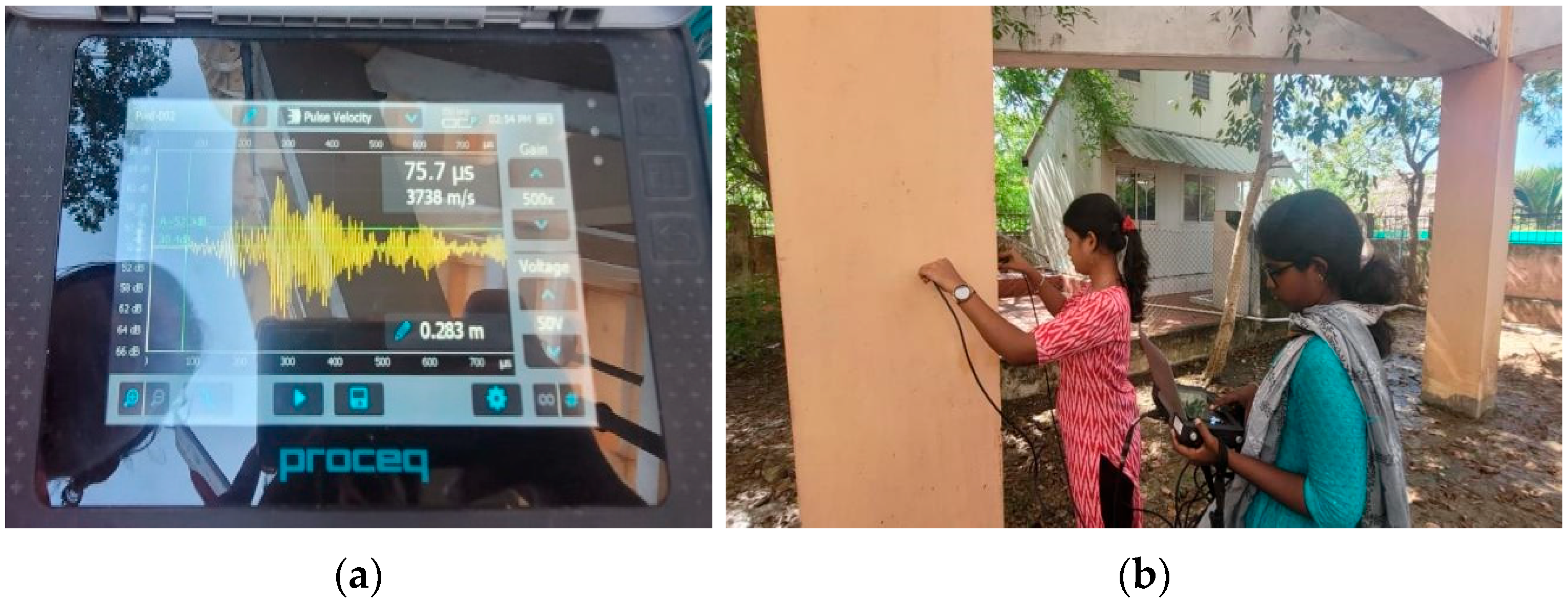
The UPV test is an NDT that assesses the quality of concrete by passing ultrasonic waves into concrete elements and measuring the wave velocity [22]. UPV also helps detect voids, cracks, and other non-uniformities within the structural component [23]. If there is a microcrack in the element or a void or defect in the concrete that prevents the pulses from passing, the pulse velocity is reduced, causing the pulse to bypass the discontinuity and thereby increasing the path length [24]. The instrument contains transducers: One transmits (as a transmitter), and the other receives the ultrasonic waves. The velocity of the waves is independent of geometry and depends on the elastic property of the material. The density of concrete is assessed from the velocity of the propagating waves, which indicates the concrete’s compressive strength. A pulse meter (Proceq PUNDIT PL-200) equipped with two transducers was used to take measurements. The UPV instrument was used as shown in Figure 4a, which has a frequency range of 20–500 kHz and a sampling rate of 0.16 s. The test was conducted at various locations in the RCC water tank in Thirunallar to assess the quality of concrete, as shown in Figure 4b. The test can be carried out directly, semi-directly, or indirectly on the structural elements. When the test is carried out directly, the transducers are positioned on opposite faces of the element; when carried out semi-directly, they are placed on adjacent faces; when carried out indirectly, they are placed on the same face. Just like the rebound hammer test, the ultrasonic pulse velocity test is affected by the smoothness of the surface, the presence of moisture, and the occurrence of micro-cracks [25]. The semi-direct method was used in the columns, since their dimensions exceeded 300 mm. All ground-floor columns and staging beams were measured for UPV. The test was conducted as per IS 13311 (Part 1): 1992 [26].

2.3.2. Schmidt Rebound Hammer Test

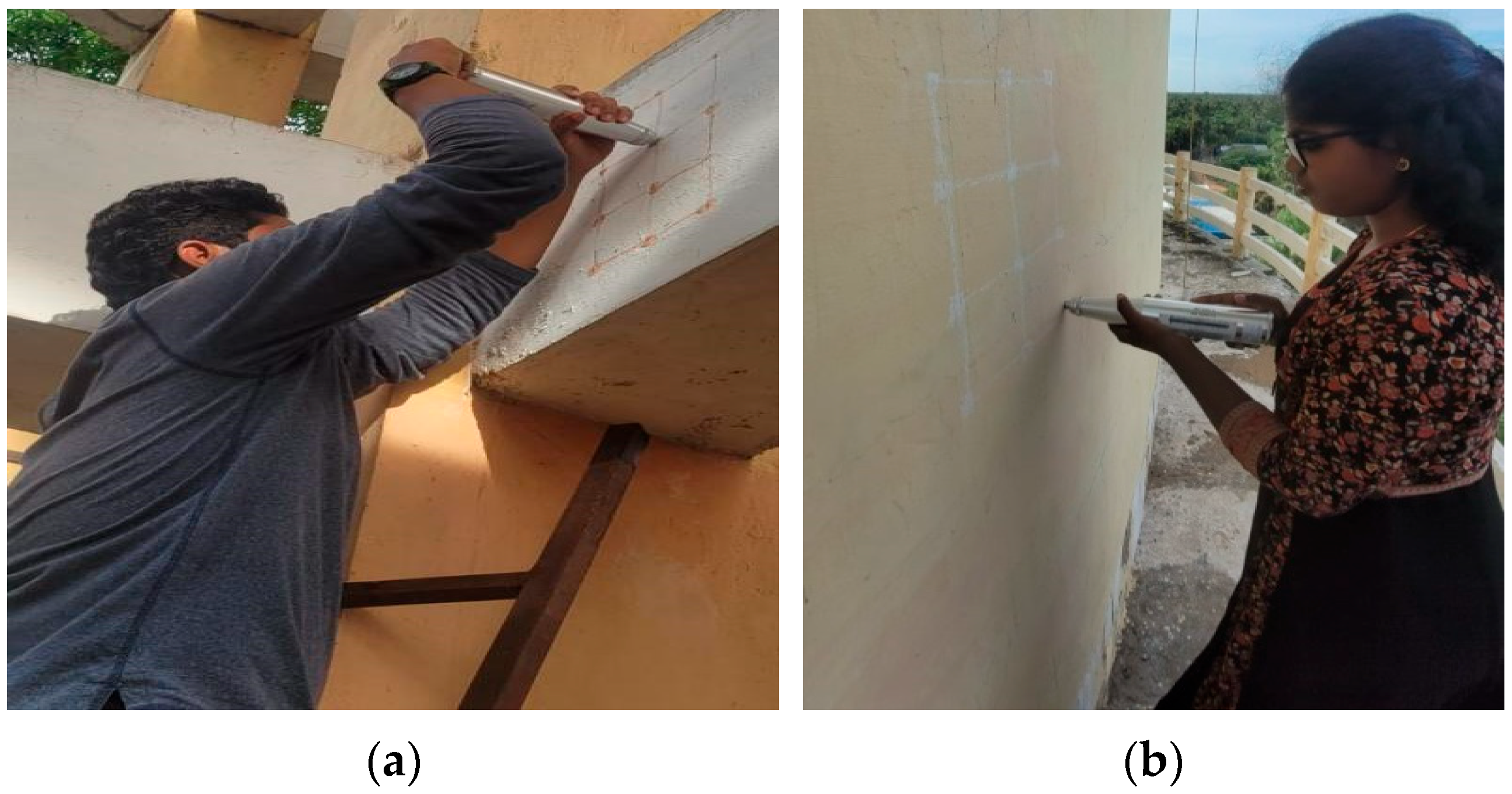
The rebound hammer test is used to assess the compressive strength of the concrete in an existing structure, with correlations between rebound number and compressive strength [27]. An N-type rebound hammer was used for the current study. The impact direction was horizontal, against the structural element sides, and uniformly distributed across the tested area [28]. Multiple readings of the rebound number were taken from different structural elements, including walls, ground-level columns, and accessible ground-level beams, as shown in Figure 5a,b. The obtained rebound indices along the scale are then correlated with the graph provided by the instrument to determine the present compressive strength of concrete at the test location. For each element location, an average of 12 readings was taken to determine the corresponding compressive strength per IS 13311 (Part 2): 1992 [29].

2.4. Structural Analysis Using STAAD Pro

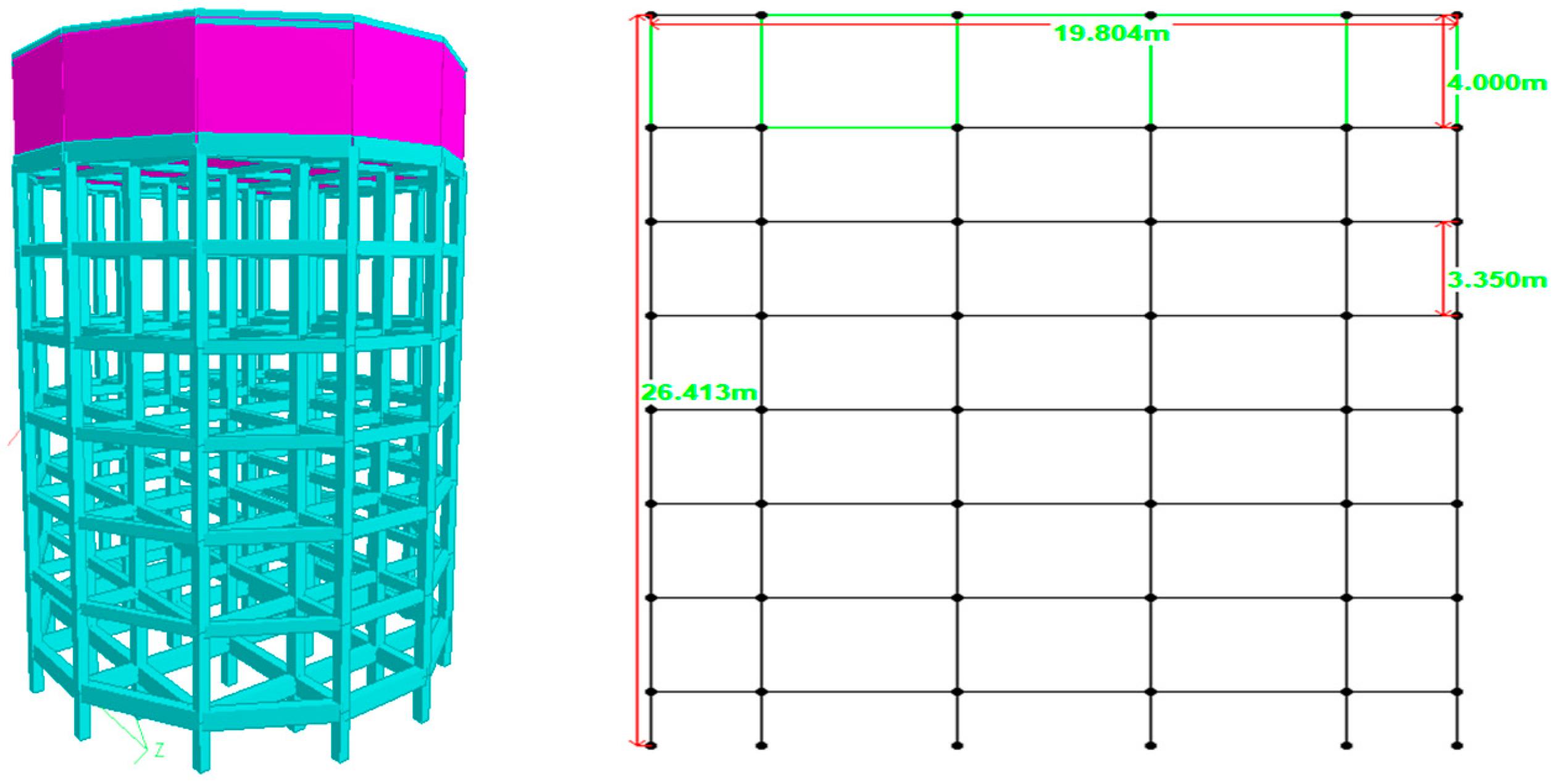
STAAD Pro is a robust structural analysis and design software mainly used for modelling, analyzing, and designing various structures [30]. It uses the finite element method (FEM) to analyze stress, strain, and displacement under different loading conditions. The software is suitable for complex projects such as bridges, buildings, and industrial structures. It uses static, dynamic, and non-linear analysis. The structural analysis of the water tank was done using STAAD Pro to evaluate its structural integrity. The design drawings of the water tank were collected from the PWD in Karaikal. The drawings served as the foundation for creating an accurate model of the water tank. The material properties and design parameters, including concrete class and steel reinforcement clearance for the reinforced concrete used in the STAAD Pro modelling of the water tank, were taken from the PWD-issued structural drawings and are given in Table 3. Structural modelling was initiated by defining the geometry of the water tank using beam elements, nodes, and plates to represent the key components, as shown in Figure 6. The modelling then proceeded by assigning material specifications and sectional dimensions. The boundary conditions were applied, and various loads, including dead load, live load, wind load, and seismic load, were incorporated into the model. The load combinations used in the numerical analysis were determined in accordance with IS 456:2000 [31] guidelines, accounting for the combined effects of live, dead, wind, and seismic loads. The design results were generated after completing the analysis, which includes forces, deflections, and reinforcement details.

2.4.1. Geometric Modelling

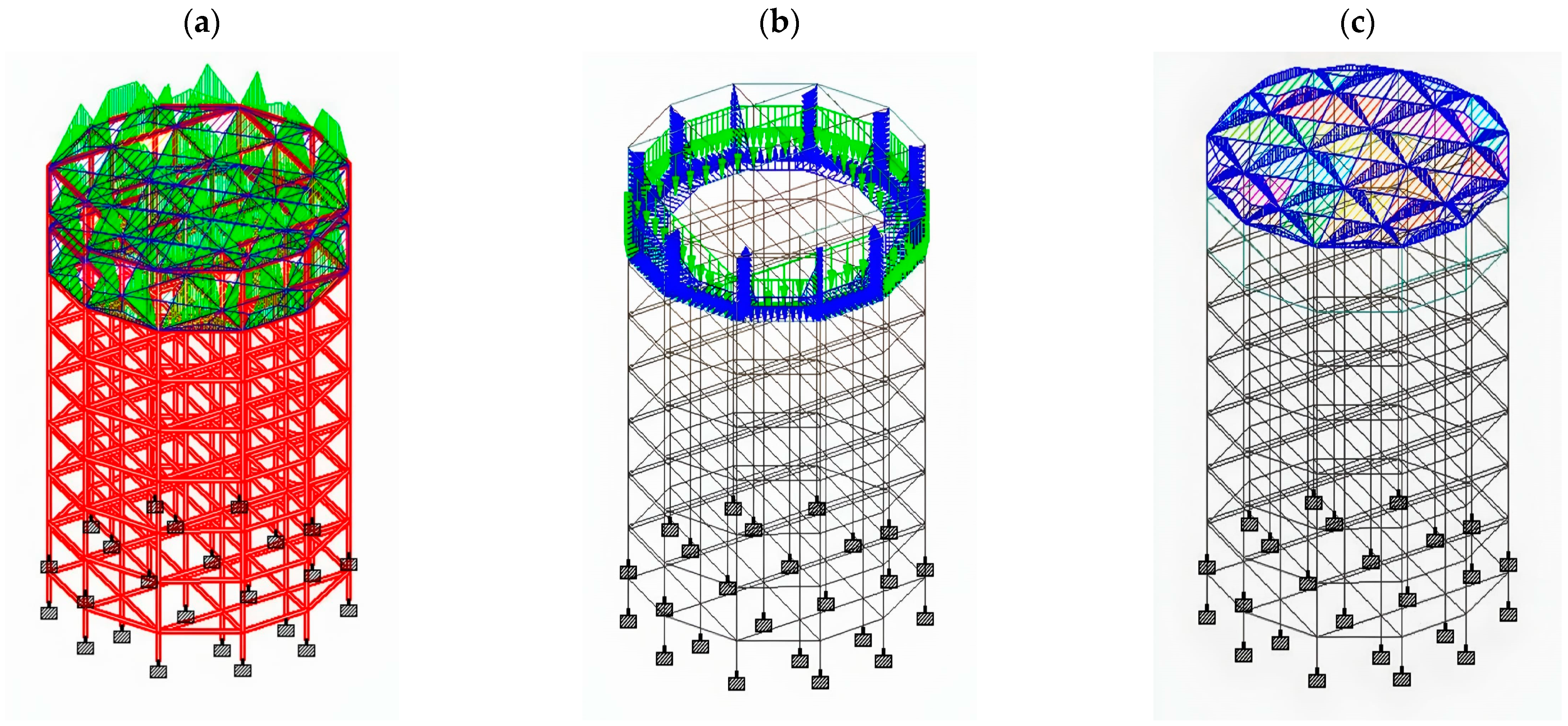
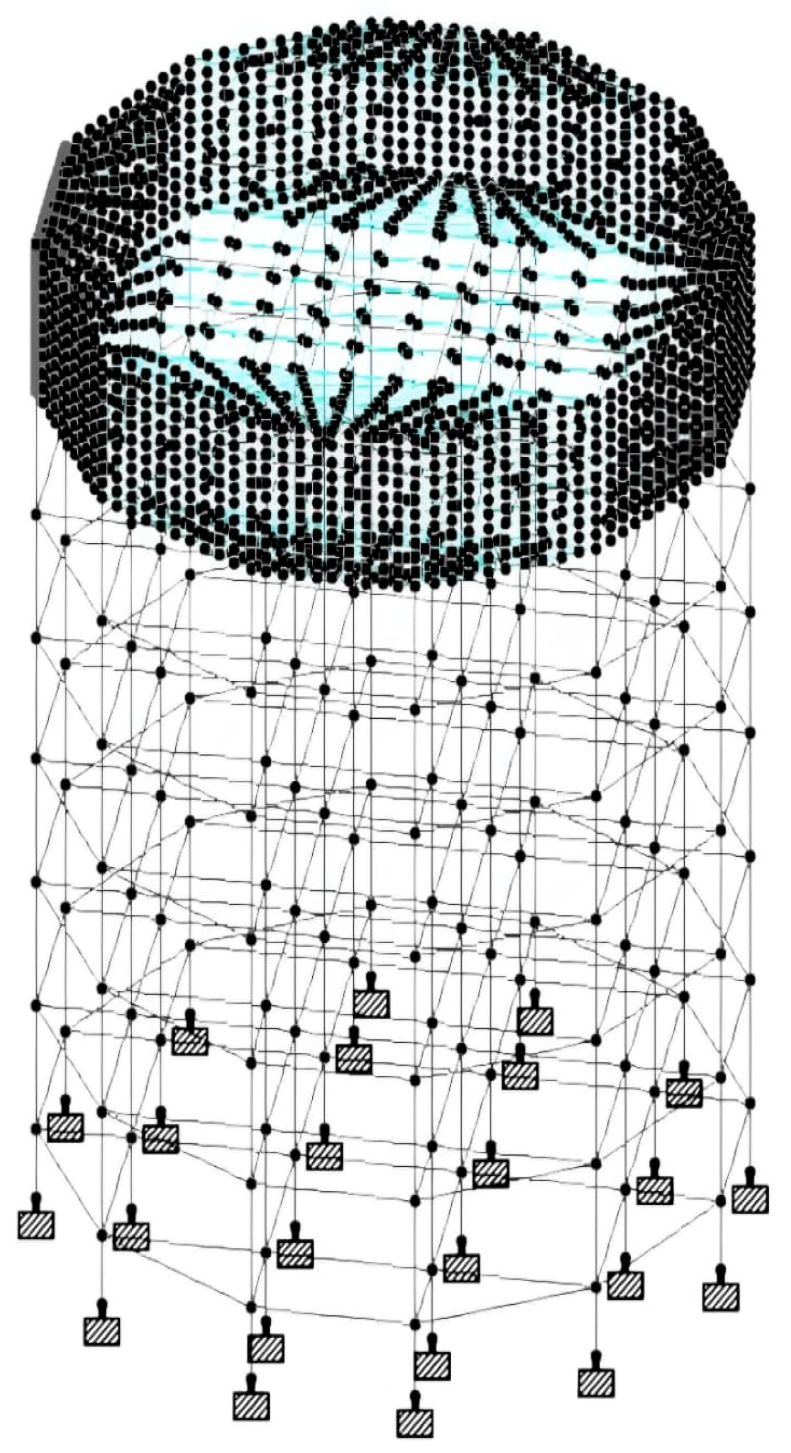
The STAAD Pro model of the structural components of the overhead water head includes columns, staging beams, tank base beams, and slabs, all based on the actual built dimensions of the tank. The geometric details considered mainly for the model are presented in Table 4. The model was developed as a three-dimensional frame–plate system to simulate the behaviour of the elevated tank structure accurately. The water tank was modelled in STAAD Pro using a finite element model, with plate meshing applied to the tank walls and slabs. This practice was used to discretize the surface into smaller quadrilateral plate elements to more accurately capture the stress distribution. Beams and columns were modelled as line elements (“Beam” in Staad Pro), and their structural behaviour was effectively represented along their length. The FEM mesh generated using STAAD Pro is shown in Figure 7.

2.4.2. Structural Loading and Boundary Conditions

In evaluating the structural response of the water tank under realistic service and extreme conditions, various loading combinations were considered in accordance with relevant Indian Standard provisions. Dead load includes permanent static loads and the structure’s self-weight. The dead loads considered in the STAAD Pro modelling of the structure include the self-weight and the floor weight. The pressure exerted by the water on the surface of the tank is known as the hydrostatic Load. This load has also been considered along with the dead load. Figure 8a,b show the dead load combinations considered for the model’s analysis. A live load of 2 kN/m2 was applied vertically at the tank floor level to account for maintenance and service loads, as shown in Figure 8c.
The Indian standard code IS 875 (Part 3) [32] for Zone II was followed for computing wind loads, with 50 m/s as the basic wind speed. The design wind velocity, Vz, is calculated using the basic wind speed, Vb, and modification factors K1 = 1.0 (risk coefficient for general buildings), K2 = 1.12 (category 2 terrain with scattered obstacles up to 1.5 m height), K3 = 1.0 (topography factor), and K4 = 1.15 (cyclonic importance factor). The values of these modification factors were substituted into Equation (1) [32] for the design wind speed, and the design wind pressure ( P Z ) was subsequently calculated using Equation (2) [32].
V Z = V b × K 1 × K 2 × K 3 × K 4
P Z = 0.6 × V Z 2
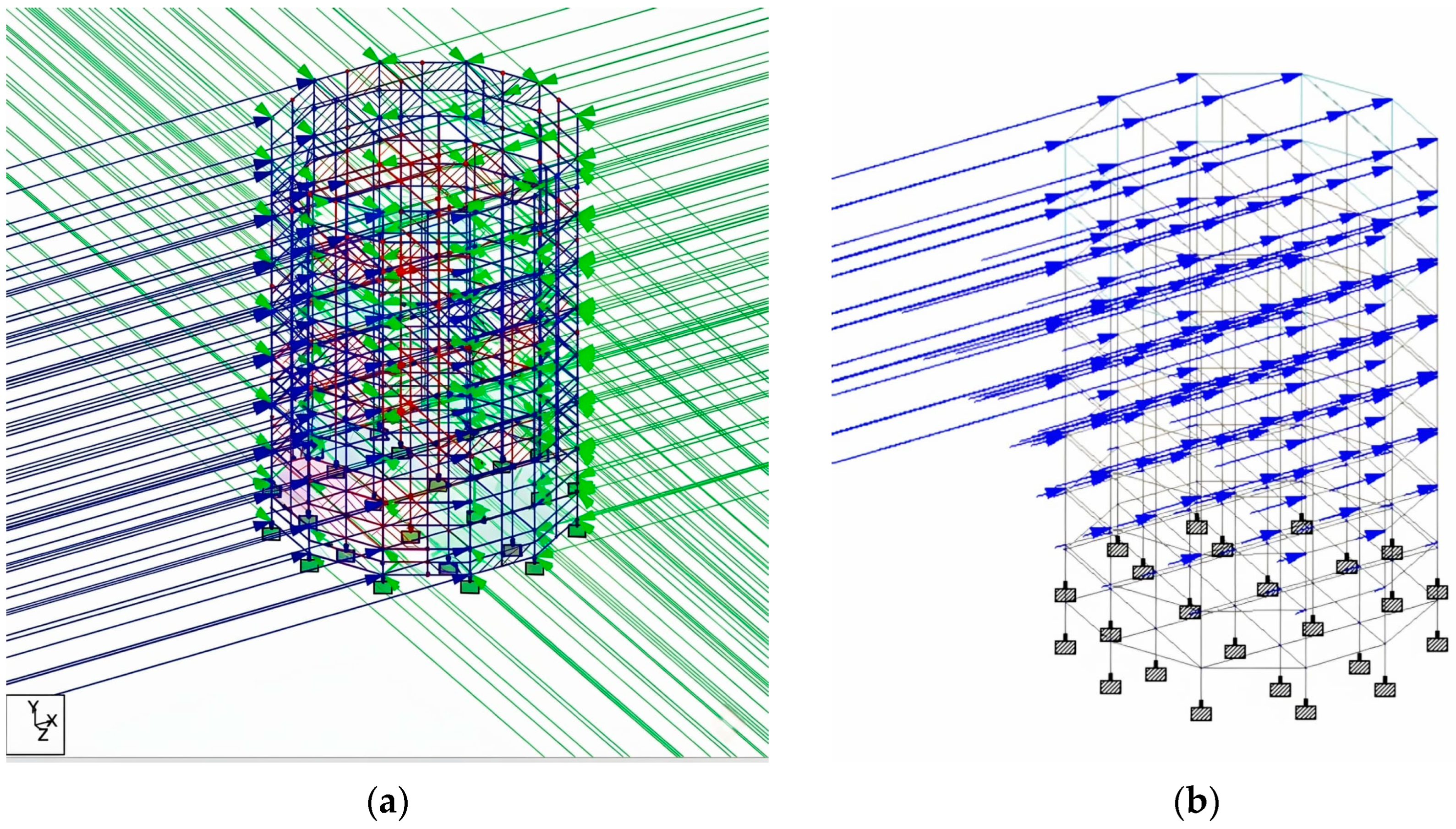
The wind pressure variation with the water tank height was considered during the load application at different staging levels. The lateral wind load was considered along the X and Z directions. Since the water tank’s staging is elevated and slender, wind load is the primary lateral load influencing the bending moments and shear forces of the members. The wind load application in the structure was done as represented in Figure 9a, where the wind load was applied using STAAD Pro’s wind load generation feature, which used the wind load constants as per IS Standards. The wind load was applied using the windward faces (+Z, +X) and leeward faces (−Z, −X) of the structure. The corresponding wind pressure was calculated and applied to the exposed structural members according to their projected area normal to the wind direction, ensuring that all relevant components, such as columns, beams, and tank surfaces, were subjected to the wind action. Figure 9a shows the STAAD Pro structural model showing the application and distribution of wind loads in the +ve X direction of the structure. Similarly, the wind effect has been considered for −X, +Z, and −Z, accounting for both windward and leeward effects on all sides of the tank. The seismic load is calculated in accordance with IS 1893 Part 1 [33]. The load is considered in the ±X and ±Z directions. Figure 9b illustrates the seismic load applied along the +X direction.

3. Results

3.1. Findings from Visual Inspection

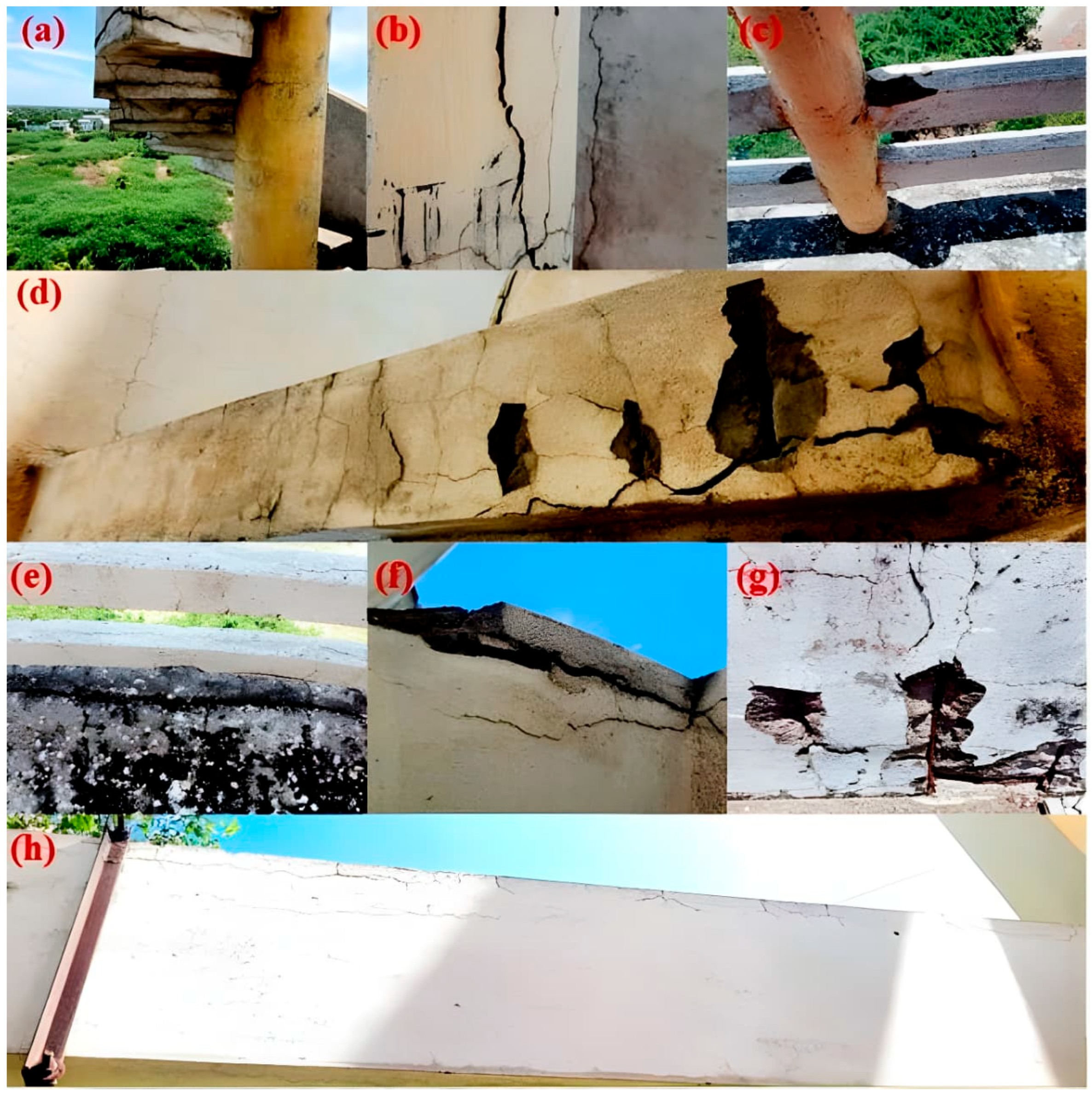
The condition of the RCC water tank, as assessed by visual inspection, is illustrated in Figure 10. The visual inspection of the RCC water tank at Thirunallar clearly shows severe damage to the tank and its structural components. The rebars are delaminated at multiple locations, indicating ongoing corrosion. The safety railings of the elevated water tank are damaged and partially deteriorated. Severe concrete spalling and large cracks were found throughout the stairs, which indicates concrete distress. The beams supporting the stairs had evident cracks, which are also due to concrete distress at the connections. Both the tank wall and the columns supporting the stairs had larger cracks. Some areas also showed vegetation growth, indicating prolonged moisture exposure and inadequate maintenance. Also, the tank showed signs of prolonged exposure to moisture. There were darkened walkways around the tank, revealing consistent water seepage, and it also had large cracks spanning its entire width. Visible surface separation along the slab’s edge joint was also observed, indicating that the tank was improperly maintained. Additionally, the lower structure of the water tank was less exposed to the environment, as the nearby residential structures served as a barrier to the RCC water tank. However, the elements at the higher levels were found to have more visible defects, including cracks, surface deterioration, and corrosion of reinforcements.

3.2. Interpretation of NDT Results

NDT was carried out using a rebound hammer and UPV test to determine the in situ strength and quality of the concrete. The results from NDT help us understand the in situ condition of concrete and identify the weaker element. The rebound hammer test was conducted on all accessible structural elements, including beams, columns, slabs, and tank walls. The average rebound number and the corresponding estimated compressive strength for the columns are presented in Table 5. Similarly, the average rebound number and the corresponding compressive strength for the beams are summarized in Table 6. Table 5 and Table 6 specify the mean value and the standard deviation of the compressive strength at 12 test areas of columns and beams of the water tank.
The compressive strength of the tested columns ranged from 22 MPa to 43 MPa. The lowest value was in column E2, with a strength of 22 MPa, and the highest was in column D2, with a strength of 43 MPa. Since the columns form the primary load-transfer system, it is essential to provide higher compressive strength to ensure stability under service, water, and seismic loads. The lowest strength observed in the E2 column may be due to localized surface degradation or carbonation. The compressive strength of the tested beams ranged from 12 MPa to 31 MPa (Table 6). The lowest strength (12 MPa) was found in beams D5-E4 and C6-B4, and the highest strength was found in beams connecting the columns C4-C3, C1-C2, and D3-C3, exhibiting 31 MPa. Compared with the columns, the beams showed lower compressive strengths and were also inconsistent. The low strength values in some beams might be due to surface carbonation of the concrete or environmental deterioration, which could affect the rebound numbers. It might also be due to moisture content during testing, carbonation depth, and test orientation. Hence, from the rebound hammer test, it is evident that most columns and beams have adequate strength or surface hardness. However, the structural elements with lower rebound numbers need to be tested or investigated to ensure the long-term serviceability of the RCC water tank. The integration of rebound results with UPV results, along with the structural analysis, could provide a comprehensive assessment of the current condition.
The UPV test was conducted on structural members exhibiting lower in situ concrete strength, as determined by the rebound hammer test. The UPV test was performed to assess the internal integrity of the water tank’s structural elements. The UPV test was conducted at accessible points using direct and semi-direct transition methods. The results of the UPV test at the selected nodes are presented in Table 7. The measured pulse velocity ranges from 1782 m/s to 4404 m/s, indicating variations in the internal integrity of concrete within structural elements. Member E2 and A1 exhibited a velocity of 4404, 3783 m/s, which is higher than 3500 m/s and indicates high-quality concrete [26]. Member A2 recorded a velocity of 3451 m/s, indicating medium-quality concrete. However, members C6-B4 and B1-C1 recorded a lower velocity of 1782 m/s and 2695 m/s, indicating potentially poor concrete quality [26]. These results suggest possible internal distress, such as cracks, voids, and non-uniform concrete. The UPV test results highlight localized variation and deterioration in concrete, necessitating further structural evaluation for members C6-B4 and B1-C1, which exhibit doubtful concrete quality.

3.3. Structural Analysis Results

After modelling and load combination application, the structure must be evaluated for structural performance, which is determined by material properties, support conditions, service loads, and operational loads. STAAD Pro was used to analyse the structure’s internal forces and stresses. The maximum induced stresses in columns and beams have been taken from the analysis output under the current load combinations. These induced stresses in beams and columns have been used for comparison with the in situ concrete compressive strength determined from the rebound hammer test. Table 8 compares the induced stresses with the in situ concrete compressive strength measured in the columns of the water tank.
From Table 9, it is evident that all tested columns have adequate margins of structural safety (factors of safety). The range of these factors of safety is 2.55 to 12.407, with all elements meeting the minimum safety factor required to remain within the elastic limit. From Table 9, it is confirmed that even the most stressed elements possess a factor of safety of more than 2.5, which in turn confirms that the induced stresses under all load combinations are lower than the in situ compressive strength of those elements. Hence, the columns have been confirmed as structurally safe and able to withstand the loads acting on them. However, repair methods were recommended for durability enhancement and localized repair.
Similarly to the columns, the beams have been compared for their in situ compressive strength and the induced stress from STAAD Pro analysis. Table 9 compares the induced stress and the in situ compressive strength of concrete in beams.
From Table 9, it is understood that the induced stress from the beams is comparatively lower than the in situ concrete strength, which confirms the sufficient flexural and shear capacity. It also indicates the uniform stress distribution in the element. The factor of safety ranges from 3.49 to 15.49, which validates that the tank’s beams are structurally safe under the current loading conditions. However, the visual inspection observations show some deterioration in the structure. Based on the observations and analyses, this deterioration appears to be primarily related to durability rather than an indication of strength deficiency. Hence, it is recommended to localize the repair and apply protective treatments to address the deterioration observed during the visual inspection. Thus, comparing the in situ compressive strength results with the induced stress from the STAAD Pro model indicates that the actual strength exceeds the stress induced in the member. Therefore, the tank is structurally safe. Most of the elements indicate good concrete quality, except for a few members showing comparatively low values, and these members were observed for visible distress. Hence, repair and rehabilitation methods were recommended for the weaker structures based on the analysis.

4. Discussion

The visual inspection of the RCC water tank at Thirunallar clearly shows severe damage to the tank and its structural components. The rebars are delaminated at multiple locations, indicating ongoing corrosion. The safety railings of the elevated water tank are damaged and partially deteriorated. Severe concrete spalling and large cracks were found throughout the stairs, which indicates concrete distress.
Table 8 and Table 9 indicate that the assessed structural components are safe, as the strength-to-stress ratios, derived from comparisons of induced stresses with in situ concrete strength, are greater than 1. This means that the structural components’ load-bearing capacity is adequate for the imposed loads. However, Figure 10 suggests that some components have deteriorated surfaces. These results, therefore, pertain to the durability rather than the strength of the components, as they have satisfied the safety criteria but failed the durability criteria due to surface deterioration. Therefore, proper repair and rehabilitation options have been suggested for these components.
Based on the visual inspection studies, NDT test results, and STAAD Pro analysis, the following repair and rehabilitation measures are proposed:
  • Localized Concrete Restoration: The removal of spalled or lower-quality concrete, treating exposed reinforcement, and repairing the section with polymer-modified mortar, thereby restoring the protective cover.
  • The exposed slabs, stairs, and surfaces of the tank can be waterproofed to reduce the loss of long-term durability.
  • Structural cracks can be sealed and rehabilitated using epoxy injection and flexible sealant to prevent further moisture penetration and deterioration of concrete.
  • The edges of the deteriorated stairs and other access elements can be repaired to restore surface integrity.
  • Vulnerable reinforcement zones can be cleaned and treated with corrosion protection measures such as passivation and protective coatings.
  • Observed biological growth and surface contaminants must be removed, and the protective coatings can be applied to avoid degradation due to environmental actions.
  • The drainage management system can be improved to prevent water stagnation around the structural elements.
  • Post-repair concrete quality verification can be done for the confirmation of the concrete’s bond integrity and material performance.

5. Conclusions

This study focused on the condition assessment of a 10-lakh-L overhead RCC water tank in the Thirunallar region of Karaikal. The Thirunallar tank was identified as a critical structure based on size, exposure, deterioration levels, and its importance in water distribution. This study included evaluating structural safety, material condition, and necessary repair strategies to ensure continued serviceability and public health safety. The methodology adopted included visual inspection, structural modelling using STAAD Pro, and NDT using the rebound hammer and UPV methods. The key conclusions derived from this study are summarized:
  • Visual inspection revealed physical signs of deterioration, including cracks, spalling, exposed reinforcement, vegetation growth, and damaged staircases and guardrails.
  • The visual inspection observations were supported by NDT results, which confirmed localized variations in concrete quality.
  • The rebound hammer test results showed that the measured compressive strength of beams was lower than that of columns, ranging from 12 to 31 MPa. The compressive strength of columns ranges from 22 to 43 MPa. The observed difference in compressive strength values indicates the effects of localized changes in surface hardness and deterioration in specific structural members.
  • From the UPV test results, the UPV values range from 1782 to 4404 m/s, indicating variations in the internal quality of the concrete. UPV test results highlight localized variation and deterioration in concrete, necessitating further structural evaluation of members exhibiting doubtful concrete quality.
  • The induced stress in the tank’s structural elements was determined and compared with the in situ compressive strength obtained from NDT results. From the comparison, it was found that all structural elements were safe and had higher safety margins. However, this study also identified specific areas, such as stair beams, guardrails, and wall surfaces, that require localized repair and rehabilitation.
  • Recommendations include patch repairs, epoxy grouting, corrosion-resistant coatings, recasting of damaged elements, and application of waterproof protective layers.
In conclusion, the water tank at Thirunallar is structurally safe but shows clear signs of environmental deterioration. Immediate maintenance measures are essential to prevent further degradation and extend the structure’s service life. The integrated use of STAAD.Pro analysis and NDT methods proved to be a reliable and effective approach for condition assessment, making this methodology suitable for broader application across similar structures in coastal or high-risk environments. Despite the significant findings, this study has certain limitations. The condition assessment was based on visual inspection and NDT at accessible points of the water tank, which may have limited the assessment’s completeness. Moreover, this study did not include long-term monitoring of structural behaviour; the results obtained are limited to conditions observed during inspection and may change with environmental factors. This study also lacks internal conditions of reinforcement and long-term deterioration. The scope of future work includes conducting advanced non-destructive and semi-destructive testing to better understand material degradation. Furthermore, a long-term structural health monitoring program can be implemented to assess deterioration over time and to guide rehabilitation and retrofitting efforts to enhance the service life of the existing water tank. To gain a deeper understanding of the processes influencing the RCC structure’s durability, such as chemical deterioration, it is recommended to conduct further investigation by conducting tests to measure water-soluble chloride and sulfate ions, as well as pH.

Author Contributions

Conceptualization, M.N. and P.J.; methodology, P.J. and S.P.; validation, P.J. and S.P.; formal analysis, P.J. and S.P.; investigation, P.J.; resources, P.J. and S.P.; data curation, P.J. and S.P.; writing—original draft preparation, P.J. and S.P.; writing—review and editing, M.N. and S.P.; supervision, M.N.; project administration, M.N. All authors have read and agreed to the published version of the manuscript.

Funding

This research received no external funding.

Data Availability Statement

The datasets generated during and/or analyzed during the current study are available from the corresponding author upon reasonable request.

Acknowledgments

The authors would like to express their sincere gratitude to the National Institute of Technology, Karaikal, Puducherry, India, for the continuous support and resources provided throughout this research.

Conflicts of Interest

The authors declare no conflicts of interest.

Abbreviations

The following abbreviations are used in this manuscript:
RCCReinforced Cement Concrete;
NDTNon-Destructive Testing;
UPVUltrasonic Pulse Velocity;
AARAlkali-Aggregate Reaction;
DEFDelayed Ettringite Formation;
SSISoil–Structure Interaction;
PWDPublic Works Department;
FEMFinite Element Method.

References

  1. Dilena, M.; Dell’Oste, M.F.; Gubana, A.; Morassi, A.; Polentarutti, F.; Puntel, E. Structural Survey of Old Reinforced Concrete Elevated Water Tanks in an Earthquake-Prone Area. Eng. Struct. 2021, 234, 111947. [Google Scholar] [CrossRef]
  2. Sollero, M.; Bolorino, H. Investigation and Diagnosis of a Reinforced Concrete Reservoir with Intense Crack Formation from Several Sources. J. Build. Pathol. Rehabil. 2016, 1, 6. [Google Scholar] [CrossRef]
  3. Shahanawaz, G.; Nirupama, P.N.; Raghavendra, T. Structural Health Assessment of Overhead Water Tank—A Case Study. J. Build. Pathol. Rehabil. 2024, 9, 136. [Google Scholar] [CrossRef]
  4. Ranasinghe, K.; De Silva, S. Combined Use of Non-Destructive Tests, Visual Inspection and Service Life Prediction to Ensure the Reliability of Reinforced Concrete. J. Natl. Sci. Found. Sri Lanka 2022, 50, 371–386. [Google Scholar] [CrossRef]
  5. Ma, J.; Yang, Q.; Peng, X.; Xia, K. Review on Durability Deterioration and Mitigation of Concrete Structures. Coatings 2025, 15, 982. [Google Scholar] [CrossRef]
  6. Krentowski, J.R. Assessment of Destructive Impact of Different Factors on Concrete Structures Durability. Materials 2022, 15, 225. [Google Scholar] [CrossRef] [PubMed]
  7. Czarnecki, L.; Geryło, R.; Kuczyński, K. Concrete Repair Durability. Materials 2020, 13, 4535. [Google Scholar] [CrossRef]
  8. Bahreini, F.; Hammad, A. Developing an Ontology for Concrete Surface Defects to Enhance Inspection, Diagnosis and Repair Information Modeling. Infrastructures 2024, 9, 220. [Google Scholar] [CrossRef]
  9. Semko, O.; Vynnykov, Y.; Filonenko, O.; Yurin, O.; Ilchenko, T.; Hranko, O.; Semko, V.; Salles, A.; Mateus, R.; Bragança, L.; et al. To the Issue of Assessment of the Technical Condition of Underground Structures of Buildings. Sustainability 2025, 17, 2264. [Google Scholar] [CrossRef]
  10. Uddin Mohammed, T.; Otsuki, N.; Hamada, H. Corrosion of Steel Bars in Cracked Concrete under Marine Environment. J. Mater. Civ. Eng. 2003, 15, 460–469. [Google Scholar] [CrossRef]
  11. Chmielewski, R.; Kruszka, L.; Muzolf, P. The Selection of Methods for Strengthening of the Reinforced-Concrete Structure of the Open Tank. Case Stud. Constr. Mater. 2020, 12, e00343. [Google Scholar] [CrossRef]
  12. Sbartaï, Z.M.; Breysse, D.; Larget, M.; Balayssac, J.P. Combining NDT Techniques for Improved Evaluation of Concrete Properties. Cem. Concr. Compos. 2012, 34, 725–733. [Google Scholar] [CrossRef]
  13. Venkatesh, P.; Alapati, M. Condition Assessment of Existing Concrete Building Using Non-Destructive Testing Methods for Effective Repair and Restoration—A Case Study. Civ. Eng. J. 2017, 3, 841–855. [Google Scholar] [CrossRef]
  14. Chaudhari, G.V.; Swamy, R.M. An Experimental Study of Corrosion in RCC Structures: Prevention, Repair, and Maintenance. Int. J. Mod. Dev. Eng. Sci. 2022, 1, 15–20. [Google Scholar]
  15. Sangoju, B.; Ramanjaneyulu, K.; Sasmal, S.; Srinivas, V.; Sivasubramanian, K. NDT for Condition Assessment of IDCT RC Walls and Repair Measures for Long Term Durability. Constr. Build. Mater. 2019, 218, 270–283. [Google Scholar] [CrossRef]
  16. Gupta, N.; Gupta, A. Condition Assessment of the Structural Elements of a Reinforced Concrete Structure Using Non-Destructive Techniques. IOP Conf. Ser. Mater. Sci. Eng. 2021, 1116, 012164. [Google Scholar] [CrossRef]
  17. Aravalli, N.; Sale, V.; Lute, V. NDT-Based Condition Assessment and Repair Technique for an RCC Building with Wind Turbines Mounted on the Rooftop: A Case Study. Asian J. Civ. Eng. 2024, 25, 281–294. [Google Scholar] [CrossRef]
  18. Sangiorgio, V.; Uva, G.; Adam, J.M.; Scarcelli, L. Failure Analysis of Reinforced Concrete Elevated Storage Tanks. Eng. Fail. Anal. 2020, 115, 104637. [Google Scholar] [CrossRef]
  19. Nayak, M.C.B.; Thakare, S.B. Investigation of Corrosion Status in Elevated Water Tank by Using Non-Destructive Techniques in Baramati Region. In Proceedings of the International Conference on Construction Real Estate, Infrastructure and Project Management, NICMAR, Pune, India, 10–11 November 2017. [Google Scholar]
  20. Bhadauria, S.S.; Gupta, D.M.C. In Situ Performance Testing of Deteriorating Water Tanks for Durability Assessment. J. Perform. Constr. Facil. 2007, 21, 234–239. [Google Scholar] [CrossRef]
  21. Dutta, S.C.; Dutta, S.; Roy, R. Dynamic Behavior of R/C Elevated Tanks with Soil-Structure Interaction. Eng. Struct. 2009, 31, 2617–2629. [Google Scholar] [CrossRef]
  22. Verma, S.K.; Bhadauria, S.S.; Akhtar, S. Review of Nondestructive Testing Methods for Condition Monitoring of Concrete Structures. J. Constr. Eng. 2013, 2013, 834572. [Google Scholar] [CrossRef]
  23. Yurt, Ü.; Bayraktar, H. Towards Innovative and Sustainable Building Materials: Effect of Alkali Activator Concentration on the Performance of Waste Brick Powder-Based Geopolymer Composites. Environ. Res. 2025, 283, 122109. [Google Scholar] [CrossRef] [PubMed]
  24. Kaur, N.; Golla, D.; Goel, R.; Kumar, P. Field Investigations on Distressed Highly Skewed Multi-Cell Reinforced Concrete Bridge. J. Civ. Struct. Health Monit. 2023, 13, 1517–1535. [Google Scholar] [CrossRef]
  25. Al-Sibahy, A.; Edwards, R. Structural Evaluation for the Historic Palace of King Ghazi and Mechanism of Its Rehabilitation. Case Stud. Constr. Mater. 2020, 13, e00371. [Google Scholar] [CrossRef]
  26. IS 13311-1; Method of Non-Destructive Testing of Concret, Part 1: Ultrasonic Pulse Velocity. Bureau of Indian Standards (BIS): New Delhi, India, 1992.
  27. Basarkar, S.S.; Dasgupta, T.; Khatavkar, A. A Case Study of Foundation Reuse for Sustainable Construction. Indian Geotech. J. 2025, 55, 471–484. [Google Scholar] [CrossRef]
  28. Panedpojaman, P.; Tonnayopas, D. Rebound Hammer Test to Estimate Compressive Strength of Heat Exposed Concrete. Constr. Build. Mater. 2018, 172, 387–395. [Google Scholar] [CrossRef]
  29. IS 13311-2; Method of Non-Destructive Testing of Concret-Methods of Test, Part 2: Rebound Hammer. Bureau of Indian Standards (BIS): New Delhi, India, 1992.
  30. Ahmad, E.; Khatua, L.; Sethi, K.C.; Villagómez-Galindo, M.; Upadhyay, A.; Pathak, K. Comparative Seismic Analysis of Symmetrical and Asymmetrical G + 7 Structures Using STAAD.Pro: Insights into Performance and Material Efficiency. Asian J. Civ. Eng. 2025, 26, 1495–1509. [Google Scholar] [CrossRef]
  31. IS 456; Plain and Reinforced Concrete—Code of Practice. Bureau of Indian Standards (BIS): New Delhi, India, 2000; pp. 1–144.
  32. IS 875-3; Code of Practice for Design Loads (Other than Earthquake) for Buildings and Structures, Part 3: Wind Loads [CED 37: Structural Safety]. Bureau of Indian Standards (BIS): New Delhi, India, 1987.
  33. IS 1893-1; Criteria for Earthquake Resistant Design of Structures, Part 1: General Provisions and Buildings. Bureau of Indian Standards (BIS): New Delhi, India, 2002.
Figure 1. Methodology adopted for the structural condition assessment of the RCC water tank.
Infrastructures 11 00121 g001
Figure 2. Overhead water tank located in Thirunallar, Karaikal, Puducherry, India.
Infrastructures 11 00121 g002
Figure 3. Alphanumeric nodal grid layout for structural analysis of the water tank.
Infrastructures 11 00121 g003
Figure 4. UPV test in the RCC water tank in Thirunallar: (a) UPV instrument; (b) UPV measurement on beams.
Infrastructures 11 00121 g004
Figure 5. Rebound hammer test on the RCC water tank in Thirunallar: (a) beam element; (b) wall of water tank.
Infrastructures 11 00121 g005
Figure 6. 3D view and front view of the water tank modeled in STAAD Pro.
Infrastructures 11 00121 g006
Figure 7. Finite element mesh generated using STAAD.Pro.
Infrastructures 11 00121 g007
Figure 8. Load applications in STAAD Pro: (a) self-weight and floor load; (b) hydrostatic load; and (c) live load.
Infrastructures 11 00121 g008
Figure 9. Wind load and seismic load applications: (a) wind load application in positive X direction; (b) seismic load in positive X direction.
Infrastructures 11 00121 g009
Figure 10. Photographs of the RCC water tank obtained during visual inspection: (a) cracked and spalled spiral stair case of the water tank; (b) vertical crack in the water tank’s lower level column; (c) surface concrete breaking off from the tank’s railing support exposing the corroded reinforcement; (d) staircase beam: concrete spalling with exposed reinforcement due to corrosion; (e) tank top rail: surface cracking and minor edge spalling; (f) tank steps: surface scaling and deterioration due to moisture; (g) tank staircase wall: cracking with plaster delamination; (h) tank beam: minor surface cracks at the top of the beam.
Infrastructures 11 00121 g010
Table 1. Key technical specifications and operating details of the overhead water tank at Thirunallar.
ParameterDescription
Tank capacity10 lakh L
Sump capacity5.5 lakh L
LocationThirunallar, Karaikal, Puducherry, India
Operating hours5:30 AM–9 AM & 1 PM–2:30 PM
Water supply5:30 AM–8 AM & 4 PM–6 PM
Chlorine100 L/day
Supply regionsThirunallar surroundings, Nellai, Agala Vaikal
Table 2. Geometric details of the structural elements of the RCC water tank at Thirunallar.
SI No.DataDimension (mm)Numbers
1Column C1450 mm × 450 mm72
2Column C2500 mm × 500 mm72
3Staging beams340 mm × 450 mm264
4Tank base beam450 mm × 700 mm44
5Roof level beam300 mm × 450 mm21
6Tank base slab300 mm21
7Tank roof slab130 mm21
Table 3. Concrete design parameters.
ParametersDescriptionStandard Requirement
Design CodeIS 456:2000 (plain and reinforced concrete—code of practice)-
Grade of ConcreteM30 As per IS 456:2000, minimum concrete grade for reinforced concrete structures is typically M20.
Grade of SteelFe 415Conforming to reinforcement grades specified in IS 456:2000.
Clear cover for reinforcement
50 mm for columns
40 mm for beams, tank wall, tank floor slab
30 mm for tank roof slab
Minimum cover specified in IS 456:2000 depending on exposure conditions and structural element.
Maximum diameter of main reinforcement
25 mm for outer columns and beams
20 mm for inner columns and beams
16 mm for slabs
Reinforcement limits based on detailing provisions of IS 456:2000.
Maximum diameter of secondary reinforcement
12 mm for slabs
8 mm for columns and beams
As per detailing recommendations in IS 456:2000.
Table 4. Geometric details of structural components of the RCC water tank.
SI No.Structural ComponentDimensions (mm)
1Columns (on the outer side)500 mm × 500 mm
2Columns (on the inner side)450 mm × 450 mm
3Staging beams 340 mm × 450 mm
4Periphery Beam700 mm × 450 mm
5Columns inside the tank300mm × 300 mm
6Tank base beam450 mm × 700 mm
7Roof level beam300 mm × 450 mm
8Tank base slab thickness300 mm
9Tank roof slab thickness130 mm
Table 5. Average rebound number and corresponding compressive strength for columns.
ColumnAvg. Rebound No.Mean Compressive Strength (N/mm2) ColumnAvg.
Rebound No.
Mean Compressive Strength (N/mm2)
A130.526 ± 1.32D135 34 ± 1.30
A228.5 24 ± 1.50D240 43 ± 1.20
B133 30 ± 1.42D334.5 33 ± 1.12
B235 34 ± 1.40D434 32 ± 1.35
B334.5 33 ± 1.52D530 26 ± 1.40
B434.5 33 ± 1.40D639 41 ± 1.50
C132 29 ± 1.35E131 27 ± 1.22
C233.5 31 ± 1.82E228 22 ± 1.80
C337 37 ± 1.75E331 27 ± 1.20
C435 34 ± 1.38E436 36 ± 1.30
C534 32 ± 2.00F131 27 ± 1.42
C639 41 ± 1.24F235 34 ± 1.20
Table 6. Average rebound number and corresponding compressive strength for beams.
BeamMean Rebound No.Mean Compressive Strength
(N/mm2)
BeamMean
Rebound No.
Mean Compressive Strength (N/mm2)
A1-A236 27 ± 2.20D5-D637.530 ± 1.88
A1-B133 22 ± 1.32D5-E42712 ± 1.92
A1-B232 20 ± 2.0D5-C531.519 ± 2.44
A2-B331 18 ± 2.32D5-D43627 ± 1.96
A2-B437 29 ± 2.40D6-E43830 ± 1.80
B4-B334 24 ± 1.50D6-C63322 ± 176
B3-C433 22 ± 1.45B1-B232.521 ± 2.25
C4-C338 31 ± 1.65B2-B332.521 ± 2.16
C4-D433 22 ± 1.70B2-C33424 ± 2.00
C2-D234 24 ± 2.40B1-C12915 ± 2.35
D2-D335 25 ± 1.50B1-C23424 ±2.60
D2-E132 20 ± 1.80C1-C23831 ± 192
E2-F131 18 ± 2.50C2-C33118 ± 2.56
E2-E131 18 ± 2.30C6-B42712 ± 2.60
E2-D333 22 ± 1.50C6-C53424 ± 2.12
E2-E336 27 ± 1.32C5-B435.526 ± 1.86
E3-D436 27 ± 2.40D3-D43424 ± 1.80
E3-F233 22 ± 2.30D3-C33831 ± 1.96
E3-E236 27 ± 1.86C5-D53118 ± 2.58
E3-E433.5 23 ± 1.80
Table 7. UPV test results for selected nodes of the RCC water tank.
MemberMethod of TransmissionPath Length (m)Time
(µs)
Velocity (m/s)Concrete Quality
A1Semi-direct0.28375.73738Good
A2Semi-direct0.283823451Medium
D5Semi-direct0.283783628Good
E2Semi-direct0.24455.44404Good
C6-B4Direct0.38213.31782Doubtful
B1-C1Semi-direct0.2831052695Doubtful
E2-E1Semi-direct0.238872736Doubtful
Table 8. Structural safety evaluation of RCC water tank columns based on stress and in situ strength.
ColumnInduced Stress
(N/mm2)
In Situ Concrete Strength (N/mm2)Strength–Stress RatioRemarks
A17.211263.606Safe
A25.603244.283Safe
B12.4183012.407Safe
B29.807343.467Safe
B39.655333.418Safe
B45.66335.830Safe
C110.384292.793Safe
C28.461313.664Safe
C39.058374.085Safe
C49.158343.713Safe
C59.766323.277Safe
C66.161416.655Safe
D110.389343.273Safe
D28.578435.013Safe
D38.972333.678Safe
D49.11323.513Safe
D510.067262.583Safe
D610.384413.948Safe
E110.213272.644Safe
E28.611222.555Safe
E38.556273.156Safe
E49.032363.986Safe
F110.447272.584Safe
F210.585343.212Safe
Table 9. Structural safety evaluation of RCC water tank beams based on stress and in situ strength.
BeamBeamInduced Stress (N/mm2)In Situ Concrete Strength (N/mm2)Strength–Stress RatioRemarks
A1-A2B12.0322713.287Safe
A1-B1B22.1452210.256Safe
A1-B2B33.646205.485Safe
A2-B3B43.645184.938Safe
A2-B4B52.1452913.520Safe
B4-B3B62.0482411.719Safe
B3-C4B72.582228.521Safe
C4-C3B82.0023115.485Safe
C4-D4B93.565226.171Safe
C2-D2B103.578246.708Safe
D2-D3B112.0042512.475Safe
D2-E1B122.575207.767Safe
E2-F1B133.641184.944Safe
E2-E1B142.023188.898Safe
E2-D3B153.581226.144Safe
E2-E3B162.0082713.446Safe
E3-D4B173.579277.544Safe
E3-F2B184.374225.030Safe
E3-E2B192.975279.076Safe
E3-E4B202.85238.070Safe
D5-D6B213.721308.062Safe
D5-E4B223.44123.488Safe
D5-C5B233.853194.931Safe
D5-D4B242.875279.391Safe
D6-C6B252.4313012.341Safe
B1-B2B263.387226.495Safe
B2-B3B272.936217.153Safe
B2-C3B282.961217.092Safe
B1-C1B293.891246.168Safe
B1-C2B302.211156.784Safe
C1-C2B313.585246.695Safe
C2-C3B323.925317.898Safe
C6-B4B332.962186.077Safe
C6-C5B342.431124.936Safe
C5-B4B353.139247.646Safe
D3-D4B363.524267.378Safe
D3-C3B372.875248.348Safe
C5-D5B383.78318.201Safe
Disclaimer/Publisher’s Note: The statements, opinions and data contained in all publications are solely those of the individual author(s) and contributor(s) and not of MDPI and/or the editor(s). MDPI and/or the editor(s) disclaim responsibility for any injury to people or property resulting from any ideas, methods, instructions or products referred to in the content.