1. Introduction
Globally, advancements in construction technology and the adoption of large-scale equipment are driving major cross-sea transportation infrastructure projects toward greater scale, industrialization, prefabrication, and intelligence. This trend has intensified the demand for installing massive, prefabricated components in mega-projects [
1,
2]. The transport and erection of long-span box girders is a critical activity within this context. Current practice is dominated by steel box girders [
3,
4,
5,
6], while the application of concrete box girders remains relatively limited. This discrepancy stems primarily from significant differences in material properties, construction efficiency, and environmental adaptability. Although concrete box girders offer advantages such as lower cost and high rigidity, their considerable self-weight necessitates the use of super-sized equipment and complex multi-point support systems during handling, making crack control more challenging and substantially increasing construction risks [
7].
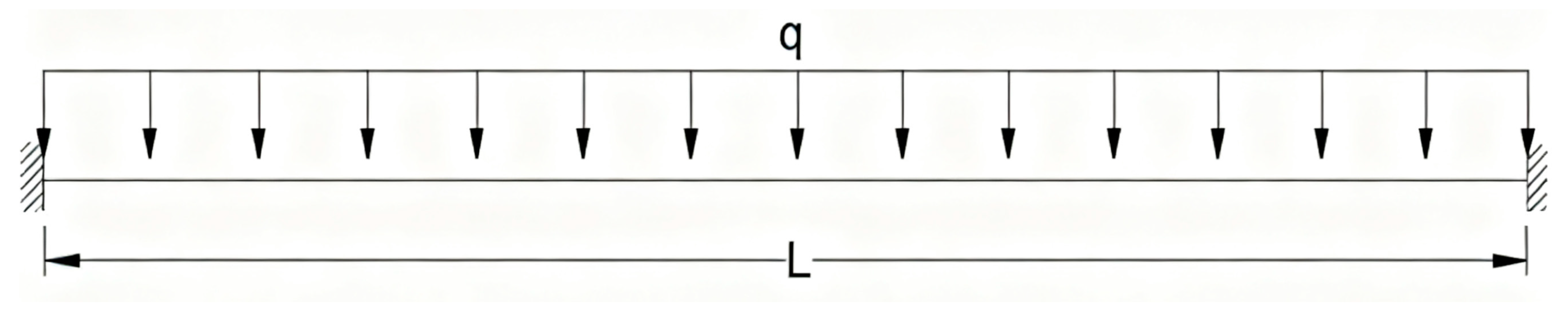
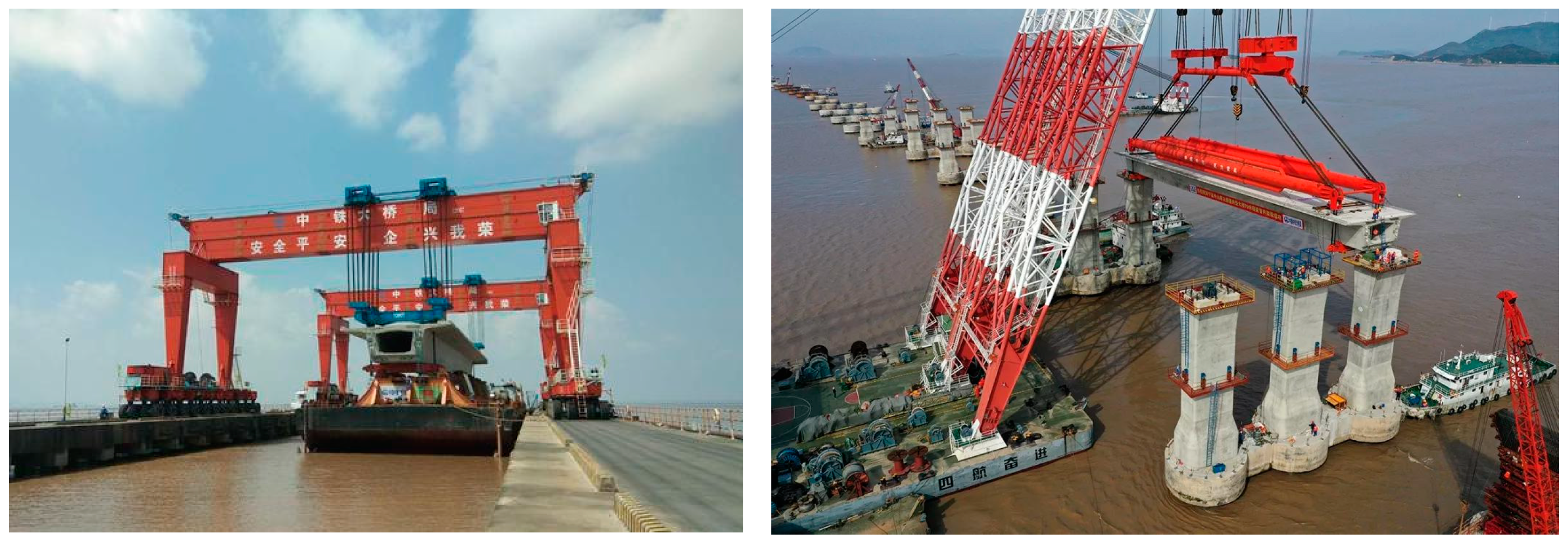
Traditionally, long-span box girders (in the 2000–3000 tonnes class) have been transported using a two-end concentrated support method, as shown in
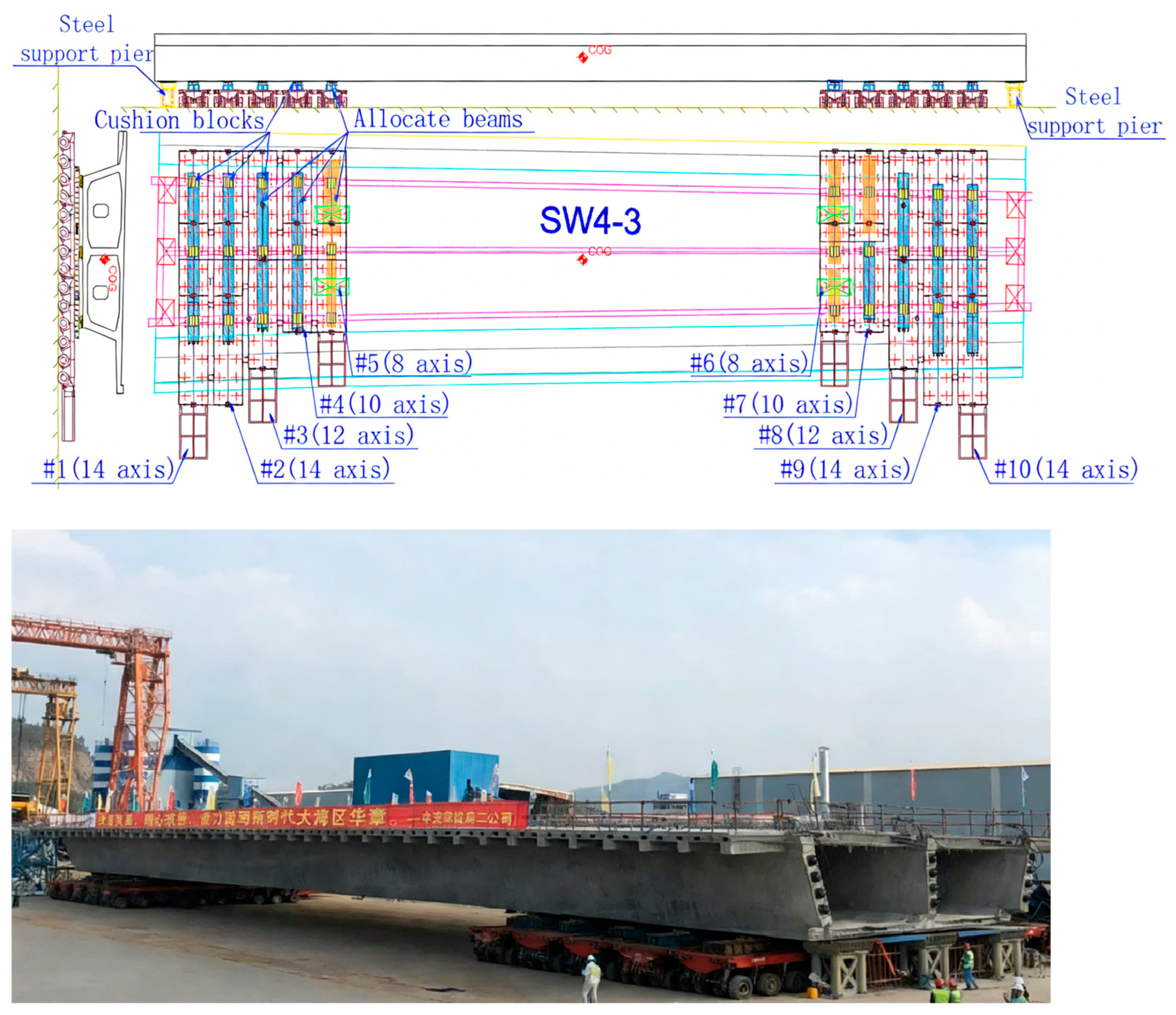
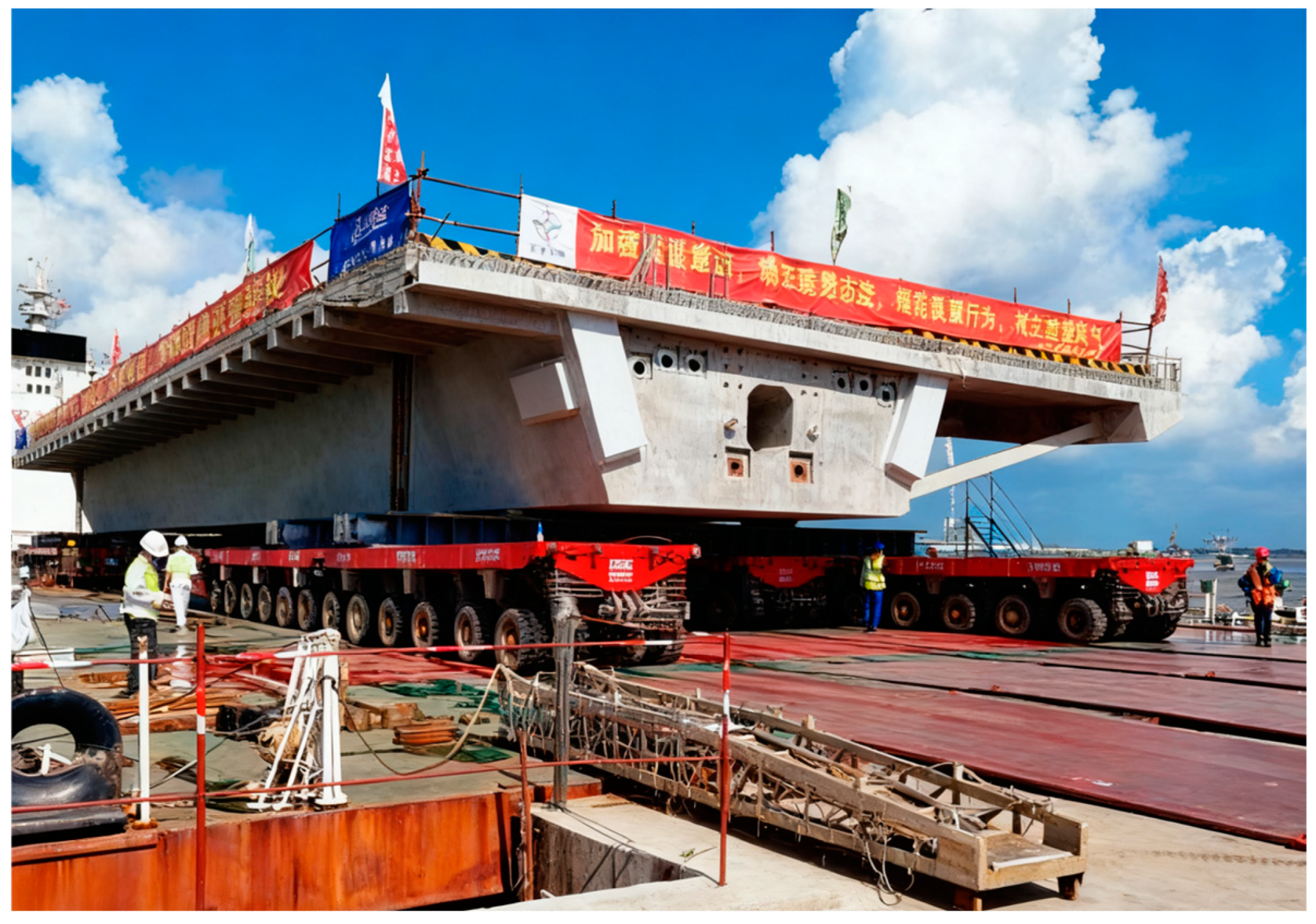
Figure 1. While straightforward, this method imposes high bearing-capacity requirements on the transport equipment. The Hong Kong Tseung Kwan O Cross Bay Link—Main Bridge project presented a different challenge: transporting 18 precast concrete box girders, the heaviest weighing 3344 tonnes, in an environment lacking large gantry cranes and with a composite foundation insufficient for such heavy lifting equipment. Consequently, the project employed Self-Propelled Modular Transporters (SPMTs)—noted for their modular combination, multi-axle coordinated control, and hydraulic synchronous drive—for land transport and floating load-out operations [
8,
9,
10,
11,
12,
13], as shown in
Figure 2.
The girders in this project, up to 75 m long and weighing 3344 tons, were prefabricated as whole units. Due to the limited load capacity of individual SPMT axles (typically under 40 tons), a large number of axles must be arranged under the girder, creating a dense multi-point support system. This results in a stress state fundamentally different from the girder’s in-service condition (typically idealized as simply supported), effectively shifting the design paradigm from traditional two-end support to a complex multi-point elastic support system during transportation. Therefore, careful optimization of the SPMT vehicles arrangement is essential to prevent concrete cracking.
Accordingly, the structural state control of such large-scale girders presents a particularly critical challenge during their integrated transportation and float-over jacking operations. The girder exists in a dynamic floating state due to tidal variations, wave loads, ballasting/deballasting, and elevation differences between the transport vessel and the wharf. The adaptive adjustment of the SPMT hydraulic system involves a response lag, leading to pressure differentials across the vehicles and inducing torsional deformation in the box girder. Given that long-span concrete box girders are particularly sensitive to torsion [
14,
15,
16], this process poses a significant concrete cracking risk, potentially compromising the bridge’s long-term performance and safety [
17,
18,
19], with limited prior technical experience available globally for reference [
20,
21,
22,
23,
24,
25].
To address the above issues, this study follows a closed-loop, application-driven workflow integrating theoretical derivation → numerical simulation → field implementation → monitoring validation. First, theoretical analysis established a core design principle for crack control (SPMT support range ≤ L/3), which directly informed the on-site SPMT arrangement strategy featuring intentionally reduced axle density towards the mid-span. Second, finite element analysis identified the “four-point asynchronous displacement difference (Δ)” as the critical control parameter against torsion, leading to the development of a zoned synchronous jacking procedure. Finally, a dual-parameter monitoring system (strain and Δ) enabled real-time validation and management of the entire process, creating a feedback loop for immediate hydraulic adjustment.
2. Analysis of SPMT Supported Range for Box Girders
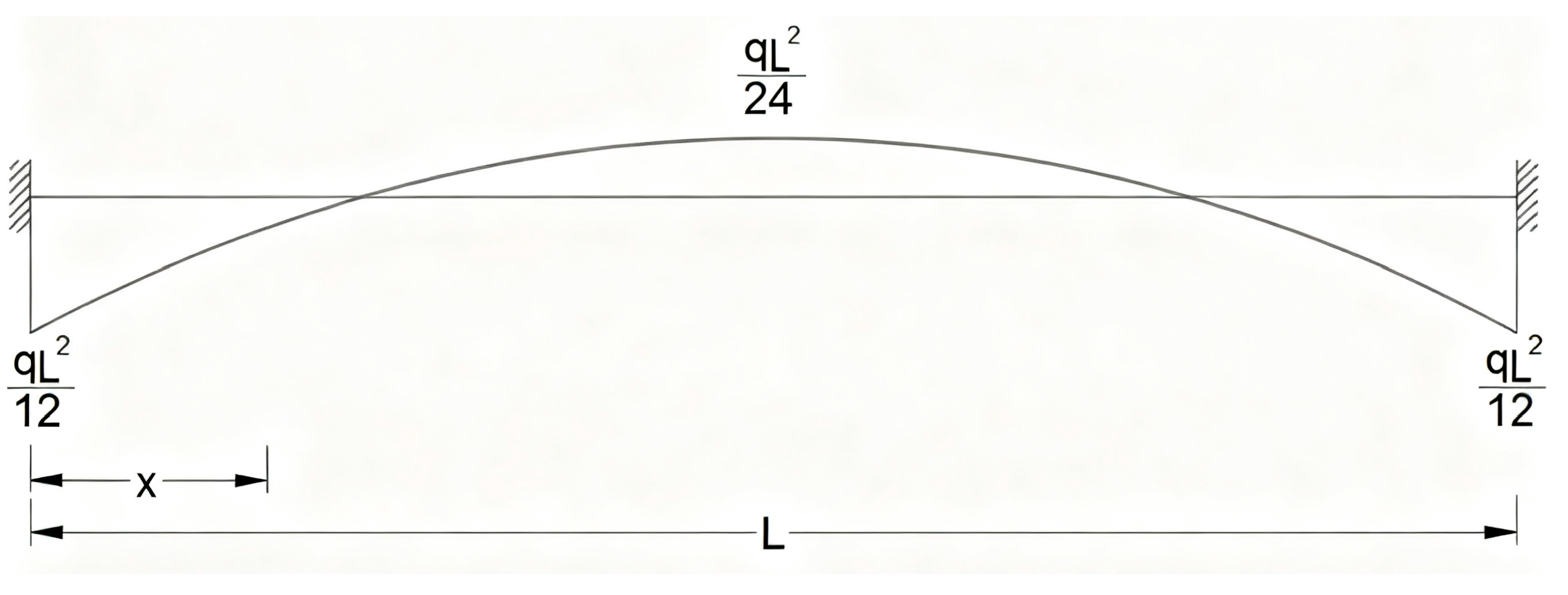
The stress form of a large-span box girder in a continuous rigid-frame bridge during the operation period can be simplified as shown in
Figure 3, where
q is the unit weight per meter of the box girder, and
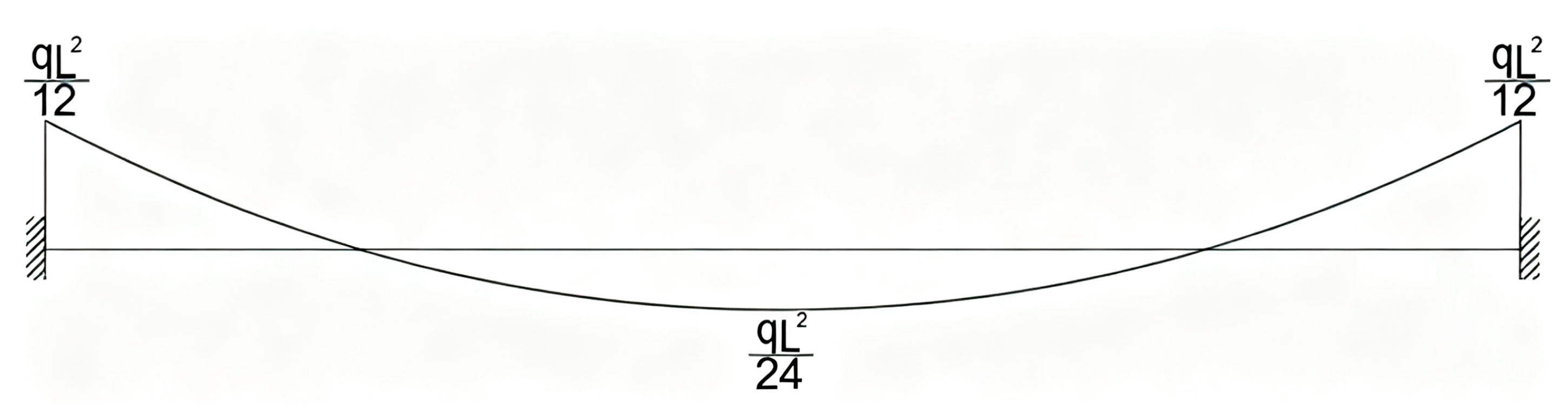
L is the span of the box girder. And the two ends of the box girder are fixedly connected. At this time, the bending moment of the box girder under its own weight is shown in
Figure 4.
The study assumes that, under service conditions, the prestress is designed to induce a moment equal and opposite to the self-weight moment diagram shown in
Figure 5. In the design state, the prestress is configured to produce a bending moment that opposes the moment due to self-weight. This prestress-induced moment
M0 can be expressed by the Formula (1).
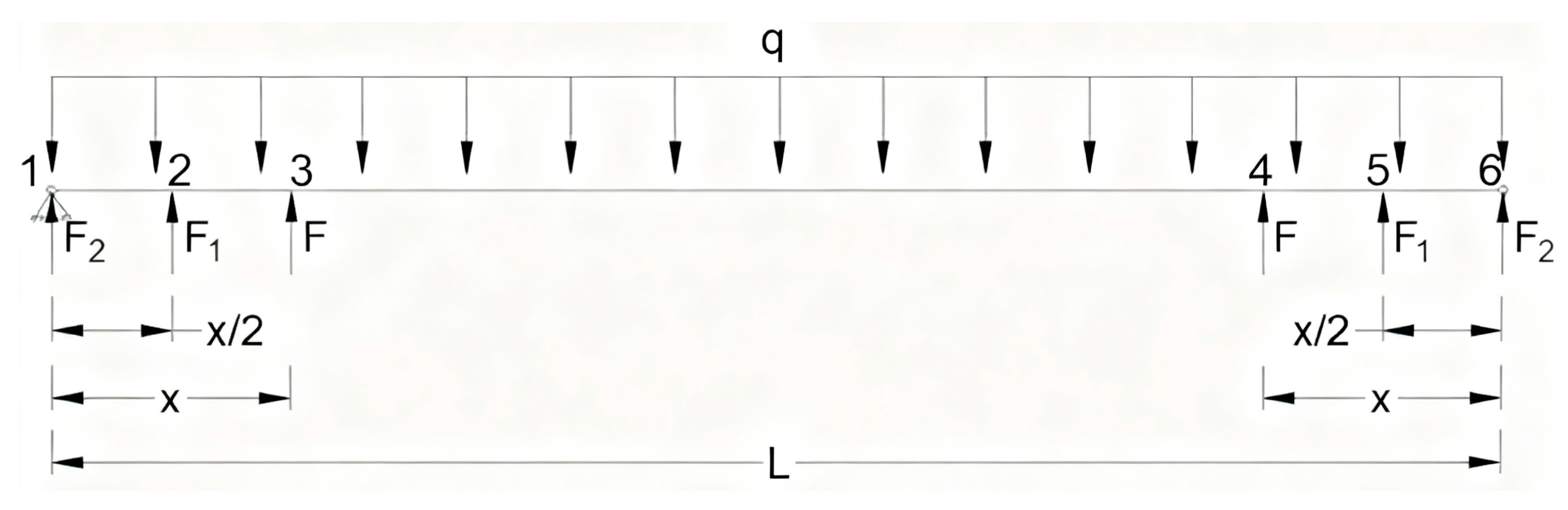
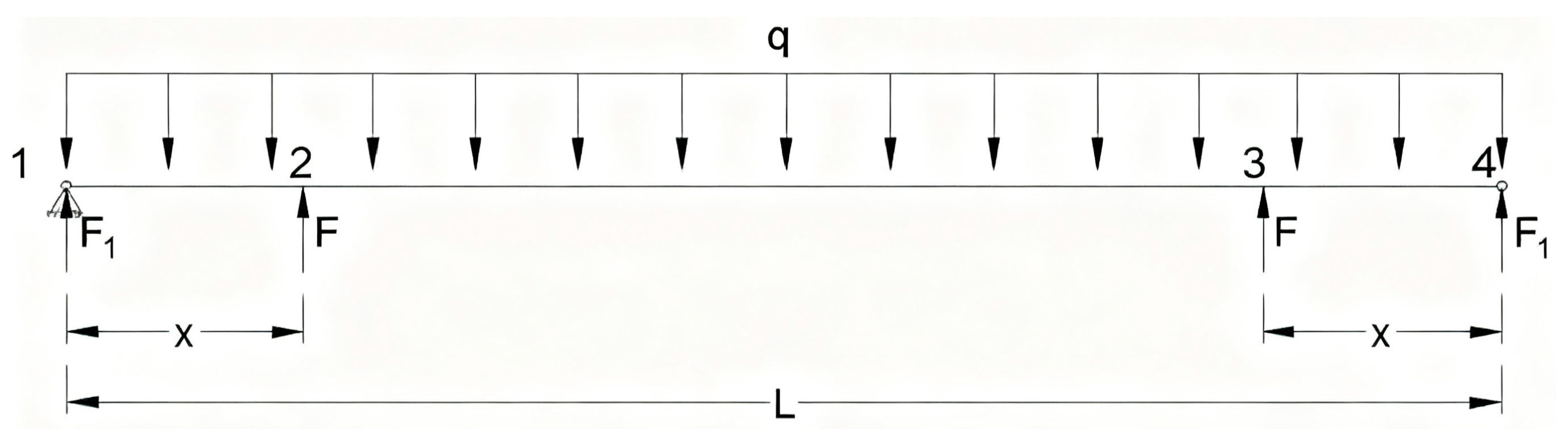
Figure 6 presents the schematic force diagram of the box girder during SPMT transportation. In this configuration, two supports are arranged at each end of the girder, designated as supports 1, 2, 3, and 4. It should be noted that each of these supports physically consists of a group of SPMT vehicles, which collectively form the multi-support system. In the diagram,
x denotes the support arrangement range, while
F1 and
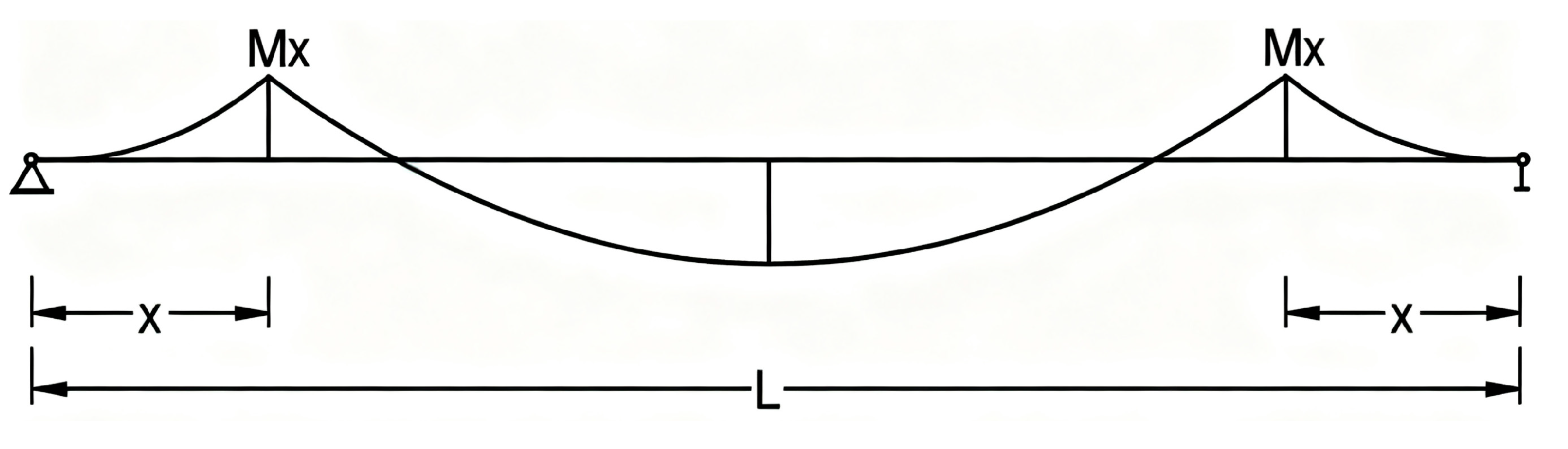
F represent the reaction forces at support 1 (symmetrical with support 4) and support 2 (symmetrical with support 3), respectively. And the two ends of the box girder are hinged. At this time, the bending moment diagram of the box girder under self-weight is shown in
Figure 7.
It should be noted that the diagram is a simplified schematic showing the support piers directly at the girder ends. In actual practice, the box girder typically has cantilevered ends. The analysis in this study assumes no cantilever for a specific purpose: to adopt a conservative approach by selecting the most critical scenario. This is because the presence of actual cantilevers could improve the structural response with respect to the negative moments.
As can be seen from
Figure 7, a large negative bending moment
Mx is generated in the box girder near the mid-span pier. The bending moment value can be calculated according to Formula (2). This is a risk point for cracking of the box girder during transportation, and the smaller the reaction force of the mid-span pier, the smaller the negative bending moment, which is beneficial for concrete crack control.
To prevent cracking of the box girder during transportation, the following conditions must be satisfied:
Since the SPMT is controlled by oil pressure, it can adaptively adjust the stroke so that the hydraulic support reaction forces of each axle are the same. Therefore, this paper analyzes the crack control requirements of large-span box girders when the pier reaction forces are equal, i.e., Formula (4).
It should be noted that the adaptive adjustment of the SPMT hydraulic system is not instantaneous and requires a finite response time. Therefore, in practice, the travel speed of the SPMT vehicles must be moderated to allow sufficient time for the system to regulate pressure, thereby ensuring that the reaction forces at all support points remain in equilibrium.
Combining Formulas (1)~(4), we obtain:
Formula (6) indicates that, to prevent cracking during transportation, the support range at both ends of the girder must not exceed L/3.
In the Hong Kong Tseung Kwan O project, the bridge is a continuous rigid-frame structure, in which part of the prestressing tendons pass through two box girders. As a result, approximately 70% of the total prestressing force was tensioned at the prefabrication plant, while the remaining 30% had to be tensioned on-site after installation. Consequently, the support arrangement range should be reduced by applying a factor of 0.7. Therefore, when using SPMT to transport the 75 m box girder, the support range at both ends should be controlled within 15 m.
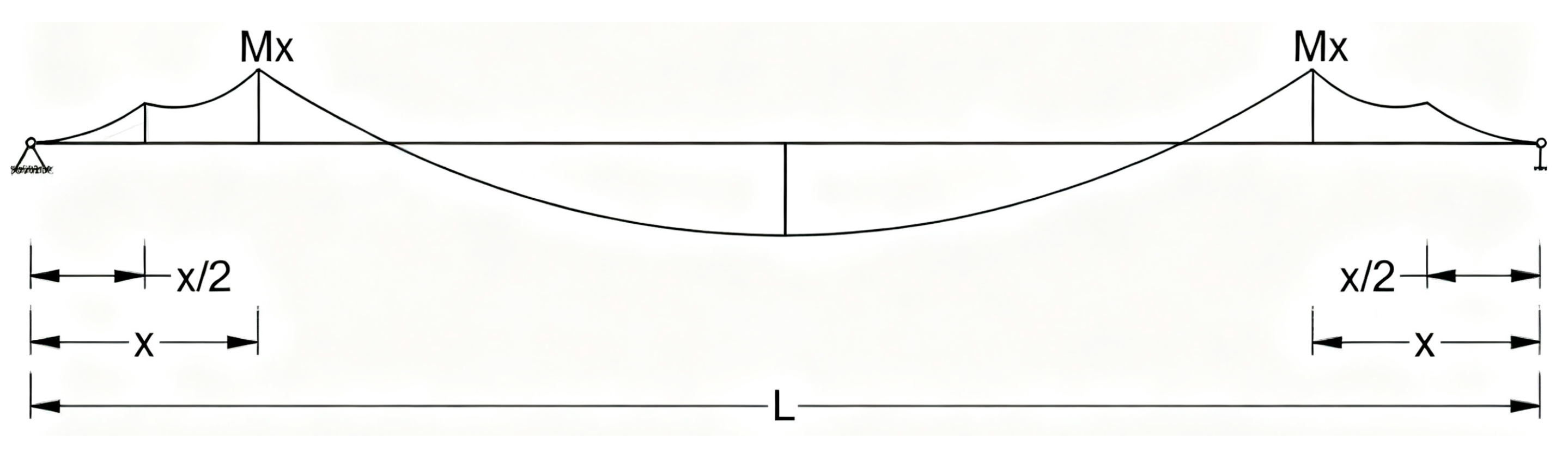
To further analyze the influence of the number of end piers on the support range, it is assumed that three piers are set at both ends. The simplified stress diagram and the bending moment diagram under self-weight of the large-span box girder are shown in
Figure 8 and
Figure 9, respectively. And the two ends of the box girder are hinged.
According to the derivation process described above, Formula (5) can still be obtained, so the number of end piers does not affect the establishment of the support range.
3. Key Points for SPMT Arrangement
The above analysis determines the range of support arrangements at both ends of a large-span box girder. Taking box girder SW4-3 as an example, with a length of 75 m and a weight of 3344 tonnes, the key points of SPMT vehicle arrangement are further clarified.
(1) Based on the weight of the box girder, the bearing capacity of the foundation, and the bearing capacity of the SPMT, the total number of axles required for the SPMT is determined to be 116 axles, with 58 axles at a single end, as shown in
Table 1.
(2) SPMT employs two types of modules: 4-axle and 6-axle. As indicated in the previous analysis, a smaller reaction force at the pier near the mid-span is more favorable for controlling the box girder. The SPMT arrangement for the SW4-3 box girder is illustrated in
Figure 10. Vehicle groups NO. 1 and NO. 2 each consist of two 4-axle vehicles and one 6-axle vehicle. NO. 3, NO. 4, and NO. 5 vehicle groups are composed of two 6-axle vehicles, one 4-axle vehicle and one 6-axle vehicle, and two 4-axle vehicles, respectively. Vehicle groups NO. 6 to NO. 10 are symmetrically arranged. In this configuration, the number of axles per vehicle group gradually decreases from the beam end toward the mid-span.
The box girder is supported on the SPMT vehicles via a system of distribution beams and support blocks. The specific arrangement is as follows: Place the distribution beam on the SPMT vehicle. The box girder is placed on the distribution beam through cushion blocks. The cushion blocks need to be arranged at the web of the box girder. The material and size of the cushion blocks need to be designed comprehensively considering the local stress of the box girder, the strength of the cushion blocks themselves, and the convenience of construction operations.
(3) Box girder SW4-3 is an irregular box girder. Calculate the irregular box girder center of gravity, adjust the position of the SPMT vehicle group so that the SPMT is subjected to the center of force, and the center of gravity of the box girder coincides vertically, which is beneficial to SPMT vehicle synchronous hydraulic control.
4. SPMT Zoned Synchronous Lifting
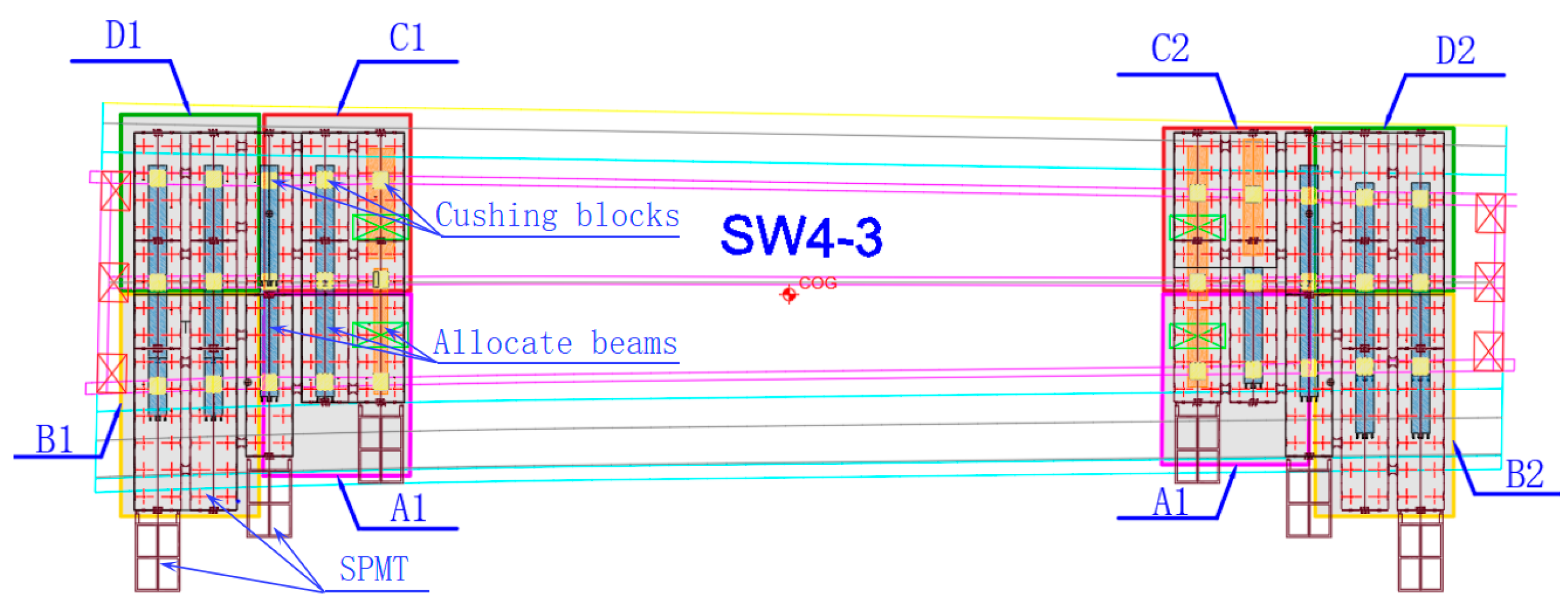
Upon completion of the prefabrication of the long-span box girder, the SPMT vehicle groups move into position beneath the girder and proceed to lift it. Although the SPMT system can adaptively regulate the hydraulic pressure through its circuitry to ensure equal reaction forces at each axle, this adjustment process requires a certain amount of time. To prevent excessive deflection and potential concrete cracking due to delayed pressure balancing during lifting, the operation is carried out in stages through a zonal approach. Each hydraulic suspension unit of the SPMT can be independently controlled. By interconnecting several suspension units via hydraulic circuits, they can be grouped into an integrated assembly, thereby enabling zonal control and configuration of the SPMT. Taking the SW4-3 box girder as an example, the SPMT vehicles is divided into eight zones labeled A1, A2, B1, B2, C1, C2, D1, and D2, as illustrated in
Figure 11. The areas enclosed by different colored lines in the figure represent different zones. Within each zone, the hydraulic circuits are interconnected, whereas the circuits between different zones remain independent, thereby creating a controlled pressure differential between zones.
As analyzed earlier, the reaction force at the piers near the mid-span should be minimized as much as possible. Therefore, during the lifting process, the four outer zones—B1, B2, D1, and D2—are prioritized for lifting, followed by the four inner zones: A1, A2, C1, and C2. To minimize the impact on the stress state of the box girder, lifting within each group of four zones is performed synchronously. The specific lifting procedure is as follows:
(1) The oil pressure value required for the SPMT vehicle group to lift the box girder is calculated based on the weight of the box girder and the lifting is carried out in stages. The SW4-3 box girder adopts 4-stage lifting.
(2) Based on the preceding analysis, controlling the pier reaction force near the mid-span is crucial, as it remains relatively small. To mitigate the impact of asynchronous displacement from the four zones on box girder stress, a staged lifting sequence is implemented: zones B1, B2, D1, and D2 are lifted first, followed by zones A1, A2, C1, and C2. Within each stage, all zones designated for lifting are raised synchronously.
5. Analyzing the Influence of SPMT Zone Pressure Differences on Box Girder’s Stress
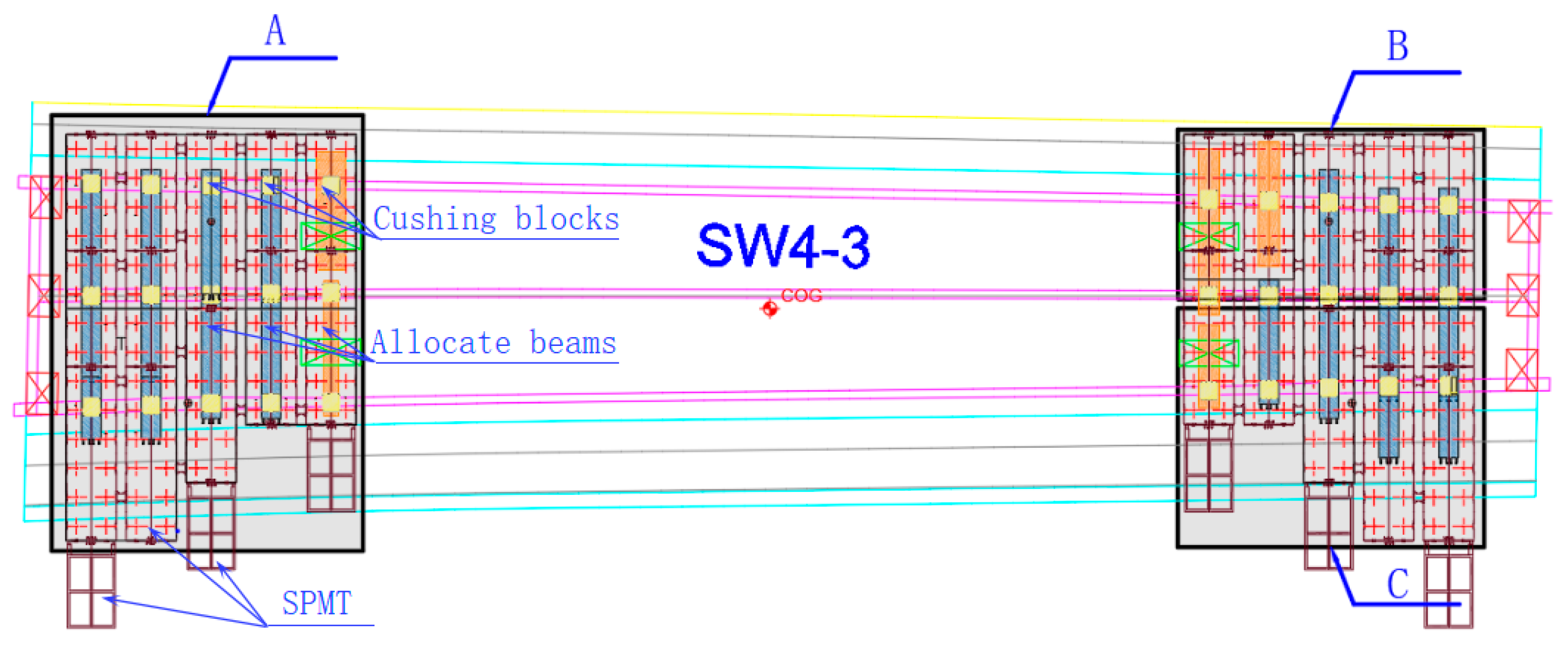
During the transportation of the box girder, the SPMT is configured into three zones: A, B, and C, as shown in
Figure 12. The areas enclosed by black lines in the figure represent different zones. A hydraulic pressure difference exists among these three zones during transport, which consequently affects the stress state of the box girder. Therefore, the influence of the zonal pressure differential on the mechanical behavior and deformation of the box girder will be analyzed below to inform and guide field construction control.
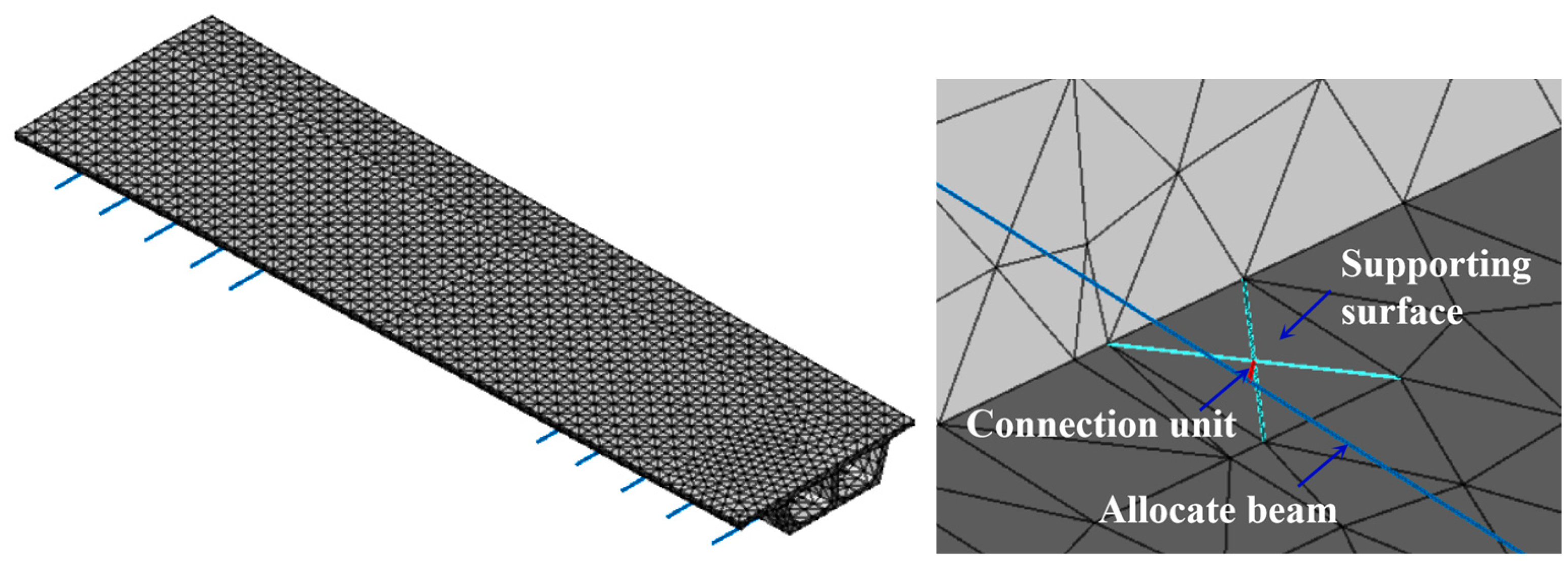
A finite element model is established, as shown in
Figure 13. The concrete is represented by three-dimensional solid elements with eight nodes and one-point Gauss integration. And the distribution beam is modeled using a beam element. The concrete elastic modulus is 35 GPa, the density is 2500 kg/m
3. The steel elastic modulus is 210 GPa, the density is 7850 kg/m
3. The prestressing tendons were modeled using tension-only truss elements, with an applied tension of 1395 MPa. The primary element dimensions are approximately 0.1 to 0.2 m.
The finite element modeling approach is as follows: The supporting surface of the box girder is simulated by rigidly connecting all its nodes to a single master node using a rigid link. This link constrains three degrees of freedom: vertical displacement (DZ) and the two rotational angles about the support surface (RX, RY). Between the distribution beam and this master node, a compression-only elastic link is established. The support force from the SPMT is governed by its hydraulic pressure system. Consequently, in the finite element analysis, the measured or specified hydraulic pressure must be converted into an equivalent support reaction force, which is then applied as a load onto the distribution beam.
Finite element analysis results indicate that the maximum stress in the box girder occurs on the top surface of the roof slab at NO. 4 vehicle group (specifically at the junction between the roof slab and the web). This stress concentration is primarily due to the relatively fewer SPMT vehicles arranged at NO. 5 vehicle group, resulting in a lower support reaction force at that location and consequently a reduced negative bending moment in the region. This finding confirms that reducing the reaction force near the mid-span is beneficial for controlling the overall stress state of the box girder. The following analysis will focus on this point of maximum stress to examine the specific influence of inter-zone hydraulic pressure differences on girder stresses.
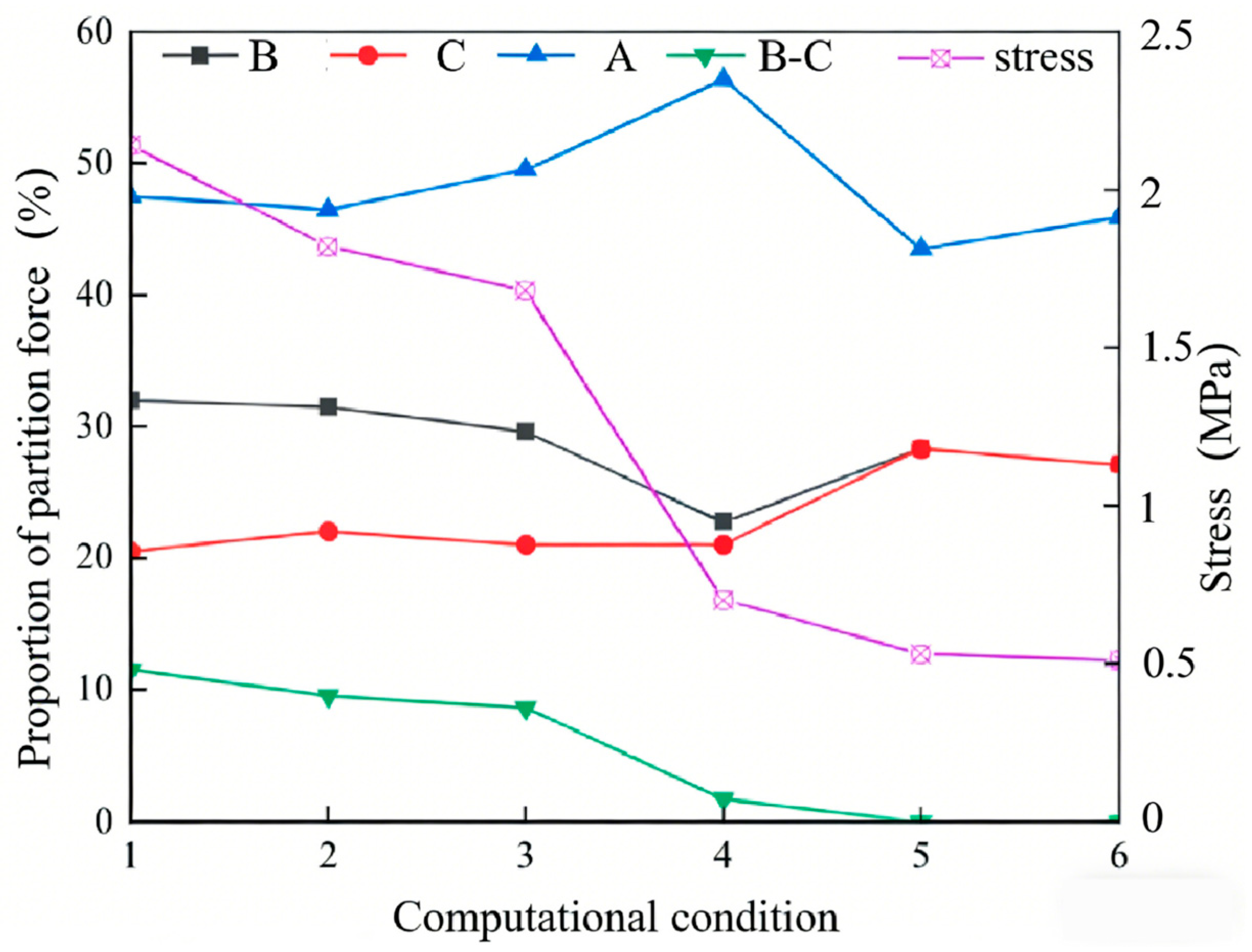
Figure 14 analyzes the influence pattern of different hydraulic pressure proportions in zones A, B, and C (as shown in
Figure 12) on the stress of the box girder. The figure examines six working conditions. It can be observed from the figure that the stress in the box girder correlates with the difference in pier reaction forces between zones B and C. Specifically, a greater difference in reaction forces between zones B and C leads to higher stress in the box girder. The hydraulic pressure in zone A, however, has little effect on the girder stress. The mechanism by which zonal hydraulic pressure differences affect box girder stress is as follows: When a pressure differential exists between SPMT zones, it causes variations in the adjustment strokes of the hydraulic supports. This leads to changes in the vertical displacement of the girder and induces torsional deformation, which in turn alters its internal stress state.
According to the Chinese code for design of concrete structures [
26], the design value of the axial tensile strength of C50 concrete is 1.89 MPa; therefore, this paper takes 1.89 MPa as the limiting value of concrete stress. The analysis shows that to keep the concrete stress below this 2.0 MPa limit, the pressure difference between zones B and C should not exceed 10%.
In this paper, the concept of four-point asynchronous displacement is proposed to quantify the torsional deformation of a box girder under four-point supported conditions. It is defined and calculated using Equation (6), where H
1, H
2, H
3, and H
4 represent the vertical displacements measured at the four corner points (numbered 1, 2, 3, and 4) of the box girder. The corner points may be arranged in either clockwise or counterclockwise order, with points 1 and 3 and points 2 and 4 constituting diagonal pairs, respectively.
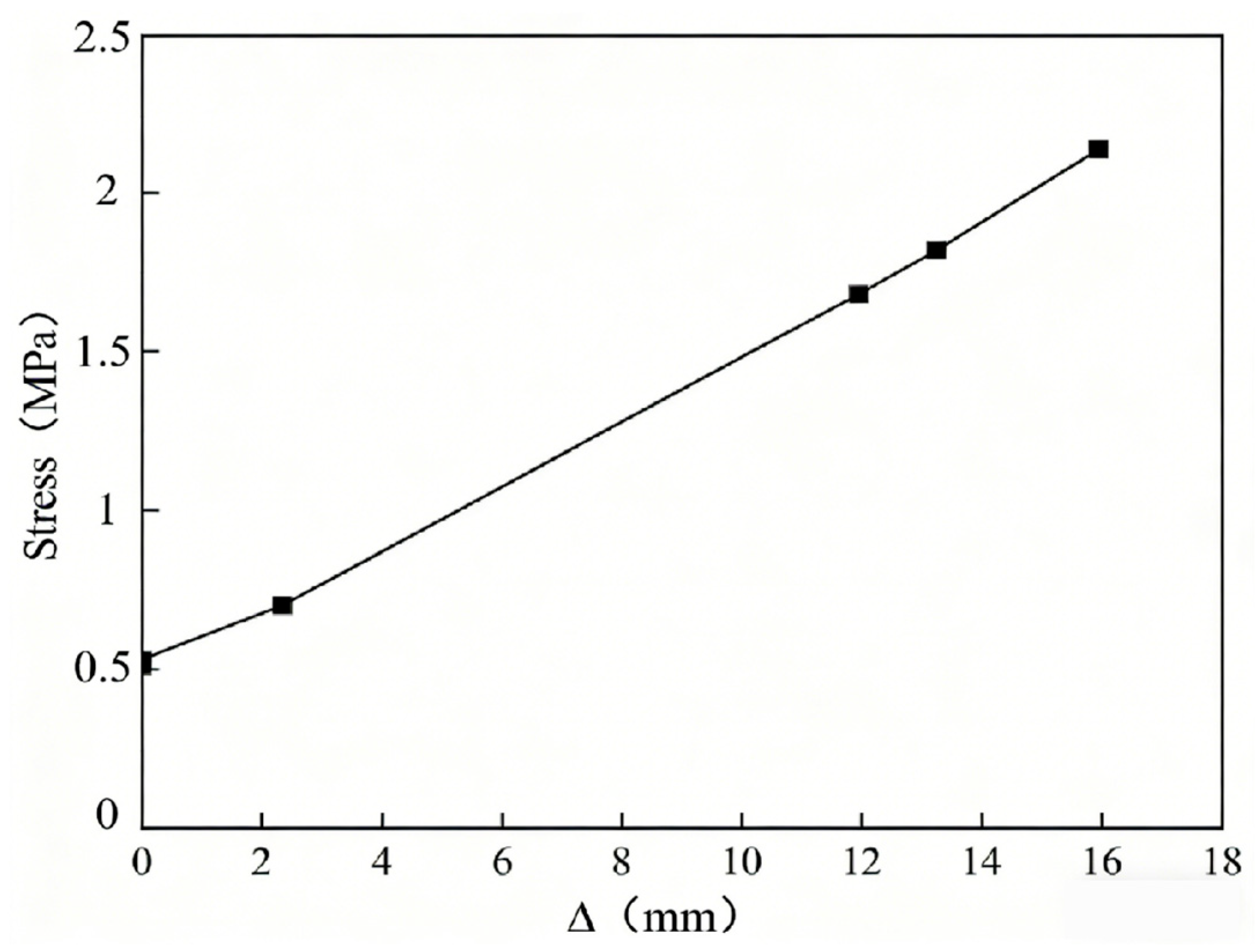
Figure 15 illustrates the relationship between the four-point asynchronous displacement and the stress in the box girder. When a hydraulic pressure differential exists among the three zones, it induces four-point asynchronous displacement, which in turn alters the stress state of the box girder. As shown in
Figure 15, the girder stress exhibits an approximately linear correlation with the four-point asynchronous displacement: greater displacement leads to higher stress. To ensure that the girder tensile stress remains below the control threshold of 2 MPa, the four-point asynchronous displacement must be limited to within 15 mm. Therefore, this parameter is proposed in this paper as the key control indicator for ensuring the structural safety of the box girder.
6. Monitoring Data Analysis
Based on the preceding analysis, controlling torsion in long-span box girders during SPMT transportation requires managing the hydraulic pressure by zones. Consequently, this paper proposes the four-point asynchronous displacement as a key control parameter for monitoring the girder’s stress state. A key advantage of this parameter is its dual capability: it directly reflects both the torsional deformation of the girder and the inter-zone pressure differences within the SPMT vehicles. When elevated stress is detected, this metric allows for rapid identification of the specific zone requiring hydraulic adjustment to mitigate pressure differentials.
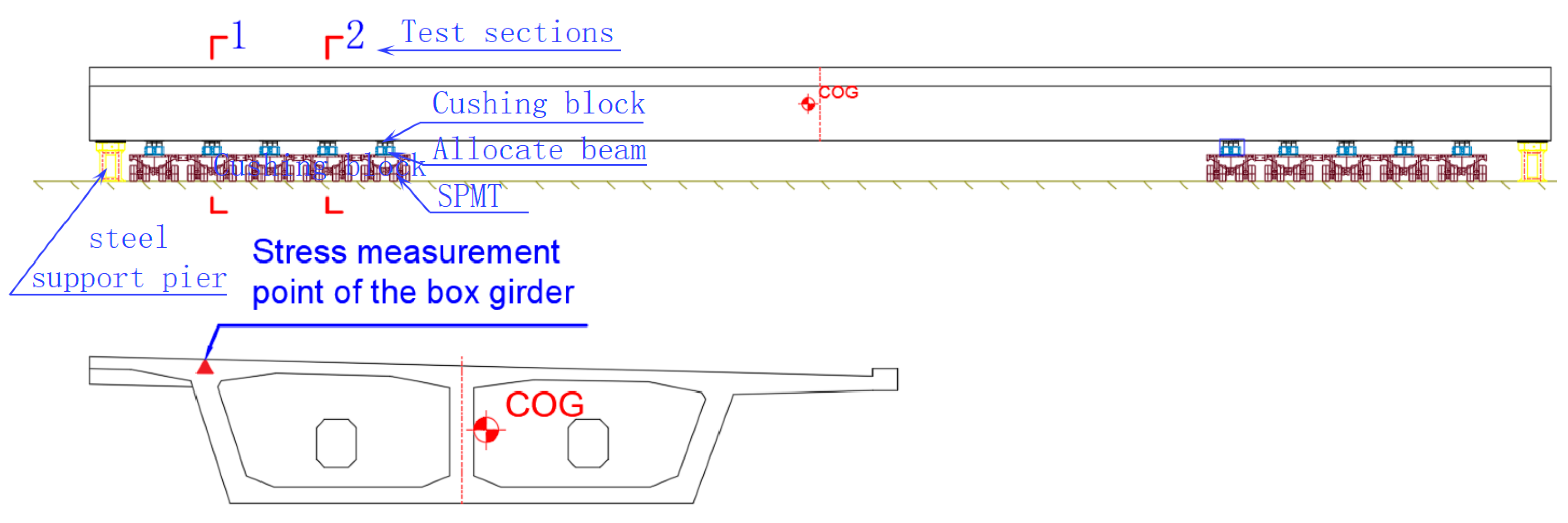
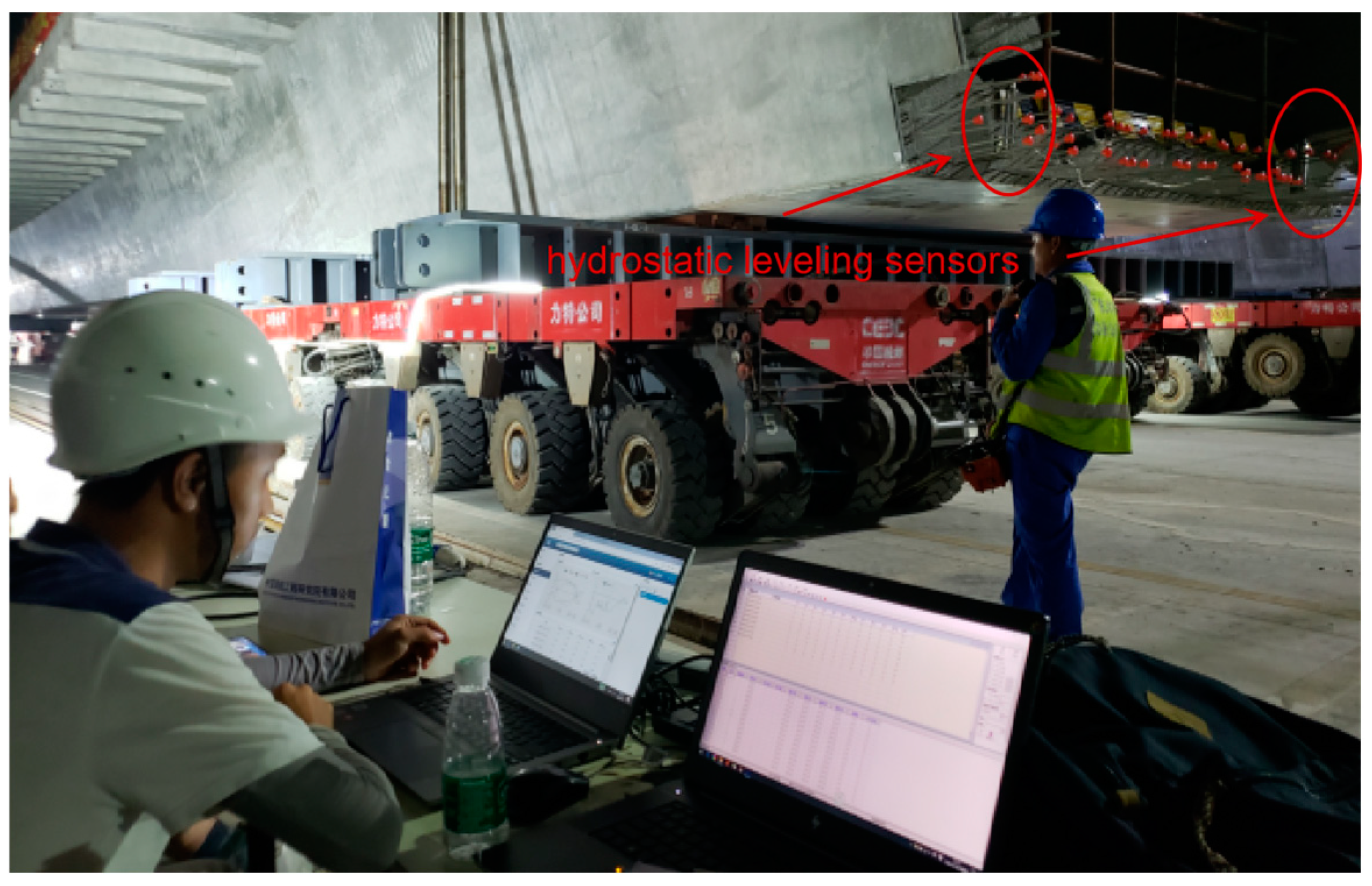
To measure this displacement, a hydrostatic leveling sensor is installed at each of the four corners of the box girder. The readings from these four sensors collectively define the four-point asynchronous displacement. Furthermore, to directly assess the impact of asynchronous displacement on structural stress, two strain measurement points (Measurement Point 1 and Measurement Point 2) were established. These points are located on the top surface of the box girder at two designated distribution beams, as illustrated in
Figure 16. A photograph of the on-site monitoring setup is provided in
Figure 16. Presented in
Figure 17 is a field photo that illustrates the on-site layout of the hydrostatic level sensors employed to monitor displacements.
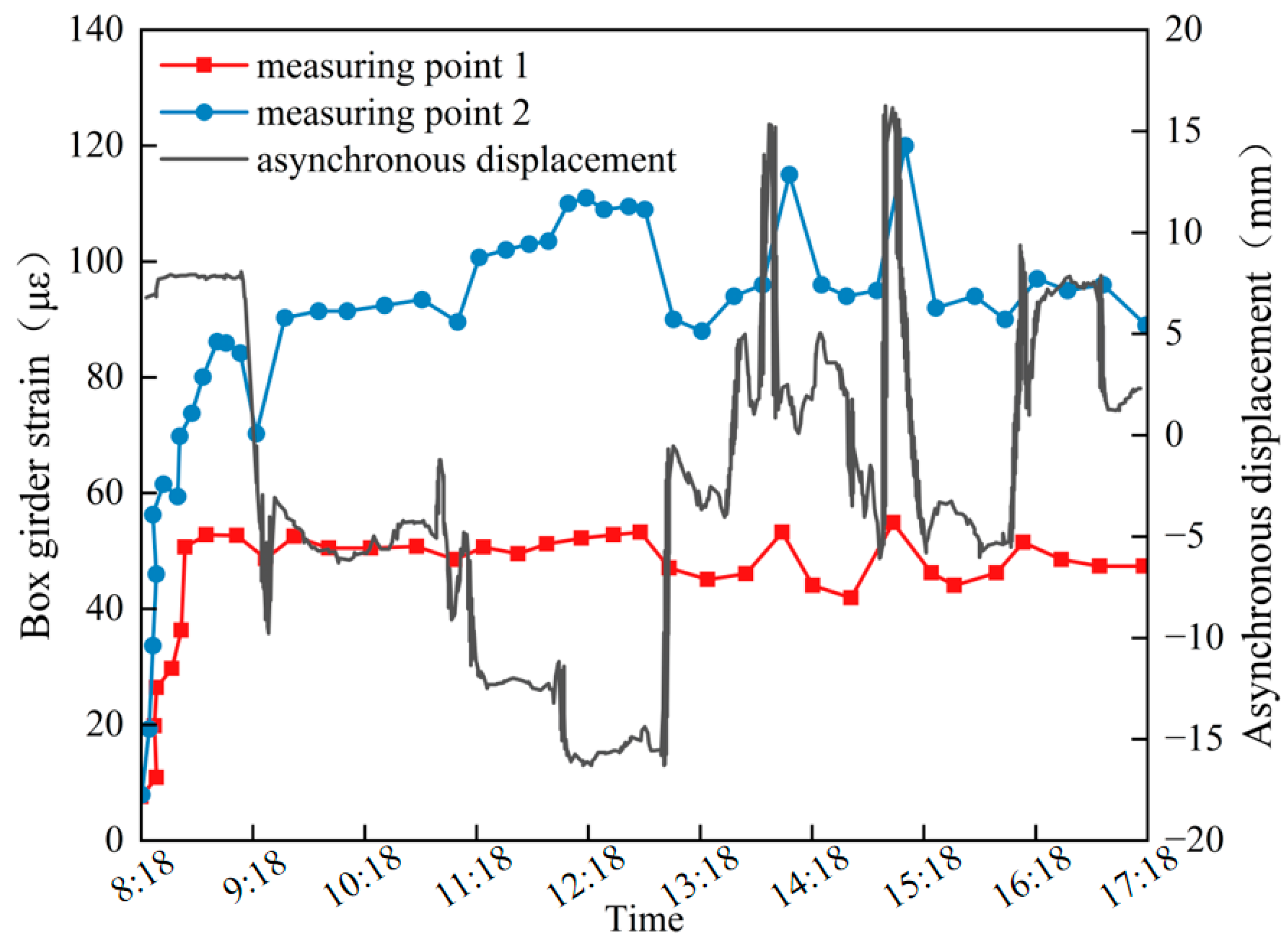
During the jacking and load-transfer operations of the long-span box girder, the four-point asynchronous displacement was successfully monitored. The monitoring results are presented in
Figure 18. As illustrated in
Figure 18, the stress in the box girder increased rapidly during the initial testing phase. This phenomenon is attributed to the commencement of the jacking operation, during which the support condition of the girder transitioned from the original fixed steel supports at both ends to multiple elastic supports provided by the SPMT. This change in the support mechanism induced a sharp increase in stress on the top surface of the girder’s roof slab near the support points. Notably, the strain increase at Measurement Point 2 was more pronounced than at Measurement Point 1. This suggests that under multi-support conditions, the region of the box girder near the mid-span support is at a higher risk of cracking. Consequently, reducing the number of SPMT vehicles near the mid-span proves beneficial for controlling crack development in the box girder. Furthermore, a clear correlation was observed between girder strain and the four-asynchronous displacement throughout the transportation process. As the four-asynchronous displacement increased, the corresponding strain in the box girder also rose; conversely, a decrease in asynchronous displacement led to a reduction in strain. In the figure, a positive asynchronous displacement indicates that (H
1 + H
3) > (H
2 + H
4), while a negative value corresponds to (H
1 + H
3) < (H
2 + H
4). An increase in the positive value or a decrease in the negative value reflects greater torsional deformation in the box girder, thus leading to elevated internal stress. This trend is further supported by the monitoring data presented in the figure. This relationship confirms that effective control of box girder stress can be achieved by actively managing the asynchronous displacement.
Figure 15 and
Figure 18 present the finite element calculation results and the measured results for Measurement Point 2, respectively. A detailed comparison is provided in
Table 2. As shown in the table, the finite element results are in good agreement with the measured results.
It should be noted that the box girder is prestressed, meaning that compressive stress already exists within the girder before jacking. Based on finite element calculations, the pre-existing compressive stress at measurement point 2 is approximately 2.5 MPa. However, as the stress sensors were installed prior to jacking, they cannot measure this initial stress and only record the stress increment during construction. Therefore, the “measured stress” values in the table already account for the pre-existing 2.5 MPa compressive stress.
For example: after jacking completion, the measured strain is about 78 με, corresponding to a stress increase of 2.73 MPa. Thus, the actual stress in the box girder is −2.5 MPa + 2.73 MPa = 0.23 MPa (tensile). When the asynchronous displacements are 5 mm, 10 mm, and 15 mm, the measured strains are approximately 95 με, 108 με, and 120 με, with stress increases of 3.33 MPa, 3.78 MPa, and 4.20 MPa, respectively. The corresponding actual stresses in the box girder are 0.83 MPa, 1.28 MPa, and 1.70 MPa (all tensile). In the table, positive values indicate tensile stress, while negative values indicate compressive stress.
Overall, the measured stress shows a generally consistent trend with the calculated stress, although the measured values are generally lower than the calculated ones. This discrepancy may be related to factors such as sensor installation accuracy.
On-site monitoring data indicate that during the girder transportation process, controlling the four-point asynchronous displacement within 15 mm limited the maximum stress in the box girder to 1.7 MPa, which meets the control target of remaining below 2 MPa and thus prevented cracking damage. This outcome confirms the reliability of the monitoring method employed.
7. Conclusions and Discussion