1. Introduction
Earthquakes represent natural hazards characterized by sudden onset and catastrophic destructive potential, posing significant threats to structural safety. Recent major seismic events, including the Wenchuan [
1] and Yushu earthquakes [
2], have resulted in substantial casualties and economic losses, fundamentally exposing the inherent limitations of conventional seismic methodologies. Traditional anti-seismic methods primarily rely on increasing structural member dimensions and enhancing material strength to resist seismic forces—a “brute force” strategy that not only escalates construction costs but remains vulnerable to severe damage under intense ground motion [
3]. To achieve more effective protection of building structures against seismic hazards, energy dissipation seismic mitigation technology has emerged as a promising solution. This innovative approach actively absorbs and dissipates seismic energy through strategically deployed energy dissipation devices, achieving substantial reductions in structural seismic response [
4,
5].
With the continuous development of energy dissipation seismic mitigation technology in China and the gradual improvement of relevant standards and specifications, the government has provided clear support for the promotion and application of energy dissipation seismic mitigation technology through a series of policy documents, offering strong guarantees for the engineering application of this technology. In particular, according to Article 16 of the “Regulations on Seismic Management of Construction Projects” [
6] issued by the State Council of the People’s Republic of China in 2021, newly constructed schools located in key earthquake monitoring and defense areas shall adopt seismic isolation and mitigation technologies in accordance with relevant national regulations. This mandatory requirement has further promoted the application of energy dissipation seismic mitigation technology in critical buildings.
The fundamental principle of energy dissipation seismic mitigation technology is to utilize the hysteretic, friction, or viscous characteristics of these devices to absorb and dissipate input energy, thereby reducing the dynamic response of structures. Over the past two decades, extensive research has been conducted on seismic mitigation technology, with the following development history: (i) Initial studies primarily relied on numerical simulation and theoretical analysis to evaluate the effectiveness of energy dissipation devices. Nevertheless, reliance solely on these methodologies frequently fails to yield definitive validation [
7,
8]. (ii) To address these limitations, extensive experiments were conducted, demonstrating that energy dissipation devices play a crucial role in improving the seismic performance of reinforced concrete buildings [
9,
10]. Maida et al. [
9] investigated steel slit dampers for lightly reinforced concrete walls through quasi-static tests, demonstrating that walls with slit dampers contributed strength in a ductile manner while remaining intact, unlike rigidly connected walls that failed brittlely. The study revealed damper strain hardening effects could exceed twice the yield strength, providing an effective approach for utilizing nonstructural components. (iii) As the mitigation effects were verified, various seismic mitigation design methods were proposed to meet the practical needs of engineering applications [
11,
12,
13]. Hareen and Mohan [
14] proposed an improved design methodology for passive dampers based on the energy balance concept, using target energy as design criteria for both seismic retrofit and new design of regular and irregular building frames. Unlike existing methods, this approach avoids iterations in determining damping constants by establishing energy balance equations at each storey to calculate target energy required for damper design, providing design offices with simplified spreadsheet-based design tools. More recently, Montuori [
15] proposed an improved methodology based on the energy balance concept, which uses target energy as design criteria for both seismic retrofit and new design of building frames. Their approach eliminates the need for iterations in determining damping constants through story-level energy balance equations. (iv) In recent years, research focus has shifted toward optimizing damper design. Most optimization methods are algorithm-based, requiring programming and iterative calculations [
16,
17].
Currently, mainstream energy dissipation devices encompass various configurations including viscous dampers, friction dampers, and buckling-restrained braces (BRBs) [
18,
19]. Friction dampers, as displacement-dependent energy dissipators, dissipate seismic energy through frictional forces generated by relative sliding between friction surfaces. Despite their structural simplicity and cost-effectiveness, these devices exhibit inherent limitations: friction forces are difficult to calibrate precisely, surface wear compromises performance stability, “dead zones” emerge under minor oscillations, and frictional heating may degrade long-term performance [
20,
21]. Buckling-restrained braces (BRBs) consume seismic energy through axial yielding deformation of the core steel element, achieving stable yielding in both tension and compression. However, they substantially increase lateral structural stiffness, altering dynamic characteristics; the core steel is susceptible to low-cycle fatigue failure, exhibits significant residual deformation post-yielding, and presents challenges for post-earthquake rehabilitation [
22,
23]. Metallic yielding dampers and tuned mass dampers suffer from post-earthquake replacement requirements and increased structural stiffness, respectively [
24]. In contrast, viscous dampers represent velocity-dependent energy dissipation devices that operate by harnessing damping forces generated through viscous fluid flow within the damper mechanism to dissipate structural vibrational energy [
25]. These devices demonstrate remarkable technical advantages: they impose no additional structural stiffness since damping forces correlate with velocity rather than displacement, preserving static characteristics and natural periods; they provide consistent energy dissipation performance through stable viscous fluid properties without material fatigue or wear concerns, maintaining reliable performance under repeated seismic events; they exhibit zero residual deformation with automatic self-centering capability, eliminating post-earthquake replacement or maintenance requirements; they offer exceptional adaptability through adjustable damping coefficients and velocity exponents to accommodate diverse structural energy dissipation demands; and they maintain effectiveness across the complete structural response frequency spectrum [
26]. Owing to their superior energy dissipation efficacy and stable performance characteristics, viscous dampers have garnered extensive attention and widespread implementation across diverse structural systems including high-rise buildings, bridges, and industrial facilities [
27,
28].
Despite significant advances in energy dissipation seismic mitigation technology, existing research still has some limitations. In engineering applications, the positioning and arrangement of dampers lack systematic optimization methods, relying primarily on experience-based placement, making it difficult to achieve optimal seismic mitigation effects. Based on this, this paper takes multi-storey frame structures as the research object, and through comparative analysis of the seismic mitigation effects and economic efficiency of different mitigation schemes, aims to provide scientific and rational basis for seismic mitigation scheme selection in engineering design. This study takes actual engineering projects as case studies, employs numerical simulation methods, comparatively analyses the seismic mitigation effects of different arrangement schemes, and conducts comprehensive evaluation of their technical performance. The research results have important theoretical significance and practical value for improving the design methods of energy dissipation seismic mitigation technology and promoting the engineering application of this technology in multi-storey frame structures.
3. Seismic Performance Analysis of Original Model
3.1. Model Development
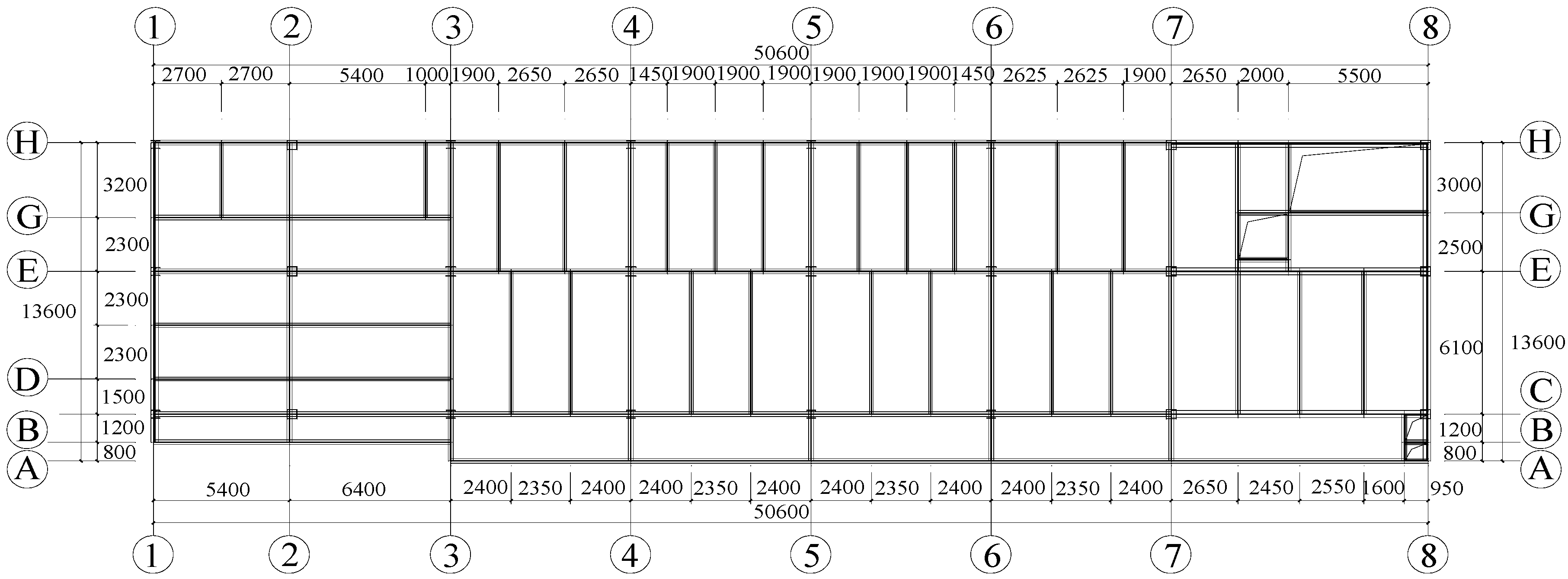
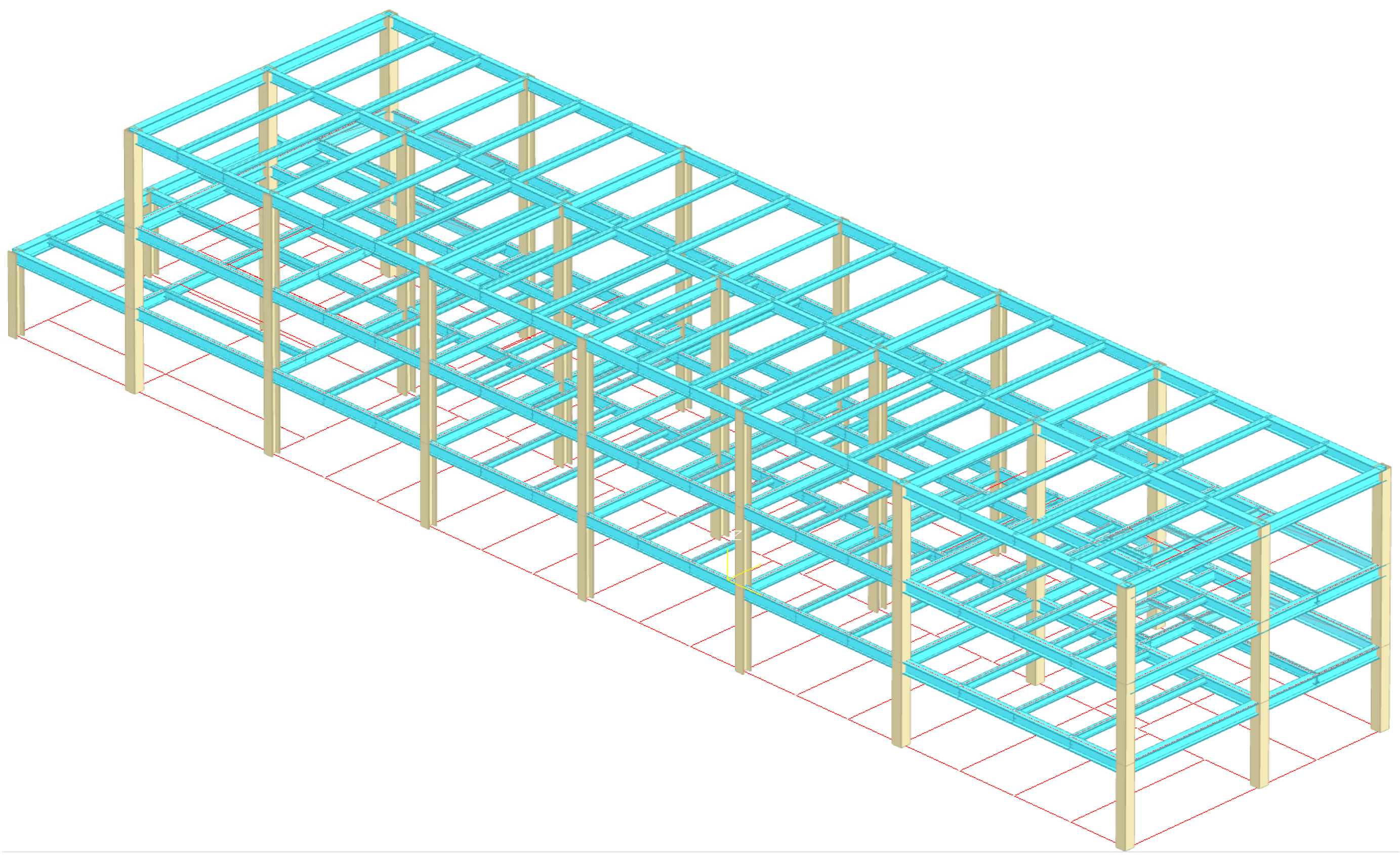
In this study, the finite element analysis software ETABS is employed for structural modeling and nonlinear time history analysis. As a mature and reliable structural analysis tool, ETABS has been extensively validated through numerous practical projects. The software incorporates multiple design standards including Chinese codes, European codes, and other national standards, enabling rapid modeling and completion of structural response spectrum analysis and time history analysis under different seismic intensities according to code requirements.
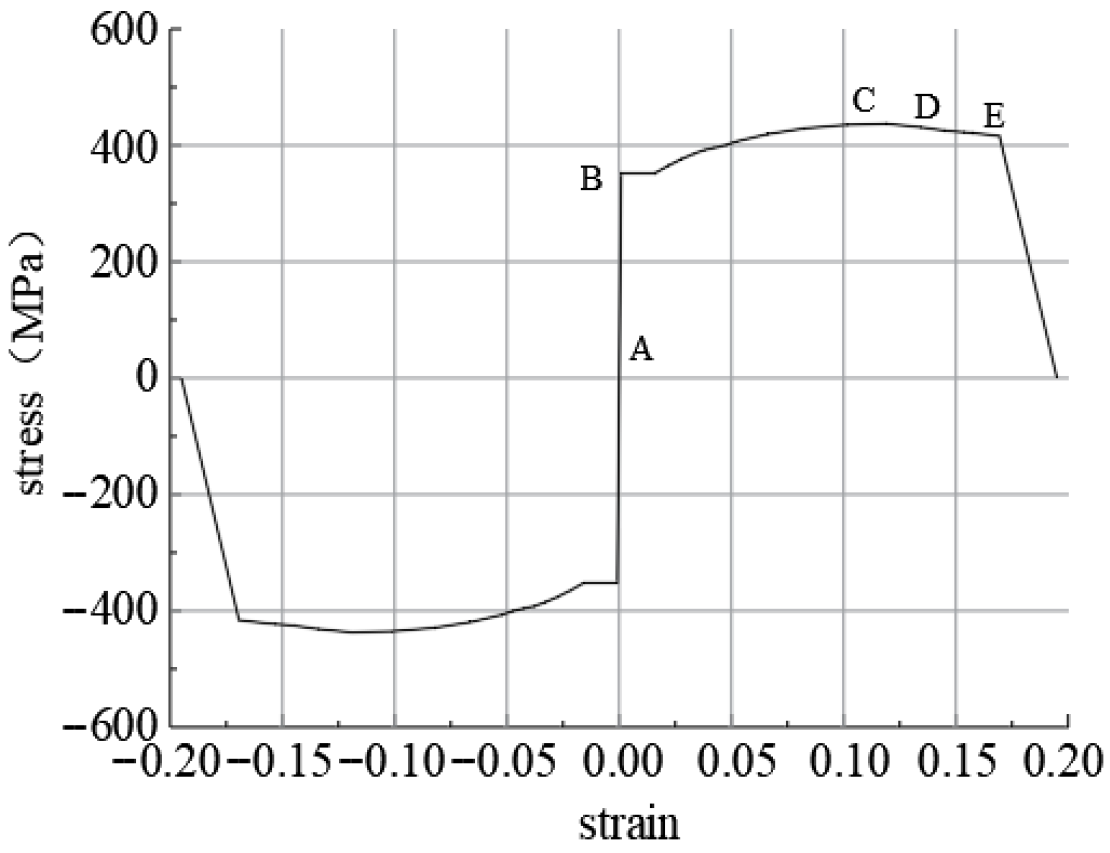
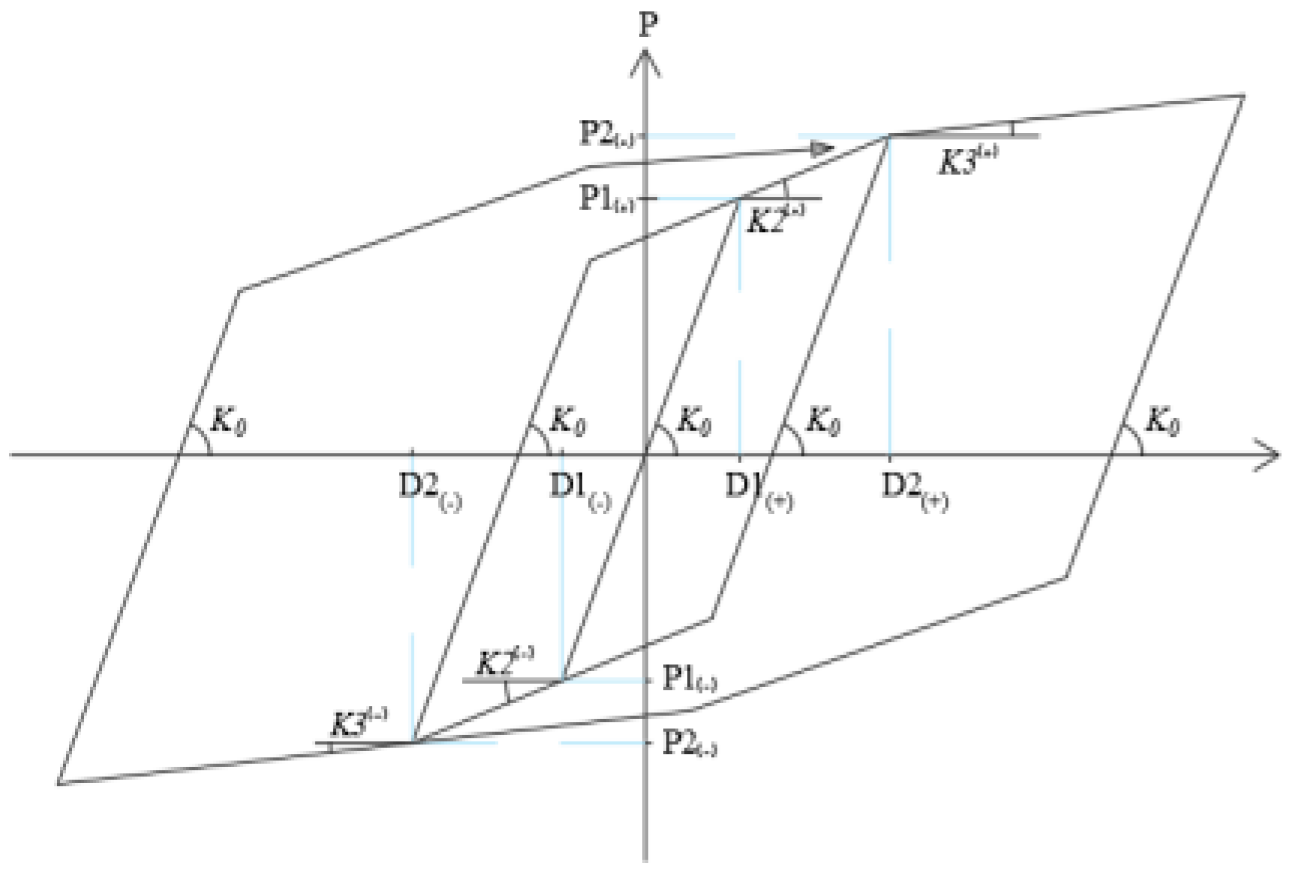
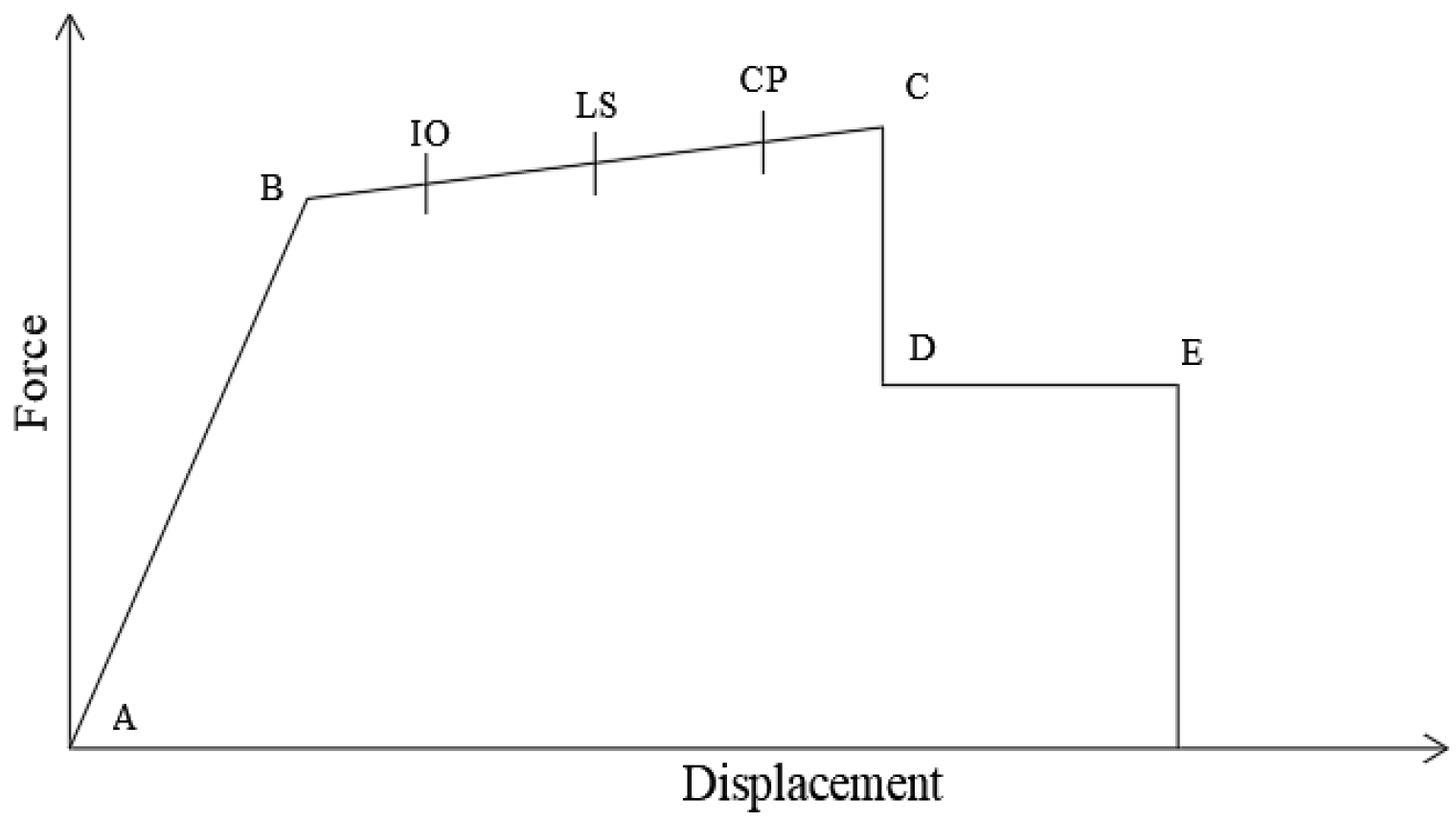
In the modeling process, storey slabs are simulated using thin shell elements, as the horizontal shear forces in slabs under seismic action do not significantly affect the deformation of the main structural system. The constitutive relationship for steel materials is shown in
Figure 3, with the hysteretic behavior modeled using a kinematic hardening hysteretic model [
29], as illustrated in
Figure 4. To accurately analyse the elastoplastic response of the structure under major earthquakes, plastic hinges need to be properly defined in the model. According to different component types, beams adopt M3 hinges while columns adopt P-M2-M3 hinges [
29]. In the mechanical model of plastic hinges, points A, B, C, and D represent the origin, component yield strength, ultimate strength, and post-yield residual strength, respectively. The key control points IO, LS, and CP correspond to the three performance levels of Immediate Occupancy, Life Safety, and Collapse Prevention, respectively [
29], as shown in
Figure 5.
3.2. Time–History Analysis Configuration
ETABS employs the SAPFire analysis engine, which is based on advanced numerical analysis techniques and possesses fast and efficient solving capabilities, supporting parallel computation of multiple independent load cases. In modal analysis, ETABS provides the Ritz vector method, which generates modes according to the spatial distribution characteristics of structural dynamic loads, effectively identifying and excluding vibration modes that contribute less to dynamic response. This method can achieve higher mass participation factors with fewer modal orders, thereby demonstrating superior computational accuracy and efficiency in response spectrum analysis and time history analysis.
For dynamic elastic time history analysis, the FNA method is employed to solve the dynamic response. The FNA method (Fast Nonlinear Analysis) is an efficient solution method based on the modal superposition principle. This method assumes that the main structure remains in an elastic state, considering only the nonlinear behavior of energy dissipation devices while ignoring the material and geometric nonlinearity of the main structure. The nonlinear effects are introduced into the modal equations as equivalent external loads, and the dynamic response is solved through modal superposition. Compared with traditional nonlinear time history analysis methods, the FNA method has higher computational efficiency and better convergence, making it particularly suitable for structural analysis with additional energy dissipation devices.
For dynamic elastoplastic time history analysis, the direct integration method is employed for computation. The direct integration method is a numerical solution approach based on step-by-step integration principles. This method discretizes the time domain and solves the structural equations of motion within each time step, accurately considering the nonlinear behavior of structural materials and geometry. In this study, the Hilber-Hughes-Taylor integration algorithm is implemented, with Rayleigh damping being adopted where the mass proportional coefficient and stiffness proportional coefficient are set to 0.3681 and 0.0007, respectively. The Iterative Event-to-Event Solution Scheme is employed with a convergence tolerance of 0.001 and an ETE concentration tolerance of 0.01, while the maximum events per step is set to 24. The direct integration method does not require modal superposition assumptions and can directly handle complex mechanical behavior of structures under strong nonlinear conditions, including material yielding, stiffness degradation, large deformation effects, etc. Compared with methods based on modal superposition, the direct integration method has broader applicability and higher computational accuracy, making it particularly suitable for strong nonlinear dynamic analysis when structures enter the elastoplastic stage, providing reliable computational means for structural seismic performance evaluation.
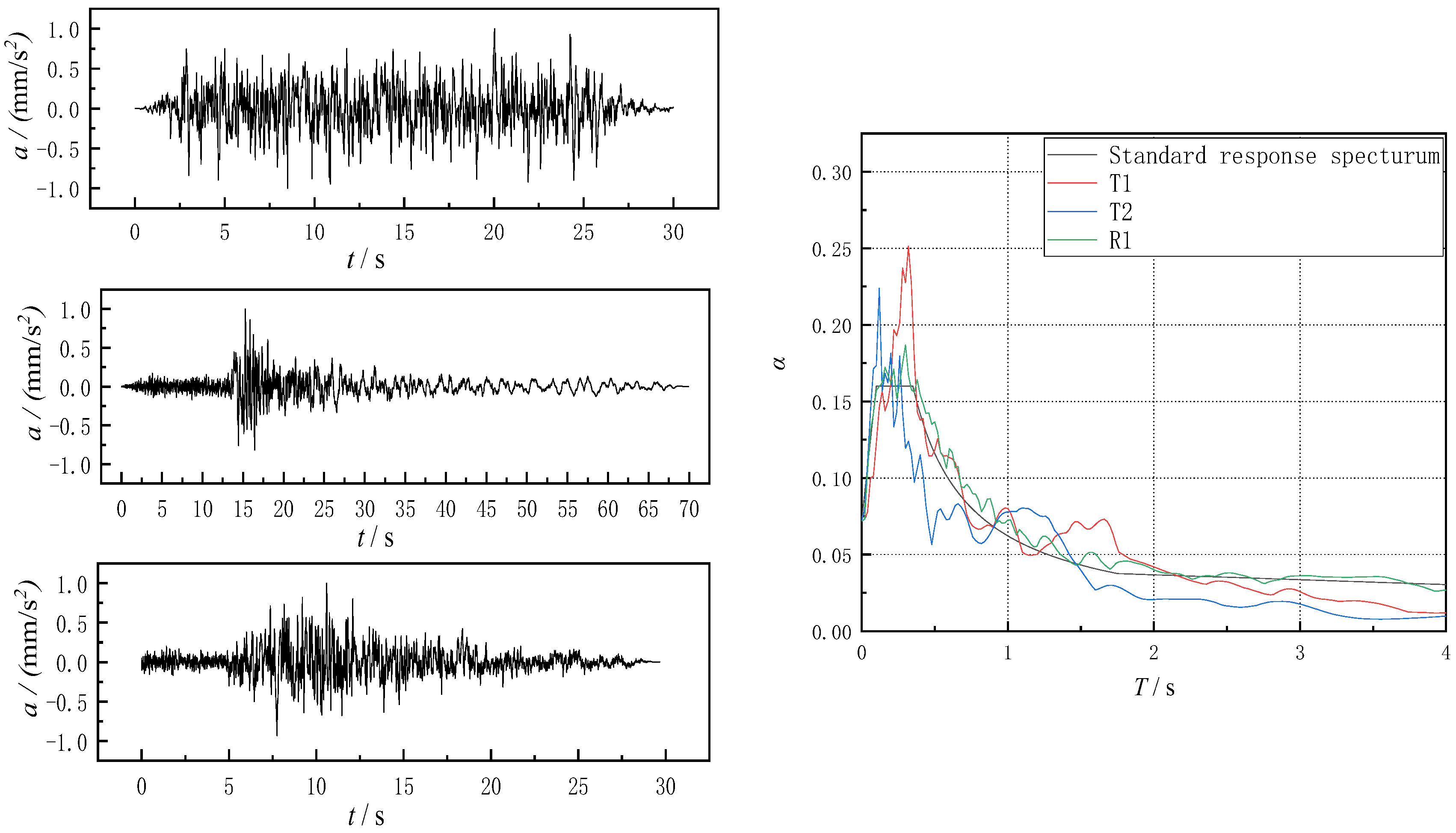
Considering the inherent uncertainties in ground motion characteristics, this investigation adheres rigorously to code-specified requirements for seismic wave selection. The selection criteria encompass: scaling peak ground acceleration to satisfy seismic design intensity requirements; ensuring spectral compatibility between selected ground motions and site-specific conditions; maintaining adequate duration to capture the most critical phases of seismic excitation while meeting analytical requirements; and incorporating both recorded earthquake data and synthetically generated ground motions, with natural records comprising no less than two-thirds of the total suite [
29]. Based on the target response spectrum, this study employed the PEER ground motion database to select two natural seismic records and one artificial record for time-history analysis. The natural records include the El Centro wave (hereinafter referred to as T1 wave) and the San Onofre wave (hereinafter referred to as T2 wave), while the artificial record is designated as R1 wave. The characteristics of selected seismic inputs are presented in
Figure 6.
3.3. Seismic Response Analysis
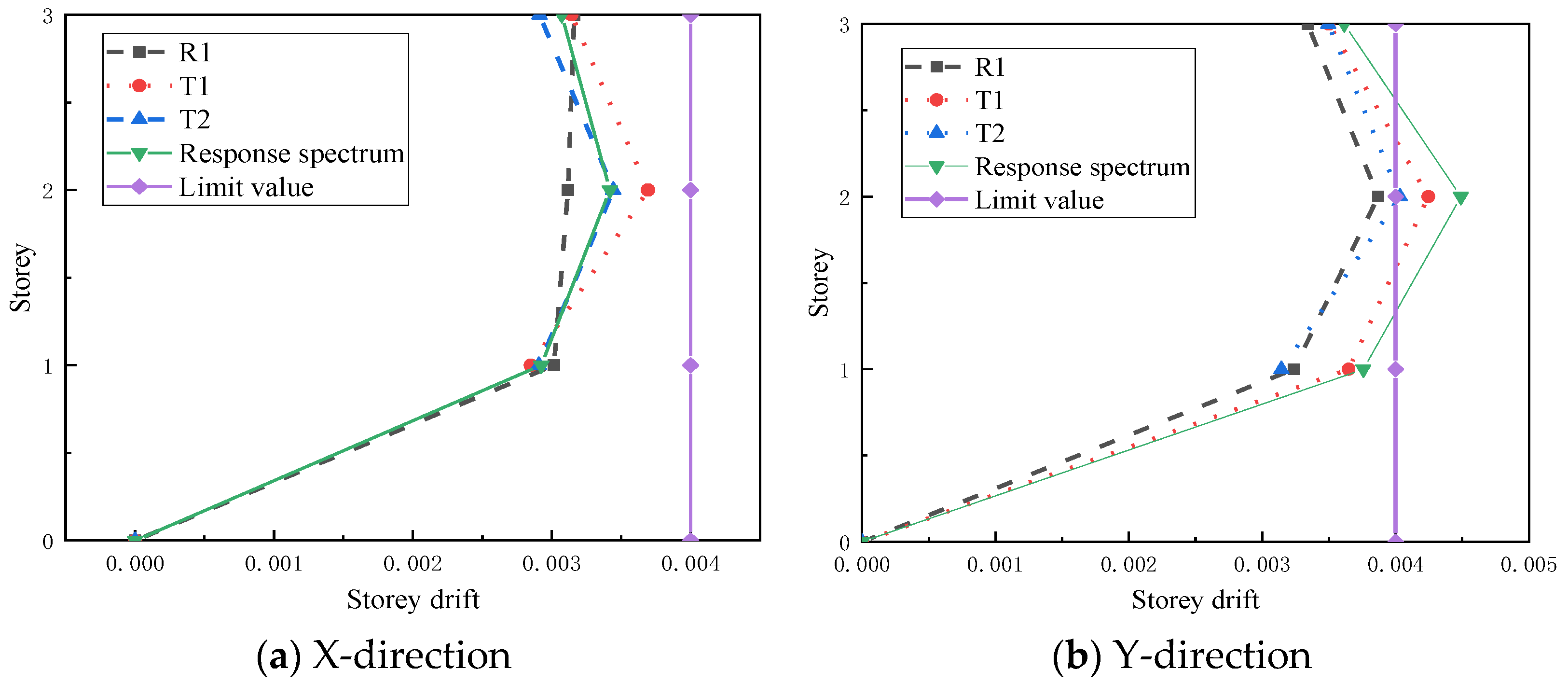
Elastic time-history analyses under frequent earthquake excitations reveal excellent agreement between the three selected ground motion records (R1, T1, T2) and response spectrum calculations, validating the appropriateness of the seismic input selection and analytical methodology. The inter-storey drift distribution (
Figure 7) exhibits an initial increase followed by a decrease with height The uncontrolled structure exhibits maximum drift of 0.0034 and 0.0041 in the X- and Y-directions, respectively. While both directions display similar seismic response patterns, code compliance differs significantly: X-direction drift ratios satisfy regulatory limits (0.004), whereas Y-direction values exceed the prescribed threshold by approximately 1.3%, necessitating seismic performance enhancement measures.
The modal analysis results are presented in
Table 1, which shows three dominant mode shapes of the structure. The first two modes exhibit translational motions in X and Y directions with periods of 0.9628 s and 0.8420 s, respectively, and their mass participation factors exceed 99.5%, indicating high independence of horizontal motions. The third mode primarily demonstrates torsional behavior with a period of 0.7443 s and a torsional mass participation factor of 98.6%. The frequency ratios between these three modes are relatively close, and the distinct separation of modal characteristics in different directions indicates uniform stiffness distribution and favorable dynamic properties, which positively contributes to the structure’s seismic performance.
4. Damping Design Schemes
4.1. Damping Design Objectives
This project employed energy dissipation technology to enhance the seismic performance of the structure, achieving effective control of structural seismic response through rational configuration of dampers within the structure. Based on actual engineering conditions and relevant code requirements, the additional damping ratio of the energy dissipation structure should reach 2% or above, ensuring that dampers can provide sufficient additional damping for the structure, effectively dissipate seismic input energy, and reduce the dynamic response of the structure. In terms of displacement control, the inter-storey drift of all storeys under frequent and rare earthquakes should satisfy the limit requirements specified by codes, where the inter-storey drift ratio limit under frequent earthquakes is 1/250, and under rare earthquakes is 1/50 [
30]. Simultaneously, the dissipative devices’ effectiveness for storey shear forces should achieve more than 30%, and the structural acceleration response should also demonstrate significant dissipative devices’ effects. On the basis of achieving the aforementioned damping objectives, it was essential to ensure that the overall safety and stability of the structure remained unaffected, with damper installation not imposing adverse effects on the main structure, thereby comprehensively enhancing the seismic performance and safety level of the structure.
4.2. Damping Scheme Selection
The selection of the damping scheme for this project adopted the design method proposed in reference [
31]. The design procedure of this method is as follows: First, time–history analysis was performed on the structural model without the viscous damper to obtain the fundamental dynamic response characteristics of the structure. Second, the required additional damping ratio was determined based on preset damping objectives, and a corresponding additional virtual damping ratio model was established. Third, by comparing the analysis results between the additional virtual damping ratio model and the structural model without the viscous damper, it was assessed whether the predetermined damping objectives were satisfied. If the expected effects were not achieved, the additional damping ratio was appropriately increased and recalculated. Finally, based on a comparative analysis of dynamic parameters between the uncontrolled model and the additional virtual damping ratio model, preliminary damping scheme parameters were determined.
This damping design method is based on two fundamental assumptions: (i) the dynamic parameters of the additional virtual damping ratio model are equivalent to those of the structural model with viscous damper; (ii) during the calculation process, it is assumed that the displacement and velocity at both ends of the dampers are equivalent to the inter-storey displacement and velocity of their respective storeys. Based on the above assumptions, the additional damping ratio value
ζd can be determined according to the damping objectives, and combined with the storey horizontal force
Fi and storey lateral displacement
ui from the additional virtual damping ratio model, the strain energy
Ws of the structure can be calculated to further determine the energy required to be dissipated by the viscous dampers. According to the inter-storey displacement and inter-storey velocity responses of each storey, and under the condition that the damping exponent is determined, the damping coefficient of dampers required for the entire structure can be calculated using the energy required to be dissipated by the viscous dampers and Equations (1)–(4).
In Equation (1), ζd is the additional effective damping ratio of the structure with viscous damper, Ws is the total strain energy of the structure with viscous damper under horizontal seismic action, and Wcj is the energy consumed by the j-th energy-dissipating component during one complete reciprocating cycle under the expected inter-storey displacement Δuj of the structure. In Equation (2), Fi is the standard value of horizontal seismic action on mass point i (generally, the horizontal seismic action corresponding to the first mode can be adopted), and ui is the displacement of mass point i corresponding to the standard value of horizontal seismic action. In Equation (3), λi is the coefficient related to the damping exponent, Fdjmax is the maximum damping force of the j-th energy dissipator under the corresponding horizontal seismic action, and Δuj is the maximum deformation of the j-th energy dissipator under the corresponding horizontal seismic action. In Equation (4), C is the damping coefficient, α is the damping exponent, and Vmax is the maximum input velocity of the damper.
In the damper layout scheme, the number of dampers within the structure is determined according to the principle of installing one damper per 200–300 m
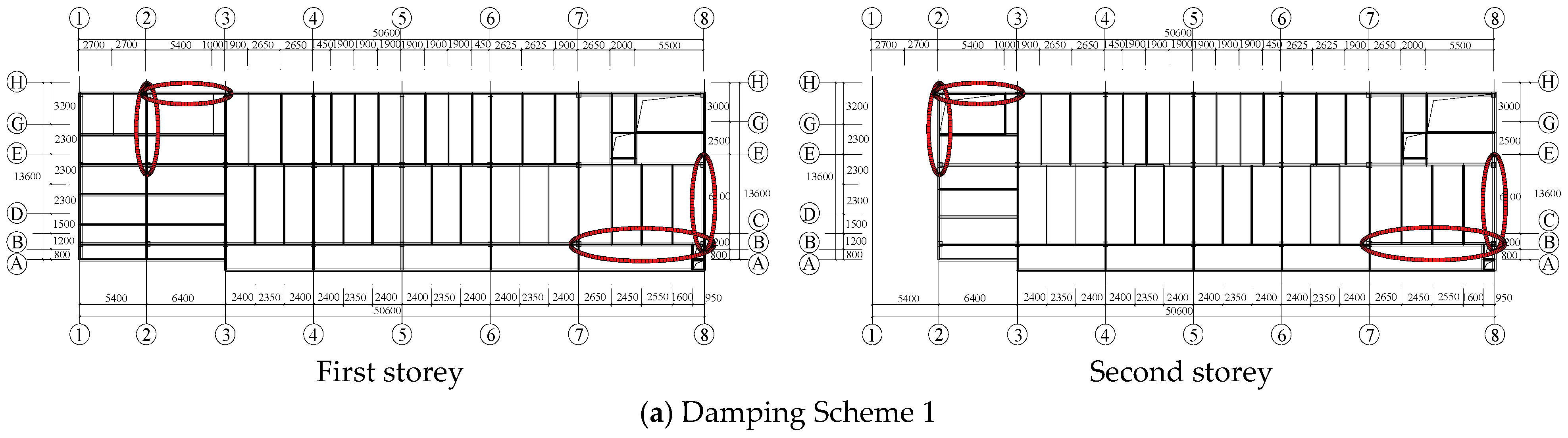
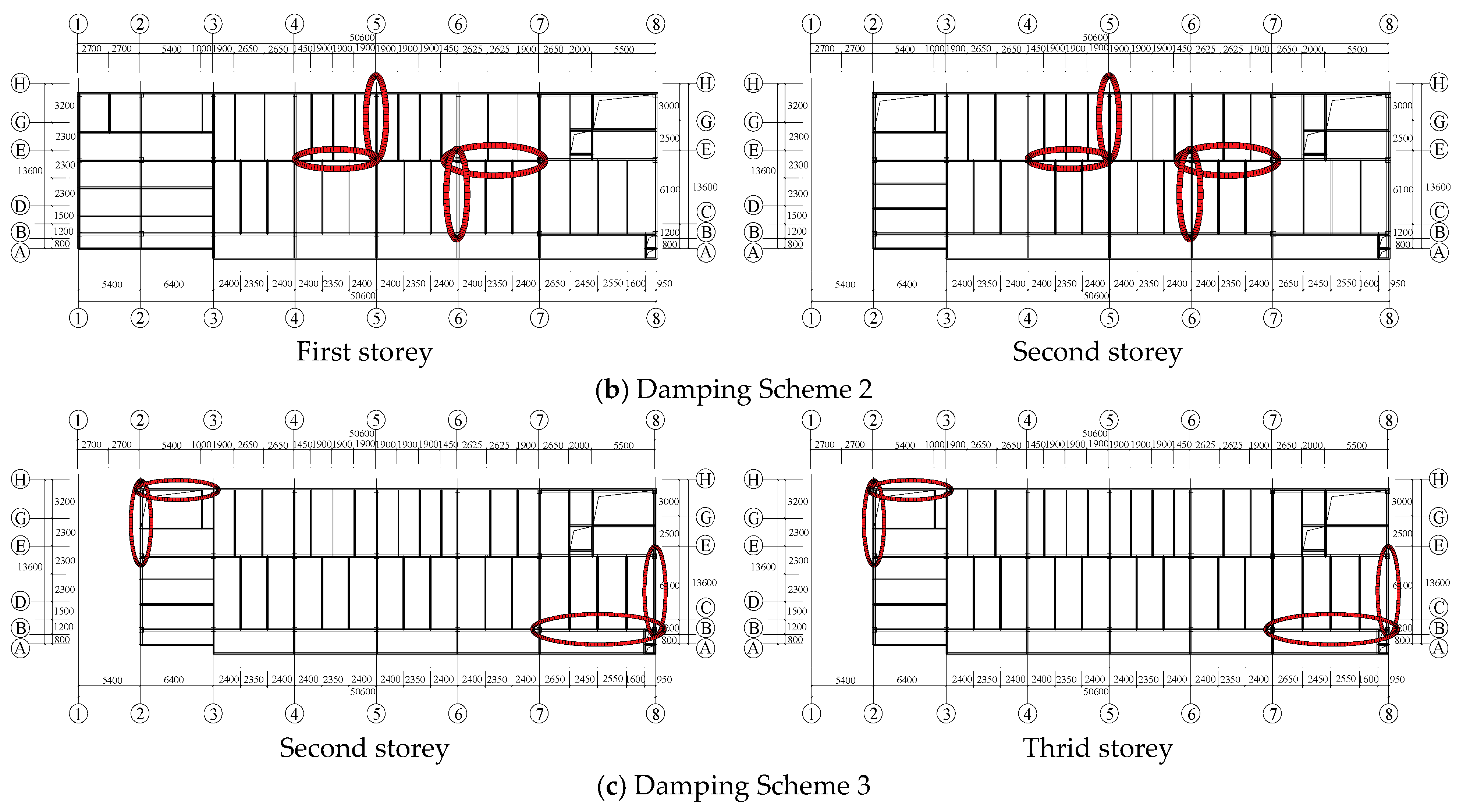
2. Meanwhile, the planar arrangement of dampers should follow the symmetry principle, ensuring that the framework with viscous damper installation possesses good symmetry to guarantee the uniformity of dissipative devices’ effects and the coordination of structural response. Through the aforementioned design method and layout strategy, three damping schemes that satisfy the damping objectives are finally determined, as shown in
Figure 7. The selected mechanical parameters of the dampers are as follows:
C = 100 kN/(m/s)
α,
α = 0.3.
To systematically investigate the influence of viscous damper placement on the structural dissipative devices’ damping effectiveness, this study designed three different damping schemes for comparative analysis, as shown in
Figure 8. Schemes 1 and 2 both deploy four dampers on the first and second storeys, respectively, with identical total damper quantities, but they differ in their planar arrangement positions: Scheme 1 places the dampers at the structural perimeter locations, while Scheme 2 positions the dampers near the structural center. Scheme 3 deploys four dampers on the second and third storeys, respectively, with all dampers positioned at the structural center locations.
Through comparative analysis of the dynamic response results from Schemes 1 and 2, the influence patterns of damper planar position variations on structural dynamic responses can be effectively evaluated, thereby determining the optimization strategies for damper planar arrangement. Meanwhile, through comparative analysis of the results from Schemes 2 and 3, since both schemes have identical damper planar positions but different vertical storey arrangements, the influence mechanisms of damper vertical position variations on structural dynamic performance can be investigated in depth.
4.3. Scheme Implementation Details
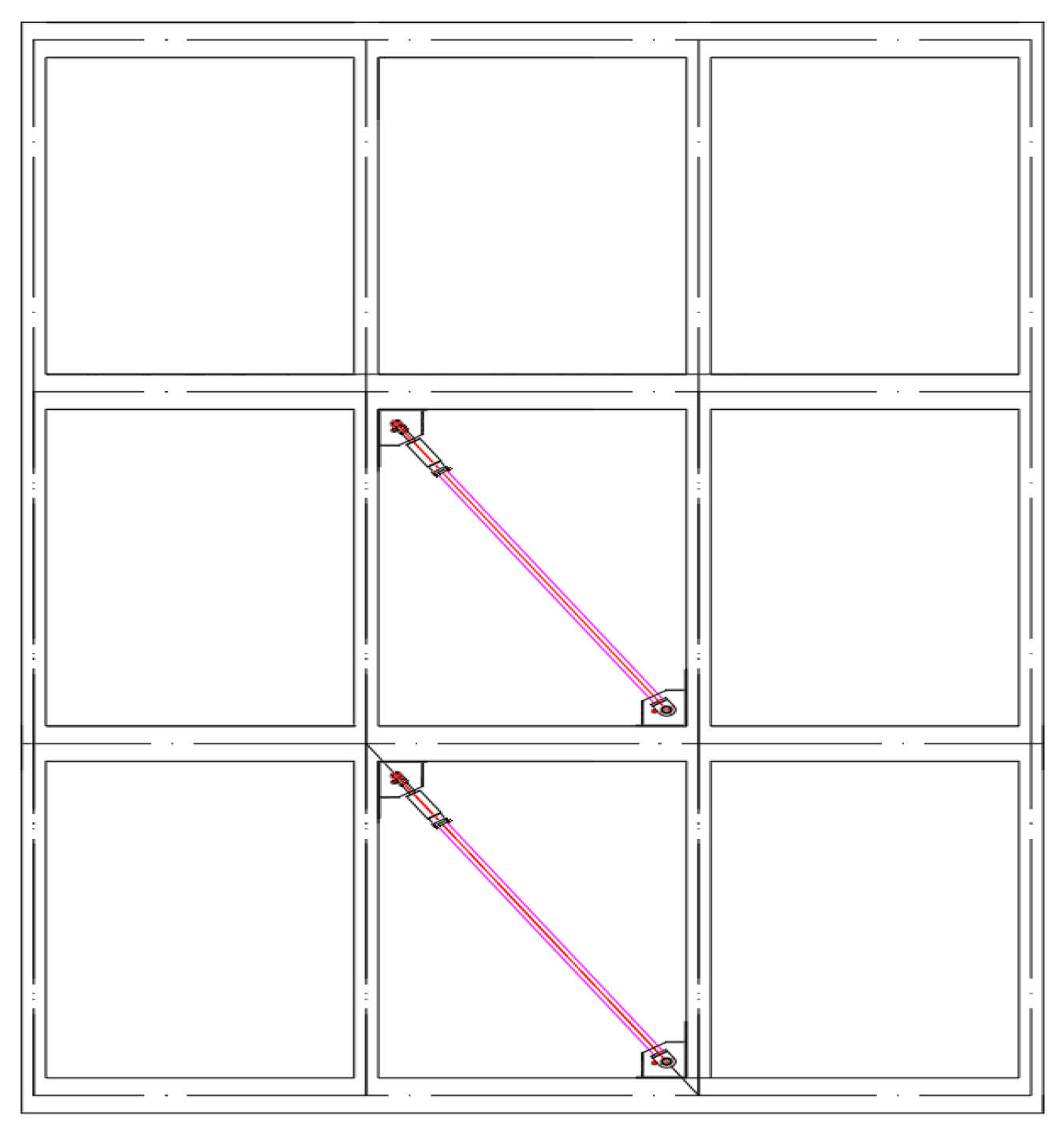
In the connection method between viscous dampers and the main structure, this study adopts diagonal bracing as the connection form. As shown in
Figure 9, the elevation view illustrates the typical arrangement of viscous dampers with diagonal bracing connection. The diagonal bracing connection method possesses the following significant advantages: First, diagonal bracing offers high flexibility in arrangement, allowing rational configuration according to building functional requirements and structural layout characteristics, thereby avoiding substantial impacts on building functional use. Second, this connection method provides a clear force transmission path with distinct force mechanisms, enabling the damping forces generated by the dampers to be effectively transmitted to the main structure through the bracing, ensuring the reliability of the energy dissipation device system. Finally, diagonal bracing features relatively simple installation processes with good construction convenience, facilitating project implementation and quality control.
Based on the aforementioned advantages, the diagonal bracing connection method can ensure damping effectiveness while simultaneously considering the economic efficiency and practicality of the project. The dampers are connected to the frame beam-column joints through diagonal bracing, and under seismic action, structural inter-storey deformation drives the dampers to generate relative motion, dissipating seismic input energy through the velocity-dependent characteristics of the dampers, thereby effectively reducing the structural dynamic response.
5. Seismic Performance Analysis of Damped Models
5.1. Effectiveness Analysis of Dissipative Devices
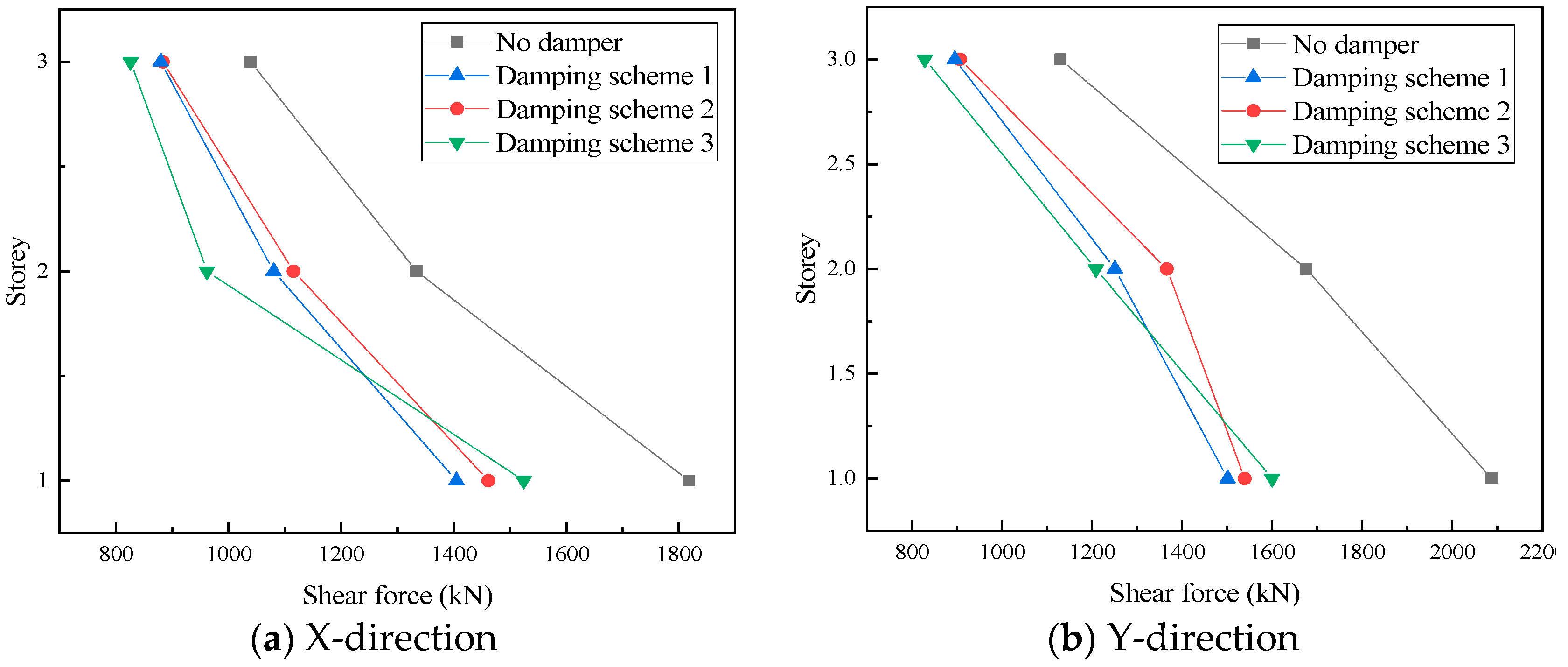
Based on the comparative analysis results of storey shear forces for different damping schemes, the dissipative devices’ effect of viscous dampers is significant. From the data in
Figure 10, it can be observed that compared to the structure without a viscous damper, all three damping schemes can effectively reduce the seismic shear force response of each storey, fully demonstrating the excellent damping performance of viscous dampers.
Through comparative analysis of Scheme 1 (perimeter arrangement) and Scheme 2 (central arrangement), it can be found that the planar position of dampers has a certain influence on the dissipative devices’ effectiveness. The comparative analysis indicates that the dissipative devices’ effect of Scheme 1 is significantly superior to that of Scheme 2, particularly demonstrating more prominent performance in storey shear force control for the ground storey and second storey. Under X-direction seismic action, the shear force reduction rates for the ground storey and second storey in Scheme 1 reach 19.6% and 16.4%, respectively, while Scheme 2 achieves only 17.2% and 11.5%. Similarly, although dampers are arranged on the first and second storeys, they still exhibit dissipative devices’ effects on the third storey. This is primarily because the dampers can more effectively control the overall deformation pattern of the structure, exerting greater energy dissipation effects in the core areas where structural deformation is concentrated.
Comparing Scheme 2 (first and second storey arrangement) and Scheme 3 (second and third storey arrangement) allows for in-depth analysis of the influence pattern of damper vertical positioning. Under X-direction action, the storey shear forces for each storey in Scheme 3 are 1524.758, 961.926, and 826.198 kN, respectively. Compared to Scheme 2, it demonstrates superior performance in shear force control for the second and third storeys, with dissipative devices’ effectiveness improvements of 1.6% and 6.1%, respectively, while the ground storey force shows a slight increase compared to Scheme 2, with an increment of approximately 1.3%. It is noteworthy that although Scheme 3 places dampers on the second and third storeys storey shear force of the first storey still shows a significant reduction compared to the structure without viscous damper, achieving a damping rate of 18.3%, demonstrating the effectiveness of dampers for overall structural vibration reduction. This phenomenon indicates that placing dampers on lower storeys can more effectively control ground storey shear force response, while placement on higher storeys results in more significant dissipative devices’ effects for upper storeys, reflecting the “proximity control” mechanism of dampers.
Comprehensive analysis indicates that the damping rates of all three damping schemes range between 15 and 30%, effectively validating the engineering practicality of the viscous damper. This reduction in ground storey shear force has significant implications for structural design: on one hand, it can reduce the reinforcement requirements for critical ground storey components and optimize cross-sectional design; on the other hand, it helps improve the seismic safety margin of the structure and enhance the structure’s collapse resistance capacity under rare earthquakes. The results show that different damper arrangement schemes exhibit the same variation trend in controlling storey acceleration and storey shear force. Both the planar position and vertical position of dampers have important effects on dissipative devices’ effectiveness, with the vertical position having a more significant influence. In practical engineering design, it is necessary to comprehensively consider structural dynamic characteristics, seismic action features, and architectural functional requirements, achieving optimal dissipative devices’ effects through optimization of damper spatial arrangement.
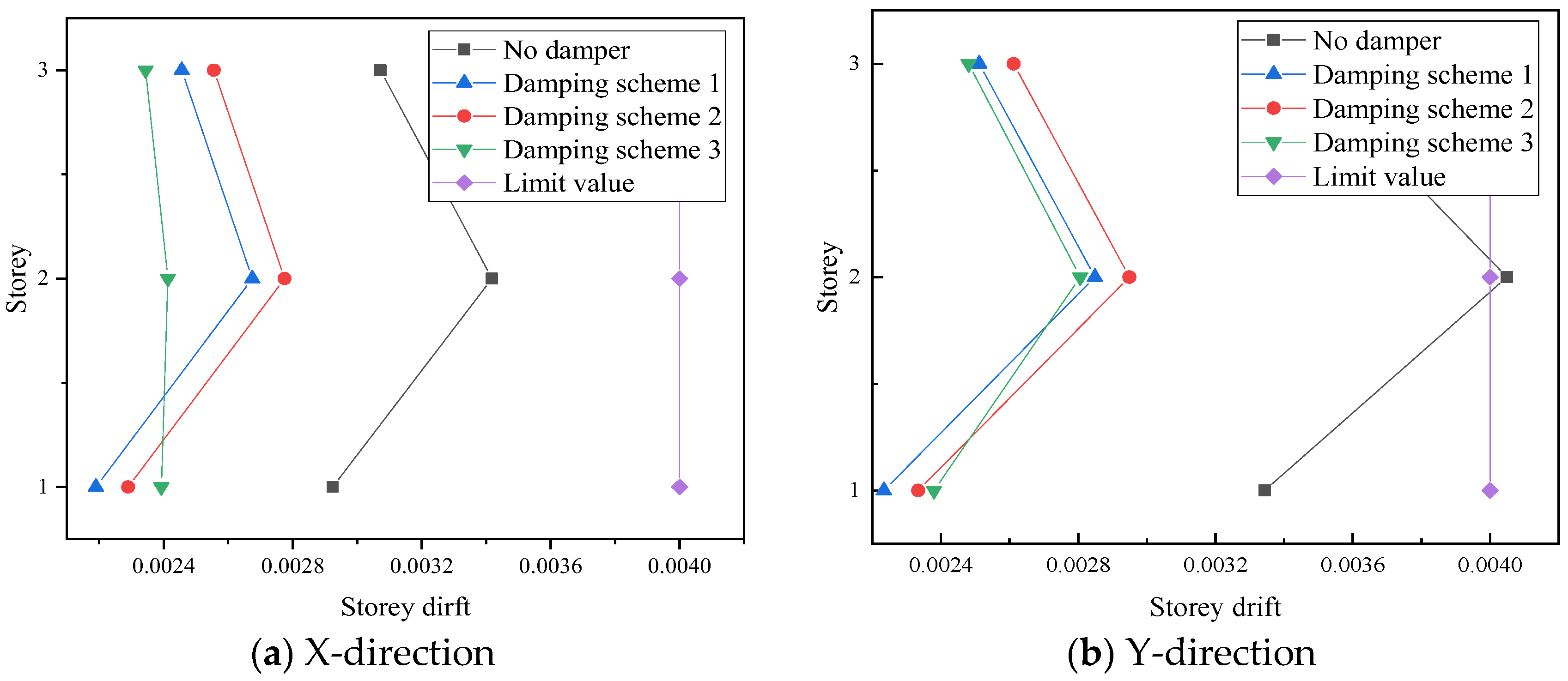
Based on storey drift data analysis, all three damping schemes demonstrate excellent displacement control effects, with storey drift for each scheme being significantly smaller than the code limit of 0.0040, with a maximum value of only 0.0030, providing a sufficient safety margin, as shown in
Figure 11. It is noteworthy that while Scheme 1 (perimeter arrangement) shows significantly superior dissipative devices’ effectiveness compared to Scheme 2 (central arrangement) in storey shear force analysis, both schemes exhibit identical dissipative devices’ effects in storey drift control. Comparing the storey drift between Scheme 2 and Scheme 3 reveals that Scheme 3 achieves superior drift dissipative devices’ effectiveness for the second and third storeys compared to Scheme 2, with average damping rates in the X-direction improving from 19.0% to 22.0%, and in the Y-direction from 27.2% to 28.2%. From the distribution characteristics of storey drift, the structure without viscous dampers exhibits peak drift at the second storey, and all damping schemes can effectively reduce these peaks, with Scheme 3 demonstrating the most outstanding performance in controlling critical storey drift. However, it should be noted that Scheme 3’s control effectiveness for first-storey drift is inferior to that of Schemes 2 and 1, indicating that different damper arrangement schemes exhibit variations in control effectiveness across different storeys, requiring comprehensive consideration of overall dissipative devices’ effectiveness and storey-by-storey control balance in practical engineering applications. From the distribution characteristics of storey drift, the structure without viscous dampers exhibits peak drift ratios at the second storey, and all damping schemes can effectively reduce these peaks, with Scheme 3 demonstrating the most outstanding performance in controlling critical storey drift.
5.2. Damper Energy Dissipation Analysis
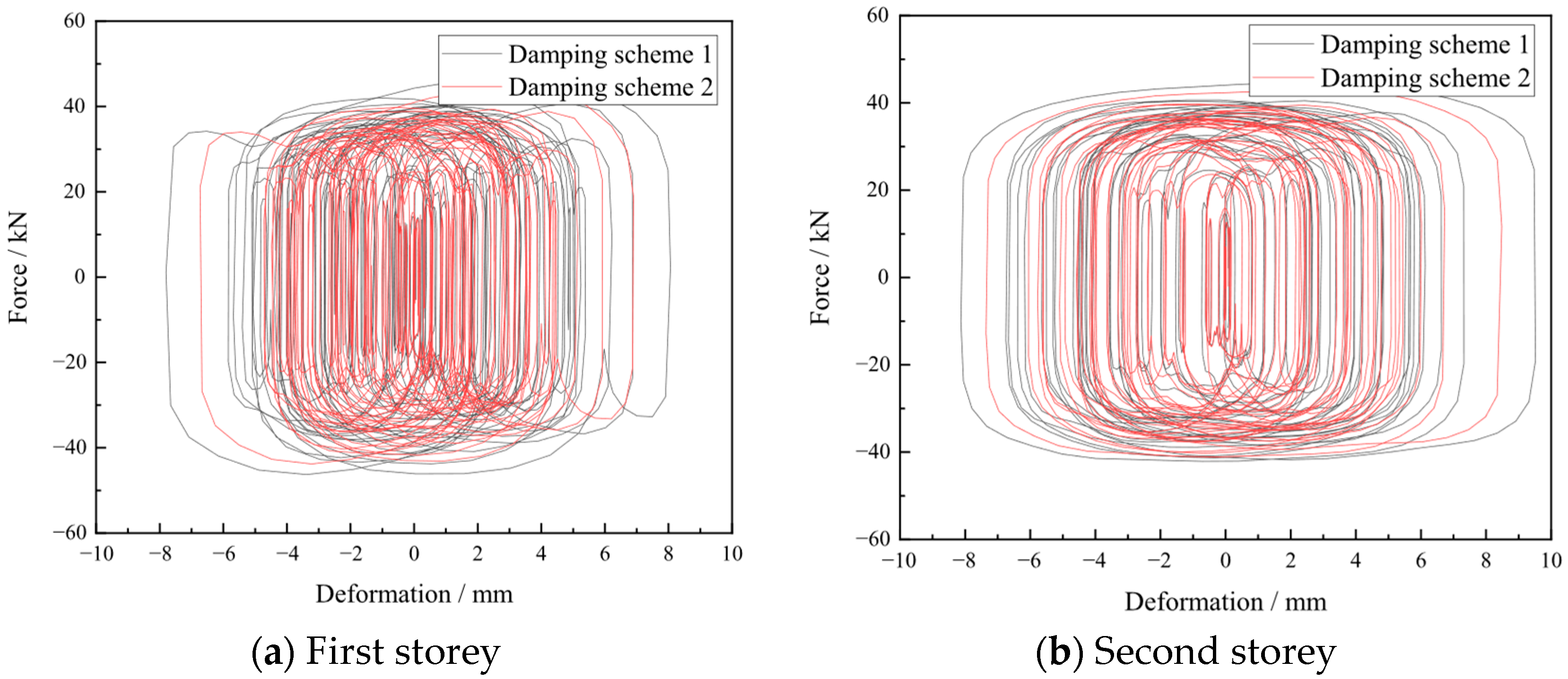
It can be observed that the dampers in both damping schemes exhibit excellent energy dissipation characteristics from
Figure 12, with full and stable hysteresis loops. Significant differences exist in the hysteretic performance of dampers between Scheme 1 (perimeter arrangement) and Scheme 2 (central arrangement) on the same storeys, which directly reflects the influence of different arrangement strategies on damper working efficiency.
In the first-storey damper performance comparison, the hysteresis loops of dampers in Scheme 2 (central arrangement) are relatively more concentrated; the hysteresis loops of dampers in Scheme 2 (central arrangement) are fuller and regular, with a maximum deformation amplitude of approximately 8 mm and a peak force reaching around 45 kN. The deformation amplitudes are similar, but the hysteresis loop areas are significantly larger, indicating higher energy dissipation efficiency per unit deformation. This phenomenon demonstrates that perimeter arrangement can more effectively utilize the inter-storey drift of the structure, enabling dampers to achieve greater energy dissipation under the same deformation conditions.
In the second-storey damper performance comparison, there are also certain differences between the two schemes. In Scheme 1, the dampers with central arrangement on the second storey achieve deformation amplitudes of 7–8 mm, with peak forces increased to over 40 kN, and significantly fuller hysteresis loops. In Scheme 2, the dampers with perimeter arrangement on the second storey have deformation amplitudes of approximately 6–7 mm, with peak forces of about 40 kN, and relatively narrower hysteresis loops. This indicates that the perimeter arrangement scheme can more fully activate the working potential of the dampers.
From the overall characteristics of the hysteresis curves, the dampers in both schemes maintain good stability. However, the dampers with perimeter arrangement in Scheme 1 exhibit more regular hysteresis loop shapes and more stable hysteretic paths, which not only facilitates improved energy dissipation efficiency but also helps ensure the reliability of dampers during long-term service. Combined with the aforementioned analysis results of storey shear forces and drift, the central arrangement scheme achieves superior overall seismic reduction effects by optimizing the working states of dampers, validating the significant influence of arrangement patterns on the performance of energy dissipation device systems.
Through comparative analysis of energy data from the three damping schemes, it can be observed that the placement of dampers has a significant impact on the damping reduction effectiveness, as shown in
Table 2. From the perspective of additional damping ratio, a key evaluation parameter, Scheme 3 demonstrates the most superior performance, achieving an average additional damping ratio of 2.99%, with the X-direction additional damping ratio reaching as high as 3.66%, significantly outperforming Scheme 1 (2.79%) and Scheme 2 (2.63%). This result indicates that positioning dampers at the central locations of higher storeys (second and third storeys) can more effectively utilize the structural deformation characteristics under seismic action, thereby achieving superior damping reduction effectiveness.
Further analysis of the energy dissipation mechanisms of each scheme reveals that although the seismic input energy is essentially identical across the three schemes, significant differences exist in damper working efficiency. The dampers in Scheme 3 achieve energy dissipation of 45911.82 (kN × mm) and 52307.63 (kN × mm) in the X- and Y-directions, respectively, representing the highest values among all three schemes, which corroborates its superior additional damping ratio performance. In contrast, although Schemes 1 and 2 employ the same number of dampers and are both positioned at lower storeys, their seismic reduction effectiveness differs due to variations in planar positioning: Scheme 1 with perimeter placement demonstrates better performance in the X-direction (3.21%), while Scheme 2 with central placement exhibits relatively weaker overall effectiveness, particularly with a Y-direction additional damping ratio of only 2.10%.