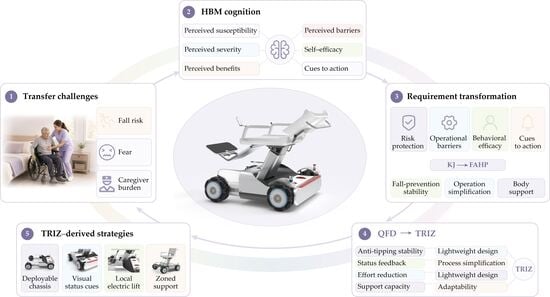
1. Introduction
Population ageing has become a global challenge, leading to an increasing number of older adults with functional limitations associated with stroke, chronic diseases, and osteoarticular disorders. These demographic and health-related changes have increased the demand for long-term care services and assistive devices [
1,
2]. Daily transfer activities among this population are characterized by high frequency, complex postural transitions, and pronounced spatial constraints. Multiple risks, including falls, slipping, pinching injuries, and low-back injuries among caregivers often accompany them.
In recent years, international scholars and research institutions have conducted extensive studies on transfer assistive equipment and robotic systems for individuals with lower-limb mobility impairment and dependent older adults. For example, RIKEN in Japan developed the Robot for Interactive Body Assistance, RIBA, a nursing-care assistant robot that uses a dual-arm holding structure and a compliant tactile outer shell to assist bed-to-wheelchair transfers, thereby reducing caregivers’ physical burden and improving the safety of human–robot contact [
3]. Grindle et al. proposed a Robotic Assisted Transfer Device, RATD, integrated into a wheelchair platform. This system uses a robotic arm, body support structure, and auxiliary control system to assist users in transferring among a wheelchair, bed, and toilet, emphasizing the enhancement of users’ independent transfer ability based on personal mobility devices [
4]. Lee et al. developed a sit-to-stand assistive device for older adults and people with disabilities. They used pressure sensors to monitor the human support state, demonstrating its potential application in sit-to-stand assistance [
5]. Sang et al. proposed a novel wheelchair–stretcher assistive robot for nursing transfer between wheelchairs and stretchers and evaluated its transfer feasibility through structural design and experimental verification [
6]. Wu et al. designed a traction-assisted transfer robot that supports users in completing a continuous transfer process from sitting to standing and short-distance movement through the coordinated action of forward traction, trunk support, and a mobile chassis [
7]. Cheng et al. conducted a systematic review of transfer nursing robots, summarized different technical routes such as holding-and-carrying, standing-assistance, and mobile-transfer systems, and identified key technologies and future development trends in terms of mechanism design, drive control, human–machine interaction, and safety assurance [
8].
Although these technical approaches have become increasingly diversified, studies on user requirements and interaction evaluation suggest that older adults’ acceptance of assistive robots depends not only on task completion, but also on mobility support, safety assurance, operational convenience, perceived safety, and trust. These factors collectively influence user experience, acceptance intention, and behavioral cooperation [
9,
10]. However, existing studies have primarily focused on structural implementation, control strategies, and mechanical safety. At the same time, insufficient attention has been paid to psychological and behavioral factors during transfer, such as fear of falling, risk perception, operational trust, and willingness to cooperate. As a result, current research remains limited in explaining how user concerns emerge, how trust is established, and why cooperation varies across real use contexts.
This study argues that transfer is not merely the spatial relocation of the body, but a high-risk, context-dependent health behavior shaped by physical function, environmental conditions, equipment support, caregiver coordination, and risk perception. Transfer usually involves a sequence of actions, including seated postural adjustment, center-of-gravity shifting, body support, and caregiver-assisted coordination. Users may experience fear, hesitation, and dependence because of insufficient muscle strength, reduced balance ability, previous fall experiences, or unfamiliarity with equipment operation. These psychological responses may further lead to defensive trunk retraction, excessive gripping, and reduced movement coordination, thereby increasing the risks of falls, slipping, pinching injuries, and low-back injuries among caregivers [
11]. To address these issues, this study introduces the Health Belief Model (HBM) as a theoretical framework. The model posits that perceived susceptibility, perceived severity, perceived benefits, perceived barriers, cues to action, and self-efficacy jointly influence individuals’ health-related behavioral decisions. Therefore, it provides a theoretical basis for interpreting fear of falling, risk judgment, operational trust, and behavioral cooperation among individuals with lower-limb mobility impairment in transfer-assistance contexts [
12].
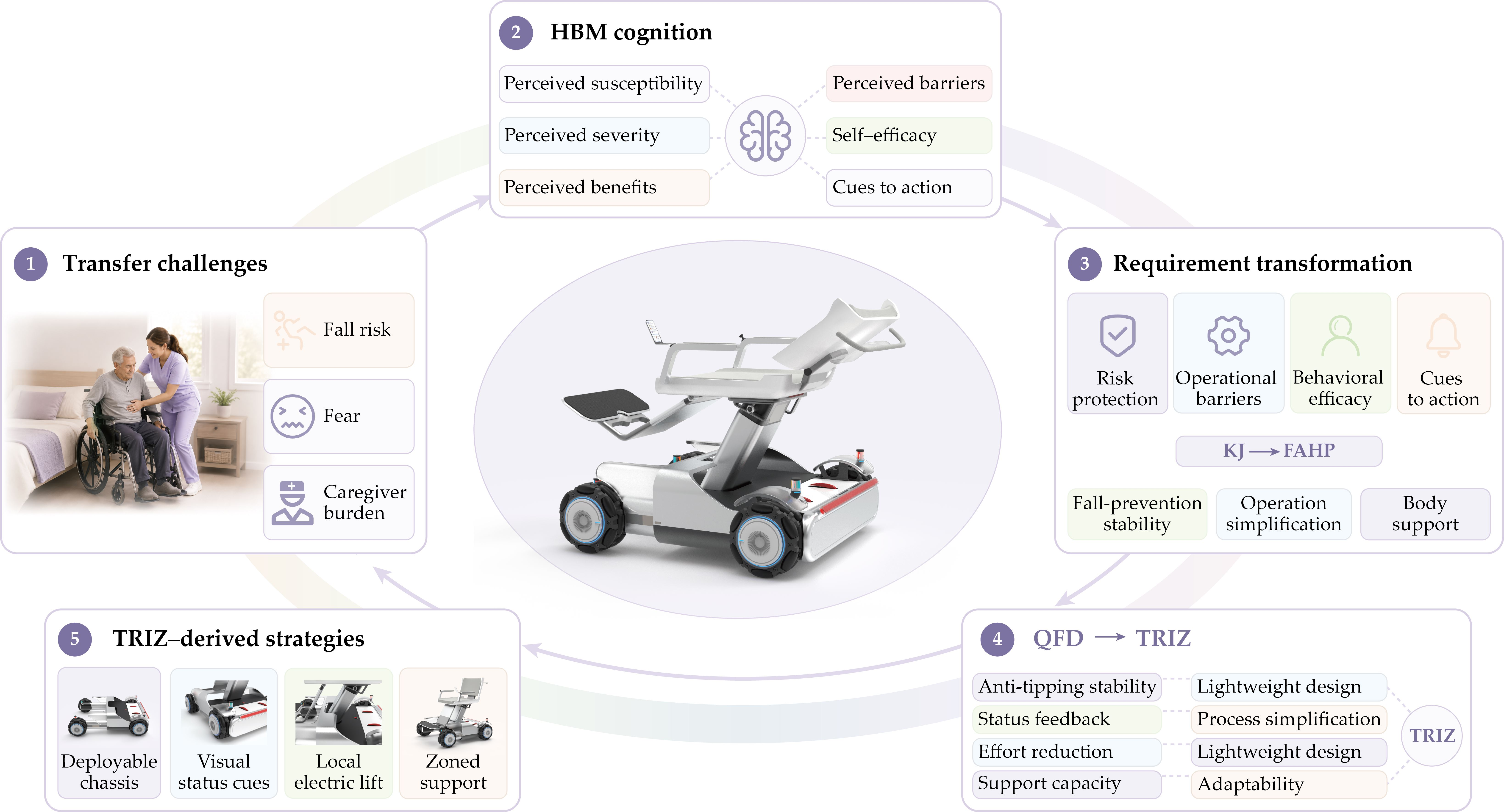
In this study, the HBM is further extended from a behavioral interpretation framework to a front-end requirement-identification and engineering-transformation framework, enabling users’ transfer-related risk perceptions, behavioral barriers, and cooperation needs to be systematically translated into design requirements and technical strategies. The main contributions are threefold, with the primary contribution lying in the proposed methodological framework. First, this study introduces an HBM-based analytical framework to interpret transfer-related behaviors and identify design requirements associated with perceived safety and behavioral cooperation. Second, it develops a traceable requirement transformation process by integrating the KJ method, Fuzzy Analytic Hierarchy Process (FAHP), Quality Function Deployment (QFD), and Theory of Inventive Problem Solving (TRIZ), thereby linking psychological and behavioral factors with technical characteristics and structural optimization strategies. Third, it proposes a conceptual design scheme for transfer assistive equipment as an application case and preliminarily assesses it using JACK digital human simulation and multi-stakeholder assessment, providing design feedback for subsequent optimization.
2. Materials and Methods
2.1. Research Framework
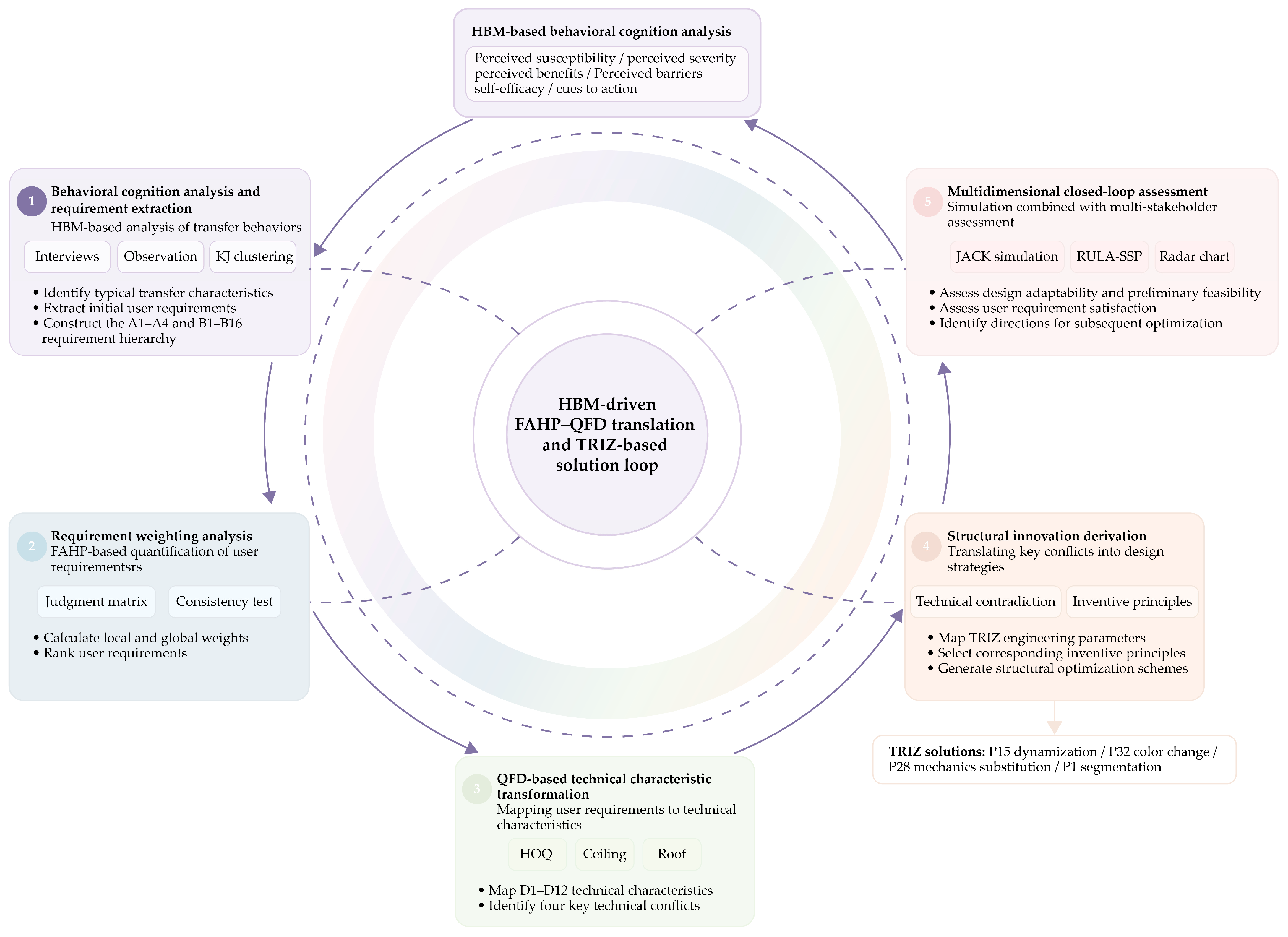
To improve the rigor and traceability of transforming users’ psychological cognition and behavioral requirements into mechanical structural solutions, this study established the research framework shown in
Figure 1.
Here, traceability refers to the extent to which each design decision can be followed through identifiable inputs, transformation methods, decision makers, decision rules, and outputs across the requirement-transformation process.
First, behavioral cognition analysis and requirement extraction were conducted. Using the Health Belief Model as the theoretical framework, this step identified defensive behavioral characteristics and core requirements driven by fear of falling.
Second, requirement hierarchy construction and weight analysis were performed. The KJ method was used to cluster and summarize original user requirements, thereby constructing a hierarchical model of user requirements. The Fuzzy Analytic Hierarchy Process was then applied to calculate the importance weights of each requirement indicator.
Third, technical characteristic transformation and conflict identification were carried out. A Quality Function Deployment-based House of Quality was established to clarify the key technical conflicts generated during the transformation from user requirements to technical characteristics.
Fourth, structural scheme derivation was conducted. The conflicts identified through Quality Function Deployment were transformed into standard TRIZ engineering parameters, and corresponding design strategies for the core structure were generated using the contradiction matrix [
13].
Finally, preliminary conceptual assessment and feedback were performed. A preliminary ergonomic and stakeholder assessment approach combining JACK digital human simulation and multi-stakeholder assessment was adopted to preliminarily assess the postural adaptability, static strength risk, and user requirement satisfaction of the proposed scheme under specified working conditions at the conceptual design stage. Based on these preliminary assessment results, this study identified subsequent directions for structural optimization.
2.2. Participants and Data Collection
This study developed an interview guide based on the six core constructs of the Health Belief Model. Field observations and semi-structured interviews were conducted with 16 individuals with lower-limb mobility impairment from three community-based older adult care service centers in Wuhan, China [
14]. The investigation focused on users’ physical movement patterns during transfer processes, perceived fall risk, barriers to equipment use, caregiver coordination methods, and requirements for status prompts. Because this study focused on exploratory requirement identification rather than statistical inference, this sample size was considered suitable for identifying typical transfer behaviors, perceived risks, operational barriers, and initial design requirements for subsequent requirement clustering and transformation.
Among the participants, 7 were male, and 9 were female. Five participants were aged 60–69 years, seven were aged 70–79 years, and four were aged 80 years or above. Most participants relied on wheelchairs or walking aids for daily activities. They generally had varying degrees of lower-limb mobility limitation and required partial assistance or environmental support during daily transfer activities, such as moving between a wheelchair, bed, chair, or toilet. Several participants also reported concerns about instability, insufficient support, or fear of falling during transfers. Considering potential differences in verbal expression and cognitive status among some older participants, five caregivers were also present during the interviews. Caregiver comments were used only as supplementary clarification of users’ statements and observed behaviors, rather than as independent user data. This helped improve the accuracy and completeness of the collected information.
2.3. HBM-Based Requirement Identification
The Health Belief Model (HBM) is a health behavior interpretation model originally proposed and gradually developed by Hochbaum, Rosenstock, and other scholars in the context of public health service practice in the 1950s [
15]. Janz et al. divided the HBM into two components: perceived threat and behavioral evaluation. Perceived threat includes perceived susceptibility and perceived severity, while behavioral evaluation includes perceived benefits, perceived barriers, self-efficacy, and cues to action [
16]. According to the HBM, an individual’s health behavior depends on their perception of health threats and their weighing of the benefits and barriers associated with taking action. As noted in the Introduction, the HBM was selected because it provides a suitable theoretical lens for interpreting fall-related risk perception, avoidance tendencies, and action barriers during transfer activities.
In this process, the six HBM constructs were used as guiding categories to interpret the interview and observation data, from which transfer-related behavioral characteristics and corresponding user requirements were summarized. The mapping relationships among HBM constructs, transfer behavioral characteristics, and design requirements were established through research team discussion. Given the exploratory purpose of front-end requirement identification, this study did not aim to claim theoretical saturation, but to provide representative requirement cues for subsequent clustering, weighting, and design transformation.
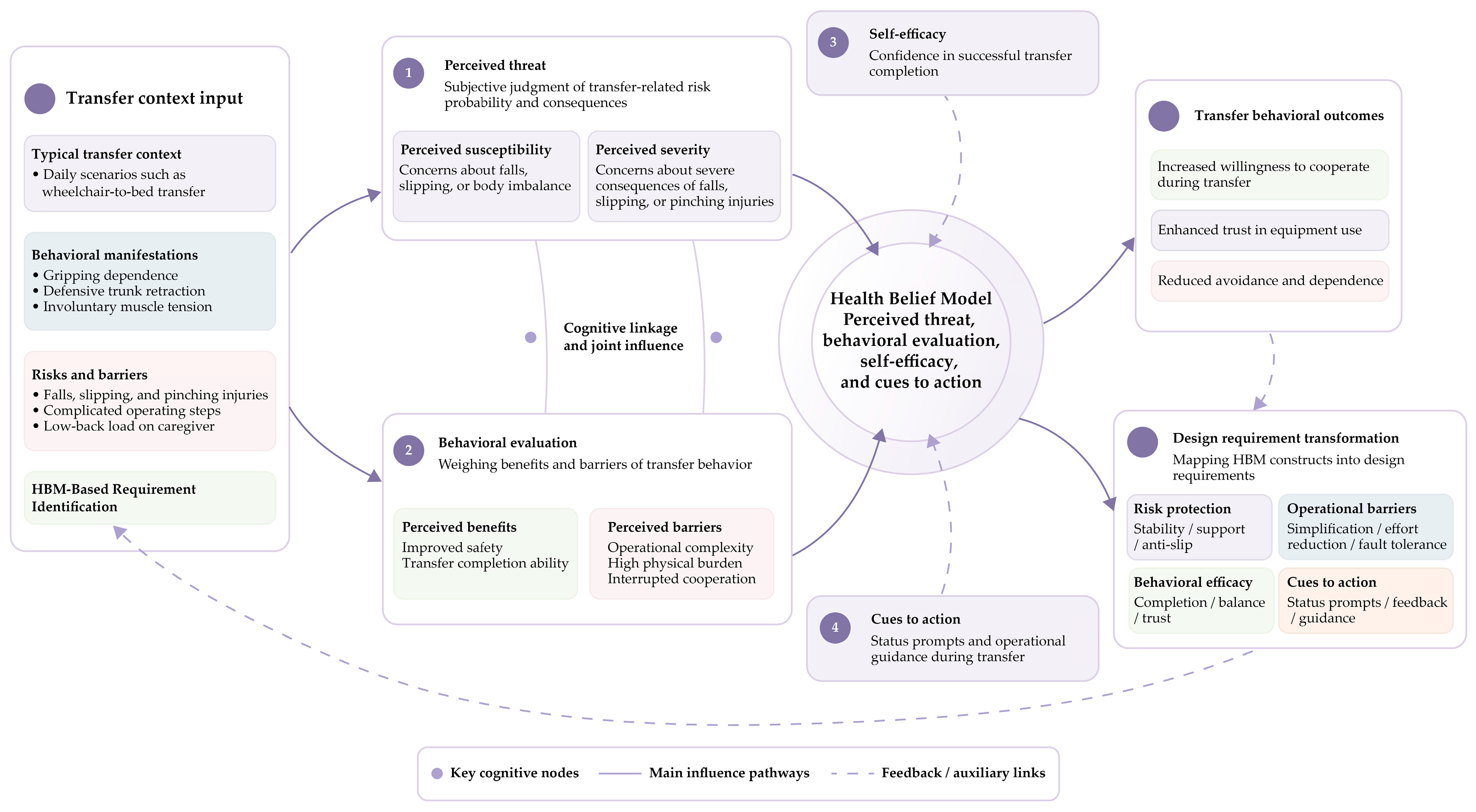
To further clarify the role of the HBM in front-end requirement identification for transfer assistive equipment, this study constructed an analytical framework linking “health belief constructs–transfer behavioral characteristics–design requirements”, as shown in
Figure 2.
2.4. Requirement Weighting Based on KJ and FAHP
To systematically transform original user requirements into quantifiable design indicators, this study adopted a requirement weighting method combining the KJ method and the Fuzzy Analytic Hierarchy Process (FAHP). Based on field observation records and semi-structured interview data, requirement statements related to risk protection, operational barriers, behavioral support, and information feedback during transfer processes were extracted. The KJ method was then used to conduct semantic merging, clustering, and integration of the original requirements, thereby constructing a hierarchical model of user requirements for transfer assistive equipment [
17].
Since the subsequent judgment of requirement weights involved not only user experience, but also clinical safety, caregiving practice, human–machine adaptability, and engineering feasibility, three rehabilitation therapists, four caregivers, and six technical personnel were invited to participate in indicator revision and importance ranking. The evaluation subjects conducted pairwise comparisons of criterion-layer and indicator-layer requirements from the perspectives of design evaluation, caregiving operation, structural feasibility, and barriers to use [
18].
To reduce subjectivity and uncertainty in the requirement judgment process, this study employed FAHP to calculate user requirement weights. By introducing triangular fuzzy numbers into the traditional Analytic Hierarchy Process, FAHP can more accurately express interval-based judgments of requirement importance and is well suited to handling fuzziness in multi-stakeholder assessment [
19].
2.4.1. Triangular Fuzzy Judgment Matrix
In this study, triangular fuzzy numbers were used to represent the relative importance among indicators at the same hierarchical level. The importance of indicator
relative to indicator
is expressed in Equation (1):
the triangular fuzzy judgment value of indicator
relative to indicator
;
represent the lower bound, most likely value, and upper bound of the judgment value, respectively, satisfying
.
According to Saaty’s 1–9 scale, as shown in
Table 1, a triangular fuzzy judgment matrix was constructed for pairwise comparisons among indicators at the same hierarchical level, as expressed in Equation (2):
where
denotes the number of indicators involved in the comparison at the same hierarchical level. The judgment matrix satisfies the reciprocal property. Specifically, when
,
; when
, the reciprocal relationship is expressed as follows:
.
2.4.2. Aggregation of Multi-Stakeholder Judgments
Since this study involved multiple evaluation subjects, the geometric mean method was used to aggregate multi-stakeholder judgments in order to reduce subjective bias from any single evaluator [
20]. Let the judgment value provided by evaluator
be a triangular fuzzy number, as expressed in Equation (3):
where
denotes the importance judgment value assigned by evaluator
for indicator
relative to indicator
;
, and
denotes the number of evaluation subjects.
The aggregated triangular fuzzy judgment value was calculated using Equation (4):
where
denotes the triangular fuzzy judgment value after multi-stakeholder aggregation. Taking the criterion layer as an example, the aggregated triangular fuzzy judgment matrix was constructed as shown in Equation (5). Similarly, judgment matrices were constructed for each indicator layer.
2.4.3. Consistency Test
To verify the logical consistency of the aggregated judgment matrix, the median values
of the aggregated judgment matrix were extracted to construct a crisp judgment matrix, and a consistency test was then conducted [
21]. Since all judgment matrices in this study were fourth-order matrices, the random index
was set to 0.90.
Let
denote the maximum eigenvalue of the judgment matrix and
denote the matrix order. The consistency index
was calculated using Equation (6):
The consistency ratio
was calculated using Equation (7):
When
≤ 0.10, the judgment results are considered to have acceptable consistency [
22].
2.4.4. Fuzzy Weight Calculation and Defuzzification
After the judgment matrices passed the consistency test, the fuzzy geometric mean method was used to calculate the fuzzy weight of each requirement indicator [
23]. The fuzzy geometric mean of indicator
was calculated using Equation (8):
where
denotes the fuzzy geometric mean of indicator
;
denotes the judgment value in row
and column
of the judgment matrix; and
denotes the matrix order.
The fuzzy geometric means of all indicators were further normalized to obtain the fuzzy weight of indicator
[
24], as shown in Equation (9):
where
denotes the fuzzy weight of indicator
, and
denotes the fuzzy geometric mean of indicator
.
Let
. The centroid method was used for defuzzification, as shown in Equation (10):
where
denotes the defuzzified crisp weight value of indicator
.
Finally, each crisp weight value was normalized using Equation (11):
where
denotes the local weight of indicator
, and
denotes the number of indicators involved in the evaluation at the same hierarchical level. The local weight of each indicator-layer requirement was then multiplied by the weight of its corresponding criterion-layer requirement to obtain the global weight of user requirement
.
2.5. Technical Transformation Based on QFD
Based on the literature review and interviews with technical personnel, this study translated user requirements into technical characteristics. The global weights of user requirements were imported into the left wall of the House of Quality, and the technical characteristics were placed on the ceiling of the House of Quality to construct the House of Quality for transfer assistive equipment [
25]. The six technical personnel previously involved in the study were invited to assign relationship scores through a consensus-based expert evaluation process, using a three-level scoring method of 5, 3, and 1, representing strong, moderate, and weak correlations between user requirements and technical characteristics, respectively.
To further clarify the importance of each technical characteristic, the importance of the
-th technical characteristic was calculated by combining the global weights of user requirements with the relationship strengths, as shown in Equation (12).
where
denotes the importance of the
-th technical characteristic;
denotes the global weight of the
-th user requirement;
denotes the relationship strength between the
-th user requirement and the
-th technical characteristic; and
denotes the number of user requirements.
Subsequently, the correlations among technical characteristics were marked in the roof of the House of Quality. If the improvement of one technical characteristic promoted the optimization of another technical characteristic, the relationship was judged as a positive correlation and marked with “+”. Conversely, if improving one technical characteristic negatively affected another, the relationship was judged as a negative correlation and marked with “×” [
26]. In this study, combinations of technical characteristics with relatively high importance and negative correlations were identified as key technical conflicts. In addition to the importance ranking, negative correlations that had direct implications for structural layout, safety performance, and user adaptability were also retained for subsequent TRIZ analysis.
2.6. Contradiction Solving Based on TRIZ
TRIZ, the Theory of Inventive Problem Solving, is an innovation method used to solve technical problems encountered during product development [
27]. This study converted the negatively correlated technical characteristics identified through the House of Quality into corresponding improving parameters and worsening parameters, with the parameter mapping determined through research team discussion. Based on the 39 general engineering parameters and the contradiction matrix in TRIZ, the corresponding inventive principles were then selected. These inventive principles were further translated into structural design strategies applicable to transfer assistive equipment.
2.7. Preliminary Conceptual Assessment Methods
To preliminarily assess the feasibility of the conceptual design scheme, this study adopted a preliminary conceptual assessment combining objective ergonomic simulation and subjective multi-stakeholder assessment. JACK digital human simulation software (version 8.4, Siemens PLM Software, Plano, TX, USA) was used to analyze the postural risk and static strength capability of users with different body dimensions under specified typical transfer postures.
In contrast, multi-stakeholder assessment was used to assess the overall extent to which the proposed scheme satisfied users’ psychological and behavioral requirements.
First, the three-dimensional model of the transfer assistive equipment was imported into the JACK simulation environment at a 1:1 scale to evaluate postural adaptability and ergonomic risks under typical transfer postures [
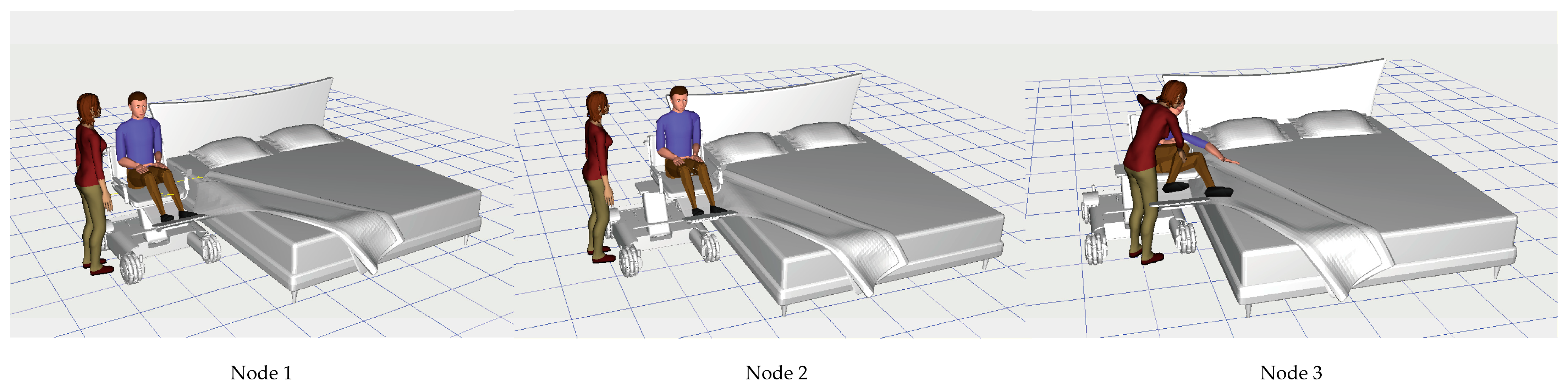
28]. Digital human models representing the 5th percentile Chinese adult female, the 50th percentile Chinese adult male, and the 95th percentile Chinese adult male were selected from the JACK database to represent small, medium, and large users, respectively. Based on the wheelchair-to-bed transfer process, three representative simulation nodes were established: initial seated support, pre-transfer support adjustment, and forward-leaning transfer toward the bed. These nodes were used to evaluate the basic support capability of the equipment, the support effect during postural transition, and human–machine adaptability and postural risk during the high-risk forward-leaning phase, respectively. The simulation was limited to representative static postures at key transfer nodes, rather than the full dynamic process of continuous transfer.
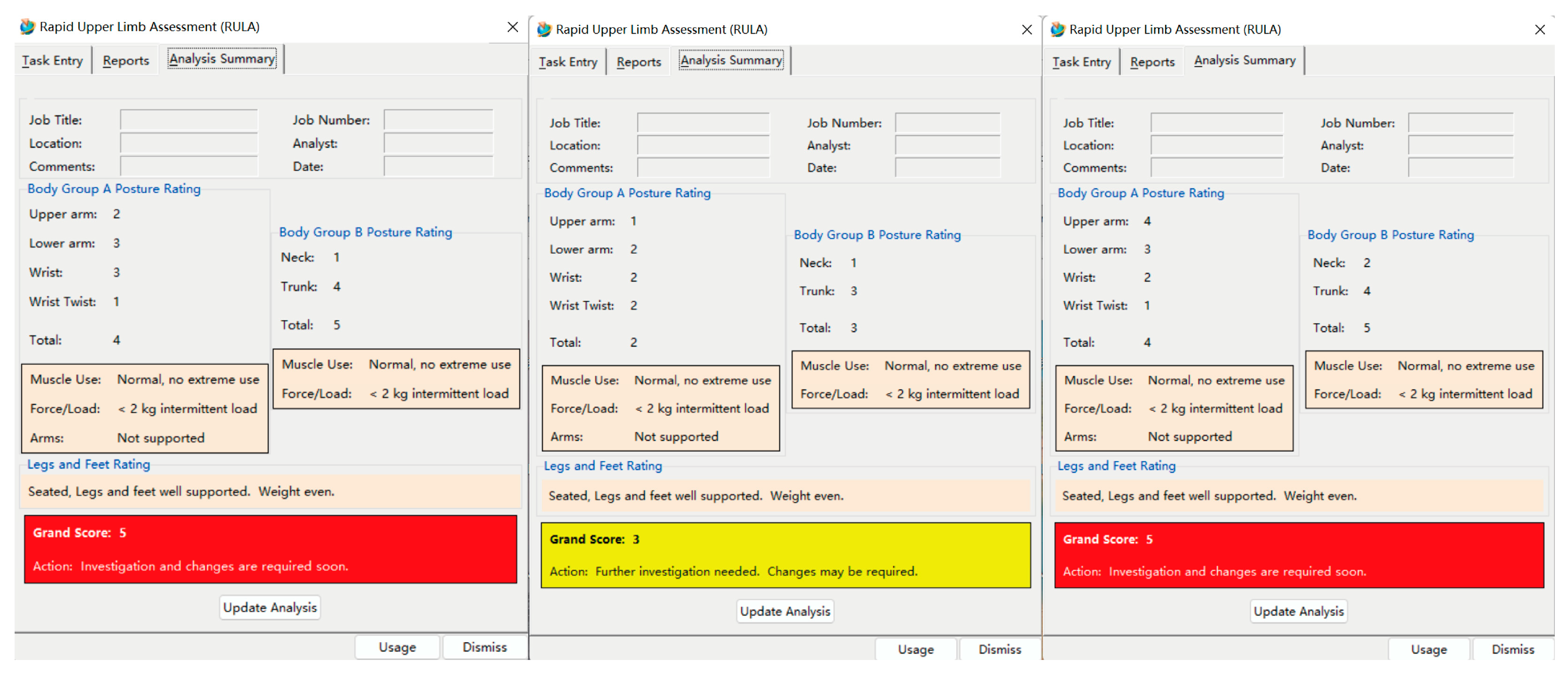
To evaluate the ergonomic performance of the transfer assistive equipment under different body dimensions and typical transfer nodes, the Rapid Upper Limb Assessment (RULA) module and the Static Strength Prediction (SSP) module in JACK software were used for analysis [
29,
30]. Therefore, the results were interpreted as a preliminary ergonomic assessment under specified body-size and posture conditions at the conceptual design stage. RULA was used to assess postural risks of the upper limbs, neck, and torso, with the total score reflecting the postural risk level. SSP was used to predict the static strength capability of the human body under the current posture and load conditions, with Percent Capable indicating the proportion of the population capable of completing the posture. During the assessment, RULA total scores were used to compare differences in postural risk across different digital human models and transfer nodes. In addition, the Percent Capable results for body regions including the wrist, elbow, shoulder, torso, hip, knee, and ankle in SSP were combined to determine the support effect of the equipment’s support structure on different body parts. In general, a higher RULA total score indicates greater postural risk. In contrast, a higher Percent Capable value indicates lower static strength risk for the corresponding body part under the current posture [
31].
This study further conducted a multi-stakeholder design assessment to assess the extent to which the conceptual scheme satisfied users’ psychological and behavioral requirements during transfer. The assessment group consisted of three rehabilitation therapists, five individuals with lower-limb mobility impairment, two caregivers, and five technical personnel. The assessment dimensions were developed based on the six core constructs of the Health Belief Model. A 0–10 Likert-type rating scale was used for each assessment dimension, where 0 indicated that the scheme did not satisfy the corresponding requirement at all and 10 indicated that the scheme satisfied the requirement very well. Before scoring, all evaluators were briefed on the proposed concept and assessment criteria to ensure a consistent understanding of the assessment dimensions. Each evaluator then completed the scoring independently, and the mean score for each dimension was calculated and visualized using a radar chart.
3. Results
3.1. Transfer Behavioral Characteristics and HBM Mapping
Field observations, semi-structured interviews, and supplementary explanations from caregivers revealed four typical categories of transfer behavior.
First, gripping dependence was evident, with an occurrence rate of 14/16 (87.5%). During the transfer process, users tended to grasp bed rails, armrests, caregivers’ clothing, or surrounding fixed objects to obtain psychological support. When the object being grasped became unstable, users were likely to show defensive responses such as tension, hesitation, and temporary interruption of cooperation.
Second, defensive trunk retraction was observed, with an occurrence rate of 10/16 (62.5%). When some users leaned forward or were assisted in being lifted, they tended to exhibit trunk retraction, shoulder elevation, and neck stiffness due to concerns about falling.
Third, involuntary muscle tension was identified, with an occurrence rate of 11/16 (68.8%). Particularly when the body was partially suspended or both feet were off the ground, users were likely to show lower-limb stiffness, excessive upper-limb gripping, and reduced movement coordination, which increased the difficulty for caregivers in completing assisted transfers.
Fourth, users showed sensitivity to equipment status, with an occurrence rate of 13/16 (81.3%). Users were highly sensitive to equipment states such as braking, chassis locking, and support-belt fixation. In the absence of clear prompts, even when the equipment was in a safe state, users might still refuse to cooperate due to uncertainty.
Based on the typical transfer behavioral characteristics summarized above, a mapping relationship between behavioral characteristics and design requirements was further constructed from the perspective of the six core constructs of the Health Belief Model, as shown in
Table 2.
As shown in
Table 2, different health belief constructs influenced users’ judgments regarding fall probability, injury consequences, and their own capability, thereby further affecting the decision-making process during transfer behavior. At the design level, these constructs were translated into design requirements such as stability protection, body support, operational burden reduction, status feedback, and behavioral support. This provided a basis for the subsequent construction of the requirement hierarchy.
3.2. User Requirement Hierarchy and Weighting Results
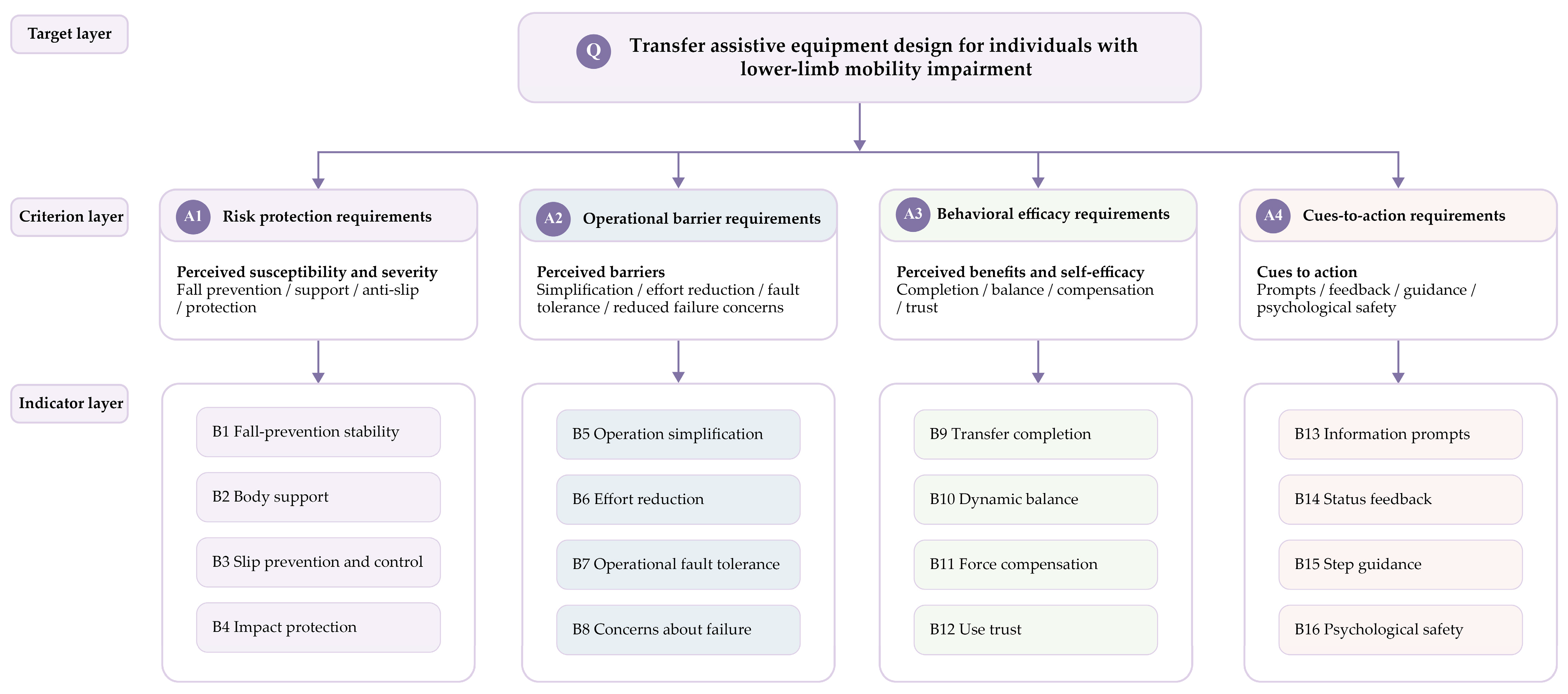
After label extraction, cluster integration, and semantic merging of the original requirement statements using the KJ method, a hierarchical model of user requirements for transfer assistive equipment was ultimately constructed. The model comprised three levels: the target layer, the criterion layer, and the indicator layer. The target layer was the overall user requirement for transfer assistive equipment, denoted as Q. The criterion layer included risk protection requirements A1, operational barrier requirements A2, behavioral efficacy requirements A3, and cues-to-action requirements A4. The indicator layer included B1–B16, comprising 16 subdivided elements, as shown in
Figure 3.
The calculated consistency ratios,
, of all judgment matrices were less than or equal to 0.10, indicating that the judgment results had acceptable consistency, as shown in
Table 3.
The local weight of each indicator-layer requirement was multiplied by the weight of its corresponding criterion-layer requirement to obtain the global weight
of each user requirement. The results and rankings are shown in
Table 4.
As shown in
Table 4, risk protection received the highest criterion-layer weight, indicating that individuals with lower-limb mobility impairment were most concerned about safety issues such as falling, slipping, and physical injury during transfer. At the indicator layer, fall-prevention stability, operation simplification, and body support ranked as the top three requirements. This suggested that transfer assistive equipment should prioritize safe support, simple operation, and continuous body support.
3.3. Technical Characteristics and Contradiction Identification Based on QFD
Based on the literature review and interviews with technical personnel, the user requirements listed in
Table 4 were translated into technical characteristics. Finally, four primary technical characteristics and twelve secondary technical characteristics were determined, as shown in
Table 5.
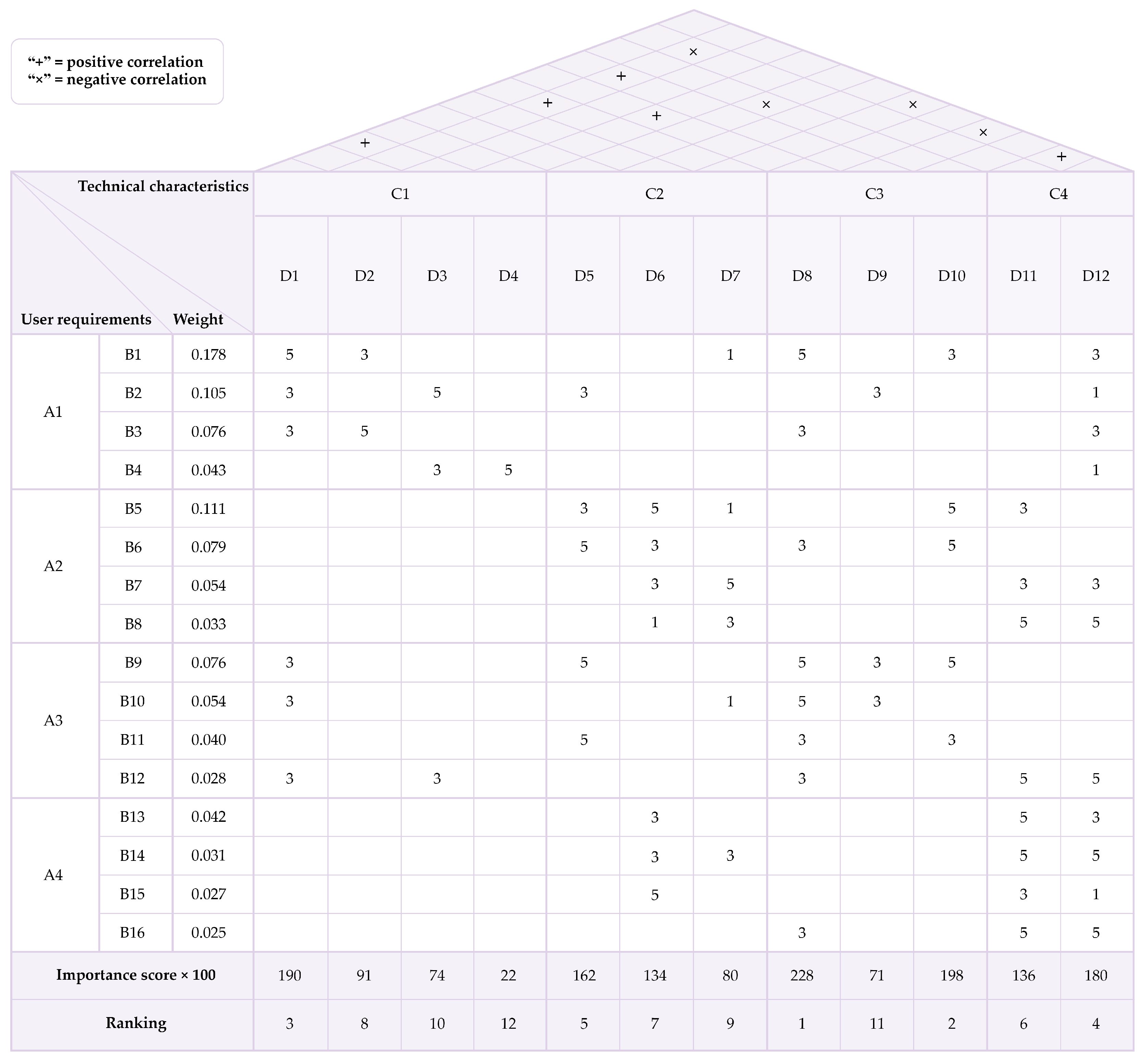
The House of Quality analysis identified four key technical contradictions: anti-tipping stability and lightweight design, status feedback and process simplification, assistance and effort reduction and lightweight design, and support-bearing capacity and human–machine adaptability, as shown in
Figure 4.
Although support-bearing capacity and human–machine adaptability were not among the highest-ranked technical characteristics in terms of individual importance, their negative correlation was considered critical because it directly affected the adaptability of the support system to users with different body dimensions. Accordingly, this contradiction was retained together with the other three conflicts as key problems to be addressed through the subsequent TRIZ-based solution process.
3.4. Design Strategy Generation Based on TRIZ
Based on the four key contradictions identified through QFD, the corresponding TRIZ engineering parameters were mapped to determine the improving and worsening parameters. The resulting improving parameters, worsening parameters, and recommended inventive principles are shown in
Table 6.
According to
Table 6, the inventive principles of dynamization, color change, mechanical system substitution, and segmentation were selected, as shown in
Table 7, based on factors such as caregiving scenarios, structural design, and user operational burden.
3.5. Structural Design of the Transfer Assistive Equipment
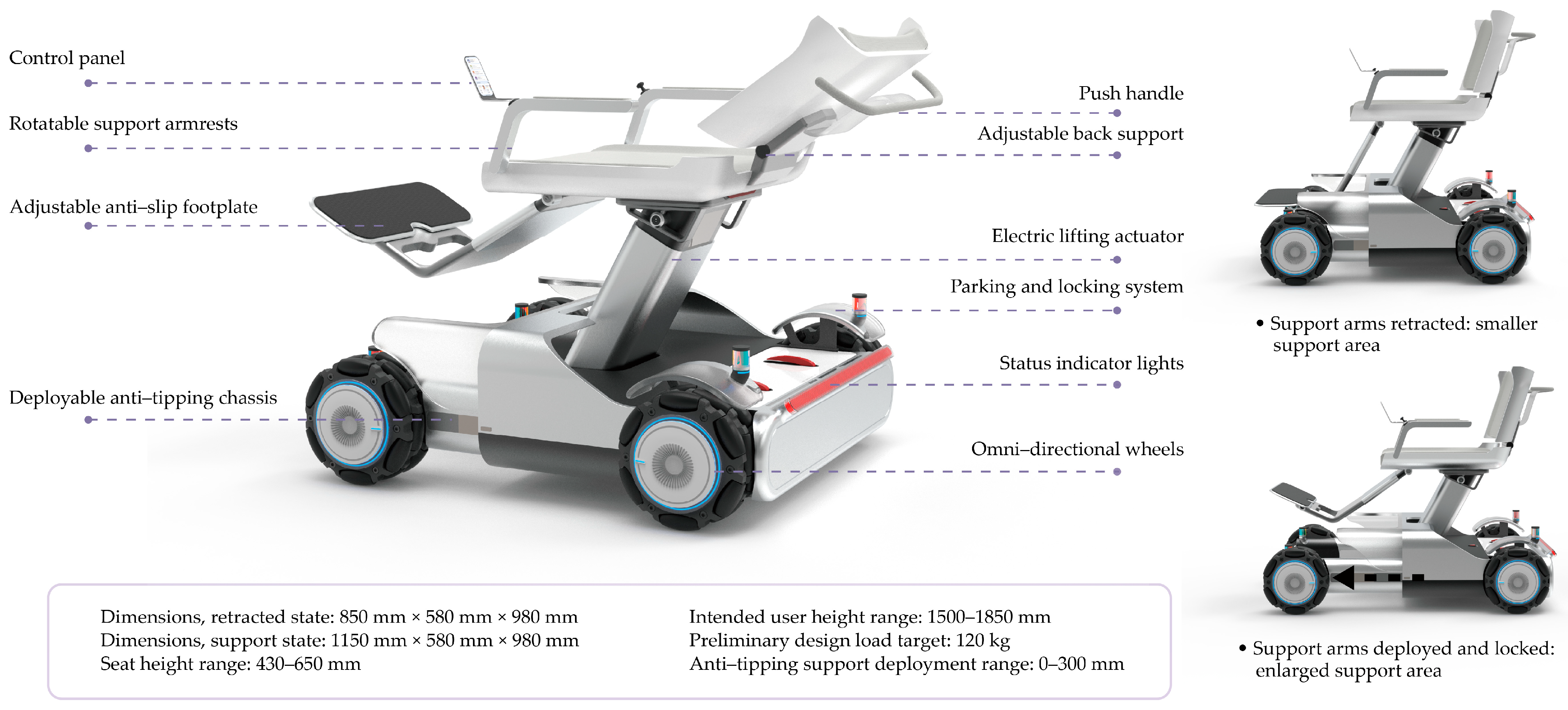
Based on the TRIZ-based contradiction-solving results, the structural design scheme of the transfer assistive equipment was further developed. The scheme was oriented toward daily transfer scenarios and focused on users’ risk perception, support-bearing requirements, and caregiver burden. It consisted of four parts: chassis mobility, lifting assistance, support-bearing, and status feedback, as shown in
Figure 5. Specifically, the proposed transfer assistive equipment concept integrated a deployable anti-tipping chassis, an electric lifting actuator, rotatable support armrests, an adjustable back support, an adjustable anti-slip footplate, a parking and locking system, status indicator lights, omni-directional wheels, and a control panel. In its retracted state, the equipment measured 850 mm × 580 mm × 980 mm, supporting maneuverability in spatially constrained indoor care environments. In its support state, the chassis could be extended to 1150 mm × 580 mm × 980 mm, with an anti-tipping support deployment range of 0–300 mm, thereby increasing the support area during transfer. The seat height was adjustable from 430 mm to 650 mm, the intended user height range was 1500–1850 mm, and the maximum load capacity was 120 kg. These parameters were defined as idealized conceptual design data, describing the basic structural configuration of the proposed concept and providing dimensional inputs for the subsequent digital human simulation and ergonomic evaluation.
For the contradiction between anti-tipping stability and lightweight design, chassis mobility adopted a passive pushing mode that combined a non-electric chassis with an expandable support structure. During the support and postural transition stages, the support range was enlarged to reduce the influence of motors, batteries, and control units on chassis weight and spatial occupation, improve the perceived stability of support, and reduce users’ perceived risks of slipping, imbalance, and falling. In the retracted state, the compact chassis maintained maneuverability in spatially constrained indoor environments; in the deployed state, the expanded support structure provided a wider anti-tipping base for safer transfer assistance.
For the contradiction between assistance and effort reduction and lightweight design, lifting assistance adopted an electric push rod as a local assistance unit. This enabled relatively smooth height changes during seated posture adjustment, support lifting, and transfer seating, thereby reducing the need for caregivers to repeatedly hold, lift, and perform large-amplitude bending assistance movements.
For the contradiction between support-bearing capacity and human–machine adaptability, the support-bearing system was divided into different zones, including the seat surface, backrest, armrests, and footplate. The seat surface performed the main load-bearing function; the backrest limited backward trunk leaning and lateral deviation; the armrests provided clear gripping points; and the footplate constrained the placement position of the lower limbs. Through multi-point coordinated support, the sense of instability caused by defensive retraction, disordered gripping, and lower-limb suspension was alleviated.
For the contradiction between status feedback and process simplification, status feedback conveyed key status information, such as locking, operation, and abnormal conditions, to users and caregivers through lighting, color markings, and local brightness changes. This reduced users’ hesitation and fear caused by unclear status information and also helped improve transfer coordination efficiency.
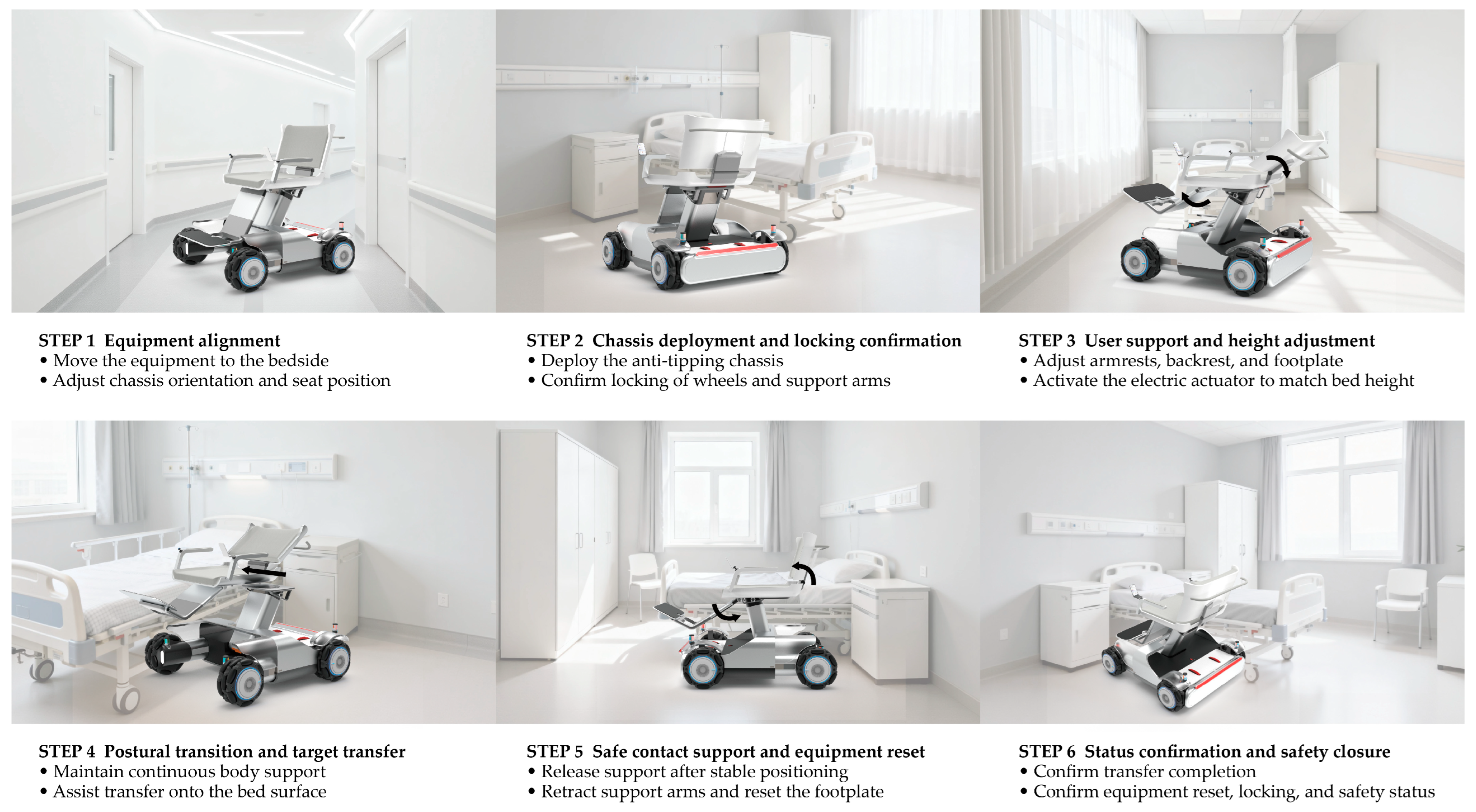
To clarify the operational logic of the transfer assistive equipment in a typical use scenario, this study selected wheelchair-to-bed transfer as a representative task and constructed the use workflow, as shown in
Figure 6. The workflow covered key steps, including equipment alignment, status confirmation, user support, seat lifting, postural transition, placement at the target position, and equipment reset, thereby reflecting the equipment’s functions of mobile support, lifting assistance adjustment, zoned support, and safety feedback.
3.6. Simulation and Multi-Stakeholder Assessment Results
Based on the simulation settings described in
Section 2.7, the postural adaptability, RULA postural risk, and SSP static strength prediction results of different human percentile models at three typical transfer nodes were obtained. The results indicated that, under the specified static postural conditions, the proposed equipment demonstrated preliminary adaptability for medium- and large-sized users during conventional support stages. However, further optimization is required for forward-leaning transfer toward the bed, adaptability for small-sized users, and distal lower-limb support.
3.6.1. Postural Adaptability at Different Transfer Nodes
The representative posture results at the three transfer nodes are shown in
Figure 7. In Node 1 and Node 2, relatively clear support relationships were formed between the human model and the seat surface, backrest, armrests, and footplate. In Node 3, as the user leaned forward toward the bed surface, the demands for torso flexion, upper-limb forward extension, and lower-limb postural constraint increased significantly, and the postural risk increased accordingly.
Combined with the simulation observations of the three types of human models, the posture of the Man50 model was relatively natural, and the equipment showed a relatively good match with its seat surface, backrest, and footplate support. Although the Man95 model could be accommodated, the knee, ankle, and upper-limb movement spaces were closer to the structural boundaries. Although the Woman05 model could be positioned at all three nodes, the fit of the backrest, the effectiveness of armrest support, and the reachability of the footplate were relatively insufficient. This suggested that the current structure requires further optimization for small-sized users, and improving the adaptability of backrest height, armrest position, and footplate reachability for this user group will be taken as an important direction for future design refinement.
3.6.2. RULA-Based Postural Risk Assessment
The total RULA scores of the Man50 and Man95 models were 3 at both Node 1 and Node 2, indicating comparatively lower postural risk scores for medium- and large-sized users during conventional support stages. At Node 3, the scores of both models increased to 5, suggesting that forward-leaning transfer toward the bed increased upper-limb and torso loads. The Woman05 model scored 5 at all three nodes, indicating that small-sized users were more likely to experience insufficient torso support and compensatory upper-limb postures under the current structural configuration, as shown in
Table 8 and
Figure 8.
3.6.3. SSP-Based Static Strength Prediction
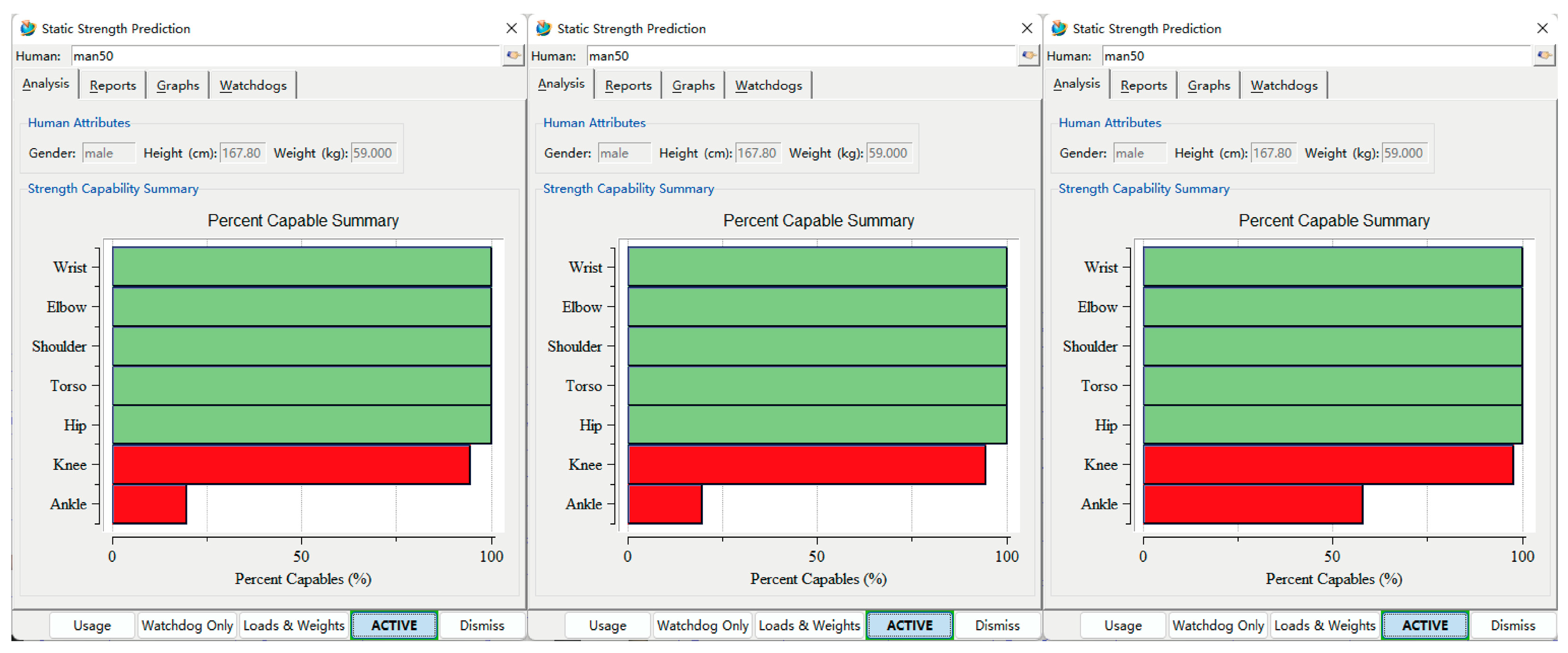
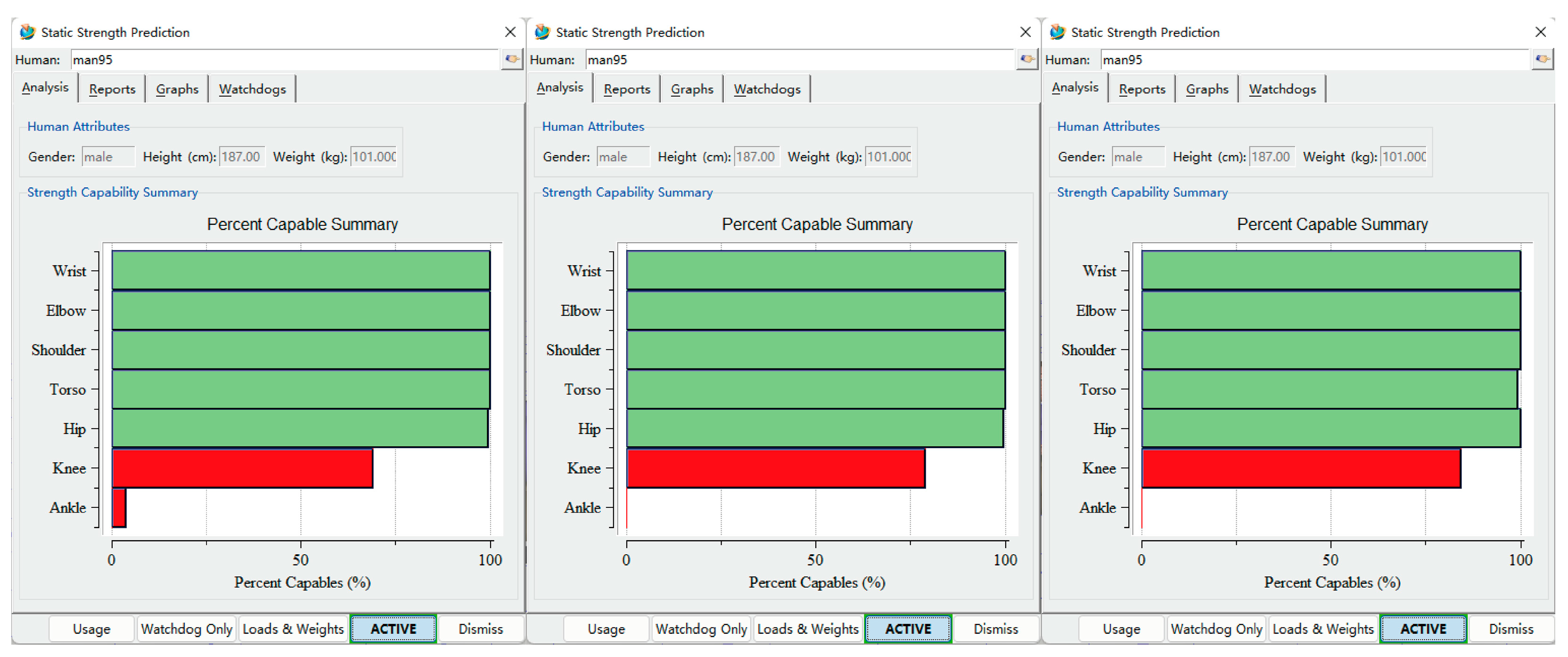
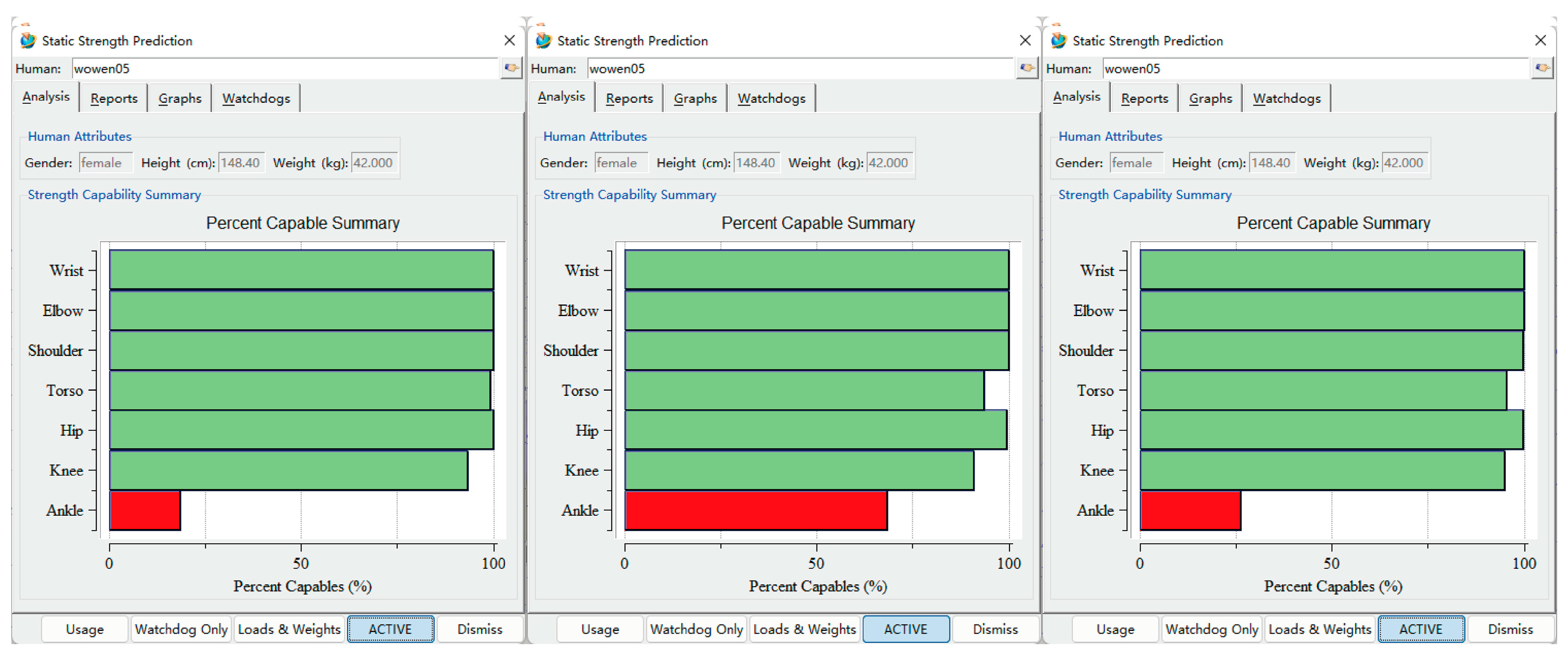
The SSP static strength prediction results are shown in
Figure 9,
Figure 10 and
Figure 11. The Percent Capable values of the three types of human models for the wrist, elbow, shoulder, torso, and hip were generally at relatively high levels, indicating that, under the combined effects of the seat surface, backrest, armrests, and footplate, the static strength risks of the users’ upper limbs, torso, and hips were relatively low. In contrast, the capability proportions of the knee and ankle joints were lower than those of the upper limbs and torso, among which the ankle joint appeared as a relatively weak body region in all three models.
These results suggest that transfer assistive equipment should not rely primarily on users’ active distal lower-limb support. Instead, a multi-point support system should be formed through seat support, backrest support, armrest gripping, and footplate limiting. In particular, the relatively low capability proportion of the ankle joint suggested that footplate support, anti-slip limiting, and lower-limb placement constraints should be further considered in subsequent refinement.
3.6.4. Multi-Stakeholder Assessment Results
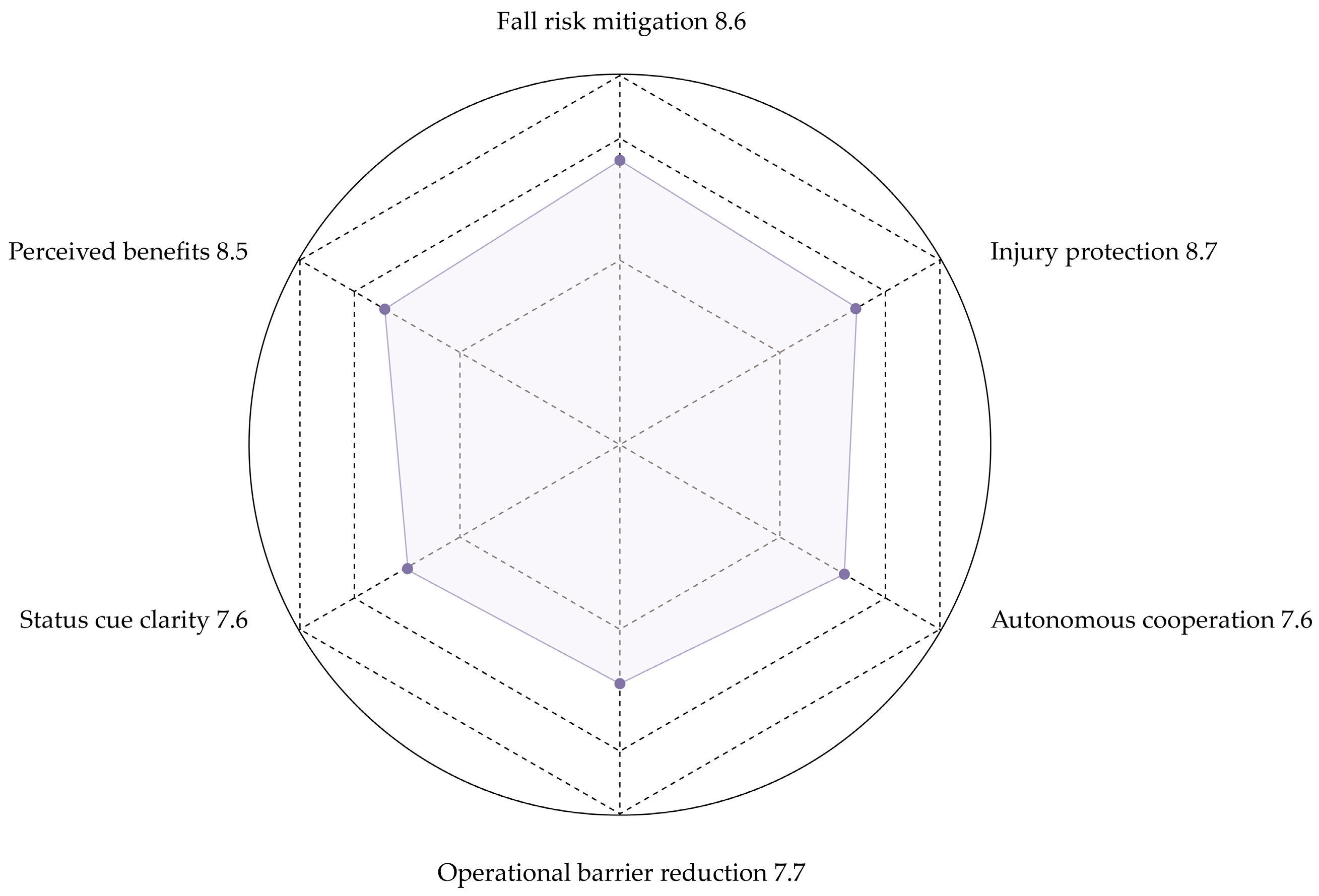
The multi-stakeholder assessment results are shown in
Figure 12. The mean scores were 8.6 for fall risk mitigation, 8.7 for injury protection, and 8.5 for perceived benefits, while the scores for operational barrier reduction, autonomous cooperation, and status cue clarity were 7.7, 7.6, and 7.6, respectively. These results suggest that the expandable chassis and zoned support provided a preliminary design response to the core requirements of individuals with lower-limb mobility impairment during transfer. The stakeholder groups also showed differences in the aspects they emphasized. Rehabilitation therapists tended to focus more on postural support and transfer safety, caregivers paid greater attention to operational convenience and assistance burden, whereas technical personnel were more concerned with structural feasibility and functional implementation. The comparatively lower scores for autonomous cooperation and status cue clarity indicate that the current scheme still has room for improvement in human–machine interaction. This variation in stakeholder feedback suggests that, although the scheme performed relatively well in safety-related dimensions, its interactive guidance and status information presentation may not have been equally intuitive for all evaluators. These findings indicate the need for further improvement of the multimodal feedback mechanism in subsequent work.
Overall, the HBM-based design scheme provided a preliminary response to some of the users’ psychological and behavioral requirements at the subjective assessment level.
4. Discussion
4.1. Interpretation of Transfer Behaviors
The results indicate that transfer behavior among individuals with lower-limb mobility impairment is not merely a physical change in body position, but a context-dependent behavioral process shaped by physical capability, risk perception, environmental conditions, and caregiver coordination. The phenomena observed during transfer, including gripping dependence, defensive trunk retraction, involuntary muscle tension, and repeated confirmation of equipment status, suggest that users’ behavioral responses arise not only from insufficient muscle strength and decreased balance ability, but are also closely associated with fear of falling, concerns about injury, and uncertainty regarding equipment status.
4.2. Design Implications of HBM-Based Requirement Transformation
The value of the Health Belief Model in this study lies not simply in classifying user requirements, but in explaining fear, hesitation, dependent gripping, and repeated status confirmation during transfer as behavioral responses shaped by users’ judgments of fall risk, injury consequences, operational barriers, and their own capabilities. For example, one participant stated, “Before moving, I need to make sure there is something stable to hold; otherwise, I feel afraid of falling.” Methodologically, this study extends previous function- or structure-oriented design approaches by establishing a more traceable pathway from psychological cognition and transfer behavior to technical characteristics and structural strategies. Compared with previous studies that mainly emphasize structural design, assistance mechanisms, and mechanical safety, this study further suggests that users’ subjective perception of risk may influence their cooperation and acceptance of assistive equipment. Therefore, the design of transfer assistive equipment should address both objective safety and perceived safety. Designers should not regard stable support, simplified operation, and clear status feedback as additional functions, but as priority design conditions for reducing uncertainty, establishing trust, and promoting active cooperation during transfer.
4.3. Limitations and Future Work
The transformation from user requirements to engineering schemes is not a purely data-driven calculation process, but requires comprehensive judgment based on research data, expert experience, and design objectives. Multi-method integration was used in this study to structure the processes of requirement consolidation, weight judgment, relationship assignment, and contradiction solving, thereby improving the transparency and traceability of scheme generation. The obtained scheme can be regarded as a reasonable design result under the current research conditions.
Several limitations should be acknowledged. First, the sample size was relatively small, and participants were recruited mainly from one city. Differences in disease type, functional status, home environment, and caregiving conditions were not fully examined. Future studies should therefore include larger and more diverse samples from multiple regions, with broader coverage of impairment types, functional levels, home environments, and caregiving conditions. Second, the JACK simulation was mainly based on static postures under specified working conditions. Although these simulations provided preliminary evidence regarding postural risk and static strength capability, they cannot replace prototype testing in real transfer scenarios. Moreover, the dimensional parameters used in the simulation were idealized conceptual design data, and dynamic factors such as acceleration, unexpected body sway, caregiver intervention, and floor-surface differences were not fully represented. Third, the multi-stakeholder assessment was subjective and involved a limited number of participants; therefore, the generalizability of the assessment results should be further examined. The weighting and assessment results should thus be regarded as exploratory evidence for concept refinement rather than definitive validation of product performance. In addition, although the QFD and TRIZ procedures were carried out based on defined participants, requirement weights, and principle-selection criteria, the transformation from user requirements to technical characteristics and inventive principles still involved expert judgment, and the robustness of these transformation results requires further examination. Future work will focus on improving adaptability for small-sized users by refining the adjustment ranges of the backrest, armrests, and footplate; strengthening distal lower-limb support, including footplate support, anti-slip limiting, and lower-limb placement constraints; improving status-feedback mechanisms and dynamic stability; further verifying the requirement-to-technology transformation process through independent expert review, stakeholder-specific comparison, or sensitivity analysis; and conducting prototype testing and dynamic transfer experiments under more realistic care conditions to further examine the stability, safety, and usability of the proposed design.
5. Conclusions
This study addressed fear of falling, insufficient body support, and operational coordination difficulties in the daily transfer of individuals with lower-limb mobility impairment. To respond to these problems, a traceable design process for transfer assistive equipment was constructed by using the Health Belief Model as the front-end analytical framework and integrating requirement clustering, weight analysis, Quality Function Deployment, and TRIZ-based contradiction solving. Compared with design approaches that mainly focus on functional realization or mechanical structure, the proposed process emphasizes the transformation of psychological cognition and transfer behavior into technical characteristics and structural strategies.
The requirement weight analysis showed that risk protection, operational barriers, and behavioral efficacy were the main requirement dimensions affecting the design of transfer assistive equipment. Among the indicator-layer requirements, fall-prevention stability, operation simplification, and body support had relatively high priorities. Based on these core requirements, the QFD and TRIZ analyses identified key contradictions, including anti-tipping stability versus lightweight design, status feedback versus process simplification, assistance and effort reduction versus lightweight design, and support-bearing capacity versus human–machine adaptability. Corresponding structural optimization strategies were then developed, including an expandable chassis, localized electric-assisted lifting, zoned support, and status feedback. These results suggest that transfer assistive equipment should not only improve physical support and mechanical safety, but also reduce users’ perceived uncertainty during transfer.
The JACK digital human simulation results showed that, under specified static postures and typical transfer nodes, the proposed concept demonstrated preliminary postural adaptability for medium- and large-sized users during conventional support stages. The RULA and SSP results further indicated that adaptability for small-sized users and distal lower-limb support were the main ergonomic risk points and optimization directions. The multi-stakeholder assessment further highlighted fall risk mitigation, injury protection, and perceived benefits as important dimensions of the preliminary concept, whereas status cue clarity and autonomous cooperation still require further improvement. Differences in stakeholder feedback also suggested that rehabilitation therapists, caregivers, and technical personnel may evaluate the same design from different perspectives, which should be considered in subsequent refinement.
Overall, the preliminary ergonomic simulation and multi-stakeholder assessment suggest that the proposed concept has potential for further prototype development and testing. However, these results cannot replace systematic validation of stability, safety, and usability in real dynamic transfer processes. The current findings should therefore be interpreted as exploratory evidence for concept development rather than definitive verification of product performance. The findings provide a methodological reference for requirement transformation and structural design of transfer assistive equipment, particularly for translating psychological and behavioral factors into technical characteristics and structural strategies. From an engineering perspective, they also offer implications for stable support, simplified operation, adaptive body support, and status feedback. The real-world effectiveness of the proposed scheme requires further examination through prototype testing and dynamic transfer experiments under more realistic care conditions.