Article

Optimization and Material Enhancement Framework for Improving PSC Motor Efficiency Toward IE2/IE3 Standards


by
Wanwinit Wijittemee
,
Ritthichai Ratchapan
,
Charnon Chupong
,
Somchai Biansoongnern
,
Sirichai Dangeam
,
Theerapol Muankhaw
and
Boonyang Plangklang
*
Department of Electrical Engineering, Faculty of Engineering, Rajamangala University of Technology Thanyaburi, Pathum Thani 12110, Thailand
*
Author to whom correspondence should be addressed.
Designs 2026, 10(3), 64; https://doi.org/10.3390/designs10030064
Submission received: 16 April 2026 / Revised: 28 May 2026 / Accepted: 9 June 2026 / Published: 11 June 2026
(This article belongs to the Section Electrical Engineering Design)

Abstract

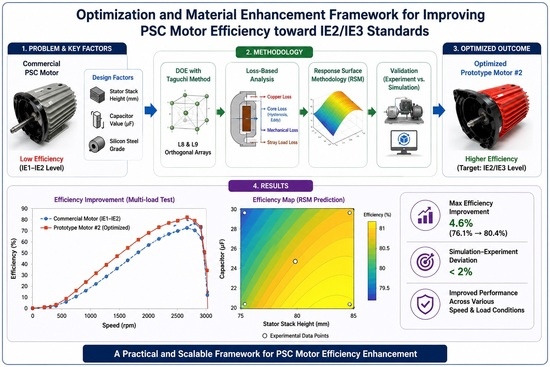
This paper presented an optimization and material enhancement framework for improving the efficiency of a 1 HP Permanent Split Capacitor (PSC) motor toward IE2/IE3 efficiency classes. The proposed approach integrated Design of Experiments (DOE) using the Taguchi method with loss-based analysis to investigate the influence of key design parameters, including stator stack height, capacitor value, and silicon steel grade on PSC motor efficiency. Taguchi L8 and L9 orthogonal arrays were applied to evaluate parameter interactions and identify dominant factors affecting motor performance. To enhance predictive capability, a Response Surface Methodology (RSM) model was developed based on experimental data to establish the relationship between design variables and motor efficiency within the investigated operating range. The resulting efficiency map was used to identify high-efficiency operating regions and support practical PSC motor design evaluation. Experimental validation under multi-load operating conditions confirmed that the optimized motor achieved an efficiency improvement from 76.1% to 80.4% (4.6% absolute increase), with less than 2% deviation between simulation and experimental results. The optimized motor also demonstrated improved operating behavior across varying speed and load conditions while maintaining practical operating stability. The proposed framework provided a practical and simplified approach for PSC motor efficiency improvement under the investigated operating conditions and offers an alternative to computationally intensive optimization approaches for industrial motor applications.

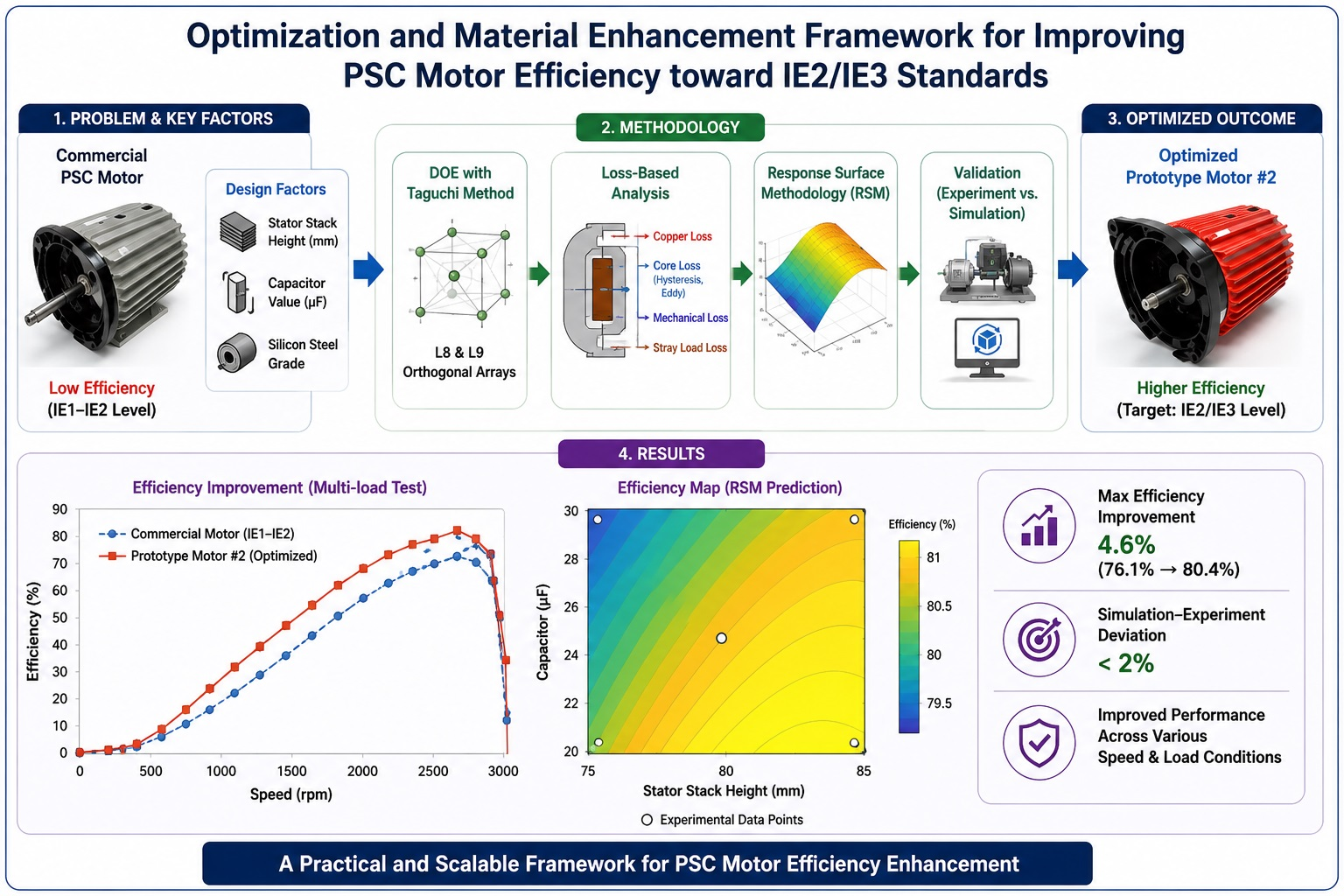
Graphical Abstract

1. Introduction

The global transition toward energy-efficient electric motors has accelerated due to increasing industrial energy demand and increasingly stringent international efficiency regulations, such as IEC 60034-30-1 [1]. while recent PSC motor studies have investigated practical approaches for achieving IE2-level performance [2]. Among single-phase induction motors, the Permanent Split Capacitor (PSC) motor [3] remains widely used in residential and pump applications [4] due to its simple structure and low cost. However, its inherent efficiency limitations hinder compliance with higher efficiency classes, particularly IE2 and IE3 standards [5,6,7].
Design of Experiments (DOE), particularly the Taguchi method, has been widely adopted to systematically evaluate the influence of key design parameters on motor performance while reducing the number of required experiments. These approaches have demonstrated effectiveness in identifying dominant factors affecting efficiency, such as winding turns, stack height, and capacitor value. In parallel, material enhancement, especially the use of high-grade electrical steel, has been recognized as a critical factor in reducing core losses and improving motor efficiency, as magnetic properties directly influence hysteresis and eddy current losses.
From a physics perspective, the efficiency of PSC motors [8,9,10,11] is governed by multiple loss components, including copper loss, core loss, mechanical loss, and stray-load loss. Copper loss is mainly associated with winding resistance, while core loss depends on magnetic material properties and operating frequency. Mechanical losses arise from friction and windage, whereas stray-load losses are related to leakage flux and harmonic effects. Understanding these loss mechanisms is essential for developing effective optimization strategies.
Despite these advancements, most existing studies focus on either parameter optimization or material improvement independently. Furthermore, many approaches rely heavily on finite element analysis (FEA), increasing computational complexity and limiting industrial applicability. More importantly, existing studies rarely establish a unified framework capable of simultaneously improving efficiency and scalability toward higher IE efficiency classes.
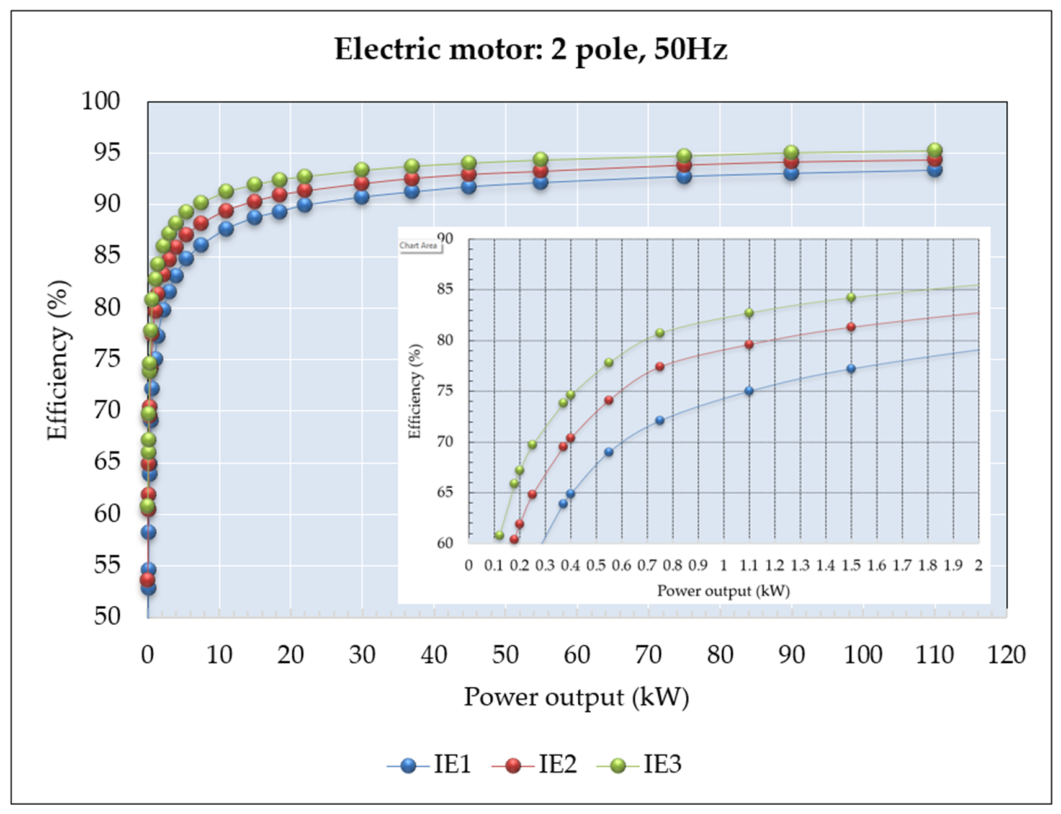
Figure 1 illustrates the IEC efficiency classes (IE1–IE3) as a function of motor output power under 50 Hz operation. As shown in Figure 1, efficiency requirements increase significantly from IE1 to IE3, particularly in the low-power range relevant to PSC motors. While IE3 efficiency has become increasingly important for energy-saving applications, conventional capacitor-run motors typically exhibit efficiencies in the range of 64–78%, which remain lower than IE3 requirements.
To address these limitations, this study proposes a physics-guided optimization framework integrating DOE-based parameter optimization, material enhancement, and loss modeling. Unlike conventional approaches, the proposed framework systematically considers both electromagnetic behavior and loss mechanisms under realistic operating conditions. The effectiveness of the framework was validated through experimental testing under rated conditions, demonstrating its applicability for industrial motor design. Unlike conventional DOE-based optimization studies that mainly focus on statistical parameter effects, the proposed framework establishes explicit relationships between DOE parameters, electromagnetic loss mechanisms, and practical motor performance through integrated loss interpretation and experimental validation.
In addition, material enhancement, particularly the use of high-grade electrical steel, has been recognized as an effective approach for reducing core loss and improving motor efficiency [12,13,14,15,16]. The magnetic properties of electrical steel significantly influence hysteresis and eddy-current losses, which are major contributors to total energy loss in induction motors.
Therefore, in the second stage, material enhancement using high-grade silicon steel (50A400) was introduced to further reduce core loss and improve efficiency toward the IE3 level. The proposed design was subsequently validated through both simulation and experimental testing under rated operating conditions.
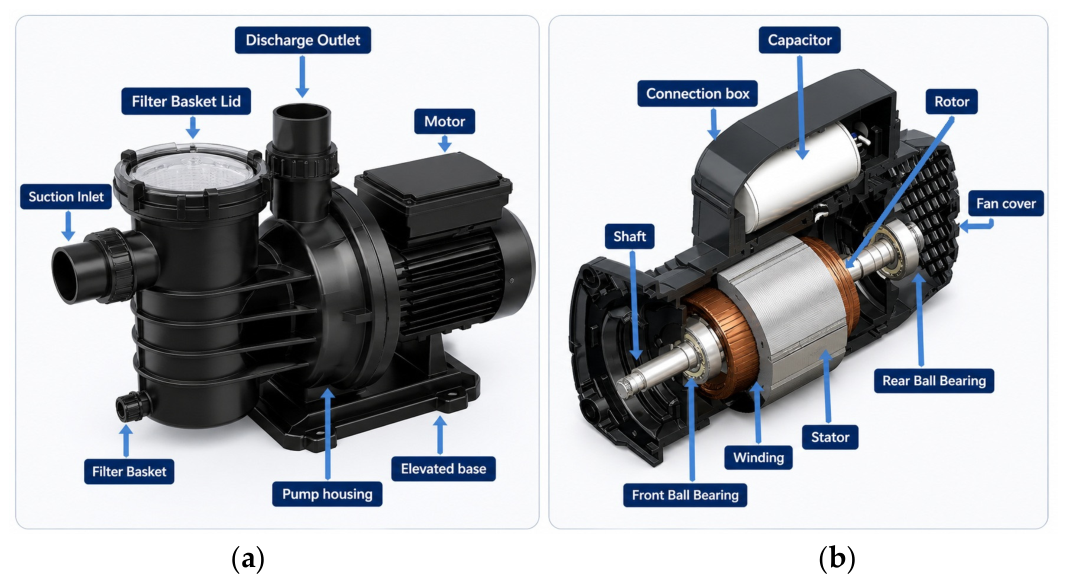
Figure 2a presents the practical configuration of a PSC motor integrated within a centrifugal pump system. The motor drives the pump through direct coupling, where hydraulic load variations influence torque demand, input current, and efficiency. Figure 2b illustrates the internal structural components of the PSC motor, including the stator windings, rotor, capacitor, bearings, and cooling structure. From a physical perspective, the interaction between stator and rotor determines copper and core losses, while the capacitor-induced phase shift affects torque production and operating efficiency. Meanwhile, mechanical components such as bearings and shaft contribute to frictional losses.
The contribution of this work lies in the integration of DOE-based parameter optimization, silicon steel enhancement, experimental validation, and practical operating analysis within a unified physics-guided framework for small 1 HP PSC motors under industrial operating conditions. Rather than introducing an entirely new optimization theory, the proposed framework emphasizes practical engineering feasibility, manufacturable implementation, and balanced operating performance validated through experimental investigation.

2. Literature Review and Theoretical Background

This section presents the theoretical background and engineering considerations associated with PSC motor efficiency improvement, forming the basis of the proposed optimization framework.

2.1. PSC Motor Characteristics and Efficiency Influences

PSC motors are widely used in residential and light industrial applications due to their simple structure, low cost, and acceptable efficiency [2]. Their operation relies on the auxiliary winding with a capacitor that generates a phase shift to enable starting torque and steady-state running. However, conventional PSC motors often fail to meet IE2/IE3 standards, mainly due to design limits in winding layout, capacitor sizing, and rotor geometry. Studies confirm that efficiency strongly depends on parameters such as winding turns, stack height, rotor slot number, and capacitor value. Thus, systematic methods are needed to optimize PSC motors for higher efficiency levels [3,4].
Table 1 presents a comparison between a commercial motor and the proposed optimized PSC motor, highlighting improvements in efficiency, current reduction, and input power. The proposed PSC motor achieves higher efficiency compared to the commercial motor while maintaining the same output power. The design improvements, such as optimizing winding turns, capacitor sizing [5,6,7], and rotor structure, lead to reduced copper loss and lower current at full load. As a result, the motor requires less input power for the same shaft output, indicating an overall improvement in energy efficiency.
In this study, the term commercial motor refers to a baseline PSC motor [8,9,10,11], widely used in existing pump applications, representing a conventional design with standard winding configuration, capacitor selection, and magnetic material. This motor serves as a reference for evaluating performance improvements.
In contrast, the proposed motor represents an optimized [17,18,19] PSC motor developed through the DOE-based framework described in this work. The design incorporates optimized parameters, including winding turns, capacitor value, stack height, and silicon steel grade, with the objective of reducing losses and improving the overall efficiency [20,21,22,23]. The comparison between these two configurations provides a clear assessment of the effectiveness of the proposed optimization approach.
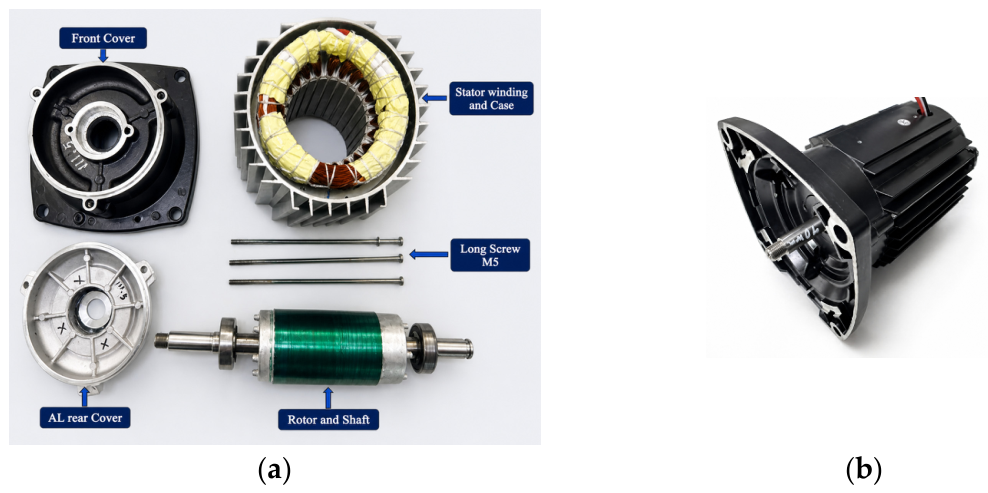
Figure 3 shows the internal structure of the commercial motor. Figure 3a illustrates the front cover, rear cover, and stator winding configuration with two poles and case. Figure 3b shows the assembled commercial motor used as the baseline model in this study.

2.2. Design of Experiments (DOE) and Taguchi Method in Motor Design

In this study, the Taguchi DOE approach was applied to evaluate the influence of key design parameters [24], including capacitor value, stack height, and silicon steel grade, on PSC motor efficiency performance. The selected parameters are associated with the underlying loss mechanisms discussed in Section 2.3.
The selection of design parameters in the DOE framework is closely related to the underlying loss mechanisms [25,26] described in Section 2.3.

2.3. Loss Mechanisms and Efficiency Modeling in PSC Motors

The efficiency of PSC motors is influenced by copper loss, core loss, mechanical loss, and stray-load loss. In this study, the loss analysis is used to support the engineering interpretation of parameter optimization and material enhancement under practical operating conditions.
Copper loss occurs in the stator windings due to electrical resistance and can be expressed as in (1)
Pcu = I2 R
where is the winding current and R is the stator resistance. Since both the main and auxiliary windings operate continuously in PSC motors, copper loss represents a significant portion of the total loss.
Core loss occurs in the magnetic core due to alternating magnetic flux and consists of hysteresis and eddy current losses as in (2)
Pcore = Ph + Pe
These losses depend strongly on the magnetic material properties and lamination quality. Using higher-grade silicon steel [14,15,16,17,18] with lower specific loss characteristics can effectively reduce core losses and improve motor efficiency.
Core loss can be further expressed using the Steinmetz equation as in (3)
P c o r e = k h f B α + k e f 2 B 2
where k h and k e are the hysteresis and eddy current coefficients, respectively, f is the electrical frequency, and B is the magnetic flux density.
The coefficients kh and ke depend on the magnetic material properties and operating conditions influencing the overall core loss behavior of PSC motors.
Mechanical losses [27,28] and stray-load losses [29,30,31] also contribute to the overall PSC motor efficiency [32,33,34].
The overall power balance of a PSC motor can be expressed as in (4)
Pin = Pout + Pcu + Pcore + Pmech + Pstray
The loss analysis presented in this study is used to support the engineering interpretation of parameter optimization and material enhancement under practical operating conditions.
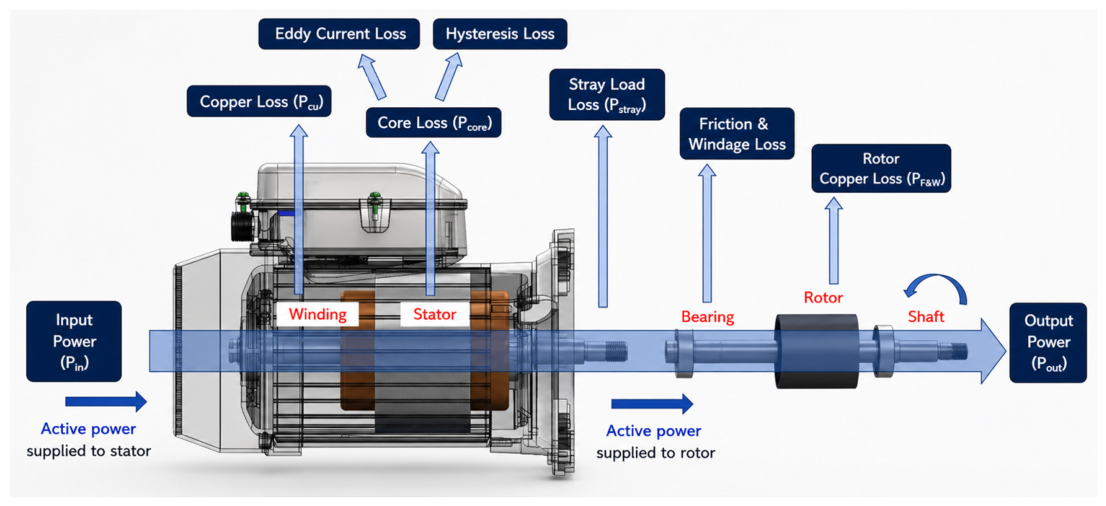
Figure 4 illustrates the power flow and loss distribution in a PSC motor, including copper loss, core loss, mechanical loss, and stray-load loss contributing to the overall efficiency degradation.
From a design perspective, these loss components are directly influenced by key motor parameters. For instance, copper loss is strongly dependent on winding resistance and current, which are affected by wire size and turn configuration. Core loss is governed by magnetic material properties and flux density, making silicon steel grade a critical factor. Mechanical losses are associated with rotor dynamics and bearing conditions, while stray losses are related to leakage flux and harmonic effects.
By linking the loss distribution in Figure 3 with the design parameters considered in the DOE framework (Section 2.2), this study establishes a physics-guided optimization approach. Specifically, parameters such as stack height, capacitor value, and magnetic material are not only evaluated statistically but also interpreted through their impact on individual loss components. This integration enables a more meaningful optimization process, ensuring that efficiency improvements are physically justified and applicable under real operating conditions.
To further clarify the relationship between design parameters and loss mechanisms, Table 2 summarizes the mapping between key DOE parameters, their associated loss components, and their impact on motor efficiency.

2.4. Material and Structural Influences on Motor Efficiency

Material selection and structure also play a vital role in PSC motor performance. Silicon steel grade [14,15,16], lamination thickness, and porosity directly affect iron losses, while rotor slot and bar shape influence torque and flux. Using higher-grade steels and optimizing slot geometry reduces losses. Studies on fatigue strength and end-ring porosity highlight durability issues, while research on air-gap variation and rotor eccentricity confirms the importance of mechanical accuracy. These factors must complement electrical optimization to achieve robust IE2/IE3 PSC motors.

2.5. Research Gap and Motivation

Although PSC motor studies have explored DOE-based optimization, capacitor tuning, and rotor geometry optimization, most existing works focus on isolated parameter improvement. Hybrid DOE-Artificial Neural Network (ANN) approaches have also been investigated, while limited studies combine DOE analysis, material enhancement, and experimental validation under multi-load operating conditions for PSC motors. In addition, existing studies rarely provide a unified and physically interpretable framework linking parameter optimization, material selection, and practical operating validation for PSC motor efficiency improvement. This research therefore proposes a physics-guided optimization framework emphasizing practical engineering applicability under investigated operating conditions.
This integrated framework improves both engineering interpretability and industrial applicability.

3. Methodology

This section presents the experimental validation and comparative performance analysis used to evaluate the effectiveness of the proposed optimization framework under practical operating conditions.

3.1. Development Framework

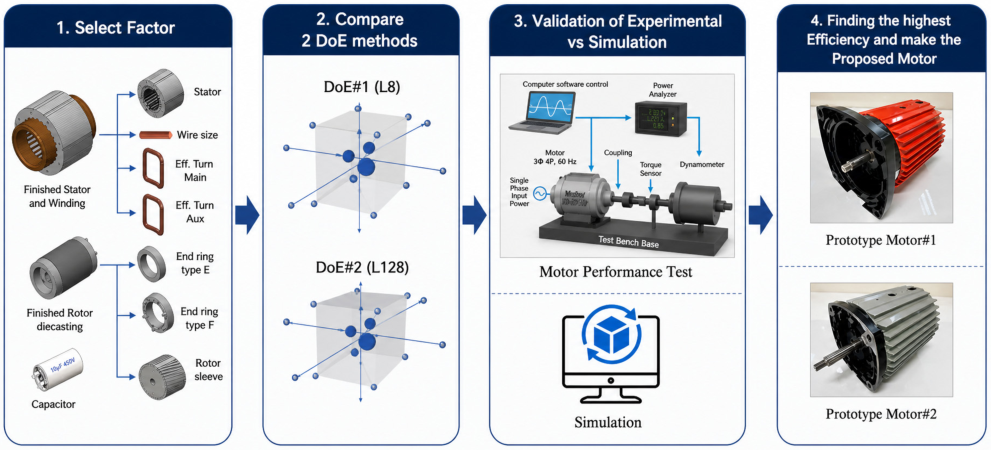
This study proposes an engineering-oriented framework for PSC motor efficiency improvement toward IE2/IE3 performance levels. The framework integrates parameter selection, DOE-based optimization, simulation analysis, experimental validation, and material enhancement under practical operating conditions. Figure 5 illustrates the overall development procedure. Key design parameters, including winding turns, stack height, capacitor value, end-ring type, and rotor skew, were evaluated using Taguchi L8 and conventional L128 approaches. The optimized configurations were subsequently validated through simulation and experimental performance testing to develop Prototype Motor #1 and Prototype Motor #2.
The experimental datasets used for DOE, Taguchi, ANOVA, and RSM analyses were obtained directly from laboratory PSC motor testing under controlled operating conditions. Repeated measurements were conducted to improve measurement reliability and reduce random experimental errors. The experimentally acquired datasets were used for DOE generation, statistical analysis, RSM prediction, and validation against experimentally measured results.

3.2. Design of Experiments (DOE) Setup and Parameter Definition

The design parameters considered in this study are summarized in Table 3. These parameters represent the key design variables of the PSC motor, including winding configuration, capacitor value, and rotor structural features, which are directly related to motor operation [35,36].
Each parameter is defined with two levels, representing practical design variations within feasible manufacturing ranges. The selected parameter limits are summarized in Table 4. To efficiently evaluate the effects of these parameters, the Taguchi method was employed. Based on seven design parameters with two levels each, an L8 orthogonal array was selected to design the experiments. This approach reduces the number of experimental runs from 128 (full factorial design) to only eight, while still capturing the main effects of key variables.
In the second stage of optimization, a refined DOE was conducted using an L9 orthogonal array, focusing on the most influential parameters identified from the first stage. This includes stack height, capacitor value, and silicon steel grade, enabling further improvement in motor efficiency through material and structural optimization.
The selection of stack height, capacitor value, and silicon steel grade [37,38,39] for the second-stage L9 DOE was based on the combined results of the first-stage L8 DOE, S/N ratio trends, ANOVA contribution analysis, and practical engineering considerations. These parameters demonstrated the strongest influence on efficiency improvement, operating current, and loss reduction among the investigated factors. In particular, stack height and silicon steel grade significantly affected magnetic loading and core loss behavior, while capacitor value strongly influenced phase balance and operating current characteristics. Other parameters, including winding turns and wire size, were excluded from the second-stage DOE because their effects became comparatively less dominant after the first-stage screening analysis.

3.3. Statistical Analysis Using ANOVA

To quantitatively evaluate the influence of each design parameter on motor performance, analysis of variance (ANOVA) was applied to the results obtained from the Taguchi DOE. ANOVA enables decomposition of the total variation in the response into contributions from individual factors, thereby identifying the most significant parameters affecting motor efficiency.
In this study, the efficiency (%) is selected as the primary response variable. The contribution of each factor is calculated based on the mean response at each level.
The sum of squares for the j -th factor is expressed as in (5)
S S j = k = 1 l n k y ¯ j k y ¯ 2
where l is the number of levels, n k is the number of observations at level k , y ¯ j k is the mean response of factor j at level k , and y ¯ is the overall mean of all response values across the entire experimental dataset.
The total sum of squares is given as in (6)
S S T = i = 1 N y i y ¯ 2
where y i represents the response value for the i -th experiment and N is the total number of experiments. The mean square of each factor is calculated as in (7)
M S j = S S j D O F j
where D O F j is the degree of freedom of factor j .
Finally, the percentage contribution of each factor to the total variation is determined as in (8)
P j ( % ) = S S j S S T × 100
The percentage contribution is used to rank the relative importance of each parameter. A higher contribution indicates a more significant influence on motor efficiency.
In this work, ANOVA is applied separately to the results of the L8 and L9 orthogonal arrays to identify the dominant factors in each stage of the optimization process. This statistical analysis complements the S/N ratio and mean response methods, providing a more rigorous interpretation of parameter significance.
Based on the first-stage L8 DOE results, stack height, capacitor value, and silicon steel grade were selected for the second-stage L9 optimization because these parameters exhibited the strongest influence on efficiency improvement, operating current, and loss reduction. In contrast, other parameters such as wire size and winding turns showed comparatively lower contribution trends after the initial screening analysis.
The Taguchi-based optimization in this study primarily focused on identifying dominant main effects under practical experimental conditions. Although the L8 and L9 orthogonal arrays do not explicitly evaluate all higher-order interaction effects, potential parameter interactions were indirectly assessed through combined S/N ratio trends, ANOVA interpretation, and comparative performance behavior observed from the DOE results.
Although efficiency was selected as the primary optimization objective, other engineering constraints including operating current, power factor, torque behavior, thermal limits, and manufacturing feasibility were simultaneously considered during parameter selection and experimental validation. Therefore, the proposed framework emphasizes practical efficiency improvement under realistic industrial operating conditions rather than full multi-objective optimization analysis. A summary of the design constraints considered in this study is presented in Table 5.

3.4. Simulation Methodology

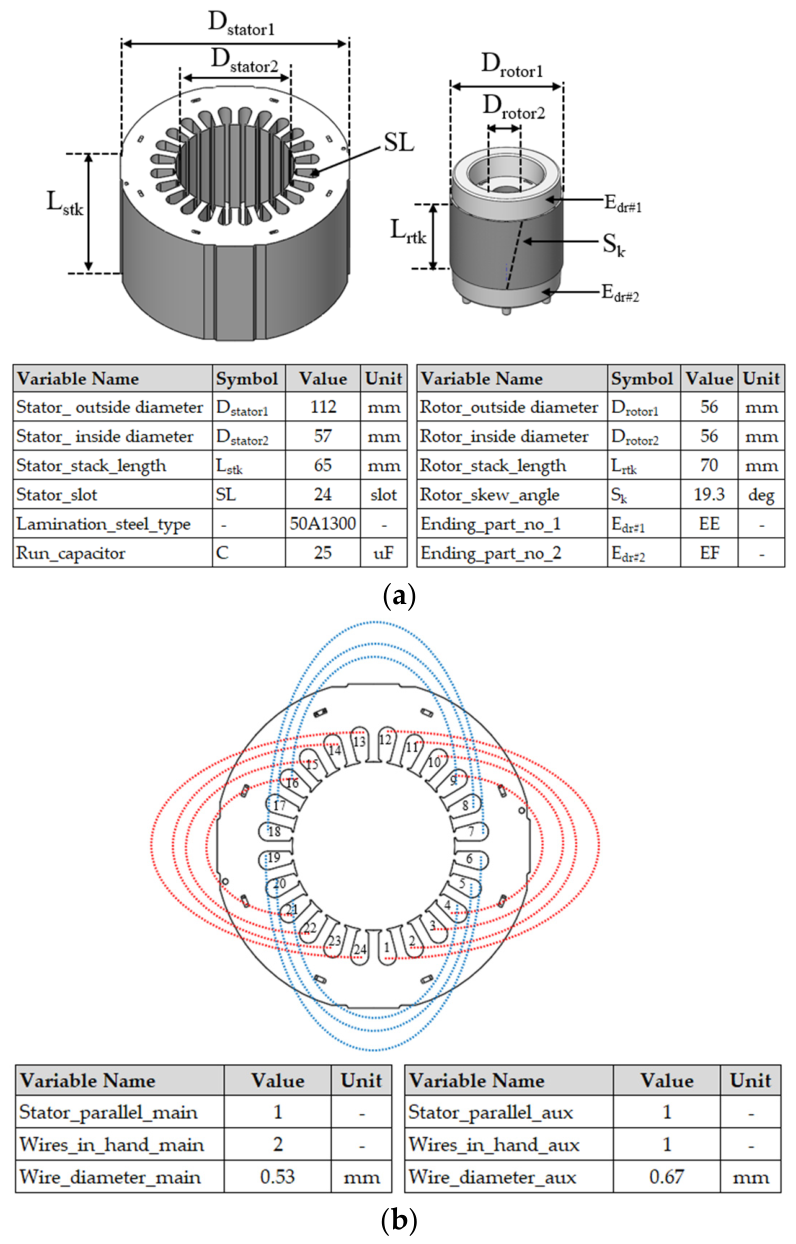
Figure 6a presents the main input parameters used in the PSC motor simulation model, including stator dimensions, rotor geometry, silicon steel grade, and capacitor value. Figure 6b shows the winding design parameters [25,26] for the main and auxiliary windings used in the simulation analysis.
The simulation model [40] was established to evaluate the effects of parameter variation on motor efficiency and operating characteristics under rated operating conditions.
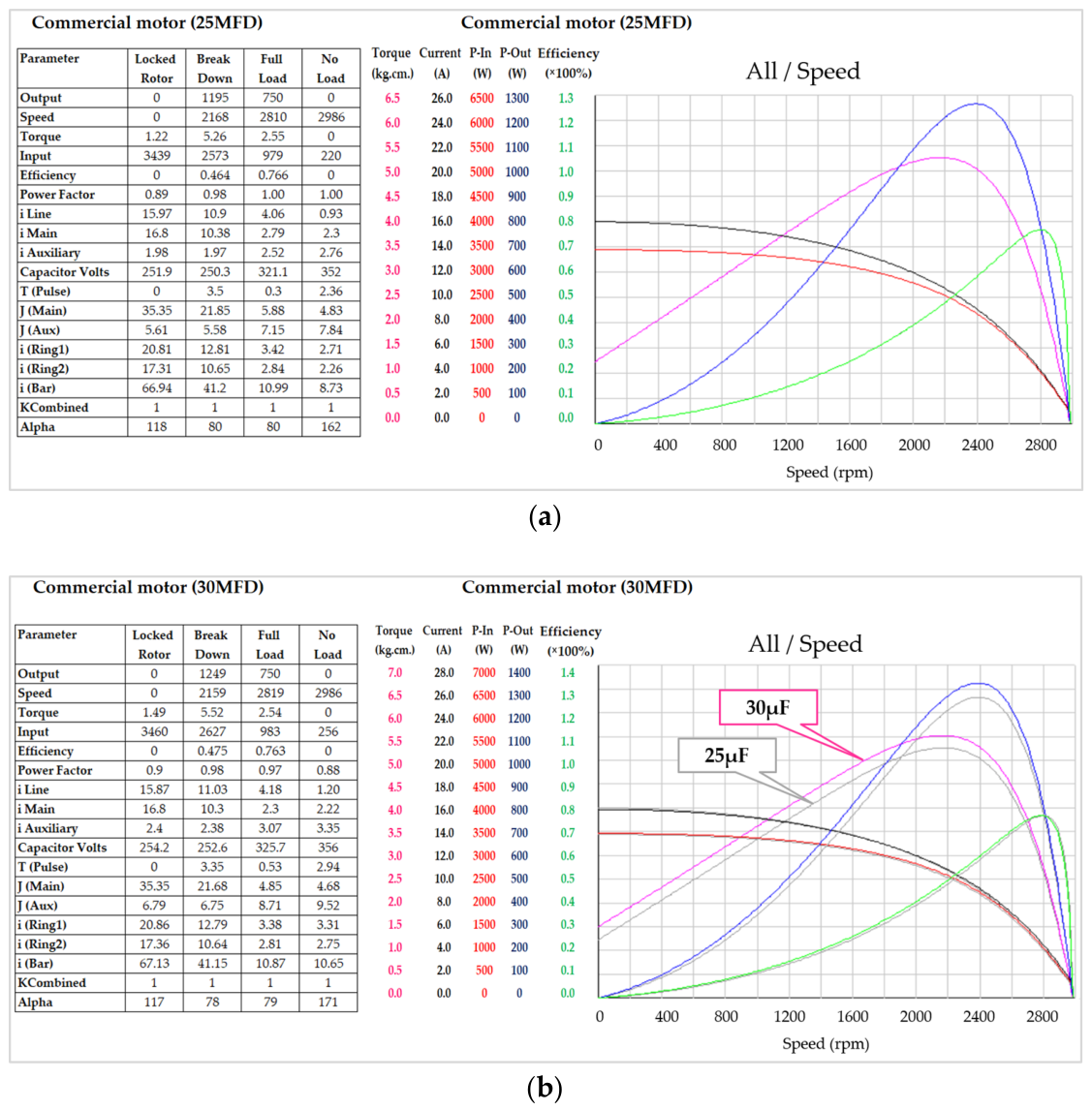
Figure 7 presents the simulated operating characteristics of the commercial PSC motor under different capacitor conditions. Figure 7a shows the simulated operating characteristics at 25 μF, while Figure 7b compares the speed-dependent performance curves for 25 μF and 30 μF capacitor conditions, illustrating the influence of capacitor selection on PSC motor operating behavior.
This comparison highlights the influence of capacitor selection on PSC motor performance and provides a clear basis for further optimization.
The simulation analysis was conducted using a commercial motor electromagnetic analysis software environment combined with a parameter-based motor performance modeling approach under the investigated operating conditions.
For simplification within the investigated operating range, the mechanical loss was approximated as a constant parameter based on the relatively small variation typically observed in PSC motors of similar rating and operating speed. Stray-load losses were not independently modeled and were considered implicitly within the deviation between simulation and experimental results during validation.
Together, Figure 6 and Figure 7 demonstrate the workflow of the simulation methodology, starting from parameter input, winding design configuration, through to final performance calculation. This integrated approach ensures that the model can accurately capture both electrical and mechanical characteristics of the PSC motor, thereby providing reliable predictions for DOE and optimization studies.

3.5. Simulation Experimental Setup

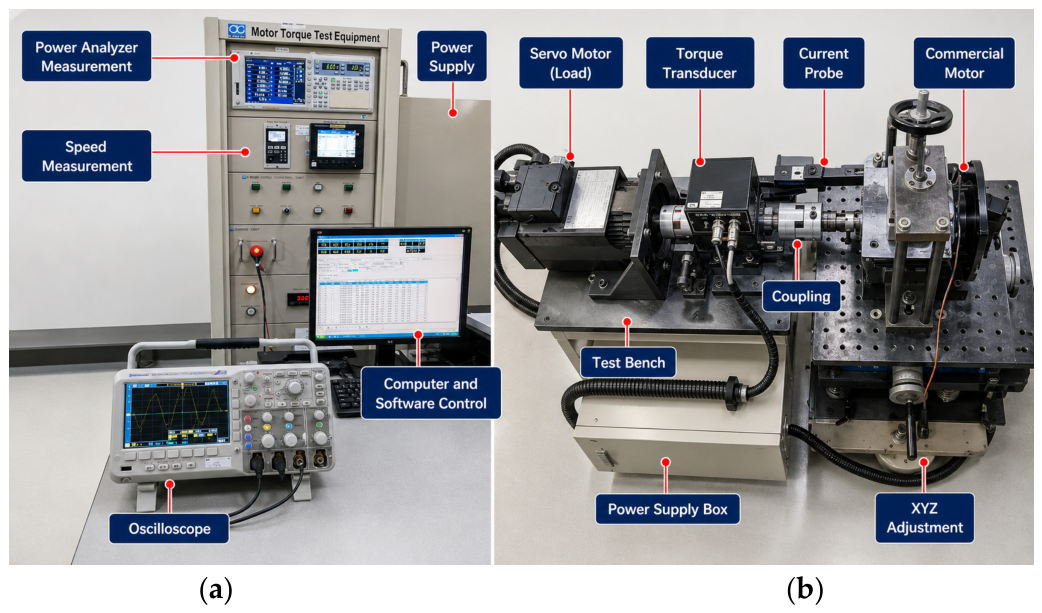
Figure 8 illustrates the Performance Torque Test Machine, which consists of a precision dynamometer system. This setup includes a torque and speed transducer, a digital power analyzer, and a stroboscope. The system allows for real-time monitoring and the precise acquisition of electrical and mechanical parameters, ensuring high reliability in motor performance testing. The mechanically coupled PSC and servo machine are used in this research. The PSC motor under test is connected to a servo motor acting as a controllable load. This configuration enables flexible load variation and dynamic testing under different operating points. Additionally, the coupling minimizes vibration effects, providing stable and consistent torque measurement during experimentation.

3.6. Design Constraints and Practical Considerations

In practical motor design, efficiency improvement must be evaluated together with other performance constraints. Although this study primarily focuses on efficiency optimization, additional design factors such as power factor, current characteristics, thermal limits, and manufacturing feasibility are also considered.
Power factor is an important indicator of electrical performance and affects overall system efficiency. An excessive reduction in power factor is avoided during optimization. Torque characteristics, including torque stability and ripple, are considered to ensure smooth operation under load conditions.
Thermal constraints are indirectly addressed by limiting excessive current increase, which is associated with copper losses and temperature rise. In addition, manufacturing constraints such as material availability and cost are considered in the selection of silicon steel grade and geometric parameters.
Therefore, the proposed framework aims to balance efficiency improvement with practical design constraints, making it suitable for industrial applications.

4. Results and Discussion

This study presented an integrated engineering-oriented framework combining DOE-based parameter optimization, material enhancement, simulation analysis, and experimental validation for practical PSC motor efficiency improvement.

4.1. Validation of Baseline (Commercial) Motor Performance (Experimental vs. Simulation)

Table 6 presents the comparison between simulation and experimental results for the baseline (commercial) PSC motor under different capacitor conditions (25 µF and 30 µF). The corresponding performance parameters, including full-load speed, efficiency, current, and input power, are summarized in Table 6 along with the relative error.
At the rated operating condition (750 W, 240 V, 50 Hz), the simulation results show excellent agreement with experimental measurements, confirming the validity of the developed motor model. The key electrical parameters, including voltage and frequency, match exactly while the remaining performance indicators exhibit only minor deviations.
For the 25 µF capacitor condition, the relative error in full-load speed and current is approximately 2.6%, while efficiency and input power show smaller deviations of 0.7%. Similarly, under the 30 µF condition, the maximum deviation is limited to 1.2% for efficiency, with other parameters remain below 1.1%. These results indicate a high level of accuracy in predicting motor performance across different operating conditions.
The measurement uncertainty was estimated based on the accuracy specifications of the instruments used in the experimental setup. The power analyzer has an accuracy of ±0.5%, while current and speed measurements have uncertainties within ±1% and ±0.2%, respectively. Based on these specifications, the overall measurement uncertainty is estimated to be within approximately ±2%.
The measured efficiency improvement of approximately 4.6% remains greater than the estimated overall experimental uncertainty. Therefore, the observed efficiency improvement is considered to reflect practical performance enhancement rather than measurement variation alone.
This level of uncertainty is comparable to the observed deviation between simulation and experimental results, indicating that the measured discrepancies are within acceptable measurement limits.
Overall, the percentage error across all evaluated parameters remains below 3%, demonstrating that the simulation model reliably captures both the electrical and mechanical behavior of the commercial PSC motor. This level of accuracy validates the suitability of the model for subsequent Design of Experiments (DOE) and optimization analysis.
Furthermore, the close agreement between simulation and experimental results confirms that the underlying modeling approach effectively represents key loss mechanisms, including copper loss and core loss [25,26,27], which are critical for accurate efficiency prediction. This provides a strong foundation for applying the proposed physics-guided optimization framework in the following sections.
The low error values confirm the validity of the simulation model for predicting motor performance.

4.2. DOE Analysis for Prototype Motor #1

Table 7 presents the first DOE study, which was conducted using an L8 orthogonal array to evaluate the effects of seven design parameters on motor efficiency. The simulation results indicate that efficiency varies from approximately 74.8% to 77.3%, with the optimal configuration identified at Run 5.
In comparison, Table 8 presents the L128 design which provides a similar efficiency of 74.8% to 77.3%, but requires 128 simulations, 16 times more than L8, to reach the same optimum.
The S/N ratio analysis indicates that capacitor value and stack height have dominant influences on efficiency behavior, while wire size and end-ring type exhibit comparatively smaller effects.
The mean response analysis confirms that optimal efficiency is achieved when most parameters are set at Level 2, indicating a balanced design configuration. The consistency between S/N and mean response results suggests that capacitor value and rotor end configuration are key contributors to efficiency improvement.
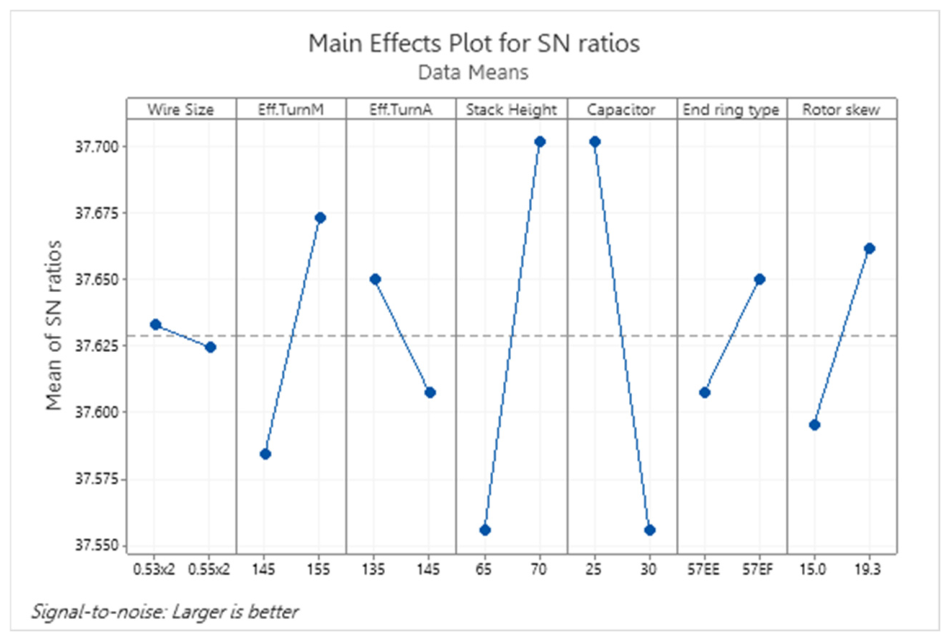
Figure 9 presents the Main Effects Plot for S/N ratios under the “larger-is-better” criterion. The steepest slopes are observed in the stack height and capacitor factors, indicating their dominant influence on efficiency robustness. The main winding turns (Eff.TurnM) also show a noticeable effect, suggesting a moderate contribution to performance stability.
In contrast, wire size and end-ring -type exhibit relatively flat slopes, implying a minor influence on efficiency variation. Auxiliary winding turns (Eff.TurnA) and rotor skew show moderate trends, reflecting secondary effects on motor performance.
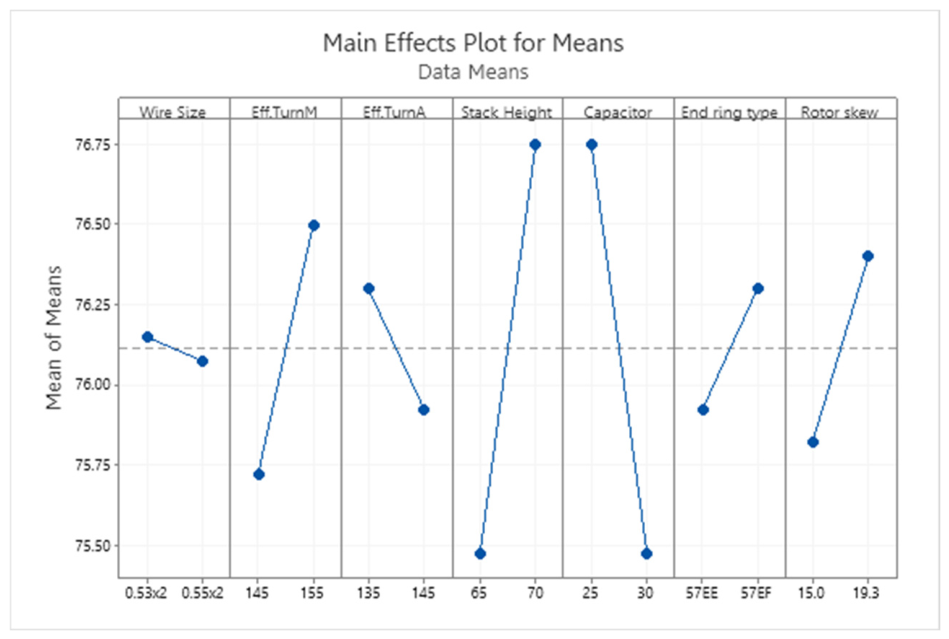
Figure 10 shows the Main Effects Plot for Means, which displays a similar pattern: the second-level settings of capacitor and end-ring type yield the highest mean efficiency values. The close agreement between Figure 6 and Figure 7 confirms the consistency of both S/N and mean analyses, demonstrating that optimizing capacitor value and end-ring configuration is crucial for achieving maximum and stable efficiency in the proposed PSC motor.
ANOVA results in Table 9 indicate that main winding turns, capacitor value, and stack height are the dominant parameters affecting efficiency variation in the first optimization stage.
As the L8 orthogonal array provides limited degrees of freedom for direct error estimation, pooled ANOVA was adopted by combining the least influential factors into the error term. This approach is commonly used in Taguchi-based analysis to improve the stability of factor contribution estimation when experimental degrees of freedom are limited.

4.3. Design and Experimental Validation of Prototype Motor #1

Based on the DOE results, the optimized parameter set was selected to minimize key loss components and improve overall efficiency. The selected design parameters are summarized in Table 10.
The optimized configuration includes a wire size of 0.55 × 2 mm, main and auxiliary winding turns of 155 and 135, respectively, a stack height of 70 mm, a 25 µF capacitor, an EF-type end-ring, and a rotor skew of 19.3°. These parameters are chosen to reduce copper loss, improve magnetic flux distribution, and enhance phase balance.
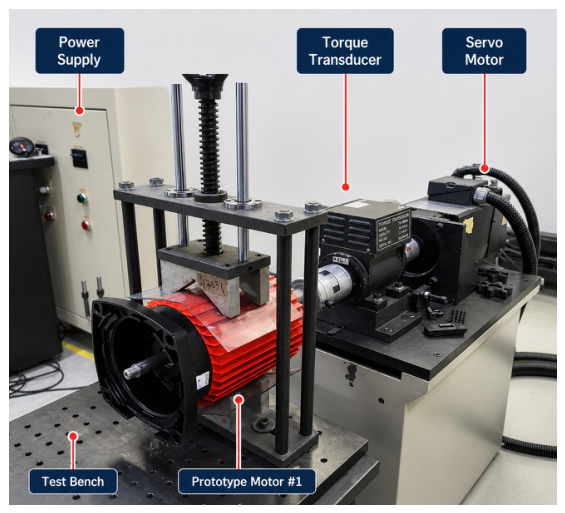
Figure 11 shows the experimental setup used for validation, including a dynamometer test bench with controlled loading conditions. The comparison between simulation and experimental results is presented in Table 11.
The experimental results demonstrate good agreement with simulation, with deviations below 2% for most parameters. The measured efficiency is 76.8%, slightly lower than the simulated value of 77.3%, corresponding to a deviation of 0.65%. These results confirm the validity of the optimized design and the accuracy of the simulation model.

4.4. DOE Analysis for Prototype Motor #2 (Material Optimization)

Since the experimental results of Prototype Motor #1 did not achieve the desired efficiency levels corresponding to the IE2 and IE3 standards, a new DOE was conducted to further improve the motor’s performance. The revised design focused on the two most influential parameters, namely stack height and capacitor value while removing the less significant ones identified in the first DOE. Additionally, a new factor, silicon steel grade, was introduced to investigate the impact of material quality on core loss and magnetic performance. This new DOE experiment employed an L9 (3 × 3) orthogonal array to determine the optimal combination of parameters that yields the highest efficiency.
Table 12 summarizes the key magnetic and loss-related properties of the silicon steel grades selected for the second-stage DOE. Based on the initial screening results, three representative materials (50A1300, 50A600, and 50A400) were chosen to investigate the impact of material quality on motor efficiency.
The core loss values (W15/50) indicate a significant reduction from 13.0 W/kg for 50A1300 to 4.0 W/kg for 50A400. This reduction directly corresponds to lower hysteresis and eddy current losses in the stator core. Although higher-grade materials exhibit slightly lower magnetic induction (B50), the substantial decrease in core loss dominates the overall efficiency improvement.
These characteristics confirm that material selection plays a critical role in minimizing core loss and enhancing energy conversion efficiency in PSC motors.
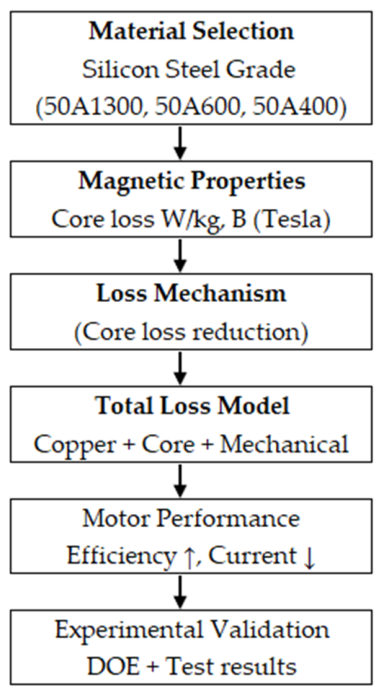
Figure 12 presents the physics-guided framework linking silicon steel material selection to PSC motor performance. The process begins with material selection, where different silicon steel grades (50A1300, 50A600, and 50A400) are considered based on their magnetic characteristics.
The selected material directly influences the magnetic properties of the motor, particularly core loss (W/kg) and magnetic flux density (B). These properties determine the loss mechanisms within the motor, including hysteresis and eddy current losses, which are the primary contributors to core loss.
The reduction in core loss subsequently affects the total loss model, which consists of copper loss, core loss, and mechanical loss. By minimizing the dominant loss components, the overall efficiency of the motor is improved while reducing the input current under rated operating conditions.
Finally, the effectiveness of the proposed framework is validated through Design of Experiments (DOE) and experimental testing. The validation confirms that the optimized material and design parameters lead to improved motor performance under practical operating conditions.
This framework provides a systematic approach for understanding and optimizing the impact of material selection on motor efficiency beyond conventional parameter tuning methods.
Table 13 summarizes the selected design parameters and their corresponding levels used in the L9 orthogonal array for Prototype Motor #2. Based on the first-stage DOE results, the most influential factors, stack height, capacitor value, and silicon steel grade, were retained for further optimization.
The selected ranges represent practical design variations and are chosen to capture the effects of both electromagnetic loading and material properties on motor efficiency. In particular, stack height influences magnetic flux distribution, capacitor value governs phase angle and current balance, and silicon steel grade directly affects core loss characteristics.
This refined DOE setup enables the systematic evaluation of the combined effects of structural and material parameters on efficiency improvement.
Table 14 (Simulation results for L9 3 × 3 orthogonal array) summarizes the outcomes from the second DOE simulation. The efficiency values range from 77.5% to 81.2%, with the highest efficiency achieved in Run 7, corresponding to a stack height of 85 mm, a capacitor of 20 µF, and silicon steel grade 50A400. This represents a substantial improvement of nearly 4% compared with the previous prototype’s efficiency (77.3%). The improved performance is primarily attributed to the lower core loss and higher magnetic permeability of the upgraded silicon steel, combined with optimized electromagnetic loading from increased stack height and capacitor tuning.
The S/N ratio analysis under the “larger-is-better” criterion indicates that capacitor value and stack height have dominant influences on efficiency behavior, while wire size and end-ring type exhibit comparatively smaller effects. Similar trends are observed in the mean response analysis shown in Figure 10, confirming the consistency of the DOE results.
Figure 9 and Figure 10 show that the selected parameter combinations affect motor efficiency within a relatively narrow range, indicating that the proposed DOE framework mainly improves efficiency through balanced parameter adjustment rather than extreme parameter modification.
ANOVA results in Table 9 indicate that main winding turns, capacitor value, and stack height are the dominant parameters affecting efficiency variation in the first optimization stage. These parameters were therefore selected for the second-stage optimization together with silicon steel grade for further investigation.
This robustness is particularly important in pump applications, where load fluctuations can significantly affect motor operating conditions.
Table 15 summarizes the Response Table for Means, revealing that the highest efficiency occurs at Level 3 of stack height (85 mm), Level 2 of capacitor (25 µF), and Level 3 of silicon steel grade (50A400). The factor ranking again identifies silicon steel grade as most influential (Δ = 2.53), followed by stack height (Δ = 1.47) and capacitor (Δ = 0.77).
Based on the Taguchi optimization results, the predicted performance of the optimal parameter combination yields a mean efficiency of approximately 81.14%, corresponding to a signal-to-noise ratio of about 38.19.
Table 16 lists the optimal parameter combination derived from the DOE results 85 mm stack height, 25 µF capacitor, and 50A400 silicon steel grade. These settings provide the best trade-off between magnetic performance and core loss reduction, resulting in the highest overall efficiency predicted by the model.
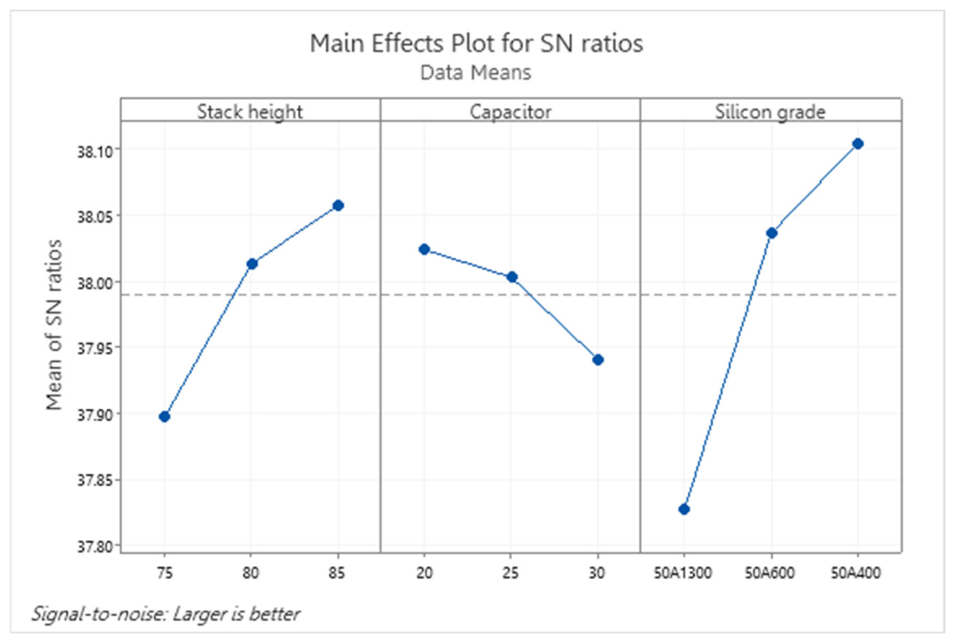
Figure 13 illustrates the Main Effects Plot for S/N Ratios based on the “larger is better” criterion. The steepest slope appears in the silicon steel grade, indicating it has the strongest effect on efficiency stability, followed by stack height, while capacitor shows a relatively small variation. This trend confirms that improving magnetic material quality significantly enhances robustness and reduces performance fluctuation.
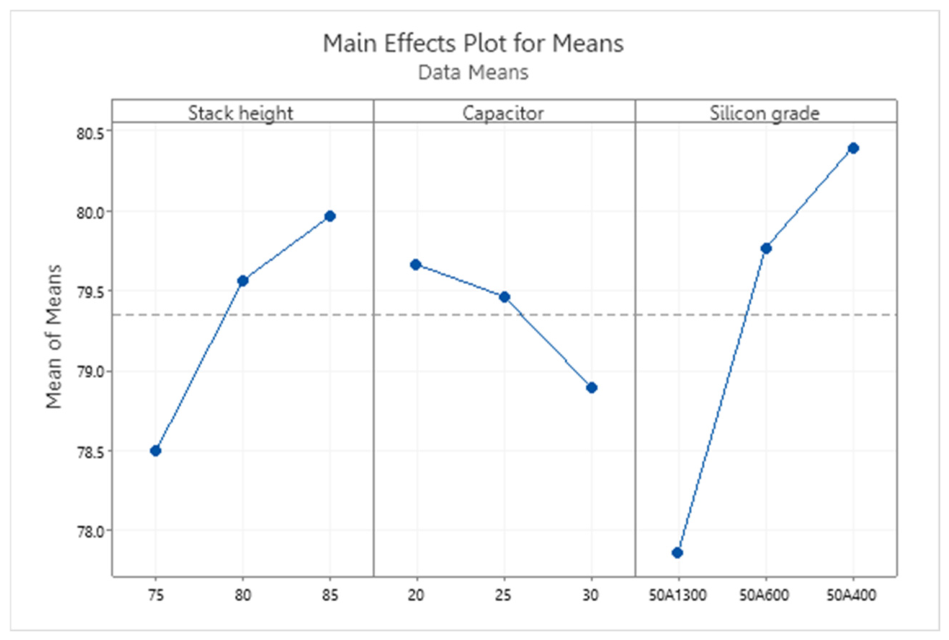
Figure 14 shows the Main Effects Plot for Means, presenting a similar pattern. The highest mean efficiency occurs at 85 mm stack height, 25 µF capacitor, and 50A400 silicon steel grade. The rising slope of silicon steel grade highlights its dominant impact on overall efficiency, consistent with the results shown in Table 17 and Table 18.
ANOVA was performed on the efficiency response to quantify the statistical significance of design parameters in the L9 orthogonal array. The results indicate that silicon steel grade is the most influential factor, contributing approximately 69.7% of the total variation, followed by stack height (23.0%) and capacitor value (6.3%).
A significance level of α = 0.05 was adopted for the statistical interpretation of the ANOVA results. The p-values confirm that silicon steel grade (p = 0.013) and stack height (p = 0.038) have statistically significant effects on motor efficiency, while capacitor value (p = 0.125) shows a relatively lower influence.
From a physical perspective, the dominant contribution of silicon steel grade is attributed to its direct impact on core loss reduction, including hysteresis and eddy current losses. Increasing stack height improves magnetic flux distribution and reduces saturation effects, thereby enhancing efficiency. Although the capacitor factor exhibits lower statistical significance within the investigated DOE range (p = 0.125), it was retained in the final prototype because capacitor selection directly influences phase balance, operating current behavior, and practical operating stability in PSC motors.
These findings demonstrate that material selection and magnetic design play critical roles in the second-stage optimization process. The detailed ANOVA results are summarized in Table 17.
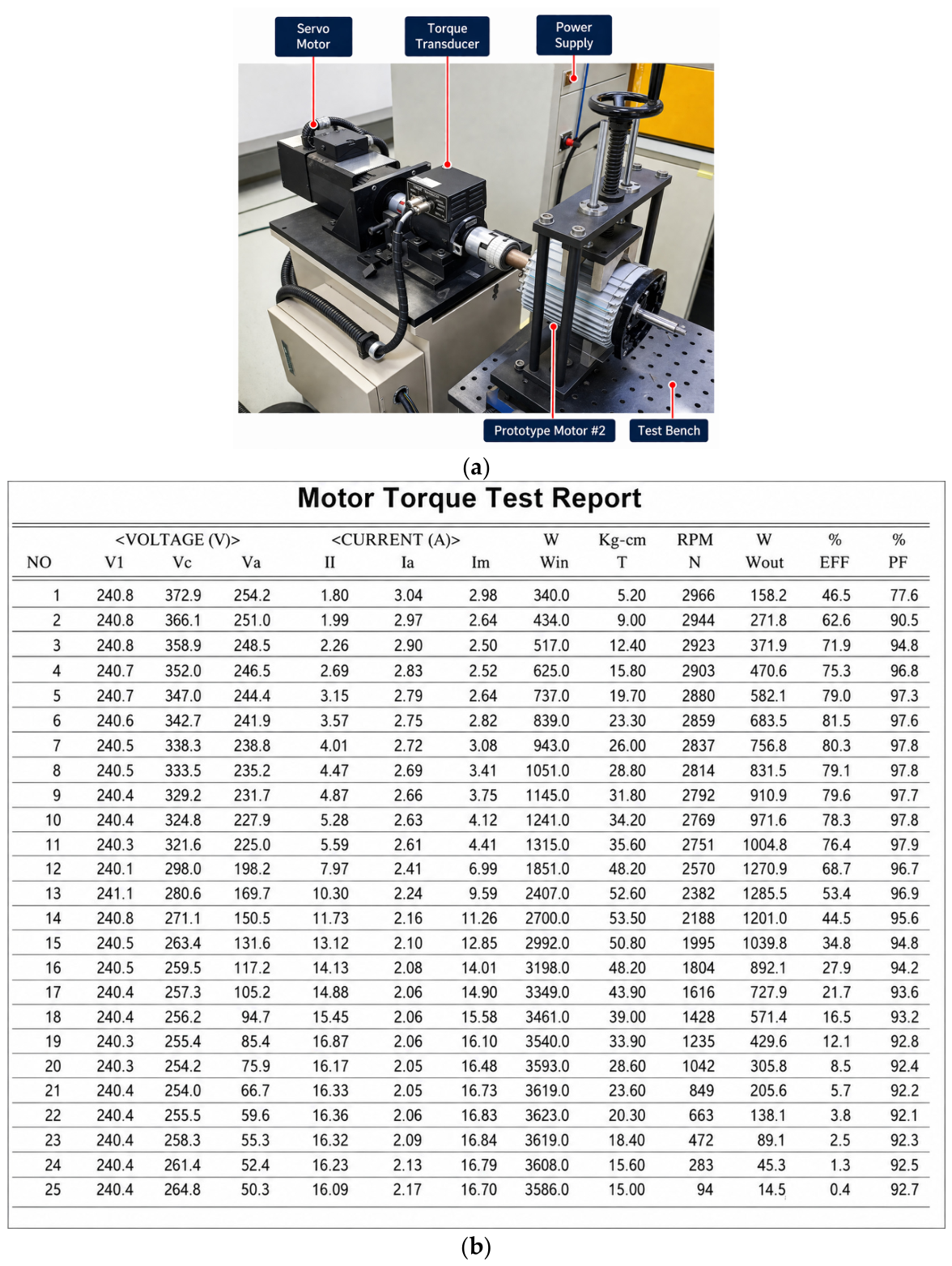
Figure 15a illustrates the experimental test bench configured for the performance validation of Prototype Motor #2. The setup consists of a servo motor used as a loading device, a precision torque transducer for torque measurement, and a regulated power supply connected to the PSC motor under test. This configuration enabled the accurate acquisition of torque, current, and input power data at various load levels. The latter incorporated an increased stack height of 85 mm and adopted high-grade silicon steel 50A400, which reduced core loss and enhanced magnetic flux density. The comparison highlights the material improvement and structural refinement achieved through the DOE-based optimization process. These enhancements contributed directly to the higher measured efficiency of Prototype Motor #2, validating the simulated results from Run 7 in the L9 orthogonal array.
Figure 15b shows the actual measurement results obtained from the motor torque test system. The highlighted values correspond to the operating point near 750 W, which is used for interpolation to determine the rated performance, including current 3.97 A, input power 933 W, speed 2839 rpm, and efficiency 80.41%.
Table 18 compares the simulation and experimental results of Prototype Motor #2 at the rated operating point of 750 W. The experimental values at the rated operating point were determined from experimentally measured data using interpolation between adjacent measurement points, as shown in Figure 15b.
The results indicate that the simulated efficiency (81.2%) is slightly higher than the measured value (80.4%), resulting in an error of 1.00%. This discrepancy can be attributed to mechanical losses and stray losses that are not fully captured in the simulation model.
The full-load current shows a deviation of 3.27%, which may be caused by winding resistance variations and magnetic saturation effects. Meanwhile, the speed and input power errors are relatively small, at 0.39% and 0.96%, respectively.
Overall, the deviation between simulation and experimental results is within 4%, confirming the validity and reliability of the proposed DOE-based optimization framework.

4.5. Performance Validation Under Multi-Load Conditions

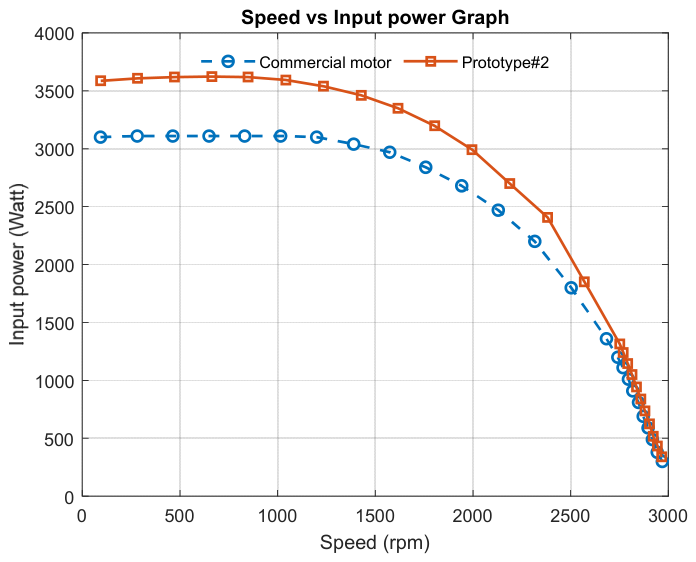
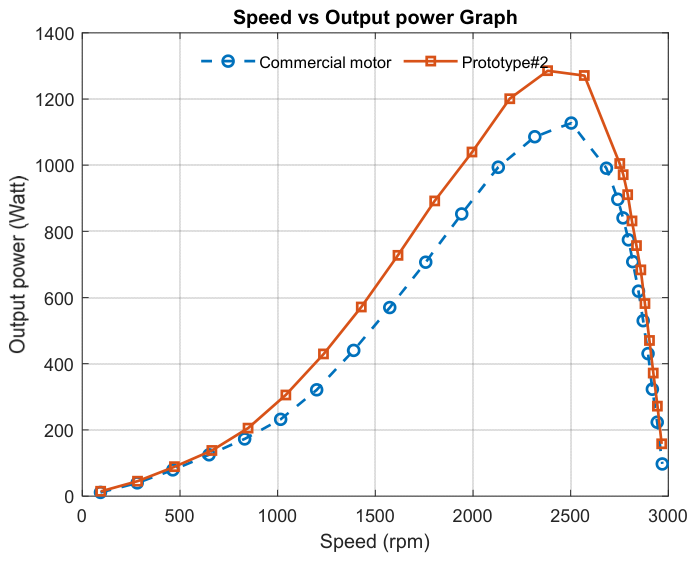
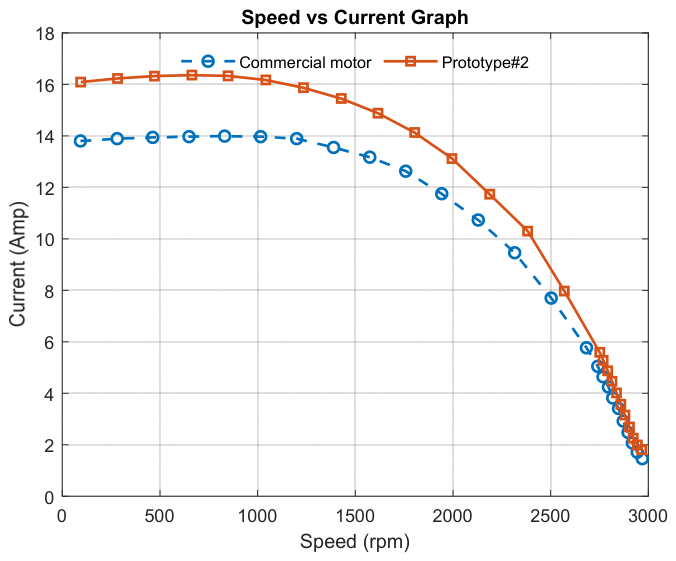
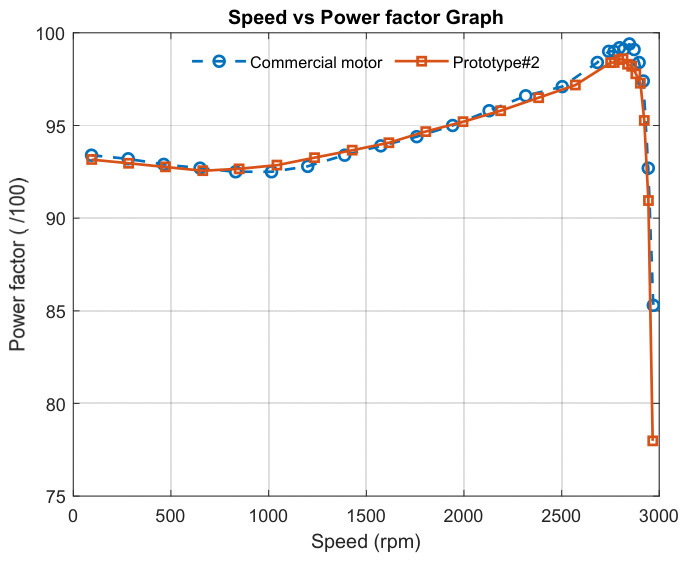
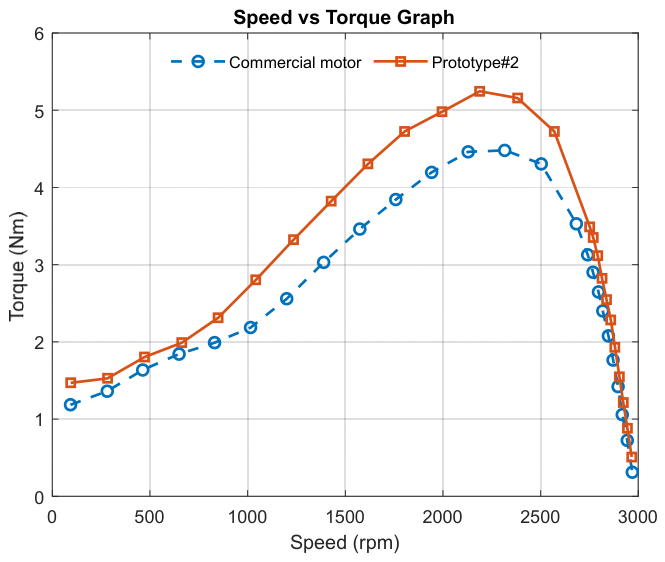
This section presents the experimental performance evaluation of the commercial motor and Prototype Motor #2 under multiple operating conditions. The comparative analyses in Figure 16, Figure 17, Figure 18, Figure 19, Figure 20 and Figure 21 include efficiency, current, input power, and output power characteristics as functions of speed under different load regions. These results are used to validate the operating behavior and practical performance improvement of the optimized PSC motor beyond the rated operating point.

4.5.1. Speed vs. Efficiency Characteristics

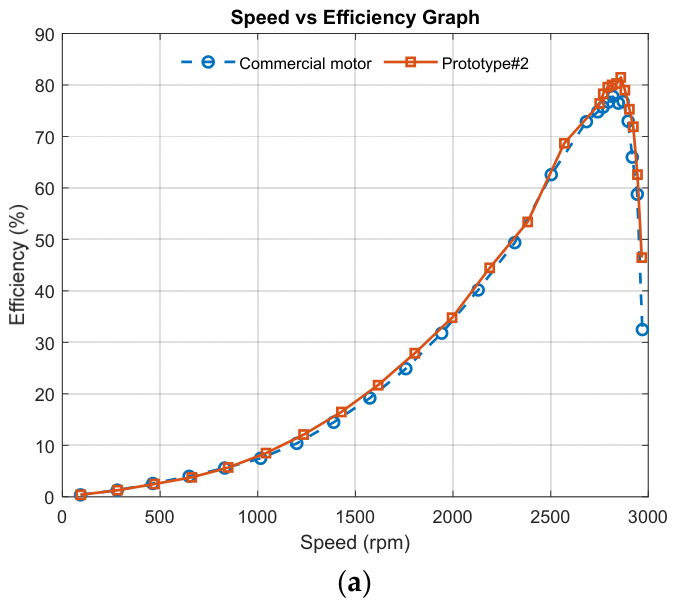
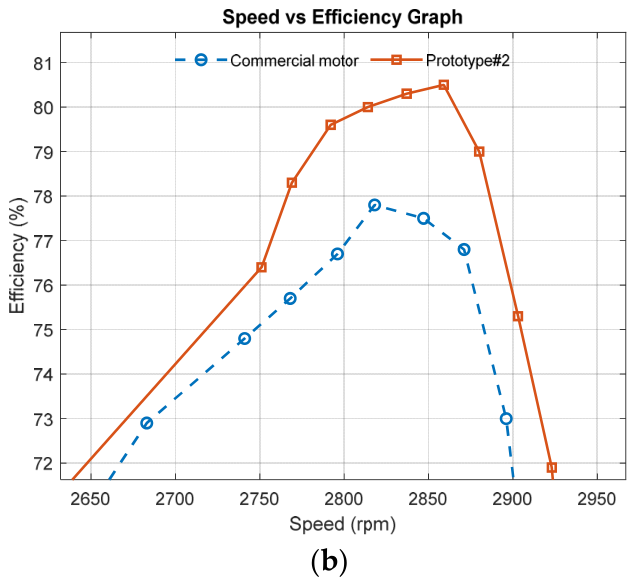
Figure 16a is used to compare the efficiency behavior of the commercial and optimized motors near the rated operating region. Figure 16a shows the overall efficiency characteristics of the commercial and optimized motors, while Figure 16b enlarges the high-efficiency [41] operating region near the rated speed. The optimized motor exhibits slightly higher efficiency than the commercial motor in the rated operating range, although the efficiency difference remains moderate, which is typical for small 1 HP PSC motors under practical operating conditions.

4.5.2. Speed vs. Current Characteristics

The current characteristics indicate that the optimized motor operates with current behavior comparable to that of the commercial motor near the rated operating region. Although slightly higher current is observed at low-speed conditions, the overall operating trend remains similar under practical load conditions. These results confirm that the proposed optimization maintains acceptable operating current characteristics while improving overall motor performance.

4.5.3. Speed vs. Input Power Characteristics

The input power characteristics in Figure 18 show that the optimized motor consumes slightly higher input power in some operating regions, particularly near the rated condition. This behavior indicates that the proposed optimization not only reduces loss behavior but also improves the electromagnetic capability of the motor, enabling the same load to be driven more effectively under practical operating conditions. As a result, the overall efficiency improvement appears moderate rather than extremely large, which is typical for small 1 HP PSC motors.

4.5.4. Speed vs. Output Power Characteristics

Figure 19 shows that the optimized motor delivers higher output power across several operating regions while maintaining operating behavior comparable to that of the commercial motor. The results indicate that the proposed parameter optimization improves load-driving capability and operating balance under practical industrial conditions rather than focusing solely on extreme efficiency enhancement.

4.5.5. Speed vs. Power Factor Characteristics

Figure 20 shows that the optimized motor exhibits a moderate reduction in power factor near the rated operating region. This behavior is associated with the increased electromagnetic loading and torque-producing capability of the optimized motor, which is commonly observed in small 2-pole PSC motors operating close to synchronous speed. Although the power factor decreases in some operating regions, the optimized motor maintains stable operating behavior and improved load-driving capability under practical industrial operating conditions. Therefore, the proposed optimization emphasizes balanced operating improvement rather than the independent maximization of a single performance parameter.

4.5.6. Speed vs. Torque Characteristics

The torque-speed characteristics show that Prototype Motor #2 delivers higher torque across a wide speed range compared to the commercial motor. The improvement is particularly evident in the mid-speed region, indicating enhanced electromagnetic loading and flux linkage.
This behavior is attributed to the increased stack height and improved magnetic material, which collectively enhance torque production capability without significantly increasing current.

4.5.7. Engineering Insight and Generalization

The combined results from Figure 14, Figure 15, Figure 16, Figure 17, Figure 18 and Figure 19 highlight that the efficiency improvement is not limited to a single operating point but is consistently observed across multiple load conditions.
More importantly, the results demonstrate that:
  • Material optimization (silicon steel grade) primarily reduces core losses
  • Geometric optimization (stack height) enhances magnetic flux linkage
  • Electrical optimization (capacitor value) improves torque and phase balance
These findings provide a generalized design guideline that can be applied to other PSC motor configurations and pump applications.
While the DOE-based analysis identifies optimal parameter combinations, it does not provide a continuous representation of the design space. To address this limitation, a response surface modeling approach is introduced in the following section.

4.6. Response Surface Modeling for Predictive Efficiency Analysis

To extend the DOE-based optimization results, a Response Surface Methodology (RSM) model was developed to predict motor efficiency within the investigated design space. Unlike the Taguchi method, which identifies optimal discrete levels, the RSM model provides a continuous relationship between design variables and efficiency.
Based on the L9 experimental dataset (Table 14), the model captures the combined effects of stator stack height, capacitor value, and silicon steel grade. From a physical perspective, it reflects the dominant efficiency mechanisms, including core loss reduction through material enhancement and phase balance improvement via capacitor tuning.
This approach enhances the generalization capability of the proposed framework by enabling continuous efficiency prediction without additional experiments, supporting practical PSC motor optimization.

4.6.1. Model Formulation

A second-order RSM model was developed to establish the relationship between motor efficiency and the selected design variables, including stack height, capacitor value, and silicon steel grade. The regression coefficients were determined using least-squares fitting based on the L9 DOE experimental dataset. The developed model was used to extend the discrete DOE results into a continuous predictive efficiency trend within the investigated design space. The general form of the RSM model is expressed as
η = β 0 + i = 1 n β i x i + i = 1 n β i i x i 2 + i < j β i j x i x j
where η represents the predicted motor efficiency, x i denotes the coded design variables, β 0 is the intercept term, β i , β i i , and β i j are the linear, quadratic, and interaction coefficients, respectively, and k is the number of design variables.

4.6.2. Model Fitting and Validation

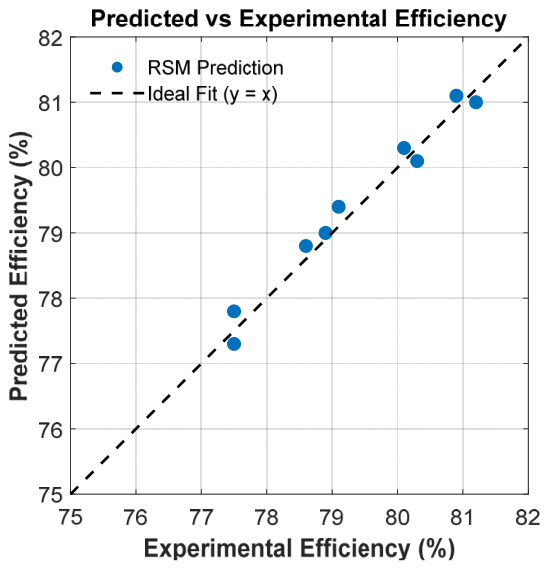
The RSM model was validated using the experimental dataset obtained from the L9 orthogonal array, as summarized in Table 19. The predicted efficiency values showed good agreement with the experimental results, with an average prediction error below 0.3% and an R2 value of approximately 0.93. The developed model is intended to represent efficiency behavior within the investigated design range and to support practical PSC motor efficiency prediction under the selected operating conditions.
The prediction error remains within ±0.3% for all cases, with an average absolute error below 0.3%, indicating high prediction accuracy. The coefficient of determination (R2) is approximately 0.93, confirming that the developed model effectively captures the dominant efficiency trends within the investigated design space.
The predicted efficiency values showed good agreement with the experimental results, with an average prediction error below 0.3%. The obtained R2 value of approximately 0.93 indicates that the RSM model can reasonably capture the efficiency trends within the investigated design space.
The predictive capability of the developed RSM model was evaluated by comparing the predicted efficiency values with the experimental results from the L9 DOE dataset, as shown in Figure 22. Each point represents a specific combination of stator stack height, capacitor value, and silicon steel grade.
The close alignment of the data points with the ideal reference line y x indicates strong agreement between predicted and measured efficiencies.
From an engineering perspective, the model reflects the influence of key factors, including core loss reduction from silicon steel grade and phase balance effects from capacitor variation. These results demonstrate that the RSM model can reliably extend the discrete DOE findings into a continuous predictive framework for PSC motor efficiency optimization.

4.6.3. Response Surface Interpretation

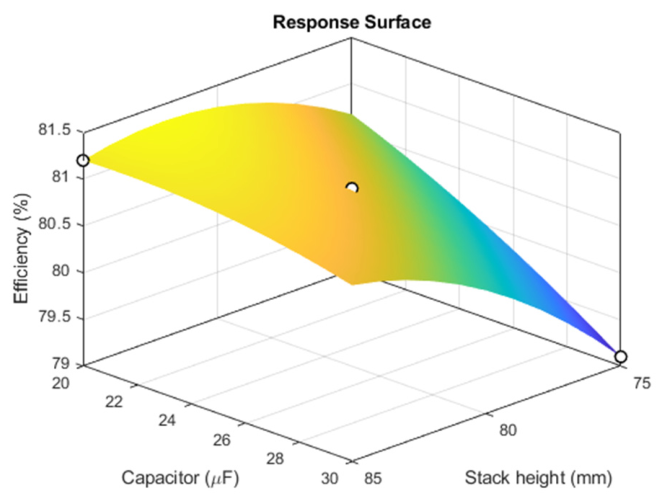
Figure 23 illustrates the response surface relationship between stator stack height, capacitor value, and predicted motor efficiency within the investigated design space. The response surface indicates that stack height has a stronger influence on efficiency improvement, while capacitor variation provides secondary optimization effects under the investigated operating conditions. The smooth efficiency trend demonstrates the applicability of the developed RSM model for continuous efficiency prediction within the selected DOE parameter range.
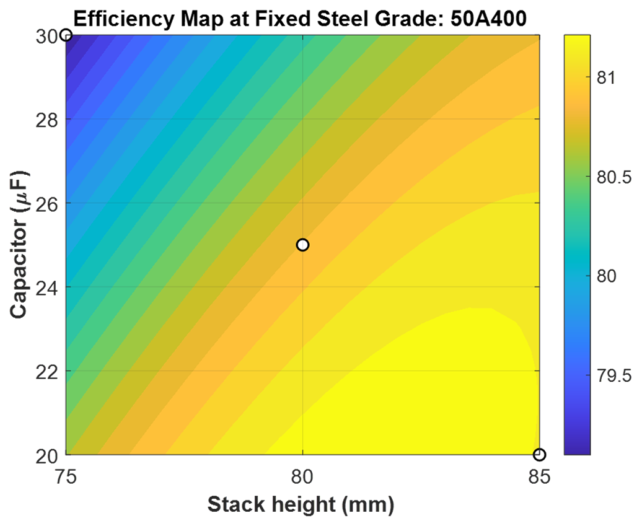
While the response surface in Figure 23 provides a visualization of the interaction effects among design variables, it primarily reflects the mathematical structure of the fitted RSM model. To further enhance the practical applicability of the proposed framework, the efficiency map shown in Figure 24 transforms the model output into a design-oriented representation. Figure 24 shows an efficiency map predicted by the RSM model demonstrating the functions of stator stack height and capacitor value at a fixed silicon steel grade.

4.6.4. Engineering Implication

Overall, the integration of DOE and RSM enhances the proposed framework by combining experimental optimization with predictive modeling. The Taguchi method identifies the dominant factors and optimal discrete configurations, while the RSM model extends this capability by enabling continuous prediction and design generalization.
The combined use of validation in Figure 22, response surface analysis in Figure 23, and efficiency mapping in Figure 24 establishes a comprehensive methodology that bridges experimental data, mathematical modeling, and practical engineering application.
This integrated framework provides a scalable and cost-effective approach for PSC motor design, enabling the efficient exploration of the design space without extensive experimental trials. As a result, the proposed method offers a robust pathway for achieving high-efficiency motor performance and supports future development toward advanced optimization strategies.

4.7. Limitations

The developed RSM model was constructed using nine experimental points from the L9 DOE dataset; therefore, its predictive capability is limited to the investigated design space. The model was not intended for extrapolation beyond the selected ranges of stack height, capacitor value, and silicon steel grade.
In addition, thermal limits and manufacturing tolerances were considered as practical engineering constraints, but they were not independently optimized in this study. Future work should extend the proposed framework by incorporating thermal validation, tolerance analysis, and multi-objective optimization including efficiency, power factor, temperature rise, and manufacturability.

5. Conclusions

This study proposed a physics-guided optimization framework for improving the efficiency of Permanent Split Capacitor (PSC) motors by integrating Design of Experiments (DOE) with material and electrical parameter optimization. Unlike conventional Taguchi-based approaches that primarily identify dominant factors, the proposed framework establishes a unified methodology linking parameter variation with underlying electromagnetic and loss mechanisms.
The results demonstrate that efficiency improvement in PSC motors is governed by the combined interaction of material, geometric, and electrical parameters rather than isolated tuning. In particular, silicon steel grade was identified as the dominant factor due to its direct influence on core loss reduction, while stator stack height enhances magnetic flux linkage and capacitor tuning improves phase balance and torque production.
Experimental validation under multi-load conditions confirmed the robustness of the proposed approach, with the optimized prototype achieving a maximum efficiency of 80.4%, representing a significant improvement close to the target. The close agreement between predicted and measured results further validates the accuracy of the developed model.
The integration of the RSM-based surrogate model extends the conventional Taguchi optimization by enabling the continuous prediction of efficiency trends within the design space. While Taguchi identifies optimal parameter combinations, RSM provides predictive capability and design generalization, transforming the proposed method into a practical engineering tool rather than a purely experimental approach.
From an application perspective, the proposed framework is scalable and applicable to other PSC motor configurations and pump-driven systems, offering a cost-effective pathway toward achieving IE2/IE3 efficiency standards and providing a foundation for future extension toward higher efficiency classes.
The present study focuses on efficiency-oriented parameter optimization under practical PSC motor operating constraints rather than full multi-objective optimization. Power factor and thermal behavior were considered practical operating constraints to maintain stable motor operation. Future work may extend the proposed framework toward multi-objective optimization approaches incorporating efficiency, power factor, thermal behavior, and operating stability simultaneously.

Author Contributions

Conceptualization, W.W. and B.P.; methodology, W.W. and R.R.; validation, W.W. and C.C.; formal analysis, W.W. and S.B.; investigation, W.W., R.R. and S.D.; data curation, R.R. and C.C.; software, W.W. and R.R.; writing—original draft preparation, W.W.; writing—review and editing, W.W., T.M. and B.P.; visualization, W.W. and C.C.; supervision, B.P.; project administration, B.P.; correspondence, B.P. All authors have read and agreed to the published version of the manuscript.

Funding

This research received no external funding.

Data Availability Statement

Data supporting the results of this study are available from the corresponding author upon reasonable request.

Acknowledgments

During the preparation of this work the authors used ChatGPT (OpenAI, GPT-5.5) for editorial assistance, language refinement, and manuscript formatting. After using this tool/service, the authors reviewed and edited the content as needed and take full responsibility for the content of the published article.

Conflicts of Interest

The authors declare no conflicts of interest.

References

  1. IEC 60034-30-1; Rotating Electrical Machines-Part 30-1: Efficiency Classes of Line Operated AC Motors (IE Code). IEC: Geneva, Switzerland, 2014.
  2. Deveci, U.M.; Ayçiçek, E. Cost-effective IE2 high-efficiency single-phase induction motor design and prototyping. Eng. Sci. Technol. Int. J. 2025, 61, 101921. [Google Scholar] [CrossRef]
  3. Asizehi, Y.E.; Omokhafe, T.J.; Ambafi, J.G.; Agbachi, E.O. Permanent split capacitor (PSC) alternating current induction motor. Leonardo Electron. J. Pract. Technol. 2015, 26, 163–176. [Google Scholar]
  4. Yin, P.; Pate, M.B. An energy and life-cycle cost comparison of residential PSC and ECM blower systems operating at excess pressures due to restrictive ducts. J. Build. Eng. 2019, 22, 305–313. [Google Scholar] [CrossRef]
  5. Younas, M.B.; Khalid, H.A.; Javed, A.; Arkan, M. Performance enhancement of single-phase induction motor using GA-based multi-objective optimization. Int. J. Electron. 2021, 109, 1–14. [Google Scholar] [CrossRef]
  6. Antheesh, R.; Bhat, S.; Ballal, R. Performance investigation of single-phase capacitor start–capacitor run induction motor drive. IOP Conf. Ser. Mater. Sci. Eng. 2021, 1065, 012043. [Google Scholar] [CrossRef]
  7. Sarac, V.; Atanasova-Pacemska, T. Multiparameter analysis for efficiency improvement of single-phase capacitor motor. Math. Probl. Eng. 2019, 2019, 5131696. [Google Scholar] [CrossRef]
  8. Isaka, S.; Yoshida, T. Improving the starting characteristics of single-phase induction motors with an auxiliary-winding current control. IEEJ J. Ind. Appl. 2020, 9, 11–16. [Google Scholar] [CrossRef]
  9. Costa, U.P.; Pelizari, A.; Costa, E.C.M.; Bruzinga, G.R. Comparative analysis in single-phase induction motors: Analytical, numerical, and load tests. IEEE Access 2025, 13, 3622064. [Google Scholar] [CrossRef]
  10. Hsiao, C.-Y.; Htet, S.M. Multi-Step Design Optimization for the Improvement of an Outer-Rotor Brushless Direct Current Motor. Appl. Sci. 2024, 14, 4302. [Google Scholar] [CrossRef]
  11. Sorgdrager, A.; Wang, R.-J.; Grobler, A. Taguchi method in electrical machine design. SAIEE Afr. Res. J. 2017, 108, 150–164. [Google Scholar] [CrossRef]
  12. Ma, D.; Sun, C.; Li, Y.; Tian, B.; Wang, L.; Pei, R. Study of magnetic properties of electrical steels with difference Si considering the effect of temperature. AIP Adv. 2023, 13, 025044. [Google Scholar] [CrossRef]
  13. Karami, R.; Butler, D.; Tamimi, S. Manufacturing of non-grain-oriented electrical steels: Review. Int. J. Adv. Manuf. Technol. 2024, 133, 1083–1109. [Google Scholar] [CrossRef]
  14. Arinze, I.I.; Simeon, C. Energy efficiency improvement of industrial induction motor systems through integrated electrical and mechanical loss optimization. World J. Adv. Eng. Technol. Sci. 2026, 18, 566–574. [Google Scholar] [CrossRef]
  15. Seo, U.-J.; Kim, D.-J.; Chun, Y.-D.; Han, P.-W. Mechanical cutting effect of electrical steel on the performance of induction motors. Energies 2020, 13, 6314. [Google Scholar] [CrossRef]
  16. Mahmouditabar, F.; Baker, N. A Review on the Effect of Electrical Steel Manufacturing Processes on the Performance of Electric Machines. Energies 2023, 16, 7954. [Google Scholar] [CrossRef]
  17. Sharma, U.; Singh, B. Design and Development of Energy Efficient Single Phase Induction Motor For Ceiling Fan Using Taguchi’s Orthogonal Arrays. IEEE Trans. Ind. Appl. 2021, 57, 3562–3572. [Google Scholar] [CrossRef]
  18. Gope, D.; Goel, S.K. Design optimization of permanent magnet synchronous motor using Taguchi method and experimental validation. Int. J. Emerg. Electr. Power Syst. 2021, 22, 9–20. [Google Scholar] [CrossRef]
  19. Hüner, E. Optimization of axial flux permanent magnet generator by Taguchi experimental method. Bull. Pol. Acad. Sci. Tech. Sci. 2020, 68, 3. [Google Scholar] [CrossRef]
  20. Balci, S.; Akkaya, M. Reduction of the core size and power losses by using soft magnetic material for a single-phase induction motor. Measurement 2022, 198, 111421. [Google Scholar] [CrossRef]
  21. Kabir, M.A.; Jaffar, M.Z.M.; Wan, Z.; Husain, I. Design, Optimization, and Experimental Evaluation of Multilayer AC Winding for Induction Machine. IEEE Trans. Ind. Appl. 2019, 55, 3630–3639. [Google Scholar] [CrossRef]
  22. Chasiotis, I.D.; Karnavas, Y.L.; Scuiller, F. Effect of Rotor Bars Shape on the Single-Phase Induction Motors Performance: An Analysis toward Their Efficiency Improvement. Energies 2022, 15, 717. [Google Scholar] [CrossRef]
  23. Liu, C.-T.; Chen, H.-Z.; Wu, P.-Y.; Chao, P.-Y. Winding Magnetization Design of Single-Phase Capacitor-Run Induction Motor for Submersible Pump Application. IEEE Trans. Magn. 2023, 59, 8203405. [Google Scholar] [CrossRef]
  24. Juhaniya, A.I.S.; Ibrahim, A.A.; Zainuri, M.A.A.M.; Zulkifley, M.A. An Analytical Model of Induction Motors for Rotor Slot Parametric Design Performance Evaluation. Int. J. Adv. Comput. Sci. Appl. 2022, 13, 12. [Google Scholar] [CrossRef]
  25. Hirose, K.; Asano, F.; Yasui, I.; Baba, M.; Yamada, N.; Yamazaki, W.; Chikahisa, K.; Kumagai, K.; Arakawa, H. Experiment and numerical investigation of windage loss of an electric motor with narrow gap. Prog. Eng. Sci. 2026, 3, 100248. [Google Scholar] [CrossRef]
  26. Xu, Z.; Xu, Y.; Yang, S.; Wang, Y.; Wang, Y. A novel electromagnetic-thermal-fluid bidirectional coupled model considering multiple factors for temperature rise and loss calculation of high current density motor. Int. J. Therm. Sci. 2026, 220, 110330. [Google Scholar] [CrossRef]
  27. Fuchs, E.F.; Masoum, M.A.S. Modeling and analysis of induction machines. In Power Quality in Power Systems; Academic Press: Cambridge, MA, USA, 2023; pp. 197–297. [Google Scholar] [CrossRef]
  28. Xu, H.; Zhao, J.; Xiong, Y.; Duan, Y. Analysis and calculation of the winding loss and rotor loss of solid rotor induction motors for flywheel energy storage system considering the influence of inverter power supply. J. Energy Storage 2025, 128, 117224. [Google Scholar] [CrossRef]
  29. Bhowmick, D.; Chowdhury, S.K. Estimation of induction motor equivalent circuit parameters and losses from transient measurement. ISA Trans. 2025, 157, 573–590. [Google Scholar] [CrossRef] [PubMed]
  30. Tameemi, A.; Degano, M.; Di Nardo, M.; Gerada, C. Power loss and performance analysis of a permanent magnet synchronous for actuator applications. In Proceedings of the 2022 International Conference on Electrical Machines, Valencia, Spain, 5–8 September 2022. [Google Scholar] [CrossRef]
  31. Gundabattini, E.; Kuppan, R.; Solomon, D.G.; Kalam, A.; Kothari, D.P.; Bakar, R.A. A review on methods of finding losses and cooling methods to increase efficiency of electric machines. Ain Shams Eng. J. 2021, 12, 497–505. [Google Scholar] [CrossRef]
  32. Tabora, J.M.; Tostes, M.E.L.; Matos, E.O.; Soares, T.M.; Bezerra, U.H. Voltage Harmonic Impacts on Electric Motors: A Comparison between IE2, IE3 and IE4 Induction Motor Classes. Energies 2020, 13, 3333. [Google Scholar] [CrossRef]
  33. Goman, V.V.; Prakht, V.; Kazakbaev, V.; Dmitrievskii, V. Comparative Study of Induction Motors of IE2, IE3 and IE4 Efficiency Classes in Pump Applications Taking into Account CO2 Emission Intensity. Appl. Sci. 2020, 10, 8536. [Google Scholar] [CrossRef]
  34. Rajendran, G.; Raute, R.; Caruana, C.; Andriukaitis, D. Bridging Innovation and Sustainability: The Strategic Role of High-Efficiency Motors in Advancing Industry 5.0. Energies 2026, 19, 1003. [Google Scholar] [CrossRef]
  35. Aldaikh, S.O.; Rawashdeh, M.O.; Hussianat, L.H.; Shchur, T. Study of starting modes of single-phase induction motors when changing the parameters of the stator windings. Inform. Autom. Pomiary Gospod. Ochr. Sr. 2024, 14, 34–41. [Google Scholar] [CrossRef]
  36. Ajamloo, A.M.; Ghaheri, A.; Afjei, E. Multi-objective Optimization of an Outer Rotor BLDC Motor Based on Taguchi Method for Propulsion Applications. In Proceedings of the 2019 10th International Power Electronics, Drive Systems and Technologies, Shiraz, Iran, 12–14 February 2019; pp. 34–39. [Google Scholar] [CrossRef]
  37. Xie, K.; Zheng, K.; Wang, T.; Li, S.; Liu, J. Efficiency optimization of hybrid stator motor based on silicon steel and amorphous materials. J. Phys. Conf. Series. 2025, 3043, 012115. [Google Scholar] [CrossRef]
  38. Zanini, F.; Pellizzari, M.; Molinari, A.; Gelfi, M. Laser powder bed fusion process optimization for the production of high-performance and efficient high-silicon steel electrical motor components. Prog. Addit. Manuf. 2025, 10, 6581–6592. [Google Scholar] [CrossRef]
  39. Sarac, V.; Minovski, D.; Janiga, P.; Aneva, S. Towards Energy Efficiency at Induction Motors-Technical and Economic Aspects. TEM J. 2025, 14, 1917–1927. [Google Scholar] [CrossRef]
  40. Konuhova, M. Modeling of Induction Motor Direct Starting with and without Considering Current Displacement in Slot. Appl. Sci. 2024, 14, 9230. [Google Scholar] [CrossRef]
  41. Kechida, R.; Gacem, A.; Romdhane, M.; Naoui, M.; Almalaq, Y.; Alturki, M.; Albaker, A.; Guesmi, T. High-efficiency predictive torque control of induction motors in PV water pumping using GTO-optimized PI controller. Sci. Rep. 2026, 16, 13428. [Google Scholar] [CrossRef]
Figure 1. International efficiency classes (IE1–IE3) as function of motor output power, illustrating increasing efficiency requirements for modern electric motors based on IEC standards.
Designs 10 00064 g001
Figure 2. (a) Pump application of PSC motor (b) Structural components of a PSC motor.
Designs 10 00064 g002
Figure 3. (a) Structure of commercial motor (b) Assembled commercial motor.
Designs 10 00064 g003
Figure 4. Power flow and loss distribution in a PSC motor, illustrating the contribution of copper loss, core loss (hysteresis and eddy current), mechanical loss, and stray load loss to overall efficiency.
Designs 10 00064 g004
Figure 5. Proposed optimization and validation workflow for PSC motor development.
Designs 10 00064 g005
Figure 6. (a) Input parameter of stator and rotor, (b) winding layout and design parameters, where the red and blue lines represent the main and auxiliary windings, respectively, and the numbers indicate slot positions.
Designs 10 00064 g006
Figure 7. Simulation results and performance characteristics of the commercial PSC motor under different capacitor values: (a) Performance calculation results at 25 µF, including key parameters such as output power, speed, torque, input power, efficiency, power factor, and current components (main and auxiliary windings); (b) Comparison of simulated performance curves at 25 µF and 30 µF, showing variation in torque, efficiency, current, and power factor as functions of speed.
Designs 10 00064 g007
Figure 8. Performance torque test machine used for PSC motor evaluation, showing (a) measurement and control system including power analyzer, oscilloscope, and software interface, and (b) mechanical test bench with servo motor, torque transducer, current probe, and commercial motor under test.
Designs 10 00064 g008
Figure 9. Main Effects Plot for SN ratios of Prototype Motor #1 Based on the L8 DOE Analysis.
Designs 10 00064 g009
Figure 10. Main Effects Plot for Means of Prototype Motor #1 Based on the L8 DOE Analysis.
Designs 10 00064 g010
Figure 11. Experimental setup for testing Prototype Motor #1.
Designs 10 00064 g011
Figure 12. Physics-guided relationship between silicon steel material selection and PSC motor performance. The arrows indicate the expected performance trend, where efficiency increases (↑) and current decreases (↓) with improved material properties and reduced core losses.
Designs 10 00064 g012
Figure 13. Main Effects Plot for SN Ratios of Prototype Motor #2 Based on the L8 DOE Analysis.
Designs 10 00064 g013
Figure 14. Main Effects Plot for Means of Prototype Motor #2 Based on the L8 DOE Analysis.
Designs 10 00064 g014
Figure 15. (a) Experimental setup for testing Prototype Motor #2, including the servo motor, torque transducer, and power supply on the test bench; (b) Actual test report for Prototype Motor #2.
Designs 10 00064 g015
Figure 16. Speed vs. Efficiency Graph: (a) Overview; (b) High efficiency region.
Designs 10 00064 g016aDesigns 10 00064 g016b
Figure 17. Speed vs. Current Graph.
Designs 10 00064 g017
Figure 18. Speed vs. Input Power Graph.
Designs 10 00064 g018
Figure 19. Speed vs. Output Power Graph.
Designs 10 00064 g019
Figure 20. Speed vs. Power Factor Graph.
Designs 10 00064 g020
Figure 21. Speed vs. Torque Graph.
Designs 10 00064 g021
Figure 22. Comparison between experimental efficiency and RSM-predicted efficiency for the investigated DOE cases.
Designs 10 00064 g022
Figure 23. Response surface of predicted efficiency as a function of stator stack height and capacitor value. The color gradient represents the predicted efficiency level, with blue indicating lower efficiency and yellow indicating higher efficiency.
Designs 10 00064 g023
Figure 24. An efficiency map predicted by the RSM model as a function of stator stack height and capacitor value at a fixed silicon steel grade. Experimental data points from Table 19 are overlaid to validate the predicted efficiency distribution and to highlight the optimal operating region.
Designs 10 00064 g024
Table 1. Performance and Design Comparison between Commercial Motor and Proposed Motor.
Performance
Required
Commercial
Motor
Proposed
Motor
Design Change/Reason
Power Output (W)750750--
Voltage (V)240240--
Frequency (Hz)5050--
Pole (p)22--
Full load Speed (rpm)28002820Improve flow rate
Efficiency at full load (%)76.180.4DOE optimization
Full load Current (A)4.174.10Reduced copper loss
Power Input (W)985933Improved efficiency
ParameterCommercial
Motor
Proposed
Motor
Impact
Copper lossHighReducedLarger wire/
optimized turns
Core lossHighReduced50A400 material
Total lossHighLowerCombined effect
Table 2. Mapping between design parameters, loss components, and efficiency impact.
DOE
Parameter
Affected Loss
Component
Physical
Mechanism
Impact on
Efficiency
Wire sizeCopper loss ( P c u )Resistance reduction ( R 1 A ) reduces I2R lossLarger wire → lower P c u → higher efficiency
Main/Aux turnsCopper + Stray lossAffects current distribution and MMF balanceImproves flux balance, reduces harmonic loss
Stack heightCore loss ( P c o r e ) + Copper lossChanges magnetic flux path and loadingOptimal height reduces flux density and loss
Capacitor valueCopper + Stray lossControls phase shift between windingsBetter phase angle → lower current → lower loss
Silicon steel gradeCore loss ( P c o r e )Material-dependent hysteresis and eddy current lossHigher grade (e.g., 50A400) → lower core loss
Rotor skewStray load loss ( P s t r a y )Reduces harmonic flux and torque rippleLower stray loss → smoother operation
Table 3. Definition of design parameters used in DOE analysis.
ParameterDescriptions
Wire size (mm)Diameter of the copper conductor used in the stator winding
Eff. Turn Main (Turns)Number of turns in the main winding
Eff. Turn Aux (Turns)Number of turns in the auxiliary winding
Stack height (mm)Axial length of the stator core
Capacitor (µf)Capacitance value of the run capacitor
End-ring typeStructural configuration of the rotor end-ring
Rotor skewSkew angle of rotor slots
Table 4. Levels of Component part for PSC motor.
ParameterLower LimitUpper Limit
A. Wire size (mm)0.53 × 20.55 × 2
B. Eff. Turn Main (Turns)145155
C. Eff. Turn Aux (Turns)135145
D. Stack height (mm)6570
E. Capacitor (µf)2530
F. End-ring typeEEEF
G. Rotor skew1519.3
Table 5. Design constraints considered in the proposed optimization framework.
ConstraintConsideration in This Study
EfficiencyMaximized using DOE-based optimization
Power FactorMaintained within acceptable range
CurrentLimited to avoid excessive increase
Temperature riseIndirectly controlled via current
Torque behaviorEnsured through design selection
Manufacturing costConsidered in material selection
Table 6. Comparison between simulation and experimental results of the commercial PSC motor under different capacitor conditions.
Performance Parameter Simulation ActualError (%)
Power Output (W)7507500%
Voltage (V)2402400%
Frequency (Hz)50500%
At Capacitor 25 µF
Full load Speed (rpm)281028002.6%
Efficiency at full load (%)76.676.10.7%
Full load Current (A)4.064.172.6%
Power Input (W)9789850.7%
At Capacitor 30 µF
Full load Speed (rpm)281928100.3%
Efficiency at full load (%)76.375.41.2%
Full load Current (A)4.184.210.7%
Power Input (W)9839941.1%
Table 7. Simulation result of proposed motor for L8 orthogonal array.
RunCurrentRuns.CurrentRuns.
14.32982281176.4
24.06981280676.4
34.171003284274.8
44.05977282576.7
54.06970279977.3
64.22987281775.9
74.08979282676.6
84.151002284074.8
Table 8. Excerpt of simulation results for the L128 conventional full-factorial design method.
RunCurrentRuns.CurrentRuns.
14.32982281176.4
24.32981281276.4
34.32982280976.3
44.32982280976.3
54.09970280377.3
64.09968280477.3
1244.151003283774.8
1254.151002283174.9
1264.151001283274.9
1274.151002282874.8
1284.161002283074.8
Note: Intermediate runs (7–123) are omitted for brevity.
Table 9. Pooled ANOVA results for Prototype Motor #1 (L8 design).
FactorDOFSSMSF-RatioContribution (%)
Eff.TurnM11.201251.2012547.2521.27
Capacitor10.810000.8100031.8614.34
Stack Height10.490000.4900019.278.67
Error (pooled)30.076250.02542--
Total75.64875--100
Table 10. Optimized design parameters of Prototype Motor #1 derived from DOE analysis.
Design ParameterValueUnitImpact on Performance
A. Wire size0.55 × 2mmReduces copper loss by lowering winding resistance
B. Eff. Turn Main155TurnsImproves magnetic field strength and torque capability
C. Eff. Turn Aux135TurnsEnhances phase balance and reduces harmonic loss
D. Stack height 70mmImproves magnetic flux distribution and reduces core saturation
E. Capacitor25µfOptimizes phase angle, reducing current and improving efficiency
F. End-ring typeEF--Reduces rotor resistance variation and improves electromagnetic stability
G. Rotor skew19.3degreeMinimizes torque ripple and reduces stray load loss
Table 11. Comparison between simulation and experimental results of Prototype Motor #1.
Performance ParameterSimulation Actual Test Error (%)
Power Output (W)750750-
Voltage (V)240240-
Frequency (Hz)5050-
Capacitor (µF)2525-
Full load Speed (rpm)279928000.03%
Full load Efficiency (%)77.376.80.65%
Full load Current (A)4.064.121.45%
Power Input (W)9709710.10%
Table 12. Specification of silicon steel grade.
Silicon Steel Grade50A130050A60050A400
Loss: W15/50 (W/kg)13.06.04.0
Magnetic induction: B50 (T)1.741.671.64
Thickness (mm)0.500.500.50
Expected core loss impactHigh core lossModerate core lossLow core loss
Efficiency implicationLower efficiencyModerate efficiencyHigher efficiency
Table 13. Design factors and levels used in the L9 orthogonal array for Prototype Motor #2 (material and structural optimization).
ItemUnitLevel 1Level 2Level 3Physical Relevance
Stack heightmm758085Affects magnetic flux path
and core loss
Capacitorµf202530Controls phase angle
and current balance
Silicon steel grade-50A130050A60050A400Determines core loss
(hysteresis and eddy current)
Table 14. Simulation result for Prototype Motor #2.
ItemL9 (3 × 3)
Orthogonal Array
Current
(A)
Pinput
(W)
Speed
(rpm)
Efficiency
(%)
ABC
11114.05968284577.5
21224.00951284978.9
31333.94948285479.1
42123.92934283680.3
52233.85928284380.9
62314.16968284977.5
73133.84924282881.2
83214.01954283678.6
93324.04936284080.1
Table 15. Response Table for Means. (Larger is better).
LevelStack HeightCapacitorSilicon Steel Grade
178.5079.6777.87
279.5779.4779.77
379.9778.9080.40
Delta1.470.772.53
Rank231
Table 16. Selection.
Stack HeightCapacitorSilicon Steel Grade
852550A400
Table 17. ANOVA results for Prototype Motor #2 (L9 design).
FactorDOFSSMSF-Ratiop-ValueContribution (%)
Silicon steel grade210.42895.214476.930.01369.7
Stack height23.44891.724425.440.03823.0
Capacitor20.94890.47447.000.1256.3
Error20.13560.0678---
Total814.9622---100
Table 18. Comparison between simulation and experimental results of Prototype Motor #2.
ParameterSimulation Actual Test Error (%)
Power Output (W)750750-
Voltage (V)240240-
Frequency (Hz)5050-
Capacitor (µF)2525-
Full load Speed (rpm)282828390.39%
Full load Efficiency (%)81.280.41.00%
Full load Current (A)3.843.973.27%
Power Input (W)9249330.96%
Table 19. Comparison Between Experimental and RSM-Predicted Efficiency.
RunStack
Height
(mm)
Capacitor
(µF)
Silicon Steel
Grade
Experimental
Efficiency
(%)
Predicted
Efficiency
(%)
Error
(%)
1752050A130077.577.3−0.2
2752550A60078.979.0+0.1
3753050A40079.179.4+0.3
4802050A60080.380.1−0.2
5802550A40080.981.1+0.2
6803050A130077.577.8+0.3
7852050A40081.281.0−0.2
8852550A130078.678.8+0.2
9853050A60080.180.3+0.2
Disclaimer/Publisher’s Note: The statements, opinions and data contained in all publications are solely those of the individual author(s) and contributor(s) and not of MDPI and/or the editor(s). MDPI and/or the editor(s) disclaim responsibility for any injury to people or property resulting from any ideas, methods, instructions or products referred to in the content.