
Assessing Training Zones in Adult Men with Obesity: A New Field Test

 , , , ,
  , and
, and 
Abstract
1. Introduction
2. Materials and Methods
2.1. Participants
2.2. Experimental Design
2.3. Measurements
2.3.1. Graded Exercise Test (GRAD)
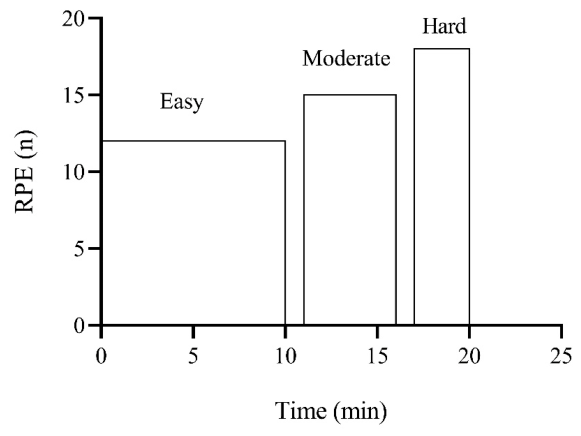
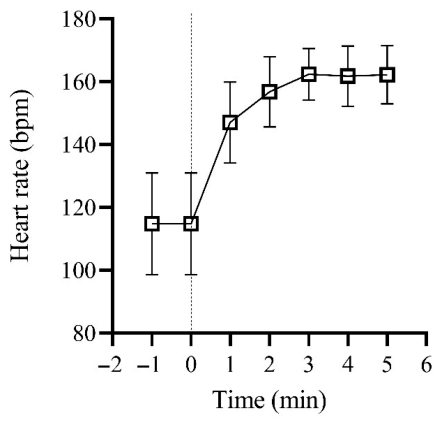
2.3.2. RABIT® Test
2.4. Statistical Analysis
3. Results

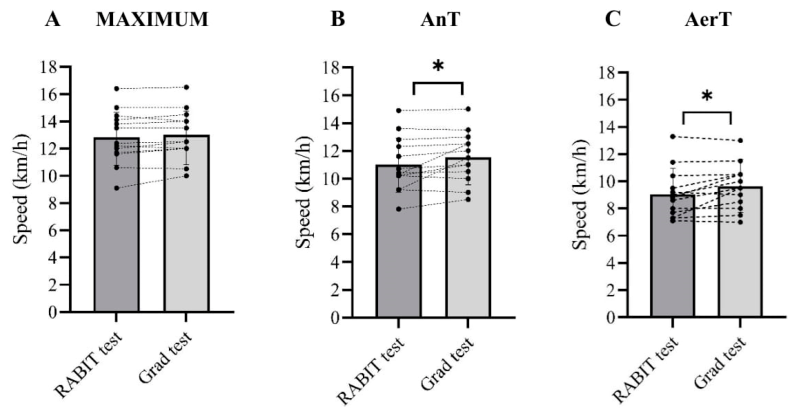
3.1. Maximum Parameters
3.2. Anaerobic Threshold
3.3. Aerobic Threshold
4. Discussion
Limitations
5. Conclusions
Author Contributions
Funding
Institutional Review Board Statement
Informed Consent Statement
Data Availability Statement
Acknowledgments
Conflicts of Interest
Abbreviations
| RABIT® | Running Advisor Billat Training test |
| GRAD | Gaded exercise test |
| RPE | Rating of perceived exertion |
| O2max | Maximal oxygen consumption |
| O2 | Oxygen uptake |
| CO2 | Carbon dioxide production |
| E | Minute ventilation |
| HR | Heart rate |
| HRmax | Maximal heart rate |
| AerT | Aerobic threshold |
| AnT | Anaerobic threshold |
| IPAQ-SF | International Physical Activity Questionnaire Short Form |
| CS | Critical speed |
| BM | Body mass |
| BMI | Body mass index |
| FM | Fat mass |
| RER | Respiratory exchange ratio |
References
- World Health Organization. Obesity and Overweight. Available online: https://www.who.int/news-room/fact-sheets/detail/obesity-and-overweight (accessed on 13 May 2026).
- Bull, F.C.; Al-Ansari, S.S.; Biddle, S.; Borodulin, K.; Buman, M.P.; Cardon, G.; Carty, C.; Chaput, J.-P.; Chastin, S.; Chou, R.; et al. World Health Organization 2020 guidelines on physical activity and sedentary behaviour. Br. J. Sports Med. 2020, 54, 1451–1462. [Google Scholar] [CrossRef] [PubMed]
- Jepsen, R.; Aadland, E.; Robertson, L.; Kolotkin, R.L.; Andersen, J.R.; Natvig, G.K. Physical Activity and Quality of Life in Severely Obese Adults during a Two-Year Lifestyle Intervention Programme. J. Obes. 2015, 2015, 314194. [Google Scholar] [CrossRef] [PubMed] [PubMed Central]
- Wang, T.; Yang, L.; Xu, Q.; Dou, J.; Clemente, F.M. Effects of recreational team sports on the metabolic health, body composition and physical fitness parameters of overweight and obese populations: A systematic review. Biol. Sport 2024, 41, 243–266. [Google Scholar] [CrossRef] [PubMed] [PubMed Central]
- Kutac, P.; Bunc, V.; Buzga, M.; Krajcigr, M.; Sigmund, M. The effect of regular running on body weight and fat tissue of individuals aged 18 to 65. J. Physiol. Anthropol. 2023, 42, 28. [Google Scholar] [CrossRef]
- Lee, D.; Brellenthin, A.G.; Thompson, P.D.; Sui, X.; Lee, I.-M.; Lavie, C.J. Running as a Key Lifestyle Medicine for Longevity. Prog. Cardiovasc. Dis. 2017, 60, 45–55. [Google Scholar] [CrossRef]
- Vincent, H.K.; Kilgore, J.E.; Chen, C.; Bruner, M.; Horodyski, M.; Vincent, K.R. Impact of Body Mass Index on Biomechanics of Recreational Runners. PMR 2020, 12, 1106–1112. [Google Scholar] [CrossRef] [PubMed]
- Jamnick, N.A.; Pettitt, R.W.; Granata, C.; Pyne, D.B.; Bishop, D.J. An Examination and Critique of Current Methods to Determine Exercise Intensity. Sports Med. 2020, 50, 1729–1756. [Google Scholar] [CrossRef]
- Thompson, M.A. Physiological and Biomechanical Mechanisms of Distance Specific Human Running Performance. Integr. Comp. Biol. 2017, 57, 293–300. [Google Scholar] [CrossRef]
- Beltz, N.M.; Gibson, A.L.; Janot, J.M.; Kravitz, L.; Mermier, C.M.; Dalleck, L.C. Graded Exercise Testing Protocols for the Determination of VO2max: Historical Perspectives, Progress, and Future Considerations. J. Sports Med. 2016, 2016, 3968393. [Google Scholar] [CrossRef] [PubMed] [PubMed Central]
- Seiler, S. What is Best Practice for Training Intensity and Duration Distribution in Endurance Athletes? Int. J. Sports Physiol. Perform. 2010, 5, 276–291. [Google Scholar] [CrossRef]
- Stöggl, T.L.; Sperlich, B. The training intensity distribution among well-trained and elite endurance athletes. Front. Physiol. 2015, 6, 295. [Google Scholar] [CrossRef] [PubMed]
- Billat, V.; Dalmay, F.; Antonini, M.T.; Chassain, A.P. A method for determining the maximal steady state of blood lactate concentration from two levels of submaximal exercise. Eur. J. Appl. Physiol. 1994, 69, 196–202. [Google Scholar] [CrossRef]
- Cooper, K.H. A Means of Assessing Maximal Oxygen Intake: Correlation Between Field and Treadmill Testing. JAMA 1968, 203, 201–204. [Google Scholar] [CrossRef]
- Galbraith, A.; Hopker, J.; Lelliott, S.; Diddams, L.; Passfield, L. A Single-Visit Field Test of Critical Speed. Int. J. Sports Physiol. Perform. 2014, 9, 931–935. [Google Scholar] [CrossRef]
- Forte, L.D.M.; Manchado-Gobatto, F.B.; Rodrigues, R.C.M.; Gallani, M.C.; Gobatto, C.A. Non-exhaustive double effort test is reliable and estimates the first ventilatory threshold intensity in running exercise. J. Sport Health Sci. 2018, 7, 197–203. [Google Scholar] [CrossRef]
- Molinari, C.A.; Palacin, F.; Poinsard, L.; Billat, V.L. Determination of Submaximal and Maximal Training Zones From a 3-Stage, Variable-Duration, Perceptually Regulated Track Test. Int. J. Sports Physiol. Perform. 2020, 15, 853–861. [Google Scholar] [CrossRef] [PubMed]
- Giovanelli, N.; Scaini, S.; Billat, V.; Lazzer, S. A new field test to estimate the aerobic and anaerobic thresholds and maximum parameters. Eur. J. Sport Sci. 2020, 20, 437–443. [Google Scholar] [CrossRef]
- Borg, G. Perceived exertion as an indicator of somatic stress. Scand. J. Rehabil. Med. 1970, 2, 92–98. [Google Scholar] [CrossRef]
- Bok, D.; Rakovac, M.; Foster, C. An Examination and Critique of Subjective Methods to Determine Exercise Intensity: The Talk Test, Feeling Scale, and Rating of Perceived Exertion. Sports Med. 2022, 52, 2085–2109. [Google Scholar] [CrossRef]
- Lopes, T.R.; Pereira, H.M.; Silva, B.M. Perceived Exertion: Revisiting the History and Updating the Neurophysiology and the Practical Applications. Int. J. Environ. Res. Public Health 2022, 19, 14439. [Google Scholar] [CrossRef] [PubMed]
- Ekkekakis, P.; Parfitt, G.; Petruzzello, S.J. The pleasure and displeasure people feel when they exercise at different intensities: Decennial update and progress towards a tripartite rationale for exercise intensity prescription. Sports Med. 2011, 41, 641–671. [Google Scholar] [CrossRef] [PubMed]
- Lafortuna, C.L.; Agosti, F.; Galli, R.; Busti, C.; Lazzer, S.; Sartorio, A. The energetic and cardiovascular response to treadmill walking and cycle ergometer exercise in obese women. Eur. J. Appl. Physiol. 2008, 103, 707–717. [Google Scholar] [CrossRef]
- Coquart, J.-B.; Tourny-Chollet, C.; Lemaître, F.; Lemaire, C.; Grosbois, J.-M.; Garcin, M. Relevance of the measure of perceived exertion for the rehabilitation of obese patients. Ann. Phys. Rehabil. Med. 2012, 55, 623–640. [Google Scholar] [CrossRef]
- Hydren, J.R.; Cohen, B.S. Current Scientific Evidence for a Polarized Cardiovascular Endurance Training Model. J. Strength Cond. Res. 2015, 29, 3523–3530. [Google Scholar] [CrossRef]
- Wood, R.E.; Hills, A.P.; Hunter, G.R.; King, N.A.; Byrne, N.M. O2max in Overweight and Obese Adults: Do They Meet the Threshold Criteria? Med. Sci. Sports Exerc. 2010, 42, 470–477. [Google Scholar] [CrossRef] [PubMed]
- Craig, C.L.; Marshall, A.L.; Sjöström, M.; Bauman, A.E.; Booth, M.L.; Ainsworth, B.E.; Pratt, M.; Ekelund, U.; Yngve, A.; Sallis, J.F.; et al. International Physical Activity Questionnaire: 12-Country Reliability and Validity. Med. Sci. Sports Exerc. 2003, 35, 1381–1395. [Google Scholar] [CrossRef] [PubMed]
- Hoogkamer, W.; Kipp, S.; Spiering, B.A.; Kram, R. Altered Running Economy Directly Translates to Altered Distance-Running Performance. Med. Sci. Sports Exerc. 2016, 48, 2175–2180. [Google Scholar] [CrossRef]
- D’Alleva, M.; Vaccari, F.; Graniero, F.; Giovanelli, N.; Floreani, M.; Fiori, F.; Marinoni, M.; Parpinel, M.; Lazzer, S. Effects of 12-week combined training versus high intensity interval training on cardiorespiratory fitness, body composition and fat metabolism in obese male adults. J. Exerc. Sci. Fit. 2023, 21, 193–201. [Google Scholar] [CrossRef] [PubMed]
- Beaver, W.L.; Wasserman, K.; Whipp, B.J. A new method for detecting anaerobic threshold by gas exchange. J. Appl. Physiol. 1986, 60, 2020–2027. [Google Scholar] [CrossRef]
- Howley, E.T.; Bassett, D.R.; Welch, H.G. Criteria for maximal oxygen uptake: Review and commentary. Med. Sci. Sports Exerc. 1995, 27, 1292–1301. [Google Scholar] [CrossRef]
- Zuccarelli, L.; Porcelli, S.; Rasica, L.; Marzorati, M.; Grassi, B. Comparison between Slow Components of HR and V˙O2 Kinetics: Functional Significance. Med. Sci. Sports Exerc. 2018, 50, 1649–1657. [Google Scholar] [CrossRef] [PubMed]
- Bland, J.M.; Altman, D.G. Statistical methods for assessing agreement between two methods of clinical measurement. Lancet 1986, 1, 307–310. [Google Scholar] [CrossRef] [PubMed]
- Atkinson, G.; Nevill, A.M. Statistical Methods For Assessing Measurement Error (Reliability) in Variables Relevant to Sports Medicine. Sports Med. 1998, 26, 217–238. [Google Scholar] [CrossRef]
- Phang, P.T.; Rich, T.; Ronco, J. A Validation and Comparison Study of Two Metabolic Monitors. J. Parenter. Enter. Nutr. 1990, 14, 259–261. [Google Scholar] [CrossRef] [PubMed]
- Balmain, B.N.; Halverson, Q.M.; Tomlinson, A.R.; Edwards, T.; Ganio, M.S.; Babb, T.G. Obesity Blunts the Ventilatory Response to Exercise in Men and Women. Ann. Am. Thorac. Soc. 2021, 18, 1167–1174. [Google Scholar] [CrossRef]
- Borg, G.A. Psychophysical bases of perceived exertion. Med. Sci. Sports Exerc. 1982, 14, 377–381. [Google Scholar] [CrossRef] [PubMed]
- Noble, B.J.; Robertson, R.J. Perceived Exertion; Human Kinetics: Champaign, IL, USA, 1996; Available online: https://www.scirp.org/reference/referencespapers?referenceid=3061224 (accessed on 22 February 2026).
- Marcora, S. Perception of effort during exercise is independent of afferent feedback from skeletal muscles, heart, and lungs. J. Appl. Physiol. 2009, 106, 2060–2062. [Google Scholar] [CrossRef]
- Amann, M.; Secher, N.H. Point: Afferent feedback from fatigued locomotor muscles is an important determinant of endurance exercise performance. J. Appl. Physiol. 2010, 108, 452–454; discussion 457; author reply 470. [Google Scholar] [CrossRef] [PubMed] [PubMed Central]
- Lanzi, S.; Codecasa, F.; Cornacchia, M.; Maestrini, S.; Capodaglio, P.; Brunani, A.; Fanari, P.; Salvadori, A.; Malatesta, D. Long Maximal Incremental Tests Accurately Assess Aerobic Fitness in Class II and III Obese Men. PLoS ONE 2015, 10, e0124180. [Google Scholar] [CrossRef] [PubMed] [PubMed Central]
- Boulay, P.; Ghachem, A.; Poirier, P.; Sigal, R.J.; Kenny, G.P. Assessment of Maximum Heart Rate Prediction Equations in Adults at Low and High Risk of Cardiovascular Disease. Med. Sci. Sports Exerc. 2025, 57, 60–69. [Google Scholar] [CrossRef]
- Mauger, L. Factors affecting the regulation of pacing: Current perspectives. Open Access J. Sports Med. 2014, 5, 209–214. [Google Scholar] [CrossRef]
- Black, M.I.; Jones, A.M.; Blackwell, J.R.; Bailey, S.J.; Wylie, L.J.; McDonagh, S.T.J.; Thompson, C.; Kelly, J.; Sumners, P.; Mileva, K.N.; et al. Muscle metabolic and neuromuscular determinants of fatigue during cycling in different exercise intensity domains. J. Appl. Physiol. 2017, 122, 446–459. [Google Scholar] [CrossRef]
- Cochrane-Snyman, K.C.; Housh, T.J.; Smith, C.M.; Hill, E.C.; Jenkins, N.D.M. Treadmill running using an RPE-clamp model: Mediators of perception and implications for exercise prescription. Eur. J. Appl. Physiol. 2019, 119, 2083–2094. [Google Scholar] [CrossRef] [PubMed]
- O’Malley, C.A.; Fullerton, C.L.; Mauger, A.R. Test–retest reliability of a 30-min fixed perceived effort cycling exercise. Eur. J. Appl. Physiol. 2023, 123, 721–735. [Google Scholar] [CrossRef]
- O’Grady, C.; Passfield, L.; Hopker, J.G. Variability in Submaximal Self-Paced Exercise Bouts of Different Intensity and Duration. Int. J. Sports Physiol. Perform. 2021, 16, 1824–1833. [Google Scholar] [CrossRef] [PubMed]
- Cerezuela-Espejo, V.; Courel-Ibáñez, J.; Morán-Navarro, R.; Martínez-Cava, A.; Pallarés, J.G. The Relationship Between Lactate and Ventilatory Thresholds in Runners: Validity and Reliability of Exercise Test Performance Parameters. Front. Physiol. 2018, 9, 1320. [Google Scholar] [CrossRef] [PubMed]
- Poole, D.C.; Jones, A.M. Oxygen Uptake Kinetics. Compr. Physiol. 2012, 2, 933–996. [Google Scholar] [CrossRef]
- Nguyen, A.P.; Kisita, V.; Van Cant, J.; Monnet, T.; Bosquet, L. Reproducibility of Rate of Perceived Exertion–Based Self-Selected Running Speeds on Indoor Track and Treadmill Conditions in Recreational Runners. J. Strength Cond. Res. 2025, 40, e125–e130. [Google Scholar] [CrossRef]
- Achten, J.; Jeukendrup, A.E. Heart Rate Monitoring: Applications and Limitations. Sports Med. 2003, 33, 517–538. [Google Scholar] [CrossRef]
- Novak, T.S.; Quan, C.; McGregor, K.; Mammino, K.; Bello, M.; Nocera, J.R. Adherence to heart rate-based intensity parameters predicts cardiovascular response to 12-weeks of aerobic cycling training in sedentary older adults. Prev. Med. Rep. 2026, 62, 103388. [Google Scholar] [CrossRef]
- Anselmi, F.; Cavigli, L.; Pagliaro, A.; Valente, S.; Valentini, F.; Cameli, M.; Focardi, M.; Mochi, N.; Dendale, P.; Hansen, D.; et al. The importance of ventilatory thresholds to define aerobic exercise intensity in cardiac patients and healthy subjects. Scand. J. Med. Sci. Sports 2021, 31, 1796–1808. [Google Scholar] [CrossRef]



| RABIT Test | GRAD | Differences (%) | 95% Limits of Agreement | Accurate Prediction | p | ||
|---|---|---|---|---|---|---|---|
| Maximum—RPE 18 | |||||||
| Oxygen uptake (mL/kg/min) | 42.1 ± 7.2 | 41.5 ± 6.3 | 1.2 ± 4.3 | −7.2 | 9.6 | 85 | 0.258 |
| Respiratory exchange ratio | 1.05 ± 0.02 | 1.09 ± 0.03 | −3.6 ± 3.1 | −9.6 | 2.3 | 82 | 0.001 |
| Minute ventilation (L/min) | 126.7 ± 16.3 | 123.6 ± 13.5 | 2.2 ± 7.6 | −12.5 | 17.1 | 54 | 0.250 |
| Heart rate (bpm) | 173 ± 10 | 172 ± 7 | −0.2 ± 4.3 | −8.5 | 8.3 | 93 | 0.964 |
| Speed (km/h) | 12.8 ± 2.0 | 13.0 ± 1.8 | −1.7 ± 3.1 | −7.9 | 4.3 | 92 | 0.060 |
| Anaerobic threshold—RPE 16 | |||||||
| Oxygen uptake (mL/kg/min) | 37.0 ± 7.6 | 36.5 ± 5.6 | −1 ± 7.7 | −5.3 | 6.5 | 62 | 0.489 |
| Respiratory exchange ratio | 0.98 ± 0.03 | 0.99 ± 0.03 | −2.1 ± 5.2 | −0.1 | 0.08 | 67 | 0.194 |
| Minute ventilation (L/min) | 103.8 ± 15.3 | 97.4 ± 11.0 | 5.9 ± 15.0 | −23.4 | 35.3 | 46 | 0.140 |
| Heart rate (bpm) | 162 ± 12 | 161 ± 6 | −0.6 ± 5.8 | −18.5 | 17.1 | 78 | 0.831 |
| Speed (km/h) | 11.0 ± 2.0 | 11.5 ± 1.8 | −4.9 ± 7.7 | −2.1 | 1.1 | 77 | 0.041 |
| Aerobic threshold—RPE 13 | |||||||
| Oxygen uptake (mL/kg/min) | 30.5 ± 7.5 | 31.3 ± 5.8 | −3.2 ± 10.6 | −7.7 | 6.3 | 46 | 0.478 |
| Respiratory exchange ratio | 0.91 ± 0.03 | 0.91 ± 0.04 | −0.1 ± 3.7 | −0.07 | 0.05 | 91 | 0.337 |
| Minute ventilation (L/min) | 75.2 ± 8.0 | 72.8 ± 6.9 | 4.3 ± 13.5 | −15.6 | 22.1 | 46 | 0.386 |
| Heart rate (bpm) | 143 ± 14 | 143 ± 7 | −4.1 ± 6.6 | −23.4 | 12.3 | 67 | 0.104 |
| Speed (km/h) | 9.00 ± 1.82 | 9.60 ± 1.70 | −7.6 ± 9.2 | −2.4 | 1.0 | 62 | 0.020 |
Disclaimer/Publisher’s Note: The statements, opinions and data contained in all publications are solely those of the individual author(s) and contributor(s) and not of MDPI and/or the editor(s). MDPI and/or the editor(s) disclaim responsibility for any injury to people or property resulting from any ideas, methods, instructions or products referred to in the content. |
© 2026 by the authors. Licensee MDPI, Basel, Switzerland. This article is an open access article distributed under the terms and conditions of the Creative Commons Attribution (CC BY) license.
Share and Cite
D’Alleva, M.; Innella, L.; Giovanelli, N.; Mari, L.; Stafuzza, J.; Zaccaron, S.; Graniero, F.; Billat, V.; Rejc, E.; Lazzer, S. Assessing Training Zones in Adult Men with Obesity: A New Field Test. J. Funct. Morphol. Kinesiol. 2026, 11, 202. https://doi.org/10.3390/jfmk11020202
D’Alleva M, Innella L, Giovanelli N, Mari L, Stafuzza J, Zaccaron S, Graniero F, Billat V, Rejc E, Lazzer S. Assessing Training Zones in Adult Men with Obesity: A New Field Test. Journal of Functional Morphology and Kinesiology. 2026; 11(2):202. https://doi.org/10.3390/jfmk11020202
Chicago/Turabian StyleD’Alleva, Mattia, Luca Innella, Nicola Giovanelli, Lara Mari, Jacopo Stafuzza, Simone Zaccaron, Francesco Graniero, Véronique Billat, Enrico Rejc, and Stefano Lazzer. 2026. "Assessing Training Zones in Adult Men with Obesity: A New Field Test" Journal of Functional Morphology and Kinesiology 11, no. 2: 202. https://doi.org/10.3390/jfmk11020202
APA StyleD’Alleva, M., Innella, L., Giovanelli, N., Mari, L., Stafuzza, J., Zaccaron, S., Graniero, F., Billat, V., Rejc, E., & Lazzer, S. (2026). Assessing Training Zones in Adult Men with Obesity: A New Field Test. Journal of Functional Morphology and Kinesiology, 11(2), 202. https://doi.org/10.3390/jfmk11020202