

Progressive Resistance Training in Parkinson’s Disease: An Umbrella Review Examining the Role of Methodological Adherence and Training Progression Principles in Clinical Outcome


Abstract
1. Introduction
1.1. Parkinson’s Disease
1.2. Exercise Training in the Rehabilitation of PD
1.3. Aims of the Review
- To summarize the reported effects of PRT on motor symptoms, functional capacity, balance, and QoL in persons with PD, as reported across the existing systematic review and meta-analysis literature.
- To critically analyze the variability in PRT protocols (e.g., intensity, volume, progression, specificity) implemented in the primary clinical studies underpinning these reviews.
- To evaluate the adherence of PRT interventions in key clinical studies to the ACSM FITT-VP for persons with PD.
- To appraise intervention adherence by integrating FITT-VP with Integrated Guidelines, identifying any significant discrepancies between standard and integrated evaluative frameworks.
- To investigate the association between inconsistent adherence to established principles of progression (progressive overload, variation, and specificity) and the inconclusive findings regarding PRT’s superiority over other active interventions.
2. Materials and Methods
2.1. Formulation of the Focused Question and Protocol Registration
2.2. Eligibility Criteria
- Significant: A statistically significant improvement was reported in the intervention group compared to control.
- No Significant Difference: No statistical difference between groups was reported in the intervention group compared to control.
- Positive Trend (+Effect): Beneficial directionality was reported, but results did not reach statistical significance or were inconsistent across primary trials.
- Not Applicable (N/A): Outcome measure was not reported for PRT within the respective review.
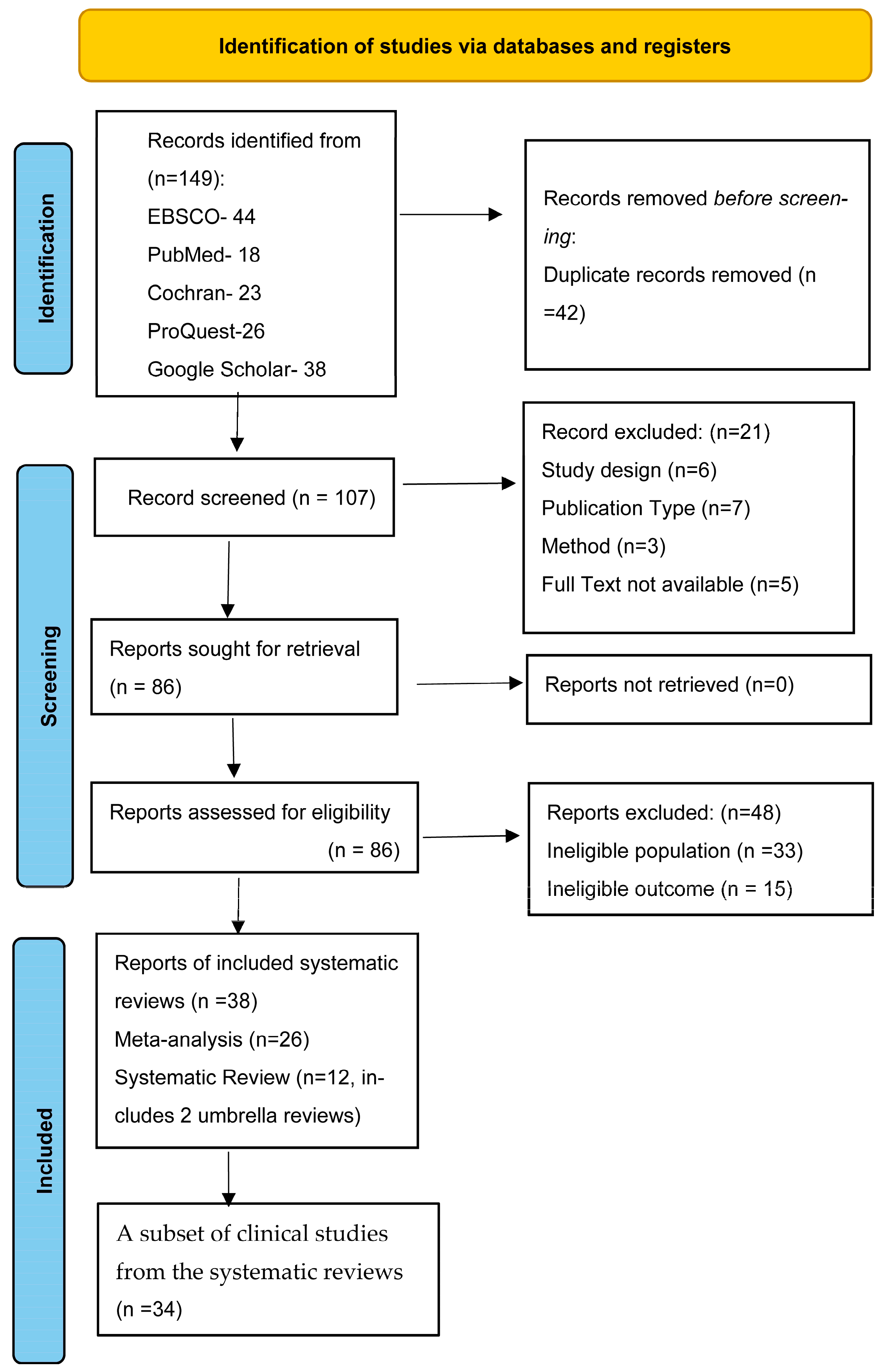
2.3. Search Strategy and Selection Process
2.4. Selection of Primary Clinical Studies
- Population and Language: Primary studies involving patients diagnosed with PD, with the full-text article published in English.
- Frequency—To capture the most impactful and extensively evaluated evidence in the field, primary studies demonstrating a higher frequency of inclusion across the selected systematic reviews were chosen as the core sample, provided they met the strict methodological criteria below.
- Intervention Specificity: The intervention had to consist exclusively of isolated strength or PRT. Studies examining PRT combined with ergogenic aids or nutritional supplements (e.g., Creatine) were excluded to isolate the mechanical and physiological effects of the exercise itself.
- Comparison of Mechanical Stimuli: To understand the impact of specific mechanical stimuli and training adaptations, we purposely included studies that compared different modalities of strength training against each other (e.g., traditional PRT vs. eccentric training, or PRT with vs. without instability).
- Comparators (Control Groups): Studies must have included a valid clinical control group, either active (e.g., alternative non-resistance exercises) or passive (e.g., standard care, educational lectures). Studies utilizing wait-list controls, historical controls from tissue/data banks, or single-arm trials with only a before/after design were excluded due to high risk of bias.
- Outcomes: The studies had to evaluate at least one of the following primary or secondary outcomes: muscle strength, functional performance (e.g., motor signs, steps/gait velocity), balance, or QoL.
- Multiple Publications from a Single Protocol: In cases where multiple articles were published based on the same clinical trial or cohort, all relevant studies were deliberately included in the matrix. This approach was chosen to present a complete, holistic clinical picture of the protocol’s pleiotropic effects across various distinct outcomes (e.g., motor skills, sleep, and QoL).
2.5. Evaluative Framework for Intervention Adherence
- FITT-VP ACSM: Assessing fundamental exercise prescription compliance (Frequency, Intensity, Time, Type, Volume, Progression).
- Integrated Guidelines: Evaluating the synthesis of FITT-VP with population-specific supplementary needs, such as motor complexity and functional tasks.
- Principles of progression: Measuring mechanistic fidelity through adherence to Progressive Overload, Variation, and Specificity.
2.6. Statistical Coding
2.7. Evaluative Frameworks
2.8. Quality Assessment and Risk of Bias Assessment
- Protocol registered before commencement of the review (item 2);
- Adequacy of the literature search (item 4);
- Justification for excluding individual studies (item 7);
- Risk of bias from individual studies being included in the review (item 9);
- Appropriateness of meta-analytical methods (item 11);
- Consideration of risk of bias when interpreting the results of the review (item 13);
- Assessment of the presence and likely impact of publication bias (item 15).
3. Results and Synthesis
3.1. Results of Adherence of the Subset Clinical Studies to the Frameworks
3.2. Synthesis of the Adherence to FITT-VP, Integrated Guidelines, and Principles of Progression
3.3. Results of Outcomes in the Systematic Reviews and Meta-Analyses
3.4. Synthesis of PRT Interventions in the Systematic Reviews and Meta-Analyses
3.4.1. Differential Outcomes of PRT Compared to Other Interventions
3.4.2. Significant Effect of PRT Compared to Other Interventions
3.5. Results of Outcomes in the Subset Clinical Studies
3.6. Synthesis of the PRT Interventions in the Subset Clinical Studies
3.6.1. Consistent Benefits of PRT Compared to Non-Active Groups
3.6.2. Differential Outcomes of PRT Compared to Other Interventions
3.6.3. Significant Effect of PRT Compared to Other Interventions
3.7. Results of the AMSTAR 2 Quality Assessment of RoB Assessment
4. Discussion
4.1. The Link Between Methodology and Efficacy
4.2. The Impact of Insufficient Adherence
4.2.1. Detailed Evidence from Systematic Reviews and Meta-Analysis
4.2.2. Detailed Evidence from Clinical Studies
- Insufficient Overload: In a 24-week study comparing PRT to Tai Chi, the PRT intervention’s minimal load progression (only 1–4 kg) likely explains the minor strength and functional gains relative to the Tai Chi group [49]. This disparity in load seemingly compromised the benefits of the PRT, even though in the inclusion of gait-specific exercises like side/forward steps and lunges, which did yield notable improvements in stride length. Consequently, this study demonstrates merely 50% adherence to the principles of progression [49]. Similarly, Morris et al. [42] utilized a progression based on a marginal increase in weight (2% of body weight), increasing sets to three, or increasing repetitions to 15 over only eight weeks, suggesting a limited mechanical stimuli. The marginal load increments in this PRT protocol were applied to functional exercises that closely mirrored those performed by the active control group [42], resulting in a relatively low adherence to the principles of progression (66%). Furthermore, while Shen & Mak [55,56] incorporated progressive loading in seated exercises, the progression of their functional exercises relied on increasing repetitions, which theoretically induced metabolic rather than mechanical stimuli.
- Inappropriate Progression Variables: Even when progression was prescribed, its implementation was often conservative; Dibble et al. [10] found no significant differences between concentric and eccentric lower-extremity PRT protocols despite maintaining progression (RPE of 13). In Dibble’s study [1], the progression of training duration extended up to 30 min, prompting the consideration of whether the intervention functioned more as an aerobic stimulus than a genuine PRT regimen. Moreover, even when muscular strength improved, a failure to achieve distinct neuromuscular stimuli resulted in non-superiority. Cherup et al. [45] found no significant differential effects between PRT and power training; both groups performed the same exercises without functional tasks. While one used volitional fatigue and the other focused on power output, the achievement of peak rate of force development requires a foundation of maximal strength coupled with the intent to move a load with maximal velocity [87]. Because both protocols mandated 10 repetitions, they likely imparted comparable physiological stimuli, consequently leading to equivalent outcomes and allowing adherence score (66%) to principles of progression. Conversely, Strand et al. [28], who achieved high adherence scores across all frameworks, compared two strength and power protocols, one integrated with hypertrophy training and the other with functional training. While both modalities enhanced strength and functional capacity, only the functionally oriented group demonstrated improvements in FoG and motor symptoms. A plausible explanation for the divergent results between the two studies [27,28], beyond variations in outcome measures, may be the inclusion of functional exercises and the precise magnitude of the applied stimuli. Strand et al. [28] differentiated the intensity, tempo, and volume of each method, thereby emphasizing the targeted physiological stimuli.
- Lack of specification: Domonceau & Maxuaet [45] reported that while PRT enhanced walking capacity, neither PRT nor aerobic improved mobility and QoL. The authors explicitly mentioned that the interventions were not specified to improve these outcomes [45]. Additionally, Schilling et al. [48] found that a PRT protocol, consisting exclusively of machine-based exercises, improved strength but failed to improve functional mobility. The authors noted that these findings contrast with those of Dibble et al. [46,47], who observed performance improvements following a PRT protocol. Beyond potential differences in clinical characteristics of the PD participants, it should be noted that the protocols utilized by Dibble et al. [46,47] incorporated balance exercises and treadmill walking alongside eccentric ergometry, thereby possibly satisfying the requirement of “specificity”. This methodological distinction may also contextualize the low adherence scores (66%) assigned to these three studies, despite evidence from Dibble’s studies that PRT can affect functional performance [46,47].
4.3. The Impact of High Adherence
4.3.1. Detailed Evidence from Systematic Reviews and Meta-Analysis
4.3.2. Detailed Evidence from Clinical Studies
- Longitudinal Progression: Although the study of Corcos et al. [40] failed to achieve high adherence to the principles of progression (66%), the PRT intervention was found superior to the mFC. A possible explanation could be that, although the grade of “specificity” was low (0—no adherence), since none of the PRT exercises challenged balance, it is the only study that observed PRT intervention during 24 months. This 24-month trial demonstrated that only the PRT group, using single and multi-joint exercises with progressive loads, achieved significant improvements in UPDRS III compared to a control group performing non-progressive balance-strengthening training [40]. A secondary analysis of this study showed that both methods were effective in improving functional performances [41].
- Overload Adaptation: Helgerud et al. [39] investigated a 5-week maximal strength training program consisting four sets of four repetitions at 90% of 1RM for the leg press and bench press exercises. Only the Maximal Strength Training group significantly improved skeletal muscle force-generating capacity, efferent neural drive, and functional performance (including stair climbing and the TUG test), while the control group performing submaximal training showed no such gains. Given that both protocols incorporated functional exercises and balance training, this study emphasizes the importance of progressive mechanical overload. Furthermore, the exceptionally high intensity utilized in this protocol accounts for its low adherence score to the FITT-VP ACSM (37.5%), while concurrently explaining the high adherence to the principles of progression (83%).
- Motor Complexity (Specificity): The integration of PRTI has proven particularly robust, with all the PRTI studies achieving high adherence scores across the three frameworks (83–100%). Silva-Batista et al. [31] found that while both PRT and PRTI improved strength, only the PRTI demonstrated comprehensive improvements in mobility, motor signs, cognitive impairment, and QoL. Vieira-Yano et al. [34] confirmed that prioritizing motor complexity (e.g., lunges with instability) was essential for improving gait automaticity and attentional set-shifting. Similarly, Hirsch et al. [30] found that PRT combined with balance is more effective than only balance in improving muscle strength and balance. The present review highlights that none of the PRT protocols consisted of functional exercises simultaneously with progressive loads, even in instances of personalized supervised training. Instead, functional exercises were executed with only marginal load increments [42,50,51,55,56], utilizing body weight [28,39], or implemented as an adjunct to balance [1,30,39,46,47], and treadmill [1,46,47].
4.4. Limitations
5. Conclusions
Supplementary Materials
Author Contributions
Funding
Institutional Review Board Statement
Informed Consent Statement
Data Availability Statement
Conflicts of Interest
Abbreviations
| PD | Parkinson’s Disease |
| FITTV-VP | Frequency, Intensity, Time, Type, Volume, and Progression |
| ACSM | American College of Sports Medicine |
| QoL | Quality of Life |
| PRT | Progressive Resistance Training |
| PICO | Participants, Intervention(s), Comparator(s), and Outcome(s) |
| PRISMA | Preferred Reporting Items for Systematic Reviews and Meta-Analysis |
| RT | Resistance Training |
| TUG | Time Up and Go |
| MET’s | Metabolic Equivalent |
| RM | Repetition Maximum |
| RoB | Risk of Bias |
| SUCRA | Surface Under the Cumulative Ranking |
| 6MWT | 6-Minute Walk Test |
| UPDRS | Unifies Parkinson Disease Rating Scale |
| FoG | Freezing of Gate |
| PRTI | PRT with Instability |
References
- Dibble, L.E.; Foreman, K.B.; Addison, O.; Marcus, R.L.; LaStayo, P.C. Exercise and Medication Effects on Persons with Parkinson Disease Across the Domains of Disability: A Randomized Clinical Trial. J. Neurol. Phys. Ther. 2015, 39, 85–92. [Google Scholar] [CrossRef]
- Armstrong, M.J.; Okun, M.S. Diagnosis and Treatment of Parkinson Disease: A Review. JAMA 2020, 323, 548. [Google Scholar] [CrossRef]
- Radder, D.L.M.; Lígia Silva De Lima, A.; Domingos, J.; Keus, S.H.J.; Van Nimwegen, M.; Bloem, B.R.; De Vries, N.M. Physiotherapy in Parkinson’s Disease: A Meta-Analysis of Present Treatment Modalities. Neurorehabil. Neural Repair 2020, 34, 871–880. [Google Scholar] [CrossRef]
- Vieira De Moraes Filho, A.; Chaves, S.N.; Martins, W.R.; Tolentino, G.P.; Homem, R.; Landim De Farias, G.; Fischer, B.L.; Oliveira, J.A.; Pereira, S.K.A.; Vidal, S.E.; et al. Progressive Resistance Training Improves Bradykinesia, Motor Symptoms and Functional Performance in Patients with Parkinson’s Disease. Clin. Interv. Aging 2020, 15, 87–95. [Google Scholar] [CrossRef]
- Bronstein, J.M.; Tagliati, M.; Alterman, R.L.; Lozano, A.M.; Volkmann, J.; Stefani, A.; Horak, F.B.; Okun, M.S.; Foote, K.D.; Krack, P.; et al. Deep Brain Stimulation for Parkinson Disease: An Expert Consensus and Review of Key Issues. Arch. Neurol. 2011, 68, 165. [Google Scholar] [CrossRef]
- Gollan, R.; Ernst, M.; Lieker, E.; Caro-Valenzuela, J.; Monsef, I.; Dresen, A.; Roheger, M.; Skoetz, N.; Kalbe, E.; Folkerts, A.-K. Effects of Resistance Training on Motor- and Non-Motor Symptoms in Patients with Parkinson’s Disease: A Systematic Review and Meta-Analysis. J. Park. Dis. 2022, 12, 1783–1806. [Google Scholar] [CrossRef]
- Ernst, M.; Folkerts, A.-K.; Gollan, R.; Lieker, E.; Caro-Valenzuela, J.; Adams, A.; Cryns, N.; Monsef, I.; Dresen, A.; Roheger, M.; et al. Physical Exercise for People with Parkinson’s Disease: A Systematic Review and Network Meta-Analysis. Cochrane Database Syst. Rev. 2023, 2023, CD013856. [Google Scholar] [CrossRef]
- Kraemer, W.J.; Ratamess, N.A. Fundamentals of Resistance Training: Progression and Exercise Prescription. Med. Sci. Sports Exerc. 2004, 36, 674–688. [Google Scholar] [CrossRef]
- Gamborg, M.; Hvid, L.G.; Thrue, C.; Johansson, S.; Franzén, E.; Dalgas, U.; Langeskov-Christensen, M. Muscle Strength and Power in People with Parkinson Disease: A Systematic Review and Meta-Analysis. J. Neurol. Phys. Ther. 2023, 47, 3–15. [Google Scholar] [CrossRef]
- Wolters Kluwer. ACSM’S Guidelines for Exercise Testing and Prescription, 11th ed.; Lippincott Williams & Wilkins: Philadelphia, PA, USA, 2021. [Google Scholar]
- Cui, W.; Li, D.; Yue, L.; Xie, J. The Effects of Exercise Dose on Patients with Parkinson’s Disease: A Systematic Review and Meta-Analysis of Randomized Controlled Trials. J. Neurol. 2023, 270, 5327–5343. [Google Scholar] [CrossRef]
- Fang, Y.; Xiaoling, B.; Huan, L.; Yaping, G.; Binying, Z.; Man, W.; Juan, W.; Xinyu, L. Effects of Exercise Dose Based on the ACSM Recommendations on Depression in Hemodialysis Patients: A Systematic Review and Meta-Analysis of Randomized Controlled Trials. Front. Physiol. 2025, 15, 1513746. [Google Scholar] [CrossRef]
- Han, T.; Xi, R.; Wang, J.; Yan, H.; Li, L. Adherence to ACSM Exercise Guidelines and Its Influence on Fibromyalgia Treatment Outcomes: A Meta-Analysis of Randomized Controlled Trials. Front. Physiol. 2024, 15, 1413038. [Google Scholar] [CrossRef]
- Chen, J.; Cui, W.; Xie, J. Effect of Exercise Based on ACSM Recommendations on Blood Pressure and Heart Rate in Hypertensive Patients: A Systematic Review and Meta-Analysis of Randomized Controlled Trials. PLoS Glob. Public Health 2024, 4, e0003743. [Google Scholar] [CrossRef]
- Liang, M.; Liu, Z.; Zhang, R.; Zhang, N. Effect of Exercise Based on the ACSM Recommendations on Fatigue in Patients with Digestive Tumors: A Meta-Analysis of Randomized Controlled Trials. J. Cancer Surviv. 2025, 1–12. [Google Scholar] [CrossRef]
- Luan, B.; Li, Z.; Yang, Q.; Xu, Z.; Chen, Y.; Wang, M.; Chen, W.; Ge, F. The Effects of ACSM-Based Exercise on Breast Cancer-Related Lymphoedema: A Systematic Review and Meta-Analysis. Front. Physiol. 2024, 15, 1413764. [Google Scholar] [CrossRef]
- Wen, Q.; Mao, X.-R.; Wen, J.; Yang, X.-J.; Chen, J.; Han, H.-K.; Tang, X.-L.; Ma, Q.-H. Impact of Exercise Dosages Based on American College of Sports Medicine Recommendations on Lipid Metabolism in Patients After PCI: A Systematic Review and Meta-Analysis of Randomized Controlled Trials. Lipids Health Dis. 2024, 23, 226. [Google Scholar] [CrossRef]
- Higgins, J.; Thomas, J.; Chandler, J.; Cumpston, M.; Li, T.; Page, M.J.; Welch, V.A. Cochrane Handbook for Systematic Reviews of Interventions. In Wiley Cochrane, 2nd ed.; John Wiley & Sons: Hoboken, NJ, USA, 2019. [Google Scholar]
- PRISMA-P Group; Moher, D.; Shamseer, L.; Clarke, M.; Ghersi, D.; Liberati, A.; Petticrew, M.; Shekelle, P.; Stewart, L.A. Preferred Reporting Items for Systematic Review and Meta-Analysis Protocols (PRISMA-P) 2015 Statement. Syst. Rev. 2015, 4, 1. [Google Scholar] [CrossRef]
- Page, M.J.; McKenzie, J.E.; Bossuyt, P.M.; Boutron, I.; Hoffmann, T.C.; Mulrow, C.D.; Shamseer, L.; Tetzlaff, J.M.; Akl, E.A.; Brennan, S.E.; et al. The PRISMA 2020 statement: An updated guideline for reporting systematic reviews. BMJ 2021, 372, n71. [Google Scholar] [CrossRef]
- Wang, J.; Yuan, Y.; Xie, T.; Zhang, L.; Xu, H.; Lin, S.-C.; Yang, Y.; Zhu, D.; Zhuang, J. Optimal Dose and Type of Exercise to Improve Motor Symptoms in Adults with Parkinson’s Disease: A Network Meta-Analysis. J. Sci. Med. Sport 2025, 28, 282–291. [Google Scholar] [CrossRef]
- Xie, S.; Yuan, Y.; Wang, J.; Bai, Y.; Wang, T.; Qiu, B.; Yang, Y.; Lin, S.-C. Optimal Dose and Type of Exercise Improve Walking Velocity in Adults with Parkinson’s Disease: A Systematic Review and Bayesian Network Meta-Analysis. Sci. Rep. 2025, 15, 2239. [Google Scholar] [CrossRef]
- Yuan, Y.; Wang, J.; Wang, G.; Wang, T.; Zhang, H.; Fu, X.; Wu, L.; Chen, X.; Xia, R.; Zhang, L.; et al. Optimal Dosage Ranges of Various Exercise Types for Enhancing Timed up and Go Performance in Parkinson’s Disease Patients: A Systematic Review and Bayesian Network Meta-Analysis. Front. Aging Neurosci. 2024, 16, 1399175. [Google Scholar] [CrossRef]
- Shephard, R.J. 2011 Compendium of Physical Activities: A Second Update of Codes and MET Values. Yearb. Sports Med. 2012, 2012, 126–127. [Google Scholar] [CrossRef]
- Guo, X.; Zhao, P.; Zhou, X.; Wang, J.; Wang, R. A Recommended Exercise Program Appropriate for Patients with Knee Osteoarthritis: A Systematic Review and Meta-Analysis. Front. Physiol. 2022, 13, 934511. [Google Scholar] [CrossRef]
- Shea, B.J.; Reeves, B.C.; Wells, G.; Thuku, M.; Hamel, C.; Moran, J.; Moher, D.; Tugwell, P.; Welch, V.; Kristjansson, E.; et al. AMSTAR 2: A Critical Appraisal Tool for Systematic Reviews That Include Randomised or Non-Randomised Studies of Healthcare Interventions, or Both. BMJ 2017, 358, j4008. [Google Scholar] [CrossRef]
- Cherup, N.P.; Buskard, A.N.L.; Strand, K.L.; Roberson, K.B.; Michiels, E.R.; Kuhn, J.E.; Lopez, F.A.; Signorile, J.F. Power vs Strength Training to Improve Muscular Strength, Power, Balance and Functional Movement in Individuals Diagnosed with Parkinson’s Disease. Exp. Gerontol. 2019, 128, 110740. [Google Scholar] [CrossRef]
- Strand, K.L.; Cherup, N.P.; Totillo, M.C.; Castillo, D.C.; Gabor, N.J.; Signorile, J.F. Periodized Resistance Training with and Without Functional Training Improves Functional Capacity, Balance, and Strength in Parkinson’s Disease. J. Strength Cond. Res. 2021, 35, 1611–1619. [Google Scholar] [CrossRef]
- Silva-Batista, C.; De Lima-Pardini, A.C.; Nucci, M.P.; Coelho, D.B.; Batista, A.; Piemonte, M.E.P.; Barbosa, E.R.; Teixeira, L.A.; Corcos, D.M.; Amaro, E.; et al. A Randomized, Controlled Trial of Exercise for Parkinsonian Individuals with Freezing of Gait. Mov. Disord. 2020, 35, 1607–1617. [Google Scholar] [CrossRef] [PubMed]
- Hirsch, M.A.; Toole, T.; Maitland, C.G.; Rider, R.A. The Effects of Balance Training and High-Intensity Resistance Training on Persons with Idiopathic Parkinson’s Disease. Arch. Phys. Med. Rehabil. 2003, 84, 1109–1117. [Google Scholar] [CrossRef]
- Silva-Batista, C.; Corcos, D.M.; Roschel, H.; Kanegusuku, H.; Gobbi, L.T.B.; Piemonte, M.E.P.; Mattos, E.C.T.; De Mello, M.T.; Forjaz, C.L.M.; Tricoli, V.; et al. Resistance Training with Instability for Patients with Parkinson’s Disease. Med. Sci. Sports Exerc. 2016, 48, 1678–1687. [Google Scholar] [CrossRef]
- Silva-Batista, C.; Corcos, D.M.; Barroso, R.; David, F.J.; Kanegusuku, H.; Forjaz, C.; De Mello, M.T.; Roschel, H.; Tricoli, V.; Ugrinowitsch, C. Instability Resistance Training Improves Neuromuscular Outcome in Parkinson’s Disease. Med. Sci. Sports Exerc. 2017, 49, 652–660. [Google Scholar] [CrossRef]
- Silva-Batista, C.; Corcos, D.M.; Kanegusuku, H.; Piemonte, M.E.P.; Gobbi, L.T.B.; De Lima-Pardini, A.C.; De Mello, M.T.; Forjaz, C.L.M.; Ugrinowitsch, C. Balance and Fear of Falling in Subjects with Parkinson’s Disease Is Improved after Exercises with Motor Complexity. Gait Posture 2018, 61, 90–97. [Google Scholar] [CrossRef]
- Vieira-Yano, B.; Martini, D.N.; Horak, F.B.; De Lima-Pardini, A.; Almeida, F.; Santana, V.P.; Lima, D.; Batista, A.X.; Marquesini, R.; Lira, J.; et al. The Adapted Resistance Training with Instability Randomized Controlled Trial for Gait Automaticity. Mov. Disord. 2021, 36, 152–163. [Google Scholar] [CrossRef]
- Ferreira, R.M.; Alves, W.M.G.D.C.; Lima, T.A.D.; Alves, T.G.G.; Alves Filho, P.A.M.; Pimentel, C.P.; Sousa, E.C.; Cortinhas-Alves, E.A. The Effect of Resistance Training on the Anxiety Symptoms and Quality of Life in Elderly People with Parkinson’s Disease: A Randomized Controlled Trial. Arq. Neuropsiquiatr. 2018, 76, 499–506, Erratum in Arq. Neuropsiquiatr. 2018, 76, 1. [Google Scholar] [CrossRef]
- Leal, L.C.; Abrahin, O.; Rodrigues, R.P.; Da Silva, M.C.; Araújo, A.P.; De Sousa, E.C.; Pimentel, C.P.; Cortinhas-Alves, E.A. Low-volume Resistance Training Improves the Functional Capacity of Older Individuals with Parkinson’s Disease. Geriatr. Gerontol. Int. 2019, 19, 635–640. [Google Scholar] [CrossRef]
- Paul, S.S.; Canning, C.G.; Song, J.; Fung, V.S.; Sherrington, C. Leg Muscle Power Is Enhanced by Training in People with Parkinson’s Disease: A Randomized Controlled Trial. Clin. Rehabil. 2014, 28, 275–288. [Google Scholar] [CrossRef]
- Alves, W.M.; Alves, T.G.; Ferreira, R.M.; Lima, T.A.; Pimentel, C.P.; Sousa, E.C.; Abrahin, O.; Alves, E.A. Strength Training Improves the Respiratory Muscle Strength and Quality of Life of Elderly with Parkinson Disease. J. Sports Med. Phys. Fit. 2019, 59, 1756–1762. [Google Scholar] [CrossRef]
- Helgerud, J.; Thomsen, S.N.; Hoff, J.; Strandbråten, A.; Leivseth, G.; Unhjem, R.; Wang, E. Maximal Strength Training in Patients with Parkinson’s Disease: Impact on Efferent Neural Drive, Force-Generating Capacity, and Functional Performance. J. Appl. Physiol. 2020, 129, 683–690. [Google Scholar] [CrossRef]
- Corcos, D.M.; Robichaud, J.A.; David, F.J.; Leurgans, S.E.; Vaillancourt, D.E.; Poon, C.; Rafferty, M.R.; Kohrt, W.M.; Comella, C.L. A Two-year Randomized Controlled Trial of Progressive Resistance Exercise for Parkinson’s Disease. Mov. Disord. 2013, 28, 1230–1240. [Google Scholar] [CrossRef]
- Prodoehl, J.; Rafferty, M.R.; David, F.J.; Poon, C.; Vaillancourt, D.E.; Comella, C.L.; Leurgans, S.E.; Kohrt, W.M.; Corcos, D.M.; Robichaud, J.A. Two-Year Exercise Program Improves Physical Function in Parkinson’s Disease: The PRET-PD Randomized Clinical Trial. Neurorehabil. Neural Repair 2015, 29, 112–122. [Google Scholar] [CrossRef]
- Morris, M.E.; Menz, H.B.; McGinley, J.L.; Watts, J.J.; Huxham, F.E.; Murphy, A.T.; Danoudis, M.E.; Iansek, R. A Randomized Controlled Trial to Reduce Falls in People with Parkinson’s Disease. Neurorehabil. Neural Repair 2015, 29, 777–785. [Google Scholar] [CrossRef]
- Ni, M.; Signorile, J.F.; Mooney, K.; Balachandran, A.; Potiaumpai, M.; Luca, C.; Moore, J.G.; Kuenze, C.M.; Eltoukhy, M.; Perry, A.C. Comparative Effect of Power Training and High-Speed Yoga on Motor Function in Older Patients with Parkinson Disease. Arch. Phys. Med. Rehabil. 2016, 97, 345–354.e15. [Google Scholar] [CrossRef]
- Alessandro Carvalho, A.; Barbirato, D.; Santos, T.; Coutinho, E.; Laks, J.; Deslandes, A.; Araujo, N.; Martins, J.; Cavalcanti, J. Comparison of Strength Training, Aerobic Training, and Additional Physical Therapy as Supplementary Treatments for Parkinson’s Disease: Pilot Study. Clin. Interv. Aging 2015, 10, 183–191. [Google Scholar] [CrossRef]
- Domonceau, M.; Maquet, D.; Jidovtseff, B.; Françoise, A.; Donneau, T.B.; Croisier, J.L.; Crielaard, J.M.; de la Cruz, C.R.; Delvaux, V.; Garraux, G. Effects of 12 Weeks of Aerobic or Strength Training in Addition to Standard Care in Parkinson’s Disease: A Controlled Study. Eur. J. Phys. Rehabil. Med. 2016, 53, 184–200. [Google Scholar]
- Dibble, L.E.; Hale, T.F.; Marcus, R.L.; Droge, J.; Gerber, J.P.; LaStayo, P.C. High-intensity Resistance Training Amplifies Muscle Hypertrophy and Functional Gains in Persons with Parkinson’s Disease. Mov. Disord. 2006, 21, 1444–1452. [Google Scholar] [CrossRef]
- Dibble, L.E.; Hale, T.F.; Marcus, R.L.; Gerber, J.P.; LaStayo, P.C. High Intensity Eccentric Resistance Training Decreases Bradykinesia and Improves Quality of Life in Persons with Parkinson’s Disease: A Preliminary Study. Park. Relat. Disord. 2009, 15, 752–757. [Google Scholar] [CrossRef]
- Schilling, B.K.; Pfeiffer, R.F.; LeDoux, M.S.; Karlage, R.E.; Bloomer, R.J.; Falvo, M.J. Effects of Moderate-Volume, High-Load Lower-Body Resistance Training on Strength and Function in Persons with Parkinson’s Disease: A Pilot Study. Park. Dis. 2010, 2010, 824734. [Google Scholar] [CrossRef]
- Li, F.; Harmer, P.; Fitzgerald, K.; Eckstrom, E.; Stock, R.; Galver, J.; Maddalozzo, G.; Batya, S.S. Tai Chi and Postural Stability in Patients with Parkinson’s Disease. N. Engl. J. Med. 2012, 366, 511–519. [Google Scholar] [CrossRef]
- Schlenstedt, C.; Paschen, S.; Kruse, A.; Raethjen, J.; Weisser, B.; Deuschl, G. Resistance versus Balance Training to Improve Postural Control in Parkinson’s Disease: A Randomized Rater Blinded Controlled Study. PLoS ONE 2015, 10, e0140584. [Google Scholar] [CrossRef]
- Schlenstedt, C.; Paschen, S.; Seuthe, J.; Raethjen, J.; Berg, D.; Maetzler, W.; Deuschl, G. Moderate Frequency Resistance and Balance Training Do Not Improve Freezing of Gait in Parkinson’s Disease: A Pilot Study. Front. Neurol. 2018, 9, 1084. [Google Scholar] [CrossRef]
- Allen, N.E.; Canning, C.G.; Sherrington, C.; Lord, S.R.; Latt, M.D.; Close, J.C.T.; O’Rourke, S.D.; Murray, S.M.; Fung, V.S.C. The Effects of an Exercise Program on Fall Risk Factors in People with Parkinson’s Disease: A Randomized Controlled Trial. Mov. Disord. 2010, 25, 1217–1225. [Google Scholar] [CrossRef]
- Hass, C.J.; Buckley, T.A.; Pitsikoulis, C.; Barthelemy, E.J. Progressive Resistance Training Improves Gait Initiation in Individuals with Parkinson’s Disease. Gait Posture 2012, 35, 669–673. [Google Scholar] [CrossRef]
- Shulman, L.M.; Katzel, L.I.; Ivey, F.M.; Sorkin, J.D.; Favors, K.; Anderson, K.E.; Smith, B.A.; Reich, S.G.; Weiner, W.J.; Macko, R.F. Randomized Clinical Trial of 3 Types of Physical Exercise for Patients with Parkinson Disease. JAMA Neurol. 2013, 70, 183. [Google Scholar] [CrossRef]
- Shen, X.; Mak, M.K.Y. Balance and Gait Training with Augmented Feedback Improves Balance Confidence in People with Parkinson’s Disease: A Randomized Controlled Trial. Neurorehabil. Neural Repair 2014, 28, 524–535. [Google Scholar] [CrossRef]
- Shen, X.; Mak, M.K.Y. Technology-Assisted Balance and Gait Training Reduces Falls in Patients with Parkinson’s Disease: A Randomized Controlled Trial With 12-Month Follow-Up. Neurorehabil. Neural Repair 2015, 29, 103–111. [Google Scholar] [CrossRef]
- Santos, S.M.; Rubens, A.; Silva, D.; Terra, M.B.; Almeida, I.A.; Lúcio, B.; Melo, D.; Ferraz, H.B. Balance versus Resistance Training on Postural Control in Patients with Parkinson’s Disease: A Randomized Controlled Trial. Eur. J. Phys. Rehabil. Med. 2017, 53, 173–183. [Google Scholar] [CrossRef]
- De Lima, T.A.; Ferreira-Moraes, R.; Alves, W.M.G.D.C.; Alves, T.G.G.; Pimentel, C.P.; Sousa, E.C.; Abrahin, O.; Cortinhas-Alves, E.A. Resistance Training Reduces Depressive Symptoms in Elderly People with Parkinson Disease: A Controlled Randomized Study. Scand. J. Med. Sci. Sports 2019, 29, 1957–1967. [Google Scholar] [CrossRef]
- Hao, Z.; Zhang, X.; Chen, P. Effects of Ten Different Exercise Interventions on Motor Function in Parkinson’s Disease Patients—A Network Meta-Analysis of Randomized Controlled Trials. Brain Sci. 2022, 12, 698, Erratum in Brain Sci. 2023, 13, 885. [Google Scholar] [CrossRef]
- Yang, X.; Wang, Z. Effectiveness of Progressive Resistance Training in Parkinson’s Disease: A Systematic Review and Meta-Analysis. Eur. Neurol. 2023, 86, 25–33. [Google Scholar] [CrossRef]
- Zhang, S.; Gu, M.; Xu, H.; Zhou, W.; Mao, S.; Yang, Y. Effects of Different Exercise Modes on Gait Performance of Parkinson’s Disease Patients: A Systematic Review and Network Meta-Analysis. Percept. Mot. Ski. 2023, 130, 1524–1561. [Google Scholar] [CrossRef]
- Roeder, L.; Costello, J.T.; Smith, S.S.; Stewart, I.B.; Kerr, G.K. Effects of Resistance Training on Measures of Muscular Strength in People with Parkinson’s Disease: A Systematic Review and Meta-Analysis. PLoS ONE 2015, 10, e0132135. [Google Scholar] [CrossRef]
- Álvarez-Bueno, C.; Deeks, J.J.; Cavero-Redondo, I.; Jolly, K.; Torres-Costoso, A.I.; Price, M.; Fernandez-Rodriguez, R.; Martínez-Vizcaíno, V. Effect of Exercise on Motor Symptoms in Patients with Parkinson’s Disease: A Network Meta-Analysis. J. Geriatr. Phys. Ther. 2023, 46, E87–E105. [Google Scholar] [CrossRef]
- Zhou, X.; Zhao, P.; Guo, X.; Wang, J.; Wang, R. Effectiveness of Aerobic and Resistance Training on the Motor Symptoms in Parkinson’s Disease: Systematic Review and Network Meta-Analysis. Front. Aging Neurosci. 2022, 14, 935176. [Google Scholar] [CrossRef]
- Li, X.; He, J.; Yun, J.; Qin, H. Lower Limb Resistance Training in Individuals with Parkinson’s Disease: An Updated Systematic Review and Meta-Analysis of Randomized Controlled Trials. Front. Neurol. 2020, 11, 591605. [Google Scholar] [CrossRef] [PubMed]
- Song, H.; Ge, S.; Li, J.; Jiao, C.; Ran, L. Effects of Aerobic and Resistance Training on Walking and Balance Abilities in Older Adults with Parkinson’s Disease: A Systematic Review and Meta-Analysis. PLoS ONE 2025, 20, e0314539. [Google Scholar] [CrossRef]
- Tonkin, P.G.; Miller, T.D.; Hartmann, T.E.; Skein, M. The Effects of Exercise on Non-Motor Experiences of Daily Living Experienced in Parkinson’s Disease: A Systematic Review and Network Meta-Analysis. Clin. Park. Relat. Disord. 2023, 9, 100203. [Google Scholar] [CrossRef]
- Saltychev, M.; Bärlund, E.; Paltamaa, J.; Katajapuu, N.; Laimi, K. Progressive Resistance Training in Parkinson’s Disease: A Systematic Review and Meta-Analysis. BMJ Open 2016, 6, e008756. [Google Scholar] [CrossRef]
- De Almeida, S.B.; Tavares Sobreira, E.S.; De Lucena Alves, C.P.; Lima, D.P.; De Carvalho Bonfadini, J.; Sobreira-Neto, M.A.; Freitas, T.H.; Do Nascimento, S.L.; Braga-Neto, P. Effect of Power Training on Physical Functional Performance of Patients with Parkinson’s Disease: A Systematic Review and Meta-Analysis of Randomized Controlled Trials. PLoS ONE 2025, 20, e0314058. [Google Scholar] [CrossRef]
- Uhrbrand, A.; Stenager, E.; Pedersen, M.S.; Dalgas, U. Parkinson’s Disease and Intensive Exercise Therapy–a Systematic Review and Meta-Analysis of Randomized Controlled Trials. J. Neurol. Sci. 2015, 353, 9–19. [Google Scholar] [CrossRef] [PubMed]
- Lima, L.O.; Scianni, A.; Rodrigues-de-Paula, F. Progressive Resistance Exercise Improves Strength and Physical Performance in People with Mild to Moderate Parkinson’s Disease: A Systematic Review. J. Physiother. 2013, 59, 7–13. [Google Scholar] [CrossRef] [PubMed]
- Tambosco, L.; Percebois-Macadré, L.; Rapin, A.; Nicomette-Bardel, J.; Boyer, F.-C. Effort Training in Parkinson’s Disease: A Systematic Review. Ann. Phys. Rehabil. Med. 2014, 57, 79–104. [Google Scholar] [CrossRef]
- Gamborg, M.; Hvid, L.G.; Dalgas, U.; Langeskov-Christensen, M. Parkinson’s Disease and Intensive Exercise Therapy—An Updated Systematic Review and Meta-analysis. Acta Neurol. Scand. 2022, 145, 504–528. [Google Scholar] [CrossRef]
- Padilha, C.; Souza, R.; Grossl, F.S.; Gauer, A.P.M.; De Sá, C.A.; Rodrigues-Junior, S.A. Physical Exercise and Its Effects on People with Parkinson’s Disease: Umbrella Review. PLoS ONE 2023, 18, e0293826. [Google Scholar] [CrossRef] [PubMed]
- Karpodini, C.C.; Dinas, P.C.; Angelopoulou, E.; Wyon, M.A.; Haas, A.N.; Bougiesi, M.; Papageorgiou, S.G.; Koutedakis, Y. Rhythmic Cueing, Dance, Resistance Training, and Parkinson’s Disease: A Systematic Review and Meta-Analysis. Front. Neurol. 2022, 13, 875178. [Google Scholar] [CrossRef]
- Tillman, A.; Muthalib, M.; Hendy, A.M.; Johnson, L.G.; Rantalainen, T.; Kidgell, D.J.; Enticott, P.G.; Teo, W.-P. Lower Limb Progressive Resistance Training Improves Leg Strength but Not Gait Speed or Balance in Parkinson’s Disease: A Systematic Review and Meta-Analysis. Front. Aging Neurosci. 2015, 7, 40. [Google Scholar] [CrossRef]
- Paolucci, T.; Sbardella, S.; La Russa, C.; Agostini, F.; Mangone, M.; Tramontana, L.; Bernetti, A.; Paoloni, M.; Pezzi, L.; Bellomo, R.G.; et al. Evidence of Rehabilitative Impact of Progressive Resistance Training (PRT) Programs in Parkinson Disease: An Umbrella Review. Park. Dis. 2020, 2020, 9748091. [Google Scholar] [CrossRef] [PubMed]
- Palheta De Lima, K.; Nascimento Da Silva, C.; Ferreira De Seixas, N.; De Santana Maneschy, M.; Nascimento Lima, B.; Vilela Junior, G.; Pinto Novo, A.; Da Silva Almeida, K. Effect of Resistance Training on Balance and Postural Control in People with Parkinson’s: A Systematic Review. Rev. Científica Soc. Enferm. Neurológica Engl. Ed. 2022, 56, 18–28. [Google Scholar] [CrossRef]
- Brienesse, L.A.; Emerson, M.N. Effects of Resistance Training for People with Parkinson’s Disease: A Systematic Review. J. Am. Med. Dir. Assoc. 2013, 14, 236–241. [Google Scholar] [CrossRef] [PubMed]
- Lamotte, G.; Skender, E.; Rafferty, M.R.; David, F.J.; Sadowsky, S.; Corcos, D.M. Effects of Progressive Resistance Exercise Training on the Motor and Nonmotor Features of Parkinson’s Disease: A Review. Kinesiol. Rev. 2015, 4, 11–27. [Google Scholar] [CrossRef]
- Chung, C.L.H.; Thilarajah, S.; Tan, D. Effectiveness of Resistance Training on Muscle Strength and Physical Function in People with Parkinson’s Disease: A Systematic Review and Meta-Analysis. Clin. Rehabil. 2016, 30, 11–23. [Google Scholar] [CrossRef]
- Chamberlain-Carter, J.; Jackson, J. Does Resistance Training Reduce Falls and Improve Quality of Life in People with Parkinson’s Disease Using Strength Training Exercise Programmes? Phys. Ther. Rev. 2021, 26, 1–9. [Google Scholar] [CrossRef]
- Zhaoli, M.; Xiao, Z.; Beibei, L.; Yanpei, Z.; Lin, L.; Fei, D.; Tong, L.; Zhi, Y.; Zhanghua, L. Meta-Analysis: The Effect of Muscle Strength Training on Walking Ability of Patients with Parkinson’s Disease. Rehabil. Sci. 2021, 6, 1–9. [Google Scholar] [CrossRef]
- Ramazzina, I.; Bernazzoli, B.; Costantino, C. Systematic Review on Strength Training in Parkinson’s Disease: An Unsolved Question. Clin. Interv. Aging 2017, 12, 619–628. [Google Scholar] [CrossRef]
- Santos, L.; Fernandez-Rio, J.; Winge, K.; Barragán-Pérez, B.; González-Gómez, L.; Rodríguez-Pérez, V.; González-Díez, V.; Lucía, A.; Iglesias-Soler, E.; Dopico-Calvo, X.; et al. Effects of Progressive Resistance Exercise in Akinetic-Rigid Parkinson’s Disease Patients: A Randomized Controlled Trial. Eur. J. Phys. Rehabil. Med. 2017, 53, 651–663. [Google Scholar] [CrossRef] [PubMed]
- Mendes da Costa, R.; Magnabosco Sisconeto, T.; Resende Sousa, L.; Tavares, G.H.; Kanitz, A.C. Contributions of Physical Exercise to Motor Symptoms and the Balance of People with Parkinson’s Disease: A Systematic Review. Rev. Andal. Med. Deport. 2020, 13, 235–240. [Google Scholar] [CrossRef]
- Bompa, T.O.; Buzzichelli, C. Periodization Training for Sports/Tudor Bompa; Human Kinetics: Champaign, IL, USA, 2015. [Google Scholar]


| FITT-VP Principal | Recommendation for Persons with PD (ACSM Guidelines [10]) |
|---|---|
| Frequency | 2–3 days a week, with a rest period of at least 48 h between training sessions. |
| Intensity | 30–60% of 1RM for beginners, and 60–80% for advanced exercisers. This intensity level should be based on the individual’s strength. |
| Time (Volume) | 1–3 sets of 8–12 repetitions. |
| Type | Avoid free weights and use weight machines or resistance devices like bands or body weight. |
| Resistance exercise recommendations for healthy older adults may also apply to persons with PD. |
| Progression should be individualized and customized to personal tolerance. |
| Programs should incorporate static, dynamic, and balance exercises within functional activities. |
| Activities should include stepping in all directions, walking with appropriate stride length, and sit-to-stand transitions. |
| Neuromotor training should advance motor complexity alongside quantitative parameters. |
| Increasing motor complexity can sometimes impede the progression of quantitative parameters. |
| Principle | Requirement for High Adherence |
|---|---|
| Progressive Overload | Systematic and gradual increase in physiological stress (intensity, volume, or tempo) |
| Variation | Long-term alteration of training variables to prevent plateaus and optimize recovery |
| Specificity | Ensuring adaptations correspond to specific tasks (muscle groups, movement speed, and contraction type) |
| Study Group | N | FITT-VP (≥70%): N (%) | Integrated Guidelines (≥70%): N (%) | Progression Principles (≥70%): N (%) | Outcome Trend |
|---|---|---|---|---|---|
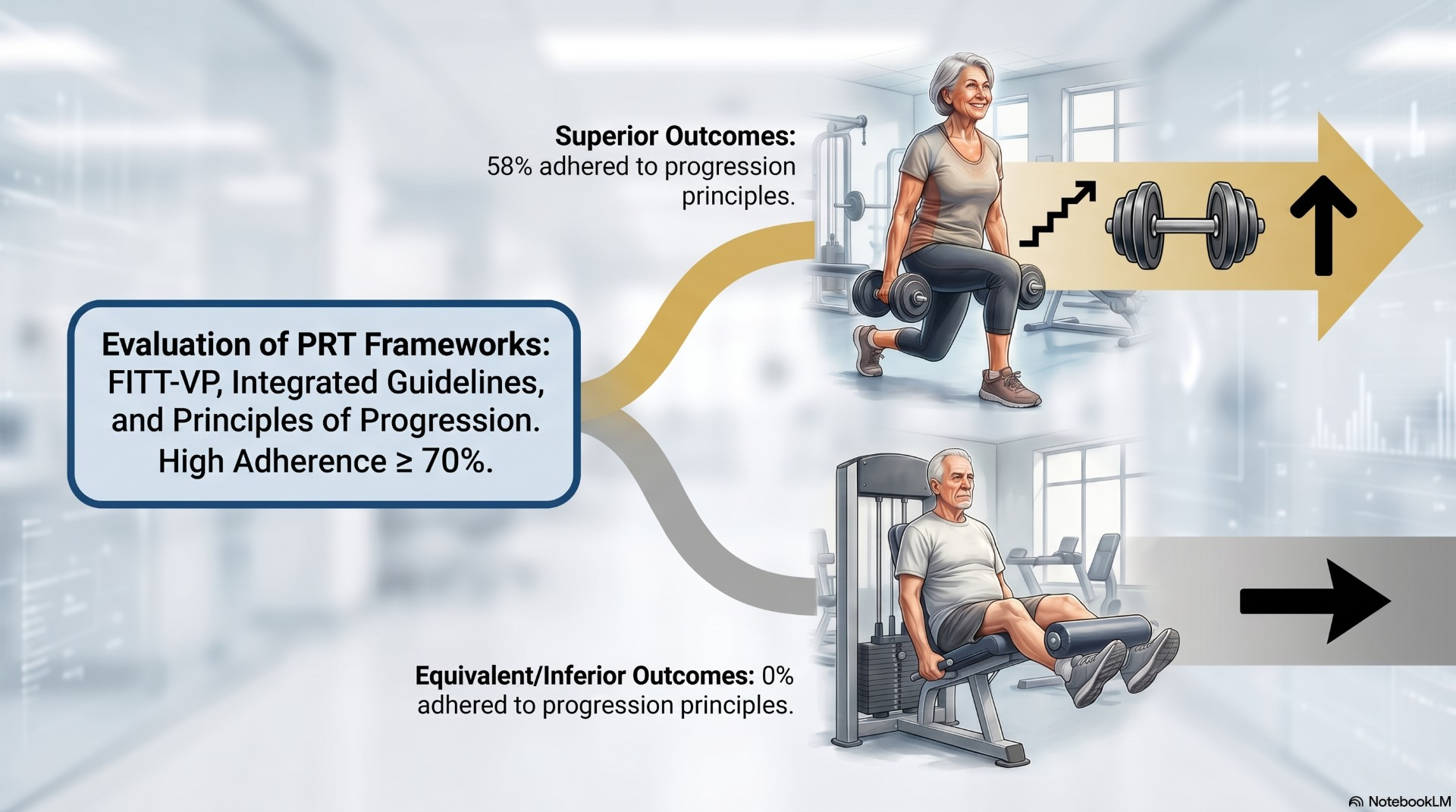
| Active Comparison Superior | 12 | 8 (66) | 9 (75) | 7 (58) | PRT outperformed active control. |
| Active Comparison Non-Superior | 14 | 11 (78) | 7 (50) | 0 (0) | PRT ≤ active control. |
| Passive Comparison Effective | 8 | 8 (100) | 7 (87.5) | 5 (62.5) | PRT > no-treatment. |
| Study (Authors, Year) | FITT: % | Integrated Guidelines % | Progression % | Reported PRT Effect | Group Difference | Control Type |
|---|---|---|---|---|---|---|
| Silva-Batista et al. [29] | 100 | 100 | 100 | Improved clinical signs and brain plasticity | Superior | Active (TMR) |
| Hirsch et al. [30] | 75 | 100 | 100 | Improved muscle strength and balance | Superior | Active (Balance) |
| Silva-Batista et al. [31] *** | 100 | 93.80 | 91.70 | Improved mobility and motor signs | Superior * | Passive |
| Silva-Batista et al. [32] *** | 100 | 93.80 | 91.70 | Optimized neuromuscular adaptations | Superior * | Passive |
| Silva-Batista et al. [33] *** | 100 | 93.80 | 91.70 | Improved balance and reduced FoG | Superior * | Passive |
| Viera-Yano et al. [34] *** | 87.50 | 87.50 | 91.70 | Affected gait speed and automaticity | Superior * | Active (TMR) |
| Ferreira et al. [35] | 87.50 | 87.50 | 83.30 | Reduced anxiety and improved QoL | Effective | Passive |
| Leal et al. [36] | 75 | 87.50 | 83.30 | Improved physical capacity | Effective | Passive |
| Paul et al. [37] | 87.50 | 87.50 | 83.30 | Improved leg muscle power and strength | Effective | Active (Sham) |
| Alves et al. [38] | 87.50 | 75 | 83.30 | Improved inspiratory-expiratory strength and QoL | Effective | Passive |
| Helgerud et al. [39] | 37.50 | 75 | 83.30 | Improved force-generating capacity, efferent neural drive, and functional performance | Effective | Active (Low PRT) |
| Strand et al. [28] | 100 | 87.50 | 83.30 | Improved functional capacity and strength. F improved FoG and motor symptoms | Effective | Active (H vs. F) |
| Corcos et al. [40] | 87.50 | 75 | 66.60 | Affected UPDRS-III scores | Effective | Active (MFC) |
| Prodoehl et al. [41] | 87.50 | 75 | 66.60 | Improved functional performance | No Diff | Active (MFC) |
| Cherup et al. [27] | 100 | 75 | 66.60 | Reduced neuromuscular deficits | No Diff | Active (S vs. P) |
| Morris et al. [42] | 87.50 | 75 | 66.60 | Reduced rate of falls | No Diff | Active/Passive |
| Ni et al. [43] | 100 | 75 | 66.60 | Improved physical performance | No Diff | Active (Yoga) |
| Alessandro Carvalho et al. [44] | 100 | 75 | 66.60 | Affected disease symptoms and function | No Diff | Active (Aerobic) |
| Marie Domonceau & Didier Maxuet [45] | 100 | 75 | 66.60 | Affected training specificities compliance | No Diff | Active (Aerobic) |
| Viera De Moraes Filho et al. [4] | 100 | 75 | 66.60 | Reduced bradykinesia and improved function | Effective | Passive |
| Dibble et al. [46] | 62.50 | 62.50 | 66.60 | Improved muscle force, hypertrophy and mobility | Effective | Active (General Fitness) |
| Dibble et al. [47] | 62.50 | 62.50 | 66.60 | Reduced bradykinesia and improved muscle force production and QoL | Effective | Active (General Fitness) |
| Dibble et al. [1] | 62.50 | 62.50 | 66.60 | Affected body structure and function | No Diff | Active (Ecc/Con) |
| Schilling et al. [48] | 75% | 62.5% | 66.6% | Affected only muscle strength | No Diff | Active (Standard Care) |
| Li et al. [49] | 87.50 | 75 | 50 | Reduced balance impairments and lowered the incidence of falls | Inferior to Tai Chi ** | Active (Tai Chi and stretching) |
| Schlenstedt et al. [50] | 75 | 50 | 50 | Both groups improved posture | No Diff | Active (Balance) |
| Schlenstedt et al. [51] | 75 | 50 | 50 | Neither group reduced FoG | No Diff | Active (Balance) |
| Allen et al. [52] | 75 | 75 | 50 | Reduced risk of falls and improved FoG, sit-to-stand, and strength | Effective | Passive |
| Hass et al. [53] | 75 | 62.50 | 50 | Improved gait initiation | Effective | Passive |
| Shulman et al. [54] | 75 | 50 | 16.60 | Affected only muscle strength | Inferior ** | Active (Treadmill) |
| Shen & Mak et al. [55] | 50 | 50 | 16.60 | Affected SLS time and gait speed | No Diff (Inferior only in 12-month carryover) | Active (Feedback) |
| Shen & Mak et al. [56] | 50 | 50 | 16.60 | Reduced falls | Inferior ** | Active (Feedback) |
| Santos et al. [57] | 62.50 | 50 | 0 | Affected postural control | Inferior ** | Active (Balance) |
| De Lima et al. [58] | 100 | 100 | 83 | Superior * | Passive |
| AMSTAR 2 Domain | Compliance (Yes) | Non-Compliance (No, Partial, N/A) | Key Insight |
|---|---|---|---|
| 1. PICO Components | 38 (100%) | 0 (0%) | All reviews established clear research questions. |
| 2. Protocol Registration | 20 (53%) | 18 (47%) | Nearly half of the reviews did not register a protocol a priori. |
| 3. Study Design Selection | 37 (97%) | 1 (3%) | Almost all reviews justified their study design, with one exception. |
| 4. Search Strategy | 5 (13%) | 33 (87%) | Most reviews only partially met the comprehensive search criteria (e.g., searching trial registries or grey literature). |
| 5. Duplicate Selection | 35 (92%) | 3 (8%) | High adherence to a dual independent study selection was observed. |
| 6. Duplicate Extraction | 27 (71%) | 11 (29%) | Approximately 30% of reviews did not perform data extraction in duplicate. |
| 7. Excluded Study List | 3 (8%) | 35 (92%) | A major transparency gap was observed; only 3 reviews provided a full list of excluded studies with reasons. |
| 8. Study Details | 36 (95%) | 2 (5%) | Most reviews provided adequate detail on the included studies. |
| 9. RoB Technique | 35 (92%) | 3 (8%) | The majority used a satisfactory technique for assessing the risk of bias. |
| 10. Study Funding | 1 (3%) | 37 (97%) | A critical weakness was observed: only 1 review reported the funding sources for the primary studies included. |
| 11. Meta-analysis Stats | 30 (79%) * | N/A | High compliance among studies where meta-analysis was applicable/performed. |
| 12. RoB Impact on Stats | 16 (42%) * | N/A | Less than half assessed the potential impact of risk of bias on the statistical results. |
| 13. RoB in Interpretation | 36 (95%) | 2 (5%) | Most reviews accounted for the risk of bias when discussing their results. |
| 14. Heterogeneity | 37 (97%) | 1 (3%) | Nearly all reviews investigated or discussed heterogeneity satisfactorily. |
| 15. Publication Bias | 24 (63%) * | N/A | Publication bias investigation was mixed or not applicable in many cases. |
| 16. Conflict of Interest | 37 (97%) | 1 (3%) | High transparency regarding the review authors’ own conflicts of interest was observed. |
Disclaimer/Publisher’s Note: The statements, opinions and data contained in all publications are solely those of the individual author(s) and contributor(s) and not of MDPI and/or the editor(s). MDPI and/or the editor(s) disclaim responsibility for any injury to people or property resulting from any ideas, methods, instructions or products referred to in the content. |
© 2026 by the authors. Licensee MDPI, Basel, Switzerland. This article is an open access article distributed under the terms and conditions of the Creative Commons Attribution (CC BY) license.
Share and Cite
Rozenbaum, Y.; Hutzler, Y.; Barak, S. Progressive Resistance Training in Parkinson’s Disease: An Umbrella Review Examining the Role of Methodological Adherence and Training Progression Principles in Clinical Outcome. J. Funct. Morphol. Kinesiol. 2026, 11, 178. https://doi.org/10.3390/jfmk11020178
Rozenbaum Y, Hutzler Y, Barak S. Progressive Resistance Training in Parkinson’s Disease: An Umbrella Review Examining the Role of Methodological Adherence and Training Progression Principles in Clinical Outcome. Journal of Functional Morphology and Kinesiology. 2026; 11(2):178. https://doi.org/10.3390/jfmk11020178
Chicago/Turabian StyleRozenbaum, Ya’ara, Yeshayahu Hutzler, and Sharon Barak. 2026. "Progressive Resistance Training in Parkinson’s Disease: An Umbrella Review Examining the Role of Methodological Adherence and Training Progression Principles in Clinical Outcome" Journal of Functional Morphology and Kinesiology 11, no. 2: 178. https://doi.org/10.3390/jfmk11020178
APA StyleRozenbaum, Y., Hutzler, Y., & Barak, S. (2026). Progressive Resistance Training in Parkinson’s Disease: An Umbrella Review Examining the Role of Methodological Adherence and Training Progression Principles in Clinical Outcome. Journal of Functional Morphology and Kinesiology, 11(2), 178. https://doi.org/10.3390/jfmk11020178