
A Narrative Review of Shockwave Therapy in Plantar Fasciitis
 ,
,  , , ,
, , ,  and
and 
Abstract
1. Introduction
2. Methods
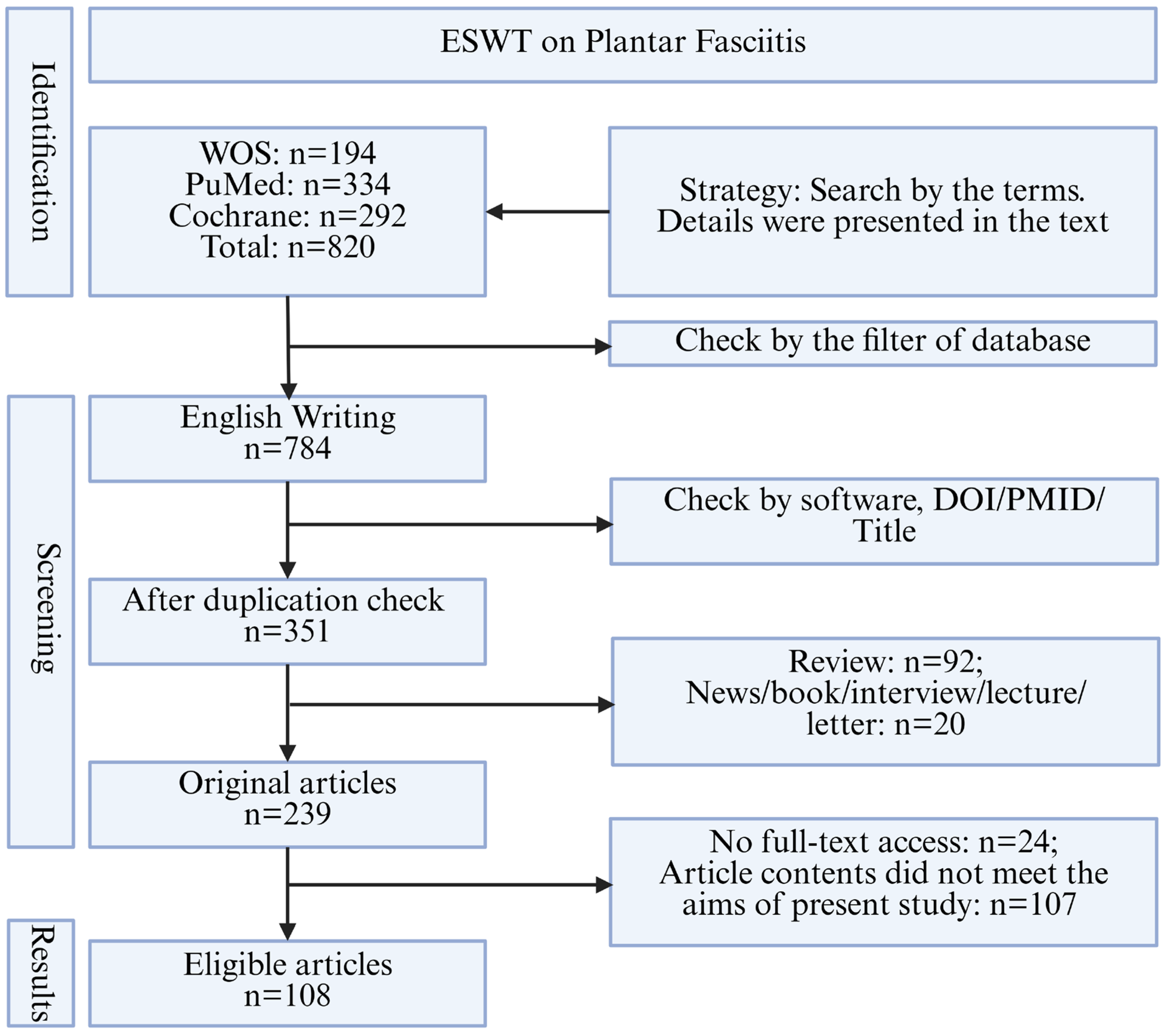
2.1. Databases and Terms
2.2. Inclusion and Exclusion Criteria
3. Results
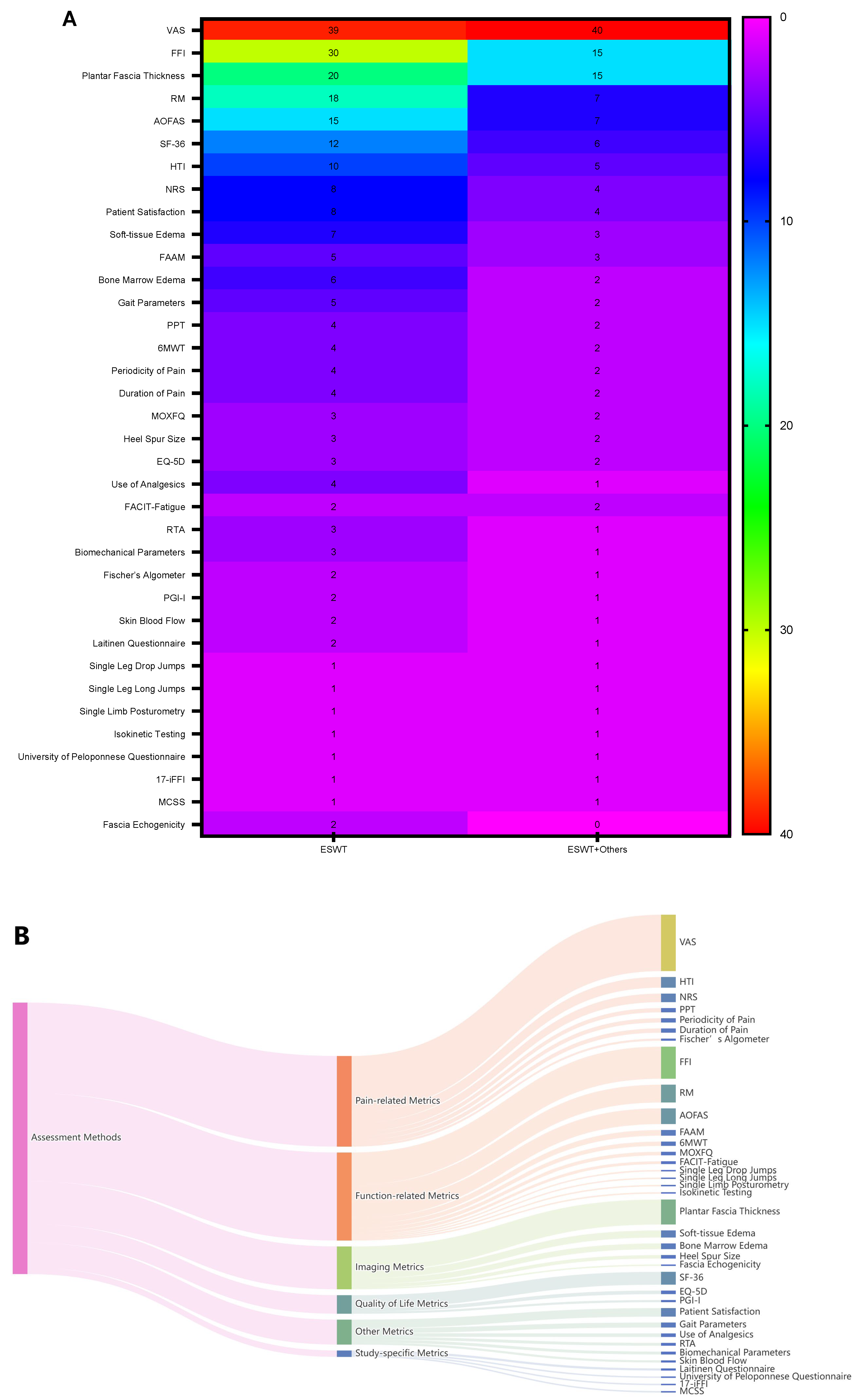
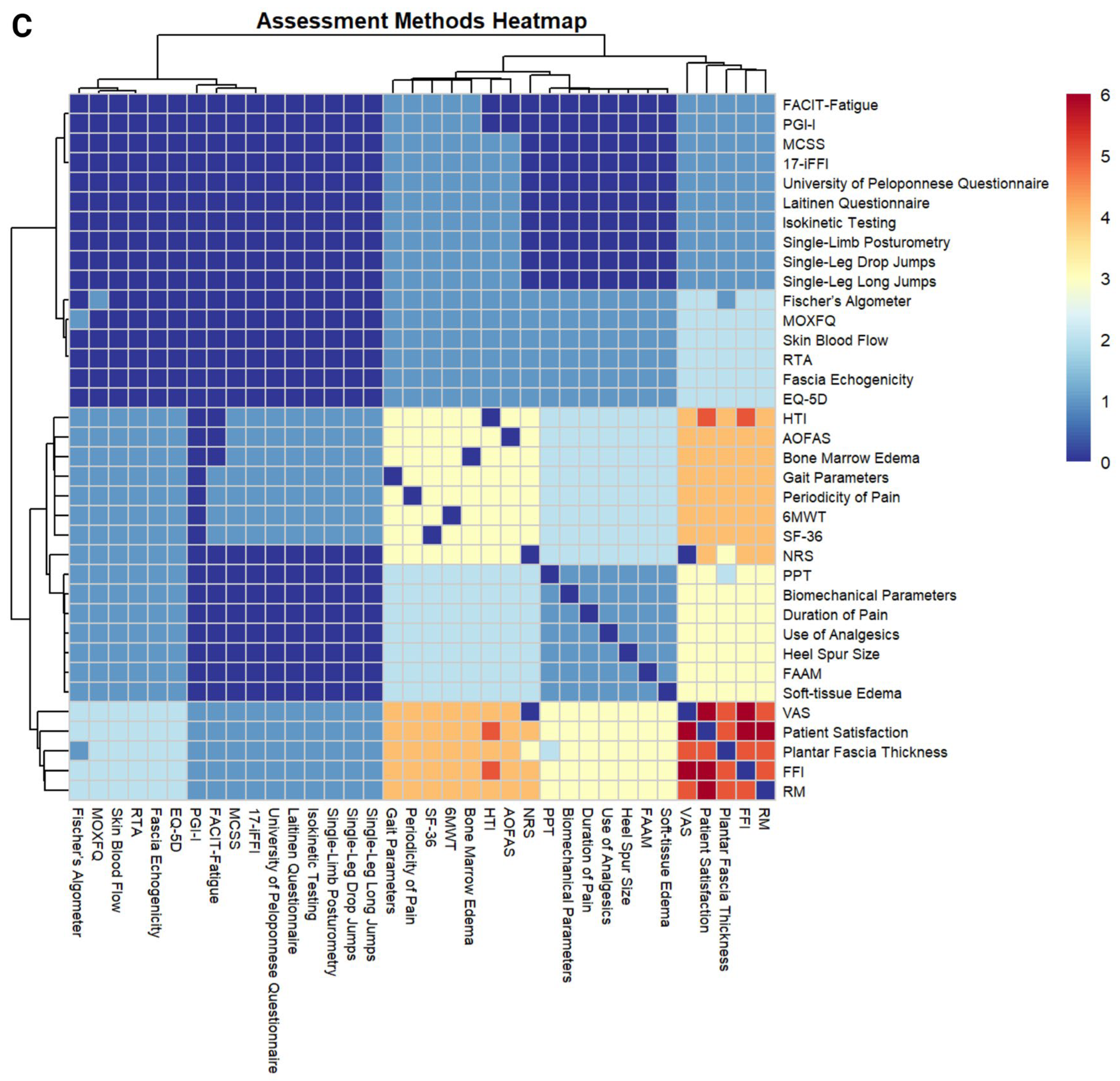
3.1. The Assessment Methods Involved in ESWT-PF
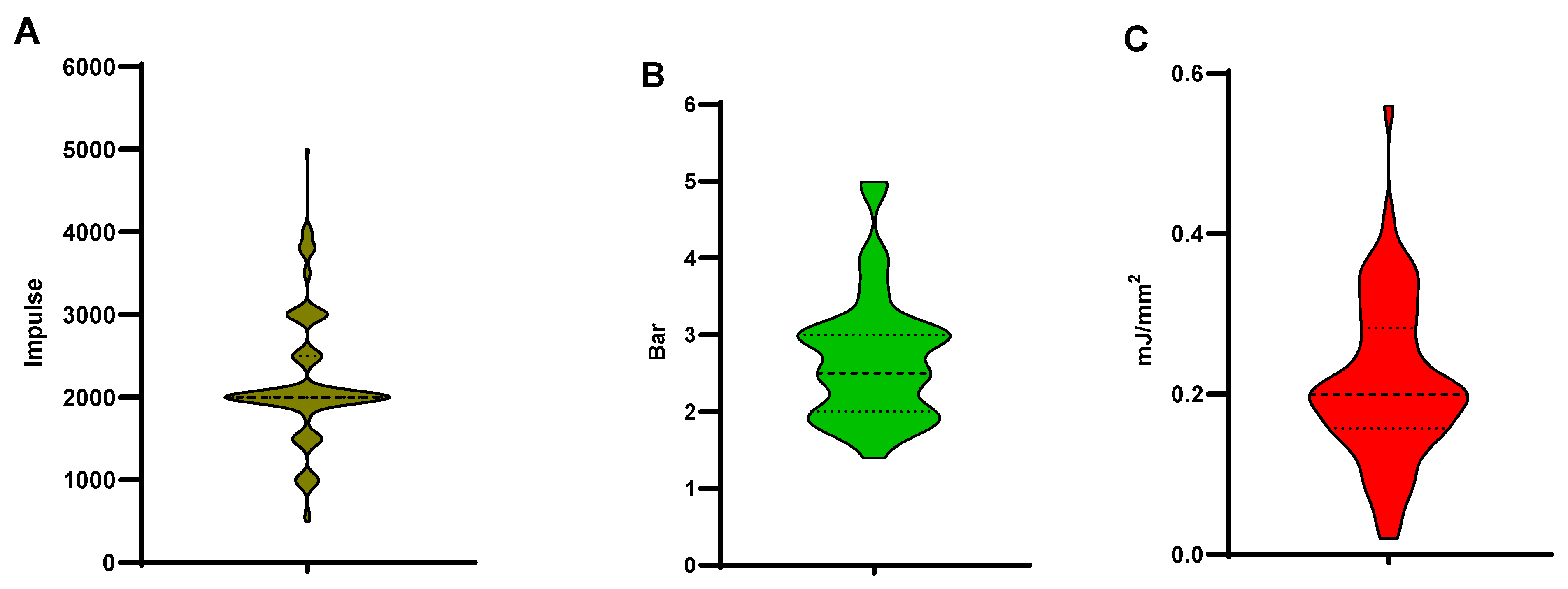
3.2. The Overview of ESWT Prescription Parameters
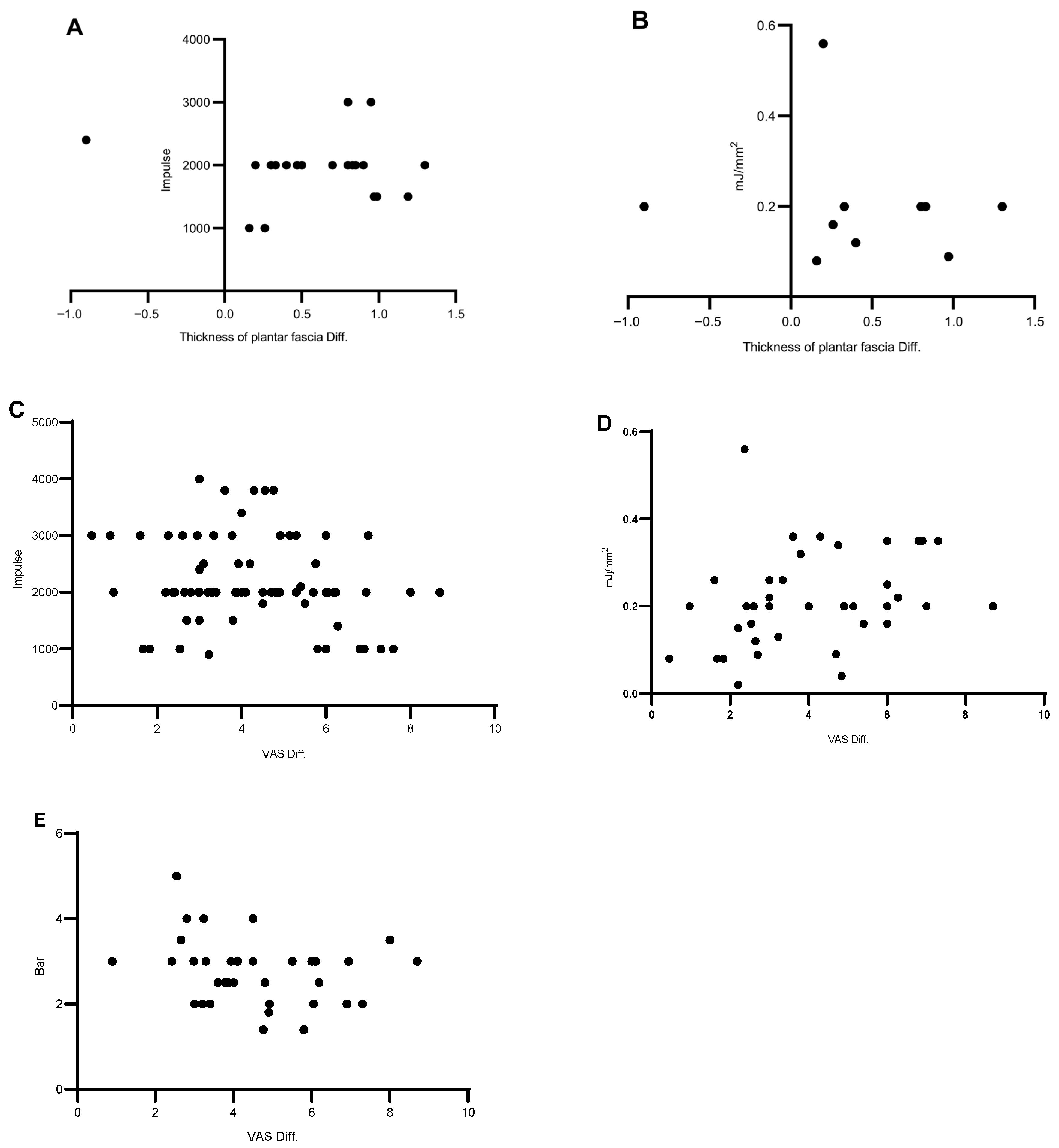
3.3. The Relationship of ESWT Prescriptions and Related Outcomes
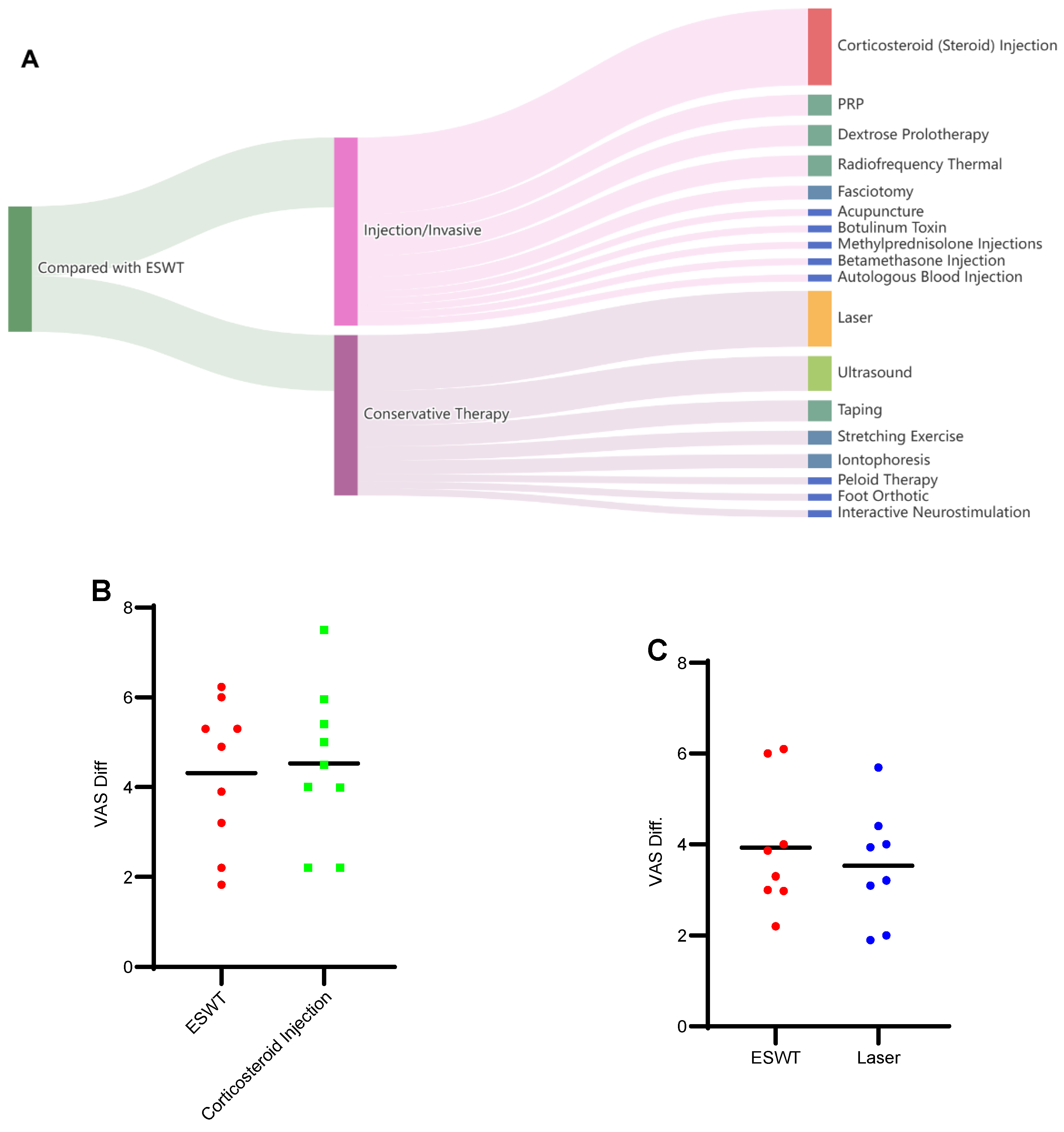
3.4. The Status of ESWT Versus Other PF Interventions
3.4.1. Injection/Invasive Therapies
3.4.2. Conservative Therapies
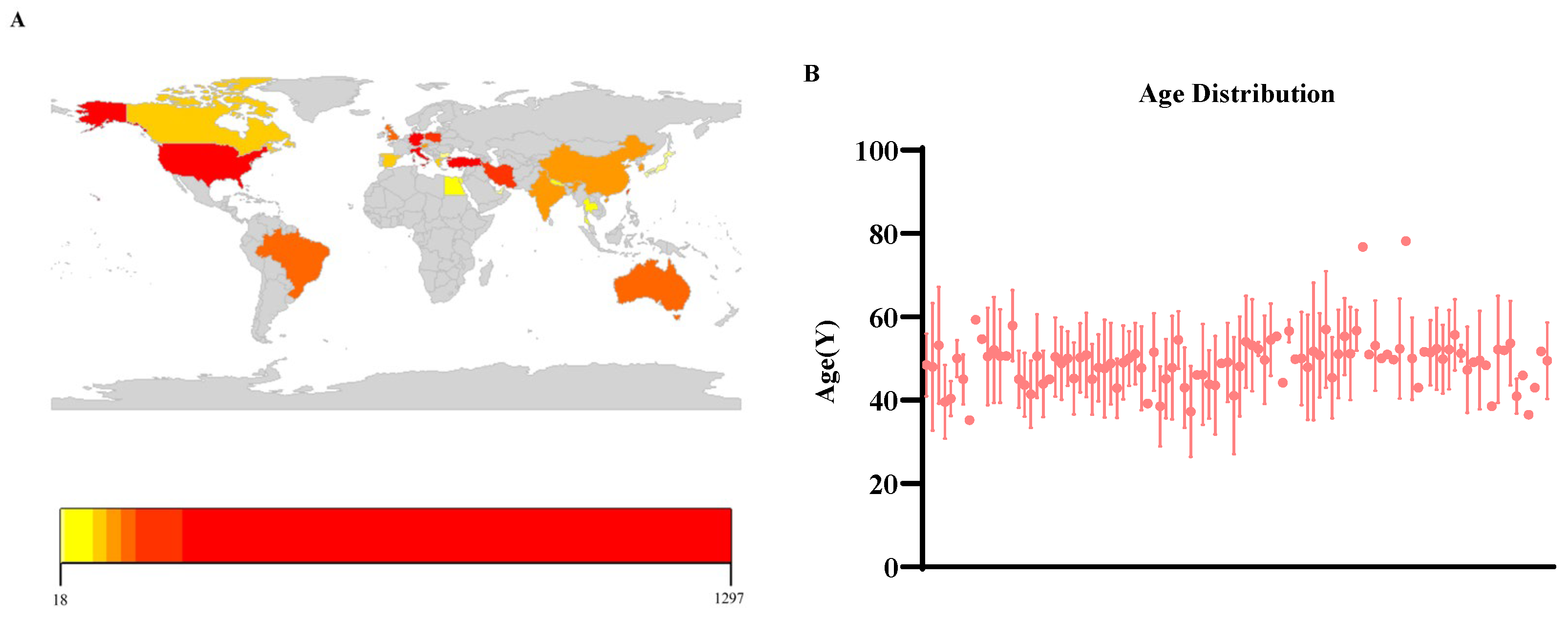
3.5. Characteristics of the Study Populations
4. Discussion
5. Conclusions
Supplementary Materials
Author Contributions
Funding
Institutional Review Board Statement
Informed Consent Statement
Data Availability Statement
Conflicts of Interest
Abbreviations
| Abbreviation | Full spelling |
| VAS | Visual Analog Scale |
| NRS | Numerical Rating Scale |
| PPT | Pain Pressure Threshold |
| HTI | Heel Tenderness Index |
| FFI | Foot Function Index |
| AOFAS | American Orthopedic Foot and Ankle Society Score |
| RM | Roles and Maudsley Score |
| FAAM | Foot and Ankle Ability Measure |
| MOXFQ | Manchester–Oxford Foot Questionnaire |
| FACIT | Functional Assessment of Chronic Illness Therapy-Fatigue Scale |
| 6MWT | 6-Minute Walking Test |
| SF-36 | Short Form-36 |
| PGI-1 | Patient Global Impression of Improvement |
| RTA | Return to Activity |
| University of Peloponnese Questionnaire | University of Peloponnese Pain, Functionality, and Quality of Life Questionnaire |
| 17-Iffi | 17-Italian Foot Function Index |
| MCSS | Mayo Clinical Scoring System |
Appendix A
References
- Uden, H.; Boesch, E.; Kumar, S. Plantar fasciitis—To jab or to support? A systematic review of the current best evidence. J. Multidiscip. Healthc. 2011, 4, 155–164. [Google Scholar] [CrossRef] [PubMed] [PubMed Central]
- Luffy, L.; Grosel, J.; Thomas, R.; So, E. Plantar fasciitis: A review of treatments. J. Am. Acad. Physician Assist. 2018, 31, 20–24. [Google Scholar] [CrossRef] [PubMed]
- Goff, J.D.; Crawford, R. Diagnosis and treatment of plantar fasciitis. Am. Fam. Physician 2011, 84, 676–682. [Google Scholar] [PubMed]
- Trojian, T.; Tucker, A.K. Plantar Fasciitis. Am. Fam. Physician 2019, 99, 744–750. [Google Scholar] [CrossRef]
- Thompson, J.V.; Saini, S.S.; Reb, C.W.; Daniel, J.N. Diagnosis and management of plantar fasciitis. J. Am. Osteopath. Assoc. 2014, 114, 900–906. [Google Scholar] [CrossRef] [PubMed]
- Latt, L.D.; Jaffe, D.E.; Tang, Y.; Taljanovic, M.S. Evaluation and Treatment of Chronic Plantar Fasciitis. Foot Ankle Orthop. 2020, 5, 2473011419896763. [Google Scholar] [CrossRef] [PubMed] [PubMed Central]
- Simental-Mendía, M.; Simental-Mendía, L.E.; Sánchez-García, A.; Sahebkar, A.; Jamialahmadi, T.; Vilchez-Cavazos, F.; Peña-Martínez, V.M.; Acosta-Olivo, C. Effect of extracorporeal shockwave therapy on plantar fascia thickness in plantar fasciitis: A systematic review and meta-analysis of randomized controlled trials. Arch. Orthop. Trauma. Surg. 2024, 144, 3503–3516. [Google Scholar] [CrossRef] [PubMed]
- Wang, C.J. Extracorporeal shockwave therapy in musculoskeletal disorders. J. Orthop. Surg. Res. 2012, 7, 11. [Google Scholar] [CrossRef] [PubMed] [PubMed Central]
- Reilly, J.M.; Bluman, E.; Tenforde, A.S. Effect of Shockwave Treatment for Management of Upper and Lower Extremity Musculoskeletal Conditions: A Narrative Review. PM R 2018, 10, 1385–1403. [Google Scholar] [CrossRef] [PubMed]
- Al-Siyabi, Z.; Karam, M.; Al-Hajri, E.; Alsaif, A.; Alazemi, M.; Aldubaikhi, A.A. Extracorporeal Shockwave Therapy Versus Ultrasound Therapy for Plantar Fasciitis: A Systematic Review and Meta-Analysis. Cureus 2022, 14, e20871. [Google Scholar] [CrossRef] [PubMed] [PubMed Central]
- Rhim, H.C.; Kwon, J.; Park, J.; Borg-Stein, J.; Tenforde, A.S. A Systematic Review of Systematic Reviews on the Epidemiology, Evaluation, and Treatment of Plantar Fasciitis. Life 2021, 11, 1287. [Google Scholar] [CrossRef] [PubMed] [PubMed Central]
- Roerdink, R.L.; Dietvorst, M.; van der Zwaard, B.; van der Worp, H.; Zwerver, J. Complications of extracorporeal shockwave therapy in plantar fasciitis: Systematic review. Int. J. Surg. 2017, 46, 133–145. [Google Scholar] [CrossRef] [PubMed]
- AL Kalbani, F.; Shalash, R.; Qadah, R.; Shousha, T. Comparing two protocols of shock wave therapy for patients with plantar fasciitis: A pilot study. PLoS ONE 2024, 19, e0302553. [Google Scholar] [CrossRef] [PubMed]
- Akdere, E.; Karpuz, S.; Yılmaz, R.; Akkurt, H.E.; Yılmaz, H. Comparison of effectiveness of extracorporeal shock wave therapy and peloidotherapy in patients with plantar fasciitis: A prospective, randomized, controlled study. Int. J. Biometeorol. 2025, 69, 17–28. [Google Scholar] [CrossRef]
- Akinoğlu, B.; Köse, N.; Kirdi, N.; Yakut, Y. Comparison of the Acute Effect of Radial Shock Wave Therapy and Ultrasound Therapy in the Treatment of Plantar Fasciitis: A Randomized Controlled Study. Pain Med. 2017, 18, 2443–2452. [Google Scholar] [CrossRef]
- Akınoğlu, B.; Köse, N. A comparison of the acute effects of radial extracorporeal shockwave therapy, ultrasound therapy, and exercise therapy in plantar fasciitis. J. Exerc. Rehabil. 2018, 14, 306–312. [Google Scholar] [CrossRef]
- Alessio-Mazzola, M.; Stambazzi, C.; Ursino, C.; Tagliafico, A.; Trentini, R.; Formica, M. Ultrasound-Guided Autologous Platelet-Rich Plasma Injections Versus Focal Ultrasound-Guided Extracorporeal Shockwave Therapy for Plantar Fasciitis in Athletes and Nonathletes: A Retrospective Comparative Study With Minimum 2-Year Follow-Up. J. Foot Ankle Surg. 2023, 62, 417–421. [Google Scholar] [CrossRef]
- Alviti, F.; D’Ercole, C.; Schillizzi, G.; Mangone, M.; Bernetti, A.; Ioppolo, F.; Di Sante, L.; Minafra, P.; Santilli, V.; Elia, D.; et al. Elastosonographic evaluation after extracorporeal shockwave treatment in plantar fasciopathy. Med. Ultrason. 2019, 21, 399. [Google Scholar] [CrossRef]
- Androsoni, R.; Netto, A.A.; Macedo, R.R.; Fasolin, R.P.; Boni, G.; Moreira, R.F.G. Treatment of chronic plantar fasciitis with extra corporeal shock wave therapy: Ultrasonographic morphological aspect and functional evaluation. Rev. Bras. Ortop. 2013, 48, 538–544. [Google Scholar] [CrossRef][Green Version]
- Armagan Alpturker, K.; Cerrahoglu, A.B.L.; Orguc, I.S. Evaluation Effects of Laser Therapy and Extracorporeal Shock Wave Therapy with Clinical Parameters and Magnetic Resonance Imaging for Treatment of Plantar Fasciitis in Patients with Spondyloarthritis: A Randomized Controlled Trial. Int. J. Rheumatol. 2020, 2020, 4386361. [Google Scholar] [CrossRef]
- Asheghan, M.; Hashemi, S.E.; Hollisaz, M.T.; Roumizade, P.; Hosseini, S.M.; Ghanjal, A. Dextrose prolotherapy versus radial extracorporeal shock wave therapy in the treatment of chronic plantar fasciitis: A randomized, controlled clinical trial. Foot Ankle Surg. 2021, 27, 643–649. [Google Scholar] [CrossRef]
- Badil Güloğlu, S.; Yalçın, Ü. Comparison of effects of low-level laser therapy and extracorporeal shock wave therapy in calcaneal spur treatment: A prospective, randomized, clinical study. Turk. J. Phys. Med. Rehabil. 2021, 67, 218–224. [Google Scholar] [CrossRef]
- Bagcier, F.; Yilmaz, N. The Impact of Extracorporeal Shock Wave Therapy and Dry Needling Combination on Pain and Functionality in the Patients Diagnosed with Plantar Fasciitis. J. Foot Ankle Surg. 2020, 59, 689–693. [Google Scholar] [CrossRef]
- Bahar-Ozdemir, Y.; Atan, T. Effects of adjuvant low-dye Kinesio taping, adjuvant sham taping, or extracorporeal shockwave therapy alone in plantar fasciitis: A randomised double-blind controlled trial. Int. J. Clin. Pract. 2021, 75, e13993. [Google Scholar] [CrossRef]
- Bicer, M.; Hocaoglu, E.; Aksoy, S.; İnci, E.; Aktaş, İ. Assessment of the Efficacy of Extracorporeal Shockwave Therapy for Plantar Fasciitis with Magnetic Resonance Imaging Findings. J. Am. Podiatr. Med. Assoc. 2018, 108, 100–105. [Google Scholar] [CrossRef] [PubMed]
- Brachman, A.; Sobota, G.; Marszałek, W.; Pawłowski, M.; Juras, G.; Bacik, B. Plantar pressure distribution and spatiotemporal gait parameters after the radial shock wave therapy in patients with chronic plantar fasciitis. J. Biomech. 2020, 105, 109773. [Google Scholar] [CrossRef]
- Buchbinder, R.; Ptasznik, R.; Gordon, J.; Buchanan, J.; Prabaharan, V.; Forbes, A. Ultrasound-Guided Extracorporeal Shock Wave Therapy for Plantar Fasciitis: A Randomized Controlled Trial. JAMA 2002, 288, 1364. [Google Scholar] [CrossRef]
- Çağlar Okur, S.; Aydın, A. Comparison of extracorporeal shock wave therapy with custom foot orthotics in plantar fasciitis treatment: A prospective randomized one-year follow-up study. J. Musculoskelet. Neuronal Interact. 2019, 19, 178–186. [Google Scholar] [PubMed]
- Caner, Ö.C.; Güneş, S.; Gökmen, D.; Ataman, Ş.; Kutlay, Ş. The efficacy and safety of extracorporeal shock wave therapy on plantar fasciitis in patients with axial spondyloarthritis: A double-blind, randomized controlled trial. Rheumatol. Int. 2022, 42, 581–589. [Google Scholar] [CrossRef] [PubMed]
- Chew, K.T.L.; Leong, D.; Lin, C.Y.; Lim, K.K.; Tan, B. Comparison of Autologous Conditioned Plasma Injection, Extracorporeal Shockwave Therapy, and Conventional Treatment for Plantar Fasciitis: A Randomized Trial. PM R 2013, 5, 1035–1043. [Google Scholar] [CrossRef]
- Cinar, E.; Saxena, S.; Akkurt, H.E.; Uygur, F. Extracorporeal shockwave therapy in the management of plantar fasciitis: A randomized controlled trial. Foot 2020, 44, 101679. [Google Scholar] [CrossRef]
- Cinar, E.; Saxena, S.; Uygur, F. Combination Therapy Versus Exercise and Orthotic Support in the Management of Pain in Plantar Fasciitis: A Randomized Controlled Trial. Foot Ankle Int. 2018, 39, 406–414. [Google Scholar] [CrossRef] [PubMed]
- Yucel, I.; Ozturan, K.E.; Demiraran, Y.; Degirmenci, E.; Kaynak, G. Comparison of High-Dose Extracorporeal Shockwave Therapy and Intralesional Corticosteroid Injection in the Treatment of Plantar Fasciitis. J. Am. Podiatr. Med. Assoc. 2010, 100, 105–110. [Google Scholar] [CrossRef]
- Dede, B.T.; Ada, A.; Oğuz, M.; Bulut, B.; Bagcıer, F.; Aytekin, E. Comparing Myofascial Pain Syndrome Treatment with Dry Needling Versus Extracorporeal Shock Wave Therapy for Plantar Fasciitis on Pain and Function of the Heel. J. Foot Ankle Surg. 2024, 63, 477–481. [Google Scholar] [CrossRef] [PubMed]
- Dedes, V.; Tzirogiannis, K.; Polikandrioti, M.; Dede, A.; Nikolaidis, C.; Mitseas, A.; Panoutsopoulos, G. Radial Extra Corporeal Shockwave Therapy Versus Ultrasound Therapy in the Treatment of Plantar Fasciitis. Acta Inform. Medica 2019, 27, 45. [Google Scholar] [CrossRef]
- DeLuca, S.; Robinson, D.M.; Yun, P.H.; Rosenberg, C.; Tan, C.O.; Tenforde, A.S. Similar Functional Gains Using Radial Versus Combined Shockwave Therapy in Management of Plantar Fasciitis. J. Foot Ankle Surg. 2021, 60, 1098–1102. [Google Scholar] [CrossRef] [PubMed]
- Chierichini, A.; Spinazzola, G.; Conti, C.; Saracco, M.; Vergari, A.; Continolo, N.; Ferrone, G.; Rossi, M. Pain Management Optimisation by an Ultrasound-Guided Analgesic Technique in Outpatients with Plantar Fasciitis during High-Energy Extracorporeal Shock Wave Therapy. Turk. J. Anaesthesiol. Reanim. 2021, 49, 350–356. [Google Scholar] [CrossRef]
- Dorotka, R.; Sabeti, M.; Jimenez-Boj, E.; Goll, A.; Schubert, S.; Trieb, K. Location Modalities for Focused Extracorporeal Shock Wave Application in the Treatment of Chronic Plantar Fasciitis. Foot Ankle Int. 2006, 27, 943–947. [Google Scholar] [CrossRef]
- Erden, T.; Toker, B.; Cengiz, O.; Ince, B.; Asci, S.; Toprak, A. Outcome of Corticosteroid Injections, Extracorporeal Shock Wave Therapy, and Radiofrequency Thermal Lesioning for Chronic Plantar Fasciitis. Foot Ankle Int. 2021, 42, 69–75. [Google Scholar] [CrossRef]
- Ermutlu, C.; Aksakal, M.; Gümüştaş, A.; Özkaya, G.; Kovalak, E.; Özkan, Y. Thickness of plantar fascia is not predictive of functional outcome in plantar fasciitis treatment. Acta Orthop. Traumatol. Turc. 2018, 52, 442–446. [Google Scholar] [CrossRef]
- Eslamian, F.; Shakouri, S.K.; Jahanjoo, F.; Hajialiloo, M.; Notghi, F. Extra Corporeal Shock Wave Therapy Versus Local Corticosteroid Injection in the Treatment of Chronic Plantar Fasciitis, a Single Blinded Randomized Clinical Trial. Pain Med. 2016, 17, 1722–1731. [Google Scholar] [CrossRef] [PubMed]
- Fansa, A.; Talsania, A.J.; Kennedy, J.G.; O’Malley, M.J. Efficacy of Unfocused Medium-Intensity Extracorporeal Shock Wave Therapy (MI-ESWT) for Plantar Fasciitis. J. Foot Ankle Surg. 2021, 60, 471–476. [Google Scholar] [CrossRef] [PubMed]
- Fouda, K.Z.; Ali, Z.A.; Elshorbagy, R.T.; Eladl, H.M. Effect of radial shock wave and ultrasound therapy combined with traditional physical therapy exercises on foot function and dorsiflexion range in plantar fasciitis: A prospective randomized clinical trial. Eur. Rev. Med. Pharmacol. Sci. 2023, 27, 3823–3832. [Google Scholar] [CrossRef]
- Fulceri, F.; Ryskalin, L.; Morucci, G.; Busoni, F.; Soldani, P.; Gesi, M. Pain-Relieving Effects of Shockwave Therapy for Ledderhose Disease: An Ultrasound-Based Study of an Unusual Bilateral Case. Life 2024, 14, 169. [Google Scholar] [CrossRef] [PubMed]
- Gerdesmeyer, L.; Frey, C.; Vester, J.; Maier, M.; Lowell, W.; Weil, L.; Russlies, M.; Stienstra, J.; Scurran, B.; Fedder, K.; et al. Radial Extracorporeal Shock Wave Therapy is Safe and Effective in the Treatment of Chronic Recalcitrant Plantar Fasciitis: Results of a Confirmatory Randomized Placebo-Controlled Multicenter Study. Am. J. Sports Med. 2008, 36, 2100–2109. [Google Scholar] [CrossRef]
- Gezginaslan, Ö.; Başar, G. Comparison of Effectiveness of Density and Number of Sessions of Extracorporeal Shock Wave Therapy in Plantar Fasciitis Patients: A Double-Blind, Randomized-Controlled Study. J. Foot Ankle Surg. 2021, 60, 262–268. [Google Scholar] [CrossRef]
- Gollwitzer, H.; Saxena, A.; DiDomenico, L.A.; Galli, L.; Bouché, R.T.; Caminear, D.S.; Fullem, B.; Vester, J.C.; Horn, C.; Banke, I.J.; et al. Clinically Relevant Effectiveness of Focused Extracorporeal Shock Wave Therapy in the Treatment of Chronic Plantar Fasciitis: A Randomized, Controlled Multicenter Study. J. Bone Jt. Surg.-Am. 2015, 97, 701–708. [Google Scholar] [CrossRef]
- Grecco, M.V.; Brech, G.C.; Greve, J.M.D. One-year treatment follow-up of plantar fasciitis: Radial shockwaves vs. conventional physiotherapy. Clinics 2013, 68, 1089–1095. [Google Scholar] [CrossRef]
- Greve, J.M.D.; Grecco, M.V.; Santos-Silva, P.R. Comparison of Radial Shockwaves and Conventional Physiotherapy for Treating Plantar Fasciitis. Clinics 2009, 64, 97–103. [Google Scholar] [CrossRef]
- Güzel, Ş.; Şenlikçi, H.B.; Bal, H.S.; Haberal, B. Comparison of Plantar Pressure Distribution and Ultrasonographic and Clinical Features After Application of Different Energy Levels of Extracorporeal Shockwave Therapy in Patients with Plantar Fasciitis: A Randomized, Prospective, Double-Blind Clinical Trial. J. Am. Podiatr. Med. Assoc. 2024, 114, 22-047. [Google Scholar] [CrossRef]
- Haake, M. Extracorporeal shock wave therapy for plantar fasciitis: Randomised controlled multicentre trial. BMJ 2003, 327, 75. [Google Scholar] [CrossRef] [PubMed]
- Hammer, D.S.; Adam, F.; Kreutz, A.; Kohn, D.; Seil, R. Extracorporeal Shock Wave Therapy (ESWT) in Patients with Chronic Proximal Plantar Fasciitis: A 2-Year Follow-up. Foot Ankle Int. 2003, 24, 823–828. [Google Scholar] [CrossRef] [PubMed]
- Hammer, D.S.; Adam, F.; Kreutz, A.; Rupp, S.; Kohn, D.; Seil, R. Ultrasonographic evaluation at 6-month follow-up of plantar fasciitis after extracorporeal shock wave therapy. Arch. Orthop. Trauma Surg. 2005, 125, 6–9. [Google Scholar] [CrossRef] [PubMed]
- Hammer, D.S.; Rupp, S.; Kreutz, A.; Pape, D.; Kohn, D.; Seil, R. Extracorporeal Shockwave Therapy (ESWT) in Patients with Chronic Proximal Plantar Fasciitis. Foot Ankle Int. 2002, 23, 309–313. [Google Scholar] [CrossRef]
- Hocaoglu, S.; Vurdem, U.E.; Cebicci, M.A.; Sutbeyaz, S.T.; Guldeste, Z.; Yunsuroglu, S.G. Comparative Effectiveness of Radial Extracorporeal Shockwave Therapy and Ultrasound-Guided Local Corticosteroid Injection Treatment for Plantar Fasciitis. J. Am. Podiatr. Med. Assoc. 2017, 107, 192–199. [Google Scholar] [CrossRef]
- Hsu, W.-H.; Yu, P.-A.; Lai, L.-J.; Chen, C.-L.; Kuo, L.-T.; Fan, C.-H. Effect of Extracorporeal Shockwave Therapy on Passive Ankle Stiffness in Patients With Plantar Fasciopathy. J. Foot Ankle Surg. 2018, 57, 15–18. [Google Scholar] [CrossRef]
- Hyer, C.F.; VanCourt, R.; Block, A. Evaluation of ultrasound-guided Extracorporeal Shock Wave Therapy (ESWT) in the treatment of chronic plantar fasciitis. J. Foot Ankle Surg. 2005, 44, 137–143. [Google Scholar] [CrossRef]
- Ibrahim, M.I.; Donatelli, R.A.; Schmitz, C.; Hellman, M.A.; Buxbaum, F. Chronic Plantar Fasciitis Treated with Two Sessions of Radial Extracorporeal Shock Wave Therapy. Foot Ankle Int. 2010, 31, 391–397. [Google Scholar] [CrossRef]
- Ilieva, E.M. Radial Shock Wave Therapy for Plantar Fasciitis: A One Year Follow-Up Study/Paдиaльнaя yдapнo-вoлнoвaя тepaпия пpи пoдoшвeннoм фacциитe; пpocлeживaниe в тeчeниe гoдa. Folia Medica 2013, 55, 42–48. [Google Scholar] [CrossRef][Green Version]
- Kapusta, J.; Domżalski, M. Long Term Effectiveness of ESWT in Plantar Fasciitis in Amateur Runners. J. Clin. Med. 2022, 11, 6926. [Google Scholar] [CrossRef]
- Kesikburun, S.; Uran Şan, A.; Kesikburun, B.; Aras, B.; Yaşar, E.; Tan, A.K. Comparison of Ultrasound-Guided Prolotherapy Versus Extracorporeal Shock Wave Therapy in the Treatment of Chronic Plantar Fasciitis: A Randomized Clinical Trial. J. Foot Ankle Surg. 2022, 61, 48–52. [Google Scholar] [CrossRef]
- Konjen, N.; Napnark, T.; Janchai, S. A comparison of the effectiveness of radial extracorporeal shock wave therapy and ultrasound therapy in the treatment of chronic plantar fasciitis: A randomized controlled trial. J. Med. Assoc. Thail. Chotmaihet Thangphaet 2015, 98, S49–S56. [Google Scholar]
- Krishnan, A.; Sharma, Y.; Singh, S. Evaluation of therapeutic effects of extracorporeal shock wave therapy in resistant plantar fasciitis patients in a tertiary care setting. Med. J. Armed Forces India 2012, 68, 236–239. [Google Scholar] [CrossRef] [PubMed]
- Krukowska, J.; Wrona, J.; Sienkiewicz, M.; Czernicki, J. A comparative analysis of analgesic efficacy of ultrasound and shock wave therapy in the treatment of patients with inflammation of the attachment of the plantar fascia in the course of calcaneal spurs. Arch. Orthop. Trauma Surg. 2016, 136, 1289–1296. [Google Scholar] [CrossRef] [PubMed]
- Kudo, P.; Dainty, K.; Clarfield, M.; Coughlin, L.; Lavoie, P.; Lebrun, C. Randomized, placebo-controlled, double-blind clinical trial evaluating the treatment of plantar fasciitis with an extracoporeal shockwave therapy (ESWT) device: A North American confirmatory study. J. Orthop. Res. 2006, 24, 115–123. [Google Scholar] [CrossRef]
- Lai, T.-W.; Ma, H.-L.; Lee, M.-S.; Chen, P.-M.; Ku, M.-C. Ultrasonography and clinical outcome comparison of extracorporeal shock wave therapy and corticosteroid injections for chronic plantar fasciitis: A randomized controlled trial. J. Musculoskelet. Neuronal Interact. 2018, 18, 47–54. [Google Scholar]
- Leão, R.G.; Azuma, M.M.; Ambrosio, G.H.C.; Faloppa, F.; Takimoto, E.S.; Tamaoki, M.J.S. Effectiveness of shockwave therapy in the treatment of plantar fasciitis. Acta Ortopédica Bras. 2020, 28, 7–11. [Google Scholar] [CrossRef]
- Lee, S.-J.; Kang, J.-H.; Kim, J.-Y.; Kim, J.-H.; Yoon, S.-R.; Jung, K.-I. Dose-Related Effect of Extracorporeal Shock Wave Therapy for Plantar Fasciitis. Ann. Rehabil. Med. 2013, 37, 379. [Google Scholar] [CrossRef]
- Liang, H.-W.; Wang, T.-G.; Chen, W.-S.; Hou, S.-M. Thinner Plantar Fascia Predictsreased Pain after Extracorporeal Shock Wave Therapy. Clin. Orthop. Relat. Res. 2007, 460, 219–225. [Google Scholar] [CrossRef]
- Lizis, P. Comparison between Real and Placebo Extracorporeal Shockwave Therapy for the Treatment of Chronic Plantar Fasciitis Pain in the Males. Iran. J. Public Health 2015, 44, 1150–1152. [Google Scholar]
- Lohrer, H.; Nauck, T.; Dorn-Lange, N.V.; Schöll, J.; Vester, J.C. Comparison of Radial Versus Focused Extracorporeal Shock Waves in Plantar Fasciitis Using Functional Measures. Foot Ankle Int. 2010, 31, 1–9. [Google Scholar] [CrossRef] [PubMed]
- Maki, M.; Ikoma, K.; Kido, M.; Hara, Y.; Sawada, K.; Ohashi, S.; Kubo, T. Magnetic resonance imaging findings of chronic plantar fasciitis before and after extracorporeal shock wave therapy. Foot 2017, 33, 25–28. [Google Scholar] [CrossRef] [PubMed]
- Malay, D.S.; Pressman, M.M.; Assili, A.; Kline, J.T.; York, S.; Buren, B.; Heyman, E.R.; Borowsky, P.; LeMay, C. Extracorporeal Shockwave Therapy Versus Placebo for the Treatment of Chronic Proximal Plantar Fasciitis: Results of a Randomized, Placebo-Controlled, Double-Blinded, Multicenter Intervention Trial. J. Foot Ankle Surg. 2006, 45, 196–210. [Google Scholar] [CrossRef] [PubMed]
- Mardani-Kivi, M.; Karimi Mobarakeh, M.; Hassanzadeh, Z.; Mirbolook, A.; Asadi, K.; Ettehad, H.; Hashemi-Motlagh, K.; Saheb-Ekhtiari, K.; Fallah-Alipour, K. Treatment Outcomes of Corticosteroid Injection and Extracorporeal Shock Wave Therapy as Two Primary Therapeutic Methods for Acute Plantar Fasciitis: A Prospective Randomized Clinical Trial. J. Foot Ankle Surg. 2015, 54, 1047–1052. [Google Scholar] [CrossRef]
- Melegati, G.; Tornese, D.; Bandi, M.; Caserta, A. The influence of local steroid injections, body weight and the length of symptoms in the treatment of painful subcalcaneal spurs with extracorporeal shock wave therapy. Clin. Rehabil. 2002, 16, 789–794. [Google Scholar] [CrossRef]
- Metzner, G.; Dohnalek, C.; Aigner, E. High-Energy Extracorporeal Shock-Wave Therapy (ESWT) for the Treatment of Chronic Plantar Fasciitis. Foot Ankle Int. 2010, 31, 790–796. [Google Scholar] [CrossRef]
- Mishra, B.N.; Poudel, R.R.; Banskota, B.; Shrestha, B.K.; Banskota, A.K. Effectiveness of extra-corporeal shock wave therapy (ESWT) vs methylprednisolone injections in plantar fasciitis. J. Clin. Orthop. Trauma 2019, 10, 401–405. [Google Scholar] [CrossRef]
- Moghtaderi, A.; Khosrawi, S.; Dehghan, F. Extracorporeal shock wave therapy of gastroc-soleus trigger points in patients with plantar fasciitis: A randomized, placebo-controlled trial. Adv. Biomed. Res. 2014, 3, 99. [Google Scholar] [CrossRef]
- Moretti, B.; Garofalo, R.; Patella, V.; Sisti, G.L.; Corrado, M.; Mouhsine, E. Extracorporeal shock wave therapy in runners with a symptomatic heel spur. Knee Surg. Sports Traumatol. Arthrosc. 2006, 14, 1029–1032. [Google Scholar] [CrossRef]
- Narin, S.; Unver, B.; Demirkıran, N.D.; Erduran, M. Comparison of Radial Extracorporeal Shock Wave Therapy in Plantar Fasciitis Treatment Using Two Different Frequencies. Cureus 2020, 12, e8284. [Google Scholar] [CrossRef]
- Ogden, J.A.; Alvarez, R.G.; Levitt, R.L.; Johnson, J.E.; Marlow, M.E. Electrohydraulic High-Energy Shock-Wave Treatment for Chronic Plantar Fasciitis. J. Bone Jt. Surg. 2004, 86, 2216–2228. [Google Scholar] [CrossRef] [PubMed]
- Okçu, M.; Tuncay, F.; Koçak, F.A.; Erden, Y.; Ayhan, M.Y.; Kaya, S.S. Do the presence, size, and shape of plantar calcaneal spurs have any significance in terms of pain and treatment outcomes in patients with plantar fasciitis? Turk. J. Med. Sci. 2023, 53, 413–419. [Google Scholar] [CrossRef] [PubMed]
- On, H.; Yim, J. Effects of local vibration combined with extracorporeal shock wave therapy in plantar fasciitis: A randomized controlled trial. J. Rehabil. Med. 2023, 55, jrm12405. [Google Scholar] [CrossRef] [PubMed]
- Ordahan, B. Extracorporeal Shockwave Therapy Versus Kinesiology Taping in the Management of Plantar Fasciitis: A Randomized Clinical Trial. Arch. Rheumatol. 2017, 32, 227–233. [Google Scholar] [CrossRef]
- Orhan, Ö. Pain relief and functional improvement provided by extracorporeal shock wave therapy in plantar fasciitis is better than corticosteroid injection and kinesio taping: A randomized trial. Turk. J. Phys. Med. Rehabil. 2023, 69, 469–478. [Google Scholar] [CrossRef]
- Othman, A.M.A.; Ragab, E.M. Endoscopic plantar fasciotomy versus extracorporeal shock wave therapy for treatment of chronic plantar fasciitis. Arch. Orthop. Trauma Surg. 2010, 130, 1343–1347. [Google Scholar] [CrossRef]
- Ozan, F.; Koyuncu, Ş.; Gürbüz, K.; Öncel, E.S.; Altay, T. Radiofrequency Thermal Lesioning and Extracorporeal Shockwave Therapy: A Comparison of Two Methods in the Treatment of Plantar Fasciitis. Foot Ankle Spec. 2017, 10, 204–209. [Google Scholar] [CrossRef]
- Pabón-Carrasco, M.; Coheña-Jiménez, M.; Pérez-Belloso, A.J.; Algaba-del-Castillo, J.; Cáceres-Matos, R.; Castro-Méndez, A. Comparison of the Short-Term Effect between Iontophoresis and Radial Extracorporeal Shockwave Therapy in the Treatment of Plantar Fasciitis: A Randomized Controlled Trial. Healthcare 2024, 12, 1223. [Google Scholar] [CrossRef]
- Pandey, S.; Kumar, N.; Kumar, A.; Biswas, A.; Sinha, U.; Pandey, J.; Ghosh, S.; Das, S.; Johnson, R.A.; Kumar, R.; et al. Extracorporeal Shockwave Therapy Versus Platelet Rich Plasma Injection in Patients of Chronic Plantar Fasciitis: A Randomized Controlled Trial From a Tertiary Center of Eastern India. Cureus 2023, 15, e34430. [Google Scholar] [CrossRef]
- Park, J.-W.; Yoon, K.; Chun, K.-S.; Lee, J.-Y.; Park, H.-J.; Lee, S.-Y.; Lee, Y.-T. Long-Term Outcome of Low-Energy Extracorporeal Shock Wave Therapy for Plantar Fasciitis: Comparative Analysis According to Ultrasonographic Findings. Ann. Rehabil. Med. 2014, 38, 534. [Google Scholar] [CrossRef]
- Porter, M.D.; Shadbolt, B. Intralesional Corticosteroid Injection Versus Extracorporeal Shock Wave Therapy for Plantar Fasciopathy. Clin. J. Sport Med. 2005, 15, 119–124. [Google Scholar] [CrossRef] [PubMed]
- Rai, S.; Rajauria, S.; Khandelwal, N.; Reddy, D.C.; Gupta, T.P. Intralesional Steroid Injection Versus Extracorporeal Shockwave Therapy in the Treatment of Plantar Fasciitis: A Comparative, Prospective, Case Series Study. Cureus 2023, 15, e33593. [Google Scholar] [CrossRef]
- Razzano, C.; Carbone, S.; Mangone, M.; Iannotta, M.R.; Battaglia, A.; Santilli, V. Treatment of Chronic Plantar Fasciitis with Noninvasive Interactive Neurostimulation: A Prospective Randomized Controlled Study. J. Foot Ankle Surg. 2017, 56, 768–772. [Google Scholar] [CrossRef] [PubMed]
- Roca, B.; Mendoza, M.A.; Roca, M. Comparison of extracorporeal shock wave therapy with botulinum toxin type A in the treatment of plantar fasciitis. Disabil. Rehabil. 2016, 38, 2114–2121. [Google Scholar] [CrossRef]
- Rompe, J.D.; Cacchio, A.; Weil, L.; Furia, J.P.; Haist, J.; Reiners, V.; Schmitz, C.; Maffulli, N. Plantar Fascia-Specific Stretching Versus Radial Shock-Wave Therapy as Initial Treatment of Plantar Fasciopathy. J. Bone Jt. Surg.-Am. 2010, 92, 2514–2522. [Google Scholar] [CrossRef]
- Rompe, J.D.; Decking, J.; Schoellner, C.; Nafe, B. Shock Wave Application for Chronic Plantar Fasciitis in Running Athletes: A Prospective, Randomized, Placebo-Controlled Trial. Am. J. Sports Med. 2003, 31, 268–275. [Google Scholar] [CrossRef]
- Rompe, J.D.; Furia, J.; Cacchio, A.; Schmitz, C.; Maffulli, N. Radial shock wave treatment alone is less efficient than radial shock wave treatment combined with tissue-specific plantar fascia-stretching in patients with chronic plantar heel pain. Int. J. Surg. 2015, 24, 135–142. [Google Scholar] [CrossRef]
- Rompe, J.; Meurer, A.; Nafe, B.; Hofmann, A.; Gerdesmeyer, L. Repetitive low-energy shock wave application without local anesthesia is more efficient than repetitive low-energy shock wave application with local anesthesia in the treatment of chronic plantar fasciitis. J. Orthop. Res. 2005, 23, 931–941. [Google Scholar] [CrossRef]
- Saxena, A.; Fournier, M.; Gerdesmeyer, L.; Gollwitzer, H. Comparison between extracorporeal shockwave therapy, placebo ESWT and endoscopic plantar fasciotomy for the treatment of chronic plantar heel pain in the athlete. Muscles Ligaments Tendons J. 2012, 2, 312–316. [Google Scholar]
- Speed, C.A.; Nichols, D.; Wies, J.; Humphreys, H.; Richards, C.; Burnet, S.; Hazleman, B.L. Extracorporeal shock wave therapy for plantar fasciitis. A double blind randomised controlled trial. J. Orthop. Res. 2003, 21, 937–940. [Google Scholar] [CrossRef]
- Szajkowski, S.; Pasek, J.; Cieślar, G. Dose Escalation Can Enhance the Therapeutic Potential of Radial Extracorporeal Shock-Wave Therapy in the Treatment of Plantar Fasciitis in Runners. Medicina 2024, 60, 766. [Google Scholar] [CrossRef] [PubMed]
- Takla, M.K.N.; Rezk, S.S.R.-A. Clinical effectiveness of multi-wavelength photobiomodulation therapy as an adjunct to extracorporeal shock wave therapy in the management of plantar fasciitis: A randomized controlled trial. Lasers Med. Sci. 2019, 34, 583–593. [Google Scholar] [CrossRef] [PubMed]
- Tas, N.P.; Kaya, O. Treatment of Plantar Fasciitis in Patients with Calcaneal Spurs: Radiofrequency Thermal Ablation or Extracorporeal Shock Wave Therapy? J. Clin. Med. 2023, 12, 6503. [Google Scholar] [CrossRef] [PubMed]
- Tezel, N.; Umay, E.; Bulut, M.; Cakci, A. Short-term efficacy of kinesiotaping versus extracorporeal shockwave therapy for plantar fasciitis: A randomized study. Saudi J. Med. Med. Sci. 2020, 8, 181. [Google Scholar] [CrossRef]
- Tezen, Ö.; Bilir, E.E.; Arslan, H.B.; Adıgüzel, E.; Yaşar, E. Investigation of The Effectiveness of Extracorporeal Shock Wave Therapy in Patients Diagnosed with Plantar Fasciitis: Comparison of Radial and Focus Applications. J. Foot Ankle Surg. 2025, 64, 36–41. [Google Scholar] [CrossRef]
- Thammajaree, C.; Theapthong, M.; Palee, P.; Pakpakorn, P.; Sitti, T.; Sakulsriprasert, P.; Bunprajun, T.; Thong-On, S. Effects of radial extracorporeal shockwave therapy versus high intensity laser therapy in individuals with plantar fasciitis: A randomised clinical trial. Lasers Med. Sci. 2023, 38, 127. [Google Scholar] [CrossRef]
- Theodore, G.H.; Buch, M.; Amendola, A.; Bachmann, C.; Fleming, L.L.; Zingas, C. Extracorporeal Shock Wave Therapy for the Treatment of Plantar Fasciitis. Foot Ankle Int. 2004, 25, 290–297. [Google Scholar] [CrossRef]
- Tognolo, L.; Giordani, F.; Biz, C.; Bernini, A.; Ruggieri, P.; Stecco, C.; Frigo, A.C.; Masiero, S. Myofascial points treatment with focused extracorporeal shock wave therapy (f-ESWT) for plantar fasciitis: An open label randomized clinical trial. Eur. J. Phys. Rehabil. Med. 2022, 58, 85. [Google Scholar] [CrossRef]
- Uğurlar, M.; Sönmez, M.M.; Uğurlar, Ö.Y.; Adıyeke, L.; Yıldırım, H.; Eren, O.T. Effectiveness of Four Different Treatment Modalities in the Treatment of Chronic Plantar Fasciitis During a 36-Month Follow-Up Period: A Randomized Controlled Trial. J. Foot Ankle Surg. 2018, 57, 913–918. [Google Scholar] [CrossRef]
- Ulusoy, A.; Cerrahoglu, L.; Orguc, S. Magnetic Resonance Imaging and Clinical Outcomes of Laser Therapy, Ultrasound Therapy, and Extracorporeal Shock Wave Therapy for Treatment of Plantar Fasciitis: A Randomized Controlled Trial. J. Foot Ankle Surg. 2017, 56, 762–767. [Google Scholar] [CrossRef]
- Vahdatpour, B.; Sajadieh, S.; Bateni, V.; Karami, M.; Sajjadieh, H. Extracorporeal shock wave therapy in patients with plantar fasciitis. A randomized, placebo-controlled trial with ultrasonographic and subjective outcome assessments. J. Res. Med. Sci. Off. J. Isfahan Univ. Med. Sci. 2012, 17, 834–838. [Google Scholar]
- Wang, B.; Wang, X.-L.; Ma, Y.-T.; Wu, W.; Zheng, Y.-J. Evaluation of the efficacy of trigger points combined with extracorporeal shock waves in the treatment of plantar fasciitis: Heel temperature and plantar pressure. BMC Musculoskelet. Disord. 2024, 25, 191, Correction in BMC Musculoskelet. Disord. 2024, 25, 546. [Google Scholar] [CrossRef] [PubMed]
- Wang, C.-J.; Wang, F.-S.; Yang, K.D.; Weng, L.-H.; Ko, J.-Y. Long-term Results of Extracorporeal Shockwave Treatment for Plantar Fasciitis. Am. J. Sports Med. 2006, 34, 592–596. [Google Scholar] [CrossRef] [PubMed]
- Wheeler, P.C.; Dudson, C. Similar Benefits Seen After Radial Extracorporeal Shockwave Therapy or Autologous Blood Injection in Patients With Chronic Plantar Fasciitis—A Retrospective Cohort Study. Clin. J. Sport Med. 2022, 32, e107–e115. [Google Scholar] [CrossRef]
- Wu, C.-H.; Lin, Y.-Y.; Chen, W.-S.; Wang, T.-G. Sonoelastographic evaluation of plantar fascia after shock wave therapy for recalcitrant plantar fasciitis: A 12-month longitudinal follow-up study. Sci. Rep. 2020, 10, 2571. [Google Scholar] [CrossRef]
- Xu, D.; Jiang, W.; Huang, D.; Hu, X.; Wang, Y.; Li, H.; Zhou, S.; Gan, K.; Ma, W. Comparison Between Extracorporeal Shock Wave Therapy and Local Corticosteroid Injection for Plantar Fasciitis. Foot Ankle Int. 2020, 41, 200–205. [Google Scholar] [CrossRef]
- Yapici, F.; Gur, V.; Sari, I.F.; Karakose, R.; Tardus, I.; Ucpunar, H. Which Treatment Method Is Better in the Treatment of Chronic Plantar Fasciitis: Corticosteroid Injection, Extracorporeal Shock Wave Therapy, or Radiofrequency Thermal Lesioning? J. Am. Podiatr. Med. Assoc. 2023, 113, 21–049. [Google Scholar] [CrossRef]
- Yinilmez Sanmak, Ö.D. Comparison of effects of low-level laser therapy and extracorporeal shock wave therapy in plantar fasciitis treatment: A randomized, prospective, single-blind clinical study. Turk. J. Phys. Med. Rehabil. 2019, 65, 184–190. [Google Scholar] [CrossRef]
- Zare Bidoki, M.; Vafaeei Nasab, M.R.; Khatibi Aghda, A. Comparison of High-intensity Laser Therapy with Extracorporeal Shock Wave Therapy in the Treatment of Patients with Plantar Fasciitis: A Double-blind Randomized Clinical Trial. Iran. J. Med. Sci. 2024, 49, 147. [Google Scholar] [CrossRef]
- Zhu, F.; Johnson, J.E.; Hirose, C.B.; Bae, K.T. Chronic Plantar Fasciitis: Acute Changes in the Heel after Extracorporeal High-Energy Shock Wave Therapy—Observations at MR Imaging. Radiology 2005, 234, 206–210. [Google Scholar] [CrossRef]
- Muto, T.; Kokubu, T.; Mifune, Y.; Inui, A.; Harada, Y.; Yoshifumi; Takase, F.; Kuroda, R.; Kurosaka, M. Temporary inductions of matrix metalloprotease-3 (MMP-3) expression and cell apoptosis are associated with tendon degeneration or rupture after corticosteroid injection. J. Orthop. Res. 2014, 32, 1297–1304. [Google Scholar] [CrossRef] [PubMed]
- Hsu, C.C.; Wu, K.L.H.; Peng, J.M.; Wu, Y.N.; Chen, H.T.; Lee, M.S.; Cheng, J.H. Low-energy extracorporeal shockwave therapy improves locomotor functions, tissue regeneration, and modulating the inflammation induced FGF1 and FGF2 signaling to protect damaged tissue in spinal cord injury of rat model: An experimental animal study. Int. J. Surg. 2024, 110, 7563–7572. [Google Scholar] [CrossRef] [PubMed] [PubMed Central]



Disclaimer/Publisher’s Note: The statements, opinions and data contained in all publications are solely those of the individual author(s) and contributor(s) and not of MDPI and/or the editor(s). MDPI and/or the editor(s) disclaim responsibility for any injury to people or property resulting from any ideas, methods, instructions or products referred to in the content. |
© 2026 by the authors. Licensee MDPI, Basel, Switzerland. This article is an open access article distributed under the terms and conditions of the Creative Commons Attribution (CC BY) license.
Share and Cite
Sun, Y.; Fede, C.; Zhao, X.; Giordani, F.; Müller-Ehrenberg, H.; Pirri, C.; Stecco, C. A Narrative Review of Shockwave Therapy in Plantar Fasciitis. J. Funct. Morphol. Kinesiol. 2026, 11, 123. https://doi.org/10.3390/jfmk11010123
Sun Y, Fede C, Zhao X, Giordani F, Müller-Ehrenberg H, Pirri C, Stecco C. A Narrative Review of Shockwave Therapy in Plantar Fasciitis. Journal of Functional Morphology and Kinesiology. 2026; 11(1):123. https://doi.org/10.3390/jfmk11010123
Chicago/Turabian StyleSun, Yunfeng, Caterina Fede, Xiaoxiao Zhao, Federico Giordani, Hannes Müller-Ehrenberg, Carmelo Pirri, and Carla Stecco. 2026. "A Narrative Review of Shockwave Therapy in Plantar Fasciitis" Journal of Functional Morphology and Kinesiology 11, no. 1: 123. https://doi.org/10.3390/jfmk11010123
APA StyleSun, Y., Fede, C., Zhao, X., Giordani, F., Müller-Ehrenberg, H., Pirri, C., & Stecco, C. (2026). A Narrative Review of Shockwave Therapy in Plantar Fasciitis. Journal of Functional Morphology and Kinesiology, 11(1), 123. https://doi.org/10.3390/jfmk11010123