Article

Tracing Innovation Pathways

1
Department of Communication, Quality Management and Information Systems, Mid Sweden University, 851 70 Sundsvall, Sweden
2
Department of Computer and Systems Sciences, Stockholm University, 164 25 Kista, Sweden
3
Bioinspired Soft Robotics, Istituto Italiano di Tecnologia, Via Morego 30, 16065 Genova, Italy
4
Unconventional Computing Laboratory, University of the West of England, Coldharbour Lane, Bristol BS16 1QY, UK
*
Authors to whom correspondence should be addressed.
Inventions 2026, 11(1), 19; https://doi.org/10.3390/inventions11010019
Submission received: 23 November 2025 / Revised: 8 February 2026 / Accepted: 10 February 2026 / Published: 16 February 2026

Abstract

Evaluating innovation and optimising its role in the inventions is fundamental for applied research, that requires planning the use of available resources. Traditional assessment approaches often miss to capture how innovation stagnates between the ideation and prototyping phases (the Valley of Death), and to learn how innovation emerges from intermediate-steps contributed by individuals. This paper focuses on tracing innovation as an approach enabling mapping of pathways of intermediate-steps and opportunities for valorising unplanned outcomes. We adopt a qualitative case study to explore how innovation pathways can be conceptualised through technological readiness levels. The operational settings of an EU-funded project defined the boundaries of the study. A network analysis explored relationships among themes that emerged from respondents involved in the activities, following an inductive approach to derive themes from data. Findings indicate that intermediate innovation steps, including failures, are viewed as cumulative contributions to novelty. Their documentation is seen as an investment for unlocking latent value embedded in distributed knowledge. Within this scope, we outline a blockchain-based knowledge graph as a proof-of-concept for tracing cumulative contributions, identifying breakthroughs leading to technological maturity and supporting generation of hypothesis grounded on experimental trials. As a result, we suggest that paths recombining prior knowledge into novelty encode latent value that can be interpreted as a function of the network topology, and propose a conceptual framework for analysing value by means of information theory metrics applicable to innovation graphs.

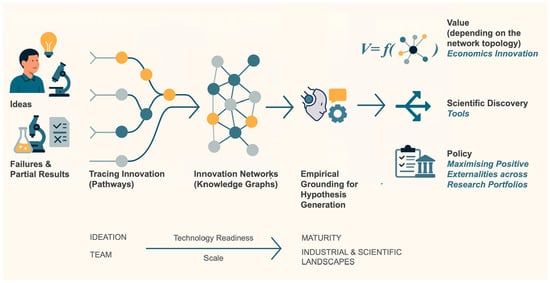
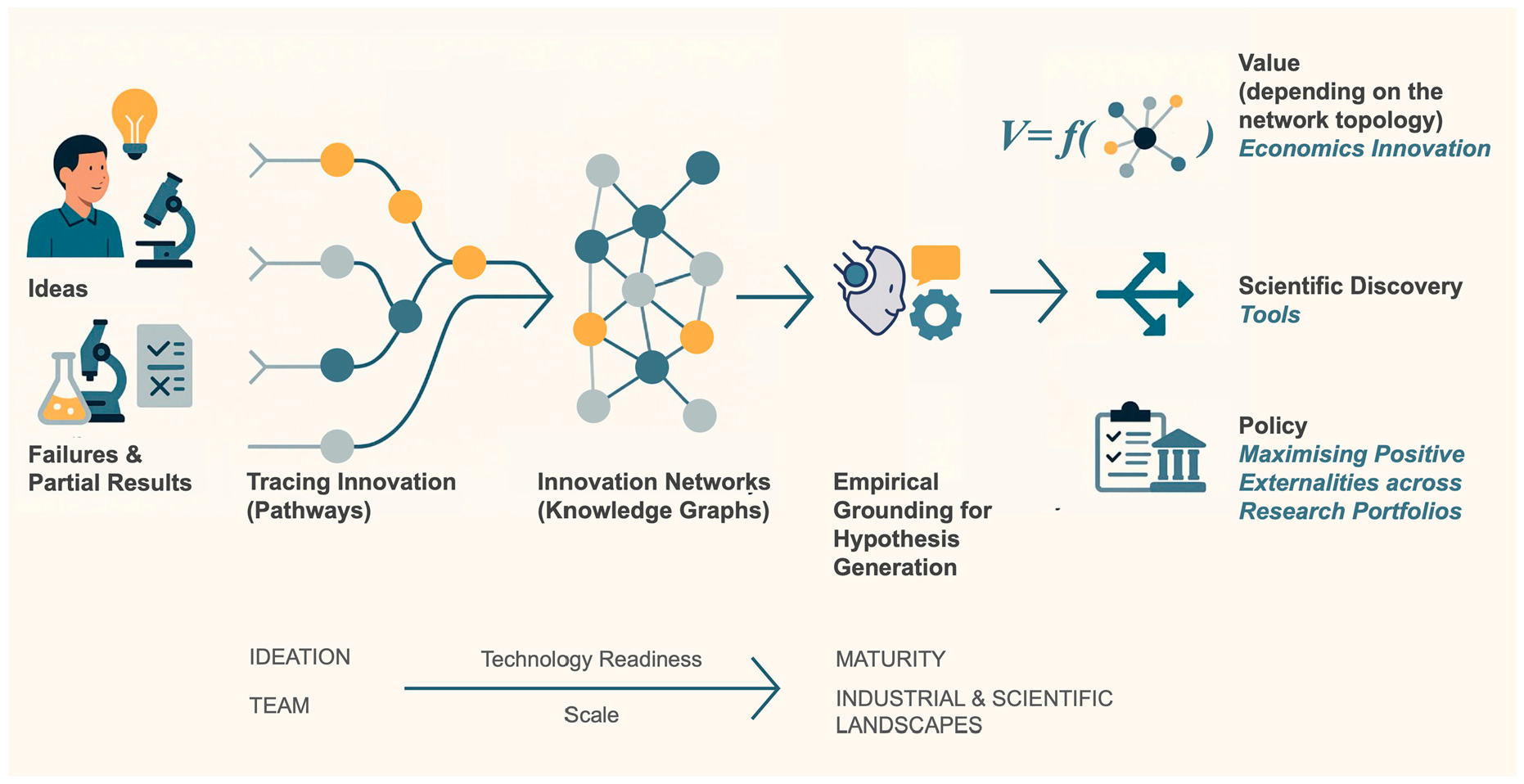
Graphical Abstract

1. Introduction

Evaluating the capacity to innovate is a significant problem in applied research, for which diverse frameworks have been developed both for research & development (R&D), processes in business [1], as well as in academic management [2]. Tracing innovation is a practice that addresses the capacity to innovate by planning the use of available resources, eventually tackles the acquisition of unavailable resources, and ultimately addresses strategies that employ resources under uncertainties. It is usually evaluated through ex-ante approaches (e.g., assessment of behavioural and organisational conditions for enabling the capacity to innovate), and/or ex-post approaches (assessment of innovation once it meets predefined developmental achievements or gets established in markets). The drawback of such approaches is a missed understanding of how capacity to innovate stagnates between the ideation and prototyping phases, and how innovation eventually emerges from intermediate-steps contributed by individuals. This work therefore focuses on exploring benefits and challenges for tracing innovation as an in-itinere approach to: (i) map pathways of intermediate-steps, that recursively use prior processes and resources towards inventions, and (ii) explore opportunities for valorising the use of not predefined outcomes. The context of this work is a research consortium funded by the European Innovation council and Small and Medium Enterprise Agency (EISMEA).
To clarify the conceptual stance adopted in this work, we briefly distinguish between “innovation” and “invention” through their etymology, as they often are considered sharing an apparent semantic proximity but originate from distinct Latin roots encoding fundamentally different modes of creation. Innovation derives from innovatio, innovare (“to make new within”) [3]. The Proto-Indo-European (PIE) root néwos or newós was spread across Indo-European languages: Greek ν ϵ o σ  neos, Sanskrit nava, English new, Russian novyj, Welsh newydd, German neu, Italian nuovo all expressing renewal or freshness [4]. Thus, innovation denotes the act of introducing newness within an existing framework: a process of systemic restructuration. By contrast, invention stems from Latin inventio, invenire (“to come upon, to find”). The verb venire traces back to the PIE root g w em which yields Greek β α ι ν ω baino, Sanskrit gam-, English come, French venir, German kommen, Italian venire [3].
In its classical sense, invention signified the rhetorical process of “finding” ideas or arguments [5] rather than pure creation. Over time, however, invention acquired a generative connotation, describing the emergence of something radically new or unprecedented, a shift evident in Renaissance humanism and the modern patent system. From a systemic and cybernetic perspective [6,7], invention can be interpreted as a discontinuous event, a leap to a novel attractor in the state space of possibilities. Innovation, conversely, represents the integration and stabilization of such novelty within an existing system, an intra-systemic adaptation that ensures coherence and propagation [8]. Therefore, we identify invention as an informational discontinuity in a system, as a peak in Fisher and mutual information generating new spectral signatures (i.e., a signal that the system is reorganizing its internal degrees of freedom), and innovation as a homeostatic, diffusive plasticity that consolidates the collective asset [9].
This interpretation complements traditional economic metrics of innovation and its value, which intentionally abstract from micro-level dynamics to capture aggregated major inputs and outputs (e.g., patents, market structures, organisational features). For example, the OECD guidelines for collecting, reporting, and using innovation data explicitly frame its measurement for shaping policies at national and sector level, but they focus on the unit of organisations and rely on ex-post survey strategy to monitor activities and knowledge flows at the level of institutional interactions and markets (cf. [10] (pp. 19, 50–57, 129–141)), which do not capture the granular, in-itinerepractices through which innovation is materially produced, and that allows replicability and diffusion across research portfolios and industries.
Rather than defining innovation as a function of an economic agent allocating resources–as in Schumpeter’s theory, where firms “create new ways of producing goods or services or entirely new industries” [10] (p. 45), innovation is defined here as a function of the system that is transformed through the use of those resources. This shifts the unit of analysis from the agent to the system, making possible to treat value not as a material property of the agent, but as a topological property of the system itself. Accordingly, instead of quantifying the (expected) monetary value of innovation through (ex-ante)/ex-post evaluations, we propose to quantify the complexity contributed to the system by the agent. For example, economic complexity theory has already introduced information-theoretic metrics to measure the competitive advantages of Countries at specific points in time [11,12].
Inspired by these approaches, this work presents a proof-of-concept for collecting innovation data bottom-up across scales—from individual contributions within research consortia to technological maturity across entire research portfolios—and for computing innovation value in-itinere, as it emerges. This enables the tracing of future impacts back to the original contributions that made them possible, even when the latent value of those contributions was not recognized at the time they were made. We propose that the data-provenance of micro-level data along innovation pathways can compensate for the auditing limitations of innovation metrics based on surveys, patents, and bibliographic analyses within Technological Readiness Level frameworks, and constitute a verifiable data bank for mining and replicating its application across research portfolios, on purpose to maximise diffusion of critical information for reproducibility of processes and outputs across a research portfolio, as a positive externality.

1.1. Main Contributions

This study comprises three contributions:
  • Empirical insights: empirical qualitative data collected within a European research consortium, identifying how researchers perceive opportunities and constraints for bottom-up and granular data collection for tracing innovation processes; materials and code (The repository includes scripts for network-based thematic analysis, tests for the heterogeneity of responses and tests for thematic coverage. Available at: https://github.com/gg4u/Tracing-Innovation-Pathway.git, accessed on 6 February 2026) are included to support methodological transfer and adaptation to other cases;
  • Prototype instantiation: (based on empirical findings) proof-of-concept prototype representing innovation as a directed graph of inputs, processes, and outputs, recorded on a ledger; the model supports querying and visualising innovation pathways over time; the minimal taxonomy can enrich existing collection methods to trace innovation paths and encode declared purpose, procedures, expectations of experimental trials in the graph properties;
  • Conceptual abstraction: (building on both data and prototype) conceptual framework for future theory-building where value is computed as a function of the graph topology (capturing both successes and failures as meaningful contributions), complementing the subjective utility assigned by stakeholders with metrics in information-theory.

1.2. Background

This section outlines three key challenges in evaluating innovation in public-funded research: gaps in existing policy and assessment frameworks; limitations of the current evaluation metrics and organisational approaches, and emerging opportunities from network-based and complexity science models—which motivates the feasibility for granularly tracing innovation networks data bottom-up and evaluate innovation beyond conventional metrics.

1.2.1. Gaps in Policy and Evaluation Frameworks

A shift in innovation policy has been proposed, moving from market-fixing approaches to mission-oriented frameworks that create portfolios addressing societal challenges through cross-sectoral investment [13]. These strategies aim to intentionally create new markets and foster positive externalities. In publicly funded research, such externalities include knowledge spillovers and technology transfer beyond original sites of production. However, maximising public benefit requires rethinking how innovation value is conceptualised and measured (cf. [14]).
Traditional market-based metrics often fail to capture the full contribution of research, especially when its outcomes are not immediately monetised, revealing their inadequacy. One limitation is operational: empirical studies report contradictory results for correlating success or failure of innovation with the market structure, the R&D intensity, or the capacity of top management; they suggest instead to examine further the temporal dimension of innovation data to discriminate between “easy” (incremental) and “heavy” (strategic) innovations, for example on purpose to estimate the best timing for introducing novelty to markets [15]. A second limitation concerns the normative orientation of innovation policy: the goal of maximizing public disclosure can conflict with the private utility derived from exclusive property rights. Patents anticipate commercialisation, but restrict access to knowledge and conflict with a broader societal impact that knowledge diffusion could generate. This tension highlights the need for new theoretical frameworks capable of defining and assessing invention and innovation in terms of systemic utility, rather than competitive advantage alone. A third limitation of creating mission-driven portfolios is the lack of empirical insights on how research practices at micro-level generate innovation pathways that support these macro-level missions [16] (e.g., how knowledge generated at the level of teams is eventually recombined to enable breakthroughs in alternate domains).
Current frameworks for assessing innovation value struggle to capture dynamics beyond pricing metrics or technological maturity [11,17,18,19]. For example, public research that does not yield patentable or market-ready outcomes may still bridge fundamental links between science and technology. Yet such value is typically overlooked by evaluation systems shaped by entrepreneurial logics, which emphasise ownership, patentability, bibliometric productivity, or metrics designed to gauge impact against predefined business goals [20], thereby discarding contributions not related with those metrics.
The assumption that innovation equals patentable deliverables and the efficacy of relying on single bibliometrics methods have been criticised for neglecting the non-linear, co-evolutionary nature of knowledge production [17]. Knowledge flows (e.g., patent citations), should also trace complementary interactions that interface science and technology, including inventor–author relationships, feedback on prior knowledge, and knowledge co-produced through interaction among academics, industrial and policy environments.
Indicators such as Technological Readiness Levels (TRLs), originally developed by NASA and adopted by the EU since 2014 (see Table A1), assess technological maturity in R&D but offer limited insights into how knowledge evolves into inventions and leads to impact (see Table A2). For example, TRL methods overlook usability in context–especially relevant in public administration–and omit assessments of societal or legal readiness [18]. Also, TRL metrics rely heavily on ex-ante and ex-post evaluations that fail to capture innovation dynamics. Innovation typically evolves non-linearly, often stagnating in intermediate prototyping phases (TRL 4–7) [21], and ex-ante or ex-post evaluation methods may be ineffective in explaining how interdependencies of knowledge flows lead to sustainability transformations, bottom-up from micro- to macro-level [22]. To address these shortcomings, extensions of TRLs have been proposed to include societal (SRL), organisational (ORL), and legal (LRL) readiness dimensions, revealing failures even in cases of high TRL but low stakeholder engagement or legal compliance [18] (see: Table A3).
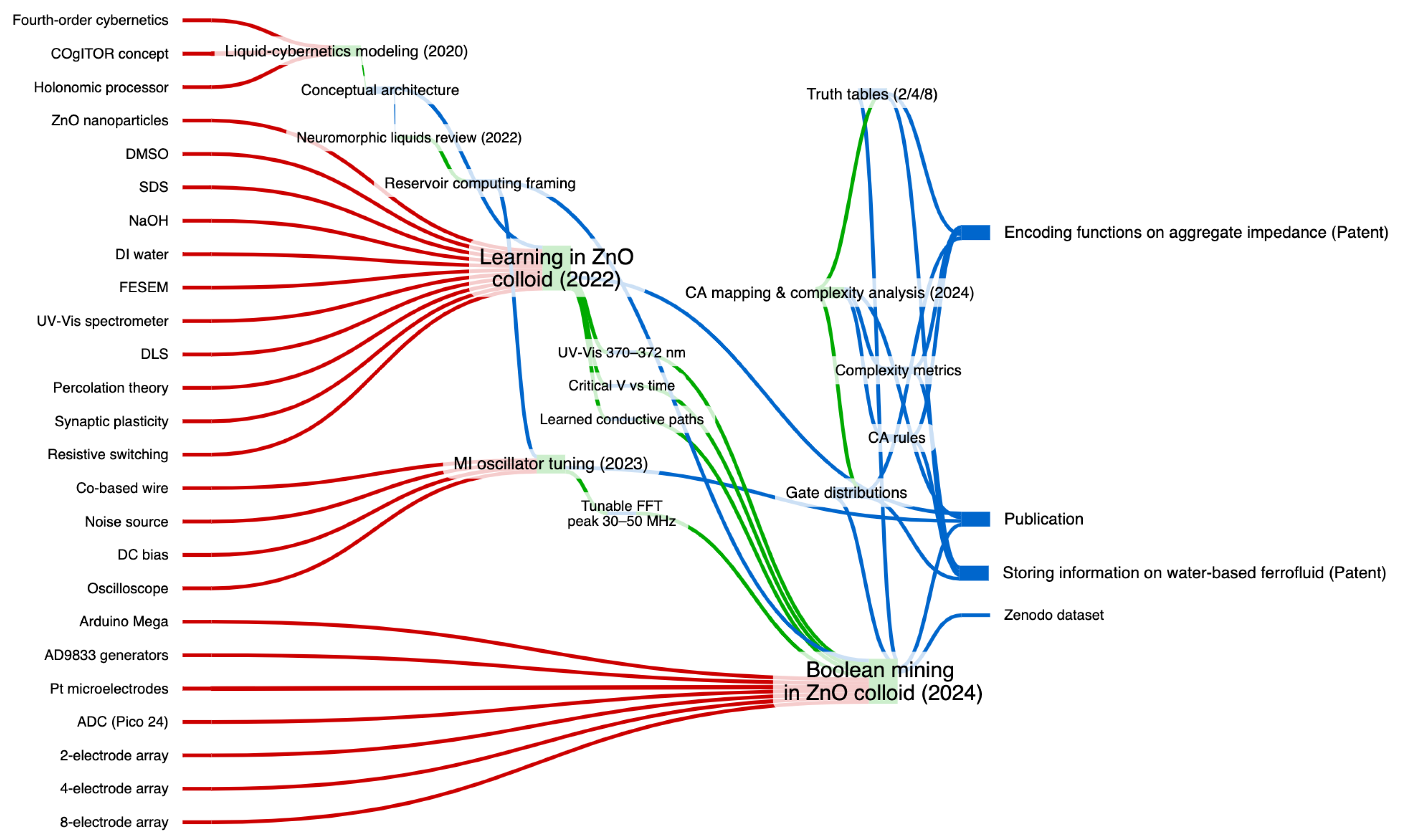
Other approaches put emphasis on forecasting innovation by mapping the scientific and patent landscapes as multi-partite networks, for example to extract pathways of innovations between diverse fields and claims [23], or to profile linkages between R&D and potential future applications in alternate industrial fields through expert panels who evaluate and forecaste TRLs via workshops and surveys [24] (see Figure 1). However, profiling of experts remain biased toward macro-level perspectives, focusing on industry positioning or distribution channels, while lacking systematic tracking of micro-scale knowledge reuse and overlooking the value created by individual contributions. A fair mechanism to attribute economic value to both inventions and innovation processes, including knowledge spillovers enabling spin-offs, is still lacking and may be integrated into assessments of publicly funded innovation.

1.2.2. Limits of Innovation Metrics and Organisational Approaches

In innovation management, the systematic stagnation in intermediate TRL phases has been attributed to a “lack of resources and expertise that impedes the transition of new ideas from lab to market”. Simulations have been proposed to estimate the impact of R&D prototypes and support financial models, for example by providing input data for life-cycle assessments [21]. However, such approaches rarely incorporate micro-level innovation steps reusable in other contexts or fields. For example, disclosing settings that tune an extant technology to specific conditions may not be patentable or valued by predefined metrics, but still useful for technology uptake and impact estimation in other domains.
Patent citations are widely used in scientometrics to trace links between science and technology. They can help diffuse research results by differentiating their applications by scoping new claims across industries [17]. However, both patents and peer-reviewed publications under-report negative or intermediate results. This omission decreases the accuracy and spread of scientific knowledge [25], but also reflects a broader lack of theoretical understanding of how patents generate advantages across industries beyond their monopolistic use (e.g., keeping innovation idle to protect current market positions, or block competitors) [17]. Additionally, non-disclosure can generate systemic inefficiencies and undermine public value creation. Disclosure of unsuccessful experimentation or failures may, in theory, offer a strategic advantage for accelerating innovation, but there is little understanding of how this advantage concretely translates into value and under which conditions [13,19].
For example, knowledge about failures is expected to reduce time for replicating desired outcomes, and innovation deemed invaluable at present time may contribute value in in the future (e.g., in fields of application different than ones originally planned). If so, it follows that failures should be rendered with economic value as well, since they contribute to reduce the cost of researching and engineering new artifacts by reducing waste of resources (e.g., time and energy) for replicating state-of-the-art as a baseline of future steps. Likewise, disclosing successful experimentation and patentable ideas could spread inventions and foster a systemic evolution, setting the attractor to a new equilibrium point and multiplying future inventions exponentially.
Measuring innovation depends heavily on the scale at which it is developed [26], and the methods that determine what is labelled as “innovation” [19]. Across individual, team, organisational, and national levels, evaluation relies on either aggregate quantitative indicators (e.g., patents, R&D expenditure, market share growth) or qualitative ones (e.g., behavioural/self-assessments and peer-review as ex-ante methods). Notably, a gap persists at the team level, particularly for non-R&D teams that must rely on the actual capabilities and limitations of research outputs [26].
Because “all valuation metrics for innovation are static measures”, there is a risk of circular assessments tied to the moment when evaluation is made [19] and of bias toward predefined business objectives [20]. This can reinforce stagnation, especially at TRL 4–7, by failing to capture emerging novelty or potential breakthroughs. While innovation indexes may combine behavioural and scientometric approaches, effective tools must focus on team-level dynamics to identify innovation not predefined in evaluation criteria [26]. Hence, current survey methods–even when periodic and updated with new indicators to reflect technological maturity–may systematically overlook early-stage incremental steps or prototypes. This may stem from inherent bias of evaluators, as domain experts often prioritize impact within their own field while diminishing contributions from domains or interdisciplinary backgrounds.
Intrinsic bias and lack of metrics capturing the scientific value of an idea also affect the domain of AI-assisted scientific discovery: Large Language Models (LLMs) trained on large corpora (e.g., scientific articles to automate literature review for hypothesis generation) tend to reproduce biases, skewing research priorities against dominant perspectives and excluding under-represented ones. Fine-tuning risks to overfit a desired domain, hindering generalisations and integration with other fields (an aspect relevant for applied science). AI-generated hypotheses (e.g., through Retrieval-Augmented Generation (RAG) based on LLMs) poses unaddressed challenges–authorship; accountability; misuse and misleading hypotheses (e.g., plausibility of text that lack empirical grounding or hallucinations from condensing multiple summarised contexts)–requiring robust governance mechanisms [27].
In business management, three main evaluation approaches dominate: behavioural conditions, performance assessment, and pathway-enabling methods–respectively at individual, team, organisational-and-above levels (e.g., portfolios at industrial or national level). Behavioural approaches promote social aspects that enhance creativity [28], behavioural incentives for engaging a team in innovation [29], and supportive environments “that do not punish innovation attempt” [19]. Yet, their effectiveness is limited in contexts where researchers lack voting power on decisions, or lack adequate monetary incentives [29] (In the private sector this problem is mitigated by stock-option incentives, though these are less applicable to the public sector and, as Mazzucato notes, may be abused by top management to extract value rather than create it).
Performance indicators, often used in agile management, aim to correlate business objectives with innovation results [30,31]. Since performance indicators rely on predefined milestones, they can overlook contributions that fall outside established output measures including innovations not directly contributing to the core business [26], and they often undervalue transformative innovation. Hence, they may be inadequate for high-risk but potentially high-reward policies aimed at creating new markets or maximising the positive externalities of a research portfolio [13].
The concept of pathways describes structured routes from research to impact, although there is not a unique consensus on its definition. In organisational learning, research impact is measured indirectly via assessments of soft skills needed to uptake outputs at the policy level [32]. These approaches are biased towards institutional stakeholders and typically ignore the daily micro-contributions by individuals who forge innovation paths, such as advancing early-stage ideas or refining failed components and prototypes toward market-ready products or services. Ex-post evaluations of skills, while informative, are costly, and surveys summarise progress but fail to capture the know-how for replicating or transferring research outcomes. Enterprise-level knowledge-graph approaches map innovation paths as relationships between processes and resources [20], but focus narrowly on business optimisation, ignoring emergent novelty and “secondary impacts” from unanticipated innovations (i.e., value that outputs can have in longer-term or alternate industrial context) [19,30]. Innovation network models at Country-level also map connections between industrial sectors to prospect new options of commercialisation, but rely on expert supervision, which is an expensive practice, and rarely applicable at team level to repurpose the outputs from other domains as new inputs for prototypes that support ideation and advance technical maturity [24].

1.2.3. Auditability and Traceability of Innovation Supply-Chains

Blockchain technologies offer auditability, timestamping, and data provenance through cryptographically verifiable records. “Auditability is the capability of observing user actions and operation trails” to verify integrity and authenticity [33]; in internal audit, the user can verify authenticity of all others users’ transactions, and in external audit, a third party can verify authenticity of all user’s transactions, including ones from the service provider (i.e., no participant can maliciously tamper with or repudiate its own transactions.
An application domain is the supply chain of physical goods, where distributed ledgers are used to trace the origin, ownership, and transformation of across multiple actors [34], enhancing transparency and accountability: traceability of transformations between inputs and outputs of manufacturing processes allows third-parties to reconstruct how a product was assembled, verify compliance with predefined production rules, and detect inconsistencies or tampering in the recorded production history.
Decentralised ledgers were originally conceived as permissionless systems, where auditability is computed by a distributed consensus among participants, but suffer of limited scalability and high operational costs. In practice, they are frequently deployed on centralized infrastructures (e.g., Blockchain-as-a-Service offered by cloud providers), questioning the need of decentralisation; permissioned blockchains address some of these limitations by restricting participation to a predefined set of actors, at the cost of a weaker guarantee for external auditability (e.g., in scenarios where a majority of peers may collude to fabricate or alter evidence) [33].
In the context of publicly funded research (for examples in the EU context, see the CORDIS dataset (EU Research & Development projects—CORDIS dataset at: https://cordis.europa.eu/, accessed on 6 February 2026), innovation processes involve heterogeneous actors (e.g., researchers, institutions, technology transfer offices, funding agencies, and auditors) and intangible assets (e.g., knowledge, experimental results, and intermediate research outputs). While TRLs serve the purpose of measuring technological maturity for transferring research, ex-post evaluations are often self-declared, fragmented, and domain-specific, with a high risk of overstatement. A verifiable audit trail of intermediate steps, actors, and decisions could support more objective assessments. Also, if TRLs were embedded in a process of technical history that is traceable and verifiable, auditability and provenance mechanisms could improve monitoring of research and innovation aligned with mission-oriented policy goals [35] (pp. 15, 28)).
Recent developments in database systems have introduced hybrid models that combine auditability with traditional relational features, enabling tamper-evident, verifiable, and privacy-preserving data management in scalable datasets, without requiring full decentralisation [33,36,37], offering promising foundation for tracking research and innovation processes across institutional boundaries.

1.2.4. Complexity and Network-Based Approaches to Innovation

Recent perspectives rooted in network science and complexity economics frame innovation as a combinatorial process, offering promising alternatives to treat its value as an objective function of networked capabilities rather than a subjective utility function. In network science, since scale invariant properties enable self-organisation [38], and innovation systems can be modelled as self-organizing structures pertaining to third order cybernetic systems [39], diffusion efficiency and resilience emerge from network connectivity, which is a central aspect in propagating innovation and in resistance to stochastic perturbations [11]. Innovation is seen here as a process of entropy reduction (consolidation of knowledge and standards) while invention as a process of entropy generation (diffusion of knowledge and increasing variety of entities) [25]. In complexity economics, growth is understood as the recombination of accumulated knowledge into more complex artifacts. Innovation policies should therefore aim to diversify “the set of capabilities […] so that economies can create more complex products […]” rather than optimise for existing competitive advantages [12]. From this view, innovation becomes a combinatorial problem in which the connectivity of the network reconfigures extant information into high entropy structures.
We consider an innovation/invention process described by a dynamic network G = ( V , E , w , t ) , where V = { 1 , 2 , , n } is the set of nodes (agents, ideas, or functional components); E is the set of edges (connections, channels of interaction); w i j ( t ) is the weight of the edge between nodes i and j, possibly time-dependent; p i ( t ) represents the probability associated with node i, i.e., its share of information at time t. The quantity of information of a node changes in time, depending on the connectivity of the network. The network’s state evolves according to Equation (1):
p ˙ i ( t ) = f i p ( t ) , C ( t )
where C ( t ) = { w i j ( t ) } denotes the instantaneous connectivity configuration. Changes in connectivity ( Δ C network ) represent structural transformations of the informational landscape, potentially leading to invention and innovation. The global Shannon entropy of the dynamic network G is so defined (Equation (2)):
H G ( t ) = i = 1 n p i ( t )   log p i ( t )
which quantifies the overall informational diversity of the system. A high H G indicates a wide distribution of information across nodes (many alternatives), while a low H G corresponds to concentration around few dominant nodes (oligopolies). In the invention phase, H G typically increases as the system explores new configurations. During innovation, entropy may slightly decrease as patterns consolidate while maintaining a rich state-space.
We now introduce the discrete Fisher information of the network to measure local coherence (Equation (3)):
I G ( t ) = ( i , j ) E w i j ( t )   p i ( t ) p j ( t ) 2
Here, differences between neighbouring probabilities indicate gradients of informational structure. High I G values correspond to well-formed local patterns and strong differentiation; low I G indicates uniformity, loss of structure and ultimately diffusion noise.
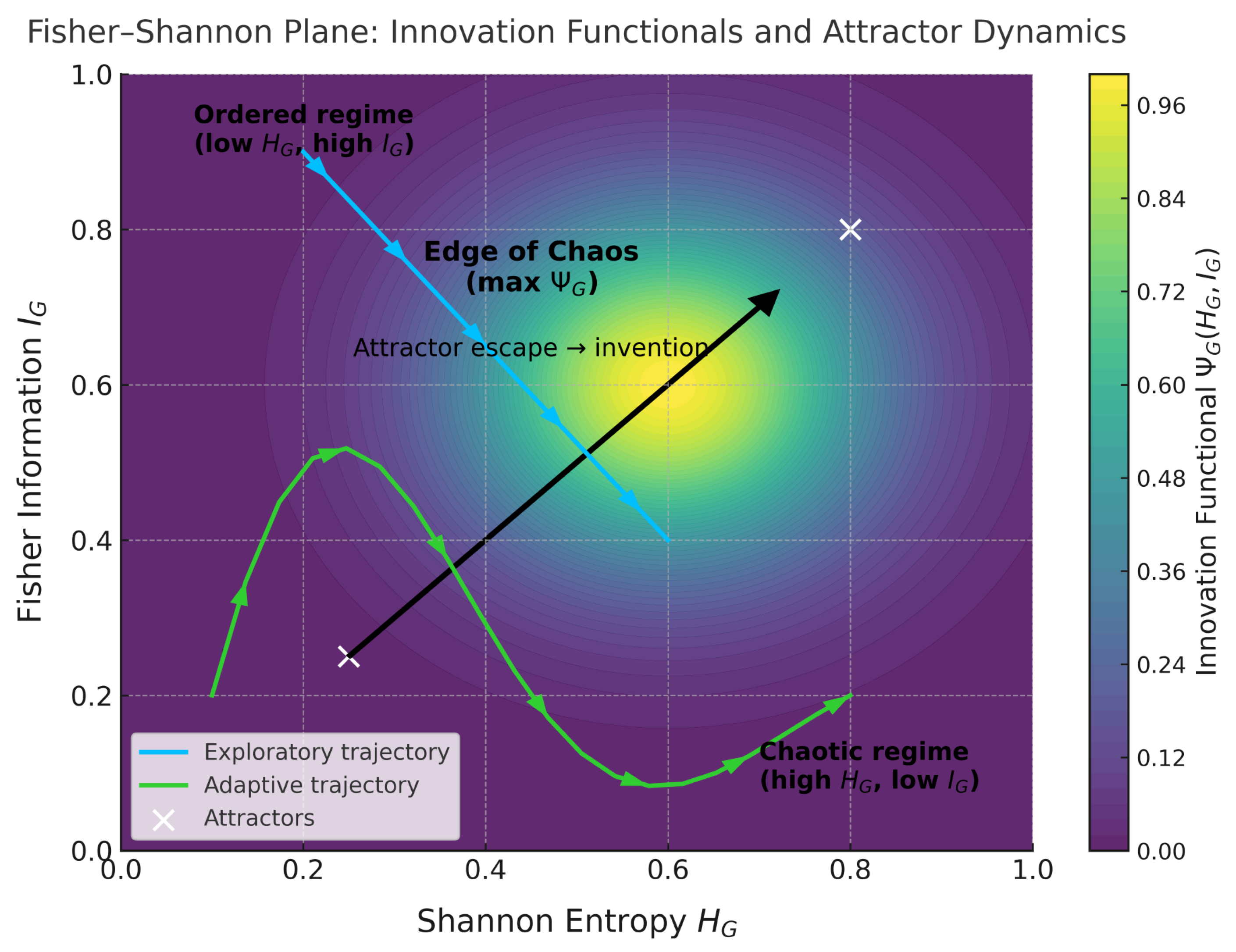
A change in connectivity Δ C network = C C induces a transformation of the node distribution p i = p i + δ p i ( C ) and correspondingly, H G = H G + δ H G ,   I G = I G + δ I G . Innovation could then be represented as a motion in the Fisher–Shannon plane ( H G , I G ) (see: Table 1).
Table 1. Fisher–Shannon plane describing the information state of the network. See further Figure 2. The → indicates asymptotic limit.
Phase δ H G δ I G Interpretation
Invention>0<0System explores new configurations: variety increases, structure decreases.
Innovation≥0>0System consolidates coherent local patterns within a rich global state.
Stagnation→0→0The network evolves to informational homeostasis.
In this plane, each point ( H G , I G ) represents the global informational state of the network. We could then define a simple innovation functional, Equation (4):
Ψ G ( C C ) = α   [ H G H G ] β   [ I G I G ] + γ m = 1 M w m   [ I G m I G m ]
where M is the number of entities or communities in the network; I G m is the Fisher information within module m; α , β , γ are coefficients balancing global diversity, structural coherence, and modular organization. The interpretation is straightforward: the first term rewards a higher global entropy, the second term penalizes excessive loss of structure, the third term rewards the emergence of coherent local patterns. An optimal innovation process maximizes Ψ G , yielding high global variety and strong local structure.
In a network of interacting agents, invention corresponds to a topological rupture that increases informational diversity ( H G ), while innovation is the organized reconstruction that transforms this diversity into functional coherence ( I G ). The overall process is a combinatorial reconfiguration in the Fisher–Shannon plane, driven by a principle of auto-synthesis [9]: the dynamic balance between order and novelty, between local coherence and global variety. We propose a conceptual mapping between the physics terms and innovation policy terms for practical applicability to information systems or economics innovation tools, in Table 2.
In our view, framing innovation in this way challenges traditional definitions of economic value–based primarily on monetary metrics and property or exploitation rights over knowledge outputs–and instead posits graph theory as a basis for measuring value created in function of the combinatorial dynamics of prior knowledge inputs. A natural corollary is the case for mission-oriented policies that seek to maximise positive externalities. If knowledge is treated as intangible capital, then a capital-return function can be modelled to maximise the societal benefits generated by its diffusion and accessibility.
While property or exploitation rights, such as patents, convert innovation into value by restricting its use, diversification strategies can generate positive externalities by enabling usage rights to knowledge and its intermediate outputs that facilitate recombination, such as paths instructing how to link different fields to generate new artifacts. This distinction challenges strategies that rely solely on extracting value from intellectual property monopolies and may help reconcile the apparent conflict between economic policies advocating for the state’s strategic role as an entrepreneur seeking to maximise public returns [13] and those promoting private-sector competition as a means to maximise value through the free circulation of knowledge.
This reconciliation, however, requires enabling conditions that remains to be explored, such as mechanisms for value sharing that accounts for the graph topology. For example, if state investment seeds an innovation, property rights frameworks could incorporate public return clauses such as revenue-sharing across the innovation supply chain, price caps, or open access after a defined period, to ensure that society benefits directly, potentially also reducing the cost of the capital required to innovate.
Graph-based tools have been applied to patent and scientific data to uncover trends and dependencies, for instance in the visualisation of chemical processes using generative knowledge graphs [40], or in forecasting technological saturation within technological domains by using reinforced Bernoulli processes to capture how “success” in the form of a filed patent propagates and stabilises in long-run patterns of specialisation [41]. However, these applications operate on aggregate data and have yet to be deployed for tracing innovation emerging from collaborative processes within research teams and consortia. Also, a Bernoulli process counts discrete events in sequence but ignores the time gaps between them, and assume each trial as independent. The pace at which innovation evolve, and making reinforcement from prior knowledge procedures other than patents more explicit and granular, remains a gap to be explored for mapping how incremental steps at micro-level may impact a success at macro-level context.
Recent developments in AI and language models suggest further potential. Knowledge graphs derived from scientific papers and large language models have been tested to evaluate novelty in ideation [42], which may impact early stage TRL from further integration with local knowledge data to foster the development of ideas into prototypes within research consortia, and in general understand how ideas evolve into final products and by-products (i.e., output not labelled as innovation, but potentially useful in unplanned contexts). Business use cases demonstrate value for entity-linking and filtering noisy data, though challenges remain in integrating multiple information sources and aligning schemas [43]. These limitations are especially pertinent to experimental research design, where the integration of uncertain or spurious knowledge is intrinsic to prototyping.
Despite the promise, a clear research gap remains in applying graph representation learning to innovation processes at team-level, and in developing scale-independent metrics that could capture the emergence and maturity of innovation. Addressing this gap would support novel metrics grounded in information theory and network topology, enabling assessments of innovation that transcend static, market-based indicators.
In the context of a research consortium, this study empirically investigate perceptions of advantages and disadvantages for tracing innovation paths and their evolution towards technological maturity, aiming to inform tools and theory for quantifying and managing the “value of innovation” in relation to prior knowledge and the diffusion of knowledge in new domains.

2. Materials and Methods

2.1. Research Problem

This study focuses on a gap concerning how innovation can be traced from ideation through engineering and industrialisation phases, at the scale of individual contributions within R&D teams. The opportunity problem is defined as tracing innovation pathways and articulated against the background of conventional innovation assessments methods. Ex-ante evaluations, such as Participatory Impact Pathway Analysis PIPA, articulate expected outcomes and assumptions but do not capture details that unfold during ideation and prototyping phases. Ex-post evaluations, such as bibliometrics output or granted patents, may miss to recognise as innovation such outputs whose utility depends on the chosen business goals and metrics, and thus fail to valorise information that could inform future endeavours [44]. This problem is significant because, as we have argued, intermediate research stages are central to project evaluation frameworks employing TRL metrics, which would benefit from an increased understanding of how innovation stagnate or eventually emerges from intermediate steps of distributed interaction of knowledge, ideas and know-how [11,26].
Our work frames the problem in the context of innovation management under uncertainty, focusing on making visible incremental, non-predefined steps that may not directly result in planned outputs but nonetheless carry latent value for future applications. The scope is limited to understanding R&D practitioners’ perceptions of the benefits or disadvantages of introducing traceability of intermediate steps along conventional TRL-based assessment metrics, in order to explore insights that can inform conceptual prototypes of IT frameworks for tracing innovation paths and for defining objective metrics of innovation value (i.e., independent of the subjective utility of involved stakeholders). Quantifying innovation value using metrics other than the monetary utility accrued from property or exploitation rights is a wicked problem in economics, and is particularly significant in public welfare policies aiming to maximise the utility of a system, rather than that of a local subset of its nodes.
Innovation pathways are here defined as sequences of decisions for combining sets of resources and processes [24], whose outputs are expected to be significantly novel with respect to prior conditions. Since the evolution of innovation’s complexity is not linear (unintended consequences and emergent properties often co-occur with intended results and failed experimental outputs [32]), this study adopts a qualitative case study approach to inductively explore how pathways can be conceptualised and potentially operationalised through traceability practices across micro- to macro-levels. The intention is not to derive generalisable conclusions but to develop propositions that can inform subsequent research policy and prototyping efforts.

2.2. Aim and Research Questions

Our aim is to explore how tracing innovation steps at micro-level can contribute to file mission-oriented strategies and generate latent value from intermediate results (typically under-reported). The study engages on stakeholders’ perspectives on what innovation is and how it is evaluated in the context of research program from ideation to industrialisation, to inform the design of conceptual frameworks and indicators for assessing value created through public R&D investments and facilitating the uptake of research outputs. The study is exploratory and emphasises the role of case studies to inductively develop new constructs and propositions where prior theory is underdeveloped [45]. It addresses the following research questions:
RQ 1 : 
How can tracing intermediate innovation steps in research portfolios unlock new value, beyond ex-ante and ex-post evaluation metrics?
RQ 2 : 
What additional value is revealed by systematically tracing intermediate innovation steps, from inception to industrialisation stages?

2.3. Research Strategy

Surveys as a research strategy could have provided structured quantitative insights into perceptions of traceability within R&D processes, such as expectations regarding the introduction of metrics alternative to conventional bibliometrics and assessment methods over the project lifespan. However, survey research presupposes a well-defined conceptual framework, explicit hypotheses, and an adequate sample size. A survey-based strategy was therefore excluded due to limited prior knowledge of tracing innovation pathways in teams operating at intermediate TRL phases [11], the small size of the available population the small size of the available population, and the infeasibility of sustaining the study over the project lifespan (four years).
Grounded theory may be considered to be suitable for researching emerging constructions of innovation in teams, through periodic comparison of respondents and simultaneous data collection and analysis during the project lifespan. It was excluded because the resources required to sustain theoretical sampling and achieve saturation exceeded the operational constraints of this study, and because the research focus was more on what mechanisms transform knowledge into innovation within research contexts, rather than understanding meaning-making of innovation emerging from their interactions.
A case study approach was therefore selected to balance feasibility with analytical depth, enabling the exploration of perceptions, experiences, and expectations of primary data sources. This strategy supports an inductive inquiry into how innovation emerges, while critically examining the opportunities, challenges, and relevance of tracing innovation. The goal is to ground theoretical insights in data models that map innovation steps and the mapping of process-assets relationship in function of predefined business goals [20], adapted to research contexts where outputs are uncertain and maturity changes across R&D stages [46].

2.4. Method Implementation

The boundaries of the study were defined by operational settings defined by the project coordinator of an EISMEA-funded project in bio-inspired liquid robotics [47], who helped to address confidentiality constraints with interviewed members of public research institutes (universities and private companies that partnered in the project). Participants were inquired whether current practices to assess R&D may benefit from new approaches leveraging on prior R&D steps, and how they could help in managing uncertainty of experimental trials during intermediate stages towards potential embodiments of final artifacts. Answers of informants were utilised to enrich insights from ICT frameworks [20,28], in particular whether tracing processes should be done at the scale of teams, by the very individuals who daily “make research happen” [11]. Semi-structured interviews and questionnaires were collected to facilitate triangulation of qualitative data [45] and align prior studies investigating innovation pathways and socio-technical complexity [24,48]. Data collection was designed on three aspects informing the overall research questions:
i.
Should scientometrics be complemented with measures describing how scientific-evolves into technical-innovation?
ii.
To which extent should researchers decide on intellectual property and on business models that exploit the innovation they authored in first-place?
iii.
How could innovation pathways be valued outside of the network of stakeholders, their affiliated partners or related fields?
Within the limits of potential researcher bias in case study research, the study incorporated systematic coding of collected data, a thematic analysis of emerging themes, a network analysis of relationships between topics, and transparency in analytic procedures and validation of interpretations with participants.
Given a narrow, homogeneous group of respondents ( n = 10 ) belonging to the same research consortium, the study is framed as exploratory. We referred to the definition of saturation as “the point in data collection and analysis when new information produces little or no change to the codebook” [49]; within the boundaries of this population, through coding saturation we aimed to adequately cover the perceptions over the utility for tracing intermediate innovation steps (i.e., frequency, modality and scope for collecting innovation data more granularly); dimensions of values (e.g., attribution of prior contributions; experiments with no prospect for progress or market valorization), and governance constraints over research outputs. These qualitative findings provided an empirical layer which was then used to design a proof-of-concept tool for tracing innovation pathways applicable to lineage and data-provenance use cases, and a conceptual formalization for evaluating value in function of the network of prior-contributions (e.g., recursive tracking of the chain), two outcomes with potential transferability.

2.5. Data Collection

Primary data was collected through semi-structured interviews and, if respondents were unavailable, self-administered questionnaires (Questionnaires designed to be completed by respondents without intervention of the researchers, often used to supplement face-to-face interviews. In our study, they were distributed to respondents via email. For design guidelines, see: https://methods.sagepub.com/ency/edvol/encyclopedia-of-survey-research-methods/chpt/selfadministered-questionnaire#_, accessed on 6 February 2026). The total population included ten team members. Data from the first four respondents was collected in the time-span of 1.5 months, with interviews scheduled based on availability, during the intermediate stage of the project; the remainder data from six respondents was collected at the last stage of the project.
Initial plans for a focused group were revised due to scheduling constraints, leading to individual interviews conducted via video calls. These were prioritised over questionnaires to enable deeper exploration of nuanced topics—such as R&D process traceability, intellectual property, open innovation, and the assessment of innovation in EU-funded programs. The bias was limited by inclusion of informants from different responsibility roles and type of organisations partners of the project [45] (one university, one national research institute and one private company), leveraging participants’ expertise in research, tech transfer and entrepreneurship.
An interview guide for semi-structured interviews was drafted in advance and iteratively refined as the study progressed; they focused on exploring advantages and constraints of tracing intermediate innovation steps, rather than seeking disconfirming evidence to mitigate investigator bias [32]. This generative approach was deemed better suited for addressing the research questions and informing the design of new enterprise models and innovation frameworks. The questionnaire was designed after three interviews, after acquisition of a degree of coverage over selected topics (see: Section 2.4, and included Likert-scale items to overcome lack of direction of the investigator with respect to web-call interviews.
The topics included: role of participant; experience and former exposure to business or innovation management methods; definition of innovation; insights about daily activities for qualifying innovation and time-scale to trace progress; insights about cost-opportunities for tracing intermediate-steps; perceptions about the utility of tracing innovation outside the scope of this specific project, and potential blockers or improvements with respect to current practices in authorship and property rights. Questions concerning the utility to trace intermediate innovation-steps were progressively expanded, based on the depth of information provided by former respondents on these matters.
Each session lasted approximately 75 min for interviews and 60 min for the questionnaire. The quality of answers from interviews was superior to the ones collected from questionnaires, as participants shared detailed examples and reflected openly on the subject. By the first three interviews, we identified approximately 40% of codes across ten respondents, consistent with prior qualitative research showing that code accumulation occurs early in the interview process (73% within the first six interviews; ref. [49]).

2.5.1. Participants

This study involved participants from a single EISMEA-funded research consortium composed of five organisations being one university, two research institutes, and two private companies, each based in a different European country. The full population included ten members, each holding a PhD and a minimum of five years of research experience.
Participants were selected for their combined experience across public and private research environments, as well as involvement in both technical R&D and strategic decision-making. At least one had prior management responsibilities in both academic and industrial settings, making them particularly suited to reflect on innovation practices and potential improvements. The sampling strategy aimed to engage the full population but prioritised individuals from different organisations to minimise potential bias from shared institutional perspectives. Selection was aided by the project coordinator, who provided background information used to ensure diversity across relevant dimensions: years of R&D experience, funding source exposure (public/private), sector affiliation, and entrepreneurial activity.
Although the sample was small and limited to a single case study, the diversity of roles and institutions provides a valuable exploratory lens. The aim was not statistical generalisation but to gather grounded insights into how innovation pathways are perceived and whether intermediate innovation steps—such as experimental conditions, partial results, configurations of processes, networks of resources and processes—could hold latent value.
The sample was considered adequate for identifying emergent themes that could guide two future research directions: (i) replication across additional case studies to deepen theoretical development; and (ii) prototyping of digital tools for tracing innovation steps. In this second direction, a sample of this size aligns with established practice in exploratory user research, where small groups are sufficient to define key user roles and requirements for early stage design.

2.5.2. Research Ethics

Participation in the study was voluntary, with informed consent obtained from all respondents. Participants were informed about the research scope, anonymity measures, and their right to withdraw at any time. The project coordinator authorised the data collection within the consortium.
To preserve confidentiality, references to personal identities, proprietary techniques, and project-specific details were anonymised or rephrased to retain the meaning of responses without disclosing sensitive information. Minor edits were made to transcripts to present participants’ reasoning in clear, structured arguments. The anonymised version of the transcribed and coded interviews has been published as open data to support protocol replication and extension in future case studies across different research contexts.

2.6. Data Analysis

2.6.1. Data Preparation

Interviews were conducted and video-recorded on video conferencing platform, and annotated, while being conducted, with keywords and sketches of logical implications to summarise the arguments reasoned by the interviewee, who were asked to confirm if logical conditions were sufficient to infer the annotated conclusions, and to make premises explicit.
Arguments were reviewed on the same day, and annotated with hypotheses to be asked to the next respondent, aiming for representation and stability across participants of complex topics such as relationships between innovation-metrics, authorship, and property rights. The interviewer used own sensitivity and background to elicit clarification when appropriate.
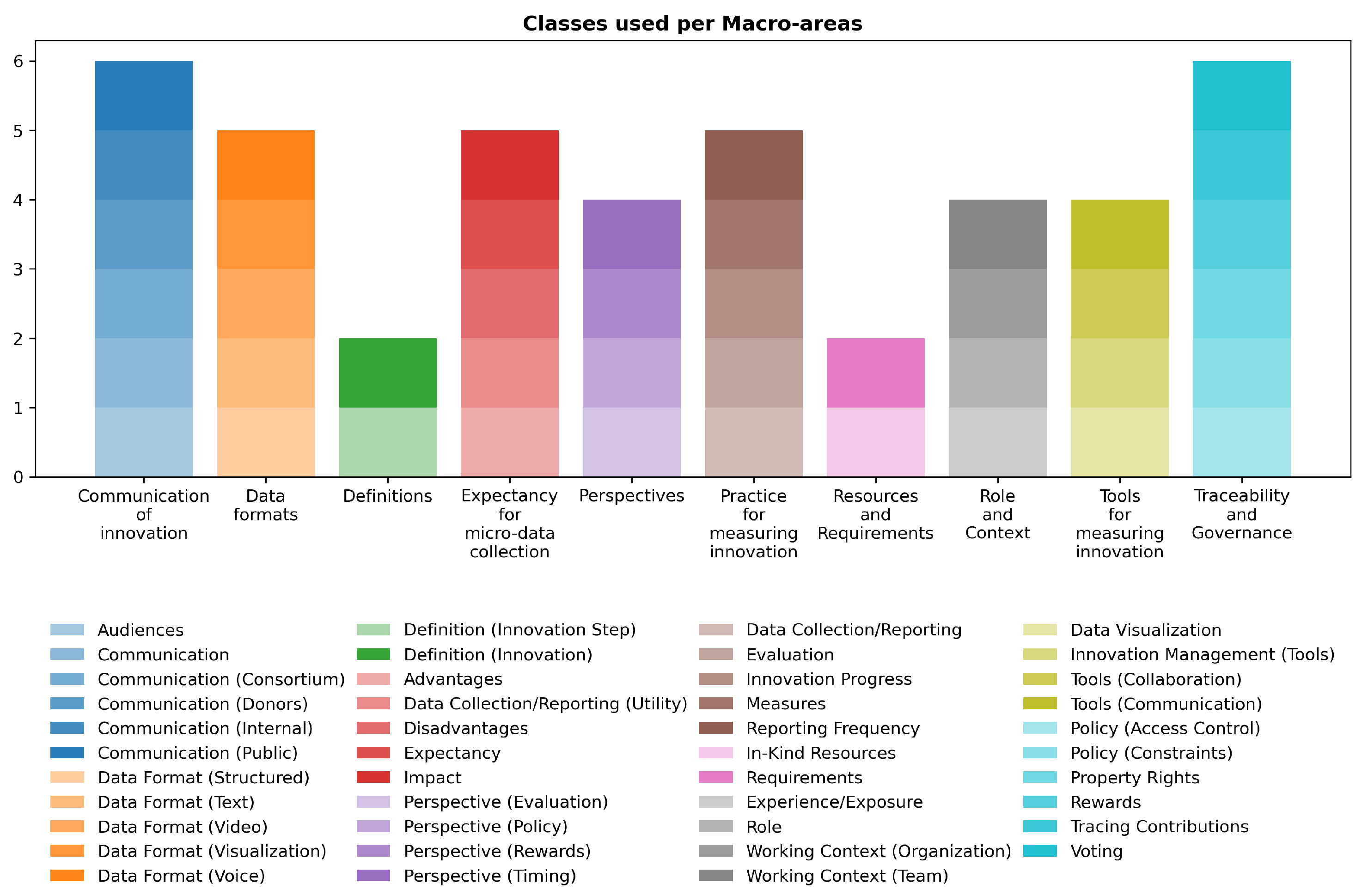
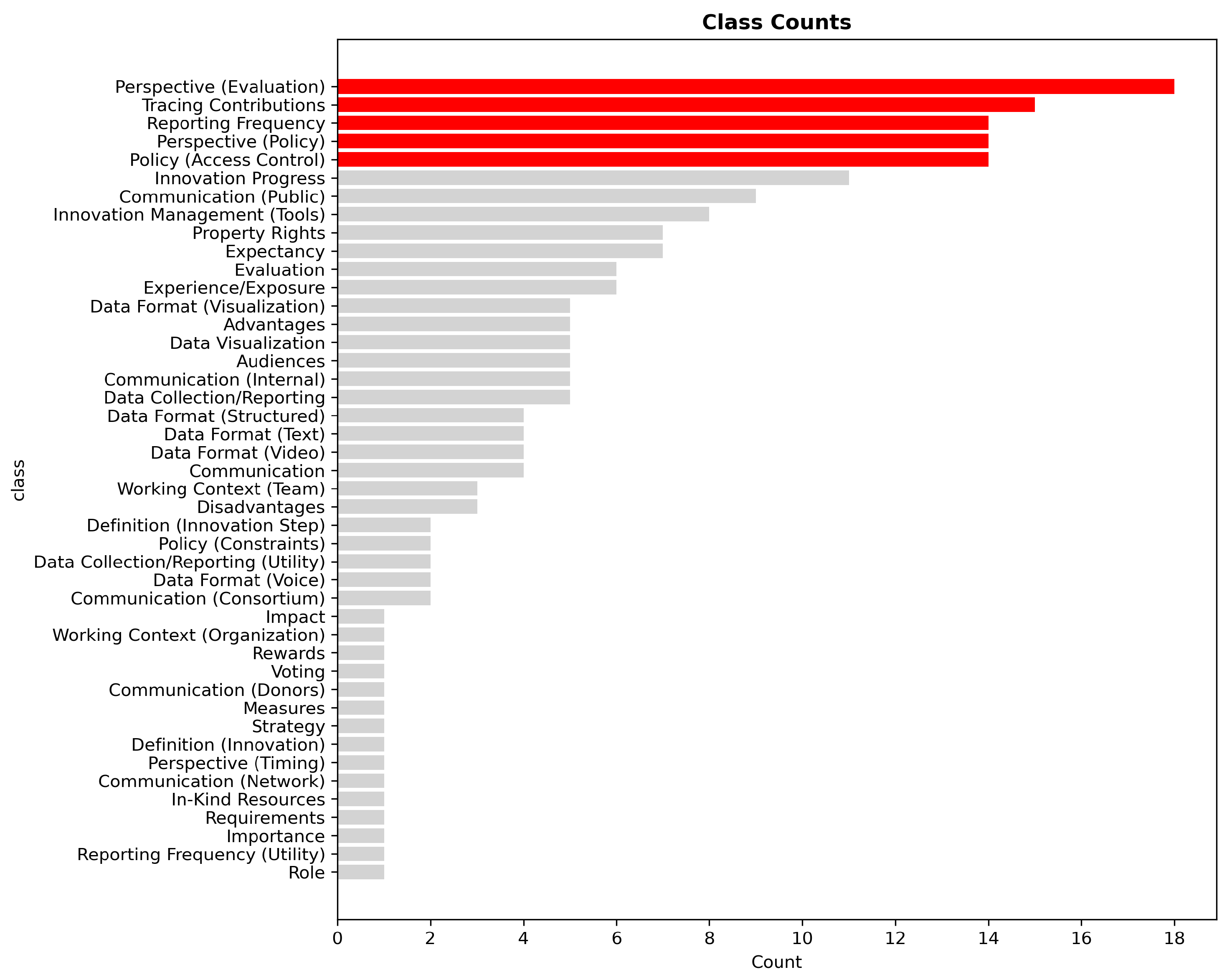
Questionnaires administered via email; questions were tagged with Classes (see: Figure 3 and Figure 4)—only visible to the investigator—to reflect the macro-areas explored in the interviews, providing a deductive basis for the hybrid coding process; open-questions elicited perspectives about current and alternative forms of quantifying innovation (e.g., in terms of its “embedded” complexity) and correlate them with governance mechanism (e.g., attribution-rewarding), while pairwise comparison, Likert-scale and scored checklists were used to rank preferences (e.g., over factors affecting innovation; agreement on the utility of tools for strategising and directing research; grade importance on communicating innovation to non-technical public audiences; potential formats for data-collection; grade importance on governance of property rights.

2.6.2. Thematic Analysis

Thematic analysis followed a hybrid approach. Classes were assigned to questions deductively as logical clusters to ensure systematic coverage of macro-areas. Answers were tokenized into sentences, which were then indexed and tagged with sets of classes and codes. Codes were assigned inductively and iteratively refined through constant comparison, merging semantically similar tags to capture specific aspects highlighted by respondents.
Themes were derived inductively from clusters of codes to represent emerging insights. Nine themes emerged describing different dimensions of the research question: Perception, Opportunity, Insight, Current Situation, Uncertainty, Assets, Appropriate language, Critics, and Disadvantages.
The diversity of theme usage was quantified using the coefficient of unlikeability U [50]. Unlikeability is a function in the range [ 0 ,   1 ] (0 representing homogeneity and 1 maximum heterogeneity), which measures the probability that two randomly selected instances of theme-codes associations will be in different categories. With a value of U = 0.86 , the distribution of themes demonstrated a high degree of heterogeneity rather than strong polarisation, indicating a broad and sufficiently informative coverage of insights across all themes. Mutual Information and Correlation were used to inspect the robustness of thematic taxonomies, and revealed values closed to zero across almost all pairs of themes, indicating non-redundant and distinct thematic coverage.

2.6.3. Network Analysis

Bi-partite networks were constructed between codes and sentences, codes and classes, and codes and themes; community detection was applied to summarise patterns across participant’s responses and explore narratives emerging within a theme; narratives in between multiple themes were investigated with boolean operations over their sets of codes, allowing to isolate the codes that were in common, complementary or not belonging to one another, and inspect their associated sentences.
Community detection algorithms were used to assess representation and stability of themes across participants, isolate emerging themes and identify which codes (sentences) supported their narratives. Narratives in between of themes were investigated with boolean operations over their sets of codes (e.g., by querying the intersection, union or differences of codes (sentences) supporting themes like “Uncertainty AND Disadvantages”, “Uncertainty AND NOT Disadvantages”.

3. Results

3.1. Thematic and Network Analysis of Primary Data

Three main topics where extracted from queries against codes connecting the themes, and retrieving the corresponding sentences:
i.
Opportunities and disadvantages of tracing intermediate innovation-steps,
ii.
Insights about the potential to unlock value embedded in intermediate innovation steps, with respect to innovation metrics used in EU-funded projects, and
iii.
(Some) conditions for unlocking that value.
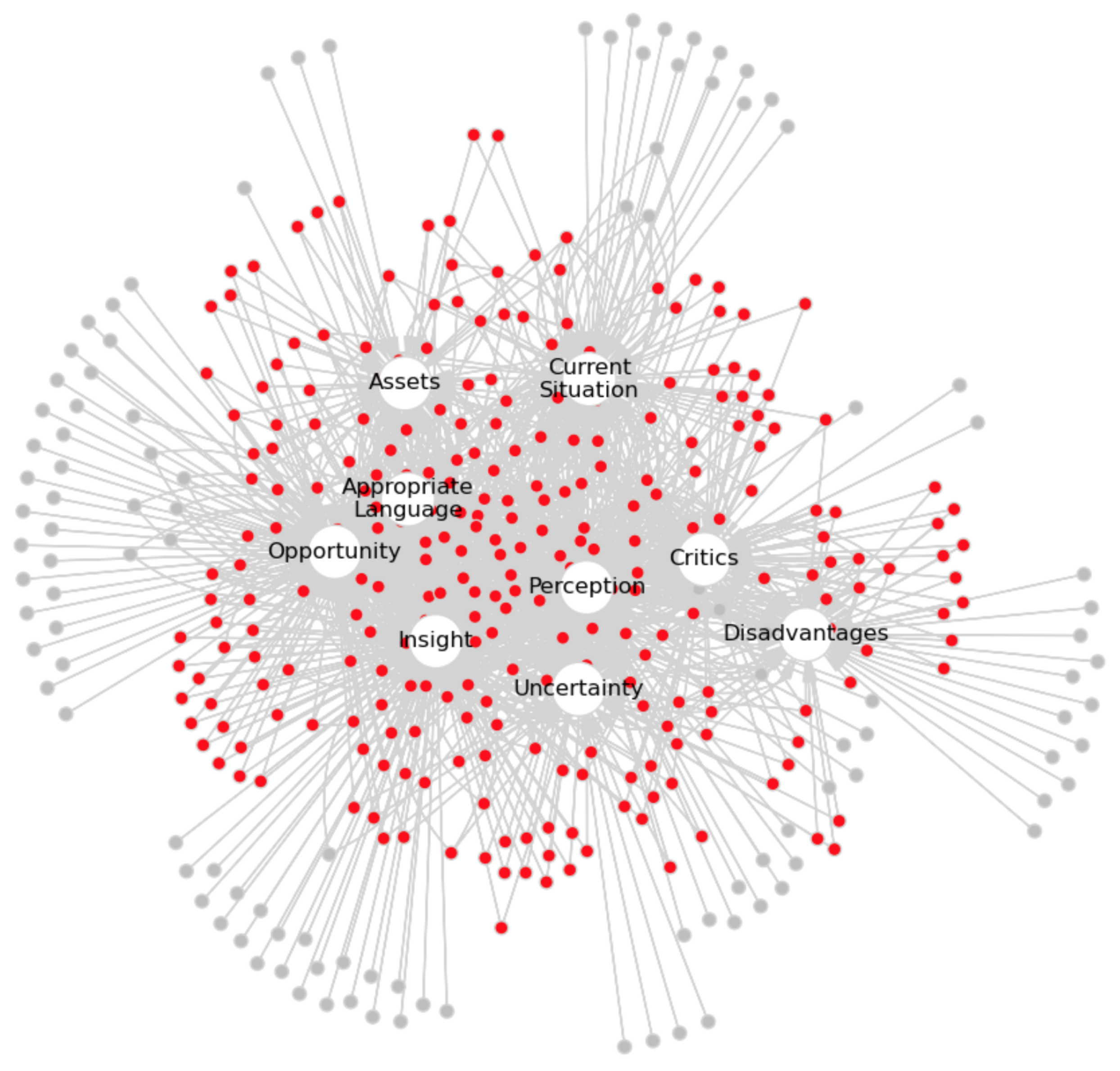
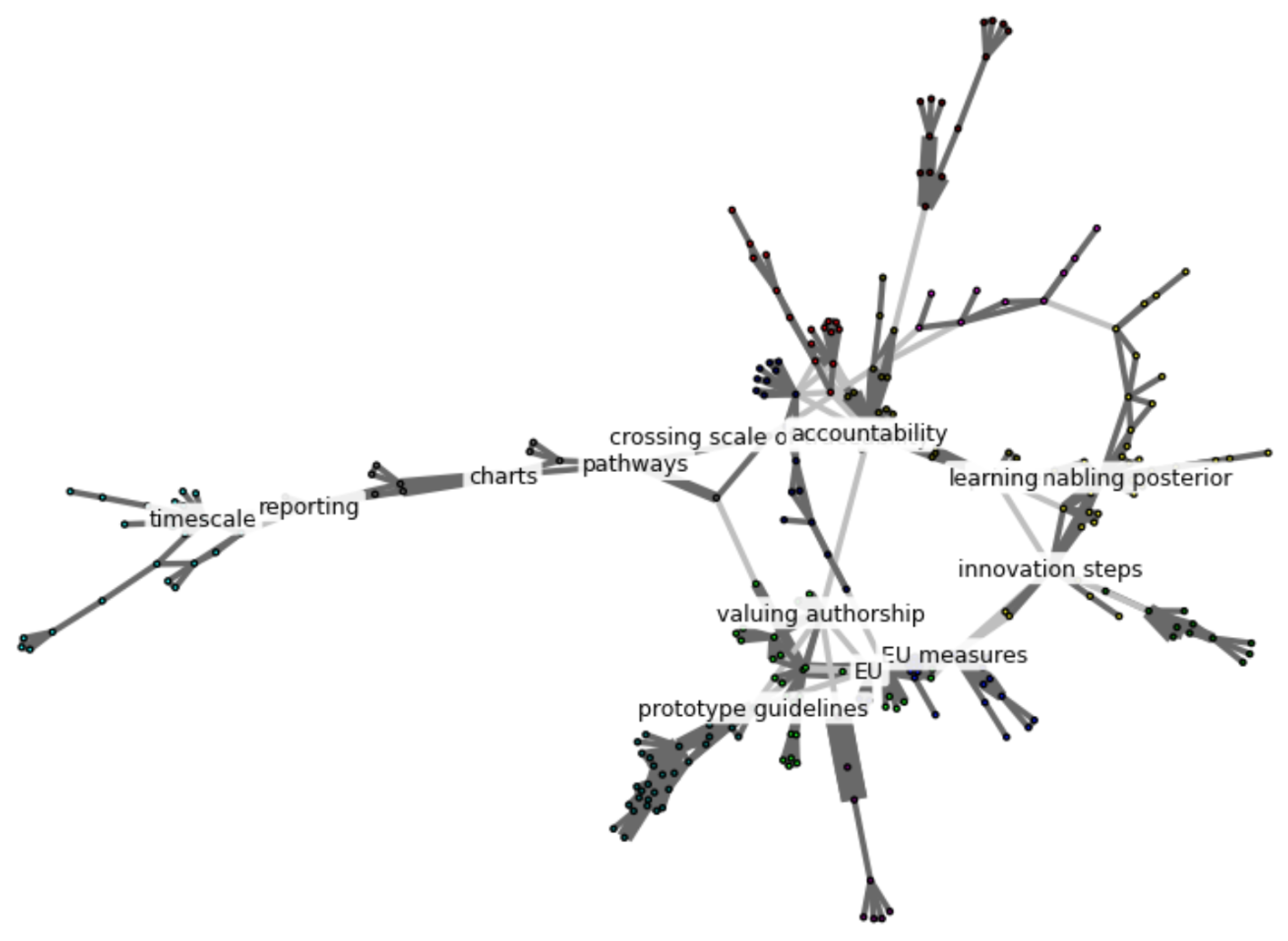
Clustering of themes is highlighted by means of community detection over codes. A preliminary analysis on the first four respondents (involved during intermediate stage of the project) showed that the theme Assets was central to the network; the analysis on all the respondents (at the final stage of the project) showed that the theme Perception had the highest centrality (Figure 5), while the relatedness themes appeared consistent through code-iterations. Community detection applied on the projected code-code graph showed structural connectivity (Figure 6).
Opportunities and Insights, Critics and Disadvantages, are found to be the most informative themes to answer the research question, revealing advantages and perceived risks in the utility and modality for tracing innovation bottom-up. For example, the theme Disadvantages revealed that frequent data collection may be considered extra administrative work hampering daily research activities, and that the modality of data-collection for communicating innovation progress also depends on the type of audience to report:
“However, a critical limitation is that most projects operate under fixed resources, and detailed recording and sharing of incremental steps introduces significant administrative overhead. This can divert time and effort away from core research activities, making it essential to balance the benefits of meta-research with practical resource constraints.” (R8:182)”; “Trying to trace everything always in little details as an administrative flow looks to me like an insanity. Sadly, I see that coming. Good thing is: such insanity is not sustainable. (R5:146); “No because innovation must be tightly related to the market and industry.” (R7:140); “I also would not have the capacity to make videos for describing what I do, I mean it would be extra work in my workflow I guess and I don’t think it would be useful for communicating with my colleagues” (R2:123); “Sharing every small step can create information overload and make it harder to see what is truly important.” (R4:167); “When poorly managed, the same practices may hinder experimentation and strategic positioning.” (R6:163).
The intersection between Opportunities and Disadvantages revealed trade-off over governance mechanisms encoded in the connecting codes (e.g., “Code:IP governance and disclosure”; “Code:voting and decision-making governance”; “Code:roles and permissions governance”). For example, inspecting their associated sentences revealed cues that could be considered in lineage use cases for allocating property rights through a voting governances over disclosing, re-using or diffusing public research outputs within a research portfolio:
“But maybe [the leading research institute] also put time as a resource, to achieve performance, I don’t know, 60% time, and [other company] put 40% of time so that, automatically, the intellectual property is [attributed] to the investor and who actually developed the sensor, according to the European Community rules, it is not that European Community holds property rights.” (R0:145); “Could lead to confusion if intermediate steps are shared without context or validation.” (R8:174); “[..] collaborators working closely together can trace issues that possibly management is not aware, however they need to be moderated with caution since personal interests may show up in the assessment.” (R9:121); “I think that a voting system should reflect also the expertise in using, or turning a thing into a value, and that is more a business expertise.” (R2:225)
The classes “Data Format“, “Tools for measuring innovation“, “Traceability and Governance“, along with codes in between of the themes “Perception“, “Insight“, “Assets“, revealed prescriptive aspects for guiding the design of a proof-of-concept tools for collecting innovation data bottom-up (adapting knowledge graphs used to map process-assets relationships for business management to IT-frameworks for innovation management), and governance aspects that may facilitate integration, re-use and communication of innovation networks, whose conditions are discussed in the Section 4.1 and Section 4.2.

3.2. Observed Opportunities

3.2.1. Modality and Utility of Data Collection

The theme Insights uncovered perceptions about definitions of innovation in the context of research management, while Opportunity collected perceptions about utility and modality to trace innovation data, both functional to the research questions. Key findings include:
Failure as innovation: Failure is perceived as a form of innovation in itself (R1:28). Failure provides information on what assets did not produce actionable results and helps avoid faulty repetitions (R1:31; R1:75; R2:84; R6:167).
Integration of heterogeneous data: Researchers expressed interest in services that allows integration of diverse datasets to forecast the outcome of experiments by adjusting asset configurations, typically in the form of different bodies of materials and methods (R1:81-84; R2:41; R2:89; R2:135):
“So an output I would expect of a service for supporting research is in helping us generate hypotheses and experimental design [..] to first construct a functional prototype and then improve performance on manifolds aspects of the KPIs we’re using.” (R2:41)
Extension to intangible assets: These insights may enrich existing literature [20] by extending process-asset mapping models to include intangible assets such as experimental settings, material usage, required knowledge on procedures and methods from scientific literature and/or patents, required knowledge from prior tested procedures and in general any source of information that is used in the process of ideation (R1:25; R1:41–R1:45; R2:41; R3:10; R4:23). Any intermediate steps, also ones not producing immediate actionable results, contributes information towards subsequent steps (e.g., “it would be useful to see what was done in the past, but specially because I could see what are the fundamental properties of the material I am investing on, why that was chosen, this for me would be probably the most important part.” in R1:86; R1:91; R2:41). Possible data format may “[use] a flowchart to visualise experimental steps” (R8:60), with the expectancy of “A useful output [combining] a roadmap with clear milestones and visual tools such as graphs to show contributions and progress over time.” (R4:33). The last innovation-step represents an embodiment of all previous pathways that led to it.
Recommended timescale for tracing observations: Respondents supported regular monitoring of innovation steps, either every two weeks but no less than once per month (R0:123; R1:133; R2:111; R3:30; R6:146; R7:170; R8:154; R9:150).
Need for new metrics: A respondent introduced the metaphor of two innovation “geometries”, that we can associate to the concepts of innovation and invention previously discussed:
“The horizontal one, where innovation is generated by connecting distant fields; the vertical one, where innovation emerges suddenly by an unexpected event.” (R3:16–R3:18)
This motivates the development of new key performance indicators (KPIs) based on in-itinere analysis of prior steps, rather than relying solely on ex-ante or ex-post metrics on bibliometrics e.g., in function of the prior innovation graphs, rather then scientometrics or market expectations—although some respondents proposed a more traditional view that innovation is defined and driven by markets and that research and management are two separate activities (R7:140; R7:193). Such metrics could lift on the historical path of prior results towards new options for valorising intermediate results that were not planned (R3:90), with the expectancy of “[making] it easier to resolve questions or build on previous contributions [and supporting] fair recognition and authorship tracking” (R8:136). KPIs based on innovation paths could be integrated in IT-frameworks for supporting decisions towards the next R&D process (R1:78). For example, logging innovation-steps and querying innovation-paths backward would help to summarise prior knowledge towards the next experimental configuration (R1:27–R1:29; R1:41), and capitalise on time invested on not-yet successful results. For instance, trials can last months, and in between there are many innovation-steps with many “failures”.

3.2.2. Modality for Communicating Innovation Progress

Appropriate language emerged as a theme related to strategies for communicating innovation progress, depending on audience type. All respondents agreed that communication style must depend on the type of audience, but with a mix views about frequency, modality and governance of data collection and reporting. For marketing (R0:96) activities, disclosing visual representations of intermediate innovation-steps can be functional to engage in open science (R3:35–R3:37; R1:54) or suited for sharing results to non-technical audiences (R3:163; R1:61), with some preferences for video formats for public audiences (R1:69; R4:114; R6:111; R8:118). For evaluating patentable results of innovation steps (R0:129–R0131; R0:133; R0:139; R2:71; R2:74–R2:75), prior innovation pathways could be useful to identify what has been tested before (R1:78) and to extract quantitative insights as alternatives to scientometric indicators (R3:25), potentially complementing research areas for forecasting technological saturation of patents [41] from data of prior innovation-steps R6:62. A fortnightly update pace was suggested to support periodic patentability assessments (R0:122–R0:129).
The theme Opportunity reinforced expected benefits from tracking innovation fortnightly:
Tracing failures can provide: Knowledge of previously tested approaches (R2:84; R8:136); Know-how for successful replication (R2:68; R6:21); Basis for generating new hypotheses (R2:41); Complement to literature that omits failure cases or practices to avoid or redundant work (R9:20; R8:171).
Tracing innovation steps can support: Resource planning and experimental output forecasting (R4:70; R8:179; R8:180), also via machine learning to “to predict promising directions and improve resource allocation in future projects” (R8:180)—a suggestion mentioned the expected utility of retrieving parameters from prior experiments (R1:84), to test new materials against those; Discovery of new options to valorize an output, beyond traditional scientometrics or surveys (R1:17; R1:20; R1:27–R1:31; R1:75; R1:84; R2:85; R0:49; R0:63).

3.2.3. Governance for Data Collection and Communication

The theme Assets revealed expectancy of research output and strategic governance for collecting data on innovation steps (R2:40; R4:29; R4:142) and. Sentences associated with Assets and Insights provided prescriptive guidelines for designing tools potentially improving the limitations of diagrams representing input-process-output or process-assets relationships in enterprise models: asset categories should include intangible resources (e.g., knowledge, know-how, experimental settings); tracing should record the purpose, expectations and reasoning for using assets and achieve a desired result (R4:117; R8:121; R:118; R6:115); the input interface should use minimalist design to reduce friction; and pathways should be visualised through graphs (e.g., “not much [to retrieve what a contributor said before, but what changes in a process a contributor did] to carry out [a] measure” and charts (4:33). Integration with existing organisational databases is desired to compare use of resources (for example, compare the chemical properties of materials used in experiments).
The interface of communication tools should adapt to audiences; interactive maps may help to schematise innovation (knowledge graphs for explaining what an innovation is and what are the outcomes and how they are produced ); interactive charts may help to summarizing prior pathways at desire time-scale (all prior steps to a given point in time); internal use of data on innovation steps may “avoids duplicated work, and provides documentation useful for publications or patents” (R4:29). Traditional media, especially short-videos for social network dissemination, are envisioned as most effective for engaging in open science. Contribution of assets may be incentivised by rewarding schemes (although some respondents were considering this not necessary and considered contractual agreement sufficient):
“contributors of innovation steps] should be rewarded. Even if they were already compensated for their work, the future value and impact of their insights justify additional recognition or reward. (R4:142)”

3.3. Observed Constraints

3.3.1. Risks of Information Overload

Themes Critics, Uncertainty, and Disadvantages informed limitations and possible improvements of current practices, highlighted limitations of increased costs but also psychological burden for tracing innovation at a more granular level, which may potentially “put extra pressure on researchers for every partial or failed attempt” (R4:168) and risks for invalidating patents if disclosure reach out to undesired channels (R7:163):
Intellectual property and confidentiality constraints: Some respondents questioned current intellectual property rules, where the EU supports research with public funding but property rights of any invention are only ascribed to the private companies of the consortium (R1:155–R1:158; R3:151; R3:138; R0:152); however, exposing ideas not yet protected by intellectual property rights (e.g., commercially sensitive concepts or early-stage results) may be misunderstood or misinterpreted (R4:160; R4:168), invalidate patents or compromise future exploitation on behalf of a consortium (R7:163; R0:129; R8:173).
Surveys’ weakness: The reliability of surveys as method to report results to the EU was critiqued because the way that questions are posed or rephrased in function of target stakeholders, could yield different answers (R0:98).
Authorship and ownership: Respondents were challenged if tracing innovation pathways should also trace authorship and grant a legal value to allow contributors utilising the intermediate-steps in future follow-ups or embodiments departing from the original project (R3:56; R3:113; R1:165; R0:152; R7:163; R7:194; R9:143). While respondents generally agreed on an hypothetical return of future value of innovation, as an additional compensation to a salary without altering former agreements, some stressed a distinct role between research and management roles for deciding upon business (an area of competence of technological transfer or entrepreneurial context) with preference for a clear hierarchy in defined agreements (R2:192–R2:194; R1:178), and some highlighted technical challenges for storage of ideas before materialized into prototypes, code, or protected outputs, raising doubts about whether contributors could realistically secure recognition or rights over unused innovation steps (R7:163).
Resource burden: Introducing a new workload for granular tracing of innovation-steps is expected to increase time-costs and might even call for full-time duties (R1:35; R3:101; R2:150–151). However, if attuned to current practices and a plausible periodicity (fortnightly), time-cost was perceived as an investment (R1:130; R1:148; R3:101).
Limited applicability: Tracing innovation paths could only be relevant for internal use or dissemination, as TRL metrics must use consolidated approaches (i.e., bi-monthly surveys).
Psychological burden: One respondent claimed that enforcing administrative policies for “tracing everything [..] in little details [..] looks [..] like an insanity [and is not sustainable]” and expressed discomfort for other tools designed to assist collaboration and tasks (e.g., “There is a number of tools in my life that I have to spend time to learn how to use and apply them, for example Microsoft Teams, and that simply gives me a hard time and frustrates me.”; “By default, this creepy MS Copilot interferes with what I want to write, therefore I stop here” (R5:73; 5:22). Other expressed concerned that personal interests or visibility may influence how contributions are perceived (R9:121), and fears that increased transparency may generate anxiety, internal comparison rather than collaboration, reduction of privacy of contributors and demotivating feelings of being under constant scrutiny (R7:81; R8:137; R3:165; R4:132; R9:166).

3.3.2. Permission-Roles for Decentralised Governance

Governance and voting mechanisms (mixed, mostly conditional): Respondents were asked whether formalising research contributions as an intangible asset would imply a capital return which could be accrued to the contributors. They expressed mixed views about the possibility and degree of a distributed governance on data contributing to innovation (i.e., the intangible assets), and hypothetical policy for data-collection and outcome-disclosure via a voting system. One view favoured the possibility of policies for regulating use and diffusion of research outputs based on voting systems, keen to express votes in a political context (i.e., where one do not necessarily is expert in political science), at the same time expressing concern on that “[granting] everybody the possibility to weight own words, in the end is not an optimal solution” and should have veto-rights (R1:176; R1:179); others expressed similar agreements, under the condition that voting should be only opened to contributors (R0:153) or at least to people holding enough business expertise “in using or turning a thing into a value” (R2:225).
Another view criticised research working environments themselves for promising but not keeping “free speech and opinion and basic democracy” values (R5:106), thus implying ineffectiveness or increased risks in employing voting systems in non-ethical environments, while others disagreed on the principle that “innovation must be tightly related to the market and industry” (R7:140) and a tech transfer office suffix. Views that favoured a voting systems highlights the expectancy to enhance “contribution and engagement”; transparency over allocation of resources as well as of issues and delays; learning, and decision quality (e.g., for “[tracing] issues that possibly management is not aware”) (R4:119; R6:118; R5:31; R8:124; R9:121), under the condition that “voting is structured as informed feedback rather than a substitute for deliberation” (R6:118), but pointing that “voting could discourage risk-taking if unconventional ideas receive fewer votes”, and that could “[slow-down] progress if decisions become overly democratic instead of agile” (R8:125).
Participants generally agreed on a governance of research outputs based on permission-based roles, expressing distinction between research and business duties, expertise based on seniority, with half expressing preferences that an organization should exercise property rights only over publications or delivered artifacts, but not block any other possible spin-off resulting from insights that were not capitalized in their research; for example, “contributors should retain the freedom to reuse insights [..]”, with the expectancy that the “approach balances organisational protection with individual creativity and avoids stifling innovation beyond the scope of the original project” and fosters the “[creation of] new economies, new solutions, higher wellness (therefore not only incomes)” ( R8:144; R9:138; R3:137; R4:139; R6:134).

4. Discussion

This section discusses implications of the above empirical findings for the design of digital tools to trace innovation, for policy considerations, and for theoretical approaches to computing the value of innovation and attributing the contributions that led to it.
In response to R Q 1 , we found that intermediate innovation steps is expected to unlock new value by revealing the cumulative knowledge embedded in failures and intermediate outputs: these are assets that can be reused for increasing successful replications of components across a research portfolio or alternative industrial fields, and generating new hypothesis principled by empirical evidence. Section 4.1 elaborates on how data can be collected for tracing how innovation evolves from early stages to maturity, and draws from perceptions on expected benefits, usability and utility (e.g., integration with external datasets) reported in Section 3.2; Section 4.2 discuss articulate the use of pathways of innovation as support to policy for optimizing research portfolios.
In response to R Q 2 , we found that alternative metrics of value are expected to consider the temporal perspective of innovation (innovation being the apex of a long pathway) and the capacity to connect fields which have been usually separated; these are two aspects that scientometrics and conventional metrics used in TRLs or innovation management do not address. Section 4.3) discusses theoretical implications for objectifying value in function of the topology of innovation networks, which can utilize the data collected from digital tool as a support for practical implementations in scientific discovery and innovation economics.
Finally, Section 4.5 proposes directions of future follow-ups.

4.1. Design Implications—Tools for Assessing Innovation from Knowledge-Networks

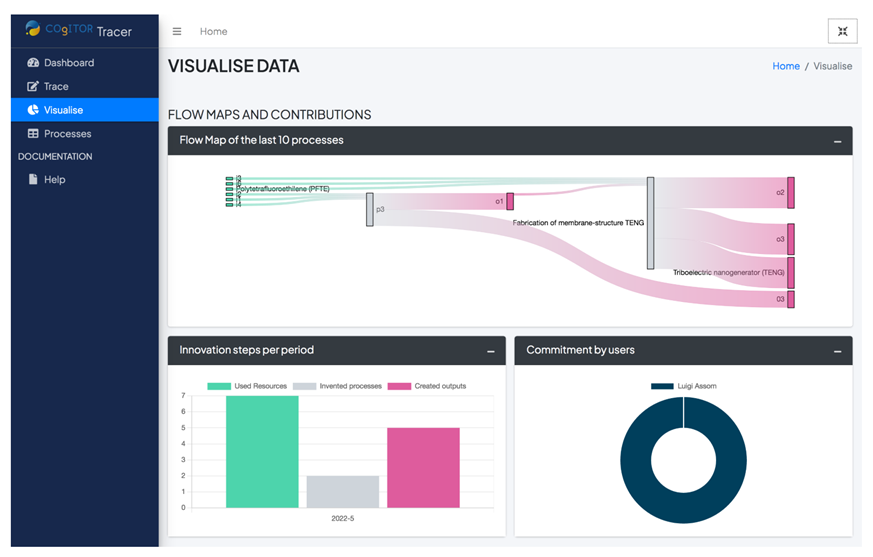
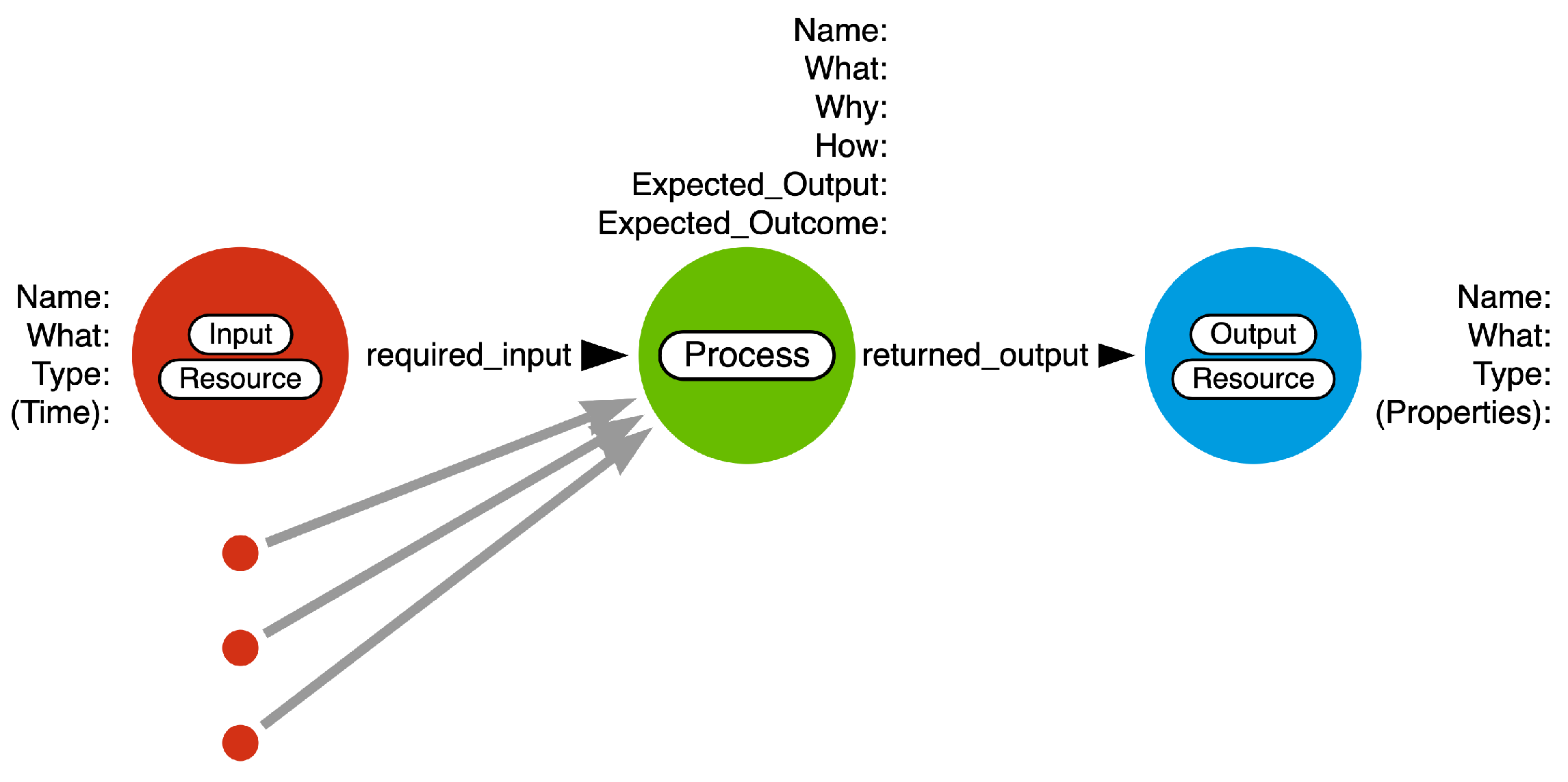
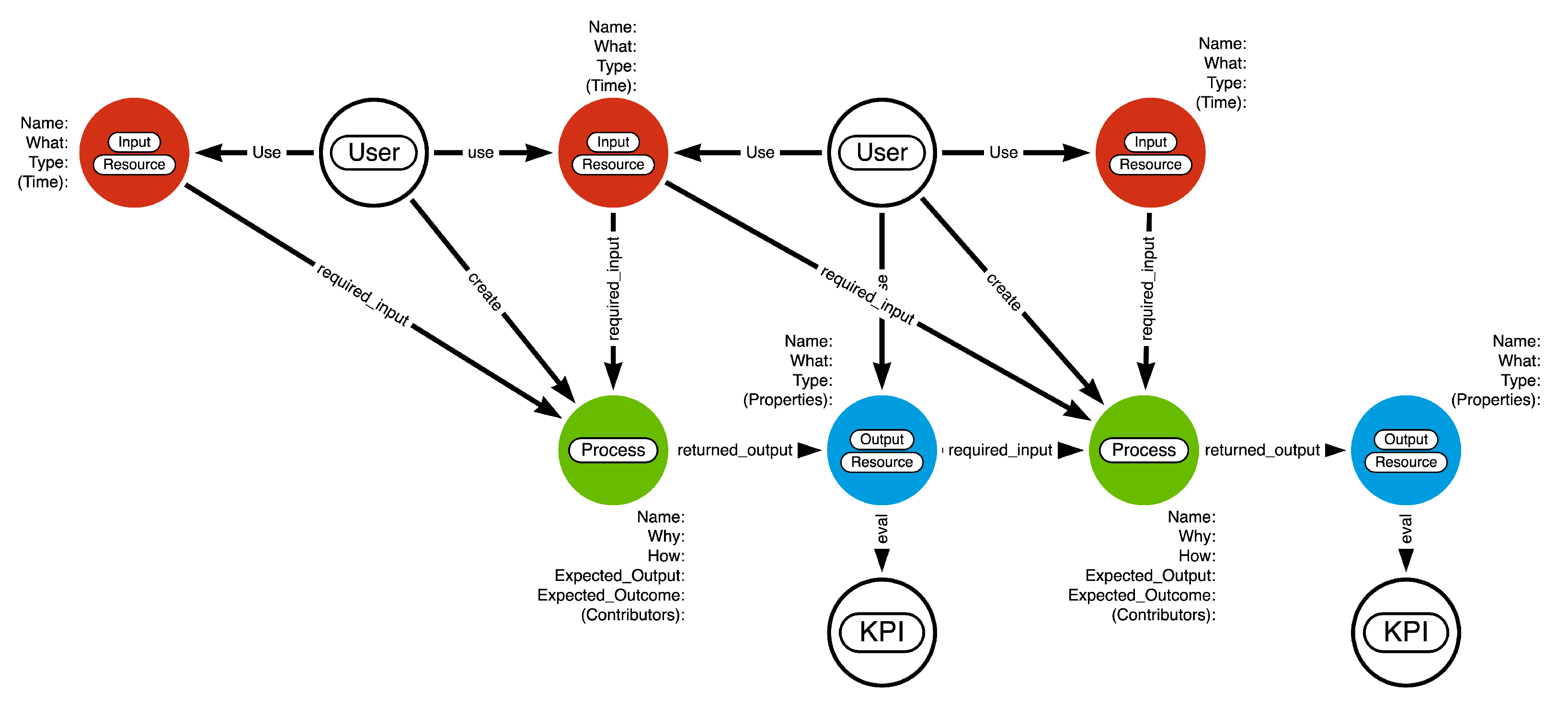
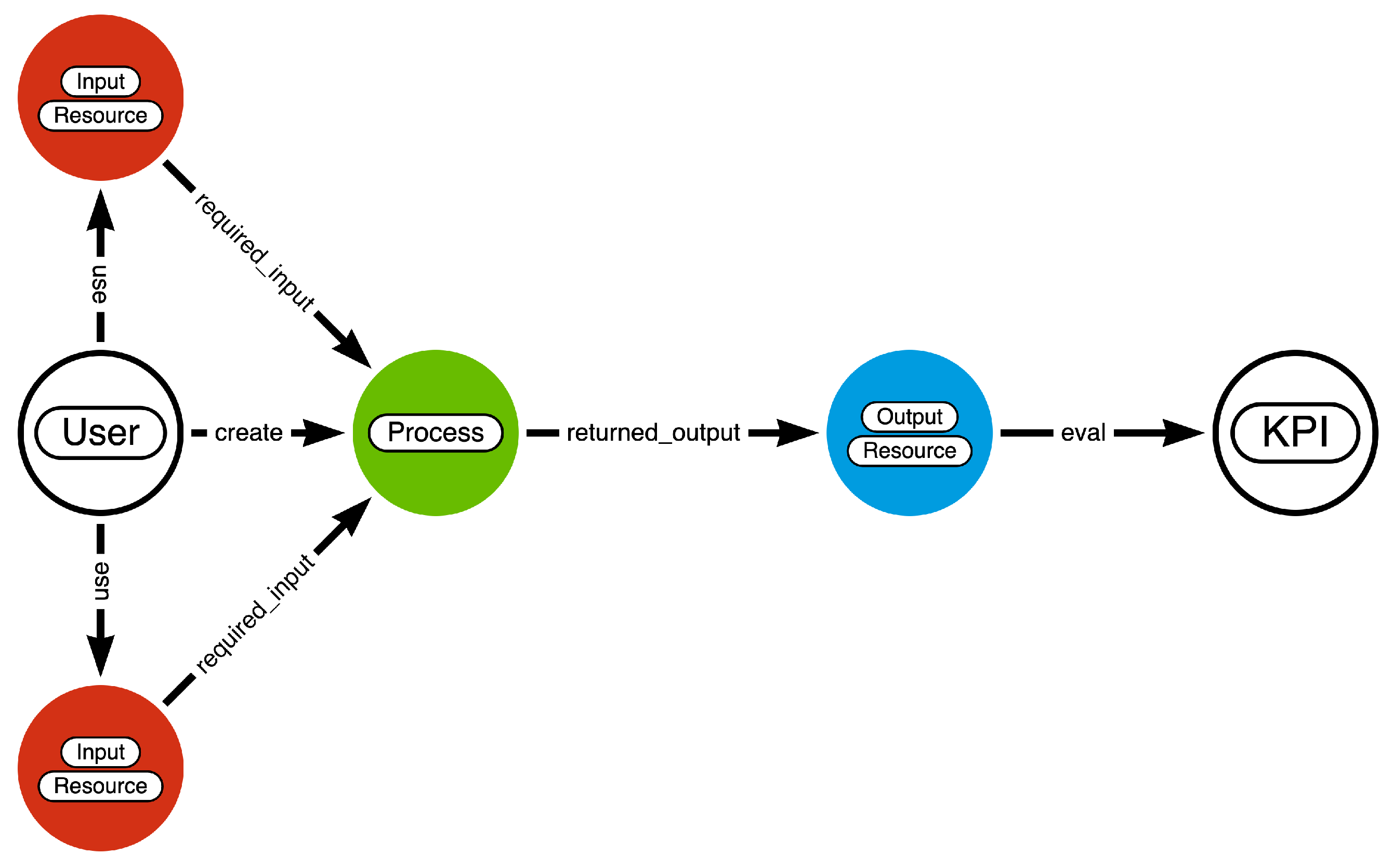
The primary research question was focused on exploring perceptions of tracing innovation steps; insights on modality and purpose of data-collection were used by to design a proof-of-concept prototype conceived as a knowledge graph implemented on a blockchain infrastructure, aimed at recording the resources, processes, and outputs involved in each experimental activity. The model, inspired from implementations structured as a directed acyclic graph (DAG) to reflect non-linear dependencies among transactions [51], allows to record innovation paths as temporally structured sequences, supporting branching, querying and visualisation of recombination across experimental processes. Specifically, the prototype conceptualised innovation as a function represented with a 3-partite directed graph (see Figure 7), with node types:
  • Inputs: Resources used by the process (materials, data about experimental conditions, procedures extracted from scientific literatures and/or patents).
  • Processes: Conceptually representing any process (experiments, procedures) as a function with arity equal to the number of inputs which return at least one output.
  • Outputs: Resources computed by the process, such as results (including successful and failed attempts).
The properties of node type “Resource” collect information describing what the resource is (‘Name’; ‘What’; ‘Type’), and optional properties describing the effort spent for procuring them (e.g., time; funding).
The properties of node type “Process” collect information describing what the process is (‘Name’; ‘What’); the motivation for defining the process (‘Why’); the procedure for using resources and replicate the process (‘How’); the ‘Expected output’; ‘Expected outcome’, and optional properties specifying the metrics used to measure the results.
When recording a process, users are required to specify both inputs and expected outputs see: Figure 8; prior outputs can be used as inputs in future time steps (see: Figure 9, functional to analyse prior-art networks as circular economics networks that re-use prior assets, and reconstruct the tree of prior processes, from inception at any given time.
All the transactions are recorded on a ledger, which tracks the temporal development of the graph (Figure 10). Node properties (e.g., textual descriptions of experiments) are stored off-chain in a graph database (Neo4j); the blockchain layer is used as an immutable log of graph relationships. Composability is achieved through process definitions with declared inputs and outputs that can be chained and represented as a dependency graph. Each graph update is anchored on-chain by a transaction whose payload encodes the set of dependency references through Recursive-length prefix (RLP) serialization. The transaction hash serves as a tamper-evident, time-ordered anchor for that update. The policy for saving an innovation step on the ledger can be adjusted on a preferred consensus. For example, saving an innovation step may require only the signature of the research manager, or the signature of at least two of its contributors.
In this proof-of-concept the ledger is used as a tamper-evident journal to timestamp and order innovation steps, not as a scalable audit infrastructure: more advanced ledger databases may be chosen depending on the desired governance within an organisation, or across multiple research consortia. For example, systems offering fine-grained audit trails and configurable deletion policies can be useful when reversibility is needed (e.g., removing duplicated experimental entries) [33]. Other systems that enforce auditability through hardware-assisted timestamps or trusted execution environments [36,37] can be useful when governance structures require stricter permission control, for example for collaborations between heterogeneous stakeholders (e.g., private companies, public institutions, and open data contributors) whose operations must remain verifiable without relying on a fully trusted service provider, or for potential retro-active reward attribution mechanisms discussed by participants (see Section 3.3.2).
This graph-based representation enables retrospective analysis of innovation pathways, to empirically explore how value can be objectified as a function of the novelty or of the complexity embedded in the underlying informational structures such as node embeddings, graphlets, or other features used in graph representation learning (cf. [41]). The platform was prototyped with APIs for network analytics, including shortest-paths, clustering, and graphlets. It supported interactive visualisations, such as Sankey diagrams to illustrate flows of knowledge, resource-use and resource-outcome over time see: Table A4.
These features were designed to help teams and decision-makers explore how innovation emerges from early-stage ideation through iterative refinement and towards potential spin-off opportunities or industrial adoption at future stages. Figure 11 shows a macro-level query of how inputs where processed into outputs of higher complexity through the stages of TLRs, while Figure 12 shows a micro-level query of specific configurations required to replicate experiments that led to results published by the consortium.
We suggest that these knowledge graphs can improve the effectiveness and reduce the biases of Large Language Models (LLMs) and Retrieval-Augmented Generation (RAG) systems when used for scientific discovery, aiding in overcome the limitations of hallucination, training bias, and transparency of generative models for scientific discovery [27]. Querying innovation pathways allows to extract information from chains of experiments. Sequences of prior innovation paths can be utilised as support for chain-of-reasoning for driving generation of hypothesis grounded on empirical validation of prior results; the directionality of edges in innovation paths allows to inspect the explainability of reasoning that led to formulate hypotheses, and aids to evaluate coherence and plausibility (e.g., sequences of reasoning about necessary and sufficient conditions, like which inputs precede processes, and which outcomes outcomes are consequential to those. Information about failed experiments can also support automated adversarial prompting in multi-agent systems, where one agent challenges new hypotheses using evidence from past failures.
Future studies could build on this conceptual framework to pilot systems for real-time capture and visualisation of innovation steps, compare their performance and user acceptance against conventional ex-ante or ex-post indicators (e.g., the number of publications, patents, and TRL levels), and further explore policy implications related to intellectual property governance, attribution, and open science dissemination.

4.2. Policy Implications—Non-Linear Innovation Emergence

Innovation paths, in this study, were interpreted and formally implemented as a network, whose topology is recorded periodically through a proof-of-concept. The structural properties of networks leverage points to trace the emergence of order from iterative experimentation and feedback. These patterns can help identify under what conditions computational properties, materials, or design strategies gain robustness, scalability, or capacity of generalisation or across domains. For example, a successful novelty prototype may only emerge after multiple reconfigurations of inputs and intermediate experiments. Such pathways carry informative value even when intermediate steps did not yield success.
In contrast to prior literature which assesses organisational, management or market features as factors of success or failure of a novelty (cf. [15]), or which measures innovation against predefined outcomes, this perspective assigns value to innovations deemed failures by current markets by evaluating the contribution of each step–even when not successful–as part of a cumulative knowledge process. In this sense, innovation value is treated as a recursive function of network recombination, rather than as a binary outcome of commercial viability, and tracing the lineage of innovation data would provide the temporal dimension and data granularity for evaluating the magnitude of an innovation (e.g., “incremental” or trend-setting) and for estimating its efficacy in creating new markets (as called for by [15,16]).
Policies aligned with this view would require tools capable of capturing latent value embedded in intermediate results, which could infer reusable insights from failure, and possibly set public readability permission to information about failures as an intangible capital whose return is expected to lower costs of technological transfer. This is particularly relevant to the role of investment in research from public funding, where market-based indicators systematically undervalue the collective benefits produced by public R&D [13]. With reference to managing innovation in welfare economics, maximising diffusion of knowledge across a portfolio of public investments may benefit from metrics that promote technological saturation across domains as networks of cumulative knowledge, for instance in the form of measuring patent propagation, cf. [41].
Also, the current logic for managing public funded portfolios often lacks indicators to evaluate how research contributes to long-term ecosystem resilience or cross-sector innovation. Extending the proof-of-concept corollary of this study could address this gap by making visible the cumulative contributions that underpinned patentable innovation e.g.,(partial results, failed trials, ineffective processes typically invisible in knowledge flows inferred from patent-based indicators [17], which could be a valuable by-product in future markets [19,24]. For example, access to micro-data documenting what worked and what did not could support science–technology transfer by reducing duplication of unproductive research paths; while protecting proprietary information is a constraint in tracing innovation pathways inferred from patents, scientific publications and commercial press [48], an appropriate governance model could create a commercial incentive to engage companies to share undisclosed know-how no longer strategically valuable for them, but potentially valuable for other actors to derive downstream tasks from innovation networks; data provenience could be verified through ledgers that scale universal auditability across multiple actor types (cf. [33]).
Recommendations that reduce trial-and-error provides an empirical base to shape policies that support knowledge transfer while complementing the limitation of intellectual property with respect to maximise diffusion of knowledge as a positive externality.
In this context, we interpret the diffusion of knowledge as a function of redistributed capital return toward the human capital that enabled innovation, thus formally proposing a base to operationalise two transformations of governmental structures aiming to achieve sustainable development: (i) valuing the contribution of human capital in education of science and technology for promoting economic growth, and (ii) providing digital technologies that make up-taking of unsuccessful scientific effort more readily available for accelerating development of new technologies [22].
While this view was not explicitly shared or challenged by participants in this study, respondents acknowledged some practical benefits of innovation traceability and potential value of tracing intermediate steps and unsuccessful steps. Some were comfortable with traditional forms of compensation (salary), while others saw opportunities in valorising authorship as a basis for future innovation rights, especially in spin-off contexts. The proposed network-based approach does not aim to replace existing TRL or scientometric models, but to complement them by enabling ex-post, in-itinere, and even predictive analytics based on the structure of prior networks of innovation steps.
These digital artifacts, if adopted across public funding ecosystems, may provide a new layer of visibility into how innovation actually evolves and contribute to:
  • Accelerate innovation by identifying critical turning points and bottlenecks within projects.
  • Allocate funding not only based on expected outcomes, but also on the diversity and recombination potential of exploratory steps.
  • Encourage the diffusion of negative or null results, thus reducing systemic inefficiencies.
  • Recognise and valorize contributions beyond the traditional patent or publication models.

4.3. Theoretical Implications—Latent Value of Exploration in Innovation Networks

Building on the analysis of results and the design of a corollary proof-of-concept, this study inductively proposes a conceptual framework of innovation as a process of value accumulation in knowledge networks. Conventional methods for evaluating innovation in TRLs prioritise outputs through predefined metrics functional to desired goals (e.g., business, academic or market fitness), thus omitting the latent value embedded in exploratory steps (e.g., failed experiments and intermediate configurations) that shape trajectories towards novelty and its embodiments. The study inductively proposes a conceptual framework where paths recombining prior knowledge into novelty hold latent value, which can be quantified in function of the network topology; the value reflects the cumulative contributions of both failures and successes, and appreciates when breakthrough leads to innovation maturity. To provide a conceptual bridge between the practice of mapping innovation and a formal basis of latent value emerging from network dynamics, we frame innovation as a dynamic system evolving over time where every exploratory step (such as an experiment or prototype component) perturbs the topology of the innovation network. Network-based metrics such as centrality, modularity, page-rank, or other indices could instantiate the probability distribution P i used in the Fisher–Shannon framework, enabling empirical computation of innovation diversity and coherence.
We now might return to the functional theory of Equation (4) and elaborate further to express the Latent Value of Exploration (LVE) as the expected improvement in achievable system value due to an updated knowledge occurring at the exploratory step s, that might be a new experimental trial, a topological perturbation, or a different configuration test (Equation (5)):
LVE ( s ) = E D s   max C C Ψ G ( C D s ) max C C Ψ G ( C prior ) cost ( s )
Here the innovation functional of the network is denoted by Ψ G ( C ) , C encodes the connectivity configuration, s a single exploratory step yielding data D s , C the space of possible connectivity configurations, the network configuration before (C) and after ( C ) exploration, E D s [ · ] is the expectation value (statistical) over data outcomes, and cost ( s ) is the cost of the exploratory step. Even when the immediate experimental outcome does not improve performance, such a step may still expand the reachable maxima of Ψ G , increasing future adaptability. Subtracting the cost term yields the net LVE.
As we have seen, innovation can be represented as a trajectory in the Fisher–Shannon plane (see Figure 2), where we track both global diversity (entropy), and local order (Fisher information). An exploratory step can shift the system’s trajectory closer to a desirable regime even if the current innovation functional Ψ G ( C ) does not improve. This trajectory shift defines as we have seen the LVE, that captures such directional progress, valuing exploration that shapes long-term adaptability. Exploratory steps move the system along a trajectory, and LVE is the projection of this motion toward the region of maximal desirability. Fisher–Shannon transitions between attractors can even help in quantifying the dynamics. Escaping from an attractor can occur within a measurable time and lead to the notion of escape frequency, the most probable escape path minimises a quasi-potential landscape. Quasi-potential barriers separate attractors, and default-network modes exist for high-dimensional networks, providing basin stability. If an exploratory step reduces the effective quasi-potential barrier toward a target attractor, then according to Kramers’ law, it exponentially increases the transition rate and decreases the mean escape time.
This framework addresses a limitation of conventional metrics that assess value depending on the preferences (or utility) of a subset of economic agents, often reflecting only the proprietary rights over procedures or resources necessary to reproduce a desired output, but missing to capture the latent value enabled by the appropriate recombination of those resources. By contrast, the paths leading to innovation, including dead branches, may contribute to a broader economy of knowledge when structured as networks of contributions. On the opposite of Schumpeter’s view of innovation as the entrepreneurial commercialization of new technology and education of consumers [8] (p. 47), and [17] where value is realised through market fitness, we conceptualise value as emerging from systemic change. Innovation is not evaluated on the final outputs alone, but by how prior contributions are recombined and stabilised through sequences of intermediate paths (i.e., edges). Value is thus associated with changes in the topology of the graph, which in our framework can be approximated by entropy-based measures capturing global variety and local coherence.
Conceptually, this perspective aligns with economic complexity theory, which: (i) measures complexity as structural property of the country-product network; (ii) focuses on macro scale (Countries), considering an economic graph a portfolio of productive capabilities in a multi-dimensional space (products, technology, science), that can support policies “to identify potential paths for diversification and transformation by introducing new but related capabilities” [12]; (iii) deduce value as the capacity of the economic graph to diversify capabilities from cumulative knowledge (i.e., complementary industrial areas). In our framework, we model innovation as a dynamic network tracing cumulative knowledge, and explicitly used it to compute value in terms of its impact on the system, so that: (i) complexity is quantified to captures the expansion of feasible configurations (Shannon entropy) and the consolidation of coherent structures (Fisher information); (ii) focuses on micro scale (innovation networks representing accumulation and diversification of prior contributions); (iii) connects the definition of economic value to information theory (here, Fisher-Shannon entropy).
These arguments can be formalized as the following propositions:
  • Innovation emerges from temporal networks that encode the transformation of resource sets into new ones.
  • In scientific research, failed or inconclusive steps have intrinsic value by informing what does not work.
  • In entrepreneurial systems, the value of innovation only depends on predefined metrics or on outcomes that can be rendered proprietary.
  • This asymmetry leads to under-utilisation of public investments and a loss of knowledge for recombining resources, in future market or in alternate domains (e.g., industrial fields with less technical saturation).
  • If contributions, whether successful or not, are encoded as structured data in a network of innovation steps, their potential to recombine resources into novelty can be traced, quantified, and valorized.
  • Graph representations of economic landscapes can help to objectify the value of innovation in function of its topology, thus beyond proprietary outputs accrued by a set of nodes, and support new evaluation metrics integrated with policy design that can gauge the trade-off between impact contributed to the system (i.e., the graph) and impact accrued from nodes who hold proprietary or exploitative rights.
  • (corollary) Graph representation methods can be directly integrated with machine and representation learning to model innovation dynamics, enabling the mapping of contributions and their authorship to the emergent properties of the network.
These propositions define an innovation framework that complements ex-ante and ex-post models with in-itinere metrics that account for the emergence of innovation, not just its outcomes. The framework respond to recent calls for reconsidering how public R&D is evaluated and rewarded on purpose to maximise positive externalities in portfolios of public investments [13]. Anchoring economic value to Fisher-Shannon entropy could support policies aiming to maximise the diffusion of knowledge by balancing the information gain contributed locally, versus the global structure of innovation networks.
Its corollary opens a new line of research at the intersection of representation learning and innovation economics: computational sustainability models aiming to maximise diffusion of information within knowledge networks, and to objectify value in function of the complexity of the output contributed to economic networks. We posit these metrics can be grounded in information theory (see Equations (4) and (5)), thus offering opportunity of scale-invariant applicability (e.g., measuring innovation at micro-scale, as within teams, or at macro-scale, as within industries) and of optimizing funding strategies attuned to increase complexity computed by innovation ecosystems.

4.4. Limitations

This study is subject to three main limitations: (i) the empirical findings are based on a small, homogeneous sample drawn from a single research consortium, which limits the generalisability of the results beyond similar organisational settings; (ii) the proposed prototype and associated digital infrastructures are presented as proof-of-concept designs and were not evaluated through longitudinal deployment or quantitative performance metrics; (iii) the theoretical framework introduced here is exploratory and conceptual in nature, and its operationalisation across larger datasets and multiple innovation contexts remains an avenue for future research.

4.5. Future Directions

Findings offer implications for practice, policy and conceptual development in innovation management.
On the practice perspective, the study contributes to closing gaps in tracing innovation that emerges at individuals and teams level [11] and in informing the design of tools that support valuing failures and by-products in future market or cross-domains [19]. Four main potential were identified: (i) historical reconstruction of decisions that inform the evolution of an idea to theoretical results and practical embodiments, providing structured context for LLM–RAG or multi-agent systems to generate hypotheses grounded in experimental pathways; (ii) valorisation of research byproducts beyond contractual or proprietary outputs; (iii) extending input–process–output models from business to research management settings, characterised by uncertain and emergent outputs whose value is underestimated, or even not captured by predefined metrics for evaluating a research program [19,20], and (iv) improving communication with technical and non-technical audiences for the uptake of emerging technologies.
At the policy level, this study offers both qualitative and quantitative evidence to support mechanisms that valorize research outcomes beyond predefined deliverables—including the systematic reuse of failed or intermediate results. Such mechanisms help advance policy goals aimed at maximizing the positive externalities of public research investments, such as the diffusion of knowledge across research portfolios [13]. Mapping the cumulative knowledge network and the contributions leading to innovation can also inform how public R&D is evaluated and how the human capital behind it is recognised and rewarded. This impact aligns with two key transformations in the knowledge economy essential for sustainable development [22]: (i) recognizing the value of human capital in education, science, and technology—especially relevant where capital-intensive technologies like AI may concentrate ownership and diminish the role of human labour—and (ii) developing digital infrastructures that accelerate discovery by enabling transfer of critical information across research portfolios.
Future iterations of the prototype could explore whether forecasting technological saturation, informed by the topology of patents’ graph [41], can also be informed also by innovation graphs within research consortia, so as to support policies that maximise diffusion of information that was critical for stemming novelty within cumulative innovation networks. We envision the blockchain ledger to be functional to persist the traceability of innovation paths and attribute economic value in function of the networks of its contributors, and the knowledge graph to enrich the ontology schema employed by innovation processes for supporting generative tasks such as ideation of novelty by merging disconnected domains [40] and graphical representation from patent networks [23].
On the theory building level, a framework wherein latent value emerges from the temporal structure of knowledge networks implies opportunities to quantify innovation in terms of the underpinning network, complementary–or independently–from the utility accrued from property rights, market fitness or market fluctuations [13,19]. The conceptual framework we proposed allows to define differentiable loss functions for graph representation learning; future studies could operationalise it across multiple cases to explore the evolution and diffusion of innovation via representation learning in knowledge and economic networks.
A final future direction concerns investigating new metrics to objectify the value of innovation based on the topological properties of innovation graphs, aligning those metrics with policy goals to maximise societal returns from publicly funded science and technology, and overcoming the limitations of pricing systems that reflect only the subjective utility preferences of economic agents holding proprietary or commercialisation rights.

5. Conclusions

This case study identifies conditions under which tracing incremental innovation steps can generate new value with respect to conventional assessments of Technology Readiness Level (TRL) in publicly funded research. The study collected responses from stakeholders of a consortium working in bio-inspired robotics, and combined thematic and network analysis to examine their perspectives and reveal both descriptive findings and prescriptive insights. Empirical findings indicate that intermediate innovation steps, including failures, are viewed as cumulative contributions to novelty. Their documentation is seen as an investment for unlocking latent value embedded in distributed knowledge.
Insights over modality and governance constraints of data collection informed the design of a blockchain-based knowledge graph as proof-of-concept to query prior knowledge for generating new experimental hypotheses and to trace what, how, and when, combination of prior knowledge emerged in stable and replicable results, leading to more developed TRL phases. An innovation step is represented as a directed tripartite graph interlinking resources, processes, and outcomes; purpose, procedures and expected outcomes of each step are encoded in the graph representation; the minimal taxonomy can enrich existing frameworks for mapping contributions in innovation networks. The model allows to record data and contributions of both failed and successful outcomes and visualise the evolution of paths from project inception onward, revealing innovation sequences, merging and forking of branches. Pathways extracted from the directed graph can support context in LLM-RAG or multi-agent systems for generating hypotheses grounded on sequential reasoning.
A theoretical concept is finally proposed, as an abstraction over the empirical data of respondents and and the data model for tracing innovation paths instantiated through the proof-of-concept, to describe novelty in relation to the cumulative knowledge embedded in temporal innovation networks. The concept outlines that the value of innovation may be interpreted in terms of complexity of the network structure, and proposes to assess it with metrics pertaining to information theory: in this view, the value of innovations could be computed as a function of prior contributions that enabled them, thus moving beyond the limitations of valuing innovation only if it yields proprietary outputs or market-fitness. This perspective highlights the potential to recognise and reuse unsuccessful or intermediate outcomes across portfolios, with implications of equitable opportunities that assign the economic return of an innovation on the network of its contributors.

Author Contributions

Conceptualisation, L.A. and A.L.; methodology, L.A.; software, L.A.; validation, L.A.; formal analysis, A.C.; investigation, L.A.; resources, A.C.; data curation, L.A.; writing—original draft preparation, All; writing—review and editing, All; visualization, All; supervision, A.C. and A.L.; project administration, A.C. and A.L.; funding acquisition, A.C. and A.L. All authors have read and agreed to the published version of the manuscript.

Funding

This research has received funding from the European Innovation Council and SMEs Executive Agency (EISMEA) under grant agreement No. 964388 and from the Impact Innovation programme SustainGov of the Swedish Innovation Agency Vinnova under grant No. 2023-03607.

Institutional Review Board Statement

Ethical review and approval were waived for this study according to national regulations in Italy, as surveys conducted for scientific purposes do not require ethics committee approval.

Informed Consent Statement

Informed consent was obtained from all subjects involved in the study.

Data Availability Statement

The original data presented in this study, and the scripts to replicate thematic analyses of interviews and questionnaires (including network analysis; tests of heterogeneity of responses; tests of thematic coverage), are openly available at: https://github.com/gg4u/Tracing-Innovation-Pathway.git, accessed on 6 February 2026.

Conflicts of Interest

The authors declare no conflicts of interest.

Abbreviations

The following abbreviations are used in this manuscript:
AIArtificial Intelligence
APIApplication Programming Interface
KPIKey Performance Indicator
LLMsLarge Language Models
OECDOrganisation for Economic Co-operation and Development
PIPAParticipatory Impact Pathway Analysis
RAGRetrieval Augmented Generation
TRLsTechnology Readiness Levels

Appendix A. Scope and Methods of TRL Activities

Table A1. Description and main activities of TRLs (adapted from NASA 1 and EU 2).
LevelObjectiveDescriptionMain Activities
TRL 1Basic observations and reportsScientific research begins and results are translated into future R&D.Scientific reviews
TRL 2Technology conceptBasic principles have been studied, and practical applications are considered.Generation of ideas, hypotheses, candidate parameters, and initial testing
TRL 3Experimental functions in proof-of-conceptActive research and design begin, including construction of proof-of-concept models.Hypothesis testing
TRL 4In-laboratory validation (components)Proof-of-concept technology is ready; multiple components tested together.Proof-of-concept demonstration
TRL 5On-field validation (components)Breadboard technology tested in near-real environments.Pilot deployment
TRL 6On-field validation (prototype)Fully functional prototype developed and tested.Prototype testing (e.g., safety)
TRL 7On-field demonstration (working model)Prototype demonstrated in real environment.Prototype testing (e.g., efficacy)
TRL 8On-field testing (working model)Technology tested and qualified for implementation.Patenting, registration
TRL 9Deployment and industrialisation (product)Technology approved (regulatory compliant).Legal compliance for market distribution
Table A2. Common Assessment Methods in TRLs.
LevelCommon Assessment MethodsExample Metrics
TRL 1Literature review, expert interviewsNumber of supporting publications, novelty score
TRL 2Feasibility studies, concept design documentsCompleteness of design spec, clarity of use case
TRL 3Lab experiments, bench testsPrototype functionality (%), performance vs. spec
TRL 4Controlled environment trialsReliability (%), reproducibility rate
TRL 5Simulated real-world tests, stakeholder observationPerformance stability, stakeholder satisfaction score
TRL 6Pilot projects, field trialsOperational uptime (%), defect rate, feedback loops implemented
TRL 7Full-scale trial in operational settingSystem interoperability score, safety incidents logged
TRL 8Certification tests, QA auditsCompliance (%) to standards, mean time between failures
TRL 9Post-deployment monitoringROI, adoption rate, market penetration (%)
Table A3. Extension of evaluations for technological readiness (adapted from: [18]).
DimensionPurpose
TRL (Technology)Tracks the technical maturity of the solution (as already established)
SRL (Societal)Measures societal awareness, acceptance, and adoption of the solution
ORL (Organizational)Measures the public administration’s ability to integrate and sustain the solution
LRL (Legal)Measures the solution’s compliance with existing laws and regulatory alignment

Appendix B. Workflow for Tracing Innovation Steps

Table A4. Data collection of innovation steps and interface logic of the prototype. The table describe how the prototype operationalises data collection of innovation steps, supported by the forms illustrated in the associated thumbnails. Each step corresponds to explicit graph and ledger operations. The forms’ fields were derived from the empirical insights (see: Section 3.2).
ActionUser ObjectiveInterface LocationRequired Form FieldsOptional FieldsThumbnail
Register InputDeclare a resource usable in future research or experimentationTrace → Create InputName; Description; Type of input (e.g., material, dataset, algorithm)Time spent to procure or study the resource; Budget to procure the resourceInventions 11 00019 i001
Select Inputs for ProcessDefine dependencies for a new experimental or operational procedureTrace → Create Process → InputsSelection of one or more existing inputsInventions 11 00019 i002
Describe ProcessDescribe an experimental setup transforming inputs into outcomesTrace → Create Process → ProcessProcess name; Purpose; Procedure; Expected output; Expected outcomeCollaboratorsInventions 11 00019 i003
Describe OutputDescribe the expected/observed result obtained from executing the processTrace → Create Process → OutputOutput name; Description; Output type;Declared/Measured evaluation methods (KPIs)Inventions 11 00019 i004
Register Innovation StepFinalise a traceable unit of innovationImplicit (completion of Input–Process–Output triad)
Reuse Output as InputEnable composability and cumulative innovationTrace → Create Process → InputsSelection of a previously registered outputInventions 11 00019 i005
Reuse ProcessesEnable composability and cumulative innovationTrace → Create Process → Select ProcessesSelect sequences of processes (will inherit required inputs)Inventions 11 00019 i006
Visualise KPI PerformanceInspect trends and distributions of KPIs over timeVisualizeSelection of time window; KPI categoryInventions 11 00019 i007
Visualise Sub-graphsExplore how inputs, processes, and outputs connect between two points in timeVisualizeSelection of temporal window (e.g., last 10 processes)Inventions 11 00019 i008
Interface screenshots are included as thumbnails for illustrative purposes only; the table defines the operational logic of the system.

References

  1. De Weerd-Nederhof, P. Innovation Management, Strategy and Implementation Using the Pentathlon Framework. R&D Manag. 2007, 37, 90–92. [Google Scholar] [CrossRef]
  2. Burroughs Wellcome Fund; Howard Hughes Medical Institute. Making the Right Moves. 2006. Available online: https://www.hhmi.org/science-education/programs/resources/making-right-moves (accessed on 21 August 2022).
  3. de Vaan, M. Etymological Dictionary of Latin: And the Other Italic Languages; Brill: Leiden, The Netherlands, 2008. [Google Scholar]
  4. Mallory, J.P.; Adams, D.Q. The Oxford Introduction to Proto-Indo-European and the Proto-Indo-European World; Oxford University Press: Oxford, UK, 1997. [Google Scholar] [CrossRef]
  5. Cicero, M.T. De Inventione; Harvard University Press: Cambridge, MA, USA, 1949. [Google Scholar]
  6. Wiener, N. Cybernetics or Control and Communication in the Animal and the Machine; The MIT Press: Cambridge, MA, USA, 2019; Available online: https://direct.mit.edu/books/oa-monograph/4581/Cybernetics-or-Control-and-Communication-in-the (accessed on 6 February 2026).
  7. von Foerster, H. Understanding Understanding: Essays on Cybernetics and Cognition; Springer: New York, NY, USA, 2003. [Google Scholar] [CrossRef]
  8. Schumpeter, J.A. The Theory of Economic Development: An Inquiry into Profits, Capital, Credit, Interest, and the Business Cycle; Harvard University Press: Cambridge, MA, USA, 1934. [Google Scholar]
  9. Yolles, M.; Chiolerio, A. Quantum-Informed Cybernetics for Collective Intelligence in IoT Systems. Appl. Sci. 2026, 16, 10. [Google Scholar] [CrossRef]
  10. OECD; Eurostat. Oslo Manual 2018: Guidelines for Collecting, Reporting and Using Data on Innovation, 4th ed.; The Measurement of Scientific, Technological and Innovation Activities, OECD Publishing: Paris, France, 2018. [Google Scholar] [CrossRef]
  11. Hartmann-Sonntag, I.; Scharnhorst, A.; Ebeling, W. Modelling selforganization and innovation processes in networks. arXiv 2004, arXiv:cond-0406425. [Google Scholar] [CrossRef]
  12. Hausmann, R.; Yildirim, M.A.; Chacua, C.; Hartog, M.; Matha, S.G. Innovation policies under economic complexity. In World Intellectual Property Organization (WIPO) Economic Research Working Paper Series; Edward Elgar Publishing: Cheltenham, UK, 2024. [Google Scholar]
  13. Mazzucato, M. Mission-oriented innovation policies: Challenges and opportunities. Ind. Corp. Change 2018, 27, 803–815. [Google Scholar] [CrossRef]
  14. Johnston, L.; Fenwick, J. New development: Public service innovation. Public Money Manag. 2025, 45, 151–156. [Google Scholar] [CrossRef]
  15. Van der Panne, G.; Van Beers, C.; Kleinknecht, A. Success and failure of innovation: A literature review. Int. J. Innov. Manag. 2003, 7, 309–338. [Google Scholar] [CrossRef]
  16. Mazzucato, M. From Market Fixing to Market Creating: A New Framework for Innovation Policy. In Innovation Systems, Policy and Management; Niosi, J., Ed.; Cambridge University Press: Cambridge, UK, 2018; pp. 79–103. [Google Scholar] [CrossRef]
  17. Meyer, M. Tracing knowledge flows in innovation systems. Scientometrics 2002, 54, 193–212. [Google Scholar] [CrossRef]
  18. Bruno, I.; Lobo, G.; Covino, B.V.; Donarelli, A.; Marchetti, V.; Panni, A.S.; Molinari, F. Technology readiness revisited: A proposal for extending the scope of impact assessment of European public services. In Proceedings of the 13th International Conference on Theory and Practice of Electronic Governance, Athens, Greece, 23–25 September 2020; pp. 369–380. [Google Scholar] [CrossRef]
  19. Townsend, W.R. Innovation and the value of failure. Int. J. Manag. Mark. Res. 2010, 3, 75–84. [Google Scholar]
  20. Bider, I.; Perjons, E.; Elias, M.; Johannesson, P. A fractal enterprise model and its application for business development. Softw. Syst. Model. 2017, 16, 663–689. [Google Scholar] [CrossRef]
  21. Hensen, J.L.; Loonen, R.; Archontiki, M.; Kanellis, M. Using Building Simulation for Moving Innovations across the ‘Valley of Death’. REHVA J. 2015, 52, 58–62. [Google Scholar]
  22. Sachs, J.D.; Schmidt-Traub, G.; Mazzucato, M.; Messner, D.; Nakicenovic, N.; Rockström, J. Six Transformations to achieve the Sustainable Development Goals. Nat. Sustain. 2019, 2, 805–814. [Google Scholar] [CrossRef]
  23. Assom, L.; Codello, A. Multi-Partite Graph Database. U.S. Patent US-20150169758-A1, 17 September 2013. [Google Scholar]
  24. Robinson, D.K.; Huang, L.; Guo, Y.; Porter, A.L. Forecasting Innovation Pathways (FIP) for new and emerging science and technologies. Technol. Forecast. Soc. Change 2013, 80, 267–285. [Google Scholar] [CrossRef]
  25. Shi, Y.; Yang, A.J.; Deng, S. Entropy in Science of Science. arXiv 2025, arXiv:2503.20543. [Google Scholar] [CrossRef]
  26. Haar, P.T. Measuring innovation: A state of the science review of existing approaches. Intang. Cap. 2018, 14, 409–428. [Google Scholar] [CrossRef]
  27. Alkan, A.K.; Sourav, S.; Jablonska, M.; Astarita, S.; Chakrabarty, R.; Garuda, N.; Khetarpal, P.; Pióro, M.; Tanoglidis, D.; Iyer, K.G.; et al. A Survey on Hypothesis Generation for Scientific Discovery in the Era of Large Language Models. arXiv 2025, arXiv:2504.05496. [Google Scholar] [CrossRef]
  28. Hülsheger, U.; Anderson, N.; Salgado, J. Team-level predictors of innovation at work: A comprehensive meta-analysis spanning three decades of research. J. Appl. Psychol. 2009, 94, 1128–1145. [Google Scholar] [CrossRef] [PubMed]
  29. Stieler, M.; Henike, T. Innovation nudging—A novel approach to foster innovation engagement in an incumbent company. Creat. Innov. Manag. 2022, 31, 35–48. [Google Scholar] [CrossRef]
  30. Banua, G.S. Measuring innovation using key performance indicators. In Proceedings of the 11th International Conference Interdisciplinarity in Engineering, INTER-ENG 2017, Tirgu Mures, Romania, 5–6 October 2017. [Google Scholar]
  31. Al-Baik, O.; Miller, J. The kanban approach, between agility and leanness: A systematic review. Empir. Softw. Eng. 2015, 20, 1861–1897. [Google Scholar] [CrossRef]
  32. Barjolle, D.; Midmore, P.; Schmid, O. Tracing the Pathways from Research to Innovation: Evidence from Case Studies. EuroChoices 2018, 17, 11–18. [Google Scholar] [CrossRef]
  33. Yang, X.; Zhang, Y.; Wang, S.; Yu, B.; Li, F.; Li, Y.; Yan, W. LedgerDB: A centralized ledger database for universal audit and verification. Proc. VLDB Endow. 2020, 13, 3138–3151. [Google Scholar] [CrossRef]
  34. Westerkamp, M.; Victor, F.; Küpper, A. Tracing manufacturing processes using blockchain-based token compositions. Digit. Commun. Netw. 2020, 6, 167–176. [Google Scholar] [CrossRef]
  35. European Commission. Final Report of the Commission Expert Group to Support the Monitoring of EU Missions; Technical Report KI-09-24-014-EN-N; European Commission, Directorate-General for Research and Innovation: Brussels, Belgium, 2024. [Google Scholar]
  36. Yang, X.; Zhang, R.; Yue, C.; Liu, Y.; Ooi, B.C.; Gao, Q.; Zhang, Y.; Yang, H. VeDB: A software and hardware enabled trusted relational database. Proc. ACM Manag. Data 2023, 1, 1–27. [Google Scholar] [CrossRef]
  37. Yang, X.; Yue, C.; Zhang, W.; Liu, Y.; Ooi, B.C.; Chen, J. SecuDB: An in-enclave privacy-preserving and tamper-resistant relational database. Proc. VLDB Endow. 2024, 17, 3906–3919. [Google Scholar] [CrossRef]
  38. Katz, J.S. What is a complex innovation system? PLoS ONE 2016, 11, e0156150. [Google Scholar] [CrossRef]
  39. Chiolerio, A. Liquid Cybernetic Systems: The Fourth-Order Cybernetics. Adv. Intell. Syst. 2020, 2, 2000120. [Google Scholar] [CrossRef]
  40. Trappey, A.J.; Liang, C.P.; Lin, H.J. Using machine learning language models to generate innovation knowledge graphs for patent mining. Appl. Sci. 2022, 12, 9818. [Google Scholar] [CrossRef]
  41. Aletti, G.; Crimaldi, I.; Ghiglietti, A.; Nutarelli, F. Modeling Innovation Ecosystem Dynamics through Interacting Reinforced Bernoulli Processes. arXiv 2025, arXiv:2505.13364. [Google Scholar] [CrossRef]
  42. Gao, X.; Zhang, Z.; Xie, M.; Liu, T.; Fu, Y. Graph of AI Ideas: Leveraging Knowledge Graphs and LLMs for AI Research Idea Generation. arXiv 2025, arXiv:2503.08549. [Google Scholar] [CrossRef]
  43. Dong, X.L. Generations of knowledge graphs: The crazy ideas and the business impact. arXiv 2023, arXiv:2308.14217. [Google Scholar] [CrossRef]
  44. Augustyn, A.M.; Díaz Puente, J.M.; Home, R.; Kelly, T.; Lee, S.Y.; Leonard, B.; Macken-Walsh, Á.; Quiédeville, S. D5.1 Report on the State of the Art of Innovation Impact Assessment. Deliverable, Technical Report D5.1, LIAISON–Better Rural Innovation: Linking Actors, Instruments and Policies through Networks, European Union, Horizon 2020 Programme, 2018. Grant Agreement No. 773418. Available online: https://liaison2020.eu/your-material/?language=english (accessed on 6 February 2026). [CrossRef]
  45. Eisenhardt, K.M.; Graebner, M.E. Theory building from cases: Opportunities and challenges. Acad. Manag. J. 2007, 50, 25–32. [Google Scholar] [CrossRef]
  46. Gregor, S.; Hevner, A.R. Positioning and presenting design science research for maximum impact. MIS Q. 2013, 37, 337–355. [Google Scholar] [CrossRef]
  47. COgITOR Project Consortium. COgITOR Project: Cybernetic Organic Intelligent Technologies for Open Regeneration. 2025. Available online: https://www.cogitor-project.eu (accessed on 28 October 2025).
  48. Zhou, X.; Huang, L.; Porter, A.; Vicente-Gomila, J.M. Tracing the system transformations and innovation pathways of an emerging technology: Solid lipid nanoparticles. Technol. Forecast. Soc. Change 2019, 146, 785–794. [Google Scholar] [CrossRef]
  49. Guest, G.; Bunce, A.; Johnson, L. How many interviews are enough? An experiment with data saturation and variability. Field Methods 2006, 18, 59–82. [Google Scholar] [CrossRef]
  50. Kader, G.D.; Perry, M. Variability for categorical variables. J. Stat. Educ. 2007, 15. [Google Scholar] [CrossRef]
  51. Tsoulias, K.; Palaiokrassas, G.; Fragkos, G.; Litke, A.; Varvarigou, T.A. A graph model based blockchain implementation for increasing performance and security in decentralized ledger systems. IEEE Access 2020, 8, 130952–130965. [Google Scholar] [CrossRef]
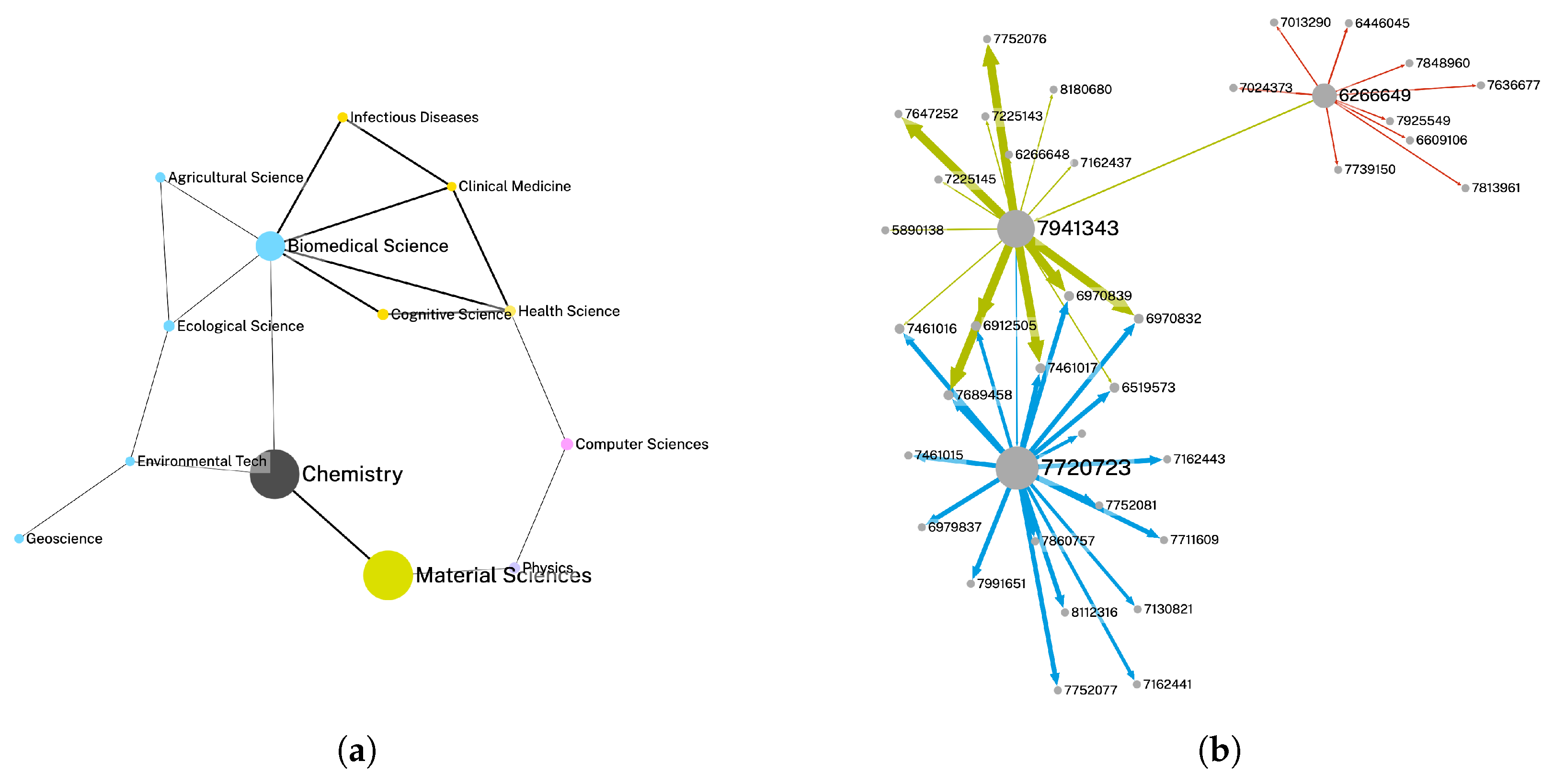
Figure 1. Mapping scientific and intellectual property landscapes. (a) Schematic representation of industrial dependencies in biosensor research, adapted from: [24]. Node sizes represent the activity of research publications; link thickness thickness represents the strength of interconnections between domains. (b) Example of a query to traverse the patent landscape, adapted from: [23]. Codes represent patent IDs (from the U.S. Patent Office, USPTO); link thickness indicates similarity strength; colours denote different types of similarity dimensions, derived from a multipartite graph connecting patent entities and their properties.
Inventions 11 00019 g001
Figure 2. Fisher-Shannon innovation plane. Two innovation paths have been depicted, one corresponding to an exploratory process (blue line) that reduces the order and generates diversity, and to an adaptive trajectory that moves around the current attractor (bottom left white marker) and explores the higher diversity (green line). Occasionally, innovation jumps to another attractor (top right white marker) through a sudden process (black line) that leads to an invention maximising the innovation functional (yellow area).
Inventions 11 00019 g002
Figure 3. Classes used to cover the macro-areas covered by questionnaires.
Inventions 11 00019 g003
Figure 4. Frequency distribution of the Classes illustrating the scope of the questionnaire. Questions were designed to mostly cover micro-areas concerning perceptions about practice, opportunity and challenges for tracing innovation data with granularity ( 37 % of total micro-classes).
Inventions 11 00019 g004
Figure 5. Semantic network of narratives. The narratives’ network is represented as a directed graph between themes and codes. Themes are labelled. Interconnecting codes are highlighted in red; they can be queried to inspect the topics in between of narratives.
Inventions 11 00019 g005
Figure 6. Structures of narratives. Community detection is applied to the projected network code-code, and the giant component is applied to retrieve the largest connected structure. Labelled nodes have the highest betweenness centrality. The structure shows that prototype guidelines are linked to valuing authorship of contributions as governance for measuring the value of innovation, which we interpreted as opportunity to enrich current EU innovation measures; innovation steps are linked to retroactive traceability (prior contributions enabling poster innovation) and accountability; the left branch of the graph shows codes related to data-collection modalities.
Inventions 11 00019 g006
Figure 7. Graph representation of an innovation function. Innovation is defined as a process (in green) that requires a set of inputs (in red) and computes an output (in blue). Graph properties can further specify attributes on nodes and edges, for effective replication of sequences of innovation steps. Outputs are resources that can be used as inputs for new processes, describing compositionality; the directions of arrows allows to query innovation sub-graphs retroactively.
Inventions 11 00019 g007
Figure 8. System architecture showing inputs, processes, and outputs recorded on-chain. Users add new innovation steps, describe how previous resources are utilized, the motivation for doing so and the expected results, which can be asynchronously assessed by future KPI metrics.
Inventions 11 00019 g008
Figure 9. Process flow illustrating how users add innovation steps and reuse prior resources.
Inventions 11 00019 g009
Figure 10. Innovation network concurrently recording contributions on a blockchain ledger. An innovation step is represented by a Process, the resources required in Inputs and produced as Outputs. Users can utilize previous outputs when adding new innovation steps. The protocol defines validation rules that regulate the registration of processes according to predefined policies (e.g., validation may be competence of all contributors or of the tech-transfer office; see: Section 3.3.2). Innovation steps are then registered on-chain, enabling backward reconstruction of pathways through immutable references (e.g., cryptographic or perceptual hashes or content pointers, depending on the chosen implementation).
Inventions 11 00019 g010
Figure 11. Example of a macro-level query retrieved from the knowledge graph. Illustrative flows of innovation paths through TRLs. Inputs (in red) (e.g., ideas, prior art, know-how from teams, and funding) are computed by processes (e.g., experiments, simulations, and components) (in green) into outputs (in blue) (e.g., system integrations, first publications, and patents). Outputs can be reused as inputs for new processes, such as pilot validations and upscaling of consolidated results (e.g., new patents and final products at maturity stages).
Inventions 11 00019 g011
Figure 12. Example micro-level query retrieved from the knowledge graph. Illustrative flows of innovation paths developed within the research consortium. Sequences of innovation steps are queried against specified temporal intervals: innovation flows display how early-stage data (TRL 1) mapped onto final policies (TRL 9). The innovation network can be plugged into other research consortia to facilitate tech transfer to other research portfolio. Flows represent types of resources (in red) such as data, equipments, and settings that are required for each methods (in green) and the outcomes (in blue) they produce, such as patents, publications, and policy outcomes. Failures or not-patentable contributions can be also retrieved. Authorship is revealed for all innovation steps, enabling flexibility to tune economic value along the supply chain of innovation in economic policies.
Inventions 11 00019 g012
Table 2. Conceptual translations of physics terms for innovation studies.
Physics TermInterpretation for Innovation Studies
H G (Shannon entropy)Global diversity of information across nodes:
describe the variety of ideas.
I G (Fisher information)Local coherence:
describe the collaboration or specialization in a field.
Ψ G (innovation functional)Balanced innovation objective:
trade-off between exploration/consolidation of novel/old ideas.
Disclaimer/Publisher’s Note: The statements, opinions and data contained in all publications are solely those of the individual author(s) and contributor(s) and not of MDPI and/or the editor(s). MDPI and/or the editor(s) disclaim responsibility for any injury to people or property resulting from any ideas, methods, instructions or products referred to in the content.