

Article

An ANN-Based MPPT and Power Control Strategy for DFIG Wind Energy Systems with Real-Time Validation

1
Higher School of Technology, Sidi Mohamed Ben Abdellah University, Fez 30000, Morocco
2
Laboratory of Materials, Signals, Systems and Physical Modeling, Department of Physics, Faculty of Sciences, Ibn Zohr University, B.P. 8106, Agadir 80000, Morocco
3
Industrial Technologies and Services Laboratory, Higher School of Technology, Sidi Mohamed Ben Abdellah University, Fez 30000, Morocco
4
Department of Electrical Engineering, Faculty of Engineering, Al-Baha University, Alaqiq 65779-7738, Saudi Arabia
5
Electrical Engineering Department, Faculty of Engineering, Minia University, Minia 61111, Egypt
*
Authors to whom correspondence should be addressed.
Inventions 2026, 11(1), 18; https://doi.org/10.3390/inventions11010018
Submission received: 7 January 2026 / Revised: 11 February 2026 / Accepted: 13 February 2026 / Published: 15 February 2026
(This article belongs to the Special Issue Recent Advances and Challenges in Emerging Power Systems: 3rd Edition)

Abstract

Doubly Fed Induction Generators (DFIGs) are widely employed in variable-speed wind turbine systems due to their high efficiency, enhanced controllability, and economic viability. This paper presents an intelligent neural-network-based control strategy aimed at maximizing wind energy extraction while ensuring accurate speed regulation of a DFIG by continuously tracking the maximum power point under fluctuating wind conditions. Two independent control schemes are developed for the decoupled regulation of active and reactive power in a grid-connected DFIG wind turbine. The first scheme is based on conventional field-oriented control using proportional integral regulators (FOC–PI), while the second employs an Artificial Neural Network Controller (ANNC). The effectiveness of both controllers is evaluated through MATLAB/Simulink 2020 Version simulations of a 1.5 MW DFIG-based wind energy conversion system and experimentally validated using a real wind profile implemented on an eZdsp TMS320F28335 digital signal processor. The proposed control approach achieves low output ripple, a steady-state error below 0.16%, total harmonic distortion of 0.38%, and a limited overshoot of 5%. The obtained results confirm the robustness and reliability of the implemented control strategies in enhancing power capture and improving overall system stability under variable wind conditions.

1. Introduction

Due to increasing energy consumption, limited fossil fuel availability, and critical environmental issues, several nations have expanded the incorporation of renewable energy resources, notably solar, wind, and biomass systems [1,2,3]. Wind energy, as a sustainable source, has gained substantial attention as a crucial factor in the transition towards cleaner and more efficient energy systems [4,5].
Generally, wind energy is characterized by its variability and the nonlinear behavior of power generation, which necessitates precise identification of the optimal operating point to achieve maximum efficiency [4,5]. Hence, to ensure maximum power capture under variable wind conditions, the inclusion of a controller capable of tracking the optimal power point is necessary. To overcome this challenge, a novel intelligent control technique grounded in neural network theory is presented in this investigation.
Doubly fed induction generators (DFIGs) have recently gained widespread adoption among the commonly used generators in WECS applications [6,7]. This common selection of DFIGs as a compelling choice for wind energy applications results from their durability, structural resilience, and capacity for reactive and active power regulation under variable-speed conditions [8,9,10].
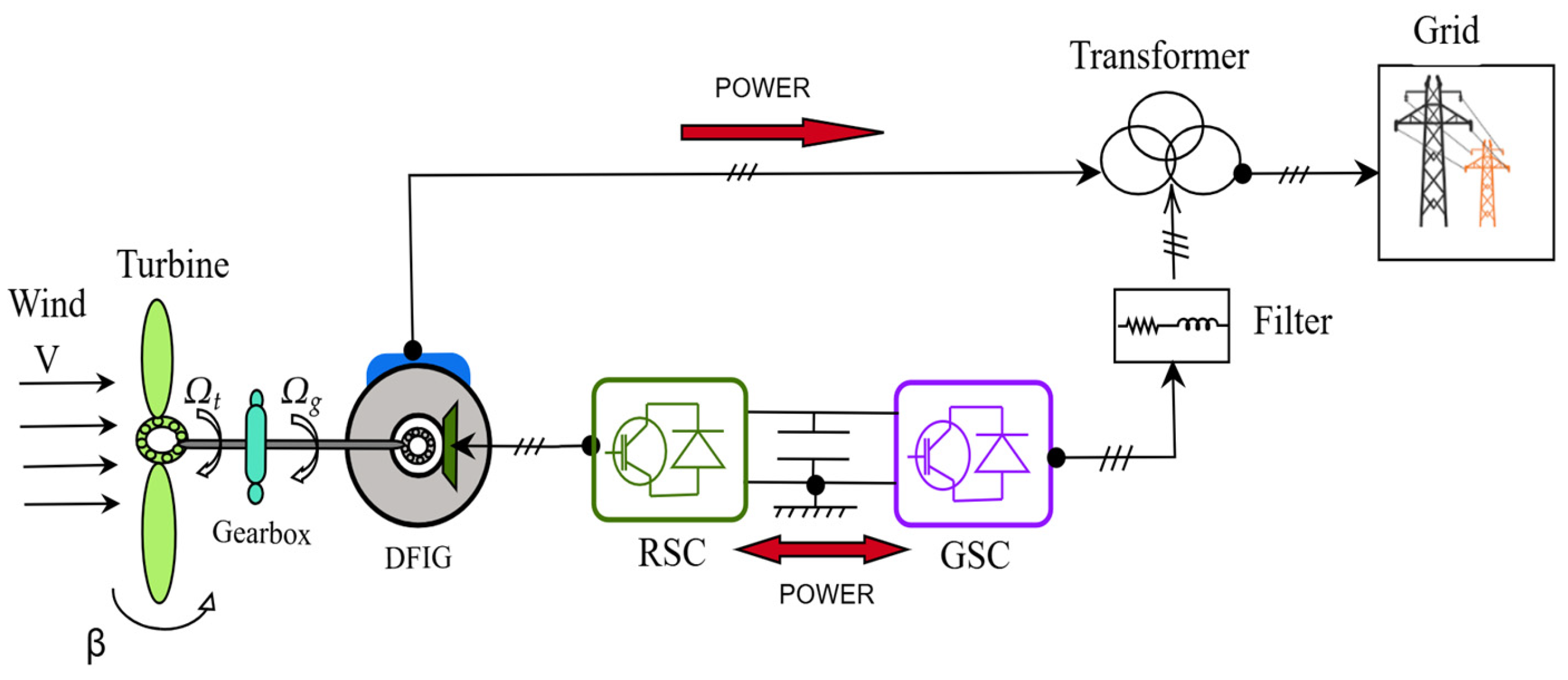
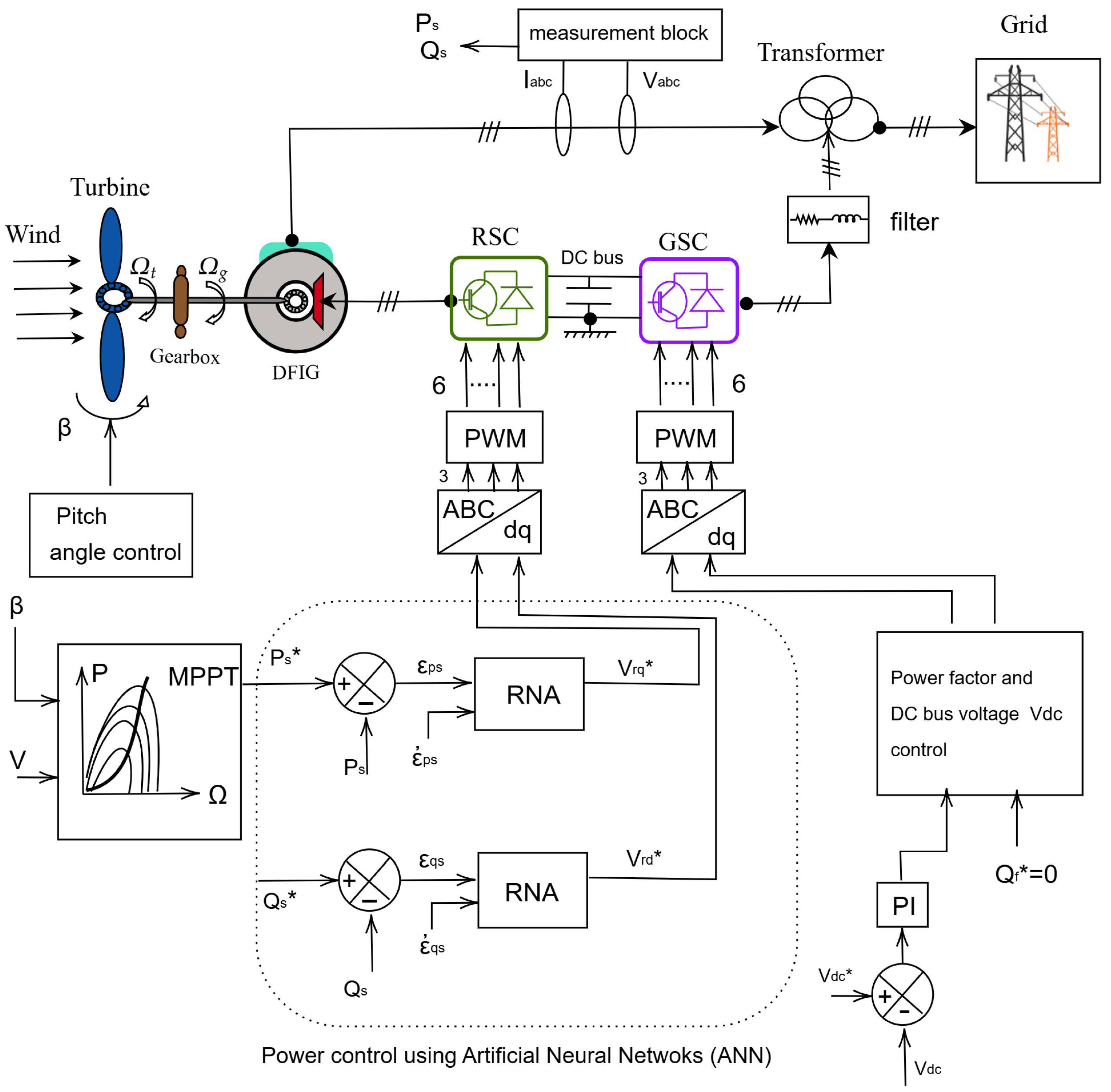
To ensure high-quality electrical energy generation in a DFIG-based wind power system, appropriate control strategies must be applied to regulate the stator power output. This includes controlling the active power to track the turbine’s reference power for improved efficiency, while maintaining the reactive power at zero to ensure a unity power factor on the stator side. Figure 1 illustrates the schematic overview of the DFIG-based wind energy system, in which the rotor circuit is interfaced with the grid through back-to-back power converters, whereas the stator is directly connected to the utility grid.
To enhance the performance of DFIGs, various strategies utilizing nonlinear control strategies have been introduced in recent years [11,12,13]. Among the various nonlinear control techniques for DFIGs, sliding mode control is widely adopted and valued for its robustness [14,15]. However, its primary limitation is the chattering effect caused by the discontinuous nature of the control signal. To mitigate the chattering effect, advanced sliding mode control (SMC) methods like Integral SMC [16], Second-Order SMC [17], and Super-Twisting SMC [18] have been introduced in research studies, offering superior dynamic characteristics such as finite-time convergence. The literature includes several investigations into methods such as scalar control [19], adaptive Fuzzy Logic control [20], backstepping control [21], Sliding mode control [22], and Direct power control (DPC) [23]. However, a notable limitation in these studies remains the absence of simulations using real wind profiles and the lack of comparative assessments of multiple control strategies under a common environment.
Motivated by the limitations observed in existing DFIG control strategies—particularly the lack of unified intelligent control frameworks, insufficient experimental validation, and limited comparative performance assessment—this paper proposes a comprehensive artificial neural network (ANN)-based control approach for DFIG-based wind energy conversion systems. The proposed strategy integrates an ANN-driven MPPT speed controller with ANN-based active and reactive power control, enabling optimal power extraction, enhanced dynamic response, and improved power quality under realistic wind conditions.
Several experimental studies have been conducted on DFIGs to validate various control strategies, as summarized in Table 1. These works include both linear and nonlinear approaches implemented using different controllers, such as PI, sliding mode, and synergetic controllers, and are mainly applied to low-power DFIG systems ranging from 1 kW to 15 kW. Overall, the experimental results indicate that none of the reported methods completely eliminates active and reactive power ripples, and their dynamic performance varies significantly. In particular, conventional DPC-based approaches exhibit pronounced current and power ripples, leading to high current THD, which may negatively affect power quality, equipment lifetime, and grid stability.
In contrast to many previous studies that rely solely on numerical simulations, the effectiveness of the proposed control scheme is validated through both MATLAB/Simulink simulations and real-time implementation using an eZdsp TMS320F28335 platform. A detailed comparative evaluation with conventional field-oriented control using PI regulators is conducted to highlight the improvements in tracking accuracy, transient behavior, harmonic distortion, and robustness. Through this integrated design and validation framework, the present study aims to provide a practical, high-performance, and experimentally verified control solution for modern DFIG-based wind energy systems.
In summary, the key contributions of this work are:
  • A unified intelligent control scheme integrating MPPT-based speed control with ANN-based active/reactive power control for the DFIG.
  • A full real-time implementation using the eZdsp TMS320F28335 under a real wind profile, rarely reported in ANN-based DFIG studies.
  • A consistent comparison between FOC-PI and ANN controllers, showing clear improvements (lower ripple, 0.16% steady-state error, 5% overshoot reduction, and 0.38% THD reduction).
  • This combination and the real-time validation reinforce the originality and practical relevance of the contribution.
The work in this paper is organized into four main sections. Section 2 begins with the development of the turbine model, presents the neural network-based MPPT speed controller, details the dynamic DFIG modeling, and introduces and analyzes the proposed Artificial Neural Network Controller (ANNC). Section 3 presents the numerical results and describes the practical implementation of the proposed control strategy using the eZdsp TMS320F28335 board, including experimental validation under varying wind speeds. Section 4 concludes the study by highlighting the main outcomes.

2. Materials and Methods

2.1. Wind Turbine Modeling

The basic element of wind energy conversion into electrical energy is the wind turbine, which generates electricity by driving an electrical generator. The airflow around the blades creates lift, producing a rotational force that turns a shaft within the nacelle, which is connected to a gearbox. By increasing the rotational speed, the gearbox enables the generator to function efficiently, utilizing magnetic fields to transform mechanical motion into electricity [1,5].
The wind turbine’s power generation is governed by the expression given in Equation (1) below:
P t = C p ( β , λ ) × ρ π V 3 R 2 2
In this context, the power coefficient is presented by Cp (β, λ), and it is a function of β, the pitch angle, and λ, the tip speed ratio. R is set aside for the rotor radius, and ρ denotes the air density. The Cp (β, λ), in this work, is presented by Equation (2) as follows:
{ C p ( β , λ ) = e x p ( 21 λ i ) × ( 2.5 116 2 λ i + 0.2 β ) + 0.0068 λ 1 λ i = 0.035 β 3 + 1 + 1 0.08 β + λ
The formulation governing the tip speed ratio is expressed in Equation (3).
λ = Ω t V × R
Ωt presents the wind turbine rotor’s angular velocity.
The expression governing the relationship between the mechanical and the electromagnetic torques is presented in Equation (4) below:
C mec = d Ω g d t × J = C f + C g C em
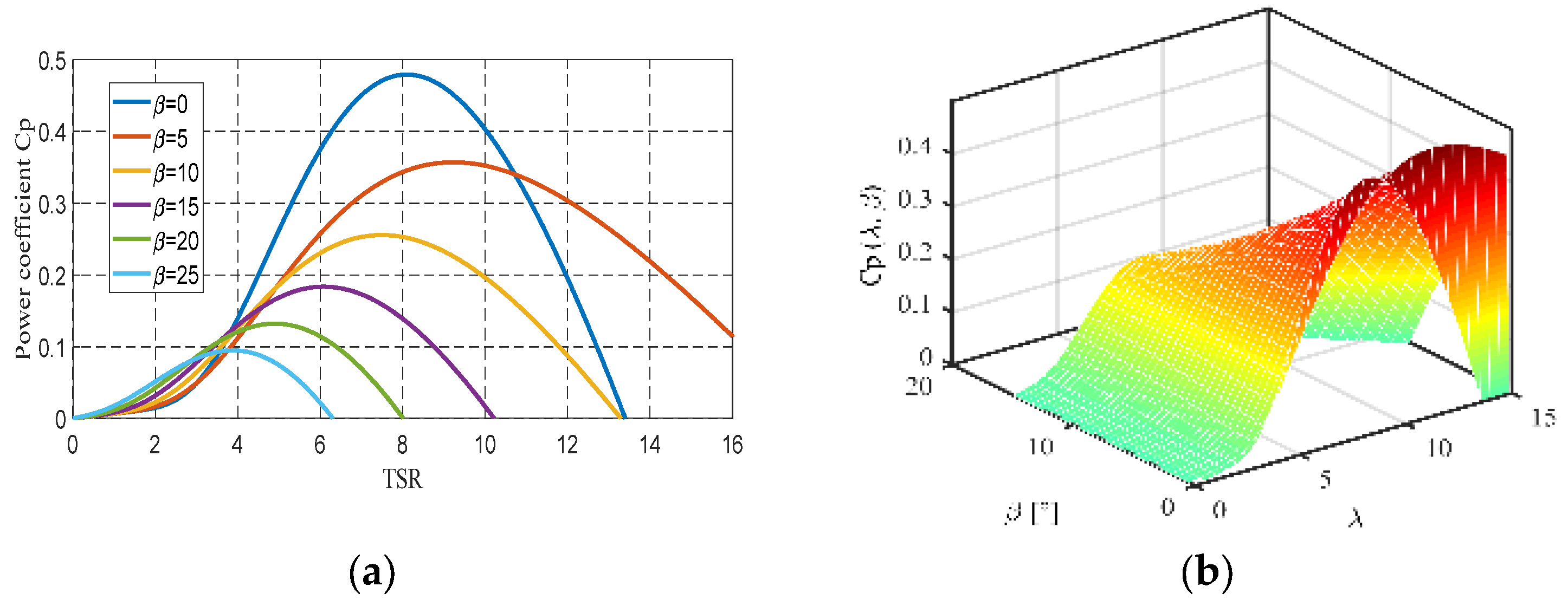
In Figure 2a,b, the power coefficient dependency on λ for variable β values, in two and three dimensions, respectively. As depicted in the figures, the optimal Cp (β, λ) value of 0.479 is attained for β = 0° and λopt = 8.2. Subsequently, an MPPT control is adopted to keep the power coefficient at its peak.
  • MPPT-based speed regulation
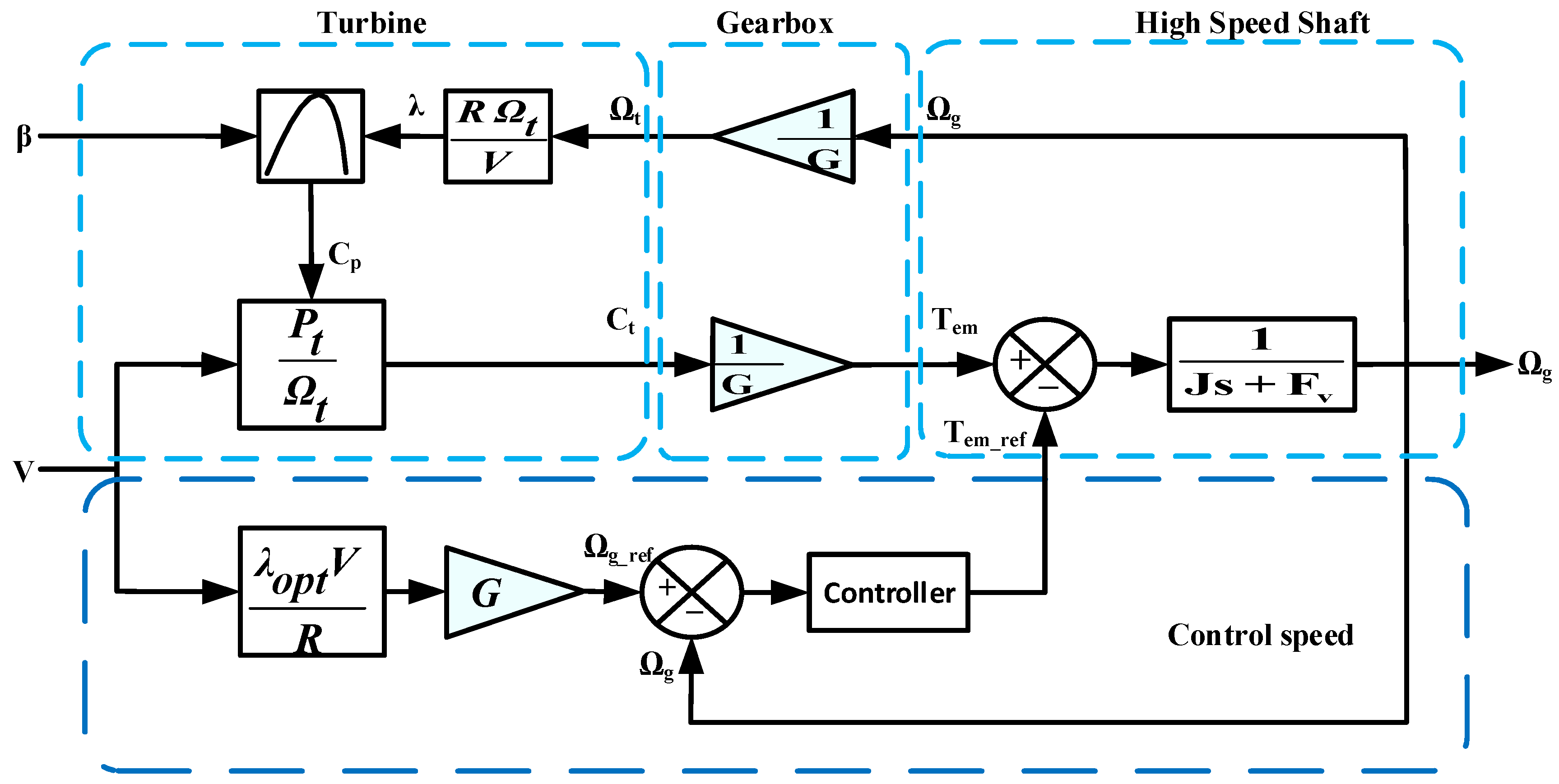
The MPPT approach (Figure 3) seeks to boost the effectiveness of energy harvesting from wind within WECS. By adjusting the generator’s electrical power according to λopt, the speed controller ensures that the reference torque Tem_ref is effectively tracked by the electromagnetic torque. This approach guarantees that the rotational speed remains aligned with the desired reference Ωref, derived from the speed control strategy.
  • Artificial neural networks
Due to the nonlinear dynamics of wind power generation, this paper employs the artificial neural network (ANN) control approach. ANN-based control techniques are among the most recent and advanced strategies, providing high-performance solutions for modeling complex nonlinear systems [16,23,32].
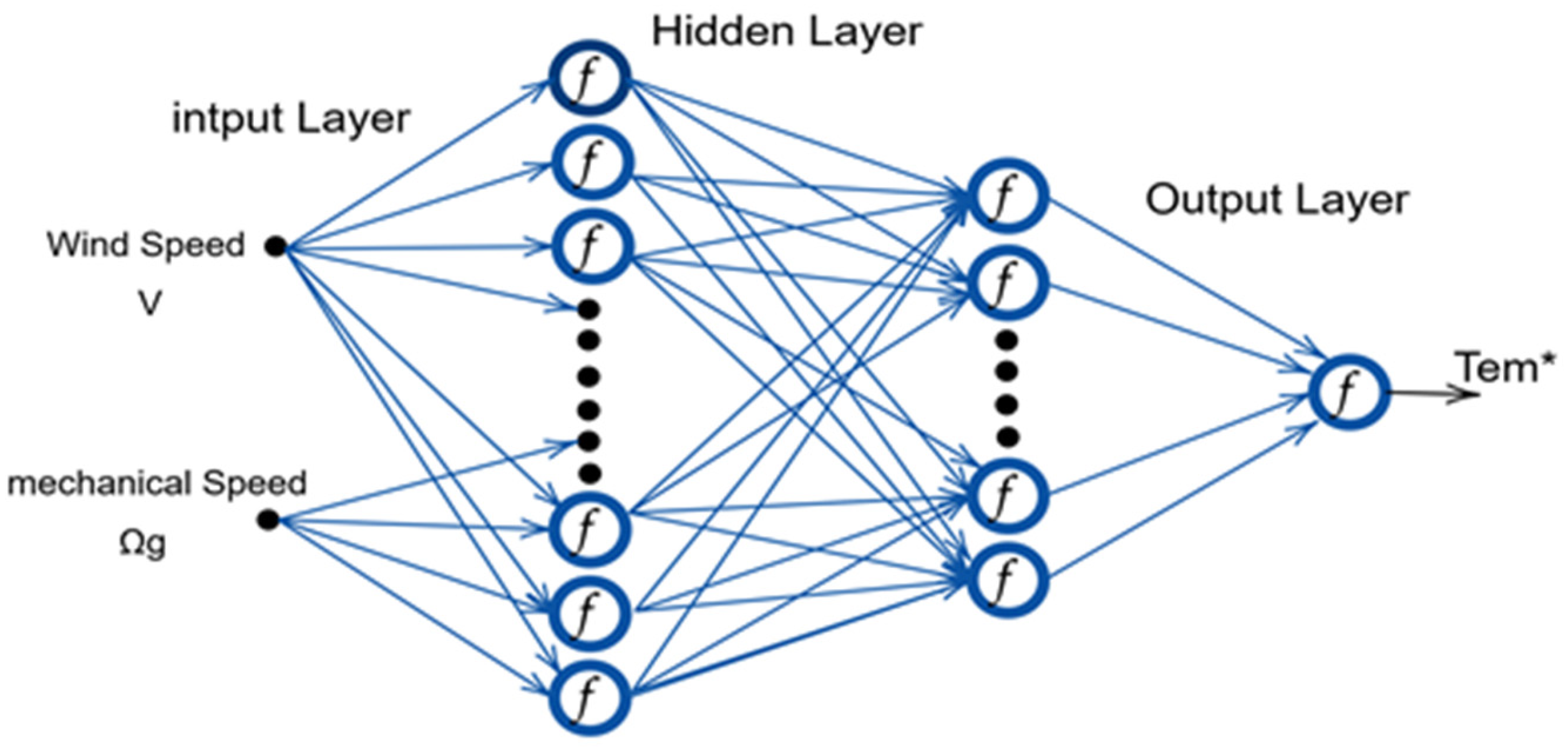
The internal arrangement of the ANN is displayed in Figure 4.
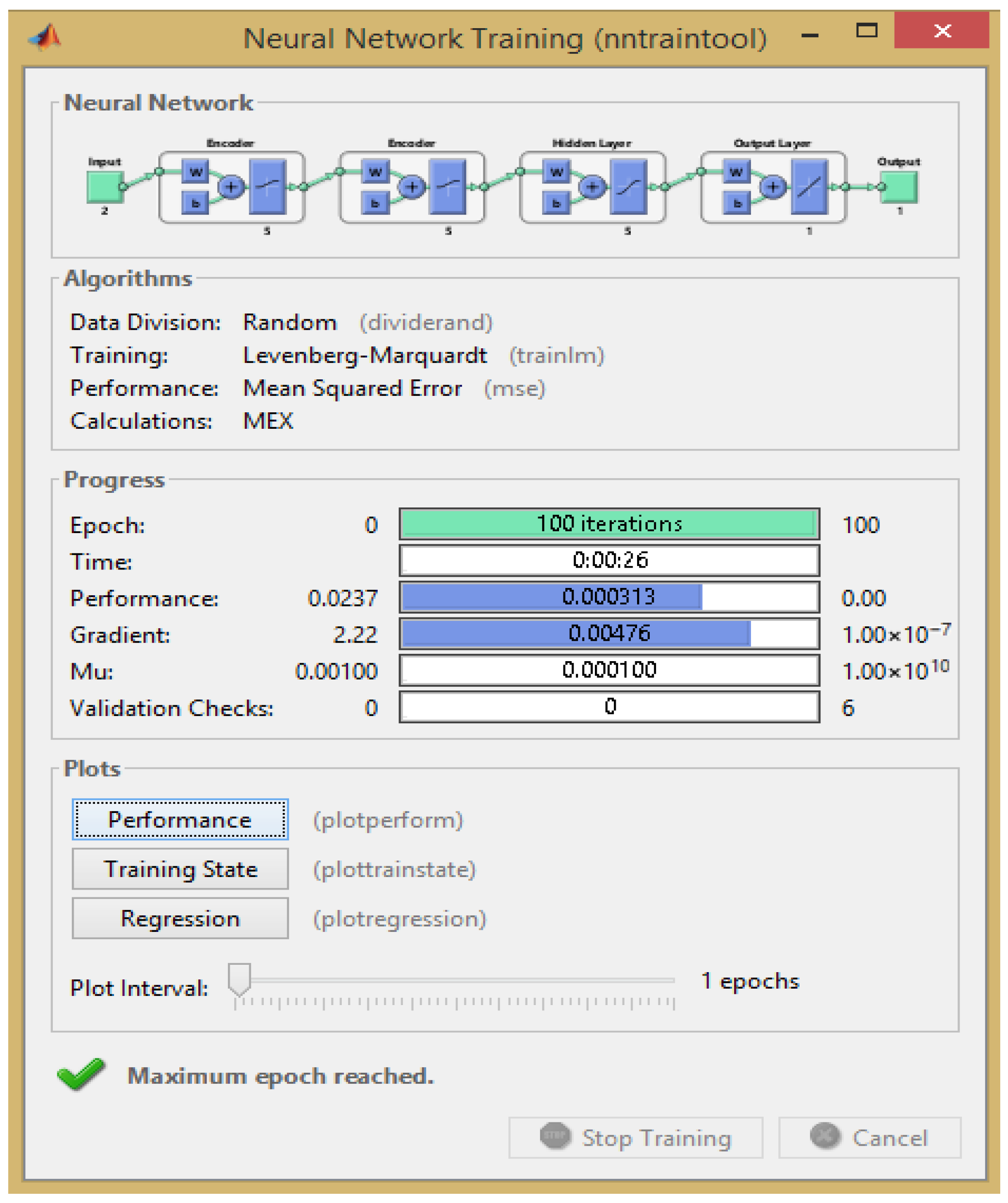
The architecture of the neural network includes two neurons constituting the input layer, modeling wind and mechanical speeds. The architecture includes as well two hidden layers and a terminal layer with a single neuron assigned to the reference electromagnetic torque. After multiple training iterations, the extracted results are represented in Figure 5 and Figure 6.
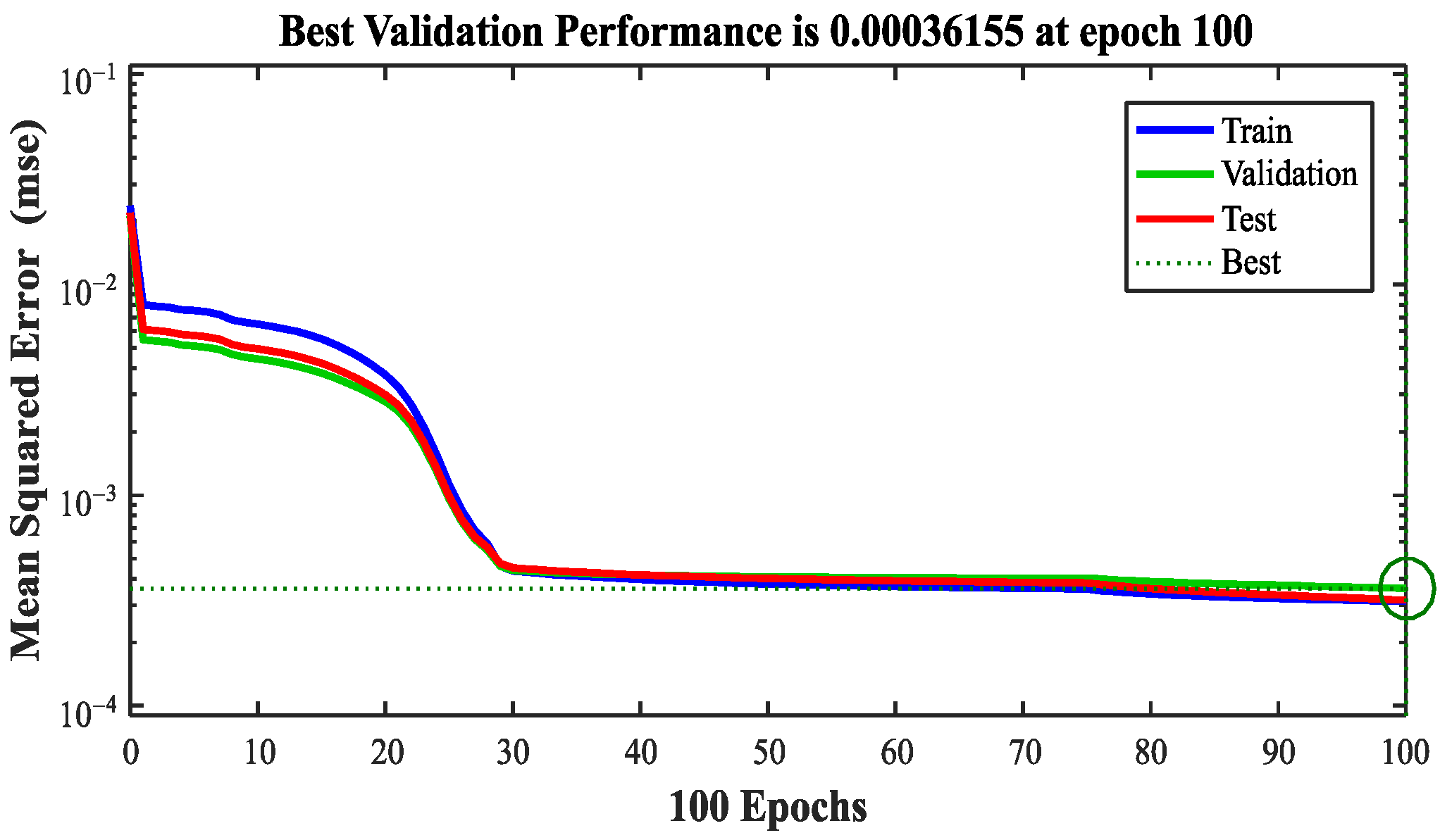
The ANNC training was performed using the Levenberg–Marquardt algorithm, valued for its effectiveness and resilience [16,23]. The dataset was partitioned into three subsets: 75% for training, 15% for testing, and 10% for validation. As depicted in Figure 6, the suggested structure (2-5-5-5-1) exhibits rapid convergence to an optimal solution until the 30th iteration, followed by slight error fluctuations, attaining 3.6155 × 10⁻⁴ at the 100th epoch.

2.2. Mathematical Model of DFIG

A three-phase DFIG can be described using the dynamic equation in the synchronously rotating d-q reference frame, as shown in Equations (5)–(7) below [17,33]:
Voltage’s analytical representation is as follows:
{ V s q = ω s ϕ s d + d d t ϕ s q + R s i s q V s d = ω s ϕ s q + d d t ϕ s d + R s i s d V r q = ( ω r ω s ) ϕ r d + d d t ϕ s q + R r i r q V r d = ( ω r ω s ) ϕ r q + d ϕ s d d t + R r i r d
Flux’s analytical representation is as follows:
{ ϕ s q = i sq × L s + i rq × L m ϕ s d = i sd × L s + i rd × L m ϕ r q = i rq × L r + i sq × L m ϕ r d = L r × i sd + L m × i rd
Power’s analytical representation is as follows:
{ P s = 3 2 × R e { I s × V s } = 3 × ( i sq V sq + i sd V sd ) 2 Q s = 3 2 × I m { I s × V s } = 3 × ( i sq V sd i sd V sq ) 2
In these equations, ωs and ωr indicate the stator and rotor pulsations, whereas Rs and Rr are set-aside for the stator and rotor resistances, respectively.
The torque generated electromagnetically is defined in Equation (8) below [22,34]:
C em = 3 2 L m L s p × Im { I r × Ψ s } = 3 2 L m L s p × ( i rq ϕ sd i rd ϕ sq )

2.3. Control of DFIG

  • Field-oriented control
Among the various control methods for DFIG-based wind turbines, field-oriented control is a commonly adopted strategy in the literature. Its objective is to replicate the dynamics of an independently excited DC machine, with the inductive current governing the magnetic flux and the armature current governing the electromagnetic torque [17,21,22]. The current paper presents a field-oriented control technique that employs a PI controller, ensuring decoupled control of reactive power, active power, and electromagnetic torque.
The active and reactive power expressions for the stator and rotor voltages are formulated as given in Equation (9) [22]:
{ Q s = 3 ( M L s i rd Ψ s L s ) 2 V s P s = 3 V s M 2 L s i rq
The expression governing the electromagnetic torque is introduced in Equation (10), as follows:
C e m = 3 2 Ψ s L m L s p i r q = 3 2 V s ω s L m L s p i r q
The resultant rotor voltages are mathematically described as shown in Equation (11):
{ V r q = L r σ d i r q d t + R r i r q + L r ω s σ i r d + g L m L s V s V r d = L r σ d i r d d t + R r i r d L r ω s σ g × i r q
where σ stands for the DFIG’s dispersion coefficient, expressed as: σ = ( L r L s M 2 L r L s ) .
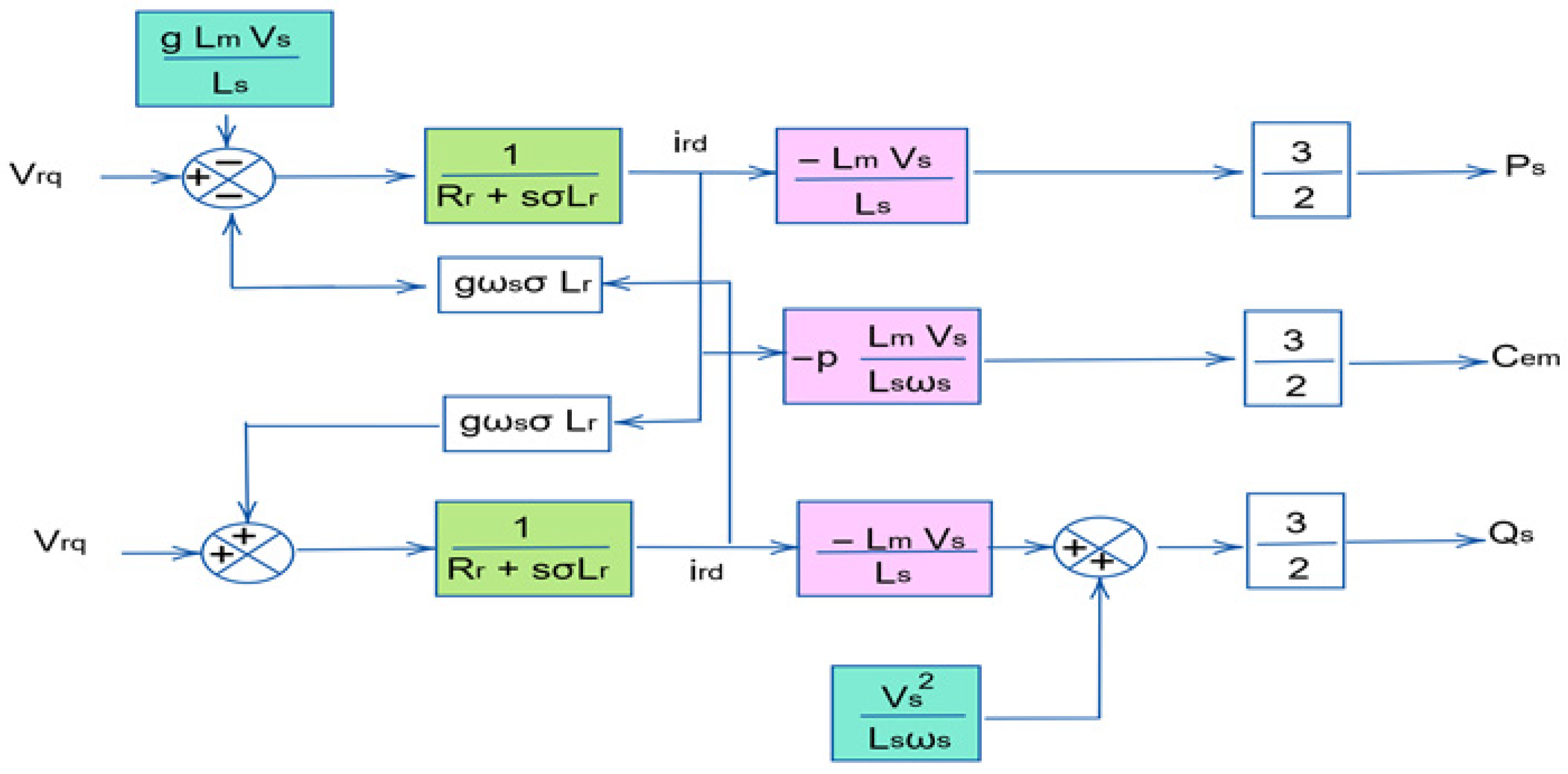
The Park (d–q) reference frame-based schematic of the DFIG model is depicted in Figure 7.
  • Artificial Neural Network Controller
This section introduces a novel intelligent control technique to address the drawbacks associated with traditional methods such as vector control with PI controllers, backstepping control (BAC), and nonlinear sliding mode control (SMC). To refine vector control, neural network-based controllers are implemented, ensuring better regulation of active and reactive power, currents, and torque while enhancing system performance. ANNs are widely adopted due to their straightforward implementation and higher accuracy compared to alternative techniques [23,32]. Moreover, the implementation of ANNs accelerates system response and significantly improves robustness [32]. The suggested intelligent control technique in this section is designed for the Rotor Side Converter (RSC). Three main points below underline the original contribution of this research:
  • The suggested intelligent approach compensates for system non-linearity caused by parametric variations, typically induced by technical issues like mechanical wear and generator overheating.
  • The new strategy proposed for power control of the DFIG is presented and benchmarked against other techniques of recent studies reported in the literature.
  • This intelligent control is noted for its durable performance, minimal design complexity, and adaptability to technological platforms.
  • The improvement of power control through ANN controllers can be considered an innovative combination according to existing literature. A multilayer perceptron (MLP) network is adopted in this work, comprising three layers: an input, an intermediate, and an output. The input layer receives sensor measurements, while neurons in the hidden layers process the data in a feedforward manner, ensuring no feedback connections. The final layer delivers the anticipated outputs.
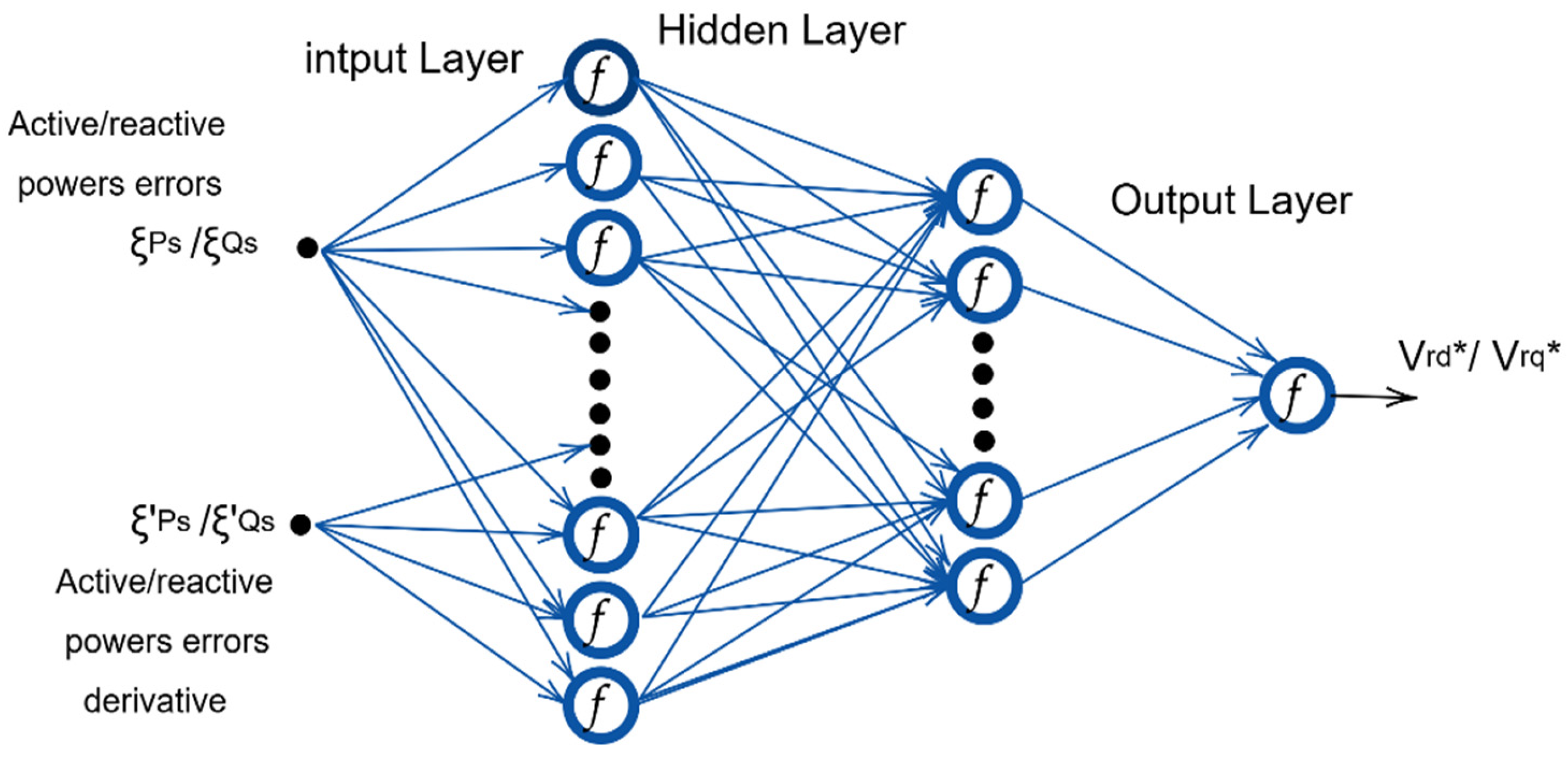
The architectural diagrams of the two MLP-based neural controllers designed for DFIG reactive and active power control are shown in Figure 8. The architecture of the two MLP-type neural controllers included an input layer with two neurons corresponding to the active power error (ξPs) and its derivative (ξPs′), and the reactive power error (ξQs) and its derivative (ξQs′). Additionally, the structure had two hidden layers and an output layer containing one neuron, which defined the reference rotor voltage components Vrq_ref and Vrd_ref [23,32]. As shown in Table 2, the tuning variables of the ANN controllers are outlined. Hyperbolic sigmoid neurons were selected as activation functions for the hidden layers, as defined in Equation (12), whereas the output layer employed a linear activation function [1,16,23].
s g m = exp ( 2 x ) 1 1 + exp ( 2 x )
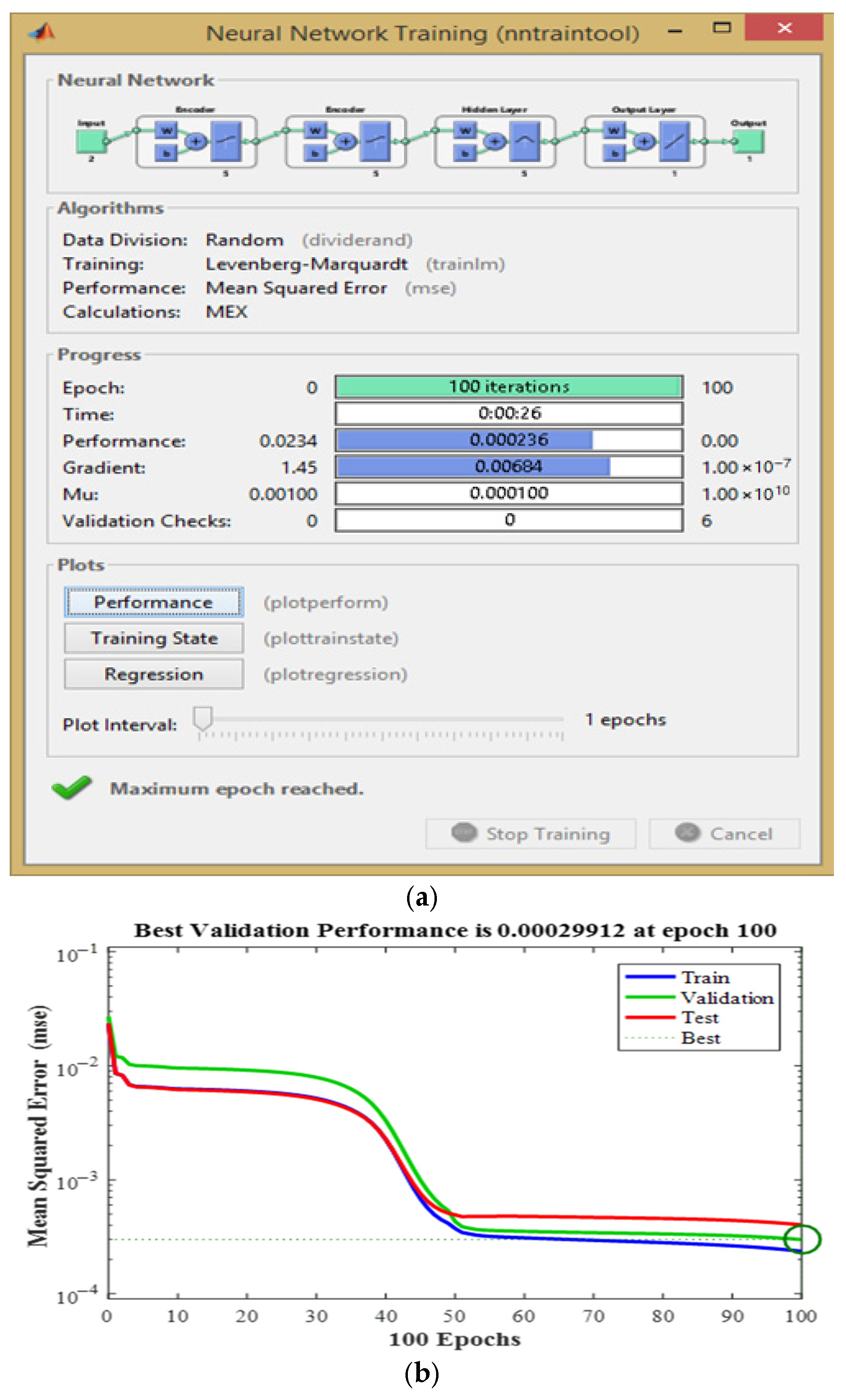
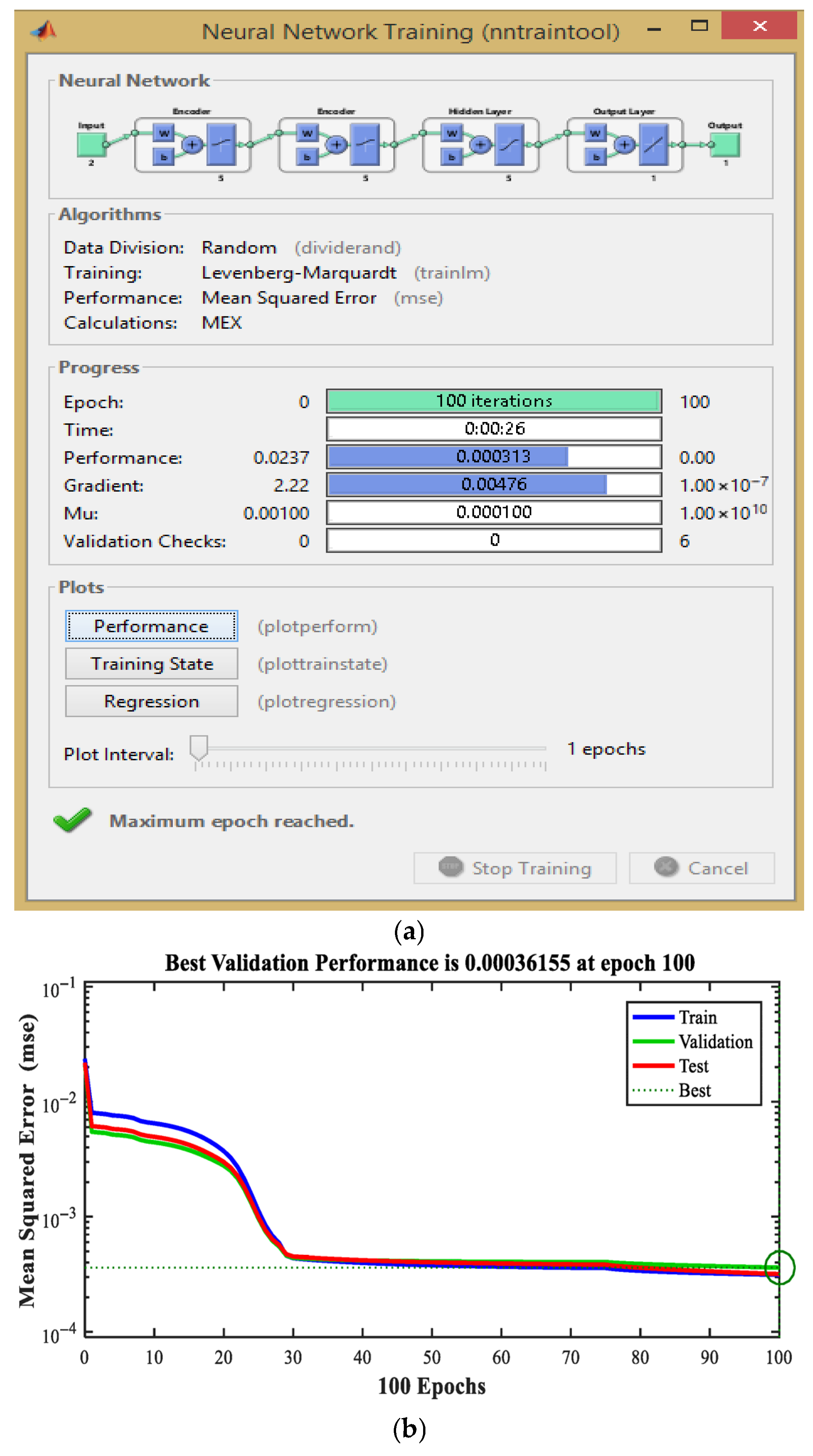
Figure 9a and Figure 10a display the progressive learning behavior of the neural controllers for active and reactive power adjustment. As depicted in Figure 9a and Figure 10a, the neural controllers for active and reactive power exhibit fast learning progress. The proposed (2-5-5-5-1) architectures achieve convergence, with the active power Ps controller reaching an optimal solution by the 30th iteration and the reactive power Qs controller by the 50th iteration. The progression of the mean squared error (MSE) concerning the iteration count for active and reactive power controllers is depicted in Figure 9b and Figure 10b. Notably, both controllers achieve low MSE values, stabilizing at 3.62 × 10⁻⁴ and 3.69 × 10⁻⁴ by the 100th iteration.
A block diagram of the complete system is depicted in Figure 11, illustrating the power control capabilities of a DFIG regulated by artificial neural networks on the generator-side converter.

3. Results and Discussions

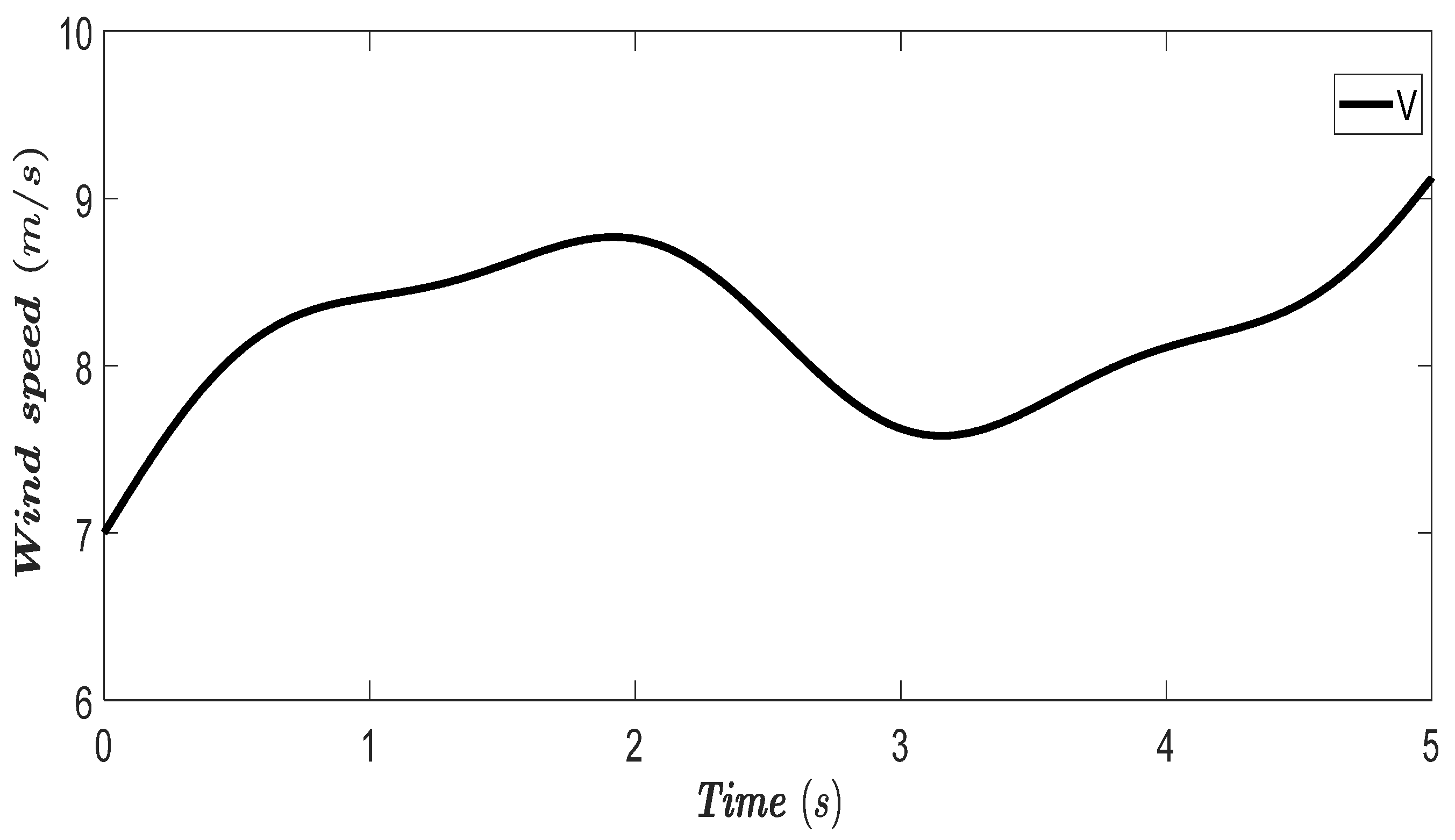
A simulation test is conducted under MATLAB/SIMULINK software to assess the effectiveness of the newly introduced control methods, using a 1.5 MW DFIG-based wind turbine model. The parameters of the global system under study are provided in Table 3. The WECS control system simulation was performed using the wind profile illustrated in Figure 12.
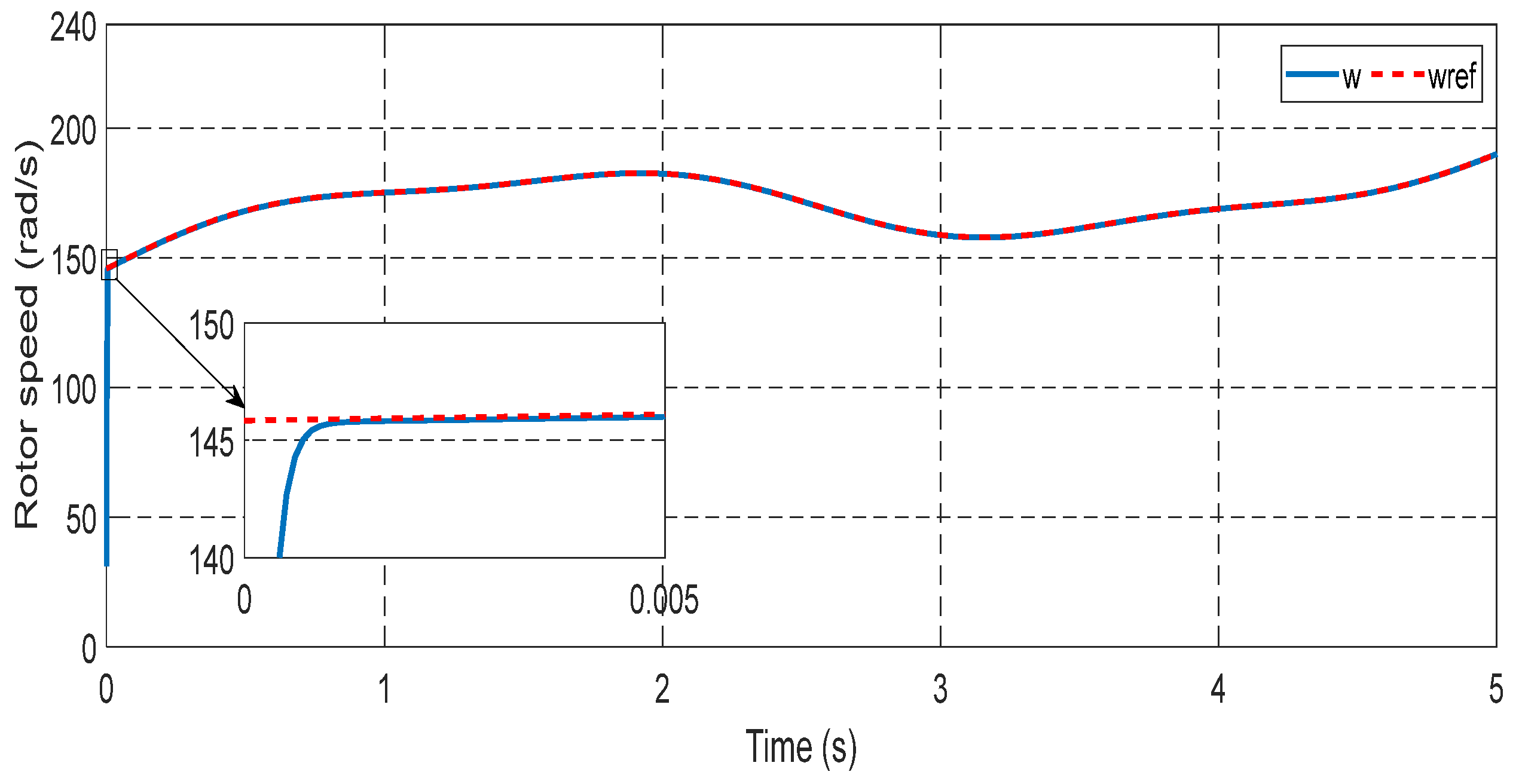
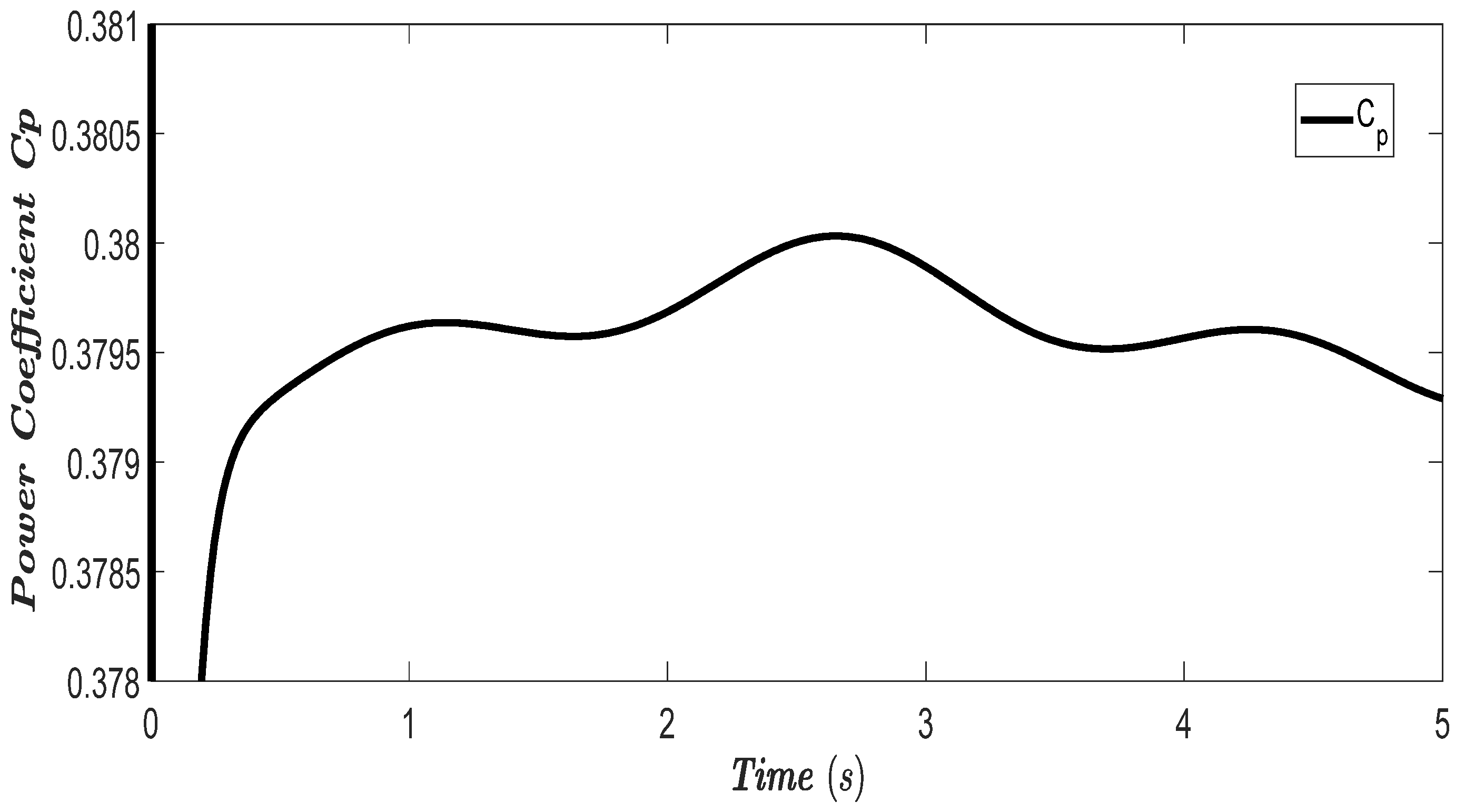
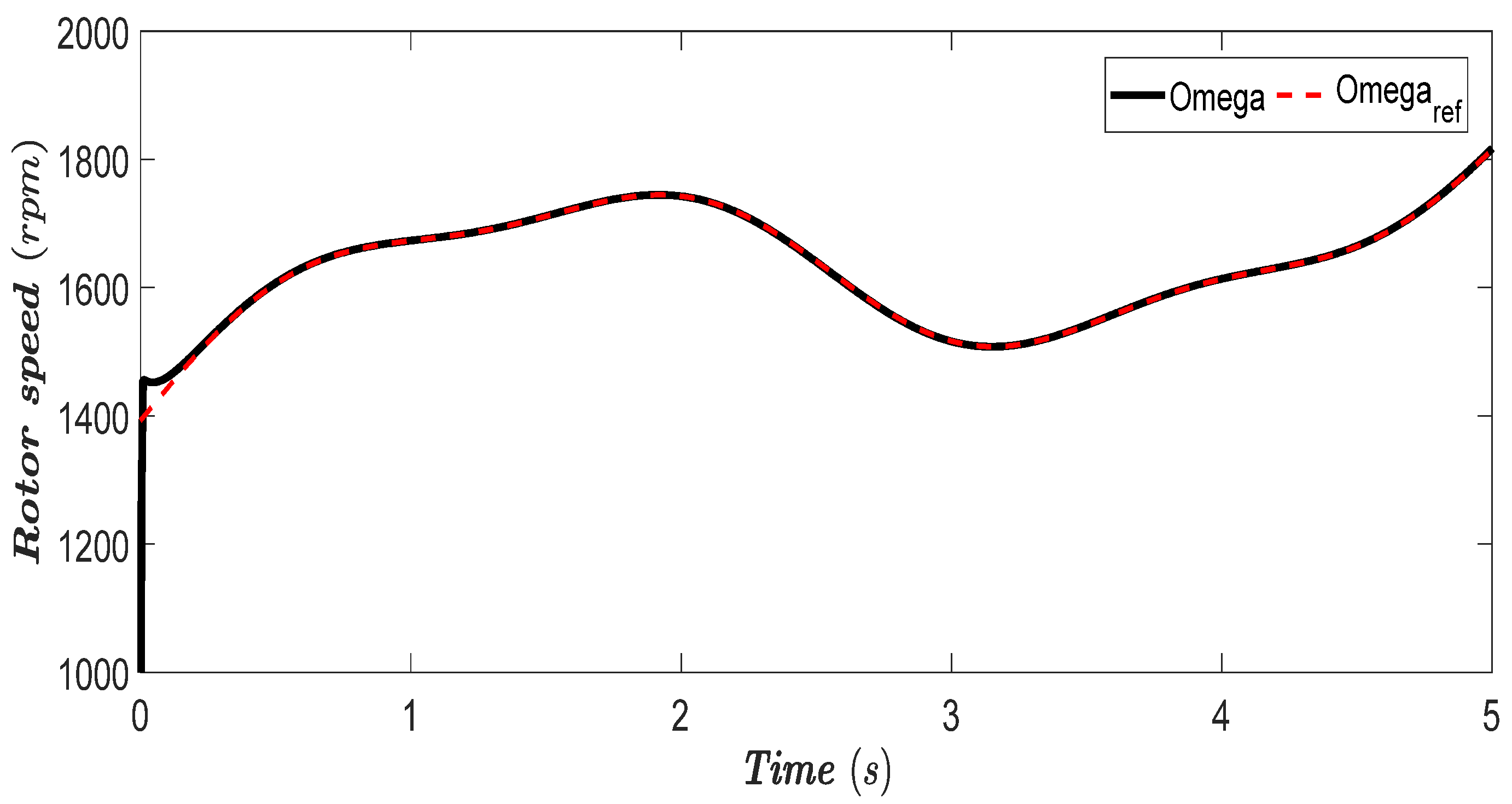
Figure 13 and Figure 14 indicate that the Cp(β,λ) value is nearly identical to its maximum value of Cp_max (β,λ) = 0.479 for β = 0°, which is achieved when the tip speed ratio λopt reaches its optimal value of λopt = 8.2. Figure 15 depicts the DFIG’s mechanical speed, achieved by applying MPPT with speed control using the ANN-based control method. From the figure, it is observed that the recorded mechanical speed matches the reference precisely.
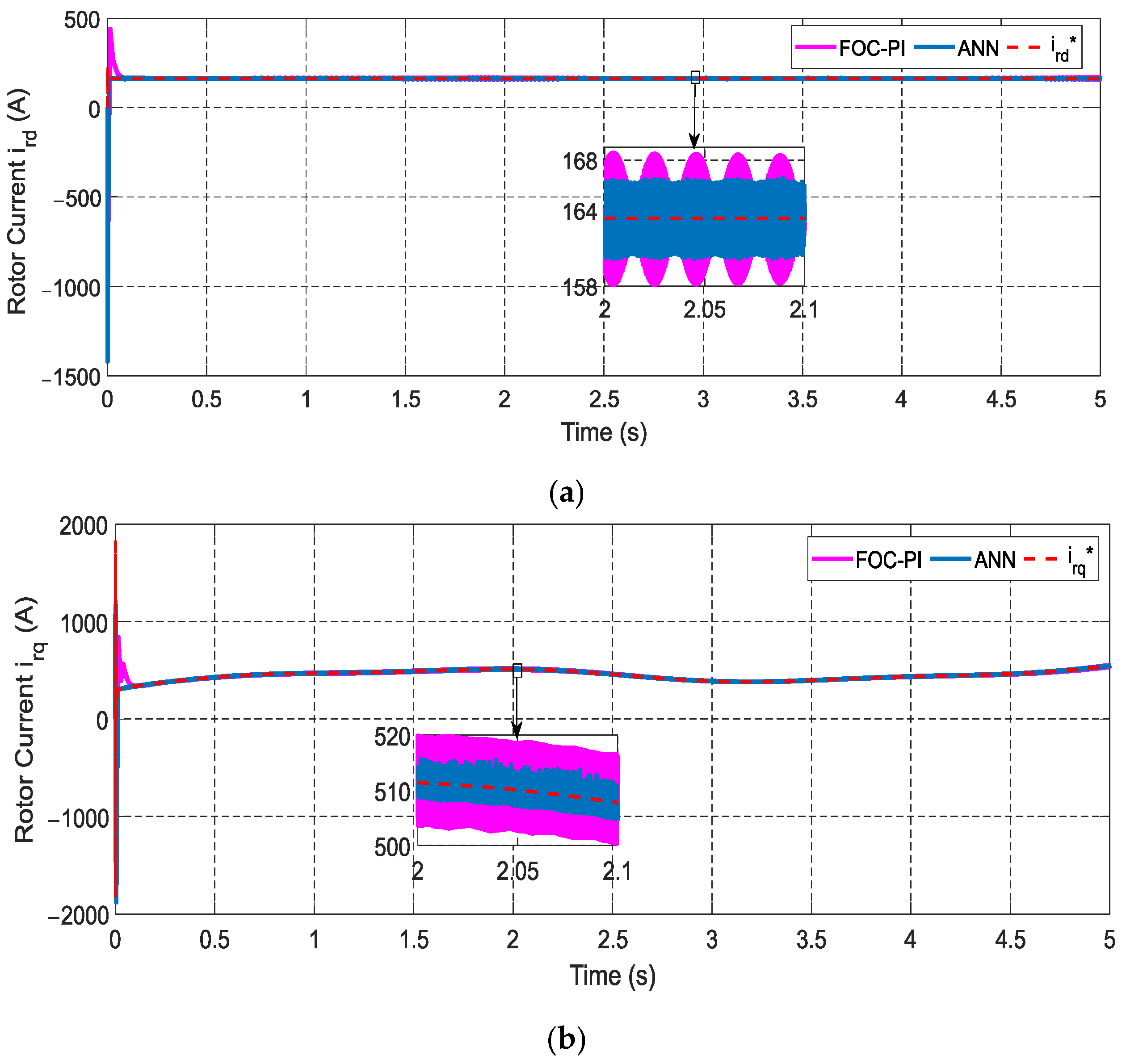
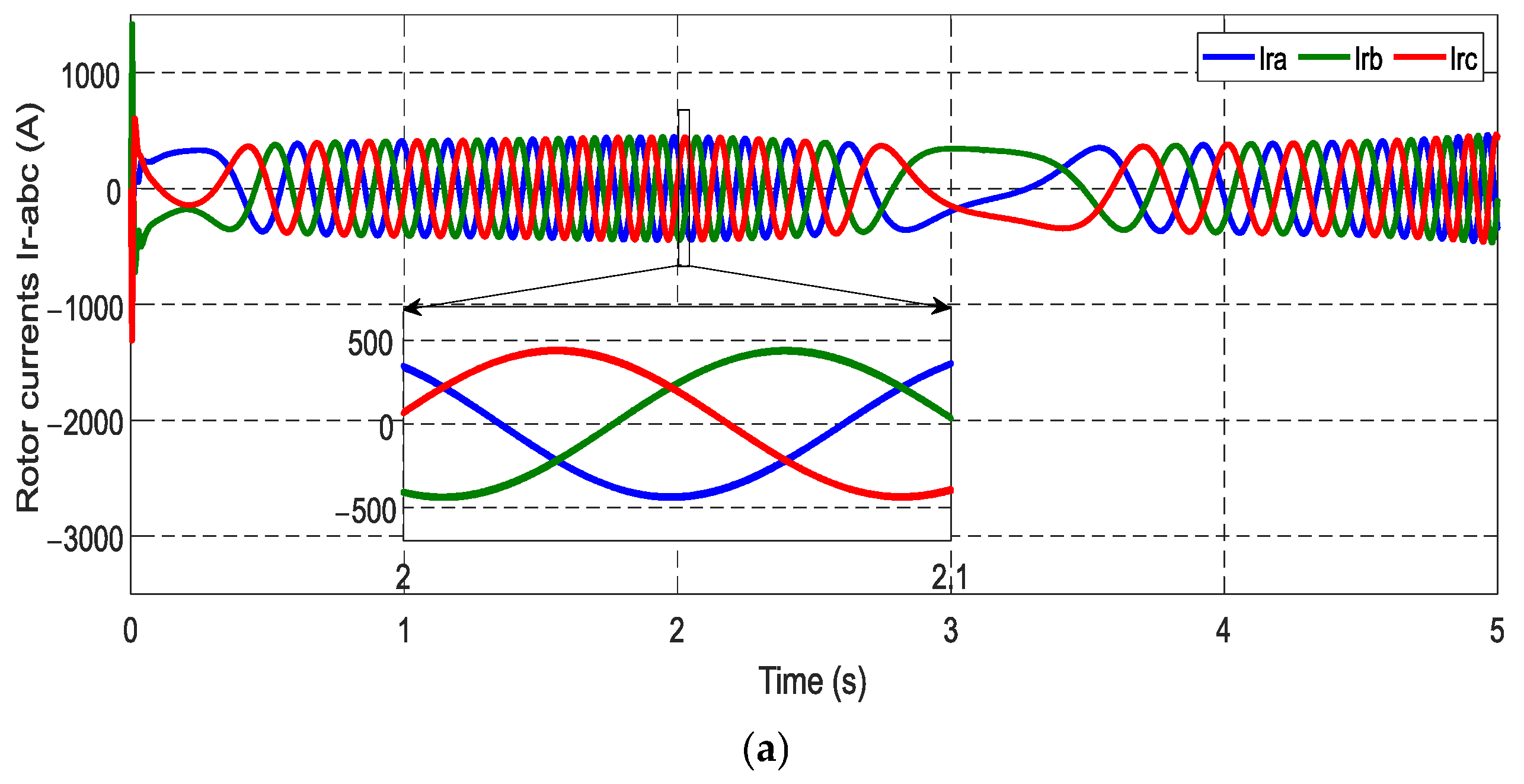
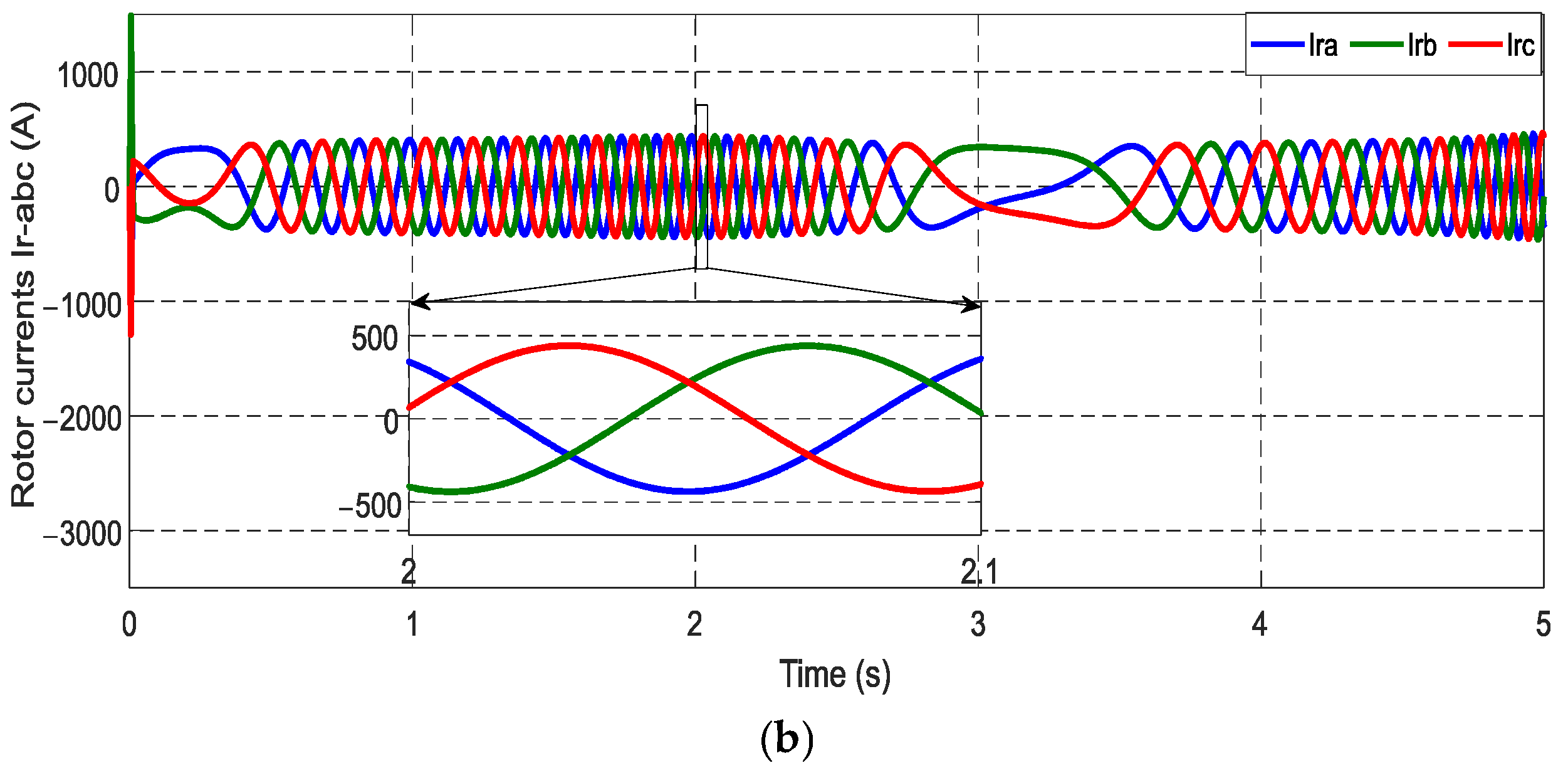
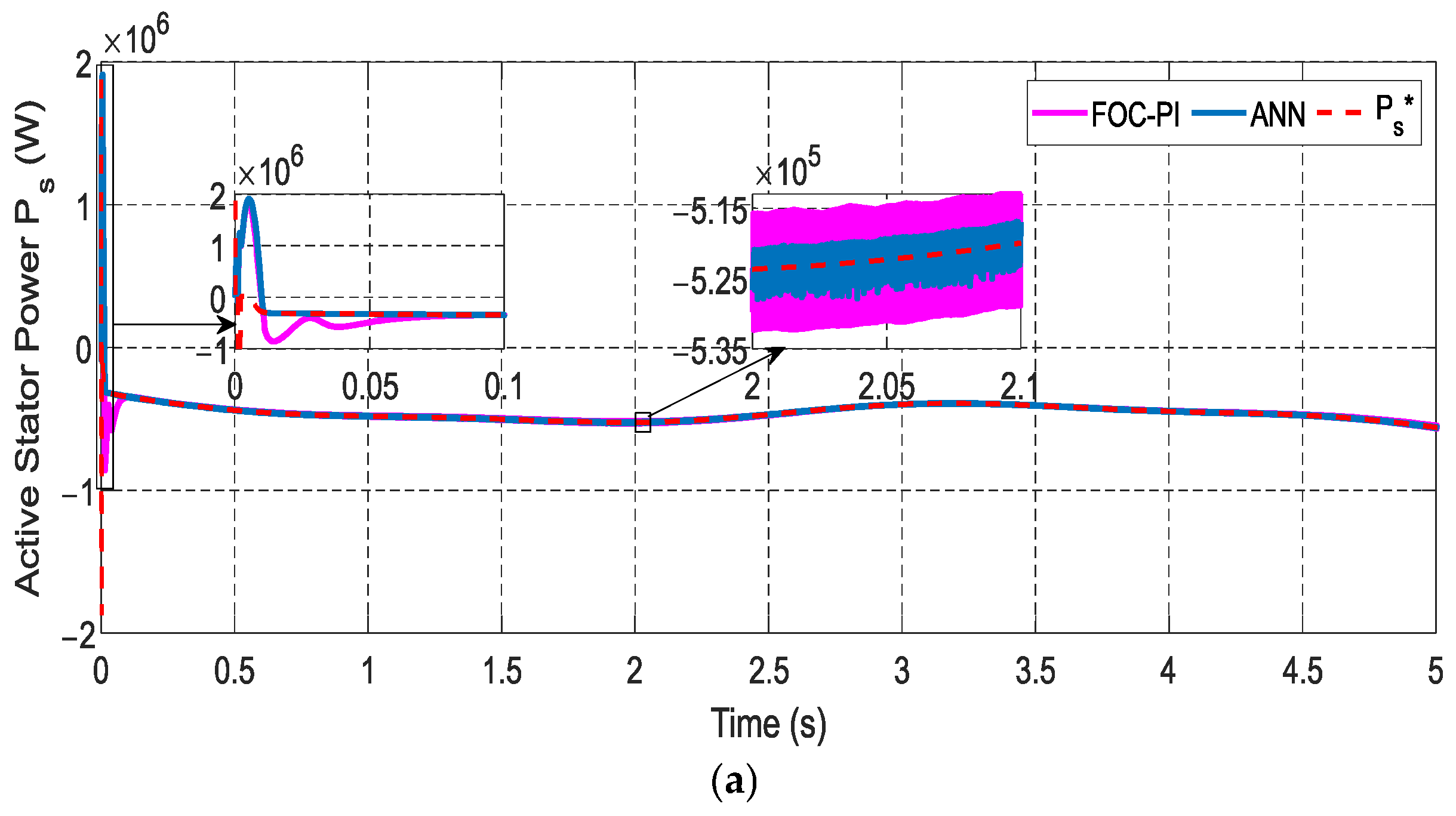
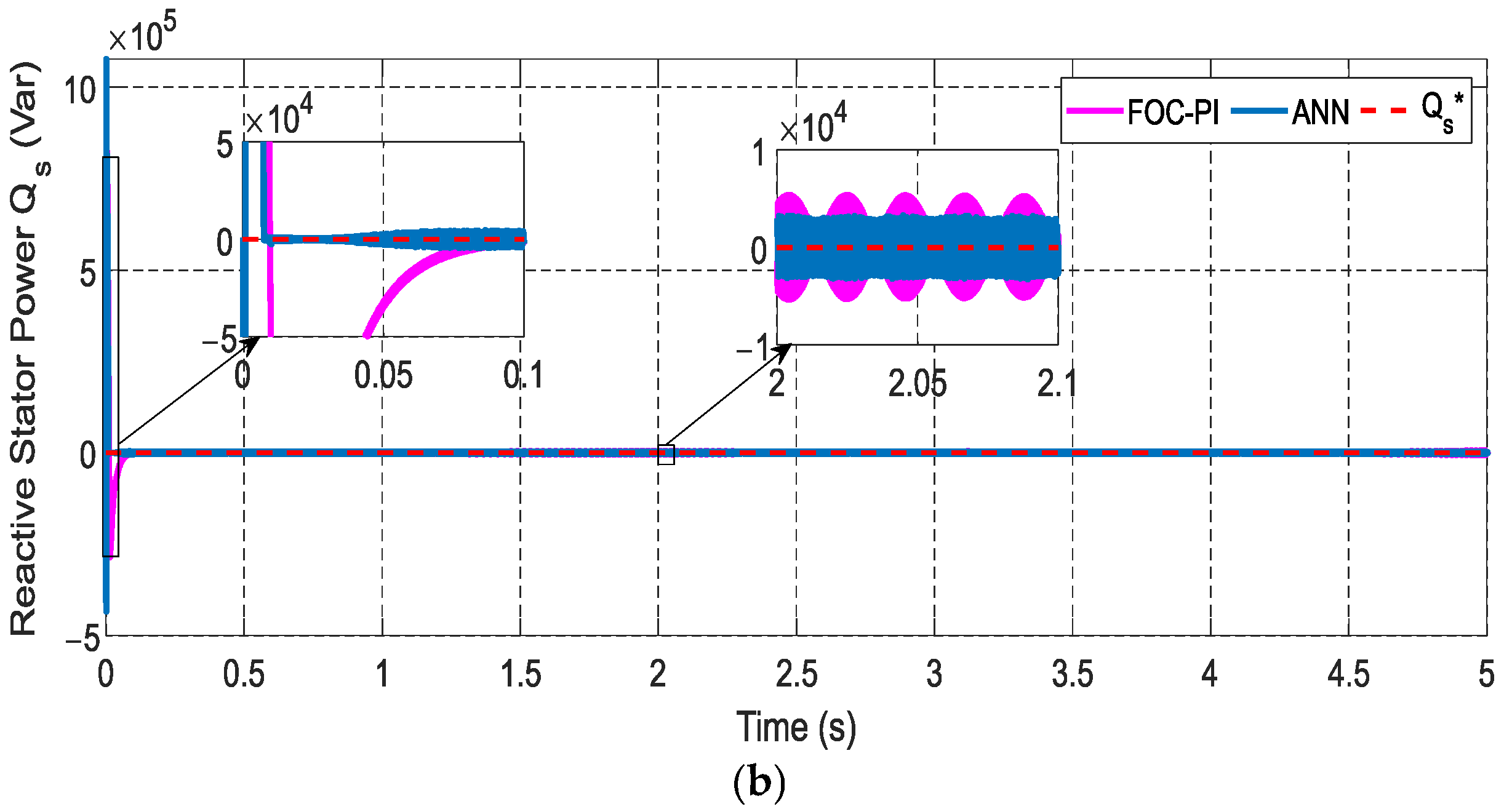
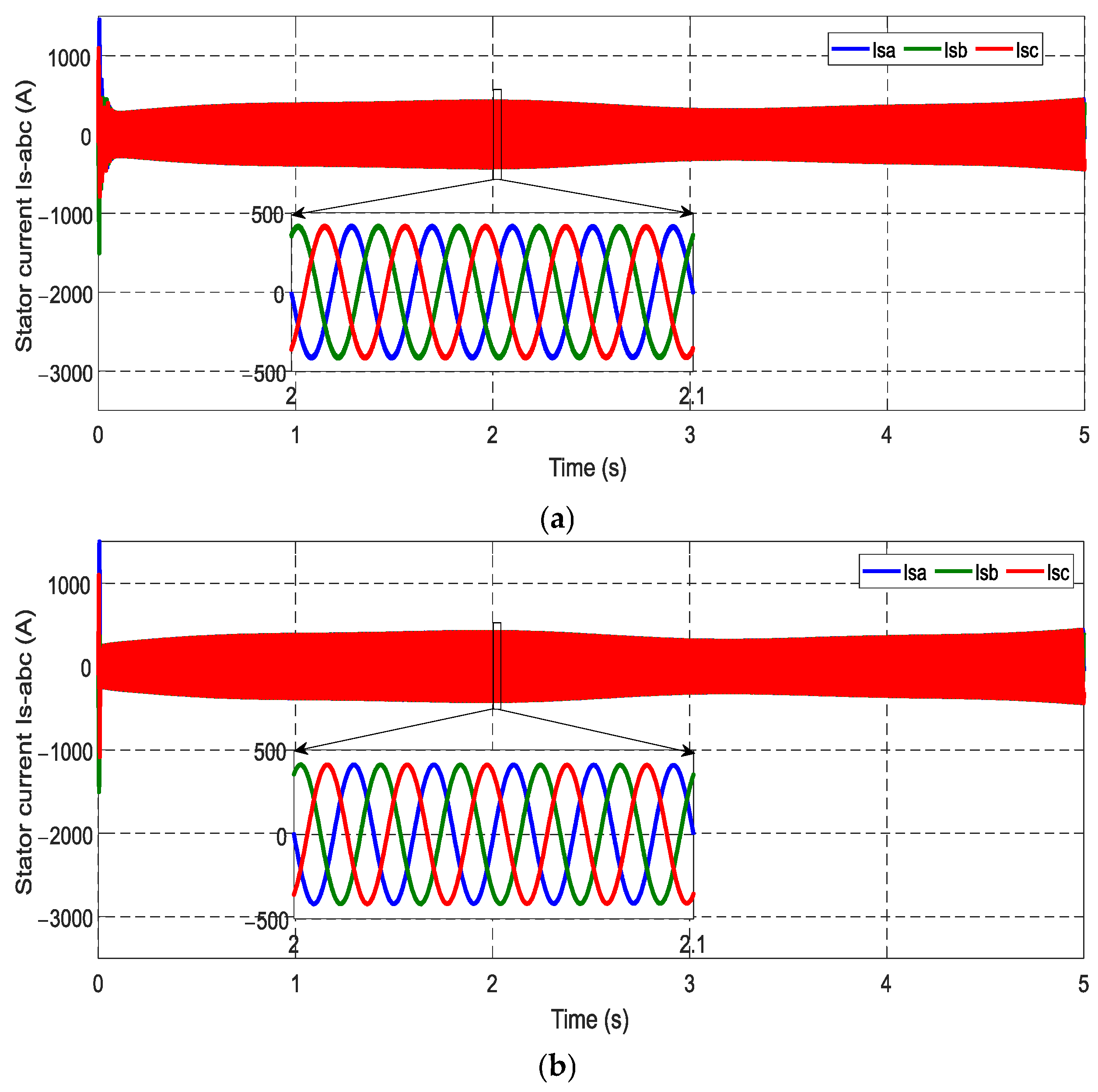
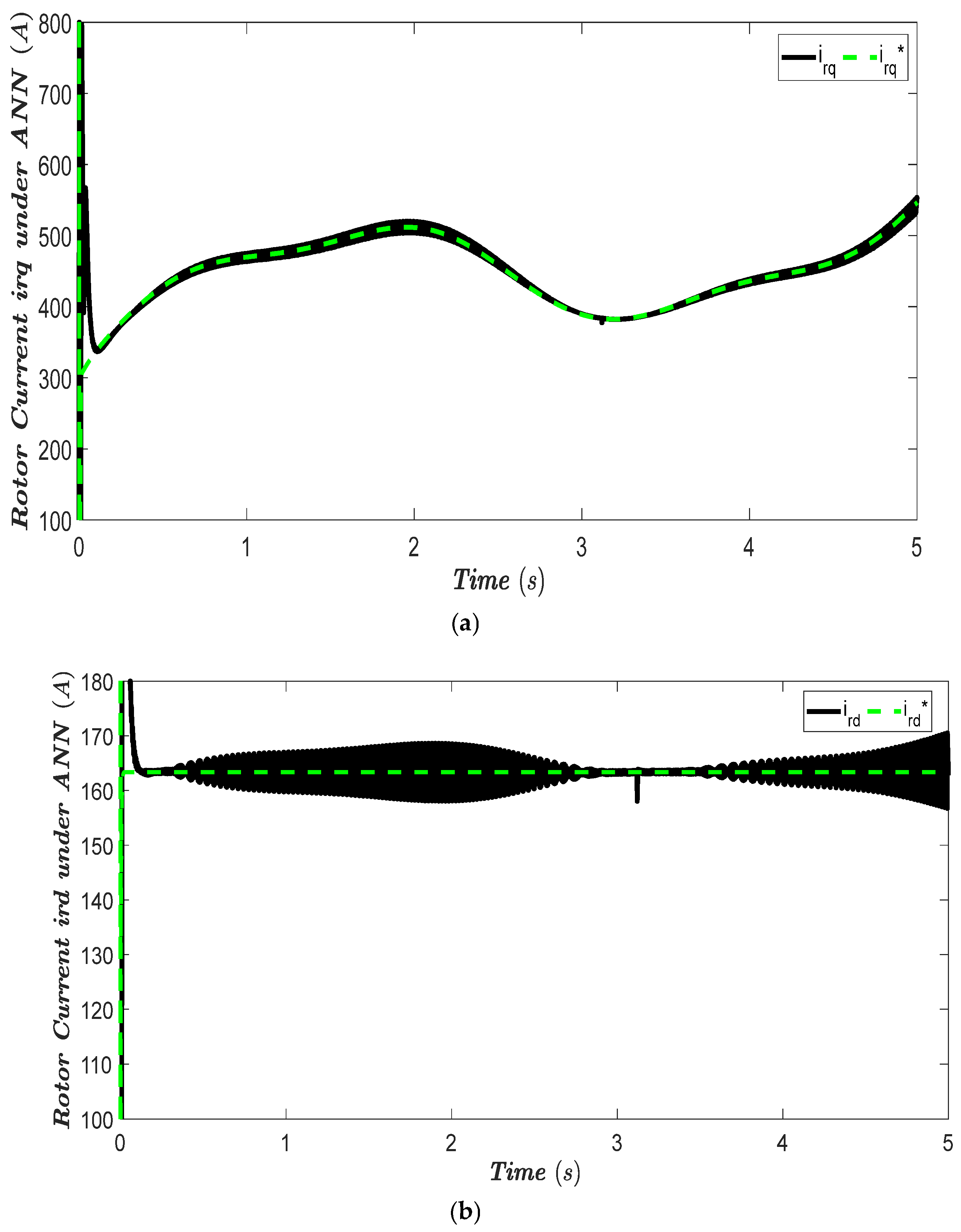
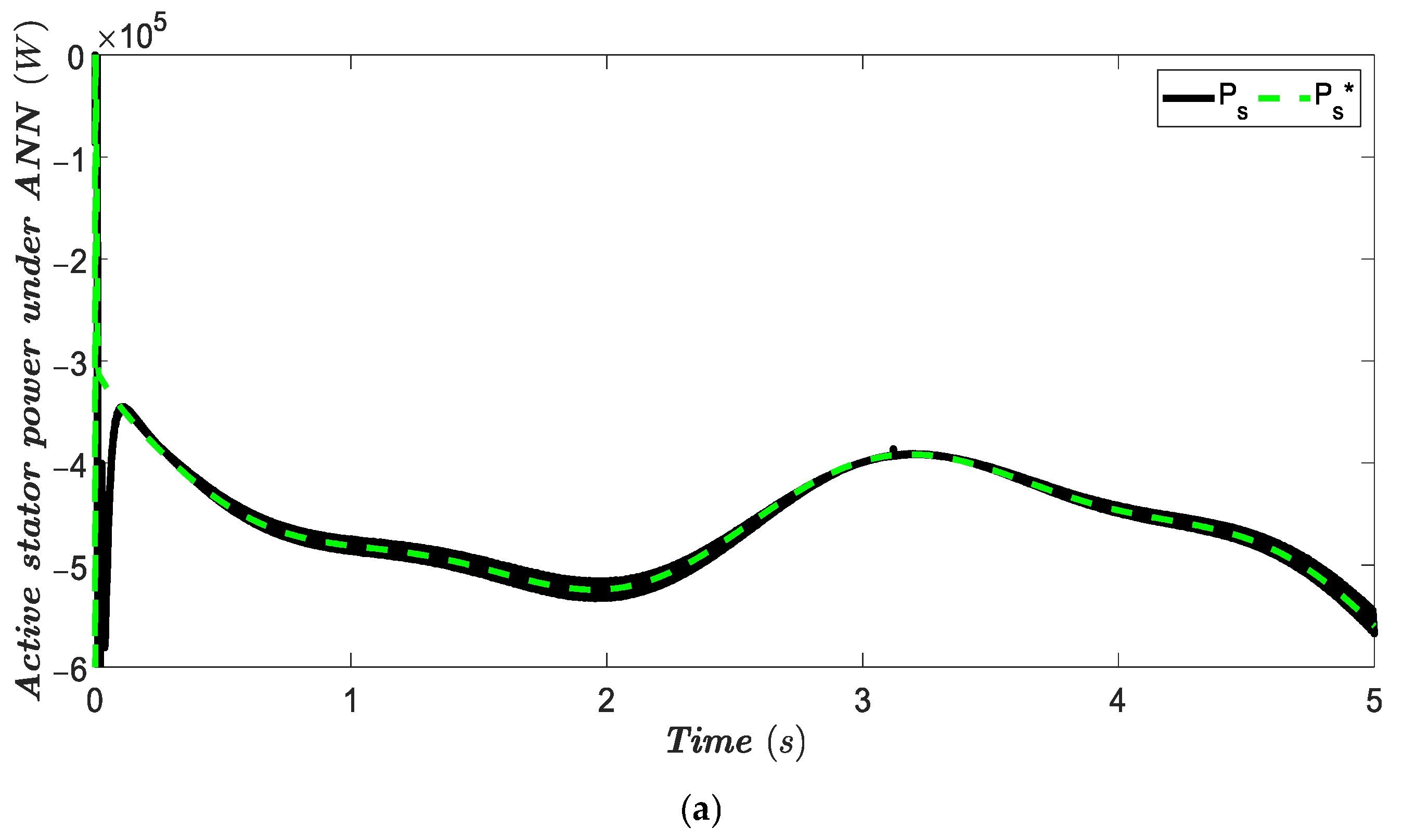
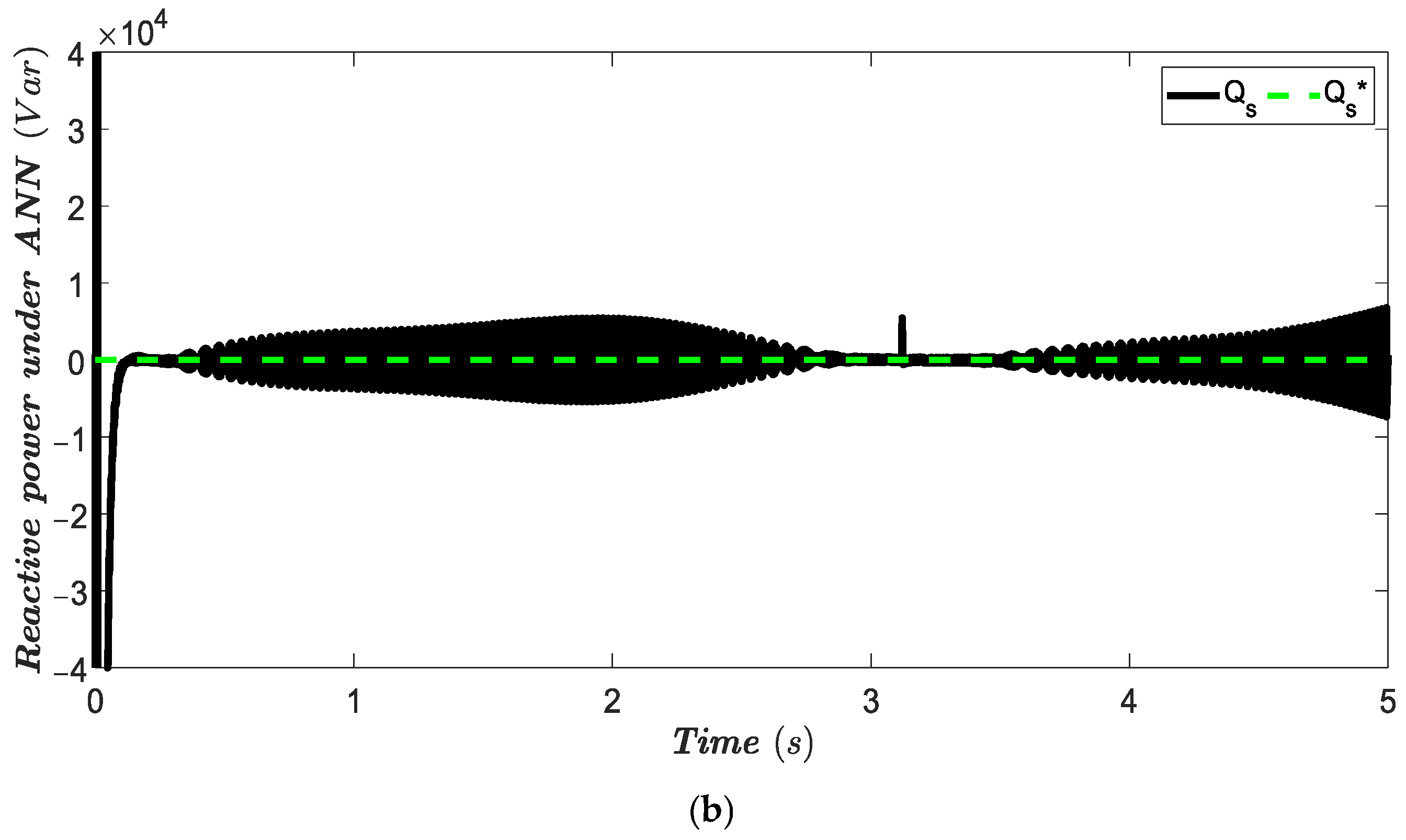
The generator current components ird and irq are shown in Figure 16. Figure 17 depicts the stator power, including active power Ps and reactive power Qs. Figure 18 compares the stator current isabc for both controllers, (a) FOC_PI and (b) ANN, whereas Figure 19 displays the rotor current irabc for both controllers using the same configurations.
According to Figure 16 and Figure 17, the active power mirrors the behavior of irq, while the reactive power follows the pattern of ird. This relationship confirms that Ps is controlled by irq and Qs by ird, demonstrating the successful decoupling of the system. From Figure 16 and Figure 17, it is also observed that the active and reactive powers of the stator, as well as the currents irq and ird, accurately follow their reference values under both control approaches. Nevertheless, the ANNC demonstrates superior performance compared to the FOC_PI, characterized by a quicker response, lower power curve overshoot, and fewer disturbances and oscillations. As shown in Figure 17, the stator active power retains a negative value, indicating that the DFIG is operating in generator mode. Similarly, the reactive power remains zero (Qs-ref = 0 VAR), affirming a unitary power factor, as shown in Figure 18b.
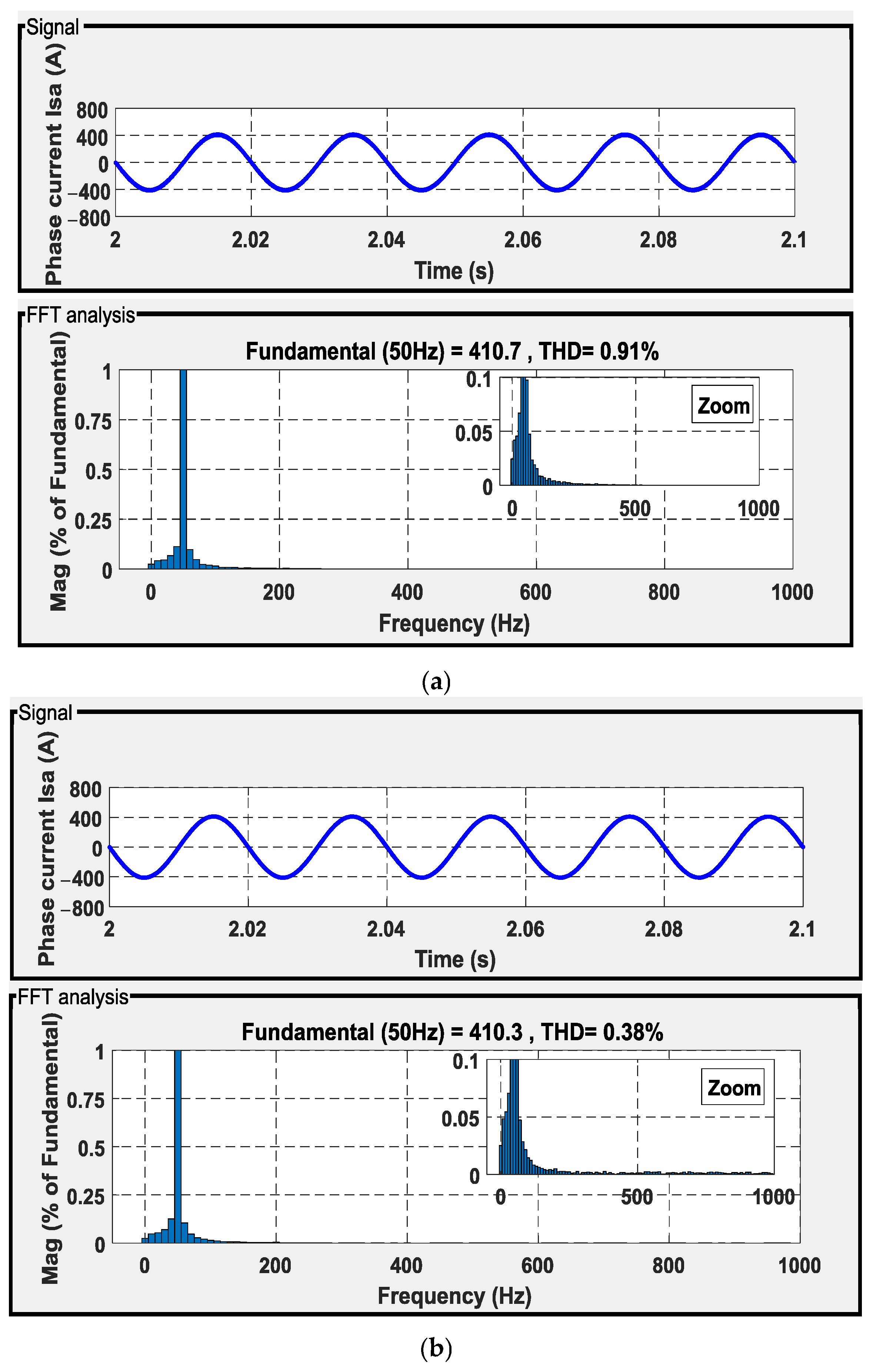
According to Figure 18 and Figure 19, representing the stator and rotor current characteristics under the FOC-PI and ANNC methods, the stator current frequency remains stable, and the rotor current frequency adapts to variations in generator speed. The spectral analysis of the stator current for phase (a) Isa is illustrated in Figure 20, which shows that the THD is 0.91% for FOC-PI, complying with the IEEE-519 standard [7]. By implementing ANNC, the THD is significantly reduced to 0.38%. Accordingly, ANNC proves to be the most efficient approach for reducing current harmonics.
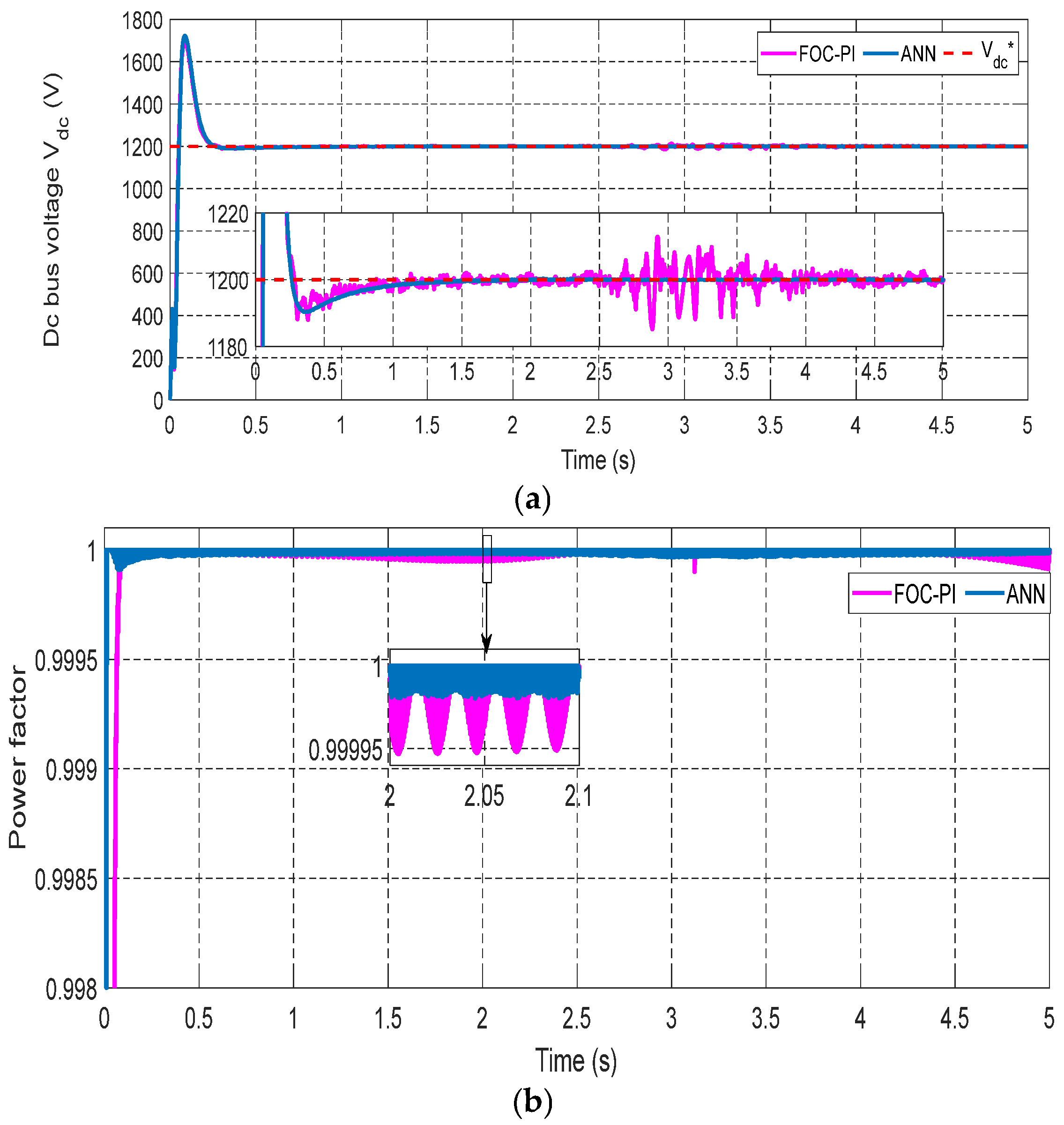
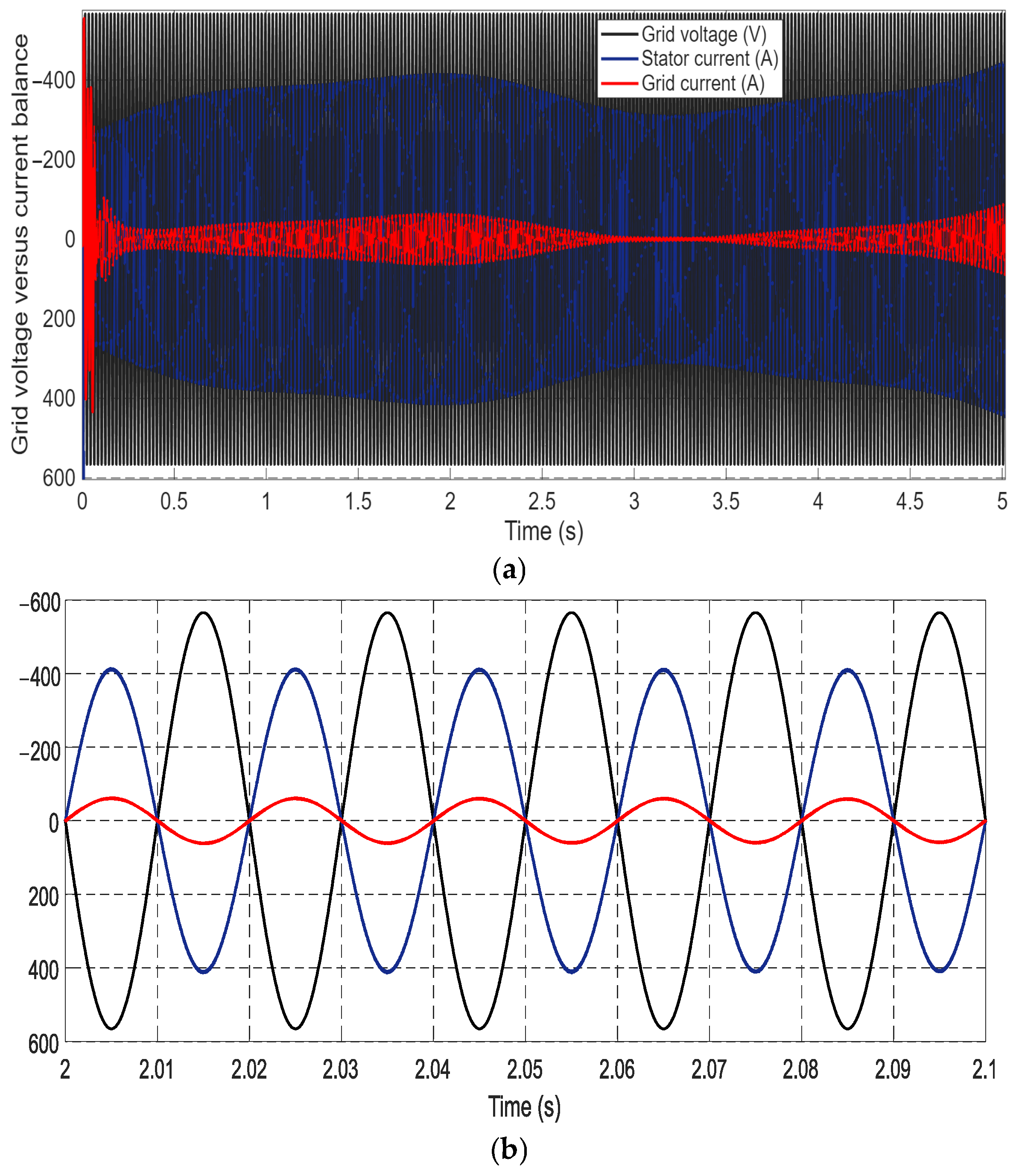
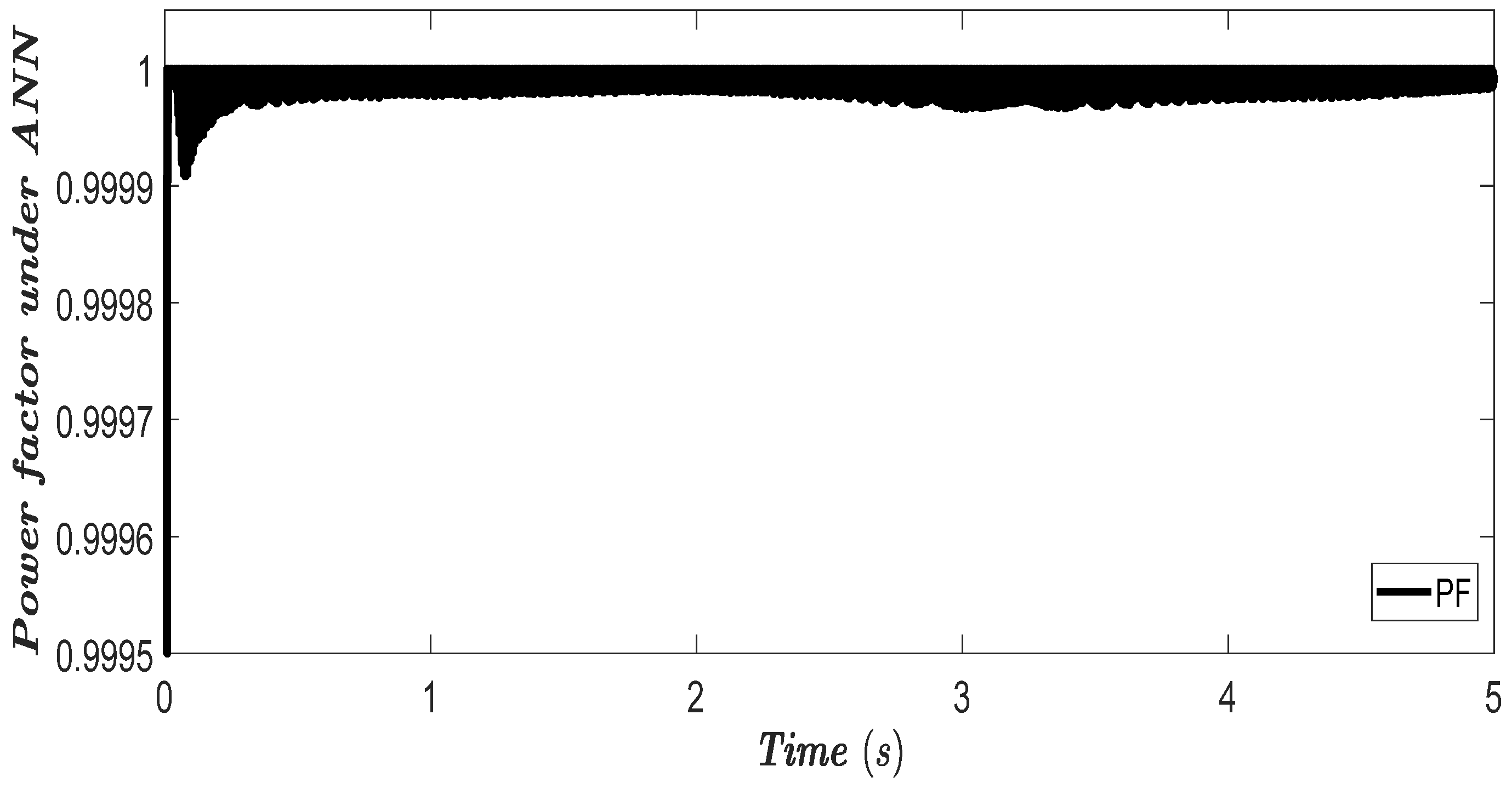
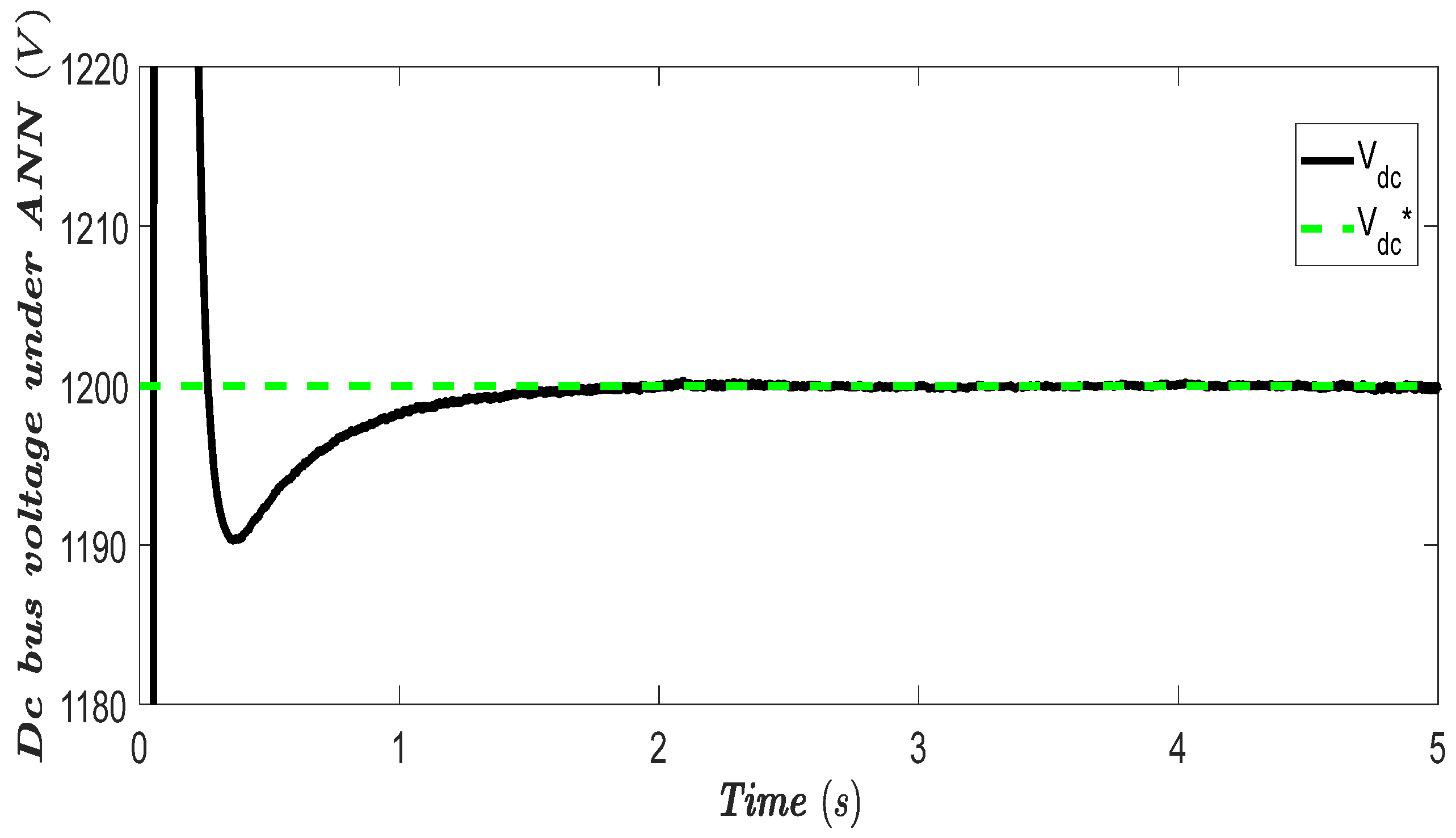
As can be seen in Figure 21a, with wind speed fluctuations, the DC bus voltage remains steady, achieving its reference value precisely with the ANNC technique compared to the FOC_PI control. As shown in Figure 21b, the power factor of the DFIG is approximately equal to 1, with more noticeable ripples observed under the FOC_PI control compared to the ANNC technique. Operating with zero reactive power results in a unit power factor regime. Additionally, Figure 22a illustrates a clear phase opposition in the voltage waveforms, while Figure 22b presents a zoomed view. As shown, a near-perfect phase opposition is observed between the voltage and current profiles, indicating the effective achievement of a unity power factor. This result confirms the negligible exchange of reactive power with the grid, which is a key requirement for efficient power delivery and grid compliance.
A detailed assessment was carried out to gain insights into the most efficient control strategy for the system, aiming for peak performance. The findings are summarized in Table 4, showcasing the notable improvements obtained using ANNC.
To test the effectiveness of the proposed controllers, various performance measures, such as the MRE (Mean Relative Error), the ITAE (Integral Time Absolute Error), the IAE (Absolute Error), the ITSE (Integral Time Square Error), and the ISE (Integral Square Error), can be considered. In this work, the ITAE is chosen as the primary evaluation metric due to its frequent use in controller performance assessment. This indicator is defined as reported in Equation (13) [21]:
ITAE = t | ε |   dt
A lower ITAE value indicates improved controller performance. Table 5 summarizes the quantitative analysis of active power, DC-bus voltage, reactive power, and rotor currents along the d- and q-axes. The results indicate that ANNC achieves the lowest ITAE values compared to FOC-PI, confirming its enhanced control capability.
Establishing the novelty of this study involves evaluating it alongside other control approaches reported in the recent literature. This comparative study is illustrated in Table 6. It should be noted that these studies were not conducted under entirely identical conditions, as it is quite rare to find multiple works in this field carried out in exactly the same circumstances. The results from this comparison indicate that the suggested method outperforms the alternatives in terms of ripple minimization, steady-state error, overshoot, and stator current THD compared to some methods presented in recent studies from the literature, such as the backstepping, sliding mode, HLRNN, and Fuzzy SMC strategies.

Real-Time Implementation of the Proposed Controller

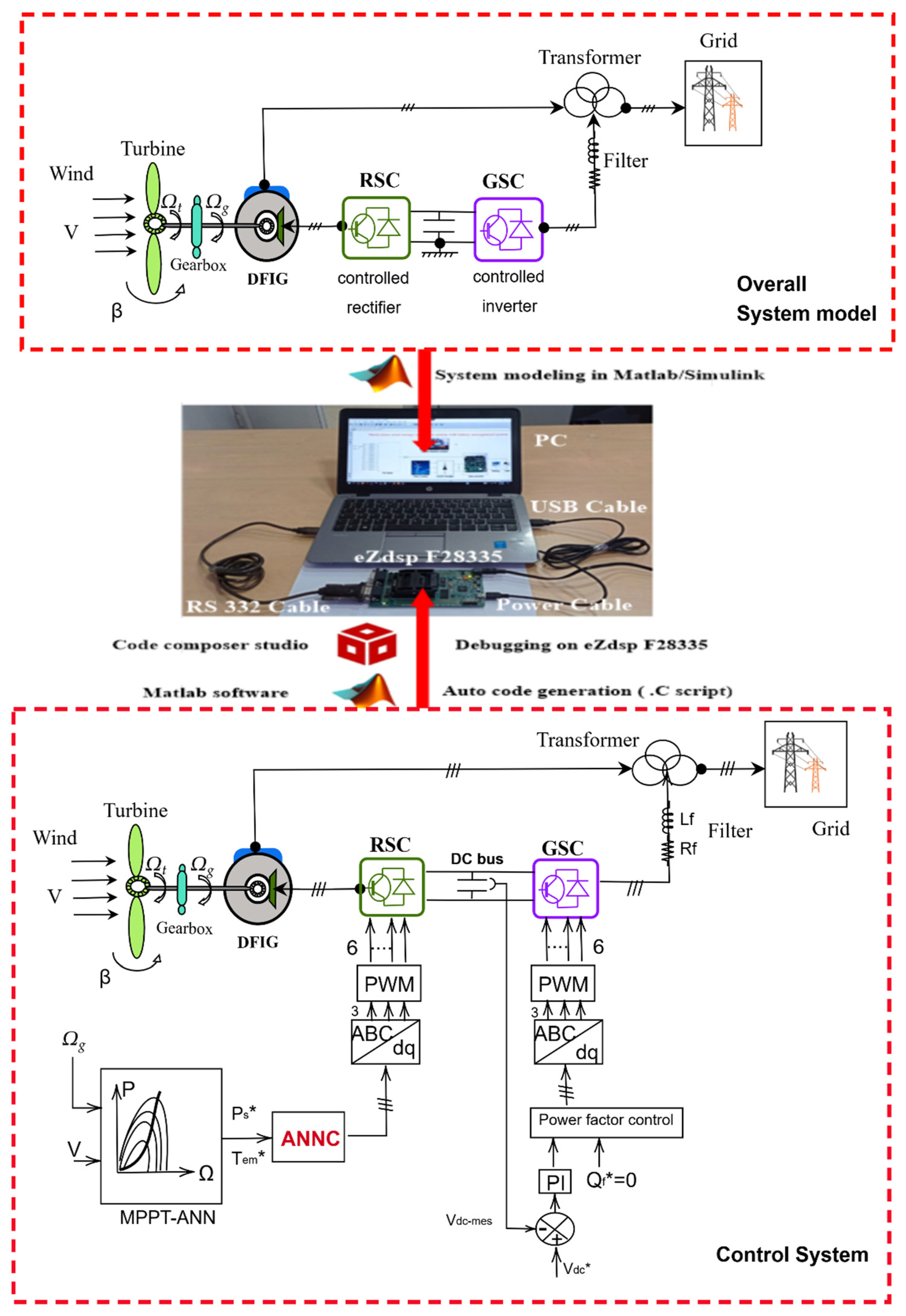
This subsection presents the experimental implementation and evaluation of the suggested control strategy. The designed experimental setup, shown in Figure 23, includes an eZdsp TMS320F28335 board and a computer running MATLAB software [39]. A PWM-based strategy is employed to drive the inverter, generating a five-volt logical signal used to control the IGBTs [40,41]. The suggested control technique is implemented under Matlab 2020. Through this system, the devised control methodology is transmitted to the eZdsp TMS320F28335 controller board. In order to test the validity of the proposed strategy, a series of tests was conducted using the eZdsp TMS320F28335 board and the real-time workshop tool.
Additionally, the tests previously conducted in the preceding section were upheld to validate the simulated outcomes and gain insights into how the designed control mechanism responds to fluctuations in wind speed profiles.
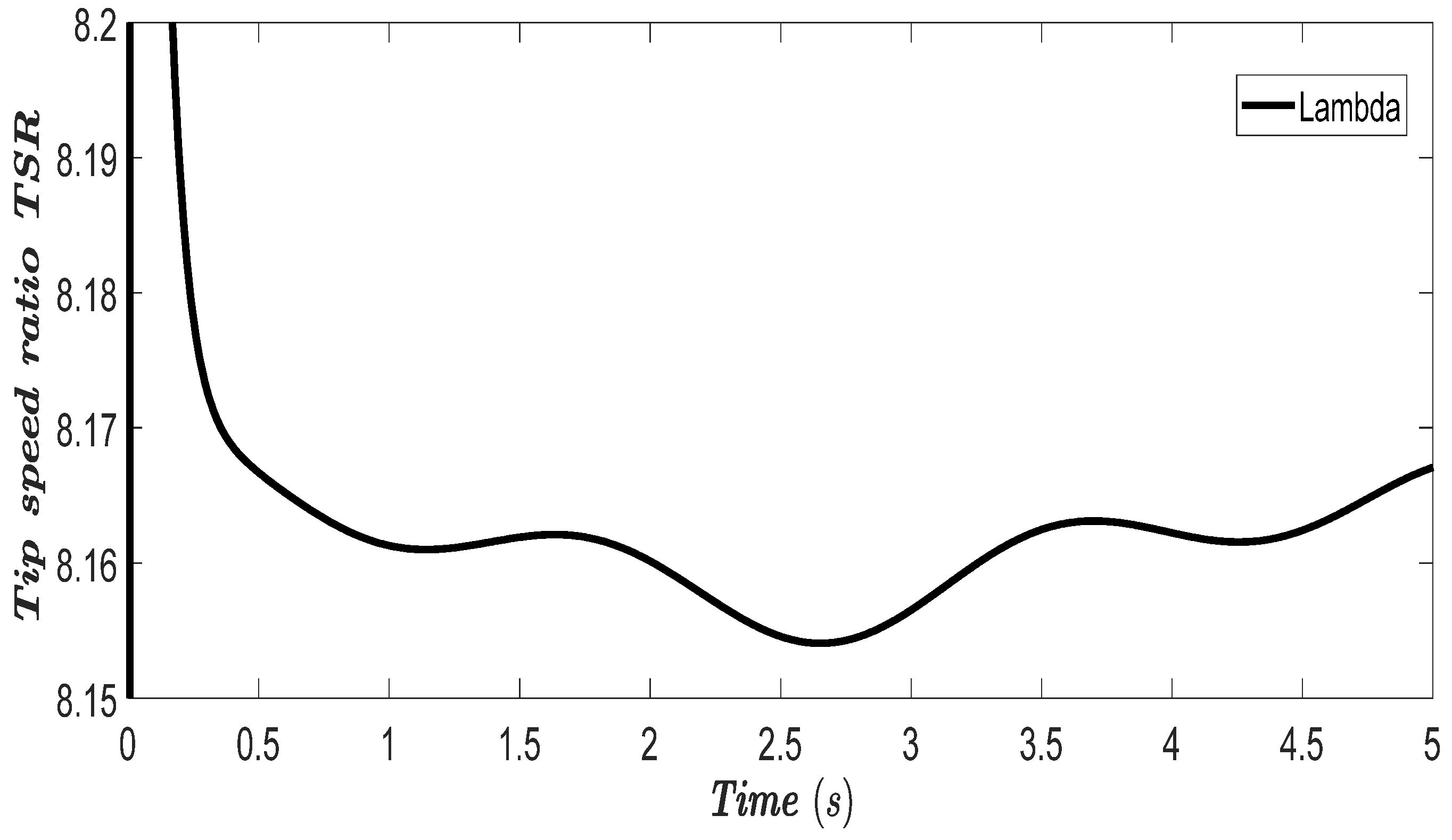
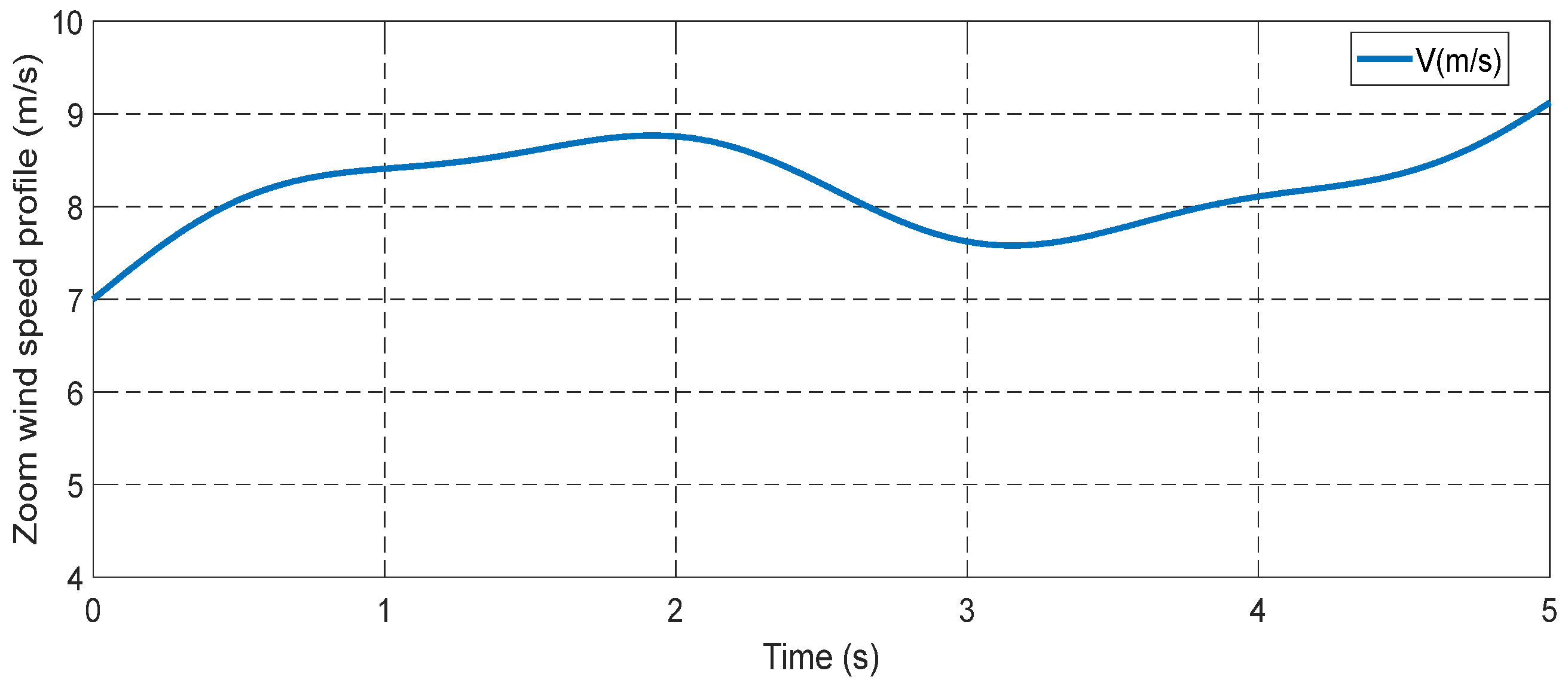
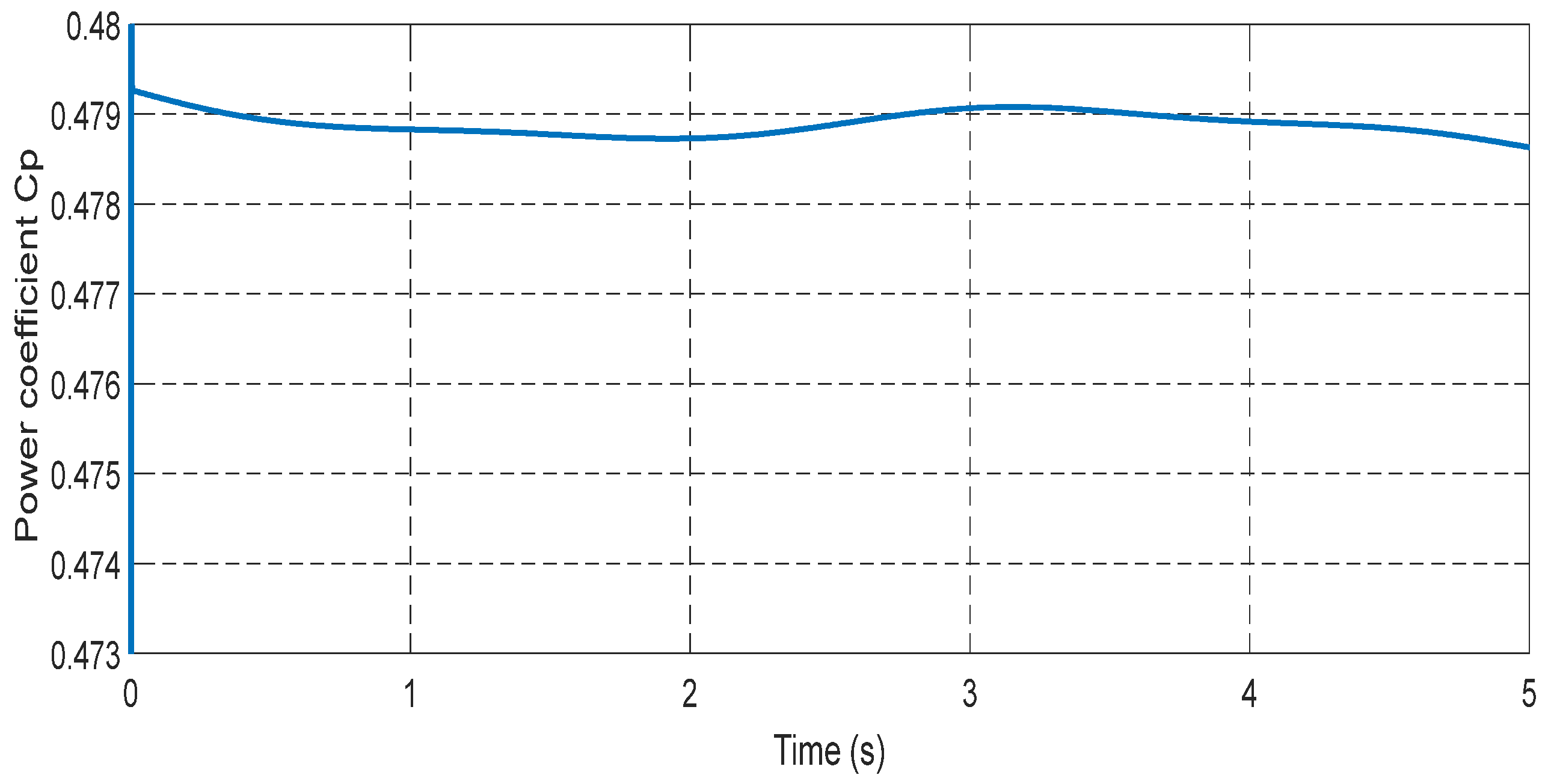
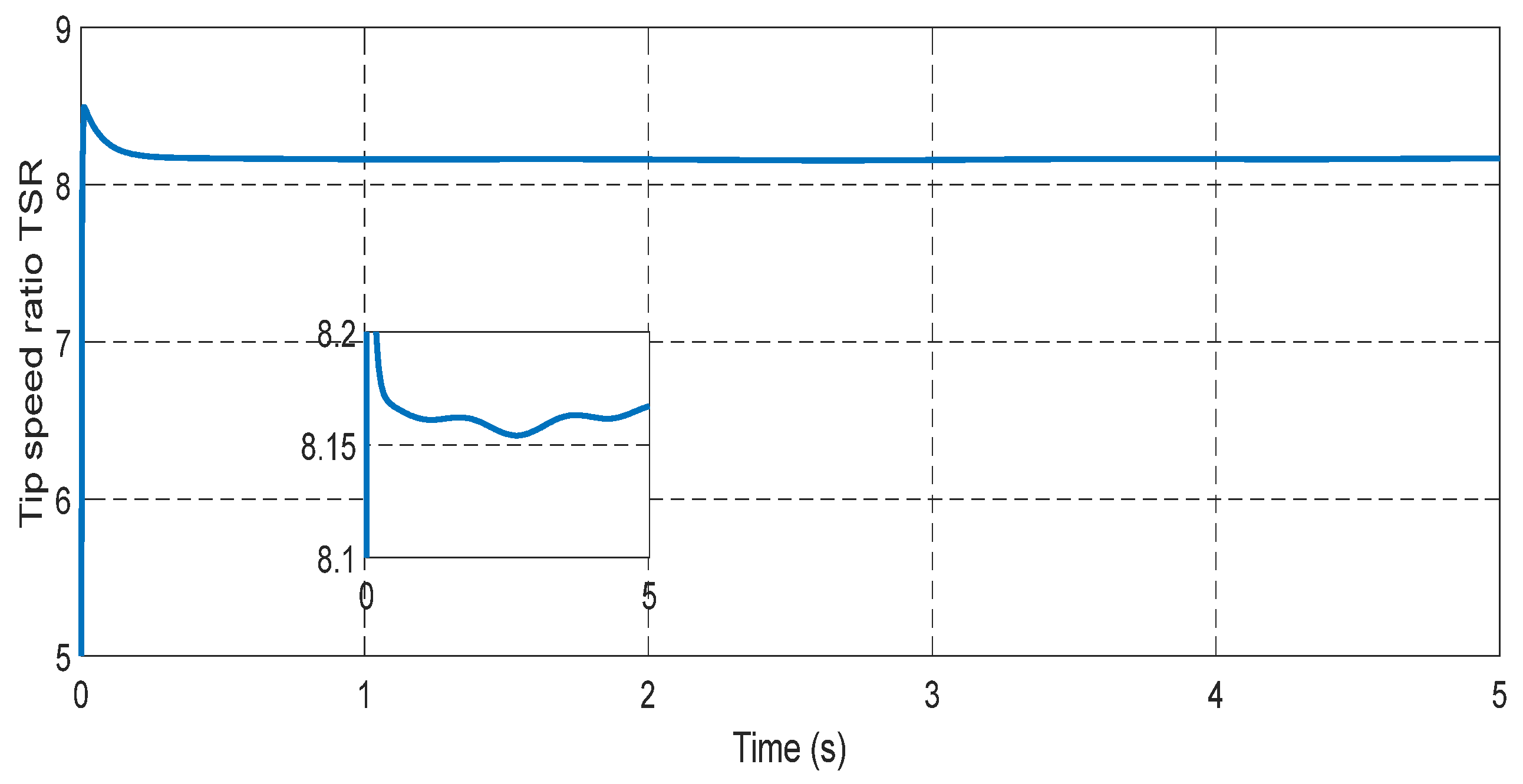
The illustrations of Figure 24, Figure 25, Figure 26, Figure 27, Figure 28, Figure 29, Figure 30, Figure 31, Figure 32, Figure 33, Figure 34 and Figure 35 show the outcomes of the real-time implementation using the eZdsp TMS320F28335 board, which aims to demonstrate the effectiveness of tracking and control over a varying wind profile. From the results, nearly identical behavior is shown in both numerical and experimental study scenarios. Figure 24 shows the considered realistic wind speed profile. Figure 25 presents the tip speed ratio profile, which remains close to 8.16, corresponding to the optimal TSR for maximizing wind power extraction. Figure 26 illustrates the power coefficient variations, which directly reflect the amount of power captured. Figure 27 shows the generator’s mechanical speed, which tracks smoothly the wind speed variation, which confirms the validity of the adopted ANNC.
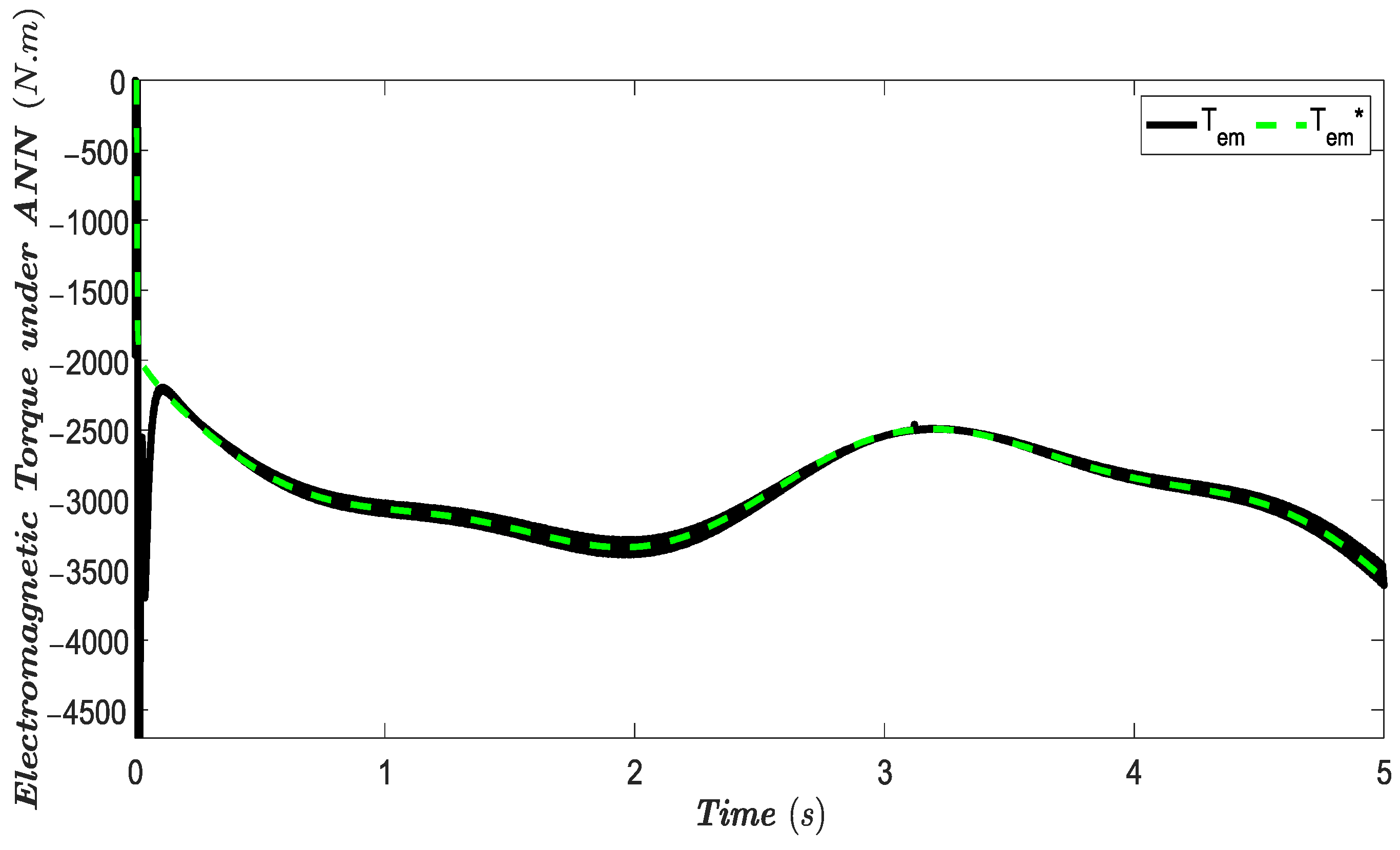
Figure 28a,b show, respectively, the quadrature irq and direct ird rotor current components obtained in real time. The variation in irq tracks the variation in active power; meanwhile, the variation in ird follows the variation in reactive power. This fact is confirmed through Figure 29a,b, which illustrate the profiles of the generator’s active and reactive powers, respectively. Figure 30 illustrates the generator’s encounter torque, which follows the fluctuation in the applied wind speed and also tracks the variation in the active power. It is also observed that the reactive power is preserved correctly at zero VAR, ensuring a unity power factor operation. This is confirmed by Figure 31, which shows that the pf value is correctly maintained at unity.
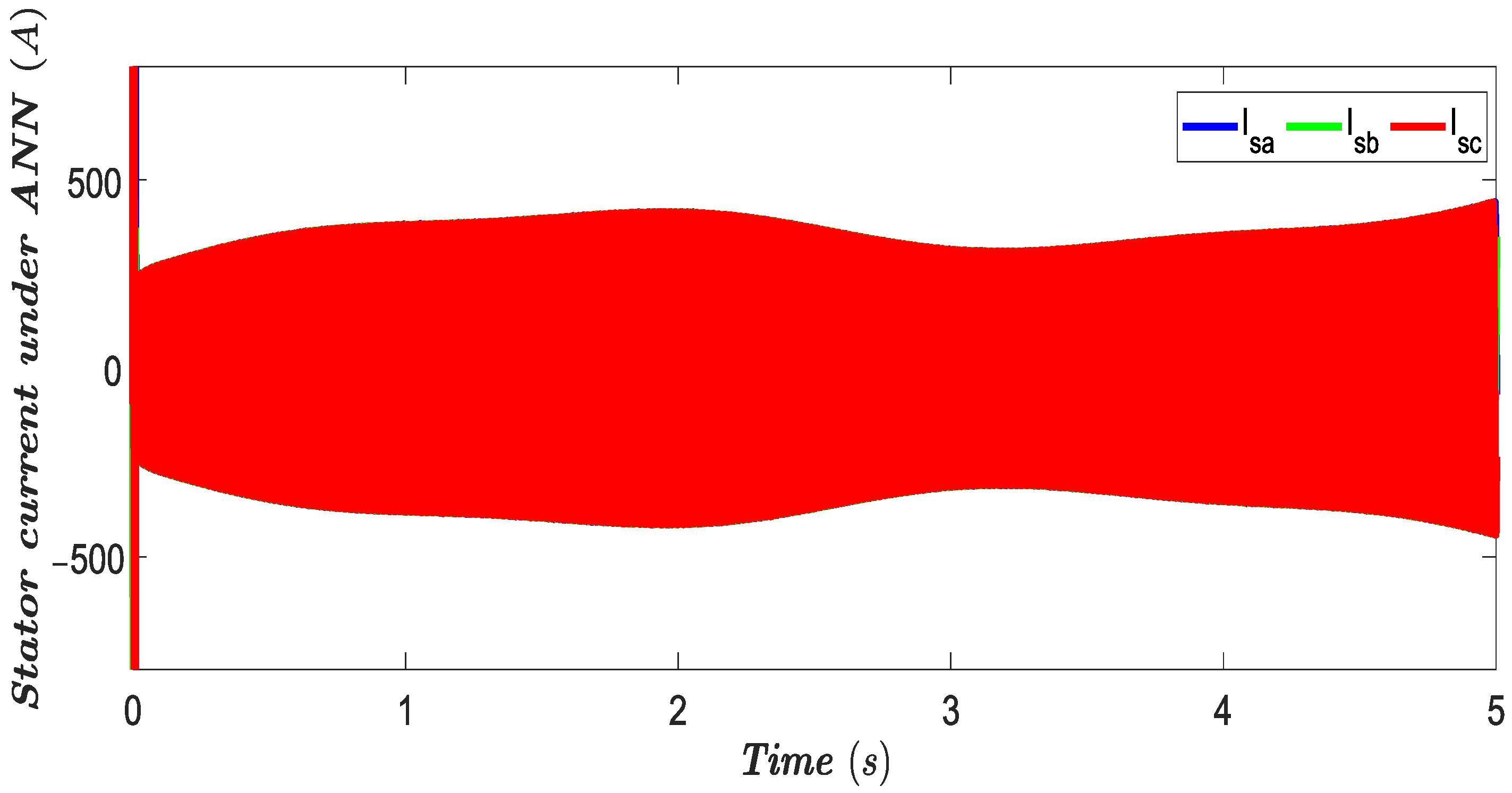
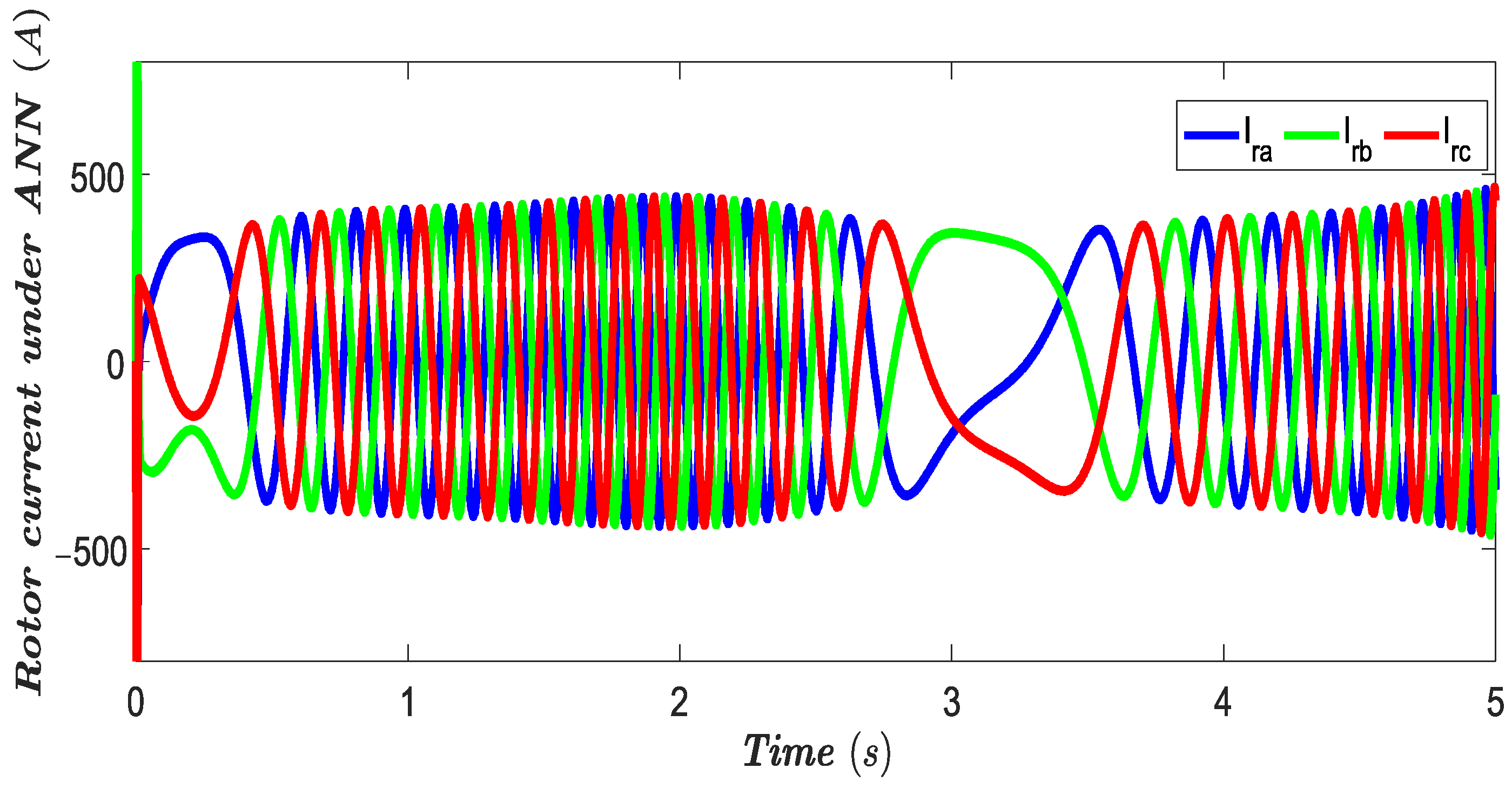
The generated stator and rotor currents, as well as the grid-injected current, are displayed in Figure 32 and Figure 33, respectively. The currents’ illustrations confirm the reliability of the adopted control in reaching good tracking for the applied wind speed profile. In addition, both the stator current and injected grid current have a similar frequency of 50 Hz, which reveals good synchronization with the grid. Figure 34 displays the DC bus voltage profile, which preserves a fixed value at 1200 V. This requirement is vital to enable regulating the injected power to the grid via regulating the injected current. Finally, Figure 35 shows the real-time signals of grid voltage and current. This illustration confirms that a unity of operation is maintained at the grid terminals, which reconfirms the validity of the proposed ANNC.

4. Conclusions

This paper presented a complete modeling, control, and experimental validation of an ANN-based control framework for a DFIG-based wind energy conversion system. The proposed strategy combines an ANN-based MPPT speed regulator directly generating the electromagnetic torque reference from wind and mechanical speed, with two dedicated MLP-based ANN controllers for stator active and reactive power control, replacing classical PI regulators in the RSC under FOC. Simulation and experimental results demonstrate that the proposed ANN control approach significantly improves dynamic performance and power quality compared with the conventional FOC–PI strategy under identical operating conditions. In particular, the ANN-based controllers ensure fast convergence with a low mean square error of approximately 3.6 × 10⁻⁴, precise tracking of active and reactive power with a static error below 0.16%, limited overshoot lower than 5%, and a very low total harmonic distortion of the stator current (THD ≈ 0.38%). These quantitative results confirm the effectiveness of the proposed approach in enhancing robustness, reducing harmonic distortion, and improving tracking accuracy under variable wind speed conditions. Furthermore, the real-time implementation on an eZdsp TMS320F28335 DSP board validates the practical feasibility of the proposed control scheme and confirms its robustness against sensor noise, quantization effects, and inherent implementation delays. Unlike many existing studies limited to simulations or partial experimental validation, this work provides a complete simulation-to-experiment transition and a fair quantitative comparison with a conventional FOC–PI controller. Overall, the obtained numerical and experimental results demonstrate that the proposed ANN-based control strategy is a reliable and efficient solution for improving power quality, dynamic response, and robustness of DFIG-based wind energy systems.
Following this study, several perspectives and future directions can be suggested to further refine system efficiency:
  • The development of novel control strategies based on artificial intelligence (such as Fuzzy Logic, Bald Eagle Search Algorithm, etc.) for wind turbine control.
  • Integrating a storage system and improving the conversion chain from both technical and economic perspectives.

Author Contributions

Conceptualization, H.C.; methodology, M.A.M. and M.M.A.; software, H.C.; validation, H.C. and K.T.; formal analysis, M.A.M.; investigation, M.M.A. and A.D.; resources, M.A.M. and K.T.; data curation, K.T. and H.C.; writing—original draft preparation, H.C. and M.A.M.; writing—review and editing, A.D. and M.M.A.; visualization, M.M.A. and A.D. All authors have read and agreed to the published version of the manuscript.

Funding

This research received no external funding.

Data Availability Statement

The raw data supporting the conclusions of this article will be made available by the authors on request.

Conflicts of Interest

The authors declare no conflicts of interest.

Abbreviations

NomenclatureAbbreviation
β (Degree °)Blade pitch angle ANNCArtificial Neural Network Controller
λTip speed ratioANNArtificial Neural Network
ϕr and ϕs (Wb)Stator and rotor fluxes DTCDirect Torque Control
Ωg (rad/s)Generator’s mechanical speed DFIGDoubly Fed Induction Generator
ωr and ωs (rad/s)Rotor and stator pulsations FFTFast Fourier Transformation
ρ (Kg/m3)Air density FOCField-Oriented Control
CmecMechanical torque coefficientMPPTMaximum Power Point Tracking
CpPower coefficientFOSMCFractional-Order STC
CgGenerator torque coefficientGSCGrid-Side Converter
CfFriction coefficientGOAGrasshopper Optimization Algorithm
CemElectromagnetic torque coefficientMLPMulti-Layer Perceptron
f (N.m.s/rad)Friction coefficient MSEMean Squared Error
fs (Hz)Stator rated frequency FLC Fuzzy Logic Control
GGearbox gainRSCRotor-Side Converter
ir and is (A)Rotor and Stator currents WECSWind Energy Conversion System
J (kg.m2)Moment of inertia PWMPulse Width Modulation
Lm (H)Magnetizing inductanceNNCNeural Network Control
Lf (H)Filter inductanceSMCSliding Mode Controller
Lr (H)Rotor inductanceTSRTip Speed Ratio
Ls (H)Stator inductance
M (H)Mutual inductance
NbBlades’ number
pNumber of pole pairs
Pn (MW)Rated power
Ps (W)Stator active power
Pt (W)Wind turbine power
Qs (Var)Stator reactive powers
R (m)Blade radius
Rf (Ω)Filter resistance
Rs and Rr (Ω)Stator and rotor resistances
t (s)Time
TemElectromagnetic torque
THD (%)Total harmonic distortion
Vdc (V)DC bus voltage
V (m/s)Wind speed
Vdc (V)DC-bus voltage
Vr and Vs (V)Rotor and stator voltages
ψ s Stator flux

References

  1. Drici, M.; Houabes, M.; Salawudeen, A.T.; Bahri, M. Optimizing Hybrid Renewable Energy Systems for Isolated Applications: A Modified Smell Agent Approach. Eng 2025, 6, 120. [Google Scholar] [CrossRef]
  2. Morozovska, K.; Bragone, F.; Svensson, A.X.; Shukla, D.A.; Hellstenius, E. Trade-Offs of Wind Power Production: A Study on the Environmental Implications of Raw Materials Mining in the Life Cycle of Wind Turbines. J. Clean. Prod. 2024, 460, 142578. [Google Scholar] [CrossRef]
  3. Mossa, M.A.; Echeikh, H.; Iqbal, A. Enhanced Control Technique for a Sensor-Less Wind Driven Doubly Fed Induction Generator for Energy Conversion Purpose. Energy Rep. 2021, 7, 5815–5833. [Google Scholar] [CrossRef]
  4. Pandey, S.K.; Kumar, S. Grid-Integrated Doubly Fed Wind Energy Conversion System with Photovoltaic Array Using Logarithmic Hyperbolic Adaptive Control. Comput. Electr. Eng. 2025, 123, 110269. [Google Scholar] [CrossRef]
  5. Bade, S.O.; Meenakshisundaram, A.; Tomomewo, O.S. Current Status, Sizing Methodologies, Optimization Techniques, and Energy Management and Control Strategies for Co-Located Utility-Scale Wind–Solar-Based Hybrid Power Plants: A Review. Eng 2024, 5, 677–719. [Google Scholar] [CrossRef]
  6. Zhang, Y.; Wang, J.; Li, X. Fractional-Order Sliding Mode Control of Single-Phase Five-Level Rectifier. Electr. Eng. 2024, 106, 5579–5589. [Google Scholar] [CrossRef]
  7. Chojaa, H.; Derouich, A.; Zamzoum, O.; Watil, A.; Taoussi, M.; Abdelaziz, A.Y.; Elbarbary, Z.M.S.; Mossa, M.A. Robust Control of DFIG-Based WECS Integrating an Energy Storage System With Intelligent MPPT Under a Real Wind Profile. IEEE Access 2023, 11, 90065–90083. [Google Scholar] [CrossRef]
  8. Watil, A.; Chojaa, H. Enhancing Grid-Connected PV–EV Charging Station Performance through a Real-Time Dynamic Power Management Using Model Predictive Control. Results Eng. 2024, 24, 103192. [Google Scholar] [CrossRef]
  9. Su, Y.; Yang, D.; Ren, J. Event-Triggered H∞ Sliding Mode Control for Discrete-Time Singular Markov Jump Systems with Uncertainties in the Difference Matrix. Circ. Syst. Signal Process. 2024, 43, 4764–4789. [Google Scholar] [CrossRef]
  10. Mossa, M.A.; Abdelhamid, M.K.; Hassan, A.A.; Bianchi, N. Improving the Dynamic Performance of a Variable Speed DFIG for Energy Conversion Purposes Using an Effective Control System. Processes 2022, 10, 456. [Google Scholar] [CrossRef]
  11. Delavari, H.; Veisi, A. A New Robust Nonlinear Controller for Fractional Model of Wind Turbine-Based DFIG with a Novel Disturbance Observer. Energy Syst. 2024, 15, 827–861. [Google Scholar] [CrossRef]
  12. Jia, C.; Longman, R.W. An Adaptive Smooth Second-Order Sliding Mode Repetitive Control Method with Application to a Fast Periodic Stamping System. Syst. Control Lett. 2021, 151, 104912. [Google Scholar] [CrossRef]
  13. Mebkhouta, T.; Golea, A.; Boumaraf, R.; Benchouia, T.M.; Karboua, D. A High Robust Optimal Nonlinear Control with MPPT Speed for Wind Energy Conversion System (WECS) Based on Doubly Fed Induction Generator (DFIG). Period. Polytech. Electr. Eng. Comput. Sci. 2024, 68, 1–11. [Google Scholar] [CrossRef]
  14. Guediri, M.; Touil, S.; Hettiri, M.; Guediri, A.; Ikhlef, N.; Hocine, B.; Guediri, A. Control of a Doubly Fed Induction Generator for Variable Speed Wind Energy Conversion Systems Using Fuzzy Controllers Optimized with a Genetic Algorithm. Eng. Technol. Appl. Sci. Res. 2025, 15, 19871–19877. [Google Scholar] [CrossRef]
  15. Ehsani, M.; Oraee, A.; Abdi, B.; Behnamgol, V.; Hakimi, M. Adaptive Dynamic Sliding Mode Controller Based on Extended State Observer for Brushless Doubly Fed Induction Generator. Int. J. Dyn. Control 2024, 12, 3719–3732. [Google Scholar] [CrossRef]
  16. Bouguettah, I.; Messadi, M.; Kemih, K.; Azar, A.T.; Mahlous, A.R. Adaptive Passive Fault Tolerant Control of DFIG-Based Wind Turbine Using a Self-Tuning Fractional Integral Sliding Mode Control. Front. Energy Res. 2024, 12, 1373. [Google Scholar] [CrossRef]
  17. Chojaa, H.; Derouich, A.; Chehaidia, S.E.; Zamzoum, O.; Taoussi, M.; Elouatouat, H. Integral Sliding Mode Control for DFIG-Based WECS with MPPT Based on Artificial Neural Network under a Real Wind Profile. Energy Rep. 2021, 7, 3656–3666. [Google Scholar] [CrossRef]
  18. Slimane, W.; Benchouia, M.T.; Golea, A. Second-Order Sliding Mode Maximum Power Point Tracking of Wind Turbine Systems Based on Doubly Fed Induction Generator. Int. J. Syst. Assur. Eng. Manag. 2020, 11, 716–727. [Google Scholar] [CrossRef]
  19. Alhassan, A.B.; Shehu, M.A.; Gali, V.; Do, T.D. Disturbance Observer-Based Super-Twisting SMC for Variable Speed Wind Energy Conversion System under Parametric Uncertainties. IEEE Access 2025, 13, 11003–11020. [Google Scholar] [CrossRef]
  20. Prakash Reddy, S.R.; Loganathan, U. Improving the Dynamic Response of Scalar Control of Induction Machine Drive Using Phase Angle Control. In IECON 2018—44th Annual Conference of the IEEE Industrial Electronics Society; IEEE: New York, NY, USA, 2018; pp. 541–546. [Google Scholar]
  21. Zamzoum, O.; Derouich, A.; Motahhir, S.; El Mourabit, Y.; El Ghzizal, A. Performance Analysis of a Robust Adaptive Fuzzy Logic Controller for Wind Turbine Power Limitation. J. Clean. Prod. 2020, 265, 121659. [Google Scholar] [CrossRef]
  22. Chojaa, H.; Derouich, A.; Taoussi, M.; Chehaidia, S.E.; Zamzoum, O.; Mosaad, M.I.; Alhejji, A.; Yessef, M. Nonlinear Control Strategies for Enhancing the Performance of DFIG-Based WECS under a Real Wind Profile. Energies 2022, 15, 6650. [Google Scholar] [CrossRef]
  23. Mossa, M.A.; Echeikh, H.; Diab, A.A.Z.; Quynh, N.V.J.E. Effective Direct Power Control for a Sensor-Less Doubly Fed Induction Generator with a Losses Minimization Criterion. Electronics 2020, 9, 1269. [Google Scholar] [CrossRef]
  24. Erazo-Damián, I.; Apsley, J.M.; Perini, R.; Iacchetti, M.F.; Marques, G.D. Stand-Alone DFIG FOC Sensitivity and Stability Under Mismatched Inductances. IEEE Trans. Energy Convers. 2019, 34, 860–869. [Google Scholar] [CrossRef]
  25. Xiong, L.; Li, P.; Li, H.; Wang, J. Sliding Mode Control of DFIG Wind Turbines with a Fast Exponential Reaching Law. Energies 2017, 10, 1788. [Google Scholar] [CrossRef]
  26. Cortajarena, J.A.; Barambones, O.; Alkorta, P.; Cortajarena, J. Grid Frequency and Amplitude Control Using DFIG Wind Turbines in a Smart Grid. Mathematics 2021, 9, 143. [Google Scholar] [CrossRef]
  27. Susperregui, A.; Herrero, J.M.; Martinez, M.I.; Tapia-Otaegui, G.; Blasco, X. Multi-Objective Optimisation-Based Tuning of Two Second-Order Sliding-Mode Controller Variants for DFIGs Connected to Non-Ideal Grid Voltage. Energies 2019, 12, 3782. [Google Scholar] [CrossRef]
  28. Quan, Y.; Hang, L.; He, Y.; Zhang, Y. Multi-Resonant-Based Sliding Mode Control of DFIG-Based Wind System under Unbalanced and Harmonic Network Conditions. Appl. Sci. 2019, 9, 1124. [Google Scholar] [CrossRef]
  29. Brando, G.; Dannier, A.; Spina, I. Performance Analysis of a Full Order Sensorless Control Adaptive Observer for Doubly-Fed Induction Generator in Grid Connected Operation. Energies 2021, 14, 1254. [Google Scholar] [CrossRef]
  30. Hernández-Mayoral, E.; Dueñas-Reyes, E.; Iracheta-Cortez, R.; Campos-Mercado, E.; Torres-García, V.; Uriza-Gosebruch, R. Modeling and Validation of the Switching Techniques Applied to Back-to-Back Power Converter Connected to a DFIG-Based Wind Turbine for Harmonic Analysis. Electronics 2021, 10, 3046. [Google Scholar] [CrossRef]
  31. Bouderbala, M.; Bossoufi, B.; Deblecker, O.; Alami Aroussi, H.; Taoussi, M.; Lagrioui, A.; Motahhir, S.; Masud, M.; Alraddady, F.A. Experimental Validation of Predictive Current Control for DFIG: FPGA Implementation. Electronics 2021, 10, 2670. [Google Scholar] [CrossRef]
  32. Chojaa, H.; Derouich, A.; Chehaidia, S.E.; Zamzoum, O.; Taoussi, M.; Benbouhenni, H.; Mahfoud, S. Enhancement of Direct Power Control by Using Artificial Neural Network for a Doubly Fed Induction Generator-Based WECS: An Experimental Validation. Electronics 2022, 11, 4106. [Google Scholar] [CrossRef]
  33. Quang, N.K.; Anh, N.K.; Ngo, V.-Q.-B. Facilitated Model Predictive Power Control of DFIG Driven by NNPC Inverter for Wind Energy System. Energy Rep. 2025, 13, 451–463. [Google Scholar] [CrossRef]
  34. Chowdhury, M.A.; Shafiullah, G.M.; Ferdous, S.M. Low Voltage Ride-Through Augmentation of DFIG Wind Turbines by Simultaneous Control of Back-to-Back Converter Using Partial Feedback Linearization Technique. Int. J. Electr. Power Energy Syst. 2023, 153, 109394. [Google Scholar] [CrossRef]
  35. Mensou, S.; Essadki, A.; Nasser, T.; Idrissi, B.B.; Tarla, L.B. DSPACE DS1104 Implementation of a Robust Nonlinear Controller Applied for DFIG Driven by Wind Turbine. Renew. Energy 2020, 147, 1759–1771. [Google Scholar] [CrossRef]
  36. Ayrir, W.; Ourahou, M.; El Hassouni, B.; Haddi, A. Direct Torque Control Improvement of a Variable Speed DFIG Based on a Fuzzy Inference System. Math. Comput. Simul. 2020, 167, 308–324. [Google Scholar] [CrossRef]
  37. Ihedrane, Y.; El Bekkali, C.; El Ghamrasni, M.; Mensou, S.; Bossoufi, B. Improved Wind System Using Non-Linear Power Control. Indones. J. Electr. Eng. Comput. Sci. 2019, 14, 1148–1158. [Google Scholar] [CrossRef]
  38. Chetouani, E.; Errami, Y.; Obbadi, A.; Sahnoun, S. Self-Adapting PI Controller for Grid-Connected DFIG Wind Turbines Based on Recurrent Neural Network Optimization Control under Unbalanced Grid Faults. Electr. Power Syst. Res. 2023, 214, 108829. [Google Scholar] [CrossRef]
  39. Watil, A.; El Magri, A.; Lajouad, R.; Raihani, A.; Giri, F. Multi-Mode Control Strategy for a Stand-Alone Wind Energy Conversion System with Battery Energy Storage. J. Energy Storage 2022, 51, 104481. [Google Scholar] [CrossRef]
  40. Mutlag, A.H.; Mohamed, A.; Shareef, H. A Nature-Inspired Optimization-Based Optimum Fuzzy Logic Photovoltaic Inverter Controller Utilizing an eZdsp F28335 Board. Energies 2016, 9, 120. [Google Scholar] [CrossRef]
  41. Hassan, E.D.; Mohammed, K.G.; Ali, I.I. Implementation of TMS320F28335 DSP Code Based on SVPWM Technique for Driving VSI with Induction Motor. Int. J. Power Electron. Drive Syst. 2022, 13, 1895–1903. [Google Scholar] [CrossRef]
Figure 1. Design of a wind energy conversion system.
Inventions 11 00018 g001
Figure 2. (a) Two-dimensional power coefficient (Cp) curves as a function of the tip-speed ratio (λ) for different pitch angles (β); (b) a three-dimensional representation of Cp variations with respect to β and λ.
Inventions 11 00018 g002
Figure 3. Speed control strategy with MPPT implementation.
Inventions 11 00018 g003
Figure 4. ANNC internal structure.
Inventions 11 00018 g004
Figure 5. Training progression of the ANN.
Inventions 11 00018 g005
Figure 6. Training error evolution and convergence characteristics of the proposed ANN architecture.
Inventions 11 00018 g006
Figure 7. DFIG’s structural diagram in the Park (d–q) reference frame.
Inventions 11 00018 g007
Figure 8. Structural schematics of the implemented MLP networks.
Inventions 11 00018 g008
Figure 9. Learning process progress for the active power ANN controller and its progress during learning: (a) graphical user interface of learning and (b) learning performance using the mean squared error (MSE).
Inventions 11 00018 g009
Figure 10. Learning process progress for the reactive power ANN controller and its progress during learning: (a) graphical user interface of learning and (b) learning performance using the mean squared error.
Inventions 11 00018 g010
Figure 11. Illustrative configuration of the wind turbine with DFIG.
Inventions 11 00018 g011
Figure 12. Wind speed profile.
Inventions 11 00018 g012
Figure 13. Power coefficient.
Inventions 11 00018 g013
Figure 14. Variation in the tip speed ratio over time.
Inventions 11 00018 g014
Figure 15. Real-time variations in the mechanical rotor speed.
Inventions 11 00018 g015
Figure 16. Generator current: (a) ird and (b) irq.
Inventions 11 00018 g016
Figure 17. Real-time variations of (a) active power Ps and (b) reactive power Qs.
Inventions 11 00018 g017aInventions 11 00018 g017b
Figure 18. Stator current isabc of (a) FOC_PI controller and (b) ANN controller.
Inventions 11 00018 g018
Figure 19. Rotor current irabc of both controllers: (a) FOC_PI and (b) ANN.
Inventions 11 00018 g019aInventions 11 00018 g019b
Figure 20. Stator current isa THD comparison under different control strategies: (a) FOC_PI and (b) ANN.
Inventions 11 00018 g020
Figure 21. (a) Dc bus voltage Vdc and (b) power factor.
Inventions 11 00018 g021
Figure 22. (a) Grid voltage versus current balance, (b) zoomed-in view.
Inventions 11 00018 g022
Figure 23. Real-time implementation system.
Inventions 11 00018 g023
Figure 24. Real-time wind speed variation.
Inventions 11 00018 g024
Figure 25. Tip speed ratio.
Inventions 11 00018 g025
Figure 26. Power coefficient.
Inventions 11 00018 g026
Figure 27. Generator speed.
Inventions 11 00018 g027
Figure 28. Generator’s (a) irq current and (b) ird current.
Inventions 11 00018 g028
Figure 29. (a) Active power Ps of the stator. (b) Reactive power Qs of the stator.
Inventions 11 00018 g029aInventions 11 00018 g029b
Figure 30. Real-time variations in the electromagnetic torque under the proposed ANN.
Inventions 11 00018 g030
Figure 31. System power factor under the proposed ANN.
Inventions 11 00018 g031
Figure 32. Real-time stator currents isabc under the proposed ANN.
Inventions 11 00018 g032
Figure 33. Real-time rotor currents irabc under the proposed ANN.
Inventions 11 00018 g033
Figure 34. Real-time DC bus voltage using the proposed ANN.
Inventions 11 00018 g034
Figure 35. Real-time signals of grid voltage versus grid current.
Inventions 11 00018 g035
Table 1. Experimentally validated control strategies for DFIGs.
Rating (Kw)TechniqueControllerReference
Tracking *
Reference
15FOC strategyPI++[24]

2DPCSMC+++[25]
7.5Direct FOC strategyPI controller++[26]
7Nonlinear controlSecond-order sliding mode control+++[27]
1Nonlinear controlIntegral sliding mode controller++[28]
11FOC strategy with a full-order adaptive observerPI++[29]
3FOC strategy with space vector modulationPI++[30]
1.5Predictive current control-++[31]
* ++—high, and +++—very high.
Table 2. Parameters of the two used MLP-type neural controllers.
ANN ParametersMethods/Value
ANN-PsANN-Qs
MLP Learning ProcessLevenberg–Marquardt Algorithm
Neural NetworkMultilayer Perceptron (MLP)
Proposed Structure2-5-5-5-12-5-5-5-1
Number of Iterations100100
Input Layer (two neurons) ξ P s and ξ P s . ξ Q s and ξ Q s .
Learning FunctionTrainlmTrainlm
Activation FunctionsTansigTansig
Output Layer (one neuron)Vrq_refVrqd_ref
Table 3. Specifications of the Simulink Model.
Turbine, RL Filter, and DC Bus Specifications
dfig’s ParametersValuedfig’s ParametersValue
Poles’ pair number, p2Mutual inductance, M (H)0.0135
Number of blades3Rated power, Pn (MW)1.5
Gearbox gain G90Stator resistance, Rs (Ω)0.012
Stator rated voltage, Vs (V)698Stator inductance, Ls (H)0.0137
Filter resistance Rf (Ω)0.012Rotor resistance, Rr (Ω)0.021
Stator rated frequency, fs (Hz)50Rotor Inductance, Lr (H)0.0136
DC-bus voltage Vdc (V)0.012Friction coefficient f (N.m.s/rad)0.0024
Moment of inertia J (kg·m2)1000Filter inductance Lf (H)0.005
DC-bus capacitor C(F)8 × 10⁻³Rotor radius R (m)35.25
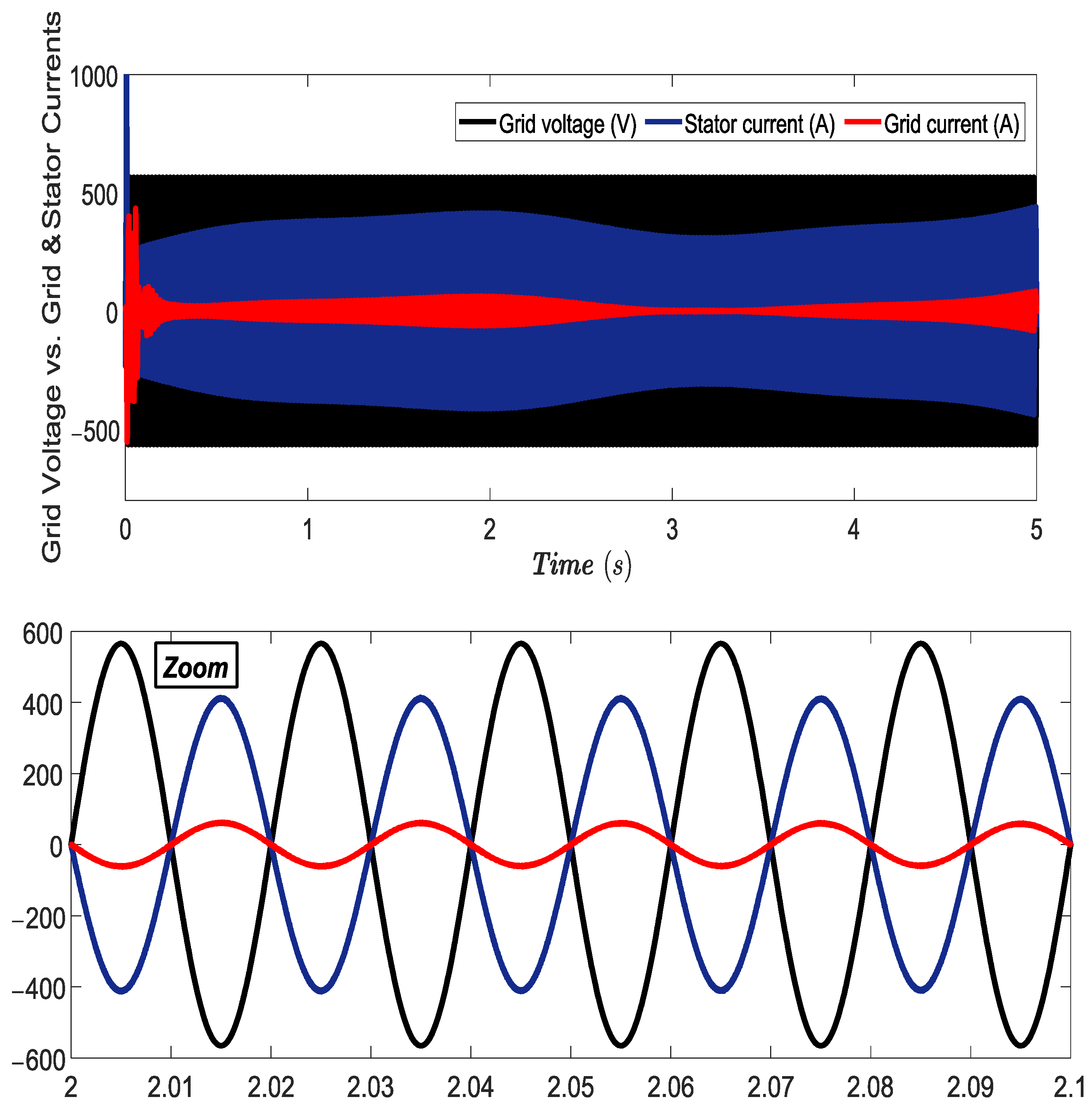
Table 4. Performance evaluation of FOC_PI and adaptive ANN control strategies.
ParameterFOC Used PIANN Improvement (%)
THD of the current I s a (%)0.910.3858.26
Response time (s)0.4030.28730.23
Overshoot (%)Important (≈17%)Neglected (≈4.9%)69.52
Rise time (s)0.2290.15427.97
Static errors (%)0.2670.16528.46
Set-point trackingMediumHigh/
PrecisionGoodVery good/
Table 5. ITAE of ANN and FOC-PI errors.
FOC Used PIANN
Q-axis rotor current i r q 70.0923.06
D-axis rotor current i r d 31.9511.95
Reactive power Q s 51,930.2421.7
Active power P s 30,981.7479.1
DC-bus voltage V d c 4017.22491.3
Table 6. Review of the proposed control versus recent works from the literature.
ReferencesTechniquesStatic Error (%) THD   i s a   ( % ) RipplesOvershoot (%)
[35]Backstepping0.294.52LowModerate (≈9%)
[36]Fuzzy SMC0.193.1HighNegligible (≈6%)
[37]SMC1.844.99HighSignificant (≈18%)
[38]HLRNN0.16----ModerateSignificant (≈24%)
Proposed techniqueANNC0.1580.38LowNegligible (≈5%)
Disclaimer/Publisher’s Note: The statements, opinions and data contained in all publications are solely those of the individual author(s) and contributor(s) and not of MDPI and/or the editor(s). MDPI and/or the editor(s) disclaim responsibility for any injury to people or property resulting from any ideas, methods, instructions or products referred to in the content.