1. Introduction
Gait analysis is essential for understanding and treating walking disorders. Modern sensing technologies enable objective and quantitative monitoring of gait, supporting rehabilitation and clinical decision making.
The gait cycle is the sequence of movements between two consecutive contacts of the same foot with the ground [
1]. It consists of a stance phase, when the foot is in contact with the ground (about 60% of the cycle), and a swing phase, when the foot moves in the air (about 40%).
Two key parameters for gait analysis are ankle plantar/dorsiflexion and lateral shank tilt. Ankle dorsiflexion is the upward movement of the foot toward the shin, while plantarflexion is the downward movement. Normal ankle motion [
2] during gait ranges approximately from
(dorsiflexion) to
(plantarflexion).
Wireless communication is essential for improving system portability and usability. Low-power protocols enable reliable data transmission with extended operating time, and many systems adopt IoT architectures with cloud-based processing [
3]. However, these solutions may introduce latency, higher energy consumption, and dependence on network connectivity.
Lateral shank tilt describes the inclination of the lower leg in the medial–lateral direction. Medial means toward the body midline, while lateral means away from it. Monitoring this angle helps evaluate balance and load distribution; excessive tilt can indicate instability and a higher risk of falls [
4].
The integration of wearable sensing systems into assistive devices, such as ankle-foot orthoses (AFOs) or walking aids [
5,
6,
7,
8,
9], enables clinicians to obtain objective and quantitative data on an individual’s gait and mobility patterns directly within clinical settings. By continuously or periodically monitoring temporal, spatial, and kinematic parameters of the gait cycle, these systems support the functional assessment of walking performance and facilitate the identification of deviations from normative patterns. Such data-driven insights are essential for informing clinical decision-making and refining personalized rehabilitative strategies and therapeutic adjustments [
10,
11,
12].
Foot drop is a common gait pathology characterized by reduced dorsiflexion due to weakness or paralysis of the dorsiflexor muscles. This deficit leads to excessive plantarflexion during the swing phase, increasing the risk of toe dragging and falls. A Posterior Leaf Spring AFO (PLS-AFO) assists dorsiflexion during swing while limiting excessive plantarflexion during stance, improving foot clearance and gait safety [
13].
In recent years, several instrumented assistive devices have been developed to monitor specific gait parameters. These include ankle or crutch kinematics [
14,
15], Ground Reaction Force (GRF) [
16], orthosis deformation [
17], and muscle activity [
18]. For example, Hamid et al. [
19] proposed an active AFO system incorporating a force sensor placed under the foot to detect gait phases, enabling assistance for patients affected by foot drop [
20]. Rescio et al. [
21] developed an instrumented insole capable of measuring foot temperature, which has been shown to correlate with diabetic complications such as foot ulcers. Strain gauges have been widely employed to investigate orthosis deformation. Svensson et al. [
17] used a Wheatstone bridge configuration to measure deformation during uphill and downhill walking, demonstrating higher deformation during ascent. Similarly, Tanino et al. [
22] implemented strain gauge bridges to estimate joint torque during gait. These approaches exploit the direct relationship between structural deformation and joint motion.
Recent advances in printed electronics have enabled the integration of sensing elements into medical devices [
23,
24,
25,
26], particularly orthotic systems [
27,
28]. These technologies allow sensors to be directly embedded onto orthotic structures, improving wearability and customization. Nevertheless, most existing systems either focus on isolated parameters or rely on multiple IMUs for joint kinematics estimation. Therefore, reducing hardware complexity while preserving measurement capability remains an open challenge.
In parallel, inertial sensors are commonly used to identify gait events and estimate spatio-temporal parameters. Aminian et al. [
29] combined gyroscopes with footswitch sensors to detect initial contact and toe-off, while Betz et al. [
30] investigated ankle kinematics using IMUs integrated into orthoses. However, accurate ankle angle estimation typically requires a multi-IMU configuration, with one sensor on the foot and another on the shank, to reconstruct joint kinematics from relative segment orientation [
31].
Although effective, this approach increases system complexity and calibration effort [
32], as precise alignment and synchronization between sensors are required [
33]. It is also sensitive to positioning errors, since small variations in sensor placement after reattachment can affect measurement accuracy [
34]. In addition, advanced sensor fusion methods increase computational demand, limiting real-time or low-power applications. The use of multiple active sensors further raises power consumption and reduces battery life [
35], while wearable units on both foot and shank may negatively impact user comfort and compliance [
36].
To address these limitations, this study proposes an alternative approach based on the combination of strain gauges and a single IMU. Building upon our preliminary work [
37], strain gauges embedded in the AFO structure measure deformation induced by ankle motion, acting as a direct proxy for joint angle. Unlike multi-IMU systems, this method does not rely on inter-segment kinematic reconstruction. A single IMU, positioned on the shank, provides complementary information for gait phase detection and orientation.
The system integrates strain gauges for deformation monitoring, force sensors for ground contact detection, and one IMU for gait phase estimation. Data are transmitted via Bluetooth Low Energy (BLE) to a custom Python-based interface, avoiding cloud dependency. A dedicated PCB and a 3D-printed support structure ensure seamless integration within the orthosis.
In summary, the proposed approach replaces the conventional multi-IMU configuration with a deformation-based sensing strategy supported by a single IMU. Compared to traditional systems, it reduces hardware complexity by eliminating the foot-mounted sensor, simplifies calibration through a direct strain–angle relationship, and improves robustness to sensor repositioning. At the same time, it lowers power consumption and enhances user comfort by minimizing wearable components. Despite this simplification, the approach maintains reliable ankle angle estimation, offering a practical trade-off between measurement performance and system complexity.
The objective of this study is to validate the proposed system through experiments on healthy subjects, using an optical motion capture system as a reference. The main contribution is to demonstrate that orthosis deformation sensing, combined with inertial data, enables accurate ankle angle estimation while significantly reducing instrumentation requirements.
2. Wireless AFO Description
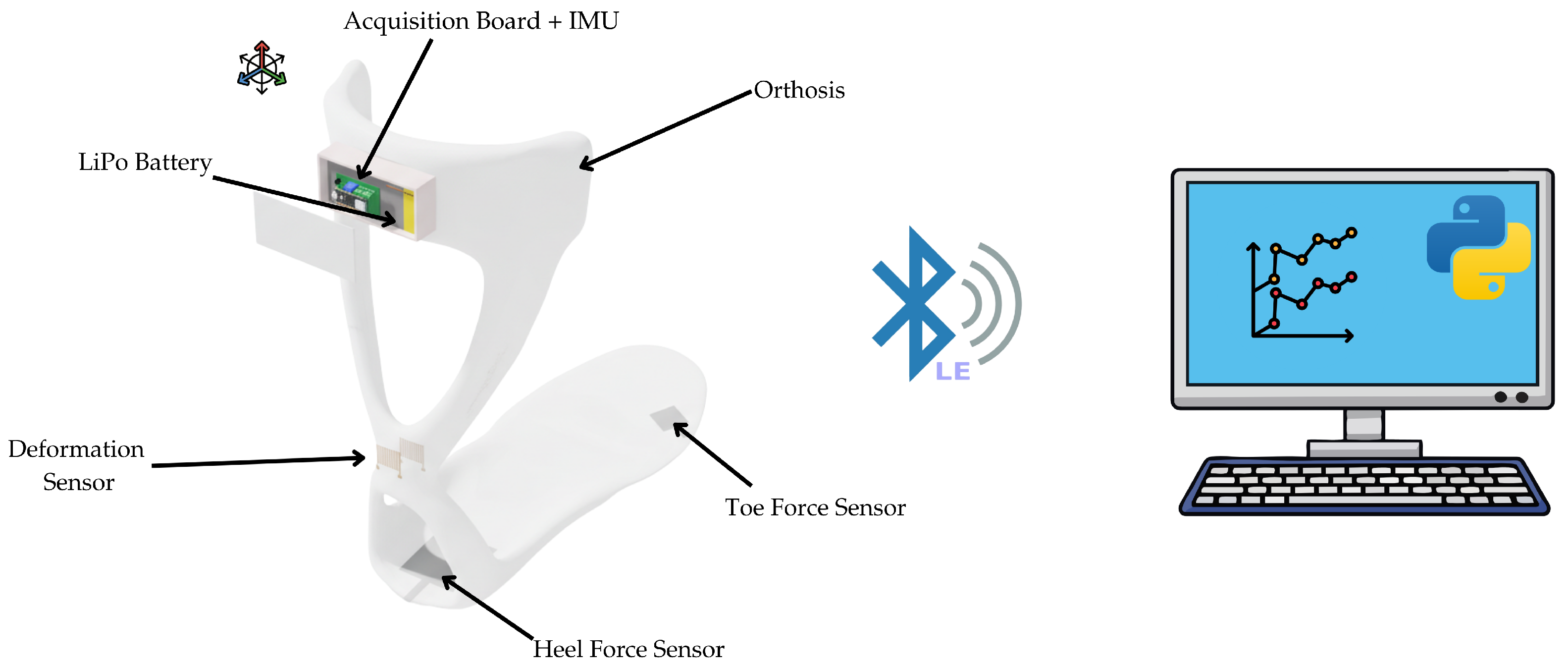
The goal of this study is to develop an instrumented Posterior Leaf Spring Ankle-Foot Orthosis (PLS-AFO)—as shown in
Figure 1—capable of monitoring multiple biomechanical parameters during gait. Specifically, the system aims to measure the deformation of the orthosis itself, which allows for the calculation of plantarflexion and dorsiflexion angles at the ankle joint. Additionally, the device tracks the phases of gait, distinguishing between stance and swing, and captures the acceleration and spatial positioning of the lower leg. An important feature is the monitoring of the lateral shank tilt angle, which provides valuable information on balance and stability during walking.
To make these measurements, the instrumented PLS-AFO integrates different sensors. Strain gauges are placed on the orthosis to measure its deformation, which is related to ankle plantarflexion and dorsiflexion. In a typical setup, measuring these angles requires one IMU placed on the shank and another on the foot to estimate the relative segment orientation. In contrast, the proposed solution allows the ankle angle to be estimated without using two IMUs. Therefore, only one IMU is needed, reducing system complexity, calibration effort, power consumption, and improving user comfort.
Two force sensors are used to detect key gait events, specifically heel strike and toe-off (toe strike), allowing identification of gait phases. Furthermore, an inertial measurement unit (IMU) is attached to the leg to monitor acceleration and position in real time. In particular, the tilt angle can be obtained indirectly using this acceleration and position, allowing the assessment of lateral shank tilt during the gait cycle.
All sensor signals are collected and processed by a microcontroller embedded within the orthosis. The data are then transmitted wirelessly via Bluetooth Low Energy (BLE) to a personal computer. On the computer, a dedicated graphical user interface (GUI) displays the real-time data to clinicians, facilitating immediate analysis and feedback. Additionally, the system saves the acquired data in a text (.csv) file for further offline processing and study.
2.1. Force Sensors
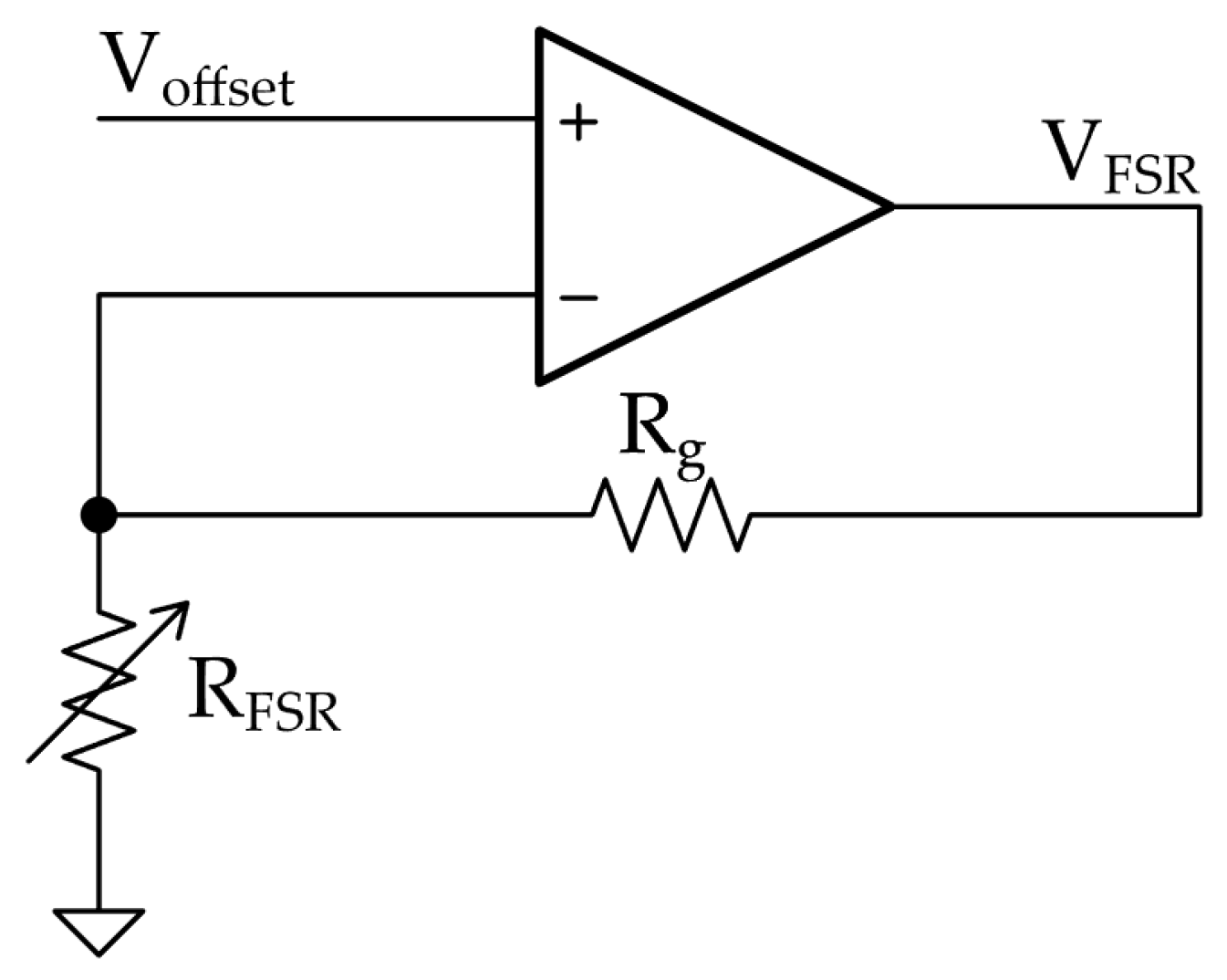
Force sensors are placed at the bottom of the orthosis to detect key phases of the gait cycle, namely heel strike and toe-off. Their location is selected to maximize the accuracy of gait event detection. The adopted sensors are resistive force sensors, which require proper signal conditioning, as shown in
Figure 2. To this end, a non-inverting amplifier configuration is employed. An offset voltage of approximately 0.5 V is applied at the amplifier input to prevent the output from reaching negative supply levels, thereby ensuring that the signal remains within the admissible voltage range. As pressure is applied to the sensor, the output voltage increases proportionally, approaching the supply voltage with increasing force. The gain resistor (
) is set to 892
, such that the amplifier output saturates at an applied force of approximately 40 N. This threshold is defined according to the criterion that ground contact is detected when the applied force exceeds
of the subject’s body weight [
38,
39]. A characterization of the force sensor is presented in the Section to determine its resistance value at 40 N. This configuration effectively maps the analog sensor output into a binary signal, enabling reliable detection of ground contact events. Each sensor is implemented using the same configuration.
2.2. Strain Gauges Sensors
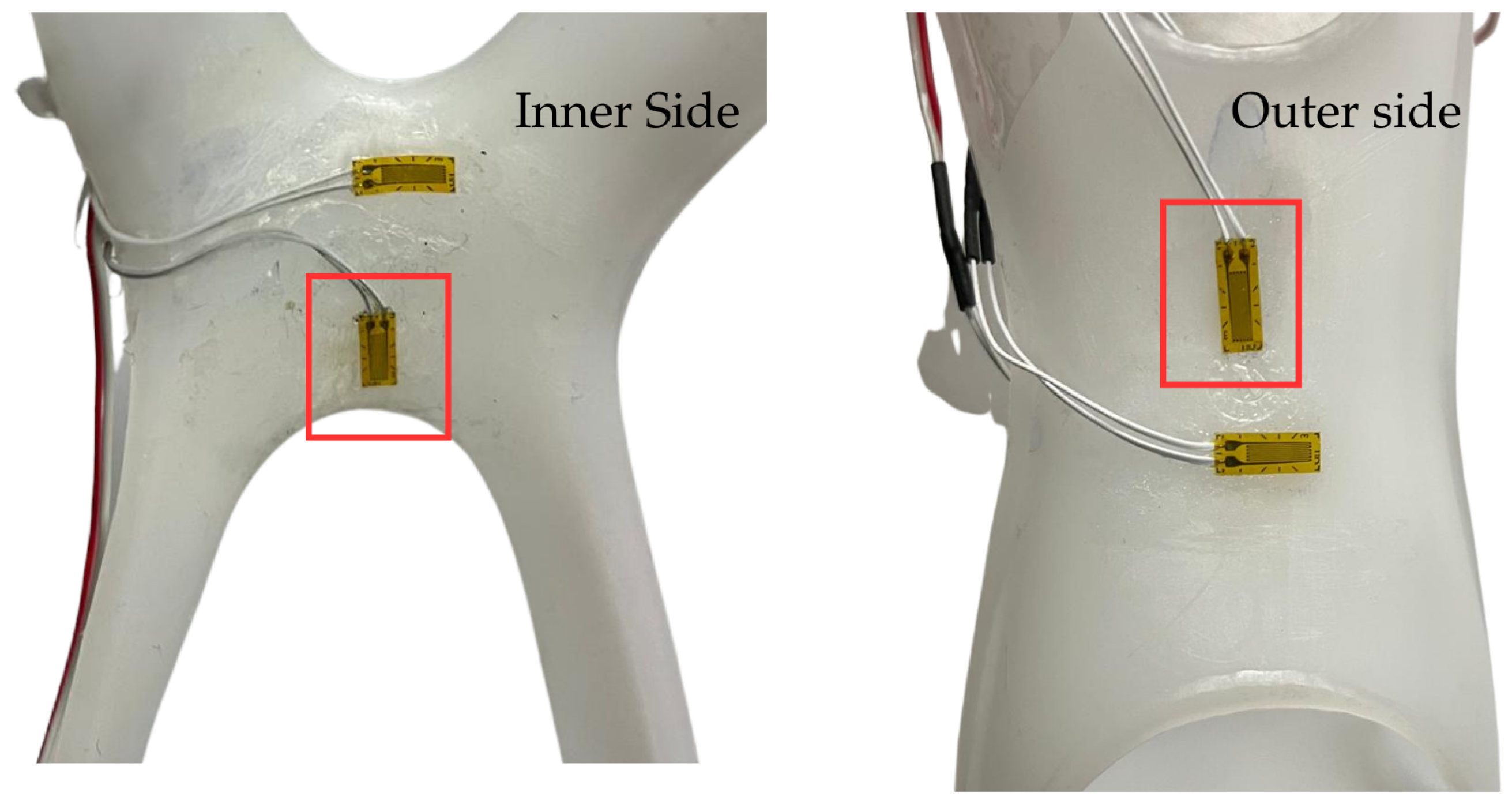
To measure the deformation of the orthosis, two 120 Ω strain gauges are mounted on the structure in a longitudinal position, as shown in
Figure 3 within a red square. One sensor is placed on the outer side of the orthosis, while the other is positioned on the inner side. This configuration allows the sensors to experience opposite mechanical effects during deformation: when one strain gauge is subjected to compression, the other is subjected to tension. In this study, a full Wheatstone bridge configuration is also tested by adding two additional strain gauges placed orthogonally to the first pair, in a transversal position. This configuration is evaluated to determine whether the sensitivity and accuracy of the bridge can be enhanced.
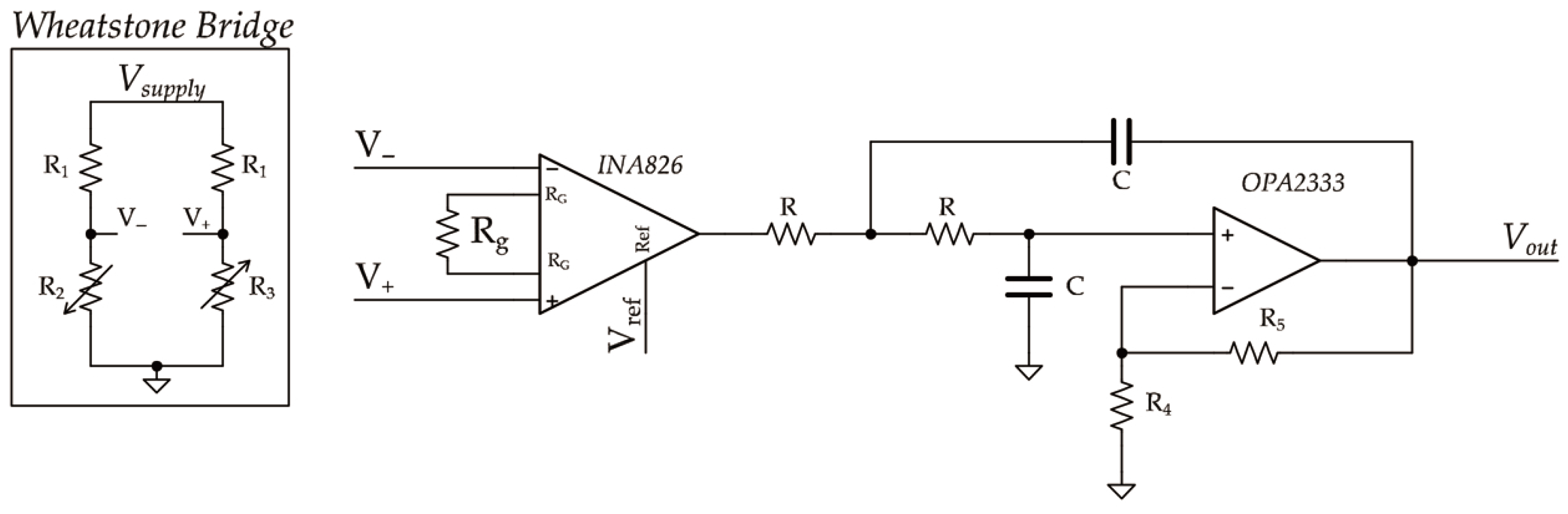
A half Wheatstone bridge (
Figure 4) is implemented using two commercial resistors with a nominal value of 120
, matching the nominal resistance of the strain gauges under no-load conditions. In this configuration, the bridge is initially balanced when no external forces are applied. When the strain gauges are deformed by ankle movement, their resistance changes, generating a differential voltage at the bridge output. The voltage is positive during plantarflexion and negative during dorsiflexion, reflecting the direction of the applied force.
The differential signal from the bridge is measured using an instrumentation amplifier (INA) configured with a gain of 500, obtained by selecting a gain resistor of 124 according to the standard INA gain formula. A reference voltage of 1.5 V is applied to the INA to properly shift the signal within the acquisition range, since the Wheatstone bridge produces both positive and negative voltages. The gain and reference values were chosen following the standard INA design equations.
The amplified signal is then processed by a Sallen–Key low-pass filter, which also provides additional amplification with a gain of 1.5. The filter has a cutoff frequency of 25 Hz, chosen to satisfy the Nyquist criterion given the 66 Hz sampling rate of the system. The resistor and capacitor values of the filter were calculated according to standard Sallen–Key formulas. This configuration allows proper scaling of the signal and full use of the 0–3.3 V input range of the acquisition system.
2.3. Hardware System
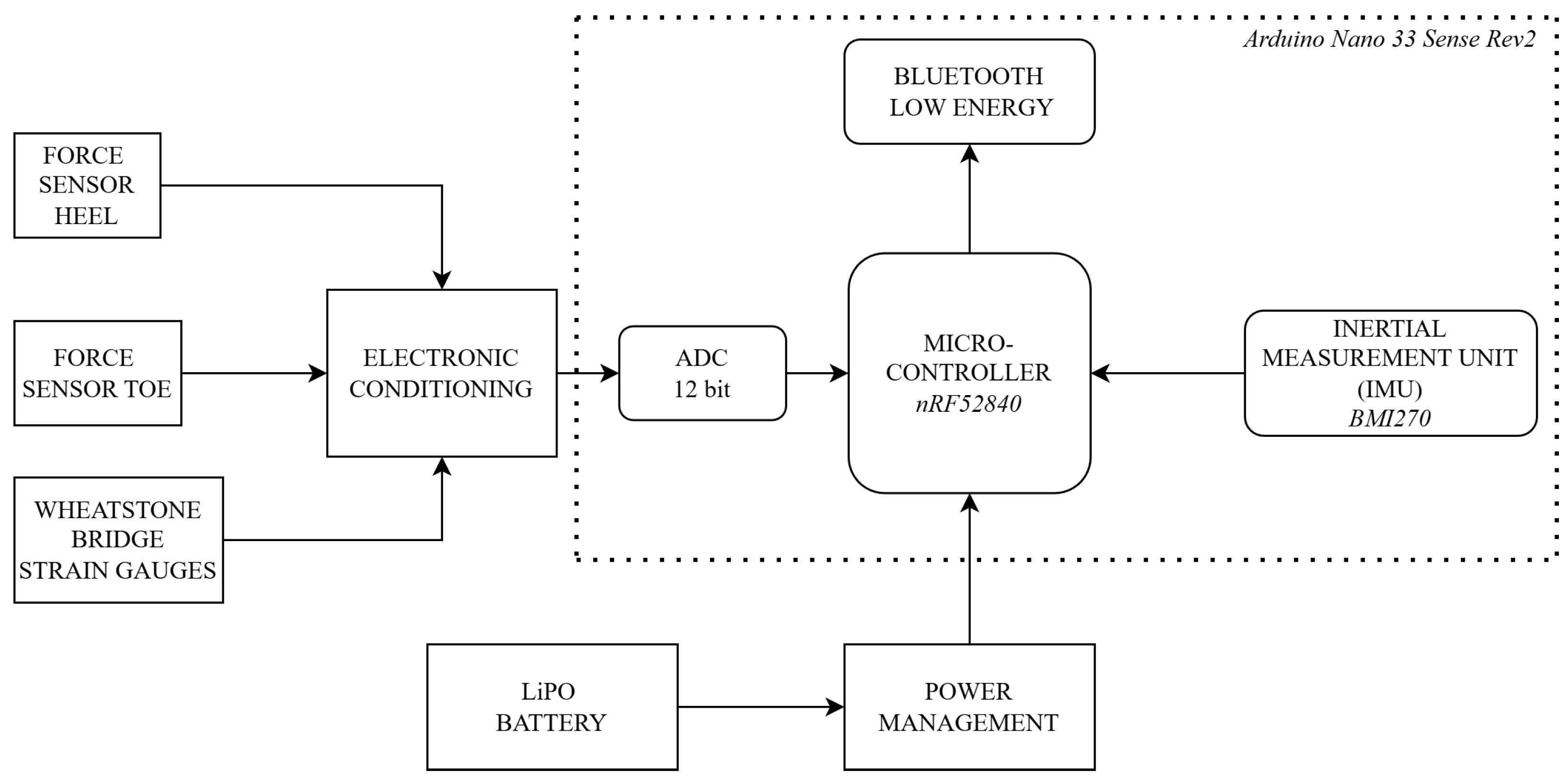
The strain gauges and force sensors, as described in the previous section, are equipped with an electronic conditioning circuit to properly amplify and filter their signals. The conditioned outputs are then acquired by a 12-bit analog-to-digital converter (ADC), which provides a resolution of approximately 1 mV per step. The ADC is integrated within an Arduino Nano 33 BLE Sense Rev2, which also contains the inertial measurement unit (IMU) for accelerometer and gyroscope measurements, as well as a Bluetooth Low Energy (BLE) module for wireless data transmission. The entire system is powered by a 3.7 V LiPo battery. The supply voltage is stepped down to 3.3 V using a low-dropout (LDO) buck converter, which provides a stable voltage directly to the Arduino microcontroller. This direct supply bypasses the onboard protection circuitry of the Arduino, which is necessary because the Arduino Nano 33 BLE Sense Rev2 can only operate reliably with a 3.3 V supply voltage in this configuration. The power management system also includes a battery charging module (TP4056) via USB-C, which ensures safe charging of the LiPo battery. The module features a red LED indicator, which lights up when the battery is charging. This charging module is necessary to protect the LiPo battery and prevent safety issues related to overcharging or short circuits. Thanks to the LDO buck converter, the microcontroller receives a stable and regulated voltage, which is essential to guarantee reliable operation of both the sensors and the data acquisition system over time. The entire circuit is summarized in a block diagram, as shown in
Figure 5.
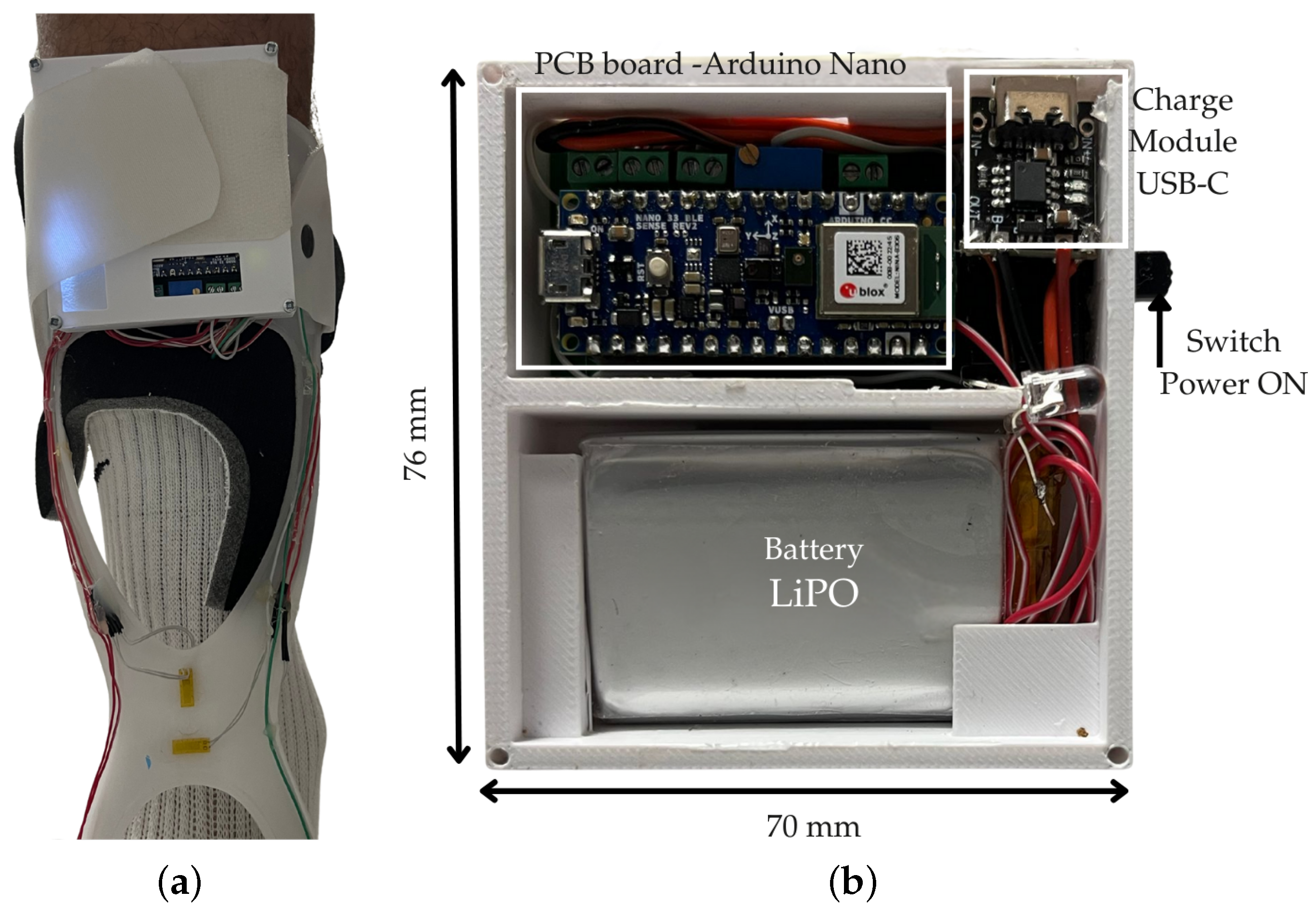
The system is mounted as illustrated in
Figure 6a. The PCB is enclosed in a 3D-printed case, as shown in
Figure 6b, providing mechanical protection and integration of the battery and connectors. The enclosure also includes a power switch to turn the system on and off, as well as an LED indicator that lights up when the system is powered.
2.4. Microcontroller Firmware
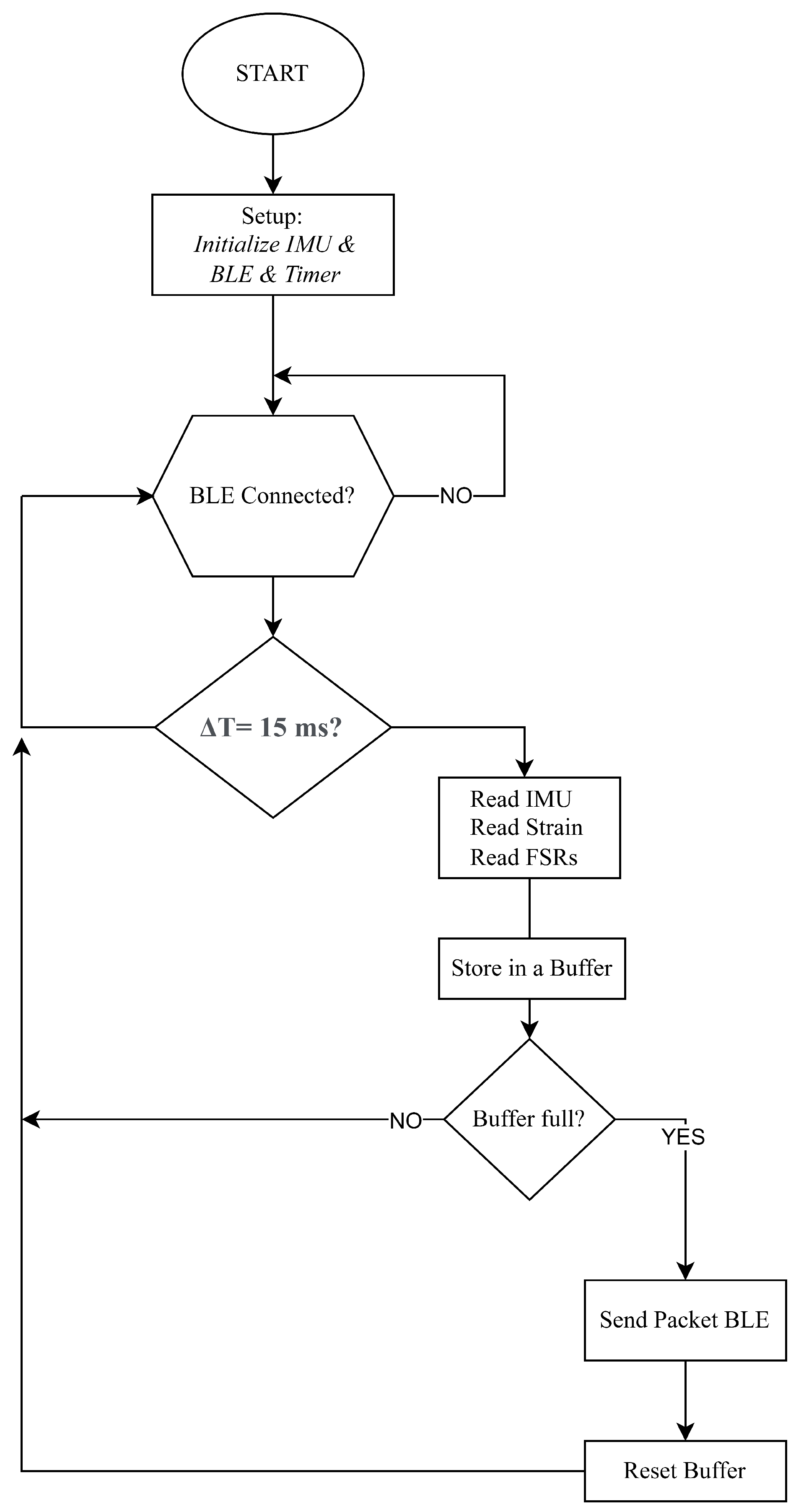
The firmware logic implemented on the Arduino is shown in
Figure 7. When the PCB board is powered, the Arduino initializes all variables and sets up the BLE characteristics, including the packet size and the variables to be sent. Each packet contains the following data:
Timestamp (uint32_t base timestamp and uint16_t sample offsets; represents the acquisition time of each sample, ensuring accurate timing regardless of BLE transmission delays or PC clock differences);
Gyroscope data (int16_t for each axis: gx, gy, gz);
Accelerometer data (int16_t for each axis: ax, ay, az);
Strain sensor output (uint16_t, 12-bit ADC value; represents the analog strain measurement and is converted to voltage in the Python-based GUI);
Heel force sensor (1-bit ON/OFF; indicates contact with the ground);
Toe force sensor (1-bit ON/OFF; indicates contact with the ground).
Figure 7.
Arduino Firmware—Flowchart.
Figure 7.
Arduino Firmware—Flowchart.
The firmware samples all sensors every 15 ms (66 Hz) and transmits data every 90 ms (10 Hz). The selection of these parameters is based on several considerations:
- 1.
BLE transmission intervals and communication range: The 90 ms transmission interval represents a trade-off between real-time visualization and reliable BLE communication. Experimentally, higher transmission frequencies allow stable communication only up to about 1 m, whereas with the 90 ms interval, stable transmission is achieved up to 5–6 m. Therefore, the chosen interval ensures reliable data transmission and smooth visualization even at greater distances.
- 2.
Compatibility with human gait dynamics: The 15 ms sampling interval (66 Hz) ensures sufficient temporal resolution according to the Nyquist criterion for signals related to human gait. This interval is sufficient to capture the main temporal features of the gait cycle, ensuring accurate representation of motion during walking [
40].
When a device connects to the Arduino, a timer starts. Every 15 ms, the firmware reads the IMU, strain sensor, and FSR values and stores them in a buffer. The buffer can hold up to six packets, which takes approximately 90 ms to fill. When the buffer is full, the entire buffer is transmitted via BLE, and the buffer is reset.
This approach ensures an effective sampling frequency of about 66 Hz, sufficient to capture human gait characteristics, while minimizing packet loss and enabling smooth real-time visualization in the Python-based GUI. The parameter selection reflects an experimentally verified trade-off between sampling frequency, BLE transmission interval, and communication range.
2.5. Python-Based GUI
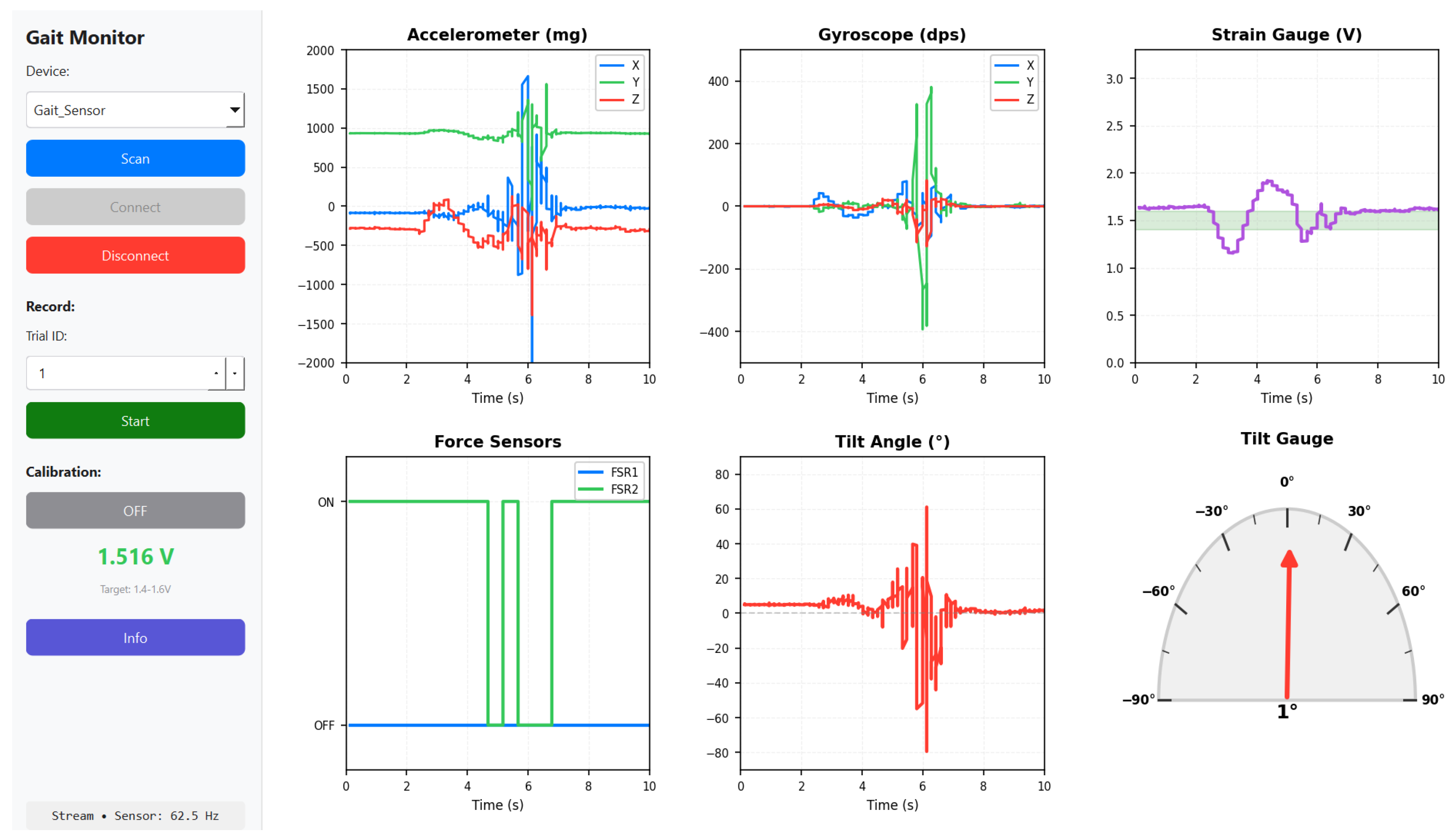
The Python-based monitoring GUI (
Figure 8) was developed using the PyQt6 framework to provide a real-time interface for the gait sensor node. The software architecture employs a multi-threaded approach to decouple the communication protocol management from the graphical rendering, ensuring a fluid data stream and responsive user interaction without lag.
BLE Communication and Buffered Reception. Wireless data acquisition is handled through the bleak library, operating in asynchronous mode to manage incoming Bluetooth notifications. To prevent processing bottlenecks, the application utilizes a dedicated background thread for continuous data reception and buffering. Raw binary data are extracted from 174-byte packets and transferred to the main GUI thread via a thread-safe queue. This architecture ensures that no samples are lost during high-frequency graphical updates while maintaining a stable connection.
Data Processing. A key design choice was to perform all signal scaling and physical unit conversions on the host PC rather than on the microcontroller. By transmitting raw integer ADC counts instead of floating-point values, the system significantly reduces the required BLE bandwidth and minimizes the computational overhead on the Arduino side. Each received packet consists of a hardware-generated reference timestamp followed by a burst of ten multi-channel samples. These include accelerometer and gyroscope readings (scaled into and ), strain gauge data (converted into voltage), and the binary state of the Force Sensing Resistors (FSRs). The tilt angle (pitch) is then computed trigonometrically from the acceleration components. The use of hardware-side timestamps allows the system to reconstruct the time base with millisecond precision, eliminating timing errors caused by wireless transmission jitter.
Real-Time Visualization and Interface. The GUI simultaneously displays six synchronized plots arranged in a grid, refreshed at 20 Hz. Three time-series panels show the dynamic trends of the inertial signals and the strain bridge voltage, while the remaining panels display the contact status of the force sensors, the pitch angle over time, and an analog gauge for immediate postural feedback. To optimize memory usage and CPU load, the software renders a rolling time window limited to the last 10 s of acquisition.
Recording and System Calibration. The application allows the entire acquisition session to be exported into CSV format for offline analysis. During the initial setup, a dedicated calibration mode provides real-time visual feedback of the strain gauge baseline voltage. This feature is critical for the operator to verify the Wheatstone bridge balance and adjust hardware gain stages before the start of dynamic gait trials.
2.6. Validation System—Optical System
System validation was conducted using a gold-standard optical three-dimensional motion capture system. The reference system was the Smart-DX EVO (BTS Bioengineering), composed of ten infrared cameras covering the entire acquisition volume and two force platforms for ground reaction force measurements.
The system is marker-based and employs passive reflective markers placed on anatomical landmarks. Each camera emits infrared light that is reflected by the markers and detected by multiple cameras. Through spatial triangulation, the three-dimensional coordinates of each marker are reconstructed with high precision.
Optical motion capture systems are considered the gold standard in biomechanical analysis due to their high spatial resolution, elevated sampling frequency, and validated accuracy in three-dimensional kinematic reconstruction. These systems are extensively used in clinical gait analysis and research settings, providing reliable and repeatable measurements of joint kinematics and kinetics [
41].
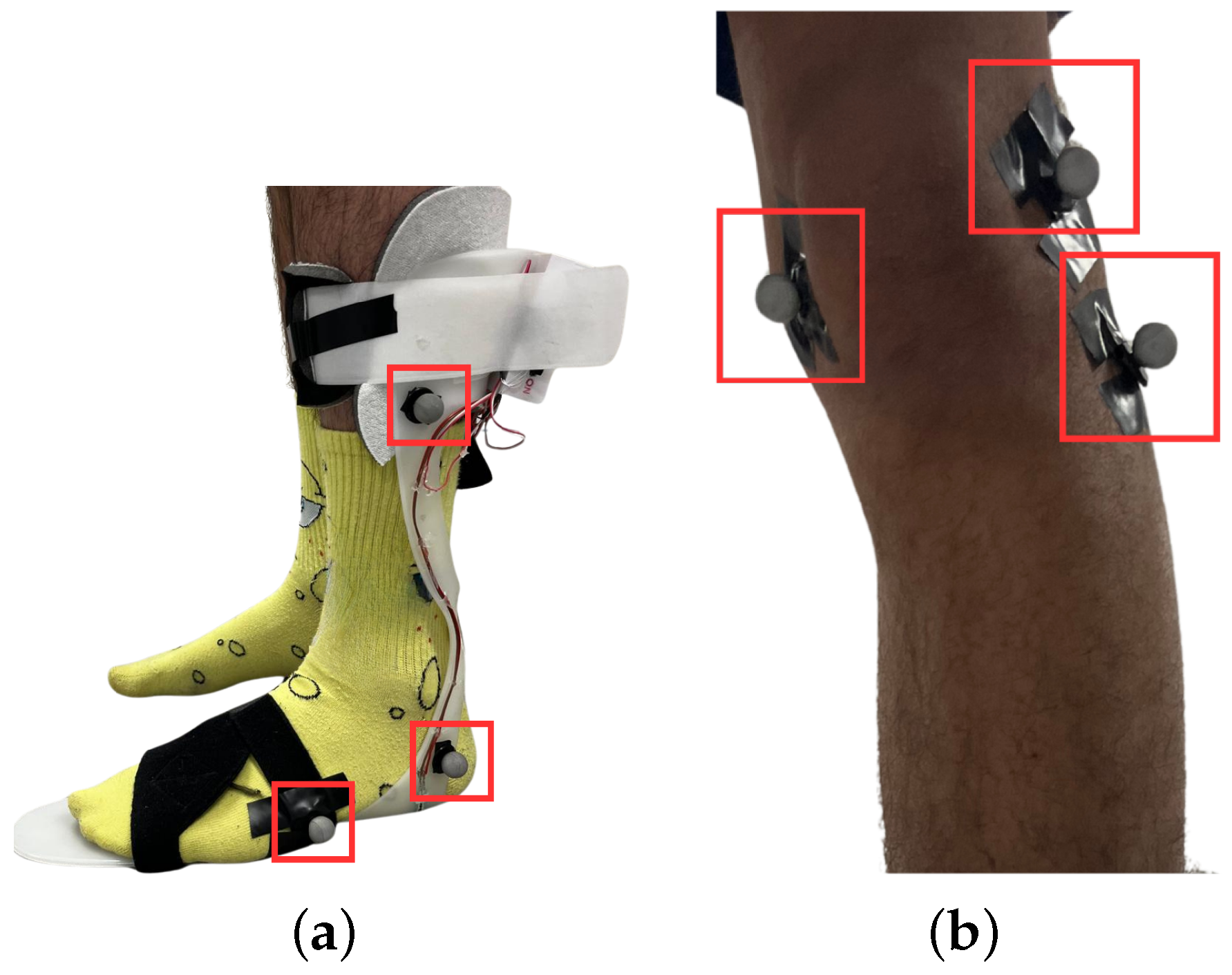
Marker placement was performed according to the Rizzoli protocol [
42], as illustrated in
Figure 9. In configuration (a), reflective markers were positioned exclusively on the orthosis to quantify plantarflexion–dorsiflexion angular displacement and to calibrate and validate the strain gauge measurements against the optical motion capture system. In configuration (b), three markers were placed on the knee according to the same protocol to define a local coordinate system. The inertial measurement unit (IMU) was validated against the optical motion capture system by comparing the measured tilt angle associated with postural imbalance and fall risk.
3. Results
3.1. FSR Validation
Initial tests were performed on the force-sensitive resistors (FSRs) using a dynamometer to determine appropriate threshold values for detecting foot-ground contact.
Table 1 shows representative resistance measurements for selected forces, covering the range relevant for walking.
Based on these measurements, resistance thresholds of 5 kΩ for both the heel and toe sensors were selected to reliably indicate foot-ground contact. In the data acquisition system, these values correspond approximately to 3.3 V.
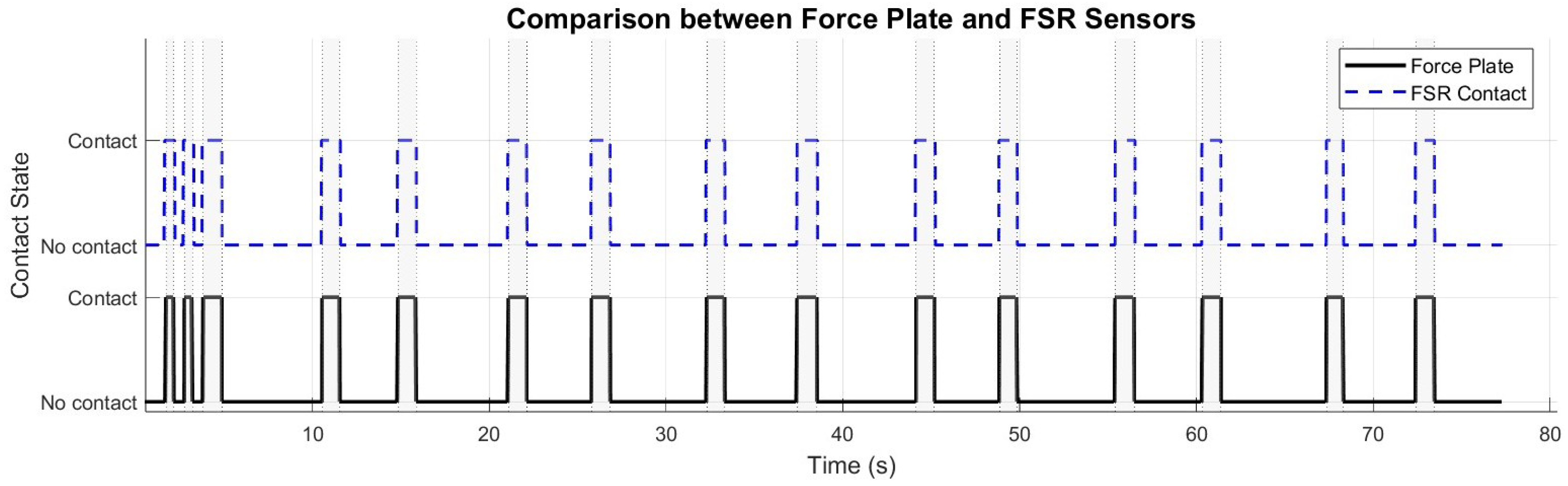
The validation of the FSR-based step detection is presented in
Figure 10 and
Table 2.
Figure 10 shows the comparison between foot-ground contact detected by the force platform and the FSR signal. Ground contact from the force platform is identified using a threshold of approximately 40 N to filter out noise and ensure reliable detection [
38,
39], while the FSR signal is considered active whenever at least one sensor (heel or toe) exceeds its resistance threshold. Vertical dashed lines indicate the heel strike and toe-off events detected by the force platform.
Table 2 reports the mean delays between the FSR detections and the force platform events. The heel sensor detected heel strike slightly earlier than the platform, with a mean delay of
s, whereas the toe sensor detected toe off slightly later, with a mean delay of
s.
To better understand the timing differences in relation to the stance phase, the delays were expressed as a percentage of the stance duration using the following equation:
The observed anticipations or delays (2.8% for heel strike and 1.1% for toe off, see
Table 2) indicate that the FSR sensors detect gait events with minimal temporal deviation relative to the stance phase. These differences may be influenced by factors such as foot size, orthosis dimensions, and slight variations in sensor placement, which can cause a forward or backward shift in event detection. Overall, the FSR sensors demonstrated excellent temporal agreement with the force platform, confirming the validity of the selected sensor locations.
3.2. Strain Gauge Positioning
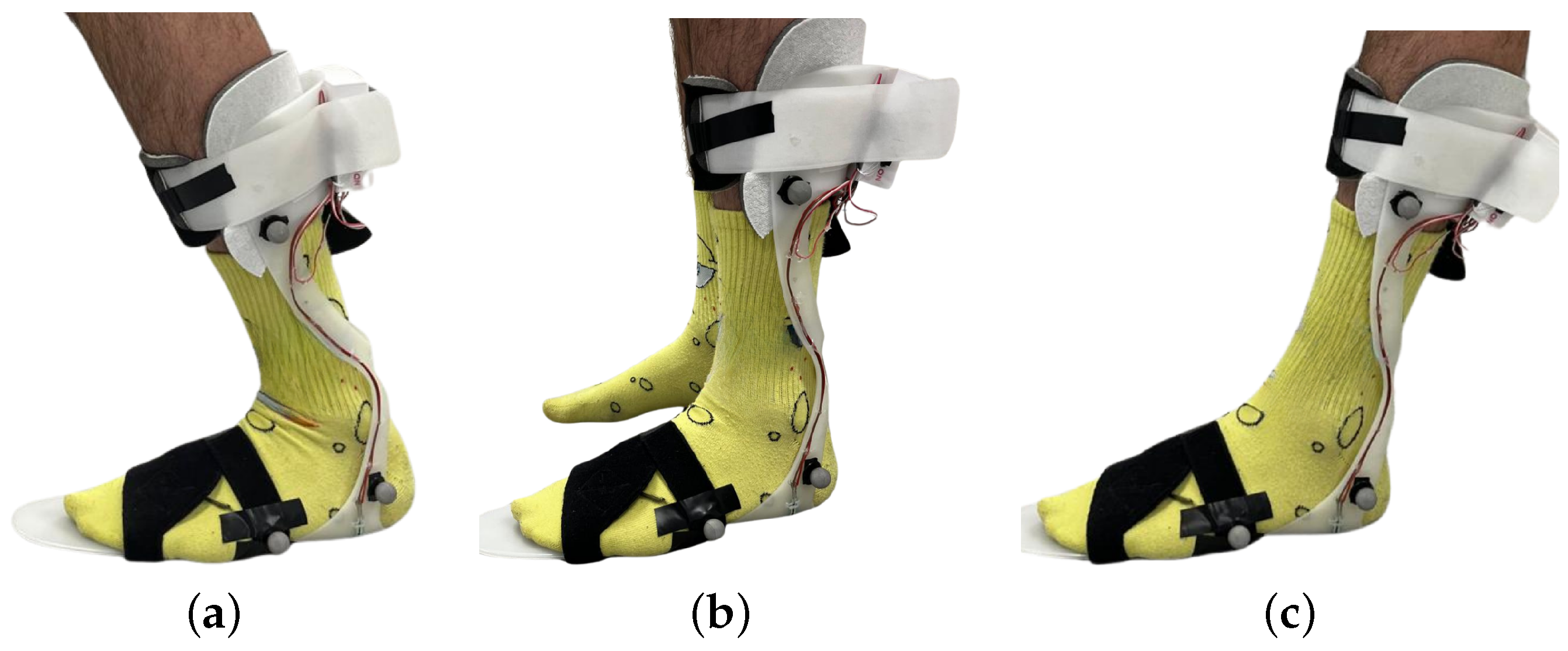
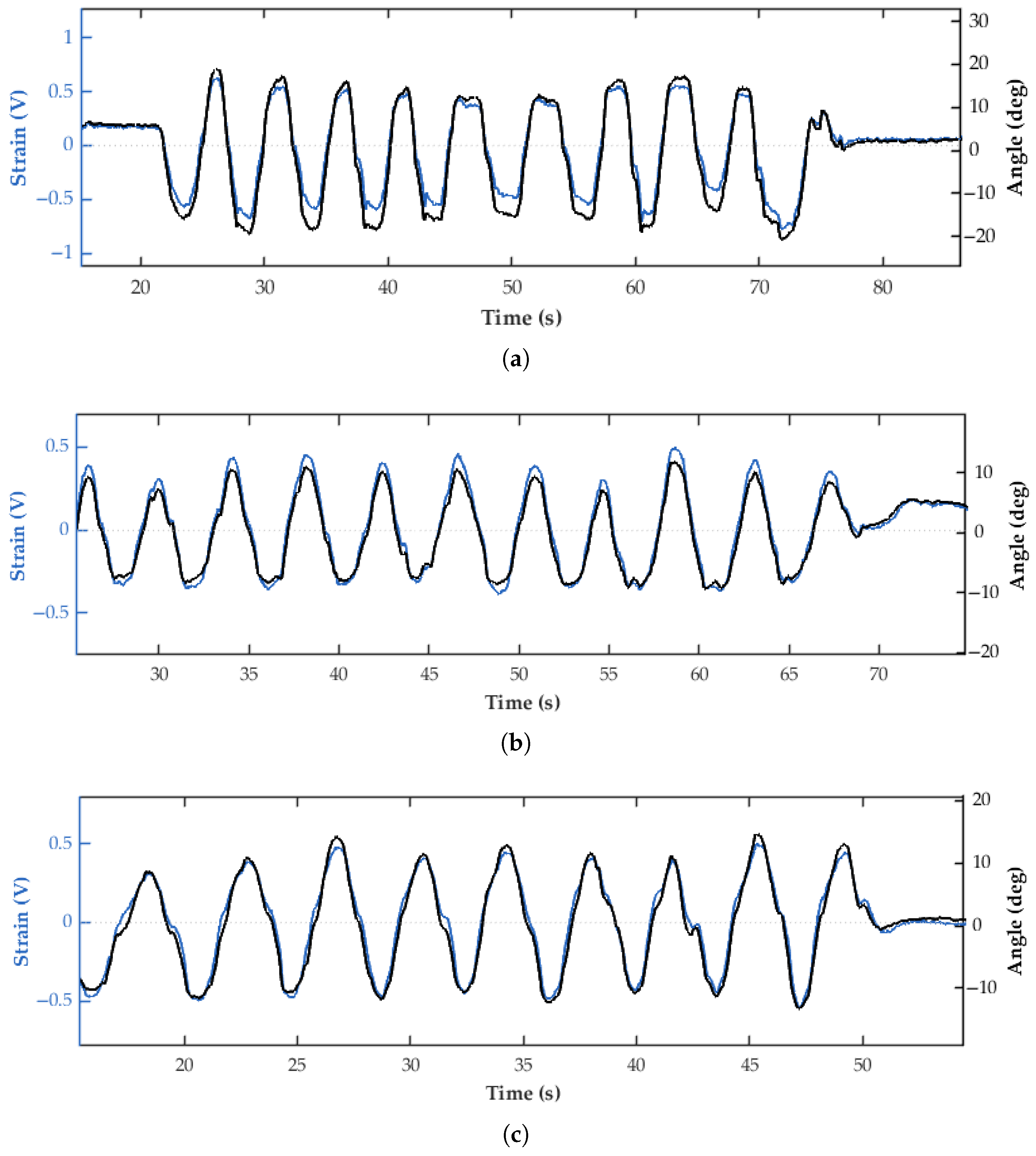
As described in the previous section, two configurations were tested: a half Wheatstone bridge and a full Wheatstone bridge. In both cases, two movements were performed: a lunge to measure dorsiflexion and the opposite movement to measure plantarflexion, as shown in
Figure 11. At the beginning, subjects were asked to hold a steady position for 10 s to allow measurement and to synchronize the two systems at a 0° angle.
Figure 12 shows the behavior of the configuration with four strain gauges. In this case, when the deformation angle decreases beyond a certain value, the output signal does not follow the expected trend. Instead of decreasing, the signal begins to increase.
This behavior is mainly related to the orientation of the strain gauges and to the mechanical response of the orthosis structure. During dorsiflexion, under ideal conditions, the gauges should exhibit predictable strain patterns according to beam theory: on the outer side of the orthosis, the longitudinal gauge experiences tensile strain (positive ), while the transversal gauge undergoes compressive strain due to the Poisson effect. Conversely, on the inner side, the longitudinal gauge is compressed while the transversal gauge is stretched.
However, beyond a certain angular threshold, both transversal gauges exhibit a strain reversal. This phenomenon is not attributable to the material properties but rather to the curved geometry of the orthosis structure. The orthosis is made of polypropylene (PP), a thermoplastic polymer with a Young’s modulus of approximately 0.8 GPa and a Poisson’s ratio of 0.41. While these material properties influence the deformation behavior, the primary cause of the strain reversal lies in the three-dimensional deformation of the curved structure. As the bending angle increases, the curved geometry induces complex stress distributions that cause the transversal strain components to reverse direction on both the outer and inner surfaces, deviating from the simple Poisson effect predicted by linear beam theory.
After this test, only the two strain gauges oriented in the longitudinal direction were used in a half Wheatstone bridge configuration to measure the deformation of the orthosis.
3.3. Strain Gauge Calibration
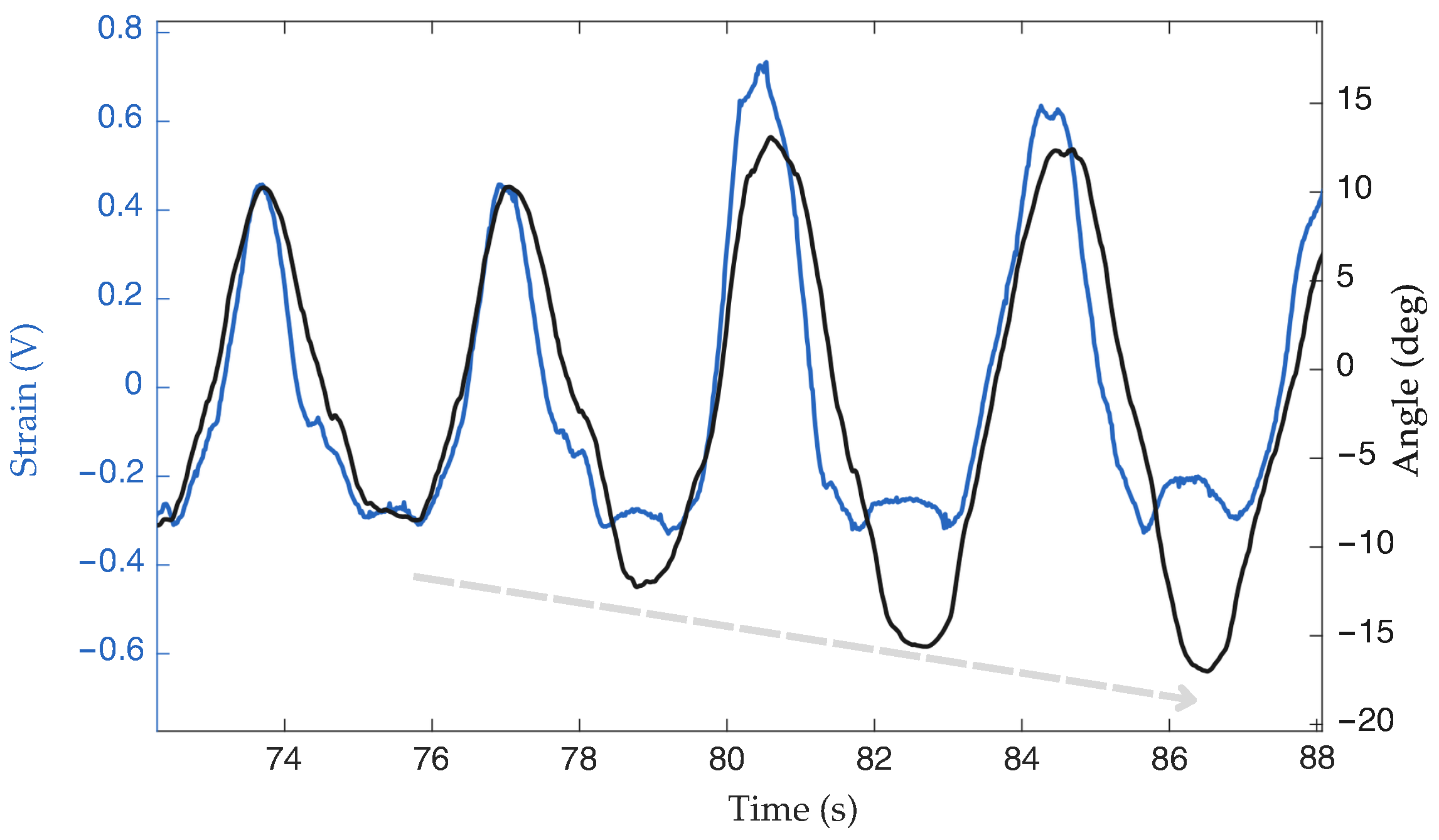
A calibration procedure was conducted to establish a linear relationship between the strain gauge output voltage and the ankle joint angle measured by the optoelectronic system. A total of sixteen measurement sessions were performed across three subjects. Each session included ten plantarflexion and ten dorsiflexion movements, as shown in
Figure 13. This protocol enabled the evaluation of both intra-subject and inter-subject variability, as well as the repeatability and robustness of the system under realistic conditions.
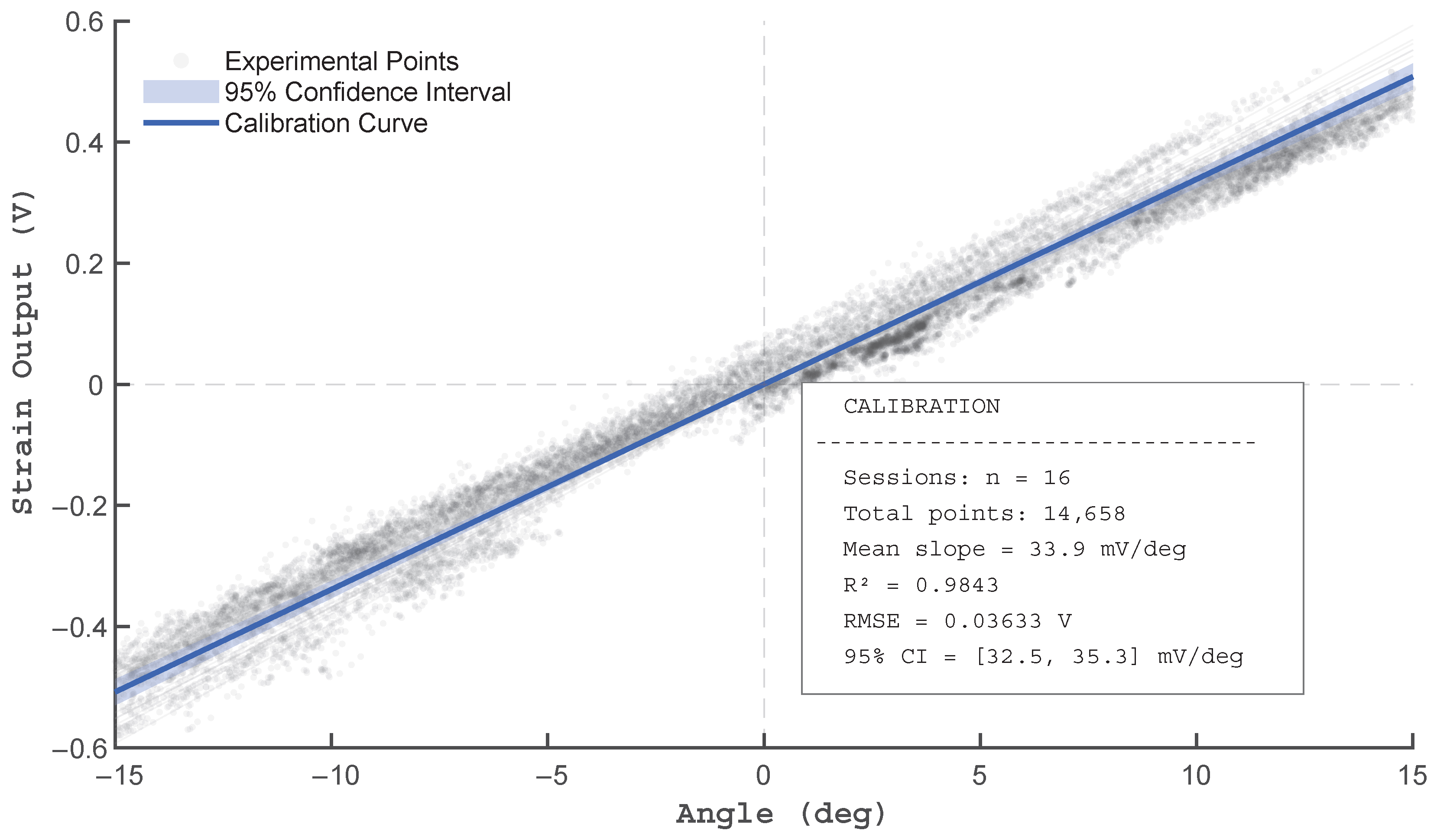
For each subject, the calibration data were processed independently. The strain signal and the optoelectronic reference angle were first temporally synchronized by optimizing the time shift to maximize the coefficient of determination. Both signals were then mean-centered to remove static offsets, and a zero-intercept linear regression was performed considering only data within the angular range of .
The results, shown in
Figure 14, demonstrate consistent linearity across all subjects. The average sensitivity was approximately 33 mV/deg, with a pooled coefficient of determination (
) of 98.43% and an RMSE of 36.33 mV, corresponding to an angular error of approximately
. These results confirm that the half Wheatstone bridge configuration with longitudinal strain gauges provides a linear and repeatable response suitable for real-time monitoring of orthosis deformation during functional movements.
3.4. Strain Gauge Validation
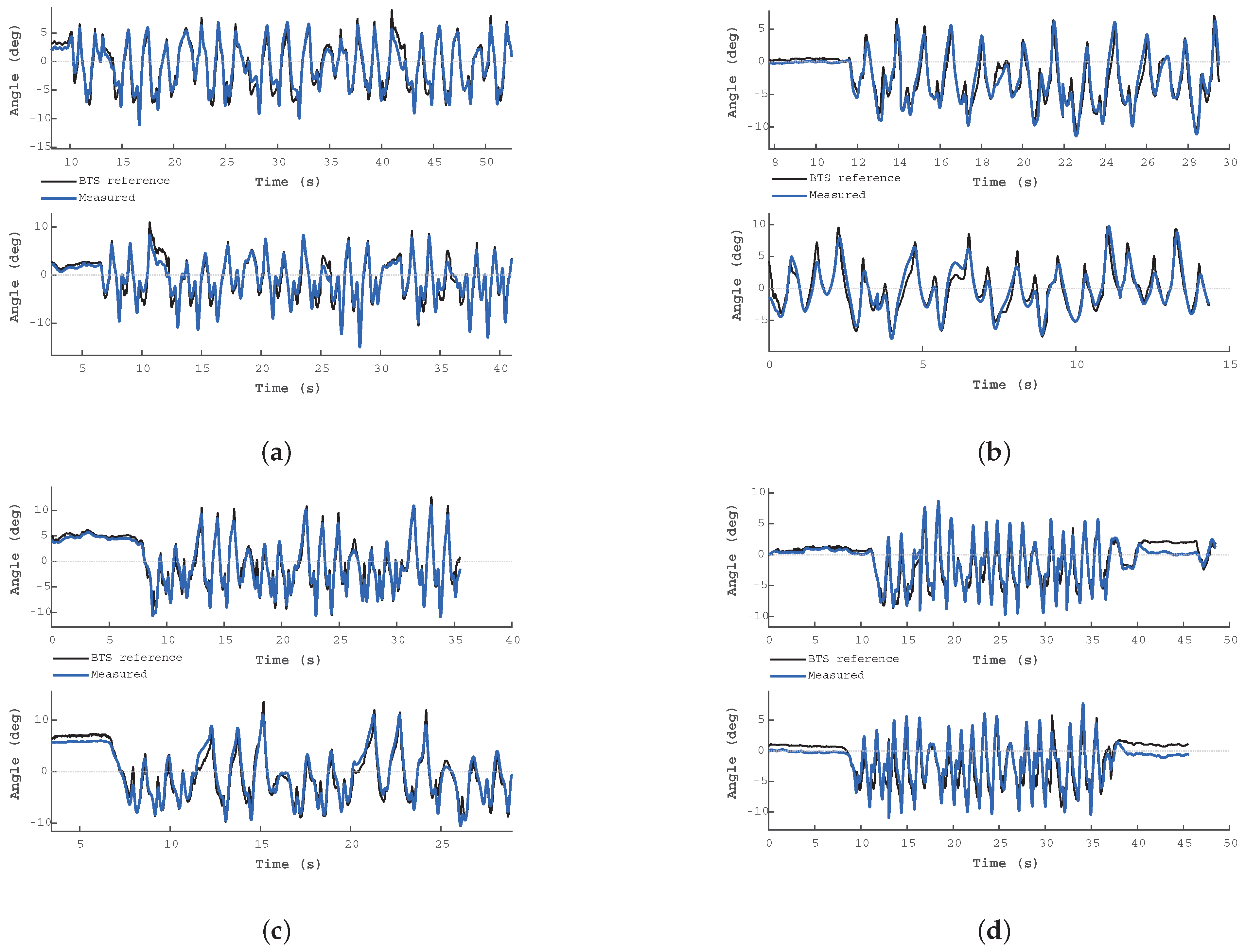
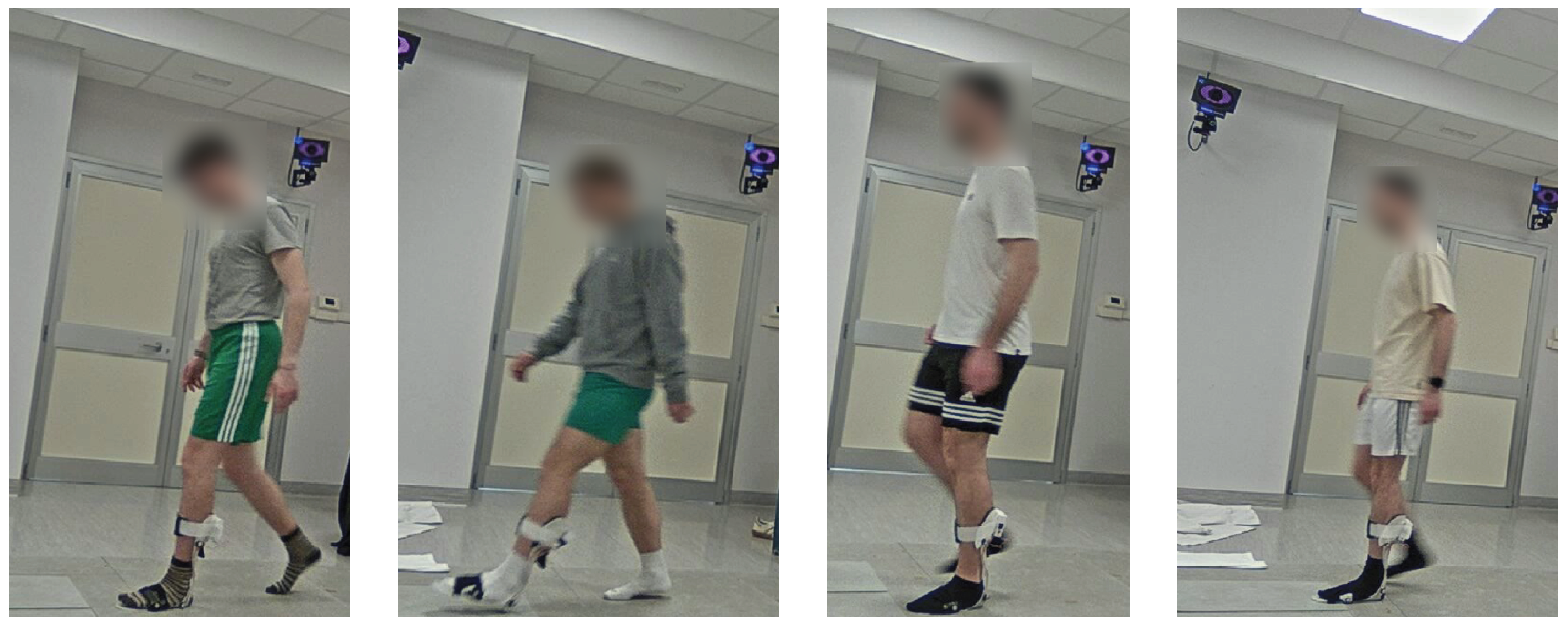
The validation of the previously calibrated system was conducted on ten subjects. The same experimental setup of the optoelectronic system was maintained for all trials. Each subject performed walking trials within the acquisition volume of the optical motion capture system, as illustrated in
Figure 15 for four representative subjects.
Figure 16 presents two representative gait cycles for four selected subjects, illustrating the system’s performance across different accuracy levels. The discrepancies observed between the strain gauge measurements and the reference system (see
Table 3) can be attributed to several factors that may contribute to an overestimation of the actual measurement error.
During static calibration trials, the optoelectronic system maintained continuous marker visibility and provided highly reliable reference measurements; however, during dynamic gait trials, certain factors introduced additional measurement uncertainty, as the system became susceptible to occasional measurement artifacts such as marker flickering or temporary loss of signal due to occlusions caused by the orthosis structure or the subject’s limbs masking the markers from the cameras [
43,
44], and, additionally, one marker is positioned directly on the foot, making it particularly prone to artifacts due to impacts with the ground and rapid movements during gait, which can further affect the accuracy and stability of the recorded measurements.
Furthermore, the different sampling rates of the two systems—66 Hz for strain gauge acquisition versus 100 Hz for the optoelectronic system—necessitate resampling and temporal alignment for correlation. This process can introduce synchronization errors, particularly during high-velocity phases of the gait cycle, adding a systematic source of uncertainty to the comparison.
Given these considerations, the reported mean RMSE of
likely represents a conservative estimate that includes both the intrinsic error of the strain gauge system and measurement artifacts from the dynamic validation protocol. Even with this conservative estimate, the performance is significantly superior to that of alternative systems used to measure ankle–foot angle, such as IMU-based approaches, where RMSE values typically exceed 5° [
45,
46,
47].
Beyond accuracy, the proposed system offers substantial advantages in user comfort and setup efficiency. Conventional IMU-based approaches require at least two sensors—one on the foot and one on the shank—to estimate dorsiflexion and plantarflexion angles, introducing risks of sensor misalignment and skin movement artifacts. In contrast, the proposed solution relies on only two strain gauges mounted directly on the orthosis, thereby reducing hardware complexity, eliminating sensor-skin interface issues, and simplifying the overall measurement setup while maintaining superior accuracy.
3.5. IMU—Validation
IMUs are widely investigated and characterized in wearable sensing applications for human motion analysis [
48,
49,
50,
51,
52,
53]. Therefore, this study does not aim to validate the IMU technology itself but rather to assess the correctness of its positioning and implementation within the proposed setup.
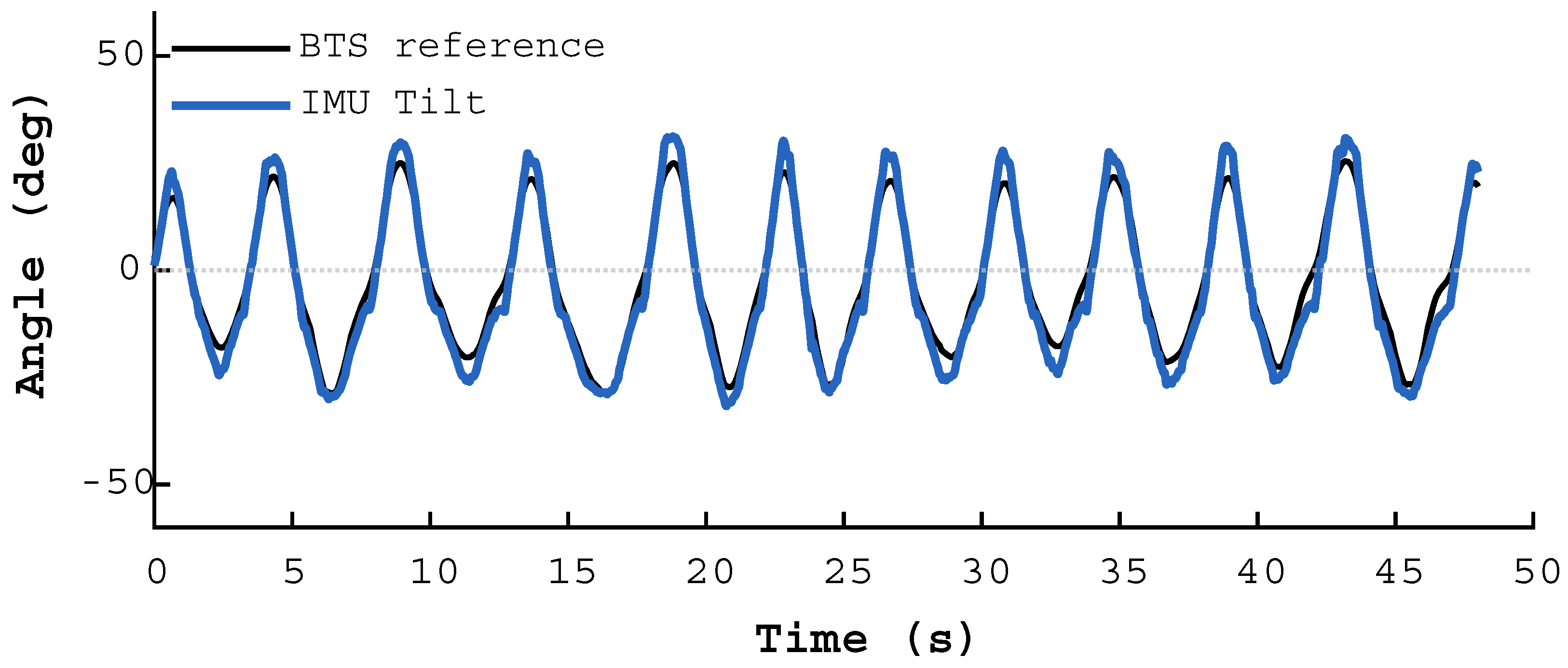
A controlled static tilt movement was performed, and the angle estimated by the IMU mounted on the Arduino was compared with the reference standard. The comparison (
Figure 17) shows a discrepancy between the two systems, with an RMSE of 5.88 ± 1.33 degrees.
This difference is mainly due to the indirect nature of the IMU measurement. The tilt angle is estimated through sensor fusion of accelerometer and gyroscope signals, which are affected by noise, bias, drift, and possible misalignment with respect to the anatomical reference frame. Despite this, the observed error is consistent with values commonly reported in the literature for wearable IMU-based systems [
49].
3.6. Gait Cycle Analysis
This section explains how the developed system can be used in a clinical scenario, with particular focus on how gait parameters can be extracted from the acquired signals.
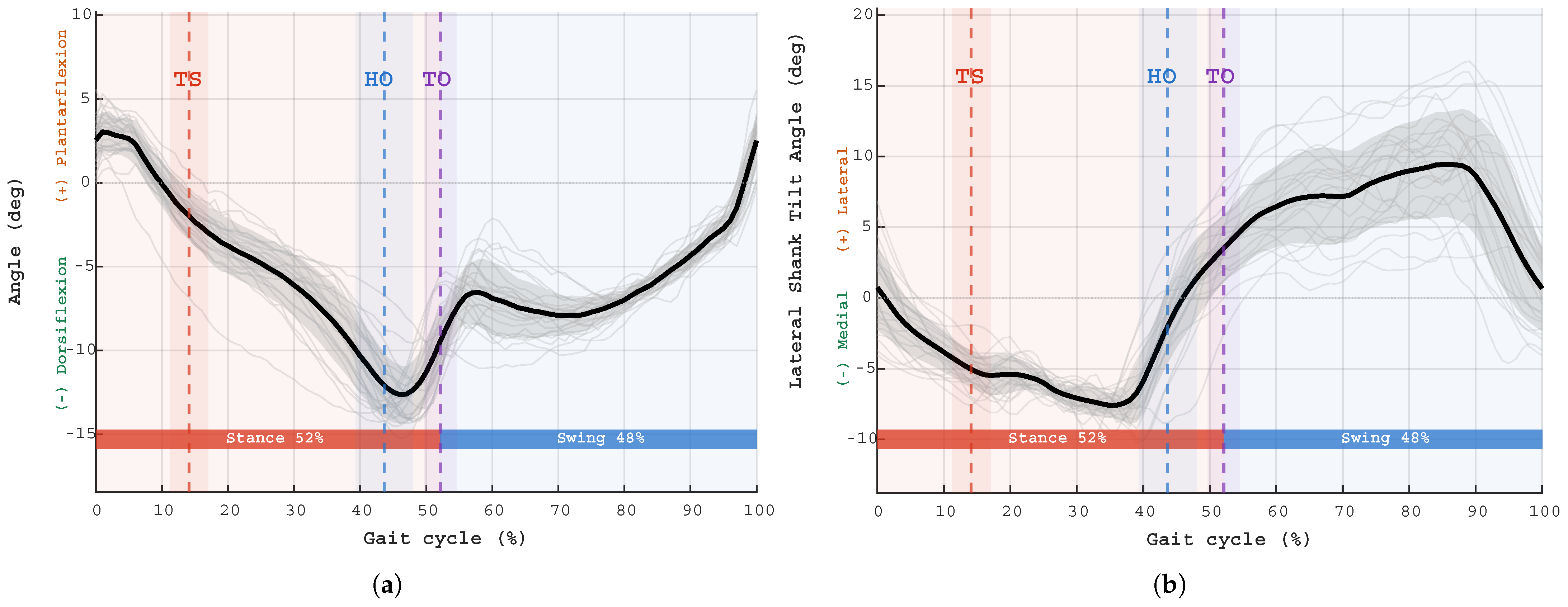
Figure 18 shows several gait cycles performed by one subject. The force sensors are used to detect each gait cycle and to identify the main gait events. At the same time, the strain gauges measure the orthosis deformation during walking.
In this study, a positive ankle angle corresponds to plantarflexion, while a negative angle corresponds to dorsiflexion. To correctly segment the gait cycle, 0% is defined at the heel strike event, and the cycle ends at the subsequent heel strike of the same foot. After the initial heel strike (0%), toe contact occurs at approximately 14% of the gait cycle. Heel-off occurs around 43%, followed by toe-off at approximately 52%. These events allow a clear identification of the stance and swing phases.
In addition to the ankle angle, the IMU sensor provides a measure of the Lateral Shank Tilt Angle, which describes how much the leg inclines mediolaterally during the gait cycle. A positive value indicates a lateral inclination, while a negative value indicates a medial inclination. As shown in
Figure 18b, the shank exhibits a characteristic oscillation between lateral and medial tilt throughout the gait cycle, with peak lateral tilt occurring during the swing phase and peak medial tilt during mid-stance.
By combining the signals obtained from the two strain gauges, the two force sensors, and the IMU, several clinically relevant parameters can be extracted. From the force sensors, temporal parameters such as stance duration, swing duration, and timing of gait events can be determined. From the orthosis deformation, kinematic parameters including peak plantarflexion, peak dorsiflexion, and ankle range of motion can be estimated. From the IMU, the mediolateral shank inclination profile across the gait cycle can be monitored.
Table 4 summarizes the parameters that can be monitored using only two strain gauges, two force sensors, and one IMU. These results demonstrate that the proposed system can provide meaningful clinical information with a limited number of sensors, making it suitable for practical and low-cost clinical applications.
4. Conclusions
This study designed, realized, characterized, and validated an instrumented ankle–foot orthosis for gait monitoring, integrating deformation sensing, inertial measurements, and ground-contact detection. The system was developed with the dual goal of providing clinically relevant biomechanical information and maintaining practical usability in real-world rehabilitation settings.
The orthosis deformation was measured using two longitudinal strain gauges to estimate ankle plantar- and dorsiflexion, with validation against a gold-standard optoelectronic motion capture system. The strain-gauge-based approach achieved an RMSE of approximately 1.6 degrees, outperforming the IMU in angle estimation while reducing circuit complexity and maintaining high measurement accuracy. These results confirm that embedding strain gauges directly into the orthosis structure is an effective strategy for continuous joint angle monitoring during locomotion.
Two force sensors were positioned on the orthosis to detect ground contact and to identify the stance and swing phases of the gait cycle. Validation against a force platform confirmed the correct placement of the sensors and their reliability in detecting contact and non-contact events. Accurate gait phase segmentation is a key requirement for a wide range of clinical analyses, including step detection and cadence estimation in patients with pathological conditions.
The IMU was used to measure lateral shank tilt, providing complementary information for safety monitoring and the assessment of balance-related deviations. Large deviations in lateral tilt may indicate instability or an increased risk of falling, highlighting the clinical value of combining multiple sensing modalities.
The instrumented AFO communicates via Bluetooth Low Energy (BLE) with a custom Python-based graphical interface for real-time data acquisition, visualization, and storage. The wireless architecture removes cable-related constraints, preserving natural gait mechanics and improving patient comfort during prolonged monitoring sessions.
The electronic architecture and data acquisition capabilities of the proposed system were evaluated using healthy participants, demonstrating its technical feasibility for gait monitoring. Future studies on clinical populations will be required to extend validation toward rehabilitation assessment and orthosis-related applications.