Article

Comprehensive Analysis of Cyan Soft-Carapace and Red Hard-Carapace Color Variants in Procambarus clarkii: Muscle Quality, Carapace Pigmentation, and Tissue-Specific DGAT2 mRNA Expression


1
College of Marine and Biology Engineering, Yancheng Institute of Technology, Yancheng 224051, China
2
Guangdong Provincial Key Laboratory of Aquatic Animal Disease Control and Healthy Culture, Zhanjiang 524088, China
3
Key Laboratory of Aquatic Nutrition and Feed Science of Jiangsu Province, College of Animal Science and Technology, Nanjing Agricultural University, Nanjing 210095, China
4
College of Fisheries and Life Science, Shanghai Ocean University, Shanghai 201306, China
5
Fisheries Research Institute, Anhui Academy of Agricultural Sciences, Hefei 230031, China
*
Authors to whom correspondence should be addressed.
Fishes 2026, 11(7), 393; https://doi.org/10.3390/fishes11070393
Submission received: 7 May 2026 / Revised: 22 June 2026 / Accepted: 26 June 2026 / Published: 2 July 2026
(This article belongs to the Section Aquatic Invertebrates)

Abstract

Crayfish with cyan soft-carapace and red hard-carapace differ considerably in market value. To investigate the causes underlying this difference in shell color, we selected 120 healthy Procambarus clarkii of similar size (9–10 cm), equally divided by shell color and sex. Muscle quality, pigment deposition, and DGAT2 mRNA expression were compared between the two shell-color types. The results showed that: (1) Muscle hardness was significantly higher in red hard-carapace crayfish than in cyan soft-carapace crayfish (p < 0.05), whereas no significant difference in muscle elasticity was observed among groups (p > 0.05). (2) A significant interaction between shell color and sex influenced crude fat and ash content (p < 0.05). Crude fat content was higher in red hard-carapace crayfish, and ash content was highest in male red hard-carapace crayfish, significantly exceeding that in male cyan soft-carapace crayfish (p < 0.05). (3) Moisture and crude protein content were not significantly affected by the interaction between shell color and sex (p > 0.05), with no notable differences across groups. (4) The contents of astaxanthin, lutein, and β-carotene in the shell were significantly influenced by the interaction between sex and shell color (p < 0.05). Astaxanthin was lowest in female cyan soft-carapace crayfish, and lutein was highest in male red hard-carapace crayfish, and β-carotene showed no significant differences. (5) DGAT2 mRNA expression was highest in hepatic tissue across all groups (p < 0.05). In gonads, expression was higher in ovaries of cyan soft-carapace crayfish and in testes of red hard-carapace crayfish (p < 0.05). (6) DGAT2 mRNA expression in the inner membrane, muscle, and intestine was significantly affected by the interaction between shell color and sex (p < 0.05), with specific expression patterns varying among tissues and groups. These findings indicate that shell color and sex interact to influence nutritional composition, carotenoid profile, and gene expression, providing insights into the mechanisms of body color formation and its physiological correlates.
Key Contribution: This study demonstrates that shell color (cyan soft-carapace vs. red hard-carapace) and sex interact to significantly affect the nutritional composition, carotenoid profile, and DGAT2 gene expression in Procambarus clarkii, and identifies shell color polymorphism and sex as key determinants of nutrition and pigmentation-related biochemical and molecular traits, laying a foundation for elucidating the mechanisms of body color formation and its physiological correlates.

1. Introduction

The red swamp crayfish (Procambarus clarkii) is recognized as a high-value economic species among freshwater crustaceans. Originating from the south-central United States and northeastern Mexico, it has gained popularity among consumers due to its attractive color, delicious taste, and high nutritional value [1]. Introduced from Japan in the 1930s, it has become the most important cultured crustacean in China, boasting the largest aquaculture area and the highest total yield [2]. To date, over 600 species of freshwater crayfish have been documented worldwide, exhibiting considerable variation in body size, pigmentation, and morphological patterns [3]. The shell color of aquatic crustaceans plays a significant role in determining their commercial value. In the Chinese market, the cyan soft-carapace crayfish is widely favored by both farmers and consumers due to its large size, superior meat quality, and higher market price. During the growth of crayfish, individuals can be classified into two distinct phenotypes based on visual characteristics of the carapace: the “cyan soft-carapace” and the “red hard-carapace” forms. The “cyan soft-carapace” phenotype, which describes individuals with a blue-green or cyan-brown carapace that is thin and soft, represents a rapid growth phase marked by a high molting frequency and a comparatively faster growth rate than that of red hard-carapace crayfish [4]. Under environmental stress, some individuals may reduce their molting frequency and undergo a premature transition to the “red hard carapace” stage, an adaptive response characterized by the development of a rigid carapace and claws, where once the carapace turns red, molting becomes difficult, body size stabilizes, and further growth is inhibited [4]. The cyan soft-carapace crayfish also has higher nutritional value, for example, compared to the red hard-carapace crayfish, it contains a higher content of essential amino acids [5]. Moreover, even at the same size, cyan soft-carapace crayfish generally command a higher price compared to red hard-carapace crayfish [6]. Consequently, the production of cyan soft-carapace crayfish has garnered increasing attention from aquaculture practitioners. However, the mechanisms underlying shell color regulation and the reasons for differences in muscle quality between cyan soft-carapace and red hard-carapace crayfish remain unclear.
The coloration of crustaceans, particularly freshwater crayfish, is closely associated with carotenoid pigments, with astaxanthin serving as a typical and well-characterized example [7,8]. We hypothesize that crayfish body color is linked to both lipid metabolism and pigment metabolism. Variations in lipid metabolism during growth may consequently lead to differences in pigment metabolism. Lipids are fundamental macromolecules in animals, playing crucial roles in energy supply, biofilm composition, and signaling [9]. Lipid metabolism is particularly essential for the survival and reproduction of aquatic invertebrates, as lipids are vital cellular components that help maintain homeostasis under environmental stress [10]. Among the key genes involved in lipid metabolism is DGAT2.
Diacylglycerol acyltransferase 2 (DGAT2) is an integral membrane protein that catalyzes the final step of triacylglycerol (TG) synthesis, utilizing diacylglycerol and fatty acyl-CoA as substrates. Although DGAT2 primarily localizes to the endoplasmic reticulum (ER), it translocates to lipid droplets upon fatty acid exposure, where it is thought to facilitate localized TG synthesis and lipid droplet expansion [11]. Beyond its role in lipid metabolism, DGAT2 may also be involved in the regulation of body color in aquatic animals. For instance, in hybrid carp, a high-fat diet upregulates hepatic DGAT2 expression, promoting fat deposition and consequent darkening of body color [12]. Nevertheless, it remains unclear whether DGAT2 is also involved in regulating body color in crustaceans, and relevant studies are scarce.
In Procambarus clarkii, the molecular basis of body color regulation is largely unexplored. While several color-related genes have been identified in aquatic animals, the key regulatory genes and pathways specific to this species are not yet defined. In crustaceans, carotenoids—especially astaxanthin—play a central role in shell pigmentation through their synthesis, transport, and deposition [13]. Carotenoids are fat-soluble pigments synthesized mainly by algae, plants, and microorganisms. Since animals, including crustaceans, cannot synthesize carotenoids de novo, they must obtain them from the diet and subsequently metabolize them into various forms. These pigments contribute not only to coloration but also to wound healing and immune responses in aquatic organisms. Among more than 750 known carotenoids, astaxanthin is the most widespread in aquatic species and is closely linked to body and shell color. Dietary astaxanthin supplementation has been shown to enhance shell color in crustaceans, and a novel astaxanthin-related gene (PcASTA) recently identified in P. clarkii appears to regulate shell color by influencing astaxanthin synthesis and deposition [14].
Triacylglycerol represents the primary stored form of energy in most organisms, sequestered within the hydrophobic core of cytosolic lipid droplets until mobilization. DGAT2 catalyzes the esterification of 1,2-diacylglycerol with acyl-CoA to form TG, a reaction conserved across plants, fungi, and mammals [15]. As a member of an evolutionarily conserved acyltransferase family, DGAT2 is highly expressed in tissues active in TG synthesis and storage, such as adipose tissue, liver, small intestine, and mammary gland [11]. Despite DGAT2’s well-established metabolic functions, its role in animal pigmentation remains largely unknown [16]. Body color formation has been extensively studied in fish models, including Oncorhynchus tshawytscha and Cyprinus carpio [17]. In contrast, the regulatory network controlling coloration in crayfish is still elusive, and core effector genes have not been precisely characterized. Growing evidence indicates that DGAT2 promotes lipid anabolism [11], and lipid metabolism is intimately linked to the spatiotemporal dynamics of pigment deposition in animals [18]. Thus, we hypothesize that DGAT2 may influence crayfish body color by modulating lipid-dependent pigment trafficking and storage. To elucidate the regulatory role of the DGAT2 gene in body coloration of Procambarus clarkii, we first constructed a cDNA library from its shell tissues and identified key candidate genes based on transcriptome sequencing data. We then examined the expression patterns of these relevant genes. Building on this foundation, we sought to clarify the molecular mechanisms underlying body color formation in P. clarkii. Furthermore, by integrating multiple phenotypic indicators related to body color—such as nutritional status, environmental pH, chromaticity, drip loss, muscle texture, and cooking loss—we established a correlation model linking DGAT2 gene expression profiles to body color regulatory pathways. This approach helped clarify the potential intrinsic relationship between DGAT2 gene expression and body coloration. Additionally, this study aims to comprehensively investigate the functional role of the DGAT2 gene in the interplay between lipid metabolism and body coloration in crayfish.

2. Materials and Methods

2.1. Feeding Management

We selected a total of 120 Procambarus clarkii with two body colors (cyan soft-carapace:red hard-carapace = 1:1, each color with female-to-male ratio 1:1, i.e., 30 individuals each for female cyan soft-carapace, male cyan soft-carapace, female red hard-carapace, and male red hard-carapace), healthy and of similar size (9–10 cm). Specialized compound feed for crayfish (containing 33% crude protein and 4% crude lipid; supplied by Tongwei Agricultural Development Co., Ltd., Chengdu, China) was provided twice daily at 07:00 and 19:00. Residual feed and feces were removed daily, and one-third of the water volume was replaced every three days. The integrity of culture facilities was checked daily, and daily management was strengthened. Throughout the experiment, water quality parameters were maintained as follows: dissolved oxygen ≥ 6.0 mg/L, water temperature = 24 ± 1 °C, pH range from 7.5 to 8.5, the content of nitrite in the water was not more than 0.1 mg/L, and the ammonia nitrogen concentration was not more than 0.02 mg/L.
At the end of 9 days of feeding (to eliminate the differences caused by environmental impacts) and after a 24 h fasting period, four groups of Procambarus clarkii were randomly collected from the breeding barrels, and the sexual glands, hepatopancreases, intestines, muscles, and carapaces were collected and stored in a −80 °C refrigerator for subsequent determination of DGAT2 gene mRNA expression, analysis of meat quality characteristics (pigment content, color, cooking loss, drip loss, pH value, and muscle texture) as well as major nutritional indicators (crude protein, moisture, crude fat, and ash content). The number of samples measured in each group was detailed in the measurement methods section below.

2.2. Measurement of Crustacean Chromaticity

The chromaticity of each sample was measured using a Konica Minolta CR-410 colorimeter (Tokyo, Japan). Five crayfish per group were analyzed. Following the recommendations of the International Commission on Illumination [19], skin color was quantified using the L, a*, and b* parameters. Prior to measurement, the colorimeter was calibrated with a whiteboard. In this color system, L represents brightness, with higher values indicating greater lightness and lower values indicating darkness; a* denotes the red-green axis, where positive values shift toward red and negative values toward green; and b* signifies the yellow-blue dimension, where positive values lean toward yellow and negative values toward blue.

2.3. Physical and Chemical Properties

Drip loss and cooking loss were evaluated following previously described methods [20,21] with minor modifications according to [22]. For drip loss, three crayfish per species were randomly selected. Each muscle sample was weighed (recorded as W0), tied with a thin thread, and suspended in a refrigerator at 4 °C for 24 h. After carefully drying the surface with filter paper, the muscle was reweighed (W1). For cooking loss, muscle samples from another three crayfish were placed in labeled zip-lock bags, immersed in a water bath at 70 °C for 10 min, and then weighed (W2). The losses were calculated as follows:
Drip loss (%) = (W0 − W1)/W0 × 100%
Cooking loss (%) = (W0 − W2)/W0 × 100%
Muscle pH was measured according to [23]. Briefly, 1 g of muscle tissue was mixed with 10 mL of distilled water, homogenized thoroughly, and allowed to stand for 30 min. The pH was then determined using a calibrated pH meter (PB-10, Sartorius, Göttingen, Germany).

2.4. Textural Properties

The textural properties—including hardness, cohesiveness, springiness, adhesiveness, and chewiness of the crustacean muscle were evaluated using a texture analyzer (TMS-Touch, FTC, Washington, DC, USA) fitted with an 8 mm diameter flat-ended cylindrical probe. Five crayfish per group were analyzed. A two-cycle compression test was performed to derive the texture profile parameters. The testing conditions consisted of two consecutive compressions at a speed of 30 mm/min, the samples were compressed to 60% of their original heights and an initial trigger force of 0.1 N [22].

2.5. Whole-Body Composition

The whole-body composition of crayfish was determined using standardized methods [24]. Three crayfish per group were analyzed. Moisture content was determined via the constant-weight drying method at 105 °C. Crude protein content (N × 6.25) was analyzed using the Kjeldahl method (1030-Auto-analyzer, Tecator, Hoganas, Sweden). Crude lipid content was quantified by Soxhlet extraction (Soxtec System, Tecator, Sweden). Crude ash content was quantified via the carbonization method, wherein samples were combusted in a muffle furnace at 550 °C for 6 h.

2.6. Determination of Carotenoids

The carotenoid content was determined following a method adapted from Ai et al. [25] using high-performance liquid chromatography (HPLC; Agilent 1260, Santa Clara, CA, USA). Three crayfish per group were analyzed. Briefly, a precise amount of sample was weighed using an analytical balance (FA-1004, Shanghai Shunyu Hengping Instrument Co., Ltd., Shanghai, China) and transferred into a centrifuge tube. Then, 5 mL of acetone was added, and the mixture was subjected to ultrasonic extraction for 20 min. After extraction, the sample was centrifuged at 8000 r/min for 5 min (TGL-16M, Hunan Xiangyi Laboratory Instrument Development Co., Ltd., Changsha, China). The supernatant was collected, and the residue was repeatedly re-extracted with acetone until the solvent became colorless. All supernatants were combined and adjusted to a final volume of 10 mL. The combined extract was concentrated to dryness using a rotary evaporator. The dried residue was redissolved in 1.0 mL of acetone, filtered through a 0.45-μm microporous membrane, and then analyzed by HPLC.
A 10 µL aliquot of the prepared sample was injected into a reversed-phase C30 column (250 mm × 4.6 mm, 5 µm; SHISEIDO Co., Ltd., Tokyo, Japan). The mobile phase consisted of (A) methanol: acetonitrile: water (73.5:24.5:2, v/v/v) and (B) methyl tert-butyl ether. The flow rate was maintained at 1.0 mL/min, the column temperature was set to 30 °C, and detection was performed at 450 nm. Quantification of astaxanthin, lutein, and β-carotene was carried out using an external standard method.
The content of each carotenoid was calculated according to the following formula:
W = (C − C0)/m × V × N
where
W = target compound content in the sample (mg/kg);
C = concentration of the target in the sample solution (mg/L);
C0 = concentration of the target in the blank control (mg/L);
V = final volume of the sample solution (mL);
N = dilution factor;
m = mass of the sample (g).

2.7. Quantitative Real-Time PCR (qPCR)

Gene expression levels were quantified by real-time quantitative PCR (qPCR) using SYBR Green dye, with β-actin serving as the internal reference gene. Tissues were collected from six crayfish per group, including hepatopancreas, inner membrane, muscle, and intestine. Additionally, ovaries were collected from the female cyan soft-carapace and red hard-carapace crayfish groups, while testes were collected from the male cyan soft-carapace and red hard-carapace crayfish groups. Total RNA was extracted from tissues. RNA concentration was quantified using an ND5000 ultramicro UV-visible spectrophotometer (BioTeke, Wuxi, China), and RNA integrity was verified by agarose gel electrophoresis. Complementary DNA (cDNA) was synthesized from the extracted RNA using the Hifair® III 1st Strand cDNA Synthesis SuperMix ready-to-use premix (Yeasen, Shanghai, China). qPCR was performed to determine the expression levels of DGAT2 and the reference gene β-actin. The primer sequences are listed in Table 1. The amplification protocol comprised an initial denaturation at 95 °C for 5 min, followed by 40 cycles of denaturation at 95 °C for 10 s and annealing/extension at 60 °C for 30 s. Relative gene expression differences were calculated using the 2−ΔΔCT method.

2.8. Statistical Analysis

The data were analyzed using one-way and two-way ANOVA in SPSS, version 27.0 (International Business Machines Corporation, Armonk, NY, USA). When significant differences were detected, means were further compared using Duncan’s multiple range test. Statistical significance was defined as p < 0.05. All results are presented as means ± SEM (standard error of the mean).

3. Results

3.1. Crustacean Chromaticity

As shown in Table 2, there was a significant interaction between shell color and sex in terms of the L value of the cephalothorax carapace and the b value of the abdomen in crayfish (p < 0.05). Meanwhile, sex and shell color also significantly affected the L value of the carapace and the b value of the abdomen (p < 0.05). The lightness (L) of the carapace in red hard-carapace male crayfish was significantly lower than that in red hard-carapace female crayfish (p < 0.05). However, there were no significant differences in the redness (a) and yellowness (b) values among different parts of the crayfish in each group (p > 0.05).

3.2. Physicochemical Indices of Muscle Tissue

As shown in Table 3, muscle a* value was significantly influenced by the interaction between shell color and sex (p < 0.05). The highest muscle a* value was observed in the cyan soft-carapace group (♂), while the lowest was found in the cyan soft-carapace group (♀). In contrast, no significant differences were detected among groups for muscle L value and b* value (p > 0.05). Neither shell color nor sex showed a significant interactive effect on drip loss, cooking loss, or pH (p > 0.05). The drip loss rate in the cyan soft-carapace group (♀) was significantly higher than that in the red hard-carapace group (♀) (p < 0.05), but did not differ significantly from those in the cyan soft-carapace (♂) and red hard-carapace (♂) groups (p > 0.05). The cooking loss rate in the cyan soft-carapace group (♀) was significantly higher than that in all other groups (p < 0.05). The pH value was highest in the red hard-carapace group (♂) and significantly exceeded that of all other groups (p < 0.05).

3.3. Textural Properties of Muscles

As shown in Table 4, cohesiveness and springiness were significantly influenced by the interaction between sex and shell color (p < 0.05). Shell color had a significant effect on the hardness of crayfish muscle (p < 0.05), while sex significantly affected chewiness, brittleness, and gumminess (p < 0.05). The muscle hardness and brittleness of red hard-carapace crayfish (♂ + ♀) were significantly higher than those of cyan soft-carapace crayfish (♂ + ♀) (p < 0.05). The red hard-carapace male group exhibited the highest chewiness and gumminess, which were significantly greater than those of the other groups (p < 0.05). The muscle chewiness of cyan soft-carapace females was significantly lower than that of the other crayfish (p < 0.05), while no significant difference in muscle elasticity was observed among all groups (p > 0.05).
A radar map of the textural properties of Procambarus clarkii is shown in Figure 1. It shows that the best textural properties (hardness, chewiness, brittleness and gumminess) were found in the cyan soft-carapace crayfish.

3.4. Whole Body Composition

As shown in Table 5, there was a significant interaction between shell color and sex in the crude lipid and ash content of crayfish (p < 0.05). The crude lipid content of both female and male cyan soft-carapace crayfish, as well as female red hard-carapace crayfish, was significantly higher than that of male red hard-carapace crayfish (p < 0.05). The ash content was highest in the male red hard-carapace crayfish group and significantly higher than that of male cyan soft-carapace crayfish (p < 0.05). Moisture and crude protein content were not significantly influenced by the interaction between shell color and sex (p > 0.05), and no significant differences were observed among the groups (p > 0.05).

3.5. Carotenoid Content

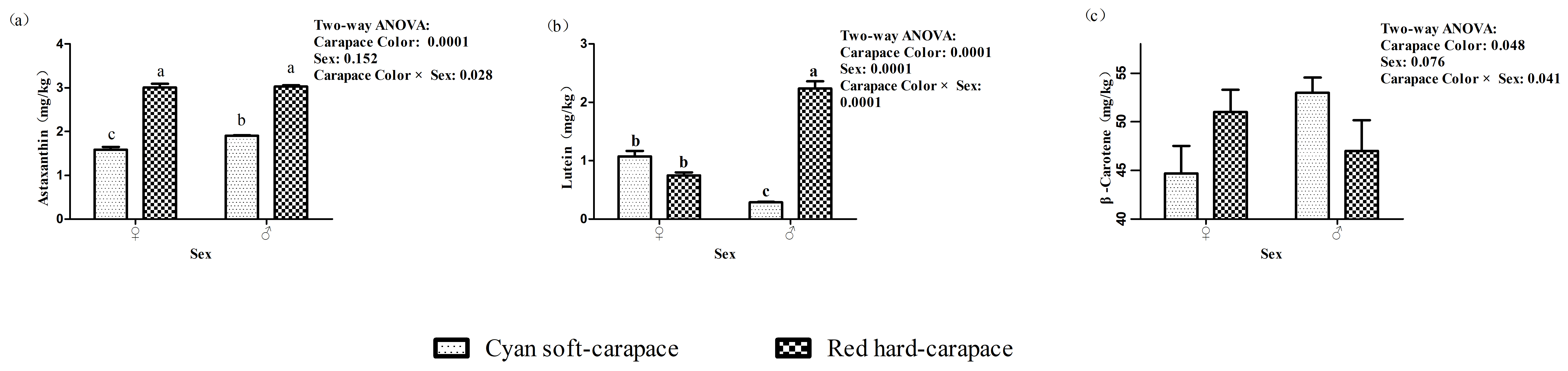
As shown in Figure 2, the contents of astaxanthin, lutein, and β-carotene in crayfish shells were significantly influenced by the interaction between sex and shell color (p < 0.05). Shell color significantly affected the contents of astaxanthin, lutein, and β-carotene in crayfish shells (p < 0.05). Sex significantly influenced the contents of lutein in crayfish shells (p < 0.05), but had no significant effect on astaxanthin and β-carotene content (p > 0.05). The astaxanthin content in cyan soft-carapace crayfish (♀) was significantly lower than that in cyan soft-carapace crayfish (♂) and red hard-carapace crayfish (♂ + ♀). The lutein content in red hard-carapace crayfish (♂) was significantly higher than that in red hard-carapace crayfish (♀) and cyan soft-carapace crayfish (♂ + ♀). No significant differences in β-carotene content were observed among the groups (p > 0.05).

3.6. Expression of Genes Related to Body Color Formation

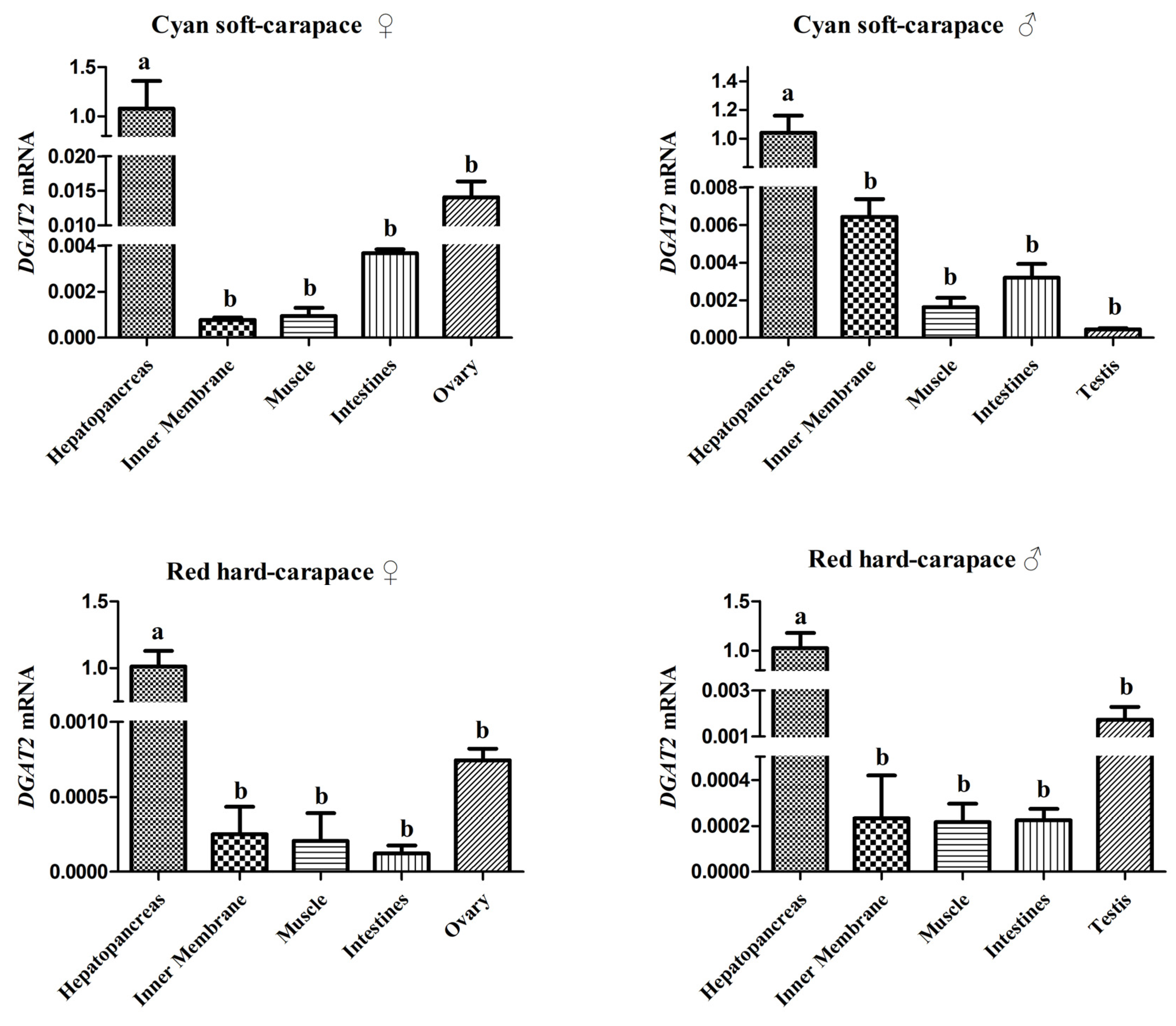
As shown in Figure 3, the expression level of DGAT2 mRNA in the hepatopancreas of both cyan soft-carapace (♀, ♂) and red hard-carapace (♀, ♂) Procambarus clarkii was the highest and significantly higher than that in other tissues (p < 0.05). There was no significant difference in the expression level of DGAT2 mRNA among the remaining tissues (p > 0.05).
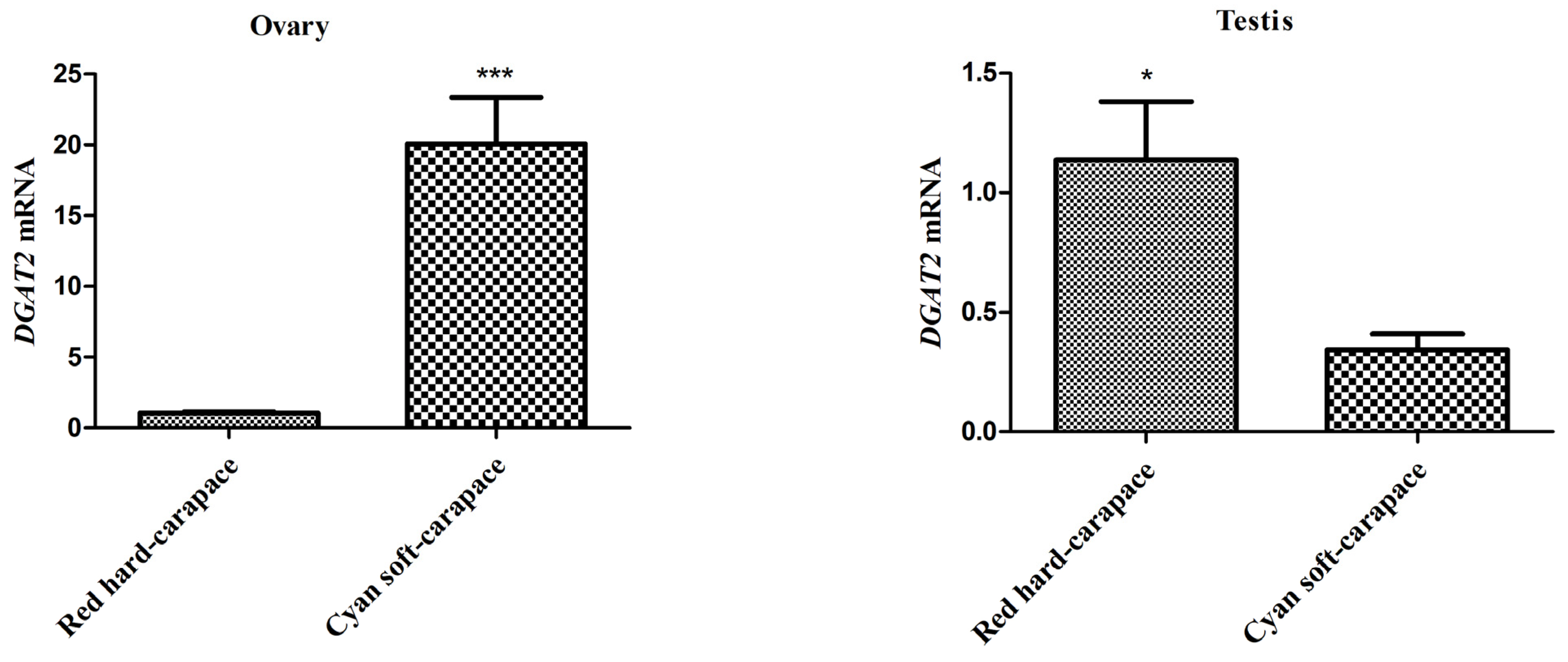
As shown in Figure 4, the expression level of DGAT2 mRNA in the ovaries of cyan soft-carapace crayfish was higher than that in red hard-carapace crayfish, with an extremely significant difference (p < 0.001). In contrast, the expression level of DGAT2 mRNA in the testis of red hard-carapace crayfish was significantly higher than that in cyan soft-carapace crayfish (p < 0.05).
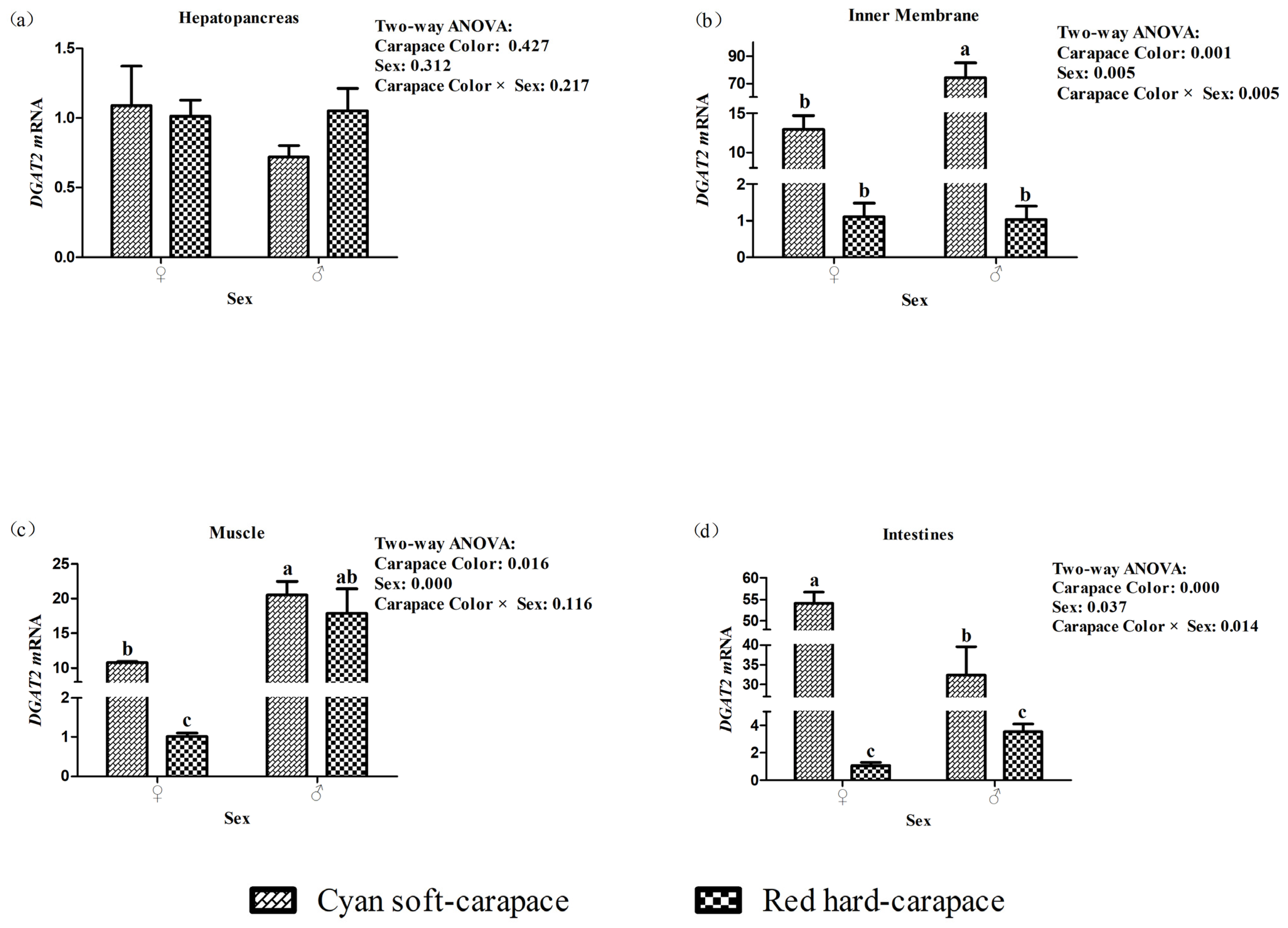
As shown in Figure 5, there was a significant interaction between shell color and sex regarding the expression of DGAT2 mRNA in the inner membrane and intestine (p < 0.05). Shell color significantly affected the expression of DGAT2 mRNA in the inner membrane, muscle, and intestine (p < 0.05). Similarly, sex significantly influenced the expression of DGAT2 mRNA in the inner membrane, muscle, and intestine (p < 0.05). There was no significant difference in the expression of DGAT2 mRNA in the hepatopancreas among groups (p > 0.05). In the inner membrane, the expression level of DGAT2 mRNA in male cyan soft-carapace crayfish was significantly higher than that in other groups (p < 0.05). In muscle, the expression level of DGAT2 mRNA in male cyan soft-carapace crayfish was significantly higher than that in both female cyan soft-carapace and female red hard-carapace crayfish (p < 0.05), and the expression level in male red hard-carapace crayfish was significantly higher than that in female red hard-carapace crayfish (p < 0.05). There was no significant difference in the expression level of DGAT2 mRNA among male red hard-carapace crayfish and female cyan soft-carapace crayfish or male cyan soft-carapace crayfish (p > 0.05). In the intestine, the expression level of DGAT2 mRNA in female cyan soft-carapace crayfish was significantly higher than that in other groups (p < 0.05), and the expression level in male cyan soft-carapace crayfish was significantly higher than that in red hard-carapace crayfish (both ♀ and ♂) (p < 0.05). There was no significant difference in the expression level of DGAT2 mRNA between male and female red hard-carapace crayfish (p > 0.05).

4. Discussion

The L value serves as an indicator of surface brightness. Previous studies have reported a significant negative correlation between carotenoid content and skin lightness [26]. Research on rainbow trout (Oncorhynchus mykiss) further demonstrated that dietary carotenoid supplementation reduces filet lightness [27], indicating that carotenoid accumulation alters light reflection and absorption properties, thereby decreasing the L value. Since lipids act as primary carriers for carotenoids, insufficient lipid levels may impair pigment transport and uniform distribution within the body, thereby modifying its light-reflective characteristics [28,29]. Therefore, in the present study, the higher cephalothorax L value observed in red hard-carapace ♂ may be attributed to its lower lipid content. The significant interactive effect on the L value suggests that brightness regulation involves not only carapace color but also sex-specific physiological states. The b* value is primarily determined by carotenoids such as lutein and zeaxanthin [30]. Wang et al. [31] showed that carotenoid accumulation directly influences the yellowness of the crustacean body surface, with absorption and transport mediated by lipid carriers. The observed interactive effect on the abdominal b* value may arise from the combined influence of lipid metabolic differences—associated with carapace color—and sex-specific physiological traits affecting carotenoid deposition. For example, females may exhibit a greater capacity for lipid synthesis, thereby enhancing the transport of yellow carotenoids. Additionally, the genetic background related to carapace color further modulates this process, resulting in variations in yellowness. Interestingly, the a* value was not significantly affected by carapace color or sex. Redness in crustaceans is primarily determined by astaxanthin [32]. The lack of significant differences in a* values may indicate similar astaxanthin content across groups or a limited effect of DGAT2-mediated lipid metabolism on astaxanthin deposition. Recent studies confirm that astaxanthin content in Litopenaeus vannamei is influenced by dietary nutrients, but its deposition efficiency may be regulated by specific transporters [29]. Therefore, redness in P. clarkii may depend more on the expression of astaxanthin-specific transporters than on general lipid metabolism—a hypothesis that warrants further investigation.
The study categorized specimens into four distinct groups—cyan soft-carapace females, cyan soft-carapace males, red hard-carapace females, and red hard-carapace males—and comprehensively evaluated their meat quality characteristics. Meat color, a key visual attribute of quality, serves as an important indicator of meat properties. Although color itself contributes little to flavor, it visually reflects underlying physiological, biochemical, and microbial changes in muscle tissue. Typically quantified using lightness (L), redness (a*), and yellowness (b*) values, changes in a* show the strongest correlation with perceived muscle color [33]. In this study, redness (a*) was significantly influenced by the interaction between carapace color and sex. The cyan soft-carapace male group exhibited the highest redness, while the cyan soft-carapace female group showed the lowest. In contrast, no significant differences were observed in lightness (L) or yellowness (b*) across groups, indicating that these two color parameters remain relatively stable and are less affected by carapace color and sex. Water-holding capacity (WHC) is closely linked to muscle texture and nutritional composition. Water loss leads not only to reduced moisture but also to the depletion of essential nutrients and heme, adversely affecting sensory properties and flesh color [34]. Therefore, cooking loss and drip loss serve as critical indicators of muscle water retention and are negatively correlated with overall quality [35]. In the present study, no statistically significant differences in drip loss or cooking loss were detected among groups. However, the cyan soft-carapace female group showed the highest drip loss, whereas the red hard-carapace female group exhibited the lowest. Similarly, cooking loss was highest in the cyan soft-carapace female group and lowest in the cyan soft-carapace male and red hard-carapace male groups. These observations suggest that carapace color and sex may influence muscle water retention, though the lack of statistical significance could be due to limited sample size or individual variability. Furthermore, texture parameters—including hardness, chewiness, brittleness, and gumminess—were significantly lower in the cyan soft-carapace female group compared to both male and female red hard-carapace groups. Previous studies have confirmed that drip loss is negatively correlated with key texture characteristics such as hardness, springiness, and chewiness [36], which aligns with the findings here. This relationship provides a mechanistic explanation for the notably higher drip loss observed in the cyan soft-carapace female group. Muscle pH significantly affects meat quality attributes. When pH approaches the isoelectric point of muscle proteins or induces protein denaturation, functional properties—especially water retention, cooking loss, and processing capacity—are directly compromised [37]. In this study, pH was significantly influenced by carapace color and sex. The red hard-carapace male group exhibited the highest pH, which was closer to the optimal acid–base environment for muscle.
Muscle tissue represents the principal nutritional component of crustaceans, and its textural properties are critical determinants of quality and consumer acceptance. These properties serve as key sensory and physicochemical indicators of muscle quality [38]. Hardness, perceived as softness or firmness through tactile evaluation, reflects the force required to deform the food and is indicative of the internal structural bonds. Higher hardness corresponds to greater resistance to fracture and is often associated with increased springiness [39]. Springiness relates to the cohesiveness of prawn muscle tissue, where superior binding capacity results in higher springiness values. Both springiness and chewiness directly influence the edible texture and palatability of prawn muscle [40]. In this study, muscle hardness and fracturability were significantly higher in the red hard-carapace group compared to the cyan soft-carapace group. This difference may be attributed to developmental stage variation and a greater myofibril density in the red hard-carapace specimens. While sex did not significantly affect hardness, it had a notable influence on fracturability, with males exhibiting marginally higher fracturability than females—a pattern potentially linked to differences in collagen content or muscle fiber architecture between sexes [41]. Chewiness and gumminess displayed significant sexual dimorphism. Red hard-carapace males showed the highest values for both parameters, whereas cyan soft-carapace females exhibited the lowest. Carapace coloration did not exert a significant effect, suggesting that sex might be the primary determinant of these texture attributes. Cohesiveness and resilience were jointly influenced by carapace color, sex, and their interaction. Red hard-carapace females demonstrated the highest cohesiveness, while red hard-carapace males showed slightly superior resilience. This pattern implies that these mechanical properties arise from synergistic interactions between genetic background and sex-specific physiological regulation. Springiness remained statistically consistent across all experimental groups, indicating its stability irrespective of carapace coloration or sex. Overall, based on the radar map, cyan soft-carapace crayfish exhibited the most favorable texture profile. In contrast, red hard-carapace crayfish displayed the least desirable texture characteristics. These findings provide an important empirical basis for selecting premium aquaculture products, identifying cyan soft-carapace crayfish as possessing superior organoleptic qualities for human consumption.
The observed interactions may be linked to crustacean molting—a process associated with carapace color change and hormonal regulation. One potential mechanism is that sex hormones modulate the molting cycle, influence DGAT2 expression and splicing patterns, alter lipid metabolism, and thereby co-regulate carapace brightness and yellowness. Specifically, lipid content was significantly lower in red hard-carapace ♂ than in cyan soft-carapace ♀, cyan soft-carapace ♂, and red hard-carapace ♀. A significant interactive effect between carapace color and sex was also detected for lipid content. This aligns with the known function of DGAT2, a key enzyme in triacylglycerol (TAG) synthesis that plays a central role in lipid accumulation and metabolic homeostasis [42]. Lee et al. [42] demonstrated that DGAT2 helps maintain hepatic metabolic balance by regulating the ESRRA-PROX1 transcriptional network; its knockdown impaired mitochondrial function and reduced lipid droplet accumulation. In our study, the low lipid content in red hard-carapace ♂ may thus result from decreased DGAT2 expression, which would suppress TAG synthesis and limit fat deposition—consistent with our prediction of reduced DGAT2 expression in the cyan soft-carapace group. Moreover, Yan et al. [43] showed that high-fat diets upregulate DGAT2 expression in the liver of Larimichthys crocea, promoting hepatic lipid deposition. The comparable lipid levels among cyan soft-carapace ♀, cyan soft-carapace ♂, and red hard-carapace ♀ suggest similar DGAT2 expression and lipid storage capacity in these groups.
Lipids are crucial for carotenoid absorption, transport, and storage in aquatic animals [31]. In Litopenaeus vannamei, dietary lysophosphatidylcholine (LPC) increased muscle astaxanthin deposition and improved shell yellowness, indicating that enhanced body color correlates with carotenoid accumulation—a process dependent on sufficient lipid carriers for effective transport [29]. Therefore, in this study, compared with red hard-carapace ♀, the Cephalothorax carapace L value of red hard-carapace ♂ was altered, which may be associated with the low lipid content of red hard-carapace ♂. However, current research on this topic is very limited, and further investigation is warranted. Red hard-carapace ♂ exhibited the highest ash content, significantly greater than that of cyan soft-carapace ♂, again revealing a notable carapace color × sex interaction. In crustaceans, ash consists mainly of minerals such as calcium and phosphorus [44], which are key components of the exoskeleton and closely associated with carapace hardness and structural integrity [45]. Zhou et al. [46] reported that carapace hardness in P. clarkii relates to environmental adaptation and behavioral demands, including defense and territorial competition. Thus, the elevated ash content in red hard-carapace ♂ may represent an adaptive trait that enhances carapace hardness, thereby promoting survival and reproductive success. The interactive effect on ash content suggests that mineral metabolism in P. clarkiiis was influenced by both carapace color-associated genetic factors and sex-specific physiological differences. In contrast, neither moisture nor protein content was significantly affected by carapace color or sex, indicating that these nutritional components that remain relatively stable in P. clarkiiand are not primary factors driving body color variation. Stable protein content likely supports essential physiological functions such as growth and development, while consistent moisture content facilitates normal metabolic processes in this species.
In the present study, the significant interactive effects of shell color and sex on DGAT2 expression in the inner membrane, muscle, and intestine were mirrored in their interactive effects on muscle cohesiveness, springiness, and a* value. This indicates that shell color and sex may synergistically regulate DGAT2-mediated fat metabolism across tissues to modulate meat quality. In this study, the highest DGAT2 expression in the inner membrane of male cyan soft-carapace crayfish may facilitate fat transport between the inner membrane and muscle, influencing muscle pigment deposition and lipid content, thereby co-shaping color and texture traits. Of course, this is merely a conjecture based on the present study, and the underlying regulatory mechanisms require further investigation and validation through additional experiments.
Crustaceans possess a diverse array of specialized pigment cells, known as chromatophores, which play a primary role in generating and modulating body coloration. These cells contain various pigment molecules, including carotenoids and melanins, that absorb and reflect specific wavelengths of light to produce distinct colors. Carotenoids, a class of natural pigments, are critically involved in color formation across aquatic animals. Previous studies have demonstrated that carotenoids influence not only muscle pigmentation but also shell coloration in mollusks and crustaceans [47,48]. In the present study, we identified three major carotenoids: astaxanthin, lutein, and β-carotene. Among these, astaxanthin was the predominant carotenoid across all examined tissue types. Crustaceans typically acquire dietary carotenoids such as lutein and zeaxanthin and metabolically convert them into dominant forms like astaxanthin [49], a process supported by known interconversion pathways among carotenoids [50]. Our data revealed that the total astaxanthin content in both the tail shell (TS) and carapace shell (CS) was significantly higher in red hard-carapace crayfish than in cyan soft-carapace individuals, indicating a central role of astaxanthin in determining shell color. Astaxanthin is a widespread carotenoid, predominantly found in crustaceans and algae [51], and is recognized not only as a potent antioxidant but also as a key biological pigment [52,53]. Its identification as the principal pigment in aquatic animals is well-established, with the astaxanthin synthesis pathway first characterized in the hepatopancreas of crayfish [54]. Together, these findings support the hypothesis that astaxanthin accumulation is a major determinant of shell coloration in crayfish. Notably, our study further revealed significant sexual dimorphism in lutein content, along with a statistically significant shell color × sex interaction effect.
The enzyme DGAT2 plays a critical role in catalyzing triacylglycerol (TAG) synthesis, thereby directly influencing lipid storage and transport [55]. Given that carotenoid pigments such as astaxanthin are lipid-soluble, their deposition in tissues is inherently linked to lipid metabolism. Consequently, elevated expression of DGAT2 may facilitate the transport and sequestration of these pigments—a mechanism supported by studies in aquaculture species [32]. Consistent with this premise, our results showed that DGAT2 expression was highest in the hepatopancreas compared to all other tissues examined, a pattern observed across both shell color morphs and sexes. This finding aligns with reports in hybrid fish, where increased hepatic DGAT2 mRNA and protein levels were detected [55]. Furthermore, a study on the Chinese mitten crab (Eriocheir sinensis) demonstrated a strong positive correlation among hepatopancreatic DGAT2 expression, total carotenoid content, and shell redness intensity, directly linking this gene to crustacean pigmentation [56]. Numerous studies have demonstrated that the DGAT2 gene may play a crucial role in pigmentation in aquatic animals. For instance, DGAT2 may be associated with the epigenetic regulation of pigmentation in Oujiang color common carp (Cyprinus carpio var. color.), while transcriptome analysis of rainbow trout indicates that DGAT2 is involved in carotenoid synthesis [57,58,59]. Together, these observations underscore a conserved role for the hepatopancreas in lipid metabolism and potential pigment handling. A distinctive expression pattern was observed in gonadal tissues. DGAT2 expression was significantly higher in the ovaries of cyan soft-carapace crayfish compared to red hard-carapace crayfish, whereas the opposite trend occurred in the testis, with expression being markedly elevated in red hard-carapace males. The reciprocal, sex-dependent expression profile suggests a potential trade-off in the allocation of lipid resources—and by extension, lipid-bound carotenoids—between the sexes, possibly mediated by differential hormonal regulation. In crustaceans, hormones such as methyl farnesoate are known modulators of both reproduction and metabolism [60] and represent plausible candidates for driving such sex-biased gene expression. Thus, the genetic determinants of the cyan-red shell polymorphism may interact with core sex-determining or endocrine signaling pathways, ultimately giving rise to the observed tissue-specific expression patterns.

5. Conclusions

In conclusion, this study demonstrates that the shell color and sex of crayfish (Procambarus clarkii) interact significantly to influence their nutritional composition, carotenoid profile, and the expression of the DGAT2 gene involved in body color formation. Specifically, the interaction significantly affected crude fat and ash content, with red hard-carapace crayfish generally exhibiting higher crude fat. Regarding carotenoids, shell color significantly impacted astaxanthin, lutein, and β-carotene levels in the shell, while sex significantly influenced lutein and β-carotene. Notably, astaxanthin was lower in cyan soft-carapace females, and lutein was highest in red hard-carapace males. Gene expression analysis revealed that DGAT2 mRNA expression was highest in hepatic tissue across all groups. Furthermore, its expression was differentially regulated by shell color and sex in reproductive and somatic tissues: higher in the ovaries of cyan soft-carapace crayfish but higher in the testes of red hard-carapace crayfish, and significantly influenced in inner membrane, muscle, and intestine, with cyan soft-carapace individuals often showing elevated expression. These findings collectively indicate that both shell color polymorphism and sex are key factors determining the biochemical and molecular traits related to nutrition and coloration in crayfish, providing a foundation for understanding the mechanisms underlying body color formation and its physiological correlations.

Author Contributions

S.X.: Conceptualization, Formal analysis, Funding acquisition, Writing—review and editing, Supervision. Y.L.: Data curation, Visualization, Investigation, Writing—original draft. J.Z.: Data curation, Visualization, Investigation, Writing—original draft. Y.D.: Data curation, Visualization, Investigation, Writing—original draft. X.Y.: Data curation, Investigation, Writing—original draft. K.H.: Data curation, Investigation, Writing—original draft. S.Y.: Resources, Methodology. Z.A.: Conceptualization, Methodology. M.L.: Supervision, Methodology. G.S.: Conceptualization, Formal analysis. W.Z.: Conceptualization, Methodology, Resources, Writing—review and editing, Funding acquisition. H.T.: Resources, Formal analysis. A.W.: Conceptualization, Supervision. All authors have read and agreed to the published version of the manuscript.

Funding

This study was supported by the Open Fund of Guangdong Provincial Key Laboratory of Aquatic Animal Disease Control and Healthy Culture (PBEA2024ZD04), the school-level research projects of the Yancheng Institute of Technology (xjr2024018).

Institutional Review Board Statement

The animal procedures used followed the principles of “Chinese Laboratory Animal Care and Use” and were approved by the Animal Protection and Utilization Committee of Nanjing Agricultural University (approval code: NO. IACUC2018613 and approval date: 16 September 2025).

Informed Consent Statement

Not applicable.

Data Availability Statement

The original contributions presented in this study are included in the article. Further inquiries can be directed to the corresponding authors.

Conflicts of Interest

The authors declare no conflicts of interest.

Abbreviations

The following abbreviations are used in this manuscript:
DGAT2Diacylglycerol acyltransferase 2

References

  1. Amine, T.M.; Aiad, A.S.; Abu El-Nile, M.O. Evaluation of chemical quality and nutrition value of fresh water cray fish (Procambarus clarkii). J. High Inst. Public Health 2008, 38, 1–13. [Google Scholar] [CrossRef]
  2. Bureau of Fisheries and Fishery Management; Ministry of Agriculture and Rural Affairs. China Fisheries Statistical Yearbook 2021; China Agriculture Press: Beijing, China, 2021. [Google Scholar]
  3. Crandall, K.A.; De Grave, S. An updated classification of the freshwater crayfishes (Decapoda: Astacidea) of the world, with a complete species list. J. Crustac. Biol. 2017, 37, 615–653. [Google Scholar] [CrossRef]
  4. Xu, Z.; Zhao, C.; Zhou, X. The relation between carapace color and growth of Procambarus clarkii. Acta Agric. Zhejiangensis 2010, 22, 839–842. (In Chinese) [Google Scholar] [CrossRef]
  5. Mao, T.; Yu, Y.; He, L.; Zhang, T.; Zhang, L.; Deng, W.; Zhang, X.; Zhang, H.; Dong, L. The nutritional quality discrepany of different sizes and colour of Procambarus clarkii. Freshw. Fish. 2020, 50, 77–82. (In Chinese) [Google Scholar] [CrossRef]
  6. Liu, Y.; He, J.; Yin, W.; Shen, Y.; Zhang, X. Survey on crayfish consumption in Wuxi market. J. Aquac. 2022, 43, 71–73. (In Chinese) [Google Scholar] [CrossRef]
  7. Walker, M.L.; Austin, C.M.; Meewan, M. Evidence for the inheritance of a blue variant of the Australian fresh-water crayfish Cherax destructor (Decapoda: Parastacidae) as an autosomal recessive. J. Crustac. Biol. 2000, 20, 25–30. [Google Scholar] [CrossRef]
  8. Patoka, J.; Římalová-Kadlecová, K.; Bílý, M.; Koščo, J. Frequency of new marble-colored morph in wild population of Austropotamobius torrentium (Decapoda: Astacidae). Biologia 2013, 68, 707–711. [Google Scholar] [CrossRef]
  9. Abramczyk, H.; Imiela, A.; Śliwińska, A. Novel strategies of Raman imaging for exploring cancer lipid reprogramming. J. Mol. Liq. 2019, 274, 52–59. [Google Scholar] [CrossRef]
  10. Lee, M.-C.; Park, J.C.; Lee, J.-S. Effects of environmental stressors on lipid metabolism in aquatic invertebrates. Aquat. Toxicol. 2018, 200, 83–92. [Google Scholar] [CrossRef] [PubMed]
  11. Jin, Y.; McFie, P.J.; Bannan, S.L.; Brandt, C.; Stone, S.J. Diacylglycerol acyltransferase-2 (DGAT2) and monoacylglycerol acyltransferase-2 (MGAT2) interact to promote triacylglycerol synthesis. J. Biol. Chem. 2014, 289, 28237–28248. [Google Scholar] [CrossRef] [PubMed]
  12. Tang, Z.; Li, C.; Xu, G.; Zhao, Q.; Wei, Z.; Liu, S. Effects of dietary glutathione on growth performance, muscle quality and lipid metabolism of hybrid crucian carp (Carassius auratus cuvieri ♀ × Carassius auratus red var. ♂) fed a high-fat diet. Reprod. Breed. 2023, 3, 89–98. [Google Scholar] [CrossRef]
  13. Chang, G.; Kong, F.; Gao, S.; Cai, H.; Wang, L.; Ding, H.; Cheng, Y.; Li, J. Comparative transcriptome analysis reveals molecular mechanism of temperature effect on body color of red swamp crayfish (Procambarus clarkii). Comp. Biochem. Physiol. Part D. Genom. Proteom. 2026, 50, 101751. [Google Scholar] [CrossRef] [PubMed]
  14. Chen, X.; Chen, J.; Huang, L.; Wu, B.; Wu, C.; He, J.; Bai, Z. PcASTA in Procambarus clarkii, a novel astaxanthin gene affecting shell color. Front. Mar. Sci. 2024, 10, 1343126. [Google Scholar] [CrossRef]
  15. Siegel, R.L.; Miller, K.D.; Jemal, A. Cancer statistics, 2017. CA A Cancer J. Clin. 2017, 67, 7–30. [Google Scholar] [CrossRef] [PubMed]
  16. Li, Y.; Li, T.; Jin, Y.; Shen, J. Dgat2 reduces hepatocellular carcinoma malignancy via downregulation of cell cycle-related gene expression. Biomed. Pharmacother. 2019, 115, 108950. [Google Scholar] [CrossRef] [PubMed]
  17. Hong, Y.; Sun, K.; Zhu, X.; Zhu, X.; Deng, Q.; Huang, Y.; Hao, R.; Zhu, C. Identification of genes and SNPs related to body colors by transcriptome profiling in leopard coral grouper (Plectropomus leopardus Lacépède). J. Appl. Ichthyol. 2023, 2023, 4135906. [Google Scholar] [CrossRef]
  18. Lin, S.; Hossain, A.; Shahidi, F. Dietary lipid and astaxanthin contents affect the pigmentation of Arctic charr (Salvelinus alpinus). Food Prod. Process. Nutr. 2024, 6, 77. [Google Scholar] [CrossRef]
  19. International Commission on Illumination. CIE Recommendations on Uniform Color Spaces, Color-Difference Equations, and Metric Color Terms; Publication No. 15; CIE Central Bureau: Vienna, Austria, 1976. [Google Scholar]
  20. Cao, L.; Rasco, B.A.; Tang, J.; Liu, L.; Lai, K.; Fan, Y.; Huang, Y. Effects of freshness on the cook loss and shrinkage of grass carp (Ctenopharyngodon idellus) fillets following pasteurization. Int. J. Food Prop. 2016, 19, 2297–2306. [Google Scholar] [CrossRef]
  21. Sánchez-Alonso, I.; Haji-Maleki, R.; Borderías, A.J. Wheat fiber as a functional ingredient in restructured fish products. Food Chem. 2007, 100, 1037–1043. [Google Scholar] [CrossRef]
  22. Yang, Z.; Jiang, Q.; Zhang, W.; Xia, S.; Tian, H.; Liu, F.; Yang, W.; Yu, Y.; Wu, Y.; Zhu, Y.; et al. Comparison of morphometric parameters, nutritional composition, and textural properties of seven crustaceans species. Fishes 2024, 9, 141. [Google Scholar] [CrossRef]
  23. Fuentes, A.; Fernández-Segovia, I.; Serra, J.A.; Barat, J.M. Comparison of wild and cultured sea bass (Dicentrarchus labrax) quality. Food Chem. 2010, 119, 1514–1518. [Google Scholar] [CrossRef]
  24. AOAC. Official Methods of Analysis of the Association of Official Analytical Chemists, 15th ed.; Association of Official Analytical Chemists Inc.: Arlington, VA, USA, 2003. [Google Scholar]
  25. Ai, Z.; Yang, Z.; Ming, J.; Zhang, L.; Chen, X.; Xu, Z.; Zhang, W.; Wang, A.; Tian, H.; Xia, S.; et al. Effects of Four Light Colors on Physiology, Antioxidant Enzyme Activity, Shell Pigmentation, and Genes Associated with Body Color Formation in Procambarus clarkii. Fishes 2026, 11, 54. [Google Scholar] [CrossRef]
  26. Rocha, F.; Baião, L.F.; Moutinho, S.; Reis, B.; Oliveira, A.; Arenas, F.; Maia, M.R.G.; Fonseca, A.J.M.; Pintado, M.; Valente, L.M.P. The effect of sex, season and gametogenic cycle on gonad yield, biochemical composition and quality traits of Paracentrotus lividus along the North Atlantic coast of Portugal. Sci. Rep. 2019, 9, 2994. [Google Scholar] [CrossRef] [PubMed]
  27. Akhtar, P.; Gray, J.I.; Cooper, T.H.; Garling, D.L.; Booren, A.M. Dietary pigmentation and deposition of α-tocopherol and carotenoids in rainbow trout muscle and liver tissue. J. Food Sci. 1999, 64, 234–239. [Google Scholar] [CrossRef]
  28. San-Jose, L.M.; Granado-Lorencio, F.; Fitze, P.S. Dietary lipids reduce the expression of carotenoid-based coloration in Lacerta vivipara. Funct. Ecol. 2012, 26, 646–656. [Google Scholar] [CrossRef]
  29. Song, Z.; Liu, Y.; Liu, H.; Ye, Z.; Ma, Q.; Wei, Y.; Xiao, L.; Liang, M.; Xu, H. Dietary lysophosphatidylcholine improves the uptake of astaxanthin and modulates cholesterol transport in Pacific white shrimp Litopenaeus vannamei. Antioxidants 2024, 13, 505. [Google Scholar] [CrossRef] [PubMed]
  30. Lamberts, L.; Delcour, J.A. Carotenoids in raw and parboiled brown and milled rice. J. Agric. Food Chem. 2008, 56, 11914–11919. [Google Scholar] [CrossRef] [PubMed]
  31. Wang, W.; Ma, Z.; Li, W.; Xue, Y.; Moss, A.S.; Wu, M. Impact of β-carotene enrichment on carotenoid composition and gene expression in Artemia metanauplii. Metabolites 2024, 14, 676. [Google Scholar] [CrossRef] [PubMed]
  32. Wade, N.M.; Goulter, K.C.; Wilson, K.J.; Hall, M.R.; Degnan, B.M. Esterified astaxanthin levels in lobster epithelia correlate with shell colour intensity: Potential role in crustacean shell colour formation. Comp. Biochem. Physiol. Part B Biochem. Mol. Biol. 2005, 141, 307–313. [Google Scholar] [CrossRef]
  33. King, D.A.; Shackelford, S.D.; Wheeler, T.L. Relative contributions of animal and muscle effects to variation in beef lean color stability. J. Anim. Sci. 2011, 89, 1434–1451. [Google Scholar] [CrossRef] [PubMed]
  34. Xu, J.; Feng, L.; Jiang, W.-D.; Wu, P.; Liu, Y.; Jiang, J.; Kuang, S.-Y.; Tang, L.; Zhou, X.-Q. Different dietary protein levels affect flesh quality, fatty acids and alter gene expression of Nrf2-mediated antioxidant enzymes in the muscle of grass carp (Ctenopharyngodon idella). Aquaculture 2018, 493, 272–282. [Google Scholar] [CrossRef]
  35. Han, M.; Wang, P.; Xu, X.; Zhou, G. Low-field NMR study of heat-induced gelation of pork myofibrillar proteins and its relationship with microstructural characteristics. Food Res. Int. 2014, 62, 1175–1182. [Google Scholar] [CrossRef]
  36. El-Dengawy, R.A.; Sharaf, A.M.; El-Kadi, S.M.; Mahmoud, E.A.; Baidoon, E.M. Effect of frozen storage on the chemical, physical and microbiological quality of imported mackerel (Scomber scombrus). J. Food Dairy Sci. 2017, 8, 287–293. [Google Scholar] [CrossRef]
  37. Liu, B.; Wan, J.; Ge, X.; Xie, J.; Zhou, Q.; Miao, L.; Ren, M.; Pan, L. Effects of dietary vitamin C on the physiological responses and disease resistance to pH stress and Aeromonas hydrophila infection of Megalobrama amblycephala. Turk. J. Fish. Aquat. Sci. 2016, 16, 421–433. [Google Scholar] [CrossRef] [PubMed]
  38. Zhang, X.; Wang, J.; Tang, R.; He, X.; Li, L.; Takagi, Y.; Li, D. Improvement of muscle quality of grass carp (Ctenopharyngodon idellus) with a bio-floating bed in culture ponds. Front. Physiol. 2019, 10, 683. [Google Scholar] [CrossRef] [PubMed]
  39. Larsson, T.; Koppang, E.O.; Espe, M.; Terjesen, B.F.; Krasnov, A.; Moreno, H.M.; Rørvik, K.-A.; Thomassen, M.; Mørkøre, T. Fillet quality and health of Atlantic salmon (Salmo salar L.) fed a diet supplemented with glutamate. Aquaculture 2014, 426–427, 288–295. [Google Scholar] [CrossRef]
  40. Wang, M.; Feng, L.; Wu, P.; Liu, Y.; Ren, H.; Jin, X.; Zhou, X.; Jiang, W. Regulation of muscle springiness and hardness: The role of myo-inositol in enhancing fish flesh texture. Food Chem. X 2025, 29, 102788. [Google Scholar] [CrossRef] [PubMed]
  41. Ayala, M.D.; Hernández-Urcera, J.; Santaella, M.; Cal, R. Lasting Temperature Effects on the Muscle Tissue, Body Growth, and Fillet Texture of Adult Turbots, Scophthalmus maximus L. J. World Aquac. Soc. 2016, 47, 759–767. [Google Scholar] [CrossRef]
  42. Lee, Y.; Hwang, Y.; Kim, M.; Jeon, H.; Joo, S.; Fang, S.; Kim, J.-W. DGAT2 plays a crucial role to control ESRRA-PROX1 transcriptional network to maintain hepatic mitochondrial sustainability. Diabetes Metab. J. 2024, 48, 901–914. [Google Scholar] [CrossRef] [PubMed]
  43. Yan, J.; Liao, K.; Wang, T.; Mai, K.; Xu, W.; Ai, Q. Dietary lipid levels influence lipid deposition in the liver of large yellow croaker (Larimichthys crocea) by regulating lipoprotein receptors, fatty acid uptake and triacylglycerol synthesis and catabolism at the transcriptional level. PLoS ONE 2015, 10, e0129937. [Google Scholar] [CrossRef] [PubMed]
  44. Moruf, R.O.; Akinwunmi, M.F.; Lawal-Are, A.O. Chemometric estimation of captured Farfantepenaeus notialis Pérez-Farfante 1967 (Crustacea: Penaeidae). Acta Sci. Pol. Technol. Aliment. 2021, 20, 291–299. [Google Scholar] [CrossRef] [PubMed]
  45. Bentov, S.; Abehsera, S.; Sagi, A. The mineralized exoskeletons of crustaceans. In Extracellular Composite Matrices in Arthropods; Cohen, E., Moussian, B., Eds.; Springer: Berlin/Heidelberg, Germany, 2016; pp. 137–163. [Google Scholar]
  46. Zhou, F.; Wu, Z.; Wang, M.; Chen, K. Structure and mechanical properties of pincers of lobster (Procambarus clarkii) and crab (Eriocheir sinensis). J. Mech. Behav. Biomed. Mater. 2010, 3, 454–463. [Google Scholar] [CrossRef] [PubMed]
  47. Li, N.; Hu, J.; Wang, S.; Cheng, J.; Hu, X.; Lu, Z.; Lin, Z.; Bao, Z. Isolation and identification of the main carotenoid pigment from the rare orange muscle of the Yesso scallop. Food Chem. 2010, 118, 616–619. [Google Scholar] [CrossRef]
  48. Li, X.; Bai, Z.; Luo, H.; Wang, G.; Li, J. Comparative analysis of total carotenoid content in tissues of purple and white inner-shell color pearl mussel, Hyriopsis cumingii. Aquac. Int. 2014, 22, 1577–1585. [Google Scholar] [CrossRef]
  49. Gao, H.; Ma, H.; Sun, J.; Xu, W.; Gao, W.; Lai, X.; Yan, B. Expression and function analysis of crustacyanin gene family involved in resistance to heavy metal stress and body color formation in Exopalaemon carinicauda. J. Exp. Zool. Part B Mol. Dev. Evol. 2021, 336, 352–363. [Google Scholar] [CrossRef] [PubMed]
  50. Wade, N.M.; Gabaudan, J.; Glencross, B.D. A review of carotenoid utilisation and function in crustacean aquaculture. Rev. Aquac. 2015, 9, 141–156. [Google Scholar] [CrossRef]
  51. Shahidi, F.; Brown, J.A. Carotenoid pigments in seafoods and aquaculture. Crit. Rev. Food Sci. Nutr. 1998, 38, 1–67. [Google Scholar] [CrossRef] [PubMed]
  52. Shimidzu, N.; Goto, M.; Miki, W. Carotenoids as singlet oxygen quenchers in marine organisms. Fish. Sci. 1996, 62, 134–137. [Google Scholar] [CrossRef]
  53. Boonyaratpalin, M.; Thongrod, S.; Supamattaya, K.; Britton, G.; Schlipalius, L.E. Effects of β-carotene source, Dunaliella salina, and astaxanthin on pigmentation, growth, survival and health of Penaeus monodon. Aquac. Res. 2001, 32, 182–190. [Google Scholar] [CrossRef]
  54. Vogt, G.; Stöcker, W.; Storch, V.; Zwilling, R. Biosynthesis of Astacus protease, a digestive enzyme from crayfish. Histochemistry 1989, 91, 373–381. [Google Scholar] [CrossRef] [PubMed]
  55. Zhong, H.; Zhou, Y.; Xu, Q.; Yan, J.; Zhang, X.; Zhang, H.; Tang, Z.; Xiao, J.; Guo, Z.; Luo, Y.; et al. Low expression of miR-19a-5p is associated with high mRNA expression of diacylglycerol O-acyltransferase 2 (DGAT2) in hybrid tilapia. Genomics 2021, 113, 2392–2399. [Google Scholar] [CrossRef] [PubMed]
  56. Li, Q.; Sun, Q.; Liu, Q.; Cheng, Y.; Wu, X. Estimation of genetic parameters for carotenoid traits in Chinese mitten crab, Eriocheir sinensis, females. Aquaculture 2021, 532, 735990. [Google Scholar] [CrossRef]
  57. Wu, S.; Huang, J.; Li, Y.; Zhao, L.; Liu, Z. Analysis of yellow mutant rainbow trout transcriptomes at different developmental stages reveals dynamic regulation of skin pigmentation genes. Sci. Rep. 2022, 12, 256. [Google Scholar] [CrossRef] [PubMed]
  58. Wu, S.; Huang, J.; Li, Y.; Sun, T. Insights into molecular mechanisms of skin color variation in hybrid F1 of wild-type rainbow trout ♂ × yellow mutant rainbow trout ♀ through whole transcriptome and ceRNA network analysis. Aquac. Rep. 2024, 36, 102183. [Google Scholar] [CrossRef]
  59. Zhao, W.; Chen, X.; Arif, A.; Guo, Z.; Kanika, N.H.; Song, Y.; Wang, J.; Wang, C. Integrative Methylome and Transcriptome Analysis Reveals Epigenetic Regulation of Pigmentation in Oujiang Color Common Carp. Int. J. Mol. Sci. 2025, 26, 10001. [Google Scholar] [CrossRef] [PubMed]
  60. Nagaraju, G.P.C. Reproductive regulators in decapod crustaceans: An overview. J. Exp. Biol. 2011, 214, 3–16. [Google Scholar] [CrossRef] [PubMed]
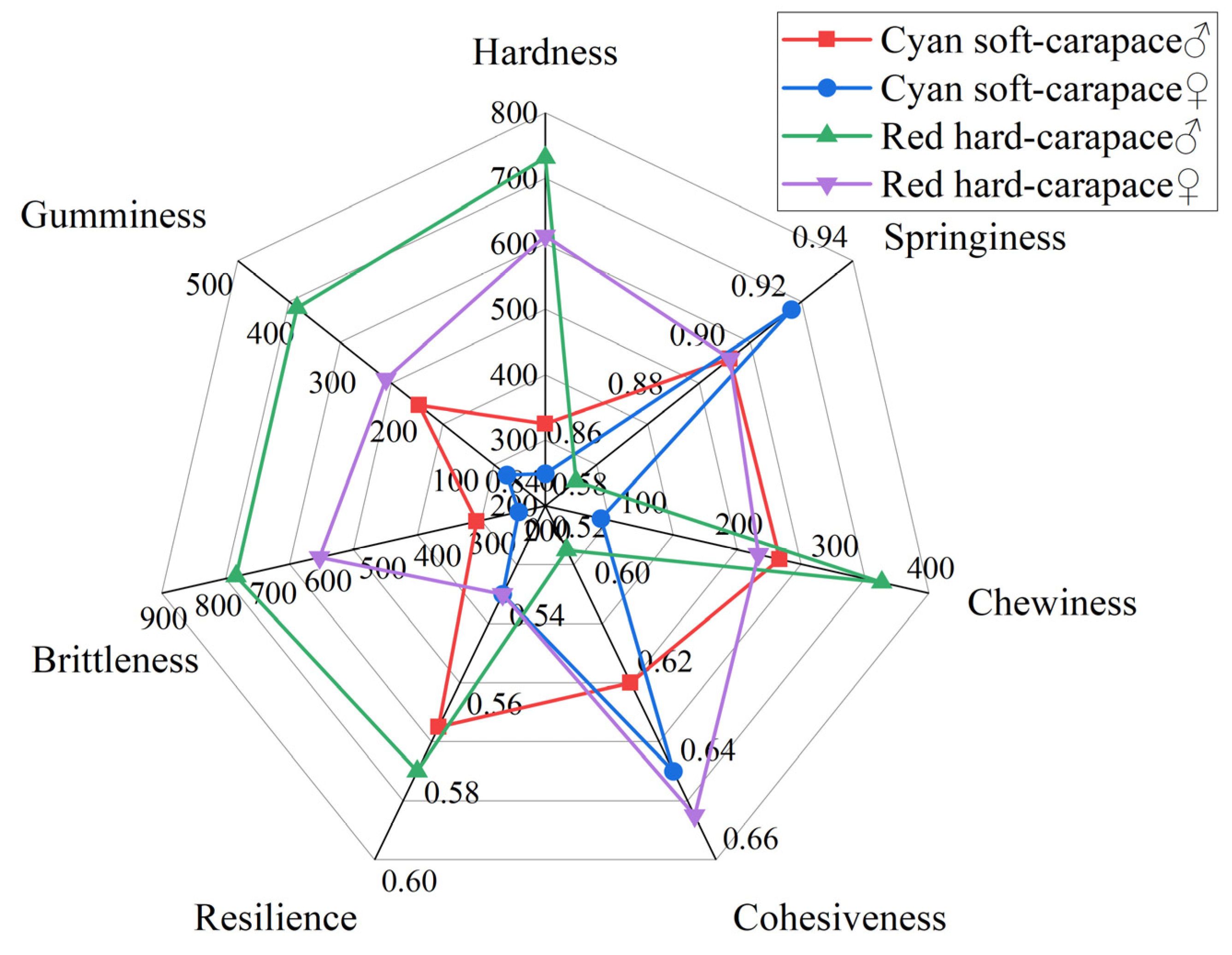
Figure 1. Radar map of the effects of different colors and sexes on the textural properties of muscles in Procambarus clarkii.
Fishes 11 00393 g001
Figure 2. Effects of different colors and sexes on carotenoid content in cuticle of Procambarus clarkii. (a) Astaxanthin; (b) lutein; (c) β-carotene. Data are expressed as means with SEM. Value with different superscripts are significantly different (p < 0.05).
Fishes 11 00393 g002
Figure 3. The expression of DGAT2 mRNA in various tissues of Procambarus clarkii. Data are expressed as means with SEM. Value with different superscripts are significantly different (p < 0.05).
Fishes 11 00393 g003
Figure 4. Expression of DGAT2 mRNA in the gonadal tissues of Procambarus clarkii. Data are expressed as means with SEM. * p < 0.05, *** p < 0.001.
Fishes 11 00393 g004
Figure 5. Interaction between carapace color × sex and DGAT2 mRNA expression in various tissues of Procambarus clarkii. (a) Hepatopancreas; (b) inner membrane; (c) muscle; (d) intestine. Data are expressed as means with SEM. Values with different superscripts are significantly different (p < 0.05).
Fishes 11 00393 g005
Table 1. Primer name and sequence.
GeneSequences
β-actin-FGAGGTTGCTGCCCTGGTT
β-actin-RTAGCGGGAGTGTTGAAAG
DGAT2-FTTGCGCCTCTCAACATCCC
DGAT2-RACTCAATCCTCCTGCCACCC
Table 2. Effects of different colors and sexes on the cephalothorax carapace, abdomen carapace and cheliped carapace coloration of Procambarus clarkii.
GroupsTwo-Way ANOVA
Cyan Soft-Carapace♀Cyan Soft-Carapace♂Red Hard-Carapace♀Red Hard-Carapace♂ColorSexColor × Sex
Cephalothorax carapaceL18.82 ± 0.59 ab18.14 ± 1.23 ab17.71 ± 0.67 b21.16 ± 0.47 a0.0120.0080.019
a*9.59 ± 0.3511.37 ± 0.769.96 ± 0.869.80 ± 0.810.7330.4520.923
b*9.61 ± 0.499.73 ± 0.519.24 ± 0.6711.18 ± 0.120.1720.3850.484
Abdomen carapaceL17.34 ± 1.0317.43 ± 0.8315.34 ± 0.6316.28 ± 0.720.9110.4980.609
a*14.40 ± 0.5313.14 ± 0.4913.67 ± 1.1014.41 ± 0.840.5500.6250.573
b*13.41 ± 0.3910.83 ± 0.6811.99 ± 0.7513.29 ± 0.730.0120.0310.015
Cheliped carapaceL23.02 ± 1.2121.25 ± 0.5923.55 ± 1.7321.57 ± 0.740.9800.5540.925
a*19.75 ± 0.8421.41 ± 1.5120.17 ± 1.5118.36 ± 1.240.1510.1660.161
b*14.13 ± 0.7014.91 ± 1.0116.32 ± 1.4916.77 ± 1.180.5600.2260.246
Values are presented as mean ± SEM. Values with different superscripts in the same row are significantly (p < 0.05) different. L, brightness, positive values are brighter and negative values are darker; a*, redness, positive values are red and negative values are green; b*, yellowness, positive values are yellow and negative values are blue.
Table 3. Effects of different colors and sexes on the physicochemical indices of muscle tissue in Procambarus clarkii.
GroupsTwo-Way ANOVA
Cyan Soft-Carapace♀Cyan Soft-Carapace♂Red Hard-Carapace♀Red Hard-Carapace♂Carapace ColorSexCarapace Color × Sex
ChromaL40.62 ± 2.12 a39.73 ± 1.08 ab35.75 ± 0.95 ab34.16 ± 1.77 b0.2210.6480.826
a*12.45 ± 0.31 c16.28 ± 0.21 a13.79 ± 0.72 bc14.25 ± 0.18 b0.0010.0470.002
b*11.43 ± 0.21 bc14.65 ± 0.55 a9.22 ± 0.88 c12.35 ± 0.80 ab0.2140.4810.685
Drip loss (%) 128.56 ± 0.60 a27.74 ± 1.78 ab22.94 ± 0.84 b26.11 ± 1.30 ab0.5600.1010.141
Cooking loss (%) 218.33 ± 1.37 a6.32 ± 0.85 c13.61 ± 1.25 b6.27 ± 0.38 c0.1970.4380.055
pH4.85 ± 0.02 b4.88 ± 0.03 b4.88 ± 0.04 b5.09 ± 0.06 a0.0120.0110.053
Note: Values are presented as mean ± SEM. Values with different superscripts in the same row are significantly (p < 0.05) different. L, brightness, positive values are brighter and negative values are darker; a*, redness, positive values are red and negative values are green; b*, yellowness, positive values are yellow and negative values are blue. 1 Drip loss (%) = (W0 − W1)/W0 × 100; 2 cooking loss (%) = (W0 − W2)/W0 × 100; W0, initial muscle mass; W1, the muscle mass after hanging for 24 h; W2, the muscle mass after cooking for 5 min.
Table 4. Effects of different colors and sexes on the textural properties of muscles in Procambarus clarkii.
ItemsGroupsTwo-Way ANOVA
Cyan Soft-Carapace♀Cyan Soft-Carapace♂Red Hard-Carapace♀Red Hard-Carapace♂Carapace ColorSexCarapace Color × Sex
Hardness (g)248.80 ± 25.06 b325.19 ± 14.96 b612.01 ± 60.12 a731.50 ± 37.22 a0.0100.1600.557
Springiness (mm)0.92 ± 0.020.90 ± 0.020.90 ± 0.020.85 ± 0.020.6500.7580.884
Chewiness (mJ)58.02 ± 8.96 c244.56 ± 23.92 b222.33 ± 19.66 b351.04 ± 12.64 a0.4060.0190.371
Cohesiveness (%)0.64 ± 0.020.62 ± 0.020.65 ± 0.020.59 ± 0.010.0040.0190.005
Resilience (MPa)0.54 ± 0.030.57 ± 0.030.54 ± 0.080.58 ± 0.060.0090.0020.002
Brittleness (g)248.80 ± 25.06 b325.19 ± 59.85 b612.01 ± 60.12 a764.22 ± 25.07 a0.1320.0320.162
Gumminess (N)62.43 ± 11.09 c205.03 ± 40.75 b258.79 ± 22.53 b403.72 ± 15.04 a0.2950.0230.420
Note: Values are means ± S.E. In the cyan soft-carapace female group, the cyan soft-carapace male group, the red hard-carapace female group, and the red hard-carapace male group are within each group. Mean values with different superscripts in the same row are significantly different t (p < 0.05).
Table 5. Effects of different colors and sexes on the whole body composition in Procambarus clarkii.
ItemsGroupsTwo-Way ANOVA
Cyan Soft-Carapace♀Cyan Soft-Carapace♂Red Hard-Carapace♀Red Hard-Carapace♂Carapace ColorSexCarapace Color × Sex
Moisture (%)73.43 ± 0.8175.93 ± 2.6573.69 ± 1.1570.77 ± 2.090.1050.2080.176
Protein (%)10.42 ± 0.2110.49 ± 1.399.89 ± 0.6810.87 ± 1.210.6930.7980.661
Lipid (%)3.37 ± 0.06 a3.33 ± 0.39 a3.51 ± 0.14 a1.91 ± 0.09 b0.0020.0560.007
Ash (%)9.79 ± 0.94 ab6.06 ± 0.95 b9.15 ± 0.38 ab12.24 ± 0.93 a0.0010.0040.003
Values are presented as mean ± SEM. Values with different superscripts in the same row are significantly (p < 0.05) different.
Disclaimer/Publisher’s Note: The statements, opinions and data contained in all publications are solely those of the individual author(s) and contributor(s) and not of MDPI and/or the editor(s). MDPI and/or the editor(s) disclaim responsibility for any injury to people or property resulting from any ideas, methods, instructions or products referred to in the content.