

First Report of Elizabethkingia miricola Isolated from Low-Salinity-Cultured River Puffer (Takifugu obscurus) in South Korea

Abstract
1. Introduction
2. Materials and Methods
2.1. Case History
2.2. Bacterial Isolation and Biochemical Identification
2.3. Antibiotic Susceptibility Tests
2.4. Bacterial DNA Extraction and PCR, 16S rRNA Identification
2.5. Histopathological Analysis
3. Results
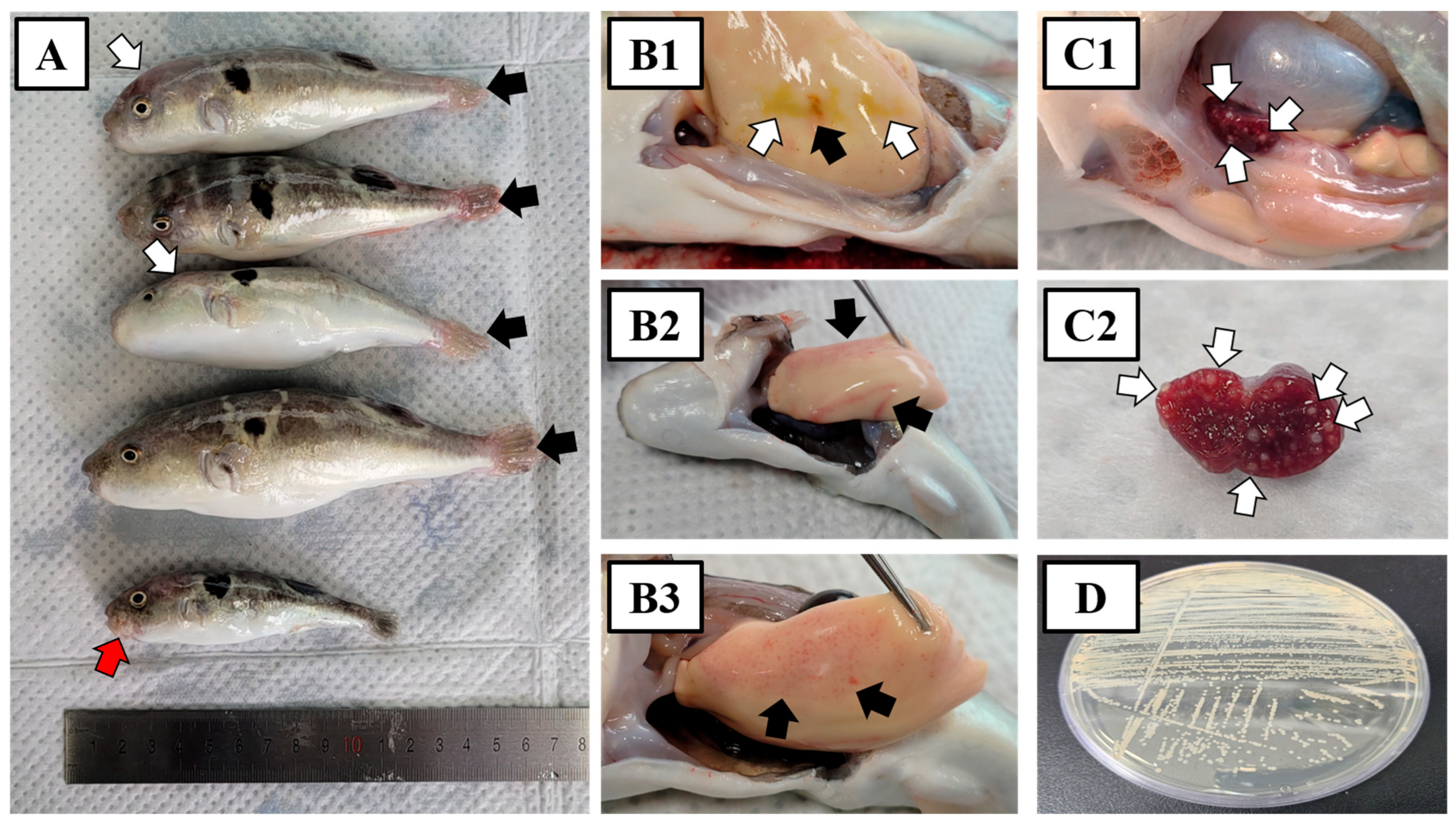
3.1. Clinical Signs of Diseased Fish
3.2. Bacterial Identification
3.3. Characteristics of Antibiotic Resistance
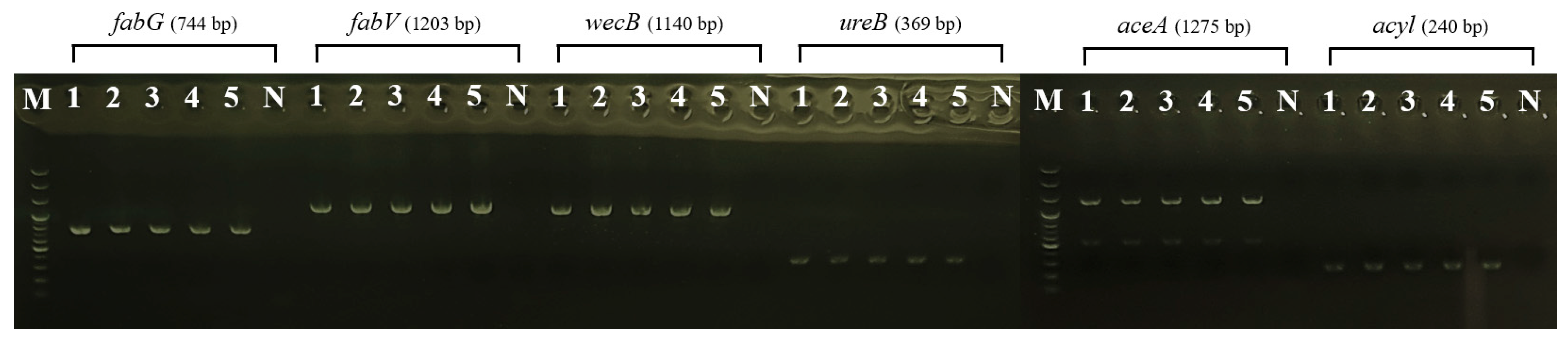
3.4. Detection of Virulence Genes
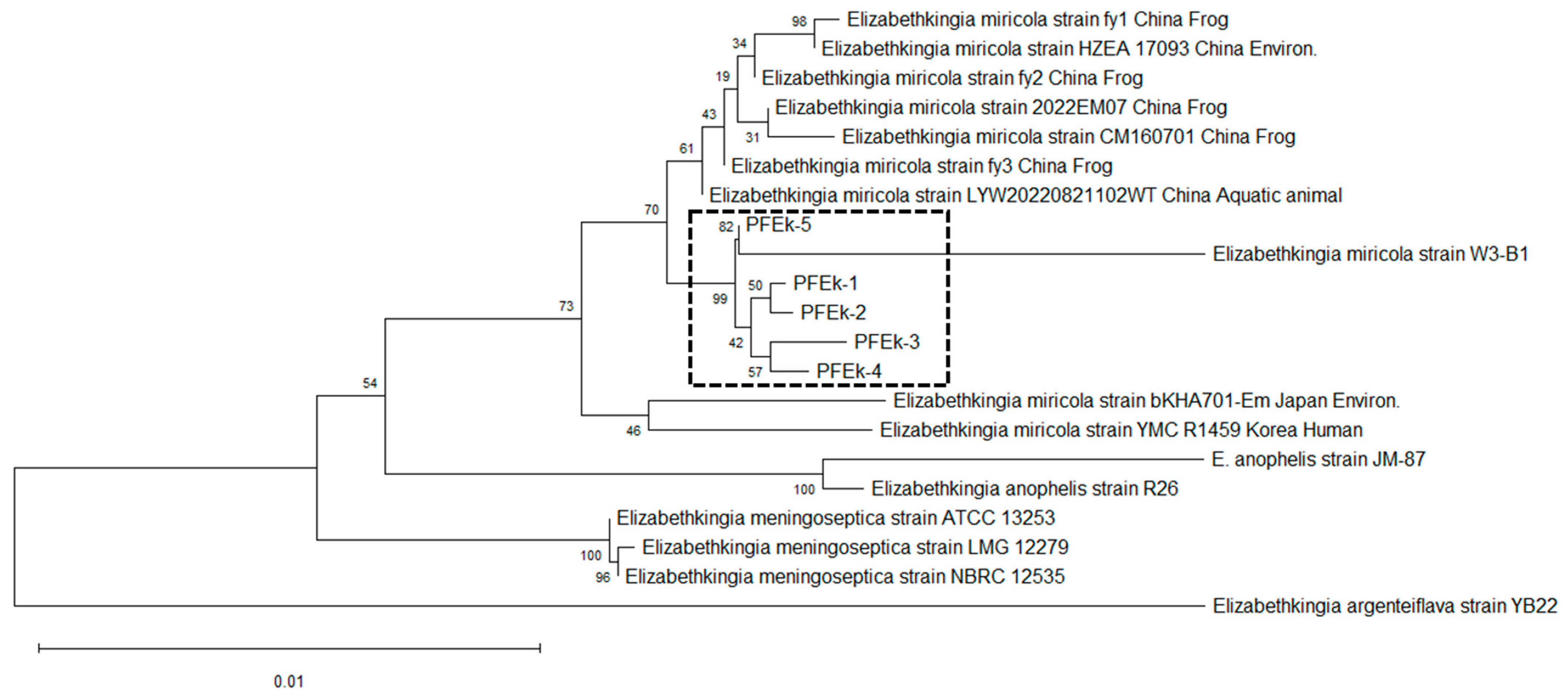
3.5. Phylogenetic Analysis of Isolates
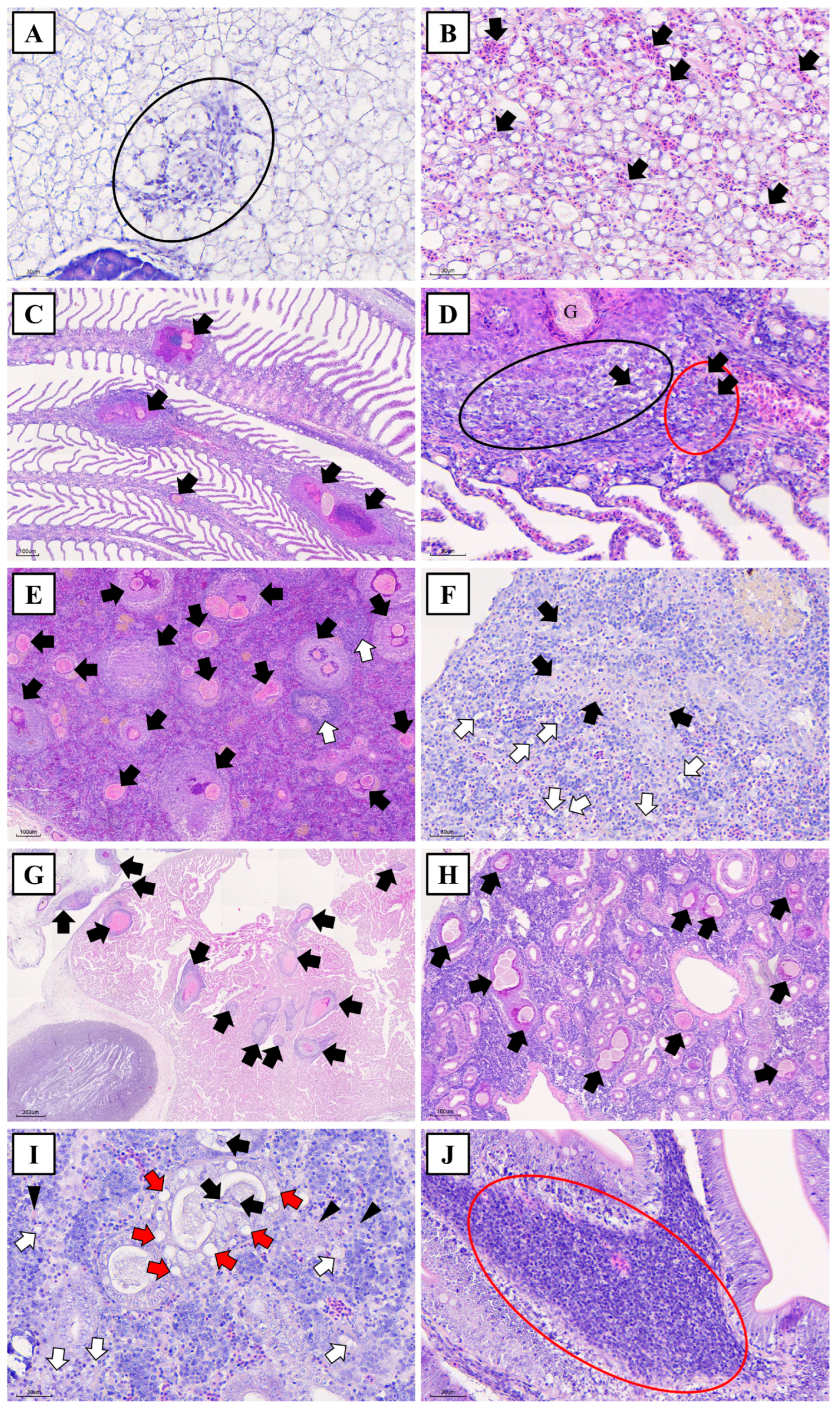
3.6. Histopathological Change in Organs from River Puffer
4. Discussion
5. Conclusions
Author Contributions
Funding
Institutional Review Board Statement
Informed Consent Statement
Data Availability Statement
Conflicts of Interest
References
- Kang, H.W.; Cho, J.K.; Son, M.H.; Hong, C.G.; Park, J.Y. Effect of Feeding Frequency on Growth and Body Composition of Juvenile River Puffer, Takifugu obscurus in Winter season. J. Fish. Mar. Sci. Educ. 2015, 27, 718–724. [Google Scholar]
- Yoo, G.Y.; Lee, J.Y. The effect of feeding frequency, water temperature, and stocking density on the growth of river puffer Takifugu obscurus reared in a zero-exchange water system. Fish. Aquat. Sci. 2016, 19, 23. [Google Scholar] [CrossRef]
- Ministry of Oceans and Fisheries (MOF). Fisheries Information Portal Service (FIPS). Available online: https://www.fips.go.kr/p/S020304/ (accessed on 30 March 2026).
- Cheng, C.-H.; Yang, F.-F.; Ling, R.-Z.; Liao, S.-A.; Miao, Y.-T.; Ye, C.-X.; Wang, A.-L. Effects of ammonia exposure on apoptosis, oxidative stress and immune response in pufferfish (Takifugu obscurus). Aquat. Toxicol. 2015, 164, 61–71. [Google Scholar] [CrossRef] [PubMed]
- Ye, H.; Xu, M.; Liu, Q.; Sun, Z.; Zou, C.; Chen, L.; Su, N.; Ye, C. Effects of replacing fish meal with soybean meal on growth performance, feed utilization and physiological status of juvenile obscure puffer, Takifugu obscurus. Comp. Biochem. Physiol. Part C Toxicol. Pharmacol. 2019, 216, 75–81. [Google Scholar] [CrossRef]
- Tian, Y.; Wang, C.; Wang, Y.; Xiong, Y.; Liu, Y.; Yan, H.; Wu, A.; Gao, R.; Li, M.; Wang, L.; et al. Gill transcriptomes analysis of Takifugu obscurus, Takifugu rubripes and their hybrid offspring in freshwater and seawater. Aquac. Rep. 2024, 37, 102208. [Google Scholar] [CrossRef]
- Assefa, A.; Abunna, F. Maintenance of fish health in aquaculture: Review of epidemiological approaches for prevention and control of infectious disease of fish. Vet. Med. Int. 2018, 2018, 5432497. [Google Scholar] [CrossRef]
- Bondad-Reantaso, M.G.; Subasinghe, R.P.; Arthur, J.R.; Ogawa, K.; Chinabut, S.; Adlard, R.; Tan, Z.; Shariff, M. Disease and health management in Asian aquaculture. Vet. Parasitol. 2005, 132, 249–272. [Google Scholar] [CrossRef]
- Xu, R.; He, Z.; Deng, Y.; Cen, Y.; Mo, Z.; Dan, X.; Li, Y. Lactococcus garvieae as a Novel Pathogen in Cultured Pufferfish (Takifugu obscurus) in China. Fishes 2024, 9, 406. [Google Scholar] [CrossRef]
- Ytrestøyl, T.; Takle, H.; Kolarevic, J.; Calabrese, S.; Timmerhaus, G.; Rosseland, B.O.; Teien, H.C.; Nilsen, T.O.; Handeland, S.O.; Stefansson, S.O.; et al. Performance and welfare of Atlantic salmon, Salmo salar L. post-smolts in recirculating aquaculture systems: Importance of salinity and water velocity. J. World Aquac. Soc. 2020, 51, 373–392. [Google Scholar] [CrossRef]
- Zhang, X.-H.; He, X.; Austin, B. Vibrio harveyi: A serious pathogen of fish and invertebrates in mariculture. Mar. Life Sci. Technol. 2020, 2, 231–245. [Google Scholar] [CrossRef]
- Jacobs, A.; Chenia, H.Y. Biofilm formation and adherence characteristics of an Elizabethkingia meningoseptica isolate from Oreochromis mossambicus. Ann. Clin. Microbiol. Antimicrob. 2011, 10, 16. [Google Scholar] [CrossRef] [PubMed]
- Hem, S.; Jarocki, V.M.; Baker, D.J.; Charles, I.G.; Drigo, B.; Aucote, S.; Donner, E.; Burnard, D.; Bauer, M.J.; Harris, P.N.A.; et al. Genomic analysis of Elizabethkingia species from aquatic environments: Evidence for potential clinical transmission. Curr. Res. Microb. Sci. 2022, 3, 100083. [Google Scholar] [CrossRef] [PubMed]
- Furyk, J.S.; Swann, O.; Molyneux, E. Systematic review: Neonatal meningitis in the developing world. Trop. Med. Health 2011, 16, 672–679. [Google Scholar] [CrossRef]
- Wei, D.; Cheng, Y.; Xiao, S.; Liao, W.; Yu, Q.; Han, S.; Huang, S.; Shi, J.; Xie, Z.; Li, P. Natural occurrences and characterization of Elizabethkingia miricola infection in cultured bullfrogs (Rana catesbeiana). Front. Cell. Infect. Microbiol. 2023, 13, 1094050. [Google Scholar] [CrossRef] [PubMed]
- Qiao, M.; Zhang, L.; Chang, J.; Li, H.; Li, J.; Wang, W.; Yuan, G.; Su, J. Rapid and sensitive detection of pathogenic Elizabethkingia miricola in black spotted frog by RPA-LFD and fluorescent probe-based RPA. Fish Shellfish Immunol. Rep. 2022, 3, 100059. [Google Scholar] [CrossRef] [PubMed]
- Laith, A.A.; Mazlan, A.G.; Ambak, M.A.; Jabar, A.; Najiah, M. ISOLATION AND IDENTIFICATION OF Elizabethkingia meningoseptica FROM DISEASED AFRICAN CATFISH Clarias gariepinus. J. Microbiol. Biotechnol. Food Sci. 2017, 6, 1070–1076. [Google Scholar] [CrossRef]
- Tan, J.W.Y.; Lian, B.J.X.; Loh, C.Y.X.; See, K.C. Elizabethkingia Species as an Emerging Pathogen: A Comprehensive Review of Clinical and Microbiological Evidence. Pathogens 2026, 15, 278. [Google Scholar] [CrossRef]
- Zhang, M.; Hou, L.; Zhu, Y.; Zhang, C.; Li, W.; Lai, X.; Yang, J.; Li, S.; Shu, H. Composition and distribution of bacterial communities and antibiotic resistance genes in fish of four mariculture systems. Environ. Pollut. 2022, 311, 119934. [Google Scholar] [CrossRef]
- Jasim, S.A.; Mohammed, J.S.; Roopashree, R.; Alshahrani, M.Y.; Sharma, A.; Sharma, A.; Asliddin, S.; Beig, M. Unraveling the global landscape of Elizabethkingia antibiotic resistance: A systematic review and meta-analysis. PLoS ONE 2025, 20, e0323313. [Google Scholar] [CrossRef]
- Baron, S.; Granier, S.A.; Larvor, E.; Jouy, E.; Cineux, M.; Wilhelm, A.; Gassilloud, B.; Le Bouquin, S.; Kempf, I.; Chauvin, C. Aeromonas Diversity and Antimicrobial Susceptibility in Freshwater—An Attempt to Set Generic Epidemiological Cut-Off Values. Front. Microbiol. 2017, 8, 503. [Google Scholar] [CrossRef]
- An, R.; Hou, G.; Sun, X.; Wang, L.; Zhang, C.; Han, Y.; Li, Y.; Wu, T.; Shi, Q.; Zhu, Z.; et al. Outbreaks of Elizabethkingia miricola Caused Fatal Meningitis-Like Disease in Cultured Bullfrogs. Transbound. Emerg. Dis. 2024, 4733320. [Google Scholar] [CrossRef]
- Heuer, H.; Krsek, M.; Baker, P.; Smalla, K.; Wellington, E.M. Analysis of actinomycete communities by specific amplification of genes encoding 16S rRNA and gel-electrophoretic separation in denaturing gradients. Appl. Environ. Microbiol. 1997, 63, 3233–3241. [Google Scholar] [CrossRef] [PubMed]
- Bowden, T.J. Modulation of the immune system of fish by their environment. Fish Shellfish Immunol. 2008, 25, 373–383. [Google Scholar] [CrossRef]
- Bly, J.E.; Quiniou, S.M.; Clem, L.W. Environmental effects on fish immune mechanisms. Dev. Biol. Stand. 1997, 90, 33–43. [Google Scholar] [PubMed]
- Chang, Y.-T.; Huang, W.-T.; Wu, P.-L.; Kumar, R.; Wang, H.-C.; Lu, H.-P. Low salinity stress increases the risk of Vibrio parahaemolyticus infection and gut microbiota dysbiosis in Pacific white shrimp. BMC Microbiol. 2024, 24, 275. [Google Scholar] [CrossRef] [PubMed]
- Wang, D.; Cao, Q.; Zhu, W.; Hu, Y.; Zhang, X.; Yin, S.; Wang, T. Individual and combined effects of salinity and lipopolysaccharides on the immune response of juvenile Takifugu fasciatus. Fish Physiol. Biochem. 2019, 45, 965–976. [Google Scholar] [CrossRef]
- Lin, G.; Zheng, M.; Li, S.; Xie, J.; Fang, W.; Gao, D.; Huang, J.; Lu, J. Response of gut microbiota and immune function to hypoosmotic stress in the yellowfin seabream (Acanthopagrus latus). Sci. Total Environ. 2020, 745, 140976. [Google Scholar] [CrossRef]
- Shi, Y.; Zhang, G.; Zhu, Y.; Liu, J. Effects of photoperiod, temperature, and salinity on growth and survival of obscure puffer Takifugu obscurus larvae. Aquaculture 2010, 309, 103–108. [Google Scholar] [CrossRef]
- Wang, J.; Zhu, X.; Sun, Y.; Gu, L.; Wu, Y.; Chen, Y.; Yang, Z. Changes in Transcriptome and Ultrastructure Reveal Salinity Tolerance of Obscure Puffer Takifugu obscurus. Front. Mar. Sci. 2022, 9, 854140. [Google Scholar] [CrossRef]
- Li, S.; Wang, X.; Lu, Y.; Wang, J.; Yu, D.; Zhou, Z.; Wei, J.; Liu, L.; Liu, J.; Liu, F.; et al. Co-infections of Klebsiella pneumoniae and Elizabethkingia miricola in black-spotted frogs (Pelophylax nigromaculatus). Microb. Pathog. 2023, 180, 106150. [Google Scholar] [CrossRef]
- Li, F.; Chen, B.; Xu, M.; Feng, Y.; Deng, Y.; Huang, X.; Geng, Y.; Ouyang, P.; Chen, D. Immune Activation and Inflammatory Response Mediated by the NOD/Toll-like Receptor Signaling Pathway—The Potential Mechanism of Bullfrog (Lithobates catesbeiana) Meningitis Caused by Elizabethkingia miricola. Int. J. Mol. Sci. 2023, 24, 14554. [Google Scholar] [CrossRef]
- Wei, Q.; Wang, D.; Wei, K.; Xu, B.; Xu, J. The Mechanism of Elizabethkingia miricola Infection of the Black Spotted Frog as Revealed by Multi-Omics Analysis. Fishes 2024, 9, 91. [Google Scholar] [CrossRef]
- Tsai, M.-A.; See, M.S.; Chiu, C.-H.; Wang, P.-C.; Chen, S.-C. Genotypic and phenotypic analysis of Elizabethkingia meningoseptica in bullfrog Rana catesbeiana isolated in Taiwan. J. Fish Dis. 2023, 46, 1239–1248. [Google Scholar] [CrossRef] [PubMed]
- Xie, Z.-Y.; Zhou, Y.-C.; Wang, S.-F.; Mei, B.; Xu, X.-D.; Wen, W.-Y.; Feng, Y.-Q. First isolation and identification of Elizabethkingia meningoseptica from cultured tiger frog, Rana tigerina rugulosa. Vet. Microbiol. 2009, 138, 140–144. [Google Scholar] [CrossRef] [PubMed]
- Zdziarski, P.; Paściak, M.; Rogala, K.; Korzeniowska-Kowal, A.; Gamian, A. Elizabethkingia miricola as an opportunistic oral pathogen associated with superinfectious complications in humoral immunodeficiency: A case report. BMC Infect. Dis. 2017, 17, 763. [Google Scholar] [CrossRef] [PubMed]
- Huang, X.; Feng, Y.; Tang, H.; Xiong, G.; Li, L.; Yang, Y.; Wang, K.; Ouyang, P.; Geng, Y.; Chen, D. Candidate animal disease model of Elizabethkingia spp. infection in humans, based on the systematic pathology and oxidative damage caused by E. miricola in Pelophylax nigromaculatus. Oxid. Med. Cell. Longev. 2019, 2019, 6407524. [Google Scholar] [CrossRef]
- Fahmy, M.; Stewart, A.; Tey, S.-K.; Hajkowicz, K. Elizabethkingia bloodstream infections in severely immunocompromised patients: Persistent, relapsing and associated with high mortality. JAC-Antimicrob. Resist. 2024, 6, dlae161. [Google Scholar] [CrossRef]
- Huang, Y.H.; Lin, J.S.; Ma, J.C.; Wang, H.H. Functional Characterization of Triclosan-Resistant Enoyl-acyl-carrier Protein Reductase (FabV) in Pseudomonas aeruginosa. Front. Microbiol. 2016, 7, 1903. [Google Scholar] [CrossRef]
- Campbell, J.W.; Cronan, J.E. Bacterial fatty acid biosynthesis: Targets for antibacterial drug discovery. Annu. Rev. Microbiol. 2001, 55, 305–332. [Google Scholar] [CrossRef]
- Rai, A.K.; Mitchell, A.M. Enterobacterial Common Antigen: Synthesis and Function of an Enigmatic Molecule. mBio 2020, 11, e01914-20. [Google Scholar] [CrossRef]
- Carter, E.L.; Flugga, N.; Boer, J.L.; Mulrooney, S.B.; Hausinger, R.P. Interplay of metal ions and urease. Metallomics 2009, 1, 207–221. [Google Scholar] [CrossRef] [PubMed]
- Dunn, M.F.; Ramírez-Trujillo, J.A.; Hernández-Lucas, I. Major roles of isocitrate lyase and malate synthase in bacterial and fungal pathogenesis. Microbiology 2009, 155, 3166–3175. [Google Scholar] [CrossRef] [PubMed]
- Morbidoni, H.R.; de Mendoza, D.; Cronan, J.E., Jr. Bacillus subtilis acyl carrier protein is encoded in a cluster of lipid biosynthesis genes. J. Bacteriol. 1996, 178, 4794–4800. [Google Scholar] [CrossRef] [PubMed]
- Wu, C.; Xiong, L.; Liao, Q.; Zhang, W.; Xiao, Y.; Xie, Y. Clinical manifestations, antimicrobial resistance and genomic feature analysis of multidrug-resistant Elizabethkingia strains. Ann. Clin. Microbiol. Antimicrob. 2024, 23, 32. [Google Scholar] [CrossRef]
- Lin, J.N.; Lai, C.H.; Yang, C.H.; Huang, Y.H. Elizabethkingia Infections in Humans: From Genomics to Clinics. Microorganisms 2019, 7, 295. [Google Scholar] [CrossRef]
- Wang, L.; Zhang, X.; Li, D.; Hu, F.; Wang, M.; Guo, Q.; Yang, F. Molecular Characteristics and Antimicrobial Susceptibility Profiles of Elizabethkingia Clinical Isolates in Shanghai, China. Infect. Drug Resist. 2020, 13, 247–256. [Google Scholar] [CrossRef]
- Rajme-Manzur, D.; Gollas-Galván, T.; Vargas-Albores, F.; Martínez-Porchas, M.; Hernández-Oñate, M.Á.; Hernández-López, J. Granulomatous bacterial diseases in fish: An overview of the host’s immune response. Comp. Biochem. Physiol. Part A Mol. Integr. Physiol. 2021, 261, 111058. [Google Scholar] [CrossRef]
- Nawaz, M.; Gao, T.; Huang, K.; Gouife, M.; Chen, S.; Zhu, S.; Ma, R.; Jin, S.; Jiang, J.; Xie, J. Pathogenicity, diagnosis, prevention strategies and immune response of bacterium Nocardia seriolae: A critical review. Aquac. Res. 2022, 53, 4901–4918. [Google Scholar] [CrossRef]
- Kim, B.S.; Park, J.W.; Kang, G.S.; Jin, J.H.; Roh, H.J.; Kim, D.H.; Lee, M.K.; Huh, M.D. First report of nocardia infection in cultured Japanese eel, Anguilla japonica. J. Fish Dis. 2018, 41, 1921–1927. [Google Scholar] [CrossRef]
- Kim, J.D.; Lee, N.S.; Do, J.W.; Kim, M.S.; Seo, H.G.; Cho, M.; Jung, S.H.; Han, H.J. Nocardia seriolae infection in the cultured eel Anguilla japonica in Korea. J. Fish Dis. 2018, 41, 1745–1750. [Google Scholar] [CrossRef]
- Mataragka, A.; Tzimotoudis, N.; Kolygas, M.; Karavanis, E.; Ikonomopoulos, J. Diagnostic investigation for the detection of mycobacteria in samples of fish feeds and tissue from sea bream and sea bass with severe granulomatous lesions. Aquaculture 2022, 546, 737283. [Google Scholar] [CrossRef]
- Puah, S.M.; Fong, S.P.; Kee, B.P.; Puthucheary, S.D.; Chua, K.H. Molecular identification and biofilm-forming ability of Elizabethkingia species. Microb. Pathog. 2022, 162, 105345. [Google Scholar] [CrossRef]



| Gene | Primer Sequence (5′→3′) | Product Size (bp) | Reference |
|---|---|---|---|
| fabG | ATGAAACTATTAGAAGGAAAAGTAG | 744 | [22] |
| CTAAGTTAACATTCCGCCA | |||
| fabV | ATGATCATACAACCACGTGTTA | 1203 | |
| TTATCCTTCTATACTTGGGATGT | |||
| wecB | ATGAAGAAACTAAAAGTAATGACG | 1140 | |
| TTAAATTTCTTCAGACCAGACAG | |||
| ureB | ATGATACCAGGAGAAATTTTTGT | 369 | |
| TTACAGGTTTTTAAAATTTAATTGA | |||
| aceA | ATGAAAACTATTCAGGAACTACAAC | 1275 | |
| TTAGAATTGTGCTGTTTCTGTAGA | |||
| acyl | ATGTCAGACATCGCATCAA | 240 | |
| TTATTTGTTGACTACTTCTTCAAT | |||
| 16S rRNA | AGAGTTTGATCCTGGCTCAG | about 1550 | [23] |
| TACGGYTACCTTGTTACGACTT |
| Sample | Results of Bacterial Identification (% Identify) | |
|---|---|---|
| Biolog (Biochemical Identification) | 16S rRNA Sequencing (Molecular Identification) | |
| PFEk-1 | Elizabethkingia miricola (97.4) | Elizabethkingia miricola (99.8) |
| PFEk-2 | Elizabethkingia miricola (98.5) | Elizabethkingia miricola (99.4) |
| PFEk-3 | Elizabethkingia miricola (99.0) | Elizabethkingia miricola (98.8) |
| PFEk-4 | Elizabethkingia miricola (98.7) | Elizabethkingia bruuniana (98.9) |
| PFEk-5 | Elizabethkingia miricola (99.2) | Elizabethkingia miricola (99.6) |
| Sample | Antibiotics * | |||||||
|---|---|---|---|---|---|---|---|---|
| OTC | AMP | NEO | GEN | SXT | FFN | CLI | ENR | |
| PFEk-1 | R | R | R | R | S | S | S | S |
| PFEk-2 | R | R | R | R | S | S | S | S |
| PFEk-3 | R | R | R | R | S | S | S | S |
| PFEk-4 | R | R | R | R | S | S | S | S |
| PFEk-5 | R | R | R | R | S | S | R | S |
Disclaimer/Publisher’s Note: The statements, opinions and data contained in all publications are solely those of the individual author(s) and contributor(s) and not of MDPI and/or the editor(s). MDPI and/or the editor(s) disclaim responsibility for any injury to people or property resulting from any ideas, methods, instructions or products referred to in the content. |
© 2026 by the authors. Licensee MDPI, Basel, Switzerland. This article is an open access article distributed under the terms and conditions of the Creative Commons Attribution (CC BY) license.
Share and Cite
Cho, K.-T.; Lee, D.-H.; Lee, B.-H.; Kim, B.-S. First Report of Elizabethkingia miricola Isolated from Low-Salinity-Cultured River Puffer (Takifugu obscurus) in South Korea. Fishes 2026, 11, 214. https://doi.org/10.3390/fishes11040214
Cho K-T, Lee D-H, Lee B-H, Kim B-S. First Report of Elizabethkingia miricola Isolated from Low-Salinity-Cultured River Puffer (Takifugu obscurus) in South Korea. Fishes. 2026; 11(4):214. https://doi.org/10.3390/fishes11040214
Chicago/Turabian StyleCho, Ki-Taek, Dong-Hoon Lee, Beom-Hee Lee, and Bo-Seong Kim. 2026. "First Report of Elizabethkingia miricola Isolated from Low-Salinity-Cultured River Puffer (Takifugu obscurus) in South Korea" Fishes 11, no. 4: 214. https://doi.org/10.3390/fishes11040214
APA StyleCho, K.-T., Lee, D.-H., Lee, B.-H., & Kim, B.-S. (2026). First Report of Elizabethkingia miricola Isolated from Low-Salinity-Cultured River Puffer (Takifugu obscurus) in South Korea. Fishes, 11(4), 214. https://doi.org/10.3390/fishes11040214