
Article

Effects of GnRHa Delivery Systems on Spermiation and Sperm Quality in Captive Male Thicklip Grey Mullet (Chelon labrosus)


by
Lambros E. Kokokiris
1,*,†,
George Minos
2,*,†,
Cosmas Nathanailides
3,
Maria Papadaki
4 and
Constantinos C. Mylonas
4
1
Department of Nutritional Sciences and Dietetics, School of Health Sciences, International Hellenic University, Alexander University Campus, Sindos, 57400 Thessaloniki, Greece
2
Department of Nursing, School of Health Sciences, International Hellenic University, Alexander University Campus, Sindos, 57400 Thessaloniki, Greece
3
Department of Agriculture, School of Agriculture, University of Ioannina, 47100 Arta, Greece
4
Hellenic Center for Marine Research, Institute of Marine Biology, Biotechnology and Aquaculture, Thalassocosmos, Gournes Pediados, 71003 Heraklion, Greece
*
Authors to whom correspondence should be addressed.
These authors contributed equally to this work.
Fishes 2026, 11(4), 210; https://doi.org/10.3390/fishes11040210

Submission received: 24 February 2026 / Revised: 26 March 2026 / Accepted: 30 March 2026 / Published: 1 April 2026

Abstract

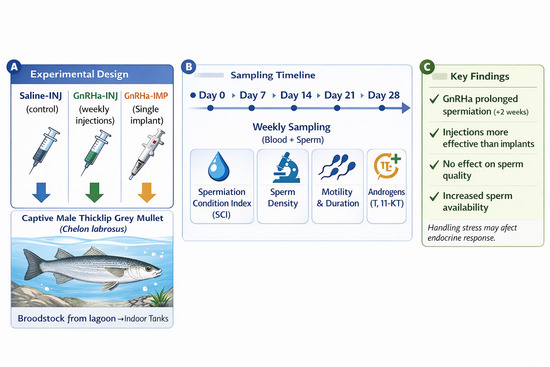
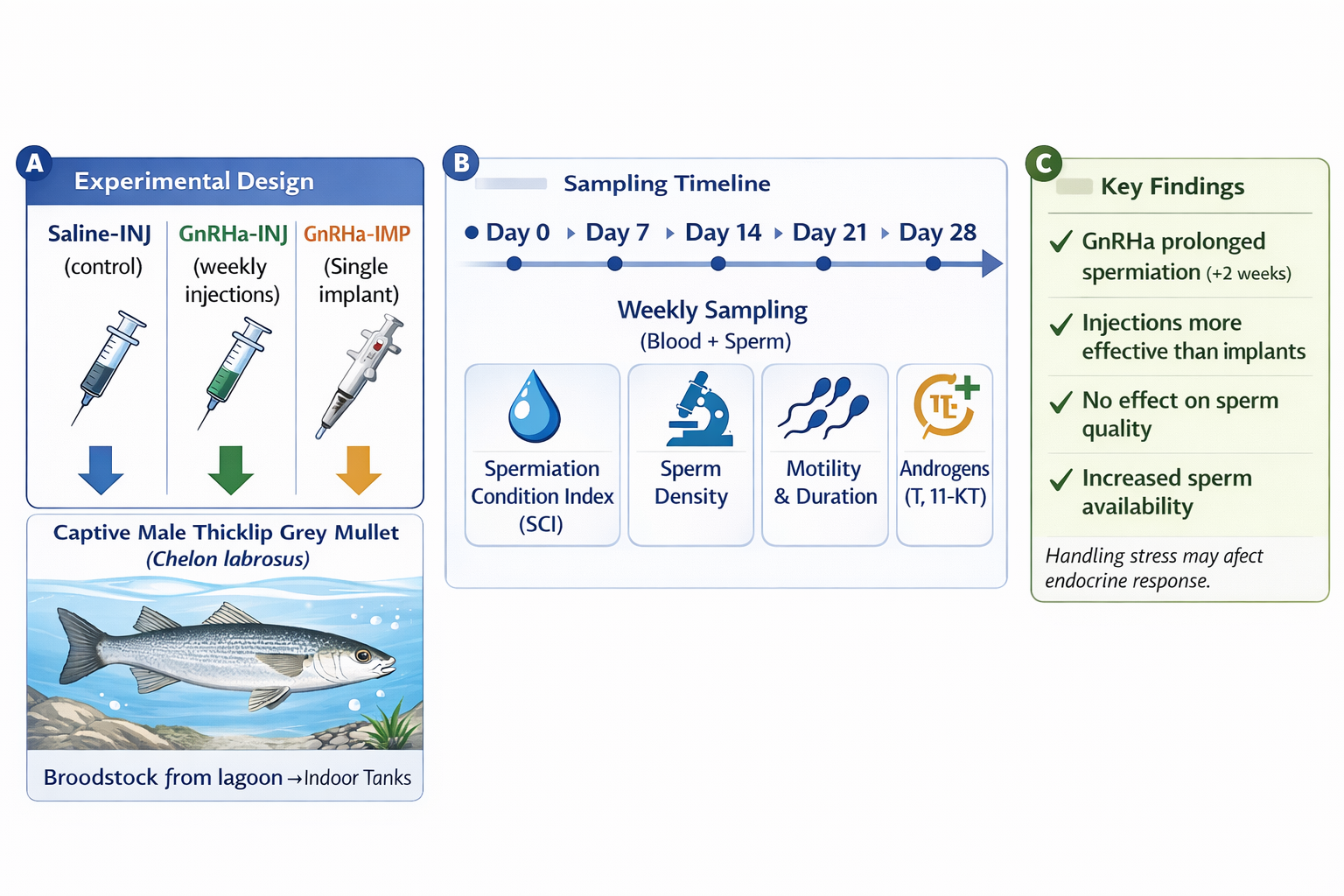
The aim of this study was to evaluate the effects of a gonadotropin-releasing hormone analogue (GnRHa), administered through injections or with sustained-release implants, on spermiation and sperm quality in thicklip grey mullet, Chelon labrosus. Male broodstock transferred from extensive lagoons were randomly allocated to three treatment groups: (a) weekly saline injections (Saline-INJ), (b) weekly GnRHa injections (10 μg kg−1 bw; GnRHa-INJ), and (c) a single GnRHa EVAc implant (50 μg kg−1 bw; GnRHa-IMP). Males were maintained with females under the same treatment protocols and allowed to spawn. Sperm condition, density, motility, duration of motility, and androgen levels were evaluated weekly at five sampling points (Days 0, 7, 14, 21, and 28). All males exhibited complete spermiation during the first two weeks (Days 0 and 7), followed by a gradual decline throughout the rest of the study (Days 14 and 21). This pattern of decline was not as evident in the groups treated with GnRHa, especially in the GnRHa-INJ group. Sperm density, motility, and motility duration varied strongly over time; however, no significant differences were observed among treatments. GnRHa treatment prolonged the spermiation period and delayed its seasonal decline without significantly altering sperm quality. These results may enable more frequent sperm collection and greater sperm availability, as inferred from the spermiation condition (SCI) and qualitative observations.
Key Contribution: 1. GnRHa treatments enhanced spermiation and extended the spermiation period by at least two weeks compared with untreated controls, without affecting sperm quality (density, motility, and motility duration). 2. Weekly GnRHa injections (10 μg kg−1 bw) were more effective than a single slow-release EVAc implant (50 μg kg−1 bw) in maintaining spermiation over four weeks, indicating that repeated or additional implantation may be needed to prolong the response. 3. Spermiating males appear sensitive to stress associated with repeated handling and sampling. 4. Sperm availability does not appear to be a limiting factor for reproductive performance under the conditions of this study.

Graphical Abstract

1. Introduction

The thicklip grey mullet Chelon labrosus (Risso, 1827) is a euryhaline and eurythermal mugilid species widely distributed in the Mediterranean Sea and the eastern Atlantic. In the context of the sustained growth of aquaculture production globally and across Mediterranean countries, the identification of robust, low-trophic, and euryhaline fish species remains important for aquaculture diversification. Owing to its high tolerance to fluctuating environmental conditions, omnivorous feeding behaviour, satisfactory growth performance, and marketable flesh quality, thicklip grey mullet is considered a promising candidate for the diversification and sustainability of Mediterranean aquaculture [1,2,3,4,5,6,7,8,9,10].
Spawning induction methods have substantially improved reproduction of thicklip grey mullet in captivity, enabling egg production through a range of hormonal treatments [11,12,13,14]. However, the culture of thicklip grey mullet still relies on wild broodstock, and consistent large-scale reproduction has yet to be achieved. Key bottlenecks include dependence on wild broodstock, the absence of spontaneous spawning, the need for artificial induction of spawning, stress sensitivity during handling, and the lack of optimized protocols for consistent gamete production and spawning control. Environmental variables such as water temperature and salinity influence the reproduction of grey mullets in the wild [15,16,17,18], as well as sperm quality and availability in captivity [19,20,21,22]. Stress from handling and captivity conditions further impair spermatogenesis and spermiation, highlighting the susceptibility of sperm availability to management practices [23,24,25]. Furthermore, long-term captivity can impair spermatogenesis by suppressing LH production and decreasing steroidogenesis [26].
Hormonal treatments using gonadotropin-releasing hormone analogues (GnRHa) are commonly used to overcome reproductive dysfunctions by stimulating gonadotropins and increasing spermiation and sperm quality in male fish species, including grey mullets [27,28]. However, studies in teleost species have shown that responses to GnRHa treatment vary according to species and may be influenced by factors such as spermatogenesis stage, delivery method (i.e., injections vs. slow-release implants), environmental conditions and stress [28]. Although captive thicklip grey mullet males are capable of producing sperm [14,29], the potential of GnRHa treatments to enhance spermiation and improve sperm quality has not previously been evaluated.
The aim of this study was to evaluate the GnRHa administered via two delivery methods (weekly injections and slow-release EVAc implants) on spermiation and sperm quality to support the development of reliable protocols for consistent large-scale reproduction of thicklip grey mullet in captivity.

2. Materials and Methods

2.1. Broodstock and Maintenance, Sampling Fish Groups, and Hormonal Treatment

In mid-January, spermiating thicklip grey mullet broodstock (n = 29, >6 yrs old, 0.865 ± 0.12 kg) were transferred from a lagoon seawater channel to indoor grow-out tanks of a private farm located in Variko Lagoon (Regional Unit of Pieria, Region of Central Macedonia, Northern Greece), where they were temporarily held until the beginning of the experimental period in mid-March (for details, see [14]).
In mid-March, a total of 29 males and an equal number of females (n = 31) were identified based on magnetic PIT tag readings and randomly assigned to three treatments differing in the mode of GnRHa (Des-Gly10, d-Ala6-ProNEth9-mGnRHa) administration. Within each treatment, male and female individuals received the following regimen: (a) a single intramuscular (IM) injection of physiological saline solution (0.9% NaCl, 1 mL; Saline-INJ group), (b) a single IM injection of GnRHa (10 μg kg−1 bw; GnRHa-INJ group), and (c) a single ethylene–vinyl acetate (EVAc) implant containing GnRHa (50 μg kg−1 bw; GnRHa-IMP group). In the GnRHa-INJ and Saline-INJ groups, males subsequently received weekly injections of GnRHa (10 μg kg−1 bw) or physiological saline, respectively, on Days 7, 14, 21, and 28. In contrast, in the GnRHa-IMP group, the EVAc implants were administered only once (Day 0), containing a higher GnRHa dose to provide sustained hormone release throughout the four-week experimental period.
Each treatment group was divided into two subgroups: a sampled treatment subgroup and an unsampled treatment subgroup. In the sampled treatment subgroup, males (n = 15 males) were subjected to repeated blood and sperm collection, whereas the corresponding unsampled subgroup (n = 14 males) was left undisturbed to avoid any potential effects of repeated sampling on sperm availability and quality, and consequently on the fertilization of eggs obtained after induced spawning (see the experimental setup in Figure 1 of [14]). The data presented in this study were derived from the sampled treatment subgroup of males, comprising 15 males in total (5 males per treatment subgroup).
The males of each sampled treatment subgroup were maintained with an almost equal number of females in a circular 3.5 m3 tank at a mean stocking density of 2.73 ± 0.11 kg/m3. Fish were maintained under natural photoperiods and temperature regimes and fed once daily to apparent satiation, six days per week, using a mixed diet of marine grower pellets (Biomar, Velestino, Greece), frozen squid, and deep-water rose shrimp.
Salinity, temperature, and dissolved oxygen were monitored three times per week. Mean salinity and water temperature during the experimental period were 32.6 ± 0.71 psu and 15.8 ± 1.96 °C, respectively; dissolved oxygen was maintained at 7.5 ± 0.5 mg L−1 and pH at 8.00 ± 0.2.

2.2. Handling and Sampling Schedule

Fish were fasted for 48 h prior to sampling to reduce metabolic activity and minimize fecal contamination during handling and sperm collection. At each sampling time point, fish were initially exposed to a lower concentration of 2-phenoxyethanol (0.08 mL L−1) in the holding tank in order to reduce escape responses and handling stress during capture. They were subsequently transferred to a second bath containing 2-phenoxyethanol at 0.10 mL L−1 to achieve a deeper level of sedation appropriate for blood and sperm collection. This two-step approach was used to facilitate handling while minimizing stress and ensuring consistent sampling conditions.
After the completion of the sedation procedure, blood and sperm sampling procedures were carried out. In total, sampling events were conducted on Days 0, 7, 14, 21, and 28 (D0, D7, D14, D21, and D28).

2.3. Blood Collection and Steroid Hormone Analysis

Blood collection of ~1 mL was carried out by using a sterile 1 mL syringe with a 23G needle from the caudal vein of the fish. Then, the blood was transferred immediately into microcentrifuge tubes that were kept on ice. The samples were then centrifuged at 3000× g for 10 min, and the plasma was separated and stored at −20 °C until the analysis of steroid hormones such as testosterone (T) and 11-ketotestosterone (11-KT). The concentrations of plasma T and 11-KT were quantified by using enzyme-linked immunoassays (ELISAs), as described by [14].

2.4. Sperm Collection and Quality Assessment

Sperm was collected by applying gentle abdominal pressure, with the first drop discarded to avoid contamination with urine or feces. Samples were collected into dry, chilled syringes and stored on ice (4 °C) for analysis within 30–45 min. Contaminated samples with blood, feces, or urine were excluded from analysis.
Spermiation condition was subsequently evaluated using the Spermiation Condition Index (SCI), assessed on a subjective scale according to [30], where 0 = no sperm release, 1 = a single drop of sperm released after multiple stripping attempts, 2 = sperm easily released after the first stripping attempt, and 3 = copious sperm release with minimal abdominal pressure.
Following SCI assessment, small volumes of sperm (50–100 µL) were collected from each male and used immediately for sperm quality analysis. Sperm density (×109 spermatozoa mL−1) was determined after a 2500-fold dilution in seawater using an improved Neubauer haemocytometer (Marienfeld Superior, Lauda-Königshofen, Germany) under light microscopy. Sperm motility (%) and motility duration (s) were assessed by visual estimation under light microscopy, on a microscope slide after activation by mixing 1 µL of sperm with approximately 50 µL of filtered seawater.
Motility was estimated as the percentage of progressively motile spermatozoa at 15–30 s post-activation, while motility duration was defined as the time from activation until the cessation of progressive movement in ≥90% of the observed spermatozoa. All sperm quality assessments were performed in duplicate.

2.5. Statistical Analysis

Data were tested for normality using the Shapiro–Wilk test and for homogeneity of variances using Levene’s test. As the assumptions of normality and homoscedasticity were not met, and due to the presence of unbalanced repeated measurements across sampling time points, the nonparametric two-way Scheirer–Ray–Hare (SRH) test was used to evaluate the effects of sampling time (day), hormonal treatment, and their interaction on the repeatedly measured parameters.
For the SRH analysis, H statistics, degrees of freedom, and exact p-values were reported for main effects and the treatment × day interaction. When a significant main effect of sampling time (day) was detected, post hoc pairwise comparisons were performed using Dunn’s rank-sum test with Holm’s adjustment for multiple comparisons, pooling data across treatments.
Effect sizes (η2; eta-squared) were estimated from the H statistic of the Scheirer–Ray–Hare test to quantify the magnitude of effects. Negative η2 values arising from the correction formula were interpreted as negligible effects. Using standard thresholds, we further looked at effect size (η2) values. Values of about 0.01 indicate small effects, 0.06 means moderate effects, and 0.14 or higher means large effects.
All statistical tests were two-tailed, and results were considered significant at α = 0.05. All analyses were performed using IBM SPSS Statistics v28.0 [31] and R v4.5.2 [32], with the packages FSA v0.10.1 [33] and rcompanion v2.5.2 [34].

3. Results

3.1. Sperm Condition

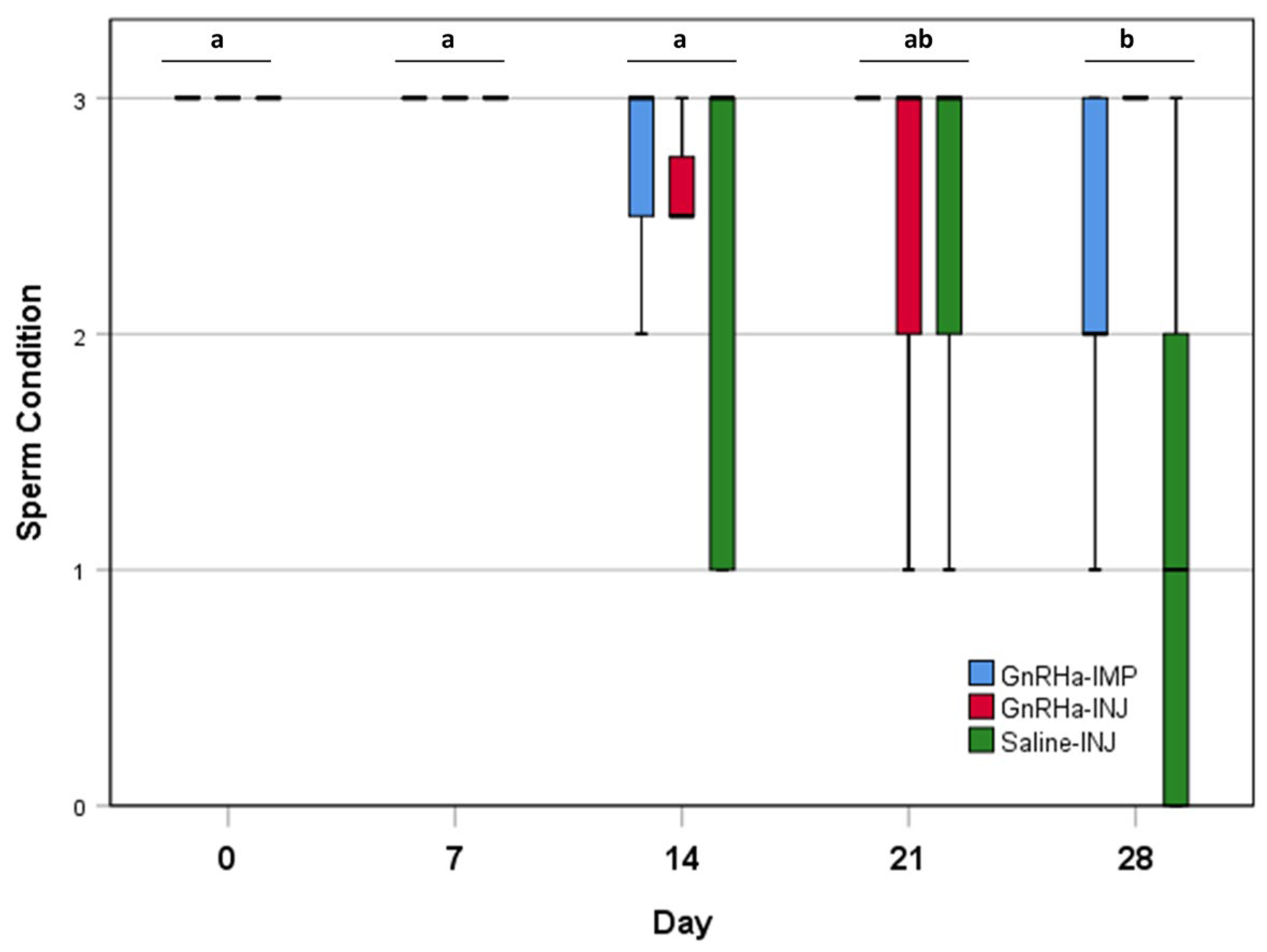
Males from all treatment groups were in full spermiation (SCI = 3) on both the first and second sampling days (Day 0 and Day 7; Figure 1). SCI values varied significantly over time (H = 18.79, df = 4, p < 0.001, η2 = 0.211), with higher values recorded at the early sampling points (Days 0, 7, and 14) and lower values at the later sampling points (Days 21 and 28). SCI values on Day 28 were significantly reduced compared with those on Days 0, 7, and 14 (p < 0.001) in a temporal pattern comparable among treatments (H = 8.76, df = 8, p = 0.363, η2 = 0.012).
An overall effect of treatment was detected (H = 7.44, df = 2, p = 0.024, η2 = 0.076). Pairwise comparisons revealed that SCI values in GnRHa-INJ males were significantly higher than those in saline-injected males (Saline-INJ; p = 0.024), while no significant differences were observed between GnRHa-INJ and GnRHa-IMP males.

3.2. Sperm Density

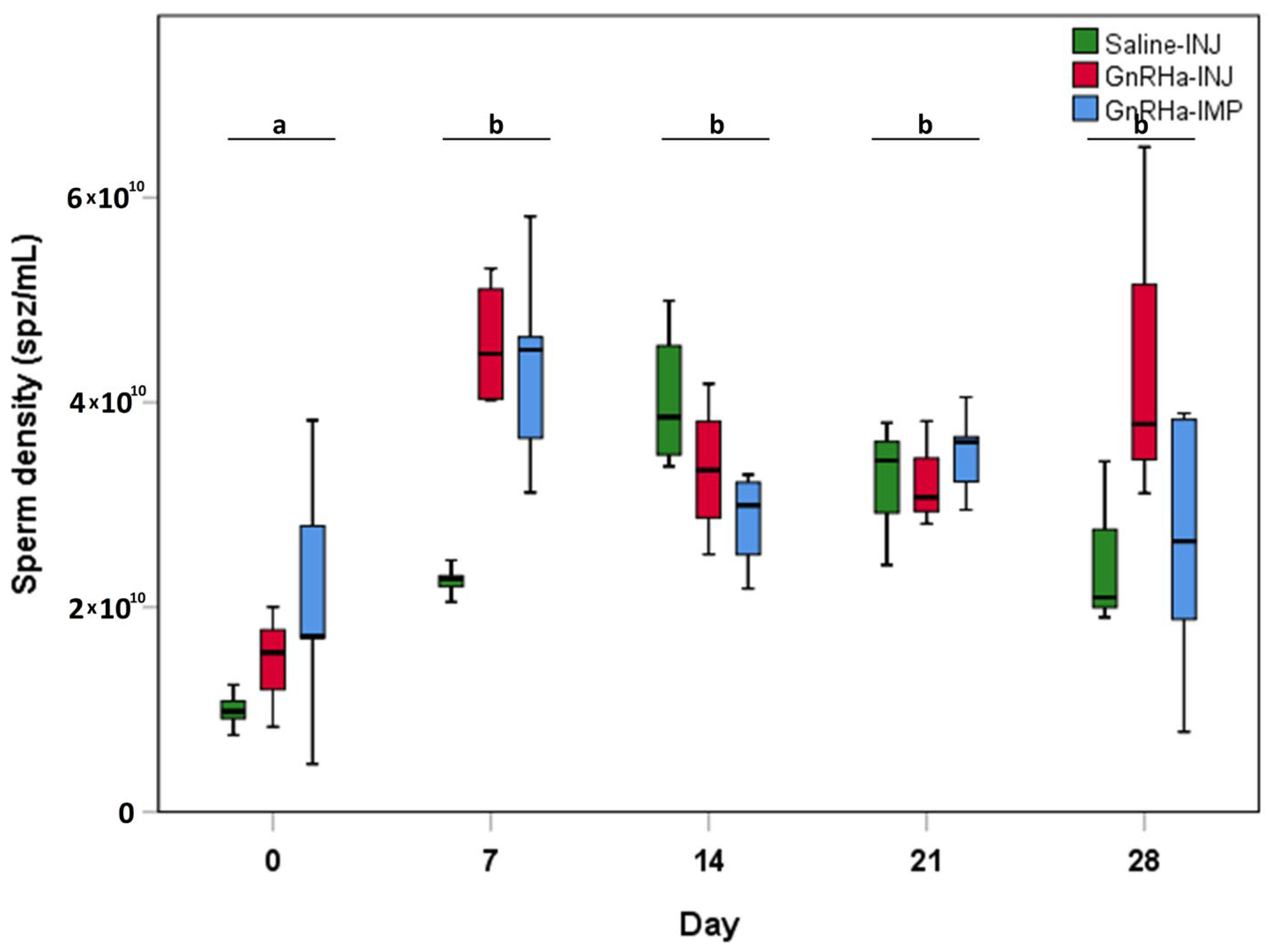
Sperm density varied significantly over time (H = 21.43, df = 4, p < 0.001, η2 = 0.249), with lower values recorded at Day 0 of sampling, whereas values were higher on the following sampling days (Days 7, 14, 21, and 28, all p ≤ 0.029; Figure 2) in line with similar results across treatments (H = 13.47, df = 8, p = 0.096, η2 = 0.083).
No overall effect of treatment was detected (H = 5.79, df = 2, p = 0.055, η2 = 0.053), and no significant pairwise differences among treatments were observed. Overall, sperm density increased following the initiation of the experimental protocol and remained elevated thereafter, irrespective of treatment.
Mean sperm density values ranged between 9.93 × 10⁹ ± 0.82 × 10⁹ sperm mL−1 (Saline-INJ on Day 0) and 45.70 × 10⁹ ± 3.20 × 10⁹ sperm mL−1 (GnRHa-INJ on Day 7) across treatments and sampling days (see Supplementary Table S1).

3.3. Sperm Motility

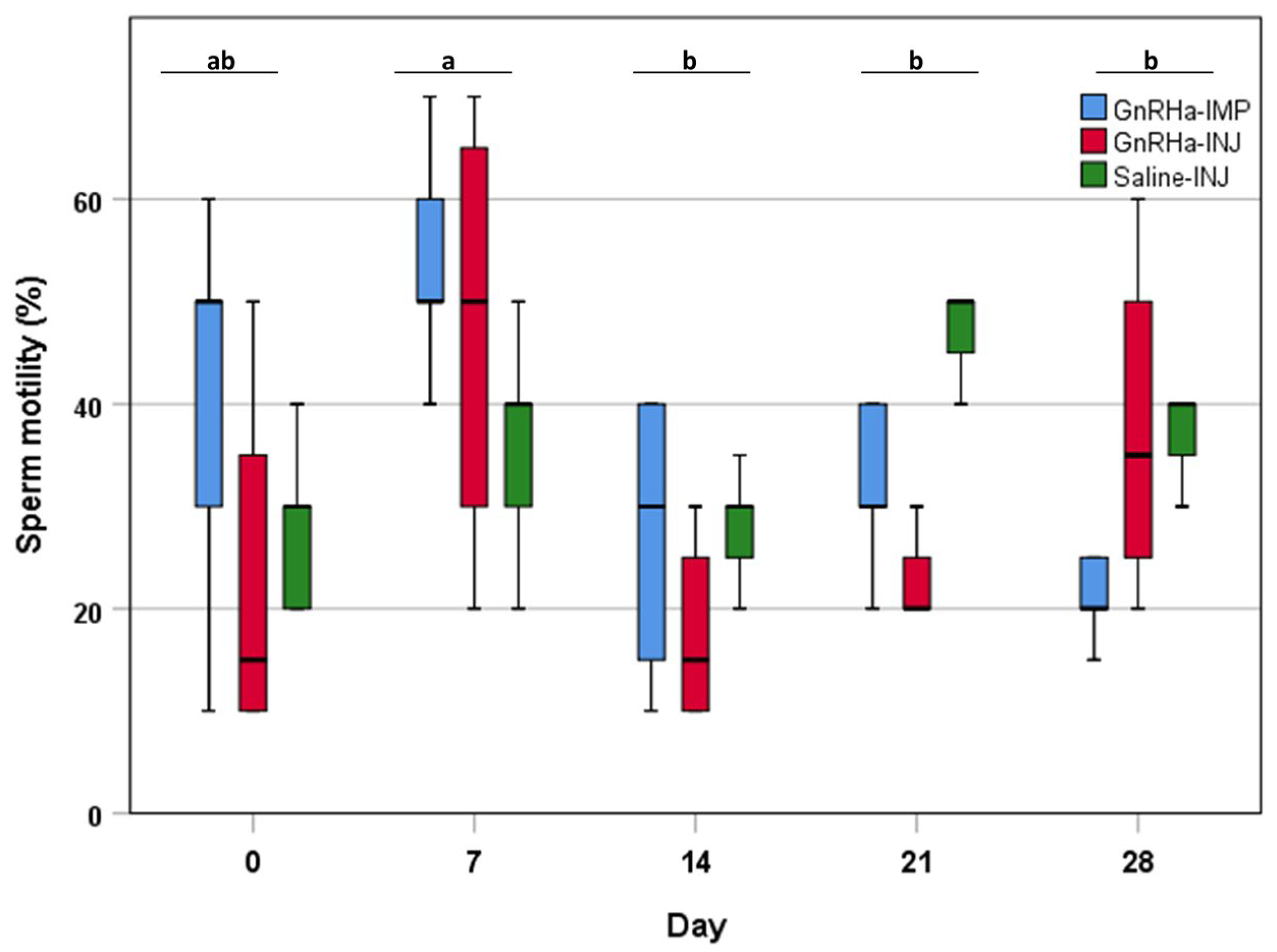
Sperm motility varied significantly over time (H = 9.69, df = 4, p = 0.040, η2 = 0.081), with a modest fluctuation across sampling days (Figure 3). Motility values on Day 7 were significantly higher than on Day 14 (p = 0.025) in a pattern comparable among treatments (H = 11.46, df = 8, p = 0.177, η2 = 0.052). No overall effect of treatment was detected (H = 2.05, df = 2, p = 0.359, η2 = 0.001). Overall, sperm motility exhibited minor temporal variation and was not influenced by treatment or GnRHa delivery method. Mean sperm motility values ranged between 17.5 ± 4.78% (GnRHa-INJ on Day 14) and 54.0 ± 5.09% (GnRHa-IMP on Day 7) across treatments (Supplementary Table S1).

3.4. Duration of Sperm Motility

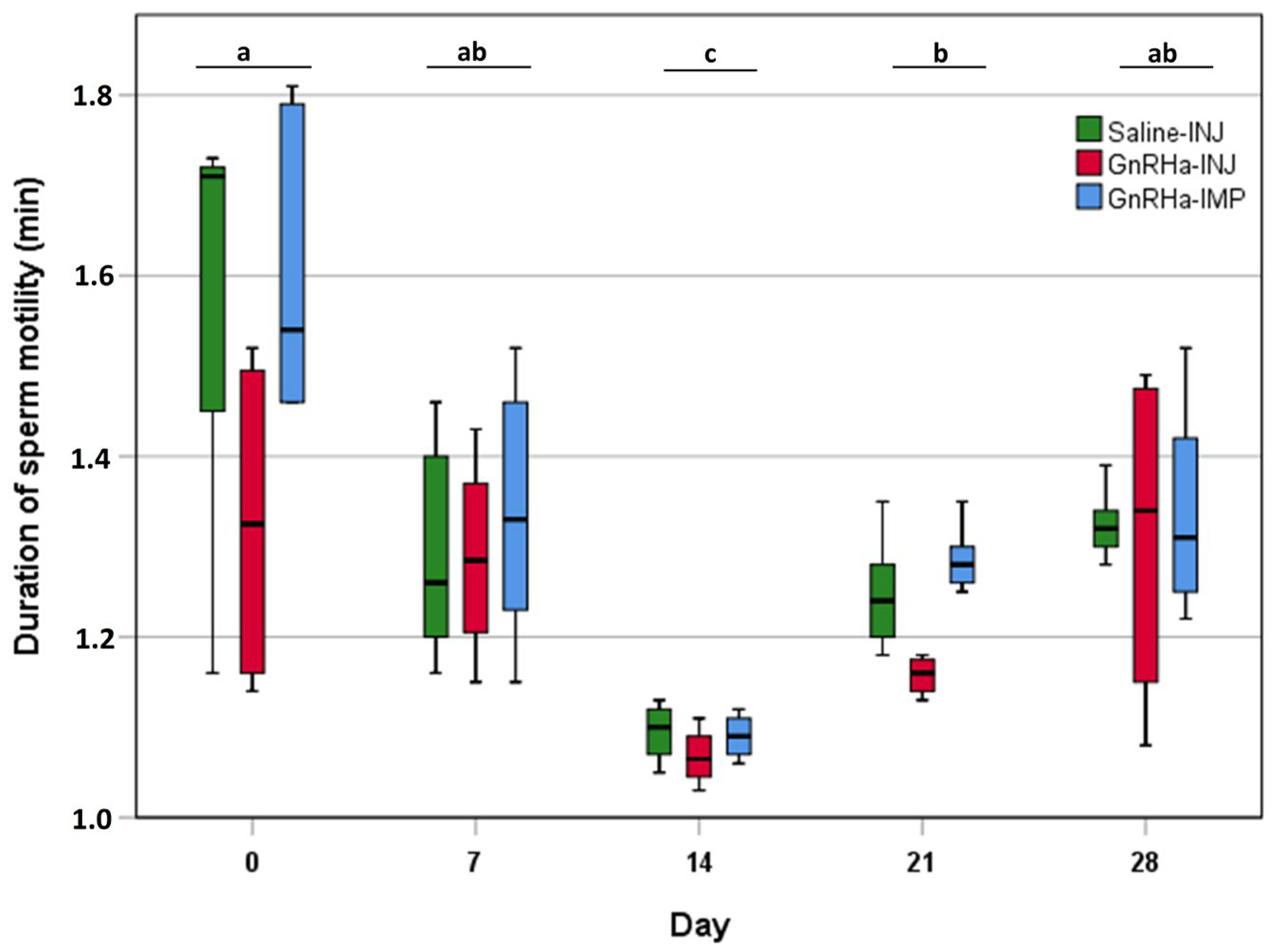
Duration of sperm motility varied significantly over time (H = 31.52, df = 4, p < 0.001, η2 = 0.393; Figure 4), exhibiting a pronounced temporal pattern across sampling days. Motility duration values on Day 14 were significantly shorter than at Day 0 (p < 0.001), Day 7 (p = 0.002), and Day 28 (p = 0.001) in a pattern of change comparable among treatments (H = 2.23, df = 8, p = 0.973, η2 ≈ 0).
No overall effect of treatment was detected (H = 3.63, df = 2, p = 0.163, η2 = 0.023). Overall, motility duration showed a transient mid-experimental decline followed by recovery by Day 28, irrespective of treatment or GnRHa delivery method.

3.5. Steroid Hormone Levels

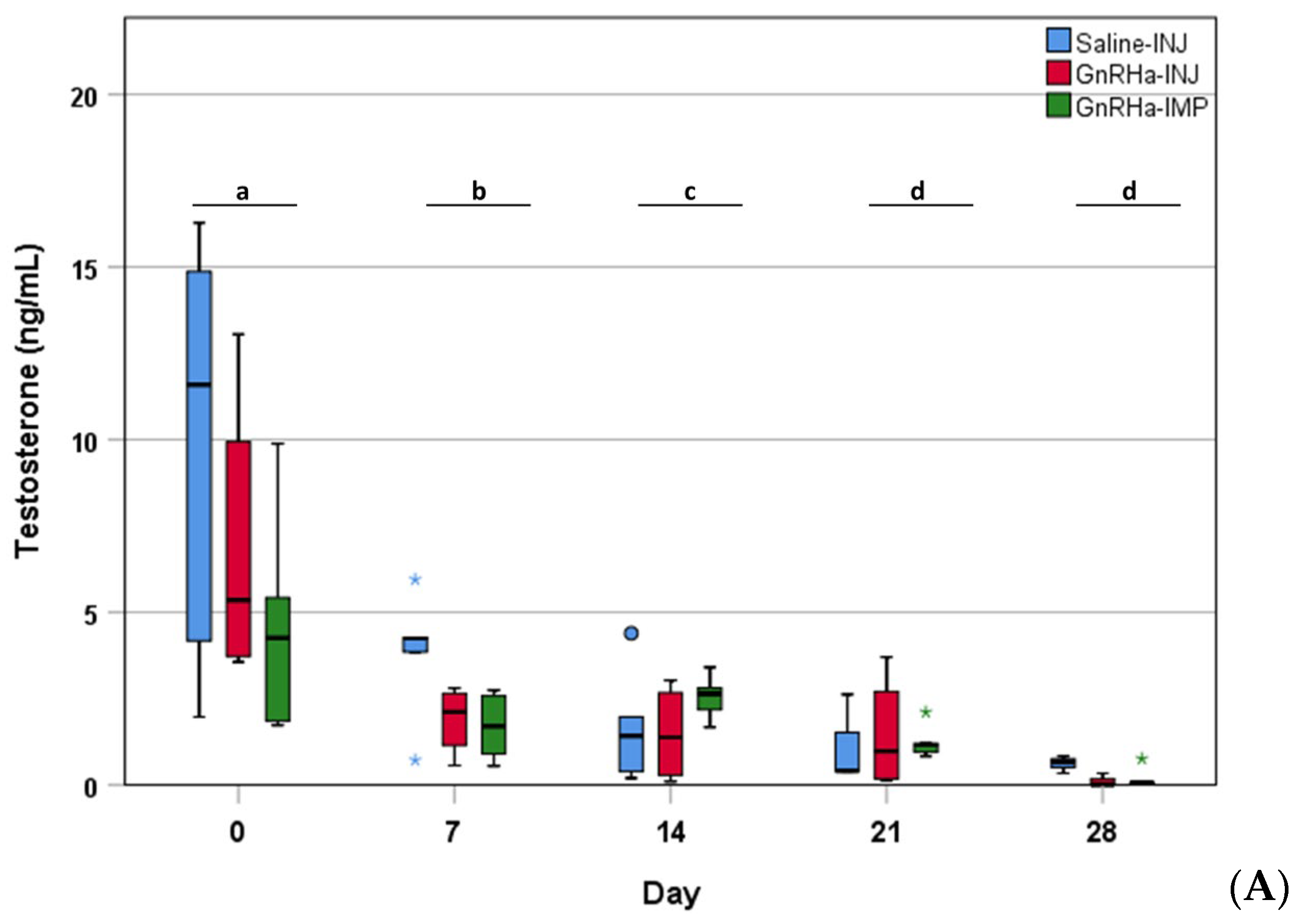
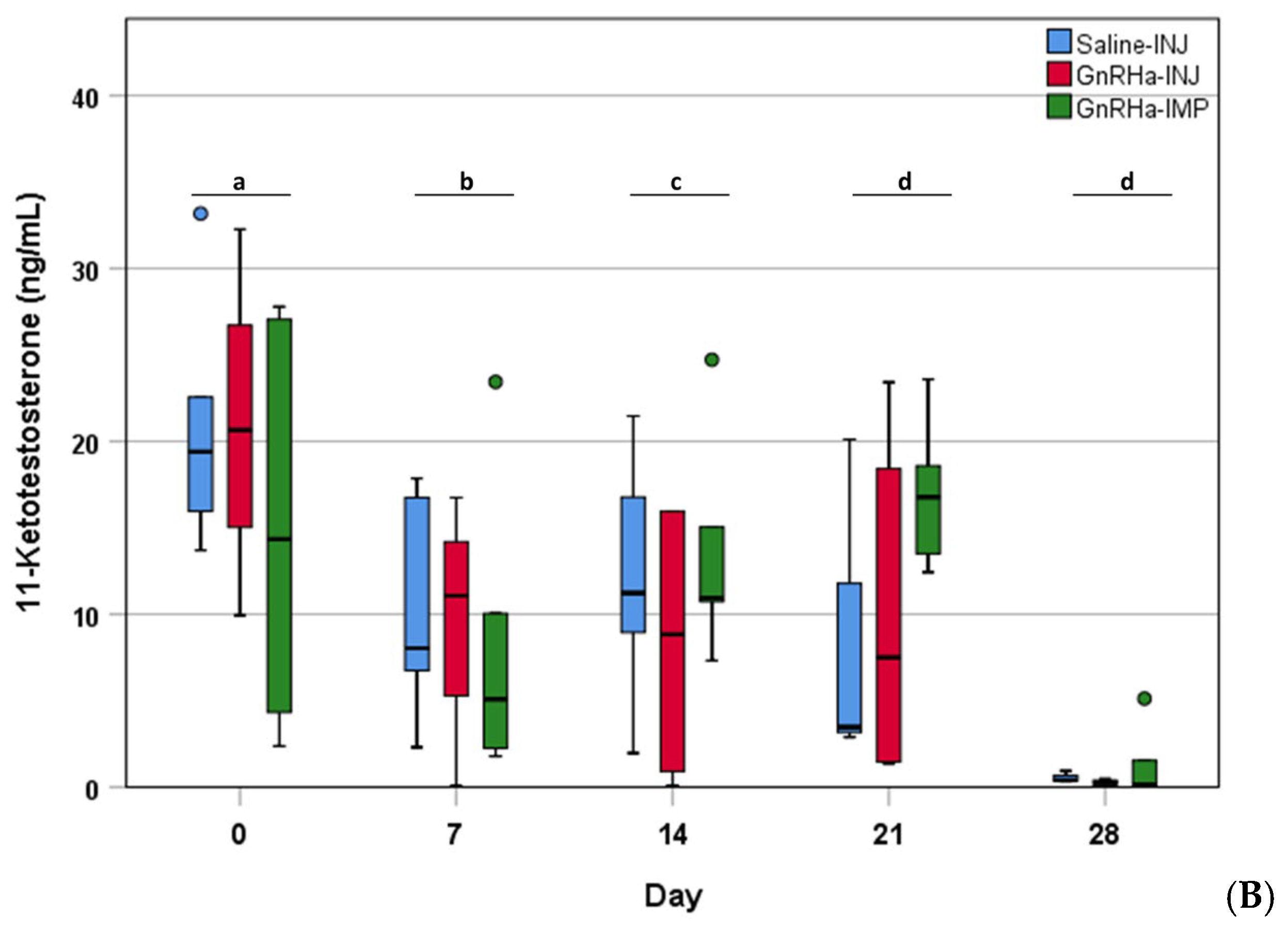
A significant effect of sampling day was detected for both testosterone (T) and 11-ketotestosterone (11-KT), indicating marked temporal variation (T: H = 45.67, df = 4, p < 0.001, η2 = 0.595; 11-KT: H = 38.91, df = 4, p < 0.001, η2 = 0.499). Levels of both androgens were highest on Day 0 and significantly lower at all subsequent sampling points (Figure 5A,B), except for the comparison between Days 21 and 28 (p > 0.05). In contrast, neither treatment nor the treatment × day interaction had a significant effect on T or 11-KT levels (p > 0.05), indicating that GnRHa administration did not alter circulating androgen concentrations.
Mean plasma testosterone and 11-KT concentrations per treatment group are provided in Supplementary Table S1.

4. Discussion

Wild male thicklip grey mullet, both at capture (mid-January) and at the beginning of the experiment (mid-March), were fully spermiated (SCI = 3) and continued to release sperm until mid-April, i.e., beyond the reported spawning season (December to March in southwestern Anatolia, Turkey [35]). Although sperm volume was not directly measured, the great majority of males consistently exhibited high spermiation scores and released apparently adequate quantities of sperm with minimal abdominal pressure throughout the experimental period. Our findings align with reports describing sustained high sperm availability in male thicklip grey mullet broodstock from Cantabria (N. Spain) until mid-April, as well as their capacity to recover sperm volume following complete stripping, maintaining or even increasing sperm availability between successive collections [29]. Overall, thicklip grey mullet exhibit adequate sperm availability, in contrast to the closely related flathead grey mullet Mugil cephalus Linnaeus, 1758, which fails to produce fluid milt—a major bottleneck for reproductive control in captivity [27,36,37]. The observed increase in sperm availability was inferred from spermiation indicators, particularly SCI and qualitative observations, which reflect the capacity for sperm release under the applied treatments rather than direct quantification of sperm output.
Multiple GnRHa injections improved spermiation and increased sperm availability for up to 14 days, compared to non-treated control males (Saline-INJ), with no significant difference from GnRH-implanted males (GnRHa-IMP). Indeed, injections of GnRHa are known to induce an acute stimulation which results in a sharp and transient increase in LH, closely resembling physiological GnRH pulses [38,39], resulting in short-term spermiation events lasting from 1 to 7 days [40,41,42,43,44]. The weekly GnRHa injections on Days 14 and 21 may have contributed to practically all the GnRHa-INJ males remaining in full spermiation during the second half of the experiment. In contrast to multiple injections, the controlled-release GnRHa implants provide lower-intensity stimulation of the Hypothalamic–Pituitary–Gonadal (HPG) axis; however, this stimulation is sustained, which may lead to partial desensitization of GnRH receptors or a lower LH response [45], thus inducing a declining spermiation response after prolonged stimulation (2 to 3 weeks). However, it is also possible that the GnRHa content of the implant was completely released 2 to 3 weeks after the implantation, on Day 0, resulting in low or no plasma circulating GnRHa levels on Days 14, 21 and 28. In that case, future trials could include administering a second implant to assess its effectiveness in long-term spermiation enhancement, with elevated sperm availability maintained for 5–6 weeks, as demonstrated in other reared fish species [46,47,48,49,50].
The administration of GnRHa via slow-release implants appeared to enhance spermiation relative to non-treated control males, as indicated by the generally higher SCI values in the GnRHa-IMP group, although the difference was not statistically significant. Since spermiation was evaluated using the semi-quantitative SCI scale, which reflects the ease of sperm release rather than direct milt volume, subtle differences in sperm output between groups may not have been detected. Although direct volumetric measurements could have provided a more accurate assessment, this was beyond the scope of the present study. Because this was our first investigation of the reproductive physiology of captive male thicklip grey mullet, and because the males were maintained with females whose eggs were intended for fertilization in parallel spawning induction trials, sperm availability throughout the experimental period was uncertain. For this reason, volumetric stripping was avoided to prevent possible depletion of sperm reserves.
The sperm quality parameters ranged similarly between treatment groups over time, indicating that GnRHa treatments did not affect sperm quality. This finding is consistent with several studies that have shown that the enhancement of spermiation through exogenous hormonal therapies is usually not accompanied by either an improvement or a deterioration in sperm quality of teleosts [28]. In comparison to the values reported during the spermiation period of captive male thicklip grey mullet in Spain, the sperm motility of thicklip populations in this study was higher within the range (20–60%) while the sperm density ranged similarly (10–75 × 109 spermatozoa mL−1) to Spanish populations [29]. Sperm density, motility and duration ranged similarly to values reported for other Mediterranean fish species [51]. However, sperm density values displayed marked inter-individual variability, a typical characteristic in grey mullets, linked to differences in milt viscosity, with more viscous milt generally showing higher spermatozoa densities [29,51,52]. Sperm motility and motility duration values were comparable to those reported for abu mullet Planiliza abu (Heckel, 1843) [53] and flathead grey mullet [19,54]. However, higher motility values were reported for the flathead grey mullet at similar salinities [55]. Although high salinity is known to enhance sperm motility and motility duration in grey mullets, the lower motility and duration values in this study may be due to differences in dilution protocols, ionic composition, or the way sperm was activated. Excessive dilution is known to negatively affect sperm motility and motility duration in saltwater teleosts by disrupting the protective role of seminal plasma. Optimized dilution practices or additives like bovine serum albumin can help mitigate these effects [48,51,56].
In male teleosts, 11-KT and T circulation levels usually rise during spermatogenesis, peak at the onset of spermiation, and then decline as spermiation progresses [57]. Although the magnitude and timing of these changes vary among species, this overall pattern appears to be conserved and is frequently accompanied by increased progestogen activity associated with final sperm maturation and release [58,59,60]. In many teleosts, elevations in circulating androgens after GnRHa therapy are rapid and frequently indicate acute endocrine responses. For example, in meagre Argyrosomus regius (Asso, 1801), GnRHa therapy increased T levels in both methods of delivery, i.e., injections and sustained-release implants. Nonetheless, levels of 11-KT increased only after the administration of sustained-release implants, indicating better sperm production and spermatogenesis [25]. Similar androgenic responses have been observed in striped bass Morone saxatilis (Walbaum, 1792), where 11-KT levels increased after GnRHa administration via controlled-release systems [61], and in greenback flounder Rhombosolea tapirine Günther, 1862, where increases in both T and 11-KT were associated with increased sperm production [49]. However, in certain cases, elevations in circulating androgens after GnRHa treatment—even when supplied via sustained-release systems—did not correlate with significant increases in sperm volume [62,63]. Notably, although elevated 11-KT levels were observed in striped bass after GnRHa implant administration, a comparable response was not recorded in the closely related white bass Morone chrysops (Rafinesque, 1820) [61,63], suggesting species-specific variability in androgen responsiveness to GnRHa. Even though GnRHa-treated males showed increased sperm availability, no significant changes in plasma T and 11-KT were detected. These findings indicate that the stimulatory effects of GnRHa may be mediated through transient activation of the HPG axis, inducing acute LH surges that promote spermiation and sperm release without necessarily resulting in sustained elevations of circulating T and 11-KT. Also, in many teleost species, GnRHa administration has been shown to induce short-lived increases in LH, followed by acute endocrine responses that may peak within hours or a few days [49,62,64]. Under such conditions, weekly sampling intervals, as used in the present study, may fail to capture transient hormonal peaks, potentially leading to an underestimation of the endocrine stimulation by GnRHa. Therefore, future studies should incorporate shorter post-treatment sampling intervals, particularly during the first hours and days after GnRHa administration, to better characterize the short-term endocrine dynamics and detect transient peaks in LH and circulating androgens.
A significant decline in plasma T and 11-KT levels was observed one week after the onset of the experiment, a pattern that was consistent across all groups (saline- and GnRHa-treated males). A similar decline, consistent across all treatment groups, was observed in sex steroid concentrations after treatment with GnRHa injection, GnRHa implant, hCG and saline in male greater amberjack Seriola dumerili (Risso, 1810) [65]. The marked decline in circulating T and 11-KT in the present study coincided with the initiation of repeated handling and sampling procedures (i.e., netting and crowding, anaesthesia, transfer, frequent stripping and blood collection). These procedures are well known to impose substantial stress on captive broodstock and to activate the HPG axis, often resulting in inhibitory effects on gonadal steroidogenesis and steroid secretion [66,67]. While plasma cortisol levels were not measured in this study, the consistently reduced androgen levels across treatments align with stress-induced suppression of steroidogenesis, as observed in other teleosts. Cortisol is known to have direct inhibitory effects on testicular androgen production [67,68], offering a possible physiological explanation for the observed endocrine profile. Consequently, handling-induced stress should be considered a major factor contributing to the lower plasma T and 11-KT levels observed in all males. The adverse impact of stress has also been reported on reproductive performance in female thicklip grey mullet [14], additionally suggesting the potential influence of stress-mediated endocrine regulation upon reproductive performance of this species.
In conclusion, the absence of significant treatment effects on plasma androgen levels should not be interpreted as evidence of a lack of GnRHa activity but may instead reflect transient endocrine stimulation combined with species-specific responsiveness and stress-related attenuation of hormonal differences.

5. Conclusions

Male thicklip grey mullet relocated from extensive lagoon environments to rearing tanks in mid-January were already releasing sperm and remained in active spermiation until mid-April. However, from early April onwards, sperm production began to decrease. GnRHa treatments prolonged the spermiation period by at least two weeks relative to untreated controls and were associated with increased sperm availability based on spermiation indicators (SCI).
With respect to the hormone delivery systems, repeated injections were more effective than the implant, possibly because a single implant delivering 50 μg GnRHa kg−1 body weight was insufficient to sustain an adequate endocrine stimulation over a four-week experimental period. The enhancement of spermiation following GnRHa administration in the form of repeated injections is most likely mediated by transient stimulation of luteinizing hormone (LH), inducing short-term endocrine activation rather than prolonged increases in circulating androgens. Consistent with observations in female thicklip grey mullet, spermiating males appear to be sensitive to stress caused by repeated handling and sampling. Therefore, this factor should be carefully accounted for when planning broodstock management practices. Sperm production does not constitute any bottleneck for controlling the reproduction of thicklip grey mullet in captivity. However, GnRHa-based treatment protocols should be further optimized by refining the timing of treatment in relation to the spawning season and adjusting the frequency of GnRHa administration in order to prolong the spermiation period and increase sperm availability for collection.

Supplementary Materials

The following supporting information can be downloaded at: https://www.mdpi.com/article/10.3390/fishes11040210/s1, Table S1: Mean (±SD) of sperm condition index (SCI), sperm density (×109 spermatozoa mL−1), sperm motility (%), motility duration (s), and plasma androgen levels (Testosterone, T; 11-Ketotestosterone, 11-KT) in male thicklip grey mullet (Chelon labrosus) broodstock across treatments and sampling days. The number of male individuals used to estimate the variables in each Treatment on each Day was 5. However, for the motility (%) line, values in parentheses indicate the corresponding n, i.e., the number of male individuals used to estimate motility (%) in each Treatment on each sampling Day.

Author Contributions

Conceptualization, L.E.K. and G.M.; Methodology, L.E.K., G.M., C.N., M.P. and C.C.M.; Investigation: L.E.K., G.M., C.N. and M.P.; Validation, L.E.K. and G.M.; Formal Analysis, L.E.K. and G.M.; Writing—Original Draft Preparation, L.E.K. and G.M.; Writing—Review and Editing, L.E.K., G.M. and M.P.; Visualization, L.E.K. and G.M.; Supervision, L.E.K. and C.C.M.; Project Administration, L.E.K.; Funding Acquisition, L.E.K. All authors have read and agreed to the published version of the manuscript.

Funding

This research (ARCHIMEDES III–20388-7) was co-financed by the European Union (European Social Fund, ESF) and Greek national funds through the Operational Programme Education and Lifelong Learning of the National Strategic Reference Framework (NSRF). It was carried out under the Research Funding Program ARCHIMEDES III—Investing in the Knowledge Society, implemented as sub-project I-20681 at the Alexander Technological Educational Institute of Thessaloniki (currently the International Hellenic University, IHU).

Institutional Review Board Statement

The experimental procedures involving fish were conducted in accordance with the European Union Directive 2010/63/EU on the protection of animals used for scientific purposes, and the corresponding Greek national legislation (Presidential Decree 56/2013). All activities complied with the principles of the Replacement, Reduction, and Refinement (3Rs) and were performed under existing project licenses approved by competent Greek authorities. No additional ethical approval was required for this study.

Data Availability Statement

The raw data supporting the conclusions of this article will be made available by the authors upon request.

Acknowledgments

We thank Christos Simeonidis, Theofanis Karidas, George Tosounis, and Maria Alexandrou for their assistance with fish collection and their contributions to the study.

Conflicts of Interest

The authors declare no conflicts of interest.

References

  1. Ben Khemis, I.; Zouiten, D.; Besbes, R.; Kamoun, F. Larval rearing and weaning of thick lipped grey mullet (Chelon labrosus) in mesocosm with semi-extensive technology. Aquaculture 2006, 259, 190–201. [Google Scholar] [CrossRef]
  2. Zouiten, D.; Khemis, I.B.; Besbes, R.; Cahu, C. Ontogeny of the digestive tract of thick lipped grey mullet (Chelon labrosus) larvae reared in “Mesocosms”. Aquaculture 2008, 279, 166–172. [Google Scholar] [CrossRef]
  3. Sarasquete, C.; Ortiz-Delgado, J.B.; Martos-Sitcha, J.A.; De las Heras, V.; Yúfera, M.; Martínez-Rodríguez, G. Ontogeny and functional histochemistry of the digestive and visual systems and other organs during the larval development of the thick-lipped grey mullet, Chelon labrosus. Sci. Mar. 2014, 78, 473–491. [Google Scholar] [CrossRef]
  4. de las Heras, V.; Martos-Sitcha, J.A.; Yúfera, M.; Mancera, J.M.; Martínez-Rodríguez, G. Influence of stocking density on growth, metabolism and stress of thick-lipped grey mullet (Chelon labrosus) juveniles. Aquaculture 2015, 448, 29–37. [Google Scholar] [CrossRef]
  5. Gilannejad, N.; de las Heras, V.; Martos-Sitcha, J.A.; Moyano, F.J.; Yúfera, M.; Martínez-Rodríguez, G. Ontogeny of expression and activity of digestive enzymes and establishment of Gh/Igf1 axis in the omnivorous fish Chelon labrosus. Animals 2020, 10, 874. [Google Scholar] [CrossRef]
  6. Besbes, R.; Benseddik, A.B.; Kokokiris, L.; Changeux, T.; Hamza, A.; Kammoun, F.; Missaoui, H. Thicklip (Chelon labrosus) and flathead (Mugil cephalus) grey mullets fry production in Tunisian Aquaculture. Aquac. Rep. 2020, 17, 100380. [Google Scholar] [CrossRef]
  7. Sanz-Latorre, M.; Soto, M.; Izagirre, U.; Lekube, X. Effects of water temperature on growth, health and digestive processes of the thicklip grey mullet Chelon labrosus. Aquaculture 2025, 595, 741537. [Google Scholar] [CrossRef]
  8. Pujante, I.M.; Martos-Sitcha, J.A.; Moyano, F.J.; Ruiz-Jarabo, I.; Martínez-Rodríguez, G.; Mancera, J.M. Starving/re-feeding processes induce metabolic modifications in thick-lipped grey mullet (Chelon labrosus, Risso 1827). Comp. Biochem. Physiol. Part B Biochem. Mol. Biol. 2015, 180, 57–67. [Google Scholar] [CrossRef]
  9. García-Márquez, J.; Vizcaíno, A.J.; Barany, A.; Galafat, A.; Acién, G.; Figueroa, F.L.; Alarcón, F.J.; Mancera, J.M.; Martos-Sitcha, J.A.; Arijo, S.; et al. Evaluation of the combined administration of Chlorella fusca and Vibrio proteolyticus in diets for Chelon labrosus: Effects on Growth, Metabolism, and Digestive Functionality. Animals 2023, 13, 589. [Google Scholar] [CrossRef]
  10. García-Márquez, J.; Álvarez-Torres, D.; Cerezo, I.M.; Domínguez-Maqueda, M.; Acién, G.; Alarcón-López, F.J.; Figueroa, F.L.; Martínez-Manzanares, E.; Abdala-Díaz, R.T.; Béjar, J.; et al. Effects of Chlorella fusca-supplemented diet on intestinal microbiota and gene expression related to metabolism, stress, and immune response in Chelon labrosus. Algal Res. 2024, 77, 103362. [Google Scholar] [CrossRef]
  11. Boglione, C.; Bertolini, B.; Russiello, M.; Cataudella, S. Embryonic and larval development of the thicklipped mullet (Chelon labrosus) under controlled reproduction conditions. Aquaculture 1992, 101, 349–359. [Google Scholar] [CrossRef]
  12. Cataudella, S. The propagation of juvenile mullet (Chelon labrosus) in earthen ponds. Aquaculture 1988, 68, 321–323. [Google Scholar] [CrossRef]
  13. Cataudella, S.; Massa, F.; Rampacci, M.; Crosetti, D. Artificial reproduction and larval rearing of the thick-lipped mullet (Chelon labrosus). J. Appl. Ichthyol. 1988, 4, 130–139. [Google Scholar] [CrossRef]
  14. Kokokiris, L.E.; Minos, G.; Simeonidis, C.; Karidas, T.; Papadaki, M.; Mylonas, C.C. Induction of spawning in captive female thicklip grey mullet (Chelon labrosus) treated with different GnRHa delivery systems. Fishes 2025, 10, 516. [Google Scholar] [CrossRef]
  15. Whitfield, A.K.; Panfili, J.; Durand, J.D. A global review of the cosmopolitan flathead mullet Mugil cephalus Linnaeus 1758 (Teleostei: Mugilidae), with emphasis on the biology, genetics, ecology and fisheries aspects of this apparent species complex. Rev. Fish Biol. Fish. 2012, 22, 641–681. [Google Scholar] [CrossRef]
  16. Titouah, H.; Rahmani, A.; Nait Mouloud, M.; Aberkane, B.; Ichalal, K.; Debbou-Iouknane, N.; Inouri-Iskounen, A.; Khellouf, A.; Iguer-Ouada, M. Reproduction activity of flathead mullet Mugil cephalus (Linnaeus, 1758) in wild condition in the northeast of Algeria. Russ. J. Mar. Biol. 2022, 48, 504–512. [Google Scholar] [CrossRef]
  17. Roy, A.; Podder, A.; Panja, S.; Biswas, M.; Chaudhuri, A.; Tiwari, R.; Homechaudhuri, S. Assessment of interspecific variations in the reproductive patterns of co-existing female mullet species inhabiting intertidal mudflats of Indian Sundarbans. Reg. Stud. Mar. Sci. 2020, 39, 101446. [Google Scholar] [CrossRef]
  18. Castellanos-Juárez, M.; Mendoza-Carranza, M.; Pacheco-Almanzar, E.; Álvarez-Hernández, S.H.; Ibáñez, A.L. The regularity of the striped mullet Mugil cephalus spawning in accordance with Gulf of Mexico tides. Environ. Biol. Fishes 2024, 107, 491–501. [Google Scholar] [CrossRef]
  19. Ramachandran, B.; Natesan, M. Assessment of sperm quality and short term preservation of sperm in grey mullet Mugil cephalus Linnaeus, 1758. Indian J. Fish. 2016, 63, 140–144. [Google Scholar] [CrossRef][Green Version]
  20. Magnotti, C.; Figueroa, E.; Farias, J.G.; Merino, O.; Valdebenito, I.; Oliveira, R.P.S.; Cerqueira, V. Sperm characteristics of wild and captive lebranche mullet Mugil liza (Valenciennes, 1836), subjected to sperm activation in different pH and salinity conditions. Anim. Reprod. Sci. 2018, 192, 164–170. [Google Scholar] [CrossRef]
  21. Kowalski, R.K.; Cejko, B.I. Sperm quality in fish: Determinants and affecting factors. Theriogenology 2019, 135, 94–108. [Google Scholar] [CrossRef]
  22. Gallego, V.; Asturiano, J.F. Fish sperm motility assessment as a tool for aquaculture research: A historical approach. Rev. Aquac. 2019, 11, 697–724. [Google Scholar] [CrossRef]
  23. Zupa, R.; Rodríguez, C.; Mylonas, C.C.; Rosenfeld, H.; Fakriadis, I.; Papadaki, M.; Pérez, J.A.; Pousis, C.; Basilone, G.; Corriero, A. Comparative study of reproductive development in wild and captive-reared greater amberjack Seriola dumerili (Risso, 1810). PLoS ONE 2017, 12, e0169645. [Google Scholar] [CrossRef]
  24. Sales, C.F.; Barbosa Pinheiro, A.P.; Ribeiro, Y.M.; Weber, A.A.; de Oliveira Paes-Leme, F.; Luz, R.K.; Bazzoli, N.; Rizzo, E.; Melo, R.M.C. Effects of starvation and refeeding cycles on spermatogenesis and sex steroids in the Nile tilapia Oreochromis niloticus. Mol. Cell. Endocrinol. 2020, 500, 110643. [Google Scholar] [CrossRef]
  25. Fakriadis, I.; Zanatta, E.M.; Fleck, R.P.D.S.; Sena Mateo, D.L.; Papadaki, M.; Mylonas, C.C. Endocrine regulation of long-term enhancement of spermiation in meagre (Argyrosomus regius) with GnRHa controlled-delivery systems. Gen. Comp. Endocrinol. 2020, 297, 113549. [Google Scholar] [CrossRef]
  26. Shinde, D.; Ganesh, C.B. Chronic exposure to aquacultural stressors affects pituitary-testis axis in the Mozambique tilapia Oreochromis mossambicus. Fish Physiol. Biochem. 2022, 48, 437–448. [Google Scholar] [CrossRef]
  27. Aizen, J.; Meiri, I.; Tzchori, I.; Levavi-Sivan, B.; Rosenfeld, H. Enhancing spawning in the grey mullet (Mugil cephalus) by removal of dopaminergic inhibition. Gen. Comp. Endocrinol. 2005, 142, 212–221. [Google Scholar] [CrossRef]
  28. Mylonas, C.C.; Duncan, N.J.; Asturiano, J.F. Hormonal manipulations for the enhancement of sperm production in cultured fish and evaluation of sperm quality. Aquaculture 2017, 472, 21–44. [Google Scholar] [CrossRef]
  29. Martín-Montero, I.E.; Martínez-Vázquez, J.M.; Rasines Perez, I.; Torres, M.; Martos-Sitcha, J.A.; Aguado-Giménez, F. Sex determination, evolution of gonadal stage in females, and seasonal evolution of sperm production in Chelon labrosus (Risso, 1827). Aquac. J. 2024, 4, 44–54. [Google Scholar] [CrossRef]
  30. Mylonas, C.C.; Sigelaki, I.; Divanach, P.; Mananõs, E.; Carrillo, M.; Afonso-Polyviou, A. Multiple spawning and egg quality of individual European sea bass (Dicentrarchus labrax) females after repeated injections of GnRHa. Aquaculture 2003, 221, 605–620. [Google Scholar] [CrossRef]
  31. IBM Corp. IBM SPSS Statistics for Windows, Version 28.0; IBM Corp.: Armonk, NY, USA, 2021.
  32. R Core Team. R: A Language and Environment for Statistical Computing, Version 4.5.2; R Foundation for Statistical Computing: Vienna, Austria, 2025. Available online: https://www.R-project.org/ (accessed on 15 January 2026).
  33. Ogle, D.H.; Doll, J.C.; Wheeler, A.P.; Dinno, A. FSA: Simple Fisheries Stock Assessment Methods, R Package, Version 0.10.1; Comprehensive R Archive Network (CRAN): Vienna, Austria, 2026. Available online: https://CRAN.R-project.org/package=FSA (accessed on 15 January 2026).
  34. Mangiafico, S.S. rcompanion: Functions to Support Extension Education Program Evaluation, R Package, Version 2.5.2; Rutgers Cooperative Extension: New Brunswick, NJ, USA, 2026. Available online: https://CRAN.R-project.org/package=rcompanion (accessed on 15 January 2026).
  35. Reis, İ.; Ateş, C. Age, growth, mortality, reproduction, and exploitation rates for fishery management of grey mullet species in theKöyceğiz Lagoon–Estuary (Mediterranean coast). Acta Ichthyol. Piscat. 2020, 50, 301–312. [Google Scholar] [CrossRef]
  36. Ramos-Júdez, S.; Giménez, I.; Gumbau-Pous, J.; Arnold-Cruañes, L.S.; Estévez, A.; Duncan, N. Recombinant Fsh and Lh therapy for spawning induction of previtellogenic and early spermatogenic arrested teleost, the flathead grey mullet (Mugil cephalus). Sci. Rep. 2022, 12, 6563. [Google Scholar] [CrossRef]
  37. Cerrud-Barría, G.; Estévez, A.; Ramos-Júdez, S.; Giménez, I.; Duncan, N. Recombinant gonadotropin induced out-of-season spawning and larval culture of flathead grey mullet (Mugil cephalus). Aquaculture 2026, 610, 742908. [Google Scholar] [CrossRef]
  38. Zohar, Y.; Mylonas, C.C. Endocrine manipulations of spawning in cultured fish: From hormones to genes. Aquaculture 2001, 197, 99–136. [Google Scholar] [CrossRef]
  39. Mylonas, C.C.; Fostier, A.; Zanuy, S. Broodstock management and hormonal manipulations of fish reproduction. Gen. Comp. Endocrinol. 2010, 165, 516–534. [Google Scholar] [CrossRef]
  40. Roelants, I.; Mikolajczyk, T.; Epler, P.; Ollevier, F.; Chyb, J.; Breton, B. Induction of spermiation in common carp after enhanced intestinal uptake of SGnRH-A and Pimozide. J. Fish Biol. 2000, 56, 1398–1407. [Google Scholar] [CrossRef]
  41. Black, B.J.; Pankhurst, N.W. Effect of gonadotropin releasing-hormone analogue and human chorionic gonadotropin on milt characteristics and gonadal steroids in yellowfin bream, Acanthopagrus australis (Sparidae). N. Z. J. Mar. Freshw. Res. 2009, 43, 1069–1077. [Google Scholar] [CrossRef][Green Version]
  42. Cejko, B.I.; Żarski, D.; Judycka, S.; Kucharczyk, D.; Sarosiek, B.; Kowalski, R.K. Effect of two commercial preparations containing different GnRH analogues with dopamine antagonists on barbel Barbus barbus (L.) sperm quantity and quality. Aquac. Int. 2014, 22, 97–109. [Google Scholar] [CrossRef]
  43. Heyrati, F.P.; Amiri, B.M.; Dorafshan, S. Effect of GnRHa injection on milt volume in recently stripped rainbow trout Oncorhynchus mykiss. Aquac. Res. 2010, 41, e487–e492. [Google Scholar] [CrossRef]
  44. Akbari Nargesi, E.; Gorouhi, D.; Falahatkar, B. Efficacy of SGnRHa in combination with domperidone on the sperm quality, seminal fluid metabolites, and fertilization ability of spermatozoa in Caspian Kutum, Rutilus frisii. Aquac. Int. 2024, 32, 817–832. [Google Scholar] [CrossRef]
  45. Schulz, R.W.; de França, L.R.; Lareyre, J.-J.; Le Gac, F.; Chiarini-Garcia, H.; Nobrega, R.H.; Miura, T. Spermatogenesis in fish. Gen. Comp. Endocrinol. 2010, 165, 390–411. [Google Scholar] [CrossRef]
  46. Vermeirssen, E.L.M.; Shields, R.J.; Mazorra De Quero, C.; Scott, A.P. Gonadotrophin-releasing hormone agonist raises plasma concentrations of progestogens and enhances milt fluidity in male Atlantic halibut (Hippoglossus hippoglossus). Fish Physiol. Biochem. 2000, 22, 77–87. [Google Scholar] [CrossRef]
  47. Vermeirssen, E.L.M.; de Quero, C.M.; Shields, R.J.; Norberg, B.; Kime, D.E.; Scott, A.P. Fertility and motility of sperm from Atlantic halibut (Hippoglossus hippoglossus) in relation to dose and timing of gonadotrophin-releasing hormone agonist implant. Aquaculture 2004, 230, 547–567. [Google Scholar] [CrossRef]
  48. Moon, S.H.; Lim, H.K.; Kwon, J.Y.; Lee, J.K.; Chang, Y.J. Increased plasma 17-hydroxyprogesterone and milt production in response to gonadotropin-releasing hormone agonist in captive male starry flounder, Platichthys stellatus. Aquaculture 2003, 218, 703–716. [Google Scholar] [CrossRef]
  49. Lim, H.K.; Pankhurst, N.W.; Fitzgibbon, Q.P. Effects of slow release gonadotropin releasing hormone analog on milt characteristics and plasma levels of gonadal steroids in greenback flounder, Rhombosolea tapirina. Aquaculture 2004, 240, 505–516. [Google Scholar] [CrossRef]
  50. Sharafi, N.; Zadmajid, V. Artificial reproduction of Capoeta trutta: Effects of SGnRHa Intramuscular injection and sustained-release implantation on sperm parameters and steroid hormones. Aquac. Int. 2026, 34, 54. [Google Scholar] [CrossRef]
  51. Suquet, M.; Billard, R.; Cosson, J.; Dorange, G.; Chauvaud, L.; Mugnier, C.; Fauvel, C. Sperm features in turbot (Scophthalmus maximus): A comparison with other freshwater and marine fish species. Aquat. Living Resour. 1994, 7, 283–294. [Google Scholar] [CrossRef]
  52. Suquet, M.; Omnes, M.H.; Normant, Y.; Fauvel, C. Assessment of sperm concentration and motility in turbot (Scophthalmus maximus). Aquaculture 1992, 101, 177–185. [Google Scholar] [CrossRef]
  53. Sahinöz, E.; Aral, F.; Doğu, Z. Determination of spermatological properties of male Liza abu (Heckel, 1843) in Atatürk Dam Lake, Sanliurfa. Fish Physiol. Biochem. 2008, 34, 71–76. [Google Scholar] [CrossRef]
  54. Yeganeh, S.; Amiri, B.M.; Alavi, S.M.H. Motility of Mugil cephalus L. spermatozoa in coelomic fluid, seminal fluid and saline media. J. Appl. Ichthyol. 2008, 24, 517–518. [Google Scholar] [CrossRef]
  55. Lee, C.S.; Tamaru, C.S.; Kelley, C.D.; Moriwake, A.; Miyamoto, G.T. The effect of salinity on the induction of spawning and fertilization in the striped mullet, Mugil cephalus. Aquaculture 1992, 102, 289–296. [Google Scholar] [CrossRef]
  56. Suquet, M.; Cosson, J.; De La Gándara, F.; Mylonas, C.C.; Papadaki, M.; Lallemant, S.; Fauvel, C. Sperm features of captive Atlantic bluefin tuna (Thunnus thynnus). J. Appl. Ichthyol. 2010, 26, 775–778. [Google Scholar] [CrossRef]
  57. Sardi, A.E.; Bizarro, C.; Cajaraville, M.P.; Ortiz-Zarragoitia, M. Steroidogenesis and phase ii conjugation during the gametogenesis of thicklip grey mullet (Chelon labrosus) from a population showing intersex condition. Gen. Comp. Endocrinol. 2015, 221, 144–155. [Google Scholar] [CrossRef]
  58. Scott, A.P.; Sumpter, J.P.; Stacey, N. The role of the maturation-inducing steroid, 17,20beta-dihydroxypregn-4-en-3-one, in male fishes: A review. J. Fish Biol. 2010, 76, 183–224. [Google Scholar] [CrossRef]
  59. King, H.R.; Young, G. Milt production by non-spermiating male Atlantic salmon (Salmo salar) after Injection of a commercial gonadotropin releasing hormone analog preparation, 17α-hydroxyprogesterone or 17α,20β-dihydroxy-4-pregnen-3-one, alone or in combination. Aquaculture 2001, 193, 179–195. [Google Scholar] [CrossRef]
  60. Feng, C.; Xu, S.; Liu, Y.; Wang, Y.; Wang, W.; Yang, J.; Zhao, C.; Liu, Q.; Li, J. Progestin is important for testicular development of male turbot (Scophthalmus maximus) during the annual reproductive cycle through functionally distinct progestin receptors. Fish Physiol. Biochem. 2018, 44, 35–48. [Google Scholar] [CrossRef] [PubMed]
  61. Mylonas, C.C.; Scott, A.P.; Vermeirssen, E.L.M.; Zohar, Y. Changes in plasma gonadotropin II and sex steroid hormones, and sperm production of striped bass after treatment with controlled-release gonadotropin-releasing hormone agonist-delivery systems. Biol. Reprod. 1997, 57, 669–675. [Google Scholar] [CrossRef] [PubMed][Green Version]
  62. Mañanós, E.; Carrillo, M.; Sorbera, L.A.; Mylonas, C.C.; Asturiano, J.F.; Bayarri, M.J.; Zohar, Y.; Zanuy, S. Luteinizing hormone and sexual steroid plasma levels after treatment of European sea bass with sustained-release delivery systems for gonadotropin-releasing hormone analogue. J. Fish Biol. 2002, 60, 328–339. [Google Scholar] [CrossRef]
  63. Mylonas, C.C.; Gissis, A.; Magnus, Y.; Zohar, Y. Hormonal changes in male white bass (Morone chrysops) and evaluation of milt quality after treatment with a sustained-release GnRHa delivery system. Aquaculture 1997, 153, 301–313. [Google Scholar] [CrossRef]
  64. Woo, S.M.; Lee, H.B.; Seo, Y.S.; Lim, H.K. Effects of exogenous hormones treatment on spermiation and plasma levels of gonadal steroids in Roughscale sole, Clidoderma asperrimum. Fish. Aquat. Sci. 2021, 24, 437–445. [Google Scholar] [CrossRef]
  65. Ventriglia, G.; Fakriadis, I.; Papadaki, M.; Zupa, R.; Pousis, C.; Mandalakis, M.; Corriero, A.; Mylonas, C.C. Effects of different hormonal treatments on spermatogenesis advancement in hatchery-produced greater amberjack Seriola dumerili (Risso 1810). Gen. Comp. Endocrinol. 2024, 348, 114447. [Google Scholar] [CrossRef] [PubMed]
  66. Haddy, J.A.; Pankhurst, N.W. The effects of salinity on reproductive development, plasma steroid levels, fertilisation and egg survival in black bream Acanthopagrus butcheri. Aquaculture 2000, 188, 115–131. [Google Scholar] [CrossRef]
  67. Consten, D.; Lambert, J.G.D.; Komen, H.; Goos, H.J.T. Corticosteroids affect the testicular androgen production in male common carp (Cyprinus carpio L.). Biol. Reprod. 2002, 66, 106–111. [Google Scholar] [CrossRef]
  68. Goos, H.J.T.; Consten, D. Stress adaptation, cortisol and pubertal development in the male common carp, Cyprinus carpio. Mol. Cell. Endocrinol. 2002, 197, 105–116. [Google Scholar] [CrossRef] [PubMed]
Figure 1. Boxplot of Sperm Condition Index (SCI) according to day (0, 7, 14, 21, and 28) in saline-injected (Saline-INJ), GnRHa-injected (GnRHa-INJ) and GnRHa-implanted (GnRHa-IMP) male thicklip grey mullets. Different letters indicate significant differences among sampling days within each treatment (α = 0.001).
Fishes 11 00210 g001
Figure 2. Boxplot of sperm density (spz/mL) according to day (0, 7, 14, 21, and 28) in saline-injected (Saline-INJ), GnRHa-injected (GnRHa-INJ) and GnRHa-implanted (GnRHa-IMP) male thicklip grey mullets. Different letters indicate significant differences among days within each treatment (α = 0.05).
Fishes 11 00210 g002
Figure 3. Boxplot of sperm motility (%) according to day (0, 7, 14, 21, and 28) in saline-injected (Saline-INJ), GnRHa-injected (GnRHa-INJ) and GnRHa-implanted (GnRHa-IMP) male thicklip grey mullets. Different letters indicate significant differences among sampling days within each treatment (α = 0.05).
Fishes 11 00210 g003
Figure 4. Boxplot of sperm motility duration (min) according to day (0, 7, 14, 21, and 28) in saline-injected (Saline-INJ), GnRHa-injected (GnRHa-INJ) and GnRHa-implanted (GnRHa-IMP) male thicklip grey mullets. Different letters indicate significant differences among days within each treatment (α = 0.05).
Fishes 11 00210 g004
Figure 5. Boxplot of testosterone (A) and 11-ketotestosterone (B) plasma concentrations according to day (0, 7, 14, 21, and 28) in saline-injected (Saline-INJ), GnRHa-injected (GnRHa-INJ) and GnRHa-implanted (GnRHa-IMP) male thicklip grey mullets. Different letters indicate significant differences among days at each treatment (α = 0.001). Dots represent outliers while asterisks (*) indicate extreme values.
Fishes 11 00210 g005aFishes 11 00210 g005b
Disclaimer/Publisher’s Note: The statements, opinions and data contained in all publications are solely those of the individual author(s) and contributor(s) and not of MDPI and/or the editor(s). MDPI and/or the editor(s) disclaim responsibility for any injury to people or property resulting from any ideas, methods, instructions or products referred to in the content.