Article

Spawning Ecology of Female Largehead Hairtail (Trichiurus japonicus): Inferences from the Reproductive Cycle and Otolith Chemistry

1
Department of Aquatic Life Medicine, Jeju National University, 63243 Jeju, Republic of Korea
2
Department of Marine Life Science, Jeju National University, 63243 Jeju, Republic of Korea
*
Author to whom correspondence should be addressed.
Fishes 2026, 11(2), 111; https://doi.org/10.3390/fishes11020111
Submission received: 31 December 2025 / Revised: 31 January 2026 / Accepted: 9 February 2026 / Published: 11 February 2026
(This article belongs to the Special Issue Reproductive Physiology of Fishes)

Abstract

The largehead hairtail (Trichiurus japonicus) is an economically important fish species distributed in East Asian waters; however, size- or stock-specific spawning traits in females remain poorly understood. In this study, we conducted an integrated analysis of reproductive indices, otolith growth characteristics, and otolith elemental ratios in female T. japonicus collected from July to December through local commercial landings based on handline fisheries operating in waters adjacent to Jeju Island, Korea. In medium-sized females (approximately 2–3 years old), spawning activity peaked during summer, coinciding with significantly elevated otolith Sr:Ca ratios. This pattern indicates that reproductive maturation is closely associated with otolith chemical composition and underscores the importance of considering physiological influences when interpreting otolith chemistry in relation to spawning periods. Variations in otolith growth indices and elemental signatures observed after September further suggest the possible coexistence of individuals with different early life histories, although this interpretation should be regarded as hypothesis-generating rather than conclusive. Overall, this study provides baseline information for integrating reproductive condition and otolith chemistry in T. japonicus and supports a more cautious interpretation of otolith-based ecological signals for fisheries resource assessment and management. Future work should quantitatively disentangle reproductive and environmental effects on otolith chemistry by integrating plasma Ca, reproductive status, and environmental data, thereby refining ecological interpretations and supporting evidence-based seasonal fisheries management.
Key Contribution: By integrating evidence from age analyses, reproductive assessments, and otolith elemental chemistry, this study highlights the importance of accounting for reproductive maturation and spawning status when interpreting otolith-based ecological signals in migratory fish such as Trichiurus japonicus. Specifically, our findings indicate that physiological influences should be considered as potential confounders in otolith chemistry and that elemental variability should not be solely attributed to environmental drivers.

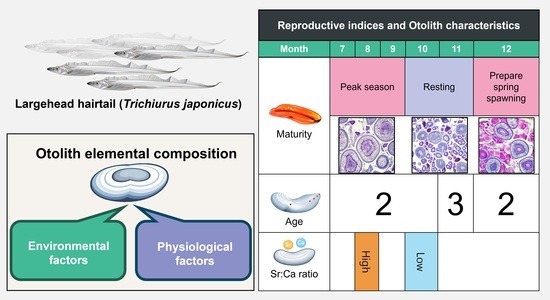
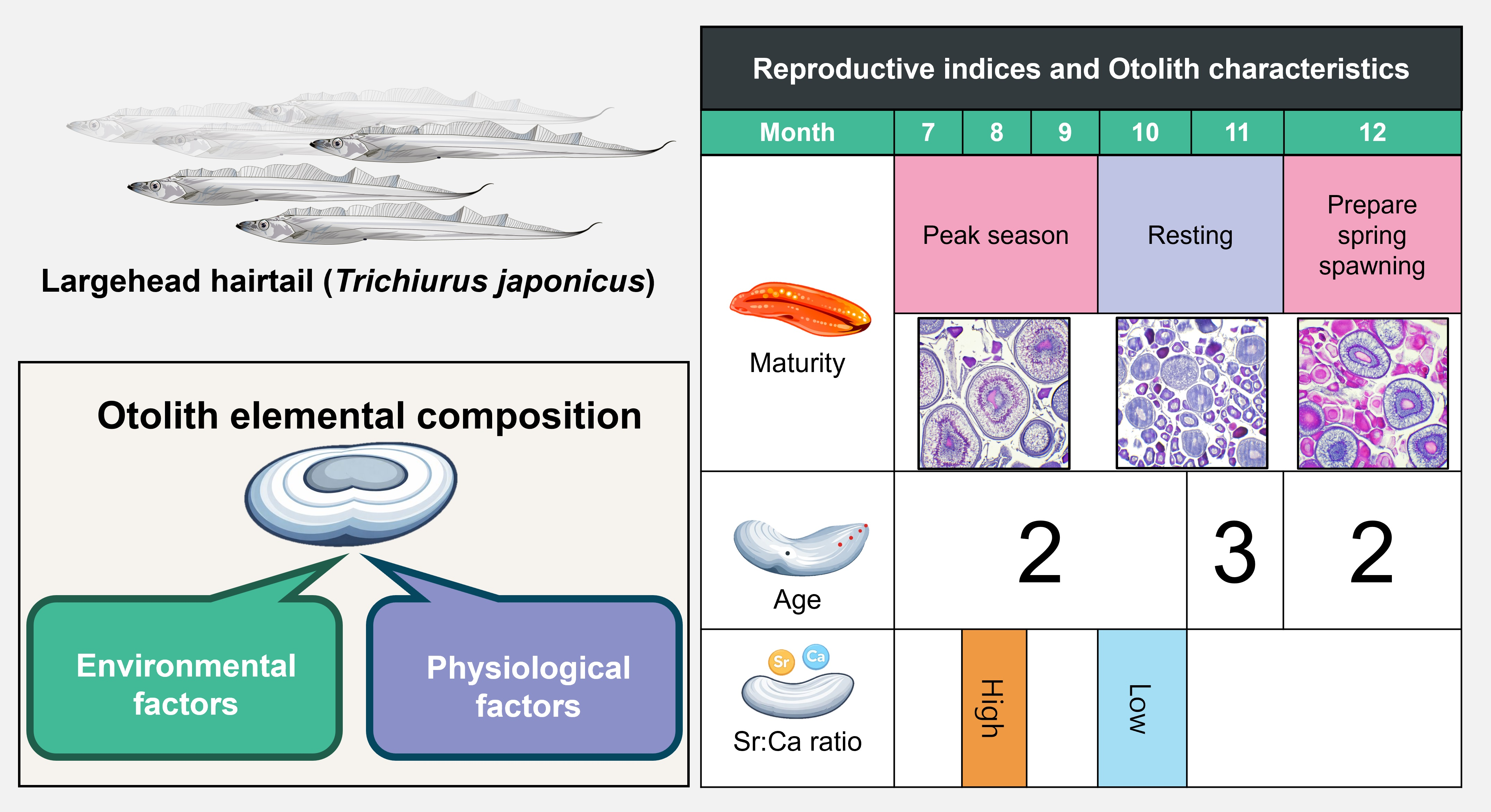
Graphical Abstract

1. Introduction

The otoliths of teleost fishes are primarily composed of calcium carbonate (CaCO3) in the form of aragonite crystals, and they contain trace- and minor-element concentrations of less than 1% [1]. Otoliths serve essential functions in hearing and balance, and because they grow continuously from the embryonic stage throughout the lifetime of the fish, they have been widely used as key indicators for reconstructing individual life histories [1,2]. Teleost fish possess three pairs of otoliths in the inner ear: sagittae, lapilli, and asterisci. Among these, sagittal otoliths are generally the largest and exhibit well-defined growth increments, making them particularly suitable for age estimation and otolith microchemical analyses. In contrast, lapilli and asterisci are typically smaller and are less frequently used in studies of age determination and elemental composition [3,4]. Therefore, in the present study, sagittal otoliths were selected as the primary focus for age estimation and trace-element analyses. The annuli of otoliths are formed through the periodic deposition of opaque and translucent zones that reflect the fish growth history. Because the chemical composition and structure of each annulus remain unchanged once formed and are preserved over long periods, many studies have used the annuli of otoliths to determine the life history and age of fish [5]. Particularly, the distance from the otolith core to the first radius of the suspected annual growth zone (R1), which represents the initial growth section of the otolith, has been widely used as a key indicator reflecting early environment, hatching date, and nursery grounds during the first year of life [2,6,7]. This indicator shows similar R1 lengths in populations reared under homogeneous environmental conditions, whereas significant differences appear when fish have different natal origins or growth environments [8]. For these reasons, R1 serves as an important criterion for distinguishing natal origins and assessing stock mixing in various marine fish species. Additionally, the trace elements accumulated in otoliths are influenced not only by aquatic environmental factors, such as temperature and salinity, but also by physiological factors, including growth rate, metabolic activity, and reproductive endocrine levels [1,9,10]. Owing to these traits, the trace-element composition accumulated in otoliths functions as a multilayered source of information that reflects not only the aquatic environments experienced by individual fish but also the physiological conditions of the fish [10,11]. Otoliths grow via the precipitation and crystallization of CaCO3 within the endolymph, and their elemental composition is generally normalized using the trace-element-to-calcium ratio (E:Ca). Among the ions incorporated into otoliths, certain elements such as strontium have been extensively studied. In several marine fishes, the otolith Sr:Ca ratio has been reported to reflect environmental conditions and physiological signals because it is regulated by changes in plasma Ca and Sr concentrations during the spawning season [12,13]. Accordingly, integrated analyses of otolith chemistry and reproductive indicators have attracted increasing attention as a novel approach for interpreting the spawning cycles and ecological strategies of migratory fish species [14,15].
The largehead hairtail (Trichiurus japonicus) [16] is an important migratory fish species with a high commercial value in the East Asian waters of Korea, China, and Japan. Species identification followed the current taxonomic framework. Although earlier studies conducted in Korea commonly referred to this species as Trichiurus lepturus, subsequent genetic studies have demonstrated that hairtail populations distributed in waters around Korea, China, and Japan belong to Trichiurus japonicus, which is genetically distinct from T. lepturus populations inhabiting the Atlantic and Indian Oceans [17,18]. In particular, mitochondrial DNA analyses of eggs and larvae collected from Korean coastal waters have confirmed that the hairtail migrating in this region corresponds to T. japonicus [19]. Accordingly, all specimens analyzed in this study were identified as Trichiurus japonicus. The East China Sea and waters surrounding Jeju Island serve as key migration routes and major spawning grounds for this species [20,21]. Although T. japonicus consistently ranks among the top species in annual catch yields in Korean coastal waters, scientific understanding of its ecology, reproductive biology, and stock structure remains relatively limited for effective fisheries resource management [20,22].
In our previous studies conducted in waters around Jeju Island, reproductive maturation was examined during the spawning season (April–September), primarily focusing on large females (pre-anal length ≥ 45 cm) and immature individuals (pre-anal length < 25 cm) [23]. Accordingly, the present study focused on a medium-sized Trichiurus japonicus population and conducted an integrated analysis of reproductive indices, oocyte developmental stages, otolith growth metrics (R1), and otolith elemental ratios during the transitional period from the onset of reproductive maturation in immature individuals (July) to the post-spawning phase (December). This study aimed to (1) characterize the monthly reproductive cycle of female T. japonicus migrating through Jeju coastal waters after the peak spawning season, (2) assess the seasonal structure of natal origins as reflected in otolith growth and chemical composition, and (3) evaluate the potential linkage between spawning-related physiological activity and otolith chemistry.

2. Material and Methods

2.1. Environmental Conditions

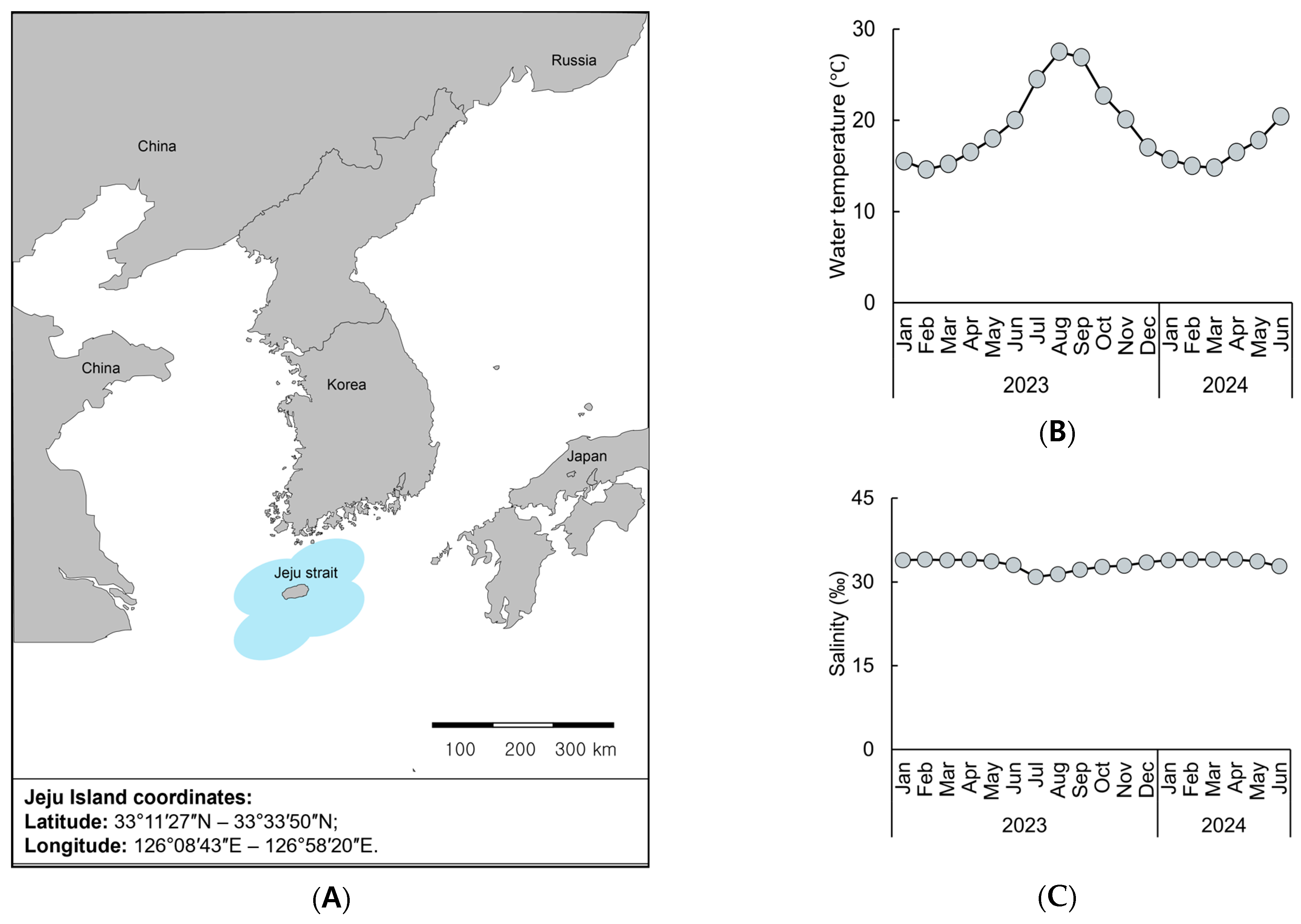
Environmental data for the coastal waters around Jeju, Korea, were obtained from publicly available records provided by the Korea Hydrographic and Oceanographic Agency (KHOA) (Figure 1A). In this study, the hourly temperature and salinity data measured from January 2023 to May 2024 were used. Daily water temperature and salinity were first calculated from the 24-h measurements taken each day between the 1st and 30th of every month, after which monthly means were derived. These values were then used to document the annual variations in temperature and salinity in the waters surrounding Jeju (Figure 1B,C).

2.2. Experimental Fish and General Sampling Conditions

Experimental fish were obtained monthly from local vendors in Jeju from July to December 2023. Fish samples were obtained from individuals caught by same-day handline fishing in coastal waters around Jeju Island (see Figure 1, blue-shaded area) and transported directly from fishing vessels to local markets. Only medium-sized individuals that were commercially classified as such at the landing site were selected for subsequent analyses. This size-based sampling strategy was intentionally adopted to focus on a specific size class, and therefore, the analyzed specimens do not represent the full mature female population inhabiting Jeju waters. Sex determination of T. japonicus is difficult based on external morphology alone; therefore, all individuals were dissected, and sex was determined by macroscopic examination of the gonads. Total body length was measured from the tip of the snout to the end of the caudal fin, as well as pre-anal length. Body depth was measured as the vertical distance at the thickest point of the trunk, excluding fins. Total weight was measured using an electronic balance (MW2-H, CAS, Gyeonggi-do, Republic of Korea). Based on previous studies, sampling was conducted from July to December, which was inferred to encompass the peak spawning season [15,17,18]. A total of 20 individuals were collected per month (n = 120). Fish transported from fishing vessels in the morning were immediately brought to the laboratory, where the body length, pre-anal length, total length, body depth, total weight, and sex ratio were recorded for each specimen.
For the otolith analysis, the right sagittal otolith was removed from the head of each fish. Extracted otoliths were rinsed with 100% ethanol (Daejung, Gyeonggi-do, Republic of Korea) and stored individually in vials containing fresh 100% ethanol for further processing. The gonads of the female specimens were dissected and fixed in formalin (Sigma-Aldrich, Saint Louis, MO, USA) for subsequent histological analysis.

2.3. Maturity Indices and Absolute Fecundity

Fish collected from July to December were used to quantify the maturity indices and absolute fecundity for each group. Maturity status was assessed using gonadosomatic index (GSI) and hepatosomatic index (HSI). For these calculations, the livers and gonads weights were dissected and weighed using electronic balance (MW2-H, CAS, Gyeonggi-do, Republic of Korea). The indices were calculated as follows: GSI = (gonad weight/body weight) × 100 [24] and HSI = (liver weight/body weight) × 100 [25].

2.4. Histological Analysis of Ovary

Histological analyses were conducted on the ovaries of female fish (n = 99). Ovarian tissues were fixed in 10% neutral buffered formalin (Sigma-Aldrich, Saint Louis, MO, USA) at 4 °C for 48 h. The samples were then transferred to 5% neutral buffered formalin prepared with 0.2 M phosphate buffer (pH 7.4) and fixed for an additional 48 h. Fixed tissues were sequentially dehydrated in a graded ethanol series (70%, 80%, 90%, and 100%) and embedded in paraffin according to the method described by Namgung et al. [26]. Paraffin blocks were sectioned at a thickness of 7 μm using a rotary microtome (RM 2125 RTS, Leica, Wetzlar, Germany). The sections were dried on a slide warmer (XH-2004, Premiere, C&A Scientific Co., Norcross, GA, USA) at 37 °C for 24 h, and then the slides were stained with hematoxylin and eosin, mounted with Canada balsam (Doosan, Seoul, Republic of Korea), and observed under a stereomicroscope (Z16 APO, Leica, Wetzlar, Germany). Oocyte growth stages were categorized into early oocyte (peri-nucleolus), yolk vesicle, primary yolk, secondary yolk, and mature stages following established histological frameworks for teleost oogenesis [27].

2.5. Otolith Embedding and Pre-Preparation

The otoliths were embedded in a mixture of resin and hardener at a 3:1 ratio, and the mixture was then poured into silicone molds. The molds were cured at room temperature for 3 days to obtain resin-embedded samples. Subsequently, each embedded otolith was sectioned to a thickness of approximately 1 mm above the core using a low-speed saw (FDC-150, GLP-Korea, Incheon, Republic of Korea). The exposed surface was then sequentially ground using dry sandpapers at 400, 800, 1000, and 2000 grit (DEERFOS, Seoul, Republic of Korea), followed by polishing using a fine polishing cloth (Halison PAC, Daejeon, Republic of Korea) with a diamond suspension (Halison PAC, Daejeon, Republic of Korea) and then with a clean fine polishing cloth. The polished sections were used for age estimates and R1 distance measurements under an optical microscope. In addition, three samples per month were selected for otolith trace-element analysis and subjected to laser ablation–inductively coupled plasma mass spectrometry (LA-ICP-MS).

2.6. Age Estimates and R1 Distance Measurements from Otoliths

Age estimates and R1 distance measurements were conducted on 10 female fish each month (n = 10). The pre-processed otoliths were photographed using a stereomicroscope (Z16APO, Leica, Wetzlar, Germany). Age was estimated based on the number of annuli observed on the right sagittal otolith. Annuli were defined as the boundary between opaque and translucent zones according to established criteria for teleost fishes [28,29]. Each otolith was independently interpreted by a single experienced reader, and annulus counts were determined using high-resolution digital images. Age estimates were derived from the number of identified annuli, and the distances between successive annuli were measured sequentially from the otolith core toward the outer margin and denoted as R1, R2, R3, and so forth. The distances from the core to each annulus (core–R1 and R1–R2) were measured using Mosaic 2.0 software (Tucsen, Fuzhou, China).
Otoliths with indistinct or poorly defined growth zones were excluded from further analyses. Annual periodicity of annulus formation was assumed based on age-validation studies conducted on teleost fishes [28,30]. In this study, annulus counts were used to confirm the general age range of medium-sized hairtail individuals; however, the primary objective was to classify individuals into relative age groups and to support the interpretation of otolith growth indices. Accordingly, formal age-reading precision metrics such as average percent error (APE) or coefficient of variation (CV) were not included in the analytical scope, and the estimated ages were interpreted conservatively as relative age classes rather than exact chronological ages.
To minimize reader bias, otolith sections were read three times by the same reader under blind conditions, without access to biological information such as body size or sampling date. Reading consistency was evaluated based on the agreement rate among repeated readings, following the approach described by Shih et al. (2011) [31].

2.7. Otolith Trace-Element Analysis

Trace-element concentrations in the otoliths were measured via LA-ICP-MS (NexION 2000, PerkinElmer, Waltham, MA, USA). Analyses were conducted in point-ablation mode with a repetition rate of 10 Hz and an energy density of 0.84 J cm−2. An ArF 193 nm excimer laser was used as the ablation source. The laser beam spot size was set to 20 µm, and each ablation was carried out for 40 s. Nitrogen (N2, 5 mL s−1) was used as the laser beam gas, and helium (He, 400 mL min−1) was employed as the sample carrier gas. IST SRM 610, 612, and 614 glass standards were employed for quantification, and the relative elemental concentrations were calculated by correcting the signal intensities based on the measured values of these standards.
The otolith trace-element composition was analyzed in three female fish per month (n = 3). Measurements were conducted on sagittal sections centered on the otolith core, and five ablation spots per otolith were placed along the longitudinal growth axis from the core toward the outermost otolith annulus at the edge. For each month, three female individuals were selected from among ten females examined for gonadal development, based on their gonadosomatic index (GSI) values falling within the monthly mean range, and subjected to LA-ICP-MS analysis. For each selected individual, sagittal otoliths were analyzed by placing five ablation spots along the outermost edge region to characterize elemental incorporation in the most recently formed growth material. Elemental values obtained from the five spots per otolith were treated as technical replicates and averaged to generate a single representative value for each otolith. These otolith-level mean values were then used for monthly statistical comparisons, thereby avoiding pseudo-replication arising from non-independence among multiple spot-level measurements within the same otolith.

2.8. Statistical Analysis

Statistical analyses were conducted using SPSS (version 24.0; IBM Corp., Armonk, NY, USA). Biological replication was defined at the individual fish level, and the number of individuals (n) used for each analysis is specified in the corresponding sections of the Materials and Methods Section. Where applicable, repeated measurements within a single sample were treated as technical replicates and averaged prior to statistical analysis. Data are presented as the mean ± standard deviation (SD). Differences among monthly groups were assessed using one-way analysis of variance (ANOVA), followed by Tukey’s honestly significant difference (HSD) test for post hoc comparisons. Differences were considered statistically significant at p < 0.05.

3. Results

3.1. Fish Condition and Maturity Indices

In T. japonicus migrating through Jeju coastal waters, the mean pre-anal length was lowest in July and increased progressively from September to December, and the body weight was significantly higher in December, whereas the total length or body depth did not exhibit significant monthly differences (Table 1).
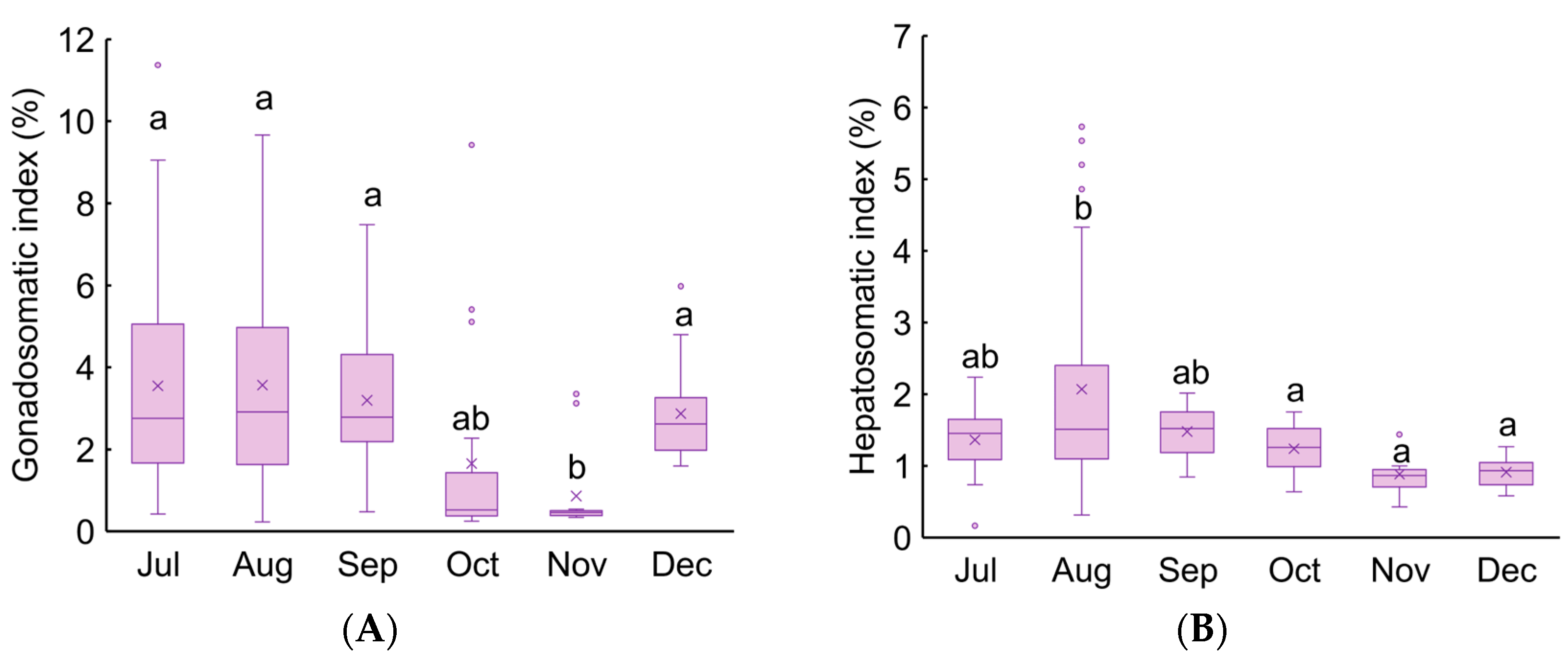
Analysis of the maturity indices showed that the GSI remained high from July to September, decreased from October, reached a minimum in November, and then recovered by December to levels comparable to those observed in July–September (Figure 2A). The HSI peaked in August, remained at similar levels in July and September, and was generally higher in July–August than in October–December (Figure 2B). Taken together, these results indicate that the peak spawning activity of T. japonicus migrating through Jeju coastal waters is concentrated in summer, with the recovery of the GSI observed in December likely reflecting gonadal regrowth in preparation for the subsequent spring spawning season.

3.2. Histological Analysis of the Ovary

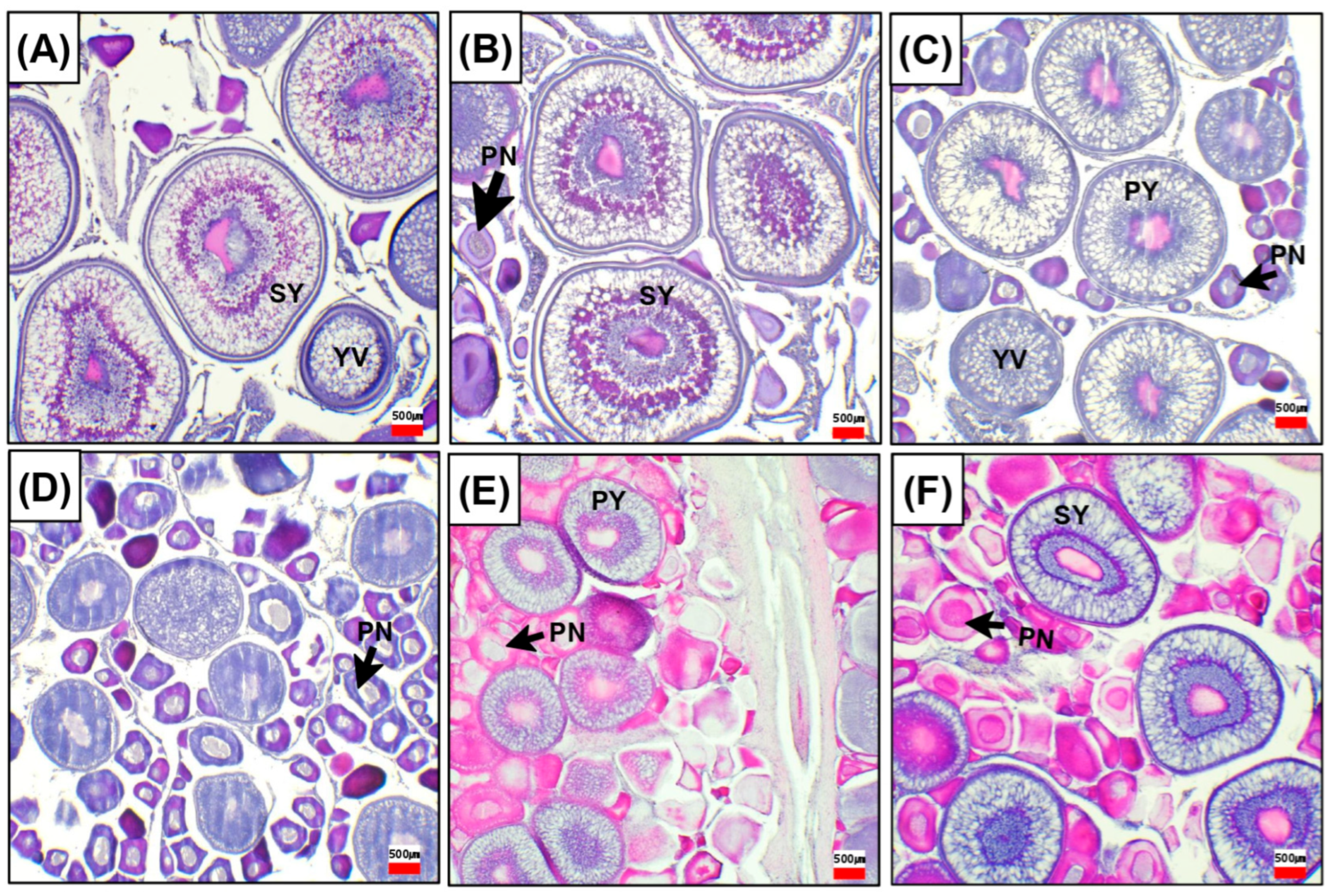
Histological analysis of the ovaries revealed that during July–September, developed oocytes corresponding to the primary and secondary yolk stages were predominant (Figure 3A–C). These findings indicate active vitellogenesis and oocyte growth during the summer. In contrast, during October–December, early stage oocytes in the perinucleolar stage were predominant, demonstrating a seasonal regression to an early oocyte growth phase following the period of active yolk deposition (Figure 3D–F).

3.3. Age Estimation and R1 Distance Measurement from Otoliths

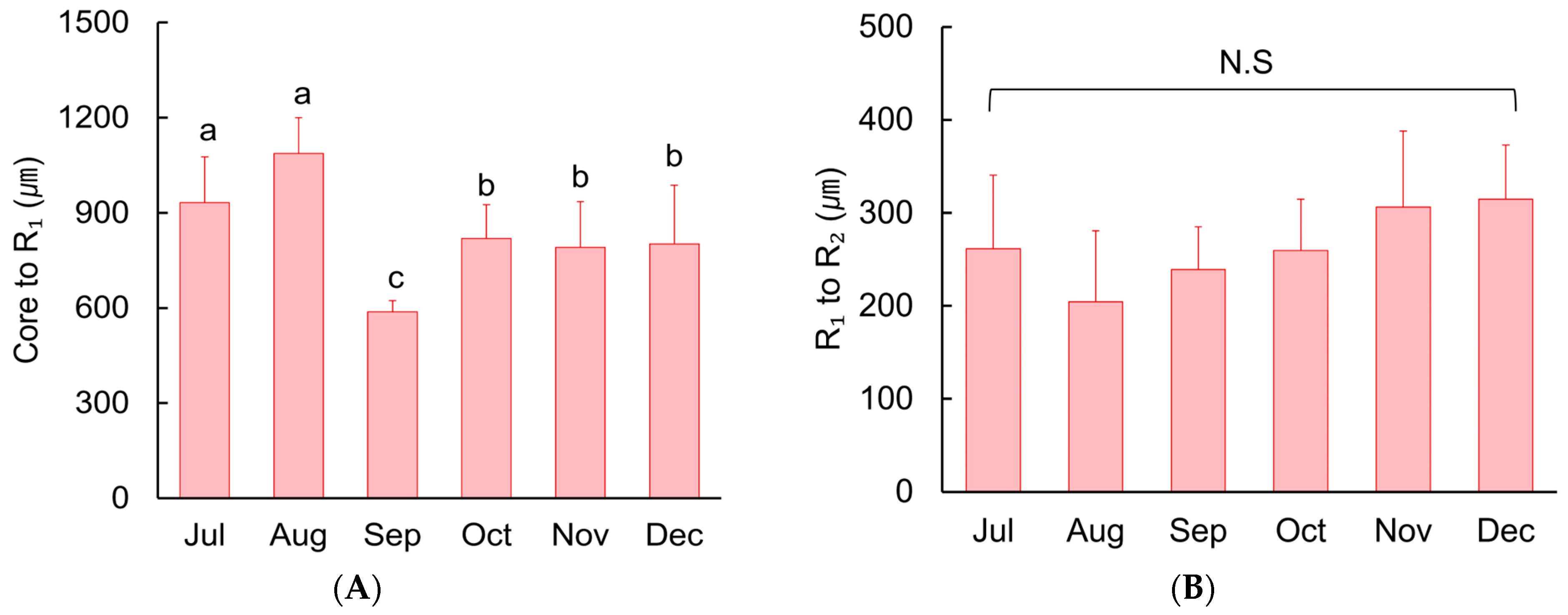
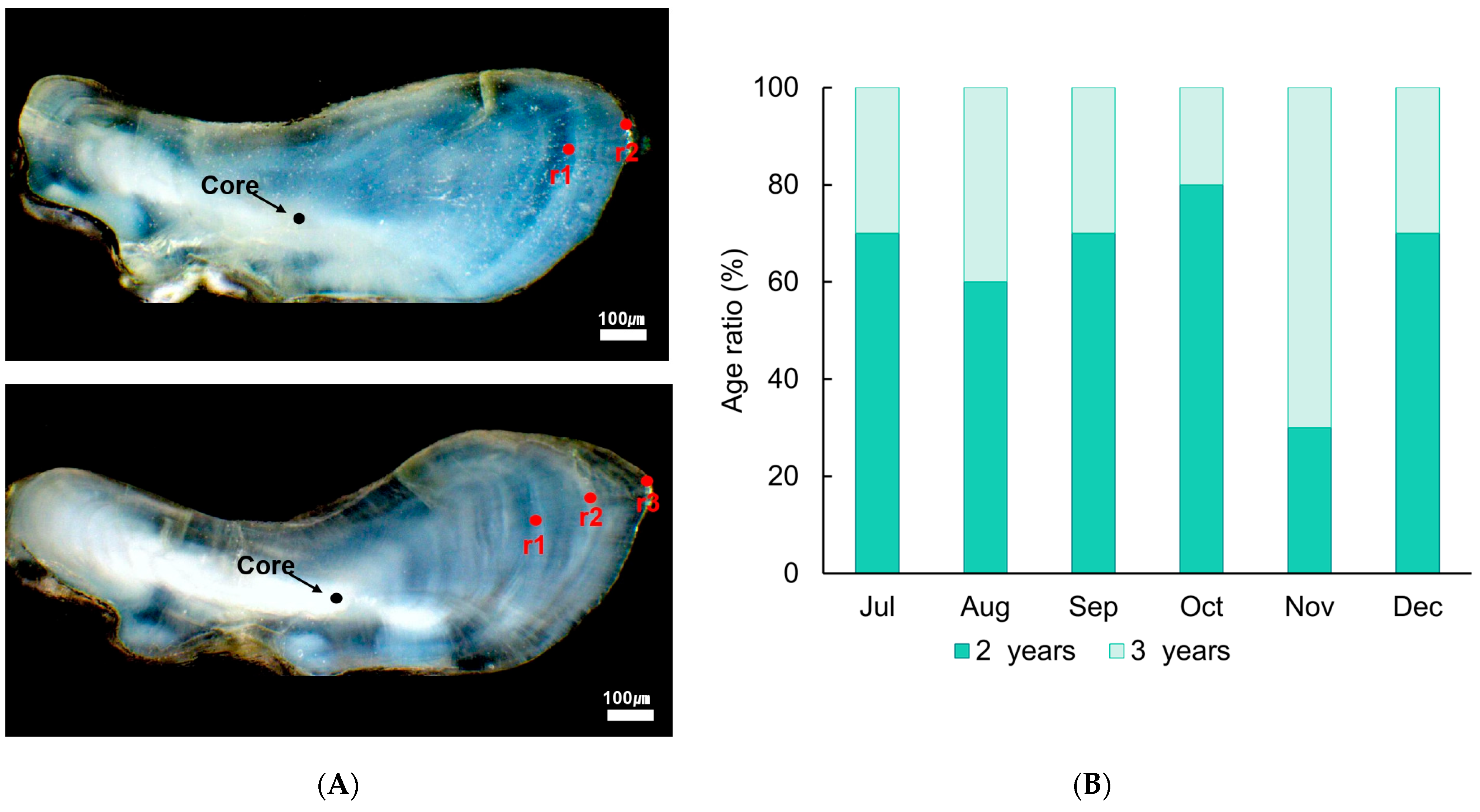
Otolith-based age estimates showed that 2-year-old individuals predominated from July to October, while 3-year-old individuals increased in November and December (Figure 4B). The distance from the core to R1 remained relatively constant between July and August (Figure 5A) but was significantly shorter in September than in the other months. From October to December, R1 values returned to levels comparable to those observed in July–August. Moreover, the R1–R2 distances did not exhibit significant monthly differences (Figure 5B).

3.4. Otolith Trace Elemental Analysis

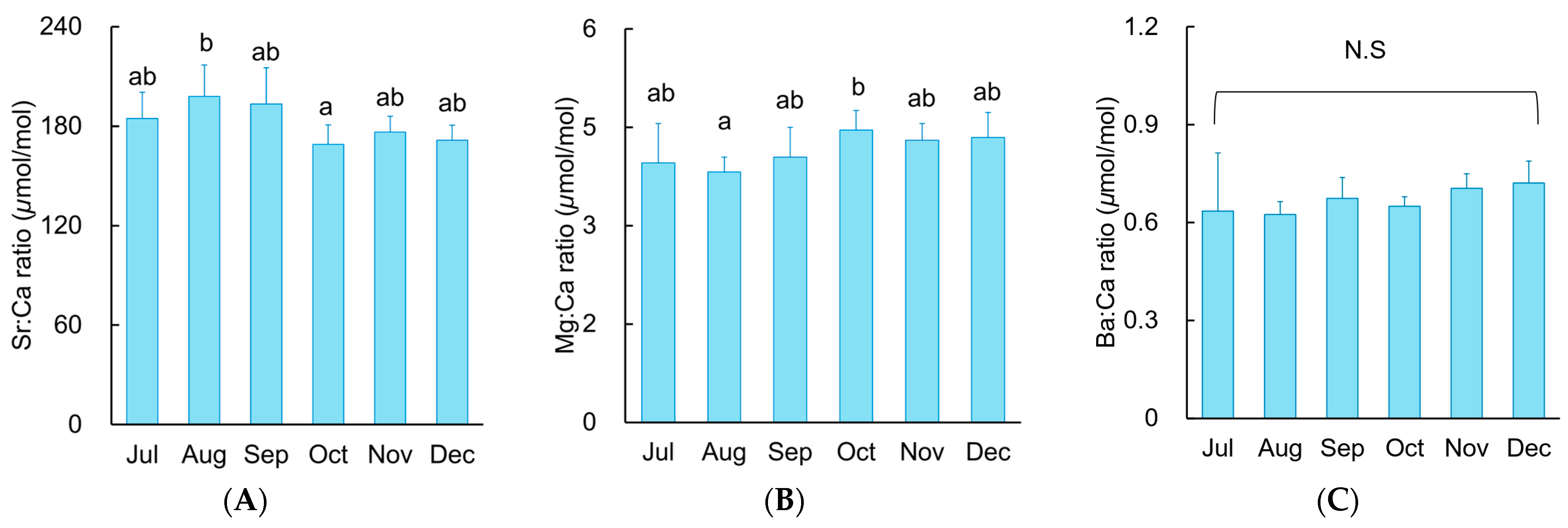
The otolith element-to-calcium (E:Ca) ratios showed that the Sr:Ca ratio was highest in August and lowest in October (Figure 6A); the Mg:Ca ratio was lowest in August and highest in October (Figure 6B), while the Ba:Ca ratio did not differ significantly among the months (Figure 6C). These results indicate that the temporal pattern of Sr:Ca was comparable to that of the reproductive indices, suggesting a potential link between reproductive activity and Sr incorporation in otoliths. In contrast, the Ba:Ca ratios did not show pronounced differences among the groups, implying that the T. japonicus individuals examined in this study likely inhabited broadly similar environmental conditions.

4. Discussion

In this study, the monthly reproductive cycle and trace-element ratios in the otoliths of T. japonicus migrating in Jeju waters were comprehensively analyzed over a 6-month period corresponding to the main spawning season. Through this approach, we aimed to elucidate the relationship between the reproductive cycle of the fish and the chemical composition of otoliths and provide baseline information applicable to resource management.
The maturity indices (GSI and HSI) and histological oocyte growth stages clearly indicated that the peak spawning period of T. japonicus in the Jeju region was concentrated between July and September (Figure 2). The GSI remained high from July to September, and the HSI also showed elevated values from July to September, reaching a peak in August (Figure 2). This pattern is consistent with the physiological characteristics of the vitellogenic stage, during which vitellogenin synthesis in the liver is actively enhanced [32,33]. Previous studies conducted in waters around Jeju Island have reported variability in the timing of the spawning period of Trichiurus japonicus. For example, Kim et al. [34] suggested that the annual spawning period extends from May to December, with a primary spawning peak between July and August, whereas Cha and Lee [35,36] reported a shorter spawning period from April to October, with the main spawning season occurring from May to September. Such variability in the reported spawning period of T. japonicus may reflect differences in the size composition of sampled females, sampling periods, and methods used to assess reproductive status, as well as interannual variability in marine environmental conditions. Therefore, for highly migratory species such as T. japonicus, in which females rapidly enter spawning activity and populations comprise a broad range of body sizes, reproductive timing and condition should be evaluated with careful consideration of multiple biological and environmental factors rather than a single criterion.
Histological examination of the ovaries revealed clear monthly trends in oocyte growth, indicating that the peak spawning activity of T. japonicus in Jeju waters occurs in summer (Figure 3). Although ovarian histology from October to November indicated low maturity indices and a predominance of early stage oocytes, follicular cells exhibited renewed maturation in December, accompanied by an increase in the maturity index (Figure 3C–E). These results suggest that T. japonicus initiates secondary oocyte growth from December onward in preparation for spring spawning. This interpretation is consistent with previous reports that T. japonicus migrating in the East China Sea exhibits multiple spawning or near-year-round spawning tendencies, particularly during spring and summer [31,34,37]. Reproductive strategies in fishes are known to vary widely among species, ranging from brief single spawning events to multiple spawning events accompanied by prolonged asynchronous oocyte growth [38,39]. T. japonicus is recognized as a highly migratory fish species with a strong tendency toward year-round spawning [40].
The resumption of oocyte growth observed in December in the present study likely represented secondary oocyte growth in preparation for the spring spawning season. T. japonicus eggs have previously been reported in Jeju waters during May–June [19]. Accordingly, T. japonicus individuals migrating in Jeju waters are expected to maintain their spawning pattern in both summer and spring. Indeed, a previous study reported that mature female T. japonicus complete their spawning preparation by May [23]. However, because peak spawning timing can vary with body size and age, even within the same species, further reproductive studies are warranted for spring-migrating T. japonicus according to their size/age (approximately 2–3 years old).
In this study, age estimation was conducted by identifying annuli based on the boundaries between opaque and translucent zones in otoliths, following criteria commonly applied to teleost fishes. However, several limitations should be considered when interpreting monthly variations in otolith elemental composition and reproductive indices. Because the exact capture locations and fishing conditions of individual specimens could not be determined, potential environmental heterogeneity among monthly samples cannot be fully excluded. Therefore, future studies incorporating precise geographic information and concurrent measurements of environmental conditions will be necessary to more rigorously resolve the relationships among otolith chemistry, reproductive processes, and environmental variability.
Early otolith growth (R1) is known to be regulated not only by water temperature, nutritional condition, and metabolic rate but also by changes in the chemical composition of the inner ear [1,2,6]. In particular, the otolith core–R1 region formed during the early life stage preserves marine environmental variability signals and thus requires independent interpretation distinct from otolith growth patterns formed during later growth stages [41]. For example, studies on Atlantic cod (Gadus morhua) and walleye pollock (Gadus chalcogrammus) in the North Atlantic have repeatedly reported that individuals exhibiting faster early growth show longer R1 distances while those reared under low-temperature and low-nutrient conditions show shorter R1 distances [2,6]. Individuals entering Jeju waters during this period may have been born relatively later or reared under low-growth conditions distinct from those of individuals sampled in other months.
However, it should be noted that variation in the R1 distance cannot be unequivocally attributed to differences in natal origin or early environmental conditions. Otolith growth during early life stages can be influenced by multiple factors, including growth rate, temperature, food availability, and physiological condition. In addition, the lack of independent information on natal origin and fine-scale population structure limits the interpretation of R1 variation as direct evidence of distinct cohorts or environmental histories. Therefore, the observed differences in R1 in this study should be regarded as hypothesis-generating rather than definitive, and further studies integrating independent markers of natal origin and population structure are required.
Meanwhile, trace elemental analysis of the outermost region of the otoliths revealed clear monthly variation in Sr:Ca ratios, with significantly higher values in August and lower values in October (Figure 6A). These temporal changes appeared to broadly parallel seasonal trends in GSI and ovarian developmental status during the vitellogenic period (Figure 2 and Figure 3). Previous studies have demonstrated that otolith Sr:Ca ratios are influenced by environmental conditions as well as physiological processes related to calcium and strontium regulation [42,43]. In particular, studies on marine fishes have shown that changes in plasma Ca and Sr concentrations associated with female reproductive maturation can be reflected in otolith chemistry [12,14,43]. For example, Kalish et al. [12] reported that plasma Ca and Sr concentrations in female Atlantic cod (Gadus morhua) increased prior to spawning and were positively correlated with otolith Sr:Ca ratios.
Although plasma elemental concentrations were not measured in the present study, the observed seasonal pattern of otolith Sr:Ca variation may reflect the combined influence of environmental conditions and reproductive state–dependent shifts in Ca/Sr metabolism. Future studies incorporating concurrent measurements of plasma chemistry, reproductive condition, and environmental variables will be required to quantitatively resolve these relationships.
The otolith Mg:Ca ratio is generally considered more sensitive to growth and metabolic processes than to external environmental variation and thus is frequently used as a proxy for physiological regulation [10,14,44]. In the present study, Mg:Ca decreased in August and increased in October, a pattern that may have been influenced by physiological processes. However, because direct measurements of physiological activity were not obtained in the present investigation, additional studies are required to elucidate the relationship between the otolith Mg:Ca ratio and physiological state. Conversely, the Ba:Ca ratio did not differ significantly among months (Figure 6). Previous studies indicated that otolith Ba:Ca ratios vary with habitat depth and regional nutrient regimes across marine environments [1,43,45]. Accordingly, the lack of pronounced Ba:Ca variation in the study population suggests that females experienced broadly similar environmental conditions, potentially consistent with migration along comparable routes and spawning pathways with limited variability in depth. In this study, monthly sample sizes were limited for some analyses; therefore, the interpretation of the results should be confined to the specimens and temporal scope examined here. More generalized inferences regarding Trichiurus japonicus populations migrating through Jeju waters will require additional studies incorporating larger sample sizes.
In this study, medium-sized (approximately 2–3-year-old) Trichiurus japonicus collected from waters adjacent to Jeju Island exhibited increased reproductive activity during summer, and the relative reduction in R1 distance observed in September may suggest heterogeneity in individual growth histories or the potential coexistence of individuals originating from different natal groups. However, this pattern may also be explained by alternative factors, including differences in growth rate, variation in age composition, seasonal environmental conditions such as temperature and food availability, or potential measurement uncertainty. Accordingly, the interpretation of R1 variation in this study is presented at a hypothesis-generating level rather than as a definitive conclusion. Given the absence of precise capture coordinates and independent information on population structure, further validation using complementary approaches will be required to draw robust conclusions regarding cohort mixing. Moreover, by integrating evidence from age analyses, reproductive assessments, and otolith elemental chemistry, we highlight the importance of accounting for reproductive maturation and spawning status when interpreting otolith-based ecological signals in migratory fishes such as T. japonicus. Specifically, our findings support the need to consider physiological influences as potential confounders in otolith chemistry, rather than attributing elemental variability solely to environmental drivers. Nevertheless, because our conclusions were based on data collected within a relatively short sampling window and a single region, broader temporal and regional inferences could not be made. Therefore, large-scale, multi-season monitoring is required. Future work should quantitatively resolve the reproductive contributions to otolith chemistry by jointly measuring plasma Ca and other elemental concentrations, reproductive conditions, and otolith compositions while incorporating concurrent environmental data. Such integrative otolith-based approaches should produce more refined interpretations of the reproductive ecology of migratory fishes and provide scientific evidence for resource management strategies, including the protection of spawning periods and optimization of fishing regulations and seasonal closures.


5. Conclusions

This study investigated the monthly reproductive cycle of and otolith trace-element variations in female Trichiurus japonicus during the main spawning-related period in waters adjacent to Jeju Island. Based on condition indices and ovarian histological analyses, reproductive activity was most pronounced during summer (July–September), while renewed oocyte development observed in December suggests the initiation of the subsequent reproductive cycle. The relatively shorter R1 distance observed in September may indicate heterogeneity in individual growth histories among sampled fish; however, because such variation can also be influenced by multiple factors, including growth rate differences, age composition, seasonal environmental conditions, and measurement uncertainty, this interpretation is presented at a hypothesis-generating level.
Seasonal variation in otolith Sr:Ca ratios broadly paralleled changes in reproductive status, suggesting that otolith elemental composition reflects the combined effects of environmental conditions and maturation-related Ca/Sr metabolism. As the present findings are based on a limited sampling period and a single region, caution is warranted in generalizing these results. Future studies should quantitatively resolve reproductive and environmental contributions to otolith chemistry by jointly measuring plasma calcium and other elemental concentrations, reproductive conditions, and otolith compositions in conjunction with concurrent environmental data. Such integrative otolith-based approaches are expected to provide more refined interpretations of the reproductive ecology of migratory fishes and support evidence-based fisheries management strategies, including the protection of spawning periods and the optimization of seasonal fishing regulations.

Author Contributions

Conceptualization, J.N. and I.Y.; methodology, J.N.; software, J.N.; validation, J.N. and I.Y.; formal analysis, J.N.; investigation, J.N. and H.-n.M.; S.K. and S.Y.; data curation, J.N.; writing—original draft preparation, J.N.; writing—review and editing, J.N., H.-n.M. and I.Y.; visualization, J.N.; project administration, J.N.; funding acquisition, I.Y. All authors have read and agreed to the published version of the manuscript.

Funding

This research was supported by the Regional Innovation System & Education (RISE) program through the Jeju RISE center, funded by the Ministry of Education (MOE) and the Jeju Special Self-Governing Province, Republic of Korea (2025-RISE-17-001).

Institutional Review Board Statement

All specimens of Trichiurus japonicus were collected as part of authorized fisheries surveys conducted by IACUC and complies with the institutional assurance certification of Jeju National University (Approval code: No. [2023-0022], approval date: 3 April 2023).

Data Availability Statement

The original contributions presented in this study are included in the article. Further inquiries can be directed to the corresponding author.

Conflicts of Interest

The authors declare no conflicts of interest. The funders had no role in the design of the study; in the collection, analyses, or interpretation of data; in the writing of the manuscript; or in the decision to publish the results.

Abbreviations

The following abbreviations are used in this manuscript:
GSIgonadosomatic index
HSIhepatosomatic index
LA-ICP-MSlaser ablation–inductively coupled plasma mass spectrometry

References

  1. Campana, S.E. Chemistry and composition of fish otoliths: Pathways, mechanisms and applications. Mar. Ecol. Prog. Ser. 1999, 188, 263–297. [Google Scholar] [CrossRef] [Scilit]
  2. Grønkjær, P. Otoliths as individual indicators: A reappraisal of the link between fish physiology and otolith characteristics. Mar. Freshw. Res. 2016, 67, 881–888. [Google Scholar] [CrossRef] [Scilit]
  3. Schulz-Mirbach, T.; Ladich, F.; Plath, M.; Heß, M. Enigmatic ear stones: What we know about the functional role and evolution of fish otoliths. Biol. Rev. 2019, 94, 457–482. [Google Scholar]
  4. Nazir, A.; Khan, M.A. Using otoliths for fish stock discrimination: Status and challenges. AIeP 2021, 51, 199–218. [Google Scholar]
  5. Campana, S.E.; Jones, C.M. Analysis of otolith microstructure data. Can. Spec. Publ. Fish. Aquat. Sci. 1992, 117, 73–100. [Google Scholar]
  6. Høie, H.; Millner, R.S.; McCully, S.; Nedreaas, K.H.; Pilling, G.M.; Skadal, J. Latitudinal differences in the timing of otolith growth: A comparison between the Barents Sea and southern North Sea. Fish. Res. 2009, 96, 319–322. [Google Scholar] [CrossRef] [Scilit]
  7. Wilson, M.T.; Mier, K.L.; Dougherty, A. The first annulus of otoliths: A tool for studying intra-annual growth of walleye pollock (Theragra chalcogramma). Environ. Biol. Fishes 2011, 92, 53–63. [Google Scholar] [CrossRef] [Scilit]
  8. Wright, P.J.; Woodroffe, D.A.; Gibb, F.M.; Gordon, J.D. Verification of first annulus formation in the illicia and otoliths of white anglerfish, Lophius piscatorius using otolith microstructure. ICES J. Mar. Sci. 2002, 59, 587–593. [Google Scholar] [CrossRef] [Scilit]
  9. Elsdon, T.S.; Gillanders, B.M. Reconstructing migratory patterns of fish based on environmental influences on otolith chemistry. Rev. Fish. Biol. Fish. 2003, 13, 217–235. [Google Scholar] [CrossRef] [Scilit]
  10. Hüssy, K.; Limburg, K.E.; De Pontual, H.; Thomas, O.R.; Cook, P.K.; Heimbrand, Y.; Sturrock, A.M. Trace element patterns in otoliths: The role of biomineralization. Rev. Fish. Sci. Aquac. 2021, 29, 445–477. [Google Scholar]
  11. Halden, N.M.; Friedrich, L.A. Trace-element distributions in fish otoliths: Natural markers of life histories, environmental conditions and exposure to tailings effluence. Miner. Mag. 2008, 72, 593–605. [Google Scholar] [CrossRef] [Scilit]
  12. Kalish, J.M. Determinants of otolith chemistry seasonal variation in the composition of blood plasma, endolymph and otoliths of bearded rock cod Pseudophycis barbatus. Mar. Ecol. Prog. Ser. 1991, 74, 137–159. [Google Scholar] [PubMed]
  13. Clarke, A.D.; Telmer, K.H.; Shrimpton, J.M. Movement patterns of fish revealed by otolith microchemistry: A comparison of putative migratory and resident species. Environ. Biol. Fishes 2015, 98, 1583–1597. [Google Scholar] [CrossRef] [Scilit]
  14. Sturrock, A.M.; Hunter, E.; Milton, J.A.; Eimf Johnson, R.C.; Waring, C.P.; Trueman, C.N. Quantifying physiological influences on otolith microchemistry. Methods Ecol. Evol. 2015, 6, 806–816. [Google Scholar] [CrossRef] [Scilit]
  15. Walther, B.D. The art of otolith chemistry: Interpreting patterns by integrating perspectives. Mar. Freshw. Res. 2019, 70, 1643–1658. [Google Scholar] [CrossRef] [Scilit]
  16. Temminck, C.; Schlegel, J. Fauna Japonica, Sive, Descriptio Animalium, Quae in Itinere per Japoniam, Jussu et Auspiciis, Superiorum, qui Summum in India Batava Imperium Tenent, Suscepto, Annis 1823–1830; Lugduni Batavorum: Leiden, The Netherlands, 1833. [Google Scholar] [CrossRef] [Scilit]
  17. Chakraborty, A.; Aranishi, F.; Iwatsuki, Y. Genetic differentiation of Trichiurus japonicus and T. lepturus (Perciformes: Trichiuridae) based on mitochondrial DNA analysis. Zool. Stud. 2006, 45, 419. [Google Scholar]
  18. Tzeng, C.H.; Chen, C.S.; Chiu, T.S. Analysis of morphometry and mitochondrial DNA sequences from two Trichiurus species in waters of the western North Pacific: Taxonomic assessment and population structure. J. Fish. Biol. 2007, 70, 165–176. [Google Scholar] [CrossRef] [Scilit]
  19. Lee, S.J.; Han, S.H.; Kim, M.J. Occurrence of the eggs of hairtail, Trichiurus japonicus in the coastal waters of Jeju Island, Korea in spring. J. Korean Soc. Fish. Ocean. Technol. 2020, 56, 11–17. [Google Scholar]
  20. Shi, X.; Lu, Z.; Wang, Z.; Li, J.; Gao, X.; Kong, Z.; Zhu, W. Distribution Characteristics of Trichiurus japonicus and Its Relationship with Environmental Factors in Central and Southern East China Sea and Yellow Sea. Fishes 2024, 9, 439. [Google Scholar] [CrossRef] [Scilit]
  21. Shin, S.R.; Kim, H.J.; Kim, J.W.; Kwon, D.H.; Choi, J.; Park, J.J.; Lee, J.S. Sex ratio, spawning period, and sexual group maturity of the largehead hairtail Trichiurus japonicus (Teleostei: Trichiuridae) in Korean Waters. Fishes 2023, 8, 194. [Google Scholar] [CrossRef] [Scilit]
  22. Yoon, S.C.; Kim, M.J.; Kang, H.; Choi, M.J. Reconstruction of Recreational Catch and Multi-Fisheries Stock Assessment of Hairtail (Trichiurus lepturus) in Korean Waters Under a Data-Limited Situation. Fishes 2025, 10, 166. [Google Scholar] [CrossRef] [Scilit]
  23. Namgung, J.; Moon, H.N.; Kim, S.; Yeo, I.K. Changes in spawning patterns of mature and immature female largehead hairtail (Trichiurus japonicus). Fish. Aquatic Sci. 2025, 28, 741–749. [Google Scholar] [CrossRef] [Scilit]
  24. Tyler, C.R.; Sumpter, J.P. Oocyte growth and development in teleosts. Rev. Fish Biol. Fish. 1996, 6, 287–318. [Google Scholar] [CrossRef] [Scilit]
  25. Oguri, M. On the hepatosomatic index of holocephalian fish. Bull. Japan. Soc. Sci. Fish. 1978, 44, 131–134. [Google Scholar] [CrossRef] [Scilit]
  26. Namgung, J.; Mizuta, H.; Yamaguchi, Y.; Nagata, J.; Todo, T.; Yilmaz, O.; Hiramatsu, N. Knock out of a major vitellogenin receptor gene with eight ligand binding repeats in medaka (Oryzias latipes) using the CRISPR/Cas9 system. Comp. Biochem. Physiol. A Mol. Integr. Physiol. 2021, 257, 110967. [Google Scholar] [CrossRef] [Scilit]
  27. Brown-Peterson, N.J.; Wyanski, D.M.; Saborido-Rey, F.; Macewicz, B.J.; Lowerre-Barbieri, S.K. A standardized terminology for describing reproductive development in fishes. Mar. Coast. Fish. 2011, 3, 52–70. [Google Scholar] [CrossRef] [Scilit]
  28. Campana, S.E. Accuracy, precision and quality control in age determination, including a review of the use and abuse of age validation methods. J. Fish Biol. 2001, 59, 197–242. [Google Scholar] [CrossRef]
  29. Katayama, S. A description of four types of otolith opaque zone. Fish. Sci. 2018, 84, 735–745. [Google Scholar] [CrossRef] [Scilit]
  30. Beamish, R.J.; McFarlane, G.A. Current trends in age determination methodology. In Age and Growth of Fish; Iowa State University Press: Ames, IA, USA, 1987; pp. 15–42. [Google Scholar]
  31. Shih, N.T.; Hsu, K.C.; Ni, I.H. Age, growth and reproduction of cutlassfishes Trichiurus spp. in the southern East China Sea. J. Appl. Ichthyol. 2011, 27, 1307–1315. [Google Scholar] [CrossRef] [Scilit]
  32. Solé, M.; Manan’s, E.; Blázquez, M. Vitellogenin, sex steroid levels and gonadal biomarkers in wild Solea solea and Solea senegalensis from NW Mediterranean fishing grounds. Mar. Environ. Res. 2016, 117, 63–74. [Google Scholar] [CrossRef] [Scilit]
  33. Koya, Y.; Soyano, K.; Yamamoto, K.; Obana, H.; Matsubara, T. Oocyte development and serum profiles of vitellogenin and steroid hormone levels in captive female Pacific herring Clupea pallasii during their first maturational cycle. Fish. Sci. 2003, 69, 137–145. [Google Scholar] [CrossRef] [Scilit]
  34. Kim, S.H.; Lee, Y.D.; Rho, H.K. The study on the fisheries biological feature of hairtail, Thrichiurus lepturus from the Cheju Strait. Korean J. Fish. Aquat. Sci. 1998, 31, 17–25. [Google Scholar]
  35. Cha, H.K.; Lee, D.W. Reproduction of hairtail, Trichiurus lepturus Linnaeus, in Korea waters: Maturation and spawning. Fish. Aquatic Sci. 2004, 6, 54–62. [Google Scholar]
  36. Kim, H.J.; Park, J.H.; Kwon, D.H.; Kim, Y. Maturation and spawning of largehead hairtail Trichiurus japonicus near Jeju Island, Korea. Korean J. Fish. Aquat. Sci. 2020, 53, 1–8. [Google Scholar]
  37. Kwok, K.Y.; Ni, I.H. Reproduction of cutlassfishes Trichiurus spp. from the South China Sea. Mar. Ecol. Prog. Ser. 1999, 176, 39–47. [Google Scholar] [CrossRef] [Scilit]
  38. Patzner, R.A. Fish Reproduction, 1st ed.; Rocha, M.J., Ed.; CRC Press: Boca Raton, FL, USA, 2008; pp. 311–350. [Google Scholar]
  39. Gavriilidis, P. Reproductive, Spawning, and Sexual Strategies in Fish. Examines Mar. Biol. Oceanogr. 2022, 5, 1–7. [Google Scholar] [CrossRef] [Scilit]
  40. Guo, Y.H.; Halasan, L.C.; Wang, H.Y.; Lin, H.C. High migratory propensity constitutes a single stock of an exploited cutlassfish species in the Northwest Pacific: A microsatellite approach. PLoS ONE 2022, 17, e0265548. [Google Scholar] [CrossRef] [Scilit]
  41. Aldanondo, N.; Cotano, U.; Alvarez, P.; Uriarte, A. Validation of the first annual increment deposition in the otoliths of European anchovy in the Bay of Biscay based on otolith microstructure analysis. Mar. Freshw. Res. 2016, 67, 943–950. [Google Scholar] [CrossRef] [Scilit]
  42. Bath, G.E.; Thorrold, S.R.; Jones, C.M.; Campana, S.E.; McLaren, J.W.; Lam, J.W. Strontium and barium uptake in aragonitic otoliths of marine fish. Geochim. Cosmochim. Acta 2000, 64, 1705–1714. [Google Scholar] [CrossRef] [Scilit]
  43. Peacock, E.; Gabitov, R.; Frisch, J.R.; Hadden, C.S.; Carlock, B.; Henderson, K.L. LA-ICP-MS chemical analysis of archaeological otoliths as a tool for seasonality and site catchment studies. J. Archaeol. Sci. 2016, 65, 11–19. [Google Scholar]
  44. Sturrock, A.M.; Trueman, C.N.; Darnaude, A.M.; Hunter, E. Can otolith elemental chemistry retrospectively track migrations in fully marine fishes? J. Fish. Biol. 2012, 81, 766–795. [Google Scholar] [CrossRef] [Scilit]
  45. Hamer, P.A.; Jenkins, G.P.; Coutin, P. Barium variation in Pagrus auratus (Sparidae) otoliths: A potential indicator of migration between an embayment and ocean waters in south-eastern Australia. Estuar. Coast. Shelf Sci. 2006, 68, 686–702. [Google Scholar]
Figure 1. Location of Jeju Island and environmental conditions in adjacent waters. (A) Map of the Republic of Korea showing the location of Jeju Island and the approximate coastal region from which fish samples were obtained through local commercial landings. Exact capture coordinates for individual specimens were not available; however, the blue-shaded area indicates the major fishing grounds for Trichiurus japonicus along the Jeju coastal waters. Detailed information on sample collection is provided in Section 2.2. (B) Monthly variation in seawater temperature and (C) salinity in waters surrounding Jeju Island from January 2023 to June 2024. Environmental data were obtained from publicly available records provided by the Korea Hydrographic and Oceanographic Agency (KHOA) and are presented to illustrate general seasonal trends rather than site-specific conditions at the time of sampling.
Fishes 11 00111 g001
Figure 2. Monthly variation in maturity indices of Trichiurus japonicus. (A) Gonadosomatic index (GSI) and (B) Hepatosomatic index (HSI) and results are presented as mean ± SD. Differences among months were evaluated using one-way ANOVA followed by Tukey’s post hoc test; different lowercase letters denote significant differences (p < 0.05).
Fishes 11 00111 g002
Figure 3. Monthly ovarian histology of female Trichiurus japonicus. Representative ovarian sections collected in (A) July, (B) August, (C) September, (D) October, (E) November, and (F) December. Images were acquired using a stereomicroscope under dry conditions using a stereomicroscope (Leica Microsystems, Wetzlar, Germany) equipped with a 1.0× objective lens at a 3.0× zoom setting; acquisition settings were kept constant across the image series. Oocyte developmental stages are indicated as follows: peri-nucleolus stage (PN), yolk vesicle stage (YV), primary yolk stage (PY), and secondary yolk stage (SY).
Fishes 11 00111 g003
Figure 4. Monthly age estimates of Trichiurus japonicus based on otolith annuli. (A) Representative stereomicroscope images illustrating annulus interpretation for age estimation. Otolith sections were prepared and observed using a Leica Z16 APO stereomicroscope (Leica, Wetzlar, Germany) under dry conditions, with identical imaging and acquisition settings applied across all samples (see Section 2.6). Age was estimated by counting annuli, with the first annulus defined as the boundary between the translucent and opaque zones relative to the otolith core. (B) Monthly distribution of estimated age composition based on annulus counts (n = 10 females per month).
Fishes 11 00111 g004
Figure 5. Monthly variation in inter-annular distances of Trichiurus japonicus otoliths (n = 10 per month). Inter-annular distances were measured between (A) the otolith core and the first annulus (R1) and (B) the first and second annuli (R1–R2). Annulus positions were defined based on the age-estimation images shown in Figure 4, and distances were quantified using Mosaic 2.0 software. Data are presented as mean ± SD. Differences among months were assessed using one-way ANOVA followed by Tukey’s post hoc test; different lowercase letters denote significant differences (p < 0.05). N.S.: indicates no statistically significant difference.
Fishes 11 00111 g005
Figure 6. Monthly variation in otolith trace-element ratios of Trichiurus japonicus measured by LA-ICP-MS. For each month, sagittal otoliths from three female individuals (n = 3 per month) were analyzed. Elemental measurements were conducted exclusively on the outermost edge region of each otolith to characterize recently formed growth material (see Section 2.7 for detailed analytical procedures). Element-to-calcium ratios are shown for (A) Sr:Ca, (B) Mg:Ca, and (C) Ba:Ca. Data are presented as mean ± standard deviation (SD) calculated from individual otolith-level values within each month. Differences among months were assessed using one-way ANOVA followed by Tukey’s post hoc test; different lowercase letters indicate significant differences among months (p < 0.05). N.S.: indicates no statistically significant difference.
Fishes 11 00111 g006
Table 1. Monthly variation in the condition index of Trichiurus japonicus. The condition index was measured monthly (each month, n = 20), and values are presented as mean ± SD. Differences among months were evaluated using one-way ANOVA followed by Tukey’s post hoc test. Different lowercase letters indicate significant differences among months (p < 0.05).
MonthTotal Body Length (cm)Preanal Length (cm)Body Depth (cm)Total Weight (g)
July88.8 ± 4.7 a27.7 ± 2.6 c6.6 ± 0.5 ab288.3 ± 52.2 a
August89.2 ± 10.8 a32.3 ± 3.1 bc7.0 ± 1.0 b439.0 ± 121.4 ab
September87.7 ± 5.1 a29.6 ± 1.3 a6.6 ± 0.4 ab402.3 ± 34.7 ab
October87.3 ± 14.1 a30.3 ± 1.5 ab6.4 ± 0.4 a423.0 ± 34.3 ab
November90.7 ± 8.3 a30.8 ± 1.5 abc6.2 ± 0.4 a471.5 ± 51.6 b
December93.6 ± 8.4 a31.9 ± 2.0 bc6.6 ± 0.4 ab558.1 ± 104.3 c
Disclaimer/Publisher’s Note: The statements, opinions and data contained in all publications are solely those of the individual author(s) and contributor(s) and not of MDPI and/or the editor(s). MDPI and/or the editor(s) disclaim responsibility for any injury to people or property resulting from any ideas, methods, instructions or products referred to in the content.