
Article

Spawning Ecology of Female Largehead Hairtail (Trichiurus japonicus): Inferences from the Reproductive Cycle and Otolith Chemistry

1
Department of Aquatic Life Medicine, Jeju National University, 63243 Jeju, Republic of Korea
2
Department of Marine Life Science, Jeju National University, 63243 Jeju, Republic of Korea
*
Author to whom correspondence should be addressed.
Fishes 2026, 11(2), 111; https://doi.org/10.3390/fishes11020111

Submission received: 31 December 2025 / Revised: 31 January 2026 / Accepted: 9 February 2026 / Published: 11 February 2026
(This article belongs to the Special Issue Reproductive Physiology of Fishes)

Abstract

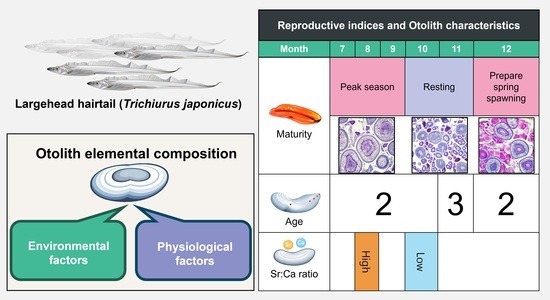
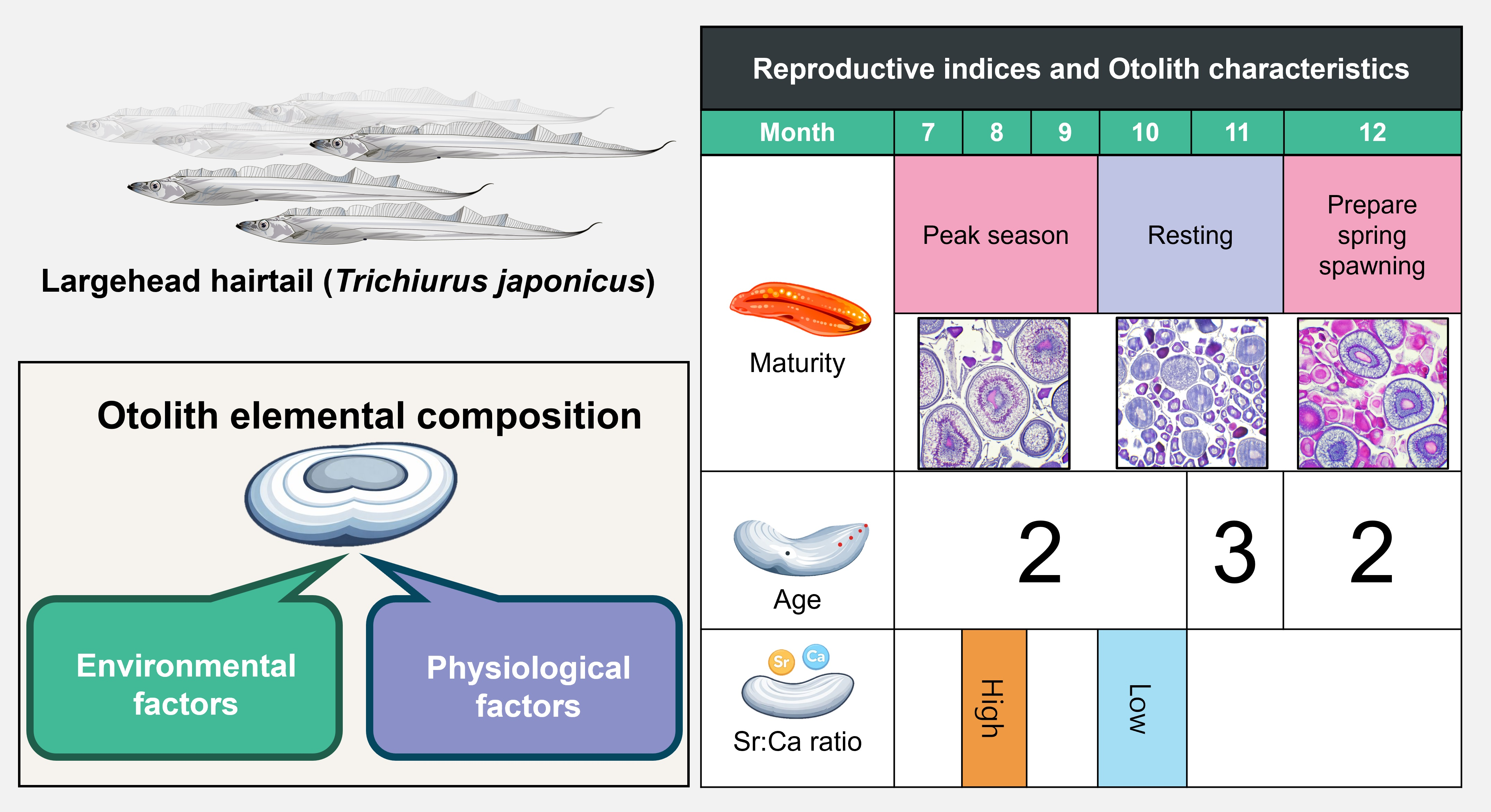
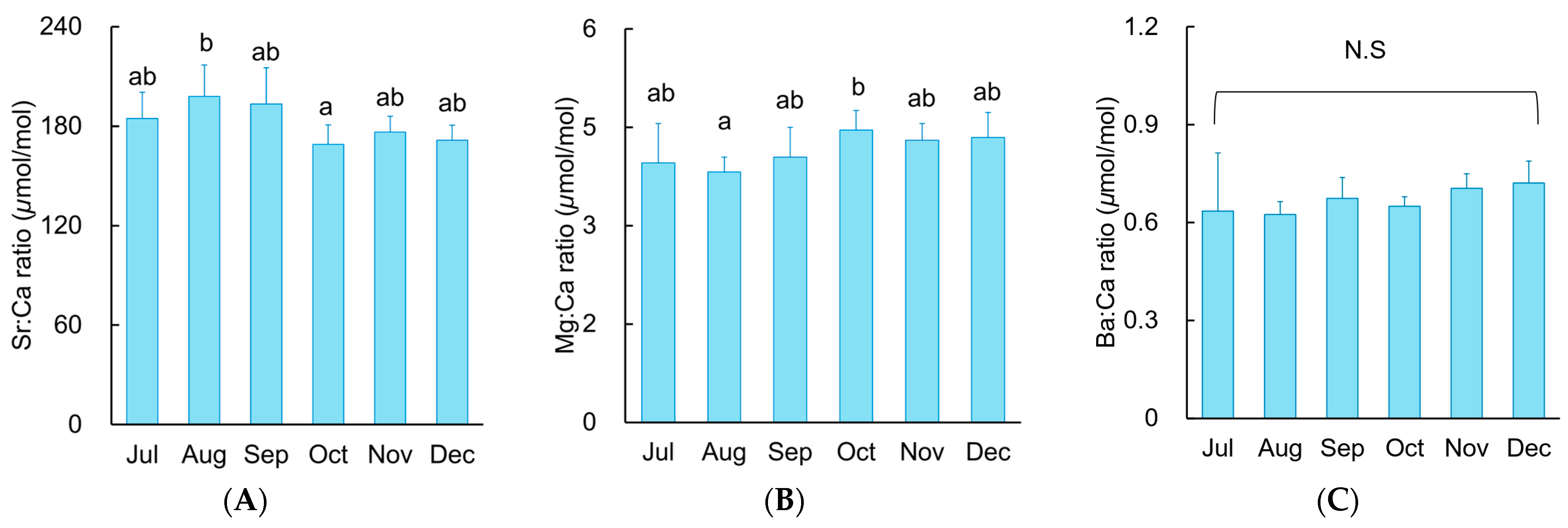
The largehead hairtail (Trichiurus japonicus) is an economically important fish species distributed in East Asian waters; however, size- or stock-specific spawning traits in females remain poorly understood. In this study, we conducted an integrated analysis of reproductive indices, otolith growth characteristics, and otolith elemental ratios in female T. japonicus collected from July to December through local commercial landings based on handline fisheries operating in waters adjacent to Jeju Island, Korea. In medium-sized females (approximately 2–3 years old), spawning activity peaked during summer, coinciding with significantly elevated otolith Sr:Ca ratios. This pattern indicates that reproductive maturation is closely associated with otolith chemical composition and underscores the importance of considering physiological influences when interpreting otolith chemistry in relation to spawning periods. Variations in otolith growth indices and elemental signatures observed after September further suggest the possible coexistence of individuals with different early life histories, although this interpretation should be regarded as hypothesis-generating rather than conclusive. Overall, this study provides baseline information for integrating reproductive condition and otolith chemistry in T. japonicus and supports a more cautious interpretation of otolith-based ecological signals for fisheries resource assessment and management. Future work should quantitatively disentangle reproductive and environmental effects on otolith chemistry by integrating plasma Ca, reproductive status, and environmental data, thereby refining ecological interpretations and supporting evidence-based seasonal fisheries management.
Keywords: otolith chemistry; LA-ICP-MS; Sr:Ca; reproductive cycle; fish physiology otolith chemistry; LA-ICP-MS; Sr:Ca; reproductive cycle; fish physiology
Graphical Abstract