
Article

Effects of Different Application Strategies of Copper-Loaded Montmorillonite on Growth, Intestinal Histology, and Rearing-Water Quality in Penaeus monodon

1
Fisheries College, Tianjin Agricultural University, 22 Jinjing Road, Tianjin 300384, China
2
South China Sea Fisheries Research Institute, Chinese Academy of Fishery Sciences/Key Laboratory of South China Sea Fishery Resources Exploitation and Utilization, Ministry of Agriculture and Rural Affairs, Guangzhou 510300, China
3
State Key Laboratory of Biocontrol, Southern Marine Science and Engineering Guangdong Laboratory (Zhuhai), School of Life Sciences, Sun Yat-sen University, Guangzhou 510275, China
4
Tianjin Key Laboratory of Aqua-Ecology and Aquaculture, 22 Jinjing Road, Tianjin 300384, China
*
Authors to whom correspondence should be addressed.
These authors contributed equally to this work.
Fishes 2026, 11(1), 63; https://doi.org/10.3390/fishes11010063 (registering DOI)
Submission received: 20 November 2025 / Revised: 13 January 2026 / Accepted: 16 January 2026 / Published: 18 January 2026
(This article belongs to the Special Issue Diet and Intestinal Microbiota of Fish)

Abstract

Penaeus monodon is widely cultured in Asia; however, intensive farming practices often result in water-quality deterioration and compromised production performance. Copper-loaded montmorillonite (Cu-MMT) is a functional additive with adsorption and antimicrobial properties, yet the relative effectiveness of different application strategies remains insufficiently evaluated. In this study, 270 shrimp were assigned to three treatments: a control group (KZ), water application of Cu-MMT (PZ), and dietary inclusion of Cu-MMT (BZ). Juvenile Penaeus monodon with an initial body weight of 3.25 ± 0.15 g were used in the trial. Growth performance, intestinal histology, and rearing-water quality were assessed over a 56-day culture period. Shrimp in the BZ group exhibited a significantly higher weight gain rate (311.88 ± 38.17%) and survival rate (88.04%) than those in the KZ (247.45 ± 32.82%; 76.67%) and PZ (286.49 ± 29.78%; 83.33%) groups (p < 0.05). Intestinal histological observations revealed treatment-associated differences in morphology, with more pronounced intestinal enlargement observed in the PZ group, whereas the BZ group exhibited a more moderate intestinal architecture. Water-quality analyses showed that dietary Cu-MMT supplementation was associated with higher dissolved oxygen levels and lower concentrations of total ammonia nitrogen, sulfide, and dissolved iron, particularly during the later stages of the experiment. Overall, these results indicate that dietary inclusion of Cu-MMT provides more favorable outcomes than water application in improving growth performance and rearing-water quality in P. monodon culture under the experimental conditions tested. These findings highlight the importance of application strategy when evaluating functional additives in shrimp aquaculture.
Key Contribution: In P. monodon, dietary copper-loaded montmorillonite outperformed water application—boosting growth and survival, preserving intestinal integrity, and improving water quality—whereas water application of Cu-MMT showed stress-linked hyperplasia with poorer performance.

1. Introduction

Penaeus monodon (Decapoda: Penaeus), commonly known as the black tiger shrimp, is the largest species within the genus and an important target species for marine aquaculture [1]. It is widely cultured along the southeastern coast of China, throughout Southeast Asia, and in several African countries. In China alone, annual production reached approximately 138,000 tons in 2024, underscoring its economic importance [2,3]. However, intensive and high-density culture of P. monodon is frequently accompanied by water-quality deterioration and increased disease pressure, which can constrain growth performance and survival. As a result, improving water quality and maintaining stable rearing conditions through functional feed additives and management strategies has become a key focus in shrimp aquaculture.
Montmorillonite (MMT) is a natural layered silicate clay mineral characterized by a 2:1 structure composed of two tetrahedral silica sheets and one octahedral alumina sheet [4]. Owing to its high specific surface area and cation-exchange capacity, MMT has been widely used in aquaculture as both a feed additive and a water-quality conditioner. Previous studies have shown that dietary MMT can adsorb undesirable compounds such as mycotoxins, thereby mitigating their negative effects on growth and feed utilization [5]. In addition, MMT has been reported to reduce ammonia nitrogen and heavy metals in aquatic environments, contributing to improved water-quality conditions [6,7]. To enhance its functional properties, MMT is often modified through ion exchange or other chemical treatments. Among these modifications, copper-loaded montmorillonite (Cu-MMT) represents a typical inorganic derivative in which Cu2+ ions are incorporated into the interlayer spaces or surface of MMT [8,9]. This modification confers antimicrobial properties while largely preserving the adsorption capacity of the clay. Cu-MMT has been reported to inhibit common aquaculture pathogens, including Vibrio and Aeromonas species, thereby reducing disease risk in cultured aquatic animals [10,11]. Importantly, the layered structure of Cu-MMT enables a gradual release of Cu2+, which may prolong antimicrobial effects while avoiding excessive accumulation of free copper ions in the rearing environment [12]. As a result, Cu-MMT has attracted increasing interest as a multifunctional additive for aquaculture applications [13].
Despite these reported advantages, the effects of Cu-MMT on shrimp culture may depend strongly on the mode of application. In practice, Cu-MMT can be applied either by direct dispersion into the rearing water or by dietary inclusion, yet comparative information on how these different application strategies influence shrimp performance and water quality remains limited. In particular, there is a lack of studies directly comparing water application and feed-based delivery of Cu-MMT in P. monodon culture systems.
Therefore, the present study aimed to evaluate the effects of Cu-MMT on growth performance, intestinal histology, and rearing-water quality in P. monodon, with a specific focus on comparing two application strategies: direct water application and dietary inclusion. By systematically contrasting these approaches, this study seeks to clarify how application mode influences the outcomes of Cu-MMT use and to identify a more effective strategy for shrimp aquaculture. We hypothesized that the application pathway of Cu-MMT determines its distribution and persistence within the culture system and, consequently, its associations with shrimp performance and water quality. Specifically, dietary inclusion is expected to deliver Cu-MMT directly to the gastrointestinal tract and subsequently to feces, thereby increasing local contact with feed-derived intestinal contents and newly produced wastes at the sediment–water interface. This localized exposure is expected to be associated with reduced accumulation of oxygen-consuming/reduced metabolites (e.g., total ammonia nitrogen and sulfide) and more stable oxygen conditions, as well as a more stable intestinal structural phenotype, ultimately being associated with improved growth and survival compared with water application, which produces broader dispersion and continuous waterborne exposure.

2. Methods and Materials

2.1. Experimental Animals and Materials

The trial was conducted at the Shenzhen Experimental Base of the South China Sea Fisheries Research Institute, Chinese Academy of Fishery Sciences. Experimental shrimp (P. monodon) were collected from an earthen grow-out pond; feeding was ceased 24 h before the start of the trial. A total of 270 healthy, injury-free individuals of uniform size were selected (initial mean body weight 3.25 ± 0.15 g). Copper-loaded montmorillonite (Cu-MMT; Cu content 2% w/w) was purchased from Inner Mongolia Hezhengmei Biotechnology Co., Ltd. Cu-MMT was incorporated into the BZ diet using a top-coating method, with seawater used as the binding medium to facilitate uniform adhesion of the additive to the feed surface. The coated diets were air-dried at room temperature before use.

2.2. Husbandry and Experimental Design

To evaluate the effects of different Cu-MMT application methods, an 8-week rearing trial was conducted. Two hundred seventy healthy P. monodon juveniles of uniform size were randomly allocated to nine indoor tanks (300 L each). Three treatments were tested, each with three replicates (30 shrimp per tank): (i) Control (KZ): basal commercial diet; (ii) Water application (PZ): basal diet plus daily application of Cu-MMT to the culture water at 24.4 mg; (iii) Dietary inclusion (BZ): experimental diet supplemented with 0.5% Cu-MMT. For the BZ treatment, Cu-MMT was applied to the basal pellets using a seawater-based top-coating method. Briefly, the required amount of Cu-MMT was premixed with a small volume of seawater to obtain a homogeneous slurry. The slurry was then evenly sprayed onto the feed pellets while continuously mixing to ensure uniform coverage. Coated pellets were air-dried at room temperature until the surface was no longer tacky and then stored in sealed bags before use. In this process, seawater served as the wetting/adhesion medium to improve particle attachment on the pellet surface; the drying step was used to minimize detachment/leaching of Cu-MMT during feeding.
All groups were fed three times daily at 09:00, 15:00, and 21:00 at a feeding rate of 5% of total biomass. The ration was adjusted weekly based on measured body weight and apparent feed intake. For the PZ treatment, Cu-MMT was dispersed into the rearing water each morning (09:00) prior to the first feeding. The feeding trial was conducted under controlled environmental conditions. Seawater salinity was maintained at 28 ppt throughout the experiment. A photoperiod of 12 h light:12 h dark was applied using an automatic timer. Continuous aeration was provided via airstones in each tank to ensure adequate oxygen supply. Water temperature was maintained at 30 ± 2 °C, and pH was kept within the range of 7.0–8.0. Uneaten feed and feces were siphoned daily. To maintain water quality, approximately one-third of the rearing water was renewed every five days throughout the experimental period.
For the PZ treatment, Cu-MMT was dispersed into each tank at 24.4 mg/day. Water samples were collected immediately after dosing and 24 h later to measure dissolved Cu. The measured Cu concentration after dosing ranged 0.018–0.025 mg/L, decreasing to 0.006–0.009 mg/L after 24 h. To characterize copper release from Cu-MMT, a separate leaching trial was conducted in 30 ppt seawater. Dissolved Cu was measured over 48 h. Cu exhibited a slow-release pattern, with approximately 11–14% of total Cu released within 24 h and no evidence of spike toxicity.

2.3. Growth Performance

After the 8-week trial, feed was withdrawn for 24 h. Shrimp were netted from the tanks, survivors were counted, and individual body weight was measured to 0.01 g. For each tank (replicate), weight-gain rate (WGR) and survival rate (SR) were calculated as follows:
W G R ( % ) = 100 × W f W i W i
S R ( % ) = 100 × N f N i
where W i is the initial mean body weight per tank (g), W f is the final mean body weight per tank (g), N i is the number of shrimp stocked, and Nf is the number of survivors at harvest. Treatment means were obtained from the three replicate tanks.

2.4. Intestinal Histology

Images were examined under a light microscope with scale bars included. For intestinal histology, three shrimp per tank were sampled (n = 3 per treatment). Shrimp selected for histology were apparently healthy and showed no visible signs of imminent molting (e.g., soft shell), to reduce potential molting-related variability. Apparently healthy P. monodon of uniform size were randomly selected from each tank at the end of the feeding trial, anesthetized on ice, and dissected under aseptic conditions on an ice-chilled dissection plate. To preserve tissue integrity given the small body size and fragile intestinal structure, intact mid- to hindgut segments were carefully excised in toto using fine micro-forceps. The intestinal lumen was gently rinsed with ice-cold phosphate-buffered saline (PBS) to remove residual contents without damaging the mucosal surface. Tissues were immediately immersed in 4% paraformaldehyde (PFA) and fixed at 4 °C for 24 h.
After fixation, samples were dehydrated through a graded ethanol series, cleared in xylene, embedded in paraffin, and sectioned using a rotary microtome. Serial sections (approximately 5 μm thickness) were mounted on glass slides and stained with hematoxylin and eosin (H&E) following standard procedures. Stained sections were examined and photographed using a light microscope. Images were acquired under consistent magnification settings across treatments, and scale bars were included in all micrographs. For each shrimp, multiple non-overlapping fields from comparable intestinal regions were recorded to ensure representative visualization of mucosal architecture.

2.5. Water-Quality Analyses

To ensure a stable and consistent rearing environment, water quality in each tank was monitored throughout the 8-week trial. Sampling was conducted every 14 days at 18:00 to minimize diel variation. Mid-water samples were collected from each tank at a consistent depth using clean sampling bottles, avoiding disturbance of bottom sediments. Key water-quality parameters, including dissolved oxygen (DO), total ammonia nitrogen (TAN), sulfide, copper (Cu), and iron (Fe), were determined using standard colorimetric methods with a water-quality analyzer and commercial assay kits, strictly following the manufacturer’s instructions (Wuxi Aokedan Biotechnology Co., Ltd., Wuxi, China). All measurements were performed in triplicate at the tank level (n = 3 tanks per treatment), and results are reported in mg/L. Water temperature, pH, and salinity were recorded concurrently at each sampling time using a portable multiparameter meter.
To improve analytical reliability, the analyzer was calibrated according to the kit requirements prior to measurement, and blank controls were included when applicable. All water samples were processed immediately after collection or stored at 4 °C and analyzed within the time window recommended by the kit manufacturer to minimize changes in analyte concentration.

2.6. Statistical Analysis

Data are presented as mean ± SD. Prior to analysis, datasets were tested for normality and homogeneity of variance. Differences among treatments were evaluated using one-way analysis of variance (ANOVA) followed by post hoc multiple comparisons. Statistical significance was accepted at p < 0.05. Letter groupings were used in figures and tables to indicate significant differences among treatments. All statistical analyses were performed using SPSS 19.0 (IBM Corp., Armonk, NY, USA) and GraphPad Prism 9.5 (GraphPad Software, San Diego, CA, USA).

3. Results

3.1. Effects of Different Application Methods on Growth Performance of P. monodon

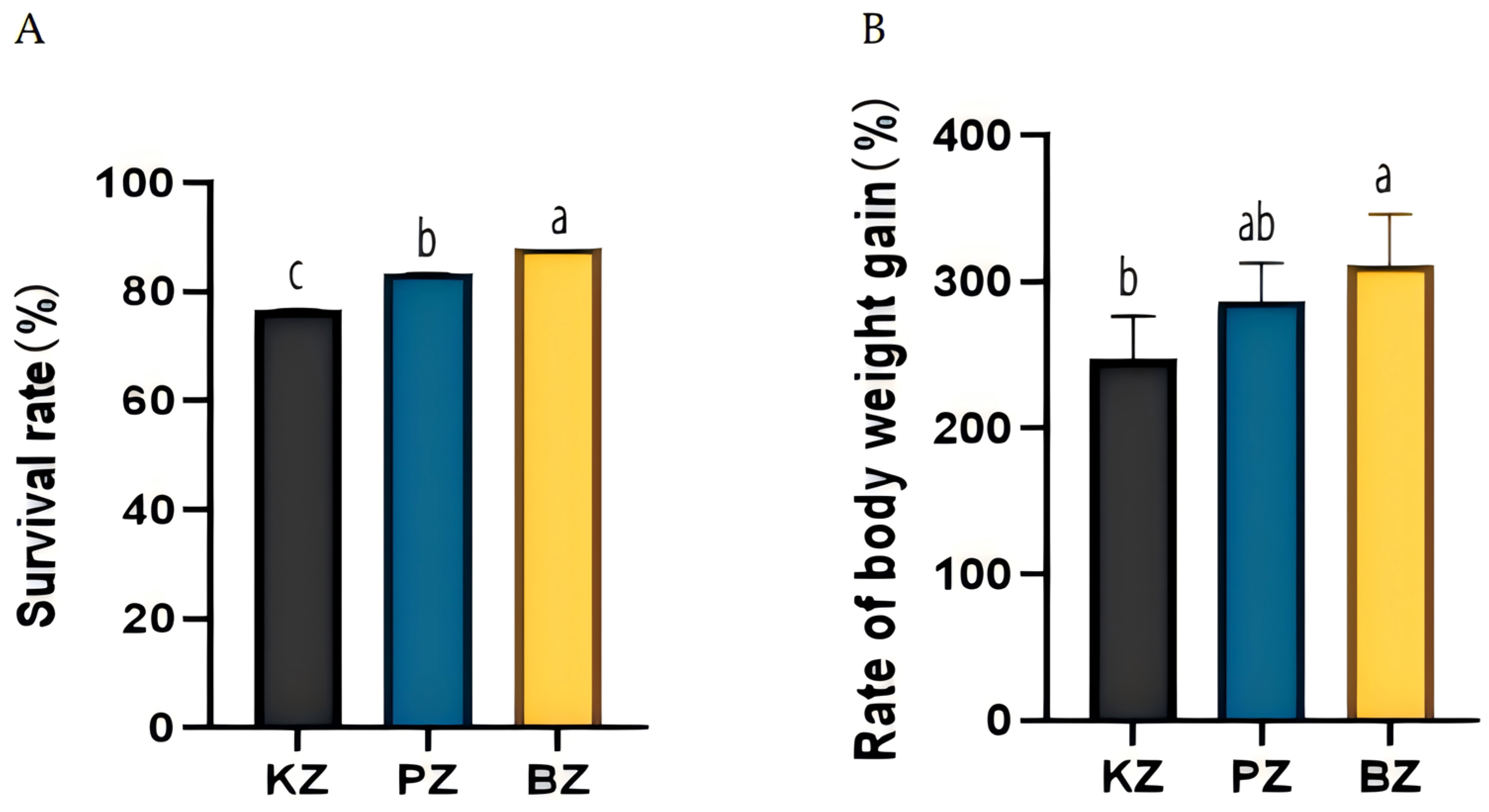
As shown in Figure 1, SR and WGR differed among treatments. The BZ group exhibited the highest WGR, with a mean value of 311.88 ± 38.17%, which was significantly higher than that of the KZ group (247.45 ± 32.82%, p < 0.05). The PZ group showed an intermediate WGR (286.49 ± 29.78%), which did not differ significantly from either KZ or BZ (Figure 1B). Survival rate followed a similar pattern (Figure 1A). The lowest SR was observed in the KZ group (76.67%), whereas survival increased to 83.33% in the PZ group and further to 88.04% in the BZ group. Post hoc pairwise comparisons indicated that SR differed significantly among all three treatments (p < 0.05). Across all treatments, SR remained above 70%, indicating generally stable survival conditions. Data are presented as means ± SD (n = 3 tanks per treatment).

3.2. Effects of Different Application Methods on Intestinal Histomorphology of P. monodon

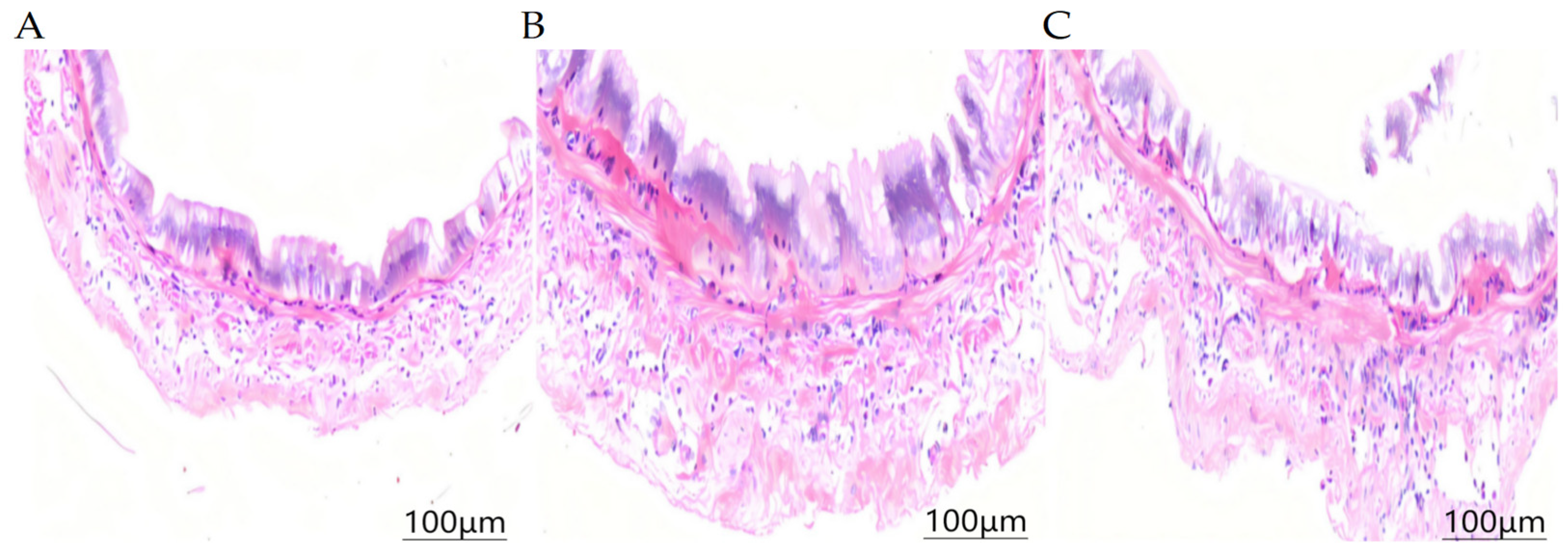
As shown in Figure 2, dietary Cu-MMT supplementation was associated with noticeable differences in intestinal histological architecture among treatments. Compared with the control group KZ (Figure 2A), fish exposed to Cu-MMT, particularly those in the PZ group (Figure 2B), exhibited longer intestinal folds and a thicker intestinal wall. In the PZ group, the mucosa was characterized by relatively tall and closely arranged folds with a continuous epithelial lining and reduced inter-fold spacing, resulting in a denser mucosal appearance than that observed in KZ and BZ (Figure 2C). In contrast, intestinal folds in the KZ group appeared shorter and more loosely arranged, and the intestinal wall was comparatively thinner. The BZ group displayed an intermediate histological pattern, with fold length and wall thickness falling between those observed in KZ and PZ. Overall, these histological observations indicate treatment-associated variation in intestinal morphology, with more pronounced structural enlargement observed in the PZ treatment. These differences are descriptive in nature and reflect alterations in tissue architecture rather than direct evidence of functional changes.

3.3. Effects of Different Application Methods on Rearing-Water Quality

3.3.1. Dissolved Oxygen (DO)

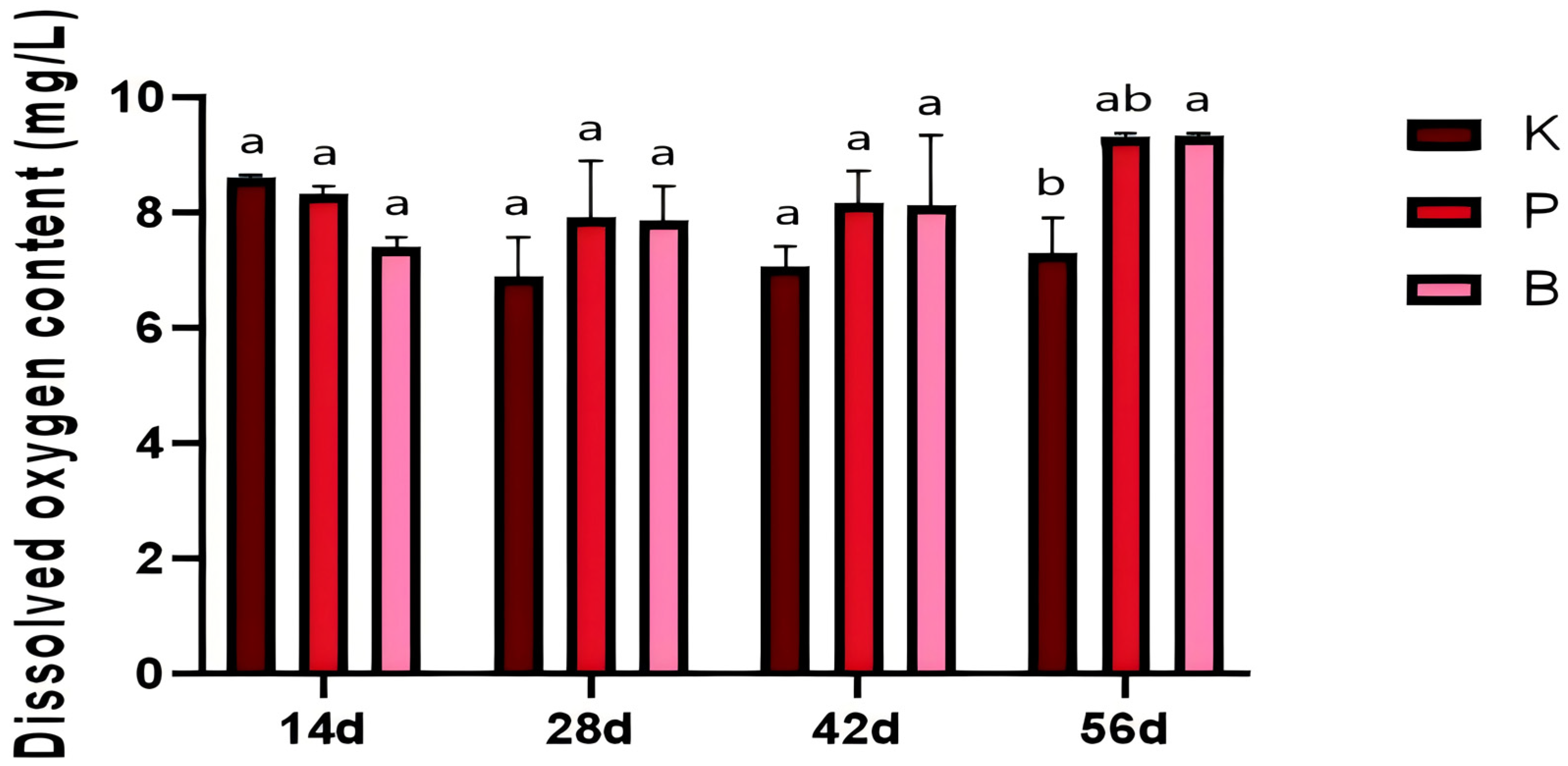
As shown in Figure 3, DO concentrations remained relatively high throughout the experimental period. No significant differences among treatments were detected at 14, 28, or 42 days (p > 0.05). At 56 days, DO in BZ was significantly higher than in KZ (p < 0.05), while PZ showed intermediate values and did not differ significantly from either KZ or BZ. Overall, DO tended to be higher in BZ during the later stage of the culture period.

3.3.2. Total Ammonia Nitrogen (TAN)

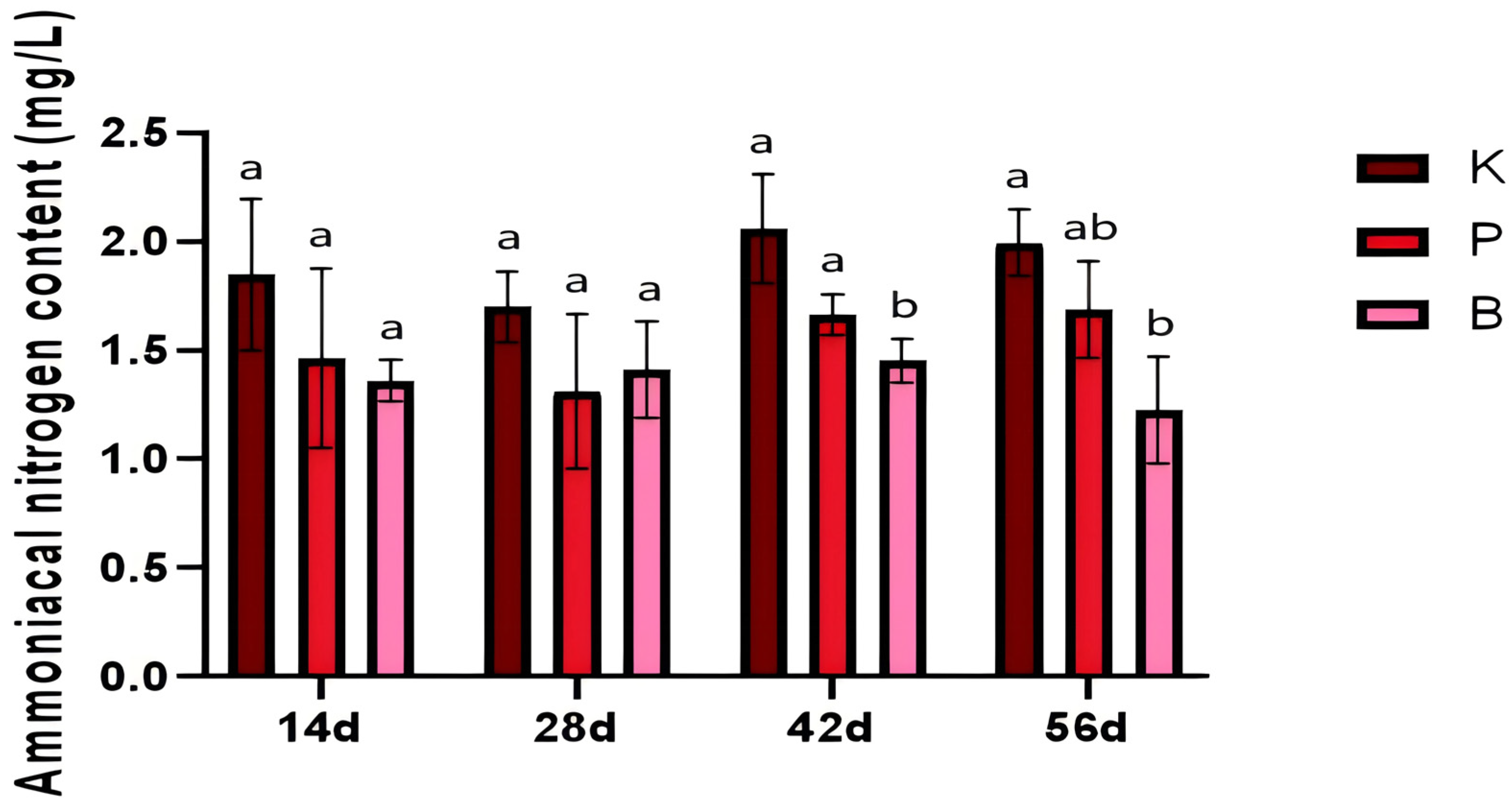
As shown in Figure 4, TAN concentrations differed among treatments during the culture period. No significant differences were detected at 14 and 28 days (p > 0.05). At 42 days, TAN in BZ was significantly lower than in KZ and PZ (p < 0.05). At 56 days, BZ remained lower than KZ, whereas PZ showed intermediate values and did not differ significantly from either KZ or BZ. Overall, TAN tended to be lower in BZ during the later stage of the culture period.

3.3.3. Sulfide

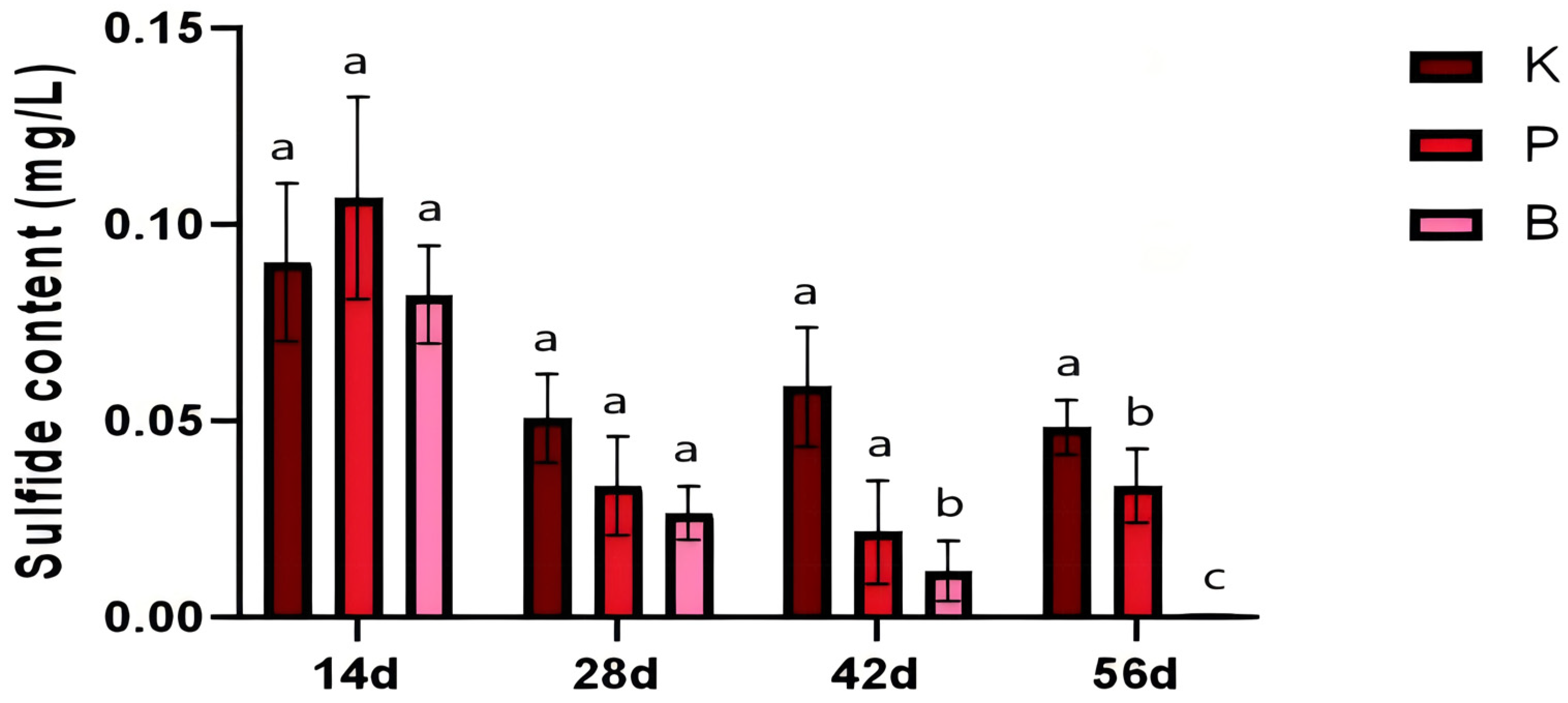
As shown in Figure 5, sulfide concentrations in the rearing water varied among treatments during the experimental period. At 14 and 28 days, sulfide concentrations did not differ significantly among treatments. Thereafter, sulfide concentrations decreased over time in all groups, with treatment-associated differences becoming apparent during the later stages of the experiment. At 42 days, sulfide levels in the BZ group were significantly lower than those in the KZ and PZ groups (p < 0.05). By 56 days, sulfide concentrations differed significantly among all three treatments, with the highest values observed in the KZ group, intermediate values in the PZ group, and the lowest values in the BZ group. Overall, these results indicate treatment-associated variation in sulfide concentration, with lower sulfide levels observed in the BZ group during the later stages of the culture period.

3.3.4. Heavy Metals

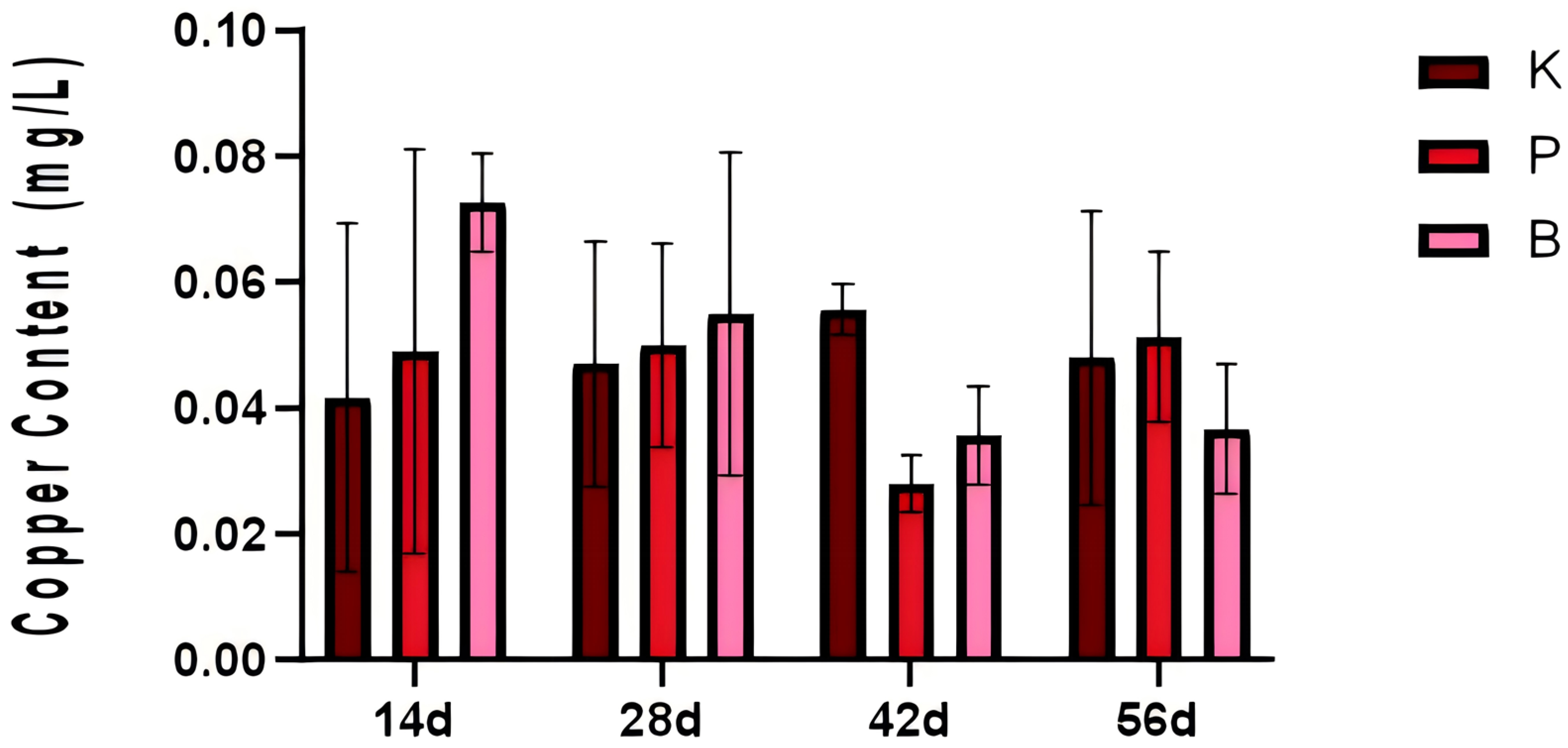
As shown in Figure 6, Cu concentrations in the rearing water remained low across all treatments throughout the experimental period. At each sampling time, Cu concentrations in the PZ and BZ groups tended to be slightly higher than those in the KZ group; however, no significant differences among treatments were detected at any time point. Overall, Cu concentrations fluctuated within a relatively narrow range in all treatments, and no significant accumulation was observed during the culture period.
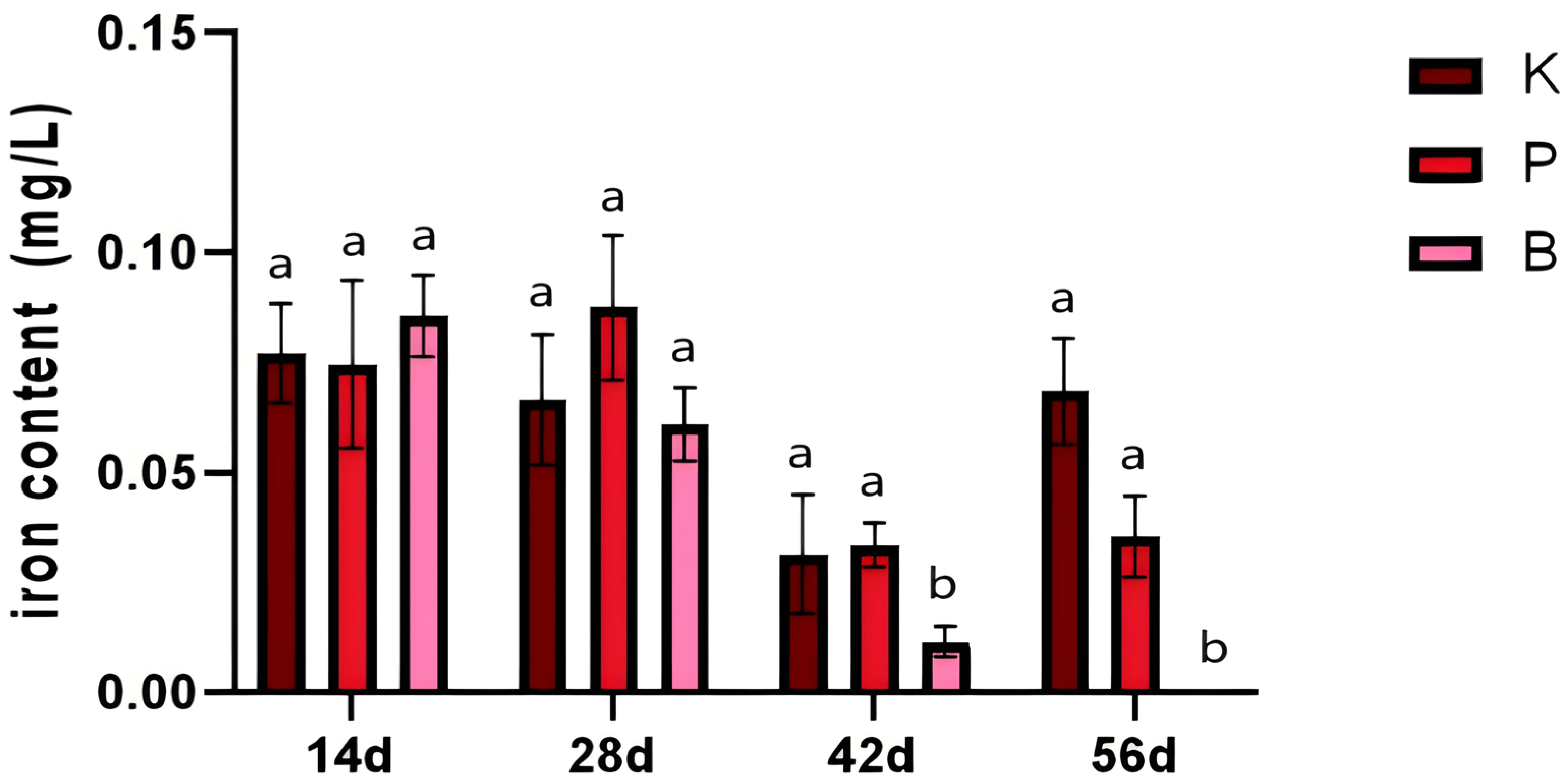
As shown in Figure 7, Fe concentrations in the rearing water varied among treatments over the experimental period. At 14 and 28 days, Fe concentrations were similar among the KZ, PZ, and BZ groups. From 42 days onward, treatment-associated differences became apparent. At both 42 and 56 days, Fe concentrations in the BZ group were significantly lower than those in the KZ and PZ groups (p < 0.05), whereas no significant differences were detected between the KZ and PZ groups. Overall, these results indicate treatment-associated variation in dissolved Fe concentration, with lower Fe levels observed in the BZ group during the later stages of the culture period.

4. Discussion

Survival rate is widely regarded as a key integrative indicator of aquaculture performance, reflecting the combined effects of rearing conditions and system management [14]. In the present study, dietary inclusion of Cu-MMT was consistently associated with higher survival compared with both the control and water-application treatments, indicating treatment-related differences in overall production outcomes. This survival advantage is best interpreted as the cumulative outcome of multiple treatment-associated factors rather than the result of a single causal mechanism. Under dietary delivery, Cu-MMT is introduced directly into the digestive tract, where the montmorillonite matrix may adsorb undesirable compounds present in the feed, potentially reducing their availability in the intestinal lumen [15]. In addition, gradual Cu2+ release may influence the intestinal microenvironment, which has been suggested to affect microbial interactions in the gut [16]. It should be emphasized, however, that functional immune responses and microbial activity were not directly assessed in the present study; therefore, mechanistic interpretation remains cautious. Although shifts in microbial composition have been reported in related contexts [17], the higher survival observed here is most appropriately summarized as being associated with concurrent differences in intestinal morphology and water-quality conditions. Overall, these results support dietary Cu-MMT supplementation as a practical management option to enhance production stability under the experimental conditions tested [18].
Intestinal histological observations revealed clear differences between application strategies. The PZ was associated with increased intestinal fold length and wall thickness compared with BZ. Rather than being interpreted as direct evidence of improved intestinal condition, these structural features are more appropriately viewed as treatment-associated morphological responses. Under the PZ strategy, Cu-MMT particles remain suspended in the water column and can be continuously encountered via respiration and ingestion, potentially resulting in repeated interactions with the intestinal epithelium [19]. Sustained exposure of this type has been reported to be associated with epithelial tissue remodeling and intestinal structural enlargement in aquatic organisms and is often discussed as an adaptive or compensatory response to persistent environmental stimuli [20]. However, morphological enlargement alone does not provide sufficient information to infer functional efficiency. In the present study, despite the more pronounced intestinal enlargement observed under PZ, this treatment exhibited lower specific growth rate and survival than BZ, indicating that increased intestinal size did not correspond to improved production performance. In contrast, dietary inclusion delivers Cu-MMT directly to the intestinal lumen and limits its persistence in the surrounding water, resulting in a more moderate intestinal architecture together with higher growth performance and survival [21]. When considered alongside the lower TAN, sulfide, and Fe concentrations and higher dissolved oxygen levels observed under BZ, the intestinal morphology in this group may be regarded as a structurally economical phenotype that is consistent with stable production performance under the experimental conditions [22,23].
Water-quality patterns further distinguished the two Cu-MMT application strategies and provide important context for interpreting treatment-associated differences in performance. Dietary inclusion was associated with lower concentrations of TAN, sulfide, and dissolved iron, together with relatively higher DO levels during the later stages of the culture period. These concurrent trends indicate treatment-associated differences in nitrogen and sulfur dynamics within the rearing system. In intensive aquaculture environments, DO availability is strongly influenced by microbial degradation of organic matter and oxygen-demanding processes such as nitrification and the oxidation of reduced nitrogen and sulfur compounds, including TAN and sulfide [24]. The observation of lower TAN and sulfide concentrations under dietary Cu-MMT supplementation is consistent with reduced biochemical oxygen demand, which may contribute to the maintenance of higher DO levels [25]. Accordingly, DO differences among treatments are best interpreted as an indirect outcome of treatment-associated variation in the accumulation of reduced metabolites, rather than as a direct physicochemical effect of Cu-MMT.
The TAN results are also relevant for understanding the broader water-quality improvements associated with dietary delivery. TAN originates primarily from the microbial mineralization of organic nitrogen and is widely recognized as a major environmental constraint in intensive aquaculture systems [26]. In pond-based culture, uneaten feed and shrimp excreta accumulate on the pond bottom, where microbial decomposition generates reduced nitrogen and sulfur compounds, including TAN and sulfide, often leading to deteriorated conditions at the sediment–water interface [27]. Under the dietary-inclusion regime, Cu-MMT is ingested with the feed and subsequently released in close spatial and temporal association with fecal material. This exposure pathway places Cu-MMT in proximity to sites where nitrogenous and sulfurous metabolites are generated. Owing to its high specific surface area and cation-exchange capacity, Cu-MMT may adsorb a portion of TAN released during fecal decomposition [28]. In addition, gradual Cu2+ release may influence microbial activity in the immediate microenvironment, potentially affecting the accumulation dynamics of TAN and sulfide [29]. Consistent with these considerations, dietary inclusion exhibited lower TAN and sulfide concentrations than water application, particularly during the later stages of the culture period, indicating treatment-associated differences in the buildup of reduced nitrogen and sulfur species at the sediment–water interface.
Differences in exposure pathways also help contextualize the contrast between PZ and BZ. In the PZ treatment, Cu-MMT was dispersed directly into the water column, resulting in continuous availability of dissolved Cu2+ released through desorption and ion-exchange processes and sustained waterborne copper exposure via respiratory and oral pathways [30,31]. Prolonged exposure to elevated copper concentrations has been reported to require physiological regulation and detoxification in aquatic organisms [32]. Although such processes were not examined here, continuous water exposure represents a distinct pathway under PZ and may contribute to differences in overall system conditions compared with dietary inclusion. In contrast, under dietary inclusion, Cu-MMT is delivered primarily to the gastrointestinal tract and subsequently eliminated with feces, which limits the release of dissolved copper into the surrounding water and reduces continuous waterborne Cu availability [33]. Previous studies indicate that copper supplied via the diet tends to be retained within biological tissues or associated with particulate fractions rather than accumulating as dissolved copper in the water column, suggesting relatively low levels of Cu leakage from feed-based sources [34,35]. Consequently, Cu-MMT activity is spatially constrained to the intestinal lumen, where it may exert localized effects such as adsorption of undesirable compounds and modulation of the gut microenvironment [36,37]. When considered together with the water-quality results, these observations underscore the importance of application mode in determining the distribution and persistence of Cu-MMT within the culture system.
Finally, the reduced dissolved iron concentrations observed under dietary inclusion provide additional evidence of treatment-associated differences in sediment–water chemical conditions. Anoxic conditions in pond sediments are widely recognized as contributors to water-quality deterioration; under hypoxic or anoxic conditions, ferric iron (Fe3+) can be microbially reduced to more soluble ferrous forms (Fe2+), which may diffuse into the overlying water column [38]. Elevated dissolved iron is generally regarded as undesirable and often accompanies altered physicochemical conditions at the sediment–water interface. In the present study, dietary inclusion was associated with markedly lower dissolved iron levels together with lower sulfide concentrations compared with PZ and the control. These observations are consistent with differences in redox-related processes at the sediment–water interface among treatments. A relatively higher redox status may limit dissolved Fe2+ accumulation by reducing its formation and promoting oxidation and retention in less soluble forms such as ferric hydroxides [39]. While redox potential was not directly measured, the concurrent reductions in sulfide and dissolved iron under dietary inclusion suggest moderated reductive conditions at the sediment–water interface, which is relevant for maintaining water-quality dynamics during intensive aquaculture operations.
Overall, the results were consistent with our hypothesis that the dietary inclusion strategy would outperform water application. Compared with KZ and PZ, BZ showed higher production performance (WGR: 311.88 ± 38.17%; SR: 88.04%) and more favorable late-stage water quality (higher DO and lower TAN, sulfide, and dissolved Fe). In contrast, PZ generally showed intermediate performance and less consistent improvements in water-quality indicators. These findings emphasize that the delivery pathway is a key determinant of the effectiveness of Cu-MMT in P. monodon culture. These findings support our hypothesis that delivery pathway influences Cu-MMT distribution and is associated with distinct water-quality trajectories and production outcomes, with dietary inclusion showing stronger associations with reduced TAN/sulfide accumulation and improved survival.
Given the relatively small sample size and the focus on general architectural features, the present histological observations should be interpreted as indicative rather than definitive. Future studies incorporating more extensive quantitative histomorphometry, together with functional and physiological endpoints, would be valuable for clarifying the biological significance of the observed structural differences and for further evaluating application-dependent effects under broader farming conditions.

5. Conclusions

This study demonstrates that application strategy plays a critical role in determining the outcomes of Cu-MMT use in Penaeus monodon culture. Compared with water application, dietary inclusion of Cu-MMT was consistently associated with higher weight gain and survival, together with treatment-associated differences in intestinal morphology and improved rearing-water quality, including lower concentrations of total ammonia nitrogen, sulfide, and dissolved iron, as well as higher dissolved oxygen levels. Dietary delivery introduces Cu-MMT directly via the feed, thereby aligning its activity more closely with nutrient intake and waste-generation processes within the culture system. Although the underlying physiological mechanisms were not directly assessed, the observed patterns suggest that dietary inclusion provides a more controlled and localized mode of action than continuous dispersion in the water column. Overall, these findings indicate that dietary inclusion of Cu-MMT represents a more effective application strategy under the experimental conditions tested and provide practical guidance for optimizing its use in P. monodon aquaculture.

Author Contributions

Conceptualization, S.J. and X.S.; Methodology, J.W., Y.D. and F.Z.; Investigation (animal trial, sampling, and laboratory assays), J.W., Y.D., F.Z., J.S., Q.Y., Y.L., J.H. and L.Y.; Resources and project logistics, J.S., Q.Y., Y.L., J.H. and L.Y.; Data curation, J.W. and Y.D.; Formal analysis and statistics, J.W., Y.D. and X.S.; Visualization, J.W. and Y.D.; Writing—original draft, J.W. and Y.D.; Writing—review and editing, X.S., S.J. and F.Z.; Supervision, S.J. and X.S.; Project administration, S.J.; Funding acquisition, S.J. All authors have read and agreed to the published version of the manuscript.

Funding

The National Key Research and Development Program of China (2022YFD2400104), Innovative Team Building Project of Guangdong Modern Agricultural Industrial Technology System (2024CXTD25), earmarked fund for CARS-48, Central Public-interest Scientific Institution Basal Research Fund, CAFS (Grant Nos. 2023TD34 and 2025XT0703), and Guangdong Special Project: Science & Technology Achievements in Counties and Towns for Balanced Regional Development (2025B0202010003).

Institutional Review Board Statement

The present study was approved by the Animal Care and Use Committee of South China Sea Fisheries Research Institute, Chinese Academy of Fishery Sciences (approval number SCSFRI2021-0731; approval date: 15 June 2021). All procedures were strictly carried out according to the regulations and guidelines approved by the committee.

Data Availability Statement

Data are contained within the article.

Conflicts of Interest

The authors declare no conflicts of interest.

References

  1. Liu, M.; Zhang, H.T.; Sun, G.W.; Wang, Z.D.; Jiang, W.L. Research Progress on Nutritional Requirements and Functional Feed Additives of Black Tiger Shrimp (Penaeus monodon). Curr. Fish. 2021, 46, 74–81. [Google Scholar]
  2. Tsutsui, I.; Aue-Umneoy, D.; Pinphoo, P.; Thuamsuwan, W.; Janeauksorn, K.; Meethong, G.; Keattanaworada, P.; Songphatkaew, J.; Ganmanee, M.; Abe, O.; et al. Use of a Filamentous Green Alga (Chaetomorpha sp.) and Microsnail (Stenothyra sp.) as Feed at an Early Stage of Intensive Aquaculture Promotes Growth Performance, Artificial Feed Efficiency, and Profitability of Giant Tiger Prawn (Penaeus monodon). PLoS ONE 2020, 15, e0244607. [Google Scholar] [CrossRef]
  3. N’Souvi, K.; Sun, C.; Che, B.; Vodounon, A. Shrimp Industry in China: Overview of Trends in Production, Imports and Exports over the Last Two Decades, Challenges, and Outlook. Front. Sustain. Food Syst. 2024, 8, 1287034. [Google Scholar] [CrossRef]
  4. Brigatti, M.F.; Galán, E.; Theng, B.K.G. Structure and Mineralogy of Clay Minerals. In Developments in Clay Science; Handbook of Clay Science; Elsevier: Amsterdam, The Netherlands, 2013; pp. 21–81. [Google Scholar] [CrossRef]
  5. Alinezhad, S.; Faridi, M.; Falahatkar, B.; Nabizadeh, R.; Davoodi, D. Effects of Nanostructured Zeolite and Aflatoxin B1 on Growth Performance, Immune Parameters and Pathological Conditions of Rainbow Trout (Oncorhynchus mykiss). Fish Shellfish. Immunol. 2017, 70, 648–655. [Google Scholar] [CrossRef]
  6. Arabmofrad, S.; Lazzara, G.; Miller, R.; Jafari, S.M. Surface Modification of Bentonite and Montmorillonite as Novel Nano-Adsorbents for the Removal of Phenols, Heavy Metals and Drug Residues. Adv. Colloid Interface Sci. 2024, 334, 103334. [Google Scholar] [CrossRef]
  7. Zhang, X.; Li, M.; Tao, X.; Yang, Y.; Sun, P.; Jin, M.; Zhou, Q.; Jiao, L. Effects of Dietary Montmorillonite Supplementation on Growth Performance, Antioxidant Capacity, Intestinal Barrier and Microbiota Composition in Marsupenaeus japonicus. Aquaculture 2022, 557, 738330. [Google Scholar] [CrossRef]
  8. Varadwaj, G.; Parida, K.; Nyamori, V.O. Transforming Inorganic Layered Montmorillonite into Inorganic–Organic Hybrid Materials for Various Applications: A Brief Overview. Inorg. Chem. Front. 2016, 3, 1100–1111. [Google Scholar] [CrossRef]
  9. Bagchi, B.; Kar, S.; Dey, S.; Bhandary, S.; Roy, D.; Mukhopadhyay, T.; Das, S.; Nandy, P. In Situ Synthesis and Antibacterial Activity of Copper Nanoparticle–Loaded Natural Montmorillonite Clay Based on Contact Inhibition and Ion Release. Colloids Surf. B Biointerfaces 2013, 108, 358–365. [Google Scholar] [CrossRef] [PubMed]
  10. Xia, F.; Xu, P.; Zhang, B.; Zhang, Y.; Liu, X.; Zhang, Y.; Wang, Q.; Shao, S. Identification of a Novel Transcriptional Regulator, CorR, for Copper Stress Response in Edwardsiella piscicida. Appl. Environ. Microbiol. 2023, 89, e00899-23. [Google Scholar] [CrossRef]
  11. Nor, S.; Ibrahim, D.; Kassim, M.; Daud, S.; Salikin, N.; Rashid, S. Antimicrobial Activity of Mangrove Bark Tannins and Copper Ions on Marine Bacteria. Asia Pac. J. Mol. Biol. Biotechnol. 2024, 32, 28–38. [Google Scholar] [CrossRef]
  12. Jiao, L.; Lin, F.; Cao, S.; Wang, C.; Wu, H.; Shu, M.; Hu, C. Preparation, Characterization, Antimicrobial and Cytotoxicity Studies of Copper/Zinc-Loaded Montmorillonite. J. Anim. Sci. Biotechnol. 2017, 8, 33. [Google Scholar] [CrossRef]
  13. Daković, A.; Matijašević, S.; Rottinghaus, G.; Ledoux, D.; Butkeraitis, P.; Sekulić, Ž. Aflatoxin B1 Adsorption by Natural and Copper-Modified Montmorillonite. Colloids Surf. B Biointerfaces 2008, 66, 20–25. [Google Scholar] [CrossRef]
  14. Shan, X.; Li, K.; Stadler, P.; Borbor, M.; Reyes, G.; Solórzano, R.; Chamorro, E.; Bayot, B.; Cordero, O.X. Microbiome Determinants of Productivity in Aquaculture of Whiteleg Shrimp. Appl. Environ. Microbiol. 2025, 91, e02420-24. [Google Scholar] [CrossRef]
  15. Zhang, Q.; Zhang, Y.; Liu, S.; Wu, Y.; Zhou, Q.; Zhang, Y.; Zheng, X.; Han, Y.; Xie, C.; Liu, N. Adsorption of Deoxynivalenol by Pillared Montmorillonite. Food Chem. 2020, 343, 128391. [Google Scholar] [CrossRef]
  16. Ghosh, T.; Srivastava, S.; Gaurav, A.; Kumar, A.; Kumar, P.; Yadav, A.; Pathania, R.; Navani, N.K. A Combination of Linalool, Vitamin C, and Copper Synergistically Triggers Reactive Oxygen Species and DNA Damage and Inhibits Salmonella Typhi and Vibrio fluvialis. Appl. Environ. Microbiol. 2018, 85, e02487-18. [Google Scholar] [CrossRef]
  17. Farré, R.; Fiorani, M.; Rahiman, S.; Matteoli, G. Intestinal Permeability, Inflammation and the Role of Nutrients. Nutrients 2020, 12, 1185. [Google Scholar] [CrossRef] [PubMed]
  18. Thanomchaisanit, P.; Koiwai, K.; Osawa, Y.; Kuwahara, D.; Nohara, S.; Kondo, H.; Hirono, I. Astaxanthin Supplementation Enhances Low-Temperature Stress Tolerance, Immune-Related Genes, and Resistance to Vibrio parahaemolyticus in Whiteleg Shrimp (Penaeus vannamei). Fish. Sci. 2024, 90, 821–833. [Google Scholar] [CrossRef]
  19. Zhou, N.; Wang, Z.; Yang, L.; Zhou, W.; Qin, Z.; Zhang, H. Size-Dependent Toxicological Effects of Polystyrene Microplastics in Litopenaeus vannamei Using a Histomorphology, Microbiome, and Metabolic Approach. Environ. Pollut. 2022, 316, 120635. [Google Scholar] [CrossRef] [PubMed]
  20. Thorne, C.A.; Chen, I.; Sanman, L.E.; Cobb, M.H.; Wu, L.F.; Altschuler, S.J. Enteroid Monolayers Reveal an Autonomous WNT and BMP Circuit Controlling Intestinal Epithelial Growth and Organization. Dev. Cell 2018, 44, 624–633.e4. [Google Scholar] [CrossRef] [PubMed]
  21. Jiao, L.; Zhang, Q.; Wu, H.; Wang, C.; Cao, S.; Feng, J.; Hu, C. Influences of Copper/Zinc-Loaded Montmorillonite on Growth Performance, Mineral Retention, Intestinal Morphology, Mucosa Antioxidant Capacity, and Cytokine Contents in Weaned Piglets. Biol. Trace Elem. Res. 2018, 185, 356–363. [Google Scholar] [CrossRef]
  22. Bobba-Alves, N.; Juster, R.P.; Picard, M. The Energetic Cost of Allostasis and Allostatic Load. Psychoneuroendocrinology 2022, 146, 105951. [Google Scholar] [CrossRef]
  23. Li, X.; Wen, J.; Jiao, L.; Wang, C.; Hong, Q.; Feng, J.; Hu, C. Dietary Copper/Zinc-Loaded Montmorillonite Improved Growth Performance, Intestinal Barrier and Gut Microbiota in Weaned Piglets. J. Anim. Physiol. Anim. Nutr. 2021, 105, 1005–1014. [Google Scholar] [CrossRef]
  24. Beman, J.M.; Vargas, S.; Wilson, J.M.; Perez-Coronel, E.; Karolewski, J.S.; Vazquez, S.; Yu, A.; Cairo, A.; White, M.; Koester, I.; et al. Substantial Oxygen Consumption by Aerobic Nitrite Oxidation in Oceanic Oxygen Minimum Zones. Nat. Commun. 2021, 12, 4930. [Google Scholar] [CrossRef] [PubMed]
  25. Ye, F.; Jia, G.; Wei, G.; Guo, W. A Multi-Stable Isotopic Constraint on Water Column Oxygen Sinks in the Pearl River Estuary, South China. Mar. Environ. Res. 2022, 178, 105643. [Google Scholar] [CrossRef]
  26. Lu, J.; Zhang, Y.; Wu, J.; Wang, J. Nitrogen Removal in Recirculating Aquaculture Water with High Dissolved Oxygen Using the SPN-Anammox-Denitrification System. Bioresour. Technol. 2020, 305, 123037. [Google Scholar] [CrossRef] [PubMed]
  27. Wu, L.; Ren, L.; Li, J.; Li, X.; Yang, S.; Song, Y.; Li, X. Maricultural-Solid-Waste–Derived Biochar Removes Eutrophic Nutrients and Enrofloxacin: Property, Mechanism, and Application. J. Hazard. Mater. 2021, 427, 128147. [Google Scholar] [CrossRef] [PubMed]
  28. Zango, Z.; Garba, A.; Garba, Z.; Zango, M.; Usman, F.; Lim, J. Montmorillonite for Adsorption and Catalytic Elimination of Pollutants from Wastewater: A State-of-the-Art Review. Sustainability 2022, 14, 16441. [Google Scholar] [CrossRef]
  29. Wu, G.; Lei, Y.; Wang, Y.; Yuan, X.; Tang, Y.; Chen, W.; Zeng, L. Quaternary Ammonium Salt–Based Cross-Linked Micelle with Copper Nanoparticles for Treatment of Sulfate-Reducing Bacteria Biofilm. React. Funct. Polym. 2022, 176, 105405. [Google Scholar] [CrossRef]
  30. Chen, J.; Lin, C.-Y. Toxicity of Copper Sulfate for Survival, Growth, Molting and Feeding of Juvenile Tiger Shrimp (Penaeus monodon). Aquaculture 2001, 192, 55–65. [Google Scholar] [CrossRef]
  31. Xian, J.-A.; Wang, A.-L.; Ye, C.-X.; Chen, X.; Wang, W.-N. Phagocytic Activity, Respiratory Burst, Cytoplasmic Free Ca2+ and Apoptosis of Haemocytes from Penaeus monodon under Acute Copper Stress. Comp. Biochem. Physiol. C Toxicol. Pharmacol. 2010, 152, 182–188. [Google Scholar] [CrossRef]
  32. Xing, Y.; Zhu, X.; Huang, J.; Nan, Y.; Duan, Y.; Zhang, J. Toxic Effects of Microplastics and Nitrite on Intestinal Histology, Digestion, Immunity, and Microbial Community of Shrimp (Litopenaeus vannamei). Mar. Pollut. Bull. 2024, 200, 116077. [Google Scholar] [CrossRef]
  33. Butt, U.R.; Lin, N.; Akhter, N.; Siddiqui, T.; Li, S.; Wu, B. Latest Developments in the Role of Probiotics, Prebiotics and Synbiotics in Shrimp Aquaculture. Fish Shellfish. Immunol. 2021, 114, 263–281. [Google Scholar] [CrossRef] [PubMed]
  34. Wang, L.; Wang, H.; Gao, C.; Wang, C.; Yan, Y.; Zhou, F. Dietary copper for fish: Homeostasis, nutritional functions, toxicity, and affecting factors. Aquaculture 2024, 740, 742089. [Google Scholar] [CrossRef]
  35. Wang, X.; Sun, H.; Zheng, Y.; Shao, X.; Ye, J. Effects of Dietary Copper Supplementation on Fish Growth: A Meta-Analysis. Biol. Trace Elem. Res. 2025, 203, 5827–5837. [Google Scholar] [CrossRef] [PubMed]
  36. Abdel-Latif, H.M.R.; Dawood, M.A.O.; Alagawany, M.; Faggio, C.; Nowosad, J.; Kucharczyk, D. Health Benefits and Potential Applications of Fucoidan from Brown Seaweeds in Aquaculture: An Updated Review. Fish Shellfish. Immunol. 2022, 120, 442–465. [Google Scholar] [CrossRef]
  37. Xia, M.S.; Hu, C.H.; Xu, Z.R. Effects of Copper-Bearing Montmorillonite on Growth Performance, Digestive Enzyme Activities, and Intestinal Microflora and Morphology of Male Broilers. Poult. Sci. 2004, 83, 1868–1875. [Google Scholar] [CrossRef]
  38. Singh, M.; Barman, A.S.; Devi, A.; Devi, A.; Pandey, P.K. Iron-Mediated Hematological, Oxidative and Histological Alterations in Freshwater Fish Labeo rohita. Ecotoxicol. Environ. Saf. 2019, 170, 87–97. [Google Scholar] [CrossRef]
  39. Robinson, T.; Latta, D.E.; Leddy, J.; Scherer, M.M. Redox Potentials of Magnetite Suspensions under Reducing Conditions. Environ. Sci. Technol. 2022, 56, 17454–17461. [Google Scholar] [CrossRef]
Figure 1. Growth performance of Penaeus monodon under different Cu-MMT application methods. (A) Survival rate (SR, %). (B) Weight gain rate (WGR, %). Data are means ± SD (n = 3 tanks per treatment). Different lowercase letters above bars indicate significant differences among treatments (p < 0.05).
Fishes 11 00063 g001
Figure 2. Intestinal histomorphology of P. monodon under different Cu-MMT application methods. (A) Control group (KZ); (B) water application of Cu-MMT (PZ); (C) dietary inclusion of Cu-MMT (BZ). Scale bar = 100 μm.
Fishes 11 00063 g002
Figure 3. DO concentration in the rearing water under different treatments during the culture period. Values are means ± SD (n = 3 tanks per treatment). Different lowercase letters above bars indicate significant differences among treatments at the same sampling time (p < 0.05); shared letters indicate no significant difference.
Fishes 11 00063 g003
Figure 4. TAN concentration in the rearing water under different treatments during the culture period. Values are means ± SD (n = 3 tanks per treatment). Different lowercase letters above bars indicate significant differences among treatments at the same sampling time (p < 0.05); shared letters indicate no significant difference.
Fishes 11 00063 g004
Figure 5. Sulfide concentration in the rearing water under different treatments during the culture period. Values are means ± SD (n = 3 tanks per treatment). Different lowercase letters above bars indicate significant differences among treatments at the same sampling time (p < 0.05); shared letters indicate no significant difference.
Fishes 11 00063 g005
Figure 6. Cu concentration in the rearing water under different treatments during the culture period. Values are means ± SD (n = 3 tanks per treatment). No significant differences among treatments were detected at any sampling time (p > 0.05, one-way ANOVA followed by Duncan’s multiple-range test).
Fishes 11 00063 g006
Figure 7. Fe concentration in the rearing water under different treatments during the culture period. Values are means ± SD (n = 3 tanks per treatment). Different lowercase letters above bars indicate significant differences among treatments at the same sampling time (p < 0.05; one-way ANOVA followed by Duncan’s multiple-range test); shared letters indicate no significant difference.
Fishes 11 00063 g007
Disclaimer/Publisher’s Note: The statements, opinions and data contained in all publications are solely those of the individual author(s) and contributor(s) and not of MDPI and/or the editor(s). MDPI and/or the editor(s) disclaim responsibility for any injury to people or property resulting from any ideas, methods, instructions or products referred to in the content.