


Abstract
Nocardia seriolae (N. seriolae) is a significant bacterial pathogen in global aquaculture, causing substantial economic losses. Live-attenuated vaccines represent a promising control strategy, but their molecular mechanisms remain poorly understood. This study employed a quantitative proteomic approach to compare the proteomic profiles of a virulent wild-type strain (F1) and an attenuated vaccine strain (F110) of N. seriolae. Using a data-independent acquisition (DIA)-based LC-MS/MS analysis, we identified 4516 proteins, with 540 showing significant differential expression (311 upregulated, 229 downregulated). Bioinformatic analysis revealed that upregulated proteins in F110 were primarily involved in metabolic processes, including phosphatidate cytidylyltransferase and various enzymes related to amino acid and nucleotide metabolism. Conversely, downregulated proteins were enriched in virulence-associated functions, including HtpX and MFS transporter permease. These findings suggest that attenuation involves a complex reprogramming of metabolic pathways coupled with a reduction in key virulence factors, providing insights into the potential molecular basis of vaccine development and potential targets for novel therapeutic strategies.
Key Contribution:
We employed quantitative proteomics to compare a virulent Nocardia seriolae strain (F1) with its attenuated vaccine candidate (F110) in this study. We have identified 540 differentially expressed proteins, revealing that attenuation involves metabolic pathway upregulation alongside the downregulation of key virulence factors like HtpX. This provides a molecular basis for the strain’s reduced pathogenicity and retained immunogenicity, offering crucial insights for vaccine development.
1. Introduction
Nocardia is a significant pathogen for aquatic animals, including teleost fish, shellfish, and marine mammals. In cetaceans, the infection often presents as a systemic disease affecting multiple organs, with pulmonary involvement being particularly common [1,2,3]. It has been documented in various species such as seals and sea lions, bottlenose dolphins, killer whales, ferrets, and belugas [1,2,4,5]. Known causative agents include N. asteroides, N. farcinica, N. brasilensis, N. cyriacigeorgica, and N. levis [6].
Nocardia can also significantly affect farmed fish. N. seriolae, a Gram-positive bacterium, causes chronic systemic nocardiosis in commercially important fish species, including largemouth bass and snakehead, posing serious challenges to global aquaculture [3,7,8]. This pathogen leads to substantial economic losses through several interconnected pathways. Infected fish populations typically experience prolonged disease outbreaks with cumulative mortality rates reaching 30–50%. The chronic infection course results in continuous losses over extended periods [9]. N. seriolae is characterized by its intracellular parasitic nature. It typically enters the host through skin lesions or gills, leading to the formation of granulomatous lesions in organs such as the spleen and head kidney [8]. This intracellular lifestyle often limits the efficacy of conventional chemical treatments. Antibiotic treatments show limited effectiveness due to the pathogen’s intracellular location within protective granulomas, while prolonged therapy raises concerns about antimicrobial resistance [10].
Vaccination represents a critical strategy for controlling infectious diseases in aquaculture. In particular, live-attenuated vaccines have been widely applied in mammals, aquatic animals, and other species due to their ability to simultaneously stimulate both innate and adaptive immune responses, effectively eliminate intracellular pathogens, and induce long-term immunological memory [11,12]. Significant progress has been made in the prevention of several important piscine diseases, including hemorrhagic disease of grass carp, infectious spleen and kidney necrosis virus in mandarin fish, and Vibrio anguillarum infection in turbot [13]. Live-attenuated vaccines exhibit superior immunogenicity and durability, and are more effective in activating cellular immune responses essential for clearing intracellular bacteria like N. seriolae. Common approaches for vaccine attenuation include serial passaging, mutagenesis, and genetic editing. Among these, serial passaging is considered biologically safe, operationally simple, and does not involve the introduction of foreign genetic material. The feasibility of this method is well supported by historical precedent. Mycobacterium tuberculosis and Nocardia species belong to the same broad phylogenetic family, the Actinobacteria phylum. The BCG vaccine against tuberculosis demonstrates the principle of using a live-attenuated bacterium, derived through serial passaging, a strategy this study aims to emulate in developing a similar attenuated vaccine against N. seriolae. The BCG vaccine against tuberculosis was developed through 230 serial passages—a formulation still in use today [14]. More recently, Gonzalez-Carrillo et al. obtained a fully attenuated strain of N. brasiliensis via 200 generations of serial culture in BHI medium, which provided effective protection in mice [15]. These successes underscore the scientific rationale for pursuing a serial passaging strategy to develop a live-attenuated vaccine against N. seriolae.
Previously, we serially passaged the virulent N. seriolae strain LY20810 F1 for 110 generations, obtaining a derivative strain, LY20810 F110, which exhibited markedly altered phenotypic characteristics and significantly reduced virulence. We further evaluated the immunoprotective efficacy of this candidate attenuated strain in Largemouth Bass. The results demonstrated that both injection and immersion immunization with candidate attenuated strain LY20810 F110 in Largemouth Bass conferred effective protection against subsequent N. seriolae challenge [16,17]. However, despite the demonstrated efficacy of live-attenuated candidate vaccines, the molecular mechanisms responsible for the virulence attenuation of candidate vaccine strain LY20810 F110 while maintaining immunogenicity remain poorly understood.
While genomic approaches can identify mutations, they cannot directly reflect functional changes. As proteins are the primary functional executors, proteomics provides crucial insights into phenotypic differences. In this study, we utilize quantitative proteomic technologies—DIA-based LC-MS/MS analysis to compare the protein expression profiles between wild-type strain LY20810 F1 and attenuated candidate vaccine strain LY20810 F110 strains—to propose a model for the potential molecular mechanisms underlying the attenuation of the vaccine strain. The results will enhance our understanding of N. seriolae pathogenicity and aid in the future development of safer and more effective vaccines.
2. Materials and Methods
2.1. Ethics Statement
The animal study protocol was approved by the Experimental Animal Welfare Ethics Committee of Zhejiang Institute of Freshwater Fisheries (approval code: ZJIFF20250218, approved date: 18 February 2025). The study was conducted in accordance with the local legislation and institutional requirements.
2.2. Bacterial Strains and Culture Conditions [17]
The virulent wild-type strain N. seriolae LY20810 F1 was originally isolated from the kidney of an infected largemouth bass (Micropterus salmoides) and preserved at −80 °C. The attenuated vaccine strain LY20810 F110 was derived from the wild-type strain through 110 successive passages in Brain Heart Infusion (BHI) broth. Both strains were routinely cultured on BHI agar or in liquid BHI medium at 28 °C with constant shaking at 150 rpm. For proteomic and pathogenic studies, bacterial cells were harvested during the mid-logarithmic growth phase to ensure physiological consistency. Before experimental use, frozen stock cultures were revitalized by streaking onto BHI agar plates. Single colonies were then inoculated into liquid BHI medium and incubated under the same conditions. The morphological and growth characteristics of both strains were regularly monitored. All procedures involving bacterial culture and preparation were performed under sterile conditions, and biological triplicates were used to ensure reproducibility.
2.3. Virulence Evaluation of Wild-Type Strain LY20810 F1 and Attenuated Strain LY20810 F110 [17]
In the virulence assessment of N. seriolae, the wild-type strain LY20810 F1 and its attenuated derivative LY20810 F110 were evaluated through controlled challenge experiments in largemouth bass (Micropterus salmoides). Bacterial suspensions of each strain were prepared at a standardized concentration of 1 × 10⁷ CFU/mL or 1 × 10⁸ CFU/mL, and fish were administered 0.1 mL via intraperitoneal injection with 30 fish per group. Survival rates were calculated at 30 days post-challenge. Concurrently, histopathological changes in the spleen and head kidney were compared between the F1 and F110 groups challenged at 1 × 10⁷ CFU/mL. After fixation in 4% paraformaldehyde, samples were embedded in paraffin, sectioned, and H&E-stained for microscopic evaluation. Lesions were assessed based on characteristic features, including granuloma formation, inflammatory cell infiltration, parenchymal necrosis, tissue architecture disruption, and cellular disarray.
2.4. Total Protein Extraction [18]
The bacterial cell samples (F1 and F110 with three replicates each) were retrieved from the −80 °C freezer and cryogenically pulverized into powder. The powder was promptly transferred to a centrifuge tube pre-cooled in liquid nitrogen. An appropriate volume of SDT lysis buffer (containing 100 mM NaCl) supplemented with 1/100 volume of DTT was added to dissolve the samples, followed by thorough mixing via vortexing. Cell lysis was completed by sonicating the mixture for 5 min in an ice-water bath. The lysate was centrifuged at 4 °C and 12,000× g for 15 min, after which the supernatant was collected and heated at 95 °C for 15 min, then immediately cooled on ice for 2 min. An adequate amount of iodoacetamide (IAM) solution was introduced, and the mixture was incubated in the dark for 1 h. Proteins were precipitated by adding 4 volumes of pre-chilled acetone at −20 °C and incubating at −20 °C for at least 30 min. The sample was centrifuged at 4 °C and 12,000× g for 15 min again to collect the precipitate. The pellet was subsequently washed with 1 mL of pre-cooled acetone at −20 °C, recovered, and air-dried at room temperature to obtain the total protein extract. The dried protein pellet was fully dissolved in 100 μL Dissolved Buffer (DB buffer) for further analysis.
2.5. Protein Assay
Protein concentration was determined using the Bradford protein quantification kit (Yeasen, Shanghai, China). A series of BSA standard solutions was prepared according to the manufacturer’s instructions, covering a concentration range of 0–0.5 µg/µL. Aliquots of each BSA standard and appropriately diluted test samples were dispensed into a 96-well plate, with the total volume adjusted to 20 µL per well. Each concentration was assayed in triplicate. Then 180 µL of G250 dye reagent was added to each well, followed by incubation at room temperature for 5 min. Absorbance was determined at 595 nm. A standard curve was generated from the BSA absorbance values and used to calculate the concentrations of the total protein extract.
2.6. Proteolytic Digestion [19]
The protein sample was diluted with DB protein dissolution buffer (6 M urea, 100 mM Triethylammonium bicarbonate (TEAB) buffer, pH 8.5) to a final volume of 100 μL. Trypsin and 100 mM TEAB buffer were added, and the mixture was incubated at 37 °C for 4 h. The reaction was terminated by acidification with formic acid to a pH < 3. After mixing thoroughly, the sample was centrifuged at 12,000× g for 5 min at room temperature. The supernatant was slowly passed through a C18 desalting column. The column was subsequently washed three times with a cleaning solution (0.1% formic acid, 3% acetonitrile), followed by elution with 200 μL elution buffer (0.1% formic acid, 70% acetonitrile). The eluate was collected and lyophilized.
2.7. LC-MS Analysis in Data-Independent Acquisition (DIA) Mode
Mobile phases were prepared as follows: solvent A (0.1% formic acid in water) and solvent B (0.1% formic acid in 80% acetonitrile). Lyophilized peptides were reconstituted in 10 µL of solvent A, centrifuged at 14,000× g for 20 min at 4 °C, and 200 ng of the supernatant was injected for LC-MS analysis. Chromatographic separation was performed on a Vanquish Neo nano-UHPLC system using a C18 trap column (5 mm × 300 µm, 5 µm; Thermo Fisher Scientific, Waltham, MA, USA) and a PepMap™ Neo C18 analytical column (150 µm × 15 cm, 2 µm; Thermo Scientific, Waltham, MA, USA) maintained at 50 °C. The liquid chromatography gradient conditions are listed in Table 1. Mass spectrometry was carried out on an Orbitrap Astral mass spectrometer (Thermo Fisher Scientific, Bremen, Germany) equipped with an Easy-Spray ion source. The spray voltage was set to 2.0 kV and the ion transfer tube temperature to 290 °C. Data-independent acquisition (DIA) was performed with the following parameters: full MS1 scans were acquired from m/z 380–980 at a resolution of 240,000 (at m/z 200), with an automatic gain control (AGC) target of 500%. MS2 spectra were collected using 300 DIA windows with 2 m/z isolation widths, a normalized collision energy (NCE) of 25%, and an m/z scan range of 150–2000. The Astral analyzer was operated at a resolution of 80,000 with a maximum injection time of 3 ms. Raw data files (.raw) were generated for subsequent analysis.
Table 1.
Liquid chromatography elution gradient table.
2.8. Data Analysis
Protein Identification and Quantification: Raw files were analyzed using the DIA-NN software (Version 1.8.1) against the N. seriolae protein database. Standardization calculation method for Astral_DIA protein quantification values: First, calculate the sum of all protein quantification values for each sample in the search results (sum_sample). Then, take the maximum sum as the denominator (sum_max). Compute the ratio for each column (sum_sample/sum_max = ratio). Finally, the standardized relative quantification value for each protein is obtained by dividing its original quantification value by the corresponding column ratio. The search parameters were configured as follows: mass tolerance for precursor and fragment ions was automatically determined and corrected; carbamidomethylation of cysteine was set as a fixed modification, while N-terminal methionine loss was specified as a variable modification. A maximum of two missed cleavages was permitted. For differential expression analysis, proteins were retained if they were quantified in at least two replicates within both the F1 and F110 groups, or if they were completely absent (all zero values) in one group while present in all replicates of the other group (‘presence/absence’ proteins). No imputation was performed on missing values. To ensure high-confidence results, the DIA-NN output was filtered to retain only peptides with a Global. Q.Value < 0.01 and proteins with a PG.Q.Value < 0.01. Proteins satisfying the criteria (p < 0.05, |log2FC| > 1, corresponding to FC > 2.0 or FC < 0.5) were identified as DEPs based on a t-test between experimental and control group with Benjamini–Hochberg (BH) adjustment procedure used to control the false discovery rate (FDR) were defined as differentially expressed proteins (DEPs), All 540 DEPs (including the 74 presence/absence proteins) were used for subsequent Gene Ontology (GO) and KEGG pathway enrichment analyses.
2.9. Functional Analysis of Proteins and DEPs
Functional annotation of identified proteins was performed using InterProScan (Version 5.22-61.0), which assigned Gene Ontology (GO) terms and InterPro (IPR) entries by querying multiple databases, including Pfam, PRINTS, ProDom, SMART, ProSite, and PANTHER. Additionally, protein family classification was conducted using Clusters of Orthologous Groups (COG), and pathway analysis was carried out via KEGG [20,21].
3. Results
3.1. The Virulence of LY20810 F110 Strain Significantly Attenuated Compared to Its Parental Wild-Type LY20810 F1strain in Largemouth Bass
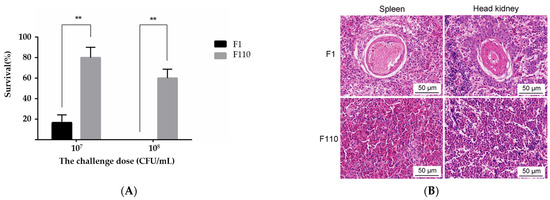
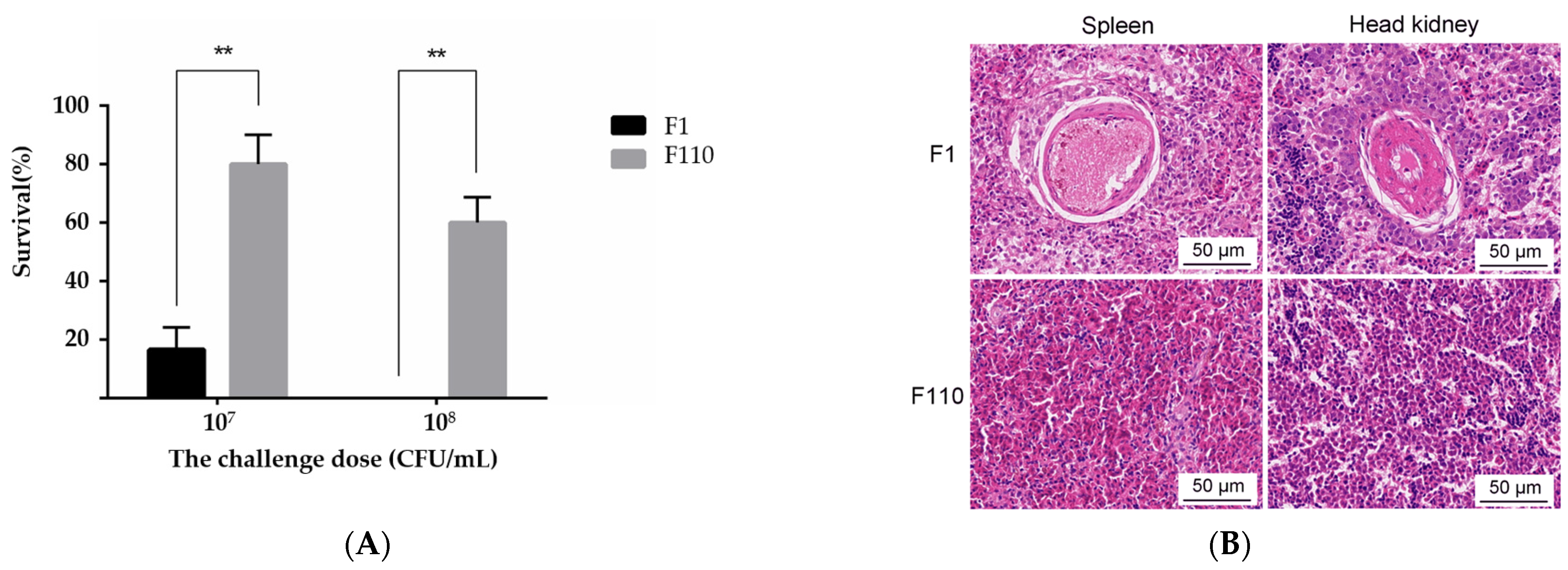
To compare the virulence of parental wild-type LY20810 F1strain and its serial passaged attenuated LY20810 F110 strain, largemouth bass were challenged with the wild-type F1 strain and F110 strain via intraperitoneal injection. At a challenge dose of 1 × 10⁷ CFU/mL, the survival rate of the group challenged with LY20810 F1strain present 16.6% while the LY20810 F110 strain challenged group showed 80% survival. At a higher dose of 1 × 10⁸ CFU/mL, all fish in the F1 strain-challenged group died during the 30-day observation. However, 60% of the fish in the F110 strain- challenged group survived (Figure 1A). Histopathological examination revealed well-organized tissue architecture and uniform cell distribution with no significant pathological lesions in the spleen and head kidney of F110-challenged fish. In contrast, fish challenged with the F1 strain exhibited distinct granuloma formation in these organs, accompanied by surrounding tissue hyperplasia and disorganized cell arrangement (Figure 1B). These results demonstrate that the virulence of strain LY20810 F110 is significantly attenuated in largemouth bass, supporting its potential as a candidate for a live-attenuated vaccine.
Figure 1.
The virulence of N. seriolae LY20810 F110 strain decreased significantly compared to its parental LY20810 F1 strain in largemouth bass. Largemouth bass were challenged via intraperitoneal injection with 0.1 mL of bacterial suspension at doses of 1 × 10⁷ CFU/mL or 1 × 10⁸ CFU/mL of either the wild-type F1 strain or the attenuated F110 strain (n = 30 fish per group). Survival was monitored daily for 30 days. ** p < 0.01. (A) Survival rate of largemouth bass challenged with 1 × 10⁷ CFU/mL or 1 × 10⁸ CFU/mL; (B) Histopathological changes in the spleen and head kidney compared between the F1 and F110 groups challenged at 1 × 10⁷ CFU/mL. After fixation in 4% paraformaldehyde, samples were embedded in paraffin, sectioned, and H&E-stained for microscopic evaluation. Lesions were assessed based on characteristic features.
3.2. Global Proteomic Profiling Reveals Widespread Changes in the Attenuated LY20810 F110 Strain
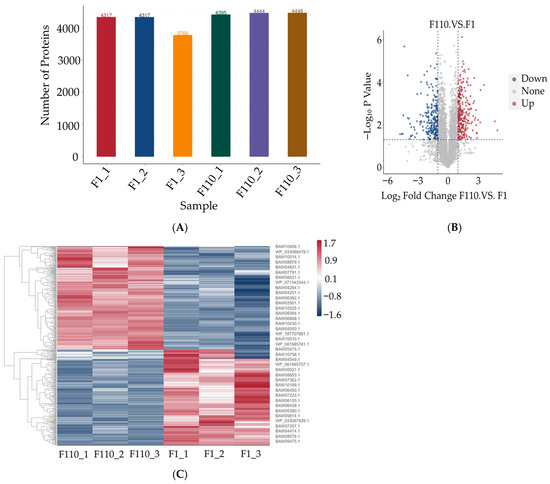
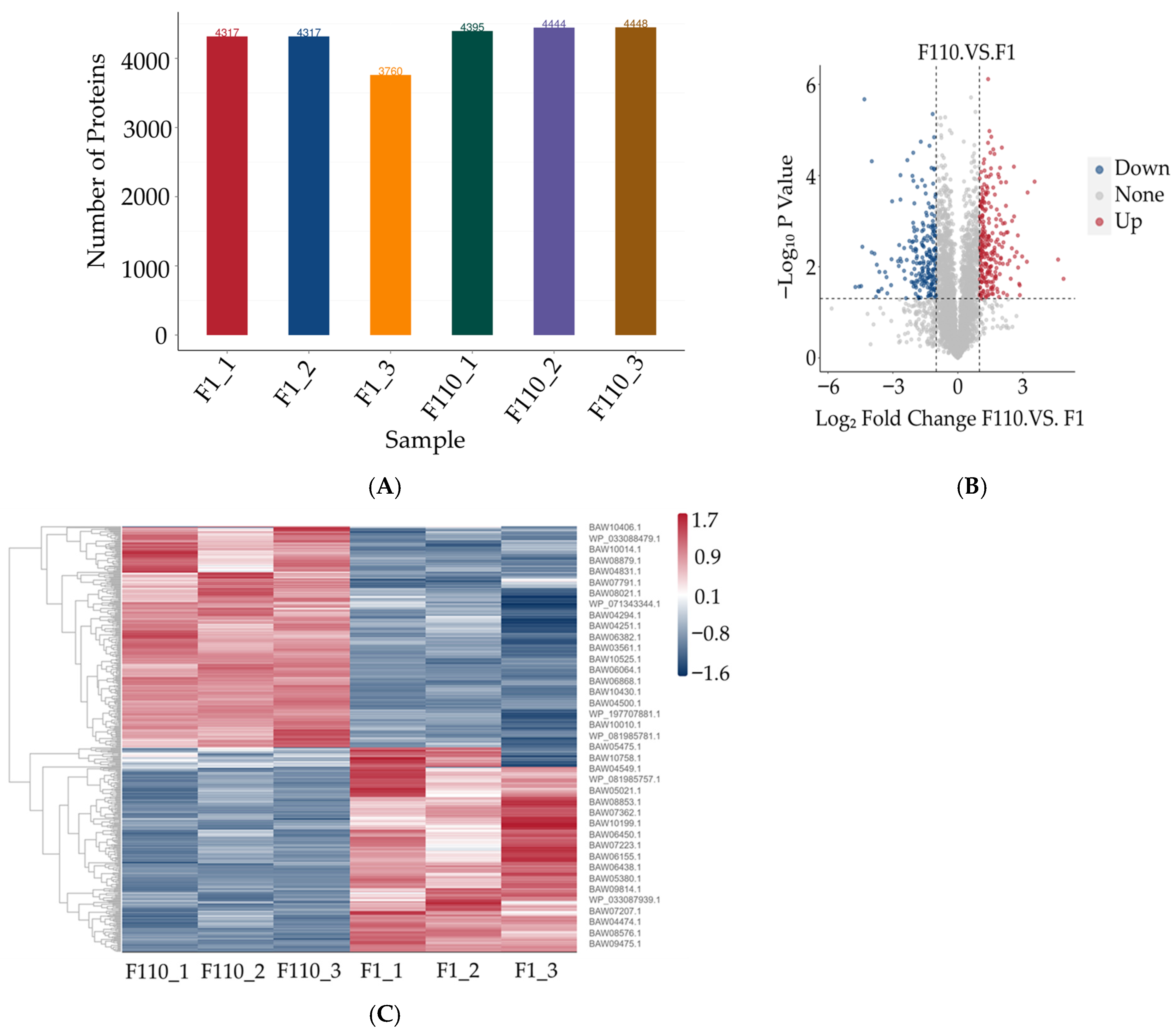
To investigate the cause of F110 attenuation, we performed a comparative proteomic analysis of the virulent LY20810 F1 and attenuated LY20810 F110 strains. Using DIA-based LC-MS/MS, we identified 4516 proteins in total (Figure 2A, Supplementary Table S1). A total of 540 proteins were significantly differentially expressed (p < 0.05, |log2FC| > 1), with 311 upregulated and 229 downregulated in the LY20810 F110 strain compared to LY20810 F1 strain (Figure 2B, Supplementary Tables S2–S4).
Figure 2.
Global proteomic profiling reveals widespread changes between the wild-type F1 and attenuated F110 strains. (A) The total number of proteins identified in the comparative proteomic analysis of N. seriolae strains F1 and F110. (B) Volcano plot displaying the 540 DEPs. Proteins with significantly increased abundance in F110 (log2FC > 1, p < 0.05) are shown in red (311 proteins), and those with significantly decreased abundance (log2FC < −1, p < 0.05) are shown in blue (229 proteins). Non-significant proteins are shown in gray. Dashed lines represent the thresholds for screening differentially expressed proteins based on log2FC and -log10P values. (C) Hierarchical clustering heatmap of the 466 DEPs (74 presence/absence differential proteins (quantified in one group but absent in the other) were excluded to avoid affecting the clustering), showing clear separation between the F1 and F110 strain sample groups. The vertical axis represents the clustering of samples, while the horizontal axis represents the clustering of proteins. A shorter dendrogram branch indicates a higher degree of similarity. The vertical clustering reveals the expression patterns of protein content among the samples. Cluster I (largely red on the F110 side) represents proteins upregulated in F110, predominantly involved in metabolic processes. Cluster II (largely blue on the F110 side) represents proteins downregulated in F110, enriched for virulence-associated functions like cell wall synthesis, oxidative stress response, and transport.
Unsupervised hierarchical clustering of the 466 DEPs (74 presence/absence differential proteins (quantified in one group but absent in the other) were excluded to avoid affecting the clustering) was performed to visualize the global proteomic differences between the F1 and F110 strains. The heatmap demonstrated a clear separation between the F1 and F110 sample groups. The DEPs were broadly partitioned into two major clusters. Cluster I (predominantly red on the F110 side) contained proteins significantly upregulated in the attenuated F110 strain. Functional enrichment analysis confirmed that these proteins were heavily involved in central metabolic processes. In contrast, Cluster II (predominantly blue on the F110 side) comprised proteins downregulated in F110, which were largely enriched for putative virulence-associated functions such as proteolysis and stress response (e.g., HtpX) (Figure 2C, Supplementary Table S5).
3.3. GO Enrichment Analysis Reveals Metabolic Reprogramming in the Attenuated Strain
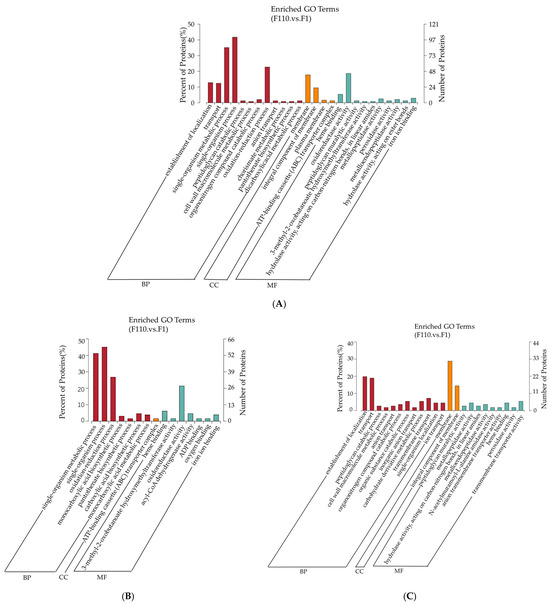
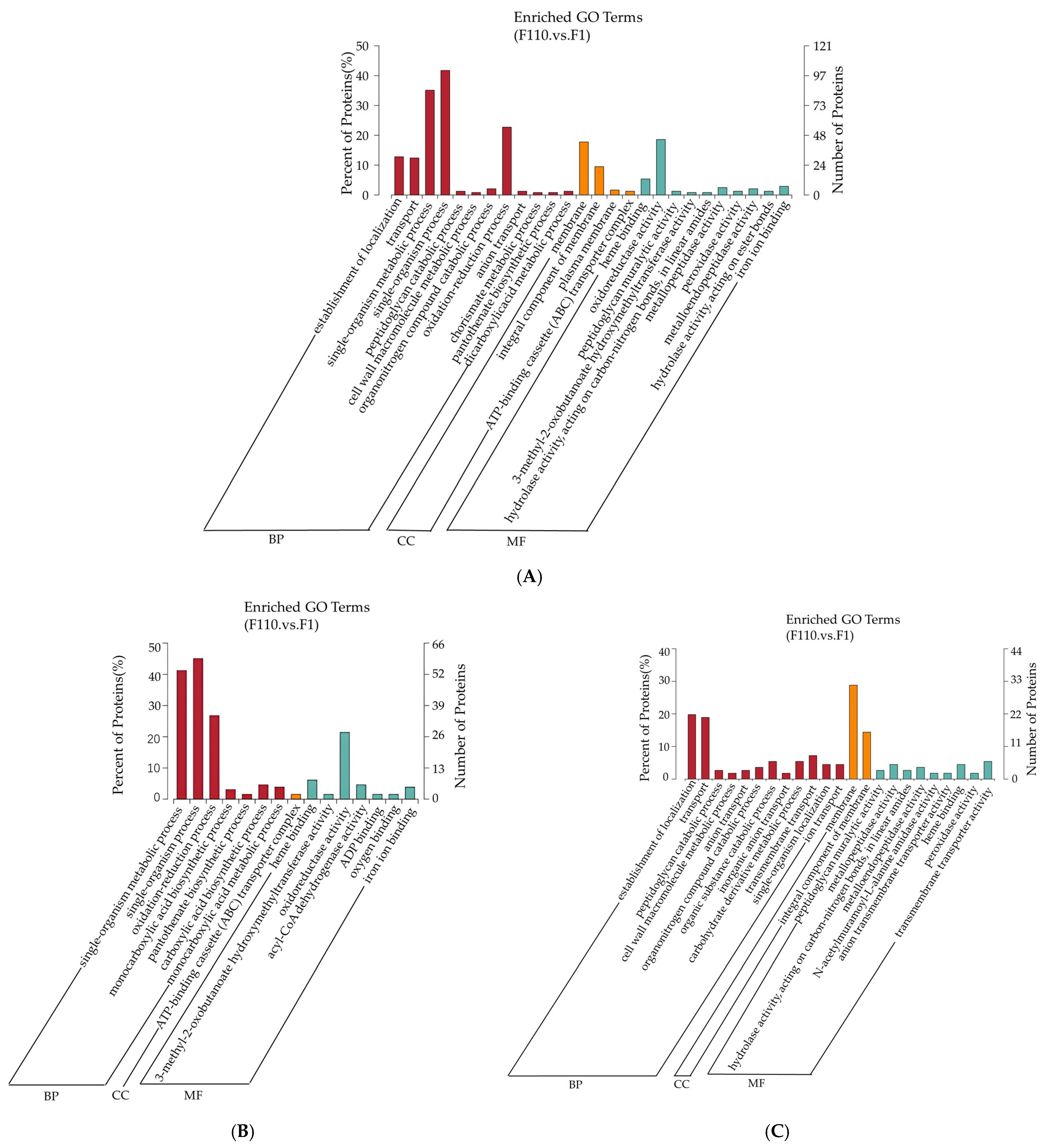
All 540 DEPs (including the 74 presence/absence proteins) were used for subsequent Gene Ontology (GO) and KEGG pathway enrichment analyses. Gene Ontology (GO) enrichment analysis demonstrated a pronounced shift in the functional landscape of the attenuated F110 strain, with significant enrichment observed across key metabolic domains (Figure 3A, Supplementary Table S6). In the molecular function (MF) category, proteins involved in catalytic activities, particularly hydrolase and metallopeptidase functions, were prominently upregulated. Notably, enzymes central to biosynthetic processes, including mycolyltransferase (involved in cell wall synthesis) and diaminobutyrate-2-oxoglutarate aminotransferase (involved in amino acid metabolism), showed substantial enrichment. Cellular component (CC) analysis further revealed the coordinated upregulation of proteins localized to the membrane and integral components of ATP-binding cassette (ABC) transporter complexes (Figure 3B, Supplementary Table S7). This dual enrichment of catalytic machinery and membrane transport systems underscores a comprehensive metabolic rewiring in F110, potentially supporting its enhanced in vitro adaptability while contributing to its attenuated phenotype through altered resource allocation and stress responsiveness (Figure 3C, Supplementary Table S8).
Figure 3.
Gene Ontology (GO) enrichment analysis of DEPs in the attenuated F110 strain. The figure displays the enrichment results for three categories, with a maximum of 20 terms shown per category (p < 0.05). The left vertical axis represents the x/n ratio, while the right vertical axis indicates the number of annotated DEPs. Functional enrichment of DEPs in the F110 strain compared to the F1 strain across the three GO categories: Biological Process (BP, red), Cellular Component (CC, orange), and Molecular Function (MF, green). (A) Merged GO terms of all DEPs; (B) GO terms for upregulated proteins; (C) GO terms for downregulated proteins.
3.4. KEGG Pathway Analysis Showed Significant Enrichment in Metabolic Pathways and ABC Transporter Pathways
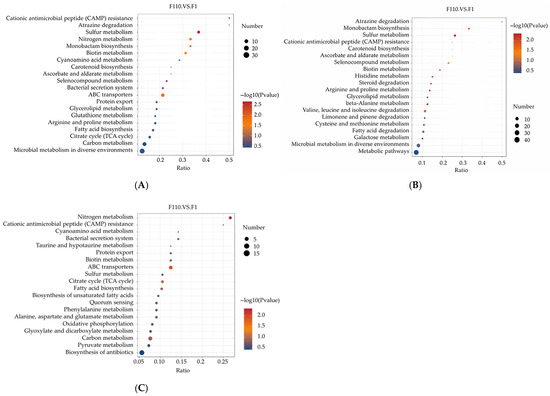
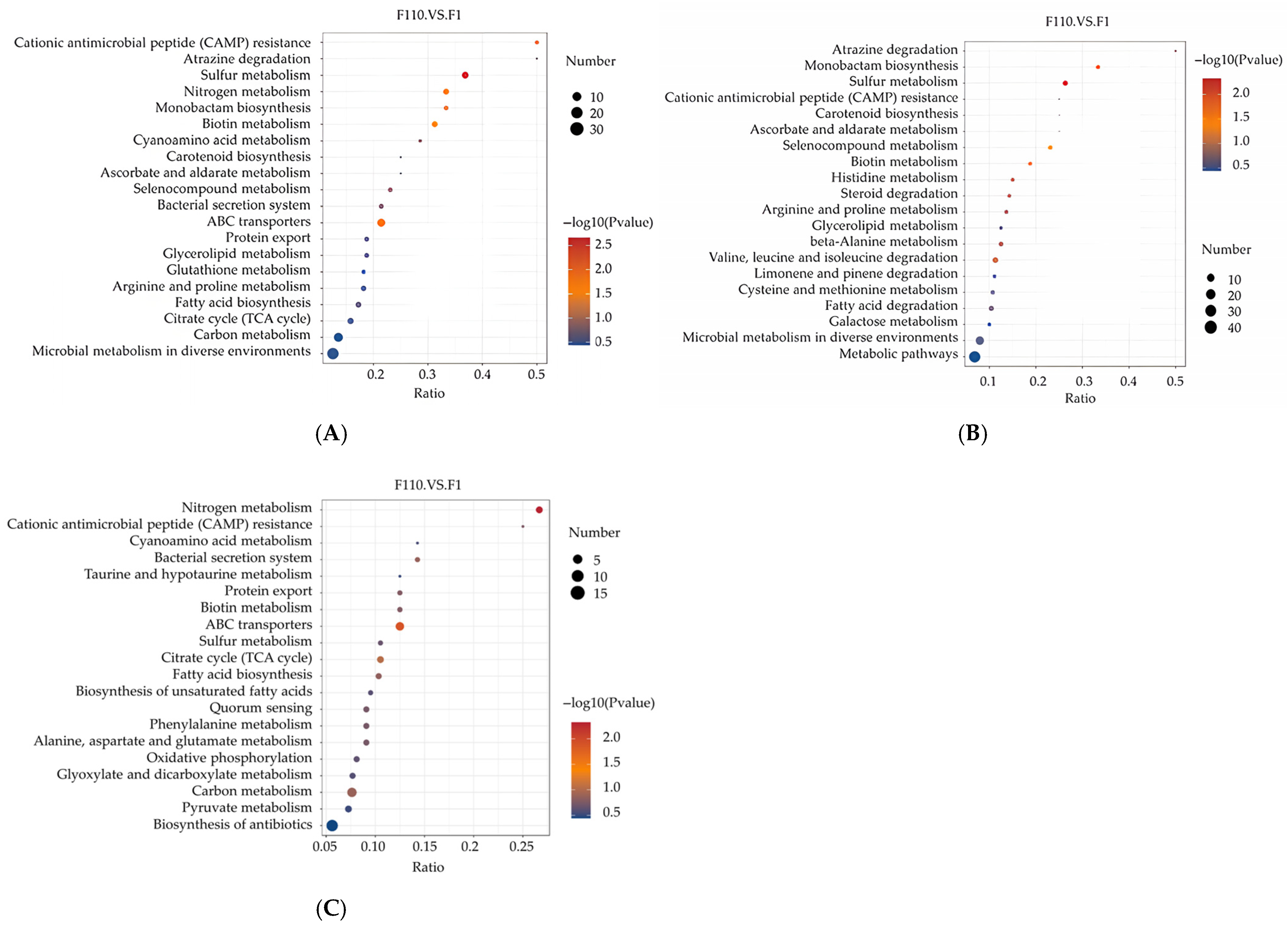
Based on the KEGG pathway enrichment analysis (Figure 4), the proteomic comparison between the virulent N. seriolae F1 strain and its attenuated F110 derivative revealed distinct functional shifts may be involved in the F110 attenuation. For all DEPs, the most significantly enriched pathways were metabolic pathways and ABC transporters (Figure 4A, Supplementary Table S9). The upregulation of specific ABC transporters (e.g., for nitrate) in F110 may facilitate its metabolic rewiring and benefit enhanced in vitro growth of F110 strain. (Figure 4B, Supplementary Table S10). Conversely, the downregulation of pathways like nitrogen metabolism and specific transporters (e.g., MFS permease) demonstrated that a reduction in virulence-associated nutrient scavenging systems critical for in vivo survival. (Figure 4C, Supplementary Table S11). This KEGG profile delineates a potential model where the attenuated vaccine strain has undergone extensive metabolic reprogramming optimized for laboratory conditions, while concurrently losing key virulence-associated functions necessary for successful host infection and persistence, thereby explaining its attenuated phenotype.
Figure 4.
KEGG pathway enrichment analysis of DEPs. The horizontal axis of the KEGG enrichment bubble plot figures represents the ratio of the number of DEPs to the total number of identified proteins in the corresponding pathway. A higher value indicates a greater degree of DEP enrichment within that pathway. The color of the bubbles represents the p value from the hypergeometric test, with a gradient from blue to red. A redder color indicates a smaller p value, reflecting higher reliability and greater statistical significance of the enrichment. The size of the bubbles corresponds to the number of DEPs in the respective pathway; a larger bubble indicates a greater number of DEPs within that pathway. KEGG pathway enrichment analysis for all DEPs, upregulated DEPs, and downregulated DEPs in the F110 strain. The most significantly enriched pathways include metabolic pathways and ABC transporters for all DEPs; Metabolic pathways for upregulated DEPs; and ABC transporters and two-component systems for downregulated DEPs. (A) KEGG pathway enrichment analysis for all DEPs; (B) KEGG pathway enrichment analysis for all DEPs, upregulated DEPs; (C) KEGG pathway enrichment analysis for downregulated DEPs.
3.5. In-Depth Analysis of Key DEPs Reveals Potential Molecular Basis of Faster Growth and Attenuation
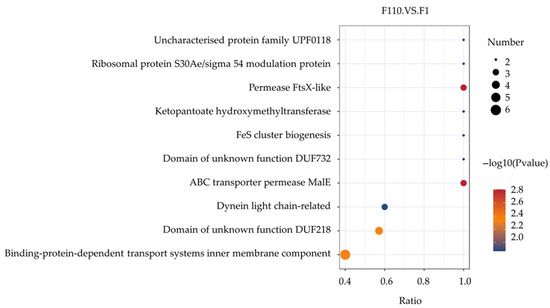
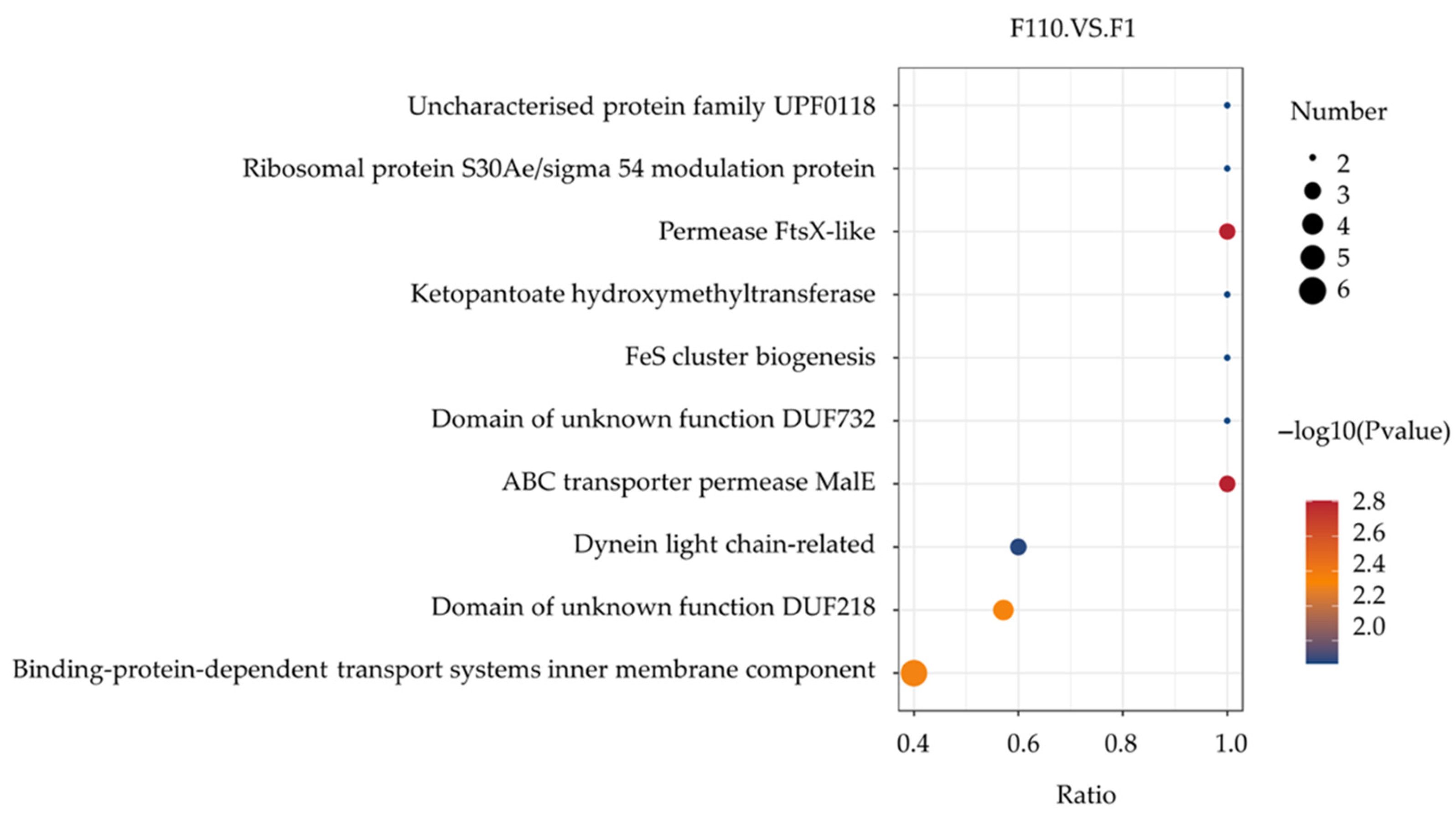
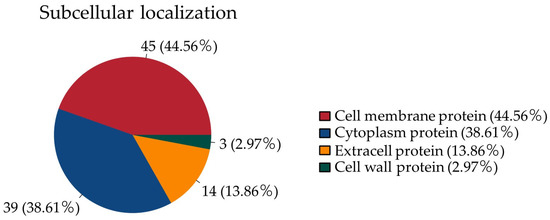
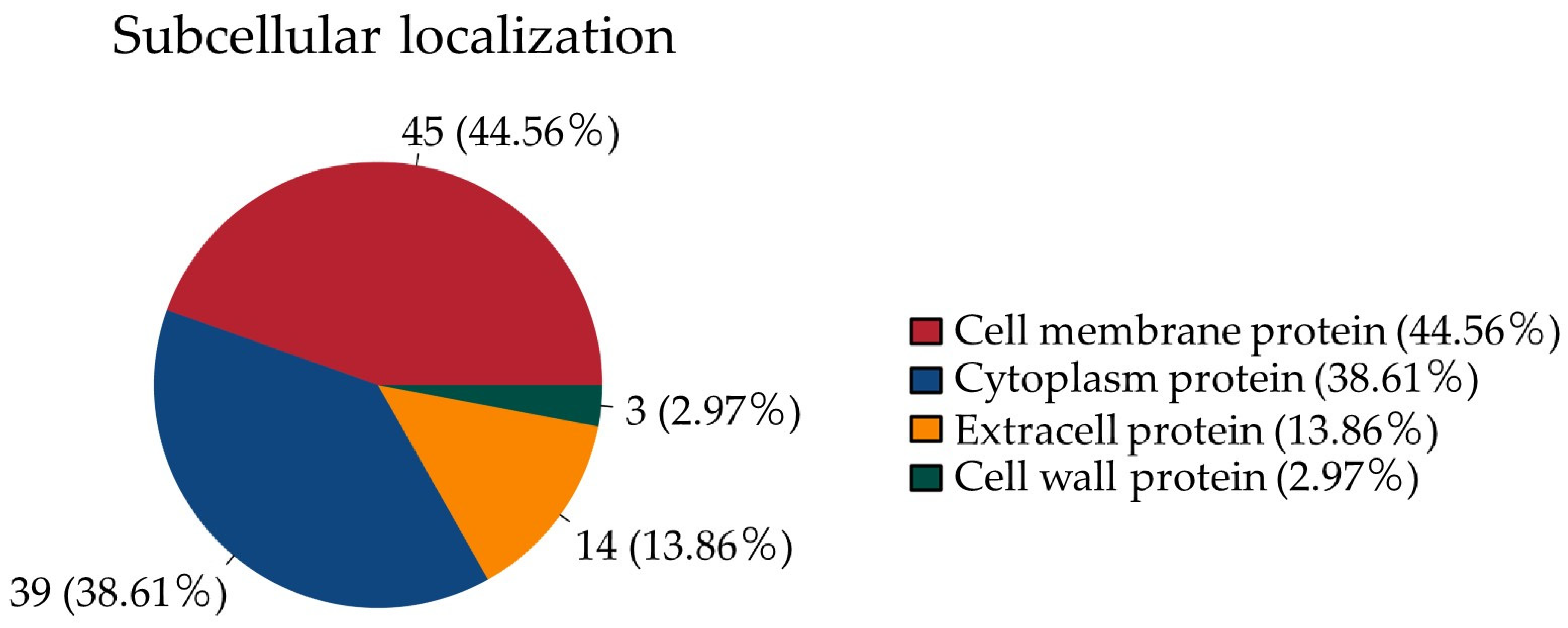
Based on domain enrichment analysis, the results show the DEPs mainly included two kinds of proteins. One is bind-protein-dependent transport systems inner membrane component and the other is permease Fts-X like and ABC transporter permease MalE. (Figure 5, Table S12). The subcellular localization analysis presented that 44.45 percent of DEPs localized at membrane of N. seriolae and 38.61 percent of DEPs are cytoplasmic proteins, which is consistent with result of domain enrichment analysis (Figure 6, Table S13).
Figure 5.
In-depth analysis of key DEPs. Domain enrichment bubble plot. The horizontal axis represents the ratio of the number of DEPs to the total number of identified proteins containing the corresponding domain. A higher value indicates a greater degree of DEP enrichment within that domain. The color of the bubbles corresponds to the −log10 (p value) from the hypergeometric test, with redder colors indicating larger −log10 (p value) values, which equate to smaller p values and thus greater statistical significance and reliability of the test. The size of the bubbles represents the number of DEPs associated with the respective domain; a larger bubble indicates a greater number of DEPs within that domain.
Figure 6.
Subcellular localization analysis of DEPs.
An in-depth analysis of the most significantly altered proteins provided further insight into the potential molecular mechanisms underlying F110 attenuation. Among the upregulated DEPs, multiple nutrient transporter components were significantly upregulated, particularly the nitrate ABC transporter substrate-binding protein (BAW05740.1, log2FC = 4.88) and ABC transporter ATP_binding protein (WP_045439554.1, log2FC = 4.63), and transcription regulation was enhanced with upregulated RNA polymerase sigma factor SigD (BAW04373.1, log2FC = 3.22). Several metabolic enzymes showed substantial increases, including diaminobutyrate-2-oxoglutarate aminotransferase (BAW09217.1, log2FC = 2.63) in amino acid metabolism, carboxylating nicotinate_nucleotide diphosphorylase (WP_033091627.1, log2FC = 2.60) in nucleotide metabolism, mycolyltransferase (BAW10706.1, log2FC = 2.77) in biosynthesis, indicating metabolic reprogramming in the attenuated strain, potentially supporting faster in vitro growth (Table 2 and Table S3). Conversely, several proteins with putative or established roles in virulence were markedly downregulated in F110, including protease HtpX (BAW03922.1, log2FC = −4.32) involved in proteolysis and stress response and MFS transporter permease (BAW04742.1, log2FC = −3.06) related to transmembrane transporter activity and lipoprotein (BAW06497.1, log2FC = −3.62) localized in cell membrane, whose downregulation could render the bacterium more susceptible to host immune responses (Table 3 and Table S4). The concerted downregulation of these putative virulence and stress-response factors suggests a model where attenuation may involve diminished capacity to withstand host defenses.
Table 2.
List of Top 20 upregulated proteins in F110 strain compared to F1.
Table 3.
List of Top20 downregulated proteins in F110 strain compared to F1.
4. Discussion
N. seriolae is a formidable intracellular bacterial pathogen that causes chronic systemic nocardiosis in marine animals and economically important farmed fish, leading to a health threat to marine animals and severe economic losses to farmed fish [1,9]. Its ability to form persistent granulomas and reside within host cells severely limits the efficacy of conventional antibiotic treatments, making prevention through vaccination a critical priority. Previously, one attenuated N. seriolae strain, LY20810 F110, was generated by serial passaging, which was a potential live-attenuated candidate vaccine strain. This study provides a comprehensive proteomic characterization of the molecular adaptations underlying the attenuation of N. seriolae strain F110, delineating a clear functional dichotomy between enhanced metabolic capabilities and diminished virulence. The significant virulence reduction conferred by F110 vaccination, corroborated by the challenge experiments and consistent with prior assessments, confirms its ability as a live-attenuated vaccine candidate [16,22]. Our analysis of 540 DEPs reveals that attenuation is not merely the loss of pathogenic factors but involves an extensive metabolic reprogramming that likely underpins the strain’s altered phenotype (Figure 3B and Figure 4B, Supplementary Table S2).
The observed upregulation of central metabolic enzymes in F110, including diaminobutyrate-2-oxoglutarate aminotransferase (amino acid metabolism), mycolyltransferase (biosynthesis), and carboxylating nicotinate_nucleotide diphosphorylase (nucleotide metabolism), points to a significant shift in the bacterium’s metabolic priorities. This hypermetabolic state, further evidenced by the concomitant upregulation of ABC transporters for compounds such as nitrate and iron, likely facilitates the accelerated in vitro growth documented in previous studies [16]. However, this very adaptation, optimized for nutrient-rich laboratory conditions, may render F110 less fit within the nutrient-limited and hostile intracellular environment of the host. This trade-off, where enhanced in vitro growth comes at the cost of in vivo fitness, is a recognized hallmark of serial passage-induced attenuation in other intracellular pathogens [23]. Concurrently, the attenuation of F110 is may be partially explained by the coordinated downregulation of key virulence determinants. The significant downregulation of the protease HtpX and MFS transporter permease, indicates a broader dismantling of the stress response and nutrient scavenging systems essential for pathogenesis.
This proteomic profile aligns with and functionally extends the findings from complementary studies. For instance, the host transcriptomic analysis demonstrated that vaccination with F110 induces a robust and balanced immune response in largemouth bass, characterized by the activation of both innate and adaptive pathways without triggering a destructive inflammatory storm [22]. Our data provide the bacterial counterpart to this host response, suggesting the potential attenuation mechanisms that prevent the pathogen from overwhelming the host’s defenses. The proteomic signature of F110-metabolically active yet virulence-deficient—suggests it occupies a “Goldilocks zone” of attenuation.
In this study, we employed a data-independent DIA based LC-MS/MS strategy for quantitative proteomics. Compared to traditional data-dependent acquisition (DDA), DIA offers a key advantage for comparative studies: it systematically fragments all detectable peptide ions within predefined m/z windows, rather than selecting only the most abundant ions for fragmentation in real-time [24]. This provides more consistent and reproducible quantification across multiple samples and a deeper, less biased proteome coverage, which is crucial for reliably identifying subtle expression differences between closely related strains like F1 and F110 [25] While targeted approaches (e.g., SRM/PRM) offer superior sensitivity and precision for validating specific proteins, they require prior knowledge of targets. The untargeted yet comprehensive nature of DIA makes it an ideal discovery tool for our study, which aims to generate a holistic, hypothesis-generating profile of the attenuated strain without preconceived targets. The main limitation is the complexity of data analysis, requiring specialized software (e.g., DIA-NN) and spectral libraries for optimal identification. Our use of a project-specific library generated from the N. seriolae database mitigated this challenge, ensuring high-confidence protein identification and quantification for subsequent bioinformatic analysis of the attenuation phenotype.
The molecular architecture of attenuation revealed in N. seriolae F110 exhibits striking parallels with well-established virulence paradigms in other intracellular bacterial pathogens, underscoring conserved pathogenic strategies and potential attenuation mechanisms. The global proteomic shift in F110-characterized by upregulated metabolic and transport functions alongside downregulated virulence and stress response pathways, echoes the “metabolic burden” model of attenuation seen in other serial-passaged bacteria. This state reflects an adaptation to nutrient-rich in vitro conditions, often at the expense of the sophisticated regulatory networks required for in vivo stress resistance and host interaction, a phenomenon documented in attenuated strains of M. tuberculosis and Brucella spp. [14,26]. Thus, the attenuation of N. seriolae F110 appears to be not an isolated phenomenon but rather aligns with a broader principle in bacterial pathogenesis: virulence is a finely tuned balance, and its disruption through metabolic rewiring and the loss of key defensive and structural components provides a robust foundation for vaccine development.
There were several limitations of this study. The correlative nature of this proteomic analysis is its primary limitation. While we link specific DEPs (e.g., HtpX) to attenuation, direct causality requires validation through genetic studies (e.g., knockout/complementation). Furthermore, the in vitro growth conditions may not reflect the proteomic state during host infection, where environmental cues critically regulate virulence. The data also do not capture post-translational modifications or low-abundance proteins, and attenuation likely involves additional genomic and transcriptomic adaptations not assessed here. Addressing these points in future work is essential to solidify the mechanistic model and advance vaccine development.
5. Conclusions and Future Perspectives
In conclusion, this research proposes a proteomic model for N. seriolae F110 attenuation, highlighting a concerted metabolic shift alongside the suppression of critical virulence pathways. These findings not only clarify the biological basis for this promising vaccine candidate’s safety and efficacy but also pinpoint specific molecular targets, such as cell wall biosynthesis and oxidative stress defense, for the rational development of future anti-nocardial interventions. This study successfully delineates the profound molecular disparities between the wild-type and attenuated N. seriolae strains through a comprehensive comparative proteomic analysis. Our findings establish that the observed attenuation is a multifactorial process, potentially arising from concurrent functional impairments in key virulence mechanisms, stress defense capacities, and a fundamental metabolic reprogramming.
Building on these findings, future research should focus on establishing direct causal relationships through genetic manipulation, such as constructing and testing knockout/complementation mutants of key targets like HtpX. It is equally crucial to characterize the in vivo proteomic and transcriptomic dynamics of F110 during host infection, particularly within fish immune cells, to delineate the precise interplay between bacterial attenuation and host immune activation. Furthermore, integrating these functional datasets with genomic and transcriptomic analyses will yield a comprehensive multi-omics understanding of the attenuation mechanism. These forward-looking approaches will not only validate the current model but also accelerate the rational design of next-generation, safer, and more efficacious live-attenuated vaccines against nocardiosis. Collectively, these insights in this study provide correlative data that informs the safety evaluation of the F110 vaccine strain and suggest valuable data support and candidate targets for the future rational design of novel vaccines and therapeutic strategies against nocardiosis.
Supplementary Materials
The following supporting information can be downloaded at: https://www.mdpi.com/article/10.3390/fishes11010042/s1, Table S1: List of 4516 proteins of N. seriolae identified in this study (excel file); Table S2: List of 540 differentially expressed proteins (DEPs) between N. seriolae F110 strain and F1 strain identified in this study (excel file); Table S3: List of 311 upregulated proteins in N.seriolae F110 strain compared to F1 strain (excel file); Table S4. List of 229 downregulated proteins in N. seriolae F110 strain compared to F1 strain (excel file); Table S5. Heatmap analysis of DEPs between N. seriolae F110 strain and F1 strain identified in this study (excel file); Table S6: GO enrichment analysis of DEPs between N. seriolae F110 strain and F1 strain identified in this study (excel file); Table S7: GO enrichment analysis of significantly upregulated proteins in N. seriolae F110 strain compared to F1 strain (excel file); Table S8: GO enrichment analysis of partial significantly downregulated proteins in N.seriolae F110 strain compared to F1 strain (excel file); Table S9: KEGG analysis of DEPs in N. seriolae F110 strain compared to F1 strain (excel file); Table S10: KEGG analysis of significantly upregulated proteins in N. seriolae F110 strain compared to F1 strain (excel file); Table S11: KEGG analysis of significantly downregulated proteins in N. seriolae F110 strain compared to F1 strain (excel file); Table S12: IPR analysis of DEPs between N. seriolae F110 strain and F1 strain identified in this study (excel file); Table S13: Subcellular analysis of DEPs between N. seriolae F110 strain and F1 strain identified in this study (excel file).
Author Contributions
Conceptualization, J.Y. and H.F.; Methodology, Y.Y., W.H., L.W. and L.H.; Validation, C.L. and Y.T.; Investigation, X.P. and J.Y.; Data curation, J.S. and Y.H.; Writing—original draft preparation, Y.Y., L.W. and H.F.; Writing—review and editing, W.H., L.W., J.Y. and H.F. All authors have read and agreed to the published version of the manuscript.
Funding
This research was supported by Zhejiang Province Science and Technology Cooperation Project of “Three Rural and Nine Parties” under Grant No. 2024SNJF051, by Huzhou Municipal Public Welfare Applied Research Project under Grant No. 2022GZ31, by Science Foundation of Zhejiang Sci-Tech University (ZSTU) under Grant No. 20042220-Y.
Institutional Review Board Statement
The animal study protocol was approved by the Experimental Animal Welfare Ethics Committee of Zhejiang Institute of Freshwater Fisheries (approval code: ZJIFF20250218, approved date: 18 February 2025). The study was conducted in accordance with the local legislation and institutional requirements.
Data Availability Statement
Original datasets are available in a publicly accessible repository The original contributions presented in the study are publicly available. This data can be found here: The ProteomeXchange Consortium (https://proteomecentral.proteomexchange.org, accessed on 18 November 2025), accession numbers: PXD070883.
Acknowledgments
We thank iProX partner repository for support getting the PXD dataset identifier. We thank Novogene for the support of Proteomics analysis.
Conflicts of Interest
W.H. is an employee of ISEEVAX Pharma. All of the other authors declare that they have no conflicts of interest.
References
- St Leger, J.A.; Begeman, L.; Fleetwood, M.; Frasca, S.; Garner, M.M.; Lair, S.; Trembley, S.; Linn, M.J.; Terio, K.A. Comparative pathology of nocardiosis in marine mammals. Vet. Pathol. 2009, 46, 299–308. [Google Scholar] [CrossRef] [Scilit]
- Wang, P.C.; Chen, S.D.; Tsai, M.A.; Weng, Y.J.; Chu, S.Y.; Chern, R.S.; Chen, S.C. Nocardia seriolae infection in the three striped tigerfish, Terapon jarbua (Forsskal). J. Fish Dis. 2009, 32, 301–310. [Google Scholar] [CrossRef] [Scilit]
- Zhou, Z.Y.; Bai, S.J.; He, J.; Xiong, Q.X.; Zhong, Z.D.; Lu, C.W.; Kuang, L.F.; Jian, Z.R.; Gu, J.L.; Liu, M.Z.; et al. Pathogenicity, ultrastructure and genomics analysis of Nocardia seriolae isolated from largemouth bass (Micropterus salmoides). Microb. Pathog. 2025, 205, 107715. [Google Scholar] [CrossRef] [Scilit]
- Yasuike, M.; Nishiki, I.; Iwasaki, Y.; Nakamura, Y.; Fujiwara, A.; Shimahara, Y.; Kamaishi, T.; Yoshida, T.; Nagai, S.; Kobayashi, T.; et al. Analysis of the complete genome sequence of Nocardia seriolae UTF1, the causative agent of fish nocardiosis: The first reference genome sequence of the fish pathogenic Nocardia species. PLoS ONE 2017, 12, e0173198. [Google Scholar] [CrossRef] [Scilit]
- Juan-Salles, C.; Martinez-Chavarria, L.C.; Montesinos, A.; Giner, J.; Valls, X.; Bermudez, J.; Hernandez-Castro, R.; Ardiaca, M.; Gonzalez, V.; Villora, J.; et al. Nocardiosis in domestic ferrets (Mustela putorius furo). J. Comp. Pathol. 2025, 217, 1–10. [Google Scholar] [CrossRef] [Scilit] [PubMed]
- Diaz-Santana, P.; Fernandez, A.; Diaz-Delgado, J.; Vela, A.I.; Dominguez, L.; Suarez-Santana, C.; Puig-Lozano, R.; Fernandez-Maldonado, C.; Sierra, E.; Arbelo, M. Nocardiosis in Free-Ranging Cetaceans from the Central-Eastern Atlantic Ocean and Contiguous Mediterranean Sea. Animals 2022, 12, 434. [Google Scholar] [CrossRef] [Scilit] [PubMed]
- Liu, Z.G.; Dong, J.J.; Ke, X.L.; Yi, M.M.; Cao, J.M.; Gao, F.Y.; Wang, M.; Ye, X.; Lu, M.X. Isolation, identification, and pathogenic characteristics of Nocardia seriolae in largemouth bass Micropterus salmoides. Dis. Aquat. Org. 2022, 149, 33–45. [Google Scholar] [CrossRef] [Scilit]
- Zhang, N.; Zhang, H.; Dong, Z.; Wang, W. Molecular Identification of Nocardia seriolae and Comparative Analysis of Spleen Transcriptomes of Hybrid Snakehead (Channa maculata Female x Channa argus Male) with Nocardiosis Disease. Front. Immunol. 2022, 13, 778915. [Google Scholar] [CrossRef] [Scilit]
- Lei, X.; Zhao, R.; Geng, Y.; Wang, K.; Yang, P.O.; Chen, D.; Huang, X.; Zuo, Z.; He, C.; Chen, Z.; et al. Nocardia seriolae: A serious threat to the largemouth bass Micropterus salmoides industry in Southwest China. Dis. Aquat. Org. 2020, 142, 13–21. [Google Scholar] [CrossRef] [Scilit]
- Liu, W.; Deng, Y.; Tan, A.; Zhao, F.; Chang, O.; Wang, F.; Lai, Y.; Huang, Z. Intracellular behavior of Nocardia seriolae and its apoptotic effect on RAW264.7 macrophages. Front. Cell. Infect. Microbiol. 2023, 13, 1138422. [Google Scholar] [CrossRef] [Scilit] [PubMed]
- Liu, Y.S.; Chen, G.Q.; Xia, L.Q.; Lu, Y.S. A review on the pathogenic bacterium: Aetiology, pathogenesis, diagnosis and vaccine development. Rev. Aquacult. 2022, 15, 14–34. [Google Scholar] [CrossRef] [Scilit]
- Wu, Y.; Liu, Y.; Yang, H.; Sirimanapong, W.; Huang, T.; Chen, J.; Xia, L. Construction of Heme-Binding Protein Deleted Strain and Using It as an Attenuated Vaccine Against Nocardia seriolae in Hybrid Snakehead (Channa maculata female symbol x Channa argus male symbol). J. Fish Dis. 2025, 48, e14090. [Google Scholar] [CrossRef] [Scilit]
- Du, Y.; Hu, X.; Miao, L.; Chen, J. Current status and development prospects of aquatic vaccines. Front. Immunol. 2022, 13, 1040336. [Google Scholar] [CrossRef] [Scilit]
- Cho, T.; Khatchadourian, C.; Nguyen, H.; Dara, Y.; Jung, S.; Venketaraman, V. A review of the BCG vaccine and other approaches toward tuberculosis eradication. Hum. Vaccines Immunother. 2021, 17, 2454–2470. [Google Scholar] [CrossRef] [Scilit]
- Gonzalez-Carrillo, C.; Millan-Sauceda, C.; Lozano-Garza, H.G.; Ortiz-Lopez, R.; Elizondo-Gonzalez, R.; Welsh, O.; Ocampo-Candiani, J.; Vera-Cabrera, L. Genomic Changes Associated with the Loss of Nocardia brasiliensis Virulence in Mice after 200 In Vitro Passages. Infect. Immun. 2016, 84, 2595–2606. [Google Scholar] [CrossRef] [Scilit]
- Yang, N.; Huang, L.; Lin, L.Y.; Yao, J.Y.; Chen, J.; Liu, Y.H.; Chen, X.L.; Wan, Y.W.; Shen, J.Y.; Pan, X.Y. Characteristics and Immunoprotective Effects of Attenuated Nocardia seriolae from Largemouth Bass Induced by Continuous Passaging. Acta Hydrobiol. Sin. 2024, 48, 1120–1129. [Google Scholar] [CrossRef]
- Zhang, W.; Zhou, K.; Huang, L.; Yang, N.; Lin, L.; Chen, L.; Yao, J.; Dong, M.; Shen, J.; Pan, X. Biological characteristics and pathogenicity comparison of Nocardia seriolae isolated from Micropterus salmoides and Channa argus. Front. Vet. Sci. 2024, 11, 1367066. [Google Scholar] [CrossRef] [Scilit]
- Wu, X.; Xiong, E.; Wang, W.; Scali, M.; Cresti, M. Universal sample preparation method integrating trichloroacetic acid/acetone precipitation with phenol extraction for crop proteomic analysis. Nat. Protoc. 2014, 9, 362–374. [Google Scholar] [CrossRef] [Scilit] [PubMed]
- Zhang, H.; Liu, T.; Zhang, Z.; Payne, S.H.; Zhang, B.; McDermott, J.E.; Zhou, J.Y.; Petyuk, V.A.; Chen, L.; Ray, D.; et al. Integrated Proteogenomic Characterization of Human High-Grade Serous Ovarian Cancer. Cell 2016, 166, 755–765. [Google Scholar] [CrossRef] [Scilit] [PubMed]
- Ashburner, M.; Ball, C.A.; Blake, J.A.; Botstein, D.; Butler, H.; Cherry, J.M.; Davis, A.P.; Dolinski, K.; Dwight, S.S.; Eppig, J.T.; et al. Gene ontology: Tool for the unification of biology. The Gene Ontology Consortium. Nat. Genet. 2000, 25, 25–29. [Google Scholar] [CrossRef] [Scilit]
- Kanehisa, M.; Goto, S. KEGG: Kyoto encyclopedia of genes and genomes. Nucleic Acids Res. 2000, 28, 27–30. [Google Scholar] [CrossRef] [Scilit]
- Huang, L.J.; Huang, L.; Yang, N.; Lin, L.Y.; Yao, J.Y.; Chen, J.; Shen, J.Y.; Gao, Y.L.; Pan, X.Y. Effects of Attenuated Nocardia seriolae Strain on the Head Kidney Transcriptome of Largemouth Bass (Micropterus salmoides). J. Guandong Ocean Univ. 2025, 45, 43–50. [Google Scholar] [CrossRef]
- Meirelles, L.A.; Vayena, E.; Debache, A.; Schmidt, E.; Rossy, T.; Distler, T.; Hatzimanikatis, V.; Persat, A. Pseudomonas aeruginosa faces a fitness trade-off between mucosal colonization and antibiotic tolerance during airway infection. Nat. Microbiol. 2024, 9, 3284–3303. [Google Scholar] [CrossRef] [Scilit]
- Ludwig, C.; Gillet, L.; Rosenberger, G.; Amon, S.; Collins, B.C.; Aebersold, R. Data-independent acquisition-based SWATH-MS for quantitative proteomics: A tutorial. Mol. Syst. Biol. 2018, 14, e8126. [Google Scholar] [CrossRef] [Scilit] [PubMed]
- Gillet, L.C.; Navarro, P.; Tate, S.; Rost, H.; Selevsek, N.; Reiter, L.; Bonner, R.; Aebersold, R. Targeted data extraction of the MS/MS spectra generated by data-independent acquisition: A new concept for consistent and accurate proteome analysis. Mol. Cell. Proteom. MCP 2012, 11, O111.016717. [Google Scholar] [CrossRef] [Scilit] [PubMed]
- Yang, X.; Skyberg, J.A.; Cao, L.; Clapp, B.; Thornburg, T.; Pascual, D.W. Progress in Brucella vaccine development. Front. Biol. 2013, 8, 60–77. [Google Scholar] [CrossRef] [Scilit] [PubMed]

Disclaimer/Publisher’s Note: The statements, opinions and data contained in all publications are solely those of the individual author(s) and contributor(s) and not of MDPI and/or the editor(s). MDPI and/or the editor(s) disclaim responsibility for any injury to people or property resulting from any ideas, methods, instructions or products referred to in the content. |
© 2026 by the authors. Licensee MDPI, Basel, Switzerland. This article is an open access article distributed under the terms and conditions of the Creative Commons Attribution (CC BY) license.