Article

Investigation of SNPs at NKCC Gene of Scylla paramamosain to Unveil the Low-Salinity Tolerance Phenotype

1
Key Laboratory of East China Fishery Resources Exploitation, Ministry of Agriculture and Rural Affairs, East China Sea Fisheries Research Institute, Chinese Academy of Fishery Science, Shanghai 200090, China
2
College of Fisheries and Life Science, Shanghai Ocean University, Shanghai 201306, China
*
Authors to whom correspondence should be addressed.
These authors contributed equally to this work.
Fishes 2026, 11(1), 31; https://doi.org/10.3390/fishes11010031
Submission received: 4 December 2025 / Revised: 26 December 2025 / Accepted: 4 January 2026 / Published: 5 January 2026
(This article belongs to the Section Genetics and Biotechnology)

Abstract

The Na+/K+/2Cl cotransporter (NKCC) gene encodes a critical membrane transporter involved in cellular ion homeostasis and plays a pivotal role in osmoregulation and salinity adaptation in aquatic organisms. This study identified and validated SNP markers in the NKCC gene associated with low-salinity tolerance in Scylla paramamosain. Four SNPs (g.196C>A, g.8374T>A, g.8385T>A and g.91143T>A) were screened and genotyped in low-salinity tolerant and intolerant groups. Association analysis revealed that mutant genotypes at all four sites were significantly enriched in the tolerant group (p <0.05), with the values of odds ratios (OR) greater than 1. The tolerant group exhibited significantly higher genetic diversity than the intolerant group. Haplotype analysis showed the wild CTTT haplotype dominated in the intolerant group, while mutant-containing haplotypes were significantly elevated in the tolerant group. A positive correlation was observed between the mutant and NKCC expression. Functional validation by qRT-PCR demonstrated that mutant allele carriers exhibited significantly higher NKCC mRNA expression levels than the wild-type carriers. Moreover, the expression level of homozygous mutations is significantly higher than that of heterozygous mutations. These validated SNPs could provide effective molecular markers for marker-assisted selection breeding of low-salinity tolerant S. paramamosain strains, offering important theoretical and practical implications for sustainable aquaculture development.
Key Contribution: This study identified and functionally validated four SNP markers in the NKCC gene that are significantly associated with low-salinity tolerance in Scylla paramamosain, demonstrating a positive correlation between mutant alleles and NKCC expression levels. These validated molecular markers provide immediately applicable tools for marker-assisted selection in breeding programs aimed at developing salinity-tolerant mud crab strains.

1. Introduction

Salinity is a critical environmental factor for estuarine organisms, affecting physiological and ecological processes [1]. The osmotic pressure of crustaceans is closely related to salinity, and fluctuations in estuarine salinity can reduce aquaculture productivity [2]. Previous studies have shown that osmotic pressure significantly affects the growth, survival, immune defense, and respiratory metabolism of estuarine crustaceans [3,4]. Sudden decreases in salinity can negatively impact growth, molting, and reproduction, potentially leading to mortality [5]. The mud crab Scylla paramamosain is a euryhaline species that primarily inhabits estuarine environments [6]. However, estuarine regions are susceptible to heavy rains or large-scale changes to the aquatic environment, which can cause abrupt declines in salinity that may exceed the osmotic regulatory capacity of S. paramamosain, leading to mortality [7]. In recent years, the total production of S. paramamosain has been declining, and the breeding areas are faced with land shortage and low production, which needs to be solved urgently [8]. Therefore, elucidating the molecular mechanisms underlying low-salinity tolerance in S. paramamosain, expanding low-salinity aquaculture areas, and breeding low-salinity tolerant strains are of great significance for the sustainable development of the mud crab industry.
During osmoregulation, ion transporters play crucial roles, among which the Na+/K+/2Cl cotransporter (NKCC) is an important ion transporter that mediates the coordinated transmembrane transport of Na+, K+, and Cl [9]. Research has demonstrated that NKCC expression levels change significantly during salinity adaptation in various crustacean species, serving as a key effector molecule in osmoregulation. In the swimming crab Portunus trituberculatus, the expression of NKCC in gills was upregulated under low-salinity stress [10]; in the sesarmid crab Episesarma mederi, NKCC expression increased significantly at 5 ppt [11]. In addition, in the spiny lobster Panulirus ornatus, NKCC has been implicated as a key regulator of osmoregulatory responses to low-salinity stress, functioning in coordination with Na+/K+-ATPase to maintain hemolymph osmotic homeostasis [12]. These studies suggest that NKCC might be an important candidate gene for low-salinity tolerance, although the association between its genetic variation and phenotype remains unclear.
As third-generation molecular markers, single nucleotide polymorphisms (SNPs), possess advantages of widespread distribution and genetic stability, and have been extensively applied in aquaculture genetic breeding programs [13,14]. Candidate gene-based SNP association analysis enables direct linkage between genotype and phenotype, providing effective tools for marker-assisted selection. This approach has been successfully applied to develop molecular markers for important traits such as growth [15], disease resistance [16], and precocious maturation [17]. Recent efforts have explored the application of SNP markers in salinity tolerance breeding of crustaceans. In the Pacific white shrimp (Litopenaeus vannamei), high-density linkage mapping based on SNP markers revealed several QTLs associated with low-salinity tolerance [18]. In black tiger shrimp Penaeus monodon, PmE74-In1-53 has been proposed as a core molecular marker for marker-assisted selection to facilitate rapid screening of broodstock with enhanced low- salinity tolerance [19]. In contrast, studies of SNPs associated with salinity tolerance in S. paramamosain are still limited.
In S. paramamosain, although the cloning and expression characteristics of the NKCC gene have been reported [20], the association between its genetic variation and low-salinity tolerance remains unclear. While SNP marker systems have been established for S. paramamosain [21,22], relatively little research has focused on the screening and functional validation of candidate gene SNPs associated with low-salinity tolerance traits. In the present study, we first performed systematic screening, validation, and association analysis of SNP loci in NKCC gene, preliminarily identified molecular marker loci associated with low-salinity tolerance traits. This research could provide theoretical foundations and technical support for marker-assisted breeding of low-salinity tolerant strains of S. paramamosain.

2. Materials and Methods

2.1. Sample Collection

Thirty-two wild S. paramamosain individuals used for SNP screening were collected from four distinct geographic locations: Sanmen (Zhejiang Province), Fuzhou (Fujian Province), Shenzhen (Guangdong Province), and Nansha (Guangdong Province), with eight individuals per population. Muscle tissue from the fourth walking leg was excised and preserved in absolute ethanol at −20 °C for DNA extraction.
The samples of juvenile I were obtained from Ninghai Research Center of the East China Sea Fisheries Research Institute, Chinese Academy of Fishery Sciences. Crabs of uniform size were randomly assigned to experimental and control groups. There were three replicates in the control group and the experimental group, respectively, with 150 individuals per replicate. Throughout the experimental period, the rearing water temperature was controlled at 26 ± 1 °C. For the experimental group, salinity was gradually reduced from 23 ppt by 1 ppt every 8 h. Individuals that died during the desalination process were collected at the next salinity reduction point, labeled, and preserved in absolute ethanol; these individuals were classified as the low-salinity intolerant group. After salinity reached 2 ppt, surviving crabs were maintained for an additional two weeks, during which, at least one molting event per crab was observed. Surviving individuals were sampled in liquid nitrogen and stored for DNA and RNA extraction, which were classified as the low-salinity tolerant group. All these preserved samples were prepared for genotyping validation.

2.2. Experimental Methods

2.2.1. DNA and RNA Extraction

A total of 100 individuals were randomly selected for genomic DNA extraction, with 50 individuals from the low-salinity tolerant group and 50 from the intolerant group. Genomic DNA was extracted using the Marine Animal Tissue Genomic DNA Extraction Kit (TransGen Biotech, Beijing, China). Meanwhile, the same samples from the low salinity tolerance group were also used for RNA extraction Kit (TransGen Biotech, Beijing, China) to conduct quantitative real-time PCR (qRT-PCR). The integrity of DNA and RNA was assessed by 1% agarose gel electrophoresis, and the purity was determined using a Nanodrop OneC microvolume spectrophotometer (Thermo Fisher, Waltham, MA, USA). Quality-validated samples were used for subsequent experiments.

2.2.2. SNP Screening and Genotyping

The sequence of NKCC gene was obtained from the NCBI database (GenBank accession number: NC_087166). Gene structure was visualized using the online tool IBS 2.0 [23]. Primers for both screening and validation of loci were generated with Primer Premier 6 software. Once the quality of the primers was confirmed, they were used for PCR amplification. The PCR reaction system contained 9.5 μL ddH2O, 12.5 μL PCR mix, 1 μL DNA template, and 1 μL of each primer. The PCR amplification was performed under the following conditions: an initial denaturation at 94 °C for 5 min; 35 cycles of denaturation at 94 °C for 40 s, annealing at 54 °C for 40 s, and extension at 72 °C for 40 s; and a final extension at 72 °C for 5 min. Amplification products were verified by 1% agarose gel electrophoresis and subjected to Sanger sequencing at Jie Li Biology (Shanghai, China). SNP calling was performed only at positions with Phred quality scores ≥ 30, after quality trimming, sequences were aligned with reference sequence using Chromas 2.1.x software to identify candidate SNP loci. Heterozygous SNPs were called when two distinct chromatographic peaks were observed at the same nucleotide position with the minor peak height ≥ 30% of the major peak. Homozygous genotypes were defined as single-peaked sites with high-quality base calls. Ambiguous sites with unclear peak patterns or low signal quality were excluded from further analysis. SNP loci with a minor allele frequency (MAF) ≥ 5% were considered candidate SNPs. Among these candidates, loci with well-defined peaks and relatively high mutation frequencies were selected for genotyping in the low-salinity-tolerant and intolerant groups.

2.2.3. Quantitative Expression Analysis of Different Genotypes at Mutation Sites

To compare expression differences among individuals with different genotypes at the four exonic loci, primers were designed within the CDS region of the NKCC gene in this study. The cDNA was obtained by a reverse transcription kit (TransGen Biotech, Beijing, China). The reverse transcription procedure was 42 °C for 15 min and 85 °C for 15 s (TransGen Biotech, Beijing, China). The 18S rRNA gene was selected as the reference gene due to its stable expression in S. paramamosain [24]. Primer sequences were provided in Table 1. Based on the result of genotyping, three individuals of each genotype were randomly selected from each locus, with three technical replicates per individual. The qRT-PCR was performed using the Applied Biosystems 7900 Genetic Analysis System. Data were analyzed using the 2−ΔΔCt method [25] to evaluate relative expression differences of the NKCC gene among different genotypes under low-salinity conditions.

2.3. Data Analysis

Sequencing results were aligned and analyzed using Chromas 2.1.x software to determine sample genotypes [26,27] and identify nucleotide types at target SNP loci for individual genotyping. Following a codominant model [28], odds ratios (OR) were calculated for genotypes carrying mutant alleles relative to wild-type homozygous genotypes using the formula:
O R = N 1 × N 4 N 2 × N 3
where N1 represents the number of individuals carrying mutant allele genotypes in the tolerant group, N2 represents the number of wild-type homozygous individuals in the tolerant group, N3 represents the number of individuals carrying mutant allele genotypes in the intolerant group, and N4 represents the number of wild-type homozygous individuals in the intolerant group.
Genetic parameters including observed heterozygosity (Ho), expected heterozygosity (He) and polymorphic information content (PIC) were calculated using PowerMarker V3.25 software [29]. Fisher’s exact test was performed using IBM SPSS Statistics 19 to assess associations between SNP loci and low-salinity tolerance traits. A significance level of p < 0.05 was considered to indicate a significant association between the SNP locus and the trait. Haplotype analysis was conducted using the SHEsis platform [30] to compare haplotype frequency differences between tolerant and intolerant groups. To annotate conserved domains and assess whether SNP-induced amino acid substitutions were located within functional regions, wild-type and mutant protein sequences were aligned against the Pfam protein family database (v35.0) using HMMER v3.x software.
The results of qRT-PCR were analyzed by one-way analysis of variance (ANOVA), followed by Duncan’s multiple comparison test when significant differences were detected. All results are presented as mean ± standard error (Mean ± SE).

3. Results

3.1. NKCC Gene Structure and SNPs Screening

Based on the reference genome of S. paramamosain available in the NCBI database, the structure of NKCC gene was constructed (Figure 1). The gene comprises 25 exons and 24 introns. The analysis of protein domain revealed that the NKCC protein contains a typical solute carrier family 12 (SLC12) domain. Through sequence alignment and variant detection of the NKCC gene, 12 SNP loci were preliminarily identified, with five located in exonic regions and seven in intronic regions. Based on the preliminary experimental results from the genotyping of candidate loci, four loci were selected for genotyping and designated as g.196C>A, g.8374T>A, g.8385T>A, and g.91143T>A (Table 2). All four SNPs were located in exonic regions, The g.8374T>A was synonymous mutation, while the others three were non-synonymous mutations. The amino acid substitution p. Phe845Ile resulting from g.91143T>A is located within SLC12 domain.

3.2. Association Analysis Between SNP Loci of NKCC Gene and Phenotype of Low-Salinity Tolerance

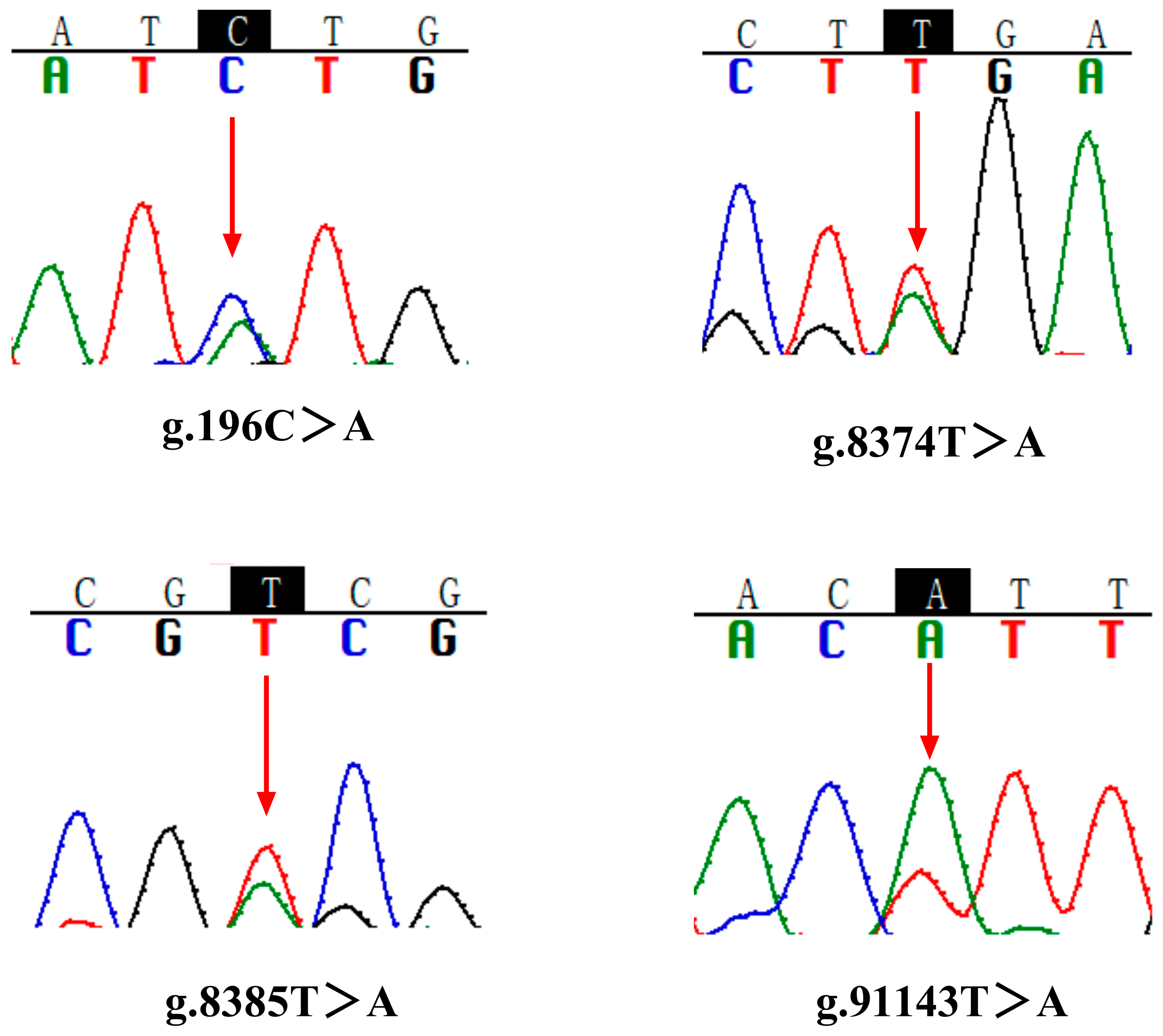
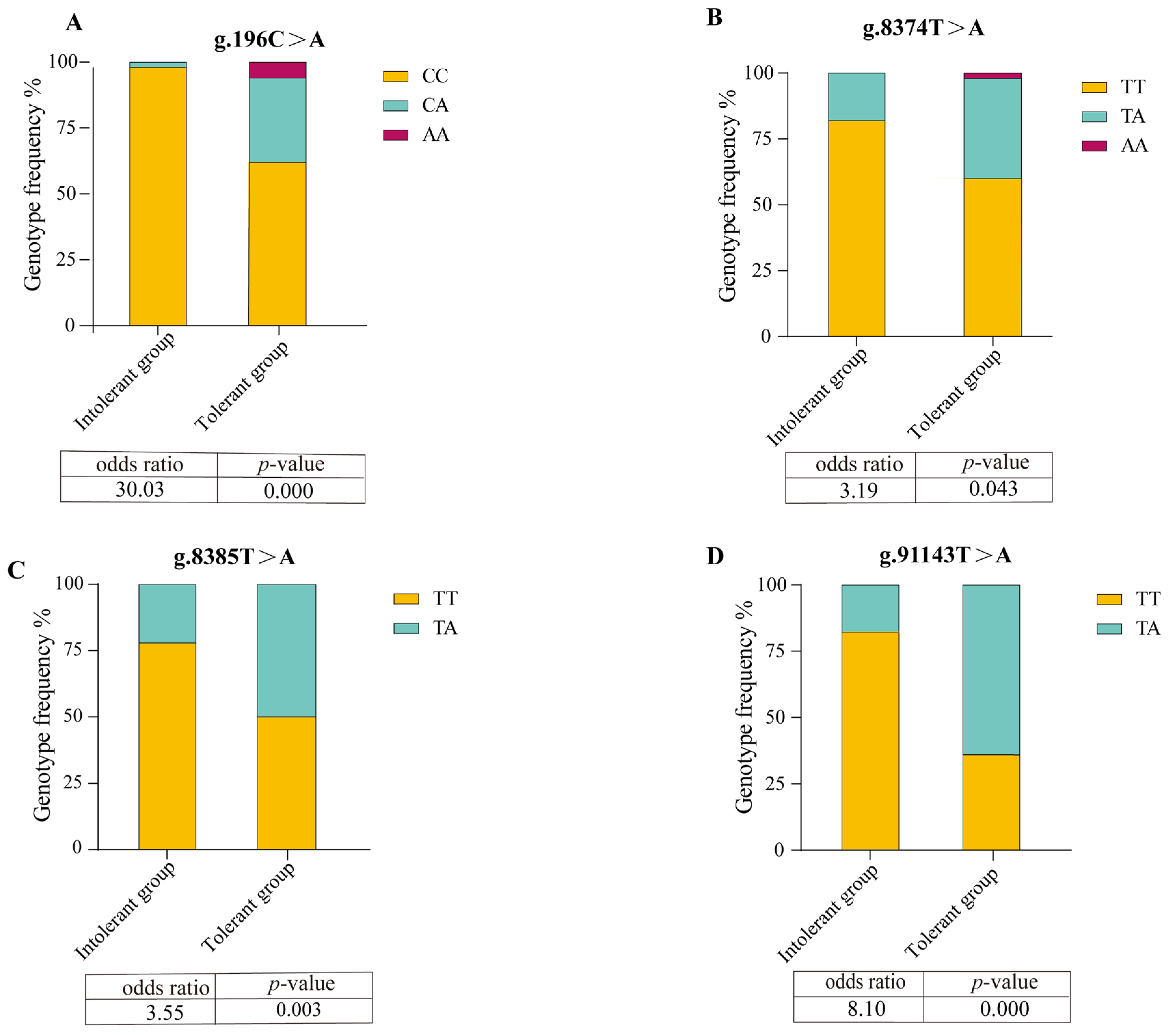
At the end of the low-salinity stress experiment, surviving individuals were designated as the tolerant group, whereas those that died were classified as the intolerant group. Genotyping of the four loci were successful in both low-salinity tolerant and intolerant groups (Figure 2). Three genotypes were detected at loci g.196C>A and g.8374T>A, while only two genotypes were observed at g.8385T>A and g.91143T>A. The result of chi-square test demonstrated significant differences in genotype frequencies between the two groups at all four loci (p < 0.05), and the OR values for the four loci more than 1 (Figure 3). At the g.196C>A locus, the genotype of intolerant individuals was predominantly CC (98%). In contrast, the tolerant group was composed of CC (62%), CA (32%), and AA (6%) genotypes (Figure 3A). At g.8374T>A, the genotypes of intolerant individuals mainly were TT (82%) and TA (18%), whereas tolerant individuals were TT (60%), TA (38%), and AA (2%) (Figure 3B). At the g.8385T>A locus, the intolerant group consisted of 78% TT and 22% TA, whereas the tolerant group showed an equal distribution of TT and TA (50% each; Figure 3C). At the g.91143T>A locus, the genotype frequencies were 82% TT and 18% TA in the intolerant group, compared to 64% TA and 36% TT in the tolerant group (Figure 3D). The tolerant group exhibited higher values of Ho, He, Ne, PIC than those of the intolerant group (Table 3). Eight haplotypes were identified from the four SNP loci. The haplotype analysis revealed obviously distributional differences between the tolerant and intolerant groups (Table 4). The CTTT haplotype was significantly more frequent in the intolerant group than the tolerant group. Conversely, the haplotypes CAAA, AAAT, ATAA and ATTA were significantly enriched in the tolerant group (p < 0.05).

3.3. Expression Analysis of Different Genotypes at Mutation Sites

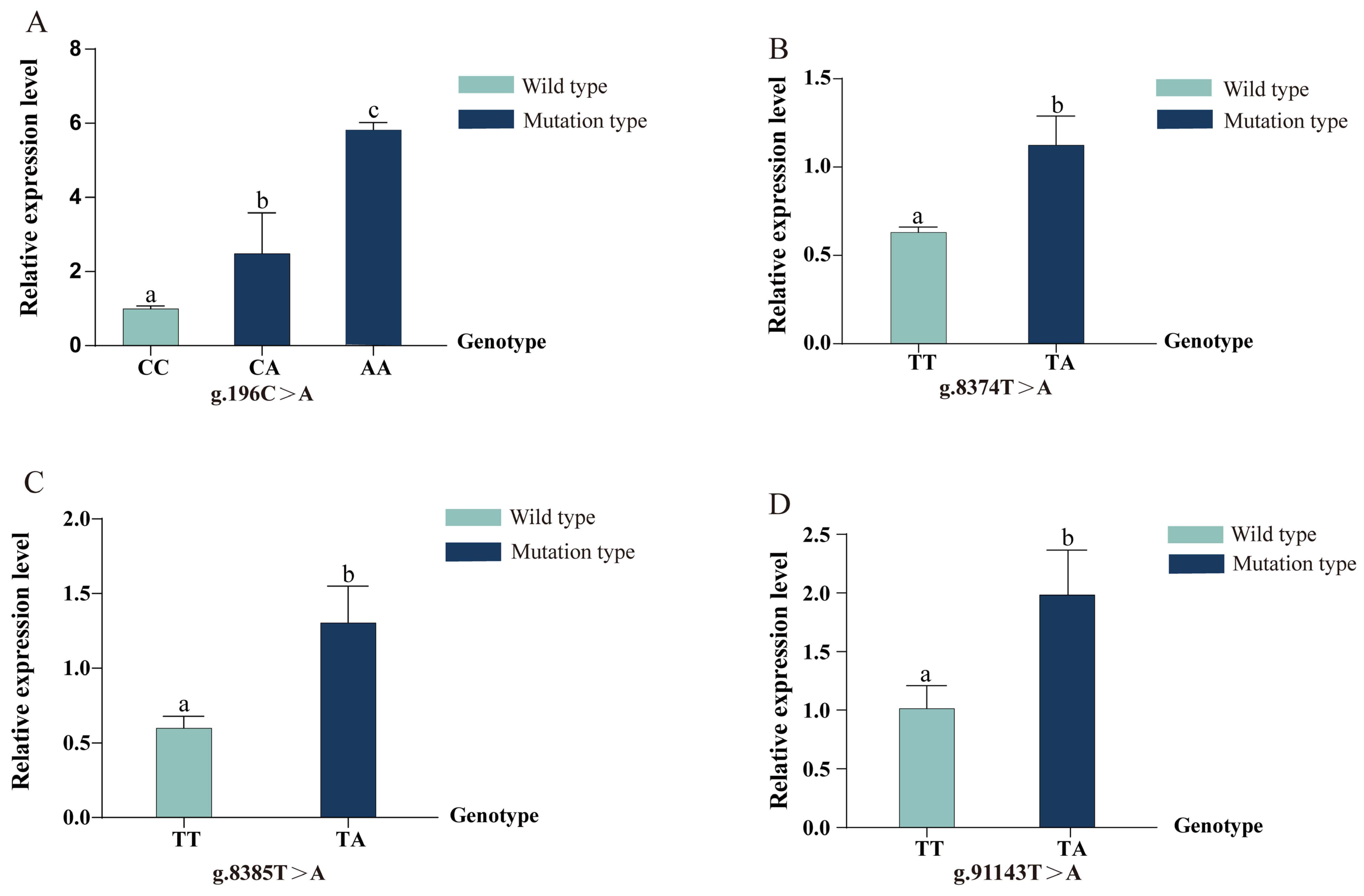
The results of qRT-PCR revealed that the expression level of NKCC gene differed significantly among the genotypes (Figure 4). Specifically, individuals with mutant allele genotypes exhibited significantly higher expression levels than those without mutant alleles (p < 0.05). At the g.196C>A locus, the heterozygous mutant CA genotype exhibited higher expression than the wild-type CC genotype, and the mutant AA showed the highest expression (Figure 4A). At the g.8374T>A locus, the mutant TA genotype showed significantly higher expression than the wild-type TT genotype (Figure 4B). At the g.8385T>A locus, the mutant TA also exhibited higher expression than the wild-type TT (Figure 4C). At the g.91143T>A locus, the mutant TA showed markedly higher expression than the wild-type TT. (Figure 4D). Overall, mutants exhibited higher gene expression than the wild type. Moreover, those genotypes carrying two mutant alleles showed significantly even greater expression than genotypes with a single mutant allele.

4. Discussion

The NKCC, a member of the SLC12A family, mediates the cellular uptake of Na+, K+ and 2Cl, playing a crucial role in cellular ion homeostasis and osmoregulation [20]. The SLC12 family is characterized by an intracellular amino-terminal domain, a core segment comprising 12 transmembrane domains (TMDs), and a large intracellular carboxyl-terminal domain, with the 12 TMDs and ion-binding core directly determining the coordinated transport capacity of Na+, K+, and Cl [31,32]. Crustaceans maintain hemolymph osmoregulation primarily by regulating the branchial absorption and excretion of ions [33,34]. In this study, four SNP loci in the NKCC gene were identified to be significantly associated with low-salinity tolerance. Each locus likely contributed to the tolerance phenotype through distinct molecular mechanisms. The non-synonymous mutation at the g.91143G>T locus was located in the SLC12 domain. The substitution might enhance NKCC ion transport efficiency by altering the local conformation of transmembrane domains or modifying the ion-binding environment. The other non-synonymous mutations, g.196C>A and g.8385T>A, are located outside functional domains. They might enhance low-salinity tolerance through structural changes of NKCC induced by the mutations [35]. Although the synonymous mutation g.8374T>A could not alter the amino acid sequence, it could regulate the expression and fold of protein by optimizing codon usage [36,37]. In Pacific white shrimp, synonymous SNPs affect gene expression and function through mRNA folding and translation efficiency. Similarly, in Chinese mitten crab, synonymous mutations can influence phenotypes by affecting alternative splicing, mRNA secondary structure stability, translation efficiency, and protein folding [38,39]. These examples support the potential regulatory role of g.8374T>A in the NKCC gene. These findings highlighted the regulatory mechanisms of genetic variation in NKCC to salinity adaptation.
Accumulating evidence supports a critical role for these NKCC mutations in low-salinity tolerance. Association analysis revealed that the frequencies of mutant genotypes at the four loci were significantly higher in the tolerant group than the intolerant group (p < 0.05), with OR more than 1, which indicated positive associations between mutations and the tolerance phenotype [40,41]. Haplotypes could capture more complete genetic information than individual SNPs and provide greater statistical power in association studies [42,43]. Three haplotypes (AAAT, ATAA, ATTA) appeared exclusively in the tolerant group, suggesting that these mutation combinations might be functionally important for the tolerance trait. Genetic diversity of the species confers a strong ability to cope with adverse selection pressures. A higher PIC values indicates greater heterozygosity at a locus, which in turn provides richer information for assessing genetic diversity [44,45]. In this study, the four loci exhibited higher values of Ho, He, Ne, and PIC in the tolerant group than those in the intolerant group. The results indicated that the tolerance group had a higher adaptability to low salinity than the intolerance group in S. paramamosain.
Expression validation provided direct molecular evidence for the link between genotype and phenotype. In hyposaline environments, cells must enhance active ion transport to maintain osmotic balance [46], and high NKCC expression likely improves ion transport efficiency and reduces energy requirements for maintaining ion homeostasis, enabling better adaptation to low-salinity stress. Recent studies in aquatic species have shown that SNPs can significantly regulate gene expression, influencing key traits such as disease resistance in Nibea albiflora and growth rate in Litopenaeus vannamei [47,48]. In this study, those individuals carrying mutant alleles exhibited significantly higher NKCC expression levels than wild-type individuals. This expression pattern was consistent with the result of numerous studies demonstrating [49,50]. The elevated expression in mutant genotypes might be mediated through multiple molecular pathways. Those SNPs within promoters and enhancers can modulate gene expression by directly altering transcription factor binding motifs or indirectly affecting chromatin accessibility, epigenetic states, and enhancer-promoter interactions, thereby ultimately changing the activity of these regulatory elements [51,52]. Mutations can alter mRNA secondary structure or stability, facilitating transcript accumulation within cells [53]. Additionally, these genetic variants may modify recognition sites for miRNA or RNA-binding proteins, thereby affecting mRNA stability and translation efficiency [54,55]. In Lateolabrax maculatus, miRNA specifically regulates the expression of functional genes, thereby mediating metabolic reprogramming, activation of signaling pathways, and tissue functional remodeling to cope with salinity fluctuations [56]. Transcriptome analyses in Labeo rohita further uncovered the involvement of lncRNA–miRNA–mRNA competing endogenous RNA networks in regulating osmoregulatory gene expression [57]. These findings indicate that gene expression can be modulated by altering miRNA or RNA-binding protein recognition sites, thereby influencing RNA-mediated regulatory networks under environmental stress. Through these interconnected regulatory mechanisms, the identified SNPs thus act synergistically to upregulate NKCC expression, thereby enhancing the response to salinity stress. This genetic variation in expression regulation might represent an important molecular mechanism underlying S. paramamosain adaptation to fluctuating salinity environments. This study identified SNP loci significantly associated with low-salinity tolerance and preliminarily validated their functional effects through expression analysis. However, the relatively limited sample size may constrain the statistical robustness and broader applicability of these SNPs. Future studies should incorporate protein expression quantification, ion transport activity measurements, and gene editing experiments to better clarify the causal mechanisms. In addition, the sex of experimental juveniles was not recorded because they were difficult to be distinguished. Further studies may need to conduct sex-specific analyses to clarify the potential influence of sex on genotype-phenotype associations. Despite the limitation, this study could provide important theoretical foundations and molecular markers for breeding low-salinity tolerant S. paramamosain strains.

5. Conclusions

This study successfully identified four SNP markers (g.196C>A, g.8374T>A, g.8385T>A and g.91143T>A) in the NKCC gene that are significantly associated with low-salinity tolerance in S. paramamosain. The mutant genotypes showed strongly enriched in the tolerant group. The haplotype analysis revealed distinct genetic patterns between tolerant and intolerant groups. The result of qRT-PCR demonstrated a significant upregulation of NKCC mRNA expression in mutant allele carriers. In addition, the expression level of genotypes carrying two mutant alleles was higher than that of individuals carrying one mutant allele. Although this study has limitations regarding sample size and requires further functional validation, it nevertheless provides the first evidence linking the functional NKCC gene to low-salinity tolerance in S. paramamosain, offering novel insights into the molecular basis of osmoregulation. These SNP markers could be useful for breeding low-salinity tolerant strains of the S. paramamosain, providing valuable genetic resources for sustainable aquaculture under low-salinity conditions.

Author Contributions

Conceptualization, F.Z. and Z.L.; methodology, X.W.; software, Y.M.; validation, Y.M., X.W. and C.Y.; formal analysis, C.Y.; investigation, K.M.; resources, K.M.; data curation, W.W.; writing—original draft preparation, C.Y.; writing—review and editing, F.Z.; visualization, C.Y.; supervision, W.W.; project administration, C.M.; funding acquisition, F.Z. All authors have read and agreed to the published version of the manuscript.

Funding

This study was funded by the Shanghai Agricultural Science and Technology Innovation Project (T2023214), the Special Scientific Research Funds for Central Non-profit Institutes, Chinese Academy of Fishery Sciences (2023TD31), the earmarked fund for China Agriculture Research System (CARS-48).

Institutional Review Board Statement

The animal experiments were approved by the East China Sea Fisheries Research Institute, Chinese Academy of Fishery Sciences, with approval code 20250606-1 and approval date 6 June 2025.

Informed Consent Statement

Not applicable.

Data Availability Statement

Data are available from the corresponding author upon reasonable request.

Acknowledgments

I gratefully acknowledge the methodological guidance and technical support provided by Shaocong Huang in this experiment.

Conflicts of Interest

The authors declare no conflicts of interest.

References

  1. Phat, L.T.; Huy, N.V.; Son, N.K.H.; Thuy, N.T.T.; Chat, T.T. Effects of salinity and substrates on the growth performance and survival rates of juvenile mud crab (Scylla paramamosain). Aquac. Aquar. Conserv. Legis. 2024, 17, 1490–1498. [Google Scholar] [CrossRef]
  2. Thabet, R.; Ayadi, H.; Koken, M.; Leignel, V. Homeostatic responses of crustaceans to salinity changes. Hydrobiologia 2017, 799, 1–20. [Google Scholar] [CrossRef]
  3. Wang, X.; Yao, Q.; Zhang, D.M.; Lei, X.Y.; Wang, S.; Wan, J.; Liu, H.J.; Chen, Y.; Zhao, Y.L.; Wang, G.; et al. Effects of acute salinity stress on osmoregulation, antioxidant capacity and physiological metabolism of female Chinese mitten crabs (Eriocheir sinensis). Aquaculture 2022, 552, 737989. [Google Scholar] [CrossRef]
  4. Guo, L.; Peng, Y.; Li, R.; Ji, Z.; Bekaert, M.; Mu, C.; Migaud, H.; Weiwei, S.; Shi, C.; Wang, C. Effects of long-term low-salinity on haemolymph osmolality, gill structure and transcriptome in mud crab (Scylla paramamosain). Aquac. Rep. 2024, 38, 102295. [Google Scholar] [CrossRef]
  5. Wang, H.; Tang, L.; Wei, H.; Lu, J.; Mu, C.; Wang, C. Transcriptomic analysis of adaptive mechanisms in response to sudden salinity drop in the mud crab, Scylla paramamosain. BMC Genom. 2018, 19, 421. [Google Scholar] [CrossRef]
  6. Zhang, Y.; Wu, Q.; Fang, S.; Li, S.; Zheng, H.; Zhang, Y.; Ikhwanuddin, M.; Ma, H. mRNA profile provides novel insights into stress adaptation in mud crab megalopa, Scylla paramamosain after salinity stress. BMC Genom. 2020, 21, 559. [Google Scholar] [CrossRef]
  7. Yao, H.; Li, X.; Chen, Y.; Liang, G.; Gao, G.; Wang, H.; Wang, C.; Mu, C. Metabolic Changes in Scylla paramamosain During Adaptation to an Acute Decrease in Salinity. Front. Mar. Sci. 2021, 8, 734519. [Google Scholar] [CrossRef]
  8. Che, C.; Yang, P.; Qin, K.; Li, Y.; Fan, Z.; Li, W.; Gao, S.; Wang, C.; Mu, C.; Wang, H. Based on metabolomics analysis: Metabolic mechanism of intestinal tract of Scylla paramamosain under low-salt saline-alkali water aquaculture environment. BMC Genom. 2024, 25, 1232. [Google Scholar] [CrossRef]
  9. Maraschi, A.C.; Faria, S.C.; McNamara, J.C. Salt transport by the gill Na(+)-K(+)-2Cl(−) symporter in palaemonid shrimps: Exploring physiological, molecular and evolutionary landscapes. Comp. Biochem. Physiol. A Mol. Integr. Physiol. 2021, 257, 110968. [Google Scholar] [CrossRef]
  10. Lv, J.; Zhang, D.; Liu, P.; Li, J. Effects of salinity acclimation and eyestalk ablation on Na(+), K(+), 2Cl(−) cotransporter gene expression in the gill of Portunus trituberculatus: A molecular correlate for salt-tolerant trait. Cell Stress Chaperones 2016, 21, 829–836. [Google Scholar] [CrossRef]
  11. Boonsanit, P.; Chanchao, C.; Pairohakul, S. Effects of hypo-osmotic shock on osmoregulatory responses and expression levels of selected ion transport-related genes in the sesarmid crab Episesarma mederi (H. Milne Edwards, 1853). Comp. Biochem. Physiol. A Mol. Integr. Physiol. 2024, 288, 111541. [Google Scholar] [CrossRef]
  12. Spencer, E.L.; Fitzgibbon, Q.P.; Glendinning, S.; Lewis, C.L.; Banks, T.M.; Trotter, A.J.; Ventura, T.; Smith, G.G. Assessing Molecular Mechanisms of Stress Induced Salinity Adaptation in the Juvenile Ornate Spiny Lobster, Panulirus ornatus. Int. J. Mol. Sci. 2025, 26, 11150. [Google Scholar] [CrossRef] [PubMed]
  13. Jiang, L.; Ruan, Z.; Lu, Z.-Q.; Li, Y.-F.; Luo, Y.-Y.; Zhang, X.-Q.; Liu, W.-S. Novel SNPs in the 3′UTR Region of GHRb Gene Associated with Growth Traits in Striped Catfish (Pangasianodon hypophthalmus), a Valuable Aquaculture Species. Fishes 2022, 7, 230. [Google Scholar] [CrossRef]
  14. Rasal, K.D.; Kumar, P.V.; Asgolkar, P.; Shinde, S.; Dhere, S.; Siriyappagouder, P.; Sonwane, A.; Brahmane, M.; Sundaray, J.K.; Goswami, M.; et al. Single-Nucleotide Polymorphism (SNP) array: An array of hope for genetic improvement of aquatic species and fisheries management. Blue Biotechnol. 2024, 1, 3. [Google Scholar] [CrossRef]
  15. Lyu, D.; Yu, Y.; Wang, Q.; Luo, Z.; Zhang, Q.; Zhang, X.; Xiang, J.; Li, F. Identification of Growth-Associated Genes by Genome-Wide Association Study and Their Potential Application in the Breeding of Pacific White Shrimp (Litopenaeus vannamei). Front. Genet. 2021, 12, 611570. [Google Scholar] [CrossRef]
  16. Duan, B.; Liu, W.; Zhang, C.; Kang, T.; Wan, H.; Mu, S.; Guan, Y.; Li, Z.; Tian, Y.; Ren, Y.; et al. Characterization of Myf6 and association with growth traits in swimming crab (Portunus trituberculatus). BMC Genom. 2024, 25, 1256. [Google Scholar] [CrossRef]
  17. Jiang, S.; Xie, Y.; Gao, Z.; Niu, Y.; Ma, C.; Zhang, W.; Xiong, Y.; Qiao, H.; Fu, H. Studies on the Relationships between Growth and Gonad Development during First Sexual Maturation of Macrobrachium nipponense and Associated SNPs Screening. Int. J. Mol. Sci. 2024, 25, 7071. [Google Scholar] [CrossRef]
  18. Chen, B.; Zhong, P.; Wu, X.; Peng, K.; Sun, Y.; Chen, X.; Zhao, H.; Xu, Z.; Liu, J.; Li, H.; et al. Construction of a genetic linkage map, QTLs mapping for low salinity and growth-related traits and identification of the candidate genes in Pacific white shrimp (Litopenaeus vannamei). Aquac. Rep. 2022, 22, 100978. [Google Scholar] [CrossRef]
  19. Si, M.R.; Li, Y.D.; Jiang, S.G.; Yang, Q.B.; Jiang, S.; Yang, L.S.; Huang, J.H.; Chen, X.; Zhou, F.L. Identification of multifunctionality of the PmE74 gene and development of SNPs associated with low salt tolerance in Penaeus monodon. Fish Shellfish Immunol. 2022, 128, 7–18. [Google Scholar] [CrossRef]
  20. Xu, B.P.; Tu, D.D.; Yan, M.C.; Shu, M.A.; Shao, Q.J. Molecular characterization of a cDNA encoding Na(+)/K(+)/2Cl(−) cotransporter in the gill of mud crab (Scylla paramamosain) during the molt cycle: Implication of its function in osmoregulation. Comp. Biochem. Physiol. A Mol. Integr. Physiol. 2017, 203, 115–125. [Google Scholar] [CrossRef]
  21. Ma, H.; Ma, Q.; Ma, C.-Y.; Ma, L. Isolation and characterization of gene-derived single nucleotide polymorphism (SNP) markers in Scylla paramamosain. Biochem. Syst. Ecol. 2011, 39, 419–424. [Google Scholar] [CrossRef]
  22. Feng, N.; Ma, H.; Ma, C.; Xu, Z.; Li, S.; Jiang, W.; Liu, Y.; Ma, L. Characterization of 40 single nucleotide polymorphism (SNP) via Tm-shift assay in the mud crab (Scylla paramamosain). Mol. Biol. Rep. 2014, 41, 5467–5471. [Google Scholar] [CrossRef] [PubMed]
  23. Xie, Y.; Li, H.; Luo, X.; Li, H.; Gao, Q.; Zhang, L.; Teng, Y.; Zhao, Q.; Zuo, Z.; Ren, J. IBS 2.0: An upgraded illustrator for the visualization of biological sequences. Nucleic Acids Res. 2022, 50, W420–W426. [Google Scholar] [CrossRef] [PubMed]
  24. Zhao, M.; Jiang, K.; Song, W.; Ma, C.; Wang, J.; Meng, Y.; Wei, H.; Chen, K.; Qiao, Z.; Zhang, F.; et al. Two transcripts of HMG-CoA reductase related with developmental regulation from Scylla paramamosain: Evidences from cDNA cloning and expression analysis. IUBMB Life 2015, 67, 954–965. [Google Scholar] [CrossRef]
  25. Livak, K.J.; Schmittgen, T.D. Analysis of relative gene expression data using real-time quantitative PCR and the 2(-Delta Delta C(T)) Method. Methods 2001, 25, 402–408. [Google Scholar] [CrossRef]
  26. Chen, B.; Xiao, W.; Zou, Z.Y.; Zhu, J.-L.; Li, D.; Yu, J.; Yang, H. Correlation analysis of polymorphisms in promoter region and coding region of GHR and IGF-I genes with growth traits of two varieties of Nile Tilapia (Oreochromis niloticus). J. Agric. Biotechnol. 2020, 28, 2032–2047. Available online: https://kns.cnki.net/kcms2/article/abstract?v=2yANmoQUOTPK3FoJd55CkvWYUCS_tjY7WJix15G0DV6RkJHI6jAeu6ns0VQp5NRgQdP5Qok2AZmKvyQc6xyVKIe5ffLa1Mh6_efZjkdDKCqOWupN_GLR1aVCs3fkhEknZ0lzyHBsfI__8j6Y0YOzf_R_mSte7Zb9j5e9wuutk34l6owlcy2Jji605pziEAgm&uniplatform=NZKPT&language=CHS (accessed on 1 January 2026).
  27. Gao, F.; Tong, Y.; Liu, Z.; Cao, J.; Wang, M.; Yi, M.; Ke, X.; Yan, M.; Zhu, H. Screening of SNP of MYF6 Gene in Nile Tilapia (Oreochromis niloticus) and Its Association Analysis with Growth Traits. J. Agric. Biotechnol. 2023, 32, 396–416. [Google Scholar] [CrossRef]
  28. Clarke, G.M.; Anderson, C.A.; Pettersson, F.H.; Cardon, L.R.; Morris, A.P.; Zondervan, K.T. Basic statistical analysis in genetic case-control studies. Nat. Protoc. 2011, 6, 121–133. [Google Scholar] [CrossRef]
  29. Liu, K.; Muse, S.V. PowerMarker: An integrated analysis environment for genetic marker analysis. Bioinformatics 2005, 21, 2128–2129. [Google Scholar] [CrossRef]
  30. Shi, Y.Y.; He, L. Publisher Correction: SHEsis, a powerful software platform for analyses of linkage disequilibrium, haplotype construction, and genetic association at polymorphism loci. Cell Res. 2005, 15, 97–98. [Google Scholar] [CrossRef]
  31. Arroyo, J.P.; Kahle, K.T.; Gamba, G. The SLC12 family of electroneutral cation-coupled chloride cotransporters. Mol. Asp. Med. 2013, 34, 288–298. [Google Scholar] [CrossRef]
  32. Gagnon, K.B.; Delpire, E. Physiology of SLC12 transporters: Lessons from inherited human genetic mutations and genetically engineered mouse knockouts. Am. J. Physiol. Cell Physiol. 2013, 304, C693–C714. [Google Scholar] [CrossRef] [PubMed]
  33. Freire, C.A.; Onken, H.; McNamara, J.C. A structure-function analysis of ion transport in crustacean gills and excretory organs. Comp. Biochem. Physiol. A Mol. Integr. Physiol. 2008, 151, 272–304. [Google Scholar] [CrossRef] [PubMed]
  34. McNamara, J.C.; Faria, S.C. Evolution of osmoregulatory patterns and gill ion transport mechanisms in the decapod Crustacea: A review. J. Comp. Physiol. B 2012, 182, 997–1014. [Google Scholar] [CrossRef] [PubMed]
  35. Yates, C.M.; Sternberg, M.J. The effects of non-synonymous single nucleotide polymorphisms (nsSNPs) on protein-protein interactions. J. Mol. Biol. 2013, 425, 3949–3963. [Google Scholar] [CrossRef]
  36. Bailey, S.F.; Alonso Morales, L.A.; Kassen, R. Effects of Synonymous Mutations beyond Codon Bias: The Evidence for Adaptive Synonymous Substitutions from Microbial Evolution Experiments. Genome Biol Evol. 2021, 13, evab141. [Google Scholar] [CrossRef]
  37. Oelschlaeger, P. Molecular Mechanisms and the Significance of Synonymous Mutations. Biomolecules 2024, 14, 132. [Google Scholar] [CrossRef]
  38. Yu, Y.; Liu, J.; Li, F.; Zhang, X.; Zhang, C.; Xiang, J. Gene set based association analyses for the WSSV resistance of Pacific white shrimp Litopenaeus vannamei. Sci. Rep. 2017, 7, 40549. [Google Scholar] [CrossRef]
  39. Yue, W.; Yang, H.; Hou, X.; Wang, J.; Chen, X.; Wang, J.; Wang, C. Effects of synonymous mutation on transcription and translation efficiency of the Es-MSTN gene in Chinese mitten crab (Eriocheir sinensis). J. Fish. China 2021, 45, 497−504. [Google Scholar] [CrossRef]
  40. Politi, C.; Roumeliotis, S.; Tripepi, G.; Spoto, B. Sample Size Calculation in Genetic Association Studies: A Practical Approach. Life 2023, 13, 235. [Google Scholar] [CrossRef]
  41. Li, W. Three lectures on case-control genetic association analysis. Brief. Bioinform. 2008, 9, 1–13. [Google Scholar] [CrossRef] [PubMed]
  42. Bhat, J.A.; Yu, D.; Bohra, A.; Ganie, S.A.; Varshney, R.K. Features and applications of haplotypes in crop breeding. Commun. Biol. 2021, 4, 1266. [Google Scholar] [CrossRef] [PubMed]
  43. Sehgal, D.; Dreisigacker, S. Haplotypes-based genetic analysis: Benefits and challenges. Vavilov J. Genet. Breed. 2019, 23, 803–808. [Google Scholar] [CrossRef]
  44. Bai, J.; Lutz-Carrillo, D.; Quan, Y.; Liang, S. Taxonomic status and genetic diversity of cultured largemouth bass Micropterus salmoides in China. Aquaculture 2008, 278, 27–30. [Google Scholar] [CrossRef]
  45. Kong, L.; Bai, J. Comparative assessment of genomic SSR, EST–SSR and EST–SNP markers for evaluation of the genetic diversity of wild and cultured Pacific oyster, Crassostrea gigas Thunberg. Aquaculture 2014, 420–421, S85–S91. [Google Scholar] [CrossRef]
  46. Dildar, T.; Cui, W.; Ikhwanuddin, M.; Ma, H. Aquatic Organisms in Response to Salinity Stress: Ecological Impacts, Adaptive Mechanisms, and Resilience Strategies. Biology 2025, 14, 667. [Google Scholar] [CrossRef]
  47. Huang, Y.; Li, J.; Li, W.; Han, F. Integrative GWAS and eQTL analysis identifies genes associated with resistance to Vibrio harveyi infection in yellow drum (Nibea albiflora). Front. Mar. Sci. 2024, 11, 1435469. [Google Scholar] [CrossRef]
  48. Chen, X.; Peng, M.; Yang, C.; Li, Q.; Feng, P.; Zhu, W.; Zhang, Y.; Zeng, D.; Zhao, Y. Genome-wide QTL and eQTL mapping reveal genes associated with growth rate trait of the Pacific white shrimp (Litopenaeus vannamei). BMC Genom. 2024, 25, 414. [Google Scholar] [CrossRef]
  49. Birchler, J.A.; Veitia, R.A. The gene balance hypothesis: Implications for gene regulation, quantitative traits and evolution. New Phytol. 2010, 186, 54–62. [Google Scholar] [CrossRef]
  50. Joehanes, R.; Zhang, X.; Huan, T.; Yao, C.; Ying, S.X.; Nguyen, Q.T.; Demirkale, C.Y.; Feolo, M.L.; Sharopova, N.R.; Sturcke, A.; et al. Integrated genome-wide analysis of expression quantitative trait loci aids interpretation of genomic association studies. Genome Biol. 2017, 18, 16. [Google Scholar] [CrossRef]
  51. Friedman, M.J.; Wagner, T.; Lee, H.; Rosenfeld, M.G.; Oh, S. Enhancer–promoter specificity in gene transcription: Molecular mechanisms and disease associations. Exp. Mol. Med. 2024, 56, 772–787. [Google Scholar] [CrossRef]
  52. Okude, G.; Yamasaki, Y.Y.; Toyoda, A.; Mori, S.; Kitano, J. Genome-wide analysis of histone modifications can contribute to the identification of candidate cis-regulatory regions in the threespine stickleback fish. BMC Genom. 2024, 25, 685. [Google Scholar] [CrossRef]
  53. Chamary, J.V.; Hurst, L.D. Evidence for selection on synonymous mutations affecting stability of mRNA secondary structure in mammals. Genome Biol. 2005, 6, R75. [Google Scholar] [CrossRef]
  54. Jankowska, K.I.; Meyer, D.; Holcomb, D.D.; Kames, J.; Hamasaki-Katagiri, N.; Katneni, U.K.; Hunt, R.C.; Ibla, J.C.; Kimchi-Sarfaty, C. Synonymous ADAMTS13 variants impact molecular characteristics and contribute to variability in active protein abundance. Blood Adv. 2022, 6, 5364–5378. [Google Scholar] [CrossRef]
  55. Neelamraju, Y.; Gonzalez-Perez, A.; Bhat-Nakshatri, P.; Nakshatri, H.; Janga, S.C. Mutational landscape of RNA-binding proteins in human cancers. RNA Biol. 2018, 15, 115–129. [Google Scholar] [CrossRef]
  56. Wang, L.; Zhang, X.; Wen, H.; Qi, X.; Sun, D.; Li, X.; Li, J.; Tian, Y.; Zhang, K.; Li, Y. Integrated miRNA and mRNA analysis in gills of spotted sea bass reveals novel insights into the molecular regulatory mechanism of salinity acclimation. Aquaculture 2022, 575, 739778. [Google Scholar] [CrossRef]
  57. Shukla, N.; Harshini, V.; Raval, I.; Patel, A.; Joshi, C. lncRNA-miRNA-mRNA network in kidney transcriptome of Labeo rohita under hypersaline environment. Sci. Data 2024, 11, 226. [Google Scholar] [CrossRef]
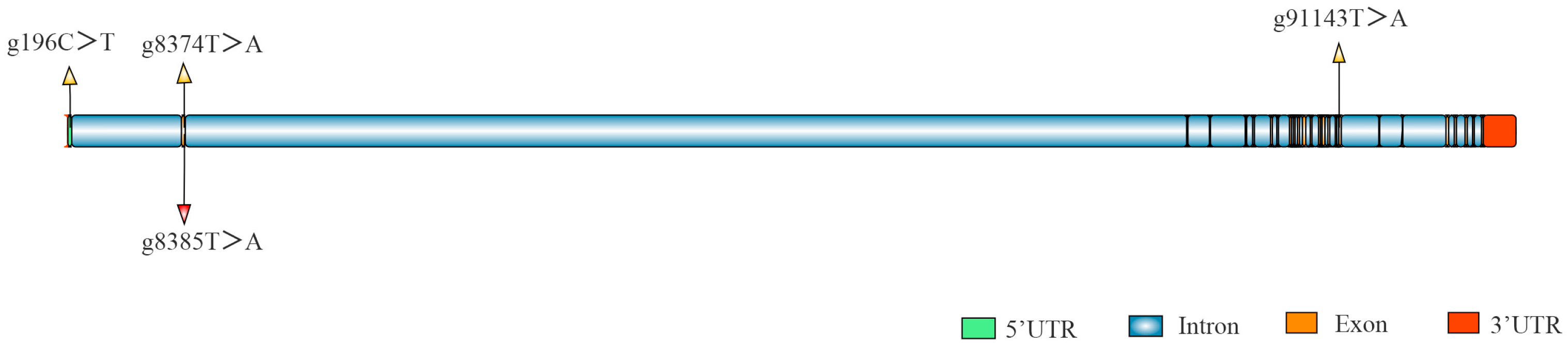
Figure 1. Structure of the NKCC gene and the positions of the mutation sites. Different color blocks represent different regions of the NKCC gene: the green block indicates the 5′ untranslated region (5′UTR), the light blue block indicates the intron, the orange block indicates the exon, and the red block indicates the 3′ untranslated region (3′UTR). The loci marked by arrows in the figure (g.196C>T, g.8385T>A, g.8374T>A, g.91143T>A) are SNP loci associated with low-salinity tolerance traits in Scylla paramamosain. The nucleotide variation information of the corresponding loci is presented in the format of “locus ID + reference base > variant base”.
Fishes 11 00031 g001
Figure 2. Representative sequencing chromatograms of SNP loci in the NKCC gene.
Fishes 11 00031 g002
Figure 3. The genotype frequency distribution of four loci in different groups. (A) Distribution frequency of g.196C>A genotype in different groups; (B) Distribution frequency of g.8374T>A genotype in different groups; (C) Distribution frequency of g.8385T>A genotype in different groups; (D) Distribution frequency of g.91143T>A genotype in different groups.
Fishes 11 00031 g003
Figure 4. The relative expression levels of NKCC in different genotypes at the mutation sites. (A) Expression levels of wild-type and mutant genotypes at the g.196C>A locus; (B) Expression levels of wild-type and mutant genotypes at the g.8374T>A locus; (C) Expression levels of wild-type and mutant genotypes at the g.8385T>A locus; (D) Expression levels of wild-type and mutant genotypes at the g.91143T>A locus. Different letters indicate significant differences in expression levels between different genotypes at the respective loci, with p < 0.05.
Fishes 11 00031 g004
Table 1. PCR primers and corresponding sequences used in this study.
Primer NameSequence (5′~3′)Purpose
Sp-NKCC-F1AGTCGCCAGTCGCAACAASNP screening
Sp-NKCC-R1GGTTAGGTTAGGTTAAGGTCGC
Sp-NKCC-F2TCGTCTGCCACCAGTAGGASNP screening
Sp-NKCC-R2CTCACCTGGTTCTCCCTCAG
Sp-NKCC-F3TACAAGACACAGCATCAGACACSNP screening
Sp-NKCC-R3GGTGAGGATGCAAGTCAATGA
Sp-NKCC-F4GTTCTTCTACTTTGATGGTGCTSNP screening
Sp-NKCC-R4AGCTAAGGCCAATGAAGCC
Sp-NKCC-F5CCGGATTATCGAGAGTTTGAGASNP screening
Sp-NKCC-R5CACCTGTGGCATCTCTCAG
Sp-NKCC-F6ACAGGTGACAAAGATGTGTATGSNP screening
Sp-NKCC-R6CAGACAAAGGAGATGACGAAGA
Sp-NKCC-F7ACCTCTCCCCGGATACAACTTASNP genotyping
Sp-NKCC-R7TCTGGTGCAGCTCGTCGAT
Sp-NKCC-F8GCTGACCAGAGGGATTTTGTG SNP genotyping
Sp-NKCC-R8TCCCTTGAATTATGGAGCAAAGGAA
Sp-NKCC-F9 CCCAGTCACCTGAAGATAAGCCSNP genotyping
Sp-NKCC-R9TGAGGATGCAAGTCAATGACAAT
Sp-NKCC-qRT-FATGGCATGGACAGCCATCTCqRT-PCR
Sp-NKCC-qRT-RCTATCCCCTGTTGTCGCTGG
Sp-18S-qRT-FGGGGTTTGCAATTGTCTCCCqRT-PCR
Sp-18S-qRT-RGGTGTGTACAAAGGGCAGGG
SpScylla paramamosain.
Table 2. Summary of four SNPs identified in the NKCC gene.
LocusAlleleAmino AcidMutation TypePosition
g.196C>AC-AL-MNonsynonymous mutationExon
g.8374T>AT-ALsynonymous mutationExon
g.8385T>AT-AV-DNonsynonymous mutationExon
g.91143T>AT-AF-INonsynonymous mutationExon
Table 3. Statistical analysis of genetic parameters at four SNP loci among different groups.
GroupLocusObserved HeterozygosityExpected HeterozygosityNumber of Effective AllelesPolymorphic Information Content
Intolerant groupg.196C>A0.02000.01981.02020.0196
g.8374T>A0.18000.16381.19590.1504
g.8385T>A0.22000.19581.24350.1766
g.91143T>A0.18000.16381.19590.1504
Tolerant groupg.196C>A0.32000.34321.52250.2843
g.8374T>A0.38000.33181.49660.2768
g.8385T>A0.50000.37501.60000.3047
g.91143T>A0.64000.43521.77050.3405
Table 4. Haplotype distribution and association analysis of four SNP loci in tolerant and intolerant groups.
HaplotypeTolerant Group (Freq.)Intolerant Group (Freq.)Chi2Fisher’s pPearson’s pOdds Ratio [95%CI]
CTTT52.18 (0.522)79.15 (0.792)16.8260.00000.00000.266 [0.139~0.510]
ATTT4.04 (0.040)1.00 (0.010)1.8940.16880.16874.188 [0.461~38.091
CAAA8.38 (0.084)1.44 (0.014)5.1910.02270.02276.290 [1.050~37.671]
CAAT5.47 (0.055)5.47 (0.055)0.0000.99330.99331.005 [0.297~3.405]
CTTA9.62 (0.096)6.76 (0.068)0.5590.45450.45451.477 [0.529~4.124]
AAAT5.07 (0.051)0.00 (0.000)5.2300.02220.0222NA
ATAA4.96 (0.050)0.00 (0.000)5.1130.02380.0238NA
ATTA7.09 (0.071)0.00 (0.000)7.3890.00660.0066NA
Other3.18 (0.032)6.18 (0.062)NANANANA
Note: NA (Not Available) indicates that the odds ratio and 95% confidence interval could not be calculated due to zero frequency of the haplotype in one of the groups.
Disclaimer/Publisher’s Note: The statements, opinions and data contained in all publications are solely those of the individual author(s) and contributor(s) and not of MDPI and/or the editor(s). MDPI and/or the editor(s) disclaim responsibility for any injury to people or property resulting from any ideas, methods, instructions or products referred to in the content.