
Article

De Novo Transcriptome Analysis Reveals the Primary Metabolic Capacity of the Sponge Xestospongia sp. from Vietnam

by
Le Bich Hang Pham
1,†,
Hai Quynh Do
1,†,
Chi Mai Nguyen
2,
Tuong Van Nguyen
3,4,
Hai Ha Nguyen
1,5,
Huu Hong Thu Nguyen
1,
Khanh Linh Nguyen
1,
Thi Hoe Pham
2,
Quang Hung Nguyen
3,5,
Quang Trung Le
3,
My Linh Tran
2,5,* and
Thi Thu Hien Le
1,5,*
1
Institute of Biology, Vietnam Academy of Science and Technology, 18 Hoang Quoc Viet, Nghia Do, Hanoi 10000, Vietnam
2
Institute of Chemistry, Vietnam Academy of Science and Technology, 18 Hoang Quoc Viet, Nghia Do, Hanoi 10000, Vietnam
3
VNTEST Institute for Quality Testing and Inspection, Lot DM10-1, Small Industry Cluster, Van Phuc Village, Ha Dong, Hanoi 10000, Vietnam
4
Biotechnology Association, 18 Hoang Quoc Viet, Nghia Do, Hanoi 10000, Vietnam
5
Graduate University of Science and Technology, Vietnam Academy of Science and Technology, 18 Hoang Quoc Viet, Nghia Do, Hanoi 10000, Vietnam
*
Authors to whom correspondence should be addressed.
These authors contributed equally to this work.
Fishes 2026, 11(1), 23; https://doi.org/10.3390/fishes11010023

Submission received: 11 November 2025 / Revised: 26 December 2025 / Accepted: 29 December 2025 / Published: 31 December 2025
(This article belongs to the Special Issue Functional Gene Analysis and Genomic Technologies in Aquatic Animals)

Abstract

Marine sponges possess complex metabolic systems that support their growth, physiology, and ecological interactions. However, the primary metabolic capacity of the sponge hosts remains incompletely characterized at the molecular level. In this study, we performed de novo transcriptome sequencing of a pooled sample of three individuals of Xestospongia sp. collected in Vietnam, using a high-throughput Illumina sequencing system, to characterize the host-derived metabolic pathways. A total of 43,278 unigenes were assembled, of which 69.15% were functionally annotated using multiple public databases. Functional annotation revealed a broad repertoire of genes associated with core metabolic pathways, including carbohydrate, lipid, and sterol metabolisms, as well as cofactor-related processes. Specifically, complete pathways involved in folate biosynthesis, terpenoid backbone biosynthesis, ubiquinone (Coenzyme Q) metabolism, and steroid biosynthesis were identified, reflecting the independent metabolic framework of the sponge host. Several highly expressed genes related to these pathways, including COQ7, ERG6, NUDX1, QDPR, and PCBD, were detected, and their expression patterns were confirmed by quantitative RT-PCR. Furthermore, protein-based phylogenetic analyses indicated that these genes are closely related to homologous proteins from other sponge species, supporting their host origin. This study provides the first comprehensive transcriptomic resource for Xestospongia sp. from Vietnam, and offers baseline molecular insights into the primary metabolic capacity of the sponge host. These data establish a foundation for future investigations of sponge physiology and host–microbe metabolic partitioning.
Key Contribution: This study establishes the first comprehensive transcriptomic dataset for Xestospongia sp. from Vietnam, revealing critical host-derived genes involved in sterol and cofactor biosynthesis, thereby providing a molecular baseline for understanding sponge physiological adaptations.

1. Introduction

Marine sponges (phylum Porifera) represent one of the earliest diverging metazoan lineages and play essential ecological roles in benthic ecosystems worldwide [1]. Among the Demospongiae, which accounts for over 90% of all known sponge species, the genus Xestospongia—commonly referred to as giant barrel sponges—stands out due to their large biomass and longevity [2]. These sponges are widely distributed in coral reef environments, where they function as efficient filter feeders, contributing significantly to nutrient cycling (particularly carbon and nitrogen) and ecosystem stability [3,4]. All while managing complex nutrient cycling, sponges exhibit diverse primary metabolic pathways that are essential for normal cellular functions.
Xestospongia species, particularly those inhabiting Southeast Asian waters, are renowned for their capacity to produce a number of metabolites, such as alkaloids, steroids, fatty acids, and quinones [5]. Beyond their ecological dominance, the genus Xestospongia are characterized as high-microbial-abundance (HMA) sponges, hosting diverse microbial communities that can constitute up to 35% of the sponge biomass [6,7]. While these complex symbiotic associations are known to influence the holobiont’s physiology [8], the overwhelming presence of microbial DNA and RNA often obscures the genetic machinery of the sponge host itself. Consequently, the extent to which essential metabolic functions—such as sterol biosynthesis and cofactor regulation—are host-derived or microbially mediated remains a subject of ongoing debate [5,9]. Investigating the production of metabolites by the host sponge and its microbial population enables us to determine the source of these metabolites. Therefore, elucidating the host’s independent metabolic framework is a necessary step towards shedding light on the biochemistry of the sponge and its microbial community, and understanding how these ancient animals adapt and survive in competitive marine environments.
Transcriptomic approaches provide a powerful tool for disentangling the functions of the hosts from those of the microbiome in non-model marine organisms [10]. By utilizing poly-A selection to capture actively expressed eukaryotic genes, it is possible to reconstruct the core metabolic processes involved in cellular maintenance, membrane integrity, and environmental signaling, such as clarifying the origin of specific alkylated sterols (“sponge biomarkers”) and the regulation of signaling cofactors, which are crucial for validating the host’s physiological autonomy. However, genomic resources for Xestospongia remain limited. To date, transcriptomic studies have primarily focused on the Caribbean species Xestospongia muta [4], leaving the genetic diversity and physiological adaptations of Indo-Pacific populations largely unexplored.
In this study, we performed de novo transcriptome sequencing of Xestospongia sp. collected from Vietnamese waters using high-throughput Illumina RNA sequencing. Unlike previous studies that emphasized on the secondary metabolite production, our analysis targets the characterization of the sponge host primary metabolic capacity, specifically its ability to supply essential metabolites such as lipids, and cofactors. We focused on the identification and functional annotation of genes involved in key biosynthetic pathways, including sterol 24-C-methylation (e.g., ERG6), cofactor recycling (e.g., QDPR), and ubiquinone-mediated respiration. The expression profiles of selected genes were further validated using quantitative RT-PCR. This work represents the first comprehensive transcriptomic resource for Xestospongia sp. from Vietnam, providing a molecular baseline for future investigations into sponge physiology and host–microbe metabolic partitioning.

2. Materials and Methods

2.1. Total DNA Extraction

For this study, three individuals of the Xestospongia species were collected in August 2024 from natural habitats at a depth of 8–9 m, with the coordinates 20°46′02.2″ N and 107°07′42.3″ E, in the Gulf of Tonkin near Cat Ba island, which is well known for being rich in nutrients [11]. The water temperature was around 30 °C, and salinity was approximately 18 ppt [12]. Sponge tissues were cleaned carefully 2–3 times using free RNAse water (Thermo Fisher Scientific, Waltham, MA, USA) and cut into small pieces using No. 10 razor blades. To avoid RNA degeneration, all procedures were carried out quickly on ice. Tissues were immersed in at least ten volumes of RNAlater (Thermo Fisher Scientific, Waltham, MA, USA) at 4 °C for 1 h, incubated overnight at −20 °C, then transported back to the laboratory and stored at −80 °C until RNA was extracted [10]. A total of 50 mg of each sample was used for total DNA extraction and amplification of the cytochrome oxidase subunit 1 (COI) region. Briefly, the sponge tissue was thoroughly homogenized in liquid nitrogen. The cell wall and membrane were degraded via suspension in a buffer composed of 1.4 M NaCl (Scharlau, Sentmenat, Barcelona, Spain), 0.1 M Tris-HCl (Bio Basic, Markham, ON, Canada) pH 8.0, 20 mM EDTA (Bio Basic, Markham, ON, Canada) pH 8.0, 2% CTAB (Affymetrix, Santa Clara, CA, USA), 1% PVP (Sigma-Aldrich, Burlington, MA, USA), and 0.1% β-mercaptoethanol (Sigma-Aldrich, Burlington, MA, USA) for 35 min at 65 °C. The treatments were applied at room temperature for 5 min. Cell fragments and pellets were removed by adding one volume of chloroform–isoamyl alcohol (Merck, Darmstadt, Germany) (C:I, 24:1, v:v) and centrifuging at 6000 rpm for 15 min at 4 °C. The supernatants were transferred to new test tubes, 1 µL RNAse (Thermo Fisher Scientific, Waltham, MA, USA) was added, and incubation was carried out for 15 min at 37 °C. The supernatants were purified by adding C:I (24:1, v:v), centrifuging at 6000 rpm for 15 min at 4 °C, transferring to clean Eppendorf tubes, and adding a half-volume of NaCl 5 M. DNA was then precipitated using two volumes of absolute ethanol for 20 min at 4 °C and centrifuged at 3000 rpm for 3 min and at 8000 rpm for 5 min at 4 °C. The precipitated DNA was washed with 70% ethanol and dried. Finally, the DNA was resuspended in sterilized deionized water.

2.2. RNA Extraction, cDNA Library Construction, and Sequencing

For RNA isolation, each sample was immediately frozen in liquid nitrogen. Total RNA was subsequently extracted using Trizol reagent (Thermo Fisher Scientific, Waltham, MA, USA) according to the manufacturer’s instructions. To eliminate genomic DNA contamination, the extracted RNA was treated with RNase-free DNase I (Thermo Fisher Scientific, Waltham, MA, USA). Quality control checks were performed using a NanoDrop spectrophotometer (Thermo Fisher Scientific, Waltham, MA, USA) to assess purity and an Agilent Technologies 4200 TapeStation system to determine the RNA integrity number (RIN). Only samples exhibiting an RIN value exceeding 8.0 were deemed suitable for downstream applications.
To prepare for sequencing, 1 µg of the total RNA of each sample was used to pool and construct a cDNA library using a TruSeq® Stranded mRNA Library Prep Kit for Illumina® (Illumina, San Diego, CA, USA), strictly following the manufacturer’s instructions. The process began by isolating poly-A-containing mRNAs from total RNA using poly-T oligo-attached magnetic beads, followed by random fragmentation. The fragmented RNA was reverse-transcribed into first-strand cDNA using a SensiFAST cDNA Synthesis Kit (Bioline, London, UK). Next, second-strand cDNA was synthesized, and adapters were ligated to both ends. The resulting double-stranded DNA fragments were enriched through PCR, and fragments in the range from 200 to 400 bp were selected, yielding the final cDNA library. The library’s quality was confirmed with an Agilent D1000 Screen Tape system (Agilent Technologies, Santa Clara, CA, USA). Ultimately, the transcriptome libraries were subjected to paired-end (2 × 101 bp) sequencing on an Illumina NovaSeq 6000 platform (Illumina, San Diego, CA, USA).

2.3. De Novo Transcriptome Assembly and Annotation

Our bioinformatics pipeline began with cleaning the raw sequencing reads. We used Trimmomatic 0.38 to filter out adaptor sequences and low-quality reads (bases with a quality score below 3 at both ends and a window size of 4 bases with an average quality score below 15 were trimmed, and reads with a length shorter than 36 were removed), yielding high-quality data. Next, these trimmed reads were subjected to de novo assembly with Trinity software (version trinityrnaseq r20140717). To ensure that only non-redundant gene sequences (unigenes) were obtained, the resulting contigs were processed using CD-HIT-EST with a cut-off value of 90% sequence identity. For quantification, contigs were aligned using Bowtie 1.1.2, and their abundance was estimated with RSEM [13]. Unigene expression levels were then determined utilizing the Fragments Per Kilobase of transcript per Million mapped reads (FPKM) method [14].
For functional annotation of the unigenes, all assembled unigene sequences were subjected to a similarity search against major public databases, including the National Center for Biotechnology Information (NCBI) non-redundant protein database (NR) (https://www.ncbi.nlm.nih.gov/protein/, accessed on 2 December 2024) [15], the Swiss Prot database (https://www.uniprot.org/uniprot/; accessed on 5 December 2024) [16], and Pfam (https://pfam.xfam.org, accessed on 10 December 2024) [17]. Groups of orthologous proteins were identified using BLASTX in DIAMOND on the Evolutionary Genealogy of Genes (EggNOG) database (http://eggnog6.embl.de/, accessed on 16 December 2024) [18]. The blast algorithm was used to identify homologous sequences with a threshold E-value less than 10−5 for all databases. The Gene Ontology (GO) (http://www.geneontology.org/, accessed on 20 December 2024) [19] database was further used to categorize the function of the unigenes into three main classes: biological process (BP), cellular component (CC), and molecular function (MF). To determine gene networks, the KO (reference pathway) number was obtained for each unigene based on similarity to the Kyoto Encyclopedia of Genes and Genomes (KEGG) (http://www.genome.jp/kegg/, accessed on 25 December 2024) [20] database. Finally, KOBAS version 3.0 was used for an enrichment analysis to identify genes related to biologically active compounds synthesis in the KEGG pathway annotation [21] using default parameters (corrected p-value < 0.05). For the taxonomic classification of the contigs, the MMseqs2 taxonomic assignment tool (available in galaxy serve) was used to compare the contigs to the taxonomic reference database using default parameters [22].

2.4. Phylogenetic Analyses

For species identification, the COI encoding genes were amplified using the universal primers LCO1490 and HCO2198, as published elsewhere [23]. Other primers for the PCR of this specific DNA region were designed based on GenBank sequences, as shown in Table S1. DNA material from each individual sample was used as a template for the PCR. The target DNA region was amplified in a PCR volume of 20 µL containing 1× DreamTaq buffer, 200 µM of each dNTP, 2.5 µM of each primer, 1.5 mM MgCl2, 0.75 units of Dream Taq DNA polymerase (Thermo Fisher Scientific, Waltham, MA, USA), and 50 ng of template DNA. The PCR was performed using a Thermo Fisher Veriti 96-Well (Applied Biosystems, Waltham, MA, USA) as follows: denaturation for 2 min at 94 °C, 35 amplification cycles (denaturation for 30 s at 94 °C, annealing for 20 s at 50 °C, and extension for 1 min at 72 °C), extension for 5 min at 72 °C, and holding at 4 °C. The amplified product was purified using a GeneJET™ PCR Purification Kit (Thermo Fisher Scientific, Waltham, MA, USA), as described by the manufacturer, and then sequenced in both directions on an ABI 3500 Genetic Analyzer using a BigDye® Terminator v3.1 Cycle Sequencing Kit (Thermo Fisher Scientific, Waltham, MA, USA). The obtained sequences were manually manipulated via BioEdit ver 7.2.5 [24].
For species identification, a COI amplified sequence with a size of 709 bp and similar sequences available in GenBank were aligned using the ClustalX method available in BioEdit ver 7.2.5 [24]. A neighbor-joining phylogeny tree was constructed using Kimura 2 parameters and 1000 bootstrap replications with MEGA ver 11.0.35 [25]. The phylogenetic tree was visualized using Figtree ver 1.4.4.
To construct a protein-based phylogeny tree, the redundant protein sequences were searched to identify similar proteins in other sponges available in GenBank using the BLASTP method. The protein sequences of the samples and those of other sponge species were aligned using the Multiple Sequence Comparison by Log-Expectation (MUSCLE) method in MEGA [25]. A neighbor-joining tree was constructed using the Poisson model with 1000 bootstrap replications in MEGA [25].

2.5. Quantitative Reverse Transcription Polymerase Chain Reaction (qRT-PCR) Validation

We performed qRT-PCR using the total RNA extracted from the individuals of the Xestospongia species. For each reaction, 1 µg of total RNA was reverse-transcribed and quantified using an SYBR™ Green qPCR Kit (Thermo Fisher Scientific, Waltham, MA, USA), as per the manufacturer’s guidelines. A RevertAid First-strand cDNA Synthesis Kit (Thermo Fisher Scientific, Waltham, MA, USA) was employed for first-strand cDNA synthesis. The thermocycling conditions were as follows: initial denaturation at 95 °C for 60 s; 40 cycles of 95 °C for 20 s, 56 °C for 20 s, and 72 °C for 20 s; and a high-resolution melt curve involving 95 °C for 5 s, 65 °C for 60 s, and 97 °C for 15 s. Gene expression levels were quantified using a LightCycler® 96 system (Roche, Basel, Switzerland) in 96-well plates. The primer sequences are listed in Table S1. We normalized gene expression to the 18S rRNA reference gene and calculated relative expression levels using the 2−ΔΔCT method [26,27]. All experiments were rigorously conducted with three technical replicates per gene.

3. Results

3.1. Morphological and Molecular Identification of Xestospongia Species

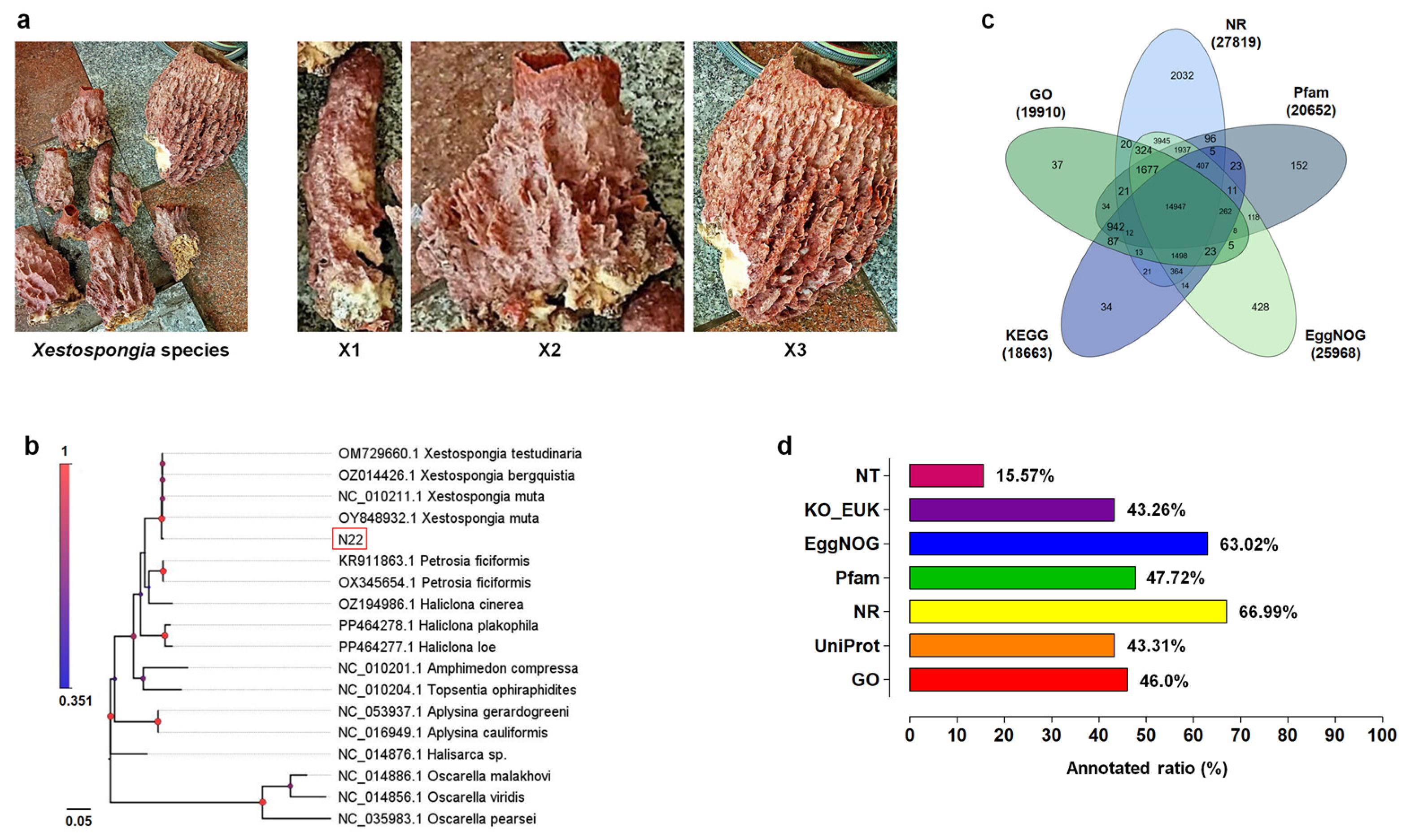
The collected specimens exhibited the characteristic morphology of the giant barrel sponge, featuring a large, erect, and barrel-shaped structure with a thick, hard consistency (Figure 1a). Molecular identification based on the cytochrome c oxidase subunit I (COI) gene revealed a high degree of sequence similarity (99.5–99.6% identity) with Xestospongia sp. sequences available in GenBank (Table S2). Furthermore, phylogenetic analysis based on the COI marker confirmed that these specimens clustered within the Xestospongia genus clade with high bootstrap support (Figure 1b). Collectively, the morphological features and molecular evidence confirm the identity of the samples as Xestospongia sp.

3.2. Illumina Sequencing and De Novo Assembly

Transcriptome sequencing was performed on a pooled cDNA library derived from three Xestospongia sp. individuals. The sequencing run generated over 40 million raw reads. Following strict quality filtering, we obtained approximately 5.48 Gb of high-quality clean bases. The sequencing quality was robust, with 94.01% of bases achieving a Q30 quality score. De novo assembly using Trinity yielded an initial set of 45,667 contigs with a total length of 41.1 Mb. To reduce redundancy and generate a non-redundant reference dataset, clustering was performed using CD-HIT-EST, resulting in a final assembly of 43,278 unigenes with an average length of 626.1 bp. The assembly quality was high, with more than 50% of the unigenes exceeding 1000 bp in length (Table S3).

3.3. Gene Functional Annotation and Classification

Functional annotation was performed by aligning the assembled unigenes against six public databases: NR [15], Swiss Prot [16], Pfam [17], EggNOG [18], GO [19], and KEGG [20]. This process successfully assigned functional information to 29,927 unigenes, representing 69.15% of the total assembly in at least one database. Among the databases, NR provided the highest coverage, annotating 66.99% of the unigenes, followed by EggNOG (63.02%) and KEGG (approximately 43%) (Figure 1c,d). The remaining uncharacterized unigenes (30.85%) likely represent sponge-specific lineage genes, or transcripts lacking homology in current public repositories.
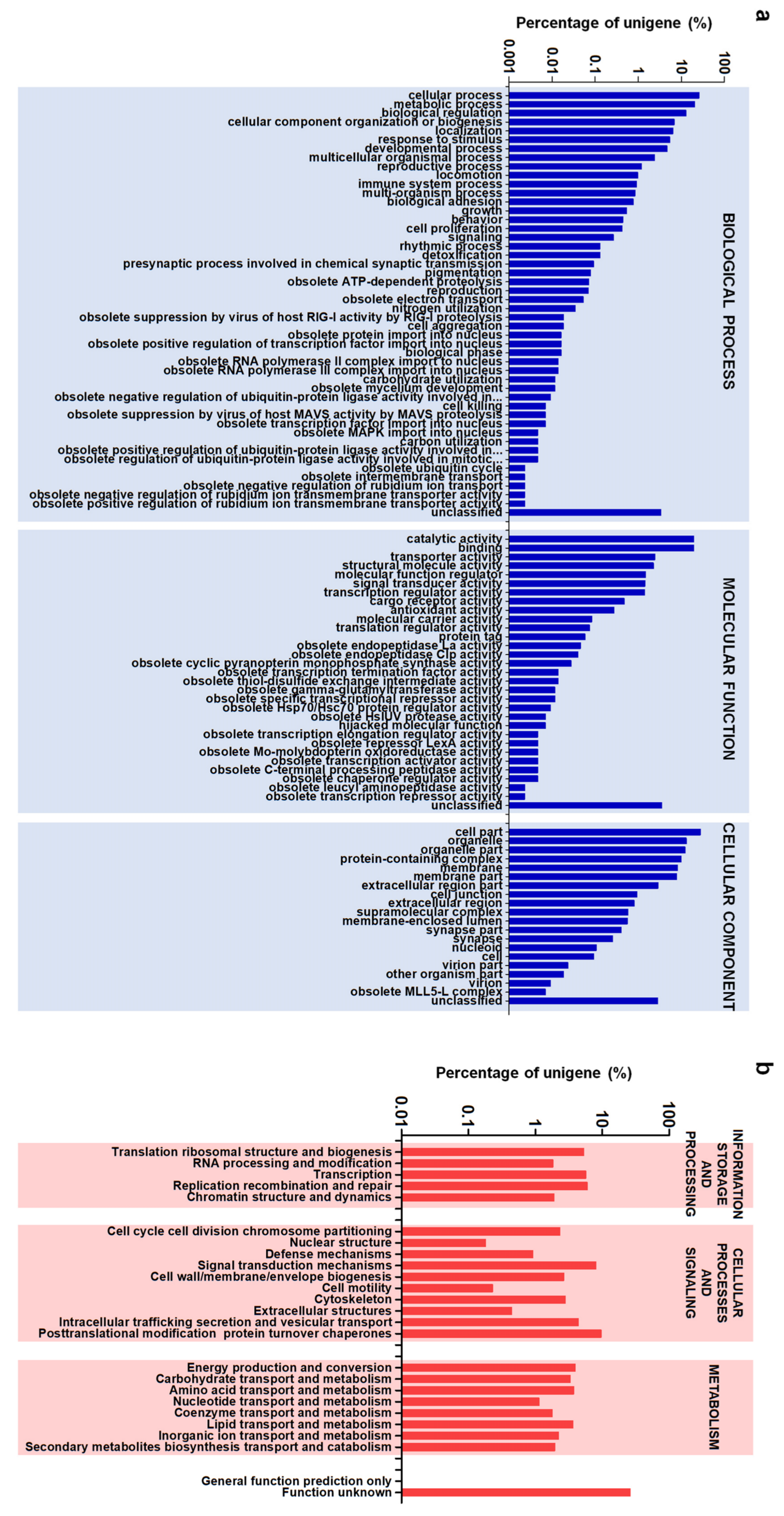
Gene Ontology (GO) analysis classified the annotated unigenes into three major categories: Biological Process (BP), Molecular Function (MF), and Cellular Component (CC) (Figure 2a). Within the BP category, terms associated with “cellular processes” (11,169 unigenes) and “metabolic processes” (8771 unigenes) were highly represented, reflecting the active physiological state of the sponge host. In the MF category, “catalytic activity” (8503 unigenes) and “binding” (8480 unigenes) were the predominant terms. For the CC category, “cell part” (12,082 unigenes), “organelle” (5667 unigenes), and “organelle part” (5272 unigenes) were the most enriched classifications.
To further characterize protein function and evolutionary orthology, 27,274 unigenes were mapped to the EggNOG database and classified into 23 Clusters of Orthologous Groups (COG) categories (Figure 2b). These categories were grouped into three primary functional classes: cellular processes and signaling, information storage and processing, and metabolism. Notably, the most abundant functional groups included “posttranslational modification, protein turnover, chaperones” (9.66%) and “signal transduction mechanisms” (8.07%). The high representation of these categories underscores the complexity of the sponge’s cellular machinery in regulating protein stability and environmental signaling. Other major categories included “replication, recombination and repair” (6%), “transcription” (5.7%), and “translation, ribosomal structure and biogenesis” (5.25%).
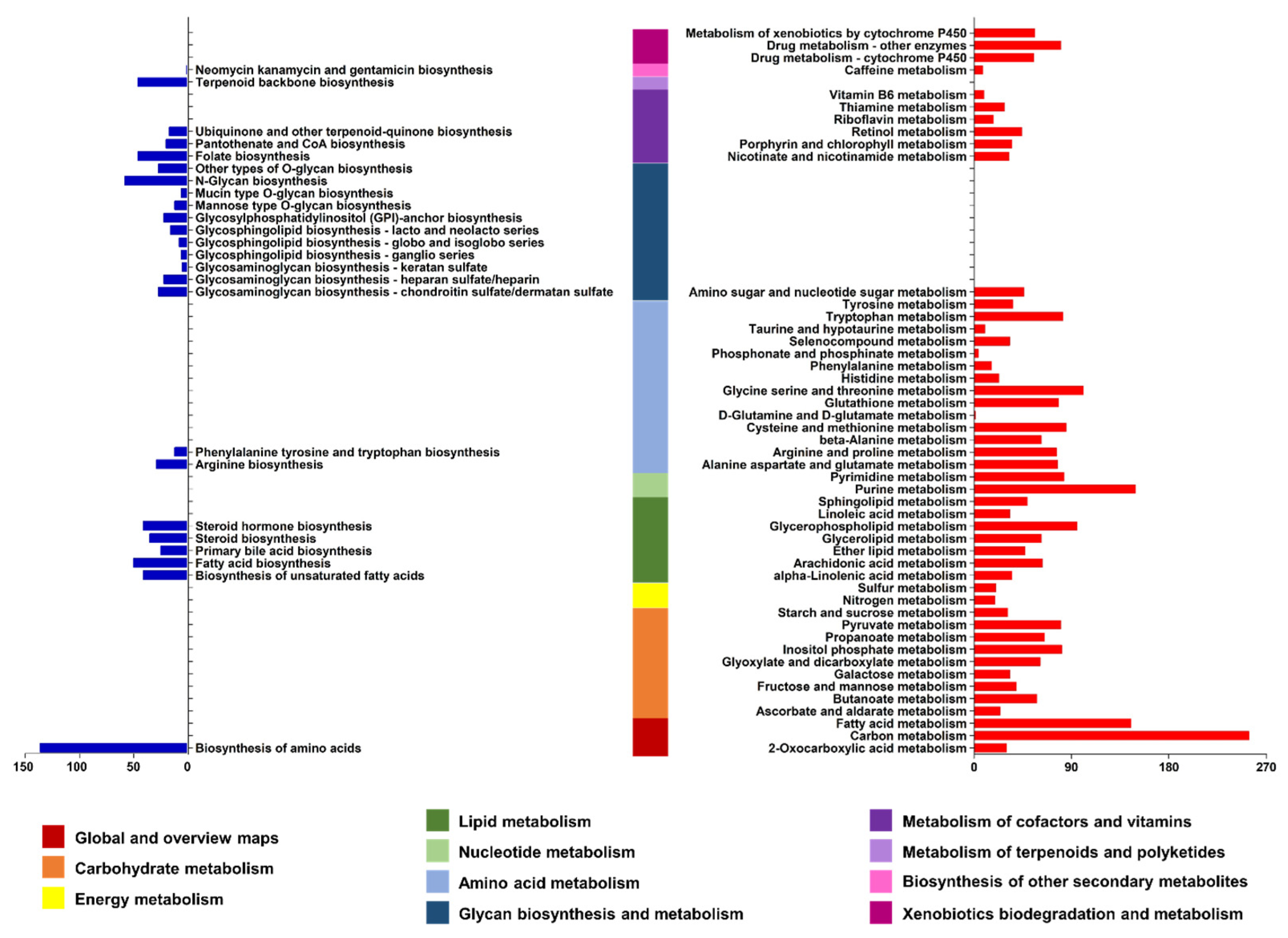
To systematically interpret gene functions within a pathway-based context, we mapped the assembled unigenes against the Kyoto Encyclopedia of Genes and Genomes (KEGG) database [20]. This analysis successfully assigned 18,724 unigenes (43.26%) to 325 metabolic and signaling pathways. These unigenes were classified into seven major categories, including metabolism, genetic information processing, environmental information processing, and cellular processes.
Notably, “Metabolism” emerged as the most represented category, comprising 3859 unigenes (20.61% of the total assignments). A detailed examination of the metabolic hierarchy revealed extensive coverage of core physiological processes (Figure 3). The “Global and overview maps” subcategory contained 565 unigenes associated with fundamental pathways such as carbon metabolism, fatty acid metabolism, and the biosynthesis of amino acids. Specifically, amino acid metabolism was highly represented (919 unigenes across 18 pathways), followed closely by lipid metabolism (714 unigenes) and carbohydrate metabolism (690 unigenes).
Crucially for sponge physiology, the “Metabolism of cofactors and vitamins” subcategory was well-represented, with significant transcript abundance mapped to folate biosynthesis (46 unigenes), pantothenate and CoA biosynthesis (20 unigenes), and ubiquinone and other terpenoid-quinone biosynthesis (17 unigenes). Furthermore, within the “Metabolism of terpenoids and polyketides” group, 46 unigenes were linked to terpenoid backbone biosynthesis. These pathways provide the essential building blocks for structural lipids and respiratory cofactors required for the sponge’s cellular maintenance.
Finally, to assess the taxonomic purity of the eukaryotic transcriptome, we performed a classification analysis using MMseqs2. We detected only a negligible number of non-host sequences, including 72 prokaryotic-like and 28 viral-like contigs, which were present at very low abundance. This result is consistent with previous transcriptomic studies of the Amphimedon queenslandica holobiont [28], confirming that our dataset predominantly captures the active transcriptional landscape of the sponge host with minimal microbial interference (Table S4).

3.4. Identification of Genes Involved in Various Biosynthetic Pathways

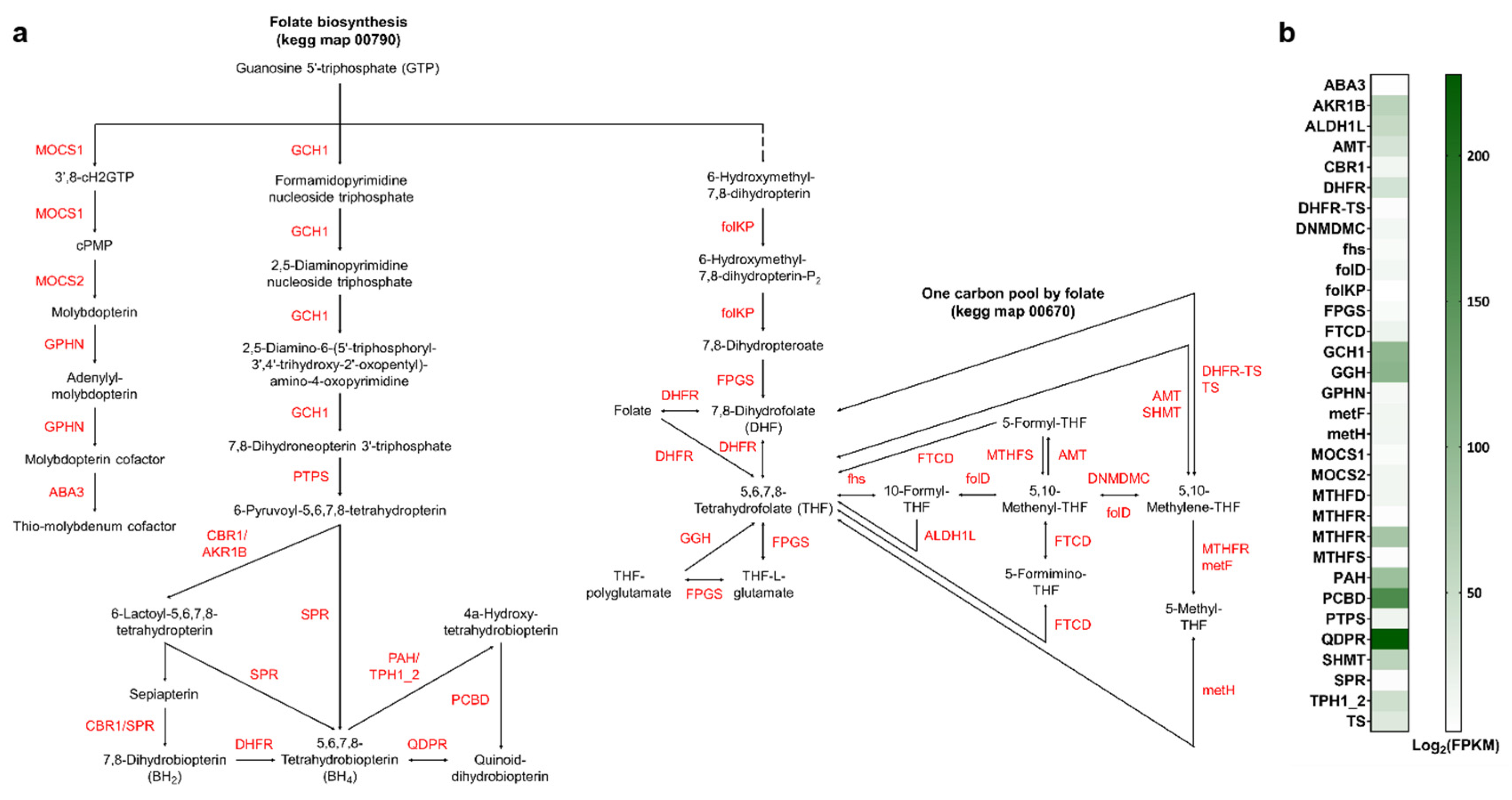
To reconstruct the metabolic capacity of the sponge host, we performed pathway enrichment analysis using the KEGG database [20]. This analysis highlighted active transcription in critical metabolic networks, specifically “folate biosynthesis,” “one carbon pool by folate,” “terpenoid backbone biosynthesis,” “ubiquinone and other terpenoid-quinone biosynthesis,” and “steroid biosynthesis” (Figure 4, Figure 5, Figure 6 and Figure 7).
In the pathways governing folate biosynthesis (KEGG map 00790) and the one-carbon pool (KEGG map 00670), we identified 32 putative genes. Notably, three unigenes encoding gamma-glutamyl hydrolase (GGH), pterin-4-alpha-carbinolamine dehydratase (PCBD), and dihydropteridine reductase (QDPR) exhibited exceptionally high transcriptional abundance, with FPKM values exceeding 100 (Figure 4). These highly expressed genes are responsible for the regeneration of 5,6,7,8-Tetrahydrofolate (THF) and 5,6,7,8-Tetrahydrobiopterin (BH4), which serve as obligatory cofactors for amino acid metabolism and signaling processes such as nitric oxide synthesis.
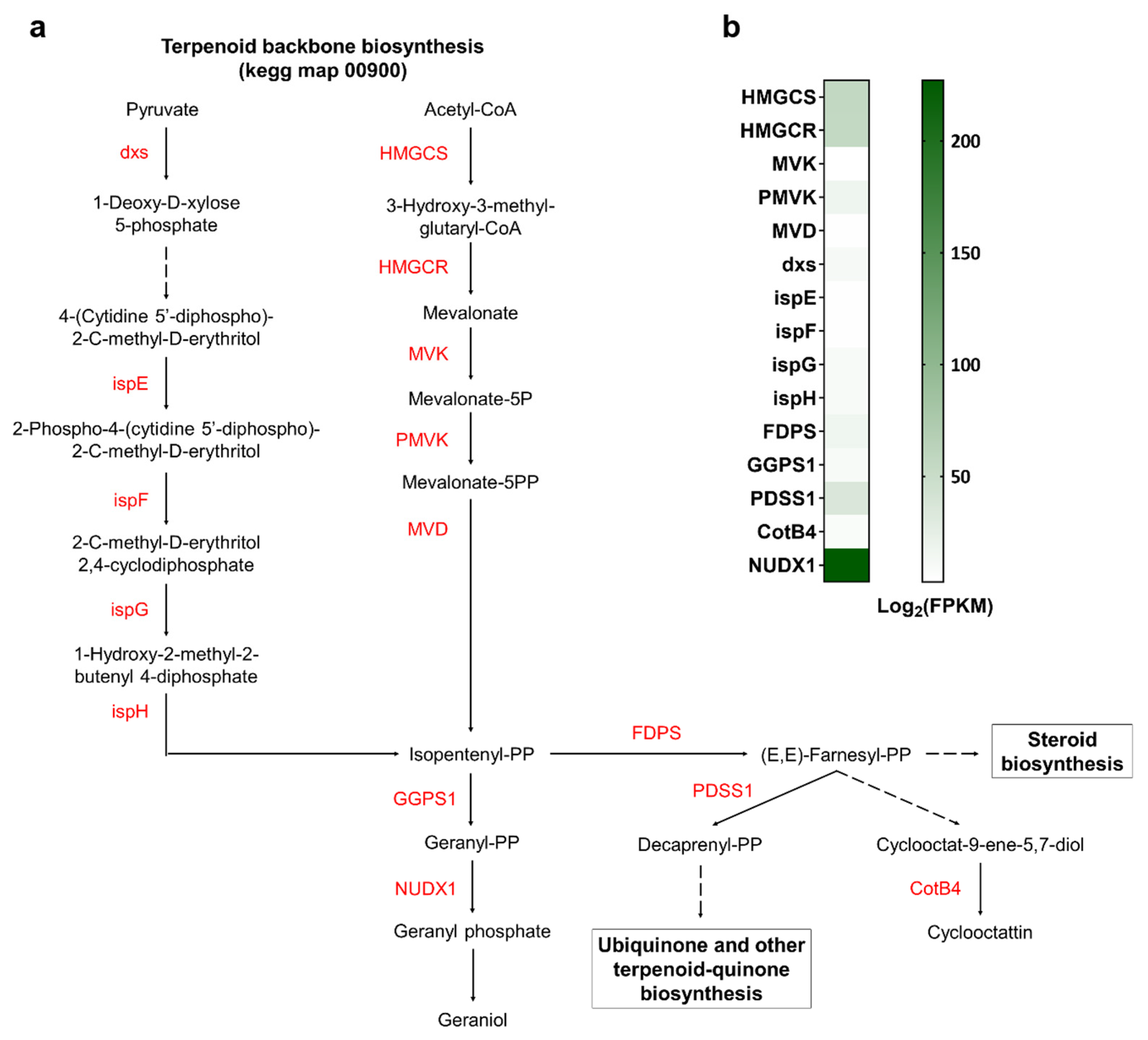
Within the terpenoid backbone biosynthesis pathway (KEGG map 00900), 12 unigenes were annotated to enzymes catalyzing the formation of (E,E)-Farnesyl-PP and Decaprenyl-PP, which serve as precursors for downstream steroid and ubiquinone synthesis, respectively. Transcriptional analysis indicated a predominant reliance on the mevalonate pathway over the MEP/DOXP pathway (Figure 5).
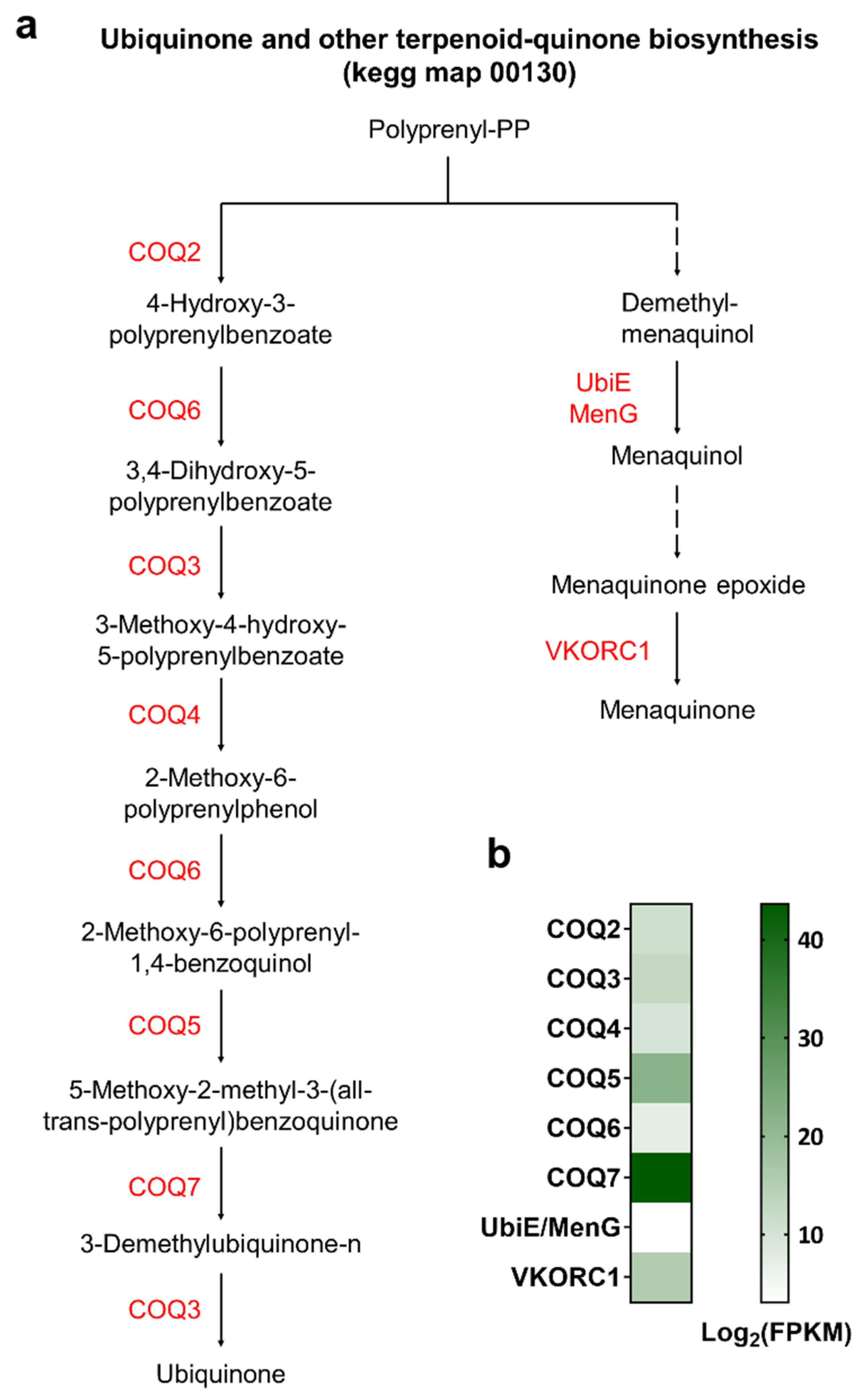
Regarding quinone metabolism (KEGG map 00130), we identified a complete biosynthetic pathway for Ubiquinone (Coenzyme Q), represented by six enzymes from COQ2 to COQ7. The gene encoding COQ7 (3-demethoxyubiquinone 3-hydroxylase) showed the highest expression level (Figure 6). In contrast, the pathway for Menaquinone (Vitamin K2) biosynthesis appeared incomplete; essential enzymes such as 1,4-dihydroxy-2-naphthoate polyprenyltransferase (MenA) and vitamin K-dependent gamma-carboxylase (GGCX) were not detected. This absence is consistent with the poly-A selection method, which enriches for eukaryotic host transcripts while minimizing prokaryotic signatures.
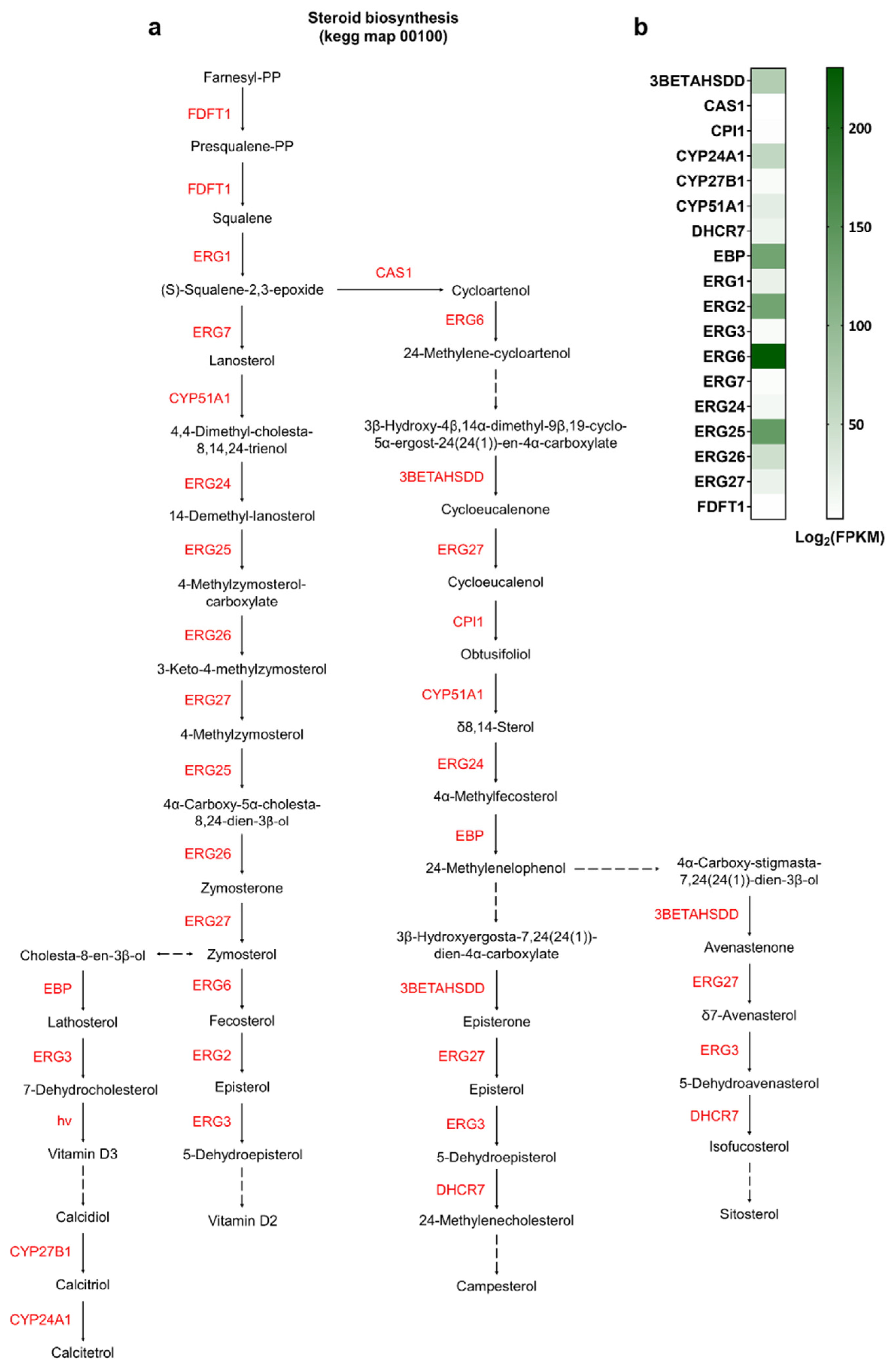
Analysis of the steroid biosynthesis pathway (KEGG map 00100) identified 18 unigenes involved in the conversion of (E,E)-farnesyl-PP into downstream metabolites, including vitamin D precursors and phytosterols.
The transcriptional landscape of this pathway was dominated by three highly expressed genes: cholestenol delta-isomerase (EBP), methylsterol monooxygenase (ERG25), and sterol 24-C-methyltransferase (ERG6), with FPKM values of 128.45, 140.64, and 230.59, respectively (Figure 7). The high abundance of ERG6 suggests that the methylation of zymosterol to produce C-24 alkylated sterols is a major metabolic activity in the Xestospongia host.

3.5. Phylogenetic Tree Analysis of Several High Expressed Proteins

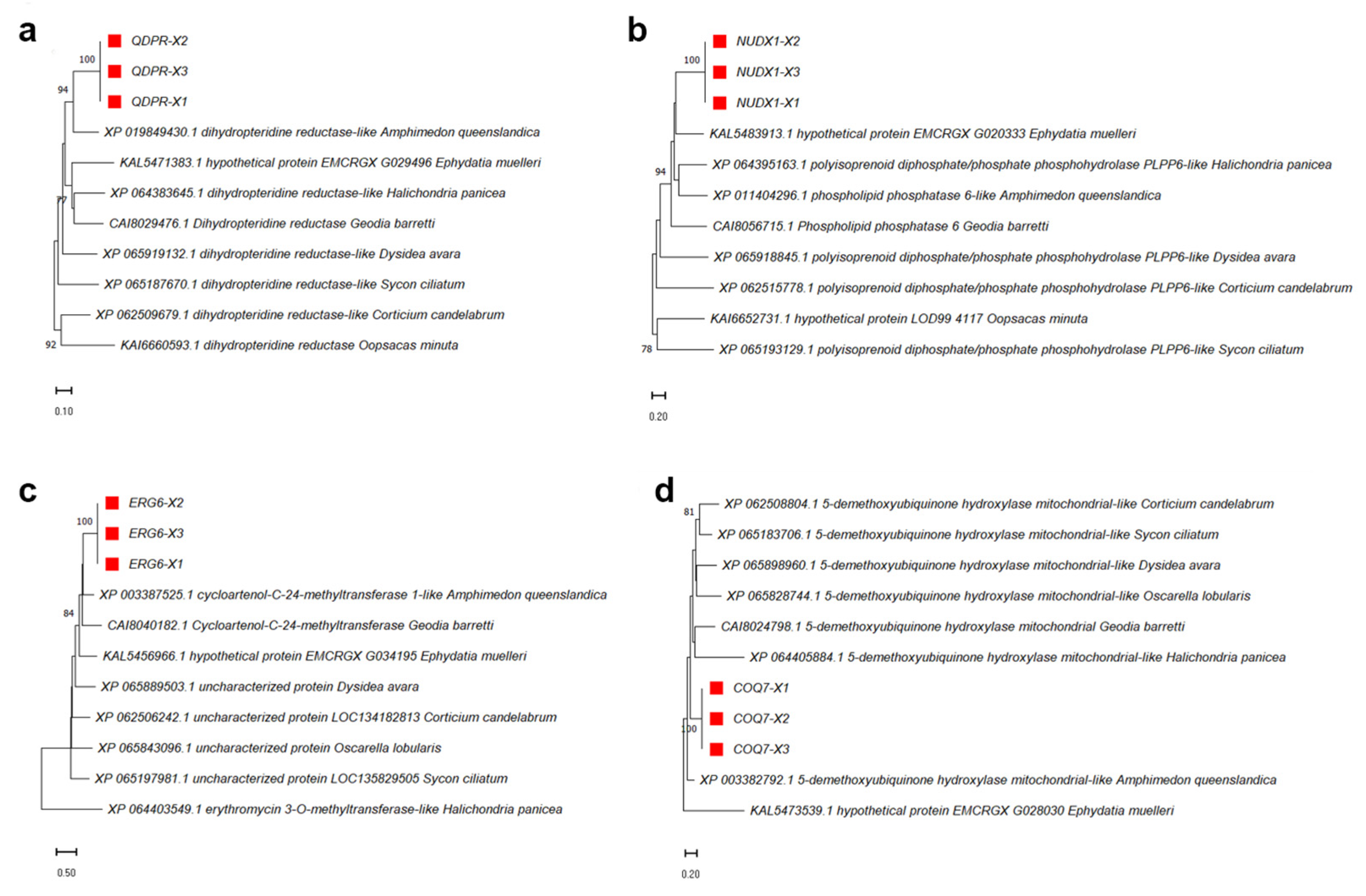
To confirm the evolutionary origin and orthology of the identified high-expression enzymes, we reconstructed protein-based phylogenetic trees for QDPR, ERG6, NUDX1, and COQ7 using homologous sequences retrieved from GenBank. The results demonstrate that these enzymes share a close evolutionary relationship with orthologs from the model demosponge Amphimedon queenslandica, strongly supporting their eukaryotic host origin.
Specifically, the QDPR, ERG6, and COQ7 sequences from Xestospongia sp. formed well-supported monophyletic clades with their counterparts from A. queenslandica (Figure 8a,c,d). In the case of NUDX1, the protein clustered with phosphatase enzymes from A. queenslandica and Halichondria panicea, as well as a predicted protein from the freshwater sponge Ephydatia muelleri (Figure 8b). Evolutionary divergence analysis based on amino acid substitution rates per site revealed varying degrees of sequence conservation, with values ranging from 0.334 to 0.608 for QDPR (most conserved) to 0.576–1.742 for ERG6, reflecting different evolutionary pressures acting on these metabolic genes.

3.6. qRT-PCR Validation

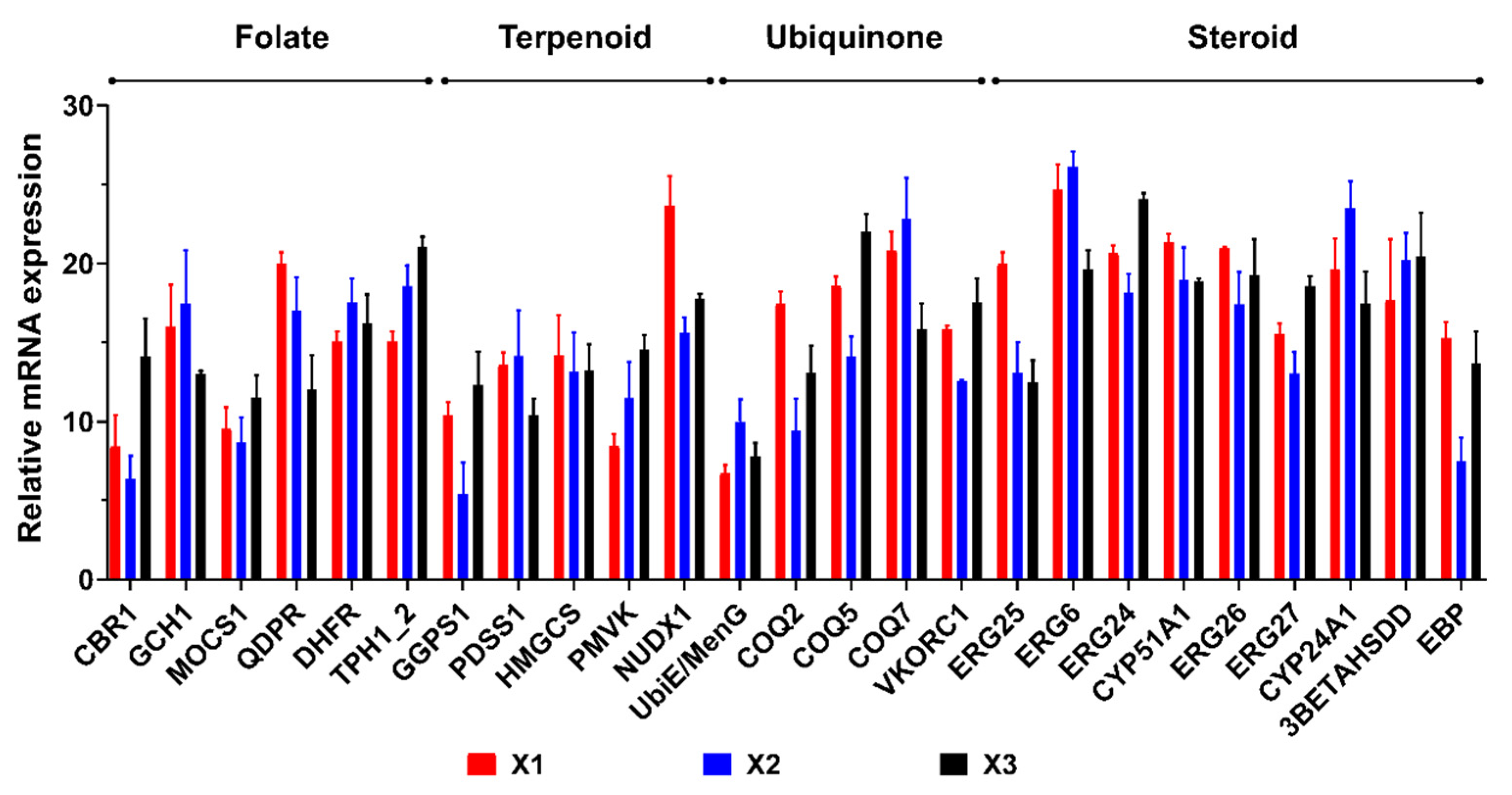
To technically validate the quantification accuracy of the RNA-seq data, we selected representative genes from the identified biosynthetic pathways for qRT-PCR analysis. Primers were designed based on the specific unigene sequences with the highest FPKM values (Table S5), and relative expression levels were normalized against the internal control gene (18S rRNA).
As shown in Figure 9, the expression trends observed via qRT-PCR were generally consistent with the transcriptomic FPKM profiles, confirming the reliability of our assembly and abundance estimation. While the overall patterns matched, quantitative variations were observed among the biological replicates (X1–X3). These differences likely reflect the physiological plasticity of individual sponges in response to distinct micro-environmental conditions or developmental stages, rather than technical inconsistencies.

4. Discussion

4.1. Characterization of the Host-Derived Transcriptomic Landscape

In this study, we present the first comprehensive de novo transcriptome of Xestospongia sp., which was collected from Vietnamese waters. Previous sponge transcriptomics investigations have often been complicated by the significant presence of microbial symbionts, which can account for up to 35% of the sponge biomass [7]. However, we successfully enriched for eukaryotic transcripts using poly-A selection sequencing. This strategy has been employed effectively to separate host expression from the microbiome in other demosponges [10].
Our assembly yielded 43,278 unigenes with a high annotation rate (69.15%). This level of transcriptomic complexity is comparable to datasets reported for the closely related Caribbean giant barrel sponge Xestospongia muta [4]. To ensure the reliability of our quantification, we validated the expression profiles of key metabolic genes via qRT-PCR. The results showed consistent trends with the RNA-seq data (Figure 9). Though quantitative variations were observed among biological replicates (X1–X3), they likely reflect the sponge host’s physiological plasticity in response to specific micro-environmental conditions rather than technical artifacts.
Crucially, identifyingi of complete pathways for core carbohydrate and lipid metabolism confirms that the sponge host has a robust primary metabolic capacity that is independent of the functions provided by its microbiome. This dataset provides a validated baseline for investigating sponge physiology.

4.2. Sterol Metabolism: Elucidating the Host’s Biosynthetic Capacity

A central debate in sponge biology concerns the origin of “sponge-specific” sterols, which are membrane lipids with unique alkylation patterns that are often used as chemotaxonomic markers [29]. While early hypotheses suggested that these special sterols might have been accumulated from the diet or symbionts, recent genomic studies have suggested a host origin [9]. Our data provide clear transcriptional evidence in support of the latter hypothesis in Xestospongia sp.
We identified high expression of the ERG6 gene, which encodes sterol 24-C-methyltransferase (also known as sterol methyltransferase, STM), (FPKM > 140), alongside ERG25 and EBP. The ERG6 enzyme catalyzes the methylation of the sterol side chain at the C-24 position, which is a crucial step in the production of unconventional sterols, such as fucosterol and xestosterol, that have been chemically isolated from this genus [29]. Our findings support the “sponge biomarker hypothesis” proposed by Gold et al. (2016) [9], who demonstrated that sponges retain ancient duplicates of SMT genes for synthesizing these lipids. By confirming the active transcription of ERG6, we demonstrate that Xestospongia sp. actively modifies sterols rather than passively rely on environmental sterols to maintain specific membrane properties, which is a critical adaptation for cellular integrity in the marine environment [9].

4.3. Cofactor Recycling and Host-Driven Signaling Mechanisms

Beyond lipids, our analysis reveals that the host has the ability to manage essential cofactors, a role that was previously largely attributed to symbionts [7]. We observed significant expression of dihydropteridine reductase (QDPR) and pterin-4-alpha-carbinolamine dehydratase (PCBD). These enzymes are responsible for regenerating tetrahydrobiopterin (BH4).
Maintaining the BH4 pool is particularly significant because BH4 is an essential cofactor for nitric oxide synthase (NOS) [30]. Although NOS genes are structurally complex and difficult to assemble in short-read datasets, the high activity of the BH4 recycling pathway strongly suggests the existence of functional nitric oxide (NO) signaling in the host. NO is a fundamental signaling molecule in invertebrates that regulates defense mechanisms and water filtration coordination [30,31]. Furthermore, recent single-cell RNA-seq studies have highlighted the complexity of signaling in sponge “neuroid” cells, which utilize similar molecular machineries [32]. These finding suggest that Xestospongia sp. possesses a sophisticated, host-controlled signaling network that regulates its physiology, rather than relying solely on microbial cues.

4.4. Validating the “Host” Status via Metabolic Partitioning

The distinction between the host and the symbiont metabolism is supported by the respiratory pathways. We detected a complete, highly expressed pathway for ubiquinone (Coenzyme Q) biosynthesis (e.g., COQ7), which is a characteristic of eukaryotic aerobic respiration. In contrast, the menaquinone (Vitamin K2) pathway, which is typical of prokaryotic anaerobic respiration, was incomplete. This observation highlights a critical methodological consideration. Since our library construction used poly-A selection to target eukaryotic mRNA, the absence of complete prokaryotic pathways, such as those involved in menaquinone biosynthesis or bacterial secondary metabolite clusters, is expected. This absence confirms the efficacy of our enrichment strategy [10]. Consequently, the metabolic features described herein, specifically the sterol and the cofactor pathways, can be confidently assigned to the Xestospongia host genome. This aligns with the metabolic partitioning model proposed by Hentschel et al. (2012) [7], in which the host manages aerobic respiration and structural lipid synthesis, while the symbiont community likely handles functions not captured by the poly-A enriched dataset.

4.5. Methodological Considerations and Limitations

This study has certain limitations that should be acknowledged. The RNA-seq analysis was conducted on a pooled sample of three individuals. This approach provides a representative consensus profile for the species, but it precludes a statistical comparison of individual variation at the whole-transcriptome level. To address this limitation, we validated the expression of key metabolic genes using qRT-PCR on separate individuals (X1–X3), confirming the consistency of our transcriptional data. Additional, since sponges are complex holobionts, our methodology primarily captures the host-derived transcriptome. Therefore, these results represent the sponge host’s intrinsic metabolic capacity of the sponge host rather than the integrated metabolic activity of the entire symbiotic system.

5. Conclusions

In summary, this study characterizes the primary metabolic capacity of the Xestospongia sp. host. By focusing on the host-derived transcriptome, we present molecular evidence of the active biosynthesis of alkylated sterols via ERG6 and the regulation of cofactor pools via QDPR. These findings clarify the physiological independence of the sponge host in maintaining its cellular structure and signaling systems, establishing a rigorous molecular framework for future holobiont studies.

Supplementary Materials

The following supporting information can be downloaded at: https://www.mdpi.com/article/10.3390/fishes11010023/s1, Supplementary information includes Table S1: PCR and qPCR primer list; Table S2: COI sequence identity between Xestospongia sp. sample X1, X2, X3 and other reference samples; Table S3: Overview of de novo transcriptome assembly of Xestospongia sp.; Table S4: Information of contigs related to prokaryotic species and virus based on the MMSeqs2 tool; Table S5: Expression of genes involved in primary metabolic pathways in Xestospongia sp.

Author Contributions

Conceptualization, T.T.H.L., M.L.T. and T.V.N.; methodology, T.T.H.L., H.H.N., M.L.T., T.V.N., L.B.H.P., Q.T.L., C.M.N., Q.H.N. and H.Q.D.; software, H.Q.D. and Q.T.L.; validation, Q.T.L., T.H.P., K.L.N., H.H.T.N. and Q.H.N.; formal Analysis, L.B.H.P., H.Q.D. and T.T.H.L.; investigation, L.B.H.P., H.Q.D., T.V.N., C.M.N., T.H.P., Q.H.N., K.L.N. and H.H.N.; data curation, L.B.H.P., H.Q.D., C.M.N., H.H.T.N., H.H.N. and T.H.P.; writing—original draft preparation, L.B.H.P., H.Q.D. and T.T.H.L.; writing—review and editing, T.T.H.L., L.B.H.P., T.V.N. and M.L.T.; visualization, L.B.H.P., H.Q.D., H.H.T.N. and K.L.N.; supervision, T.T.H.L. and M.L.T.; project administration, M.L.T. and T.T.H.L.; funding acquisition, M.L.T. and T.T.H.L.; All authors have read and agreed to the published version of the manuscript.

Funding

This research was funded by the MINISTRY OF SCIENCE AND TECHNOLOGY OF VIETNAM for the project: “Development of a DNA database for valuable marine invertebrates (Sponges, Echinoderms and Mollusks) in Vietnam” (Project code: ĐTĐLCN.62/22) (P.I.: Tran My Linh).

Institutional Review Board Statement

Not applicable. This study did not involve humans or vertebrate animals. All sampling activities involving marine sponges were non-invasive and conducted in accordance with national regulations and institutional guidelines.

Data Availability Statement

All raw reads generated in this study have been deposited at NCBI and can be accessed in the Sequence Read Achieve (SRA) Sequence Database under the Bioproject accession number PRJNA1226919. This transcriptome Shortgun Assembly Project has been deposited at DDBJ/ENA/GenBank under the accession GLJZ00000000. The COI sequences and those of the key functional genes (ERG6, NUDX1, COQ7 and QDPR) of the three sponge individuals are available at NCBI under the accession numbers PX441986, PX441987 and PX441988 (COI); PX438302, PX438303 and PX438304 (ERG6); PX438305, PX438306 and PX438307 (NUDX1); PX438308, PX438309 and PX438310 (COQ7); and PX438311, PX438312 and PX438313 (QDPR).

Conflicts of Interest

The authors declare no conflicts of interest.

References

  1. Renard, E.; Gazave, E.; Fierro-Constain, L.; Schenkelaars, Q.; Ereskovsky, A.; Vacelet, J.; Borchiellini, C. Porifera (Sponges): Recent knowledge and new perspectives. In eLS; John Wiley & Sons, Ltd.: Hoboken, NJ, USA, 2013. [Google Scholar] [CrossRef]
  2. Swierts, T.; Peijnenburg, K.T.; de Leeuw, C.; Cleary, D.F.; Hornlein, C.; Setiawan, E.; Worheide, G.; Erpenbeck, D.; de Voogd, N.J. Lock, stock and two different barrels: Comparing the genetic composition of morphotypes of the indo-pacific sponge Xestospongia testudinaria. PLoS ONE 2013, 8, e74396. [Google Scholar] [CrossRef]
  3. Schönberg, C.H.L. No taxonomy needed: Sponge functional morphologies inform about environmental conditions. Ecol. Indic. 2021, 129, 107806. [Google Scholar] [CrossRef]
  4. Fiore, C.L.; Labrie, M.; Jarett, J.K.; Lesser, M.P. Transcriptional activity of the giant barrel sponge, Xestospongia muta Holobiont: Molecular evidence for metabolic interchange. Front. Microbiol. 2015, 6, 364. [Google Scholar] [CrossRef]
  5. Khodzori, F.A.; Mazlan, N.B.; Chong, W.S.; Ong, K.H.; Palaniveloo, K.; Shah, M.D. Metabolites and bioactivity of the marine Xestospongia sponges (Porifera, Demospongiae, Haplosclerida) of Southeast Asian waters. Biomolecules 2023, 13, 484. [Google Scholar] [CrossRef]
  6. Taylor, M.W.; Radax, R.; Steger, D.; Wagner, M. Sponge-associated microorganisms: Evolution, ecology, and biotechnological potential. Microbiol. Mol. Biol. Rev. 2007, 71, 295–347. [Google Scholar] [CrossRef] [PubMed]
  7. Hentschel, U.; Piel, J.; Degnan, S.M.; Taylor, M.W. Genomic insights into the marine sponge microbiome. Nat. Rev. Microbiol. 2012, 10, 641–654. [Google Scholar] [CrossRef]
  8. Swierts, T.; Cleary, D.F.R.; de Voogd, N.J. Prokaryotic communities of Indo-Pacific giant barrel sponges are more strongly influenced by geography than host phylogeny. FEMS Microbiol. Ecol. 2018, 94, fiy194. [Google Scholar] [CrossRef] [PubMed]
  9. Gold, D.A.; Grabenstatter, J.; de Mendoza, A.; Riesgo, A.; Ruiz-Trillo, I.; Summons, R.E. Sterol and genomic analyses validate the sponge biomarker hypothesis. Proc. Natl. Acad. Sci. USA 2016, 113, 2684–2689. [Google Scholar] [CrossRef] [PubMed]
  10. Riesgo, A.; Farrar, N.; Windsor, P.J.; Giribet, G.; Leys, S.P. The analysis of eight transcriptomes from all poriferan classes reveals surprising genetic complexity in sponges. Mol. Biol. Evol. 2014, 31, 1102–1120. [Google Scholar] [CrossRef]
  11. Hai, N.M.; Vinh, V.D.; Ouillon, S.; Lan, T.D.; Duong, N.T. Modelling impacts of climate change and anthropogenic activities on ecosystem state variables of water quality in the Cat Ba–Ha Long coastal area (Vietnam). Water 2025, 17, 319. [Google Scholar] [CrossRef]
  12. Vinh, V.D.; Hai, N.M.; Purayil, S.P.; Lacroix, G.; Duong, N.T. Seasonal variation of coastal currents and residual currents in the Cat Ba—Ha Long coastal area (Vietnam): Results of coherens model. Reg. Stud. Mar. Sci. 2024, 80, 103874. [Google Scholar] [CrossRef]
  13. Li, B.; Dewey, C.N. RSEM: Accurate transcript quantification from RNA-Seq data with or without a reference genome. BMC Bioinform. 2011, 12, 323. [Google Scholar] [CrossRef]
  14. Conesa, A.; Madrigal, P.; Tarazona, S.; Gomez-Cabrero, D.; Cervera, A.; McPherson, A.; Szcześniak, M.W.; Gaffney, D.J.; Elo, L.L.; Zhang, X.; et al. A survey of best practices for RNA-seq data analysis. Genome Biol. 2016, 17, 13. [Google Scholar] [CrossRef] [PubMed]
  15. Deng, Y. Integrated NR database in protein annotation system and its localization. Comput. Eng. 2006, 32, 71. [Google Scholar] [CrossRef]
  16. Bairoch, A.; Apweiler, R. The SWISS-PROT protein sequence database and its supplement TrEMBL in 2000. Nucleic Acids Res. 2000, 28, 45–48. [Google Scholar] [CrossRef]
  17. Finn, R.D.; Coggill, P.; Eberhardt, R.Y.; Eddy, S.R.; Mistry, J.; Mitchell, A.L.; Potter, S.C.; Punta, M.; Qureshi, M.; Sangrador-Vegas, A.; et al. The Pfam protein families database: Towards a more sustainable future. Nucleic Acids Res. 2016, 44, D279–D285. [Google Scholar] [CrossRef] [PubMed]
  18. Hernandez-Plaza, A.; Szklarczyk, D.; Botas, J.; Cantalapiedra, C.P.; Giner-Lamia, J.; Mende, D.R.; Kirsch, R.; Rattei, T.; Letunic, I.; Jensen, L.J.; et al. eggNOG 6.0: Enabling comparative genomics across 12 535 organisms. Nucleic Acids Res. 2023, 51, D389–D394. [Google Scholar] [CrossRef]
  19. Ashburner, M.; Ball, C.A.; Blake, J.A.; Botstein, D.; Butler, H.; Cherry, J.M.; Davis, A.P.; Dolinski, K.; Dwight, S.S.; Eppig, J.T.; et al. Gene Ontology: Tool for the unification of biology. Nat. Genet. 2000, 25, 25–29. [Google Scholar] [CrossRef]
  20. Kanehisa, M.; Goto, S.; Kawashima, S.; Okuno, Y.; Hattori, M. The KEGG resource for deciphering the genome. Nucleic Acids Res. 2004, 32, D277–D280. [Google Scholar] [CrossRef]
  21. Bu, D.; Luo, H.; Huo, P.; Wang, Z.; Zhang, S.; He, Z.; Wu, Y.; Zhao, L.; Liu, J.; Guo, J.; et al. KOBAS-i: Intelligent prioritization and exploratory visualization of biological functions for gene enrichment analysis. Nucleic Acids Res. 2021, 49, W317–W325. [Google Scholar] [CrossRef]
  22. Mirdita, M.; Steinegger, M.; Breitwieser, F.; Söding, J.; Levy Karin, E. Fast and sensitive taxonomic assignment to metagenomic contigs. Bioinformatics 2021, 37, 3029–3031. [Google Scholar] [CrossRef] [PubMed]
  23. Folmer, O.; Black, M.; Hoeh, W.; Lutz, R.; Vrijenhoek, R. DNA primers for amplification of mitochondrial cytochrome c oxidase subunit I from diverse metazoan invertebrates. Mol. Mar. Biol. Biotechnol. 1994, 3, 294–299. [Google Scholar]
  24. Hall, T.A. BioEdit: A user-friendly biological sequence alignment editor and analysis program for Windows 95/98/NT. Nucleic Acids Symp. Ser. 1999, 41, 95–98. [Google Scholar]
  25. Tamura, K.; Stecher, G.; Kumar, S. MEGA11: Molecular evolutionary genetics analysis version 11. Mol. Biol. Evol. 2021, 38, 3022–3027. [Google Scholar] [CrossRef] [PubMed]
  26. Livak, K.J.; Schmittgen, T.D. Analysis of relative gene expression data using real-time quantitative PCR and the 2−ΔΔCT method. Methods 2001, 25, 402–408. [Google Scholar] [CrossRef] [PubMed]
  27. Luo, H.; Zhu, Y.; Song, J.; Xu, L.; Sun, C.; Zhang, X.; Xu, Y.; He, L.; Sun, W.; Xu, H.; et al. Transcriptional data mining of Salvia miltiorrhiza in response to methyl jasmonate to examine the mechanism of bioactive compound biosynthesis and regulation. Physiol. Plant. 2014, 152, 241–255. [Google Scholar] [CrossRef]
  28. Xiang, X.; Poli, D.; Degnan, B.M.; Degnan, S.M. Ribosomal RNA-depletion provides an efficient method for successful dual RNA-seq expression profiling of a marine sponge holobiont. Mar. Biotechnol. 2022, 24, 722–732. [Google Scholar] [CrossRef]
  29. Gauvin, A.; Smadja, J.; Aknin, M.; Gaydou, E.M. Sterol composition and chemotaxonomic considerations in relation to sponges of the genus Xestospongia. Biochem. Syst. Ecol. 2004, 32, 469–476. [Google Scholar] [CrossRef]
  30. Colasanti, M.; Venturini, G. Nitric oxide in invertebrates. Mol. Neurobiol. 1998, 17, 157–174. [Google Scholar] [CrossRef]
  31. Langrehr, J.M.; Stadler, J.; Billiar, T.R.; Schraut, H.; Simmons, R.L.; Hoffman, R.A. Nitric oxide synthesis in sponge matrix allografts coincides with the initiation of the allogeneic response. In Host Defense Dysfunction in Trauma, Shock and Sepsis; Faist, E., Meakins, J.L., Schildberg, F.W., Eds.; Springer: Berlin/Heidelberg, Germany, 1993. [Google Scholar] [CrossRef]
  32. Musser, J.M.; Schippers, K.J.; Nickel, M.; Mizzon, G.; Kohn, A.B.; Pape, C.; Ronchi, P.; Papadopoulos, N.; Tarashansky, A.J.; Hammel, J.U.; et al. Profiling cellular diversity in sponges informs animal cell type and nervous system evolution. Science 2021, 374, 717–723. [Google Scholar] [CrossRef]
Figure 1. General characteristics and transcriptomic features of the Xestospongia sp. samples. (a) Morphological features of the sponge specimens showing the characteristic barrel shape. (b) Phylogenetic tree based on COI mitochondrial sequences showing the relationship between collected samples and other sponge species. The tree was constructed using the Neighbor-Joining method with the Kimura 2-parameter model; bootstrap support values are indicated by node size and color. (c) Venn diagram displaying the overlap of unigenes annotated by different public databases. (d) Percentage of unigenes successfully annotated against specific databases. Abbreviations: KEGG, Kyoto Encyclopedia of Genes and Genomes; GO, Gene Ontology; NR, NCBI Non-redundant protein sequences; EggNOG, Evolutionary Genealogy of Genes: Non-supervised Orthologous Groups. X1, X2, X3 correspond to the three biological replicates.
Fishes 11 00023 g001
Figure 2. Functional classification of assembled unigenes. (a) Gene Ontology (GO) classification. Unigenes were categorized into three main domains: Biological Process, Molecular Function, and Cellular Component. The y-axis represents the number of unigenes assigned to each term. (b) EggNOG functional classification. Unigenes were assigned to 23 COG categories grouped into three primary classes: Information storage and processing, Cellular processes and signaling, and Metabolism. The x-axis indicates the percentage of unigenes associated with each functional category.
Fishes 11 00023 g002
Figure 3. KEGG pathway classification of assembled unigenes. The bar chart displays the number of unigenes assigned to specific metabolic subcategories. The x-axis indicates the number of unigenes, and the y-axis lists the functional subcategories within the primary “Metabolism” class (red bars) and “Biosynthetic processes” (blue bars).
Fishes 11 00023 g003
Figure 4. Analysis of folate biosynthesis and one-carbon pool pathways. (a) KEGG pathway maps for “Folate biosynthesis” (map 00790) and “One carbon pool by folate” (map 00670). Enzymes identified in the Xestospongia sp. transcriptome are highlighted in red. (b) Heatmap showing the relative expression levels (FPKM) of genes annotated to folate-related pathways. Red and blue colors indicate high and low expression levels, respectively.
Fishes 11 00023 g004
Figure 5. Analysis of terpenoid backbone biosynthesis. (a) KEGG pathway map of “Terpenoid backbone biosynthesis” (map 00900), illustrating the Mevalonate (MVA) and MEP/DOXP pathways. Identified enzymes are highlighted in red. (b) Heatmap showing the relative expression profiles of genes involved in terpenoid backbone synthesis across the three samples.
Fishes 11 00023 g005
Figure 6. Analysis of ubiquinone and quinone biosynthesis. (a) KEGG pathway map of “Ubiquinone and other terpenoid-quinone biosynthesis” (map 00130). Enzymes involved in the eukaryotic ubiquinone pathway identified in this study are highlighted in red. (b) Heatmap showing relative expression levels of the identified biosynthetic genes. Note the high expression of COQ7 and the absence of prokaryotic menaquinone-specific enzymes (e.g., MenA).
Fishes 11 00023 g006
Figure 7. Analysis of steroid biosynthesis. (a) KEGG pathway map of “Steroid biosynthesis” (map 00100), showing the conversion of farnesyl-PP to downstream sterols. Identified enzymes are highlighted in red. (b) Heatmap showing the relative expression levels of steroidogenic genes. Key enzymes such as ERG6, ERG25, and EBP exhibit high transcriptional abundance.
Fishes 11 00023 g007
Figure 8. Protein-based phylogenetic analysis of key metabolic enzymes. Phylogenetic trees were constructed for (a) QDPR (Dihydropteridine reductase), (b) NUDX1 (Nudix hydrolase), (c) ERG6 (Sterol 24-C-methyltransferase), and (d) COQ7 (Ubiquinone biosynthesis protein). The sequences from Xestospongia sp. (this study) are marked with red squares. The analysis highlights the clustering of these enzymes with orthologs from other sponge species (e.g., Amphimedon queenslandica), supporting their host origin. X1, X2, X3 correspond to the three sponge individuals.
Fishes 11 00023 g008
Figure 9. Validation of gene expression via quantitative RT-PCR (qRT-PCR). Comparison of expression patterns for selected metabolic genes between RNA-seq data (FPKM) and qRT-PCR results. Relative expression levels were normalized to the 18S rRNA internal control gene. Error bars represent the standard deviation of technical replicates. X1, X2, X3 correspond to the three sponge individuals.
Fishes 11 00023 g009
Disclaimer/Publisher’s Note: The statements, opinions and data contained in all publications are solely those of the individual author(s) and contributor(s) and not of MDPI and/or the editor(s). MDPI and/or the editor(s) disclaim responsibility for any injury to people or property resulting from any ideas, methods, instructions or products referred to in the content.