
Article

Spatiotemporal Dynamics of Acute Phase Response Related Molecules in Micropterus salmoides During Streptococcus Agalactiae Infection

1
Hainan Institute of Northwest A&F University, Sanya 572024, China
2
Guangxi Key Laboratory of Aquatic Biotechnology and Modern Ecological Aquaculture, Guangxi Academy of Marine Sciences, Guangxi Academy of Sciences, Nanning 530007, China
3
College of Animal Science and Technology, Northwest A&F University, Xianyang 712100, China
4
Key Laboratory of Sichuan Province for Fishes Conservation and Utilization in the Upper Reaches of the Yangtze River, Neijiang Normal University, Neijiang 641000, China
5
Northwest A&F University Shenzhen Research Institute, Shenzhen 518000, China
*
Authors to whom correspondence should be addressed.
These authors contributed equally to this work.
Fishes 2026, 11(1), 12; https://doi.org/10.3390/fishes11010012
Submission received: 16 November 2025 / Revised: 21 December 2025 / Accepted: 22 December 2025 / Published: 26 December 2025
(This article belongs to the Special Issue Prevention and Control of Aquatic Animal Diseases)

Abstract

Acute phase response related molecules are a class of proteins whose concentration changes rapidly and significantly in response to abnormal conditions such as injury, infection, and inflammation. The levels of acute phase response related molecules can reflect abnormalities in the body, but related studies in teleost fish are still relatively limited. In this study, Cp, Hap, Hep, Hx, IL-1β, and IL-6 of largemouth bass (Micropterus salmoides) were identified, the spatiotemporal dynamics of these six acute phase response related molecules in blood, liver, spleen, and brain tissues of largemouth bass before and after infection with Streptococcus agalactiae were analyzed, and they were compared and analyzed for their potential use as indicators to detect S. agalactiae infection. The results showed that in healthy largemouth bass, the distribution of acute phase response related molecules (except IL-6) was highest in the liver. All the examined genes exhibited significant changes in their transcription levels across the tested tissues after infection. Furthermore, most genes exhibit higher expression levels in the spleen compared with other tissues. Hep and IL-1β genes in spleen tissue and Hx and IL-6 in brain tissue showed significant increase from 0 to 72 h post infection (hpi) compared with the control group. Among these, IL-1β is the only acute phase response related molecule whose expression levels were more than 150-fold, reaching 165-fold to 270-fold from 6 to 24 h post infection in the spleen. This study explores the temporal correlation between several acute phase response related molecules and streptococcal infection in largemouth bass, providing insights and references for subsequent research on early infection response proteins.
Key Contribution: This study shows that IL-1β shows a greater fold change and a longer duration of expression in the spleen of largemouth bass after S. agalactiae infection. IL-1β exhibits potential as an indicator to detect early S. agalactiae infection in largemouth bass.

1. Introduction

Acute-phase response is a series of rapid physiological reactions that the body produces in response to abnormal conditions such as injury, infection, and inflammation [1,2]. These reactions can promote damage repair, eliminate pathogens, and ultimately restore homeostasis. During the reaction process, various cytokines such as IL-1, IL-6, and TNF-α play an important role [3]. They are produced by innate immune cells such as neutrophils and macrophages and regulate protein synthesis in hepatocytes [4]. These proteins then enter the plasma to participate in the acute phase response [5], so the plasma-like proteins are also known as acute phase proteins. Depending on the changes, acute phase proteins are usually divided into two categories: those with 25% or more increase after stimulation are called positive acute phase proteins, and those with 25% or more decrease after stimulation are called negative acute phase proteins [2]. Changes in acute phase proteins are broadly similar between species, but still vary considerably with respect to a particular feature [6]. Different species have different major acute phase proteins, which may provide important information when diagnosing disease [5].
Streptococcus agalactiae belongs to the phylum Bacillota, order Lactobacillales and genus Streptococcus. S. agalactiae is a gram-positive bacterium that can infect a variety of species, such as cattle [7], cats [8], and crocodiles [9]. It also poses a threat to people with weak immunity [10,11]. It has been reported that S. agalactiae cause severe diseases in China [12], Brazil [13], Thailand [14], and other parts of the world, resulting in huge economic losses. If the pathogen can be detected before the large-scale outbreak of the disease and corresponding measures can be taken to minimize the potential losses with a high probability, the further development of the industry will be promoted.
In previous studies, acute phase proteins have been reported in many teleost fish, such as Cyprinus carpio [15], Oncorhynchus mykiss [16,17,18], Danio rerio [19], Ictalurus punctatus [20]. Charlie-Silva et al. reported the regulation of acute phase proteins in tilapia (Oreochromis niloticus) infected with Aeromonas hydrophila model [21]. Yin et al. studied the function and expression of hemopexin in tilapia infected with S. agalactiae or Aeromonas hydrophila [22]. Güleç and Cengizler detected the changes of plasma acute phase proteins in tilapia (Oreochromis niloticus L.) infected with Streptococcus iniae [23]. Largemouth bass is also one of fish species susceptible to S. agalactiae infection. However, research on the largemouth bass model infected by S. agalactiae is still relatively scarce. Therefore, based on this model, this study measured the gene expression changes of several acute phase response related molecules in blood, liver, spleen, and brain tissue, and used these changes as indicators to detect S. agalactiae infection. Therefore, this study determined the abundance of several acute phase response related molecules in blood, liver, spleen, and brain tissues, as well as investigated their correlation with streptococcal infection, providing a reference for subsequent related research.

2. Materials and Methods

2.1. Fish and Pathogens

A total of 50 healthy largemouth bass (13 ± 0.8 g) with uniform body shape were selected. Before the start of the experiment, largemouth bass were temporarily reared in an 800 L water tank at a water temperature of 25 °C, and commercial feed was given three times a day at a volume of 2% of the total weight of the fish for 2 weeks. Dead fish and feces were cleaned in time to keep the water clean during domestication. S. agalactiae was initially isolated and identified from diseased tilapia [24] and then stored in our laboratory. The bacteria were stored in 50% glycerol at −80 °C until use.

2.2. Infection and Sampling

S. agalactiae was inoculated into brain–heart infusion medium and incubated on a shaker at 37 °C and 180 rpm for 12 h. To minimize stress, all fish were subjected to a PBS injection prior to the formal experiment to acclimate them to the handling procedure. All subsequent procedures were performed under anesthesia with MS222. Five fish were randomly selected, blood was collected in a sterile environment, and the liver, spleen, and brain were dissected and separated. The remaining fish were intraperitoneally injected with 100 μL of S. agalactiae solution (107 CFU/mL) per fish. At nine time points (0 h, 1 h, 2 h, 4 h, 6 h, 12 h, 24 h, 48 h, and 72 h) after challenge with S. agalactiae, five fish were randomly selected at each time point to collect the blood, liver, spleen, and brain tissues. The tissue samples were immersed in AG RNAex Pro Reagent (Accurate Biology, Changsha, China) and stored at −80 °C. The largemouth bass were anesthetized prior to processing. The entire experimental procedure was approved by the Animal Experiment Ethics Committee, Northwest A&F University (License No. XYF2023-022).

2.3. Primer Design

Ceruloplasmin (Cp), haptoglobin (Hap), hepcidin (Hep), hemopexin (Hx) [22], interleukin-1β (IL-1β), and interleukin-6 (IL-6) were selected as the potential indicators of S. agalactiae infection and elongation factor-1 alpha (EF1α) was selected as the reference gene [25]. The primers of these genes were designed according to the gene sequences published on the NCBI website (Table 1).

2.4. Bioinformatics Analysis

Based on the sequences from the GenBank database, the conserved domains of the six proteins were analyzed using the CD Search tool from NCBI. Subsequently, the BLAST tool (Version 2.17.0) was employed to retrieve similar sequences for each protein, and a subset of these sequences was selected to construct an identity matrix and a phylogenetic tree. The identity matrix was constructed using the MegAlign program from DNASTAR (Version 11.1), with the protein weight matrix set to the gonnet series. The phylogenetic tree was generated using the MEGA X software, employing the neighbor-joining method with a bootstrap value of 1000.

2.5. Total RNA Extraction, Reverse Transcription and qPCR

The total RNA extraction method was based on the instructions of AG RNAex Pro Reagent (Accurate Biology). The whole process was performed at low temperature on ice to prevent RNA degradation. Reverse transcription was started immediately after the completion of the extraction, and the reverse transcription procedure followed the All-in-One First-Strand Synthesis MasterMix (with dsDNase) (Yugong Biolabs, Lianyungang, China) instructions. The cDNA concentration was detected using a multifunctional enzyme label instrument (BioTek, Winooski, VT, USA) and diluted to 100 ng/μL with nuclease-free water.
The instrument used for real-time fluorescence quantitative PCR was LightCycler 96 (Roche Diagnostics, Basel, Switzerland). The total reaction system was 10 μL, and the system components included: 1 μL cDNA, 0.5 μL forward and reverse primers, 3 μL nuclease-free water, 5 μL Taq-HS SYBR Green qPCR Premix (Yugong Biolabs, Lianyungang, China). The reaction procedure was as follows: pre-denaturation at 95 °C for 10 min, 40 cycles of reaction (denaturation at 95 °C for 15 s, annealing at 60 °C, extension for 30 s), and melting curve analysis (uniform temperature rise from 60 °C to 95 °C, 2 °C per min). EF1α was used as the reference gene, and the Ct value was used to calculate the relative expression of the gene by the 2−ΔΔCt method [25]. Each reaction was repeated three times to ensure accurate results.

2.6. Statistical Analysis

The results of this study are presented as mean ± standard deviation. Data analysis was performed using GraphPad Prism software (Version 10.1). After testing all data for normal distribution and homogeneity of variance, one-way ANOVA was performed followed by Tukey’s multiple comparison test. A significance level of 0.05 was used, and significant differences between groups are indicated by different lowercase letters.

3. Results

3.1. Sequences and Phylogenetic Analysis of the Acute Phase Response Related Molecules

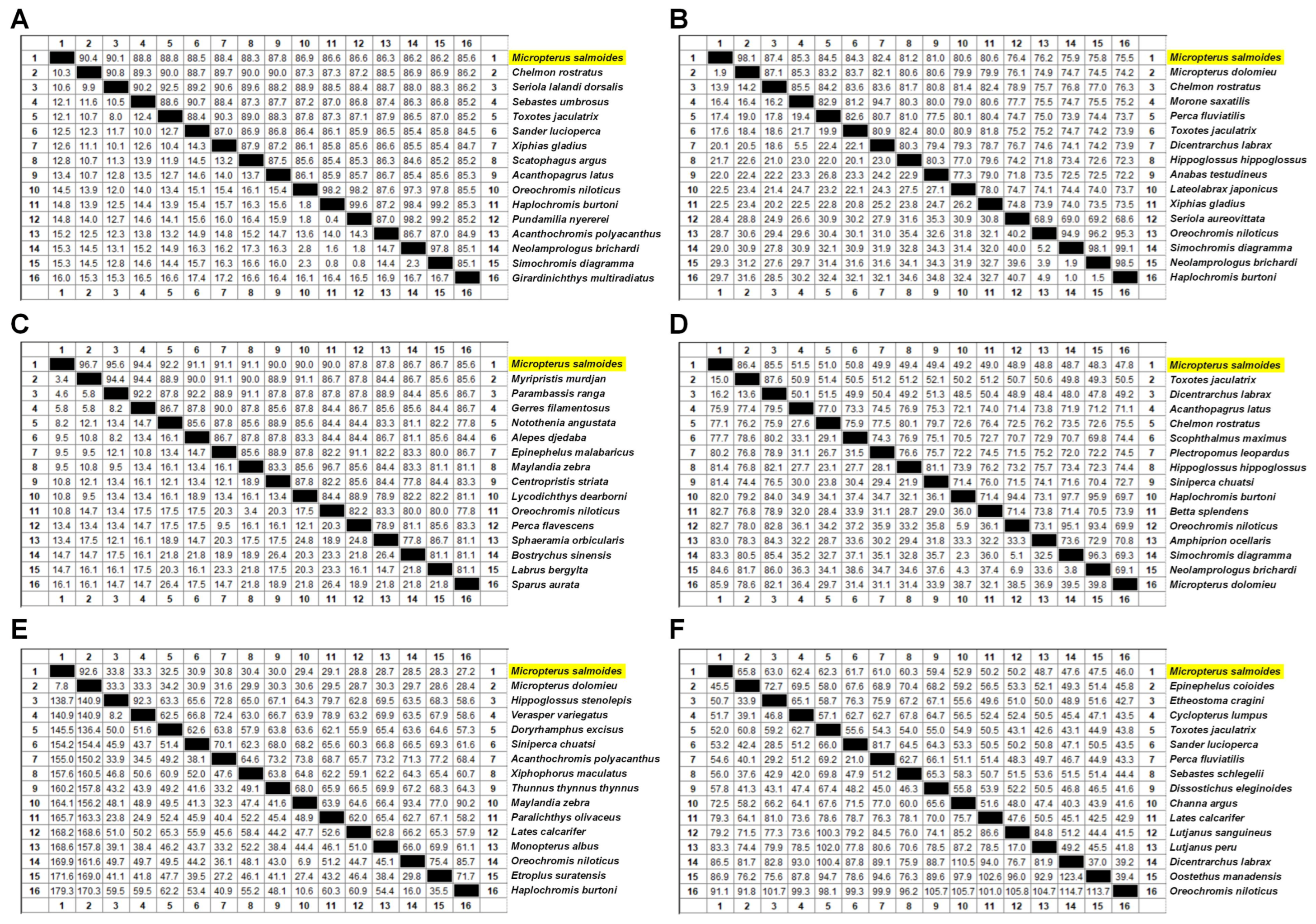
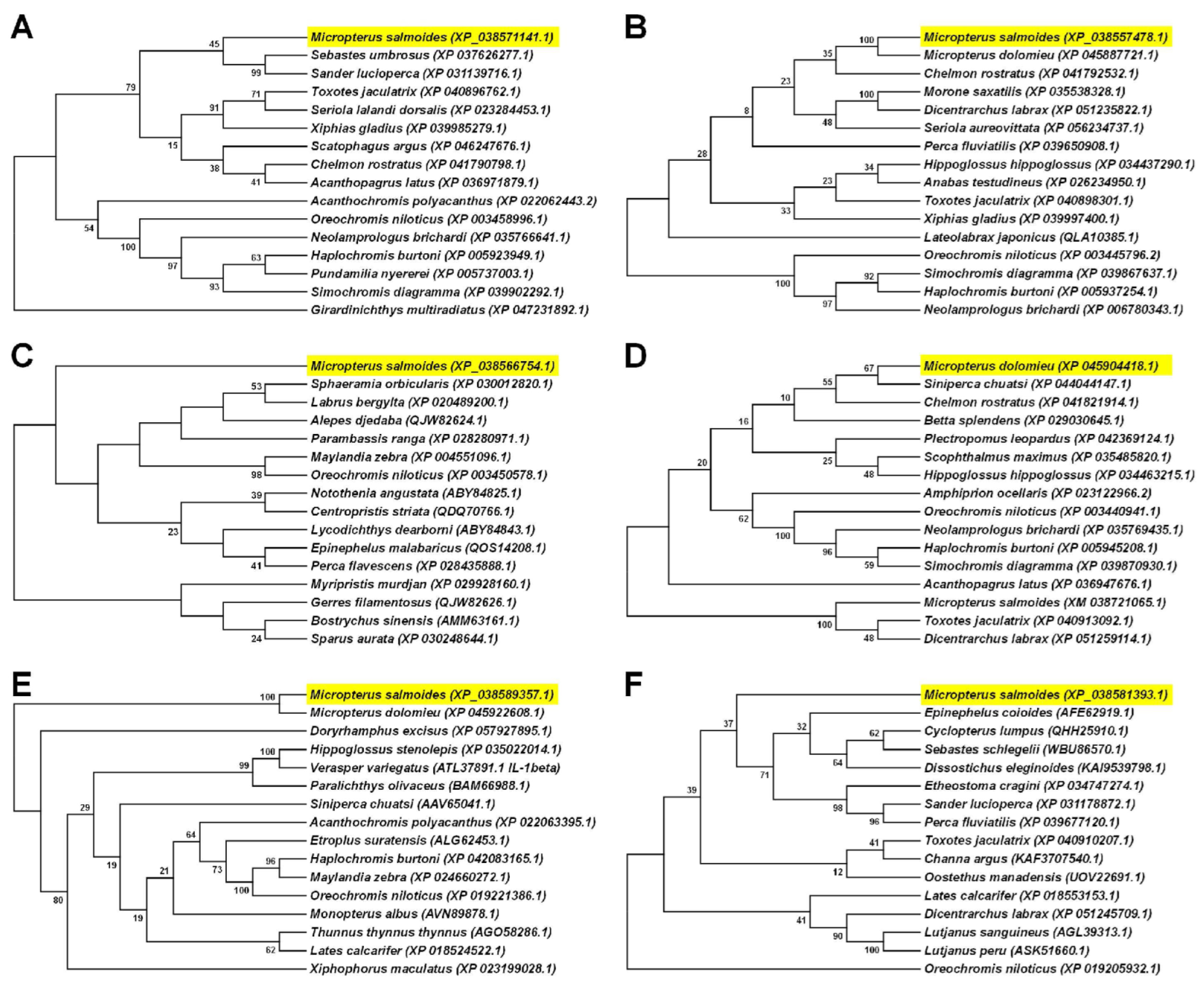
The results of conserved domains analysis showed that there was one type of corresponding conserved superfamily domain in all of the six acute phase response related molecules, which was the Cupredoxin superfamily domain in Cp, the Tryp_SPc superfamily domain in Hap, the Hepcidin superfamily domain in Hep, the Hx superfamily domain in Hx, the beta_trefoil_IL1 superfamily domain in IL-1β, and the IL6 superfamily domain in IL-6 (Figure 1). Furthermore, percent identity analysis showed that the amino acid sequences of six acute phase response related molecules of Micropterus salmoides shared 85.6–90.4% (Cp), 75.5–98.1% (Hap), 85.6–96.7% (Hep), 47.8–86.4% (Hx), 27.2–92.6% (IL-1β), and 46.0–65.8% (IL-6) identities with 15 other reference species (Figure 2). The phylogenetic trees results indicated that Cp of Micropterus salmoides clustered with Sebastes umbrosus and Sander lucioperca, Hap of Micropterus salmoides clustered with Micropterus dolomieu, Hx of Micropterus salmoides clustered with Siniperca chuatsi, and IL-1β of Micropterus salmoides clustered with Micropterus dolomieu, while Hep and IL-6 of Micropterus salmoides separated from the reference species (Figure 3).

3.2. Gene Expression Profiles in Healthy Largemouth Bass Tissues

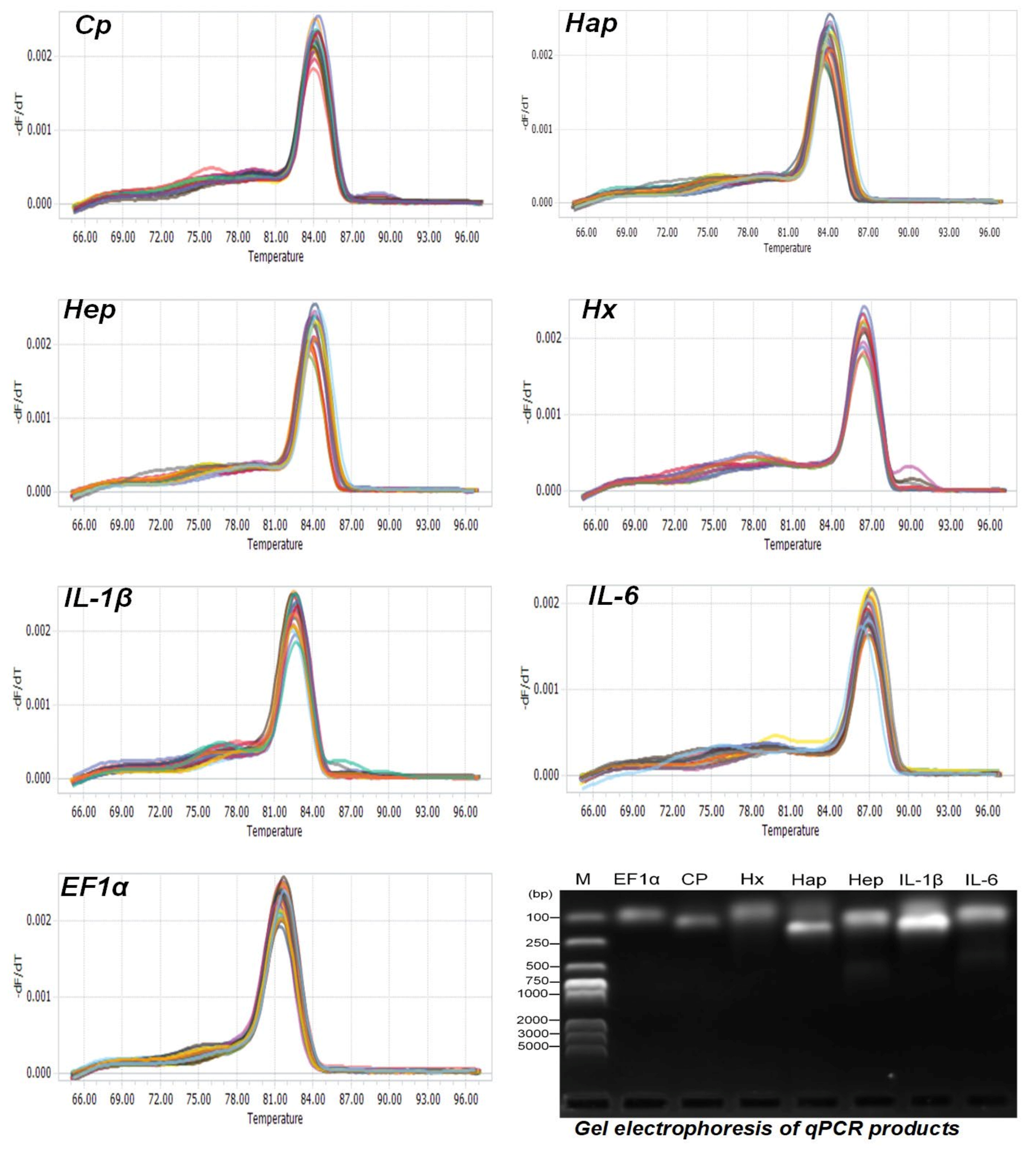
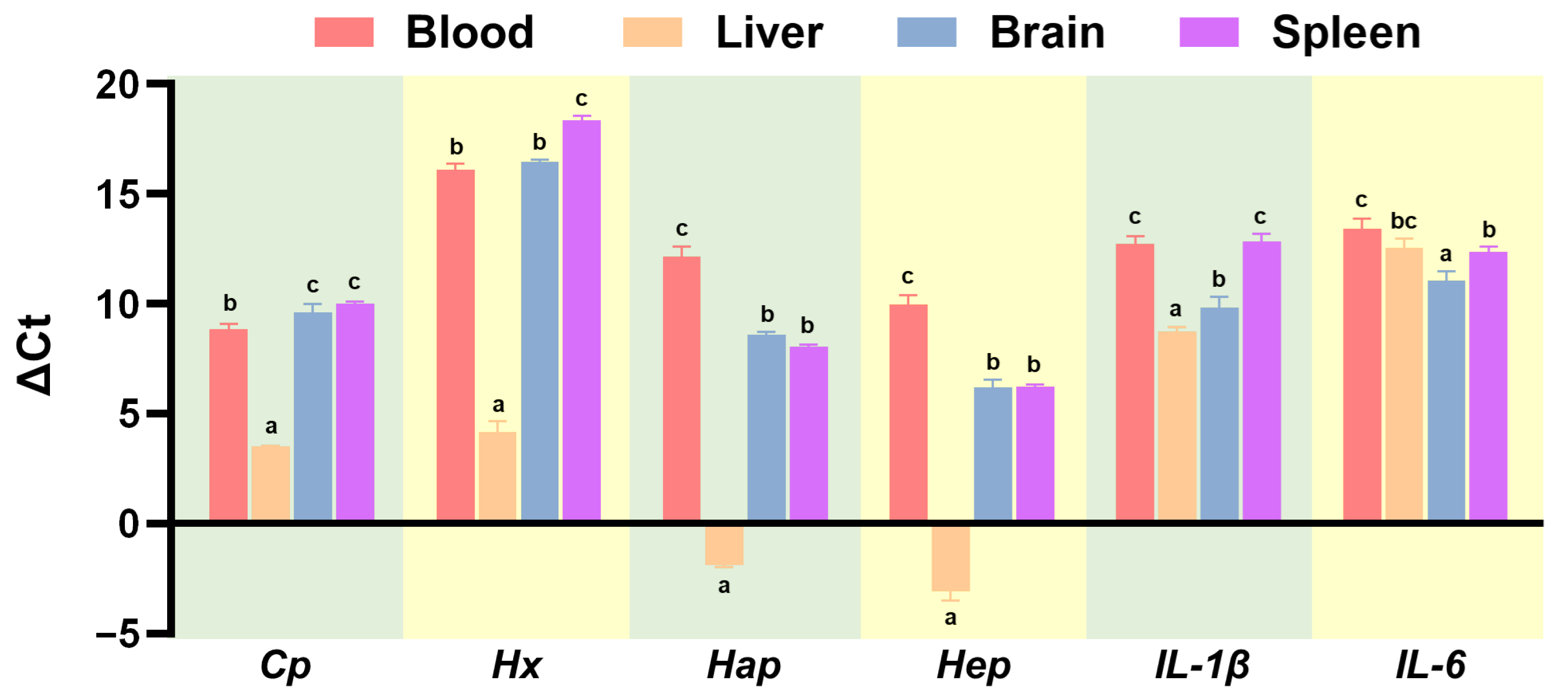
The expression levels of acute phase response related molecules (Cp, Hap, Hep, Hx, IL-1β and IL-6) in various tissues (blood, liver, spleen, and brain) of healthy largemouth bass was detected using RT-qPCR. During the RT-qPCR, all primers were validated for specificity using largemouth bass splenic cDNA, with the amplification products confirmed by sequencing. The primers specificity was evaluated through melting curve and gel electrophoresis analysis (Figure 4), the amplification efficiencies of all primers ranged between 90% and 110%, and the coefficients of determination (R2) for the standard curves were all greater than 0.99. The results indicated that notable differences existed in the expression levels of the same gene among these different tissues (Figure 5). The Cp and Hx, Hap, and Hep profiles exhibited some similarities, demonstrating relatively higher expression levels in liver. Cp and Hx showcased the lowest expression levels in brain, while the lowest expression levels of Hap and Hep were all located in blood tissue. Furthermore, the expression levels of IL-1β and IL-6 in blood were both the lowest among the four tissues.

3.3. The Expression Changes of Acute Phase Response Related Molecules During the S. agalactiae Infection

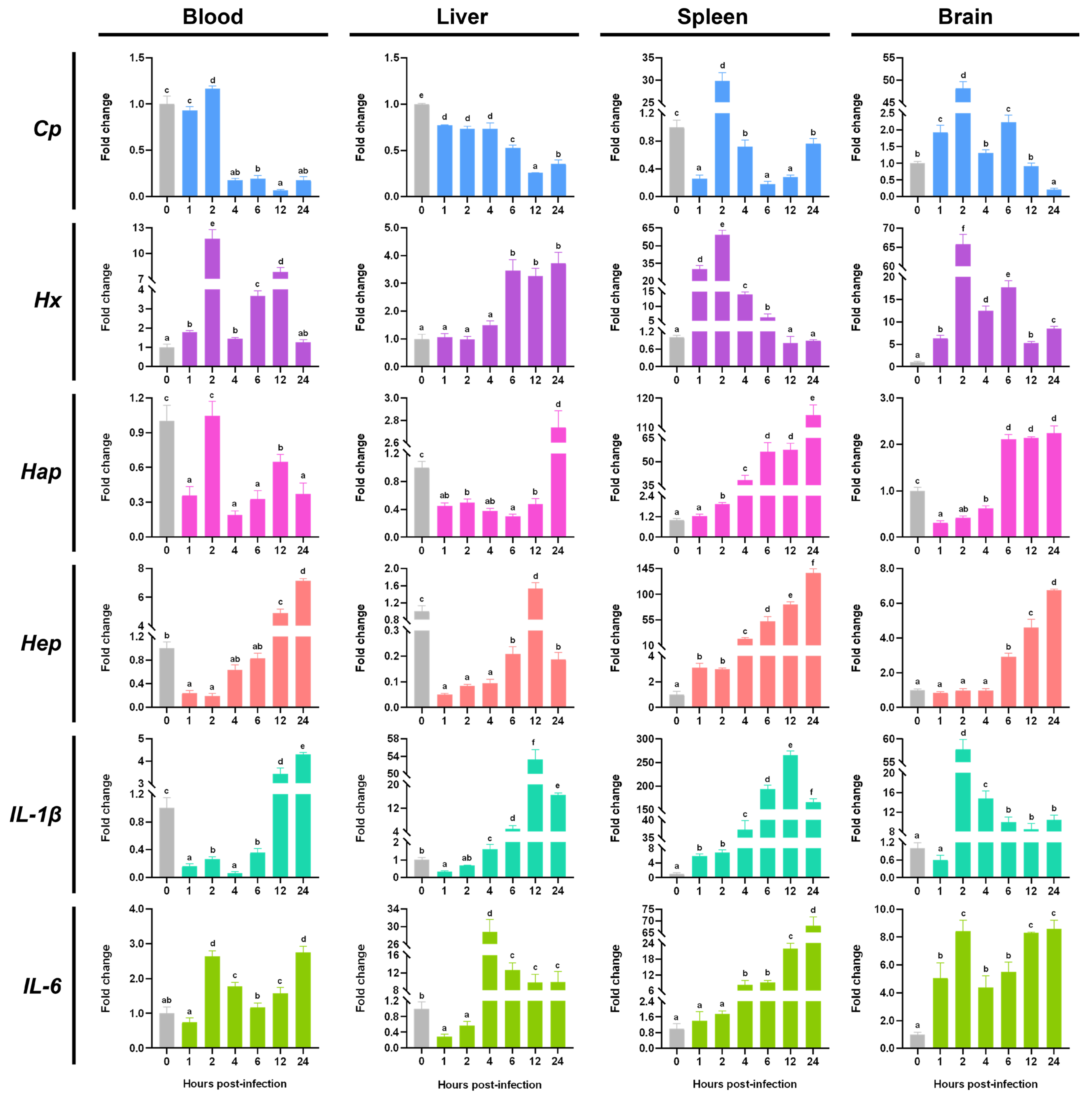
For confirmation of infection, largemouth bass challenged with S. agalactiae exhibited symptoms and mortality similar to those previously reported [26]. These included ocular lesions, abnormal swimming, abdominal distension, congestion at the fin bases and vent, as well as petechial hemorrhages in internal organs, splenomegaly, and abdominal ascites in some fish. The gene expression changes of the acute phase response related molecules in largemouth bass within 24 h after S. agalactiae infection were shown in Figure 6. Generally, there were significant changes observed in the expression levels of various genes post-infection, suggesting their potential as indicators to detect S. agalactiae infection. The expression levels of Cp all reached the highest at 2 hpi in blood, spleen, and brain tissues, while the expression levels of Cp were significantly lower than normal levels at all detected timepoints in liver. Hx showed similar changes with Cp. The highest expression levels of Hx were all located at 2 hpi in blood, spleen, and brain tissues, while in liver, the expression levels of Hx increased gradually within 24 hpi. As for Hap, the highest expression levels of Hap in all four tissues (blood, liver, spleen, and brain) were at 2 hpi, 24 hpi, 24 hpi, and 24 hpi, respectively. Hep displayed similar expression changes in blood, liver, and brain tissues, first decreasing then increasing, while the expression levels of Hep in spleen after S. agalactiae infection were all higher than normal levels. Furthermore, IL-1β is the only acute phase response related molecule whose expression levels were more than 150-fold, reaching 165-fold to 270-fold from 6 to 24 h post infection in spleen. The expression trend of IL-6 was different among the four tissues.
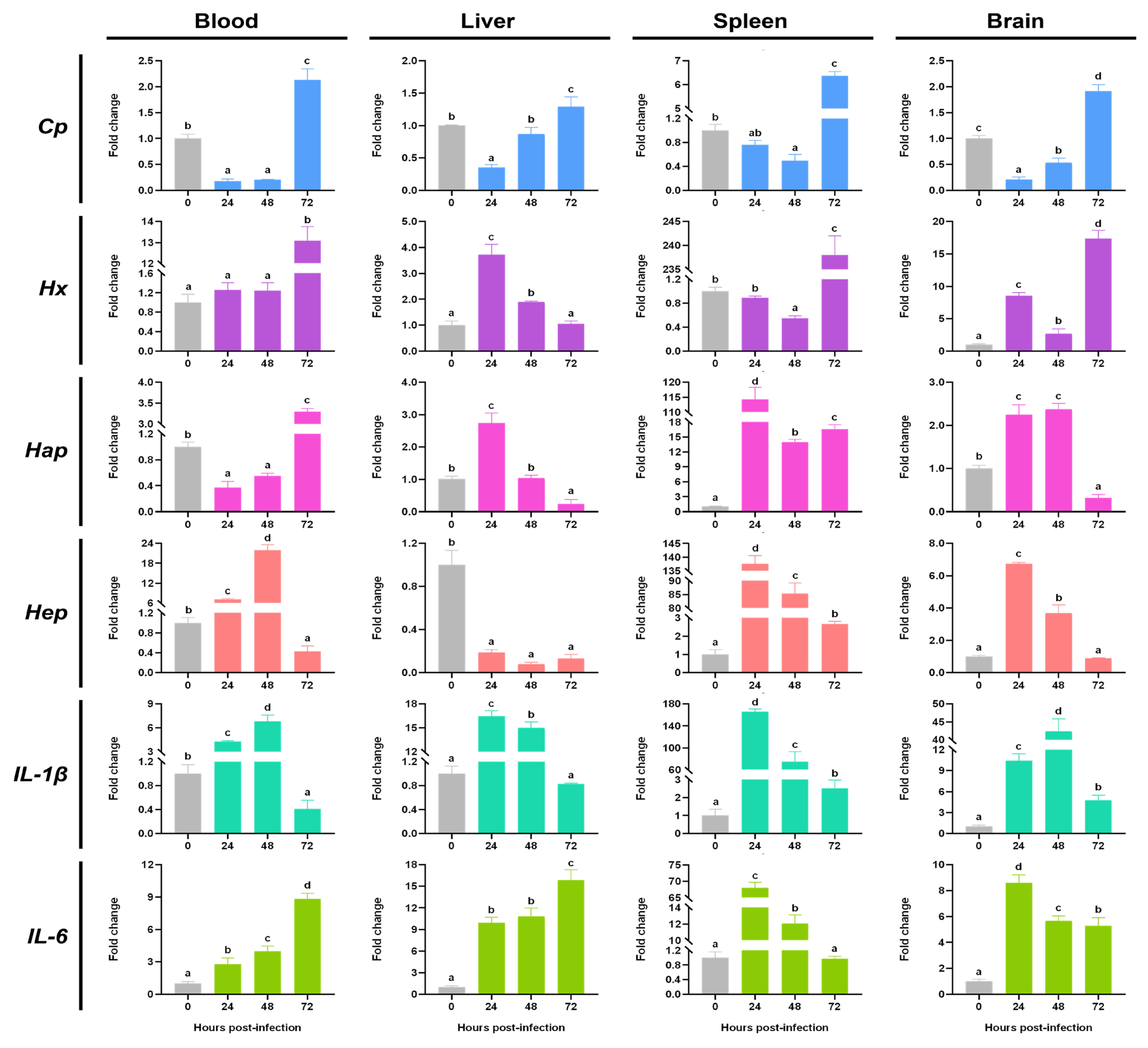
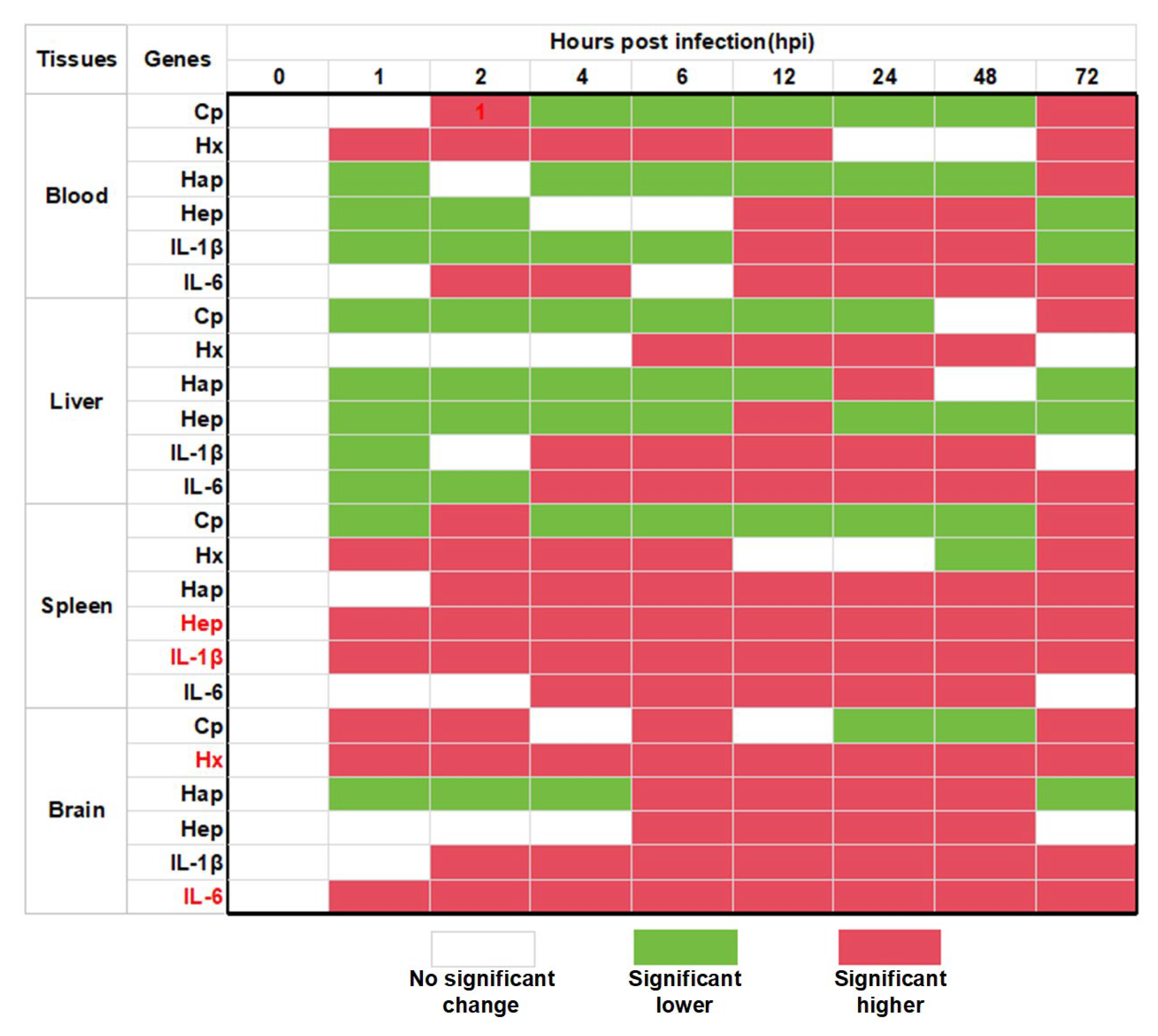
Similarly, the expression levels of six genes were assessed using RT-qPCR from 24 to 72 h post S. agalactiae infection (Figure 7). The results suggested that the expression trends of Cp varied among the four tissues, while the highest expression levels (2.0~6.5 folds) were all located at 72 hpi. Similarly with Cp, the highest expression levels of Hx were also located at 72 hpi except for liver tissue, especially in spleen tissue with more than 200 folds at 72 hpi. The expression levels of Hap reached the peak in all four tissues (blood, liver, spleen, and brain) at 72 hpi, 24 hpi, 24 hpi, and 48 hpi, respectively, especially in spleen tissue with more than 110 folds at 24 hpi. As for the Hep, the expression trends in spleen and brain tissues were similar. Both showed a peak at 24 hpi, then decreased gradually. IL-1β also exhibited similar expression trends with Hep, i.e., the expression levels reached a peak at 24 hpi, then decreased gradually in liver and spleen tissues. Furthermore, the expression trends of IL-6 increased gradually and reached a peak at 72 hpi in blood and liver tissues, and decreased gradually from 24 hpi in spleen and brain tissues (Figure 7). Furthermore, based on the analysis of spatiotemporal dynamics of six acute phase response related molecules in blood, liver, spleen, and brain from 0 to 72 h post S. agalactiae infection (Figure 8), it was shown that Hep and IL-1β genes in spleen tissue and Hx and IL-6 in brain tissue showed a significant increase from 0 to 72 hpi compared with the control group.

4. Discussion

Largemouth bass is a commonly farmed fish with great economic value [27]. S. agalactiae is one of the common pathogens of largemouth bass, which can easily cause great harm to largemouth bass aquaculture. This study aimed to investigate the spatiotemporal dynamics of acute phase response related molecules associated with Streptococcus infection. In the past, many reports, such as α1-acid glycoprotein as an acute phase protein, have provided a reference in the diagnosis of feline infectious peritonitis in cats, and help to further study the pathogenesis of the disease [28]. Detection of C-reactive protein can provide rapid and convenient diagnostic and monitoring information for geriatric patients [29]. The determination of complement 4, C-reactive protein and prealbumin in the serum of suspected patients is beneficial to the early differential diagnosis of severe acute respiratory syndrome. In addition, for the outbreak of COVID-19 in recent years, there are related studies showing that the detection of acute phase proteins plays a role in diagnosis [30], reflecting the great potential of this method. The above examples show that acute phase response related molecules have the ability to monitor the state of the body.
Some studies have also explored acute phase response related molecules in fish. For example, the expression level of Cp was increased significantly and lasted for 7 days in rohu after being infected with Aeromonas hydrophila [31]. In European sea bass, the expression level of Hap in the gonads and head kidney significantly increases after infection with nervous necrosis virus, especially in the gonads, where it reaches 1000 times the normal level [32]. In mandarin fish, the level of Hepcidin (Hep) in the liver increases approximately 110, 6500, and 225 times after stimulation with infectious spleen and kidney necrosis virus (ISKNV), lipopolysaccharide, and polyinosinic–polycytidylic acid, respectively [33]. After bacterial stimulation, the expression of Hx in tilapia monocytes/macrophages and hepatocytes reached a peak at 24 hpi, which was about 150 times that of the control group [22]. The mRNA levels of IL-1β in Chum salmon increased significantly after intraperitoneal injection of Aeromonas salmonicida [34]. Similarly, in mandarin fish infected with ISKNV, the expression levels of IL-6 in the spleen and head kidney significantly increase, peaking at 72 hpi [35]. The aforementioned reports indicate that the expression levels of Cp, Hap, Hep, Hx, IL-1β, and IL-6 in different teleost fish change significantly upon infection. Therefore, we selected these genes as candidates for further screening in our experiments.
In this study, we investigated the expression profiles of six acute phase response related molecules in largemouth bass at various time points following infection with S. agalactiae. Our goal is to investigate the spatiotemporal dynamics of acute phase response related molecules in largemouth bass post S. agalactiae infection. Clearly, genes with larger increases and longer durations of high expression are more easily detected. Based on this principle, we focused on the spleen, as most genes showed their highest expression levels in this tissue. Among the six genes in the spleen during the first 24 h of infection, IL-1β stood out with expression levels reaching up to approximately 300-fold. In terms of duration, IL-1β maintained higher expression levels than the other genes from 6 to 24 hpi. At 48 hpi, while IL-1β expression was second only to Hep, it remained relatively high. Therefore, IL-1β exhibits the most pronounced changes following S. agalactiae infection. However, the findings of this study were based on the mRNA expression level. Subsequent protein-level validation, including verifying whether the changes in IL-1β protein concentration in the spleen are consistent with its mRNA levels, is still required to support the clinic diagnosis and application. Furthermore, it should be noted that although spleen data reveals the strongest immune response sites, future application development to detect the bacteria infection should focus on detection through blood sampling, which causes less harm to fish and has more potential applications. In this study, Hx in a blood sample showed significant upregulation within 12 hpi, and IL-6 in a blood sample showed significant upregulation from 12 to 72 hpi, which indicated application potential and provides a candidate target for blood sample detection.
There are various methods for detecting S. agalactiae infection, each with its own characteristics. The Christie–Atkins–Munch-Petersen (CAMP) test was often used at the physiological and biochemical level. The conventional CAMP test requires overnight to produce results. After improvement, the time is compressed to one hour, making the detection faster and more practical [36]. However, this method has the drawback that both S. agalactiae and Listeria monocytogenes can produce positive results, which sometimes makes it challenging to distinguish between the specific pathogens. Additionally, this method is primarily suited for qualitative analysis and cannot provide quantitative information. At the molecular biological level, PCR is the most commonly used detection method. Berridge et al. established PCR detection using the 16S-23S rDNA of S. agalactiae as a template [37], and subsequently developed nested PCR [38], duplex PCR [39], and triple PCR [40]. In addition, loop-mediated isothermal amplification (LAMP) can also be used to detect S. agalactiae. Compared with ordinary PCR, LAMP does not require a dedicated PCR instrument and can be completed with a thermostatic water bath. The disadvantage of LAMP is that its operation has high requirements for the environment; otherwise false positive results are likely to occur [41]. Compared to the aforementioned methods, using acute phase protein to monitor S. agalactiae infection has the limitation of providing preliminary indications of abnormalities, but no specific pathogen diagnosis. It needs to be combined with other methods for accurate pathogen identification. Acute phase protein can be detected early in the infection, providing timely and effective information. Furthermore, the previously described methods focus on detecting the pathogen, while this method monitors host changes. This offers a new perspective for diagnostic purposes. Even if S. agalactiae infection is not detected, the host gene expression data can still contribute to subsequent research.

5. Conclusions

Infection with S. agalactiae induces significant changes in the expression levels of Cp, Hap, Hep, Hx, IL-1β, and IL-6 in the blood, liver, spleen, and brain of largemouth bass. Most genes exhibit higher expression levels in spleen compared with other tissues. Among these, IL-1β mRNA shows a greater fold change and a longer duration of expression in the spleen relative to other genes. Therefore, IL-1β at gene expression levels exhibit potential as a molecular marker for early S. agalactiae infection in largemouth bass, which provides a candidate target for subsequent diagnosis and protein-level validation.

Author Contributions

Conceptualization, H.D., Y.H. and E.W.; Data curation, S.Z. and J.R.; Funding acquisition, Y.H. and E.W.; Investigation, H.D. and L.G.; Methodology, H.D., L.G. and C.K.; Project administration, Y.H. and E.W.; Software, S.L., S.Z. and J.R. Supervision, Y.H. and E.W.; Validation, S.Z.; Visualization, J.R. and T.L.; Writing—original draft, H.D.; Writing—review & editing, Y.H. and E.W. All authors have read and agreed to the published version of the manuscript.

Funding

This research was funded by the National Key Research and Development Program of China (2023YFD2400702), Guangxi Natural Science Foundation (2024GXNSFAA010004), the Opening Fund of Key Laboratory of Sichuan Province for Fishes Conservation and Utilization in the Upper Reaches of the Yangtze River (NJTCCJSYSYS09), the Opening Project of Guangxi Key Laboratory of Marine Natural Products and Combinatorial Biosynthesis Chemistry (GXMNPCBC-2023-04), Open Foundation of Yulin Research Institute of Genuine Herbs of Qin Medicine (YLDQ-2024-02), Xi’an Science and Technology Bureau Fund (24NYGG0024).

Institutional Review Board Statement

The study was conducted according to the guidelines of the Declaration of Helsinki, and approved by the Animal Experiment Ethics Committee, Northwest A&F University (Approval Code: No. XYF2023-022; Approval Date: 22 December 2023).

Data Availability Statement

All data used in this study are presented in this article.

Conflicts of Interest

The authors declare no conflict of interest.

References

  1. Gordon, A.H.; Koj, A. (Eds.) The Acute Phase Response to Injury and Infection; Elsevier: Amsterdam, The Netherlands, 1985; pp. 145–160. [Google Scholar]
  2. Bayne, C.J.; Gerwick, L. The acute phase response and innate immunity of fish. Dev. Comp. Immunol. 2001, 25, 725–743. [Google Scholar] [CrossRef]
  3. Slauson, D.O.; Cooper, B.J. Mechanisms of Disease: A Textbook of Comparative General Pathology; Mosby Inc.: Maryland Heights, MO, USA, 2002. [Google Scholar]
  4. Roy, S.; Kumar, V.; Kumar, V.; Behera, B. Acute phase proteins and their potential role as an indicator for fish health and in diagnosis of fish diseases. Protein Pept. Lett. 2017, 24, 78–89. [Google Scholar] [CrossRef]
  5. Tothova, C.; Nagy, O.; Kovac, G. Acute phase proteins and their use in the diagnosis of diseases in ruminants: A review. Vet. Med. 2014, 59, 163–180. [Google Scholar] [CrossRef]
  6. Eckersall, P.; Bell, R. Acute phase proteins: Biomarkers of infection and inflammation in veterinary medicine. Vet. J. 2010, 185, 23–27. [Google Scholar] [CrossRef]
  7. Lyhs, U.; Kulkas, L.; Katholm, J.; Waller, K.P.; Saha, K.; Tomusk, R.J.; Zadoks, R.N. Streptococcus agalactiae serotype IV in humans and cattle, northern Europe. Emerg. Infect. Dis. 2016, 22, 2097. [Google Scholar] [CrossRef]
  8. Brochet, M.; Couvé, E.; Zouine, M.; Vallaeys, T.; Rusniok, C.; Lamy, M.-C.; Buchrieser, C.; Trieu-Cuot, P.; Kunst, F.; Poyart, C. Genomic diversity and evolution within the species Streptococcus agalactiae. Microbes Infect. 2006, 8, 1227–1243. [Google Scholar] [CrossRef]
  9. Bishop, E.J.; Shilton, C.; Benedict, S.; Kong, F.; Gilbert, G.; Gal, D.; Godoy, D.; Spratt, B.; Currie, B.J. Necrotizing fasciitis in captive juvenile Crocodylus porosus caused by Streptococcus agalactiae: An outbreak and review of the animal and human literature. Epidemiol. Infect. 2007, 135, 1248–1255. [Google Scholar] [CrossRef] [PubMed]
  10. Phares, C.R.; Lynfield, R.; Farley, M.M.; Mohle-Boetani, J.; Harrison, L.H.; Petit, S.; Craig, A.S.; Schaffner, W.; Zansky, S.M.; Gershman, K. Epidemiology of invasive group B streptococcal disease in the United States, 1999–2005. JAMA 2008, 299, 2056–2065. [Google Scholar] [CrossRef]
  11. Manning, S.D.; Springman, A.C.; Lehotzky, E.; Lewis, M.A.; Whittam, T.S.; Davies, H.D. Multilocus sequence types associated with neonatal group B streptococcal sepsis and meningitis in Canada. J. Clin. Microbiol. 2009, 47, 1143–1148. [Google Scholar] [CrossRef] [PubMed]
  12. Chen, M.; Li, L.-P.; Wang, R.; Liang, W.-W.; Huang, Y.; Li, J.; Lei, A.-Y.; Huang, W.-Y.; Gan, X. PCR detection and PFGE genotype analyses of streptococcal clinical isolates from tilapia in China. Vet. Microbiol. 2012, 159, 526–530. [Google Scholar] [CrossRef]
  13. Bondad-Reantaso, M.G.; Subasinghe, R.P.; Arthur, J.R.; Ogawa, K.; Chinabut, S.; Adlard, R.; Tan, Z.; Shariff, M. Disease and health management in Asian aquaculture. Vet. Parasitol. 2005, 132, 249–272. [Google Scholar] [CrossRef]
  14. Suanyuk, N.; Kong, F.; Ko, D.; Gilbert, G.L.; Supamattaya, K. Occurrence of rare genotypes of Streptococcus agalactiae in cultured red tilapia Oreochromis sp. and Nile tilapia O. niloticus in Thailand—Relationship to human isolates? Aquaculture 2008, 284, 35–40. [Google Scholar] [CrossRef]
  15. Pionnier, N.; Adamek, M.; Miest, J.J.; Harris, S.J.; Matras, M.; Rakus, K.; Irnazarow, I.; Hoole, D. C-reactive protein and complement as acute phase reactants in common carp Cyprinus carpio during CyHV-3 infection. Dis. Aquat. Org. 2014, 109, 187–199. [Google Scholar] [CrossRef]
  16. Russell, S.; Hayes, M.; Simko, E.; Lumsden, J. Plasma proteomic analysis of the acute phase response of rainbow trout (Oncorhynchus mykiss) to intraperitoneal inflammation and LPS injection. Dev. Comp. Immunol. 2006, 30, 393–406. [Google Scholar] [CrossRef]
  17. Gerwick, L.; Steinhauer, R.; Lapatra, S.; Sandell, T.; Ortuno, J.; Hajiseyedjavadi, N.; Bayne, C. The acute phase response of rainbow trout (Oncorhynchus mykiss) plasma proteins to viral, bacterial and fungal inflammatory agents. Fish Shellfish Immunol. 2002, 12, 229–242. [Google Scholar] [CrossRef] [PubMed]
  18. Bayne, C.; Gerwick, L.; Fujiki, K.; Nakao, M.; Yano, T. Immune-relevant (including acute phase) genes identified in the livers of rainbow trout, Oncorhynchus mykiss, by means of suppression subtractive hybridization. Dev. Comp. Immunol. 2001, 25, 205–217. [Google Scholar] [CrossRef]
  19. Lin, B.; Chen, S.; Cao, Z.; Lin, Y.; Mo, D.; Zhang, H.; Gu, J.; Dong, M.; Liu, Z.; Xu, A. Acute phase response in zebrafish upon Aeromonas salmonicida and Staphylococcus aureus infection: Striking similarities and obvious differences with mammals. Mol. Immunol. 2007, 44, 295–301. [Google Scholar] [CrossRef]
  20. Peatman, E.; Baoprasertkul, P.; Terhune, J.; Xu, P.; Nandi, S.; Kucuktas, H.; Li, P.; Wang, S.; Somridhivej, B.; Dunham, R. Expression analysis of the acute phase response in channel catfish (Ictalurus punctatus) after infection with a Gram-negative bacterium. Dev. Comp. Immunol. 2007, 31, 1183–1196. [Google Scholar] [CrossRef]
  21. Charlie-Silva, I.; Klein, A.; Gomes, J.M.; Prado, E.J.; Moraes, A.C.; Eto, S.F.; Fernandes, D.C.; Fagliari, J.J.; Junior, J.D.C.; Lima, C. Acute-phase proteins during inflammatory reaction by bacterial infection: Fish-model. Sci. Rep. 2019, 9, 4776. [Google Scholar] [CrossRef] [PubMed]
  22. Yin, X.; Li, X.; Chen, N.; Mu, L.; Wu, H.; Yang, Y.; Han, K.; Huang, Y.; Wang, B.; Jian, J.; et al. Hemopexin as an acute phase protein regulates the inflammatory response against bacterial infection of Nile tilapia (Oreochromis niloticus). Int. J. Biol. Macromol. 2021, 187, 166–178. [Google Scholar] [CrossRef]
  23. Güleç, A.K.; Cengizler, I. Determination of acute phase proteins after experimental Streptococcus iniae infection in tilapia (Oreochromis niloticus L.). Turk. J. Vet. Anim. Sci. 2012, 36, 380–387. [Google Scholar] [CrossRef]
  24. Huang, L.Y.; Wang, K.Y.; Xiao, D.; Chen, D.F.; Geng, Y.; Wang, J.; He, Y.; Wang, E.L.; Huang, J.L.; Xiao, G.Y. Safety and immunogenicity of an oral DNA vaccine encoding Sip of Streptococcus agalactiae from Nile tilapia Oreochromis niloticus delivered by live attenuated Salmonella typhimurium. Fish Shellfish Immunol. 2014, 38, 34–41. [Google Scholar] [CrossRef]
  25. Abdelhamid, F.M.; Elshopakey, G.E.; Aziza, A.E. Ameliorative effects of dietary Chlorella vulgaris and β-glucan against diazinon-induced toxicity in Nile tilapia (Oreochromis niloticus). Fish Shellfish Immunol. 2020, 96, 213–222. [Google Scholar] [CrossRef] [PubMed]
  26. Piamsomboon, P.; Thanasaksiri, K.; Murakami, A.; Fukuda, K.; Takano, R.; Jantrakajorn, S.; Wongtavatchai, J. Streptococcosis in freshwater farmed seabass Lates calcarifer and its virulence in Nile tilapia Oreochromis niloticus. Aquaculture 2020, 523, 735189. [Google Scholar] [CrossRef]
  27. Yu, P.; Chen, H.; Liu, M.; Zhong, H.; Wang, X.; Wu, Y.; Sun, Y.; Wu, C.; Wang, S.; Zhao, C.; et al. Current status and application of largemouth bass (Micropterus salmoides) germplasm resources. Reprod. Breed. 2024, 4, 73–82. [Google Scholar] [CrossRef]
  28. Paltrinieri, S. The feline acute phase reaction. Vet. J. 2008, 177, 26–35. [Google Scholar] [CrossRef] [PubMed]
  29. Bertsch, T.; Triebel, J.; Bollheimer, C.; Christ, M.; Sieber, C.; Fassbender, K.; Heppner, H.J. C-reaktives Protein und die Akute-Phase-Reaktion bei geriatrischen Patienten. Z. Gerontol. Geriatr. 2015, 48, 595–600. [Google Scholar] [CrossRef]
  30. Li, L.; Chen, C. Contribution of acute-phase reaction proteins to the diagnosis and treatment of 2019 novel coronavirus disease (COVID-19). Epidemiol. Infect. 2020, 148, e164. [Google Scholar] [CrossRef]
  31. Sahoo, P.K.; Das, S.; Mahapatra, K.D.; Saha, J.N.; Baranski, M.; Ødegård, J.; Robinson, N. Characterization of the ceruloplasmin gene and its potential role as an indirect marker for selection to Aeromonas hydrophila resistance in rohu, Labeo rohita. Fish Shellfish Immunol. 2013, 34, 1325–1334. [Google Scholar] [CrossRef]
  32. Cordero, H.; Li, C.H.; Chaves-Pozo, E.; Esteban, M.Á.; Cuesta, A. Molecular identification and characterization of haptoglobin in teleosts revealed an important role on fish viral infections. Dev. Comp. Immunol. 2017, 76, 189–199. [Google Scholar] [CrossRef]
  33. Shen, Y.; Zhao, Z.; Zhao, J.; Chen, X.; Cao, M.; Wu, M. Expression and Functional Analysis of Hepcidin from Mandarin Fish (Siniperca chuatsi). Int. J. Mol. Sci. 2019, 20, 5602. [Google Scholar] [CrossRef]
  34. Fast, M.D.; Johnson, S.C.; Jones, S.R.M. Differential expression of the pro-inflammatory cytokines IL-1β-1, TNFα-1 and IL-8 in vaccinated pink (Oncorhynchus gorbuscha) and chum (Oncorhynchus keta) salmon juveniles. Fish Shellfish Immunol. 2007, 22, 403–407. [Google Scholar] [CrossRef] [PubMed]
  35. Jin, R.-M.; Huang, H.-Z.; Zhou, Y.; Wang, Y.-Y.; Fu, H.-C.; Li, Z.; Fu, X.-Z.; Li, N.-Q. Characterization of mandarin fish (Siniperca chuatsi) IL-6 and IL-6 signal transducer and the association between their SNPs and resistance to ISKNV disease. Fish Shellfish Immunol. 2021, 113, 139–147. [Google Scholar] [CrossRef]
  36. Ratner, H.B.; Weeks, L.S.; Stratton, C.W. Evaluation of spot CAMP test for identification of group B streptococci. J. Clin. Microbiol. 1986, 24, 296–297. [Google Scholar] [CrossRef]
  37. Berridge, B.R.; Bercovier, H.; Frelier, P.F. Streptococcus agalactiae and Streptococcus difficile 16S–23S intergenic rDNA: Genetic homogeneity and species-specific PCR. Vet. Microbiol. 2001, 78, 165–173. [Google Scholar] [CrossRef]
  38. Jiménez, A.; Tibatá, V.; Junca, H.; Ariza, F.; Verjan, N.; Iregui, C. Evaluating a nested-PCR assay for detecting Streptococcus agalactiae in red tilapia (Oreochromis sp.) tissue. Aquaculture 2011, 321, 203–206. [Google Scholar] [CrossRef]
  39. Wang, J.; Wang, K.; Xiao, D.; Huang, J.; Fu, X.; Wang, H.; Chen, D.; Geng, Y.; Yang, T. Development of double PCR for rapid detection of Streptococcus agalactiae isolated from tilapia. Chinese Vet. Sci. 2011, 41, 496–502. (In Chinese) [Google Scholar]
  40. Huang, J.; Wang, K.; Xiao, D.; Liu, B.; Wan, J.; Huang, L.; Fu, X.; Wang, H. The development and application of a triple PCR method for rapid detection of Streptococcus agalactiae. Oceanol. Limnol. Sin. 2012, 43, 254–261. (In Chinese) [Google Scholar]
  41. Ke, X.; Huo, H.; Lu, M.; Liu, Z.; Zhu, H.; Gao, F. Development of loop-mediated isothermal amplification (LAMP) for the rapid detection of Streptococcus agalactiae in Tilapia, Oreochromis niloticus. J. World Aquac. Soc. 2014, 45, 586–594. [Google Scholar] [CrossRef]
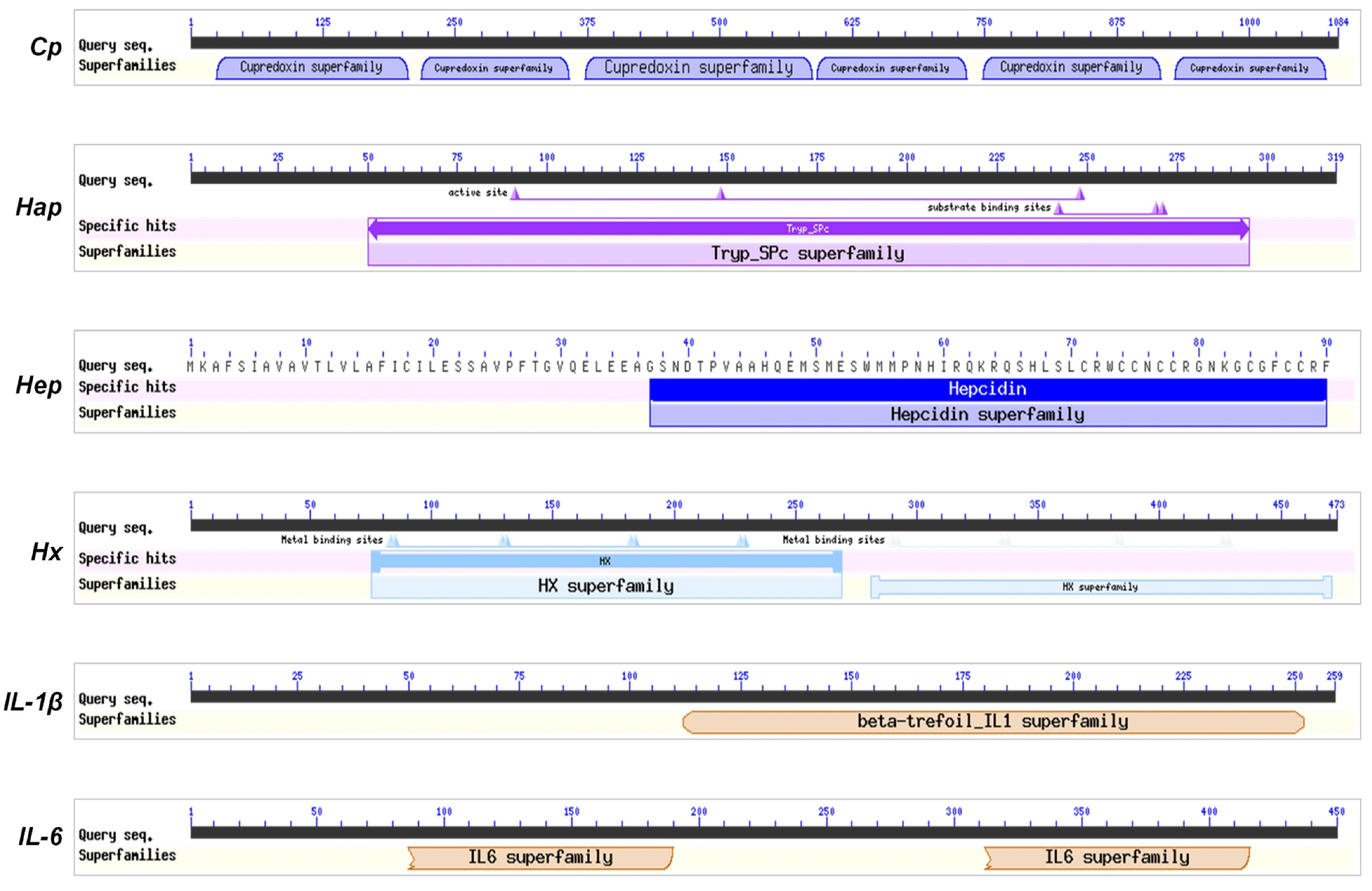
Figure 1. Conserved domain analysis of six acute phase response related molecules.
Fishes 11 00012 g001
Figure 2. Percent identity analysis of the acute phase response related molecules. (A) Cp; (B) Hap; (C) Hep; (D) Hx; (E) IL-1β; (F) IL-6.
Fishes 11 00012 g002
Figure 3. Phylogenetic analysis of the acute phase response related molecules. (A) Cp gene; (B) Hap gene; (C) Hep gene; (D) Hx gene; (E) IL-1β gene; (F) IL-6 gene.
Fishes 11 00012 g003
Figure 4. The melting curve and gel electrophoresis analysis of six acute phase response related molecules and reference gene. Each color represents the curve plotted for a sample.
Fishes 11 00012 g004
Figure 5. Gene expression in different tissues of healthy largemouth bass. The ordinate indicates the difference between the tested genes and the reference gene. ΔCt = Ct (target gene)—Ct (reference gene). Different lowercase letters (“a”, “b” and “c”) indicate significant differences (p < 0.05).
Fishes 11 00012 g005
Figure 6. Gene expression of acute phase response related molecules in blood, liver, spleen, and brain during the early infection phase of S. agalactiae (0–24 h). Different lowercase letters (“a,” “b,” “c,” etc.) indicate significant differences (p < 0.05).
Fishes 11 00012 g006
Figure 7. Gene expression of acute phase response related molecules in blood, liver, spleen, and brain from 24 to 72 h post S. agalactiae infection. Different lowercase letters (“a”, “b”, “c” and “d”) indicate significant differences (p < 0.05).
Fishes 11 00012 g007
Figure 8. Spatiotemporal dynamics of six acute phase response related molecules in blood, liver, spleen, and brain from 0 to 72 h post S. agalactiae infection. White square indicated no significant changes compared with 0 h, green square indicated significant lower compared with 0 h, red square indicated significant higher compared with 0 h.
Fishes 11 00012 g008
Table 1. Primers used in this study.
GeneGenBank
Accession Number
Primer SequenceLength (bp)
CpXM_038715213.1F: CTACGGCGCCTATTGATGGT
R: CTCTCAGCACAGGACCCATA
174
HapXM_038701550.1F: GGTCGCTGTAGAGAAGGTTGTT
R: CAAGGTGTCTGCCAGGTCTT
160
HepXM_038710826.1F: CACTCGTGCTCGCCTTTATT
R: TGATGTGATTTGGCATCATCCACG
150
HxXM_038721065.1F: GATGCTCCAAGTTTGGTGAGG
R: TGAAGGCGTTCTCGATGGTT
180
IL-1βXM_038733429.1F: TTGACATGACGGAAGTTCA
R: GCTCTTCACCACTGAGCT
168
IL-6XM_038725465.1F: GGAACCCTGAACAGGTAACG
R: TGTGCGGTCATCTTTCTGTGG
100
EF1αXM_038724777.1F: TGCTGCTGGTGTTGGTGAGTT
R: TTCTGGCTGTAAGGGGGCTC
147
Disclaimer/Publisher’s Note: The statements, opinions and data contained in all publications are solely those of the individual author(s) and contributor(s) and not of MDPI and/or the editor(s). MDPI and/or the editor(s) disclaim responsibility for any injury to people or property resulting from any ideas, methods, instructions or products referred to in the content.