
Article

Fish Gastrointestinal Microbiome Alterations Associated with Environmental and Host Factors
1
Independent Researcher, Lawrenceville, GA 30043, USA
2
Department of Biological Sciences, Georgia Gwinnett College, Lawrenceville, GA 30043, USA
3
Department of Mathematics and Statistics, Georgia Gwinnett College, Lawrenceville, GA 30043, USA
4
Department of Cellular Biology, University of Georgia, Auburn, GA 30011, USA
*
Author to whom correspondence should be addressed.
Fishes 2025, 10(12), 633; https://doi.org/10.3390/fishes10120633
Submission received: 31 October 2025 / Revised: 28 November 2025 / Accepted: 3 December 2025 / Published: 9 December 2025
(This article belongs to the Special Issue Intestinal Health of Aquatic Organisms)

Abstract

Gastrointestinal microbiota (GIM) play a crucial role in host physiology and are modulated by host biology, environmental conditions, and temporal dynamics. The GIM of two types of fishes, the redbreast sunfish (Lepomis auritus) and the bullhead catfish (Ameiurus spp.), from three streams over two seasons were sampled for host health (hepatosomatic index, Fulton’s condition factor), age, and additional environmental metadata. A total of 56 of these were fully analyzed using 16S rRNA amplicon sequencing and QIIME2. Specific taxonomic lineages were identified as significant with respect to observed differences between variables, including season, stream, and host taxonomic affiliation. The relative abundance of bacterial phyla varied significantly based on host type and between the three sites. However, the most significant effects for both relative abundance and alpha diversity metrics were seen when combining variables of site and season or host and season. Principal Component Analysis using weighted and unweighted Unifrac indicated the primacy of season in beta diversity analyses. Analysis of Compositions of Microbiomes (ANCOM) to identify taxa responsible for these differences revealed distinct amplicon sequence variants enriched by season, stream, host taxonomy, and host age. The larger picture emerging from these data suggests that there is a complex interplay between the host, season, and environment that shapes the structure of fish microbiota and associated host health.
Key Contribution: Sampling large numbers of hosts from several habitats over multiple seasons revealed the central role of season in shaping the gastrointestinal microbiota of fishes. It advances an ongoing area of exploration through additional metadata used for examining the factors influencing the composition of these ecosystems.

1. Introduction

Explorations of the microbiome have allowed tremendous advances in our understanding of the physiology, nutrition, immune responses, and growth of hosts [1]. Because elucidation of the fish gastrointestinal microbiome contributes to both sustainability efforts and food security in the face of environmental degradation, fish gastrointestinal microbiota (GIM) have been the subject of important investigations and recent reviews [2,3,4,5,6,7]. Most of the growing literature on fish microbiomes has focused on commercially important species or foundational lab-based research [4,8,9,10,11]. Although these are essential, other investigational frameworks, such as conservation biology, may contribute to the development of the field [12]. A common theme found in microbiome research is concern for the composition and function of the communities that profoundly shape host health [1]. With fish hosts, this has implications for organisms that consume them, including humans [13]. Digestibility may also modify aquatic prey choice, nutrient cycling, and other ecosystem services [14].
The conservation biology community has drawn attention to the need to extend this area of work because lotic ecosystems play a pivotal role in clean drinking water, healthy fisheries, and biodiversity [13,14]. The impact of anthropogenic threats on microbiomes, and therefore hosts, includes urbanization, pollution, climate change, and the potentially associated susceptibility to pathogens and parasites [15,16,17,18,19]. A deeper understanding of the impacts of anthropogenic change on host-associated microbiota is key to designing mitigation strategies to maintain ecosystem integrity [20]. One concrete example would be a review of regulatory thresholds for stream remediation based on directional or extreme microbiome alterations in addition to the standard total maximum daily load (TMDL) limits for water quality.
Many types of pollutants have been shown to affect the microbiome in zebrafish (Danio rerio) in laboratory settings [10,17,21]. Other recent work has shown a similar trend in fish in the natural environment [15,16,22,23]. Excess nitrogen and phosphorus, often from fertilizer or factory farming, produce a consistent eutrophic effect on waterways, and preliminary work suggests these may also alter the GIM of fish [24,25]. Also, indirect effects of the associated lack of dissolved oxygen change the microbial composition of the water and alter the host physiology, potentially impacting the immune system and therefore the associated microbiota [26]. The remarkable metabolic diversity of microbes could allow for the use of alternative metabolic substrates, potentially shaping the environmental flux of other compounds, like total nitrogen, sulfate, iron, and phosphorus, from the excrement of the host [26]. Clearly, this work merits further investigation given the ongoing anthropogenic degradation of freshwater ecosystems.
Other variables beyond water quality have a significant, potentially predominant, impact on the composition of and changes to the fish microbiota [27]. Studies have implicated habitat, season, host species, and trophic level as some of the most central drivers of the microbiome [3,28,29,30]. Influential features of habitat and season include dietary options, water chemistry, and even physical features such as water speed and salinity. Trophic level likely exerts influence primarily through dietary substrates available for microbial metabolism. Host species may predetermine many of the factors above, influencing the elegant crosstalk between host and microbiota through immunomodulation [27]. These data utilize next-generation sequencing, bioinformatics programs, and statistical analyses to elucidate the most important driver of differences in microbiome composition. However, there have yet to be completely standardized methods for sample size, temporal frequency, host anatomical site, DNA isolation methods, and even methods of high-throughput sequencing [31,32]. The lack of standardization complicates the interpretation of the expanding body of literature on the subject.
This work centers on two host types, the native fishes of redbreast sunfish (Lepomis auritus) and catfish of the genus Ameiurus [33]. Both provide important ecological services to freshwater aquatic ecosystems, and their GIM have yet to be fully explored [34,35]. Sunfish have been recorded as relatively tolerant to contaminated aquatic ecosystems [36,37]. Bullhead catfish have been used as an indicator species for contamination, exhibiting skin and liver tumors in impaired waterways [38]. These two fishes also differ in diet [33]. Sunfish are predominantly carnivorous, with a diet consisting of insects, crustaceans, and smaller fish. Bullhead catfish are omnivorous, consuming algae, insect larvae, snails, and small fish [34]. This differential sensitivity, as well as distinct trophic levels, make these two fish excellent candidates for exploration of changes in the gastrointestinal microbiota corresponding to distinct levels of aquatic ecosystem impairment. Additionally, both species are commonly caught by recreational anglers and consumed by humans, underscoring potential public health implications [14]. A total of 56 fish were harvested from the two different host groups in three different streams in two sequential seasons.
While dietary trophic styles and seasonal differences are expected to be a major factor in GIM variation in these fishes, many factors, including water quality and potential linkages to watershed land use, hepatosomatic index, and fish age, can also influence GIM composition [32,39,40,41]. Hepatosomatic indices are a frequent indicator of fish health [34]. Fulton’s condition, based on fish weight and length, was also used to assess host health [35].
To that end, we used relatively large sample sizes of multiple species, environments, and seasons for metagenomic analysis of these GIM. Subsequently, the bioinformatics suite Quantitative Insights Into Microbial Ecology 2 (QIIME 2 version 2020.11.1) was used to explore the composition of these gastrointestinal microbiomes [2,4,5,26,30,42].
This work advances the understanding of fish GIM by demonstrating that season, in conjunction with habitat, is a primary driver of fish gut community structure and complements previous work that emphasized host phylogeny, diet, habitat, and environmental conditions as contributing to gut microbiota diversity in lotic fishes [5,41,43,44,45]. This design, which spans two host taxa, three streams, and two seasons, provides a template for future conservation-focused microbiome studies in freshwater systems that aim to use gut communities as indicators of both fish health and ecosystem conditions.

2. Materials and Methods

2.1. Field Sampling

Rottenwood Creek, Sope Creek, and Nickajack Creek, all located in the northern region of the US state of Georgia, were sampled for both groups of fish. Rottenwood Creek (33°55′45″ N, 84°30′40″ W) is primarily fed from surface waters collected from commercial and high-density residential areas. For Nickajack Creek (33°50′25″ N, 84°32′26″ W), watershed land use was primarily designated medium-density residential. Sope Creek (33°57′11″ N, 84°26′36″ W) had land use parameters intermediate between the two other waterways. The streams were also designated by the Georgia Department of Natural Resources as having differing levels of environmental impairment. Water quality and temperature collected on site, as well as host fish characteristics, are available in Appendix A.
Redbreast sunfish and bullhead catfish were collected via backpack electrofishing from Rottenwood, Sope, and Nickajack Creeks in three afternoon sample collections in August/September 2016 and March 2017 (LR-24 backpack electrofisher, Vancouver, WA, USA). All three creeks, similar in size and stream order, are major tributaries of the Chattahoochee River in Cobb County, GA, USA. The collection site on Rottenwood Creek was located in a highly developed section of the watershed, directly across from the Life University campus and near several car dealerships. The Sope Creek site was in a residential area of the watershed, approximately 1.2 km (0.75 mi) south of the Indian Hills Country Club Golf Course. The Nickajack Creek site was in Heritage Park (Cobb County Parks), where the immediate area was well-forested and less impacted by anthropogenic disturbance than the other two sites. Five individuals of each fish type were collected from each creek in each season; however, four samples were excluded from the final analysis for failed sequencing reactions or insufficient coverage, as evidenced by no plateau in rarefaction curves after 5000 ASV (Amplicon Sequence Variants) reads. Basic water quality parameters were recorded concurrently with fish collection using LaMotte® Freshwater Aquaculture Test Kit (LaMotte®, Chesterfield, MD, USA). All nitrogen species ppm were added as a variable for total nitrogen in further analyses. None of the samples exceeded pH 8.5, which is relevant for shifting ammonium to ammonia.

2.2. Sample Processing and Analysis

All euthanized fish were transported to the laboratory on ice for approximately one hour, where they were weighed (g), measured in total length (measurement (total length in mm, TL) in mm, and dissected (IACUC per U.S. federal regulations for vertebrate animal research). Sagittal otoliths (sagittae, i.e., inner ear bones) were extracted from redbreast sunfish, while lapillar otoliths (lapilli) were extracted from bullhead catfish for age estimation. The sagittal otoliths are the largest pair of otoliths in centrarchids (e.g., redbreast sunfish), while the lapilli are the largest pair in ictalurids (bullhead catfishes), which are the preferred structures for aging these species. Otoliths were cleaned and stored dry in labeled vials [46]. Livers were excised from each fish and weighed (g) for calculation of the hepatosomatic index (HSI). The intestines were excised from each fish, the stomach was removed, and the material of the midgut and hindgut was macerated in sterile saline and stored in a final concentration of 80% ethanol at −20 °C for later analyses of microbiota.
For fish age estimation, otoliths were embedded in a clear epoxy resin, sectioned with a high-precision sectioning saw, and prepared following the methods described by Sakaris et al. [37,47]. Otolith sections were read independently by two readers, using a LeicaTM stereomicroscope with incident (reflected) light (Wetzlar, Germany). Additionally, fish weight, length, hepatosomatic index (liver weight/total body weight × 100), and Fulton’s condition (K = 100 × W/L3) were recorded for each fish (Appendix A).
DNA isolation of one gram of the stored gastrointestinal contents was carried out as described by Ward and Angert [48]. Briefly, enzymatic degradation was carried out in a Cetyltrimethylammonium Bromide buffer, and phenol extraction was followed by ethanol precipitation (Promega, Madison, WI, USA). DNA concentration and purity were determined through the use of a NanoDrop ND-2000 spectrophotometer (Thermo Scientific, Waltham, MA, USA). Variable region primers (V3 and V4, 5′-CCTACGGGNGGCWGCAG-3′ and 5′-GACTACHVGGGTATCTAATCC-3′) were used for PCR amplification of the 16S rDNA in the community DNA per manufacturer instructions for metagenomics of bacterial symbiotic communities (Illumina 16S metagenomics). Sixty libraries were constructed and sequenced using NEB Next Direct GS on the Illumina MiSeq platform (Illumina, San Diego, CA, USA). Sequencing was carried out using the Georgia Genomics and Bioinformatics Core. All sequences were deposited in the NCBI’s Sequence Read Archive (PRJNA1270367).

2.3. Bioinformatics

Sequence reads were filtered using the open-source software system Quantitative Insights into Microbial Ecology 2 (QIIME 2 version 2020.11.1) quality filters [40]. Of the 60 samples, 1 was eliminated from evaluation because the sequencing failed. One was initially excluded due to poor sequence saturation values. From the reads, the amplicon sequence variants (ASVs) were denoised using the DADA2 (Divisive Amplicon Denoising Algorithm 2) function and clustered using the Greengenes v22.10 reference database. Subsequent analysis used the SILVA v138 database and filtered out cyanobacterial and chloroplast sequences. Subsequently, two more samples were removed from downstream analysis due to poor sequence saturation rates (see Appendix B for total reads and select alpha diversity indices). Evenness, Faith phylogenetic diversity, Simpson’s evenness, McIntosh’s dominance, and ACE were used to evaluate alpha diversity [49]. In diversity analyses, some parameters were converted from numerical to categorical to facilitate QIIME 2 boxplot comparison. Total nitrogen levels were assessed at a cutoff of low to high around the inflection point of 2.3 ppm, fish age at 3.5 years, Fulton’s condition at 1.5, and hepatosomatic index at 0.1. Both weighted and unweighted Unifrac were used to evaluate beta diversity, and PCoA clustering was carried out. Bray–Curtis and Jaccard analyses were carried out and supported the Unifrac results. PCoAs were also conducted, including metadata as an input into total community variability. Additionally, Analysis of Compositions of Microbiomes (ANCOM) was used to identify taxa disproportionately represented in samples from specific categories (total nitrogen levels, host taxa, etc.) [41]. Graphs of taxa and statistical analyses of median, mean, and Tukey’s HSD for alpha diversity differences were created in Microsoft Excel (Microsoft, Redmond, WA, USA). Permutational Multivariate Analysis of Variance (PERMANOVA) was used to test for differences in alpha and beta diversity metrics between species and seasons and across sites, as well as for significant species*site, species*season, and site*season interactions using R version 4.5.2 [50].

3. Results

3.1. Host and Environmental Parameters

Hepatosomatic indices (HSIs) were within normal ranges (0.5–2.5%) for the host taxa, and Fulton’s condition, varying near or above 1.2, also suggested a relatively healthy fish sample (36). The mean estimated age of host fish was 3.7 (±1.5 SD) years. No significant differences by season, host type, or stream were observed in HSI, condition, and fish age. Water quality values suggestive of impairment were determined concurrently with sample collection. Dissolved oxygen levels and pH measurements were within normal ranges. Both nitrogen and phosphorus were higher in spring than in fall in all streams examined. The highest nitrogen levels were seen in spring in Sope and Rottenwood creeks (Appendix A).

3.2. Bioinformatics

A total of 56 microbiota samples were included in the QIIME2 v2020.11.1 analysis, resulting in a total of 3,144,912 reads, 4049 of which were unique. Appendix B contains the total reads and selected alpha diversity indices. Taxonomic classification using SILVA v138 was used to pool all phyla or classes with less than 1% representation into the category “other” (Appendix C). Pooling samples from all streams together within each host taxonomic affiliation demonstrated seasonal changes in the relative abundance of phyla (p < 0.001). The percentage of ASVs (amplicon sequence variants) affiliated with Firmicutes was disproportionate in catfish, while Fusobacteriota comprised a large percentage of the ASVs associated with sunfish. Seasonal variation was most marked among the phyla Actinomycetota and Bacteroidetes. A Tukey HSD test confirmed that these phyla were significantly different between seasons, with a marked decrease in the ratio of the former to the latter found in fall (p < 0.05). A similar analysis pooling all host groups in each stream also showed an effect of season (Figure 1, p < 0.001). In Nickajack Creek, the percent of Proteobacteria and Actinomycetota changed in a seasonal fashion; in Sope Creek, the season-associated alteration was most pronounced in Proteobacteria; in Rottenwood Creek, Firmicutes varied widely between seasons. Tukey HSD tests verified that these phyla largely determined the significant differences we observed between samples.
Communities were also explored at the taxonomic level of Class (Figure 1). The microbial communities reveal stark differences when fish of the same type and stream were compared between seasons. When pooling all samples by host alone, clear changes were observed in the classes Chitinophagia and Bacteroidia by season, both in the phylum Bacteroidetes noted above. Similar patterns are seen at the class level when host groups are pooled, but the stream is disaggregated (Figure 1). For aggregated data, see Appendix C.

3.3. Alpha and Beta Diversity Analysis

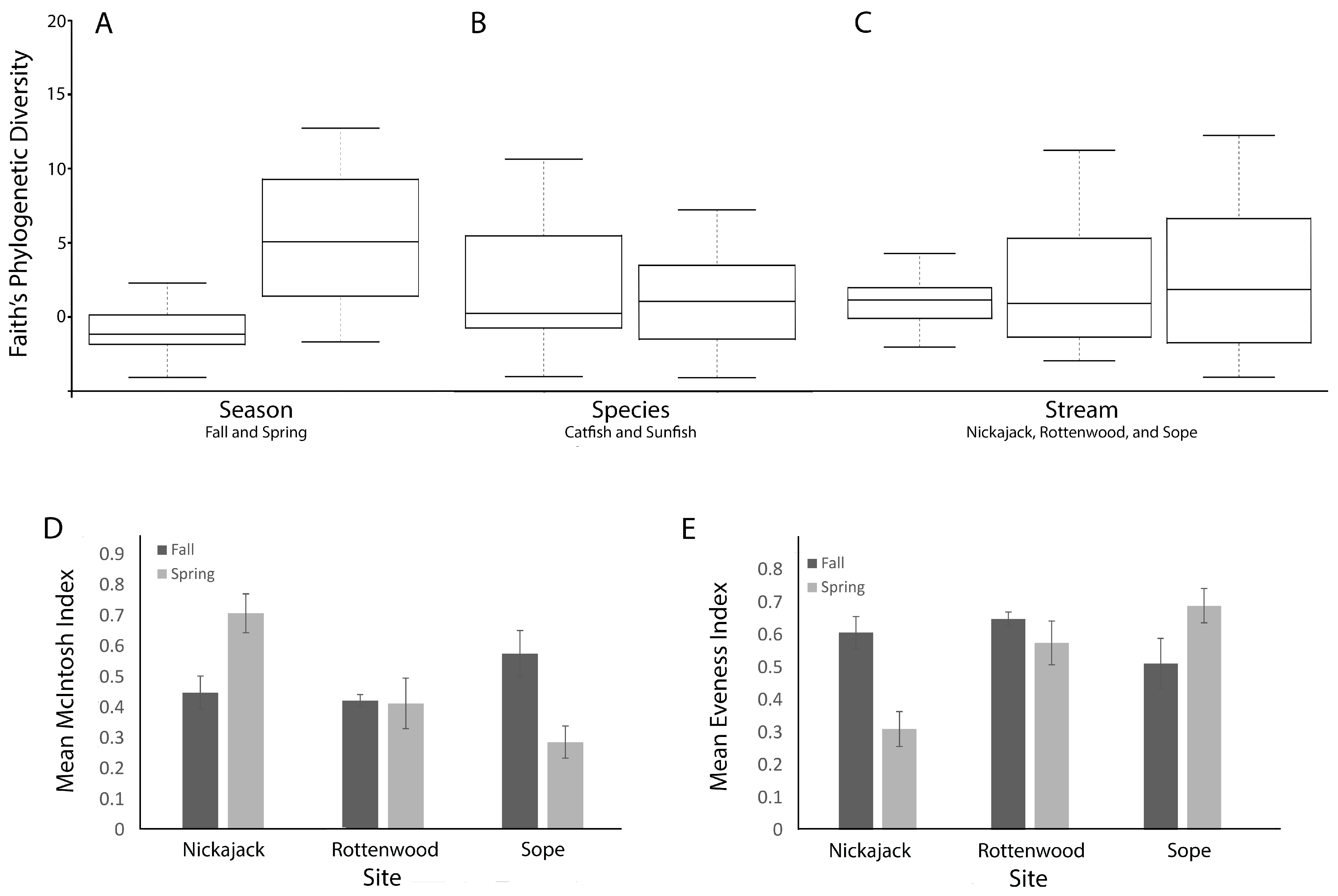
Further exploration of alpha diversity demonstrated that the differences in Faith phylogenetic diversity between host type and between streams were not significant (Figure 2B,C). However, differences in Faith phylogenetic diversity were highly significant when comparing seasons between different streams (Figure 2A, p < 0.001). PERMANOVA revealed a significant site effect for all eight alpha diversity metrics and a significant effect of season for five of the metrics (Appendix E). A significant site*season interaction was detected for all of the alpha diversity metrics (Appendix E). For example, evenness declined from fall to spring in Nickajack Creek, while the opposite trend was observed in Sope Creek. Evenness did not differ between fall and spring in Rottenwood Creek (site*season: F = 7.10, p < 0.001, Figure 2D,E). The dominance index showed the opposite pattern to evenness, with a substantial increase in dominance from fall (mean = 0.22 ± 0.16 SD) to spring in Nickajack Creek (0.53 ± 0.27). McIntosh diversity increased from fall to spring in Nickajack Creek, while it declined in Sope Creek. McIntosh diversity did not differ between seasons in Rottenwood Creek (site*season: F = 8.63, p < 0.001, Figure 2D,E). Overall, McIntosh diversity was higher in Nickajack Creek (0.58 ± 0.23) than in Sope Creek (0.43 ± 0.25) and Rottenwood Creek (0.42 ± 0.16), while evenness was higher in Sope Creek (0.60 ± 0.22) and Rottenwood Creek (0.61 ± 0.14) than in Nickajack Creek (0.46 ± 0.22). No differences in alpha diversity metrics were observed between species [49].
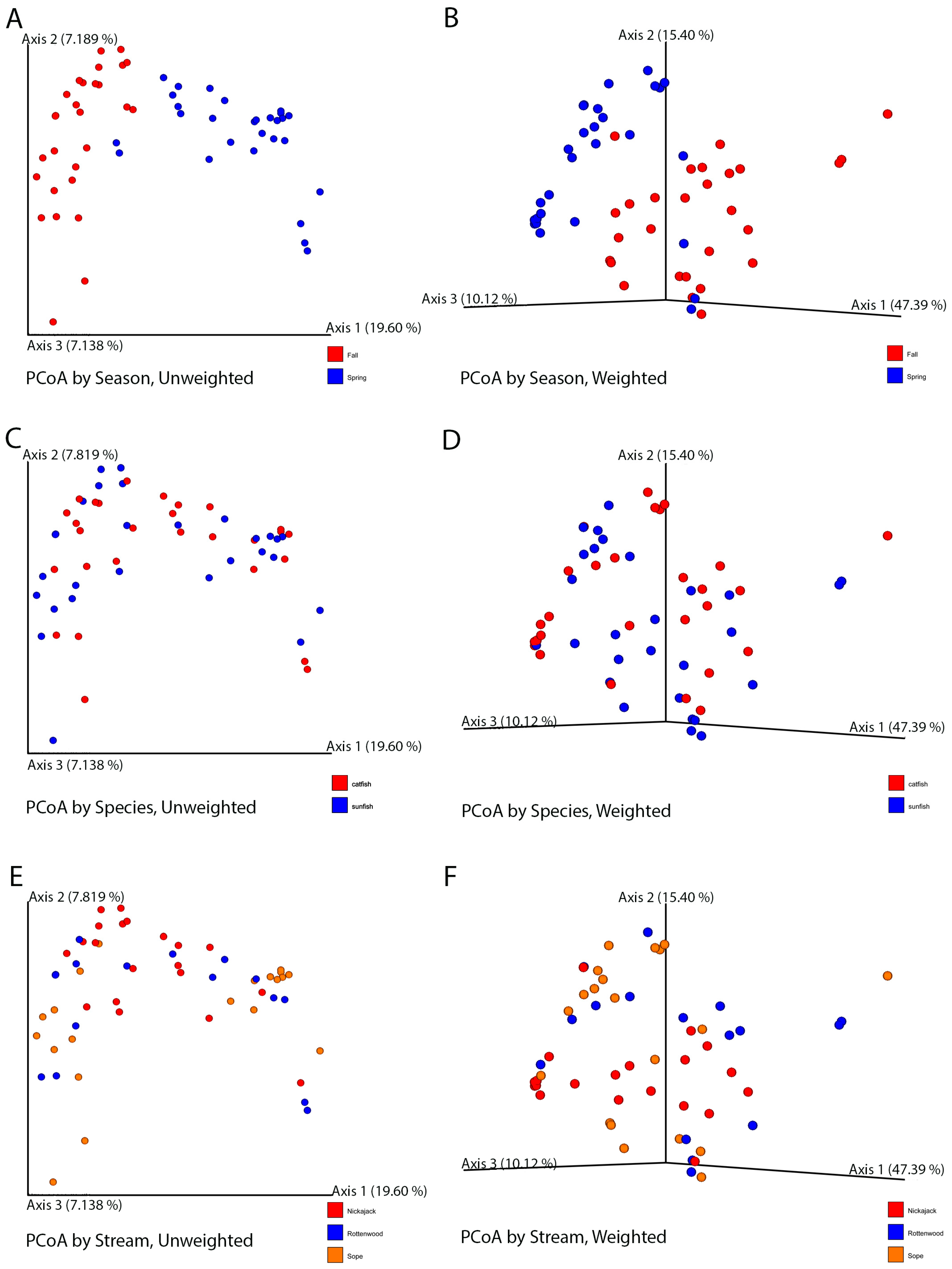
Beta diversity analyses using both weighted and unweighted Unifrac were used for the construction of principal coordinate analyses (PCoA) plots (Figure 3). Season appeared to be a more influential variable than either host taxa or sampling site alone. PERMANOVA analysis of the Bray–Curtis dissimilarity for samples pooled by stream, season, and fish type confirmed that season, not stream or fish type, showed a significant difference in beta diversity (p = 0.031). When analyzed individually, site, season and the interaction of the two were significant (p = 0.021, p = 1 × 10⁻⁵, p = 0.003, respectively).

3.4. Representation of Taxa

Differential abundance of ASVs was investigated using Analysis of Compositions of Microbiomes (ANCOM) via QIIME2 version 2020.11.1 pairwise comparisons. Samples’ community structures were grouped based on pair-wise comparisons based on metadata (e.g., all spring or all fall, all catfish or all sunfish, one stream with high nitrogen, or all other streams). Unique ASVs disproportionately enriched between samples were identified. One Fusobacteriia-associated ASV was enriched in every pairwise comparison for spring alone. This sequence’s top BLAST hits are from the microbiota of Nile tilapia and bottlenose dolphins, with identities above 97% [51]. Distinct ASVs affiliated with Fusobacteriia were also identified as enriched in each stream and each host type. Other ASVs that were associated with previously identified taxa such as Gammaproteobacteria, Actinomycetia, Bacilli, and Clostridia were differentially represented in some of the pairwise comparisons during spring (see Appendix D). Five sequences were associated with fish age, and one sequence was unique to Sope Creek, with higher nitrogen levels seen only in spring. A single sequence affiliated with Fusobacteriia was uniquely associated with fall samples.

4. Discussion

Aquatic vertebrates are strongly shaped by their microbiota, but most knowledge about host–GIM crosstalk comes from highly controlled laboratory systems [8,52,53,54,55]. In natural settings, however, multiple overlapping factors complicate the interpretation of fish microbiomes, so the present work focuses on several key drivers of composition, function, and temporal fluctuation [3,4,11,30,31]. Our data address how host traits, habitat, environmental quality, and season interact to modulate these gut ecosystems.

4.1. Modulating Factors in Fish GIM

To investigate factors influencing the GIM, this study compared different hosts spanning distinct trophic levels and incorporated gradients of anthropogenic impairment. Fish health, environmental parameters, and season were all evaluated as potential drivers of microbiome structure. Host-specific features such as phylogeny and genotype are recognized as important determinants of GIM composition [56,57,58,59,60], yet in these analyses, host taxonomy significantly affected only phylum-level relative abundance rather than alpha or beta diversity. Notably, combining host identity with seasonal effects produced an approximately 100-fold increase in explanatory power for alpha diversity metrics, underscoring the importance of interactions between host and time.

4.2. Study Design and Host Findings

This study examined 56 fish from two taxonomic groups with contrasting diets: carnivorous sunfish and omnivorous catfish. The relatively large sample size is important because the core fish microbiota appears to be small, so robust identification of key structuring factors requires many individuals for generalizable conclusions [27]. Intra-group variability, illustrated in Figure 1, emphasizes that host group differences are likely driven by diet and trophic level, with seasonal shifts in prey and vegetation further modulating the GIM. Work by Liu et al. on more than 24 species from four trophic levels similarly showed distinct clustering of herbivore and carnivore GIM in UniFrac-based PCoA, with weaker patterns for filter-feeders and omnivores, supporting diet and ecological role as primary drivers over taxonomy alone [3].

4.3. Habitat and Environmental Quality

Habitat is frequently cited as a central determinant of GIM, although the term has been used to describe salinity regime, eutrophication status, and specific pollutants [4,6,19,26,40,43,45,61]. Here, habitat was defined by freshwater quality parameters and watershed land use, and these features were associated with shifts in microbiome composition and diversity. Relative abundances and alpha diversity metrics differed significantly when samples were grouped by combined season and site (Figure 1 and Figure 2, Appendix E), highlighting the spatial–temporal structure. For example, GIM communities showed higher Actinomycetota in Nickajack (48%), greater Fusobacteria in Sope (27%), and Proteobacteria dominance in Rottenwood (38%).

4.4. Impact of Season

Seasonal timing is increasingly recognized as a major influence on resident microbiota [30,51]. Dulski et al. found that both season and environment affected tench GIM, but PCoA of weighted and unweighted UniFrac distances indicated that environment explained more variance than season when comparing aquaculture and natural habitats [30]. Proposed mechanisms for seasonal effects include temperature-driven dietary shifts and host metabolic changes, and several other studies report measurable seasonal GIM differences [44,62]. In contrast, by applying similar methods across three tributaries with distinct watershed land use, the present work detected a stronger seasonal signal in PCoA clustering, suggesting that the magnitude of seasonal effects depends on the degree and nature of environmental differences among sites.
When samples were aggregated by season alone, both relative taxon abundance and ACE richness (which emphasizes rare taxa) differed significantly [63]. All diversity measures became highly significant when analyses included both season and stream, indicating strong interaction effects. Seasonal comparisons also revealed shifts in the relative abundance of classes within Actinomycetota at Nickajack, Fusobacteria at Sope, and Firmicutes at Rottenwood (Figure 1), reinforcing that seasonal GIM changes are environment-dependent even among geographically proximate streams [30]. Overall, site and season jointly influenced both taxonomic composition and multiple alpha diversity metrics; however, the most impaired creek, Rottenwood, showed a dampened seasonal response compared with the other streams.
Nickajack and Sope exhibited opposite seasonal trajectories. In winter, the evenness of the microbial community and the proportion of rare taxa decreased in Nickajack but increased in Sope, with Simpson’s index mirroring these trends [63]. Persistently low diversity in Nickajack across fall and spring is best explained by pronounced reductions in evenness, especially in spring. The Shannon index, which incorporates community entropy, showed a milder decline in Nickajack but followed the same overall pattern, highlighting how different diversity metrics capture complementary aspects of community structure.

4.5. Dominance, Richness, and Nutrient Load

Dominance metrics varied inversely with evenness, and Faith’s phylogenetic diversity (PD) helps clarify this relationship. Within-season Nickajack samples showed reduced variability, likely reflecting pooled GIM from hosts spanning multiple trophic levels. The degree of impairment may buffer or compress seasonal effects on fish from different trophic positions. Sope’s watershed includes a golf course, which likely imposes a seasonally patterned fertilizer-driven nutrient load and may contribute to the disproportionate Fusobacterium representation detected using ANCOM. Because only a short 16S rRNA amplicon was sequenced after quality filtering, analyses focused on higher taxonomic levels, but ANCOM was used to identify ASVs differing significantly among sample groupings [64,65].

4.6. Ecological Interpretation and ASV Enrichment

Pairwise ANCOM comparisons revealed one Cetobacterium-affiliated Fusobacteria ASV enriched across host taxa, streams, age classes, and nitrogen levels, but restricted to spring samples. The overall enrichment of Fusobacteria-associated ASVs is consistent with their proposed role in chitin degradation [41]. In trout, Cetobacterium sequences increase under high-chitin diets, and in the focal streams, insect larvae—common prey for both host groups—likely provide abundant chitin substrate that supports growth of these degraders. Six additional Fusobacteria ASVs were enriched in specific combinations of stream and host type in spring, overlapping with lineages reported from Fusobacteria-dominated Nile tilapia GIM that also exhibit seasonal abundance shifts [66].
Both host groups also showed spring enrichment in Nickajack of ASVs assigned to Carnobacterium, a genus known to produce bacteriocins that can suppress pathogens [67,68]. When ANCOM results were aggregated by host age and season, distinct spring ASVs in young fish were affiliated with Erysipelotrichaceae, Lachnospiraceae, Chitinophaga, and Rhodanobacteraceae, all previously detected in aquatic GIM and including members linked to polysaccharide digestion and pathogen inhibition [67,68]. Chitinophaga, in particular, frequently appears in aquatic gastrointestinal ecosystems and has been implicated in nitrogen and carbon cycling, connecting GIM composition to broader ecosystem biogeochemistry [69].
One ASV enriched under high-nitrogen conditions and in Nickajack and Sope during spring matched Isoptericola hypogeus, a cellulolytic microbe capable of total nitrogen reduction (99.8% identity, Accession KJ194884.1). Elevated nitrogen and phosphorus are typical of spring in this region, and higher nitrogen levels were associated with significantly increased richness in GIM (p = 0.00000017). This richness increase aligns with work showing that eutrophication, while damaging ecosystem health, can expand the number of microbial ASVs with distinct taxonomy [65]. Consequently, some richness differences observed here may reflect transient or allochthonous microbiota rather than stable, autochthonous GIM. Liang et al. reported that nutrient enrichment can select for taxa with enhanced amino acid synthesis and energy metabolism, a pattern mirrored in other studies and consistent with enrichment of metabolically advantaged lineages under elevated nutrient loads [26,41].

4.7. Limitations and Future Directions

Several limitations could influence the trends reported. Within-group variation in host age, size, or sex may modulate GIM responses, and further granularity for metadata (for example, young female sunfish in Nickajack during spring) might reveal additional structure, but such fine-grained analyses would require larger sample sizes or more selective sampling to be broadly interpretable. The water quality parameters measured here represent only a subset of potential stressors, omitting factors such as microplastics, per- and polyfluoroalkyl substances, and heavy metals that may substantially affect lotic ecosystems and their microbiota [70]. Future work could integrate advanced bioinformatic tools for functional inference, such as PICRUSt2, while recognizing that these methods perform best when supported by whole-genome data for many community members [71,72]. Coupling these approaches with transcriptomics of conserved functional genes could yield powerful community-level insights into understudied aquatic GIM systems.

5. Conclusions

Overall, these findings reinforce that fish GIM ecosystems are complex and strongly temporally dynamic. Identifying the primary drivers of diversity and composition likely requires more extensive and detailed metadata than typically collected. Contrary to expectations, GIM patterns showed weaker correspondence with host health indicators, age, and anthropogenic impairment than with the interaction of season and habitat. Within the scope of the current data, sampling season, in combination with environmental context, emerges as the dominant factor shaping GIM structure in the studied fishes, providing a framework for future work linking environmental gradients, microbiome composition, host well-being, and ecosystem functioning.

Author Contributions

Conceptualization, P.S. and R.W.; methodology, D.D., R.W., L.K., P.S., W.D. and S.K.-K.; formal analysis, K.E., D.D. and R.W.; writing—original draft preparation, D.D. and R.W.; writing—review and editing, K.E., P.S., L.K., W.D. and S.K.-K. All authors have read and agreed to the published version of the manuscript.

Funding

This research received no external funding.

Institutional Review Board Statement

This study was conducted in accordance with the Declaration of Helsinki and approved by the Institutional Review Board (or Ethics Committee) of Georgia Gwinnett College. Georgia Department of Natural Resources (GADNR) Scientific Collecting Permit, GADNR Permit ID: 1000032340, approval date: 26 August 2016.

Data Availability Statement

Sequences and metadata are available in NCBI BioProject PRJNA1270367.

Acknowledgments

Carla Penaherrera contributed to the sequencing preparation for this work.

Conflicts of Interest

The authors declare no conflicts of interest.

Abbreviations

The following abbreviations are used in this manuscript:
ANCOMAnalysis of Compositions of Microbiomes.
GIMsGastrointestinal Microbiomes.
TMDLTotal Maximum Daily Load.
QIIME2Quantitative Insights Into Microbial Ecology.
ASVAmplicon Sequence Variants.
IACUCInstitutional Animal Care and Use Committee.
HSIHepatosomatic Index.
DADADivisive Amplicon Denoising Algorithm.
PCoAPrinciple Component Analysis.
UniFracUnique Fraction Metric.
PERMANOVAPermutational Multivariate Analysis of Variance.

Appendix A

Table A1. The parameters associated with the three different sampling sites were used as metadata for subsequent analyses of microbial communities.
Sample-idLengthWeightFulton’s ConditionLiver_WeightHepatosomatic_IndexPhosphorousDissolved_O2Water TemperatureColiformspHNitrateFish_AgeStreamSpeciesSeason
q2:typesnumericnumericnumericnumericnumericnumericnumericnumericnumericnumericnumericnumericcategoricalcategoricalcategorical
F114.958.461.770.670.01146080.98.84.8 °C1871.84NickajacksunfishFall
F215.167.181.950.970.01443880.98.84.8 °C1871.84NickajacksunfishFall
F315.464.741.770.550.00849550.98.84.8 °C1871.85NickajacksunfishFall
F413.134.81.550.580.01666670.98.84.8 °C1871.84NickajacksunfishFall
F512.638.381.920.270.00703490.98.84.8 °C1871.84NickajacksunfishFall
F611.216.421.170.230.01400730.98.84.8 °C1871.81NickajackcatfishFall
F720.2105.441.281.630.0154590.98.84.8 °C1871.83NickajackcatfishFall
F810.815.491.230.270.01743060.98.84.8 °C1871.81NickajackcatfishFall
F911.517.61.160.130.00738640.98.84.8 °C1871.81NickajackcatfishFall
F1017.866.561.181.630.02448920.98.84.8 °C1871.82NickajackcatfishFall
F1112.131.81.800.290.00911952.524.6 °C11062.254SopesunfishFall
F1212.738.91.900.370.00951162.524.6 °C11062.254SopesunfishFall
F1311.327.31.890.250.00915752.524.6 °C11062.252SopesunfishFall
F1417.5109.42.040.90.00822672.524.6 °C11062.256SopesunfishFall
F1516.561.71.370.570.00923832.524.6 °C11062.255SopesunfishFall
F1620.696.21.101.190.01237012.524.6 °C11062.255SopecatfishFall
F1722.2120.71.101.60.0132562.524.6 °C11062.256SopecatfishFall
F1819.591.51.231.370.01497272.524.6 °C11062.255SopecatfishFall
F1919.278.41.110.850.01084182.524.6 °C11062.254SopecatfishFall
F2016.155.81.340.80.01433692.524.6 °C11062.254SopecatfishFall
F2111.933.11.960.220.00664651.18.14.9 °C236.82.42RottenwoodsunfishFall
F2214.152.71.880.530.01005691.18.14.9 °C236.82.42RottenwoodsunfishFall
F2312.437.21.950.340.00913981.18.14.9 °C236.82.42RottenwoodsunfishFall
F2413.439.81.650.30.00753771.18.14.9 °C236.82.42RottenwoodsunfishFall
F2511.831.81.940.370.01163521.18.14.9 °C236.82.42RottenwoodsunfishFall
F2618611.050.870.01426231.18.14.9 °C236.82.43RottenwoodcatfishFall
F2719.698.41.311.510.01534551.18.14.9 °C236.82.45RottenwoodcatfishFall
F2819.1771.111.310.0170131.18.14.9 °C236.82.45RottenwoodcatfishFall
F2915.437.51.030.60.0161.18.14.9 °C236.82.42RottenwoodcatfishFall
F301647.61.160.730.01533611.18.14.9 °C236.82.43RottenwoodcatfishFall
S115.458.961.611.170.51146081.49.34.0 °C18.57.52.34.5NickajacksunfishSpring
S215.667.681.781.470.51443881.49.34.0 °C18.57.52.34.5NickajacksunfishSpring
S315.965.241.621.050.50849551.49.34.0 °C18.57.52.35.5NickajacksunfishSpring
S413.635.31.401.080.51666671.49.34.0 °C18.57.52.34.5NickajacksunfishSpring
S513.138.881.730.770.50703491.49.34.0 °C18.57.52.34.5NickajacksunfishSpring
S611.716.921.060.730.51400731.49.34.0 °C18.57.52.31.5NickajackcatfishSpring
S720.7105.941.192.130.5154591.49.34.0 °C18.57.52.33.5NickajackcatfishSpring
S811.315.991.110.770.51743061.49.34.0 °C18.57.52.31.5NickajackcatfishSpring
S91218.11.050.630.50738641.49.34.0 °C18.57.52.31.5NickajackcatfishSpring
S1018.367.061.092.130.52448921.49.34.0 °C18.57.52.32.5NickajackcatfishSpring
S1112.632.31.610.790.509119532.54.1 °C1116.52.754.5SopesunfishSpring
S1213.239.41.710.870.509511632.54.1 °C1116.52.754.5SopesunfishSpring
S1311.827.81.690.750.509157532.54.1 °C1116.52.752.5SopesunfishSpring
S1418109.91.881.40.508226732.54.1 °C1116.52.756.5SopesunfishSpring
S151762.21.271.070.509238332.54.1 °C1116.52.755.5SopesunfishSpring
S1621.196.71.031.690.512370132.54.1 °C1116.52.755.5SopecatfishSpring
S1722.7121.21.042.10.51325632.54.1 °C1116.52.756.5SopecatfishSpring
S1820921.151.870.514972732.54.1 °C1116.52.755.5SopecatfishSpring
S1919.778.91.031.350.510841832.54.1 °C1116.52.754.5SopecatfishSpring
S2016.656.31.231.30.514336932.54.1 °C1116.52.754.5SopecatfishSpring
S2112.433.61.760.720.50664651.68.64.3 °C23.57.32.92.5RottenwoodsunfishSpring
S2214.653.21.711.030.51005691.68.64.3 °C23.57.32.92.5RottenwoodsunfishSpring
S2412.937.71.760.840.50913981.68.64.3 °C23.57.32.92.5RottenwoodsunfishSpring
S2513.940.31.500.80.50753771.68.64.3 °C23.57.32.92.5RottenwoodsunfishSpring
S2612.332.31.740.870.51163521.68.64.3 °C23.57.32.92.5RottenwoodcatfishSpring
S2718.561.50.971.370.51426231.68.64.3 °C23.57.32.93.5RottenwoodcatfishSpring
S2820.198.91.222.010.51534551.68.64.3 °C23.57.32.95.5RottenwoodcatfishSpring
S2919.677.51.031.810.5170131.68.64.3 °C23.57.32.95.5RottenwoodcatfishSpring
S3015.9380.951.10.5161.68.64.3 °C23.57.32.92.5RottenwoodcatfishSpring

Appendix B

Table A2. Total sequence reads, as well as Chao1 and Shannon’s ASV richness indicators, varied markedly by season.
StreamSeasonSpeciesTotal SequencesChao1Shannon’s
Nickajack FallAmeiurus brunneus8533.6 ± 279563.4 ± 22.93.75 ± 0.73
Lepomis auritus12,823.8 ± 444677.3 ± 31.33.24 ± 0.77
SpringAmeiurus brunneus179,553.6 ± 53,305101.9 ± 41.41.22 ± 0.82
Lepomis auritus84,998 ± 13,290210.9 ± 196.92.73 ± 1.39
Sope FallAmeiurus brunneus9398.25 ± 553838.3 ± 11.582.83 ± 1.04
Lepomis auritus8092.6 ± 400927.40 ± 16.802.06 ± 1.40
SpringAmeiurus brunneus83,728 ± 65,103216.7 ± 68.044.89 ± 1.94
Lepomis auritus37,539.8 ± 9242196.5 ± 44.265.03 ± 0.53
RottenwoodFallAmeiurus brunneus13,287 ± 161861.5 ± 27.83.36 ± 0.19
Lepomis auritus15,785.6 ±11,54931.47 ± 6.23.08 ± 0.56
SpringAmeiurus brunneus84,114.8 ± 20,373383.4 ± 330.64.58 ± 2.34
Lepomis auritus133,984 ± 105,954218.0 ± 11.53.67 ± 1.56

Appendix C

Table A3. Percentage representation of class-level taxonomic affiliation for both sunfish and catfish varies by stream and season.
Fall Nickajack SunfishSpring Nickajack SunfishFall Sope SunfishSpring Sope SunfishFall Rottenwood SunfishSpring Rottenwood Sunfish
Actinomycetia9.99.41.61.22.41.6
Bacilli1.80.75.91.07.50.8
Bacteroidia2.00.00.00.16.50.0
Clostridia19.132.03.03.85.521.9
Deltaproteobacteria3.40.20.00.50.20.1
Fusobacteriia13.229.619.77.32.623.2
Gammaproteobacteria12.315.020.71.721.71.1
Other38.213.149.084.353.651.3
Fall Nickajack CatfishSpring Nickajack CatfishFall Sope CatfishSpring Sope CatfishFall Rottenwood CatfishSpring Rottenwood Catfish
Actinomycetia13.71.913.43.712.92.6
Bacilli8.01.73.59.53.47.3
Bacteroidia1.50.07.50.15.40.2
Clostridia13.72.012.611.710.412.8
Deltaproteobacteria0.10.01.50.56.51.8
Fusobacteriia6.94.816.223.46.19.8
Gammaproteobacteria15.88.119.83.312.825.7
Other40.481.425.547.842.539.8

Appendix D

Table A4. ANCOM analysis identified specific ASVs that were statistically significantly enriched in a pairwise comparison of variables. All these listed were enriched in spring alone and only in samples with the variable listed at the top. Taxonomic classification at the level of class for the ASVs was carried out using the SILVA v138 database and verified using top BLAST hits.
NickajackSopeRottenwoodSunfishCatfish
FusobacteriiaFusobacteriiaFusobacteriiaTwo FusobacteriiaFusobacteriia
BacilliGammaproteobacteriaClostridiaFive ClostridiaActinomycetia
ActinomycetiaBacteroidiaTwo ActinomycetiaThree GammaproteobacteriaTwo Clostridia
Bacteroidia
Bacilli
Actinomycetia

Appendix E

Table A5. PERMANOVA statistics for alpha diversity metrics, testing for the effects of species, site, season, species*site, species*season, and site*season.
MargelefAceDominanceFaith-pd
FPrFPrFPrFPr
Species0.65840.51000.69230.48660.58850.54920.84410.39356
Site3.13610.02153.32010.01803.46190.01613.79400.0142
Season74.21001 × 10−587.61131 × 10−53.41740.0396136.08641 × 10−5
Species*Site0.82680.49010.67940.59980.29240.89720.83540.4719
Species*Season0.23560.86630.21740.87412.50470.08650.05720.97238
Site*Season3.33040.01683.06850.02466.40560.00054.25590.0087
McIntoshShannonSimpsonEvenness
FPrFPrFPrFPr
Species0.51470.52420.84800.41481.16280.28750.40890.6605
Site3.84890.019152.86200.024545.30821 × 10−54.15980.0079
Season2.32500.11682.35060.08417.89430.00213.02340.0607
Species*Site0.17430.92171.38210.21790.71140.55991.43110.2214
Species*Season2.02060.14802.81580.05501.67400.17813.79390.0348
Site*Season8.62840.00028.07552 × 10−59.13237 × 10−57.10170.0003

References

  1. Antwis, R.E.; Harrison, X.A.; Cox, M.J. (Eds.) Microbiomes of Soils, Plants and Animals: An Integrated Approach; Cambridge University Press: Cambridge, UK, 2020. [Google Scholar]
  2. Tarnecki, A.M.; Burgos, F.A.; Ray, C.L.; Arias, C.R. Fish Intestinal Microbiome: Diversity and Symbiosis Unravelled by Metagenomics. J. Appl. Microbiol. 2017, 123, 2–17. [Google Scholar] [CrossRef]
  3. Liu, H.; Guo, X.; Gooneratne, R.; Lai, R.; Zeng, C.; Zhan, F.; Wang, W. The Gut Microbiome and Degradation Enzyme Activity of Wild Freshwater Fishes Influenced by Their Trophic Levels. Sci. Rep. 2016, 6, 24340. [Google Scholar] [CrossRef]
  4. Wong, S.; Rawls, J.F. Intestinal Microbiota Composition in Fishes Is Influenced by Host Ecology and Environment. Mol. Ecol. 2012, 21, 3100–3102. [Google Scholar] [CrossRef] [PubMed]
  5. Sullam, K.E.; Rubin, B.E.; Dalton, C.M.; Kilham, S.S.; Flecker, A.S.; Russell, J.A. Divergence across Diet, Time and Populations Rules out Parallel Evolution in the Gut Microbiomes of Trinidadian Guppies. ISME J. 2015, 9, 1508–1522. [Google Scholar] [CrossRef]
  6. Eichmiller, J.J.; Hamilton, M.J.; Staley, C.; Sadowsky, M.J.; Sorensen, P.W. Environment Shapes the Fecal Microbiome of Invasive Carp Species. Microbiome 2016, 4, 44. [Google Scholar] [CrossRef]
  7. Legrand, T.P.R.A.; Wynne, J.W.; Weyrich, L.S.; Oxley, A.P.A. A Microbial Sea of Possibilities: Current Knowledge and Prospects for an Improved Understanding of the Fish Microbiome. Rev. Aquac. 2020, 12, 1101–1134. [Google Scholar] [CrossRef]
  8. Wang, A.R.; Ran, C.; Ringø, E.; Zhou, Z.G. Progress in Fish Gastrointestinal Microbiota Research. Rev. Aquac. 2018, 10, 626–640. [Google Scholar] [CrossRef]
  9. Llewellyn, M.S.; Boutin, S.; Hoseinifar, S.H.; Derome, N. Teleost Microbiomes: The State of the Art in Their Characterization, Manipulation and Importance in Aquaculture and Fisheries. Front. Microbiol. 2014, 5, 207. [Google Scholar] [CrossRef]
  10. Jia, P.P.; Junaid, M.; Xin, G.Y.; Wang, Y.; Ma, Y.B.; Pei, D.S. Disruption of Intestinal Homeostasis Through Altered Responses of the Microbial Community, Energy Metabolites, and Immune System in Zebrafish After Chronic Exposure to DEHP. Front. Microbiol. 2021, 12, 729530. [Google Scholar] [CrossRef] [PubMed]
  11. Bledsoe, J.W.; Peterson, B.C.; Swanson, K.S.; Small, B.C. Ontogenetic Characterization of the Intestinal Microbiota of Channel Catfish through 16S RRNA Gene Sequencing Reveals Insights on Temporal Shifts and the Influence of Environmental Microbes. PLoS ONE 2016, 11, e0166379. [Google Scholar] [CrossRef]
  12. Kanika, N.H.; Liaqat, N.; Chen, H.; Ke, J.; Lu, G.; Wang, J.; Wang, C. Fish Gut Microbiome and Its Application in Aquaculture and Biological Conservation. Front. Microbiol. 2024, 15, 1521048. [Google Scholar] [CrossRef]
  13. FAO/WHO. Background Document on the Risks and Benefits of Fish Consumption; Food Safety and Quality Series; FAO/WHO: Rome, Italy, 2024. [Google Scholar]
  14. Villéger, S.; Brosse, S.; Mouchet, M.; Mouillot, D.; Vanni, M.J. Functional Ecology of Fish: Current Approaches and Future Challenges. Aquat. Sci. 2017, 79, 783–801. [Google Scholar] [CrossRef]
  15. Carthey, A.J.R.; Blumstein, D.T.; Gallagher, R.V.; Tetu, S.G.; Gillings, M.R. Conserving the Holobiont. Funct. Ecol. 2019, 34, 764–776. [Google Scholar] [CrossRef]
  16. Trevelline, B.K.; Fontaine, S.S.; Hartup, B.K.; Kohl, K.D. Conservation Biology Needs a Microbial Renaissance: A Call for the Consideration of Host-Associated Microbiota in Wildlife Management Practices. Proc. R. Soc. B Biol. Sci. 2019, 286, 20182448. [Google Scholar] [CrossRef] [PubMed]
  17. Adegunloye, D.V.; Sanusi, A.I. Microbiota of Catfish (Clarias gariepinus) Tissues Harvested from Vials Polluted with Soil from e-Wastes Dumpsite. Int. J. Fish. Aquac. 2019, 11, 104–111. [Google Scholar] [CrossRef]
  18. Nolorbe-Payahua, C.D.; de Freitas, A.S.; Roesch, L.F.W.; Zanette, J. Environmental Contamination Alters the Intestinal Microbial Community of the Livebearer Killifish Phalloceros Caudimaculatus. Heliyon 2020, 6, e04190. [Google Scholar] [CrossRef] [PubMed]
  19. Chupani, L.; Barta, J.; Zuskova, E. Effects of Food-Borne ZnO Nanoparticles on Intestinal Microbiota of Common Carp (Cyprinus carpio L.). Environ. Sci. Pollut. Res. 2019, 26, 25869–25873. [Google Scholar] [CrossRef]
  20. Restivo, V.E.; Kidd, K.A.; Surette, M.G.; Servos, M.R.; Wilson, J.Y. Rainbow Darter (Etheostoma caeruleum) from a River Impacted by Municipal Wastewater Effluents Have Altered Gut Content Microbiomes. Sci. Total Environ. 2021, 751, 141724. [Google Scholar] [CrossRef]
  21. Zhao, P.; Lu, W.; Hong, Y.; Chen, J.; Dong, S.; Huang, Q. Long-Term Wet Precipitation of PM2.5 Disturbed the Gut Microbiome and Inhibited the Growth of Marine Medaka Oryzias melastigma. Sci. Total Environ. 2021, 755, 142512. [Google Scholar] [CrossRef]
  22. Theis, K.R.; White, J. Editorial: Impact of Anthropogenic Environmental Changes on Animal Microbiomes. Front. Ecol. Evol. 2023, 11, 1204035. [Google Scholar] [CrossRef]
  23. Namasivayam, S.K.R.; Poornima, V. An Investigation of Polymer Coated Metallic Nanoparticles Mediated Influence on Gut Microbiota of Zebra Fish (Danio rerio). Res. J. Pharm. Technol. 2017, 10, 2221–2225. [Google Scholar] [CrossRef]
  24. Fackelmann, G.; Sommer, S. Microplastics and the Gut Microbiome: How Chronically Exposed Species May Suffer from Gut Dysbiosis. Mar. Pollut. Bull. 2019, 143, 193–203. [Google Scholar] [CrossRef]
  25. Adamovsky, O.; Buerger, A.N.; Wormington, A.M.; Ector, N.; Griffitt, R.J.; Bisesi, J.H.; Martyniuk, C.J. The Gut Microbiome and Aquatic Toxicology: An Emerging Concept for Environmental Health. Environ. Toxicol. Chem. 2018, 37, 2758–2775. [Google Scholar] [CrossRef]
  26. Degregori, S.; Casey, J.M.; Barber, P.H. Nutrient Pollution Alters the Gut Microbiome of a Territorial Reef Fish. Mar. Pollut. Bull. 2021, 169, 112522. [Google Scholar] [CrossRef]
  27. Yajima, D.; Fujita, H.; Hayashi, I.; Shima, G.; Suzuki, K.; Toju, H. Core Species and Interactions Prominent in Fish-Associated Microbiome Dynamics. Microbiome 2023, 11, 53. [Google Scholar] [CrossRef] [PubMed]
  28. Wu, D.G.; Harris, C.R.; Kalis, K.M.; Bowen, M.; Biddle, J.F.; Farag, I.F. Comparative Metagenomics of Tropical Reef Fishes Show Conserved Core Gut Functions across Hosts and Diets with Diet-Related Functional Gene Enrichments. Appl. Environ. Microbiol. 2025, 91, e02229-24. [Google Scholar] [CrossRef] [PubMed]
  29. Diwan, A.D.; Harke, S.N.; Panche, A.N. Host-Microbiome Interaction in Fish and Shellfish: An Overview. Fish. Shellfish. Immunol. Rep. 2023, 4, 100091. [Google Scholar] [CrossRef] [PubMed]
  30. Dulski, T.; Kozłowski, K.; Ciesielski, S. Habitat and Seasonality Shape the Structure of Tench (Tinca tinca L.) Gut Microbiome. Sci. Rep. 2020, 10, 4460. [Google Scholar] [CrossRef]
  31. Moran, D.; Turner, S.J.; Clements, K.D. Ontogenetic Development of the Gastrointestinal Microbiota in the Marine Herbivorous Fish Kyphosus sydneyanus. Microb. Ecol. 2005, 49, 590–597. [Google Scholar] [CrossRef]
  32. Zhang, Z.; Li, D.; Refaey, M.M.; Xu, W.; Tang, R.; Li, L. Host Age Affects the Development of Southern Catfish Gut Bacterial Community Divergent from That in the Food and Rearing Water. Front. Microbiol. 2018, 9, 495. [Google Scholar] [CrossRef]
  33. Ghanbari, M.; Kneifel, W.; Domig, K.J. A New View of the Fish Gut Microbiome: Advances from next-Generation Sequencing. Aquaculture 2015, 448, 464–475. [Google Scholar] [CrossRef]
  34. Gallo, B.D.; Farrell, J.M.; Leydet, B. Use of next Generation Sequencing to Compare Simple Habitat and Species Level Differences in the Gut Microbiota of an Invasive and Native Freshwater Fish Species. PeerJ 2020, 8, e10237. [Google Scholar] [CrossRef]
  35. Arias, C.R.; Ray, L.; Cai, W.; Willmon, E. Fish Are Not Alone: Characterization of the Gut and Skin Microbiomes of Largemouth Bass (Micropterus salmoides), Bluegill (Lepomis macrochirus), and Spotted Gar (Lepisosteus oculatus). SDRP J. Aquac. Fish Fish. Sci. 2019, 2, 1–15. [Google Scholar] [CrossRef]
  36. Gallo, B.D.; Farrell, J.M.; Leydet, B.F. Fish Gut Microbiome: A Primer to an Emerging Discipline in the Fisheries Sciences. Fisheries 2020, 45, 271–282. [Google Scholar] [CrossRef]
  37. Sakaris, P.C.; Jesien, R.V.; Pinkney, A.E. Brown Bullhead as an Indicator Species: Seasonal Movement Patterns and Home Ranges within the Anacostia River, Washington, D.C. Trans. Am. Fish. Soc. 2005, 134, 1262–1270. [Google Scholar] [CrossRef]
  38. Boschung, H.T.; Mayden, R.L. Fishes of Alabama; Smithsonian Institute: Washington, DC, USA, 2004. [Google Scholar]
  39. Parata, L.; Nielsen, S.; Xing, X.; Thomas, T.; Egan, S.; Vergés, A. Age, Gut Location and Diet Impact the Gut Microbiome of a Tropical Herbivorous Surgeonfish. FEMS Microbiol. Ecol. 2020, 96, fiz179. [Google Scholar] [CrossRef]
  40. Wang, S.Y.; Sudduth, E.B.; Wallenstein, M.D.; Wright, J.P.; Bernhardt, E.S. Watershed Urbanization Alters the Composition and Function of Stream Bacterial Communities. PLoS ONE 2011, 6, e22972. [Google Scholar] [CrossRef]
  41. Liang, Y.; Wang, Z.; Gao, N.; Qi, X.; Zeng, J.; Cui, K.; Lu, W.; Bai, S. Variations and Interseasonal Changes in the Gut Microbial Communities of Seven Wild Fish Species in a Natural Lake with Limited Water Exchange during the Closed Fishing Season. Microorganisms 2024, 12, 800. [Google Scholar] [CrossRef]
  42. Bolyen, E.; Rideout, J.R.; Dillon, M.R.; Bokulich, N.A.; Abnet, C.C.; Al-Ghalith, G.A.; Alexander, H.; Alm, E.J.; Arumugam, M.; Asnicar, F.; et al. Reproducible, Interactive, Scalable and Extensible Microbiome Data Science Using QIIME 2. Nat. Biotechnol. 2019, 37, 852–857. [Google Scholar] [CrossRef] [PubMed]
  43. Kim, P.S.; Shin, N.-R.; Lee, J.-B.; Kim, M.-S.; Whon, T.W.; Hyun, D.-W.; Yun, J.-H.; Jung, M.-J.; Kim, J.Y.; Bae, J.-W. Host Habitat Is the Major Determinant of the Gut Microbiome of Fish. Microbiome 2021, 9, 166. [Google Scholar] [CrossRef]
  44. Tolas, I.; Zhou, Z.; Zhang, Z.; Teame, T.; Olsen, R.E.; Ringø, E.; Rønnestad, I. A Fishy Gut Feeling—Current Knowledge on Gut Microbiota in Teleosts. Front. Mar. Sci. 2025, 11, 4795373. [Google Scholar] [CrossRef]
  45. Singh, B.K.; Thakur, K.; Kumari, H.; Mahajan, D.; Sharma, D.; Sharma, A.K.; Kumar, S.; Singh, B.; Pankaj, P.P.; Kumar, R. A Review on Comparative Analysis of Marine and Freshwater Fish Gut Microbiomes: Insights into Environmental Impact on Gut Microbiota. FEMS Microbiol. Ecol. 2025, 101, fiae169. [Google Scholar] [CrossRef]
  46. Long, J.M.; Stewart, D.R. Verification of Otolith Identity Used by Fisheries Scientists for Aging Channel Catfish. Trans. Am. Fish. Soc. 2010, 139, 1775–1779. [Google Scholar] [CrossRef]
  47. Sakaris, P.C.; Bonvechio, T.F. Comparison of Two Otolith Processing Methods for Estimating Age of Three Catfish Species. N. Am. J. Fish. Manag. 2021, 41, S428–S439. [Google Scholar] [CrossRef]
  48. Ward, R.J.; Angert, E.R. DNA Replication during Endospore Development in Metabacterium Polyspora. Mol. Microbiol. 2008, 67, 1360–1370. [Google Scholar] [CrossRef] [PubMed]
  49. Cassol, I.; Ibañez, M.; Bustamante, J.P. Key Features and Guidelines for the Application of Microbial Alpha Diversity Metrics. Sci. Rep. 2025, 15, 622. [Google Scholar] [CrossRef] [PubMed]
  50. Moustafa, M.A.M.; Mohamed, W.M.A.; Lau, A.C.C.; Chatanga, E.; Qiu, Y.; Hayashi, N.; Naguib, D.; Sato, K.; Takano, A.; Matsuno, K.; et al. R A Language and Environment for Statistical Computing, R Foundation for Statistical. Computing 2020, 20. Available online: https://www.R-project.org/ (accessed on 2 December 2025).
  51. Bereded, N.K.; Abebe, G.B.; Fanta, S.W.; Curto, M.; Waidbacher, H.; Meimberg, H.; Domig, K.J. The Impact of Sampling Season and Catching Site (Wild and Aquaculture) on Gut Microbiota Composition and Diversity of Nile Tilapia (Oreochromis niloticus). Biology 2021, 10, 180. [Google Scholar] [CrossRef]
  52. Butt, R.L.; Volkoff, H. Gut Microbiota and Energy Homeostasis in Fish. Front. Endocrinol. 2019, 10, 9. [Google Scholar] [CrossRef]
  53. Krogdahl, A.; Sundby, A.; Bakke, A.M. Integrated Function and Control of the Gut | Gut Secretion and Digestion; Elsevier Inc.: Amsterdam, The Netherlands, 2011; Volume 2, ISBN 9780080923239. [Google Scholar]
  54. Sehnal, L.; Brammer-Robbins, E.; Wormington, A.M.; Blaha, L.; Bisesi, J.; Larkin, I.; Martyniuk, C.J.; Simonin, M.; Adamovsky, O. Microbiome Composition and Function in Aquatic Vertebrates: Small Organisms Making Big Impacts on Aquatic Animal Health. Front. Microbiol. 2021, 12, 567408. [Google Scholar] [CrossRef]
  55. Rawls, J.F.; Mahowald, M.A.; Ley, R.E.; Gordon, J.I. Reciprocal Gut Microbiota Transplants from Zebrafish and Mice to Germ-Free Recipients Reveal Host Habitat Selection. Cell 2006, 127, 423–433. [Google Scholar] [CrossRef] [PubMed]
  56. Egerton, S.; Culloty, S.; Whooley, J.; Stanton, C.; Ross, R.P. The Gut Microbiota of Marine Fish. Front. Microbiol. 2018, 9, 873. [Google Scholar] [CrossRef] [PubMed]
  57. Huang, Q.; Sham, R.C.; Deng, Y.; Mao, Y.; Wang, C.; Zhang, T.; Leung, K.M.Y. Diversity of Gut Microbiomes in Marine Fishes Is Shaped by Host-Related Factors. Mol. Ecol. 2020, 29, 5019–5034. [Google Scholar] [CrossRef]
  58. Sylvain, F.É.; Holland, A.; Bouslama, S.; Audet-Gilbert, É.; Lavoie, C.; Luis Val, A.; Derome, N. Fish Skin and Gut Microbiomes Show Contrasting Signatures of Host Species and Habitat. Appl. Environ. Microbiol. 2020, 86, e00789-20. [Google Scholar] [CrossRef]
  59. Li, T.; Long, M.; Li, H.; Gatesoupe, F.J.; Zhang, X.; Zhang, Q.; Feng, D.; Li, A. Multi-Omics Analysis Reveals a Correlation between the Host Phylogeny, Gut Microbiota and Metabolite Profiles in Cyprinid Fishes. Front. Microbiol. 2017, 8, 454. [Google Scholar] [CrossRef]
  60. Li, W.; Liu, J.; Tan, H.; Yang, C.; Ren, L.; Liu, Q.; Wang, S.; Hu, F.; Xiao, J.; Zhao, R.; et al. Genetic Effects on the Gut Microbiota Assemblages of Hybrid Fish from Parents with Different Feeding Habits. Front. Microbiol. 2018, 9, 2972. [Google Scholar] [CrossRef]
  61. Sullam, K.E.; Essinger, S.D.; Lozupone, C.A.; Connor, M.P.O. Environmental and Ecological Factors That Shape the Gut 2 Bacterial Communities of Fish: A Meta-Analysis—Supplementary. PubMed Cent. 2009, 21, 3363–3378. [Google Scholar] [CrossRef]
  62. Volkoff, H.; Rønnestad, I. Effects of Temperature on Feeding and Digestive Processes in Fish. Temperature 2020, 7, 307–320. [Google Scholar] [CrossRef]
  63. Hughes, J.B.; Hellmann, J.J.; Ricketts, T.H.; Bohannan, B.J.M.; Sinclair, L.; Osman, O.A.; Bertilsson, S.; Eiler, A.; Sala, V.; De Faveri, E.; et al. Counting the Uncountable: Statistical Approaches to Estimating Microbial Diversity MINIREVIEW Counting the Uncountable: Statistical Approaches to Estimating Microbial Diversity. Appl. Environ. Microbiol. 2016, 10, 4399–4406. [Google Scholar] [CrossRef]
  64. Mandal, S.; Van Treuren, W.; White, R.A.; Eggesbø, M.; Knight, R.; Peddada, S.D. Analysis of Composition of Microbiomes: A Novel Method for Studying Microbial Composition. Microb. Ecol. Health Dis. 2015, 26, 27663. [Google Scholar] [CrossRef]
  65. Kiersztyn, B.; Chróst, R.; Kaliński, T.; Siuda, W.; Bukowska, A.; Kowalczyk, G.; Grabowska, K. Structural and Functional Microbial Diversity along a Eutrophication Gradient of Interconnected Lakes Undergoing Anthropopressure. Sci. Rep. 2019, 9, 11144. [Google Scholar] [CrossRef]
  66. Ricker, W.E. Computation and Interpretation of Biological Statistics of Fish Populations; Bulletin of the Fisheries Research Board of Canada: Ottawa, ON, Canada, 1975; Volume 191, pp. 1–382. [Google Scholar]
  67. Józefiak, A.; Nogales-Mérida, S.; Rawski, M.; Kierończyk, B.; Mazurkiewicz, J. Effects of Insect Diets on the Gastrointestinal Tract Health and Growth Performance of Siberian Sturgeon (Acipenser baerii Brandt, 1869). BMC Vet. Res. 2019, 15, 348. [Google Scholar] [CrossRef] [PubMed]
  68. Garcés, M.E.; Olivera, N.L.; Fernández, M.; Riva Rossi, C.; Sequeiros, C. Antimicrobial Activity of Bacteriocin-producing Carnobacterium spp. Isolated from Healthy Patagonian Trout and Their Potential for Use in Aquaculture. Aquac. Res. 2020, 51, 4602–4612. [Google Scholar] [CrossRef]
  69. Li, Z.; Ke, L.; Huang, C.; Peng, S.; Zhao, M.; Wu, H.; Lin, F. Effects of Seawater from Different Sea Areas on Abalone Gastrointestinal Microorganisms and Metabolites. Microorganisms 2025, 13, 915. [Google Scholar] [CrossRef]
  70. Yan, W.; Hamid, N.; Deng, S.; Jia, P.-P.; Pei, D.-S. Individual and Combined Toxicogenetic Effects of Microplastics and Heavy Metals (Cd, Pb, and Zn) Perturb Gut Microbiota Homeostasis and Gonadal Development in Marine Medaka (Oryzias melastigma). J. Hazard. Mater. 2020, 397, 122795. [Google Scholar] [CrossRef]
  71. Douglas, G.M.; Maffei, V.J.; Zaneveld, J.R.; Yurgel, S.N.; Brown, J.R.; Taylor, C.M.; Huttenhower, C.; Langille, M.G.I. PICRUSt2 for Prediction of Metagenome Functions. Nat. Biotechnol. 2020, 38, 685–688. [Google Scholar] [CrossRef] [PubMed]
  72. Wright, R.J.; Langille, M.G.I. PICRUSt2-SC: An Update to the Reference Database Used for Functional Prediction within PICRUSt2. Bioinformatics 2025, 41, btaf269. [Google Scholar] [CrossRef] [PubMed]
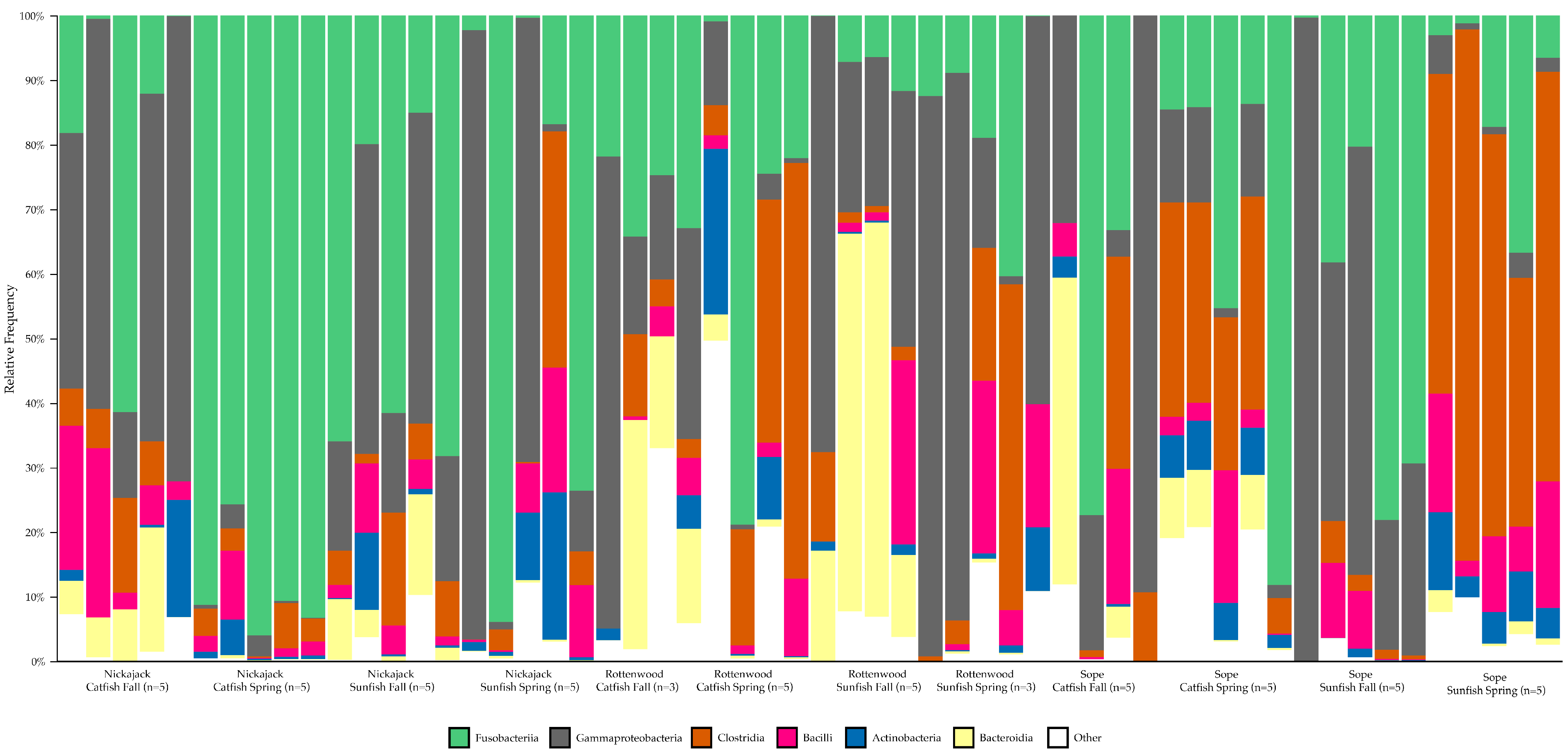
Figure 1. Class-level phylogenetic affiliation of the 56 fishes used in subsequent analyses. Differences between fall and spring phylogenetic affiliation of the microbiota in individual hosts of the same type and stream are displayed adjacent to each other.
Fishes 10 00633 g001
Figure 2. Alpha diversity metric faith-pd (Faith phylogenetic diversity) was analyzed by (A) sampling season, (B) host fish species, and (C) sampling site. ANOVA showed group significance only when comparing sequences by season (3.34 × 10⁻⁸), not by stream or species. Evenness (D) and McIntosh (E) metrics using both stream and season revealed the specific interplay between these two variables (p = 4.04 × 10⁻⁴ and 1.59 × 10⁻⁴, respectively). PERMANOVA confirmed significance for all metrics examined when stream and season interactions were examined (Appendix E).
Fishes 10 00633 g002
Figure 3. PCoA using both unweighted Unifrac (A,C,E) and weighted (B,D,F) reveal the primacy of season (A,B) in explaining the variability between samples. Host species (C,D) and stream of sample origin (E,F) do not show an equally strong clustering pattern.
Fishes 10 00633 g003
Disclaimer/Publisher’s Note: The statements, opinions and data contained in all publications are solely those of the individual author(s) and contributor(s) and not of MDPI and/or the editor(s). MDPI and/or the editor(s) disclaim responsibility for any injury to people or property resulting from any ideas, methods, instructions or products referred to in the content.