Article

The Evolutionary Tools of Free Intelligence in the Wild

by
Angelo Compierchio
1,*,
Phillip Tretten
2,
Prasanna Illankoon
3 and
Giada Di Pietro
4
1
Department of Civil, Environmental and Natural Resources Engineering, Luleå University of Technology, 97187 Luleå, Sweden
2
Department of Social Sciences, Technology and Arts, Luleå University of Technology, 97187 Luleå, Sweden
3
Department of Management of Technology, University of Moratuwa, Moratuwa 10400, Sri Lanka
4
Institute for Genetics, University of Cologne, 50674 Cologne, Germany
*
Author to whom correspondence should be addressed.
Philosophies 2026, 11(3), 84; https://doi.org/10.3390/philosophies11030084
Submission received: 14 March 2026 / Revised: 20 May 2026 / Accepted: 23 May 2026 / Published: 27 May 2026
(This article belongs to the Special Issue Intelligent Inquiry into Intelligence)

Abstract

Today, it is common practice to distinguish something as intelligent or unintelligent based on its origin or behavior. One of the biggest discoveries of evolutionary biology is rapid evolution, which permeates every layer of the natural world. This is where natural glimpses of microevolutionary forms can be observed, revealing living organisms’ adaptive capacities converging towards intelligent behavior. In comparison, according to a Kantian postulate, encompassing ethical and anthropological conditions, nature acts for man until he is capable of acting with free intelligence; that is, until reason is fully realized to guide men towards performing morally good actions. This deliberation concerns humans acting with commendable conduct in a unified concept of will through reason to grasp not simply intelligence but a logical faculty that shapes our sense of duty. In Kant’s view of nature, this study posits in non-human animals’ signs of free intelligence in accidental relations with external agents, reaching an admirable display of ingenious abilities, as displayed in Kanzi and the South African beetle. Although it is difficult at times to distinguish purely reflex actions, humans’ reasoning strategies are not capable of reaching Kant’s practical maxims as a tool for achieving the greatest well-being necessary for all mankind.

1. Introduction

Indigebant tamen eis ad experimentalem cognitionem sumendam de naturis eorum
meaning that God led animals before and ‘Humans in the state of innocence did not need animals for their bodily needs … They needed them, however, in order to have experimental knowledge of their natures’.
St Thomas Aquinas, Summa theologiae, I. 96.84 [1]
Intelligence, from the Latin verb “intelligere”, generally refers to the aptitude that is developed in individuals to understand and think. More specifically, intelligence depends on an individual’s adaptation to the theoretical and practical needs of life. The verb is a compound of the words “inter” (between) and “legere” (choose), and remarks how intelligence of in-born and biological forms evolves freely in the wild [2]. This natural born-free belief has fueled the long debate of “nature versus nurture”, which underlines human intelligence as the byproduct of genetic influence and variance due to environmental effects transcending to rational decision-making and behavior [3]. In this context, the focus on Charles Darwin’s thinking of human behavior is directly connected to select evolutionary innate traits rather than culture or natural means [4]. In view of Darwin’s evolutionary theory, Sir Francis Galton regarded the development of the self beyond personal to include “subjects of affection and interest, and these become increasingly numerous as intelligence and depth of character develop, and as civilization extends” [5]. This places emphasis on Immanuel Kant’s account of “moral reasoning in the Doctrine of Virtue […] oriented toward the cultivation of virtuous traits of character rather than toward the performance of individually right actions” which ends with duties [6]. Further, Kant grants the duty to others, as “the human being is regarded not merely as a rational being but as an animal endowed with reason” [6]. Based on this, for non-human animals, William Hodos made his central claim: “we should not become bogged down with a general intelligence concept for animals because its measurement is well beyond our grasp” [7]. This is a fair analysis, concurrent with Euan Macphail’s view that “there is no phenomenon of learning demonstrable in one vertebrate species that has been found in all other vertebrates in which it has been sought systematically” [8]. From observing animals’ actions in correspondence with analogous humans’ actions and considering different patterns of behavior and instinct in accidental relations with external agents that guided their actions, signs of intelligence can be sought to evaluate simple/complex task symmetry.

1.1. A Kantian Doctrine

In ancient Greek philosophy, intelligence was used as a label for the first time by Anaxagoras to indicate the divine activity that orders the cosmos [9]. Platonic philosophy placed emphasis, above all, on the cognitive activity of intelligence, identifying nóesis, or knowledge of the intelligibles, of ideas, the highest form of knowledge [10]. In contrast to Plato, Aristotle regarded intelligence as the highest function of the soul, wherein the lower functions are integrated [11]. In his work De anima, Aristotle differentiated between passive intelligence, which he described as the potential human capacity for knowledge, and active intelligence, which he characterized as a distinct act of passive intellect [12]. Conversely, Descartes identified intelligence as the locus of innate ideas, which drew criticism from empiricists, particularly Locke [13]. Kant initiated a significant transformation in the understanding of intelligence from ancient and medieval philosophy, asserting the absolute primacy of reason [14]. In the Enlightenment era, philosophers conceived intelligence as the faculty that formulates a priori the categories that thought imposes on experience. The process initiated by Kant is further emphasized by Hegel, who argued that intelligence represents the initial logical phase of cognitive activity, characterized as analytical and abstract knowledge of reality, and thus subordinate to dialectical reason, where reality can be grasped in its becoming and totality [15,16,17]. In this conformation of reality, Kant’s notion of free intelligence constituted a bridge between matter and self-activity capacity and implied a direct and purposeful link with nature, from plants to animals [18].

1.2. Transcendental Valence

Nearly two centuries later, in contrast to Kant’s metaphysical conception of self-activity, Dr Frank Lorimer defined human intelligence as “free intelligence”, meaning “the capacity to experiment intellectually with situations not immediately perceived”, that is, without reason, since according to him “reasoning does grow up” with experience [19]. Alongside the self-active philosophical tie of free intelligence, Galton applied Darwin’s evolutionary principles to champion intelligence measures on hereditary traits and sensorimotor tasks [20]. He subjugated animal intelligence owing to Darwin’s natural selection “… as physical strength or any other natural gift, and therefore, out of two varieties of any race of animal who are equally endowed in other respects, the most intelligent variety is to prevail in the battle of life” [21]. Consequently, Darwin foresaw that there was fundamentally no ontological difference between human and animal intelligence: “We must also admit that there is a much wider interval in mental power between one of the lowest fishes, as a lamprey or lancelet, and one of the higher apes, than between an ape and man; yet this interval is filled up by numberless gradations” [22].
Galton advocated linking intelligence to sensor discrimination, as outlined by William James, “When one’s motor images are destroyed, one loses one’s remembrance of movements, and sometimes, more curiously still, one loses the power of executing them” [23]. The valence of this capacity brings to light: “every representation of a movement awakens in some degree the actual movement which is the object” [23]. Integrating information through saccadic eye movements, which allow us to see and comprehend an event, could activate the sensory mechanisms in a perceived situation. However, humans average about three saccades per second, and during saccades, certain information, such as “the motion caused by fast-moving image”, is suppressed [24]. From this perspective, an eye-tracking research experiment was performed in which the participants were tasked with pointing at a target on a screen that was within the grasp of their hand. During the experiment, the participants were unaware that the eye tracker was programmed to move the target from one location to the next. Since information is suppressed during saccades, the participants could not see the target being moved to a new location. Nonetheless, the participants correctly moved their hands to the new target location. This faculty is related to the visual system, which registers the flow of information and ensures that the required movement is made [25]. What this shows is that unreasoned decisions are often guided by ill-judged information, leading to extreme unmitigated consequences. In this way, free intelligence has been revisited from the perspective of its natural evolutionary blueprint.

2. A Darwinian Perspective

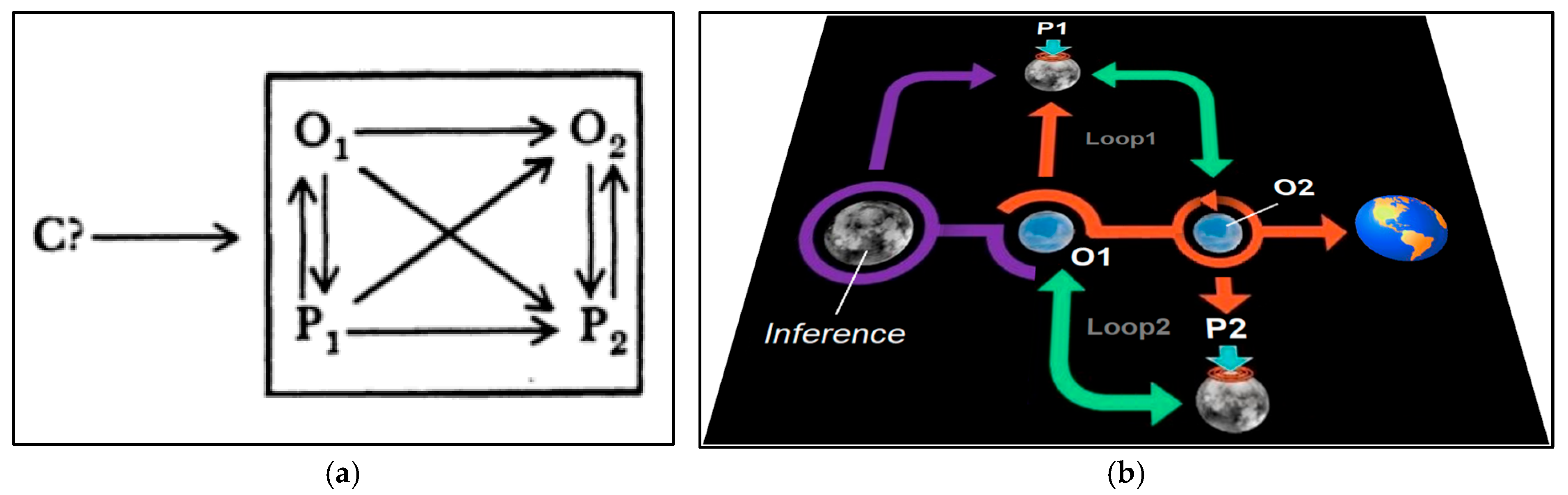
Intelligence is influenced by both genetics and the environment; regarding the former, Charles Darwin formulated the principle of “survival of the fittest” [26]. Within this framework, genes ensure that the most effective traits—those best adapted to their environment—are replicated across generations, driving the slow evolution of our biological intelligence. Regarding the latter, Richard Dawkins described another form of replicator, namely “memes”, that depict a small unit of information in the form of ideas that spreads via communication and language [27]. The theoretical contribution of Susan Blackmore significantly turned Richard Dawkins’ meme concept into a broad, systematic framework for understanding cultural evolution and the human mind. Her work extends memetics from a metaphor about ideas to a full-blown evolutionary theory of culture and even consciousness [28,29]. This theory has been influential in understanding how collective intelligence develops, as memes facilitate the spread and refinement of knowledge and behaviors within groups, enabling humans to compensate for individual cognitive limitations through shared cultural evolution [30]. According to this account, gene–environmental interplay is crucial to the development of intelligence, making it both heritable and malleable over time [31]. On this notion, one can examine Darwin’s evolutionary conception, which assumes a closed-system worldview (Figure 1a), where physical changes in the world concurrently affect the organic world [32]. In comparison, the system reaching equilibrium is directly centered around the self, where intelligent activity arises as a result of pursuing goals based on adaptation and survival needs. Darwin would, of course, have a different opinion concerning this statement; he was in favor “of proving that intelligence was not involved in the creation of the natural world, but rather time, natural law, chance, mutations, and natural selection did it all” [33]. In this regard, one can redraw Darwin’s worldview, replacing connecting lines with energy loops (Loop1, Loop2) and the Creator (C) with inference acting on its inputs, which are the organic world (O1) and the physical world (P1) of the system (Figure 1b). Both worlds appear subordinated to and coordinated with each other simultaneously, as though they engage in reciprocal actions.
Neuroscience conceptualizes both actions and perception through unconscious and conscious inferential mechanisms [34]. Regarding the former, the unconscious inferential mechanisms extend back to the German physiologist Herman von Helmholtz and his theory that the brain engages in “unconscious inference”. He suggested that the brain uses prior knowledge and learned regularities to infer the most likely causes of sensory input, especially regarding vision. This process is automatic, mainly outside of conscious awareness, allowing for the rapid and efficient interpretation of complex stimuli [35], while, for the latter, the activation of inferences in relevant situations is crucial for promoting the adaptive function of the perceptual process and the construction of perceptual simulations [36]. The energy loops in Figure 1b extend Helmholtz’s idea of the brain being a prediction machine by showing that reducing the energy in each loop results in minimizing prediction error (or free energy), which underlies perception, action, and intelligence. Similarly, simple homeostatic behaviors at the cellular level can scale up to complex, goal-directed (free) intelligence at the organismal level by interpreting the morphogenetic processes as Bayesian inference [37]. Intelligence would be feeble without the knowledge scaffolded by inference [38], but inference would also bridge the gap between knowledge and reasoning and, in some cases, generate a conflict with it.

3. Free Intelligence on Natural Forms

In the Victorian era, it was commonly believed that every living creature had a divine origin in an immutable form. To contrast this belief, Darwin collected a wealth of evidence that instead demonstrated how living beings evolved through a mechanism he called natural selection. Darwin understood the mechanism of natural selection through his observations of small ancestral finches that colonized the Galapagos Islands, where each island enriched one type of local food resources. Over a million years, more than fourteen species of finches were born on these islands, each with a different beak. The transitory account of flexibility of finches for external resources (food) and their transfer to distinct territory are evident determinants of intelligence [39,40]. Darwin realized the mechanism of natural selection by establishing a connection between beak shape and available foods. It logically follows that if one variation is more successful than others, in the next generation, the frequency of that variation will increase, and this is evolution. This mechanism varies across species. South American toads are an example of rapid natural selection, and Kanzi presents variability between individuals of the same species [41]. Darwin believed that these transformations were too slow to be visible in the span of human life, but today’s research is proving otherwise. In 1935, South American toads were introduced to Australia by agronomists to fight against sugar cane parasites; the toads acclimatized very well, and they have become one of the largest breeds of cane toads in the entire world, and above all the fastest. Without evolution, the cane toads would never have been able to thrive in Australia because of the diverse environmental conditions in comparison with those of their land of origin [42]. Generation after generation, the fastest toads produced a population capable of moving much faster than their ancestors. The toads do not make big leaps; instead, they make a flat but steady leap, which is much more effective. In fact, after their introduction to Queensland, the cane toad advanced north, and are now advancing into the west. This new leaping technique has allowed scientists to analyze the morphological changes in the new Australian cane toad. To achieve this, researchers use scales and rulers to carefully measure the toads, particularly their legs and muscles. After years of performing measurements, researchers finally understand how these toads have evolved. Many parts of the body changed; the head became a little more elongated and narrower, and the front limbs became larger and more robust to support the weight of the toads as they land. The hind legs also became a little longer and straighter to provide the thrust necessary for the toad to be able to jump. Some of the young will inherit these characteristics to be passed on to future generations. Overall, the Australian cane toads are probably the champion of rapid evolution, as their transformation only took eighty generations, which is much faster than the timeframe predicted by the author of the theory of evolution [43,44,45].

3.1. Evolutionary Design

Evolution is often described as a process that unfolds over thousands or even millions of years, and Darwin emphasized how slow and difficult it can be [39]. Today, however, this is not always the case; nature can change rapidly, and some species can adapt within just a few generations. This too is evolution (microevolution), and in many non-human organisms, it can occur at remarkably high speeds [46,47]. In the meantime, science has also evolved; in comparison with the last century, geneticists no longer limit themselves to observing evolution, as now they can measure it. Moths are preyed upon by insectivorous birds, and to avoid predation, they land on the bark of birch trees and camouflaging themselves with the environment. A single jumping gene in a single moth was enough to change the color of an entire population of white moths to black [48,49]. Other mutations can occur accidentally in deoxyribonucleic acid (DNA), such as duplications, deletions, inversions, and all small copying errors during reproduction that enrich the genetic diversity on which natural selection can act upon. This pattern based on DNA evidence, phenotypic plasticity which concerns different genotype variability among individuals of the same species, and epigenetics that changes the DNA gene expression without altering its sequence to be passed on to future generations are drivers of evolution unknown to Darwin [50]. The common thread among these important transformations is the presence of very strong evolutionary pressures, some of which are natural and indigenous, while others are caused by humans. This evolutionary race is not only a miracle of nature but also shaped by additional burdens such as pollution, climate change, landscape alteration, and hunting. In general, the lack of concern towards fundamental life-changing patterns driven by climate change and continued experimentation has altered the human relationship with animals. This reflection, for Peter Singer, fueled the moral human engagement that a life is life, and human and nonhuman animals should be weighed equally. His position uncovers suffering of animals by recognizing that “[if] a being suffers, there can be no moral justification for refusing to take that suffering into consideration” [51].

3.2. Intelligible Capacity

Evolution, from Darwin’s time to more than one-hundred years later, has focused mainly on large differences between species without attaining the language faculty of grammar, presumed to be unique to humans [52]. Kanzi, a bonobo (Pan paniscus), was well-known at the Language Research Center of Georgia State University for his linguistic skills. From an early age, Kanzi utilized abstract graphical symbols known as lexigrams and participated in fundamental communicative interactions with humans [53]. Additionally, Kanzi was able to understand and appropriately respond to some spoken English requests [54]. Although Kanzi acquired his skills after years of training, he developed cognitive capacities related to thought and language that converged on repeatability. This inclusive component of intelligence likely distinguished humans from animals. However, comparing its developmental stages reveals a series of related gradations that influence one another [55]. Despite this distinction, the emphasis turns to whether Kanzi was a self-conscious being, aware of his participation and interaction with humans. This stance converges to consider Kanzi and chimpanzees as rational and self-conscious beings. This evidence is transcribed from distinctive evidence reported by Singer in his ‘Practical Ethics’ work [56]. In his volume, he described the quest of two American scientists, Allen and Beatrice Gardner, concerning the “ancient dream of teaching our language to another species”. After several unsuccessful attempts, they concluded that the inability of chimpanzees to talk was “not the intelligence required for using language, but the vocal equipment needed to reproduce the sounds of human language”. Therefore, they decided to train a young chimpanzee which they called “Washoe” with sign languages as if the chimpanzee was deaf and without vocal chords. The method employed was a hit. The chimpanzee was capable of using nearly half of the 350 different signs he was capable of learning and understanding [56].
As the complexity of Kanzi’s brain increased, his sensory capacity expanded; likewise, his mental activities evolved and refined, leading to instances where there was not merely analogy but sometimes equivalence with human psychological functions. Generally, this correlation is most pronounced in social species, where evidence of intelligence guiding their behaviors is remarkably evident. At the same time, the question that denies intentional behavior to animals without language probably arises from Kanzi’s ability to communicate. Singer actively argued on drawing the line between humans and animals without moral weight by philosophers claiming a much-pronounced difference. He wrote on Figan, a young wild chimpanzee coached by Jane Goodall. Figan “could not put his intentions into words” but he was capable of planning ahead on how to procure a banana “not now but at some time future time”, showing distinct time projection awareness of himself [56]. He regarded intelligence as a boundary of interest in an arbitrary sense and adopted sentience instead as the threshold for moral consideration. For instance, ants and bees do not merely exhibit blind and automatic instincts; they provide compelling evidence of skill and reasoning [57]. Even in fish and reptiles, and even more so in birds, where brain development is more pronounced, one begins to observe a greater degree of autonomy and a clearer selection of actions [58,59]. The leap revealed by Kanzi yet again posed the question of whether humans’ thoughts are unique. From Albertus Magnus (Saint Albert the Great) to Ludwig Büchner, this designation continued during Darwinian times as “Human kingdom, standing on the same footing as the animal and vegetable kingdoms” [60,61]. From this perspective, the organic substances of nature itself have been recognized as a living phenomenon. Through the transformation of matter into organized bodies, life embarks on a rich teaching experience of the “world in a glass”, revealing at first glance the organic life in plants and animals, almost as if it were an absolute real perpetual motion. In this realm, humans occupy the pinnacle of the animal kingdom. At the same time, vital factors draw them closer to other species, including morphological and physiological traits, as well as aspects of ontogeny and phylogeny. This opening per se demonstrates the truth of Buffon’s old maxim, that “If animals did not exist, the nature of man [would not be comparable], would be even more incomprehensible” [62].
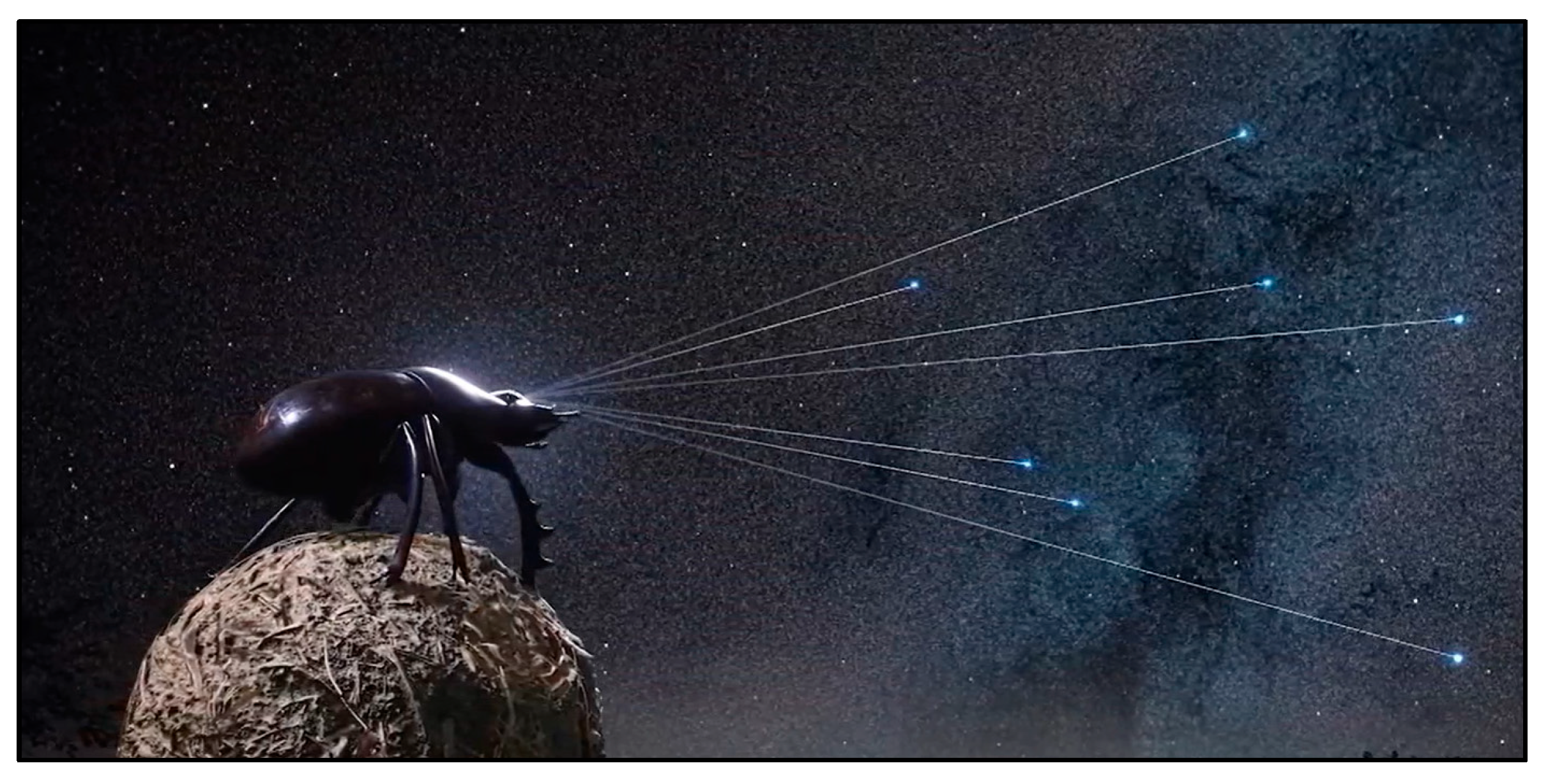
Another emblematic case of the signs of intelligence involved beetles that orient themselves thanks to the Milky Way. For 10 years, biologists have used rigorous methods to investigate the nocturnal dung of the beetle Scarabaeus satyrus [63]. At the beginning of the investigation, it was thought that the moon had to be the reference point for the beetles to orient themselves. But after several experiments, researchers put forward a new hypothesis. In the laboratory (Figure 2), biologists are able to manipulate the sky and the Milky Way in ways that are impossible in the field.
An experiment was established where a beetle gets on a ball; it makes a rotation and starts to roll. The beetle follows a 350° course. When the sky is rotated by 90° at 260°, the beetle is back in the center; it gets on the ball and starts rolling again, but this time the beetle’s trajectory is at 260°, which is exactly 90° less. As a result of these experiments, what is extraordinary is that the beetle creates a snapshot of the night sky and memorizes the map. Then, it chooses its route so it can push its ball home in a straight line; even when it pushes it upside down, the beetle keeps an eye on the Milky Way [64,65,66].

4. On Reason

The multiplicity form of adaptation that has risen through nature leaves humans to the integrity of Kantian rigorism, with demands of an absolute subordination of multiplicity to the unity of reason [67]. The reasoned unity refers to all natural causes subduing universal laws, since “Reason, in order to be taught by nature, must approach nature with its principles in one hand, according to which the agreement among appearances can count as laws, and, in the other hand, the experiment thought out in accord with these principles” [68]. In other words, what determines nature is prone to investigation and agreement with the Law of Reason. The word reason, derived from the Latin word rationem, signifies reckoning and represents an intellectual faculty. Intelligence and reason are two sides of the same coin; when the former explains, the latter conceives. In reckoning, human reason is not conceived as the manifestation of truth and goodness but rather of meaning and value.
Reason, then, is the interpretation of a totally self-sufficient and self-finalizing process, which appears to be the triumph of rationalism. In contrast, over the centuries, reason has emerged as a reality that seems unlimited and without any rule other than its own displaying power. As Heidegger described with respect to reason, man, from the “shepherd of being”, becomes the despot of reality, who subjects things entirely to himself [69]. What this discerns is a perverse attitude not in the Kantian spirit that the will of man longs for the concept of pure reason, which is independent of sensibility and understanding. This faculty extends to the common use of language as a fundamental scaffold to reason itself. Wittingly, meaning is sought as a follow-on category to “duty and contrary to duty”, where the first is merely just a practical precept and the second is related to the law [6]. In this remark, language itself is a measurable trait of both. Furthermore, this leads to a critical juncture between humanity and the posthuman, transitioning from natural intelligence to what is termed artificial intelligence (AI). This transition might be questioned in reverse: what if, in moving from artificial to human intelligence, it is humans themselves who bear the cost of progress? From Dr Latimer’s perspective, reliance on a symbolic process directly engrained in the development of language shows an integrative principle with Jean Piaget’s Theory of Cognitive Development [70]. This is marked from children’s symbolic play in their Representational Play age (18–24 months), which is then furthered via symbolic thinking in their Preoperational Stage (2–7 years) [71]. This faculty supports the child in their development of basic knowledge and cognitive construct tendency to nurture human needs. A key area concerns Artificialism, where children’s attribution of natural phenomena to human creation is a relevant step prior to progress towards the Concrete Operational Stage [72,73].

The Reason Edge

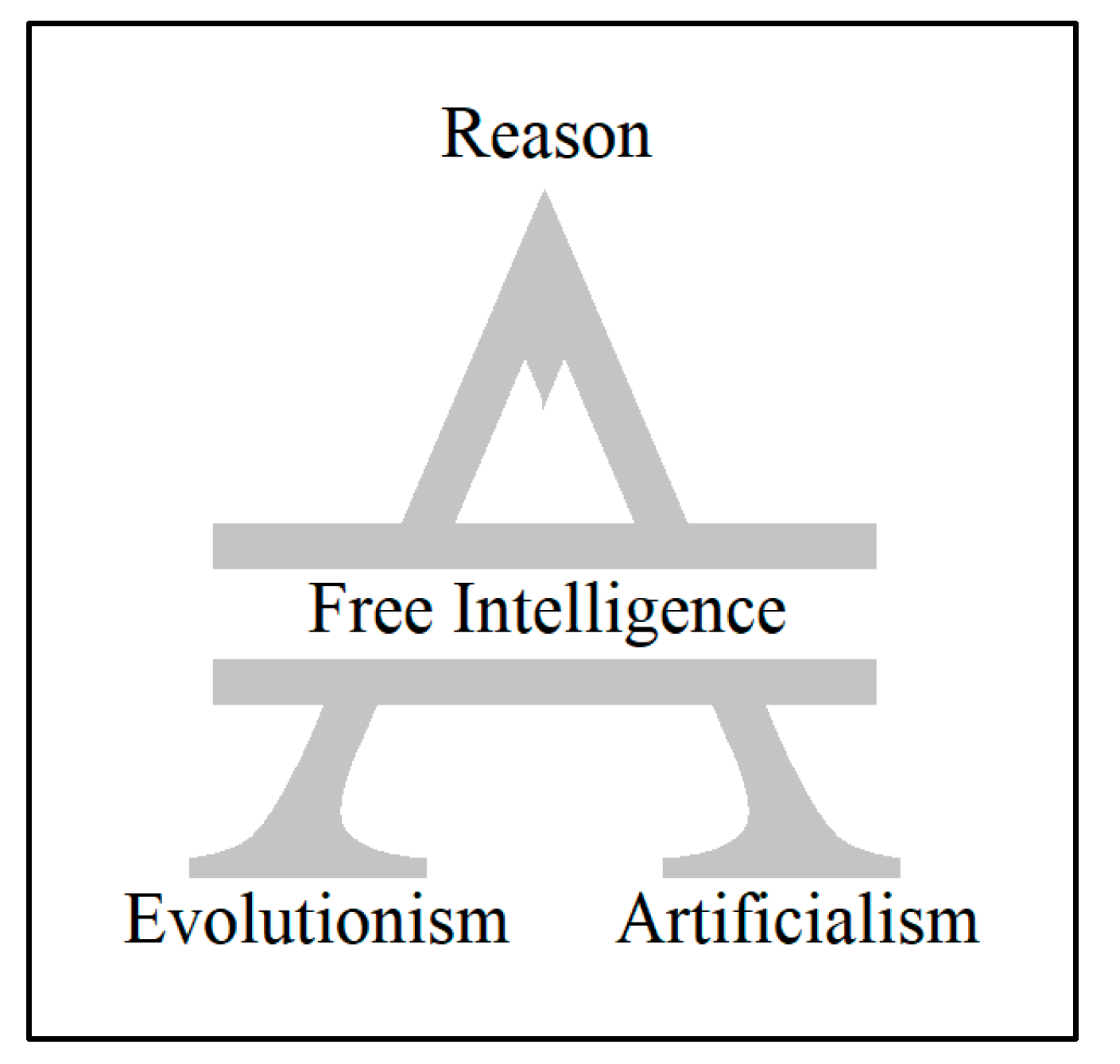
It was only at the beginning of the last century that the French psychologists Alfred Binet and Théodore Simon defined intelligence as “The ability to judge well, to understand well, to reason well” [74]. In this sense, intelligence itself has been continuously re-interpreted since Turing’s time, but besides its many definitions, experts “tend to agree that intelligence is: (1) the capacity to learn from experience and (2) the capacity to adapt to one’s environment”. In addition, the imitation of intelligence in the era of AI rests in a more agnostic dimension, since it is posited as “revealing the entire software that comes with the human hardware” [75]. In other words, disentangling human intelligent behavior from traditional AI approaches allows for more subtle creativity linked to the operational flexibility of the system rather than human perception characteristics of the real world. That is to say that there are “inherent difficulties involved in translating fuzzy human desire into the cold, numerical logic of computers” [76]. In asserting this interpretation of the evolutionary mechanisms of AI and fundamentally well-defined goals according to behavioristic learning, “it becomes possible to design an entire automatic control system involving human links rationally” [77]. Cyberneticists claimed the ‘absolute artificialism’ of social life as an operational thought transformed by technology and a computational understanding of the world [78]. This human-constructed artificialism has profound scientific and ethical implications that accompanied Darwin on his quest for our primordial ancestor; however, humans have consistently been predisposed to widening the gap between free intelligence and reason (Figure 3).
Consequently, this led to nearly always positioning discourse in glorified modernity at the expense of nature. This reinforces Kant’s claim that “the human being can take in moral laws” and “that peoples who live a life of thoughtless indolence, guided by nature or tradition rather than by their own thinking, will have lives that are happier and less plagued by vices and social conflicts” [6]. In fact, Kant’s remarks concern the collective well-being of humans, and an inclusive governance, for equality, rights, and justice for everyone, but the threats to social conduct fall on those who are selfish and adopt manipulative behaviors towards others. This Machiavellian form of interaction constrains the overall social system and its influence on social intelligence as a “major selective force in the evolution of human intelligence” [79].
What’s more is that social complexity, including manipulation, alliance formation, and culture, has been a major engine of cognitive evolution. Richard Byrne & Andrew Whiten’s work gathered and shaped these ideas into a coherent research program that has strongly influenced comparative psychology and primate cognition [80]. They formulated the Machiavellian Intelligence Hypothesis, which states that primate (and perhaps broader animal) intelligence evolved mainly to handle the complex challenges of social life, rather than just ecological or technical problems [81]. The hypothesis suggests the evolved adaptations for managing complex social life, the selection for greater general intelligence via social complexity, and the selection for more sophisticated social manipulation, as the main drivers of social cognitive evolution of primates’ intelligence [82].

5. Conclusions

In the course of the ‘living century’ the philosopher Johann Gottlieb Fichte alongside Kant drew conceptual schemes of the self that constitute free intelligence. However, in contradiction to Kant, he considered the ‘I’ the simplest form of free intelligent and not its naturalistic drive. This study advocated Kant’s idea of nature, with modern evolutionary biology recognition that intelligence and other traits evolve through complex, multilevel processes involving genes, and environments. This broader perspective provides a more comprehensive understanding of the diversity and adaptability of life. Intrinsically, where does the superpower of the beetle come from? It is the result of millions of years of evolution. The life of organisms was formed by a single cell that developed, most likely, on the bottom of oceans in a dark environment without light. With evolution and natural selection between species, to survive, animals must identify prey and predators, leading to an increase in the complexity of sensory organs and the basis of the extraordinary animal diversity known today. Similarly, Kanzi cultivated linguistic and cognitive abilities that significantly exceeded our previous assumptions regarding the capacities of non-human primates. His case marked the beginning of research into how brain structures and life experiences interact to shape a primate’s cognitive development.
The analysis of Kanzi and Washoe linguistic abilities is used to endorse the view that they are not measurable traits. In this scenario, if the anthropoid apes were endowed with articulate language, so that they could instruct one another and benefit each other at least by tradition and oral communication alone, they would certainly achieve a great advance in their intelligence, especially after having lived for hundreds of generations under the influence of these new conditions! When the right conditions exist in the wild, intelligence naturally emerges and even gains the capacity to evolve. But once that intelligence is “free”, it acts on its own, inventively. This freedom raises profound questions about what minds are, how agents make choices, and what true autonomy entails. For humans, Kant’s quest for reason still remains a far-reaching aspiration. He regarded humans as being endowed with a sense of duty with a will based on the conscious capacity of actions, grounded by a form of law for everyone to adopt. This autonomous and universal principle aimed to restore the domain of moral law as an incentive for the good in all of us. Although Dr Latimer does not catch the importance of social and cultural interaction in context, as well as the interdependence of feelings and morality, he recognized that reason grows progressively in different stages, and that unreasoned decisions can have unpredictable results. Whether on humans or non-human organisms, these issues continue to shape our ongoing search for understanding and building intelligence.

Author Contributions

Writing and original draft preparation, A.C.; review and editing, P.T., P.I. and G.D.P. All authors have read and agreed to the published version of the manuscript.

Funding

This research received no external funding.

Institutional Review Board Statement

Not applicable.

Informed Consent Statement

Not applicable.

Data Availability Statement

Data sharing is not applicable. This study did not generate or analyze any new data, since based on a philosophical discourse, which does not generate empirical data.

Acknowledgments

The authors acknowledge the Northwestern Switzerland Library staff at Campus Olten of the FHNW University of Applied Sciences and Arts for their support and guidance in accessing library resources throughout this research.

Conflicts of Interest

The authors declare no conflicts of interest.

References

  1. Douglas, A.X. Spinoza and Dutch Cartesianism: Philosophy and Theology; Oxford University Press: New York, NY, USA, 2015. [Google Scholar]
  2. Schlinger, H.D., Jr.; Poling, A. Individual Differences: Intelligence, Personality, and Social Behavior. In Introduction to Scientific Psychology; Springer: Berlin/Heidelberg, Germany, 1998; pp. 285–312. [Google Scholar]
  3. Hosken, D.J.; Hunt, J.; Wedell, N. Genes and Behaviour: Beyond Nature-Nurture; John Wiley & Sons: Hoboken, NJ, USA, 2019. [Google Scholar]
  4. Baschetti, R. Genetic Evidence That Darwin Was Right About Criminality: Nature, Not Nurture; Elsevier: Amsterdam, The Netherlands, 2008; Volume 70, pp. 1092–1102. [Google Scholar]
  5. Galton, F. Inquiries into Human Faculty and Its Development; Macmillan: London, UK, 1883. [Google Scholar]
  6. Kant, I. Practical Philosophy; Cambridge University Press: Cambridge, UK, 1996. [Google Scholar]
  7. Hodos, W. Animal general intelligence: An idea ahead of its time. Behav. Brain Sci. 1987, 10, 668. [Google Scholar] [CrossRef]
  8. Macphail, E. Vertebrate intelligence: The null hypothesis. Philos. Trans. R. Soc. Lond. B Biol. Sci. 1985, 308, 37–51. [Google Scholar] [CrossRef]
  9. Lesher, J.H. Mind’s Knowledge and Powers of Control in Anaxagoras” DK” b12. Phronesis 1995, 40, 125–142. [Google Scholar] [CrossRef]
  10. Brisson, L. Memory and the Soul’s Destiny in Plotinus. Philos. Salvation Greek Relig. 2013, 60, 289. [Google Scholar]
  11. Sternberg, R.J. Metaphors of Mind: Conceptions of the Nature of Intelligence; Cambridge University Press: Cambridge, UK, 1990. [Google Scholar]
  12. Gerson, L. The unity of intellect in Aristotle’s De Anima. Phronesis 2004, 49, 348–373. [Google Scholar] [CrossRef]
  13. Bennett, M. Developmental Psychology: Achievements and Prospects; Psychology Press: Hove, UK, 1999. [Google Scholar]
  14. Henrich, D. The Unity of Reason: Essays on Kant’s Philosophy; Harvard University Press: Cambridge, MA, USA, 1994. [Google Scholar]
  15. Werner, A. Hegel on Kant’s Analytic–Synthetic Distinction. Eur. J. Philos. 2018, 26, 502–524. [Google Scholar] [CrossRef]
  16. Seth, A. The Development from Kant to Hegel; Cambridge Scholars Publishing: Cambridge, UK, 2008. [Google Scholar]
  17. Waxman, W. Kant’s Anatomy of the Intelligent Mind; OUP: New York, NY, USA, 2014. [Google Scholar]
  18. Nunez, T. Kant on plants: Self-activity, representations, and the analogy with life. Philos. Impr. 2021, 21, 1–30. [Google Scholar]
  19. Lorimer, F. The Growth of Reason: A Study of the Role of Verbal Activity in the Growth of the Structure of the Human Mind; Routledge: London, UK, 2013. [Google Scholar]
  20. Sternberg, R.J. Wisdom, Intelligence, and Creativity Synthesized; Cambridge University Press: Cambridge, UK, 2003. [Google Scholar]
  21. Galton, F. Hereditary Genius; D. Appleton: New York, NY, USA, 1891. [Google Scholar]
  22. Darwin, C. Charles Darwin’s Works: The Descent of Man and Seletion in Relation to Sex; D. Appleton: New York, NY, USA, 1896. [Google Scholar]
  23. James, W. The Principles of Psychology Vol. II; Henry Holt and Company: New York, NY, USA, 1890. [Google Scholar]
  24. Binda, P.; Morrone, M.C. Vision during saccadic eye movements. Annu. Rev. Vis. Sci. 2018, 4, 193–213. [Google Scholar] [CrossRef]
  25. Pélisson, D.; Prablanc, C.; Goodale, M.A.; Jeannerod, M. Visual control of reaching movements without vision of the limb: II. Evidence of fast unconscious processes correcting the trajectory of the hand to the final position of a double-step stimulus. Exp. Brain Res. 1986, 62, 303–311. [Google Scholar] [CrossRef]
  26. Vellend, M. Everything Evolves: Why Evolution Explains More Than We Think, from Proteins to Politics; Princeton University Press: Princeton, NJ, USA, 2025. [Google Scholar]
  27. Dawkins, R. The Selfish Gene; Oxford University Press: New York, NY, USA, 2016. [Google Scholar]
  28. Blackmore, S. The Meme Machine; Oxford Paperbacks: Oxford, UK, 2000. [Google Scholar]
  29. Blackmore, S. Consciousness in meme machines. J. Conscious. Stud. 2003, 10, 19–30. [Google Scholar] [CrossRef]
  30. Fomin, I. Memes, genes, and signs: Semiotics in the conceptual interface of evolutionary biology and memetics. Semiotica 2019, 2019, 327–340. [Google Scholar] [CrossRef]
  31. Sauce, B.; Matzel, L.D. The paradox of intelligence: Heritability and malleability coexist in hidden gene-environment interplay. Psychol. Bull. 2018, 144, 26. [Google Scholar] [CrossRef]
  32. Sternberg, R.J. (Ed.) Handbook of Creativity; Cambridge University Press: Cambridge, UK, 1999. [Google Scholar]
  33. Bergman, J. The Dark Side of Charles Darwin: A Critical Analysis of an Icon of Science; New Leaf Publishing Group: Green Forest, AR, USA, 2011. [Google Scholar]
  34. Olcese, U.; Oude Lohuis, M.N.; Pennartz, C.M. Sensory processing across conscious and nonconscious brain states: From single neurons to distributed networks for inferential representation. Front. Syst. Neurosci. 2018, 12, 49. [Google Scholar] [CrossRef]
  35. Cristalli, C. Unconscious inferences in perception in early experimental psychology: From Wundt to Peirce. J. Hist. Behav. Sci. 2022, 58, 432–448. [Google Scholar] [CrossRef]
  36. Barsalou, L.W. Perceptual symbol systems. Behav. Brain Sci. 1999, 22, 577–660. [Google Scholar] [CrossRef]
  37. Levin, M.; Corning, P.A.; Kauffman, S.A.; Noble, D.; Shapiro, J.A.; Vane-Wright, R.; Pross, A. Collective intelligence of morphogenesis as a teleonomic process. In Evolution “on Purpose”: Teleonomy in Living Systems; The MIT Press: Cambridge, MA, USA, 2023; pp. 175–198. [Google Scholar]
  38. Byrne, R.M.J.; Evans, J.S.B.T.; Newstead, S.E. Human Reasoning: The Psychology of Deduction, 1st ed.; Psychology Press: Hove, UK, 1993. [Google Scholar] [CrossRef]
  39. Darwin, L. Natural selection. Eugen. Rev. 1927, 18, 285. [Google Scholar] [PubMed]
  40. Boag, P.T.; Grant, P.R. Intense natural selection in a population of Darwin’s finches (Geospizinae) in the Galapagos. Science 1981, 214, 82–85. [Google Scholar] [CrossRef] [PubMed]
  41. Fisher, R.A. The Genetical Theory of Natural Selection: A Complete Variorum Edition; Oxford University Press: New York, NY, USA, 1999. [Google Scholar]
  42. Ramos, M.; Ramos-Rodriguez, O.; Gallardo-Covas, F. Biological control in Puerto Rico. In Biological Control in Latin America and the Caribbean: Its Rich History and Bright Future; CABI: Wallingford, UK, 2020; pp. 390–402. [Google Scholar]
  43. Douglas, M.R.; DuBoyce, M.; Kuppek, V.; Marich, A.; Poisson, M.K.; Spiro, A.; Boback, S. Potential for the American toad (Anaxyrus americanus) to contribute to biological control in a vegetable agroecosystem. Agrosyst. Geosci. Environ. 2026, 9, e70314. [Google Scholar]
  44. Hudson, C.; McCurry, M.; Lundgren, P.; McHenry, C.; Shine, R. Constructing an invasion machine: The rapid evolution of a dispersal-enhancing phenotype during the cane toad invasion of Australia. PLoS ONE 2016, 11, e0156950. [Google Scholar] [CrossRef]
  45. Shavanov, M.; Shigapov, I.; Niaz, A. Biological methods for pests and diseases control in agricultural plants. In AIP Conference Proceedings; AIP Publishing LLC: Melville, UK, 2022; Volume 2390, p. 030081. [Google Scholar]
  46. Merilä, J.; Sheldon, B.; Kruuk, L. Explaining stasis: Microevolutionary studies in natural populations. Genetica 2001, 112, 199–222. [Google Scholar] [CrossRef] [PubMed]
  47. Hendry, A.P.; Kinnison, M.T. An introduction to microevolution: Rate, pattern, process. Genetica 2001, 112, 1–8. [Google Scholar] [CrossRef]
  48. Nadeau, N.J.; Pardo-Diaz, C.; Whibley, A.; Supple, M.A.; Saenko, S.V.; Wallbank, R.W.; Wu, G.C.; Maroja, L.; Ferguson, L.; Hanly, J.J. The gene cortex controls mimicry and crypsis in butterflies and moths. Nature 2016, 534, 106–110. [Google Scholar] [CrossRef]
  49. Saey, T.H. How a moth went to the dark side. In Science New for Students; Society for Science: Washington, DC, USA, 2016; Available online: https://www.snexplores.org/article/how-moth-went-dark-side (accessed on 2 January 2026).
  50. Oldroyd, B. Beyond DNA: How Epigenetics Is Transforming Our Understanding of Evolution; Simon and Schuster: New York, NY, USA, 2023. [Google Scholar]
  51. Singer, P. Animal liberation. In Ethics: Contemporary Readings; Routledge: London, UK, 2004; pp. 284–292. [Google Scholar]
  52. Schoenemann, P.T. Evidence of grammatical knowledge in apes: An analysis of Kanzi’s performance on reversible sentences. Front. Psychol. 2022, 13, 885605. [Google Scholar] [CrossRef]
  53. Sevcik, R.A.; Savage-Rumbaugh, E.S. Language comprehension and use by great apes. Lang. Commun. 1994, 14, 37–58. [Google Scholar] [CrossRef]
  54. Lloyd, E.A. Kanzi, Evolution, and Language. Biol. Philos. 2004, 19, 577–588. [Google Scholar] [CrossRef]
  55. Parker, S.T.; McKinney, M.L. Origins of Intelligence: The Evolution of Cognitive Development in Monkeys, Apes, and Humans; Johns Hopkins University Press: Baltimore, MD, USA, 2021. [Google Scholar]
  56. Singer, P. Practical Ethics; Cambridge University Press: Cambridge, UK, 2011. [Google Scholar]
  57. Parikka, J. Insect Media: An Archaeology of Animals and Technology; U of Minnesota Press: Minneapolis, MN, USA, 2010. [Google Scholar]
  58. Dicke, U.; Roth, G. Neuronal factors determining high intelligence. Philos. Trans. R. Soc. B Biol. Sci. 2016, 371, 20150180. [Google Scholar] [CrossRef] [PubMed]
  59. Martinho-Truswell, A. The Parrot in the Mirror: How Evolving to Be like Birds Makes Us Human; Oxford University Press: New York, NY, USA, 2022. [Google Scholar]
  60. Santing, C. Early anthropological interest: Magnus Hundt’s and Galeazzo Capra’s quest for humanity. Hist. Anthropol. 2020, 31, 462–490. [Google Scholar] [CrossRef]
  61. Büchner, L. Man in the Past, Present and Future: A Popular Account of The Results of Recent Scientific Research (1872); Asher & Company: Berlin, Germany, 1872. [Google Scholar]
  62. Agamben, G. The Open: Man and Animal; Stanford University Press: Stanford, CA, USA, 2004. [Google Scholar]
  63. Foster, J.J.; El Jundi, B.; Smolka, J.; Khaldy, L.; Nilsson, D.-E.; Byrne, M.J.; Dacke, M. Stellar performance: Mechanisms underlying Milky Way orientation in dung beetles. Philos. Trans. R. Soc. B Biol. Sci. 2017, 372, 20160079. [Google Scholar] [CrossRef] [PubMed]
  64. Chiaro Come il Buio? Il Giardino di Albert, RSI Radiotelevisione Svizzera. Available online: https://www.rsi.ch/play/tv/il-giardino-di-albert-lis/video/chiaro-come-il-buio-lis?urn=urn:rsi:video:3469504 (accessed on 31 January 2026).
  65. Dacke, M.; Baird, E.; Byrne, M.; Scholtz, C.H.; Warrant, E.J. Dung beetles use the Milky Way for orientation. Curr. Biol. 2013, 23, 298–300. [Google Scholar] [CrossRef]
  66. Khaldy, L. Keep It Rolling: Straight-Line Orientation in South African Ball-Rolling Dung Beetles. Ph.D. Thesis, Lund University, Lund, Sweden, 2021. [Google Scholar]
  67. Fenves, P. A Peculiar Fate: Metaphysics and World-History in Kant; Cornell University Press: Ithaca, NY, USA, 2019. [Google Scholar]
  68. Kant’s Account of Reason. Available online: https://plato.stanford.edu/ENTRIES/kant-reason/ (accessed on 24 January 2026).
  69. Capobianco, R. Heidegger’s Way of Being; University of Toronto Press: Toronto, ON, Canada, 2014. [Google Scholar]
  70. Oogarah-Pratap, B.; Bholoa, A.; Ramma, Y. Stage theory of cognitive development—Jean Piaget. In Science Education in Theory and Practice: An Introductory Guide to Learning Theory; Springer: Berlin/Heidelberg, Germany, 2025; pp. 125–142. [Google Scholar]
  71. Quinn, S.J. Learning to Play and Playing to Learn: The Role of Symbolic Play in Language Acquisition; The Australian National University (Australia): Canberra, Australia, 2016. [Google Scholar]
  72. Piaget, J. The Child’s Conception of the World; Tomlinson, J.; Tomlinson, A., Translators; Paladin: Boulder, CO, USA, 1973. [Google Scholar]
  73. McLeod, S. Piaget’s Preoperational Stage (Ages 2–7). SimplyPsychology, 2024. Available online: https://www.simplypsychology.org/preoperational.html (accessed on 21 February 2026).
  74. Binet, A.; Simon, T. The Development of Intelligence in Children; Arno Press: New York, NY, USA, 1961. [Google Scholar]
  75. Jablonka, E.; Lamb, M.J. Evolution in Four Dimensions, Revised Edition: Genetic, Epigenetic, Behavioral, and Symbolic Variation in the History of Life; MIT press: Cambridge, MA, USA, 2014. [Google Scholar]
  76. Gent, E. What Is the AI Alignment Problem and How Can It Be Solved? 10 May 2023. Available online: https://www.newscientist.com/article/mg25834382-000-what-is-the-ai-alignment-problem-and-how-can-it-be-solved/ (accessed on 20 October 2025).
  77. Hazen, H. The Human Being as a Fundamental Link in Automatic Control Systems. Des. Issues 2013, 29, 30–37. [Google Scholar] [CrossRef]
  78. Berry, D. The explainability turn. Digit. Humanit. Q. 2023, 17. [Google Scholar] [CrossRef]
  79. Wilson, D.S.; Near, D.; Miller, R.R. Machiavellianism: A synthesis of the evolutionary and psychological literatures. Psychol. Bull. 1996, 119, 285. [Google Scholar] [CrossRef] [PubMed]
  80. Zentall, T.R.; Wasserman, E.A. The Oxford Handbook of Comparative Cognition; Oxford University Press: New York, NY, USA, 2012. [Google Scholar]
  81. Hopper, L.M.; van de Waal, E.; Caldwell, C.A. Celebrating the continued importance of “Machiavellian Intelligence” 30 years on. J. Comp. Psychol. 2018, 132, 427. [Google Scholar] [CrossRef] [PubMed]
  82. Whiten, A.; Byrne, R.W. Machiavellian Intelligence II: Extensions and Evaluations; Cambridge University Press: Cambridge, UK, 1997. [Google Scholar]
Figure 1. Darwin’s worldview: (a) the continuous evolving and interaction of the physical (P1–P2) and organic world (O1–O2), with the Creator (C) not interfering in its operation; (b) a revision of Darwin’s worldview with added inference and binding loops of energy processes. This variation ensures a biological balance and casts evolution as an information and energy process.
Philosophies 11 00084 g001
Figure 2. Model of beetle orientation with the Milky Way, Lund University [64].
Philosophies 11 00084 g002
Figure 3. A Kantian model of human free intelligence framing reason, evolutionary science (evolutionism), and artificialism beliefs.
Philosophies 11 00084 g003
Disclaimer/Publisher’s Note: The statements, opinions and data contained in all publications are solely those of the individual author(s) and contributor(s) and not of MDPI and/or the editor(s). MDPI and/or the editor(s) disclaim responsibility for any injury to people or property resulting from any ideas, methods, instructions or products referred to in the content.