
An MNase-ChIP-Seq Protocol to Profile Histone Modifications at a DNA Break in Yeast

 , , , , and
Abstract
1. Introduction
2. Experimental Design
2.1. Materials
- *Commonplace materials are not identified with a supplier or catalogue number.
- **In most cases, a functionally equivalent alternative material may be used.
- Buffer preparation is described in “Reagents setup” (Section 5).
- 50 mL sterile conical tubes (EuroClone, Pero (MI), Italy, ET5050B).
- 15 mL sterile conical tubes (EuroClone, Pero (MI), Italy, ET5015B).
- 1.5 mL RNase/DNase-free tubes (Eppendorf, Hamburg, Germany, Cat. No. 0030120086).
- 1.5 mL DNA LoBind Tubes (Eppendorf, Hamburg, Germany, Cat. No. 0030108051).
- 1.5 mL Protein LoBind Tubes (Eppendorf, Hamburg, Germany, Cat. No. 0030108116).
- 1.5 mL screw cap tubes (VWR, Radnor, PA, USA, Cat. No. 525-0646).
- Glass beads acid-washed (Sigma-Aldrich, Darmstadt, Germany, Cat. No. G8772).
- Needles 21 Gauge (Nipro, Osaka, Japan, Cat. No. HN2138ET).
- UltraPure DNase/RNase-Free Distilled Water (Invitrogen, Thermo Fisher Scientific, Inc., Waltham, MA, USA, Cat. No. 10977035).
- Bacto peptone (FORMEDIUM Ltd., King’s lynn, England, Cat. No. PEP03).
- Yeast extract (FORMEDIUM, King’s lynn, England, Cat. No. YEA03).
- D-(+)-glucose monohydrate (Sigma-Aldrich, Darmstadt, Germany, Cat. No. 49159).
- Adenine hemisulfate salt (Sigma-Aldrich, Darmstadt, Germany, Cat. No. A9126).
- D-(+)-Raffinose (Sigma-Aldrich, Darmstadt, Germany, Cat. No. 83400).
- D-(+)-Galactose (Sigma-Aldrich, Darmstadt, Germany, Cat. No. 48260).
- Phenol–chloroform–isoamyl alcohol (PCI) 25:24:1 (Sigma-Aldrich, Darmstadt, Germany, Cat. No. 77617).
- Ethanol 99% (EtOH) (Sigma-Aldrich, Darmstadt, Germany, Cat. No. 1.00983.2511).
- DNA-free kit (Invitrogen, Thermo Fisher Scientific, Inc., Waltham, MA, USA Cat. No. AM1906).
- SensiFAST cDNA Synthesis Kit (Meridian Bioscience, Inc., Cincinnati, OH, USA, Cat. No. BIO-65053).
- SensiFAST™ SYBR® Hi-ROX Kit (Meridian Bioscience, Inc., Cincinnati, OH, USA, Cat. No. BIO-92020).
- Sso Fast EvaGreen supermix (Bio-Rad, Hercules, CA, USA, Cat. No. 1725204).
- D-Sorbitol (Sigma-Aldrich, Darmstadt, Germany, Cat. No. S1876).
- Thylenediaminetetraacetic acid (EDTA) (Sigma-Aldrich, Darmstadt, Germany, Cat. No. E9884).
- Zymolyase 20T® from Arthrobacter luteus (Nacalai Tesque, Kyoto Japan Cat. No. 07663-91).
- β−mercaptoethanol (Sigma-Aldrich, Darmstadt, Germany, Cat. No. 444203).
- Tris-HCl pH 7.5 1 M, 1000 mL (Invitrogen, ThermoScientific, Waltham, MA, USA, Cat. No. 15567027).
- UltraPure SDS Solution, 10% (Invitrogen, ThermoScientific, Waltham, MA, USA, Cat. No. 15553027).
- Trizma®base (Sigma-Aldrich, Darmstadt, Germany, Cat. No. T6066).
- Sodium hydroxide (10 N) (Sigma-Aldrich, Darmstadt, Germany, Cat. No. 72068-100 ML).
- Potassium Acetate (Kac) (Sigma-Aldrich, Darmstadt, Germany, Cat. No. 236497).
- Sodium chloride, 99.85%, for molecular biology, DNase, RNase and Protease-free (NaCl) (Sigma-Aldrich, Darmstadt, Germany, Cat. No. 327300010).
- PureLink RNase A (20 mg/mL) (ThermoScientific, Waltham, MA, USA, Cat. No. 12091021).
- Formaldehyde 37% (Sigma-Aldrich, Darmstadt, Germany, Cat. No. F8775).
- Glycine, ≥99%, Molecular Biology-Grade, Ultrapure (ThermoScientific, Waltham, MA, USA, Cat. No. J16407.36).
- Phosphate-Buffered Saline (PBS) (Sigma-Aldrich, Darmstadt, Germany, Cat. No. P4417).
- 4-(2-hydroxyethyl)-1-piperazineethanesulfonic acid (HEPES) (Sigma-Aldrich, Darmstadt, Germany, Cat. No. H4034).
- Sodium deoxycholate (NadEox) (Sigma-Aldrich, Darmstadt, Germany, Cat. No. 30970).
- Octylphenoxy poly(ethyleneoxy)ethanol, branched (IGEPAL) (Sigma-Aldrich, Darmstadt, Germany, Cat. No. I8896).
- Phenylmethanesulfonyl fluoride (PMSF) (Sigma-Aldrich, Darmstadt, Germany, Cat. No. 78830).
- Protease Inhibitor Cocktail Tablets, cOmplete Mini, (Sigma-Aldrich, Darmstadt, Germany, Cat. No. 11836153001 Roche).
- Halt protease inhibitor cocktail, EDTA-free (100×), 1 mL (ThermoScientific, Waltham, MA, USA, Cat. No. 87785).
- Calcium chloride dihydrate (CaCl2) (Sigma-Aldrich, Darmstadt, Germany, Cat. No. 223506).
- Benzamidine Hydrochloride Hydrate (Sigma-Aldrich, Darmstadt, Germany, Cat. No. B6506-5G).
- Aprotinin (ThermoScientific, Waltham, MA, USA, Cat. no. 78432-25MG).
- 2-(Aminoethyl)benzenesulfonyl fluoride hydrochloride (AEBSF) (ThermoScientific, Waltham, MA, USA, Cat. No.78431-100MG).
- Micrococcal Nuclease (MNase) (ThermoScientific, Waltham, MA, USA, Cat. No. 88216).
- Ethylenediaminetetraacetic acid (EDTA), 0.5 M Solution, Molecular Biology-Grade, Ultrapure (ThermoScientific, Waltham, MA, USA, Cat. No. J15694.AE).
- Proteinase K (Recombinant), PCR Grade (ThermoScientific, Waltham, MA, USA, Cat. No. EO0491).
- Anti-H3K79me1 (GeneTex, Irvine, CA, USA, Cat. No. GTX60353).
- Anti-H3 (Abcam, Cambridge, UK, Cat. No. ab1791).
- Pierce™ ChIP-grade Protein A/G Magnetic Beads (ThermoScientific, Waltham, MA, USA, Cat. o. 26162).
- Lithium Chloride (LiCl) 7.5 M solution (ThermoScientific, Waltham, MA, USA, Cat. No. AM9480).
- Sodium hydrogen carbonate, 99.7+%, ACS reagent (NaHCO3) (ThermoScientific, Waltham, MA, USA, Cat. No. 424270250).
- DNA purification kit (Qiagen, Hilden, Germany, Cat. No. 28106).
- DNA loading dye (New England BioLabs, Ipswich, MA, USA, Cat. No. B7024S).
- Tris EDTA buffer, for molecular biology, DNase, RNase, Protease-free ready to use, pH 8.0 (ThermoScientific, Waltham, MA, USA, Cat. No. 327345000).
- DNA ladder (EuroClone, Pero (MI), Italy, Cat. No. EMR816100).
- Agarose (EuroClone, Pero (MI), Italy, Cat. No. EMR920500).
- 2−propanol anhydrous, 99.5% (Sigma-Aldrich, Darmstadt, Germany, Cat. No. I9030).
- Ovation® Ultralow V2 DNA-Seq Library Preparation Kit (Tecan, Redwood City, CA, USA).
2.2. Equipment
- Dubnoff water bath.
- Spectrophotometer.
- Shaker.
- Refrigerated centrifuge.
- Refrigerated microcentrifuge.
- Bead beater.
- Thermal mixer.
- Nutator.
- Vortex.
- Magnetic racks.
- Equipment for gel electrophoresis.
- −80 °C freezer.
- Nanodrop.
- Qubit 2.0 Fluorometer (Invitrogen, Carlsbad, CA, USA).
- HS DNA assay Bioanalyzer (Agilent, Santa Clara, CA, USA).
- NovaSeqX Plus platform (Illumina, San Diego, CA, USA).
3. Procedure
3.1. Yeast Cells Growth and DSB Induction
- Inoculate cells in 50–100 mL YEPD medium.
- Grow the cell cultures for 6–8 h at 25 °C in a shaking Dubnoff water bath until the exponentially growing cells reach a density of 104–106 cells/mL. Cell density can be determined using a Coulter counter instrument, by evaluating the number of cell units in a fixed volume, or by measuring the optical density at 600 nm (OD600) of the yeast culture using a spectrophotometer, considering that 0.1 OD600 corresponds to a culture containing approximately 1.66 × 10⁶ cells/mL.
- Spin down the cells and wash them with YEPR medium to remove glucose. Resuspend the cells in an equal or larger volume (depending on the number of samples to collect after HO induction) of YEPR medium. For each time point, consider having 50 mL of culture for each ChIP reaction, 50 mL for the control of MNase digestion, 50 mL for the undigested control, 5 mL for RNA extraction and evaluation of HO expression, and 30 mL for DNA extraction and evaluation of HO cut efficiency. Be sure to transfer enough cells into YEPR medium to reach a density of at least 6 × 10⁶ cells/mL the next day.
- Grow the cell culture at 25 °C for 12–16 h.
- Dilute the culture to a concentration of 8 × 10⁶ cells/mL in your desired volume.
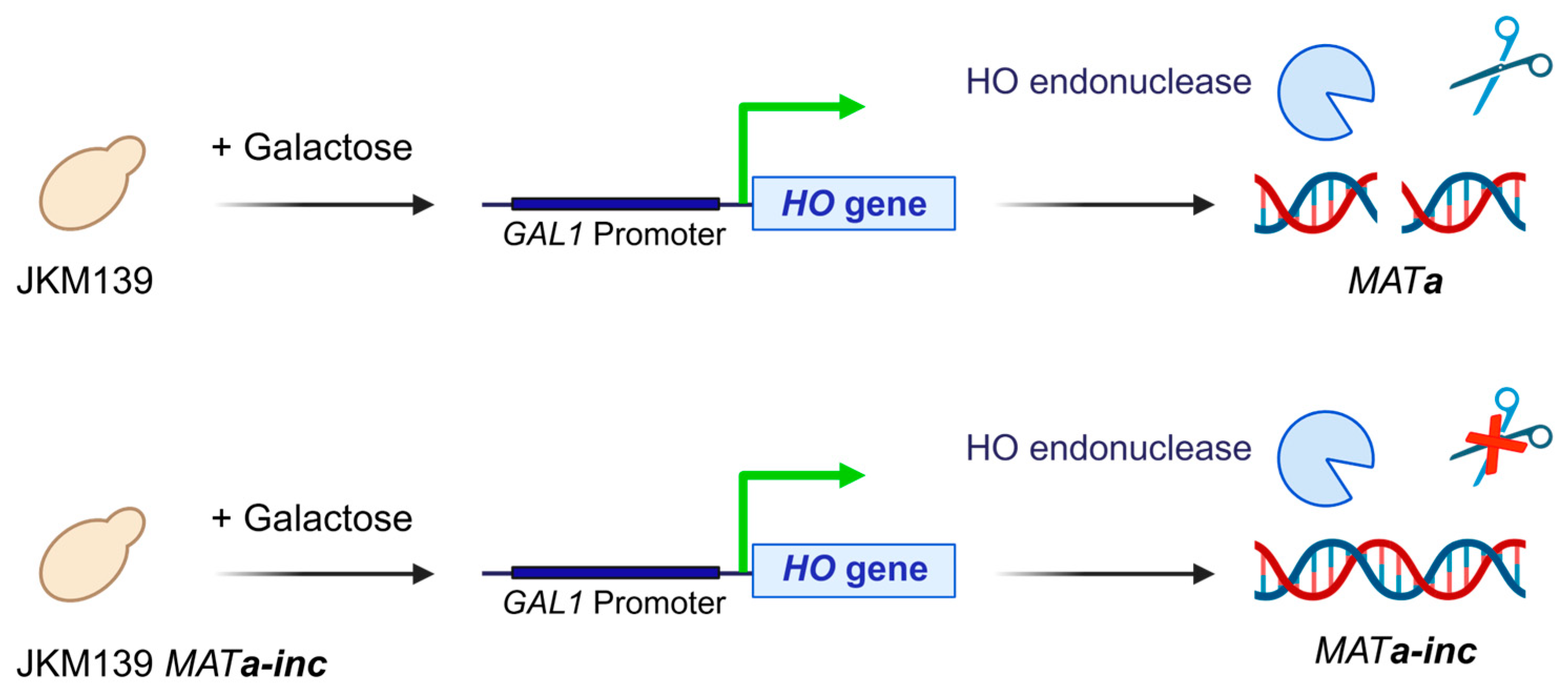
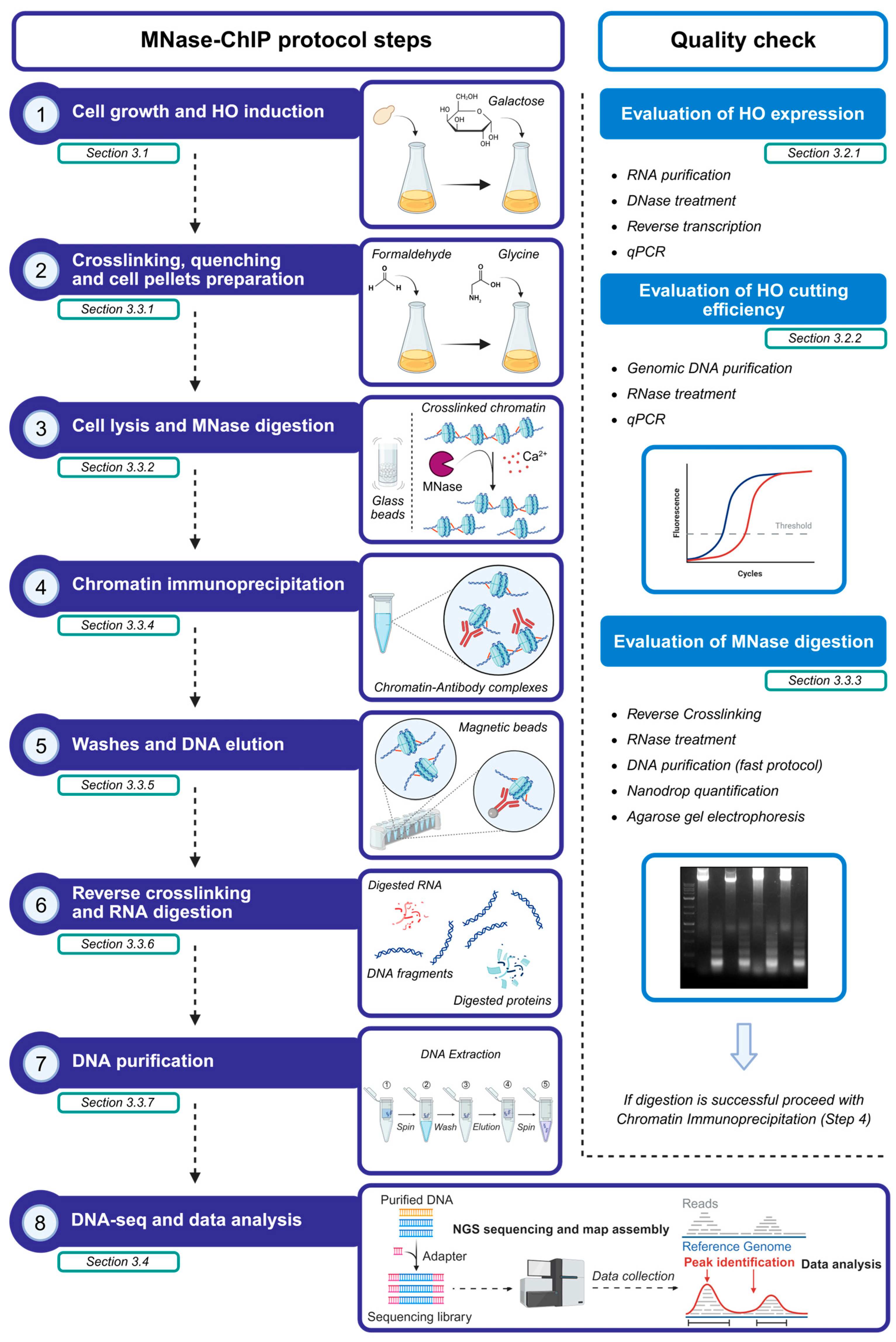
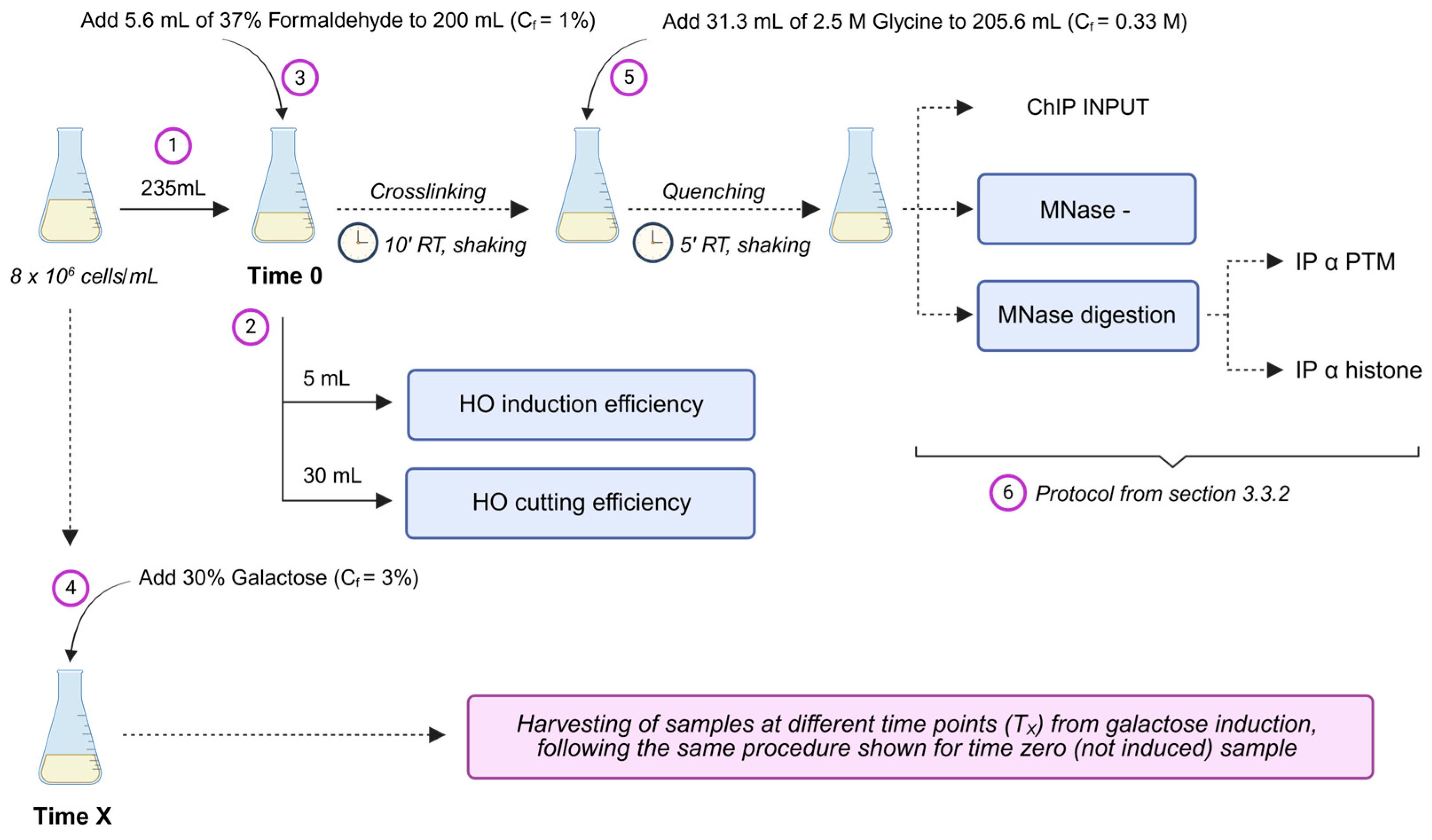
- Draw the samples for the uninduced control (Time 0): 50 mL for each ChIP reaction, plus 135 mL for all the downstream quality checks (refer to step 3 above and Figure 2). Set aside 35 mL of all this volume withdrawn at time zero for the quality checks of HO induction (Section 3.2.1) and HO cut efficiency (Section 3.2.2), and proceed with crosslinking, quenching, and cell pellet preparation (Section 3.3.1) from the remaining samples collected (Figure 3). Add galactose from a 30% solution to a 3% final concentration to the remaining cell culture to induce HO expression.
- Grow the cell culture at 25 °C and harvest the samples at the desired time points after galactose addition, as described for uninduced samples during step 6 (Figure 3).
- Note: The only quality check to perform following the crosslinking and quenching steps is the control of chromatin digestion after MNase treatment, as described in Section 3.3.3.
3.2. Evaluation of HO Expression and DSB Formation
3.2.1. Evaluation of HO Expression
- Place 5 mL of cell culture (OD600 = 0.5) in a 15 mL sterile tube.
- Centrifuge at 2500 × g and 4 °C for 5 min, then discard the supernatant.
- Resuspend the cell pellet in 5 mL of cold RNase-free water.
- Centrifuge at 2500 × g at 4 °C for 5 min and discard the supernatant.
- Resuspend the pellet in 200 μL of lysis buffer.
- Transfer the volume in a 1.5 mL RNase-free tube with sterile 0.3 g micro glass beads
- Add 200 μL of phenol–chloroform–isoamyl alcohol (PCI), then lyse by vortexing for 2 min.
- Add another 300 μL of lysis buffer and 300 μL of PCI, vortex briefly.
- Centrifuge at 10,000 × g for 5 min at 4 °C, then collect the supernatant in a new RNase-free 1.5 mL tube.
- Proceed with the RNA precipitation by adding 3 volumes of ice-cold 99% EtOH, then mix by inverting few times.
- Incubate the sample at −20 °C for 30 min.
- Centrifuge the sample at 10,000 × g for 15 min at 4 °C, then discard the supernatant.
- Wash the pellet with 100 μL of ice-cold 70% EtOH (do not disturb the pellet).
- Centrifuge at 5000 × g, 4 °C for 1 min and remove any supernatant left.
- Dry out the RNA pellet in a chemical hood by keeping the tube upside down.
- Note: Do not exceed 10 min for drying; to fully dry out the sample, use sterile 3 mm paper strips but avoid disturbing the RNA pellet.
- 16.
- Resuspend the precipitated nucleic acids in 15 μL of RNase-free water.
- 17.
- Remove any genomic contaminants by treating the samples with DNase I (DNA-free kit, Invitrogen, Thermo Fisher Scientific, Inc., Waltham, MA, USA).
- Note: Alternative kits can be used for genomic DNA removal.
- 18.
- Measure the RNA concentration using a nanodrop instrument.
- 19.
- Check the integrity of RNA via electrophoresis on 1% agarose gel in Tris-Borate-EDTA (TBE) buffer 1×.
- 20.
- Reverse-transcribe the RNA into cDNA using the SensiFAST cDNA Synthesis Kit (Meridian Bioscience, Inc., Cincinnati, OH, USA), following the manufacturer’s instructions.
- Note: Alternative kits can be used for reverse transcription.
- 21.
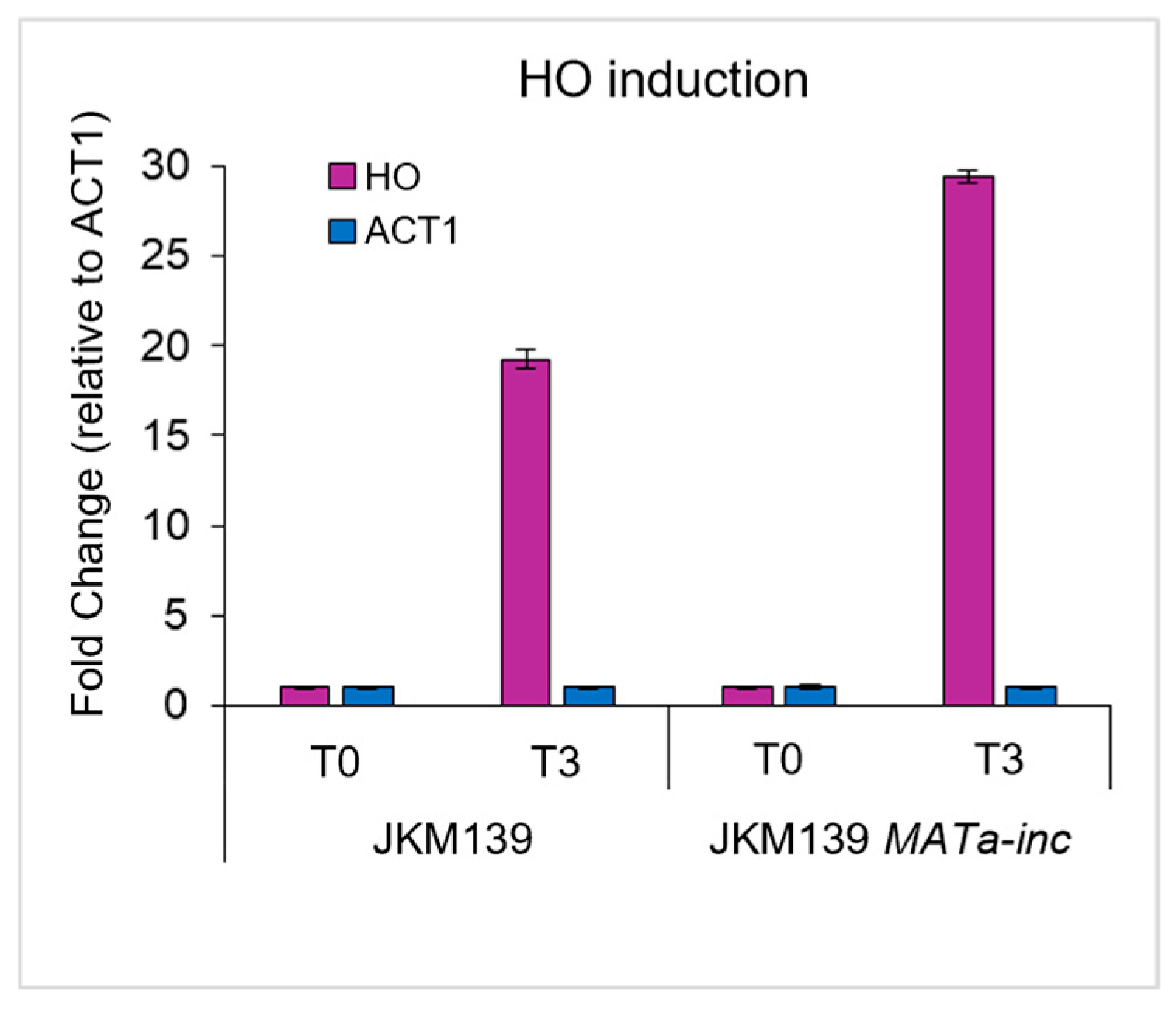
- Proceed with qPCR analysis to determine the expression of the HO endonuclease, using the primer pairs listed in Table 1. Run the qPCR on a CFX Connect Real-Time System (Bio-Rad), a StepOnePlus (Applied Biosystems), or a comparable instrument using the SsoFast EvaGreen Supermix (Bio-Rad), with the following cycling program: 98 °C for 2 min, followed by 45 cycles of 98 °C for 5 s and 60 °C for 10 s. Other reagents can be used according to the manufacturer’s datasheet. For example, using the sensi FAST SYBRGreen Hi-ROX mix (Bioline, Meridian), use the following cycling program: 95 °C for 2 min, followed by 40 cycles of 95 °C for 5 s and 60 °C for 15 s.
3.2.2. Evaluation of HO Cut Efficiency
- Pellet 30 mL of the cell culture by spinning 3 min at 1600× g in 50 mL tubes.
- Wash the cells in 1 mL spheroplasting solution and transfer the samples to 1.5 mL microcentrifuge tubes.
- Centrifuge at 900× g for 3 min and completely remove supernatant with a tip.
 PAUSE STEP. Store cell pellets at −20 °C until further processing; otherwise, proceed with spheroplasting preparation. Resuspend the cell pellets in 400 μL spheroplasting solution + 14 mM β−mercaptoethanol.

- 4.
- Add 100 μL Zymolyase solution to each sample and invert the tube 4–6 times. Incubate the samples at 37 °C for 30 min.
- 5.
- Centrifuge at 18,000× g for 1 min and carefully remove supernatant with a tip.
- 6.
- Gently resuspend spheroplasts in 400 μL 1× TE (do not vortex).
- 7.
- Add 90 μL lysis solution (prepared just before use). Immediately shake the tube vigorously (a foam should form) and incubate the samples 30 min in a water-bath at 65 °C.
- 8.
- Add 80 μL 5 M potassium acetate and mix by inverting the tube several times. Place the tubes on ice for approximately 1 h.
- 9.
- Centrifuge at 18,000× g for 20 min at 4 °C. Transfer the supernatant with nucleic acids to new 1.5 mL tubes. Discard the pellets.
- 10.
- Add 1 mL ice-cold 99% ethanol and mix by inverting the tube several times. A white cloudy precipitate should form. Keep at −80 °C for 30 min to facilitate precipitation.
- 11.
- Centrifuge at 18,000× g for 10 min at 4 °C and remove the supernatant.
- 12.
- Wash the pellet with 1 mL ice-cold 70% ethanol and immediately discard the ethanol.
- 13.
- Air-dry the pellet until it appears glassy.
- 14.
- Add 500 μL 1× TE. Let tubes sit for 30 min at room temperature, then gently dissolve the pellet (do not vortex).
- 15.
- When all the pellets are completely dissolved and the solutions appear clear and transparent, add 2.5 μL RNase solution (10 mg/mL) to each sample and incubate 1 h at 37 °C.
- 16.
- Add 500 μL 2-propanol and invert the tube several times. A white DNA “clew” should form. Keep at −80 °C for 30 min or 12–16 h to facilitate precipitation.
- 17.
- Centrifuge at 18,000× g for 15–30 min at 4 °C and remove the supernatant.
- 18.
- Chromatin Immunoprecipitation 1 mL ice-cold 70% ethanol and immediately discard the ethanol.
- 19.
- Air-dry until the pellet appears glassy.
- 20.
- Add 30 μL 1× TE. Let tubes sit for 30 min at room temperature, then gently dissolve the DNA pellet (do not vortex).
- 21.
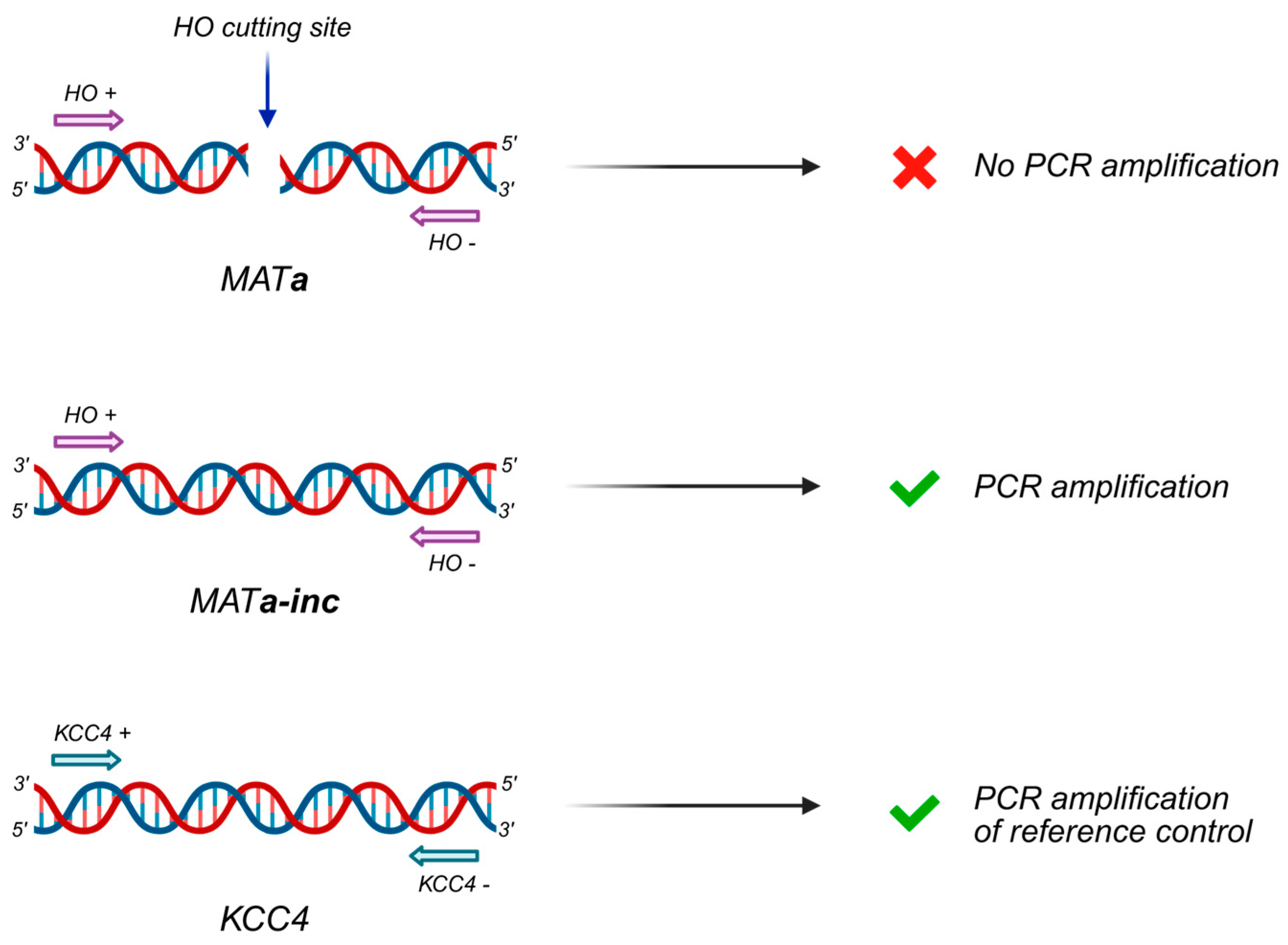
- Perform qPCR with oligonucleotides HO+ and HO- (Table 2), which anneal to opposite sides with respect to the HO cutting sequence or with KCC4+ and KCC4- primers (Table 2) that anneal to a control uncut locus (Figure 4). Run the qPCR on a CFX Connect Real-Time System (Bio-Rad), a StepOnePlus (Applied Biosystems), or a comparable instrument using the SsoFast EvaGreen Supermix (Bio-Rad), with the following cycling program: 98 °C for 2 min, followed by 45 cycles of 98 °C for 5 s and 60 °C for 10 s. Other reagents can be used according to the manufacturer’s datasheet. For example, using the sensi FAST SYBRGreen Hi-ROX mix (Bioline, Meridian), use the following cycling program: 95 °C for 2 min, followed by 40 cycles of 95 °C for 5 s and 60 °C for 15 s.
- 22.
- Determine the efficiency of DSB formation. First, Ct values of the HO amplicon are normalized to those from the KCC4 control amplicon for each time point. The obtained values after galactose addition are normalized to those obtained before galactose addition to calculate the percentage of HO-cut formation.
3.3. Chromatin Immunoprecipitation
3.3.1. Crosslinking, Quenching and Cell Pellet Preparation
- Transfer 235 mL of yeast culture into a glass flask and draw 35 mL before the crosslinking reaction for the quality checks (Figure 3).
- Add 5.6 mL of 37% formaldehyde to the remaining volume for a final concentration of 1% formaldehyde. To ensure proper mixing of the culture and an efficient crosslinking reaction, a 1:5 ratio between the culture volume and the total flask volume should be maintained. Perform this step in a fume hood.
- Note: It is preferable to use formaldehyde that is less than 1 month old. We suggest purchasing small quantities and using them within a short time, avoiding repeated opening/closing of the bottle, because the oxygen exposure induces the polymerization of formaldehyde, which will reduce the crosslinking efficiency.
- 3.
- Transfer the flask to a shaker at 25 °C (or room temperature) and shake it at 50 rpm for 10 min.
- Note: The timing of formaldehyde crosslinking is crucial, since the extent of crosslinking strongly affects the following MNase digestion efficiency. Therefore, start the cultures in such a way that few samples are ready at the same time.
- 4.
- Add 31.3 mL of 2.5 M glycine for a final concentration of 0.33 M glycine and continue shaking at 50 rpm at room temperature for 5 min to quench the formaldehyde.
- 5.
- Split each culture over 4× a 50 mL conical tube and centrifuge at 2500× g for 5 min at 4 °C. Discard the supernatants.
- 6.
- Repeat step 5 using the remaining sample in the same collection tubes. Discard the supernatants.
- Note: Keep the sample on ice during the centrifugations and try to be as quick as possible.
- 7.
- Wash the cell pellets by resuspending them in 40 mL of cold, sterile PBS.
- 8.
- Centrifuge at 2500× g for 5 min at 4 °C. Discard the supernatant.
- 9.
- Wash pellets again by resuspending the first one in 40 mL of cold, sterile PBS. Then, add this suspension to the second pellet and resuspend. Repeat this passage with the other two pellets.
- 10.
- Centrifuge the two 50 mL tubes at 2500× g for 5 min at 4 °C.
- 11.
- Gently resuspend each pellet using 2 mL of sterile and cold ultrapure water and combine the two samples together.
- 12.
- Mix the sample (total volume almost 4 mL), then split it in equal parts into four 15 mL tubes (almost 1 mL in each tube).
- 13.
- Centrifuge at 2500× g for 5 min at 4 °C.
- 14.
- Carefully remove the supernatant.
- Note: It is crucial to remove any liquid to avoid cell pellet lysis during the freezing process. It is preferable to snap-freeze the pellets in liquid nitrogen.
 PAUSE STEP. Store cell pellets at −80 °C until further processing; otherwise, proceed with cell lysis and MNase digestion.
3.3.2. Cell Lysis and MNase Digestion
- Note: To inhibit protease activity, we suggest using more concentrated stocks, such as PIC 100× plus PMSF 200× or AEBSF 1000×, for smaller volumes and directly dissolving protease inhibitor tablets in a larger volume using 1 tablet for each 10 mL of volume. PMSF and AEBSF can be used as an alternative. Alternatively, to PIC 100×, it is possible to separately add other specific serine protease inhibitors, such as benzamidine (stock 0.1 M, 100×) and aprotinin (stock 2 mg/mL, 1000×), or serine, cysteine, and threonine proteases inhibitors, such as leupeptin (stock 10 mM, 1000×).
- Note: Add sodium butyrate and β-glycerophosphate to the ChIP lysis buffer to inhibit deacetylases and phosphatases, respectively, and preserve histone acetylation and phosphorylation, if needed.
- Resuspend each pellet in 400 µL of cold ChIP Lysis Buffer with 1 mM phenylmethylsulfonyl fluoride (PMSF) and 1× protease inhibitor cocktail tablet (ChIP LB+/+).
- Transfer each suspension to a new 1.5 mL screw cap tube containing 400 μL of sterile glass beads.
- Put the tubes into the bead-beating apparatus for high-speed agitation at 4 °C and beat 4 times for 30 s each at 6.5 m/s. Keep the cells on ice for at least 1 min between each bead beating.
- Stab two holes at the bottom of each screw cap tube using a heated needle and collect the percolate into new tubes via centrifugation for 3 min at 2500× g at 4 °C.
- Note: This step should remove most cell debris, but, if necessary, a further centrifugation of leachates collected in new tubes can be performed for another 2 min at 2500× g at 4 °C. The supernatant should contain the chromatin. Indeed, with 10 min of crosslinking time, the chromatin will not co-precipitate with the pellets.
- 5.
- Combine all the supernatants, collecting as much as possible (∼1600 μL); mix well; and evaluate the total volume recovered.
- 6.
- Split each sample into four 1.5 mL tubes (400 μL each) for MNase digestion reaction, keeping the remaining volume for the undigested negative control.
- 7.
- Prepare a stock of MNase Digestion Buffer (DB 3×) as indicated in Table 3, considering the column “intermediate concentration”. Consider an excess of the volume for DB 3× that will be diluted to obtain a DB 1× to dilute the MNase enzyme (step 9).
- 8.
- Add 200 μL of MNase digestion buffer every 400 μL of sample. In general, consider adding a volume of DB 3× equal to half the volume of the sample. In this way, the buffer will be diluted to reach the final concentration indicated in Table 3. Proportionally, add the DB 3× to the undigested negative control sample.
- 9.
- Dilute the MNase enzyme to a final concentration of 5 u/μL using DB 1× (obtained by diluting the DB 3× with ultrapure water), then add 10 units of MNase (i.e., 2 μL of MNase solution, 5 u/μL) to each sample to be digested.
- Note: Digestion conditions should be optimized when a new stock of MNase is used. We suggest setting up the MNase digestion reaction before proceeding with the ChIP experiment, trying different amounts of enzyme and keeping the same reaction time and the same sample amount.
- 10.
- Add DB 1× to the undigested control without enzyme using an equal volume of the MNase solution used in step 9 to allow the samples to be digested.
- 11.
- Mix gently by inverting and immediately incubate in a thermal blocker at 37 °C for 15 min, 350 rpm.
- 12.
- Place the tubes on ice to stop the reaction and add 0.5 M EDTA to a final concentration of 0.020 M EDTA (i.e., 25 μL of 0.5 M EDTA to 600 μL of digested sample). Mix by inverting and briefly spin down.
- 13.
- Combine all the digested samples, then mix them by pipetting.
- 14.
- Take 40 μL of the total volume of the digested sample to process as the input sample in step 12 of Section 3.3.5. Store the input at −80 °C until processing.
- 15.
- Take 250 μL of the remaining digested sample for the MNase digestion check and proceed as described in Section 3.3.3. Store all the digested samples at −80 °C until the digestion check is complete before proceeding with chromatin immunoprecipitation.
 PAUSE STEP. Store the digested samples at −80 °C until digestion is checked.
- Note: If multiple chromatin immunoprecipitation reactions are planned, it is possible to split the digested samples into aquilots according to the number of IP for each round and considering 550 μL of digested sample for each IP reaction.
3.3.3. MNase Digestion Quality Check
- Prepare the needed volume of PK buffer as described in Table 4, according to the “intermediate concentration” column.
- Add 100 µL di PK buffer to 250 µL of sample to obtain the final concentration indicated in the last column of Table 4.
- Add proteinase K to a final concentration of 0.4 mg/mL (for a stock of proteinase K concentrated 20 mg/mL, add a volume of enzyme equal to 1/50 of the total volume of PK buffer added to each sample). Mix gently by inverting, then briefly spin down.
- For the reverse-crosslink reaction, incubate samples in a thermal mixer at 65 °C at 450 rpm for 12–16 h.
- At the end of the reverse crosslinking reaction, keep the sample on ice and proceed with the DNA extraction according to this fast protocol:
- Add 1 mL of 100% ethanol to each sample, mix well and incubate for 30 min at −80 °C.
- Centrifuge the samples at 13,000× g for 45 min at 4 °C.
- Discard the supernatant and dry out the pellet under a fume hood.
- Resuspend the DNA in 20 μL of ddH2O, then add 1 µL of RNase A (20 mg/mL).
- Mix by pipetting, then briefly spin down and incubate the reaction at 37 °C by shaking at 450 rpm for 30 min.
- Determine the DNA concentration at Nanodrop.
- Prepare the samples with a DNA loading dye and load the same total amount on a 1.5% agarose gel using a 100 bp ladder (EuroClone, Pero (MI), Italy).
- Run the gel at 100 V.
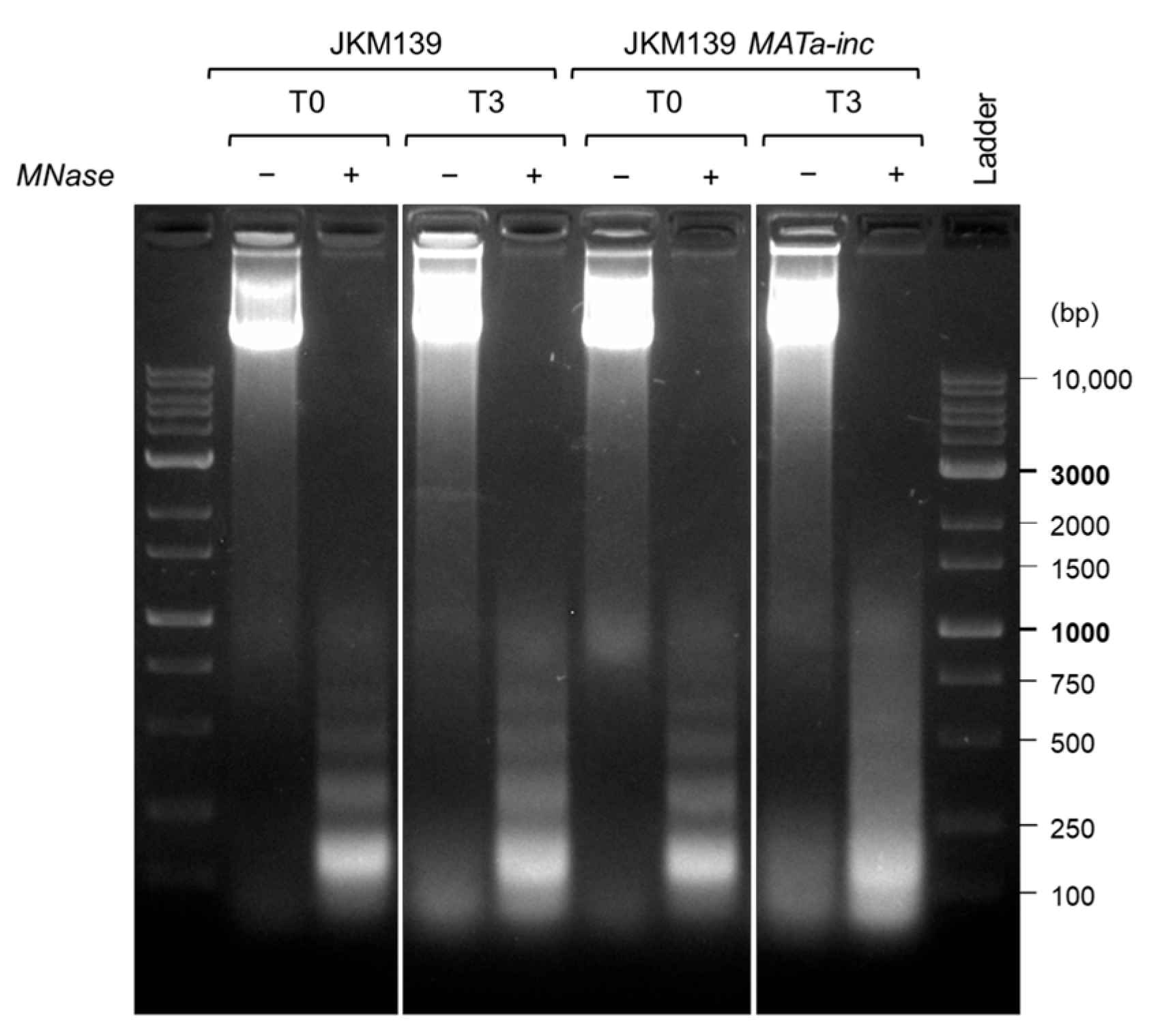
- Check the size of the fragments. MNase cuts the DNA at linker regions between nucleosomes. MNase digestion should produce fragments on an agarose gel with prominence of the mono-nucleosome band (around 147–200 bp), followed by di- and tri-nucleosomal bands. Over- or under-digestion should be minimal.
3.3.4. Chromatin Immunoprecipitation
- Thaw on ice the digested sample aliquots stored at −80 °C according to step 15, Section 3.2.2, before the MNase digestion check, and bring the volumes of each IP sample to 600 µL by adding 50 µL of ChIP LB+/+ to 550 µL. Scale up the volume of ChIP LB+/+ according to the number of aliquots that will be used in the immunoprecipitation round.
- Split 600 µL of sample for each IP reaction in a new protein low-binding tube.
- Add the primary antibodies to the digested lysates according to their datasheets or upon protocol optimization. For the α-H7K79me1 (1 mg/mL), we used 4.8 µL for 600 µL of IP sample. For the α-H3 (1 mg/mL), we used 10 µL for 600 µL of IP sample.
- Rotate samples on the nutator at 4 °C for 12–16 h.
- Note: The addition of the primary antibodies directly to the lysates is an indirect method of immunoprecipitation which is preferred to optimize the formation of antibody–chromatin complexes; indeed, the binding between the constant region of the primary antibodies to the protein A/G coated on magnetic beads is not a limiting step. However, be aware that it is important to avoid an excess of primary antibody because any unbound antibody binds faster to the beads compared to the antibody–chromatin complexes, reducing yield.
- Note: Use protein-low binding tubes for the 12–16 h incubation to minimize the antibody adhesion to the plastic tube and optimize the sample recovery.
- 5.
- After the 12–16 h incubation, start with the preparation of the beads. Place the needed volume of Protein A/G magnetic beads into a 1.5 mL protein low-binding tube. Consider 25 µL of beads for each immunoprecipitation reaction considering 10% of excess.
- Note: Mix well by pipetting the beads before placing them in a new tube to ensure uniform suspension; scale up the volume according to the number of IP reactions to perform, but keep the volume of beads to a maximum of 1/3 over the wash solution volume to ensure a proper washing. If multiple tubes are used, combine all the bead aliquots at the last wash, then split 25 µL of this total volume for each IP reaction.
- 6.
- Add 900 µL of cold PBS to the beads and mix well to perform the first wash.
- 7.
- Place the tubes in a magnetic rack and let the beads collect on the side of the tube (2 min should be enough to get a limpid solution).
- 8.
- Remove the supernatant using a pipette.
- 9.
- Wash the beads successively with 900 µL of each of the buffers below as follows: twice with cold sterile PBS and four times with ChIP LB+/+. Perform each wash by rotating on the nutator for 2 min at 4 °C.
- Note: Between the washes, remove the tubes from the magnetic rack and add the washing solution, then mix well by inversion and briefly spin-down; at this point, replace the tube in the magnetic rack to remove the supernatant.
- 10.
- After the last wash, add a volume of ChIP LB+/+ equal to 27.5 µL for each IP reaction (i.e., 25 µL plus 10% of excess volume) and resuspend the beads.
- 11.
- Take 25 µL of washed beads to a new protein low-binding tube.
- 12.
- Place the tubes in a magnetic stand and let the beads collect on the side of the tube.
- 13.
- Remove the supernatant using a pipette.
- 14.
- Add the antibody–chromatin complexes to the beads.
- 15.
- Rotate samples on the nutator for 1 h at 4 °C to allow the binding between the constant region of primary antibodies to the protein A/G coating of magnetic beads.
3.3.5. Washes and DNA Elution
- Place the tubes in a magnetic stand and let beads collect on the side of the tube. Remove the supernatant using a pipette. Perform each wash by rotating on the nutator for 2 min at room temperature but using cold wash solutions.
- Wash the samples successively with 700 µL of each of the buffers below as follows:
- Twice with cold sterile ChIP LB+/+.
- Twice with cold sterile High Salt Wash Buffer+/+.
- Once with cold sterile LiCl Wash Buffer+/+.
- Twice with sterile TE Buffer.
- Resuspend the beads in 140 µL of Elution Buffer and rotate on the nutator for 10 min at room temperature.
- Briefly spin down, then put the tubes in the magnetic rack and transfer the supernatant into a new tube. Keep the eluted samples on ice.
- Thaw the input samples on ice and add 100 µL of Elution Buffer to reach the same volume of immunoprecipitated eluted samples. For the next steps, treat the input as the IP reactions. Therefore, proceed with reverse crosslinking and RNase treatment.
3.3.6. Reverse Crosslinking and RNase Treatment
- Note: At this step, it is preferable to perform the DNA purification using a commercial kit with on-column DNA purification. Indeed, in this case, the purification will serve the subsequent sequencing of the samples and not the digestion control, for which it was fine to perform a faster and cheaper DNA extraction protocol as described in Section 3.3.3
 PAUSE STEP. At this point, samples can be stored at −20 °C until the DNA purification step.
3.3.7. DNA Purification
- Extract DNA with silica spin columns according to the instructions provided by the manufacturer.
- Elute in 50 µL of RNase/DNase-free water.
- Measure the DNA concentration at Nanodrop.
- Proceed with the library preparation before DNA sequencing.
 PAUSE STEP. At this point, samples can be stored at −20 °C until the DNA library preparation and sequencing.
3.4. DNA Sequencing and Data Analysis
- Quantify immunoprecipitated DNA with Qubit 2.0 Fluorometer.
- Prepare the libraries using the Ovation® Ultralow V2 DNA-Seq Library Preparation Kit (Tecan, Redwood City, CA, USA), strictly following the instructions provided by the manufacturer.
- Check the quality and concentration of the final libraries both with the Qubit 2.0 Fluorometer and with the HS DNA assay Bioanalyzer.
- Prepare the libraries for sequencing and subject them to paired-end sequencing (150 bp) on the NovaSeqX Plus platform.
- Analyze the data. Different tools can be used for different steps of data analysis and are listed in Table 5. ChIP-seq raw FASTQ files were processed using the nf-core/chipseq v2.0.0 pipeline [28] (Zenodo doi:10.5281/zenodo.3240506) implemented in Nextflow. The pipeline ensures reproducibility by using containerized software environments provided through BioContainers, with fixed versions of the underlying bioinformatics tools defined by the pipeline release.
3.4.1. Read Quality Control and Trimming
3.4.2. Alignment and Post-Processing
3.4.3. Signal Generation and Peak Calling
3.5. Troubleshooting
4. Expected Results
5. Discussion
6. Reagents Setup
6.1. Reagents for Yeast Cells Growth and DSB Induction
- 30% D-(+)-Raffinose 30%: Dissolve D−(+)−raffinose pentahydrate in ddH2O. Autoclave or sterilize by filtration.
- 30% D-(+)-Galactose: Dissolve D−(+)−galactose ≥ 99.0% in ddH2O. Sterilize by filtration. Do not autoclave. Galactose should not be autoclaved because it isomerizes at elevated temperatures.
- YEPD medium: 2% Bacto peptone, 1% yeast extract, 2% D_(+)_glucose monohydrate, 0.005% adenine hemisulfate salt. Dissolve in ddH2O. Autoclave.
- YEPR medium: dissolve 2% Bacto peptone, 1% yeast extract, 0.005% adenine hemisulfate salt in ddH2O. Autoclave. Add sterilized raffinose from 30% solution to 2%.
6.2. Reagents for Evaluation of HO Expression and DSB Formation
- Lysis buffer: 0.5 M NaCl, 0.2 M Tris-HCl pH 7.5, 10 mM EDTA, 1% SDS.
- Ice-cold ethanol: 99% and 70%. Prepare a 70% ethanol solution by diluting 99% ethanol in ddH2O. Store at −20 °C- aliquots of both 70% and 99% ethanol in glass bottles.
- 5× TBE buffer: Prepare a 5× stock solution with 54 g of Trizma Base (Tris base), 27.5 g of boric acid, and 20 mL of 0.5 M EDTA (pH 8.0). Add 800 mL of distilled water to dissolve using a magnetic stirrer. Allow to stir until the solution becomes clear. Adjust the volume with distilled water up to 1 L. The pH of the concentrated stock buffer should be ~8.3. Autoclave the solution. Store at room temperature.
- Spheroplasting solution: 0.9 M sorbitol; 0.1 M EDTA, pH 7.5.
- Zymolyase solution: Dissolve 2 mg/mL Zymolyase 20 T from Arthrobacter luteus (Nacalai Tesque) in spheroplasting solution + 14 mM β−mercaptoethanol.
- 1× TE: 10 mM Tris–HCl, pH 7.5; 1 mM EDTA, pH 7.4. Autoclave.
- Lysis solution: 2.2% sodium dodecyl sulfate (SDS); 278 mM EDTA, pH 8.5; 445 mM Tris-base. Prepare the lysis solution just before adding it to the samples by mixing the appropriate amounts of 10% SDS; 0.5 M EDTA, pH 8.5; 2 M Tris-base stock solutions in a 15 mL tube.
- 5 M potassium acetate: Dissolve 5 M potassium acetate in ddH2O. Autoclave.
- RNase solution (10 mg/mL): Dilute the RNase A solution (20 mg/mL) by adding an equal volume of DNase–free water.
6.3. Reagents for Chromatin Immunoprecipitation
- HEPES 1 M pH 7.5: Dissolve 238.3 g of HEPES in 800 mL of ddH2O. Adjust the solution to pH 7.5 with sodium hydroxide (10 N). Add ddH2O until the volume is 1 L. Sterilize by filtration. Store at 4 °C.
- PMSF 200× (0.2 M): Dissolve PMSF in ethanol. Store at −20 °C.
- AEBSF 1 M: Dissolve in ddH2O. Store aliquots at −20 °C. Stock solutions are stable for up to 6 months at −20 °C.
- Benzamidine 0.1 M: Dissolve in ddH2O. Store aliquots at −20 °C. Stock solutions are stable for up to 6 months at −20 °C.
- Aprotinin (2 mg/mL): Dissolve in ddH2O. Store aliquots at −20 °C. Stock solutions are stable for up to 6 months at −20 °C. Repeated freeze–thaw cycles should be avoided.
- Leupeptin 0.01 M: Dissolve in ddH2O. Store aliquots at −20 °C. Stock solutions are stable for up to 6 months at −20 °C.
- ChIP Lysis Buffer (ChIP LB): 0.05 M HEPES pH 75, 0.14 M NaCl, 0.001 M EDTA, 0.1% NadEox, 1% IGEPAL. Store the solution at 4 °C.
- ChIP LB+/+: Prepare fresh starting from cold ChIP LB and adding the protease inhibitors and other inhibitors as needed.
- 0.5 M CaCl2: Dissolve 11 g of CaCl2•6H2O in a final volume of 20 mL of ddH2O. Sterilize the solution by passing it through a 0.22 µm filter. Store at 4 °C.
- (3×) MNase digestion buffer (DB): Tris-HCl 0.15 M pH 7.5, CaCl2 0.018 M, PIC (3×), ddH2O. Prepare fresh MNase digestion buffer (3×) as follows: for 1.5 mL of total volume, mix 225 µL Tris-HCl 1 M, pH 7.5, 54 µL 0.5 M CaCl2, 15 µL PIC 100× and 1206 µL ddH2O. Keep on ice until use.
- (1×) MNase digestion buffer (DB): Tris-HCl 0.05 M pH 7.5, CaCl2 0.006 M, PIC (1×), ddH2O. Prepare fresh by diluting the (3×) MNase digestion buffer with ddH2O. To obtain 1.5 mL of DB (1×) mix 0.5 mL of DB (3×) and 1 mL of ddH2O. Keep on ice until use.
- (3.5×) PK buffer: Tris-HCl 0.175 M pH 7.5, NaCl 0.014 M, CaCl2. 0.0105 M, SDS 3.5%. To get 1 mL of PK buffer, mix 175 µL Tris-HCl 1 M pH 7.5, 2.8 µL NaCl 5 M, 21 µL CaCl2, 451.2 µL ddH2O, and finally 350 µL SDS 10%.
- High-Salt Wash Buffer +/+: 0.05 M Tris-HCl pH 7.5, 0.5 M NaCl, 0.001 M EDTA, 1% IGEPAL, PIC 1×. Once freshly prepared, keep on ice until use.
- LiCl Wash Buffer +/+: 0.01 M Tris-HCl pH 7.5, 0.25 M LiCl, 0.001 M EDTA, 1% IGEPAL, 1% NadEOX, PIC 1×. Once freshly prepared, keep on ice until use.
- TE Buffer: 1 M Tris-HCl pH 7.5, 0.5 M EDTA pH 8.
- Elution Buffer: 0.001 M NaHCO3 + 1% SDS. Prepare a stock solution of NaHCO3 1 M by dissolving 8.4 g of NaHCO3 in 0.08 L of ddH2O. Once dissolved, bring the volume to 0.1 L with ddH2O. Filter to sterilize the solution. Store at room temperature.
Author Contributions
Funding
Institutional Review Board Statement
Informed Consent Statement
Data Availability Statement
Acknowledgments
Conflicts of Interest
Abbreviations
| DSB | Double-strand break. |
| NHEJ | Non-homologous end joining. |
| HR | Homologous recombination. |
| PTMs | Post-translational modifications. |
| MS | Mass spectrometry. |
| ChIP | Chromatin immunoprecipitation. |
| ChIP-seq | Chromatin immunoprecipitation followed by sequencing. |
| CUT&RUN | Cleavage Under Targets and Release Using Nuclease. |
| MNase | Micrococcal nuclease. |
| PK | Proteinase K. |
| LB | Lysis Buffer. |
| DB | Digestion Buffer. |
References
- Lee, S.E.; Moore, J.K.; Holmes, A.; Umezu, K.; Kolodner, R.D.; Haber, J.E. Saccharomyces Ku70, Mre11/Rad50 and RPA Proteins Regulate Adaptation to G2/M Arrest after DNA Damage. Cell 1998, 94, 399–409. [Google Scholar] [CrossRef]
- Frankenberg, D.; Frankenberg-Schwager, M.; Blöcher, D.; Harbich, R.; Blocher, D. Evidence for DNA Double-Strand Breaks as the Critical Lesions in Yeast Cells Irradiated with Sparsely or Densely Ionizing Radiation under Oxic or Anoxic Conditions. Radiat. Res. 1981, 88, 524. [Google Scholar] [CrossRef]
- Gnügge, R.; Symington, L.S. Efficient DNA Double-Strand Break Formation at Single or Multiple Defined Sites in the Saccharomyces cerevisiae Genome. Nucleic Acids Res. 2020, 48, e115. [Google Scholar] [CrossRef] [PubMed]
- Dugle, D.L.; Gillespie, C.J.; Chapman, J.D. DNA Strand Breaks, Repair, and Survival in x-Irradiated Mammalian Cells. Proc. Natl. Acad. Sci. USA 1976, 73, 809–812. [Google Scholar] [CrossRef] [PubMed]
- Rich, T.; Allen, R.L.; Wyllie, A.H. Defying Death after DNA Damage. Nature 2000, 407, 777–783. [Google Scholar] [CrossRef]
- Colombo, C.V.; Gnugnoli, M.; Gobbini, E.; Longhese, M.P. How Do Cells Sense DNA Lesions? Biochem. Soc. Trans. 2020, 48, 677–691. [Google Scholar] [CrossRef]
- Cejka, P.; Symington, L.S. DNA End Resection: Mechanism and Control. Annu. Rev. Genet. 2021, 55, 285–307. [Google Scholar] [CrossRef]
- Frigerio, C.; Di Nisio, E.; Galli, M.; Colombo, C.V.; Negri, R.; Clerici, M. The Chromatin Landscape around DNA Double-Strand Breaks in Yeast and Its Influence on DNA Repair Pathway Choice. Int. J. Mol. Sci. 2023, 24, 3248. [Google Scholar] [CrossRef] [PubMed]
- Gobbini, E.; Cesena, D.; Galbiati, A.; Lockhart, A.; Longhese, M.P. Interplays between ATM/Tel1 and ATR/Mec1 in Sensing and Signaling DNA Double-Strand Breaks. DNA Repair 2013, 12, 791–799. [Google Scholar] [CrossRef] [PubMed]
- Bannister, A.J.; Kouzarides, T. Regulation of Chromatin by Histone Modifications. Cell Res. 2011, 21, 381–395. [Google Scholar] [CrossRef]
- Arnaudo, A.M.; Garcia, B.A. Proteomic Characterization of Novel Histone Post-Translational Modifications. Epigenetics Chromatin 2013, 6, 24. [Google Scholar] [CrossRef]
- Thomas, S.P.; Haws, S.A.; Borth, L.E.; Denu, J.M. A Practical Guide for Analysis of Histone Post-Translational Modifications by Mass Spectrometry: Best Practices and Pitfalls. Methods 2020, 184, 53–60. [Google Scholar] [CrossRef]
- Millán-Zambrano, G.; Burton, A.; Bannister, A.J.; Schneider, R. Histone Post-Translational Modifications—Cause and Consequence of Genome Function. Nat. Rev. Genet. 2022, 23, 563–580. [Google Scholar] [CrossRef] [PubMed]
- Hauer, M.H.; Gasser, S.M. Chromatin and Nucleosome Dynamics in DNA Damage and Repair. Genes Dev. 2017, 31, 2204–2221. [Google Scholar] [CrossRef]
- van Mierlo, G.; Vermeulen, M. Chromatin Proteomics to Study Epigenetics—Challenges and Opportunities. Mol. Cell. Proteom. 2021, 20, 100056. [Google Scholar] [CrossRef]
- Kidder, B.L.; Hu, G.; Zhao, K. ChIP-Seq: Technical Considerations for Obtaining High-Quality Data. Nat. Immunol. 2011, 12, 918–922. [Google Scholar] [CrossRef] [PubMed]
- Jezek, M.; Jacques, A.; Jaiswal, D.; Green, E.M. Chromatin Immunoprecipitation (ChIP) of Histone Modifications from Saccharomyces Cerevisiae. J. Vis. Exp. 2017, 130, 57080. [Google Scholar] [CrossRef]
- Chereji, R.V.; Bryson, T.D.; Henikoff, S. Quantitative MNase-Seq Accurately Maps Nucleosome Occupancy Levels. Genome Biol. 2019, 20, 198. [Google Scholar] [CrossRef] [PubMed]
- Hörz, W.; Altenburger, W. Sequence Specific Cleavage of DNA by Micrococcal Nuclease. Nucleic Acids Res. 1981, 9, 2643–2658. [Google Scholar] [CrossRef]
- Luo, D.; Kato, D.; Nogami, J.; Ohkawa, Y.; Kurumizaka, H.; Kono, H. MNase, as a Probe to Study the Sequence-Dependent Site Exposures in the +1 Nucleosomes of Yeast. Nucleic Acids Res. 2018, 46, 7124–7137. [Google Scholar] [CrossRef]
- Taylor, B.C.; Young, N.L. Combinations of Histone Post-Translational Modifications. Biochem. J. 2021, 478, 511–532. [Google Scholar] [CrossRef] [PubMed]
- Skene, P.J.; Henikoff, S. An Efficient Targeted Nuclease Strategy for High-Resolution Mapping of DNA Binding Sites. Elife 2017, 6, e21856. [Google Scholar] [CrossRef] [PubMed]
- Lorzadeh, A.; Bilenky, M.; Hammond, C.; Knapp, D.J.H.F.; Li, L.; Miller, P.H.; Carles, A.; Heravi-Moussavi, A.; Gakkhar, S.; Moksa, M.; et al. Nucleosome Density ChIP-Seq Identifies Distinct Chromatin Modification Signatures Associated with MNase Accessibility. Cell Rep. 2016, 17, 2112–2124. [Google Scholar] [CrossRef] [PubMed]
- Rawal, Y.; Chereji, R.V.; Valabhoju, V.; Qiu, H.; Ocampo, J.; Clark, D.J.; Hinnebusch, A.G. Gcn4 Binding in Coding Regions Can Activate Internal and Canonical 5′ Promoters in Yeast. Mol. Cell 2018, 70, 297–311.e4. [Google Scholar] [CrossRef]
- Ambrosio, S.; Noviello, A.; Di Fusco, G.; Gorini, F.; Piscone, A.; Amente, S.; Majello, B. Interplay and Dynamics of Chromatin Architecture and DNA Damage Response: An Overview. Cancers 2025, 17, 949. [Google Scholar] [CrossRef]
- Colombo, C.V.; Menin, L.; Clerici, M. Alkaline Denaturing Southern Blot Analysis to Monitor Double-Strand Break Processing. Methods Mol. Biol. 2018, 1672, 131–145. [Google Scholar] [CrossRef]
- Weiffenbach, B.; Haber, J.E. Homothallic Mating Type Switching Generates Lethal Chromosome Breaks in Rad52 Strains of Saccharomyces Cerevisiae. Mol. Cell Biol. 1981, 1, 522–534. [Google Scholar] [CrossRef]
- Ewels, P.A.; Peltzer, A.; Fillinger, S.; Patel, H.; Alneberg, J.; Wilm, A.; Garcia, M.U.; Di Tommaso, P.; Nahnsen, S. The Nf-Core Framework for Community-Curated Bioinformatics Pipelines. Nat. Biotechnol. 2020, 38, 276–278. [Google Scholar] [CrossRef]
- Di Tommaso, P.; Chatzou, M.; Floden, E.W.; Barja, P.P.; Palumbo, E.; Notredame, C. Nextflow Enables Reproducible Computational Workflows. Nat. Biotechnol. 2017, 35, 316–319. [Google Scholar] [CrossRef]
- Li, H.; Durbin, R. Fast and Accurate Short Read Alignment with Burrows-Wheeler Transform. Bioinformatics 2009, 25, 1754–1760. [Google Scholar] [CrossRef]
- Li, H.; Handsaker, B.; Wysoker, A.; Fennell, T.; Ruan, J.; Homer, N.; Marth, G.; Abecasis, G.; Durbin, R. 1000 Genome Project Data Processing Subgroup The Sequence Alignment/Map Format and SAMtools. Bioinformatics 2009, 25, 2078–2079. [Google Scholar] [CrossRef]
- Quinlan, A.R.; Hall, I.M. BEDTools: A Flexible Suite of Utilities for Comparing Genomic Features. Bioinformatics 2010, 26, 841–842. [Google Scholar] [CrossRef] [PubMed]
- Zhang, Y.; Liu, T.; Meyer, C.A.; Eeckhoute, J.; Johnson, D.S.; Bernstein, B.E.; Nusbaum, C.; Myers, R.M.; Brown, M.; Li, W.; et al. Model-Based Analysis of ChIP-Seq (MACS). Genome Biol. 2008, 9, R137. [Google Scholar] [CrossRef] [PubMed]
- Ramírez, F.; Ryan, D.P.; Grüning, B.; Bhardwaj, V.; Kilpert, F.; Richter, A.S.; Heyne, S.; Dündar, F.; Manke, T. deepTools2: A next Generation Web Server for Deep-Sequencing Data Analysis. Nucleic Acids Res. 2016, 44, W160–W165. [Google Scholar] [CrossRef]
- Love, M.I.; Huber, W.; Anders, S. Moderated Estimation of Fold Change and Dispersion for RNA-Seq Data with DESeq2. Genome Biol. 2014, 15, 550. [Google Scholar] [CrossRef]
- Ewels, P.; Magnusson, M.; Lundin, S.; Käller, M. MultiQC: Summarize Analysis Results for Multiple Tools and Samples in a Single Report. Bioinformatics 2016, 32, 3047–3048. [Google Scholar] [CrossRef]
- Liao, Y.; Smyth, G.K.; Shi, W. featureCounts: An Efficient General Purpose Program for Assigning Sequence Reads to Genomic Features. Bioinformatics 2014, 30, 923–930. [Google Scholar] [CrossRef] [PubMed]
- Wood, K.; Tellier, M.; Murphy, S. DOT1L and H3K79 Methylation in Transcription and Genomic Stability. Biomolecules 2018, 8, 11. [Google Scholar] [CrossRef]
- Farooq, Z.; Banday, S.; Pandita, T.K.; Altaf, M. The Many Faces of Histone H3K79 Methylation. Mutat. Res. Rev. Mutat. Res. 2016, 768, 46–52. [Google Scholar] [CrossRef]
- Di Nisio, E.; Lupo, G.; Licursi, V.; Negri, R. The Role of Histone Lysine Methylation in the Response of Mammalian Cells to Ionizing Radiation. Front. Genet. 2021, 12, 639602. [Google Scholar] [CrossRef]
- He, L.; Lomberk, G. Collateral Victim or Rescue Worker?-The Role of Histone Methyltransferases in DNA Damage Repair and Their Targeting for Therapeutic Opportunities in Cancer. Front. Cell Dev. Biol. 2021, 9, 735107. [Google Scholar] [CrossRef] [PubMed]





| Gene | Primer | Sequence (5′–3′) |
|---|---|---|
| HO | Sc_HO_Fw | AGTCAGGGTCCCTACCAAAC |
| Sc_HO_Rev | GCGGCAAACTCACCTTCAAC | |
| ACT1 | Sc_ACT1_Fw | TCGCCTTGGACTTCGAACAA |
| Sc_ACT1_Rev | TACCGGCAGATTCCAAACCC | |
| GAL1 1 | Sc_GAL1_Fw | GCAGTTGAAGGCTACTCCGT |
| Sc_GAL1_Rev | ACCGTACGTGGCAGCTAAAA |
| Gene | Primer | Sequence (5′–3′) |
|---|---|---|
| HO | Sc_HO+ | GTGGCATTACTCCACTTCAA |
| Sc_HO- | TCACCACGTACTTCAGCATA | |
| KCC4 | Sc_KCC4+ | TCGTATCAGGTCTGCCCTATGAA |
| Sc_KCC4- | CTCTGGAAATTTCGGTGTCATTG |
| Reagent | Intermediate Concentration (DB 3×) | Final Concentration (DB 1×) |
|---|---|---|
| Tris-HCl 1 M, pH 7.5 | 0.15 M | 0.05 M |
| CaCl2 0.5 M | 0.018 M | 0.006 M |
| PIC 100× | 3× | 1 |
| H2O | Up to tot volume |
| Reagent | Intermediate Concentration (PK 3.5×) | Final Concentration (PK 1×) |
|---|---|---|
| Tris-HCl 1 M, pH 7.5 | 0.175 M | 0.05 M |
| NaCl 5 M | 0.014 M | 0.004 M |
| CaCl2 0.5 M | 0.0105 M | 0.003 M |
| 10% SDS * | 3.5% | 1% |
| H2O | Up to total volume |
 CRITICAL STEP: * Add last to avoid precipitation.
| Tool | Version | Reference or Link |
|---|---|---|
| Nextflow | 21.10.3+ | [29] |
| FastQC | 0.11.9 | https://www.scirp.org/reference/referencespapers?referenceid=4024153 |
| Trim Galore! | 0.6.7 | https://github.com/FelixKrueger/TrimGalore |
| BWA | 0.7.17 | [30] |
| SAMtools | 1.15.1 | [31] |
| Picard | 2.27.4 | https://broadinstitute.github.io/picard |
| Preseq | 3.1.2 | https://smithlabresearch.org/software/preseq/ |
| BEDTools | 2.30.0 | [32] |
| MACS2 | 2.2.7.1 | [33] |
| deepTools2 | 3.5.1 | [34] |
| DESeq2 | 1.28.1 | [35] |
| MultiQC | 1.13 | [36] |
| Issue | Observation | Potential Explanation | Potential Solutions |
|---|---|---|---|
| Insufficient cell lysis | Low chromatin extraction; reduced immunoprecipitation efficiency | Incomplete mechanical or enzymatic cell lysis prevents chromatin release | Verify cell lysis microscopically; ensure > 90% of cells are lysed (keep a small portion of not lysed cells as negative control). Optimize bead-beating duration or enzymatic digestion conditions according to the strain and growth phase |
| Insufficient MNase digestion | Predominantly long chromatin fragments, elevated background signals and reduced resolution. | MNase activity varies between batches. Suboptimal enzyme concentration or incubation time | Empirically determine the appropriate MNase concentration and digestion time for each batch. Adjust condition to obtain predominantly mononucleosomal or dinucleosomal fragments. Test digestion on a small aliquot before proceeding with immunoprecipitation |
| Insufficient HO induction | Low or undetectable DSB levels; poor accumulation of DSB-dependent histone PTMs | Inefficient induction of HO endonuclease expression or defects in HO cutting at the target site | Verify HO mRNA and/or protein expression after galactose induction. Confirm cutting efficiency at the target site (Section 3.2.2). Optimize induction time and galactose concentration |
| Antibody specificity and high background | High background signal; ambiguous PTMs enrichment profiles | Antibodies cross-reactivity; poor specificity; Nonspecific chromatin binding to beads | Validate the ChIP efficiency for each antibody by qPCR at genomic regions known to be enriched for the PTM of interest. Include IgG antibodies as a control for background subtraction |
Disclaimer/Publisher’s Note: The statements, opinions and data contained in all publications are solely those of the individual author(s) and contributor(s) and not of MDPI and/or the editor(s). MDPI and/or the editor(s) disclaim responsibility for any injury to people or property resulting from any ideas, methods, instructions or products referred to in the content. |
© 2026 by the authors. Licensee MDPI, Basel, Switzerland. This article is an open access article distributed under the terms and conditions of the Creative Commons Attribution (CC BY) license.
Share and Cite
Di Nisio, E.; Frigerio, C.; Licursi, V.; Castelli, S.; Caraba, B.; Negri, R.; Clerici, M. An MNase-ChIP-Seq Protocol to Profile Histone Modifications at a DNA Break in Yeast. Methods Protoc. 2026, 9, 42. https://doi.org/10.3390/mps9020042
Di Nisio E, Frigerio C, Licursi V, Castelli S, Caraba B, Negri R, Clerici M. An MNase-ChIP-Seq Protocol to Profile Histone Modifications at a DNA Break in Yeast. Methods and Protocols. 2026; 9(2):42. https://doi.org/10.3390/mps9020042
Chicago/Turabian StyleDi Nisio, Elena, Chiara Frigerio, Valerio Licursi, Sara Castelli, Benedetta Caraba, Rodolfo Negri, and Michela Clerici. 2026. "An MNase-ChIP-Seq Protocol to Profile Histone Modifications at a DNA Break in Yeast" Methods and Protocols 9, no. 2: 42. https://doi.org/10.3390/mps9020042
APA StyleDi Nisio, E., Frigerio, C., Licursi, V., Castelli, S., Caraba, B., Negri, R., & Clerici, M. (2026). An MNase-ChIP-Seq Protocol to Profile Histone Modifications at a DNA Break in Yeast. Methods and Protocols, 9(2), 42. https://doi.org/10.3390/mps9020042