
Article

CFD-Based Simulation Analysis for Motions through Multiphase Environments

State Key Laboratory of Robotics and System, Harbin Institute of Technology, Harbin 150001, China
*
Author to whom correspondence should be addressed.
Biomimetics 2023, 8(6), 505; https://doi.org/10.3390/biomimetics8060505

Submission received: 29 August 2023 / Revised: 26 September 2023 / Accepted: 13 October 2023 / Published: 23 October 2023
(This article belongs to the Special Issue Bio-Inspired Underwater Robot)

Abstract

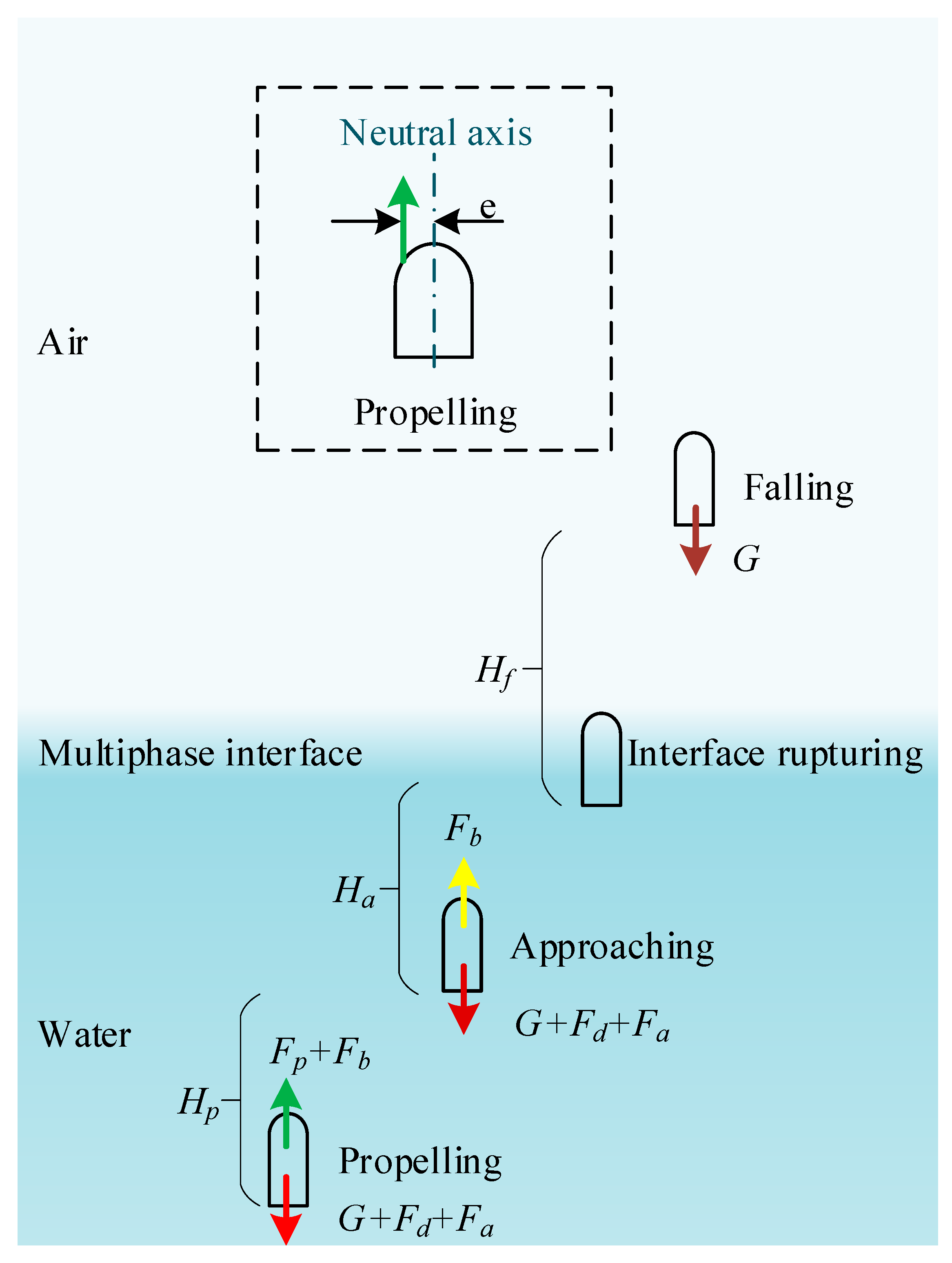
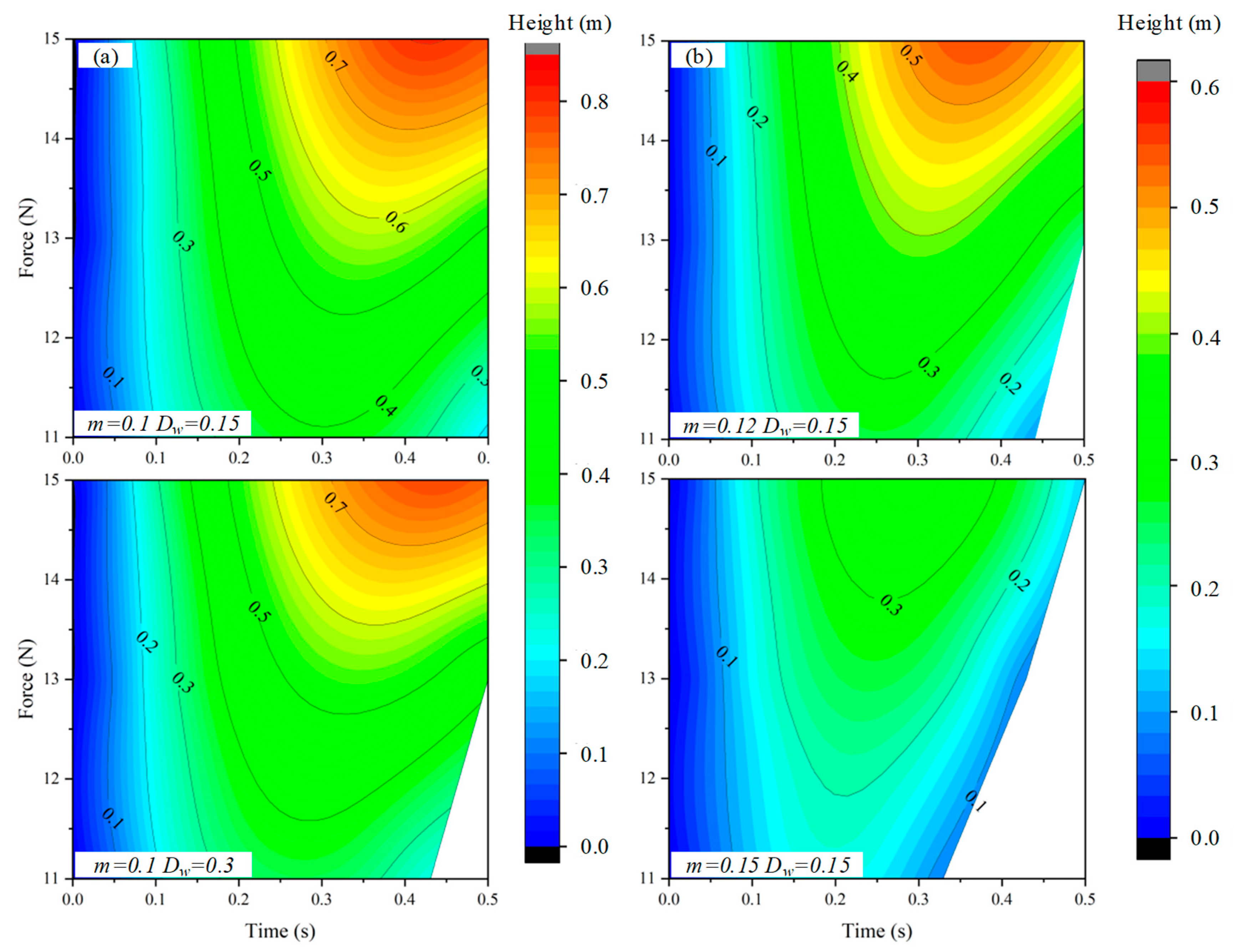
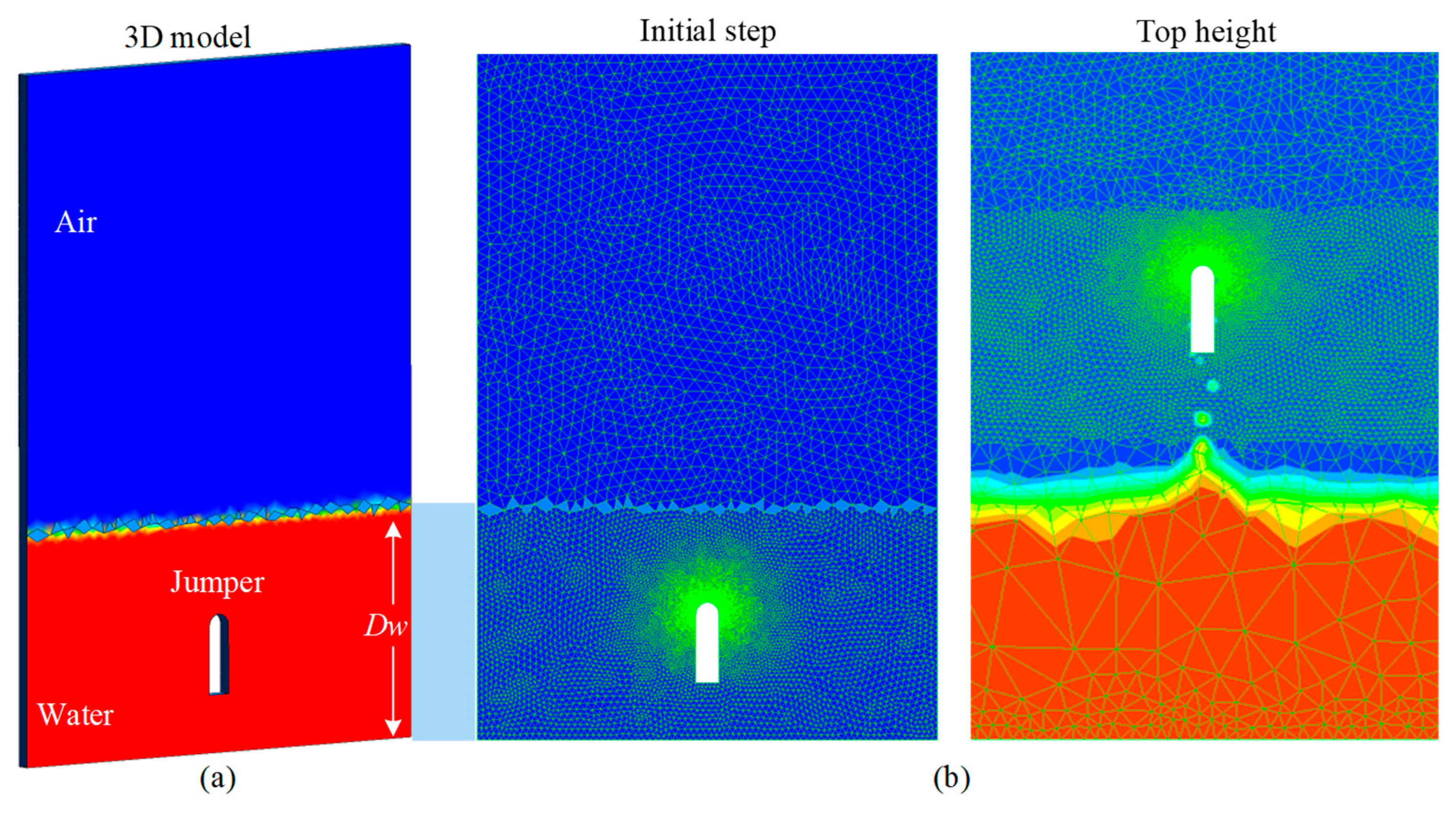
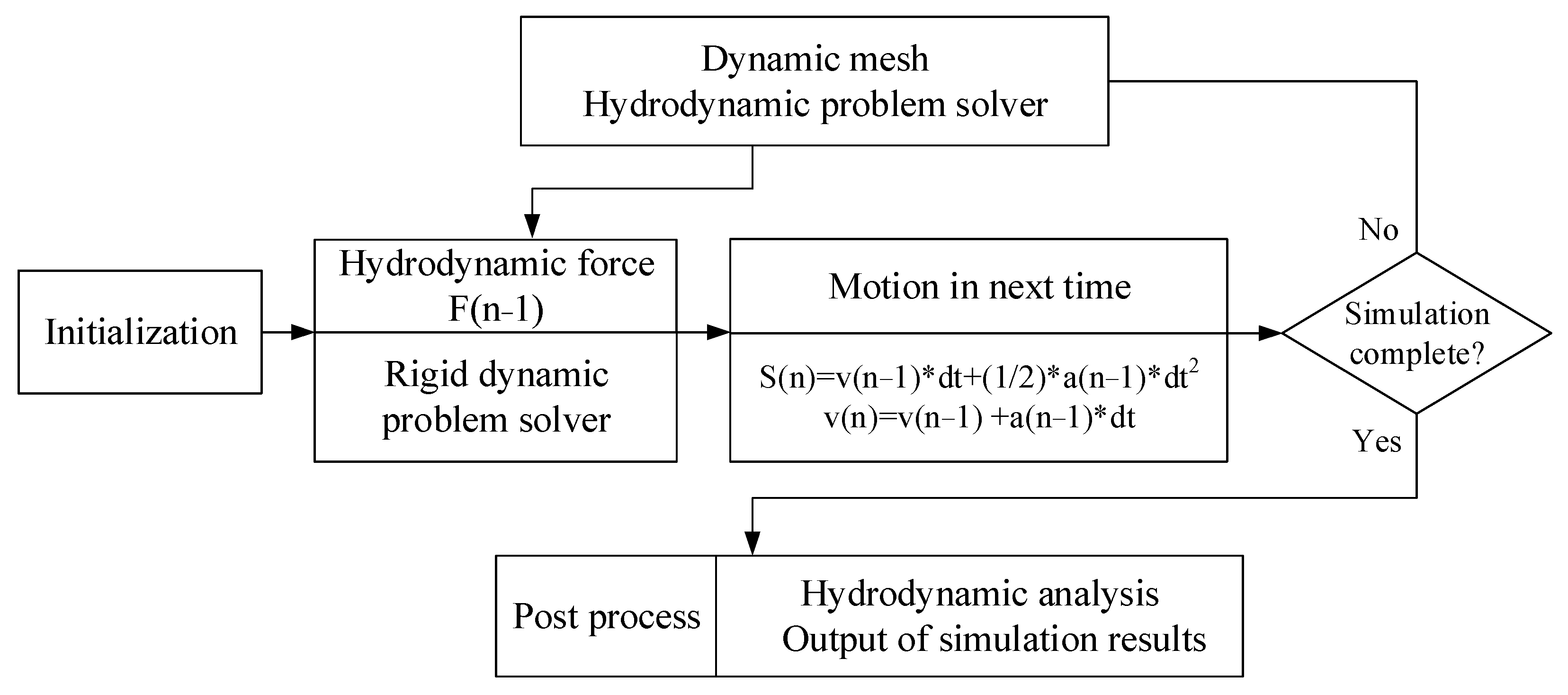
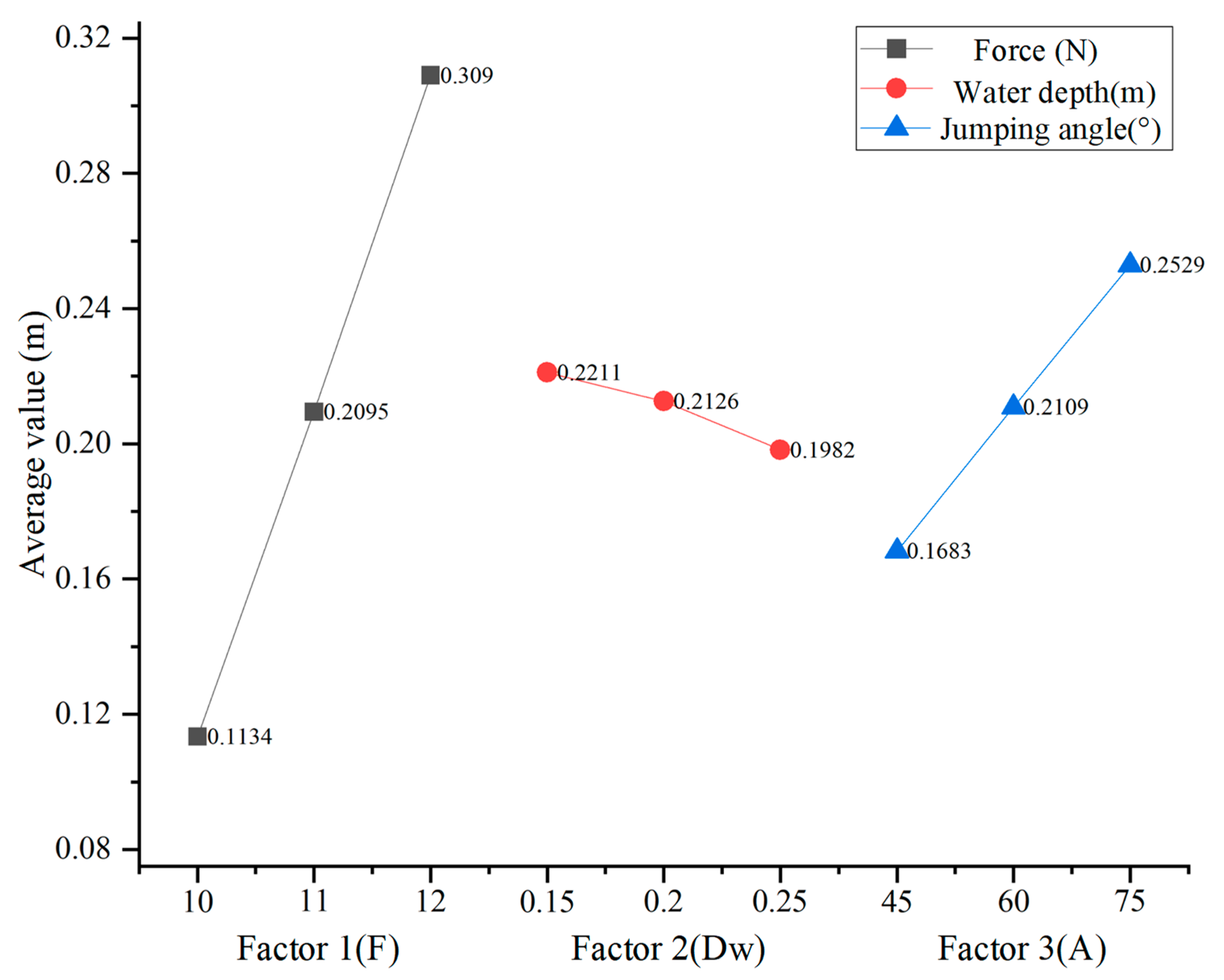
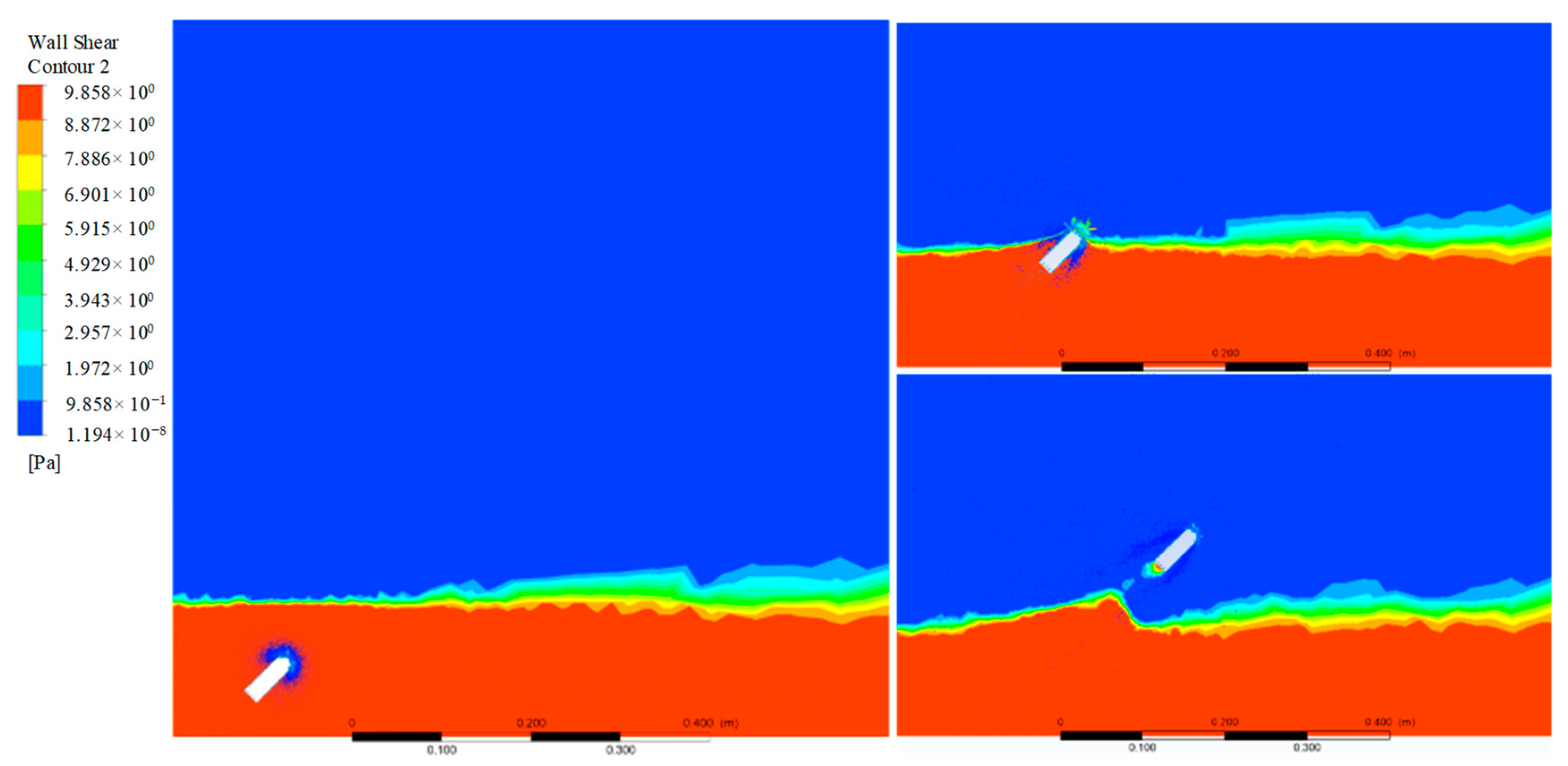
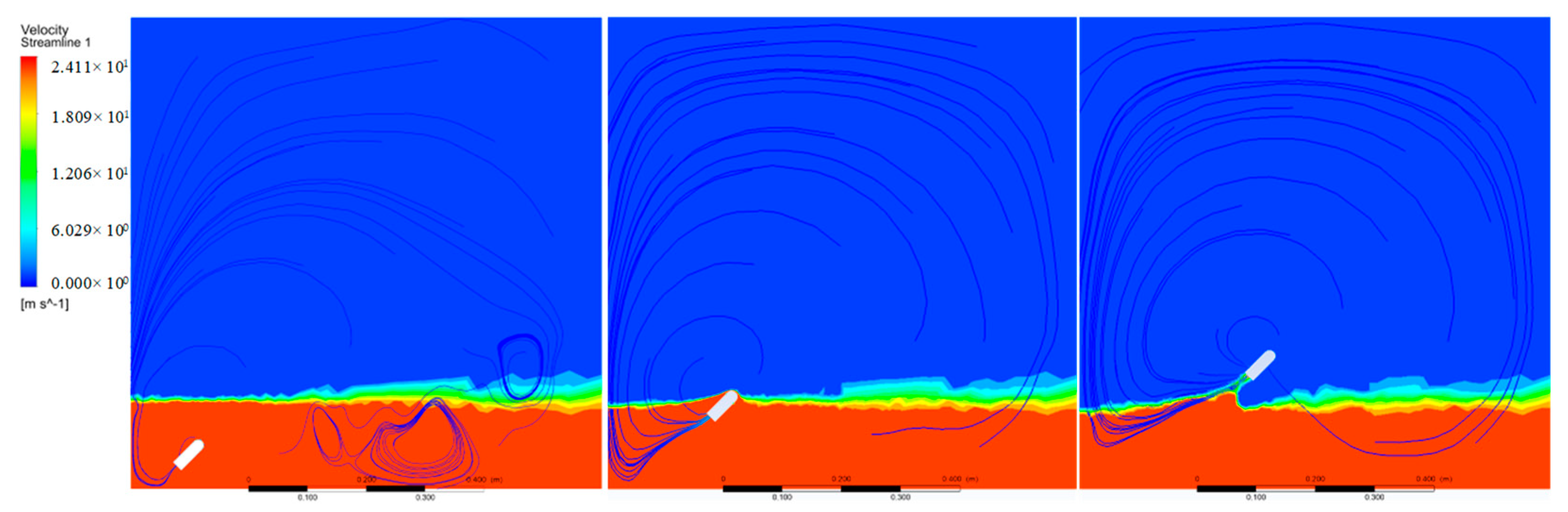
The motion process and force of the jumper crossing a multiphase environment are of great significance to the research of small amphibious robots. Here, CFD (Computational Fluid Dynamics)-based simulation analysis for motions through multiphase environments (water–air multiphase) is successfully realized by UDF (user-defined function). The analytical model is first established to investigate the jumping response of the jumpers with respect to the jump angle, force, and water depth. The numerical model of the jumper and its surrounding fluid domain is conducted to obtain various dynamic parameters in the jumping process, such as jumping height and speed. Satisfactory agreements are obtained by comparing the error of repeated simulation results (5%). Meanwhile, the influence of the jumper’s own attributes, including mass and structural size, on the jumping performance is analyzed. The flow field information, such as wall shear and velocity when the jumper approaches and breaks through the water surface, is finally extracted, which lays a foundation for the structural design and dynamic underwater analysis of the amphibious robot.
Keywords: CFD simulation; theoretical derivation; multiphase environments; fluid–solid coupling CFD simulation; theoretical derivation; multiphase environments; fluid–solid coupling