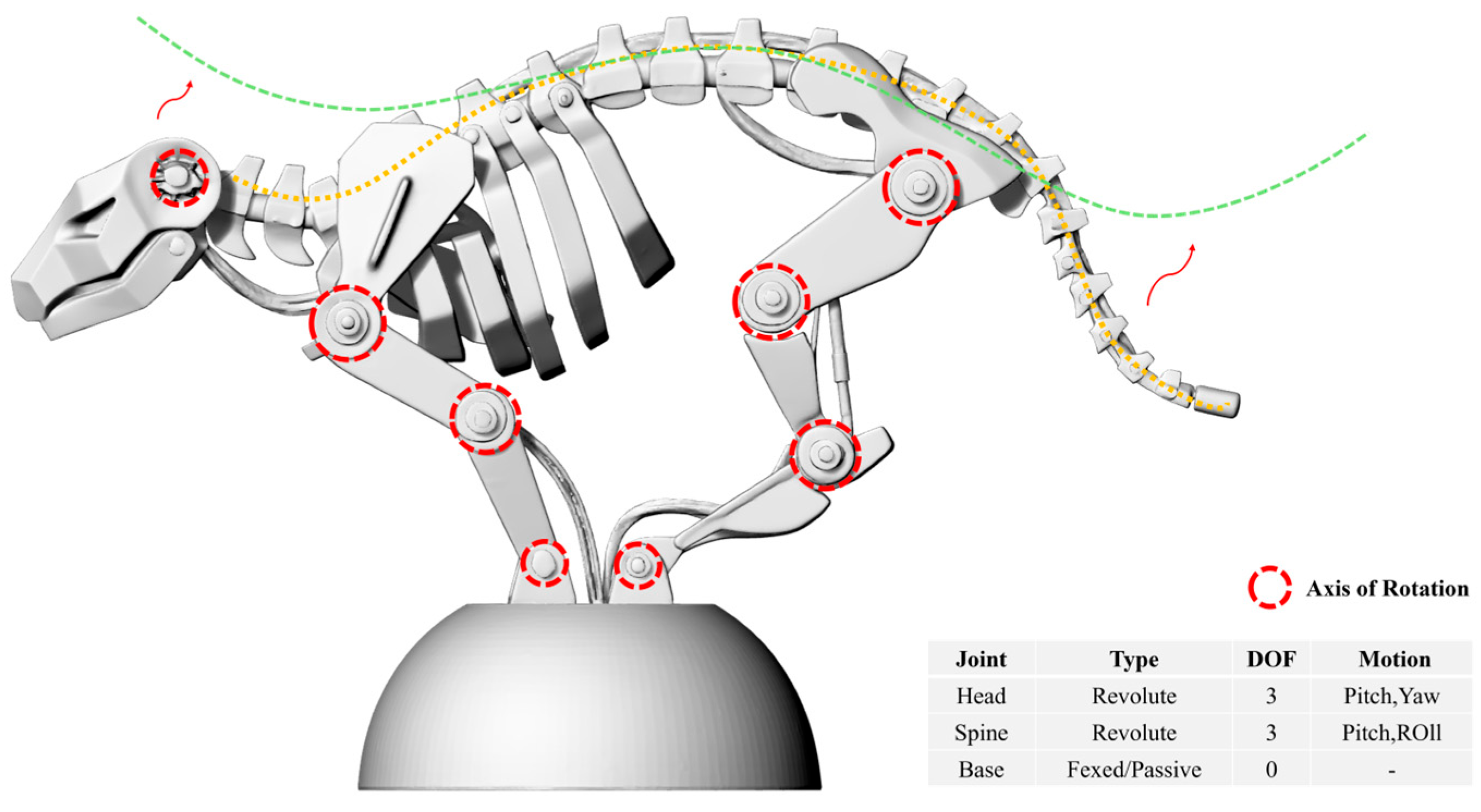

From Biological Analogs to Robotic Embodiment: A Systematic Biomimetic Translation Framework Mediated by Traditional Craft




Abstract
1. Introduction
2. Materials and Methods
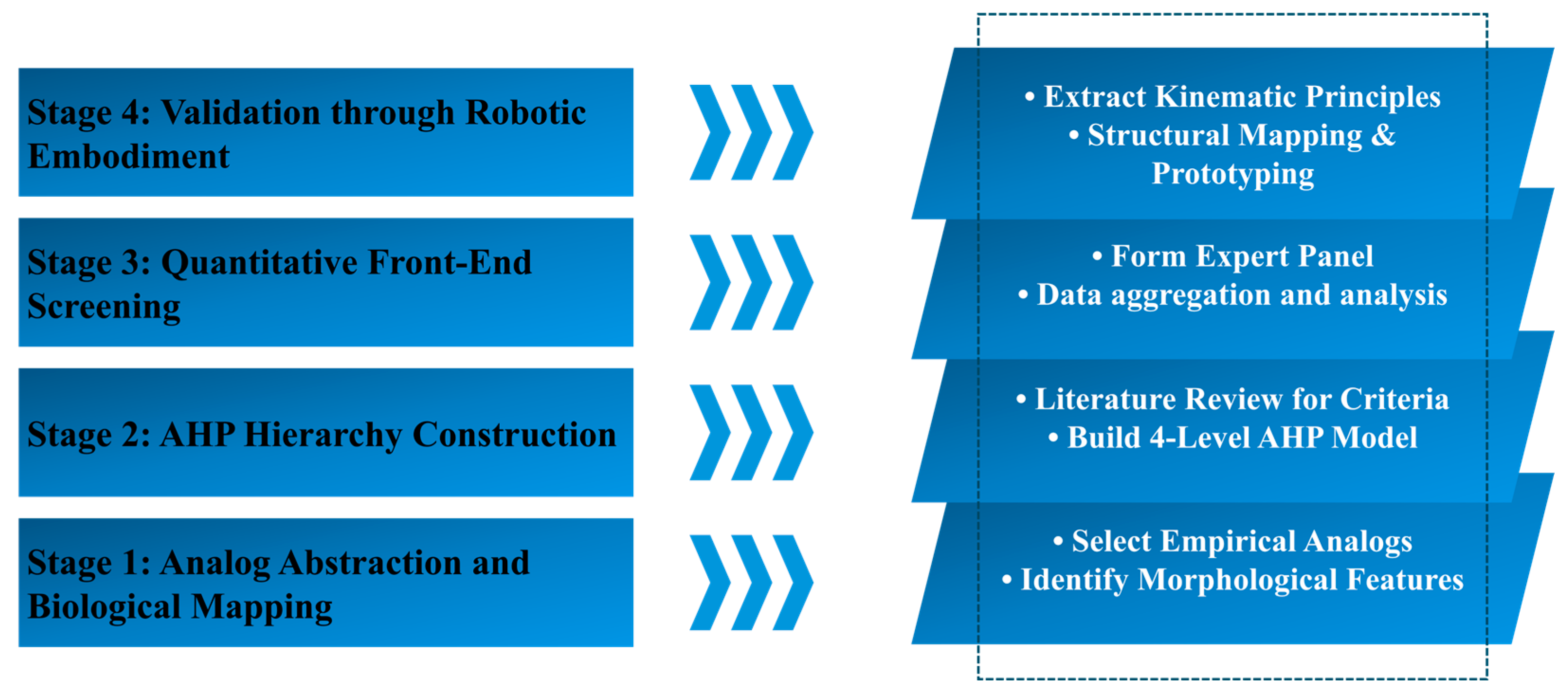
2.1. The Biomimetic Translation Framework
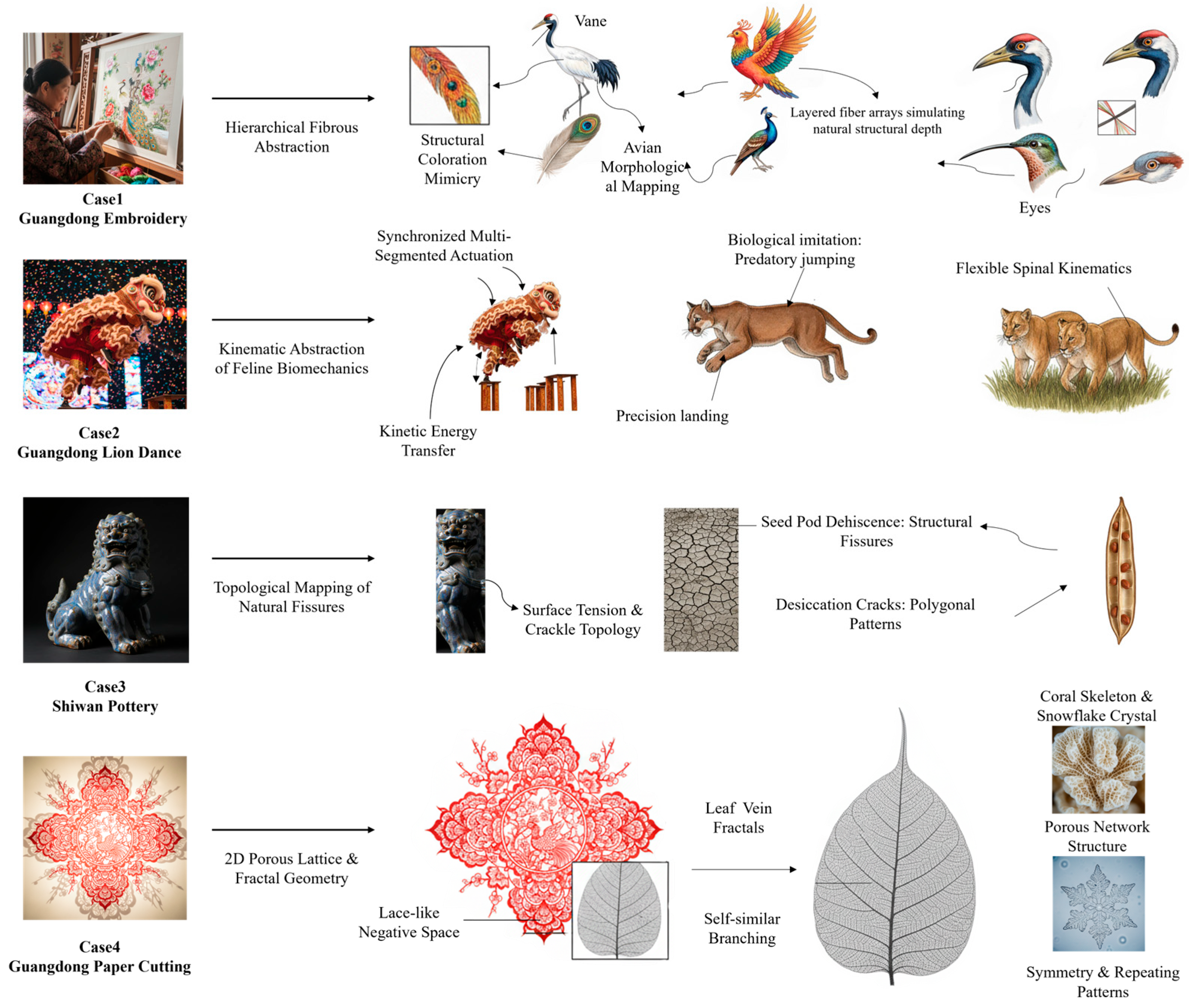
2.2. Biological Analogy Mapping
2.3. AHP Hierarchy Construction
2.4. Quantitative Screening: A Dual-Audience Approach
2.5. Data Aggregation and Analysis
2.6. Data Availability and Ethical Statement
3. Results and Analysis
3.1. Weight Calculation Methodology and Example
3.2. Comprehensive Screening Results and Ranking
3.3. Data Validation and Results Analysis
3.4. Fuzzy Comprehensive Evaluation of Alternatives
4. Discussion
4.1. Analysis of the Top-Ranked Case: The Kinematic Superiority of the Lion Dance Analog
4.2. Comparative Profile Analysis of Analog Alternatives
4.3. Theoretical Contributions and Practical Implications
4.4. Limitations and Future Research
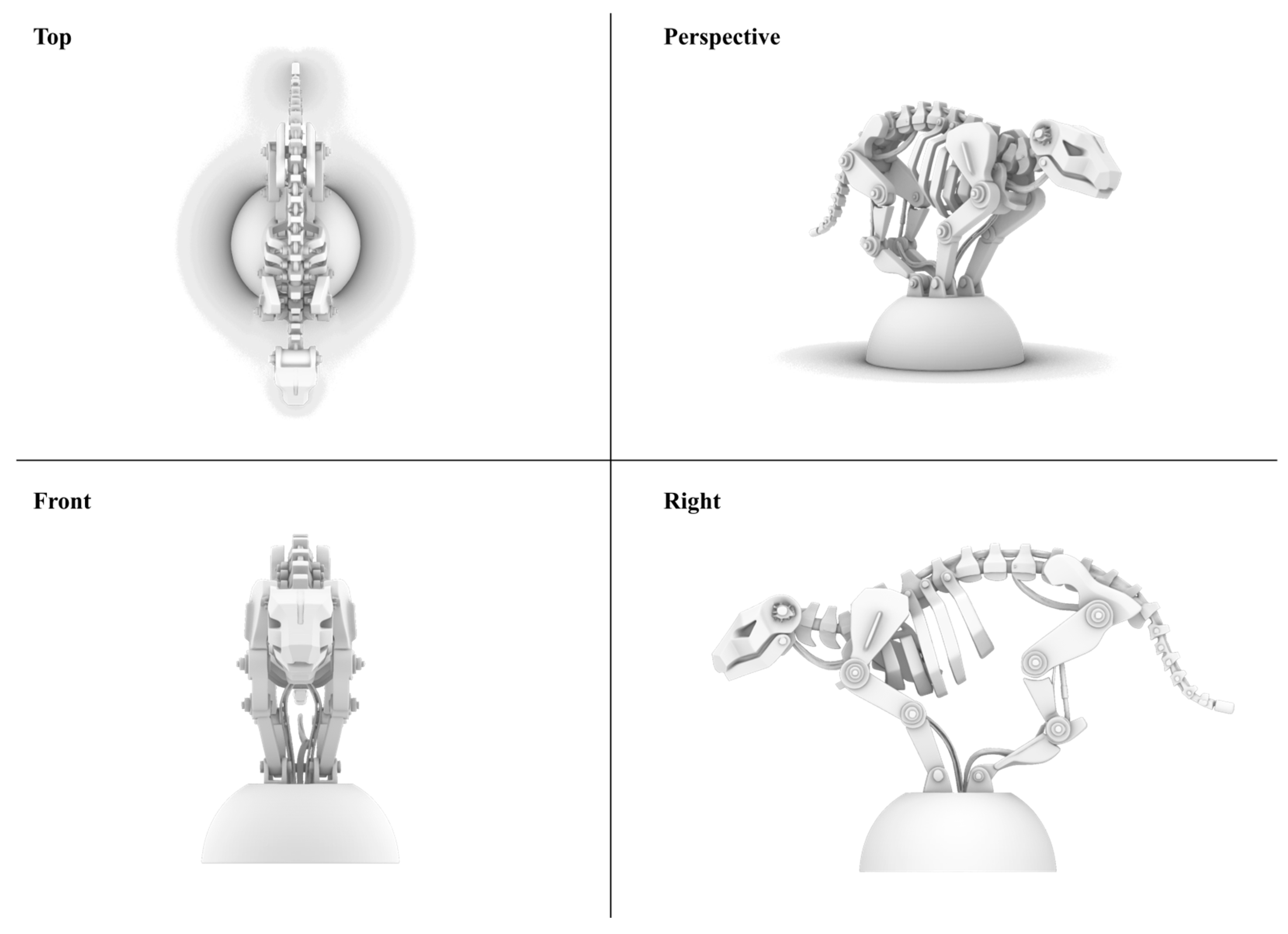
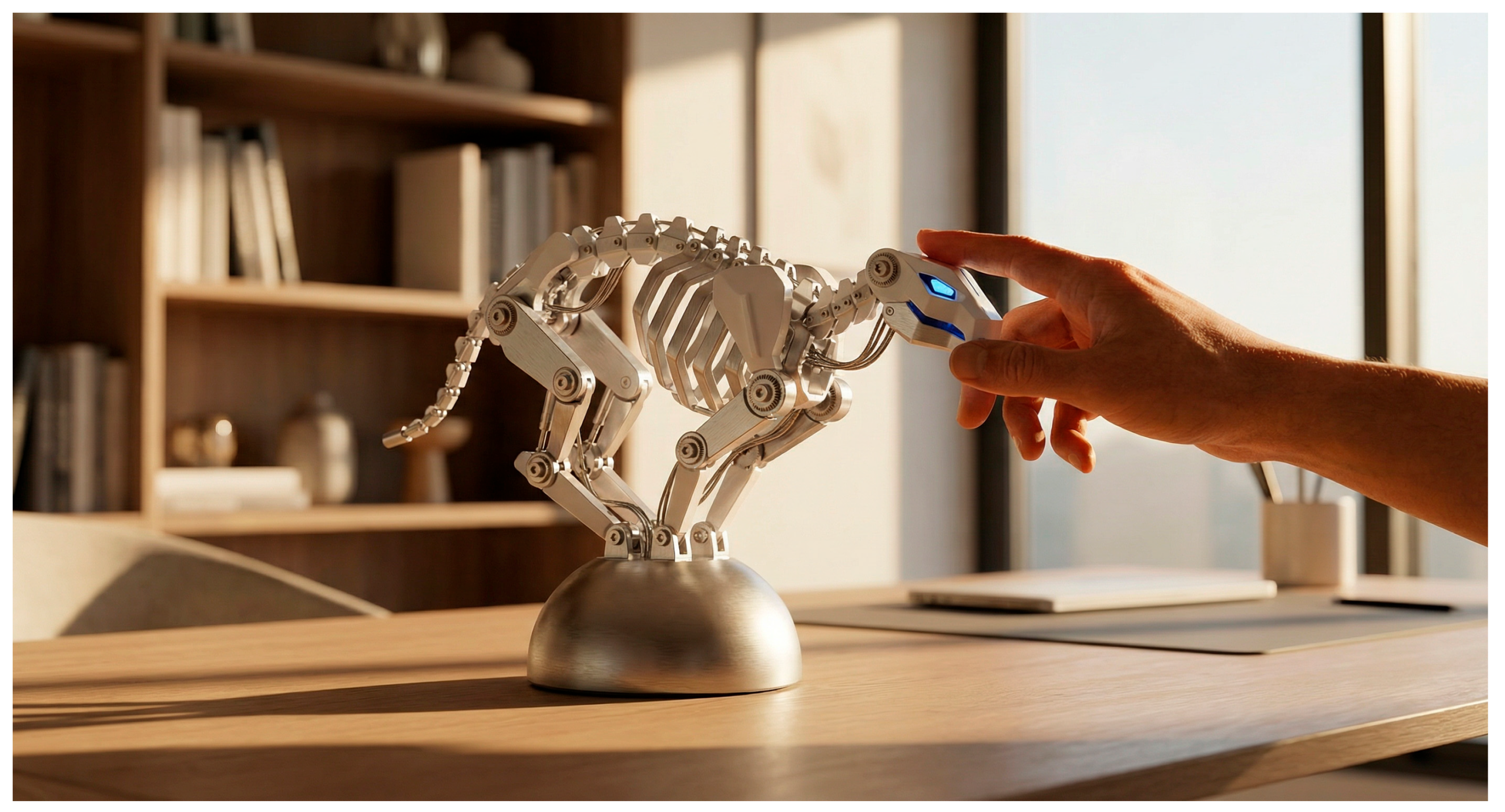
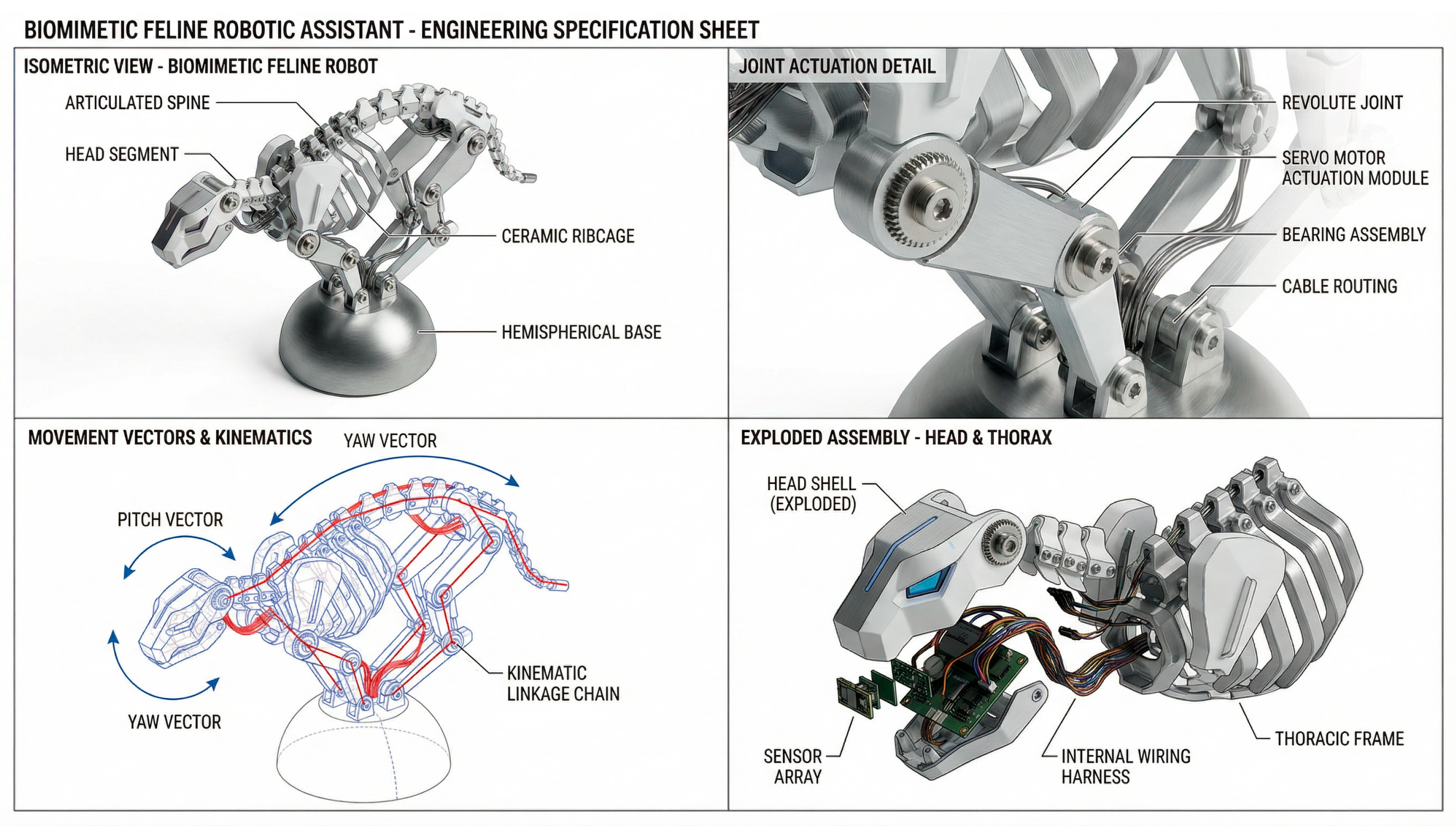
4.5. Validation Through Robotic Embodiment: The “Kine-Lion” Prototype
5. Conclusions
Author Contributions
Funding
Institutional Review Board Statement
Informed Consent Statement
Data Availability Statement
Conflicts of Interest
References
- Vincent, J.F.; Bogatyreva, O.A.; Bogatyrev, N.R.; Bowyer, A.; Pahl, A.K. Biomimetics: Its practice and theory. J. R. Soc. Interface 2006, 3, 471–482. [Google Scholar] [CrossRef]
- Barthlott, W.; Neinhuis, C. Purity of the sacred lotus, or escape from contamination in biological surfaces. Planta 1997, 202, 1–8. [Google Scholar] [CrossRef]
- Zari, M.P. Biomimetic approaches to architectural design for increased sustainability. In Sustainable Building Conference (SB07); Victoria University: Auckland, New Zealand, 2007. [Google Scholar]
- Dean, B.; Bhushan, B. Shark-skin surfaces for fluid-drag reduction in turbulent flow: A review. Philos. Trans. R. Soc. A Math. Phys. Eng. Sci. 2010, 368, 4775–4806. [Google Scholar] [CrossRef] [PubMed]
- Autumn, K.; Liang, Y.A.; Hsieh, S.T.; Zesch, W.; Chan, W.P.; Kenny, T.W.; Fearing, R.; Full, R.J. Adhesive force of a single gecko foot-hair. Nature 2000, 405, 681–685. [Google Scholar] [CrossRef] [PubMed]
- Kang, X.; You, W.; Luo, Y. Bio-inspired product design system integrating retrieval-augmented question answering and semantic fusion diffusion model. Adv. Eng. Inform. 2025, 67, 103537. [Google Scholar] [CrossRef]
- Bai, Z.; Li, L.; Hao, Y.; Zhang, X. The Advanced BioTRIZ Method Based on LTE and MPV. Biomimetics 2026, 11, 23. [Google Scholar] [CrossRef]
- Deacon, H. Convention for the Safeguarding of the Intangible Cultural Heritage; Unesco: Paris, France, 2003. [Google Scholar]
- McGhee, G.R. Convergent Evolution: Limited Forms Most Beautiful; MIT Press: Cambridge, MA, USA, 2011. [Google Scholar]
- Kinoshita, S.; Yoshioka, S. Structural colors in nature: The role of regularity and irregularity in the structure. ChemPhysChem 2005, 6, 1442–1459. [Google Scholar] [CrossRef]
- Turner, J.S.; Soar, R.C. Beyond biomimicry: What termites can tell us about realizing the living building. In Proceedings of the First International Conference on Industrialized, Intelligent Construction at Loughborough University, Loughborough, UK, 14–16 May 2008; pp. 1–18. [Google Scholar]
- Pahl, G.; Beitz, W. Engineering Design: A Systematic Approach; Springer Science & Business Media: Berlin/Heidelberg, Germany, 2013. [Google Scholar]
- Scott, M.J.; Antonsson, E.K. Arrow’s theorem and engineering design decision making. Res. Eng. Des. 1999, 11, 218–228. [Google Scholar] [CrossRef]
- Fayemi, P.E.; Wanieck, K.; Zollfrank, C.; Maranzana, N.; Aoussat, A. Biomimetics: Process, tools and practice. Bioinspir. Biomim. 2017, 12, 011002. [Google Scholar] [CrossRef]
- Saaty, T.L. Decision making with the analytic hierarchy process. Int. J. Serv. Sci. 2008, 1, 83–98. [Google Scholar] [CrossRef]
- Wu, F.; Li, L.; Xiao, C. Bio-Derived Metamaterials: A Hierarchical Biomimetics-Based Evaluation System for Cross-Scale Performance in Chaozhou Woodcarving. Biomimetics 2025, 10, 682. [Google Scholar] [CrossRef] [PubMed]
- Chayaamor-Heil, N. From bioinspiration to biomimicry in architecture: Opportunities and challenges. Encyclopedia 2023, 3, 202–223. [Google Scholar] [CrossRef]
- Graeff, E.; Letard, A.; Raskin, K.; Maranzana, N.; Aoussat, A. Biomimetics from practical feedback to an interdisciplinary process. Res. Eng. Des. 2021, 32, 349–375. [Google Scholar] [CrossRef]
- Eppinger, S.D.; Ulrich, K. Product Design and Development; McGraw-Hill Higher Education: Boston, MA, USA, 1995. [Google Scholar]
- Foster, G.; Saleh, R. The adaptive reuse of cultural heritage in European circular city plans: A systematic review. Sustainability 2021, 13, 2889. [Google Scholar] [CrossRef]
- Munier, N.; Hontoria, E. Uses and Limitations of the AHP Method; Springer Science & Business Media: Berlin/Heidelberg, Germany, 2021. [Google Scholar]
- Bai, K.; Jiang, G.; Cai, S. Mapping method from human to robot arms with different kinematics. Int. J. Adv. Robot. Syst. 2025, 22, 17298806241311532. [Google Scholar] [CrossRef]
- Ye, Z.; Chen, S.; Cang, N.; Zhang, X.; Guo, D. Design and validation of new discrete-time kinematic control scheme for physically-constrained redundant robot manipulators. Eur. J. Control 2025, 86, 101398. [Google Scholar] [CrossRef]
- Overbeek, A.H.G.; Dresscher, D.; van der Kooij, H.; Vlutters, M. Versatile kinematics-based constraint identification applied to robot task reproduction. Front. Robot. AI 2025, 12, 1574110. [Google Scholar] [CrossRef]
- Pasumarthi, R.; Samarakoon, S.M.B.P.; Elara, M.R.; Sheu, B. Determining optimum assembly zone for modular reconfigurable robots using multi-objective genetic algorithm. Sci. Rep. 2025, 15, 615. [Google Scholar] [CrossRef]
- Deng, Y.; Liu, H.; Luo, X.; Yang, S.; Wang, J. Dynamic control of virtual fixtures under arbitrary differentiable geometric constraints with a disturbance observer. Chin. J. Mech. Eng. 2026, 100253, in press. [Google Scholar] [CrossRef]
- Qu, G.; Yang, X.; Yuan, Q.; Liu, Z.; Si, Y. Research on Comprehensive Performance Evaluation Method for Frontier Fundamental Research Project for Future Aircraft Engines. Sustainability 2024, 16, 6205. [Google Scholar] [CrossRef]
- Kürüm Varolgüneş, F.; Canan, F.; del Río-Rama, M.D.L.C.; Oliveira, C. Design of a thermal hotel based on AHP-QFD methodology. Water 2021, 13, 2109. [Google Scholar] [CrossRef]
- Liu, Q.; Chen, J.; Yang, K.; Liu, D.; He, L.; Qin, Q.; Wang, Y. An integrating spherical fuzzy AHP and axiomatic design approach and its application in human–machine interface design evaluation. Eng. Appl. Artif. Intell. 2023, 125, 106746. [Google Scholar] [CrossRef]
- He, Y.; Zhao, G.; Tang, Y.; Song, J.; Chen, Y. Available target evaluation of underground gas storage based on AHP-FCE methods. Geoenergy Sci. Eng. 2024, 242, 213255. [Google Scholar] [CrossRef]
- Tian, D.; Yang, K.; Yao, J.; Qu, W.; Wu, X.; Wang, J.; Shi, J. Design and Analysis of an Open-Pit Iron Mine Dust Pollution Evaluation Model Based on the AHP-FCE Method. Atmosphere 2026, 17, 166. [Google Scholar] [CrossRef]
- Özkurt, P. A scenario-robust intuitionistic fuzzy AHP–TOPSIS model for sustainable healthcare waste treatment selection: Evidence from Türkiye. Sustainability 2026, 18, 1167. [Google Scholar] [CrossRef]
- Zhang, M.; Guan, X.; Liu, Y. Using AHP-FCE to Assess Rural Building Materials for Achieving Green Building Goals. J. Green Build. 2025, 20, 249–290. [Google Scholar] [CrossRef]
- Zhao, H.; Yao, L.; Mei, G.; Liu, T.; Ning, Y. A Fuzzy Comprehensive Evaluation Method Based on AHP and Entropy for a Landslide Susceptibility Map. Entropy 2017, 19, 396. [Google Scholar] [CrossRef]
- Ijspeert, A.J. Biorobotics: Using robots to emulate and investigate agile locomotion. Science 2014, 346, 196–203. [Google Scholar] [CrossRef]
- Tamborini, M. From biomimicry to robotic co-creation: Rethinking the boundaries between nature and technology. Bioinspir. Biomim. 2024, 19, 023001. [Google Scholar] [CrossRef]
- Mansuri, A.; Agkathidis, A.; Lombardi, D.; Chen, H. Robotic Fabrication of Bamboo Roof Structures in Traditional Indonesian Housing Typologies: A Workflow for Human-Robot Collaboration. In Proceedings of the 43rd Conference on Education and Research in Computer Aided Architectural Design in Europe (eCAADe 2025), Ankara, Turkey, 1–5 September 2025; pp. 97–106. [Google Scholar]
- Oxman, N.; Kayser, M.; Laucks, J.; Firstenberg, M. Robotically Controlled Fiber-Based Manufacturing as Case Study for Biomimetic Digital Fabrication; Taylor & Francis: Abingdon, UK, 2013. [Google Scholar]
- Wu, Y.; Zhou, Z.; Liu, R.; Zheng, L.; Cheng, H. A generic continuous multi-joint spinal robotic system for agile and accurate behaviors with GNN-MPC method. In Robotics: Science and Systems XXI; University of Southern California: Los Angeles, CA, USA, 2025. [Google Scholar] [CrossRef]
- Dong, J.; Liu, Q.; Li, P.; Wang, C.; Zhao, X.; Hu, X. Design, Modeling, and Experimental Validation of a Bio-Inspired Rigid–Flexible Continuum Robot Driven by Flexible Shaft Tension–Torsion Synergy. Biomimetics 2025, 10, 301. [Google Scholar] [CrossRef]
- Ali, A.R.; Abdullah, H.S. Development of a compliant spine mechanism for enhanced humanoid robotics locomotion. Sci. Rep. 2025, 15, 44646. [Google Scholar] [CrossRef]
- Nidhi Noble, S.; Sooraj, V.S. Bio-inspired skeletal model and kinematics of humanoid spine and ribs. Proc. Inst. Mech. Eng. Part C J. Mech. Eng. Sci. 2024, 238, 1234–1248. [Google Scholar] [CrossRef]




| Criteria Layer | Name & Definition | Sub-Criteria Layer | Name & Definition |
|---|---|---|---|
| C1 Biomimetic Translation Feasibility | Assesses the ease and clarity with which the morphological and kinematic principles embedded in the analog can be decoded into engineering language. | P1 | Morphological and Kinematic Clarity: Ease of abstracting and translating the visual, structural, and dynamic features into actionable CAD or linkage models. |
| P2 | Structural/Material Novelty: Uniqueness of the underlying topological or material configurations. | ||
| P3 | Functional/Actuation Replicability: Feasibility of physically replicating the dynamic process or function using modern actuators. | ||
| C2 Engineering Innovation Potential | Evaluates the potential of the analog to inspire novel physical structures, robotics, or mechanical solutions that advance current designs. | P4 | Structural/Behavioral Originality: Potential to generate a highly unique physical configuration or interactive kinematic behavior. |
| P5 | Mechatronic Integration Viability: Potential to be synergistically combined with modern robotics, AI, or smart materials. | ||
| P6 | Interdisciplinary Application Scope: Potential to be scaled or applied across diverse engineering fields. | ||
| C3 Semantic & Interactive Affordance | Assesses the potential of the bio-inspired design to evoke intuitive human–robot interaction (HRI) and cognitive recognition, adding semantic value to the mechanical structure. | P7 | Behavioral/Morphological Recognizability: Clarity with which human users intuitively understand the biological behavior being mimicked. |
| P8 | Interactive Scenario Extensibility: Richness of the human–machine interactive scenarios that can be developed from the behavior. | ||
| C4 Prototyping & Manufacturing Viability | Evaluates the practical engineering potential for the resulting bio-inspired conceptual design to be physically fabricated. | P9 | User Acceptance in HRI: Potential for the robotic or mechanical design to resonate positively with end-users. |
| P10 | Prototyping Feasibility & Cost-Effectiveness: Feasibility of fabricating and assembling the mechanical structure with current rapid-prototyping tech. |
| Scale | Rating Level | Meaning |
|---|---|---|
| 1 | equally important | Indicator i is equally important as indicator j |
| 3 | Slightly important | Indicator i is slightly more important than indicator j |
| 5 | Strong and important | Indicator i is stronger and more important than indicator j |
| 7 | Strongly Important | Indicator i is stronger and more important than indicator j |
| 9 | extremely important | Indicator i is extremely more important than indicator j |
| 2/4/6/8 | median | The middle value of the two adjacent fingers mentioned above |
| countdown | Reverse comparison | Comparison between indicator j and indicator i, and the reciprocal of the corresponding scale |
| Criteria Layer | Weight (Wi) | Indicator Code | Local Weight (wj) | Global Weight (Wi * wj) |
|---|---|---|---|---|
| C1 Biomimetic Translation Feasibility | 0.580 | P1 Morphological and Kinematic Clarity | 0.680 | 0.394 |
| P2 Structural/Material Novelty | 0.248 | 0.144 | ||
| P3 Functional/Actuation Replicability | 0.072 | 0.042 | ||
| C2 Engineering Innovation Potential | 0.259 | P4 Structural/Behavioral Originality | 0.745 | 0.193 |
| P5 Mechatronic Integration Viability | 0.191 | 0.050 | ||
| P6 Interdisciplinary Application Scope | 0.063 | 0.016 | ||
| C3 Semantic & Interactive Affordance | 0.114 | P7 Behavioral/Morphological Recognizability | 0.875 | 0.100 |
| P8 Interactive Scenario Extensibility | 0.125 | 0.014 | ||
| C4 Prototyping & Manufacturing Viability | 0.047 | P9 User Acceptance in HRI | 0.853 | 0.040 |
| P10 Prototyping Feasibility & Cost-Effectiveness | 0.147 | 0.007 |
| Case | Final Score | Rank |
|---|---|---|
| Case 1: Analog 1 (Guangdong Embroidery Model) | 4.07 | 4 |
| Case 2: Analog 2 (Guangdong Lion Dance Analog Model) | 4.47 | 1 |
| Case 3: Analog 3 (Shiwan Pottery Model) | 4.11 | 2 |
| Case 4: Analog 4 (Guangdong Paper Cutting Model) | 4.08 | 3 |
Disclaimer/Publisher’s Note: The statements, opinions and data contained in all publications are solely those of the individual author(s) and contributor(s) and not of MDPI and/or the editor(s). MDPI and/or the editor(s) disclaim responsibility for any injury to people or property resulting from any ideas, methods, instructions or products referred to in the content. |
© 2026 by the authors. Licensee MDPI, Basel, Switzerland. This article is an open access article distributed under the terms and conditions of the Creative Commons Attribution (CC BY) license.
Share and Cite
Li, J.; Wu, F.; Xiao, C. From Biological Analogs to Robotic Embodiment: A Systematic Biomimetic Translation Framework Mediated by Traditional Craft. Biomimetics 2026, 11, 266. https://doi.org/10.3390/biomimetics11040266
Li J, Wu F, Xiao C. From Biological Analogs to Robotic Embodiment: A Systematic Biomimetic Translation Framework Mediated by Traditional Craft. Biomimetics. 2026; 11(4):266. https://doi.org/10.3390/biomimetics11040266
Chicago/Turabian StyleLi, Junbo, Fan Wu, and Congrong Xiao. 2026. "From Biological Analogs to Robotic Embodiment: A Systematic Biomimetic Translation Framework Mediated by Traditional Craft" Biomimetics 11, no. 4: 266. https://doi.org/10.3390/biomimetics11040266
APA StyleLi, J., Wu, F., & Xiao, C. (2026). From Biological Analogs to Robotic Embodiment: A Systematic Biomimetic Translation Framework Mediated by Traditional Craft. Biomimetics, 11(4), 266. https://doi.org/10.3390/biomimetics11040266